


Abstract
The study evaluated the effect of intercropping Paulownia (Paulownia spp.) with spring barley (Hordeum vulgare L., cv. KWS Thalis) on selected components of agroecosystem biodiversity under Polish conditions. A field experiment established in 2019 compared an alley cropping system with barley monoculture during the 2025 growing season. Weed infestation, soil microbial communities, mesofauna abundance, and crop yield were assessed. Weed abundance was lower in the intercropping system than in monoculture, reaching 5.6 vs. 15.6 plants m−2 at BBCH 21 and 21 and 22.8 vs. 35.6 plants m−2 at BBCH 75. Bacterial alpha diversity was significantly higher under intercropping conditions, with Shannon index values ranging from 5.12 to 5.25, compared with 4.98–5.09 in monoculture. Fungal diversity showed moderate differences between systems, whereas the abundance of Collembola and Acari was influenced mainly by seasonal variation rather than by cultivation system. No significant reduction in barley yield was observed under intercropping conditions. The results suggest that Paulownia-based alley cropping may reduce weed pressure and support selected soil biological properties without negatively affecting crop productivity. However, the observed responses varied depending on the analyzed parameter and sampling period, indicating the preliminary and context-dependent character of the results. Further long-term studies are required to better understand the ecological mechanisms operating in such agroforestry systems.
1. Introduction
Modern European agriculture faces significant challenges related to climate change and biodiversity loss. Alley cropping systems, a form of agroforestry, may support more sustainable agricultural production by integrating trees and crops within the same field while remaining compatible with mechanized farming practices. Agroforestry systems may contribute to improved soil protection, carbon sequestration, water retention, and biodiversity conservation while reducing the need for external inputs and increasing ecosystem resilience [1,2,3,4]. However, despite their potential ecological benefits, the implementation of agroforestry systems under Polish agricultural conditions remains limited. Practical constraints include high establishment costs, delayed economic returns associated with tree cultivation, uncertainty regarding long-term profitability, limited financial support during the initial years of system development, and the need for more complex long-term management compared with conventional cropping systems. In addition, farmers often express concerns regarding possible reductions in crop yield and difficulties associated with the mechanization of intercropping systems. Therefore, the practical adoption of agroforestry systems in Central Europe still requires further economic and agronomic evaluation [1,2,3,5,6].
Agroforestry systems may contribute to greenhouse gas mitigation and improvement of soil organic matter content. In field conditions, the presence of trees may reduce evapotranspiration, improve water infiltration, and limit soil erosion, thereby increasing the resilience of agricultural ecosystems to drought and climate variability [3,7,8,9]. Alley intercropping consists of alternating strips of crops with rows of trees or shrubs and enables the introduction of woody species while maintaining agricultural production [1,3].
In this experiment, paulownia (Clone in vitro 112; P. elongata × P. fortunei) was used as the tree species, whereas spring barley (Hordeum vulgare L.) was cultivated in the inter-rows. Paulownia is considered a potentially suitable species for agroforestry systems because of its rapid growth, high biomass production potential, and possible contribution to carbon sequestration and soil organic matter input [8,10,11].
Spring barley was selected for the intercropping system because, compared with wheat, it generally has lower soil and nutrient requirements and may be better adapted to cultivation under less intensive management conditions. These characteristics may be particularly important in agroforestry systems, where competition between trees and crops for water, nutrients, and light can occur, especially during the early stages of system development. In addition, spring barley is an economically important cereal species in Poland, widely used in animal nutrition and the food and brewing industries. However, the suitability of particular crop species for agroforestry systems under Central European conditions remains insufficiently recognized and may strongly depend on local environmental conditions and species interactions [12,13].
Although agroforestry systems are increasingly promoted within European Union strategies supporting sustainable agriculture and biodiversity conservation, their practical implementation in Central Europe remains limited. In particular, relatively little information is available regarding the influence of Paulownia-based alley cropping systems on multiple components of agroecosystem biodiversity, including soil microorganisms, mesofauna, and weed communities. Previous studies have mainly focused on single components of agroforestry systems, whereas studies simultaneously evaluating soil microorganisms, mesofauna, and weed communities within Paulownia-based alley cropping systems under Central European conditions are still lacking [8,11,14].
The aim of this study was to evaluate the effect of Paulownia-based alley intercropping with spring barley on selected components of agroecosystem biodiversity under Polish field conditions. Particular attention was paid to weed infestation, soil microbial communities, and soil mesofauna in comparison with barley monoculture. We hypothesized that the intercropping system may modify soil biological activity and biodiversity components without negatively affecting barley yield.
2. Materials and Methods
2.1. Experimental Design and Crop Management
A field experiment was conducted in 2025 at the Research and Teaching Station of the Wrocław University of Environmental and Life Sciences (Wrocław-Swojczyce, Poland) within a Paulownia-based alley cropping system established in 2019. The experiment was arranged as a randomized block design with two cultivation systems: spring barley monoculture (AK) and spring barley cultivated in alley intercropping with Paulownia (AP); the study included five replicates, and spring barley (cultivar KWS Thalis) was sown on 21 March 2025 at a density of 330 seeds m−2. The establishment of the experiment and agrotechnical practices related to Paulownia cultivation were described in Woźniak et al. [14] and Chorbiński et al. [15].
The selection of the KWS Thalis cultivar was related to its good yielding potential and suitability for cultivation under Polish environmental conditions. The cultivar is characterized by relatively stable performance and good agronomic properties, which may be important in agroforestry systems where interactions between trees and crops can influence crop growth conditions.
2.2. Soil Conditions, Moisture, and Weather Characteristics
The experiment was conducted on humic ordinary alluvial soils classified as class F-IVb-a [16]. Soil samples for microbiological analyses were collected from the 0–30 cm soil layer before barley sowing and after harvest. Additional soil samples collected from the 0–30 cm and 30–60 cm layers were used for chemical analyses, including determination of soil pH, organic carbon (%C), mineral nitrogen (Nmin), and available forms of P, K, and Mg using standard laboratory methods. Soil samples intended for microbiological analyses were stored at −80 °C until analysis. Detailed soil properties are presented in Table 1.
Table 1.
Soil content of macroelements and pH in the soil profile in two depths (0–30 cm, 30–60 cm) in 2025.
The field experiment was based on soil classified as humic ordinary alluvial soils (Type Ordinary alluvial soils—Polish Soil Classification (SGP6): SF), Subtype: humic ordinary alluvial soils—Polish Soil Classification (SGP6): (SFh). The soil was classified as class F-IV b-a [16].
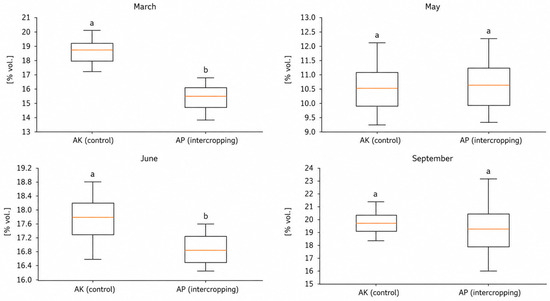
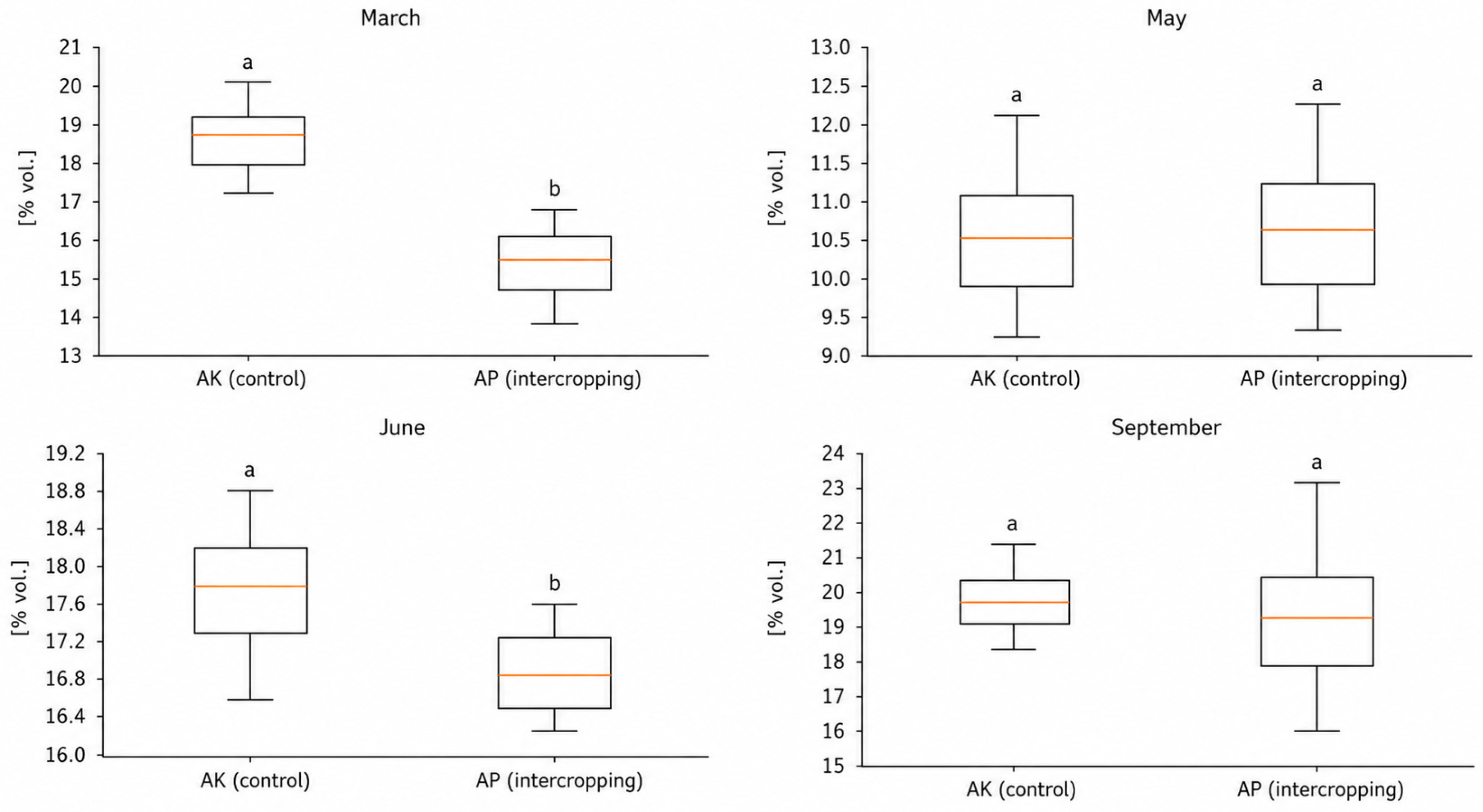
Soil volumetric water content (% v/v) within the 5.5 cm soil layer was measured using an SM150 Thetaprobe sensor coupled with a portable HH2 moisture meter (Delta-T Devices Ltd., Cambridge, UK). Measurements were performed on 26 March, 7 May, 12 June, and 8 September 2025, with twenty replicates per treatment.
Meteorological conditions during the 2025 growing season were evaluated using data from the AsterMet station located in Wrocław-Swojczyce. Weather conditions were assessed based on temperature, precipitation, and the Selyaninov hydrothermal coefficient (HTC). The 2025 growing season was generally characterized by favorable thermal and moisture conditions for barley and Paulownia growth, although August was relatively dry compared with the long-term average (Table 2).
Table 2.
Weather conditions and HTC in 2025 for Scientific and Didactic Station of the Wroclaw University of Environmental and Life Science.
2.3. Biodiversity Measurements
2.3.1. Analysis of Microbial Community Structure
For microbiological measurements, soil samples were collected twice during the study period from each cultivation system: prior to barley sowing (T1, 21 March 2025) and following harvest (T2, 31 July 2025). Samples were collected from the 0–30 cm soil layer using a soil sampling probe. DNA was extracted from soil samples using the FastDNA™ SPIN Kit (MP Biomedicals, Santa Ana, CA, USA), after which DNA quality and concentration were evaluated fluorometrically.
Microbial communities were analyzed by sequencing the bacterial 16S rRNA gene (V3–V4 region) and fungal ITS1 region. Amplification was performed using primer sets 341F (5′-CCTACGGGNGGCWGCAG-3′) and 785R (5′-GACTACHVGGGTATCTAATCC-3′) for bacterial analysis, and ITS1FI2 (5′-GAACCWGCGGARGGATCA-3′) together with 5.8S (5′-CGCTGCGTTCTTCATCG-3′) for fungal analysis. Library preparation and indexing were performed according to the Illumina “16S Metagenomic Sequencing Library Preparation” protocol [14].
Raw sequencing reads were processed using the QIIME2 pipeline (v.2024.5). Adapter trimming and quality filtering were performed using Cutadapt (v.4.7) with a Q30 quality threshold and a minimum sequence length of 30 bp. Sequence denoising, paired-end merging, chimera removal, and ASV inference were conducted using the DADA2 algorithm implemented in QIIME2. Taxonomic assignment was performed against the SILVA 138.2 database for bacteria and the UNITE 10 database for fungi using a hybrid classification approach combining VSEARCH alignment and Naive Bayes classification.
Sequencing depth and quality-filtering statistics were additionally evaluated for all samples. After filtering and denoising, the number of non-chimeric reads per sample ranged from 114,204 to 159,522 for bacterial datasets and from 123,124 to 156,479 for fungal datasets (Supplementary Tables S1 and S2).
Raw sequencing data are available in the NCBI Sequence Read Archive (SRA) under BioProject accession numbers PRJNA1260210 (bacteria) and PRJNA1260755 (fungi).
2.3.2. Soil Mesofauna Abundance
Soil mesofauna was sampled using a circular soil corer (10 cm diameter, 10 cm depth). Six samples were taken from each plot, resulting in a total of 66 samples collected on each of three dates (May, June, September 2025). Soil invertebrates were extracted using a MacFadyen extractor (Ecotech GmbH, Bonn, Germany) for seven days with gradually increasing temperature (20–40 °C) and preserved in 75% ethyl alcohol.
Microarthropods were counted and identified under a stereoscopic microscope (Zeiss: Oberkochen, Germany). All extracted individuals were sorted and classified into major taxonomic groups. Mites (Acari) were classified into the main suborders: Oribatida, Gamasida, and Prostigmata, whereas Collembola were divided into epigeic, hemiedaphic and euedaphic groups according to their vertical distribution within the soil profile and ecological adaptations [17].
2.3.3. Differentiation of Weed Species
Weed infestation in spring barley was assessed at three growth stages: early tillering (BBCH 21), medium milk stage before harvest (BBCH 75), and four weeks after harvest in the stubble. At BBCH 21, weed species were identified and counted within 0.2 m2 sampling quadrats, with five replicates per plot. At the later assessment dates (BBCH 75 and post-harvest), weeds were identified, counted, and their dry biomass was determined using 0.5 m2 quadrats, with two replicates per plot.
2.4. Analysis of Biometric Traits of Spring Barley and Paulownia
Before barley harvest, ten plants were randomly collected from the central rows of each plots to avoid border effects. The number of ears per plant, grain number and grain number, and grain weight per ear were determined. Grain yield was converted to t ha−1 at 15% moisture content. In the case of Paulownia, tree height and trunk circumference measured at 130 cm above ground level were determined.
2.5. Limitations Related to the Experiment
The present study should be interpreted with consideration of several limitations. Although the Paulownia-based alley cropping system was established in 2019, the biodiversity analyses presented in this study were conducted during a single growing season and therefore do not allow full assessment of long-term temporal trends or cumulative ecosystem effects. The obtained results should therefore be considered preliminary and require further multi-year observations.
An additional limitation is related to the early stage of biological interactions within the agroforestry system. The response of soil microorganisms, mesofauna, weeds, and crop productivity may vary over time depending on environmental conditions, tree development, and plant–soil interactions. Moreover, previous cultivation of buckwheat in the interrows during earlier years of the experiment does not allow direct comparison with the present barley-related results because of differences in crop biology and cultivation cycles.
2.6. Statistical Analysis
The effect of the cultivation system during the study period on biometric traits and spring barley yield as well as weed abundance and dry biomass was evaluated using Student’s t-test in Statistica 13.1 software [18]. Differences between averages were considered significant at the α = 0.05 level. For the microbiological analysis, differences between dates of sampling within each cultivation system were analyzed using one-way ANOVA, followed by Tukey’s HSD post hoc test; averages marked with different letters indicate significant differences at p < 0.05. Alpha diversity of bacterial and fungal communities was assessed using the Shannon, Simpson, and Chao1 indices [19]. For soil moisture, soil mesofauna, all statistical analyses were performed in the R statistical environment (R version 4.5.2; R Core Team, 2025). Generalized linear models (GLMs) were fitted separately for each taxonomic group using treatment (cultivation system), sampling term, and their interaction as explanatory variables (Table S3, Figure S1). Because the response variables represented count data, Poisson GLMs were initially fitted. However, diagnostic analyses revealed substantial overdispersion in most datasets (dispersion parameters ranging from 4.75 to 47.13). Therefore, quasi-Poisson GLMs with a log link function were used as the primary analytical approach. To evaluate model robustness, alternative negative binomial GLMs were additionally fitted using the MASS package (v. 7.3-65). Residual diagnostics and zero-inflation tests were conducted using DHARMa (v. 0.5.0) simulations and zero-inflated Poisson models implemented in the pscl package (v. 1.5.9). The significance of explanatory variables was assessed using analysis of deviance tables with sequential (Type I) tests. Separate models were fitted for epigeic, hemiedaphic, and euedaphic Collembola, total Collembola abundance, Gamasida, Oribatida, and total Acari abundance. Principal component analysis (PCA) was used to identify the main gradients in mesofauna community structure. Factor analysis with varimax rotation was subsequently applied to investigate relationships among taxonomic groups. Two factors were retained based on explained variance.
3. Results
3.1. Growth and Development of Spring Barley Across Weather Conditions
A short period of favorable spring weather caused timely soil preparation and sowing of barley. Low air temperatures in May caused a delay in the subsequent developmental stages of barley (Table S4); however, this did not ultimately affect final yield. High Selianinov hydrothermal coefficients for the months of April–September 2025 indicate a season with abundant rainfall, except for August, by which time the barley had already been harvested.
No disturbances were observed in the development of Paulownia. For the second consecutive year (after 2024), the trees fully flowered in spring 2025 (Table S4). Only relatively early autumn frosts at the beginning of October temporarily halted tree growth. Paulownia completed its growing season 198 days after the resumption of growth in spring.
3.2. Soil Moisture During Vegetation of Plants
Soil moisture differed between cultivation systems depending on the sampling date (Figure 1). In March and June, significantly higher soil moisture was observed in the monoculture system (AK) compared with the intercropping system (AP), whereas in May and September no significant differences were found between treatments (p > 0.05). Greater variability in soil moisture values was generally observed in the intercropping system, particularly during periods of intensive Paulownia growth. Overall, the results indicate that the effect of intercropping on soil moisture depended mainly on the timing of measurement and plant developmental stage.
Figure 1.
Effect of Intercropping on Soil Moisture Across the Growth Stages of Barley and Paulownia.
3.3. Microbiological and Biological Traits of Soil in Examined Cultivation Systems
Taxonomic Structure of Soil Microbiome and Mycobiome Determined by NGS Sequencing
Bacterial alpha-diversity analysis revealed significant differences between cultivation systems. Samples collected from the intercropping system (AP) were generally characterized by higher Shannon, Simpson, and Chao1 index values compared to the monoculture system (AK), indicating greater bacterial richness and a more even distribution of bacterial communities. Two-way ANOVA confirmed that the cultivation system significantly affected all analyzed bacterial alpha-diversity indices. In addition, sampling time significantly affected Shannon and Chao1 indices, whereas the interaction between cultivation system and sampling time was not statistically significant. Tukey’s HSD post hoc test additionally confirmed significant differences between selected AP and AK samples. Overall, the obtained results suggest that the intercropping system promoted a more diverse and balanced bacterial community structure compared to the monoculture system (AK), which was associated with lower bacterial alpha diversity (Table 3 and Table S7). Detailed statistical results are presented in Supplementary Tables S5 and S6.
Table 3.
Alpha diversity of bacterial communities was calculated at the ASV level based on sequencing data.
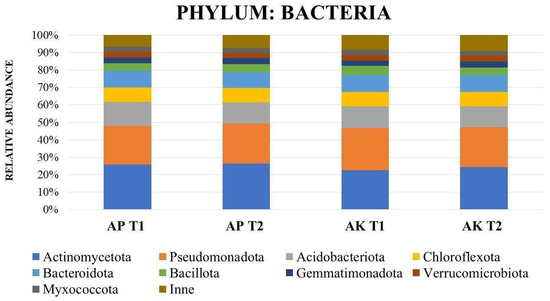
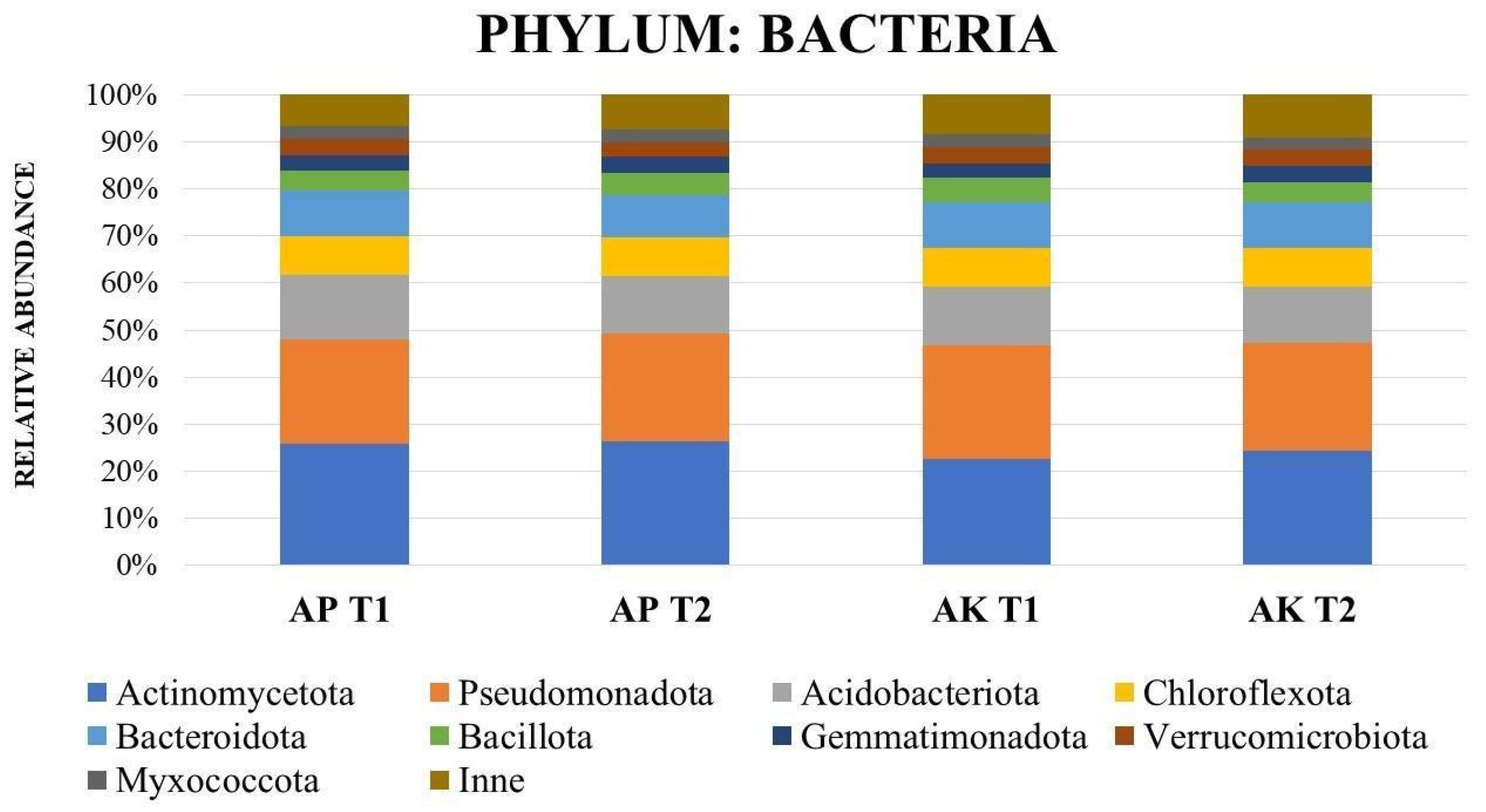
Bacterial community structure at the phylum level (TOP 10) showed that all combinations were dominated by Actinomycetota, Pseudomonadota, Acidobacteriota, Chloroflexota, Bacteroidota, Bacillota, Gemmatimonadota, Verrucomicrobiota, Myxococcota, and Nitrospirota, comprising the vast majority of the community. Actinomycetota and Pseudomonadota showed the highest relative abundance regardless of cultivation system or sampling time, indicating their stable dominance within the bacterial community.
In the AP intercropping system, changes in bacterial populations between sampling times T1 and T2 were minimal. Conversely, in the AK system, greater variability was observed, particularly for Gemmatimonadota and Verrucomicrobiota, whose relative abundances fluctuated more markedly between T1 and T2, indicating a more dynamic community. Less abundant phyla and unclassified sequences were grouped as “Other,” representing a minor fraction. Overall, the bacterial microbiome was largely dominated by a few key phyla (Figure 2).
Figure 2.
Relative percentage abundance of the top 10 bacterial types in soil (mean values from three replicates) (AK—control, monoculture; AP—intercropping cultivation; T1, T2—first and second soil sampling date).
Fungal alpha-diversity analysis revealed differences between cultivation systems. Samples collected from the intercropping system (AP) generally showed higher Shannon, Simpson, and Chao1 index values compared with the monoculture system (AK), indicating greater fungal richness and a more even distribution of fungal communities. Tukey’s HSD post hoc test confirmed significant differences between selected AP and AK samples. Overall, the results suggest that the intercropping system was associated with higher fungal alpha diversity compared with the monoculture system, although no clear differences in overall fungal community structure were detected (Table 4). Detailed statistical results are presented in Supplementary Tables S7 and S8.
Table 4.
Fungal community alpha-diversity calculated at the ASV level based on sequencing data.
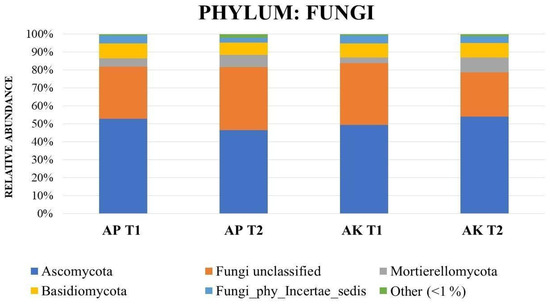
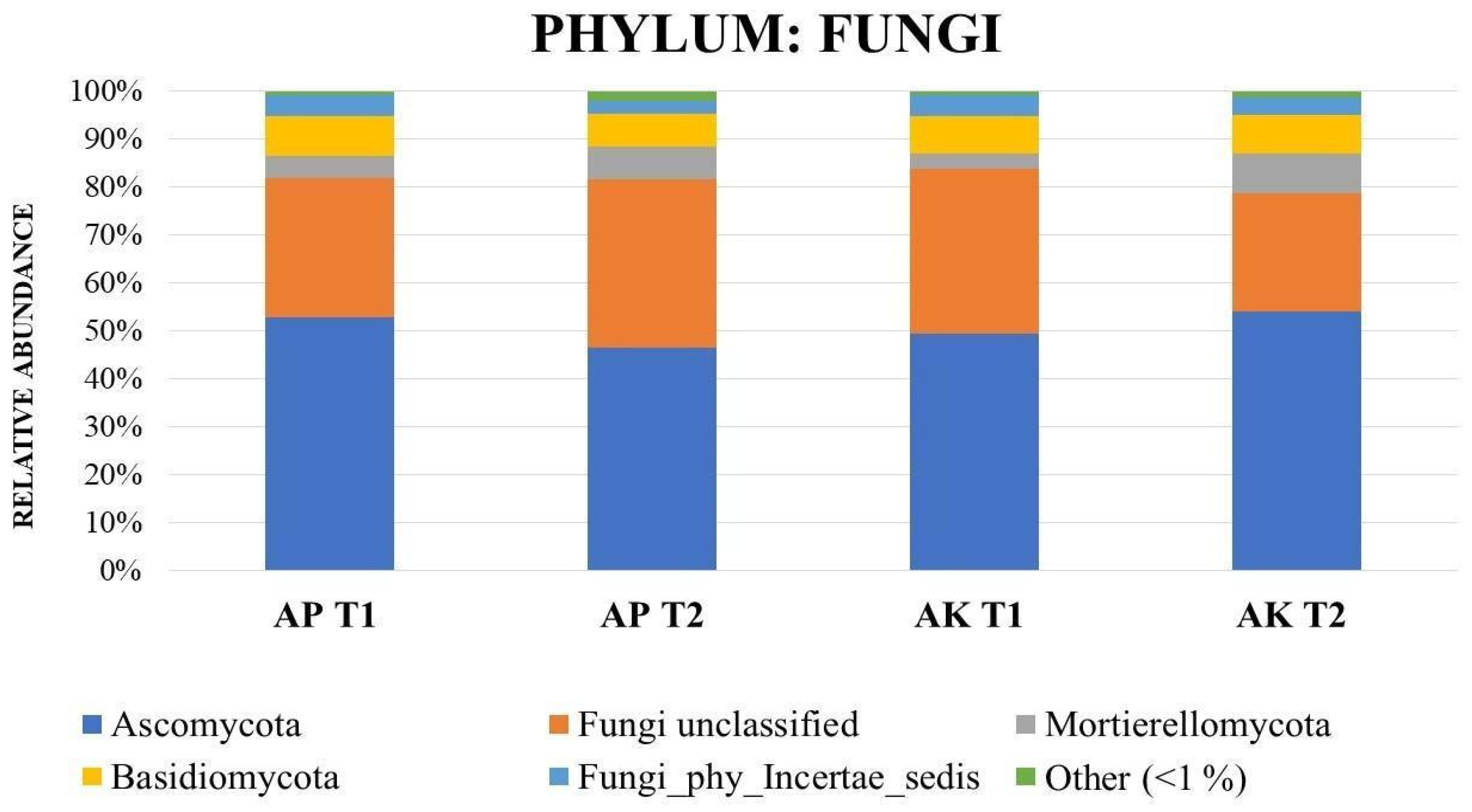
Taxonomic analysis of the ITS region revealed that Ascomycota was dominating in all sample variants (49.1–58.7%), with their relative abundance decreasing after harvest in the intercropping system (AP), while changes in the control system (AK) were less visible. Basidiomycota maintained a relatively stable abundance in both cultivation system or sampling dates. A considerable proportion of sequences were unclassified fungi, mainly at the second sampling (T2) after harvest in the AP cultivation system, indicating the presence of poorly characterized soil fungal groups. Mortierellomycota presented an increase in relative abundance after harvest, especially in the AK system, whereas the abundance of Fungi_phy_Incertae_sedis decreased in both systems. Other taxa were present at low levels (<1%) (Figure 3).
Figure 3.
Relative abundance of fungal taxa in soil samples, shown as the mean ± SD of three replicates (AK—control site; AP—intercropping; T1 and T2—first and second soil sampling dates).
Summary of Principal Component Analysis (PCA) of microbiota is presented in Table S9. Permanova analyses for bacteria and fungi community is presented in Figures S2 and S3.
3.4. Effect of Intercropping Cultivation on Mesofauna Abundance
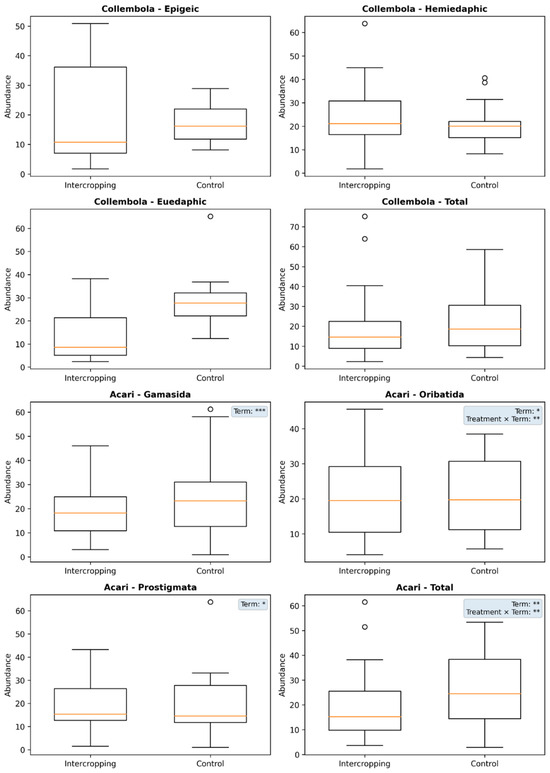
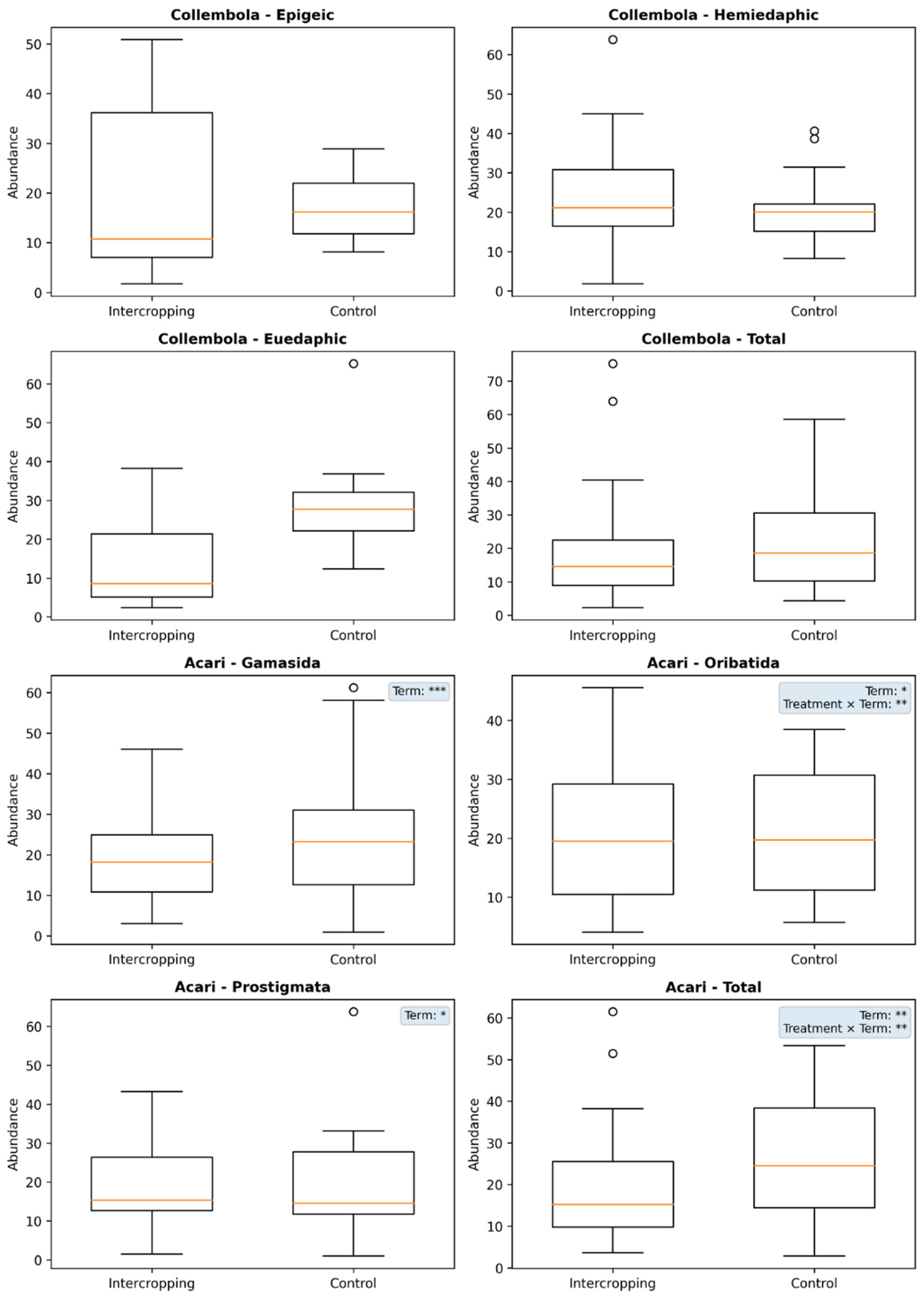
The abundance of most soil mesofauna groups was similar between the control and intercropping treatments (Figure 4; Table S10). No significant differences between treatments were detected for epigeic, hemiedaphic, euedaphic, or total Collembola abundance. Likewise, total Acari abundance did not differ significantly between treatments. Among mite groups, seasonal variation was more pronounced than treatment effects. Gamasida abundance changed significantly between sampling terms, with the highest values generally recorded in September. Prostigmata abundance also varied significantly across sampling dates. Oribatida showed clear temporal changes, and their seasonal dynamics differed between the control and intercropping treatments. A similar pattern was observed for total Acari abundance, where differences between treatments depended on the sampling term rather than on treatment alone.
Figure 4.
Abundance of soil mesofauna groups across sampling terms in control and intercropping treatments. Note: In the boxplots, the central line represents the median, the box represents the interquartile range (IQR), and whiskers extend to 1.5 × IQR. Points beyond the whiskers are shown as outliers. Statistical significance is denoted by asterisks: * p < 0.05, ** p < 0.01, and *** p < 0.001.
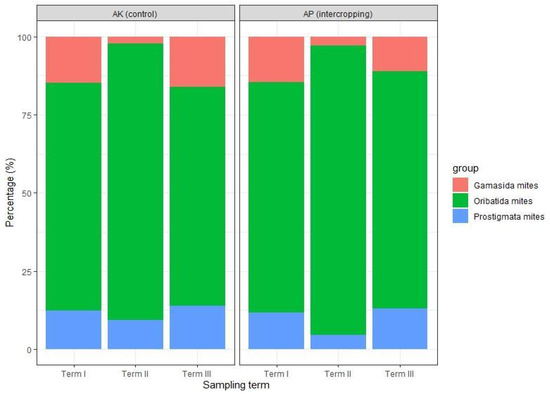
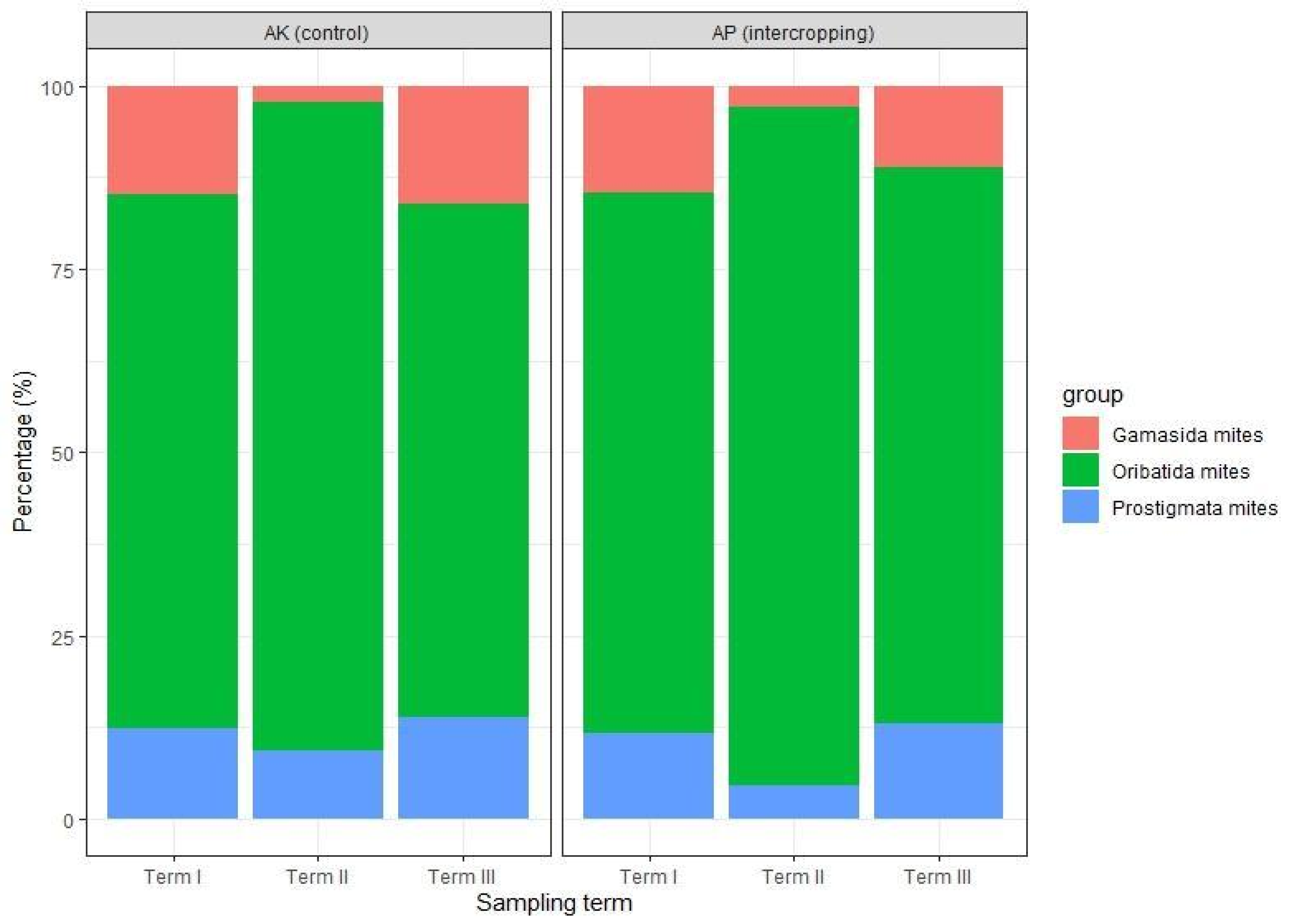
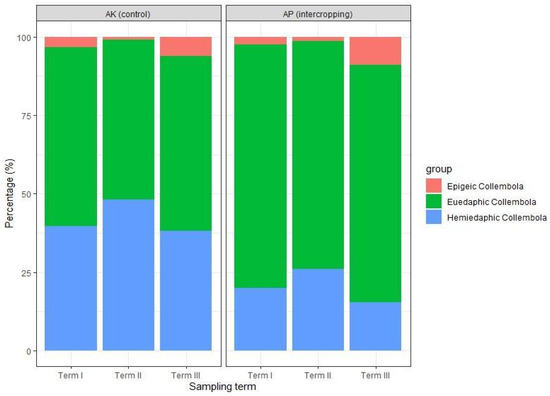
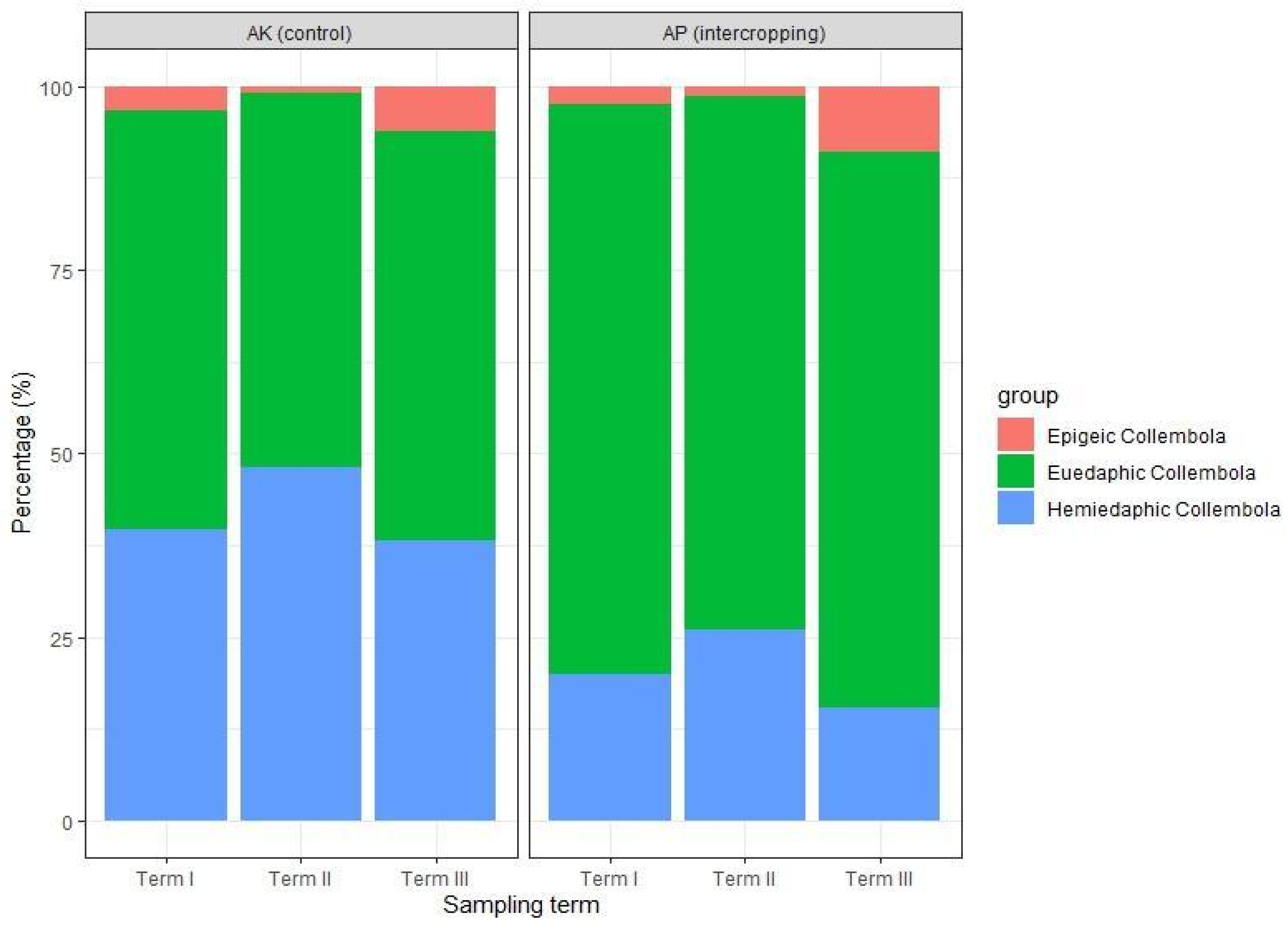
The analysis of relative contribution further indicates that treatment had limited effect on the structure of soil arthropod communities (Figure 5 and Figure 6). Among mites, Oribatida dominated the Acari community in both treatments, while Gamasida and Prostigmata constituted smaller proportions of the assemblage (Figure 5). The relative contributions of these groups were similar between control and intercropping plots. A similar pattern was observed for Collembola. Euedaphic Collembola clearly dominated the community in both treatments, followed by hemiedaphic forms, whereas epigeic Collembola represented only a minor fraction of the assemblage (Figure 6). The proportional structure of Collembola ecological groups did not differ noticeably between treatments.
Figure 5.
Relative contribution (%) of mite groups (Gamasida, Oribatida and Prostigmata) in control and intercropping treatments across three sampling terms (Term I–III). Bars represent the percentage share of each group in the total Acari community.
Figure 6.
Percentage composition of ecological groups of Collembola (epigeic, hemiedaphic and euedaphic) in control and intercropping treatments across three sampling terms (Term I–III). Stacked bars represent the proportional contribution of each ecological group to the total Collembola community.
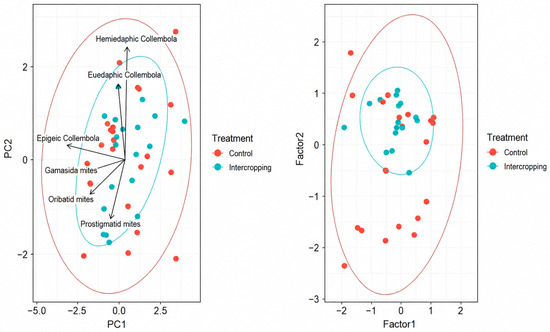
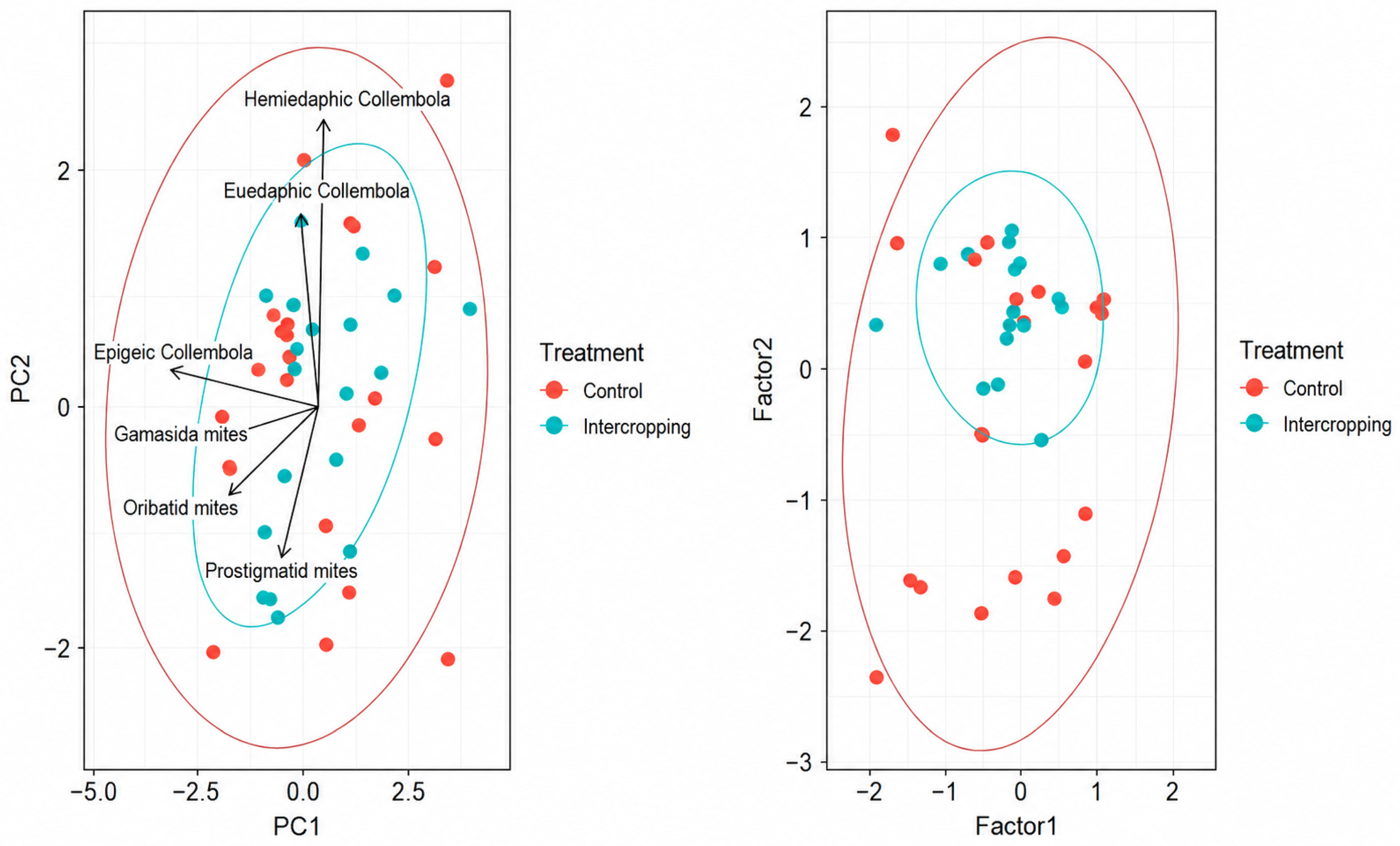
Principal component analysis revealed that the first two principal components explained a substantial proportion of the variability in soil microarthropod abundance (Table 5, Figure 7). PC1 accounted for 46.7% of the total variance, while PC2 explained an additional 22.4%, resulting in a cumulative variance of 69.1% for the first two axes. The PCA ordination diagram (Figure 7) did not show a clear separation between samples from the control and intercropping treatments. Points representing both treatments largely overlapped in the ordination space, indicating that treatment had no distinct effect on the overall structure of soil microarthropod communities. The distribution of taxa along the PCA axes suggests that euedaphic and hemiedaphic Collembola were associated with positive values of PC2, whereas most mite groups, particularly Oribatida and Prostigmata, were positioned toward the negative side of this axis (Figure 7). This pattern indicates that the main gradients in the dataset reflect differences between soil-dwelling Collembola and mite groups rather than treatment-related variation.
Table 5.
Variance explained by the factors in factorial analysis.
Figure 7.
Principal component analysis (PCA).
Factor analysis further confirmed these patterns. Two factors explained 57% of the total variance in the dataset (Table 6). Factor 1 accounted for 36.9% of the variance, whereas Factor 2 explained an additional 20.1%. According to the factor loadings (Table 6), Factor 1 was strongly associated with several arthropod groups, including Prostigmatid mites (0.830), Oribatid mites (0.731), epigeic Collembola (0.702), and Gamasida (0.659). This factor therefore represents a gradient related to the overall abundance of multiple soil arthropod groups. In contrast, Factor 2 was strongly dominated by euedaphic Collembola (0.966) and, to a lesser extent, hemiedaphic Collembola (0.459) (Table 6). This indicates that soil-dwelling Collembola form a distinct component of the soil fauna community. Consistent with the PCA results (Figure 7), the factor analysis indicates that variation in the dataset was mainly driven by ecological differences among soil arthropod groups rather than by the applied treatment.
Table 6.
Factor loadings after varimax rotation in factorial analysis.
3.5. Impact of Different Cultivation Systems on Weed Infestation in Spring Barley
The analysis of weed abundance at different sampling dates showed significantly lower weed density in the intercropping system at the beginning of tillering (BBCH 21) and at the medium milk stage (BBCH 75) compared with the conventional monoculture. After harvest, no significant differences in weed number were observed between the cultivation systems (Table 7). These results suggest that intercropping may limit weed establishment during the early stages of crop development, probably due to more efficient use of space by the crop, faster canopy closure, and increased competition for light, water, and nutrients.
Table 7.
Weed number (plants/m2) and dry biomass (g) during three growth stages of spring barley in 2025.
Following barley emergence, weed numbers were lower in the intercropping plots, and this difference remained visible during the growing season. At the milk ripeness stage, monoculture plots showed significantly higher weed density than intercropping plots. In contrast, weed dry biomass did not differ significantly between the cultivation systems, although numerically higher values were recorded in the monoculture treatment. This may indicate compensatory growth of the remaining weeds under lower plant density conditions.
The results indicate that the intercropping system may contribute to weed suppression, particularly during the early growth stages of spring barley. At the beginning of tillering stage (BBCH 21), Chenopodium album was the dominant weed species. Its number was significantly lower in the intercropping system (1.8 plants/m2) than in the monoculture system (14.0 plants/m2; p = 0.004).
A similar pattern was observed at the milk ripeness stage (BBCH 75). The number of C. album plants reached 14.2 plants/m2 in intercropping, whereas it was 28.0 plants/m2 in the control plots. This difference was also statistically significant, demonstrating a strong suppressive effect of intercropping on this species. In addition, the dry biomass of C. album at milk ripeness was significantly lower under intercropping conditions. These findings reinforce the potential of intercropping as a component of integrated and organic production systems aimed at reducing weed pressure without intensive herbicide application (Table 8). Capsella bursa-pastoris occurred more frequently in monoculture, likely reflecting its light-demanding nature, whereas Consolida regalis was more abundant in the intercropping system. However, the dry biomass of the dominant weed species did not differ significantly between treatments.
Table 8.
Number (plants/m2) and dry biomass (g) of dominant weed species at the medium milk stage of barley (BBCH 75) in 2025.
Following spring barley harvest, the stubble was primarily covered by Setaria viridis, Galinsoga parviflora, and Chenopodium album. No significant differences were found between intercropping systems in terms of either weed density or dry biomass. Setaria viridis and Galinsoga parviflora were more abundant in plots without paulownia, while the number of Chenopodium album plants remained comparable in both systems (Table 9).
Table 9.
Number (plants/m2) and dry biomass (g) of dominant weed species after barley harvest in 2025.
Greater weed species diversity was observed in the intercropping alley system, not dependent on the date of sampling (Table S11). Throughout all growth stages, Chenopodium album and Setaria viridis were the predominant species in both cropping systems. Following harvest, Galinsoga parviflora, Taraxacum officinale, and Artemisia vulgaris were recorded at similar levels. Notably, Artemisia vulgaris was also present at earlier developmental stages, particularly under monoculture conditions. At the medium milk stage of barley (BBCH 75), additional species were identified in the intercropping system, including Equisetum arvense, Raphanus raphanistrum, Bromus spp., and Viola arvensis. The weed flora comprised both annual and perennial species; however, their relatively low abundance suggests a competitive suppression effect of intercropping during the later stages of barley development. During the emergence phase, Geranium pusillum was detected in the intercropping plots. Moreover, Taraxacum officinale, Veronica hederifolia, Galinsoga parviflora, and Malva neglecta were also recorded.
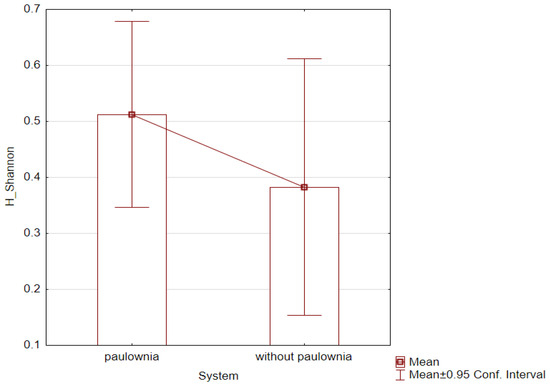
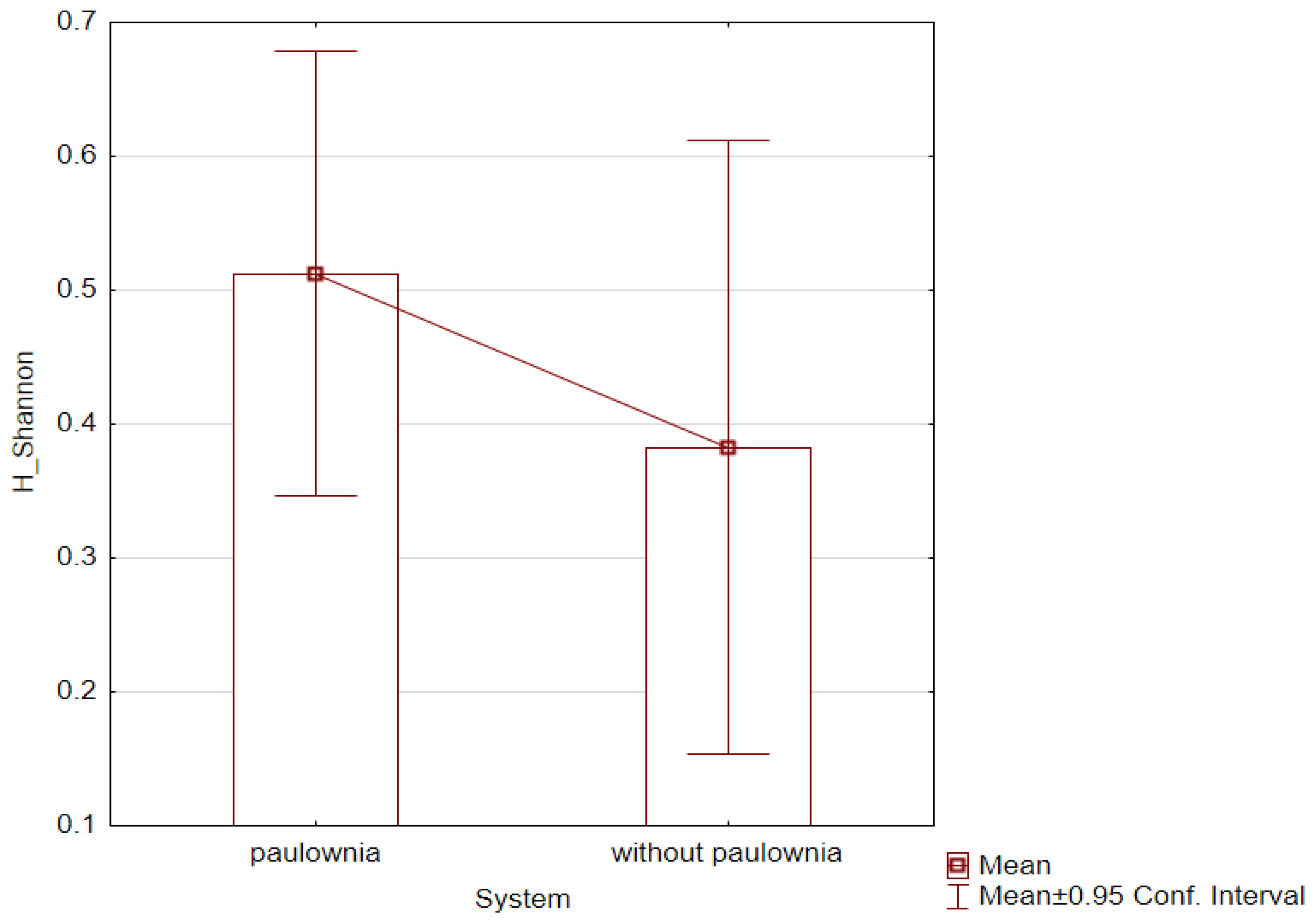
The Shannon–Wiener index was higher in the intercropping system, indicating greater weed species diversity and a more even species distribution compared with monoculture; however, the differences were not statistically significant (Figure 8).
Figure 8.
The Shannon-Wiener index in both cultivation systems.
3.6. Effect of Intercropping Cultivation on Biometric Traits and the Barley Yield
The type of cultivation system did not affect both the yield components as well as grain yield of spring barley (Table 10). The average grain yield was relatively high (7.1 t ha−1), particularly considering that no mineral fertilizers were applied during the experiment. Moreover, the plants showed no signs of disease or pest damage.
Table 10.
Grain yield of spring barley and yield component parameters (means for treatment combinations) in the 2025 season.
3.7. Selected Biometric Traits of Paulownia
Each year, the height of all Paulownia trees and the trunk circumference at 130 cm above ground level were recorded (Table 11).
Table 11.
Trunk circumference of Paulownia at 130 cm height in 2024–2025.
By the end of the 2024 growing season, the trunk circumference at 130 cm above ground measured 26.4 cm (Table 11), and the average tree height reached 514 cm (Table 12). Over the following year, tree height increased by about 111 cm, and trunk circumference at breast height expanded by 5.2 cm. Paulownia produced its first flowers in the fifth year after planting; however, they were damaged by frost in April 2024. Flowering was successfully observed again in spring 2025.
Table 12.
Tree height in the years 2023–2024–2025.
4. Discussion
The study examined the impact of intercropping paulownia with spring barley on the biodiversity of soil microorganisms, mesofauna, and weed species, focusing on their abundance and species composition. The findings suggest that the intercropping system modified selected components of agroecosystem biodiversity, particularly microbial alpha diversity and weed abundance, although responses varied among biological groups and many effects were not statistically significant at the community level.
4.1. Soil Moisture Content as a Factor Influencing Changes in Soil Properties
Soil moisture varied across sampling dates and cultivation systems. In March and June, higher soil moisture was recorded, whereas lower values were observed in the intercropping system during periods of intensive plant growth, which may reflect increased water uptake by both barley and Paulownia.
However, microbiological analyses were performed only at the beginning and end of the growing season. Therefore, short-term fluctuations in soil moisture during intermediate months could not be directly linked to microbial responses, and the relationship between soil moisture dynamics and microbial activity should be interpreted with caution.
Soil moisture is considered an important factor affecting microbial activity, nutrient mineralization, and nutrient availability in soil [20,21]. Therefore, the seasonal decrease in selected soil nutrients observed in the present study may have been influenced by both plant uptake and seasonal variability in soil moisture. However, because nutrient accumulation in plant biomass was not determined, the mechanisms responsible for these changes cannot be fully explained based on the present dataset.
In the present study, seasonal changes in soil organic carbon (SOC) content were observed, together with lower soil pH values in the intercropping system. Soil pH is considered an important factor influencing microbial activity and organic matter transformation processes [22]. In addition, temperature and soil moisture may affect microbial respiration and soil carbon dynamics, thereby contributing to seasonal variability in SOC content [23,24]. The observed changes in SOC may therefore reflect combined environmental and biological effects occurring during the growing season. However, because microbial carbon use efficiency and carbon accumulation in plant biomass were not determined, the mechanisms responsible for SOC dynamics cannot be fully resolved based on the obtained results.
4.2. Variety of Soil Microorganisms
Soil microorganisms play an important role in nutrient cycling and ecosystem functioning in agricultural systems. Intercropping systems may influence microbial diversity and activity through interactions between coexisting plant species [14].
In the present study, higher alpha-diversity indices were observed in the intercropping system (AP), which may indicate that increased environmental heterogeneity favored the occurrence of more diverse microbial communities. Similar observations have been reported in intercropping and agroforestry systems by Brooker et al. [2], Lacombe et al. [25], and Liu et al. [26].
Across both cultivation systems, Actinomycetota, Pseudomonadota, and Acidobacteriota were the dominant bacterial phyla, which is typical for agricultural soils [27,28]. However, beta-diversity analyses based on Bray–Curtis dissimilarity did not reveal statistically significant differences in the overall bacterial or fungal community structure between AP and AK systems. Similarly, PCoA analysis showed substantial overlap between microbial communities, suggesting that the intercropping system influenced the relative abundance of selected taxa rather than causing major restructuring of the soil microbiome.
The observed changes mainly involved moderate fluctuations in the relative abundance of individual taxa while the dominant microbial groups remained similar between cultivation systems, which is consistent with the core microbiome concept described by Shade and Handelsman [29] and Toju et al. [30]. In both systems, Ascomycota and Basidiomycota remained the dominant fungal phyla, which are commonly associated with organic matter decomposition and soil functioning [31].
Overall, the findings suggest that the intercropping system was associated with higher microbial alpha diversity and moderate shifts in the abundance of selected microbial taxa, although no clear differences in the overall microbial community structure were detected under the studied conditions.
4.3. Biodiversity of Soil Mesofauna
Soil mesofauna constitutes an important component of belowground biodiversity and participates in processes related to organic matter decomposition and nutrient cycling [32,33]. Collembola and Acari are commonly used as bioindicators because they respond relatively rapidly to environmental changes associated with agricultural management practices [34,35]. Although no community-level treatment effect was detected, the intercropping system was associated with significantly lower abundance of Gamasida and Prostigmata during selected sampling periods.
In the present study, no clear treatment effect on the overall abundance and structure of soil mesofauna was observed. PCA analysis additionally indicated substantial overlap between cultivation systems, suggesting that variation in mesofauna communities was driven mainly by temporal and ecological differences among arthropod groups rather than by the intercropping treatment itself. Previous studies have shown that agroforestry and intercropping systems may influence soil mesofauna through changes in litter accumulation, soil moisture, and habitat heterogeneity. Badejo et al. [36] reported higher abundances of Collembola in agroforestry systems, whereas Doblas-Miranda et al. [37] observed relationships between tree root biomass and the distribution of Oribatida. However, these effects were not always consistent across soil arthropod groups.
The limited response of soil mesofauna observed in the present study may be related to the relatively early developmental stage of the agroforestry system established in 2019. Therefore, stronger effects on soil faunal communities may occur in subsequent years as the system becomes more structurally complex and organic matter accumulation increases.
4.4. Weeds Biodiversity
High biodiversity within agricultural landscapes is increasingly considered an important component of sustainable farming systems [38]. In the present study, Chenopodium album and Setaria viridis were the dominant weed species across the analyzed growth stages, whereas after harvest additional species such as Galinsoga parviflora, Taraxacum officinale, and Artemisia vulgaris were observed.
The intercropping system was associated with significantly lower weed density during the early growth stages of barley, particularly for Chenopodium album, although differences in weed biomass were not statistically significant. Similar observations concerning the influence of crop diversification and crop rotation on weed communities have been reported by Adamiak and Zawiślak [39].
Previous studies indicate that intercropping systems may reduce weed pressure through increased competition for light, water, and nutrients [40,41]. At the same time, greater weed species diversity may contribute to selected ecosystem services, including support for pollinators and other beneficial organisms [42,43]. However, the ecological role of weeds in agroecosystems should be considered together with their potential competition with crops for environmental resources.
The results indicate that the intercropping system mainly influenced weed abundance during the early developmental stages of barley, whereas its effect on weed biomass and overall species diversity remained limited under the studied conditions.
4.5. Effect of Intercropping System on the Spring Barley Yield and Its Component
In the present study, the cultivation system did not significantly affect spring barley yield or its biometric traits. Although grain yield was numerically lower in the intercropping system (AP), the differences were not statistically significant. Similar observations for buckwheat cultivated previously in the same agroforestry system were reported by [15].
Previous studies indicate that yield responses in intercropping systems are highly context-dependent and may vary depending on species composition, environmental conditions, and competition for resources [3,4]. In some agroforestry systems, competition for light and water may reduce crop productivity [8,9].
In our experiment, lower soil moisture in the intercropping system was observed mainly during the period of intensive Paulownia growth. However, this did not translate into statistically significant reductions in barley yield. The relatively high grain yields obtained despite the absence of mineral fertilization may partly reflect favorable weather conditions and relatively high initial soil fertility.
Overall, the obtained results suggest that the Paulownia–barley intercropping system did not significantly modify barley productivity under the studied conditions. However, further long-term studies are needed to better evaluate potential competitive interactions and productivity dynamics as the agroforestry system matures.
4.6. Practical and Economic Considerations
The practical implementation of Paulownia-based agroforestry systems depends on both environmental and economic conditions. Paulownia is characterized by rapid biomass accumulation and may provide additional long-term income from timber or biomass production, while annual crops such as barley allow continuous agricultural production during tree establishment. Previous studies indicate that the productivity and profitability of agroforestry systems are strongly context-dependent and influenced by climatic conditions, soil properties, tree density, management intensity, and market conditions [3,4,5,9].
In the present study, the intercropping system did not significantly reduce barley yield, while lower weed abundance observed during selected developmental stages may potentially contribute to reduced weed management intensity. However, the establishment of Paulownia plantations requires relatively high initial investment costs and appropriate site conditions, particularly with respect to temperature and water availability [44,45].
In Central and Eastern Europe, the long-term productivity and economic performance of Paulownia-based agroforestry systems still require further evaluation under local climatic conditions. Therefore, although the obtained results suggest potential environmental benefits of the studied system, additional long-term studies integrating agronomic, ecological, and economic analyses are necessary before broad practical recommendations can be formulated.
5. Conclusions
The obtained results indicate that the intercropping system of Paulownia with spring barley had a variable influence on the studied components of the agroecosystem. The intercropping treatment was associated with higher bacterial alpha diversity and moderate changes in the abundance of selected microbial taxa; however, no statistically significant differences in the overall bacterial or fungal community structure were detected between cultivation systems.
The intercropping system also influenced selected components of weed communities, including reduced abundance of dominant weed species during some developmental stages of barley, while its effect on total weed biomass and overall species diversity remained limited. In the case of soil mesofauna, the response depended on the ecological characteristics of individual arthropod groups, and no clear treatment effect on the overall mesofauna community structure was observed.
Importantly, the intercropping system did not result in statistically significant reductions in barley yield or biometric traits under the studied conditions. At the same time, the observed responses were strongly dependent on sampling period and environmental conditions, indicating considerable temporal variability within the agroecosystem.
Overall, the obtained findings suggest that Paulownia–barley intercropping may modify selected biological components of the agroecosystem without negatively affecting crop productivity in the early stage of system development. However, further long-term studies integrating agronomic, ecological, and economic analyses are necessary to better understand the stability and practical applicability of this agroforestry system under different environmental conditions.
Supplementary Materials
The following supporting information can be downloaded at: https://www.mdpi.com/article/10.3390/su18126028/s1, Figure S1: Residual diagnostic plots of selected response variables based on DHARMa simulations; Figure S2: Bacterial community structure. Principal Coordinates Analysis (PCoA) based on Bray–Curtis dissimilarity showing bacterial community structure associated with the AP and AK systems. PERMANOVA analysis did not reveal statistically significant differences between the studied systems (F = 1.622, R2 = 0.13957, p = 0.199); Figure S3: Fungal community structure. Principal Coordinates Analysis (PCoA) based on Bray–Curtis dissimilarity showing fungal community structure associated with the AP and AK systems. PERMANOVA analysis did not reveal statistically significant differences between the studied systems (F = 0.973, R2 = 0.08863, p = 0.368); Table S1: Sequencing depth and quality-filtering statistics for bacterial 16S rRNA datasets; Table S2: Sequencing depth and quality-filtering statistics for fungal ITS datasets; Table S3: Comparison of alternative generalized linear models and diagnostic statistics for soil mesofauna abundance data; Table S4: Development of Paulownia and Spring Barley in 2025; Table S5: Two-way ANOVA results for bacterial alpha diversity indices; Table S6: Effect size analysis (Cohen’s d) for alpha diversity indices of bacterial communities; Table S7: Results of two-way ANOVA for alpha diversity indices of fungal communities; Table S8: Effect size analysis (Cohen’s d) for alpha diversity indices of fungal communities; Table S9: Summary of Principal Component Analysis (PCA); Table S10: Effects of treatment, sampling date (Term), block, and their interaction on the abundance of soil microarthropods (GLM, quasi-Poisson); Table S11: List of all weed species observed during three growth stages of spring barley in 2025.
Author Contributions
Conceptualization, M.L., A.J.-R., E.G. and M.W.; methodology, M.L., E.G., A.J.-R., P.K., E.T., I.G., J.T., P.K. and M.W.; software, D.Z., A.J.-R., M.W. and I.G.; validation, M.L., A.J.-R., E.G. and M.W.; formal analysis, M.L., A.J.-R., E.G., M.W., D.Z., I.G., J.T., E.T., P.K. and B.G.; investigation, M.L., M.W., A.J.-R., E.G., E.T., J.T. and I.G.; resources, M.W., A.J.-R., E.G. and M.L.; data curation, M.L., M.W., A.J.-R., E.G., J.T., I.G., E.T., P.K. and B.G.; writing—original draft preparation, M.L., M.W., A.J.-R. and E.G.; writing—review and editing, M.L., M.W., A.J.-R., E.G., E.T., J.T., I.G., P.K., B.G. and D.Z.; visualization, M.L., M.W., E.G., A.J.-R. and P.K.; supervision, M.L., A.J.-R., M.W., E.G. and J.T.; project administration, A.J.-R., M.L., E.G. and M.W.; funding acquisition, M.L. All authors have read and agreed to the published version of the manuscript.
Funding
This work was supported by the Wroclaw University of Environmental and Life Sciences (Poland) as part of the research project No. N090/0008/2024.
Institutional Review Board Statement
Not applicable.
Informed Consent Statement
Not applicable.
Data Availability Statement
The original contributions presented in this study are included in the article/Supplementary Materials. Further inquiries can be directed to the corresponding authors.
Conflicts of Interest
The authors declare no conflicts of interest.
References
- Borek, R. Agroforestry systems in Poland: A preliminary identification. Pap. Glob. Change IGBP 2015, 22, 37–51. [Google Scholar] [CrossRef] [Scilit]
- Brooker, R.W.; Bennett, A.E.; Cong, W.F.; Daniell, T.J.; George, T.S.; Hallett, P.D.; Hawes, C.; Iannetta, P.P.; Jones, H.G.; Karley, A.J.; et al. Improving intercropping: A synthesis of research in agronomy, plant physiology and ecology. New Phytol. 2015, 206, 107–117. [Google Scholar] [CrossRef] [Scilit]
- Thevathasan, N.; Gordon, A. Ecology of tree intercropping systems in the north temperate region: Experiences from southern Ontario, Canada. Agrofor. Syst. 2004, 61, 257–268. [Google Scholar] [CrossRef] [Scilit]
- Iverson, A.L.; Marín, K.K.; Ennis, D.J.; Gonthier, B.T.; Connor Barrie, J.L.; Remfert, B.J.; Cardinale, I.; Perfecto, I. Do polycultures promote win wins or trade-offs in agricultural ecosystem services? A meta-analysis. J. Appl. Ecol. 2014, 51, 1593–1602. [Google Scholar] [CrossRef] [Scilit]
- Mosquera-Losada, M.R.; Santiago-Freijanes, J.J.; Rois-Díaz, M.; Moreno, G.; den Herder, M.; Aldrey-Vázquez, J.A.; Ferreiro-Domínguez, N.; Pantera, A.; Pisanelli, A.; Rigueiro-Rodríguez, A. Agroforestry in Europe: A Land Management Policy Tool to Combat Climate Change. Land Use Policy 2018, 78, 603–613. [Google Scholar] [CrossRef] [Scilit]
- Kay, S.; Graves, A.; Palma, J.H.N.; Moreno, G.; Roces-Díaz, J.V.; Aviron, S.; Chouvardas, D.; Crous-Duran, J.; Ferreiro-Domínguez, N.; García de Jalón, S.; et al. Agroforestry Is Paying Off—Economic Evaluation of Ecosystem Services in European Landscapes with and without Agroforestry Systems. Ecosyst. Serv. 2019, 36, 100896. [Google Scholar] [CrossRef] [Scilit]
- Niedźwiecki, J. Ocena aktualnego stanu żyzności gleb w Polsce [Assessment of the current state of soil fertility in Poland]. In Ochrona Bioróżnorodności Gleby Warunkiem Zdrowia Obecnych i Przyszłych Pokoleń [Protection of Soil Biodiversity as a Condition for the Health of Present and Future Generations]; Podleśny, J., Kowalska, B., Eds.; IUNG-PIB: Puławy, Poland, 2019; pp. 11–32. [Google Scholar]
- Qiao, X.; Sai, L.; Chen, X.; Xue, L.; Lei, J. Impact of fruit tree shade intensity on the growth, yield, and quality of intercropped wheat. PLoS ONE 2019, 14, e0203238. [Google Scholar] [CrossRef] [Scilit] [PubMed]
- Miller, A.W.; Pallardy, S.G. Resource competition across the crop tree interface in a maize silver maple temperate alley cropping stand in Missouri. Agrofor. Syst. 2001, 53, 247–259. [Google Scholar] [CrossRef] [Scilit]
- Zhao, Y.; Lundgren, M.R. Potential drivers of fast growth in Paulownia. Plants People Planet 2026, 8, 516–529. [Google Scholar] [CrossRef] [Scilit]
- Halarewicz, A.; Liszewski, M.; Bąbelewski, P.; Bączek, P. Allelopathic effects of Paulownia tomentosa and hybrid P. elongata × P. fortunei on Sinapis alba, Festuca pratensis and Poa pratensis. Allelopath. J. 2018, 43, 83–92. [Google Scholar] [CrossRef] [Scilit]
- GUS. Uprawy Rolne i Ogrodnicze. 2025. Available online: https://stat.gov.pl/obszary-tematyczne/rolnictwo-lesnictwo/uprawy-rolne-i-ogrodnicze/ (accessed on 27 March 2026).
- Liszewski, M. Reakcja Dwóch Form Jęczmienia Jarego Pastewnego na Zróżnicowanie Technologii Uprawy [Response of Two Forms of Spring Feed Barley to Different Cultivation Technologies]; Wydawnictwo Uniwersytetu Przyrodniczego we Wrocławiu: Wrocław, Poland, 2008; Volume 565, p. 108. [Google Scholar]
- Woźniak, M.; Liszewski, M.; Jama-Rodzeńska, A.; Gębarowska, E.; Siebielec, M.; Kaczmarek, A.; Gałka, B.; Zalewski, D.; Bąbelewski, P. Effect of Paulownia and buckwheat intercropping on soil microbial biodiversity, dehydrogenase activity, and glomalin-related soil protein. Agronomy 2025, 15, 888. [Google Scholar] [CrossRef] [Scilit]
- Chorbiński, P.; Liszewski, M.; Bąbelewski, P.; Jama-Rodzeńska, A. The impact of buckwheat and Paulownia intercropping on beekeeping value and buckwheat yield. Sci. Rep. 2024, 14, 21490. [Google Scholar] [CrossRef] [Scilit]
- IUSS Working Group WRB. World Reference Base for Soil Resources, 4th ed.; International Union of Soil Sciences: Vienna, Austria, 2022. [Google Scholar]
- Yin, R.; Gruss, I.; Eisenhauer, N.; Kardol, P.; Thakur, M.P.; Schmidt, A.; Xu, Z.; Siebert, J.; Zhang, C.; Wu, G.-L.; et al. Land use modulates the effects of climate change on density but not community composition of Collembola. Soil Biol. Biochem. 2019, 138, 107598. [Google Scholar] [CrossRef] [Scilit]
- TIBCO Software Inc. Statistica, Version 13; TIBCO Software Inc.: Palo Alto, CA, USA, 2017. [Google Scholar]
- Thukral, A.K. A review on measurement of alpha diversity in biology. Agric. Res. J. 2017, 54, 1–10. [Google Scholar] [CrossRef] [Scilit]
- Moyano, F.E.; Manzoni, S.; Chenu, C. Responses of soil heterotrophic respiration to moisture availability: An exploration of processes and models. Soil Biol. Biochem. 2013, 59, 72–85. [Google Scholar] [CrossRef] [Scilit]
- Giacometti, C.; Demyan, M.S.; Cavani, L.; Marzadori, C.; Ciavatta, C.; Kandeler, E. Chemical and microbiological soil quality indicators and their potential to differentiate fertilization regimes in temperate agroecosystems. Appl. Soil Ecol. 2013, 64, 32–48. [Google Scholar] [CrossRef] [Scilit]
- Silva-Sánchez, A.; Soares, M.; Rousk, J. Testing the dependence of microbial growth and carbon use efficiency on nitrogen availability, pH, and organic matter quality. Soil Biol. Biochem. 2019, 134, 25–35. [Google Scholar] [CrossRef] [Scilit]
- Bosatta, E.; Ågren, G.I. Soil organic matter quality interpreted thermodynamically. Soil Biol. Biochem. 1999, 31, 1889–1891. [Google Scholar] [CrossRef] [Scilit]
- Frey, S.D.; Lee, J.; Melillo, J.M.; Six, J. The temperature response of soil microbial efficiency and its feedback to climate. Nat. Clim. Change 2013, 3, 395–398. [Google Scholar] [CrossRef] [Scilit]
- Lacombe, S.; Bradley, R.L.; Hamel, C.; Beaulieu, C. Do tree-based intercropping systems increase the diversity and stability of soil microbial communities? Agric. Ecosyst. Environ. 2009, 131, 25–31. [Google Scholar] [CrossRef] [Scilit]
- Liu, J.; Zhang, W.; Teng, C.; Pang, Z.; Peng, Y.; Qiu, J.; Lei, J.; Su, X.; Zhu, W.; Ding, C. Intercropping changed the soil microbial community composition but no significant effect on alpha diversity. Front. Microbiol. 2024, 15, 1370996. [Google Scholar] [CrossRef] [Scilit]
- Fierer, N.; Leff, J.W.; Adams, B.J.; Nielsen, U.N.; Bates, S.T.; Lauber, C.L.; Caporaso, J.G. Cross-biome metagenomic analyses of soil microbial communities and their functional attributes. Proc. Natl. Acad. Sci. USA 2012, 109, 21390–21395. [Google Scholar] [CrossRef] [Scilit]
- Delgado-Baquerizo, M.; Oliverio, A.M.; Brewer, T.E.; Benavent-González, A.; Eldridge, D.J.; Bardgett, R.D.; Maestre, F.T.; Singh, B.K.; Fierer, N. A global atlas of the dominant bacteria found in soil. Science 2018, 359, 320–325. [Google Scholar] [CrossRef] [Scilit]
- Shade, A.; Handelsman, J. Beyond the Venn diagram: The hunt for a core microbiome. Environ. Microbiol. 2012, 14, 4–12. [Google Scholar] [CrossRef] [Scilit]
- Toju, H.; Peay, K.G.; Yamamichi, M.; Narisawa, K.; Hiruma, K.; Naito, K.; Fukuda, S.; Ushio, M.; Nakaoka, S.; Onoda, Y.; et al. Core microbiomes for sustainable agroecosystems. Nat. Plants 2018, 4, 247–257. [Google Scholar] [CrossRef] [Scilit]
- Manici, L.M.; Caputo, F.; De Sabata, D.; Fornasier, F. The enzyme patterns of Ascomycota and Basidiomycota fungi reveal their different functions in soil. Appl. Soil Ecol. 2024, 196, 105323. [Google Scholar] [CrossRef] [Scilit]
- Neher, D.A.; Barbercheck, M.E. Diversity and function of soil mesofauna. In Biodiversity in Agroecosystems; CRC Press: Boca Raton, FL, USA, 1998; pp. 27–47. [Google Scholar]
- Santorufo, L.; Van Gestel, C.A.M.; Rocco, A.; Maisto, G. Soil invertebrates as bioindicators of urban soil quality. Environ. Pollut. 2012, 161, 57–64. [Google Scholar] [CrossRef] [Scilit]
- Eggleton, P.; Inward, K.; Smith, J.; Jones, D.T.; Sheratt, T. Evaluation of mesofauna communities as soil quality indicators in a national-level monitoring programme. Soil Biol. Biochem. 2018, 116, 67–76. [Google Scholar] [CrossRef] [Scilit]
- Ponge, J.F.; Pérès, G.; Guernion, M.; Ruiz-Camacho, N.; Cortet, J.; Pernin, C.; Villenave, C.; Chaussod, R.; Martin-Laurent, F.; Bispo, A.; et al. The impact of agricultural practices on soil biota: A regional study. Soil Biol. Biochem. 2013, 67, 271–284. [Google Scholar] [CrossRef] [Scilit]
- Badejo, M.A.; Nathaniel, T.I.; Tian, G. Abundance of springtails (Collembola) under four agroforestry tree species with contrasting litter quality. Biol. Fert. Soils 1998, 27, 15–20. [Google Scholar] [CrossRef] [Scilit]
- Doblas-Miranda, E.; Paquette, A.; Work, T.T. Intercropping trees’ effect on soil oribatid diversity in agro-ecosystems. Agrofor. Syst. 2014, 88, 671–678. [Google Scholar] [CrossRef] [Scilit]
- Feledyn-Szewczyk, B. Wpływ Sposobu Użytkowania Gruntów na Różnorodność Gatunkową Flory Segetalnej (The Influence of Land Use Management on the Species Diversity of Segetal Flora). Ph.D. Thesis, Institute of Soil Science and Plant Cultivation, Puławy, Poland, 2013. [Google Scholar]
- Adamiak, E.; Zawiślak, K. Fitocenozy chwastów jęczmienia jarego uprawianego w płodozmianie i w wieloletniej monokulturze [Weed Phytocoenoses of Spring Barley Cultivated in Crop Rotation and Long-Term Monoculture]. In Synteza i Perspektywa Nauki o Płodozmianach, Cz. II [Synthesis and Perspectives of Crop Rotation Science, Part II]; ART Olsztyn—YSZ Brno: Olsztyn, Poland; Brno, Czech Republic, 1991; pp. 197–205. [Google Scholar]
- Kiavash, A.; Hoseini, S.M.B.; Oveisi, M. Evaluation of intercropping buckwheat and cowpea in improving yield and weed control under deficit irrigation conditions. Crop Prod. J. 2024, 17, 123–124. [Google Scholar] [CrossRef]
- Booth, B.D.; Swanton, C.J. Assembly theory applied to weed communities. Weed Sci. 2002, 50, 2–13. [Google Scholar] [CrossRef] [Scilit]
- Adeux, G.; Vieren, E.; Carlesi, S.; Bàrberi, P.; Munier Jolain, N.; Cordeau, S. Mitigating crop yield losses through weed diversity. Nat. Sustain. 2019, 2, 1018–1026. [Google Scholar] [CrossRef] [Scilit]
- Holzschuh, A.; Steffan Dewenter, I.D.; Kleijn, D.; Tscharntke, T. Diversity of flower visiting bees in cereal fields: Effects of farming system, landscape composition and regional context. J. Appl. Ecol. 2007, 44, 41–49. [Google Scholar] [CrossRef] [Scilit]
- McKay, H. Short Rotation Forestry: Review of Growth and Environmental Impacts. For. Res. Monogr. 2011, 2, 1–212. [Google Scholar]
- Akyildiz, M.H.; Kol, H.S. Some technological properties and uses of Paulownia (Paulownia tomentosa Steud.) wood. J. Environ. Biol. 2010, 31, 351–355. [Google Scholar] [PubMed]

Disclaimer/Publisher’s Note: The statements, opinions and data contained in all publications are solely those of the individual author(s) and contributor(s) and not of MDPI and/or the editor(s). MDPI and/or the editor(s) disclaim responsibility for any injury to people or property resulting from any ideas, methods, instructions or products referred to in the content. |
© 2026 by the authors. Licensee MDPI, Basel, Switzerland. This article is an open access article distributed under the terms and conditions of the Creative Commons Attribution (CC BY) license.