1. Introduction
Urban water and wastewater conveyance systems are essential components of municipal infrastructure, but their long-term operation is often constrained by chemical and microbiologically influenced corrosion [
1,
2,
3]. Such corrosion can weaken pipe materials, promote leakage, deteriorate conveyed water quality, and increase maintenance requirements. With the increasing use of reclaimed water as an alternative water resource [
4], corrosion control in reclaimed-water distribution and reuse pipelines has become an important issue for sustainable urban water management. Compared with conventional drinking water, reclaimed water usually contains higher levels of residual nutrients, biodegradable organic matter, disinfectant residuals, and diverse microbial communities [
5,
6]. These characteristics can create distinct pipe-wall microenvironments and may lead to corrosion behavior that differs from that observed in conventional water-supply systems.
Previous studies have reported corrosion problems in cast iron pipelines conveying reclaimed water [
7]. In these systems, microbial attachment and biofilm development are often more active than in conventional water-supply pipelines, particularly under hydraulic and water-quality conditions that favor nutrient transformation and surface colonization [
8]. Biofilms may accelerate or suppress corrosion depending on their structure, dominant functional groups, extracellular polymeric substances, and stages of development. For example, sulfate-reducing bacteria and other corrosion-associated microorganisms can affect local redox gradients and sulfur cycling, including SO
42− transformation, thereby contributing to microbiologically influenced corrosion [
9]. Nevertheless, microbial effects are not uniform across taxa, and biofilm-related corrosion should be interpreted in relation to the functional potential, local water chemistry, and corrosion-scale structure [
10,
11]. Recent studies further emphasized that biofilm-associated corrosion remains a major challenge in reclaimed-water distribution systems because residual nutrients and microbial colonization may enhance MIC development and corrosion heterogeneity [
12,
13].
Water chemistry is another major factor controlling corrosion in reclaimed-water pipelines [
14]. Parameters such as pH, dissolved oxygen (DO), alkalinity, hardness, chloride, sulfate, residual chlorine, and biodegradable organic matter can jointly influence iron release, corrosion-product stability, and microbial attachment. In the pH range relevant to many reclaimed-water systems, Fe
2+ oxidation is governed by pH, DO, and reaction kinetics rather than by pH alone. The oxidation of Fe
2+ is commonly expressed as −d[Fe
2+]/dt = k[Fe
2+][O
2][OH
−]
2, indicating that higher OH
− concentrations can promote Fe
2+ oxidation under otherwise comparable conditions [
15]. However, actual corrosion behavior also depends on mass transfer, local scale structure, microbial activity, and the stability of Fe(II)- and Fe(III)-containing corrosion products [
16,
17].
The structure and composition of iron corrosion products in water distribution systems are complex. Herro and Port proposed a multilayer corrosion-scale model consisting of a basal corrosion layer, a porous inner region, a relatively compact shell, and an outer surface layer [
18]. Subsequent studies have identified corrosion-scale constituents such as α-FeOOH, γ-FeOOH, Fe
3O
4, γ-Fe
2O
3, Fe(OH)
2, Fe(OH)
3, and green rusts in iron pipe tubercles [
19]. SEM-based observations have also revealed pitting, cracking, flower-like structures, sandy crystals, and other heterogeneous corrosion morphologies. These findings show that corrosion products are not only passive deposits; rather, they can regulate oxygen diffusion, ion transport, microbial colonization, and the subsequent corrosion process [
20].
Although the morphology and mineral composition of corrosion products under different water-quality conditions have been widely investigated [
21,
22], many studies have relied on small-scale reactors, short operating periods, or direct sampling from existing pipelines after corrosion products have already matured [
23,
24]. As a result, the temporal evolution of corrosion-product morphology in pilot-scale reclaimed-water pipelines remains insufficiently clarified. This gap limits the ability to identify stage-specific corrosion mechanisms and to propose targeted corrosion-control strategies during different phases of pipeline operation.
Recent corrosion-assessment studies have introduced corrosion indices, statistical models, response-surface methods, image-based monitoring, and machine-learning approaches. Recent reviews also have highlighted the increasing use of intelligent monitoring methods, electrochemical monitoring, and data-driven corrosion diagnosis for pipeline systems, providing new opportunities for dynamic corrosion assessment and risk prediction [
25]. These methods are useful for estimating corrosion tendencies or predicting corrosion rates, but they generally emphasize the magnitude of corrosion rather than the dynamic direction of change. In practice, however, whether corrosion is accelerating or decelerating is also important for risk diagnosis and maintenance planning.
The corrosion rate remains the primary indicator used to evaluate material loss in pipeline systems. Conventionally, corrosion severity is assessed according to the magnitude of the rate over a given exposure interval: a higher rate indicates more severe material loss, whereas a lower rate suggests milder corrosion. This approach is necessary but incomplete. A low corrosion rate that continues to increase may represent an emerging risk, while a high rate that is declining may indicate partial stabilization of the pipe-wall environment.
This issue is particularly relevant because pipeline corrosion often fluctuates over time. Identical corrosion rates measured at different time points may correspond to different dynamic states: both points may be located in an accelerating phase, both in a decelerating phase, or one in an accelerating phase and the other in a decelerating one. These scenarios have different implications for future corrosion risk, showing that the corrosion rate alone cannot fully describe stage transitions in a dynamic pipe-wall system.
To address this limitation, this study uses corrosion acceleration (CA), defined as the temporal change in the corrosion rate, as an auxiliary diagnostic indicator. Mathematically, CA represents the first derivative of the corrosion rate and may also be regarded as the second derivative of cumulative corrosion loss with respect to time. The purpose of CA is not to propose a new corrosion mechanism, but to introduce rate-of-change information into the interpretation of corrosion-stage evolution. When combined with the corrosion rate, water-quality variation, SEM morphology, and microbial community data, CA can help distinguish whether a pipeline section is entering a more active corrosion phase or moving toward temporary stabilization.
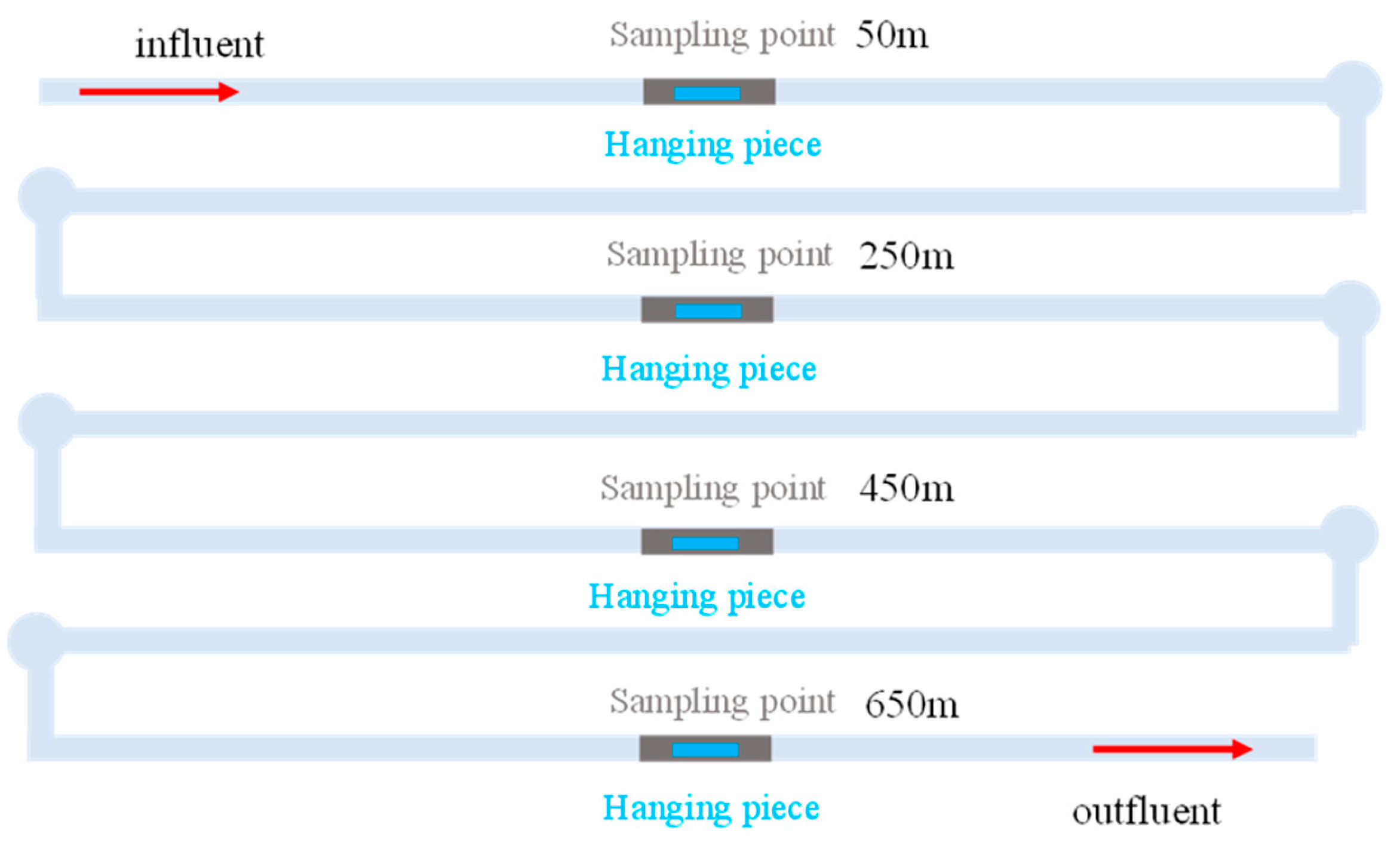
In this study, a 700 m pilot-scale cast iron pipeline reactor was operated continuously for 120 days under reclaimed-water conveyance conditions. By integrating the periodic water-quality monitoring, coupon weight-loss measurements, SEM observations, and 16S rRNA microbial community analysis, we investigated the stage-wise evolution of cast iron corrosion and the associated physicochemical and biological changes. The objective was to evaluate whether CA can complement conventional corrosion-rate assessment and provide additional diagnostic information for identifying corrosion-stage transitions in reclaimed-water cast iron pipelines. By introducing rate-of-change information into the corrosion assessment, this study aims to provide a practical basis for sustainable pipeline monitoring, preventive maintenance, and the long-term management of reclaimed-water reuse infrastructure.
3. Results
3.1. Water-Quality Variation During Reclaimed-Water Transport in the Cast Iron Pipeline
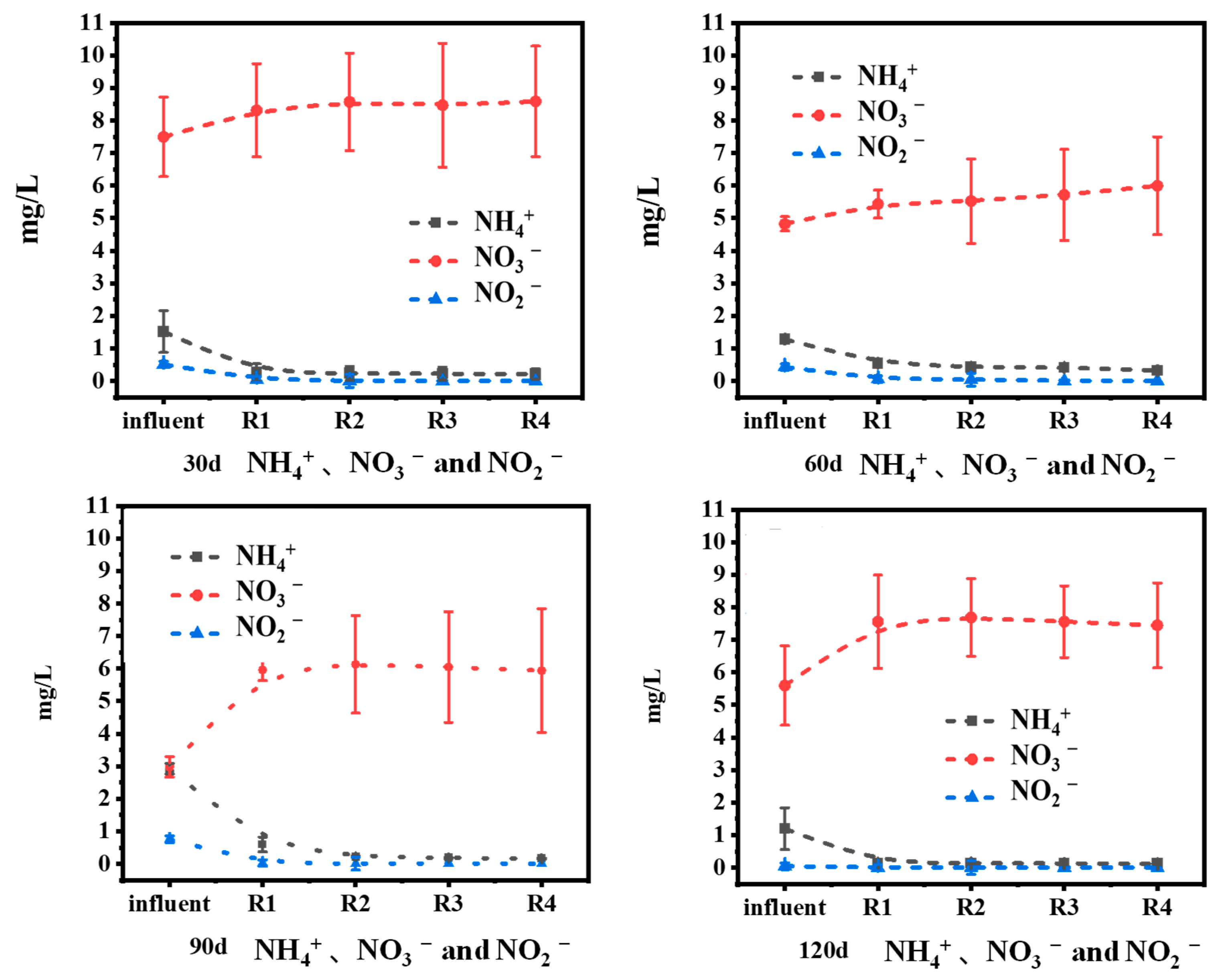
Figure 2 shows the variation of nitrogen species along the pipeline at different operation times. NH
4+ generally decreased from the influent to the downstream sampling points, whereas NO
3− increased, suggesting nitrification-related nitrogen transformation under aerobic conditions [
29]. For example, at R4, NH
4+ decreased by 75.0% after 30 days, from 1.28 mg/L at the inlet to 0.32 mg/L. Similar decreases of 86.0%, 94.5%, and 85.3% were observed after 60, 90, and 120 days, respectively. This trend indicates nitrogen conversion during transport, but it should not be regarded as direct evidence of biofilm formation. Biofilm development is more directly associated with microbial attachment, extracellular polymeric substance (EPS) production, and surface colonization on the pipe wall. The low NO
2− concentration further suggests that nitrite did not accumulate substantially during the observed nitrification process. Although the observed NH
4+ decrease and NO
3− increase suggest nitrification-related transformation under aerobic conditions, physicochemical effects such as adsorption onto corrosion products, ion-exchange processes, and limited volatilization may also contribute to nitrogen evolution during transport.
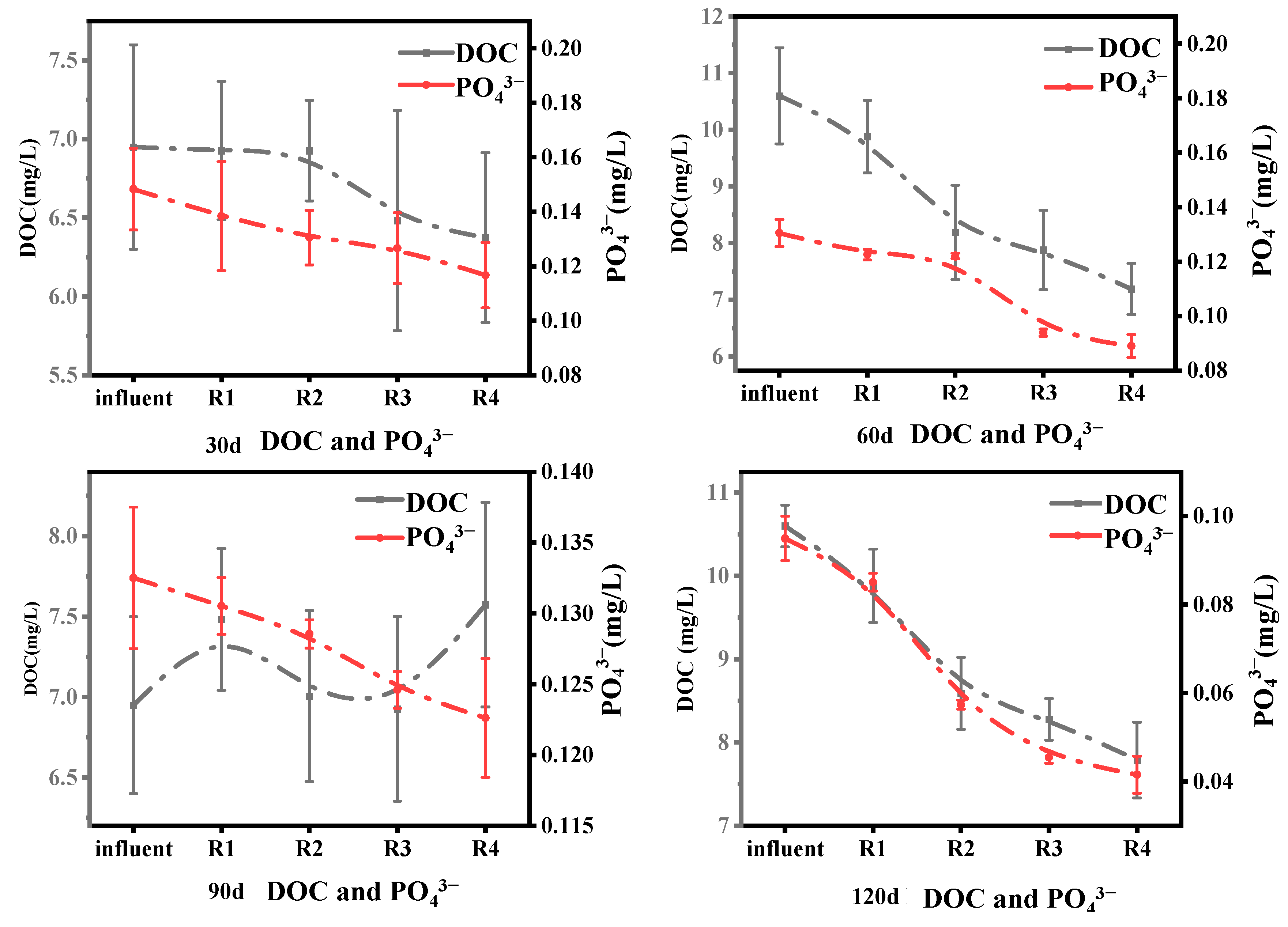
Figure 3 shows the variation in DOC and PO
43− during pipeline transport. PO
43− generally decreased along the pipeline. At R4, phosphate decreased by 20.9% after 30 days, 32.1% after 60 days, 7.5% after 90 days, and 55.7% after 120 days. This decrease may be related to microbial uptake and adsorption onto corrosion products, although the relative contribution of these processes cannot be separated using the present data alone. DOC fluctuated during operation, ranging from 6.34 to 9.88 mg/L. These fluctuations suggest that organic matter was affected by simultaneous microbial utilization, possible release from biofilms or corrosion products, and changes in the biodegradability of residual organic matter after disinfection. Therefore, the water-quality variation should be interpreted as the result of coupled physicochemical and biological processes rather than a single controlling mechanism.
3.2. Evolution of Corrosion Products and Corrosion-Stage Characteristics
3.2.1. Corrosion Rate and Corrosion Acceleration
Corrosion rate is a key parameter for evaluating material loss from cast iron coupons. Its variation over time and along the pipeline provides information on the progression of corrosion under reclaimed-water conveyance conditions.
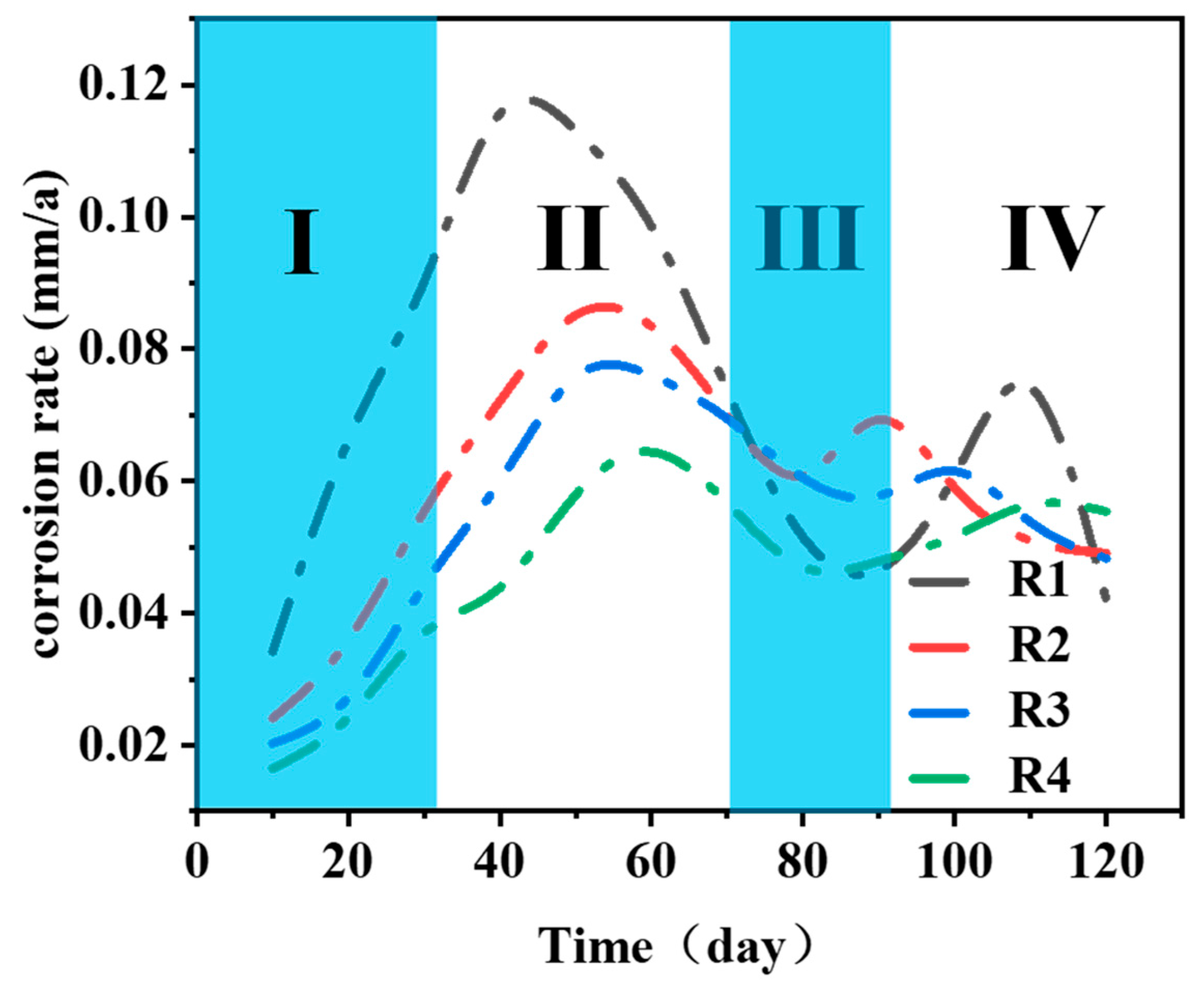
Figure 4 shows the corrosion rates of cast iron specimens at R1–R4 during the 120-day operation period.
As shown in
Figure 4, the corrosion rate increased during the early operation stage, subsequently declined, and then increased again at some sampling locations. On day 40, R1 showed the highest corrosion rate among the four sampling points (0.123 mm/a). After approximately 70 days, corrosion rates generally decreased and tended to stabilize, with an average value of 0.0675 mm/a for R1–R4. At 90 days, R2 and R3 showed higher corrosion rates (0.076 and 0.055 mm/a, respectively) than R1 and R4 (0.043 and 0.048 mm/a, respectively), suggesting spatial heterogeneity in corrosion-product stability and the local pipe-wall microenvironment. Because direct evidence of scale detachment was not obtained, this interpretation should be treated cautiously. At 110 days, the corrosion rate of R1 increased again to 0.086 mm/a. Overall, the corrosion-rate curves displayed a cyclic increase–decrease–re-increase pattern rather than a monotonic trend.
Based on the integrated interpretation of corrosion-rate trends, CA variation, and subsequent SEM observations presented in
Section 3.2.2. the corrosion process was divided into four operational stages: adaptation corrosion (I), rapid corrosion (II), stabilization corrosion (III), and re-corrosion (IV). This classification is proposed as a diagnostic framework for the present pilot-scale system and should not be regarded as a universal corrosion-stage model. To avoid inconsistency among datasets, stage interpretation should be based on the same corrosion-rate time series used for CA calculation.
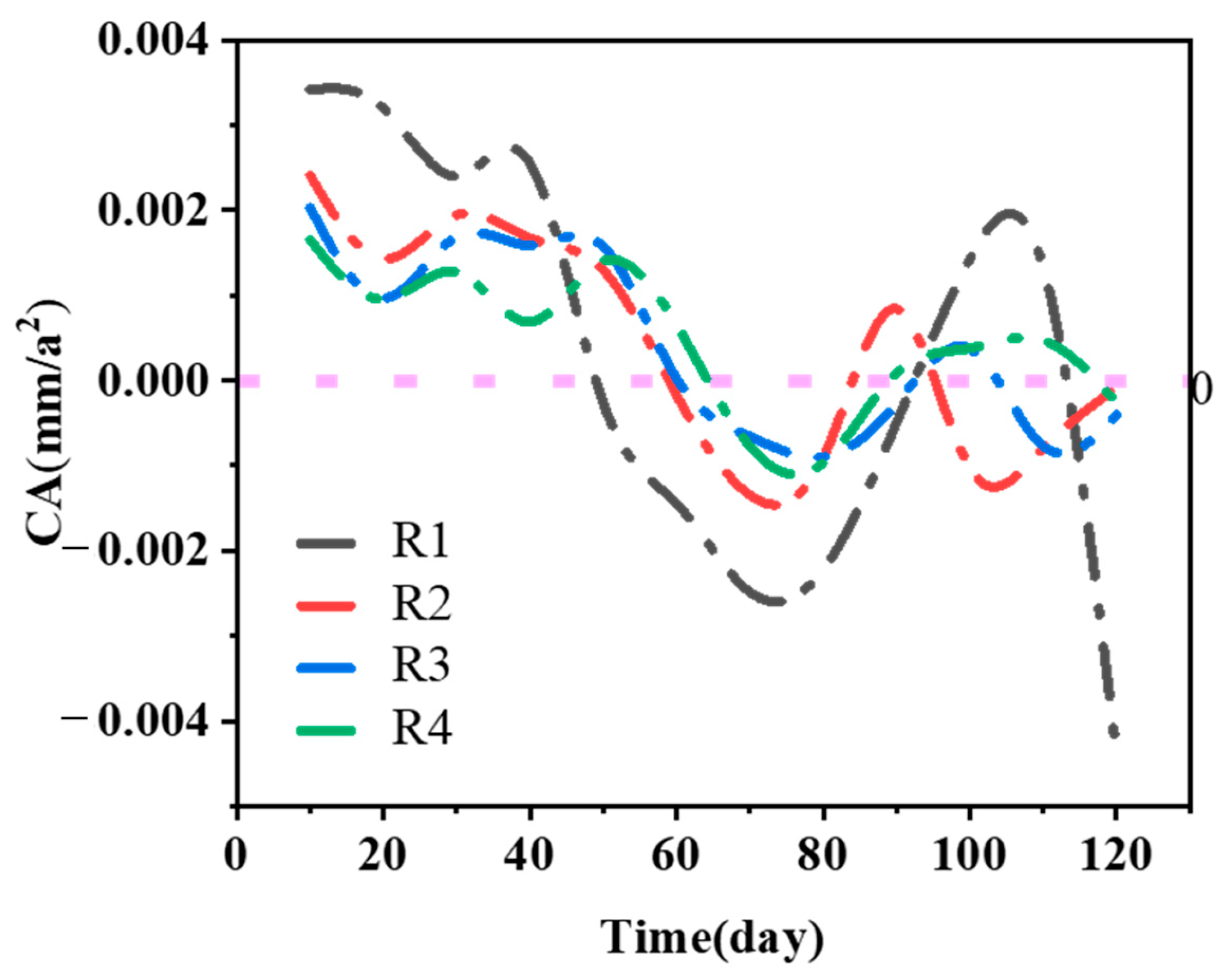
Corrosion rate describes the magnitude of material loss during a given exposure interval, but it does not directly indicate whether the system is moving toward a more active or a less active corrosion state. CA was therefore introduced as an auxiliary trend indicator to describe the temporal change in the corrosion rate, as can been seen in
Figure 5.
The corrosion stages proposed in this study were not defined using mathematically fixed thresholds or a single indicator. Instead, stage transitions were identified through the integrated interpretation of multiple indicators, including corrosion-rate evolution, CA behavior, SEM morphology, water-quality variations, and microbial succession. A stage transition was considered when several indicators changed simultaneously and showed persistent trends.
Table 2 summarizes the criteria used for stage identification.
According to the finite-difference calculation, positive CA values represent periods in which the corrosion rate increased, while negative CA values represent periods in which the corrosion rate decreased. CA should therefore be interpreted as a trend indicator rather than an independent stage criterion. A CA value close to zero indicates a locally stationary corrosion rate under the selected calculation method; depending on the neighboring corrosion-rate values, it may correspond to a local maximum, a local minimum, or a relatively stable interval.
When CA changed from positive to negative, the corresponding corrosion-rate curve shifted from an increasing trend to a decreasing trend. This transition may reflect temporary stabilization of corrosion activity associated with the development of relatively compact corrosion structures on the coupon surface. During this stage, SEM observations showed a transition from loose porous deposits to denser corrosion morphology, while the corrosion rate decreased and CA changed from positive to negative values, indicating reduced corrosion activity.
Previous studies have reported that the densification of corrosion scales may influence oxygen diffusion, ion transport, and mass transfer within cast iron corrosion layers. Similar multilayer corrosion-scale structures consisting of porous and compact regions have also been described in previous studies. Therefore, although direct electrochemical or mineralogical verification was not performed in the present study, the observed compact corrosion morphology together with a reduced corrosion rate and negative CA values was temporally associated with temporary stabilization behavior during this stage.
When CA became positive again after a local minimum in the corrosion rate, the result indicated a renewed increase in corrosion activity. This finding supports the interpretation of local re-corrosion, but the underlying mechanism should be discussed together with SEM morphology, water-quality variations, and microbial community succession rather than attributed to a single cause.
Overall, replicate corrosion-rate measurements and SD-based error bars provide a more transparent basis for CA calculation. However, because CA is sensitive to short-term fluctuations in the corrosion rate, the increase–decrease–re-increase pattern should be interpreted in combination with the corrosion-rate curve and morphological evidence.
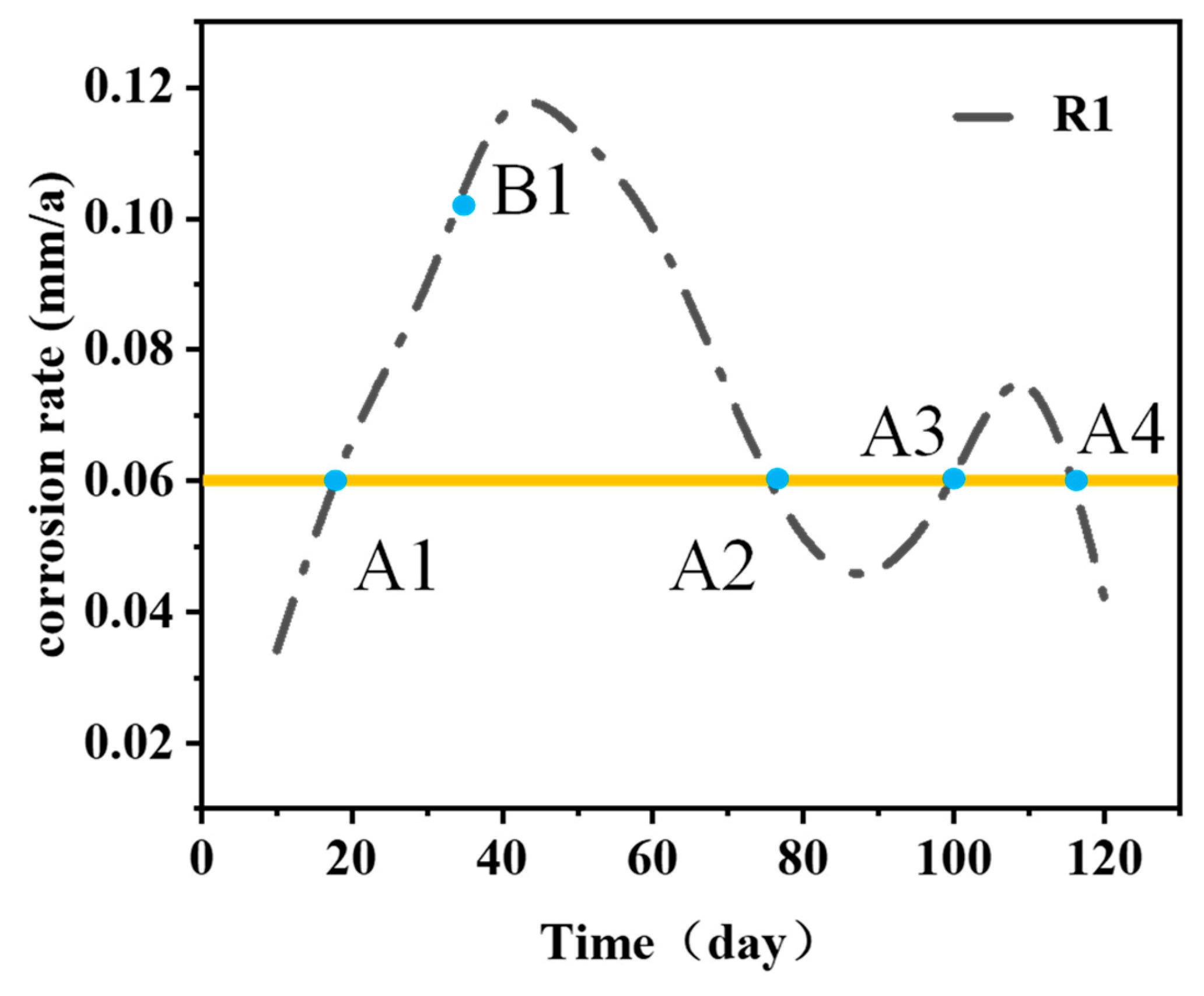
In pipeline corrosion assessment, it is important to determine whether a measured corrosion rate represents an accelerating or decelerating process.
Figure 6 provides a schematic example using R1 to illustrate how identical or similar corrosion rates may correspond to different dynamic corrosion states.
Because an instantaneous corrosion rate alone cannot reliably indicate the future trend of corrosion, CA should be considered together with the corrosion rate. For example, although B1 has a higher corrosion rate than A1 in
Figure 6, A1 has a positive CA (+0.003 mm/a
2), whereas B1 has a negative CA (−0.002 mm/a
2). Thus, A1 represents an increasing corrosion-rate trend, while B1 represents a decreasing trend. CA therefore provides additional information for prioritizing inspection and maintenance.
Identical corrosion rates can also mask different corrosion states. Although A1–A4 share the same instantaneous rate, their CA values differ: A1 and A3 have positive CA, indicating acceleration, whereas A2 and A4 have negative CA, indicating deceleration. Therefore, identical corrosion rates do not necessarily imply identical risk, and both the magnitude and the temporal trend of the corrosion rate should be considered in corrosion-stage diagnosis.
In summary, CA is an auxiliary diagnostic indicator for describing the temporal trend of the corrosion rate. CA > 0 indicates acceleration, CA < 0 indicates deceleration, and CA ≈ 0 indicates a locally stationary corrosion rate. CA ≈ 0 should not be interpreted as a single physical state, because it may correspond to a local maximum, a local minimum, or a relatively stable interval depending on adjacent corrosion-rate values. Stage identification should therefore integrate CA with corrosion-rate trends, SEM morphology, water-quality variations, and microbial evidence.
The use of replicate corrosion-rate measurements improves the transparency of the CA analysis. Each corrosion-rate value was calculated from parallel coupons, and the SD values were used to evaluate experimental dispersion. CA was then calculated from mean corrosion-rate values. This approach improves the reliability of CA as a trend indicator, but CA should still be interpreted together with supporting physicochemical, morphological, and microbial evidence rather than as an independently validated predictive model.
3.2.2. Microscopic Morphology Analysis of Corrosion Products
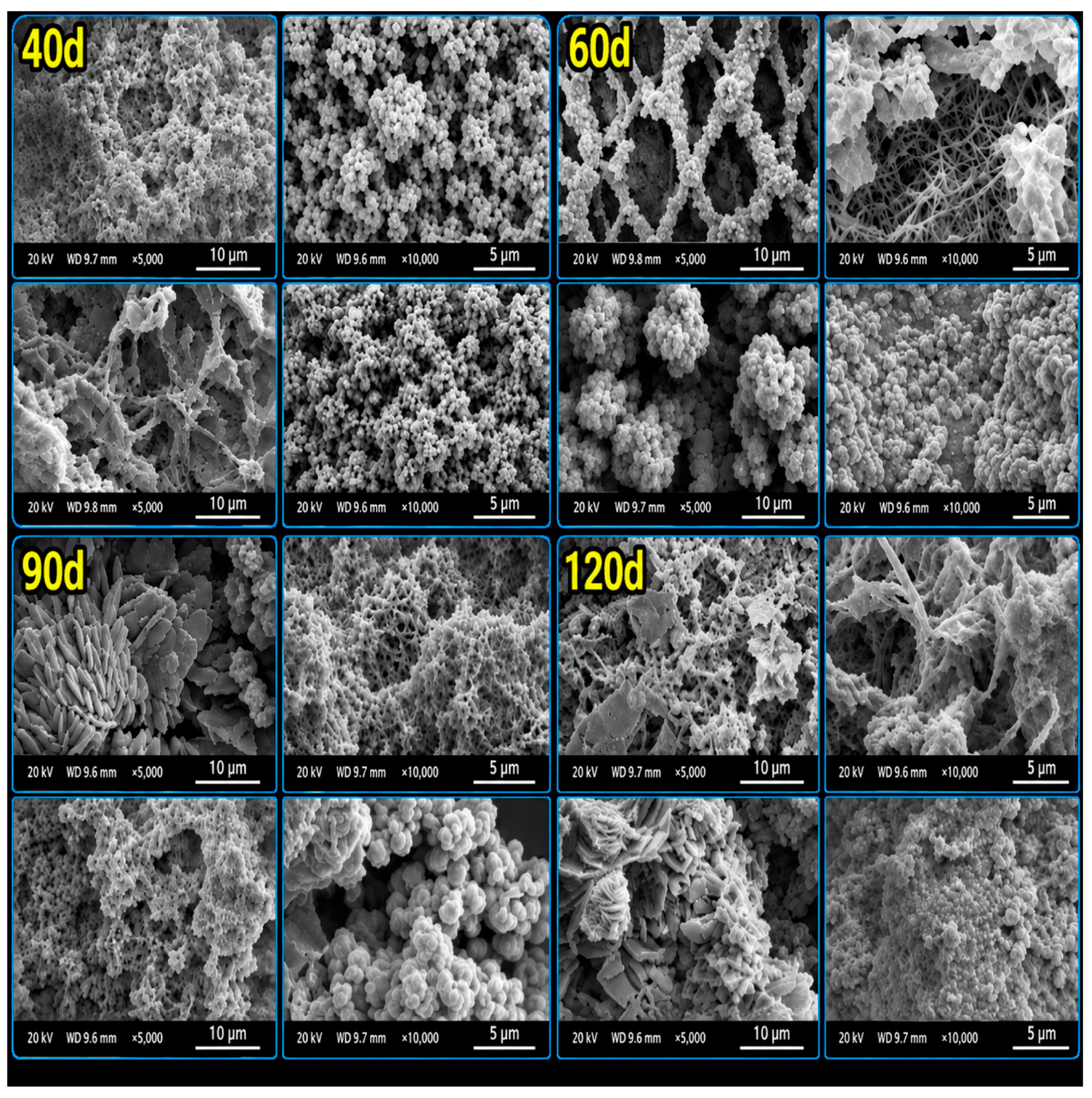
At Stage I, SEM images of the R1–R4 coupons showed loose, porous, and incompletely developed corrosion products (
Figure 7). R1 was covered with numerous granular deposits, R2 showed a partially closed layer-like structure composed of aggregated particles, R3 displayed particle accumulation with crystal-like features in open pores, and R4 showed rough porous deposits with flocculent material. These features are consistent with the initial formation of corrosion products, although the chemical identity of the particles and crystal-like structures cannot be determined from SEM morphology alone.
At Stage II, the corrosion products became more developed. R1 showed filamentous or EPS-like material and particle aggregates, together with a denser shell-like layer that did not completely cover the surface. R2 and R3 displayed uneven surfaces, particle accumulation, pores, and irregular crystal-like features. These observations are consistent with active corrosion and progressive corrosion-product accumulation. However, possible interactions between electrochemical corrosion and microbiologically influenced corrosion should be interpreted cautiously, because SEM provides morphological evidence rather than direct functional microbial evidence.
At Stage III, corrosion products on R1 consisted of irregular particles forming a relatively dense shell, and the area near the metal matrix also appeared compact. Particles and filamentous substances were present on the shell surface, and network-like structures were observed in some cracks. At this stage, the corrosion rate of R1 began to decrease, and CA values were generally below zero. In contrast, R2 showed a looser surface with individual or clustered particles, suggesting local weakening or partial disruption of the corrosion layer. This interpretation remains tentative because SEM morphology alone cannot directly prove scale detachment.
The corrosion-product surface at R3 was not fully developed and showed rough, porous morphology with floc-like substances and crystal-like features. Similar incomplete and porous deposits were also observed at R4. These observations indicate spatial heterogeneity in corrosion-product development after 90 days. Therefore, the system should not be described as uniformly mature; instead, different sampling locations appeared to be at different corrosion states.
As shown in
Figure 7 (Stage IV), R1 showed a relatively compact surface with filamentous and granular substances, whereas R2 exhibited a loose and porous structure with larger pores and localized intertwined filamentous features. R3 showed a relatively dense surface with small crystal-like substances and a few larger flake-like features. The corrosion products on R4 remained incomplete, rough, and porous. These observations are consistent with local re-corrosion or renewed corrosion-product development, but direct confirmation would require time-resolved cross-sectional and mineralogical evidence.
Overall, the SEM observations suggest a morphological sequence from loose and porous early deposits to denser layered corrosion products, followed by local deterioration or renewed porous structures during the later operation period. This sequence is generally consistent with the corrosion-rate and CA trends. However, further quantitative image analysis, cross-sectional thickness measurement, and mineralogical characterization would be required to verify the detailed structural evolution.
Based on SEM morphology, the corrosion products can be described as a layered structure consisting of a basal layer, a porous inner region, a relatively compact shell, and an outer surface layer. However, SEM mainly provides morphological information and cannot independently confirm mineral composition [
30]. Previous studies have reported that similar corrosion layers may contain Fe(OH)
2, FeCO
3, α-FeOOH, γ-FeOOH, Fe
3O
4, γ-Fe
2O
3, and Fe(OH)
3 [
31]. Therefore, the possible association of the observed layers with iron hydroxides, iron oxides, and iron carbonate phases should be regarded as a literature-supported interpretation rather than as direct mineralogical evidence from the present experiment. Direct confirmation would require XRD, Raman spectroscopy, XPS, or elemental mapping.
3.2.3. Microbial Community Succession and Its Association with Corrosion-Stage Evolution
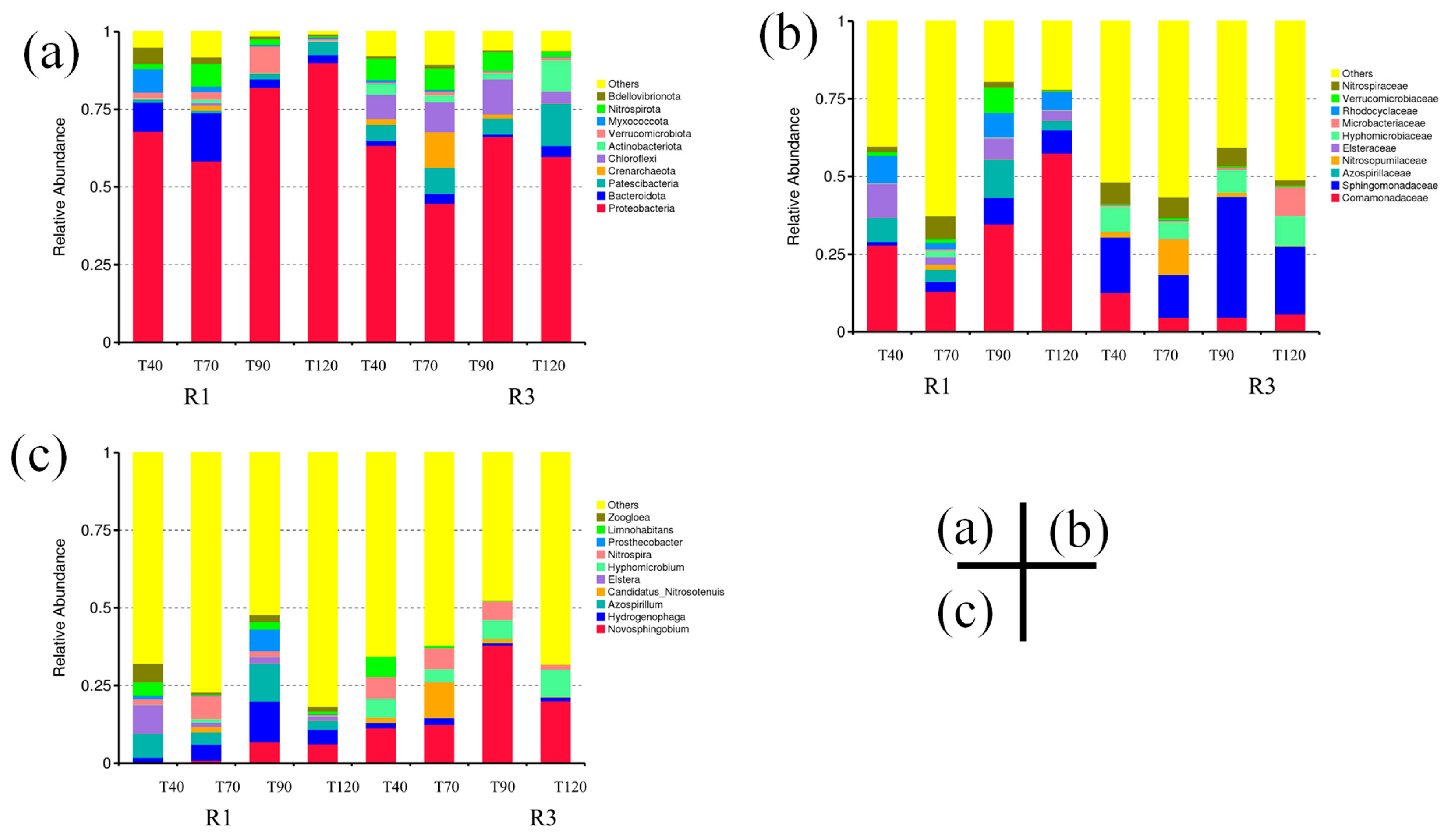
This section discusses microbial community succession in biofilm/corrosion-scale samples based on the phylum, family, and genus levels shown in
Figure 8. The results show differences in microbial community composition between R1 and R3 and among T40, T70, T90, and T120, indicating stage-associated microbial succession during pipeline operation. Combining these microbial profiles with the corrosion rate and CA provides a basis for discussing associations between microbial community changes and corrosion-stage evolution.
At the phylum level, Proteobacteria accounted for a relatively high proportion in several biofilm/corrosion-scale samples and represented an important component of the pipeline microbial community. However, Proteobacteria includes diverse taxa with different ecological functions, and phylum-level interpretation alone is insufficient for explaining corrosion behavior. Therefore, family- and genus-level results were further considered to discuss biofilm development, nitrogen transformation, and changes in the local corrosion microenvironment.
At the family level,
Figure 8 shows several taxa associated with aquatic environments, biofilm formation, and nutrient transformation, including
Comamonadaceae, Sphingomonadaceae, Nitrosopumilaceae, Nitrospiraceae, Hyphomicrobiaceae, Microbacteriaceae, and
Rhodocyclaceae. Comamonadaceae and
Sphingomonadaceae are commonly reported in aquatic and pipe-wall biofilm environments, and their variation may reflect changes in biofilm structure and organic-substrate conditions on the corrosion-scale surface.
Nitrosopumilaceae and
Nitrospiraceae are related to nitrogen transformation and may help explain the observed decrease in NH
4+ and increase in NO
3−. These family-level results provide more specific ecological information than a broad phylum-level composition, although functional activity cannot be confirmed by taxonomy alone.
At the genus level, the microbial community involved multiple taxa rather than a single dominant corrosion-causing genus.
Figure 8 shows that
Novosphingobium,
Hydrogenophaga,
Hyphomicrobium,
Nitrospira, and
Candidatus_Nitrosotenuis were distributed differently among samples.
Novosphingobium and
Hydrogenophaga are associated with aquatic biofilm systems and may reflect changes in organic-substrate utilization and biofilm development on the corrosion-scale surface.
Hyphomicrobium may indicate changes in the local biofilm microenvironment. The detection of
Nitrospira and
Candidatus_Nitrosotenuis suggests the presence of nitrification-related microbial groups in the pipeline. Previous studies have shown that biofilm development in reclaimed-water systems can significantly influence cast iron corrosion behavior and corrosion-scale evolution.
Nitrogen-transformation-related taxa showed correspondence with the observed water-quality changes. The detection of Nitrospira and Candidatus_Nitrosotenuis, together with Nitrospiraceae and Nitrosopumilaceae at the family level, suggests nitrification-related microbial potential during pipeline transport. This interpretation is consistent with the decrease in NH4+ and the increase in NO3−. However, because the present evidence is based on 16S rRNA taxonomic profiles, it cannot directly confirm nitrification activity, functional genes, or metabolic rates.
Comparison between microbial community profiles and corrosion stages suggests that changes in biofilm-associated and nitrogen-transformation-related taxa were temporally associated with changes in corrosion rate and CA. During the initial and rapid corrosion stages, biofilm-associated taxa appeared together with loose and porous corrosion products, suggesting that microbial colonization may have contributed to the formation of an early corrosion microenvironment. During the stabilization stage, denser corrosion products may have reduced direct contact between microorganisms and the metal substrate, corresponding to a decrease in the corrosion rate and a shift in CA to negative values. In the later stage, changes in biofilm-associated and nitrogen-transformation-related taxa coincided with the return of positive CA values. These results indicate association rather than direct causality. Previous studies on reclaimed-water conveyance systems similarly reported that biofilm development and nitrogen-transformation-related microorganisms may influence corrosion evolution through changes in local redox conditions and pipe-wall microenvironments.
Overall, the multilevel microbial results shown in
Figure 8 provide biological context for interpreting corrosion-stage evolution. Compared with interpretation based only on Proteobacteria, family- and genus-level results more clearly indicate stage-associated links among biofilm-related taxa, nitrogen-transformation-related taxa, and corrosion-rate variation. Together with water-quality changes, the corrosion rate, and CA, microbial community succession appears to be associated with corrosion-scale formation and nitrogen transformation in reclaimed-water cast iron pipelines. Future work should combine functional-gene analysis, qPCR, and quantitative biofilm indicators to verify these microbial processes in greater depth.
3.2.4. Coupling Among Water-Quality Evolution, Microbial Succession, Corrosion-Product Morphology, and Corrosion Kinetics
The corrosion process in the reclaimed-water cast iron pipeline should be interpreted as a coupled physicochemical–biological process rather than as a simple material-loss process. During pipeline transport, the decrease in NH4+–N and the increase in NO3−–N suggested nitrification-related nitrogen transformation under aerobic conditions. Meanwhile, DOC and PO43− variations indicated simultaneous organic-matter utilization, nutrient uptake, adsorption onto corrosion products, and possible release from biofilm or corrosion deposits. These water-quality changes modified the local pipe-wall microenvironment and provided selective conditions for biofilm development and microbial succession.
Microbial community variation further reflected this changing microenvironment. The detection and variation of nitrogen-transformation-related taxa, such as Nitrospira and
Candidatus_Nitrosotenuis, were consistent with the observed nitrogen evolution. Biofilm-associated taxa, including
Comamonadaceae,
Sphingomonadaceae,
Hydrogenophaga,
Novosphingobium,
Hyphomicrobium, and
Zoogloea, may contribute to surface colonization, extracellular polymeric substance production, and organic-substrate utilization. These microbial processes can alter local pH, dissolved oxygen, redox gradients, and mass-transfer conditions at the metal–water interface, thereby influencing corrosion-product formation and corrosion activity. Similar microbial succession and biofilm evolution patterns have been reported in reclaimed-water cast iron pipelines, where Proteobacteria gradually became dominant during biofilm development [
32].
The SEM observations showed that corrosion products evolved from loose and porous deposits to relatively compact surface structures, followed by renewed porous morphology in later stages. This morphological evolution was closely related to the corrosion-rate and CA trends. In the early stage, loose porous deposits and developing biofilms may have allowed easier oxygen and ion transport to the cast iron surface, corresponding to an increasing corrosion rate and positive CA. During the stabilization stage, the formation of denser corrosion structures coincided with a decreasing corrosion rate and negative CA, suggesting a temporary reduction in corrosion activity. In the later stage, a renewed porous morphology and microbial restructuring were associated with renewed increases in the corrosion rate and positive CA.
Therefore, the proposed corrosion-stage evolution can be understood as a feedback process among water chemistry, microbial succession, corrosion-product morphology, and corrosion kinetics. Water-quality evolution provides nutrients and physicochemical conditions for microbial succession; microbial activity and biofilm development influence local electrochemical microenvironments and corrosion-product formation; corrosion products modify mass transfer, adsorption, and microbial attachment; and these combined changes are reflected in corrosion-rate variation and CA behavior. This coupling explains why corrosion in reclaimed-water pipelines showed an increase–decrease–re-increase pattern rather than a monotonic trend. Previous studies have similarly demonstrated that bacterial communities may substantially affect corrosion evolution in reclaimed wastewater distribution systems [
33].
However, these relationships should be interpreted as temporal associations rather than direct causal proof, because functional-gene analysis, electrochemical measurements, mineralogical characterization, and cross-sectional scale analysis were not performed in the present study.
3.3. Sustainability Implications for Reclaimed-Water Pipeline Management
The findings of this study have practical implications for the sustainable management of reclaimed-water pipeline infrastructure. Reclaimed-water reuse is an important strategy for alleviating urban water scarcity and improving water-resource efficiency. However, the long-term sustainability of water-reuse systems depends not only on treatment performance but also on the safe and reliable conveyance of reclaimed water through distribution pipelines. Corrosion in cast iron pipelines may shorten infrastructure service life, increase maintenance costs, cause leakage risks, and affect conveyed water quality. Therefore, corrosion-stage diagnosis is directly relevant to the sustainable operation of urban water-reuse systems.
In addition, the integrated interpretation of water-quality variation, corrosion-product morphology, and microbial community succession provides a more comprehensive basis for understanding pipeline deterioration under reclaimed-water conveyance conditions. Such integrated monitoring can help operators identify stage-specific corrosion risks and develop more adaptive maintenance strategies. By improving the ability to monitor corrosion evolution and diagnose potential re-corrosion stages, this approach may contribute to extending pipeline service life, reducing unnecessary maintenance, improving water-reuse reliability, and supporting the sustainable development of urban water infrastructure.
3.4. Limitations and Future Work
The present study provides a pilot-scale investigation of corrosion-stage evolution in reclaimed-water cast iron pipelines; however, several limitations should be acknowledged.
First, the corrosion products were characterized mainly by surface SEM observations. Therefore, mineral composition and internal scale structure could not be directly confirmed. Future studies should combine XRD, Raman spectroscopy, XPS, EDS mapping, and cross-sectional characterization to verify corrosion-product evolution.
Second, corrosion activity was evaluated mainly using coupon weight-loss measurements and corrosion-rate evolution. Electrochemical methods such as EIS and polarization analysis were not included and should be incorporated in future work to provide mechanistic insight into corrosion kinetics and scale behavior.
Third, the microbial analysis was conducted only at R1 and R3, and the results were based on 16S rRNA taxonomy rather than on functional analysis. Future studies should include all pipeline locations together with qPCR, metagenomics, and quantitative biofilm indicators to verify microbial functions and MIC mechanisms.
Finally, the 120-day operation period mainly reflects short- to intermediate-stage corrosion evolution. Longer-term experiments and field validation are required to evaluate the applicability of the proposed corrosion-stage framework under practical reclaimed-water pipeline conditions.
4. Conclusions
This study investigated the stage-wise evolution of cast iron corrosion in a 700 m pilot-scale reclaimed-water pipeline operated for 120 days. During pipeline transport, NH4+ generally decreased while NO3− increased, indicating nitrification-related nitrogen transformation under aerobic conditions. PO43− showed an overall decline, and DOC fluctuated, suggesting the combined influence of microbial utilization, adsorption onto corrosion products, and organic-matter transformation. The corrosion rate exhibited a cyclic increase–decrease–re-increase pattern, demonstrating that corrosion development in reclaimed-water cast iron pipelines was dynamic rather than monotonic. CA was used as an auxiliary diagnostic indicator to describe whether the corrosion rate was increasing or decreasing. However, stage identification should be based on the combined interpretation of CA, corrosion-rate trends, SEM morphology, water-quality variation, and microbial evidence. SEM observations indicated a morphological progression from loose and porous deposits to relatively compact layered corrosion products, followed by local deterioration and renewed porous structures. Microbial community analysis showed that phylum-level interpretation based on Proteobacteria alone was insufficient. Family- and genus-level taxa, including Comamonadaceae, Sphingomonadaceae, Nitrosopumilaceae, Nitrospiraceae, Hyphomicrobiaceae, Novosphingobium, Hydrogenophaga, Hyphomicrobium, Nitrospira, and Candidatus_Nitrosotenuis, provided more specific information on biofilm-associated and nitrogen-transformation-related community shifts. These microbial shifts were temporally associated with corrosion-stage transitions and CA variation, although direct causality requires verification through functional-gene analysis and controlled experiments. From a sustainability perspective, the proposed corrosion-stage diagnostic framework provides practical information for the long-term management of reclaimed-water pipeline infrastructure. By distinguishing accelerating, decelerating, and re-corrosion stages, the combined use of corrosion rate and CA can support preventive maintenance, risk monitoring, and more reliable operation of urban water-reuse systems. These findings help connect corrosion diagnosis with infrastructure durability, water-quality security, leakage-risk reduction, and sustainable reclaimed-water reuse. Therefore, the study contributes to sustainable urban water management by providing a diagnostic basis for improving the resilience and service life of reclaimed-water distribution pipelines.