Article

Risks of Climate-Environment Cycle Deterioration Triggered by Extreme Weather: Quantifying the Impacts of the 2022 Compound Drought and Heatwave in Sichuan

1
School of Environment, Tsinghua University, Beijing 100084, China
2
Institute of Atmospheric Physics, Chinese Academy of Sciences, Beijing 100029, China
3
Beijing Municipal Ecological and Environmental Monitoring Center, Beijing 100048, China
4
Tianfu Yongxing Laboratory, Chengdu 610213, China
5
College of Earth and Environmental Sciences, Lanzhou University, Lanzhou 730000, China
6
Institute for Carbon Neutrality, Tsinghua University, Beijing 100084, China
*
Author to whom correspondence should be addressed.
These authors contributed equally to this work.
Sustainability 2026, 18(12), 5956; https://doi.org/10.3390/su18125956
Submission received: 14 May 2026 / Revised: 4 June 2026 / Accepted: 8 June 2026 / Published: 10 June 2026

Abstract

In summer 2022, Sichuan suffered an unprecedented compound heatwave-drought, cut-ting hydropower output and forcing a rapid coal-fired power ramp-up to secure supply, driving elevated emission intensities in its power sector. However, the fluctuations in power generation from thermal power and hydropower are significantly influenced by policy and economic factors. In meteorological-electrical coupling research, it is necessary to isolate the disturbances caused by major non-meteorological factors such as policy and economics on power generation to identify the true role of meteorological conditions. Therefore, this study proposes the “squeeze verification method,” which indirectly verifies the numerical confidence of the power time series variable under non-extreme weather conditions: by integrating CRU meteorological data, WIND energy data, and public environmental data, the ARIMA model is applied to quantify the power shortage amount caused purely by meteorological factors after stripping off the economic factors of policies in July–September 2022, which totaled 33,142 GWh, as well as the increase in thermal power generation, which amounted to 6806 GWh. Using localized emission factors, we calculated implicit emission increases: NOx dominated pollutant growth, while extra CO2 emissions accounted for 8.16% of annual power-sector carbon emissions. This study further uncovered synergistic environmental risks tied to emergency coal-fired power generation. These risks include elevated air pollutant and CO2 emissions, aggravated ozone pollution, and a reinforced positive feedback loop that intensifies the extreme weather cycle. Finally, we propose targeted preventive strategies to mitigate these cascading environmental risks and ensure the sustainable development of the energy system.

1. Introduction

Against the backdrop of global warming, the frequency, intensity, and duration of extreme weather events have all shown a significant upward trend, with compound extreme events—such as the combination of heatwaves and droughts—having a particularly severe impact on socioeconomic systems [1]. The IPCC Sixth Assessment Report (AR6) explicitly points out that current global warming has already led to a significant exacerbation of the climate vulnerability of energy systems [2,3]. The output of renewable energy sources, represented by hydropower, wind power, and photovoltaic power, is highly dependent on meteorological conditions; over two-thirds of countries globally that rely on renewable energy have been exposed to the risk of impact from such compound events. Extreme drought directly causes a drastic decline in hydropower output, while extreme heat simultaneously drives up electricity demand for cooling. This synchronous squeeze on both the supply and demand sides can easily disrupt the supply-demand balance of the power system, triggering regional power supply crises [4,5]. In recent years, such crises have concentratedly erupted in multiple regions globally: in 2022, Europe experienced a historic heatwave and drought, with the Rhine River’s water level falling below navigable thresholds, not only leading to shortages in cooling water for thermal power plants but also obstructing inland coal transportation [6]. Combined with a nearly 40% reduction in hydropower output in the Alps [7,8,9], this triggered power supply tensions in multiple countries, with European spot electricity prices surging to historic highs at one point [10]. In early 2026, India faced a super heatwave of 48.2 °C, with national electricity demand continuously breaking historical peaks for four consecutive days, forcing multiple regions to implement daily power outages for several hours, and even resulting in extreme emergency scenarios where power workers sprayed water on overloaded transformers to cool them down. Highly hydro-dependent regions such as California in the U.S. and Brazil have also frequently encountered similar supply-demand imbalances [11]. What is even more concerning is that such events are often accompanied by hidden synergistic environmental risks: during Europe’s historic heatwave in 2003, a combination of reduced hydropower output, increased emergency thermal power generation, and extreme high-temperature meteorological conditions led to ozone concentrations in Central Europe reaching a 20-year high, with multiple countries experiencing air quality violations, ultimately resulting in over 40,000 excess deaths [12].
As the world’s largest energy consumer and renewable energy investor, China also faces severe challenges from such compound extreme events in the process of advancing energy transformation. To address global climate change, China has proposed the “Dual Carbon” goals of peaking carbon emissions before 2030 and achieving carbon neutrality before 2060. Accelerating the transition of the energy structure and increasing the proportion of clean energy have become the core pathways to achieve this goal [13]. As China’s largest hydropower base, Sichuan Province holds over 20% of the nation’s theoretical hydropower resources. With the country’s highest installed hydropower capacity and electricity generation, it has long shouldered the vital mission of “West-to-East Power Transmission,” making a critical contribution to the nation’s low-carbon power supply and emission reduction goals [14]. However, this energy structure, which relies heavily on hydropower, also makes the Sichuan power system far more sensitive to hydrological and meteorological conditions than the national average, posing potential severe challenges to system resilience during extreme weather events.
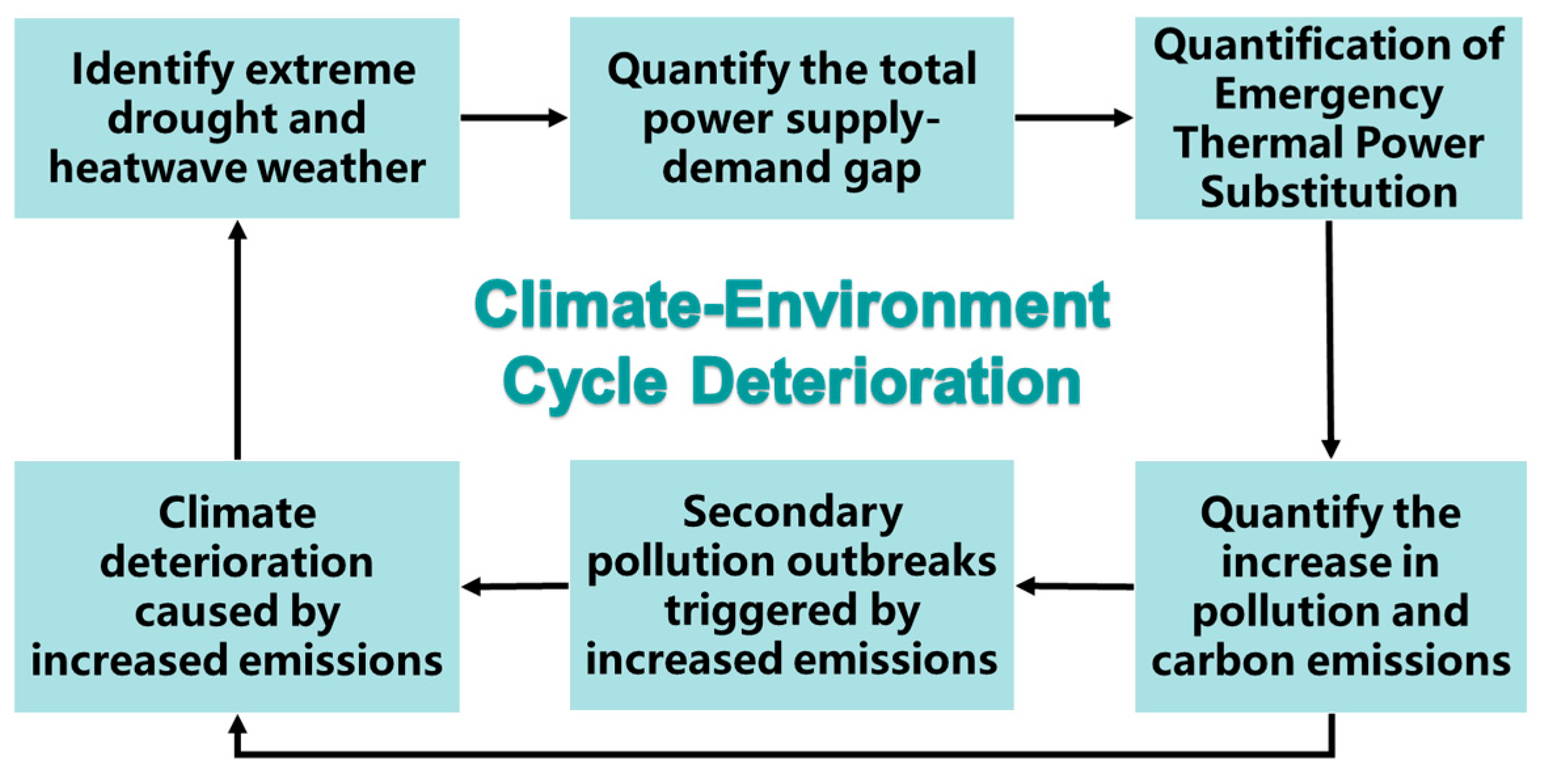
In the summer of 2022, Sichuan Province experienced the most severe compound high-temperature and drought event since complete observational records began in 1961. The upper Yangtze River basin witnessed an unprecedented overlap of “three extremes” for the same period in history: the highest temperature, the longest continuous high-temperature days, and the lowest precipitation [15,16]. Influenced by this, Sichuan experienced low hydropower inflows, resulting in a substantial drop in hydropower output and the hydropower capacity factor plunging to a historical low. Meanwhile, the extreme heat triggered a surge in residential cooling demand, driving total electricity load to repeatedly hit record highs. The severe imbalance between supply and demand on both sides caused a serious power shortage crisis. To ensure domestic electricity supply, Sichuan Province urgently activated an emergency policy of “industry giving way to residential electricity consumption,” requiring industrial enterprises to halt production and limit power usage to guarantee residential supply, while significantly boosting thermal power output to fill the electricity gap. This temporary adjustment involving reduced hydropower generation and increased thermal power generation, while alleviating the pressure on power supply in the short term, also brought notable short-term impacts on regional pollutant emissions and the ecological environment [17]. It is worth noting that this increase in emissions forms a dangerous synergistic amplification effect with the meteorological conditions of the extreme event itself: the ongoing heatwave and drought event already possess favorable conditions for ozone formation, characterized by strong sunlight, high temperatures, and stable, quiescent diffusion. At this time, the increased emission of precursor substances such as nitrogen oxides (NOx) from emergency thermal power generation can trigger an explosive growth in ozone pollution.
Academic research has developed multiple approaches for identifying, analyzing, and assessing the impacts of extreme climate events on energy systems. Early studies predominantly employed statistical correlation analysis to quantify the linear relationships between single meteorological factors, such as temperature and precipitation, and electricity supply and demand, providing preliminary insights into the mechanisms through which meteorological conditions affect energy systems [18,19,20]. Subsequently, methods such as power system simulation models based on optimal power flow, cascading failure simulation, and Monte Carlo risk analysis have been widely applied to characterize the dynamic processes of grid equipment failures and risk propagation under extreme weather conditions, supporting the quantitative assessment of system resilience [21,22,23,24]. In recent years, the “Climate Impact Indicator” (CII) framework proposed by the IPCC [25], along with stochastic robust optimization [26] and climate-energy coupling modeling [27,28,29], have gradually emerged, offering new tools for evaluating the long-term impacts of climate change on energy systems and quantifying the synergistic effects of compound events. Regarding extreme weather events in Sichuan, there have also been many studies have conducted relevant analyses, with most focusing on the meteorological characteristics of the event, the causes of the power supply and demand imbalance, and suggestions for short-term emergency power supply countermeasures. Zhou Yerong et al. [30] analyzed the impact of this extreme weather on the Sichuan power system, pointing out shortcomings such as a single power supply structure and insufficient system regulation capability, and put forward development suggestions for multi-energy complementation of hydro, wind, solar, thermal, and storage. Zhou Da et al. [31] quantified the correlations between ambient temperature and electricity consumption, and between reservoir inflow and hydropower output, revealing the nonlinear influence mechanism of meteorological factors on electricity supply and demand.
However, existing research still has several key shortcomings. On one hand, most studies have failed to effectively isolate the interference of non-meteorological factors, such as policy interventions and economic fluctuations. As a result, it is difficult to precisely quantify the scale of power shortages and the increased generation of thermal power caused purely by high temperatures and droughts. This makes it impossible to accurately assess the independent impact of extreme weather on the power system [32,33]. On the other hand, existing research largely focuses on power supply security itself [34], with less in-depth analysis on the environmental impacts brought about by this emergent contingency of boosting thermal power generation [35]. Few studies assessing environmental impacts predominantly employ default average emission factors, failing to incorporate localized power plant operational characteristics [36,37,38]. The synergistic effects of emission increases and extreme meteorological conditions were overlooked, leading to insufficient accuracy in accounting for pollutant and carbon emission increases, and also preventing the accurate assessment of the dual disturbances of extreme events on air quality and carbon neutrality goals [39,40].
This study selected the compound drought and heatwave event in Sichuan Province in 2022 as the research object. This study integrates high-resolution CRU meteorological data, WIND energy data, and environmental open data. Methodologically, this study comprehensively employs hypothesis-based inferential methods and ARIMA time series models. It not only effectively isolates and quantifies the power impact of pure extreme meteorological events but also fills the research gap in quantifying the environmental risks of extreme meteorology. This study assumes that no extreme high-temperature drought event occurred during the summer of 2022. Using the time series forecasting capability of the ARIMA model, the power values under this assumption were simulated. The difference between the actual values and the simulated values excluded the influence of economic and policy factors, specifically the scale of the power supply and demand gap in Sichuan Province and the increase in thermal power generation during the period from July to September 2022, which were solely due to meteorological factors. Based on this, localized thermal power emission factors were used to accurately account for the increased emissions of major air pollutants and CO2 during the emergency power supply guarantee process. Furthermore, this study clarified the mechanism through which the increase in precursor substance emissions and high-temperature meteorological conditions jointly trigger ozone exceedance, revealing the synergistic environmental risks brought about by ozone pollution exacerbation due to emergency increases in thermal power generation and the intensification of extreme climate cycles. Ultimately, comprehensive prevention strategies were proposed, including strengthening extreme weather early warning systems, enhancing energy storage regulation capabilities, optimizing power source structures, and developing large-scale energy planning models, which provide references for improving the climate resilience of energy systems.
This study not only provides new quantitative evidence for understanding the impact mechanisms of extreme climate events on the energy-environmental system but also offers a scientific reference for energy transition and climate adaptation policy formulation in Sichuan and even nationwide. Simultaneously, it provides a referenceable analytical framework and practical pathways for regions around the world that are reliant on renewable energy to address the risks of complex extreme events. It is helpful in effectively preventing systemic risks brought about by extreme weather, realizing the synergistic development of low carbon and resilience in the energy system, and enhancing its sustainability.

2. Materials and Methods

2.1. Study Area Overview

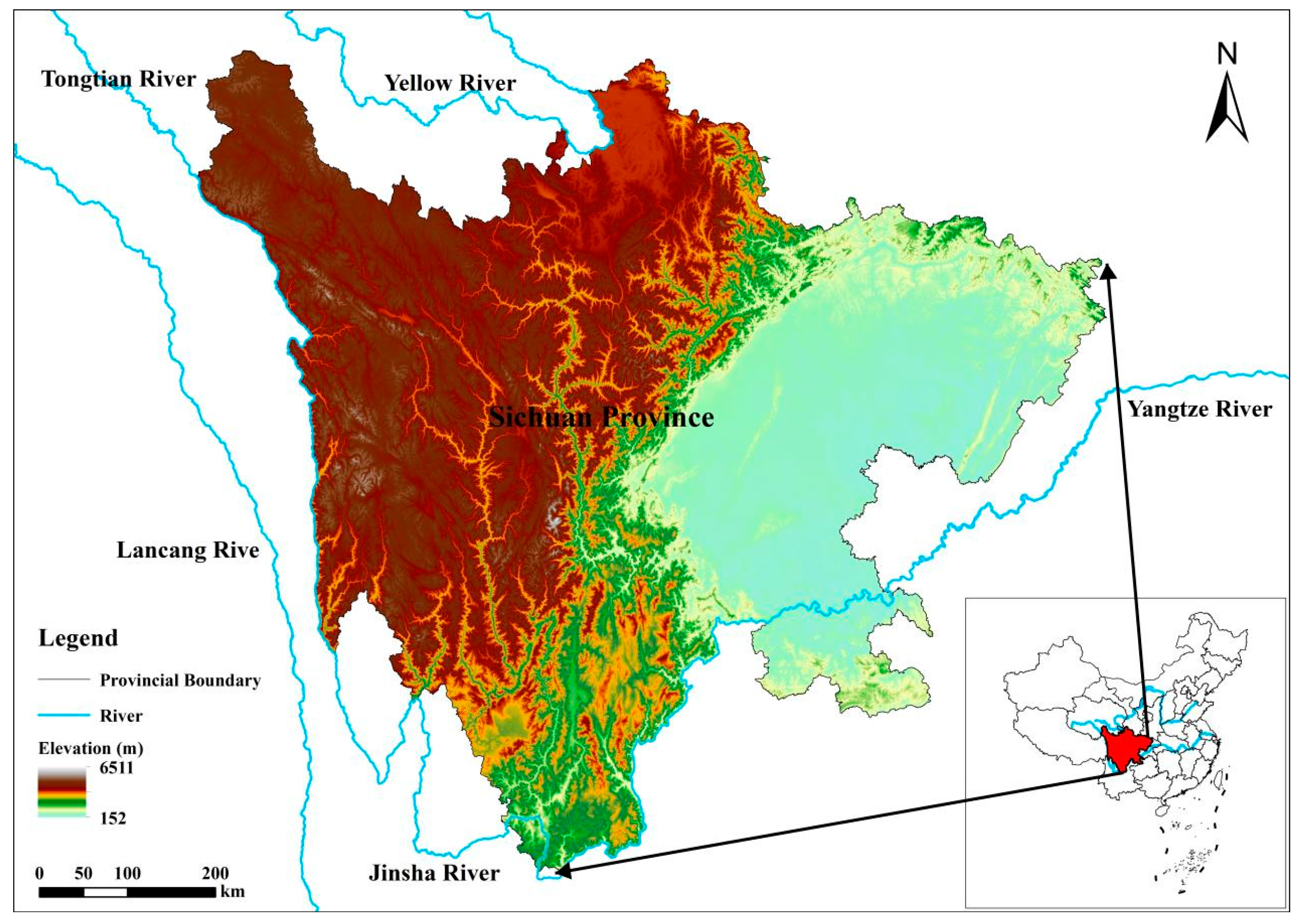
The study area of this research encompasses the entirety of Sichuan Province (between 97°21′\108°33′ East Longitude and 26°03′\34°19′ North Latitude). Located in the upper reaches of the Yangtze River basin, it serves as a core province in Southwest China (Figure 1) and boasts some of the most concentrated hydropower resources in the country. The research boundary aligns perfectly with the administrative jurisdiction of Sichuan Province.
Sichuan Province’s climate is predominantly subtropical monsoon. The spatial and temporal distribution of precipitation within the region is uneven. In typical years, June to August is the main flooding season for the upper Yangtze River basin, with the average summer precipitation across the province reaching 550 mm [41]. The abundant water flow provides stable natural conditions for hydropower generation. However, influenced by global climate change, the frequency and intensity of extreme heat and drought events in Sichuan during the summer have shown a significant upward trend in recent years, making the region one of the most sensitive and vulnerable areas to climate change nationwide [42,43]. According to the Sichuan Climate Center’s 2023 Climate Change Bulletin [44], the region experienced the most severe compound heatwave and drought event since complete observational records began in 1961 during the summer of 2022. The average temperature across the province was 2.2 °C higher than the historical average for the same period. Meanwhile, precipitation was 51.5% below the historical average, totaling a mere 266 mm. The combination of extreme heat and drought led directly to a dramatic decline in river inflows, dealing an unprecedented blow to the region’s hydrology and power supply and demand balance [45].
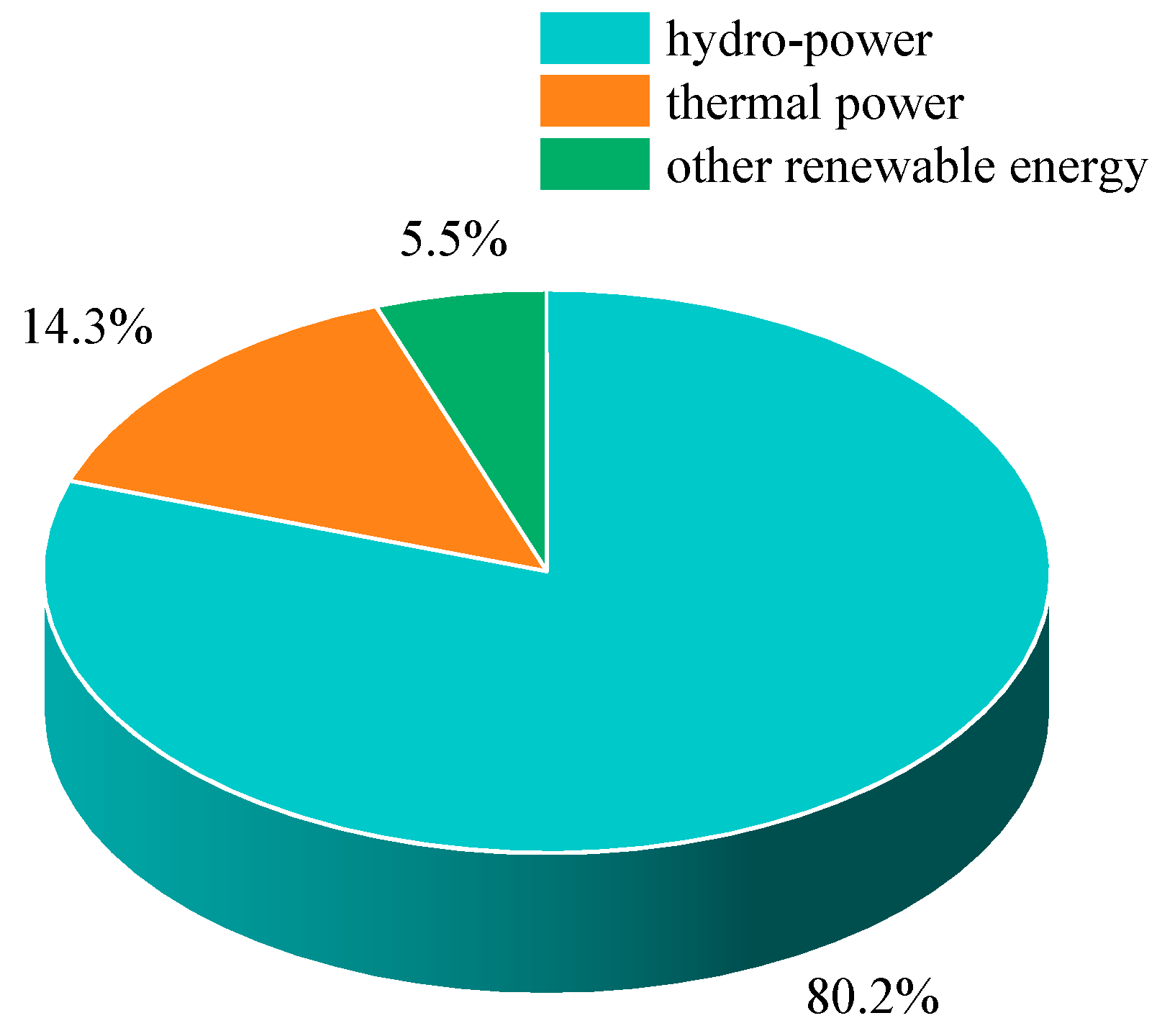
As China’s largest hydropower base, Sichuan Province’s power system has long presented a structural characteristic of “hydropower dominance, supplemented by thermal power”. According to the latest data from the Sichuan Statistical Yearbook 2024, the province’s total power generation in 2021 (a normal year before the extreme events) was 443,700 GWh, of which hydropower generation was 355,800 GWh, accounting for 80.2%; thermal power generation was 63,400 GWh, accounting for only 14.3%; and power generation from other new energy sources such as wind and photovoltaic power was 24,500 GWh, accounting for 5.5% (Figure 2).
Sichuan can provide a large amount of clean electricity in normal and wet years, and has long undertaken the core task of “West–East Electricity Transmission”. In 2021, Sichuan sent out 136.8 billion kilowatt-hours of electricity, of which more than 90% was clean hydropower, providing important support for the country’s low-carbon transition [46,47]. However, in dry years or years of extreme drought, the significant decline in hydropower output directly leads to a power supply gap. Meanwhile, thermal power, with its relatively low proportion, becomes the only adjustable power source for emergency supply assurance. The system’s regulation capacity is extremely limited, which is also the core reason for the rapid expansion of the power gap during the extreme events of 2022 [14].

2.2. Data Sources

Meteorological data: Monthly temperature and precipitation data were obtained from the Climatic Research Unit Time series (CRU TS), with a spatial resolution of 0.5 degrees, covering the period 1991–2024, and a climatological period of 1991–2020 [48]. The monthly Standardized Precipitation-Evapotranspiration Index (SPEI) was obtained from https://spei.csic.es/index.html (accessed on 8 March 2026), with a spatial resolution of 0.5 degrees and a temporal range 1990–2024. The complete data coverage spans January 1901 to December 2024 [49].
Power data: Monthly power generation data (hydropower and thermal power) in Sichuan Province for the summers (July to September) from 2002 to 2025 published by the National Bureau of Statistics of China was used. Monthly electricity consumption and the cumulative value of coal consumption rates for power generation in Sichuan Province were downloaded from the Wind database.
Emission factors: The CO2 emission factors of coal-fired power units in Sichuan Province were taken from the provincial greenhouse gas accounting specifications of the Ministry of Ecology and Environment. Based on the actual local environmental monitoring data disclosed in Sichuan Province, the production and discharge coefficients of the power generation industry disclosed by the Ministry of Ecology and Environment were localized and modified to calculate the main pollutant emission factors.

2.3. Research Methodology

The research methodology diagram (Figure 3) illustrates the logical framework of this study.

2.3.1. Composite Event Identification

This study uses Consecutive Hot Days (CHD) to identify heat waves. Based on the “Grades of Heat Wave” (GB/T 29457-2012) [50], China generally uses the standard of daily maximum temperature ≥ 35 °C lasting for more than 3 days as the criterion for a high-temperature heat wave, supplemented by high-temperature warning signals. Furthermore, this study uses the Cooling Degree Days (CDD) method to quantify the increase in electricity consumption caused by extreme heat. CDD is the core indicator for measuring high-temperature cooling demand. China generally uses 26 °C as the baseline cooling temperature. Above this temperature, residents/businesses will turn on air conditioning. For all days with an average daily temperature exceeding 26 °C, the temperature difference is accumulated to obtain the cumulative cooling demand for the month.
Monthly   cumulative   CDD = i = 1 n ( T i 26   ° C )
where Ti is the daily average temperature on the i-th day of the month.
Drought is determined using the SPEI-01 index to identify the drought severity for the current month. The difference between precipitation P (water supply) and potential evapotranspiration PET (maximum possible evaporation capacity of the atmosphere, which can be estimated from temperature, radiation, wind speed, etc.) is calculated. The resulting difference values are fitted to a probability distribution and standardized, yielding a standard normal variable with a mean of 0 and a standard deviation of 1, defined as the Standardized Precipitation Evapotranspiration Index (SPEI) [49]. SPEI is a multi-time scale index that can be calculated on various time scales from 1 to 48 months. The time scale for SPEI-01 is 1 month, meaning that only the current month’s precipitation P and potential evapotranspiration PET are used to calculate water surplus or deficit, which is then standardized. Therefore, SPEI-01 < 0 indicates a water deficit for the month, leaning towards dry; SPEI-01 > 0 indicates a water surplus for the month, leaning towards wet. The larger the absolute value, the further it deviates from the historical climate state (more extreme).
SPEI-01 can reflect short-term variation characteristics with large fluctuations in dry and wet alternations, better reflecting subtle variations in water surplus and deficit [51], It is especially suitable for drought monitoring when temperature has a significant impact on evapotranspiration [52], and can better reflect the characteristics of drought intensification under the trend of “warm and dry” [53]. Therefore, it is often used to analyze the coupling events of heatwaves and droughts. The standard for classifying dry and wet levels reflected by the SPEI is shown in Table 1 [54].

2.3.2. Hypothesis-Based Inference Method

Typically, the generation and consumption of hydropower are continuously and steadily increasing, consistent with the gradual development of the economy over time. Developments in environmental and energy policies will promote the increase in installed capacity of hydropower. Changes in meteorological factors, however, cause fluctuations in hydropower and thermal power. In studies of the linkage between meteorology and electricity, both policy and economic factors are non-meteorological confounding variables. It is necessary to strip away the disturbance of such factors on power generation to accurately identify the true functional mechanism of meteorological conditions. While both policy and economic factors exhibit clear temporal characteristics, time-series models can effectively capture the temporal patterns of these factors, including analyses of trends and cyclical components.
This study selected a historical baseline period (July–September 2002–2021) to build an Autoregressive Integrated Moving Average (ARIMA) model for baseline power series under normal temperature-precipitation conditions, preserving the natural evolution patterns driven by economic, policy, and meteorological factors. When simulating power data for 2023–2025, the model incorporates the natural continuation of the power series evolution patterns obtained from the historical baseline period. Since the baseline period data consists of non-extreme weather conditions, the simulated values represent the power structure changes under non-extreme weather scenarios. The model’s simulation accuracy was validated using concurrent real-world observation data for 2023–2025. The ARIMA model, after accuracy verification, was further used to simulate the electricity consumption (Consumption_baseline), hydropower generation (Hydro-power_baseline), and thermal power generation (Thermal_baseline) in the summer of 2022 under the baseline power framework. This set of data represents the baseline value of power operation in the summer of 2022 under the assumption of no extreme weather disturbances, which conforms to the normal laws of policy and economic development. Subtracting the actual electricity values for the summer of 2022 (i.e., the values during the period of extreme heat and drought) from the baseline values eliminates the impact of economic policy factors on the electricity data at that time, thereby quantifying the electricity fluctuations caused solely by extreme meteorological factors.
Under this research framework, the actual observation data for 2022 needs to be reserved and not included in the model training and validation process. If a traditional forward validation strategy is adopted, the baseline simulation results for 2022 will lack an effective direct reference basis, making it impossible to quantitatively evaluate their reliability. Therefore, this study innovatively proposed a “squeeze validation method”, which relies on the complete non-extreme data intervals before and after 2022 (2002–2021 and 2023–2025) to build a validation framework spanning the target year: if the model can accurately capture the evolutionary characteristics of the power series from 2023 to 2025, it can indirectly prove that the model’s capture of the nonlinear evolutionary trend of the power series from 2021 to 2023 is reasonable, and that this evolutionary process satisfies the continuity and physical consistency of the time series, thereby providing solid statistical confidence support for the baseline interpolation simulation results for 2022.

2.3.3. ARIMA Model

The ARIMA model is one of the most classic methods in time series analysis. It captures the autocorrelation structure of the sequence through a combination of three parts: autoregression (AR), differencing (I), and moving average (MA). ARIMA is highly capable of modeling linear relationships in data and can handle non-stationary sequences (making them stationary through differencing). ARIMA excels at short-term forecasting, especially when the data exhibits a trend or seasonality, as it can effectively simulate these patterns. In sequences with trends and periodicities, such as power load and product sales, the ARIMA model is widely applied [55]. In many fields, such as finance and energy, ARIMA has proven to be a reliable and efficient forecasting tool [56]. The ARIMA model is highly interpretable; its parameters, such as the autoregressive coefficients and moving average coefficients, directly reflect the extent to which lagged values of the series influence the current value, as well as the lagged effects of the error term.
In this study, the ARIMA model typically sets the autoregressive parameter p, the number of differencing steps d, and the number of moving averages q to 1. An automatic calculation mode is used to fit the annual electricity data for each month from 2002 to 2021. If the parameters satisfy the stationarity and reversibility test conditions of the current method, the process continues; if they do not meet the conditions, the historical baseline data is first linearly differenced and extrapolated before ARIMA fitting. The autocorrelation function (ACF) plot of the residuals in the ARIMA report is used to determine model validity. If the residuals exhibit autocorrelation at a specific lag order (where the coefficient for that order in the ACF plot exceeds the 95% confidence interval), the model order is adjusted (e.g., by increasing p or q). The fitting process was completed in the Origin software version 2026. The software can simultaneously perform predictive simulations for the data from 2022 to 2025 (a reliable range, pink areas inall ARIMA Fitting and Prediction plots). The midpoint of the predicted range for that year is used as the standard prediction value.

2.3.4. Calculation of Pollutant and Carbon Emissions

This study employs the emission factor method to calculate the increase in atmospheric pollutants and greenhouse gases (primarily CO2) caused by the additional generation from thermal power plants. The calculation formula is
E = AD × EF
where E is the emission amount and AD is Activity Data, referring to coal consumption (t) in this context. EF is the emission factor for each pollutant or CO2, with units of kg/t.
First, it is necessary to convert AD from power generation to fuel consumption:
Fuel consumption (standard coal) = Power generation × Standard coal consumption for power generation
where the standard coal consumption for power generation is derived from Wind monthly update data.
Then, the localized emission factor EF is calculated. The calculation method for pollutant emission factors refers to the Manual on Methods and Coefficients for Pollutant Emission Accounting in Source-Based Statistical Surveys issued by the Ministry of Ecology and Environment in 2021 [57]. Combining the structural characteristics of coal-fired units in Sichuan, the production and emission coefficients for particulate matter, SO2, and NOx are localized based on factors such as fuel type, unit type, installed capacity, and end-of-pipe treatment technology. The CO2 emission factor is directly selected based on the provincial Carbon Dioxide Emission Accounting Methods and Data Verification Checklist published by the Ministry of Ecology and Environment [58].

3. Results

3.1. Spatiotemporal Evolution of Compound Drought and Heatwave

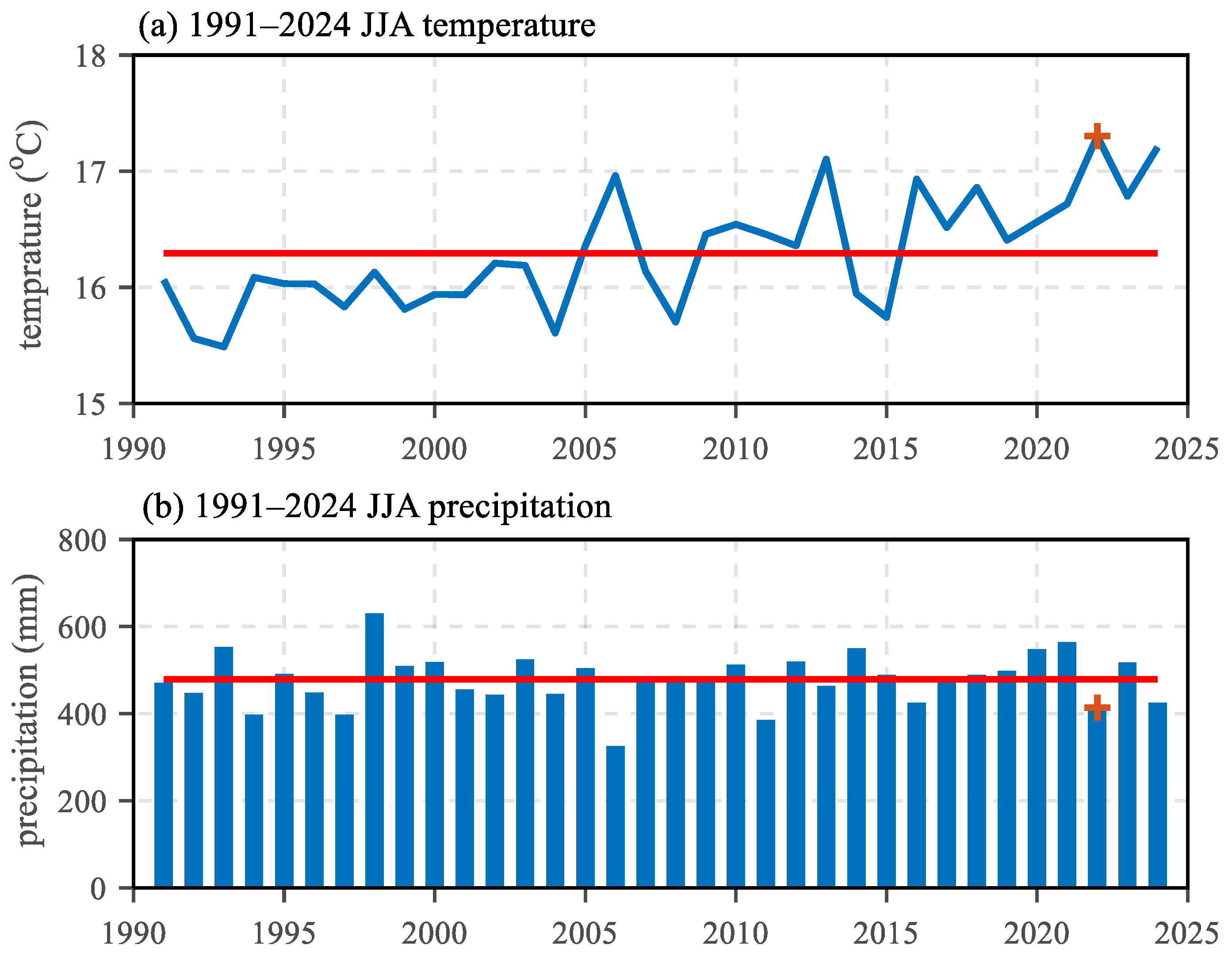
In the summers of 2006, 2011, 2016, 2022, and 2024 (JJA, June, July, August), high temperatures and low precipitation were observed. Among them, regional and staged droughts prevailed in 2006, 2011, and 2024; in 2016, high temperatures were prominent while droughts were relatively mild. In 2022, the provincial average temperature was abnormally higher than usual, the highest for the same period since 1990, and the provincial average precipitation was significantly lower than usual, resulting in a compound climate of drought and heatwaves (Figure 4).
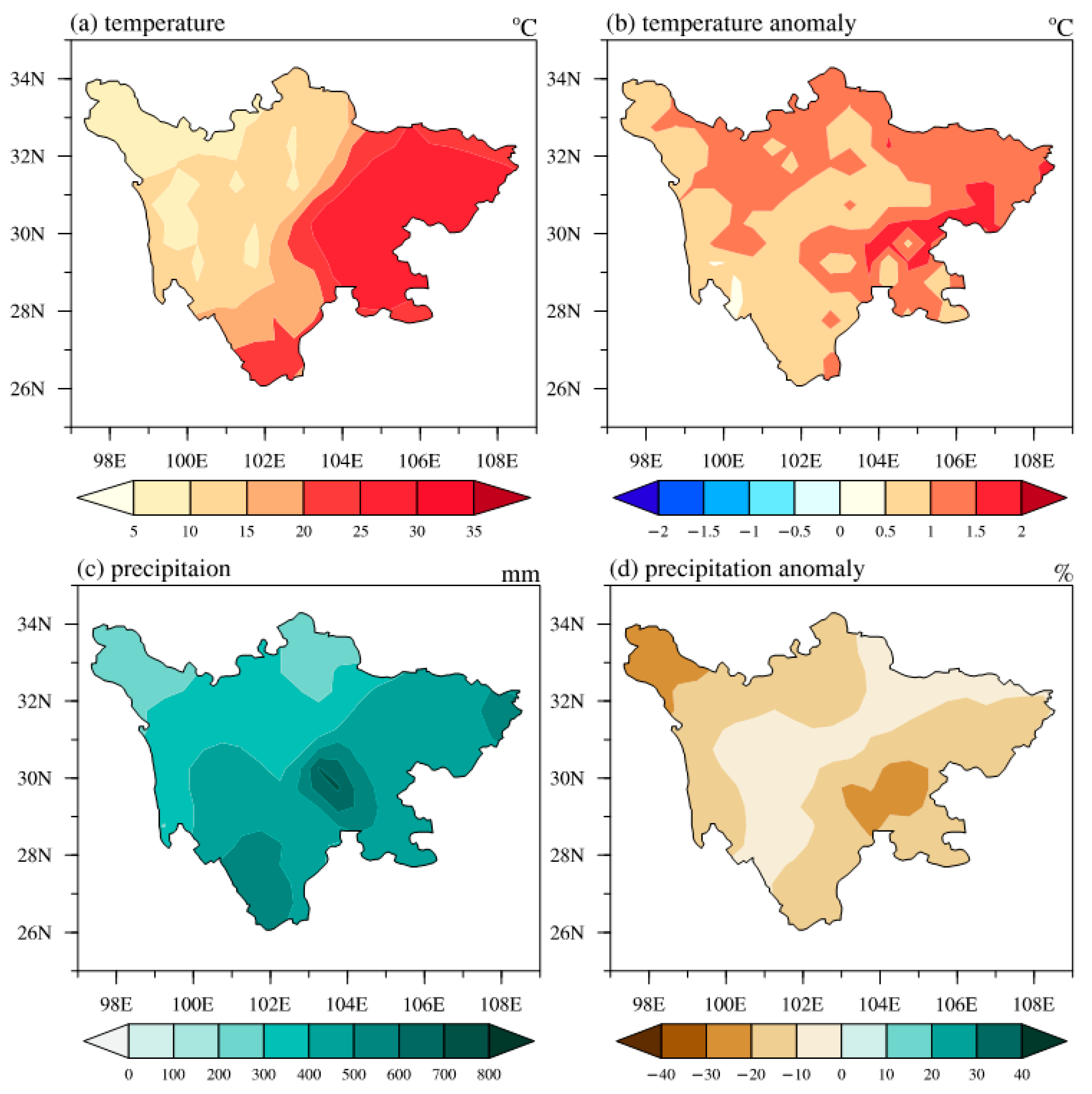
Spatial distribution of the compound drought and heatwave: Compared to the same period in previous years, temperatures in most parts of Sichuan Province were 1–2 °C higher, with most of the Sichuan Basin seeing a significant increase of 1.5 °C. Precipitation in most parts of the province was 10–40% below average, with most of the Sichuan Basin experiencing a significant decrease of 20–30% (Figure 5).
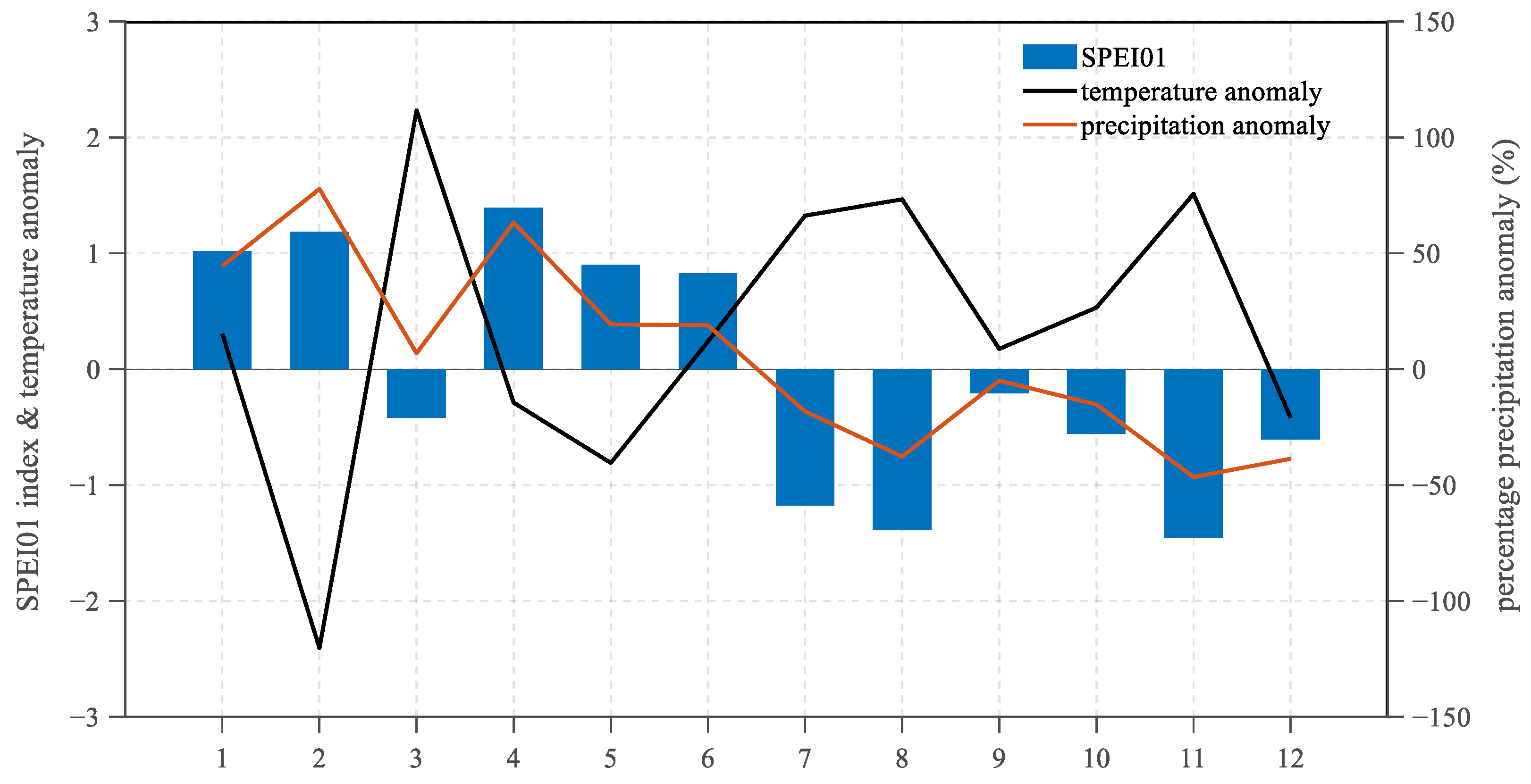
Temporal evolution of the compound drought and heatwave: Sichuan Province experienced three distinct periods of high-temperature weather, the first from 27 June to 30 June, the second from 4 July to 16 July, and the third from 28 July to 28 August. The province’s average summer temperature, number of hot days, and extreme maximum temperatures all hit new highs since 1961, and the comprehensive intensity of the heatwave was classified as “exceptionally strong.” In the first half of the year (January to June), precipitation was higher than usual, while in the second half (July to December), it was consistently lower than usual. The drought continued to develop throughout the summer and autumn, the combination of below-average precipitation and above-average temperatures resulted in persistently negative SPEI01 values. Specifically, SPEI01 dropped to −1.1 and −1.3 in July and August (Figure 6), respectively, both reaching the moderate drought level, thus forming a typical compound dry-hot event, which caused profound impacts on water resources, power supply, and industrial production.

3.2. Pressure on Both the Supply and Demand Sides of the Power System

The impact of extreme heat and drought on power systems is multidimensional. On the supply side, persistent drought directly weakens the hydropower generation base; while on the demand side, rare heatwaves lead to a surge in cooling load. In addition, the combined effects of high temperatures and drought lead to the extreme situation of high basin evaporation and lack of water for power generation. This double squeeze of “plummeting supply + surging demand” has broken the fragile energy supply-demand balance dominated by hydropower in Sichuan Province.
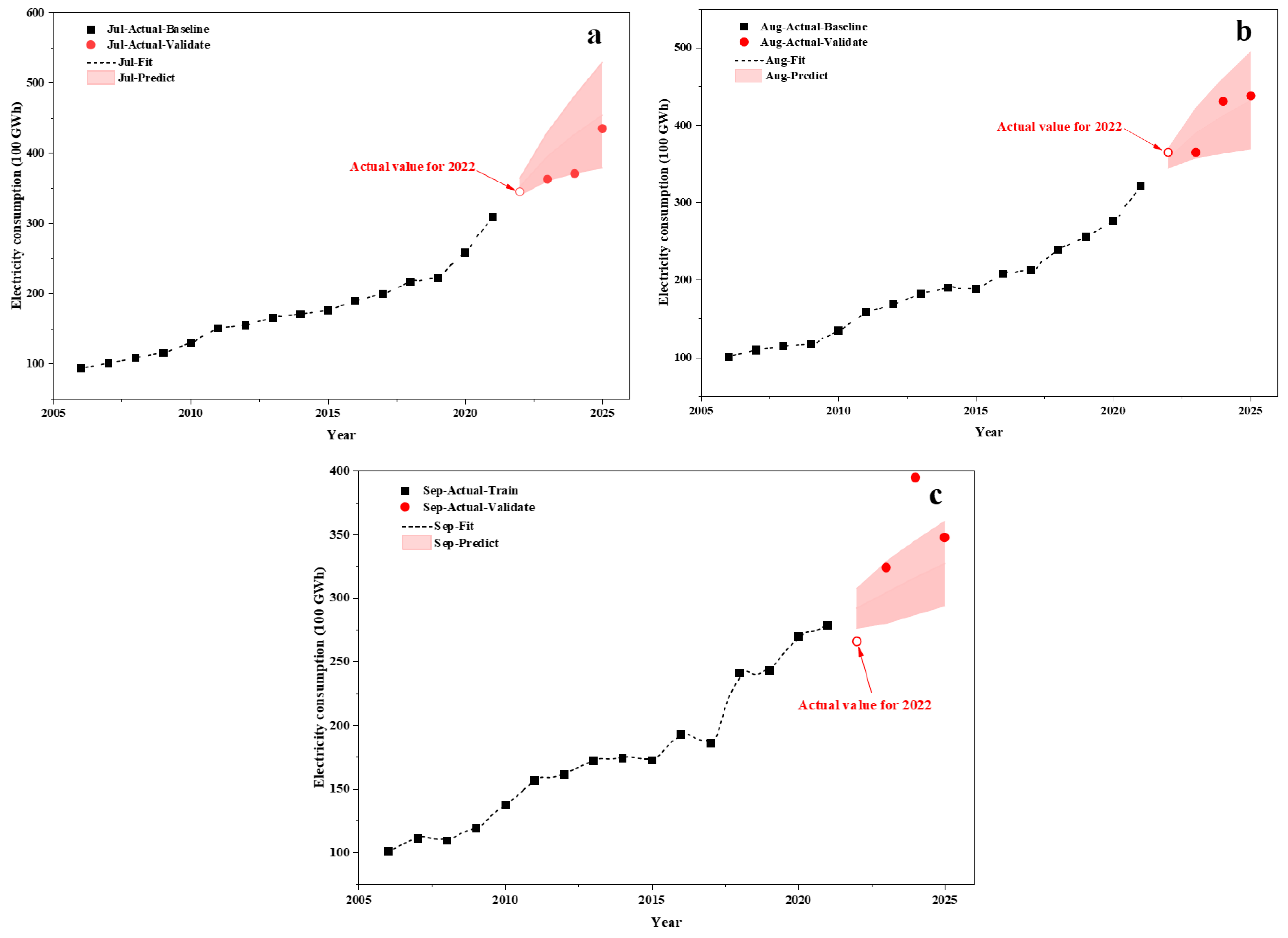
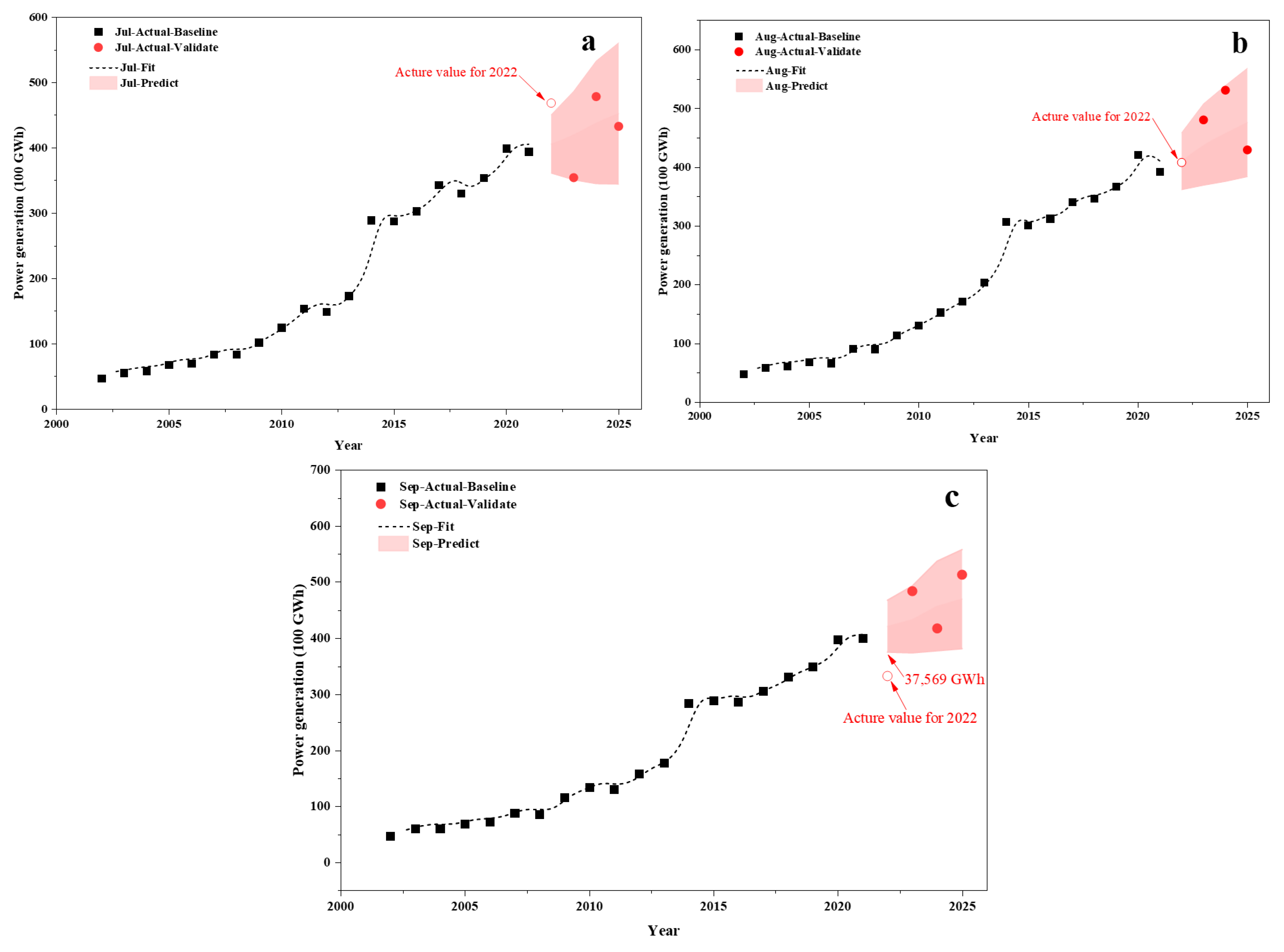
The residual white noise diagnosis for six ARIMA models fitted to electricity consumption and hydropower generation data for July, August, and September from 2002 to 2021 is qualified. The extrapolation capability of the model was verified using measured data from 2023 to 2025. Except for the September electricity consumption in 2024, all measured data fell within the 95% confidence intervals of the simulated predictions (pink shaded areas in Figure 7 and Figure 9). Therefore, the predictive accuracy of the five ARIMA models, excluding the September 2024 electricity consumption, was validated and demonstrated reliable stability when extrapolating over time. Consequently, it is scientifically sound and reasonable to employ this model for interpolating the missing data for the year 2022.
The electricity consumption fitting and forecasting results (Figure 7) show that under the assumption of no extreme weather disturbances, the electricity consumption in July and August 2022, which conforms to conventional policies and laws of economic development, is in the range of 33,998–36,403 GWh and 34,460–36,991 GWh, respectively. The actual electricity consumption is 34,500 GWh and 36,500 GWh, respectively. The baseline simulation values in July and August are similar to the actual values. Electricity consumption increases in sync with economic development. The surge in electricity consumption caused solely by extreme meteorological factors is not obvious. This is due to the implementation of a provincial policy in Sichuan on 14 August 2022, mandating widespread industrial power rationing to prioritize residential electricity supply, a measure that was gradually expanded until August 20 to alleviate power supply and demand tensions and ensure residential power [59]. Under policy intervention, extreme heat and drought actually resulted in a decrease in the total electricity consumption in Sichuan Province. As shown in Figure 7c, calculated according to the ARIMA model prediction results, the policy reduction in electricity consumption in September 2022 was at least 1024 GWh (the difference between the minimum baseline simulated value of 27,624 GWh and the actual value of 26,600 GWh). Wind data shows that in September 2022, Sichuan Province’s electricity consumption decreased by 4.4% year-on-year, with an actual reduction of 1200 GWh. This proves that even if the ARIMA model prediction did not fully pass the accuracy verification, its prediction results are basically credible.
Research shows that in the southwest region (Sichuan) during the summer, every 1 °C-day increase in CDD results in a province-wide monthly total electricity demand increase of approximately 12–15 GWh [60,61]. This is defined as the temperature-electricity response coefficient, β. By subtracting the normal cooling demand of an average year from the cooling demand of a high-temperature month, and multiplying the difference by the temperature-electricity response coefficient, we can calculate the additional electricity demand brought about by the high temperatures. This method can effectively eliminate the interference of non-temperature factors and accurately identify the independent impact of extreme high temperatures on electricity demand.
High-temperature electricity demand increase = (Current year high-temperature month CDD − Multi-year average CDD for the same month) × β
Calculations using this method show that the high temperature in Sichuan in August 2022 resulted in an increase in electricity demand of approximately 11,000–13,000 GWh. The province’s electricity load hit a record high, which is consistent with the findings of the study on the high temperature in Sichuan and Chongqing in 2022 [62].
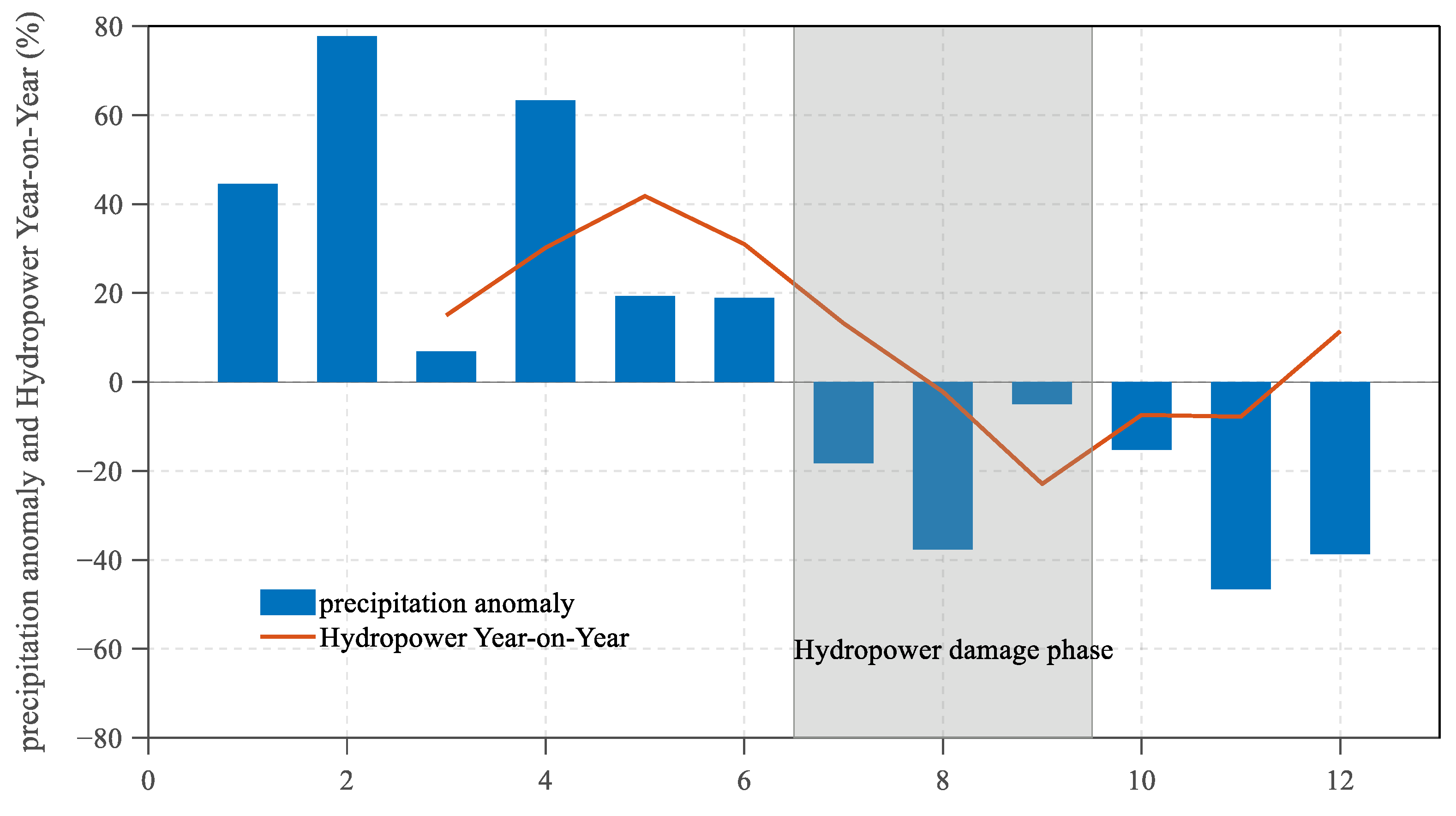
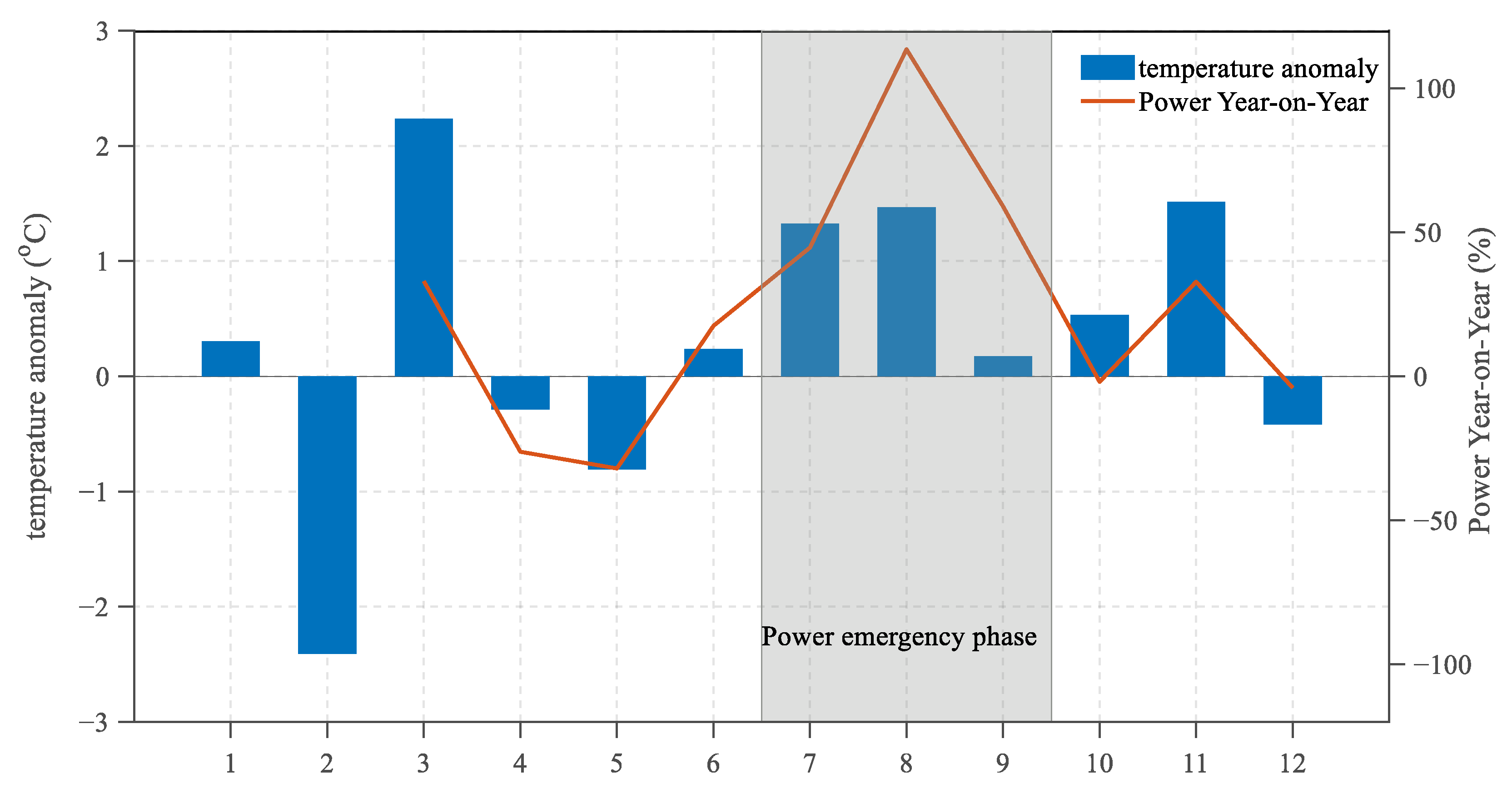
Figure 8 shows that, in the first half of the year (January to June), overall precipitation was higher than usual, peaking in February at 78%; in the second half (July to December), precipitation remained consistently lower than usual. Consequently, hydropower generation exhibited a three-stage pattern of “growth–decline–recovery.” From March to May, generation increased year-on-year, reaching an annual peak of 42% in May; subsequently, it declined year-on-year, bottoming out at −23% in September, representing a reduction of nearly one-quarter compared to the same period last year; after October, year-on-year generation gradually recovered to growth territory. From July to September, hydropower generation turned from positive to negative year-on-year, marking the “hydropower damage phase” of 2022.
Figure 9 shows the fitted forecast results of hydropower generation. The actual value of hydroelectricity generation in July 2022 is slightly higher than the maximum predicted value. This is because there was more precipitation from March to June, and the runoff and water storage volume increased significantly compared to the same period last year. In July, hydropower inflow was 40% below normal, and since August, it has been 50% below normal, with natural hydropower generation plummeting by over 51% [59]. However, the reduction in hydropower output caused by the decrease in precipitation has a time lag and is not reflected in the same month. The predicted value for August is close to the actual value, and the reduction in hydropower output caused by drought is still not obvious. In September, hydropower generation experienced a cliff-like drop. As shown in Figure 9, under the baseline scenario without extreme weather disturbance, assuming normal policy and economic development, the hydropower generation in September 2022 should be at least 37,569 GWh. However, the actual generation was 33,300 GWh, significantly lower than the baseline simulation. This indicates a hydropower generation gap of more than 4269 GWh. The installed hydropower capacity in September was 97.32 GW. Based on the hydropower capacity factor (monthly capacity factor = actual power generation ÷ (installed capacity × 24 × 30 h)), the hydropower curtailment rate in September was 52.47%.
As a major hydropower province in China, Sichuan was significantly affected by the extreme heat and drought conditions, resulting in a marked decrease in hydropower output. The provinces purchasing electricity transmitted from Sichuan were also deeply affected. The monthly electricity supply-demand gap under extreme weather conditions was calculated as Δ E = Actual hydropower generation + Imported electricity − Actual electricity consumption − Exported electricity. The actual values of each variable and the calculated ΔE values are shown in Table 2.

3.3. Quantitative Response Relationship of Emergency Thermal Power Substitution

To fill the gap between electricity supply and demand, Sichuan Province has taken measures to maximize thermal power generation. From July to September, thermal power output exhibited clear “peaking” emergency characteristics (Figure 10): the year-on-year growth rate of thermal power surged rapidly, reaching an annual peak of 110% in August. This indicates that thermal power generation doubled compared to the same period last year, demonstrating an extreme peak-load output profile.
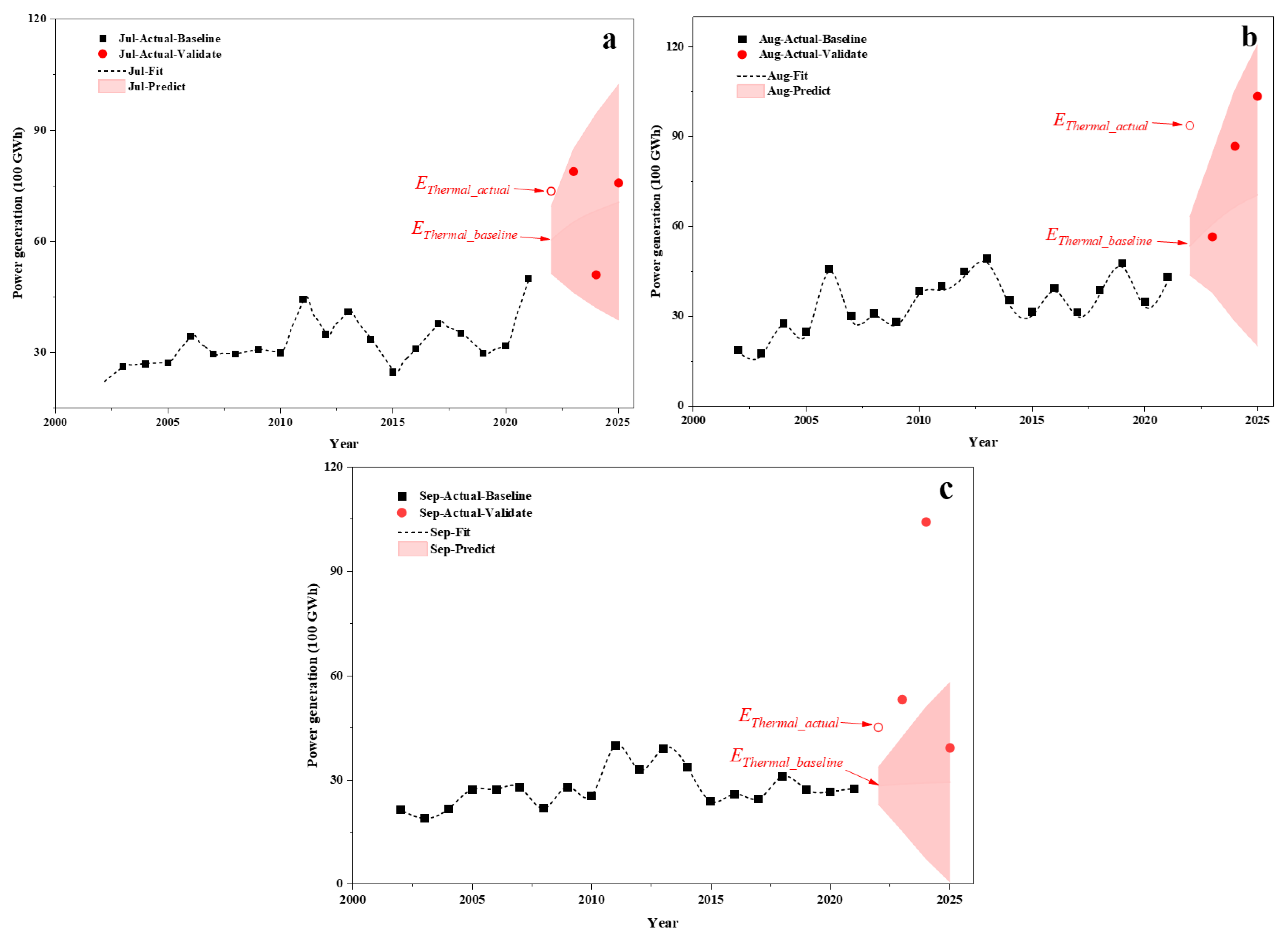
The fitting results of the ARIMA model for the thermal power generation in July, August and September from 2002 to 2021 are shown in Figure 11. The residual white noise diagnosis of all three sets of models is qualified, but the actual data in September from 2023 to 2025 did not all fall into the prediction range, which is because in recent years high-temperature weather has intensified, and the phenomenon of thermal power peaking during summer occurs frequently (Figure 4). Based on the prediction characteristics of the ARIMA model, it is known that the shorter the prediction period, the higher the prediction accuracy. Therefore, the predictability for 2022 is still reliable and suitable for reference.
The simulated average thermal power generation E(Thermal_baseline) for July, August, and September 2022 is 6030 GWh, 5556 GWh, and 2828 GWh, respectively, and the actual thermal power generation is EThermal_actual are 7350 GWh, 9360 GWh, and 4510 GWh, respectively, so the additional thermal power generation ∆EThermal caused purely by extreme heat and drought is about 1320 GWh, 3804 GWh, and 1682 GWh ( E T h e r m a l = E T h e r m a l _ a c t u a l E T h e r m a l _ b a s e l i n e ), consistent with the year-on-year data change trend for thermal power in Figure 10.

3.4. Implicit Pollutant and Carbon Emissions and Emission Characteristics

Using the hypothesis-based inference method, the implicit thermal power increment Δ E Thermal driven by pure meteorological factors for July, August, and September, combined with the emission factor method, can be used to calculate the implicit pollutant and carbon emissions caused by extreme weather after stripping away economic factors. Since coal (thermal coal) was the absolute dominant fuel for the thermal power units that were additionally opened and operated at full load during the period of full operation of thermal power in Sichuan in August 2022 [63], only the pollutant and carbon emissions of coal-fired units are considered in the accounting process.
Based on the cumulative monthly power generation coal consumption rate provided by the Wind database, the converted monthly power generation coal consumption rates for the specific months are 288.70 gce/kWh for July, 286.20 gce/kWh for August, and 306.70 gce/kWh for September. According to the provincial Carbon Dioxide Emission Accounting Methodology and Data Verification Form from the Ministry of Ecology and Environment, the CO2 emission factor for coal combustion, EFCO2, takes a unified value of 2.66 t CO2/tce.
This study localizes the main pollutant emission factors based on the accounting methods guided by the Ministry of Ecology and Environment’s “Accounting Methods and Coefficient Manual for Pollutant Generation and Emission in Emission Source Statistical Surveys (4411 Power generation industry)” [64], combined with the structural proportion of coal-fired units in Sichuan Province (estimated from publicly available data of authoritative sources such as the Sichuan Supervision Office of the National Energy Administration, the Sichuan Development and Reform Commission, and the Information Ledger of Sichuan Thermal Power Plants), the progress of ultra-low emission retrofits, and the actual operating efficiency of local end-of-pipe treatment technologies [65] to revise the actual emission coefficients. It must be emphasized that during the summer of 2022 guarantee period of power supply for Sichuan province, when units operated at 100% capacity with all environmental protection facilities fully engaged, there was no derating or outage; all state-dispatched coal-fired power plants and local captive power plants in Sichuan province strictly complied with the national ultra-low emission standards for coal power, achieving high end-of-pipe treatment efficiency η (Table 3). Consequently, localized emission factors (EF) (unit: kg/t fuel) have been developed as follows and can be directly applied to calculate actual pollutant emissions.
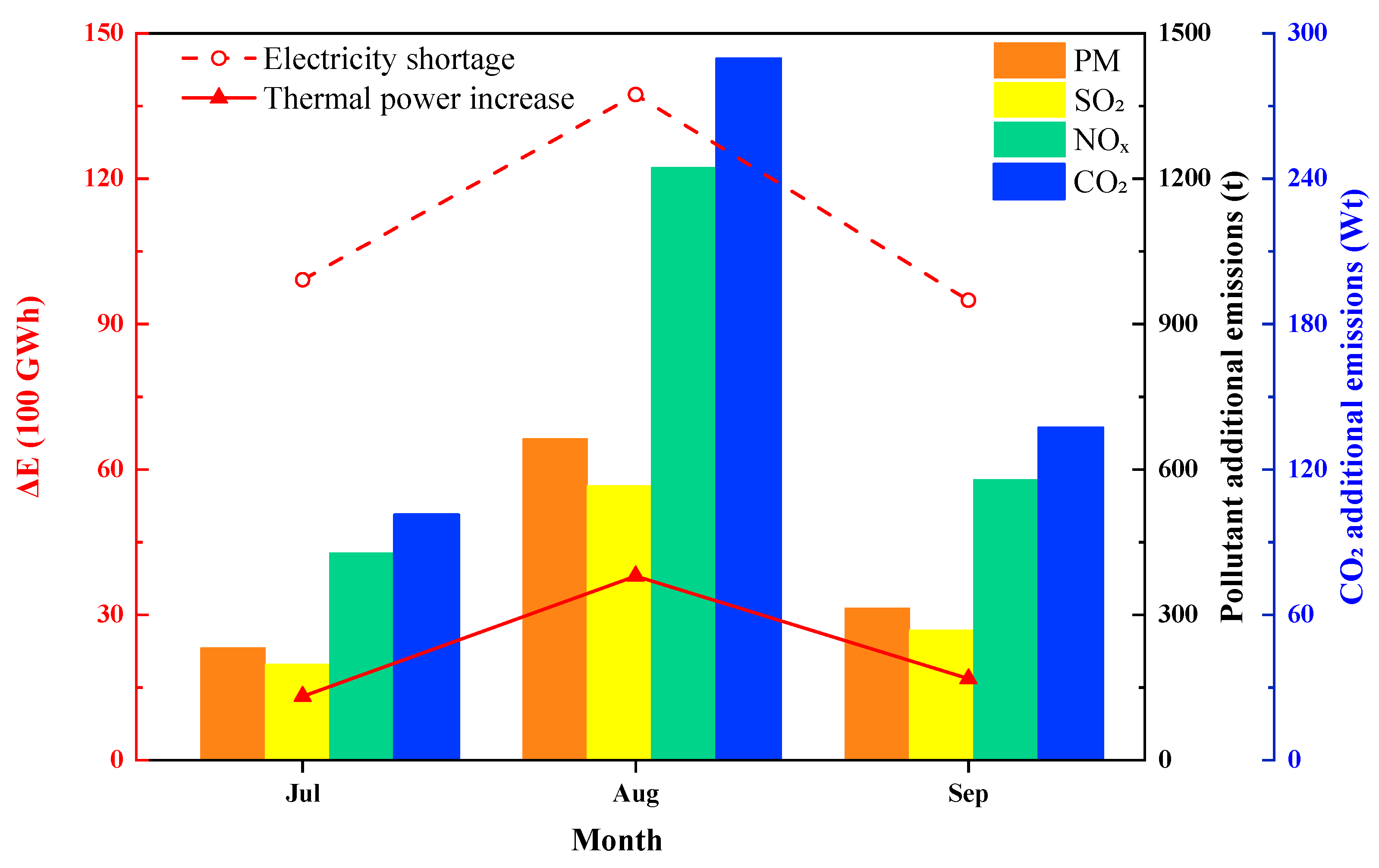
The raw coal consumption is multiplied by the weighted average localized emission factors to obtain the emissions of particulate matter (PM), SO2, and NOx. The standard coal consumption is multiplied by the uniform coal-fired CO2 emission factor to obtain carbon emissions. The calculation results are shown in Figure 12. The localized pollutant emission factors significantly improved the calculation accuracy with low uncertainty. Due to the relatively late start of carbon accounting technology, the updates of CO2 emission factors have not been timely, and the local coal-fired CO2 emission factor for Sichuan Province in 2022 could not be found. Therefore, there is a certain degree of uncertainty in the carbon emission calculation results.
Due to the development process of extreme heat and drought, the emissions over the three months presented distinct unbalanced characteristics: August was the most severe stage of the high temperature and drought, with the largest gap in power supply. The increased thermal power generation reached 3804 GWh, directly causing August’s emissions to become the peak of the three months. Carbon emissions in August accounted for 54.8% of the total emissions over the three months, and atmospheric pollutant emissions also accounted for over 54% of the total pollutant emissions. The vast majority of the additional emissions were concentrated in August.
From the perspective of pollutant composition, NOx is the pollutant with the highest proportion in this implied emission. The total NOx emissions over three months reached 2230.61 t, accounting for about 50% of the total emissions of the three major air pollutants, followed by particulate matter, accounting for 27%; SO2 had the lowest proportion, at 23%. This characteristic mainly stems from the difference in emission factors among different units. The average emission factor of NOx is significantly higher than that of PM and SO2.
Extreme weather sets off massive extra environmental stress: All the emissions calculated this time are extra implicit emissions brought about by extreme weather. Under normal conditions, this energy could have been provided by clean hydropower, with almost no fossil fuel combustion emissions. Extreme weather in the summer of 2022 led to an additional over 528 wt. of carbon emissions and more than 4470 t of atmospheric pollutant emissions in Sichuan over a three-month period. The total power generation in Sichuan Province in 2022 was 463,370 GWh. The average carbon dioxide emission factor of electricity in Sichuan Province in 2022 was 0.1404 kg CO2/kWh [66]. It is estimated that the total CO2 emissions of the power industry in Sichuan Province in 2022 was about 6506 wt. Therefore, the carbon emissions caused by this increase in thermal power generation accounted for 8.16% of the annual carbon emissions from electricity, which brought periodic pressure to the local carbon emission reduction targets and highlighted the environmental impact risks of the energy system under extreme weather.

4. Discussion

4.1. Principle and Significance of “Squeeze Verification Method”

In the assessment of the power impact of extreme weather events, a long-standing methodological bottleneck has proven difficult to overcome: extreme events are low-probability rare events, and their counterfactual baselines (i.e., the normal operating state of the system without interference from extreme events) cannot be obtained through direct observation. Most existing research relies solely on pre-event historical data to fit trends and extrapolate baselines, which fails to effectively capture long-term trend changes before and after the events (such as shifts in electricity consumption patterns driven by policy adjustments or economic structural transformations), nor can it verify the accuracy of the constructed baselines, leading to significant heterogeneity in similar research results, with some models even systematically underestimating the impact of extreme events.
To address this industry challenge, this study innovatively proposes the Constrained Validation Method, which eliminates the target extreme years and constructs and validates the baseline using full-cycle non-extreme data, effectively resolving the core problem of unverified counterfactual results. The essence of this method is an indirect confidence verification approach for time series, relying on the temporal continuity and physical consistency assumptions of power system operation sequences, transforming the traditional “direct validation of the target year” into a “systematic validation of the model’s long-term trend capture capability.”
By incorporating post-event observational data, this method can more accurately capture long-term trend changes such as the advancement of the dual-carbon goals and post-pandemic economic recovery, effectively avoiding the extrapolation errors that may arise from relying solely on pre-event data fitting trends. It ensures that the baseline results fully align with normal policy and economic development patterns. This method transforms the unobservable counterfactual evaluation of extreme events into a standardized process that can be back tested using normal years, fundamentally enhancing the credibility of the assessment results. Additionally, this method exhibits strong scalability, not only applicable to compound drought-heatwave events but also extendable to other types of extreme events such as cold snaps, typhoons, and heavy rains, providing a replicable standardized validation paradigm for this field.

4.2. The “Heatwave-Power Shortage-Ozone” Chain Reaction

Extreme heat waves lead to stable atmospheric stratification, which is detrimental to diffusion. At this time, increased NOx emissions from emergency thermal power dispatch will very likely induce or exacerbate near-surface ozone (O3) pollution. Previous studies have shown that high temperatures during heatwaves increase ozone sensitivity to NOx emissions through a three-fold mechanism: First, high temperatures directly accelerate the rate of atmospheric photochemical reactions, increasing the ozone production efficiency [67]. Second, high temperatures and droughts cause vegetation water stress and stomatal closure, significantly inhibiting the dry deposition of ozone by vegetation, leading to continuous ozone accumulation in the atmosphere [68]. Third, high temperatures stimulate vegetation to emit more biogenic volatile organic compounds (BVOCs), providing more reactive substrates for ozone production [69]. Data from the Ministry of Ecology and Environment, the Sichuan Provincial Department of Ecology and Environment, and related studies confirm that ozone pollution worsens during heat waves [70,71]. In August 2022, a severe ozone pollution episode occurred in the Sichuan Basin. During this month, all of the primary pollutants contributing to the increased number of non-attainment days in the 15 cities of Sichuan province included in the national key monitoring network were ozone, with no other pollutants exceeding the standard. The pollution showed distinct regional characteristics, with the Chengdu Plain as the core polluted area, followed by southern Sichuan, while northeastern Sichuan and western Sichuan plateau experienced relatively lighter pollution. In sharp contrast to neighboring Chongqing, which had no days exceeding the ozone standard in that month, Chengdu, Sichuan, experienced a large-scale ozone pollution episode driven by high temperatures, poor dispersion conditions, and precursor emissions [72].

4.3. Risk of Climate-Emissions Synergistic Deterioration

Extreme heat and drought conditions have triggered additional emissions of atmospheric pollutants and greenhouse gases, potentially exacerbating local warming and initiating a self-reinforcing cycle. Notably, the surge in thermal power generation during this event accounted for 8.16% of the Sichuan Province power sector’s total annual carbon emissions. This highlights that a single extreme event can significantly disrupt annual emission reduction targets, far exceeding the impacts of typical seasonal fluctuations. Crucially, this event reveals a positive feedback loop rather than a one-way linear cascade (“extreme weather → power shortages → peak coal-fired generation → increased emissions”): “extreme weather → increased emissions → accelerated local warming → intensified extreme weather.” Driven by multifaceted physicochemical mechanisms, this self-reinforcing nature can spiral the impacts of extreme events. First, as ozone precursors, additional NOx emissions significantly accelerate photochemical reactions under high temperatures and intense radiation, elevating local ozone concentrations. This accumulation enhances atmospheric radiative forcing, raising near-surface temperatures and forming a “NOx emissions → increased ozone → local warming” loop; a 10 ppb ozone increase can elevate regional temperatures by 0.3–0.5 °C [73,74]. Second, particulate matter emissions—especially light-absorbing aerosols like black carbon—further heat the atmosphere radiatively. This aerosol-heatwave feedback prolongs extreme heat durations and suppresses precipitation, worsening droughts [75]. Third, localized warming strains the energy system, forcing more coal-fired plants online and generating further emissions. From this feedback mechanism, we can infer that once an extreme event triggers this cycle, it will self-reinforce; the intensity and duration of extreme weather may exceed the initial climate model predictions, and emissions may grow exponentially rather than accumulate linearly.

4.4. Low-Carbon and Resilient Transition of Energy Systems

Energy systems that rely heavily on hydropower are vulnerable to extreme weather, making it urgent to build their resilience. As one of the provinces with the highest proportion of hydropower capacity in China, Sichuan’s clean and low-carbon energy mix offers significant emission reduction benefits under normal conditions. However, during extreme drought events, this overly reliant power generation structure becomes a weakness in the system. The sharp drop in hydropower generation has forced the grid to rely on high-emission coal-fired power as a backup, which explains why recent studies have found that regions with a higher share of renewable energy actually face a greater risk of increased emissions during extreme weather events [76]. This means that the future energy transition must not only focus on emission reduction efficiency under normal conditions, but also enhance the system’s flexibility and resilience during extreme events. By leveraging complementary energy sources and forecasting energy demand, we are gradually clarifying the path toward a low-carbon energy transition. On the one hand, it is necessary to diversify the power generation mix by allocating a certain proportion to distributed renewable energy, expanding long-duration energy storage, and enhancing cross-regional power dispatch capabilities to avoid over-reliance on any single power source. On the other hand, during the early warning phase of extreme weather events, cross-regional power dispatch and demand-side response measures should be initiated in advance to minimize the need for additional generation from thermal power plants and prevent the triggering of a vicious cycle.

5. Conclusions and Strategies

The study quantifies the vulnerability of a hydropower-dependent energy structure under extreme compound events. By comparing the ARIMA model simulation data with actual data, the results demonstrate that while ‘residential priority’ policies mitigated social risks, the hydrological lag effect, which resulted in a deficit of 4269 GWh in September, poses a prolonged threat to regional energy security.
This study quantitatively demonstrated the electricity shortfall caused by the squeeze on both the supply and demand sides due to the high-temperature and drought compound event: using the CDD method, it was determined that the increase in electricity consumption caused by the extreme heat in Sichuan in August 2022 was approximately 11,000–13,000 GWh; using the hydropower capacity factor, it was shown that the damage rate of hydropower in September reached 52.47%; through calculations based on real data, the electricity shortage under supply and demand pressure from July to September was 9914 GWh, 13,736 GWh, and 9492 GWh, respectively.
The “Squeeze Verification Method” counterfactual method was adopted to isolate the monthly thermal power increment ΔEThermal driven by purely meteorological factors under extreme high-temperature and drought conditions, and the implied pollution and carbon emission increases for each month were calculated using localized emission factors. The results show that power shortages, thermal power peak shaving, and the maximum pollution and carbon emissions all occurred in August, when the high temperature and drought were most severe. Among the pollutants, NOx had the highest share. The CO2 emissions accounted for 8.16% of Sichuan Province’s annual power-related carbon emissions; the emergency reliance on thermal power led to a significant spike in localized emissions, revealing a critical trade-off between energy security and decarbonization and highlighting the temporary regression of green energy transitions during climate crises.
A vicious cycle has been identified: extreme climate events leading to increased thermal power generation result in increased air pollution emissions, severe ozone pollution, and high-carbon emergency responses, which in turn may exacerbate long-term climate risks. This underscores the disruptive impact of climate instability on the ‘dual carbon’ roadmap and calls for a holistic approach to environmental governance. Therefore, this study recommends that Sichuan Province establish a “weather-electricity-emission” cascade early warning mechanism to enhance climate prediction and early warning capabilities. Based on SPI and temperature forecasts, the downward trend in hydropower capacity factors should be predicted 1–2 months in advance, drought risks should be assessed, and pollution and carbon emission warnings should be incorporated into the preconditions for power grid dispatching.
To transition from reactive crisis management to proactive sustainable resilience, Sichuan must optimize its power mix beyond hydropower. Future strategies should integrate multi-scenario demand forecasting with long-term energy planning, ensuring the power system can withstand extreme shocks without compromising environmental commitments. It is recommended that Sichuan Province focus on enhancing the resilience of its energy system, progressively improving the fundamental capacity for diversified energy security in stages, from near to far and from symptoms to root causes. Short Term: Improve inter-provincial and inter-regional emergency power mutual assistance agreements and optimize power purchase curves; upgrade inter-provincial and inter-regional transmission corridors so that external clean power support can be effectively utilized under extreme circumstances. Medium term: Accelerate the construction of pumped hydro storage and new energy storage, and use physical energy storage to replace thermal power chemical energy storage. Long term: Optimize the power supply structure, carry out research on key technologies for multi-energy complementary functional integration, and build a diversified power system by leveraging the different performance characteristics of wind and solar in extreme weather (e.g., strong sunlight during droughts allows for photovoltaic supplementation); guided by Sichuan’s local new energy development and energy transition goals, build a multi-scenario energy demand prediction model; while comprehensively considering multi-dimensional constraint objectives such as dual carbon-pollution control and cost optimization, develop a large energy planning model to simulate and construct the transition and optimization path of the power supply structure.

Author Contributions

Conceptualization, Y.B., R.Z. and Y.L.; methodology, R.Z.; software, R.Z.; validation, Y.L. and Y.B.; formal analysis, R.Z., Y.L. and S.S.; investigation, Y.L., Y.D. and R.Z.; resources, Y.B., J.T. and K.H.; data curation, R.Z., Y.L. and C.X.; writing—original draft preparation R.Z.; writing—review and editing, Y.L. and Y.B.; visualization, R.Z. and Y.L.; supervision, S.S. and Z.J.; project administration, Y.B., J.T. and K.H.; funding acquisition, Y.B., J.T. and K.H. All authors have read and agreed to the published version of the manuscript.

Funding

This work was financially supported by the National Treasure Ecological Research Synergetic Innovation Center (China), Key R&D program of Yunnan Province—Social Development Special Project (202403AC100026) and the National Natural Science Foundation of China (72574018).

Institutional Review Board Statement

Not applicable.

Informed Consent Statement

Not applicable.

Data Availability Statement

Wind data was obtained from the WIND Financial Terminal at Tsinghua University Library. The terminal is logged into a WIND account purchased by Tsinghua University and is available exclusively to the university’s faculty and students. The sources of the other data used for this research are provided in Section 2.2.

Conflicts of Interest

The authors declare no conflicts of interest.

References

  1. Quilcaille, Y.; Gudmundsson, L.; Schumacher, D.L.; Gasser, T.; Heede, R.; Heri, C.; Lejeune, Q.; Nath, S.; Naveau, P.; Thiery, W.; et al. Systematic attribution of heatwaves to the emissions of carbon majors. Nature 2025, 645, 392–398. [Google Scholar] [CrossRef] [PubMed]
  2. Calvin, K.; Dasgupta, D.; Krinner, G.; Mukherji, A.; Thorne, P.W.; Trisos, C.; Romero, J.; Aldunce, P.; Barrett, K.; Blanco, G.; et al. IPCC, 2023: Climate Change 2023: Synthesis Report. Contribution of Working Groups I, II and III to the Sixth Assessment Report of the Intergovernmental Panel on Climate Change; Core Writing Team, Lee, H., Romero, J., Eds.; IPCC: Geneva, Switzerland, 2023. [Google Scholar]
  3. Jiang, S.; Wang, D.; Zhang, M. IPCC AR6 Working Group II(WG II)Report Progress: The Impact of Climate Change on Energy. Energy Res. Manag. 2022, 1, 1–6. [Google Scholar] [CrossRef]
  4. Intergovernmental Panel on Climate. Climate Change 2022—Impacts, Adaptation and Vulnerability: Working Group II Contribution to the Sixth Assessment Report of the Intergovernmental Panel on Climate Change; Cambridge University Press: Cambridge, UK, 2023. [Google Scholar]
  5. Intergovernmental Panel on Climate. Climate Change 2022—Mitigation of Climate Change: Working Group III Contribution to the Sixth Assessment Report of the Intergovernmental Panel on Climate Change; Cambridge University Press: Cambridge, UK, 2023. [Google Scholar]
  6. Ademmer, M.; Jannsen, N.; Meuchelboeck, S. Extreme Weather Events and Economic Activity: The Case of Low Water Levels on the Rhine River. Ger. Econ. Rev. 2023, 24, 121–144. [Google Scholar] [CrossRef]
  7. Mlynski, D.; Ksiazek, L.; Bogdal, A. Meteorological Drought Effect for Central Europe’s Hydropower Potential. Renew. Sustain. Energy Rev. 2024, 191, 114175. [Google Scholar] [CrossRef]
  8. Most, L.v.d. Weather Conditions Linked to Energy Droughts in Electricity Systems with Hydropower. Nat. Energy 2024, 9, 1459–1460. [Google Scholar] [CrossRef]
  9. Most, L.v.d.; Wiel, K.v.d.; Benders, R.M.J.; Gerbens-Leenes, P.W.; Bintanja, R. Temporally Compounding Energy Droughts in European Electricity Systems with Hydropower. Nat. Energy 2024, 9, 1474–1484. [Google Scholar] [CrossRef]
  10. Vasylieva, T.; Olah, J.; Khouri, S.; Horsch, A. Electricity Price Shocks, Renewable Energy Penetration, and Macroeconomic Stability in European Countries: Evidence from the 2022 Energy Crisis. Econ. Sociol. 2026, 19, 250–275. [Google Scholar] [CrossRef]
  11. Hunt, J.D.; Nascimento, A.; Caten, C.S.t.; Tome, F.M.C.; Schneider, P.S.; Thomazoni, A.L.R.; Castro, N.J.d.; Brandao, R.; Freitas, M.A.V.d.; Martini, J.S.C.; et al. Energy Crisis in Brazil: Impact of Hydropower Reservoir Level on the River Flow. Energy 2022, 239, 121927. [Google Scholar] [CrossRef]
  12. Robine, J.-M.; Cheung, S.L.K.; Roy, S.L.; Oyen, H.V.; Griffiths, C.; Michel, J.-P.; Herrmann, F.R. Death Toll Exceeded 70,000 in Europe During the Summer of 2003. Comptes Rendus Biol. 2007, 331, 171–178. [Google Scholar] [CrossRef] [PubMed]
  13. Sun Qian, X.J. Global Value Chain Risks, Energy Security, and the “Dual Carbon” Goals. China Popul. Resour. Environ. 2022, 32, 9–18. [Google Scholar] [CrossRef]
  14. Ma, J.; Sun, L.; Dai, C.; Zhang, B. Modeling and Analysis of Pumped-Storage Hydropower’s Role in Enhancing System Supply Security under the New Quality Productivity Framework. Clean Coal Technol. 2025, 31, 901–910. [Google Scholar] [CrossRef]
  15. Lin, S.; Li, H.; Huang, P.; Duan, X. Characteristics of high temperature, drought and circulation situation in summer 2022 in China. J. Arid Meteorol. 2022, 40, 748–763. [Google Scholar] [CrossRef]
  16. Cui, L.L.; Zhong, L.H.; Meng, J.C.; An, J.C.; Zhang, C.; Li, Y. Spatiotemporal Evolution Features of the 2022 Compound Hot and Drought Event over the Yangtze River Basin. Remote Sens. 2024, 16, 1367. [Google Scholar] [CrossRef]
  17. The Lantau Group. When the Water Runs Out: China’s Latest Power Crunch. 2022. Available online: https://www.lantaugroup.com/file/brief_hydro_aug22.pdf (accessed on 8 March 2026).
  18. Fazeli, R.; Ruth, M.; Davidsdottir, B. Temperature response functions for residential energy demand—A review of models. Urban Clim. 2016, 15, 45.40–59.40. [Google Scholar] [CrossRef]
  19. Moral-Carcedo, J.; Perez-Garcia, J. Temperature Effects on Firms’ Electricity Demand: An Analysis of Sectorial Differences in Spain. Appl. Energy 2014, 142, 407–425. [Google Scholar] [CrossRef]
  20. Mutschler, R.; Rudisuli, M.; Heer, P.; Eggimann, S. Benchmarking Cooling and Heating Energy Demands Considering Climate Change, Population Growth and Cooling Device Uptake. Appl. Energy 2021, 288, 116636. [Google Scholar] [CrossRef]
  21. Panteli, M.; Pickering, C.; Wilkinson, S.; Dawson, R.; Mancarella, P. Power System Resilience to Extreme Weather: Fragility Modeling, Probabilistic Impact Assessment, and Adaptation Measures. IEEE Trans. Power Syst. 2017, 32, 3747–3757. [Google Scholar] [CrossRef]
  22. Panteli, M.; Mancarella, P.; Trakas, D.N.; Kyriakides, E.; Hatziargyriou, N.D. Metrics and Quantification of Operational and Infrastructure Resilience in Power Systems. IEEE Trans. Power Syst. 2017, 32, 4732–4742. [Google Scholar] [CrossRef]
  23. Cadini, F.; Agliardi, G.L.; Zio, E. A Modeling and Simulation Framework for the Reliability/availability Assessment of a Power Transmission Grid Subject to Cascading Failures under Extreme Weather Conditions. Appl. Energy 2017, 185, 267–279. [Google Scholar] [CrossRef]
  24. Ma, S.; Chen, B.; Wang, Z. Resilience Enhancement Strategy for Distribution Systems under Extreme Weather Events. IEEE Trans. Smart Grid 2018, 9, 1442–1451. [Google Scholar] [CrossRef]
  25. Perera, A.T.D.; Nik, V.M.; Chen, D.; Scartezzini, J.-L.; Hong, T. Quantifying the Impacts of Climate Change and Extreme Climate Events on Energy Systems. Nat. Energy 2020, 5, 150–159. [Google Scholar] [CrossRef]
  26. Li, P.; Wang, Z.; Wang, N.; Yang, W.; Li, M.; Zhou, X.; Yin, Y.; Wang, J.; Guo, T. Stochastic Robust Optimal Operation of Community Integrated Energy System Based on Integrated Demand Response. Int. J. Electr. Power Energy Syst. 2021, 128, 106735. [Google Scholar] [CrossRef]
  27. AghaKouchak, A.; Chiang, F.; Huning, L.S.; Love, C.A.; Mallakpour, I.; Mazdiyasni, O.; Moftakhari, H.; Papalexiou, S.M.; Ragno, E.; Sadegh, M. Climate Extremes and Compound Hazards in a Warming World. Annu. Rev. Earth Planet. Sci. 2020, 48, 519–548. [Google Scholar] [CrossRef]
  28. Simpson, N.P.; Mach, K.J.; Constable, A.; Hess, J.; Hogarth, R.; Howden, M.; Lawrence, J.; Lempert, R.J.; Muccione, V.; Mackey, B.; et al. A Framework for Complex Climate Change Risk Assessment. One Earth 2021, 4, 489–501. [Google Scholar] [CrossRef]
  29. Stone, B.; Mallen, E.; Rajput, M.; Gronlund, C.J.; Broadbent, A.M.; Krayenhoff, E.S.; Augenbroe, G.; O’Neill, M.S.; Georgescu, M. Compound Climate and Infrastructure Events: How Electrical Grid Failure Alters Heat Wave Risk. Environ. Sci. Technol. 2021, 55, 6957–6964. [Google Scholar] [CrossRef]
  30. Zhou, Y.; Mao, Y.; Hu, T.; Tang, R.; Huang, W.; Ma, G. Impacts of extreme weather on Sichuan power in summer of 2022 and its enlightenment. J. Hydroelectr. Eng. 2023, 42, 23–29. [Google Scholar] [CrossRef]
  31. Da, Z.; Xu, H.; Ai, W.; Wang, Q.; Xiao, Y.; Huang, Z. The impact of high temperature and drought events in the Sichuan and Chongqing region during summer 2022 on the power supply and demand. J. Meteorol. Res. Appl. 2024, 45, 6–11. [Google Scholar] [CrossRef]
  32. Frame, D.J.; Wehner, M.F.; Noy, I.; Rosier, S.M. The economic costs of Hurricane Harvey attributable to climate change. Clim. Change 2020, 160, 271–281. [Google Scholar] [CrossRef]
  33. Jing, R.; Han, H.; Lin, J. Urban Energy Planning Considering Impacts of Typhoon Extreme Weather. J. Glob. Energy Interconnect. 2021, 4, 178–187. [Google Scholar] [CrossRef]
  34. Goncalves, A.C.R.; Costoya, X.; Nieto, R.; Liberato, M.L.R. Extreme weather events on energy systems: A comprehensive review on impacts, mitigation, and adaptation measures. Sustain. Energy Res. 2024, 11, 4. [Google Scholar] [CrossRef]
  35. Wang, J.X.; Zhong, H.W.; Yang, Z.F.; Wang, M.; Kammen, D.M.; Liu, Z.; Ma, Z.M.; Xia, Q.; Kang, C.Q. Exploring the trade-offs between electric heating policy and carbon mitigation in China. Nat. Commun. 2020, 11, 6054. [Google Scholar] [CrossRef]
  36. Oberschelp, C.; Pfister, S.; Raptis, C.E.; Hellweg, S. Global emission hotspots of coal power generation. Nat. Sustain. 2019, 2, 113–121. [Google Scholar] [CrossRef]
  37. Rosselot, K.S.; Allen, D.T.; Ku, A.Y. Comparing Greenhouse Gas Impacts from Domestic Coal and Imported Natural Gas Electricity Generation in China. ACS Sustain. Chem. Eng. 2021, 9, 8759–8769. [Google Scholar] [CrossRef]
  38. Tan, J.Y.; Wang, J.; Wang, H.K.; Liu, Z.; Zeng, N.; Yan, R.; Dou, X.Y.; Wang, X.M.; Wang, M.R.; Jiang, F.; et al. Influence of extreme 2022 heatwave on megacities’ anthropogenic CO2 emissions in lower-middle reaches of the Yangtze River. Sci. Total Environ. 2024, 951, 175605. [Google Scholar] [CrossRef]
  39. Nik, V.M.; Perera, A.T.D.; Chen, D.L. Towards climate resilient urban energy systems: A review. Natl. Sci. Rev. 2021, 8, nwaa134. [Google Scholar] [CrossRef]
  40. Li, J.L.; Ho, M.S.; Xie, C.P.; Stern, N. China’s flexibility challenge in achieving carbon neutrality by 2060. Renew. Sustain. Energy Rev. 2022, 158, 112112. [Google Scholar] [CrossRef]
  41. Lu, J.H.; Li, G.P.; Xue, S. Climate Characteristics About Heavy Drought and Flood in Upper, Middle and Lower Reaches of Yangtze River and Yellow River Valley in Flood Season. J. Trop. Meteorol. 2002, 18, 262–268. [Google Scholar] [CrossRef]
  42. Zhang, H.; Cui, L. Climate Risk Adaptation Analysis and Prospect of New Power System. Electr. Power Constr. 2025, 46, 16–33. [Google Scholar] [CrossRef]
  43. Lan, L.; Chen, M.; Xiang, L.; Zhou, X.; Wen, X. Research on the Climate Change Strategy under the Guidance of the Carbon Emission Peak Target in Sichuan Province. Sichuan Environ. 2023, 42, 187–191. [Google Scholar] [CrossRef]
  44. 2023 Sichuan Climate Change Bulletin. 2024. Available online: http://sc.cma.gov.cn/zfxxgk/fdzdgknr/wjgk/qtwj/202605/t20260511_7781177.html (accessed on 8 May 2026).
  45. Gao, H.; Guo, M.; Liu, J.; Liu, T.; He, S. Power Supply Challenges and Prospects in New Power System from Sichuan Electricity Curtailment Events Caused by High-temperature Drought Weather. Proc. CSEE 2023, 43, 4517–4538. [Google Scholar] [CrossRef]
  46. Wen, Y.; Zhen, Y.; Lu, Y.; Gou, J.; Han, Y.; Li, M. Research Framework and Evolution Paradigm of Power Grid with High Proportion of Hydropower Toward Carbon Neutrality Target. Autom. Electr. Power Syst. 2023, 47, 1–9. [Google Scholar] [CrossRef]
  47. Zhang, S.; Zhang, Y.; Wu, G.; Zhang, L.; Zhu, Y. Synergistic and optimal allocation of hydro-wind-PV power in the river basins of Sichuan Province. Water Resour. Hydropower Eng. 2024, 55, 492–499. [Google Scholar] [CrossRef]
  48. Harris, I.C.; Jones, P.D.; Osborn, T. Climatic Research Unit (CRU) Time-Series (TS) Version 4.09 of High-Resolution Gridded Data of Month-by-Month Variation in Climate. 2025. Available online: https://catalogue.ceda.ac.uk/uuid/9cf07e92afaa405da4f40b6733f362d3/ (accessed on 10 May 2026).
  49. Vicente-Serrano, S.M.; Beguería, S.; López-Moreno, J.I. A Multiscalar Drought Index Sensitive to Global Warming: The Standardized Precipitation Evapotranspiration Index. J. Clim. 2010, 23, 1696–1718. [Google Scholar] [CrossRef]
  50. GB/T 29457-2012; Grade of the Heat Wave. China Standard Press: Beijing, China, 2012. Available online: https://openstd.samr.gov.cn/bzgk/std/newGbInfo?hcno=DA6A2DF5B2E32753961AB5C5433DF527 (accessed on 16 April 2026).
  51. Shan, J.; Zhu, R.; Yin, Z.; Yang, H.; Zhang, W.; Fang, C. Spatial and temporal variation of drought in Northwest China based on CMIP6 model. Arid Zone Res. 2024, 41, 717–729. [Google Scholar] [CrossRef]
  52. Pei, Z.; Fang, S.; Wang, L.; Yang, W. Comparative Analysis of Drought Indicated by the SPI and SPEI at Various Timescales in Inner Mongolia, China. Water 2020, 12, 1925. [Google Scholar] [CrossRef]
  53. Burić, D.; Mihajlović, J.; Doderović, M.; Mijanović, I. Comparative analysis of SPI and SPEI drought indices for Montenegro and the impact of teleconnections. J. Water Clim. Change 2024, 15, 5149–5168. [Google Scholar] [CrossRef]
  54. Yao, J.; Chen, M.W.; Jing, C.; Dilinuer, T. Signal and impact of wet-to-dry shift over Xinjiang, China. Acta Geogr. Sin. 2021, 76, 57–72. [Google Scholar] [CrossRef]
  55. Pelka, P. Analysis and Forecasting of Monthly Electricity Demand Time Series Using Pattern-Based Statistical Methods. Energies 2023, 16, 827. [Google Scholar] [CrossRef]
  56. Contreras, J.; Espínola, R.; Nogales, F.J.; Conejo, A.J. ARIMA models to predict next-day electricity prices. IEEE Trans. Power Syst. 2003, 18, 1014–1020. [Google Scholar] [CrossRef]
  57. Manual on Methods and Coefficients for Pollutant Emission Accounting in Source-Based Statistical Surveys. Available online: https://www.mee.gov.cn/xxgk2018/xxgk/xxgk01/202106/t20210618_839512.html (accessed on 8 May 2026).
  58. NCSC. Carbon Dioxide Emission Accounting Methods and Data Verification Checklist. Available online: https://www.ncsc.org.cn/SY/tjkhybg/202003/t20200323_770098.shtml (accessed on 22 April 2026).
  59. Ensuring Household Electricity Supply to the Utmost, Sichuan Activates Level-III Power Supply Regulation Measures. Available online: https://www.sc.gov.cn/10462/10464/13722/2022/8/16/24bf8f6ec55044338064b77b4e67dd15.shtml (accessed on 6 March 2026).
  60. Wang, Y.P.; Hou, L.C.; Shi, J.L.; Li, Y.L.; Wang, Y.; Zheng, Y.H. How climate change affects electricity consumption in Chinese cities-a differential perspective based on municipal monthly panel data. Environ. Sci. Pollut. Res. 2023, 30, 68577–68590. [Google Scholar] [CrossRef]
  61. Li, W.Q.; Yang, W.J.; Zhang, F.; Wu, S.; Li, Z. Extreme weather impact on carbon-neutral power system operation schemes: A case study of 2060 Sichuan Province. Energy 2024, 313, 133677. [Google Scholar] [CrossRef]
  62. Liu, C.Y.; Lu, B.; Liu, J.; Yang, F.; Jiang, H.; Ma, Z.Y.; Liu, Q.; Li, J.T.; Liu, W.K. The Compound Heatwave and Drought Event in the Summer of 2022 and the Impacts on the Power System in Southwest China. Energies 2025, 18, 2424. [Google Scholar] [CrossRef]
  63. Circular on Printing and Distributing the “Sichuan Province Emergency Plan for Large-scale Power Outage Events (Trial)”: Chuan Ban Fa [2022] No. 10. 2022, 42. Available online: https://www.sc.gov.cn/10462/zfwjts/2022/1/25/7d6df7e197ad4e71999dffff8c5c17c0/files/%E5%B7%9D%E5%8A%9E%E5%8F%9110%E5%8F%B7%EF%BC%88%E5%85%AC%E5%BC%80%E7%89%88%EF%BC%89.pdf.pdf (accessed on 6 May 2026).
  64. 4411 Thermal Power Generation. 4412 Cogeneration Industry Coefficient Manual. 2021. Available online: https://www.mee.gov.cn/uplodfile/4411%E3%80%814412%E7%81%AB%E5%8A%9B%E5%8F%91%E7%94%B5%E7%83%AD%E7%94%B5%E8%81%94%E4%BA%A7%E8%A1%8C%E4%B8%9A%E7%B3%BB%E6%95%B0%E6%89%8B%E5%86%8C.pdf (accessed on 6 May 2026).
  65. Public Notice on the Operation Status of Environmental Protection Facilities of Coal-Fired Power Generators in Sichuan Province for the Third Quarter of 2022. Available online: https://sthjt.sc.gov.cn/sthjt/c103951/2022/11/11/946fd4b4c0df43b89823a3932b5f8862.shtml (accessed on 6 May 2026).
  66. Announcement on the Release of the 2022 Carbon Dioxide Emission Factors for Electricity. 2024. Available online: https://www.mee.gov.cn/xxgk2018/xxgk/xxgk01/202412/t20241226_1099413.html#:~:text=%E7%94%9F%E6%80%81%E7%8E%AF%E5%A2%83%E9%83%A8%E3%80%81%E5%9B%BD%E5%AE%B6%E7%BB%9F%E8%AE%A1%E5%B1%80%E7%BB%84%E7%BB%87%E8%AE%A1%E7%AE%97%E4%BA%862022%E5%B9%B4%E5%85%A8%E5%9B%BD%E3%80%81%E5%8C%BA%E5%9F%9F%E5%92%8C%E7%9C%81%E7%BA%A7%E7%94%B5%E5%8A%9B%E5%B9%B3%E5%9D%87%E4%BA%8C%E6%B0%A7%E5%8C%96%E7%A2%B3%E6%8E%92%E6%94%BE%E5%9B%A0%E5%AD%90%EF%BC%8C%E5%85%A8%E5%9B%BD%E7%94%B5%E5%8A%9B%E5%B9%B3%E5%9D%87%E4%BA%8C%E6%B0%A7%E5%8C%96%E7%A2%B3%E6%8E%92%E6%94%BE%E5%9B%A0%E5%AD%90%EF%BC%88%E4%B8%8D%E5%8C%85%E6%8B%AC%E5%B8%82%E5%9C%BA%E5%8C%96%E4%BA%A4%E6%98%93%E7%9A%84%E9%9D%9E%E5%8C%96%E7%9F%B3%E8%83%BD%E6%BA%90%E7%94%B5%E9%87%8F%EF%BC%89%EF%BC%8C%E4%BB%A5%E5%8F%8A%E5%85%A8%E5%9B%BD%E5%8C%96%E7%9F%B3%E8%83%BD%E6%BA%90%E7%94%B5%E5%8A%9B%E4%BA%8C%E6%B0%A7%E5%8C%96%E7%A2%B3%E6%8E%92%E6%94%BE%E5%9B%A0%E5%AD%90%EF%BC%8C%E4%BE%9B%E6%A0%B8%E7%AE%97%E7%94%B5%E5%8A%9B%E6%B6%88%E8%B4%B9%E7%9A%84%E4%BA%8C%E6%B0%A7%E5%8C%96%E7%A2%B3%E6%8E%92%E6%94%BE%E9%87%8F%E6%97%B6%E5%8F%82%E8%80%83%E4%BD%BF%E7%94%A8%E3%80%82,%E4%B8%8A%E8%BF%B0%E5%9B%A0%E5%AD%90%E4%B8%8E%E3%80%8A%E5%85%B3%E4%BA%8E%E5%8F%91%E5%B8%832021%E5%B9%B4%E7%94%B5%E5%8A%9B%E4%BA%8C%E6%B0%A7%E5%8C%96%E7%A2%B3%E6%8E%92%E6%94%BE%E5%9B%A0%E5%AD%90%E7%9A%84%E5%85%AC%E5%91%8A%E3%80%8B%EF%BC%88%E5%85%AC%E5%91%8A2024%E5%B9%B4%E7%AC%AC12%E5%8F%B7%EF%BC%89%E4%B8%AD2021%E5%B9%B4%E7%94%B5%E5%8A%9B%E4%BA%8C%E6%B0%A7%E5%8C%96%E7%A2%B3%E6%8E%92%E6%94%BE%E5%9B%A0%E5%AD%90%E7%9A%84%E8%AE%A1%E7%AE%97%E6%96%B9%E6%B3%95%E5%92%8C%E6%95%B0%E6%8D%AE%E6%9D%A5%E6%BA%90%E4%B8%80%E8%87%B4%E3%80%82%20%E7%89%B9%E6%AD%A4%E5%85%AC%E5%91%8A%E3%80%82 (accessed on 6 May 2026).
  67. Bloomer, B.J.; Stehr, J.W.; Piety, C.A.; Salawitch, R.J.; Dickerson, R.R. Observed relationships of ozone air pollution with temperature and emissions. Geophys. Res. Lett. 2009, 36, L09803. [Google Scholar] [CrossRef]
  68. Lin, M.; Xie, Y.; DeSmedt, I.; Horowitz, L.W. Ozone Pollution Extremes in Southeast China Exacerbated by Reduced Uptake by Vegetation During Hot Droughts. Geophys. Res. Lett. 2025, 52, e2025GL114934. [Google Scholar] [CrossRef]
  69. Wang, N.; Duan, F.K.; Shan, L.H.; Zhang, S.J.; Ma, Y.L.; Zhang, Q.Q.; Zhu, L.D.; Wang, S.X.; Jiang, J.K.; Huang, T.; et al. Impacts of Intensified Heatwaves on Escalation of Ozone and Reactive Nitrogen in Summer. Environ. Sci. Technol. 2026, 60, 887–901. [Google Scholar] [CrossRef] [PubMed]
  70. August 2022 National Urban Air Quality Report. 2022. Available online: https://www.mee.gov.cn/hjzl/dqhj/cskqzlzkyb/202209/W020220920609503187466.pdf (accessed on 16 April 2026).
  71. Sichuan Ecology and Environment Statement 2022. 2023. Available online: https://sthjt.sc.gov.cn/sthjt/c104157/2023/6/5/644b1b19bbe249cb8b302ae8de2f1538/files/2022%E5%B9%B4%E5%9B%9B%E5%B7%9D%E7%94%9F%E6%80%81%E7%8E%AF%E5%A2%83%E7%8A%B6%E5%86%B5%E5%85%AC%E6%8A%A5.pdf (accessed on 12 May 2026).
  72. Chen, M.; Li, Z.; Peng, C.; Deng, Y.; Song, D.; Tan, Q. Analysis of Influencing Factors of Ozone Pollution Difference Between Chengdu and Chongqing in August 2022. Environ. Sci. 2024, 45, 61–70. [Google Scholar] [CrossRef]
  73. Romer, P.S.; Duffey, K.C.; Wooldridge, P.J.; Edgerton, E.; Baumann, K.; Feiner, P.A.; Miller, D.O.; Brune, W.H.; Koss, A.R.; de Gouw, J.A.; et al. Effects of temperature-dependent NOx emissions on continental ozone production. Atmos. Chem. Phys. 2018, 18, 2601–2614. [Google Scholar] [CrossRef]
  74. Meehl, G.A.; Tebaldi, C.; Tilmes, S.; Lamarque, J.F.; Bates, S.; Pendergrass, A.; Lombardozzi, D. Future heat waves and surface ozone. Environ. Res. Lett. 2018, 13, 064004. [Google Scholar] [CrossRef]
  75. Huang, X.; Ding, K.; Liu, J.Y.; Wang, Z.L.; Tang, R.; Xue, L.; Wang, H.K.; Zhang, Q.; Tan, Z.M.; Fu, C.B.; et al. Smoke-weather interaction affects extreme wildfires in diverse coastal regions. Science 2023, 379, 457–461. [Google Scholar] [CrossRef]
  76. Zhao, W.L.; Zhu, B.Q.; Davis, S.J.; Ciais, P.; Hong, C.P.; Liu, Z.; Gentine, P. Reliance on fossil fuels increases during extreme temperature events in the continental United States. Commun. Earth Environ. 2023, 4, 473. [Google Scholar] [CrossRef]
Figure 1. Map of Sichuan Province.
Sustainability 18 05956 g001
Figure 2. Sichuan Power Generation Structure in 2021 (Normal Year).
Sustainability 18 05956 g002
Figure 3. Research Methodology Diagram.
Sustainability 18 05956 g003
Figure 4. Time series of summer mean temperature and precipitation in Sichuan Province from 1991 to 2024. (a) Temperature, (b) Precipitation. The red line in the figure represents the climatological mean. The red ‘+’ indicates 2022.
Sustainability 18 05956 g004
Figure 5. Geographical distribution of mean temperature (a) and temperature anomaly (b), mean precipitation (c) and precipitation anomaly (d) in Sichuan Province in summer 2022.
Sustainability 18 05956 g005
Figure 6. Temporal evolution of meteorological factor anomalies in Sichuan Province in 2022 (monthly).
Sustainability 18 05956 g006
Figure 7. ARIMA Fitting and Prediction of Electricity consumption over the Years: (a) July, (b) August, (c) September. The pink shaded area represents the 95% confidence interval of the simulated predictions.
Sustainability 18 05956 g007
Figure 8. Sichuan Precipitation Anomalies and Hydropower Year-on-Year, January–December 2022.
Sustainability 18 05956 g008
Figure 9. ARIMA Fitting and Prediction of Hydropower Generation Over the Years: (a) July, (b) August, (c) September. The pink shaded area represents the 95% confidence interval of the simulated predictions.
Sustainability 18 05956 g009
Figure 10. Sichuan Temperature Anomalies and Thermal power Year-on-Year, January–December 2022.
Sustainability 18 05956 g010
Figure 11. ARIMA Fitting and Prediction of Thermal power Generation Over the Years: (a) July, (b) August, (c) September. The pink shaded area represents the 95% confidence interval of the simulated predictions.
Sustainability 18 05956 g011
Figure 12. Accounting of implicit emissions of air pollutants and CO2.
Sustainability 18 05956 g012
Table 1. Drought and wetness classifications of SPEI.
TypeSPEI
Extremely wetSPEI ≥ 2
Moderately wet1.5 ≤ SPEI < 1.99
Slightly moist1 ≤ SPEI < 1.49
Normal−0.99 < SPEI < 0.99
Mild drought−1.49 < SPEI ≤ −1
Moderate drought−1.99 < SPEI ≤ −1.5
Extreme droughtSPEI ≤ −2
Table 2. Calculating Power Shortages Under Supply and Demand Pressures (Unit: GWh).
Hydro-PowerPower InputElectricity ConsumptionPower SuppliesΔE
July46,850543634,50027,700−9914
August40,820685236,50024,908−13,736
September33,300411926,60020,311−9492
Table 3. Localized accounting of emission factors for thermal power units in Sichuan Province in 2022.
Types of Thermal Power UnitsShareEnd-of-Pipe Treatment Efficiency η [65]Localized Emission Factors EF
PMSO2NOxPMSO2NOx
Conventional pulverized coal boilers of 300 MW and above70%99.98%98.5%92.7%0.0480.1920.716
300 MW and above W-flame boilers10%99.97%98.5%95.0%0.0910.6000.762
300 MW and above circulating fluidized bed boilers15%99.90%97.0%85.0%1.2330.8640.846
Small on-site power units under 300 MW5%99.00%95.0%80.0%4.1500.9601.962
Disclaimer/Publisher’s Note: The statements, opinions and data contained in all publications are solely those of the individual author(s) and contributor(s) and not of MDPI and/or the editor(s). MDPI and/or the editor(s) disclaim responsibility for any injury to people or property resulting from any ideas, methods, instructions or products referred to in the content.