1. Introduction
The Republic of Korea, an East Asian democracy, has achieved a remarkable record of economic growth. Since the end of the Korean War in 1953, the country has transformed from one of the world’s poorest economies into a global leader in technology and economic development. Despite this impressive progress, there is a prevalent perception among both academics and the general public in Korea that this growth has been geographically uneven.
As suggested by numerous studies such as [
1,
2,
3], certain regions—such as Seoul, the capital city, and the South-East of Korea, which was home to many Korean Presidents until the late 1990s—have been perceived as enjoying undue favoritism from the government. This has allegedly come at the expense of so-called economically disadvantaged regions such as the South-Western provinces of Jeolla. Starting from the 1970s, these perceived regional imbalances have significantly influenced Korea’s party politics, shaping both local and presidential election outcomes, as documented by [
4,
5].
Public opinion in Korea also suggests a strong belief in the persistence of regional favoritism within the country’s economic and political spheres. For example, Ref. [
6] reports that a 2005 political conscience survey found 82.6% of respondents agreeing that Korea experiences regional political favoritism. Notably, a substantial 92% of respondents from the South-Western provinces of Jeolla, which are often viewed as economically disadvantaged, affirmed this belief. In contrast, only around 70% of respondents from the South-Eastern Gyeongsang provinces, which are frequently accused of receiving preferential treatment, agreed with the notion of regional favoritism.
Although numerous studies have examined Korea’s regional economic disparities, to our knowledge, none have specifically analyzed cross-regional convergence over time regarding well-being measures. Most research appears to have concentrated on quantifying interregional income inequalities and exploring their determinants. For instance, several studies have concluded that the time path of Korea’s Gini coefficients conforms to the [
7] inverted U-shaped evolution hypothesis; see, e.g., [
8]. For a discussion of the factors affecting Korea’s regional income inequality, see [
9].
This study investigates whether there is statistical evidence supporting the perception of Korean regionalism by analyzing convergence in per-capita regional GDP and consumption levels. If the Korean government were indeed exercising undue favoritism with respect to certain regions such as, e.g., the two South-Eastern provinces or the capital city of Seoul, one would expect these regions to follow converging economic paths within the “privileged club”, while exhibiting diverging behavior with respect to the allegedly disadvantaged regions.
We attempt to gain insights into this conjecture by using the analytical framework of [
10] that is based on time-factor decomposition of the observed per-capita GDP and consumption levels in the Korean regions. More specifically, we seek to answer the following question: “Have Korean regions’ per-capita levels of GDP and consumption been converging over the past two decades either in the country as a whole, or within certain regional groups?” A traditional approach to answering this question is based on the idea of cointegration between two or more time-series representing a set of region-specific macroeconomic variables in a long-run equilibrium; see, e.g., a review of the empirical literature on convergence by [
11].
One important feature characterizing the convergence framework developed by [
10] is that it separates the concepts of cointegration and convergence by demonstrating that convergence between a set of macroeconomic time-series in the sense defined by the authors is perfectly possible without cointegration. More technically, while the cointegration-based convergence is based on the stationarity tests of the
differences between time-series, the convergence definition employed in [
10] relies on the
ratio of the two time-series that are represented as a product of common trend and the factor-loading coefficients. We discuss technical details of this framework in detail in
Section 3.
Another important feature of this framework is that it allows for the existence of convergence clubs, i.e., the sub-sets of macroeconomic time-series that exhibit convergence within smaller groups, e.g., regional GDP per capita levels in specific geographical regions or country groups. Identification of convergence clubs is especially important in the context of Korean regionalism given the country’s preoccupation with the problems of region-based political favoritism mentioned above.
Our empirical work is based on data on Korea’s regional per-capita GDP and consumption levels for the period between 1998 and 2022. The year 1998 marks the immediate aftermath of the Asian financial crisis of 1997, while 2022 is the last available year for our two indicators of economic well-being provided by the Korean National Statistical Office [
12]. While we do not find statistical evidence for the overall convergence of either Korea’s regional per-capita GDP or consumption levels, we do identify several convergence clubs in each case that we discuss in
Section 4.2.
The convergence clubs we identify in the case of either per-capita GDP or consumption levels are, in general, not geographically contiguous. Especially striking is the placement of Seoul, the country’s largest metropolitan area, in the same convergence club with the South Jeolla province—allegedly an economically disadvantaged region due to the government’s decades-old politics of regional favoritism—in the case of the analysis based on per-capita GDP levels. The fact that in most cases our convergence clubs are not geographically contiguous undermines the existence of an economic basis behind Korean regional favoritism.
When convergence clubs are formed on the basis of per-capita consumption levels, Korea’s South-East and South-West, the two rival regions in the context of Korean regional favoritism, are placed into the same convergence club. Overall, our empirical results appear to support an economic divide between urban and more rural areas rather than an often-discussed cleavage between Honam (South-West) and Yeongnam (South-East), or that between Seoul and the rest of the economy.
We believe this study makes two important contributions. First, to our knowledge, this is the first attempt to apply a convergence framework based on time-factor decomposition, rather than a more standard cointegration analysis, to the problem of economic convergence between Korean regions. Second, the empirical results of this study may serve as a statistical basis against which to consider the problem of Korean regional favoritism, which could be useful for both academic research and policy makers.
This paper is organized as follows. In the
Section 2, we provide a literature overview. In
Section 3, we discuss the theoretical and empirical framework.
Section 4 presents the results.
Section 5 discusses and concludes the paper.
2. Literature Overview
About seventy years ago, Ref. [
13] noted that poorer countries could grow faster than wealthier ones, gradually closing the income gap. Ref. [
14] provided the theoretical foundation for this idea with his neoclassical growth model, which showed that economies further from their steady-state income grow faster, suggesting poorer countries would catch up to richer ones over time. Independently of Solow, Ref. [
15] developed a similar model focusing on capital accumulation and technological progress, predicting faster growth for economies with lower initial capital stock, aligning with Solow’s findings.
The notion that poorer countries tend to grow faster on average than their wealthier counterparts was later formalized as beta-convergence. Specifically, in a regression of the form
the
coefficient has a negative value if the convergence hypothesis holds true; hence the term.
The convergence hypothesis prompted extensive empirical research. Thus, Ref. [
16] found that while per-capita incomes converge among industrialized economies, this convergence does not apply globally, aligning with the model from [
14] when accounting for multiple steady states. Studies, such as [
17], found no evidence of global convergence unless growth rates were adjusted for country-specific factors like initial per-capita income, leading to the distinction between absolute and conditional convergence, which can be formalized by including country-specific characteristics
in the baseline growth regression (1):
Ref. [
18] offers a thorough overview of the econometric methods employed to test the convergence hypothesis. Ref. [
19] provides an extensive review of the literature on convergence and growth determinants. Additionally, Ref. [
11] reviews empirical studies on both absolute and conditional convergence, while also addressing various criticisms of the convergence hypothesis.
The lack of empirical evidence supporting global absolute convergence, coupled with the observed convergence within groups of countries sharing similar economic characteristics—such as savings rates, population growth, education levels, and institutional quality—led to the concept of “club convergence.” This idea, explored by [
17,
20], suggests that countries may converge in income levels within specific “clubs” or groups rather than on a global scale.
The theoretical framework developed by [
10] provides a formal method for testing both absolute and club convergence within a sample of countries or economic regions. Their approach focuses on identifying groups of countries that exhibit convergent economic characteristics. A significant contribution of [
10] is their redefinition of convergence, making it independent of the concept of cointegration between macroeconomic time series.
Cointegration-based tests offer an alternative method for identifying convergence among countries or regions, distinct from tests in (1) and (2) for absolute or conditional convergence. Two or more time series are considered cointegrated if they share a common long-term stochastic trend, indicating a long-run equilibrium relationship. In such cases, testing for convergence involves examining whether a linear combination of these non-stationary time series is stationary.
Ref. [
10] clearly distinguishes between convergence and cointegration of macroeconomic time series, asserting that while the two concepts are related, they possess distinct characteristics. Specifically, according to [
10], convergence among time series can occur even without cointegration. Their approach, detailed in
Section 4.2, emphasizes examining the ratios of time series rather than their linear combinations, which is the focus of cointegration analysis.
We employ the empirical methodology developed by [
10] to examine the convergence of per-capita incomes and consumption levels across sixteen Korean regions and to identify potential convergence clubs. Our aim is to provide empirical evidence to address the persistent and politically charged issue of uneven regional development in Korea, particularly the perceived disparities between Korea’s South-West and South-East. While the uneven economic development of Korea has been extensively discussed in the literature, such as in [
21,
22], a formal econometric analysis of convergence among Korean regions does not appear to have been a primary focus in the literature. We hope our study offers valuable empirical insights for both scholars and policymakers regarding Korea’s regional economic disparities.
4. Results
4.1. Removing Cyclical Components from the Panels
Since we are interested in the long-run behavior of the logarithms of Korea’s regional per capita GDP and consumption levels, it is desirable to smooth out their time paths by removing the cyclical components, accounting, e.g., for business cycles. We follow [
10] to add a cyclical component to representation (6) as follows:
where
is the short-run cyclical component responsible for the deviations of the observed log per-capita income and consumption levels
from the long-run trend
. To extract
we opted for the filter from [
2] that identifies the cyclical component
by minimizing an objective function that represents a tradeoff between smoothness of the trend and goodness of fit to the data. The objective function minimized by the Hodrick–Prescott filter is based on the observed data and a smoothing parameter
, with the higher values of this parameter corresponding to a greater extent of smoothness of the trend.
Existing literature provides varying recommendations on the choice of
that tend to differ even for the same frequency of the time-series data. Thus, Ref. [
23] suggests the value of
for the annual data, while [
4] suggests adjusting the value of
suggested by [
22] for the frequency of the observed data by setting
, where
is the time series data frequency in terms of the number of quarters. In the case of the annual data, the suggestion of [
24] results in
and
. We used both
and
for our analysis, with negligible differences in results, so henceforth our reported estimates are based on the value of
.
4.2. Identifying Convergence Clubs by the Basic Clustering Mechanism
We start by running a regression test in (14) in order to see whether the logs of real per-capita GDP levels in Korean regions converge as a whole using
, the lower bound of the interval
recommended by [
10], so that the fraction of the sample employed to evaluate convergence is 80%. The estimated parameters of regression (14) are as follows:
with the
t-statistic
for the coefficient on
being equal to −9.154, which satisfies the condition
, so we can reject the null hypothesis
in (10) of the overall convergence at a 5% confidence level.
We proceed with the identification of possible convergence clubs in the logs of Korea’s regional per-capita GDP levels by following the procedure described in
Section 4.4 and operationalized by [
25] in an R package [
26], version 2.2.5. The clustering procedure of
Section 4.4 identifies four convergence clubs among sixteen Korean regions.
Table 2 below reports these clubs’ composition, along with the values of coefficient
in the regression test of convergence (14) and the corresponding
t-statistics
:
The basic clustering mechanism of
Section 4.4 identifies four regional convergence clubs in Korea. The number of regions grouped in the same club varies from two (club 2) to seven (club 4). All four clubs include both provinces and metropolitan areas. It is surprising to see the metropolitan region of Seoul and South Jeolla Province to grouped in the same club (club 2), as South Jeolla belongs to Korea’s South-Western Honam region, which is often argued to be economically disadvantaged with respect to the rest of the country.
Club 1 includes both North and South ChungCheong Provinces and the South-Eastern city of Ulsan enjoying the highest value of regional GDP per capita in Korea as of 2022, the latest year in our dataset, which can be attributed to its strong industrial base, particularly in the automotive and petrochemical areas. For instance, Ulsan is home to the two major drivers of Korea’s industrial growth: Hyundai Motors and Hyundai Heavy Industries. In addition, Ulsan, along with Busan, located nearby on Korea’s East Coast, is a major port city. Club 4 is the most populous, comprising seven economic regions, most of which are metropolitan areas such as Busan and Incheon.
4.3. Relative Transition Paths
Associated with each region’s time path of log per-capita regional GDP is the evolution of a relative transition parameter defined in (9) as , i.e., the ratio of the region- and time-specific factor-loading coefficients in the time-varying factor representation in (6) to the cross-regional average in period t.
In terms of the definition of convergence in (10), the overall convergence would imply that the relative transition parameters
would converge to unity in the pooled sample. In the case of the club convergence discussed in
Section 4.4, parameters
would converge to a common level within their respective convergence club.
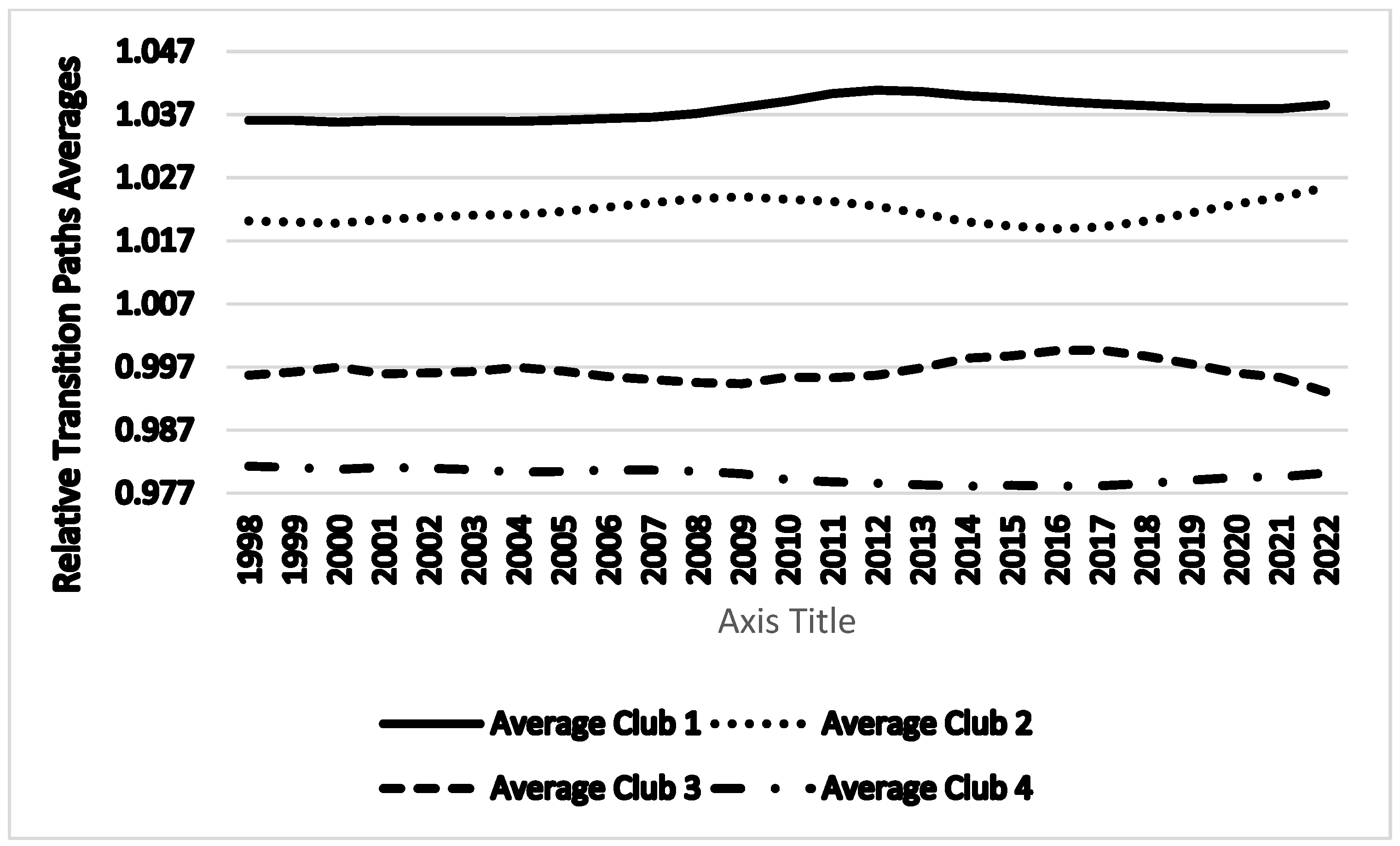
Figure 1 below displays the evolution of the average relative transition parameters
for each convergence club over time.
The average transition paths of the four convergence clubs identified by the basic clustering algorithm are distinct and do not appear to be converging to a common level over time, reflecting the failure of the regression test in (14) to accept the null hypothesis of overall convergence.
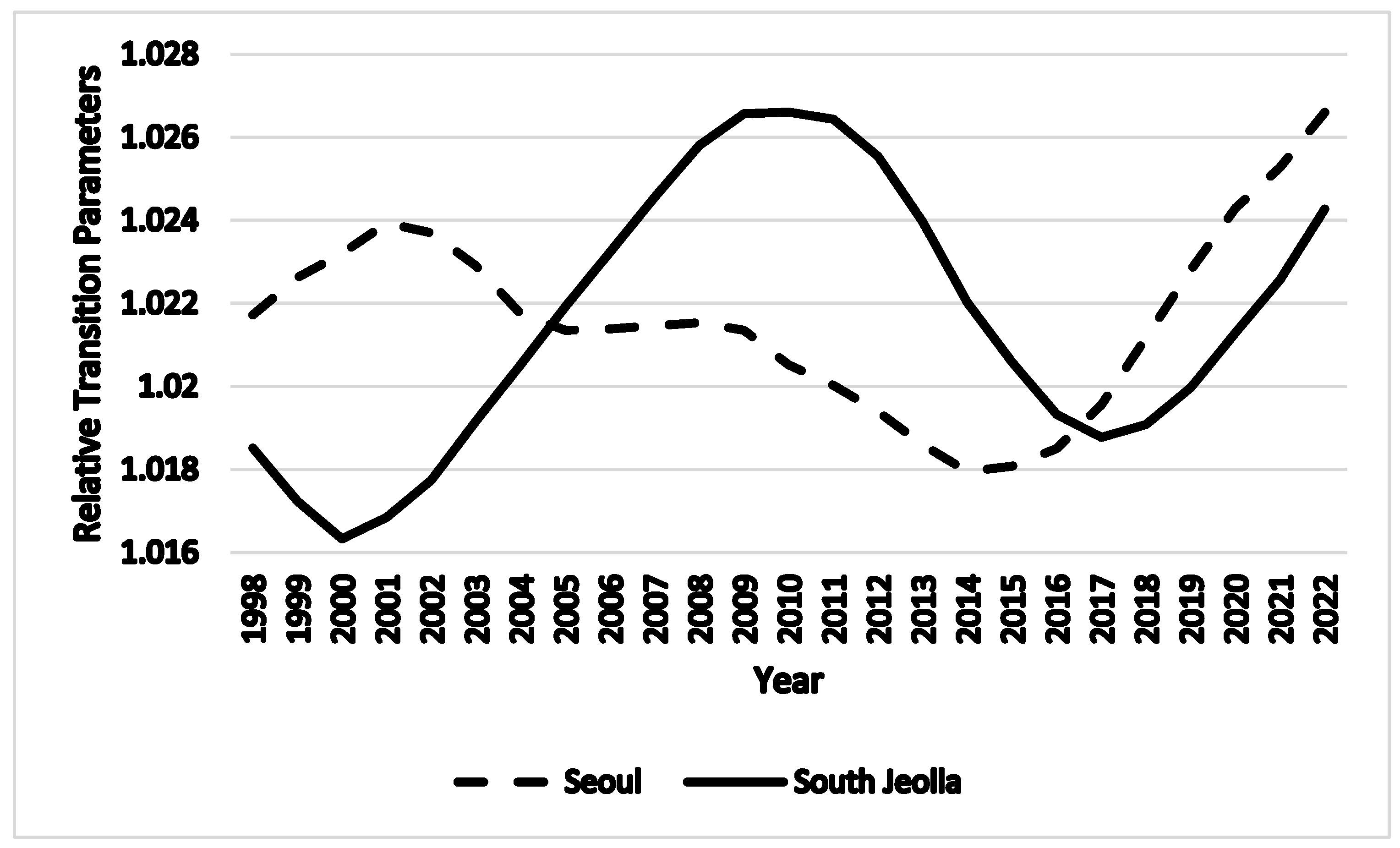
The transition paths of the two components of Club 2, namely, Seoul and South Jeolla, illustrate the ability of the convergence framework developed by [
10] to accommodate a transitionally divergent behavior whereby relative transition paths of two or more members of a convergence club display a divergent behavior during the analyzed time period, as illustrated by
Figure 2. Thus, for a few years after 1998, in the wake of the Asian financial crisis of 1997, the log per-capita real GDP levels in the capital city and the South-Western province seem to be diverging away from each other, then converging to each other around 2005, diverging again, and exhibiting a co-movement around a common trend starting from 2008. Similarly, North Gyeongsang and Gyeonggi Provinces, members of Club 3, display a mildly divergent behavior between 2003 and 2013 before starting to converge in terms of their log per-capita GDP levels.
4.4. Results of Merging Convergence Clubs
As discussed in
Section 3.6, we employ two procedures developed by [
10,
21] in order to deal with the problem of overdetermination of convergence clubs, i.e., the situation when an overly large number of convergence clubs is identified.
Table 3 below presents the results of applying these procedures, both of which reduced the number of clubs identified by the basic clustering algorithm down to three. The clubs’ composition and the associated values of the
b coefficient in the regression test in (14), the standard errors and the values of the
t-statistics are identical between the PS and LT merging procedures, which is why we report them together.
Both merging PS and LT merging algorithms result in three clubs composed of the same regions, essentially merging Seoul and South Jeolla together with the two ChungCheong provinces and the industrial powerhouse of Ulsan.
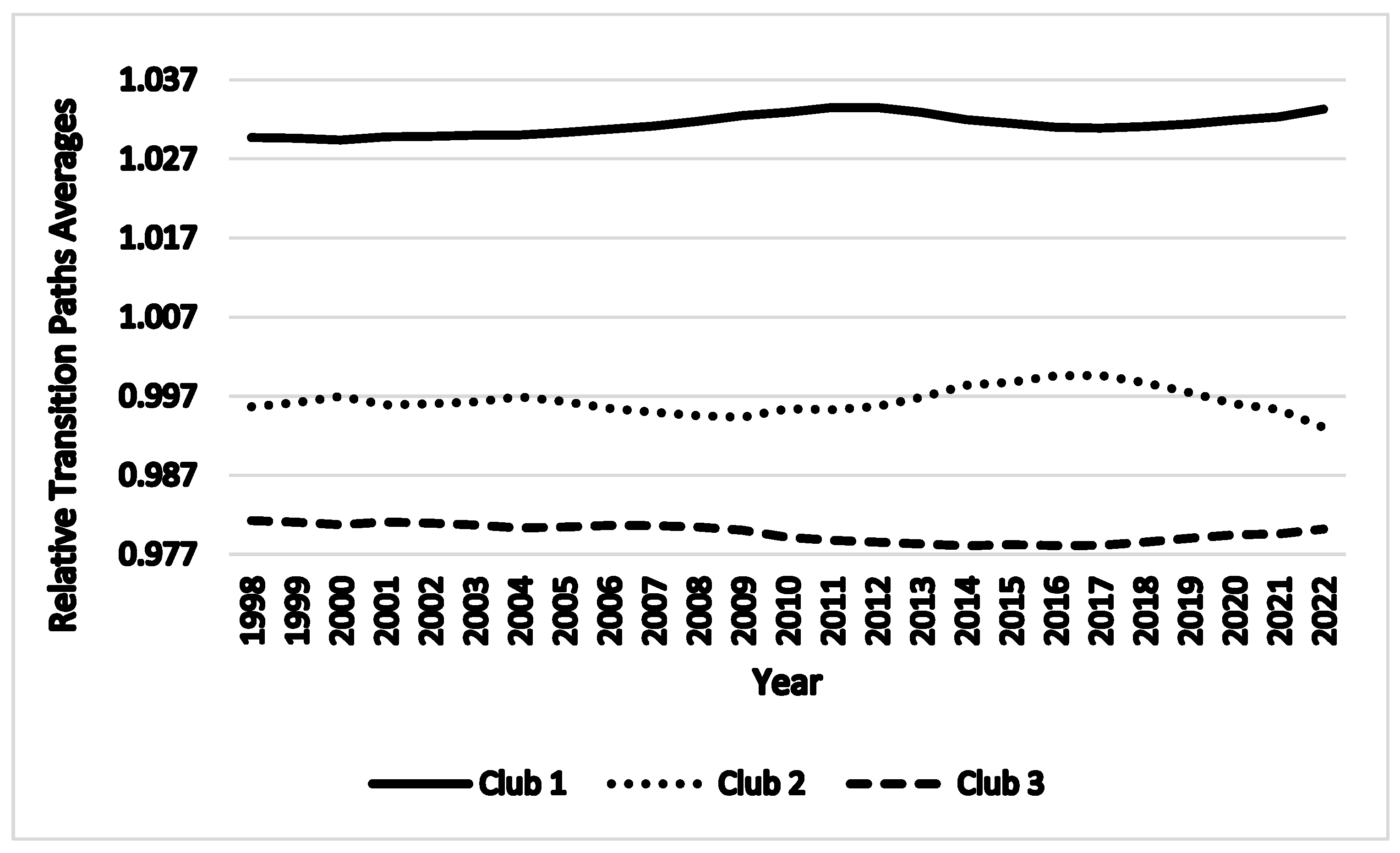
Figure 3 below shows average relative transition paths for the three convergence clubs in
Table 3.
As suggested by
Figure 3, the newly formed club 1 is Korea’s economic leader, with the relative transition parameters fluctuating around the value of 1.04. This club includes the country’s capital city, Seoul, which accounts for one-fifth of Korea’s GDP, and the South-Eastern industrial and port city of Ulsan, which hosts the headquarters of Hyundai Motor and Hyundai Heavy Industries, the country’s largest SK Energy and S-Oil refineries, and Lotte Chemical manufacturing facilities. The South Jeolla Province is also a member of the newly formed club 1, as it was a member of club 2 previously identified by the basic clustering mechanism and merged with the club that had previously contained Ulsan and the two ChungCheong provinces. The composition of clubs 3 and 4 identified by the basic clustering mechanism did not change as a result of the merging procedure.
4.5. Convergence Analysis in Terms of Logs of Per-Capita Consumption
While regional GDP per capita is a useful indicator of regional economic development, it may not accurately reflect individual well-being in heavily industrialized regions such as Seoul, Busan, or Ulsan. In these areas, regional GDP can be significantly influenced by the output of large industrial enterprises, such as the POSCO integrated steel mill in South-East Korea. This production often benefits the broader economy rather than directly improving the personal well-being of residents in these industrial regions.
Therefore, we believe it is crucial to examine the convergence analysis results based on log per-capita consumption rather than regional GDP. When focusing on consumption, the observed convergence disparity is less pronounced. Specifically, the clustering mechanism discussed in
Section 4.4 identifies three convergence clubs based on log per-capita consumption, compared to four clubs when using log per-capita GDP. Both merging mechanisms for convergence clubs—[
1,
10], as described in
Section 3.6—yield identical results, identifying two clubs when based on log per-capita consumption, versus three clubs based on log per-capita GDP.
Table 4 below presents the results from both the basic clustering and club merging mechanisms.
Unlike the convergence clubs identified by the basic clustering mechanism based on log per-capita GDP levels, a clear distinction emerges between more industrialized metropolitan areas, such as Seoul, Busan, and Ulsan, and less industrialized provincial areas, such as Gangwon and North and South Jeolla. This distinction is particularly evident in the lower portion of
Table 4, where the results from the merging algorithms show that all sixteen economic areas are divided into two groups: an urban-industrial group (Club 1) and a group comprising the remaining nine provinces along with the port city of Incheon (Club 2).
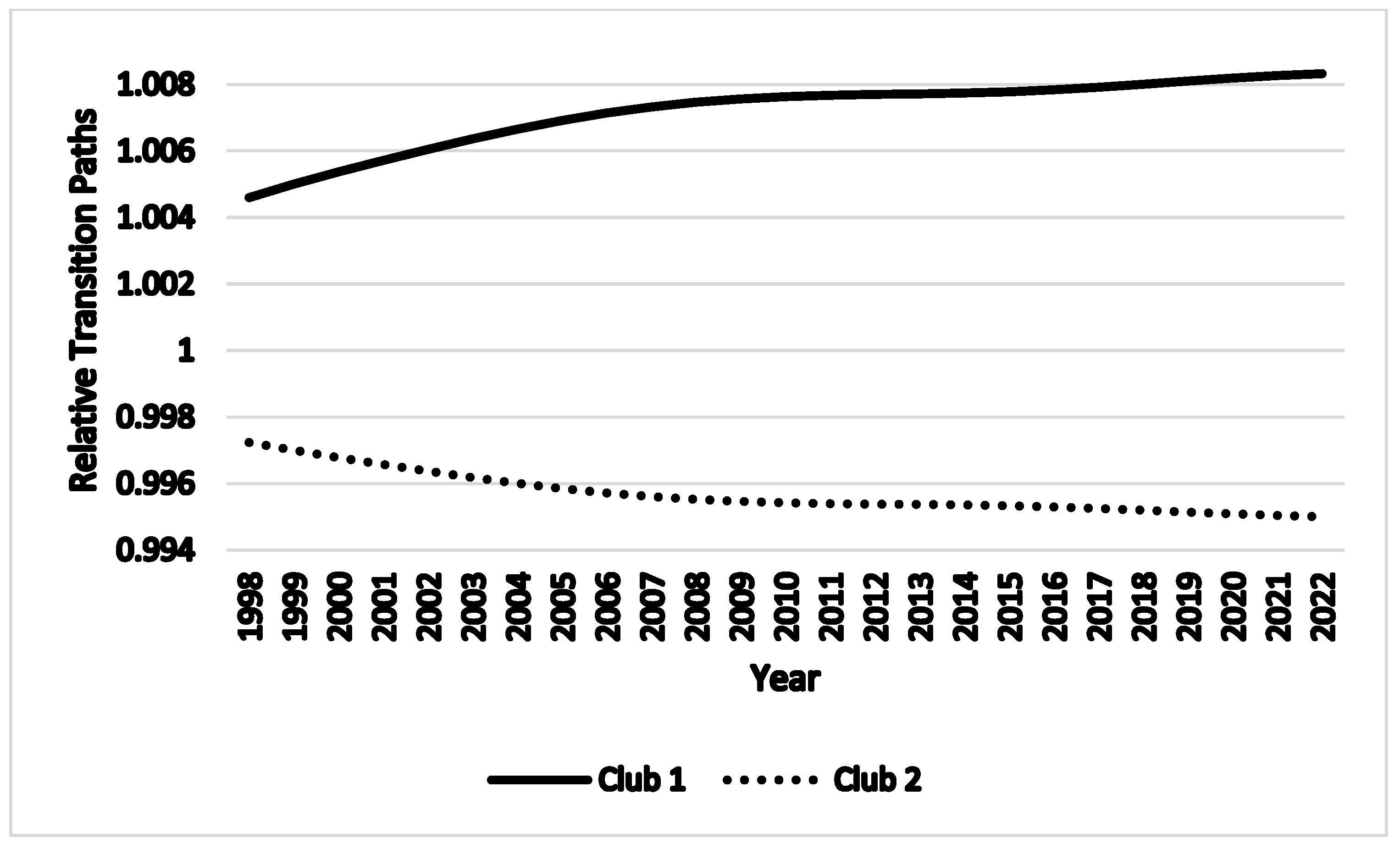
Further insight can be gained from
Figure 4, which illustrates the average relative transition paths of the two convergence clubs identified in the lower part of
Table 4.
The average transition paths of the two convergence clubs in
Figure 4 diverge, indicating that Korea’s current economic disparities are more pronounced between industrialized metropolitan areas and less urbanized provincial regions, rather than between the South-West and South-East regions.
4.6. Spatial Autocorrelation Tests
An important implication of our results is that the convergence clubs identified in this study are generally not geographically contiguous. To further examine this issue, we assess the presence of spatial dependence in regional income and consumption distributions by computing Moran’s I statistics using a rook contiguity weight matrix based on Korea’s sixteen administrative regions. The analysis is conducted for log GDP per capita and log consumption per capita in selected years. The results are reported in
Table 5.
For log GDP per capita, Moran’s I estimates are negative in all years and statistically insignificant, indicating no evidence of spatial clustering in regional income levels. In contrast, log consumption per capita exhibits positive and statistically significant spatial autocorrelation at 10% and 5% in the earlier and middle parts of the sample period, although this pattern weakens over time and becomes statistically insignificant in the most recent years.
These temporal patterns suggest that spatial dependence in consumption was more pronounced in the early stages of the sample but gradually declined, indicating that spatial clustering is not a persistent feature of regional consumption dynamics. Overall, while some short-run spatial dependence is detectable in consumption, particularly in earlier years, there is no evidence of stable spatial autocorrelation in either income or consumption that would systematically drive long-run convergence patterns. This finding is consistent with the absence of geographical contiguity in the convergence clubs identified in the Phillips–Sul analysis.
4.7. Robustness to Macroeconomic Crises
A potential concern in long-span regional panel data is the influence of major macroeconomic disruptions, such as the Asian financial crisis (1997–1998), the global financial crisis (2008–2009), and the COVID-19 pandemic (2020–2021), on observed convergence patterns. In our framework, these events are reflected in the evolution of the data but are not treated as structural breakpoints in the analysis.
The Phillips and Sul (2007) club convergence methodology in [
10] does not impose ex ante sample splits or crisis-based partitions. Instead, convergence clubs are identified endogenously from the evolution of relative transition parameters over the full sample period. As a result, short-run shocks associated with crisis episodes may affect transitional dynamics, but they do not determine the long-run club classification, which is driven by the underlying convergence behavior of the series. Accordingly, the reported club structure reflects persistent regional growth characteristics rather than specific crisis episodes.
While a formal sub-period analysis could provide additional insights, dividing the sample would substantially reduce the time dimension available for estimation. Because the Phillips and Sul (2007) methodology in [
10] relies on the long-run evolution of relative transition paths and because each sub-period would contain only twelve to fourteen annual observations, the statistical power of the convergence tests would be considerably weakened. For this reason, the present study focuses on the full sample period while interpreting the identified clubs as long-run regional development patterns.
5. Discussion
An important feature of the convergence clubs identified in our study is their lack of geographic contiguity. Distant regions often viewed as economically distinct are grouped together. For instance, Seoul is clustered with South Jeolla, while provinces from the traditionally distinct Honam and Yeongnam regions appear together across multiple club configurations. In other words, provinces from both regions are distributed across different convergence clubs and are sometimes grouped together, pointing to similarities in their long-run economic dynamics. This dispersion indicates that Korea’s regional economic dynamics are not primarily shaped by simple geographic or administrative boundaries.
This finding challenges conventional interpretations of regional disparities since public discourse often highlights a divide between the economically disadvantaged South-West (Honam) and the industrial, politically influential South-East (Yeongnam). However, as mentioned above, convergence patterns identified in this study do not support a clear split.
This absence of a clear geographical split is further supported by the spatial autocorrelation analysis. Moran’s I statistics do not indicate a stable pattern of spatial clustering in regional income, and only weak and time-varying spatial dependence is observed in consumption. Taken together with the non-contiguous nature of convergence clubs, this suggests that geographic proximity alone is insufficient to explain regional economic similarity in Korea at the provincial level.
These findings are particularly noteworthy in light of Korea’s historical development trajectory. Industrialization was heavily concentrated along the Seoul–Busan axis, supported by infrastructure development such as the Gyeongbu corridor and reinforced by political factors that favored the South-Eastern Yeongnam region. At the same time, the South-Western Honam region has often been viewed as relatively disadvantaged in both economic and political terms. Against this background, the absence of convergence clubs aligned with these historical divisions suggests that regional economic dynamics in the post-1998 period have evolved in ways that are not fully captured by earlier patterns of industrialization and political influence.
A particularly notable result is the grouping of Seoul with South Jeolla in terms of per-capita GDP. Given Seoul’s economic dominance and South Jeolla’s reputation as a relatively lagging region, this outcome contrasts with conventional expectations. One interpretation is that convergence club membership reflects transitional dynamics and adjustment processes rather than income levels. Regions at different stages of development may follow similar long-run trajectories due to shared structural characteristics or similar responses to macroeconomic shocks, such as the 1997 Asian financial crisis.
More broadly, our results highlight the importance of structural economic characteristics over historically defined regional divisions. When convergence is assessed using per-capita GDP, the identified clubs do not align closely with traditional regional classifications. In contrast, consumption-based clustering reveals a clearer pattern: an urban–industrial group and a less industrialized, more provincial group. This suggests that production-based indicators may not fully capture differences in individual well-being, particularly in regions where output is driven by large industrial enterprises.
The contrast between GDP- and consumption-based convergence has important implications for sustainability-oriented analysis. While GDP per capita reflects production capacity and economic activity, consumption per capita is more closely related to household welfare and living standards. The smaller number of convergence clubs identified using consumption data suggests that disparities in well-being may be less fragmented than disparities in production. This distinction is particularly relevant for policies aimed at promoting inclusive and sustainable development.
One possible explanation for the divergence between GDP- and consumption-based convergence is that production activity in Korea is highly concentrated in specific industrial and metropolitan regions, while consumption patterns are more directly linked to household-level welfare and income smoothing mechanisms. As a result, regions with similar production structures may still differ in consumption outcomes depending on migration patterns, housing costs, and access to public services. This further supports the view that regional inequality should not be assessed solely on the basis of output measures.
An explanation for the urban–provincial divide identified in the consumption-based analysis may lie in the cumulative effects of agglomeration economies and internal migration. Metropolitan regions such as Seoul, Busan, Ulsan, and Daejeon concentrate high-value-added industries, research institutions, universities, and advanced service sectors, which generate stronger labor market opportunities and higher average incomes. These advantages tend to attract younger and more highly skilled workers from provincial areas, reinforcing the economic dynamism of large urban centers. At the same time, many provincial regions remain more dependent on traditional manufacturing, agriculture, or resource-based activities and often experience population aging and outmigration. As a result, differences in consumption patterns may reflect not only disparities in production capacity but also differences in demographic structure, employment opportunities, and access to public and private services. The emergence of an urban–industrial convergence club is therefore consistent with broader processes of agglomeration and spatial concentration that have characterized Korea’s economic development over recent decades.
Demographic change itself may influence measured per-capita outcomes. Several Korean provinces, particularly outside major metropolitan areas, have experienced population aging and net outmigration over the sample period. As a result, changes in per-capita GDP may reflect both changes in economic activity and changes in population size or composition. The convergence clubs identified in this study should therefore be interpreted as patterns in observed per-capita economic outcomes rather than as evidence regarding the underlying causes of regional development. Future research could investigate the extent to which demographic factors contribute to the observed convergence dynamics.
The present analysis relies on national CPI-deflated measures and does not adjust for potential differences in regional price levels. In particular, housing and living costs may vary substantially between metropolitan areas and provincial regions. Consequently, observed differences in real consumption per capita may partly reflect variations in the regional cost of living rather than differences in purchasing power alone. The lack of a consistent long-run regional price index for the full sample period prevents a direct adjustment for this factor and represents an avenue for future research.
Taken together, our findings indicate that regional economic dynamics in Korea cannot be fully explained by traditional geographic or historical classifications. The absence of overall convergence, combined with the presence of multiple convergence clubs, points to persistent but complex regional heterogeneity.
From a policy perspective, the results suggest that regionally targeted development strategies should be based on observed economic structures rather than conventional geographic labels. Broad distinctions such as South-West versus South-East may not adequately capture the underlying drivers of regional disparities. Instead, factors such as industrial structure, degree of urbanization, and access to economic networks appear to play a more central role. The urban–provincial divide observed in the consumption-based analysis further suggests that improving living standards in less urbanized regions may require a combination of industrial, social, and infrastructure policies. Such measures could include investments in transportation and digital infrastructure, support for innovation and higher-value-added industries outside major metropolitan areas, strengthening regional universities and research institutions, and improving access to public services that affect household welfare. Overall, the findings suggest that a uniform nationwide regional development policy may be less effective than differentiated policies tailored to the specific characteristics of individual convergence clubs or groups of regions.
Despite the insights provided by the analysis, several limitations should be acknowledged. First, the study is based on sixteen administrative regions, which represent relatively large and heterogeneous spatial units. As a result, within-region disparities may be substantial but are not captured in the present framework. A finer spatial disaggregation could potentially reveal more localized patterns of convergence and spatial dependence.
Second, the Phillips and Sul (2007) [
10] methodology identifies convergence clubs endogenously based on the evolution of relative transition paths, but it does not explicitly model the structural determinants of convergence or allow for direct estimation of spatial interaction effects. Consequently, the interpretation of convergence clubs is descriptive rather than structural in nature.
Third, while the spatial autocorrelation analysis provides useful complementary evidence, it is limited to global measures of spatial dependence and may not capture localized or nonlinear spatial spillovers.
Finally, consumption per capita captures only one dimension of welfare and does not incorporate non-monetary aspects of well-being such as health outcomes, educational quality, environmental amenities, or informal economic activity.
Overall, the evidence from both club convergence analysis and spatial autocorrelation tests indicates that regional economic disparities in Korea are characterized by persistent structural heterogeneity and multiple development trajectories. While spatial effects exist in a limited and non-persistent form, they do not provide a stable organizing principle for regional convergence patterns. The findings therefore underscore the importance of considering industrial structure, urbanization, demographic dynamics, and welfare-related indicators when evaluating regional development and designing policies aimed at promoting balanced and sustainable growth.