Article

Distributionally Robust Bi-Level Optimization of Distribution Network and Charging Stations for Sustainable Operation Under Climate–Charging Load Uncertainty

School of Electrical Engineering, Shanghai Dianji University, Shanghai 201306, China
*
Author to whom correspondence should be addressed.
Sustainability 2026, 18(12), 5903; https://doi.org/10.3390/su18125903 (registering DOI)
Submission received: 28 April 2026 / Revised: 28 May 2026 / Accepted: 4 June 2026 / Published: 9 June 2026
(This article belongs to the Section Energy Sustainability)

Abstract

With the large-scale integration of electric vehicles (EVs), charging demand exhibits significant spatiotemporal variability, further intensified by climatic factors, which makes it difficult for existing uncertainty models to capture underlying dependency structures. To address this issue, this paper proposes a Copula–Wasserstein-based distributionally robust optimization (C-WDRO) framework for the coordinated operation of distribution networks and charging stations. A climate-sensitive physical mapping model of electric vehicle energy consumption is first developed to establish a coupled climate–energy–load mechanism. Copula functions are then used to characterize dependencies among temperature, precipitation, and charging demand, and are incorporated into a bi-level optimization formulation. The model is solved using Karush–Kuhn–Tucker (KKT) conditions and a column-and-constraint generation (C&CG) algorithm. Case studies on the IEEE 33-bus system show that the proposed method reduces total operating cost by 4.26% compared with robust optimization (RO), while maintaining economic efficiency, and reduces the load shedding rate by 0.14 percentage points compared with Wasserstein distributionally robust optimization (WDRO), while keeping voltage security. These results demonstrate that explicitly modeling dependency structures can enhance operational efficiency and support more sustainable and reliable power–transportation system operation under uncertainty.

1. Introduction

Driven by the “carbon peaking and carbon neutrality” goals, China’s energy structure is undergoing a rapid transition toward a clean and low-carbon paradigm [1]. As a key enabler of low-carbon transformation in the transportation sector, the number of EVs has been increasing rapidly [2,3]. With the large-scale integration of EVs into distribution networks, charging loads show strong temporal and spatial fluctuations, posing substantial challenges to the secure and efficient operation of power systems [4]. Meanwhile, climatic factors further intensify load fluctuations by affecting both vehicle energy consumption and user behavior. Against this background, accurately characterizing the impact of climatic factors on EV energy consumption, and subsequently developing refined charging load models and coordinated optimization methods, has become a critical issue for ensuring the reliable, economical, and efficient operation of distribution networks with high EV penetration [5,6].
The composition of EV energy consumption and its external influencing mechanisms form the basis for charging load forecasting and grid interaction studies. In [7], EV energy consumption is divided into traction and auxiliary components, and climatic conditions are found to significantly increase auxiliary consumption. A significant interaction between ambient temperature and auxiliary loads is shown in [8], leading to nonlinear variations in auxiliary energy consumption. As revealed in [9], battery performance degrades at low temperatures due to increased electrolyte viscosity and hindered ion migration, while high temperatures accelerate long-term aging. A piecewise response model is discussed in [10], where the control strategy accounts for the comfort sensitivity of different users. Reference [11] notes that precipitation indirectly affects EV energy consumption by altering road conditions. These studies provide a theoretical foundation for quantifying the physical mechanisms linking meteorological factors and energy consumption; however, most focus on single climatic factors, lacking a systematic integration of multi-factor nonlinear coupling effects into charging load and grid interaction models.
EV charging loads differ considerably depending on the time of day and the location of the charging station, and their uncertainty modeling constitutes a core challenge in distribution network planning and operation. Travel activity can be characterized using a Gaussian mixture model; such clustering-based methods have been discussed in [12]. Charging intervals are modeled using survival analysis in [13]. The authors further introduce a latent class model that classifies users into regular and irregular charging types, capturing the heterogeneity of charging behaviors. As research has progressed, the impact of external environmental factors on load uncertainty has attracted increasing attention. In [14], meteorological factors are used as input variables, and regression models establish a mapping between climate variables and load; however, such approaches are typically based on linear or near-linear assumptions and thus fail to capture complex nonlinear response characteristics. In terms of uncertainty handling, existing studies can be broadly categorized into three mainstream approaches. Stochastic optimization in [15] uses predefined scenarios and probability distributions to represent uncertainty, but its performance is sensitive to scenario set quality and suffers from the curse of dimensionality as the number of scenarios increases. Robust optimization is applied in [16], where uncertainty sets are introduced to ensure feasibility under all possible realizations, often at the expense of economic performance. In [17], Wasserstein distributionally robust optimization is employed, which uses a Wasserstein ambiguity set centered on empirical distributions to characterize distributional uncertainty, mitigating some limitations of both stochastic optimization (SO) and distributionally robust optimization (DRO). However, the constructed uncertainty sets may still include unrealistic extreme distributions, leading to slightly conservative solutions and reduced economic efficiency.
The large-scale integration of electric vehicles poses significant challenges to the secure and economical operation of distribution networks, thereby motivating extensive research on the coordinated optimization of distribution networks and charging stations. Centralized optimization, where the grid operator schedules all charging resources, can achieve global optimality but suffers from high computational complexity [18]. To address these issues, Reference [19] proposes a Stackelberg game-based pricing and scheduling framework for electric vehicle charging, where the distribution system operator sets pricing as the leader, and electric vehicle charging stations or aggregators act as followers to optimize their charging strategies accordingly. Multi-objective optimization approaches for distribution networks have been discussed in [20]. Meanwhile, model predictive control with a rolling-horizon strategy and feedback correction, introduced in [21], dynamically adjusts charging power to handle forecast uncertainties and real-time variations while reducing operational costs.
Despite significant advances in existing studies, two research gaps remain. Gap 1: Climate–energy consumption mechanisms are not consistently integrated with load modeling, as existing studies typically represent climate impacts using static correction factors or discrete scenarios, lacking a systematic treatment of the nonlinear coupling effects of temperature and precipitation in spatiotemporal charging load modeling. Gap 2: Physical dependencies are insufficiently considered in uncertainty characterization, since traditional Wasserstein-based ambiguity sets characterize uncertainty via distributional distances centered on empirical distributions and the joint variation between climatic variables and charging load is not explicitly emphasized, which motivates additional dependence modeling approaches such as copula-based methods [22,23].
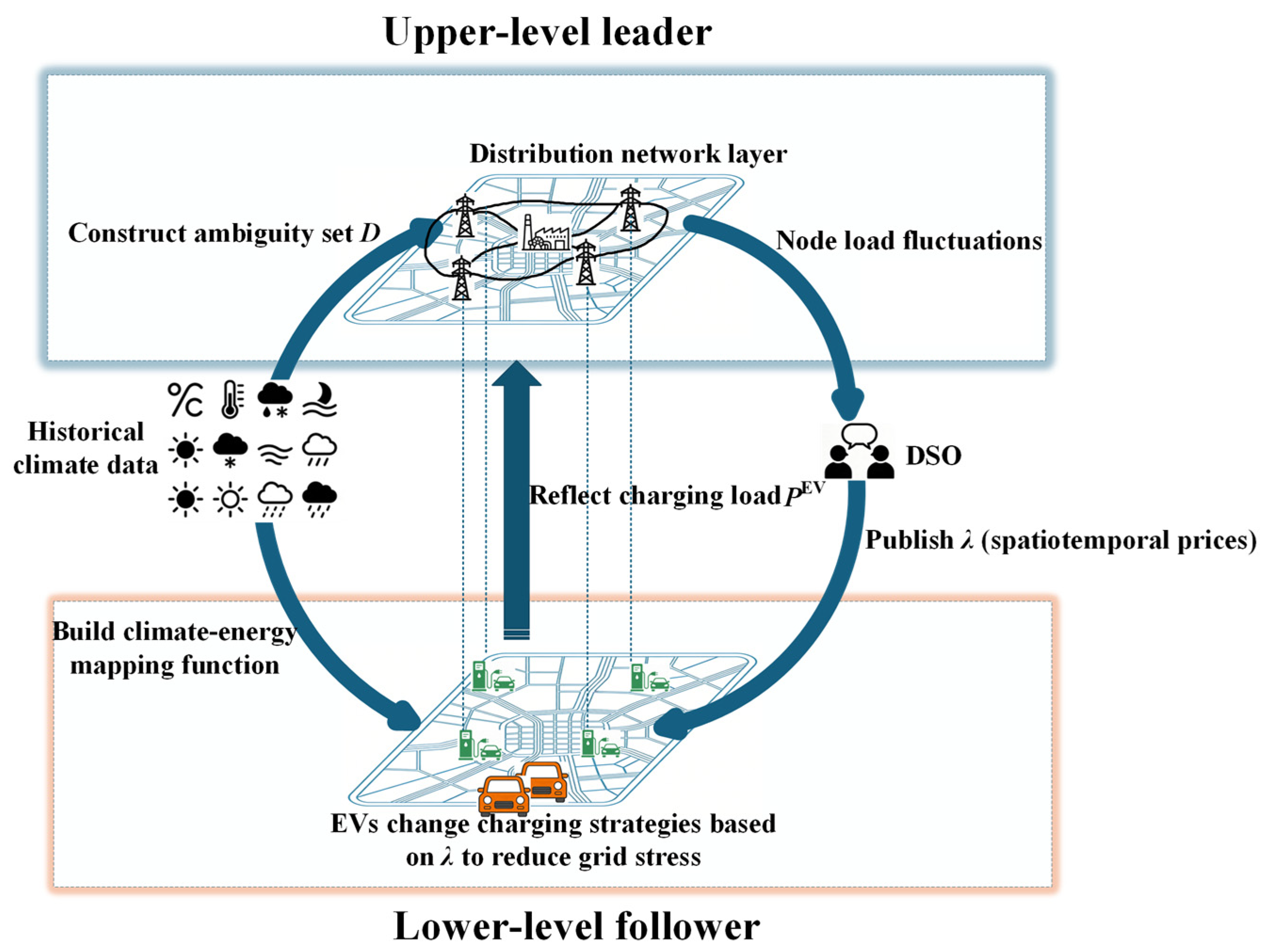
To address these gaps, this paper makes three main contributions. Contribution 1: We develop a climate-sensitive EV energy consumption physical mapping model (CSEMM), which captures the nonlinear effects of temperature on battery efficiency and air-conditioning demand, as well as the combined influence of precipitation, thereby establishing quantitative mapping from meteorological variables to energy consumption per unit distance. Contribution 2: We propose a Copula–Wasserstein ambiguity set construction method by embedding a Copula function into a distributionally robust optimization framework to characterize spatiotemporal dependencies among temperature, precipitation, and charging load, where introducing a Copula-based distributional distance constraint effectively excludes physically inconsistent distributions and improves uncertainty quantification accuracy. Contribution 3: We develop a distributionally robust bi-level optimization model for distribution networks and charging stations based on the Copula–Wasserstein ambiguity set, which achieves coordinated optimization of economic performance and system security under climate uncertainty. The model is solved using KKT conditions and the C&CG algorithm. The overall workflow of this paper is shown in Figure 1.

2. Materials and Methods

2.1. CSEMM

2.1.1. Climate-Driven Spatiotemporal Mapping of EV Charging Energy Consumption

(1)
Effect of Temperature on Battery Efficiency
Reference [8] found that the impact of ambient temperature on EV energy consumption exhibits a unimodal pattern: energy consumption increases when the temperature deviates from the optimal range, with a significantly larger increase at low temperatures than at high temperatures. To characterize this nonlinear relationship, this paper adopts a Gaussian function combined with an additional low-temperature linear term to construct the battery efficiency correction function fbattery(Tt) as follows:
f battery ( T t ) = α 1 exp ( T t T b ) 2 2 σ b 2 + α 2 max 0 , T b T t
where Tt is the ambient temperature; Tb is the optimal battery temperature; σb is the temperature bandwidth controlling the Gaussian decay rate; α1 is the Gaussian amplitude coefficient; and α2 is the low-temperature penalty slope coefficient. These parameters are empirically determined to ensure physically reasonable energy consumption.
(2)
Effect of Air-Conditioning Load
Air-conditioning load is strongly dependent on ambient temperature. Ref. [24] employs the degree-day method to characterize heating and cooling demand based on deviations from a reference temperature, thereby capturing variations in energy consumption as temperature moves away from the comfort range. Considering the similarity between EV thermal management systems and building HVAC systems, this study adopts this approach and defines the air-conditioning temperature correction coefficient fac(Tt) as follows:
f ac ( T t ) = β h max ( T c T t , 0 ) + β c max ( T t T c , 0 )
where Tc denotes the human comfort temperature, and βh and βc are the temperature sensitivity coefficients for heating and cooling, respectively. Owing to the lack of standardized parameter values in existing studies, these coefficients are reasonably determined based on engineering experience while ensuring physically consistent model outputs, with βh ∈ [0.005, 0.015] and βc ∈ [0.003, 0.05]. When the ambient temperature falls below the comfort temperature, the heating load increases with the temperature deviation; conversely, when it exceeds the comfort temperature, the cooling load increases with the temperature deviation.
(3)
Effect of Precipitation
The increase in EV energy consumption under precipitation conditions is mainly attributed to two factors: (i) wet road surfaces alter the tire–road contact conditions, thereby increasing rolling resistance; and (ii) the operation of onboard auxiliary systems, such as wipers and defoggers, introduces additional energy demand. Rolling resistance is a major contributor to vehicle energy consumption and involves complex multi-factor coupling mechanisms [25,26]. Therefore, the variation in energy consumption under precipitation conditions cannot be adequately represented by a simple linear relationship. Based on these characteristics, this study formulates the precipitation impact function frain(Rt) as follows:
f rain ( R t ) = γ 1 tanh ( γ 2 R t ) + γ 3 min ( R t , R max )
where Rt denotes the precipitation, Rmax is the saturation threshold, and γ1, γ2, and γ3 are fitting parameters controlling the saturation rate, linear growth coefficient, and linear weighting factor, respectively. The first term adopts a hyperbolic tangent function to capture the nonlinear saturation effect of precipitation on rolling resistance, characterized by a rapid increase in the early stage followed by a gradual saturation. The second term is a linear component with a minimum-function constraint, which represents the sustained and approximately linear growth in rolling resistance when precipitation does not exceed Rmax.
From Equations (1)(3), the EV energy consumption under specific meteorological conditions is expressed as follows:
E t = E base × [ 1 + f battery ( T t ) + f ac ( T t ) + f rain ( R t ) ]
where Et denotes the actual energy consumption per unit mileage at time t, and Ebase represents the baseline energy consumption under standard comfortable meteorological conditions. The term 1 + ∑f(Tt) defines the energy consumption amplification factor, with Et = Ebase under ideal conditions. The proposed model exhibits linear additivity, spatiotemporal dynamics, and strong generalizability, enabling dynamic estimation of energy consumption based on real-time meteorological inputs and supporting adaptation across different operational scenarios.

2.1.2. Modeling of Travel Patterns

(1)
Base Distribution Function
To describe travel activity at different times of the day, a Gaussian mixture model is proposed as follows:
ρ ˜ t = k = 1 3 w k σ k 2 π exp ( t μ k ) 2 2 σ k 2
The model represents three travel demand peaks (morning, noon, and evening) through the superposition of three Gaussian distributions. The parameters include μk, which denotes the center time of each peak; σk, which represents the temporal width (duration) of each peak; and wk, which indicates the relative weighting (importance) of each peak.
(2)
Normalization
To ensure that the sum of travel proportions over the 24 h equals 1, the following normalization is applied:
ρ t = ρ ˜ t j = 1 24 ρ ˜ j   ρ ˜ t = k = 1 3 w k σ k 2 π exp ( t μ k ) 2 2 σ k 2
This formulation converts travel activity into time allocation proportions, with the key property that t = 1 24 ρ = 1, ensuring a reasonable quantitative distribution across time periods.
(3)
Travel Distance Allocation
d t = D daily × ρ t
Based on the travel proportion of each time period, the average daily travel distance is decomposed and allocated to each period. Its physical meaning is the average travel distance per vehicle during time period t.

2.1.3. Charging Behavior Modeling

(1)
Travel Energy Consumption
From (6) and (7), the total travel energy consumption at time t is defined as
Q travel ( t ) = N × d t × E t
where N is the total number of EVs. This equation bridges individual EV energy consumption and fleet-level demand, connecting energy forecasting with charging load calculation.
(2)
Charging Delay
Following Reference [13], the charging delay time τ is modeled as follows:
P delay ( τ ) = p 1 Γ ( k 1 ) θ 1 k 1 τ k 1 1 e τ / θ 1 + ( 1 p ) 1 Γ ( k 2 ) θ 2 k 2 τ k 2 1 e τ / θ 2 , τ 0 , 0 < p < 1 , k 1 , k 2 > 0 , θ 1 , θ 2 > 0 0 , τ < 0
where p and 1 − p are the proportions of the two user types. Gamma (τ;k,θ) is the Gamma distribution. The first component (k1 > 1) corresponds to “charge immediately” users (delay 0); the second component (k2 > 1) corresponds to “planned delay” users (delay > 0). This two-component model better captures the heterogeneity of actual charging behavior and provides high-fidelity load inputs.

2.1.4. Charging Load Calculation

(1)
Charging Load Convolution
Traditional methods cannot capture the spatiotemporal coupling of EV charging behavior [27]. Convolution, which captures the interaction between historical demand and delayed charging, enables refined load modeling [28]. The charging load convolution model is thus established in Equation (10).
L charge ( t ) = 1 η charge τ = 0 t 1 Q travel ( τ ) × P delay ( t τ )
This model decomposes the charging load via convolution: the interaction between historical travel energy Qtravel(τ) and delayed charging probability Pdelay(tτ). The summation reflects the cumulative contribution of past travel to the current load, the probability function characterizes the temporal delay, and ηcharge accounts for energy loss.
(2)
Climate–Energy Mapping Function
To quantify climate impact on energy consumption, Equation (10) is reformulated with temperature T and precipitation R as independent variables. Substituting Equations (1)(4) gives
L charge ( T , R ) = K α 1 exp ( T t T b ) 2 2 σ b 2 + α 2 max 0 , T b T t + β h max ( T c T t , 0 ) + β c max ( T t T c , 0 ) + γ 1 tanh ( γ 2 R ) + γ 3 min ( R , R max ) 1
where K is a constant:
K = N d t E base P delay ( 0 ) η charge

2.1.5. Charging Station-Level Climate-Sensitive Load Generation

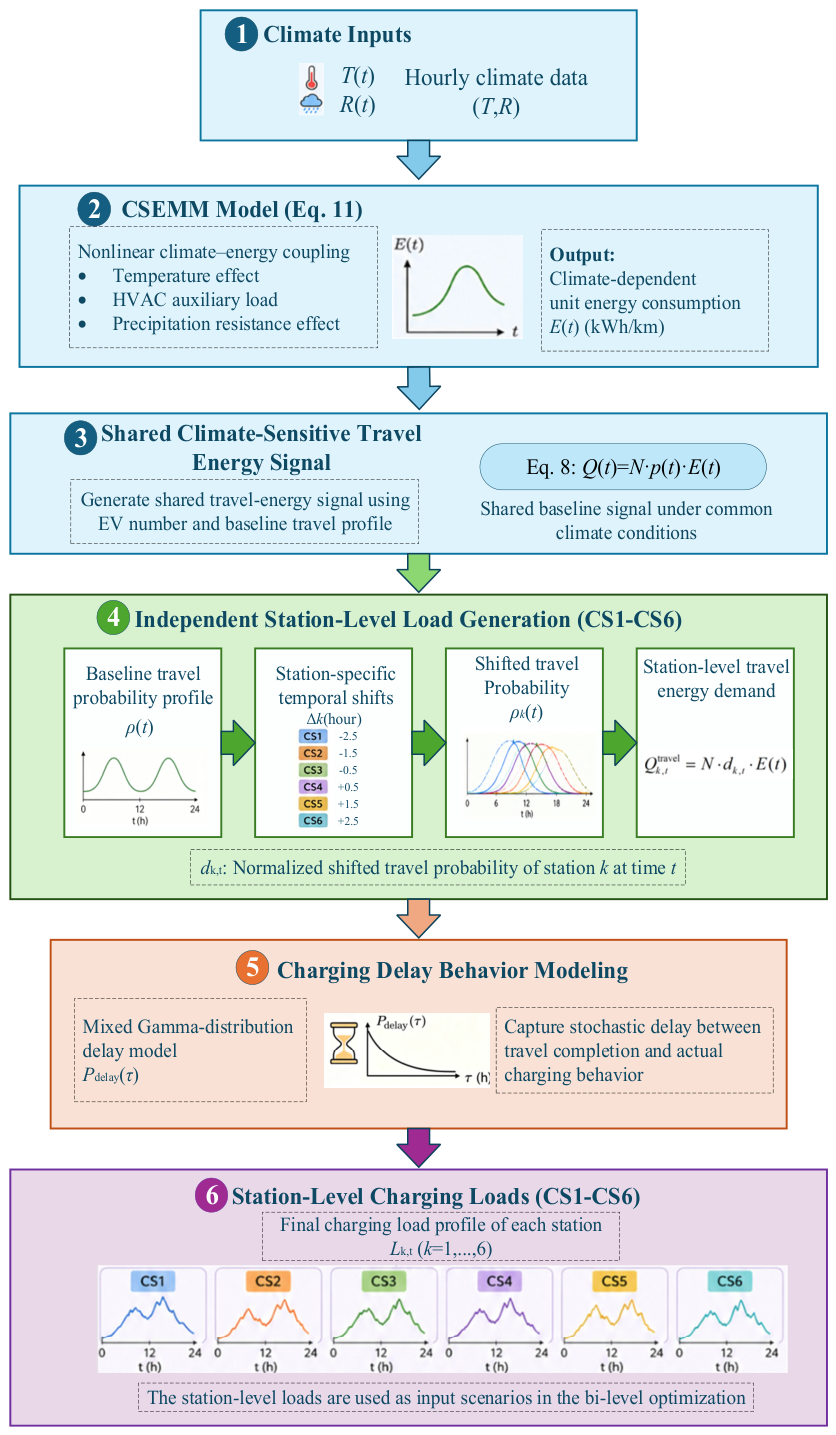
To establish the connection between the climate-sensitive energy consumption model and the subsequent bi-level optimization framework, a station-level charging load scenario generation mechanism is further constructed in this study, and the overall process is illustrated in Figure 2.
Specifically, the CSEMM first generates a shared climate-sensitive travel energy signal E(t) based on temperature and precipitation data. Then, each charging station independently generates its charging demand profile using temporally shifted travel probability distributions to capture regional spatiotemporal heterogeneity in charging behavior.
ρ k ( t ) = ρ t Δ k
where Δk denotes the temporal shift factor of charging station k, which is introduced to characterize regional differences in users’ travel and charging behaviors. The specific temporal shift values for different charging stations are provided in Appendix A, Table A2.
Q k , t travel = N d k , t E ( t )
where dk,t represents the normalized station-level travel probability distribution.
Based on the above process, the final charging load profiles of different charging stations are further obtained through the hybrid Gamma delay model and used as input scenarios for the subsequent bi-level optimization model.
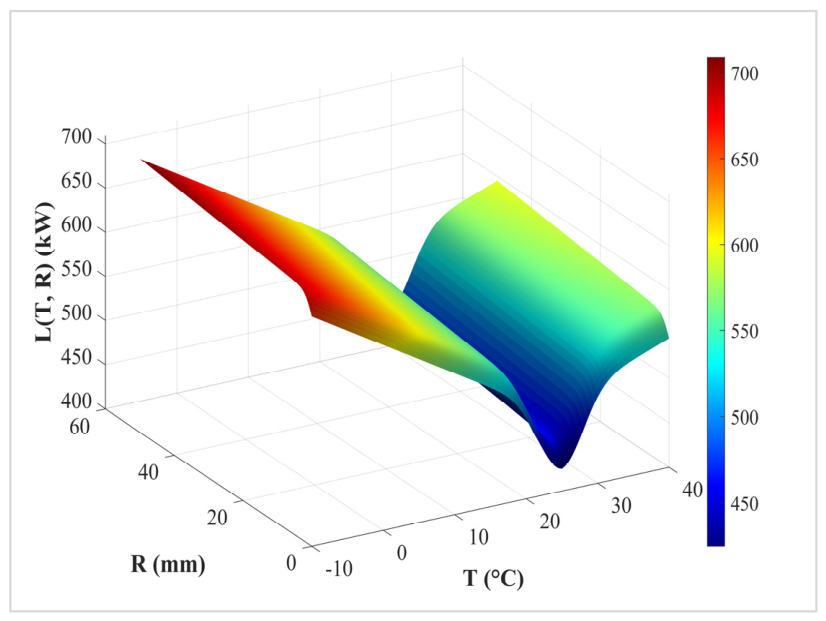
Refer to Figure 3, the simulated EV charging load–climate relationship conforms to physical laws, validating the proposed method. To reduce model complexity and highlight the primary influencing mechanisms, the parameter K is treated as a constant aggregated coefficient in this study while maintaining a reasonable engineering scale of the model results. The relevant parameters of the proposed model are provided in Appendix A, Table A1.

2.2. Ambiguity Set Construction for Climate–Charging Load

To characterize the spatiotemporal dependencies among T, R, and L, and to provide an uncertainty representation for distributionally robust optimization, this section follows Reference [29] and introduces a Copula–Wasserstein distance-based ambiguity set construction method. A standard Wasserstein ambiguity set is first constructed, and a Copula-based distributional distance constraint is subsequently incorporated to more accurately capture variable dependencies. The procedure is detailed as follows. Based on historical samples (Ti, Ri, Li), i = 1, 2, …, N, the empirical joint distribution is constructed as follows:
Q ^ ( T , R , L ) = 1 N i = 1 N δ ( T i , R i , L i ) ( T , R , L )
In the above formulation, N denotes the number of historical samples, and δ(Ti, Ri, Li) is the Dirac delta measure centered at (Ti, Ri, Li). The Wasserstein ambiguity set is defined as follows:
D = Q Φ ( A ) d W ( Q ^ N , Q ) R W
d W ( Q ^ N , Q ) R W
where Φ ( A ) denotes the set of all probability distributions supported on a compact space; Q ^ N and Q represent the empirical distribution constructed from historical data and the true distribution of the climate–charging load system, respectively; d W ( Q ^ N ,   Q ) is the Wasserstein distance between two probability measures; and RW denotes the Wasserstein radius. The detailed computation of dW and the selection of RW can be found in Reference [30].
Subsequently, a Copula function is introduced to characterize the dependence structure among variables. An empirical Copula approach is adopted to construct the dependency structure directly from historical samples. Given the joint samples (Ti, Ri, Li), i = 1, 2, …, N, let u 1 = F ^ T ( T i ) ,   u 2 = F ^ R ( R i ) ,   u 3 = F ^ L ( L i ) denote the marginal probability integral transforms based on the empirical marginal distributions. The empirical Copula C ^ N is then defined as
C ^ N ( u 1 , u 2 , u 3 ) = 1 N i = 1 N 1 F ^ T ( T i ) u 1 , F ^ R ( R i ) u 2 , F ^ L ( L i ) u 3
where F ^ T , F ^ R , and F ^ L denote the empirical marginal distributions of temperature, precipitation, and charging load, respectively, constructed from order statistics, and 1{·}is the indicator function. The empirical Copula is a nonparametric approach that captures nonlinear dependence directly from data, avoiding model misspecification due to parametric assumptions [31].
This study considers three uncertain variables, T, R, and L. Among them, T and L are continuous variables, while R is a mixed variable consisting of a point mass at zero and a continuous positive component. Its marginal distribution FR(R) can be described using a zero-inflated Gamma distribution [32]. According to Sklar’s theorem [33], there exists a unique Copula function C such that
P ( T , R , L ) = C ( F T ( T ) , F R ( R ) , F L ( L ) )
where P(·) denotes the joint cumulative distribution function in three dimensions; FT(T), FR(R), and FL(L) are the marginal cumulative distribution functions of temperature, precipitation, and charging load, respectively. In this study, we adopt an empirical Copula constructed directly from historical samples, which does not rely on the uniqueness assumption.
To improve the representativeness of the ambiguity set, a Copula-based distributional distance constraint dCrW is incorporated into the ambiguity set D, as detailed below:
d C ( C ^ N , C ) r W
d C ( C ^ N , C ) = inf γ Π ( C ^ N , C ) E ( F ^ , F ) ~ γ F ^ F
F ^ = F T ( T ^ ) , F R ( R ^ ) , F L ( L ^ ) T
F = F T ( T ) , F R ( R ) , F L ( L ) T
where C denotes the endogenous Copula associated with the true distribution Q; dC represents the Copula distance; Π( C ^ N ,C) is the set of all joint distributions with marginals C ^ N and C; F ^ and F are random vectors following C ^ N and C, respectively (see [29] for computational details); γΠ( C ^ N ,C) is a joint distribution; ( F ^ , F) indicates that the joint distribution follows γ; E( F ^ , F) ~γ (·) denotes the expectation under γ; and ||·|| is a norm, with the 1-norm adopted in this study.
The Copula–Wasserstein ambiguity set for the climate–charging load system is formulated by incorporating the Copula-based distributional distance constraint:
D = Q Φ ( A ) d C ( C ^ N , C ) r W , d W ( Q ^ N , Q ) R W
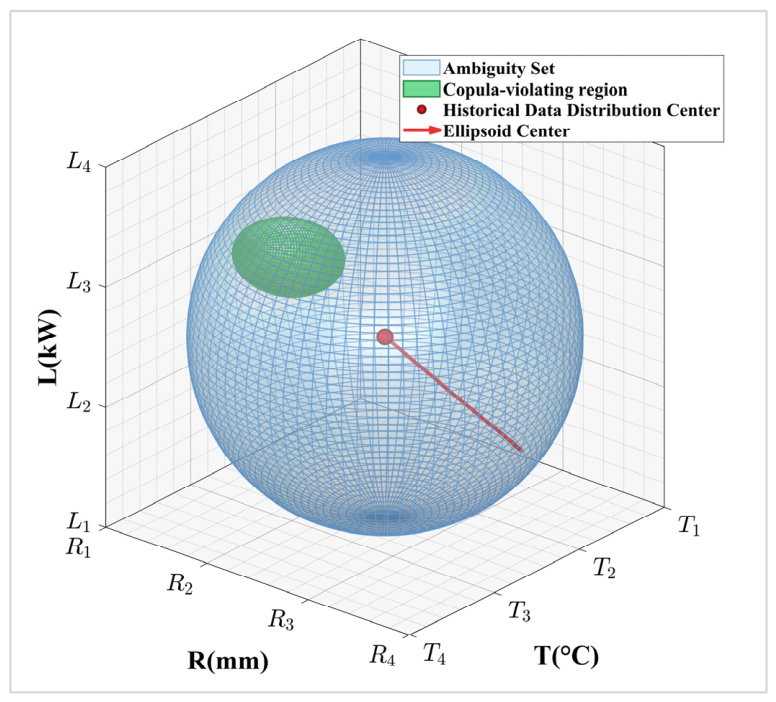
Figure 4 illustrates the ambiguity set D. The center represents the historical data, the radius corresponds to the Wasserstein distance, and the green region denotes samples excluded by the Copula-based constraint dC.

2.3. Bi-Level Coupling Model of Distribution Network and Charging Stations

2.3.1. Upper-Level Model of the Distribution Network

(1)
Objective Function
The upper-level model determines spatiotemporal electricity prices to shift charging demand and minimize system operating costs. The problem is formulated as a min–max expected cost problem to ensure cost efficiency under the worst-case climate distribution.
The objective function is given as follows:
min F 1 = max P D   E P t T C t grid + C t loss + C t shed Δ t
where the expected total operating cost EP consists of three components: the grid purchase cost Ctgrid, the network loss cost Ctloss, and the load shedding penalty cost Ctshed. The detailed formulations of each component are given as follows:
C t grid = λ P grid
C t loss = c loss l r
C t shed = c P , shed P shed
Equation (25) minimizes the expected total cost under the worst-case distribution PD by optimizing the electricity price λ. Equation (26) represents the grid purchase cost, i.e., the total power purchased by all charging stations Pgrid. Equation (27) gives the network loss cost, determined by the squared branch current l, branch resistance r, and loss coefficient closs. Equation (28) corresponds to the load shedding penalty, where a high penalty coefficient Pshed is imposed on the shed power cP,shed to ensure supply reliability.
It should be noted that the distribution network does not supply conventional loads, and the purchase price from the upstream grid equals the selling price to charging stations (i.e., no price markup). Therefore, the upper-level purchasing cost equals the total purchasing cost of all charging stations, as given in (26).
(2)
Constraints
To accurately capture the impact of the spatiotemporal distribution of EV charging loads on distribution network operation and to address the uncertainty induced by climate sensitivity, this study adopts a linearized power flow model as the core set of network constraints. The original nonlinear DistFlow model is first presented as follows:
k Γ + ( j ) P j k , s , t i Γ ( j ) ( P i j , s , t I i j , s , t 2 r i j ) = P j , s , t G ( P j , t L 0 + P j , s , t EV ) ,   s , t , j V dn
k Γ + ( j ) Q j k , s , t i Γ ( j ) ( Q i j , s , t I i j , s , t 2 x i j ) = Q j , s , t G Q j , t L 0 ,   s , t , j V dn
U j , s , t 2 = U i , s , t 2 2 ( P i j , s , t r i j + Q i j , s , t x i j ) + I i j , s , t 2 ( r i j 2 + x i j 2 ) ,   s , t , a i j A dn
( U min ) 2 u j , s , t ( U max ) 2 ,   s , t , j V dn
0 l i j , s , t ( I i j max ) 2 ,   s , t , a i j A dn
The distribution network is represented by a directed graph Gdn = (Vdn, Adn), where Vdn is the set of buses indexed by j, and Adn is the set of branches indexed by aij from bus i to bus j. Additional indices include charging station k ∈ {1, …, 6}, scenario sS and time period t ∈ {1, …, 24}. Let Γ(j) and Γ+(j) be the predecessor and successor sets of node j, respectively. Pij,s,t and Qij,s,t are the active and reactive power flows on aij, Iij,s,t is the current magnitude, and rij and xij are the branch resistance and reactance. P j , s , t G and Q j , s , t G denote the power purchased from the upstream grid, while P j , t L 0 and Q j , t L 0 are the baseline load forecasts. P j , s , t EV represents the aggregated EV charging power at node j, determined by lower-level pricing decisions and climate-sensitive demand. Uj,s,t is the voltage magnitude with bounds Umin and Umax, and I ij max is the thermal limit of branch aij.
In the original DistFlow model, current, voltage, and power are governed by nonlinear relationships:
I i j , s , t 2 U i , s , t 2 = P i j , s , t 2 + Q i j , s , t 2
The model is accurate but nonconvex and thus computationally challenging. To balance computational efficiency and engineering accuracy, the following linearized approximation is adopted:
U j , s , t = U i , s , t r i j P i j , s , t + x i j Q i j , s , t U 0
Furthermore, for a radial distribution network, the power flow on each branch equals the aggregate load of its downstream nodes. Let D(j) denote the set of nodes downstream of node j (i.e., all nodes whose path to the root passes through node j); then, the active power flow on branch aij can be expressed as
P i j , s , t = k D ( j ) P k , t L 0 + P k , s , t E V
This recursive relation is implemented via post-order traversal, avoiding iterative computation.
For the voltage, by accumulating (37) along the path from the root node to node j, an explicit expression for the node voltage is obtained:
U j , s , t = U 0 ( i , j ) Path ( 0 j ) r i j P i j , s , t + x i j Q i j , s , t U 0
where U0 = 1.0 pu is the root node voltage, and Path (0 → j) is the set of branches from node 0 to node j. Considering the high r/x ratio in medium- and low-voltage networks and approximating Q = P·tan φ, (35) can be simplified as
U j , s , t = U 0 , t α P j , s , t down P base d j P j , s , t down = k D ( j ) P k , t L O + P k , s , t E V d j = d parent ( j ) + Δ d i j Δ d i j = r i j + κ x i j V base 2
where U0,t = 1.0 pu is the root node voltage; Pbase and Vbase are the base power and voltage; α is the aggregate voltage drop coefficient (set to 0.35 in this study); P j , s , t d o w n denotes the total downstream load at node j; dj and dparent(j) are the electrical distances of node j and its parent node, respectively; Δdij is the voltage drop increment along branch (i,j); and κ = tanφ is the reactive power equivalence coefficient. For the IEEE 33-bus system, the average voltage drop increment is approximately 0.05 pu under typical operating conditions (see also [34] for related discussions on voltage degradation under high EV penetration).
For network losses, the total active power loss is obtained by summing the resistive losses over all branches:
P s , t loss = ( i , j ) A r i j I i j , s , t 2  
Under the assumption that the voltage is close to its nominal value, the branch current can be approximated as Iij,s,tPij,s,t/U0. Combining this with (36), the network loss can be expressed as a function of the root node injection power:
P s , t loss = ε P 0 , s , t sub C s , t loss = c loss P s , t loss
where ε = 5% is the aggregate network loss coefficient, and Closs is the loss cost coefficient.
In addition, the spatiotemporal electricity price signals issued by the upper-level distribution network are subject to the following operational constraints:
λ _ λ j , t λ ¯ λ j , t + 1 λ j , t Δ λ max λ j , t peak λ j , t valley + δ
where λj,t is the electricity price at node j and time t; the price bounds are λ _ = 0.2 and λ ¯ = 1.0 CNY/kWh; the maximum intertemporal price change Δλmax = 0.15; λ j , t p e a k and λ j , t v a l l e y are the average peak and valley prices, respectively; and δ = 0.25 CNY/kWh is the minimum peak–valley price spread.

2.3.2. Lower-Level Charging Station Model

(1)
Objective Function
At the lower level, each charging station acts as a price taker, responding to the price λjk,t set by the DSO to minimize its expected cost under uncertainty. The problem is formulated as a single-stage stochastic program:
min F 2 = E P t T λ j k , t P k , s , t grid Δ t + c curt P k , s , t curt Δ t
The operating cost of each charging station consists of two components: the electricity purchasing cost, determined by the price λjk,t, and the load curtailment penalty cost, weighted by the coefficient ccurt.
It should be noted that battery degradation costs are not considered in the current model, which is a simplified assumption.
(2)
Constraints
The charging station is subject to power balance, energy storage dynamics (charging/discharging limits, capacity, and state of charge), and grid interaction capacity constraints. The constraints are given as follows:
P k , s , t g r i d + P k , s , t d i s = P k , s , t E V + P k , s , t c h + P k f i x ,   t
t T P k , s , t E V η c h Δ t P j , s , t EV - climate t T P k , s , t c u r t Δ t
0 P k , s , t E V P ¯ k E V ,   t
S O C k , s , t = S O C k , s , t 1 + ( η c h P k , s , t c h P k , s , t d i s / η d i s ) Δ t / E k r a t e ,   t
S O C ¯ k S O C k , s , t S O C ¯ k ,   0 P k , s , t c h , P k , s , t d i s P ¯ k b a t ,   t
0 P k , s , t g r i d P ¯ k g r i d ,   t
P k , s , t c h P k , s , t d i s = 0
where P k , s , t g r i d , P k , s , t d i s , and P k , s , t ch denote the grid purchase, discharging, and charging power, respectively,   P k , s , t EV and P k f i x are the EV charging demand and fixed load; P k , s , t curt is the curtailed power; ηch and ηdis are the charging and discharging efficiencies; Δt is the time interval; P ¯ k   EV is the maximum charging power; SOCk,s,t is the state of charge; E k rate is the rated storage capacity; S O C ¯ k and S O C k are the SOC bounds; P ¯ k b a t and P ¯ k g r i d are the storage and grid power limits; and P j , s , t EV - climate denotes the climate-sensitive charging demand obtained from (11).

2.3.3. Solution Methodology

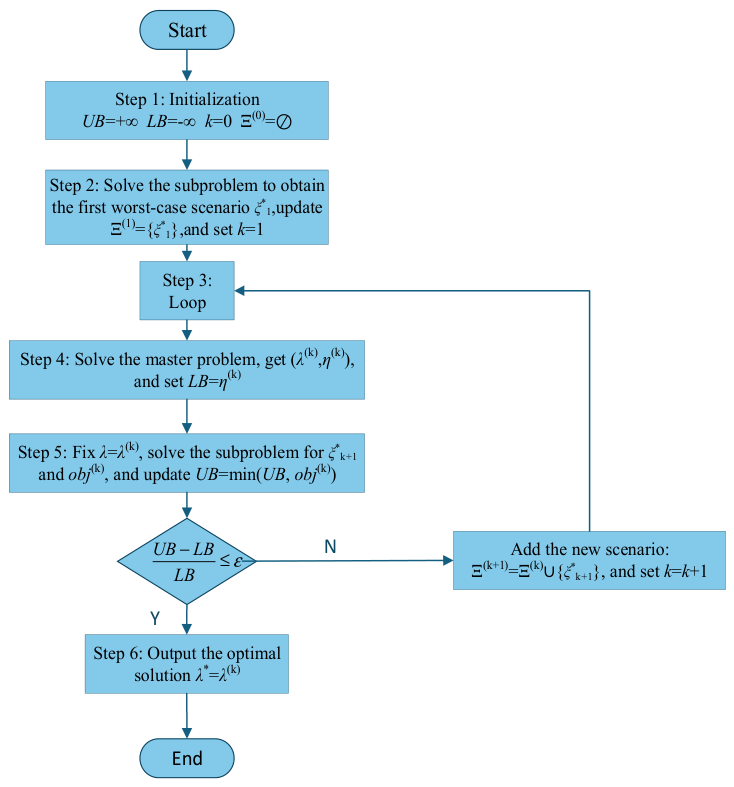
To address the min–max–min structure, a KKT-based C&CG solution framework is proposed: the lower-level problem is reformulated via KKT conditions into a single-level problem, which is then solved iteratively using C&CG to obtain the optimal pricing and operational strategy [35,36].
(1)
Transformation of the Bi-Level Model into an MPEC Problem
The lower-level Lagrangian is constructed as a weighted sum of (42) and (43)–(49). The nonlinear complementary slackness conditions are then linearized [37]. Taking the charging power constraint as an example, the corresponding complementary slackness condition is given by
P k , s , t E V μ k , s , t E V , l o w e r = 0 ( P k ¯ E V P k , s , t E V ) μ k , s , t E V , u p p e r = 0
where μ denotes the associated Lagrange multiplier. By introducing a big-M formulation and an auxiliary binary variable z ∈ {0, 1}, the above nonlinear condition can be linearized as
0 P k , s , t E V M z k , s , t E V , l o w e r 0 μ k , s , t E V , l o w e r M 1 z k , s , t E V , l o w e r 0 P ¯ k E V P k , s , t E V M z k , s , t E V , u p p e r 0 μ k , s , t E V , u p p e r M 1 z k , s , t E V , u p p e r
where M is sufficiently large. Other complementary slackness conditions are handled analogously. The bi-level model is thus reformulated as a single-level MPEC with linear constraints and integer variables.
(2)
Distributionally Robust Objective Handling
Master problem: Given a finite set of identified worst-case scenarios Ξ(k) = { ζ 1 , ζ 2 , …, ζ k }, where k denotes the iteration index, the master problem is formulated as a deterministic mixed-integer linear program (MILP):
min x , λ , η   a T x + η
s . t .   η s Ξ ( k ) p s ( k ) Q ( x , ξ ) ,   ξ Ξ ( k ) DistFlow   constraints   ( 29 ) ( 33 ) SOC   relaxation   constraints   ( 43 ) ( 49 ) U min U j , s , t U max ,   j , s , t I i j , s , t I ¯ i j ,   i j , s , t λ j , t [ λ _ , λ ¯ ] KKT   conditions   of   lower - level   problem
where x denotes the distribution network decision variables; a is the associated cost coefficient vector; η is an auxiliary variable; Ξ(k) is the set of worst-case scenarios at iteration k, with ξ representing a scenario and P s ( k ) as its probability weight; and Q(x,ξ) is the operating cost obtained from the lower-level problem given x and ξ.
Subproblem: The subproblem seeks the worst-case probability distribution within the ambiguity set D that maximizes the total system cost. Embedding D into the lower-level model yields
max { p i } i = 1 N p i Q ( x ( k ) , ξ i )
Since uncertainty is represented by a finite set of N discrete historical scenarios, the distribution PD can be parameterized by scenario probabilities pi (i = 1, 2, …, N). Under this discretization, the Wasserstein constraint is linearized via a joint probability matrix πij, and the Copula distance constraint can be expressed as linear inequalities in pi. The subproblem constraints thus reduce to the following linear program:
s . t . i = 1 N p i = 1 i = 1 N j = 1 N π i j d ( ξ i , ξ j ) r W j = 1 N π i j = 1 N ,   i { 1 , 2 , , N } i = 1 N π i j = p j ,   j { 1 , 2 , , N } i = 1 N p i d C ( C ^ N , C ξ i ) r W
where pi denotes the probability weight of scenario i; πij is an element of the joint probability matrix, representing the joint probability between the i-th sample of the empirical distribution PN and the j-th sample of distribution P; d(ξi,ξj) denotes the distance between scenarios i and j, defined in this study as the absolute difference in total charging load; and dC( C ^ N ,Cξi) is the Copula distance, computed according to (20)–(23). A detailed proof of the linearity of the Copula constraint in scenario probabilities is provided in Appendix B.
Based on the above reformulation, the subproblem can be converted into a linear program defined over historical samples. Solving the subproblem yields a worst-case climate scenario ζ k + 1 that maximizes the objective value, along with the corresponding optimal value o b j S P ( k ) . This value represents the maximum expected cost under the current decision λ(k) and thus serves as an upper bound on the optimal value of the original problem, i.e.,

U B = min U B , o b j S P ( k )
The solution procedure is illustrated in Figure 5, and the pseudocode is provided in Appendix B (Algorithm A1).

3. Results

3.1. Case Study Setup

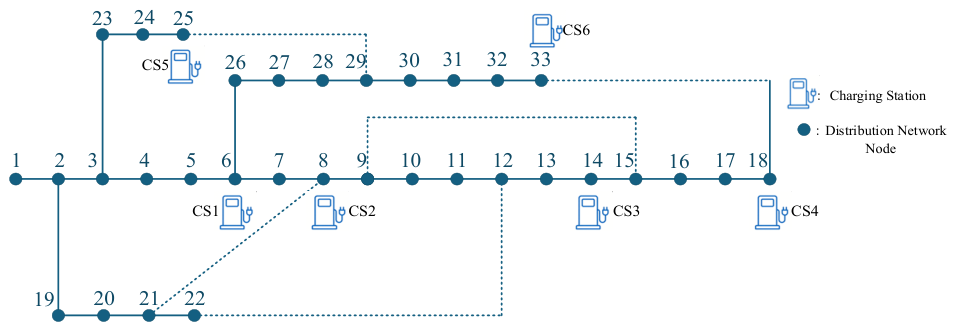
This study uses hourly temperature and precipitation data from January, April, July, and October 2024 (totaling 123 days) in a Northern Chinese city. The first 50 days of this merged dataset are selected as meteorological inputs (source: NOAA) to validate the proposed climate–charging load coupling model and the C-WDRO method. The distribution network is based on the IEEE 33-bus system, with nodal demands following typical daily load profiles. Charging stations are installed in buses 6, 8, 14, 18, 25, and 33, as illustrated in Figure 6. Detailed parameters of the bi-level model are provided in Appendix A, Table A2 and Table A3. All simulations are conducted using Gurobi 12.0.3 via PyCharm 2025.3.1.
Based on the above case study setup, four benchmark schemes are designed to evaluate the performance differences among various uncertainty modeling approaches, as summarized in Table 1:

3.2. Data Preparation

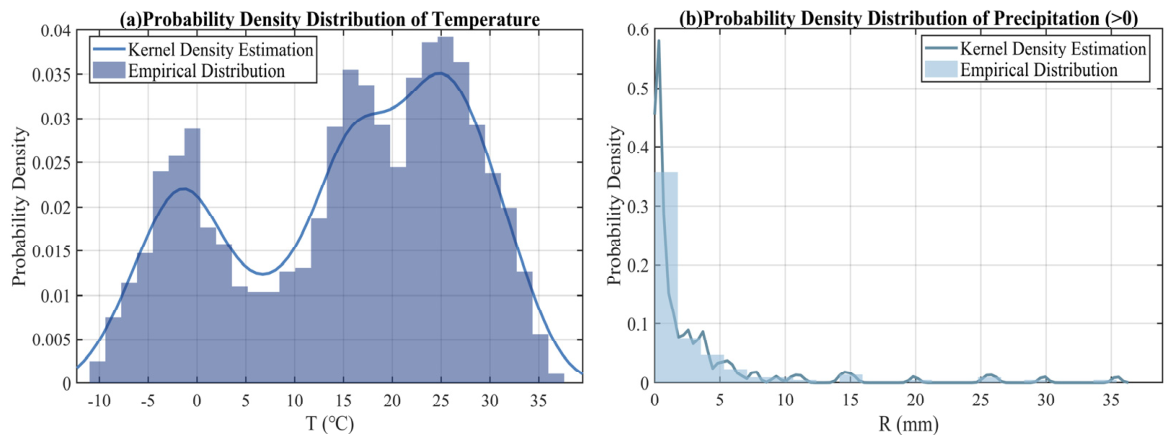
To ensure that the ambiguity set reflects realistic conditions, the bounds, distributions, and dependencies of variables such as temperature and precipitation are calibrated based on physical climate principles, thereby reducing modeling bias and capturing the climate–load coupling [38]. Accordingly, the probability densities of temperature and precipitation are first analyzed, as shown in Figure 7.
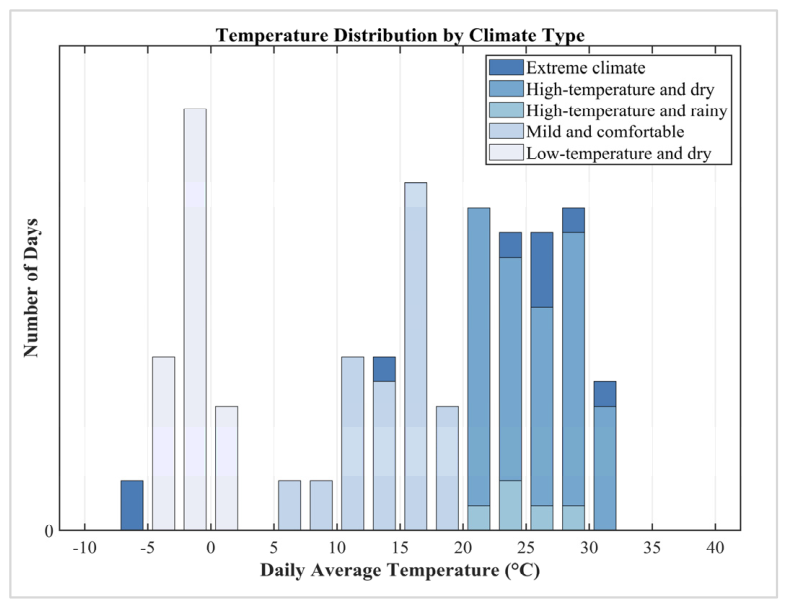
To extract typical operating conditions from annual climate data, this study uses daily average temperature and daily cumulative precipitation as key indicators, and classifies one year of data into five typical scenarios. In combination with the physical laws governing vehicle energy consumption, the temperature and precipitation ranges of each scenario are validated to ensure that each scenario corresponds to a distinct energy consumption response pattern. The temperature and precipitation intervals of each category are presented in Table 2 and Figure 8.

3.3. Case Study Results

3.3.1. Effectiveness Analysis of the CSEMM

To validate the CSEMM in capturing the nonlinear climate–energy coupling and scenario-dependent driving mechanisms, the analysis is conducted from two perspectives: daily charging profiles and factor contribution decomposition. The results are as follows.
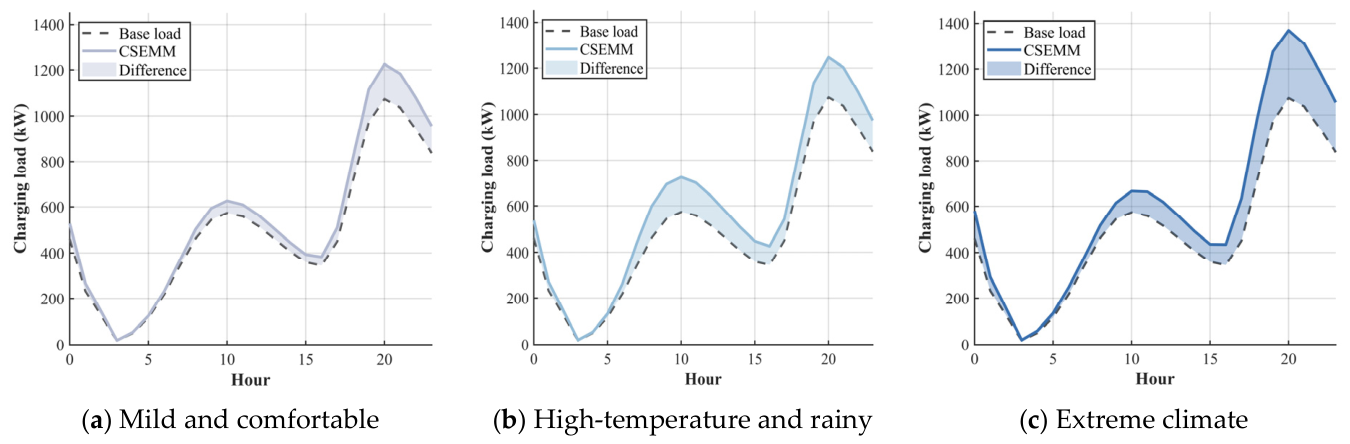
Figure 9 compares the daily EV charging load profiles generated by the CSEMM under three climate scenarios with a baseline load. The baseline corresponds to standard conditions (25 °C, no precipitation), with a unit energy consumption of 0.18 kWh/km. The results show that the model reflects the impact of climate variation on charging demand. Under mild conditions, the profile is close to the baseline with a minor increase at the evening peak. Under high-temperature and rainy conditions, both peaks rise above the baseline by about 150 kW. Under extremely cold conditions, the deviation increases to about 200 kW, with higher early-morning demand due to continuous heating needs. As conditions shift from mild to extreme, total demand increases from 11.9% to 24.2%, indicating a clear nonlinear relationship between climate and energy consumption.
Table 3 presents the contributions of different factors to EV energy consumption under various climate scenarios. The results reveal a clear differentiation in the contribution structure. In the low-temperature and dry scenario, HVAC load dominates; in the mild and comfortable scenario, all factors remain at low levels. In high-temperature scenarios, temperature becomes the primary contributor, while precipitation effects increase noticeably under rainy conditions. In the extreme climate scenario, all three factors exhibit strong joint effects, indicating a pronounced multi-factor coupling amplification. Overall, these patterns reflect a transition in climate impacts from single-factor dominance to multi-factor coupling.

3.3.2. Optimization Strategy Results

Based on the CSEMM, the first 30 climate scenarios are used to solve the bi-level optimization problem of the distribution network and charging stations under different uncertainty models. The resulting pricing strategies and worst-case cost components are then analyzed.
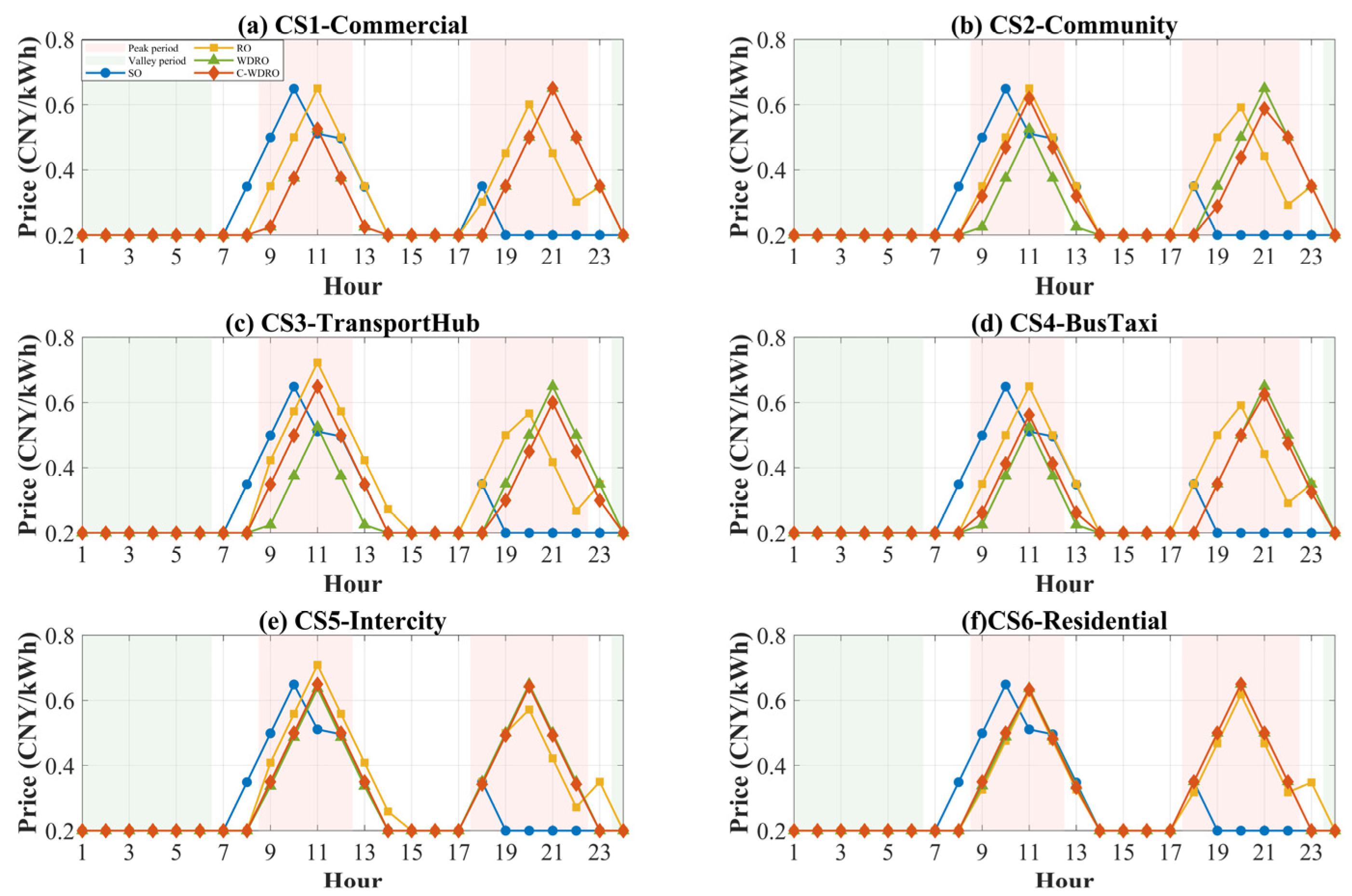
Figure 10 presents the time-of-use electricity pricing strategies of six charging stations under four optimization methods. All cases exhibit a clear dual-peak pattern, with peak periods concentrated in the morning and evening and valley periods in the early morning and afternoon. Under SO, a uniform pricing scheme is applied across all stations, with a peak price of about 0.65 yuan/kWh and no spatial differentiation. RO further increases peak prices; for example, CS3 reaches 0.72 yuan/kWh during the evening peak, about 11% higher than SO, strengthening price signals to suppress load concentration. WDRO introduces spatially differentiated pricing, where the peak prices of CS5 and CS6 are 0.670 and 0.644 yuan/kWh, respectively, slightly higher than CS1–4, partially alleviating excessive conservatism but remaining relatively cautious in design. In contrast, C-WDRO adopts a more refined pricing structure: CS1–CS4 maintain a peak price of 0.525 yuan/kWh, about 19% lower than RO, while CS5 and CS6 are set at 0.650 and 0.638 yuan/kWh, respectively. These results indicate that C-WDRO achieves a better balance between peak-shaving requirements and operating cost, while enabling a more coordinated pricing design across charging stations.
Table 4 compares the economic performance of different optimization methods. SO achieves the lowest total cost of 7722.08 CNY, representing an economic lower bound among the four methods. However, its load shedding rate is 0.66%, indicating limited robustness under uncertainty. RO eliminates load shedding by adopting a worst-case strategy, but this leads to a higher total cost of 8237.11 CNY, reflecting a clear conservatism penalty. WDRO lies between the two, with moderate cost and robustness performance. C-WDRO achieves a total cost of 7886.27 CNY, which is 4.26% lower than RO and 0.22% lower than WDRO. Its load shedding rate (0.70%) is also slightly lower than that of WDRO (0.84%), while its electricity purchase cost is comparable. This indicates that C-WDRO achieves both economic and reliability improvements over WDRO, demonstrating the benefit of explicitly modeling dependence structures.

3.3.3. Effectiveness Verification of Different Strategies

(1)
Economic Analysis
Given the significant variations in charging load characteristics under different weather conditions, it is necessary to verify the applicability of the proposed optimization strategy across various climatic scenarios. Accordingly, five representative days corresponding to different weather types are selected from the first 50 scenarios for validation. The results in terms of economic performance and system security are presented as follows:
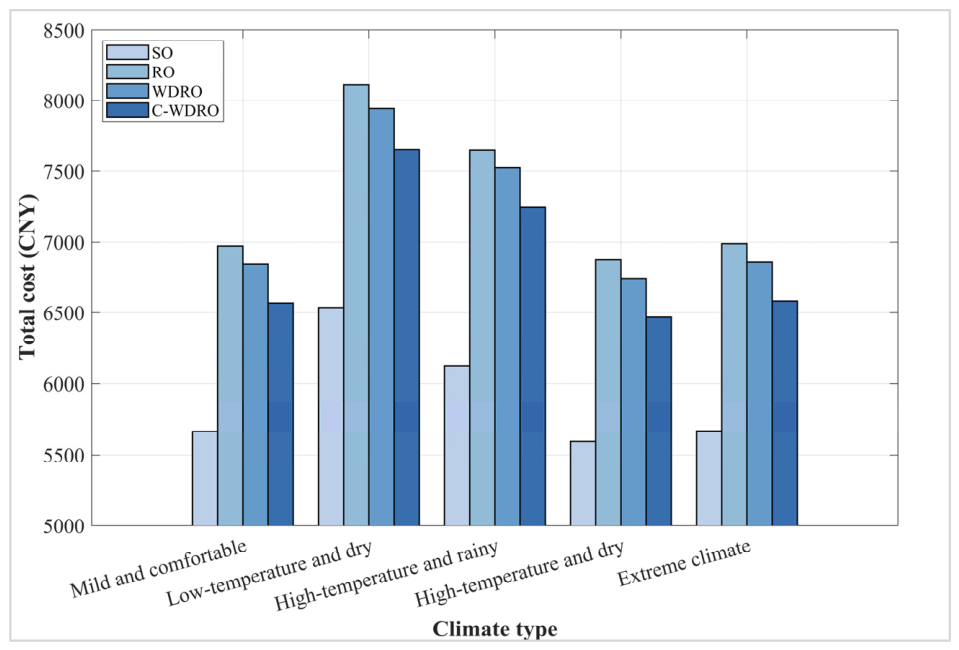
As shown in Figure 11, total cost varies significantly under different weather conditions, with higher values under low-temperature and dry conditions and lower values under high-temperature and dry conditions, indicating that low temperature increases EV energy consumption and grid purchasing demand. SO achieves the lowest cost across all cases (average 5917.75 CNY) by optimizing under average load assumptions without considering the coupling between climate and charging demand, but it shows limited robustness under extreme conditions. In contrast, RO yields the highest cost, about 23.7% higher than SO on average, as it relies on a worst-case strategy that improves security at the expense of economic efficiency. WDRO and C-WDRO lie between these two extremes, balancing cost and robustness, while C-WDRO consistently outperforms WDRO with an average cost reduction of about 3.9%.
(2)
Power Purchase and Energy Storage Analysis
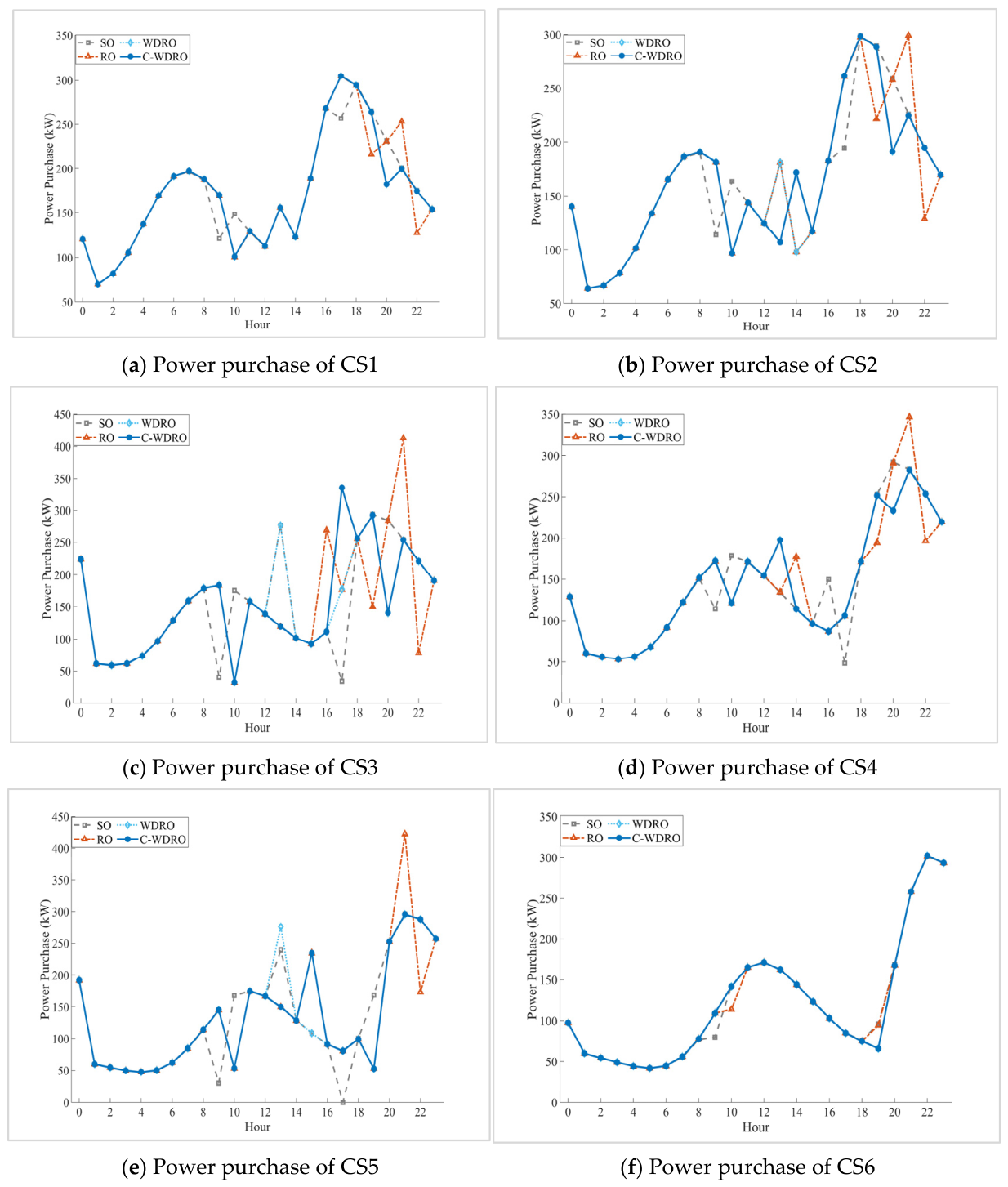
Figure 12 shows the 24 h electricity purchasing profiles of six charging stations under four methods: SO, RO, WDRO, and C-WDRO. Overall, all methods exhibit similar temporal patterns, with low demand during off-peak hours (0:00–6:00), a gradual increase during the daytime, and peaks in the evening (17:00–21:00). SO and RO show noticeable load concentration during peak periods, with RO exhibiting the highest peaks (e.g., CS5 reaches 422 kW at 21:00). C-WDRO achieves a relatively more distributed load profile, shifting part of the load from the afternoon to the early evening. In terms of purchasing strategies, WDRO tends to concentrate purchases during the afternoon off-peak hours (13:00), while C-WDRO shifts part of the purchases from 13:00 to 17:00. Both strategies purchase electricity during low-price periods, but the timing differs. Both methods outperform SO and RO, demonstrating the benefits of distributionally robust optimization frameworks in handling uncertainty. For charging stations with larger fluctuations, such as CS3 and CS5, C-WDRO shows relatively smoother load variations and improved operational stability.
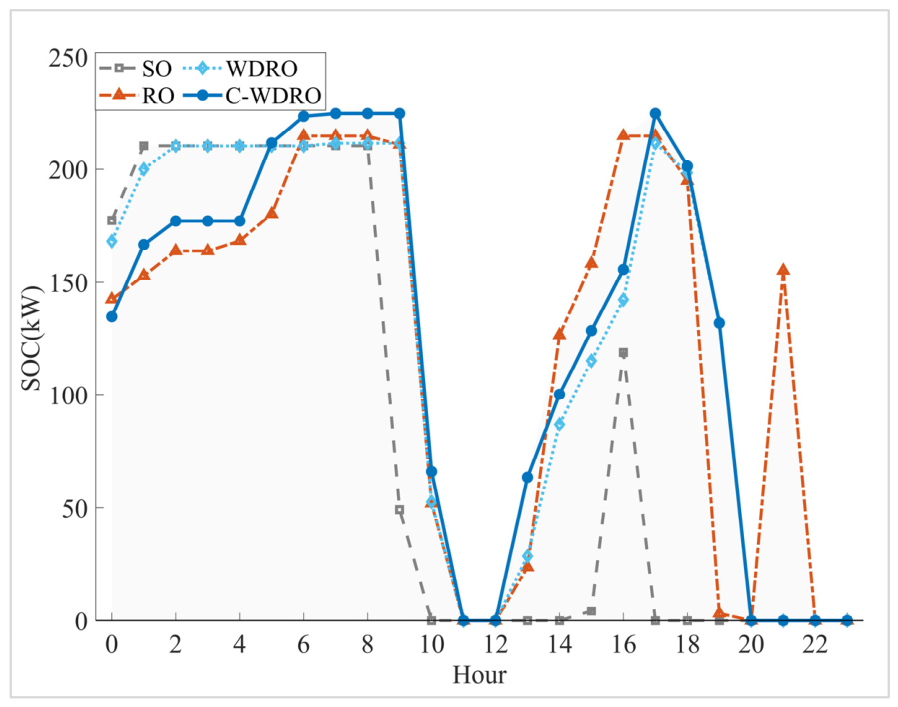
Figure 13 presents the average state of charge of energy storage across six charging stations under four optimization methods. Together with the purchasing profiles in Figure 12, the results reveal the underlying scheduling behavior. Under the SO method, SOC is relatively high during the early morning but drops significantly after 09:00 and remains low throughout most of the daytime. This leaves limited storage capacity to respond to potential load increases or grid disturbances in the afternoon, reducing operational flexibility and reserve capability. RO maintains relatively high SOC levels for most periods, with only a brief drop during the evening peak before quickly recovering, reflecting a conservative scheduling strategy. WDRO and C-WDRO exhibit more flexible scheduling patterns. Their SOC decreases during the daytime and increases in the early evening, corresponding to the shift in electricity purchases from the afternoon to the early evening as shown in Figure 12.
(3)
Security Analysis under Extreme Scenarios.
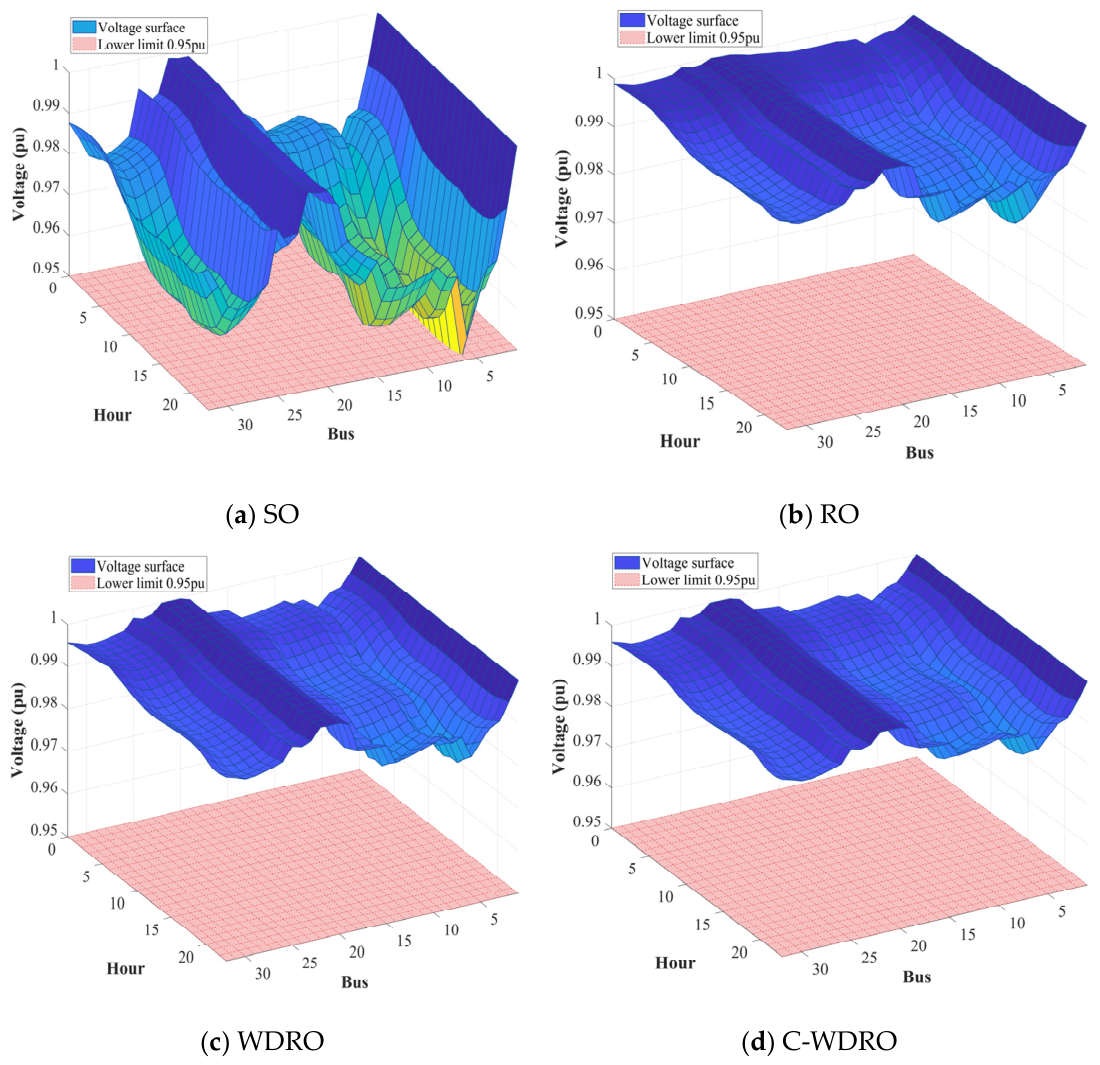
Since the power purchase load characteristics under different optimization methods directly affect the system voltage profile, Table 5 and Figure 13 compare the voltage performance of the four methods from two dimensions: quantitative indicators and spatiotemporal distribution.
Table 5 and Figure 14 present a comparative assessment of voltage performance under different optimization schemes. As shown, the SO method fails to adequately capture uncertainty, resulting in a wide voltage fluctuation range and a relatively low minimum voltage level, which leads to evident voltage violations and compromised operational security. In contrast, the RO approach eliminates voltage violations through conservative dispatch; however, this is achieved at the expense of reduced regulation margin, thereby limiting operational flexibility. The conventional WDRO method accounts for uncertainty while satisfying voltage security constraints and exhibits improved stability compared to SO, although noticeable voltage fluctuations still remain.
Notably, the proposed C-WDRO method not only guarantees zero voltage violations but also effectively suppresses voltage variability. The maximum daily voltage deviation is significantly reduced, and the overall voltage profile becomes markedly smoother, indicating enhanced voltage regulation performance. These results demonstrate that, under coupled climate–charging load uncertainties, the proposed method achieves a superior balance between operational security and performance, highlighting its strengthened robustness and voltage control capability.

3.3.4. Generalization Ability Validation of Different Strategies

To further validate the generalization capability of the C-WDRO method in capturing the coupled climate–charging load uncertainty, the average operating cost over the last 30 days (not used in the construction of the ambiguity set) is adopted as an out-of-sample test set. A comparative evaluation of the four optimization schemes is then conducted, with the results summarized as follows.
Table 6 shows that, based on the out-of-sample validation dataset, the cost ranking of the four methods remains consistent with that observed during training: SO achieves the lowest cost, RO yields the highest cost, and C-WDRO performs comparably to WDRO while outperforming RO. Specifically, the total cost of WDRO is 6659.72 CNY, while that of C-WDRO is 6665.64 CNY, indicating very close performance. In terms of load shedding rate, it is 0.61% for WDRO and slightly lower for C-WDRO at 0.46%, which is consistent with the conclusion from the training set that C-WDRO achieves a lower load shedding rate than WDRO. It is worth noting that the validation set consists mostly of mild weather conditions with few extreme climate events; consequently, the performance difference between C-WDRO and WDRO on the validation set is less pronounced than in the training set. This observation indicates that the advantage of C-WDRO becomes more evident under extreme weather, while it maintains comparable performance to WDRO under normal conditions without degradation. This further demonstrates the effectiveness of the proposed Copula–Wasserstein ambiguity set in handling extreme conditions as well as its strong generalization capability.

3.3.5. Validation of the Copula–Wasserstein Ambiguity Set

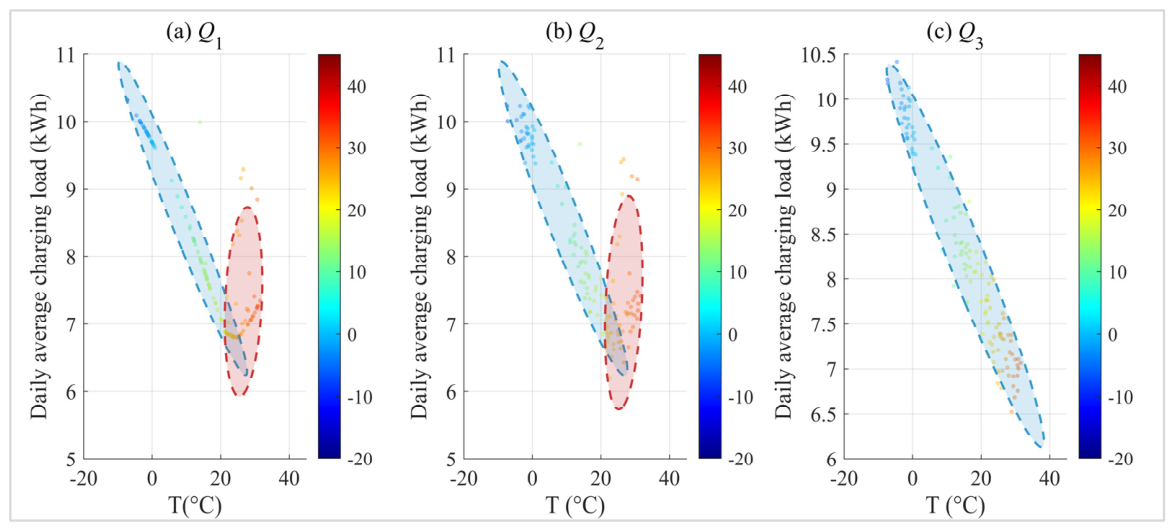
To evaluate the ability of the Copula distance to identify dependency structures, a Q3 distribution with an opposite dependence pattern to Q1 is constructed by reversing the load–temperature pairing in Q1 and adding noise with 0.2 standard deviation, resulting in a strictly negative correlation. Meanwhile, Q2 is generated by perturbing Q1 to preserve a similar U-shaped dependency. Since precipitation effects are implicitly embedded in the load data and the temperature–load relationship is dominated by a U-shape, Figure 15 highlights temperature using color only. This setup, consistent with [29], is used to test whether the ambiguity set can identify and exclude distributions that violate physical relationships (e.g., high temperature with low load).
Table 7 shows that the Wasserstein distance between Q1 and Q2 is 0.0402, while that between Q1 and Q3 is 0.0785, with only a limited difference. This indicates that the conventional Wasserstein ambiguity set struggles to distinguish dependency structures and may include both Q2 and Q3, thereby introducing physically inconsistent distributions. In contrast, the Copula distance is more sensitive to such differences, with the distance between Q1 and Q3 being approximately 2.2 times that between Q1 and Q2. Therefore, by incorporating a Copula-based distance constraint, the proposed C-WDRO method can effectively exclude distributions that violate physical relationships, thereby confirming the effectiveness of the Copula–Wasserstein ambiguity set.

3.3.6. System Sensitivity Analysis

The Wasserstein radius RW controls the size of the ambiguity set and directly affects the conservatism of the model. In this study, RW is adjusted indirectly by varying the confidence level β. Table 8 reports the worst-case expected cost of the subproblem under different confidence levels.
Table 8 presents the worst-case expected cost of the subproblem under different confidence levels. As the confidence level increases from 0.1 to 0.999, the expected cost rises from 7014.57 CNY to 7522.29 CNY. The cost saturates at 0.999, with further increase to 0.9999 yielding the same value. This indicates that the model is more optimistic when the Wasserstein radius is small, becomes more conservative as the radius increases, and stabilizes after a certain threshold.
To investigate the impact of the Copula distance radius rw on the optimization results, Table 9 reports the worst-case expected cost of the subproblem under different values of rw in the C-WDRO framework.
As shown in Table 9, the worst-case expected cost of the subproblem exhibits an increasing-then-saturating trend with respect to rw. Specifically, as rw increases from 0.65 to 0.90, the cost rises from 7222.56 CNY to 7274.04 CNY, corresponding to an increase of 51.48 CNY (approximately 0.71%). Beyond this point, further increase in rw to 0.99 results in a slight decrease to 7263.95 CNY, which may be attributed to solver precision, indicating that the cost has largely saturated. This suggests a clear stage-wise sensitivity: when rw ≤ 0.90, the cost increases noticeably with rw, indicating that the Copula distance constraint is active and plays a significant role in shaping the worst-case risk; when rw ≥ 0.90, the cost becomes largely insensitive to further changes, implying that the constraint has largely saturated. Accordingly, the choice of rw provides a practical trade-off between robustness and economic performance: larger values enhance robustness and are suitable for security-critical scenarios, whereas smaller values improve cost efficiency and are preferable for economically driven applications.
To further assess the stability of the empirical Copula, this subsection analyzes its sensitivity to perturbations in precipitation and temperature under three extreme weather scenarios (heavy rain, high temperature, and cold conditions). The results are presented in Table 10.
As shown in Table 10, under the heavy rain scenario, a 4 mm increase in precipitation leads to a slight rise in dc from 0.7074 to 0.7476, indicating that the empirical Copula has low sensitivity to precipitation perturbations. Under high-temperature conditions, as temperature varies from −2 °C to +2 °C, dc ranges from 0.7751 to 0.8561, remaining within a controllable range. Under cold conditions, a temperature variation from −2 °C to +2 °C results in a more noticeable change in dc, from 0.8216 to 0.7048, which is attributed to the limited number of cold-weather samples in the historical dataset. Overall, the empirical Copula exhibits some sensitivity to climate perturbations, but all variations remain within acceptable limits without abrupt jumps.

4. Conclusions

This paper addresses challenges caused by high penetration of electric vehicles, including climate-driven load fluctuations, the disconnect between climate–energy mechanisms and load modeling, and the inability of conventional ambiguity sets to capture dependency structures. To this end, a Copula–Wasserstein-based distributionally robust optimization method is proposed. The main conclusions are as follows:
(1)
CSEMM effectiveness: A nonlinear mapping between temperature, precipitation, and EV energy consumption is established, forming a “climate–energy–charging load” linkage. Results show that the deviation between predicted and baseline load increases from 11.9% to 24.2% as conditions shift from normal to extreme.
(2)
A distributionally robust bi-level model is developed for the interaction between the distribution network and charging stations. The problem is solved using KKT conditions and a C&CG framework. Results show that C-WDRO reduces total cost by 0.21% compared to WDRO and 4.26% compared to RO. The load shedding rate is reduced by 0.14 percentage points. Under extreme conditions, the model achieves zero voltage violations while adopting a more refined spatially differentiated pricing structure compared to SO, RO, and WDRO.
(3)
Generalization capability: Out-of-sample tests show consistent cost rankings and performance gains compared to the training phase. This confirms strong generalization and practical applicability.
Finally, several limitations should be acknowledged: the CSEMM coefficients are not calibrated with real-world EV data; the travel and charging behavior models are simplified; the validation is based on synthetic load profiles; and the C&CG algorithm has limited solution accuracy.
To address these limitations, future work will focus on the following directions: calibrating the CSEMM using real-world EV energy consumption data; introducing differentiated travel parameters for weekdays and weekends; developing weather-dependent user charging behavior models; conducting validation based on measured charging station data; and exploring more efficient solution algorithms or improving the convergence strategy of the C&CG algorithm to enhance solution accuracy.

Author Contributions

Conceptualization, D.M.; data curation, D.M.; formal analysis, D.M.; funding acquisition, D.M.; investigation, D.M.; methodology, D.M.; project administration, D.M.; resources, D.M.; software, D.M.; supervision, X.C., Y.Z. and S.C.; validation, D.M.; visualization, D.M.; writing—original draft, D.M.; writing—review and editing, D.M. All authors have read and agreed to the published version of the manuscript.

Funding

This paper is supported by the National Natural Science Foundation of China under Grant No. 52077137.

Institutional Review Board Statement

Not applicable.

Informed Consent Statement

Not applicable.

Data Availability Statement

The original data presented in the study are openly available in National Oceanic and Atmospheric Administration (NOAA) at https://www.noaa.gov/.

Conflicts of Interest

The authors declare no conflict of interest.

Appendix A

Table A1. Parameter values of the CSEMM.
SymbolValue
Tb25 (°C)
σb3 (°C)
α1−0.15
α20.01
Tc21 (°C)
ΔT4 (°C)
βh, βc0.008, 0.006
Rmax10 (mm)
γ1, γ2, γ30.1, 0.05, 0.001
Ebase0.18 (kWh/km)
K1 (kW)
Table A2. Charging station locations and energy storage parameters.
Charging Station IDConnected BusType and LocationTemporal Shift Parameter Δk (h)Energy Storage Capacity (kWh)
CS16Commercial DC fast charging station−2.5150
CS28Community hybrid station−1.5200
CS314Transport hub centralized fast charging station−0.5300
CS418Bus/taxi dedicated station0.5200
CS525Intercity/battery swap high-power station1.5280
CS633Residential area slow charging station2.5220
Table A3. Parameters of the distribution network–charging station bi-level model.
Parameter NameSymbolValue
Time interval (h)Δt1
Charging efficiency, Discharging efficiencyηch, ηdis0.95, 0.95
Lower/upper price limit (CNY/kWh) λ _ , λ ¯ 0.2, 1.0
Maximum price change between adjacent periods (CNY/kWh)Δλmax0.15
Minimum peak–valley price difference (CNY/kWh)δ0.25
Network loss coefficientε0.05
Load shedding penalty coefficient (CNY/kWh)cshed0.6
Lower/upper state of charge limit S O C ¯ k ,     S O C k 0, 1
Comprehensive voltage drop coefficientα0.35
Base power (kW)Pbase6000

Appendix B

Appendix B.1. Linearity of the Copula Constraint in Scenario Probabilities

(1)
Copula Constraint Formulation
The Copula distance constraint is introduced into the Wasserstein ambiguity set as shown in Equation (55):
i = 1 S p i d i copula ε c
where d i c o p u l a is the Copula distance between the empirical Copula and the conditional Copula of scenario i.
(2)
Construction of the Empirical Copula
Let the historical samples be
X ( n ) = T ( n ) , R ( n ) , L ( n ) ,   n = 1 , 2 , , N
The empirical marginal transformation is applied to each variable:
u j ( n ) = rank ( x j ( n ) ) N + 1 ,   j = 1 , 2 , 3
The empirical Copula samples are then given by
u ( n ) = u 1 ( n ) , u 2 ( n ) , u 3 ( n )
(3)
Computation of the Copula Distance for Each Scenario
For a given scenario i, its sample is denoted as
s i = ( T i ,   R i ,   L i )
The corresponding empirical quantile vector is
u i = ( u i 1 ,   u i 2 ,   u i 3 )
where
u i j = 1 N n = 1 N 1 ( x j ( n ) S i j )
The Copula distance for scenario ii is defined in Equation (21) as
d i copula = d c ( C ^ N , C ξ i ) = inf γ Π ( C ^ N , C ξ i ) E ( F ^ , F ) ~ γ F ^ F 1
This distance depends only on the empirical Copula C ^ N , which is fixed once the historical data are given, and on the conditional Copula Cξi of scenario ξi, which is determined by the scenario itself. Consequently, dicopuladicopula does not depend on the optimization variables pi and can be precomputed offline before solving the optimization problem.
From Equation (A8), d i c o p u l a does not depend on the optimization variables pi and can be precomputed offline as a constant ci. Substituting this into constraint (A1) gives
i = 1 S c i p i ε c
where ci are constants and pi are variables. Equation (A9) is a linear inequality in pi, containing no nonlinear terms (e.g., p i 2 , pipj, exp(pi), log pi).
Therefore, the Copula constraint is strictly linear in the scenario probabilities pi.

Appendix B.2. Algorithm Pseudocode

Algorithm A1. C&CG Algorithm for the Proposed Bi-level DRO Model
 1: Initialization
 2:           Load historical scenarios Ξfull
 3:           Compute total load L(ξ) for each scenario
 4:           Select initial scenario ξ(1) = arg max L(ξ)
 5:           Set Ξ(1) = {ξ(1)}
 6: Main Loop
 7: for m = 1 to M do
 8:           Step 1: Master problem
 9:                    Solve (53) with Ξ(m) → obtain λ(m) and η(m)
11:           Step 2: Lower-level evaluation
12:                    for each ξi ∈ Ξfull do
13:                           Solve (45)–(49) → obtain Q(λ(m), ξi)
14:                    end for
16:           Step 3: Subproblem
17:                    Compute distance matrix dij and Copula distances ci
18:                    Solve (55) → obtain p i and worst-case cost
20:           Step 4: Update scenario set
21:                    Find worst scenario ξworst = arg max Q(λ(m), ξi)
22:                    if ξworst ∉ Ξ(m) then
23:                            Ξ(m+1) = Ξ(m) ∪ {ξworst}
24:                    else
25:                           Terminate
26:                    end if
27: end for
28: Output
29:           Optimal electricity prices λ*
30:           Total operating cost (upper bound)

References

  1. Zhao, F.; Bai, F.; Liu, X.; Liu, Z. A Review on Renewable Energy Transition under China’s Carbon Neutrality Target. Sustainability 2022, 14, 15006. [Google Scholar] [CrossRef]
  2. Koniak, M.; Jaskowski, P.; Tomczuk, K. Review of Economic, Technical and Environmental Aspects of Electric Vehicles. Sustainability 2024, 16, 9849. [Google Scholar] [CrossRef]
  3. Mesquita, A.R.; de Abreu, V.H.S.; Poyares, C.N.; Santos, A.S. Barriers to Electric Vehicle Adoption: A Framework to Accelerate the Transition to Sustainable Mobility. Sustainability 2025, 17, 8318. [Google Scholar] [CrossRef]
  4. Li, S.; Jiang, F.; Yang, L.; He, R.; Li, Z.; Liu, X.; Lu, X. Spatiotemporal distribution optimization strategy for electric vehicle charging and discharging considering distribution line vulnerability. Power Syst. Technol. 2025, 9, 3870–3880. [Google Scholar]
  5. Senol, M.; Bayram, I.S.; Naderi, Y.; Galloway, S. Electric Vehicles under Low Temperatures: A Review on Battery Performance, Charging Needs, and Power Grid Impacts. IEEE Access 2023, 11, 39879–39912. [Google Scholar] [CrossRef]
  6. Qin, W.; McCallum, P.; Souto, L.; Kırlı, D. Weather-Informed Optimal Scheduling of Electric Vehicle Charging under Extreme Conditions: A Case Study from the Scottish Islands. Int. J. Electr. Power Energy Syst. 2025, 172, 111329. [Google Scholar] [CrossRef]
  7. Kim, D.; Yun, J.; Jang, K.; Woo, S. Auxiliary Energy Consumption of Electric Vehicles: Modeling and Prediction Using Real-World Vehicle Data. Appl. Energy 2025, 401, 126766. [Google Scholar] [CrossRef]
  8. Liu, K.; Wang, J.; Yamamoto, T.; Morikawa, T. Exploring the Interactive Effects of Ambient Temperature and Vehicle Auxiliary Loads on Electric Vehicle Energy Consumption. Appl. Energy 2017, 227, 324–331. [Google Scholar] [CrossRef]
  9. Bressan, M.; Campagnoli, E.; Giaretto, V. Experimental Evidence on the Effect of Temperature on the Performance of a Lithium-Ion Battery. Batteries 2025, 11, 439. [Google Scholar] [CrossRef]
  10. Chen, L.; Yang, Y.; Xu, Q. A Two-Stage Control Strategy of Large-Scale Residential Air Conditionings Considering Comfort Sensitivity of Differentiated Population. IEEE Access 2019, 7, 126344–126354. [Google Scholar] [CrossRef]
  11. Li, Y.; Xu, X.; Shao, H.; Song, X.; Shen, L. Finding the optimal reliable energy consumption path for electric vehicles under rainfall conditions. Transp. B Transp. Dyn. 2024, 12, 2352492. [Google Scholar] [CrossRef]
  12. Genov, E.; De Cauwer, C.; Van Kriekinge, G.; Coosemans, T.; Messagie, M. Forecasting flexibility of charging of electric vehicles: Tree and cluster-based methods. Appl. Energy 2024, 353, 121969. [Google Scholar] [CrossRef]
  13. Pellegrini, A.; Diana, M.; Rose, J.M. A Latent-Based Segmentation Framework for the Investigation of Charging Behaviour of Electric Vehicle Users. Transp. Res. Part C Emerg. Technol. 2024, 165, 104722. [Google Scholar] [CrossRef]
  14. Lee, G.-C. A Regression-Based Method for Monthly Electric Load Forecasting in South Korea. Energies 2024, 17, 5860. [Google Scholar] [CrossRef]
  15. Zhang, Q.; Yang, K.; Fang, S. Stochastic Optimization of Electric Vehicle Charging Strategy Based on Day-Ahead High Precision Forecast for Renewable Power and Charging Demand. Energy 2025, 338, 138785. [Google Scholar] [CrossRef]
  16. Liu, X.; Li, Z.; Yang, X.; Li, Z.; Wei, Z.; Wang, P. Two-Stage Robust Economic Dispatch of Distribution Networks Considering Electric Vehicles Charging Demand–Price Uncertainty Correlations. Electr. Power Syst. Res. 2025, 248, 111850. [Google Scholar] [CrossRef]
  17. Khorramfar, R.; Mallapragada, D.; Amin, S. Power-gas infrastructure planning under weather-induced supply and demand uncertainties. Eur. J. Oper. Res. 2025, in press. [Google Scholar] [CrossRef]
  18. Pan, J.; Zhang, N.; Yong, P. A two-stage distributed coordinated scheduling method for massive flexible resources. Autom. Electr. Power Syst. 2023, 47, 67–79. [Google Scholar]
  19. Wang, Y.; Wei, B.; Han, X. Stackelberg game based pricing and scheduling strategy for electric vehicle aggregators. In Proceedings of the 2024 3rd International Conference on Energy, Power and Electrical Technology (ICEPET), Chengdu, China, 17–19 May 2024; pp. 1178–1182. [Google Scholar] [CrossRef]
  20. Tong, L.; Zhao, S.; Jiang, H.; Zhou, J.; Xu, B. Multi-scenario and multi-objective collaborative optimization of distribution network considering electric vehicles and mobile energy storage systems. IEEE Access 2021, 9, 55690–55697. [Google Scholar] [CrossRef]
  21. Zhou, J.; Xiang, Y.; Li, S.; Sun, W. Learning to predictive scheduling for orderly charging of electric vehicles in renewable energy charging stations. Renew. Energy 2026, 256, 124332. [Google Scholar] [CrossRef]
  22. Mohajerin Esfahani, P.; Kuhn, D. Data-driven distributionally robust optimization using the Wasserstein metric: Performance guarantees and tractable reformulations. Math. Program. 2018, 171, 115–166. [Google Scholar] [CrossRef]
  23. Li, L.; Miao, S.; Tu, Q.; Duan, S.; Li, Y.; Han, J. Dynamic dependence modelling of wind power uncertainty considering heteroscedastic effect. Int. J. Electr. Power Energy Syst. 2020, 116, 105556. [Google Scholar] [CrossRef]
  24. Sha, H.; Xu, P.; Hu, C.; Li, Z.; Chen, Y.; Chen, Z. A Simplified HVAC Energy Prediction Method Based on Degree-Day. Sustain. Cities Soc. 2019, 51, 101698. [Google Scholar] [CrossRef]
  25. Ejsmont, J.; Ronowski, G.; Ydrefors, L.; Owczarzak, W.; Sommer, S.; Świeczko-Żurek, B. Comparison of Tire Rolling Resistance Measuring Methods for Different Surfaces. Int. J. Automot. Technol. 2024, 25, 965–976. [Google Scholar] [CrossRef]
  26. Liu, X.; Luo, H.; Chen, C.; Zhu, L.; Chen, S.; Ma, T.; Huang, X. A Technical Survey on Mechanism and Influence Factors for Asphalt Pavement Skid-Resistance. Friction 2024, 12, 845–868. [Google Scholar] [CrossRef]
  27. Yang, X.; Yun, J.; Zhou, S.; Lie, T.T.; Han, J.; Xu, X.; Wang, Q.; Ge, Z. A spatiotemporal distribution prediction model for electric vehicles charging load in transportation–power coupled network. Sci. Rep. 2025, 15, 4022. [Google Scholar] [CrossRef]
  28. Wang, S.; Chen, A.; Wang, P.; Zhuge, C. Predicting electric vehicle charging demand using a heterogeneous spatio-temporal graph convolutional network. Transp. Res. Part C Emerg. Technol. 2023, 153, 104205. [Google Scholar] [CrossRef]
  29. Shen, Z.; Wang, Y.; Yu, S.; Wang, X.; Yang, L.; Lin, Z. Load–storage coordinated planning considering uncertainty coupling of distributed photovoltaics. Autom. Electr. Power Syst. 2026, 1–21. [Google Scholar]
  30. Zhou, A.; Yang, M.; Wang, M.; Zhang, Y. A linear programming approximation of distributionally robust chance-constrained dispatch with Wasserstein distance. IEEE Trans. Power Syst. 2020, 35, 3366–3377. [Google Scholar] [CrossRef]
  31. Austnes, P.F.; García-Pareja, C.; Nobile, F.; Paolone, M. Probabilistic Load Forecasting of Distribution Power Systems Based on Empirical Copulas. Sustain. Energy Grids Netw. 2025, 42, 101708. [Google Scholar] [CrossRef]
  32. Ren, P.; Liu, G.; Pu, X. Simultaneous confidence intervals for mean differences of multiple zero-inflated gamma distributions with applications to precipitation. Commun. Stat. Simul. Comput. 2023, 52, 4705–4716. [Google Scholar] [CrossRef]
  33. Rüschendorf, L. On the distributional transform, Sklar’s theorem, and the empirical copula process. J. Stat. Plan. Inference 2009, 139, 3921–3927. [Google Scholar] [CrossRef]
  34. Mazumder, M.; Debbarma, S. EV Charging Stations with a Provision of V2G and Voltage Support in a Distribution Network. IEEE Syst. J. 2021, 15, 662–671. [Google Scholar] [CrossRef]
  35. Xie, D.; Xu, Y.; Nadarajan, S.; Viswanathan, V.; Gupta, A.K. Robust Stability-Constrained Optimization for Load Restoration with Uncertain Dynamic Loads. Appl. Energy 2025, 395, 126070. [Google Scholar] [CrossRef]
  36. Li, N.; Zheng, B.; Wang, G.; Liu, W.; Guo, D.; Zou, L.; Pan, C. Two-Stage Robust Optimization of Integrated Energy Systems Considering Uncertainty in Carbon Source Load. Processes 2024, 12, 1921. [Google Scholar] [CrossRef]
  37. Risanger, S.; Fleten, S.-E.; Gabriel, S.A. Inverse equilibrium analysis of oligopolistic electricity markets. IEEE Trans. Power Syst. 2020, 35, 4159–4166. [Google Scholar] [CrossRef]
  38. Pu, X.; Zhang, M. Short-Term Power Load Forecasting Under Multiple Weather Scenarios Based on Dual-Channel Feature Extraction (DCFE). Appl. Sci. 2025, 15, 11733. [Google Scholar] [CrossRef]
Figure 1. Framework of the model.
Sustainability 18 05903 g001
Figure 2. Framework of station-level climate-sensitive charging load scenario generation.
Sustainability 18 05903 g002
Figure 3. EV charging load–climate relationship.
Sustainability 18 05903 g003
Figure 4. Schematic diagram of ambiguity set D.
Sustainability 18 05903 g004
Figure 5. Solution process.
Sustainability 18 05903 g005
Figure 6. Topology of the IEEE 33-bus distribution network and charging stations.
Sustainability 18 05903 g006
Figure 7. Probability density of temperature and precipitation data.
Sustainability 18 05903 g007
Figure 8. Distribution of scenarios by climate type.
Sustainability 18 05903 g008
Figure 9. Daily EV charging load profiles under different climate scenarios.
Sustainability 18 05903 g009
Figure 10. Spatiotemporal electricity prices under different methods.
Sustainability 18 05903 g010
Figure 11. Total cost comparison under different climate types.
Sustainability 18 05903 g011
Figure 12. Power purchase of six charging stations under SO, RO, WDRO, and C-WDRO.
Sustainability 18 05903 g012
Figure 13. Average state of charge of energy storage under different optimization methods.
Sustainability 18 05903 g013
Figure 14. Voltage distribution across 33 nodes over 24 h under different methods.
Sustainability 18 05903 g014
Figure 15. Joint distribution of temperature and charging load under different coupling characteristics (precipitation effects are implicitly embedded in the load data through the CSEMM; only the temperature–load dependency is shown).
Sustainability 18 05903 g015
Table 1. Comparison of uncertainty modeling schemes.
SchemeUncertainty Modeling Approach
SODiscrete scenarios with fixed probability distribution
ROWorst-case uncertainty set
WDROWasserstein ambiguity set
C-WDROCopula–Wasserstein ambiguity set
Table 2. Classification of climate types.
Climate TypeDaily Average Temperature Range (°C)Daily Precipitation Range (mm)
Low-temperature and dry<50–1
Mild and comfortable5–200–5
High-temperature and rainy≥205–25
High-temperature and dry≥200–5
Extreme climate<−5 or ≥35>20
Table 3. Decomposition of climate factor contribution by climate type.
Climate ScenarioTemperature Contribution (%)1 HVAC Load Contribution (%)Precipitation Contribution (%)
Low-temperature and dry0.017.40.0
Mild and comfortable1.710.00.2
High-temperature and dry8.92.60.3
High-temperature and rainy8.34.21.2
Extreme climate3.713.92.6
1 HVAC stands for heating, ventilation and air conditioning.
Table 4. Expected costs and cost composition of different optimization methods.
MethodElectricity Purchase Cost (CNY)Load Shedding Penalty (CNY)Network Loss Cost (CNY)Total Cost (CNY)Load Shedding Rate (%)
SO7308.2948.38365.417722.080.66
RO7844.870392.248237.110
WDRO7408.48123.93370.427902.840.84
C-WDRO7412.19103.47370.617886.270.70
Table 5. Comparison of voltage metrics under different methods.
MetricSOROWDROC-WDRO
Global minimum voltage (p.u.)0.94010.97860.97980.9799
Global maximum voltage (p.u.)1.00001.00001.00001.0000
Daily maximum voltage variation (p.u.)0.05890.00890.02000.0172
Voltage violation rate (%)4.04000
Table 6. Comparison of average operating costs on the validation set for different optimization methods.
MetricSOROWDROC-WDRO
Power Purchase Cost (CNY)5234.626637.456268.026292.03
Load Shedding Penalty (CNY)7.6120.6178.3059.20
Network Loss Cost (CNY)261.73331.87313.40314.61
Total Cost (CNY)5503.966989.936659.726665.64
Load Shedding Rate (%)0.060.160.610.46
Table 7. Comparison of Wasserstein distance and Copula distance between different distributions.
Distribution PairWasserstein DistanceCopula Distance
Q1, Q20.04020.0527
Q1, Q30.07850.1181
Table 8. Worst-case expected cost of the subproblem under different confidence levels.
βWorst-Case Expected Cost (CNY)
0.17014.57
0.27056.84
0.37091.29
0.47123.68
0.57155.85
0.67189.69
0.77227.69
0.87274.04
0.97337.45
0.957390.93
0.997494.30
0.9997522.29
0.99997522.29
Table 9. Worst-case expected cost of the subproblem under different Copula distance constraint radii rw.
rwWorst-Case Expected Cost (CNY)
0.657222.56
0.707250.40
0.757258.66
0.807264.14
0.857269.62
0.907274.04
0.997263.95
Table 10. Copula distance variations under different climate perturbations.
Precipitation PerturbationdcTemperature Perturbation (High Temp)dcTemperature Perturbation (Cold)dc
0 mm0.7074−2 °C0.7751−2 °C0.8216
+1 mm0.7112−1 °C0.8176−1 °C0.8175
+2 mm0.72260 °C0.84750 °C 0.7877
+3 mm0.7226+1 °C0.8561+1 °C0.7527
+4 mm0.7476+2 °C0.8561+2 °C0.7048
Disclaimer/Publisher’s Note: The statements, opinions and data contained in all publications are solely those of the individual author(s) and contributor(s) and not of MDPI and/or the editor(s). MDPI and/or the editor(s) disclaim responsibility for any injury to people or property resulting from any ideas, methods, instructions or products referred to in the content.