Article

Application of Economic, Environmental, and Social Methods and Indicators for Assessing the Sustainability Impact of Three Mini-Grid Projects: Case Studies in Mozambique

by
Emília Inês Come Zebra
1,2,*,
Henny J. van der Windt
1,
René M. J. Benders
1,
Debora Ghezzi
3,
Matteo V. Rocco
3,
Muhammad Shoaib Ahmed Khan
4,
Busola Dorcas Akintayo
5 and
André P. C. Faaij
2,6
1
Integrated Research on Energy, Environment and Society (IREES), University of Groningen, Nijenborgh 6, 9747 AG Groningen, The Netherlands
2
Department of Mechanical Engineering, Eduardo Mondlane University, Av. de Moçambique km 1.5, Maputo P.O. Box 257, Mozambique
3
Department of Energy, Politecnico di Milano, Via Lambruschini 4, 20156 Milan, Italy
4
College of Electrical & Mechanical Engineering, National University of Sciences & Technology, Islamabad 44080, Pakistan
5
Institute of Sustainable Systems (ISS), Durban University of Technology, Musgrave, Berea, Durban 4001, South Africa
6
TNO Energy Transition, 3584 CB Utrecht, The Netherlands
*
Author to whom correspondence should be addressed.
Sustainability 2026, 18(12), 5841; https://doi.org/10.3390/su18125841 (registering DOI)
Submission received: 16 February 2026 / Revised: 18 May 2026 / Accepted: 27 May 2026 / Published: 8 June 2026
(This article belongs to the Section Energy Sustainability)

Abstract

The deployment of rural electrification actions through off-grid mini-grid solutions is one of the most effective approaches to achieving universal access to electricity in an affordable, reliable, and sustainable way. To assess the sustainability of three mini-grid projects (Sembezea, Mawayela, and Dongane), this study applied a framework that integrates different methods (HOMER, LCA based on SimaPro, and Input–Output) and indicators under the economic, environmental, and social dimensions. Data for the analysis were obtained through site visits in the case study areas, a literature review, and the HOMER and ecoinvent databases. Sembezea and Mawayela were assessed based on their operational experience, whereas the Dongane biogas system is analyzed based on a projected household biodigester experience. The results of this study revealed the considerable benefits of biogas in generating local employment (506 employees) compared to wind/solar PV (98 employees) and hydro/solar PV (91 employees), as it is expected to require a considerable number of employees for feedstock collection for the digester, under the assumed scale and conditions. Additionally, in the long term, biogas would present the lowest cost of electricity at $0.22/kWh compared to wind/solar PV ($0.28/kWh) and hydro/solar PV ($0.60/kWh), thereby improving the ability of the local community to pay for electricity. In contrast, this study concluded that, in terms of environmental impact—particularly CO2 emissions—biogas has relatively poor environmental performance (4.58 × 10⁻² kg CO2 eq) compared to wind/solar PV (8.50 × 10⁻⁴ kg CO2 eq) and hydro/solar PV (3.94 × 10⁻⁴ kg CO2 eq) in the long term. Nevertheless, biogas presents carbon neutrality as an advantage, in the sense that the CO2 released during its combustion is assumed to be carbon-neutral. By applying the framework to the aforementioned case studies, the extent to which it is possible to provide an integrated overview of the economic, environmental, and social aspects, as well as the impacts of different HRES options in line with the SDGs, is demonstrated.

1. Introduction

The achievement of universal access to affordable, reliable, and modern energy services is a crucial parameter for the socio-economic development of many nations. One of the most effective ways to achieve this goal is the deployment of rural electrification actions through off-grid mini-grid solutions [1,2,3]. Therefore, several studies have addressed various methods and indicators in an integrated manner to quantitatively measure the impacts of mini-grid projects under economic, environmental, and social dimensions [4,5]. These indicators have been used for many purposes, including monitoring the short- and long-term impacts of energy projects to analyze their economic, environmental, and societal impacts at the regional and local levels [6,7]. For example, the authors of [8] analyzed the environmental, economic, and social sustainability of Bangladesh’s electricity generation in an integrated manner, facilitating selection of the most sustainable option among different energy technologies. Their results showed that solar PV is the most sustainable option, followed by hydropower, using the equal weight approach for the indicators. To evaluate the sustainability of the Greek interconnected electricity system, the authors of [9] applied environmental, economic, and social indicators and found that wind energy is the most sustainable option, followed by hydropower, using an equal weight approach. In our review study [10], we highlighted the need to search for energy alternatives, particularly hybrid renewable energy systems (HRESs), which combine two or more energy sources (e.g., solar PV/wind and hydro/biogas) to minimize the effect of high operational costs and negative environmental impacts from diesel-only systems. Additionally, in another recent study [11], we proposed a framework that combines and integrates different methods and indicators, which was illustrated and validated to assess the sustainability impact of a project in Mozambique, using Mavumira village as a case study. In the proposed framework, different methods were applied using quantitative data to gain deeper insights into sustainable solutions for the electrification of Mavumira village. The results presented in [11] indicated that the renewable option is more feasible than diesel-only systems in terms of economic, environmental, and social impacts. However, one of our conclusions was that more studies are required for a better understanding and comparison of the economic, environmental, and social aspects, considering different conditions such as the technology, size, and geographical location of the system. The present study aims to apply the framework from our previous study [11] to analyze the economic, environmental, and social impacts of three case studies located in different regions: one in the central (Sembezea) and two in the southern (Mawayela and Dongane) parts of Mozambique. The selected case studies incorporate different RE technologies—solar PV, wind, biomass (biogas), and hydro—to explore and demonstrate how the framework can be used for different systems and settings (technology used, size of the projects, resource availability, and demography) and to analyze the possibilities for future hybridization to improve the performance of systems. The present study analyzes the suitability of the framework for broader applications in different projects (in locations where renewable potential is available) in order to assess the social, economic, and environmental aspects that influence the sustainability of the mini-grid and allow for assessment of various aspects, such as the impacts on human well-being, the economy, and GHG emissions. To provide more robust insight into the environmental impact of different energy alternatives, we compared the results of renewable options applied in this study with the diesel-only option from our previous study [11]. More specifically, the diesel-only option was used as a benchmark to contextualize the environmental performance of renewable alternatives, particularly regarding carbon dioxide (CO2), nitrogen oxide (NOX), and acidification (SO2) emissions.
In this study, the methods applied to quantitatively assess the economic and environmental impacts of the projects include the Hybrid Optimization of Multiple Energy Resources (HOMER) tool, which was used to analyze economic parameters, such as the cost of electricity (LCOE) and net present cost (NPV). Furthermore, the Input–Output (I-O) tool was used to analyze the effect on the jobs and expenditures inside and outside the country.
The LCA (SimaPro V9.5), developed by PRé Sustainability Simapro-lca-software (http://www.pre-sustainability.com/simapro-lca-software (accessed on 2 November 2021)), was applied to assess the environmental impacts and compare the effects of different renewable sources of electricity. The Human Development Index (HDI) was used to qualitatively assess human well-being and, finally, multi-criteria decision-making (MCDM) was employed to select the best energy alternatives among different options. As part of the framework, these methods were previously demonstrated and applied to analyze the sustainability of the Mavumira case study [11]. Economic indicators such as indirect jobs and imports can be assessed at the macroeconomic level, while GDP (value added), cost of electricity, and direct jobs can be assessed at the local level. In addition to databases and the literature, data collected in the three study areas, through site visits, were an important source of information for this study.
The novelty of this study lies in the development and application of an integrated assessment framework that simultaneously evaluates the economic, environmental, and social impacts of mini-grid projects implemented in Mozambique. While many previous studies have mainly focused on techno-economic optimization and environmental performance, this study compares multiple renewable energy configurations, including wind/solar PV (Mawayela), hydro/solar PV (Sembezea), and biogas (Dongane) systems, under different contextual conditions, including geographical location, resource availability, technology type, and system size. The Sembezea and Mawayela case studies are analyzed as operational mini-grids, while the Dongane biogas system is evaluated as a project derived from the upscaling of an existing household biodigester. Furthermore, this study makes a valuable contribution to the existing literature with the inclusion of indicators reflecting broader impacts, such as the HDI, which incorporates education, health, and standard of living as social indicators. In particular, the HDI is applied at the community level to assess the well-being of three communities benefiting from the implemented systems. By linking mini-grid deployment with measurable improvements in community development using indicators, this study provides new insights into long-term economic, environmental, and social impacts and investigates the long-term operational and sustainability implications of decentralized mini-grid projects in Mozambique.
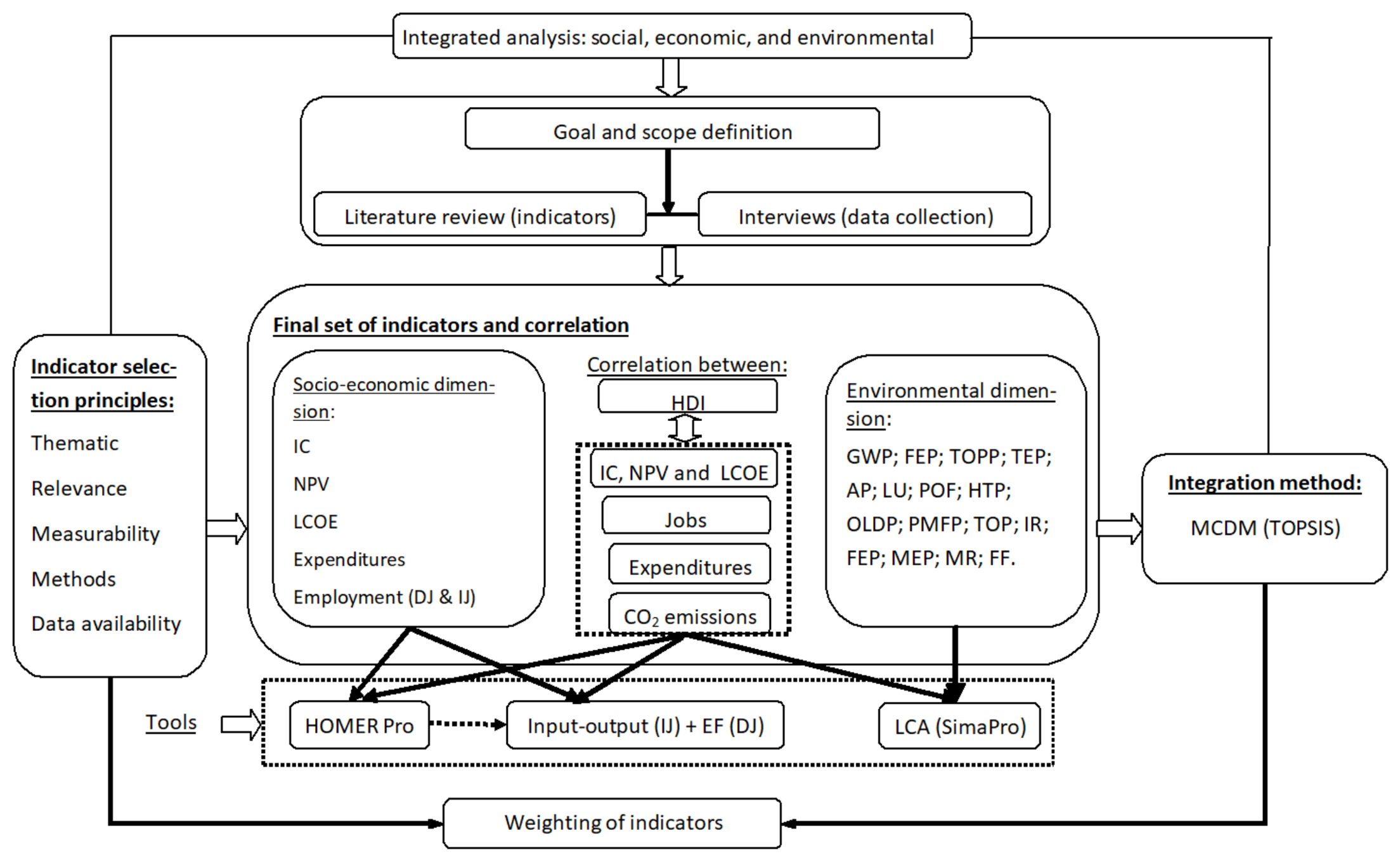
The remainder of this article is structured as follows: Section 2 presents a description of the selected case studies. Section 3 presents the research methodology, which was described and detailed in our previous study [11], including the data needed to assess the three case studies. Section 4 presents the results and discussion. Lastly, the conclusions and recommendations for further improvements to the mini-grid system are discussed in Section 5.

2. Description of Case Studies

2.1. Case Study Selection

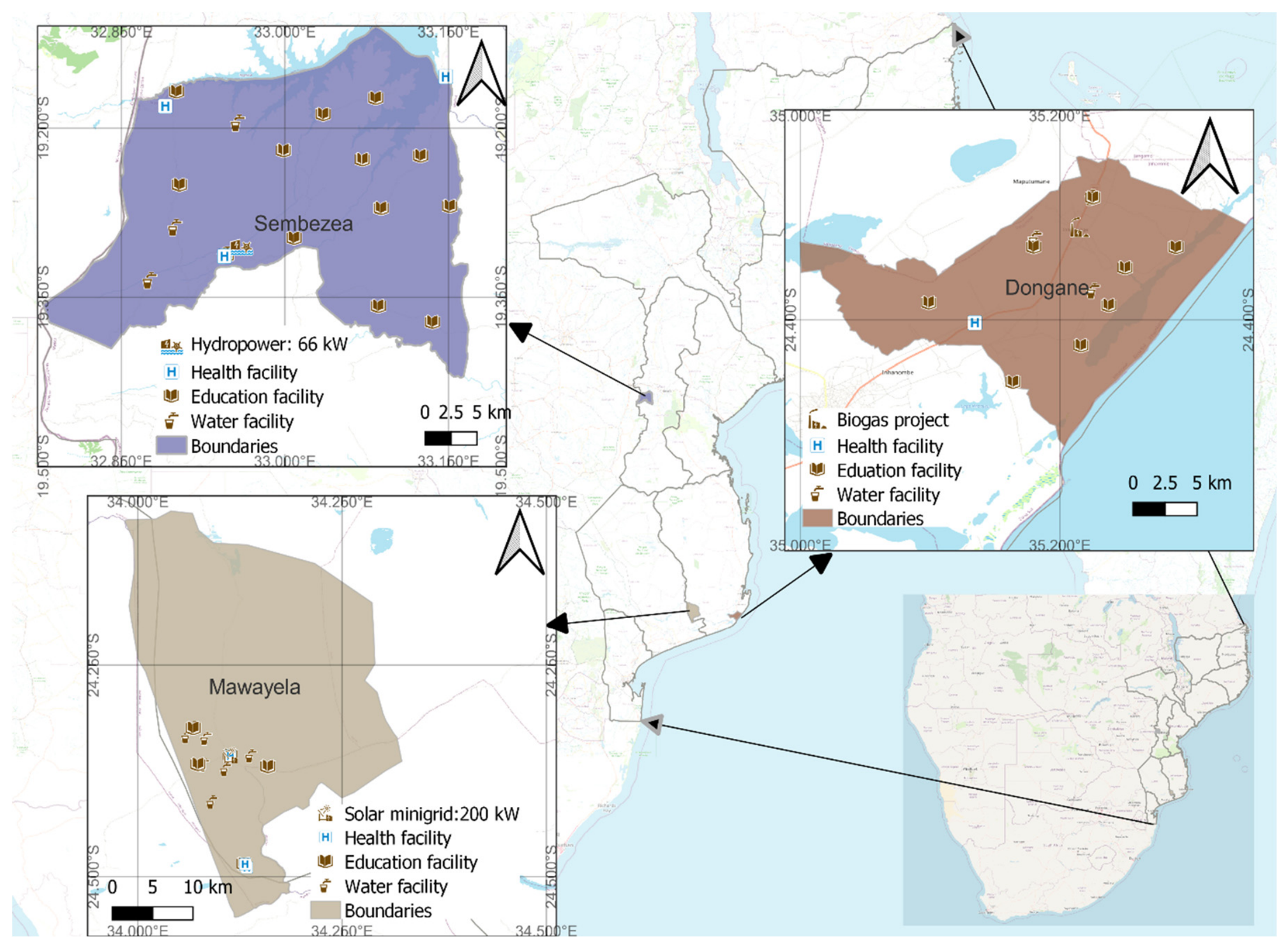
This study focuses on two implemented and operational case studies (Sembezea and Mawayela villages) and one projected household biodigester (Dongane village), located in the central and southern rural areas of Mozambique. Data for the analysis of the case studies were collected during site visits. For Sembezea village, data were collected in August 2019, while data for the Mawayela and Dongane case studies were collected in May 2024. The geographical locations of the cases are presented in Figure 1. Case 1 (Sembezea village) is a 66 kW micro-hydro project, which was selected because it is one of the first implemented micro-hydro projects (2015) that is still operational. Therefore, it is a well-established case study that provides insights into micro-hydro power impacts and hybridization possibilities for future system improvements. Case study 2 is a 200 kW solar PV mini-grid (Mawayela village), which was chosen because it is one of the largest and most developed mini-grids implemented in Mozambique compared to other implemented systems such as Mavumira village, which was assessed in our previous study [12]. This system allows for a comparison of impacts considering aspects such as the size of the system and the demographics. Case study 3 (Dongane village) is an individual biogas project. Although the focus of our study is on the mini-grid projects, the household biodigester (HB) was selected because there is already local understanding and experience with biogas implementation in the village, including how to collect and mix manure, facilitating the projection of future systems. The biomass resource (cattle manure) is also available locally at no cost. To our knowledge, no biogas mini-grid system has been installed in Mozambique. In general, the three case studies were selected for this study due to the following reasons:
  • The projects are operational, and can provide significant insights into social, economic, and environmental impacts on local communities.
  • The projects balance the diversity of the resources, the geographical distribution of the projects, and the technologies used.
  • The projects provide more insights into experiences with mini-grid implementation and reflect different conditions in Mozambique.
  • The projects enable assessment of different impact categories.
Figure 1. Map of the geographical locations of the selected case studies.
Sustainability 18 05841 g001

2.2. Description of the Case Studies

Case study 1—Sembezea village
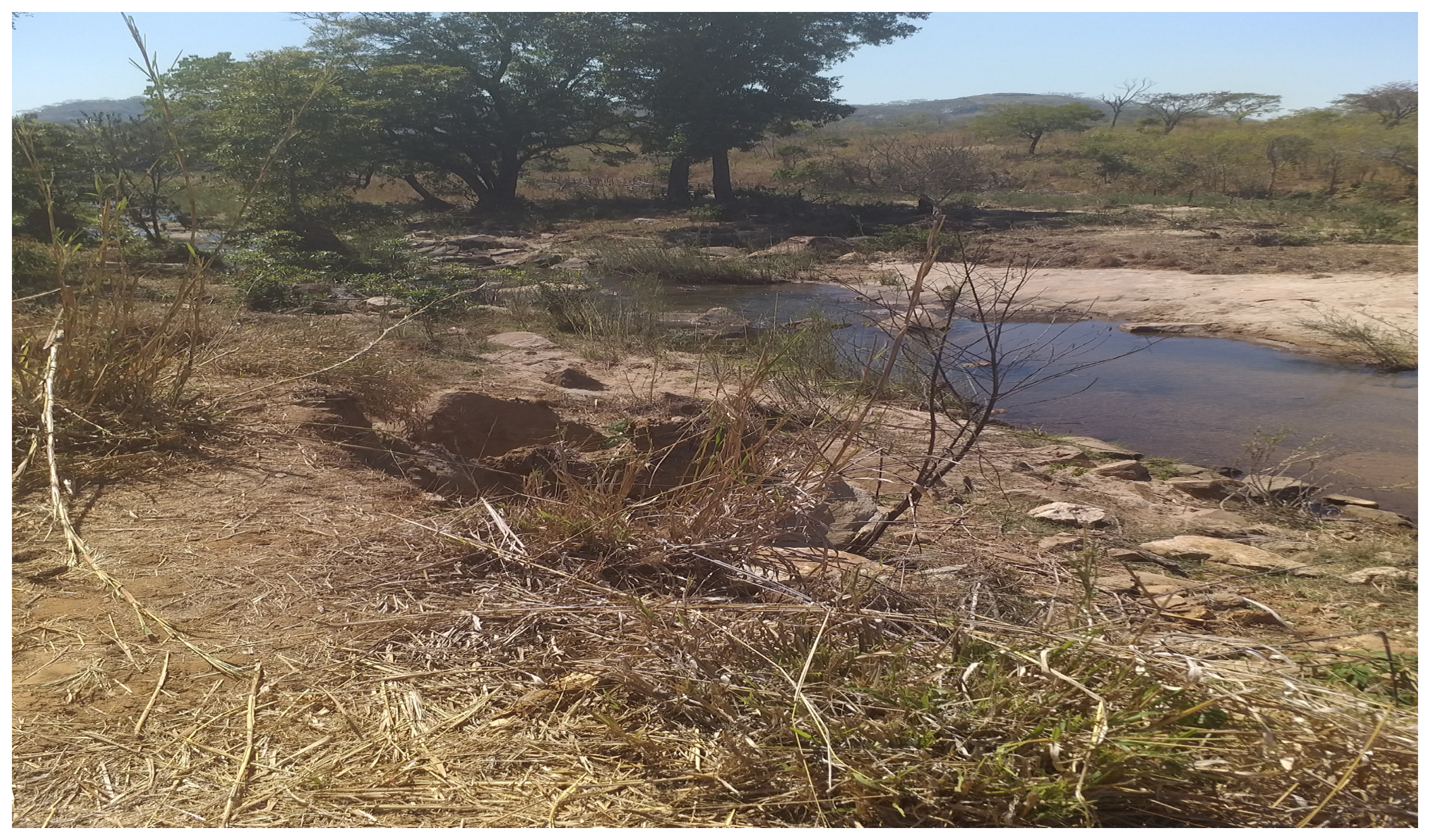
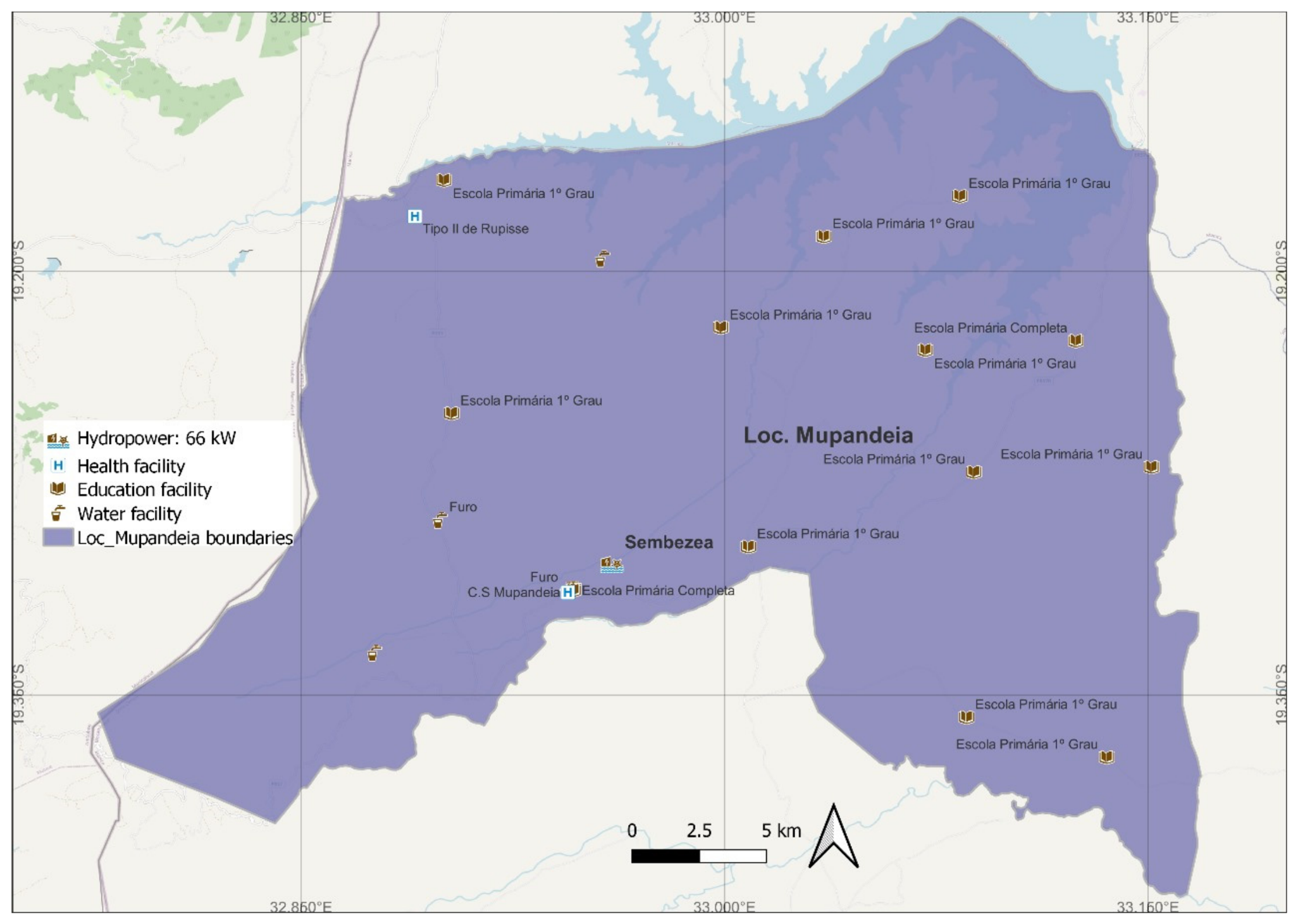
Sembezea is a rural village located in the Mupandea Locality of the Mouha Administrative Post, in the Sussundenga District of Manica Province, central Mozambique, at coordinates (19°24.8′ S, 33°17.0′ E), as shown in Figure 2. The locality of Mupandeia, where Sembezea is located, has a total of 15 villages. According to the 2017 Census, Sembezea has 3000 inhabitants out of the 17,967 inhabitants of the Mupandeia Locality [13].
In the central part of Mozambique, the climate is characterized by frequent droughts and a rainy season (October to April), with an annual average precipitation of approximately 800–1000 mm [14,15]. The headquarters of Sembezea village has an administrative office, one health center, one school, small shops, and residential buildings constructed with both local and conventional materials. This case study examines a 66 kW hydropower system owned and operated by the government agency called Energy Fund (FUNAE), which has been operational since March 2015. The mini-grid is situated along the Bonde River (Figure 3). According to updated data from FUNAE, connections have increased (from 80 at the start of the project in 2015 to 110 households currently), with the project supplying 110 households out of the existing 200 households in the village at the time of the study. In addition to micro-hydropower, residents use kerosene, candles, and a few individual solar PV systems for lighting to meet their energy needs. The road infrastructure connecting Sembezea villages is poor and likely to become inaccessible during the rainy season; therefore, the use of four-wheel-drive vehicles is recommended. In Sembezea, the majority of the population depends on agriculture as their source of income and, when well-developed, this creates a surplus for commercialization, accounting for approximately 85–90% of household income. On a large scale, the most produced crops are corn and beans. The second most common source of income in the village is informal and semi-formal commerce. Notably, electricity from the micro-hydro system has boosted economic activities in the village by increasing the number of shops. Through site information with community members, we were informed that the quality of life had improved significantly with access to electricity because of better conditions for maternal care and extended hours of study for the children. Regarding operational reliability, the micro-hydropower operators reported that outages are not frequent and, if they occur, they are for system maintenance and do not last more than 24 h. Although the system supplies electricity continuously in the rainy season (24 h per day when the flow is full), it supplies only four hours of electricity per day in the dry season; that is, two hours in the morning (from 8 to 10 AM) and two hours at night (from 6 to 8 PM). FUNAE applies the same tariff as the utility company for domestic consumers, based on a pre-paid system. However, the local community members are satisfied with the tariff even though there is no tariff differentiation. The project adopted a pre-paid system in which the users consume power according to their capability to pay, with 25% of the collected money used to pay three employees, while the remaining 75% is sent to FUNAE for system maintenance. The geographical location of Mozambique contributes to its high solar potential, estimated at 23 TWp, which offers substantial prospects for solar PV application in rural electrification projects [16], including in Sembezea village. Therefore, to solve the problem of the inefficient electricity supply observed in the dry seasons and capitalize on the existing solar resources, we see possibilities to include solar PV in the existing micro-hydro system to enhance the stability and reliability of the power supply.
Case study 2—Mawayela village
Mawayela village is located in the southern part of Mozambique, in the Mawayela Administrative Post of the Panda District, Inhambane Province, at coordinates (24°3.8′ S, 34°43.7′ E). The administrative post of Mawayela has three villages (Chivalo, Macavelane, and Mawayela). In terms of its population, Mawayela village had 3911 inhabitants according to the 2017 Census [13]. We assumed a household size of 6 members, corresponding to approximately 652 households in the village. Access to Mawayela is provided through poor road infrastructure; therefore, four-wheel-drive vehicles are recommended. Access to Mawayela is easiest through the Manjacaze District in Gaza Province. The village is located 54 km from the national grid.
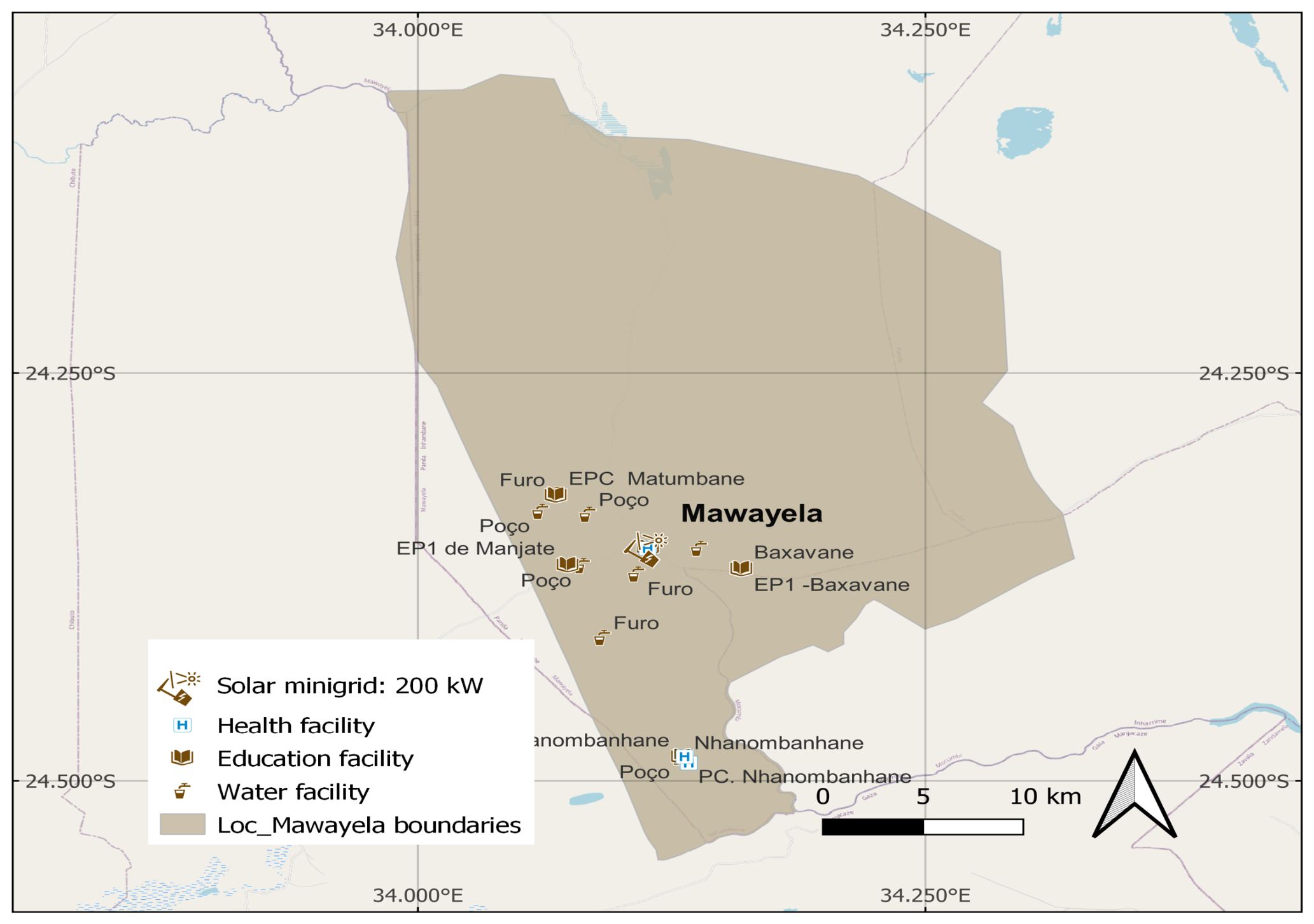
The 200 kW solar PV project (owned and operated by FUNAE) is the main source of electricity in the village, which has been operational since June of 2023. The total number of beneficiaries is 341 households, including one health center, three schools, an administrative office, two carpentry shops, and three mills (Figure 4).
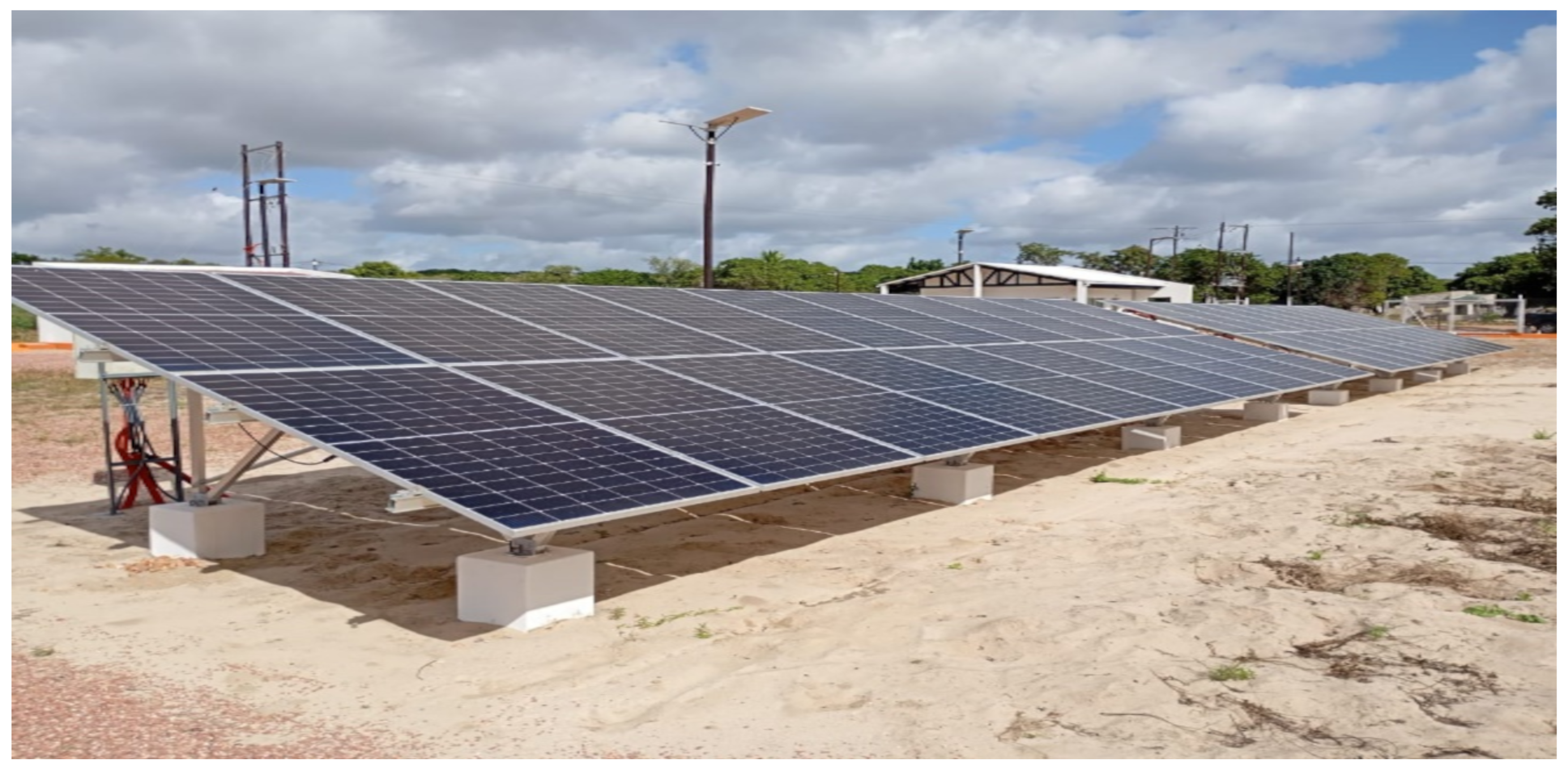
The Mawayela community relies on trade and agriculture as its main source of income. When assessing the economic activities, we were informed that since the introduction of solar PV to the village (Figure 5), the number of shops has increased considerably. For example, the village now has 52 shops (as of 2024) compared to only 19 shops (in the first quarter of 2023) before the village gained energy from the mini-grid plant. All of the shops are connected to the mini-grid. In the village, we found that three local people are employed in the project (a power station operator, an electrical network operator, and a guard to watch over the system); however, all of the employed persons are unskilled and are unable to respond to technical issues. Regarding the reliability of the power supply, the community members complained about the duration and frequency of outages. We were informed by the operators of the system that, in the case of a breakdown in the system, they have to wait until FUNAE technicians arrive in the village to solve the issue. The longest outage took approximately two weeks to resolve, as there were no individuals with the right skills locally to solve the issue immediately. Additionally, the local governance is not involved in the project, in the sense that they are not able to respond to the issues related to the project. Similarly to the Sembezea project, in Mawayela, the beneficiaries pay for power according to their consumption, with 25% of the revenue used to pay the local managers, while the remaining 75% is sent to FUNAE. Regarding environmental constraints, the community members reported that there is no issue (noise, smell, or visual impact) attributed to the operation of the solar PV mini-grid.
Due to its location on the coast, where the highest wind energy potential has been observed in the country [16], this site presents possibilities for future expansion by integrating wind energy into the system, thereby improving the continuity of the power supply and reducing the intermittency associated with using only one source. Electricity can be expanded to neighboring villages, such as the village of Nhanombanhane (Figure 4), located approximately 7 km from Mawayela village.
Case study 3—Dongane village
Biogas is one of the renewable technologies considered important for supplying electricity to remote villages and reducing dependence on fossil fuels, particularly in developing countries where electrification rates remain low [17]. The necessary resources (biomass) are locally available. In Mozambique, some HB systems are already in operation across the country. For example, HB has been operational since June of 2023 in the Nhanombe (five projects) and Dongane (one project) villages. These HBs use locally available cattle manure as feedstock and were developed as pilot projects. The local community members who benefit from the systems do not pay any fee.
For our study, we selected the biogas system installed in Dongane village. Dongane is located in Inharrime District (the southern part of Inhambane Province) at coordinates (24°28.4′ S, 35°1.5′ E) in Mozambique. The district of Inharrime has two administrative posts: Inharrime and Mocumbi. The Inharrime administrative post is divided into three villages: Chacane, Dongane, and Nhanombe.
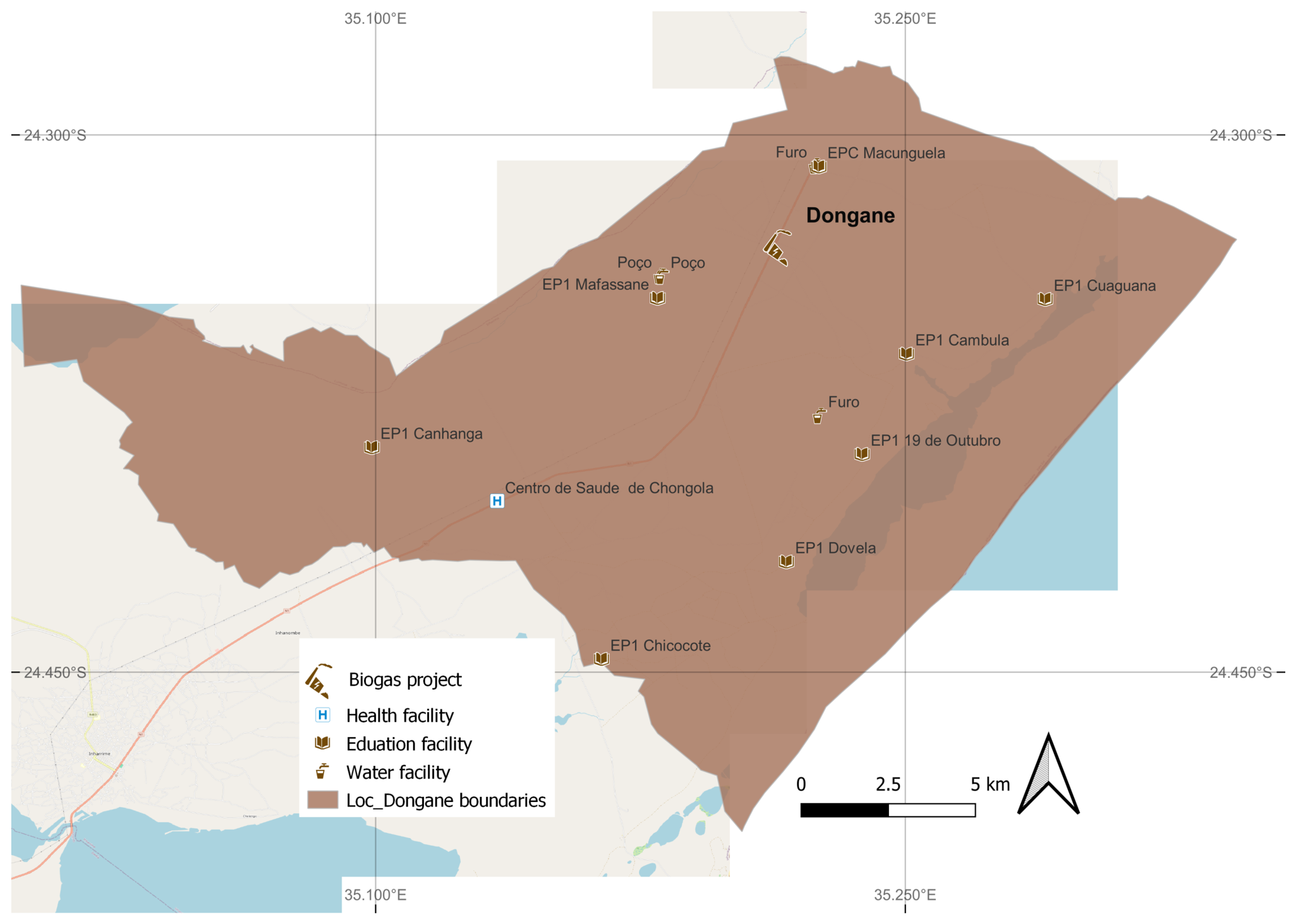
According to the 2017 Census [13], Dongane village has 29,899 inhabitants out of the 87,716 inhabitants of the Inharrime administrative post. The village has 8 schools, 1 health center, and approximately 67 informal and semi-formal small shops (Figure 6). The village is located approximately 20 km from the national grid, and the community relies on kerosene, charcoal, and wood as sources of electricity.
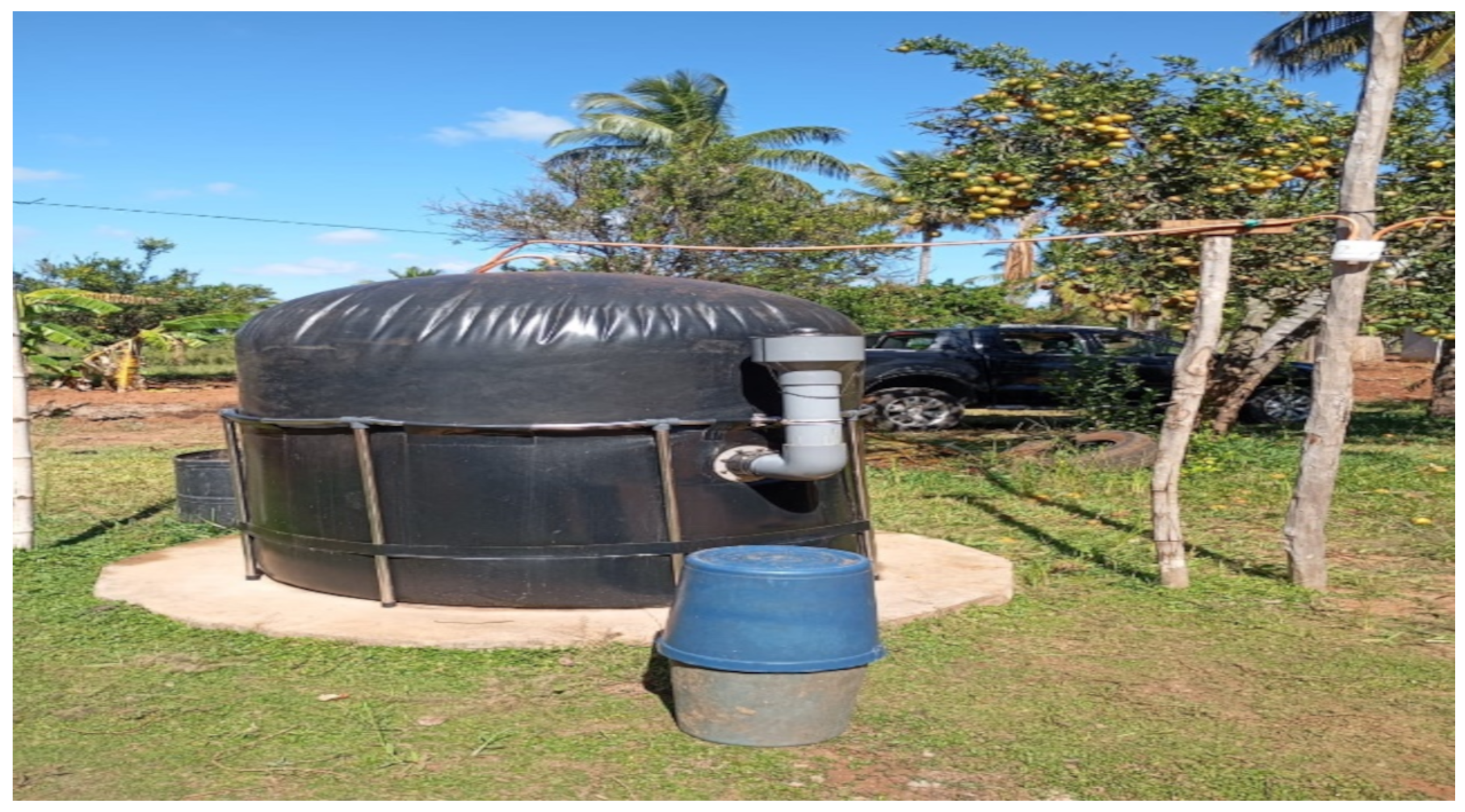
Most of the population depends on agriculture as their main source of income, based on local varieties, especially cassava. Large quantities of cassava are produced in the village of Dongane; however, the villagers also produce peanuts and beans. Dongane village is characterized by poor road infrastructure. The HB (see Figure 7) is used for lighting and cooking. The owner of the biodigester reported that the existing six head of cattle in the household are sufficient to feed the small biodigester and produce biogas. Therefore, we did not obtain information on the transport of manure from the collection point to the HB. The amount of biogas produced in the small biodigester meets their residential cooking needs.
In the village, we contacted one farmer, who informed us that he uses the digestate from biogas as fertilizer and, afterwards, he sells the agricultural products to the local community. Before use in the soil, the digester emits methane because it is stored in an open tank. Regarding user satisfaction with the biogas system, the owner of the household mentioned that he is satisfied with the biogas plant because the system has replaced the diesel and kerosene previously used to meet his energy needs. However, he complained about the local market for the replacement of equipment (e.g., stoves and lamps) and the lack of locally skilled personnel to resolve issues in cases of system breakdown. Additionally, the lack of appropriate means for transporting (truck) and handling (gloves and mixers) manure was mentioned as a challenge. Moreover, during the day, the cattle are dispersed in open areas for grazing, which makes it difficult to collect manure.
Regarding the environmental impact associated with the biodigester, the beneficiaries of the household biodigester informed us that the system does not emit noise or unpleasant smells. However, the system can emit noise if not properly operated. He mentioned that the substrate from the digester is used as fertilizer (applied directly to the soil) for agriculture. In the household, there is a cassava processing cooperative that employs approximately 12 community members. The cooperative uses wood as the principal source of energy to process cassava. The owner of the biodigester expressed the desire to increase the capacity of the biodigester to use biogas to process cassava, which would significantly improve their economic activity. Due to the increased energy demand and the availability of biomass resources in the village, we projected a biogas system to supply electricity to Dongane village. According to information verified during site visits, through consultations with local authorities, Dongane village was estimated to have approximately 10,806 head of cattle, out of the 52,988 head of cattle reported for Inharrime district in 2023 [18]. This indicates a high potential for biogas production using cattle manure, which is assumed to be consistently available throughout the year.
Compared to other renewable resources, such as solar PV and wind, the biodigester has the advantage of continuously producing electricity and storing it in a gasometer, which could even eliminate the need to use storage batteries [19]. Therefore, due to its efficient electricity production, we decided not to combine the biogas system with other renewable sources. Table 1 summarizes the main characteristics of the cases.

3. Overview of Methods and Input Data for Modeling the Scenarios

3.1. Methods and Scenarios

In the present study, we compared the same technologies for the villages of Sembezea (hydro/PV), Mawayela (wind/PV), and Dongane (biogas) under two scenarios: scenario A, representing the current load demand in each village and the present performance of the solar PV, wind, hydro, and biogas technologies; and scenario B, representing projected conditions in 2030, assuming that the existing systems in each of the cases will drive increased load demand due to population growth and local development. Therefore, we assume a future increase of 60% over the current load in HOMER calculations.
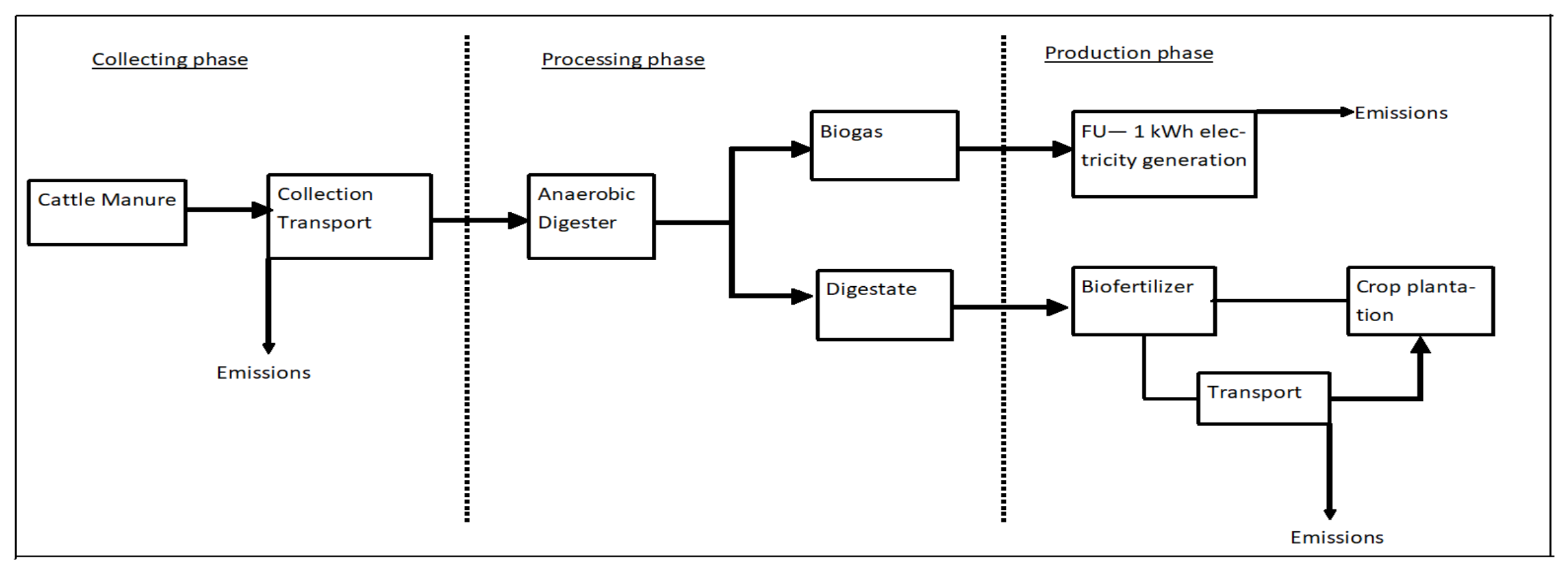
We applied different methods (HOMER Pro version 3.18.4, LCA using SimaPro, and I-O) and indicators to assess the impacts inside (GDP, cost of electricity, and direct jobs) and outside (indirect jobs and imports) the villages. The HOMER software was used to optimize the best system for the selected three case studies based on the lowest cost (LCOE). This software can simulate and optimize different components of the mini-grid system (solar PV, batteries, inverters, fuel cells, hydrogen, hydropower, biomass, and diesel generators), serving thermal and electrical loads for both off- and on-grid purposes. The I-O method was used to estimate the expenditures and jobs that occur outside the village using the Social Accounting Matrices (SAMs) of Mozambique as published by the Nexus Project [20] (detailed in our previous study [11]). To assess the environmental impacts of the technologies selected for our case studies (Sembezea, Mawayela, and Dongane), we used the LCA (SimaPro) tool based on ReCiPe impact assessment methods, tackling 18 midpoint categories. The methods presented in this study have been extensively described in our previous study [11] and are summarized in Figure 8.
Data used to estimate indicators (cost of electricity, employment, expenditures, emissions, and human well-being) were derived from various sources, such as the literature, the HOMER database, and the LCA SimaPro database. Country-specific data were used as much as possible. For the economic and environmental analyses, we included data from national statistics, cumulative capacity (in kW), cost of technologies, and cash flow summary for each technology. The inventory data on the inputs and outputs for the technologies (solar PV, batteries, wind, hydro, and biogas) applied in this study are presented in the following sections.
The input data and assumptions used for quantifying the economic, environmental, and social indicators in the current and future scenarios (A and B) are detailed in Appendix A.

3.1.1. Integration Method Based on the TOPSIS Method

To select the most sustainable solution for the three case studies (Sembezea, Mawayela, and Dongane), we applied the MCDA based on the TOPSIS method, following equations (B1) to (B10) from our previous assessment [11], which is typically implemented in 7 steps (see Appendix B). TOPSIS is founded on the principle that the optimal alternative is the one with a relative closeness value nearest to 1, whereas the least desirable alternative is characterized by a value farthest from 1 [5,21]. The TOPSIS method is valuable for analyzing energy alternatives and priorities, comparing different impacts under different dimensions (economic, environmental, and social), and providing an integrated view of the indicators. The TOPSIS method can generate one overall score per HRES and prioritize the best solution for off-grid electrification.

3.1.2. Criteria and Weight Attribution for the TOPSIS Method

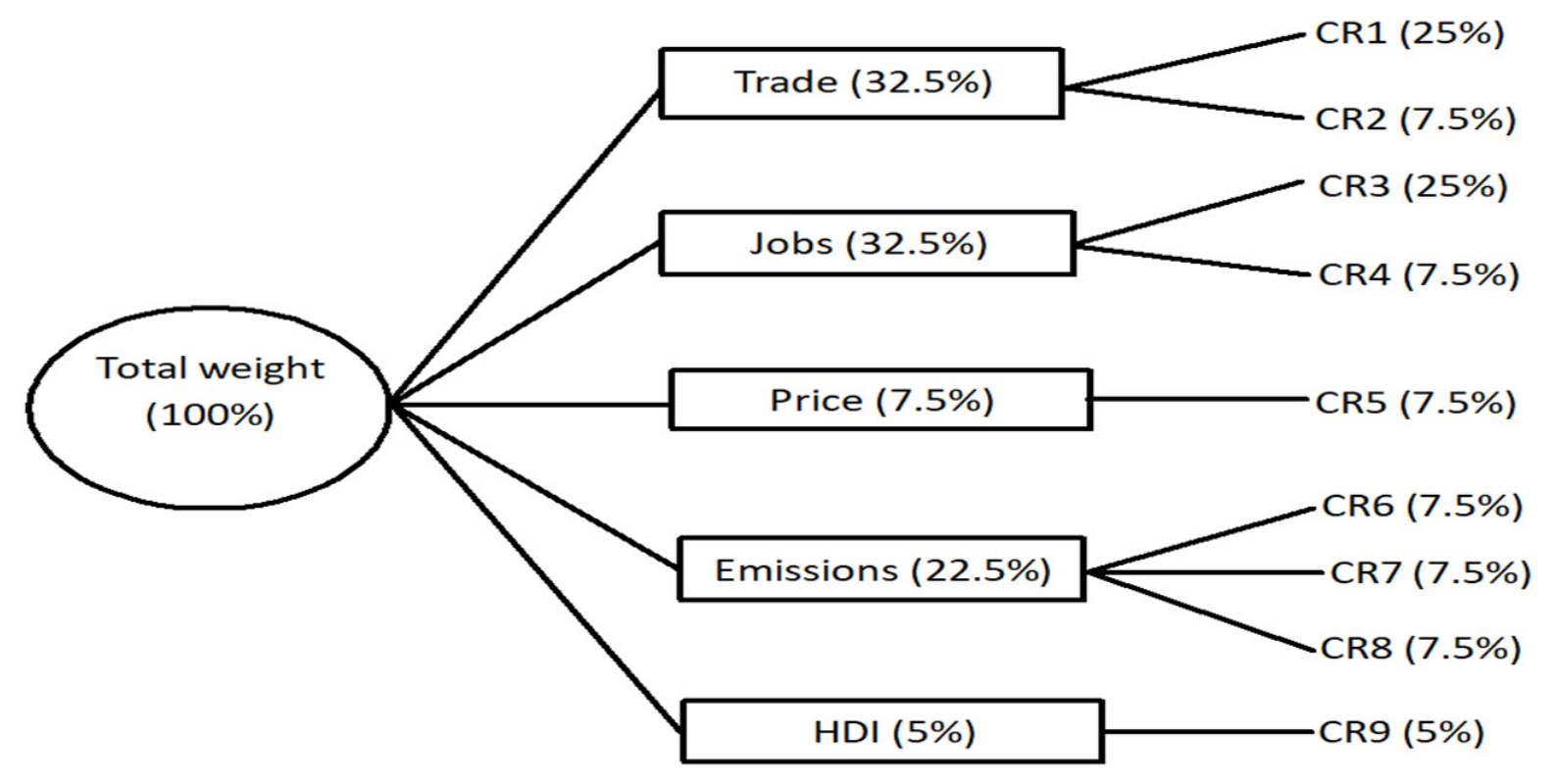
Two weighting approaches were applied to assign weights within the TOPSIS method and ensure robustness of the analysis under different weighting assumptions [11]. First, an equal-weight approach was adopted, assuming that all nine sub-criteria had the same level of importance, with each criterion assigned a weight of 11.1%. This approach provides a neutral baseline for comparison by avoiding subjective prioritization among the criteria. Second, a subjective weighting approach was implemented, with weights derived from the authors’ evaluation of each criterion’s relative importance, informed by the results of the HOMER simulations, I–O analysis, and LCA using SimaPro, as presented in Appendix D. The subjective weighting approach was designed to reflect the direct contribution of mini-grid systems to the socio-economic development of the villages. The weights ranging from 5% to 100% were assigned to each criterion according to the perceived importance of the indicators. Consequently, the greater the importance of the indicator for local development, the more points are allocated [22]. Therefore, higher importance was attributed to local job creation (25%), due to its direct contribution to the village’s development, for example, through the provision of significant local employment for operation and maintenance of the mini-grids, while lower weights were assigned to indirect jobs (7.5%), reflecting their indirect contribution to the local development (Figure 9).
From our previous study [11], we distinguished between negative (non-beneficial) and positive (beneficial) criteria. For the positive criteria, higher values (ranging from 0.2 to 0.4) were assigned, as these indicators were considered beneficial in the local context (local development). In contrast, negative criteria were associated with lower values, as they represent factors that are non-beneficial to the local context, as presented in Table 2. For example, CR1, CR3, and CR9 are non-beneficial criteria, while CR2, CR4, CR5, CR6, CR7, and CR8 are beneficial criteria.

4. Results and Discussion

4.1. Economic, Environmental, and Social Impacts of the Case Studies

4.1.1. Impacts of the Case Studies on the Cost of Electricity

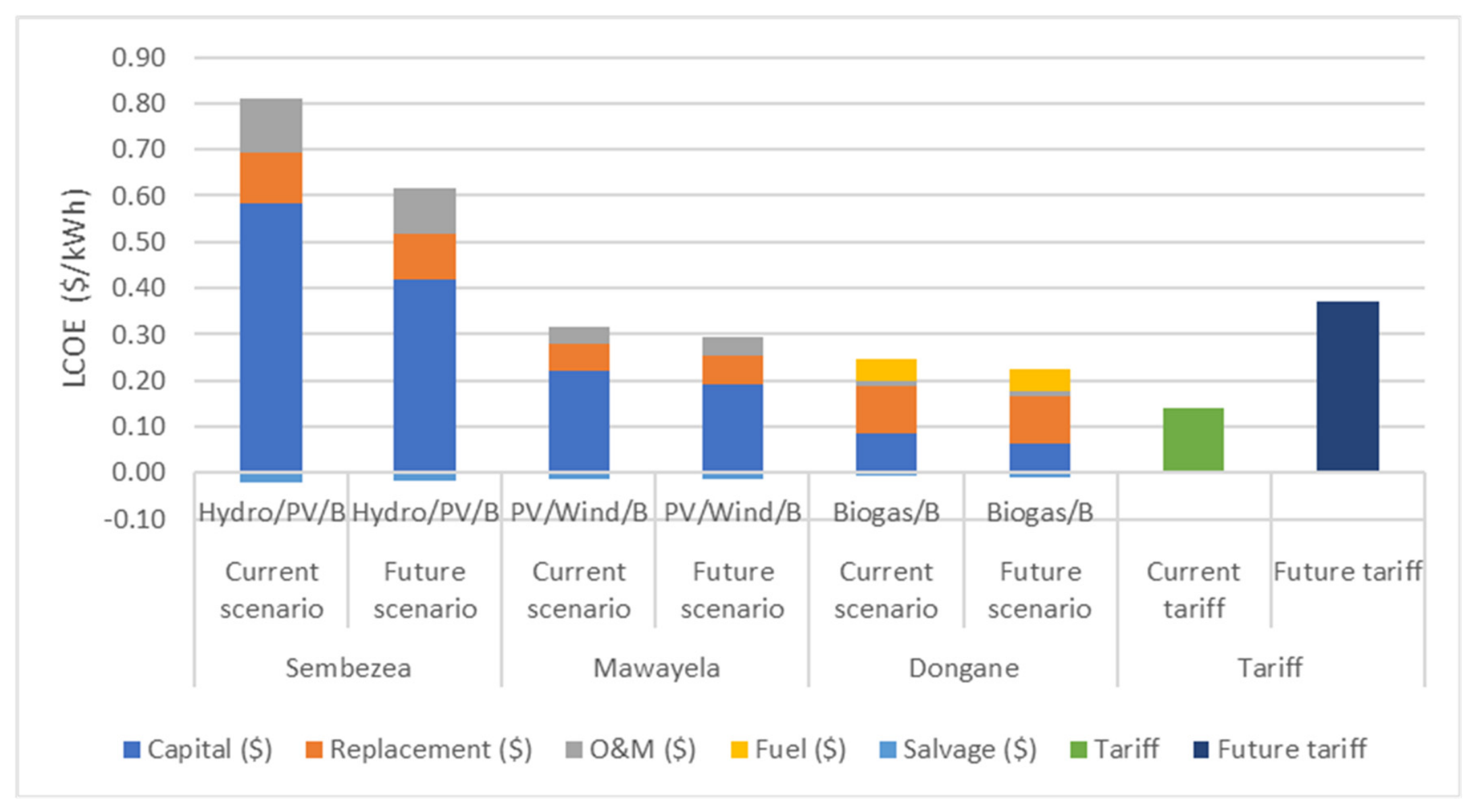
Based on the results from HOMER, we identified the optimal system for supplying electricity at a lower cost for each case study separately, and the results are presented in Figure 10. In terms of the cost of electricity, the results of our study indicated that the Sembezea mini-grid, which includes hydro (hydro/solar PV), has the highest LCOE compared to the Mawayela (solar PV/wind) and Dongane (biogas) mini-grids for both scenarios A and B. These results are consistent with the findings of the studies from IRENA [23,24,25], which indicated that the LCOE values of hydropower plants have risen sharply in recent years (47% between 2010 and 2022), with limited to no variations expected in the coming years (by 2030); by contrast, the LCOE for solar PV, wind, and biogas technologies is expected to decrease by 60%, 30%, and 25% by 2030 [12,26,27].
By investigating the optimal system to meet the current and future village load demands, we found that the future system performs better in reducing the LCOE for the three case studies analyzed. Moreover, our results showed that Dongane (biogas system) has an advantage, as it presents the lowest LCOE ($0.22/kWh and $0.24/kWh) compared to Sembezea ($0.60/kWh and $0.79/kWh) and Mawayela ($0.28/kWh and $0.31/kWh) for scenarios B and A. The results of this study indicated that the economic viability of the renewable technologies employed in the three case studies depends largely on the scale of the project, meaning that larger scales (scenario B) have better economic performance compared to smaller scales (scenario A). A summary of the techno-economic results of the three case studies is presented in Table 3. The excess electricity fractions observed in the hydro/solar PV and wind/solar PV systems (Table 3) are associated with the mismatch between renewable resource availability and the local electricity demand profile, particularly during periods of high renewable resource availability, like periods of high hydrological availability in the hydro system. Similar findings have been reported in the literature [12], where HOMER-based optimization of rural mini-grids may result in excess electricity generation due to temporal mismatches between renewable generation and load demand. In contrast, the projected biogas system exhibited substantially lower excess electricity due to the dispatchable nature of biogas generation, which can more closely follow electricity demand patterns. Therefore, the results should be interpreted as case-specific optimization outcomes under the assumptions defined in HOMER rather than idealized system configurations.
We used the current tariff of 0.14 $/kWh applied by the national utility company, which is the same tariff set for renewable mini-grids in Mozambique, as well as our future projections of 0.37 $/kWh (based on our previous study [12]). The results show that the biogas systems are more cost-competitive, as they present an LCOE 0.15 times lower than the expected future tariffs applied in the country. In contrast, hydro/solar PV (Sembezea) presents 0.65 times higher tariffs over the current tariffs applied to the national grid.
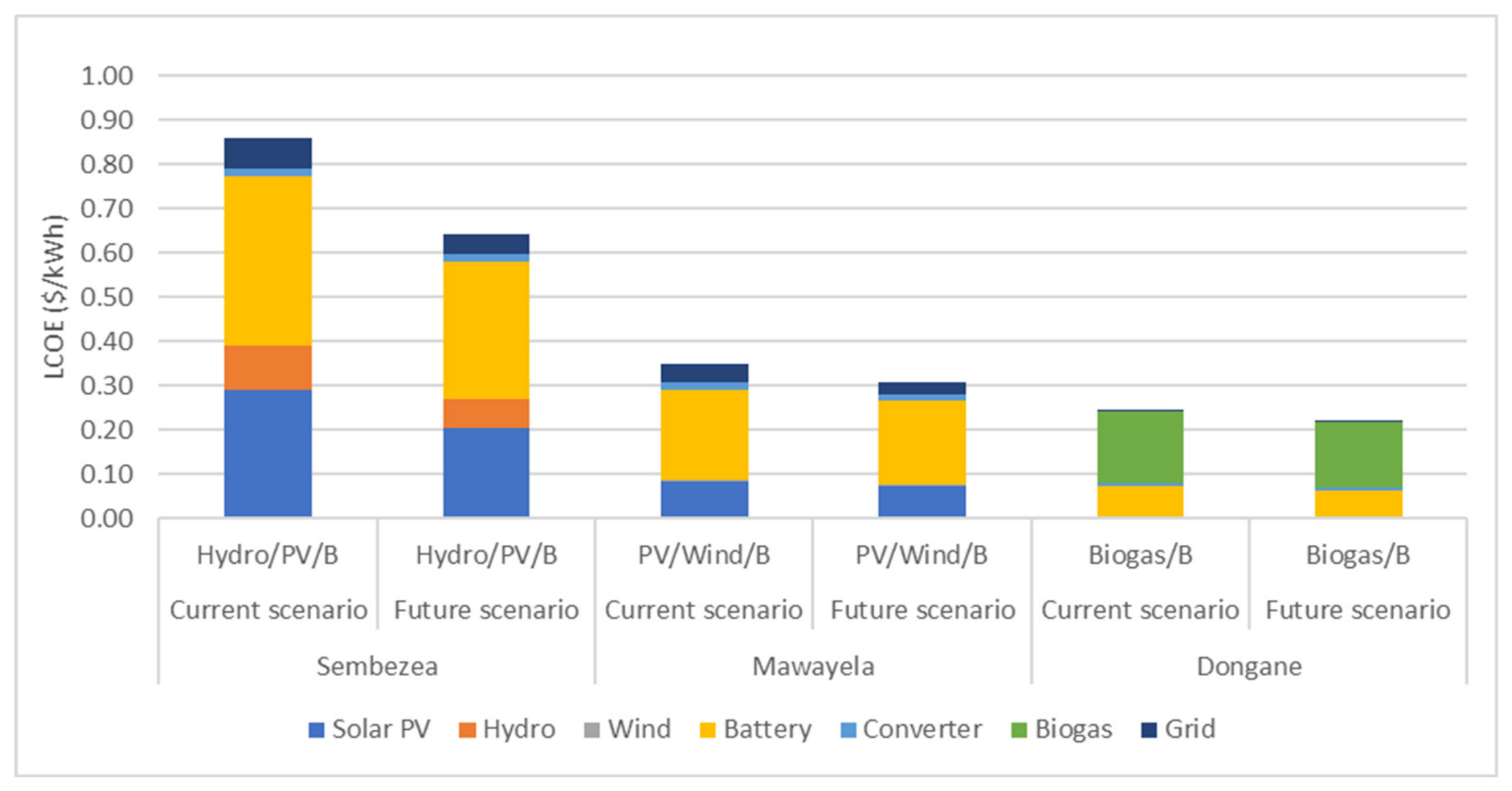
Assuming that the cost of 1 km of grid extension via overhead line is USD 21,742.40 (see our previous study [12] for more details) and based on the primary load served, we estimated the grid extension costs for the three case studies (Sembezea, Mawayela, and Dongane) and compared the optimized costs for scenarios A and B. Our analysis shows that the grid costs for hydro in the present and future significantly impact the total costs of the systems, while the biogas grid’s cost has a low impact on the total cost of the system (see Figure 11).

4.1.2. Impact of Case Studies on Total Expenditures and Employment

Concerning total expenditures over the entire project lifecycle, the analysis reveals that around 80% of the expenditures generated by the case studies result in increased imports, with only the remaining amount being spent within national borders. This is correlated with the country’s limited capacity to produce machinery domestically, with 70% of such machinery being imported in 2015 [28]. In the analysis, all scenarios studied demand the installation of technologies that are purchased abroad, thereby increasing the country’s imports. In absolute terms, the greatest increase in imports is observed in the case of biogas scenarios due to both the considerable investment they entail and the frequent replacements required by the biogas generator.
By assessing the impact on direct jobs (local O&M) using the employment factor approach—assuming a regional employment multiplier—and comparing the three case studies, we found that all systems will require more employees in the future compared to the current scenario. Furthermore, we found that biogas is the most sustainable technology in terms of the number of direct employments that the project will generate over its lifecycle; for example, in scenario B, biogas will require 506 employees compared to 98 and 91 employees for the local O&M of the hybrid wind/solar PV and hydro/solar PV, respectively. This is because biogas technology requires a high number of employees for feedstock collection to feed into the digester.
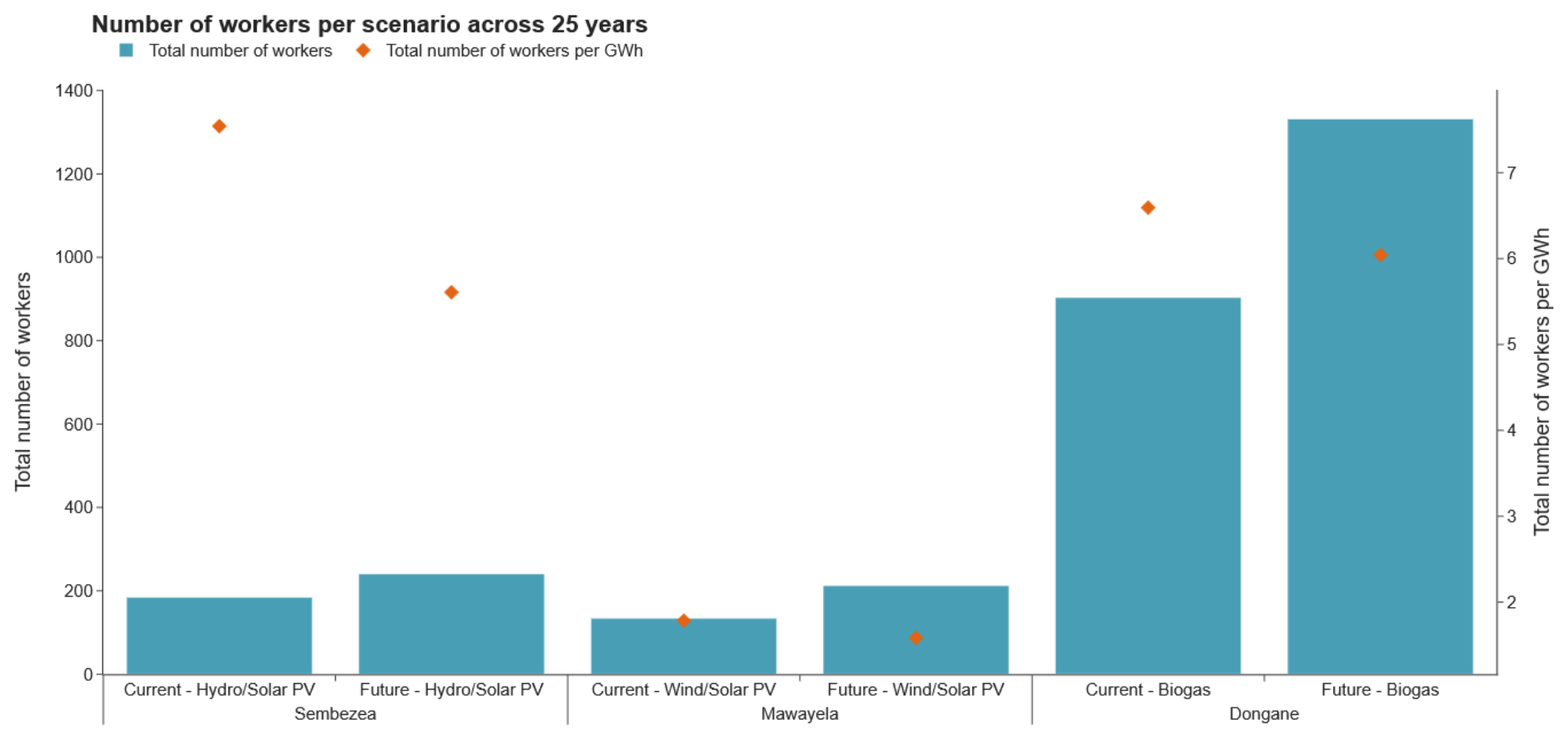
Based on cash flow, national accounts, and scenario data provided by the HOMER software for the Sembezea, Mawayela, and Dongane projects, an I-O model was developed to estimate the possible effects of the analyzed case studies on the national total expenditures and the labor sector. The effects on the latter were quantified by the number of employees, directly and indirectly, required to support the deployment and operation of the case studies at the national level. The local O&M was calculated using the employment factor approach described in Section 3.1.2. Regarding the effects of the scenarios on the labor sector, Figure 12 shows the total number of jobs created over the 25 years of the projects’ lifetimes, including both direct and indirect contracts. As mentioned in Section 3.1.2, indirect employment (i.e., at the national level) was evaluated through the I-O analysis drawing upon the 2015 Mozambique SAM, while direct employment (i.e., at the local level) was estimated via the employment factor approach assuming the regional employment multiplier.
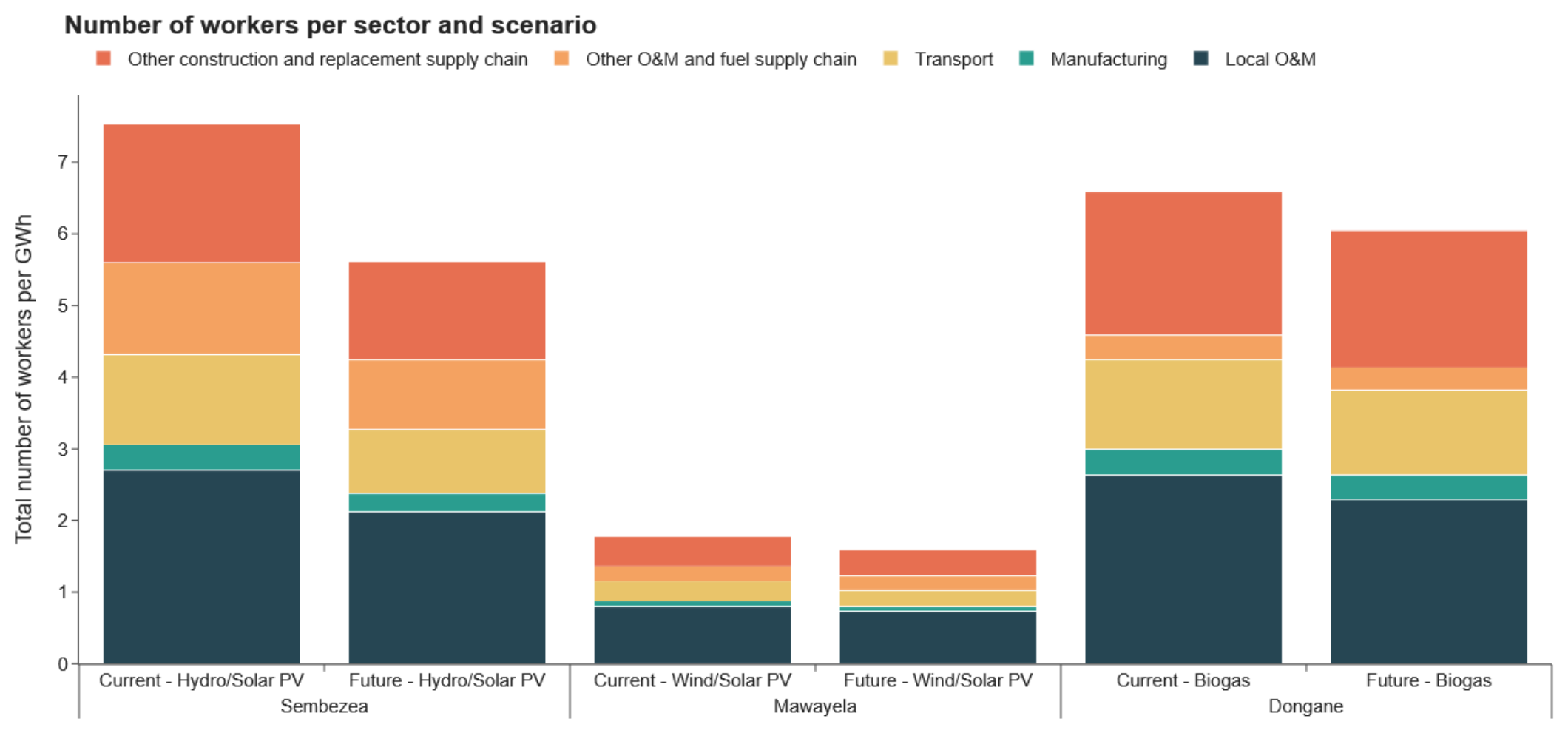
The results indicate that the number of contracts generated by the biogas-reliant scenarios is markedly higher, with 719–769 and 1091–1119 more contracts than scenarios A and B, respectively. This significant difference can be attributed to the fact that biogas scenarios require considerably larger investments, almost 5 to 6 times greater than hydro scenarios and nearly 8 times greater than wind scenarios over 25 years. The considerable disparity in the level of investment in biogas scenarios is explained by the fact that they are sized to satisfy the electrical load of Dongane village, which is 10–16 times greater than that of Mawayela and Sembezea, where wind and hydro scenarios are implemented, respectively. Therefore, it is reasonable that the employment increase is much more marked in scenarios with biogas. However, to consider only the effects of the technologies installed, it is useful to evaluate the employment generated per unit of GWh produced over the 25 years of analysis. As outlined in Section 3.1.2, the I-O analysis is carried out by increasing the demand for specific commodities in the economic Mozambique SAM. Consequently, the greater the investment required by a project, the more significant the impact on the demand for the production factors of those commodities. Considering the total investment and the electricity produced over 25 years in all projects, the results show that the investment per GWh for biogas and hydro–solar PV scenarios is comparable and 4–4.8 times greater than that required in wind–solar PV scenarios. As a result, the Sembezea and Dongane projects appear to create more employment opportunities, with an estimated 6–8 new contracts per GWh over the 25-year period. In contrast, the number of new contracts per GWh for the Mawayela project is limited to two, as shown in Figure 12.
Figure 13 provides a breakdown of the new contracts by macro-economic sector. Local O&M refers to the local maintenance sector, which provides direct employment for individuals residing in the villages where mini-grids are installed. All other sectors (transport, manufacturing, other O&M and fuel supply chain, and other construction and replacement supply chain) instead provide indirect employment for workers distributed throughout the country. In the biogas scenarios, new jobs are created mainly in the local O&M sector and along the replacement supply chain, which account for 40% and 30%, respectively, of the total new contracts generated over the 25 years. The substantial impact on local employment can be attributed to the fuel supply. The biogas generator is fed with manure, which is produced by animals in the village and is then collected by local laborers. Alongside local maintenance activities, replacement activities—primarily performed by highly skilled personnel—are also assumed to have particular significance in these scenarios, given the necessity of replacing the biogas generator a total of seven times over the 25 years. These frequent replacements are also responsible for the considerable impact that biogas scenarios have on employment in the transport sector, which accounts for 20% of all new contracts generated. The vast majority of new employment contracts created in the transport sector are, ultimately, related to construction and replacement activities. In the wind and hydro scenarios, the new contracts generated are mainly connected with local O&M activities, which account for 36–46% of all new contracts. In particular, hydro and biogas technologies appear to have a greater capacity to generate local employment opportunities than wind scenarios.
Finally, when comparing scenarios A and B, it is evident that the latter generates a greater number of new contracts than the former. Future scenario B is indeed based on scenario A with an increased installed capacity, which corresponds to larger investments. The greatest increase in new employment appears to occur in OM-related activities for hydro and wind scenarios at the local and national levels, respectively. Meanwhile, the increased biogas capacity seems to have a greater impact on workers in the replacement and construction supply chains. Nevertheless, despite an increase in absolute terms, when examining the contracts generated per GWh produced, it became evident that future scenarios may offer fewer employment opportunities than scenario A, as illustrated in Figure 12.

4.1.3. Environmental Impact of the Case Studies

In this study, the environmental impacts of different technologies (solar PV, hydro, wind, and biogas) were assessed and compared. Batteries are included in all options as storage devices. The impact assessment was conducted regarding midpoint indicators for the 18 impact categories, considering the construction and transportation phases. However, most emissions correspond to the construction phase, as emissions from transportation were very insignificant; for example, during the construction phase, the wind option had a global warming potential (GWP) of 0.044 kg CO2 eq, and only 0.00048 kg CO2 eq emissions correspond to the transportation phase in scenario A.
The results of our study revealed that wind/solar PV is the most sustainable solution, with the lowest environmental impact compared to biogas and hydro/solar PV options. The biogas options have a high environmental impact for all impact categories compared to the wind/solar PV per kWh of electricity production in scenarios A and B (Appendix C); for example, in the future scenario (B), the GWP of biogas was expected to be 0.60 kg CO2 eq compared to the wind/solar PV (0.039 kg CO2 eq) and hydro/solar PV (0.0191 kg CO2 eq) options. The results of our study are consistent with those from previous studies [29,30], which concluded that biogas has the worst environmental impact compared to other RE sources such as solar PV and wind. Concerning the hydro options, we found that methodological issues, such as the expected lifetime of the power plant, can affect the results. More specifically, increasing the lifetime can reduce the environmental impacts of electricity generation in hydropower plants, as those impacts are distributed over a longer period.
The results of the diesel-only emissions from the previous study [11] were applied only for comparison with the results of the present study. We compared the emissions (CO2, NOX, and SO2) from renewable options with diesel, in order to provide an overview of the environmental impacts of renewables compared to diesel.
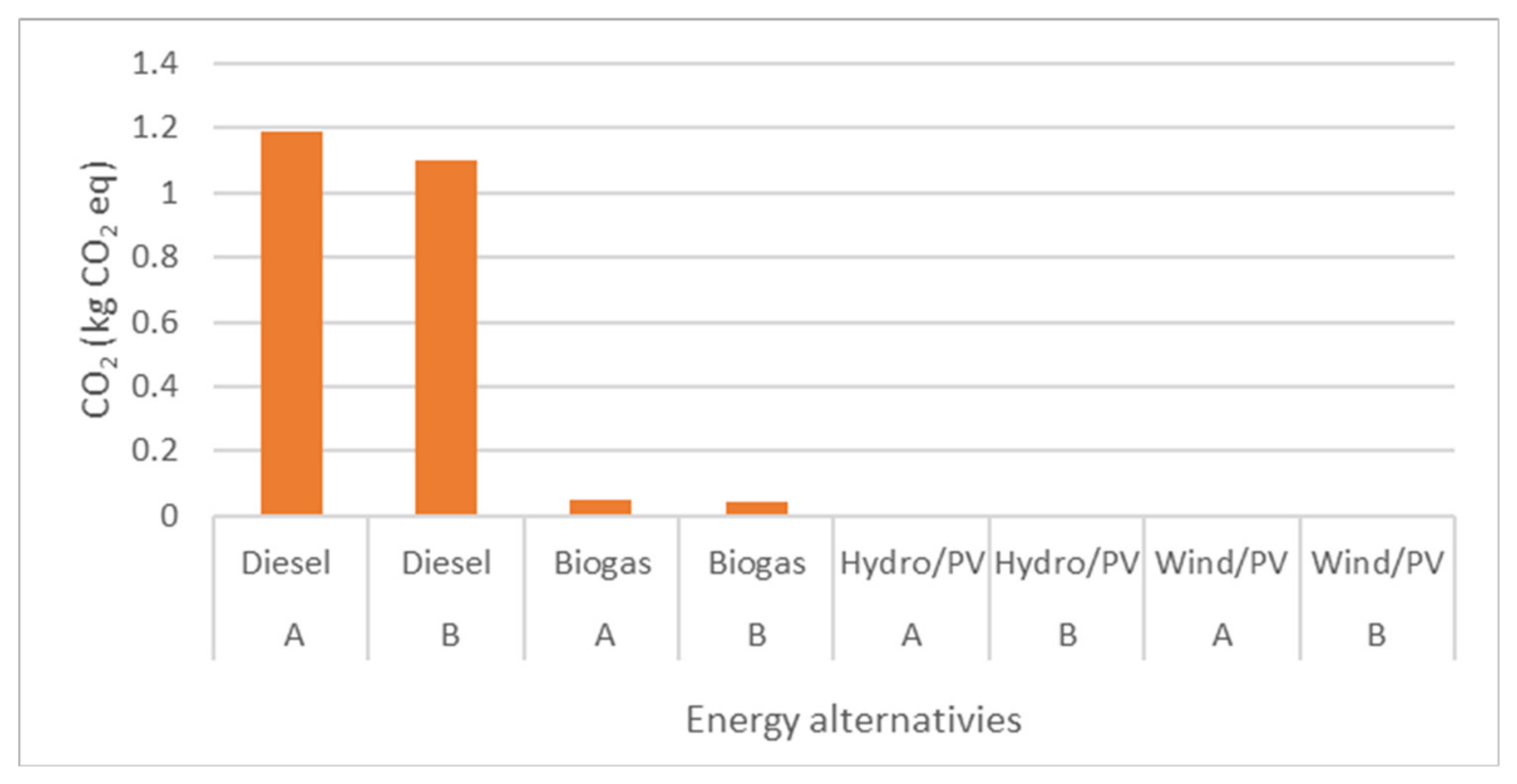
Comparing the renewable options, biogas has considerably high CO2 emissions of 4.58 × 10⁻² kg CO2 eq compared to wind/solar PV (8.50 × 10⁻⁴ kg CO2 eq) and hydro/solar PV (3.94 × 10⁻⁴ kg CO2 eq) options for the future (Figure 14). However, biogas has the advantage of carbon neutrality in the sense that the CO2 (biogenic) released during the combustion of biogas is assumed to be carbon neutral because the amount of carbon released during combustion is equal to the amount of carbon previously captured from the atmosphere. In other words, the feedstock captures CO2 from the air and, when it is transformed into CH4 and burned for energy, the same amount of carbon is released back into the atmosphere, resulting in a net-zero carbon impact over the entire lifecycle. While methane emissions may occur during production and operation, a study [31] indicate that these are generally limited in well-managed anaerobic digestion systems and vary depending on operational performance and technology design. This assumption is particularly relevant in developing country contexts, where biogas systems are often characterised by variable operational conditions, limited monitoring capacity, and differences in maintenance practices, which can influence methane emissions. Because of its biogenic nature, the total GHG emissions does not include the CO2 produced from burning biogas. However, the CO2 emissions for 1 kWh of electricity of biogas are considerably low compared to those of diesel engines assessed in our previous study [11], as seen in Figure 14. Our study shows that, in the future, using a biogas engine would reduce CO2 emissions by approximately 95% compared to using a diesel engine. The GHG emissions of hybrid wind/solar PV and hydro/solar PV during the operation phase are considered insignificant.
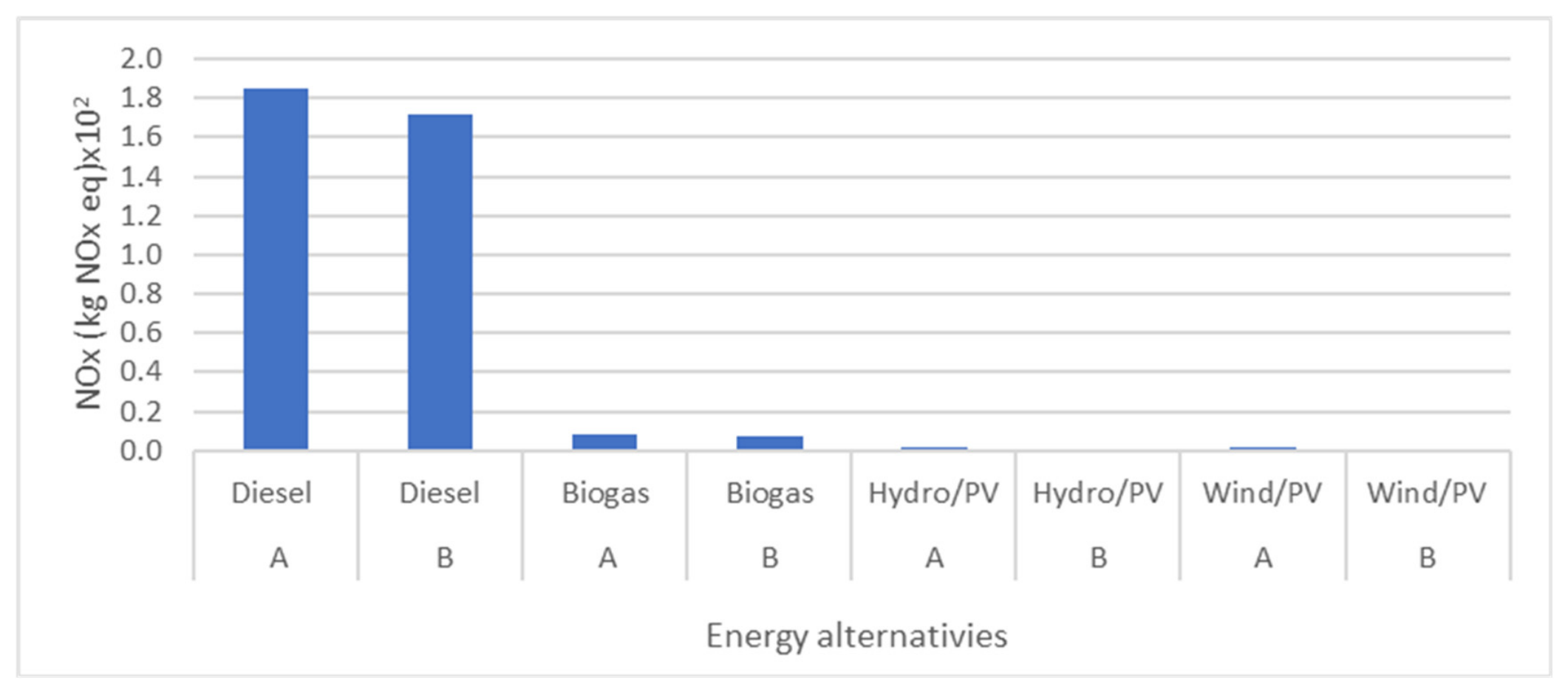
Diesel engines show significant emissions of nitrogen oxides (NOx) compared to biogas engines because of their higher heat value per unit of volume compared to biogas (Figure 15); for example, in scenario B, biogas was found to have a comparatively lower life cycle impact on NOx (7.65 × 10⁻⁴ kg NOx eq) than diesel (1.72 × 10⁻² kg NOx eq) on the environment. Among the renewables, biogas and wind/solar PV options have higher NOx values compared to hydro/PV, which is the best option for this category.
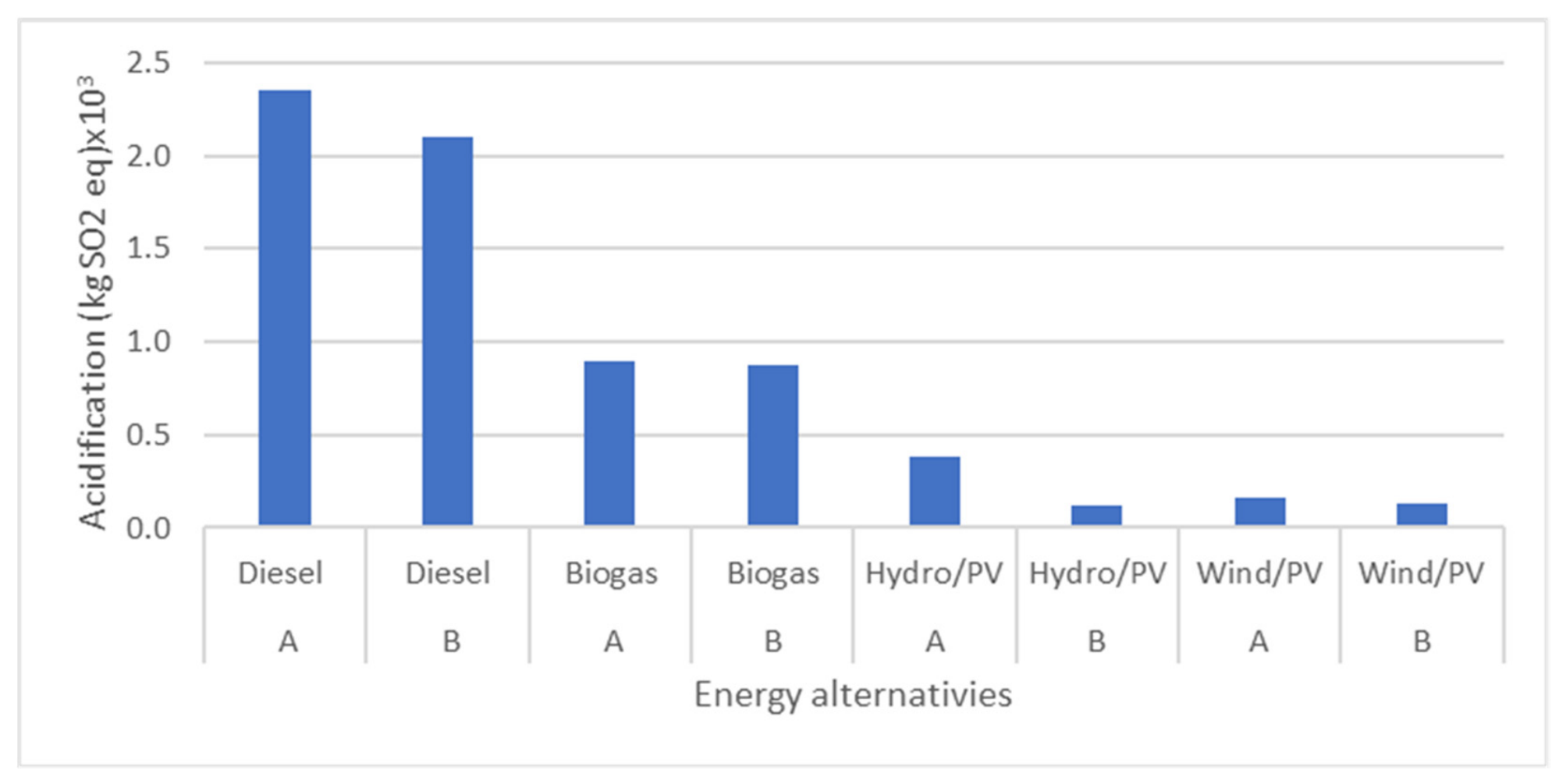
The bar graph (Figure 16) illustrates the acidification impact (measured in kg SO2 equivalents) associated with electricity production from various energy sources, comparing scenario A with scenario B. Significant acidification potential per unit of volume was found in diesel engines (2.1 × 10⁻³ kg SO2 eq) compared to biogas (8.73 × 10⁻⁴ kg SO2) in the long-term scenario. Diesel-based electricity production exhibits the highest acidification levels, with scenario A at approximately 2.4 × 10⁻³ kg SO2 eq and scenario B at 2 × 10⁻³ kg SO2 eq, reflecting a moderate reduction likely due to improved technologies or efficiency measures. Biogas shows a significant decrease in impact, with both scenarios starting at around 1.0 × 10⁻³ kg SO2 eq; however, when adjusted for the 42% contribution from biogenic methane (reducing values to 5.8 × 10⁻⁴ kg SO2 eq for both scenarios A and B), its environmental footprint aligns closely with hydro/PV in scenario A (5.0 × 10⁻⁴ kg SO2 eq) and surpasses hydro/PV in scenario B (2.0 × 10⁻⁴ kg SO2 eq). Renewable sources, including hydro/PV and wind/PV, demonstrate the lowest acidification impacts, with wind/PV scenarios A and B at approximately 1 × 10⁻⁴ kg SO2 eq, and a notable improvement is observed with hydro/PV (scenario B), suggesting advancements in renewable energy systems. These findings highlight a clear trend toward reduced environmental impact in scenario B, particularly with respect to renewable energy sources, underscoring their potential role in sustainable electricity production.

4.1.4. Social Impact of the Case Studies—Correlation Analysis

This section presents the results of the correlation analysis performed between HDI, cost of electricity, project expenditures (inside and outside the village), direct and indirect jobs, and local environmental impacts (see Table 4). As previously mentioned, criterion 9 (CR9) was assessed based on the results from the economic and environmental analysis (CR1 to CR8), as presented in Appendix D. We scored the criteria based on their importance for the local village development from −2 to +2, as detailed in our previous study [11]. For example, we attributed a high score (+2) to a higher number of direct expenditures and employment. We assumed that these parameters would influence the HDI (CR9) by providing more jobs for local communities, increasing their income and, therefore, contributing to the village’s economic, environmental, and social development. The wind/solar PV option presents a higher HDI than biogas and hydro/solar PV. This is because of the negative environmental impact caused by the biogas emissions and the poorer economic performance of the hydro option, which may influence local development, making wind and biogas technologies the first choice for areas where wind and biomass resources are abundant.

4.2. Multi-Criteria Decision Analysis

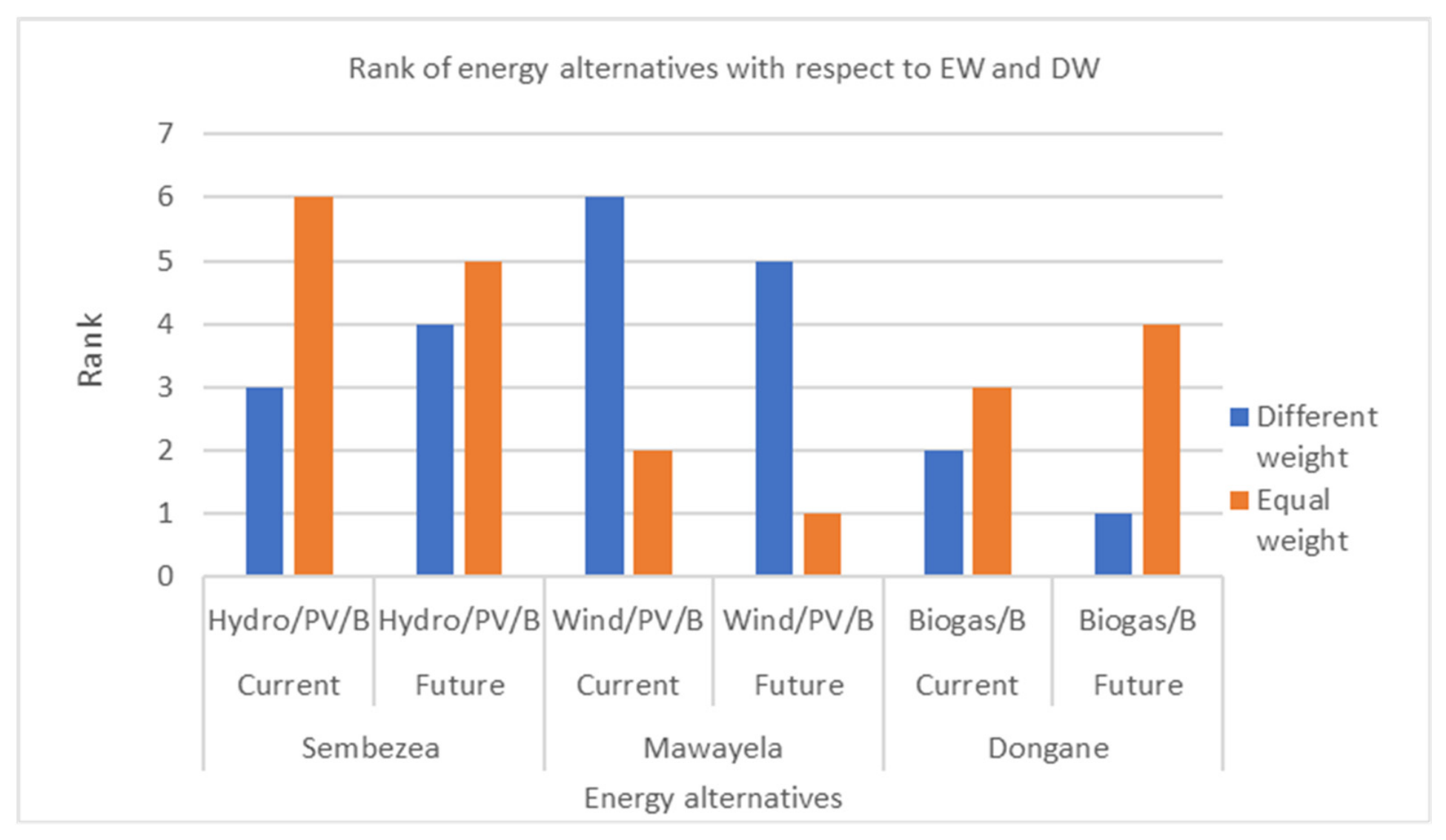
This section presents the results and discussions of the MCDA applied to our case studies (Sembezea, Mawayela, and Dongane) for scenarios A and B using different energy alternatives (solar PV, wind, hydro, and biogas). The TOPSIS method was used to rank the best electrification option in conjunction with two weighting approaches (equal weight and weight attributed based on the criteria’s importance) to ensure more robust results. The equal-weighting approach provides a neutral benchmark by assigning equal importance to all sustainability dimensions, whereas the subjective weighting approach may be more appropriate in contexts where local socio-economic development objectives, such as employment generation and community-level economic benefits, are emphasized. Our findings suggested that, using the equal weighting approach, the hybrid wind/solar PV technology is the most sustainable solution, followed by biogas and hydro/solar PV solutions, which ranked second and third in the analysis, respectively (Figure 17). By contrast, using the different-weight approach, the results showed that biogas could be the most promising energy option, as it presents closeness values of 0.667 and 0.512 for scenarios B and A, respectively, followed by hydro/solar PV with closeness values of 0.194 and 0.335, while wind/solar PV is the least favorable option for rural electrification with closeness values of 0.160 and 0.111. This is because biogas has a positive economic impact, as it is labor-intensive (i.e., requires a higher number of employees for local O&M) and has lower LCOE than hydro/solar PV and wind/solar PV despite having the highest environmental impact compared to the wind/solar PV and hydro/solar PV options, particularly in the global warming, particulate matter, and ozone formation impact categories. For example, in scenario B, biogas is expected to generate 506 local jobs compared to the hybrid combination involving wind (98) and hydro (91) technologies. The hybrid hydro/solar PV ranked second, followed by the hybrid wind/solar PV solution in the last position in terms of sustainable energy alternatives. This is because hydro/solar PV systems have environmental advantages over wind/solar PV options despite their lower economic performance, which is influenced by the high initial investment cost. The results of the present study are consistent with the findings from the previous studies [8,9], which indicated that solar (PV) and wind energy systems represent more sustainable solutions for off-grid electrification when compared with hydropower systems. In particular, under the equal-weight approach applied in the MCDA, solar PV and wind technologies demonstrated higher performance across the economic, environmental, and social dimensions. For example, from an economic perspective, solar PV and wind technologies presented a lower cost of electricity compared to hydropower systems. However, as the three compared systems operate at different scales, the observed performance differences cannot be attributed only to technological characteristics because they also reflect project size, resource availability, and demand structure. Additionally, the results of this study indicate that technology rankings are sensitive to the weighting assumptions adopted, meaning that the preferred technology depends on the decision-making priorities considered.

5. Conclusions, Limitations, and Recommendations

This study demonstrated the application of a framework to analyze and identify the most suitable off-grid electrification option in different regions (Sembezea, Mawayela, and Dongane), considering various possibilities for RE development. Using the proposed framework, it was possible to integrate different methods (HOMER, LCA based on SimaPro, and I-O) and indicators under the economic, environmental, and social dimensions. We analyzed the economic performance of the projects in terms of profitability (LCOE), expenditures, and jobs created, the environmental impacts of the projects, and community well-being using the HDI indicator. Data for the analysis were derived from site visits in the case study areas, the literature, and the HOMER and ecoinvent databases.
Overall, the three cases (hydro/PV, wind/PV, and biogas) represent viable options for rural electrification. Depending on the availability of resources, hydropower could be an option where a river with sufficient head exists; the availability of a considerable amount of cattle manure could render biogas a feasible option; and high wind speeds could favor the deployment of wind energy. The outcomes of our study indicate that RE options are the best choice for the replacement of diesel across all the assessed economic, environmental, and social aspects. In terms of future economic performance, the assessment of the three case studies suggested that biogas shows an advantage over the other electrification options, as it presents the lowest LCOE of $0.22/kWh compared to wind/solar PV ($0.28/kWh) and hydro/solar PV ($0.60/kWh), thereby improving the ability of the local community to pay for electricity. In contrast, hydro/solar PV was determined to be the worst option in terms of project cost feasibility because it had the highest cost of electricity, which was influenced by the high capital cost. By assessing the impact on expenditures and jobs created over the project lifecycle, we observed that biogas and hydro/solar PV show advantages because these electrification options require 4–4.8 times greater investment per GWh of electricity production compared to wind/PV. Therefore, this suggests that biogas and hydro/solar PV options are beneficial for local economic development because more economic activities are kept locally, enabling money to circulate within the village.
Overall, the performance of the biogas system was estimated using information collected from existing household biodigesters. Therefore, the findings for biogas systems should be interpreted as illustrative of projected community-based biogas systems, rather than as validated operational results.
From the environmental perspective, biogas is associated with relatively high emissions (4.58 × 10⁻² kg CO2 eq) compared to wind/solar PV (8.50 × 10⁻⁴ kg CO2 eq) and hydro/solar PV (3.94 × 10⁻⁴ kg CO2 eq) options in the long term. Nevertheless, the CO2 released during the combustion of biogas is assumed to be carbon-neutral. Furthermore, we found that a diesel engine produces higher CO2 (96%) and SO2 (174%) emissions values than biogas engines in the long-term scenario.
This study demonstrates the effectiveness of using TOPSIS in decision-making for energy alternatives. It suggests that biogas, solar, and wind may be considered the most promising solutions for off-grid electrification, as they are low in cost and have less environmental impact, while the hydro option scored the worst economically. This information is important for policymakers and investors seeking optimal choices for Mozambique’s energy future.
By applying the framework to the aforementioned case studies, we demonstrated the extent to which it is possible to perform an integrated overview of the economic, environmental, and social aspects and impacts of different HRES options. However, the framework must be well-organized for its effective application.
The results presented in this study are context-specific because the framework applied used data from three different case studies (Sembezea, Mawayela, and Dongane) under contextual conditions, including project size, resource availability, and demand structure. Therefore, rather than providing technology benchmarking (generalized technology superiority), this study provides comparative project-level insights into how different mini-grid configurations perform when implemented under locally optimized conditions. However, the proposed framework could be expanded to analyze the impacts of mini-grid projects in areas with similar characteristics in Mozambique and other developing regions.
The framework demonstrated in this study is important because it can help project developers and decision-makers in determining appropriate strategies for planning and organizing the mini-grid systems for the country. This is expected to allow for the better design and implementation of these systems, considering economic, environmental, and social aspects in line with the SDGs. Additionally, this study can help to determine the viability of projects and opportunities to develop the substantial RE potential available in Mozambique.
Based on our findings, we present the following recommendations, considering the limitations of this study.
Despite their powerful ability in assessing the technical, economic, and environmental viability of mini-grids, the tools applied in this thesis (HOMER, I-O, and SimaPro) were subject to limitations related to the availability of country- or region-specific data to assess the indicators; for example, there were challenges in accessing the local costs of the components to input in the ecoinvent and HOMER databases, as Mozambique does not manufacture equipment. Additionally, there was also a lack of regional/country-specific data for the effective use of I-O tables. Therefore, we applied global and more general data available in the ecoinvent and HOMER databases, making it difficult to obtain information that reflects the local context, such as the local cost of RE technology, considering the country-specific incentives and the costs associated with the transportation of equipment from manufacturing locations to project sites. More available data could help with the effective evaluation and integration of the indicators in the proposed framework and improve the robustness of the analysis. This would help in exploring the use of indicators as much as possible to assess the sustainability of mini-grid projects.
In this study, social indicators were not effectively assessed due to the lack of data to incorporate more elements, such as community involvement, injuries, security, and ownership, as well as the diversity of technologies. This study limited its investigation to how specific dimensions of HDI (health, prosperity, and economic activity) are linked to economic and environmental issues. Although the use of HDI as a social indicator was a methodological step forward, it still leaves the aforementioned social indicators uncovered. Moreover, other local parameters, such as the perception of local communities on environmental concerns (e.g., noise, smell, and visual impact), should also be included in the analysis, although they are not incorporated into the proposed framework.
Through this study, it was possible to assess the impact of mini-grids using various methods. One such method is HOMER, which allowed for the selection of the most cost-effective solution among different energy combinations, based on the lowest cost of electricity. However, over time, the literature has addressed more sophisticated tools, such as the GISEle (GIS for rural electrification) model [32], which could be continuously investigated and expanded for further research to allow for detailed system design and optimization to enhance the quality of the analysis.
Besides being an economically affordable option, the use of organic fertilizer from digestate is one way to lower the GHG emissions resulting from the use of chemical fertilizers. In this study, we proposed a commercial-scale biogas system based on the existing experience with biogas production in the village. Therefore, the amount of digestate would increase. Organic fertilizer produced in large quantities could be sold to local farmers, and thus, the money for importing chemical fertilizers would be saved and emissions resulting from the application of chemical fertilizers in the soil would be avoided, thereby contributing to local economic and environmental benefits.
In this study, we limited our analysis to biogas for electricity generation without considering the application of biogas to produce heat and biofertilizers for the soil. For example, we did not estimate the amount of money that would be saved or the emissions that could be avoided by replacing chemical fertilizers with organic fertilizers from biogas. Therefore, further studies could explore the economic, environmental, and social impacts of biogas application for heat and organic fertilizers in the proposed areas (Sembezea, Mawayela, and Dongane), and the proposed framework could be expanded to analyze the impact of biogas in areas with similar characteristics.
This study provides comparative project-level insights into how different hybrid configurations perform when implemented under locally optimized conditions. Therefore, further studies could explore the application of the proposed framework to provide a meaningful technology comparison by incorporating normalization to a common scale (e.g., per capita or per kWh delivered), in order to facilitate more robust technology-level comparisons.

Author Contributions

Conceptualization, E.I.C.Z. and A.P.C.F.; methodology, E.I.C.Z. and A.P.C.F.; software, E.I.C.Z., D.G., R.M.J.B., M.S.A.K., B.D.A. and M.V.R.; validation, A.P.C.F.; formal analysis, E.I.C.Z. and D.G.; investigation, E.I.C.Z.; resources, E.I.C.Z.; data curation, E.I.C.Z.; writing—original draft preparation, E.I.C.Z.; writing—review and editing, A.P.C.F., H.J.v.d.W., R.M.J.B., and D.G.; visualization, E.I.C.Z.; supervision, A.P.C.F. and H.J.v.d.W.; project administration, A.P.C.F. All authors have read and agreed to the published version of the manuscript.

Funding

This research received no external funding.

Institutional Review Board Statement

Ethical review and approval were waived for this study because the research primarily involved the technical assessment and contextual verification of rural mini-grid systems and sustainability indicators and did not involve experimentation on human participants, collection of sensitive personal data, or research concerning personal health, behavior, or private matters. The study was conducted in accordance with the applicable institutional policies on responsible research data management and research practice at the University of Groningen, including compliance with data protection and privacy regulations.

Informed Consent Statement

Informed consent for participation was waived because the study did not involve human subject experimentation or the collection of sensitive personal data. Interactions with local stakeholders were conducted solely for the purpose of verifying technical and contextual information related to the operation of the mini-grid systems. All research activities were conducted in accordance with the applicable institutional policies on responsible data management and research practice at the University of Groningen.

Data Availability Statement

The original contributions presented in this study are included in the article. Further inquiries can be directed to the corresponding authors.

Acknowledgments

This study was developed within the framework of the Netherlands Initiative for Capacity Development in Higher Education (NICHE) project, entitled “Innovative ways to transfer technology and know-how, developing skills and expertise for gas, renewable energy and management” (NICHE-MOZ-231/263); funded by the Government of the Netherlands; and administrated by the Netherlands organization for international co-operation in higher education (Nuffic).

Conflicts of Interest

The authors declare no conflict of interest.

Appendix A

Input Data and Assumptions in the Current and Future Scenarios (A and B)

(i) Input data used for the techno-economic analysis
(a) Electrical load assessment
The electrical load demand is one of the most important input parameters for HOMER calculations. As mentioned earlier, for the selected areas (Sembezea, Mawayela, and Dongane villages), data for the analysis were checked in the field during site visits. The electrical load demand in the villages was calculated considering residential, commercial (primarily small shops), and community services (school, health center, administrative office, and public street lighting). The typical electrical loads were estimated approximately: lighting (15 W), refrigerator (100 W), radio/DVD/recorder (75 W), computer and printer (65 W) to be used separately, television 24” (135 W), electric kettle (1000 W), electric iron (1000 W), and mills (500 W) serving domestic, commercial, and community uses. The load demand was estimated for scenarios A and B.
For Sembezea, the current load demand was investigated for the existing 200 households and a 60% future increase in energy demand was considered, as the current system is expected to stimulate higher load demand in the village. The daily energy consumption of 859.7 kWh/day and peak load (monthly electric consumption per household) of 188.84 kW were estimated for scenario A, and 1,374.96 kWh/day and a peak load of 302.26 kW were estimated for scenario B. For Mawayela village, the electrical load was investigated based on the current load demand corresponding to 652 households and a future increase in load demand of 60%, which indicated a daily energy consumption and a peak of 1345.5 kWh/day and 255.49 kW, respectively, for scenario A and 2167 kWh/day and a peak load of 408.83 kW for scenario B. Dongane village is the most populated compared to Mawayela and Sembezea. According to local authorities, an average of six to eight family members per household is estimated in the village. For our study, we assumed eight family members per household. Therefore, the current load demand was estimated for 3737 households without access to electricity in the village, resulting in a scaled annual average of 14,167 kWh/day with a peak load of 2692.61 kW and a future electrical load of 22,668.4 kWh/day with a peak load of 4308.17 kW.
(b) Resource availability
For the selected sites, HOMER provided meteorological data for solar radiation (Global Horizontal Irradiance) corresponding to the period from July 1983 to June 2005 and wind speed data from January 1984 to December 2013, both downloaded from NASA. Based on this, Mawayela village was identified as a village with good solar PV and wind potential. The average solar radiation is 5.12 kWh/m2/day, with the highest value of 6.36 kWh/m2/day observed in January and the lowest value of 3.59 kWh/m2/day observed in June. Wind potential in Mawayela varies from 6.82 m/s in October to 5.69 m/s in May. The average wind speed in Mawayela is 6.27 m/s. Wind speeds higher than 6 m/s are considered feasible for electricity generation [12]. The water availability and the variability of the yearly flow are the main factors in estimating the energy generated by micro-hydropower [33].
According to the information obtained in the field, in Sembezea, there are no hydrometric stations (gauging stations) in the watercourses used for the project. Therefore, it was necessary to use information available in nearby watercourses in river basins that have similar hydrological characteristics. To this end, the flow rate of the hydrometric station of the Munhinga River (also located in Sussundenga District) was used for this study. We consider the average flow rate of 657 L/s of the existing power plant as part of the main input parameters for HOMER. The flow was estimated based on the daily flow rate from 1953 to 2004 obtained from the Ministry of Public Works, Housing and Water Resources of Mozambique. We selected the flow rate of the year 1998 with an annual average of 657 m3/s (with a maximum of 2080 L/s in January and a minimum of 180 L/s in September), because data for this year are recent and complete compared to other years, such as 1999 and 2000, which lack data for January and November, respectively. We assumed that the efficiency of the turbine was 80%. The average solar radiation and wind speed of Sembezea are 5.32 kWh/m2/day and 4.70 m/s, respectively. The availability of resources provides strong justification for integrating solar PV into the system compared to wind energy, which has low values (lower than 6 m/s). The available head is 9 m. Therefore, the proposed mini-grid will be sized according to the intermittent availability of resources.
For Dongane village, the biomass resource data are obtained from the locally available cattle manure as the main source of biogas. It is estimated that Dongane village has approximately 10,806 cows. The available cattle in the village can produce enough manure to be converted to generate electricity for the population living in Dongane village. The potential of biogas is calculated based on cow manure, assuming that each cow produces 10 kg of manure per day (10 kg/day) for the production of biogas [34]. Therefore, the potential of biogas is approximately 108 tons/day, which will likely be uniformly distributed throughout the year. It can range from a few kilowatts (household biodigesters) to megawatts (villages or commercial biodigesters) [35].
(c) Costs for each case study
A summary of the main characteristics of each technology (solar PV, wind, hydro, and biogas generator), along with specific parameters and costs of the components such as capital, replacement, and operation and maintenance (O&M) costs, is detailed in Table A1.
Table A1. Parameters used for the techno-economic evaluation in the three case studies.
ParametersSolar PV BatteryConverterWindHydroBiogas
Capital ($/kW)250055030010,000226,0003000
Replacement ($/kW)055030010,000180,8001250
O&M ($/kW)/year1010050013,7950.005
Lifetime (year)251015252520,000 h
Quantities to consider * (units) 0 to 4000 (HOMER optimizer) 0 to 100 in 10 intervals 0 to 3000 in 200 intervals
Sizes to consider (kW)0 to 1000 in 50 intervals 0 and 300 (HOMER optimizer)
The majority of cost input data and technology characteristics (generic flat-plate PV, hydro, biogas, and wind turbines) were obtained from the HOMER database. A solar PV derating factor of 80% was assumed from HOMER. As we are simulating hybrid mini-grids without including non-renewable sources (diesel), the dispatch strategy does not affect the performance of the systems. An inflation rate of 2%, the discount rate of 8%, and a load factor of 0.45 were considered in HOMER for all cases. For a more realistic load profile, random variability (20% for time-step variability and a day-to-day variability of 10%) was considered in HOMER. Capital, replacement, and O&M costs for a generic solar PV of 1 kW were taken from [12]. A generic lithium-ion (Li-ion) battery with a nominal capacity of 1 kWh and a nominal voltage of 6 V was used. Battery capital, replacement, and O&M costs were taken from the HOMER database. A generic converter is used to convert direct current to alternating current. The converter capital, replacement, and O&M costs for 1 kW were taken from the HOMER database. From biogas, we adopt a gasification ratio of 0.05 kg/kg, a density of 0.72 kg/m3, a generator efficiency of 95%, and a lower heating value of 5.5 MJ/kg based on data obtained from the HOMER database. Capital, replacement, and O&M of a Vestas V47 wind turbine of 660 kW were taken from the HOMER database. Capital, replacement, and O&M costs for a generic biogas generator of 1 kW were taken from [36,37,38]. For the existing HB, the cost of biomass was reported as zero because the manure is accessible to the household. For our projected biogas system, a large amount of biomass resources (cow manure) will be needed to operate the system; therefore, the total cost of cow manure is assumed to be approximately 16 US$/ton, including 10 US$/ton for feedstock and 6.31 US$/ton for transportation from the collecting point to the biogas plant [39]. Similarly to the power generated by the solar PV modules, the energy produced by biogas can be rectified and connected to batteries [19]. The lifetime of the biogas system was taken from [40]. Micro-hydro capital, replacement, and O&M costs for a generic hydro system of 100 kW. Hydropower efficiency of 80%, with 150% maximum flow ratio and 50% minimum flow ratio, was used. The minimum residual flow was assumed to be 1000 L/s (1 m3/s). * These quantities were considered in the HOMER search space tab.
(d) Sensitivity variables
Additional inputs to HOMER include sensitivity variables to understand the effect on costs and to provide insights into the system’s robustness and feasibility under different scenarios in order to improve the system’s future performance. The solar PV, battery, wind, and biogas capital cost multipliers were incorporated as sensitivity variables in the simulations because, based on the literature on the global RE market, the capital cost of these technologies is likely going to vary in the future due to the expected improved performance and cost reductions in selected RE technologies (solar PV, wind, and biogas), contributing to positive impacts on economic growth (scaling effects), as presented in Table A2.
Table A2. Sensitivity variables on the capital cost multiplier.
TechnologyFuture Expectations in Cost (by 2030)References
Solar PVDecrease by approximately 60%[12]
Lithium-ion batteryDecrease by approximately 15%[41,42]
WindReduction by approximately 30%[26]
HydroExpect no change[25]
BiogasDecrease by approximately 25%[27]
(ii) Input data used for expenditures and employment
As mentioned earlier, the methodology adopted for the analysis of the three case studies (Sembezea, Mawayela, and Dongane) was derived from our previous study [11]. To estimate indirect expenditures and jobs, we applied the I-O using the Social Accounting Matrix (SAM).
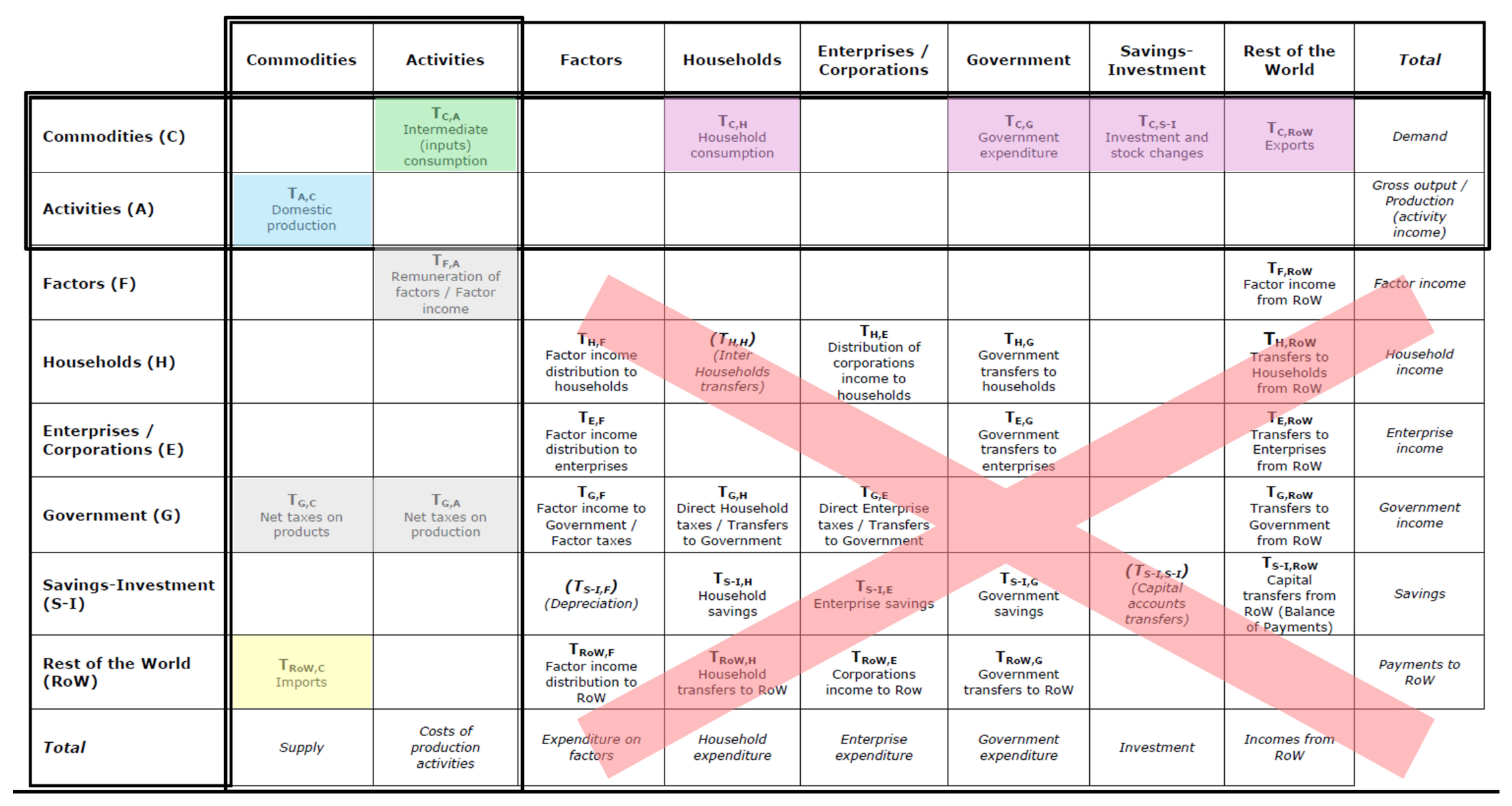
SAM integrates micro-statistics of the labor market with macro-statistics data from national accounts, consumption patterns, household income, and other social indicators [43]. Supply and use tables (SUTs) constitute a core component of the SAM, enabling a comprehensive representation of the circular flow of the economy, in which all transactions are captured within the economic system.
A country-specific Social Accounting Matrix (SAM) representing Mozambique’s intersectoral economic flows for 2015 was selected for this assessment, enabling the derivation of a tailored supply and use table (SUT) for input–output (IO) analysis. However, at the time of this study, no more recent SAM for Mozambique was available that provides the sectoral and labor disaggregation required for input–output analysis to estimate employment impacts for projects implemented by 2023 and projected to 2030. The methodology involved evaluating the impacts of project-related expenditures and employment, leveraging the granularity of the database to conduct a shock analysis based on Mozambique’s SUT. Although a 2019 SAM for Mozambique became available in 2022, the 2015 SAM was used in this study for reasons of sectoral disaggregation. The 2019 SAM is more aggregated and does not explicitly represent key sectors that are directly relevant to the projects whose impact is analyzed in the study. In weighing the trade-off between data recency and sectoral detail, we opted for the 2015 SAM, as it provides a more granular representation of consumption patterns and employment structures that better reflect the sectors involved in the analysis.
Figure A1. Social Accounting Matrix adopted for the application of the SUT framework. Based on [43,44]. Note: Figure A1 presents the SAM adopted for the application of the SUT model for the present study. The SUT provides a detailed representation of Mozambique’s economy and its intersectoral linkages, comprising 54 commodities—including electricity, gas, and steam (e.g., celec)—and 54 corresponding activities (e.g., aelec). It further incorporates 11 factor inputs, of which 8 correspond to labor categories differentiated by skill level (unskilled, semi-skilled, and skilled). This level of disaggregation enables the assessment of the mini-grid projects’ impacts, including employment effects across geographic locations (rural versus urban) and educational attainment levels (ranging from no formal education to tertiary qualifications). Additionally, the model captures the extent of reliance on imported commodities required to satisfy the demand for goods and services associated with the investment and operation of the mini-grid.
Sustainability 18 05841 g0a1
To estimate the impacts associated with the three mini-grids, it is necessary to specify the timing, magnitude, and sectoral allocation of expenditures. This entails integrating the HOMER energy model with the adopted input–output (IO) framework. The optimal solutions generated by HOMER are defined by distinct combinations of technologies and activities, which can be mapped onto final demand across sectors within the IO model. These allocations can subsequently be translated into corresponding investment values in each sector.
The input–output (IO) model was employed to evaluate the economic factor F (derived from f, representing production relative to the matrix of monetary exogenous coefficients), considering both the implementation and operational phases. For both the investment and operation stages, the commodities required for the production, installation, and maintenance of the technologies were characterized based on cash flow data obtained from the HOMER model. In Equations (A1) and (A2), the linear algebra behind the estimation is provided:
F i _ _ = f _ _ [ ( I _ _ z _ _ ) 1 Y i _ X i ] f _ _ [ ( I _ _ z _ _ ) 1 Y _ X ]
F o _ _ = f o _ _ [ ( I _ _ z o _ _ ) 1 Y _ X o ] f _ _ [ ( I _ _ z _ _ ) 1 Y _ X ]
A variable with a double underline indicates a matrix, while a variable with one underline indicates a vector. Absolute units are identified in capital letters (e.g., Gg or M$), while output-specific units are in small letters (e.g., Gg/M$ or M$/M$). Y and X represent the total production of commodities and industrial activities and the final demand of commodities, respectively; z indicates the supply and uses representing the technological structure of the economy; and I indicates the identity matrix of the same dimensions of z. The subscript o denotes data after the intervention, while subscript i indicates investment data.
Cash flow results from HOMER were converted into local currency, discounted to the year 2015, and included in the 2015 Mozambique Social Accounting Matrix (SAM) [28] in the form of increased demand for specific commodities necessary to support both the investment and operation phases. The increase in final demand corresponds to a numeric shock in the SAM, and it increases the supply/demand of products, technology activities, and related demand for factors of production at the national level. The factors of production include demand for labor, ultimately converted into the number of additional workers required, expressed as an increase in the number of annual contracts. This was achieved using four levels of annual salaries set by the government of Mozambique [45], differentiated according to education level, as explained in our previous study [11]. In particular, the four lowest salaries were chosen to convert the expenditure for workers into employment contracts.
The supply and use tables (SUTs) were processed using MARIO (Multi-Regional Analysis of Regions through Input–Output). MARIO is an open source Python version 3.7 module developed and published on GitHub [46,47], which is designed to serve as a general framework for conducting IO analysis without requiring advanced programming expertise. The MARIO tool supports the automatic parsing of structured databases, such as EXIOBASE [48], EORA [49], and EUROSTAT [50], and ad hoc built tables in different formats, such as the MRIO and SRIO tables in monetary or hybrid units.
Due to the limitation of the I-O method in assessing the local direct jobs related to the O&M phase of the project, we applied the employment factor using the following approach: (total jobs in O&M = cumulative capacity in use in MW * employment factor in jobs per MW * regional employment multiplier for O&M * project lifetime in years). This is based on the research in [51,52] (see our previous study [11] for more details about this approach). Data for the estimation of the employment factor were sourced from [53,54,55,56] for each technology; for example, the employment factors for solar PV, wind, small hydro (run-of-river), and biogas were 0.7 jobs/MW, 0.3 jobs/MW, 0.5 jobs/MW, and 2.25 jobs/MW, respectively. We applied a regional (Sub-Saharan Africa) employment multiplier of 6.42 for scenario A (2020) and 5.0 for scenario B (2030), as derived from [56].
(iii) Input data used for the environmental analysis
The present study applied the SimaPro 9.5 software to analyze the environmental impacts of the three mini-grids (Sembezea, Mawayela, and Dongane) using the ReCiPe method [57]. We considered a project lifetime of 25 years for each system. The functional unit is 1 kWh of electricity production from all technologies (solar PV, wind, hydro, and biogas). For system boundaries, we applied the methodology guidelines for the life cycle of renewable technologies [58], following the recommendations of ISO 14040 for the LCA [59] in a cradle-to-use approach, which included the transportation (from the factory to the installation site) and use phase. However, applying a fully consistent end-of-life treatment across all technologies was not applied within the scope of the present study due to the lack of reliable and comparable end-of-life data for several of the assessed technologies. This is a common limitation in life cycle assessment studies, where end-of-life stages are often excluded or simplified in data-scarce contexts, particularly in developing countries, due to uncertainties in disposal, recycling, and material recovery processes [60,61,62].
Since Mozambique does not manufacture equipment for solar PV, wind, hydro, or biogas technologies, we assumed that components were transported by both sea and land (track) using diesel fuel. The imports of the equipment from the manufacturing point in China to Mozambique, by ship, correspond to the distance (China–Beijing–Jinan Port) to Maputo port (16,748 km) and Beira port (15,186 km) in Mozambique. The transportation distances were estimated using online distance calculators [63], with Beira port assumed as the arrival point for equipment destined for Sembezea and Maputo port for equipment destined for Mawayela and Dongane. Local transport distances from the ports of arrival to the sites were estimated as 248 km for Sembezea, 317 km for Mawayela, and 438 km for Dongane. The assumptions made for the solar PV systems (incorporated for the Sembezea and Mawayela case studies) are described in our previous study [11].
For hydropower, inventory data for both scenarios A and B were based on the run-of-river (RoR) hydropower predefined in the ecoinvent database. However, there are limited data regarding the capacity or size of the RoR hydropower system and thus how to handle it. We used the RoR data in SimaPro, which are based on five plants in Switzerland and Austria. From the literature, we could find one RoR plant in Switzerland based on the yearly production of 310 GWh/yr and an assumed lifetime of 80 years, due to the lack of context-specific inventory data for Mozambique. Although this dataset provides a useful proxy for comparative assessment, differences in construction practices, material sourcing, transport distances, and electricity mixes between Europe and Mozambique may influence environmental impact estimates. Therefore, hydropower LCA results should be interpreted as indicative rather than site-specific values. We assumed that the main raw materials used for building hydropower dams (cement, gravel, steel, explosives, and sand), including the energy and transport used for the construction of the hydropower plant [64,65,66,67], would be acquired locally.
For wind turbines, the lifecycle includes building the foundation for the installation (construction process) and the transportation of the main components (rotor, nacelle, tower, and generator) from the manufacturing point to the project site. Over a 25-year lifetime, the rotor blade, gearbox, and generator were assumed to be replaced once. For the foundation, we neglected the GHG emissions of land because wind turbines occupied a small area of land [68,69]. The inventory data for scenarios A and B were adopted from wind turbines with capacities of 750 kW and 2 MW, respectively—predefined in the ecoinvent database and scaled down to 660 kW and 1320 kW, respectively—to correspond to the size of the turbine for scenarios A and B. Similarly to the authors of [70], we excluded the final disposal phase of wind turbines from the analysis.
Biogas can be used to produce electricity, heat, and biofertilizer [71]. In this study, we focus only on biogas for electricity generation. Anaerobic digestion technology is considered an environmental burden to human health due to the avoided negative emissions from livestock manure management. Various studies on the LCA of biogas concluded that besides providing electricity, biogas is an effective way to significantly reduce GHG emissions and improve agriculture through the use of biofertilizers [17,19,72,73]. In this study, the biogas processes involved include biogas production from cattle manure and electricity generation from biogas. We did not consider the impact of using digestate as a biofertilizer; however, we acknowledge its importance in reducing emissions from raw materials derived from chemical fertilizer production. Biofertilizers can be used directly in the soil to substitute chemical fertilizers, which are major contributors to GHG emissions, thereby supporting sustainable crop production based on nitrogen (N), potassium (K), and phosphorus (P) values in digested sludge produced through the anaerobic digestion process. Biofertilizers are rich and more efficient than chemical fertilizers, providing essential nutrients such as N, P, and K to enhance crop growth, increase yields, and reduce reliance on mineral fertilizers. The percentage N, P, and K nutrient contents for a commercial biogas system were considered to be 0.13%, 3.1%, and 3.45%, respectively [74]. In biogas systems, transportation distances influence the environmental impact. The system boundary (Figure A2) includes the transportation of manure from the collection point to the anaerobic digester plant and the transport of digestate for agricultural purposes (which requires diesel) assuming that the biogas plant is located close to livestock areas (within a radius of approximately 10 km), which thus reduces the impact of manure transportation to the biogas power plant. Furthermore, we neglected the impact on land use, as the biogas unit occupied a portion of land (25 m2) over its project lifetime [75]. Since biogas is only considered for electricity generation, no allocation of co-products is carried out in the process [76]. The total amount of manure produced in Dongane village is estimated at 108 tons/day (assuming that each cow produces 10 kg/day of manure [77]), corresponding to the production of 10,806 total head of cattle available in the village. Assuming that 1 m3 of biogas corresponds to 25 kg of manure and 1 m3 can produce 2 kWh [78,79], the size of the biodigester corresponds to 4322 m3. Therefore, 4322 m3 of biogas would be produced by 108,060 kg of manure. The ratio of feedstock (liquid fresh dung) diluted in water is 1:1, meaning that 1 kg of manure is diluted in 1 L of water [75]. The moisture content of animal manure is assumed to be 85%, with a density of 1000 kg/m3. Biogas from cattle manure is mainly composed of methane (62%) and carbon dioxide (37%) from the anaerobic degradation of organic materials and 1% of hydrogen sulfide (H2S) [74,80]. Biogas has a low sulfur content. The lower heating value of methane in biogas (35.8 MJ/m3) is because biogas consists of methane mixed with carbon dioxide [76,81,82].
Figure A2. System boundary for biogas production.
Sustainability 18 05841 g0a2
(iv) Data used for the social analysis
The use of quantitative data to evaluate social indicators is often challenging, particularly in developing countries where reliable data are frequently limited. In this study, the social dimension was assessed using a qualitative scoring approach designed for comparative analysis. Therefore, this approach does not constitute a calculation of the official HDI as defined by United Nations Development Program [83,84]. This approach evaluates the human well-being of local communities (Table A3) by linking the HDI (CR9) with economic and environmental criteria (CR1–CR8). Specifically, the HDI is correlated with the cost of electricity, project expenditures (both within and outside the village), direct and indirect employment opportunities, and local environmental impacts, including CO2 emissions and other air pollutants, such as particulate matter and photochemical ozone formation. This approach allows us to measure how HDIs, such as local prosperity, health, and income, are linked to the cost of electricity, CO2 emissions, and other air emissions, employment, and project-related expenditures. This methodological approach enables the assessment of how local prosperity relates to the cost of electricity, how health outcomes are associated with CO2 and other air emissions, and how income is linked to employment and project-related expenditures.
Table A3. Criteria used for the three case studies (from our previous study [11]).
CriteriaSub-Criteria and UnitSub-Criteria CodeUnit
TradeExpenditures inside the country (GDP/value added)CR1M US$
Expenditures outside the country (imports)CR2M US$
JobsLocal direct jobsCR3No. Of jobs
Indirect jobsCR4No. Of jobs
PricesCost of electricityCR5US$/kWh
EnvironmentalCO2 emissionsCR6kg CO2 eq
Particulate matterCR7kg PM10 eq
Photochemical ozoneCR8kg NMVOC eq
Well-beingHDICR9-
For the eight criteria (CR1–CR8) considered within the economic and environmental dimensions, a scoring scale ranging from −2 to +2 was applied using the Delphi method (Table A4). A score of −2 indicates a strong negative relationship, −1 indicates a moderate negative relationship, 0 indicates a neutral relationship, +1 indicates a moderate positive relationship, and +2 indicates a strong positive relationship. The scores assigned to HDI (CR9) were based on the authors’ evaluation, informed by the results of criteria CR1–CR8, as presented in Appendix D.
Table A4. Delphi-based scoring of the influence of CR1–CR8 with HDI.
ScoreInterpretationDecision Rule
+2Strong positive influenceCriterion has a significant contribution to human well-being (e.g., direct job creation).
+1Moderate positive influenceCriterion contributes moderately to human well-being (e.g., limited job creation).
0Neutral influenceCriterion has no clear or measurable effect on human development outcomes.
−1Moderate negative influenceCriterion may have limiting effects on human well-being (e.g., increased LCOE, minor environmental).
−2Strong negative influenceCriterion has a significant negative impact on human development outcomes (e.g., negative environmental).

Appendix B. Basic Steps for TOPSIS

Step 1: Identification and Definition of Attributes: Set up an “evolution matrix” comprising N criteria and M alternatives using Equation (A3).
X i j M × N
Step 2: Normalization of the Evolution of the Initial Decision Matrix Using Equation (A4): Each sub-criteria j for each energy option i is normalized to range between 0 and 1. Metrics with higher values are desirable.
X i j = X i j i = 1 M X i j 2
Step 3: The weighted normalized decision matrix is calculated, using Equations (A5)–(A7). Typically, each criterion is allocated its own weight, and the sum of their weights is set to 1.
V i j = X i j W j
W j = W j j = 1 N W j
j = 1 N W j = 1
Step 4: Determine the best and the worst alternatives for each criterion using Equations (A8) and (A9).
V j + = max i = 1 V i j
V j = min i = 1 V i j
Step 5: Find the Euclidean distance between the target choice and the best or worst choice based on Equations (A10) and (A11).
S i + = j = 1 m V i j V j + 2
S i = j = 1 N V i j V j 2
Step 6: The result obtained here is the TOPSIS score (relative closeness), as shown in Equation (A12).
P i = S i S i + S i +
Step 7: The alternative with the score closest to the best will obtain the highest score and therefore will be the most preferred alternative.

Appendix C. Environmental Impact Results of All Impact Categories in the Analyzed Scenarios Associated with 1 kWh of Electricity Produced

Case Study 1Case Study 2Case Study 3
Scenario AScenario BScenario AScenario BScenario AScenario B
Impact CategoryUnitHydro/Solar PVHydro/Solar PVWind/Solar PVWind/Solar PVBiogasBiogas
Global warmingkg CO2 eq3.72 × 10−21.91 × 10−23.80 × 10−23.90 × 10−26.12 × 10−16.00 × 10⁻¹
Ozone depletionkg CFC-11 eq1.77 × 10−87.60 × 10−91.70 × 10−81.54 × 10−81.20 × 10−61.18 × 10⁻⁶
Ionizing radiationkBq Co-60 eq1.83 × 10−49.61 × 10−52.41 × 10−42.09 × 10−41.03 × 10−39.62 × 10⁻⁴
Ozone formation, human healthkg NMVOC1.58 × 10−47.70 × 10−51.23 × 10−41.15 × 10−48.06 × 10−47.65 × 10⁻⁴
Particulate matterkg PM10 eq1.78 × 10−46.78 × 10−51.05 × 10−48.88 × 10−57.60 × 10−47.40 × 10⁻⁴
Ozone formation, terrestrial ecosystemskg NOx eq1.68 × 10−48.19 × 10−51.40 × 10−41.30 × 10−48.60 × 10−48.17 × 10⁻⁴
Acidification, terrestrialkg SO2 eq3.85 × 10−41.25 × 10−41.63 × 10−41.31 × 10−48.97 × 10−48.73 × 10⁻⁴
Eutrophication, freshwaterkg P eq4.58 × 10−62.12 × 10−63.97 × 10−63.58 × 10−62.24 × 10−52.18 × 10⁻⁵
Eutrophication, marinekg N eq7.95 × 10−74.19 × 10−71.28 × 10−61.50 × 10−62.33 × 10−71.35 × 10⁻⁷
Ecotoxicity, terrestrialkg 1,4-DCB eq2.99 × 10008.03 × 10−19.91 × 10−16.03 × 10−13.52 × 10003.61 × 1000
Ecotoxicity, freshwaterkg 1,4-DCB eq1.51 × 10−45.94 × 10−51.40 × 10−41.38 × 10−42.99 × 10−42.91 × 10⁻⁴
Ecotoxicity, marinekg 1,4-DCB eq1.55 × 10−34.63 × 10−46.62 × 10−44.86 × 10−42.11 × 10−32.14 × 10⁻³
Human carcinogenic toxicitykg 1,4-DCB eq3.88 × 10−31.73 × 10−36.93 × 10−37.16 × 10−34.48 × 10−34.32 × 10⁻³
Human non-carcinogenic toxicitykg 1,4-DCB eq1.78 × 10−14.82 × 10−25.25 × 10−23.40 × 10−22.18 × 10−12.11 × 10⁻¹
Land usem2a crop eq2.70 × 10−31.81 × 10−34.05 × 10−32.62 × 10−32.68 × 10−22.62 × 10⁻²
Mineral resource scarcitykg Cu eq1.91 × 10−36.54 × 10−44.31 × 10−44.36 × 10⁻⁴−2.38 × 10⁻³−2.65 × 10⁻³
Fossil resource scarcitykg oil eq8.89 × 10−34.51 × 10−31.49 × 10−31.25 × 10−37.39 × 10−27.16 × 10⁻²
Water usem35.35 × 10−42.30 × 10−41.10 × 10−21.06 × 10⁻²−3.71 × 10⁻⁴−4.82 × 10⁻⁴

Appendix D. Summary of the Results of the Indicators Assessed in This Study

LocationScenarioEnergy AlternativesExpenditures Inside the Country (M$)Expenditures Outside the Country (M$)Direct Jobs (No. Jobs)Indirect Jobs (No. Jobs)Cost of Electricity ($/kWh)CO2 Emissions (kg CO2 eq)Particulate Matter (kg PM10 eq)Ozone Formation, Human Health (kg NOx eq)HDI
Sembezea CurrentHydro/Solar PV/B0.9623.371661180.790.0007960.0001780.0001583
FutureHydro/Solar PV/B1.2064.240911500.600.0003940.00006780.0007713
MawayelaCurrentWind/Solar PV/B0.6212.14360740.300.001030.0001050.0001235
FutureWind/Solar PV/B0.9473.290981140.280.0008550.00008880.0001158
Dongane CurrentBiogas/B4.8516.283615420.240.04660.000760.000806−3
FutureBiogas/B7.3924.785068260.220.04580.000740.000765−2
Note. All results presented in Appendix C are based on our calculations.

Appendix E. Rank of Energy Alternatives Based on Different and Equal Weights Attributed

LocationScenarioEnergy AlternativesSi+ (DW)Si- (DW)Pi (DW)Si+ (EW)Si- (EW)Pi (EW)Rank (DW)Rank (EW)
Sembezea CurrentHydro/Solar PV/B0.2590.1310.3350.2250.1260.35936
FutureHydro/Solar PV/B0.2590.0620.1940.1410.1680.54245
MawayelaCurrentWind/Solar PV/B0.2960.0370.1110.1190.2340.66362
FutureWind/Solar PV/B0.2800.0530.1600.1050.2330.68951
Dongane CurrentBiogas/B0.1640.1730.5120.1430.2040.58723
FutureBiogas/B0.1330.2670.6670.1580.2170.57914
Note: EW—equal weight; DW—different weight.

References

  1. IEA; IRENA; UNSD; World Bank; WHO. Tracking SDG 7: The Energy Progress Report; World Bank: Washington, DC, USA, 2024. [Google Scholar]
  2. Kolobe, M. Tracking SDG7 Progress for Lesotho Using Energy Indicators for Sustainable Development. Doctoral Dissertation, National University of Lesotho, Maseru, Lesotho, 2021. [Google Scholar]
  3. World Bank. Tracking SDG7: The Energy Progress Report; World Bank: Washington, DC, USA, 2023. [Google Scholar]
  4. Shaaban, M.; Scheffran, J.; Böhner, J.; Elsobki, M.S. Sustainability assessment of electricity generation technologies in Egypt using multi-criteria decision analysis. Energies 2018, 11, 1117. [Google Scholar] [CrossRef]
  5. Babatunde, O.M.; Munda, J.L.; Hamam, Y. Selection of a hybrid renewable energy systems for a low-income household. Sustainability 2019, 11, 4282. [Google Scholar] [CrossRef]
  6. Buchmayr, A.; Verhofstadt, E.; Van Ootegem, L.; Sanjuan Delmás, D.; Thomassen, G.; Dewulf, J. The path to sustainable energy supply systems: Proposal of an integrative sustainability assessment framework. Renew. Sustain. Energy Rev. 2021, 138, 110666. [Google Scholar] [CrossRef]
  7. Grafakos, S.; Enseñado, E.M.; Flamos, A. Developing an integrated sustainability and resilience framework of indicators for the assessment of low-carbon energy technologies at the local level. Int. J. Sustain. Energy 2017, 36, 945–971. [Google Scholar] [CrossRef]
  8. Rashid, E.; Majed, N. Integrated life cycle sustainability assessment of the electricity generation sector in Bangladesh: Towards sustainable electricity generation. Energy Rep. 2023, 10, 3993–4012. [Google Scholar] [CrossRef]
  9. Roinioti, A.; Koroneos, C. Integrated life cycle sustainability assessment of the Greek interconnected electricity system. Sustain. Energy Technol. Assess. 2019, 32, 29–46. [Google Scholar] [CrossRef]
  10. Come Zebra, E.I.; van der Windt, H.J.; Nhumaio, G.; Faaij, A.P.C. A review of hybrid renewable energy systems in mini-grids for off-grid electrification in developing countries. Renew. Sustain. Energy Rev. 2021, 144, 111036. [Google Scholar] [CrossRef]
  11. Come Zebra, E.I.; Windt, H.J.v.d.; Nhambiu, J.O.P.; Golinucci, N.; Gandiglio, M.; Bianco, I.; Faaij, A.P. The integration of economic, environmental, and social aspects by developing and demonstrating an analytical framework that combines methods and indicators using Mavumira Village as a case study. Sustainability 2024, 16, 9829. [Google Scholar] [CrossRef]
  12. Zebra, E.I.C.; van der Windt, H.J.; Olubayo, B.; Nhumaio, G.; Faaij, A.P. Scaling up the electricity access and addressing best strategies for a sustainable operation of an existing solar PV mini-grid: A case study of Mavumira village in Mozambique. Energy Sustain. Dev. 2023, 72, 58–82. [Google Scholar] [CrossRef]
  13. Instituto Nacional de Estatística (INE) Censo 2017. Available online: https://ine.gov.mz/censo-2017 (accessed on 23 April 2023).
  14. Salazar-Espinoza, C.; Jones, S.; Tarp, F. Weather shocks and cropland decisions in rural Mozambique. Food Policy 2015, 53, 9–21. [Google Scholar] [CrossRef]
  15. Jansen, L.J.M.; Bagnoli, M.; Focacci, M. Analysis of land-cover/use change dynamics in Manica Province in Mozambique in a period of transition (1990–2004). For. Ecol. Manag. 2008, 254, 308–326. [Google Scholar] [CrossRef]
  16. Gesto Energy. Renewable Energy Atlas of Mozambique_Resources and Projects for Power Generation, 1st ed.; Gesto Energy: Algés, Portugal, 2014. [Google Scholar]
  17. Kabeyi, M.J.B.; Olanrewaju, O.A. Technologies for biogas to electricity conversion. Energy Rep. 2022, 8, 774–786. [Google Scholar] [CrossRef]
  18. Ministério da Agricultura e Desenvolvimento Rural. Boletim de Estatísticas Pecuárias 2012–2022; Ministério da Agricultura e Desenvolvimento Rural: Maputo, Mocambique, 2023.
  19. Borges Neto, M.R.; Carvalho, P.C.M.; Carioca, J.O.B.; Canafístula, F.J.F. Biogas/photovoltaic hybrid power system for decentralized energy supply of rural areas. Energy Policy 2010, 38, 4497–4506. [Google Scholar] [CrossRef]
  20. Thurlow, J.; van Seventer, D.E. A 2012 Social Accounting Matrix for Mozambique; IFPRI: Washington DC, USA, 2017. [Google Scholar]
  21. Diemuodeke, E.O.; Hamilton, S.; Addo, A. Multi-criteria assessment of hybrid renewable energy systems for Nigeria’s coastline communities. Energy Sustain. Soc. 2016, 6, 26. [Google Scholar] [CrossRef]
  22. Dean, M. A Practical Guide to Multi-Criteria Analysis; University College London: London, UK, 2022. [Google Scholar]
  23. IRENA. The Power to Change: Solar and Wind Cost Reduction Potential to 2025; IRENA: Abu Dhabi, United Arab Emirates, 2016. [Google Scholar]
  24. IRENA. Renewable Generation Costs in 2022; IRENA: Abu Dhabi, United Arab Emirates, 2022; ISBN 9789292605445. [Google Scholar]
  25. Google Search Zenodo. Available online: https://zenodo.org/record/7539477 (accessed on 10 November 2023).
  26. International Renewable Energy Agency. Electricity Storage and Renewables: Costs and Markets to 2030; IRENA: Abu Dhabi, United Arab Emirates, 2017; ISBN 9789292600389. [Google Scholar]
  27. EU. Optimal Use of Biogas from Waste Streams an Assessment of the Potential of Biogas from Digestion in the EU Beyond 2020 Digestion in the EU Beyond 2020 Optimal Use of Biogas from Waste Streams; EU: Brussels, Belgium, 2020. [Google Scholar] [CrossRef]
  28. Cruz, A.S.; Mafambissa, F.; Magáua, M. A 2015 Social Accounting Matrix (SAM) for Mozambique; The United Nations University World Institute for Development Economics Research (UNU-WIDER): Helsinki, Finland, 2018. [Google Scholar]
  29. Fusi, A.; Bacenetti, J.; Fiala, M.; Azapagic, A. Life cycle environmental impacts of electricity from biogas produced by anaerobic digestion. Front. Bioeng. Biotechnol. 2016, 4, 26. [Google Scholar] [CrossRef]
  30. Böhm, J.; Holzheid, F.M.; Schäfer, M.; Krexner, T. Life cycle assessment of electricity from wind, photovoltaic and biogas from maize in combination with area-specific energy yields—A case study for Germany. Environ. Res. Commun. 2024, 6, 105022. [Google Scholar] [CrossRef]
  31. Bakkaloglu, S.; Cooper, J.; Hawkes, A. Methane emissions along biomethane and biogas supply chains are underestimated. One Earth 2022, 5, 724–736. [Google Scholar] [CrossRef]
  32. Silinto, B.F.; Edeme, D.; Corigliano, S.; Dimovskic, A.; Merlo, M.; Zuidema, C.; Faaij, A. An integrated geospatial modelling framework of hybrid microgrid sizing for rural electrifica on planning. MethodsX 2025, 14, 103153. [Google Scholar] [CrossRef]
  33. Kenfack, J.; Neirac, F.P.; Tatietse, T.T.; Mayer, D.; Fogue, M.; Lejeune, A. Microhydro-PV-hybrid system: Sizing a small hydro-PV-hybrid system for rural electrification in developing countries. Renew. Energy 2009, 34, 2259–2263. [Google Scholar] [CrossRef]
  34. Bhatt, A.; Sharma, M.P.; Saini, R.P. Feasibility and sensitivity analysis of an off-grid micro hydro—Photovoltaic—Biomass and biogas—Diesel—Battery hybrid energy system for a remote area in Uttarakhand state, India. Renew. Sustain. Energy Rev. 2016, 61, 53–69. [Google Scholar] [CrossRef]
  35. IEA (International Energy Agency). ETP—Energy Technology Perspectives 2012; IEA: Paris, France, 2012; ISBN 9789264085978. [Google Scholar]
  36. Hossein Jahangir, M.; Bazdar, E.; Kargarzadeh, A. Techno-economic and environmental assessment of low carbon hybrid renewable electric systems for urban energy planning: Tehran-Iran. City Environ. Interact. 2022, 16, 100085. [Google Scholar] [CrossRef]
  37. Chauhan, A.; Saini, R.P. Techno-economic feasibility study on Integrated Renewable Energy System for an isolated community of India. Renew. Sustain. Energy Rev. 2016, 59, 388–405. [Google Scholar] [CrossRef]
  38. Ji, L.; Liang, X.; Xie, Y.; Huang, G.; Wang, B. Optimal design and sensitivity analysis of the stand-alone hybrid energy system with PV and biomass-CHP for remote villages. Energy 2021, 225, 120323. [Google Scholar] [CrossRef]
  39. Kung, C.; Hu, S.; Lee, T.; Li, J. An economic and environmental evaluation of Taiwan’s manure to energy applications. iScience 2025, 28, 113492. [Google Scholar] [CrossRef]
  40. Jahangir, M.H.; Montazeri, M.; Mousavi, S.A.; Kargarzadeh, A. Reducing carbon emissions of industrial large livestock farms using hybrid renewable energy systems. Renew. Energy 2022, 189, 52–65. [Google Scholar] [CrossRef]
  41. The International Renewable Energy Agency (IRENA). Renewable Power: Sharply Falling; IRENA: Abu Dhabi, United Arab Emirates, 2016; pp. 15–18. [Google Scholar]
  42. Mongird, K.; Viswanathan, V.; Balducci, P.; Alam, J.; Fotedar, V.; Koritarov, V.; Hadjerioua, B. An evaluation of energy storage cost and performance characteristics. Energies 2020, 13, 3307. [Google Scholar] [CrossRef]
  43. Mainar-Causapé, A.; Ferrari, E.; McDonald, S. Social Accounting Matrices: Basic Aspects and Main Steps for Estimation; European Union: Luxembourg, 2018; ISBN 9789279898464. [Google Scholar]
  44. Golinucci, N.; Stevanato, N.; Namazifard, N.; Tahavori, M.A.; Hussain, L.A.S.; Camilli, B.; Inzoli, F.; Rocco, M.V.; Colombo, E. Comprehensive and Integrated Impact Assessment Framework for Development Policies Evaluation: Definition and Application to Kenyan Coffee Sector. Energies 2022, 15, 3071. [Google Scholar] [CrossRef]
  45. Meusalario.org/Mozambique. Available online: https://meusalario.org/mocambique (accessed on 14 March 2023).
  46. Tahavori, M.A.; Golinucci, N.; Rinaldi, L.; Rocco, M.V.; Colombo, E. MARIO: A Versatile and User- Friendly Software for Building Input-Output Models. J. Open Res. Softw. 2023, 11, 1–13. [Google Scholar] [CrossRef]
  47. Nigolred, M.A.T.L.R. SESAM-Polimi/MARIO: MARIO v0.1.0. Zenodo. Available online: https://zenodo.org/record/5999429 (accessed on 10 November 2022).
  48. Stadler, K.; Wood, R.; Bulavskaya, T.; Södersten, C.J.; Simas, M.; Schmidt, S.; Usubiaga, A.; Acosta-Fernández, J.; Kuenen, J.; Bruckner, M.; et al. EXIOBASE 3: Developing a Time Series of Detailed Environmentally Extended Multi-Regional Input-Output Tables. J. Ind. Ecol. 2018, 22, 502–515. [Google Scholar] [CrossRef]
  49. Lenzen, M.; Moran, D.; Kanemoto, K.; Geschke, A. Building Eora: A Global Multi-Region Input-Output Database At High Country and Sector Resolution. Econ. Syst. Res. 2013, 25, 20–49. [Google Scholar] [CrossRef]
  50. Eurostat. Eurostat Manual of Supply, Use and Input-Output Tables; Eurostat: Luxembourg, 2008; ISBN 978-92-79-04735-0.
  51. Aberilla, J.M.; Gallego-Schmid, A.; Stamford, L.; Azapagic, A. An integrated sustainability assessment of synergistic supply of energy and water in remote communities. Sustain. Prod. Consum. 2020, 22, 1–21. [Google Scholar] [CrossRef]
  52. Rutovitz, J.; Atherton, A. Energy Sector Jobs to 2030: A Global Analysis; Prepared for Greenpeace International by the Institute for Sustainable Futures; University of Technology: Sydney, Australia, 2009. [Google Scholar]
  53. Kabayo, J.; Marques, P.; Garcia, R.; Freire, F. Life-cycle sustainability assessment of key electricity generation systems in Portugal. Energy 2019, 176, 131–142. [Google Scholar] [CrossRef]
  54. Fragkos, P.; Paroussos, L.; Boeve, S.; Sach, T.; Paroussos, L.; Boeve, S.; Sach, T. Job Creation Related to Renewables; National Technical University of Athens: Athens, Greece, 2017. [Google Scholar]
  55. Rutovitz, J.; Dominish, E.; Downes, J. Calculating Global Energy Sector Jobs 2015-Methodology Update 2015; Institute for Sustainable Futures: Sydney, Australia, 2015; Volume 43. [Google Scholar]
  56. Ram, M.; Aghahosseini, A.; Breyer, C. Job creation during the global energy transition towards 100% renewable power system by 2050. Technol. Forecast. Soc. Change 2020, 151, 119682. [Google Scholar] [CrossRef]
  57. Colla, M.; Ioannou, A.; Falcone, G. Critical review of competitiveness indicators for energy projects. Renew. Sustain. Energy Rev. 2020, 125, 109794. [Google Scholar] [CrossRef]
  58. Frischknecht, R.; Heath, G.; Raugei, M.; Sinha, P.; de Wild-Scholten, M. Methodology Guidelines on Life Cycle Assessment of Photovoltaic Electricity; IEA PVPS Task: Paris, France, 2009; Volume 12. [Google Scholar]
  59. ISO 14040:2006; Environmental Management—Life Cycle Assessment—Principles and Framework. ISO (International Organization for Standardization): Geneva, Switzerland, 2004.
  60. Weckend, S.; Andreas Wade, G.H. End-of-Life Management: Solar Photovoltaic Panels; IRENA: Abu Dhabi, United Arab Emirates; IEA-PVPS: Paris, France, 2016; ISBN 9789295111981. [Google Scholar]
  61. Amrollahi Biyouki, Z.; Zaman, A.; Marinova, D.; Minunno, R.; Askari Shayegan, M. Solar Photovoltaics Value Chain and End-of-Life Management Practices: A Systematic Literature Review. Sustainability 2024, 16, 7038. [Google Scholar] [CrossRef]
  62. Yu, H.F.; Hasanuzzaman, M.; Rahim, N.A.; Amin, N.; Nor Adzman, N. Global Challenges and Prospects of Photovoltaic Materials Disposal and Recycling: A Comprehensive Review. Sustainability 2022, 14, 8567. [Google Scholar] [CrossRef]
  63. Google Search Measuring Distances Values for Fuel and Resource Transportation. Available online: https://www.searates.com/distance-time/ (accessed on 30 June 2024).
  64. Flury, K.; Frischknecht, R. Life Cycle Inventories of Hydroelectric Power Generation; ESU-Services: Schaffhausen, Switzerland, 2012; pp. 1–51. [Google Scholar]
  65. Briones Hidrovo, A.; Uche, J.; Martínez-Gracia, A. Accounting for GHG net reservoir emissions of hydropower in Ecuador. Renew. Energy 2017, 112, 209–221. [Google Scholar] [CrossRef]
  66. Dones, R.; Bauer, C.; Bolliger, R.; Burger, B.; Heck, T.; Röder, A.; Institut, P.S.; Emmenegger, M.F.; Frischknecht, R.; Jungbluth, N.; et al. Life Cycle Inventories of Energy Systems: Results for Current Systems in Switzerland and Other UCTE Countries; Ecoinvent Report No. 5; Paul Scherrer Institut: Villigen, Switzerland; Swiss Centre for Life Cycle Inventories: Dübendorf, Switzerland, 2007.
  67. Danthurebandara, M.; Rajapaksha, L. Environmental consequences of different electricity generation mixes in Sri Lanka by 2050. J. Clean. Prod. 2019, 210, 432–444. [Google Scholar] [CrossRef]
  68. Vargas, A.V.; Zenón, E.; Oswald, U.; Islas, J.M.; Güereca, L.P.; Manzini, F.L. Life cycle assessment: A case study of two wind turbines used in Mexico. Appl. Therm. Eng. 2015, 75, 1210–1216. [Google Scholar] [CrossRef]
  69. Wang, S.; Wang, S.; Liu, J. Life-cycle green-house gas emissions of onshore and offshore wind turbines. J. Clean. Prod. 2019, 210, 804–810. [Google Scholar] [CrossRef]
  70. Zhong, Z.W.; Song, B.; Loh, P.E. LCAs of a polycrystalline photovoltaic module and a wind turbine. Renew. Energy 2011, 36, 2227–2237. [Google Scholar] [CrossRef]
  71. Van Stappen, F.; Mathot, M.; Decruyenaere, V.; Loriers, A.; Delcour, A.; Planchon, V.; Goffart, J.P.; Stilmant, D. Consequential environmental life cycle assessment of a farm-scale biogas plant. J. Environ. Manag. 2016, 175, 20–32. [Google Scholar] [CrossRef] [PubMed]
  72. Esteves, E.M.M.; Herrera, A.M.N.; Esteves, V.P.P.; do Morgado, C.R.V. Life cycle assessment of manure biogas production: A review. J. Clean. Prod. 2019, 219, 411–423. [Google Scholar] [CrossRef]
  73. IPCC. Renewable Energy Sources and Climate Change Mitigation: Special Report of the Intergovernmental Panel on Climate Change; IPCC: Geneva, Switzerland, 2012; Volume 49, ISBN 9781107607101.
  74. Sinsuw, A.A.E.; Chen, T.H.; Dokmaingam, P.; Suriandjo, H.S.; Chu, C.Y. Life cycle assessment of environmental impacts for two-stage anaerobic biogas plant between commercial and pilot scales. Int. J. Hydrogen Energy 2024, 52, 58–70. [Google Scholar] [CrossRef]
  75. Ioannou-Ttofa, L.; Foteinis, S.; Seifelnasr Moustafa, A.; Abdelsalam, E.; Samer, M.; Fatta-Kassinos, D. Life cycle assessment of household biogas production in Egypt: Influence of digester volume, biogas leakages, and digestate valorization as biofertilizer. J. Clean. Prod. 2021, 286, 125468. [Google Scholar] [CrossRef]
  76. Boulamanti, A.K.; Maglio, S.D.; Giuntoli, J.; Agostini, A. Influence of different practices on biogas sustainability. Biomass Bioenergy 2013, 53, 149–161. [Google Scholar] [CrossRef]
  77. Kumar, L.; Manoo, M.U.; Ahmed, J.; Arıcı, M.; Awad, M.M. Comparative techno-economic investigation of hybrid energy systems for sustainable energy solution. Int. J. Hydrogen Energy 2024, 104, 513–526. [Google Scholar] [CrossRef]
  78. Rahman, M.M.; Hasan, M.M.; Paatero, J.V.; Lahdelma, R. Hybrid application of biogas and solar resources to fulfill household energy needs: A potentially viable option in rural areas of developing countries. Renew. Energy 2014, 68, 35–45. [Google Scholar] [CrossRef]
  79. Singh, A.D.; Upadhyay, A.; Shrivastava, S.; Vivekanand, V. Life-cycle assessment of sewage sludge-based large-scale biogas plant. Bioresour. Technol. 2020, 309, 123373. [Google Scholar] [CrossRef]
  80. Garfí, M.; Martí-Herrero, J.; Garwood, A.; Ferrer, I. Household anaerobic digesters for biogas production in Latin America: A review. Renew. Sustain. Energy Rev. 2016, 60, 599–614. [Google Scholar] [CrossRef]
  81. Demichelis, F.; Tommasi, T.; Deorsola, F.A.; Marchisio, D.; Mancini, G.; Fino, D. Life cycle assessment and life cycle costing of advanced anaerobic digestion of organic fraction municipal solid waste. Chemosphere 2022, 289, 133058. [Google Scholar] [CrossRef] [PubMed]
  82. Wang, Y.; Wu, X.; Tong, X.; Li, T.; Wu, F. Life cycle assessment of large-scale and household biogas plants in northwest China. J. Clean. Prod. 2018, 192, 221–235. [Google Scholar] [CrossRef]
  83. Associação Lusófona de Energias Renováveis Energias Renovaveis em Mocambique_Relatorio Nacional do Ponto de Situacao. Available online: http://www.apren.pt/contents/publicationsreportcarditems/12-boletim-energias-renovaveis--dezembro.pdf (accessed on 26 August 2024).
  84. Alam, M.; Bhattacharyya, S. Are the off-grid customers ready to pay for electricity from the decentralized renewable hybrid mini-grids? A study of willingness to pay in rural Bangladesh. Energy 2017, 139, 433–446. [Google Scholar] [CrossRef]
Figure 2. Map of Sembezea village.
Sustainability 18 05841 g002
Figure 3. Photo of the Bonde River (photo by the authors).
Sustainability 18 05841 g003
Figure 4. Map of Mawayela village.
Sustainability 18 05841 g004
Figure 5. Solar PV system in Mawayela village (photo by the authors).
Sustainability 18 05841 g005
Figure 6. Map of Dongane village.
Sustainability 18 05841 g006
Figure 7. Photo of HB system in Dongane village (photo by the authors).
Sustainability 18 05841 g007
Figure 8. Methodology used to assess the three case studies (based on our previous study [11]). Note: Human development index (HDI); employment factor (EF); direct jobs (DJs); indirect jobs (IJs); investment cost (IC); net present value (NPV); levelized cost of electricity (LCOE); internal rate of return (IRR); global warming potential (GWP); freshwater eutrophication potential (FEP); tropospheric ozone precursor potential (TOPP); terrestrial ecotoxicity potential (TEP); acidification potential (AP); land use (LU); photochemical ozone formation (POF); human toxicity potential (HTP); ozone layer depletion potential (OLDP); particulate matter formation potential (PMFP); tropospheric ozone formation (TOF); ionizing radiation (IR); freshwater ecotoxicity potential (FEP); marine ecotoxicity potential (MEP); mineral resources (MRs); fossil fuels (FFs); multi-criteria decision-making (MCDM); life cycle assessment (LCA).
Sustainability 18 05841 g008
Figure 9. Selection criteria of the best energy alternative for the three case studies (based on [11]).
Sustainability 18 05841 g009
Figure 10. Results of the cost of electricity of the three case studies with the tariffs for current and future scenarios.
Sustainability 18 05841 g010
Figure 11. Cost summary for the components of the mini-grid systems for scenarios A and B.
Sustainability 18 05841 g011
Figure 12. Number of jobs created over the projects’ lifetimes.
Sustainability 18 05841 g012
Figure 13. Impact on direct and indirect employment for different technologies.
Sustainability 18 05841 g013
Figure 14. Comparison of the carbon dioxide emissions for 1 kWh of electricity production from renewables and diesel.
Sustainability 18 05841 g014
Figure 15. Results of the nitrogen oxide emissions for 1 kWh of electricity production from renewables and diesel.
Sustainability 18 05841 g015
Figure 16. Results of the sulfur dioxide emissions for 1 kWh of electricity production from renewables and diesel.
Sustainability 18 05841 g016
Figure 17. Results of the three case studies using equal weight and different weights.
Sustainability 18 05841 g017
Table 1. Summary of the main characteristics per case study.
DimensionCase 1Case 2Case 3
Population3000391129,899
Existing technologyHydroSolar PVBiogas
Capacity (kW)66200-
Year of implementation201520232023
Beneficiaries1103411
Possible future configurationHydro/Solar PVSolar PV/WindBiogas
Table 2. Weight attributed to each sub-criterion (based on [11]).
AttributesCR1CR2CR3CR4CR5CR6CR7CR8CR9
Equal weight method0.1110.1110.1110.1110.1110.1110.1110.1110.111
Weight attributed based on the criteria‘s importance Method0.2500.0750.2500.0750.0750.0750.0750.0750.050
Beneficial criteria0.400 0.400 0.200
Non-beneficial criteria 0.150 0.2000.2000.1500.1500.150
Table 3. Results of the techno-economic analysis.
Parameter Assessed
Unit
Case 1 (Sembezea Village)Case 2 (Mawayela Village)Case 3 (Dongane Village)
Scenario AScenario BScenario A Scenario BScenario AScenario B
Hydro/Solar PVHydro/Solar PVSolar PV/WindSolar PV/WindBiogasBiogas
Cost of electricity$/kWh0.790.600.310.280.240.22
Solar PV capacitykW5501000250550--
Hydro capacitykW46.463.6----
Wind capacitykW--6601320--
Biogas capacitykW----10001800
Battery capacityQuantity179625791500250044276539
Converter capacitykW16726024035713461736
Solar PV productionkWh/year895,776 (91.6%)1,628,684 (94.9%)476,600 (15.9%)874,181 (16.3%)--
Hydro productionkWh/year82,185 (8.4%)87,190 (5.08%)----
Wind productionkWh/year--2,525,911 (84.1%)4,488,230 (83.7%)--
Biogas productionkWh/year----5,481,6438,814,692
Battery (energy flow out)kWh/year174,974287,868103,520173,9111,149,0751,900,543
Total electrical productionkWh/year977,9611,715,8763,002,5115,362,4105,481,6438,814,692
Excess electricity (kWh/year)kWh/year630,884 (57.3%)1,159,108 (67.6%)2,487,365 (82.8%)4,536,743 (84.6%)60,472 (1.1%)126,128 (1.43%)
Unmet load (kWh/year)kWh/year81.6 (0.026%)266 (0.053%)302 (0.0611%)549 (0.0695%)2110 (0.041%)2413 (0.029%)
Total load, EloadkWh/year313,563501,536494,091709,4065,168,8458,271,407
Renewable fraction%100100100100100100
LifetimeYears2525252520,000 h20,000 h
Note. These results are used as the main input parameters and assumptions for the I-O and LCA (SimaPro) models.
Table 4. Correlation analysis for the three case studies.
LocationScenarioEnergy AlternativesCR1CR2CR3CR4CR5CR6CR7CR8CR9
SembezeaCurrentHydro/PV/B1−111−21113
FutureHydro/PV/B2−111−212−13
MawayelaCurrentWind/PV/B−11121−1115
FutureWind/PV/B1−12111218
DonganeCurrentBiogas/B2−22−21−2−1−1−3
FutureBiogas/B2−22−22−2−1−1−2
CR1: Expenditures inside the country (GDP/value added); CR2: expenditures outside the country (imports); CR3: local direct jobs; CR4: indirect jobs; CR5: cost of electricity; CR6: CO2 emissions; CR7: particulate matter; CR8: ozone formation and human health; CR9: HDI; PV: photovoltaic; B: battery.
Disclaimer/Publisher’s Note: The statements, opinions and data contained in all publications are solely those of the individual author(s) and contributor(s) and not of MDPI and/or the editor(s). MDPI and/or the editor(s) disclaim responsibility for any injury to people or property resulting from any ideas, methods, instructions or products referred to in the content.