3.1. Overall Development of Wastewater System at National Level
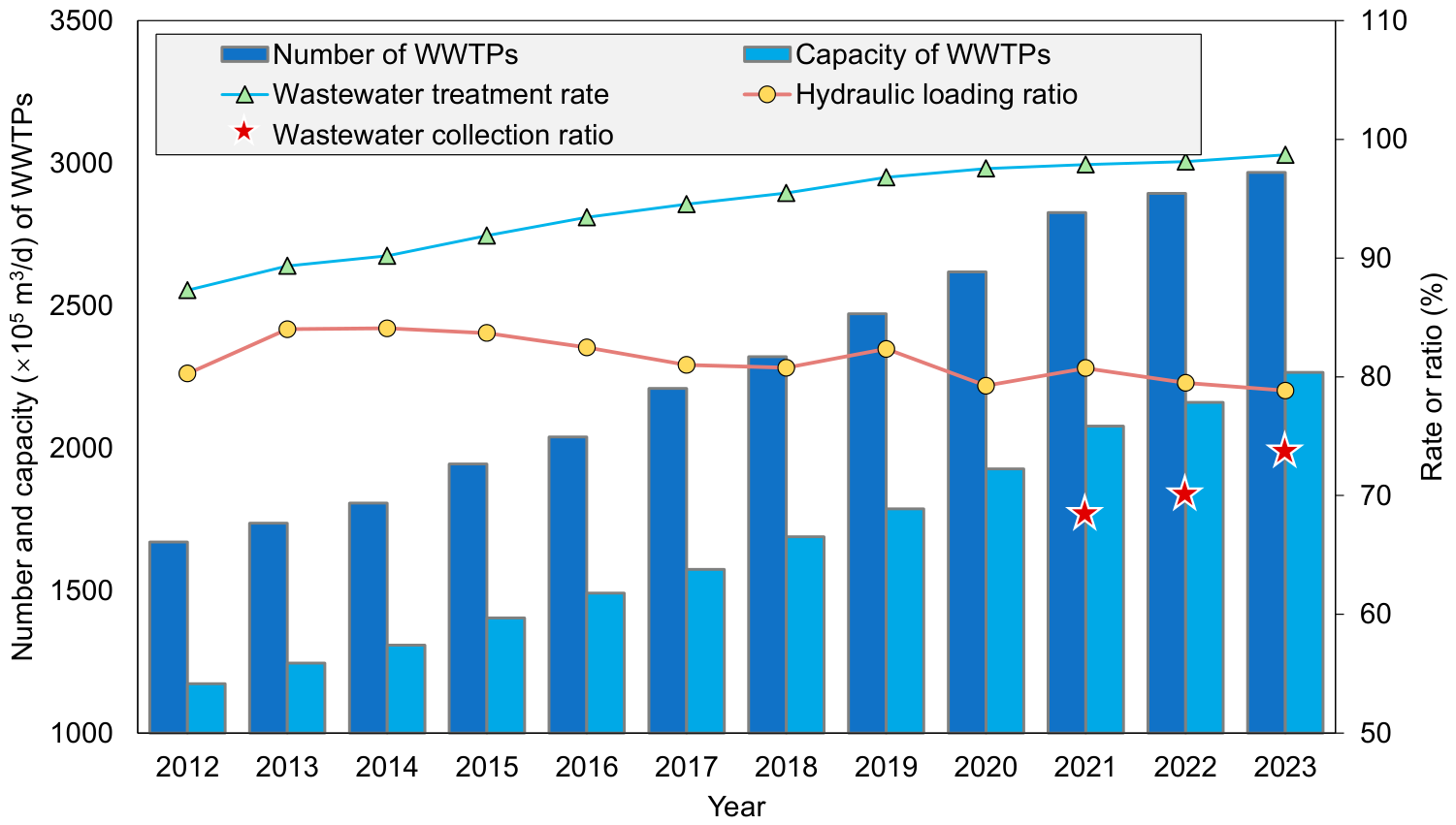
The basic progress of urban wastewater treatment development in China is illustrated in
Figure 1. Over the past decade, key development indicators have shown steady growth. By 2023, the volumes of urban wastewater collected and treated annually were 6.60 × 10
10 and 6.52 × 10
10 m
3/a, respectively [
1]. Compared to 2012, these two performance indicators increased significantly by 58% and 89% and these achievements undoubtedly made key contributions to aquatic environment improvement. The wastewater treatment ratio in 2023 was calculated to be 98.7% and to have steadily increased from 87.3% decades ago. This increase is attributed to the construction of urban WWTPs and expansion of treatment capacity. As depicted in
Figure 1, the number of urban WWTPs under operation reached 2967 with a total treatment capacity of 2.26 × 10
8 m
3/d, increasing by 78% and 93% respectively compared with 2012. In recent decades, the government has put a lot of emphasis on the promotion of WWTP coverage and upgradation, particularly with the
Action Plan for Prevention and Control of Water Pollution released in 2015 [
17], enabling WWTPs to handle the growing volume of discharged wastewater.
However, the urban wastewater collection ratio was still not very high with a value of 74% in 2023 even though it increased in the preceding three years. To pinpoint the possible deficiency, the hydraulic loading ratio of WWTPs was quantified to evaluate capacity satisfaction (
Figure 1). In 2023, national WWTPs were running at 79% of their design capacity on average and it is indicated that WWTPs have additional capacity to receive more wastewater. Additionally, hydraulic loading ratios of urban WWTPs in the past decade present a slight decrease. This means that the investment and expansion rate of WWTPs exceeded the increase in wastewater collection rate [
18]. Wastewater treatment capacity was sufficient to meet the demand of collected wastewater treatment by far.
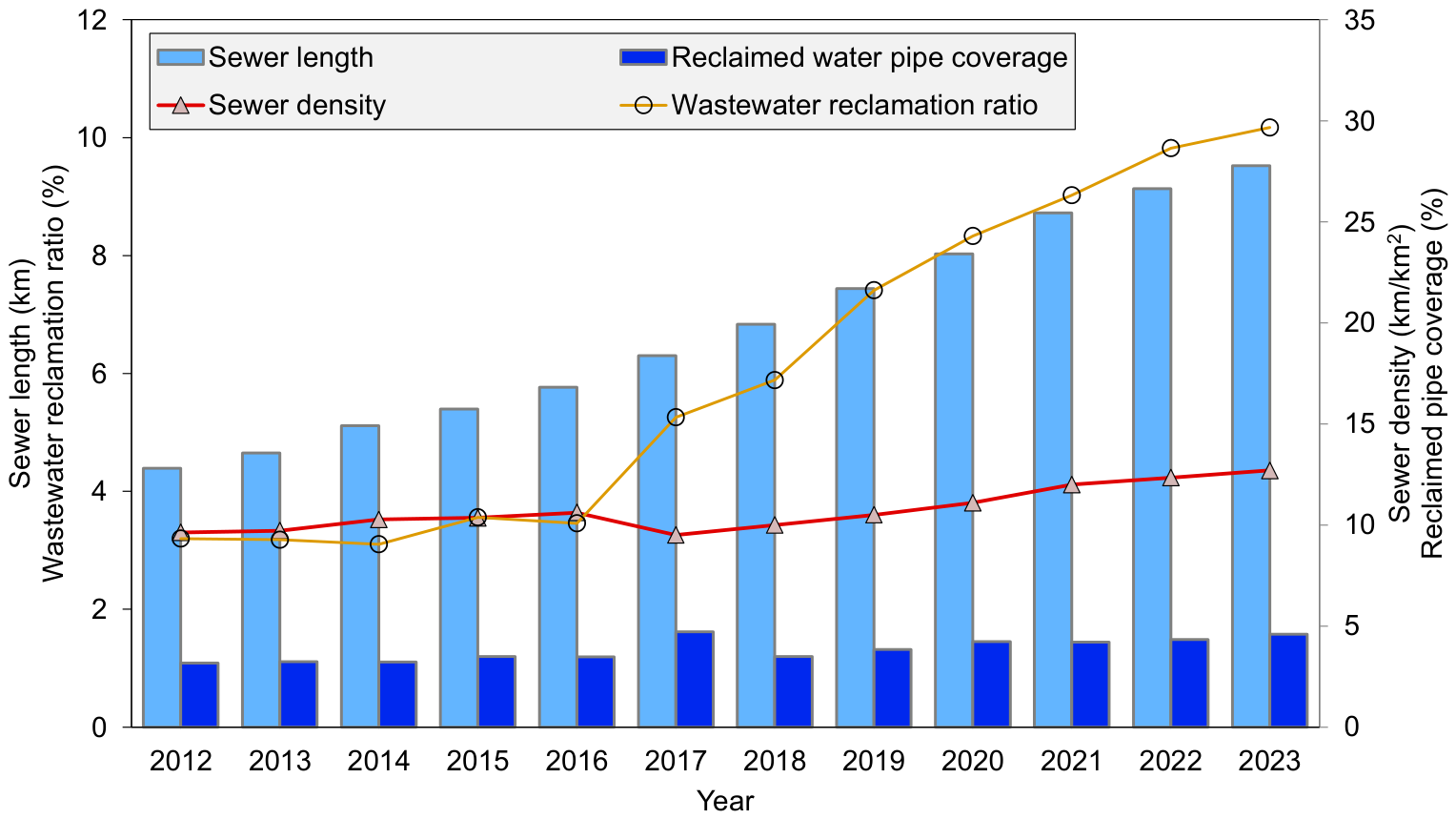
Then, the development progress of urban sewers was evaluated and is summarized in
Figure 2. Sewer length rose significantly while sewer density also presented an increase but only a slight one. The average sewer density was 12.7 km/km
2 in 2023. Although there is not a one-size-fits-all answer to what the ideal sewer length density should be, a correlation between population density (capita/km
2) and specific sewer density (m/capita) configured by Saadatinavaz et al. (2024) can provide a reference [
19]. In 2023, the national urban population density was 2854 capita/km
2, theoretically requiring a 5 m/capita sewer access, while only 2 m/capita is being achieved currently in China. Thus, the construction of urban sewers has failed to keep pace with the increase in wastewater generated. Many other studies also pointed out that the under-developed sewers were a prominent issue limiting urban wastewater collection [
20]. Moreover,
Figure 2 also presents the development and achievement of wastewater reclamation performance which is one of the priorities of urban sustainability in China [
21]. The national average reclamation ratio showed a sharp increase in 2016 and reached 29% in 2023. The 2015
Action Plan obviously played a crucial role in promoting reclamation-related infrastructures. As depicted in
Figure 2, the reclamation pipe length in the water distribution network increased slightly. Overall, wastewater reclamation should be promoted and encouraged to make the water sector more resilient.
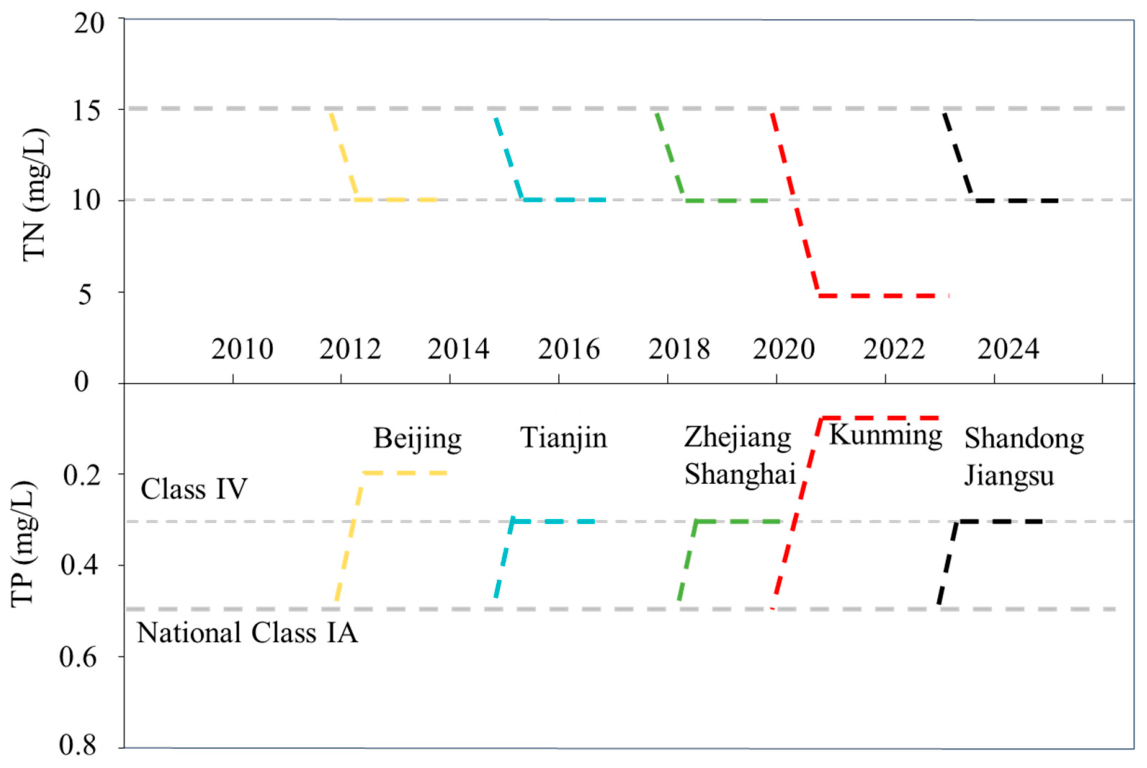
Besides the facility coverage increase, the performance of the wastewater system also made significant progress, particularly regarding discharge standards [
22]. In general, WWTPs should follow the national effluent discharge standard of which the strictest TN and TP limits are 15 and 0.5 mg/L, respectively. Additionally, some provinces/cities also formulated their own local but more stringent standards as summarized in
Figure 3. Most of them reduced the TN limit to 10 mg/L while TP was decreased to 0.3 mg/L with Beijing’s limit being 0.2 mg/L. The nationwide upgrading of WWTP discharge standards, particularly the widespread transition from Class IB to Class IA standards, has significantly improved effluent quality and contributed to water environment protection in many regions. Stricter discharge limits can provide important environmental benefits, including enhanced eutrophication control, improved ecological protection of sensitive receiving waters, and safer reclaimed water utilization. However, recent large-scale upgrading practices in China have also raised concerns regarding uniform or non-context-specific implementation of stringent standards across different regions [
23]. Compared with Class IB standards, Class IA operation generally requires substantially higher electricity consumption, aeration demand, and chemical dosage, increasing operational costs and associated carbon emissions by approximately 20% [
15]. In some regions where receiving water sensitivity, reuse demand, or environmental carrying pressure are relatively limited, the marginal environmental benefits of further effluent upgrading may not fully offset the additional energy consumption and environmental burdens. Therefore, future wastewater treatment upgrading strategies should increasingly emphasize region-specific standards, balancing water quality improvement objectives with lifecycle energy consumption, carbon emissions, and overall environmental sustainability.
It is argued that China has built a system with the world’s largest wastewater treatment capacity [
4]; however, a series of overall defects have been identified. Given the large area of the country, each province/city has specific features in terms of economy level, population density, water resources, and wastewater discharge pattern. As a result, the development and possible shortcomings of the wastewater system in each province/city also present distinct characteristics, thereby requiring different specific actions. Thus, the progress and achievements of drainage facilities among provinces were summarized and analyzed as follows in terms of infrastructure adequacy, operational performance, and adaptive capacity.
3.2. Infrastructure Adequacy of Wastewater System
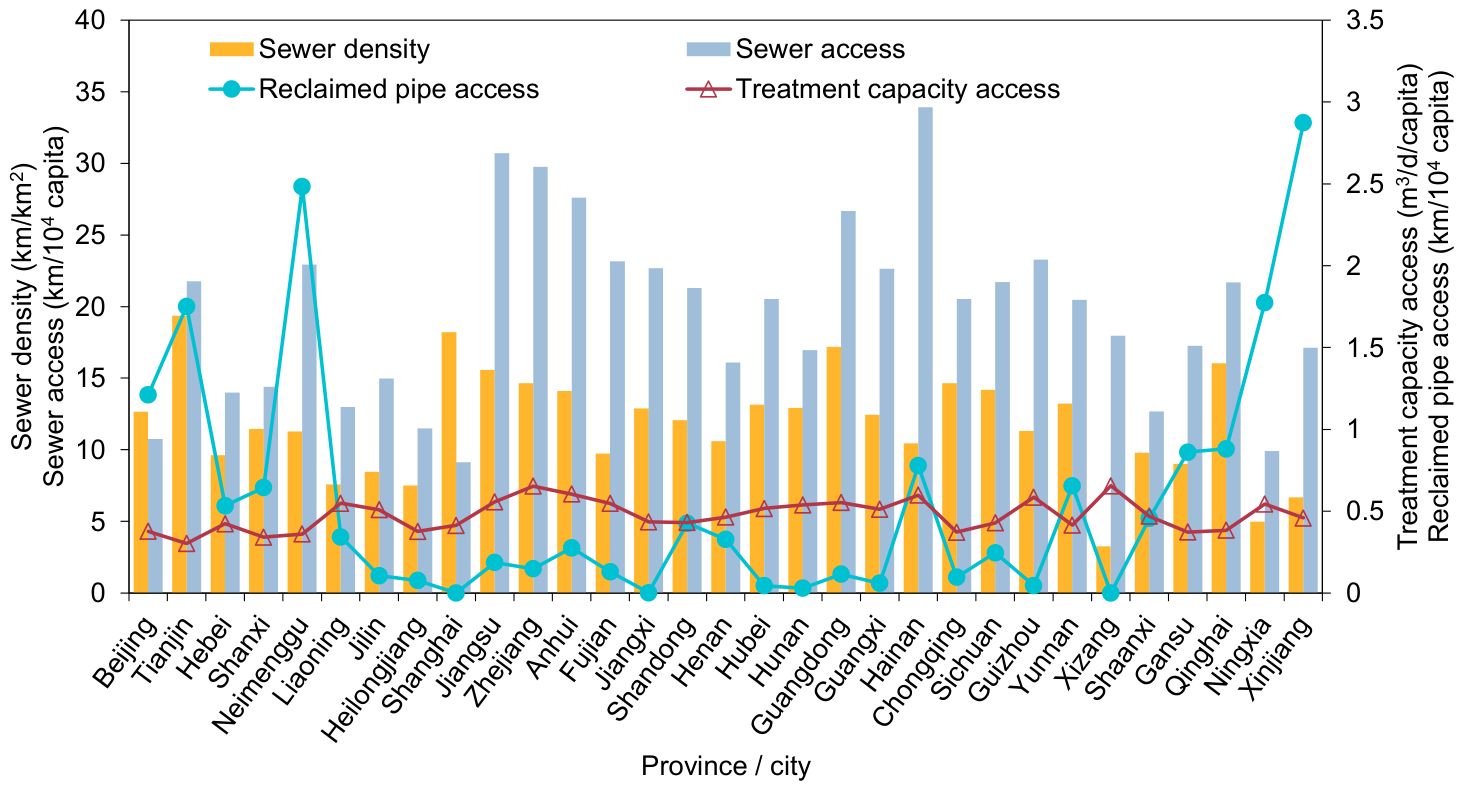
In terms of the construction of sewers and WWTPs, there is high variation across all the provinces/cities. It is easy to understand that the urban built-up areas, populations, and economy levels varied a lot and led to these differences. To eliminate the subjective bias, sewer density (km/km
2), sewer access (km/capita), treatment capacity access (per capita treatment capacity, m
3/(d·capita)), and reclaimed pipe access (km/capita) were selected here to represent the adequacy of wastewater infrastructure and are depicted in
Figure 4. In terms of treatment capacity access, all the provinces demonstrated an insignificant deviation and the level ranged from 0.3 to 0.66 m
3/(d·capita) with an average of 0.48 m
3/(d·capita). Regarding regional disparities, the northern region was statistically lower than eastern and central provinces. In 2023, the average per capita daily water consumption was reported to be 0.188 m
3/(d·capita). Obviously, the treatment capacity accessible for residents was enough and even redundant compared to wastewater generation. This means that the construction and expansion of WWTPs has been given significant and enough emphasis in all provinces over the past decade.
In terms of sewer coverage, the densities and resident access across provinces presented apparent variances. The highest densities were reported in Tianjin with 19.4 km/km
2, followed by Shanghai, Guangdong, and Qinghai achieving ≥16 km/km
2 sewer coverage. In comparison, Xizang, Ningxia, and Xinjiang had the lowest sewer densities of ≤5 km/km
2. Provinces from the northeast China region also commonly had a low density. Regarding sewer access, Hainan province possessed the highest sewer length per capita while Shanghai ranked at the bottom. Hainan is a famous tourist resort where the number of residents has a dramatic seasonal pattern [
24,
25]. The sewers were built to handle peak wastewater volume; thus, the sewer coverage was high but the density was low. Shanghai, on the contrary, has a high population density which attenuated the sewer coverage while leading to a high density.
For cities establishing resilience to cope with climate change, wastewater reclamation is one of the crucial pathways. Thus, it is also selected to reflect the compactness of the wastewater system, termed as reclaimed pipe access. As depicted in
Figure 4, access showed an explicitly spatial variation with Neimenggu, Ningxia, Xinjiang, and Tianjin possessing outstanding achievements. These provinces are all located in the north of China and suffer shortages of water resources and rainfall [
26]. Thus, the construction and coverage of reclaimed pipes is associated with water resource abundance. It is worth noting that Hainan and Yunnan, which generally have abundant water resources, also possessed significant reclamation pipes. In comparison, those provinces with top-ranked Gross Domestic Product (GDP), on the contrary, did not get the corresponding reclaimed pipe investment, such as Shanghai and Guangdong. Further, correlation analyses indicated that no statistically significant correlations were observed between reclaimed pipe access and several socioeconomic indicators (
Table S4), including population density and GDP [
27]. This result suggests that the expansion of reclaimed water infrastructure in China is not purely determined by economic intensity or urban density, but is also substantially shaped by regional policy priorities, water resource constraints, and government-led infrastructure planning [
28]. For example, reclaimed water utilization has been incorporated into multiple national and provincial policy frameworks, including Five-Year Plans, water-saving city evaluations, and urban sustainability assessment systems, thereby promoting wastewater reuse infrastructure construction in many regions. In particular, northern water-scarce regions generally demonstrated stronger motivation for reclaimed water development due to increasing pressure on freshwater resources, whereas some water-abundant southern provinces exhibited comparatively lower reclaimed water integration despite relatively high levels of urbanization and economic development [
28].
3.3. Operational Performance of Wastewater System
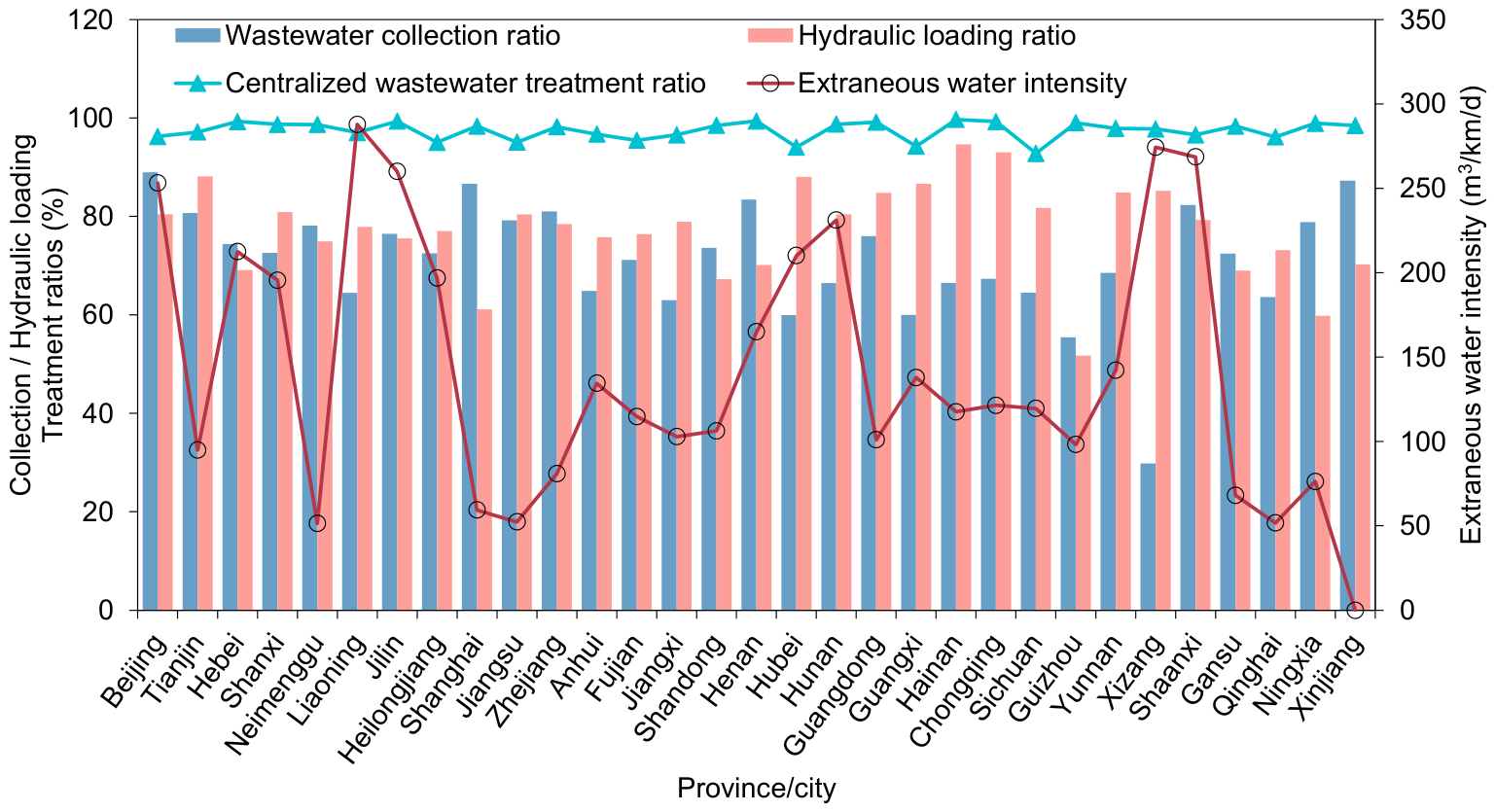
As stated above, the performance here refers to the wastewater quantity handled, operation efficacy and environmental impacts as summarized in
Figure 5 and
Figure 6. In 2023, it is reported that the national wastewater treatment collection ratio was 73.6% [
29]. At the provincial level (
Figure 5), significant regional variations and gaps can be observed across major provinces and cities in China. Beijing had the best performance and 88% of urban wastewater was collected. However, there were only seven provinces in total, including Beijing, Shanghai and Xinjiang, that achieved ≥80% wastewater collection. In comparison, 18 provinces (58%) had collection ratios inferior to the national average level while Xizang, Guizhou, and Hubei had significant gaps with collection ratios of less than 60% of wastewater generated. Overall, provinces in central and southwestern regions demonstrated an insufficient wastewater collection performance in comparison with northwestern and northern China. Correlation analysis (
Table S4) further showed that wastewater collection ratios were positively correlated with GDP per capita and population density, indicating that economically developed and highly urbanized regions generally possess more integrated sewer systems and higher collection efficiency.
Interestingly, wastewater collection ratios were negatively correlated with both WWTP density and per capita wastewater treatment capacity. This counterintuitive relationship suggests that insufficient wastewater collection in some provinces is not primarily caused by inadequate treatment capacity, but rather by weak coordination between sewer systems and treatment infrastructure. In many regions of China, particularly less urbanized or geographically dispersed areas, WWTPs have expanded more rapidly than sewer network systems [
30] under policy-driven infrastructure construction. In addition, provinces with higher WWTP density often rely on smaller and decentralized treatment facilities due to dispersed urban morphology or complex topography, which may further limit centralized wastewater collection efficiency.
Although the wastewater collection ratio remains to be improved, the wastewater systems in all provinces had centralized wastewater treatment ratios of ≥90% in 2023 with the lowest level reported in Sichuan (
Figure 5). The variations across provinces were not significant and half of the provinces achieved 98% or higher collection ratios. As presented in
Figure 5, the hydraulic loading ratio indicates that the treatment capacity of plants in each province were abundant and could have handled more wastewater. From another perspective, this means that wastewater handled in plants did not reach their design capacity, which is also an important performance indicator for WWTPs and could lead to unsatisfying pollutant removal and energy efficiency [
31]. The hydraulic loading ratios of WWTPs across provinces were all below 100%. Of these, only two provinces were running WWTPs above 90% of their design capacities, i.e., Hainan and Chongqing. WWTPs in six provinces received wastewater accounting for less than 70% of their treatment capacity. In particular, Guizhou reported a 50% hydraulic loading ratio and half of the treatment capacity was wasted. This is partly attributed to weak coordination between sewer systems and treatment infrastructure as discussed above. As a result, some provinces exhibit relatively high treatment capacity but insufficient wastewater conveyance and collection efficiency, leading to low hydraulic loading rates and underutilized treatment facilities.
Extraneous water infiltration refers to the unwanted entry of water into the sewers from sources other than typical domestic wastewater [
9]. This water reduces the system’s capacity and can lead to various problems, including sewer overflows and increased treatment costs. In 2023, the national average extraneous water ratio was calculated to be approximately 37% [
32] with significant variations across major provinces. To minimize the bias from population density and flow variations, extraneous water intensity is more accurate to make comparison across provinces. As depicted in
Figure 5, the extraneous water intensities fluctuated dramatically with the highest intensity of 287.9 m
3/(km·d) reported in Liaoning. Another seven provinces including Beijing had a severe operation condition with intensities higher than 200 m
3/(km·d). By contrast, nine provinces including Zhejiang, Jiangsu, and Shanghai unexpectedly demonstrated relatively promising sewer operation with an infiltration intensity of less than 100 m
3/(km·d). The lowest water infiltration intensities were reported in Qinghai and Neimenggu. It is estimated that the extraneous water intensity of Shanghai was 134 m
3/(km·d) [
33]. Generally, the sewers in southern regions are more susceptible to extraneous water invasion due to more rainfall and high groundwater levels. However, ANOVA analysis showed an insignificant disparity between southern and northern provinces.
Overall, the average extraneous water intensity in China was 141 m
3/(km·d). In comparison, the infiltration intensity in Germany was reported at 12.5 m
3/(km·d) [
34]. The markedly higher infiltration intensity observed in China may therefore be associated not only with infiltration severity itself, but also with differences in infrastructure development stages and sewer network scale. Germany possesses a highly mature and extensive sewer network system, allowing infiltration flows to be distributed across a substantially larger and denser pipeline network. By contrast, China’s urban sewer systems are still undergoing rapid expansion and densification, and sewer network coverage in many cities remains insufficient relative to treatment capacity development. Consequently, comparable levels of extraneous water intrusion may generate substantially higher infiltration intensity when normalized by pipeline length. This finding further indicates that sewer network expansion and rehabilitation remain critical priorities for improving wastewater system coordination and hydraulic efficiency in China. High levels of extraneous water infiltration cause numerous problems, including overflow pollution, the collection of unnecessary wastewater, and increased loading on WWTPs [
35]. In particular, extraneous water dilutes wastewater, resulting in a lower COD concentration in the influent to WWTPs. The average COD concentration of influent in China’s urban WWTPs is 267 mg/L, but in some southern regions, it is as low as 35 mg/L [
11]. Therefore, it is crucial to address these issues in sewer systems and support the upgrading of WWTPs.
With the implementation of the dual-carbon goal in China, GHG emissions of WWTPs are expected to be regulatorily benchmarked alongside the discharge standard [
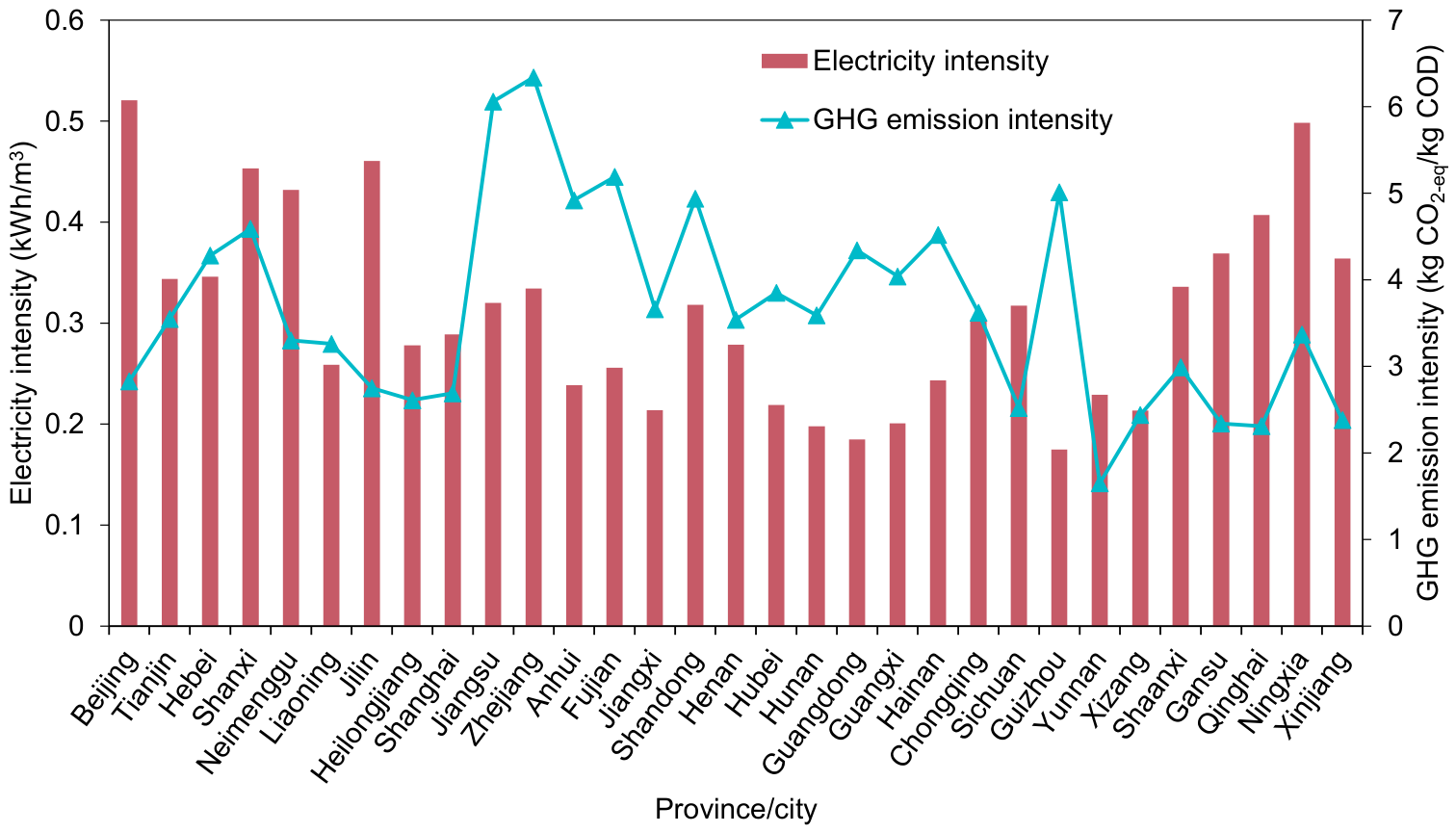
36]. Thus, energy consumption intensity and GHG emission intensity were selected to represent indirect and direct emissions. As presented in
Figure 6, electricity consumption intensities presented an explicit pattern of low in the middle and high at both ends. ANOVA analysis also verified the significant differences among different regions (
p < 0.05). Northern China and southeastern regions had an average intensity of 0.4 kWh/m
3, which was higher than other regions, while Eastern and Central China showed a low intensity of 0.22 kWh/m
3. Beijing needed the highest electricity requirement of 0.52 kWh/m
3 while Guizhou had the lowest electricity input to purify one unit of wastewater (0.17 kWh/m
3). By contrast, GHG emission intensity presented an opposite pattern. Eastern and central China had a higher emission intensity while northwestern and northeastern regions had low-carbon operation of WWTPs. Jiangsu and Zhejiang had the highest GHG emission intensities of above 6 kg CO
2-eq/kg COD, while their electricity consumption intensities were at a low level. This discrepancy is primarily associated with the different functional units used for indicator normalization (wastewater volume or influent COD). The lower electricity consumption intensity in eastern and central provinces generally reflects relatively favorable operational conditions. However, these regions usually have a low influent COD concentration associated with sewer dilution and extraneous water infiltration [
11]. This leads to comparatively higher GHG emission intensity per unit COD. By contrast, WWTPs in northern regions, particularly northeastern and northwestern China, typically receive wastewater with higher influent COD concentrations, resulting in comparatively lower GHG emission intensity per unit COD despite relatively higher electricity consumption intensity per unit wastewater volume.
3.4. Adaptive Capacity of Wastewater System
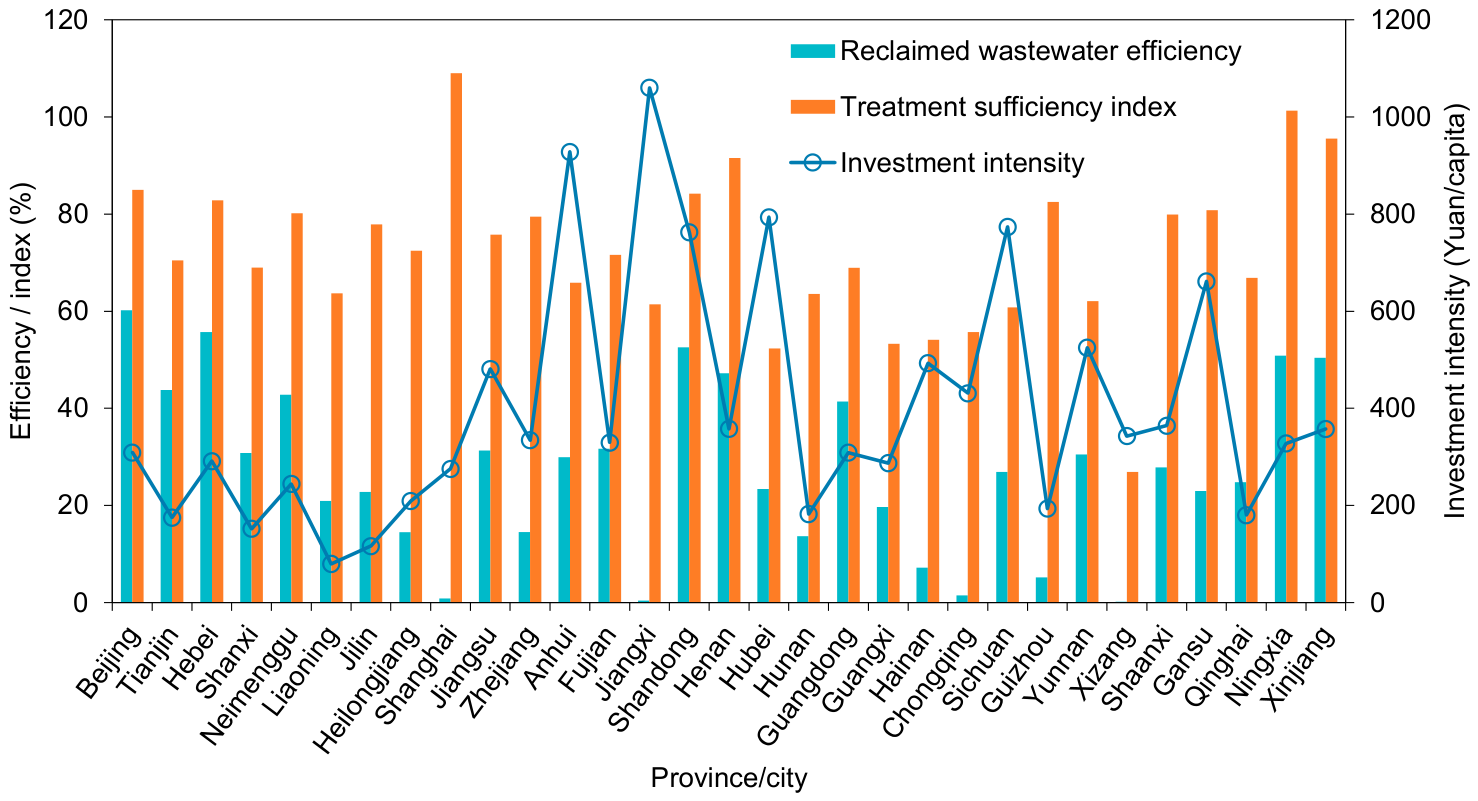
The general low hydraulic loading ratios of WWTPs in China means forward-looking development of treatment capacity is needed. Given the deficiencies in wastewater collection (73.6% in 2023), the redundant treatment capacities offer a resilient capacity to receive more wastewater which is defined as the treatment sufficiency index as depicted in
Figure 7. If 100% wastewater could be collected, almost all areas but Shanghai and Ningxia would not have the ability to handle it. Shanghai and Ningxia are just able to meet the treatment requirement (≥100%) while Xizang is far away from reaching a sufficient treatment capacity. On a regional level, northwestern areas performs relatively better and can receive about 85% of the total volume of wastewater. Central and southwestern provinces have great discrepancies in their ability to support wastewater collection increase. Overall, a national average sufficiency index of 72% was obtained and means continuous investment in and construction of wastewater management infrastructure are essential [
22]. Although investment intensity is highly associated with development status, industrial compositions, and wastewater facility adequacy, it reflects a city’s long-term commitment to environmental protection and water management. Obviously, investment intensities also presented regional variations with eastern China obtaining the highest funding input. This is probably associated with their developed economy which means high per capita GDP as well as pressure to improve the water environment. Additionally, northeastern and northern China had shortages in investment input.
In terms of reclaimed wastewater efficiency, an average national level of 27% in 2023 was achieved (
Figure 7). Northern and Northwestern China performed the best, particularly Beijing, Hebei, Ningxia, and Xinjiang, all reclaiming more than 50% wastewater. Shandong also achieved a significant level. In comparison, southwestern and northeastern China demonstrated large gaps compared to the national average level. This is probably due to the abundant water resources in these two regions. It is noteworthy that some provinces like Shanghai, Jiangxi, Chongqing, and Xizang were reported to have achieved as low as 1% wastewater reclamation efficiencies and efforts remain to be implemented.
It should be noted that the development of and regional variation in wastewater reclamation systems are closely associated with the intended end-use objectives of reclaimed water [
37]. Different reuse scenarios, such as agricultural irrigation, industrial reuse, ecological replenishment, and urban non-potable applications, require distinct treatment standards, distribution infrastructures, and investment priorities. In northern and water-scarce regions of China, including Beijing, Ningxia, and Xinjiang, reclaimed water has become an important alternative water resource, thereby promoting relatively higher reclamation ratios and reclaimed water network coverage. By contrast, in water-abundant southern regions, the driving force for large-scale wastewater reuse remains comparatively weaker. Nevertheless, wastewater reclamation in this study is considered as a component of adaptive capacity rather than the dominant determinant of wastewater system development. The overall development status of wastewater systems is jointly influenced by multiple factors, including sewer infrastructure adequacy, operational effectiveness, hydraulic utilization, investment intensity, and regional environmental conditions. In addition, previous studies have shown that the expansion of wastewater reuse systems is frequently constrained by institutional, economic, technological, and social barriers [
37]. The multidimensional framework proposed in this study can help identify region-specific bottlenecks and support differentiated strategies for future wastewater system upgrading, including reclaimed water integration where appropriate.
Interestingly, no clear nationwide spatial pattern was observed for wastewater infrastructure investment intensity. Provinces including Jiangxi, Anhui, Hubei, Shandong, Sichuan, and Gansu exhibited the highest per capita investment levels, whereas the overall investment intensity in northern China remained comparatively low. Correlation analysis (
Table S4) further showed that investment intensity was significantly associated with per capita sewer pipeline length, while no statistically significant relationship was identified with GDP per capita or population density. These findings suggest that wastewater infrastructure investment in China is increasingly driven by sewer network expansion and rehabilitation requirements rather than solely by regional economic development levels.
3.5. Policy and Optimization Specifications Across Provinces
Hierarchical cluster analysis classified the provincial wastewater systems into four distinct groups according to their multidimensional characteristics in infrastructure adequacy, operational performance, and adaptive capacity (
Table 1). The clustering results revealed pronounced regional heterogeneity in wastewater system development pathways and suggested that provinces are constrained by different structural bottlenecks, thereby requiring differentiated optimization strategies.
Group 1 included Beijing, Hebei, Fujian, Shandong, Hubei, Sichuan, Ningxia, and Shaanxi. Provinces in this group generally exhibited relatively balanced development across the three dimensions, with moderate-to-high operational performance scores ranging from 0.49 to 0.58 and comparatively strong adaptive capacity. In particular, Shandong and Ningxia showed adaptive capacity scores exceeding 0.65, reflecting stronger reclaimed water utilization and infrastructure investment intensity. Most provinces in this group are located in northern and central China, where increasing water resource constraints and environmental pressure have accelerated wastewater reuse and system upgrading. However, infrastructure adequacy in several provinces remained moderate, indicating that sewer network rehabilitation and improved coordination between conveyance systems and treatment facilities remain important priorities. For highly urbanized municipalities such as Beijing, future optimization should increasingly emphasize low-carbon operation, intelligent infrastructure management, and reclaimed water integration.
Group 2 consisted of Shanxi, Liaoning, Jilin, Heilongjiang, Hunan, Guangxi, Xizang, Qinghai, and Tianjin. This group was characterized by comparatively low adaptive capacity, with most provinces showing scores below 0.35. In particular, Xizang exhibited the lowest adaptive capacity score nationwide (0.10), reflecting substantial limitations in wastewater reuse infrastructure and long-term investment support. Operational performance within this group was relatively moderate, with scores generally ranging from 0.52 to 0.65, while infrastructure adequacy remained uneven among provinces. Spatially, this cluster mainly included northeastern and western provinces, where complex topography, lower economic intensity, and dispersed urban development may constrain wastewater infrastructure upgrading and system integration. Therefore, future policy priorities for this group should focus on strengthening adaptive capacity through sustained infrastructure investment, sewer rehabilitation, and flexible wastewater management strategies under changing environmental conditions.
Group 3 included Inner Mongolia, Shanghai, Jiangxi, Henan, Guangdong, Chongqing, Yunnan, Gansu, Xinjiang, and Hainan. Provinces in this cluster generally demonstrated strong operational performance, with several provinces exhibiting scores above 0.70. Guangdong achieved the highest operational performance score nationwide (0.76), followed by Hainan (0.74) and Chongqing (0.72), indicating relatively effective wastewater collection and hydraulic utilization. This group displayed substantial geographical diversity, including both economically developed coastal regions and less-developed inland provinces. Adaptive capacity varied considerably among provinces, ranging from 0.24 to 0.64, suggesting uneven progress in reclaimed water integration and long-term infrastructure preparedness. Economically advanced municipalities such as Shanghai and Guangdong have increasingly shifted toward operational optimization and low-carbon management, whereas western provinces such as Gansu and Yunnan still require further improvement in infrastructure coordination and operational stability.
Group 4 comprised Jiangsu, Zhejiang, Anhui, and Guizhou. Provinces in this group generally exhibited the highest infrastructure adequacy nationwide, with scores ranging from 0.53 to 0.66. Hainan, Jiangsu, Zhejiang, and Guizhou demonstrated particularly high infrastructure adequacy, reflecting extensive sewer network coverage and wastewater treatment accessibility. This cluster was dominated by provinces from the Yangtze River Economic Belt and eastern China, where rapid urbanization and strong economic development have supported continuous infrastructure expansion. However, despite their strong infrastructure foundation, adaptive capacity in several provinces remained relatively limited compared with their infrastructure adequacy. For example, Zhejiang and Guizhou exhibited adaptive capacity scores below 0.37 and 0.28, respectively, indicating that future development should increasingly prioritize reclaimed water utilization, adaptive planning, and sustainable operational upgrading rather than continued infrastructure expansion alone.
Overall, the clustering analysis indicated that China’s wastewater sector is entering a transition stage from infrastructure expansion toward system-oriented renewal. Clear regional patterns were observed among the four groups. Eastern coastal provinces generally exhibited stronger infrastructure adequacy and operational performance due to earlier urbanization and sustained investment, whereas western and northeastern regions were more constrained by insufficient adaptive capacity and infrastructure coordination. Northern water-scarce regions tended to demonstrate relatively stronger adaptive capacity associated with reclaimed water development, while some southern water-abundant provinces showed comparatively lower motivation for wastewater reclamation integration. These findings suggest that future wastewater management in China should move beyond uniform infrastructure expansion and adopt differentiated regional strategies emphasizing sewer rehabilitation, operational optimization, reclaimed water integration, and adaptive infrastructure planning according to local developmental conditions and resource constraints.