

High-Resolution Site Characterization (HRSC) for Pollution Investigation of Petrochemical Enterprises: Integrated Technology Application and Validation

Abstract
1. Introduction
2. Methodology
2.1. Overview of the Research Area
2.2. Technology Portfolio Design
2.2.1. Technical Design Concept
2.2.2. Detection of Microbial Metabolic Gases and Functional Genes in Topsoil
2.2.3. Time-Domain Magnetotelluric and Ground-Penetrating Radar Detection
2.2.4. Membrane Interface Probe (MIP) Investigation
2.3. Supplementary Investigation of Drilling
3. Results
3.1. Characterization of Spatial Heterogeneity in Pollution
3.1.1. Characterization of Functional Genes and Metabolic Gas Heterogeneity in Topsoil
3.1.2. Heterogeneous Characterization of Geophysical Investigation
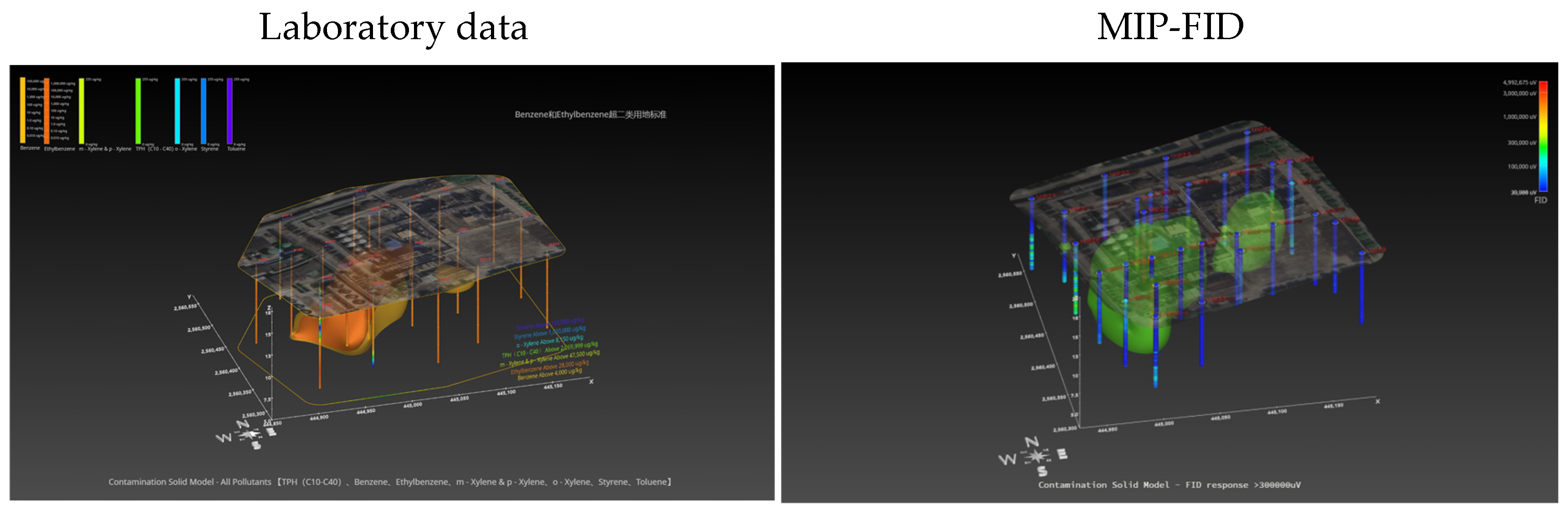
3.1.3. Heterogeneous Characterization of MIP Investigation
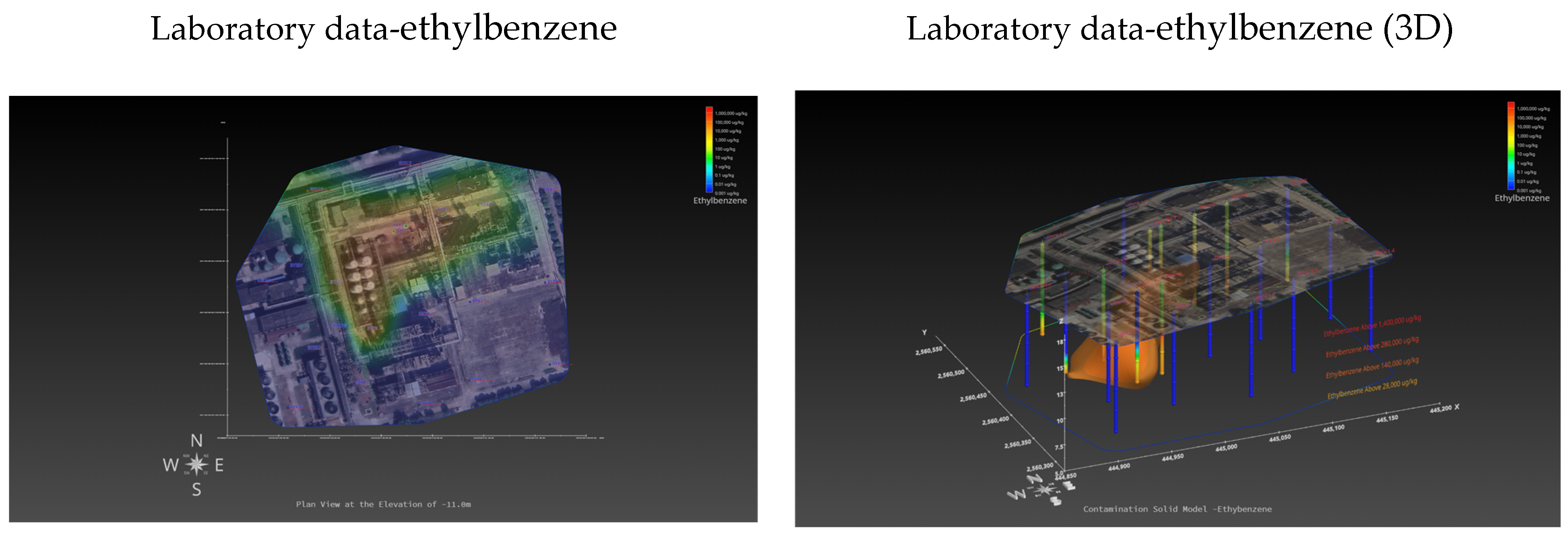
3.1.4. Characterization of the Pollution Plume by Supplementary Drilling
3.2. Comparison of Technical Precision
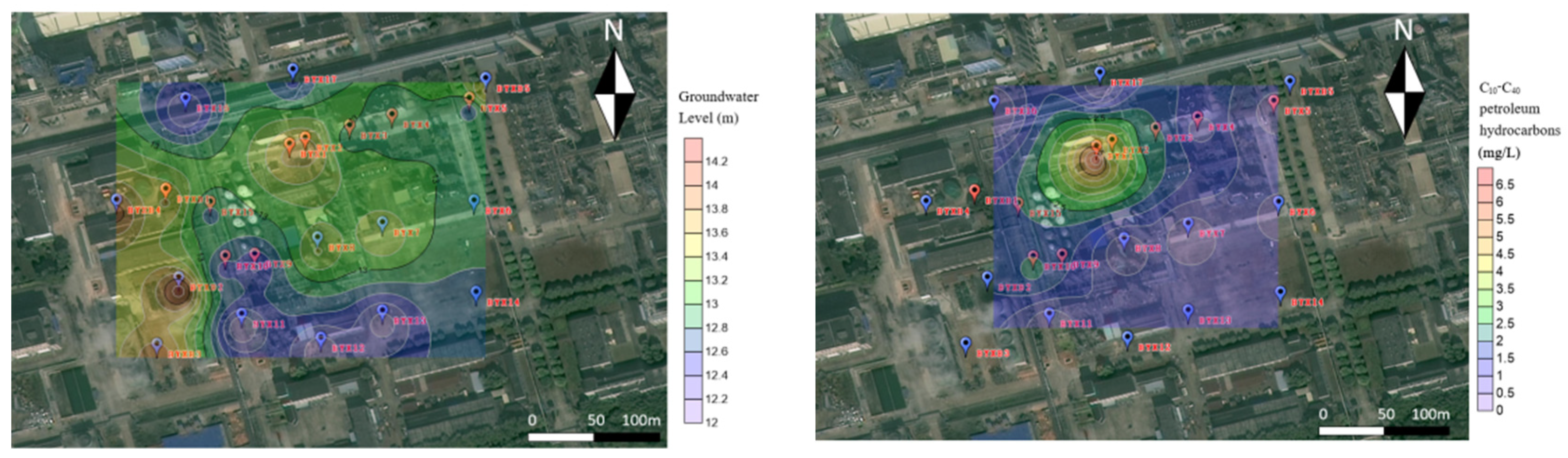
3.3. Pollution Source Tracing and Verification
4. Discussion
4.1. Analysis of Technical Applicability
4.2. Economic and Efficiency Balance
4.3. Industry Application Challenges
5. Conclusions
- (1)
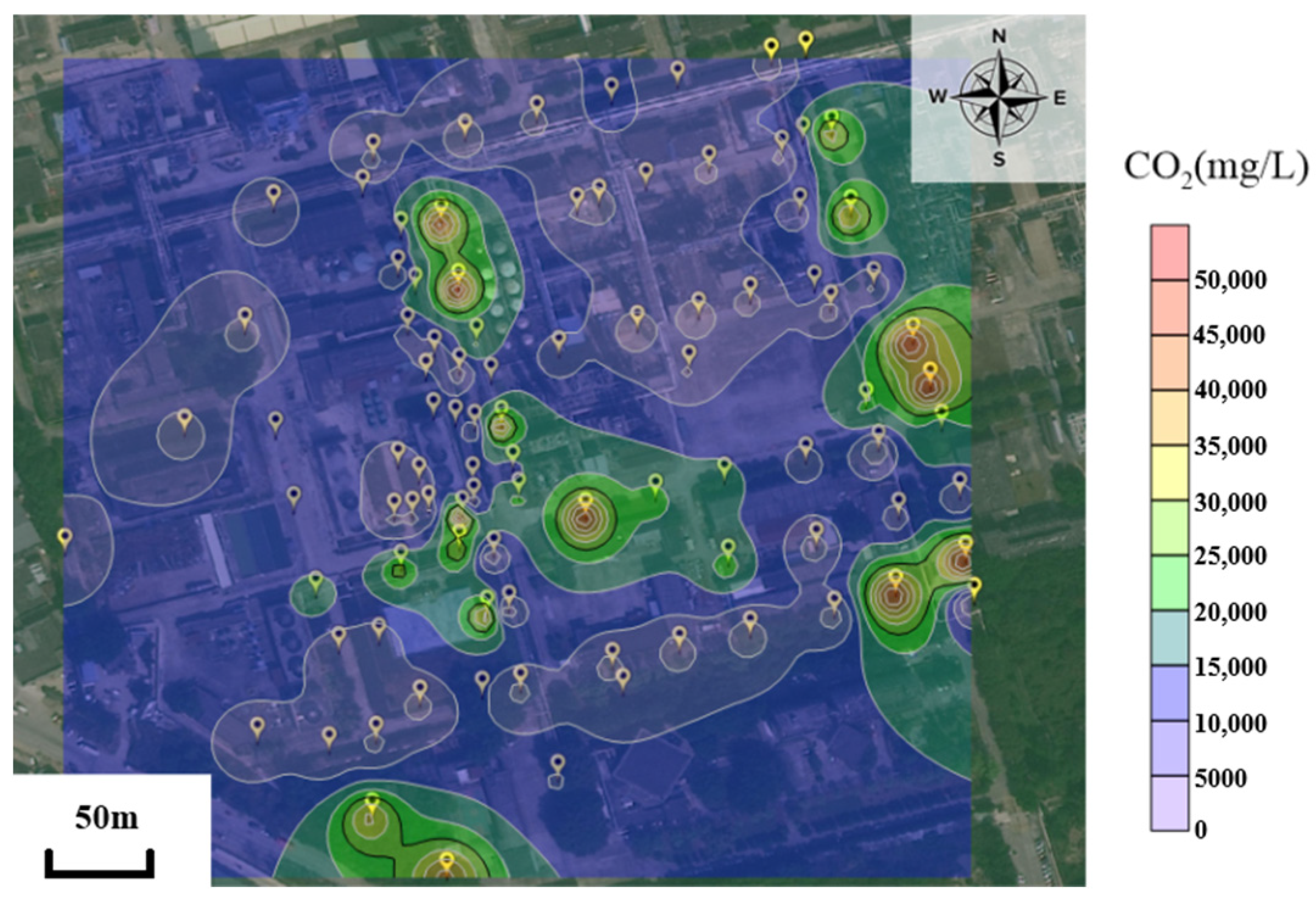
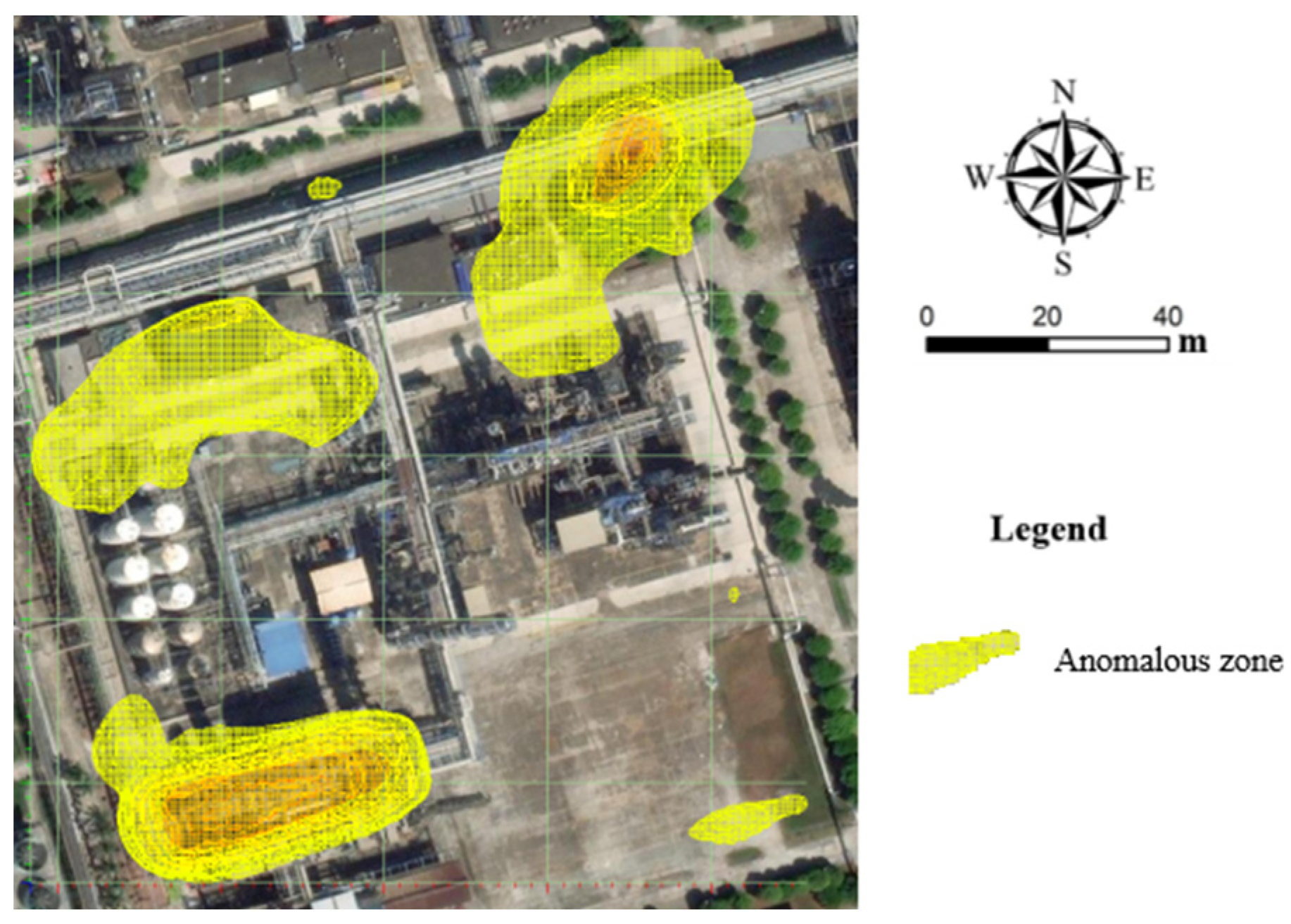
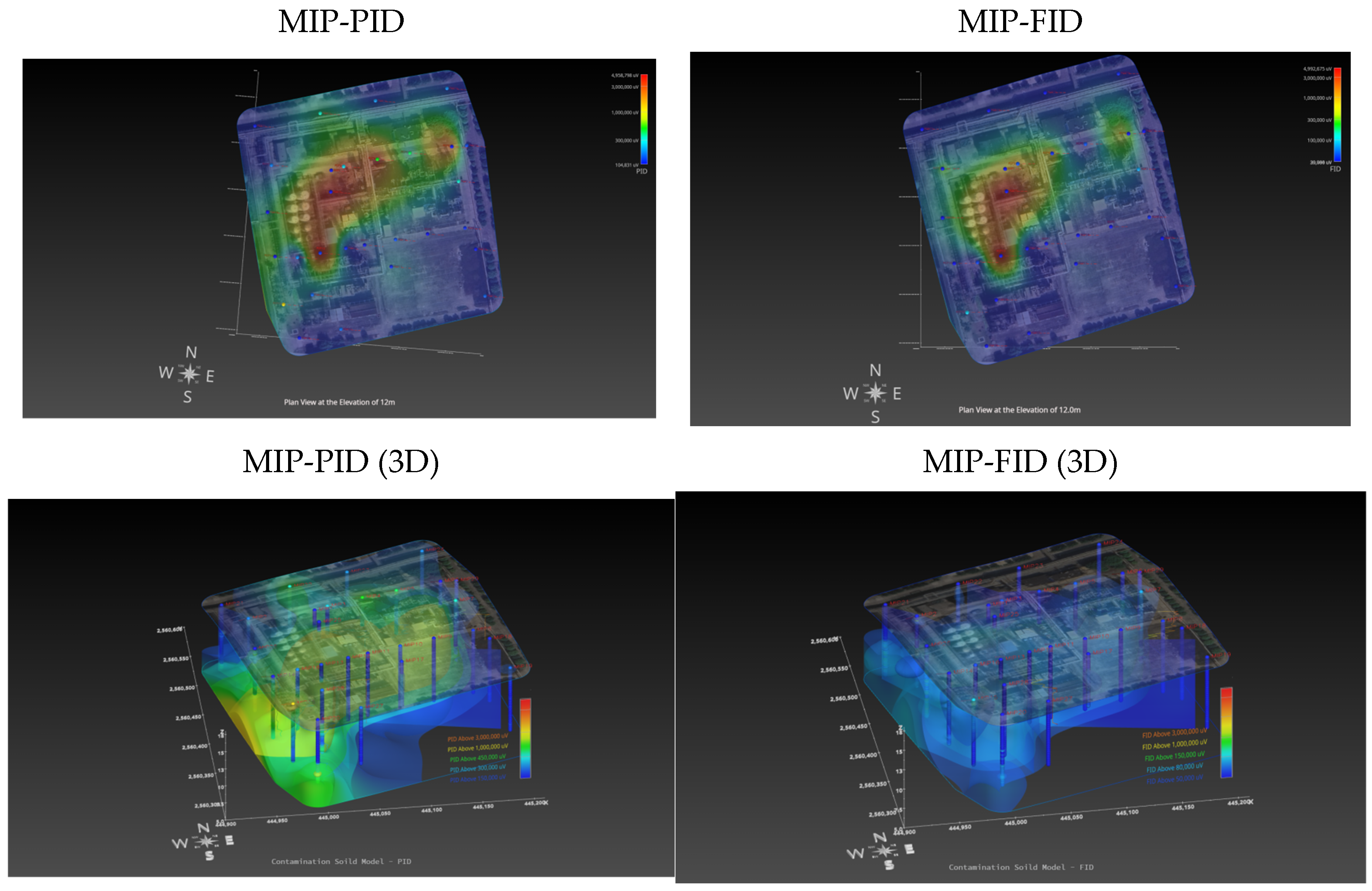
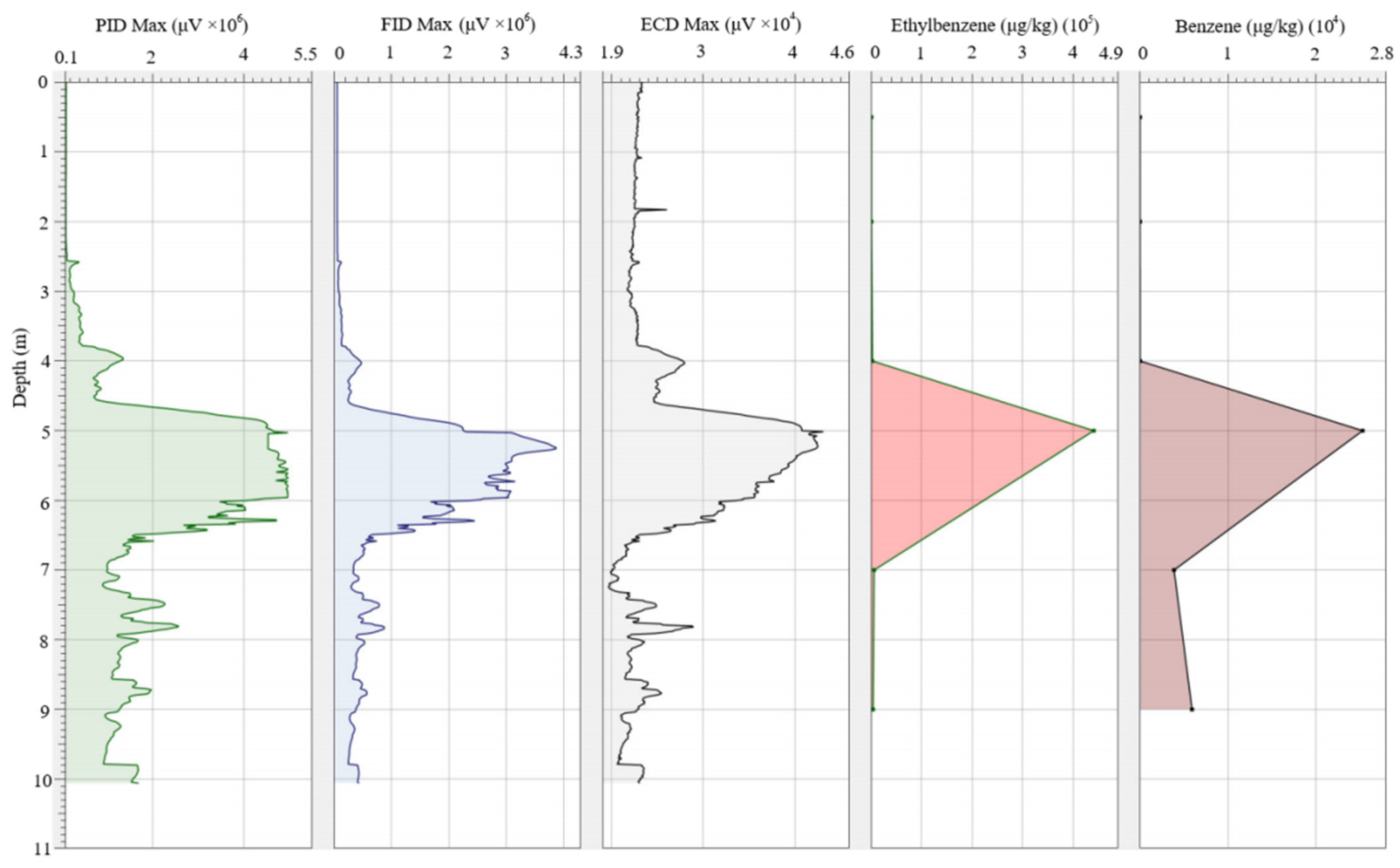
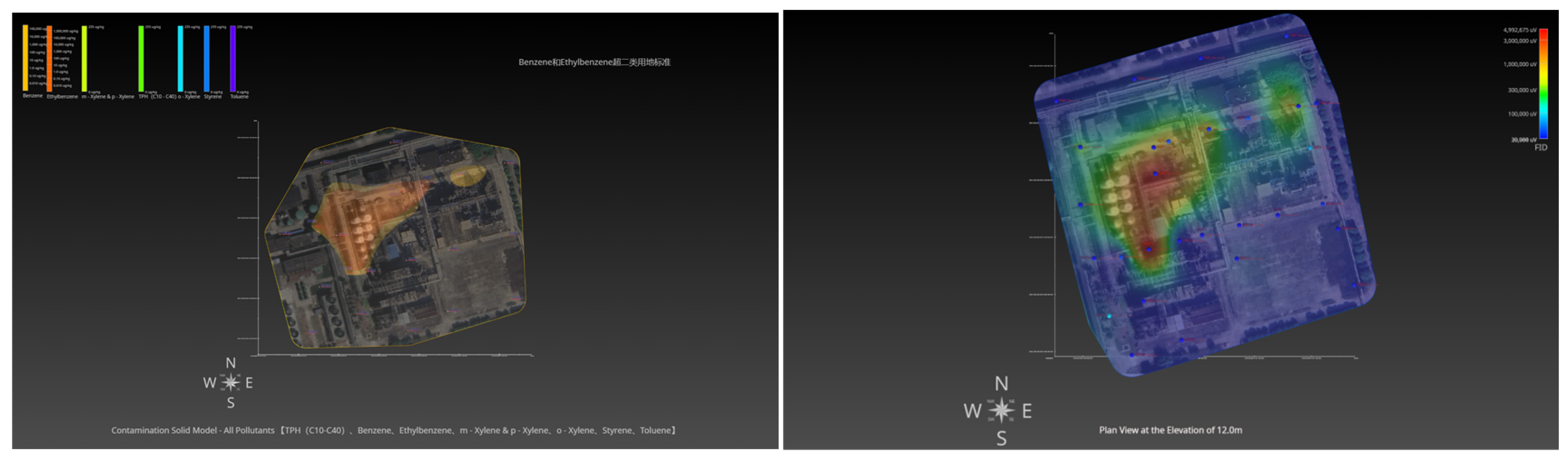
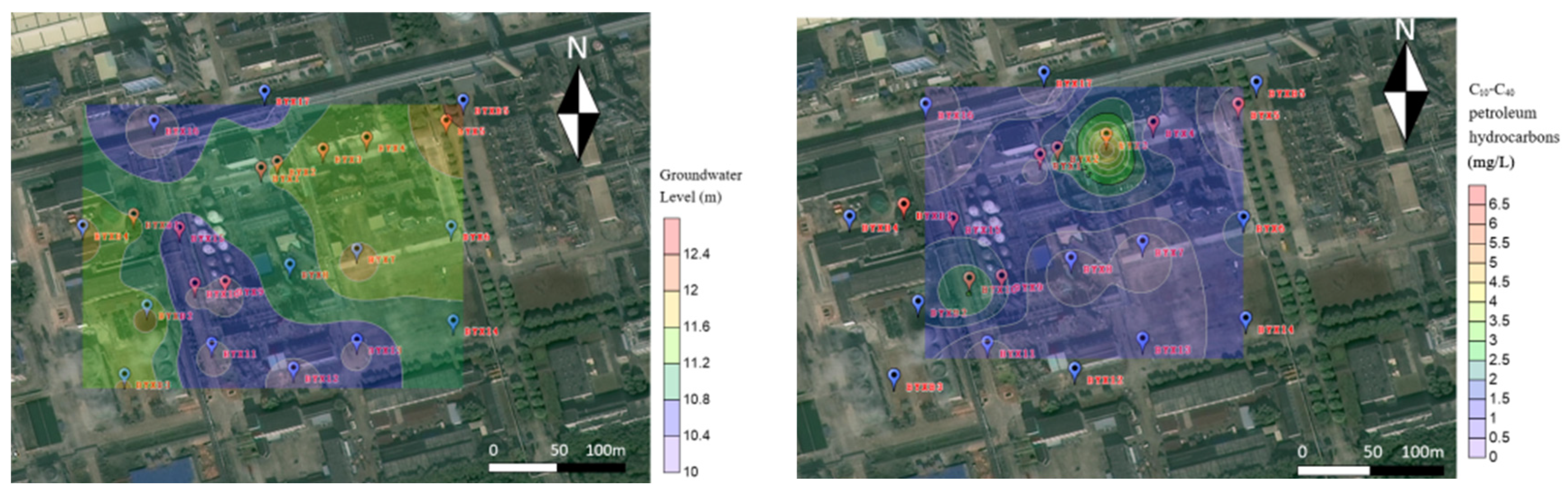
- Through the combined application of surface soil microbial metabolic gas and functional gene detection, coupled with rapid geophysical screening techniques, a composite contamination scenario involving aromatic hydrocarbons, short-chain petroleum hydrocarbons, and alkanes was identified. In the process of testing at an operating oil plant in China, both methods indicated that the potential key contaminated areas were the product tank farm and the southwestern installation area. Supplementary investigations utilizing MIP technology delineated a heavily contaminated zone of approximately 1163 m2, with a total contaminant influence area of about 17,724 m2. Contamination was primarily concentrated at depths between 5 m and 9 m below ground level. The HRSC approach achieved a breakthrough in contaminant plume resolution, advancing from the meter scale to the centimeter scale.
- (2)
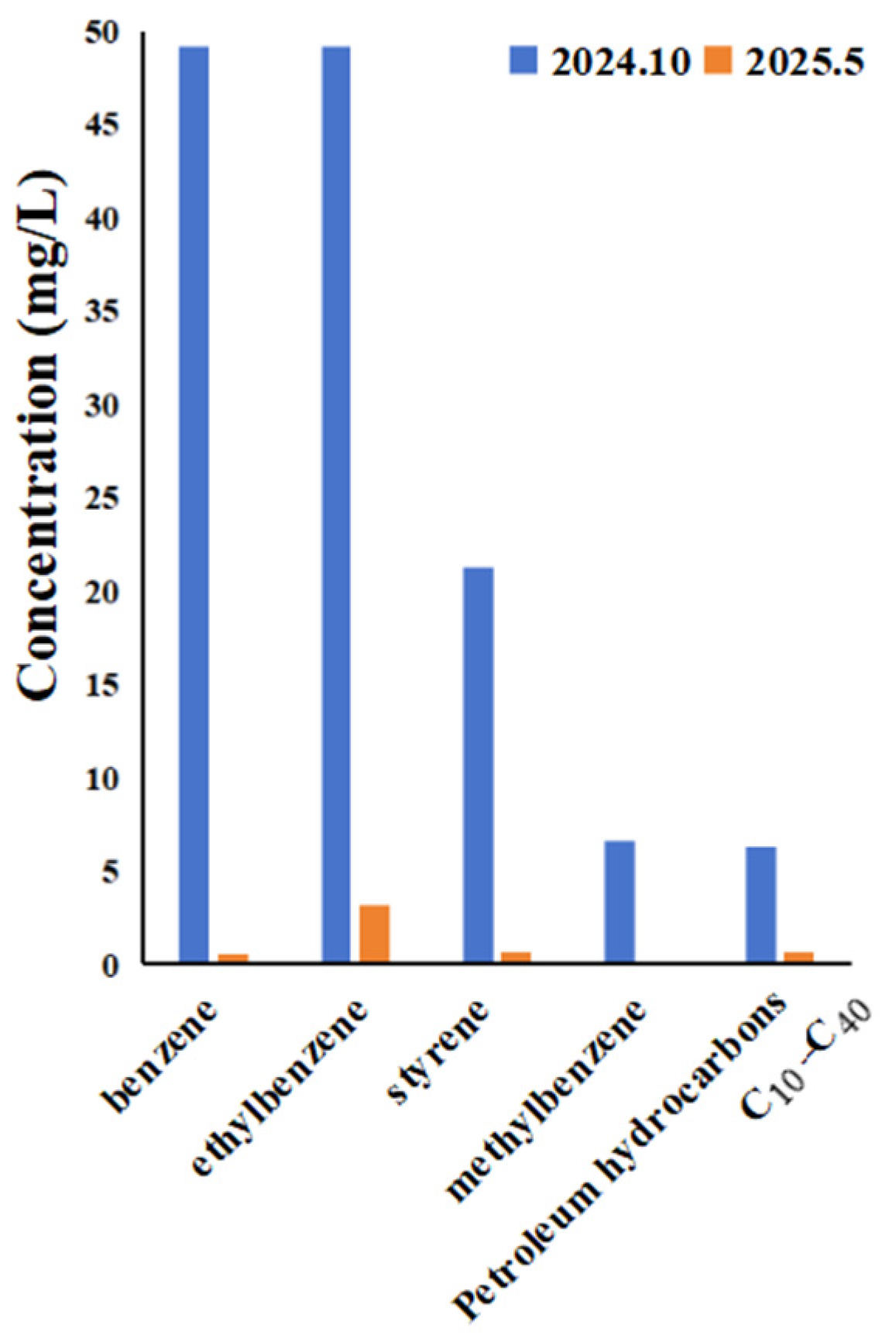
- The contamination zones identified by minimally intrusive investigation techniques were consistent with those delineated by MIP and traditional drilling investigations. The high sensitivity of these methods played a crucial role in effective contamination screening during the high-resolution survey. A comparison of vertical contamination profiles and three-dimensional distribution patterns demonstrated a strong correlation between MIP data and laboratory analytical results. Based on the HRSC-derived source identification, the enterprise implemented a liner repair and anti-seepage remediation of the underground wastewater pond. Subsequently, the groundwater flow field returned to its natural state, and contaminant concentrations at the core of the plume decreased, confirming that leakage from the wastewater pond was the primary contamination source. This dual verification system—“laboratory data comparison and contamination source tracing”—demonstrates the high reliability of the HRSC methodology and its technical foundation for accurate source identification.
- (3)
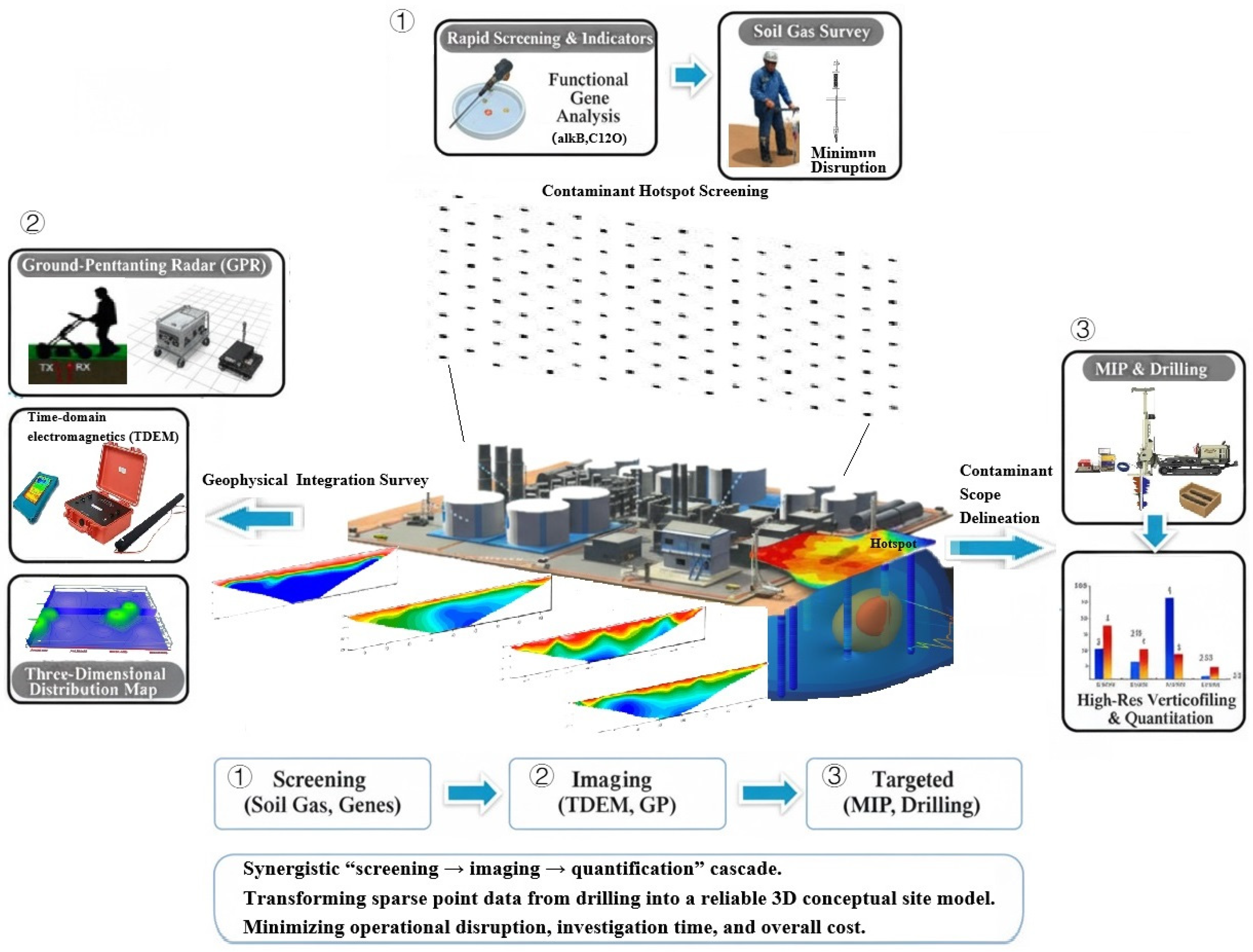
- A tiered collaborative framework, integrating early warning via microbial functional genes, non-destructive imaging through geophysics, and centimeter-scale sensing with MIP, can establish a three-level HRSC strategy of “screening, positioning, and quantification.” This enables refined, efficient, and cost-effective contamination investigations. The integration of these technologies can reduce the site investigation period from the conventional 12 weeks to just 3 weeks per hectare, significantly accelerating site redevelopment. In the future, by reducing costs and improving the interpretation accuracy of HRSC data—thereby addressing issues of poor data reliability and high interpretation complexity—the industry-wide adoption of HRSC can be achieved. This will provide substantial engineering application value for targeted remediation.
- (4)
- Given that the present findings are derived from a single petrochemical site, caution should be exercised before claiming broad applicability of the proposed framework to large-scale or diverse industrial settings. To further advance the methodology, future research could focus on the following aspects. First, the development of real-time, field-deployable biosensors for functional gene detection (e.g., alkB, C12O, prmA) would overcome the current reliance on laboratory analysis, enabling on-site rapid screening and dynamic monitoring. Second, integrating machine learning algorithms (e.g., random forest or convolutional neural networks) to fuse multi-source heterogeneous data (soil gas, geophysics, MIP, and drilling) could reduce interpretation subjectivity and help identify contamination plume boundaries with quantified uncertainty. Third, establishing long-term groundwater monitoring networks combined with periodic HRSC surveys would capture contaminant plume dynamics (e.g., seasonal migration, natural attenuation rates) rather than relying on single-time snapshots. These extensions, once validated across multiple sites with varying geological and operational conditions, would strengthen the generalizability of the HRSC framework and support its evolution from a case-specific methodology toward a more standardized environmental management tool for active industrial facilities.
Author Contributions
Funding
Institutional Review Board Statement
Informed Consent Statement
Data Availability Statement
Conflicts of Interest
References
- Wenmin, M.; Jian, H.; Jun, L.; Peng, G.; Peter, O.C.; Peng, W.; Jun, L. Distribution, sources, and health risk assessment of VOCs/SVOCs in soils obtained from petrochemical-contaminated sites in Guangzhou, a subtropical coastal megacity in southern China. J. Clean. Prod. 2023, 426, 139198. [Google Scholar]
- Wang, J.; Wang, X.; Zhu, Z.; Ying, S.; Hayat, K.; Bai, X.; Liu, S.; Xiao, X.; Jin, C.; Liu, W. Distribution, homologue pattern, sources, and environmental behavior of short-chain chlorinated paraffins in multi-media environments within the petrochemical industry of the Yangtze River Delta. Environ. Sci. Adv. 2025, 4, 1477–1487. [Google Scholar] [CrossRef]
- Song, Q.; Li, S.; Du, X.; Luan, H.; Sun, J.; Zheng, J.; Cong, X.; Yu, J.; Liu, X.; Li, J.; et al. Rapid assessment and remediation management of petrochemical-contaminated sites via a geophysical-geochemical synergistic approach. J. Hazard. Mater. Adv. 2025, 19, 100854. [Google Scholar] [CrossRef]
- Fan, C.; Chen, Y.-C.; Ma, H.-W.; Wang, G.-S. Comparative study of multimedia models applied to the risk assessment of soil and groundwater contamination sites in Taiwan. J. Hazard. Mater. 2010, 182, 778–786. [Google Scholar] [CrossRef]
- Podgorski, D.C.; Zito, P.; Kellerman, A.M.; Bekins, B.A.; Cozzarelli, I.M.; Smith, D.F.; Cao, X.; Schmidt-Rohr, K.; Wagner, S.; Stubbins, A.; et al. Hydrocarbons to carboxyl-rich alicyclic molecules: A continuum model to describe biodegradation of petroleum-derived dissolved organic matter in contaminated groundwater plumes. J. Hazard. Mater. 2021, 402, 123998. [Google Scholar] [CrossRef]
- Hwang, J.-W.; Yun, S.-T.; Yu, S.; Lee, K.-J.; Oh, J.-E.; Kim, J.H. Source differentiation of co-mingled petroleum derivatives in groundwater at a historically oil-contaminated urban aquifer in South Korea. Groundw. Sustain. Dev. 2025, 101565. [Google Scholar] [CrossRef]
- Chen, J.; Wu, X.; Jiang, Z.; Li, Q.; Zhang, L.; Chu, J.; Song, Y.; Yang, L. Application of machine learning to leakage detection of fluid pipelines in recent years: A review and prospect. Measurement 2025, 248, 116857. [Google Scholar] [CrossRef]
- Yu, W.; Wan, Y.; Zhou, W.; An, J.; Tian, L.; Ma, J. Molecular composition of water soluble fraction of petroleum products and crude oils: Insights into groundwater contamination potential and environmental forensics. J. Environ. Sci. 2026, 159, 437–444. [Google Scholar] [CrossRef] [PubMed]
- Zhao, L.; Zhan, L.; Zhang, H.; Zhang, Y.; Wu, L.; Zhao, R.; Zheng, L.; Zhang, G. Tracking groundwater pollution plumes at landfill sites using borehole hydrochemical and hydrodynamic profile (BHHP) method. J. Environ. Manag. 2023, 345, 118860. [Google Scholar] [CrossRef]
- He, Y.; Ou, G.; Zhang, Z.; Shen, Z.; Wei, H.; Ding, X.; Wang, Q.; Zhang, K.; Chen, Y.; Ye, W. On-site monitoring and numerical simulation on groundwater flow and pollution plume evolution in a hexavalent-chromium contaminated site. J. Hazard. Mater. 2024, 479, 135662. [Google Scholar] [CrossRef]
- Li, X.; Bardos, P.; Cundy, A.B.; Harder, M.K.; Doick, K.J.; Norrman, J.; Williams, S.; Chen, W. Using a conceptual site model for assessing the sustainability of brownfield regeneration for a soft reuse: A case study of Port Sunlight River Park (U.K.). Sci. Total Environ. 2019, 652, 810–821. [Google Scholar] [CrossRef]
- Soares, L.C.d.R.; Mendes, G.P.; Barbosa, A.M.; Malta-Oliveira, C.C.; de Souto, S.S.; Yoshikawa, N.K.; Nascimento, C.A.O.d. High-resolution site characterization tools: Application of fluorescence techniques to identify DNAPL in tropical lands. Chemosphere 2025, 393, 144768. [Google Scholar] [CrossRef] [PubMed]
- Singh, P.; Haritwal, D.K.; Ramana, G.V.; Datta, M. Framework for site specific leachate limits in MSW dumpsites: Integration of high-resolution site characterization and contaminant transport modeling. Chemosphere 2025, 371, 144054. [Google Scholar] [CrossRef]
- Haritwal, D.K.; Singh, P.; Ramana, G.V.; Datta, M. Application of high-resolution site characterisation tools and sampling methods for assessing microplastic migration beneath MSW dumpsites. J. Hazard. Mater. 2025, 488, 137384. [Google Scholar] [CrossRef] [PubMed]
- Zhao, Z.; Luo, N.; Illman, W.A. Geostatistical analysis of high-resolution hydraulic conductivity estimates from the hydraulic profiling tool and integration with hydraulic tomography at a highly heterogeneous field site. J. Hydrol. 2023, 617, 129060. [Google Scholar] [CrossRef]
- Wu, Y.; Yu, J.; Huang, Z.; Jiang, Y.; Zeng, Z.; Han, L.; Deng, S.; Yu, J. Migration of total petroleum hydrocarbon and heavy metal contaminants in the soil-groundwater interface of a petrochemical site using machine learning: Impacts of convection and diffusion. RSC Adv. 2024, 14, 32304–32313. [Google Scholar] [CrossRef]
- Trueba-Santiso, A.; Palau, J.; Soder-Walz, J.M.; Vicent, T.; Marco-Urrea, E. Assessment of aerobic biodegradation of lower-chlorinated benzenes in contaminated groundwater using field-derived microcosms and compound-specific carbon isotope fractionation. J. Environ. Sci. 2022, 118, 204–213. [Google Scholar] [CrossRef]
- Sharlov, M.; Buddo, I.; Pisarnitskiy, A.; Misurkeeva, N.; Shelohov, I. Shallow transient electromagnetic method application for groundwater exploration: Case study from Greece. ASEG Ext. Abstr. 2019, 1, 1–5. [Google Scholar] [CrossRef]
- Song, Q.; Zhou, B.; Song, Y.; Du, X.; Chen, H.; Zuo, R.; Zheng, J.; Yang, T.; Sang, Y.; Li, J. Microbial community dynamics and bioremediation strategies for petroleum contamination in an in-service oil Depot, middle-lower Yellow River Basin. Front. Microbiol. 2025, 16, 1544233. [Google Scholar] [CrossRef]
- Ahmed, N.O.; Nik Daud, N.N.; Okunlola, I.A. Geoelectrical soil mapping for subsurface hydrocarbon contaminant characterization and remediation site zoning at Alode, Central Niger Delta, Nigeria. Phys. Chem. Earth Parts A/B/C 2024, 136, 103726. [Google Scholar] [CrossRef]
- Zhang, R.; Ye, Z.; Guo, X.; Yang, Y.; Li, G. Microbial diversity and metabolic pathways linked to benzene degradation in petrochemical-polluted groundwater. Environ. Int. 2024, 188, 108755. [Google Scholar] [CrossRef] [PubMed]
- Tang, L.; Chen, W.; Luo, X.; Zhang, G.; Feng, X.; Guo, L.; Gao, W.; He, J.; Zhao, G.; Jiang, J.; et al. Multi-technological integration in a smelting site: Visualizing pollution characteristics and migration pattern. J. Hazard. Mater. 2023, 459, 132135. [Google Scholar] [CrossRef] [PubMed]
- Pan, Y.; Zhang, Q.; Yu, Y.; Tong, Y.; Wu, W.; Zhou, Y.; Hou, W.; Yang, J. Three-dimensional migration and resistivity characteristics of crude oil in heterogeneous soil layers. Environ. Pollut. 2021, 268, 115309. [Google Scholar] [CrossRef]
- Li, J.; Chao, C.; Ma, X.; Liu, S.; Rahman, K.U.; Mao, D. Utilizing the electrical resistivity tomography to map contamination in a quarry. Environ. Earth Sci. 2024, 83, 435. [Google Scholar] [CrossRef]
- Flores Orozco, A.; Ciampi, P.; Katona, T.; Censini, M.; Papini, M.P.; Deidda, G.P.; Cassiani, G. Delineation of hydrocarbon contaminants with multi-frequency complex conductivity imaging. Sci. Total Environ. 2021, 768, 144997. [Google Scholar] [CrossRef]
- Liu, G.; Zhou, X.; Li, Q.; Shi, Y.; Guo, G.; Zhao, L.; Wang, J.; Su, Y.; Zhang, C. Spatial distribution prediction of soil As in a large-scale arsenic slag contaminated site based on an integrated model and multi-source environmental data. Environ. Pollut. 2020, 267, 115631. [Google Scholar] [CrossRef]
- Bøllingtoft, A.; Bjerg, P.L.; Rønde, V.; Tuxen, N.; Nowak, W.; Troldborg, M. Quantification of contaminant mass discharge and uncertainties: Method and challenges in application at contaminated sites. J. Contam. Hydrol. 2025, 268, 104453. [Google Scholar] [CrossRef]
- Zeng, J.; Li, C.; Wang, J.; Tang, L.; Wu, C.; Xue, S. Pollution simulation and remediation strategy of a zinc smelting site based on multi-source information. J. Hazard. Mater. 2022, 433, 128774. [Google Scholar] [CrossRef]
- Trento, L.M.; Tsourlos, P.; Gerhard, J.I. Time-lapse electrical resistivity tomography mapping of DNAPL remediation at a STAR field site. J. Appl. Geophys. 2021, 184, 104244. [Google Scholar] [CrossRef]



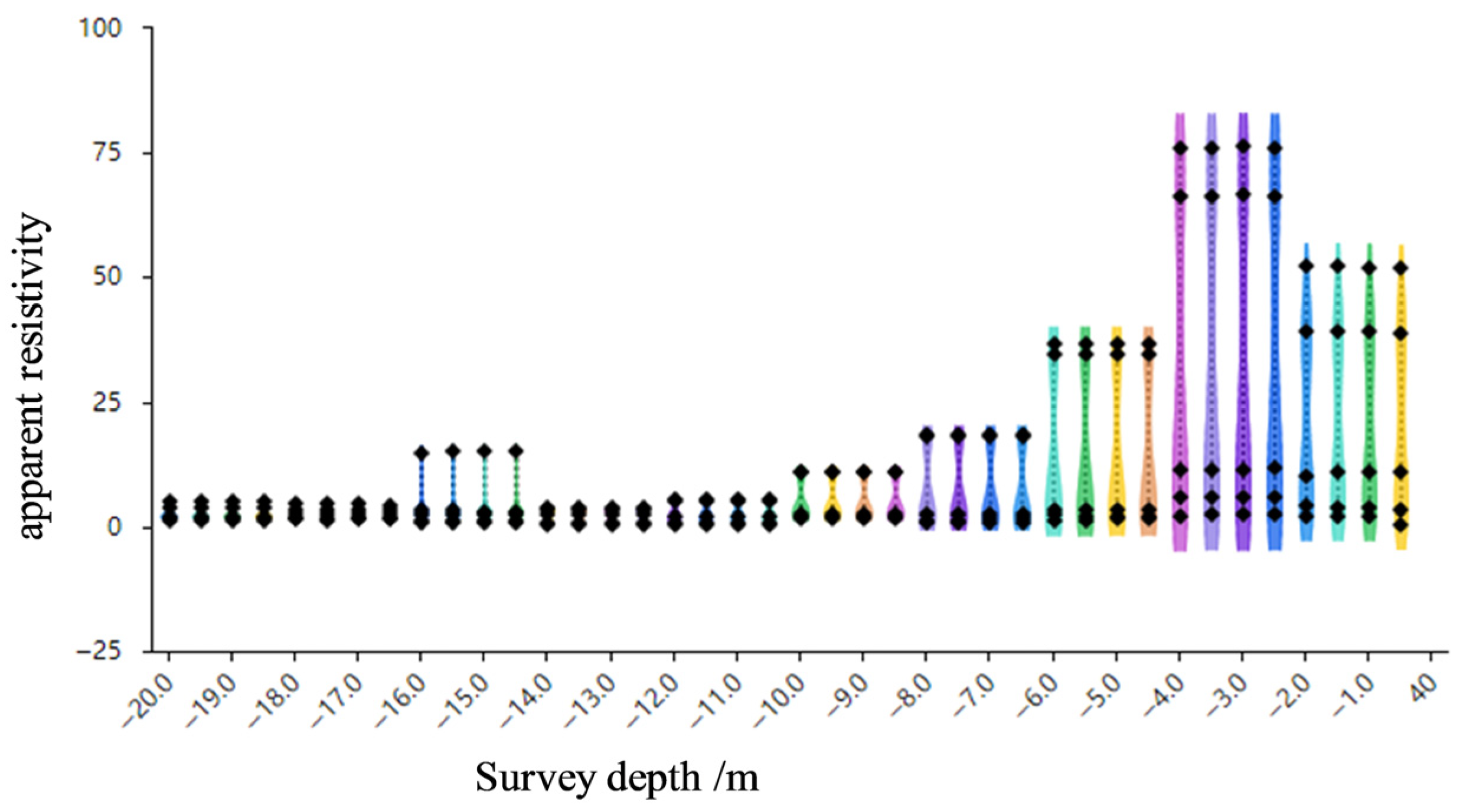







| Statistic | Sample Size | Minimum | Maximum | Mean | Standard Deviation | Median | Mean ± Standard Deviation | |
| Value | 1560 | 0.445 | 76.370 | 9.215 | 15.340 | 2.894 | 9.215 ± 15.340 | |
| Statistic | Variance | Standard Error | 95% CI for Mean (Lower Limit) | 95% CI for Mean (Upper Limit) | Skewness | Coefficient of Variation | ||
| Value | 235.310 | 0.388 | 8.454 | 9.977 | 2.770 | 166.458% | ||
| Statistic | P2.5 | P5 | P10 | P25 | P27 | P33 | P50 | P67 | P73 | P75 | P90 | P95 | P97.5 |
| Value | 0.663 | 0.864 | 1.186 | 2.025 | 2.108 | 2.314 | 2.894 | 4.532 | 5.581 | 7.347 | 33.475 | 40.742 | 66.563 |
Disclaimer/Publisher’s Note: The statements, opinions and data contained in all publications are solely those of the individual author(s) and contributor(s) and not of MDPI and/or the editor(s). MDPI and/or the editor(s) disclaim responsibility for any injury to people or property resulting from any ideas, methods, instructions or products referred to in the content. |
© 2026 by the authors. Licensee MDPI, Basel, Switzerland. This article is an open access article distributed under the terms and conditions of the Creative Commons Attribution (CC BY) license.
Share and Cite
Yang, S.; Zhang, S.; Wu, J.; Ma, S.; Wang, X. High-Resolution Site Characterization (HRSC) for Pollution Investigation of Petrochemical Enterprises: Integrated Technology Application and Validation. Sustainability 2026, 18, 5836. https://doi.org/10.3390/su18125836
Yang S, Zhang S, Wu J, Ma S, Wang X. High-Resolution Site Characterization (HRSC) for Pollution Investigation of Petrochemical Enterprises: Integrated Technology Application and Validation. Sustainability. 2026; 18(12):5836. https://doi.org/10.3390/su18125836
Chicago/Turabian StyleYang, Shuai, Shucai Zhang, Jiahui Wu, Shici Ma, and Xinzhe Wang. 2026. "High-Resolution Site Characterization (HRSC) for Pollution Investigation of Petrochemical Enterprises: Integrated Technology Application and Validation" Sustainability 18, no. 12: 5836. https://doi.org/10.3390/su18125836
APA StyleYang, S., Zhang, S., Wu, J., Ma, S., & Wang, X. (2026). High-Resolution Site Characterization (HRSC) for Pollution Investigation of Petrochemical Enterprises: Integrated Technology Application and Validation. Sustainability, 18(12), 5836. https://doi.org/10.3390/su18125836