1. Introduction
The global plastic waste crisis has intensified significantly in recent decades [
1,
2], driven by the rapid growth of plastic consumption, insufficient recycling infrastructure, and increasingly complex transboundary waste flows [
3]. Developing economies, in particular, face mounting challenges in managing plastic waste due to regulatory constraints, limited technological capacity, and fragmented supply chain coordination [
4]. In response, governments worldwide have strengthened regulatory frameworks to control plastic waste generation, processing, and cross-border movements. While these regulatory interventions aim to mitigate environmental impacts and support circular economy transitions, their effectiveness increasingly depends on how firms leverage digital and organizational innovations to respond to regulatory complexity and translate it into operational and supply chain performance outcomes [
5].
Prior research has extensively examined the role of regulatory pressure and environmental awareness in shaping corporate environmental behavior [
6]. Institutional theory suggests that coercive pressures from regulatory authorities compel firms to adopt compliant practices to maintain legitimacy and avoid sanctions [
7]. However, emerging evidence indicates that regulatory pressure alone is insufficient to ensure consistent compliance, particularly in highly regulated and resource-intensive sectors such as plastic recycling. Firms often face internal constraints [
8], including limited organizational readiness, inadequate process standardization, and insufficient digital infrastructure, which hinder their ability to respond effectively to evolving regulatory demands [
9,
10]. These challenges highlight the need to understand how firms transform regulatory pressure into effective compliance and performance outcomes through innovation-driven capabilities.
Recent advances in supply chain and innovation research emphasize the role of organizational and technological capabilities as key enablers of such transformation. From a resource-based view [
11], organizational regulatory readiness—reflected in governance structures, compliance planning mechanisms, and resource allocation—represents a foundational capability that supports firms’ adaptive responses to regulatory change [
12]. In parallel, Digital Innovation Capability, encompassing end-to-end material tracking, electronic documentation, and real-time reporting systems, has emerged as a critical form of technological innovation in circular economy supply chains [
13]. These digital innovations enhance transparency, reduce information asymmetry, and facilitate regulatory monitoring, thereby enabling more effective and data-driven compliance processes [
14].
In addition, compliance process maturity—defined as the extent to which compliance activities are formalized, standardized, and embedded within organizational routines—plays a crucial role in operationalizing regulatory requirements [
15]. Firms with mature compliance processes exhibit structured procedures, systematic audits, and continuous improvement mechanisms, which collectively reduce regulatory risks and operational disruptions [
16]. Importantly, these organizational and technological capabilities interact to shape legal compliance behavior, which represents the actual execution of regulatory adherence within firm operations.
Despite growing scholarly attention to regulatory compliance, digital transformation, and sustainable supply chain management [
17], limited empirical research has examined how regulatory enforcement intensity and organizational capabilities jointly influence compliance behavior and supply chain performance within an integrated framework. Existing studies often adopt fragmented perspectives that overlook the combined and complementary effects of technological innovation and organizational capabilities in shaping compliance outcomes [
18]. Furthermore, the role of legal compliance behavior as a key mechanism linking innovation-driven capabilities to both supply chain resilience and efficiency remains underexplored, particularly in emerging economy contexts [
19].
To address these gaps, this study develops and empirically tests a structural equation model (SEM) to explain how firms transform regulatory pressure into supply chain resilience through innovation-driven organizational capabilities. Specifically, the model examines the direct and indirect effects of regulatory enforcement intensity, organizational regulatory readiness, Digital Innovation Capability (DIC), and compliance process maturity on legal compliance behavior and supply chain resilience. Legal compliance behavior is conceptualized as a critical mediating mechanism through which regulatory pressure and organizational capabilities are translated into operational outcomes [
20].
Drawing on institutional theory, the resource-based view (RBV), and dynamic capability perspectives, this study develops an integrated framework that captures the interaction between external institutional pressures and internal organizational capabilities within plastic recycling supply chains. Unlike prior studies that examine regulatory pressure or organizational capabilities in isolation, this study explicitly positions legal compliance behavior as an innovation-enabled organizational capability linking these factors to supply chain resilience.
This study contributes to the literature in three ways. First, it reconceptualizes legal compliance behavior as an innovation-enabled capability rather than a purely reactive regulatory outcome. Second, it extends institutional theory by demonstrating that regulatory pressure alone is insufficient to generate performance outcomes without internal capability development. Third, it advances circular economy and digital transformation research by demonstrating the mediating role of compliance behavior in translating digital innovation capability into supply chain resilience.
2. Literature Review and Hypothesis Development
2.1. Regulatory Enforcement Intensity and Organizational Outcomes
Regulatory enforcement intensity (REI) reflects the extent to which authorities monitor compliance, conduct inspections, and impose penalties for environmental violations. Prior studies conceptualize enforcement intensity as a critical institutional mechanism that shapes organizational behavior through coercive pressure [
21,
22,
23]. Within the institutional theory framework, such pressure compels firms to conform to regulatory expectations in order to maintain legitimacy and avoid sanctions [
24,
25].
In the context of plastic recycling supply chains, strict enforcement can directly enhance operational discipline, reduce non-compliance risks, and improve coordination with regulatory bodies. These effects contribute to greater stability, predictability, and efficiency in supply chain operations by minimizing disruptions associated with regulatory violations. Moreover, strong enforcement mechanisms create a structured regulatory environment that supports more reliable material flows and operational continuity. At the same time, enforcement intensity also influences organizational behavior by increasing perceived regulatory pressure and accountability. Firms operating under stringent enforcement regimes are more likely to adopt compliance-oriented practices, allocate resources to compliance management, and align their operations with legal requirements [
26]. This behavioral adjustment reinforces consistent compliance across organizational processes.
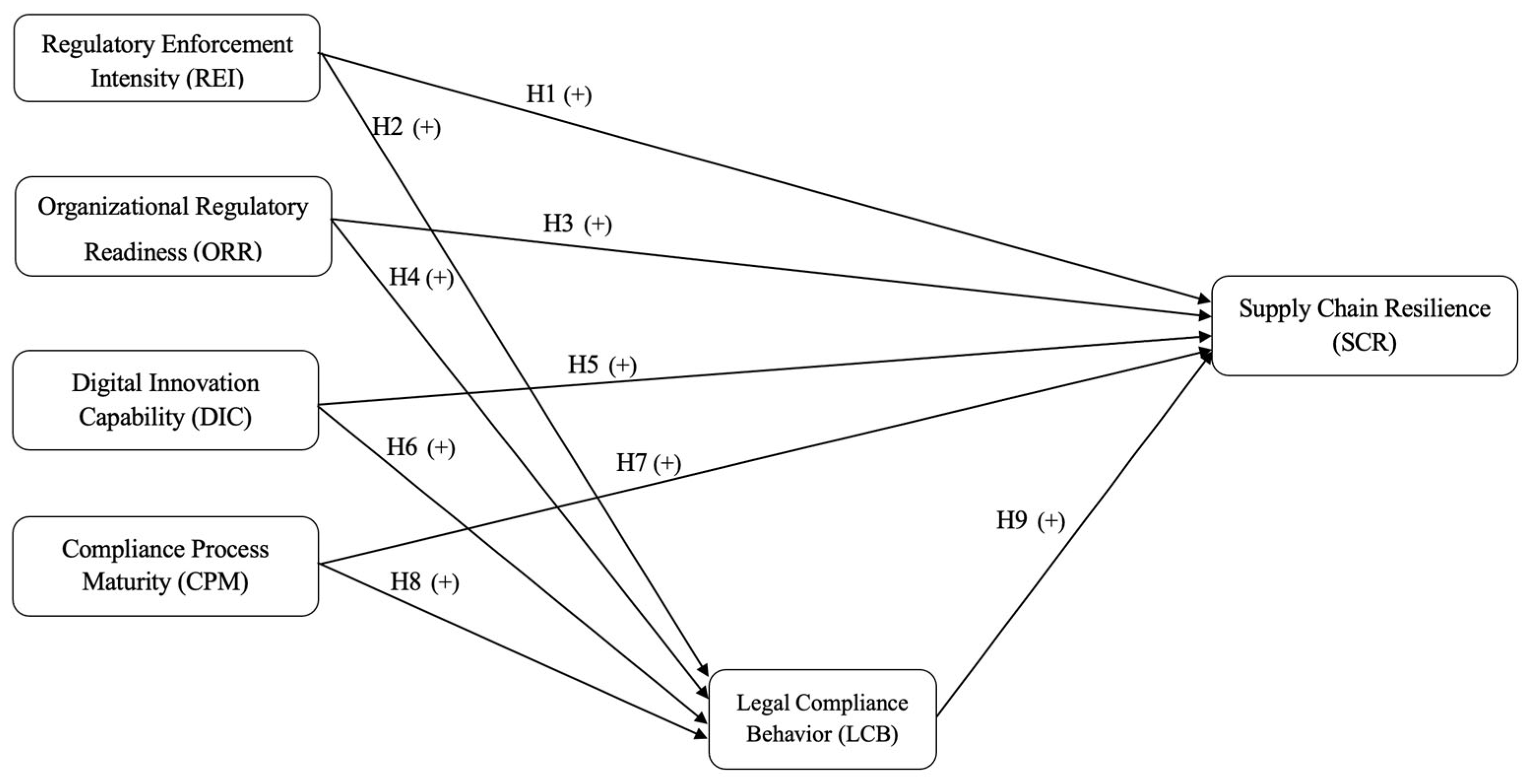
H1. Regulatory Enforcement Intensity (REI) has a significant positive effect on Supply Chain Resilience (SCR).
H2. Regulatory Enforcement Intensity (REI) has a significant positive effect on Legal Compliance Behavior (LCB).
2.2. Organizational Regulatory Readiness and Organizational Outcomes
Organizational regulatory readiness (ORR) refers to a firm’s preparedness to comply with regulatory requirements through internal policies, governance structures, and employee capabilities. Empirical studies indicate that regulatory readiness involves proactive adaptation, internal alignment, and continuous updating of organizational practices in response to regulatory changes [
27,
28,
29].
From the resource-based view (RBV), regulatory readiness represents a valuable organizational capability that enables firms to respond effectively to external pressures [
30]. Firms with higher levels of readiness are better equipped to anticipate regulatory changes, allocate resources efficiently, and institutionalize compliance-related practices within their operations. This capability enhances organizational agility and reduces the uncertainty associated with regulatory complexity.
Such preparedness is expected to improve supply chain resilience by facilitating better coordination among stakeholders, minimizing compliance-related disruptions, and enabling smoother adaptation to regulatory and environmental changes. At the same time, regulatory readiness plays a critical role in strengthening legal compliance behavior by ensuring that employees are adequately trained, policies are clearly defined, and compliance responsibilities are systematically embedded across the organization.
H3.
Organizational Regulatory Readiness (ORR) has a significant positive effect on Supply Chain Resilience (SCR).
H4.
Organizational Regulatory Readiness (ORR) has a significant positive effect on Legal Compliance Behavior (LCB).
2.3. Digital Innovation Capability and Organizational Outcomes
Digital innovation capability (DIC) refers to an organization’s ability to deploy, integrate, and leverage digital technologies such as traceability systems, real-time monitoring platforms, and data analytics to enhance operational processes and decision-making across the supply chain. Beyond basic digitalization, DIC reflects a higher-order capability that enables firms to transform data into actionable insights and to reconfigure operational activities in response to dynamic environmental and regulatory conditions [
31,
32,
33].
Prior research emphasizes that digital innovation capability plays a critical role in improving transparency, accountability, and coordination within supply chains. Through end-to-end visibility and real-time information sharing, firms can monitor material flows, detect irregularities, and coordinate effectively with stakeholders, thereby reducing information asymmetry and enhancing supply chain integration [
34,
35]. In the context of plastic recycling, where regulatory requirements are complex and continuously evolving, such capabilities are particularly important for ensuring traceability, operational control, and data reliability.
From a dynamic capability perspective, DIC enables firms to sense, seize, and reconfigure resources in response to regulatory and environmental changes [
36]. Specifically, digital technologies allow organizations to process large volumes of data in real time, improve responsiveness to disruptions, and manage compliance-related uncertainties more effectively. These capabilities contribute directly to enhanced supply chain resilience and efficiency by supporting faster decision-making, reducing operational disruptions, and enabling more adaptive supply chain configurations [
37].
In addition, digital innovation capability plays a central role in strengthening legal compliance behavior. Digital systems facilitate accurate reporting, auditability, and continuous monitoring of regulatory requirements, allowing firms to integrate compliance activities into routine operations. By reducing human error, improving data accuracy, and enabling proactive risk detection, DIC enhances the consistency and effectiveness of compliance practices. As a result, organizations with stronger digital innovation capabilities are more likely to achieve sustained and proactive compliance, rather than reactive or sporadic adherence to regulations.
H5.
Digital Innovation Capability (DIC) has a significant positive effect on Supply Chain Resilience (SCR).
H6. Digital Innovation Capability (DIC) has a significant positive effect on Legal Compliance Behavior (LCB).
2.4. Compliance Process Maturity and Organizational Outcomes
Compliance process maturity (CPM) reflects the extent to which compliance activities are formalized, standardized, and embedded in organizational routines. Mature compliance processes are characterized by clear procedures, systematic monitoring, and continuous improvement mechanisms [
38,
39,
40].
From an organizational process perspective, higher process maturity enhances consistency, reduces operational errors, and strengthens accountability across organizational activities. These structured processes contribute to more stable and efficient supply chain operations by minimizing variability and ensuring that compliance requirements are consistently met [
41].
In addition, compliance process maturity plays a critical role in shaping legal compliance behavior. Organizations with well-established compliance processes are better able to institutionalize regulatory requirements, monitor adherence, and proactively prevent violations. This integration of compliance into routine operations strengthens behavioral consistency and reduces compliance-related risks.
H7. Compliance Process Maturity (CPM) has a significant positive effect on Supply Chain Resilience (SCR).
H8. Compliance Process Maturity (CPM) has a significant positive effect on Legal Compliance Behavior (LCB).
2.5. Legal Compliance Behavior and Supply Chain Performance
Legal compliance behavior (LCB) refers to the extent to which organizations consistently adhere to applicable environmental laws, regulations, and industry standards in their daily operations. Beyond mere regulatory conformity, LCB reflects a firm’s strategic commitment to responsible governance, ethical conduct, and sustainable operational practices [
42,
43,
44]. In this sense, compliance behavior can be viewed not only as a reactive response to regulatory pressure but also as a proactive organizational capability that supports long-term performance and risk management.
From a supply chain perspective, compliance plays a critical role in ensuring operational stability and continuity. Firms that consistently comply with regulatory requirements are less exposed to legal sanctions, production shutdowns, and reputational risks, all of which can disrupt supply chain activities. Prior studies suggest that compliance reduces uncertainty and enhances coordination among supply chain partners by establishing clear standards and expectations [
45,
46]. This is particularly important in complex and regulated supply chains, where non-compliance at any stage can trigger cascading disruptions across the network.
Furthermore, consistent compliance behavior enhances trust and transparency among stakeholders, including regulators, customers, and supply chain partners. This trust facilitates smoother collaboration, more effective information sharing, and improved alignment across the supply chain, ultimately strengthening both resilience and operational efficiency. Taken together, the proposed hypotheses reflect an integrated theoretical framework in which institutional pressures (REI) interact with organizational resources (ORR, CPM) and dynamic capabilities (DIC) to shape legal compliance behavior, which ultimately drives supply chain resilience. The proposed research conceptual framework and hypothesized relationships are presented in
Figure 1.
H9. Legal Compliance Behavior (LCB) has a significant positive effect on Supply Chain Resilience (SCR).
3. Methodology
This study examines the structural relationships among regulatory enforcement intensity (REI), organizational regulatory readiness (ORR), digital Innovation Capability (DIC), compliance process maturity (CPM), legal compliance behavior (LCB), and supply chain resilience (SCR) within the plastic recycling sector. A quantitative research design was employed using partial least squares structural equation modeling (PLS-SEM) to analyze both explanatory and predictive relationships in the proposed conceptual framework.
Data were collected through an online survey administered between August and September 2025. The study was reviewed and approved by the Human Research Ethics Committee of the University of the Thai Chamber of Commerce (UTCC) (Certificate No. UTCCEC/Exemp087/2025). All procedures complied with internationally recognized ethical standards, including the Declaration of Helsinki, the Belmont Report, the CIOMS Guidelines, and the International Conference on Harmonization in Good Clinical Practice (ICH-GCP). Participation was voluntary and anonymous, and informed consent was obtained prior to data collection.
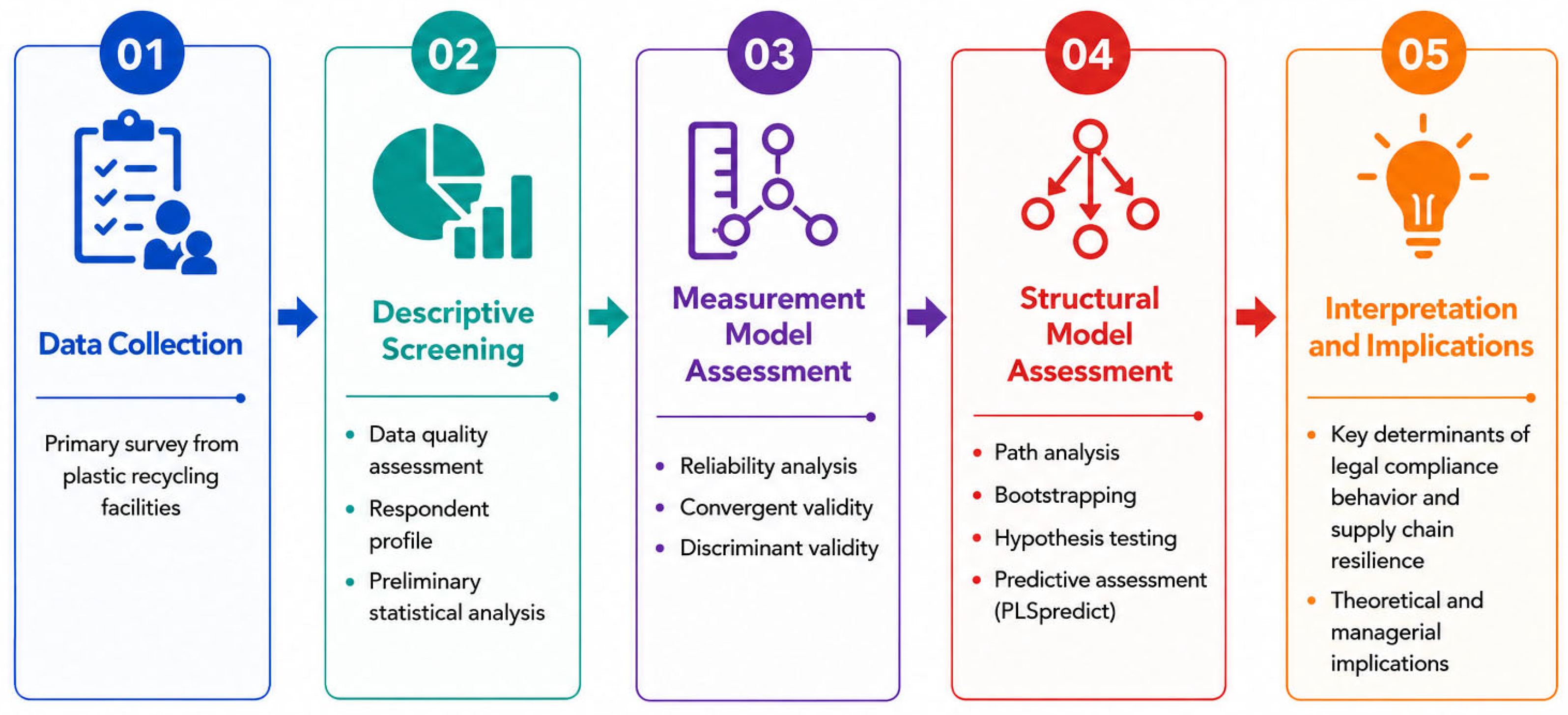
To enhance the rigor and transparency of the analytical process, this study adopts a structured research data processing and analysis procedure, as illustrated in
Figure 2. The revised procedure consists of five sequential stages: data collection, descriptive screening, measurement model assessment, structural model assessment, and interpretation of findings. This streamlined analytical procedure ensures consistency between the conceptual framework, measurement model, and the PLS-SEM analytical approach employed in the study, while also supporting the robustness of statistical estimation and predictive relevance of the model.
3.1. Population and Sampling
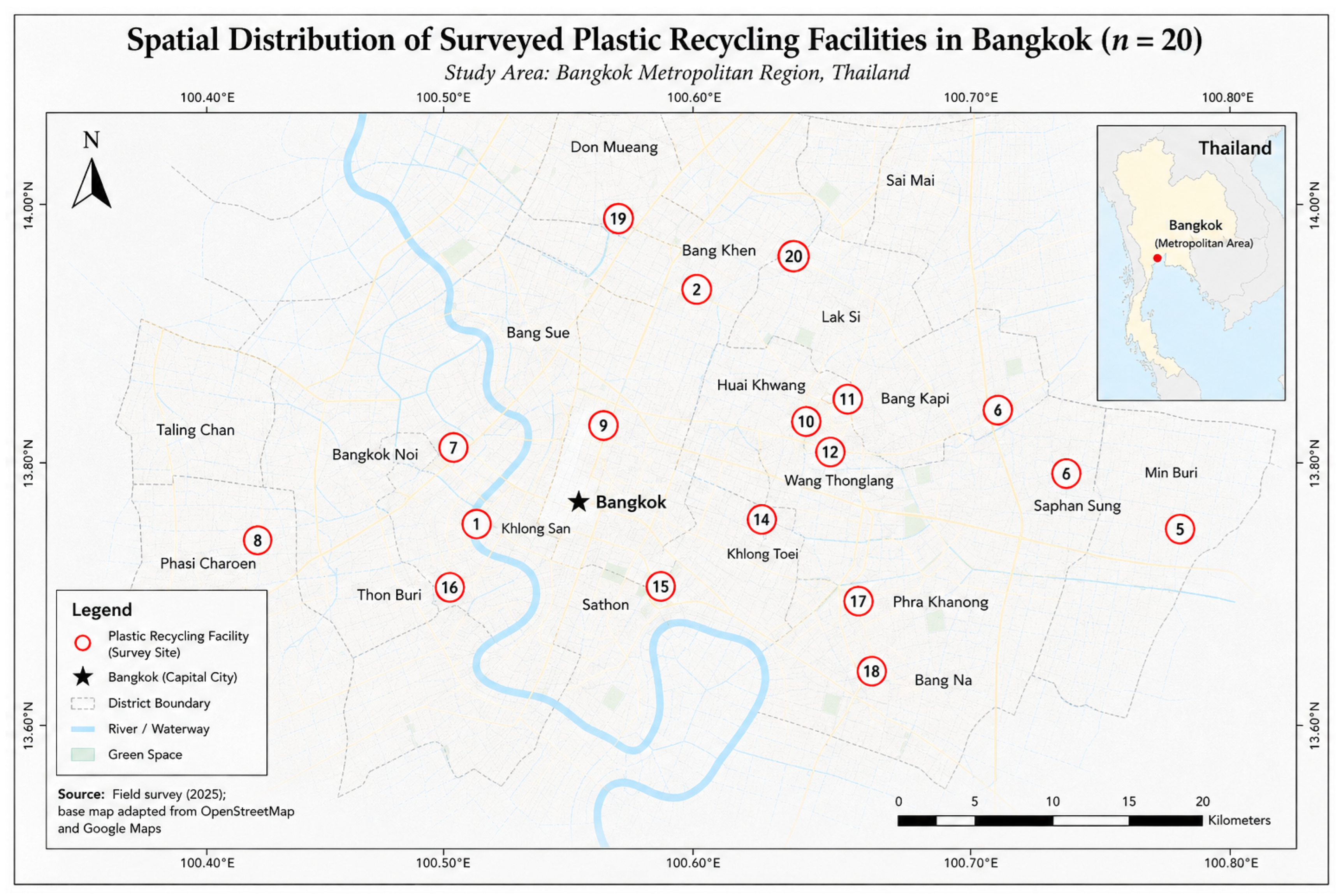
The target population consisted of professionals working in plastic recycling facilities located within the Bangkok Metropolitan Region, Thailand. As illustrated in
Figure 3, a total of 20 plastic recycling facilities were identified and verified through field surveys, representing the primary sampling units of this study.
A multi-stage sampling approach was employed. First, purposive sampling was used to select 20 active plastic recycling facilities based on their operational relevance and accessibility for field verification. These facilities were geographically distributed across Bangkok, capturing both inner-city and peri-urban locations, as illustrated in
Figure 3.
In the second stage, respondents were drawn from within the selected facilities. The sampling focused on individuals occupying managerial, supervisory, and executive roles with direct involvement in regulatory compliance and supply chain operations. These included compliance managers, environmental officers, operations managers, logistics managers, plant managers, and senior executives. A total of 300 respondents were collected from the 20 facilities, averaging approximately 15 respondents per site. The detailed distribution of respondents across the surveyed facilities is presented in
Table 1.
A purposive sampling technique was applied at the respondent level to ensure that participants possessed relevant expertise and decision-making authority. This approach is appropriate for studies requiring informed insights from key organizational actors rather than general employees. The minimum sample size was determined using the “10-times rule,” which suggests that the sample size should be at least ten times the maximum number of structural paths directed at any latent construct. In this study, the most complex construct (LCB) has four incoming paths, indicating a minimum requirement of 40 observations. Additionally, considering that the measurement model includes 24 observed indicators (4 indicators × 6 constructs), a minimum sample size of 240 was deemed appropriate [
47]. The final sample of 300 respondents exceeded both criteria, ensuring adequate statistical power and robustness for PLS-SEM analysis. Furthermore, although respondents were nested within 20 recycling facilities, the unit of analysis in this study was the individual professional respondent rather than the organizational facility. Therefore, individual responses were treated as the primary unit of analysis, and no aggregation at the facility level was performed. The inclusion of respondents from multiple facilities also enhances the generalizability of the findings across different operational contexts within the Bangkok recycling sector.
3.2. Research Instrument
The research instrument consisted of a structured questionnaire comprising 24 observed items measuring six latent constructs: Regulatory Enforcement Intensity (REI), Organizational Regulatory Readiness (ORR), Digital Innovation Capability (DIC), Compliance Process Maturity (CPM), Legal Compliance Behavior (LCB), and Supply Chain Resilience (SCR).
Each construct was operationalized using four reflective indicators adapted from established scales in prior literature on regulatory compliance, digital capability, and sustainable supply chain management. The items were carefully refined to reflect the operational context of plastic recycling and industrial supply chains, ensuring contextual relevance for managerial respondents.
All items were measured using a five-point Likert scale ranging from 1 (“strongly disagree”) to 5 (“strongly agree”) [
48]. The questionnaire development process followed established scale development procedures [
49]. Content validity was evaluated using the Index of Item-Objective Congruence (IOC) [
50], with expert validation conducted by three specialists in environmental regulation and supply chain management. Minor revisions were made to improve clarity and contextual appropriateness [
51].
A pilot test was conducted with 30 respondents drawn from the target population, including individuals in managerial and supervisory roles. The results demonstrated satisfactory internal consistency, and minor refinements were implemented prior to full-scale data collection. Although respondents were drawn from 20 plastic recycling facilities, the unit of analysis in this study was the individual professional respondent rather than the organizational facility. The study aimed to capture individual perceptions regarding regulatory compliance and supply chain practices, and no aggregation at the facility level was performed. Therefore, PLS-SEM at the individual level was considered appropriate for the present analysis. The complete measurement items and their supporting references are presented in
Appendix A (
Table A1).
3.3. Data Collection and Analysis
Data were collected via an online survey distributed through professional networks, industry associations, and business-oriented platforms, following best practices for web-based survey research [
52]. Respondents were informed of the study’s purpose, assured of confidentiality, and reminded that participation was voluntary, in accordance with recommended procedures to reduce common method bias [
53].
A quantitative research design was employed using partial least squares structural equation modeling (PLS-SEM) to examine the structural relationships among the proposed constructs. First, the measurement model was assessed by evaluating internal consistency reliability (Cronbach’s alpha and composite reliability), convergent validity (average variance extracted: AVE), and discriminant validity using the Fornell–Larcker criterion and the heterotrait–monotrait ratio (HTMT) [
54].
Second, the structural model was evaluated by examining path coefficients and their statistical significance using bootstrapping with 5000 resamples, as well as coefficient of determination (R
2), effect sizes (f
2), and predictive relevance (Q
2) using the blindfolding procedure [
55,
56].
To further evaluate the model’s predictive relevance, PLSpredict was additionally employed following recent PLS-SEM methodological recommendations, following recent methodological recommendations. Mediation effects were examined using bootstrapping procedures to assess the indirect role of legal compliance behavior (LCB) in linking organizational capabilities to supply chain outcomes [
57].
To address potential common method bias (CMB), procedural remedies were implemented, including ensuring respondent anonymity, improving questionnaire design, and using varied item wording. Additionally, variance inflation factors (VIFs) were examined to assess multicollinearity [
58].
Finally, model fit was evaluated using the standardized root mean square residual (SRMR), which has been widely adopted as an approximate model fit index in PLS-SEM.
3.4. Respondent Profile
A total of 300 valid responses were obtained from personnel working in 20 plastic recycling facilities located across the Bangkok Metropolitan Region, as presented in
Table 2. The respondents were selected from facility-level sampling units using a multi-stage approach, with a focus on individuals directly involved in compliance management, operational control, and supply chain activities within recycling operations.
In terms of gender distribution, the sample was predominantly male (66.0%), reflecting the workforce structure commonly observed in industrial and recycling facility environments. Female respondents accounted for 32.0% of the sample, while a small proportion (2.0%) preferred not to disclose their gender.
Regarding age distribution, the majority of respondents were within the working-age range of 25–55 years. The largest proportion was in the 35–44 age group (37.3%), followed by those aged 45–55 (28.3%) and 25–34 (26.0%). Respondents aged above 55 represented 8.3% of the sample. This distribution indicates that mid-career professionals constitute the primary decision-making workforce within plastic recycling facilities.
With respect to educational attainment, most respondents held at least a bachelor’s degree (54.0%), while a substantial proportion possessed postgraduate qualifications, including master’s degrees (34.0%) and doctoral degrees (12.0%). This suggests a relatively high level of human capital among personnel responsible for regulatory compliance and operational management in the recycling sector.
In terms of job position, nearly half of the respondents were middle-level managers (49.0%), followed by senior management or executive roles (28.3%), and supervisors or technical specialists (22.7%). This composition aligns with the study’s objective of capturing informed perspectives from individuals with decision-making authority and operational responsibility within recycling facilities.
Regarding work experience, more than half of the respondents (54.0%) had over 10 years of professional experience, while 32.0% had between 5 and 10 years of experience, and 14.0% had less than 5 years. The predominance of experienced personnel further supports the reliability of the data, as respondents are likely to possess substantial knowledge of regulatory practices and supply chain operations.
Overall, the demographic profile confirms that the respondents are well-positioned as key informants, with relevant expertise and experience across multiple plastic recycling facilities in Bangkok. This enhances the credibility of the findings related to compliance behavior, supply chain resilience, and operational performance in the recycling sector.
4. Results
4.1. Measurement Model
The measurement model was assessed following established PLS-SEM procedures, including model fit, internal consistency reliability, convergent validity, discriminant validity, and collinearity diagnostics.
4.1.1. Model Fit
As shown in
Table 3, the standardized root mean square residual (SRMR) value is 0.068 for both the saturated and estimated models, which is below the recommended threshold of 0.08, indicating a good model fit [
53,
55].
The discrepancy measures (d_ULS = 1.370; d_G = 0.618) are relatively low, suggesting acceptable differences between the empirical covariance matrix and the model-implied matrix [
59].
Although the normed fit index (NFI = 0.767) is below the conventional threshold of 0.90, prior research suggests that NFI values in PLS-SEM should be interpreted cautiously, as model fit is not the primary evaluation criterion in variance-based SEM [
53,
54].
Overall, these results indicate that the model demonstrates an acceptable level of fit and is suitable for further analysis.
4.1.2. Internal Consistency Reliability and Convergent Validity
Table 4 presents the reliability and validity results. Cronbach’s alpha values range from 0.824 to 0.845, and composite reliability values range from 0.883 to 0.896, exceeding the recommended threshold of 0.70, thereby indicating strong internal consistency reliability [
53].
The average variance extracted (AVE) values range from 0.653 to 0.683, all above the threshold of 0.50, confirming convergent validity [
60,
61].
These findings indicate that the measurement items adequately represent their respective latent constructs.
4.2. Interpretation
All constructs exhibit strong internal consistency reliability, with Cronbach’s alpha and composite reliability values exceeding 0.70. AVE values are above 0.50, confirming convergent validity. These results indicate that the measurement model is reliable and valid.
4.2.1. Discriminant Validity
Discriminant validity was assessed using the Fornell–Larcker criterion and the heterotrait–monotrait ratio (HTMT).
For the Fornell–Larcker criterion (
Table 5), the square root of AVE for each construct exceeds its correlations with other constructs, satisfying the recommended criterion for discriminant validity [
61].
The HTMT values (
Table 6) are all below the conservative threshold of 0.90, further confirming discriminant validity [
55]. The relatively high HTMT value between ORR and DIC (0.892) suggests a strong conceptual relationship, which is theoretically justifiable given that organizational readiness often facilitates digital capability development.
4.2.2. Fornell–Larcker Criterion Results
The square root of AVE for each construct exceeds its correlations with other constructs, confirming discriminant validity.
4.2.3. HTMT Results
All HTMT values are below 0.90, indicating adequate discriminant validity.
(a) Measurement Model (Outer Model)
All indicator-level variance inflation factor (VIF) values range between 1.613 and 2.244.
(b) Structural Model (Inner Model)
4.2.4. Collinearity Assessment (VIF)
Collinearity was assessed by examining variance inflation factor (VIF) values for both the measurement (outer) model and the structural (inner) model, as presented in
Table 7. For the measurement model, all indicator-level VIF values fall within the range of 1.613 to 2.244, which is well below the conservative threshold of 3.3. This indicates that multicollinearity among measurement items is not a concern and does not threaten the validity of the constructs [
56]. For the structural model, the inner VIF values range from 1.717 to 3.196. The highest value is observed for the path from Digital Innovation Capability (DIC) to Supply Chain Resilience (SCR) (VIF = 3.196). Although this value approaches the conservative threshold of 3.3, it remains within acceptable limits and is substantially below the critical threshold of 5.0 suggested for PLS-SEM models [
53].
Overall, all VIF values reported in
Table 7 are within acceptable ranges, indicating that collinearity does not bias the estimation of the structural relationships. Therefore, the model satisfies the collinearity assumptions, and the path coefficients can be interpreted with confidence.
In summary, the measurement and structural models satisfy all recommended criteria for reliability, validity, and collinearity. Therefore, the constructs are considered robust and appropriate for subsequent structural model evaluation [
52,
53].
4.3. Structural Model and Hypothesis Testing
As presented in
Table 8, the model explains 56.9% of the variance in legal compliance behavior (LCB) and 67.4% of the variance in supply chain resilience (SCR). These values indicate moderate to substantial explanatory power, suggesting that the proposed model captures a significant proportion of the key determinants of compliance behavior and supply chain performance [
53].
4.3.1. Direct Effects
Table 9 reports the direct effects of the hypothesized relationships. Overall, most of the proposed hypotheses are supported, indicating that both organizational capabilities and regulatory factors significantly influence legal compliance behavior and supply chain performance.
Among the antecedents of legal compliance behavior (LCB), Digital Innovation Capability (DIC) exhibits the strongest effect (β = 0.378, p < 0.001), highlighting its dominant role in enabling organizations to achieve consistent compliance. Organizational Regulatory Readiness (ORR) also demonstrates a significant positive effect (β = 0.211, p = 0.009), indicating that internal preparedness contributes to effective compliance implementation.
Compliance Process Maturity (CPM) (β = 0.132, p = 0.022) and Regulatory Enforcement Intensity (REI) (β = 0.137, p = 0.026) also show significant positive effects on LCB, suggesting that both internal process standardization and external regulatory pressure contribute to shaping compliance behavior.
With respect to supply chain resilience (SCR), only Legal Compliance Behavior (LCB) and Regulatory Enforcement Intensity (REI) demonstrate statistically significant direct effects. Legal Compliance Behavior (LCB) exhibits the strongest direct effect on SCR (β = 0.333, p < 0.001), followed closely by Regulatory Enforcement Intensity (REI) (β = 0.324, p < 0.001). In contrast, the direct effects of Digital Innovation Capability (DIC) (β = 0.137, p = 0.058) and Organizational Regulatory Readiness (ORR) (β = 0.128, p = 0.115) are positive but not statistically significant. Similarly, Compliance Process Maturity (CPM) does not demonstrate a significant direct effect on SCR (β = 0.022, p = 0.678).
These findings suggest that organizational and technological capabilities may influence supply chain resilience primarily through strengthened legal compliance behavior rather than through direct structural relationships. Notably, Digital Innovation Capability (DIC) demonstrates the strongest influence on legal compliance behavior, whereas Regulatory Enforcement Intensity (REI) exerts a stronger direct effect on supply chain resilience. This indicates that technological capability primarily contributes to resilience indirectly through compliance enhancement, while regulatory enforcement contributes more directly to operational performance outcomes.
4.3.2. Indirect Effects and Mediation
To further examine the mechanisms underlying these relationships, mediation analysis was conducted, and the results are presented in
Table 10 and
Table 11.
As shown in
Table 10, CPM, DIC, ORR, and REI exhibit indirect effects on supply chain resilience (SCR) through legal compliance behavior (LCB). Among these, Digital Innovation Capability (DIC) demonstrates the strongest indirect effect (β = 0.126,
p = 0.001), indicating that digital capability enhances supply chain resilience primarily through strengthened compliance behavior. Organizational Regulatory Readiness (ORR) (β = 0.070,
p = 0.015) and Compliance Process Maturity (CPM) (β = 0.044,
p = 0.045) also show significant indirect effects on SCR through LCB.
Although the indirect effect of Regulatory Enforcement Intensity (REI) on SCR through LCB shows a p-value slightly above the conventional significance threshold (β = 0.046, p = 0.061), the bootstrapped bias-corrected confidence interval does not include zero. Following recent PLS-SEM recommendations, the mediation effect was therefore considered supported based on confidence interval inference rather than solely on p-value significance.
Overall, the results confirm that legal compliance behavior functions as a key mediating mechanism linking organizational capabilities and regulatory pressure to supply chain resilience.
Table 11 further confirms these findings using bootstrapped bias-corrected confidence intervals. The indirect effects of CPM, DIC, ORR, and REI are supported, as all confidence intervals do not include zero. These findings confirm the mediating role of legal compliance behavior (LCB) in linking organizational capabilities and regulatory factors to supply chain resilience.
4.3.3. Predictive Assessment
The predictive relevance of the model was evaluated using PLSpredict and CVPAT procedures within the PLS-SEM framework, as presented in
Table 12 and
Table 13.
Table 12 shows that both endogenous constructs have positive Q
2_predict values (LCB = 0.550; SCR = 0.608), indicating strong predictive relevance. The relatively low RMSE and MAE values further suggest that the model produces accurate predictions for out-of-sample observations [
53,
59].
Table 13 presents the results of the cross-validated predictive ability test (CVPAT). The negative differences between PLS loss and the benchmark (IA loss), along with statistically significant t-values (
p < 0.001), indicate that the PLS-SEM model significantly outperforms the benchmark model. This confirms the superior predictive capability of the proposed model.
4.3.4. Overall Interpretation of the Structural Model
First, digital Innovation Capability (DIC) emerges as the most influential driver of compliance behavior, while regulatory enforcement intensity (REI) plays a more prominent role in directly influencing supply chain performance. Second, legal compliance behavior (LCB) serves as a key mediating mechanism that translates organizational capabilities into improved supply chain resilience.
Third, the non-significant direct effect of CPM on SCR, combined with its significant indirect effect through LCB, suggests that compliance processes contribute to performance primarily through behavioral mechanisms rather than direct operational improvements.
Finally, the predictive assessment confirms that the model demonstrates satisfactory explanatory capability and predictive relevance within the PLS-SEM framework, reinforcing its robustness and practical relevance.
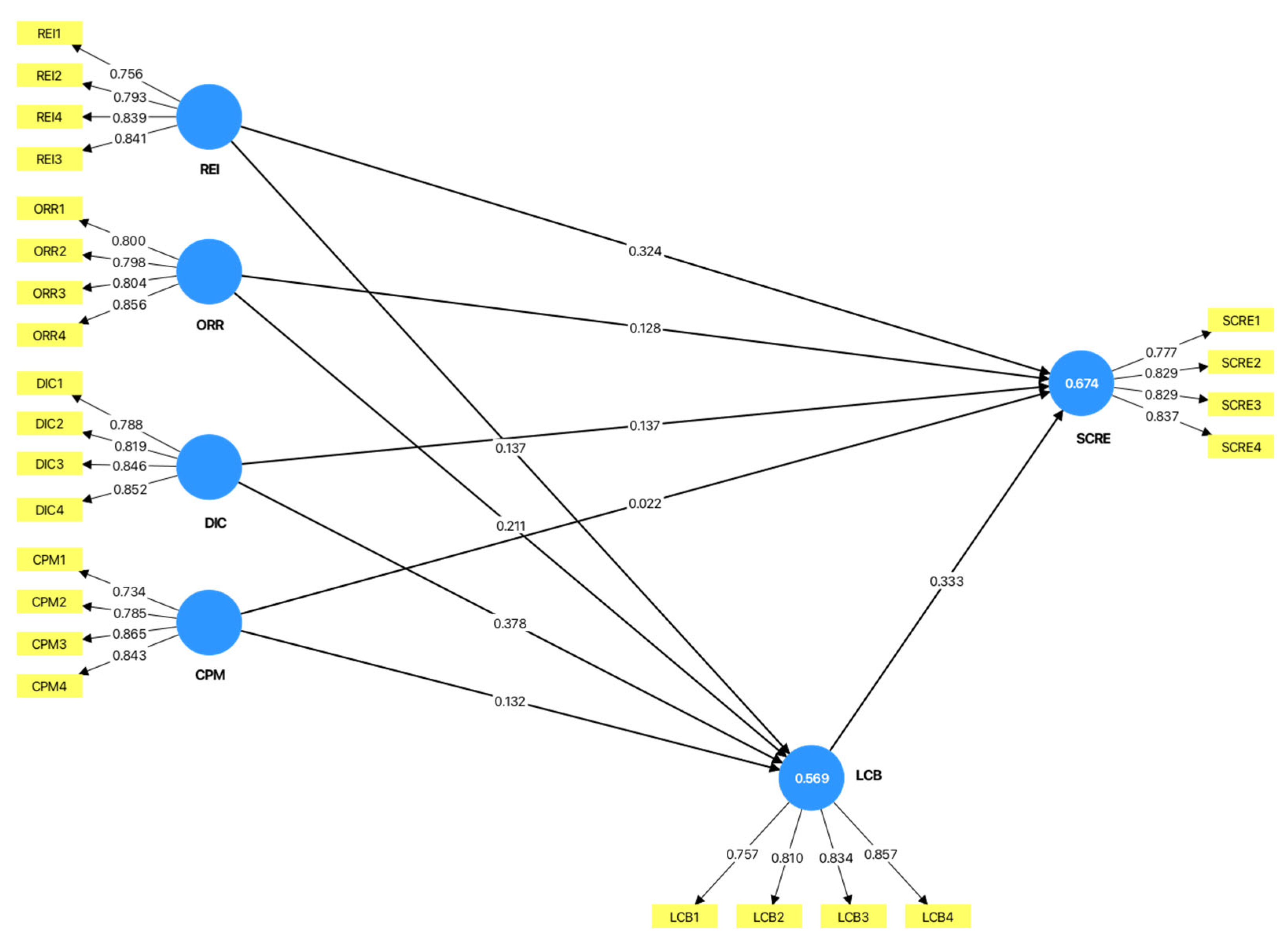
Figure 4 illustrates the structural model results, including the standardized path coefficients, indicator loadings, and the explanatory power (R
2) of the endogenous constructs. All indicator loadings exceed the recommended threshold of 0.70, confirming that the measurement items adequately represent their respective latent constructs [
53].
The model explains 56.9% of the variance in legal compliance behavior (LCB) and 67.4% of the variance in supply chain resilience (SCR), indicating moderate to substantial explanatory power. The structural paths show that digital innovation capability (DIC) demonstrates the strongest positive effect on legal compliance behavior (LCB), indicating the importance of digital integration and operational transparency in supporting regulatory compliance within plastic recycling supply chains β = 0.378), followed by organizational regulatory readiness (ORR) (β = 0.211), regulatory enforcement intensity (REI) (β = 0.137), and compliance process maturity (CPM) (β = 0.132). Furthermore, LCB exerts a significant positive effect on SCR (β = 0.333), confirming its central role as a mediating mechanism. In addition, direct effects from REI (β = 0.369), DIC (β = 0.263), and ORR (β = 0.198) to SCR are observed, whereas the direct effect of CPM on SCR is weak and not statistically significant (β = 0.066).
Overall,
Figure 4 visually reinforces the statistical results presented in
Table 8,
Table 9,
Table 10 and
Table 11, highlighting that organizational capabilities—particularly Digital Innovation Capability (DIC)—play a dominant role in driving compliance behavior, while legal compliance behavior serves as a key pathway through which these capabilities enhance supply chain resilience.
4.4. Importance–Performance Map Analysis (IPMA)
The importance–performance map analysis (IPMA) was conducted to extend the PLS-SEM results by identifying the relative importance and performance of each construct in explaining supply chain resilience (SCR) [
53,
62].
As shown in
Table 14, regulatory enforcement intensity (REI) exhibits the highest importance (0.369), indicating that it has the strongest total effect on SCR. However, its performance level (73.907) is moderate compared to other constructs, suggesting that improvements in enforcement-related mechanisms could further enhance supply chain outcomes. Legal compliance behavior (LCB) also demonstrates high importance (0.333) and the highest performance (78.343) among all constructs. This indicates that compliance behavior is not only a key driver of supply chain resilience but is also relatively well developed within organizations.
Digital Innovation Capability (DIC) shows substantial importance (0.263) but comparatively lower performance (71.804), highlighting a critical area for improvement. This indicates a high-priority managerial intervention area, as improving DIC would yield substantial performance gains through enhanced digital integration and real-time tracking capabilities. Organizational regulatory readiness (ORR) exhibits moderate importance (0.198) and performance (73.877), indicating that while readiness contributes to supply chain outcomes, its impact is less pronounced than that of digital capability and compliance behavior.
In contrast, compliance process maturity (CPM) demonstrates the lowest importance (0.066) despite relatively high performance (76.632). This suggests that while compliance processes are well established, further improvements in this area may yield limited marginal gains compared to other constructs.
Overall, the IPMA results indicate that digital Innovation Capability (DIC) and regulatory enforcement intensity (REI) represent key priority areas for managerial and policy interventions, as they combine relatively high importance with moderate performance levels.
5. Discussion
This study advances the understanding of how regulatory pressure and organizational capabilities jointly shape legal compliance behavior and supply chain performance within the plastic recycling sector in an emerging economy context. Drawing on data from 20 facilities and 300 respondents in the Bangkok Metropolitan Region, the findings provide strong empirical evidence that compliance is not merely a regulatory outcome but a capability-driven process enabled by both external pressures and internal organizational resources.
Consistent with institutional theory, regulatory enforcement intensity (REI) exerts a significant positive effect on legal compliance behavior (LCB), confirming that coercive pressures from regulatory authorities play a critical role in shaping organizational responses [
63,
64]. Firms operating under stronger enforcement regimes are more likely to align their practices with regulatory expectations to avoid penalties and maintain legitimacy. In addition, REI demonstrates both a significant direct effect on supply chain resilience (SCR) and a supported indirect effect through LCB, suggesting that enforcement mechanisms contribute to operational resilience both directly and indirectly through strengthened compliance behavior. However, compared to digital innovation capability, the magnitude of the indirect effect remains relatively modest, indicating that internal organizational capabilities remain essential for translating external regulatory pressure into sustainable operational performance [
62,
65]. These findings imply that coercive regulatory mechanisms may encourage formal compliance at the surface level, but long-term resilience ultimately depends on the development of internal routines, digital integration, and organizational learning capabilities.
From a resource-based view (RBV), organizational regulatory readiness (ORR) emerges as a foundational capability that enables firms to respond effectively to regulatory demands [
30,
66]. The significant relationship between ORR and LCB suggests that firms with stronger governance structures, clearly defined compliance policies, and adequate resource allocation are better positioned to implement regulatory requirements consistently. This highlights the importance of internal preparedness in translating regulatory expectations into actual compliance practices [
26].
Among all predictors, digital innovation capability (DIC) exhibits the strongest effect on legal compliance behavior, underscoring the central role of digital technologies in enabling innovation-driven compliance. Through real-time monitoring, data integration, and end-to-end traceability, digital systems enhance transparency, improve auditability, and facilitate regulatory reporting. These findings are consistent with prior research demonstrating that digital technologies reduce information asymmetry, strengthen coordination with regulators, and improve compliance efficiency [
34,
35]. In highly regulated environments such as plastic recycling, DIC functions as a critical technological capability that enables firms to convert regulatory requirements into operational practices [
31,
32,
33,
34,
35]. The stronger influence of DIC compared to regulatory enforcement intensity (REI) suggests that internal technological capabilities may be more effective than external coercive pressures in sustaining compliance behavior. From a dynamic capability perspective, digital systems reduce compliance uncertainty by enabling real-time monitoring, automated reporting, and rapid organizational responses to regulatory changes. Rather than responding reactively to regulatory inspections or penalties, firms with strong digital innovation capability are able to internalize compliance within routine operational processes. This transformation shifts compliance from an externally imposed obligation to an embedded organizational capability that continuously supports operational resilience and adaptive decision-making.
Compliance process maturity (CPM) also has a significant positive effect on legal compliance behavior, although its impact is relatively smaller. This suggests that standardized procedures, formalized workflows, and systematic monitoring mechanisms support the consistency of compliance practices. Importantly, CPM acts as an enabling mechanism that reinforces compliance execution rather than a primary driver of performance outcomes. This aligns with the dynamic capability perspective, which emphasizes the integration and orchestration of multiple organizational resources to achieve effective operational outcomes [
36].
Importantly, legal compliance behavior (LCB) demonstrates a strong and significant positive effect on supply chain resilience (SCR), confirming its role as a central mechanism linking organizational capabilities to performance outcomes. This finding positions compliance not merely as a regulatory obligation but as a strategic capability that enhances operational stability, reduces disruption risks, and improves coordination across supply chain actors [
45,
46,
67]. In plastic recycling supply chains, where regulatory violations can disrupt material flows and damage organizational credibility, consistent compliance behavior is essential for sustaining both resilience and efficiency.
The mediation analysis further reinforces the role of LCB as a key transmission mechanism through which organizational capabilities influence supply chain performance. Specifically, ORR, DIC, CPM, and REI contribute to SCR indirectly through compliance behavior, highlighting the importance of behavioral execution in translating capabilities into operational outcomes. Although the indirect effect of REI through LCB is comparatively weaker than that of DIC and ORR, the mediation effect remains supported based on the bootstrapped confidence interval analysis. This suggests that regulatory enforcement contributes to supply chain resilience not only directly, but also indirectly through strengthened compliance behavior.
Overall, the findings support a complementary capability perspective, in which regulatory pressure and organizational capabilities operate as parallel drivers that jointly shape compliance behavior and performance outcomes. This perspective extends existing literature by demonstrating that the effectiveness of regulatory frameworks depends not only on enforcement intensity but also on firms’ ability to develop and deploy internal capabilities to support compliance in complex and regulated supply chain environments. These findings are also consistent with prior studies emphasizing that effective logistics coordination, digital integration, and infrastructure management are essential for improving operational efficiency, sustainability, and resilience within complex supply chain systems [
68].
6. Policy Recommendations
6.1. Public Sector Recommendations
The findings suggest that regulatory enforcement alone is insufficient to drive meaningful improvements in compliance behavior and supply chain performance. Therefore, public policy should evolve toward a capability-enabling regulatory framework.
First, regulatory agencies should enhance the consistency, transparency, and predictability of enforcement mechanisms. Clear regulatory guidelines, standardized inspection procedures, and transparent penalty structures can reduce uncertainty and encourage firms to proactively invest in compliance capabilities.
Second, governments should prioritize the development of national digital infrastructure to support supply chain traceability. Given that digital innovation capability is the strongest predictor of compliance behavior, policymakers should promote interoperable digital platforms, real-time reporting systems, and standardized data-sharing mechanisms. Such infrastructure can significantly enhance regulatory oversight and reduce compliance-related costs.
Third, targeted capacity-building programs should be implemented to strengthen organizational regulatory readiness, particularly among SMEs. Financial incentives, training programs, and technical support initiatives can help firms develop the internal capabilities required for effective compliance.
Fourth, regulatory frameworks should adopt a phased and adaptive implementation approach. Pilot programs and regulatory sandboxes can enable firms to experiment with digital compliance systems and gradually align with regulatory requirements.
Finally, public–private collaboration should be strengthened to facilitate knowledge sharing and the diffusion of best practices in digital compliance and supply chain management.
6.2. Private Sector Recommendations
For firms, the findings highlight that compliance should be treated as a strategic capability rather than a reactive obligation.
First, firms should prioritize investments in digital innovation capability by implementing integrated systems for real-time monitoring, traceability, and reporting.
Second, organizations should enhance compliance process maturity by formalizing procedures, conducting regular audits, and embedding compliance into daily operations.
Third, firms should strengthen organizational regulatory readiness through proactive governance, resource allocation, and top management commitment.
Fourth, firms should adopt data-driven compliance strategies, leveraging analytics to identify risks and continuously improve compliance performance.
Finally, collaboration with supply chain partners should be enhanced to improve transparency, coordination, and collective compliance capability.
6.3. Theoretical Contributions
This study makes several key contributions.
First, it extends institutional theory by demonstrating that although regulatory enforcement significantly influences both compliance behavior and supply chain resilience, sustainable performance outcomes are further strengthened through the development of internal organizational capabilities.
Second, it advances the resource-based view by identifying organizational regulatory readiness, digital innovation capability, and compliance process maturity as complementary capabilities that jointly shape compliance behavior.
Third, it contributes to supply chain literature by positioning legal compliance behavior as a key mediating mechanism linking organizational capabilities to supply chain resilience and efficiency.
Finally, the integration of institutional theory, RBV, and dynamic capability perspectives provides a comprehensive framework explaining how firms transform regulatory pressure into performance-enhancing capabilities. Methodologically, the study contributes by combining PLS-SEM with IPMA and predictive assessment techniques to provide a broader evaluation of structural relationships and model relevance.
6.4. Limitations
This study has several limitations that should be acknowledged. First, the study employed a cross-sectional research design, which limits the ability to establish causal relationships over time. Future longitudinal studies may provide deeper insights into how compliance capabilities evolve under changing regulatory conditions.
Second, the study focused exclusively on plastic recycling facilities located in the Bangkok Metropolitan Region. Although the selected facilities represent important industrial actors within Thailand’s recycling sector, the findings may not be fully generalizable to other regions or industrial contexts.
Third, purposive sampling was employed to target managerial and supervisory personnel with direct involvement in compliance and supply chain operations. While this approach ensured informed responses, it may also introduce selection bias and limit broader representativeness.
Fourth, the study relied on self-reported survey data, which may be subject to common method bias and respondent subjectivity despite procedural remedies implemented during questionnaire design and data collection.
Finally, although respondents were nested within 20 recycling facilities, the analysis was conducted at the individual respondent level rather than the organizational level. Future studies may employ multilevel structural equation modeling (MSEM) to further examine cross-level organizational effects on compliance behavior and supply chain resilience.
7. Conclusions
This study develops and empirically validates a structural model explaining how regulatory pressure and organizational capabilities jointly influence legal compliance behavior and supply chain resilience (SCR) in the plastic recycling sector. By integrating institutional theory, the resource-based view, and dynamic capability perspectives, the study provides a comprehensive explanation of how firms translate regulatory requirements into operational and performance outcomes.
The findings offer several important insights. First, regulatory enforcement intensity (REI) has a significant positive effect on legal compliance behavior (LCB), confirming the role of coercive institutional pressure in shaping organizational responses. In addition to its direct effect on supply chain resilience (SCR), REI also demonstrates a supported indirect effect through LCB. However, compared to digital innovation capability, the magnitude of the indirect effect remains comparatively smaller, indicating that regulatory pressure alone may be insufficient to generate sustained operational improvements without internal capability development.
Second, digital innovation capability (DIC) emerges as the most influential driver of legal compliance behavior. This finding underscores the critical role of digital technologies in enabling transparency, traceability, and real-time monitoring within supply chains. In highly regulated environments such as plastic recycling, digital capabilities serve as a key mechanism through which firms operationalize compliance and maturity (CPM) are both found to significantly enhance legal compliance reduce regulatory uncertainty.
Third, organizational regulatory readiness (ORR) and compliance process behavior, confirming that compliance is fundamentally a capability-driven process. While ORR reflects strategic preparedness and governance alignment, CPM represents the institutionalization of compliance within organizational routines. Together, these capabilities support the consistent and effective implementation of regulatory requirements.
Fourth, legal compliance behavior (LCB) plays a central mediating role in linking organizational capabilities to supply chain resilience. This demonstrates that compliance should not be viewed merely as a regulatory obligation, but as a strategic capability that enhances operational stability, reduces disruption risks, and improves coordination across supply chain actors. The findings therefore reposition compliance as a value-creating mechanism within supply chain management.
Overall, this study contributes to the literature by demonstrating that the effectiveness of regulatory systems depends not only on enforcement intensity but also on the extent to which firms develop and integrate internal capabilities. Rather than operating through a purely linear or enforcement-driven process, regulatory pressure and organizational capabilities function as complementary drivers that jointly shape compliance behavior and performance outcomes.
From a practical perspective, the findings suggest that policymakers should move beyond enforcement-centric approaches and instead support capability development, particularly in digital infrastructure and organizational readiness. For firms, the results emphasize the importance of investing in digital innovation and embedding compliance into organizational processes to achieve both regulatory alignment and supply chain performance.
In conclusion, this study provides robust empirical evidence that legal compliance behavior is a capability-enabled and strategically significant mechanism that bridges regulatory pressure and supply chain sustainability. By highlighting the interplay between external institutional forces and internal organizational capabilities, the study offers a more nuanced and integrated understanding of compliance in complex and regulated supply chain environments.
By reframing compliance as an innovation-enabled and capability-driven construct, this study challenges traditional enforcement-centric views and provides a new perspective on how regulatory systems can foster, rather than constrain, organizational performance.
8. Future Research Directions
Future research can extend this study in several ways.
First, longitudinal studies are needed to examine how regulatory pressure and organizational capabilities evolve over time.
Second, cross-country comparisons can provide insights into how institutional differences affect compliance mechanisms across different regulatory environments.
Third, future research should incorporate additional organizational and technological capabilities, such as data analytics capability, innovation orientation, and inter-organizational collaboration.
Fourth, future studies may employ multilevel structural equation modeling (MSEM) to capture firm-level heterogeneity and cross-level organizational effects across recycling facilities.
Finally, mixed-method approaches integrating qualitative interviews and case studies may provide deeper insights into the implementation of digital compliance systems in practice.






 ,
,