3.1. Heavy Metal Concentrations
3.1.1. Statistical Analysis of Soil Heavy Metal Concentrations
Considering the regional characteristics of the study area, the soil background values of Nanjing City in the lower Yangtze River region were used as the reference baseline, based on Cheng et al. (2014) [
28]. Based on
Table 6, the average concentrations of eight heavy metals in the study area were obtained. By comparing with the background values, it was found that the average concentrations of Mn, Zn, Co, Ni, and Cr did not exceed the reference background values, whereas Pb, As, and Cu exceeded them, indicating that Pb, As, and Cu are already enriched in the study area.
The coefficient of variation (CV) is an important statistical indicator used to measure the relative dispersion of a dataset, and it is widely applied in soil science to analyze the spatial distribution of heavy metals in soils. A higher CV value indicates greater differences in heavy metal concentrations among soil samples and uneven distribution, usually suggesting significant external inputs or human activities during soil formation, weathering, and leaching processes. Conversely, a lower CV value implies more uniform concentrations, mainly influenced by natural factors [
5,
29].
In the study area, except for Pb with a CV of only 3.37% (weak variation), the CVs of other heavy metals were all greater than 10%. Specifically, As, Cr, Ni, Cu, Zn, Mn, and Co had CVs of 40.76%, 19.63%, 27.36%, 44.90%, 12.06%, 16.23%, and 14.4%, respectively, all showing moderate variation. This indicates that the fluctuations in soil heavy metal concentrations are not only related to geological structural activities but are also significantly influenced by human activities.
3.1.2. Spatial Distribution Characteristics
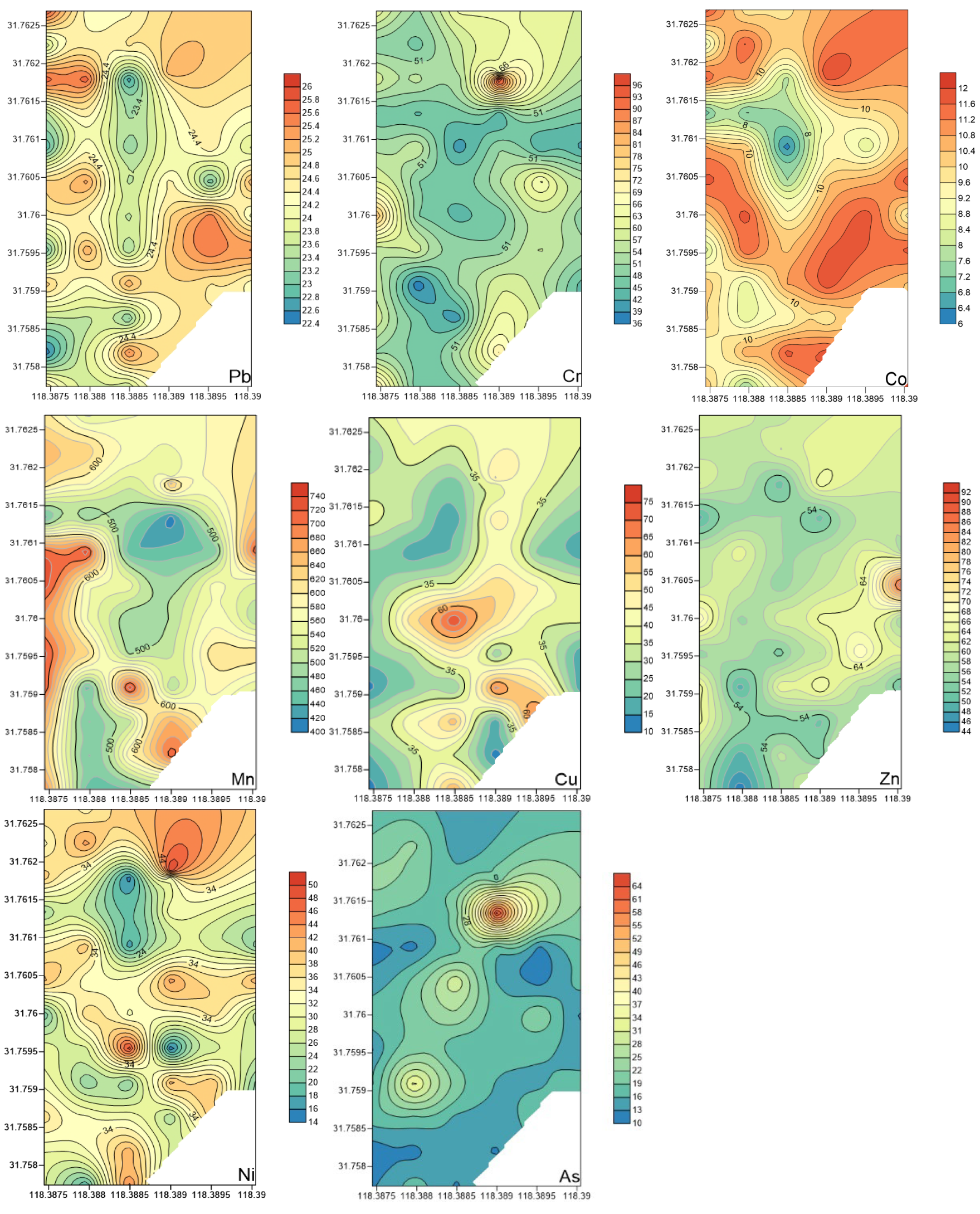
The soil heavy metal concentration data of Co, Pb, Cr, As, Ni, Cu, Zn, and Mn were analyzed using Kriging interpolation and mapped with Surfer 11 software. The spatial distribution of soil heavy metal concentrations in the study area is shown in
Figure 2.
The spatial distribution of the eight heavy metals in the study area exhibits significant differences, presenting a heterogeneous pattern characterized by localized enrichment coexisting with large-scale low values. High-value areas of As are mainly concentrated in the eastern and central regions, with prominent enrichment features and the most uneven spatial distribution, making As the element with the greatest variability. Cr shows a distinct high-value zone in the southeast, with a continuous gradient decreasing from southeast to northwest, reflecting the influence of geological background. Ni forms a relatively continuous enrichment belt in the central part, with an intact spatial structure, possibly influenced by stratigraphic features or localized human activities. Cu displays patchy high-value zones with discontinuous enrichment, indicating certain anthropogenic inputs. In contrast, Pb, Mn, Zn, and Co exhibit relatively uniform spatial distributions, with overall low concentration levels and no significant high-value zones, showing typical natural background-dominated characteristics and suggesting weaker human influence.
In summary, As is the most enriched and unevenly distributed element among the eight heavy metals. The gradient or localized enrichment of Cr, Ni, and Cu reflects the combined effects of geological processes and human activities, while Pb, Mn, Zn, and Co demonstrate natural distribution patterns controlled by background values.
3.2. Pollution Assessment
3.2.1. Single-Factor and Nemerow Composite Pollution Index
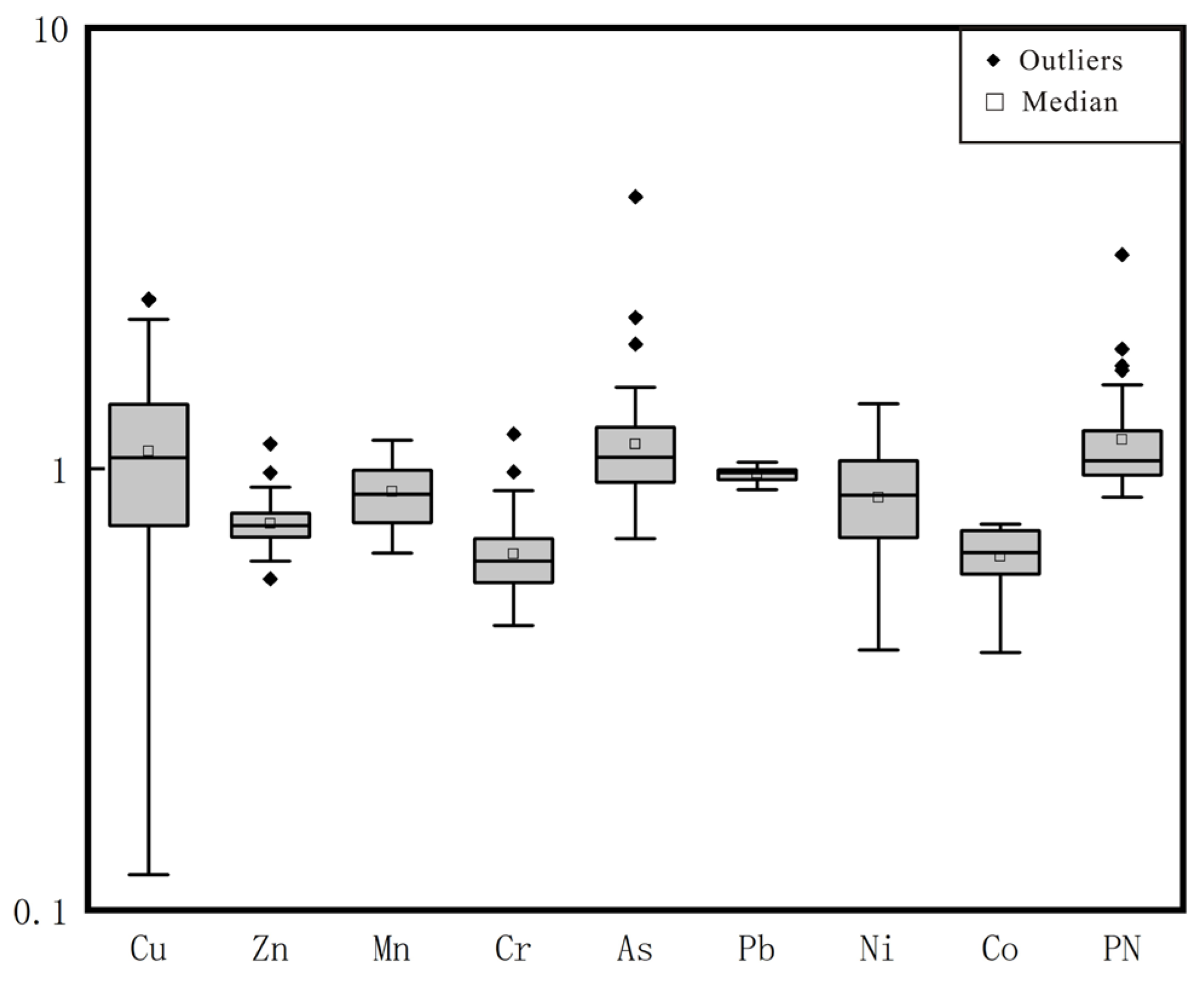
According to
Figure 3, the mean values of the eight heavy metals in the study area (Pi) ranked in descending order as follows: As (1.14) > Cu (1.10) > Pb (0.97) > Ni (0.95) > Mn (0.89) > Zn (0.75) > Cr (0.64) > Co (0.63). Among them, As and Cu showed only slight pollution, while Pb, Mn, Zn, Cr, Ni, and Co were all classified as non-polluted. For Cu, 4.76% of sampling points were moderately polluted, 53.38% were slightly polluted, and the remaining 42.86% were non-polluted. For As, 1.59% of sampling points were heavily polluted, 3.17% moderately polluted, 57.14% slightly polluted, and 38.10% non-polluted. Pb, Ni, and Cr were detected only at slight or non-pollution levels, with proportions of Pb (20.63% slight, 79.37% non-polluted), Ni (25.40% slight, 74.60% non-polluted), Cr (1.59% slight, 98.41% non-polluted), Zn (1.59% slight, 98.41% non-polluted), and Mn (23.81% slight, 76.19% non-polluted). Co was entirely non-polluted. Further calculation showed that PN ranged from 0.86 to 3.05, with a mean of 1.16.
The single-factor pollution index results indicate that the overall pollution level of the eight heavy metals in the study area is relatively low, with only As and Cu showing slight pollution characteristics, while the other elements remain in the non-polluted category. The degree of Cu pollution varies spatially, with a few sampling points reaching moderate pollution. Although As generally shows low pollution levels, isolated heavily polluted points exist, suggesting potential localized pollution sources. Pb, Ni, Cr, Zn, Mn, and Co are predominantly non-polluted, with only a few points showing slight pollution, indicating that these elements are mainly controlled by natural background values and are less affected by human activities. The calculated comprehensive pollution index (PN) ranged from 0.86 to 3.05, with a mean of 1.16. The minimum PN value below 1 indicates that some areas are non-polluted, while the maximum value exceeding 3 suggests that certain sites have reached moderate pollution levels, posing potential environmental risks. Although a few sampling points show relatively high PN values, the overall mean suggests that the study area remains at a slight pollution level, with no large-scale significant pollution zones. Overall, the environmental quality of the region is generally good, but localized enrichment of As and Cu requires close attention to prevent further expansion of potential pollution risks.
3.2.2. Geo-Accumulation Index Evaluation
From
Figure 4, the distribution of geo-accumulation indices for each element was obtained. The ranking of the eight heavy metals is: As > Pb > Cu > Mn > Ni > Zn > Cr > Co. All eight heavy metals show a geo-accumulation index corresponding to a non-polluted level, indicating that the regional soil has not been significantly affected by external inputs. Further analysis of sampling point distribution shows that 19.05% of Cu sampling points exhibit slight pollution, while the remaining 80.95% are non-polluted; only 1.59% of As sampling points show slight pollution, with the other 98.31% being non-polluted. Except for As and Cu, the other elements (Pb, Ni, Zn, Mn, Cr, and Co) are all at non-polluted levels across all sampling points, with no cases of slight or higher pollution. Overall, the geo-accumulation index evaluation results indicate that the accumulation levels of heavy metals in the study area are generally low, with only minor enrichment observed at a few sites, and the regional environmental quality remains good.
3.2.3. Potential Ecological Risk Index
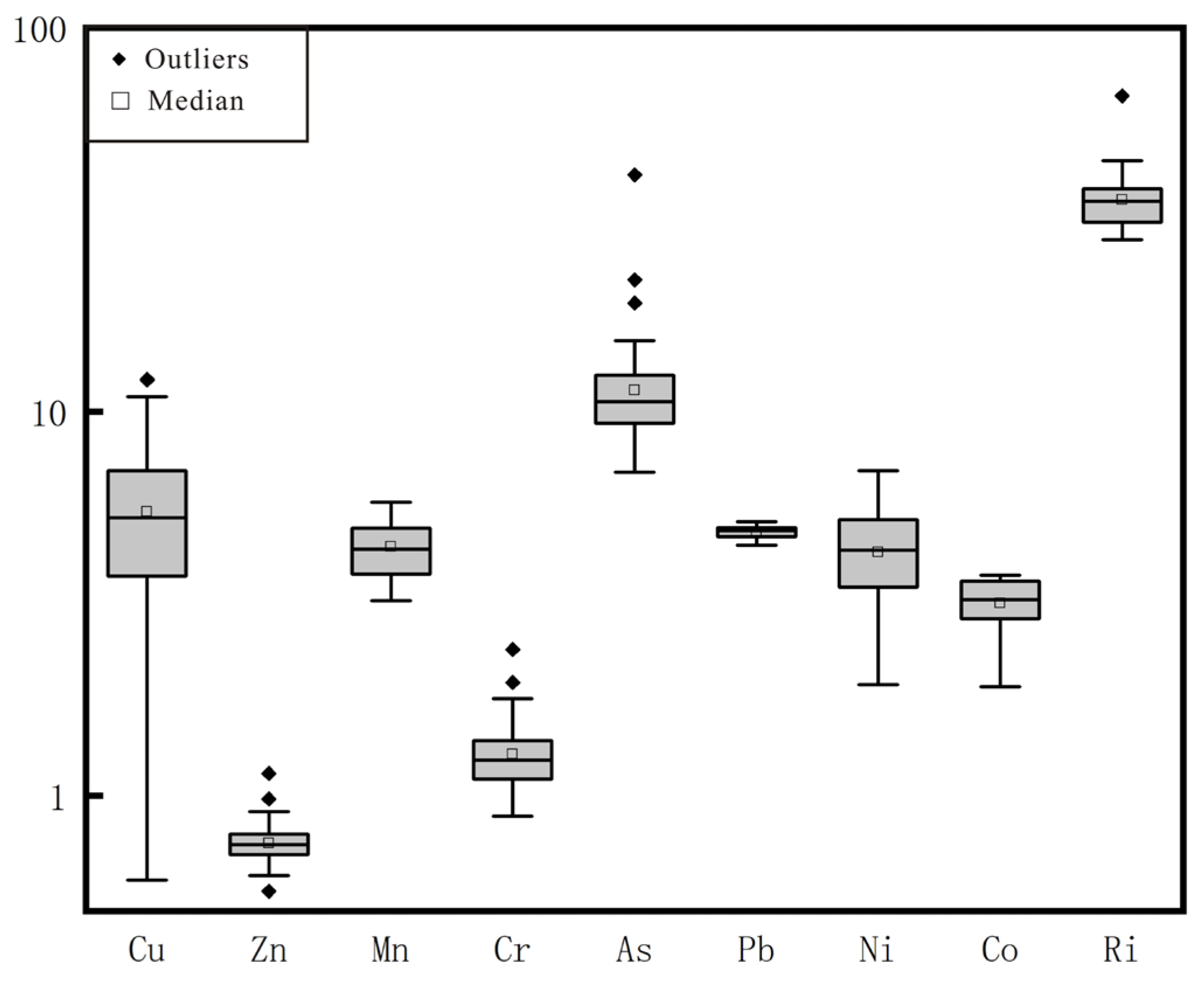
The calculation results of the potential ecological risk index for individual heavy metals (
) in the study area are shown in
Figure 5. The mean values of
for the eight heavy metals are ranked as follows: As (11.36) > Cu (5.48) > Pb (4.87) > Mn (4.44) > Ni (4.30) > Co (3.16) > Cr (1.28) > Zn (0.75). All elements have
values far below the slight risk threshold (
< 40). This indicates that the potential threat of individual heavy metals to the ecosystem is weak, with As contributing the highest risk, though still within the slight risk level.
The comprehensive potential ecological risk index (RI) fluctuates between 28.06 and 66.45, with an average of 35.66. All sampling points fall into the slight ecological risk category, suggesting that the overall ecological risk in the study area is low and no significant ecological hazards are present. Overall, the ecological risk of heavy metals in the study area is mainly influenced by As and Cu, but the risk level remains limited. The ecological risks of the other elements are extremely low, indicating that the regional ecological environment quality is generally safe and stable.
3.2.4. Analysis of Assessment Results
In the study area, the average concentrations of Mn, Zn, Co, Ni, and Cr do not exceed the regional soil background values, whereas the average concentrations of Pb, As, and Cu are higher than the background values, indicating varying degrees of enrichment. The coefficient of variation (CV) shows that, except for Pb (3.37%), which exhibits weak variability, the other elements display moderate variability. The single-factor pollution index (Pi) further reveals that only As and Cu exhibit slight pollution at certain sampling points, while the other elements remain within the non-polluted category. Cu shows considerable spatial variation in pollution levels, with several sampling points reaching moderate pollution, whereas As presents isolated high-value sites, suggesting potential localized pollution sources.
The Nemerow composite pollution index (PN) ranges from 0.86 to 3.05, with a mean value of 1.16, indicating that the study area is generally at a slight pollution level. Only a few sampling points reach moderate pollution, and no large-scale high-pollution zones are observed. The geo-accumulation index (Igeo) indicates that most heavy metals fall within the non-polluted level (Igeo ≤ 0), while As and Cu show slight accumulation (Igeo > 0) at a few sites, suggesting that the regional soils have not been substantially affected by external heavy-metal inputs.
The potential ecological risk index () indicates that the risk values of all elements are far below the threshold for slight ecological risk ( < 40). Although As contributes the highest individual ecological risk, it still remains within the low-risk range. The comprehensive ecological risk index (RI) ranges from 28.06 to 66.45, with a mean of 35.66, and all sampling points fall within the low ecological risk category according to the Hakanson classification.
Overall, the study area exhibits low levels of heavy-metal pollution and limited ecological risk, suggesting generally stable environmental conditions. However, the localized enrichment of As and Cu warrants continued monitoring to prevent potential expansion of pollution sources.
3.3. Source Analysis
3.3.1. Correlation Analysis of Soil Heavy Metals
Correlation analysis is a widely applied method for evaluating the strength of relationships between two or more correlated variables. Heavy metal elements with significant correlations often share the same or similar sources, which can be used to infer the origins of soil heavy metals [
30,
31].
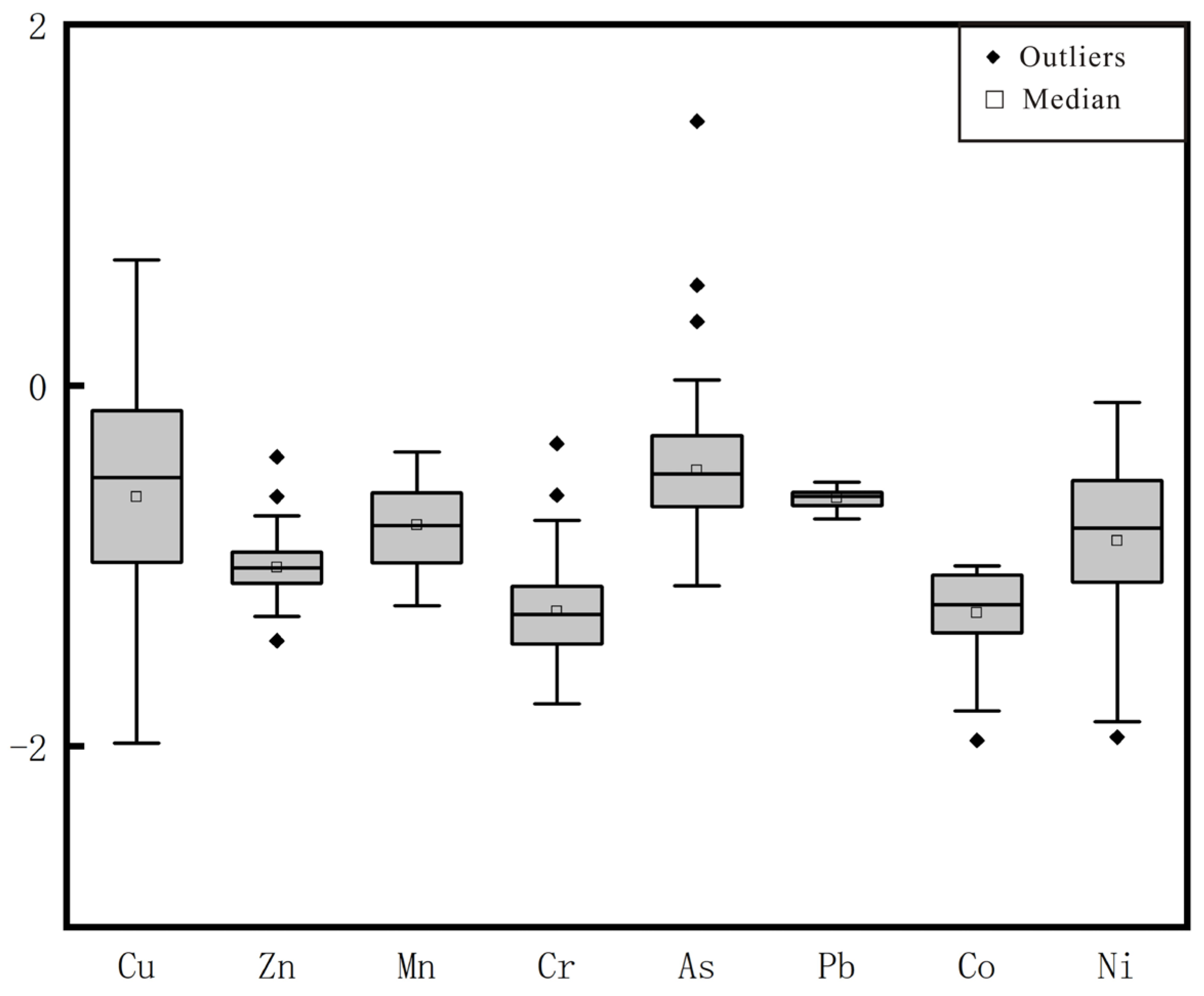
Normality of the data was assessed using the Shapiro–Wilk test. The results indicated that Cr, Mn, Zn, As, and Co significantly deviated from normal distribution and were therefore transformed using natural logarithms (ln), whereas Ni, Cu, and Pb were retained in their original form. Subsequently, all variables were standardized using z-scores to eliminate scale differences and ensure the applicability of PCA. The results of the normality test are presented in
Table 7.
Pearson correlation coefficients revealed several significant associations among the studied heavy metals (
Table 8). Ni exhibited strong positive correlations with Cu (r = 0.544,
p < 0.01) and Co (r = 0.429,
p < 0.01), suggesting a common geochemical source or similar anthropogenic inputs. Pb showed a strong correlation with Co (r = 0.644,
p < 0.01) and a moderate correlation with Zn (r = 0.462,
p < 0.01), indicating possible co-occurrence from industrial activities or traffic emissions. Cr was significantly correlated with Mn (r = 0.540,
p < 0.01) and Co (r = 0.482,
p < 0.01), suggesting similar geochemical behavior or shared sources. In addition, Co exhibited significant correlations with multiple elements, including Pb (r = 0.644,
p < 0.01), Zn (r = 0.522,
p < 0.01), Cr (r = 0.482,
p < 0.01), and Mn (r = 0.439,
p < 0.01), indicating that it may act as an important indicator of mixed pollution sources. In contrast, As showed significant negative correlations with Cr (r = –0.311,
p < 0.01) and Mn (r = –0.321,
p < 0.05), implying distinct sources or different geochemical pathways. This suggests that As may be more influenced by agricultural inputs or natural background processes, whereas Cr and Mn are more associated with industrial emissions or soil-forming processes.
Overall, most metals showed positive correlations, suggesting the influence of mixed anthropogenic sources such as traffic emissions and industrial activities. These results provide a basis for further source identification using PCA.
3.3.2. Principal Component Analysis
Principal component analysis (PCA) is an important statistical method used to transform multi-indicator problems into fewer comprehensive indicators. Its core idea is to apply a linear transformation to convert multiple potentially highly correlated variables into new, mutually independent variables, namely principal components [
32]. By conducting PCA on soil data, several key influencing factors can be identified, providing a basis for evaluating soil heavy metal concentrations.
All variables were standardized using z-scores prior to PCA, ensuring comparability across variables with different units and scales. The applicability of PCA was determined using the KMO measure and Bartlett’s test of sphericity in SPSS 27 software. The KMO value (0.608 > 0.5) and the significance probability of Bartlett’s test (0.000 < 0.05) indicate strong partial correlations among variables, confirming that PCA is suitable. In this study, three principal components were extracted, with a cumulative variance explanation of 73.71%.
As shown in
Table 9, PC1 shows high loadings for Co, Cr, Zn, Pb, and Mn. These elements may originate from a combination of natural geochemical background and anthropogenic inputs. Co, Zn, and Pb are generally associated with human activities such as industrial emissions and traffic-related deposition, while Cr and Mn may be influenced by both lithogenic sources and anthropogenic disturbances. Therefore, PC1 likely represents a mixed source influenced by both natural background and anthropogenic activities related to industrial and traffic emissions.
PC2 is strongly loaded by Cu and Ni. These elements are typically associated with anthropogenic activities, particularly industrial processes and combustion-related emissions. Their co-occurrence indicates a common anthropogenic influence in the study area. Therefore, PC2 likely represents an anthropogenic source associated with combustion-related and traffic-related processes, which commonly contribute Cu and Ni in environmental systems.
PC3 is dominated by As, forming a single-element component. As may be derived from both natural geological sources and anthropogenic activities such as industrial emissions and combustion processes. Therefore, PC3 likely reflects As enrichment influenced by a combination of geogenic background and human activities.
Overall, the PCA results suggest that the studied heavy metals are influenced by both natural and anthropogenic sources. However, PCA alone cannot definitively identify specific emission sources. Further receptor modeling approaches would be required for more accurate source apportionment.
3.3.3. Cluster Analysis of Heavy Metal Elements
All variables were standardized using z-scores prior to R-mode hierarchical cluster analysis to ensure comparability among variables with different units and scales.
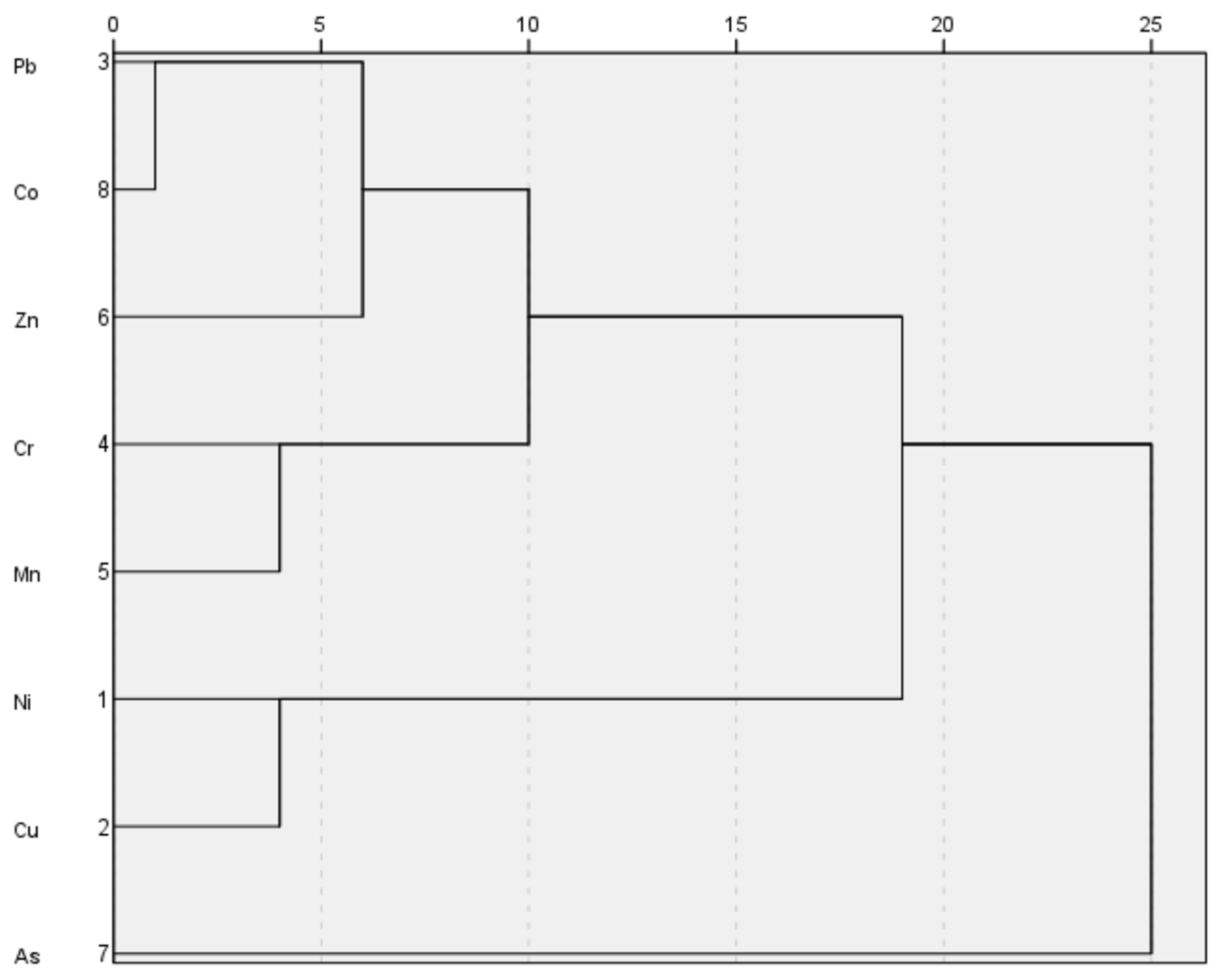
As shown in
Figure 6, Co, Pb, Zn, Cr, and Mn are grouped into the first cluster, suggesting similar environmental behaviors and possible shared influencing factors. These elements may be affected by a combination of natural geochemical background and anthropogenic inputs, particularly industrial activities and traffic-related emissions.
Cu and Ni form the second cluster, indicating similar distribution patterns and a potential association with anthropogenic activities such as industrial processes and combustion-related emissions.
As forms an independent cluster, suggesting distinct geochemical behavior compared with other elements and possible different influencing factors.
Overall, the clustering results are broadly consistent with the PCA findings, indicating similar grouping patterns among the studied elements. PC1 (Co, Cr, Zn, Pb, Mn) in PCA corresponds well with the first cluster in HCA, suggesting comparable environmental behaviors and potential shared influencing factors. PC2 (Cu, Ni) is also consistent with the second cluster, further supporting their similar distribution characteristics. The independent behavior of As in PC3 aligns with its separate cluster in HCA.
Although Pb is primarily associated with PC1, it also shows minor cross-loading in PCA, suggesting possible mixed influence. However, its clustering behavior is more consistent with the PC1 group, indicating that its dominant influence is similar to Co, Cr, Zn, and Mn.
Considering the spatial characteristics of the study area, the clustered patterns identified by HCA correspond well to the potential pollution sources present in Hexian County. The first cluster (Co, Cr, Zn, Pb, Mn) is associated with industrial and traffic-related activities, the second cluster (Cu, Ni) reflects traffic emissions and river-related inputs, and the independent clustering of As corresponds to agricultural inputs and possible riverfront industrial emissions.
3.3.4. Verification of Pollution Sources
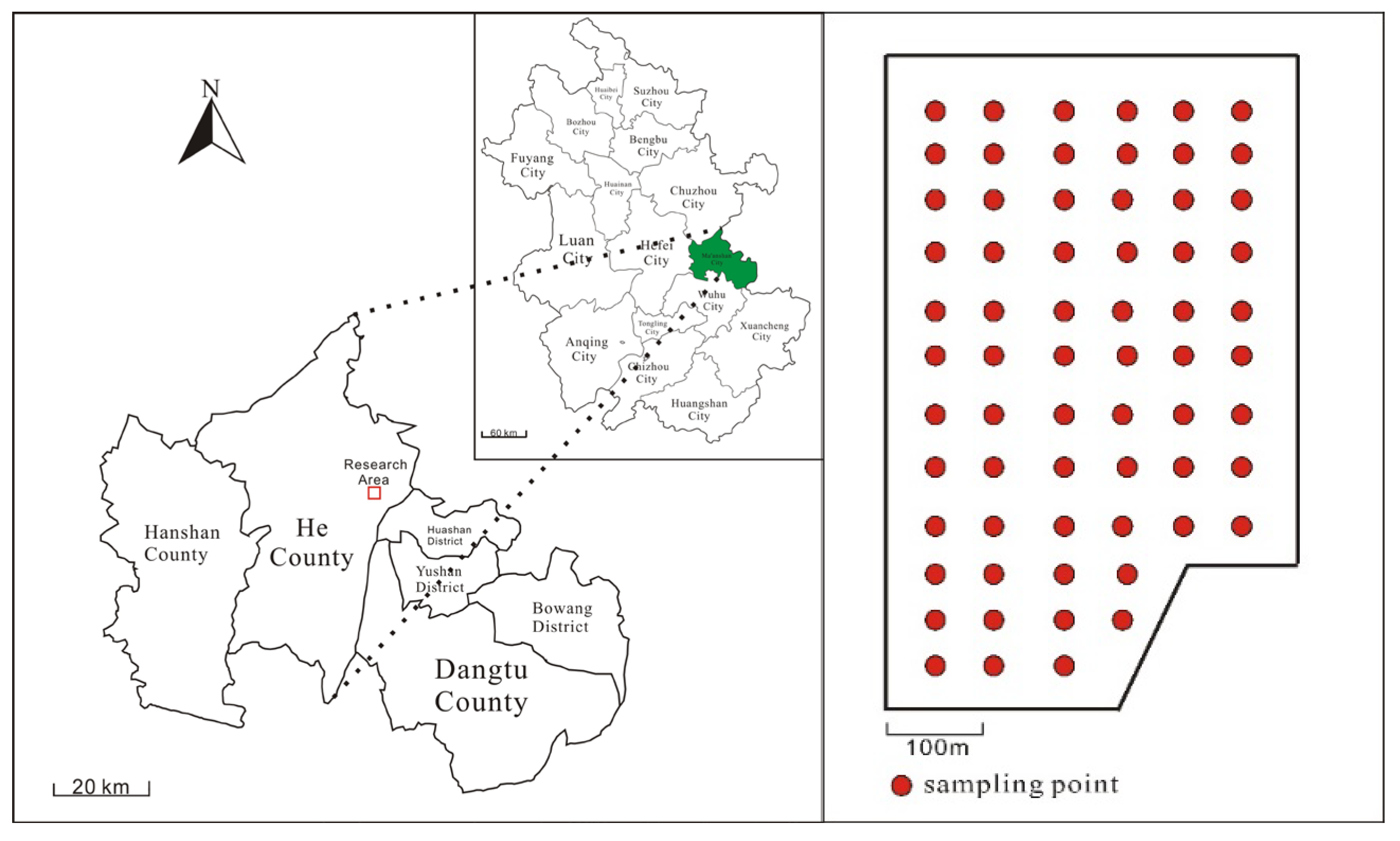
To further verify the potential sources represented by the clustered patterns, the spatial distribution of heavy metals was examined in relation to local industrial, transportation, agricultural, and river-related activities. Given the small spatial extent of the sampling area (0.40 km2) and its immediate surroundings, only nearby sources are expected to exert direct influence, whereas more distant sources mainly contribute to regional background levels. Hexian County is located in eastern Anhui Province on the western bank of the lower Yangtze River, where multiple anthropogenic activities—including industry, transportation, agriculture, and river-related operations—coexist, with their influence on the study area varying substantially depending on distance and transport mechanisms.
Transportation activities represent one of the strongest direct anthropogenic influences. The study area lies within 10 m of a waterproof embankment that serves as the sole access route for vehicles disembarking from the Yangtze River ferry into Hexian County. Frequent acceleration, braking, and idling along this corridor are likely to release Cu, Ni, Pb, and Zn. Spatial distribution patterns show elevated Pb, Zn, and Ni concentrations along this traffic route, consistent with the Cu–Ni association identified in PC2 of the PCA and supported by the Cu–Ni and Pb–Zn correlations in the Pearson analysis. These findings indicate that traffic-related emissions constitute a major direct source affecting the study area.
Agricultural activities also exert a significant direct influence. The study area is dominated by paddy fields subjected to long-term fertilizer and pesticide application. Certain herbicides and historically used pesticides contained As, and irrigation water or agricultural runoff may further introduce As into soils. The elevated As concentrations observed in the eastern part of the study area align with its independent loading in PC3 of the PCA and its separate clustering in the HCA, suggesting that agricultural inputs are a major contributor to As enrichment.
River-related processes exert a direct to moderate influence on soil heavy metal distribution. Irrigation water is directly extracted from the Yangtze River, and temporal variations in pumping locations and seasonal hydrological conditions may introduce Ni, Pb, and As into the soils. In addition, a port and ship-fuel station located approximately 5 km downstream may contribute Ni and Pb through atmospheric deposition and river-mediated transport. These influences correspond to the Cu–Ni association and partially overlap with the As-related component identified in multivariate analyses.
Nearby industrial and commercial facilities exert a moderate influence. Within approximately 5 km of the study area, several facilities—including a food-processing plant, plantations, and recreational botanical gardens—may contribute limited emissions or wastewater inputs. However, their influence is weaker compared with transportation and irrigation-related sources and mainly contributes to background levels of certain heavy metals.
Regional industrial sources represent background-level influences. A large steel plant located on the opposite bank of the Yangtze River may release Pb, Zn, and As through atmospheric transport and flue-gas deposition. However, due to the distance and the presence of the river barrier, its impact on the study area is attenuated and primarily reflected in regional background concentrations rather than direct local contamination.
3.4. Health Risk Assessment
3.4.1. Exposure Characteristics
Based on the established health risk assessment model and the measured concentrations of heavy metals in farmland soils, the average daily doses (ADD) for adults and children through three exposure pathways were calculated. As shown in
Table 10, substantial differences exist across both exposure pathways and population groups.
Children exhibit significantly higher ADD values than adults for all metals and exposure pathways. In most cases, children’s ADD values are 5–10 times higher than those of adults, reflecting their lower body weight, higher soil ingestion rates, and more frequent hand-to-mouth behavior. This indicates that children are a more sensitive population with respect to soil heavy metal exposure.
Oral ingestion is the dominant exposure pathway for all metals. For example, the Oral ingestion ADD of Zn and Mn in children reaches 10−3–10−2, far exceeding the corresponding inhalation values (10−9–10−8) and dermal values (10−6–10−5). Inhalation contributes negligibly to total exposure, while dermal contact provides a secondary but non-negligible contribution for elements such as Cr, Ni, and Mn.
The highest exposure levels are observed for Mn and Zn, followed by Cr, Cu, and Ni, while As and Pb show comparatively lower ADD values. These differences are consistent with the measured soil concentrations and the dominance of ingestion exposure. The carcinogenic exposure doses of As and Cr [As(c) and Cr(c)] are also substantially higher in children—approximately 8–10 times those of adults—reflecting the same population-related differences observed for non-carcinogenic exposure. These elevated carcinogenic exposure doses highlight the need for careful evaluation in subsequent carcinogenic risk assessment.
Overall, soil heavy metal exposure in the study area is primarily driven by ingestion, with children experiencing substantially higher exposure than adults. Mn and Zn exhibit the highest ADD values, while Cr, Cu, and Ni show moderate levels. Although As and Pb present lower exposure levels, their toxicological significance warrants continued attention. Carcinogenic exposure of As and Cr also requires further assessment due to elevated levels in children and their relevance to long-term health risk.
According to the classification of carcinogenicity to humans published by the International Agency for Research on Cancer (IARC) [
33], the seven heavy metals examined in this study (Cr, Co, Ni, Pb, Hg, Zn, Cu) pose non-carcinogenic risks to humans. In addition, Cr, Ni, and Pb also present carcinogenic risks. Therefore, carcinogenic risk assessment was conducted for Cr, Ni, and Pb, while non-carcinogenic risk assessment was performed for all seven heavy metals. The specific calculation parameters are shown in
Table 11.
3.4.2. Non-Carcinogenic Risk
Non-carcinogenic hazard to humans is expressed using the hazard quotient (HQ). In general, when HQ < 1, the exposure pathway is considered unlikely to cause adverse health effects; when HQ ≥ 1, the pathway may pose potential health risks. The hazard index (HI) is used to evaluate the overall non-carcinogenic risk from multiple pollutants or multiple exposure pathways. When HQ or HI > 1, non-carcinogenic health risks are indicated, and the level of hazard increases proportionally with HQ or HI [
35].
As shown in
Table 12, the HI values of the seven heavy metals in the study area are all below 1, indicating that the overall non-carcinogenic risk for both adults and children is within acceptable limits. However, differences among elements and between population groups are evident.
Among all metals, As in children shows the highest HI value (0.932), approaching the threshold of potential concern, suggesting that As may be a relatively important contributor to non-carcinogenic risk. Cr in children also shows a relatively higher HI value (0.863), indicating a comparatively greater contribution to overall risk among the studied metals.
Children exhibit higher HQ values than adults across all exposure pathways. For As, Cr, and Ni, both ingestion (HQoral) and dermal exposure (HQdermal) contribute to elevated HQ values in children, indicating higher exposure sensitivity in this population. Ingestion is the dominant exposure pathway for all metals. For example, HQoral of As in children reaches 7.73 × 10⁻¹, representing the main contribution to its total HI. Dermal exposure also contributes to certain metals, particularly Cr, whose HQdermal in children reaches 6.35 × 10⁻¹, indicating a relatively higher contribution compared with other pathways. Inhalation exposure (HQinh) remains negligible for all metals.
Overall, As and Cr show relatively higher contributions to non-carcinogenic risk in the study area. In particular, As contributes the most to HI in children, while Cr also represents a notable contributor. Other metals show relatively low HQ and HI values and contribute minimally to overall non-carcinogenic risk.
3.4.3. Carcinogenic Risk
Given that As and Cr are the only heavy metals in the study area soils with carcinogenic slope factors (SF) applicable to resident exposure scenarios, this study conducted carcinogenic risk assessment solely for these two metals. Since Cr lacks a corresponding carcinogenic slope factor for the dermal pathway, its carcinogenic risk was calculated only through oral ingestion and inhalation. Ni was excluded from carcinogenic risk analysis due to the absence of reliable SF values applicable to soil exposure scenarios.
As shown in
Table 13, the total carcinogenic risks (TCR) of both As and Cr fall within the acceptable range recommended by the U.S. EPA (1 × 10
−6–1 × 10
−4). Among the two metals, As exhibits substantially higher carcinogenic risk levels, with TCR values of 2.08 × 10
−5 for adults and 3.60 × 10
−5 for children. Although these values remain within the acceptable range, the relatively elevated TCR in children indicates a higher level of concern. In contrast, Cr shows much lower TCR values—4.58 × 10
−7 for adults and 5.85 × 10
−7 for children—indicating a comparatively minor contribution to overall carcinogenic risk.
Population differences are evident, as children consistently exhibit higher carcinogenic risk values than adults. For both As and Cr, CR values via oral ingestion and inhalation are higher in children, mainly due to higher exposure levels compared with adults. Among exposure pathways, oral ingestion (CRoral) is the dominant contributor to total carcinogenic risk. For example, CRoral values of As are 1.61 × 10⁻⁵ in adults and 2.99 × 10⁻⁵ in children, which are much higher than those associated with inhalation exposure. Inhalation (CRinh) contributes minimally to the overall carcinogenic risk for both metals. The dermal exposure pathway for Cr was not assessed due to the absence of an established carcinogenic slope factor.
Overall, carcinogenic risks in the study area remain within acceptable limits. However, As is the primary contributor to carcinogenic risk, and children represent the most sensitive population, warranting focused attention in future risk management and soil pollution control efforts.
A number of uncertainties and limitations should be acknowledged in this study. The health risk assessment was based on total metal concentrations in soils, which do not necessarily represent the bioavailable or bioaccessible fractions that determine actual human exposure. Consequently, the estimated risks may be overestimated to some extent. Moreover, the exposure parameters adopted from standard models may not fully capture site-specific characteristics or population variability. Future studies should incorporate metal speciation, bioavailability measurements, and region-specific exposure factors to improve the accuracy and robustness of health risk assessments.