Article

IoT-Based Sensor Monitoring and Automated Irrigation Control for Sustainable Smallholder Vegetable Production: A Case Study

1
Department of Electronics Engineering and Telecommunication, Faculty of Industrial Education, Rajamangala University of Technology Suvarnabhumi, Phra Nakhon Si Ayutthaya 13000, Thailand
2
Department of Management, Faculty of Business Administration and Information Technology, Rajamangala University of Technology Suvarnabhumi, Phra Nakhon Si Ayutthaya 13000, Thailand
3
Department of Electrical Engineering, Faculty of Industrial Education, Rajamangala University of Technology Suvarnabhumi, Phra Nakhon Si Ayutthaya 13000, Thailand
4
Laboratory for Innovative Sensor Technology and Biomedical Applications, Department of Physics, Faculty of Science, Ubon Ratchathani University, Ubon Ratchathani 34190, Thailand
5
Division of Science, Faculty of Science and Technology, Rajamangala University of Technology Suvarnabhumi, Phra Nakhon Si Ayutthaya 13000, Thailand
*
Author to whom correspondence should be addressed.
Sustainability 2026, 18(11), 5753; https://doi.org/10.3390/su18115753 (registering DOI)
Submission received: 31 March 2026 / Revised: 9 May 2026 / Accepted: 27 May 2026 / Published: 5 June 2026

Abstract

Greenhouse vegetable cultivation in tropical regions is often affected by high temperature, unstable humidity, and irrigation management problems. This study presents a pilot-scale case study of Green Oak lettuce cultivation using an IoT-based sensor monitoring and automated irrigation control system in Phra Nakhon Si Ayutthaya Province, Thailand. The system used AM2315C, BH1750, NPK, and flow sensors connected to ESP32. Data were transmitted to the ThingsBoard platform for real-time environmental monitoring and irrigation control. The greenhouse temperature averaged 33.21 ± 3.61 °C, while relative humidity averaged 71.55 ± 9.66%. The average daytime light intensity was 16,976 ± 409 lux. Nitrogen (N), phosphorus (P), and potassium (K) concentrations remained within ranges of 62.42–74.57, 76.46–84.30, and 71.46–79.30 mg/kg, respectively. Economic evaluation demonstrated favorable feasibility, with a water use efficiency (WUE) of 0.63 kg/L, return on investment (ROI) of 40%, benefit–cost ratio (BCR) of 1.6, and payback period of approximately 2.5 years. The developed system demonstrates potential for supporting sustainable greenhouse agriculture and contributes to SDG 2, SDG 6, SDG 12, and SDG 13 under tropical agricultural conditions.

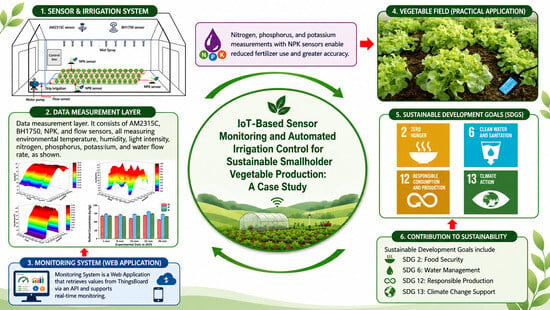
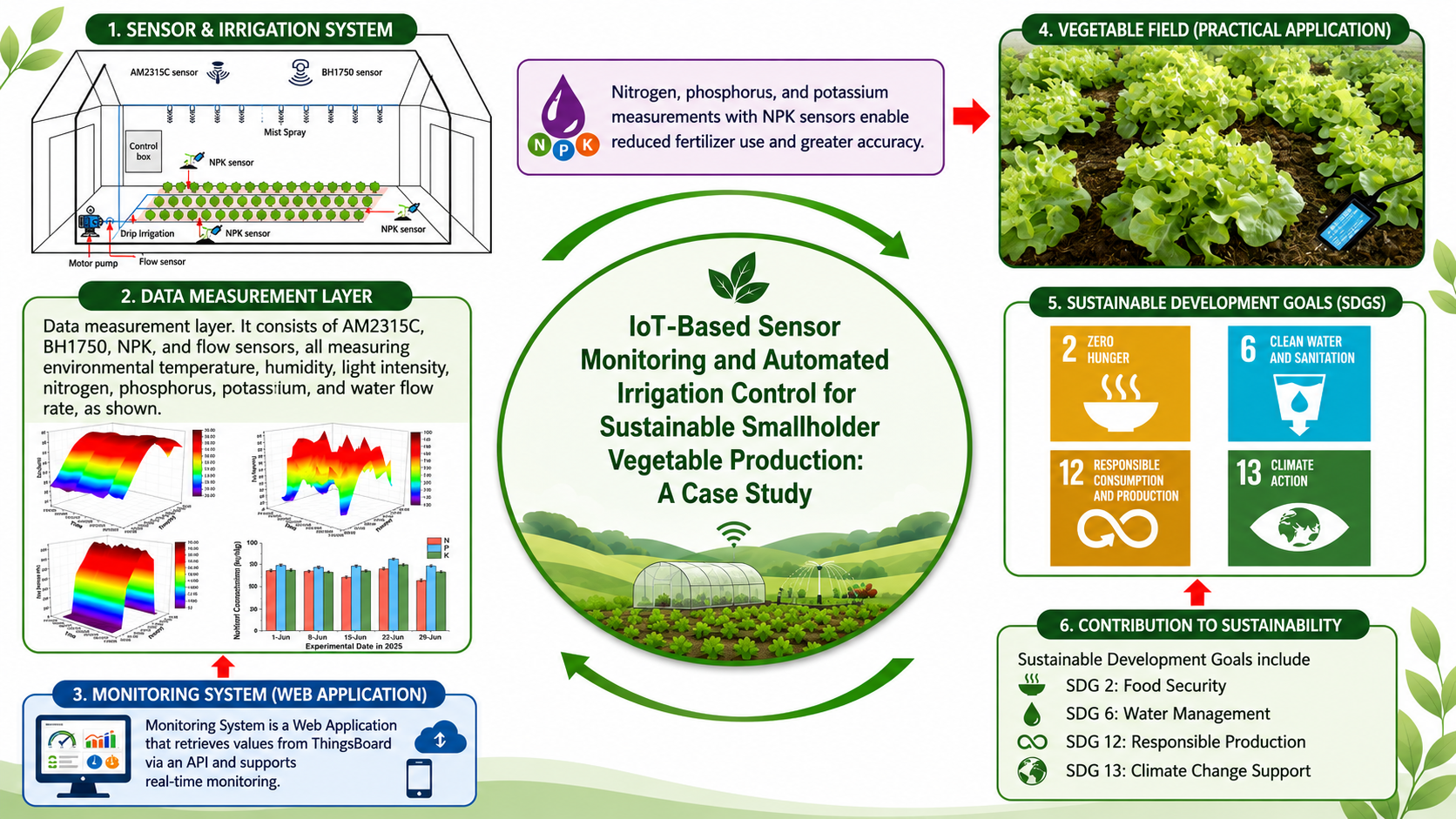
Graphical Abstract

1. Introduction

Agriculture is a key economic sector in many developing countries, particularly in Asia and Africa [1]. Vegetable production supports both domestic consumption and export markets, with smallholder farmers playing an important role in agricultural output and income generation [2,3]. Improving production efficiency while maintaining environmental sustainability remains a major challenge in many agricultural systems [4,5]. In practice, farm management often relies on farmer experience and visual observation, which can result in inefficient use of water, fertilizers, and other agricultural inputs, leading to increased production costs [6,7]. In addition, climate variability continues to affect agricultural productivity and resource management under field conditions. As a result, sustainable agriculture has gained increasing attention as an approach for balancing agricultural productivity with efficient resource use [8,9].
Sustainable agriculture has been promoted to balance productivity and resource use under increasing resource constraints. In many agricultural systems, challenges related to climate variability, water management, and rising production costs continue to affect crop productivity and environmental sustainability [4,5,6,7,8,9]. Efficient management of irrigation water, fertilizer application, and environmental conditions has therefore become increasingly important for improving agricultural sustainability under practical farming conditions. However, smallholder farmers often lack practical tools to convert field data into actionable decision-making, limiting the effectiveness of these approaches [10].
Advanced sensor technologies, the Internet of Things (IoT), and machine learning (ML) have enabled more data-driven agricultural practices [11,12,13]. Recent studies have further demonstrated the growing role of smart sensing systems and precision agriculture technologies in improving irrigation efficiency and farm-level resource management. Precision agriculture technologies can also support environmental monitoring and improve resource-use efficiency under practical agricultural conditions [14]. The agricultural industry is now more precisely managed thanks to the combination of ML and IoT sensors [15]. In terms of water efficiency, particularly considering that fresh water is increasingly scarce, an IoT-enabled smart irrigation system that allows for data-driven farming potential (water use efficiency, or WUE) flexibility can minimize losses in agricultural output [16,17,18,19].
Previous studies have applied wireless sensor networks (WSNs) and LoRaWAN technologies to irrigation management and nutrient monitoring, especially for key macronutrients such as nitrogen (N), phosphorus (P), and potassium (K) [20,21,22]. These approaches have also been explored in crop systems such as rice cultivation to support more precise monitoring and management [23,24,25,26,27]. In addition, recent studies have investigated the integration of IoT and ML techniques for crop recommendation and yield prediction [28].
Recent studies have highlighted the growing role of precision agriculture technologies in improving irrigation efficiency, environmental monitoring, and resource management at the farm level [29]. In addition, sustainable food systems and agricultural transformation have received increasing attention in relation to food security and long-term sustainability goals [30,31]. Advances in sustainable agriculture practices and digital technologies have also been discussed as important approaches for supporting SDG 2 (Zero Hunger) and improving agricultural resilience under changing environmental conditions [32]. In particular, IoT-based monitoring and irrigation systems have gained increasing attention for their potential to improve water management, reduce resource losses, and support sustainable agricultural production under practical farming conditions.
This study develops and evaluates an integrated WSN-based system for vegetable production, aiming to improve yield, reduce production costs, and optimize resource use under practical field conditions. The proposed approach also supports sustainable agriculture in line with the Sustainable Development Goals (SDGs), including food security, water efficiency, responsible production, and climate adaptation [33,34].
The remainder of this paper is organized as follows. Section 1 presents the introduction and research background. Section 2 describes the materials and methods, including the system architecture and operational algorithms. Section 3 presents the experimental results, while Section 4 provides the discussion of the findings. Finally, Section 5 summarizes the conclusions and provides recommendations for future work.

2. Materials and Methods

This paper presents the development and testing of a farmer decision support system using a sensor network to raise the level of vegetable production of smallholder farmers. Integrating a sensor network IoT system and real-time monitoring and tracking system can lead to efficient use of resources in alignment with the sustainable development goals, including SDG 2 Productivity and Food Security, SDG 6 Water Efficiency, SDG 12 Reduction of Chemical Use in Production, and SDG 13 Reduction of Environmental Impact and Adaptation to Climate Change. The sensor network design, IoT system, and real-time monitoring and tracking system consist of 4 main components: (1) sensor networks, (2) embedded systems (ESP32), (3) IoT and (4) dashboard monitoring.

2.1. Architecture of the System

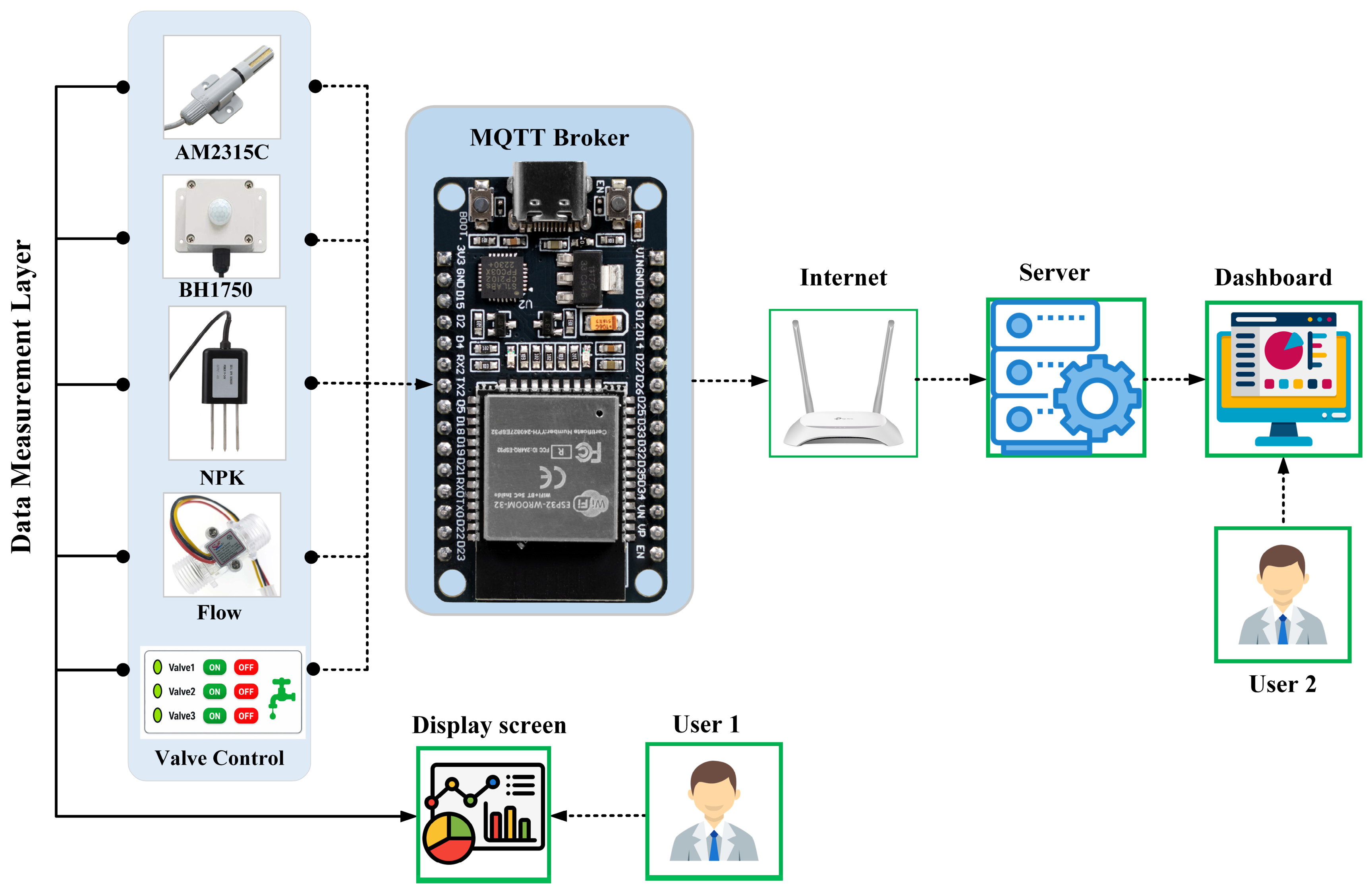
This section describes the architecture of the proposed NS system, which is designed based on a multi-layer IoT framework commonly used in smart agriculture applications. The system is organized into four functional layers: (1) data measurement, (2) processing and communication, (3) data storage, and (4) visualization and analysis. Figure 1 shows the overall architecture of the proposed system for smart greenhouse applications.

2.1.1. Data Measurement Layer

The data measurement layer consists of AM2315C, BH1750, NPK, and flow sensors, which are used to measure environmental parameters including temperature, humidity, light intensity, nitrogen (N), phosphorus (P), potassium (K), and water flow rate. The specification of all employed sensors are provided in Table 1.
Temperature and humidity are measured using the AM2315C sensor, while light intensity is obtained from the BH1750 sensor. Both sensors communicate with the ESP32 via the I2C protocol. Soil nutrient data (N, P, and K) are acquired using an NPK sensor that communicates through the RS485 protocol. Since the ESP32 does not support direct RS485 communication, an RS485 Modbus RTU-to-UART converter based on the MAX485 module was used as the interface between the NPK sensor and the ESP32 [35,36].
All sensor data are collected and processed by the ESP32-based node, formatted into JSON payloads, and transmitted via MQTT over a Wi-Fi network to the ThingsBoard server platform for storage, visualization, and real-time monitoring [37]. The sensor data are stored in a time-series database and displayed through a web-based dashboard for real-time monitoring and system control.
The flow sensor is used to support irrigation control, including mist spraying and drip irrigation systems. The system can operate in both automatic and manual modes. In automatic mode, irrigation is triggered based on temperature conditions, while in manual mode, users can control water valves via the dashboard or control panel.

2.1.2. Processing and Communication Layers

Processing and communication in this part use microcontrollers. The ESP32 Wi-Fi is the central processing unit between the data measurement layer and storage and display, as well as the I2C and RS485 interfaces. The ESP32 Wi-Fi and server use the MQTT protocol for communication, which operates on a publish/subscribe model. MQTT has the advantages of data transmission and high speed [38,39].

2.1.3. Data Storage and Display

The monitoring system is implemented as a web-based application that retrieves data from ThingsBoard via an API. The system supports three primary use cases: real-time monitoring, interval-based monitoring, and remote sensor control. The monitoring interface presents sensor data from the AM2315C, BH1750, NPK, and flow sensors in a unified graphical visualization. In addition, the water valve status is displayed in two formats: (i) historical status and (ii) real-time status. The valve condition is indicated using a color-coded scheme, where green represents normal operation, yellow indicates a fault condition, and red denotes a closed valve. Communication between ThingsBoard and the ESP32 is established using the MQTT protocol, implemented via the PubSubClient library. The ESP32 executes a predefined set of instructions to establish and maintain communication with the ThingsBoard server.

2.1.4. Irrigation Control Strategy

The smart greenhouse system integrates two irrigation subsystems: a mist irrigation system and a drip irrigation system for cultivating salad vegetables. The system was fully implemented and experimentally deployed in a real greenhouse environment located in Bang Ban District, Phra Nakhon Si Ayutthaya Province, Thailand, and operated by local farmers.
The irrigation control strategy is based on real-time environmental data acquired from the AM2315C sensor. When the ambient temperature exceeds 37.5 °C, the mist irrigation system is automatically activated. This misting process reduces the internal greenhouse temperature and mitigates plant heat stress, which can adversely affect growth performance and product quality, particularly taste [40,41]. The operational conditions and requirements for mist irrigation are summarized in Table 2.
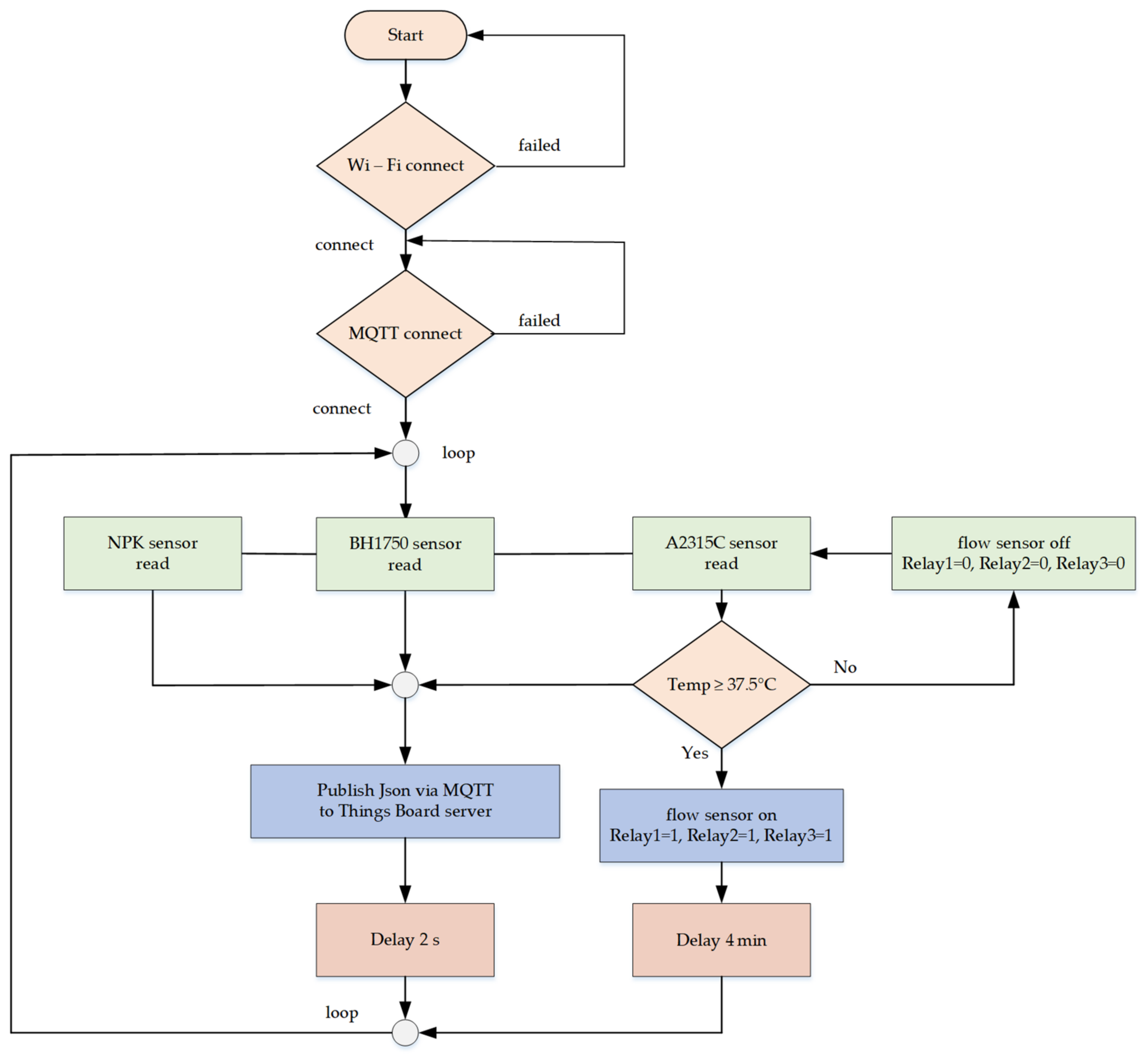
Figure 2 shows the operational flow of the system. At start-up, the ESP32 establishes a Wi-Fi connection and then attempts to connect to the MQTT broker. If the connection fails, it keeps retrying until the connection is successful. After initialization, the system enters a continuous loop for data acquisition and control. The RS485 sensor measures N, P, and K levels to support nutrient monitoring and fertilization planning. Light intensity inside the greenhouse is measured using a BH1750 sensor to evaluate whether the light conditions are suitable for plant growth.
All sensor data are formatted as JSON and transmitted to the ThingsBoard server via the MQTT protocol for storage and visualization. The AM2315C sensor measures temperature and relative humidity. The temperature is used as the main control parameter and is compared with a predefined threshold of 37.5 °C. When the temperature is ≥37.5 °C, the system activates the mist irrigation by switching on all three relays and enabling the flow sensor. The misting process runs for 4 min, after which the relays are turned off. The system then waits for 2 s before returning to the sensing loop. Otherwise, if the temperature is below 37.5 °C, no irrigation is triggered and the system continues monitoring.
The data presented in Table 2 were used to evaluate the water-use efficiency (WUE) of the system, as defined in Equations (1) and (2). In this study, the crop yield of Green Oak (Lactuca sativa L.) and the water-use data were obtained from the flow sensor [17,42,43,44].
Water use efficiency (WUE) is calculated as follows (Equation (1)):
W U E = C Y W U
where CY is the crop yield of Green Oak, and WU is the water used, i.e., the total amount of water applied.
Economic Water Productivity (EWP)
Economic water productivity (EWP) is used to evaluate the economic efficiency of irrigation water use in Green Oak lettuce production. EWP is calculated using Equation (2) [45,46,47].
E W P = G M I W U
where EWP is the economic water productivity (USD m−3), with GM representing the gross margin obtained from Green Oak lettuce production (USD ha−1), and IWU is the irrigation water used for crop production (m3 ha−1).

2.2. Evaluation of Economic Effects

Economic impact assessment theory is an assessment of the impact of a developed system, in which the rate of return on investment (ROI) and the benefit–cost ratio (BCR) are taken into account in determining the ratio of total return after total investment and the payback period (PP). Economic impact assessment is shown in Equations (5) and (6).
Return on investment (ROI) is calculated as follows (Equation (3)) [48,49]:
ROI ( % ) = E at T a × 100
where Eat is earnings after tax, and Ta is total assets.
The benefit–cost ratio (BCR) is calculated as follows (Equations (4) and (5)) [50,51]:
B C R = t = 0 T B t ( 1 + r ) t t = 0 T C t 1 + r t
where Bt is the benefit over time, Ct is the cost over time, r is the discount rate, and T is the total.
B C R = P V B P V C
where PVB is the present value of benefits, and PVC is the present value of costs.
BCR > 1: This project is worthwhile to invest in (benefits exceed costs).
BCR = 1: This project breaks even (benefits exactly equal costs).
BCR < 1: This project is not worthwhile (costs exceed benefits).
The payback period (PP) is calculated as follows (Equation (6)) [46]:
P P = l i N c f y
where Ii is the initial investment, and Ncfy is the net cash flow yearly.

2.3. Study Area

This experiment took place on a vegetable plot of a sub-farmer in Bang Ban District, Phra Nakhon Si Ayutthaya Province (14.4143930° N, 100.4960100° E), Thailand, a lowland area along the Chao Phraya River suitable for research but subject to repeated flooding each year, with the weather getting hotter each year. This makes it a problem for agriculture. These issues reflect the challenges faced by smallholder farmers worldwide amid climate change [8].

2.4. Soil and Plant Materials

For soil preparation, a commercial planting soil obtained from a local agricultural supply store (East West Seed Company) was used. The soil, which is mainly composed of composted rain tree (Samanea saman) leaves, is ready for use without further treatment. It was mixed with local soil together with additional materials, including sawdust, rice husks, and coconut husks, at a ratio of 1:1 (v/v). The prepared substrate was then used for the raised planting beds. This approach helps simplify weed control, limits pest problems, and makes routine farm operations more manageable.
The crop selected for this study was Green Oak, a commonly grown leafy vegetable in greenhouse production. Seeds were obtained from East-West Seed. The plants were cultivated in the experimental greenhouse following standard agronomic practices throughout the growing period.

2.5. Implementation of Greenhouse

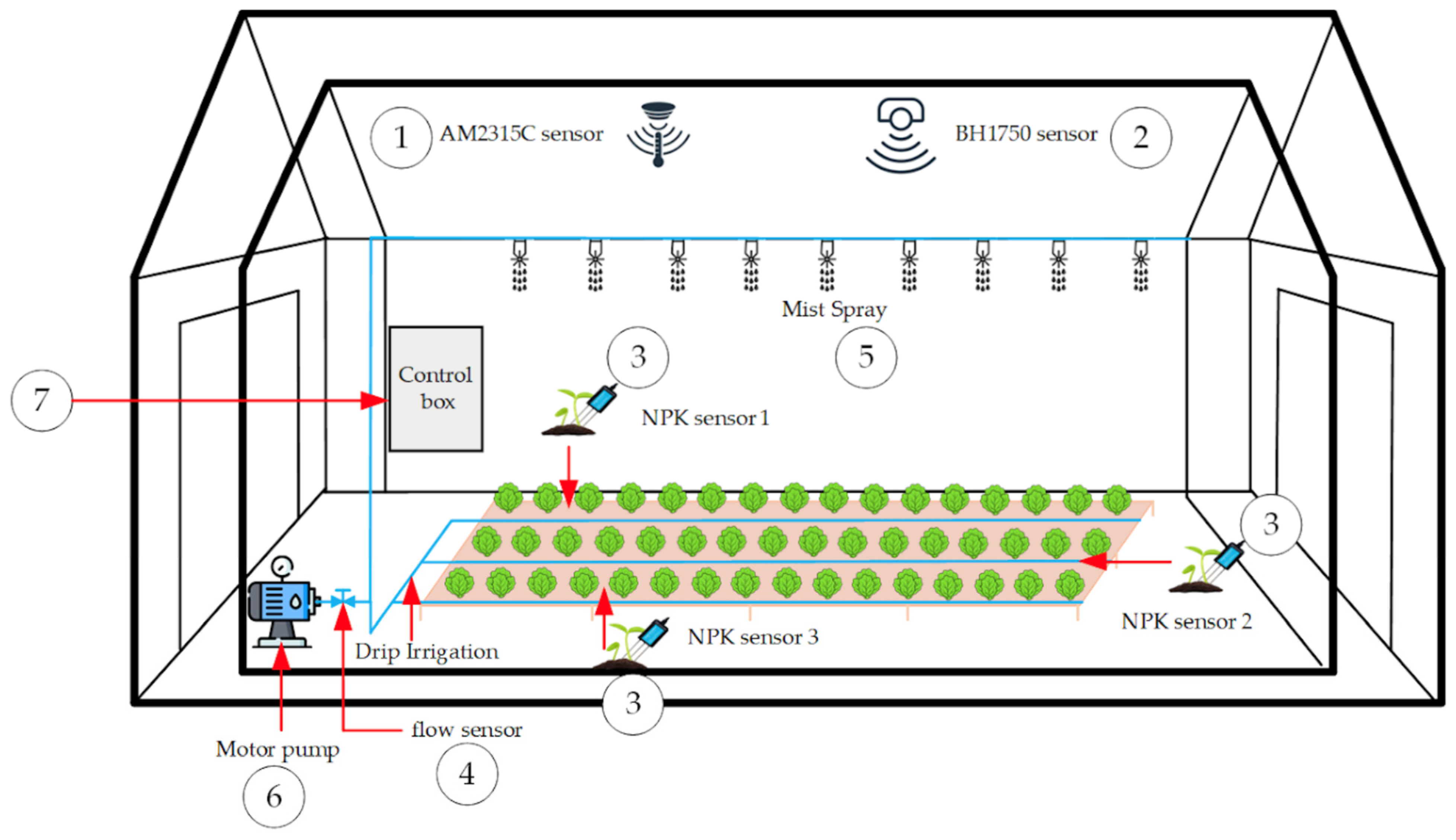
The experiment took place under an open greenhouse, shown in Figure 3, to partially control the environment. The experimental period was from May to June 2025. (1) The study area is a smallholder farmer area representing the farmer group. (2) It has obvious climatic challenges, such as floods and high temperatures. (3) It has an electricity infrastructure. (4) The farmers were knowledgeable and willing to participate in the research.
As shown in Figure 3, the experimental greenhouse (6 m × 8 m × 6 m) is designed with a raised-floor planting system, which facilitates convenient operation and improves insect protection. The greenhouse is equipped with multiple sensors and components for environmental monitoring and irrigation control.
Specifically, No. 1 represents the AM2315C sensor for measuring temperature and relative humidity, while No. 2 corresponds to the BH1750 sensor for monitoring light intensity inside the greenhouse. No. 3 indicates the NPK sensor used to measure soil nutrient levels, including N, P, and K. No. 4 is a flow sensor for monitoring water usage, No. 5 represents the mist spray system installed above the crops, No. 6 is the motor pump supplying water to the irrigation system, and No. 7 is the control box that integrates data acquisition and system control.
The irrigation system consists of both mist spray and drip irrigation components. Water is supplied by the motor pump and distributed through the irrigation network, while the flow sensor monitors water consumption during operation. All sensors and actuators are connected to the control box, which processes sensor data and controls the irrigation system based on predefined conditions.
The BH1750 sensor measures light intensity, which influences plant growth and water demand, while the NPK sensor provides essential soil nutrient information to support optimal growth conditions for Green Oak [52,53,54,55,56].
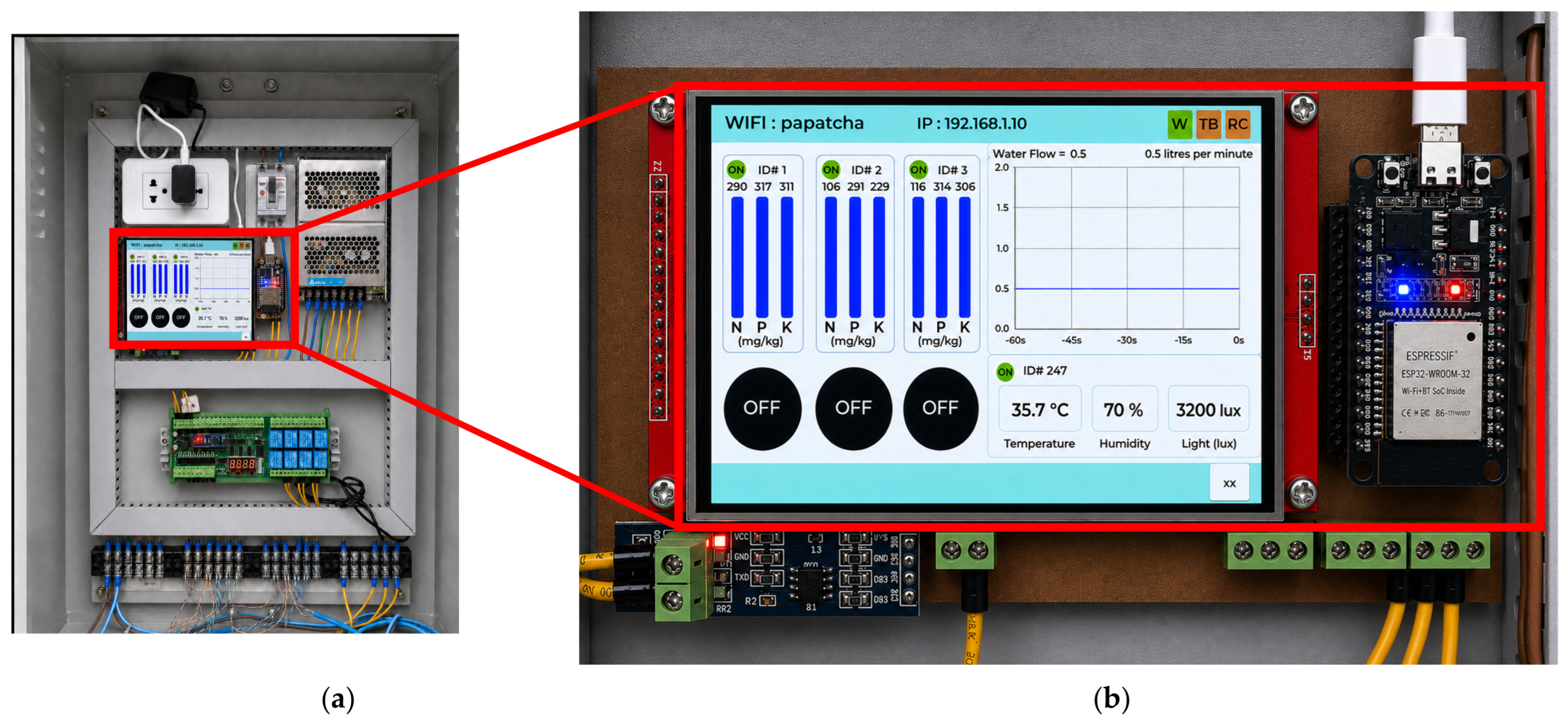
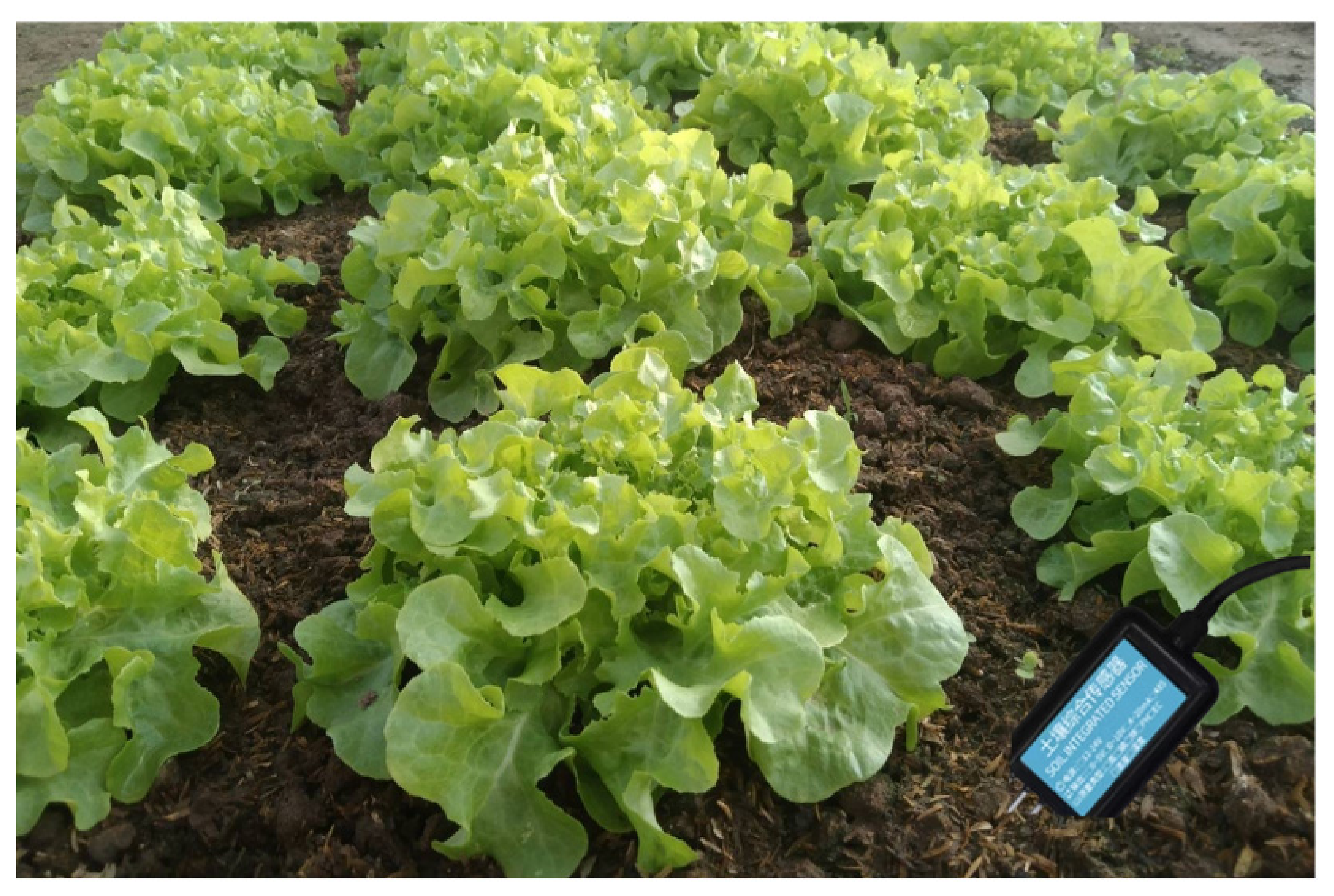
Figure 4a shows the installation of the ESP32-based control unit and relay modules inside the control cabinet, while Figure 4b provides an enlarged view of the LCD monitoring interface displaying the real-time environmental parameters. Furthermore, Figure 5 illustrates the practical deployment and utilization of the integrated sensors in a pilot-scale Green Oak lettuce cultivation experiment under actual field conditions.

3. Results

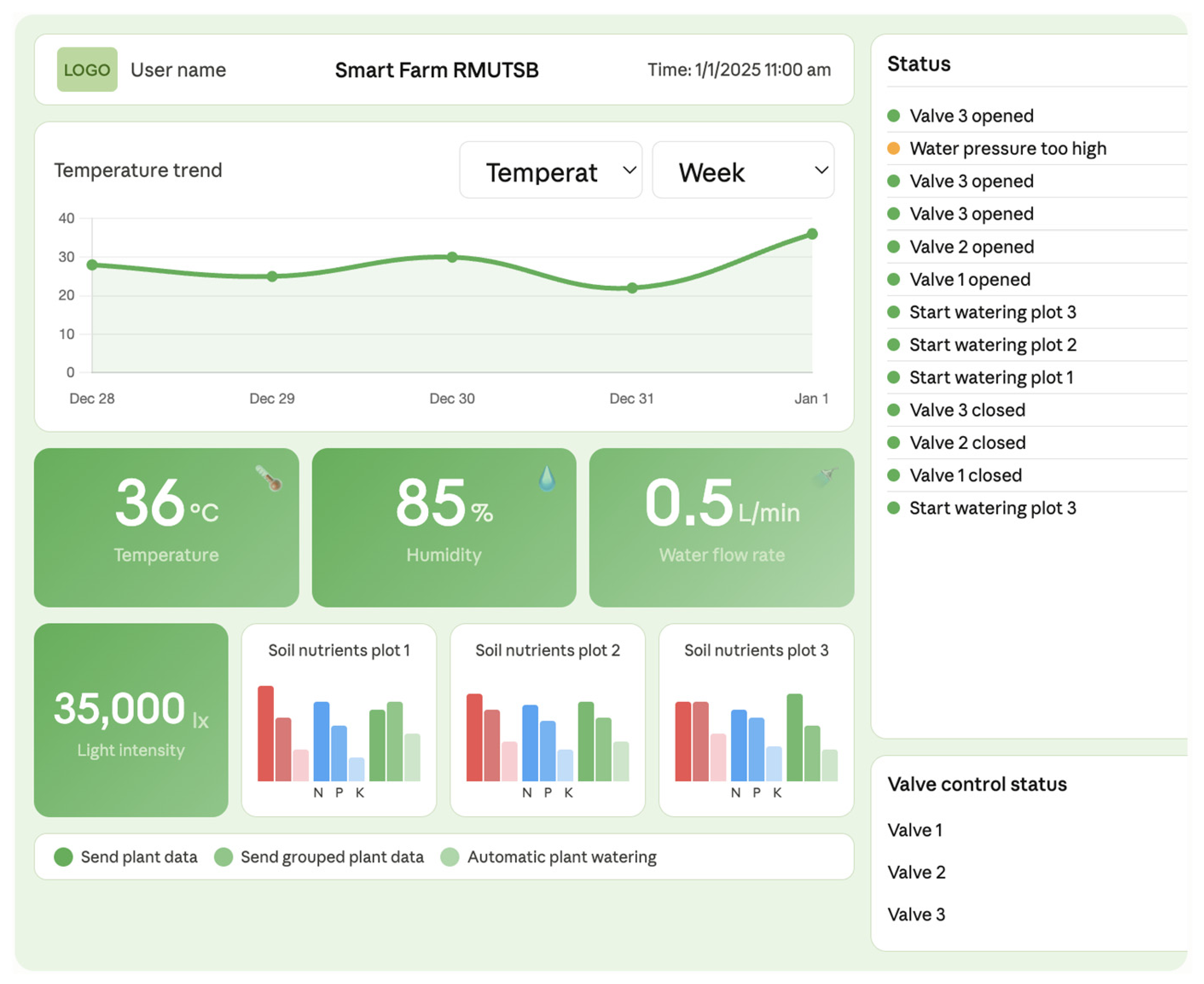
The Green Oak lettuce cultivation experiment was conducted in a greenhouse located on a smallholder farm in Bang Ban District, Phra Nakhon Si Ayutthaya Province, Thailand. The experimental period was from May to June 2025. The proposed monitoring and control system consisted of one flow sensor, three NPK soil nutrient sensors, an AM2315C sensor for temperature and relative humidity monitoring, a BH1750 sensor for light intensity measurement, and a web-based monitoring platform integrated with ThingsBoard, as shown in Figure 6.
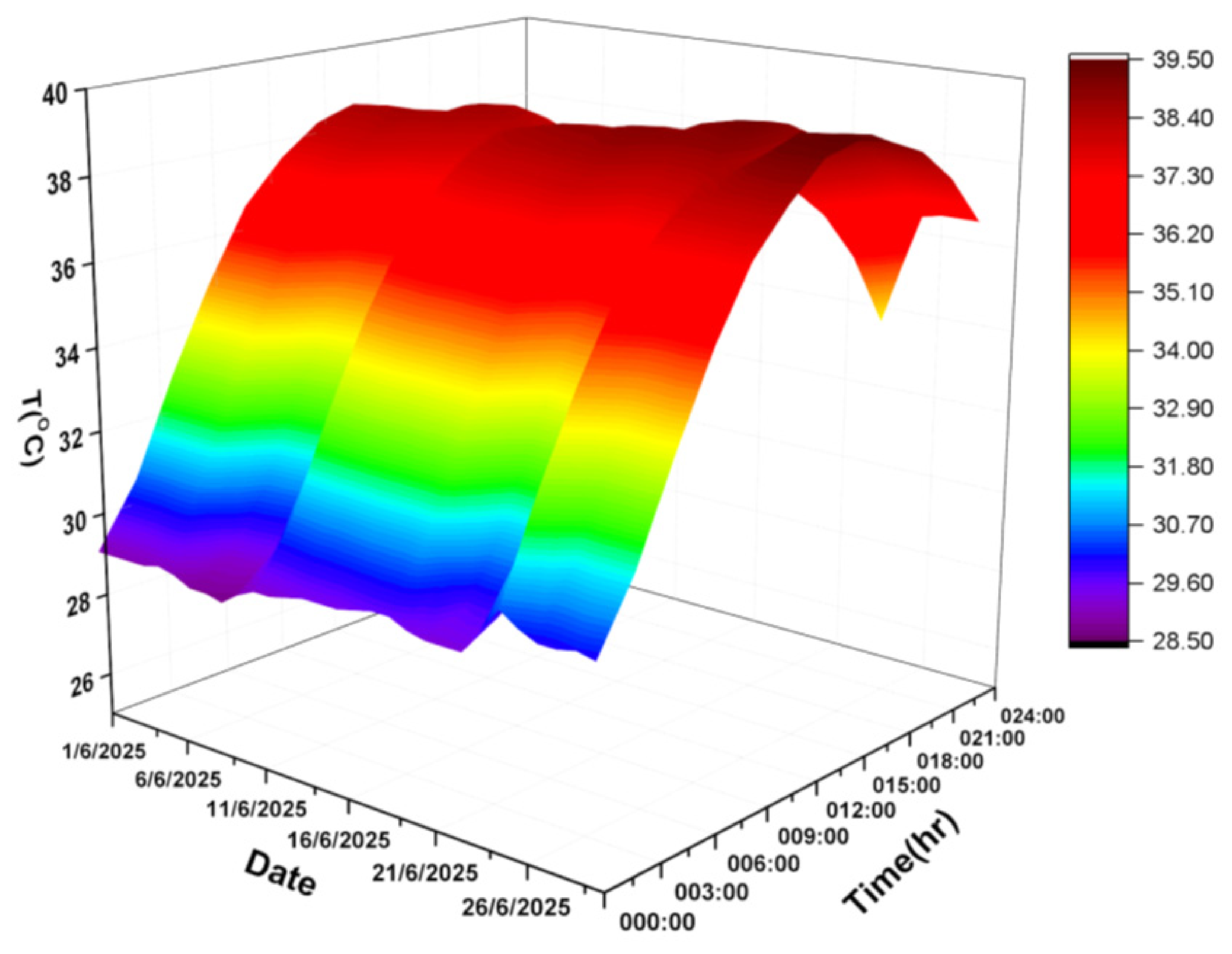
Figure 7 presents the temporal variation in greenhouse temperature during the experimental period from May to June 2025. The temperature measured using the AM2315C sensor ranged from 28.50 to 39.50 °C, with an average temperature of 33.21 ± 3.61 °C throughout the cultivation period. Higher temperatures were consistently observed during daytime periods, particularly between 10:00 and 15:00 h, corresponding to periods of elevated solar radiation under tropical climate conditions in Thailand.
The observed temperature profile indicates a clear increase during daytime periods and a gradual decrease during nighttime conditions, which is typical of greenhouse environments under tropical climate conditions [41,57]. When the greenhouse temperature exceeded 37.5 °C, the automated mist spray system was activated for 4 min before temporarily stopping to prevent excessive moisture accumulation inside the greenhouse. During the experimental period, the mist spray system operated approximately four times per day on average under high-temperature conditions.
Temperature is one of the major environmental factors affecting lettuce growth, evapotranspiration, irrigation demand, and greenhouse environmental control. Excessively high temperatures may increase plant water stress and affect crop development, particularly under enclosed greenhouse conditions [41,57]. The temperature conditions observed in this study are generally suitable for supporting Green Oak lettuce cultivation under practical greenhouse conditions in Thailand.
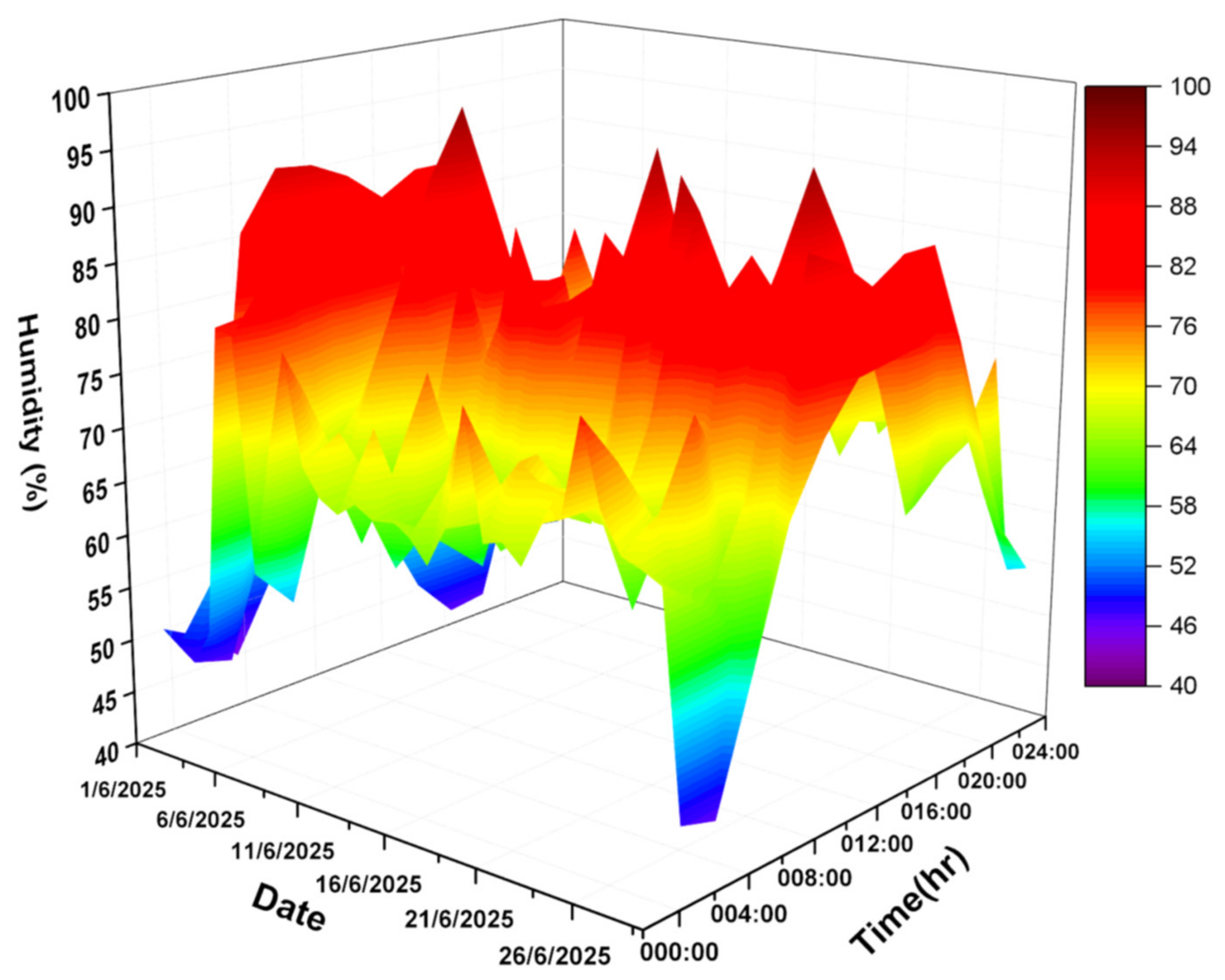
Figure 8 illustrates the variation in relative humidity inside the greenhouse during the experimental period from May to June 2025. The measured relative humidity ranged from 44.41% to 96.00%, with an average relative humidity of approximately 71.55 ± 9.66%. Higher humidity levels were generally observed during the early morning and nighttime periods, whereas lower humidity values occurred during the daytime, particularly during periods of increased temperature and solar radiation. This trend indicates an inverse relationship between temperature and relative humidity inside the greenhouse environment.
In addition, the mist irrigation system contributed to maintaining relative humidity within a suitable range for Green Oak lettuce cultivation. Previous studies have reported that maintaining relative humidity within the range of approximately 60–80% is appropriate for greenhouse lettuce production because excessively low humidity may increase plant water stress, while excessively high humidity can promote fungal disease development and reduce plant quality [41,57]. The results obtained in this study are generally consistent with these previous reports, indicating that the proposed monitoring and irrigation control system is capable of maintaining suitable environmental conditions for greenhouse vegetable cultivation.
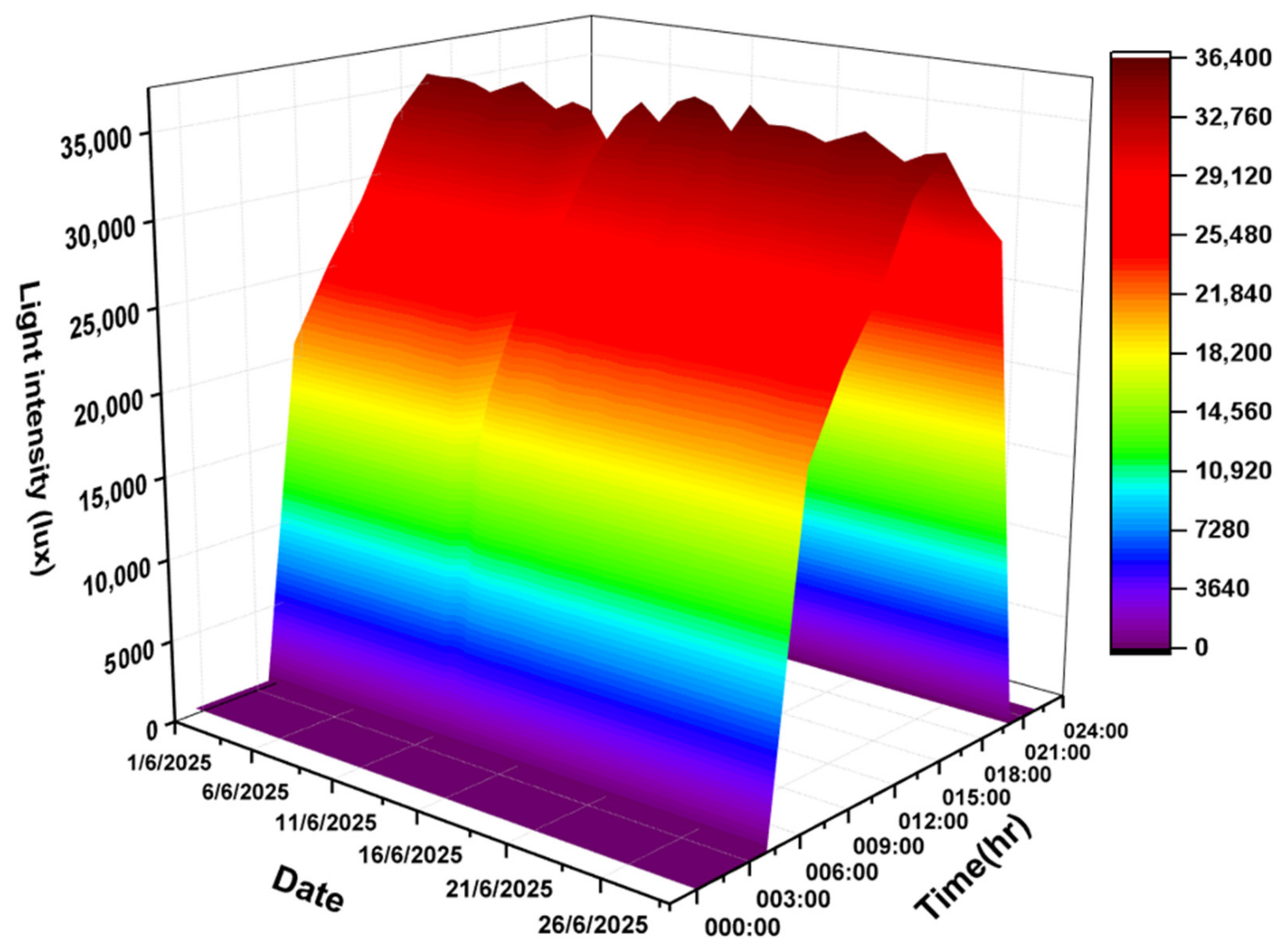
Figure 9 presents the temporal variation in light intensity inside the greenhouse during the experimental period from May to June 2025. The light intensity measured using the BH1750 sensor ranged from 0.00 to 36,385.16 lux, with an average light intensity (daytime) of 16,976 ± 409 lux during daytime operation. Higher light intensity values were consistently observed during the daytime, particularly between 10:00 and 15:00 h, whereas light intensity decreased to nearly 0 lux during nighttime periods. The variation in light intensity was closely associated with daily solar radiation and ambient temperature conditions. During the experimental period, Thailand was in the late summer to early rainy season, when high solar radiation and elevated daytime temperatures are commonly observed. These environmental conditions contributed to the relatively high light intensity measured inside the greenhouse, particularly during midday periods. Increased light intensity was also associated with increased greenhouse temperature, which influenced the activation of the mist irrigation system under high-temperature conditions. Previous studies have reported that light intensity is an important factor influencing photosynthesis, plant growth, evapotranspiration, and water demand in greenhouse cultivation systems [53,54,58]. In addition, appropriate light conditions are necessary for the growth and biomass production of lettuce crops [53,57]. The results obtained in this study are generally consistent with previous reports, indicating that the greenhouse environment provided sufficient light conditions for Green Oak lettuce cultivation during the experimental period.
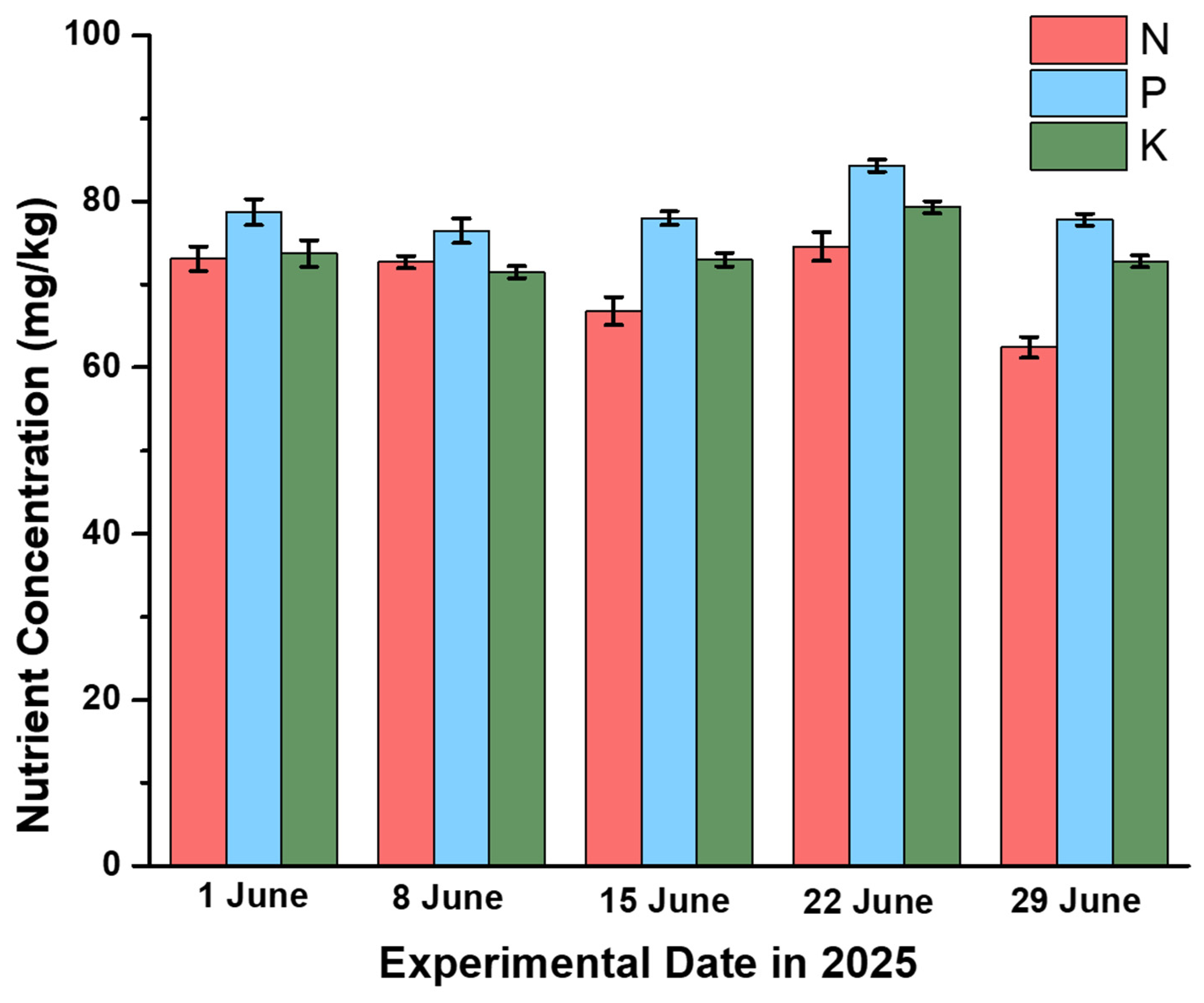
Figure 10 depicts the variation in N, P, and K concentrations measured during the experimental period in June 2025. The measured nutrient concentrations throughout the cultivation period were as follows: N concentrations varied between 62.42 and 74.57 mg/kg, with an average value of 69.91 ± 4.59 mg/kg; P concentrations ranged from 76.46 to 84.30 mg/kg, with an average value of 79.04 ± 2.72 mg/kg; and K concentrations ranged from 71.46 to 79.30 mg/kg, with an average value of 74.05 ± 2.72 mg/kg. Among the measured nutrients, phosphorus generally showed the highest concentration during most observation periods, while nitrogen exhibited the greatest variation over time.
The results indicate that the nutrient levels inside the cultivation system remained within a relatively stable range throughout the experimental period, suggesting that the proposed monitoring system was capable of continuously tracking soil nutrient conditions during greenhouse cultivation. Slight variations in nutrient concentrations were observed over time, which may be associated with nutrient uptake by the lettuce plants, irrigation conditions, and soil moisture variations during cultivation.
Previous studies have reported that balanced NPK nutrient availability is an important factor influencing lettuce growth, biomass accumulation, leaf development, and overall crop productivity [55,56]. In particular, nitrogen plays a major role in leaf growth and chlorophyll formation, while phosphorus and potassium contribute to root development, nutrient transport, and plant physiological regulation. The measured nutrient concentrations observed in this study were generally consistent with previous greenhouse lettuce cultivation studies [59], indicating that the proposed monitoring system is suitable for supporting nutrient monitoring under practical cultivation conditions.
Table 3 presents the performance evaluation results of the proposed sensor network system during Green Oak lettuce cultivation under greenhouse conditions. The obtained WUE value of 0.63 kg/L indicates that the irrigation system was able to support vegetable production with efficient water utilization under practical cultivation conditions. The EWP value of USD 75/L further reflects the economic value of irrigation water management within the greenhouse system. In addition, the ROI value of 40% and BCR value of 1.6 indicate that the proposed system has favorable economic feasibility and investment potential for smallholder greenhouse applications. The calculated payback period (PP) of approximately 2.5 years suggests that the installation cost of the monitoring and irrigation control system can be recovered within a relatively short operational period, indicating good cost-effectiveness for practical implementation. More detailed information can be found in the Supplementary Materials.
Table 4 summarizes the relationship between the developed sensor network system and the Sustainable Development Goals (SDGs). The proposed system supports SDG 2 through real-time environmental and nutrient monitoring to improve greenhouse vegetable production efficiency and cultivation reliability. SDG 6 is addressed through irrigation monitoring and water-saving management, which contribute to reduced water consumption and improve water use efficiency during cultivation. In addition, SDG 12 is supported through precise nutrient monitoring using NPK sensors, helping to reduce excessive fertilizer application and improve resource management efficiency. The automatic mist irrigation system also contributes to SDG 13 by reducing heat stress conditions inside the greenhouse and supporting adaptation to elevated temperature conditions during the cultivation period.

4. Discussion

This pilot-scale greenhouse study examined the use of an IoT-based monitoring and automated irrigation system for Green Oak lettuce cultivation in Phra Nakhon Si Ayutthaya Province, Thailand. The developed system combined AM2315C, BH1750, NPK, and flow sensors with ESP32 and ThingsBoard for environmental monitoring and irrigation control during the cultivation period. Real-time data transmission allowed for greenhouse conditions to be continuously observed under practical smallholder farming conditions.
Temperature, relative humidity, and light intensity inside the greenhouse generally remained within ranges suitable for lettuce cultivation. During periods of elevated daytime temperature, the mist irrigation system was automatically activated to reduce heat accumulation inside the greenhouse. The observed humidity conditions were also comparable with environmental ranges reported in previous greenhouse studies [41,57]. Light intensity values remained sufficiently high during daytime periods to support photosynthesis and lettuce growth under tropical greenhouse conditions [53,54,58]. These observations suggest that sensor-assisted environmental control may help improve greenhouse management under practical cultivation conditions.
NPK monitoring results showed relatively stable nutrient conditions throughout the cultivation period. Although slight temporal fluctuations were observed, nutrient concentrations remained within operational ranges suitable for greenhouse lettuce production. Changes in nutrient values were likely related to plant nutrient uptake, irrigation activity, and soil moisture variation during cultivation. Similar nutrient behavior has been reported in previous lettuce cultivation studies, where balanced nitrogen (N), phosphorus (P), and potassium (K) availability influenced plant growth, chlorophyll formation, and biomass accumulation. The nutrient trends observed in this study were generally consistent with those reported in greenhouse lettuce cultivation systems [60,61].
The economic evaluation also indicated that the proposed system has potential for practical greenhouse application under smallholder farming conditions. Compared with conventional irrigation practices based mainly on farmer experience and manual observation, the developed system provided continuous environmental monitoring together with automated irrigation control. This approach may help improve irrigation management, reduce unnecessary water use, and lower operational uncertainty during cultivation. Similar benefits of IoT-assisted irrigation management have been discussed in recent sustainable agriculture studies [16,17,18].
From a sustainability perspective, the developed system is relevant to several Sustainable Development Goals (SDGs), particularly SDG 2, SDG 6, SDG 12, and SDG 13. Real-time environmental and nutrient monitoring may improve cultivation reliability and support more efficient greenhouse resource management, while automated irrigation control can help reduce water consumption under high-temperature conditions.
This study still has some limitations. The greenhouse experiment was conducted as a pilot-scale cultivation study under a single operational condition without replicated cultivation trials or long-term seasonal evaluation. Therefore, the findings should be interpreted as an initial practical assessment of the proposed monitoring and irrigation control system. Even so, stable environmental monitoring and reliable automated irrigation operation were achieved during the cultivation period. Future work should include larger cultivation areas, replicated greenhouse trials, different vegetable crops, and longer operational periods to further evaluate system robustness and long-term field applicability.

5. Conclusions

This study developed and evaluated an IoT-based sensor monitoring and automated irrigation control system for Green Oak lettuce cultivation under tropical greenhouse conditions in Phra Nakhon Si Ayutthaya Province, Thailand. The proposed system integrated AM2315C, BH1750, NPK, and flow sensors with ESP32-based data acquisition, MQTT communication, and a ThingsBoard web-based monitoring platform for real-time greenhouse environmental monitoring and irrigation management. The experimental results demonstrated the system was capable of continuously monitoring greenhouse conditions and supporting automated mist irrigation under practical smallholder farming conditions. The mist irrigation system was activated when the greenhouse temperature exceeded 37.5 °C, helping to reduce heat stress and maintain suitable environmental conditions for lettuce cultivation. In addition, stable light intensity and NPK nutrient trends indicated that the greenhouse environment remained suitable for plant growth and nutrient management throughout the cultivation period.
The economic evaluation demonstrated favorable practical feasibility for greenhouse implementation. The obtained WUE value of 0.63 kg/L, ROI of 40%, BCR of 1.6, and payback period of approximately 2.5 years indicate that the proposed system has potential for improving irrigation efficiency and supporting cost-effective greenhouse operation under smallholder farming conditions. Furthermore, the integration of real-time monitoring and automated irrigation control may help improve irrigation efficiency and support sustainable greenhouse vegetable production under tropical conditions.
Some limitations should be noted. The experiment was conducted as a pilot-scale greenhouse study under a single cultivation condition without replicated field trials or long-term seasonal observations. Therefore, the results should be considered an initial practical evaluation of the proposed monitoring and irrigation control system. Further studies should investigate larger cultivation areas, longer operational periods, and different crop types to better evaluate the long-term performance and practical applicability of the system for sustainable precision agriculture.

Supplementary Materials

The following supporting information can be downloaded at: https://www.mdpi.com/article/10.3390/su18115753/s1, 1. water use efficiency (WUE), 2. economic water productivity (EWP), 3. Evaluation of economic effects; 4. Cashflow table, and Table S1: Detailed net cash flow analysis and economic evaluation data for the proposed greenhouse irrigation system.

Author Contributions

W.N.: Methodology, Formal analysis, Data curation, Visualization, Writing—original draft, Writing—review & editing, Funding acquisition, Project administration, Supervision. P.T.: Formal analysis, Conceptualization, Methodology, Writing—review & editing, Funding acquisition. W.T.: Writing—original draft, Formal analysis, Data curation, Visualization. O.T.: Conceptualization, Methodology, Visualization, Formal analysis, Writing—review & editing. E.M.: Writing—review & editing, Methodology, Visualization, Formal analysis. All authors have read and agreed to the published version of the manuscript.

Funding

IoT-Based Sensor Monitoring and Automated Irrigation Control for Sustainable Smallholder Vegetable Production: A Case Study was encouraged and supported by the Science, Research and Innovation Promotion Fund, Rajamangala University of Technology Suvarnabhumi, for the fiscal year 2024. The authors declare that they have no known competing financial interests or personal relationships that could have appeared to influence the work reported in this paper. The authors declare the following financial interests/personal relationships which may be considered as potential competing interests.

Institutional Review Board Statement

Not applicable.

Informed Consent Statement

Not applicable.

Data Availability Statement

The original contributions presented in this study are included in the article/Supplementary Materials. Further inquiries can be directed to the corresponding author.

Conflicts of Interest

The authors declare no conflicts of interest.

Abbreviations

The following abbreviations are used in this manuscript:
AIArtificial intelligence
SNSensor network
MLMachine learning
IoTInternet of Things
SDGSustainable Development Goal
WUEWater use efficiency
EWPEconomic water productivity
ROIReturn on investment
BCRbenefit–cost ratio
PPpayback period

References

  1. Bayih, A.Z.; Morales, J.; Assabie, Y.; De By, R.A. Utilization of internet of things and wireless sensor networks for sustainable smallholder agriculture. Sensors 2022, 22, 3273. [Google Scholar] [CrossRef] [PubMed]
  2. Kapari, M.; Hlophe-Ginindza, S.; Nhamo, L.; Mpandeli, S. Contribution of smallholder farmers to food security and opportunities for resilient farming systems. Front. Sustain. Food Syst. 2023, 7, 1149854. [Google Scholar] [CrossRef]
  3. Nzima, W.M.; Ip, R.H.; Bhatti, M.A.; Godfrey, S.S.; Eik, L.O.; Gondwe, S.R.; Divon, S.A. Diversity and heterogeneity of smallholder vegetable farming systems and their impact on food security and income in Malawi. Front. Sustain. Food Syst. 2024, 8, 1387912. [Google Scholar] [CrossRef]
  4. Udayanga, S.; Bellanthudawa, B.; De Zoysa, H. Sustainable agriculture and responsible use of pesticides: Commercial crop cultivators’ knowledge, attitudes, and practice perspectives regarding pesticide use. Front. Sustain. Food Syst. 2024, 8, 1490110. [Google Scholar] [CrossRef]
  5. Bolfarici, S.L.; Zibaei, M.; Jahangirpour, D. The role of market in motivating farmers to reduce pesticide use: Evidence from vegetable farms in Shiraz. Heliyon 2024, 10, 15. [Google Scholar] [CrossRef]
  6. Muharomah, R.; Setiawan, B.I.; Sands, G.R.; Juliana, I.C.; Gunawan, T.A. A review on enhancing water productivities adaptive to the climate change. J. Water Clim. Change 2025, 16, 860–887. [Google Scholar] [CrossRef]
  7. Athelly, A.; Guzmán, S.M.; Yu, Z.; Watson, J.A. Bridging the gap between water-saving technologies and adoption in vegetable farming: Insights from Florida, USA. Front. Agron. 2025, 7, 1622260. [Google Scholar] [CrossRef]
  8. Gwambene, B.; Liwenga, E.; Mung’ong’o, C. Climate change and variability impacts on agricultural production and food security for the smallholder farmers in Rungwe, Tanzania. Environ. Manag. 2023, 71, 3–14. [Google Scholar] [CrossRef]
  9. Abebaw, S.E. A global review of the impacts of climate change and variability on agricultural productivity and farmers’ adaptation strategies. Food Sci. Nutr. 2025, 13, e70260. [Google Scholar] [CrossRef]
  10. Iakovidis, D.; Gadanakis, Y.; Campos-Gonzalez, J.; Park, J. Optimising decision support tools for the agricultural sector. Environ. Dev. Sustain. 2025, 27, 25043–25067. [Google Scholar] [CrossRef]
  11. Soussi, A.; Zero, E.; Sacile, R.; Trinchero, D.; Fossa, M. Smart sensors and smart data for precision agriculture: A review. Sensors 2024, 24, 2647. [Google Scholar] [CrossRef]
  12. Miller, T.; Mikiciuk, G.; Durlik, I.; Mikiciuk, M.; Łobodzińska, A.; Śnieg, M. The IoT and AI in agriculture: The time is now—A systematic review of smart sensing technologies. Sensors 2025, 25, 3583. [Google Scholar] [CrossRef] [PubMed]
  13. Sudha, S.; Loret, J. A review on machine learning-based precision agriculture techniques for crop farming monitoring with IOT. Discov. Environ. 2026, 4, 10. [Google Scholar] [CrossRef]
  14. Yang, X.; Fang, H.; Yang, F.; Li, K.; Han, R.; Li, T. A lightweight detector with hybrid pooling and checkerboard attention for solar panel anomalies. Iscience 2026, 29, 115106. [Google Scholar] [CrossRef]
  15. Manono, B.O.; Mwami, B.; Mutavi, S.; Nzilu, F. Precision farming with smart sensors: Current state, challenges and future outlook. Sensors 2026, 26, 882. [Google Scholar] [CrossRef]
  16. Eze, V.H.U.; Eze, E.C.; Alaneme, G.U.; Bubu, P.E.; Nnadi, E.O.E.; Okon, M.B. Integrating IoT sensors and machine learning for sustainable precision agroecology: Enhancing crop resilience and resource efficiency through data-driven strategies, challenges, and future prospects. Discov. Agric. 2025, 3, 83. [Google Scholar] [CrossRef]
  17. Ali, A.; Hussain, T.; Zahid, A. Smart irrigation technologies and prospects for enhancing water use efficiency for sustainable agriculture. AgriEngineering 2025, 7, 106. [Google Scholar] [CrossRef]
  18. Morchid, A.; Et-taibi, B.; Oughannou, Z.; El Alami, R.; Qjidaa, H.; Jamil, M.O.; Abid, M.R. IoT-enabled smart agriculture for improving water management: A smart irrigation control using embedded systems and Server-Sent Events. Sci. Afr. 2025, 27, e02527. [Google Scholar] [CrossRef]
  19. Nižetić, S.; Šolić, P.; Gonzalez-De, D.L.-D.-I.; Patrono, L. Internet of Things (IoT): Opportunities, issues and challenges towards a smart and sustainable future. J. Clean. Prod. 2020, 274, 122877. [Google Scholar] [CrossRef]
  20. Meriç, M.K. Implementation of a wireless sensor network for irrigation management in drip irrigation systems. Sci. Rep. 2025, 15, 14157. [Google Scholar] [CrossRef] [PubMed]
  21. Valente, A.; Costa, C.; Pereira, L.; Soares, B.; Lima, J.; Soares, S. A LoRaWAN IoT system for smart agriculture for vine water status determination. Agriculture 2022, 12, 1695. [Google Scholar] [CrossRef]
  22. Musa, P.; Sugeru, H.; Wibowo, E.P. Wireless sensor networks for precision agriculture: A review of NPK sensor implementations. Sensors 2023, 24, 51. [Google Scholar] [CrossRef]
  23. Nramat, W.; Songkroh, E.; Boonma, P.; Traiphat, W.; Martwong, E.; Thararattanasuwan, K.; Thiabgoh, O. Implementation of a Wireless Sensor Network for Agro-Environmental Monitoring and Growing Degree Day-Based Rice Growth Assessment. Eng 2026, 7, 82. [Google Scholar] [CrossRef]
  24. Chen, H.-Q.; Weng, J.-P.; Tie, F.-L.; Sun, B.-X.; Wang, W.-X. Design of Wireless Sensor Network Node for Monitoring Rice Field. In 3rd International Conference on Wireless Communication and Sensor Networks (WCSN 2016); Atlantis Press: Wuhan, China, 2016; pp. 612–616. [Google Scholar]
  25. Jarro-Espinal, I.; Huanuqueño-Murillo, J.; Quille-Mamani, J.; Quispe-Tito, D.; Ramos-Fernández, L.; Pino-Vargas, E.; Torres-Rua, A. Field-Scale rice yield prediction in Northern Coastal Region of Peru Using Sentinel-2 vegetation indices and machine learning models. Agriculture 2025, 15, 2054. [Google Scholar] [CrossRef]
  26. Samutrak, P.; Tongkam, S. IoT-driven soil moisture monitoring in organic rice cultivation. Eng. Access 2024, 10, 230–237. [Google Scholar]
  27. Munadi, R.; Rahmat, B. Wireless Sensor Network for Monitoring Rice Crop Growth. MESA (Tek. Mesin Tek. Elektro Tek. Sipil Tek. Arsit.) 2018, 3, 47–52. [Google Scholar]
  28. Bouni, M.; Hssina, B.; Douzi, K.; Douzi, S. Integrated IoT approaches for crop recommendation and yield-prediction using machine-learning. IoT 2024, 5, 634–649. [Google Scholar] [CrossRef]
  29. Lan, J.; Ban, Q. The farm-level economic and environmental benefits of precision agriculture technology adoption: A meta-analysis of global evidence. Sustainability 2025, 17, 11223. [Google Scholar] [CrossRef]
  30. Varzakas, T.; Smaoui, S. Global food security and sustainability issues: The road to 2030 from nutrition and sustainable healthy diets to food systems change. Foods 2024, 13, 306. [Google Scholar] [CrossRef] [PubMed]
  31. Miles, A.F.; Phipps, B.E.; Berry, E.M. Food system transformation and the realization of the UN Sustainable Development Goals. Front. Sustain. Food Syst. 2025, 9, 1691198. [Google Scholar] [CrossRef]
  32. Hiywotu, A.M. Advancing sustainable agriculture for goal 2: Zero hunger-a comprehensive overview of practices, policies, and technologies. Agroecol. Sustain. Food Syst. 2025, 49, 1027–1055. [Google Scholar] [CrossRef]
  33. Wolfert, S.; Isakhanyan, G. Sustainable agriculture by the Internet of Things–A practitioner’s approach to monitor sustainability progress. Comput. Electron. Agric. 2022, 200, 107226. [Google Scholar] [CrossRef]
  34. Huang, Y.; Ren, F.; Wang, Y. Evaluation and pathways for achieving agricultural resilience under the framework of climate-smart agriculture. Humanit. Soc. Sci. Commun. 2025, 13, 105. [Google Scholar] [CrossRef]
  35. Debauche, O.; El Moulat, M.; Mahmoudi, S.; Boukraa, S.; Manneback, P.; Lebeau, F. Web monitoring of bee health for researchers and beekeepers based on the internet of things. Procedia Comput. Sci. 2018, 130, 991–998. [Google Scholar] [CrossRef]
  36. Postolache, S.; Sebastião, P.; Viegas, V.; Postolache, O.; Cercas, F. IoT-based systems for soil nutrients assessment in horticulture. Sensors 2022, 23, 403. [Google Scholar] [CrossRef]
  37. Hercog, D.; Lerher, T.; Truntič, M.; Težak, O. Design and implementation of ESP32-based IoT devices. Sensors 2023, 23, 6739. [Google Scholar] [CrossRef]
  38. Morchid, A.; Jebabra, R.; Qjidaa, H.; El Alami, R.; Jamil, M.O. Agri-tech innovations for sustainability: A fire detection system based on MQTT broker and IoT to improve environmental risk management. Results Eng. 2024, 24, 103683. [Google Scholar] [CrossRef]
  39. Has, M.; Kreković, D.; Kušek, M.; Žarko, I.P. Efficient data management in agricultural IoT: Compression, security, and MQTT protocol analysis. Sensors 2024, 24, 3517. [Google Scholar] [CrossRef]
  40. Mansoor, S.; Iqbal, S.; Popescu, S.M.; Kim, S.L.; Chung, Y.S.; Baek, J.-H. Integration of smart sensors and IOT in precision agriculture: Trends, challenges and future prospectives. Front. Plant Sci. 2025, 16, 1587869. [Google Scholar] [CrossRef]
  41. El-Sheshny, A.A.; Abdel-Hameed, A.M.; Al-Rajhi, M.; Ghanem, H.G.; Elzanaty, T.M.; Fayed, M.H. Optimizing water management in greenhouse farming through an IoT-enabled monitoring system. J. Saudi Soc. Agric. Sci. 2025, 24, 33. [Google Scholar] [CrossRef]
  42. Hoover, D.L.; Abendroth, L.J.; Browning, D.M.; Saha, A.; Snyder, K.; Wagle, P.; Scott, R.L. Indicators of water use efficiency across diverse agroecosystems and spatiotemporal scales. Sci. Total Environ. 2023, 864, 160992. [Google Scholar] [CrossRef]
  43. Hatfield, J.L.; Dold, C. Water-use efficiency: Advances and challenges in a changing climate. Front. Plant Sci. 2019, 10, 103. [Google Scholar] [CrossRef] [PubMed]
  44. Vishnumolakala, S.S.S.; Jia, X.; Goodspeed, I.M.; Hatterman-Valenti, H. Evaluating irrigation strategies and cultivar response of tomato and pepper under automated drip systems in high tunnel and open field environments in North Dakota. Front. Agron. 2025, 7, 1540521. [Google Scholar] [CrossRef]
  45. Awoke, Y.; Tewabe, D.; Abebe, A. Comparative evaluation of bed and conventional irrigation methods on yield and water productivity of wheat. Arch. Agron. Soil Sci. 2025, 71, 1–11. [Google Scholar] [CrossRef]
  46. Perelli, C.; Branca, G.; Corbari, C.; Mancini, M. Physical and economic water productivity in agriculture between traditional and water-saving irrigation systems: A case study in Southern Italy. Sustainability 2024, 16, 4971. [Google Scholar] [CrossRef]
  47. Bhatia, S.; Singh, S. Assessing groundwater use efficiency and productivity across Punjab agriculture: District and farm size perspectives. Agriculture 2024, 14, 1299. [Google Scholar] [CrossRef]
  48. Ichsani, S.; Suhardi, A.R. The effect of return on equity (ROE) and return on investment (ROI) on trading volume. Procedia-Soc. Behav. Sci. 2015, 211, 896–902. [Google Scholar] [CrossRef]
  49. Nramat, W.; Traiphat, W.; Martwong, E.; Treemongkol, P.; Phatedoung, L.; Thiabgoh, O. Design and Thermal Performance Evaluation of a High-Efficiency Solar Dryer Capsule with Integrated Parabolic Reflector. Eng 2026, 7, 64. [Google Scholar] [CrossRef]
  50. Kpenekuu, F.; Antwi-Agyei, P.; Nimoh, F.; Dougill, A.; Banunle, A.; Atta-Aidoo, J.; Guodaar, L. Cost and benefit analysis of Climate-Smart Agriculture interventions in the dryland farming systems of northern Ghana. Reg. Sustain. 2025, 6, 100196. [Google Scholar] [CrossRef]
  51. Akinyi, D.P.; Ng, S.K.; Ngigi, M.; Mathenge, M.; Girvetz, E. Cost-benefit analysis of prioritized climate-smart agricultural practices among smallholder farmers: Evidence from selected value chains across sub-Saharan Africa. Heliyon 2022, 8, e09228. [Google Scholar] [CrossRef] [PubMed]
  52. Traiphat, W.; Nramat, W.; Sukruan, P.; Utaprom, P.; Piamboriboon, P.; Naramat, S. Experiments comparing the efficency between watering vegetable crops with traditional methods and automatic watering systems. EUREKA Phys. Eng. 2025, 66–74. [Google Scholar] [CrossRef]
  53. Chen, Y.; Kaiser, E.; Heuvelink, E.; Cao, K.; Bian, Z.; Yang, Q.; Marcelis, L.F. Palette of green: Exploring the effects of different wavelengths of green light on biomass and morphology in lettuce (Lactuca sativa). Environ. Exp. Bot. 2025, 238, 106242. [Google Scholar] [CrossRef]
  54. Amirshekari, M.H.; Fakhroleslam, M. Impact of artificial light on photosynthesis, evapotranspiration, and plant growth in plant factories: Mathematical modeling for balancing energy consumption and crop productivity. Smart Agric. Technol. 2025, 11, 100901. [Google Scholar] [CrossRef]
  55. Adekiya, A.O.; Dahunsi, S.O.; Adedokun, O.D.; Agbede, T.M.; Oche, P.-J.A.; Ogunbode, T.O. Optimizing Soil Fertility and Crop Productivity Using Biodigestate, Poultry Manure, and NPK Integration. Clean. Circ. Bioecon. 2025, 12, 100192. [Google Scholar] [CrossRef]
  56. Yang, R.; Su, H.; Lai, J.; Sheng, Y.; Shen, Y. Optimization of NPK nutrient ratios for three leafy vegetables using response surface methodology and principal component analysis. Plants 2025, 14, 3681. [Google Scholar] [CrossRef] [PubMed]
  57. Barmon, S.K.; Alam, M.N.; Aktar, S.; Hasan, M. Effect of light and temperature on growing lettuce crop in greenhouse by using Iot Technology. Int. J. Sci. Res. Arch. 2025, 14, 1143–1156. [Google Scholar] [CrossRef]
  58. Contreras-Castillo, J.; Guerrero-Ibañez, J.A.; Santana-Mancilla, P.C.; Anido-Rifon, L. SAgric-IoT: An IoT-based platform and deep learning for greenhouse monitoring. Appl. Sci. 2023, 13, 1961. [Google Scholar] [CrossRef]
  59. Srisawat, T.; Sakprom, S.; Kunsawat, P.; Praksong, K.; Suchat, S.; Muangprathub, J. IoT-enabled agricultural environmental monitoring: Enhancing growth and yield using natural-rubber straw and mulching experiment. Ind. Crops Prod. 2025, 225, 120524. [Google Scholar] [CrossRef]
  60. Mércia de Sá, J.; Ismael Inácio Cardoso, A.; Seguchi, D.S.; de Ávila, J.; Carvalho, J.R.D.; Possas de Souza, E.; Gomes Nakada-Freitas, P. Growth Curve and Nutrient Accumulation in Lettuce for Seed Production Under Organic System. Horticulturae 2025, 11, 707. [Google Scholar] [CrossRef]
  61. Lee, S.-B.; Kim, Y.-M.; Sung, J.-K.; Lee, Y.-J.; Lee, D.-B. Characteristics of growth-stage-based nutrient uptake of lettuce grown by fertigation supply in a greenhouse. Korean J. Soil. Sci. Fertil. 2018, 51, 626–635. [Google Scholar] [CrossRef]
Figure 1. Overall architecture of the proposed smart greenhouse monitoring and irrigation control system, showing sensor integration, ESP32-based data acquisition, MQTT communication, and cloud-based monitoring. Solid lines represent direct data communication pathways (non-Wi-Fi), whereas dashed lines indicate wireless communication pathways using Wi-Fi.
Sustainability 18 05753 g001
Figure 2. Block diagram of the system workflow.
Sustainability 18 05753 g002
Figure 3. Installation of sensor equipment in the smart greenhouse system.
Sustainability 18 05753 g003
Figure 4. Installation of the equipment inside the control cabinet: (a) overall installation of the ESP32 microcontroller and relay modules; (b) enlarged view of the LCD monitoring interface displaying the real-time environmental parameters.
Sustainability 18 05753 g004
Figure 5. Field implementation of the proposed smart greenhouse monitoring system in the Green Oak lettuce cultivation plot.
Sustainability 18 05753 g005
Figure 6. Web-based monitoring dashboard of the proposed IoT-enabled smart greenhouse system, translated from the original Thai interface for international readability, showing real-time environmental parameters, including temperature, relative humidity, light intensity, water flow rate, NPK measurements, and irrigation valve control status.
Sustainability 18 05753 g006
Figure 7. Three-dimensional visualization of temperature distribution within the greenhouse during the experimental period.
Sustainability 18 05753 g007
Figure 8. Three-dimensional surface plot of relative humidity variation inside the greenhouse over time. Three-dimensional visualization of temperature distribution within the greenhouse during the experimental period.
Sustainability 18 05753 g008
Figure 9. Three-dimensional surface plot of light intensity variation inside the greenhouse during the experimental period.
Sustainability 18 05753 g009
Figure 10. Measured nitrogen (N), phosphorus (P), and potassium (K) concentrations during the experimental period.
Sustainability 18 05753 g010
Table 1. Specification of the devices used in the data measurement layer.
SensorParameterRangeAccuracySupplyProtocol
AM2315CHumidity0–100% RH±2%2.2–5.5 VDC, 980 μAI2C
AM2315CTemperature−40 to 80 °C±0.32.2–5.5 VDC, 980 μAI2C
BH1750Light intensity1–65,535 lux±0.22.4–3.6 V, 120 μAI2C
RS485 (NPK)Nitrogen1–1999 mg/kg±2%5–30 VDCRS485
Phosphorus1–1999 mg/kg±2%5–30 VDCRS485
Potassium1–1999 mg/kg±2%5–30 VDCRS485
Flow sensorFlow rate1–30 L/min±3%DC 4.5 V, 15 mAOutput pulse
Table 2. Mist irrigation requirements.
ParametersNominal ValuesNote
Operating temperature≥37.5 °CTriggered when temperature exceeds threshold (AM2315C sensor)
Operating frequency4 times/day-
Duration of work4 minFixed duration per cycle
Water intake per time8 L-
Daily water intake32 LMaximum water used
Table 3. Performance evaluation results for the sensor network system.
WUE (kg/L)EWP (USD/L)ROI (%)BCRPP (y)
0.6375401.62.5
Table 4. Conformity with the Sustainable Development Goals (SDG).
SDGSDG SupportQuantitative Evidence
Sustainability 18 05753 i001The sensor network system includes AM2315C, BH1750, and NPK sensors that measure environmental temperature, light intensity, and nitrogen, phosphorus, and potassium. It improves the reliability of the vegetable production process.It supports real-time environmental monitoring for greenhouse vegetable production.
Sustainability 18 05753 i002A water management system with sensor networks accurately reduces irrigation losses.Pilot implementation demonstrated reduced irrigation water consumption and a WUE of 0.63 kg/L under greenhouse conditions.
Sustainability 18 05753 i003Nitrogen, phosphorus, and potassium measurements with NPK sensors enable reduced fertilizer use and greater accuracy.Real-time monitoring of N, P, and K concentration trends was carried out within the sensor operating range of 1–1999 mg/kg using NPK sensors.
Sustainability 18 05753 i004The fogging system reduces heat stress. This makes salad vegetables grow well.The system automatically triggered mist irrigation at temperatures ≥ 37.5 °C to reduce heat stress conditions.
Disclaimer/Publisher’s Note: The statements, opinions and data contained in all publications are solely those of the individual author(s) and contributor(s) and not of MDPI and/or the editor(s). MDPI and/or the editor(s) disclaim responsibility for any injury to people or property resulting from any ideas, methods, instructions or products referred to in the content.