1. Introduction
Sugarcane (
Saccharum officinarum L.) is one of the world’s most important agro-industrial crops and serves as the primary source of raw material for the production of sugar, bioethanol, and various derivatives used in the food, energy, and pharmaceutical industries [
1,
2]. The juice extracted from its stalks has high concentrations of sucrose and technological properties that determine the efficiency of the extraction, clarification, and crystallization processes, as well as the final yield of the products [
3,
4]. Consequently, the sustained improvement of these attributes represents a strategic priority for increasing the sector’s competitiveness and moving toward more sustainable production systems.
Globally, sugarcane production exceeds 1.9 billion metric tons annually, concentrated mainly in tropical and subtropical regions [
5]. Latin America accounts for approximately 45% of this production, establishing itself as a key hub in the supply of sugar and bioethanol [
6]. In Ecuador, this crop plays a significant role in the agricultural economy, especially in provinces such as Guayas, Loja, Cañar, and Imbabura, where it supports agro-industrial chains, generates rural employment, and contributes to the economic development of the primary sector [
7]. In this context, there is a growing need to implement strategies that improve the quality of raw materials without increasing dependence on chemical inputs or compromising environmental sustainability.
One of the main factors limiting productivity in tropical soils is the low availability of phosphorus (P). This nutrient plays an essential role in key physiological processes such as energy transfer, photosynthesis, root development, and carbon partitioning toward storage organs, all of which are closely linked to sucrose accumulation [
8]. However, much of the P applied through conventional fertilization is rapidly immobilized by reactions with calcium, iron, and aluminum, reducing its use efficiency, increasing production costs, and generating potential negative environmental impacts [
9,
10]. This problem has driven the search for biological alternatives that allow for the optimization of the use of residual P present in the soil.
In this context, plant growth-promoting bacteria (PGPBs) have emerged as biotechnological tools with high potential for improving nutrient bioavailability and optimizing crop physiological performance. Genera such as
Bacillus,
Pseudomonas, and
Azospirillum are capable of colonizing the rhizosphere and promoting plant growth through multiple mechanisms, including phosphate solubilization via the production of organic acids and phosphatases, biological N fixation, and the synthesis of phytohormones that stimulate root development [
11,
12,
13]. Their application under appropriate agronomic schemes represents a viable and environmentally sustainable alternative to reduce dependence on chemical fertilizers [
14].
In recent years, research on PGPBs has made significant progress toward understanding the molecular mechanisms that regulate plant–microorganism interactions. Recent studies have shown that these bacteria can modulate plant gene expression through specific chemical signals, such as volatile compounds, siderophores, and molecules associated with quorum-sensing-type communication systems, activating metabolic pathways related to nutrient uptake, stress tolerance, and carbon partitioning [
15,
16]. Furthermore, it has been shown that colonization efficiency depends on the ability of strains to form stable biofilms and interact with the native soil microbiota, which determines the functionality of microbial consortia under field conditions [
17,
18].
Recent evidence suggests that bioinoculation not only affects vegetative growth but may also directly influence variables of industrial interest [
13,
19]. It has been reported that combining PGPBs with reduced phosphate fertilization regimes significantly increases °Brix, sucrose, and juice purity values while stimulating soil microbial activity [
20]. However, there is still limited knowledge regarding the quantitative relationship between rhizosphere population dynamics and the technological quality of the juice under real field conditions, as well as how these interactions can be integrated to guide agronomic management decisions.
In this context, the use of multivariate statistical tools has established itself as an effective strategy for integrating multiple variables and revealing functional patterns among edaphic, physiological, and technological properties [
21,
22]. These methodologies allow for a deeper understanding of the processes that determine productivity and quality in complex agricultural systems [
23,
24].
The objective of this study was to evaluate the interaction between residual P fertilization and inoculation with PGPBs on the technological quality of sugarcane juice and the microbial dynamics of the rhizosphere under tropical field conditions. Specifically, the following hypotheses were proposed: (i) the response in juice technological quality depends on the interaction between P level and type of bacterial inoculation; (ii) PGPB consortia have a greater effect compared to individual strains; and (iii) rhizosphere microbial density is positively associated with sucrose accumulation in the crop. To this end, physiological, nutritional, edaphic, and technological variables were integrated using analysis of variance in a split-plot design, multiple comparison tests, linear regression models, and principal component-based multivariate analyses [
25,
26].
2. Materials and Methods
2.1. Experimental Site
The experiment was conducted at Finca Eloísa, located in El Deseo, Yaguachi Viejo parish (Cone), Yaguachi canton, Guayas province, Ecuador (2°12′04″ S; 79°37′36″ W; 15 m above sea level).
The area has a humid tropical climate, with average monthly temperatures ranging between 24 and 28 °C. During the experimental period (July–September 2025), precipitation was low (<50 mm/month), corresponding to the dry season, while the highest rainfall (>200 mm/month) typically occurs between January and April.
The soil is classified as fluvisol according to the World Reference Base (WRB). It has a loamy-clay texture, a slightly acidic pH (5.8–6.5), low available P content (<10 mg·kg−1), and moderate levels of exchangeable K.
These conditions are representative of sugarcane production systems in the lower Guayas River basin.
2.2. Experimental Design
An RCBD was implemented using a split-plot design (5 blocks; 60 subplots). Residual P
2O
5 was assigned to the main plots at two levels (160 and 225 kg·ha
−1) and inoculation with PGPBs to the subplots at six levels, allowing for the estimation of the main effects and the P
2O
5 × inoculation interaction. This configuration reflects the operational scale difference between phosphate fertilization and the localized application of inoculants in the field [
27,
28].
2.3. Inoculation Treatments and P2O5 Levels
The PGPBs evaluated were Azospirillum brasilense, Pseudomonas fluorescens, and Bacillus subtilis. The inoculation factor included six levels: control without inoculation (I0), individual strains (I1–I2), and binary consortia (I3–I5). The residual P
2O
5 factor was set at two levels (160 and 225 kg·ha
−1), according to the split-plot design [
27,
28,
29]. The factors and levels considered in the split-plot RCBD design are presented in
Table 1.
2.4. Operational Methodology Flowchart
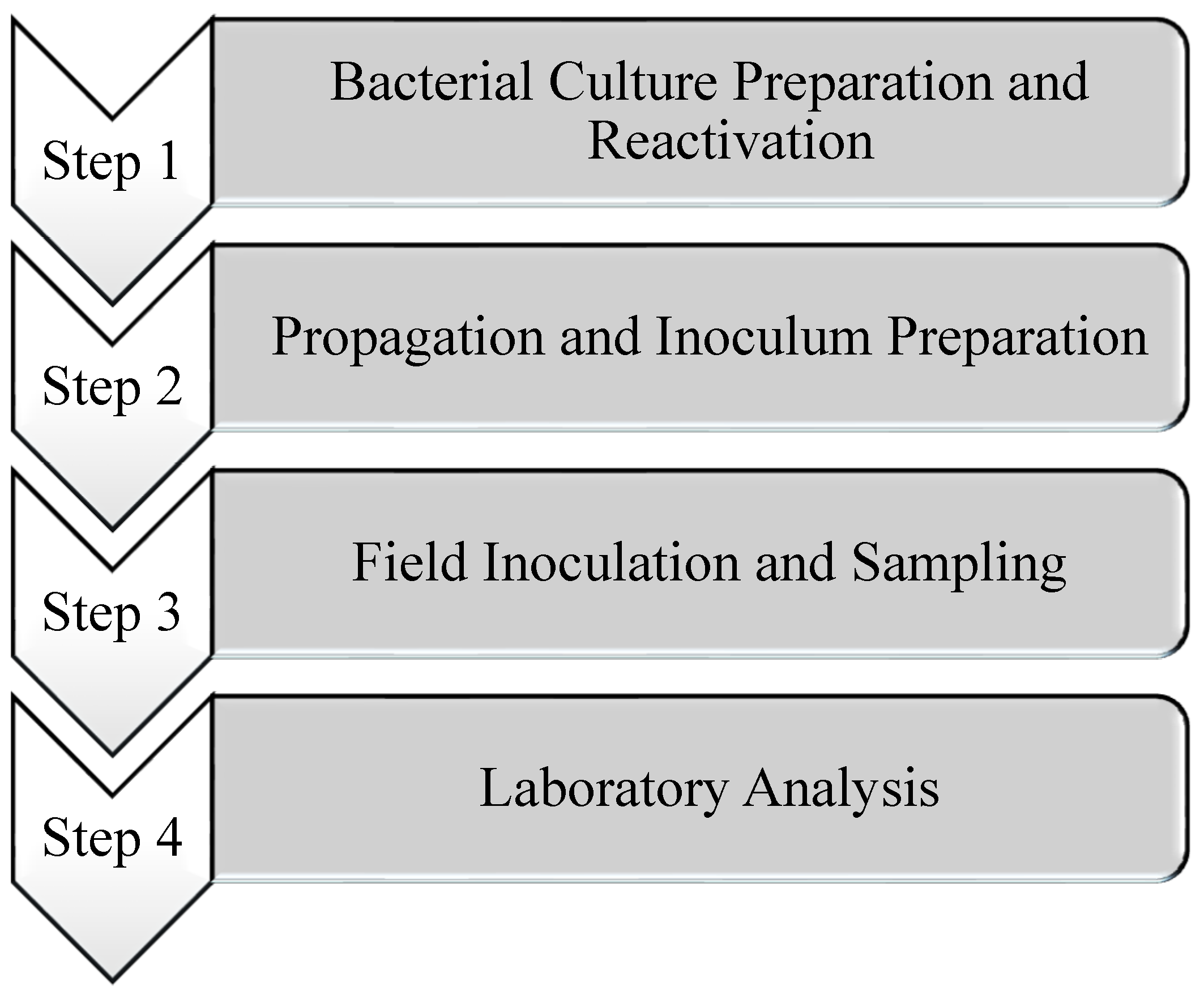
The methodological workflow was structured into four main stages: (i) preparation and reactivation of the bacterial culture, (ii) propagation and preparation of the inoculum, (iii) field inoculation and sampling, and (iv) laboratory analysis. The first stage included the preparation of culture media and the reactivation of bacterial strains. The second stage involved microbial propagation and the preparation of bacterial suspensions adjusted to the required concentration. The third stage consisted of field inoculation according to the experimental design and standardized sampling of soil, rhizosphere, and plant tissues.
Finally, laboratory analyses were organized into four categories: soil physicochemical properties, soil microbiological parameters, plant mineral composition, and juice technological quality.
This workflow (
Figure 1) is consistent with the schemes used in field trials with PGPBs in sugarcane focused on mineral nutrition and technological quality [
28,
29].
2.5. Preparation of Inoculants and Field Inoculation
The bacterial strains were reactivated and cultured under controlled laboratory conditions.
A. brasilense was cultured in nitrogen-free semisolid medium,
P. fluorescens in King B medium, and
B. subtilis in nutrient agar. Incubation was carried out at 28 °C for 24–48 h, depending on the growth rate of each species, until colony formation was observed. This procedure is consistent with methodologies used for the production of bacterial inoculants in sugarcane and other agricultural systems [
30].
The inoculants were prepared from solid formulations composed of freeze-dried bacterial cultures supported by inert carriers. These formulations were reconstituted in sterile saline solution (0.85%) at a 1:5 (w/v) ratio and homogenized by shaking for 10 min to obtain uniform bacterial suspensions. The resulting suspensions were adjusted to a final concentration of 5 × 10⁸ CFU·mL−1 by serial dilution. Xanthan gum (0.1%) and glycerol (0.05%) were added as stabilizing and adhesion agents to improve bacterial survival and root adhesion under field conditions.
Inoculation was performed directly into the furrow at a rate of 10–15 mL per plant, approximately equivalent to 100 L·ha
−1, during periods of low solar radiation between 7:00 and 10:00 a.m. Continuous agitation was maintained during application to prevent sedimentation. Rhizosphere microbial density was quantified at the sampling stage using serial dilution and plate count techniques, and results are expressed as CFU·g
−1 of soil [
28].
2.6. Experimental Units, Sampling, and Field Variables
2.6.1. Experimental Units, Usable Area, and Edge Criteria
The experimental units corresponded to subplots established in furrows (≈5 m long) with an arrangement of four furrows, delimiting a usable area and using internal borders (0.5 m) to minimize edge effects. The usable area (m
2) was estimated as follows: Usable area = (number of usable furrows) × (net usable length) × (distance between furrows). For yield, the usable area was harvested, and the fresh weight (kg) per subplot was recorded using a scale, extrapolating to hectares as follows:
where the factor 10 comes from 10,000 m
2·ha
−1 and 1000 kg·t
−1 [
27].
2.6.2. Soil, Rhizosphere, and Leaf Sampling
Sampling was conducted at the subplot level (experimental unit) under field conditions. Soil samples were collected at depths ranging from 0 to 20 cm using a hand auger, with five subsamples taken per subplot in a zigzag pattern to ensure spatial representativeness. These subsamples were homogenized to form a composite sample (approximately 1 kg), which was placed in sterile polyethylene bags.
Rhizosphere samples were obtained by carefully excavating the root system and gently shaking the roots to collect the soil adhering to their surface. This fraction was considered representative of the rhizosphere. The samples were handled under aseptic conditions, stored in refrigerated containers (4 °C), and transported to the laboratory for processing within 24 h.
Leaf samples were collected from the diagnostic leaf (+1 leaf) of plants randomly selected within each subplot. The samples were washed with deionized water to remove surface contaminants, dried in a forced-air oven at 65 °C until constant weight was reached, and ground into a fine powder (≈0.5 mm) for mineral analysis. The processed samples were stored in labeled airtight containers until analysis in the laboratory. Sampling and matrix handling procedures followed recommended practices for functional nutrition and microbiome studies in sugarcane under fertilization management [
27].
To avoid cross-contamination, sampling tools were cleaned between each subplot, and all samples were properly coded according to treatment and replication.
In addition, agronomic and physiological variables were recorded for each subplot. Chlorophyll content was estimated using a portable SPAD meter (SPAD-502 Plus, Konica Minolta, Tokyo, Japan); approximately 10 readings per subplot), plant height was measured directly from the base to the visible top of the crown, and the number of shoots per meter of furrow was quantified in predefined sections [
28,
29,
31].
2.6.3. Variables Analyzed and Their Operationalization
To ensure consistency between the parameters evaluated and the analytical methods used, this section describes the operationalization of the variables considered in the study, including the type of sample, units of measurement, and analytical techniques, as described in
Table 2.
2.7. Laboratory Analysis
The laboratory analyses were organized into four categories: (i) physicochemical properties of the soil, (ii) microbiological parameters of the soil, (iii) mineral composition of the plant, and (iv) technological quality of the juice.
2.7.1. Soil Physicochemical Properties
Soil pH was determined in a 1:2.5 soil–water suspension with gentle agitation for 30 min, using a calibrated potentiometer (HI 2211, Hanna Instruments, Woonsocket, RI, USA). Electrical conductivity (EC) was measured in a 1:2 soil-water extract using a conductivity meter (HI 2315, Hanna Instruments, Woonsocket, RI, USA) at 25 °C and expressed in dS·m−1.
Soil moisture content was determined by drying the samples in a convection oven (Memmert UN Series, Memmert GmbH + Co. KG, Schwabach, Germany) at 105 °C for 24 h, while soil temperature at 0–20 cm depth was recorded in situ using a digital penetration thermometer ( (TP19, ThermoPro, Toronto, ON, Canada) [
35].
The extractable fractions of P, K, and Zn in soil and rhizosphere samples were determined using the Mehlich-3 extraction method on air-dried and sieved samples (2 mm). The mixture was homogenized using an orbital shaker (KS 260 Basic, IKA-Werke GmbH & Co. KG, Staufen, Germany) and centrifuged (5424 R, Eppendorf AG, Hamburg, Germany) prior to analysis.
P was quantified by colorimetry, while K and Zn were determined by atomic absorption spectrometry (PinAAcle 900T, PerkinElmer Inc., Waltham, MA, USA). Results are expressed in mg·kg
−1 [
28,
34].
Rhizosphere microbial density was quantified using serial dilution and plate counting techniques. Appropriate culture media were used to estimate the total number of cultivable bacteria, and results are expressed as log10 CFU·g−1 of soil.
2.7.2. Plant Mineral Analysis
The concentration of P in the leaves was determined after wet digestion with HNO3–H2O2. The extract was analyzed by colorimetry following the Murphy and Riley method, measuring absorbance at 880 nm on a UV-Vis spectrophotometer (GENESYS 10S UV–Vis, Thermo Fisher Scientific, Waltham, MA, USA).
Potassium (K) and zinc (Zn) concentrations in plant tissue were determined by atomic absorption spectrometry, following standard protocols for plant mineral analysis. Results were expressed on a dry-weight basis.
2.7.3. Technological Quality of the Juice
The juice was obtained by mechanical extraction and filtration. Soluble solids (°Brix) were measured using a digital refractometer (PAL-1, ATAGO Co., Ltd., Tokyo, Japan) at 20 °C.
The percentage of polymerization (Pol, %) was determined by polarimetry using a saccharimeter (Polartronic, Schmidt + Haensch GmbH & Co., Berlin, Germany) following clarification with basic lead acetate and centrifugation. The purity of the juice (%) was calculated as (Pol/°Brix) × 100.
The fiber content (%) was determined by gravimetric analysis of bagasse dried at 105 °C to constant weight, and sucrose (%) was estimated using the Pol method with correction factors [
28,
29].
2.8. Statistical Analysis
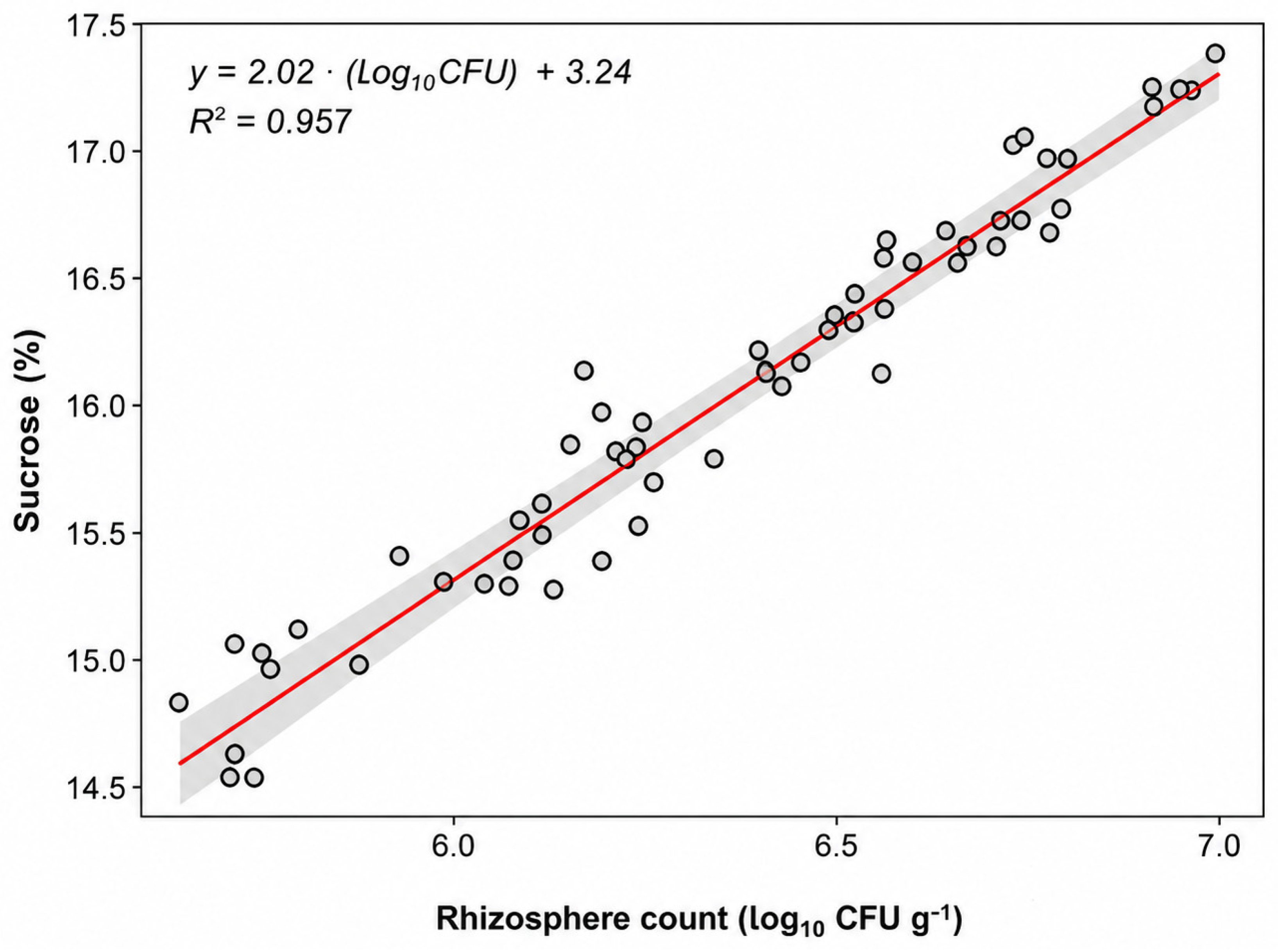
A simple linear regression analysis was performed to evaluate the relationship between rhizosphere microbial density (log
10 CFU·g
−1) and sucrose concentration in the stem. The relationship was described using the following equation:
The fitted model was as follows:
where β
0 represents the intercept and β
1 represents the regression coefficient. The model showed a positive and highly significant relationship (
p < 0.001), indicating that each logarithmic increase in microbial density was associated with an increase of approximately 2.01 percentage points in sucrose content.
Principal component analysis (PCA) was also performed to integrate the system response. The variables included physiological indicators (SPAD, plant height, and yield), mineral indicators (rhizosphere P, leaf K, and leaf Zn), technological quality (sucrose), and edaphic variables (soil pH, EC, rhizosphere microbial density, and soil moisture). Highly collinear variables (r > 0.85–0.90) were excluded before analysis. The first two principal components explained 91.8% of the cumulative variance.
3. Results
These variables, together with physiological, yield, and edaphic indicators, allowed for a comprehensive characterization of the crop’s response to the evaluated treatments. The results showed significant effects of P fertilization and inoculation with PGPBs on the technological quality of sugarcane juice and soil properties. Significant interactions between both factors were observed for industrial variables such as °Brix, Pol, purity, and sucrose.
Mineral variables (P, K, and Zn in soil/rhizosphere and leaf tissue) were included in the principal component analysis (PCA) together with physiological, yield, and edaphic indicators to characterize the crop response to the evaluated treatments [
27,
28,
35].
3.1. Analysis of Variance (ANOVA)
As shown in
Table 3, the split-plot ANOVA revealed a highly significant interaction (
p < 0.001) between P fertilization and inoculation (P × I) for °Brix, Pol, purity, and sucrose.
The inoculation factor showed the highest mean square values for °Brix (10.41) and sucrose (6.86) compared with the corresponding experimental error terms.
In contrast, fiber percentage did not show a significant P × I interaction (
p > 0.05), although a significant effect of inoculation was detected (
p < 0.001) [
29].
3.2. Physicochemical and Microbiological Properties of the Soil
Soil properties showed different responses depending on the evaluated variable (
Table 4).
Rhizosphere bacterial count (log10 CFU·g−1 dry soil) showed a highly significant interaction between P fertilization and inoculation (p < 0.001). Electrical conductivity (EC) also showed a significant interaction effect (p < 0.01).
Soil moisture and soil temperature did not show a significant P × I interaction (p > 0.05), although both variables were significantly affected by inoculation (p < 0.001). The highest mean square value was observed for soil moisture (32.06).
Soil pH showed a marginal P × I interaction effect in the ANOVA (
p < 0.1). However, Tukey’s post hoc test identified significant differences among specific treatment means as show in
Section 3.3.
3.3. Comparison of Means (Tukey’s Test)
Given the significance of the P × I interaction, a comparison of means was performed using Tukey’s test (
Table 5).
Treatment T11 (160 kg P2O5·ha−1 + consortium I5) showed the highest values for °Brix (20.32), Pol (17.00%), and sucrose (17.26%), differing significantly from the other treatments (p < 0.05).
In contrast, treatments without inoculation (T1 and T2) showed the lowest values for these variables.
Fiber content ranged from 11.53% to 11.74%, with no significant differences among treatments.
The physicochemical and biological dynamics of the soil showed a differential response among treatments (
Table 6).
The rhizosphere count, expressed as log10 CFU·g−1, increased across treatments, with T11 reaching the highest value (6.93 log10 CFU·g−1), followed by T12 (6.76 log10 CFU·g−1) and T10 (6.71 log10 CFU·g−1). The lowest values were observed in the non-inoculated treatments T1 and T2.
Regarding physicochemical variables, pH ranged from 6.01 in T1 to 6.32 in T12. EC remained below 1 dS·m−1 in all treatments. Soil moisture ranged from 18.11% to 23.00%, while soil temperature varied between 25.34 °C and 26.32 °C.
These results describe treatment-related differences in soil chemical, physical, and microbiological variables, while their biological interpretation is addressed in the
Section 4 [
36,
37,
38].
3.4. Interaction Between P Fertilization and Inoculation on Sucrose Content
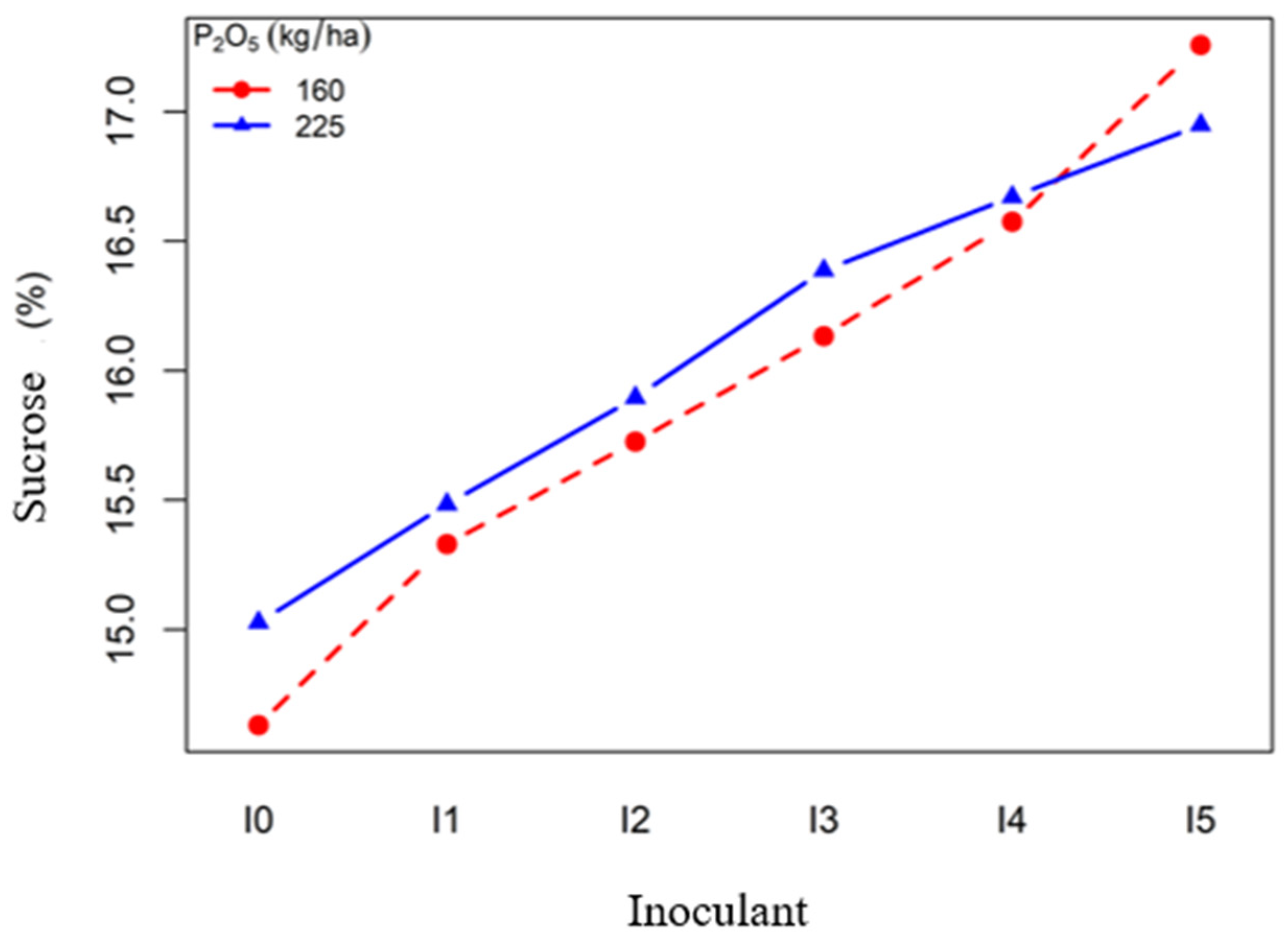
Figure 2 shows the interaction between P fertilization and inoculation on sucrose content. In treatments I0 to I4, the highest sucrose values were generally observed under 225 kg P
2O
5·ha
−1. However, treatment I5 (
B. subtilis +
P. fluorescens) showed the highest sucrose value under 160 kg P
2O
5·ha
−1, exceeding the corresponding treatment under 225 kg P
2O
5·ha
−1.
These results indicate a differential response among inoculation treatments under the evaluated P levels.
3.5. Rhizospheric Count (Log10 CFU/g) vs. Sucrose (%)
The linear regression model showed an adjusted coefficient of determination (R
2) of 0.96, indicating a strong positive relationship between rhizosphere microbial density and sucrose content (
Figure 3).
The regression coefficient (β = 2.02;
p < 0.001) indicated that increases in rhizosphere microbial density were associated with increases in sucrose content [
39].
Microbial densities above 6.9 log
10 CFU·g
−1 were observed in treatments T11 and T12, which also showed the highest sucrose values [
40,
41].
The increase in rhizosphere count suggests greater colonization by beneficial microorganisms capable of optimizing nutrient availability, regulating hormonal signals, and promoting carbon partitioning toward the stems—processes that explain the concomitant increase in sucrose accumulation observed in Saccharum spp. These responses are consistent with the role of PGPBs as physiological biostimulants, whose effects on metabolic efficiency and technological quality of sugarcane have been confirmed under field conditions for genera such as Azospirillum, Bacillus, and Burkholderia, as well as for highly functional microbial consortia.
3.6. Mineral Composition of Rhizosphere and Bulk Soil, and Plant Tissue
The concentrations of P, K, and Zn in soil, rhizosphere, and leaf tissue showed significant differences among treatments (
Table 7).
In bulk soil, extractable P ranged from 861.09 mg·kg−1 in T1 to 1490.78 mg·kg−1 in T12, with T11 and T12 showing the highest values (p < 0.05). Similar trends were observed for K and Zn, with T11 showing the highest K concentration (241.73 mg·kg−1), while T11 and T12 presented the highest Zn values.
Rhizosphere P concentrations were higher than those observed in bulk soil across all treatments [
41,
42]. Treatment T11 showed the highest rhizosphere P concentration (1899.03 mg·kg
−1), followed by T12. Similar trends were observed for rhizosphere K and Zn, with T11 showing the highest values for both nutrients [
43].
In leaf tissue, P concentration increased from 1799.16 mg·kg−1 in T1 to 2637.89 mg·kg−1 in T11, which showed the highest value among treatments (p < 0.05). Leaf K and Zn concentrations also reached their highest values in T11 and T12.
3.7. Principal Component Analysis (PCA) and Multivariate Characterization
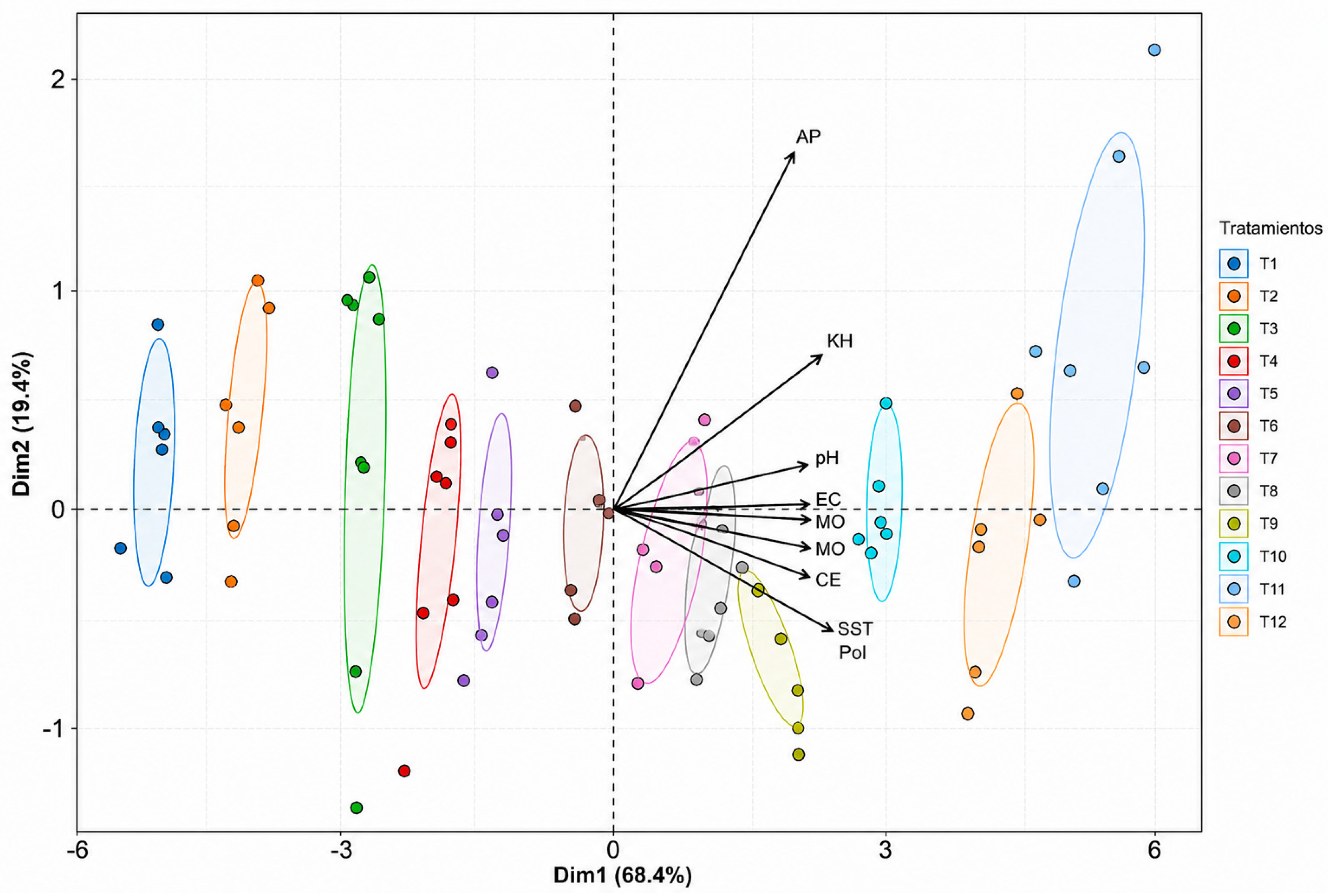
Most variables showed a strong positive correlation with the first principal component (PC1), which explained 88.4% of the total variance, while the second component (PC2) explained an additional 3.4%.
The PCA biplot (
Figure 4) showed a clear separation among treatments. Plant height (PH) exhibited a distinct contribution trajectory compared with the remaining variables.
Treatments T1 to T6 were mainly distributed along the negative side of PC1, whereas treatments T7 to T12 were distributed in the positive quadrant. Treatment T11 showed the greatest positive association with the evaluated agronomic, physiological, and mineral variables [
43].
4. Discussion
This study demonstrates that the technological quality of sugarcane juice (
Saccharum officinarum L.) is strongly influenced by the interaction between PGPBs and residual P levels in the soil. The significant interaction observed indicates that the effect of bioinoculation is not independent but is modulated by nutrient availability, particularly P, which plays a central role in plant metabolism and carbon allocation, according to previous studies [
28,
29].
The superior yield of the T11 treatment (160 kg P
2O
5·ha
−1 +
B. subtilis +
P. fluorescens) suggests that moderate P availability creates favorable conditions for microbial activity and plant–microorganism interactions [
9]. Under these conditions, PGPBs can increase P bioavailability by producing organic acids and phosphatases, facilitating the mobilization of insoluble P fractions commonly found in tropical soils. Conversely, high P levels can reduce microbial efficiency due to feedback inhibition mechanisms that limit the expression of phosphate-solubilizing traits. This behavior supports the idea that optimal interactions between nutrients and microorganisms occur under conditions of moderate resource availability, rather than nutrient excess [
11,
13].
Beyond nutrient mobilization, the observed increases in sucrose, °Brix, and purity can be explained by physiological mechanisms associated with the activity of PGPBs. It is known that genera such as
Bacillus and
Pseudomonas produce phytohormones, such as indole-3-acetic acid and gibberellins, which stimulate root development and improve nutrient uptake efficiency. Improved root architecture increases the plant’s capacity to absorb water and nutrients, promoting the translocation of photoassimilates to storage tissues [
40,
41]. Furthermore, emerging evidence suggests that PGPBs can modulate key enzymes involved in carbohydrate metabolism, thereby favoring sucrose accumulation in the stem [
43]. These combined effects provide a mechanistic explanation for the improvements in technological quality observed in the inoculated treatments [
3,
4].
The strong correlation identified between rhizosphere bacterial density and sucrose content highlights the functional role of microbial populations as determinants of crop quality. Rather than acting solely as passive components of the soil system, microbial communities actively regulate the nutrient cycle, hormonal signaling, and carbon partitioning processes. In this regard, rhizosphere microbial density can be interpreted as a functional bioindicator of soil biological activity and its capacity to sustain efficient production systems [
14,
19,
31].
The observed changes in soil physicochemical properties further support the influence of PGPBs on the rhizosphere environment. The slight increase in soil pH in the inoculated treatments is consistent with the biochemical processes associated with P solubilization and the mineralization of organic matter [
10,
29]. This effect is particularly relevant in acidic tropical soils, where P availability is often limited by fixation processes [
9,
44]. Furthermore, the stability of electrical conductivity indicates that bioinoculation did not cause salt accumulation, suggesting a gradual and controlled release of nutrients. Improvements in soil moisture retention may also be associated with microbial production of exopolysaccharides, which contribute to soil aggregation and structural stability, improving water retention and root microenvironment conditions.
The multivariate approach based on Principal Component Analysis (PCA) allowed for the integration of physiological, edaphic, microbiological, and technological variables into a unified framework, explaining a high proportion of the total variance. The clear separation of treatments with microbial consortia from individual strains and controls supports the hypothesis that consortia generate synergistic effects due to functional complementarity among microorganisms [
41]. This underscores the importance of considering microbial interactions rather than the effects of individual strains when designing biofertilization strategies [
21,
22]. Despite the robustness of the results obtained under field conditions, this study was conducted over a single growing season, which represents a limitation for extrapolating the long-term effects of continuous inoculation with PGPBs. The sustained application of microbial consortia can induce gradual changes in the structure of the soil microbial community, P transformation dynamics, and soil physical stability. In this context, long-term monitoring should include key indicators such as rhizosphere microbial density, available P fractions, soil pH, and electrical conductivity, which can provide information on the sustainability and functional stability of biofertilization strategies.
Future research should focus on multi-temporal assessments under different agroecological conditions to validate the persistence, ecological interactions, and agronomic benefits of PGPB consortia over time.
5. Conclusions
Inoculation with consortia of plant growth-promoting bacteria (PGPBs) under moderate P availability improved the functional efficiency of the soil–plant system, resulting in better technological attributes of sugarcane juice under the evaluated conditions. The results highlight the importance of optimizing interactions between nutrients and microorganisms rather than maximizing fertilizer inputs, emphasizing a more balanced approach to crop management in tropical soils.
The integration of microbiological, edaphic, and technological variables revealed that rhizosphere processes play a central role in determining crop performance, supporting the use of biological indicators as complementary tools for evaluating production systems. In this regard, microbial consortia represent a strategic alternative for improving nutrient use efficiency while maintaining system stability.
These findings provide experimental evidence supporting the transition toward biologically driven fertilization strategies; however, their applicability may vary depending on environmental conditions, soil characteristics, and management practices. Therefore, further research is needed across diverse agroecological scenarios and over longer time periods.




 ,
,