Systematic Review

Beyond the Plot: Systematic Literature Review of Landscape Approach and Systems Thinking Towards Sustainable Urban Agriculture and Farming

Landscape Architecture Section, Department of Urbanism, Faculty of Architecture and Built Environment, Delft University of Technology, 2628 CD Delft, The Netherlands
*
Author to whom correspondence should be addressed.
Sustainability 2026, 18(11), 5726; https://doi.org/10.3390/su18115726
Submission received: 17 April 2026 / Revised: 30 May 2026 / Accepted: 2 June 2026 / Published: 4 June 2026
(This article belongs to the Section Sustainable Urban and Rural Development)

Abstract

Urban agriculture and farming (UAF) initiatives are recognised for their potential to enhance urban resilience, support local food systems, and deliver ecosystem services. However, current scholarship remains fragmented, treating UAF initiatives as isolated green interventions, rather than integrated components of urban fabric. This study examines how landscape-based approaches (LbAs) and systems thinking (ST) have been applied concurrently to analyse and design these initiatives. We argue that LbA is necessary to provide the spatial logic for physical integration, while ST provides the functional logic for metabolic efficiency. This systematic literature review screened 92 records across Scopus, Web of Science, and Google Scholar, resulting in a refined corpus of 12 peer-reviewed articles published between 2015 and 2025. This reflects the nascent state of an interdisciplinary approach at this intersection. Utilising VOSviewer and Atlas.ti, the study identified four thematic clusters: urban green infrastructure, urban food systems, landscape planning, and socio-ecological systems. A cross-comparative analysis of these clusters and their underlying methodologies led to a new theoretical dual-lens systemic landscape framework to evaluate the sustainability outcomes of UAF. The findings reveal limited integration of spatial analysis with systems thinking across scales. This review contributes a novel multi-scale methodology that emphasises the need for integrated spatial and systemic interdependencies to achieve truly resilient urban food systems.

1. Introduction

Circular urban metabolism strategies and have increasingly gained traction as vital pathways towards achieving sustainable cities [1]. However, despite the potential of these spatial strategies, spatialised and systemic food systems remain largely invisible within the urban fabric [2]. Therefore, modern planning must operationalise nature-based solutions to achieve truly sustainable and resilient cities [3]. Within this context, urban agriculture and farming (UAF) initiatives—landscapes that combine ecological functions with food production and social activities—have emerged as promising interventions. UAF initiatives contribute to local food systems, ecosystem services, climate adaptation, and community wellbeing [3,4]. Often used interchangeably in general discourse, UAF initiatives are considered a primary subset of productive urban landscapes (PULs). PULs are interconnected green infrastructures that integrate urban design with food production, representing the broad spatial and functional infrastructure [5]. UAF initiatives represent specific agricultural and farming activities, blending food production with commercial and social practices. These smaller green spaces are often designated for producing fresh food, with social and community outcomes [2]. However, despite their growing popularity, many UAF initiatives remain disconnected from broader spatial planning frameworks [2,5], thus, limiting their integration into urban fabric. This disconnect often results in UAF initiatives functioning as isolated plots, lacking spatial and institutional support. Absence of such frameworks often causes significant systemic barriers such as spatial constraint, participation fatigue, lack of investments and land tenure issues. Furthermore, such fragmented approaches can exacerbate socio-spatial inequalities, manifesting as unequal access and green gentrification [6]. Consequently, their long-term contribution towards sustainability and resilience remains uncertain.

Unpacking Theoretical Foundations: Necessity of the Systemic Landscape

The integration of landscape-based approach (LbA) and systems thinking (ST) is proposed as a structural response to the fragmented nature of current scholarship, which often fails to integrate spatial form with metabolic functions. The landscape-based approach (LbA) provides a spatial–structural framework for deciphering the configuration and connectivity of landscapes across scales [7]. It operates using spatially explicit variables such as patch density, edge boundaries, corridors, etc. This lens is essential for ensuring UAF initiatives are not treated as isolated “plots” of green. Instead, it emphasises their role in the larger urban fabric, by focusing on the spatial heterogeneity and ecological connectivity, and embedding it within the broader urban ecological infrastructure [8], by determining the where and how. Concurrently, systems thinking (ST) provides the functional and metabolic lens, necessary to analyse the loops, flows, and interdependencies that shape socio-ecological systems [9]. This perspective moves beyond the static spatial elements to examine the dynamic processes, such as the food–energy–water nexus, resource feedback loops and actor–network relationships. While LbA ensures spatial integration, ST is vital for identifying the metabolic efficiencies, thereby, identifying mismatches between food demand, resources and institutional support. The necessity of combining these lenses lies in overcoming the limitations of single-scale planning. If planning of UAF relies entirely on LbA, we risk the initiative becoming a beautifully designed green lot, removed from the material realities. Conversely, if UAF relies entirely on ST, it risks becoming an unfunctional piece of land. Therefore, the integration of both lenses is imperative for the future of this typology.
Despite their potential complementarity, research on the integration of landscape and systems thinking in UAF initiatives remains limited, the nascent state of the study indicating this methodological gap. Spatial approach is currently scale-bound and systems approach is not spatially bound. By adopting a multi-scale systemic landscape perspective, researchers can understand how spatial metrics such as size, shape, composition, diversity and connectivity interact with the wider urban food systems, material flows and governance structures. A carefully calibrated food system can output a greater sustainability outcome.
The research addresses the following question: What existing approaches incorporate systemic thinking and landscape perspectives in the analysis and planning of urban agriculture and farming? To answer this question, this study conducts a systematic literature review (SLR) of peer-reviewed research between 2015 and 2025 on UAF. By analysing the literature through thematic and methodological clustering, the study aims to clarify how spatial landscape analysis and ST can be integrated to support the planning and governance of sustainable and resilient urban food systems.
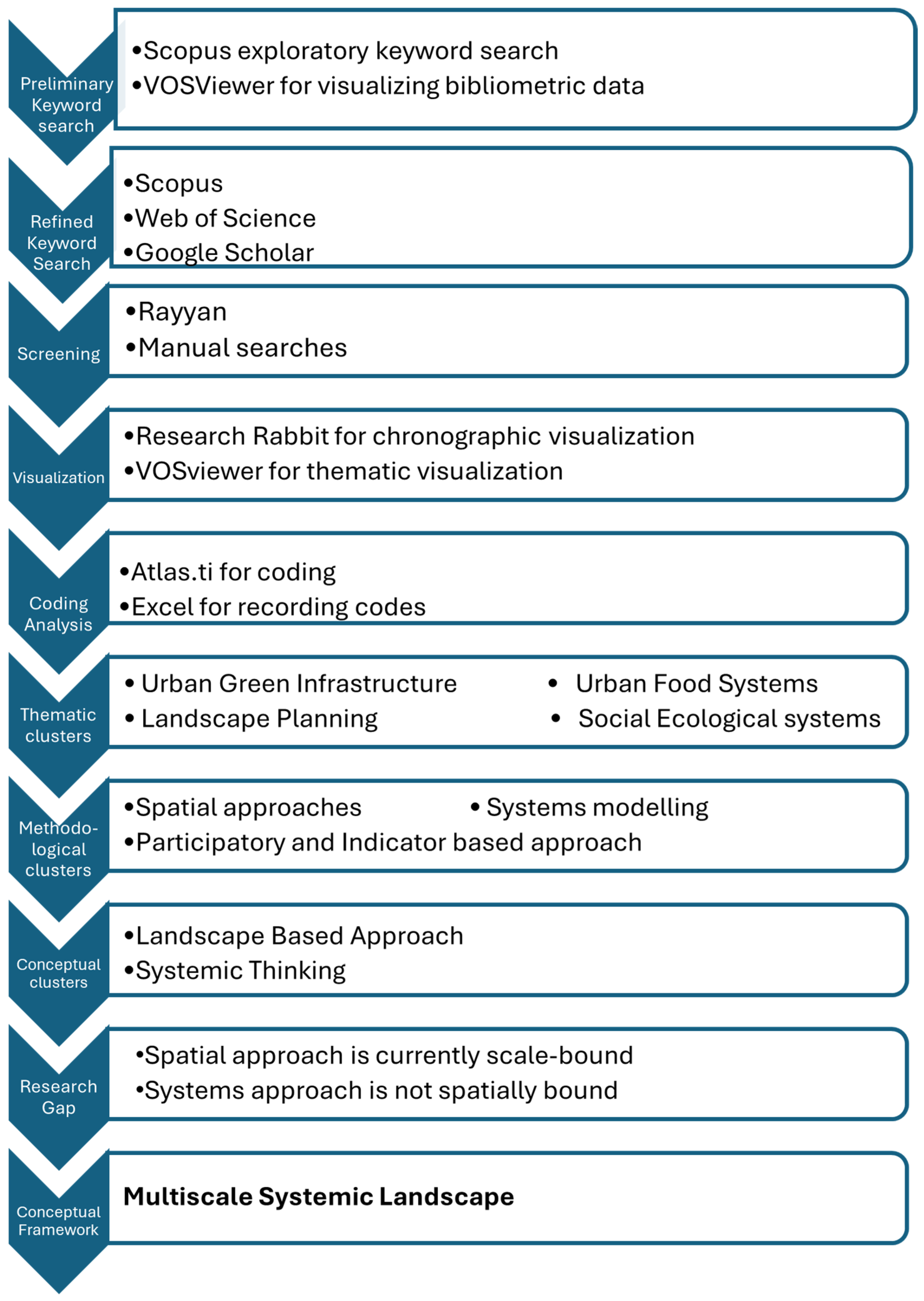
This article is divided into three parts. In Section 2, Materials and Methods, we explain the methods behind the SLR. We conduct a keyword search through Scopus, Web of Science and Google Scholar and screen the papers using PRISMA 2020 [10]. In Section 3, we present the findings by demonstrating how the coding helped identify the dominant thematic clusters and analyse how these studies address the intersection of spatial and systemic approaches. Section 4 provides the conceptual core of the paper, where we discuss how LbA and ST can provide a dual-lens conceptual systemic landscape framework. The conclusion summarises how integrated thinking of UAF will allow designers and researchers to understand how spatial form impacts sustainability outcomes. (See Figure 1 for the research flow diagram.)

2. Materials and Methods

2.1. Literature Search Strategy

The search was conducted between March and June 2025. To ensure transparency and comprehensiveness, the following search strategies were employed.

2.1.1. Initial Exploratory Phase

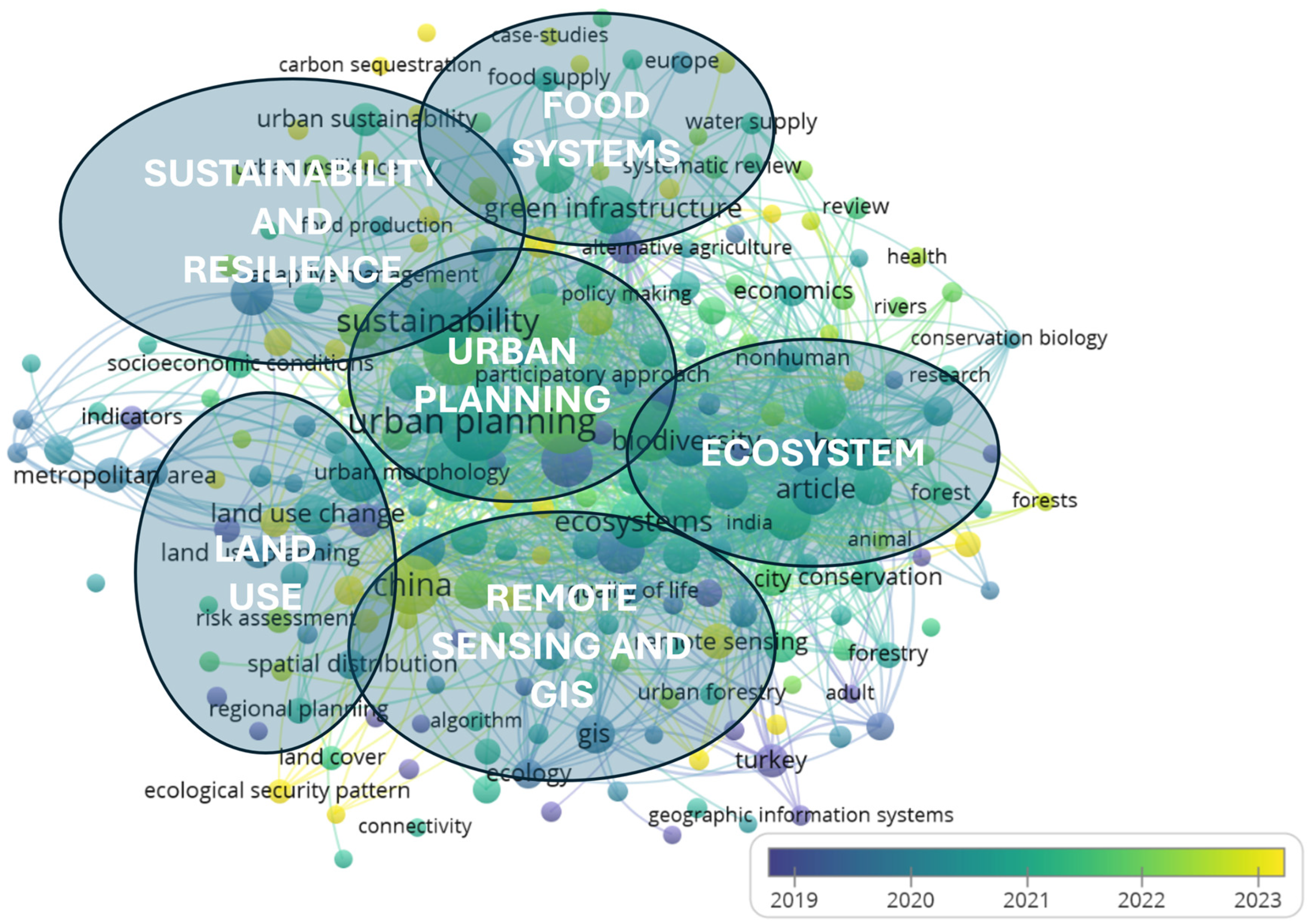
We conducted an exploratory keyword search in Scopus using the main strings mentioned in Appendix A.1 to map the initial knowledge landscape on 30 March 2025. The preliminary results (n = 542) were then visualised using VOSViewer (version 1.6.20), a data visualisation software for bibliometric data. The map groups keywords based on how frequently they appear in the selected literature. Six prominent clusters and focal points could be interpreted from the visualisation: urban planning, sustainability and resilience, food systems, ecosystems, land use and remote sensing and GIS (See Figure 2). Figure 2 shows the VOSviewer visualisation with the overlapping clusters for clarity. The main core, urban planning, along with ecosystems, make the dominant core. Evidently, the methodological foundations, remote sensing and GIS are distant from the food systems cluster. This initial visual bibliometric analysis revealed that spatial tools and metabolic workflows are rarely intersecting within the UAF domain in existing literature, providing a strong empirical justification for building a more stringent search strategy. Using this analysis, along with the initial hypothesis, we identified keywords, clusters and operators for the refined systematic search.

2.1.2. Refined Systematic Search

Following the initial exploration, we encountered two critical limitations. Firstly, the expansive full-text searches yielded thematic noise, with abstracts devoid of any relevant keywords related to S1—“Productive Green Spaces”. Secondly, using only one database would lead to oversight of other available material. To resolve these challenges, and expand the search while minimising selection and systematic bias, we adopted a more rigorous approach. While we searched the same keywords across the three databases, Scopus, Web of Science and Google Scholar (See Appendix A.2) to ensure higher relevance, the search syntax across the databases was calibrated to reflect the indexing profiles of each database. Keywords within each of these search strings, S1—“Productive Green Spaces”, S2—“Landscape-based Approach”, S3—“Sustainability Outcomes”, S4—“Spatial Analysis” and S5—“Systems Thinking”, were maintained across the databases and combined using the AND operator. The use of the AND operator was necessary for retrieving a logical intersection of all of the keywords from all of the clusters. The search strategy was intentionally restrictive; the multi-string search strategy using the AND operator was designed to locate studies at the precise intersection of UAF, landscape-based approaches, systems thinking, spatial analysis and sustainability outcomes. Therefore, while a key limitation of this SLR is the conservative final sample size, it is indicative of a highly nascent cross-disciplinary approach, rather than a comprehensive representation of all UAF scholarship.
Because Google Scholar indexes full-text bodies as opposed to isolated metadata layers, the initial unconstrained query gave close to 11,000 records. To resolve the inflated search result, ‘intitle:’ was applied to the foundational cluster S1. Correspondingly, to prevent retrieval bias, S1—“Productive Green Spaces”, was restricted to ‘TITLES, ABSTRACTS AND KEYWORDS’ within SCOPUS. In Web of Science, the five search strings were synthesised into three search strings to accommodate the platform’s Boolean parsing knowledge using ‘All Fields’. The restricted search served as a vital methodological filter, as it systematically removed irrelevant studies, thereby reducing researcher and database-induced selection bias. This calibrated, multi-database search method yielded a highly precise pool of 92 records. The searches on Scopus, Web of Science and Google Scholar were conducted in June 2025.

2.2. Identification and Screening of Literature Using PRISMA 2020

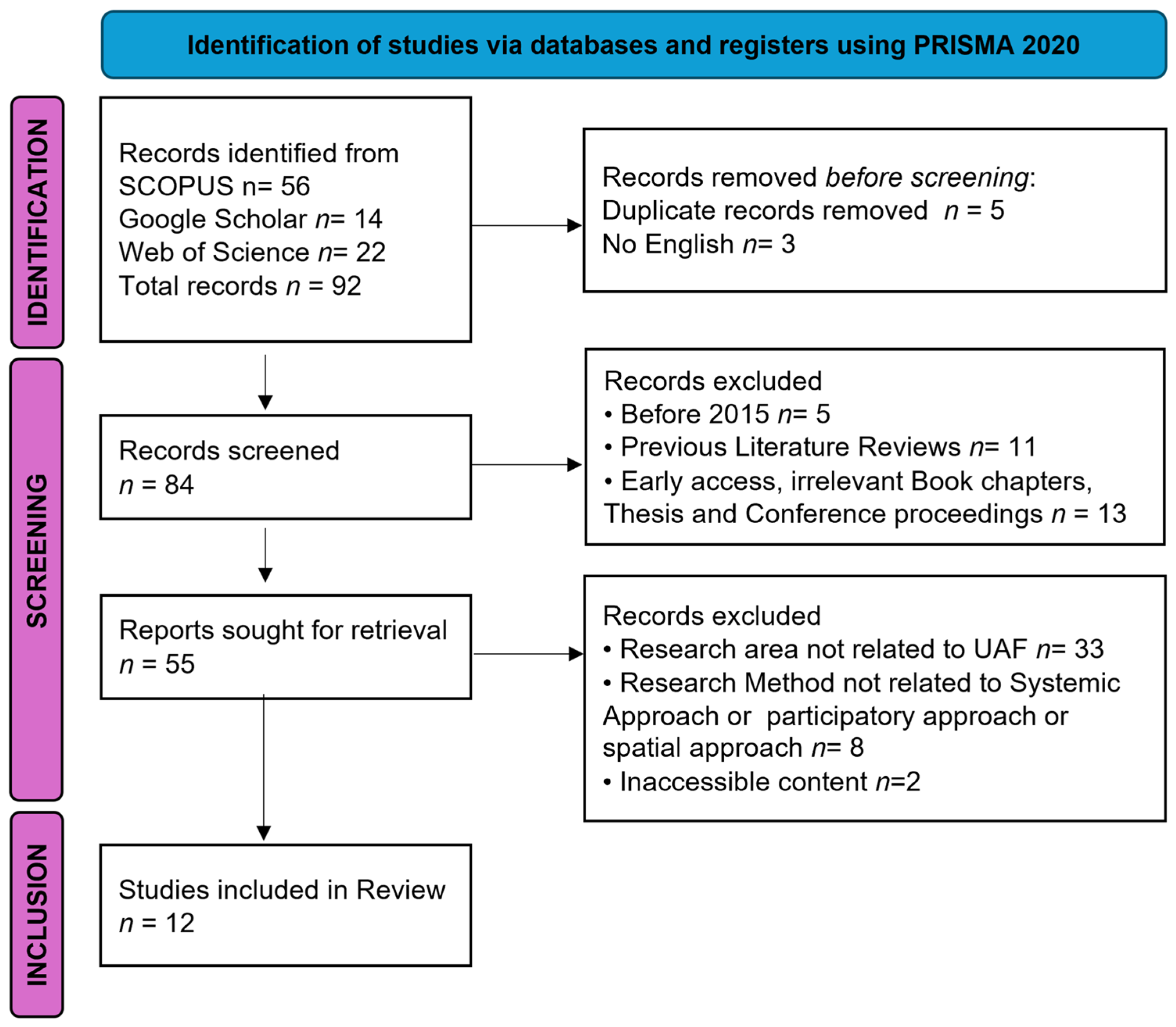
Following the PRISMA 2020 guidelines [10], 92 records were identified across the repositories: Scopus (n = 56), Web of Science (n = 22) and Google Scholar (n = 14). These were then imported into Rayyan version 1.6.0. (a software for data management and analysis) on 8th June, to look for duplication and screening. After removing 5 duplicates and 3 non-English papers, we further screened 84 records manually. These 84 records were subjected to inclusion and exclusion criteria (See Table 1).
Each record was screened independently by the first author in Rayyan against the inclusion–exclusion criteria. Any discrepancies in the inclusion or exclusion of records were resolved through discussion until a consensus was reached. First, the papers were reviewed individually on the basis of language and duplicity. Next, records prior to 2015 (n = 5) were eliminated based on temporality. Then, we proceeded to eliminate studies based on the document type, excluding previous literature reviews (n = 11) and irrelevant material such as early access materials, irrelevant book chapters, theses and conference proceedings (n = 13). This left us with 55 papers for retrieval (n = 55). During the screening, we eliminated research papers not related to UAFs (n = 33). Furthermore, we screened the papers on the basis of their methodological approach: not related to systems modelling or participatory approach or spatial approach (n = 8). Two more papers (n = 2) were eliminated due to inaccessible content. This search was concluded in June 2025. Figure 3 illustrates the PRISMA 2020 flow diagram recording the transition from the initial identification to the final 12 studies for the SLR. A review protocol was not registered; however, the review was conducted in accordance with the PRISMA 2020 guidelines to ensure transparency and reproducibility throughout the search and screening phases. The PRISMA checklists are included in the Supplementary Materials.

2.3. Thematic Analysis and Coding Protocol

Following the PRISMA 2020 selection process detailed in Figure 3, a final database of the 12 peer-reviewed results was synthesised. These studies are listed in Appendix A.3, along with key details: Ref. no. used in the references, author(s), title, location, inclusion rationale and scale. This stage of tabulation was essential as key data emerged from this: chronological, geographical, thematic and methodological data. Following this stage, we subjected the final corpus to a rigorous deductive–inductive coding analysis to extract information. We conducted this coding using Atlas.ti (version 25.0.1) and recorded the results in Microsoft Excel. The coding analysis revealed thematic clusters to identify the different themes within the body of literature. Subsequently, the findings from the thematic analysis were applied to develop a systemic landscape framework.
To ensure structural clarity and methodological transparency, a multi-stage validation procedure was followed. All of the 12 papers were read, segmented and analysed by the first author using Atlas.ti and recorded in Excel. The deductive–inductive definitions and parameters were also structured by the first author; they were further finalised by the team. The other authors validated the findings through a comprehensive and collaborative review of the codes, the conceptual models and the manuscript. They also cross-examined the thematic and methodological clusters with the codes during regular meetings. Because the initial deductive–inductive codes were highly structured, no major operational disagreements occurred during the co-author reviews, resulting in consensus across all stages of the synthesis. The primary thematic cluster for each paper was determined through a dominant-weight frequency rule. The codes were pre-grouped into five specific code families, aligning with the silos from the VOSviewer visualisation. Each text was anchored to a specific thematic cluster if more than 50 percent (absolute majority) of the total codes mapped within that specific document belonged to a single code family. This absolute majority rule prevented multi-classification bias, ensuring the papers were sorted according to data-driven rules.

3. Results

3.1. Visualisation

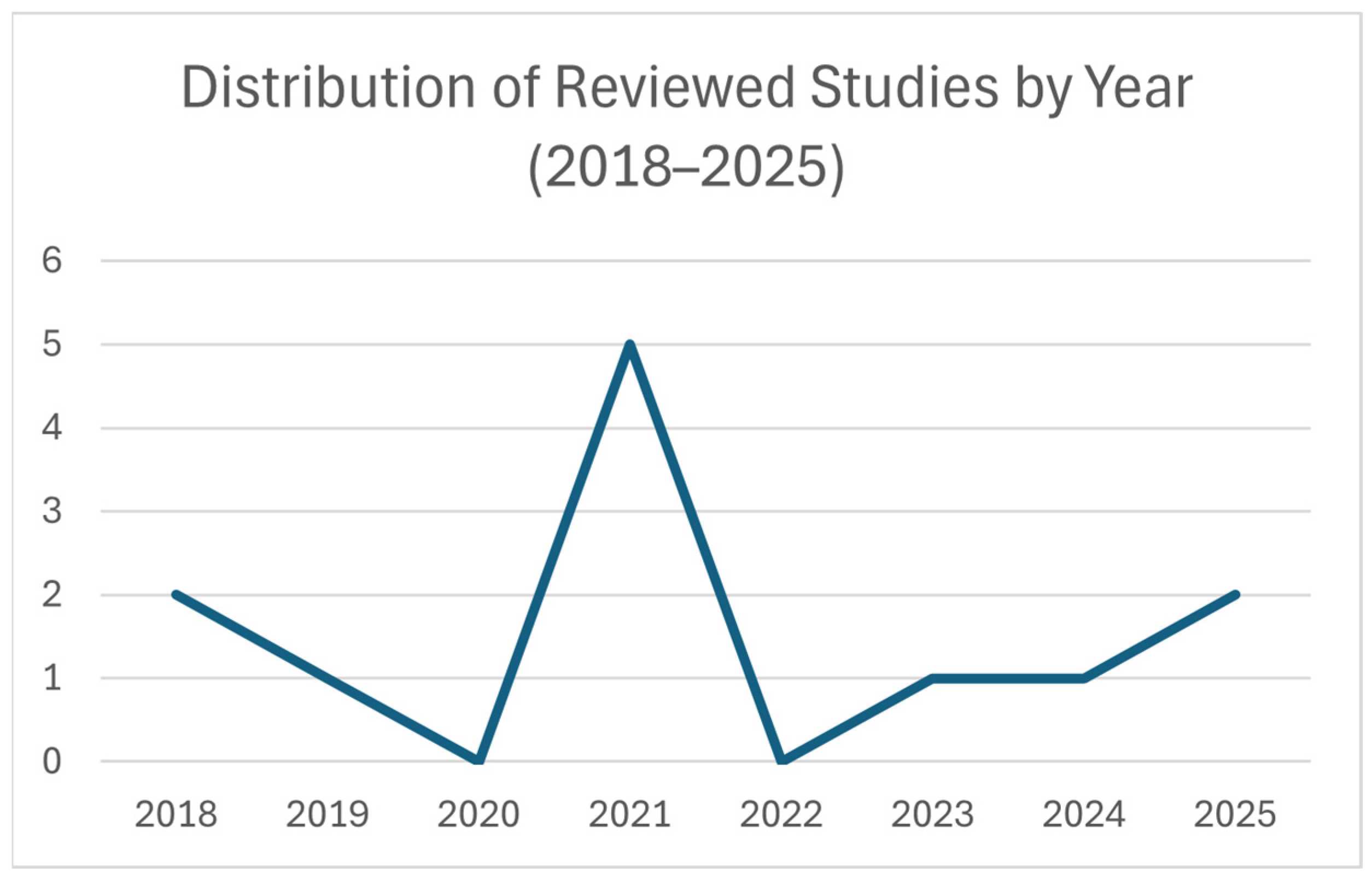
Chronological and geographic visualisation was conducted using Research Rabbit (an open-source software for literature analysis), and recorded using Microsoft Excel. There has been increased interest in UAF since 2018, which has accelerated more with interdisciplinarity as a new approach. Most research was published during 2021 (Figure 4). This indicates that there is a growing need in research to bridge the gap between academic research and real-world practice.
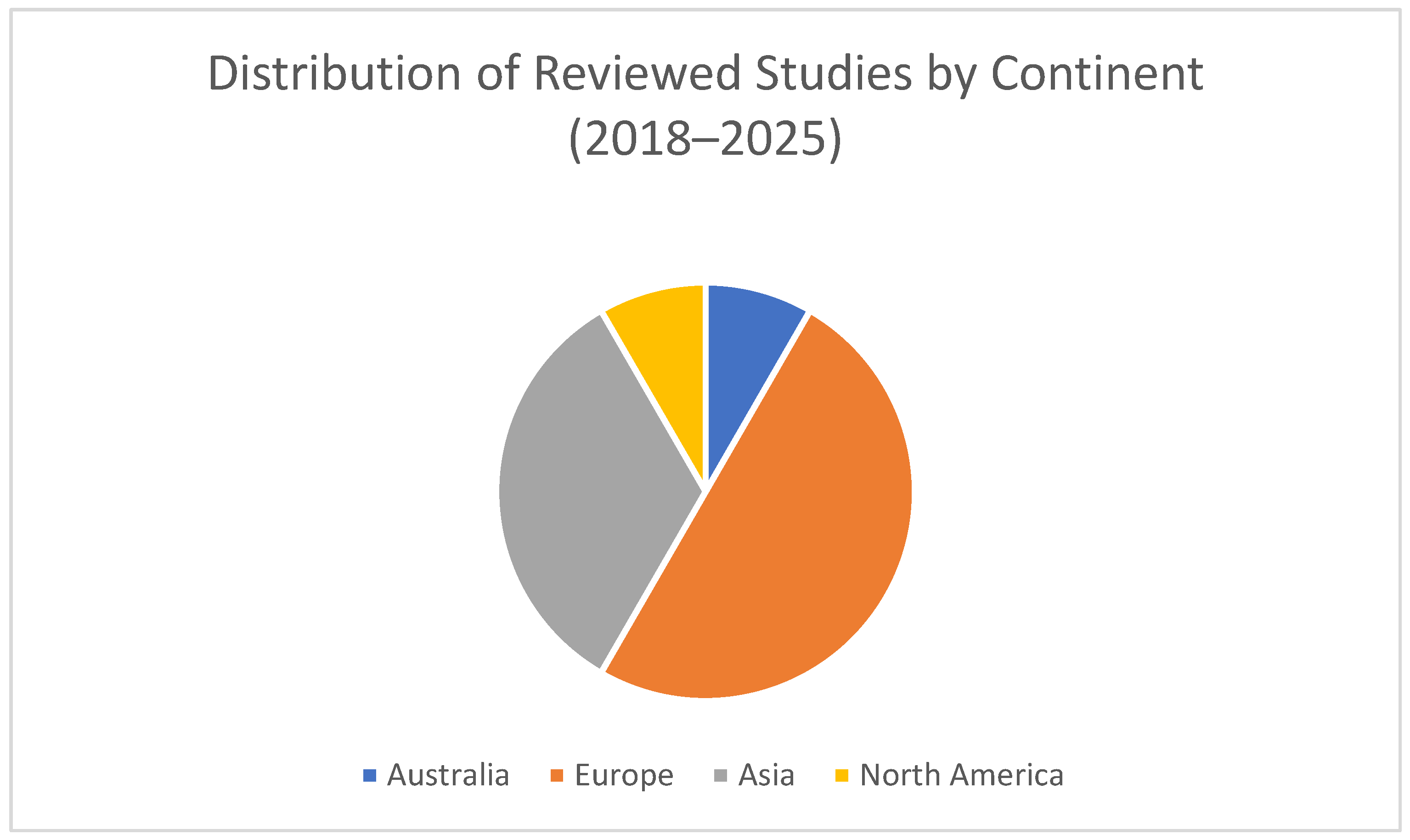
The papers were also sorted based on the geographical areas they emerge from. The data show that most papers during 2018–2025 emerge from Europe (See Figure 5). This could be attributed to European Union (EU) policies, such as Horizon 2020, the Farm-to-Fork Strategy and the EU Green Deal, that play a crucial role in representing UAF initiatives.

3.2. Exploratory Search and Thematic Silos

3.2.1. Exploratory Visualisation

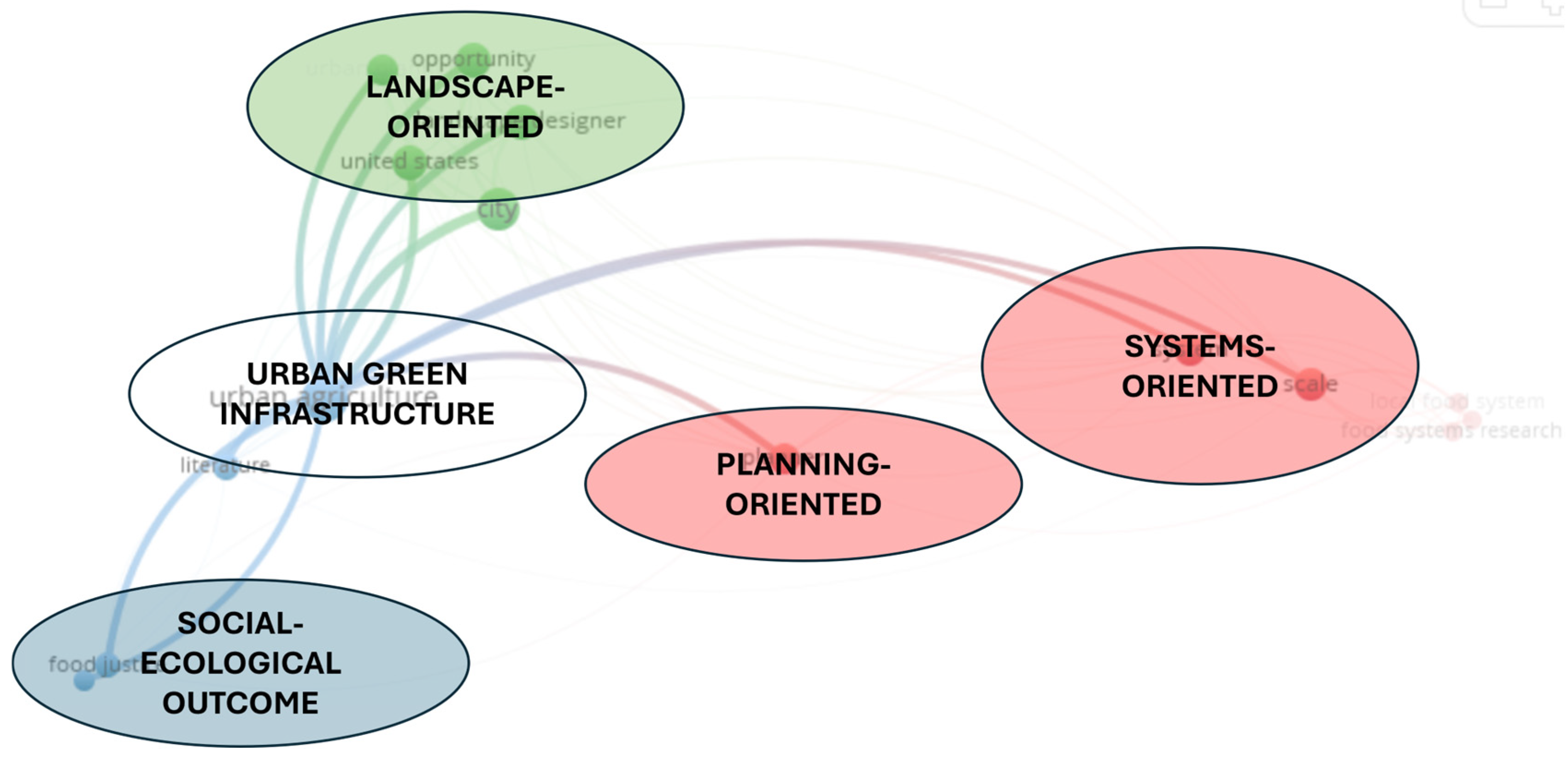
Given the very small final corpus, we used VOSviewer visualisation, strictly for illustrative and exploratory purposes, rather than bibliometric analysis. Bibliometric mapping typically yields more meaningful analytical weight when applied to expansive datasets. Therefore, this visualization (Figure 6) serves purely as a conceptual, diagnostic tool to map the structural isolation of the primary keyword groups. It should not be interpreted as a statistically definitive representation of a wider research field but an exploratory image that aligns with the core research objectives, indicating that the disciplinary boundaries fail to intersect. This unearthed the following segments: urban green infrastructure (central core), landscape-oriented (green), social-ecological outcome-oriented (blue) and planning-oriented (red) and systems-oriented research (red). Urban green infrastructure (UGI) is central to all clusters and is evidently connected to place-based efforts and food justice but distantly related to systemic and planning concepts (Figure 6).
Using the hypothesis of this research, that UAF is rarely framed through both systemic and landscape logic and, therefore, it is not spatially embedded into the urban planning systems and the VOSviewer exploration, we established the following main silos.
-
Urban green infrastructure: Evaluates the existing engagement with ecological infrastructure. This silo agrees with the central purpose of the research.
-
Landscape-oriented: Aligns with the spatial understanding and physical metrics.
-
Social-ecological outcome-oriented: Categorizes the targeted results based on ecological, economic and social benefits.
-
Planning-oriented: Aligns with the urban and urban–rural planning discourse.
-
Systems-oriented: Focuses on systemic flows, resource modelling and metabolic loops
Once these baselines were decided, the first author arrived at the deductive codes (Appendix A.4) that were then applied to the 12 papers.

3.2.2. Iterative Coding Process

The 12 peer-reviewed papers were manually studied, coded using Atlas.ti and recorded in Microsoft Excel by the first author. Top-down deductive codes were compiled, comprising a combination of the pre-established silos and pre-defined parameters from the research objective, question and aims such as ‘typologies’, ‘spatial integration’, ‘multi-scale analysis’, ‘socio-ecological benefits’, ‘indicators’, ‘systemic flows’ and ‘metabolic loops’. Simultaneously, each paper was coded based on the authorship, years of publication, focus area, methodology and spatial scale. These inductive codes, such as contextual insights and linkages, were selected from the texts, and allowed for connections to be made between green infrastructure, spatial configurations, sustainability outcomes and landscape approach.
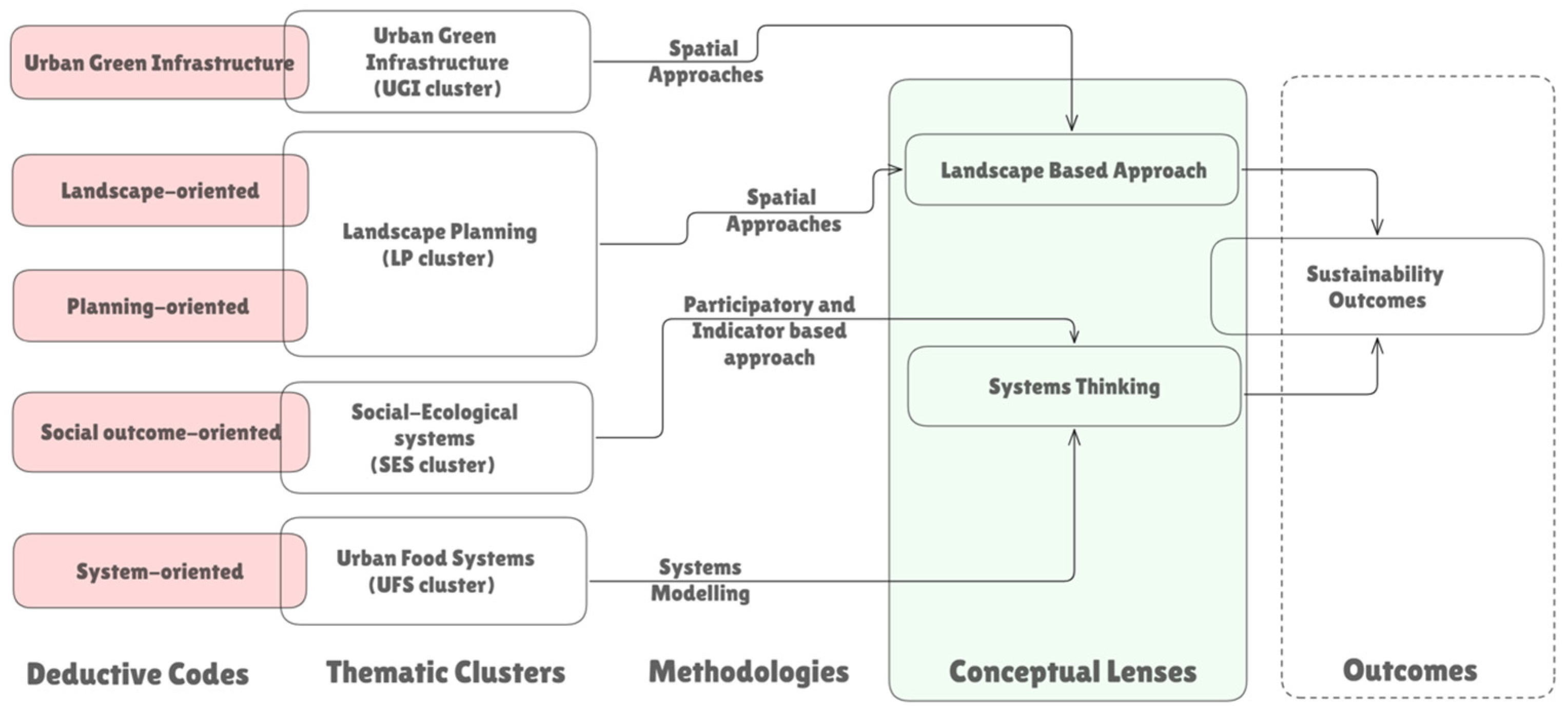
The iterative deductive–inductive approach allowed the text coding to be robust and thematic patterns and connections began to emerge. Following the text extraction, further analysis was done manually and recorded using Microsoft Excel. The dominant deductive and inductive codes are mentioned in Appendix A.4. Through systematic cross-examination, the inductive codes were coded across the papers to map the linkages across matching analytical fields. A dense network of codes resulted in a dynamic web of information, resulting in four thematic clusters. In Figure 7, we show how the deductive codes lead to the thematic clusters.

3.3. Thematic Clusters

The thematic clusters resulting from the iterative coding process are overlapping rather than being mutually exclusive. While the iterative research loop maps the conceptual intersections across these categories, each analysed paper is anchored to a primary cluster based on its dominant coding weight.

3.3.1. Urban Green Infrastructure (UGI Cluster)

The UGI cluster serves as a physical baseline, focusing on structural morphology and ecological attributes of UAF. Within this domain, tools like Geographic Information Systems (GIS) for social-ecological typologies of green spaces [11] and remote sensing are used to detect green space fragmentation and ecological connectivity [12]. These spatial tools establish the foreground for landscape interventions [13]. (See Table 2.)

3.3.2. Urban Food Systems (UFS Cluster)

The UFS cluster focuses on interconnected nodes to provide ecological services, thereby shifting focus from static features to dynamic connections. Key research includes social network analysis to examine local food system instability [14], material flow analysis to quantify production–consumption gaps [15] and systems modelling for integration of micro-agricultural units [16]. The use of participatory design and cross-sectoral frameworks to assist in urban–rural transformation scenario analysis is highlighted [17]. Scenario analysis was used to understand the food–energy–water nexus to assess rooftop sustainability and suitability of urban form [18]. We also see the depiction of UAF as a multi-dimensional subsystem, interacting with ecological, economic, and social systems [19]. (See Table 2.) This dynamic, systemic view of UAF uses systems modelling and urban metabolism [20].

3.3.3. Landscape Planning (LP Cluster)

The LP cluster operates at the intersection of landscape typology, stakeholder engagement and participatory design tools [21,22]. This highlights the importance of stakeholder opinions and governance linkages across typologies to capture the core of spatial heterogeneity [17,23]. Stakeholder engagement as a participatory tool [21] also helps identify and navigate through multifunctional food production landscapes. (See Table 2.)
Table 2. Thematic clusters in the SLR.
ClusterFocusDocuments
Urban Green Infrastructure (UGI cluster)Green space structure, typology, and ecological value, land use, GIS and remote sensingDerek, M., et al., 2025 [11]
Lin et al., 2021 [12]
Urban Food Systems (UFS Cluster)Resilience, production–consumption flow, sustainability indicators, systems flow, material flowBrinkley, C., et al. 2021 [14]; Jensen, P.D. et al., 2021 [15]; Ling, T.Y., et al., 2018 [16]; Toboso-Chavero, S., et al., 2023 [18]; Tapia, C., et al., 2021 [19]
Landscape Planning (LP Cluster)Open space classification, planning strategies, multifunctionality, landscape, governance and policies, stakeholdersRich K., et al., 2018 [17]; Gottero, E., et.al, 2021 [21]; Bopp, E., et al., 2024 [23]
Socio-Ecological Systems (SES Cluster)Land-use governance, functional trade-offs, sustainability modelling, sustainability outcomesHong, W., et al., 2025 [24];
Zhou, T., et al., 2019 [25]

3.3.4. Social Ecological Systems (SES Cluster)

The SES cluster applies Social Ecological Systems (SES) Framework, suitability analysis and trade-off modelling. Social-ecological frameworks, evaluation metrics and trade-off modelling are used to model efficiency [24,25]. (See Table 2.)

3.4. Methodological Clusters

The 12 peer-reviewed papers were then coded and grouped according to their methodological approaches. In Figure 7, we depict how the thematic clusters gradually shape into the methodological clusters. Because modern landscape research is increasingly interdisciplinary, studies sometimes deploy spatial metrics alongside systems thinking. However, to maintain organisational clarity and prevent categorisation bias, papers with mixed methods were assigned to a primary cluster based on their main data type, specifically whether their core data relied on physical maps or resource flows. Three main methodological clusters emerge.

3.4.1. Spatial Approaches

Spatial approaches prioritize physical configurations, by quantifying form, patterns and connections. The tools used are GIS mapping and socio-demographic analysis [11], and remote sensing and landscape metrics [12]. At a microscale, spatial design and prototyping of micro-agricultural units in urban spaces are used for design integration [16]. Gottero et al. [21] use spatial typologies as a methodology for understanding participatory planning and urban and peri-urban classifications. These studies quantify ecological connectivity, accessibility and spatial heterogeneity, providing the empirical basis for LbA. (See Figure 7.)

3.4.2. Systems Modelling

Systems modelling frames UAF as dynamic, non-linear social-ecological systems. Some examples are use of social-network analysis [14], material flow analysis [15], FEW nexus modelling [18] and the SES framework [24]. Bopp et al. [23] use mixed methodologies of systems modelling and spatial analysis by examining spatial modelling of public/private spaces for green use. Systems dynamics and a participatory framework are used for urban–rural transformation using green spaces [17]. While this methodology is widely represented, it lacks a strong integration with spatial representation (see Figure 7).

3.4.3. Participatory and Indicator-Based Approach

Indicator-based assessment frameworks focus on building cross-sectional performance grids to measure long-term project performance. This methodology ensures that urban sustainability goals remain structured and are achievable [19]. Although this evaluation approach is essential for tracing policy alignment and resource efficiency, it was the least represented methodology in this corpus, highlighting a vital gap in understanding UAF performance (see Figure 7).

3.5. Conceptual Lenses

The cross-examination of thematic analysis and the methodological lenses led to the formulation of the conceptual framework, through an iterative research loop (Figure 7). In this figure, we show how thematic and methodological clusters allow the formulation of the conceptual lenses. This step further contributes to the core theoretical foundation of this study. Due to the data-driven sorting rules established in the methods section, individual papers were anchored to a primary conceptual lens based on their dominant data type and alignment.

3.5.1. Landscape-Based Approach

A Landscape-based approach (LbA), as a research methodology, emphasises three core principles: spatial heterogeneity, connectivity, and multi-scale relationships [8]. Spatial analysis and tools are evident under the UGI and LP clusters, thereby, establishing the physical and structural framework of the LbA (see Appendix A.5). Within this domain, integration of the spatial data with human behavioural data using GIS [11,21,23] and implications of urban planning and spatial equality are discussed. Integration of spatial and demographic datasets using spatial group modelling building (SGMB) shows how urban form interacts with social processes [17].
However, while spatial analytical tools are employed, a critical gap emerges from the detailed structural study. Existing models evaluate spatial configurations either strictly at a hyper-local level, or macro-city levels. There appears to be a significant lack of multi-scale connectivity, with research rarely taking the cross-scalar approach. Table 3 shows the empirical evidence from the 12 papers and how there is an evident scalar gap in understanding UAF initiatives because of the absence of multi-scalar approaches.

3.5.2. Systems Thinking

Systems thinking (ST) provides a robust framework for analysing complex interdependencies by mapping feedback loops, integration, and interactions within urban socio-ecological systems [9,10]. ST emerges under the UFS and SES clusters, with systemic interdependencies being evaluated through social network analysis [14] and material and resource flows within metabolic systems [18] (see Appendix A.5). In this SLR, we found that ST is used to identify systemic mismatch between urban food demand and supply, using biophysical and socioeconomic feedback analysis [15]. Within the review, micro-agriculture is viewed as a complex closed-loop adaptive system [16]. UAF is also depicted as a multi-dimensional subsystem, interacting with ecological, economic, and social systems [19].
Yet, despite ST being well represented via modelling and performance indicators, integration of ST and LbA remains siloed; systemic flows rarely being mapped onto spatial structures. This is evident from Table 3, where we provide empirical evidence from the corpus to demonstrate how system design is isolated from spatial metrics. Therefore, systemic flows are always in the danger of remaining detached from the real-world morphology if the spatial isolation is not addressed.

3.5.3. Operational Integration of Landscape and Systems Thinking

Within this research, it was observed that systems modelling dominated the methodological landscape [14,15,16,17,18,19]. This could be attributed to a growing realisation that food-based systems are not static landscapes, therefore highlighting the importance of ST in food systems. Spatial analytical work is well represented under the LbA cluster [11,12,21,24]. However, as established through the cross-case synthesis, spatial patterns and systems logic intersect under special conditions, leaving a vast majority of spatially oriented studies disconnected from their resource streams, and vice versa. (See Table 3.)
Figure 7 depicts the different LbA and ST components and how their interaction leads to sustainability outcomes, mapping the overall coding process, from deductive codes to conceptual lenses and the outcomes. A critical cross-examination of the methodological literature shows how sustainability outcomes are defined by the integration of LbA and ST (See Table 3). Sustainability outcomes (SOs) are the capacity of living areas to support long-term ecological, social and economic outcomes within planetary bounds [26]. Resilience and sustainability are complementary frameworks that describe cities’ capacity to adapt to environmental and social change while maintaining essential functions [26,27]. Across the four thematic clusters, sustainability is operationalised differently and different sustainability outcomes were framed (Table 3). For instance, studies anchored in spatial maps prioritize ecological sustainability [11,12], whereas studies driven by flow metrics promote social sustainability.
Three evident gaps emerge from the integration of spatial approach and thinking (Table 3).
-
Critical scalar gap: Spatial evaluation remains scale-bound. Spatial data used in these studies involve GIS datasets or municipal data and these data are generally bound by administrative scale. This traps spatial research into hyper-local plot-level interventions. Only Hong et al. [24] slightly attempt a site–neighbourhood–city–regional integration.
-
Spatial isolation gap: System dynamics are rarely given explicit geographical positioning. Advanced metabolic models calculate the flows perfectly, but without a spatial anchor, they lose their validity and application.
-
Undermined long-term resilience: Single-scale plots remain vulnerable to urban land development pressure. Such sites are unable to prove long-term metabolic self-sufficiency or economic worth to the locality. Sustainability is directly impacted by the effectiveness of this integration of space and systems.

3.6. Risk of Bias

To address potential reporting bias, we utilised a comprehensive search strategy encompassing Scopus, Web of Science and Google Scholar. While the initial search was done by the first author, subsequent validation, cross-examination of extracted data and consensus building was carried out collaboratively. We also varied the nature of the Boolean search queries to maximise the results, while allowing us to maintain academic rigor. Although no formal appraisal tool was explicitly applied to the final corpus, the twelve reviewed studies were thoroughly assessed for qualitative methodological relevance, scale, data type and alignment with the primary research question. Methodological limitations across the studies that were screened were primarily driven by data granularity, scalar and boundary limitations. UAF initiatives often take place on small, decentralised sites. Although studies utilising large-scale datasets are valuable for mapping urban land-use patterns, they frequently lack the data granularity that is required to capture small, hyperlocal configurations, such as small farms, community gardens and rooftop gardens. Another limitation that this research came across is that most research is restricted to the administrative boundaries, because that is how data are often collected. A combination of the coarse data and the rigid municipal boundaries results in siloed systemic assessments.

Certainty of Assessment

To test the robustness of the synthesis, we compared the studies using the thematic clustering, methodological clustering and conceptual clustering. In combinations of two and three, i.e., thematic and methodological clustering, thematic and conceptual clustering and conceptual and methodological clustering, and then finally all three clusters together, we examined the twelve papers, resulting in a certainty of assessment. Doing so resulted in a multifaceted view of the selected studies, albeit small, confirming the usefulness of the conceptual framework.

4. Discussion

4.1. Landscape-Based Approach and Single-Scale Spatial Bias

The corpus in this study reveals a major gap within spatial systems: research addressing spatial dynamics in UAF remains confined to single-scale inquiries. While LbA advocates long-term resilience through spatial heterogeneity, connectivity and multi-scale approaches [8,28], the examined literature shows this oversight in academia and practice. The analysed data shows that while patch heterogeneity [11,16,23] is independently evaluated, it rarely makes any connections with the broader spatial context, such as urban–rural connections, or sponge city concept, or ecological corridors. This isolation decouples local plots from the overarching landscape phenomena, such as spatial gradients [21].
In contemporary planning as well, single-scale design severely limits the potential UAF benefits [13,29]. When spatial formations are reluctant to engage, design-wise and policy-wise, with spatial patterns beyond the plot [2], cities risk damaging the ecological connectivity, social cohesion, and ultimately, economic collapse of the UAF initiative [30]. When the synergetic benefits of the typology do not appear evident, UAF initiatives become vulnerable to real estate development pressures [2,31].

4.2. Systemic Modelling and Urban Morphology

Systems modelling offers an advanced analytical toolkit to decode urban metabolism, resource flows and dynamics such as the food–energy–water nexus. The results from the 12-paper dataset show that ST handles loops and models with precision [14,15,18]. However, the gathered data show that if the computational frameworks are not attached to urban form, they result in weaker models. Within this literature, feedback loops track the cause–effect cycles, defining the emerging behaviours of the landscape typologies [17]. Furthermore, human ecological integration treats local, city and region as nested scales and encourages interaction and integration [24], while interconnections recognize that systems are composed of interdependent parts such as urban agriculture, food, water, energy, etc. [17,24]. In practical methodological application, even the most precise systemic modelling, when detached from spatial data, can create the perfect model, but without spatial logic, it loses the operational anchor [15]. This weak integration of spatial logic with systems modelling creates a gap within urban governance, resource availability and long-term sustainability of UAF initiatives [14]. In a rapidly urbanising world, which is very resource-intensive, the lack of an integrated framework for spatial design and systemic flow could cause UAF to fail, because the operators cannot demonstrate their high value to municipal governing bodies [3,32].
Although combining LbA with ST seems conceptually right, it does face practical friction. The two approaches rely on fundamentally different epistemologies, data types and methods. Spatial approaches require highly granular, geometrically accurate raster or vector data such as patch sizes, edges, shape and size [8,13]. Conversely, system dynamics and material flow analysis rely on aggregated non-spatial numeric databases, such as mass balance weights, network centralities and user data averages [9,14]. To become an actionable integration, ST must be an active structural regulator, gathered through dynamic data collection methods such as participatory workshops and focus groups [30].

4.3. Resilience and Sustainability

Sustainability and resilience are increasingly positioned as conceptual pathways to future-proofing urban environments and absorbing climate shocks [26,33]. UAF initiatives contribute to sustainability and resilience capacity by enhancing social resilience (through participation and cohesion), ecological resilience (through biodiversity and ecosystem services), and economic resilience (through local employment and circular economies) [27,33]. However, this SLR finds that there is an imbalance in how these sustainability dimensions are operationalised. Ecological indicators are heavily prioritised [12,18,25], while social sustainability is more moderately achieved [11,23]. Economic sustainability is almost entirely under measured [19].
Spatial and systemic approaches play a major role in how these outcomes are designed. For instance, an agricultural installation with clear pathways scores better on social sustainability than a commercial farm that aims to grow produce for economic gains. The proposed systemic landscape framework strengthens this evaluation by concurrently linking sustainability indicators to spatial characteristics, such as connectivity, accessibility, and land-use diversity, and systemic processes, such as nodes, actors and network dynamics [29,34]. Furthermore, positioning food-productive green space infrastructure as a driver of agroecological transitions allows for the integration of urban design with systemic ecological flows [35]. By framing UAF through this integrated perspective, planners can systematically observe how changes in physical landscape attributes directly accelerate or restrict local resource circularity.

4.4. Towards a Unified Framework: The Systemic Landscape Framework

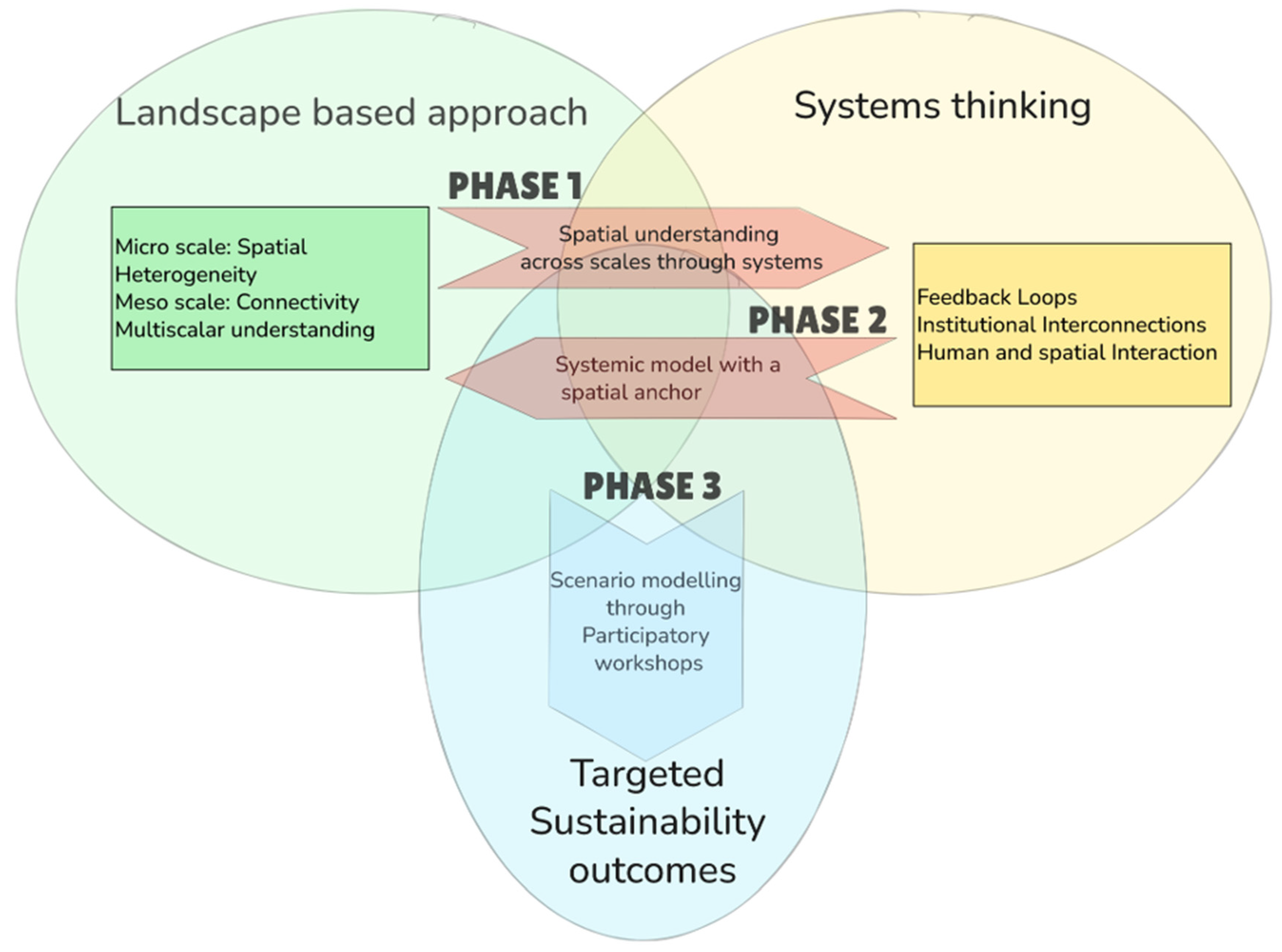
By proposing a unified systemic landscape framework (see Figure 8), this research puts forward a structured, cross-tabulated evaluation matrix where spatial configurations and systems dynamics actively engage with each other beyond the plot lines. This multi-scale approach allows UAF initiatives to operate as connected socio-ecological infrastructures, linking site-based interventions to regional ecosystem services and broader sustainability objectives [31,36]. To enable this transition, spatial design must adopt multilevel analytical frameworks that integrate GIS-based mapping and ecological and network analysis [13]. As established by Turner [28], the configuration of landscape patterns fundamentally dictates the ecological processes; therefore, understanding the spatial heterogeneity is critical for managing the functional connectivity of UAF initiatives across scales [35,37].
Within this integrated framework, the LbA lens provides multi-scale geometric and spatial knowledge (patch morphology, path heterogeneities and connectivity metrics) to structurally embed the physical layout into the city. Concurrently, ST translates these physical structures into dynamic processing environments, tracking metabolic and circular flows. The integration highlights a pathway to help manipulate sustainability outcomes (SOs) through continuous loops and iteration, ensuring that physical spatial patterns and systemic inputs directly and explicitly co-produce spatial justice, ecological health and long-term economic viability.
To transition the proposed framework from theoretical shelf into an actionable planning tool, research implementation will proceed in a structured and a phased manner. (see Figure 8).
-
Phase 1: Gather empirical data: Mobilise tools that will help gather spatial data such as GIS and remote sensing, providing the physical anchor to support the theory.
-
Phase 2: Gather metabolic flow data: Track non-spatial process dynamics through hands-on data collection, leveraging on-site devices and governance tracking tools.
-
Phase 3: Embed empirical data into the metabolic flow: Run multi-scenario simulations through participation action research to quantify how modifying physical landscape will impact system dynamics, and vice versa.
This integrated framework highlights a scalable approach to municipal decision making. By systematically mapping resource systems onto the physical landscape, designers and policymakers can visualise and quantify systemic efficiencies and deficiencies. This can ensure that UAF is no longer treated as an isolated green project but a functional component of broader urban metabolism [32]. (See Figure 8).
The scarcity of literature in this study does expose a fundamental incompatibility that exists between these two disciplines in the built environment. However, a critical examination of the literature also reveals a pattern of silo understanding, of confining UAF research into systemic thinking or spatial thinking. This divide evidently distorts how sustainability outcomes are framed. However, with deepening mistrust in governance, policies and sustainability, we must examine if we are forcing these systems to stay apart. Ultimately, the proposed systemic landscape framework is not a definitive solution, but an explorative roadmap for the future. The research highlights that an urban food system cannot exist without a green space and a thriving urban farm cannot exist without a robust mechanism.

4.5. Limitations

While this SLR was conducted in strict alignment with PRISMA 2020, it has several methodological limitations. Firstly, the literature had to be restricted to three databases: Google Scholar, Web of Science and Scopus, potentially overlooking literature in other areas. Furthermore, exclusion of non-English papers may result in under-representation of the global research contexts. Secondly, the initial screening, identification and coding were primarily carried out by the first author, in regular consultation with the research team. To avoid selection bias and interpretive bias, the co-authors were regularly consulted and the data were cross-examined at all stages. Thirdly, the structural execution of the Boolean search matrix of the three databases, while expanding the search scope, also reduced the final corpus to only 12 papers. While a stringent search was necessary and indicates a highly nascent research field, it helped avoid generalisation and only chose highly relevant literature.

5. Conclusions

This SLR demonstrates that within this small 12-paper study, integrated cross-disciplinary research where systemic modelling connects with spatial landscape is largely nascent. Despite growing recognition of UAF initiatives, such as nature-based solutions, few studies comprehensively integrate landscape-based and systems thinking in examining these typologies. The proposed dual-lens conceptual systemic landscape framework aims to address this gap. However, further research needs to be done on this framework, by gathering exploratory spatial and systemic data and testing it in participatory workshops. To further advance scholarship in this field, future research should prioritize the following:
(1)
Develop cross-scalar analytical frameworks: Develop analytical models linking site, community, regional, and global dimensions of UAF initiatives mathematically and visually;
(2)
Integrate GIS and system dynamics: Quantify the integration of spatial configurations with socio-ecological systems and resource flows for stronger and long-term viability;
(3)
Align local performance metrics with UN Sustainable Development Goals: Ensure the implementation of standardized sustainability indicators across projects;
(4)
Address governance and equity challenges: Through participatory design and policy innovation, ensure that knowledge sharing continues.
For UAF to be realised and delivered to its full potential, it needs to be treated not as an isolated agricultural activity or a random green infrastructure project [32], but as integral to sustainable urban development. Such focussed research will then yield UAF initiative design guidelines that can influence policy frameworks and create planning tools that can assist urban planners and designers in integrating UAF into cities. This SLR contributes towards a conceptual systemic landscape framework (LbA + systems thinking = sustainability outcomes) for evaluating UAF initiatives. In a dynamically urbanizing, resource-hungry world, we risk UAF initiatives becoming ‘endangered green typologies’. While requiring further testing through empirical case studies and real-time data, the proposed systemic landscape framework may serve as a structural foundation for future decision-making for municipalities and urban designers. Ultimately, embedding landscape-based systems thinking into UAF planning can enable cities to move beyond plot-scale interventions and transition towards resilient, regenerative, and socially inclusive urban environments. Future empirical research should validate and refine the conceptual proposition of this framework by applying real-time data from pilot case studies.

Supplementary Materials

The following supporting information can be downloaded at https://www.mdpi.com/article/10.3390/su18115726/s1.

Author Contributions

Conceptualization, P.B., S.N. and N.M.J.D.T.; methodology, P.B.; software, P.B.; validation, P.B. and S.N.; formal analysis, P.B.; investigation, P.B.; resources, P.B.; data curation, P.B.; writing—original draft preparation, P.B.; writing—review and editing, S.N. and N.M.J.D.T.; visualization, P.B.; supervision, S.N. and N.M.J.D.T.; project administration, S.N. All authors have read and agreed to the published version of the manuscript.

Funding

This research received no external funding.

Institutional Review Board Statement

Not applicable.

Informed Consent Statement

Not applicable.

Data Availability Statement

The original contributions presented in this study are included in the article. Further inquiries can be directed to the corresponding author.

Conflicts of Interest

The authors declare no conflicts of interest.

Abbreviations

The following abbreviations are used in this manuscript:
PULProductive Urban Landscapes
UAFUrban Agriculture and Farming
NbSNature-Based Solutions
LbALandscape-Based Approach
STSystems Thinking
SLRSystematic Literature Review
UGIUrban Green Infrastructure
UFSUrban Food Systems
LPLandscape Planning
SESSocial Ecological Systems
GISGeographic Information Systems
SGBMSpatial Group Modelling Building
SOsSustainability Outcomes
EUEuropean Union
SDGsSustainable Development Goals

Appendix A

Appendix A.1. List of Keywords Used in Scholar, Scopus and Web of Science

Search String S1 Productive Green SpacesSearch String S2 Landscape-Based ApproachSearch String S3 Sustainability OutcomesSearch String S4 Spatial AnalysisSearch String S5 Systems Thinking
“Urban Agriculture” OR “Community Garden*” OR “Urban Farm*” OR “Allotment Garden*” OR “Edible Landscape*” OR
“Peri-Urban Agriculture” OR “City Farming” OR “Productive Urban Landscape” OR “Urban green spaces” OR “Productive Urban Green Spaces”
“Landscape-Based Approach” OR “Landscape Planning” OR “Urban Landscape*” OR “Landscape Ecology”“Sustainable Cities” OR “Sustainable Development Goals” OR “SDG” OR “sustainab*” OR “Urban Resilience” OR “Community Resilience” OR “Food Security”“Socio-Spatial” OR “Multi-Scale Analysis” OR “Multi-Level Analysis” OR GIS OR “Geospatial Analysis” OR “Spatial Analysis”“Systemic Approach” OR “Systems Thinking” OR “Socio-Ecological System*” OR “Complex Adaptive System*” OR “Interconnectedness” OR “Holistic Approach”

Appendix A.2. String Searches for Scopus, Scholar and Web of Science

Scopus
(TITLE-ABS-KEY (“Urban Agriculture” OR “Community Garden*” OR “Urban Farm*” OR “Allotment Garden*” OR “Edible Landscape*” OR “Peri-Urban Agriculture” OR “City Farming” OR “Productive Urban Landscape” OR “Urban green spaces” OR “Productive Urban Green Spaces”) AND ALL (“Landscape-Based Approach” OR “Landscape Planning” OR “Urban Landscape*” OR “Landscape Ecology”) AND ALL (“Sustainable Cities” OR “Sustainable Development Goals” OR “SDG” OR “sustainab*” OR “Urban Resilience” OR “Community Resilience” OR “Food Security”) AND ALL (“Socio-Spatial” OR “Multi-Scale Analysis” OR “Multi-Level Analysis” OR GIS OR “Geospatial Analysis” OR “Spatial Analysis”) AND ALL (“Systemic Approach” OR “Systems Thinking” OR “Socio-Ecological System*” OR “Complex Adaptive System*” OR “Interconnectedness” OR “Holistic Approach”))
Scholar
intitle: ((“Urban Agriculture” OR “Urban Farming” OR “Productive Urban Green Spaces” OR “Urban Food System” OR “Community Garden”) AND (“Landscape Approach” OR “Urban Landscape” OR “Landscape Planning” OR “Green Infrastructure”) AND (“Spatial Analysis” OR GIS OR “Geospatial Analysis” OR “Multi-Scale Analysis” OR “Socio-Spatial”) AND (sustainability OR SDG OR “Urban Resilience” OR “Food Security” OR “Ecosystem Services” OR “Multifaceted Benefits”) AND (“Systemic Approach” OR “Systems Thinking” OR “Socio-Ecological System” OR “Complex Adaptive System” OR “Holistic Approach”))
Web of Science
“Urban Agriculture” OR “Community Garden*” OR “Urban Farm*” OR “Allotment Garden*” OR “Edible Landscape*” OR “Peri-Urban Agriculture” OR “City Farming” OR “Productive Urban Landscape” OR “Urban green spaces” OR “Productive Urban Green Spaces” (All Fields) and “Landscape-Based Approach” OR “Landscape Planning” OR “Urban Landscape*” OR “Landscape Ecology” OR “Spatial Analysis” OR GIS OR “Geospatial Analysis” OR “Remote Sensing” OR “Multi-Scale Analysis” OR “Multi-Level Analysis” OR “Landscape Metric*” OR “Socio-Spatial” OR “Spatial Pattern*” OR “Connectivity Analysis” OR “Network Analysis” OR “Accessibility Analysis” OR “Spatial Planning” OR “Urban Design” (All Fields) and “Systemic Approach” OR “Systems Thinking” OR “Socio-Ecological System*” OR “Complex Adaptive System*” OR “Interconnectedness” OR “Holistic Approach” (All Fields)

Appendix A.3. Included Peer-Reviewed Studies, Total of 12

Ref No.AuthorTitleLocationMain ThemesInclusion RationaleScale
[11]Derek, M., Woźniak, E., Kulczyk, S. and Grzyb, T., 2025Neighbourhood havens or city hotspots? Social-ecological typology of public urban green spacesPolandUrban green space use; spatial typology; accessibility, user behaviour Integrates spatial accessibility and connectivity indicators with social data such as user behaviour to develop a social-ecological typology framework of public green spacesCity/Neighbourhood
[12]Lin, Y., An, W., Gan, M., Shahtahmassebi, A., Ye, Z., Huang, L., Zhu, C., Huang, L., Zhang, J. and Wang, K., 2021Spatial grain effects of urban green space cover maps on assessing habitat fragmentation and connectivityChinaGreen space fragmentation; ecological connectivity, spatial grain effect, spatial pattern analysisModels landscape fragmentation and ecological connectivity using spatial analysis (raster), integrating landscape metrics with graph-based connectivity indicesCity
[14]Brinkley, C., Manser, G.M. and Pesci, S., 2021Growing pains in local food systems: A longitudinal social network analysis on local food marketing in Baltimore County, Maryland and Chester County, PennsylvaniaUSALocal food system instability; governance failure, social network analysisTracks the evolving social and market network systems by identifying actors, analysing relationships, highlighting the structural vulnerabilities in local food supply chainsRegional
[15]Jensen, P.D. and Orfila, C., 2021Mapping the production–consumption gap of an urban food system: An empirical case study of food security and resilienceUKFood flows; production–consumption mismatchesMeasures urban food system resilience and circularity and production–consumption gap by identifying supply demand mismatches in the city food systemCity/ Region
[16]Ling, T.Y., Wu, G.Z. and Lin, J.S., 2018Landscape dimension in the built environment: The spatial operative of an integrated micro agriculture unitTaiwanMicro-agriculture in urban space; design integrationDesigns and evaluates spatially integrated micro-agriculture unit. Framing though spatial, ecological, social and economic dimensions as a part of edible and urban green strategiesSite
[17]Rich, K.M., Rich, M. and Dizyee, K., 2018Participatory systems approaches for urban and peri-urban agriculture planning: The role of system dynamics and spatial group model buildingNew ZealandParticipatory planning; urban–rural transformationSpatial transitions across urban and peri-urban food systems. Uses spatial group modelling to trace land-use, population and market access dynamics.City and Peri-urban
[18]Toboso-Chavero, S., Montealegre, A.L., García-Pérez, S., Sierra-Pérez, J., Muñoz-Liesa, J., Durany, X.G., Villalba, G. and Madrid-López, C., 2023The potential of local food, energy, and water production systems on urban rooftops considering consumption patterns and urban morphologySpainFEW nexus; rooftop sustainability; urban form, urban morphology, geospatial and metabolism-based scenario assessmentModels multi-resource food–energy–water production potential on urban rooftops using spatial and metabolism analysis across different urban morphologiesRegional/ City
[19]Tapia, C., Randall, L., Wang, S. and Borges, L.A., 2021Monitoring the contribution of urban agriculture to urban sustainability: An indicator-based frameworkDenmarkEnvironmental resilience and resource efficiency, Food security and income generation, impact monitoring, indicator-based evaluation frameworkEstablishes a comprehensive indicator-based monitoring framework for assessing the environmental, social, economic, and spatial/planning contributions of urban agriculture to urban sustainabilityCity
[21]Gottero, E., Cassatella, C. and Larcher, F., 2021Planning peri-urban open spaces: Methods and tools for interpretation and classificationItalyPeri-urban landscape classification; spatial transition zonesClassifies multifunctional peri-urban landscapes through spatial and functional landscape units to support the interpretation of urban–rural landscape transformationsSite
[23]Bopp, E., Houot, H., Vuidel, G., Pujol, S., Bern ard, N., Comby, E., Mauny, F. and Foltête, J.C., 2024 Is compensation a myth? Modelling the use of public and private urban green spaces in relation to the geographical contextFrancePeri-urban multifunctionality; governance typology, GIS-based spatial metrics, visibility modelling, noise exposure modellingModels show accessibility, residential context and visual access shape the use of public/private green spacesCity
[24]Hong, W., Yang, S., Guo, R., Li, Y., Jiang, L. and Li, X., 2025Suitable scale structures for urban multi-functions: An integrative approach grounded in socio-ecological system analysisChinaSES framework; land-use prioritization; Shenzhen case, multi-scale spatial data, grid evaluation, matrix-based mappingIntegrates spatial suitability assessment and socio-ecological systems analysis to classify and optimize the functional layout of urban agricultural spacesRegional/ City
[25]Zhou, T., Vermaat, J.E. and Ke, X., 2019Variability of agroecosystems and landscape service provision on the urban–rural fringe of Wuhan, Central ChinaChinaLandscape services; peri-urban agriculture; spatial bundlesMaps, analyses and evaluates landscape services across urban–rural gradientPeri-urban

Appendix A.4. Deductive and Inductive Codes

Pre-Established SilosDeductive Codes:
Top Down
Inductive Codes: Bottom Up
Urban green infrastructureGreen
typologies
public urban green spaces; connected green spaces; green corridors; ecosystem services; urban matrix; patches and corridors; urban agriculture; community gardening; rooftop agriculture; edible green walls; urban gardens; open space; local food systems; urban farms; community gardens; farms; farmers’ markets; peri-urban agriculture; farmland preservation
Landscape-orientedSpatial
integration; multi-scale analysis
urban–rural gradient; spatial pattern; landscape service provision; landscape service bundles; spatial variability; ecological-urban-agricultural space; spatial layout; functional layout; land patches; suitable scale structure; spatial pattern; urban morphology; spatial configurations; garden as an element of urban structure; intra-urban/peri-urban spaces; accessibility
Social outcome-orientedSocio-
ecological
benefits
food provision; recreation; air pollution mitigation; storm water runoff reduction; farmers’ livelihoods; urban residents’ demands; food security; social well-being; economic development; human activity; population density; human settlement patterns; human–nature connection; social well-being; community socialization; food security; health and well-being; learning by doing; social interaction
Planning-orientedSpatial
planning
landscape planning; local land-use planning; modern urban agricultural system; strategic spatial planning; multiple uses of farmland; land suitability assessment; functional zoning; priority matrix-based mapping; urban spatial planning; optimization strategies
System-orientedSystemic flows;
metabolic loops
socio-ecological system; coupled social-ecological system; matrix analysis; multi-objective trade-offs; ecosystem service function; compensation hypothesis; conditional compensation; holistic approach; PLS path modelling; latent variables; residential geographical context

Appendix A.5. Conceptual Lenses, Sustainability Outcomes and Methodologies Across 12 Papers

Reference No.Landscape-Based ApproachSystemic ThinkingSustainability OutcomesMethodology
[11]Typology of urban green spaces. Captures spatial heterogeneity and
integrates spatial variable with human behavioural data.
Limited consideration of social–ecological interactions.Evaluates equity and accessibility in green space provision. Aligned with SDG 11 (Sustainable Cities and Communities).Spatial approaches—GIS mapping and socio-demographic analysis.
[12]Landscape metrics for fragmentation and connectivity and green space access.Limited systemic dimension.Highlights resilience via ecological connectivity.Spatial analysis—remote sensing, MSPA and landscape metrics.
[14]Limited landscape framing.Analyses social networks and governance in food systems.Explores resilience of local food marketing over time.Systems modelling—social-network analysis.
[15]Weak landscape framing.Material flow and food system analysis.Assesses food security and resilience through mismatch mapping.Systems modelling—material flow analysis.
[16]Focus on micro-agriculture as part of built landscape design. Limited landscape approach.Embeds agriculture in systemic urban form through design thinking and systems thinking.Supports resilience through local resource integration.Spatial analysis—spatial design analysis.
[17]Focus on stakeholder participation towards landscape approach.Uses system dynamics and participatory modelling.Aims for resilient planning outcomes for UA.Systems modelling—systems dynamics and participatory framework.
[18]Focus on rooftops rather than landscape units. Limited landscape approachExplicit FEW nexus modelling.Measures sustainability via self-sufficiency scenarios.Systems modelling—FEW nexus modelling.
[19]Weak landscape framing.Framework integrates UA into wider urban systems.Provides indicator-based sustainability assessment.Participatory and indicator-based assessment.
[21]Landscape typologies and functional classifications.Governance considered but not systemic.Identifies sustainability trade-offs in multifunctional landscapes.Spatial analysis—spatial typologies.
[23]Spatial modelling of public and private green spaces.Systemic framing of household behaviour, urban morphology and policies.Assesses social demand and substitution effects in green use.Mixed methodology of spatial and systems modelling.
[24]Landscape suitability and scale structures.SES-based integrative modelling.Identifies trade-offs for multifunctional sustainability.Systems modelling—SES modelling, multi-scalar spatial analysis.
[25]Landscape service bundles across the urban–rural gradient.Links ecological drivers with social outcomes.Evaluates multifunctional sustainability trade-offs.Mixed-method spatial analysis combining quantitative surveys with GIS and regression modelling.

References

  1. Van Broekhoven, S.; Vernay, A.L. Integrating functions for a sustainable urban system: A review of multifunctional land use and circular urban metabolism. Sustainability 2018, 10, 1875. [Google Scholar] [CrossRef]
  2. Pothukuchi, K.; Kaufman, J.L. The Food System: A Stranger to the Planning Field. In Planning for Equitable Urban Agriculture in the United States; Raja, S., Caton Campbell, M., Judelsohn, A., Born, B., Morales, A., Eds.; Springer: Cham, Switzerland, 2024; pp. 31–48. [Google Scholar] [CrossRef]
  3. Kabisch, N.; Frantzeskaki, N.; Hansen, R. Principles for urban nature-based solutions. Ambio 2022, 51, 1388–1401. [Google Scholar] [CrossRef] [PubMed]
  4. UN-HABITAT. World Cities Report 2024: Cities and Climate Action; Stylus Publishing, LLC.: Sterling, VA, USA, 2024. [Google Scholar]
  5. Viljoen, A. (Ed.) CPULs: Continuous Productive Urban Landscapes: Designing Urban Agriculture for Sustainable Cities; Architectural Press: Oxford, UK, 2005. [Google Scholar]
  6. Barthel, S.; Isendahl, C. Urban gardens, agriculture, and water management: Sources of resilience for long-term food security in cities. Ecol. Econ. 2013, 86, 224–234. [Google Scholar] [CrossRef]
  7. Thwaites, H.J.; Hume, I.V.; Cavagnaro, T.R. The case for urban agriculture: Opportunities for sustainable development. Urban For. Urban Green. 2025, 110, 128861. [Google Scholar] [CrossRef]
  8. Forman, R.T. Land Mosaics: The Ecology of Landscapes and Regions; Cambridge University Press: Cambridge, UK, 1995. [Google Scholar]
  9. Arnold, R.D.; Wade, J.P. A definition of systems thinking: A systems approach. Procedia Comput. Sci. 2025, 44, 669–678. [Google Scholar] [CrossRef]
  10. Page, M.J.; McKenzie, J.E.; Bossuyt, P.M.; Boutron, I.; Hoffmann, T.C.; Mulrow, C.D.; Shamseer, L.; Tetzlaff, J.M.; Akl, E.A.; Brennan, S.E.; et al. The PRISMA 2020 statement: An updated guideline for reporting systematic reviews. BMJ 2021, 372, n71. Available online: https://www.bmj.com/lookup/doi/10.1136/bmj.n71 (accessed on 10 June 2025). [CrossRef] [PubMed]
  11. Derek, M.; Woźniak, E.; Kulczyk, S.; Grzyb, T. Neighbourhood havens or city hotspots? Social-ecological typology of public urban green spaces. Cities 2025, 162, 105999. [Google Scholar] [CrossRef]
  12. Lin, Y.; An, W.; Gan, M.; Shahtahmassebi, A.; Ye, Z.; Huang, L.; Zhu, C.; Huang, L.; Zhang, J.; Wang, K. Spatial grain effects of urban green space cover maps on assessing habitat fragmentation and connectivity. Land 2021, 10, 1065. [Google Scholar] [CrossRef]
  13. Nijhuis, S. Landscape-Based Urbanism: Cultivating Urban Landscapes Through Design. In Design for Regenerative Cities and Landscapes; Contemporary Urban Design Thinking; Roggema, R., Ed.; Springer: Cham, Switzerland, 2022. [Google Scholar] [CrossRef]
  14. Brinkley, C.; Manser, G.M.; Pesci, S. Growing pains in local food systems: A longitudinal social network analysis on local food marketing in Baltimore County, Maryland and Chester County, Pennsylvania. Agric. Hum. Values 2021, 38, 911–927. [Google Scholar] [CrossRef]
  15. Jensen, P.D.; Orfila, C. Mapping the production-consumption gap of an urban food system: An empirical case study of food security and resilience. Food Secur. 2021, 13, 551–570. [Google Scholar] [CrossRef]
  16. Ling, T.Y.; Wu, G.Z.; Lin, J.S. Landscape dimension in the built environment: The spatial operative of an integrated micro agriculture unit. J. Environ. Manag. 2018, 226, 145–155. [Google Scholar] [CrossRef] [PubMed]
  17. Rich, K.M.; Rich, M.; Dizyee, K. Participatory systems approaches for urban and peri-urban agriculture planning: The role of system dynamics and spatial group model building. Agric. Syst. 2018, 160, 110–123. [Google Scholar] [CrossRef]
  18. Toboso-Chavero, S.; Montealegre, A.L.; García-Pérez, S.; Sierra-Pérez, J.; Muñoz-Liesa, J.; Gabarrell Durany, X.; Villalba, G.; Madrid-López, C. The potential of local food, energy, and water production systems on urban rooftops considering consumption patterns and urban morphology. Sustain. Cities Soc. 2023, 95, 104599. [Google Scholar] [CrossRef]
  19. Tapia, C.; Randall, L.; Wang, S.; Aguiar Borges, L. Monitoring the contribution of urban agriculture to urban sustainability: An indicator-based framework. Sustain. Cities Soc. 2021, 74, 103130. [Google Scholar] [CrossRef]
  20. Tillie, N. Synergetic urban landscape planning in Rotterdam: Liveable low-carbon cities. In A + BE- Architecture and the Built Environment (24); Delft University of Technology: Delft, The Netherlands, 2018; pp. 1–284. [Google Scholar] [CrossRef]
  21. Gottero, E.; Cassatella, C.; Larcher, F. Planning peri-urban open spaces: Methods and tools for interpretation and classification. Land 2021, 10, 802. [Google Scholar] [CrossRef]
  22. Nijhuis, S.; de Vries, J. Design as research in landscape architecture. Landsc. J. 2019, 38, 87–103. [Google Scholar] [CrossRef]
  23. Bopp, E.; Houot, H.; Vuidel, G.; Pujol, S.; Bernard, N.; Comby, E.; Mauny, F.; Foltête, J.C. Is compensation a myth? Modelling the use of public and private urban green spaces in relation to the geographical context. Urban For. Urban Green. 2024, 101, 128552. [Google Scholar] [CrossRef]
  24. Hong, W.; Yang, S.; Guo, R.; Li, Y.; Jiang, L.; Li, X. Suitable scale structures for urban multi-functions: An integrative approach grounded in socio-ecological system analysis. Ecol. Process. 2025, 14, 19. [Google Scholar] [CrossRef]
  25. Zhou, T.; Vermaat, J.E.; Ke, X. Variability of agroecosystems and landscape service provision on the urban–rural fringe of Wuhan, Central China. Urban Ecosyst. 2019, 22, 1207–1214. [Google Scholar] [CrossRef]
  26. Folke, C.; Carpenter, S.R.; Walker, B.; Scheffer, M.; Chapin, T.; Rockström, J. Resilience thinking: Integrating resilience, adaptability and transformability. Ecol. Soc. 2010, 15, 20. [Google Scholar] [CrossRef]
  27. Meerow, S. Urban Resilience. In City Reader; Routledge: New York, NY, USA, 2025; pp. 550–561. [Google Scholar]
  28. Turner, M.G. Landscape ecology: The effect of pattern on process. Annu. Rev. Ecol. Syst. 1989, 20, 171–197. [Google Scholar] [CrossRef]
  29. Ahern, J. Theories, methods and strategies for sustainable landscape planning. In From Landscape Research to Landscape Planning. Aspects of Integration, Education and Application; Springer: Berlin/Heidelberg, Germany, 2006; pp. 119–131. [Google Scholar]
  30. Frantzeskaki, N.; Wijsman, K.; Kabisch, N.; McPhearson, T. Inter-and transdisciplinary knowledge is critical for nature-based solutions to contribute to just urban transformations. Proc. Natl. Acad. Sci. USA 2025, 122, e2315911121. [Google Scholar] [CrossRef] [PubMed]
  31. Nasr, J.; Potteiger, M. Spaces, Systems and Infrastructures: From Founding Visions to Emerging Approaches for the Productive Urban Landscape. Land 2023, 12, 410. [Google Scholar] [CrossRef]
  32. Roggema, R. Sustainable Urban Agriculture and Food Planning; Routledge: New York, NY, USA, 2016. [Google Scholar]
  33. Meerow, S.; Newell, J.P.; Stults, M. Defining urban resilience: A review. Landsc. Urban Plan. 2016, 147, 38–49. [Google Scholar] [CrossRef]
  34. Soja, E.W. Seeking Spatial Justice; University of Minnesota Press: Minneapolis, MN, USA, 2013; Volume 16. [Google Scholar]
  35. Bohn, K.; Chu, D. Food-productive green infrastructure: Enabling agroecological transitions from an urban design perspective. Urban Agric. Reg. Food Syst. 2021, 6, e20017. [Google Scholar] [CrossRef]
  36. Smit, J.; Nasr, J.; Ratta, A. Urban Agriculture: Food, Jobs and Sustainable Cities; The Urban Agriculture Network, Inc.: Washington, DC, USA, 1996. [Google Scholar]
  37. Cumming, G.S.; Cumming, D.H.; Redman, C.L. Scale mismatches in social-ecological systems: Causes, consequences, and solutions. Ecol. Soc. 2006, 11, 14. [Google Scholar] [CrossRef]
Figure 1. Research flow diagram; figure by author.
Sustainability 18 05726 g001
Figure 2. Preliminary search visualisation using VOSviewer with overlapping clusters.
Sustainability 18 05726 g002
Figure 3. The PRISMA 2020 framework followed for the systematic literature review.
Sustainability 18 05726 g003
Figure 4. Chronographic visualisation of the selected studies.
Sustainability 18 05726 g004
Figure 5. Visualisation of selected studies as per the continent they are based in.
Sustainability 18 05726 g005
Figure 6. VOSviewer exploration and visualization of 12 selected papers.
Sustainability 18 05726 g006
Figure 7. Coding process, from deductive codes to conceptual lenses.
Sustainability 18 05726 g007
Figure 8. Emerging systemic landscape framework, made by author.
Sustainability 18 05726 g008
Table 1. Inclusion and exclusion criteria.
Exclusion CriteriaInclusion Criteria
LanguageNot in English English language only
Temporal ScopePublications prior to 2015 Fully peer-reviewed articles published between 2015 and 2025
Document TypePrevious literature reviews, early access materials, irrelevant book chapters, theses and conference proceedings, preprints, inaccessible contentOriginal, peer-reviewed academic journal articles
Thematic FocusGeneral and recreational parks, urban forestry, rural farmsFocus on urban agriculture and farming (UAF)
Methodological RigourSite-specific urban design Direct implementation of spatial analysis, GIS, systems modelling or participatory methods
Thematic and Conceptual lensesAbsence of landscape approach or systems thinkingExplicit presence of systems thinking and landscape-based approach
Table 3. Defining criteria and evaluation indicators of the conceptual lenses.
Core Defining CriteriaMeasurable Evaluation IndicatorsEmpirical Evidence from 12 PapersIdentified GapsSustainability Outcome Matrix
Landscape-Based Approach (LbA)
Spatial HeterogeneityPatch morphology (size, edge, shape index)Fully aligns with spatial analysis and tools such as GIS and landscape metrics
[11,12,16,25]
None. Strongly established within this corpusEnhanced ecological performance: Dictates local microclimate
Structural ConnectivityMatrix connectivity corridors & urban–rural gradient barriersPartially aligns with spatially anchored integration [21,23]Fragmented. Limited coupling between physical connectivity and socio-economic layersSocial justice and value: Public accessibility, spatial inequality
Multi-Scale AnalysisConcurrent cross-scale modelling (site to region integration)No papers in this cross-scalar integrationCritical scalar gap: Spatial evaluation remains scale-boundUndermined long-term resilience: Single-scale plots remain vulnerable to urban land development pressures
Systems Thinking (ST)
InterdependenciesNon-linear cause-and-effect loops (system dynamics graphs)Fully aligns with systemic flow
[17]
Spatial isolation gap: Feedback dynamics are rarely given explicit geographical positioningSocial justice and value: Public accessibility, spatial inequality
Feedback MechanicsQuantitative resource flow metrics (MFA, FEW nexus balance data)Partial alignment material flow analysis [15,18]Spatial isolation gap: Advanced metabolic calculations lack the spatial anchor rendering them abstract to spatial designersEnhanced ecological performance: Dictates local microclimate
Metabolic Flow LogicSocio-ecological network interactions (actor centrality markers)No papers evaluated how local actor network typologies adapt to physical morphological changes over time. Spatial isolation gap: Advanced metabolic calculations lack the spatial anchor rendering them abstract to spatial designersUndermined long-term resilience: Unable to prove long-term metabolic self-sufficiency or worth to the locality
Disclaimer/Publisher’s Note: The statements, opinions and data contained in all publications are solely those of the individual author(s) and contributor(s) and not of MDPI and/or the editor(s). MDPI and/or the editor(s) disclaim responsibility for any injury to people or property resulting from any ideas, methods, instructions or products referred to in the content.