Systematic Review

Towards an Understanding of Sustainable Consumption Factors in Crisis Context: A Systematic Literature Review


by
Renata Korsakiene
,
Neringa Vilkaite-Vaitone
* and
Laima Jeseviciute-Ufartiene
Faculty of Business Management, Vilnius Gediminas Technical University (VILNIUS TECH), Sauletekio av. 11, LT-10223 Vilnius, Lithuania
*
Author to whom correspondence should be addressed.
Sustainability 2026, 18(11), 5721; https://doi.org/10.3390/su18115721
Submission received: 16 April 2026 / Revised: 20 May 2026 / Accepted: 2 June 2026 / Published: 4 June 2026

Abstract

This study systematically reviews the existing literature to examine which factors determine sustainable consumption in the context of crises triggered by external shocks and how these factors evolve across the reaction, coping, and adaptation stages. Through a synthesis of 34 prior research articles from Clarivate Analytics Web of Science and Scopus databases, the study evaluates theoretical frameworks, research contexts, and methods in sustainable consumption research during crises. The use of multilevel theoretical frameworks enabled the identification, analysis, and categorization of macro-, meso-, and individual-level factors shaping sustainable consumption behavior across crisis phases. The findings reveal that research on sustainable consumption behaviour in crisis contexts remains limited and fragmented, with a strong dominance of individual-level determinants and relatively little attention to structural and contextual influences. The results further demonstrate that sustainable consumption is dynamic, shifting from emotionally driven responses in the reaction phase to more cognitive and evaluative processes in the coping phase, and eventually stabilizing into habitual and socially embedded behaviors in the adaptation phase. Building on these insights, the study proposes a phase-based conceptual framework that integrates key factors and their roles across crisis stages. The study shows that consumers’ attitudes and behaviors can be better understood through the lens of the crisis journey and introduces a crisis-based customer journey map for sustainable consumption.

1. Introduction

Greenhouse gas levels continue to rise, driving ongoing temperature increases and worsening global climate instability [1]. These environmental disruptions have shifted sustainability from a minor issue to a key strategic and societal priority. While firms, governments, and non-profit organizations are increasingly asked to tackle climate change, lasting sustainable transformation ultimately relies on changes in consumption patterns. Sustainable consumption is generally defined as using resources to meet current needs without impairing future generations’ ability to do the same [2] and captures consumers’ sustainability-oriented attitudes and behaviors [3]. As such, it serves as the foundation for large-scale sustainability transitions.
At the individual level, sustainable consumption reflects awareness of the long-term environmental and social consequences of one’s actions [4] and a preference for sufficiency over excess [5]. It manifests in behaviors such as recycling, energy conservation, responsible mobility choices, and purchasing environmentally or socially responsible products. However, despite growing public concern for sustainability, an enduring gap persists between pro-environmental attitudes and actual behaviors. Understanding the conditions under which sustainable consumption is strengthened, therefore, remains a theoretical and practical challenge.
Consumption patterns are typically habitual and embedded in stable institutional and social contexts. Notably, routines, norms, and infrastructures reinforce continuity of these patterns over time. However, when contextual stability is disrupted, habits may be interrupted and previously taken-for-granted priorities reexamined [6]. Crises, defined as complex, multilevel disruptions that destabilize societal structures and norms [7], represent particularly consequential interruptions. Whether triggered by natural disasters, public health emergencies, economic breakdowns, or geopolitical conflict, crises introduce uncertainty, scarcity, and heightened threat perceptions. Such disruptions provide an exceptional context for examining whether sustainable consumption reflects deeply internalized values or contingent, context-sensitive behaviors.
Though the impact of the crisis is well understood, the extant research on sustainable consumption during crisis offers conflicting insights. On the one hand, crisis conditions undermine sustainable consumption. Heightened perceptions of threat may narrow individuals’ temporal horizons and shift attention toward immediate self-preservation [8]. Therefore, resource insecurity can prompt hoarding behaviors, as documented during earthquakes and typhoons [9], and similar dynamics have been observed during global pandemics. Under such conditions, consumers may exhibit reduced willingness to pay for sustainable products [10] and prioritize short-term economic considerations. From this perspective, crises activate defensive cognition and short-termism, crowding out sustainability-oriented choices. On the other hand, crises may trigger more sustainable consumption. The periods of disruption can prompt reflection on lifestyles, materialism, and societal vulnerabilities. Empirical studies conducted during global crises report increases in environmental awareness, shifts toward local and mindful consumption, and reduced emphasis on material acquisition [11,12,13,14]. From this perspective, crises function as mechanisms that destabilize unsustainable routines and create windows for individual value reorientation and behavioral change. These divergent findings reveal a fragmented literature lacking theoretical integration. Existing studies vary widely in their conceptualizations of crisis, operationalizations of sustainable consumption, temporal scopes, and contextual settings.
Notably, earlier literature reviews have attempted to advance this research field. For instance, Kareem et al. [15] highlighted key tensions in addressing the gap between sustainability and crisis readiness in sustainable supply chain management, while Survilaite et al. [16] conceptualized consumer resilience pathways during crises. Similarly, Vargas-Merino et al. [17] consolidated the literature by developing the concept of the sustainable consumer, whereas Nichifor et al. [18] provided a broad overview of the drivers, barriers, technological innovations, and corporate strategies shaping sustainable food consumption. Other study [19] has examined sustainable consumption and marketing from a marketing perspective, but without explicitly focusing on crisis contexts. Although these studies offer valuable insights and future research avenues, they do not clarify how multilevel frameworks operate across crises. In particular, none of the studies so far has been devoted to the interaction among macro-, meso-, and individual-level factors shaping sustainable consumption during crises.
Aiming to fill the above-presented gaps, the study seeks to answer the following research questions:
  • RQ1: What theoretical frameworks, research contexts, and methods have been employed in sustainable consumption research during crises?
  • RQ2: What are the independent factors, mediators, and moderators that influence sustainable consumption during the reaction, coping, and adaptation stages of crises?
  • RQ3: What are the future research directions within this domain?
This study adopts a systematic literature review through which we aim to provide a foundation for future empirical research and managerial action that recognizes the transformative potential of sustainable consumption during times of crisis. We demonstrate that sustainable consumption is shaped by the interaction of macro-, meso-, and individual-level factors across different stages of crises. In doing so, we propose multilevel theoretical frameworks that explicate how structural shocks translate into behavioral outcomes through cross-level psychological and institutional mechanisms.
This study makes three contributions to research on sustainable consumption in crisis contexts. First, we synthesize the dominant theoretical frameworks, empirical contexts, and methodological approaches used in sustainable consumption research, highlighting their applicability and advancing a future research agenda. Second, we develop dynamic, multilevel models that identify key drivers, mediators, and moderators shaping sustainable consumption across reaction, coping, and adaptation stages of crises, thereby providing a foundation for future research. Finally, based on identified gaps, we outline a future research agenda that advances theoretical integration, longitudinal inquiry, and cross-level perspectives in this domain.

2. Theoretical Background

2.1. Sustainable Consumption as a Context-Dependent Phenomenon

The studies on sustainable consumption have expanded significantly over the last decade, particularly after 2020 [15], indicating the significance of the research across different fields. Systematic reviews demonstrate the continuous evolution of the sustainable consumption concept, shaped by diverse perspectives, progressively converging toward an integrated understanding that combines environmental stewardship, quality of life, and intergenerational responsibility [5]. However, the literature emphasizes that sustainable consumption should be investigated not only as the outcome of individual environmental attitudes or consumer ethical preferences, but also as a context-dependent phenomenon shaped by a country’s structural, socioeconomic, cultural, and market conditions [20].
Notably, individuals’ sustainable consumption behaviors are influenced by multiple contextual factors that interact with their motivations. Thus, key determinants, including regulatory frameworks, technological infrastructure, social influence, and economic conditions that shape consumer behavior toward sustainable products and services, play a significant role. Accordingly, we can assume that sustainability-oriented behaviors are embedded in broader social and institutional environments, which can either facilitate or constrain consumers’ ability to translate pro-environmental attitudes into actual behavior.
From an institutional perspective, policy frameworks and governance mechanisms play a critical role in shaping sustainable consumption patterns. For instance, policy interventions that subtly guide consumer behavior, such as nudges, can effectively promote sustainable consumption [21]. Meanwhile, regulatory instruments such as environmental standards, eco-labels, and waste management policies influence the availability and visibility of sustainable alternatives. In contexts with supportive institutional structures, consumers are more likely to adopt environmentally responsible behaviors due to greater access to sustainable products and services. Differences in income levels, economic development, and access to resources remain the main factors [22] influencing consumers’ priorities when choosing sustainability attributes. For example, studies of sustainable consumer behavior in emerging markets demonstrate that economic constraints often impede both attitudes and purchase intentions toward sustainable products [23]. Therefore, sustainable consumption patterns vary significantly across regions with different economic conditions. When sustainability is perceived as a social norm, consumers are more likely to engage in sustainable purchasing [20]. Furthermore, in some cultures, there is a stronger emphasis on environmental responsibility, which can drive sustainable consumption. In this sense, sustainable consumption emerges through collective processes in which individual behavior is embedded in broader cultural and social dynamics. Finally, adequate infrastructure for support of sustainable practices, such as recycling facilities or services, is essential [21], and a lack of such infrastructure can create barriers to sustainable behavior.
However, these contextual factors should not be viewed as stable. During periods of crisis, institutional arrangements, economic priorities, social norms, and market infrastructures may be rapidly disrupted or reshaped. As a result, crises can affect the conditions that support sustainable consumption and sustainability-oriented behaviors of consumers. This highlights the need to examine sustainable consumption not only as a context-dependent phenomenon but also as a dynamic process that evolves under changing external conditions.

2.2. Crisis Context as Boundary Conditions for Sustainable Consumption

The studies emphasize that crises, understood as complex disruptions affecting societal structures, institutional systems, and social norms, have become a persistent feature of the global environment [7]. Crises disrupt established routines and force consumers to reassess priorities and everyday consumption practices. In this sense, crises create exceptional contexts in which previously stable consumption patterns may weaken, transform, or be replaced by new forms of behavior.
The literature identifies several major types of crises that influence consumption patterns in different ways. Financial and economic crises primarily affect consumers through declining income, unemployment, inflation, and reduced purchasing power. Under such conditions, consumers tend to prioritize affordability and essential needs, often reducing expenditures on sustainability-oriented products and services [21,22]. Health-related crises, such as pandemics, generate immediate disruptions through mobility restrictions, fear, and uncertainty. The COVID-19 pandemic, for example, altered shopping routines, increased household consumption and online purchasing, and disrupted consumption practices associated with travel and mobility [10]. Geopolitical and conflict-related crises, including wars and energy shocks, disrupt supply chains, reduce product availability, and create inflationary pressures that constrain consumers’ ability to maintain sustainable purchasing habits [21,23]. Environmental and climate-related crises may additionally influence consumption through resource scarcity, infrastructure disruptions, and heightened awareness of environmental vulnerability [20].
Notably, different types of crises demonstrate that consumption behavior during periods of disruption should be understood from a dynamic perspective. The responses of consumer to crisis are not uniform over time but evolve as individuals adjust to changing levels of uncertainty, institutional support, and perceived risk. In the initial stages of a crisis, consumption decisions are often driven by emotional reactions, whereas later stages may involve more deliberate coping strategies and the gradual stabilization of new routines. Consequently, the relationship between sustainability values and actual consumption practices may shift considerably throughout the crisis process. This dynamic perspective is particularly important for understanding sustainable consumption, as crises can simultaneously weaken sustainability-oriented behaviors while also creating opportunities for the adoption of potentially more sustainable consumption practices.

2.3. Dynamic Perspective on Sustainable Consumption in Crisis Context

The React–Cope–Adapt (RCA) framework explains how consumer behavior evolves dynamically across different stages of a crisis [24,25]. Importantly, these stages are not defined by specific time intervals but are identified by observable shifts in consumer behavior.
The first stage, react, represents the immediate response phase that typically emerges at the onset of a crisis. The stage is characterized by consumers’ emotional responses, including denial, anxiety, and hoarding behavior [24]. For example, the onset of the COVID-19 shock triggered widespread panic buying and stockpiling of essential goods, with many households purchasing large quantities of staple foods and other long-shelf-life products during the early stages of lockdowns [25]. The react stage is usually associated with the early shock period, when information is limited and institutional responses are still emerging. The second stage, cope, reflects the transitional adjustment period during which consumers begin to manage uncertainty, leading to observable behavioral adjustments [24]. As the immediate emotional shock weakens, consumers gradually develop coping mechanisms that allow them to restore functional routines. During this phase, consumers seek to maintain and strengthen social ties, which help reduce uncertainty and facilitate coping with perceived threats and fears while addressing both individual and collective challenges [26]. Therefore, following the initial period of hoarding, consumers demonstrated greater awareness of food waste and adopted more careful food resource management practices [27]. The cope stage generally corresponds to the medium-term crisis period, when consumers begin to develop practical responses to ongoing disruptions. The final stage, adapt, reflects the longer-term period during which a new consumption equilibrium, or “new normal,” is established after the crisis [24]. At this stage, consumers increasingly accept the changed environment and integrate new practices into everyday life. For instance, as the crisis progressed, households implemented longer-term adjustments in their shopping routines, including an increased reliance on online grocery shopping and home delivery services [28]. The adapt stage is therefore associated with longer-term post-crisis adjustment, during which temporary coping behaviors may evolve into durable consumption patterns.
The RCA framework provides dynamic perspective because it recognizes that the influence of contextual factors changes across stages of crisis. The significance of institutional support, economic conditions, social norms, technological infrastructures and market environments varies depending on the psychological mechanisms and behavioral priorities characterizing each stage. Therefore, multi-level perspective complements the RCA framework by explaining how the influence of these factors evolves during crisis development. More specifically, institutional and policy factors may become particularly important during the react stage, when consumers depend heavily on governmental communication, market regulation, and supply system stability. During the cope stage, social and cultural factors gain significance as consumers increasingly rely on community support, social trust, and collective coping mechanisms. In the adapt stage, technological infrastructure and long-term institutional adjustments become especially relevant because they facilitate the stabilization of newly adopted consumption practices and routines.
Integrating the RCA framework with the multi-level contextual perspective for analysis of literature enables a more comprehensive understanding of sustainable consumption under crisis conditions. The combined framework captures both the structural determinants of consumer behavior and the temporal evolution of behavioral responses across crisis stages. Such an approach helps explain why sustainable consumption patterns may weaken, transform, or strengthen differently over time depending on the interaction between contextual conditions and consumers’ adaptive responses to crisis-related disruptions.

3. Materials and Methods

In this study, we employed the systematic literature review (hereafter, SLR) method, selected for its ability to provide transparent, explicit protocols for researchers to systematically search for and evaluate studies pertinent to a specific research topic [29].
The primary objective of this literature review is twofold. First, it aims to provide a comprehensive overview of existing research on sustainable consumption during crises. Second, it aims to discern the factors that influence sustainable consumption across various stages of crisis. This methodological approach is particularly advantageous, as it facilitates a systematic, explicit, and thorough aggregation of current knowledge on sustainable consumption and its dynamics during crises.
We selected a domain-based SLR for our study as we focus on sustainable consumption during a crisis. Based on Paul et al.’s [30] classification of domain-based SLRs, we selected structured theme-based reviews combined with conceptual reviews (or reviews aiming for theory development). To ensure rigor and consistency, this review adhered to the Preferred Reporting Items for Systematic Reviews and Meta-Analyses (PRISMA) guidelines (Table S1).
To conduct this literature review, we employed secondary data acquired from reputable academic databases. Specifically, we utilized the Scopus and Clarivate Analytics Web of Science (CA WoS) databases, which are highly recommended and widely used by researchers undertaking systematic literature reviews [29,31,32]. These databases represent two of the most comprehensive repositories of scholarly articles, offering extensive bibliographic data and records on demand [33].
The literature search was guided by two interrelated themes: sustainable consumption and crises. To facilitate our inquiry, we opted for the search terms shown in Table 1. The keyword selection process used an iterative, theory-informed approach. First, a thorough preliminary review of the scientific literature on crises, external shocks, and sustainable consumption was conducted to identify a wide range of crisis-related concepts and terminological differences across disciplines. Because crises are understood in various ways in existing literature, the search strategy intentionally included a broad array of terms related to health, environmental, economic, geopolitical, technological, and social disruptions, along with their synonyms and related phrases. Additionally, wildcard operators and multiple synonymous terms were employed to enhance the search’s sensitivity and comprehensiveness. The final list of keywords was refined through several rounds of testing and comparing search results.
Utilizing the specified search terms, we conducted a comprehensive search across titles, abstracts and keywords. The search covered all publications available as of November 2025, regardless of publication date.
Using the pre-identified keywords, our search returned 5228 results. The study clearly defines inclusion and exclusion criteria, as outlined in Table 2. The application of strict inclusion criteria addressed potential reporting bias.
The inclusion and exclusion criteria were established to ensure the relevance, methodological rigor, and comparability of the studies included in the review. The inclusion and exclusion criteria were defined based on the research question, which examines the factors influencing sustainable consumption in the context of crises precipitated by external shocks and how these factors correspond to the development of crises across the reaction, coping, and adaptation stages in the extant scientific literature. Only peer-reviewed journal articles published in English were included to ensure scientific quality, accessibility, and consistent interpretation across studies. Conference proceedings, editorial materials, book chapters, and review papers were excluded because they often provide limited methodological detail and may not undergo the same level of peer-review scrutiny as journal articles. In addition, studies focusing exclusively on traditional (non-sustainable) consumption or on organizational procurement were excluded to maintain conceptual consistency with the review’s objective. A quality threshold was also applied by including only studies published in journals listed in the Academic Journal Guide (AJG) and ranked Q3 or higher. Such criteria have been employed to reduce the risk of including studies with limited methodological rigor and to strengthen the reliability of synthesized findings. 68 studies were excluded from the final sample because they were published in journals ranked below Q3 or not listed in the AJG.
The methodology of the systematic literature review process is illustrated through a PRISMA flowchart (Figure 1), providing a comprehensive overview of the study’s procedural framework. Following PRISMA guidelines, the study selection process began with the identification of records for screening. Then, titles and abstracts of 2466 identified records were independently reviewed by two researchers to evaluate their relevance. Subsequently, full-text versions of 167 accessible articles were retrieved and independently assessed by the same two researchers to determine whether they were eligible for inclusion in the review. Any discrepancies among reviewers were resolved through discussion and consensus. No automation tools were used during the screening process. All studies that met the inclusion criteria were considered eligible for synthesis.
The final phase encompasses a comprehensive analysis of the data and the formulation of a report based on the information extracted from the literature review process. Each of the 34 articles included in the review (see Appendix A) underwent a content-based analysis in accordance with the established review protocol (see Appendix B). Content analysis was a suitable approach despite the heterogeneity of study designs, research contexts, and measurement approaches. No statistical transformations or data conversions were required. The data from each study were extracted independently by two reviewers to improve reliability and reduce bias. The extracted data were systematically organized, and the results were presented through summaries and visual representations. No automation tools were used in the data extraction process.
The review focuses on the factors determining sustainable consumption in crisis contexts and their roles within empirical models; therefore, the data were collected on variables identified as influencing sustainable consumption, including their classification as independent, mediating, moderating, or dependent factors. Additionally, the data were collected on a range of study characteristics, including bibliographic information, research context, theoretical background, and methodological features. In cases where relevant information was missing or not explicitly reported, we made assumptions based on contextual cues.
Notably, the RCA framework was used and guided the selection and classification of studies across the three crisis stages according to two principles. First, exact classification was applied when the stage of the crisis being analyzed was explicitly identified. Therefore, to classify studies into the reaction, coping, and adaptation stages of crises, the review primarily relied on the temporal context of data collection reported in the original studies. Second, when studies did not explicitly specify the crisis stage, classification followed a combined inductive–deductive approach, based on a “bottom-up–top-down” analytical logic [30]. In such cases, the description of the crisis context, research design, and reported consumer behaviors were examined to determine their alignment with the behavioral characteristics of the respective RCA stage. The main criterion was the timing of data collection relative to the development of the specific crisis. To improve consistency and reduce subjectivity, the classification process was independently reviewed by three researchers, and disagreements were resolved through discussion and consensus. The combined use of inductive and deductive reasoning is common in content and thematic analysis, particularly when contextual information is incomplete [31].
Risk of bias in the included studies was assessed qualitatively, considering methodological characteristics such as research design, data collection methods, sample size, and analytical techniques. No standardized risk-of-bias assessment tool was used due to the heterogeneity of study designs. Instead, to ensure methodological rigor, we applied a predefined inclusion criterion: only studies published in AJG journals and classified as Q3 or higher were included in the review. Additionally, special attention was given to the credibility of reported findings, especially the consistency and statistical significance of the paths. Two reviewers independently evaluated the methodological quality and relevance of each study.
Confidence in the findings was maintained through the systematic use of inclusion criteria, independent screening, and data extraction by two reviewers, and the consistent detection of patterns across multiple studies.

4. Results

4.1. Overview of the Reviewed Studies

Following the data collection, we will discuss the analysis of the results. Specifically, we will first conduct a descriptive analysis of 34 articles, utilizing frequency tables and graphs, as well as descriptive measurements. This approach will provide an overview of the studies’ time span, geographic locations, methodologies, and the theories employed to explain sustainable consumption during crises.
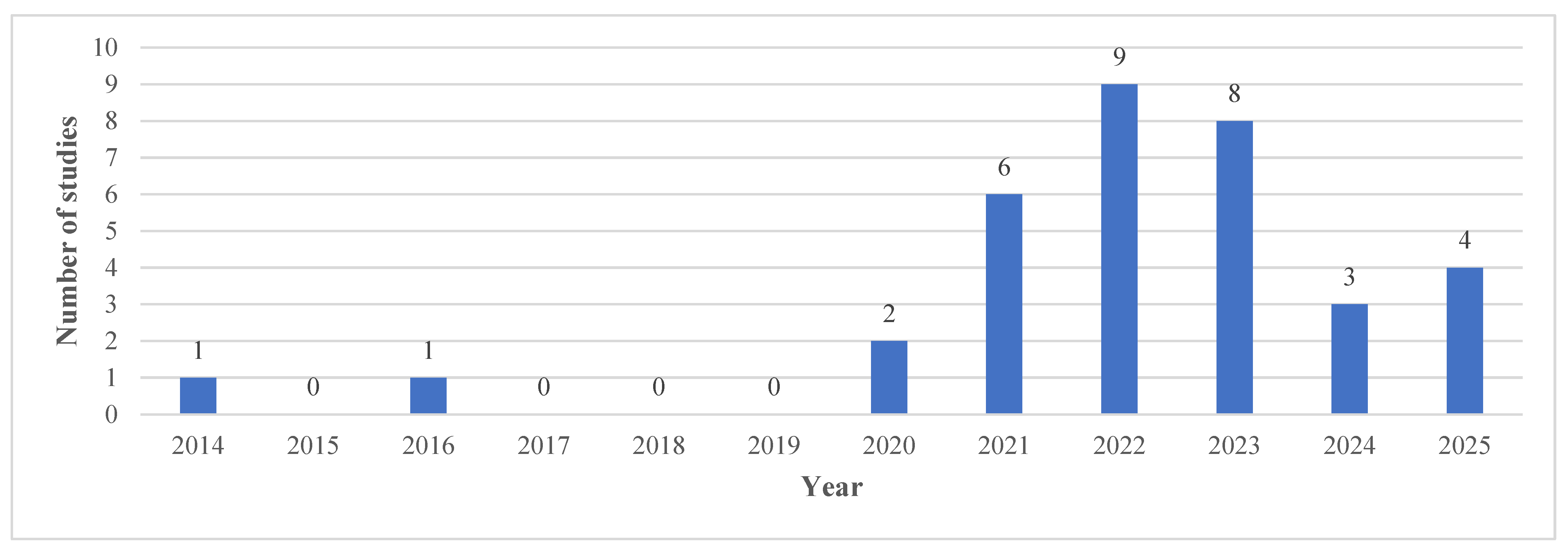
The majority of studies were published in 2022 (N = 9) and 2023 (N = 8), indicating that the topic of sustainable consumption during the crises has recently begun to flourish (Figure 2). The growth of publications observed during the COVID-19 pandemic is particularly noteworthy as it suggests that sustainable consumption has undergone changes during the pandemics. A total of 30 papers (88%) were published in the past five years.
The 34 papers were published in 28 academic journals, indicating broad dispersion across publication outlets. The largest number of studies appeared in Frontiers in Psychology (n = 5), followed by British Food Journal (n = 2), and Social Responsibility Journal (n = 2), while the remaining journals (Business Strategy and The Environment, Corporate Social Responsibility and Environmental Management, Ecological Economics, Environment and Behavior, Environmental Sciences Europe, Food Control, Food Policy, Foods, Foresight, Frontiers in Sustainable Food Systems, International Journal of Consumer Studies, International Journal of Retail &Distribution Management, Young Consumers, Journal of Cleaner Production, Journal of Consumer Affairs, Journal of Food Products Marketing, Journal of Hospitality & Tourism Research, Journal of Marketing Research, Journal of Retailing and Consumer Services, Journal of Sustainable Tourism, Renewable Energy, Resources, Conservation and Recycling, Social Science and Medicine, Sustainable Production and Consumption) involved one article each. The article’s distribution across the journals reveals the interdisciplinary nature of sustainable consumption during crises.
Analysis of the geographical distribution of the studies reveals a noticeable concentration in a limited number of regions. A substantial share of the research was conducted in Asian countries, particularly China, India, and Bangladesh. Several studies also included European countries, such as Spain, Germany, Italy, France, and Portugal. A considerably smaller number of investigations were carried out in North America, including the United States and Canada. In some cases, the studies were conducted across multiple countries, involving cross-national samples. Overall, the results indicate that the existing literature on sustainable consumption during crises is geographically uneven, with Asia being the dominant region represented in the analyzed studies.
There is a clear dominance of quantitative approaches in the reviewed studies, with the vast majority of investigations based on survey design. In most cases, the data were collected through online platforms, reflecting the growing importance of digital data collection methods in consumer behavior research. Sample sizes varied considerably, with some studies based on relatively small or demographically narrow samples, potentially limiting generalizability. Sample sizes ranged from fewer than 200 respondents to large cross-national surveys, with some datasets exceeding 30,000 observations. Although most studies relied on standard survey designs, several investigations also applied experimental methods, manipulating different scenarios or conditions in order to examine causal relationships.
The analysis of theoretical frameworks underpinning research on sustainable consumption during crises reveals a heterogeneous and only partially consolidated knowledge base. Not all articles included in the SLR explicitly referred to established theoretical frameworks. Among those that did rely on theory, the dominant focus was on explaining sustainable consumption, whereas research grounded in crisis-specific theories remains scarce.
The most frequently applied perspectives for explaining sustainable consumption were behavioral decision-making and socio-psychological frameworks. Both traditional and extended versions of the Theory of Planned Behavior emerged as the most recurrent lens [34,35,36], confirming its continued relevance in explaining sustainable consumption under disrupted contexts. Similarly, the Stimulus–Organism–Response (SOR) model was applied in two studies [37,38], emphasizing the role of crises as external stimuli shaping consumers’ internal psychological states and, subsequently, their consumption responses.
Additional consumption-focused theories were represented by single studies. These included Attribution Theory [39], explaining responsibility assignment and behavioral reactions; Expectation–Disconfirmation Theory [40], capturing post-consumption evaluations; and Perceived Risk Theory [36], highlighting uncertainty and safety concerns as drivers of consumption adjustment. Social and normative dimensions were addressed through Social Influence Theory [41], while Intergenerational Theory [41] reflected value- and lifecycle-oriented perspectives.
Behavioral change and coping-oriented frameworks also appeared, albeit less frequently. These included Protection Motivation Theory [12], which explains adaptive responses in the face of perceived threats, and the Stage Model of Self-Regulated Behavioral Change [42], capturing phased transitions toward sustainable practices. In addition, the Attitude–Behavior–Context (ABC) framework [43] was employed to integrate individual predispositions with situational crisis constraints.
In contrast, theories explicitly conceptualizing crises were largely absent. Only one study drew on the Anthropogenic Theory of Climate Change [34] as a crisis-specific framework. This imbalance suggests that crises are more often treated as contextual backdrops or situational triggers rather than as theoretically grounded phenomena.

4.2. Factors Determining Sustainable Consumption During Crises

We adopted a crisis ‘journey’ perspective to structure our findings on the factors determining sustainable consumption. This framework identifies three key stages of a crisis: reaction, coping, and adaptation. In this study, we systematically categorized the factors influencing sustainable consumption at the macro-, meso-, and individual levels, as identified in prior studies, according to the distinct crisis phases (Appendix C). The results of individual studies were synthesized by identifying and categorizing factors influencing sustainable consumption, along with their roles. The heterogeneity of findings is largely attributable to differences in crisis contexts and stages.
Analyzing the distribution of sustainable consumption factors across the crisis stages, it is clear that these factors are not consistent throughout. The coping phase exhibits the greatest variety of factors, while more specific and functionally distinct sets emerge in the reaction and adaptation phases. These insights suggest that consumer behavior during crises changes dynamically over time. Overall, there is a clear dominance of individual-level factors compared to macro and meso-level factors. This indicates that existing research mainly explains sustainable consumption behavior as resulting from internal consumer processes rather than external contextual or organizational influences.
After identifying the groups of factors that influence sustainable consumption, along with the individual factors within each group, a detailed analysis of these factors was carried out across different crisis stages. All hypotheses proposed in the reviewed articles were carefully examined to determine if they were supported by empirical evidence. The following analysis of factors affecting sustainable consumption during various crisis stages includes only variables that demonstrated a statistically significant effect in the models tested in the reviewed studies. However, we must consider the possibility of publication bias, where studies reporting statistically significant results are more likely to be published than those with non-significant outcomes. This could result in an overrepresentation of positive relationships between factors and sustainable consumption.
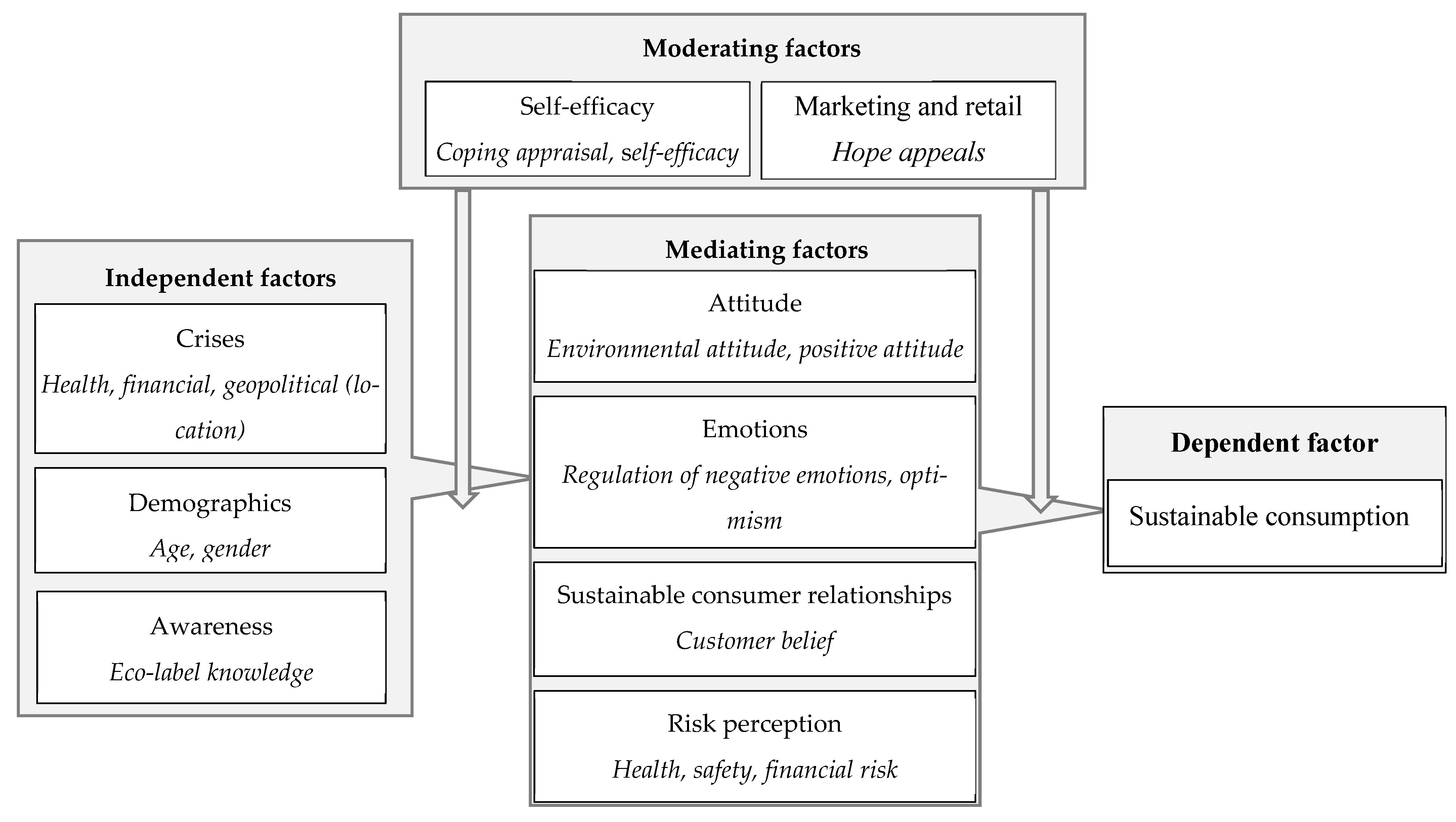
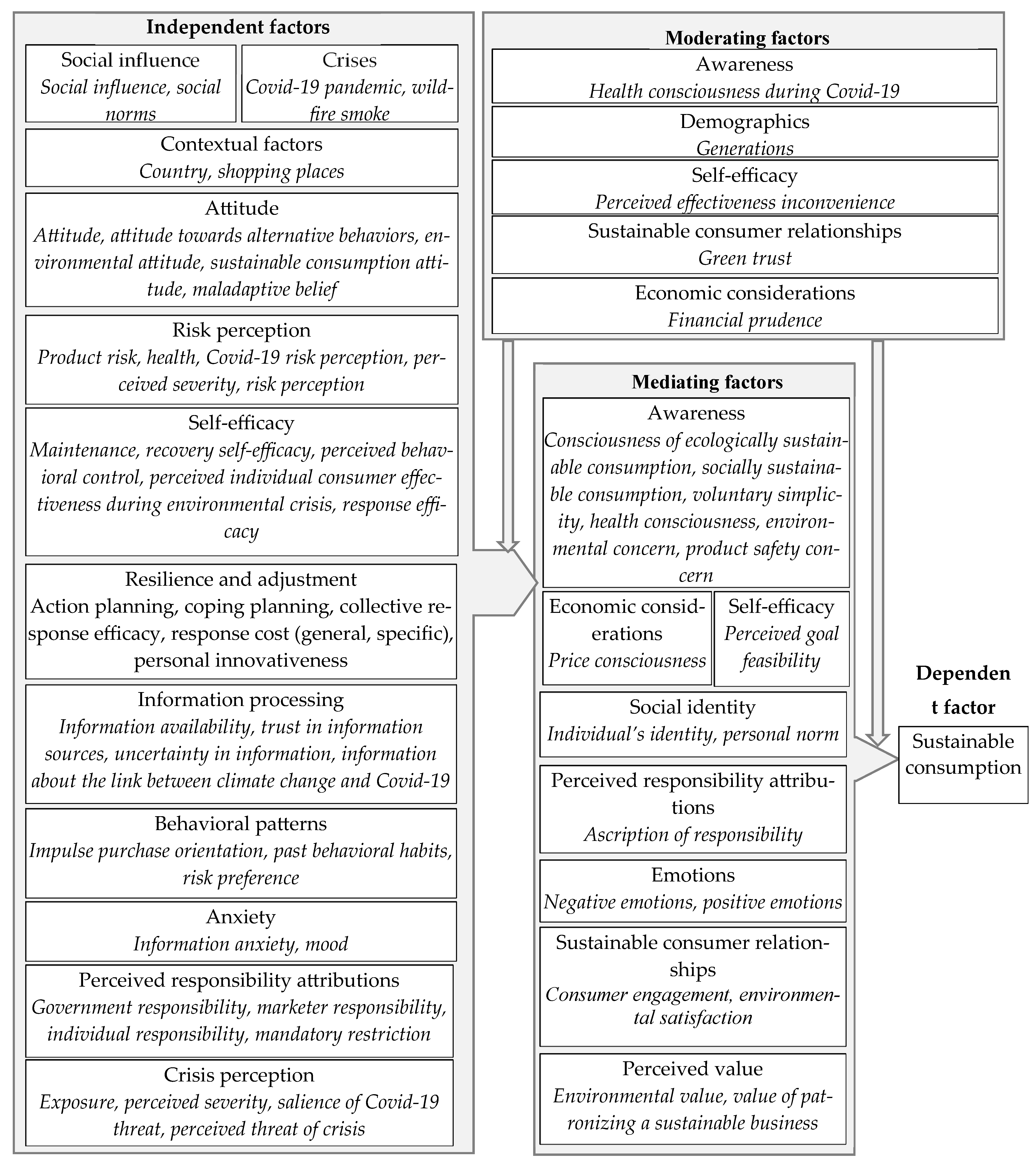
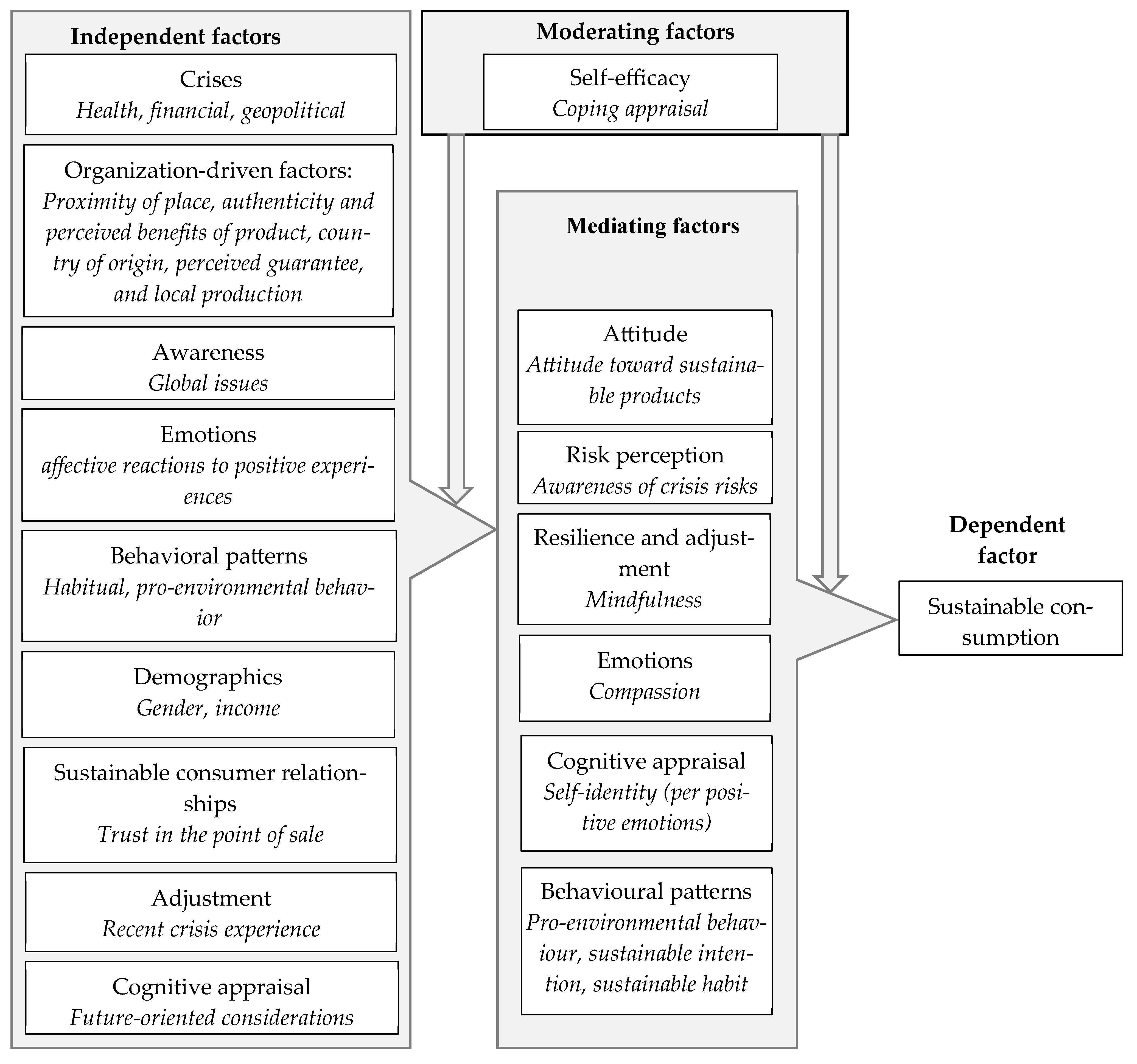
Additionally, it was found that the same factors were identified as independent variables in one study, while serving as mediators or moderators in others. To avoid repetition and overlap, we reviewed the studies and identified the role where the factor had the most influence. Based on these guidelines, we identified the factors that determine sustainable consumption at each stage—reaction, coping, and adaptation (Figure 3, Figure 4 and Figure 5). Greater confidence is linked to factors that were consistently identified across multiple studies and backed by statistically significant relationships in various crisis situations. Conversely, factors found in fewer studies, especially during the reaction phase, are regarded with less confidence due to the limited amount of evidence.

4.2.1. Reaction Phase

The reaction stage of a crisis is characterized by heightened threat appraisal and emotional arousal, prompting individuals to adopt protective coping strategies, such as risk avoidance, as they attempt to regain a sense of control in the face of uncertainty [24,44]. In some contexts, crises may also trigger aggressive competitive responses [45] or herd behavior, in which individuals disregard private information and imitate others’ actions [46]. Notably, crises have been identified as contextual antecedents of sustainable consumption [47]. However, during the initial reaction stage, sustainable consumption patterns may become less salient because behavior is driven primarily by short-term, individual-level coping mechanisms rather than stable value-based orientations.
This stage typically spans the period from the initial shock to the emergence of behavioral adjustments. However, its duration is unlikely to be uniform across consumers. Prior research indicates that crisis responses may persist from several weeks to several months and vary as a function of individual characteristics, including emotional state and age [48]. At the same time, some consumers may exhibit weaker reactions due to lower levels of perceived risk. One explanation is that consumers directly affected by crises may display lower threat appraisal when their evaluations are grounded in personal experiences [47]. Accordingly, our SLR identifies several individual-level characteristics that influence sustainable consumption during the reaction stage of crisis, including demographics, sustainable consumer relationships, attitudes, emotions, and risk perceptions (Figure 3).
During the reaction stage, demographic factors appear to play an important role in shaping crisis-driven consumption behavior [49]. For example, older consumers are more likely to increase purchases of food products with sustainable attributes, reflecting heightened health awareness. In addition, women, who are generally more environmentally conscious, tend to exhibit stronger preferences for sustainable and healthy consumption choices than men.
Consumer beliefs have also been found to be positively associated with intentions to purchase sustainable products [50]. Furthermore, individuals with stronger pro-environmental orientations [51], positive attitudes, and greater awareness of eco-labels [50] are more likely to increase sustainable purchases even at the onset of a crisis. Although negative affect, defined as a generalized unpleasant feeling state [52], is common during crises, some consumers regulate their negative emotions and maintain higher levels of optimism about the near future. As a result, they demonstrate a greater willingness to spend on sustainable products [51].
While crises are often interpreted as salient threats that reshape consumption priorities, consumers’ risk perceptions function as an important reallocative mechanism. For instance, higher perceived health risks have been associated with healthier dietary choices, whereas concerns about food security have been linked to increased purchases of sustainable food products [49]. Importantly, consumer responses to perceived risks vary depending on coping appraisal processes, which include self-efficacy, defined as an individual’s belief in their ability to successfully perform protective behaviors. Evidence suggests that hope-based advertising appeals can mitigate negative emotions associated with high threat appraisal, thereby strengthening the positive influence of risk perception on behavior and promoting sustainable consumption [47]. Moreover, risk perception has been found to mediate the interaction between risk location and advertising appeals in shaping sustainable consumption [47]. Despite these insights, the relative scarcity of studies addressing sustainable consumption during the reaction stage highlights an important research gap. Specifically, the ways in which consumers respond to crises in terms of sustainable consumption remain insufficiently explored in the extant literature.

4.2.2. Coping Phase

The coping stage reflects a gradual transition toward behavioral adjustment under prolonged uncertainty [24,26]. Notably, contextual and structural conditions play a stabilizing role by providing institutional support and external direction that facilitate sustainable consumption [53]. Meanwhile, social influence and social norms regain importance in shaping sustainable consumption through an increased sense of moral obligation, responsibility, and perceived benefits [35,40]. Although heightened risk perception, anxiety, and safety concerns that emerge during the reaction phase continue to influence purchasing decisions, consumers increasingly reassess their consumption patterns and adapt them to evolving conditions of crisis [54]. Furthermore, contextual conditions interact with individual-level factors and determine how consumers interpret crisis context and adapt their consumption practices in response to institutional support and market dynamics [53,55]. Therefore, our SLR identifies several individual-level characteristics that influence sustainable consumption during the coping phase of crisis, including demographics, social identity, risk and crisis perceptions, resilience, responsibility attribution, emotions, information processing, and sustainable consumer relationships (Figure 4).
Empirical evidence reveals that gender, education, income, and household size remain important factors in shaping sustainable consumption consciousness [10,54]. Furthermore, generational cohorts appear to be a significant moderator between crisis-induced factors and sustainable consumption [11].
While the influence of social factors increases at this phase, sustainable consumption is shaped by social identity [53] and personal norm, reflecting a perceived moral obligation of individuals [42]. Notably, consumers demonstrate resilience and adjustment, defined as the capacity to adapt, plan, and overcome the obstacles [42]. Thus, personal factors such as efficacy and innovativeness increase motivation [12] and encourage adoption of new sustainable practices [40].
However, risk and crisis perceptions influence sustainable consumption differently. For instance, perceived health risk strengthens motivation to adopt protective and sustainable behaviors [12,36] and increases the likelihood of choosing safer or organic products [38,43]. Meanwhile, economic and security-related risks may reduce spending on more expensive sustainable products [54].
The studies disclose the effect of emotions by transforming awareness and perceptions of responsibility into motivational drivers of behavioral change [42]. Negative emotions associated with harmful consequences activate personal norms and strengthen individuals’ sense of obligation to change behavior. Meanwhile, positive emotions anticipated with goal progress reinforce behavioral motivation and increase goal intention. Accordingly, emotions may function as mechanisms that translate crisis-related perceptions into behavioral responses toward sustainable consumption.
Behavioral changes are shaped through available and trustworthy information sources, impacting consumers’ attitudes, risk perceptions, and decision-making processes during a crisis [54,56]. Accordingly, available and timely information further increases environmental concern and motivates behaviors such as recycling and consumption reduction [12]. On the other hand, uncertainty caused by a lack of information may weaken behavioral responses [37].
The studies demonstrate that different consumption patterns are impacted by perceived responsibility attribution [39]. While responsibility attributed to governments and marketers influences sustainable consumption by shaping willingness to purchase ethically positioned products, perceived individual responsibility does not necessarily translate into behavioral change. Thus, regulatory instruments, such as mandatory restrictions and information provision, can strengthen environmentally conscious consumption, particularly when consumers believe their actions can effectively address environmental problems [56].
Finally, sustainable consumer relationships mediate the link between contextual factors and sustainable consumption behavior by demonstrating consumers’ cognitive, emotional, and behavioral connection with sustainable practices [53]. Accordingly, environmental satisfaction acts as a bridge between environmental cognition and sustainable consumption behavior by translating environmental awareness and responsibility into behavioral outcomes [41].
Extant literature reveals several important research gaps. Future studies should investigate demographic characteristics, particularly generational differences, as responses of consumer groups may vary under crisis conditions. In addition, the studies should further evaluate the effectiveness of different information channels in promoting sustainable consumption during this phase of crisis. This research is important because it provides opportunities to develop more effective and targeted support strategies. Moreover, future research should clearly distinguish between different types of risk perception, as their effects on sustainable consumption behavior may differ substantially depending on whether the risk relates to health, environment, or economic security. Finally, as perceived responsibility attributions have not been extensively examined in the context of sustainable consumption, future research should further investigate the role of responsibility attributions in shaping sustainable consumption behavior.

4.2.3. Adaptation Phase

In the adaptation phase, which unfolds over a longer time horizon, consumers become less reactive and consumption habits gradually adjust [57]. As the crisis subsides, consumers in affected regions are increasingly influenced by mass media reports that frame the situation as being under control [47], fostering more optimistic expectations. At the same time, recent crisis experiences may reshape social dynamics [24,58] and increase perceptions of similar future events, thereby heightening social pressure to engage in sustainability-related behaviors and influencing consumers’ sustainable choices [34].
At this stage, organization-driven factors play an increasingly important role in shaping sustainable consumption (Figure 5). These stimuli include store proximity to consumers’ homes or workplaces, country of origin, product authenticity and perceived benefits, compliance of production processes with environmental standards, perceived guarantees, and local production [58,59]. Regarding price perceptions, some studies suggest that low prices may signal inferior product quality, thereby undermining perceptions of sustainability [58]. In contrast, other research finds that price does not significantly influence consumers’ attitudes toward organic food products [59]. Beyond the role of social influence and organization-driven factors, our systematic literature review identifies several individual-level determinants that shape sustainable consumption during the adaptation stage, including demographics, awareness, behavioral patterns, risk perceptions, emotions, and sustainable consumer relationships.
Empirical findings suggest that sustainable consumption during this stage increases significantly among women [58], who also demonstrate a stronger relationship between pandemic experiences and sustainable consumption [60]. However, evidence regarding income remains mixed. Some studies indicate that economic constraints continue to limit the broader adoption of sustainable products, as financial affordability remains a key barrier [61]. In contrast, other research reports that income does not significantly influence the purchase of organic products [59].
Several studies further indicate that consumers report increased awareness of global challenges, suggesting that crisis experiences may subsequently influence sustainable consumption [61]. Accordingly, crises may reshape behavioral patterns, including changes in waste generation and stronger commitments to sustainability practices within households [61]. For example, pandemic experiences appear to intensify consumers’ inclination toward sustainable consumption [60]. At the same time, important trade-offs emerge: individuals concerned about climate change may still engage in carbon-intensive behaviors, such as international travel, when present-oriented considerations outweigh anticipated future consequences [62].
Although heightened risk perceptions by increasing fear and awareness are observed [34,62,63], some studies highlight the potential positive role of risk perception in promoting sustainable travel behavior [47]. Furthermore, crises trigger intense emotional experiences and may reshape consumers’ worldviews. Prior research suggests that individuals who derive positive psychological outcomes from crisis experiences, such as compassion, mindfulness, resilience, and self-reliance, are more likely to experience shifts in self-identity that strengthen preferences for sustainable consumption [46].
Trust and authenticity perceptions also play an important role. Consumers who increased their consumption of organic food during crises relied less on certification logos and more on trust in the point of sale as a signal of authenticity [58]. Nevertheless, broader consumption patterns may remain constrained by skepticism regarding the true sustainability of certain products [61].
Despite these insights, the existing literature reveals several important research gaps. Future research should examine the conditions under which income influences sustainable consumption as crises subside, particularly across different national contexts. This line of research is important because income, in interaction with local market availability, cost-of-living variations, and access to sustainable products, shapes consumers’ willingness to engage in sustainable consumption during the adaptation stage. Moreover, future studies should explore orientation patterns across different consumer groups and their choices regarding diverse products and services. Such research is critical for understanding the mechanisms that drive both sustainable behaviors and consumption trade-offs, particularly how risk perceptions, personal values, and contextual factors interact to shape consumer decision-making in the adaptation stage. Finally, further research is needed to examine the mechanisms through which trust and authenticity perceptions influence long-term sustainable consumption.

5. Discussion

5.1. Theoretical Implications

This systematic literature review offers several significant contributions to the consumer behavior literature. First, this study synthesizes the dominant theoretical frameworks, empirical contexts, and methodological approaches used in sustainable consumption research, addressing the growing call to examine sustainable consumption frameworks and their specific determinants [17,64]. Although it is well-established that consumption patterns shift during crises [65,66], research on the determinants of sustainable consumption in such contexts remained limited. Notably, only 34 relevant studies were identified over the past 12 years. This gap highlighted the need for a systematic synthesis to contextualize existing knowledge and to provide a foundation for future research in this emerging field.
The analysis also sheds light on the theoretical foundations of sustainable consumption research. The Theory of Planned Behavior emerged as the most widely applied framework, emphasizing the role of attitudes, subjective norms, and perceived behavioral control in shaping consumer behavior. In contrast, the SOR model, has been applied only to a limited extent, despite its relevance for understanding how external conditions influence internal psychological states and, ultimately, consumer decisions. The findings suggest that these frameworks offer a complementary conceptual foundation by linking external contextual factors with internal psychological processes. Given the dominance of TPB, there is considerable untapped potential to apply the SOR framework more systematically, particularly to structure and integrate the diverse set of factors influencing sustainable consumption in crisis contexts.
Second, this study develops dynamic, multilevel models that identify key drivers, mediators, and moderators shaping sustainable consumption across reaction, coping, and adaptation stages of crises, thereby providing a foundation for future research. The study adopts a “crisis journey” perspective by applying the RCA framework, which captures the dynamic nature of crises. While “crisis journey” mapping has been applied to analyze responses to climate impacts and purchasing behavior patterns, both online and onsite [24,57,67], literature on sustainable consumption from this perspective remained scarce due to the complexity of conceptualizing and analyzing the interconnected factors. Our findings indicate that sustainable consumption, usually defined as adopting attitudes and behaviors that reduce environmental impact [68], should be considered in a more systematic way. The dynamic patterns identified across the reaction, coping, and adaptation stages also carry broader theoretical implications. The dominance of fear, uncertainty, scarcity perceptions, and emotionally driven responses during the reaction stage aligns with bounded rationality and dual-system perspectives, which suggest that individuals rely more heavily on intuitive, heuristic, and emotionally driven judgments under conditions of uncertainty and limited cognitive resources. In crisis situations, consumers may prioritize immediate security, resource availability, and short-term coping mechanisms over long-term sustainability considerations, reflecting adaptive decision-making processes shaped by environmental pressures.
At the same time, the findings associated with the coping and adaptation stages suggest that sustainable consumption behaviors may gradually become stabilized and routinized over time. This resonates with practice theory, which is applied to observe and understand “why practices change or why they keep being reproduced” [69]. In the context of crisis, this suggests that coping and adaptation processes may not only trigger short-term behavioral adjustments but also enable the longer-term routinization of sustainable consumption practices. Furthermore, consistent with the socio-technical systems approach [70], which emphasizes the interdependence of actors, organizations, cultural norms, and regulatory agencies, the study highlights the role of multi-level factors in shaping sustainable consumption. This underscores that changes in consumption patterns during crises are not driven by isolated individual choices, but emerge from interactions across interconnected system levels.
Some factors affecting sustainable consumption existed before the crisis, while others arose during the crisis or as it came to an end. The review confirms the dynamic nature of consumer behavior across different phases of crisis, with different mechanisms dominating each phase. Therefore, results of systematic literature review brought more clarity and cognition of the phenomenon of sustainable consumption behavior during the crises. As we have thoroughly analyzed which hypotheses were confirmed and assessed the strength of the impact of distinct factors, we expect that our base models (Figure 3, Figure 4 and Figure 5) expand the robustness of the earlier results. The suggested models allow for better prediction of sustainable consumer behavior across the crisis phases. Specifically, in addition to independent factors we have identified which factors may mediate and moderate the relationships. Therefore, our study shows that consumers’ attitudes and behaviors can be better understood through the lens of the crisis journey. We urge marketing researchers to embrace this perspective when examining sustainable consumption.
Finally, the study highlights a future research agenda that advances theoretical integration, longitudinal inquiry, and cross-level perspectives in the research of sustainable consumption during crises. The application of the SOR model may also help to address the current overemphasis on individual-level determinants identified in the literature. While individual factors remain essential for understanding sustainable consumption, this review highlights the need to better incorporate macro- and meso-level influences. Crises, by their nature, are external phenomena, and thus structural, policy-related, and market-level factors are likely to play a significant role in shaping consumer behavior. However, existing research continues to treat sustainable consumption largely as an individual responsibility, with limited attention to systemic drivers. This imbalance suggests the need for more integrative, multi-level approaches that account for the broader context in which consumer decisions are made.

5.2. Managerial Implications

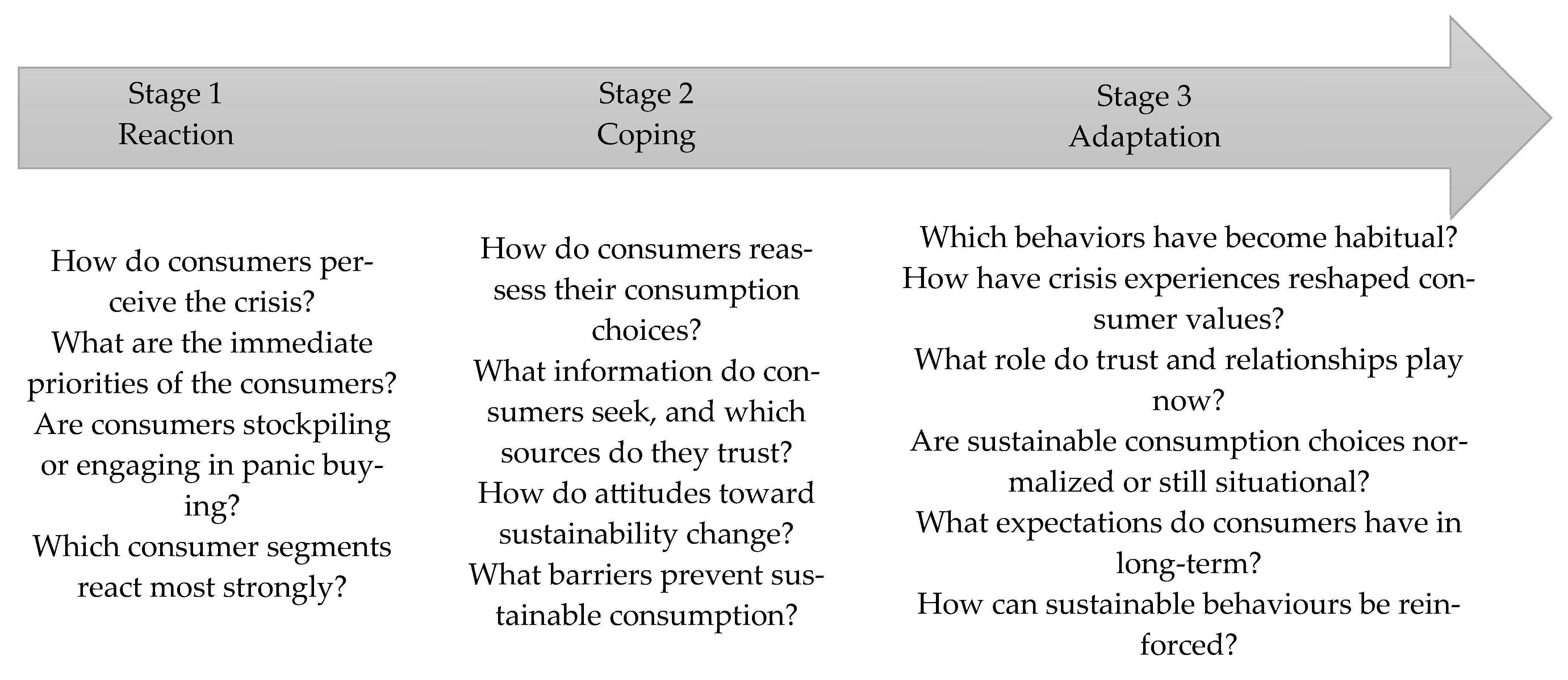
Adopting the crisis ‘journey’ perspective provides organizations with a structured approach to better understand how the drivers of sustainable consumption evolve over time. Based on the findings, organizations are encouraged to develop crisis-specific customer journey maps that capture changes in consumer behavior across the reaction, coping, and adaptation stages. Figure 6 offers a practical framework by presenting key guiding questions that support organizations in navigating crises triggered by external shocks.
In practice, marketing managers and frontline employees should use these questions to systematically assess consumer perceptions, priorities, and constraints at each stage of the crisis. Given the dynamic nature of political, economic, social, cultural, and technological environments, organizations should further adapt this framework by formulating additional context-specific questions based on their prior crisis experience. Such continuous reflection enables a more accurate understanding of evolving sustainable consumption patterns and supports more responsive decision-making.
Furthermore, organizations are encouraged to complement crisis-based customer journey mapping with marketing analytics techniques. In particular, marketing attribution methods can be employed to evaluate how different factors influence sustainable consumption across customer touchpoints. Marketing attribution refers to the process of assigning value to marketing activities and interactions along the customer journey [71]. Integrating this approach with the crisis journey framework enables organizations to better understand how consumer interactions and experiences shape decision-making across different crisis phases. By linking the factors identified in this review with real-time behavioral data, organizations can more effectively assess the impact of their strategies and optimize interventions aimed at promoting sustainable consumption.

5.3. Limitations

This study is subject to several limitations. First, despite efforts to ensure systematic rigor, some degree of subjectivity in the classification of crisis stages was unavoidable. Most of the reviewed studies did not explicitly specify the crisis phase under investigation. Consequently, the authors were required to determine the relevant stage based on available information. In some cases, this classification was straightforward, particularly when studies explicitly referred to the onset of a crisis [34,47]. In other instances, the classification relied on reported data collection periods [39,41,72]. However, for studies lacking explicit temporal markers, the authors conducted a detailed review of the full text to identify contextual cues indicating the most appropriate crisis stage [35,62]. While this approach ensured consistency, it may have introduced interpretive bias.
Second, the review is limited by the relatively small number of studies identified over a 12-year period. Although the relevance of the topic is increasing, only a modest number of publications were available, which may limit the comprehensiveness and generalizability of the identified factors determining sustainable consumption, particularly in the reaction phase.

5.4. Concluding Remarks and Future Research

This systematic literature review addressed three research questions concerning sustainable consumption in crisis contexts. Regarding RQ1, the findings reveal that research on sustainable consumption during crises has predominantly relied on quantitative methodologies, particularly survey-based approaches, while qualitative and mixed-method studies remain limited. The most frequently applied theoretical perspectives include the Theory of Planned Behavior, Protection Motivation Theory, Value-Belief-Norm Theory, and related behavioral frameworks. Existing studies have mainly focused on health crises, particularly the COVID-19 pandemic, whereas economic, geopolitical, environmental, and technological crises remain comparatively underexplored.
With respect to RQ2, the review demonstrates that the determinants of sustainable consumption differ across the reaction, coping, and adaptation stages of crises. Individual-level factors dominate the extant literature, including attitudes, emotions, risk perceptions, awareness, resilience, and personal norms.
Regarding RQ3, the findings indicate several important directions for future studies. Future research should aim to empirically test the proposed phase-based models (Figure 3, Figure 4 and Figure 5) using field data. Longitudinal designs would be particularly valuable in examining how sustainable consumption behavior evolves across the reaction, coping, and adaptation stages. In addition, future studies should extend the analysis beyond the temporal dimension of crises and examine differences across crisis types, such as health, economic, and geopolitical crises. Consumer motivations are likely to vary depending on the nature of the crisis; for example, safety considerations may dominate during health crises, price sensitivity during economic crises, and solidarity during geopolitical crises.
Furthermore, future research would benefit from the application of mixed-method approaches that combine quantitative and qualitative techniques to provide both statistical robustness and deeper contextual understanding. Experimental designs could also be employed to examine causal relationships and to better capture how specific factors influence sustainable consumption behavior under different crisis conditions. Such approaches would contribute to a more comprehensive and nuanced understanding of sustainable consumption in crisis contexts.

Supplementary Materials

The following supporting information can be downloaded at: https://www.mdpi.com/article/10.3390/su18115721/s1.

Author Contributions

Ideation, N.V.-V.; methodology, N.V.-V., R.K., L.J.-U.; literature search, N.V.-V., R.K., L.J.-U.; data analysis, N.V.-V., R.K., L.J.-U.; writing—original draft preparation, N.V.-V., R.K., L.J.-U.; writing—review and editing, N.V.-V., R.K., L.J.-U.; visualization, N.V.-V., R.K., L.J.-U.; supervision, N.V.-V.; project administration, N.V.-V.; funding acquisition, N.V.-V. All authors have read and agreed to the published version of the manuscript.

Funding

This project has received funding from the Research Council of Lithuania (LMTLT), agreement No S-VIS-23-18.

Institutional Review Board Statement

Not applicable.

Informed Consent Statement

Not applicable.

Data Availability Statement

The raw data supporting the conclusions of this article will be made available by the authors on request.

Conflicts of Interest

The authors declare no conflicts of interest.

Abbreviations

The following abbreviations are used in this manuscript:
AJGAcademic Journal Guide
PRISMAPreferred Reporting Items for Systematic Reviews and Meta-Analyses
RCAReact–cope–adapt
SLRSystematic literature review

Appendix A. Studies Included in the Review

No.Authors (Year)JournalCrisis Situation AnalyzedCrisis StageSustainable Consumption Factors
1.Dascher et al. [56]International Journal of Consumer StudiesWater droughtReaction, copingEnvironmental attitude, drought attitude, perceived importance of water conservation drivers
2.Hunter, Roos [73]Food PolicyClimate changeReaction Age, gender, children, income, education, meat consumption, threat appraisal (vulnerability, severity), coping appraisal (self-efficacy in general, self-efficacy specific, response efficacy in general, response efficacy specific, response cost general, response cost specific)
3.Yang [39]British Food JournalThe global health crisis (COVID-19 pandemic) Coping Risk perception, anxiety, food safety concern, individuals responsibility, marketer responsibility, government responsibility
4.Peluso et al. [51]Journal of Retailing and Consumer ServicesThe global health crisis (COVID-19 pandemic)Reaction Age, negative affect, optimism, pro-environmental attitude
5.Severo et al. [11]Journal of Cleaner ProductionThe global health crisis (COVID-19 pandemic)Coping COVID-19 Pandemic, generations, country
6.Polas et al. [40]ForesightThe global health crisis (COVID-19 pandemic)Coping Personal innovativeness, impulse purchase orientation, social influence, relational benefit, site commitment
7.Cui et al. [41]Corporate Social Responsibility and Environmental ManagementThe global health crisis (COVID-19 pandemic) Coping Social influence, environmental satisfaction, financial prudence, generational differences
8.Kim et al. [36]Journal of Hospitality & Tourism ResearchThe global health crisis (COVID-19 pandemic) CopingPerceived threat of COVID-19, the salience of COVID-19, environmental concern, perceived value of patronizing a sustainable business
9.Gupta, Mukherjee [46]International Journal of Retail & Distribution ManagementThe global health crisis (COVID-19 pandemic) AdaptationSatisfaction, mindfulness, self-reliance, self-identity
10.Huttel, Balderjahn [10]Journal of Consumer AffairsThe global health crisis (COVID-19 pandemic) Reaction, copingAge, gender, household size, children in the household, employment status, education level, income, coronavirus pandemic, consciousness of sustainable consumption
11.Wang et al. [72]British Food JournalThe global health crisis (COVID-19 pandemic) CopingPerceived severity, health consciousness, perceived inconvenience
12.Ahn, Shamim [74]Social responsibility JournalThe global health crisis (COVID-19 pandemic) CopingOrganic consciousness, environment consciousness, health consciousness, social consciousness, attitude
13.Kabir [35]Young ConsumersThe global health crisis (COVID-19 pandemic) Coping Knowledge of health benefit of organic food, social norms, attitude, perceived behavioral control, health consciousness during COVID-19
14.Raj et al. [75]Social Responsibility JournalThe global health crisis (COVID-19 pandemic) CopingHealth consciousness, environmental concern, impact of COVID-19, price consciousness, availability
15.Sadiq et al. [43]Business Strategy and The EnvironmentThe global health crisis (COVID-19 pandemic) CopingPerceived health risk, environmental attitude, health attitude, green trust, perceived effectiveness, organic food consumption
16.Kallas et al. [54]FoodsThe global health crisis (COVID-19 pandemic) CopingSocio demographic variables (gender, age, monthly household income before the lockdown, monthly household income during the lockdown, stated health status, household size, family structure, place of residence, employment status), mood states, trust in information sources, shoping places, food security experiences and COVID-19 experiences, concern level about COVID-19, knowledge about COVID-19, multiple price list stated risk preference, risk perception
17.Tchetchik et al. [12]Resources, Conservation and RecyclingThe global health crisis (COVID-19 pandemic) CopingSeverity, exposure, vulnerability, self-efficacy, collective response efficacy, maldaptive belief, protection motivation, information about the link between climate change and COVID-19, past behavioral habits
18.Keller et al. [42]Sustainable Production and ConsumptionEnvironmental issues Coping Social norm, personal norm, goal intention, awareness of consequences, ascription of responsibility, negative emotions associated with consequences, positive emotions anticipated with goal process, perceived goal feasibility, perceived behavioral control over alternative behaviors, attitude toward alternative behaviors, action planning, cognitive planning, maintenance self-efficacy, recovery self-efficacy
19.Liu et al. [37]Frontiers in PsychologyThe global health crisis (COVID-19 pandemic)Coping Information anxiety, uncertainty, sustainable consumption attitude, functional value, health value, environmental value, gender
20.Leal Filho et al. [61]Environmental Sciences EuropeThe global health crisis (COVID-19 pandemic)Adaptation Ecological awareness, habitual pro-environmental behavior, occasional pro-environmental behavior, age, gender, education level, income
21.Li et al. [49]Food ControlThe global health crisis (COVID-19 pandemic) ReactionSocio-demographic variables, risk attitude, risk perception, subjective and objective knowledge regarding COVID-19, concerns about COVID-19, experience
22.Pu et al. [53]Frontiers in psychologyThe global health crisis (COVID-19 pandemic) Reaction, copingValue, sustainable consumption attitude, identity, contextual factor, consumer engagement
23.Sajid et al. [63]Frontiers in psychologyThe global health crisis (COVID-19 pandemic) Adaptation Fear of COVID-19, psychological distress, mortality salience
24.Fu et al. [76]Frontiers in psychologyThe global health crisis (COVID-19 pandemic) Adaptation Soil information transparency, water information transparency, competence trust, benevolence trust
25.Jiang et al. [59]Frontiers in Sustainable Food SystemsThe global health crisis (COVID-19 pandemic) Adaptation Product, price, place, promotion, attitude
26.Xin, Long [50]Renewable EnergyEnergy shortage Reaction, coping Eco-label knowledge, environmental attitude, customer belief
27.Murmura et al. [58]Journal of Food Product MarketingThe global health crisis (COVID-19 pandemic) AdaptationOrganic honey features, trust in organic honey, store decision factors, product decision factors, social decision factors, socio-demographic features
28.Lim et al. [77]Journal of Marketing ResearchWildfire smokeCoping, adaptation Belief in climate change, environmental concern, health concern
29.Caferra et al. [34]Ecological EconomicsClimate change Adaptation Natural disaster experience, subjective climate change, social capital (community level), local government trust, pro-environmental behavior, sustainable subjective norms, sustainable attitudes, perceived behavioral control, sustainable intention, sustainable habits
30.Feng et al. [47]Journal of Sustainable TourismThe global health crisis (COVID-19 pandemic) Reaction, adaptationPandemic area, pandemic period, risk perception (threat appraisal), hope vs. fear appeal (coping appraisal)
31.Lasarov, Mai [62]Journal of Travel ResearchClimate changeAdaptationClimate change concern, time preferences, efficiency-oriented sustainable consumption, sufficiency-oriented sustainable consumption
32.Xu et al. [78]Social Science and MedicineThe global health crisis (COVID-19 pandemic) Adaptation COVID experience arousal (presence vs. non-presence), provider sustainable information (presence vs. non-presence)
33.Tarditi et al. [79]Environment and BehaviorThe climatic changesUnspecifiedSelf-transcedence values, trait affect, choice framing
34.Leyva-Hernandez [80]Frontiers in PsychologyThe global health crisis (COVID-19 pandemic) UnspecifiedPerceived severity, perceived benefits, perceived barriers, cue to action (social media), identity, age

Appendix B. Review Protocol

DataQuestionsExample
Bibliographic data
Author(s)Who is(are) the author(s) of the publication?Tchetchik, A., Kaplan, S., Blass, V. [12]
Year In which year was the work published?2021
Title What is the title of the publication Recycling and consumption reduction following the COVID-19 lockdown: The effect of threat and coping appraisal, past behavior and information
Journal What is the name of the journal? Resources, Conservation & Recycling
Publisher What is the name of the publisher? Elsevier
WoS IFHow was the journal ranked in 2024? 10.9
WoS quartile In which quartile was the journal ranked in? Q1
Citescore 2024What was the Citescore of the journal in 2024?24.7
SJR 2024What was the SJR (SCImago Journal Rank) of the journal in 2024?2.872
SNIP 2024What was the SNIP (Source Normalized Impact per Paper) of the journal in 2024?2.618
Background of the publication
Research location (country)In which country was the research conducted?Israel
IndustryWhat industry does the publication focus on?-
Research time When was the research conducted? March–April 2020, during the national lockdown
Crisis analyzed What specific crisis is analyzed in publication? The global health crisis (COVID-19 pandemic)
Stage of the crisis What stage or phase of the crisis does the publication focus on?Coping
Theoretical background
Customer behavior theory(-ies) appliedWhich customer behavior theory or theories were applied?Protection motivation theory
Crisis/external shock theory(-ies) appliedWhich crisis or external shock theory or theories were applied? -
Methods
Research type What is the type of research conducted (qualitative, quantitative, or mixed-method)?Quantitative
Data collection method(s)Which method(s) were used for data collection?Web-based survey
Sample size What was the sample size used in the research?296 adults
Data analysis method(s)Which method(s) were used to analyze the data?Econometric modeling
Factors
Independent factors What factors were considered as independent variables? Severity, exposure, vulnerability, self-efficacy, collective response efficacy, maladaptive belief, information about the link between climate change and COVID-19
Mediators What factors were chosen as mediating variables? Protection motivation
Moderators What factors were considered as moderating variables in the study? -
Dependent factors What factors were chosen as dependent variables in the research? Intent to adopt recommended response

Appendix C. Factors Across the Crisis Phases

LevelsFactor GroupsCrisis Phases
ReactionCopingAdaptation
Macro level Crises and global disruptions Pandemic area (I), pandemic period (MO)COVID-19 pandemic (I, MO), wildfire smoke (I)Pandemic area (I), COVID-19 presence (I), pandemic period (MO)
Social influence-Social influence (I), social norms (I), social decision factors (I)Sustainable subjective norms (ME)
Structural policy and market context-Contextual factors (I), country (MO), availability (ME)-
Meso level Industry -Shopping places (I)
Marketing and retail--Product (I), product decision factors (I), price (I), place (I), promotion (I), store decision factors (I)
Individual level Attitude Environmental attitude (ME)Attitude (I, ME), attitude towards alternative behaviors (I), environmental attitude (I, ME), sustainable consumption attitude (I, ME), maladaptive belief (I), health attitude (ME)Attitude toward sustainable products (ME)
Awareness Eco-label knowledge (I)Awareness of consequences (I), environmental consciousness (I), health consciousness (I, MO, ME), organic consciousness (I), social consciousness (I), knowledge of product’s health benefits (I), consciousness of ecologically sustainable consumption (ME), consciousness of socially sustainable consumption (ME), voluntary simplicity (ME), environmental concern (ME), product safety concern (ME)Ecological awareness (I)
Behavioral patterns Buying intentions (ME)Impulse purchase orientation (I), past behavioral habits (I), risk preference (I), behavioral intention (ME), implementation intention (ME), site commitment (ME)Habitual behavior (I), occasional pro-environmental behavior (I), pro-environmental behavior (ME), sustainable intention (ME), sustainable habit (ME)
Cognitive appraisal--Time preferences (I, MO), self-identity (ME), local government trust (ME)
Consumption Sustainable consumption (D)Sustainable consumption (D)Sustainable consumption (D)
Crisis perception -Exposure (I), perceived severity (I), salience of COVID-19 threat (I), perceived threat of crisis (I), confidence in environmental recovery (I)Climate change concern (I)
Demographics Age (I), gender (I)Demographics (I), household size (I), age (I), gender (I), race (I), place of residence (I), income level (I), education level (I), political affiliation (I), generations (MO)Age (I), education level (I), gender (I), income (I, MO)
Economic considerations -Financial prudence (MO), price consciousness (ME)-
Emotions Negative affect (ME), optimism (MEAnxiety (I), information anxiety (I), mood (I), negative emotions (ME), positive emotions (ME)Negative experiences (I), positive experiences (I), anxiety (ME), loneliness (ME), psychological distress (ME), rumination (ME)
Information processing -Information availability (I), trust in information sources (I), uncertainty in information (I), information about the link between climate change and COVID-19 (I)Sustainability information (I)
Perceived benefits
-Financial benefit (I), value (I), functional value (ME), environmental value (ME), health value (ME), relational benefit (ME), value of patronizing a sustainable business (ME)Satisfaction (ME)
Perceived responsibility attributions-Government responsibility (I), marketer responsibility (I), individual responsibility (I), mandatory restriction (I), ascription of responsibility (ME)-
Resilience and adjustment -Action planning (I), coping planning (I), collective response efficacy (I), response cost (general, specific) (I), personal innovativeness (I), protection motivation (ME)Natural disaster experience (I), mindfulness (ME)
Risk perception Financial risk perception (I), product risk perception (I, ME), risk attitude (I)Financial, product risk (I), health, COVID-19 risk perception (I), perceived severity (I), risk perception (I), vulnerability (I)Fear of COVID-19 (I), fear (ME), fear of missing out (ME), mortality salience (ME), uncertainty (ME), loss aversion (ME), subjective climate change risk (ME), risk perception (ME)
Self-efficacy Coping appraisal (MO)Maintenance, recovery self-efficacy (I), perceived behavioral control (I), perceived effectiveness (I, MO), response efficacy (I), self-efficacy (I), inconvenience (I)Self-reliance (ME), perceived behavioral control (ME), coping appraisal (MO)
Social identity -Individual’s identity (ME), personal norm (ME)
Sustainable consumer relationships Customer belief (ME)Green trust (MO), consumer engagement (ME), environmental satisfaction (ME)Trust in product (I), benevolence trust (ME), competence trust (ME), social capital (ME)
I—independent factor, ME—mediating factor, MO—moderating factor, D—dependent factor.

References

  1. World Meteorological Organization. State of the Global Climate 2024; World Meteorological Organization: Geneva, Switzerland, 2025. [Google Scholar]
  2. United Nations. Report of the World Commission on Environment and Development; Oxford University Press: Oxford, UK, 1987. [Google Scholar]
  3. Minton, E.A.; Spielmann, N.; Kahle, L.R.; Kim, C.-H. The Subjective Norms of Sustainable Consumption: A Cross-Cultural Exploration. J. Bus. Res. 2018, 82, 400–408. [Google Scholar] [CrossRef]
  4. Epstein, M.J.; Elkington, J.; Leonard, H.B. “Dutch” Making Sustainability Work: Best Practices in Managing and Measuring Corporate Social, Environmental and Economic Impacts, 1st ed.; Routledge: New York, NY, USA, 2018. [Google Scholar]
  5. Quoquab, F.; Mohammad, J. A Review of Sustainable Consumption (2000 to 2020): What We Know and What We Need to Know. J. Glob. Mark. 2020, 33, 305–334. [Google Scholar] [CrossRef]
  6. Sheth, J. Impact of Covid-19 on Consumer Behavior: Will the Old Habits Return or Die? J. Bus. Res. 2020, 117, 280–283. [Google Scholar] [CrossRef] [PubMed]
  7. Pforr, C.; Hosie, P.J. Crisis Management in Tourism: Preparing for Recovery. J. Travel Tour. Mark. 2008, 23, 249–264. [Google Scholar] [CrossRef]
  8. Chae, M.-J. Effects of the COVID-19 Pandemic on Sustainable Consumption. Soc. Behav. Personal. 2021, 49, 1–13. [Google Scholar] [CrossRef]
  9. Ohtomo, S.; Hirose, Y. Consumer’s Psychological Processes of Hoarding and Avoidant Purchasing after the Tohoku Earthquake. Jpn. J. Psychol. 2014, 84, 557–565. [Google Scholar] [CrossRef]
  10. Hüttel, A.; Balderjahn, I. The Coronavirus Pandemic: A Window of Opportunity for Sustainable Consumption or a Time of Turning Away? J. Consum. Aff. 2022, 56, 68–96. [Google Scholar] [CrossRef]
  11. Severo, E.A.; De Guimarães, J.C.F.; Dellarmelin, M.L. Impact of the COVID-19 Pandemic on Environmental Awareness, Sustainable Consumption and Social Responsibility: Evidence from Generations in Brazil and Portugal. J. Clean. Prod. 2021, 286, 124947. [Google Scholar] [CrossRef]
  12. Tchetchik, A.; Kaplan, S.; Blass, V. Recycling and Consumption Reduction Following the COVID-19 Lockdown: The Effect of Threat and Coping Appraisal, Past Behavior and Information. Resour. Conserv. Recycl. 2021, 167, 105370. [Google Scholar] [CrossRef]
  13. Dangelico, R.M.; Schiaroli, V.; Fraccascia, L. Is Covid-19 Changing Sustainable Consumer Behavior? A Survey of Italian Consumers. Sustain. Dev. 2022, 30, 1477–1496. [Google Scholar] [CrossRef]
  14. Cao Minh, T.; Nguyen Thi Quynh, N. Factors Affecting Sustainable Consumption Behavior: Roles of Pandemics and Perceived Consumer Effectiveness. Clean. Responsible Consum. 2024, 12, 100158. [Google Scholar] [CrossRef]
  15. Kareem, S.; Fehrer, J.A.; Shalpegin, T.; Stringer, C. Navigating Tensions of Sustainable Supply Chains in Times of Multiple Crises: A Systematic Literature Review. Bus. Strategy Environ. 2025, 34, 316–337. [Google Scholar] [CrossRef]
  16. Survilaite, E.; Auruskeviciene, V.; Židonis, Ž.; Misiunas, D.; Sidlauskiene, J.; Maciulis, N. Distinguishing Between Recovery and Transformation: A Systematic Review of Purchasing and Consumption During Crises. J. Consum. Aff. 2025, 59, e70003. [Google Scholar] [CrossRef]
  17. Vargas-Merino, J.A.; Rios-Lama, C.A.; Panez-Bendezú, M.H. Sustainable Consumption: Conceptualization and Characterization of the Complexity of “Being” a Sustainable Consumer—A Systematic Review of the Scientific Literature. Sustainability 2023, 15, 8401. [Google Scholar] [CrossRef]
  18. Nichifor, B.; Zait, L.; Timiras, L. Drivers, Barriers, and Innovations in Sustainable Food Consumption: A Systematic Literature Review. Sustainability 2025, 17, 2233. [Google Scholar] [CrossRef]
  19. Haider, M.; Shannon, R.; Moschis, G.P. Sustainable Consumption Research and the Role of Marketing: A Review of the Literature (1976–2021). Sustainability 2022, 14, 3999. [Google Scholar] [CrossRef]
  20. Ganglmair-Wooliscroft, A.; Wooliscroft, B. An Investigation of Sustainable Consumption Behavior Systems—Exploring Personal and Socio-Structural Characteristics in Different National Contexts. J. Bus. Res. 2022, 148, 161–173. [Google Scholar] [CrossRef]
  21. Maione, G.; Supino, S.; Grimaldi, M.; Troisi, O. Exploring the Political-Institutional Perspective of Sustainable Consumer Behavior within the Circular Economy: A Structural Equation Modeling Approach from Nudge Theory. Socio-Econ. Plan. Sci. 2025, 100, 102254. [Google Scholar] [CrossRef]
  22. Wang, L.; Wong, P.P.W.; Narayanan Alagas, E.; Chee, W.M. Green Hotel Selection of Chinese Consumers: A Planned Behavior Perspective. J. China Tour. Res. 2019, 15, 192–212. [Google Scholar] [CrossRef]
  23. Pham, T.H.; Nguyen, T.N.; Phan, T.T.H.; Nguyen, N.T. Evaluating the Purchase Behaviour of Organic Food by Young Consumers in an Emerging Market Economy. J. Strateg. Mark. 2019, 27, 540–556. [Google Scholar] [CrossRef]
  24. Kirk, C.P.; Rifkin, L.S. I’ll Trade You Diamonds for Toilet Paper: Consumer Reacting, Coping and Adapting Behaviors in the COVID-19 Pandemic. J. Bus. Res. 2020, 117, 124–131. [Google Scholar] [CrossRef]
  25. Jaiswal, J.; Aagja, J. Influence of Scarcity and Environmental Consciousness on Food Waste Behaviour. J. Consum. Behav. 2024, 23, 1057–1069. [Google Scholar] [CrossRef]
  26. Till, F.J.; Heimrich, J.; Frenzel, S.B.; Van Dick, R.; Mojzisch, A.; Junker, N.M.; Häusser, J.A. Social Identification in Times of Crisis: How Need to Belong, Perspective Taking, and Cognitive Closure Relate to Changes in Social Identification. J. Appl. Soc. Psychol. 2025, 55, 38–51. [Google Scholar] [CrossRef]
  27. Obuobi, B.; Wang, H.; Awuah, F.; Nketiah, E.; Adu-Gyamfi, G.; Adjei, M. The Aftermath of COVID-19 Impacts: Examining the Impact of COVID-19 on Residents’ Current Food Waste Behavior. Environ. Dev. Sustain. 2023, 26, 25503–25526. [Google Scholar] [CrossRef]
  28. Wei, L.; Prabhakar, G.; Duong, L.N.K. Usage of Online Food Delivery in Food Waste Generation in China during the Crisis of COVID-19. Int. J. Food Sci. Technol. 2023, 58, 5602–5608. [Google Scholar] [CrossRef]
  29. Kossyva, D.; Theriou, G.; Aggelidis, V.; Sarigiannidis, L. Outcomes of Engagement: A Systematic Literature Review and Future Research Directions. Heliyon 2023, 9, e17565. [Google Scholar] [CrossRef] [PubMed]
  30. Paul, J.; Lim, W.M.; O’Cass, A.; Hao, A.W.; Bresciani, S. Scientific Procedures and Rationales for Systematic Literature Reviews (SPAR-4-SLR). Int. J. Consum. Stud. 2021, 45, O1–O16. [Google Scholar] [CrossRef]
  31. Fernández, I.A. Innovation and International Business: A Systematic Literature Review. Heliyon 2023, 9, e12956. [Google Scholar] [CrossRef] [PubMed]
  32. Khizar, H.M.U.; Tareen, A.K.; Mohelska, H.; Arif, F.; Hanaysha, J.R.; Akhtar, U. Bad Bosses and Despotism at Workplace: A Systematic Review of the Despotic Leadership Literature. Heliyon 2023, 9, e19535. [Google Scholar] [CrossRef]
  33. Pranckutė, R. Web of Science (WoS) and Scopus: The Titans of Bibliographic Information in Today’s Academic World. Publications 2021, 9, 12. [Google Scholar] [CrossRef]
  34. Caferra, R.; Morone, A.; Morone, P. After the Storm: Environmental Tragedy and Sustainable Mobility. Ecol. Econ. 2025, 227, 108409. [Google Scholar] [CrossRef]
  35. Kabir, M.R. A Longitudinal Study on Organic Food Continuance Behavior of Generation Y and Generation Z: Can Health Consciousness Moderate the Decision? Young Consum. 2023, 24, 513–539. [Google Scholar] [CrossRef]
  36. Kim, S.; Kim, J.; Lee, J.C.; Park, J. Threat-Induced Sustainability: How Covid-19 Has Affected Sustainable Behavioral Intention and Sustainable Hotel Brand Choice. J. Hosp. Tour. Res. 2024, 48, 501–515. [Google Scholar] [CrossRef]
  37. Liu, C.; Zheng, Y.; Cao, D. Similarity Effect and Purchase Behavior of Organic Food Under the Mediating Role of Perceived Values in the Context of COVID-19. Front. Psychol. 2021, 12, 628342. [Google Scholar] [CrossRef]
  38. Wang, L. Determinants of Consumers Purchase Attitude and Intention Toward Green Hotel Selection. J. China Tour. Res. 2022, 18, 203–222. [Google Scholar] [CrossRef]
  39. Yang, X. Potential Consequences of COVID-19 for Sustainable Meat Consumption: The Role of Food Safety Concerns and Responsibility Attributions. Br. Food J. 2020, 123, 455–474. [Google Scholar] [CrossRef]
  40. Polas, M.R.H.; Tabash, M.I.; Afshar Jahanshahi, A.; Ahamed, B. Consumers’ Sustainable Online Purchase Behaviour during COVID-19 Pandemic: The Role of Relational Benefit and Site Commitment. Foresight 2022, 24, 476–503. [Google Scholar] [CrossRef]
  41. Cui, Y.; Lissillour, R.; Chebeň, J.; Lančarič, D.; Duan, C. The Position of Financial Prudence, Social Influence, and Environmental Satisfaction in the Sustainable Consumption Behavioural Model: Cross-Market Intergenerational Investigation during the Covid-19 Pandemic. Corp. Soc. Responsib. Environ. Manag. 2022, 29, 996–1020. [Google Scholar] [CrossRef] [PubMed]
  42. Keller, E.; Köhler, J.K.; Eisen, C.; Kleihauer, S.; Hanss, D. Why Consumers Shift from Single-Use to Reusable Drink Cups: An Empirical Application of the Stage Model of Self-Regulated Behavioural Change. Sustain. Prod. Consum. 2021, 27, 1672–1687. [Google Scholar] [CrossRef]
  43. Sadiq, M.; Adil, M.; Paul, J. Organic Food Consumption and Contextual Factors: An Attitude–Behavior–Context Perspective. Bus. Strategy Environ. 2023, 32, 3383–3397. [Google Scholar] [CrossRef]
  44. Whaley, G.L.; Pfefferbaum, B. Parental Challenges During the COVID-19 Pandemic: Psychological Outcomes and Risk and Protective Factors. Curr. Psychiatry Rep. 2023, 25, 165–174. [Google Scholar] [CrossRef]
  45. Impelli, M. Amid Coronavirus Fears, Shoppers Throw Punches Over Toilet Paper. The American Mirror, 7 March 2020.
  46. Gupta, A.S.; Mukherjee, J. Long-Term Changes in Consumers’ Shopping Behavior Post-Pandemic: An Exploratory Study. Int. J. Retail. Distrib. Manag. 2022, 50, 1518–1534. [Google Scholar] [CrossRef]
  47. Feng, J.; Tong, Z.; Feng, W. Effects of COVID-19 Pandemic Areas on Green Hotel Consumption: Exploring the Congruence Effect between Location and Timing. J. Sustain. Tour. 2025, 33, 1513–1533. [Google Scholar] [CrossRef]
  48. Eid, J.; Bøhn, E.K.; Guderud, M.R.; Rath, T.M.; Sætrevik, B. A Qualitative Study of the Psychological Effects of Quarantine as an Infection Control Measure in Norway. Curr. Psychol. 2024, 43, 33668–33681. [Google Scholar] [CrossRef]
  49. Li, S.; Kallas, Z.; Rahmani, D. Did the COVID-19 Lockdown Affect Consumers’ Sustainable Behaviour in Food Purchasing and Consumption in China? Food Control 2022, 132, 108352. [Google Scholar] [CrossRef]
  50. Xin, Y.; Long, D. Linking Eco-Label Knowledge and Sustainable Consumption of Renewable Energy: A Roadmap towards Green Revolution. Renew. Energy 2023, 207, 531–538. [Google Scholar] [CrossRef]
  51. Peluso, A.M.; Pichierri, M.; Pino, G. Age-Related Effects on Environmentally Sustainable Purchases at the Time of COVID-19: Evidence from Italy. J. Retail. Consum. Serv. 2021, 60, 102443. [Google Scholar] [CrossRef]
  52. Cohen, J.B.; Areni, C.S. Affect and Consumer Behavior. In Handbook of Consumer Behavior; Prentice-Hall: Englewood Cliffs, NJ, USA, 1991; pp. 188–240. [Google Scholar]
  53. Pu, R.; Jiang, S.; Dong, R.K.; Chankoson, T.; Supanut, A.; Romprasert, S.; Tanamee, D. Toward a Knowledge Economy: Factors Affecting the Sustainable Consumption Behavior in the Chinese Online Education Industry. Front. Psychol. 2022, 13, 1007230. [Google Scholar] [CrossRef] [PubMed]
  54. Li, S.; Kallas, Z.; Rahmani, D.; Gil, J.M. Trends in Food Preferences and Sustainable Behavior during the COVID-19 Lockdown: Evidence from Spanish Consumers. Foods 2021, 10, 1898. [Google Scholar] [CrossRef] [PubMed]
  55. Milfont, T.L.; Markowitz, E. Sustainable Consumer Behavior: A Multilevel Perspective. Curr. Opin. Psychol. 2016, 10, 112–117. [Google Scholar] [CrossRef]
  56. Dascher, E.D.; Kang, J.; Hustvedt, G. Water Sustainability: Environmental Attitude, Drought Attitude and Motivation. Int. J. Consum. Stud. 2014, 38, 467–474. [Google Scholar] [CrossRef]
  57. Guthrie, C.; Fosso-Wamba, S.; Arnaud, J.B. Online Consumer Resilience during a Pandemic: An Exploratory Study of e-Commerce Behavior before, during and after a COVID-19 Lockdown. J. Retail. Consum. Serv. 2021, 61, 102570. [Google Scholar] [CrossRef]
  58. Murmura, F.; Liberatore, L.; Musso, F.; Bravi, L.; Pierli, G. Organic Honey-Comparison of Generational Behaviour and Consumption Trends After Covid-19. J. Food Prod. Mark. 2024, 30, 67–88. [Google Scholar] [CrossRef]
  59. Jiang, Y.; Abdullah, S.I.N.W.; Lim, B.H.J.; Wang, R.; Phuah, K.T. The Role of Marketing Stimuli and Attitude in Determining Post-COVID Buying Decisions toward Organic Food Products: Evidence from Retail Consumers in Beijing, China. Front. Sustain. Food Syst. 2023, 7, 1051696. [Google Scholar] [CrossRef]
  60. Xu, T.; Sun, Y.; He, W. Government Digitalization and Corporate Greenwashing. J. Clean. Prod. 2024, 452, 142015. [Google Scholar] [CrossRef]
  61. Leal Filho, W.; Salvia, A.L.; Paço, A.; Dinis, M.A.P.; Vidal, D.G.; Da Cunha, D.A.; De Vasconcelos, C.R.; Baumgartner, R.J.; Rampasso, I.; Anholon, R.; et al. The Influences of the COVID-19 Pandemic on Sustainable Consumption: An International Study. Environ. Sci. Eur. 2022, 34, 54. [Google Scholar] [CrossRef] [PubMed]
  62. Lasarov, W.; Mai, R. Exploring the Cognitive and Habitual Tensions in Sustainable Travel Decisions: A Multilevel Analysis of 32 Countries. J. Travel Res. 2025, 00472875251360769. [Google Scholar] [CrossRef]
  63. Sajid, K.S.; Hussain, S.; Hussain, R.I.; Mustafa, B. The Effect of Fear of COVID-19 on Green Purchase Behavior in Pakistan: A Multi-Group Analysis Between Infected and Non-Infected. Front. Psychol. 2022, 13, 826870. [Google Scholar] [CrossRef]
  64. Syed, S.; Acquaye, A.; Khalfan, M.M.; Obuobisa-Darko, T.; Yamoah, F.A. Decoding Sustainable Consumption Behavior: A Systematic Review of Theories and Models and Provision of a Guidance Framework. Resour. Conserv. Recycl. Adv. 2024, 23, 200232. [Google Scholar] [CrossRef]
  65. Chebeň, J.; Lančarič, D.; Lissillour, R.; Tomczyk, L. A Global Study on How the COVID-19 Pandemic Impacted Sustainable Consumer Behaviour across the Generations: A Systematic Approach to Sustainable Consumption. Eur. J. Int. Manag. 2025, 26, 245–281. [Google Scholar] [CrossRef]
  66. Kuzior, A.; Lobanova, A.; Bondar, O. Sustainable Consumption and Production Systems during Wartime: Needs, Challenges, and Adaptation Strategies. Prod. Eng. Arch. 2025, 31, 212–221. [Google Scholar] [CrossRef]
  67. Green, K.M.; Selgrath, J.C.; Frawley, T.H.; Oestreich, W.K.; Mansfield, E.J.; Urteaga, J.; Swanson, S.S.; Santana, F.N.; Green, S.J.; Naggea, J.; et al. How Adaptive Capacity Shapes the Adapt, React, Cope Response to Climate Impacts: Insights from Small-Scale Fisheries. Clim. Change 2021, 164, 15. [Google Scholar] [CrossRef]
  68. Semprebon, E.; Mantovani, D.; Demczuk, R.; Souto Maior, C.; Vilasanti, V. Green Consumption: A Network Analysis in Marketing. Mark. Intell. Plan. 2019, 37, 18–32. [Google Scholar] [CrossRef]
  69. Van Uden, M.F.M.; Wamelink, J.W.F.; Van Bueren, E.M.; Heurkens, E.W.T.M. Crossovers between Sustainability Transitions Research and Social Practice Theory: A Systematic Literature Review. Clean. Prod. Lett. 2024, 7, 100083. [Google Scholar] [CrossRef]
  70. Gottschamer, L.; Walters, J.P. The Dynamics of Sustainability Transitions: An Archetype for Transformation. Environ. Innov. Soc. Transit. 2023, 49, 100767. [Google Scholar] [CrossRef]
  71. Buhalis, D.; Volchek, K. Bridging Marketing Theory and Big Data Analytics: The Taxonomy of Marketing Attribution. Int. J. Inf. Manag. 2021, 56, 102253. [Google Scholar] [CrossRef]
  72. Wang, H.; Ma, B.; Cudjoe, D.; Bai, R.; Farrukh, M. How Does Perceived Severity of COVID-19 Influence Purchase Intention of Organic Food? Br. Food J. 2022, 124, 3353–3367. [Google Scholar] [CrossRef]
  73. Hunter, E.; Röös, E. Fear of Climate Change Consequences and Predictors of Intentions to Alter Meat Consumption. Food Policy 2016, 62, 151–160. [Google Scholar] [CrossRef]
  74. Ahn, J.; Shamim, A. The Role of Consciousness in Sustainable Food Consumption: A Cultural Comparison. Soc. Responsib. J. 2023, 19, 1263–1275. [Google Scholar] [CrossRef]
  75. Raj, V.A.; Rai, S.S.; Jasrotia, S.S. Sustainable Purchase Intentions towards Organic Food during Covid-19 Pandemic: An Exploratory Study on Indian Consumers. Soc. Responsib. J. 2024, 20, 243–260. [Google Scholar] [CrossRef]
  76. Fu, S.; Ma, R.; He, G.; Chen, Z.; Liu, H. A Study on the Influence of Product Environmental Information Transparency on Online Consumers’ Purchasing Behavior of Green Agricultural Products. Front. Psychol. 2023, 14, 1168214. [Google Scholar] [CrossRef] [PubMed]
  77. Lim, T.; Kim, T.T.; Kim, S.Y. Consumer Response to Climate Change: Wildfire Smoke and Sustainable Product Choice. J. Mark. Res. 2025, 62, 1142–1158. [Google Scholar] [CrossRef]
  78. Xu, C.; Li, K.; Li, C.-J.; Xu, H.; Sun, Y. Covid-19 Pandemic, Social Normative Compliance, and Sustainable Consumption: Evidence from Experiments. Soc. Sci. Med. 2024, 351, 116952. [Google Scholar] [CrossRef]
  79. Tarditi, C.; Hahnel, U.J.J.; Jeanmonod, N.; Sander, D.; Brosch, T. Affective Dilemmas: The Impact of Trait Affect and State Emotion on Sustainable Consumption Decisions in a Social Dilemma Task. Environ. Behav. 2020, 52, 33–59. [Google Scholar] [CrossRef]
  80. Leyva-Hernández, S.N.; Terán-Bustamante, A.; Martínez-Velasco, A. COVID-19, Social Identity, and Socially Responsible Food Consumption between Generations. Front. Psychol. 2023, 14, 1080097. [Google Scholar] [CrossRef] [PubMed]
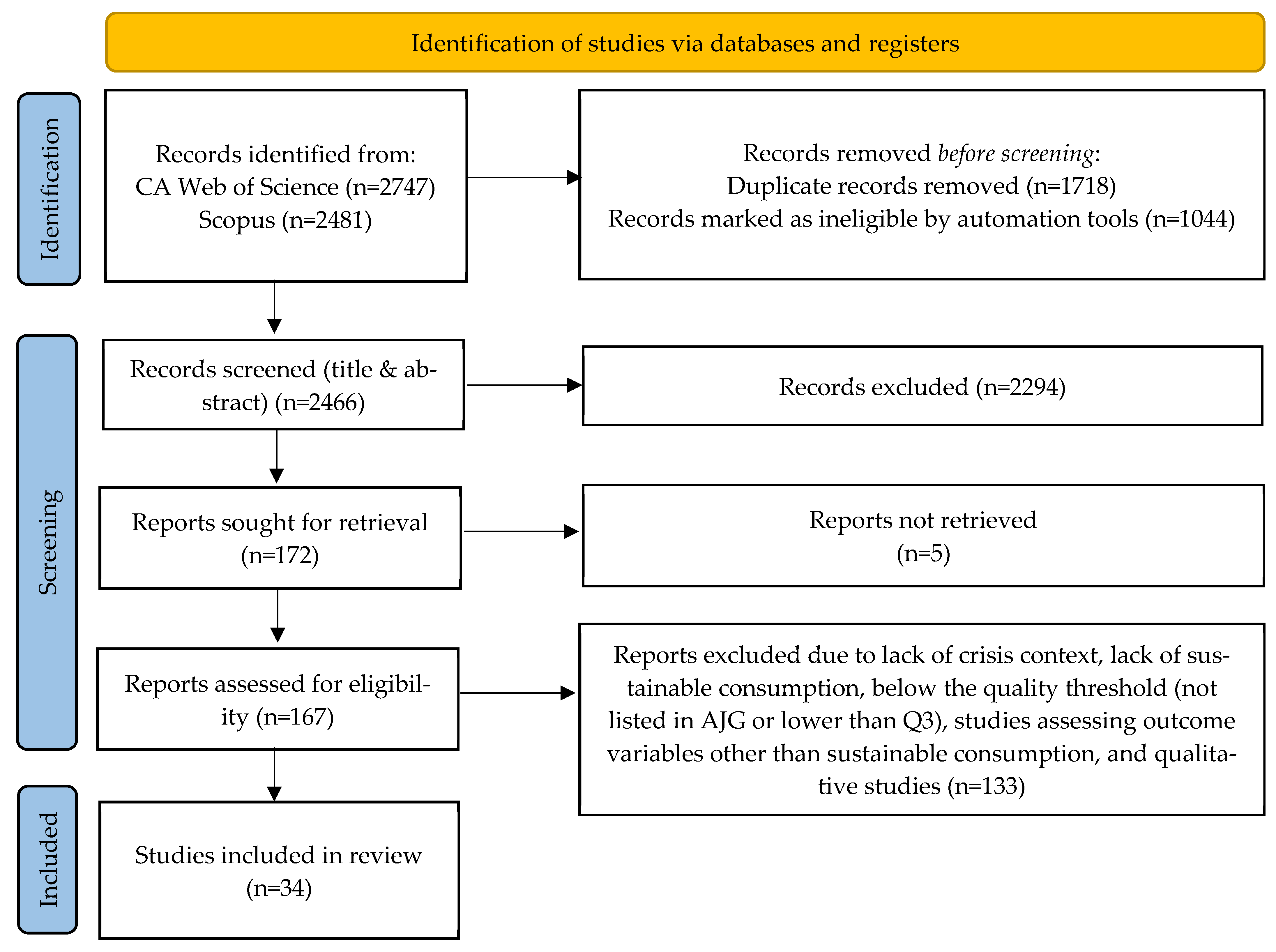
Figure 1. PRISMA flow diagram of the study selection process.
Sustainability 18 05721 g001
Figure 2. Number of studies by year of publication.
Sustainability 18 05721 g002
Figure 3. Factors determining sustainable consumption during the reaction phase.
Sustainability 18 05721 g003
Figure 4. Factors determining sustainable consumption during the coping phase.
Sustainability 18 05721 g004
Figure 5. Factors determining sustainable consumption during the adaptation phase.
Sustainability 18 05721 g005
Figure 6. Crisis-based customer journey map for sustainable consumption: guiding questions across reaction, coping, and adaptation stages.
Sustainability 18 05721 g006
Table 1. Search string development.
ConceptKeywords
sustainable consumptionsustainable consum *, thereby encompassing both “sustainable consumption” and “sustainable consumer.”
crises“accident”, “aging”, “breach”, “breakdown”, “calamity”, “cataclysm”, “catastrophe”, “collapse”, “conflict”, “contamination”, “corona”, “corruption”, “covid”, “crash”, “crime”, “crises”, “crisis”, “critical”, “cyberattack”, “damage”, “depression”, “disaster”, “discrimination”, “disease”, “disturbance”, “downturn”, “drought”, “earthquake”, “emergencies”, “emergency”, “epidemic”, “eruption”, “extremity”, “failure”, “fake news”, “fire”, “flood”, “genocide”, “harassment”, “heatwave”, “holocaust”, “hurricane”, “incident”, “instability”, “landslide”, “leak”, “misadventure”, “mishap”, “nuclear”, “outage”, “outbreak”, “pandemic”, “protest”, “recession”, “revolution”, “scarcity”, “setback”, “shock”, “short”, “slump”, “spill”, “strike”, “struggle”, “tension”, “terrorism”, “threat”, “tornado”, “trauma”, “tsunamis”, “turbulence”, “upset”, “violence”, “war”
* denotes a wildcard operator used to capture multiple word variations sharing the same root.
Table 2. Inclusion and exclusion criteria.
Inclusion CriteriaExclusion Criteria
  • Research articles that include selected keywords in the title, abstract, keywords, or full-text
  • Research articles published up to November 2025
  • Research articles published in English
  • Research articles published in peer-reviewed journals
  • Research investigating the factors determining sustainable consumption during crises
  • Research articles in different disciplines, using sustainable consumption influencing factors in the context of crisis
  • Research articles that do not include any of the selected keywords in the title, abstract, keywords, or full-text
  • Duplicate studies
  • Studies published after November 2025
  • Research articles written in languages other than English
  • Articles published in conference proceedings, books, editorial material, or book reviews
  • Studies focusing on traditional (non-sustainable) consumption
  • Studies focused on (sustainable) organizational procurement
  • Studies that do not identify factors determining sustainable consumption

Studies that were published in journals not listed in AJG or lower than Q3
Disclaimer/Publisher’s Note: The statements, opinions and data contained in all publications are solely those of the individual author(s) and contributor(s) and not of MDPI and/or the editor(s). MDPI and/or the editor(s) disclaim responsibility for any injury to people or property resulting from any ideas, methods, instructions or products referred to in the content.