Review

Grape Pomace Valorization: Extraction of Bioactive Compounds and Industrial Applications Within a Circular Economy Framework


by
Rafaela Magalhães
and
M. Beatriz P. P. Oliveira
*
LAQV-REQUIMTE, Faculty of Pharmacy, University of Porto, Rua Jorge de Viterbo Ferreira 228, 4050-313 Porto, Portugal
*
Author to whom correspondence should be addressed.
Sustainability 2026, 18(11), 5663; https://doi.org/10.3390/su18115663
Submission received: 1 May 2026 / Revised: 28 May 2026 / Accepted: 2 June 2026 / Published: 3 June 2026
(This article belongs to the Special Issue Sustainable Food Processing and Chemical Analysis)

Abstract

Wine production is one of the most important agricultural activities worldwide, and generates significant amounts of organic by-products, particularly grape pomace. Traditionally, this was seen as waste, but currently, this residue has been reanalyzed from the perspective of the principles of the bioeconomy and circular economy, demonstrating its potential as a rich source of bioactive compounds with great potential for valorization. Its heterogeneous composition accumulates a variety of polyphenols, dietary fibers, flavonoids, phenolic acids, and other secondary metabolites that confer important biological properties, including antioxidant, anti-inflammatory, and antimicrobial activities. The chemical composition of grape pomace varies substantially according to variety, winemaking method, and extraction conditions, directly impacting its potential application. Extraction methods have progressed from traditional procedures to more advanced techniques such as ultrasound, supercritical fluids, and natural solvents, enabling the selective separation of high-value compounds. This review provides a comprehensive and critical overview of grape pomace valorization, emphasising its composition, green extraction and current industrial applications. In addition, regulatory frameworks and sustainability strategies supporting the integration of grape pomace into value-added production chains are discussed. Overall, grape pomace valorization supports waste reduction and the production of new functional products that balance economic efficiency and environmental responsibility.

1. Introduction

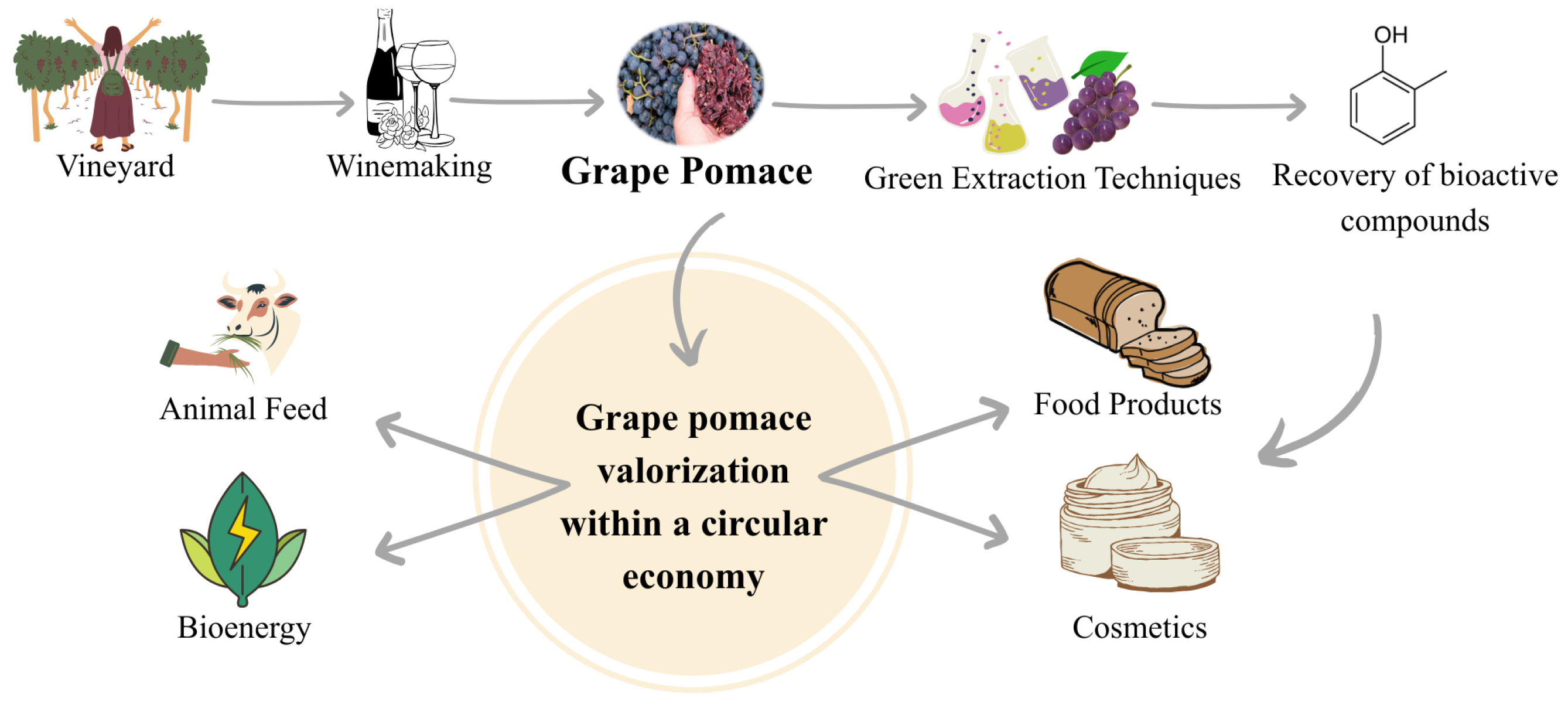
The wine industry is one of the oldest agricultural activities, with global relevance and economic significance [1], representing a strategic sector within both the agricultural and industrial domains [2]. As in other agri-food systems, high wine production requires rigorous management between traditional agricultural practices and modern technologies, while actively integrating sustainability strategies. It is currently estimated that more than 7.1 million hectares are dedicated to vine cultivation worldwide, highlighting the scale of this activity [3]. Globally, around 75% of total grape production is used for winemaking, an industry that reached approximately 227 million hectoliters in 2025 [4]. It is estimated that between 20% and 30% of the original grape mass results in grape pomace (GP). Based on industry estimates that every 6 L of wine produced yields approximately 1 kg of GP, the global production of this by-product is estimated to be between 10.5 and 13.1 million tons annually [5]. This by-product consists of skins, residual pulp, seeds, and stalks, and presents potential for industrial recovery and application in the food industry [6]. Although GP has historically been used mainly for the production of distilled alcoholic beverages, such as bagaceira (Portugal), orujo (Spain), grappa (Italy), and marc (France) [7] and animal feed, over the last few decades increasing attention has been given to its valorization. Now GP is recognized as a promising raw material for the recovery of valuable compounds and the development of sustainable value chains within the agri-food sector (Figure 1) [8].
Grape pomace is characterized by a complex and heterogeneous chemical composition, containing significant amounts of polyphenols, flavonoids, phenolic acids, tannins, stilbenes, dietary fiber, lipids, and other secondary metabolites [9]. These compounds are associated with important biological properties, such as antioxidant, anti-inflammatory, antimicrobial, and cardioprotective activities, which have sparked growing scientific and industrial interest [10]. However, the chemical profile of GP can vary considerably depending on various factors, including grape variety, geographic origin, climatic conditions, and winemaking practices, which directly influence its composition and, consequently, its potential applications [11].
In recent years, the development of efficient and green extraction techniques has contributed to increasing the potential for the valorization of GP. Conventional extraction methods have been progressively supplemented or replaced by green extraction technologies, such as ultrasound-assisted extraction, microwave-assisted extraction, supercritical fluid extraction, and the use of more environmentally safe solvents [12]. These approaches aim to improve extraction yields, reduce energy consumption, minimize solvent toxicity, and increase the selectivity of target bioactive compounds [13]. The application of eco-friendly extraction techniques supports the principles of green chemistry and sustainable resource management, promotes a reduction in environmental impact, and simultaneously enables the recovery of high-value compounds [14].
Beyond its chemical and biological benefits, the valorization of GP extends beyond the economic sphere and also presents clear environmental relevance. Its integration into value chains contributes to reducing food waste, decreasing water pollution, mitigating greenhouse gas emissions, and promoting sustainable production models [8]. These approaches are consistent with the foundational concepts of the circular economy and the Sustainable Development Goals (SDGs), positioning GP as a strategic resource rather than agro-industrial waste [15]. The reuse of winemaking by-products promotes resource efficiency and decreases environmental impacts related to waste disposal, such as soil pollution and unregulated organic decay [16]. In this context, regulatory and environmental frameworks are crucial for directing sustainable waste management practices and promoting the incorporation of GP into value-added production chains [17]. International guidelines and European regulations provide strategic direction for management, treatment, and utilization of this by-product, supporting its transition from waste material to a valuable resource within bioeconomy models [18].
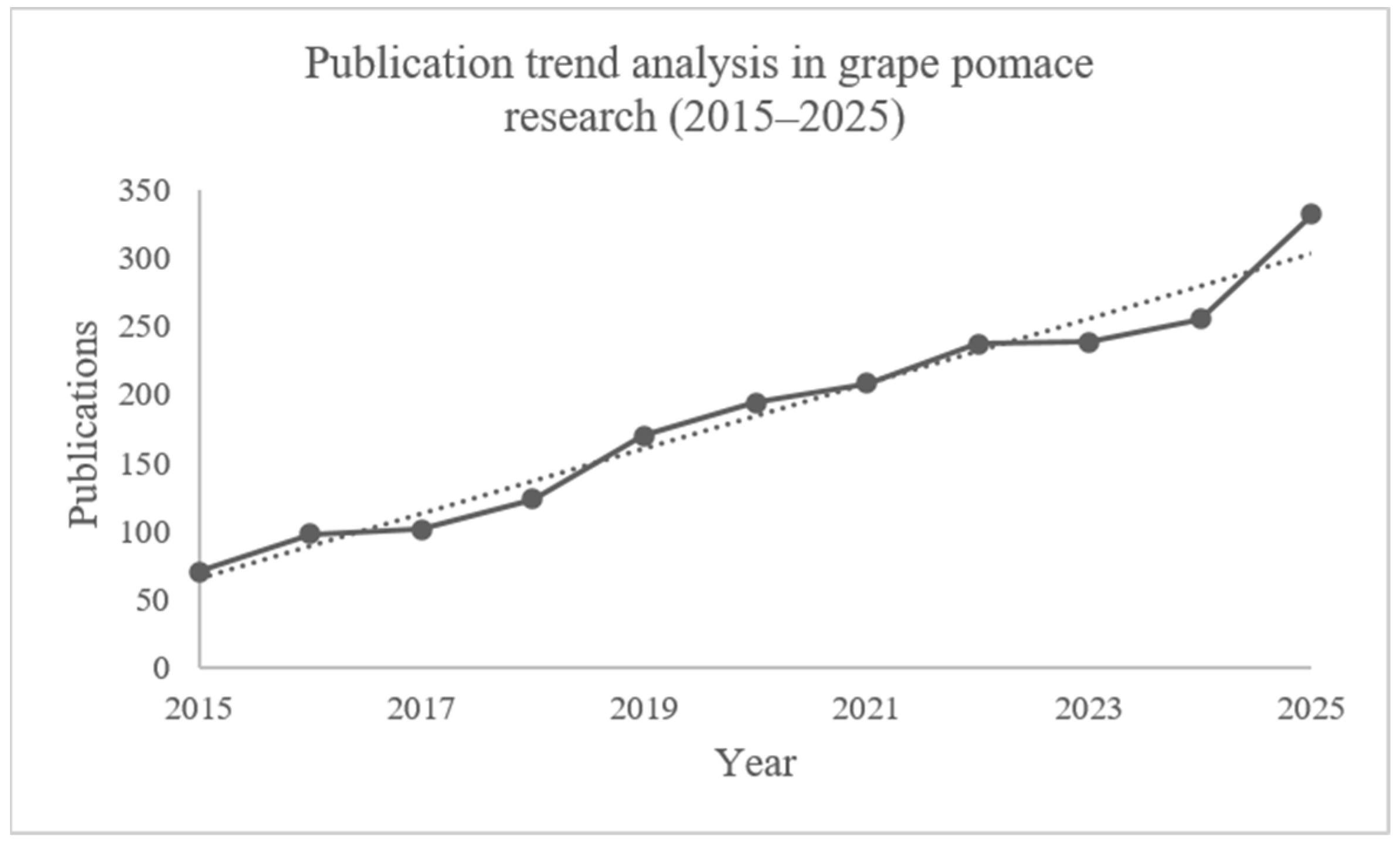
The growing scientific relevance of GP valorization is reflected in the steady increase in publications related to GP research over the last decade (Figure 2). Between 2015 and 2025, the number of publications related to GP research increased more than fourfold, highlighting the growing academic and industrial interest in sustainable extraction technologies, bioactive compounds, and circular economy applications associated with winery by-products.
Several reviews have previously addressed GP valorization from different perspectives. Antonić et al. (2020) [19], Bordiga et al. (2019) [20], and Beres et al. (2017) [21] mainly focused on the recovery of bioactive compounds and waste management strategies associated with winery by-products. Wang et al. (2024) [6] explored the sustainable utilization of GP, particularly focusing on industrial valorization pathways, while Lopes et al. (2025) [8] highlighted the phenolic composition, biological activities, and health-related properties of GP-derived compounds. More recent studies have also emphasized sustainable extraction technologies and biological potential [12]. While these reviews have significantly contributed to the understanding of GP valorization, they generally address these aspects separately or within a limited application scope. In this context, the present review provides a comprehensive and critical overview of GP valorization, focusing on its chemical composition, green extraction technologies and current industrial applications. Particular attention is given to sustainability strategies, regulatory frameworks, industrial implementation, and commercialization perspectives that support the transition from waste management to value-added production systems. Unlike previous reviews, this work integrates compositional, technological, industrial, regulatory, and sustainability perspectives within a circular economy framework, providing a multidisciplinary overview of GP as a strategic resource for sustainable industrial systems.

2. Methodology

A comprehensive literature search was conducted using the electronic databases ScienceDirect, Scopus, PubMed and Google Scholar. In addition, official websites of European and international institutions were consulted to obtain regulatory, policy and sustainability-related information relevant to the wine sector and by-product management. The search strategy was adapted according to the objectives of each section of the review.
For sections addressing grape pomace generation, sustainability challenges and regulatory frameworks, keywords such as “wine industry”, “grape pomace”, “winemaking by-products”, “circular economy” and “waste management” were used. Targeted searches focusing on sustainability policies included terms such as “European Union circular economy”, “food waste regulation” and “agro-industrial by-product valorization”.
For sections related to valorization pathways, chemical composition and extraction approaches, the literature search included keywords such as “grape pomace composition”, “polyphenols”, “dietary fiber”, “green extraction” and “sustainable technologies”. These topics were considered to support the discussion of sustainable valorization strategies rather than to provide an exhaustive technological review.
Additional searches addressing applications and market implementation used terms such as “grape pomace applications”, “functional foods”, “cosmetics” and “biomaterials”. Following an initial broad screening, approximately 100 peer-reviewed articles were selected for inclusion in this review. Studies not directly related to grape pomace valorization or circular economy and sustainability frameworks were excluded during the screening process. Priority was given to recent and highly relevant peer-reviewed publications from the last decade, complemented by seminal studies and key policy documents where appropriate. The selected literature was critically analyzed to support an integrated discussion of grape pomace valorization within a circular economy framework.

3. Chemical Composition and Biological Properties of Grape Pomace

Grape pomace is an agro-industrial by-product whose composition and functional value result from the complex interaction of genetic, environmental, and technological factors [22], including grape variety, soil and climate conditions, fruit ripeness, and the type of winemaking process [11]. This variability affects not only the volume produced, but also its chemical and bioactive profile with direct implications for sustainable valorization strategies [23].

3.1. General Chemical Composition

Although GP is addressed comprehensively within this study, its chemical composition is closely linked to the relative proportions of the various fractions that comprise it. On average, the skins constitute the largest part of the GP (≈40–45%), followed by the seeds (≈20–25%) and the stems (≈20–25%), while a smaller fraction is composed of other residues [12]. This heterogeneous composition underlies the diversity of bioactive compounds retained in the by-product and representing an opportunity for the development of efficient valorization strategies.
The matrix of GP represents a complex and highly variable chemical composition, as summarized in Table 1. According to Almanza-Oliveros et al. (2024) [10] GP stands out for its high content of fiber (40–60%), carbohydrates (5–15%), proteins (5–15%), lipids (2–12%), minerals (2–7%), and polyphenols (5–10%). These components contribute to its functional and nutritional value, including structural fibers, essential fatty acids predominantly present in the seeds, and a diverse profile of bioactive phenolic compounds mainly concentrated in the skins and seeds. As shown, the chemical composition of GP is unevenly distributed among its structural fractions, influencing the selection of appropriate technological strategies for the recovery and valorization of these compounds.
It is important to note that a substantial portion of the polyphenols in grapes, near 60 to 70%, remains in the pomace after winemaking, highlighting its significance as source of bioactive compounds [23]. This establishes GP as a raw material for the recovery of high-value compounds.
In general, its nutritional diversity ensures a wide range of potential applications for this material, particularly in the food, cosmetic, and pharmaceutical sectors, where both nutritional and functional properties are highly valued [4].

3.2. Phenolic Profile of GP

As one of the most abundant sources of phenolic compounds within the agri-food by-products, GP maintains a substantial fraction of these bioactives in the solid matrix after vinification. These compounds are distributed across GP fractions, skins, stems and seeds, with their relative abundance depending on grape variety and vinification conditions. These components are responsible for numerous biological activities, including antioxidant, anti-inflammatory, anti-tumor, and antimicrobial, supporting applications aimed at replacing synthetic additives and promoting natural functional ingredients [27].
The classification of these compounds depends on the number of aromatic rings linked to the hydroxyl group, and they are divided into two categories: flavonoids and non-flavonoids. Flavonoids are the group of phenolic compounds found in the highest quantities in GP and are dispersed throughout all of its fractions [28]. These compounds can be divided into subclasses and feature a C6-C3-C6 configuration, comprising two phenyl rings linked by a three-carbon chain, which enables diverse substitutions and modifications, giving rise to several flavonoid families, including flavan-3-ols [29], proanthocyanidins [30] and anthocyanins [18]. In contrast, non-flavonoid phenolic acids categorized into hydroxybenzoic acids and hydroxycinnamic acids [1] and stilbenes such as resveratrol [29] (Table 2).
Flavan-3-ols derive from the flavonoid class and can generate structurally related compounds. In other words, they form monomers such as catechins, but they can also undergo condensation reactions with each other and form polymers such as proanthocyanidins. Flavan-3-ols are commonly present in the skins, while the seeds are rich in catechins and proanthocyanidins [29]. Proanthocyanidins with higher molecular weight and enhanced antioxidant capacity, influences their extractability and bioavailability, making these compounds particularly relevant for applications in functional foods and nutraceuticals where controlled release and stability are critical [30].
Anthocyanins are natural compounds present solely in the skins of red grapes and responsible for blue, purple, and red pigmentation in grapes. These compounds, mainly present as glycosylated forms such as malvidin-3-O-glucoside, exhibit strong antioxidant properties but are highly sensitive to environmental factors including pH, temperature, and light [18]. This instability represents both a limitation and an opportunity: while it poses challenges for processing and storage, it also drives research into stabilization strategies for their use as natural colorants in food and cosmetic formulations [33].
Non-flavonoid compounds include phenolic acids and stilbenes, both of which play key roles in the functional properties of GP. Phenolic acids are divided into hydroxybenzoic and hydroxycinnamic acids. These molecules, which can be found mainly in grape skins, contribute to antioxidant and antimicrobial activities and are particularly relevant in food preservation applications [34]. Stilbenes, especially resveratrol, have gained considerable attention due to their well-documented cardioprotective, anti-inflammatory, and anti-cancer properties. Their presence in GP reinforces its potential as a source of high-value bioactives for pharmaceutical and nutraceutical applications [35].
Crucially, the phenolic composition of GP shouldn’t be assessed only by the existence of specific compounds, but also by examining their distribution and interactions throughout the matrix [8]. Such interactions can affect the stability, extractability, and overall performance of compounds, underscoring the intricacy of GP as a raw material. From an industrial viewpoint, this variety in composition necessitates customized approaches to effectively extract particular phenolic categories [36]. Simultaneously, the differences noted across GP sources highlight the necessity for uniform characterization methods to enhance comparability and facilitate scalable valorization processes [37]. The phenolic composition of GP is crucial for establishing its potential in creating valuable applications within a sustainable context.

3.3. Influence of Grape Variety and Winemaking Process

The chemical composition of GP is strongly influenced by grape variety and winemaking conditions, particularly the stage at which the by-product is generated. As shown in Table 3, a review of the literature led to the conclusion that clear differences can be observed between grape varieties and wine types regarding the phenolic composition of grape pomace.
Although white wines tend to retain a considerable amount of soluble phenolic compounds in the GP due to the immediate separation of the must before fermentation, red winemaking promotes the transfer of phenolic compounds from skins and seeds into the must, which can reduce the content of readily extractable phenolics in the resulting pomace [38]. However, this prolonged contact highlights the high concentrations of anthocyanins adhering to the skins.
In turn, the variability observed in flavonoid and tannin contents suggest that factors such as grape genetics, as well as soil and climatic conditions, may have a stronger influence than fermentation alone [39]. This duality emphasizes the distinct potential of GP: in whites, as a source of phenols that are more accessible to extraction; in reds, as a repository of pigments and structural compounds with high antioxidant value [40]. Overall, this compositional variability should not be considered a limitation but rather an opportunity for targeted and sustainable valorization, where processing strategies are adapted to the specific characteristics of the raw material within a circular economy framework.

3.4. Biological Properties

The biological properties of GP are primarily attributed to its rich phenolic composition, which plays a key role in plant defense mechanisms against biotic and abiotic stressors [41]. The bioactivity of these compounds is closely related to their chemical structure, particularly the number and position of hydroxyl groups and their degree of conjugation, which determine their ability to act as electron donors, radical scavengers, and metal chelators [42].
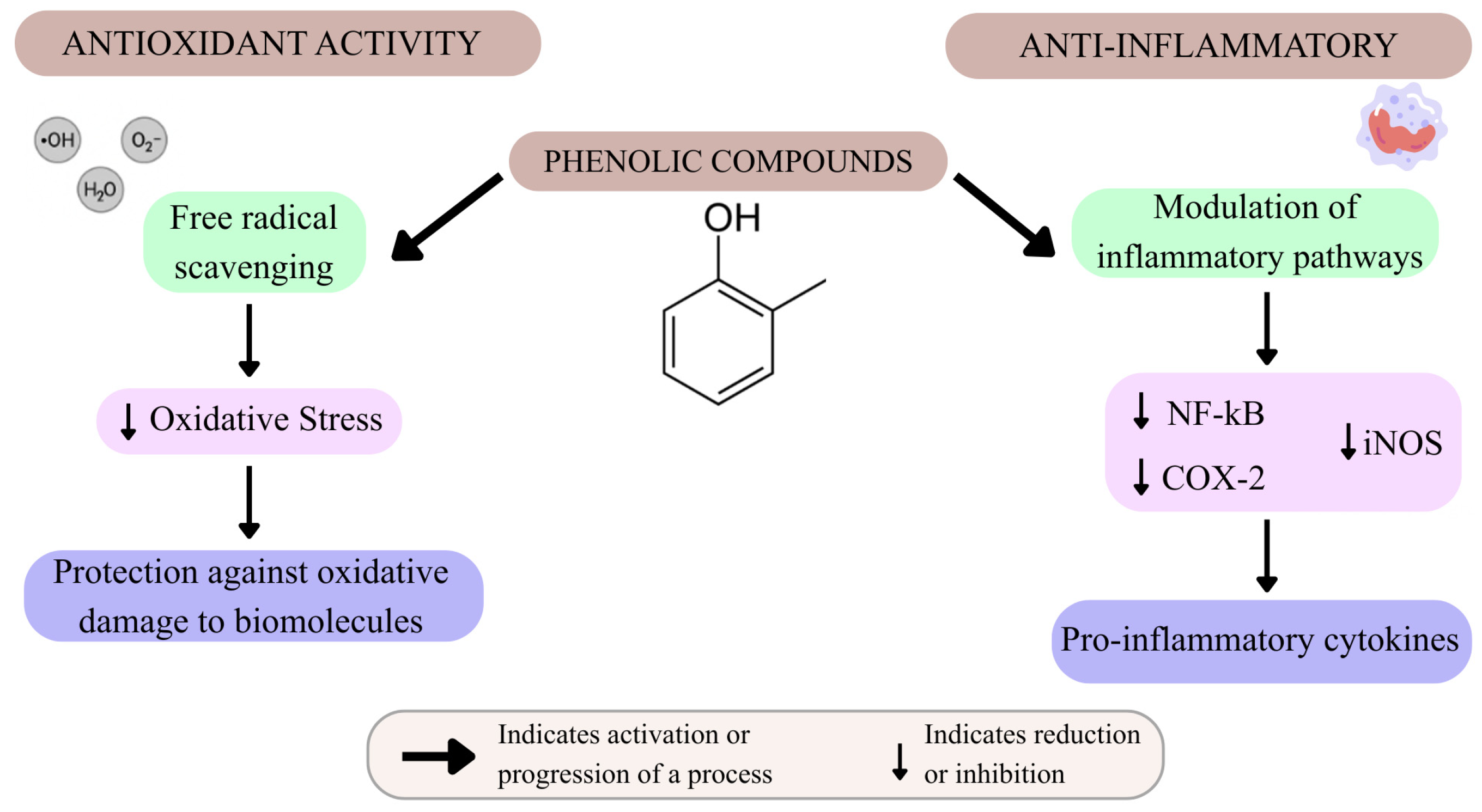
Among the various biological activities, antioxidant capacity is the most extensively reported. Phenolic compounds can neutralize reactive oxygen species (ROS) and reactive nitrogen species (RNS), preventing oxidative damage to lipids, proteins, and DNA. This activity is strongly associated with the stabilization of free radicals through hydrogen donation, interrupting oxidative chain reactions [43]. As oxidative stress is closely linked to inflammation, the antioxidant properties of GP phenolics also contribute indirectly to anti-inflammatory effects (Figure 3).
In this context, GP-derived compounds have demonstrated the ability to modulate inflammatory pathways by inhibiting the production of pro-inflammatory mediators, including cytokines and prostaglandins, as well as regulating the expression of enzymes such as cyclooxygenase (COX-2) and inducible nitric oxide synthase (iNOS) [44]. Additionally, phenolic compounds have been shown to interfere with signaling pathways, particularly the NF-κB transcription factor, which plays a central role in the inflammatory response.
Recent experimental studies further support the biological potential of GP. For instance, in vivo studies have demonstrated that GP extracts can reduce inflammatory markers and restore antioxidant balance in models of intestinal inflammation, highlighting their potential as modulators of physiological responses [45].
Beyond antioxidant and anti-inflammatory effects, GP has been associated with a broad spectrum of biological activities, including antimicrobial, cardioprotective, and metabolic effects [8]. Phenolic compounds such as resveratrol and proanthocyanidins have been linked to reduced lipid oxidation and improved endothelial function, contributing to cardiovascular health. In addition, GP-derived compounds and associated dietary fibers have shown potential in regulating glucose metabolism and improving insulin sensitivity.
Emerging evidence also suggests anti-tumor activity, with studies reporting reduced cancer cell viability and induction of apoptosis through mechanisms involving oxidative stress and cellular signaling pathways [46]. Although these findings are still under investigation, they reinforce the potential of GP as a source of bioactive compounds for high-value applications.
Overall, the wide range of biological properties associated with GP highlights its relevance as a multifunctional ingredient. This bioactivity, combined with its availability as an agro-industrial by-product, supports its valorization within sustainable frameworks aimed at developing functional foods, nutraceuticals, and other bio-based products.

3.5. Implications for Sustainable Valorization

The varied composition of GP offers a solid basis for its incorporation into sustainable value chains. Instead of being regarded merely as waste that needs to be disposed of, GP can be viewed as a valuable raw material that can aid in creating innovative bio-based products [8]. The existence of functional elements, along with the significant quantities produced by the wine sector, opens up possibilities to create cohesive valorization routes that address both economic and environmental issues concurrently [23].
In circular bioeconomy models, the incorporation of GP helps lessen reliance on synthetic additives and non-renewable resources, while encouraging the use of naturally sourced compounds with established functional attributes [47]. This shift from waste management to resource utilization promotes more efficient production systems, fostering the recovery of valuable components and their integration into food, cosmetic, nutraceutical, and biomaterial uses.
Additionally, adopting sustainable valorization approaches for GP aligns with wider environmental goals, such as reducing waste and enhancing resource efficiency in agri-food systems [48]. These strategies bolster the significance of agro-industrial by-products as essential elements in creating more robust and eco-friendly production models, emphasizing GP as a crucial factor in the shift toward circular and sustainable industrial methods.

4. Extraction Technologies

The sustainable valorization of GP is essentially based on the recovery and use of its biologically interesting constituents. The development of extraction methods is a decisive step to maximize yield, preserving the chemical integrity of the compounds, and reducing the environmental impact associated with traditional processes. The selection of the extraction technique is affected by multiple factors, including the properties of the solid matrix, the polarity of the solvents, the operating conditions (temperature, time, and pressure), and the thermal stability of the compounds of interest [49].

4.1. Pre-Treatment of GP

Pre-treatment represents a critical initial step in the valorization of GP as it directly influences the efficiency of subsequent extraction processes and the stability of bioactive compounds. Fresh GP often has a high moisture content, about 80%, and these levels can lead to rapid microbial growth and enzymatic degradation if the sample is not immediately subjected to a stabilization process [50]. Due to its susceptibility to deterioration, immediate processing after production is essential to prevent the loss of valuable constituents, particularly phenolic compounds that are sensitive to environmental conditions such as exposure to oxygen, light, and temperature fluctuations.
Drying is the most widely used stabilization method and several drying techniques have been investigated for GP processing, including air drying, oven drying, and freeze-drying, each with its own specific advantages and limitations [51]. Conventional air-drying is economical, easily scalable, and compatible with industrial processing conditions; however, exposure to high temperatures can lead to partial degradation of thermolabile compounds and alterations in phenolic profiles [52]. In contrast, freeze-drying better preserves the content of phenolic compounds, antioxidant activity, and structural integrity due to the absence of high temperatures [53]. However, this technique may be associated with higher operating costs and energy consumption, which can limit its industrial viability. From a sustainability perspective, the higher energy demand associated with freeze-drying should be considered when selecting pre-treatment strategies for large-scale GP valorization processes.
Consequently, the selection of drying conditions must balance the preservation of compounds with economic and environmental considerations, particularly within the context of sustainable processing models. Overall, appropriate pre-treatment strategies are fundamental to ensure the preservation of bioactive compounds and to enhance the efficiency, reproducibility, and sustainability of downstream extraction processes [51]. These preliminary actions create an essential connection between the management of raw materials and the creation of effective and scalable valorization pathways in circular bioeconomy frameworks.

4.2. Conventional Extraction Methods

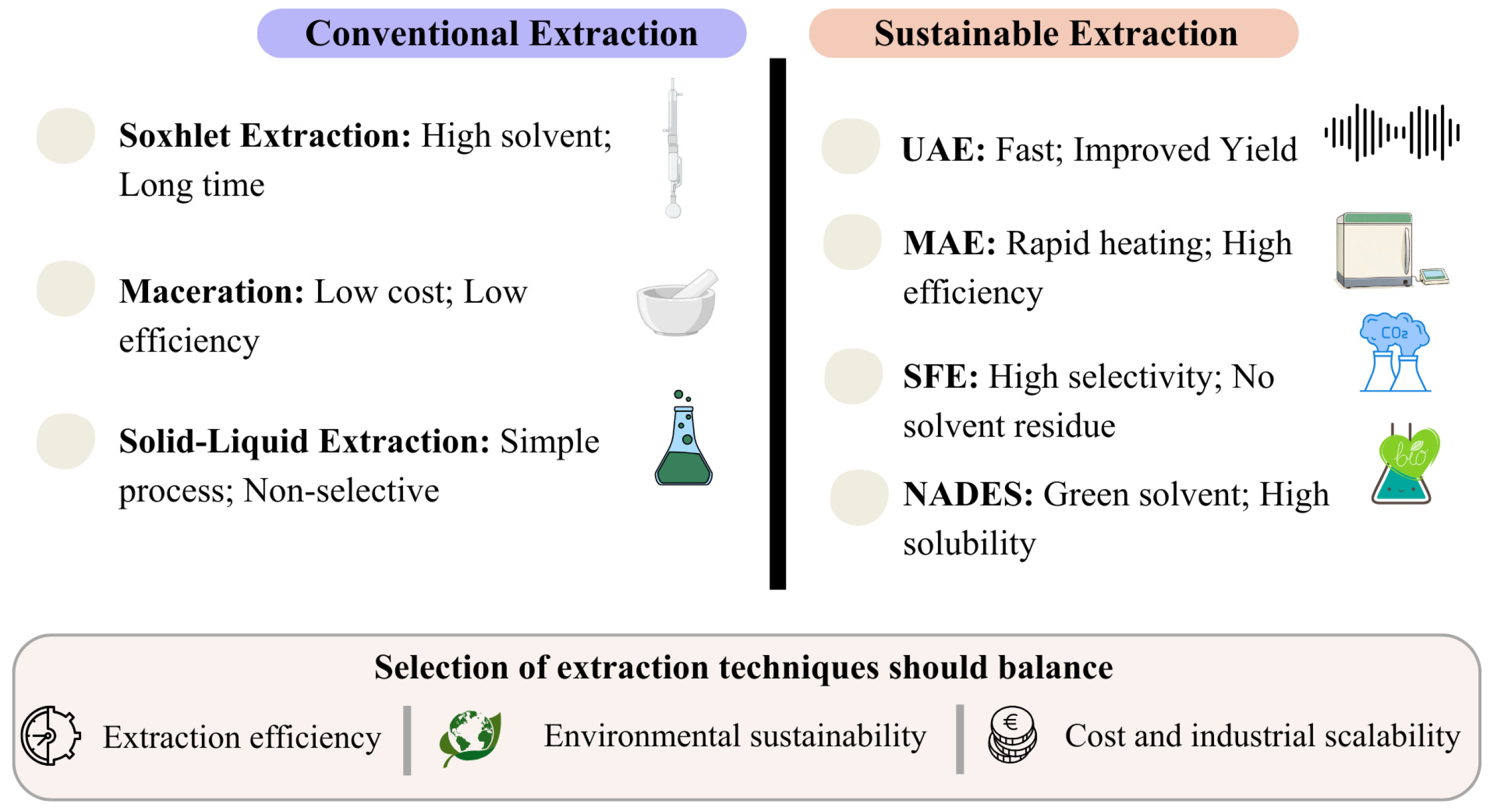
Conventional extraction methods continue to be widely used for the recovery of phenolic compounds, primarily due to their simplicity, cost-effectiveness, and ease of implementation. These techniques are based on the principles of solid–liquid extraction and are considered benchmark methods for evaluating the performance of emerging extraction technologies [4]. Their operational simplicity makes them suitable for both laboratory-scale studies and industrial applications.
Maceration is one of the most commonly applied techniques and involves immersing the solid matrix in a suitable solvent for a defined period until equilibrium is established between the concentration of the solute in the liquid phase and that remaining in the plant material [4]. The efficiency of this method depends on several parameters, including solvent polarity, temperature, extraction time, and the solid–liquid ratio, which influence the solubility of phenolic compounds and their transfer from the plant matrix to the solvent [54]. Despite the relatively long extraction times, maceration remains frequently employed due to its simplicity, low cost, and ease of implementation.
Soxhlet extraction is another traditionally used conventional technique for the thorough recovery of bioactive compounds. This method involves the continuous reflux of the solvent over the solid matrix, allowing repeated contact between the solvent and the sample, which generally results in relatively high extraction yields [55]. However, this method uses large volumes of solvent, involves prolonged processing times, and consumes significant amounts of energy. Furthermore, the temperatures involved can promote the degradation of thermolabile phenolic compounds, potentially affecting the stability and biological activity of the extracts [56].
Solid–liquid extraction using hydroalcoholic mixtures is widely applied in the food, cosmetic, and pharmaceutical industries. Mixtures of ethanol and water are often chosen due to their ability to extract a wide range of phenolic compounds while remaining compliant with regulatory requirements for human use [36]. Extraction efficiency is strongly influenced by solvent composition, temperature, extraction time, and matrix characteristics, requiring careful optimization to maximize compound recovery [57]. Comparative studies evaluating ethanol-based extraction techniques confirm that conventional methods remain important benchmark approaches, despite the development of more advanced technologies [58].
In general, while traditional extraction techniques have drawbacks regarding extraction duration, solvent usage, and selectivity, they still maintain a significant role in GP processing. Their scalability, reproducibility, and comparably low operational expenses render them ideal for industrial implementation, especially when paired with enhanced processing conditions. As a result, traditional methods continue to serve as crucial standards for evaluating the effectiveness, efficiency, and sustainability of new green extraction technologies.

4.3. Sustainable Extraction Techniques

In recent years, there has been a gradual shift away from conventional techniques toward more sustainable and efficient technologies for the recovery of phenolic compounds from GP. This transition is aligned with green chemistry principles, aiming to reduce solvent consumption, energy requirements, and processing time, while preserving the chemical integrity of bioactive compounds. As illustrated in Figure 4, sustainable techniques improved selectivity and lower environmental impact when compared to conventional approaches [14].
Ultrasound-assisted extraction (UAE) is one of the most widely used extraction methods due to its ease of handling, operator preparation, and low costs. It is based on the transmission of high-frequency sound waves that produce micro cavitations in the solvent. This phenomenon causes the rupture of the cell walls of the plant matrix, facilitating the diffusion of phenolic compounds into the extraction medium and resulting in effective extraction [59]. Despite its advantages, extraction efficiency depends on several parameters, including solvent properties (e.g., viscosity and vapor pressure), temperature, and ultrasound intensity, which must be carefully optimized to avoid degradation of sensitive compounds.
Microwave-assisted extraction (MAE) uses principles from conventional techniques and employs electromagnetic energy to interact with molecules in the plant matrix, promoting rapid and uniform heating by converting electromagnetic energy into heat. This process facilitates the disruption of cell walls and enhances the transfer of target compounds into the solvent, significantly reducing the time required for extraction [60]. Operational parameters such as extraction time, temperature, and solvent type play a critical role in determining both yield and compound stability, particularly for thermolabile phenolics [61].
Supercritical fluid extraction (SFE), typically employing carbon dioxide (CO2) as a solvent, is recognized as a green and highly selective extraction technique. Under supercritical conditions, CO2 exhibits unique physicochemical properties, combining gas-like diffusivity with liquid-like solvating power [29]. This allows efficient penetration into solid matrices and selective solubilization of target compounds. Moreover, the extraction selectivity can be tuned by adjusting pressure and temperature conditions or by adding co-solvents such as ethanol.
More recently, techniques using natural solvents, known as Natural Deep Eutectic Solvents (NADES) have emerged. Their greater importance is due to their biodegradability, low toxicity, and high efficiency in the extraction of phenolic compounds [62]. These solvents enable the modification of polarity and the optimization of selective extraction of various classes of bioactive compounds, increasing the yield and stability of the extracts generated. NADES systems enable selective extraction of a wide range of phenolic compounds, including anthocyanins and flavonols, while improving extract stability [63]. Recent studies have demonstrated that NADES can outperform traditional solvents in terms of extraction efficiency and antioxidant capacity, highlighting their potential for sustainable GP valorization.
Despite the advantages of advanced extraction technologies, economic and operational constraints must be considered when valorizing agro-industrial by-products such as GP. Given its low commercial value, the exclusive use of advanced and energy-intensive techniques may not be feasible in real industrial contexts [29], particularly during early development stages or in small and medium-sized processing facilities. In many cases, high capital investment, increased energy consumption, and the need for specialized equipment may limit large-scale implementation. Therefore, the selection of extraction strategies should balance extraction efficiency with economic feasibility, process scalability, and overall environmental performance, supporting the practical application of sustainable valorization approaches.
Although several sustainable extraction technologies have demonstrated promising laboratory-scale performance, increasing evidence supports their applicability at pilot and industrial scales. Supercritical fluid extraction has shown feasibility for large-scale recovery of grape seed oil and phenolic compounds, including pilot-scale applications and economic evaluations supporting its industrial feasibility [64].
Similarly, UAE combined with NADESs has demonstrated significant scalability and applicability for industrial use in food and cosmetic sectors, supporting the development of ready-to-use bioactive extracts and functional ingredients [65]. Microwave-assisted extraction has also demonstrated potential for scale-up processes, with studies reporting its usefulness for assessing industrial feasibility and the commercial value of grape-derived polyphenols [64].
Despite these advances, several emerging extraction technologies still require further techno-economic validation, process standardization, and optimization before broader industrial implementation can be fully achieved.

4.4. Influence of Solvent Selection

The selection of solvent plays a critical role in determining the efficiency and selectivity of the extraction [57] as its physicochemical properties, particularly polarity together with extraction conditions and interactions with the plant matrix, govern the diffusion and recovery of bioactive compounds from GP [66]. These factors highlight the importance of optimizing solvent systems to enhance extraction performance, since phenolic compounds include structurally diverse classes and no single solvent is universally effective for their extraction, requiring tailored approaches depending on the intended application.
Several studies have demonstrated that these factors are decisive for the effective recovery of bioactive compounds from GP. Pintać et al. (2018) [58] evaluated different solvents for the extraction of phenolic compounds from GP obtained from different grape varieties. Several solvents were tested and the results showed that 80% methanol achieved the highest total yield of polyphenols, enabling extraction of compounds with different polarities. Similar results were observed for 80% ethanol, although slightly lower efficiencies were obtained.
Acidified solvents favored the recovery of anthocyanins, as acidic conditions contribute to pigment stabilization and improve solubility. In contrast, acetone and ethyl acetate showed greater selectivity for flavan-3-ols and flavonols. The compounds identified and quantified by spectrophotometric and chromatographic techniques for each solvent are summarized in Table 4, allowing visualization of the influence of solvent selection on extract composition. These findings confirm that no single solvent is effective for all phenolic classes, and solvent selection should therefore be aligned with the objective of the extraction process.
Rodrigues et al. (2023) [67] evaluated the efficiency of different solvents while optimizing extraction conditions such as time and temperature to maximize phenolic recovery. The authors reported that hydroalcoholic and hydroacetone mixtures (50%) were significantly more effective than pure solvents, increasing the recovery of phenolic compounds by up to twelve times in the case of acetone. The presence of water favored improved dispersion and release of polyphenols from the plant matrix due to increased polarity and enhanced solvent penetration into the solid structure. Although 50% acetone demonstrated high extraction efficiency, ethanol was considered the most suitable solvent due to its compatibility with food-grade applications and lower toxicity.
In general, mixtures of alcohols (ethanol or methanol) with water demonstrated the best results in terms of total extraction efficiency, balancing polarity, safety, and environmental impact. Therefore, solvent selection represents a key parameter in GP valorization, directly influencing extraction yield, compound profile, and potential industrial application. The research revealed that there is no single solvent that is effective for all phenolic compounds, and solvent selection should therefore be guided by the intended application, target compound profile, and sustainability criteria [67]. In conclusion, the appropriate choice of solvent and extraction conditions ensures high-quality extracts and enhances their potential applications.

5. Industrial Applications of GP

The value of GP depends on the effective extraction of its bioactive compounds. The way these compounds are extracted not only influences the quantity and quality of the extracts, but also plays a role in their stability and chemical composition. These elements are fundamental to the opportunities for using the extracts in various areas, converting an often-rejected by-product into a valuable and versatile resource. Representative studies describing these applications are presented in the following sections.

5.1. Animal Feed

The incorporation of GP into animal diets has been investigated as a sustainable alternative feed ingredient due to the presence of organic acids, dietary fiber, and small amounts of proteins and lipids, which offer important antioxidant and antimicrobial properties for feed. Studies have shown that the phenolic compounds found in GP, especially condensed tannins and anthocyanins, have a beneficial effect on modulating the ruminal microbiome, helping to reduce methane production and improve digestive efficiency. In addition, the antioxidant activity of these compounds contributes to the protection of animal tissues against oxidative stress [16].
Supplementation of animal diets with GP has also been associated with improvements in meat quality, particularly through reduced lipid oxidation and enhanced oxidative stability after slaughter. These findings suggest that GP can be incorporated into animal feed formulations in controlled amounts without negatively affecting animal welfare, while simultaneously contributing to improved product quality [68].

5.2. Bioenergy

The use of GP as biofuel is a technical and viable solution, boosting the circular economy in the wine sector by transforming an agro-industrial by-product into renewable energy sources. Due to its high availability and rich composition in organic matter such as cellulose, hemicellulose, lignin, and lipid residues, GP has favorable properties for bioenergy processes.
Among the available technologies, anaerobic digestion has been widely explored due to its capacity to convert fermentable organic matter into methane-rich biogas. Additionally, carbohydrate fractions present in GP can undergo enzymatic hydrolysis to produce fermentable sugars suitable for bioethanol production, while grape seed oil may be converted into biodiesel through transesterification reactions due to its high fatty acid content [6].
Recent studies have also demonstrated the suitability of GP for biomass pellet production, presenting calorific values comparable to conventional agro-industrial residues [5]. Integrated biorefinery approaches have further been proposed, allowing the sequential extraction of phenolic compounds followed by the use of the remaining biomass for energy production, maximizing resource efficiency and reducing waste generation [47].

5.3. Food Industry

The inclusion of GP in the food industry represents a highly promising strategy to valorize this by-product, in line with sustainability principles and the circular economy. Grape pomace shows great potential as a functional ingredient and natural technological agent, serving as a viable alternative to synthetic additives commonly used.
The incorporation of GP extracts or flours into meat products has been associated with inhibition of lipid oxidation, improved color stability, and reduced microbial growth, contributing to extended shelf life. In bakery products, partial substitution of conventional flour with GP flour has been shown to increase total phenolic content, antioxidant activity, and dietary fiber levels, improving the nutritional profile of the final product [23].
Biotechnological approaches such as microbial fermentation have also been explored to enhance phenolic bioavailability and reduce astringency, improving sensory properties and expanding the potential applications of GP-derived ingredients in functional foods aligned with current consumer demand for natural and sustainable products [69].

5.4. Cosmetics and Pharmaceuticals

Currently, the growing demand for natural and sustainable cosmetics has increased interest in the use of agricultural by-products, and once again GP stands out due to its components. Due to its biological properties, it has become interesting for cosmetic preparations with rejuvenating and skin protection results, and is being reevaluated as a promising raw material for the creation of natural creams, lotions, and sunscreens [70]. In order to obtain cosmetic formulations with the desired functionalities, GP extracts must be rich in certain phenolic compounds to express their recognized antioxidant, anti-inflammatory, and photoprotective potential (Table 5). These compounds, especially proanthocyanidins and resveratrol, play biological roles by enabling the modulation of critical cellular pathways associated with skin health [71]. Phenolic compounds such as resveratrol, quercetin, catechins, and proanthocyanidins have demonstrated the ability to neutralize reactive oxygen species (ROS), inhibit enzymes responsible for collagen degradation, and stimulate collagen synthesis. These mechanisms contribute to improved skin elasticity, hydration, and protection against premature aging caused by oxidative stress and UV radiation [71].
Additionally, synergistic interactions between phenolic compounds have been shown to improve oxidative stability and enhance the performance of cosmetic emulsions. These bioactive compounds have been successfully incorporated into sunscreens [72], lip care products [73], hydrogels [74], and topical formulations with antioxidant, antimicrobial, and skin-regenerating properties [75].
Table 5. Major phenolic compounds identified in grape pomace and their relevance in cosmetic formulations.
Phenolic CompoundsCosmetic FunctionReference
ResveratrolAnti-aging, antioxidant, photoprotective[71]
QuercetinAntioxidant, anti-inflammatory, collagen stimulator[71]
Gallic acidAntioxidant, formulation stabilizer[71]
Ferulic acidPhotoprotective, antioxidant, formulation stabilizer[75]
CatechinsAntioxidant, anti-aging[71]
ProanthocyanidinsAnti-wrinkle, antioxidant, microcirculation booster[71]
FlavonoidsAntioxidant, soothing, photoprotective[71]
StilbenesAntioxidant, skin-regenerative[71]
In summary, phenolic compounds isolated from GP form a versatile natural matrix, exhibiting properties of great importance for contemporary cosmetics (Table 5). These findings reinforce their role as essential components in innovative and sustainable formulations, paving the way for cosmetic applications.
Overall, the wide range of applications summarized in Table 6 highlights the potential of GP as a sustainable raw material for the development of value-added products in multiple industrial sectors, reinforcing its role within circular economy strategies.

6. Sustainability Framework

6.1. Environmental Relevance of GP

Considering the current scale of wine production and consumption worldwide, large quantities of by-products are inevitably produced during winemaking. Approximately 20–30% of the weight of grapes processed into wine becomes waste, namely pomace, stems, and lees [21]. These materials represent an environmental challenge and are among the main problems faced by the wine by-product sector, harmonizing the cultural and economic importance of this sector with sustainable production practices.
When not properly treated, these wastes cause multiple environmental impacts such as phytotoxicity and pollution in plants and soil, due to their high organic load [76]; greenhouse gas emissions, due to the carbon footprint generated by waste [77]; and generating wastewater with low pH, high salinity and nutrients that cause a high environmental impact when discharged or disposed without treatment [78]. Understanding and mapping the stages of the production process and identifying the critical points of waste generation, especially GP, are fundamental steps in developing effective recovery strategies.
In this context, the valorization of GP has emerged as an effective strategy to reduce waste generation while promoting the recovery of valuable compounds. The transition from a traditional linear production model toward circular economy approaches allows the transformation of agro-industrial residues into secondary raw materials with added value, reducing environmental impact and promoting resource efficiency [8].

6.2. Regulatory and Policy Frameworks Supporting GP Valorization

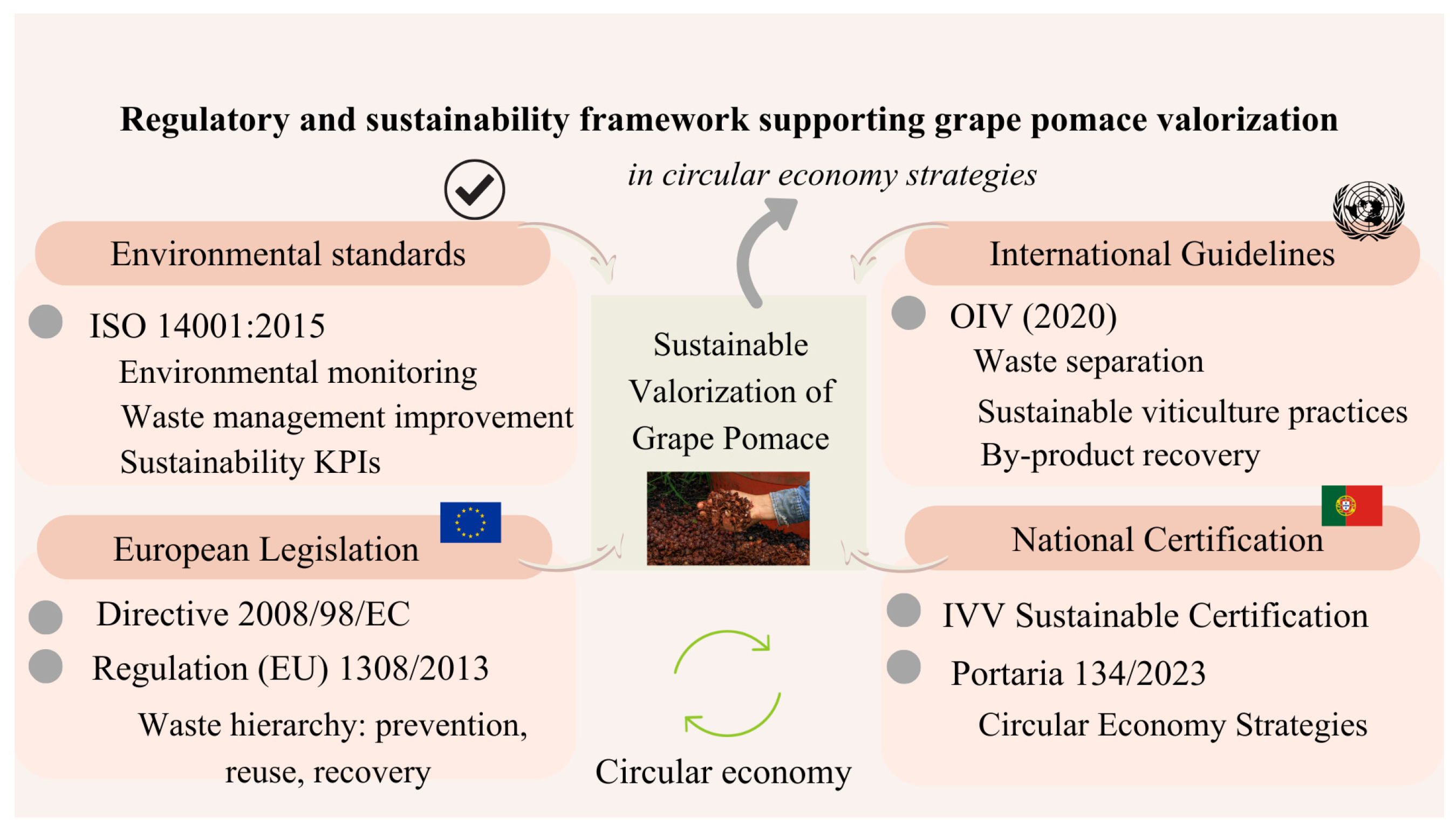
The wine industry has implemented standards and certifications that guide the management of by-products and promote sustainable practices. These documents (Figure 5) are essential to ensure that all processes throughout winemaking meet safety, quality, and traceability requirements. This guarantees the promotion of waste reuse, reduced environmental impact, and strategies that encourage the circular economy.
Environmental management systems such as ISO 14001:2015 provide structured methodologies for monitoring environmental performance and implementing continuous improvement strategies, including waste minimization and resource efficiency [79]. Although it does not deal with specific oenological procedures, this standard requires companies to recognize and monitor their relevant environmental aspects [80]. Recent studies report the application of this standard in wineries led to the creation of Key Performance Indicators (KPIs) which facilitate the monitoring of environmental performance and continuous improvement of sustainability in each winemaking process [81].
Sector-specific guidance is provided by the International Organisation of Vine and Wine (OIV), which establishes recommendations for sustainable viticulture and winemaking practices, including waste separation, by-product recovery, and environmentally responsible production systems [82].
At the European level, Directive 2008/98/EC establishes the waste hierarchy prioritizing prevention, reuse, recycling, and recovery, reinforcing the importance of valorization strategies for agro-industrial residues [18]. Regulation (EU) No 1308/2013 further defines requirements regarding the management and destination of winemaking by-products, ensuring proper recovery routes such as distillation or energy production [17].
At the national level, the Portuguese regulatory framework also defines specific requirements for the management of winemaking by-products. Portaria nº 134/2023 establishes the obligations related to the recovery and destination of grape marc and lees, including minimum residual alcohol contents and mandatory delivery of by-products to authorized entities for distillation or other valorization pathways [83]. Compliance with these requirements is supervised by Instituto da Vinha e do Vinho (IVV), which also promotes sustainability certification schemes encouraging circular economy practices and responsible waste management [84].
The implementation and feasibility of GP valorization strategies are strongly influenced by regional regulatory frameworks and environmental requirements. In the European Union, circular economy policies and sustainability-oriented legislation promote the recovery and reintegration of winery by-products into industrial value chains. Measures related to waste reduction, resource efficiency, and environmental protection encourage the development of sustainable extraction technologies and facilitate investment in waste recovery infrastructure. Furthermore, European legislation establishes specific requirements regarding the management, transportation, and authorized use of winery by-products, directly influencing industrial practices and research priorities associated with GP valorization.
Regulatory approaches, however, vary considerably across wine-producing regions. Differences in waste classification systems, environmental compliance requirements, and authorization procedures for GP-derived ingredients may influence the scalability and commercial adoption of valorization processes. Regions with well-established sustainability policies and circular economy strategies generally exhibit higher levels of GP recovery and utilization, whereas regions with less developed regulatory structures often continue to rely on conventional disposal practices. Consequently, harmonized regulations and sustainability-oriented policy measures are expected to play a key role in guiding future research, technological innovation, and industrial deployment of GP valorization strategies worldwide. Together, these frameworks support the integration of circular economy principles into the wine production chain, encouraging the transformation of GP into high-value products while ensuring environmental protection and regulatory compliance.

6.3. Grape Pomace Valorization Within the UN 2030 Agenda

The utilization of GP is directly aligned with the aims of the United Nations 2030 Agenda for Sustainable Development, especially Sustainable Development Goal 12—“Responsible Consumption and Production” [85]—which encourages sustainable resource use and waste minimization in various industries. Grape pomace is progressively regarded as a resource that can be upcycled into value-added products, a change that aligns with circular economy strategies focused on reducing waste while enhancing resource efficiency.
By converting GP from a waste liability into a secondary raw material, wineries can minimize the environmental effects related to traditional waste management methods, like landfilling or composting without proper valorization, and incorporate sustainable production practices into their processes [86]. In this context, the valorization of GP directly aligns with the fundamental aim of SDG 12, which seeks to separate economic growth from environmental harm by fostering sustainable production and consumption practices that incorporate the reuse and recycling of by-products [87].
Aside from SDG 12, GP valorization also aids in achieving Sustainable Development Goal 9—“Industry, Innovation and Infrastructure”—by promoting innovative technological approaches for by-product usage. Methods that transform GP into bioactive substances or functional components illustrate how agro-industrial waste can stimulate industrial innovation and generate additional revenue streams, promoting robust and sustainable industrial systems.
Sustainable valorization strategies can indirectly aid in achieving Sustainable Development Goal 13—“Climate Action”—by decreasing greenhouse gas emissions linked to conventional disposal practices and fostering resource conservation during the wine production lifecycle. Valorization pathways improve the environmental outcomes of wineries by preserving essential organic matter and reducing dependence on primary resources, aligning with overarching climate mitigation goals.
Positioning GP valorization within the framework of the 2030 Agenda reinforces its role not only as a technological opportunity but also as a comprehensive sustainability strategy aligned with global goals for food systems, resource efficiency and environmental protection.

7. Commercial Implementation of GP-Based Products

7.1. Commercial Applications of GP-Derived Products

The transition from laboratory-scale research to commercial implementation demonstrates the growing economic and environmental relevance of GP as a sustainable raw material. In recent years, several companies and research projects have demonstrated the economic potential of GP through its application in innovative commercial products. The following examples (Table 7) show how scientific research has resulted in sustainable market solutions, taking advantage of the antioxidant, antimicrobial, and nutritional characteristics of GP. The limitations reported refer primarily to the level of scientific validation, the degree of specificity to grape pomace as a raw material, and the availability of independent studies supporting the claimed functional benefits. The functional claims, levels of scientific support, and limitations presented were critically assessed by the authors based on the available literature concerning GP composition, bioactivity, and commercial applications.
In the food sector, GP has been incorporated into functional products due to its high fiber content and antioxidant activity. One illustrative example is “Baguitas”, a Portuguese product developed using flour obtained from GP of Touriga Nacional and Arinto grape varieties. The incorporation of GP contributes to improved nutritional value while simultaneously reducing reliance on refined flours and promoting the sustainable use of agro-industrial residue [89].
The cosmetic industry has also demonstrated significant interest in GP extracts, particularly due to their high concentration of polyphenols with antioxidant and anti-aging properties. Companies such as Stocksmetic have developed cosmetic formulations incorporating grape-derived ingredients to support skin protection and elasticity [90]. Similarly, the Grapey brand introduced the “Elixir of Beauty from Grapes” product line, which utilizes grape extracts to provide antioxidant, moisturizing, and skin-regenerating effects [91]. The formulations described in Table 7 incorporate GP-derived ingredients rich in polyphenols and other bioactive compounds, vitamins, amino acids, and minerals, which contribute to antioxidant, anti-aging, and skin-protective effects in skincare application
GP-derived extracts are also present in nutraceutical formulations. Products such as “Biocyte Cellulislim” include grape seed extract as a functional ingredient associated with antioxidant activity and improved skin appearance [88]. Likewise, Veinoline supplements use grape polyphenols to support vascular function and reduce oxidative stress, demonstrating the potential of GP compounds in health-related applications [88].
Overall, these examples demonstrate that GP has moved beyond experimental research and is increasingly recognized as a commercially viable ingredient in food, cosmetic, and nutraceutical sectors. The growing market presence of GP-based products reinforces the relevance of sustainable valorization strategies, contributing to waste reduction, resource efficiency, and the development of innovative bio-based products.

7.2. Economic Perspectives and Market Potential

The economic valorization of GP has attracted considerable industrial interest due to the growing market demand for natural antioxidants, nutraceutical ingredients, cosmetic formulations, and sustainable bio-based products. According to recent market analyses, the global GP market reached approximately USD 1.23 billion in 2024 and is projected to reach USD 2.12 billion by 2033, with an estimated compound annual growth rate (CAGR) of 6.7% [92]. Market assessments further indicate that the expansion of online retail platforms, clean-label products, and premium functional food formulations has accelerated the commercialization of GP-derived ingredients across international markets [93].
Polyphenol-rich extracts and grape seed oil currently represent some of the most economically valuable GP-derived products due to their broad applicability in high-value industrial sectors. Techno-economic analyses identified polyphenol extraction as the major economic driver within integrated GP biorefinery systems because of the high commercial value and industrial demand for phenolic compounds. Jin et al. (2021) [94] further demonstrated that integrated recovery processes involving grape seed oil, polyphenols, and biochar production may achieve internal rates of return above 30%, with estimated payback periods of approximately 2.5 years under optimized operating condition.
Grape seed oil has gained increasing commercial relevance as a high-value ingredient in cosmetic, nutraceutical, and food applications due to its elevated content of unsaturated fatty acids, vitamin E, and antioxidant compounds [92]. Recent market reports highlighted the growing incorporation of grape seed oil into skincare formulations, dietary supplements, and premium edible oils, mainly driven by consumer preference for natural and plant-based ingredients.
Regional analyses further demonstrate that Europe currently represents one of the major global markets for GP-derived products due to its established wine industry, sustainability-oriented initiatives, and strong integration of GP-derived ingredients [93]. The Asia-Pacific region has experienced rapid market expansion, mainly associated with increasing health consciousness, urbanization, and consumer demand for functional ingredients and natural bioactive compounds.
Overall, the economic potential of GP valorization reinforces the transition from waste management approaches toward sustainable value-added production systems. However, industrial scalability still depends on factors such as extraction efficiency, processing costs, market fluctuations, regulatory requirements, and the development of integrated biorefinery models capable of maximizing resource utilization.

8. Discussion and Future Perspectives

The valorization of GP represents a strategic opportunity to improve the environmental performance and resource efficiency of the wine industry [95]. As discussed throughout this review, GP should no longer be regarded as a low-value residue, but rather as a multifunctional by-product whose composition and processing potential support its integration into circular economy and bioeconomy frameworks [96]. Despite the significant progress achieved in recent years, several challenges and research gaps still need to be addressed to enable the full integration of GP into sustainable industrial systems.
A central aspect highlighted in this review is the significant variability of GP composition, which depends on grape variety, pedoclimatic conditions, and winemaking practices, particularly fermentation [97]. Although this heterogeneity may limit the reproducibility and standardization of extraction processes and final products, it also enables the development of targeted valorization strategies. Differences between white and red grape pomaces, especially regarding phenolic profiles and fiber composition, directly influence their suitability for specific applications. Future research should therefore focus on developing standardized characterization protocols and classification systems capable of predicting GP behavior according to its origin and processing history [21].
Extraction technologies play a key role in determining both environmental impact and industrial feasibility. Advanced techniques such as ultrasound-assisted extraction, supercritical fluid extraction, and natural deep eutectic solvents have demonstrated improved extraction efficiency and reduced solvent consumption [98]. Nevertheless, their large-scale implementation remains limited by economic and operational constraints, including equipment costs, energy requirements, and process scalability. Consequently, conventional extraction methods using food-grade solvents such as ethanol continue to represent practical and cost-effective alternatives, particularly for small- and medium-scale wineries [99]. In this context, future developments should focus on scalable hybrid extraction systems capable of balancing extraction efficiency, sustainability, and industrial applicability. Although emerging techniques are promising, further studies are needed to assess their economic viability, energy consumption, and environmental performance under industrial conditions.
The wide range of applications reviewed demonstrates the versatility of GP as a secondary raw material. Its use in animal feed and bioenergy contributes to waste reduction and renewable energy production, while food and cosmetic applications enable the replacement of synthetic additives with natural, bioactive ingredients [8]. However, additional large-scale and long-term studies are required to validate the biological efficacy, safety, and stability of GP-derived compounds under real industrial and commercial conditions. Although numerous in vitro and in vivo studies report antioxidant, antimicrobial, and anti-inflammatory activities, further validation is necessary before widespread industrial implementation can be achieved.
From a regulatory perspective, harmonization of guidelines governing the use of agro-industrial byproducts remains limited. Future efforts should aim to establish clearer regulatory frameworks that facilitate the safe incorporation of GP-derived ingredients into commercial products, while ensuring quality, traceability, and consumer protection. Improved regulatory alignment may also support greater industrial confidence and accelerate market implementation of GP-based products.
Overall, GP valorization exemplifies the transition from linear waste management toward circular resource utilization within the wine industry. Future research should explore cascade processes that combine the recovery of high-value bioactive compounds with their subsequent use in material applications, thereby increasing resource efficiency and supporting circular economy models.

9. Conclusions

Wine production continues to generate substantial amounts of organic waste associated with winemaking activities, thereby posing both environmental challenges and opportunities for sustainable innovation. The critical analysis carried out leads to the conclusion that GP, traditionally considered a low-value by-product, is in fact a strategic resource aligned with current sustainability and circular economy goals.
A comprehensive understanding of GP composition, combined with the optimization of extraction techniques, is essential to unlock its full potential. The application of GP in sectors such as food, cosmetics, and bioenergy highlights its versatility and capacity to replace synthetic ingredients while contributing to safer and more sustainable products.
The integration of GP into industrial value chains reflects a broader paradigm shift, where agro-industrial residues are redefined as valuable raw materials within circular bioeconomy systems. In alignment with the United Nations 2030 Agenda, particularly Sustainable Development Goal 12 (Responsible Consumption and Production), GP valorization represents a viable pathway toward more sustainable and resource-efficient wine production.
Overall, the valorization of GP demonstrates how agro-industrial by-products can contribute to waste reduction, resource efficiency, and the development of more sustainable industrial systems, reinforcing the importance of circular economy principles within the wine sector.

Author Contributions

Conceptualization; R.M. and M.B.P.P.O.; Data curation; R.M.; Funding acquisition; M.B.P.P.O.; Investigation; R.M.; Methodology; R.M.; Project administration; M.B.P.P.O.; Resources; M.B.P.P.O.; Supervision; M.B.P.P.O.; Validation; M.B.P.P.O.; Visualization; R.M.; Roles/Writing—original draft; R.M.; Writing—review & editing: M.B.P.P.O. All authors have read and agreed to the published version of the manuscript.

Funding

This work received financial support from the PT national funds (FCT/MECI) through the project UID/50006—Laboratório Associado para a Química Verde —Tecnologias e Processos Limpos. The authors also acknowledge to the projects STrengthS4WineChaiN—Sinergias científicas e tecnológicas para o desenvolvimento da cadeia da vinha e do vinho na Região Norte and GrapeUP—Grape by-products high-value upcycling (Ref. COMPETE2030-FEDER-02182500).

Institutional Review Board Statement

Not applicable.

Informed Consent Statement

Not applicable.

Data Availability Statement

No new data were created or analyzed in this study. Data sharing is not applicable to this article.

Conflicts of Interest

The authors declare no conflicts of interest.

Abbreviations

The following abbreviations are used in this manuscript:
COX-2Cyclooxygenase
EUEuropean Union
GPGrape Pomace
iNOSInducible Nitric Oxide Synthase
ISOInternational Organization for Standardization
IVVInstituto da Vinha e do Vinho (Vine and Wine Institute)
KPIKey Performance Indicators
MAEMicrowave-Assisted Extraction
NADESNatural Deep Eutectic Solvents
OIVOrganisation of Vine and Wine
RNSReactive Nitrogen Species
ROSReactive Oxygen Species
SDGSustainable Development Goals
SFESupercritical Fluid Extraction
TPCTotal Phenolic Content
UAEUltrasound-Assisted Extraction
UVUltraviolet

References

  1. Karastergiou, A.; Gancel, A.L.; Jourdes, M.; Teissedre, P.L. Valorization of Grape Pomace: A Review of Phenolic Composition, Bioactivity, and Therapeutic Potential. Antioxidants 2024, 13, 1131. [Google Scholar] [CrossRef]
  2. Sofia, S.; Agosta, M.; Asciuto, A.; Crescimanno, M.; Galati, A. Unleashing Profitability of Vineyards through the Adoption of Unmanned Aerial Vehicles Technology Systems: The Case of Two Italian Wineries. Precis. Agric. 2025, 26, 41. [Google Scholar] [CrossRef]
  3. Vinetur. Global Vineyard Area Shrinks for Fourth Year amid Climate and Market Pressures. Available online: https://www.vinetur.com/en/2025042286856/global-vineyard-area-shrinks-for-fourth-year-amid-climate-and-market-pressures.html (accessed on 26 September 2025).
  4. OIV, International Organisation of Vine and Wine. State of the World Wine Sector in 2025. Available online: https://www.oiv.int/sites/default/files/2026-05/OIV-State_of_the_World_Wine_Sector_in_2025.pdf (accessed on 21 May 2026).
  5. Oliveira, M.; Teixeira, B.M.M.; Toste, R.; Borges, A.D.S. Transforming Wine By-Products into Energy: Evaluating Grape Pomace and Distillation Stillage for Biomass Pellet Production. Appl. Sci. 2024, 14, 7313. [Google Scholar] [CrossRef]
  6. Wang, C.; You, Y.; Huang, W.; Zhan, J. The High-Value and Sustainable Utilization of Grape Pomace: A Review. Food Chem. X 2024, 24, 101845. [Google Scholar] [CrossRef]
  7. Silva, M.L.; Macedo, A.C.; Malcata, F.X. Review: Steam Distilled Spirits from Fermented Grape Pomace. Food Sci. Technol. Int. 2000, 6, 285–300. [Google Scholar] [CrossRef]
  8. Lopes, J.D.C.; Madureira, J.; Margaça, F.M.A.; Cabo Verde, S. Grape Pomace: A Review of Its Bioactive Phenolic Compounds, Health Benefits, and Applications. Molecules 2025, 30, 362. [Google Scholar] [CrossRef]
  9. Han, Z.; Luo, X. Insights into Grape Pomace as a Sustainable Source for Active and Intelligent Packaging: Functional Components, Processing Methods, and Applications. Appl. Food Res. 2026, 6, 101776. [Google Scholar] [CrossRef]
  10. Almanza-Oliveros, A.; Bautista-Hernández, I.; Castro-López, C.; Aguilar-Zárate, P.; Meza-Carranco, Z.; Rojas, R.; Michel, M.R.; Martínez-Ávila, G.C.G. Grape Pomace—Advances in Its Bioactivity, Health Benefits, and Food Applications. Foods 2024, 15, 201–245. [Google Scholar] [CrossRef]
  11. Mosele, J.; da Costa, B.S.; Bobadilla, S.; Motilva, M.J. Phenolic Composition of Red and White Wine Byproducts from Different Grapevine Cultivars from La Rioja (Spain) and How This Is Affected by the Winemaking Process. J. Agric. Food Chem. 2023, 71, 18746–18757. [Google Scholar] [CrossRef]
  12. Castro, L.E.N.; Sganzerla, W.G.; Silva, A.P.G.; John, O.D.; Barroso, T.L.C.T.; Rostagno, M.A.; Forster-Carneiro, T. Sustainable Extraction Methods for the Recovery of Polyphenolic Compounds from Grape Pomace and Its Biological Properties: A Comprehensive Review. Phytochem. Rev. 2025, 24, 2059–2086. [Google Scholar] [CrossRef]
  13. Bhadange, Y.A.; Carpenter, J.; Saharan, V.K. A Comprehensive Review on Advanced Extraction Techniques for Retrieving Bioactive Components from Natural Sources. ACS Omega 2024, 9, 31274–31297. [Google Scholar] [CrossRef]
  14. Martins, R.; Barbosa, A.; Advinha, B.; Sales, H.; Pereira, R.; Nunes, J. Green Extraction Techniques of Bioactive Compounds: A State-of-the-Art Review. Processes 2023, 11, 2255. [Google Scholar] [CrossRef]
  15. Gabur, G.D.; Teodosiu, C.; Fighir, D.; Cotea, V.V.; Gabur, I. From Waste to Value in Circular Economy: Valorizing Grape Pomace Waste through Vermicomposting. Agriculture 2024, 14, 1529. [Google Scholar] [CrossRef]
  16. Niculescu, V.; Ionete, R.E. An Overview on Management and Valorisation of Winery Wastes. Appl. Sci. 2023, 13, 5063. [Google Scholar] [CrossRef]
  17. European Union. Regulation (EU) No 1308/2013 of the European Parliament and of the Council. Available online: https://eur-lex.europa.eu/eli/reg/2013/1308/oj/por (accessed on 7 October 2025).
  18. European Union. Directive 2008/98/EC of the European Parliament and of the Council of 19 November 2008 on Waste and 791 Repealing Certain Directives (Consolidated Version). Available online: https://eur-lex.europa.eu/eli/dir/2008/98/oj/eng (accessed on 4 November 2025).
  19. Antonić, B.; Jančíková, S.; Dordević, D.; Tremlová, B. Grape Pomace Valorization: A Systematic Review and Meta-Analysis. Foods 2020, 9, 1627. [Google Scholar] [CrossRef]
  20. Bordiga, M.; Travaglia, F.; Locatelli, M. Valorisation of Grape Pomace: An Approach That Is Increasingly Reaching Its Maturity—A Review. Int. J. Food Sci. Technol. 2019, 54, 933–942. [Google Scholar] [CrossRef]
  21. Beres, C.; Costa, G.N.S.; Cabezudo, I.; Silva-James, N.K.; Teles, A.S.C.; Cruz, A.P.G.; Mellinger-Silva, C.; Tonon, R.V.; Cabral, L.M.C.; Freitas, S.P. Towards Integral Utilization of Grape Pomace from Winemaking Process: A Review. Waste Manag. 2017, 68, 581–594. [Google Scholar] [CrossRef]
  22. Abreu, T.; Luís, C.; Câmara, J.S.; Teixeira, J.; Perestrelo, R. Unveiling Potential Functional Applications of Grape Pomace Extracts Based on Their Phenolic Profiling, Bioactivities, and Circular Bioeconomy. Biomass Convers. Biorefin. 2025, 15, 31491–31506. [Google Scholar] [CrossRef]
  23. Caponio, G.R.; Minervini, F.; Tamma, G.; Gambacorta, G.; De Angelis, M. Promising Application of Grape Pomace and Its Agri-Food Valorization: Source of Bioactive Molecules with Beneficial Effects. Sustainability 2023, 15, 9075. [Google Scholar] [CrossRef]
  24. Bhutani, M.; Singh, S.; Shams, R.; Kumar, K. Valorization of Grape By-Products: Insights into Sustainable Industrial and Nutraceutical Applications. Future Foods 2025, 12, 100710. [Google Scholar] [CrossRef]
  25. Guardianelli, L.M.; Salinas, M.V.; Puppo, M.C.; Hidalgo, A. Nutritional and Antioxidant Valorization of Grape Pomace from Argentinian Vino De La Costa and Italian Cabernet Wines. Foods 2025, 14, 2386. [Google Scholar] [CrossRef]
  26. Tikhonova, A.; Ageeva, N.; Globa, E. Grape Pomace as a Promising Source of Biologically Valuable Components. BIO Web Conf. 2021, 34, 06002. [Google Scholar] [CrossRef]
  27. Machado, T.O.X.; Portugal, I.; Kodel, H.d.A.C.; Droppa-Almeida, D.; Dos Santos Lima, M.; Fathi, F.; Oliveira, M.B.P.P.; de Albuquerque-Júnior, R.L.C.; Dariva, C.; Souto, E.B. Therapeutic Potential of Grape Pomace Extracts: A Review of Scientific Evidence. Food Biosci. 2024, 60, 104210. [Google Scholar] [CrossRef]
  28. Averilla, J.N.; Oh, J.; Kim, H.J.; Kim, J.S.; Kim, J.S. Potential Health Benefits of Phenolic Compounds in Grape Processing By-Products. Food Sci. Biotechnol. 2019, 28, 1607–1615. [Google Scholar] [CrossRef]
  29. Moro, K.I.B.; Bender, A.B.B.; da Silva, L.P.; Penna, N.G. Green Extraction Methods and Microencapsulation Technologies of Phenolic Compounds From Grape Pomace: A Review. Food Bioprocess Technol. 2021, 14, 1407–1431. [Google Scholar] [CrossRef]
  30. Ben Aziz, M.; Garcia, F.; Mouls, L.; Fulcrand, H.; Hajjaj, H. Proanthocyanidins and Anthocyanins Contents, Chromatic and Antioxidant Properties of Red Grape Pomaces from Morocco. J. Food Meas. Charact. 2019, 13, 2051–2061. [Google Scholar] [CrossRef]
  31. Castellanos-gallo, L.; Ballinas-casarrubias, L.; Espinoza-hicks, J.C.; Hern, R.; Muñoz-castellanos, L.N.; Zermeño-ortega, M.R.; Borrego-loya, A.; Salas, E. Grape Pomace Valorization by Extraction of Phenolic Polymeric Pigments: A Review. Processes 2022, 10, 469. [Google Scholar] [CrossRef]
  32. Lorenzo, F.; Frisina, M.; Bonacci, S.; Procopio, A.; Nardi, M.; Oliverio, M. Combining Carboxylic-Acid-Based Deep Eutectic Solvents and High Temperatures Enhances Phenolic Acid Extraction from Grape Pomace. Antioxidants 2025, 14, 643. [Google Scholar] [CrossRef]
  33. Córdova, A.; Catalán, S.; Carrasco, V.; Farias, F.O.; Trentin, J.; López, J.; Salazar, F.; Mussagy, C.U. Sustainable Assessment of Ultrasound-Assisted Extraction of Anthocyanins with Bio-Based Solvents for Upgrading Grape Pomace Cabernet Sauvignon Derived from a Winemaking Process. Ultrason. Sonochem. 2025, 112, 107201. [Google Scholar] [CrossRef]
  34. Ordoñez, R.; Atarés, L. Biodegradable Active Materials Containing Phenolic Acids for Food Packaging Applications. Compr. Rev. Food Sci. Food Saf. 2022, 21, 3910–3930. [Google Scholar] [CrossRef]
  35. Prakash, V.; Bose, C.; Sunilkumar, D.; Cherian, R.M.; Thomas, S.S.; Nair, B.G. Resveratrol as a Promising Nutraceutical: Implications in Gut Microbiota Modulation, Inflammatory Disorders, and Colorectal Cancer. Int. J. Mol. Sci. 2024, 25, 3370. [Google Scholar] [CrossRef]
  36. Moutinho, J.; Gouvinhas, I. Optimization of the Extraction Methodology of Grape Pomace Polyphenols for Food Applications. Molecules 2023, 28, 3885. [Google Scholar] [CrossRef]
  37. Yang, C.; Han, Y.; Tian, X.; Sajid, M.; Mehmood, S.; Wang, H.; Li, H. Phenolic Composition of Grape Pomace and Its Metabolism. Crit. Rev. Food Sci. Nutr. 2024, 64, 4865–4881. [Google Scholar] [CrossRef]
  38. Onache, P.A.; Geana, E.I.; Ciucure, C.T.; Florea, A.; Sumedrea, D.I.; Ionete, R.E.; Tița, O. Bioactive Phytochemical Composition of Grape Pomace Resulted from Different White and Red Grape Cultivars. Separations 2022, 9, 395. [Google Scholar] [CrossRef]
  39. Abouelenein, D.; Mustafa, A.M.; Caprioli, G.; Ricciutelli, M.; Sagratini, G.; Vittori, S. Phenolic and Nuntritional Profiles, and Antioxidant Activity of Grape Pomaces and Seeds from Lacrima Di Morro d’Alba and Verdicchio Varieties. Food Biosci. 2023, 53, 102808. [Google Scholar] [CrossRef]
  40. Radulescu, C.; Olteanu, R.L.; Buruleanu, C.L.; Nechifor, M.; Dulama, I.D.; Stirbescu, R.M.; Bucurica, I.A.; Stanescu, S.G.; Banica, A.L. Polyphenolic Screening and the Antioxidant Activity of Grape Pomace Extracts of Romanian White and Red Grape Varieties. Antioxidants 2024, 13, 1133. [Google Scholar] [CrossRef]
  41. Chen, Z.; Świsłocka, R.; Choińska, R.; Marszałek, K.; Dąbrowska, A.; Lewandowski, W.; Lewandowska, H. Exploring the Correlation between the Molecular Structure and Biological Activities of Metal–Phenolic Compound Complexes. Int. J. Mol. Sci. 2024, 25, 11775. [Google Scholar] [CrossRef]
  42. Zagoskina, N.V.; Zubova, M.Y.; Nechaeva, T.L.; Kazantseva, V.V.; Goncharuk, E.A.; Katanskaya, V.M.; Baranova, E.N.; Aksenova, M.A. Polyphenols in Plants: Structure, Biosynthesis, Abiotic Stress Regulation, and Practical Applications. Int. J. Mol. Sci. 2023, 24, 13874. [Google Scholar] [CrossRef]
  43. Bešlo, D.; Golubić, N.; Rastija, V.; Agić, D.; Karnaš, M.; Šubarić, D.; Lučić, B. Antioxidant Activity, Metabolism, and Bioavailability of Polyphenols in the Diet of Animals. Antioxidants 2023, 12, 1141. [Google Scholar] [CrossRef]
  44. Chedea, V.S.; Macovei, Ș.O.; Bocsan, I.C.; Măgureanu, D.C.; Levai, A.M.; Buzoianu, A.D.; Pop, R.M. Grape Pomace Polyphenols as a Source of Compounds for Management of Oxidative Stress and Inflammation—A Possible Alternative for Non-Steroidal Anti-Inflammatory Drugs? Molecules 2022, 27, 6826. [Google Scholar] [CrossRef]
  45. Huang, M.Y.; Dugan, E.M.; Tako, E. Concord Grape (Vitis Labrusca ‘Concord’) Pomace Extract Impacts Dextran Sulfate Sodium-Induced Inflammation in Ovo (Gallus Gallus). J. Funct. Foods 2025, 129, 106840. [Google Scholar] [CrossRef]
  46. Affranchi, F.; Di Liberto, D.; Lauricella, M.; D’Anneo, A.; Calvaruso, G.; Pratelli, G.; Carlisi, D.; De Blasio, A.; Tesoriere, L.; Giuliano, M.; et al. The Antitumor Potential of Sicilian Grape Pomace Extract. Biomolecules 2024, 14, 1111. [Google Scholar] [CrossRef] [PubMed]
  47. Abreu, T.; Sousa, P.; Gonçalves, J.; Hontman, N.; Teixeira, J.; Câmara, J.S.; Perestrelo, R. Grape Pomace as a Renewable Natural Biosource of Value-Added Compounds with Potential Food Industrial Applications. Beverages 2024, 10, 45. [Google Scholar] [CrossRef]
  48. Machado, R.A.; Voss, B.G.; Machado, M.; Paiva, A.P.J.; Nunes, J.; Pintado, M. Chemical Characterization of Grape Pomace towards Its Circular Valorisation and Health Benefits. Meas. Food 2024, 15, 100175. [Google Scholar] [CrossRef]
  49. Krstonošić, M.; Sazdanić, D.; Mikulić, M.; Ćirin, D.; Milutinov, J.; Krstonošić, V. Optimization of Surfactant-Mediated Green Extraction of Phenolic Compounds from Grape Pomace Using Response Surface Methodology. Int. J. Mol. Sci. 2025, 26, 2072. [Google Scholar] [CrossRef]
  50. Akterian, S.; Fikiin, K.; Georgiev, G.; Terziev, A. Pre-Treatment Equipment for Processing Grape Marc into Valorised By-Products: A Review. Sustainability 2025, 17, 6188. [Google Scholar] [CrossRef]
  51. Krakowska-Sieprawska, A.; Kiełbasa, A.; Rafinska, K.; Ligor, M.; Buszewski, B. Modern Methods of Pre-Treatment of Plant Material for the Extraction of Bioactive Compounds. Molecules 2022, 27, 730. [Google Scholar] [CrossRef]
  52. Sokac, T.; Gunjević, V.; Redovnikovic, R.I. Comparison of Drying Methods and Their Effect on the Stability of Graševina Grape Pomace Biologically Active Compounds. Foods 2022, 11, 112. [Google Scholar] [CrossRef]
  53. Martinović, J.; Ambrus, R.; Šelo, G.; Perković, G.; Kojic-Bucic, A. Microencapsulation of Grape Pomace Extracts with Alginate Based Coatings by Freeze-Drying: Release Kinetics and In Vitro Bioaccessibility Assessment of Phenolic Compounds. Gels 2024, 10, 353. [Google Scholar] [CrossRef]
  54. Daniela, T.; del Socorro, L.C.M.; Fortunata, S.; Patricia, R.; Felipe, G.; Teresa, M.; María de la Paz, S. Optimization of the Extraction of Bioactive Compounds from Cabernet Sauvignon Grape Pomace from Querétaro, Mexico, Using MSPD. Separations 2024, 11, 13. [Google Scholar] [CrossRef]
  55. Mariga, A.G.; Nascimento, H.L.; Fischer, B.; Fernandes, I.A.; Steffens, C.; Junges, A. Comparative Efficiency of Extraction Techniques for Recovering Bioactive Compounds from Grape Pomace Using Ethanol. Biomass Bioenergy 2026, 206, 108608. [Google Scholar] [CrossRef]
  56. Jha, A.K.; Sit, N. Extraction of Bioactive Compounds from Plant Materials Using Combination of Various Novel Methods: A Review. Trends Food Sci. Technol. 2022, 119, 579–591. [Google Scholar] [CrossRef]
  57. Lefebvre, T.; Destandau, E.; Lesellier, E. Selective Extraction of Bioactive Compounds from Plants Using Recent Extraction Techniques: A Review. J. Chromatogr. A 2021, 1635, 461770. [Google Scholar] [CrossRef] [PubMed]
  58. Pintác, D.; Majkić, T.; Torović, L.; Orčić, D.; Beara, I.; Mimica-Dukić, N.; Lesjak, M. Solvent Selection for Efficient Extraction of Bioactive Compounds from Grape Pomace. Ind. Crops Prod. 2018, 111, 379–390. [Google Scholar] [CrossRef]
  59. Ilyas, T.; Chowdhary, P.; Chaurasia, D.; Gnansounou, E.; Pandey, A.; Chaturvedi, P. Sustainable Green Processing of Grape Pomace for the Production of Value-Added Products: An Overview. Environ. Technol. Innov. 2021, 23, 101592. [Google Scholar] [CrossRef]
  60. Eroglu, P. Valorization of Apple Pomace as a Sustainable Source of Bioactive Compounds: A Comparative Study of Microwave-Assisted and Soxhlet Extractions. Black Sea J. Eng. Sci. 2026, 9, 797–803. [Google Scholar] [CrossRef]
  61. Osorio-tobo, J.F. Recent Advances and Comparisons of Conventional and Alternative Extraction Techniques of Phenolic Compounds. Assoc. Food Sci. Technol. 2020, 57, 4299–4315. [Google Scholar] [CrossRef]
  62. Frontini, A.; Luvisi, A.; Negro, C.; Apollonio, M.; Accogli, R.; De Pascali, M.; De Bellis, L. Polyphenols Extraction from Different Grape Pomaces Using Natural Deep Eutectic Solvents. Separations 2024, 11, 241. [Google Scholar] [CrossRef]
  63. Hernández, A.P.; Sánchez, N.; Fernández, M.Y.; Iglesias, P.J.; Santos-Buelga, C.; Paramás, A.M.G. Sustainable Valorization of Grape Pomace Peels Using NADES: Selective Recovery of Anthocyanins and Flavonols and Bioactivity. Anal. Bioanal. Chem. 2025, 418, 1697–1712. [Google Scholar] [CrossRef]
  64. Kalli, E.; Lappa, I.; Bouchagier, P.; Tarantilis, P.A.; Skotti, E. Novel Application and Industrial Exploitation of Winery By-Products. Bioresour. Bioprocess. 2018, 5, 46. [Google Scholar] [CrossRef]
  65. Panić, M.; Damjanović, A.; Radošević, K.; Cvjetko Bubalo, M.; Dujmić, F.; Škegro, M.; Radojčić Redovniković, I.; Brnčić, M. Enhanced Preparative-Scale Extraction from Graševina Grape Pomace Using Ultrasound-Assisted Extraction and Natural Deep Eutectic Solvents. Appl. Sci. 2024, 14, 6185. [Google Scholar] [CrossRef]
  66. Măntăilă, S.; Aprodu, I.; Milea, S.A.; Balan, N.; Geana, I.E.; Stanciuc, N. Advancements in Green Extraction of Polyphenols from Fetească Albă Grape Pomace Using Natural Deep Eutectic Solvents: Optimization and Applications. Food Bioprocess Technol. 2026, 19, 238. [Google Scholar] [CrossRef]
  67. Rodrigues, R.P.; Sousa, A.M.; Gando-ferreira, L.M.; Quina, M.J. Grape Pomace as a Natural Source of Phenolic Compounds: Solvent Screening and Extraction Optimization. Molecules 2023, 28, 2715. [Google Scholar] [CrossRef]
  68. Kafantaris, I.; Kotsampasi, B.; Christodoulou, V.; Makri, S.; Stagos, D.; Gerasopoulos, K.; Petrotos, K.; Goulas, P.; Kouretas, D. Effects of Dietary Grape Pomace Supplementation on Performance, Carcass Traits and Meat Quality of Lambs. In Vivo 2018, 32, 807–812. [Google Scholar] [CrossRef]
  69. Samarakoon, K.; Rupasinghe, H.P.V. Valorization of Grape Pomace by Microbial Fermentation: Composition, Biological Activities and Potential Applications for the Food Industry. J. Food Compos. Anal. 2025, 144, 107656. [Google Scholar] [CrossRef]
  70. Ferreira, S.M.; Santos, L. A Potential Valorization Strategy of Wine Industry By-Products and Their Application in Cosmetics—Case Study: Grape Pomace and Grapeseed. Molecules 2022, 27, 969. [Google Scholar] [CrossRef]
  71. Tsiapali, O.I.; Ayfantopoulou, E.; Tzourouni, A.; Ofrydopoulou, A.; Letsiou, S.; Tsoupras, A. Utilization of Grape and Winery By-Products in Cosmetics with Health-Promoting Properties. Appl. Sci. 2025, 15, 1007. [Google Scholar] [CrossRef]
  72. Hübner, A.A.; Sarruf, F.D.; Oliveira, C.A.; Neto, A.V.; Fischer, D.C.H.; Kato, E.T.M.; Lourenço, F.R.; Baby, A.R.; Bacchi, E.M. Safety and Photoprotective Efficacy of a Sunscreen System Based on Grape Pomace (Vitis vinifera L.) Phenolics from Winemaking. Pharmaceutics 2020, 12, 1148. [Google Scholar] [CrossRef]
  73. Łusiak, P.; Kęska, P.; Mazur, J.; Wójcik, M.; Sobczak, P. The Quality of Lip Balm Produced with Grape Pomace Addition. Sustainability 2025, 17, 6146. [Google Scholar] [CrossRef]
  74. Teixeira, S.L.; Sousa, M.; Massano, F.; Simoes, M.; Borges, A. Development of a Hydrogel with Antioxidant and Antibacterial Properties Loaded with Grape Pomace Extracts for Topical Treatment of Chronic Wound Infections. S. Afr. J. Crit. Care 2024, 57, 301. [Google Scholar] [CrossRef]
  75. Karavalasi, A.; Almpani, S.; Tserkezou, P.; Chachlioutaki, K.; Kamaris, G.; Markopoulou, C.K. Application of a Validated HPLC Method for the Determination of Resveratrol, Ferulic Acid, Quercetin, Retinol, and α-Tocopherol in a Cold Cream—Permeability Study. Appl. Sci. 2024, 14, 11843. [Google Scholar] [CrossRef]
  76. Sousa, R.M.O.F.; Amaral, C.; Fernandes, J.M.C.; Fraga, I.; Semitela, S.; Braga, F.; Coimbra, A.M.; Dias, A.A.; Bezerra, R.M.; Sampaio, A. Hazardous Impact of Vinasse from Distilled Winemaking By-Products in Terrestrial Plants and Aquatic Organisms. Ecotoxicol. Environ. Saf. 2019, 183, 109493. [Google Scholar] [CrossRef]
  77. Pinto da Silva, L.; Esteves da Silva, J.C.G. Evaluation of the Carbon Footprint of the Life Cycle of Wine Production: A Review. Clean. Circ. Bioecon. 2022, 2, 100021. [Google Scholar] [CrossRef]
  78. Saraiva, A.; Rodrigues, G.; Mamede, H.; Silvestre, J.; Dias, I.; Feliciano, M.; Oliveira E Silva, P.; Oliveira, M. The Impact of the Winery’s Wastewater Treatment System on the Winery Water Footprint. Water Sci. Technol. 2020, 80, 1823–1831. [Google Scholar] [CrossRef]
  79. ISO 14001:2015(en); Environmental Management Systems—Requirements with Guidance for Use. ISO: Geneva, Switzerland, 2015. Available online: https://www.iso.org/obp/ui/en/#iso:std:iso:14001:ed-3:v1:en (accessed on 28 September 2025).
  80. Advisera. 7 Steps in Handling Waste According to ISO 14001. Available online: https://advisera.com/14001academy/blog/2016/11/07/7-steps-in-handling-waste-according-to-iso-14001/ (accessed on 28 September 2025).
  81. López-Santiago, J.; Md Som, A.; Ruiz-Garcia, L.; Zubelzu Mínguez, S.; Gómez Villarino, M.T. Assessment of Environmental Management Performance in Wineries: A Survey-Based Analysis to Create Key Performance Indicators. Environments 2024, 11, 139. [Google Scholar] [CrossRef]
  82. International Organisation of Vine and Wine. Guidelines for Sustainable Vitiviniculture: Production, Processing and Packaging of Products. Available online: https://www.oiv.int/index.php/node/3505 (accessed on 2 October 2025).
  83. Diário da República. Portaria n.o 134/2023, de 15 de Maio. Available online: https://diariodarepublica.pt/dr/detalhe/portaria/134-2023-213069633 (accessed on 7 October 2025).
  84. Instituto da Vinha e do Vinho. Referencial Nacional de Certificação Da Sustentabilidade Do Setor Vitivinícola. Available online: https://www.ivv.gov.pt/np4/786/%7B$clientServletPath%7D/?newsId=10176&fileName=IVV_Referencial_IVV_julho25.pdf (accessed on 9 October 2025).
  85. Rumo a 2030. Agenda 2030. Available online: https://rumoa2030.pt/a-agenda-2030/ (accessed on 16 December 2025).
  86. Matias, J.M.; Braga, F.; Vilela, A. Upcycling Wine Industry Waste: Dealcoholized Grape Pomace as a Platform for Bio-Based Material Innovation. Appl. Sci. 2025, 15, 7215. [Google Scholar] [CrossRef]
  87. Hayrapetyan, G.; Chaabane, L.; Bouyer, F.; Gougeon, R.; Assifaoui, A.; Nikolantonaki, M.; Loupiac, C. Valorization of Winemaking by-Products through Circular Economy Approaches. In Proceedings of the IVES Conference Series, GreenWINE 2025; IVES: Villenave-d’Ornon, France, 2025. [Google Scholar]
  88. Soin and Nature. Grape Pomace: A Natural Treasure for Health and Beauty. Available online: https://www.soin-et-nature.com/en/grape-pomace-139258?srsltid=AfmBOoogpnb4JAkwgRcKnrXgUkNWi9iKyS9NGZshLeVtzh6P5BXbIwBe (accessed on 9 October 2025).
  89. Trendy Report. Baguitas: A Nova Bolacha Portuguesa é Feita Com Farinha de Bagaço de Uvas Touriga Nacional e Arinto. Available online: https://trendy.pt/2021/07/baguitas-a-nova-bolacha-portuguesa-e-feita-com-farinha-de-bagaco-de-uvas-touriga-nacional-e-arinto/ (accessed on 8 October 2025).
  90. Stocksmetic Packaging. The Grape Pomace in Cosmetics: The New Beauty Elixir That Makes the Skin Youthful. Available online: https://www.stocksmetic.com/en/blog/grape-pomace-cosmetics/?srsltid=Afm-BOorlJ1765fjpC2N8N6ougVBEJ8vKI5obqKcVHYsm9u_412fUgrXU (accessed on 8 October 2025).
  91. Grapey. Elixir of Beauty from Grapes: Grape Waste Becomes Effective Cosmetics. Available online: https://grapey.bio/blogs/news/elixir-of-beauty-from-grapes?srsltid=AfmBOorsQ_MtnGeVmLDoQ7KVupZtuHcwbSG94VmAnmVzdHyYDlmjXonH (accessed on 9 October 2025).
  92. Growth Market Reports. Grape Pomace Market Research Report 2033. Available online: https://growthmarketreports.com/report/grape-pomace-market (accessed on 25 May 2026).
  93. DataIntelo. Grape Pomace Market Research Report 2033. Available online: https://dataintelo.com/report/grape-pomace-market (accessed on 25 May 2026).
  94. Jin, Q.; O’Keefe, S.F.; Stewart, A.C.; Neilson, A.P.; Kim, Y.-T.; Huang, H. Techno-Economic Analysis of a Grape Pomace Biorefinery: Production of Seed Oil, Polyphenols, and Biochar. Food Bioprod. Process. 2021, 127, 139–151. [Google Scholar] [CrossRef]
  95. Karastergiou, A.; Gancel, A.-L.; Jourdes, M.; Teissedre, P.-L.; Robatscher, P. Transforming Winemaking Waste: Grape Pomace as a Sustainable Source of Bioactive Compounds. OENO One 2025, 59, 9202. [Google Scholar] [CrossRef]
  96. Prata, C.; Zalambani, C.; Rossi, F.; Rossello, S.; Cerchiara, T.; Cappadone, C.; Malucelli, E. Nutrients and Nutraceuticals from Vitis vinifera L. Pomace: Biological Activities, Valorization, and Potential Applications. Nutrients 2025, 17, 583. [Google Scholar] [CrossRef]
  97. Ferrara, A.; D’Auria, G.; Barile, D.; Baller, M.I.; Nitride, C.; Mamone, G.; Ferranti, P. The Valorization of Grape Pomace from Montepulciano Winemaking: A New Source of Functional Ingredients for Sustainable Food Industry. Food Res. Int. 2025, 200, 115443. [Google Scholar] [CrossRef]
  98. Pereira, T.C.; Souza, V.P.; Padilha, A.P.F.; Duarte, F.A.; Flores, E.M.M. Trends and Perspectives on the Ultrasound-Assisted Extraction of Bioactive Compounds Using Natural Deep Eutectic Solvents. Curr. Opin. Chem. Eng. 2025, 47, 101088. [Google Scholar] [CrossRef]
  99. Drosou, C.; Kyriakopoulou, K.; Laina, K.T.; Bimpilas, A.; Tsimogiannis, D.; Krokida, M. Revolutionizing Wine Waste: Advanced Techniques for Polyphenol Recovery from White Wine By-Products. Agriculture 2025, 15, 648. [Google Scholar] [CrossRef]
Figure 1. Grape pomace valorization pathways within a circular economy framework. The scheme illustrates the transformation of this byproduct into value-added products, driven by the recovery of bioactive compounds and the exploitation of its chemical and functional composition.
Sustainability 18 05663 g001
Figure 2. Publication trend analysis in grape pomace research between 2015 and 2025, based on Scopus database searches using the terms “grape” AND “pomace”. The solid line represents the annual number of publications, whereas the dashed line indicates the overall publication trend.
Sustainability 18 05663 g002
Figure 3. Antioxidant and anti-inflammatory mechanisms of phenolic compounds present in grape pomace.
Sustainability 18 05663 g003
Figure 4. Comparison between conventional and sustainable extraction techniques applied to grape pomace GP, highlighting differences in solvent consumption, extraction time, energy requirements, selectivity, and environmental impact.
Sustainability 18 05663 g004
Figure 5. Sustainability and regulatory framework supporting grape pomace valorization within circular economy strategies, including environmental standards, international guidelines, and European and national legislation.
Sustainability 18 05663 g005
Table 1. General chemical composition of grape pomace.
Component ClassMain ConstituentsAmount (%)Location in GPRef.
Water-50–70Whole matrix[1]
Dietary FiberCellulose, hemicellulose, lignin, pectins40–60Stems, skins[19]
CarbohydratesGlucose, fructose,
oligosaccharides
5–15Skins, pulp[10]
ProteinStructural, enzymatic proteins5–15Skins, seeds[24]
LipidsLinoleic and oleic acid2–12Seeds[25]
MineralsCalcium, magnesium, sodium2–7Stems, seeds[23]
VitaminsVitamin C, A, K0.1–5.0Skins, pulp[26]
PolyphenolsPhenolic acids, flavonoids and stilbenes5–10Skins, seeds, stalks[12]
Table 2. Main phenolic classes identified in grape pomace and their representative compound.
ClassConstituentReference
Flavan-3-olsCatechin, epicatechin, procyanidin B1, procyanidin B2[19]
FlavonolQuercetin, rutin, kaempferol[23]
AnthocyaninsMalvidin−3-O-glucoside, peonidin−3-O-glucoside, delphinidin−3-O-glucoside[31]
Hydroxybenzoic acidGallic acid, syringic acid, vanillic acid[6]
Hydroxycinnamic acidCaffeic acid, ferulic acid,
p-Coumaric acid
[32]
StilbeneResveratrol, ε-Viniferin[6]
Table 3. Influence of grape variety and wine type on the phenolic composition of grape pomace. Data compiled from multiple literature sources.
Grape
Variety
Wine TypeTPC
(mg/g)
Anthocyanins
(mg/g)
Catechins
(mg/g)
Tannins
(mg/g)
Flavonoids
(mg/g)
Reference
Cabernet SauvignonRed17.06156.62n.d.n.d.n.d.[38]
MerlotRedn.d.134.22n.d.n.d.n.d.[38]
Feteasca NeagraRed17.07n.d.n.d.n.d.n.d.[38]
Pinot NoirRedn.d.35.54n.d.n.d.n.d.[38]
Muscat OttonelWhite24.6526.8320.69448.15n.d.[38]
Tamaioasa RomaneascaWhite25.5853.53n.d.314.16n.d.[38]
Lacrima di Morro d’AlbaRed44.76.3n.d.n.d.28.3[39]
Verdicchio White44.60.38n.d.n.d.36.2[39]
Tămâioasă RomâneascăWhite17.50.584n.d.12.747.8[40]
Negru de DrăgăsaniRed24.751.82n.d.22.556.4[40]
The occurrence of “n.d.” (not determined) values reflects differences in analytical approaches and research focus among studies, as certain compounds were not systematically quantified in all samples.
Table 4. Influence of solvent selection on phenolic compound extraction from grape pomace.
SolventPolarityMain CompoundsExtraction CharacteristicsMain
Limitation
Reference
Acidified
solvents
HighAnthocyaninsImproved anthocyanin stabilization and recoverypH-sensitive extraction conditions[58]
80%
Methanol
HighPhenolic acids, flavonolsHigh extraction efficiency for a broad range of phenolicsToxicity limits food applications[58]
80% EthanolHighPhenolic acidsFood-grade solvent with good extraction efficiencySlightly lower recovery compared to methanol[58]
50% Ethanol-waterHighPhenolic acidsBalanced extraction efficiency and sustainabilityLower selectivity for specific compounds[67]
AcetoneMediumFlavan-3-olsHigh affinity for less polar phenolicsLimited suitability for food applications[58]
Ethyl acetateLow-mediumStilbenesSelective extraction of moderately non-polar compoundsLower recovery of polar phenolics[58]
Table 6. Summary of industrial applications of grape pomace and main outcomes reported in recent studies.
ApplicationAimExperimental ScopeKey FindingsReference
Traditional DistillationProduction of distilled beveragesFermentation and distillation of GPCompliance with EC limits (methanol and 2-butanol), quality influenced by process parameters[7]
Animal
nutrition
Evaluate GP as animal feed additiveInclusion of GP in
animal diet
Improved ruminal microbiome, reduced methane production, enhanced antioxidant status[16]
Animal feedAssess GP supplementation in lamb dietAddition of GP to silageReduced lipid oxidation and improved meat quality[68]
BioenergyEvaluate GP potential for bioenergy productionThermochemical and biological conversion processesGP suitable for methane, bioethanol, biodiesel production[6]
Biomass fuelCharacterization of GP biomass pelletsEvaluation of calorific value and physicochemical propertiesHigh calorific value (>18 MJ/kg) and good mechanical stability[5]
BiorefineryIntegrated GP biorefinery approachCascade valorization strategyCombined production of phenolics and bioenergy[47]
Functional foodsApplication of GP in food productsIncorporation of GP flour and extractsImproved antioxidant activity and shelf life[23]
Functional foodsBiotechnological valorization of GPMicrobial fermentationIncreased bioavailability of phenolic compounds[69]
SkincareEvaluate cosmetic potential of GP phenolicsAnalysis of antioxidant and anti-aging propertiesROS reduction and stimulation of collagen production[71]
Cosmetic formulationsEvaluate synergistic phenolic effectsCombination of phenolic compoundsImproved oxidative stability of formulations[75]
PhotoprotectionEvaluate GP in sunscreenFormulation studyIncreased SPF by 21%[72]
Lip careEvaluate GP in lip cosmeticsFormulation stability studyImproved oxidative stability and natural pigmentation[73]
BiomedicalDevelopment of GP hydrogelBiomaterial formulationAntioxidant and healing properties[74]
Table 7. Commercial grape pomace-based products and evaluation of supporting scientific evidence.
ProductSectorGP formFunctional ClaimLevel of Scientific SupportMain LimitationReferences
CellulislimSupplementGrape Seed
extract
Circulatory health supportLiterature on grape polyphenolsNot specific to GP[27,28,88]
VeinolineSupplementGrape
polyphenols
Potential vascular protective effectsIndirect evidence from polyphenol researchLimited clinical evidence[28,44,88]
BaguitasFoodPomace flourSource of fiber and antioxidantsCompositional and functional studiesLimited clinical validation[21,23,47,89]
Grapey CreamCosmeticsGP extractAnti-aging and antioxidant activityIn vitro studies on polyphenolsLack of product-specific trial[70,71,72,90,91]
Disclaimer/Publisher’s Note: The statements, opinions and data contained in all publications are solely those of the individual author(s) and contributor(s) and not of MDPI and/or the editor(s). MDPI and/or the editor(s) disclaim responsibility for any injury to people or property resulting from any ideas, methods, instructions or products referred to in the content.