Article

Return for Reuse Plastic Food Packaging: Simulated Wear, Scuffing, Hygiene Processes and Assessment Techniques


1
School of Design and Creative Arts, Loughborough University, Loughborough LE11 3TU, UK
2
Wolfson School of Mechanical, Electrical and Manufacturing Engineering, Loughborough University, Loughborough LE11 3TU, UK
3
Department of Materials, Loughborough University, Loughborough LE11 3TU, UK
*
Author to whom correspondence should be addressed.
Current address: School of Design, Royal College of Art, London SW7 2EU, UK.
Current address: School of Engineering and Built Environment, College of Business, Technology and Engineering, Sheffield Hallam University, Sheffield S1 1WB, UK.
§
Current address: Aston Institute for Membrane Excellence, Aston University, Birmingham B4 7ET, UK.
Sustainability 2026, 18(11), 5657; https://doi.org/10.3390/su18115657
Submission received: 19 March 2026 / Revised: 21 May 2026 / Accepted: 25 May 2026 / Published: 3 June 2026
(This article belongs to the Section Sustainable Products and Services)

Abstract

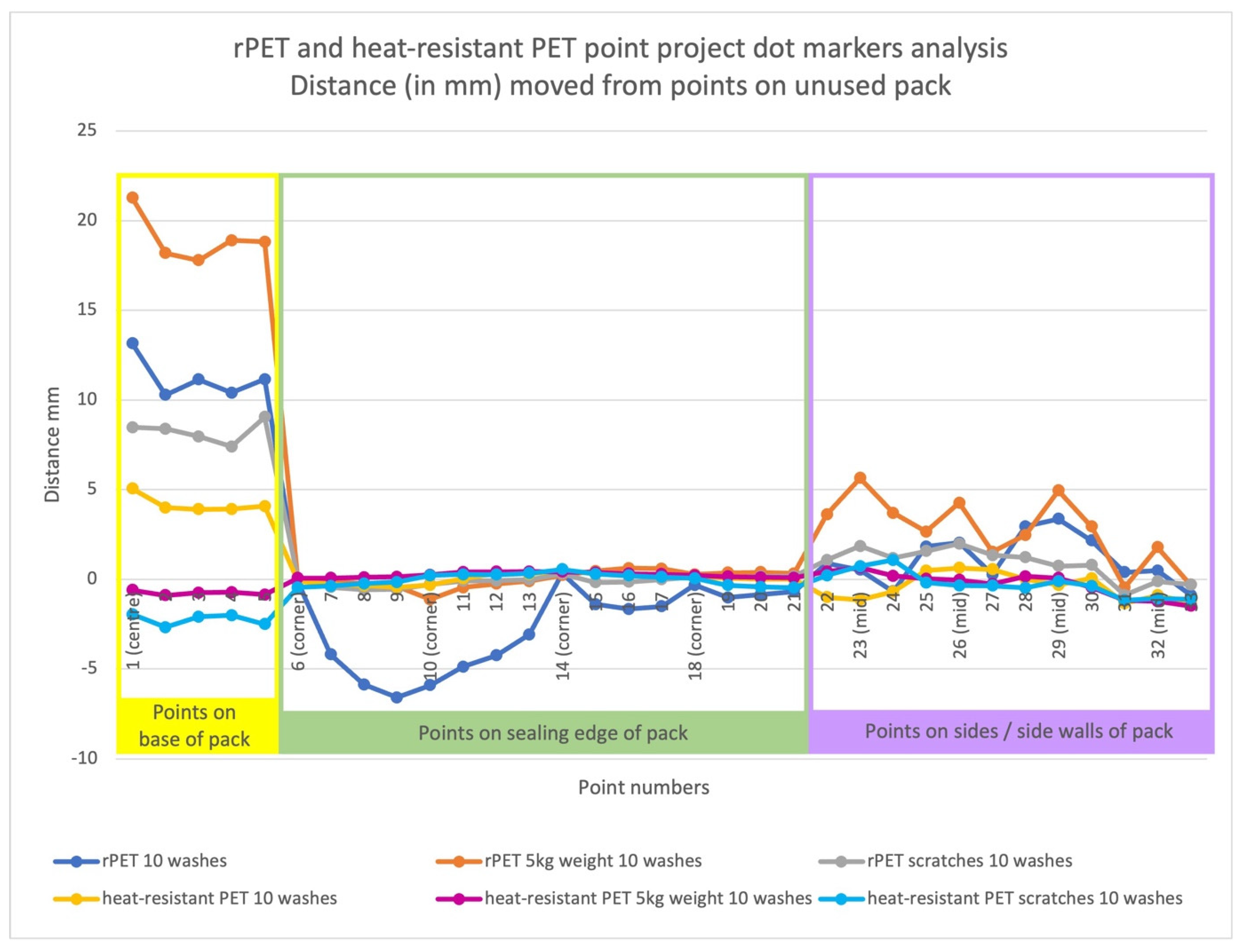
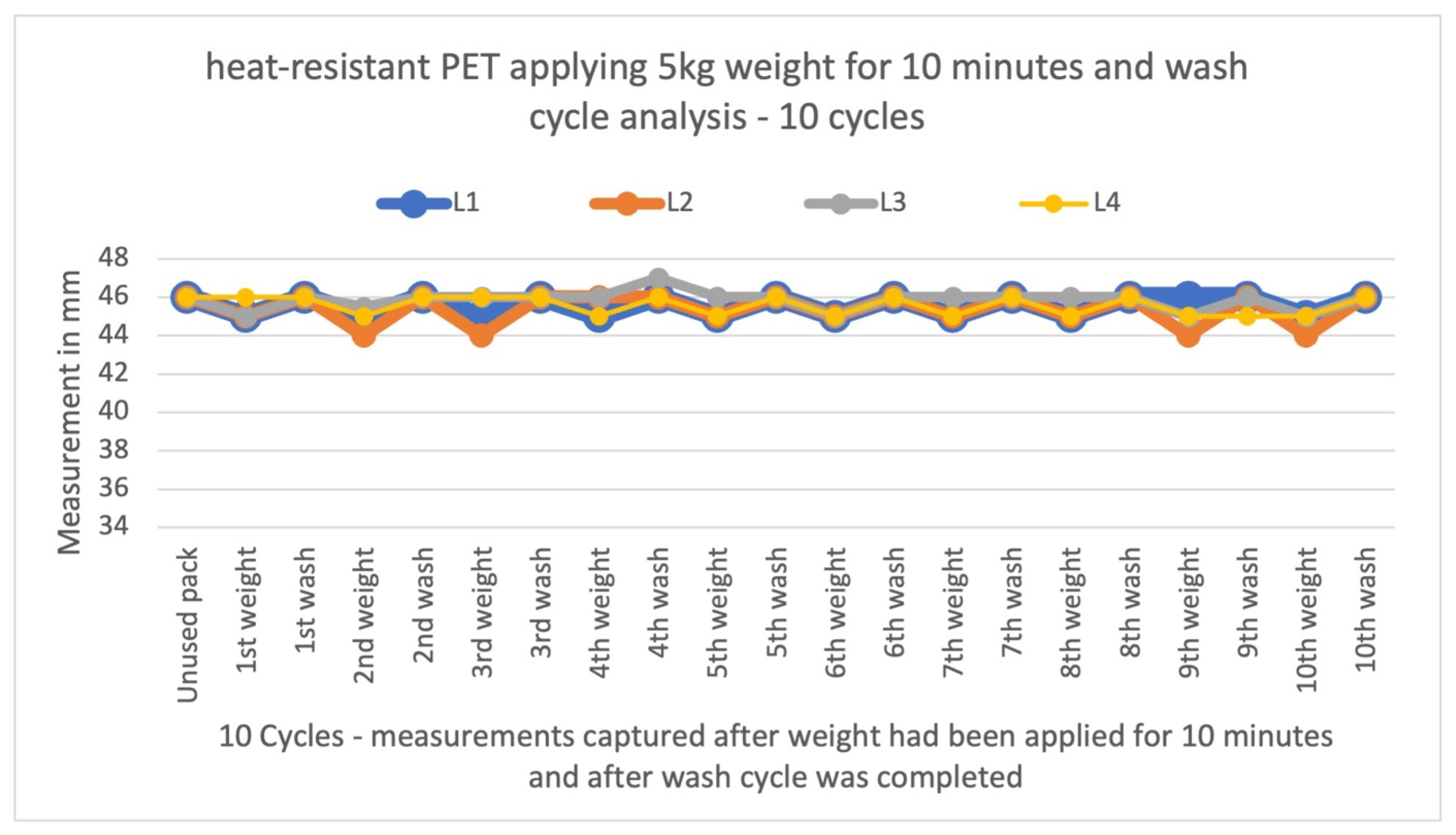
There is a need for research to support the transition away from single-use plastic packaging towards a circular economy. This research developed simulated wear processes and assessment techniques that emulate aspects of a reuse system in order to evaluate different plastic food packaging types that are typically used for single-use applications. Two thermoformed polyethylene terephthalate materials (rPET and heat-resistant PET) for food packaging trays were tested. Researchers subjected both thermoformed packs to a range of simulated wear processes including wash cycles, simulated damage, surface scratching, and artificial fouling. Assessment techniques included using adenosine triphosphate (ATP) swabs to indicate cleanliness of the pack surface and 3D scan data to measure physical change. The findings show that scratch damage applied to packs, following fouling and wash cycles, produced promising readings under 30 relative light units (RLUs) on ATP swabs. The heat-resistant PET packs exhibited minimal deformation throughout repeated wash cycles. The assessment techniques developed to evaluate plastic materials have provided valuable insight into the cleaning, damage, and deformation of plastic packaging. These insights can support more complex decision making in the design and production of circular food-to-go plastic packaging solutions.
Keywords: circular economy; quality assurance; 3D scanning; computer-aided design circular economy; quality assurance; 3D scanning; computer-aided design