1. Introduction
The transition from Industry 4.0 toward the broader 5.0 paradigm marks a significant shift in the conceptualization of technological development and its role in socio-economic systems [
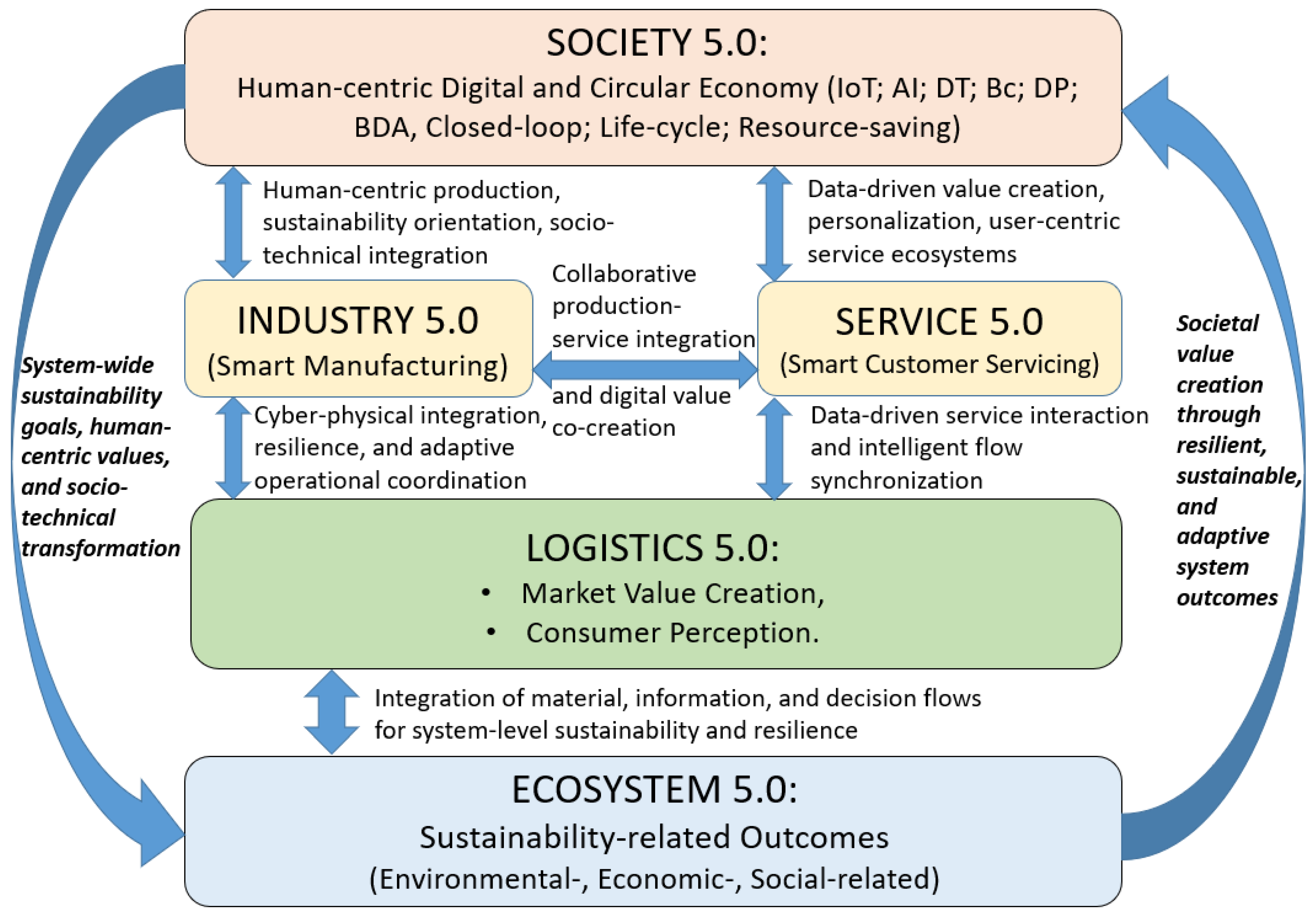
1]. While Industry 4.0 primarily emphasized automation, digitalization, Industry 5.0 extends this vision by integrating human-centricity, sustainability, and resilience as core design principles of modern production and service systems. The concept of Society 5.0 introduces a macro-level perspective in which advanced digital technologies are embedded within social structures to address complex societal challenges, including climate change, resource scarcity, and demographic transformations [
2]. These developments define an interconnected 5.0 ecosystem oriented toward sustainable and inclusive growth.
Within this emerging paradigm, logistics plays a critical role as the operational backbone that connects production systems, service processes, and end-users. As the “circulatory system” of the 5.0 ecosystem, logistics enables the flow of materials, information, and value across organizational and sectoral boundaries [
3]. The evolution toward Logistics 5.0 reflects the integration of digital and physical processes through technologies such as the Internet of Things, artificial intelligence, and digital twins, enabling real-time decision-making, system visibility, and adaptive coordination [
4,
5]. Logistics systems are directly implicated in key sustainability challenges, including greenhouse gas emissions, energy consumption, and resource efficiency. Logistics 5.0 is increasingly framed as a key enabler of low-carbon transformation, circular economy practices, and resilient supply chain design aligned with global sustainability objectives, including the Sustainable Development Goals (e.g., SDGs 9, 11, 12, and 13) [
3].
Despite this growing recognition, the relationship between technological advancement in logistics and sustainability outcomes remains ambiguous. A dominant assumption in the literature suggests that increasing levels of digital maturity and structural readiness naturally lead to improved system performance, including sustainability. However, this techno-optimistic perspective has been insufficiently scrutinized. Highly digitalized logistics systems may still exhibit vulnerabilities, inefficiencies, or unintended environmental impacts if they lack appropriate system-level capabilities such as resilience, robustness, or adaptability. Thus, sustainability in logistics should not be interpreted as a direct outcome of digital transformation, but rather as an emergent property resulting from the interaction between structural conditions and functional system behavior [
6,
7].
In recent years, a growing body of literature has attempted to synthesize the emerging field of Logistics 5.0 and its relation to Industry 5.0 and smart logistics transformation. Existing review studies have primarily focused on technological enablers, digital transformation pathways, and the evolution toward smart and connected logistics systems [
8]. Other contributions have proposed maturity models and measurement frameworks for Logistics 5.0, emphasizing structural readiness dimensions such as technological infrastructure, organizational capabilities, and digital integration [
9]. Additionally, domain-specific reviews have explored selected aspects of Logistics 5.0, including reverse logistics [
10], green and sustainability-oriented innovation [
11], and sectoral applications such as healthcare logistics [
12]. However, these studies remain fragmented and predominantly techno-centric, often treating sustainability as an implicit outcome rather than a system-level property. Moreover, limited attention is given to the role of resilience, robustness, and adaptability as mediating factors between readiness and performance. Most frameworks rely on compensatory logic, allowing digitalization to offset weaknesses in other dimensions. As a result, an integrated perspective linking readiness, system behavior, and sustainability remains underdeveloped.
This gap points to a broader limitation in existing maturity and readiness models applied in Logistics 5.0 research. Many of these frameworks focus predominantly on technological and organizational dimensions of preparedness while treating sustainability as a secondary or external outcome. This may overestimate the impact of digital transformation and obscure the conditions required for sustainable outcomes. Empirical evidence linking Logistics 5.0 implementation to measurable environmental, economic, and social performance improvements remains fragmented and methodologically inconsistent, further complicating the assessment of its real contribution to sustainability transitions.
In response to these challenges, this study addresses the following research questions:
RQ1: How is Logistics 5.0 readiness conceptualized and measured?
RQ2: How are resilience and system-level capabilities integrated into these models?
RQ3: How is sustainability performance assessed in Logistics 5.0 research?
RQ4: What conceptual gaps exist between structural readiness and sustainable system outcomes?
Building on these questions, the paper advances the central argument that structural readiness in Logistics 5.0 does not inherently lead to sustainable system-level performance. This relationship is mediated by functional system capabilities, including resilience, robustness, reliability, and adaptability.
To address this problem, the study employs a systematic literature review based on the PRISMA methodology, synthesizing research on digital maturity, logistics transformation, resilience, and sustainability performance. The review identifies key gaps, including techno-centric bias, weak integration of system capabilities, and inconsistent sustainability assessment. Based on this synthesis, the paper develops a conceptual framework that positions Logistics 5.0 as an integrative operational layer within the 5.0 ecosystem, mediating interactions between Industry 5.0 production systems and Service 5.0 value creation processes.
The main contributions of the study are fourfold. First, it provides a structured synthesis of the literature on Logistics 5.0, linking readiness, resilience, and sustainability perspectives. Second, it identifies limitations of existing maturity models, particularly the reliance on compensatory logic and the insufficient consideration of sustainability as a system-level performance outcome. Third, it introduces a conceptual distinction between structural readiness, functional system capabilities, and sustainability performance. Finally, it proposes a non-compensatory conceptual framework in which sustainability is understood as an emergent property of system behavior rather than a direct consequence of technological advancement. This supports the development of more robust and sustainability-oriented maturity assessment models.
4. Review Methodology
4.1. Review Design and Systematic Review Protocol (PRISMA)
This study adopts a systematic literature review (SLR) approach conducted in accordance with the Preferred Reporting Items for Systematic Reviews and Meta-Analyses (PRISMA 2020) guidelines [
74,
75]. The PRISMA framework ensures transparency, reproducibility, and methodological rigor throughout the identification, screening, and selection of relevant studies, thereby minimizing selection bias and enhancing the validity of the results.
The main objective of this review is to investigate the conceptual evolution and current state of Logistics 5.0, with particular emphasis on maturity, capability development, resilience, sustainability, and digital transformation in logistics and supply chain systems. The study focuses on identifying how emerging paradigms such as smart logistics, digital logistics, and intelligent supply chains integrate human-centric principles, environmental sustainability, and advanced technologies within operational and strategic logistics frameworks.
Unlike domain-specific reviews, this study adopts a cross-sectoral perspective, including research from logistics, supply chain management, manufacturing systems, and industrial engineering, provided that it contributes to the conceptual understanding of Logistics 5.0 and its associated dimensions.
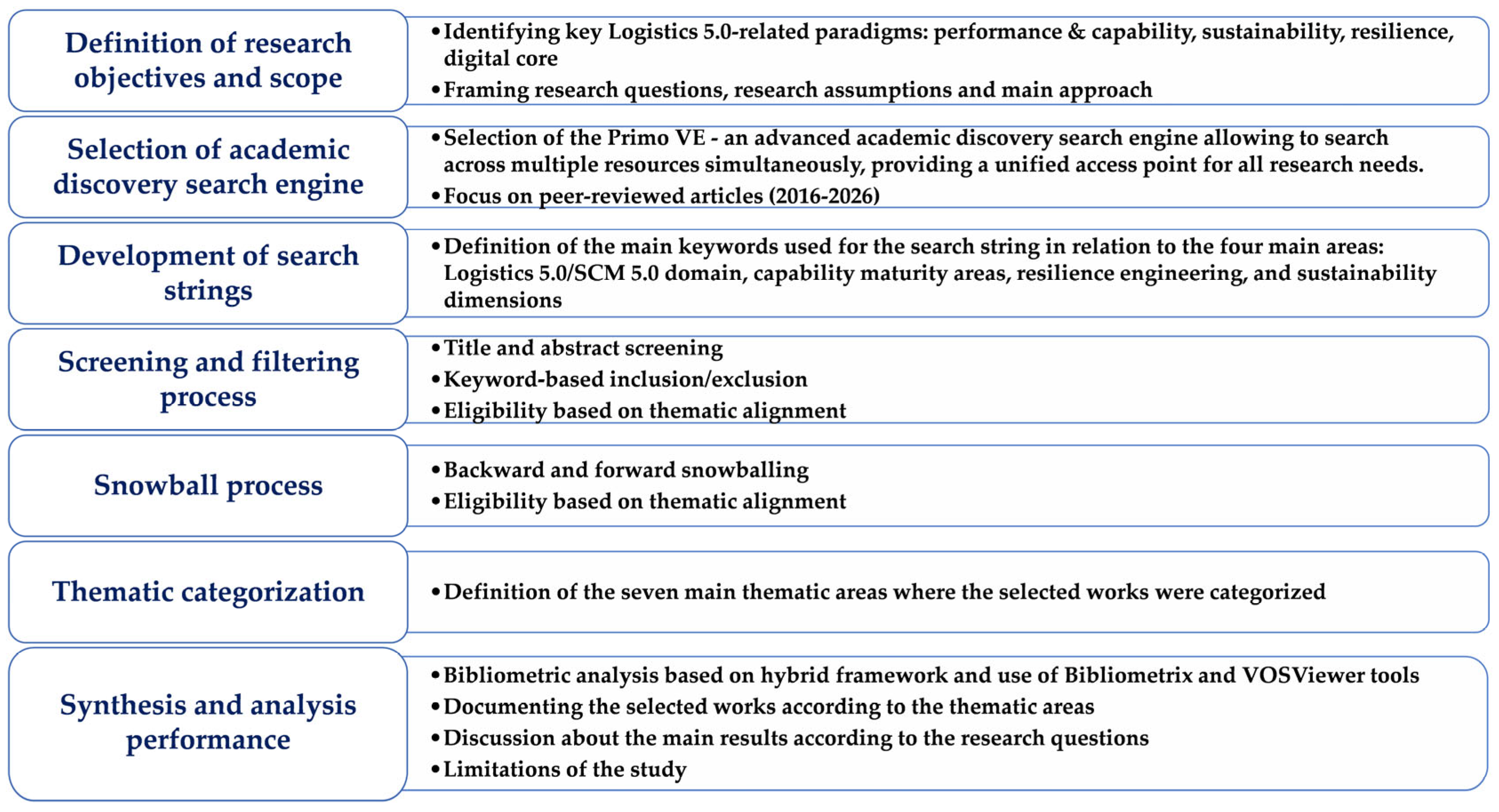
A structured review protocol was developed to guide the process in five main stages and was designed according to the principles given in [
76,
77,
78,
79]. These stages are illustrated in
Figure 2, which presents the overall methodological framework used in this review:
Definition of research objectives and scope—establishing the conceptual boundaries of Logistics 5.0 and defining the key analytical dimensions (maturity, resilience, sustainability, digitalization).
Search strategy development—constructing a multi-term query reflecting the interdisciplinary nature of Logistics 5.0 and selecting the advanced academic discovery search engine Primo VE [
80].
Screening and eligibility assessment—applying inclusion and exclusion criteria at multiple levels (e.g., duplicate removal, full text availability) and performing title/abstract and full-text screenings.
Snowballing procedure—expanding the dataset through backward and forward citation tracking.
Data analysis and synthesis—integrating bibliometric mapping, network analysis, and content-based thematic classification.
Additionally, to ensure full transparency and reproducibility of the search process, a detailed description of the literature search strategy, including the complete Boolean query, stepwise query combination, filtering procedures, and corresponding numbers of retrieved records at each stage, is provided in
Appendix A. These
Supplementary Materials complement the PRISMA flow diagram by explicitly documenting the operational structure of the search process, which cannot be fully captured within the graphical PRISMA representation. In particular,
Appendix A provides the exact search strings applied in the Primo Discovery System, together with a stepwise breakdown of query expansion and data reduction, thereby enhancing methodological rigor and enabling replication of the review process.
4.2. Identification—Data Sources and Search Strategy
The identification phase aimed to retrieve a comprehensive dataset of publications related to Logistics 5.0 and its associated conceptual dimensions, including supply chain digitalization, sustainability, resilience, and operational maturity.
The literature search was conducted using the ProQuest Primo Discovery System (Ex Libris), which functions as an integrated discovery platform aggregating records from multiple academic databases and publishers, rather than a single bibliographic database. The choice of the ProQuest Primo Discovery System was motivated by its ability to provide unified access to a broad range of multi-disciplinary databases (including, but not limited to, Scopus-indexed and Web of Science-indexed sources) through a single interface. This approach ensured a high level of coverage while enabling consistent query execution and result management across sources. Compared to conducting separate searches in multiple databases, the use of an integrated discovery system reduced the risk of inconsistencies in query syntax and filtering procedures. To further enhance robustness, a validation check was performed by manually verifying whether key seminal articles identified in prior reviews were retrieved through the applied search strategy. The searches were conducted during the period from 23 March 2026 to 6 April 2026.
The search process was carried out using a structured keyword strategy based on four thematic blocks:
Logistics 5.0 and system context: “Logistics 5.0”, “supply chain 5.0”, “smart logistics”, “digital logistics”, “intelligent logistics”,
Capability and maturity dimension: “maturity”, “capability”, “capabilities”, “performance”, “preparedness”,
Resilience and system robustness: “readiness”, “resilience”, “robustness”, “adaptability”, “reliability”,
Sustainability dimension: “sustainability”, “ESG”, “green”, “sustainable”, “circular economy”, “eco-friendly”.
The structured keyword strategy was developed through an iterative, literature-driven process. Initially, a scoping review of highly cited and seminal publications in Logistics 5.0, supply chain digitalization, resilience, and sustainability was conducted to identify recurring terminology and conceptual clusters (e.g., [
3,
4,
8,
11]). Based on this analysis, keywords were grouped into four thematic blocks reflecting the dominant analytical dimensions in the literature: technological system context, capability and maturity, resilience, and sustainability. The keyword structure was further refined through iterative pilot searches, where search results were evaluated for relevance and coverage of key seminal works. This process allowed for the adjustment of synonymous terms and the expansion of conceptually equivalent expressions to reduce terminology bias. The final keyword set was validated by ensuring that all previously identified seminal articles in the field were successfully retrieved through the applied search strategy. This procedure minimized subjectivity by grounding keyword selection in established literature patterns and the recurrence frequency of key concepts.
The keyword groups were combined using Boolean AND and OR operators to ensure conceptual coherence across technological, operational, and sustainability perspectives. This initial phase ensured that the final query captured the diversity of terminologies used across academic communities.
To mitigate potential terminology bias associated with the explicit use of the term “Logistics 5.0”, the search strategy was deliberately designed as concept-driven rather than label-driven. Therefore, the query structure included broader conceptual equivalents such as smart logistics, digital logistics, and intelligent logistics, as well as capability-, resilience-, and sustainability-related terms. In addition, backward and forward snowballing were applied to capture relevant studies that do not explicitly use the “5.0” terminology but address the same underlying system concepts.
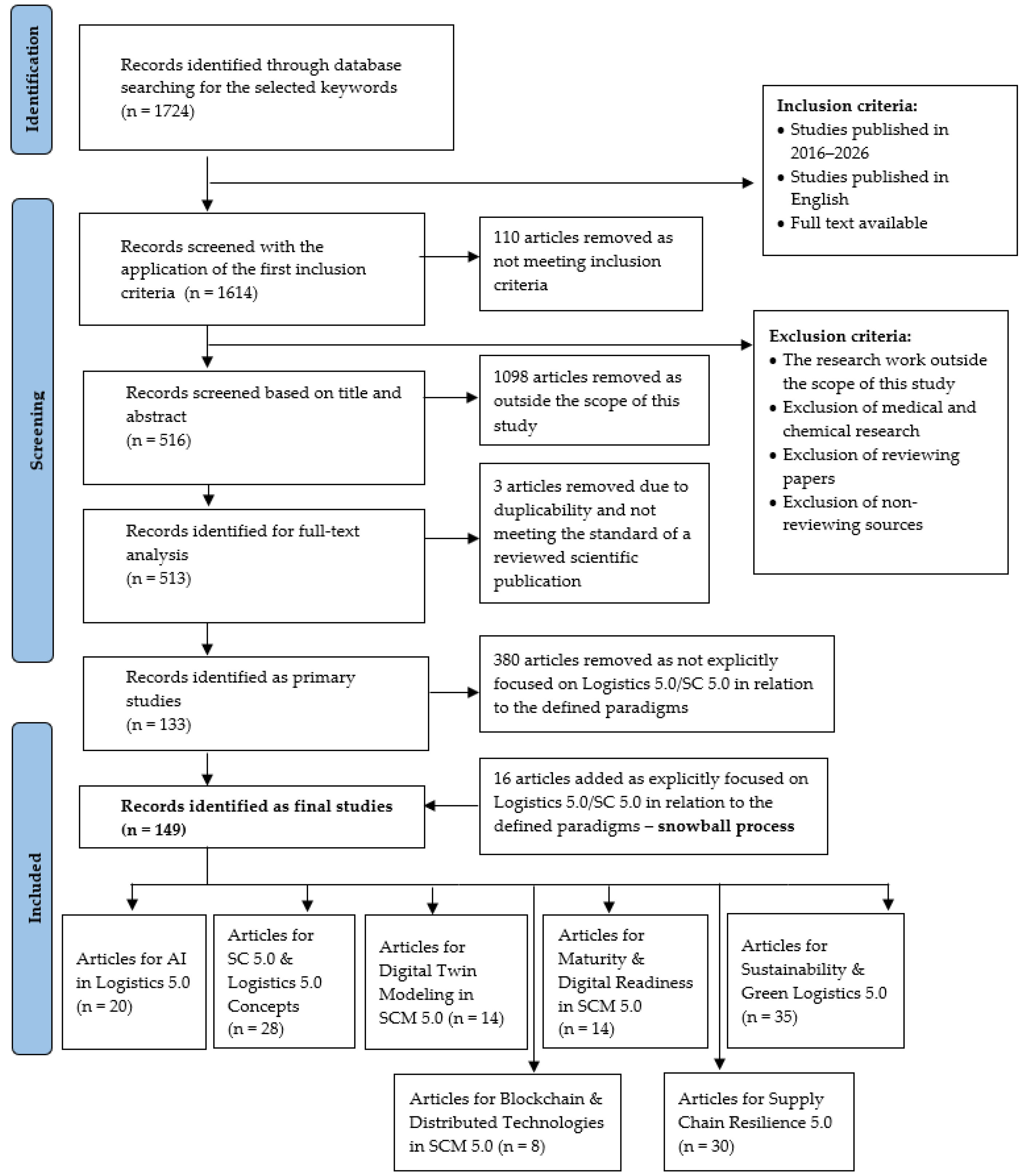
The initial search returned 1724 records. Subsequent filtering and refinement steps were applied:
Publication date restriction (2016–2026): 1656 records retained,
English-language filter: 1614 records retained,
Exclusion of medical and unrelated domains: 1397 records retained,
Limitation to peer-reviewed journal publications: 516 records retained.
Following metadata screening and relevance assessment, 133 studies were selected for full-text review. Additional studies identified through backward and forward snowballing contributed 16 further publications, resulting in a final dataset of 149 articles included in the analysis.
4.3. Screening—Eligibility Criteria
The screening process was conducted in two stages: (i) preliminary filtering based on bibliographic metadata and (ii) thematic relevance assessment based on content analysis.
In the first stage, studies were excluded if they did not meet the following criteria: non-English language publications, non-peer-reviewed sources, conference proceedings, book chapters, and editorial materials. The exclusion of conference proceedings reflects a deliberate methodological choice aimed at ensuring consistency, comparability, and methodological rigor of the reviewed corpus. Conference papers in rapidly evolving domains such as Logistics 5.0 often represent preliminary findings, typically characterized by limited methodological detail, shorter formats, and reduced peer-review depth compared to journal publications. As a result, their inclusion may introduce heterogeneity and reduce the reliability of cross-study comparisons within a systematic review framework.
At the same time, it is acknowledged that in emerging research areas, including Industry 5.0 and smart logistics, conference venues frequently serve as early dissemination channels for novel concepts and technological developments. To mitigate the potential exclusion of relevant emerging contributions, a structured snowballing procedure was applied (
Section 4.5), enabling the identification and inclusion of influential studies indirectly referenced in high-quality journal publications.
Consequently, this approach represents a trade-off between temporal coverage and analytical robustness, prioritizing conceptual maturity and methodological transparency while maintaining awareness of potential bias toward more consolidated research streams. Additionally, publications outside the scope of logistics, supply chain management, and industrial engineering were removed. Subject area filters were also employed to discard articles focused on medical, biological, or chemical applications. To increase transparency and facilitate replicability, the inclusion and exclusion criteria applied during the screening process are summarized in
Table 7.
In the second stage, a detailed content-based screening was performed. Articles were included only if they addressed at least one of the following thematic areas:
Logistics 5.0, smart logistics, or digital supply chain systems,
Maturity models, capability frameworks, or performance assessment in logistics systems,
Resilience, robustness, adaptability, or operational reliability in logistics networks,
Sustainability, circular economy, ESG integration, or green logistics approaches,
Application of advanced technologies such as artificial intelligence, digital twins, IoT, or cyber-physical systems in logistics contexts.
This structured filtering ensured that the final dataset maintained both conceptual relevance and methodological consistency. The process was guided by a protocol aimed at maximizing both precision (removal of non-relevant articles) and recall (preservation of diverse but related studies).
4.4. Inclusion—Full-Text Review and Selection
A full-text review was conducted for the 133 initially selected studies. Each publication was evaluated in terms of methodological quality, conceptual contribution, and relevance to the research objectives.
Studies were included if they provided one or more of the following contributions:
Development of conceptual frameworks for Logistics 5.0,
Empirical analysis of digital, sustainable, or resilient logistics systems,
Maturity or capability modeling approaches,
Integration of human-centric or sustainability-oriented principles in logistics systems.
The evaluation was performed by two independent reviewers with expertise in the fields of Logistics 5.0/SCM 5.0 domain and resilience/sustainability areas. A collaborative spreadsheet was used to track decisions and notes, and any discrepancies were resolved through dialogue and reference to the study’s relevance criteria.
This multi-stage inclusion process ensured a rigorous and transparent selection of high-quality sources that formed the foundation for the subsequent synthesis and discussion. Additionally, inter-rater reliability was assessed using Cohen’s kappa coefficient [
81] based on the independent screening decisions of two reviewers. The analysis indicated a moderate level of agreement between reviewers (κ ≈ 0.43), despite a high observed agreement of 93.96%. This discrepancy reflects the known sensitivity of Cohen’s kappa to highly imbalanced inclusion–exclusion distributions, where a predominance of exclusion decisions may substantially reduce κ values despite high observed agreement.
Beyond statistical effects related to prevalence imbalance, the observed disagreements primarily originated from differences in the interpretation of borderline studies, particularly those combining conceptual and empirical elements. In several cases, discrepancies arose from differing assessments of whether studies sufficiently addressed Logistics 5.0-specific constructs (e.g., functional capabilities or system-level sustainability outcomes) versus broader Industry 4.0/5.0 discussions. This indicates that inter-reviewer variability was mainly conceptual rather than procedural, reflecting the inherent ambiguity of inclusion criteria in emerging research domains rather than inconsistencies in the review protocol itself. All disagreements identified during the screening process were jointly discussed by both reviewers and re-evaluated against the predefined inclusion and exclusion criteria until consensus was achieved. Cohen’s kappa coefficient was calculated prior to the consensus procedure and was not recomputed afterward, as the post-discussion phase reflects reconciled rather than independent reviewer judgments.
This approach enhanced transparency and methodological rigor, although a certain degree of subjectivity in eligibility assessment cannot be entirely excluded.
4.5. Snowballing Procedure
To ensure completeness of the dataset, a snowballing strategy was applied following the methodology proposed in the systematic review guidelines [
82]. Backward snowballing involved screening reference lists of all included publications to identify additional relevant studies. Forward snowballing was conducted using citation tracking tools to identify newer studies citing the selected core articles (based on the Web of Science database).
This iterative process enabled the inclusion of additional high-relevance publications that were not captured in the initial database query, particularly emerging studies addressing Logistics 5.0, resilience-driven logistics systems, and sustainability-oriented supply chain transformation.
As a result, 16 additional studies were incorporated into the final dataset.
4.6. Bibliometric and Content Analysis
This stage corresponds to the last steps of the systematic literature review (SLR) process and focuses on the documentation, analysis, and synthesis of the selected literature.
Following PRISMA-based selection, a hybrid analytical approach was adopted, combining bibliometric analysis, network mapping, and qualitative synthesis.
The main bibliometric analysis was performed using the Bibliometrix tool [
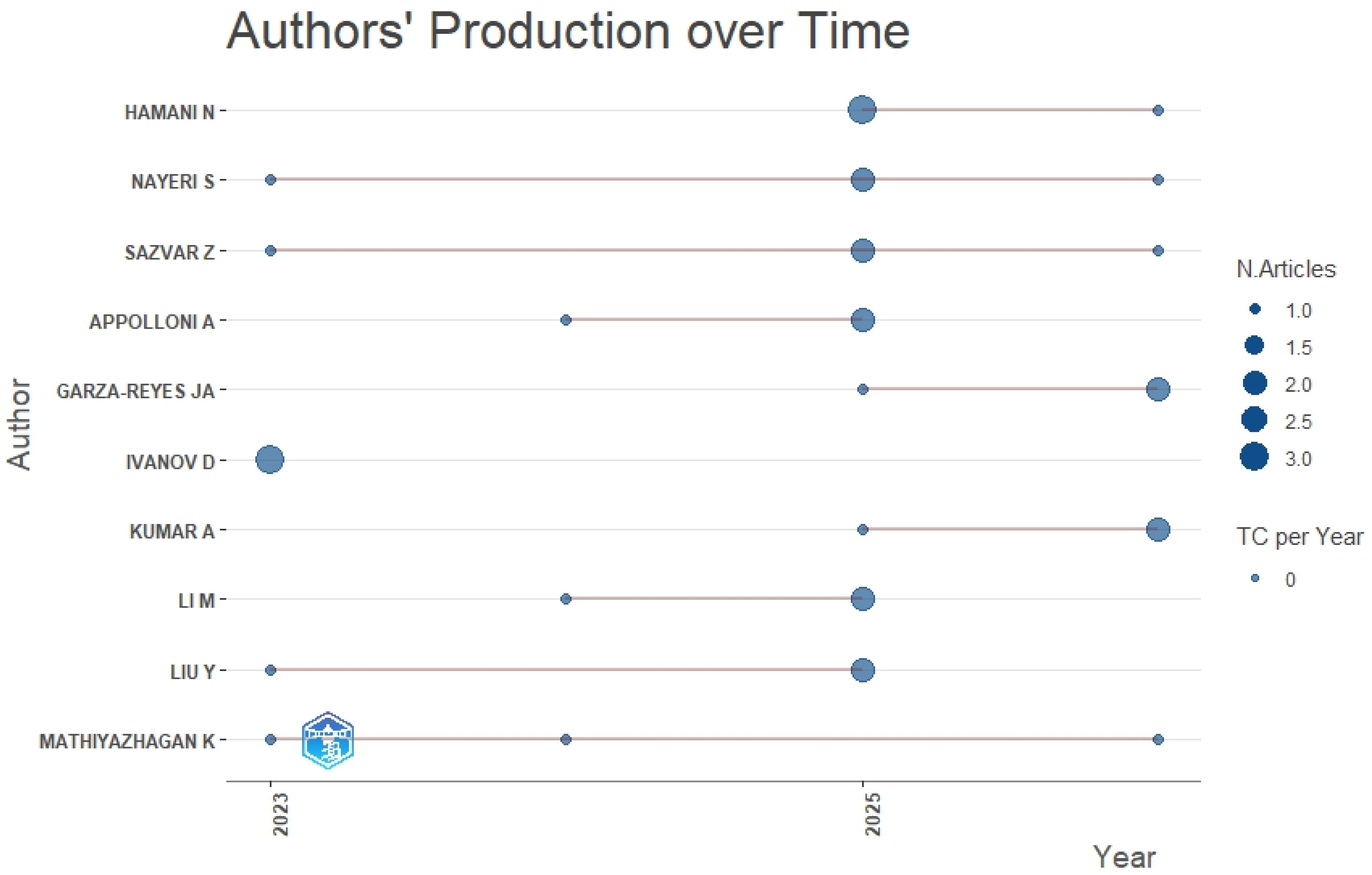
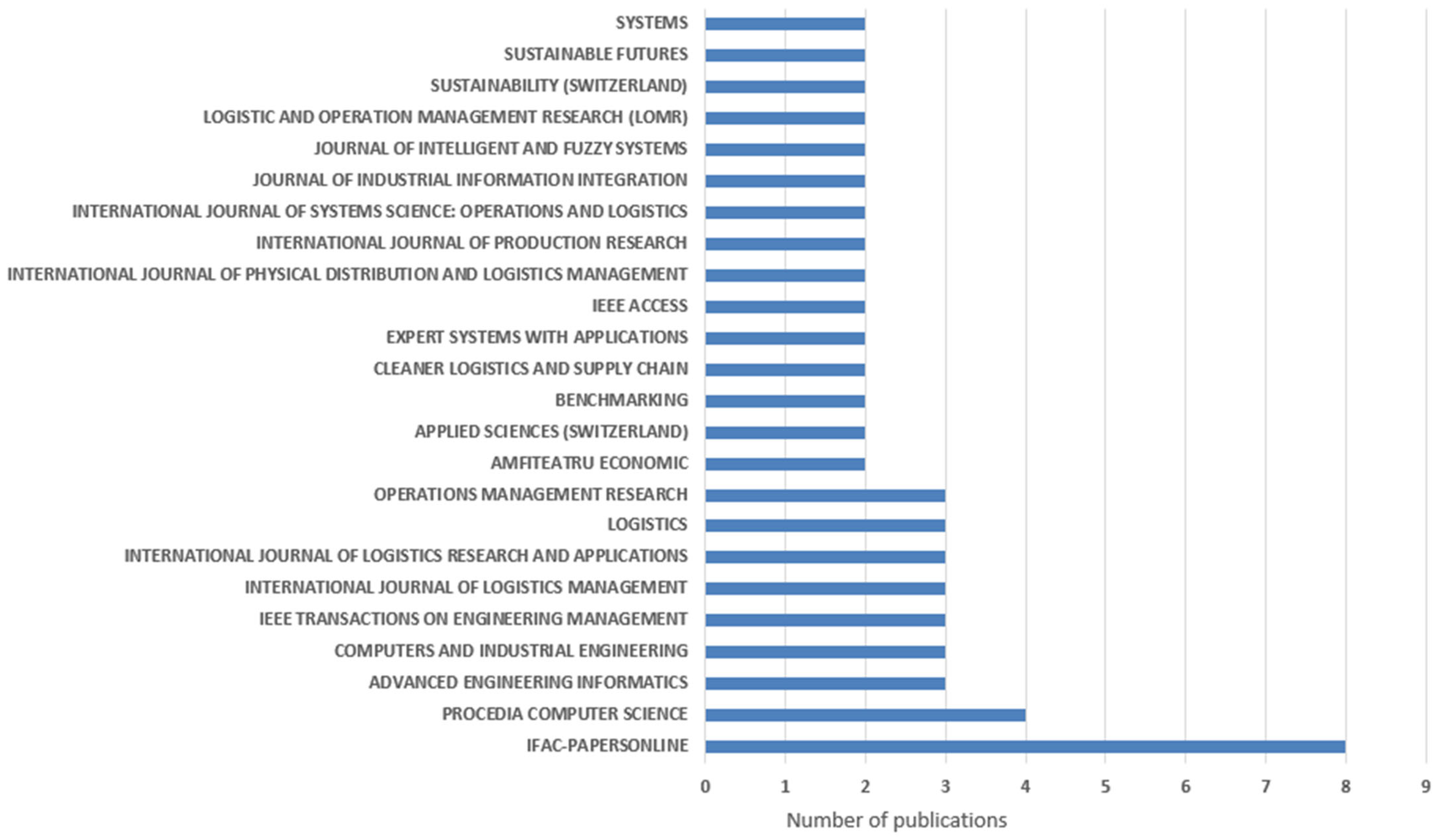
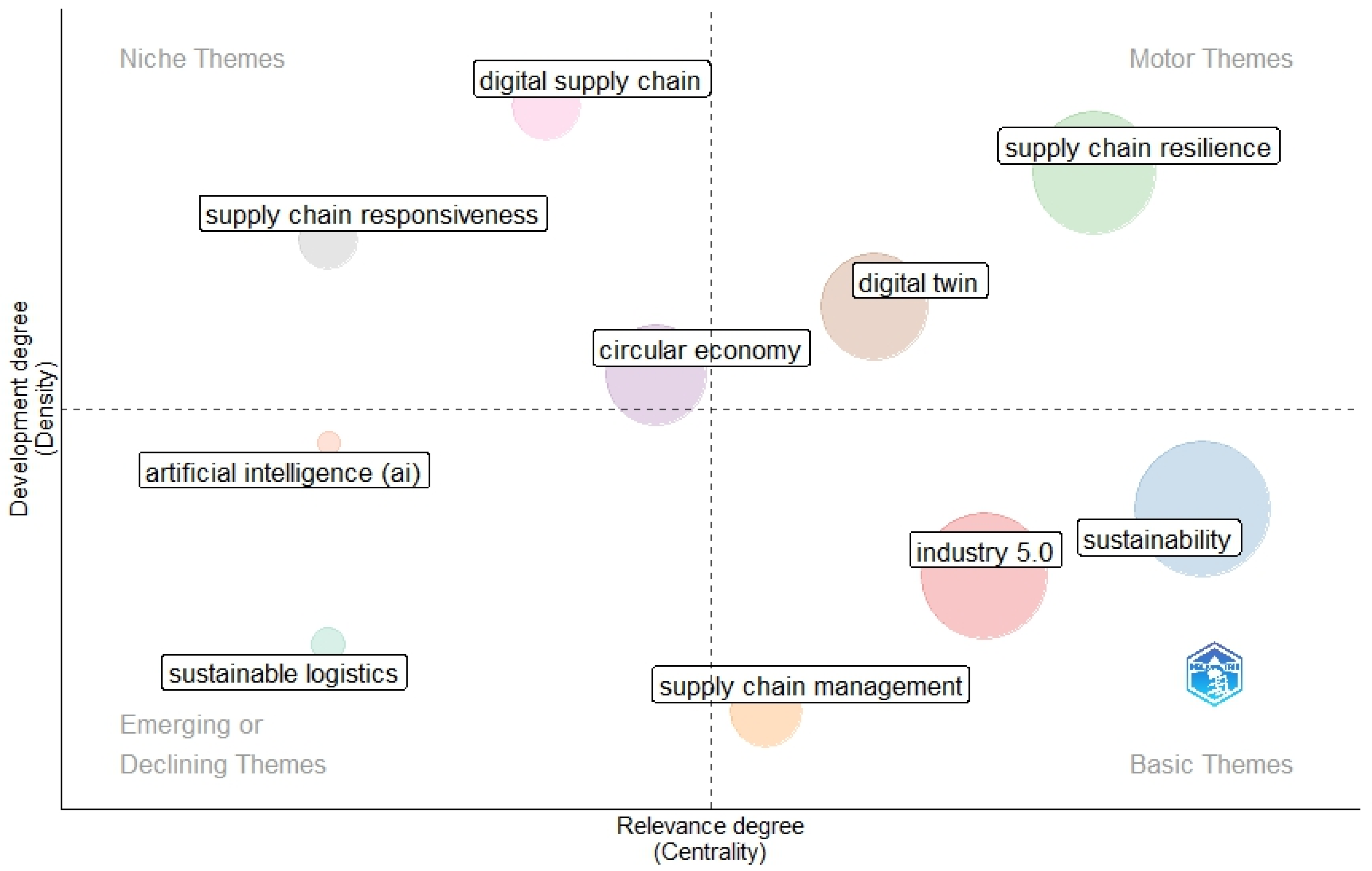
83], enabling statistical evaluation of publication trends, authors’ productivity, and thematic structures. In particular, Bibliometrix was used to generate:
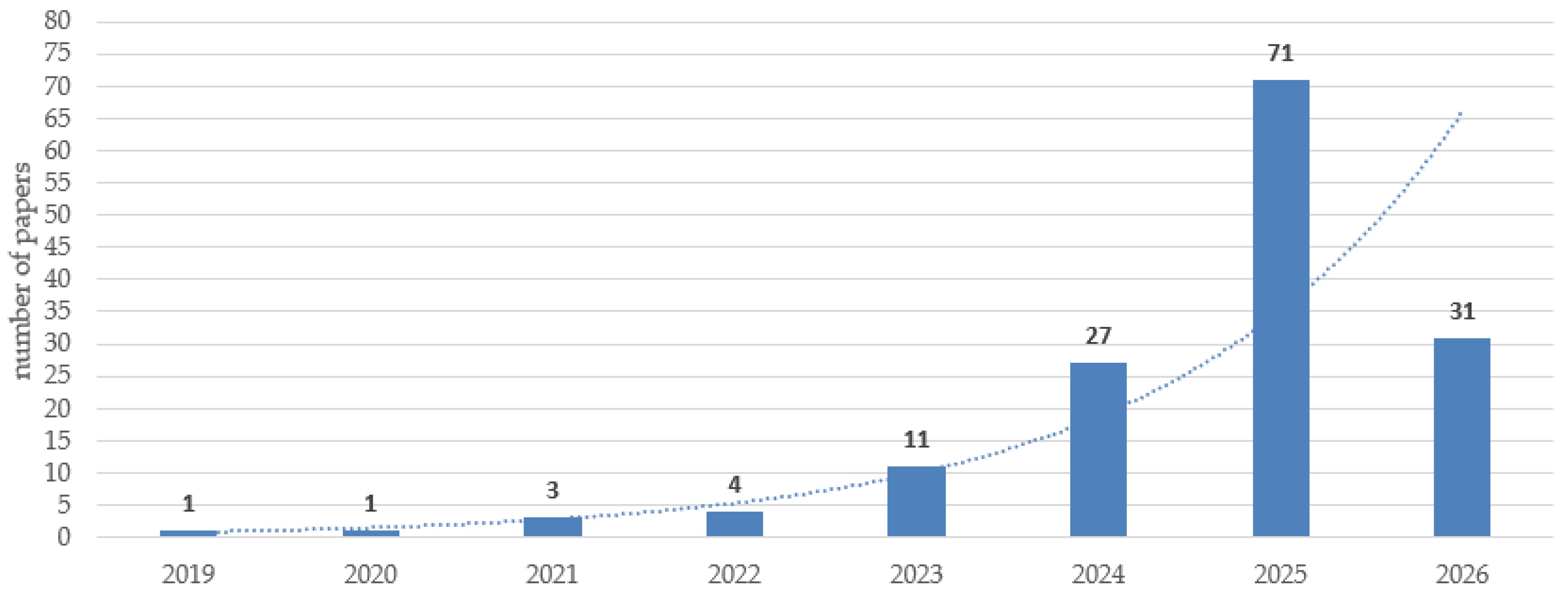
Descriptive indicators (annual scientific production, sources, authorship patterns),
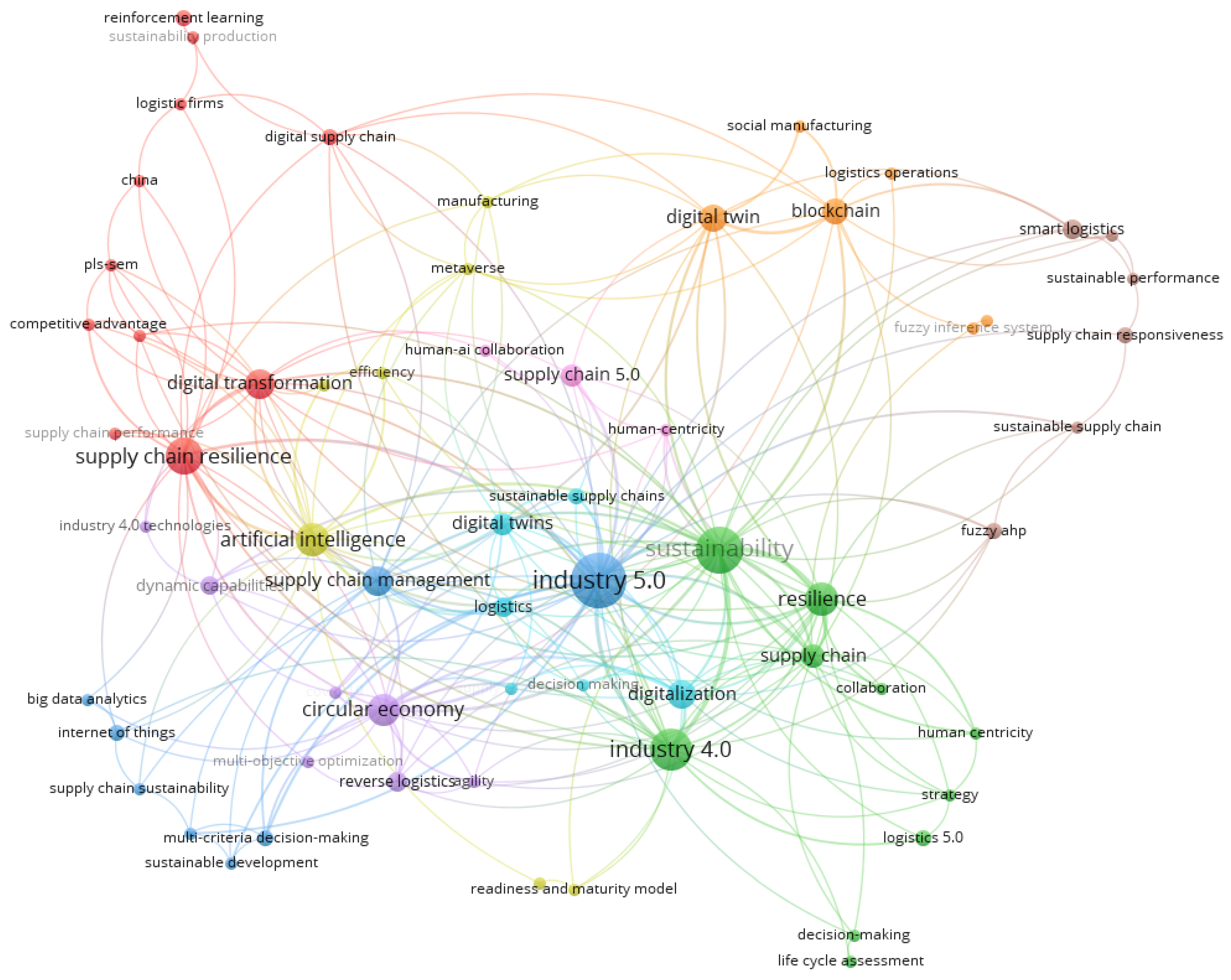
Thematic maps based on keyword co-occurrence (Keywords Plus),
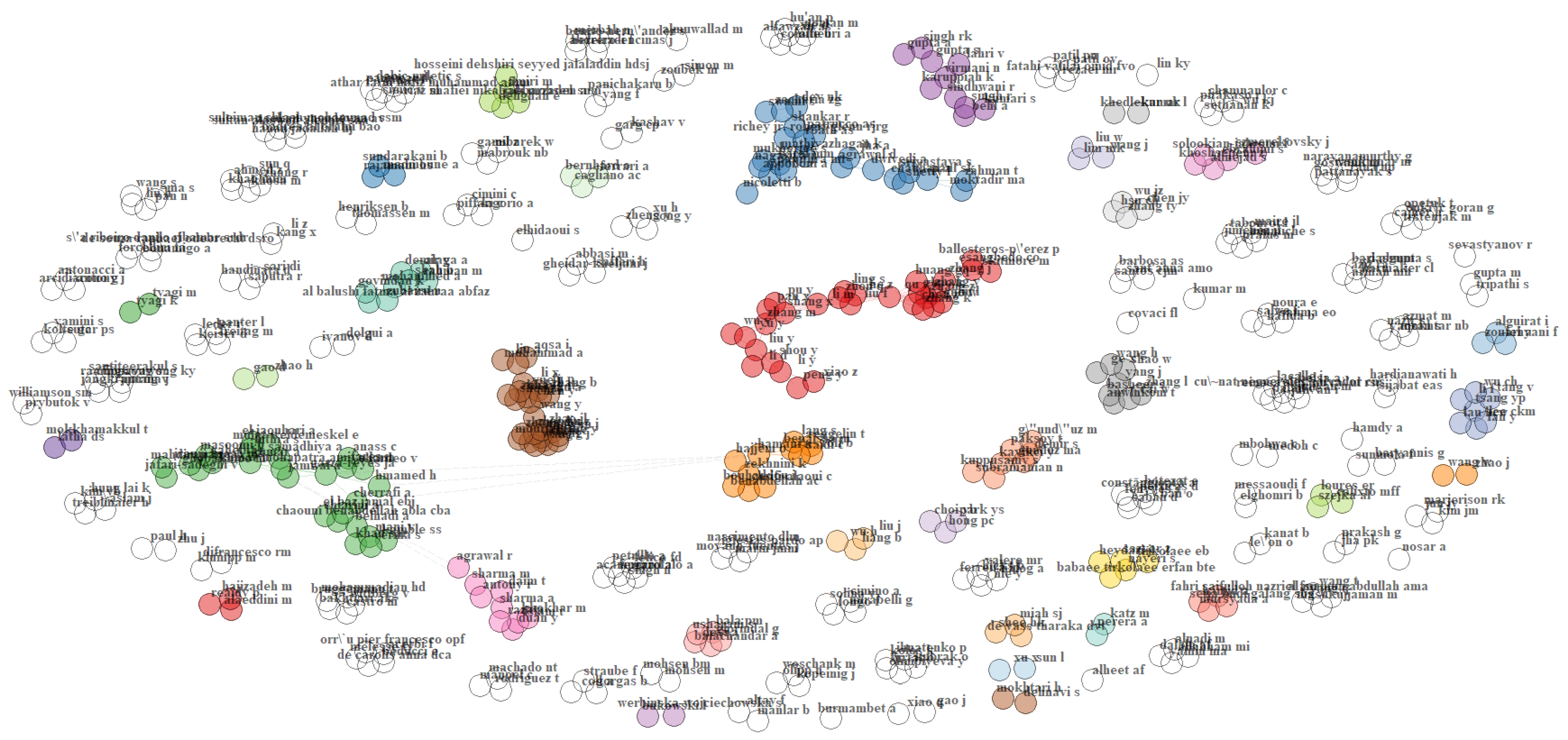
Author and source collaboration networks,
Preliminary clustering structures used for further validation.
Due to the heterogeneous origin of the dataset (Primo Discovery System and Mendeley exports), certain bibliographic fields (e.g., citation counts, author keywords) were incomplete. Consequently, citation-based indicators were excluded from the analysis, and the focus was placed on co-occurrence structures derived from Keywords Plus and abstract-level data. This limitation was explicitly addressed by complementing the analysis with external network visualization tools.
To enhance the robustness of thematic structure identification, network visualization and clustering were further conducted using VOSviewer (v. 1.6.18) [
84], which enables the construction and visualization of bibliometric networks, particularly focusing on co-authorship, keyword co-occurrence, citation relationships, and country-level collaboration [
85]. This tool was used to perform:
Co-word analysis based on term co-occurrence,
Density visualization of research themes,
Identification of dominant research clusters,
Manual cluster labeling based on the semantic interpretation of the most frequent and central terms within each cluster.
To assess the quality and internal consistency of the identified clusters, validation metrics were applied. Specifically, modularity (Q) was used to evaluate the strength of division of the network into clusters, while the silhouette coefficient was calculated to assess the cohesion and separation of clusters. These metrics were derived from the clustering output obtained via Bibliometrix and interpreted in line with standard thresholds used in bibliometric network analysis. In general, modularity values above 0.3 were interpreted as indicating a significant clustering structure, while silhouette values closer to 1 suggest well-separated and internally coherent clusters, whereas values close to 0 indicate weak cluster separation.
The integrated analytical framework included the following components:
Descriptive bibliometric indicators (publication trends, authorship patterns),
Network-based analysis (keyword co-occurrence and clustering structures),
Cluster validation metrics (modularity and silhouette coefficient),
Visual mapping and density analysis (VOSviewer),
Qualitative thematic synthesis based on cluster interpretation.
The selected corpus was systematically organized and coded to support content-based analysis, focusing on the evolution of Logistics 5.0 across dimensions of maturity, resilience, sustainability, and technological integration. The coding process enabled the identification of dominant research streams and conceptual relationships through iterative categorization and comparison of thematic patterns across the dataset. The management process was performed with the use of Mendeley reference management software [
86], which facilitated both qualitative review and traceability.
In addition, the exclusion of conference proceedings may limit the representation of the most recent developments in this rapidly evolving field, although this effect was partially mitigated through the applied snowballing strategy.
Finally, the study acknowledges limitations, including data incompleteness in bibliometric fields and the reliance on hybrid analytical tools, which were mitigated through methodological triangulation (Bibliometrix–VOSviewer–content analysis), enhancing the robustness and reliability of the findings.
6. Discussion: Logistics 5.0 in the 5.0 Ecosystem: A Systemic Interpretation
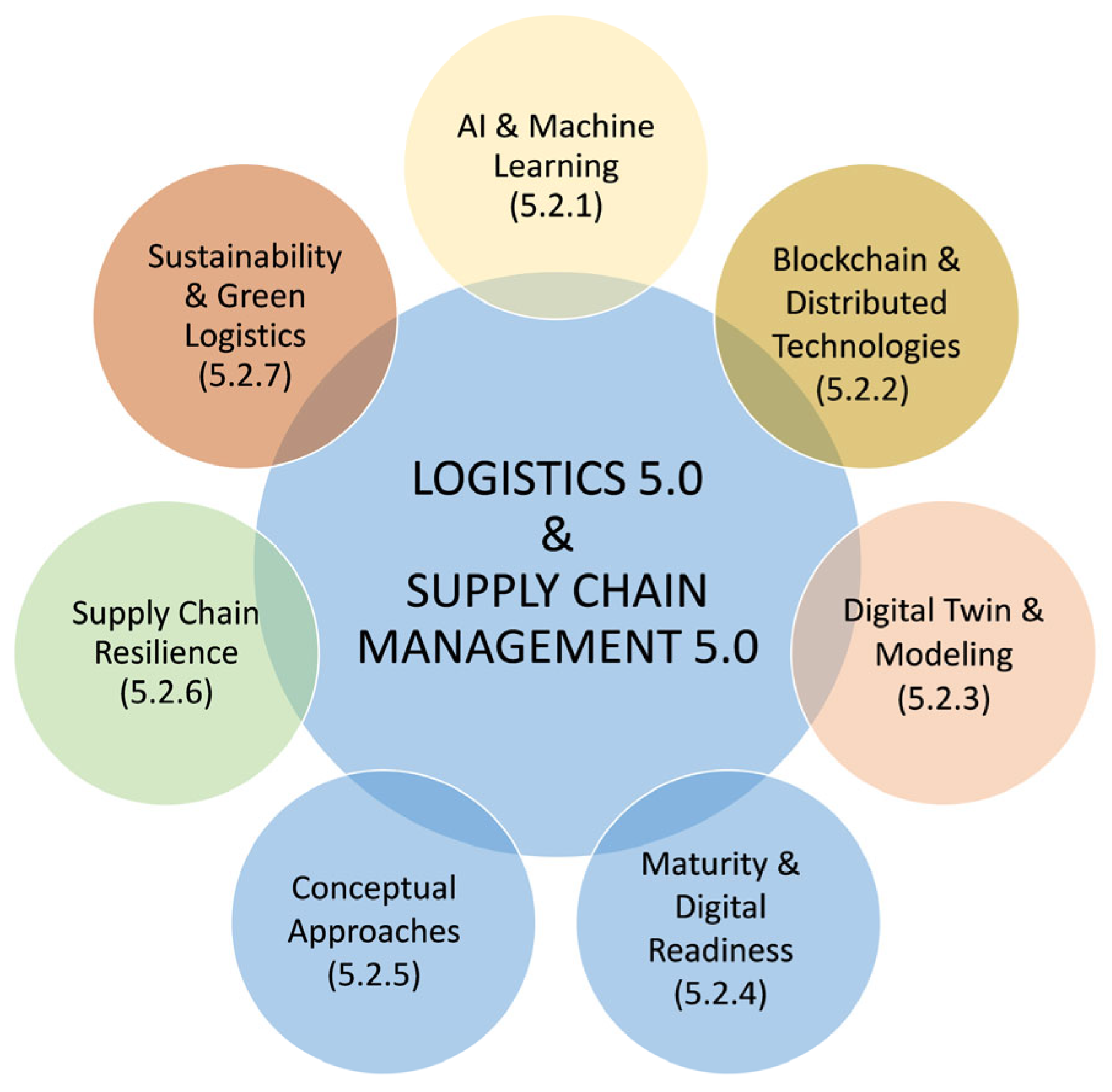
Table 9 synthesizes the functional roles of the key research domains identified in the Logistics 5.0 literature. The analysis indicates that while AI, digital twins, and blockchain strongly support digital readiness and operational integration, resilience and sustainability are still insufficiently embedded within unified system-level frameworks.
The literature review demonstrates that Logistics 5.0 is evolving as a multi-dimensional ecosystem integrating technological, organizational, resilience, and sustainability dimensions. However, these dimensions are still frequently analyzed in isolation, resulting in fragmented conceptualizations and limited system-level integration. The following discussion synthesizes the findings in relation to RQ1–RQ4 and identifies the key research gaps motivating the framework proposed in
Section 7.
According to RQ1, which investigates
how Logistics 5.0 readiness is conceptualized and measured, the conducted review demonstrates that readiness is predominantly approached through maturity and readiness models rooted in Industry 4.0 paradigms. Existing approaches primarily emerge from the maturity and readiness literature (
Section 5.2.4), where readiness is defined as the degree to which organizations are capable of adopting Industry 4.0/5.0 technologies and practices. Thus, readiness is largely interpreted as an input-oriented construct describing the structural preparedness of organizations rather than their actual system performance.
Following the analyzed literature, three dominant measurement perspectives can be identified:
Technology-oriented readiness, focusing on the adoption of digital tools such as AI, IoT, digital twins, and blockchain [
126,
128],
Process and capability maturity, assessing organizational processes, integration levels, and operational performance [
129,
133],
Human and organizational readiness, incorporating workforce skills, human-centricity, and collaboration [
131,
146].
A major limitation is the widespread use of compensatory logic, where weaknesses in one dimension (e.g., sustainability or human factors) may be offset by strengths in another (e.g., technological advancement). This may lead to overestimated readiness levels and highlights the need for non-compensatory assessment structures.
Building upon this, RQ2 addresses
how resilience and system-level capabilities are integrated into these models. The findings indicate that resilience is widely recognized in the literature (
Section 5.2.1 and
Section 5.2.6), particularly in the context of AI-driven systems, digital twins, and supply chain risk management. In this area, the literature identifies several approaches to resilience integration:
Technology-driven resilience, where AI, big data, and digital twins are used for prediction, adaptation, and recovery [
113,
165],
Capability-based resilience, focusing on agility, adaptability, and robustness [
181,
185],
System-level resilience, incorporating network structures, collaboration, and ecosystem dynamics [
168,
177].
However, resilience is typically treated as an outcome rather than an embedded system property within readiness frameworks. Although agility, adaptability, and dynamic capabilities are widely discussed, they are rarely formalized as measurable and integrable system components.
In line with this, RQ3 explores
how sustainability performance is assessed in Logistics 5.0 research. As identified in
Section 5.2.7, sustainability constitutes a dominant research stream, with numerous studies proposing evaluation frameworks based on circular economy principles, ESG metrics, and multi-criteria decision-making methods. Indeed, three main approaches to sustainability evaluation can be identified:
Multi-criteria decision-making (MCDM) frameworks, including fuzzy AHP, TOPSIS, and DEMATEL methods, used to assess sustainability performance and technology adoption [
212,
213],
Circular economy and lifecycle-based metrics, focusing on resource efficiency, waste reduction, and closed-loop systems [
198,
204],
Performance-based indicators, integrating environmental, economic, and social dimensions, often aligned with ESG or SDG frameworks [
215,
221].
Despite the large number of sustainability-oriented studies, sustainability is frequently treated as a secondary or compensable dimension subordinated to technological or efficiency objectives. Moreover, sustainability assessment is often weakly integrated with resilience and dynamic system behavior, limiting the evaluation of Logistics 5.0 systems under uncertainty and disruption.
The literature, therefore, indicates the need for more holistic sustainability assessment approaches capable of integrating environmental, operational, and social dimensions within dynamic Logistics 5.0 systems. This gap supports the introduction of a dedicated sustainability layer based on strong sustainability principles.
Finally, RQ4 examines the conceptual gaps between structural readiness and sustainable system outcomes. The conducted analysis clearly shows that existing research suffers from a fundamental disconnect between input-oriented models (readiness, maturity) and output-oriented objectives (resilience, sustainability performance).
This gap can be synthesized into several key structural and conceptual deficiencies in the current body of research:
Lack of causal linkage—existing models rarely establish explicit relationships between readiness dimensions (e.g., digital maturity) and system outcomes such as resilience or sustainability performance. As a result, it remains unclear how readiness translates into measurable system benefits.
Fragmentation of research streams—the literature is divided into separate domains (AI, blockchain, digital twins, sustainability, resilience), with limited integration across them. This fragmentation prevents the development of coherent, system-level models.
Static vs. dynamic perspective—most readiness and maturity models are static, while Logistics 5.0 systems operate in dynamic, uncertain environments. This creates a mismatch between assessment approaches and real system behavior.
Limited human-centric integration—although human-centricity is a key pillar of Industry 5.0, it is often underrepresented in operational models and performance assessments. The interaction between human, technological, and organizational dimensions remains insufficiently explored.
Insufficient system-level modeling—few studies adopt a holistic systems perspective that integrates structure, behavior, and performance. Consequently, Logistics 5.0 is often analyzed at the component level rather than as an interconnected ecosystem.
To sum up, the combined interpretation of RQ1–RQ4 leads to a key conclusion: Logistics 5.0 research lacks an integrated, system-level conceptualization that connects readiness, capabilities, and performance outcomes within a coherent structure. More specifically, the literature remains predominantly input-oriented (readiness-focused) or output-oriented (performance-focused), while failing to explicitly model the mechanisms that link these two perspectives.
Based on the findings, Logistics 5.0 may be conceptualized as a complex adaptive system in which readiness provides the structural foundation, digital technologies act as enabling mechanisms, resilience reflects adaptive system behavior, and sustainability represents the overarching performance objective. However, the literature still suffers from three major limitations: (i) reliance on compensatory and static readiness models, (ii) insufficient integration of functional system capabilities such as resilience and adaptability, and (iii) weak integration of sustainability within system-level assessment structures. These limitations indicate the need for integrated, dynamic, and human-centric Logistics 5.0 assessment frameworks.
The identified limitations directly motivate the framework proposed in
Section 7, particularly the introduction of: (i) a non-compensatory assessment structure, (ii) a functional capability layer capturing resilience and adaptability, and (iii) a dedicated sustainability layer based on strong sustainability principles. Consequently, Logistics 5.0 should be interpreted as an interconnected system linking readiness, capabilities, and performance outcomes.
Table 10 summarizes the identified research gaps and their corresponding conceptual responses incorporated into the proposed Logistics 5.0 framework.
As shown in
Table 10, the identified gaps are structurally interconnected and jointly justify the need for an integrated and non-compensatory Logistics 5.0 framework linking structural readiness, functional capabilities, and sustainability-oriented performance outcomes.
7. Proposed Non-Compensatory Conceptual Framework
Building on the findings of the systematic literature review and the identified limitations discussed in
Section 6, this study proposes a non-compensatory, multi-layer conceptual framework for Logistics 5.0 systems. The framework addresses the critical gaps related to compensatory logic, fragmented modeling approaches, lack of functional system capabilities, and weak integration of sustainability.
In contrast to existing models, which often rely on additive or compensatory aggregation mechanisms, the proposed framework adopts a non-compensatory logic, ensuring that deficiencies in critical dimensions (e.g., sustainability or resilience) cannot be offset by strengths in others (e.g., digitalization level). This reflects the systemic nature of Logistics 5.0, where minimum conditions must be satisfied across all key dimensions to ensure reliable and sustainable system performance.
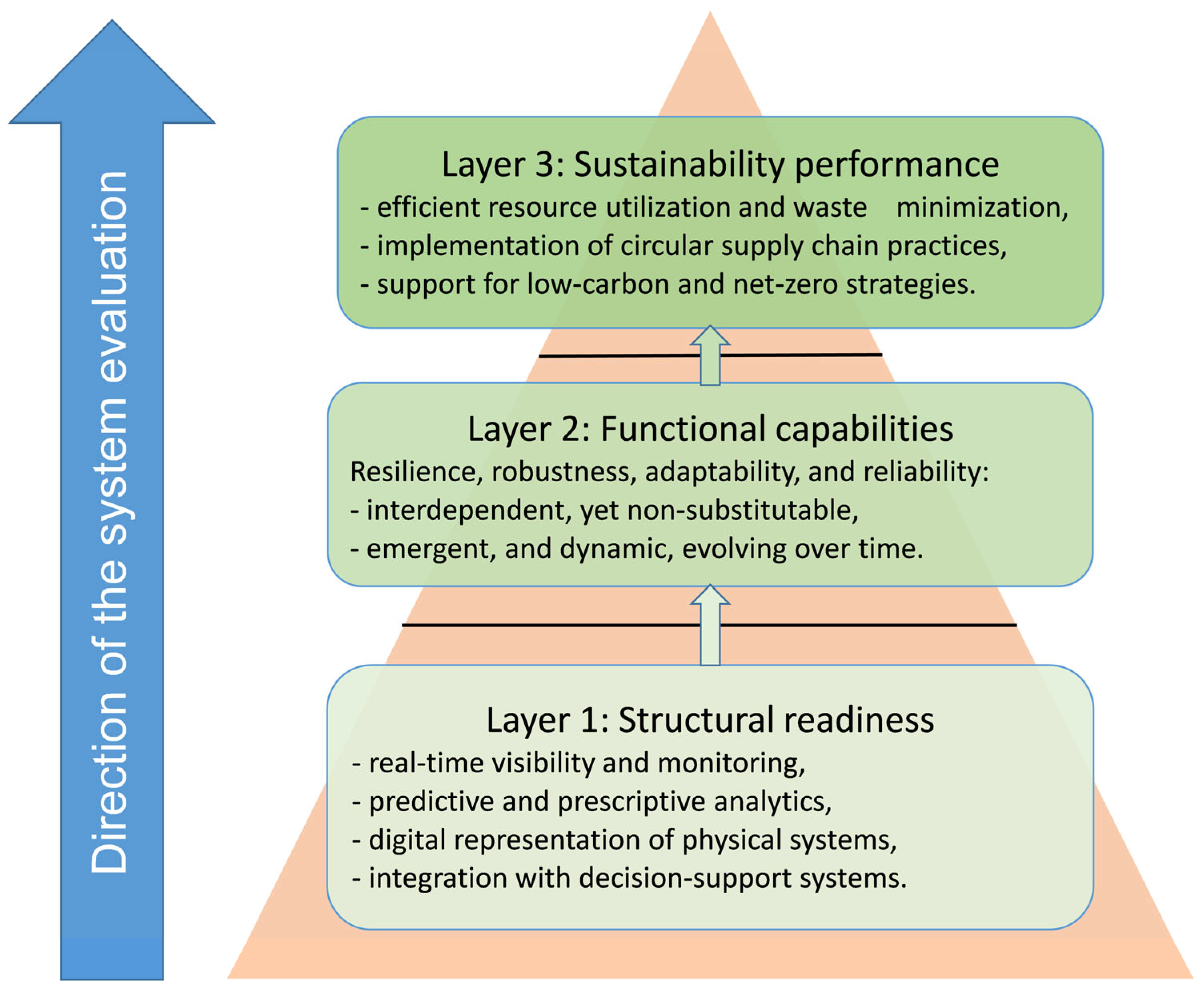
The framework conceptualizes Logistics 5.0 as a hierarchically structured and causally linked system, composed of three interrelated layers:
Layer 1—Structural Readiness, representing the foundational conditions enabling system operation,
Layer 2—Functional Capabilities, capturing dynamic system properties such as resilience and adaptability,
Layer 3—Sustainability Performance, reflecting system-level outcomes aligned with strong sustainability principles.
These layers are interconnected through causal relationships, where structural readiness enables the development of system capabilities, which in turn determine performance outcomes. This structure directly responds to the lack of causal linkage identified in the literature.
Furthermore, the framework integrates human-centricity and system dynamics across all layers, ensuring that Logistics 5.0 is not reduced to a purely technological paradigm but is instead treated as a socio-technical system.
The following subsections present a detailed description of each layer, starting with the structural readiness dimension.
7.1. Layer 1—Structural Readiness
Layer 1 represents the structural foundation of Logistics 5.0 systems, defining the extent to which an organization is prepared to support advanced, adaptive, and sustainable operations. In contrast to traditional readiness models, this layer is not limited to technology adoption but reflects a multi-dimensional configuration of digital, organizational, and data-related enablers.
Importantly, in line with the non-compensatory logic of the framework, all components of structural readiness must reach a minimum acceptable level, as deficiencies in one dimension cannot be offset by strengths in others.
Digitalization refers to the extent to which logistics processes, resources, and decision-making mechanisms are supported by advanced digital technologies, including artificial intelligence, digital twins, IoT, and blockchain. The literature review (
Section 5.2.1 and
Section 5.2.3) indicates that digitalization is a primary driver of Logistics 5.0 transformation, enabling predictive analytics, real-time monitoring, and intelligent decision-making. However, existing studies tend to evaluate digitalization primarily in terms of technology adoption levels, without considering its integration into system behavior and outcomes.
In the proposed framework, digitalization is understood not merely as the presence of technologies, but as their functional embeddedness within logistics processes, including:
Real-time visibility and monitoring,
Predictive and prescriptive analytics,
Digital representation of physical systems (e.g., digital twins),
Integration with decision-support systems.
Thus, digitalization constitutes a necessary but not sufficient condition for Logistics 5.0 readiness, requiring alignment with other structural dimensions.
Automation represents the degree to which logistics operations are executed through autonomous or semi-autonomous systems, including robotics, autonomous vehicles, and intelligent control systems. The literature (
Section 5.2.1 and
Section 5.2.5) highlights the increasing role of automation in enhancing efficiency, responsiveness, and operational consistency. However, in the context of Industry 5.0, automation must be reinterpreted beyond full autonomy toward human-centric automation, where human–machine collaboration is emphasized.
Accordingly, in the proposed framework, automation is conceptualized as:
The level of process automation and autonomy,
The integration of collaborative systems (e.g., human–robot interaction),
The flexibility and reconfigurability of automated systems,
The alignment between automation and human decision-making.
This perspective ensures that automation contributes not only to efficiency but also to adaptability and system resilience, addressing the gap related to limited human-centric integration identified in the literature.
Data integration refers to the ability of the logistics system to collect, process, and synchronize data across organizational, functional, and network levels, enabling coherent and informed decision-making. The literature review (
Section 5.2.1,
Section 5.2.2 and
Section 5.2.3) emphasizes the importance of data as a key enabler of AI, digital twins, and blockchain-based systems. However, many studies focus on data availability rather than data interoperability and systemic integration.
In the proposed framework, data integration encompasses:
Interoperability between systems and platforms,
Real-time data exchange across supply chain partners,
Integration of structured and unstructured data sources,
Data governance, quality, and reliability mechanisms.
A high level of data integration is essential for enabling system-wide coordination, transparency, and responsiveness, forming the backbone for higher-level capabilities such as resilience and sustainability.
The three dimensions, digitalization, automation, and data integration, jointly define the structural readiness of Logistics 5.0 systems. Their interaction determines the system’s ability to support advanced capabilities and achieve desired performance outcomes.
Crucially, due to the non-compensatory nature of the framework:
High digitalization without data integration leads to fragmented systems,
Automation without human-centric alignment reduces adaptability,
Data integration without digital tools limits analytical potential.
Therefore, structural readiness must be interpreted as a balanced and threshold-based configuration, rather than an aggregate score.
7.2. Layer 2—Functional Capabilities
Building upon the limitations identified in the literature (
Section 6), the second layer of the proposed framework introduces functional system capabilities, which represent the dynamic and behavioral properties of Logistics 5.0 systems. This layer directly addresses the critical research gap related to the lack of explicit modeling of system-level capabilities, particularly resilience, adaptability, and robustness, within existing readiness and maturity frameworks.
In contrast to Layer 1, which focuses on structural readiness (i.e., what the system has), the functional capability layer captures what the system can do under varying operational conditions. This distinction is essential, as the literature consistently demonstrates that high levels of digitalization or technological advancement do not automatically translate into improved system performance, especially in dynamic and uncertain environments [
4,
138,
165]. The functional capability layer is therefore conceptualized as a set of non-substitutable system properties, which emerge from the interaction between technological, organizational, and human factors. These capabilities are not treated as outcomes, but as intrinsic system attributes that determine how the system behaves under disruption, variability, and change.
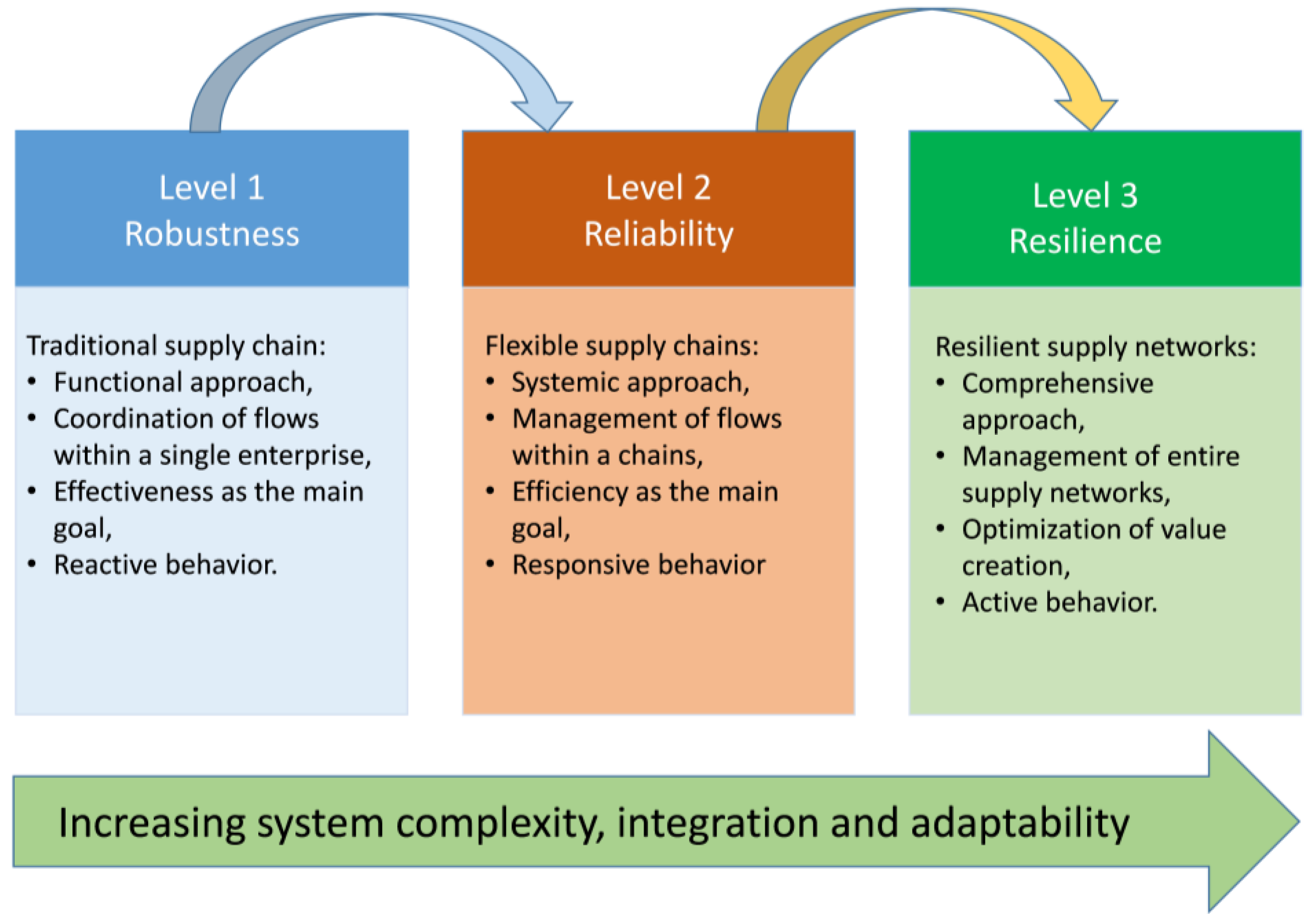
Resilience is conceptualized as the system’s ability to anticipate, absorb, recover from, and adapt to disruptions while maintaining or restoring acceptable levels of performance. The literature highlights that resilience in Logistics 5.0 is increasingly enabled by digital technologies such as artificial intelligence, digital twins, and big data analytics, which support predictive and prescriptive decision-making [
113,
165,
169]. However, as identified in
Section 6, resilience is often treated as a performance outcome, rather than an embedded system property. In the proposed framework, resilience is reinterpreted as a core functional capability, which emerges from the integration of: real-time data visibility, decision-making agility, network collaboration, and human–machine interaction. This aligns with the shift toward Industry 5.0 principles, where resilience is co-created through the interaction of technological and human-centric elements [
189,
190].
Importantly, resilience is modeled as a non-compensatory capability, meaning that it cannot be substituted by high performance in other dimensions (e.g., digitalization or efficiency).
Robustness refers to the system’s ability to maintain stable performance under disturbances without significant degradation. While resilience focuses on recovery and adaptation, robustness emphasizes resistance to disruption.
The literature on supply chain design and risk management highlights the importance of robustness in ensuring continuity under uncertain conditions, particularly through redundancy, diversification, and network design strategies [
175,
177]. In Logistics 5.0 systems, robustness is increasingly supported by:
Distributed and decentralized architectures,
Redundancy in supply and logistics networks, and
Predictive risk assessment models.
However, current maturity models rarely capture robustness explicitly, often conflating it with resilience or ignoring it altogether. The proposed framework distinguishes robustness as a separate capability, ensuring that systems are not only able to recover but also resist disruptions proactively.
Adaptability is defined as the system’s ability to adjust its structure, processes, and decision rules in response to changing conditions. This capability reflects the dynamic and evolutionary nature of Logistics 5.0 systems operating in highly volatile environments.
The literature emphasizes adaptability as a key component of dynamic capabilities and supply chain agility, particularly in the context of digital transformation and AI-driven decision-making [
168,
180]. Digital twins and real-time analytics further enhance adaptability by enabling continuous system reconfiguration and scenario-based optimization [
113,
124]. Despite its importance, adaptability is rarely operationalized within readiness or maturity models. In the proposed framework, it is treated as a core functional capability, reflecting the system’s ability to:
Reconfigure logistics networks,
Modify operational strategies, and
Respond to demand and supply variability.
Adaptability is particularly critical in the context of Supply Chain 5.0, where responsiveness must be aligned with sustainability and human-centric objectives.
Reliability refers to the system’s ability to consistently perform its intended functions over time under specified conditions. Unlike resilience or adaptability, which focus on response to change, reliability emphasizes the stability and predictability of operations.
The importance of reliability is well-established in logistics and maintenance literature, particularly in relation to operational continuity and risk mitigation [
134]. In the context of Logistics 5.0, reliability is increasingly influenced by:
While reliability is often considered a traditional performance metric, its role within the proposed framework is elevated to a functional capability, as it directly affects the system’s ability to sustain performance over time and under uncertainty.
The four defined capabilities, resilience, robustness, adaptability, and reliability, collectively define the behavioral profile of Logistics 5.0 systems. Importantly, these capabilities are:
Interdependent, yet non-substitutable,
Emergent, arising from interactions across system components, and
Dynamic, evolving over time in response to internal and external conditions.
This layer establishes the critical causal bridge between structural readiness (Layer 1) and system performance outcomes (Layer 3), addressing one of the key gaps identified in the literature (RQ4).
By explicitly modeling functional capabilities, the proposed framework moves beyond static and compensatory maturity models toward a systemic, dynamic, and non-compensatory representation of Logistics 5.0, where system behavior becomes a central element of analysis.
To further enhance the practical interpretability and future operationalization of the proposed framework,
Table 11 presents illustrative examples of measurable indicators that may be used to assess the key functional capabilities of Logistics 5.0 systems. The presented indicators are not intended to constitute a fixed or exhaustive measurement system, but rather to demonstrate possible assessment directions and operationalization pathways for future empirical applications.
The proposed indicators should be interpreted as illustrative operationalization examples rather than universal evaluation criteria. Depending on the application context, sector characteristics, and data availability, different quantitative, qualitative, or hybrid indicators may be employed. Importantly, the indicators may be integrated with expert-based assessment methods, simulation approaches, fuzzy logic systems, or data-driven analytics to support empirical implementation of the framework. This perspective reinforces the framework’s applicability while maintaining its conceptual and system-oriented nature.
7.3. Layer 3—Sustainability Performance
The third layer of the proposed framework represents the sustainability and system performance dimension, which constitutes the ultimate objective of Logistics 5.0 systems. This layer directly responds to the limitations identified in
Section 6, particularly the dominance of weak sustainability perspectives, the fragmentation of sustainability assessment approaches, and the lack of integration between sustainability and system dynamics.
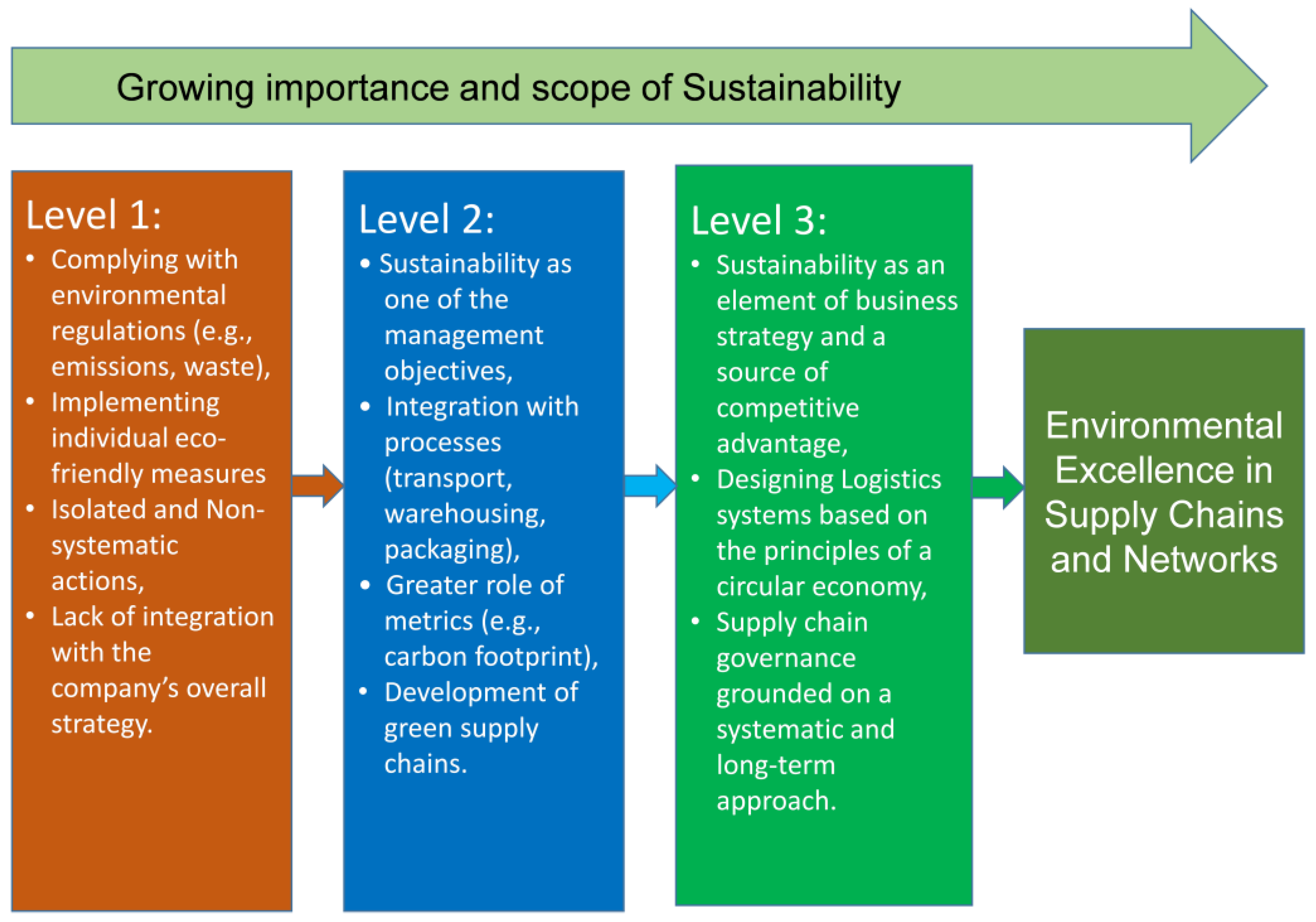
In contrast to conventional maturity models, where sustainability is often treated as a complementary or compensatory dimension, the proposed framework conceptualizes sustainability as a non-substitutable and governing performance layer, aligned with the principles of strong sustainability. This implies that environmental and social criteria cannot be offset by improvements in economic or technological performance, thereby introducing strict boundary conditions for system evaluation.
Building upon the synthesis of
Section 5.2.7, sustainability in Logistics 5.0 is operationalized through three interrelated dimensions: environmental, economic, and social performance, which are interpreted not as independent metrics, but as interdependent system outcomes emerging from the interaction between structural readiness (Layer 1) and functional capabilities (Layer 2).
Environmental performance reflects the system’s ability to minimize ecological impact, reduce resource consumption, and support circular economy principles. The literature emphasizes that Industry 5.0 technologies, such as IoT, AI, and blockchain, play a crucial role in enabling environmental sustainability through improved visibility, optimization, and traceability [
206,
207,
209]. Key aspects of environmental performance include:
Reduction of carbon emissions and energy consumption,
Efficient resource utilization and waste minimization,
Implementation of circular supply chain practices, and
Support for low-carbon and net-zero strategies.
However, as identified in the review, many existing models adopt a compensatory logic, where environmental degradation can be offset by economic gains. In the proposed framework, environmental performance is treated as a non-negotiable constraint, forming a critical boundary condition for system evaluation.
Economic performance captures the system’s ability to generate value, ensure efficiency, and maintain competitiveness within the Logistics 5.0 ecosystem. The literature highlights the role of digital transformation, data-driven decision-making, and operational optimization in enhancing economic outcomes [
211,
214]. Key components include:
Operational efficiency and cost optimization,
Service quality and responsiveness,
Value creation through innovation and digitalization, and
Long-term economic viability.
Importantly, within the proposed framework, economic performance is not treated as the dominant dimension, but rather as conditionally dependent on environmental and social constraints. This reflects a shift from traditional efficiency-driven paradigms toward balanced and responsible value creation, consistent with Industry 5.0 principles.
Social performance reflects the human-centric dimension of Logistics 5.0, which has been identified in the literature as a critical yet underdeveloped component of supply chain models [
220,
225]. This dimension includes:
workforce well-being, safety, and ergonomics,
human–machine collaboration and augmentation,
skills development and digital competencies, and
ethical and inclusive system design.
The literature emphasizes that human capital and organizational culture play a key role in enabling both resilience and sustainability outcomes. However, social aspects are often underrepresented or weakly operationalized in existing frameworks. The proposed model explicitly integrates social performance as a core and non-substitutable dimension, ensuring that technological advancement does not come at the expense of human well-being.
A key contribution of this layer lies in redefining sustainability as a dynamic system-level outcome, rather than a static performance metric. The literature indicates that sustainability performance is highly dependent on system behavior under changing conditions, including disruptions, demand variability, and environmental constraints [
138,
227]. In this context, sustainability emerges from:
the structural readiness of the system (e.g., digital infrastructure, integration),
the functional capabilities (e.g., resilience, adaptability), and
the interaction between technological, organizational, and human factors.
This perspective directly addresses the gap identified in RQ4, namely the lack of causal linkage between readiness and performance outcomes.
The sustainability and system performance layer represents the final evaluative dimension of the proposed Logistics 5.0 framework. It integrates environmental, economic, and social outcomes into a coherent structure, governed by non-compensatory logic and grounded in system behavior. Importantly, this layer:
provides a normative benchmark for system evaluation,
ensures alignment with Industry 5.0 principles,
establishes a direct link between system capabilities and performance outcomes.
Together with the structural readiness and functional capability layers, it completes the hierarchical and causal architecture of the proposed framework, enabling a comprehensive and system-oriented assessment of Logistics 5.0.
7.4. Non-Compensatory Evaluation Logic
A central contribution of the proposed Logistics 5.0 framework is the introduction of a non-compensatory evaluation logic, which fundamentally departs from the dominant assessment approaches identified in the literature. As discussed in
Section 6, most existing maturity and readiness models rely on compensatory mechanisms, allowing high performance in one dimension (e.g., digitalization) to offset deficiencies in others (e.g., sustainability or resilience). This often leads to overestimated system readiness and misleading performance interpretations. To address this limitation, the proposed framework adopts a threshold-based, non-compensatory logic, ensuring that critical system dimensions must be satisfied independently, without trade-offs.
The evaluation of Logistics 5.0 systems is based on the definition of minimum threshold levels for each key dimension across all layers of the framework:
Structural readiness (Layer 1),
Functional capabilities (Layer 2),
Sustainability performance (Layer 3).
Each dimension is associated with a minimum acceptable level of performance, below which the system cannot be considered mature or viable, regardless of its performance in other areas. The threshold definition constitutes a critical element of the proposed non-compensatory evaluation logic. In practical applications, minimum acceptable levels may be established using multiple complementary approaches. These include:
- (i)
Expert-based methods, such as Delphi studies or structured expert judgment,
- (ii)
Regulatory or normative benchmarks, for instance, ESG standards or industry-specific sustainability requirements, and
- (iii)
Empirical calibration based on observed data distributions (e.g., percentile-based thresholds or performance benchmarks within a given sector).
In the context of this study, threshold values are introduced at a conceptual level to illustrate the evaluation logic rather than to provide a fixed parametrization. Their precise specification is therefore context-dependent and should be adapted to the characteristics of the analyzed logistics system and its operational environment.
This approach reflects the systemic nature of Logistics 5.0, where failure in one critical dimension (e.g., lack of resilience) may compromise the entire system.
The framework assumes that certain capabilities and performance outcomes are non-negotiable conditions for Logistics 5.0 systems. These include, in particular:
Minimum levels of resilience (ability to respond to disruptions),
Baseline environmental sustainability (e.g., compliance with low-carbon requirements),
Acceptable social conditions (e.g., workforce safety and human-centric design).
These requirements act as hard constraints, rather than flexible evaluation criteria. Consequently, systems that fail to meet these minimum conditions are classified as non-compliant, even if they exhibit high levels of digitalization or efficiency.
From a methodological perspective, the proposed evaluation approach corresponds to a conjunctive decision rule, commonly recognized in the multi-criteria decision-making (MCDM) literature. According to this logic, a system is classified as viable only if all evaluated dimensions meet or exceed their respective threshold levels. This implies that the overall system assessment is not derived from aggregation, but from a logical condition of the form:
where Cᵢ denotes the performance level of a given dimension and Tᵢ its corresponding threshold.
This conjunctive structure ensures that no dimension can be substituted or compensated for by another, which directly addresses the limitations of additive and weighted aggregation models identified in the literature.
In addition, a key implication of the non-compensatory logic is the explicit rejection of trade-offs between critical dimensions. In contrast to traditional multi-criteria decision-making approaches (e.g., weighted aggregation), the proposed framework assumes that:
Environmental degradation cannot be offset by economic gains,
Low resilience cannot be compensated for by high automation or digital maturity,
Poor social conditions cannot be justified by efficiency improvements.
This principle is directly aligned with the concept of strong sustainability and responds to one of the most significant gaps identified in the literature (
Section 6).
Beyond minimum thresholds, the framework introduces the concept of a system balance condition, which complements the conjunctive evaluation logic. While threshold conditions ensure feasibility, the balance condition addresses the internal coherence of system development across dimensions.
Operationally, system balance can be interpreted as the absence of excessive disparities between dimensions. In practical terms, this may be assessed through:
- (i)
The range of performance values (difference between maximum and minimum scores),
- (ii)
The dispersion of scores across dimensions, or
- (iii)
The identification of critical outliers that significantly deviate from the overall system profile.
A system may formally satisfy minimum thresholds while still exhibiting structural imbalance, for example, when high technological advancement is not matched by corresponding levels of resilience or sustainability. Such an imbalance increases systemic vulnerability and reduces long-term viability. Therefore, the balance condition acts as a secondary evaluation layer, supporting the identification of structurally inconsistent configurations that require coordinated development across dimensions.
The system balance condition ensures that Logistics 5.0 systems evolve in a coordinated and harmonized manner, reflecting their nature as complex adaptive systems.
The adoption of a non-compensatory evaluation logic leads to a fundamental reinterpretation of system maturity and performance. In particular:
High digital maturity cannot compensate for low resilience or poor sustainability performance,
System evaluation shifts from optimization to feasibility and viability,
The focus moves from isolated indicators to holistic system integrity.
This approach provides a more realistic and robust basis for assessing Logistics 5.0 systems, particularly in environments characterized by uncertainty, disruption, and increasing sustainability requirements.
The proposed non-compensatory logic is conceptually related to established approaches in the MCDM literature, including conjunctive screening rules and outranking methods (e.g., ELECTRE-type approaches), which also reject full compensability between criteria. However, the contribution of this study does not lie in the development of a new decision-making algorithm, but in the system-level integration and reinterpretation of non-compensatory logic within the context of Logistics 5.0 systems.
In particular, the novelty of the proposed framework lies in:
Embedding non-compensatory evaluation within a multi-layer architecture linking structural readiness, functional capabilities, and performance outcomes,
Explicitly treating sustainability dimensions as non-substitutable system constraints, rather than additional evaluation criteria, and
Integrating dynamic system properties (e.g., resilience and adaptability) into the evaluation logic, thereby extending beyond static maturity assessment models.
This positioning allows the framework to bridge the gap between operations research-based decision logic and system-oriented modeling of complex socio-technical logistics systems.
Following the above considerations, the non-compensatory logic acts as a governing mechanism that integrates all layers of the proposed framework:
It constrains structural readiness by enforcing meaningful adoption of technologies,
It validates functional capabilities by requiring operational effectiveness under real conditions,
It ensures that sustainability performance is achieved in a balanced and non-substitutable manner.
As such, this logic represents the core evaluative principle of the proposed model and directly operationalizes the systemic perspective developed throughout
Section 5 and
Section 6. To provide a holistic representation of the proposed approach,
Figure 13 illustrates the architecture of the non-compensatory Logistics 5.0 framework, integrating structural readiness, functional capabilities, sustainability performance, and the governing evaluation logic into a coherent system.
Figure 13 presents the architecture of the proposed non-compensatory Logistics 5.0 framework, structured as a hierarchical and causally linked system composed of three primary layers: structural readiness, functional capabilities, and sustainability-oriented system performance.
The bottom layer represents structural readiness, encompassing key technological and organizational enablers, including digitalization, automation, and data integration. This layer defines the foundational conditions required for system operation.
The second layer captures functional system capabilities, including resilience, robustness, adaptability, and reliability. These capabilities represent dynamic and interdependent system properties that determine how the system responds to disruptions, uncertainty, and operational variability. Importantly, this layer acts as a bridge between structural conditions and performance outcomes.
The top layer reflects sustainability and system performance, structured along environmental, economic, and social dimensions. In contrast to traditional models, these dimensions are treated as non-substitutable and jointly determine the overall viability of the system.
A defining feature of the framework is the integration of a non-compensatory evaluation logic, represented as a governing mechanism spanning all layers. This mechanism enforces threshold conditions, eliminates trade-offs between critical dimensions, and ensures system balance. As a result, high performance in one dimension (e.g., digitalization) cannot compensate for deficiencies in others (e.g., resilience or sustainability).
The overall architecture reflects a bottom-up causal logic, where structural readiness enables functional capabilities, which in turn drive system-level performance outcomes. This hierarchical structure addresses the key gaps identified in the literature by explicitly linking system inputs, behaviors, and outputs within a coherent and non-compensatory framework.
The proposed architecture provides a coherent and system-oriented representation of Logistics 5.0, addressing the fragmentation and limitations identified in the literature. By integrating structural, functional, and performance dimensions under a non-compensatory logic, the framework offers a robust foundation for both theoretical development and practical application.
This conceptualization serves as a basis for future research on operationalization, measurement, and empirical validation of Logistics 5.0 systems.
From a practical implementation perspective, the proposed non-compensatory evaluation logic can be operationalized through a structured stepwise procedure. First, the boundaries of the logistics system under analysis should be defined, including the organizational level, supply chain segment, or functional unit of assessment. Second, relevant indicators for structural readiness, functional capabilities, and sustainability performance should be selected and quantified using available operational data, expert judgment, or hybrid assessment methods. Third, minimum threshold values for each dimension should be established based on regulatory requirements, industry standards, or empirical benchmarking. Fourth, each dimension should be evaluated independently against its respective threshold in a layer-specific manner. Finally, the conjunctive decision rule is applied to determine system viability, ensuring that all critical dimensions simultaneously satisfy minimum requirements. This stepwise procedure enables direct translation of the conceptual framework into decision-support applications for managers and policymakers, supporting structured evaluation and informed decision-making in Logistics 5.0 systems.
To further strengthen the decision-making applicability of the proposed framework, its non-compensatory logic can be explicitly aligned with structured multi-criteria decision-making (MCDM) screening procedures. In particular, the evaluation process can be interpreted as a sequential filtering model consisting of three operational stages: (i) dimensional screening, (ii) threshold validation, and (iii) conjunctive feasibility assessment. In the first stage, all relevant indicators are collected and normalized within each of the three framework layers (structural readiness, functional capabilities, and sustainability performance). In the second stage, each dimension is independently compared against predefined minimum threshold values derived from expert judgment, regulatory standards, or empirical benchmarks. In the final stage, a conjunctive decision rule is applied to determine system feasibility, ensuring that only systems satisfying all minimum requirements across all dimensions are classified as viable. This procedure is conceptually consistent with screening-based decision models in the MCDM literature (e.g., conjunctive screening and outranking logic), while extending them through explicit integration into a multi-layer socio-technical architecture. As a result, the proposed framework can be operationalized not only as a conceptual model, but also as a structured decision-support methodology for evaluating Logistics 5.0 system viability under uncertainty.
7.5. Illustrative Application of the Non-Compensatory Evaluation Logic
To demonstrate the practical applicability, interpretability, and discriminative power of the proposed non-compensatory framework, this section presents a simplified comparative example of two hypothetical Logistics 5.0 systems. The objective is to illustrate how different evaluation logics, compensatory versus non-compensatory, lead to fundamentally different system classifications, despite similar or even superior aggregate performance levels.
Two stylized logistics systems are defined:
System A—characterized by high structural readiness and strong economic performance, but weak resilience and sustainability,
System B—representing a balanced system with moderate but consistent performance across all dimensions.
Each system is evaluated across the three layers of the proposed framework using a simplified ordinal scale from 1 (low) to 5 (high). The assigned values reflect typical configurations observed in the literature, where high digital maturity may coexist with low sustainability or resilience. The results are given in
Table 12.
System A reflects a technologically advanced but unbalanced configuration, while System B represents a structurally and functionally consistent system.
To reflect dominant approaches identified in the literature, a simple additive (compensatory) aggregation is applied, assuming equal weights across all dimensions.
The overall performance score is calculated as the arithmetic mean:
Under compensatory evaluation, System A is classified as superior, as high performance in digitalization and economic dimensions offsets deficiencies in resilience and sustainability.
In the proposed framework, system evaluation is based on minimum threshold conditions, reflecting the non-substitutability of critical dimensions.
Assuming a minimum acceptable threshold of 3 (moderate level) for each dimension:
System A:
- –
Resilience = 2—not satisfied
- –
Robustness = 2—not satisfied
- –
Environmental performance = 2—not satisfied
- –
Social performance = 2—not satisfied
Conclusion: Threshold condition not satisfied—System classified as non-viable
Conclusion: Threshold condition satisfied—System classified as viable.
The comparison clearly demonstrates the limitations of compensatory evaluation approaches. Despite achieving a higher aggregate score, System A fails to meet the minimum requirements in critical dimensions, particularly resilience and sustainability. As a result, it is classified as non-viable under the proposed framework.
In contrast, System B, although characterized by moderate performance across all dimensions, satisfies the threshold conditions and is therefore considered systemically viable.
This result highlights three key insights:
High digitalization and economic performance do not guarantee system viability,
Strengths in other areas cannot offset deficiencies in resilience and sustainability,
Balanced system development is more critical than maximizing isolated performance indicators.
This illustrative example confirms the core assumption of the proposed framework: Logistics 5.0 system performance must be evaluated as a condition of feasibility rather than optimization. The non-compensatory logic enables the identification of structurally unbalanced systems that would otherwise be misclassified as high-performing under traditional models. This directly addresses the key limitations identified in the literature, particularly the reliance on compensatory aggregation and the weak integration of sustainability constraints.
Although simplified, the example demonstrates the practical applicability of the framework and provides a foundation for future research focused on its quantitative operationalization and empirical validation.
From a practical perspective, the illustrative application presented in
Section 7.5 demonstrates how the proposed framework may support managerial decision-making in Logistics 5.0 environments. In particular, the non-compensatory logic enables organizations to identify structurally imbalanced system configurations that may remain undetected under traditional additive maturity models. This may support practitioners in prioritizing investments not only toward digitalization but also toward resilience, sustainability, and human-centric capabilities. The framework may therefore serve as a strategic assessment and diagnostic tool for evaluating the viability of logistics systems under increasing operational uncertainty and sustainability constraints. Moreover, its layered architecture enables adaptation to different organizational contexts, including warehousing, transportation systems, and supply chain networks.
The presented illustrative example may be further extended in future studies through the integration of quantitative indicators for resilience, robustness, adaptability, and reliability assessment, enabling empirical validation and sector-specific operationalization of the proposed framework.
8. Implications for Sustainable Economic Transformation
The proposed non-compensatory conceptual framework for Logistics 5.0 carries important implications that extend beyond the operational and organizational levels, contributing to a broader understanding of sustainable economic transformation. In contrast to traditional efficiency-oriented logistics paradigms, the findings of this study indicate a fundamental shift toward viability-oriented systems, in which resilience, sustainability, and human-centricity are not treated as auxiliary dimensions but as core and non-substitutable system properties. This transition reflects a deeper reconfiguration of how logistics systems are conceptualized, designed, and evaluated within the emerging Industry 5.0 ecosystem.
One of the key implications concerns the redefinition of performance logic in logistics and supply chain systems. The dominance of compensatory models in existing maturity and readiness frameworks has historically allowed trade-offs between critical dimensions, enabling high levels of digitalization or efficiency to offset deficiencies in sustainability or resilience. However, as demonstrated in this study, such an approach is increasingly insufficient in the context of complex and uncertain environments. The introduction of a non-compensatory logic implies that minimum threshold conditions must be satisfied across all critical dimensions, particularly in terms of environmental sustainability and system resilience. This represents a shift from optimization under constraints to system viability, where failure in one dimension cannot be neutralized by excellence in another. Consequently, the proposed framework supports the development of more balanced and robust logistics systems capable of sustaining long-term performance under disruption.
From a systemic perspective, the framework reinforces the view of Logistics 5.0 as a complex adaptive system characterized by the dynamic interaction of structural, functional, and performance layers. Digital technologies, including artificial intelligence, blockchain, and digital twins, act as enabling mechanisms that enhance system visibility, integration, and decision-making. However, their true value emerges only when they are embedded within a broader system architecture that explicitly incorporates functional capabilities such as adaptability, robustness, and recovery. This highlights a critical implication: technological advancement alone is insufficient to drive sustainable transformation unless it is aligned with system-level capabilities and performance objectives. As such, the integration of a dedicated functional capability layer within the framework provides a necessary bridge between technological readiness and actual system behavior.
The implications for sustainability are particularly significant. The findings of the literature review reveal that sustainability in Logistics 5.0 research is often treated as a secondary or compensable dimension, frequently subordinated to economic or technological objectives. In contrast, the proposed framework adopts a strong sustainability perspective, in which environmental and social dimensions are treated as non-substitutable and structurally embedded within the system. This has direct consequences for both research and practice, as it challenges prevailing approaches that rely on partial or indirect sustainability metrics. By introducing a dedicated sustainability layer, the framework enables a more comprehensive and integrated assessment of system performance, capturing not only efficiency gains but also long-term environmental and societal impacts.
At the organizational level, the framework provides guidance for decision-making and strategic planning in logistics and supply chain systems. It suggests that investments in digital technologies should be evaluated not only in terms of their immediate operational benefits but also in terms of their contribution to system resilience and sustainability. This implies a need for more holistic evaluation criteria, incorporating multi-dimensional performance indicators and non-compensatory assessment mechanisms. Furthermore, the explicit inclusion of human-centric aspects across system layers highlights the importance of workforce capabilities, collaboration, and human–technology interaction in achieving sustainable transformation. This aligns with the broader objectives of Industry 5.0, where human well-being and system performance are jointly optimized.
From a policy and economic perspective, the proposed framework supports the development of regulatory and strategic initiatives aimed at fostering resilient and sustainable supply chain ecosystems. The shift toward non-compensatory and system-based evaluation models implies that policy frameworks should move beyond incentivizing isolated technological adoption and instead promote integrated solutions that simultaneously address digitalization, resilience, and sustainability. This is particularly relevant in the context of global disruptions, climate change, and increasing regulatory pressure related to ESG and sustainability reporting. By providing a structured approach to linking readiness, capabilities, and performance outcomes, the framework can support policymakers in designing more effective instruments for guiding the transformation of logistics systems at regional and national levels.
Overall, the implications of this study suggest that sustainable economic transformation in the context of Logistics 5.0 requires a paradigm shift from fragmented and technology-centric approaches to integrated, system-level thinking. The proposed framework contributes to this transition by offering a coherent structure that aligns structural readiness, functional capabilities, and sustainability performance within a unified architecture. In doing so, it not only addresses the key gaps identified in the literature but also provides a foundation for future research and practical implementation aimed at developing resilient, sustainable, and human-centric logistics systems.
9. Conclusions
This study set out to systematize and critically assess the evolving body of knowledge on Logistics 5.0, with a particular focus on the relationships between readiness, system capabilities, and sustainability performance. By combining a structured literature review with a content-based analysis and a systemic interpretation, the paper identifies key conceptual inconsistencies and gaps that limit the current understanding and operationalization of Logistics 5.0. In response, a non-compensatory conceptual framework was proposed, aiming to integrate structural readiness, functional capabilities, and sustainability performance within a coherent, multi-layered architecture.
The findings of this study lead to several important conclusions. First, while Logistics 5.0 is widely recognized as a necessary evolution of logistics and supply chain systems in the context of Industry 5.0, it is not, in itself, sufficient to ensure sustainable and resilient outcomes. The literature demonstrates a strong focus on digitalization and technological advancement; however, these elements alone do not guarantee improvements in sustainability or system robustness. This highlights a fundamental misalignment between the means (digital transformation) and the desired ends (sustainable and resilient performance).
Second, the analysis clearly shows that readiness does not equate to sustainability. Existing maturity and readiness models predominantly assess the capability of organizations to adopt digital technologies and advanced practices, but they do not adequately capture whether such adoption leads to positive environmental or social outcomes. As a result, systems characterized by high levels of digital maturity may still exhibit low sustainability performance, particularly when environmental and social dimensions are treated as secondary or compensable factors.
Third, sustainability in Logistics 5.0 should be understood as an emergent system property, rather than as an isolated or additive dimension. The results of the literature review indicate that sustainable performance arises from the interaction between structural readiness, functional system capabilities, and operational behavior under dynamic conditions. This reinforces the need for integrated and systemic modeling approaches that move beyond linear and static assessment frameworks.
Fourth, the study highlights the critical need for non-compensatory models in the evaluation and design of Logistics 5.0 systems. The dominance of compensatory logic in existing approaches leads to overestimation of system performance and obscures critical weaknesses, particularly in the areas of resilience and sustainability. By introducing a non-compensatory evaluation logic, the proposed framework ensures that minimum-threshold conditions must be satisfied across all key dimensions, preventing trade-offs that could undermine long-term system viability.
Despite these contributions, the study is subject to several limitations that should be acknowledged. First, the analysis is based on a structured literature review, which, although comprehensive, is inherently dependent on the selection criteria, databases, and keywords used. As a result, some relevant studies may not have been included, particularly those published in emerging or interdisciplinary outlets. Second, the proposed framework is conceptual in nature and has not yet been empirically validated. While it is grounded in an extensive synthesis of the literature, its practical applicability and effectiveness in real-world logistics systems require further testing. Third, the study adopts a qualitative and interpretative approach to content analysis, which, despite its depth, may introduce a degree of subjectivity in the classification and synthesis of research domains. Finally, the framework does not explicitly incorporate sector-specific or regional differences, which may influence the applicability of Logistics 5.0 concepts across different industries and economic contexts. Nevertheless, the use of a single discovery platform may introduce potential coverage bias, as not all records indexed in Scopus or Web of Science are necessarily fully represented or identically indexed within Primo. In particular, differences in metadata quality, indexing delays, and database-specific coverage may affect the completeness of retrieved results. This limitation is acknowledged and should be considered when interpreting the findings. However, the breadth of sources aggregated within Primo and the complementary use of additional search strategies (e.g., backward and forward snowballing) mitigate this risk and support the overall robustness of the review.
These limitations open several avenues for future research. A key direction involves the empirical validation and operationalization of the proposed non-compensatory framework, including the development of measurable indicators, thresholds, and decision-support tools. Future studies could also explore the integration of quantitative methods, such as fuzzy logic, multi-criteria decision-making, or system dynamics modeling, to enhance the robustness and applicability of the framework. Additionally, there is a need to investigate the dynamic behavior of Logistics 5.0 systems under disruption, particularly through simulation-based approaches and digital twin environments. Further research should also examine the role of human-centric factors, including skills, collaboration, and human–technology interaction, in shaping system performance. Finally, cross-sectoral and cross-regional studies would provide valuable insights into how the proposed framework can be adapted to different industrial contexts and policy environments.
In conclusion, this study contributes to the advancement of Logistics 5.0 research by shifting the focus from fragmented and technology-centric approaches toward an integrated, system-level perspective. By emphasizing the interdependencies between readiness, capabilities, and sustainability performance, and by introducing a non-compensatory evaluation logic, the proposed framework provides a foundation for more robust, resilient, and sustainable logistics systems. This perspective is essential for bridging the gap between conceptual development and practical implementation, and for supporting the broader transition toward sustainable economic systems in the era of Industry 5.0.