1. Introduction
Seeds are a fundamental input in agricultural production systems and play critical roles in food security, agricultural innovation, and the long-term sustainability of rural economies. Therefore, access to high-quality seeds and the governance of plant genetic resources (PGR) represent central issues in agricultural policy and sustainable development [
1,
2,
3,
4]. Historically, many countries organized seed systems for major staple crops through public institutions, including government research institutes, agricultural extension services, and publicly regulated seed certification systems. These public seed systems were designed to ensure a stable supply of high-quality seeds and to support national food security strategies [
1,
5,
6].
However, over the past several decades, the institutional framework governing seeds have undergone a significant transformation. Intellectual property protection has become an increasingly important component of seed governance, particularly through PVP systems aligned with the International Convention for the Protection of New Varieties of Plants (UPOV) and the implementation of the Agreement on Trade-Related Aspects of Intellectual Property Rights (TRIPS). These institutional developments have strengthened the legal protection of plant varieties and reshaped the incentive structure for plant breeding innovation [
7,
8,
9,
10].
A growing body of research has examined these transformations in global seed systems. Studies on seed governance have highlighted the increasing oligopolization of the global seed industry and the expanding role of intellectual property (IP) rights in shaping agricultural innovation [
8,
11]. Other studies have explored how plant variety protection (PVP) regimes influence seed markets, breeding strategies, and governance of genetic resources [
12,
13]. A substantial body of literature has examined the tensions between IP protection and farmers’ practices, particularly in relation to farmers’ rights and the use of farm-saved seeds [
14,
15]. These debates reflect broader concerns regarding the effects of seed governance on agricultural biodiversity, farmer autonomy, and the sustainability of agricultural systems.
Despite these contributions, existing studies have focused primarily on the expansion of IP protection and the privatization of seed systems [
5,
7,
8,
11]. Thus, little attention has been paid to the interactions between IP regimes and regional agricultural institutions, particularly to the role of subnational governments in shaping seed governance. In many countries, agricultural innovation systems operate across multiple institutional levels, including national regulatory frameworks, regional agricultural policies, and local production systems. However, the interactions between IP systems and subnational governance structures have not been sufficiently explored.
Japan provides a particularly useful case study for examining institutional dynamics. Historically, the supply of seeds for major staple crops, such as rice, wheat, and soybeans, was coordinated through a public seed supply system established under the Major Crop Seeds Act (
Shuyō Nōsakumotsu Shushi Hō) [
16] (p. 12). Under this institutional framework, prefectural governments play a central role in plant breeding, maintenance of foundation seeds, and the organization of certified seed production and distribution [
16] (p. 14). Japan’s seed governance system has undergone major institutional reforms in recent years. The abolition of the Major Crop Seeds Act in 2018 removed the legal framework that had historically supported the public seed supply system [
17]. In addition, the 2020 reform of the Plant Variety Protection and Seed Act (
Shubyō Hō) [
18] significantly strengthened the protection of registered plant varieties and expanded breeders’ ability to control the circulation and use of propagating materials.
These reforms have triggered substantial policy debates regarding the future of seed systems, farmers’ rights, and the governance of plant varieties in Japan [
19,
20,
21,
22,
23,
24,
25,
26]. However, most previous studies have examined these two reforms separately. The abolition of the Major Crop Seeds Act has typically been analyzed in the context of regulatory reform and the role of public institutions in seed supply, whereas the reform of the PVP system has mainly been discussed from the perspective of IP protection and the prevention of unauthorized overseas propagation of Japanese varieties. Consequently, little attention has been paid to how these two institutional changes interact and collectively reshape the broader governance structure of seeds and plant varieties.
Thus, this review addresses this gap by examining recent transformations in seed governance in Japan from a comprehensive institutional perspective. Herein, I argue that the abolition of the Major Crop Seeds Act and the reform of the Plant Variety Protection and Seed Act have contributed to the transition from a public seed supply model to a governance structure that integrates IP protection, regional agricultural strategies, and strategic management of plant variety circulation. Importantly, this transformation does not represent the privatization of seed governance; rather, it reflects a reconfiguration of governance functions across multiple institutional levels, with national IP regimes interacting with prefectural governments, which continue to play key roles as plant breeders’ right holders, and coordinators of regional agricultural systems.
Methodologically, this study combines a legal-institutional analysis with empirical evidence on the practices of subnational governments. It draws on nationwide surveys of all 47 prefectural governments conducted in 2022 and 2024 to examine how plant varieties are managed and governed in practice following recent legal reforms. By analyzing both the formal legal framework and the actual governance practices of prefectural institutions, this article seeks to clarify how Japan’s seed governance system is evolving toward a multi-level governance structure.
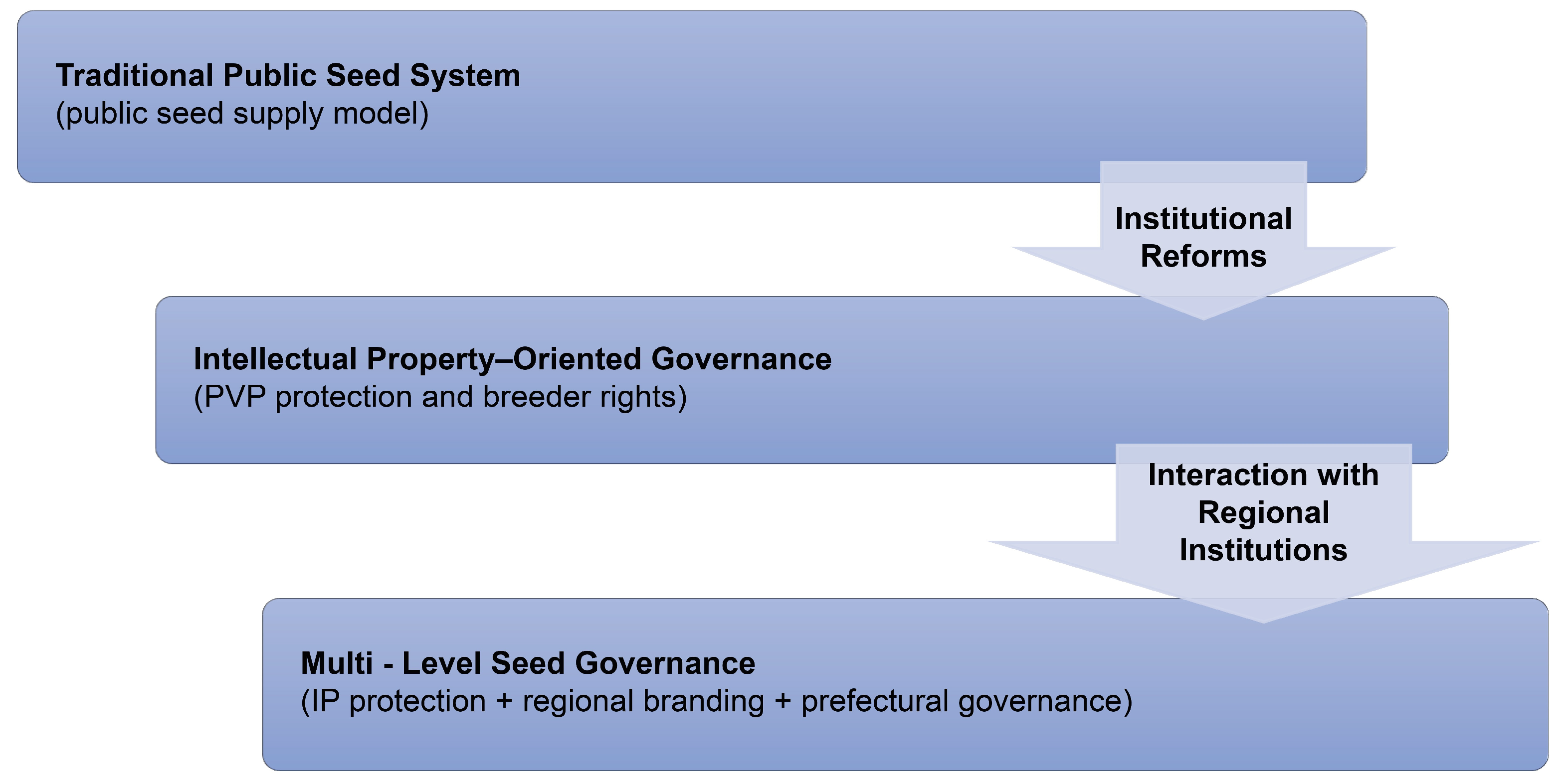
As illustrated in
Figure 1, Japan’s seed governance system has gradually shifted from a publicly coordinated seed supply model to a multi-level governance structure that integrates IP protection, regional branding strategies, and subnational agricultural governance.
This article is organized as follows:
Section 2 reviews the existing literature on seed governance, plant variety protection, and multi-level governance.
Section 3 presents the analytical framework used to examine the transformation of Japan’s seed governance system.
Section 4 analyzes the historical structure of the public seed supply system and the institutional reforms introduced in 2018 and 2020.
Section 5 discusses the relationship between farmers’ rights and farmers’ privilege in the context of Japanese seed governance.
Section 6 presents empirical findings from nationwide surveys of prefectural governments.
Section 7 examines defensive licensing and the international circulation of Japanese plant varieties. Finally,
Section 8,
Section 9 and
Section 10 discuss the broader implications of the findings, policy implications, and conclusions.
2. Literature Review: Global Debates on Seed Governance
The governance of seeds and PGR has been widely studied across multiple academic disciplines, including agricultural economics, development studies, and IP law. Previous research has highlighted how institutional arrangements governing plant breeding, seed distribution, and genetic resource management have evolved in response to technological changes, market globalization, and international regulatory frameworks.
The first major focus in current research is the transformation of seed systems and the growing oligopolization of the global seed industry. Kloppenburg’s influential political economy analysis of plant biotechnology demonstrated how the commercialization of plant breeding and the emergence of IP protection reshaped agricultural innovation systems [
11]. Subsequent studies have documented the increasing consolidation of the seed industry and the expanding role of IP rights in structuring agricultural research and development [
12]. These developments have raised important questions about the distribution of benefits within agricultural innovation systems and their implications for sustainable agriculture.
The second primary focus is the institutional design and policy implications of PVP systems. PVP regimes, particularly those aligned with the UPOV Convention, are intended to provide incentives for plant breeding innovation by granting breeders exclusive rights to newly developed varieties. However, previous studies have indicated that these systems also shape the structure of seed markets and the governance of genetic resources [
12,
13]. Therefore, the expansion of IP protection has been interpreted as both a mechanism for stimulating innovation and a source of new regulatory challenges in agricultural systems.
The third primary focus is the relationship between IP protection and farmers’ practices. Debates surrounding farmers’ rights and the use of farm-saved seeds have attracted considerable attention in international policy discussions. Farmers’ rights have been recognized in international agreements, such as the International Treaty on Plant Genetic Resources for Food and Agriculture (ITPGRFA), reflecting the historical contributions of farmers to the conservation and development of PGR. Simultaneously, PVP systems typically allow only limited exceptions for the use of farm-saved seeds, often referred to as farmers’ privilege [
14,
15]. These tensions highlight the broader challenge of balancing IP protection with the social and ecological dimensions of agricultural sustainability.
Despite extensive literature on seed governance and IP systems, relatively little attention has been paid to the role of regional and subnational governments in shaping seed governance. In practice, agricultural innovation systems frequently operate across multiple levels of governance, including national legal frameworks, regional agricultural policies, and local production systems [
27,
28,
29,
30]. However, the interaction between IP regimes and subnational governance structures has not been sufficiently explored.
Seed governance involves coordination among multiple actors across the seed supply chain, including public breeders, seed producers, agricultural cooperatives (particularly JA organizations in Japan), private seed companies, and farmers [
31,
32]. Seed governance is reported to be influenced by formal legal frameworks as well as institutional coordination in seed research and development, seed multiplication, cultivation management, and the circulation of propagating materials [
33]. Specifically, public–private coordination mechanisms and regional seed distribution systems play important roles in organizing agricultural production and maintaining the quality and traceability of plant varieties [
34]. However, these multi-actor governance dynamics have not been sufficiently incorporated into existing analyses of institutional transformation in seed governance.
Addressing this gap requires a more integrated perspective on seed governance that considers how IP protection interacts with regional agricultural institutions and local production systems. The multi-level governance concept provides a useful analytical framework for understanding these interactions [
35,
36,
37,
38]. In this framework, different levels of government and institutional actors contribute to the governance of PGR and agricultural innovation systems.
The case of Japan provides a valuable opportunity to examine these dynamics. As discussed in the following sections, Japan’s seed governance system historically relied on a public seed supply model coordinated by prefectural governments. However, recent institutional reforms have introduced stronger IP protections while maintaining the significant role of prefectural institutions in plant breeding and variety management. This institutional configuration provides a valuable case for analyzing how seed governance evolves through the interaction between IP regimes and subnational agricultural governance structures.
3. Analytical Framework: Multi-Level Seed Governance
Building on previous studies on seed governance and multi-level governance [
11,
39,
40,
41,
42,
43,
44,
45], this article conceptualizes Japan’s recent institutional reforms as a transition from a public seed supply model toward a multi-level governance structure integrating IP protection and regional agricultural governance.
However, seed governance has increasingly incorporated IP protection [
39,
41,
46,
47,
48]. As IP protection has expanded, seed governance in many countries has gradually shifted toward institutional arrangements in which IP rights play a central role in regulating seed markets [
11,
41]. Simultaneously, in Japan, plant varieties also function as regional economic assets linked to branding and territorial agricultural strategies [
49,
50,
51,
52,
53].
In addition to intellectual property protection and plant breeding systems, seed governance also involves the coordination of seed circulation and the management of propagating materials across agricultural production networks [
54]. In practice, the seed governance includes institutional arrangements concerning information sharing, circulation control, licensing coordination, and the regulation of certified seed distribution. These functions are particularly important in agricultural systems where public institutions and regional actors jointly manage seed production and variety dissemination.
From this perspective, seed governance may also be understood as a form of institutional coordination within agricultural supply networks [
55]. However, this study does not examine supply chain efficiency or quantitative logistics management. Rather, the focus is on how legal institutions and regional governance arrangements coordinate the circulation and management of plant varieties across multiple institutional levels. This article is not intended as a quantitative study of supply chain efficiency, but rather as an institutional analysis of governance coordination in seed systems.
These developments suggest that seed governance should not be understood solely as a matter of IP protection or market regulation. From the perspective of institutional economics and transaction cost economics, seed governance may also be understood as a coordination mechanism designed to reduce transaction costs associated with the circulation, quality control, and territorial management of plant varieties [
39,
41]. Agricultural production systems involving branded plant varieties often require long-term coordination among breeders, farmers, seed distributors, and regional governments. Under such conditions, hybrid governance arrangements combining legal rights, contractual relationships, and administrative coordination may emerge as efficient institutional responses to manage uncertainty and prevent opportunistic behavior [
56,
57,
58,
59]. In this sense, Japan’s seed governance system can be interpreted not simply as a shift toward privatization, but rather as the emergence of a hybrid governance structure integrating intellectual property protection with regional coordination mechanisms.
Instead, it reflects interactions among IP regimes, agricultural innovation systems, and regional economic strategies [
39,
41,
45]. This interaction often takes the form of multi-level governance, in which different levels of government and institutional actors participate in the governance of PGR and agricultural innovation [
35,
37,
60].
Under a multi-level governance structure, national governments typically play a central role in establishing IP regimes and ensuring compliance with international agreements such as UPOV and TRIPS [
46,
47,
61]. Simultaneously, subnational governments may play a significant role in plant breeding programs, seed-supply systems, and regional agricultural policies [
43,
45]. The interaction between these institutional levels can significantly shape the governance of plant varieties and the organization of seed systems [
37,
42].
This analytical framework provides a basis for examining the recent institutional transformations in Japan’s seed governance system. This highlights how changes in national IP legislation may interact with regional agricultural institutions and subnational governance structures. By applying this framework to Japan, the following sections analyze how recent legal reforms have contributed to the emergence of a multi-level seed governance system that integrates IP protection, regional agricultural strategies, and local institutional arrangements.
4. Institutional Transformation of Japan’s Seed Governance System
Japan’s seed governance system has undergone a significant institutional transformation over the past decade [
62] (pp. 3–7). These changes are associated with two major policy reforms: the abolition of the Major Crop Seeds Act in 2018 and the reform of the Plant Variety Protection and Seed Act in 2020 [
62] (pp. 213–338). Understanding these reforms requires an examination of the historical institutional structure of Japan’s seed system and the policy motivations that have led to recent changes.
4.1. Historical Structure of the Public Seed Supply System
For several decades, the seed supply for major staple crops in Japan has been organized through a public seed-supply system established under the Major Crop Seeds Act [
16]. This system covers major crops such as rice, wheat, barley, and soybeans, which have historically been central to Japan’s agricultural production and food security [
18,
63].
Under this framework, prefectural governments play a central role in seed governance [
15,
62,
63]; public agricultural research institutions operated by prefectural governments are responsible for plant breeding and the maintenance of foundation seeds [
63]. Based on these foundation seeds, designated seed growers multiply certified seeds and distribute them to farmers through organized seed-supply channels. The system also includes field inspections and quality control mechanisms to ensure that certified seeds meet established standards.
This institutional arrangement effectively created a publicly coordinated seed-supply system [
16,
64]. By involving prefectural governments in multiple stages of seed production, from plant breeding to certified seed distribution, the system ensured both a stable supply of high-quality seeds and the coordination of regional agricultural production systems [
65].
This makes Japan’s seed system relatively distinct. Although public research institutions participate in plant breeding in many countries, the systematic involvement of subnational governments in organizing the supply chain of major crop seeds is comparatively rare. Therefore, the Japanese model represents a form of public seed governance in which local governments play a central coordinating role.
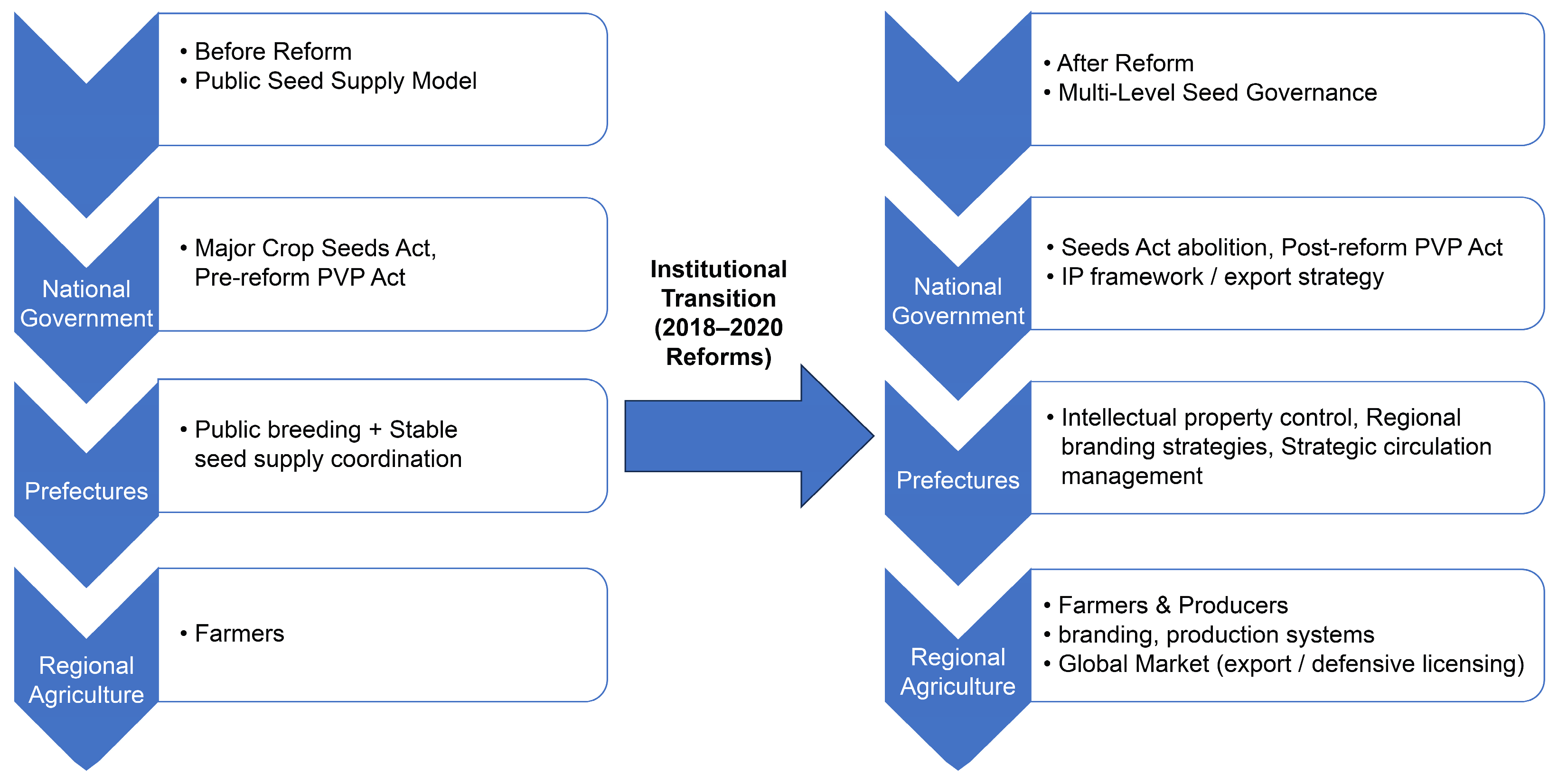
The institutional transition that followed the 2018 and 2020 reforms is conceptually summarized in
Figure 2. As illustrated in
Figure 2, this governance reconfiguration involves changes in legal frameworks and the redistribution of coordination functions among multiple actors within the seed supply system. While prefectural governments continue to play central roles in breeding and regional agricultural coordination, seed producers, agricultural cooperatives, private seed companies, and farmers increasingly participate in seed multiplication, circulation management, licensing arrangements, and regional branding strategies. Consequently, recent reforms have contributed to a more complex governance structure characterized by multi-actor coordination across different institutional levels.
4.2. Abolition of the Major Crop Seeds Act
The Major Crop Seeds Act was abolished in 2018 as part of a broader policy initiative aimed at strengthening competitiveness [
66] and promoting innovation in Japan’s agricultural sector. According to the government policy documents, this reform was intended to encourage greater participation from private actors in plant breeding and seed production [
67].
One criticism of the previous institutional framework is that the strong involvement of prefectural governments in seed production may have limited opportunities for private plant breeders and seed companies [
68]. The designation of recommended varieties and the organization of certified seed production by public institutions could potentially create barriers to the introduction of privately developed varieties into regional production systems [
69].
Therefore, the abolition of the Major Crop Seeds Act aimed to introduce greater flexibility into the seed system and promote innovation through increased private-sector participation [
67]. Parallel to this reform, related policy initiatives have encouraged public research institutions and prefectural governments to collaborate more actively with private companies for plant breeding and agricultural technology development [
70].
However, abolishing the law did not necessarily lead to the immediate withdrawal of prefectural governments from seed supply activities. Many prefectures continue to play significant roles in plant breeding and seed management even after the abolition of the legal framework. Instead, prefectures moved to protect their grain seeds by establishing distinctive seed ordinances suited to their local conditions [
70,
71]. In total, 31 prefectures enacted seed ordinances, three adopted comprehensive agricultural policy ordinances, and the remaining twelve responded through administrative guidelines [
69]. This reflects residents’ demands that prefectural governments continue to perform the roles they had previously played [
69].
4.3. Reform of the Plant Variety Protection and Seed Act
The second major institutional reform occurred in 2020 with the amendment of the Plant Variety Protection and Seed Act. This reform aimed to strengthen the protection of plant varieties and address growing concerns regarding the unauthorized overseas propagation of Japanese-developed plant varieties [
18].
This reform introduced several important institutional changes [
72,
73]. One key measure allowed breeders to designate specific countries or regions where propagating materials could be exported, as well as areas where the cultivation of protected varieties would be permitted [
74]. This mechanism was intended to provide breeders with greater control over the geographical use of plant varieties and prevent unauthorized international diffusion.
Another important change was the regulation of farm-saved seeds [
18]. Under the previous legal framework, farmers were permitted to reuse seeds harvested from registered varieties on their own farms. However, following the reform, the use of farm-saved seeds became subject to breeder authorization, except in cases where specific exceptions were granted.
4.4. Institutional Implications
Taken together, the abolition of the Major Crop Seeds Act and the reform of the Plant Variety Protection and Seed Act represent major institutional transitions in Japan’s seed governance system. The former altered the institutional framework governing seed supply [
63], whereas the latter strengthened the IP regime governing plant varieties [
18].
Importantly, these reforms did not simply represent the privatization of Japan’s seed systems. Instead, they have contributed to a reconfiguration of governance functions across multiple institutional levels. National-level IP legislation has become more prominent, and prefectural governments continue to play important roles in plant breeding, variety management, and regional agricultural policies [
69].
Consequently, Japan’s seed governance system increasingly reflects a multi-level governance structure, in which IP regimes, regional agricultural strategies, and subnational institutional arrangements interact to shape the development, circulation, and management of plant varieties.
5. Farmers’ Rights and Farmers’ Privilege in Seed Governance
The strengthening of PVP regimes has generated significant international debate regarding the relationship between IP protection and farmers’ practices [
39,
46,
75]. Discussions surrounding farmers’ rights (
Nōgyōsha no Kenri) and the use of farm-saved seeds, have become central to the governance of PGR and agricultural sustainability.
The concept of farmers’ rights emerged primarily in international discussions on PGR and biodiversity conservation [
2]. These rights are explicitly recognized in the International Treaty on ITPGRFA [
2], which acknowledges the historical contributions of farmers to the conservation, development, and sustainable use of PGR. Farmers’ rights encompass a broad set of policy objectives, including the protection of traditional knowledge, equitable benefit-sharing, and participation of farmers in decision-making processes related to genetic resources.
In contrast, the concept of farmers’ privileges (
Nōgyōsha no Tokken) originates from PVP systems, particularly those aligned with the UPOV Convention [
46,
75]. Under UPOV-based PVP regimes, breeders are granted exclusive rights over the production and commercialization of propagating materials derived from protected varieties. However, national legislation allows for limited exceptions, enabling farmers to reuse seeds harvested from protected varieties under certain conditions. This limited exception is generally referred to as farmers’ privilege.
The distinction between these two concepts is important for understanding contemporary debates on seed governance [
11]. Farmers’ rights represent a broader normative framework concerning the role of farmers in conserving agricultural biodiversity and maintaining traditional farming practices. By contrast, farmers’ privilege is a narrowly defined legal exception within IP regimes governing plant varieties.
The relationship between these concepts has been widely discussed in international policy debates. Some scholars argue that the expansion of IP protection may restrict traditional seed-saving practices [
11], thereby undermining farmers’ autonomy and agricultural biodiversity [
5], whereas others emphasize the importance of balancing IP incentives for plant breeding innovation with mechanisms that allow farmers to continue traditional agricultural practices [
6,
76].
These debates have emerged in Japan, particularly in the context of the 2020 reform Plant Variety Protection and Seed Act [
62] (pp. 229–230). In Japan, farmers’ privilege is not recognized as an inherent right of farmers but as a statutory exception within the breeders’ rights regime. The reform introduced stricter rules regarding the use of farm-saved seeds from protected varieties, requiring farmers, in principle, to obtain authorization from breeders unless specific exceptions were applied [
18]. Critics of the reform expressed concern that stricter regulations on farm-saved seeds could impose additional burdens on farmers and restrict their traditional farming practices [
77,
78,
79].
However, the legal and institutional context of Japan’s seed system complicates this debate. Even before the reform, the reuse of propagating materials from protected varieties was not an unconditional right of farmers but rather a legally defined exception within the PVP system. Prefectural research institutions have developed many plant varieties used in Japanese agriculture, particularly rice varieties. In such cases, prefectural governments often simultaneously function as plant breeders’ rights (Ikuseisha-ken) holders and coordinators of regional agricultural systems.
The practical impact of these restrictions on small-scale non-commercial cultivation should not be overstated. Under Article 20(1) of the Japanese Plant Variety Protection and Seed Act, breeders’ rights extend to the commercial (“as a business” (gyō to shite)) utilization of protected varieties. Therefore, the primary regulatory target of the amended system consists of agricultural producers engaged in commercial production and market distribution. Small-scale non-commercial cultivation, such as household gardening for private use, generally falls outside the core scope of breeders’ rights enforcement.
In practice, public debate surrounding the 2020 reform mainly concerned commercial agricultural producers using farm-saved seeds within regional production systems rather than non-commercial smallholders. Accordingly, the institutional challenge in Japan primarily concerns how to balance breeders’ rights protection with accessibility and coordination within commercial agricultural systems.
Consequently, the governance of farm-saved seeds in Japan is shaped not only by formal IP legislation [
80,
81] but also by institutional relationships among breeders, farmers, and regional agricultural institutions. These institutional arrangements often involve cooperative mechanisms such as licensing agreements, seed distribution systems, and regional production coordination.
From a broader perspective, the Japanese case indicates that debates on farmers’ rights and privileges cannot be understood solely as a conflict between IP protection and farmers’ practices [
62] (pp. 358–364). Instead, they reflect the complex interactions among IP regimes, agricultural innovation systems, and regional agricultural governance.
Thus, understanding these institutional dynamics is essential for analyzing the evolving structure of seed governance in Japan and for assessing the broader implications of IP reforms for agricultural sustainability.
6. Empirical Evidence: Prefectural Governance of Plant Varieties
To better understand how Japan’s seed system governs plant varieties, I empirically examined the institutional roles of prefectural governments. Although national legislation defines the legal framework for PVP, the governance of plant varieties often involves regional institutions that manage breeding programs, seed distribution systems, and agricultural production networks.
In Japan, prefectural governments play a significant role in these processes [
26]. Prefectural agricultural research institutions have developed several important crop varieties, particularly rice varieties. Thus, prefectures often function not only as public research organizations but also as plant breeders’ rights holders and coordinators of regional agricultural systems [
69,
82].
I conducted nationwide surveys across all 47 prefectural governments between 2022 and 2024 to examine these institutional dynamics. The surveys targeted the prefectural departments responsible for agricultural research, plant breeding, and plant variety management. The objective of this survey was to clarify how prefectures manage plant variety rights, regulate the circulation of propagating materials, and respond to recent legal reforms.
6.1. Research Design
For several decades, the supply of seeds for major staple crops in Japan has been organized through a public seed supply system established under the Major Crop Seeds Act [
17]. This system covers major crops such as rice, wheat, barley, and soybeans, which have historically been important to Japan’s agricultural production and food security [
16].
In this framework, prefectural governments play a central role in seed governance. Public agricultural research institutions operated by prefectural governments are responsible for plant breeding and the maintenance of foundation seeds. Based on these foundation seeds, designated seed growers multiply certified seeds, which are then distributed to farmers through organized seed supply channels. The system also includes field inspections and quality control mechanisms to ensure that certified seeds meet established standards [
26].
In practice, the operation of Japan’s seed supply system depends on coordination with agricultural cooperatives (JA), designated seed growers, and local producer organizations. These actors participate in seed multiplication, circulation management, and regional production coordination under frameworks organized primarily by prefectural governments. Therefore, the governance of plant varieties in Japan involves not only formal legal institutions but also cooperative relationships among multiple regional actors within local agricultural systems.
This institutional arrangement effectively created a publicly coordinated seed supply system. By involving prefectural governments in multiple stages of seed production, from plant breeding to certified seed distribution, the system ensures both a stable supply of high-quality seeds and the coordination of regional agricultural production systems.
From a comparative perspective, Japan’s seed system is distinct. Although public research institutions participate in plant breeding in many countries [
11,
39,
42,
43], the systematic involvement of subnational governments in organizing the supply chain of major crop seeds is rare. Therefore, the Japanese model represents a form of public seed governance in which local governments play a central coordinating role.
The institutional transition that followed the 2018 and 2020 reforms can be conceptually summarized, as shown in
Figure 2.
6.2. Prefectural Ownership and Management of Plant Variety Rights
The survey results confirm that prefectural governments remain the major holders of plant variety rights in Japan. Many prefectures maintain active breeding programs through their agricultural experimental stations and continue to register new varieties, particularly rice and horticultural crops.
As shown in
Figure 3, a substantial number of prefectures hold multiple registered varieties and actively manage these rights as part of their agricultural policy strategies. In several cases, the varieties developed by prefectural research institutes have become key components of regional agricultural branding and marketing. The differences among prefectures are closely related to regional agricultural structures, particularly the concentration of high-value horticultural crops, the importance of regional branding strategies, and varying levels of concern regarding the unauthorized circulation of propagating materials.
The survey also indicated that prefectures frequently manage plant variety rights in ways that go beyond simple legal protection. In addition to registering varieties, prefectures often establish licensing systems that regulate variety propagation and distribution [
83,
84]. These licensing arrangements may involve agreements with seed producers, agricultural cooperatives, or farmers’ organizations [
83].
This institutional practice suggests that plant variety rights in Japan often function as instruments for coordinating regional agricultural production rather than as tools for enforcing exclusive IP rights.
6.3. Control of Propagation and Circulation of Varieties
Another important finding concerns how prefectures regulate the propagation and circulation of different plant varieties. The survey indicates that many prefectures have introduced institutional mechanisms to manage the geographical use of varieties, particularly high-value crops.
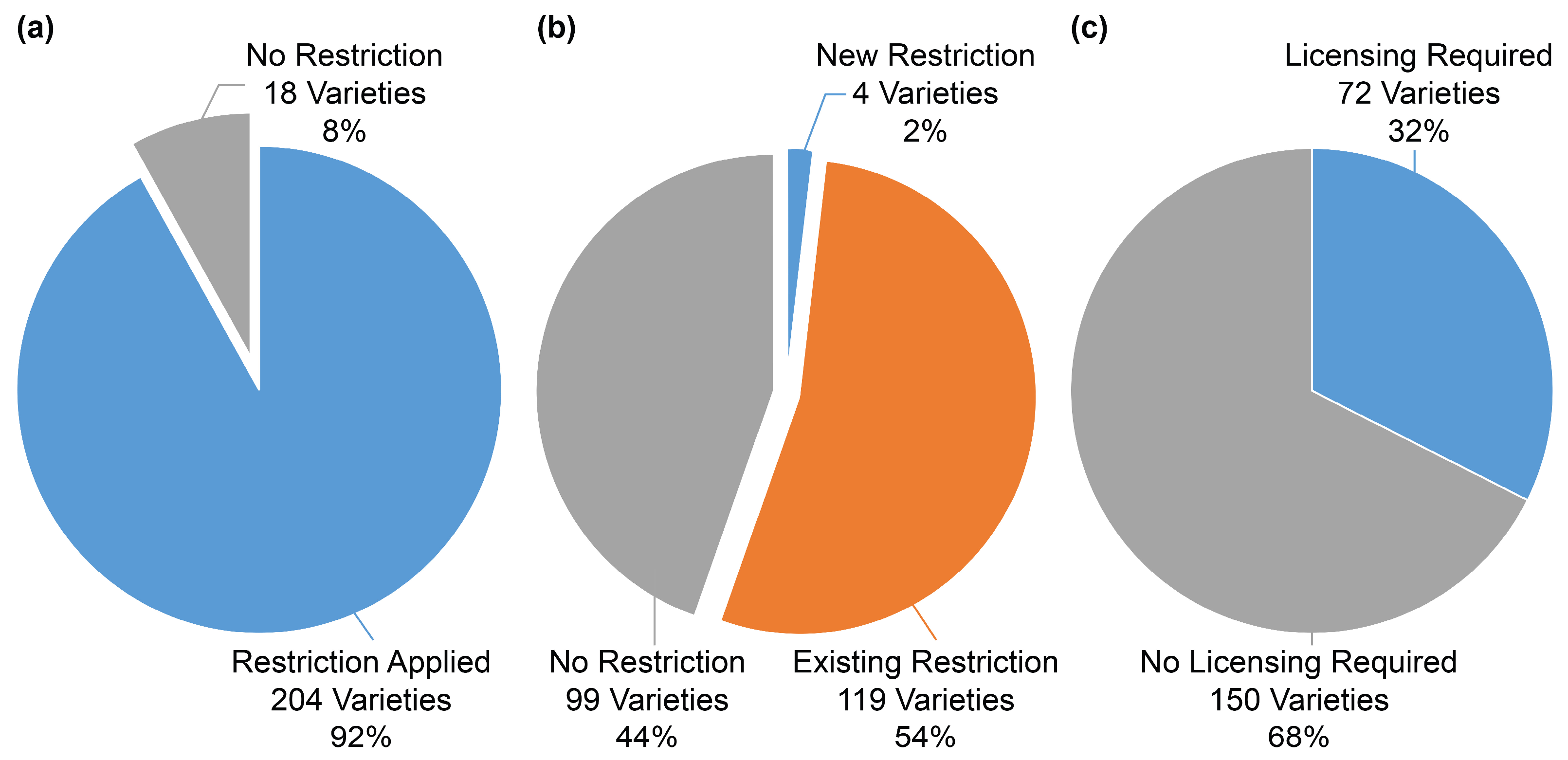
As shown in
Figure 4, the investigation into registered fruit varieties indicates that several prefectures impose restrictions on where certain varieties may be cultivated or on how propagating materials may be distributed. As shown in
Figure 4a, restrictions on the overseas transfer of propagating materials are implemented at a very high rate. Furthermore, as indicated in
Figure 4b, over half of the restrictions on cultivation areas within Japan had already been imposed before the 2020 reform through prefectural ordinances, administrative guidelines, and cultivation contracts. In addition to these pre-existing regional regulations, the 2020 reform introduced new legal restriction measures applicable to newly registered varieties.
Generally, the stronger a variety is associated with regional branding strategies, the stricter measures are implemented to prevent the outflow of propagating materials from the production region. Simultaneously, successful regional branding also depends on securing a stable number of farmers who continue cultivating branded varieties within the region. Therefore, even after the 2020 reform, as shown in
Figure 4c, prefectural governments have generally not adopted particularly strict approaches toward requiring authorization for farm-saved seeds. In practice, they often seek to retain local farmers within contractual cultivation systems while continuing to provide them with high-quality propagating materials through prefectural institutions.
According to
Figure 4a,b, these measures are frequently linked to regional branding strategies. For example, certain fruit or rice varieties may only be cultivated within designated production areas to preserve product quality and maintain the reputation of regional agricultural brands. As indicated in
Figure 4c, the permission requirement for farm-saved seeds has not been strictly implemented. One reason may be that it increases the administrative burden on prefectural governments, representing a negative factor for them. In these cases, controlling the circulation of propagating materials is an important element of regional agricultural governance.
These findings indicate that prefectural governments actively use plant variety rights to manage the spatial distribution of agricultural production.
6.4. Responses to the 2020 Reform of the Plant Variety Protection Act
The survey examined how prefectures responded to the new legal mechanisms introduced by the 2020 reform of the Plant Variety Protection Act.
As shown in
Figure 5a, approximately half of the prefectures have concluded contracts concerning farm-saved seeds. This indicates that, rather than granting permission for farm-saved seeds on a variety-by-variety basis, prefectures address the unintended outflow of propagating materials through contractual arrangements concluded at the time cultivation begins. Furthermore, according to
Figure 5b, officials in 34 prefectures—representing 72% of the total—reported that public awareness of intellectual property rights has increased since the legal amendment. According to
Figure 5c, the primary reasons why prefectural governments engage in efforts to prevent the outflow of registered varieties are that such varieties are regarded as assets of prefectural residents and that their protection contributes to the branding of production areas; these two reasons account for the largest share of responses. By contrast, relatively few respondents identified the enforcement of the Plant Variety Protection and Seed Act as a primary motivation. This suggests that prefectural governments approach this issue primarily in their capacity as breeders’ rights holders rather than as enforcement authorities under the Act. These mechanisms are particularly relevant for varieties with high commercial value or that are closely associated with regional brands.
The survey results suggest that prefectures generally do not rely solely on formal legal restrictions. Instead, they often combine legal mechanisms with administrative coordination and cooperation between agricultural producers and seed distributors. Specifically, in practice, many prefectures rely on contractual coordination mechanisms rather than strict case-by-case legal enforcement, suggesting that the reform has not resulted in a uniform prohibition of farm-saved seeds.
These findings suggest that prefectural efforts to raise public awareness regarding the value of plant varieties and intellectual property rights have been effective. However, they also indicate that prefectural governments are not primarily emphasizing legal compliance itself; rather, they are acting defensively to protect what they regard as valuable regional assets belonging to their own prefectures.
This hybrid approach reflects the institutional reality of Japan’s agricultural governance system, in which prefectures play multiple roles as breeders, regulators, and coordinators of regional production systems. From the perspective of transaction cost economics, these contractual and administrative coordination mechanisms may reduce monitoring and enforcement costs compared with strict case-by-case legal enforcement.
6.5. Implications for Multi-Level Seed Governance
Taken together, the survey results demonstrate that prefectural governments remain central actors in the governance of plant varieties, even after the abolition of the Major Crop Seeds Act and the reform of the Plant Variety Protection Act.
Rather than withdrawing from seed governance, prefectures have adapted to the new institutional environment by using plant variety rights as instruments for regional agricultural management and branding strategies. In many cases, prefectural governments actively coordinate licensing arrangements, manage the geographical use of varieties, and collaborate with agricultural producers to maintain the value of regional brands.
The survey results also suggest that prefectural seed supply systems have continued to function without major institutional disruption following the 2018 and 2020 reforms. Rather than causing abrupt fragmentation of seed distribution systems, the reforms appear to have encouraged the emergence of contractual and administrative coordination mechanisms that support the continued circulation and management of plant varieties within regional agricultural systems.
In several cases, these governance functions are implemented through cooperation with agricultural cooperatives, local seed producers, and regional farming organizations rather than through direct administrative enforcement alone. This reflects the hybrid institutional character of Japan’s seed governance system, in which public institutions and local agricultural actors jointly manage seed circulation and regional production systems.
These findings reinforce the argument advanced in this article that Japan’s seed governance system is evolving toward a multi-level governance structure. Although the national government has established the legal framework for PVP, prefectural governments play a critical role in the practical governance of varieties within regional agricultural systems.
Therefore, empirical evidence suggests that Japan’s recent legal reforms have not simply privatized seed governance; instead, they have reconfigured the distribution of governance functions between national institutions and prefectural governments, with prefectures continuing to play a central role in managing plant varieties as both IP assets and components of regional agricultural strategies.
7. Defensive Licensing and International Circulation of Japanese Plant Varieties
7.1. International Diffusion of Japanese Varieties
In recent years, the international circulation of plant varieties has become an increasingly important issue in agricultural governance. As global agricultural markets expand and plant varieties move more easily across national borders, concerns have emerged regarding the unauthorized propagation and commercialization of protected plant varieties.
Japan is a notable example of this dynamic [
85]. Several high-value horticultural varieties developed by Japanese public research institutions have been cultivated overseas without authorization. Well-known cases include premium fruit varieties such as strawberries and grapes, which were originally developed by Japanese breeders but later appeared in foreign markets without formal licensing arrangements [
86].
These cases have raised significant policy concerns in Japan, particularly regarding the protection of IP and the international competitiveness of Japanese agriculture [
87,
88]. In response, the Japanese government and agricultural institutions introduced new regulatory and institutional mechanisms aimed at preventing the unauthorized overseas propagation of plant varieties [
89].
Japanese plant-breeding programs, particularly those operated by prefectural research institutions, produce many high-quality horticultural varieties. Many of these varieties are associated with regional agricultural brands and have significant economic value in domestic and international markets [
84].
However, as the global agricultural trade has expanded, the circulation of PGR has become increasingly difficult to control [
88]. Propagating materials can be transported across borders through various channels, including informal exchanges among producers, commercial distribution networks, and international agricultural cooperation programs [
31,
42,
43].
In this context, plant varieties developed in one country may be reproduced and cultivated in other countries even without formal authorization from the original breeders.
In recent years, several cases of the unauthorized overseas cultivation of Japanese varieties have attracted public attention [
88]. In some instances, plant varieties developed in Japan have been cultivated and commercialized abroad without the consent of the original breeders [
86].
These cases illustrate the challenges of enforcing PVP across national jurisdictions. Even when plant varieties are legally protected within a particular country, the effectiveness of protection may depend on the existence of corresponding IP rights in other countries.
These challenges have led to increased policy attention to the international dimension of plant variety protection.
7.2. Defensive Licensing and Regional Branding Conflicts
From an economic perspective, defensive licensing can be understood as a rational response to the globalization of agricultural production and international circulation of propagating materials [
89]. Once plant varieties are introduced into foreign jurisdictions, particularly in countries where the variety has not been registered under local PVP systems, the enforcement of exclusive rights becomes increasingly difficult [
88].
Under such circumstances, attempts to prohibit foreign cultivation are often ineffective. Licensing arrangements provide a mechanism through which breeders can retain a degree of influence over production and distribution. Licensing agreements may include provisions for quality standards, branding rules, and market segmentation [
89].
For example, licensed producers are required to comply with specific cultivation standards and marketing guidelines. Licensing fees may also generate revenue that can be reinvested into breeding programs or agricultural research. From this perspective, defensive licensing represents a strategic adaptation in global agricultural markets.
Comparable strategies are widely used in other IP sectors, including pharmaceutical and technological licensing [
90,
91,
92,
93]. In the case of plant varieties, however, defensive licensing raises distinctive governance challenges because plant varieties are closely embedded in agricultural production systems and territorial branding strategies.
Although defensive licensing may be economically rational, it can generate significant tensions through regional agricultural branding strategies. This issue is particularly pronounced in countries such as Japan, where plant varieties are often strongly associated with specific production regions.
Many Japanese fruit varieties function not only as agricultural technologies, but also as core components of regional brands [
84]. In such cases, the product’s reputation and market value depend heavily on its association with a particular geographical origin. Therefore, the cultivation of the same variety in foreign jurisdictions may weaken the exclusivity of regional brands and potentially affect price levels in domestic markets [
94].
A prominent example illustrating this tension is the table grape variety Shine Muscat, developed in Japan. Shine Muscat has gained considerable popularity, both domestically and internationally, due to its distinctive flavor, large berries, and consumer-friendly characteristics [
95]. However, propagating materials have been reportedly taken abroad without authorization, leading to an expansion of production outside Japan [
96].
Because overseas cultivation has expanded [
97], Japanese stakeholders have faced strategic dilemmas. Allowing uncontrolled foreign production could erode the economic value of the variety. However, prohibiting foreign cultivation entirely may be unrealistic once the propagating materials have already been widely circulated.
In this situation, defensive licensing has emerged as a potential governance strategy. By granting licenses to selected foreign producers, breeders can attempt to maintain a certain level of control over their production and branding [
89,
98]. However, such strategies may reduce the perceived exclusivity of domestically produced products, creating tension with regional branding strategies [
94].
Strategic choices concerning defensive licensing may differ depending on a breeder’s institutional identity. In Japan, plant varieties are developed by private firms and national and prefectural agricultural research institutes. These actors often have various policy objectives and institutional incentives. A recent policy debate surrounding Shine Muscat illustrates these tensions.
The Ministry of Agriculture, Forestry, and Fisheries (MAFF), which holds the breeder’s rights to the variety, has reportedly considered granting cultivation licenses to producers in New Zealand [
99]. However, Yamanashi Prefecture, which is one of the principal production regions for Shine Muscat in Japan, strongly opposed this proposal [
94]. This controversy triggered an important debate in Japan concerning the relationship between IP protection and overseas agricultural strategies. From a broader perspective, this highlights the potential conflicts between national export strategies and regional branding policies.
Policymakers should prioritize the international dissemination of Japanese agricultural technologies and the expansion of export opportunities for varieties developed by national research institutions. In this context, licensing arrangements in foreign markets can be viewed as part of a broader strategy to enhance the global presence of Japanese agricultural products.
However, prefectural governments frequently pursue different objectives [
94]. The varieties developed by prefectural research institutes are often closely linked to regional agricultural branding and local economic development. The value of these varieties frequently depends on maintaining a strong association with specific production areas in Japan.
Consequently, prefectural breeders may adopt a more cautious approach toward licensing varieties for foreign cultivation if such arrangements undermine the territorial distinctiveness of regional brands. This divergence in policy priorities illustrates how plant variety governance is shaped by the interaction between national agricultural policies and regional development strategies.
7.3. The 2026 Amendment and Governance Implications
On 3 April 2026, a bill to amend the Plant Variety Protection and Seed Act was approved by the Cabinet (
Naikaku) and submitted to the House of Representatives (
Shūgiin) [
100]. While the number of new plant varieties bred and registered in Japan has been declining, the forms of infringement of breeders’ rights have become increasingly diverse. In light of this situation, strengthening the protection of breeders’ rights and ensuring the effectiveness of restrictions on the overseas transfer of propagating materials have remained important policy issues.
The present amendment aims to reinforce the protection of breeders’ rights. The principal revisions include (1) extending the duration of protection by ten years—to 40 years for fruit trees and 35 years for other plants; (2) enabling injunctions against unauthorized export by third parties from the stage at which an application for variety registration is publicly disclosed; and (3) addressing the diversification of breeders’ rights infringements by extending the effect of breeders’ rights to activities that precede overseas transfer (export:
Yushutsu), such as the storage of propagating materials for export purposes and the lending (leasing:
Rīsu Keiyaku) of such materials [
101].
Further amendments extended the duration of breeders’ rights, and this extension was applied retroactively to existing rights at the time the amended law entered into force, thereby providing substantial benefits to existing breeders’ rights holders as well. In addition, issues such as the outflow of propagating materials during the application stage prior to the grant of breeders’ rights, and the limitations of rights enforcement in export practices, have been addressed through measures including the introduction of injunctions available from the application stage, thereby enabling more effective prevention of the overseas outflow of superior varieties. Furthermore, breeders’ rights were explicitly added to the legal framework governing the “leasing” of propagating materials, making international leasing arrangements easier to implement. The 2026 Reform has thus provided significant advantages for plant breeders and rights holders through legislation, and may be understood as a reform aimed at securing and reinforcing tools that facilitate the advancement of variety-based branding strategies by various actors.
The emergence of defensive licensing strategies highlights the increasing complexity of seed governance in global agricultural markets. As plant varieties circulate across borders, the traditional model of territorially bound IP protection has become increasingly difficult to enforce.
In response, breeders and policymakers must develop strategies that balance multiple objectives, including protecting breeders’ rights, promoting agricultural innovation, sustaining regional branding, and maintaining global market competitiveness.
The Japanese case suggests that these objectives may sometimes not align with one another. Defensive licensing may help maintain a degree of control over globally circulating varieties but may also challenge the territorial logic that underpins regional agricultural branding [
94,
99].
Therefore, understanding these tensions is essential for analyzing the evolving governance of plant varieties in a globalized agricultural economy. In Japan, the interaction between IP protection, regional agricultural strategies, and international market dynamics is increasingly shaping the development, protection, and management of plant varieties.
8. Discussion: Reconfiguring Seed Governance
My findings provide new insights into the institutional transformation of seed governance in Japan. Previous studies on seed systems have emphasized the expansion of IP protection and the increasing role of private actors in plant breeding and seed markets. From this perspective, recent policy reforms in many countries have frequently been interpreted as a privatization process in seed governance.
Comparable governance approaches can also be observed internationally, although institutional configurations differ significantly among countries. In the European Union, geographical indication (GI) systems play an important role in protecting territorially embedded agricultural brands and maintaining product differentiation linked to specific regions [
102]. In the United States, by contrast, governance of plant varieties is more strongly oriented toward private contractual licensing and market-based commercialization strategies [
11,
103]. New Zealand provides another important comparative example. Its export-oriented horticultural sector has developed institutional mechanisms that integrate intellectual property management, export coordination, and branding strategies, particularly in the kiwifruit industry [
104].
These international examples suggest that the globalization of plant varieties increasingly requires governance arrangements that combine intellectual property protection with territorial branding and strategic circulation management. Furthermore, international trade-related measures, including phytosanitary regulations, export controls, and technical standards, have become increasingly important in shaping the global circulation of propagating materials and agricultural supply chains.
However, the Japanese case suggests a more complex institutional transformation. The abolition of the Major Crop Seeds Act and the reform of the Plant Variety Protection and Seed Act strengthened IP protection and encouraged greater participation by private actors. Simultaneously, the empirical findings demonstrate that prefectural governments continue to play central roles in plant breeding, plant variety management, and the regulation of seed circulation.
These findings indicate that the recent reforms did not result in the withdrawal of public institutions from seed governance; instead, governance functions were redistributed across multiple institutional levels. Empirical evidence further suggests that prefectural institutions continued to maintain seed supply coordination functions after the reforms, indicating institutional adaptation rather than systemic disruption. National legislation has strengthened the IP framework governing plant varieties, whereas prefectural governments remain actively involved in breeding programs, licensing arrangements, and the coordination of regional agricultural production systems.
From the perspective of institutional resilience, the continued involvement of prefectural governments in seed coordination, licensing arrangements, and circulation management may have contributed to maintaining the stability of regional seed systems during the period of legal and institutional transition. Rather than generating systemic disruption, the reforms appear to have promoted adaptive governance mechanisms that strengthened regional coordination capacity.
This institutional configuration indicates the emergence of a multi-level governance system in seed governance. Under this system, different levels of government play complementary roles in the governance of PGR and agricultural innovation. National governments establish legal frameworks for IP protection, whereas subnational institutions manage the practical implementation of plant variety governance in regional agricultural systems.
Additionally, the international circulation of plant varieties has introduced new governance challenges. As plant varieties increasingly move across national borders, breeders and public institutions must develop strategies to protect IP while enabling the controlled international diffusion of plant varieties. In Japan, this challenge has stimulated the development of defensive licensing strategies to manage the international circulation of plant varieties.
Collectively, these developments suggest that contemporary seed governance cannot be understood solely through the dichotomy between public provision and privatization. Instead, seed governance reflects interactions among IP regimes, regional agricultural strategies, and subnational institutional arrangements. These institutional arrangements may also function to reduce coordination costs within regionally organized agricultural production systems.
Furthermore, these institutional dynamics also have important implications for agricultural sustainability and resilience. Regional plant varieties maintained through prefectural breeding programs may contribute to the conservation of agrobiodiversity by preserving locally adapted genetic resources and production systems. Furthermore, the continued involvement of public breeding institutions may strengthen the resilience of agricultural systems by maintaining breeding capacity beyond purely market-oriented incentives.
The empirical findings also suggest that local governance structures play an important role in supporting rural sustainability. Prefectural governments do not merely regulate plant variety rights; they coordinate regional production systems, maintain local agricultural networks, and support regionally embedded agricultural economies. From this perspective, seed governance functions not only as an intellectual property regime but also as an institutional mechanism for sustaining regional agricultural communities.
Moreover, maintaining diversity in seed systems may reduce systemic risks associated with excessive dependence on a limited number of globally distributed varieties. The preservation of regional varieties and decentralized breeding systems can therefore be understood as contributing to the long-term stability and adaptive capacity of agricultural systems under conditions of climate change and global market uncertainty.
9. Policy Implications
The findings of this study have important implications for agricultural policy and seed governance. First, the Japanese case demonstrates that strengthening IP protection does not necessarily lead to the displacement of public institutions from seed governance. Instead, public institutions may adapt their roles to evolving institutional environments.
Second, the results highlight the importance of regional institutions in the management of plant varieties. Prefectural governments play key roles not only as plant breeders but also as coordinators of regional agricultural systems and managers of plant variety circulation. Therefore, policies aimed at strengthening agricultural innovation should consider the institutional capacities of regional governments.
Third, the growing international circulation of plant varieties suggests a need for more integrated governance strategies. Mechanisms such as defensive licensing, international variety registration, and coordinated IP management may become increasingly important for protecting plant varieties while enabling controlled international diffusion.
Finally, from a sustainability perspective, seed governance institutions must balance multiple objectives, including innovation incentives, farmer practices, regional agricultural development, and the conservation of PGR.
In this context, policies that support regional plant varieties and public breeding institutions may have broader significance for sustainable agriculture. Regional varieties often embody locally adapted agricultural knowledge and may contribute to the conservation of agrobiodiversity. Maintaining public breeding capacity can also strengthen the resilience of agricultural systems by ensuring that breeding activities continue even in areas where private-sector incentives are limited.
Local governance mechanisms operated by prefectural governments may support rural sustainability by maintaining regionally embedded production systems and agricultural branding strategies. These governance arrangements may become increasingly important as rural regions confront demographic decline, climate change, and growing international competition.
From a risk-governance perspective, preserving diversity in seed systems may also reduce systemic vulnerabilities associated with excessive genetic uniformity and concentrated seed markets. Therefore, future seed governance policies should not focus solely on intellectual property protection and market competitiveness but also consider the role of seed diversity and regional governance in promoting long-term agricultural sustainability and resilience.
10. Conclusions
This article has examined the recent transformation of seed governance in Japan in the context of legal and institutional reforms. By combining legal analyses with empirical evidence from nationwide surveys of prefectural governments, I discuss how Japan’s seed governance system is evolving in response to changes in IP protection and agricultural policy.
This analysis shows that the abolition of the Major Crop Seeds Act and the reform of the Plant Variety Protection and Seed Act significantly altered the institutional structure of seed governance. However, these reforms did not result in the simple privatization of the seed system. Instead, governance functions are redistributed across national and prefectural institutions.
From a broader perspective, the Japanese case suggests that contemporary seed governance cannot be understood solely through the dichotomy between public provision and privatization; rather, it is increasingly taking the form of multi-level governance in which IP regimes, regional agricultural strategies, and subnational institutions interact.
This study has some limitations. First, the analysis primarily focuses on prefectural-level governance and legal-institutional transformation. Although local coordination involving agricultural cooperatives, seed growers, and municipal-level actors is briefly discussed, the detailed governance dynamics at sub-prefectural levels require further empirical investigation. Future research should examine how local agricultural organizations participate in seed circulation management, contractual coordination, and regional variety governance in practice.
These findings contribute to the growing body of literature on seed governance and agricultural innovation systems by highlighting the importance of regional institutions in the governance of PGR.