Experimental Study on Wind Erosion Resistance and Plant Growth Performance of Coastal Sand Stabilized by Soybean Hull-Enzyme-Induced Carbonate Precipitation and Seawater
Abstract
1. Introduction
2. Materials and Methods
2.1. Sandy Soil
2.2. Preparation of Soybean Hull Urease and Activity Testing
2.3. Preparation of Reaction Solution
2.4. Experimental Design and Procedures
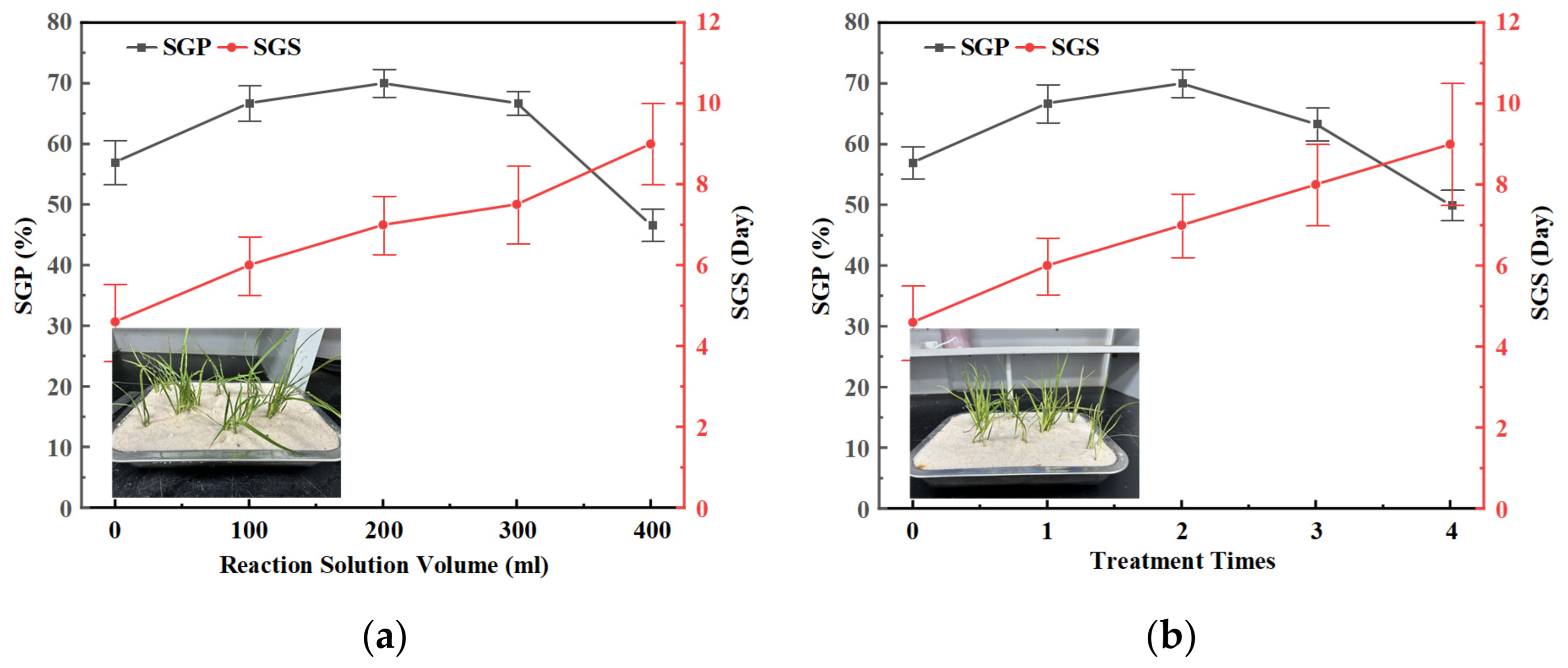
2.5. Germination Test of Seeds
- SGP—seed germination percentage, %;
- n—number of germinated seeds during the experimental period;
- N—total number of seeds.
- SGS—seed germination speed, day;
- m—number of seeds germinated on the observation day;
- D—days after beginning.
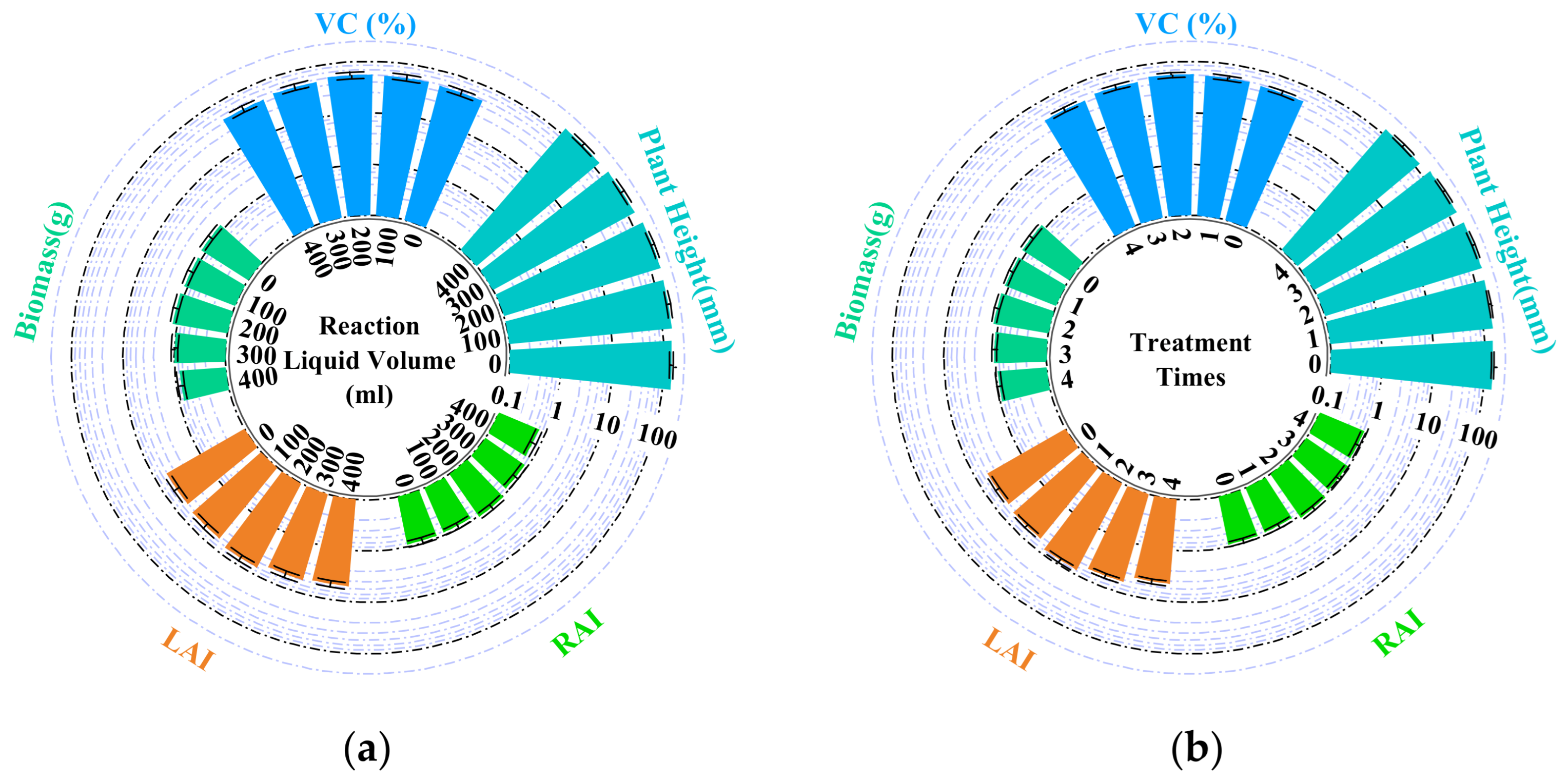
2.6. Plant Growth Performance Experiment
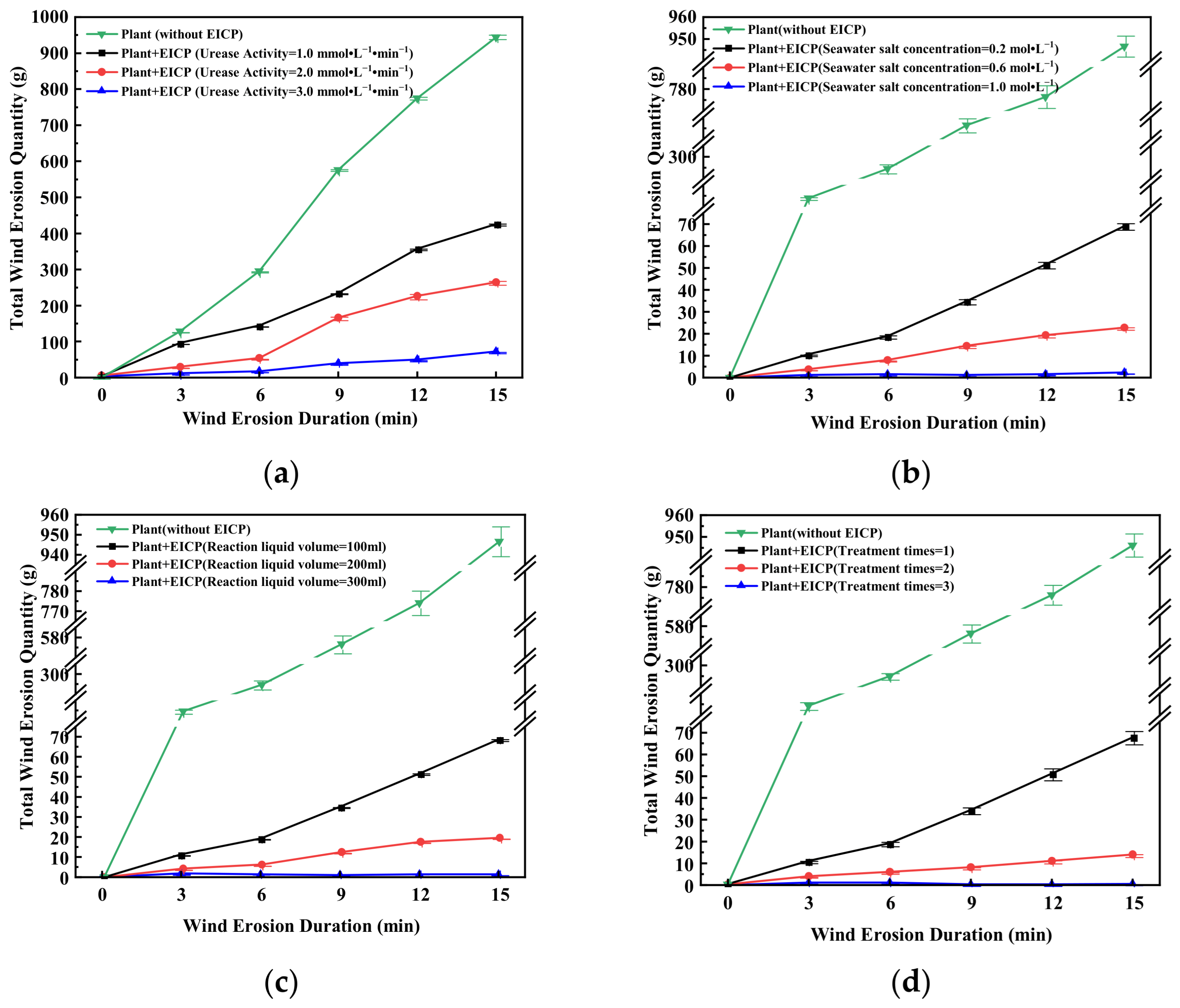
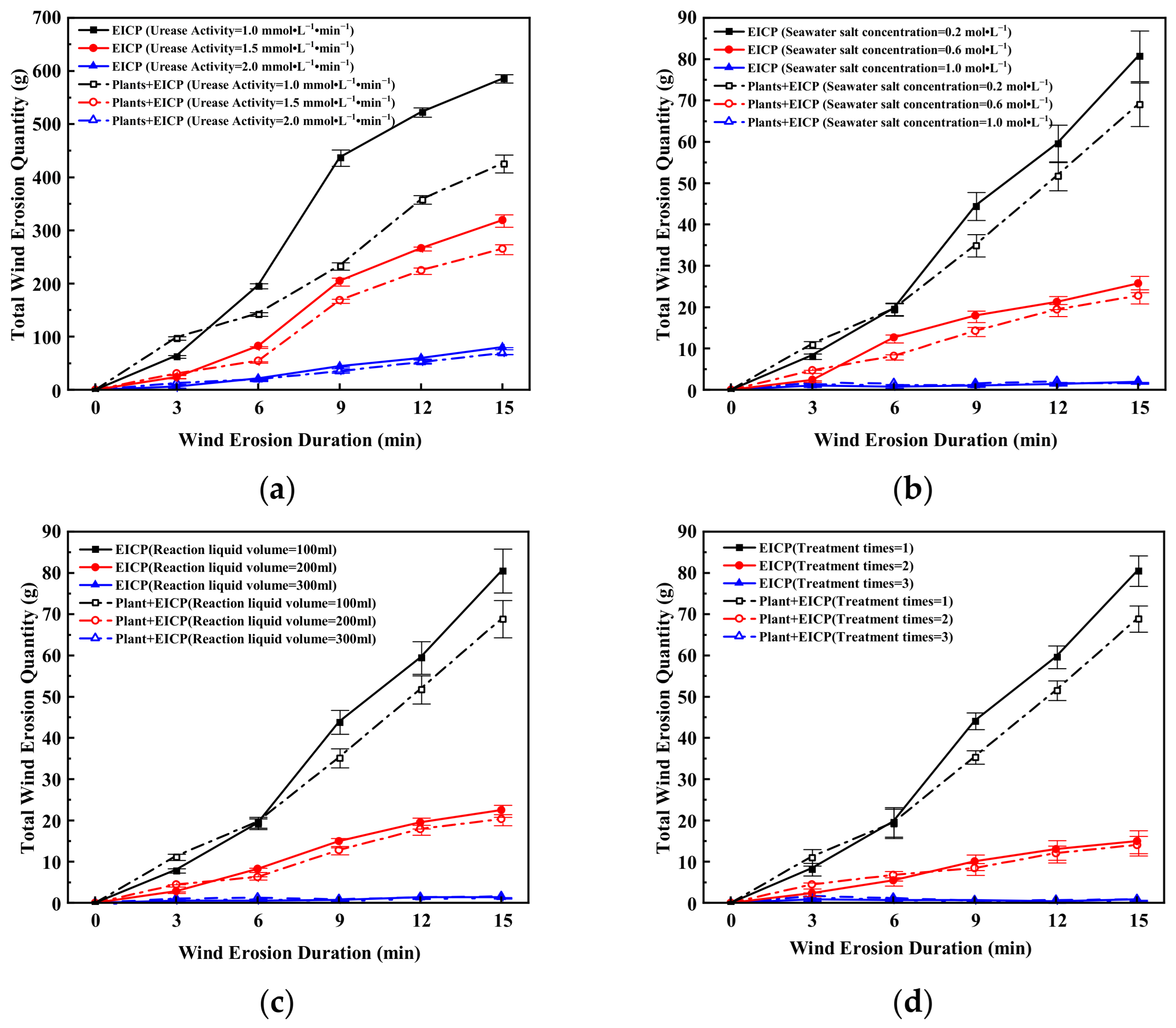
2.7. Wind Erosion Experiment
3. Analysis of Experimental Results
3.1. Factors Affecting Soybean Hull Urease Activity
3.2. Effect of EICP on Plant Growth Performance
3.2.1. Seed Germination Status
3.2.2. Plant Growth Status
3.3. Effect of EICP and Vegetation on Wind Erosion Resistance
3.3.1. Effect of EICP on Wind Erosion Resistance
3.3.2. Effect of Vegetation on Wind Erosion Resistance
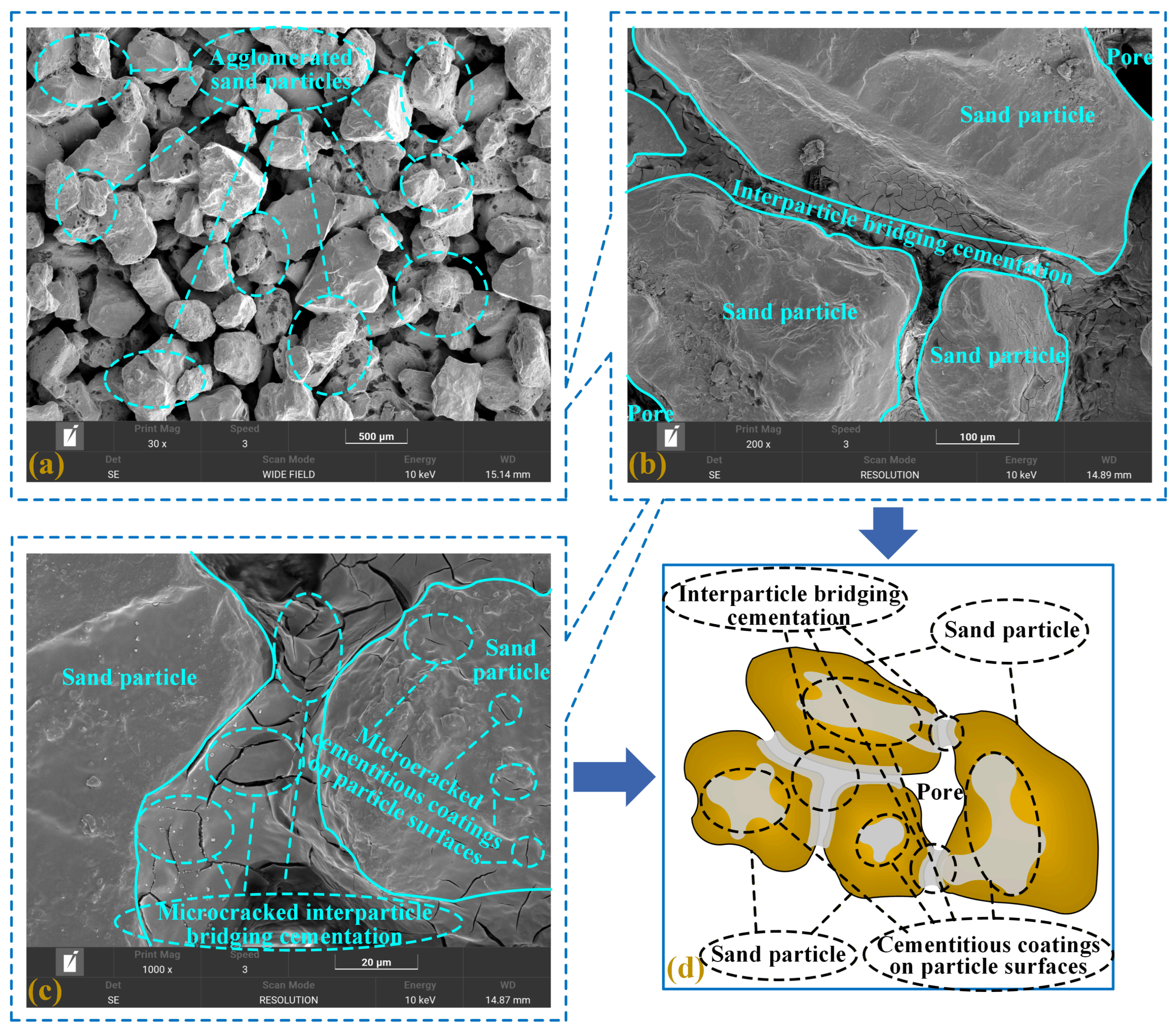
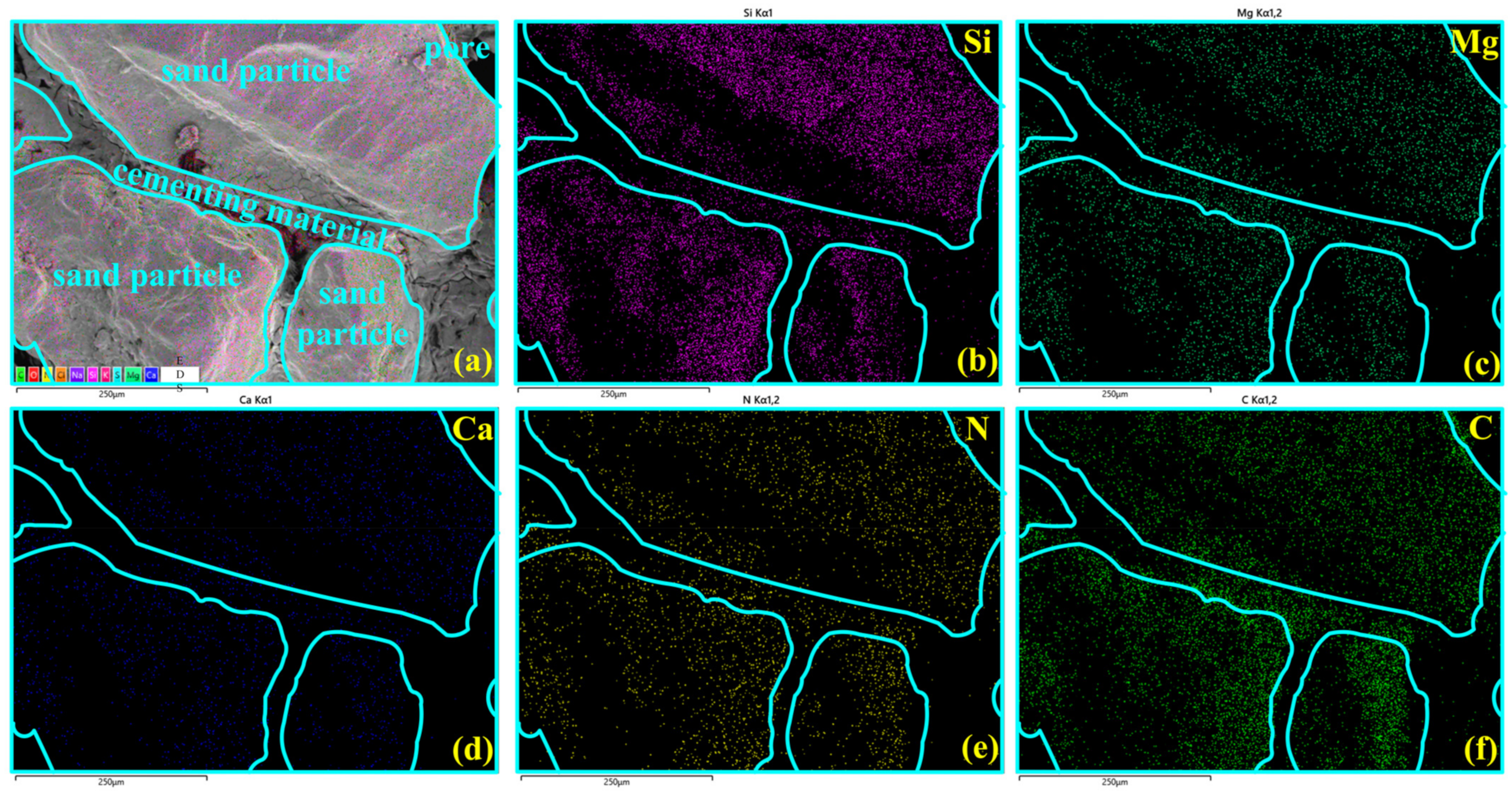
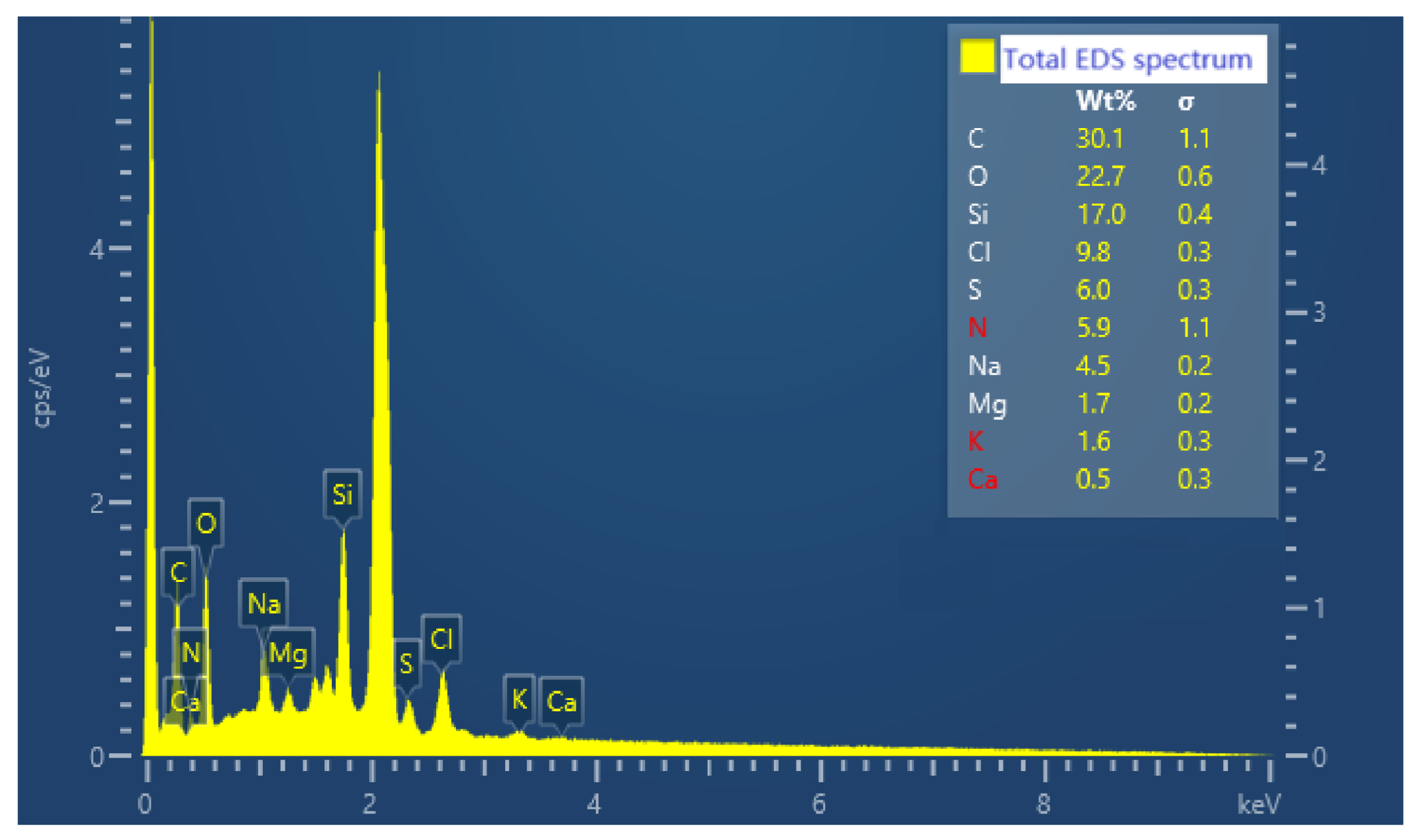
3.3.3. Microscopic Surface Characterization of EICP-Cemented Sand
4. Discussion
4.1. Dual Role of Seawater: Balancing Stabilization Strength and Ecological Viability
4.2. Analysis of the Improvement in Wind Erosion Resistance of Sand by Combined Vegetation and EICP Protection
4.3. Sustainability and Resource-Efficiency Analysis
4.4. Limitations and Future Research Directions
5. Conclusions
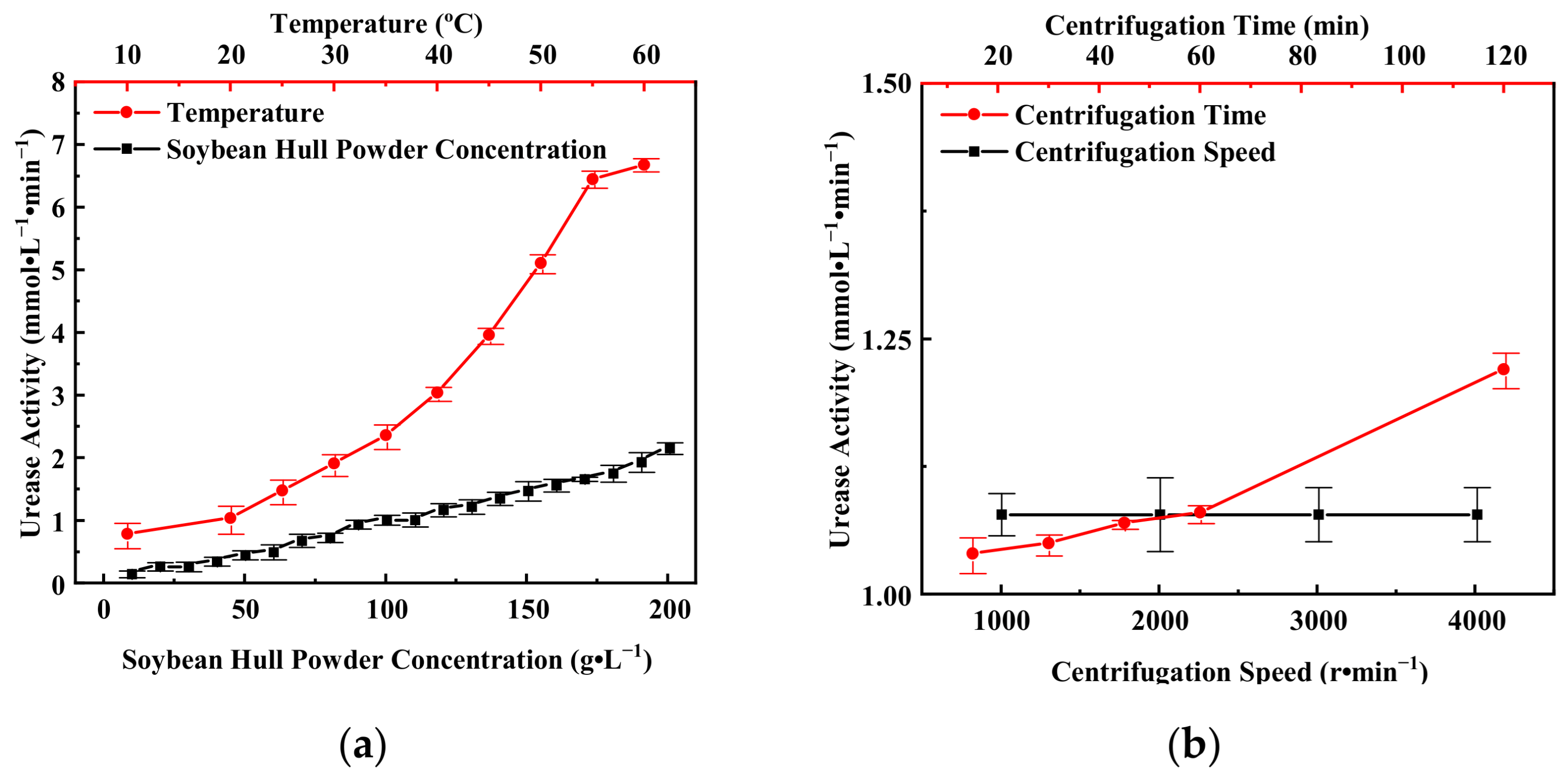
- Urease Extraction and Activity: EICP using soybean hulls and seawater is a resource-efficient method for sand stabilization. Urease activity increases linearly with soybean hull dosage but is significantly inhibited at low temperatures, showing a rapid increase between 10 and 55 °C. Extraction parameters (centrifugation time/speed) have negligible effects on activity.
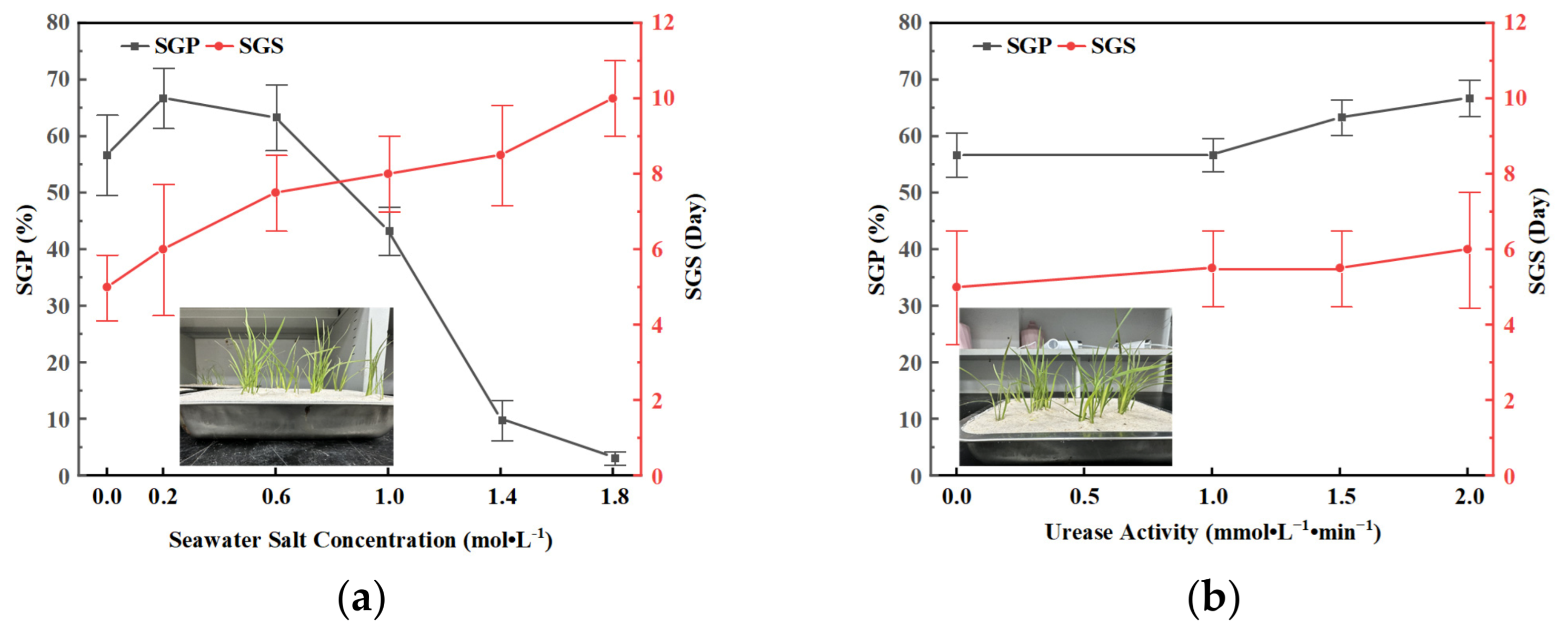
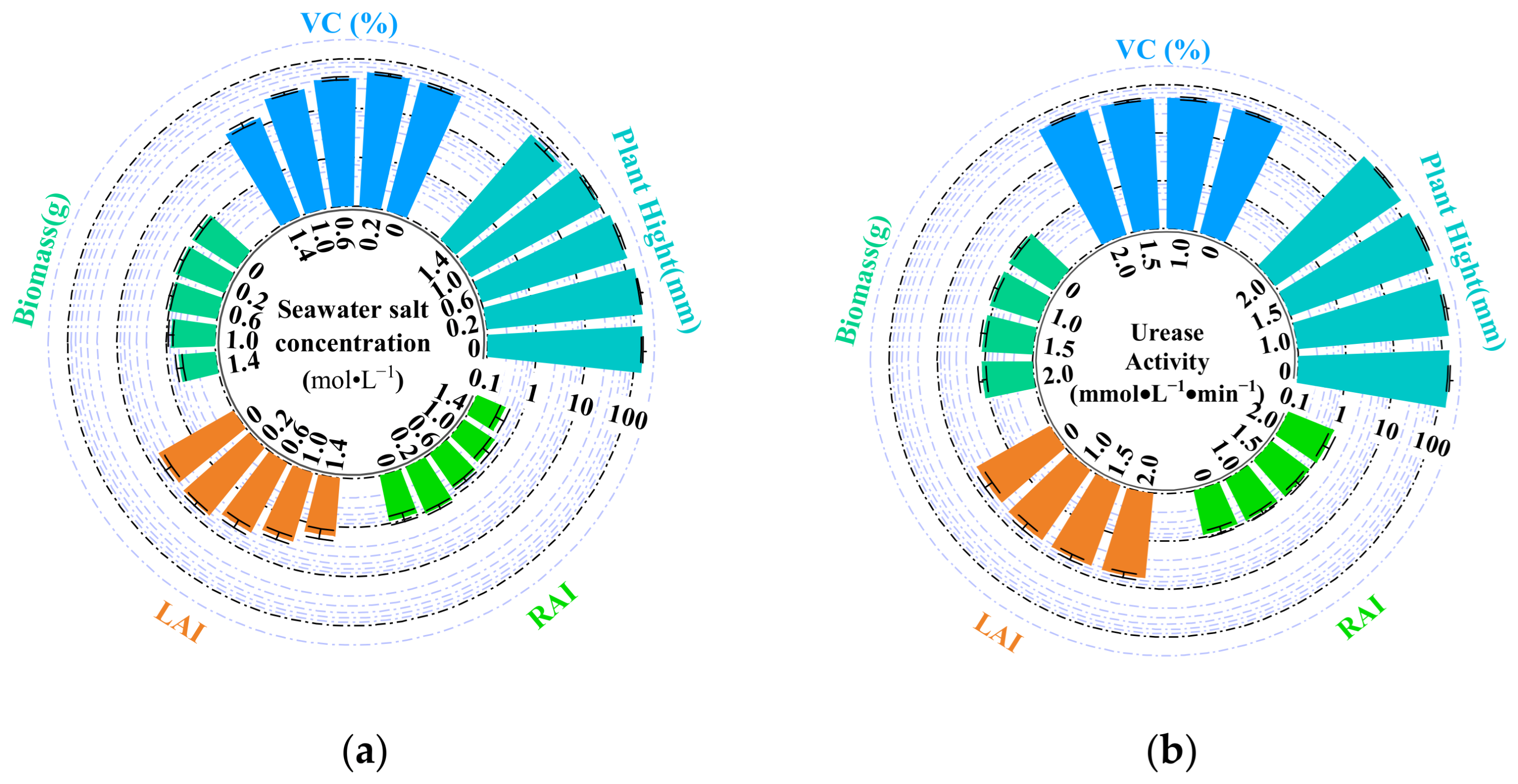
- Seawater Concentration Thresholds: Seawater salinity is a determinant for ecological viability. Low concentrations (0.2–0.6 mol·L−1) enhance the seed germination potential (SGP). Notably, while the biochemical mineralization process facilitates the transition of soluble Ca2+ and Mg2+ into solid mineral phases (reducing localized osmotic stress), seawater levels exceeding 0.6 mol·L−1 markedly inhibit growth, with SGP approaching zero at 1.4 mol·L−1.
- Optimal Growth Parameters: Plant growth status (RAI, LAI, and VC) peaks at a seawater concentration of 0.2 mol·L−1 and a reaction liquid volume of 200 mL. While increased liquid volume initially promotes growth, excessive volumes can lead to inhibition. Higher urease activity consistently improves seedling vigor.
- Wind Erosion Resistance: Sandy soil Protected by EICP and Vegetation (SPEV) outperforms individual EICP or vegetation methods, reducing total erosion by approximately 92.3% compared to untreated sand. Although EICP crusts provide superior early-stage protection, SPEV exhibits higher long-term resilience as erosion progresses.
- Mineralization Mechanism: SEM and EDS analyses confirm that the use of seawater produces a mixture of calcium carbonate and magnesium carbonate (with magnesium content reaching approximately 1.7 wt%). These minerals effectively cement intergranular gaps through ionic sequestration, enhancing erosion resistance while maintaining pore space for root development. Despite the detection of nitrogenous byproducts (e.g., NH4+), the plant–soil system maintains its ecological integrity within the tested dosage.
- Stage-based Protection Logic: Although plant growth partially disrupts the EICP crust, the crust provides a critical temporary protective window. This acknowledges the inherent limitation of crust durability while highlighting the functional transition from artificial mineralization to biological anchoring. This strategy effectively balances the immediate erosion resistance provided by mineral cementation with the long-term environmental safety of the biological restoration.
- Field Application Recommendations: Under wind speeds up to 20 m·s−1, a minimum EICP dosage of 300 mL is recommended for immediate sand stabilization. In hypersaline environments exceeding the tolerance threshold of Kalimeris indica (>0.6 mol·L−1 under current testing conditions), supplementary freshwater irrigation or re-spraying is essential to mitigate osmotic stress and sustain long-term ecological viability.
Author Contributions
Funding
Institutional Review Board Statement
Informed Consent Statement
Data Availability Statement
Conflicts of Interest
Abbreviations
| BICP | Biologically Induced Carbonate Precipitation |
| EICP | Enzyme-Induced Calcite Precipitation |
| MICP | Microbially Induced Carbonate Precipitation |
| SGP | Seed Germination Percentage |
| SGS | Seed Germination Speed |
| VC | Vegetation Coverage |
| LAI | Leaf Area Index |
| RAI | Root Area Index |
| SPEV | Sandy soil Protected by EICP and Vegetation |
References
- Farrell, E.J.; Delgado Fernandez, I.; Smyth, T.; Li, B.; Swann, C. Contemporary research in coastal dunes and aeolian processes. Earth Surf. Process. Landf. 2024, 49, 108–116. [Google Scholar] [CrossRef]
- Fu, S.; Dong, Y. Research Progress and Prospect of the Interaction Between Coastal Aeolian Sand Landform and Vegetation. Adv. Earth Sci. 2024, 39, 34–45. [Google Scholar] [CrossRef]
- Dong, Y. The coastal aeolian geomorphic types and their distribution pattern in China. Mar. Geol. Quat. Geol. 2006, 26, 99–104. [Google Scholar] [CrossRef]
- Toledo, I.; Pagán, J.I.; López, I.; Aragonés, L. Analysis of the factors affecting erosion in the beach-dune system of Guardamar del Segura, Spain. Catena 2024, 243, 108212. [Google Scholar] [CrossRef]
- Zong, Q.; Wu, X. A review of computational fluid dynamics (CFD) methodology and analysis on airflow and sand transport over aeolian landforms. Catena 2024, 241, 108010. [Google Scholar] [CrossRef]
- Wang, D.Q. Preliminary analysis on project investment for wind-blown sand control in railway. Railw. Stand. Des. 2012, 6, 21–24. [Google Scholar] [CrossRef]
- Tie, S.N.; Jiang, X.; Wang, C.A. Advances in chemical sand-fixing materials. Mater. Rep. 2013, 5, 71–75. [Google Scholar] [CrossRef]
- Raffaele, L.; Van Beeck, J.; Bruno, L. Wind-sand tunnel testing of surface-mounted obstacles: Similarity requirements and a case study on a sand mitigation measure. J. Wind Eng. Ind. Aerodyn. 2021, 214, 104653. [Google Scholar] [CrossRef]
- Yang, S.; Qu, Z. Cost analysis of sand barriers in desertified regions based on the land grid division model. J. Arid Land 2022, 14, 978–992. [Google Scholar] [CrossRef]
- Sun, J.; Wang, S.; Liu, Y.; Meng, J.; Hong, J.; Wang, J.; Chang, P.; Liu, H.; Zhang, B.; Li, Y. Experimental study on a combined sand barrier: Integration of porous mesh plate and novel porous sand-fixing bricks. J. Wind Eng. Ind. Aerodyn. 2024, 251, 105809. [Google Scholar] [CrossRef]
- Zang, Y.; Gong, W.; Hao, X.; Liu, B.; Chen, H. Chemical sand stabilization: A review of material, mechanism, and problems. Environ. Technol. Rev. 2015, 4, 119–132. [Google Scholar] [CrossRef]
- Li, S.; Yu, F.; Werger, M.J.; Dong, M.; During, H.J.; Zuidema, P.A. Mobile dune fixation by a fast-growing clonal plant: A full life-cycle analysis. Sci. Rep. 2015, 5, 8935. [Google Scholar] [CrossRef]
- Cao, X.; Jiao, J.; Li, J.; Qi, H.; Bai, L.; Wang, X.; Sun, X. Morphometric characteristics and sand intercepting capacity of dominant perennial plants in the Eastern Qaidam Basin: Implication for aeolian erosion control. Catena 2022, 210, 105939. [Google Scholar] [CrossRef]
- Kang, L.; Zhang, M.; Li, C.; Yang, Z. Effect of plant shapes on sand transport rate and aerodynamic particle entrainment rate from the perspective of plant drag. Catena 2024, 237, 107818. [Google Scholar] [CrossRef]
- Cornelis, W.M. Hydroclimatology of wind erosion in arid and semiarid environments. In Dryland Ecohydrology; D’Odorico, P., Porporato, A., Eds.; Springer: Dordrecht, The Netherlands; Berlin/Heidelberg, Germany, 2006; pp. 141–159. [Google Scholar] [CrossRef]
- Chen, Y.; Liu, B.; Bian, Y.; Gao, Y.; Liu, Y.; Cheng, M.; Wang, L.; Hang, L. Effects of soybean urease induced carbonate precipitation on the seed emergence and seedling growth of Caragana korshinskii Kom and its application in wind erosion control. Plant Soil 2024, 507, 629–653. [Google Scholar] [CrossRef]
- Zhang, X.; Wang, H.; Wang, Y.; Wang, J.; Cao, J.; Zhang, G. Improved methods, properties, applications and prospects of microbial induced carbonate precipitation (MICP) treated soil: A review. Biogeotechnics 2024, 3, 100123. [Google Scholar] [CrossRef]
- Liu, P.; Chen, Y.; Zhang, Y.; Cheng, Y. Application of chitosan in EICP treatment for stabilization of red mud against wind erosion. Constr. Build. Mater. 2025, 465, 140164. [Google Scholar] [CrossRef]
- Ji, X.L.; Tang, C.S.; Pan, X.H.; Cheng, Y.J.; Shi, B. Enhancing biocementation performance in low permeability clayey soil through sand column strategy. Catena 2024, 245, 108301. [Google Scholar] [CrossRef]
- Diao, Y.; Wang, C.; Huang, J.; Zhang, L.; Hu, H.; Bai, J.; Yang, C. Feasibility study on desert sand solidification using biomimetic mineralization method: Mechanical properties and wind erosion resistance. Constr. Build. Mater. 2025, 463, 139995. [Google Scholar] [CrossRef]
- Li, Z.; Wu, C.; Zhang, S.; Song, Z.; Shen, D. Hybrid Technique of Enzyme-Induced Carbonate Precipitation (EICP) and Loess for Stabilizing Desert Sand. Land Degrad. Dev. 2025, 36, 5393–5404. [Google Scholar] [CrossRef]
- Baziar, M.H.; Sanaie, M.; Amirabadi, O.E. Mitigation of dust emissions of silty sand induced by wind erosion using natural soybean biomaterial. Int. J. Civ. Eng. 2021, 19, 595–606. [Google Scholar] [CrossRef]
- Almajed, A.; Lemboye, K.; Arab, M.G.; Alnuaim, A. Mitigating wind erosion of sand using biopolymer-assisted EICP technique. Soils Found. 2020, 60, 356–371. [Google Scholar] [CrossRef]
- Raveh-Amit, H.; Gruber, A.; Abramov, K.; Tsesarsky, M. Mitigation of aeolian erosion of loess soil by Bio-Stimulated microbial induced calcite precipitation. Catena 2024, 237, 107808. [Google Scholar] [CrossRef]
- Van Paassen, L.A.; Ghose, R.; van der Linden, T.J.; van der Star, W.R.; van Loosdrecht, M.C. Quantifying biomediated ground improvement by ureolysis: Large-scale biogrout experiment. J. Geotech. Geoenviron. Eng. 2010, 136, 1721–1728. [Google Scholar] [CrossRef]
- Khodadadi, T.H.; Kavazanjian, E.; van Paassen, L.; DeJong, J. Bio-grout materials: A review. Grouting 2017, 2017, 1–12. [Google Scholar] [CrossRef]
- Yadollah-Roudbari, M.; Soroush, A.; Fattahi, S.M.; Komaei, A. Durability of biocemented sand crusts under environmental stresses for wind erosion mitigation. Catena 2024, 238, 107900. [Google Scholar] [CrossRef]
- Pratama, G.B.S.; Yasuhara, H.; Kinoshita, N.; Putra, H.; Almajed, A.; Fukugaichi, S.; Ihsani, Z.M. Efficacy of soybean-derived crude extract in enzyme-induced carbonate precipitation as soil-improvement technique. Int. J. Geo-Eng. 2024, 15, 14. [Google Scholar] [CrossRef]
- Das, N.; Kayastha, A.M.; Srivastava, P.K. Purification and characterization of urease from dehusked pigeonpea (Cajanus cajan L.) seeds. Phytochemistry 2002, 61, 513–521. [Google Scholar] [CrossRef]
- Dilrukshi, R.A.N.; Nakashima, K.; Kawasaki, S. Improvement of Using Crude Extract Urease from Watermelon Seeds for Biocementation Technology. Int. J. Geomate 2021, 20, 142–147. [Google Scholar] [CrossRef]
- Li, L.; Zhu, J.; Peng, J.; Wei, R.; Dai, D.; Liu, L.; He, J.; Gao, Y. Sustainable Wind Erosion Control in Arid Regions: Enhancing Soil Stability Using Aluminum Chloride-Modified Soybean Urease-Induced Carbonate Precipitation Technology. Sustainability 2025, 17, 5753. [Google Scholar] [CrossRef]
- Gao, Y.; Meng, H.; Qi, Y.; Hang, L.; He, J. Comparison of Crude Soybean Urease- and Pure Urease-Induced Carbonate Precipitation on Wind-Induced Erosion Resistance of Desert Sand. Sustainability 2025, 17, 1423. [Google Scholar] [CrossRef]
- Yang, J.; Xiao, A.; Wang, C. Novel development and characterisation of dietary fibre from yellow soybean hulls. Food Chem. 2014, 161, 367–375. [Google Scholar] [CrossRef]
- Niño Medina, G.; Muy Rangel, D.; Urías Orona, V. Chickpea (Cicer arietinum) and soybean (Glycine max) hulls: Byproducts with potential use as a source of high value-added food products. Waste Biomass Valoriz. 2017, 8, 1199–1203. [Google Scholar] [CrossRef]
- Bittencourt, G.A.; de Souza Vandenberghe, L.P.; Valladares-Diestra, K.K.; Soccol, C.R. Soybean hull valorization for sugar production through the optimization of citric acid pretreatment and enzymatic hydrolysis. Ind. Crops Prod. 2022, 186, 115178. [Google Scholar] [CrossRef]
- Kim, H.W.; Lee, Y.J.; Kim, Y.H.B. Efficacy of pectin and insoluble fiber extracted from soy hulls as a functional non-meat ingredient. LWT Food Sci. Technol. 2015, 64, 1071–1077. [Google Scholar] [CrossRef]
- Feng, L.; Fu, H.; Dou, R.; Sun, W.; Li, L. Research Progress on Urease Extraction from Soybean Seed Coats. J. Green Sci. Technol. 2018, 12, 173–174. [Google Scholar] [CrossRef]
- Gorospe, C.M.; Han, S.H.; Kim, S.G.; Park, J.Y.; Kang, C.H.; Jeong, J.H.; So, J.S. Effects of different calcium salts on calcium carbonate crystal formation by Sporosarcina pasteurii KCTC 3558. Biotechnol. Bioprocess Eng. 2013, 18, 903–908. [Google Scholar] [CrossRef]
- Choi, S.G.; Wu, S.; Chu, J. Biocementation for sand using an eggshell as calcium source. J. Geotech. Geoenviron. Eng. 2016, 142, 06016010. [Google Scholar] [CrossRef]
- Liang, S.; Chen, J.; Niu, J.; Gong, X.; Feng, D. Using recycled calcium sources to solidify sandy soil through microbial induced carbonate precipitation. Mar. Georesour. Geotechnol. 2020, 38, 393–399. [Google Scholar] [CrossRef]
- Giri, S.J.; Swart, P.K.; Pourmand, A. The influence of seawater calcium ions on coral calcification mechanisms: Constraints from boron and carbon isotopes and B/Ca ratios in Pocillopora damicornis. Earth Planet. Sci. Lett. 2019, 519, 130–140. [Google Scholar] [CrossRef]
- Brennan, S.T.; Lowenstein, T.K. The major-ion composition of Silurian seawater. Geochim. Cosmochim. Acta 2002, 66, 2683–2700. [Google Scholar] [CrossRef]
- Ou, Y.; Fang, X.; Zhang, N.; Li, J. Influence of solution salinity on microbial biocementation of coral sand. J. Logist. Eng. Univ. 2016, 32, 78–82. [Google Scholar] [CrossRef]
- Mortensen, B.M.; Haber, M.J.; DeJong, J.T.; Caslake, L.F.; Nelson, D.C. Effects of environmental factors on microbial induced calcium carbonate precipitation. J. Appl. Microbiol. 2011, 111, 338–349. [Google Scholar] [CrossRef]
- Cheng, L.; Shahin, M.A.; Cord-Ruwisch, R. Bio-cementation of sandy soil using microbially induced carbonate precipitation for marine environments. Géotechnique 2014, 64, 1010–1013. [Google Scholar] [CrossRef]
- Yang, S.; Peng, J.; Wen, Z.; Liu, Z.; Leng, M.; Xu, P. Application of concentrated seawater as calcium source solution in sand reinforcement using MICP. Rock Soil Mech. 2021, 42, 746–754. [Google Scholar] [CrossRef]
- Li, Z.; Shao, G.; Ma, Z. Plant adaptability of silty soil slope protected by microbial solidification. J. For. Eng. 2020, 5, 158–163. [Google Scholar] [CrossRef]
- Li, S.; Li, C.; Yao, D.; Wang, S. Feasibility of microbially induced carbonate precipitation and straw checkerboard barriers on desertification control and ecological restoration. Ecol. Eng. 2020, 152, 105883. [Google Scholar] [CrossRef]
- Wu, L.; Miao, L.; Sun, X.; Wang, H. Effect of calcium sources on enzyme-induced carbonate precipitation to solidify desert aeolian sand. J. Environ. Manag. 2024, 366, 121687. [Google Scholar] [CrossRef]
- Meng, H.; Gao, Y.; He, J.; Qi, L.; Hang, L. Microbially induced carbonate precipitation for wind erosion control of desert soil: Field-scale tests. Geoderma 2021, 383, 114723. [Google Scholar] [CrossRef]
- Kong, J.; Chen, P.; Huang, S.; Li, Q.; Xu, H. Experimental Investigation on Solidifying the Desert Aeolian Sand Undercombined Action of MICP and Vegetation. J. Zhejiang Sci-Tech Univ. 2019, 41, 688–696. [Google Scholar]
- Whiffin, V.S.; Van Paassen, L.A.; Harkes, M.P. Microbial carbonate precipitation as a soil improvement technique. Geomicrobiol. J. 2007, 24, 417–423. [Google Scholar] [CrossRef]
- Lai, L.; Chen, L.; Zheng, M.; Jiang, L.; Zhou, J.; Zheng, Y.; Shimizu, H. Seed germination and seedling growth of five desert plants and their relevance to vegetation restoration. Ecol. Evol. 2019, 9, 2160–2170. [Google Scholar] [CrossRef]
- Tobe, K.; Li, X.; Omasa, K. Seed germination and radicle growth of a halophyte, Kalidium caspicum (Chenopodiaceae). Ann. Bot. 2000, 85, 391–396. [Google Scholar] [CrossRef]
- Bybordi, A. The influence of salt stress on seed germination, growth and yield of canola cultivars. Not. Bot. Horti Agrobot. Cluj-Napoca 2010, 38, 128–133. [Google Scholar] [CrossRef]
- Ng, C.W.W.; Ni, J.; Leung, A.K.; Zhou, C.; Wang, Z. Effects of planting density on tree growth and induced soil suction. Géotechnique 2016, 66, 711–724. [Google Scholar] [CrossRef]
- Zhang, Z.; Fan, H.; Zhao, J.; Chen, Y.; Tan, H. Root distribution and dynamics of re-vegetated communities in desert area. J. Desert Res. 2006, 26, 637–643. [Google Scholar]





| Ca2+ | Mg2+ | Na+ | K+ | Cl− |
|---|---|---|---|---|
| 426.53 | 1219.86 | 11,078.58 | 140.16 | 18,690.10 |
| Testing Group | Urease Activity (mmol·L−1·min−1) | Urea Concentration (mol·L−1) | Sea Salt Concentration (mol·L−1) | Reaction Solution Volume (mL) | Treatment Times | Plant (Y/N) | Wind Erosion |
|---|---|---|---|---|---|---|---|
| G1 | 0.0 | 0.0 | 0.2 | 100 | 1 | Y | √ |
| G2 | 1.0 | 0.3 | 0.2 | 100 | 1 | Y + N | √ |
| 1.5 | 0.3 | 0.2 | 100 | 1 | Y + N | √ | |
| 2.0 | 0.3 | 0.2 | 100 | 1 | Y + N | √ | |
| G3 | 2.0 | 0.3 | 0.2 | 100 | 1 | Y + N | √ |
| 2.0 | 0.3 | 0.2 | 200 | 1 | Y + N | √ | |
| 2.0 | 0.3 | 0.2 | 300 | 1 | Y + N | √ | |
| 2.0 | 0.3 | 0.2 | 400 | 1 | Y | - | |
| G4 | 2.0 | 0.3 | 0.2 | 100 | 1 | Y + N | √ |
| 2.0 | 0.3 | 0.2 | 100 | 2 | Y + N | √ | |
| 2.0 | 0.3 | 0.2 | 100 | 3 | Y + N | √ | |
| 2.0 | 0.3 | 0.2 | 100 | 4 | Y | - | |
| G5 | 2.0 | 0.3 | 0.2 | 100 | 1 | Y + N | √ |
| 2.0 | 0.3 | 0.6 | 100 | 1 | Y + N | √ | |
| 2.0 | 0.3 | 1.0 | 100 | 1 | Y + N | √ | |
| 2.0 | 0.3 | 1.4 | 100 | 1 | Y | - | |
| 2.0 | 0.3 | 1.8 | 100 | 1 | Y | - |
| Group | |||||
|---|---|---|---|---|---|
| G2 | 274.10 | 636.70 | 759.20 | 910.80 | −151.60 |
| 274.10 | 899.94 | 955.49 | 1174.04 | −218.59 | |
| 274.10 | 1140.54 | 1152.14 | 1414.64 | −262.54 | |
| G3 | 274.10 | 1140.54 | 1152.14 | 1414.64 | −262.54 |
| 274.10 | 1195.30 | 1196.80 | 1469.40 | −272.60 | |
| 274.10 | 1214.10 | 1211.90 | 1488.20 | −276.30 | |
| G4 | 274.10 | 1140.54 | 1152.14 | 1414.64 | −262.54 |
| 274.10 | 1198.50 | 1200.90 | 1472.60 | −384.70 | |
| 274.10 | 1219.50 | 1219.90 | 1493.60 | −386.70 | |
| G5 | 274.10 | 1140.54 | 1152.14 | 1414.64 | −262.54 |
| 274.10 | 1206.00 | 1206.80 | 1480.10 | −386.30 | |
| 274.10 | 1220.30 | 1220.40 | 1494.40 | −387.00 |
Disclaimer/Publisher’s Note: The statements, opinions and data contained in all publications are solely those of the individual author(s) and contributor(s) and not of MDPI and/or the editor(s). MDPI and/or the editor(s) disclaim responsibility for any injury to people or property resulting from any ideas, methods, instructions or products referred to in the content. |
© 2026 by the authors. Licensee MDPI, Basel, Switzerland. This article is an open access article distributed under the terms and conditions of the Creative Commons Attribution (CC BY) license.
Share and Cite
Hu, X.; Zhuang, T.; Dong, H.; Tan, H. Experimental Study on Wind Erosion Resistance and Plant Growth Performance of Coastal Sand Stabilized by Soybean Hull-Enzyme-Induced Carbonate Precipitation and Seawater. Sustainability 2026, 18, 5604. https://doi.org/10.3390/su18115604
Hu X, Zhuang T, Dong H, Tan H. Experimental Study on Wind Erosion Resistance and Plant Growth Performance of Coastal Sand Stabilized by Soybean Hull-Enzyme-Induced Carbonate Precipitation and Seawater. Sustainability. 2026; 18(11):5604. https://doi.org/10.3390/su18115604
Chicago/Turabian StyleHu, Xin, Tao Zhuang, Haoxiang Dong, and Huiming Tan. 2026. "Experimental Study on Wind Erosion Resistance and Plant Growth Performance of Coastal Sand Stabilized by Soybean Hull-Enzyme-Induced Carbonate Precipitation and Seawater" Sustainability 18, no. 11: 5604. https://doi.org/10.3390/su18115604
APA StyleHu, X., Zhuang, T., Dong, H., & Tan, H. (2026). Experimental Study on Wind Erosion Resistance and Plant Growth Performance of Coastal Sand Stabilized by Soybean Hull-Enzyme-Induced Carbonate Precipitation and Seawater. Sustainability, 18(11), 5604. https://doi.org/10.3390/su18115604