Article

Ecological Risk Assessment of Heavy Metals Pollution in the Loskop Dam of the Olifants River System, South Africa

by
Ndzalama Maluleke
1,
Abraham Addo-Bediako
1,*,
Willem J. Smit
1,2 and
Nehemiah Rindoria
1,3
1
Department of Biodiversity, University of Limpopo, Sovenga 0727, South Africa
2
DSTI-NRF SARChI Chair (Ecosystem Health), Department of Biodiversity, University of Limpopo, Private Bag X1106, Sovenga 0727, South Africa
3
Department of Biological Sciences, School of Pure and Applied Sciences, Kisii University, P.O. Box 408, Kisii 40200, Kenya
*
Author to whom correspondence should be addressed.
Sustainability 2026, 18(11), 5593; https://doi.org/10.3390/su18115593
Submission received: 13 April 2026 / Revised: 14 May 2026 / Accepted: 19 May 2026 / Published: 2 June 2026
(This article belongs to the Section Environmental Sustainability and Applications)

Abstract

The Loskop Dam is a major reservoir on the upper Olifants River in South Africa. Many human activities in the upper river catchment are causing contamination in the river including heavy metals. Although several studies have investigated water pollution in the river system, limited information exists regarding the spatial distribution and ecological risks of heavy metals in the Loskop Dam and their ecological implications. Seasonal heavy metal concentrations and ecological risks associated with heavy metal contamination in the dam were assessed. Though most of the heavy metal concentrations were below detection levels in the water, the concentrations were substantially higher in the sediments, with higher concentrations mainly recorded during winter than summer. Chromium and nickel concentrations in the sediments exceeded the permissible guideline values. Furthermore, contamination factor, enrichment factor and geoaccumulation index were used to determine the extent of chemical pollution, and ecological risk index was used to assess the potential ecological risks. The contamination indices found the sediments to be moderately to highly contaminated by Cr, Pb and Zn. However, the ecological risk values were low, indicating a low ecological risk of contamination posed by heavy metals in the dam. During winter, Cd had the highest ecological risk and during summer, the ecological risk was dominated by Pb, but the values indicated a low contamination (ER <40) and the potential ecological risk index values were also low (RI < 150). Nonetheless, effective conservation strategies are needed to prevent further degradation of the river system. Furthermore, the study reinforces the importance of addressing metal pollution and conservation of freshwater ecosystems, which aligns with the United Nations Sustainable Development Goal (SDG) 6, particularly in enhancing water accessibility and responsible sanitation management.

1. Introduction

Globally, many freshwater ecosystems are facing increasing degradation, resulting in a decline in ecosystem services and biodiversity. Freshwater pollution is mainly caused by discharges from activities such as agriculture, mining, industrialization, urbanization and household [1,2,3,4]. Although heavy metals in freshwater ecosystems may originate naturally, their concentrations are usually low and may have little impact on the environment [5,6], but discharges from human activities contain, among other substances, heavy metals that can cause considerable ecological effects, such as impairing ecosystem functions, disrupting food webs and reducing biodiversity.
Environmental pollution, particularly by heavy metals, is of serious concern due to their ability to bioaccumulate, be non-biodegradable, and have potential toxic effects [7,8]. Heavy metals are usually trapped in the water column and accumulate in sediments and aquatic organisms. In sediments, changes in physicochemical conditions such as pH, redox, temperature and sediment disturbance can cause the release of heavy metals back into the water; thus, sediments may serve as a secondary source of heavy metal pollution [9,10,11]. Hence, the presence of heavy metals in both water and sediment poses serious threats to the aquatic ecosystem and humans. Assessing ecological risks resulting from heavy metals in sediments such as the Loskop Dam cannot be overemphasized. When heavy metals occur in solutions, they enter the food chain, bioaccumulate and biomagnify in various trophic levels [12]. South Africa is a water-scarce country, and freshwater resources are under continuous threat from rapid population growth, economic expansion and climate change. Similar to many developing countries, demand for water is increasing, coupled with aging water and sanitation infrastructure and poor management, which are worsening the water situation [3,13]. It is estimated that water demand would soon exceed supply as economic activities in the country continue to grow [14].
The Olifants River is considered among the most polluted rivers in South Africa [15]. The catchment is experiencing a rapid increase in agricultural, mining and industrial activities, including coal-fired power plants to generate electricity. Currently, 11 of the 15 coal-fired power plants (CFPPs) owned by the national power utility, Eskom, are in Mpumalanga Province [16]. The Loskop Dam is the first major reservoir on the Olifants River in the Mpumalanga Province, and its water quality is deteriorating due to runoff from agricultural fields, acid mine discharge and return flows from sewage treatment plants [17]. Though, studies have been done previously, they did not focus on a comprehensive assessment of heavy metals and their ecological implications. This study aims to determine (i) seasonal variation in heavy metal concentrations, arsenic (As), cadmium (Cd), chromium (Cr), copper (Cu), iron (Fe), manganese (Mn), mercury (Hg), nickel (Ni), lead (Pb) and zinc (Zn) in the inflow (S1), middle (S2) and dam wall (S3) of the Loskop; and (ii) to determine if the contamination levels pose significant ecological risks to the aquatic environment. The findings of this study intend to fill the existing knowledge gap by assessing the concentrations, spatial distribution, and ecological risks of selected heavy metals in the Loskop Dam, thereby providing critical information for environmental monitoring, pollution control, and sustainable catchment management. It would also contribute to Sustainable Development Goal (SDG) 6, which focuses on advancing efforts toward universal access to clean water and effective sanitation practices.

2. Materials and Methods

2.1. Study Area

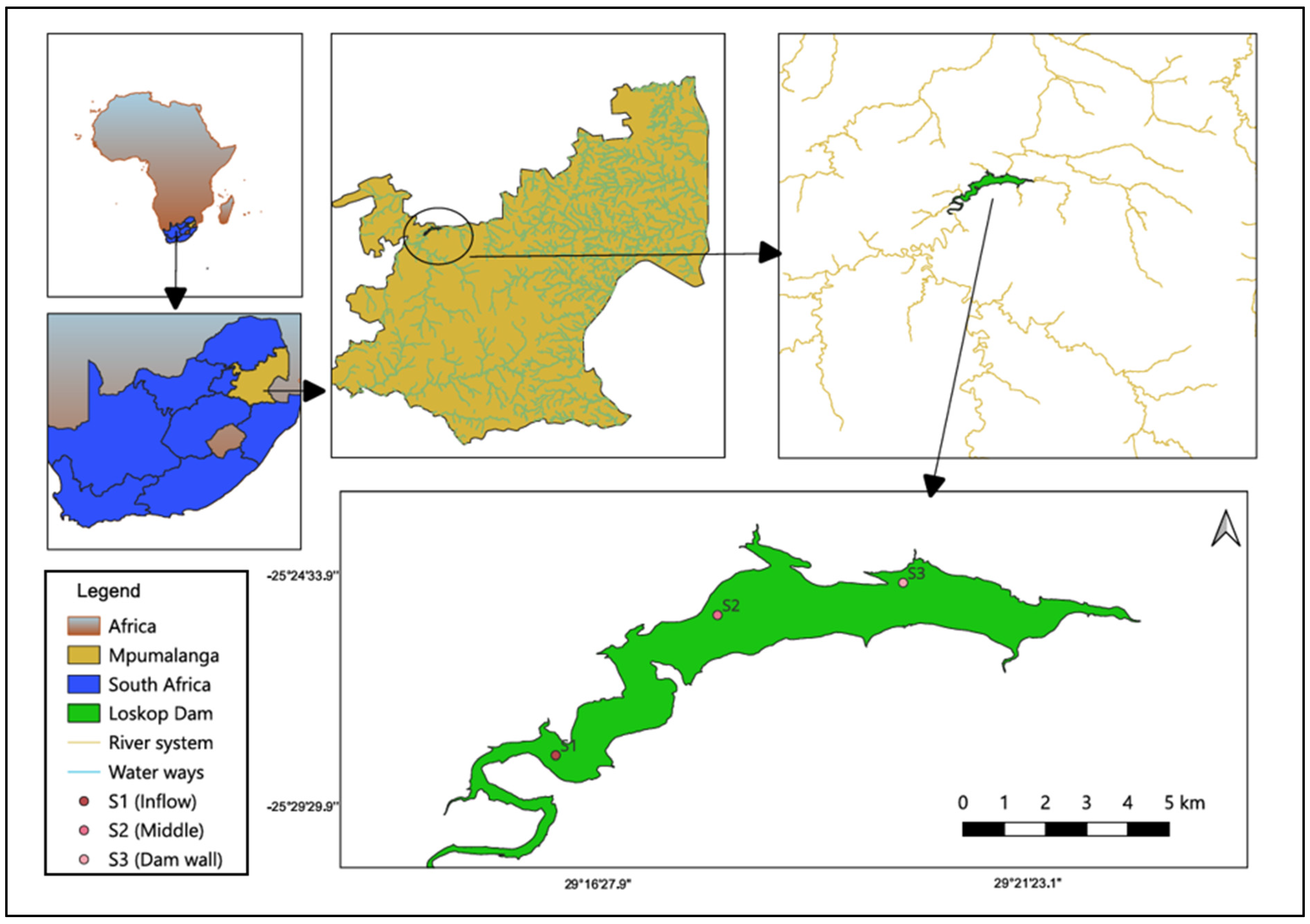
The Loskop Dam is one of the largest reservoirs on the Olifants River. It is in Mpumalanga Province, South Africa (25°25′01″ S; 29°21′01″ E). It has a full capacity of 362 million m3 and is 43 m high. It is about 30 km and covers a surface area of about 148 km2. The dam was built to accommodate a design flood of 2886 m3/s [18]. The dam supplies water to two municipalities, Groblersdal and Marble Hall, and is used for irrigation. The area has an average annual rainfall of 649 mm. Vegetation in the surrounding area consists mainly of broad-leaved woodland, riparian grasses, reeds, and bushveld species. The catchment is heavily influenced by human activities and the dam experiences increasing environmental stress associated with eutrophication, sedimentation, mining-derived pollution, agricultural runoff, elevated nutrient loading, and fluctuating dissolved oxygen conditions. During warmer months, the dam experiences thermal stratification, resulting in oxygen-poor bottom waters. These stratified conditions may promote nutrient cycling and the mobilization of heavy metals from sediments into the water column. Three sites were selected: the inflow region where the Olifants River enters the reservoir (S1), the middle section (S2), and the dam wall (S3), to ascertain the level of pollution at different areas of the dam (Figure 1).

2.2. Sampling of Water and Sediment

Water samples were collected seasonally, during summer (March) and winter (July), to account for high flow and low flow respectively. A handheld multiparameter instrument (YSI) was used to measure temperature, salinity, dissolved oxygen, electrical conductivity, pH, and total dissolved solids. Water samples were collected at each site by immersing an acid-pretreated plastic bottle into the water column. The samples were labeled and put in a container with ice and sent to the laboratory. The samples were kept at 4 °C in a refrigerator until subsequent analysis.
Seasonal sediment samples were taken at the same sites where the water samples were collected, using a Friedlinger mud grab. The samples were transferred to 1 L acid-pretreated polyethylene sampling bottles and labeled. They were put in a container with ice and sent to the laboratory. In the laboratory, the samples were refrigerated prior to chemical analysis. The water and sediment samples were analyzed using Inductively Coupled Plasma Mass Spectrometry (ICP-MS) for concentrations of As, Cd, Cr, Cu, Hg, Pb, Mn, Ni, Fe and Zn in an accredited chemical laboratory (WaterLab (Pty) Ltd.) in Pretoria, South Africa. The samples were sub-divided into glass vials and heated at 60 °C for 24 h. Nitric acid (HNO3) and hydrochloric acid (HCl) mixture at 3:1 ratio was used to mineralize the samples. Heavy metal determinations of the samples were conducted in parallel, in three batches. Approved guidelines were used to obtain analytical accuracy, and recoveries were within 10% of standard values. To ensure data accuracy, quality control/quality assurance (QC/QA) measures such as certified reference materials (CRMs) were used to ensure the validation of data and the accuracy and precision of the analytical method. Analytical precision and accuracy were verified through replicate analyses and comparison with certified standards from De Bruyn Spectroscopic Solutions 500 MUL20-50STD2 (Johannesburg, South Africa), and recoveries were within 10% of the certified values. All the reagents used were of superior quality and of analytical grade. All the solutions were prepared using ultra-pure water. All plastic, quartz and glassware were soaked in HNO3 (10%) for at least 24 h and rinsed repeatedly with ultra-pure water. Total heavy metal concentrations were expressed in mg/kg dry sediments.

2.3. Data Analysis

Mean and standard deviation of the physicochemical parameters and metals were calculated using descriptive analysis. Data of the physicochemical parameters and metals were assessed for normality and homogeneity of variance and were found to conform to parametric assumptions. Differences in metal concentrations among sites were, therefore, analyzed. An independent-samples t-test was used to determine seasonal (winter and summer) differences (p < 0.05). Spearman’s correlation analysis was performed to establish the associations between the physicochemical parameters and heavy metals. Principal component analysis (PCA) was used to obtain the main components of the data accountable for explaining metal variations and to deduce those originating from common sources. All the analyses were done using the Statistical Package for Social Sciences (SPSS) v. 26.0.

2.3.1. Enrichment Factor (EF)

The presence and degree of sediment contamination were evaluated using the enrichment factor (EF). To calculate EF values, usually Al or Fe concentration is used to normalize heavy metal concentrations.
E F = ( C x F e ) / ( B a s e l i n e   C x B a s e l i n e   F e ) ,
where Cx is the element concentration, and Fe is a reference value to adjust for natural metal concentration. Iron (Fe) was used as a normalization element in the calculation of the enrichment factor (EF) because it is considered a stable and naturally abundant element in the Earth’s crust [19].

2.3.2. Geoaccumulation Index (Igeo)

The level of contamination was assessed using the geoaccumulation index (Igeo)
I g e o = l o g 2   ( C x / 1.5 B n ) ,
where Cx is the concentration of heavy metal in sediment and Bn is the geochemical background (average shale value) for a given metal, and 1.5 is applied to adjust for possible variations in the background values. The classes of EF and Igeo are presented in Table 1.

2.4. Pollution and Ecological Risk Assessment

To assess sediment pollution and ecotoxicological risk at Loskop Dam, the following indices, contamination factor (CF) and ecological risk indices (ERI), were used to assess the degree of contamination and potential risk [20].

2.4.1. Contamination Factor (CF)

Contamination factor determines the degree of contamination by an element compared to pre-industrial reference concentrations [21]. Many studies have measured metal baseline values from an area with geologically similar material or average crustal composition [22]. The formula for calculating this index is given by Hakanson [21] as follows:
C F =       C ( m e t a l )   C ( b a c k g r o u n d )
where C(metal) is the concentration of the metal of interest measured at a particular site, and C(background) is the average shale values [23]. The average shale values were used because of the absence of local or regional reference values for heavy metals [24,25]. There are four levels of contamination [26], as shown in Table 2.

2.4.2. Ecological Risk Assessment of Sediment

Ecological risk index [21] is the potential ecological risk caused by the contamination of all the selected heavy metals in view of their combined ecological impact [26]. The following equations were used to assess the ecological risk potential [20,21,32].
E R = T R × C F
R I = E R  
where CF is the pollution factor, ER indicates the ecological risk of each metal, RI is the ecological risk index which represents the sum of the metals, and TR is the toxicity response factor of the elements [21]. The TR values are as follows: As = 10, Cd = 30, Cr = 2, Cu = 5, Hg = 40, Mn = 1, Ni = 5, Pb = 5, and Zn = 1. The classification of ER and RI is shown in Table 2 [20,21].

3. Results

3.1. Physicochemical Parameters and Trace Metal Concentrations in Water

Seasonal readings of the physicochemical parameters of the water column are presented in Table 3. The mean temperature ranged from 15.32 °C in winter to 23.54 °C in summer. The temperatures at the three sites were within the permissible guideline values. Mean dissolved oxygen (DO) concentrations decreased from 9.05 ± 3.00 mg/L in winter to 6.34 ± 1.13 mg/L in summer. The pH ranged from 7.56 to 9.43 in winter and 7.63 to 9.41 in summer. These values were within the SANS guideline of 6–9. The mean electrical conductivity increased from 407.98 μS/cm in winter to 453.58 μS/cm in summer. The total dissolved solids (TDS) decreased slightly from 326.57 ± 2.92 mg/L in winter to 299.33 ± 23.06 mg/L in summer. Mean salinity ranged from 0.24 ppt in winter to 0.22 ppt in summer. There were no significant differences in all the parameters between the two seasons (p > 0.05), except temperature (p < 0.05).
The concentrations of Cd, Cr, Hg and Pb in the water were below detection limits across sites and seasons. However, Cu, Ni and Zn were only detected during summer, and As, Fe and Mn were only detected during winter. The concentrations of the metals detected were within the permissible guideline values, except for Mn during the summer season (Table 3).
Table 3. Seasonal physicochemical parameters and heavy metal concentrations in the water from Loskop Dam.
ParametersWinter (Mean ± SD)Summer (Mean ± SD)Guideline Value
Temperature (°C)15.32 ± 0.0823.54 ± 0.26
pH7.56–9.437.63–9.416.5–9.0 2
DO9.05 ± 3.006.34 ± 1.13-
Conductivity (µS/cm)407.98 ± 2.10453.58 ± 49.64-
TDS326.57 ± 2.92299.33 ± 23.06-
Salinity (‰)0.24 ± 0.00.22 ± 0.02<0.5‰ 1
As-0.0010.01 3
Cu0.001-2.00 3
Fe-0.230.30 3
Mn-0.080.01 3
Ni0.002-0.07 3
Zn0.003-5.00 3
1 DWAF [17], 2 BC-MECCS [33], 3 WHO [34].

3.2. Concentrations of Heavy Metals in the Sediments

Heavy metal concentrations were substantially higher in the sediment compared to the water column. The concentrations showed a distinct seasonal variation, with higher concentrations in winter than in summer, except for As (Table 4). The range of metal concentrations were as follows: As (3.46–3.73 mg/kg), Cd (0.00–0.15 mg/kg), Cr (154.09–182.6 mg/kg), Cu (7.89–23.05 mg/kg), Fe (20,193.67–21,719.97 mg/kg), Mn (225.58–480.95 mg/kg), Ni (14.52–23.20 mg/kg), Pb (15.86–17.14 mg/kg) and Zn (25.33–97.33 mg/kg) (Table 4). During winter, heavy metal concentrations decreased in the following order: Fe > Mn > Cr > Zn > Ni > Cu > Pb > As > Cd, and during summer, contamination levels decreased in the following order: Fe > Mn > Cr > Zn > Pb > Ni > Cu > As > Cd. During winter, higher levels of Cd, Cr, Cu, Fe, Mn, Ni, Pb and Zn were recorded, while As had a higher concentration in summer. The mean Cr concentrations exceeded the permissible standard value during both seasons and Ni exceeded the permissible standard value in winter.
Table 4. Mean metal concentrations (mg/kg) in the sediments during summer and winter in the Loskop Dam.
Elements WinterSummer SQGAverage Shale Value
Mean ± SDMean ± SD
As3.46 ± 1.693.73 ± 3.705.913
Cd0.15 ± 0.160.00 ± 0.000.619
Cr182.6 ± 35.97154.09 ± 69.3737.390
Cu23.05 ± 21.327.86 ± 4.2835.745
Fe21,720 ± 173420,194 ± 1999-47,200
Mn480.95 ± 49.13225.58 ± 81.57-850
Ni23.20 ± 13.6414.52 ± 5.051868
Pb17.14 ± 4.8115.86 ± 4.413520
Zn97.33 ± 18.4125.33 ± 3.1712395
SD = Standard deviation; SQG = Sediment Quality Guideline (CCME) [35].

3.2.1. Spatial Distribution of Heavy Metals in the Sediments

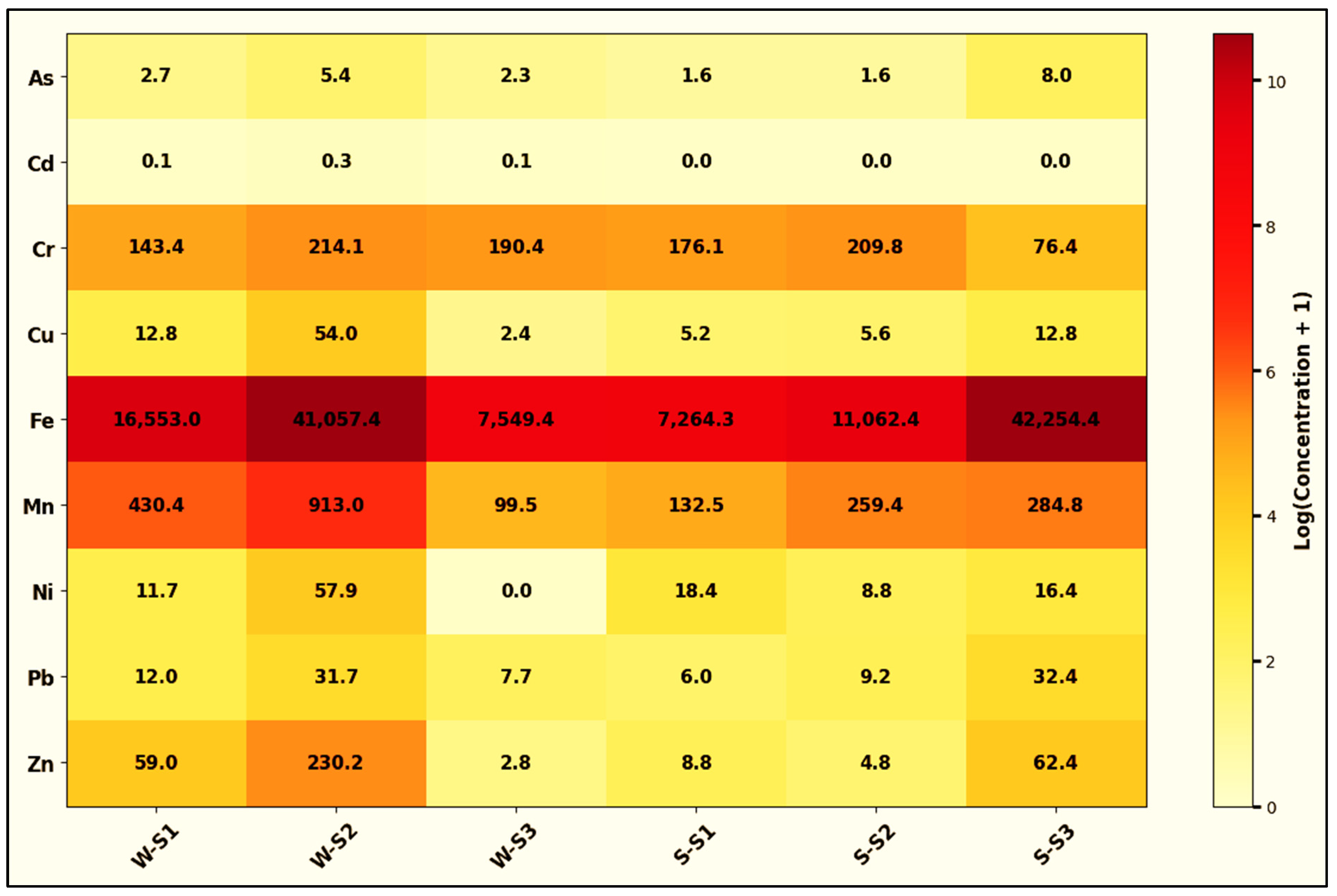
There were variations in the distribution of heavy metals, with S2 having the highest contamination during winter (Figure 2). Arsenic showed a substantial increase from 1.6 mg/kg at S1 and S2 in summer to 8.00 mg/kg at S3 in winter. The highest Cd and Cr concentrations were recorded at S2 during winter. Similarly, Cu showed uneven spatial distribution, with winter concentrations of 54.02 mg/kg at the middle site compared to 2.38 mg/kg at the dam wall and 12.8 mg/kg at the inflow. Iron exhibited the highest concentrations (7,549.4 to 42,254.4 mg/kg), with the highest concentration at S1, while the highest concentration of Mn (913.01 mg/kg) was recorded at S2 and the lowest concentration (99.5 mg/kg) at S3. Nickel concentrations ranged from below detection at S3 to 18.4 mg/kg at S1, Pb concentrations ranged from 6.0 at S1 to 31.7 mg/kg at S2, and Zn concentrations ranged from 2.82 mg/kg at S3 to 230.15 mg/kg at S2.

3.2.2. Correlation Analysis

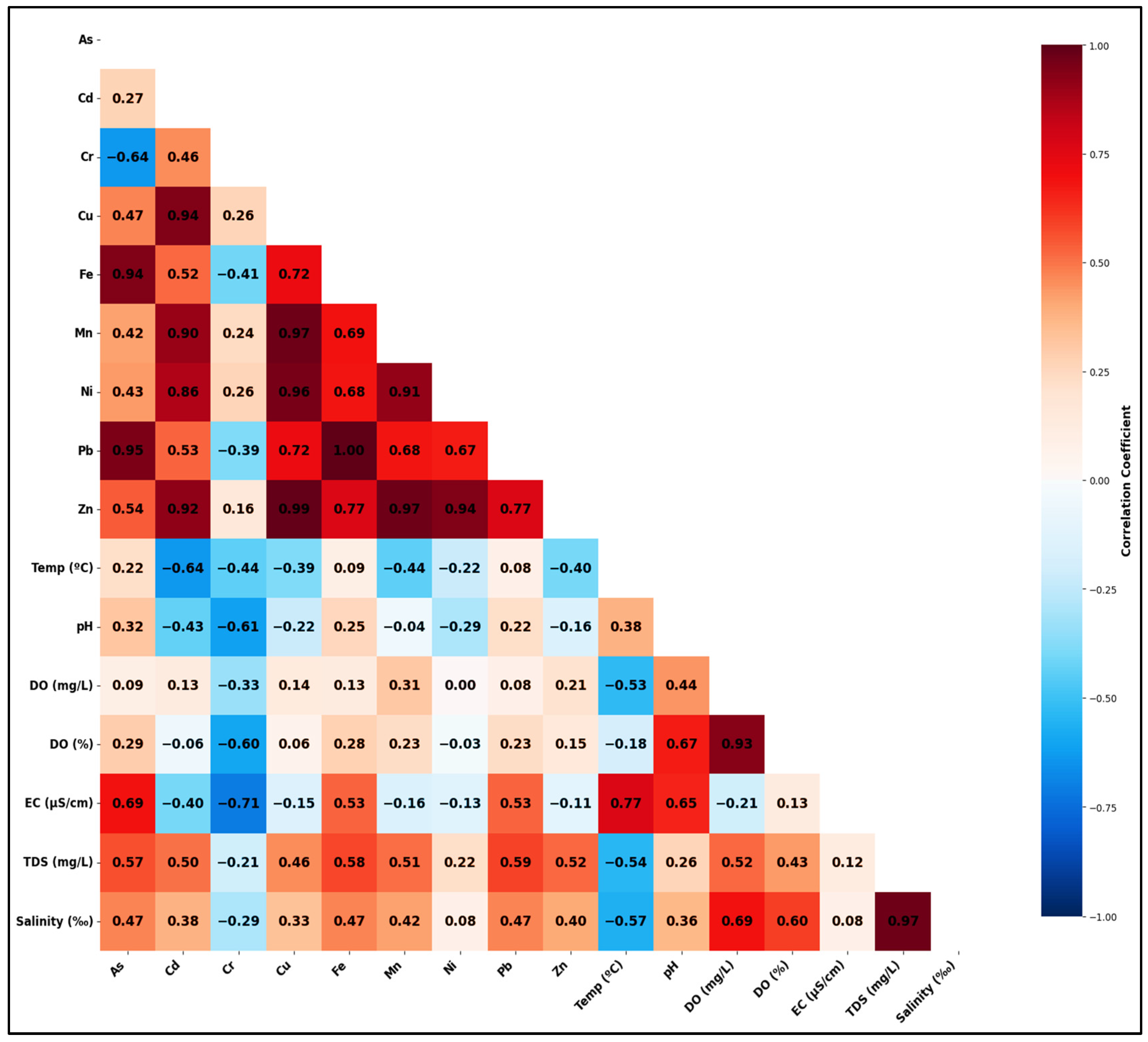
The correlation analysis revealed strong relationships among metals in the sediments (Figure 3). Arsenic showed a strong positive relationship with Fe and Pb (r = 0.94, p < 0.01; r = 0.95, p < 0.01 respectively); Cd had a positive association with Cu, Mn, Ni and Zn (r = 0.94, p < 0.01; r = 0.90, p < 0.01 and r = 0.86, p < 0.01; r = 0.92, p < 0.01 respectively); Cu had a strong association with Mn and Zn (r = 0.97, p < 0.01; r = 0.99, p < 0.01 respectively); Fe had a strong positive correlation with Pb (r = 1.00, p < 0.01); Mn had a strong correlation with Zn (r = 0.97, p < 0.01); and Ni correlated strongly with Zn (r = 0.94, p < 0.01). Strong correlations were also observed among the water parameters and with the heavy metals. A strong positive relationship existed between TDS and salinity (r = 0.97), while EC was strongly correlated with temperature (r = 0.77). Metals such as As, Fe, Pb, Mn, and Zn exhibited positive correlations with TDS and salinity. In contrast, Cr correlated negatively with EC (r = −0.71), and Cd and temperature correlated negatively (r = −0.64).

3.2.3. Principal Component Analysis (PCA)

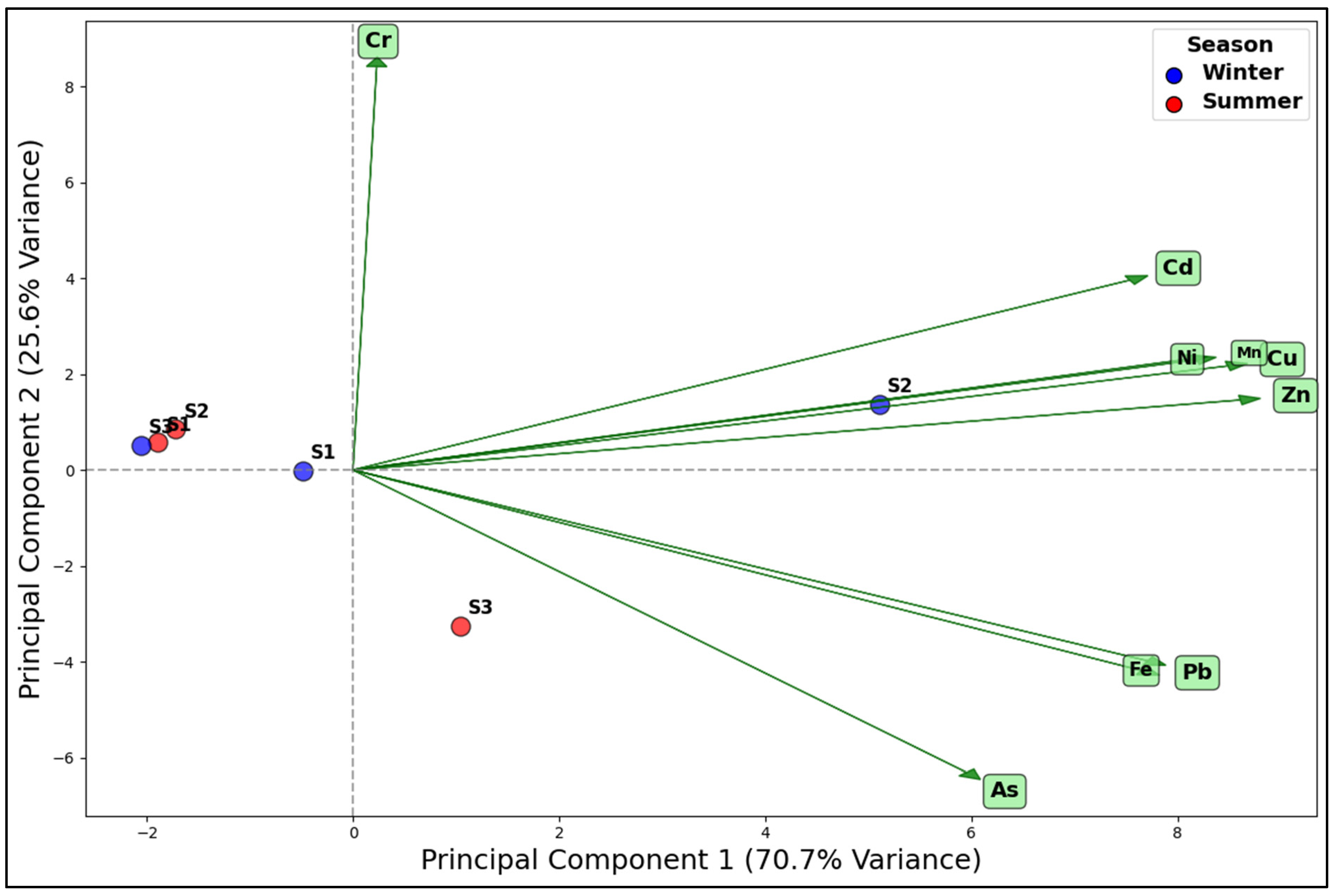
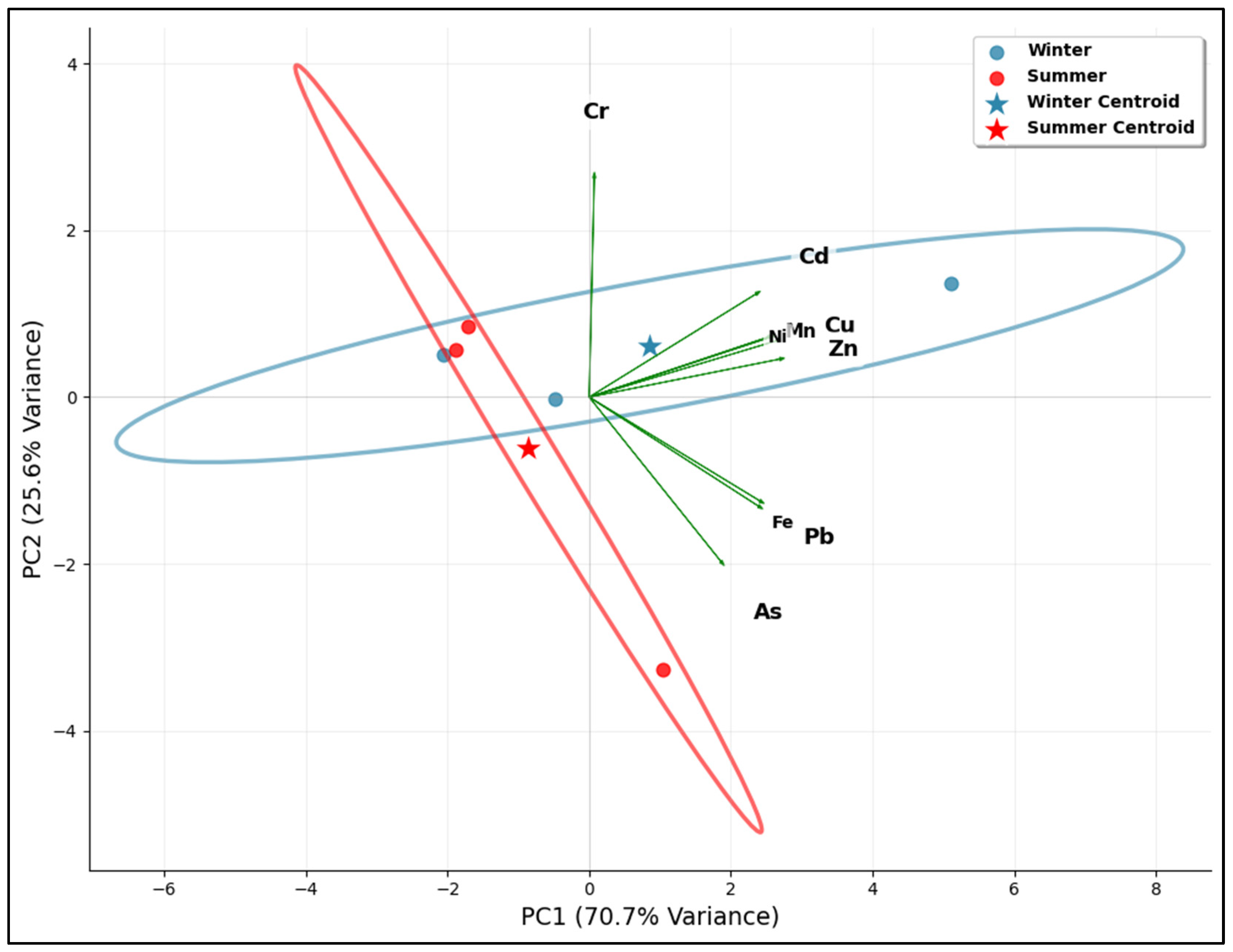
The PCA was used to show the seasonal clustering behaviour of the metals across sites (Figure 4). Two components of the PCA explained 96.3% of the total variance. The first and second components explained 70.7% and 25.6% of the data variation respectively. All the metals except As are clustered together during winter, showing strong positive loadings on PC1. Besides seasonal effects, both trends indicate spatial influence in contamination characteristics, as most of the metals had higher concentrations in the middle of the dam. This could be attributed to localized discharge from human activities in the catchment.
Furthermore, Figure 5 describes two distinct seasonal contamination trends. The blue represents the overall contamination during winter, with higher heavy metal concentrations, while the red represents a lower contamination gradient of heavy metals during summer.

3.3. Sediment Contamination Indices

Enrichment Factor (EF) and Geoaccumulation Index (Igeo)

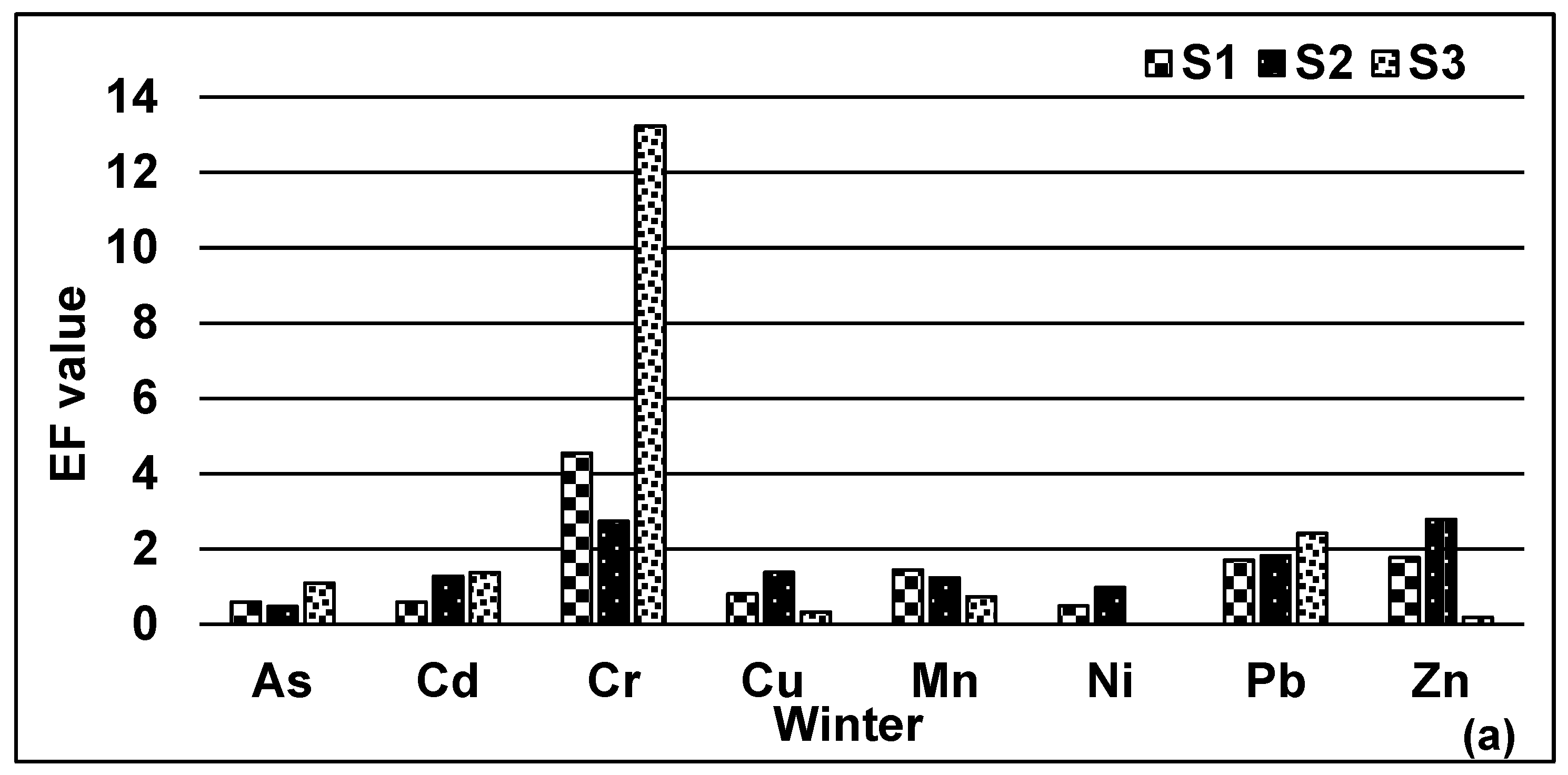
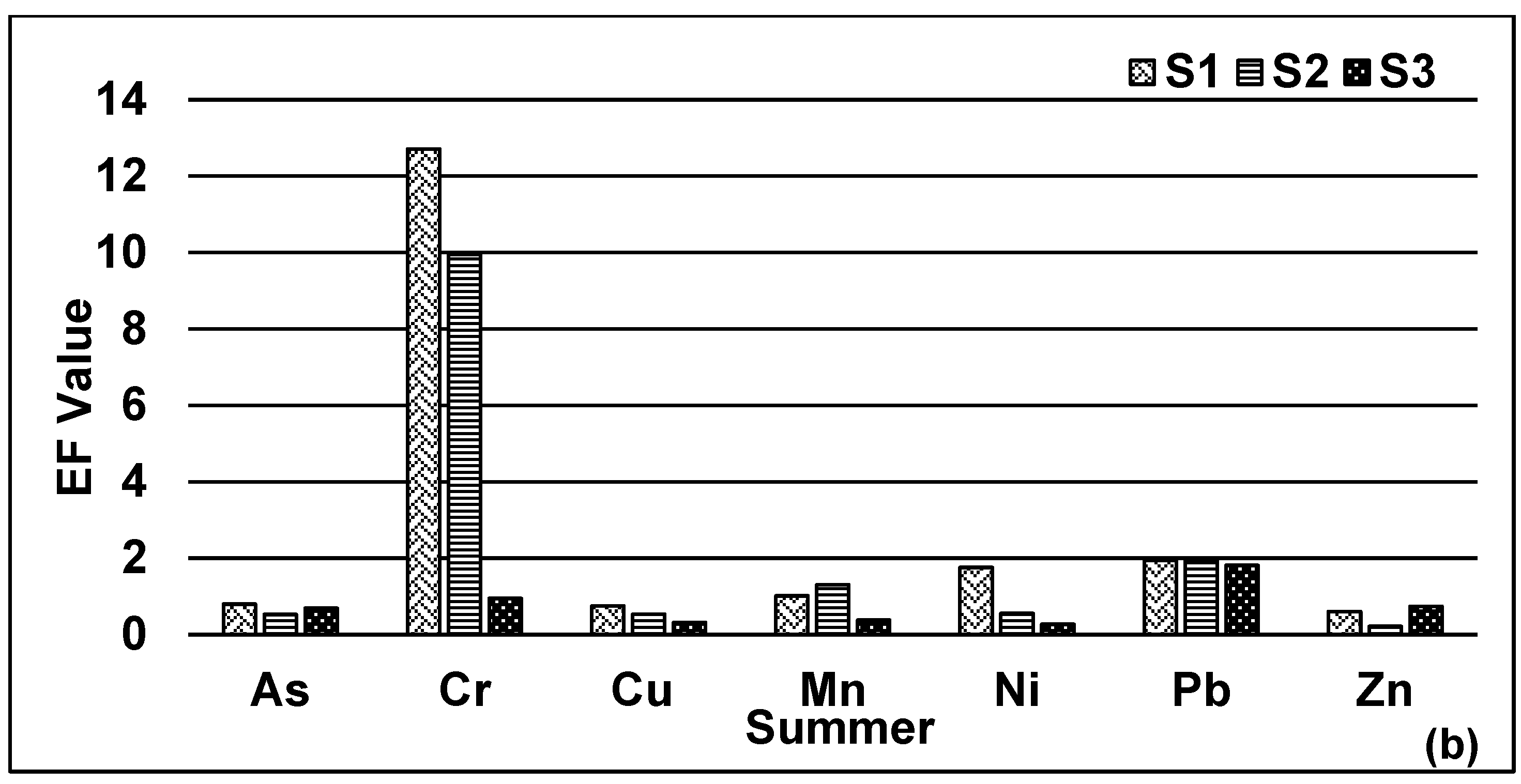
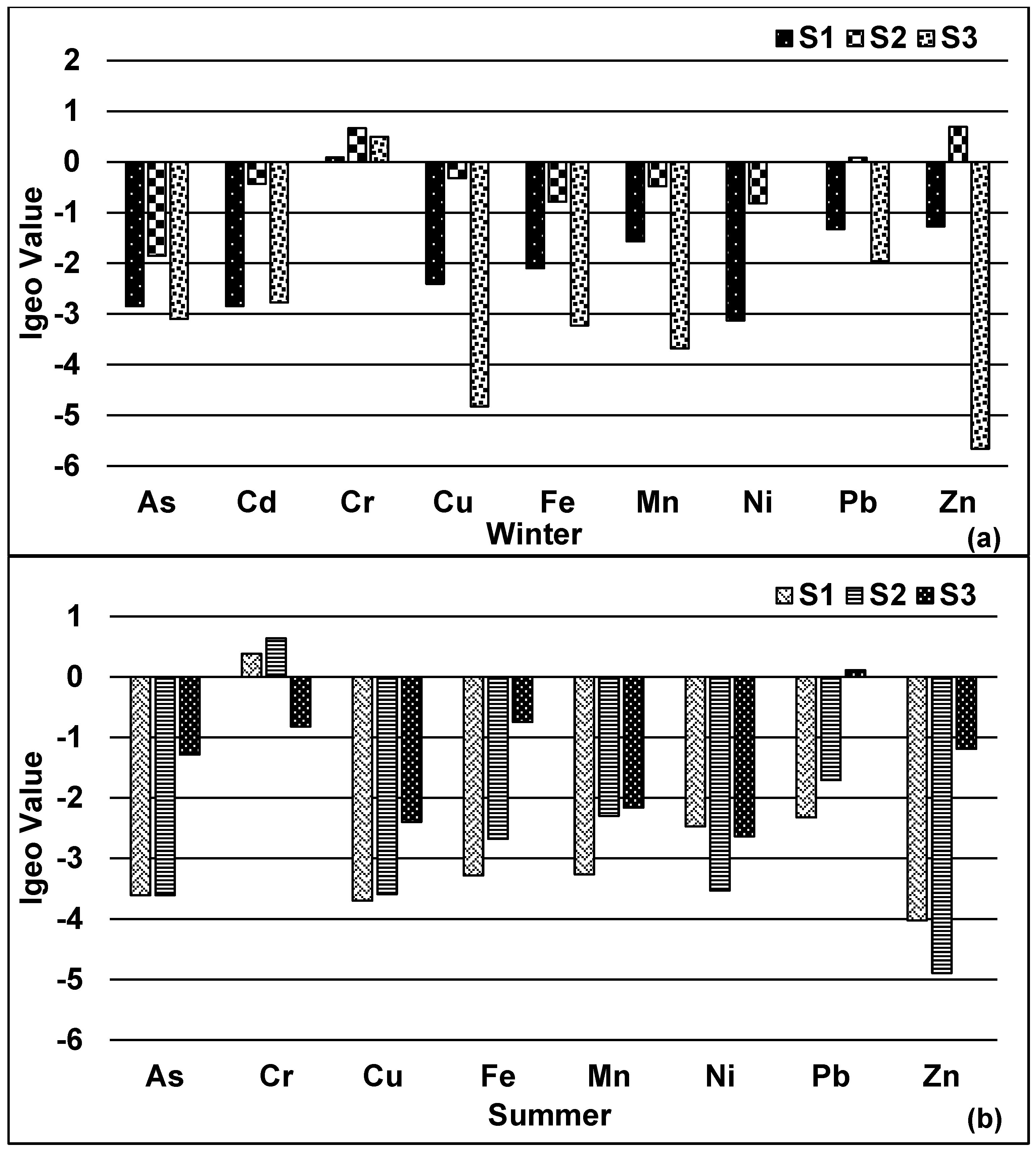
Heavy metal contamination in the sediments from the Loskop Dam was evaluated using the EF and Igeo. In accordance with the EF classifications, As, Cd, Cu, Mn, Ni, Pb and Zn showed deficiency to minimal enrichment (EF < 3) and Cr showed moderately to severe enrichment. The highest EF values were at S3 during winter and S1 during summer (Figure 6). The Igeo values of As, Cd, Cu, Mn and Ni were below zero during both seasons, but Cr, Pb and Zn were between zero and 1; thus, they fall under the non-contaminated to moderately contaminated class (Figure 7).

4. Ecological Risk Assessment

4.1. Contamination Factor (CF)

The calculated CF values of the majority of metals were higher in winter than in summer; however, for the sites, the highest CF values were collected at S2 and S3 in winter and summer respectively (Table 5). Most of the elements showed low seasonal contamination; however, in winter, the following elements showed moderate contamination: Cr at all the sites; Cd, Cu, Mn and Zn at S2; and Pb at S2 and S3. During summer, Cr showed moderate contamination at S1 and S2, and Pb at S3. The CF value of Cd decreased from low to moderate in winter and to zero in summer.

4.2. Ecological Risk (ER) and Risk Index (RI)

The results of the potential risk factor and potential ecological risk index for the metals in the sediments are shown in Table 6. The ER values were higher in winter than in summer. During winter, Cd had the highest ecological risk of 33.3 at S2, followed by Pb (11.2) and Cr (4.76) at S3. During summer, the ecological risk was dominated by Pb (ER = 8.00) at S3, followed by As (6.2) also at S3 and then Cr (4.66) at S2. All the seasonal ER values showed low ecological risk (ER < 40) at all the sites, indicating low contamination of the heavy metals. Cadmium and Pb exhibited the highest contamination during winter and summer respectively; though, the RI values were low (RI < 150). Generally, RI for heavy metals in the surface sediment of the Loskop Dam was classified as less contaminated.

5. Discussion

5.1. Physicochemical Parameters

The mean temperatures at the selected sites fell within the guideline values, including permissible limits by the World Health Organization [36], which are between 25 and 30 °C. Temperature usually affects the state of different inorganic components and chemical pollutants in water. The mean dissolved oxygen was higher in winter than in summer, as the solubility of gases increases with a decrease in temperature. The lower DO in summer could also be attributed to the higher rate of oxygen consumption by aquatic organisms and the high rate of dead organic matter decomposition. The pH of the water was within the acceptable and permissible limit (6.5–8.5) for domestic use [34]. The pH indicated an alkaline nature of the river and could be due to the soil and rock–water interactions as the river flows [37] and industrial and sewage discharges into the river [38]. Electrical conductivity measures how water conducts electricity and is usually related to the TDS in water. Conductivity of the water did not exceed the recommended guideline value of 1000 μS/cm [35]. Electrical conductivity was higher in summer than in winter, indicating elevated ionic strength and higher concentrations of dissolved inorganic matter during warmer months [39]. Similar pH, TDS and EC values were recorded in the Vaal River in South Africa [40].
The higher concentrations of Fe and Mn during summer could be linked to increased surface runoff from the catchment. In contrast, the lower levels during winter could be due to the settling of metals in the sediment. This can lower the concentration of dissolved metals in the water column. Furthermore, factors such as human activity cycles (e.g., agriculture) and chemical conditions that control the movement and persistence of metals in rivers could cause seasonal detection of specific metals in the water [40]. Recent studies in the Vaal River also recorded high concentrations of Fe and Mn [40].

5.2. Heavy Metals in the Sediment

Heavy metals in freshwater ecosystems are distributed between the water column and sediments, with concentrations in sediments usually higher than in the water [41]. Chemicals in the water are normally bound to organic and inorganic particles that eventually settle in sediments. These chemicals then become a potential source of secondary contamination in the water [9]. Thus, sediments serve as both active and passive components at the bottom of water bodies and control the movement, storage, and release of substances within Earth’s biogeochemical systems. During both seasons, the mean Cr concentration exceeded both the Sediment Quality Guideline (SQG) and the average shale value [23]. The mean concentrations of Ni and Zn exceeded the SQG values and the average shale values, respectively, during winter. Higher concentrations of Cr, Cu, Pb and Zn than their average shale values have also been recorded in other rivers in South Africa such as the Molopo River [42,43]. Studies in the Nyl River in South Africa also recorded higher concentrations of Ni and Zn in sediments than the SQG values [44,45]. High concentrations of heavy metals including Ni and Zn have also been reported in the Olifants River basin [46]. The high concentration of these elements found in the sediments might be associated with human activities in the catchment.
Correlations among heavy metals may indicate their origin and migration; however, if there is no correlation among the metals, then they are not controlled by a single factor [47]. The strong relationship observed between some heavy metals suggests common sources [8]. However, the weak correlation of Cr with other heavy metals indicates that Cr in the sediments may be coming from different sources. The correlation analysis and PCA results exhibited strong positive inter-relationships among As, Fe and Pb, and strong relationships among Cd, Cu, Mn, Ni and Zn, which further affirm that they originate from a common source or have similar geochemical characteristics except for Cr, which showed a weak correlation with other metals and even inverse relationships with some metals. In the study area, the possible pollution is from agricultural and coal mining discharges [15,48]. When PCA was done to evaluate the most common pollution sources, the cumulative variance exceeded the 70% threshold that is commonly accepted, indicating good dimensional representation. The high communalities suggest that most variables were well represented by the retained components, supporting the suitability and validity of the PCA model. Furthermore, it revealed site-specific contamination profiles (Figure 5). The middle site, S2, was characterized by relatively high levels of contamination, signifying the existence of anthropogenic pollution. In contrast, S1 and S3 showed low concentrations of heavy metal pollution, reflecting localized anthropogenic pressure. The concentration of most of the metals increased during the dry winter compared to the wet summer. This observation is in accordance with studies that demonstrated that the seasonal differences in concentrations could be attributed to evaporation and dilution effects during winter and summer respectively [24].

5.3. Sediment Risk Evaluation Indicators

The high EF values for Cr could be linked to coal mining, coal power stations and agricultural activities [14]. Low EF values were obtained for the rest of the metals, indicating minor enrichment. Geoaccumulation is mainly used to quantify chemical element accumulation in sediments. Chromium and Zn were the only metals that showed moderate contamination in the sediments. The EF and Igeo values suggest that Cr contamination in the river is from both geochemical and human activities, while the other trace elements are mainly from geological and natural activities in the area. The heavy metals except Cr, Pb and Zn had Igeo values lower than 0, indicating possible non-anthropogenic pollution.
The CF values for As, Fe and Ni were below 1 at the three sites, suggesting minimum contamination conditions for these metals; however, Cd, Cr, Cu, Mn, Pb and Zn showed moderate contamination, and therefore are environmental concerns. The highest potential ecological risk index was posed by Cd during winter, but the value was still in the low-risk range. The following metals, As, Cr, Cu, Mn, Ni, Pb and Zn had very low RI and do not pose an immediate risk to the aquatic environment. The whole dam can be categorized as having a low ecological risk level (RI < 150). The low ecological risk is consistent with findings from a study conducted in the Molopo River in South Africa [42]. The ecological risk index focuses on the possible risk heavy metals pose to the environment [21,49,50], and living organisms [28,51,52].
From the results, the Loskop Dam is facing a low ecological risk; however, As, Cd, Cr, Ni and Pb levels in the sediments need constant monitoring, as the CF, EF, Igeo and CF are showing potential risk should contamination continue in the dam. In addition to the risk, heavy metals may pose individually, simultaneous exposure to two or more metals may have synergistic effects [53], due to their shared tendency for binding, and may present greater toxicity than a single metal [54]. The current study is similar to other studies that recorded high heavy metal concentrations that could pose a risk to aquatic organisms, though the potential ecological risk was low [42,55]. In the present study area, agricultural products such as pesticides and fertilizers could be major contributors [56]. Studies have shown that pesticides and fertilizers contribute to the accumulation of heavy metals in sediments [57,58]. Furthermore, metal accumulation in the sediments could have come from wastewater from mining and emissions of many large coal-fired thermal power stations in the region. Industrial wastewater from mining activities has been reported to contribute significantly to the pollution of freshwater ecosystems [59,60]. In coal mining areas and coal power stations, during the rainy season and at high temperatures, large amounts of heavy metals are released into the environment from coal gangue piles due to spontaneous combustion and may pose an ecological risk [61].

6. Limitations

This study used the global average shale values as background values for calculating the enrichment factor, contamination factor, and geoaccumulation index, rather than using local or regional geological background values for South Africa, which are not available. The sample size for principal component analysis and correlation analysis was small and could have affected statistical reliability. The distribution of heavy metals in sediments is strongly influenced by other factors such as organic matter content, iron-manganese oxides, and grain size composition. In the absence of such measurements, it is difficult to determine whether the high correlations between Fe, Mn, and certain metals stem from natural geochemical processes. Long-term monitoring is recommended for future studies and should include organic matter content, iron-manganese oxides, and grain size composition, along with biological indicators such as macroinvertebrates and fish.

7. Conclusions

The study investigated the ecological risk of As, Cd, Cr, Cu, Fe, Mn, Ni, Pb and Zn concentrations in the Loskop Dam of the upper Olifants River. The results demonstrated that the Cr concentration in the sediments was considerably higher than the SQG and the average shale values. The findings further show that the factors causing metal accumulation varied across the sites and some of the metals originated from common sources. The highest contamination was in the middle of the dam (S2), indicating localized contamination sources. Seasonal variation in contamination was observed, with higher metal concentrations in winter than in summer. The assessment of EF and Igeo indicated that the sediments were severely enriched and moderately contaminated with Cr respectively. Based on sediment chemical analysis and the ecological risk index, current heavy metal pollution levels do not indicate significant short-term ecological risk, and further studies are recommended that may include bioindicators to validate this assessment.

Author Contributions

All the authors contributed to field work, sample analysis, and the writing of the manuscript. All authors have read and agreed to the published version of the manuscript.

Funding

The study was supported by the National Research Foundation through the DSI-NRF SARChI Chair (Ecosystem Health; number 101054), University of Limpopo.

Data Availability Statement

The data for this study will be made available by the authors on request.

Conflicts of Interest

The authors declare no conflicts of interest.

References

  1. Herath, I.K.; Wu, S.; Ma, M.; Ping, H. Heavy metal toxicity, ecological risk assessment, and pollution sources in a hydropower reservoir. Environ. Sci. Pollut. Res. 2022, 29, 32929–32946. [Google Scholar] [CrossRef]
  2. Kumar, P.; Mishra, V.; Yadav, S.; Yadav, A.; Garg, S.; Poria, P.; Farooqi, F.; Dumée, L.F.; Sharma, R.S. Heavy metal pollution and risks in a highly polluted and populated Indian river–city pair using the systems approach. Environ. Sci. Pollut. Res. 2022, 29, 60212–60231. [Google Scholar] [CrossRef]
  3. Addo-Bediako, A.; Matita, T.; Luus-Powell, W. Flow Regime Impacts on Chemical Pollution in the Water and Sediments of the Moopetsi River and Human Health Risk in South Africa. Water 2025, 17, 2200. [Google Scholar] [CrossRef]
  4. Gantayat, R.R.; Elumalai, V.; Li, P.; Yaphi, N.A. Potentially toxic and radiogenic elements associated serious health risks to human around a gold and uranium mines, Blesbokspruit wetland, Johannesburg, South Africa. Environ. Res. 2026, 299, 124381. [Google Scholar] [CrossRef]
  5. Zaynab, M.; Al-Yahyai, R.; Ameen, A.; Sharif, Y.; Ali, L.; Fatima, M.; Khan, K.A.; Li, S. Health and environmental effects of heavy metals. J. King Saud. Univ. Sci. 2022, 34, 101653. [Google Scholar] [CrossRef]
  6. Ma, T.-F.; Wu, J.; Yu, Y.-C.; Chen, T.-T.; Yao, Y.; Liao, W.-L.; Feng, L.; Pan, J. An Assessment of the Heavy Metal Contamination, Risk, and Source Identification in the Sediments from the Liangtan River, China. Sustainability 2023, 15, 16228. [Google Scholar] [CrossRef]
  7. Topaldemir, H.; Taş, B.; Yüksel, B.; Ustaoğlu, F. Potentially hazardous elements in sediments and Ceratophyllum demersum: An ecotoxicological risk assessment in Miliç Wetland, Samsun, Türkiye. Environ. Sci. Pollut. Res. 2023, 30, 26397–26416. [Google Scholar] [CrossRef]
  8. Arora, S.; Saha, P.; Shende, A.D. Assessment of heavy metal pollution of surface water through multivariate analysis, HPI and GIS techniques. Water Pract. Technol. 2025, 20, 148–167. [Google Scholar] [CrossRef]
  9. Aydin, H.; Ustaoğlu, F.; Tepe, Y.; Soylu, E.N. Assessment of water quality of streams in northeast Turkey by water quality index and multiple statistical methods. Environ. Forensics 2021, 22, 270–287. [Google Scholar] [CrossRef]
  10. Cüce, H.; Kalipci, E.; Ustaoğlu, F.; Dereli, M.A.; Turkmen, A. Integrated spatial distribution and multivariate statistical analysis for assessment of ecotoxicological and health risks of sediment metal contamination, Omerli Dam (Istanbul, Turkey). Water Air Soil. Poll. 2022, 233, 199. [Google Scholar] [CrossRef]
  11. Ao, L.; Chang, R.; Tang, Y.; Zhang, S. Ecological risk assessment and source tracing of heavy metals in surface sediments of a hilly riverine reservoir in Chongqing, China. Environ. Sci. Eur. 2024, 36, 69. [Google Scholar] [CrossRef]
  12. Saidon, N.B.; Szabo, R.; Budai, P.; Lehel, J. Trophic transfer and biomagnification potential of environmental contaminants (heavy metals) in aquatic ecosystems. Environ. Pollut. 2024, 340, 122815. [Google Scholar] [CrossRef]
  13. Du Plessis, A. Water as an Inescapable Risk: Current Global Water Availability, Quality and Risks with a Specific Focus on South Africa; Springer Nature: Cham, Switzerland, 2019. [Google Scholar]
  14. Bischoff-Mattson, Z.; Maree, G.; Vogel, C.; Lynch, A.; Olivier, D.; Terblanche, D. Shape of a water crisis: Practitioner perspectives on urban water scarcity and ‘Day Zero’ in South Africa. Water Policy 2020, 22, 193–210. [Google Scholar] [CrossRef]
  15. Lebepe, J.; Oberholster, P.J.; Ncube, I.; Smit, W.; Luus-Powell, W.J. Metal levels in two fish species from a waterbody impacted by metallurgic industries and acid mine drainage from coal mining in South Africa. J. Environ. Sci. Health A 2020, 55, 421–432. [Google Scholar] [CrossRef] [PubMed]
  16. Eskom, 16. Eskom Integrated Report. 2021. Available online: https://www.eskom.co.za/investors/integrated-results/ (accessed on 15 March 2026).
  17. Department of Water Affairs and Forestry (DWAF). South African Water Quality Guidelines. Volume 7: Aquatic Ecosystems, 2nd ed.; DWAF: Pretoria, South Africa, 1996. [Google Scholar]
  18. Water Research Commission (WRC). Hydropolitical History of South Africa’s International River Basins (WRC Report No: 1220/1/04). In Large Dams and Water Systems in South Africa, published by the South African National Committee on Dams; The Water Wheel: Water Research Commission: Pretoria, South Africa, 2008. [Google Scholar]
  19. Tamim, U.; Khan, R.; Jolly, Y.N.; Fatema, K.; Das, S.; Naher, K.; Islam, M.A.; Islam, S.M.A.; Hossain, S.M. Elemental distribution of metals in urban river sediments near an industrial effluent source. Chemosphere 2016, 155, 509–518. [Google Scholar] [CrossRef]
  20. Ashong, G.W.; Ababio, B.A.; Kwaansa-Ansah, E.E.; Gyabeng, E.; Nti, S.O. Human and ecotoxicological risk assessment of heavy metals in polymer post treatment sludge from Barekese Drinking Water Treatment Plant, Kumasi. Toxicol. Rep. 2024, 12, 404–413. [Google Scholar] [CrossRef]
  21. Hakanson, L. An ecological risk index for aquatic pollution control: A sedimentological approach. Water Res. 1980, 14, 975–1001. [Google Scholar] [CrossRef]
  22. Addo-Bediako, A.; Nukeri, S.; Kekana, M.B. Heavy metal and metalloid contamination in the sediments of the Spekboom River, South Africa. Appl. Water Sci. 2021, 11, 133. [Google Scholar] [CrossRef]
  23. Turekian, K.K.; Wedepohl, K.H. Distribution of the elements in some major units of the Earth’s crust. GSA Bull. 1961, 72, 175–192. [Google Scholar] [CrossRef]
  24. Edokpayi, J.; Odiyo, J.; Popoola, O.; Msagati, T.A.M. Evaluation of temporary seasonal variation of heavy metals and their potential ecological risk in Nzhelele River, South Africa. Open Chem. 2017, 15, 272–282. [Google Scholar] [CrossRef]
  25. Cui, S.; Zhang, F.; Hu, P.; Hough, R.; Fu, Q.; Zhang, Z.; An, L.; Li, Y.-F.; Li, K.; Liu, D.; et al. Heavy metals in sediment from the urban and rural rivers in Harbin City, northeast China. Int. J. Environ. Res. Public Health 2019, 16, 4313. [Google Scholar] [CrossRef]
  26. Kowalska, J.B.; Mazurek, R.; Gąsiorek, M.; Zaleski, T. Pollution indices as useful tools for the comprehensive evaluation of the degree of soil contamination–a review. Environ. Geochem. Health 2018, 40, 2395–2420. [Google Scholar] [CrossRef]
  27. Wang, X.; Deng, C.; Yin, J.; Tang, X. Toxic heavy metal contamination assessment and speciation in sugarcane soil. IOP Conf. Ser. Earth Environ. Sci. 2018, 108, 042059. [Google Scholar]
  28. Rostami, S.; Kamani, H.; Shahsavani, S.; Hoseini, M. Environmental monitoring and ecological risk assessment of heavy metals in farmland soils. Hum. Ecol. Risk Assess. Int. J. 2021, 27, 392–404. [Google Scholar] [CrossRef]
  29. Mahabadi, H.M.; Ramroudi, M.; Asgharipour, M.R.; Rahmani, H.R.; Afyuni, M. Evaluation of the ecological risk index (Er) of heavy metals (HMs) pollution in urban field soils. SN Appl. Sci. 2020, 2, 1–8. [Google Scholar] [CrossRef]
  30. Kang, Z.; Wang, S.; Qin, J.; Wu, R.; Li, H. Pollution characteristics and ecological risk assessment of heavy metals in paddy fields of Fujian province, China. Sci. Rep. 2020, 10, 12244. [Google Scholar] [CrossRef]
  31. Hu, Y.; Liu, X.; Bai, J.; Shih, K.; Zeng, E.Y.; Cheng, H. Assessing heavy metal pollution in the surface soils of a region that had undergone three decades of intense industrialization and urbanization. Environ. Sci. Pollut. Res. 2013, 20, 6150–6159. [Google Scholar] [CrossRef] [PubMed]
  32. Soleimani, H.; Mansouri, B.; Kiani, A.; Omerf, A.K.; Tazik, M.; Ebrahimzadeh, G.; Sharafi, K. Ecological risk assessment and heavy metals accumulation in agriculture soils irrigated with treated wastewater effluent, river water, and well water combined with chemical fertilizers. Heliyon 2026, 9, e14580. [Google Scholar] [CrossRef] [PubMed]
  33. British Columbia-Ministry of Environment and Climate Change Strategy (BC-MECCS). British Columbia Approved Water Quality Guidelines: Aquatic life, Wildlife and Agriculture. 2019. Available online: https://www2gov.bc.ca/gov/content/environment/air-land-water/water/water-quality/water-quality-reference-documents (accessed on 17 November 2025).
  34. World Health Organization (WHO). Guidelines for Drinking-Water Quality: Fourth Edition Incorporating First Addendum; World Health Organization: Geneva, Switzerland, 2017; Volume 4, p. 154995. ISBN 97892. [Google Scholar]
  35. Canadian Council of Ministers of the Environment (CCME). Environmental Quality Guidelines: Water Quality Guidelines for the Protection of Aquatic Life and Sediment Quality Guidelines for the Protection of Aquatic Life; Canadian Council of Ministers of the Environment: Winnipeg, Canada, 2012; Available online: http://ceqg-rcqe.ccme.ca/ (accessed on 5 January 2026).
  36. World Health Organization (WHO). Guideline for Drinking Water Quality; Volume 1–Recommendations; World Health Organization: Geneva, Switzerland, 2006; p. 130. [Google Scholar]
  37. Zhang, Y.; Wu, J.; Xu, B. Human health risk assessment of groundwater nitrogen pollution in Jinghui canal irrigation area of the loess region, northwest China. Environ. Earth Sci. 2018, 77, 273. [Google Scholar] [CrossRef]
  38. Hassan, H.B.; Moniruzzaman, M.; Majumder, R.; Ahmed, F.; Bhuiyan, M.-A.Q.; Ahsan, M.-A.A.; Al-Asad, H. Impacts of seasonal variations and wastewater discharge on river quality and associated human health risks: A case of northwest Dhaka, Bangladesh. Heliyon 2023, 9, e18171. [Google Scholar] [CrossRef]
  39. Pandey, V.; Ray, M.; Kumar, V. Assessment of water-quality parameters of groundwater contaminated by fly ash leachate near Koradi thermal power plant, Nagpur. Environ. Sci. Pollut. Res. Int. 2020, 27, 27422–27434. [Google Scholar] [CrossRef]
  40. Fusirai, F.; Chimuka, L.; Richards, H. Seasonal Variations in Trace Metals and Anions in Surface Water of the Vaal River, South Africa: Implications for Human Health Risk Assessment. Bull. Environ. Contam. Toxicol. 2026, 116, 48. [Google Scholar] [CrossRef]
  41. Bing, H.; Wu, Y.; Zhou, J.; Sun, H.; Wang, X.; Zhu, H. Spatial variation of heavy metal contamination in the riparian sediments after two-year flow regulation in the Three Gorges Reservoir, China. Sci. Total Environ. 2019, 649, 1004–1016. [Google Scholar] [CrossRef]
  42. Mohajane, C.; Manjoro, M. Sediment-associated heavy metal contamination and potential ecological risk along an urban river in South Africa. Heliyon 2022, 8, e12499. [Google Scholar] [CrossRef] [PubMed]
  43. Lebepe, J.; Moshobane, M.C.; Selala, M.C. Ecological risk assessment of heavy metal contamination and macrobenthos response in the Apies River, South Africa. Environ. Monit. Assess. 2026, 198, 546. [Google Scholar] [CrossRef]
  44. Greenfield, R.; van Vuren, J.H.J.; Wepener, V. Determination of sediment quality in the Nyl River system, Limpopo Province, South Africa. Water SA 2007, 33, 693–700. [Google Scholar] [CrossRef]
  45. Dahms, S.; Baker, N.J.; Greenfield, R. Ecological risk assessment of trace elements in sediment: A case study from Limpopo, South Africa. Environ. Saf. 2017, 135, 106–114. [Google Scholar] [CrossRef]
  46. Addo-Bediako, A. Risk of Chemical Pollution in Olifants River Basin, South Africa: Human Health Implications. Limnol. Rev. 2025, 25, 1. [Google Scholar] [CrossRef]
  47. Ke, X.; Gui, S.; Huang, H.; Zhang, H.; Wang, C.; Guo, W. Ecological risk assessment and source identification for heavy metals in surface sediment from the Liaohe River protected area, China. Chemosphere 2017, 175, 473–481. [Google Scholar] [CrossRef]
  48. Omalanga, L.S.; Onyari, E. Current Status and Key Challenges of Water Quality in the Olifants and Orange-Vaal River Systems, South Africa. Asian J. Chem. 2025, 38, 21–28. [Google Scholar] [CrossRef]
  49. Baran, A.; Wieczorek, J.; Mazurek, R.; Urbanski, K.; Klimkowicz-Pawlas, A. Potential ecological risk assessment and predicting zinc accumulation in soils. Environ. Geochem. Health 2018, 40, 435–450. [Google Scholar] [CrossRef]
  50. Chen, Y.; Jiang, X.; Wang, Y.; Zhuang, D. Spatial characteristics of heavy metal pollution and the potential ecological risk of a typical mining area: A case study in China. Process. Saf. Environ. Prot. 2018, 113, 204–219. [Google Scholar] [CrossRef]
  51. Liu, P.; Hu, W.; Tian, K.; Huang, B.; Zhao, Y.; Wang, X.; Khim, J.S. Accumulation and ecological risk of heavy metals in soils along the coastal areas of the Bohai Sea and the Yellow Sea: A comparative study of China and South Korea. Environ. Int. 2020, 137, 105519. [Google Scholar] [CrossRef]
  52. Proshad, R.; Kormoker, T.; Abdullah Al, M.; Islam, M.S.; Khadka, S.; Idris, A.M. Receptor model-based source apportionment and ecological risk of metals in sediments of an urban river in Bangladesh. J. Hazard. Mater. 2022, 423, 127030. [Google Scholar] [CrossRef]
  53. Balali-Mood, M.; Naseri, K.; Tahergorabi, Z.; Khazdair, M.R.; Sadeghi, M. Toxic mechanisms of five heavy metals: Mercury, lead, chromium, cadmium, and arsenic. Front. Pharmacol. 2021, 12, 643972. [Google Scholar] [CrossRef] [PubMed]
  54. Singh, N.; Gupta, V.K.; Kumar, A.; Sharma, B. Synergistic effects of heavy metals and pesticides in living systems. Front. Chem. 2017, 5, 70. [Google Scholar] [CrossRef]
  55. Decena, S.C.P.; Arguilles, M.S.; Robel, L.L. Assessing heavy metal contamination in surface sediments in an urban river in the Philippines. Pol. J. Environ. Stud. 2018, 27, 1983–1995. [Google Scholar] [CrossRef]
  56. Yang, H.J.; Kang, T.W.; Choi, B.; Hwang, S.H.; Shin, D.; Park, W.P. Potential Sources of Heavy Metals in Sediments of an Urban-Agricultural Watershed and Relationship with Land Use Using a Statistical Approach. Sustainability 2022, 14, 9444. [Google Scholar] [CrossRef]
  57. Wang, Y.; Duan, X.; Wang, L. Spatial distribution and source analysis of heavy metals in soils influenced by industrial enterprise distribution: Case study in Jiangsu Province. Sci. Total Environ. 2020, 710, 134953. [Google Scholar] [CrossRef] [PubMed]
  58. Li, X.; Bing, J.; Zhang, J.; Guo, L.; Deng, Z.; Wang, D.; Liu, L. Ecological risk assessment and sources identification of heavy metals in surface sediments of a river–reservoir system. Sci. Total Environ. 2022, 842, 156683. [Google Scholar] [CrossRef]
  59. Badeenezhad, A.; Soleimani, H.; Shahsavani, S.; Parseh, I.; Mohammadpour, A.; Azadbakht, O.; Javanmardi, P.; Faraji, H.; Babakrpur Nalosi, K. Comprehensive health risk analysis of heavy metal pollution using water quality indices and Monte Carlo simulation in R software. Sci. Rep. 2023, 13, 15817. [Google Scholar] [CrossRef]
  60. United Nations Environment Programme (UNEP). Climate Risks in the Metals and Mining Sector; United Nations Environment Programme: Geneva, Switzerland, 2024. [Google Scholar]
  61. Lewińska-Preis, L.R.; Szram, E.A.; Fabiańska, M.J.; Nádudvari, Á.; Misz-Kennan, M.; Abramowicz, A.K.; Kruszewski, Ł.; Kita, A. Selected ions and major and trace elements as contaminants in coal-waste dump water from the Lower and Upper Silesian Coal Basins (Poland). Int. J. Coal Sci. Technol. 2021, 8, 790–814. [Google Scholar] [CrossRef]
Figure 1. Map showing the study area and sampling sites in the Loskop Dam, Olifants River, Mpumalanga, South Africa.
Sustainability 18 05593 g001
Figure 2. Spatio-temporal distribution of heavy metals in the sediments from the Loskop Dam (W-S1, winter in S1; W-S2, winter in S2; W-S3, winter in S3; S-S1, summer in S1; S-S2, summer in S2; S-S3, summer in S3).
Sustainability 18 05593 g002
Figure 3. Correlation matrix between geochemical parameter data collected from the sediment samples at different sites of the Loskop Dam. Paths are also colored by their sign (red for positive and blue for negative).
Sustainability 18 05593 g003
Figure 4. Principal component analysis biplot based on seasonal heavy metal concentrations at S1, S2 and S3 of the Loskop Dam.
Sustainability 18 05593 g004
Figure 5. Seasonal distribution of heavy metals along the PCA axes. Red represents an overall contamination gradient during summer, and blue represents heavy metal contamination during winter.
Sustainability 18 05593 g005
Figure 6. Enrichment factors (EFs) of heavy metals from different sites at Loskop Dam during winter (a) and summer (b).
Sustainability 18 05593 g006aSustainability 18 05593 g006b
Figure 7. Seasonal geoaccumulation index (Igeo) of heavy metals from different sites at Loskop Dam during winter (a) and summer (b).
Sustainability 18 05593 g007
Table 1. Sediments classification using enrichment factor and geoaccumulation index.
EF ClassesEnrichment LevelIgeo ValueIgeo ClassContamination Level
EF < 1No enrichmentIgeo ≤ 00Uncontaminated
EF = 1–3Minor enrichmentIgeo = 0–11Uncontaminated/moderately contaminated
EF = 3–5Moderate enrichmentIgeo = 1–22Moderately contaminated
EF = 5–10Moderately severe enrichmentIgeo = 2–33Moderately/strongly contaminated
EF = 10–25Severe enrichmentIgeo = 3–44Strongly contaminated
EF = 25–50Very severe enrichmentIgeo = 4–55Strongly/extremely contaminated
EF > 50Extremely severe enrichmentIgeo > 56Extremely contaminated
Table 2. Classification of contamination indices for sediments.
CF Ecological Risk Indices
CF RangeContamination Categories *ER **RI ***Classification
CF < 1Low contamination<40<150Low risk
1 < CF < 3Moderate contamination40 ≤ Er < 80150 ≤ RI < 300Moderate risk
3 < CF < 6Considerable contamination80 ≤ Er < 160300 ≤ RI < 600Considerable risk
CF > 6Very high contamination160 ≤ Er < 320>600High risk
>320 Very High risk
* Hakanson [21], Wang et al. [27]; ** Rostami et al. [28], Mahabadi et al. [29]; *** Kang et al. [30], Hu et al. [31].
Table 5. Mean spatio-temporal contamination factors (CFs) of heavy metals in sediment of the Loskop Dam (2024–2025).
SeasonElementsS1S2S3
WinterAs0.210.420.18
Cd0.211.110.22
Cr1.592.382.11
Cu0.291.200.05
Fe0.350.870.16
Mn0.511.070.12
Ni0.180.850.01
Pb0.601.602.24
Zn0.622.240.03
SummerAs0.120.120.62
Cd0.000.000.00
Cr1.962.330.84
Cu0.120.120.29
Fe0.150.230.90
Mn0.160.300.34
Ni0.260.130.24
Pb0.030.461.60
Zn0.090.050.65
Table 6. Ecological risk (ER) and risk index (RI) for heavy metals in the sediments from the Loskop Dam of the Olifants River.
ElementsAsCdCrCuMnNiPbZnRI
Winter
S12.16.33.181.450.510.183.00.6217.34
S24.233.34.766.01.070.858.02.2460.42
S31.86.64.220.250.120.0111.20.0324.23
RI8.146.212.167.71.71.0422.22.89102.0
Summer
S11.20.003.920.60.161.30.150.097.42
S21.20.004.660.60.300.652.30.059.76
S36.20.001.681.450.341.28.00.6519.52
RI8.60.0010.262.650.83.1510.450.7936.70
Disclaimer/Publisher’s Note: The statements, opinions and data contained in all publications are solely those of the individual author(s) and contributor(s) and not of MDPI and/or the editor(s). MDPI and/or the editor(s) disclaim responsibility for any injury to people or property resulting from any ideas, methods, instructions or products referred to in the content.