1. Introduction
Sewage sludge (SS) management remains one of the most challenging issues in wastewater treatment due to increasing sludge generation, stringent environmental regulations, and growing societal pressure to minimize environmental impacts. Wastewater treatment plants inevitably generate large quantities of SS as a by-product of biological and physicochemical purification processes [
1]. Traditionally, sludge disposal relied on landfilling, incineration, or direct land application; however, these approaches raise significant concerns related to environmental pollution, greenhouse gas emissions (GHG), pathogen dissemination, and the accumulation of heavy metals and emerging contaminants [
2]. Consequently, there is a growing need for sustainable and resource-efficient strategies that transform SS from a waste product into a valuable resource within the framework of circular economy principles.
Despite the growing importance of SS management in environmental and resource recovery research, there is currently no single, comprehensive global database that systematically reports SS production across all countries. This limitation arises from differences in monitoring practices, reporting standards, and definitions of sludge (e.g., wet vs. dry mass, treated vs. untreated) among nations. As a result, in case of finding data, researchers must rely on the integration of multiple international data sources to approximate global sludge production. Key resources include collections such as the United States Environmental Protection Agency (EPA) [
3], regional statistical databases like Eurostat [
4], and global wastewater datasets from organizations such as Food and Agriculture Organization of United States and the United Nations Statistics Division. Therefore, developing a global perspective on SS production typically requires synthesizing heterogeneous data sets rather than relying on a single authoritative source.
The conceptual framework considers SS composting as a dynamic biological process influenced by physical, chemical, and microbiological factors. Key operational parameters such as temperature, aeration rate, moisture content, C:N ratio, and particle size distribution play a critical role in regulating microbial activity and organic matter degradation. Parameters determine the efficiency of organic matter stabilization, pathogen inactivation, and nutrient transformation during composting. The framework incorporates the role of bulking agents, amendments (e.g., biochar or mineral additives), and microbial inoculants, which are frequently applied to improve structural properties, enhance aeration, and promote beneficial microbial communities.
The environmental dimension of the framework addresses the potential impacts associated with SS composting, including GHG (such as carbon dioxide, methane, and nitrous oxide), ammonia volatilization, odour generation, and the fate of contaminants such as heavy metals, antibiotics, microplastics, and other emerging pollutants.
This review aims to evaluate key aspects in relation to operational conditions and process control strategies, with the objective of identifying approaches that simultaneously enhance composting performance and minimize environmental risks. Furthermore, the review is guided by a sustainability-oriented perspective, seeking to align SS composting practices with circular economy principles and broader sustainable waste management goals.
2. Conceptual Framework and Methodology
The current review provides a comprehensive assessment of recent developments in SS composting, emphasizing unresolved challenges associated with aeration optimization, contaminant fate, and process integration, and identifying priorities for future investigation. The collected studies were systematically analysed and categorized according to key research themes relevant to the objectives of this review. The principal thematic areas include operational parameters influencing composting efficiency, the role of bulking materials and additives, microbial dynamics during composting, emission mitigation strategies, and the transformation or stabilization of contaminants. By integrating findings across these research areas, this review provides an integrated overview of current knowledge and identifies critical gaps that require further investigation.
Overall, the adopted conceptual framework and methodological approach enable a structured assessment of SS composting systems. This approach facilitates the identification of effective strategies for improving composting performance while reducing environmental impacts, thereby supporting the development of more sustainable sludge management practices.
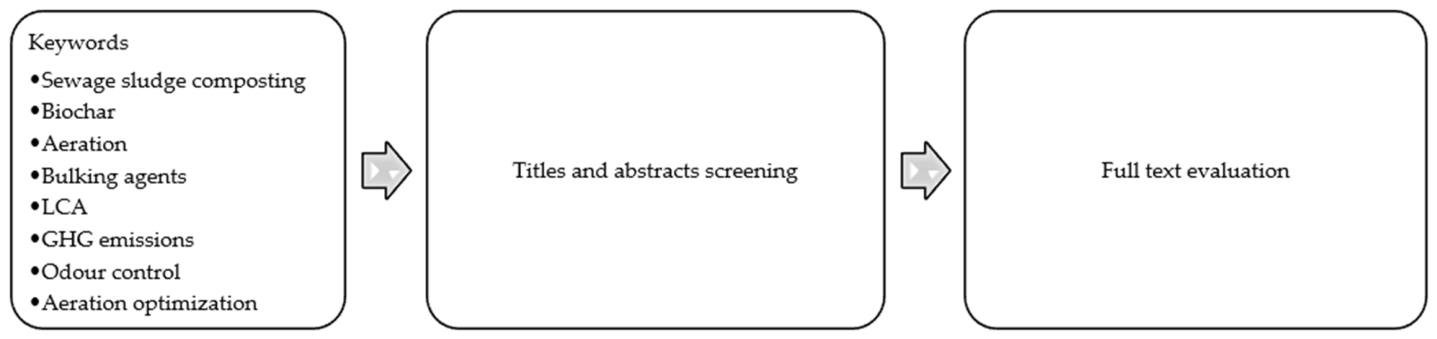
This review was performed in accordance with the SALSA methodological framework including search, appraisal, synthesis and analysis. It facilitates a comprehensive, transparent, and reproducible approach to the identification and evaluation of relevant research. The systematic review process is illustrated in
Figure 1.
A structured literature search was conducted to identify relevant studies on SS composting and its optimization and environmental impacts. The search was performed using Scopus database. To ensure comprehensive coverage of the topic, combinations of keywords were applied, including “sewage sludge composting”, “biochar”, “aeration”, “bulking agents”, “LCA”, “greenhouse gas emissions”, “odour control”, and “aeration optimization”. Boolean operators (AND, OR) were used to refine the search and capture relevant variations of these terms.
The search focused primarily on publications from the last decade (2016–2026), reflecting recent developments in composting technologies and environmental assessment approaches. Only peer-reviewed journal articles and review papers were considered for inclusion.
All identified records were compiled, and duplicates were removed prior to further analysis. The study selection process was conducted in three stages. First, titles and abstracts were screened to exclude studies not directly related to SS composting. Second, full-text articles were assessed for eligibility based on predefined inclusion criteria. Studies were included if they addressed sewage sludge composting processes and provided relevant information on operational parameters, environmental emissions, contaminant behaviour, or technological innovations. Studies lacking sufficient methodological clarity or relevance to the research scope were excluded.
The final set of selected studies was then systematically analysed and grouped into key thematic areas including composting technologies, aeration strategies, bulking materials, emission mitigation, and contaminant transformation. The search process is illustrated in
Figure 2.
The combination of bibliometric analysis and literature synthesis was used as complementary methods. Bibliometric analysis provided a quantitative overview of the research field by identifying publication trends, key topics, and influential authors. Literature synthesis complemented this by offering a qualitative interpretation of the most relevant studies, focusing on their main findings and approaches. Together, these methods linked broad research patterns with detailed content, supporting a more comprehensive understanding of the field and a clearer identification of research gaps.
To ensure consistency and relevance of the reviewed sources, explicit eligibility criteria were defined based on sludge characteristics, composting configuration, study scale, and research objectives. Only studies focusing on municipal SS or biosolids derived from wastewater treatment processes were included. Studies addressing industrial sludge or other organic wastes without a clear SS component were excluded unless they involved co-composting scenarios where SS was a primary substrate. Suitable works included various composting technologies relevant to SS treatment, such as windrow composting, co-composting systems, in-vessel (reactor-based) composting, and vermicomposting. Studies focusing on unrelated waste treatment technologies or non-composting stabilization methods were excluded. Also, experiments conducted at laboratory, pilot, or full scale were included to capture a broad range of operational conditions and technological applications.
Both experimental studies and review articles were considered, if they contributed to the understanding of SS composting operations and their environmental implications. Studies covering multiple aspects (e.g., combining operational performance and emission analysis) were prioritized, as they provide a more integrated perspective on process optimization and sustainability. These criteria ensured that the selected studies were directly relevant to the scope of this review and allowed for a structured comparison across different composting systems and research approaches.
3. Background and Current State of Knowledge
3.1. Sewage Sludge Production
Sewage sludge production represents a critical indicator of wastewater treatment activity and reflects broader trends in population growth, urbanization, and the expansion of sanitation infrastructure. Understanding the scale and distribution of sludge generation is essential for evaluating current management practices and identifying the need for sustainable treatment solutions. However, global estimates of SS production remain fragmented due to differences in reporting standards and data availability across countries. Therefore, a comparative analysis based on available national and regional data provides valuable insight into production patterns, highlighting key contributors and supporting the development of effective strategies.
To provide a comparative global perspective on SS production, key country-level estimates expressed on a dry solid (DS) basis are summarized in
Table 1.
Available data indicate that SS generation is highly unevenly distributed worldwide, with a limited number of countries dominating global production. China represents the largest producer, with annual generation reaching approximately 15–20 million tons of DS, significantly exceeding that of other countries. The United States and India produce comparable quantities, each generating around 4 million tons annually, while Japan contributes a smaller but still substantial share. These differences primarily reflect variations in population size, urbanization levels, and the extent of wastewater treatment infrastructure.
The EPA collects annual biosolids reports from roughly 2350 facilities in the U.S. that are in the 41 states, the District of Columbia and the Tribes and territories where the EPA is the permitting authority for the Biosolids Program. Based on reports submitted in 2024 from facilities meeting these applicability requirements, the EPA estimates that 4 million dry metric tons of SS were generated in the U.S [
3]. China’s annual sludge production was reported in 2023 to exceed 68 million tons of wet sludge, corresponding to approximately 13.6 million tons of dry solids per year [
5]. In Japan, according to Statistics Bureau of Japan, SS production in 2024 were about 1.5 million tons of dry SS [
6]. For SS generation in India, the Central Pollution Control Board (CPCB) under the Ministry of Environment, Forest and Climate Change reports that approximately 4 million tons of dry SS were generated in 2021 [
7].
Table 2 summarizes SS production and disposal in selected European countries between 2019 and 2023, using data collected from Eurostat. The dataset reveals considerable variation among countries, primarily reflecting differences in population size, wastewater treatment infrastructure, and sludge management practices.
In contrast to the fragmented global picture, Europe provides a coherent and harmonized dataset due to standardized reporting frameworks established by Eurostat. Total SS production across European countries is estimated at approximately 7–9 million tons of dry solids per year. Within Europe, production is strongly correlated with population size and economic development, Germany and France consistently reported the highest production levels, also exhibited substantial sludge generation, exceeding 1100 thousand tons annually between 2020 and 2023. Among Central and Eastern European countries, Poland reported significant sludge production, with values fluctuating between 549.70 and 584.75 thousand tons during the analysed period [
4].
In contrast, smaller countries exhibited substantially lower production volumes. For instance, Cyprus, Malta, and Luxembourg reported values generally below 15 thousand tons. Baltic countries showed moderate production levels, with Lithuania producing between 39.63 and 48.38 thousand tons, Latvia between 18.99 and 25.09 thousand tons, and Estonia demonstrating an increasing trend, particularly in 2023 when production reached 37.12 thousand tons [
4].
It should be noted that some values are unavailable for certain countries and years, indicated by missing data entries. Gaps may reflect differences in national reporting practices or delays in statistical updates.
SS production across Europe shows strong dependence on national population size and wastewater treatment capacity. While larger Western European countries dominate total sludge generation, smaller states contribute comparatively minor amounts. However, noticeable temporal fluctuations in several countries suggest ongoing changes in wastewater treatment technologies, sludge management strategies, and environmental policies.
While these variations in SS production highlight the influence of demographic and infrastructural factors at the national level, they also underscore the growing need for efficient and sustainable sludge management practices. Increasing volumes of SS, particularly in highly populated regions, place additional pressure on existing treatment and disposal systems, thereby emphasizing the importance of optimizing downstream processing pathways. In this context, sludge composting has emerged as a promising strategy for resource recovery and volume reduction, necessitating a comprehensive evaluation of the factors that govern its efficiency and environmental performance.
3.2. Keyword Analysis
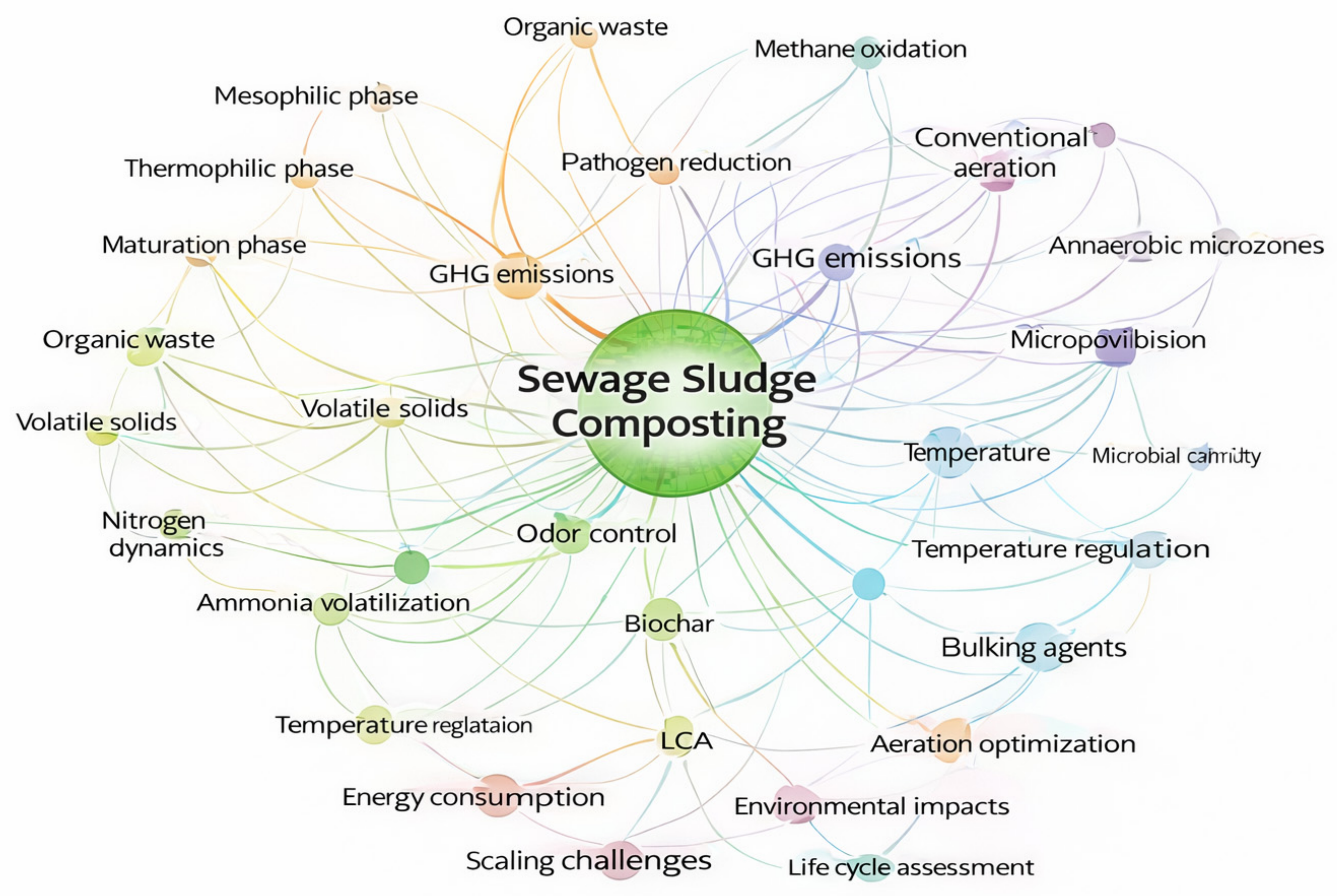
A total of 1236 articles from 2016 were found by using Scopus publications database and the keyword “sewage sludge composting” in the search documents in the fields of environmental science, engineering and agricultural and biological sciences.
The most important terms closely linked with the central focus keyword where terms like “biochar” (127 articles), “aeration” (78 articles), “bulking agents” (76 articles), “LCA” (26 articles), “GHG emissions” (25 articles), “odour control” (19 articles) and “aeration optimization” (6 articles).
The co-occurrence analysis of publications on SS composting demonstrates that aeration is a well-established and central theme in the research field, as evidenced by its high frequency (78 articles) and strong linkage with the core topic. This indicates that aeration is widely recognized as a critical operational factor influencing composting performance, alongside other key aspects such as biochar use and bulking agents. However, the markedly low number of publications addressing “aeration optimization” (only 6 articles) reveals a significant research gap. Despite the acknowledged importance of aeration, its optimization remains insufficiently explored, suggesting a need for more focused studies to improve process efficiency, environmental performance, and operational control in SS composting systems.
Figure 3 presents a network visualization derived from keyword co-occurrence analysis. Nodes represent keywords (with size indicating frequency), while edges show how often they co-occur. The network reveals strongly connected clusters, indicating dominant topics and their relationships, with the most connected keywords representing the central and most frequently studied aspects of the field.
3.3. Analysis of Research by Countries and Authors
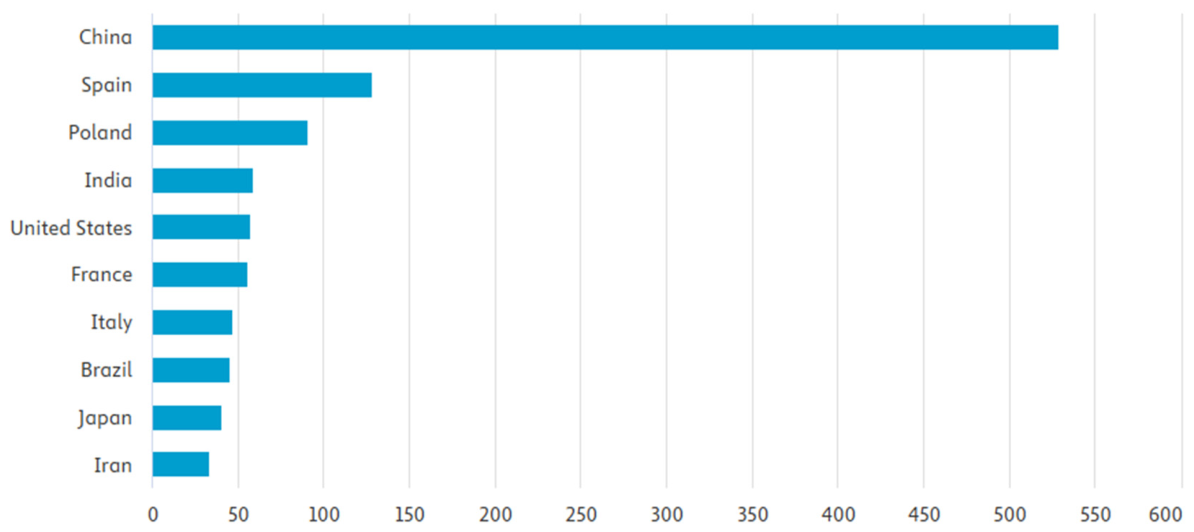
An analysis of publication data for keyword “sewage sludge composting” in the Scopus database by country illustrated that China had the highest number of publications on this topic (528), followed by the Spain (128), Poland (90), India (58), United States (57), France (55), Italy (46), Brazil (45), Japan (40) and Iran (33). Fewer than 31 publications on this topic were published in other countries (
Figure 4).
The distribution of scientific publications on SS composting reflects not only research activity but also the practical significance of this management strategy in countries facing substantial sludge generation. Notably, China—accounting for the highest number of publications (528)—is also the world’s largest producer of SS, generating approximately 15–20 million tons of dry solids annually. This high research intensity is linked to the urgent need for sustainable treatment and disposal solutions at such scale. Similarly, countries such as the United States and India, each producing around 4 million tons of dry sludge per year, demonstrate considerable research output, highlighting the importance of composting as a viable approach for managing large sludge volumes while enabling resource recovery.
Within Europe, Spain and Poland—both among the leading contributors to SS production according to Eurostat data—also rank highly in publication output. This suggests that research efforts are aligned with national demands for effective sludge management, particularly in regions where increasing production and stringent environmental regulations necessitate sustainable treatment alternatives. France and Italy follow a similar pattern, combining relatively high sludge generation with active research on composting technologies.
In contrast, countries with lower sludge production or different management priorities tend to exhibit more limited research activity. However, the presence of emerging contributors such as Brazil and Iran indicates growing global interest in composting as a cost-effective and environmentally sound solution, especially in regions experiencing rapid urbanization and expansion of wastewater treatment infrastructure.
Overall, the geographical distribution of publications demonstrates a clear relationship between the scale of SS generation and the intensity of research on composting. This pattern underscores the role of SS composting as a critical strategy for addressing increasing sludge volumes, improving resource recovery and meeting environmental protection goals across diverse regional contexts.
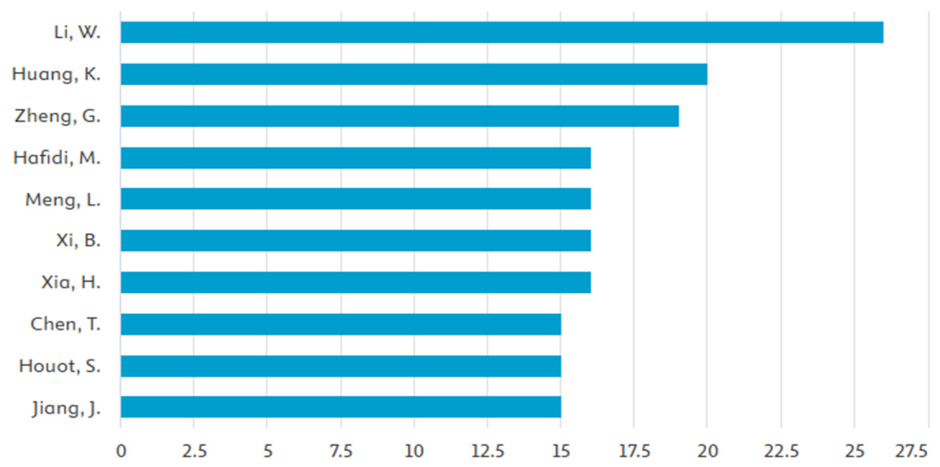
The analysis of leading authors in the field of SS composting further supports the observed geographical distribution of research activity. Over the past decade, a significant increase in publications has been identified, with authors such as Li, W. (26 publications), Huang, K. (20), and Zheng, G. (19) contributing most extensively to the field. Notably, most of these highly productive authors are affiliated with institutions in China, which is consistent with the country’s dominant position in publication output and its status as the largest global producer of SS.
Other authors such as Hafidi, M. (16), Meng, L. (16), Xi, B. (16), Xia, H. (16), Chen, T. (15), Houot, S. (15), and Jiang, J. (15) had also significant impact to research activity in SS composting (
Figure 5).
3.4. Ethical Consideration
During the preparation of this manuscript, the generative artificial intelligence tool ChatGPT (GPT-5.5 Thinking, OpenAI, San Francisco, CA, USA) was used to visualize
Figure 3 based on the authors’ data collected from the Scopus database. No other content, including data analysis, interpretation, or scientific conclusions, was generated by the AI tool. The authors take full responsibility for the integrity and accuracy of the work.
4. Sewage Sludge Composting Mechanisms
Composting is widely recognized as a sustainable sludge treatment option, as it enables organic matter stabilization, pathogen reduction, and nutrient recycling within the framework of circular economy principles. However, despite its advantages, SS composting is often associated with significant environmental burdens, including GHG emissions, ammonia volatilization, odour nuisance, and high energy demand for aeration [
1].
Composting is a controlled aerobic biological process in which microorganisms decompose organic matter, converting unstable organic compounds into a stabilized humus-like product. Through this treatment, pathogens are significantly reduced, odours are minimized, and the volume and moisture content of the material are decreased. The final compost product can potentially be used as a soil amendment, improving soil structure, water retention capacity, and nutrient availability. Additionally, composting supports nutrient recycling, particularly for nitrogen, phosphorus, and organic carbon, which are essential for sustainable agricultural systems [
8].
Despite its advantages, SS composting presents several technical and environmental challenges that must be carefully managed to ensure system efficiency and environmental safety. The high moisture content, low porosity, and imbalanced C:N ratio typical of SS often require the addition of bulking agents to create suitable conditions for microbial activity and aeration [
9]. Moreover, the composting process must be optimized to control parameters including temperature, oxygen supply, moisture level, pH, and particle size distribution [
8]. Improper management of these factors can lead to incomplete stabilization, excessive GHG emissions (such as methane and nitrous oxide), ammonia volatilization, or the persistence of pathogens and organic pollutants [
1].
Recent research has therefore focused on developing strategies to optimize SS composting while minimizing its environmental footprint. These strategies include the use of innovative bulking materials, biochar amendments, microbial inoculants, advanced aeration systems, and improved system monitoring techniques. In addition, growing attention is being paid to the fate of contaminants during composting, including heavy metals, antibiotics, microplastics, and other emerging pollutants that may influence the environmental safety of the final compost product.
Given the increasing pressure to implement sustainable waste management practices, optimizing SS composting is essential for improving both process performance and environmental outcomes [
1]. A comprehensive understanding of the key operational parameters, technological innovations, and environmental implications is necessary to guide the development of efficient composting systems. Therefore, this review aims to summarize current knowledge on SS composting, with particular emphasis on strategies for system optimization and approaches for reducing environmental impacts.
4.1. Compost Components, Additives and Their Effect on Compost Quality
Sewage sludge compost consists of several main components including the primary raw material, carbon source, moisture and oxygen, all of which interact to influence the composting process and the quality of the final product.
Raw material—stabilized and digested SS is the main component of compost. It contains a lot of organic matter, nitrogen, in some cases phosphorus, typically neutral to slightly alkaline (6.5–8.5) pH, and it also has a relatively high moisture content and a low C:N ratio (~5:1, 10:1), which is why carbon-rich bulking agents are required for composting [
9]. The quality of the compost directly depends on the quality of the SS. Depending on the origin of the wastewater (domestic or industrial wastewater), the SS treatment technologies used (anaerobic digestion or drying), and the number of microorganisms in the sludge, the quality of the compost will vary [
10].
Carbon (C) source—essential in SS composting to improve structure, reduce moisture, increase the C:N ratio, and create favourable microbial conditions, since SS alone typically has high moisture, low porosity, and an imbalanced C:N ratio [
1]. The literature identifies three main categories: (i) lignocellulosic materials (e.g., green waste, pruning residues, straw, woodchips, sawdust), which are the most widely used and improve aeration, porosity, and structural stability [
11]; (ii) easily biodegradable organic additives (e.g., food waste, animal manure), which enhance microbial activity and heat generation but may increase moisture, odour, and compaction risks [
12]; and (iii) functional additives (e.g., biochar, mature compost, peat), which improve nutrient retention, contaminant immobilization, and microbial inoculation when used in small amounts [
13]. No single bulking agent is universally optimal; instead, effectiveness depends on process needs. Overall, optimal composting performance is achieved by combining complementary materials rather than relying on a single bulking agent.
Moisture and air components—these are the physio-chemical components of SS compost, on which the composition of the compost directly depends. They determine the entire composting treatment and the quality of the final product. Without moisture and air, microorganisms cannot effectively decompose organic matter, which slows down the composting process itself. Moisture during composting provides a suitable medium for the activity of microorganisms, allows biochemical reactions to occur and regulates the temperature of the compost, while aeration maintains aerobic conditions by supplying microorganisms with oxygen, allows for proper heat distribution and supports moisture evaporation.
4.2. Properties of Composted Sewage Sludge
Composted SS is a product of the aerobic decomposition process of organic matter, produced by mixing carbon-containing materials and maintaining appropriate conditions. It is an already processed and stable product, suitable for use as an organic fertilizer or soil improvement material [
9].
Composted SS has a fine and porous structure characteristic of humus, which is significantly different from the viscous mass of primary sludge. The properties of composted SS are directly related to its physical, chemical and biological characteristics.
Physio-chemical properties are the main and most important compost indicators, according to which the quality and maturity of the compost are assessed. The physical properties of good quality compost are moisture, the optimal amount of which is 40–60%, loose, crumbly, earth-like structure, uniform particle size, 0.4–0.8 t/m
3 compost density, dark brown or black colour and earth/soil smell. Meanwhile, suitable chemical properties are a pH level of 6.5–8.5, 20–60% dry organic mass matter, a fluctuating nitrogen, phosphorus and potassium content of about 1% in the compost, a suitable C:N ratio of about 20:1, 0.5–4 mS/cm electrical conductivity, and a low concentration of heavy metals [
14].
Biological properties describe the microbiological processes, the composition of living organisms and the biological activity that determine the maturity, stability and impact of compost on the soil. Microorganisms are responsible for the proper decomposition of organic matter, determine the maturation of compost and support the formation of humus. High microbiological activity is characteristic of the active phase, and in mature compost the activity stabilizes [
15].
Microorganisms—including bacteria and fungi—are responsible for the decomposition of organic substrates. Bacteria typically dominate the early stages of composting, reaching populations of up to 10
8–10
10 CFU·g
−1 dry matter, while fungi and actinomycetes become more prominent in later stages due to their ability to degrade more complex organic compounds such as lignin and cellulose [
16]. Their metabolic activity leads to the production of enzymes (e.g., cellulases, proteases, lipases), which catalyse the breakdown of organic matter and promote humus formation. High microbial respiration rates (measured as CO
2 evolution, often 2–10 mg CO
2-C·g
−1 OM·day
−1 in active compost) indicate intense biological activity, whereas lower rates (<1 mg CO
2-C·g
−1 OM·day
−1) are typical of mature compost [
17].
The microbiological composting process usually includes mesophilic, thermophilic and maturation activity phases [
8].
The mesophilic phase is the initial stage of microbiological activity, when at low temperatures (20–40 °C) microorganisms intensively decompose easily decomposable compounds [
1]. During this phase, readily biodegradable compounds such as simple sugars, amino acids, and organic acids are rapidly decomposed by mesophilic microorganisms. Oxygen consumption is high, often exceeding 5–10 mg O
2·g
−1 OM·h
−1, reflecting intensive aerobic metabolism [
18]. This phase is crucial because it initiates the composting process and generates heat as a byproduct of microbial respiration. Aerobic activity of microorganisms promotes the increase in temperature, and the process passes into the thermophilic phase [
19].
As microbial metabolism intensifies, the system transitions into the thermophilic phase, during which temperatures rise to 45–70 °C. This phase is dominated by thermophilic bacteria such as
Bacillus spp. and thermotolerant actinomycetes and more complex compounds such as cellulose, proteins and fats begin to decompose [
18]. The most important function of this phase is the destruction of pathogens and parasites. After the thermophilic phase, the compost cools down, the temperature drops to the initial one, and the already mature mesophilic microorganisms decompose the remaining organic residues and gradually stabilize the organic matter [
1].
A key function of the thermophilic phase is hygienization. Temperatures above 55 °C maintained for at least 3 consecutive days are generally sufficient to inactivate most pathogenic bacteria (e.g.,
Salmonella spp.,
Escherichia coli) and parasites [
20]. This is particularly important in SS composting due to the potential presence of human pathogens. The duration of the thermophilic phase can vary from several days to a few weeks depending on substrate composition, moisture (optimal 50–60%), and aeration [
21].
In the maturation phase, the composting process focuses on humification, i.e., stabilization of the compost structure and moisture [
22]. The maturation phase is the longest stage of composting, often lasting from several weeks to several months (e.g., 30–120 days depending on conditions). Biological activity decreases significantly, as indicated by reduced oxygen uptake rates (<1 mg O
2·g
−1 OM·h
−1), reflecting increased stability of organic matter [
19]. The process of humification becomes dominant, leading to the accumulation of humic and fulvic acids, improved cation exchange capacity, and enhanced soil-conditioning properties [
23].
4.3. Technologies and Methods for Producing Composted Sewage Sludge
The aerobic process of SS compost is governed by complex interactions between microbial communities, substrate characteristics, oxygen availability, moisture content, and temperature. Among these factors, aeration plays a central role in controlling both process efficiency and environmental performance [
9].
Traditional aerobic composting in piles is widely discussed in scientific literature, but there are other, equally common composting methods, such as co-composting, in-vessel or closed-system reactor composting and vermicomposting, etc. [
24]. These methods differ in terms of technological complexity, process control, environmental impact, and suitability for different scales of application.
Traditional composting in piles is a conventional and long-standing technology. Dried or partially dried sludge is poured into narrow piles (windrows) that are regularly stirred or aerated [
1]. Forced aeration and drying processes enable the recovery of bulk agents, allowing them to be reused. After appropriate screening, the final products are stored and depending on their quality, are either disposed of or distributed for market use. It is a relatively simple technology that requires less investment than complex reactor-type systems and is suitable for larger quantities, but when composting SS in this way, it is difficult to control gas emissions, odours, uneven aeration and difficult temperature maintenance complicate the control of the technology [
23].
During co-composting, SS is composted with other wastes such as municipal biomass waste (green waste), sawdust or wood waste, thereby improving aeration, C:N ratio and structure [
25]. During the co-composting process, parameters such as pH may increase while nutrient and contaminant levels (e.g., N, P, K, heavy metals) decrease, resulting in stabilized compost with reduced pathogens and improved nutrient availability for agricultural use [
26].
Another widespread method, due to its ease of use and the ability to control composting conditions, is composting in a closed system reactor. Although system control creates excellent opportunities to monitor compost quality, indicators and reduces composting time, high investments and smaller composting volumes complicate the implementation of the technology [
27].
In addition to other technologies, reserve technologies such as vermicomposting can also be used during SS composting. This is a technology where earthworms are added to the compost during composting, which breaks down organic matter and converts it into useful nutrients. This technology has many advantages: earthworms secrete specific enzymes that work as biological stimulators for soil and possess biodegradation capacity; also, it results in the detoxification of SS, but it is difficult to use on a large scale [
28].
Each method has its advantages and disadvantages: traditional composting may be simpler, but deficiencies in structure and C:N ratio can slow down the process; co-composting can help ensure better structure and microbial activity, but it is necessary to choose the substrates and additives carefully. Therefore, in each case, it is necessary to assess the extent to which composting will be carried out and what results are expected.
Different SS composting technologies vary in efficiency, applicability, and level of process control; therefore, their selection should be based on specific conditions and intended objectives. Traditional windrow systems are economically attractive and suitable for treating large volumes, but they offer limited control over key parameters such as emissions, odours, and temperature [
23]. In contrast, co-composting provides a more flexible approach, enabling optimization of substrate properties (e.g., C:N ratio and structure), and is often more effective in achieving higher compost quality [
26]. Closed-system reactor technologies ensure the highest level of system control, shorter processing times, and reduced environmental impact; however, they require significant investment and are typically applied on a smaller scale or where strict environmental regulations apply [
27]. Meanwhile, vermicomposting is a promising method due to the high quality and biological stability of the final product, although its application is generally limited to smaller-scale systems [
28]. Thus, the choice of technology depends on available resources, treatment scale, environmental requirements, and the desired quality of the final product.
To provide a more structured overview, selected studies were systematically classified according to composting technology, bulking agents or additives, aeration strategy, monitored variables, and study scale (
Table 3). These studies were chosen because they represent widely cited and methodologically diverse approaches in SS composting, allowing key trends and optimization strategies to be identified.
The structured comparison indicates that conventional windrow and co-composting systems dominate full-scale applications due to their operational simplicity and economic feasibility, whereas in-vessel and advanced aeration systems are more commonly investigated at laboratory and pilot scales due to their higher level of process control. Bulking agents such as straw, wood chips, and green waste are consistently used to improve porosity and adjust the C:N ratio, while functional additives such as biochar are increasingly applied to enhance nutrient retention and contaminant immobilization. Aeration strategies vary widely across studies, ranging from passive and turning-based approaches to controlled forced aeration and emerging technologies such as nanobubble aeration. Most studies focus on monitoring temperature, moisture, gaseous emissions, and nutrient dynamics, while fewer investigations address contaminant transformation processes in detail. Overall, this comparison highlights a clear research gap in the integration of advanced aeration control with large-scale composting systems and in the systematic assessment of emerging contaminants.
This cross-study comparison highlights clear quantitative patterns in process performance. For example, studies conducted under controlled forced aeration (e.g., 0.2–1.0 L·kg
−1 DM·min
−1) consistently report lower methane emissions compared to passive aeration systems, where oxygen limitations promote anaerobic microzones [
29,
30]. However, increased aeration intensity is often associated with higher ammonia volatilization losses, with studies reporting nitrogen losses of up to 20–40% under high aeration regimes [
31]. In contrast, systems incorporating bulking agents show improved porosity and more stable temperature profiles, enabling thermophilic conditions (55–65 °C) to be maintained for longer durations, which enhances pathogen reduction and organic matter stabilization [
13,
21]. Findings indicate that process performance is not determined by a single parameter, but by the interaction between aeration, substrate structure, and moisture content.
4.4. Oxygen Transfer and Aeration Challenges in Sewage Sludge Composting
Oxygen transfer and aeration are critical factors controlling the efficiency of SS composting, as the process is predominantly aerobic and relies on sufficient oxygen availability for microbial metabolism. Oxygen is required for the biological oxidation of organic matter, during which microorganisms convert organic carbon into carbon dioxide (CO
2), water, and heat [
29]. Inadequate oxygen supply leads to anaerobic conditions, resulting in process inefficiencies, odour generation, and the formation of undesirable by-products such as methane (CH
4), hydrogen sulphide (H
2S), and ammonia (NH
3) [
30].
Sewage sludge presents specific challenges for aeration due to its high moisture content, fine particle size, and tendency to compact, all of which reduce porosity and gas diffusion [
8]. Even when bulking agents are added to improve structure, oxygen distribution within the composting matrix often remains heterogeneous. As a result, localized anaerobic zones may form, particularly in large-scale systems or under insufficient aeration rates [
1].
The oxygen demand during composting is directly related to microbial activity and the degradability of organic substrates. Without proper aeration, microbial activity will be limited since most of microorganisms participating in decomposition are aerobic [
32] In the active composting phase, aeration rates typically range of 0.2 L·kg
−1 dry mass·min
−1 organic matter, depending on substrate composition and temperature [
29,
30]. The highest oxygen demand occurs during the thermophilic phase, when microbial activity and temperature are at their peak. If oxygen concentrations fall below 5–10% within the compost matrix, aerobic degradation becomes limited, and anaerobic zones may develop [
33].
To maintain aerobic conditions, several aeration strategies are employed:
Passive aeration: relies on natural airflow but is often insufficient for SS due to compaction [
34].
Mechanical turning: periodically mixes the compost, improving oxygen distribution and preventing compaction. Turning frequencies may range from every 2–7 days during active phases [
29].
Forced aeration systems: use blowers to supply air continuously or intermittently, with airflow rates typically between 0.2–1.0 L·kg
−1 dry mass·min
−1 OM [
35].
Forced aeration is particularly effective in SS composting, as it allows better control of oxygen levels, temperature, and moisture, but it increases operational costs and energy consumption.
Conventional aeration strategies typically involve forced air injection using blowers and perforated pipes [
35]. While effective in supplying bulk oxygen, these systems often exhibit low oxygen transfer efficiency due to bubble coalescence, channelling effects, and short gas residence times. Excessive aeration is sometimes applied to compensate for poor oxygen distribution, leading to increased energy consumption, excessive moisture loss, and enhanced ammonia volatilization [
36].
Recent investigations further demonstrate that advanced aeration control strategies can significantly improve both process efficiency and environmental performance. For example, Falcioni et al. [
37] reported that optimized oxygen management can enhance microbial activity while reducing aeration energy demand by approximately 32%. This finding highlights that aeration optimization should not only focus on oxygen supply but also on energy efficiency, reinforcing the importance of controlled and adaptive aeration strategies.
Sewage sludge has specific aeration challenges due to its physical and biochemical characteristics. Its fine texture results in low structural stability, leading to compaction that reduces pore space and restricts airflow [
12]; therefore, bulking agents are typically added to improve porosity and structure [
13]. In addition, the high moisture content of sludge, often exceeding optimal levels, fills pore spaces and limits oxygen diffusion, with effective composting generally requiring moisture levels of 50–60%, while values above 65% significantly decrease aeration efficiency [
21]. Even when aeration systems are applied, oxygen distribution within compost piles can remain heterogeneous, causing the formation of localized anaerobic zones [
38]. Another critical challenge is balancing aeration with heat retention: excessive aeration may cool the compost mass, slow microbial activity and delay the thermophilic phase, whereas insufficient aeration leads to oxygen depletion and odour generation. Furthermore, aeration strongly influences gaseous emissions, as high aeration rates can increase ammonia volatilization, while low aeration promotes methane formation; thus, optimizing aeration is essential to ensure efficient decomposition while minimizing environmental impacts [
39].
A synthesis of the available evidence suggests that optimal aeration conditions are highly context-dependent but generally fall within a moderate operational range that balances oxygen supply and emission control [
40]. While low aeration rates (<0.2 L·kg
−1 DM·min
−1) are associated with methane formation due to oxygen limitation [
30], excessively high aeration rates (>1.0 L·kg
−1 DM·min
−1) increase energy demand and promote nitrogen losses through ammonia volatilization [
31]. All this indicates that optimized aeration strategies, including controlled or intermittent aeration, can significantly reduce greenhouse gas emissions while maintaining process efficiency [
13], highlighting the importance of dynamic aeration control rather than constant airflow.
5. Strategies for Sewage Sludge Composting Process Optimization
The optimization of SS composting focuses on controlling key physicochemical and biological parameters that influence microbial activity, organic matter degradation, and the stabilization of the final compost product. Critical operational factors include the C:N ratio, moisture content, aeration rate, temperature, and pH, all of which must be carefully regulated to ensure efficient biodegradation and pathogen inactivation [
41]. An optimal C:N ratio typically ranges between 25:1 and 30:1, which promotes microbial metabolism while minimizing nitrogen losses through ammonia volatilization [
31]. Moisture content is another crucial parameter, generally maintained between 50% and 60% to sustain microbial activity without creating anaerobic conditions that can lead to odour formation and methane emissions [
1,
14]. Adequate aeration is essential for supplying oxygen for aerobic microbial processes and for controlling heat and moisture within the compost pile [
42]. This can be achieved through periodic turning of windrows or through forced aeration systems, which have been shown to improve organic matter degradation and process stability. Studies indicate that moderate aeration rates can enhance compost maturity while preventing excessive nitrogen losses and GHG emissions [
39].
Moreover, the use of bulking agents is widely applied to operational control to improve the structural properties of sludge mixtures, enhance porosity, and adjust the C:N ratio [
1]. These amendments facilitate oxygen diffusion and water regulation, thereby accelerating microbial degradation and reducing the risk of anaerobic zones. Pretreatment methods—including thermal, mechanical, ultrasonic, or chemical treatments—have also been investigated to improve sludge biodegradability and reduce pathogen loads prior to composting [
43]. Such approaches can enhance the breakdown of complex organic compounds, increase nutrient availability, and improve the overall efficiency of the composting process.
Recent studies emphasize the importance of advanced process control strategies, including optimized aeration regimes to improve moisture removal, temperature regulation during composting and GHG emission control [
31]. Modelling approaches have demonstrated that appropriate aeration timing and rates significantly influence water removal, oxygen distribution, and organic matter degradation, ultimately leading to a more stable and mature compost product [
39].
In recent years, attention has increasingly turned toward innovative aeration technologies that could significantly improve composting efficiency and environmental performance [
44]. Conventional aeration systems typically rely on forced air supply or periodic mechanical turning to maintain oxygen availability within compost piles. However, these approaches may lead to uneven oxygen distribution, localized anaerobic zones, and increased energy consumption. In this context, nanobubble aeration has emerged as a promising new technology with potential applications in organic waste treatment processes, including SS composting [
36].
Nanobubbles are extremely small gas bubbles, typically less than 200 nm in diameter, characterized by high stability, large surface area, and unique physicochemical properties [
45]. Due to their slow rising velocity and high internal pressure, nanobubbles can remain suspended in liquid phases for extended periods, enhancing gas dissolution and oxygen transfer efficiency [
42]. In biological treatment systems, nanobubble technology has been shown to improve oxygen availability for microbial communities, stimulate microbial activity, and enhance the degradation of organic compounds. Applying nanobubble aeration in SS composting could potentially improve oxygen distribution within the composting matrix, accelerate organic matter decomposition, and reduce the formation of anaerobic microzones responsible for methane and odour emissions [
36].
Despite the growing interest in nanobubble aeration across environmental engineering applications, its integration into SS composting remains at an early stage of technological and scientific development [
46]. Most existing research on nanobubble technology has focused on wastewater treatment, aquaculture, crop yield enhancement and environmental remediation, while studies examining its performance in solid–liquid heterogeneous systems such as composting are still limited [
42]. Important questions remain regarding the optimal aeration configurations, energy requirements, bubble generation technologies, and the interactions between nanobubbles and compost microbial communities.
Recent research has also expanded composting optimization strategies to address contaminants of emerging concern, including pharmaceuticals, microplastics, and heavy metals [
47].
Studies have shown that thermophilic composting conditions (≥55 °C) can significantly enhance the degradation of various pharmaceutical compounds such as antibiotics, hormones, and anti-inflammatory drugs, primarily through increased microbial activity and enzymatic breakdown. For example, improved removal of pharmaceuticals such as sulfamethoxazole and diclofenac has been reported under optimized aeration and with the addition of lignocellulosic bulking agents, which promote co-metabolic degradation and sorption processes [
48].
Microplastics, which are increasingly detected in SS, present a different challenge as they are not readily biodegradable. However, composting process optimization—particularly through improved aeration, longer residence times, and the use of amendments such as biochar—has been shown to influence their distribution, fragmentation, and interaction with organic matter. Studies indicate that composting can alter the physicochemical properties of microplastics and potentially reduce their bioavailability in the final compost product [
49].
Heavy metals, although not degradable, can be stabilized during composting through processes such as complexation, adsorption, and humification. The addition of amendments like biochar, clay minerals, or phosphates has been widely reported to reduce the bioavailability of metals such as cadmium, lead, and zinc. Optimized composting conditions—particularly pH regulation and organic matter transformation—enhance metal immobilization and reduce environmental risks associated with land application [
50].
Overall, integrating optimized operational parameters, suitable bulking materials, and advanced pretreatment or control technologies can significantly enhance the efficiency, stability, and environmental performance of SS composting systems.
6. Conclusions
Sewage sludge composting represents a sustainable and widely applicable strategy for stabilizing wastewater treatment by-products while enabling the recovery of valuable nutrients and organic matter. This review highlights that the efficiency and environmental performance of the composting process strongly depend on the optimization of key operational parameters, including aeration, moisture content, temperature, C:N ratio, and the selection of appropriate bulking agents or amendments. Proper management of factors supports microbial activity, enhances organic matter degradation, and improves the quality and stability of the final compost product. At the same time, environmental challenges such as GHG, ammonia volatilization, odour generation, and the persistence of contaminants remain important issues that require further attention. Emerging technological approaches, including advanced aeration strategies and the potential application of nanobubble aeration, offer promising opportunities to improve oxygen transfer, reduce anaerobic zones, and enhance overall composting performance.
Beyond technological optimization, future progress in SS composting will depend on integrating interdisciplinary innovations and emerging scientific perspectives. In parallel, the growing focus on contaminants of emerging concern, including microplastics and pharmaceuticals, highlights the need for deeper investigation into transformation mechanisms and long-term environmental impacts. The combination of biological approaches (e.g., microbial inoculants, vermicomposting) with physicochemical solutions (e.g., biochar amendment, pretreatment technologies) opens new pathways for hybrid systems that enhance both efficiency and safety. These directions demonstrate that SS composting is evolving from a conventional waste treatment method into a technologically advanced and research-driven field, where innovation can significantly contribute to circular economy goals and sustainable resource management.
However, further experimental and pilot-scale studies are necessary to evaluate the feasibility, efficiency, and economic viability of these technologies in SS composting systems. Overall, continued research and technological innovation are essential to advance SS composting as an environmentally safe and resource-efficient component of sustainable waste management and circular economy practices.