1. Introduction
Thailand is a country that attracts a significant number of tourists annually. Tourism serves as an important source of revenue and a key driver of the nation’s economic development [
1]. The year 2020 marked a critical period of the COVID-19 crisis, which prevented tourists from traveling, resulting in a significant decline in the number of visitors to Thailand, Northern Thailand, and Chiang Mai province. Beginning in 2023, the post-COVID situation brought tourists back, with numbers showing a continuous upward trend. In 2024, the number of tourists visiting Northern Thailand reached 41.7 million, with total tourism revenue for the Northern region amounting to USD 7030 million. Total revenue for Chiang Mai province stood at USD 3338 million, comprising USD 1973 million from domestic tourists and USD 1365 million from international tourists. Overall, both the number of tourists and total revenue show an increasing trend continuing into 2025, the number of tourists that visited Northern Thailand was around 43.5 million person and the total income from the tourism in this region was USD 7360 million. Furthermore, the total income from tourist travel to Chiang Mai province in 2025 was USD 3484 million, of which USD 2164 million was from local tourists and USD 1320 million was from foreign tourists [
2]. However, at the same time, the tourism sector is undergoing pressure due to climate change and a shift in consumer behavior away from high volume, mass tourism to a more meaningful experience.
To respond to these changes, the focus also shifts more to creative tourism. Creative tourism does not treat visitors as passive consumers, but emphasizes participation, cultural learning, and co-creation. It allows travelers to engage with local skills, stories, and everyday practices in ways that strengthen community identity and generate local value [
3]. This approach aligns with Thailand’s Creative Economy Policy and the Bio-Circular-Green (BCG) Economy Model, both of which promote innovation-driven, low- carbon, and sustainable growth [
4]. Thailand’s creative economy approach has also been integrated into the 11th National Economic and Social Development Plan (2012–2016) and the 12th Plan (2017–2021), both plans emphasize on adding value to cultural capital. In addition, the 13th National Economic and Social Development Plan (2023–2027), recent plan in Thailand, focuses on transforming Thailand toward an innovation and sustainability economy driven country that uses the BCG Economy Model and the Sustainable Development Goals (SDGs) as core guiding frameworks. The plan highlights the importance of human resource development, reducing inequality, and enhancing the country’s long-term competitiveness [
5,
6].
Chiang Mai, a creative city in northern Thailand, is one example with this transformation. It is a center of Lanna culture that has a long history and numerous cultural and natural attractions. In 2025, Chiang Mai welcomed more than 11.9 million tourists (Thai and International combined) and tourism revenue was reported to be about USD 3484 million [
2]. Chang Moi Subdistrict is an area under the administration of the Chiang Mai City Municipality. It is considered an area with strong economic potential in Chiang Mai Province. The subdistrict is rich in cultural and architectural heritage, everyday urban life, local markets, and creative micro-enterprises; consequently, it has been identified by the Creative Economy Agency (CEA) as a potential national creative hub. This makes Chang Moi well suited to creative tourism, where visitors can do more than observe culture, by participating, learning, and co-creating experiences with local communities, helping to reinforce place identity and to distribute benefits more locally.
Thailand’s policy mandates consideration of the environmental impacts of tourism. Life cycle assessment (LCA) constitutes a widely utilized methodology for the evaluation of environmental impacts associated with both the products and services encompassing the tourism sector [
7]. LCA is essential for understanding the environmental impacts associated with various tourism activities. In addition, LCA provides a framework for assessing direct and indirect carbon emissions at all stages of tourism activities, highlighting its effectiveness in promoting sustainable practices [
8]. By utilizing LCA, stakeholders can identify specific areas for improvement that enable targeted actions to promote sustainable practices and minimize negative impacts on the environment and local communities. This approach aligns with the growing needs for comprehensive assessments that encompass the environmental, social, and economic dimensions of tourism sustainability [
9]. This holistic perspective is crucial, especially as tourism continues to grow, and its environmental footprint becomes increasingly greater [
10]. Furthermore, the application of LCA can guide policymakers in making informed decisions that support sustainable tourism, leading to a more resilient industry [
11].
Despite its cultural vibrancy, the Chang Moi Subdistrict still lacks a structured creative tourism route that integrates cultural assets with sustainability. Addressing this gap is essential for sustainable tourism management and reducing tourism-related carbon emissions [
12]. Therefore, this study aimed to propose guidelines for designing a creative tourism route with reduced carbon emissions in the Chang Moi Subdistrict, Chiang Mai Province, Thailand. This research applied the integration of creative tourism principles with environmental assessment through LCA to enhance community participation, preserve local identity, and foster a sustainable creative economy at both the local and regional levels.
Creative Tourism: From Local Resources to Sustainable Futures
The idea of creative tourism, first introduced by Greg Richards and Crispin Raymond in 2000, represented a shift away from traditional sightseeing. Rather than simply observing, travelers are invited to become part of the cultural fabric of the places they visit. They engage in hands-on activities, collaborate with local people, and develop their own creative skills in ways that transform tourism into a shared process of co-creation [
3]. This approach builds on the cultural and natural wealth of destinations. Some of these resources are products of nature, while others are the result of human creativity passed down through generations. What makes creative tourism distinctive is its emphasis on intangible cultural heritage, local crafts, customs, and practices which, when combined with the imagination of visitors, can produce entirely new experiences. These experiences are enriched through storytelling and the stimulation of all five senses: seeing, hearing, smelling, touching, and tasting. The result is a deeper level of engagement that allows visitors to feel the essence of a place rather than merely pass through it [
3,
13].
The creative tourism concept is about genuine participation. Travelers and residents exchange ideas and skills, which in turn strengthen cultural ties and create new economic opportunities for communities. This emphasis on shared creation makes the experience more valuable than conventional tourism. Furthermore, current research has highlighted that authenticity is now a major goal for travelers, who want experiences that are meaningful, not staged, and that allow them to connect with local life in a real way [
14]. In this context, cultural routes have emerged as important tools for promoting sustainable regional development [
15,
16] has outlined the essential elements for building successful creative tourism routes. These include weaving cultural themes into experiences, ensuring community involvement, highlighting local identity, making destinations accessible, designing marketing strategies that reach the right audiences, and developing clear management plans. When combined, these elements provide a foundation for sustainable growth that benefits both visitors and hosts. Of course, tourism today cannot be separated from environmental concerns. Climate change has pushed the tourism industry to rethink its practices and to explore models such as “low-carbon tourism,” which aims to cut carbon emissions and make energy use more efficient [
12]. Integrating this perspective into creative tourism design helps to ensure that destinations do not sacrifice ecological balance in the pursuit of economic or cultural goals.
A case in point is the effort to design a low-carbon creative tourism route in Chang Moi, Chiang Mai. Here, creativity is not only about offering engaging workshops or cultural encounters but also about finding ways to preserve local resources and reduce environmental impact. This initiative aims to show how cultural vitality, community well-being, and ecological responsibility can come together in a single model and in doing so, to illustrate the true potential of creative tourism as a pathway to sustainable futures.
Numerous research studies have applied the principles of Life Cycle Assessment (LCA) to evaluate environmental impacts in various tourist destinations. For example, Candia and Perlone [
17] applied LCA principles to assess the environmental impact of tourism in the Cinque Terre National Park in the Liguria region of Italy. Their evaluation was based on data related to travel, accommodation, and tourist activities in the area. The findings of their study revealed the sources of excessive resource consumption related to tourism activities, including accommodation and transportation. Ultimately, the authors proposed solutions to address these issues to promote sustainability in the tourism sector of the area. In addition, Campos et al. [
18] also utilized LCA principles to assess various environmental impacts by examining modes of travel, accommodation, and tourist activities in the Rías Baixas region of Galicia, Spain. The study found that most of the environmental impact stemmed from transportation and goods delivery in the area, followed by accommodation and tourism activities. In addition, those researchers proposed measures to reduce environmental impacts from these three main factors. Another study by Campos et al. [
19] used LCA to evaluate the environmental impacts of three hotels located along the coastal areas of Spain and Portugal. Their findings indicated that one of the three-star hotels had the highest environmental impact in terms of climate change, resource depletion, and photochemical ozone formation (caused by chemical reactions with sunlight). Furthermore, Dullah et al. [
20] conducted a similar study to evaluate the environmental impacts of tourism activities on Kenyir Lake, Malaysia. Their study revealed that the main contributors to environmental impact were excessive energy use and insufficient waste management systems in the area.
Apart from the studies mentioned above, several other research works have applied LCA principles specifically to evaluate carbon emission in tourist destinations. For example, Koiwanit and Filimonau [
21] assessed the carbon footprint of 12 homestay accommodations located along the beachfront in Ranong Province, Thailand, to propose measures for reducing carbon emissions in those tourism areas. Campos et al. [
22] assessed the carbon footprint generated by tourism activities along the pilgrimage route known as the Camino Lebaniego in northern Spain. Their evaluation included data related to travel, accommodation, food and beverage consumption, and waste management along the route. Next is the study by Platts et al. [
23], who assessed the carbon footprints of 16 World Heritage Tourism sites located around the globe. Then, the data were used to create a map titled “Climate Footprint of Heritage Tourism”. Additionally, Wu et al. [
24] evaluated the amount of carbon emissions from tourism in the Qinling Mountain region of China and used the findings to propose strategies for reducing such emissions. Cao et al. [
25] conducted a study on the carbon footprint in Guilin, China, covering the period 2011–2022. Their goal was to track the trend of increasing greenhouse gas emissions and to develop strategies for further reductions.
In summary, all these studies used LCA principles to assess either the environmental impacts or carbon footprints in various types of tourist destinations. The evaluations considered tourist activities, transportation, accommodation, food consumption, and waste management systems in those areas. Notably, these principles are applicable for the current study of the Chang Moi Subdistrict and are consistent with promoting environment-friendly tourism with low carbon emissions.
This study pursues three interconnected objectives. First, it explores the tourism context of Chang Moi Subdistrict by examining its economic, social, and cultural dimensions, together with the attitudes and behaviors of tourists in the area. Second, it develops creative tourism routes based on the integration of local cultural assets and visitor characteristics and evaluates the carbon implications of these routes through an LCA-informed greenhouse gas assessment and tests the proposed routes to assess their practical suitability within the Chang Moi context. Third, it proposes appropriate routes and activities for developing creative tourism in Chang Moi Subdistrict in ways that contribute to a measurable reduction in greenhouse gas emissions.
2. Materials and Methods
This research adopted a mixed-method design consisting of five interconnected stages: (1) a qualitative phase to examine the cultural, economic, social, and environmental context of Chang Moi Subdistrict and identify tourism assets and development constraints; (2) a quantitative tourist survey to examine visitor characteristics, travel behavior, preferences, and environmental attitudes; (3) the development of three representative creative tourism route programs based on the qualitative and quantitative findings; (4) a carbon-footprint assessment and route- testing process to evaluate the environmental implications and practical suitability of the proposed routes; and (5) a synthesis phase to integrate the findings and formulate guidelines and recommendations for low-carbon creative tourism development in Chang Moi Subdistrict.
Methodological triangulation in this study was achieved through the integration of these complementary methods. The qualitative phase provided contextual understanding, the quantitative phase provided empirical evidence on tourist behavior and attitudes, the route-development phase translated these findings into tourism programs, and the carbon-footprint assessment evaluated their greenhouse gas implications. The final synthesis stage then integrated the findings across all phases to produce practical recommendations.
2.1. Qualitative Phase
In-depth interviews were conducted using a semi-structured format with two key informant groups: (1) government officials from tourism-related agencies (10 participants), and (2) tourism business operators, including owners or managing directors with a minimum of 5 years of business operation (10 participants). Participants were selected primarily through purposive sampling because of their direct roles as key stakeholders in tourism policy and practice in Chang Moi Subdistrict. Snowball sampling was also used to identify additional qualified informants. Data collection continued until data saturation was reached.
The in-depth interviews were conducted in conjunction with documentary research. The interview topics covered: (1) current tourism patterns in the Chang Moi community; (2) the economic, cultural, social, and environmental context of the area; (3) creative tourism management; and (4) environmental considerations relevant to tourism route design, including electricity use, fuel consumption, tourist volume, and tourism activities.
The study applied a qualitative research approach by systematically categorizing key issues derived from the collection of the primary background data obtained from relevant documents, academic literature, and in-depth interviews. Subsequently, descriptive analysis was used to identify the main themes and sub-themes for each category. Then, the theoretical frameworks reviewed in the preliminary stage were applied to interpret and analyze the collected data using content analysis, based on interviews with the government officials and local tourism entrepreneurs.
2.2. Quantitative Phase
The qualitative findings were complemented by a quantitative approach designed to examine tourist characteristics, travel behavior, creative tourism preferences, and environmental attitudes in Chang Moi. This phase generated empirical data to validate and enrich insights from the qualitative phase and to inform subsequent route development and carbon-footprint assessment.
The target population consisted of both domestic and international tourists who visited or were interested in visiting Chang Moi. Based on Yamane’s formula [
26] with a 95% confidence level and 5% margin of error, the sample size was 400 respondents, comprising 200 Thai and 200 international tourists. Purposive sampling was adopted to ensure that participants had experience with, or interest in, creative and cultural tourism. In total, 408 valid responses were obtained (Thai
n = 205; international
n = 203).
A structured questionnaire was designed based on the study objectives and relevant literature on creative tourism, sustainable tourism, and environmentally responsible travel behavior. The questionnaire consisted of six sections: respondents’ demographic and socio-economic background, travel behavior, consumption and resource-use behavior, participation in creative tourism activities, attitudes toward greenhouse gas reduction in tourism, and an open-ended section for suggestions and comments. The attitudinal items were measured on a five-point Likert scale ranging from 1 (strongly disagree) to 5 (strongly agree). The questionnaire was reviewed by three experts in tourism management and sustainable development to assess its content validity, and all items achieved Index of Item Objective Congruence (IOC) values above 0.80. It was then pilot tested with 40 respondents, resulting in a Cronbach’s alpha of 0.89, which indicated strong internal consistency.
Data were collected through on-site surveys conducted at key tourism locations and creative spaces in Chang Moi, including Waroros Market, local art studios, cafés, and heritage sites, during the high tourist season. Trained enumerators assisted respondents to ensure clarity and completeness of responses. Participation was voluntary and anonymous, and all respondents provided informed consent before participation.
Quantitative data analysis was carried out using the Statistical Package for the Social Sciences (SPSS v.17). Selected items from the questionnaire were grouped into environmental attitudes and greenhouse gas reduction behaviors variables for subsequent statistical testing. Descriptive statistics, including frequency, percentage, mean, and standard deviation, were used to profile respondents’ demographic backgrounds and tourism- related behaviors. Inferential statistics were applied using one-way ANOVA to compare mean scores between Thai and international tourists on attitude and GHG-related behavior variables. Chi-square tests were additionally conducted to assess the relationship between tourist type and categorical behavioral variables, specifically overnight accommodation patterns and transportation choices in the area. Pearson’s correlation was used to explore the relationship between environmental attitudes and greenhouse gas reduction behaviors. All statistical tests were conducted at the significance level of 0.05 (α = 0.05). The findings from this quantitative phase were then merged with the qualitative and carbon-assessment findings in the later stages of the study.
2.3. Designing Three Creative Tourism Route Programs
The route-development phase integrated qualitative insights from stakeholder interviews with quantitative behavioral data from tourist surveys to design evidence-based tourism routes. The qualitative findings assist in identifying local cultural assets, tourism conditions, and development constraints, while the quantitative findings offer data-driven evidence on tourist behavior, travel patterns, preferences, and environmental attitudes. Through this process, three representative creative tourism route programs were developed. Methodological triangulation was used to connect the local context with the characteristics of visitors, making certain that the recommended routes were not only grounded in local realities but also aligned with how tourists actually behave.
2.4. Quantitative Carbon Footprint Assessment and Route Testing (Familiarization Trip)
The carbon footprint assessment of the three selected programs involved quantifying the carbon emissions attributable to each route using Life cycle assessment (LCA) approach. This method is the standard method to assess the environmental impacts of any products or services, following the principles and framework established by ISO 14044:2006 [
7,
10]. It can be divided into four steps as follows:
2.4.1. Goal and Scope Definition
The objective of this LCA study was to quantify and compare the carbon footprints of three alternative creative tourism route in Chang Moi Subdistrict, Chiang Mai Province, Thailand. The functional unit was defined as kg CO
2 eq. per tourist per program, enabling direct comparison between route alternatives consistent with tourism LCA reporting practices [
18,
19]. Three programs were assessed: Program 1 (one-day trip for international tourists), Program 2 (one-day trip for Thai tourists), and Program 3 (two-day/one-night trip, including overnight stay). The system boundary adopted a business-to-business (B2B) or cradle-to-gate approach [
10,
18], encompassing five life-cycle stages: transportation (fuel consumption and emissions from private vehicle use within the route boundary), food and beverage services (emissions from meal preparation and service), accommodation (energy use, water consumption, and operational emissions from 3-star hotel overnight stays in Program 3 only), creative activities (material inputs, energy use, and waste generation from hands-on experiences including lantern making, embroidery, tote bag painting, beading, and flower arranging), and waste management (collection, transport, and landfill disposal of solid waste generated by tourists). The temporal scope covered the full duration of each program, and the geographic scope was limited to activities within the Chang Moi Subdistrict boundary, excluding emissions from tourist travel to and from Chiang Mai.
2.4.2. Life Cycle Inventory
Life cycle inventory data were collected from three main sources; field surveys, secondary literature, and the Ecoinvent 3.0 database [
18,
19], with on-site measurements and interviews with local service providers quantifying activity-specific resource consumption and waste generation. Transportation emissions were calculated on fuel consumption using data from Ecoinvent 3.0. Food service emissions were calculated using emission factors from the database in Product Category Rules for Tourism Services (PCR), which was established by Thailand Greenhouse Gas Management Organization (TGO) [
27]. Accommodation emissions were calculated based on TGO database for hotel services adapted for the Thai electricity grid [
27]. Creative activity emissions vary by material intensity. Waste management emissions were calculated based on average tourist waste generation rates.
2.4.3. Life Cycle Impact Assessment
Life cycle impact assessment (LCIA) was conducted using SimaPro 9.1.1.1 software with the Ecoinvent 3.0 database (Cutoff system model) and the ReCiPe 2016 (H) Midpoint method, focusing on the Global Warming Potential indicator expressed in kg CO
2 eq over a 100-year time horizon (GWP
100) [
17,
18,
19]. The GWP for each program was calculated as the sum of emissions from all life-cycle stages. The calculation can be as the following equation:
where GWP is the global warming potential impact, Q
i is the quantity of substance i emitted or consumed in each activity (mass or volume unit) and EF
i is the emission factor of any substance i that was emitted or used from each activity in that program, which can be obtained from Ecoinvent or TGO database.
2.4.4. Interpretation
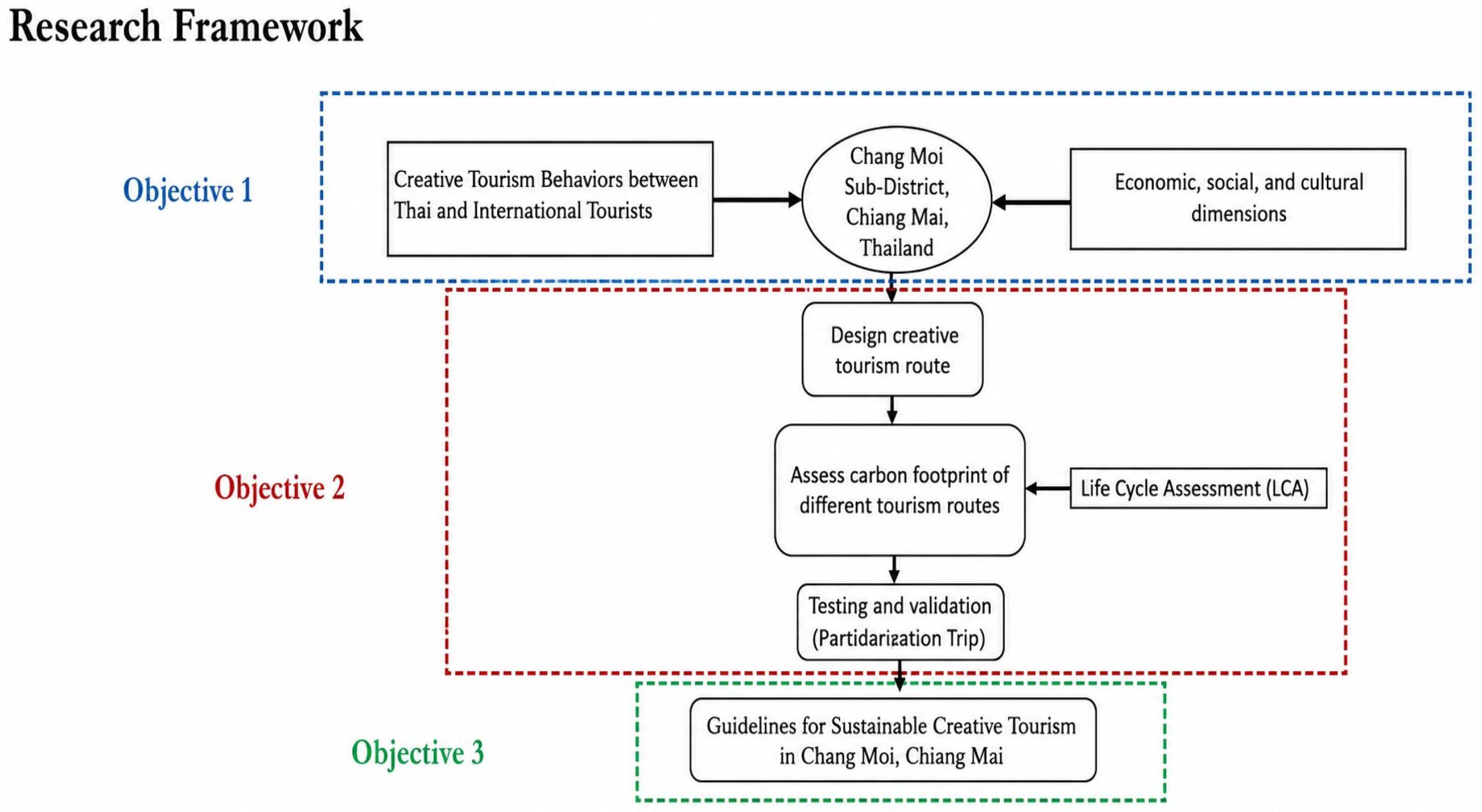
This phase synthesized the LCA results, specified just on GWP, to identify key findings and formulate actionable recommendations for low-carbon creative tourism route design in Chang Moi Subdistrict. Once the creative tourism route that measured carbon emissions was obtained, the data were used to test the route as a sample creative tourism route suitable for tourist behavior in the area. A familiarization trip was conducted to test the tourism route.
The overall methodological process of the study is summarized in the research framework shown in
Figure 1.
3. Results
3.1. Qualitative Results
3.1.1. Current Tourism Situation in Chang Moi
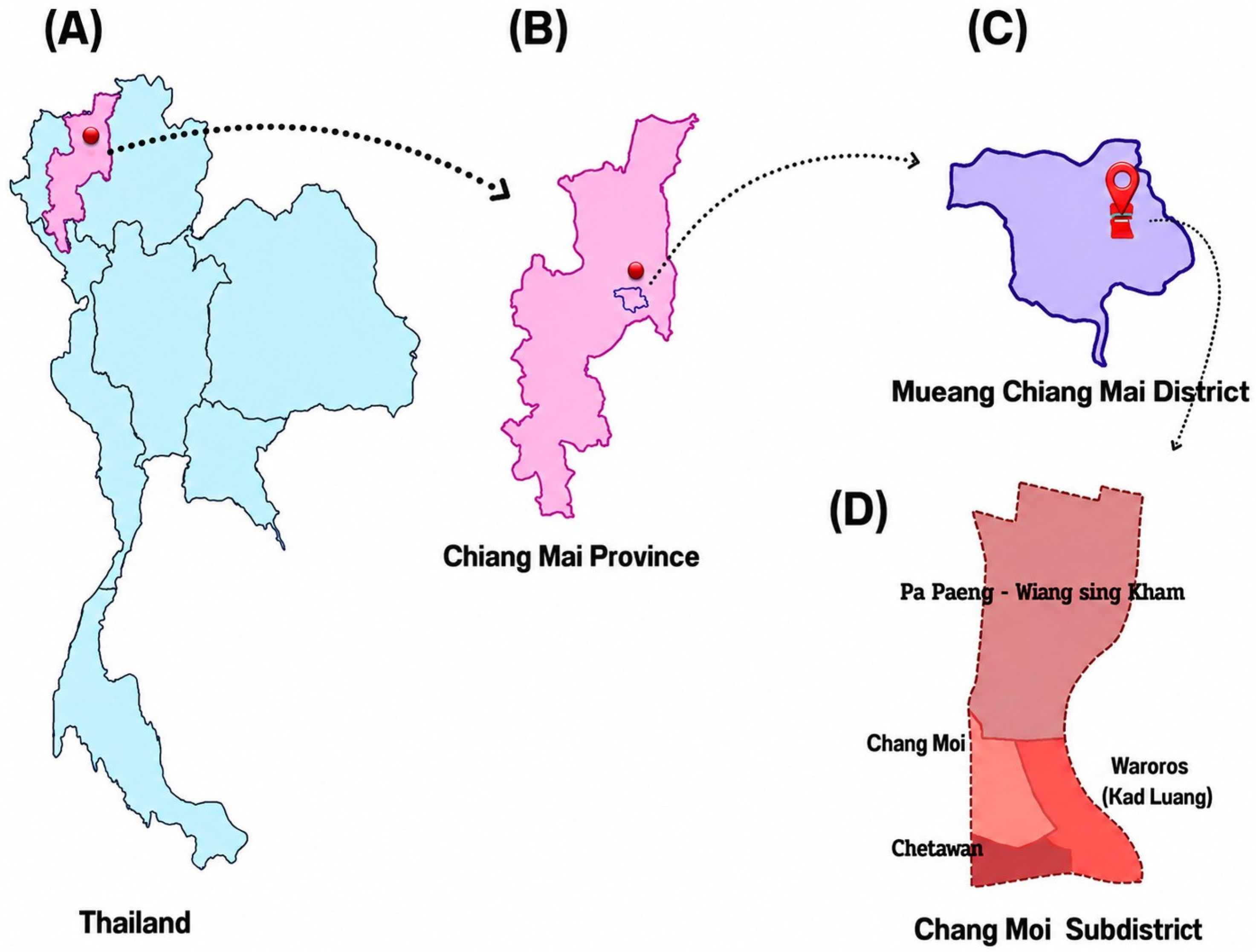
Chang Moi Subdistrict is in Mueang District, Chiang Mai Province, Thailand. It includes three main communities: Chang Moi, Chetawan, and Pa Paeng-Wang Singkham. The area includes Kad Luang (Waroros Market), one of the city’s oldest and most vibrant trading zones, all under the jurisdiction of the Chiang Mai Municipality. Geographically, Chang Moi is located in the heart of the historical commercial center, with Waroros Market, Ton Lamyai Market, and Mueang Mai Market being key hubs for agricultural products, wholesale goods, and local souvenirs. The map of Chiang Mai provice, Muang Chiang Mai district, and Chang Moi subdistrict are shown in
Figure 2.
Chang Moi is widely recognized for its cultural diversity and creative character. It functions as a dynamic creative district, where arts and heritage are embedded within everyday life. It also acts as a cultural connection to diverse ethnic, religious, and artistic communities, including Shan, Chinese, Muslim, and Hmong groups. These interactions result in a distinctive cultural landscape that blends Lanna, Chinese, and Burmese influences. Recognized by the Creative Economy Agency (CEA) as a creative district, Chang Moi has become a living hub of traditional crafts, contemporary art, and local wisdom. Community awareness of cultural and environmental values has also encouraged tourism development that emphasizes sustainability, minimizes ecological impacts, and sustains local economic relevance.
Economic Context
Economically, Chang Moi represents one of Chiang Mai’s oldest and most active trading zones. It hosts numerous local markets, small businesses, and retail shops, linking directly with major economic nodes such as Tha Phae, Waroros Market, Ton Lamyai, and Mueang Mai Market. In addition, the district is home to important public institutions, including the Chiang Mai Municipality and the CEA Northern Office, making it a central node for both commerce and creative enterprise. Increasingly, the area has embraced the concept of the creative economy, integrating craftsmanship, souvenirs, and local gastronomy into its economic fabric. Homestays and guesthouses are prominent forms of accommodation, catering primarily to international tourists, especially Chinese visitors, who constitute about 80% of guests during the off-season. One local entrepreneur explained:
“Most accommodations here are small-scale guesthouses. Many foreign tourists book through online platforms or travel agents.”
(Travel Entrepreneur 1)
This economic pattern reflects the integration of cultural and craft-based activities into the local tourism economy.
Social Context
Socially, Chang Moi is characterized by a rich mosaic of ethnicities and religions, reflected in the coexistence of Buddhist temples, mosques, and Chinese shrines within a compact urban space. This pluralism fosters interreligious harmony and cultural interdependence. Neighboring areas, such as Pa Paeng, host a large Shan (Tai Yai) population comprising approximately 70% of the residents, while Muslim, Hindu, and Chinese groups also operate small-scale businesses throughout the district.
A representative from a local government office noted:
“Because Chang Moi encompasses diverse religious communities, temples, mosques, and shrines play vital roles as cultural centers where interfaith activities occur naturally.”
(Government Official 1)
The community demonstrates strong civic engagement through environmental and social initiatives. The Chang Moi Community Committee, comprising seven volunteer members, operates under the guiding philosophy “Chang Moi Koi Koi Ngam” (Translated as “Chang Moi gradually grows beautiful”), which captures the essence of steady, self-reliant development without excessive dependence on governmental aid. In addition, the community promotes sustainable waste management, such as sorting and donating recyclable materials to support homeless groups, thereby reducing municipal burdens while aiding vulnerable populations.
Nonetheless, infrastructural issues remain, including unsafe pedestrian pathways and tangled electrical cables, which detract from urban aesthetics and pose safety concerns, especially for walking tourists and photographers. Now, these challenges are being addressed through community-based planning and collaboration with municipal authorities.
Cultural Context
Culturally, Chang Moi has an abundance of tangible and intangible heritage assets. Among its notable landmarks are: Wat Chetawan, a 500-year-old Burmese-style temple; Wat Chomphu, associated with the local legend of Waenkaew and Noija-ya; and numerous traditional craft sites such as the historic khanom chin (rice noodle) workshops and the famed naem pa yon fermented pork recipe. These cultural elements form a deep reservoir of identity that serves as a foundation for creative tourism development. As a part of the Chiang Mai Creative District, the area regularly participates in the Chiang Mai Design Week, organized by the CEA, which promotes artistic innovation and community-based creative expression. Many historic shophouses have been preserved and adapted for contemporary use, balancing authenticity with modern utility.
Table 1 shows the classification of activities from cultural knowledge in Chang Moi Subdistrict.
These initiatives represent examples of how local cultural knowledge has been translated into potential creative tourism activities in Chang Moi Subdistrict.
3.1.2. Environmental Management and Low-Carbon Concept
Environmental consciousness is another key feature of the Chang Moi community. Residents have identified major issues as visual pollution, waste, and water quality. In response, they established a “Donation Garbage Point”, a waste-sorting initiative that allows homeless individuals to collect and sell recyclables, simultaneously reducing waste and providing income for marginalized groups. Another initiative, the “Green Corner” Project (Edible Fence Garden), encourages households to grow small vegetable plots, thereby enhancing urban greenery. However, the Mae Kha Canal, which flows through the community, continues to suffer from water pollution. A local entrepreneur commented:
“Physically, the community is well-equipped for creative tourism activities, with graffiti art walls and event spaces, but the main problem remains the unpleasant odor and polluted water, which negatively affect the tourism experience.”
(Tourism Entrepreneur 2)
In response, community members have begun organizing eco-workshops using recycled materials such as coconut shells and other waste products. They are also promoting low-carbon tourism routes, emphasizing walking and cycling tours. Interview findings and field observations indicated that pedestrian safety remains a key issue affecting the attractiveness of walking-based tourism activities.
3.1.3. Current Creative Tourism Management
Most of the accommodation facilities in Chang Moi are small-scale, including homestays and guesthouses that attract independent and cycling tourists. On average, 2–3 cycling tour groups visit the area daily. The community has adopted cultural branding and storytelling as part of its tourism management approach. The slogan “Gradually change Chang Moi” encapsulates the philosophy of gradual, yet steady, development, emphasizing community participation and the integration of art, craft, and local wisdom. Workshops led by senior residents, such as cooking and handicraft sessions, are designed to generate direct income and foster intergenerational learning. This inclusive approach ensures that tourism revenues are distributed fairly within the community while maintaining cultural integrity.
The findings indicate that Chang Moi Subdistrict possesses rich cultural resources, active community participation, and existing sustainability-oriented practices.
As a government official summarized:
“Chang Moi is a remarkably strong community where residents collaborate voluntarily to sustain local development.”
(Government Official 2)
Taken together, the interview findings and documentary review show that Chang Moi Subdistrict combines cultural resources, local participation, and sustainability- oriented practices within its current tourism management.
3.2. Quantitative Results
3.2.1. Descriptive Results
The quantitative results were derived from survey data collected from 408 tourists in the Chang Moi Creative District, comprising 205 Thai tourists and 203 international tourists.
Table 2 presents the socio-economic profiles, tourist behaviors, creative tourism preferences, and eco-behaviors of the two tourist groups.
Among Thai tourists, 68.8% were female and 28.3% were male, whereas among international tourists, 57.1% were male and 41.4% were female. The largest age group in both samples was 21–30 years, accounting for 46.3% of Thai tourists and 40.4% of international tourists.
In terms of income, 49.8% of Thai tourists reported a monthly income of 15,001–30,000 THB, while 51.7% of international tourists reported a monthly income above USD 1800. For respondent domicile, Thai tourists were mainly from Bangkok (33.7%) and Chiang Mai (30.7%), while international tourists were from a wider range of countries, with the largest share categorized as “Other” (59.0%), followed by the UK (16.3%), the USA (14.8%), and China (9.9%).
The two groups also differed in tourist behavior. Among Thai tourists, 77.6% used private cars or rentals, while among international tourists, 53.7% traveled on foot. In terms of stay pattern, 55.6% of Thai tourists were excursionists and 44.4% stayed overnight, whereas 64.5% of international tourists stayed overnight and 35.5% visited as excursionists.
For accommodation type, the most common category among Thai tourists was “not in the area” (26.8%), followed by 3–4 star hotels (22.4%). Among international tourists, the most common category was 3–4 star hotels (44.8%), followed by hostels (20.2%). In relation to dining and spending, Thai tourists most frequently visited community markets (58.5%) and cafés (49.5%), while international tourists most frequently visited community markets (67.5%), local restaurants (59.6%), and cafés (44.8%).
In terms of travel purpose, Thai tourists most frequently reported leisure and relaxation (62.9%), while international tourists most reported cultural learning (49.3%). With respect to key activities, Thai tourists most frequently reported café visits (72.7%), photography (53.2%), and community markets (42.4%). International tourists most frequently reported community markets (70.4%), cultural learning (56.2%), and architecture sightseeing (54.2%).
Regarding eco-behavior, 63.4% of Thai tourists and 61.1% of international tourists reported occasional waste sorting, while 22.4% of Thai tourists and 30.0% of international tourists reported always sorting waste. For reusable bottle use, 60.0% of Thai tourists and 60.1% of international tourists reported occasional use.
3.2.2. Inferential Statistics
Group Differences in Travel Mode and Overnight-Stay Behavior
Chi-square analysis showed a statistically significant difference in overnight-stay behavior between Thai and international tourists [χ2(1) = 15.880, p < 0.001]. International tourists had a higher proportion of overnight stays (64.53%) than Thai tourists (44.39%).
A statistically significant difference was also found in in-area travel mode between Thai and international tourists [χ2(6) = 219.552, p < 0.001], with a large effect size (η2 = 0.323). Among international tourists, 53.69% traveled on foot, whereas 77.56% of Thai tourists used private cars.
Correlation Between Environmental Attitudes and Greenhouse Gas Reduction Behaviors
Pearson’s correlation analysis showed a statistically significant positive correlation between environmental attitudes and greenhouse gas reduction behaviors (r = 0.514,
p < 0.01). This indicates that higher environmental attitude scores were associated with higher greenhouse gas reduction behavior scores. In other words, as environmental attitudes increased, greenhouse gas reduction behaviors also showed a tendency to increase in the same direction. Although this relationship should not be interpreted as direct causation, it suggests that strengthening environmental attitudes may help support broader low-carbon behavioral tendencies among tourists. Combined with the similar behavioral scores observed across both groups, this finding suggests that broad policy interventions aimed at strengthening environmental attitudes may be relevant across tourist segments, without necessarily requiring fully nationality-specific measures. The results were shown in
Table 4.
3.3. Results of Designing Three Creative Tourism Route Programs
The environmental attitudes were found to be significantly associated with greenhouse gas reduction behaviors, therefore the design of all routes was also informed by the objective of fostering pro-environmental attitudes alongside cultural experience. Accordingly, each program incorporated elements intended to encourage low-carbon awareness and responsible tourism behavior, such as walkable route segments, engagement with local culture and heritage, and experience-based activities that can strengthen appreciation of community value, sustainability, and environmentally responsible travel practices.
Table 5 presents the three creative tourism route programs, developed to reflect the diversity of tourist groups based on the behavioral data obtained from the questionnaire surveys. The findings highlighted the activities that are preferred most by tourists, along with their travel patterns and length of stay in Chang Moi. Program 1 focuses on international tourists in a one-day walking itinerary, while Program 2 is designed for Thai tourists traveling by private car for greater convenience. Program 3 is a two-day program that targets mixed tourist groups that combine both walking and car travel. All three routes emphasize experiential creative tourism activities, such as handicrafts, arts, and active community participation, to enhance cultural value and promote deeper, meaningful learning experiences in a creative context. This route differentiation was supported by descriptive results and inferential results. In particular, the preferred mode of transportation differed markedly between tourist groups, as international tourists demonstrated a considerably stronger inclination toward walking, whereas Thai tourists exhibited a predominant reliance on private automobile travel. Overnight-stay behavior also differed significantly, with international tourists more likely to remain in the area overnight. These findings support the use of one-day walking, one-day private-car, and two-day mixed itinerary structures in the route-design stage.
The following section presents maps of the three creative tourism route programs designed based on tourist behavioral data obtained from the questionnaire surveys. Each program reflects differences in travel modes, duration, and popular activities within the Chang Moi community, Chiang Mai Province. All three routes emphasize cultural learning, creative participation, and meaningful experiences in collaboration with the local community.
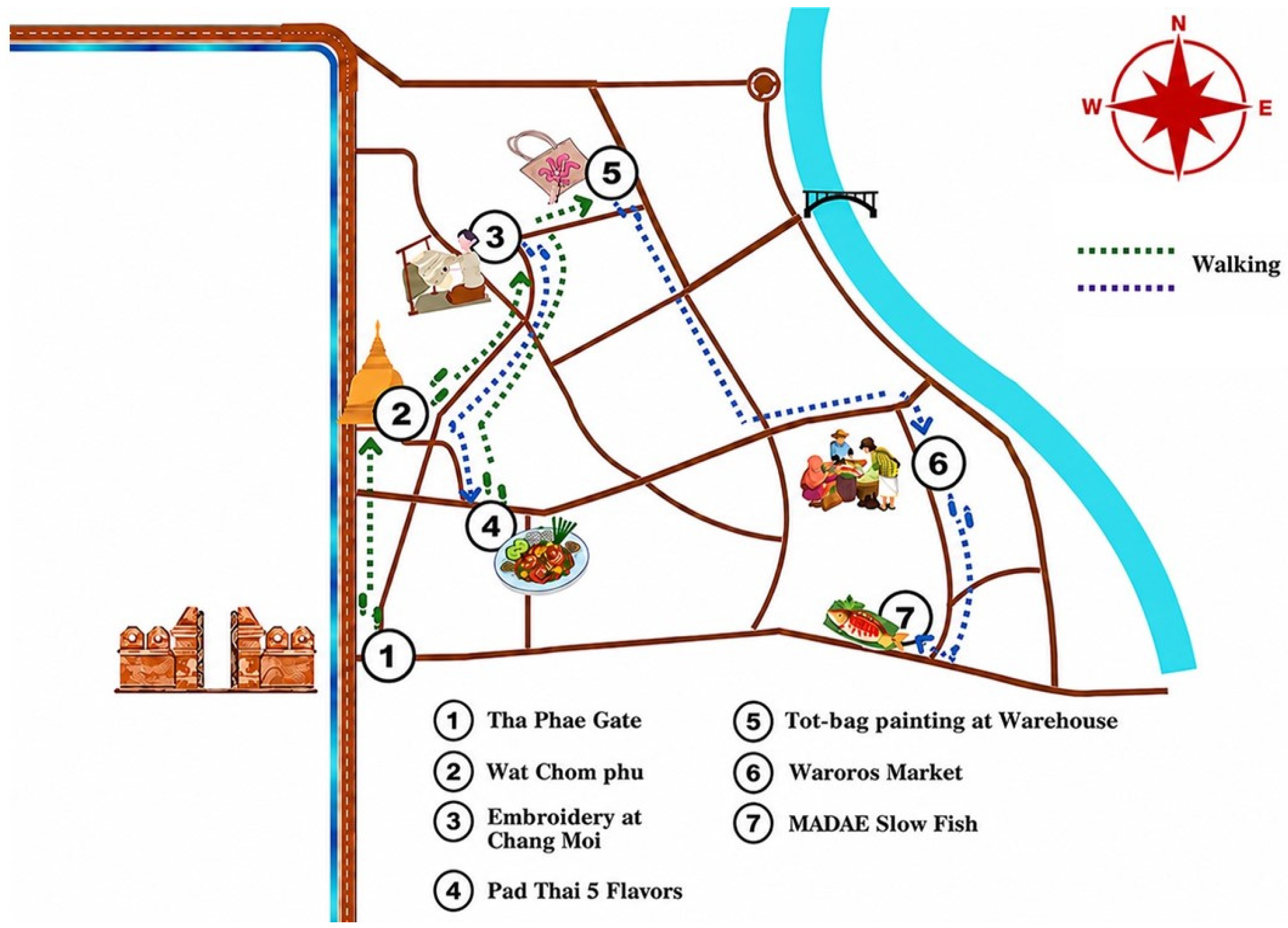
This tourism program (
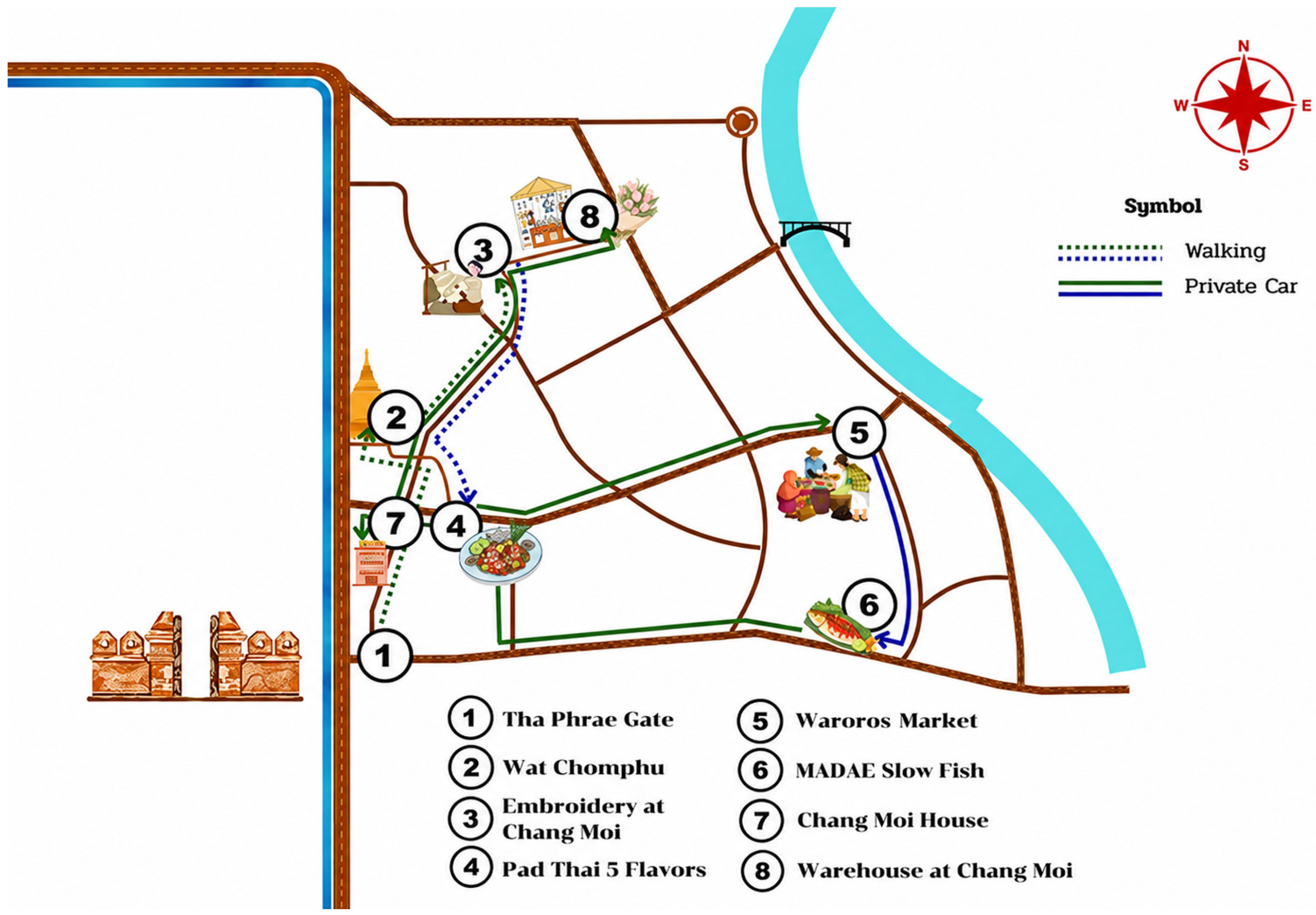
Figure 3) is designed as a route for international tourists, with the primary target group being male travelers aged 21–30 years, mainly from the UK and the USA. Typically, these tourists travel with friends or family members and prefer walking as their main mode of exploration. The program is structured as a one-day trip, with tourists motivated primarily by the desire to learn about local customs, traditions, and cultural identity. There is also an emphasis on community-based attractions such as local markets and historic buildings. In addition, the tourists demonstrate a relatively high level of environmental awareness and tend to participate in creative tourism activities for approximately 1–2 h. The route begins at a meeting point located opposite Tha Phae Gate, a major landmark of Chiang Mai. The first stop is Wat Chomphu, a local temple that reflects Lanna cultural identity through its golden tones and traditional architectural style. Then, the tourists proceed into the community area, where they are welcomed with a traditional herbal drink before participating in a Lanna-style embroidery workshop. This creative activity allows tourists to engage closely with local knowledge and craftsmanship.
At midday, tourists enjoy Pad Thai, a Thai dish that is particularly popular among international visitors. Then, they travel to the Warehouse Workshop to take part in another creative activity—painting tote bags with a motif inspired by the symbolic gate of Chang Moi Subdistrict. This activity represents a meaningful integration of contemporary artistic expression and local spatial identity. During the final part of the program, these tourists visit Waroros Market to purchase local products from Chiang Mai. The trip concludes with a meal at Madae Slow Fish, a “slow-and-sustainable food” restaurant that is popular among quality-oriented tourists. Overall, the route reflects the concept of creative tourism by harmoniously integrating culture, food, art, everyday life, and sustainability into a coherent experiential journey.
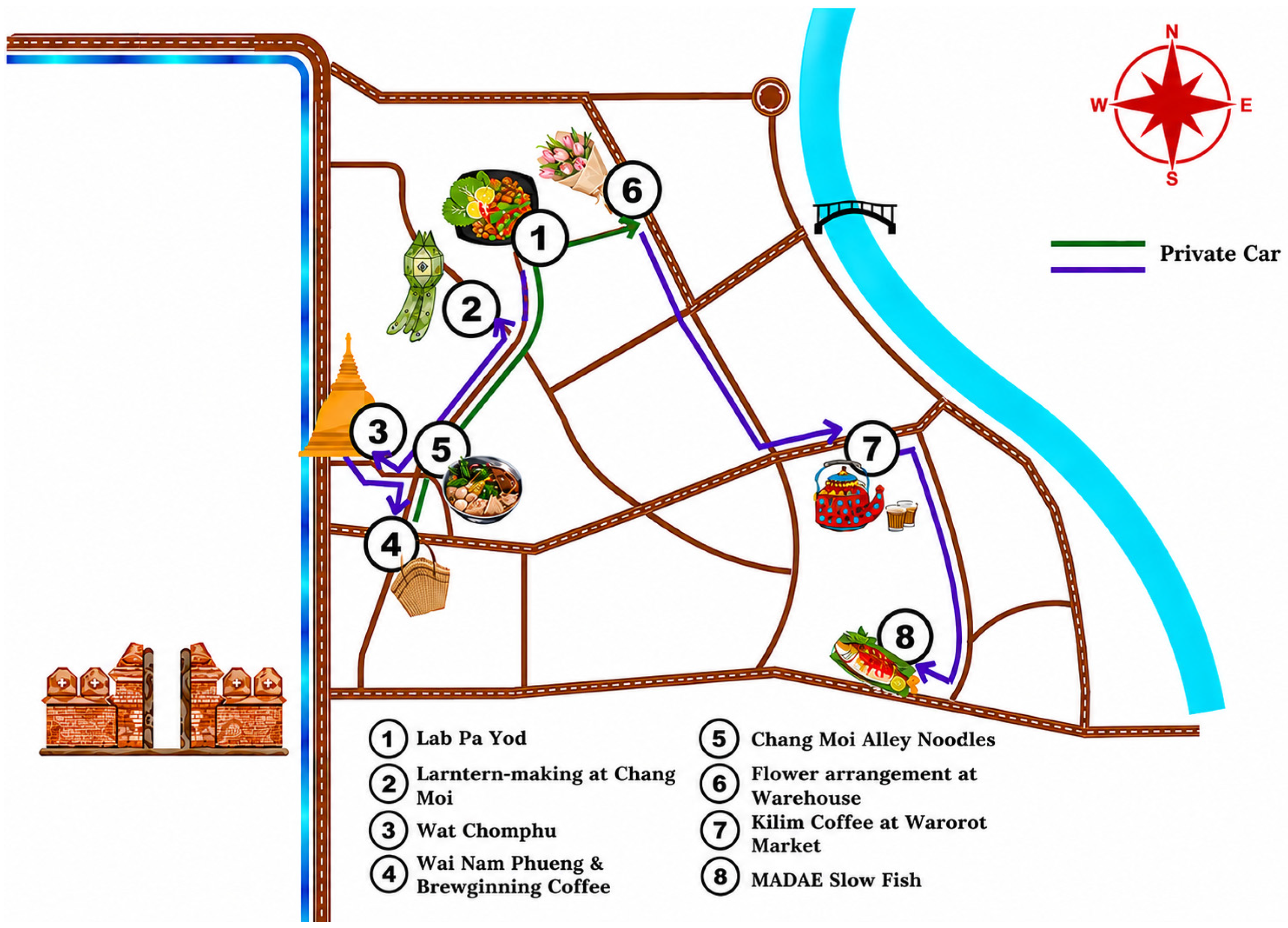
This tourism program (
Figure 4) is designed primarily for Thai tourists, with the main target group being women aged 21–30 years. Typically, these tourists travel with friends in groups of 2–4 people, preferably using private cars, and favor one-day trips for leisure and relaxation. They show strong interest in visiting cafés and coffee shops, taking photographs, and selecting destinations with distinctive local identities. In addition, they tend to participate in creative tourism activities for a limited duration of about 1–2 h. These behavioral characteristics formed the basis for the design of this tourism route and its associated activities. The route begins at a well-known local restaurant as the meeting point, allowing visitors to experience local cuisine as an initial cultural encounter. Next, the program proceeds to a creative tourism workshop reflecting Lanna cultural identity, where participants engage in lantern-making as a hands-on learning activity. After completing the workshop, visitors bring their lanterns to Wat Chomphu to make offerings, in accordance with Thai cultural beliefs associated with good fortune and merit-making.
The itinerary continues with a visit to Wai Nam Phueng, where tourists can appreciate and purchase local products, followed by a break at a community café that blends contemporary design with local character, appealing particularly to younger visitors. Then lunch is taken at Alley Noodles, a popular local eatery among Thai tourists. Subsequently, the program moves to the Warehouse Workshop, where participants paint cloth bags with the “Chang Moi Gate” motif, a symbolic representation of the subdistrict, thereby linking creative expression directly with local identity. In the later part of the program, visitors travel to Waroros Market to shop for local goods and souvenirs, then stop at Kilim Coffee, which offers an opportunity for tourists to try on Turkish-style costumes for photography, highlighting the cultural diversity of the Chang Moi community. The program concludes with dinner at Madae Slow Fish, a restaurant well known for its popularity and its alignment with the concept of slow and quality-oriented dining experiences. Overall, this program is structured around a clear understanding of the preferences, motivations, and travel behaviors of young Thai tourists. It integrates cultural learning, creative participation, local identity, and contemporary lifestyle elements into a coherent one-day tourism experience that is both meaningful and enjoyable, while authentically reflecting the cultural and social character of Chang Moi Subdistrict.
This program (
Figure 5) is a tourism route designed for both Thai and international tourists, with the objective of examining shared travel behaviors between these two groups. The primary target group consists of travelers aged 21–30 years, who mainly engage in short distance travel on foot, while private cars are used for longer distances. The program is structured as a short-term tour lasting two days and one night and focuses primarily on tourists interested in cultural tourism and creative tourism. The meeting point of the program is located opposite Tha Phae Gate, which is a major tourist landmark in Chiang Mai Province. From there, tourists walk to visit Wat Chomphu, a temple with significant architectural value and cultural importance to both the local community and the province. Then, the route continues to the Chang Moi community, where participants are welcomed with local herbal drinks and take part in a creative activity, namely Lanna-style embroidery, allowing them to learn about local wisdom through hands-on experience.
Afterward, the tourists walk to have local food at the Pad Thai 5 Ros restaurant before traveling by private car to Waroros Market to purchase souvenirs and local products. Next, they participate in additional creative activities at Craft & Space and have dinner at Madae Slow Fish, a restaurant popular among tourists, before staying overnight at Chang Moi House.
On the second day, the tourists take part in a cloth bag painting activity at Warehouse, designing patterns inspired by the symbolic Chang Moi city gate. Then, they walk to go shopping for vintage-style products at Ratchawong Warehouse and have lunch at Good Day Time to Table (within walking distance). The program concludes with a flower arrangement workshop at Anemonee Flower Shop, using flowers sourced from Waroros Market, reflecting the lifestyle and cultural identity of Chiang Mai, where flower trading forms an integral part of the local economic and cultural system. Overall, this program is designed in accordance with the principles of cultural and creative tourism by integrating experiential learning activities, local lifestyles, local cuisine, and handicrafts. It aims to create a tourism experience that generates balanced and sustainable cultural, economic, and social value.
3.4. Carbon Footprint of Three Developed Tourism Routes
The carbon footprint assessment for all three tourism routes was determined based on the characteristics of carbon emission sources from transportation, food, accommodation, waste management, and the type of creative activities conducted in each program. The differences among the three programs were interpreted by separating major design elements, including transport mode, route duration, accommodation requirement, waste generation, and activity type. This made it possible to distinguish between the effects of route structure and the effects of longer program duration. The details are as follows.
3.4.1. Carbon Footprint Assessment of Transportation
Based on the results of the carbon footprint assessment from transportation activities in each program, Program 1 (route for international tourists), had the lowest total GWP value of 0 kg CO2 eq. The second-lowest GWP value was from Program 2 (route for Thai tourists), equal to 0.05 kg CO2 eq, with the GWP value from Program 3 (tourism route with overnight stays in the area) having the highest GWP value of 0.08 kg CO2 eq.
These results stem from the transportation for Program 1 being entirely on foot (no carbon emission), compared to the transportation for Programs 2 and 3, which involve travel by medium-sized cars that use gasoline as fuel. The fuel combustion rate was set at 15.24 km per liter, the density of gasoline is 0.74 kg per liter, and the emission factor for gasoline combustion was 0.4024 kg CO2 eq per kilogram of gasoline burned. The total distance for Programs 2 and 3 that use cars for transportation was 2.54 km and 4.2 km, respectively.
3.4.2. Carbon Footprint Assessment of Food and Accommodation
Based on the results of the carbon footprint assessment from the type of food and accommodation in each tourism program, Programs 1 and 2 had the same GWP value of 3.92 kg CO2 eq, while the GWP value from Program 3 was higher at 11.65 kg CO2 eq.
These results are due to the number of meals and the type of food consumed in Programs 1 and 2 being very similar. Specifically, lunch consisted of single-dish meals at local restaurants, having a GWP value per meal of 1.65 kg CO2 eq, while dinner was a full course at a regular restaurant, having a GWP value per meal of 2.27 kg CO2 eq.
In contrast, Program 3 had an additional lunch meal on the second day (an additional 1.65 kg CO2 eq) and included an overnight stay in 3-star accommodation in a local hotel (an additional 6.08 kg CO2 eq) resulting in a higher GWP value than for Programs 1 and 2.
3.4.3. Carbon Footprint Assessment of Waste Management
Based on the results of the carbon footprint assessment from waste generation due to tourism and waste management in Thailand, Programs 1 and 2 had a GWP value from waste management of 5.8 kg CO2 eq, whereas Program 3 had a GWP value from this type of activity of 11.6 kg CO2 eq.
These results were due to the number of days for tourism in Programs 1 and 2 being the same (1 day), while Program 3 lasted 2 days and 1 night, resulting in the average amount of waste generated from tourism being more than double that of the first two programs. The average waste generated by tourists per day was 2.5 kg per day.
The current waste management method in Thailand is landfill, which has an emission factor of 2.32 kg CO2 eq per kilogram of waste disposed. This results in a GWP value from waste management per day per tourist of 5.8 kg CO2 eq.
3.4.4. Carbon Footprint Assessment of Creative Activities
The carbon footprint assessment from creative activities conducted on each route was calculated from the GWP value obtained from each tourism activity using the LCA approach, as shown in
Table 6.
Based on these results, Program 1 had the lowest total global warming potential (GWP) of 0.86 kg CO
2 eq, followed by Program 2 (1.05 kg CO
2 eq) and Program 3, which had the highest value (8.18 kg CO
2 eq). These results were due to the activities conducted in Program 1 (embroidery and painting cloth bags) emitting GHG equal to 0.18 and 0.68 kg CO
2 eq, respectively, compared to the activities in Program 2 (making Lanna lanterns and painting cloth bags) which had GWP values of 0.37 and 0.68 kg CO
2 eq, respectively. Notably, both Programs 1 and 2 had GWP values from creative activities that were not very different from each other, compared to the value obtained from Program 3, which has more days and activities (embroidery, beading, painting bags, and flower arranging) than Programs 1 and 2. In particular, the flower arranging activity had the highest GWP value of 7.89 kg CO
2 eq. as show in
Table 6.
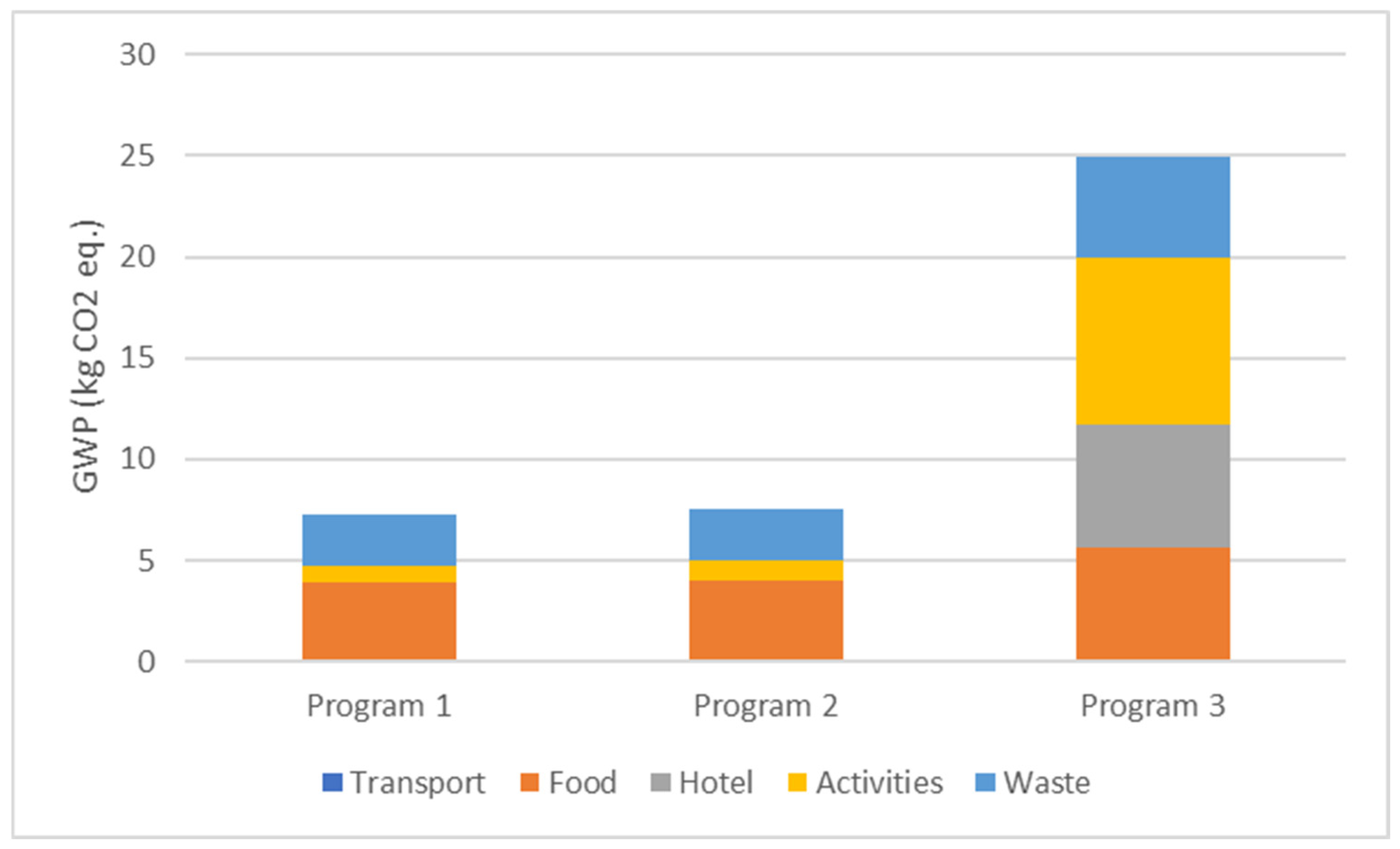
The total GWP values of the three tourism programs were 10.58 kg CO
2 eq for Program 1, 10.82 kg CO
2 eq for Program 2, and 31.52 kg CO
2 eq for Program 3. In Program 1, waste management accounted for 54.8% of total emissions, while in Program 2 it accounted for 53.6%. In Program 3, waste management accounted for 36.8% of total emissions, creative activities for 26.0%, food and beverage services for 24.9%, and accommodation for 19.3%. Transportation within the route boundary accounted for 0.0–0.5% of total emissions. These results are summarized in
Figure 6.
3.5. Synthesis of Findings
The synthesis of the qualitative findings, tourist survey results, route-development results, carbon-footprint assessment, and route testing identified five recurring dimensions relevant to low-carbon creative tourism development in Chang Moi Subdistrict: (1) local cultural authenticity, (2) tourist behavior and segment characteristics, (3) walkability and spatial clustering, (4) low-carbon activity and service design, and (5) community-based implementation.
The synthesis showed that Chang Moi’s cultural resources included temples, markets, artisan practices, local food, storytelling, flower culture, and community life. The survey and inferential statistical results showed that Thai and international tourists differed in mobility pattern and overnight-stay behavior, while no statistically significant difference was found in environmental attitudes or self-reported GHG-related behavior scores. The route-development and carbon-footprint results showed that one-day routes produced lower GWP values than the two-day overnight route, while walking-based mobility generated negligible transportation-related emissions within the district. The synthesis also identified waste management and certain creative activities, particularly flower arranging, as major contributors to route-level emissions.
These synthesis results are used in the following section to formulate guidelines for low-carbon creative tourism development in Chang Moi Subdistrict.