1. Introduction
Food loss and waste have become major sustainability challenges because they simultaneously undermine food security, waste natural resources, and generate avoidable environmental, social, and economic burdens. Globally, about one-third of food intended for human consumption is lost or wasted, revealing inefficiencies in food systems and highlighting the need for preventive action across the supply chain [
1]. In this context, it is important to distinguish food loss, which occurs in the production, post-harvest, processing, and distribution stages, from food waste, which takes place at retail and consumer levels [
2]. This distinction is especially relevant for educational action, because many of the decisions that shape waste generation are closely connected to daily practices, consumption habits, and public understanding of how food is produced, valued, stored, and discarded.
The relevance of this issue extends beyond the loss of edible products. Producing food requires land, water, energy, labour, infrastructure, and capital. Therefore, when food is discarded, all of these embedded resources are also wasted [
2]. It is also linked to greenhouse gas emissions, especially when discarded food decomposes in landfill, and it contributes to wider ecological degradation and climate-related pressures [
2]. At the same time, this inefficiency coexists with persistent hunger and food insecurity, which makes the problem not only an environmental issue but also an ethical and social one [
2,
3]. Previous works emphasise that the causes of food waste differ across contexts: in lower-income regions, losses are more concentrated in production and post-harvest stages because of infrastructural limitations, whereas in industrialised contexts waste is more strongly associated with retail practices and household consumption, including over-purchasing, inadequate storage, confusion about labelling, and aesthetic standards that exclude edible food from the market [
2,
3,
4].
Because a substantial share of waste in industrialised societies is generated close to the consumer, education has an important role in addressing the problem. Schools are particularly relevant settings, as they can promote knowledge, values, and habits that influence behaviour not only in the classroom but also at home and in the wider community. This educational perspective is also aligned with current sustainability agendas. The topic is framed within SDG 12 on responsible consumption and production, while also connecting with SDG 2 on zero hunger and, indirectly, with wider environmental goals. Likewise, the proposal is supported by GreenComp, the European sustainability competence framework, which highlights the importance of cultivating systems thinking, critical thinking, sustainability values, adaptability, and action-oriented learning [
5]. From this perspective, food waste is not simply a topic of environmental awareness; it is also a meaningful entry point for sustainability education in primary school.
Research on this topic in educational settings has grown in recent years, but the field remains unevenly developed. Much of the literature has focused on school canteens and on interventions designed to measure or reduce plate waste within institutional food services [
6,
7,
8,
9,
10]. These studies are valuable because they address a visible and measurable dimension of the problem. However, they tend to prioritise the management of waste in a specific setting rather than the underlying conceptual understanding that children need in order to transfer sustainable practices to their everyday lives. In contrast, relatively few studies have examined how primary school students interpret the issue, what misconceptions they hold, and how teaching can build on those initial ideas to generate deeper and more durable learning. Although research on food waste is considerable, educational studies remain scarce [
11].
This gap is important because what pupils already know, believe or assume strongly shapes learning. In sustainability education, children do not enter the classroom as blank slates; rather, they bring intuitive explanations, partial ideas, and everyday assumptions that may either support or hinder conceptual change. UNESCO (2017) [
12] emphasises the value of learner-centred, action-oriented teaching that starts from students’ previous ideas and promotes reflection, inquiry, and application. In this specific context, several recurring misconceptions have been identified in the literature and in the initial classroom diagnosis: Antón-Peset et al. (2021) [
13], in a study conducted in the Spanish educational sphere, and more specifically in the Valencian context, showed that children are not fully aware of how their actions influence food waste. Some pupils consider that the small amount of food they discard is insignificant [
13]. Other students understand it as an isolated problem with no wider environmental or social consequences [
13]. Finally, they associate food waste only with throwing food away, without considering the amount of food lost during production processes or the other resources used [
13]. Similarly, the article by Elnakib et al. (2024) [
8], based on a literature review of studies conducted in the US school context, confirms this same trend, noting that students have difficulty understanding food waste in its entirety. The studies reviewed show that students tend to associate waste with the leftovers on their own plates, without considering the losses that occur throughout other stages of the food chain, such as production, storage, and distribution. These findings suggest that one of the central controversies in the field is whether food waste education should focus mainly on behavioural correction in specific contexts, such as school canteens, or on broader conceptual and critical understanding that enables students to interpret the causes, consequences, and avoidability of waste across the food system.
The present exploratory pilot case study develops and implements a teaching proposal for the 3rd, 4th, and 6th grades of primary education that explicitly starts from students’ prior knowledge in order to promote a more critical and comprehensive understanding of food waste. The sequence is designed to help students identify its causes and consequences, understand the resources involved in food production, distinguish between key food-label concepts such as expiry dates and best-before dates, and adopt more responsible consumption habits. In doing so, it also seeks to foster sustainability competences linked to GreenComp, especially critical thinking, systems thinking, and action for sustainability. This pilot study examines how a teaching proposal grounded in pupils’ initial ideas may support learning and sustainability competence development in a specific rural multi-grade classroom context, while also highlighting the potential of addressing food waste in primary education beyond the school canteen.
Based on the research gap, the present study is guided by the following research questions:
RQ1. What prior ideas and misconceptions about food waste do primary education pupils show before the implementation of the teaching sequence?
RQ2. What changes can be observed in pupils’ understanding of key food waste concepts after the implementation of a teaching sequence based on their initial ideas, particularly in relation to the causes and consequences of food waste, the use of natural resources in food production, food conservation, and the difference between expiry dates and best-before dates?
RQ3. What observable changes can be identified in pupils’ sustainability competences, particularly in relation to critical thinking, systems thinking and adaptability, as framed by GreenComp?
3. Teaching Proposal
3.1. Curriculum Alignment and Relation to GreenComp and SDGs
This teaching proposal is designed for the fourth year of primary education and aims to develop students’ knowledge and awareness of food waste. The proposal encourages students to reflect on their own consumption habits, analyse how food-related values vary across contexts, and recognise the importance of preventing waste as a way of protecting natural resources and promoting a fairer use of food. Through the proposed activities, students are also invited to understand that food waste is not an isolated issue, but one with significant environmental and social consequences at a global scale.
The proposal is framed within the Spanish curriculum established under Organic Law 3/2020 (LOMLOE) [
22], the current national education law, and is mainly situated within the area of knowledge of the natural, social and cultural environment. Details of the specific competences, assessment criteria, and core knowledge addressed in the proposal are provided in
Tables S1 and S2 in the
Supplementary Materials.
As regards the GreenComp sustainability framework, the competences most directly addressed in the proposal are valuing sustainability, embracing complexity in sustainability, and acting for sustainability. In addition, most activities promote the development of systemic and critical thinking.
Supplementary Table S3 shows the assessment items for each GreenComp area included in the proposal.
Regarding the Sustainable Development Goals (SDGs), the proposal is primarily aligned with SDG 12: Responsible Consumption and Production, particularly target 12.3, which aims to “halve per capita global food waste at the retail and consumer levels and reduce food losses along production and supply chains, including post-harvest losses” by 2030 [
23]. It also engages transversally with other SDGs, particularly SDG 2, by addressing food waste as a multidimensional issue involving environmental sustainability, social inequality, and ethical responsibility.
3.2. Context of the School and Classroom
This teaching sequence was carried out at Martín de Azpilcueta Public School, located in Barásoain, Spain. Barásoain is a small municipality in the Valdorba Valley in Navarra, with a quiet and friendly rural setting, ideal for community work and personalised education. The school, which opened in 1998, is a single-storey building that is accessible, bright and adapted to the reality of a rural school. The school educates pupils in the second cycle of early childhood education and primary education and, due to its size, organises multi-grade classrooms. This proposal was implemented with the group that brings together the 4th, 5th and 6th grades of primary school, a diverse and heterogeneous classroom that favours cooperative methodologies and peer learning. During all the activities carried out in groups, they always worked in the same groups, which made it easier to follow their learning in a more individualised way.
The 4th, 5th and 6th grade classroom has nine students: five boys and four girls. The distribution by year is as follows: five pupils are in 4th grade, two are in 5th grade and two are in 6th grade. In the area of natural and social environment, it has been observed that some pupils require curricular adaptations for access. These adaptations consist of specific, personalised measures that enable pupils to access and participate fully in the curriculum, taking into account their individual educational needs. Likewise, it has been detected that certain students need educational reinforcement, which provides additional support to strengthen skills, study habits and comprehension, without involving formal modifications to the curriculum. This classroom context allowed working in a very diverse environment with the need to make certain individual adaptations for students if necessary.
“Ya Nos Toca” (“It Is Our Turn”) is a school project developed during the 2022/2023 academic year. Although it was initially designed as a classroom project for 5th- and 6th-grade pupils, it later became a school-wide initiative involving the whole teaching staff. Its main aim was to raise pupils’ awareness of the waste generated in the school environment, encourage waste reduction, and promote correct waste sorting. The project was structured in three phases: during the first term, pupils worked on awareness raising and training; during the second term, different practical activities were implemented; and, finally, during the third term, pupils reflected on and evaluated the work carried out throughout the school year.
Although the project was promoted by a steering group, all pupils participated actively in recycling-related routines, both in the classroom and during break times, as well as in different activities proposed by the teaching staff. As a result of the project, specific bins were installed to ensure correct waste separation in the school playgrounds. These bins continue to be used outside school hours, as the school playground is also a public space in the village and is frequently used by local residents.
The implementation of this project led to significant changes in the school’s environmental culture, fostering greater awareness and responsibility regarding recycling and sustainability. At present, every Friday each class is responsible for correctly recycling the waste generated during the week, which is sorted beforehand in the classroom and then deposited in the school’s general containers. The school also maintains a composting system for the management of organic waste.
3.3. Teaching Sequence
All the activities that make up the teaching sequence are summarised in
Table 1. The proposed activities are organised according to Bloom’s taxonomy, with learning progressing from the simplest to the most complex processes [
24]. A brief description of each activity is provided below the table. The full set of activities, together with all the necessary materials, is presented in
Supplementary Material S2, in
Tables S4–S14 and
Figures S1–S9. This table also includes the prior ideas identified in each activity, extracted from the analysis of the initial questionnaires administered to the students, as well as the objectives, required materials, and possible adaptations, among other elements.
The sequence began with activities aimed at eliciting students’ prior ideas about food waste and identifying common misconceptions. It then progressed towards tasks focused on analysing causes and consequences, and finally towards activities requiring reflection, application, and decision-making in relation to everyday food practices.
3.3.1. Activity 1: Questionnaire on Students’ Prior Ideas About Food Waste
The first activity (
Supplementary Table S4) consists of a questionnaire (
Supplementary Table S5) containing questions related to food waste. The teacher briefly introduces the topic of the unit and explains the purpose of the questionnaire and how it should be completed. Students completed the questionnaire individually so that their individual progress can be monitored throughout the teaching proposal. To ensure confidentiality, the questionnaires were pseudonymised, so that responses could be linked across the different stages of the intervention without directly identifying the students. While students are working, the teacher supervises the activity, answers questions, and provides the necessary support to each pupil. Finally, the teacher collects and analyses the questionnaires in order to adjust the planning of the following sessions according to the incorrect prior ideas identified among the students.
3.3.2. Activity 2: Food Production Process: “From Bean to Cup: How Much Water Remains Unseen?
The second activity (
Supplementary Table S6) is mainly based on one of the students’ prior and alternative ideas concerning the resources used in food production. More specifically, the activity focuses on the water used in production processes and aims to raise students’ awareness that wasting food also means wasting many of the resources required to produce it. First, the teacher asks a series of questions to encourage students to think about the resources involved in food production. At the same time, the teacher gradually introduces the concept of invisible water, that is, water that is not directly visible to us but is nevertheless necessary for the production of certain foods: What food do you love? Do you think producing food uses a little or a lot of water? Is the water we see all the water that is used?
The teacher then presents the coffee production process using a presentation (
Supplementary Figure S1), in which the water consumption associated with the main stages of the process is introduced. The aim is for students to use this example as a reference and apply it to the production cycle of other foods. The class is divided into three groups, and each group investigates the production chain of a specific food using a worksheet prepared by the teacher (
Supplementary Figure S2). In this worksheet, students must first organise the production cycle of the food assigned to them and then reflect on the water consumption that may occur throughout that chain. They are asked to indicate whether water is used in the processes mentioned and how they think it is involved, taking the teacher’s example as a guide. Once they have completed the task and received feedback from the teacher, each group explains to the rest of the class the food process they have worked on and the water consumption involved. The session ends with a brief reflection on the importance of controlling food waste, since it is directly related to the consumption of other necessary resources.
3.3.3. Activity 3: Where Do We Store Food So That It Lasts Longer?
The third activity (
Supplementary Table S7) uses a teaching resource from the Ambientech website entitled Stop Food Waste [
25]. This resource includes an explanatory video that contextualises the problem at a global level and serves as an introduction to the session, as well as five sections designed to address different concepts related to food waste. In this case, the first and the last sections are used. The activity is carried out in groups using the classroom digital whiteboard, with active student participation.
First, the food chain is addressed through the example of a carrot, from seed to plate, thereby reinforcing and reviewing the content covered in the previous session. Next, an interactive game is proposed in which students must answer different questions by pointing to the corresponding continent on a map. Each correct answer is accompanied by an explanation and justification, which expands the information provided and helps consolidate learning.
In relation to the central focus of the activity, the resource also includes a game in which students must place certain foods in the appropriate storage locations to ensure optimal preservation. It then provides an explanation of the different storage areas, including the various parts of the refrigerator, the freezer, and the pantry. Based on this information, students are able to understand why each food item should be stored in a particular place.
The activity concludes with a compilation of practical tips related to the different stages of the food chain, reinforcing the importance of responsible habits for reducing food waste.
3.3.4. Activity 4: Destination of Discarded Food: What Do We Do with Food?
The fourth activity (
Supplementary Table S8), which focuses on the destination of discarded food, consists of a participatory and hands-on task designed to help students understand how their decisions influence what happens when food is thrown away.
At the beginning of the session, when students enter the classroom, they find all the tables pushed together with strings attached to them, forming different paths. These paths symbolise the route that food takes from the moment it is discarded until it reaches its final destination. In addition, there are four bins for sorting the food cards that will be given to each group (
Supplementary Figures S3 and S4). Along with the food cards, students also receive cards describing situations that expand on the information shown in the image and help them make the appropriate decision (
Supplementary Figures S3 and S4).
The teacher explains the procedure for the activity and divides the class into working groups. Each group receives a set of food cards and several cards describing real-life situations. The groups must read the situations presented to them and decide in which bin each food item should be placed. Before doing so, however, they must provide an oral explanation of the reasons for their decision. Each group follows this procedure with the foods assigned to them.
Once all the food items have been placed, the teacher will review any conflicting cases that may have arisen and resolve any questions raised during the activity. Once the teacher has given the explanation, the pupils are allowed to modify their food, so that they can reflect on those foods that we considered should be thrown away, but could be reused in some way. At this point, the concept of avoidable waste is introduced.
3.3.5. Activity 5: Discovering the Causes of Food Waste Through Stories
In the fifth activity (
Supplementary Table S9), after acquiring the necessary content to ensure greater understanding on the part of the students, the causes of food waste are addressed. First, the teacher introduces the activity by explaining that each story presents a realistic situation related to food waste (
Supplementary Figure S5). Next, the group-work dynamic is explained: each team receives a different story and must read the assigned text carefully and thoroughly. Afterwards, each group attempts to answer a set of questions, although students soon discover that they do not have all the information necessary to complete the task (
Supplementary Figure S6).
Once this first phase is complete, the students are reorganised into new mixed groups, so that each group includes participants who have read all three stories. This allows them to share, compare, and complement the information, enriching their overall understanding of the topic. Finally, in these new groups, they must complete the question sheet using all the information they have gathered.
3.3.6. Activity 6: Labelling for Decision-Making: Expiry Date and Best-Before Date
In this activity (
Supplementary Table S10), the teacher divides the students into working groups. The task is explained orally: students must complete the table (
Supplementary Table S11) based on the food labels. Without any further explanation, each group must complete the table using the first food item from their bag, chosen at random.
Once the students have completed the information for the first food item, an explanation is given, using a presentation with examples (
Supplementary Figure S7), about the difference between the expiry date and the best-before date, emphasising how each one affects the quality or safety of the food. The class then returns to group work, and each group must do the same with the remaining three food items, completing the table on the basis of the information shown on the label. Throughout the activity, the teacher supports the groups by clarifying any doubts. Finally, the session ends with a group analysis of the decisions made by the students, reflecting on the explanation provided by the teacher.
The pupils carefully examine the packaging inside the box and read the name of the food item and the date shown on the label. They then record the relevant information about each food item on the sheet they have been given. Based on the date indicated, they consider whether the product is safe for consumption. Then, as a group, they decide what action to take—throw it away, keep it for future use, or consume it—justifying each decision. In addition, the food items are classified according to the appropriate storage method, whether in the freezer, the refrigerator, or the pantry. Finally, each group presents its conclusions to the rest of the class, explaining its reasoning and comparing answers.
3.3.7. Activity 7: The Waste Wheel: Learning to Avoid Food Waste
The teacher briefly explains what the activity will consist of (
Supplementary Table S12). Next, they present the waste wheel (
Supplementary Figure S8): each group of students will spin the wheel, listen to a question and answer it orally. The rest of the class must pay attention because if the answer is incorrect, it will be the next group’s turn. The team that answers the most questions correctly wins. For each question answered correctly, they will receive 1 point, but if they give a complete explanation, they will receive 2 points. In total, the wheel has 20 questions (
Supplementary Table S13).
3.3.8. Activity 8: What Do We Know After the Proposal on Food Waste?
In the final activity (
Supplementary Table S14), the teacher hands out the final questionnaire (
Supplementary Figure S9) and asks the students to complete it again. While they are working on it, the teacher supervises their work and answers any questions they may have, without providing information about the correct answer, and only offering support to help them better understand what is being asked. Finally, the questionnaires are collected and analysed in order to compare the results from the first day with those from the last day.
This eighth activity is used as an assessment, complemented by a rubric adapted from the GreenComp rubrics developed by Sousa and Doran (2022) [
26], which address the four areas of the European sustainability competence framework. These rubrics address sustainability in a comprehensive manner; therefore, in order to apply them to this proposal, they were adapted to the topic of food waste. All the adapted rubrics can be found in
Supplementary Table S15.
The pre- and post-intervention questionnaire was designed to identify pupils’ prior ideas and to examine subsequent changes in their understanding after the implementation of the teaching sequence. The items were developed in relation to the learning objectives of the proposal and the main conceptual areas addressed during the intervention: the meaning of food waste, its environmental and social consequences, the resources involved in food production, food storage and conservation, the distinction between expiry dates and best-before dates, and everyday strategies to reduce food waste. As this was an exploratory pilot case study, the questionnaire was reviewed by an expert in education for sustainability and by the classroom tutor. The expert review focused on the conceptual coherence of the items with the objectives of the teaching sequence, while the tutor’s review focused on their suitability for the pupils, ensuring that the questionnaire was accessible to all students, including those with special educational needs. Given the exploratory nature of the study, the questionnaire was not formally psychometrically validated or pilot-tested with a separate sample.
The questionnaire included both closed-ended and open-ended items. Closed-ended items were scored as 1 point for a correct answer and 0 points for an incorrect answer. Open-ended items were scored using a three-level criterion: 0 points for an incorrect or absent answer, 0.5 points for a partially correct answer, and 1 point for a complete and conceptually accurate answer. The same scoring criteria were applied to the initial and final questionnaires in order to compare pupils’ responses consistently across both assessment moments.
4. Results
Of the eight activities included in the proposed teaching sequence, four were implemented in the school setting (Activities 1, 2, 6, and 8). The results obtained from these activities are presented below.
4.1. Results of Activity 1: Questionnaire on Students’ Prior and Alternative Ideas
The results of the initial questionnaire, administered on 14 November 2025, reveal areas in which confusion or only partial understanding persisted, highlighting issues that could be further addressed in the classroom, as summarised below. The complete results are provided in
Supplementary Table S15.
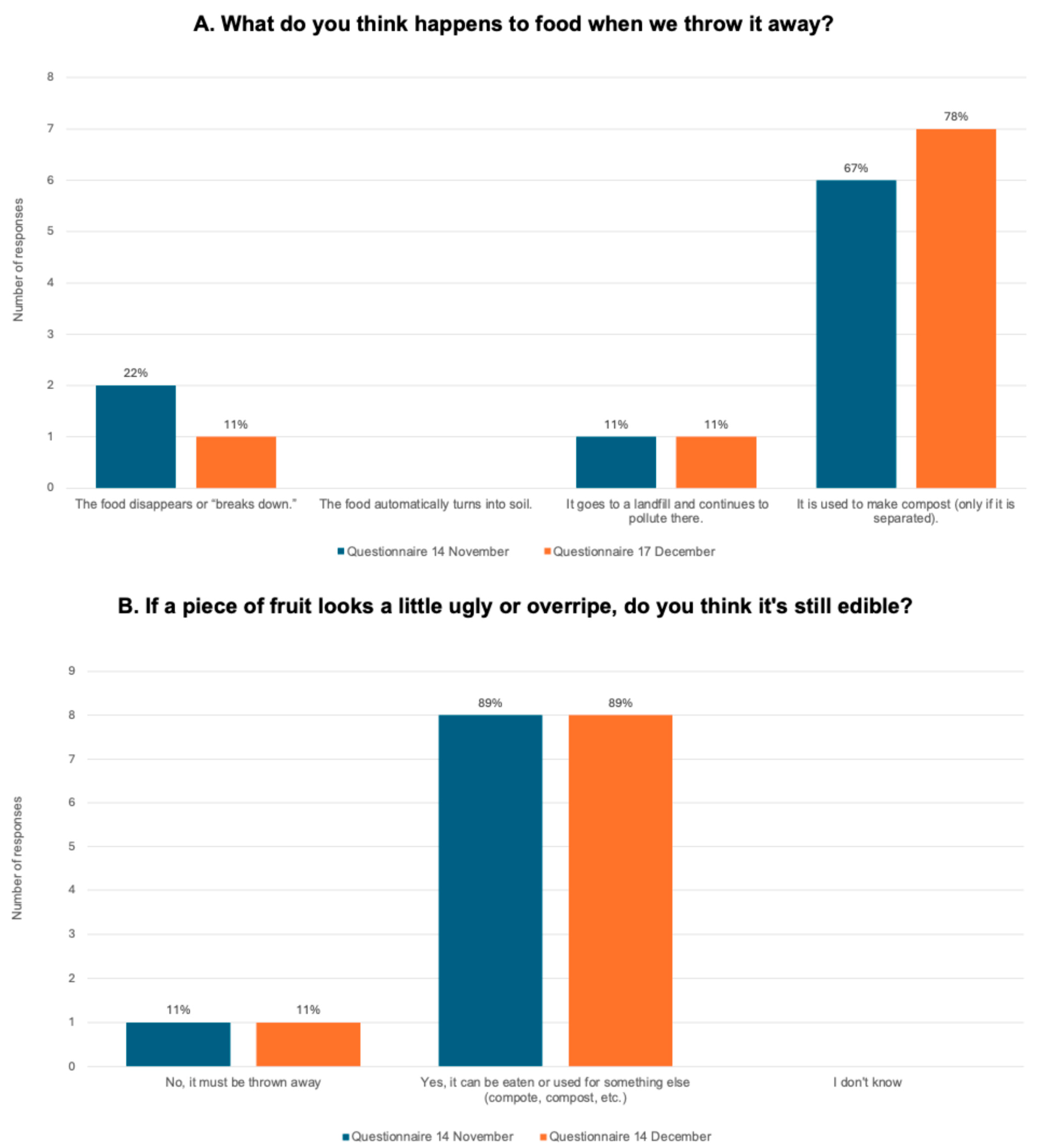
Firstly, students showed limited understanding of what happens to food once it is discarded, when answering the question “What do you think happens to food when we throw it away?”. As shown in
Figure 1A, 22% believe that when food is thrown away, it simply disappears or turns into soil, which suggests a need to further address the relationship between waste and pollution. By contrast, 67% understand that food can be used for composting if it is separated correctly. This may be explained by the Ya Nos Toca project, which was introduced at the school three years ago and continues to be implemented in the current academic year. As part of this initiative, food waste is collected daily and placed in the school’s compost bin.
As for the second question “If a piece of fruit is a little ugly or ripe, do you think it can still be eaten?” (
Figure 1B), 89% recognise that slightly ugly or ripe fruit can still be eaten. Therefore, classroom work could focus on learning to differentiate between fruit that is in poor condition and fruit that, although less attractive in appearance, is still fit for consumption, as well as recognising basic signs that may indicate a health risk, promoting safe and responsible consumption habits.
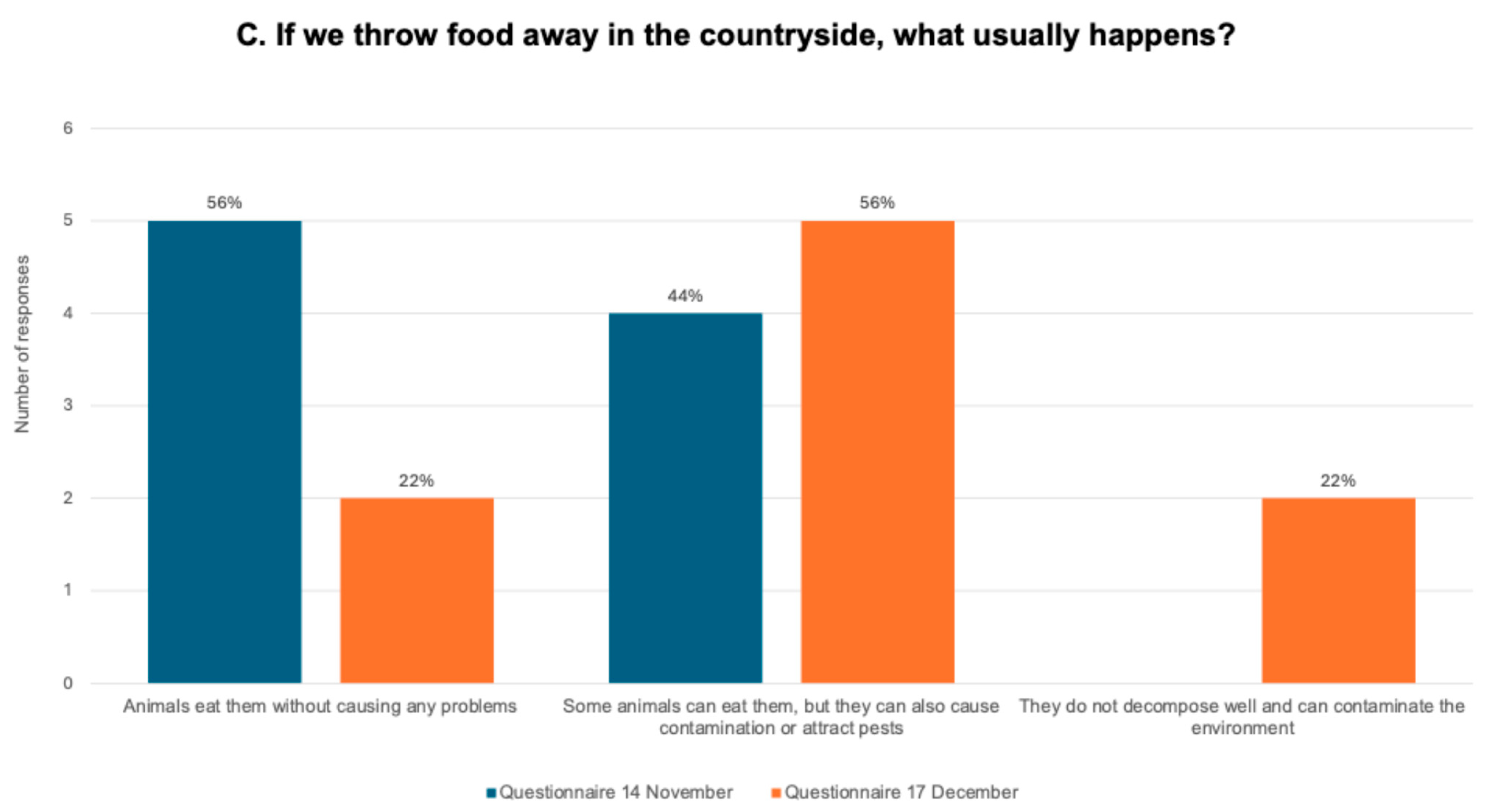
On the other hand, 56% of the students showed uncertainty when answering the question “What happens when food is thrown away in the countryside?”, indicating that they did not clearly recognise the negative effects that this practice can have on the environment (
Figure 1C). This result highlights the need to further reinforce the relationship between food consumption, the use of natural resources, and the environmental impacts associated with food waste.
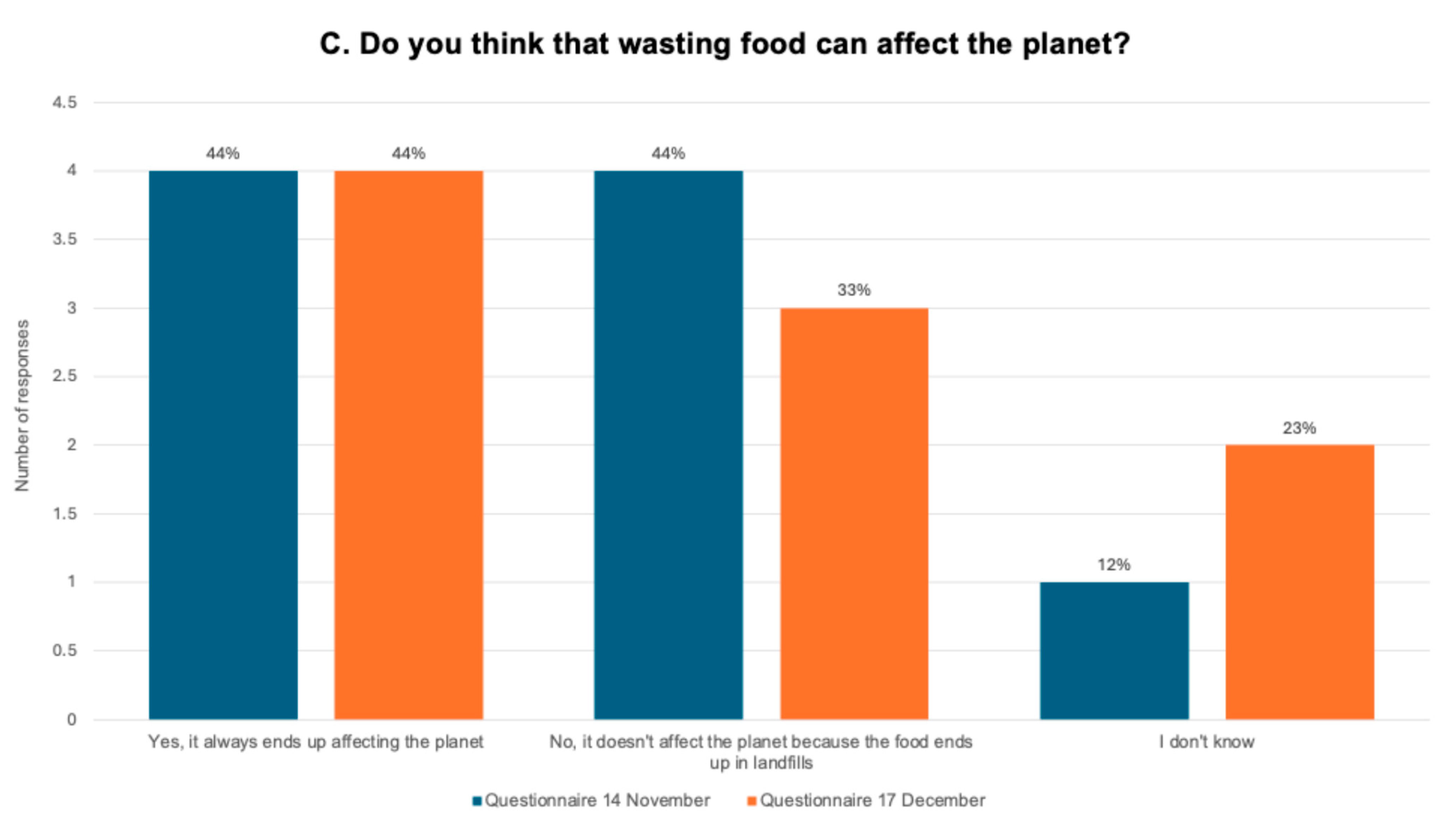
On the other hand, 56% of students are unclear about whether throwing away food can negatively affect the planet (
Figure 1C and
Figure 2C). This result demonstrates the need to reinforce the relationship between consumption, use of natural resources and associated environmental effects.
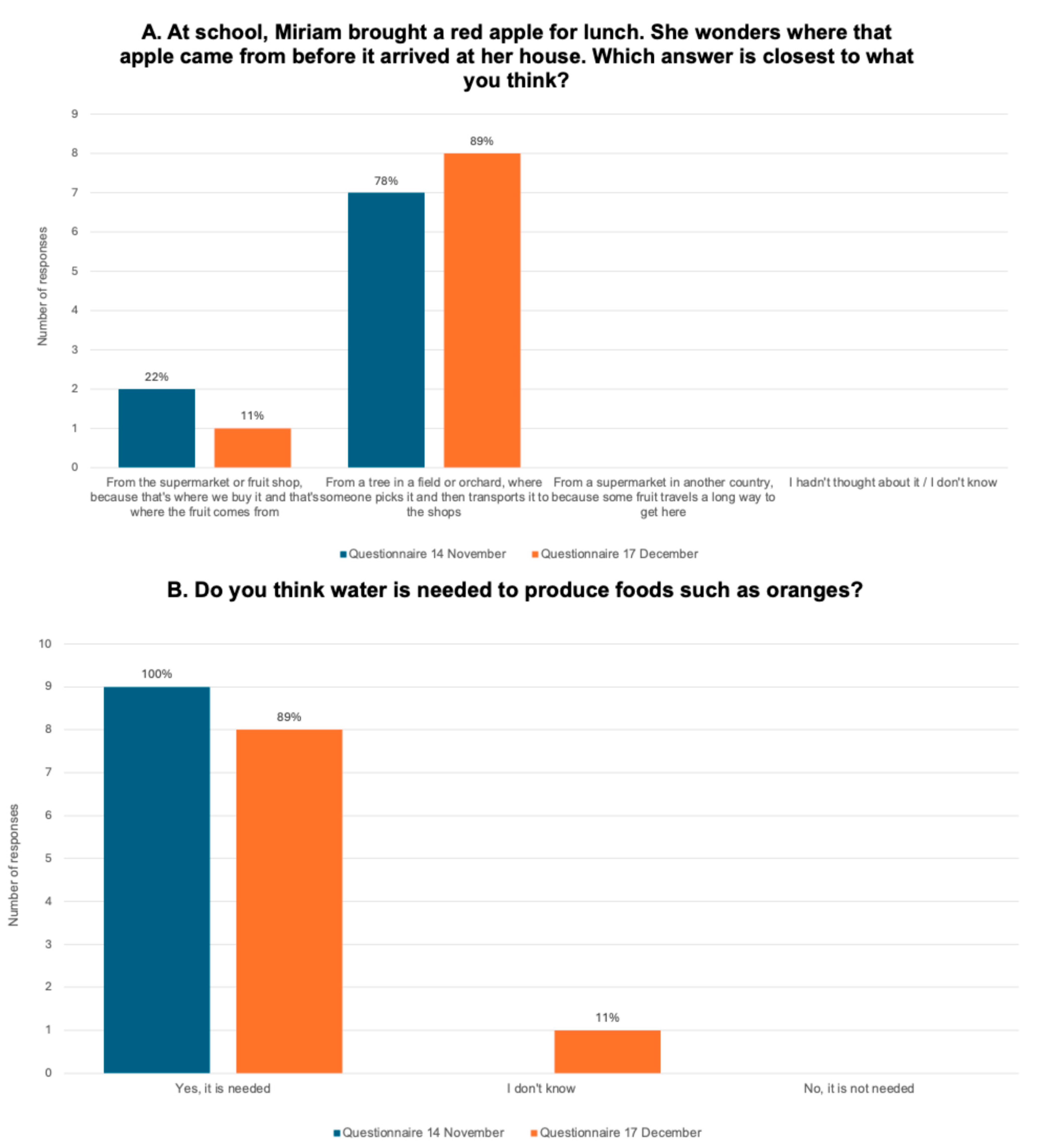
In relation to the origin and production of food (
Figure 2A), 78% of the students recognised that fruits such as apples come from orchards or fields rather than originating in shops, and that they reach retail outlets through different stages of production and transport. There was also general awareness that food production requires resources such as water, as all students answered positively to this question (
Figure 2B). However, greater difficulty was observed when students were asked to identify the specific stages and situations in which water is used throughout the production process.
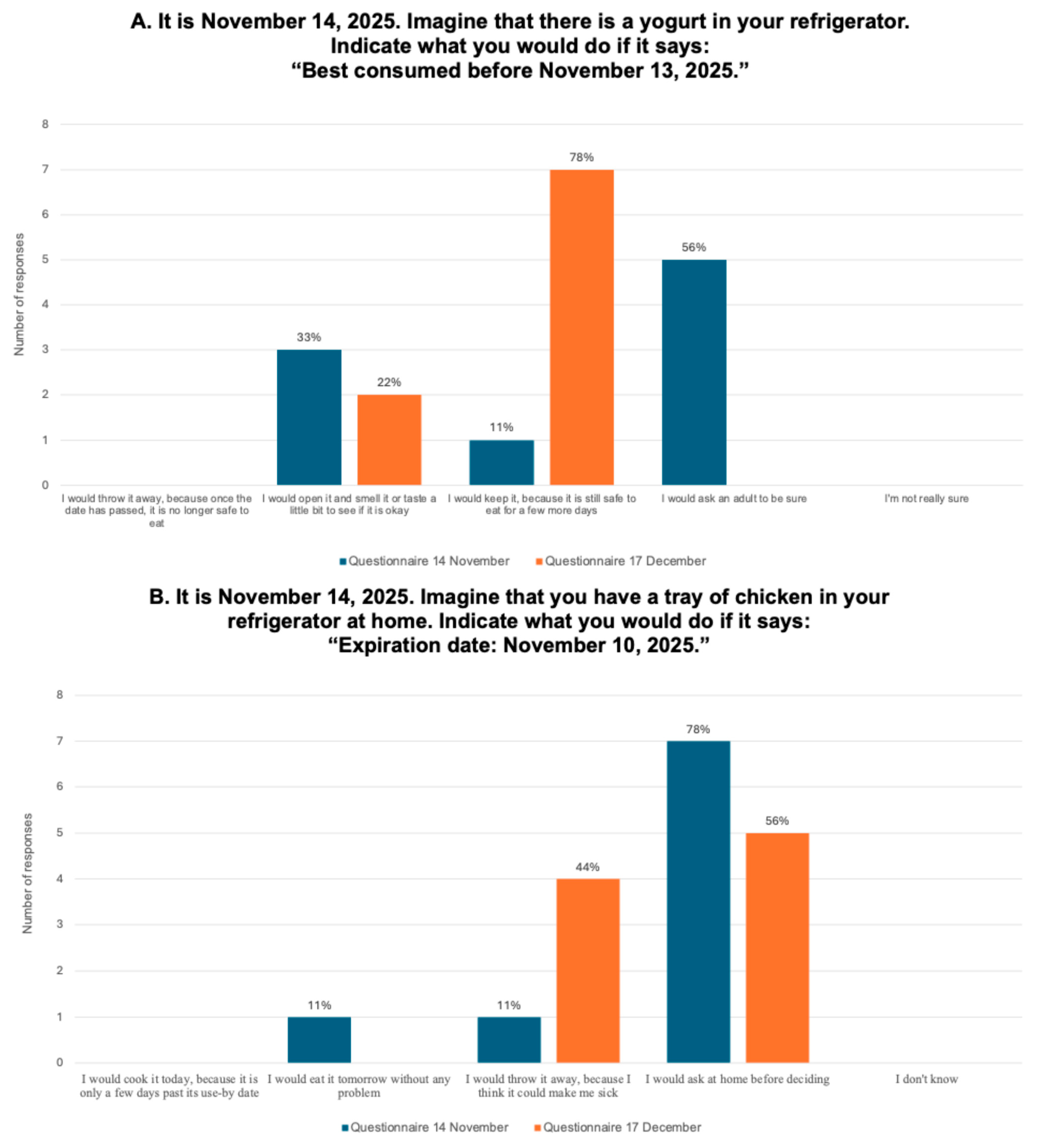
The concepts of expiry date and best-before date appear to be a source of confusion for the students (
Figure 3A,B). Although they generally recognised that these terms do not refer to the same thing, they showed difficulties in distinguishing between them and in deciding how to act in each case. Even so, although most students were unable to answer the questions correctly, they showed caution by indicating that they would consult an adult when in doubt (56% in the case of best-before dates and 78% in the case of expiry dates), which suggests a degree of responsibility and care in their decision-making. Nevertheless, the educational aim should be for students to acquire the knowledge needed to respond more independently and appropriately in both situations.
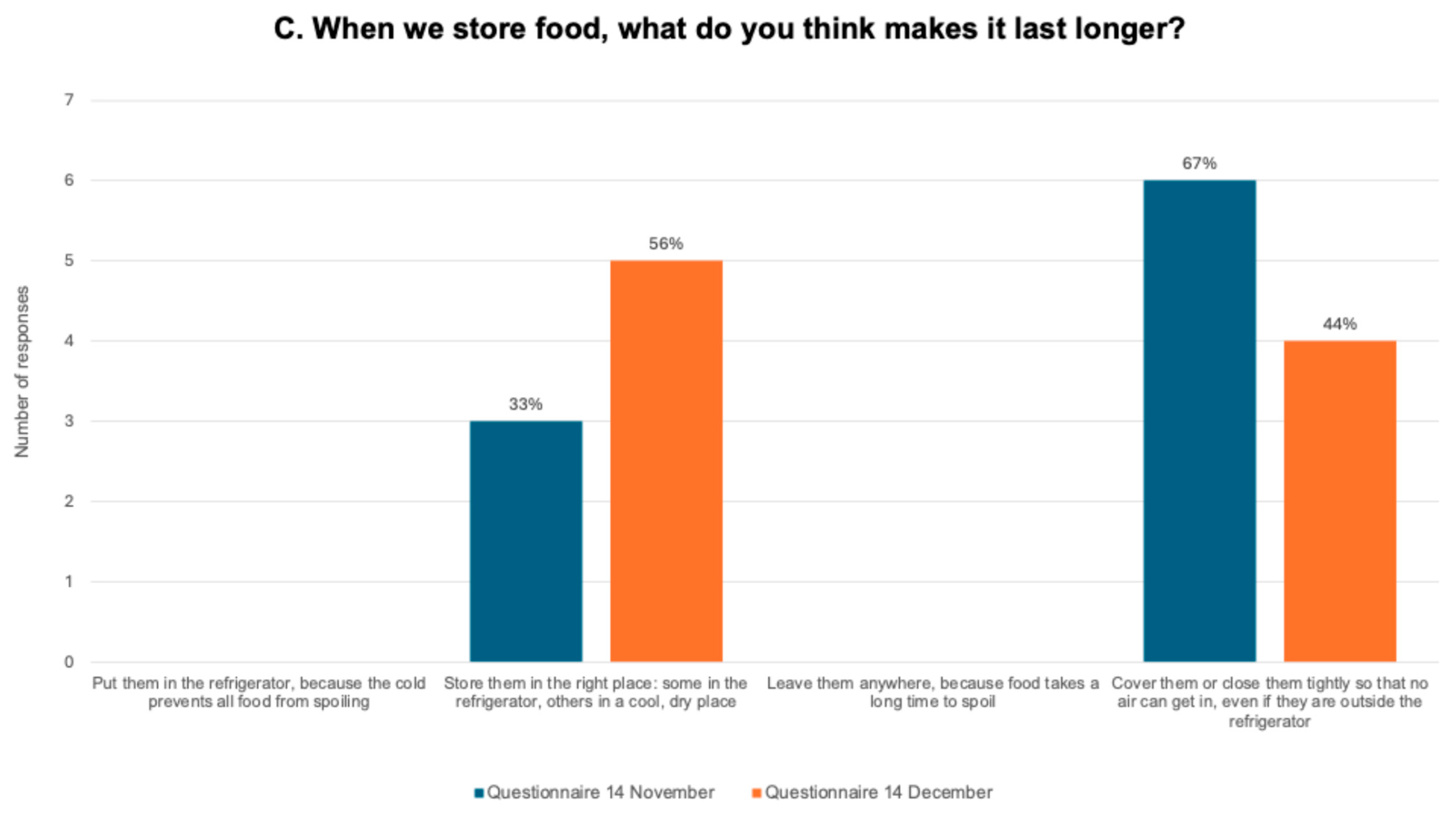
Students recognise the importance of storing food in the right place and closing containers properly to extend their shelf life (
Figure 3C), demonstrating practical and responsible habits at home. However, the prevailing idea (67%) is that simply covering food properly is sufficient, even if it is not stored in the right place.
In relation to questions that required the development of certain concepts, a lack of knowledge was detected, stemming from unfamiliarity with the subject. An example of this is the difficulty in identifying the difference between the expiry date and the best-before date: 100% of students were unable to answer these questions correctly and, when asked to explain them, their answers were simplistic and lacked clear concepts.
This activity made it possible to identify the students’ incorrect prior ideas, which served as the starting point for the design of the remaining activities.
Table 2 presents the full set of incorrect prior ideas extracted from their responses to the questionnaire. Although not all of these ideas were shared by all students, they were considered relevant and therefore taken into account in order to promote meaningful learning.
4.2. Results of Activity 2: Food Production Process: “From Bean to Cup: How Much Water Remains Unseen?”
The second session began by revisiting one of the questionnaire items that served as an introduction to the session: “Do you think that water is needed to produce food such as oranges?” All the students agreed that water was necessary, and 88.9% identified irrigation as essential for the plant to produce fruit. However, none of the students was able to provide further examples of how water is used in food production. For this reason, the second session used the coffee production process as an example to illustrate the invisible water involved in food production.
During the explanation, the class was very attentive and participated actively by asking relevant questions about the topic. Owing to the characteristics of the group, the activity was adapted so that all groups received the same worksheet and worked on the same food product, instead of each group being assigned a different one as originally planned. This made the discussion clearer and allowed all students to participate and follow the content more easily. The product chosen was chocolate, which, due to its similarity to coffee, made it possible to check whether the content had been understood.
In the first exercise, students were asked to arrange a set of images showing the production process in the correct order. Depending on the product studied, between five and six illustrations were provided. Overall, the class did not experience major difficulties with this task, although the photographs were too small and included details that made it difficult to distinguish some stages of the chocolate process from those of coffee.
In the second part of the activity, students had to identify the water consumption associated with each stage of chocolate production. The results were satisfactory, as most students were able to identify these stages correctly. However, because the chocolate production process is very similar to that of coffee, some students included stages that do not belong to chocolate production, such as water consumption by the pulping machine. The answers were then shared, and each group was given the opportunity to revise its responses before handing in the worksheet. This explains why many of the final answers are very similar. If this activity were to be repeated, it would be advisable to choose a food product that differs more clearly from coffee, as this would make it easier to determine whether the students had genuinely understood the content or had simply reproduced what had previously been explained.
4.3. Results of Activity 6: Labelling for Decision-Making: Expiry Date and Best-Before Date
The session began with a group reading and explanation of the table that students were required to complete. Each group, consisting of three students, was given a bag containing four food items to classify. They were asked to complete the first item within five minutes and without any prior explanation, relying only on the knowledge they had already acquired. Afterwards, a presentation was used to explain the difference between the expiry date and the best-before date, with the aim of enabling students to analyse the food items in their bag in greater depth. During the explanation, the students showed considerable interest and participated actively by asking questions.
Regarding the results of the activity, notable differences were observed between the groups. A slight improvement could be seen between the first food item, which they analysed without prior explanation, although the topic had already been addressed in previous sessions, and the following three items. In the latter cases, students attempted to justify in greater detail why the assigned food could or could not still be consumed. It should also be noted that the dates on the food items were relatively clear, as none of the best-before dates was close to the current date. In one group in particular, the justification given for a food item with a best-before date became more complete after the explanation. Instead of simply stating that it could not be consumed because the date had passed, the students also noted that it smelled bad, indicating that they had used their senses to assess its condition.
With regard to the storage question, which had previously been highlighted in the presentation as an important factor in correct food preservation, all groups answered correctly. The only minor error concerned a tin of stuffed squid, which should be stored in the pantry; however, as the students interpreted it as fresh squid, they indicated that it should be kept in the freezer.
4.4. Results of Activity 8: What Do We Know After the Proposal on Food Waste?
The results obtained by each student in the initial and final questionnaires are summarised in
Table 3. Although a slight decline can be observed in some individual cases, the overall pattern suggests progress in students’ understanding of the content addressed after the teaching intervention. The number of changed responses may reflect a revision and readjustment of students’ initial knowledge.
One important difference between the two questionnaires is that the final questionnaire was completed as homework. This may partly explain some of the weaker results, as several students appeared to make errors in the multiple-choice questions despite later demonstrating their understanding in the open-ended responses. Another factor that may have influenced performance is that some students require support when reading the questionnaires in order to fully understand them, as well as additional clarification for certain items. The complete results are provided in
Supplementary Table S17.
To analyse the differences between students’ results in the initial and final questionnaires, the non-parametric Wilcoxon signed-rank test was applied, as the two sets of scores were related and the sample size was small. A non-parametric test was used because the study involved paired pre- and post-intervention data from a very small sample (n = 9), and the normality of the score differences could not be assumed with sufficient confidence. At a significance level of 0.05, the results showed statistically significant differences between the two measurements (W = 3.0; p = 0.019), suggesting an improvement in students’ knowledge in this classroom context after the implementation of the teaching proposal. Nevertheless, although these results point to a positive effect, a larger sample size would be needed to draw more robust conclusions.
For most students (88.89%), the changes observed in their responses suggest a process of reflection and revision of their initial ideas. Although there was not enough time to implement all the activities originally planned within the period available, the responses in the second questionnaire indicate that learning did take place and that students showed greater confidence in their answers. In contrast, no clear changes were observed in the items related to activities that were not implemented. Even so, some of these contents were addressed in a cross-cutting way through other activities, such as the destination of discarded food (
Figure 1A), food storage (
Figure 3C), and the causes and consequences of food waste (
Figure 1B,C and
Figure 2C).
Questions related to the origin of food, the use of natural resources, and the difference between expiry dates and best-before dates are those that represent the greatest understanding of the concepts, as can be seen in
Figure 2A,B and
Figure 3A,C. With regard to the question on water consumption, although the results for the multiple-choice question were poorer, the written answers show an acquisition of knowledge, where, in addition to mentioning the water required to irrigate the orange plant, they also mention the water needed to clean the machines used in the production and transport of oranges.
These changes reflect the acquisition of new knowledge that was not part of the students’ prior knowledge, especially in areas such as the difference between expiry dates and best-before dates. It can be seen that in the first questionnaire, only 33% of students answered the question about best-before dates correctly, compared to 78% in the final questionnaire. With regard to the expiry date, the percentage of correct answers in the first questionnaire was 11% and in the final questionnaire 44%.
On the other hand, reflective questions demonstrate a greater ability among students to justify their opinions. The questions on best-before dates and expiry dates showed the most significant improvement, despite the fact that many students considered this activity to be the most difficult. It is true that the activity developed to address these concepts was very hands-on and proved to be very entertaining for the students.
Overall, the results suggest that the project has promoted meaningful learning. However, it can also be observed that the sub-topics of food waste that have not been covered in the classroom maintain the students’ previous ideas, such as the correct storage of food, the causes of food waste and the destination of food depending on where it is thrown away.
4.5. Evaluation of the GreenComps
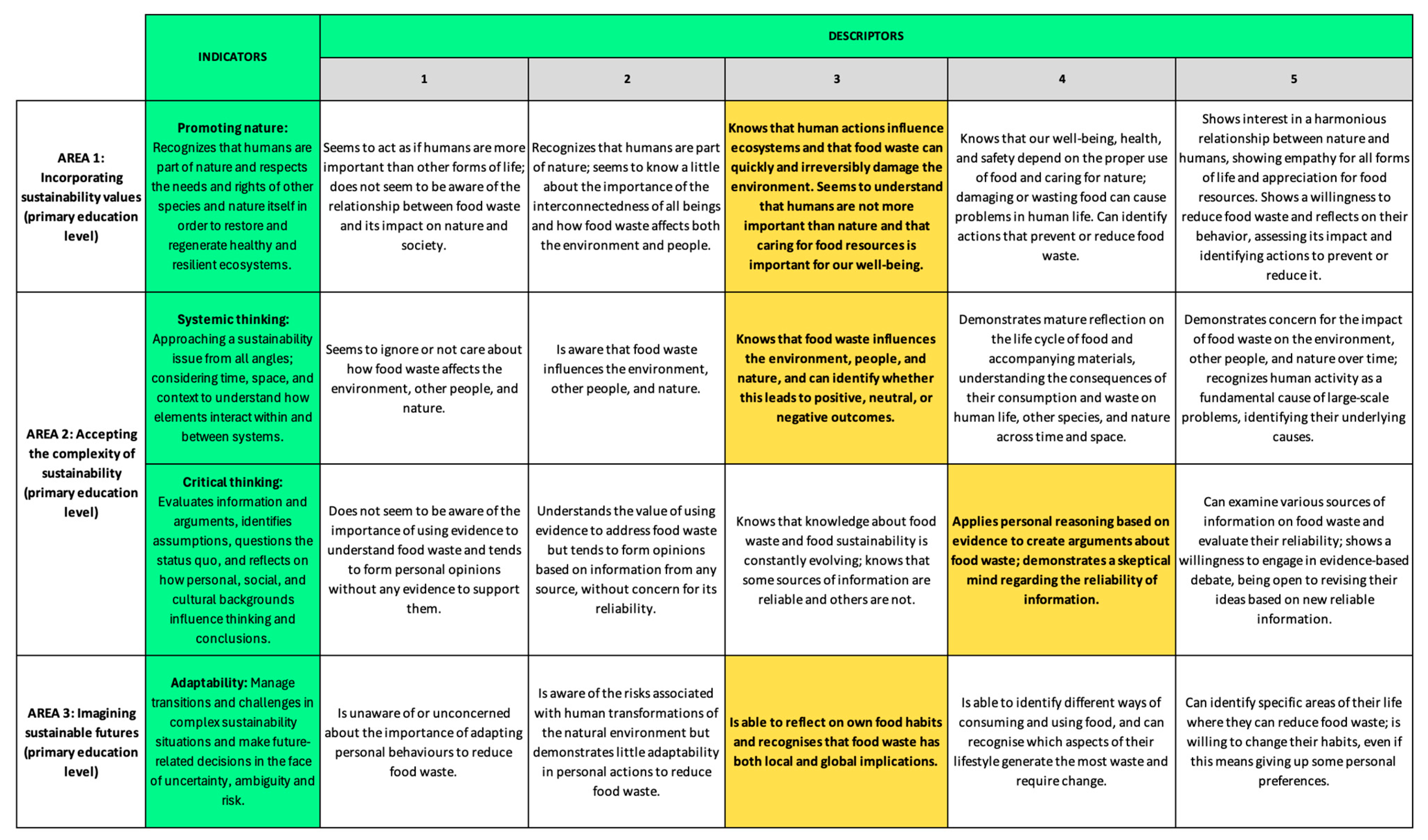
To assess the acquisition of sustainability competences, the GreenComp rubric by Sousa and Doran (2022) [
26] adapted to the sequence activities was used (
Figure 4). Based on observations of students’ work and participation across the different activities, a level from 1 to 5 was assigned to each indicator. A brief written justification was also provided for each assessment, taking into account the evidence gathered during classroom implementation.
In Activity 2, on invisible water, systems thinking was addressed, as students identified interrelationships between different uses of water and recognised how their decisions may affect the wider system. In the same activity, the promoting nature area of GreenComp was also considered, since students were encouraged to understand how human actions and food waste can have an impact on water resources. Activity 6, focused on food labelling, was used to assess critical thinking. For example, one student was able to distinguish between the expiry date and the best-before date and to justify her decision on the basis of the information provided on the label. In Activity 4, responsibility and reflection could be assessed through students’ explanations of the importance of separating waste correctly and their proposals for specific improvements, although this activity could not ultimately be implemented. Finally, in Activity 5, based on stories, competences related to valuing sustainability were assessed when students identified the causes of food waste and proposed more environmentally responsible alternatives.
5. Discussion
5.1. Interpretation of the Findings
The partial implementation of the present teaching proposal in a multi-grade primary classroom (4th, 5th, and 6th grades) suggests that an educational approach based on students’ prior misconceptions can contribute to improving their understanding of food waste and to raising their awareness of the importance of reducing it. Overall, the comparison between the initial and final questionnaires points to progress in students’ knowledge after the intervention, particularly in the content areas that were addressed directly through the implemented activities. In addition, the proposal was designed in line with a learner-centred methodology, placing students at the centre of the learning process and encouraging them to interpret, discuss, and respond to real-life situations related to food waste [
12].
One of the main contributions of the present exploratory pilot case study lies in the identification and pedagogical use of students’ prior ideas as a starting point for the design of the teaching sequence. This aspect is especially relevant because, as noted in the literature review, research on food waste in primary education has tended to focus more on school canteens than on students’ conceptual understanding, and prior ideas have rarely been used as the basis for the design of educational interventions. In this respect, the present proposal contributes to addressing a gap already noted in previous studies, in which misconceptions are described but not systematically integrated into the teaching design [
8,
13].
These findings are consistent with Antón-Peset et al. (2021) [
13], who also conducted a case study in a Spanish primary school and found that a didactic intervention on food waste contributed to broadening pupils’ understanding of the issue. In their study, pupils initially tended to associate food waste mainly with throwing food away, whereas after the intervention they incorporated broader elements, such as its social dimension, environmental impact, avoidable nature, and links with food labelling and the water footprint. Similarly, in the present exploratory pilot case study, pupils initially showed several pre-existing ideas, including the belief that wasting food only involves losing the food itself, or that the concepts of expiry date and best-before date mean the same thing. After the implemented activities, the clearest progress was observed in the topics addressed directly in class, particularly the resources involved in food production and the distinction between expiry dates and best-before dates.
However, the focus of the present study differs from that of Antón-Peset et al. (2021) [
13] in several respects. Their work combined classroom activities with awareness-raising actions in the school community and the quantification of food waste during the mid-morning break and school lunch, reporting a reduction of around 30% in the intervention group during lunch. By contrast, the present study did not aim to measure reductions in actual food waste, but rather to examine changes in pupils’ conceptual understanding and sustainability competences after a teaching sequence grounded in their initial ideas. In this sense, our results complement previous school-canteen and plate-waste studies by showing that food waste education can also be addressed beyond the canteen, as a classroom-based opportunity to work on misconceptions, systems thinking, critical thinking, and more informed decision-making.
The initial questionnaire showed that students had only a limited understanding of the environmental consequences of food waste. In particular, some responses suggested that they did not fully recognise the relationship between discarded food, pollution, and wider environmental degradation. This finding is consistent with Antón-Peset et al. (2021) [
13], who also found that primary school students tend to show little awareness of the broader environmental consequences of food waste. In the present study, however, no substantial change was observed in this area between the two questionnaires. A plausible explanation is that the activity specifically designed to address the destination of discarded food was not implemented, and this content was therefore only approached indirectly through other activities. This result highlights the importance of full implementation when evaluating the impact of a teaching proposal of this kind.
Another relevant finding concerns students’ understanding of the resources involved in food production. Before the intervention, students largely associated food waste only with the food itself, without identifying the natural and human resources embedded in its production. This result is in line with the literature, which shows that students often reduce food waste to leftovers on the plate and fail to consider the wider food system in which waste occurs [
8]. After the activities on food production and invisible water, students showed a broader understanding of the issue and were able not only to identify water as a necessary resource, but also to recognise that wasting food implies wasting other resources linked to production. This suggests that inquiry-based and contextualised activities can help students move from a narrow and immediate view of food waste towards a more systemic understanding of the problem.
The clearest improvement was observed in the content related to food labelling, particularly in distinguishing between the best-before date and the expiry date. This finding is especially relevant because the initial questionnaire had shown strong confusion in this area, and because misunderstanding food labels is one of the practical factors associated with avoidable household food waste. After the activity, students were better able to justify their decisions and to relate labelling to food safety and food quality. In addition, the activity also made it possible to address food storage and everyday decision-making in a cross-cutting way. In this sense, the proposal is consistent with the recommendations of Shigetomi et al. (2024) [
27], which emphasise the need to educate consumers who are able to make informed, critical, and sustainable decisions. Particularly noteworthy is the fact that, whereas in the initial questionnaire students tended to say that they would ask their families what to do, in the final questionnaire they showed greater autonomy and confidence in making decisions themselves.
The findings also suggest that the proposal contributed, at least partially, to the development of sustainability competences within the specific context studied. The adapted GreenComp, based on Sousa and Doran (2022) [
26], made it possible to assess dimensions such as critical thinking, systems thinking, and promoting nature in relation to food waste. The strongest development was observed in critical thinking, especially when students justified their decisions, reconsidered their initial responses, and interpreted information presented in the activities. Some evidence of systems thinking was also found, particularly when students related food waste to the use of water and other resources. These results are relevant because they align with the broader purpose of GreenComp, namely to promote a perspective in which students are able to connect individual actions with wider social and environmental consequences [
5]. At the same time, the use of an adapted rubric proved useful in capturing dimensions of learning that would not have been fully reflected through the questionnaire alone.
5.2. Limitations and Implications for Future Implementations
Nevertheless, the results should be interpreted with caution. First, only part of the teaching proposal was implemented, which limits the extent to which the effectiveness of the sequence as a whole can be assessed. Second, the sample size was very small and restricted to a single rural multi-grade classroom, which limits the generalisability of the findings. Third, the final questionnaire was completed as homework, unlike the initial questionnaire, and this may have affected students’ performance, especially in a context where some pupils required support in reading and understanding the questions. These factors may help explain why some items did not show clearer improvements despite the positive trend observed in the overall results.
The school’s previous environmental project “Ya Nos Toca” should also be considered when interpreting the results of the present exploratory pilot case study. The fact that the participating pupils had already been exposed to practices related to waste sorting, recycling, composting, and food use may help explain some of the knowledge reflected in the initial questionnaire. Although the pupils were not part of the original steering group, they benefited from school-wide actions that may have contributed to their prior understanding of food waste and sustainability.
In this sense, the previous school project can be understood as a contextual factor that may have influenced both the pre-test results and the changes observed after the teaching intervention. On the one hand, pupils’ accumulated experience may have led to higher initial levels of knowledge than might be expected in schools without similar initiatives. On the other hand, there may also have been an additive effect between the teaching sequence implemented in this study and the previous work carried out by the school on sustainability and waste management.
In any case, the contents addressed in the present teaching proposal were designed to support the acquisition of knowledge and attitudes related to food waste and sustainability in any school context, regardless of whether previous environmental projects had been implemented. Therefore, satisfactory results could also be expected in schools without similar prior initiatives, although the specific context of the present study may have helped to strengthen the outcomes observed. Accordingly, while the improvements observed in the post-test may be related to the specific activities implemented in the teaching proposal, the results should be interpreted in light of the educational context in which the study was conducted.
An additional limitation concerns the assessment instrument. Given the exploratory nature of this pilot case study, the questionnaire was not formally validated through psychometric procedures or pilot-tested with an independent sample. Moreover, the small sample size would not allow robust psychometric analyses to be conducted. This should be taken into account when interpreting the results. Future research should include formal expert validation of the items, pilot testing with pupils of a similar age, and independent scoring of open-ended responses by at least two raters in order to calculate inter-rater agreement and strengthen the reliability of the assessment process.
The implementation also provided information for refining specific activities in future applications of the teaching sequence. Although the coffee production example allowed pupils to reflect on the hidden use of water and other natural resources in food production, future implementations could use a more familiar product for primary school pupils, such as cocoa drink powder or orange juice. This change could make the activity more accessible and closer to pupils’ everyday food experiences, while maintaining the same educational objective: helping them understand that wasting food also means wasting the resources used throughout its production process.
The data collected through the final questionnaire and the adapted GreenComp rubrics not only make it possible to assess the learning achieved by pupils, but also to identify which alternative ideas persist and which aspects of the teaching proposal should be modified or reinforced in future implementations. For example, the results showed greater progress in the topics directly addressed in class, such as invisible water and the distinction between expiry dates and best-before dates, whereas some misconceptions related to food storage, the causes of food waste, and the destination of discarded food persisted when the corresponding activities were not fully implemented. This practical use of evaluation evidence to improve the intervention is in line with Patton and Campbell-Patton’s Utilization-Focused Evaluation [
17].
Taken together, the results suggest that a teaching proposal grounded in students’ prior ideas can support meaningful learning about food waste in primary education. The results suggest that when students are engaged through practical, reflective, and contextualised activities, they may be better able to revise misconceptions, connect food waste with environmental and social issues, and could make more informed decisions in their daily lives. In this sense, the study reinforces the educational value of approaching food waste not only as a behavioural issue, but also as a conceptual, ethical, and sustainability-related topic that deserves a more explicit place in primary education.
6. Conclusions
This exploratory pilot case study indicates that addressing food waste in primary education through students’ prior ideas can be a useful approach for promoting a critical and comprehensive understanding of the issue. In the multi-grade classroom in which the proposal was implemented, through the activities the students revise misconceptions and improve their understanding of key concepts, particularly those related to food production, the resources involved in it, and food labelling.
The study also indicates that food waste can be addressed in primary education beyond the school canteen, and that hands-on, engaging activities may help pupils connect everyday decisions with broader environmental and social issues. In this regard, the use of the GreenComp framework proved especially valuable, as it made it possible to assess progress not only in content learning but also in the development of sustainability competences. This is particularly relevant because the impact of training initiatives on food waste is often measured mainly in terms of the number of participants, especially in more informal or non-educational contexts, whereas the present approach allows for a more educationally meaningful assessment of what students actually learn and develop.
In addition, the rubrics proposed by Sousa and Doran (2022) [
26] appear to be a useful tool for evaluating this progress when they are adapted to the specific educational context and to the topic being addressed. Although further research would be needed to confirm their wider applicability, the results obtained here suggest that such adapted rubrics can help capture dimensions of learning that go beyond factual knowledge alone.
Future research could build on this proposal by implementing it with larger and more diverse samples, including both rural and urban schools, and by applying the full teaching sequence under comparable classroom conditions, ensuring that the questionnaires are completed in the classroom rather than at home. Future research could also include formal expert validation of the questionnaire items and independent scoring of open-ended responses by at least two raters. In addition, follow-up measures could be incorporated to assess whether pupils maintain responsible food consumption habits over time. In the longer term, future research could involve families more directly, since many food waste practices take place in the household context. This would help determine whether the learning achieved in the classroom is transferred to pupils’ everyday lives and contributes to more sustainable food consumption habits beyond school.