Article

Electromobility Market Development in Selected European Countries: Long-Term Forecasts to 2035

by
Paweł Piotrowski
Electrical Power Engineering Institute, Warsaw University of Technology, Koszykowa 75 Street, 00-662 Warsaw, Poland
Sustainability 2026, 18(11), 5340; https://doi.org/10.3390/su18115340
Submission received: 3 April 2026 / Revised: 12 May 2026 / Accepted: 19 May 2026 / Published: 26 May 2026
(This article belongs to the Section Economic and Business Aspects of Sustainability)

Abstract

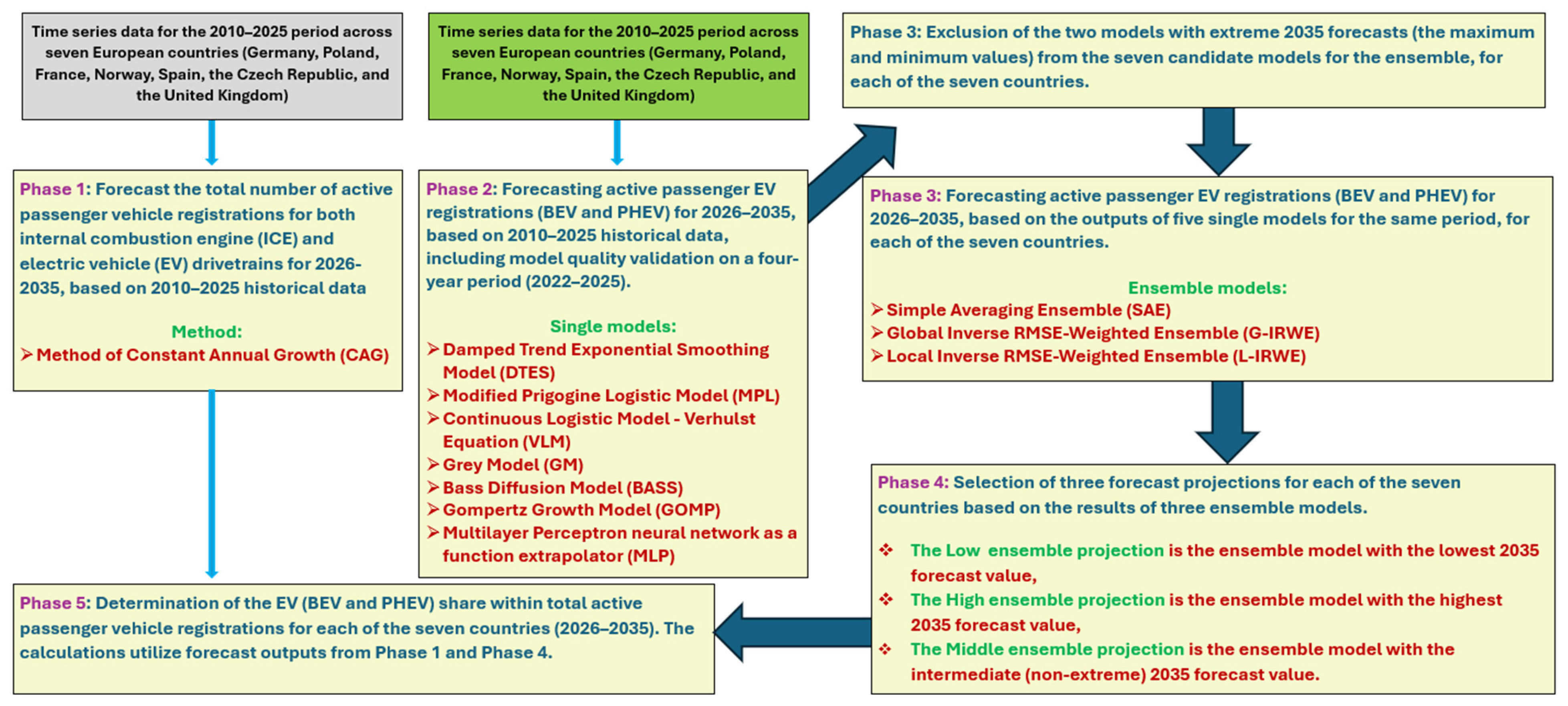
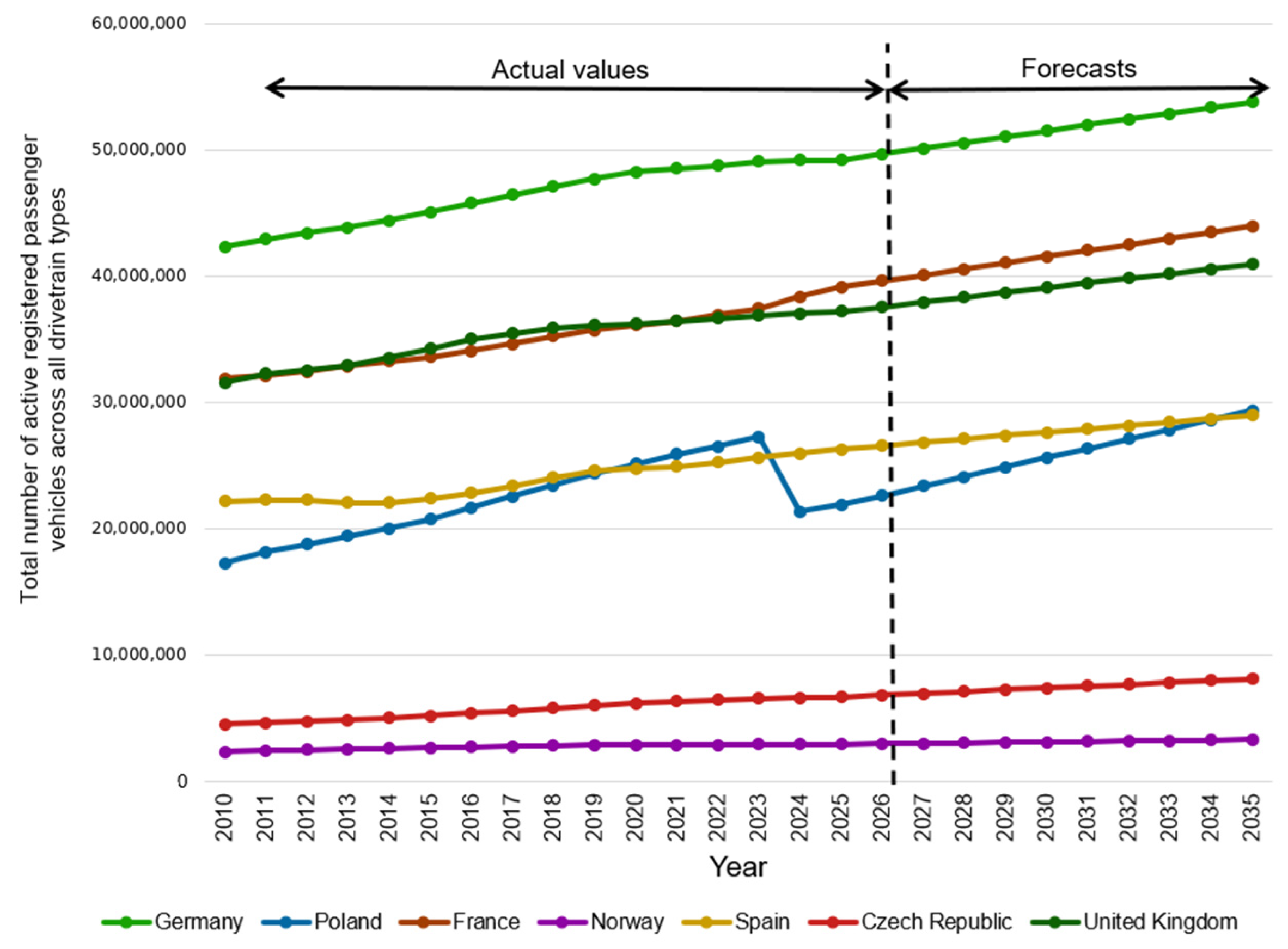
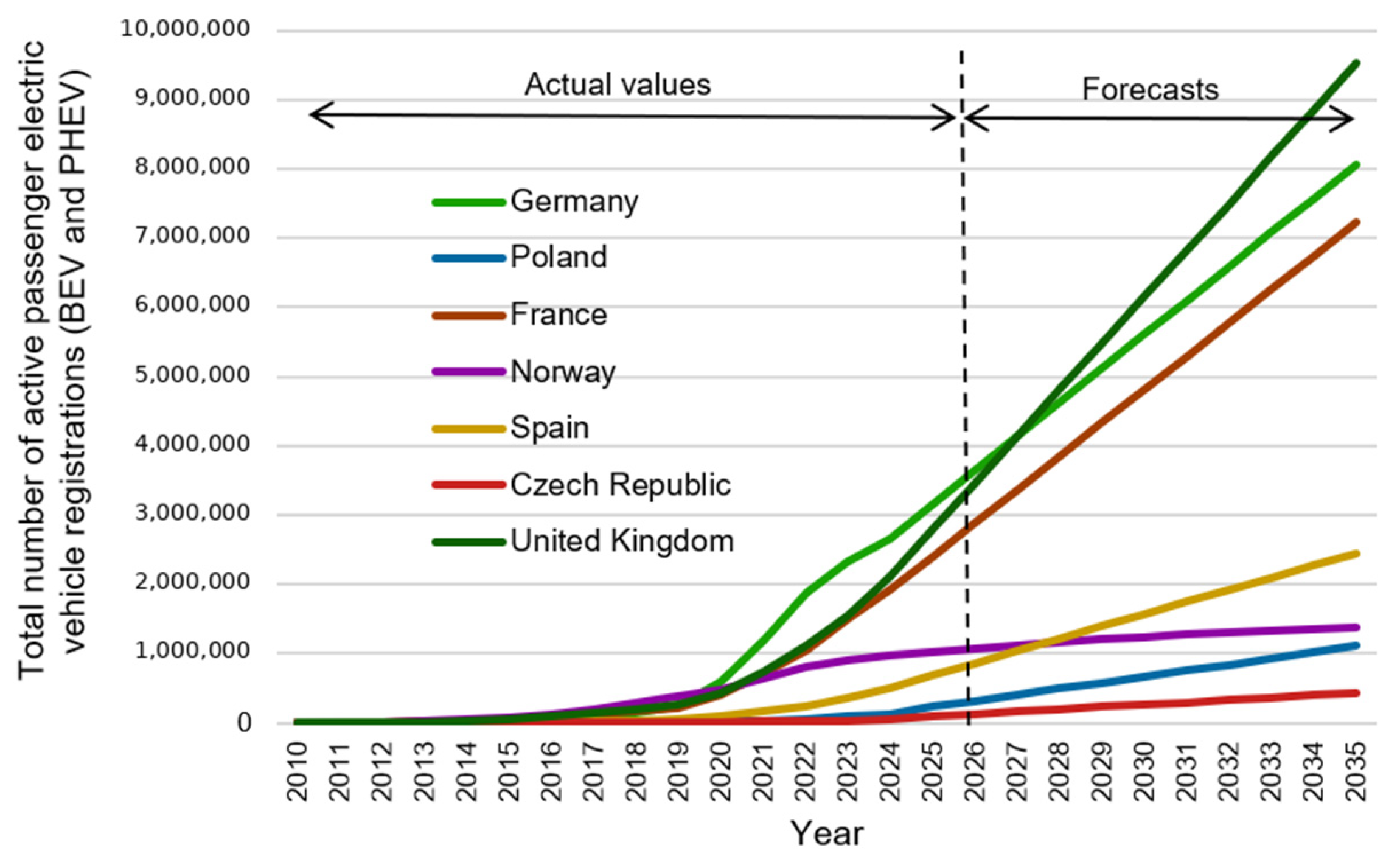
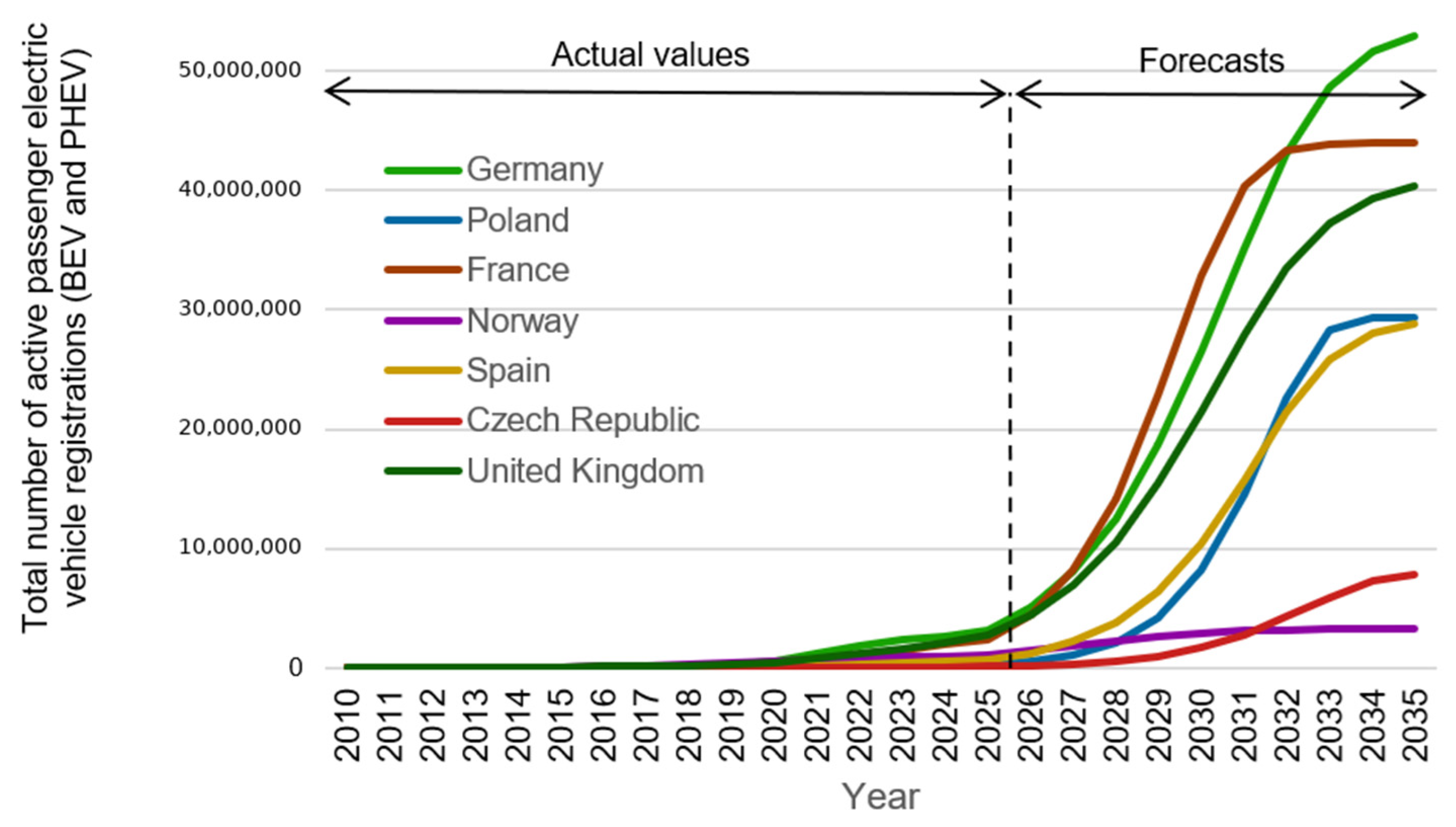
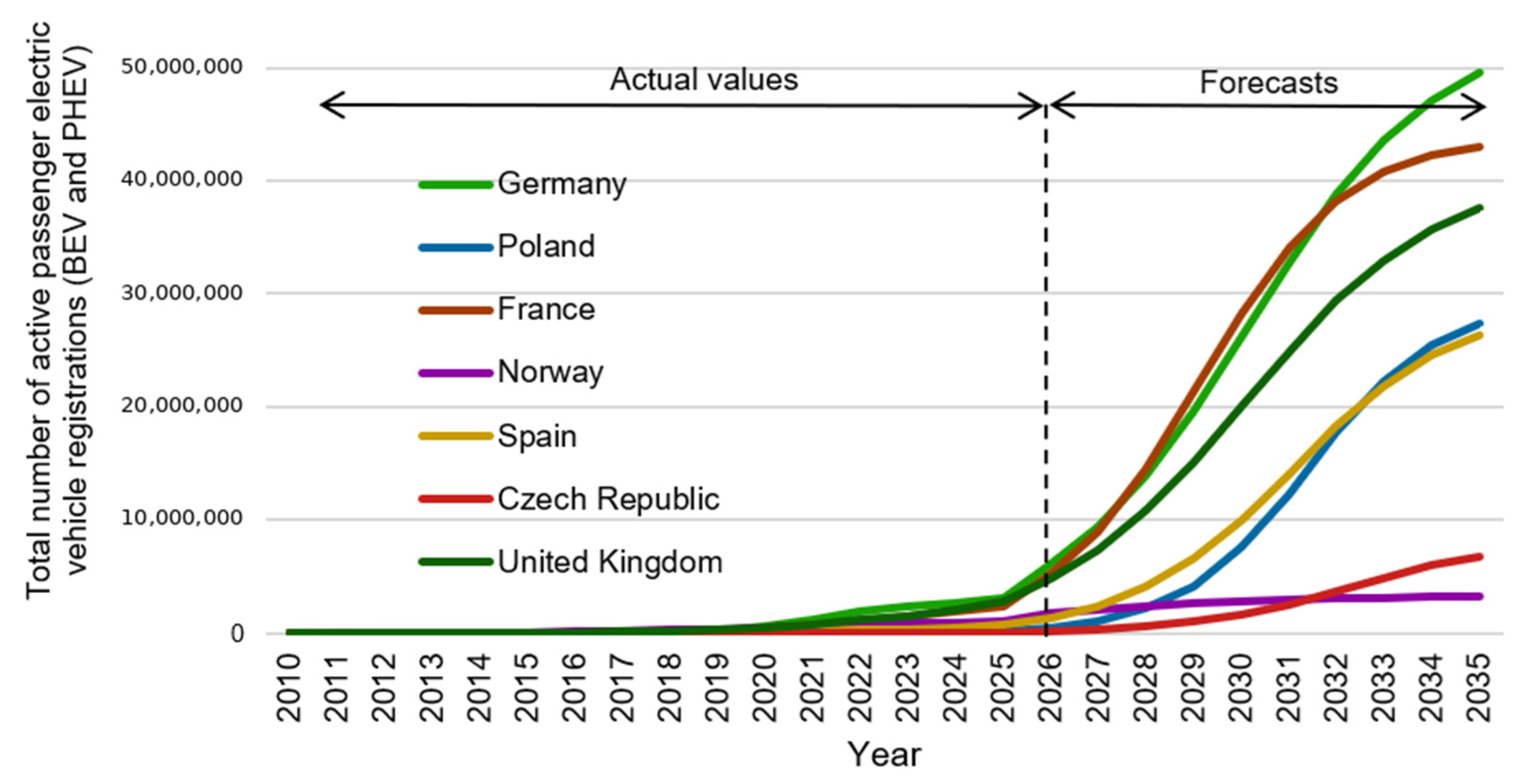
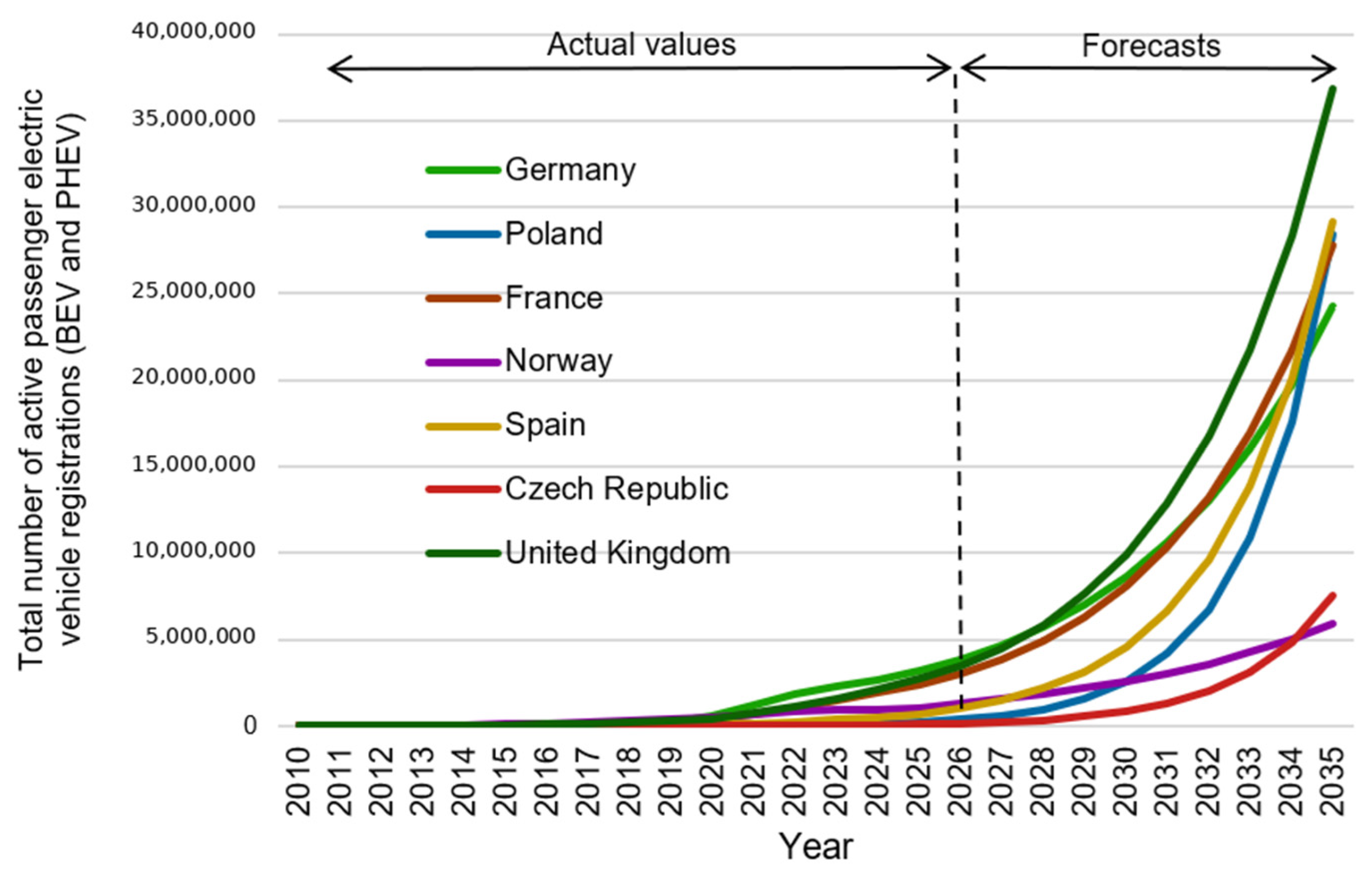
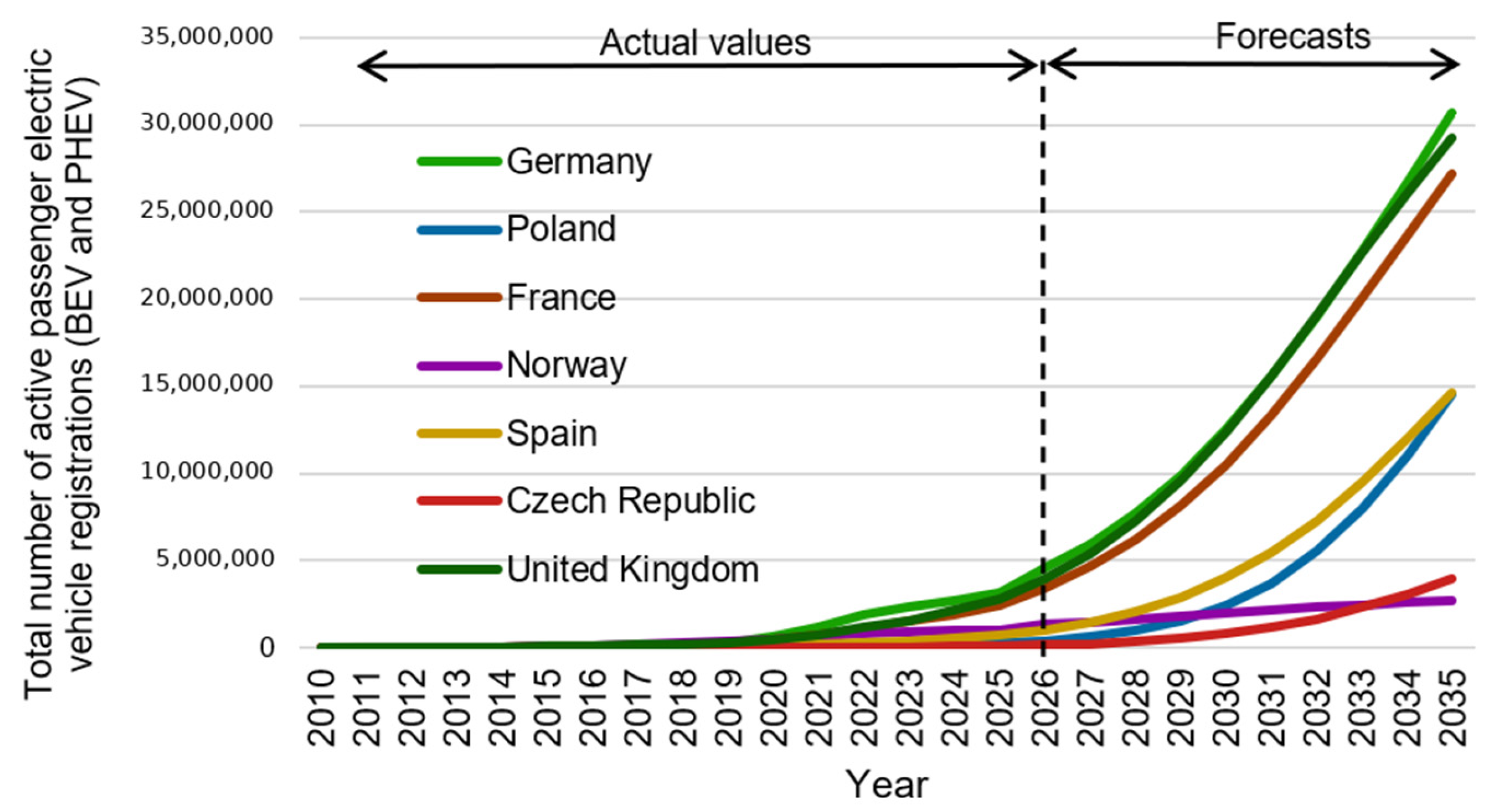
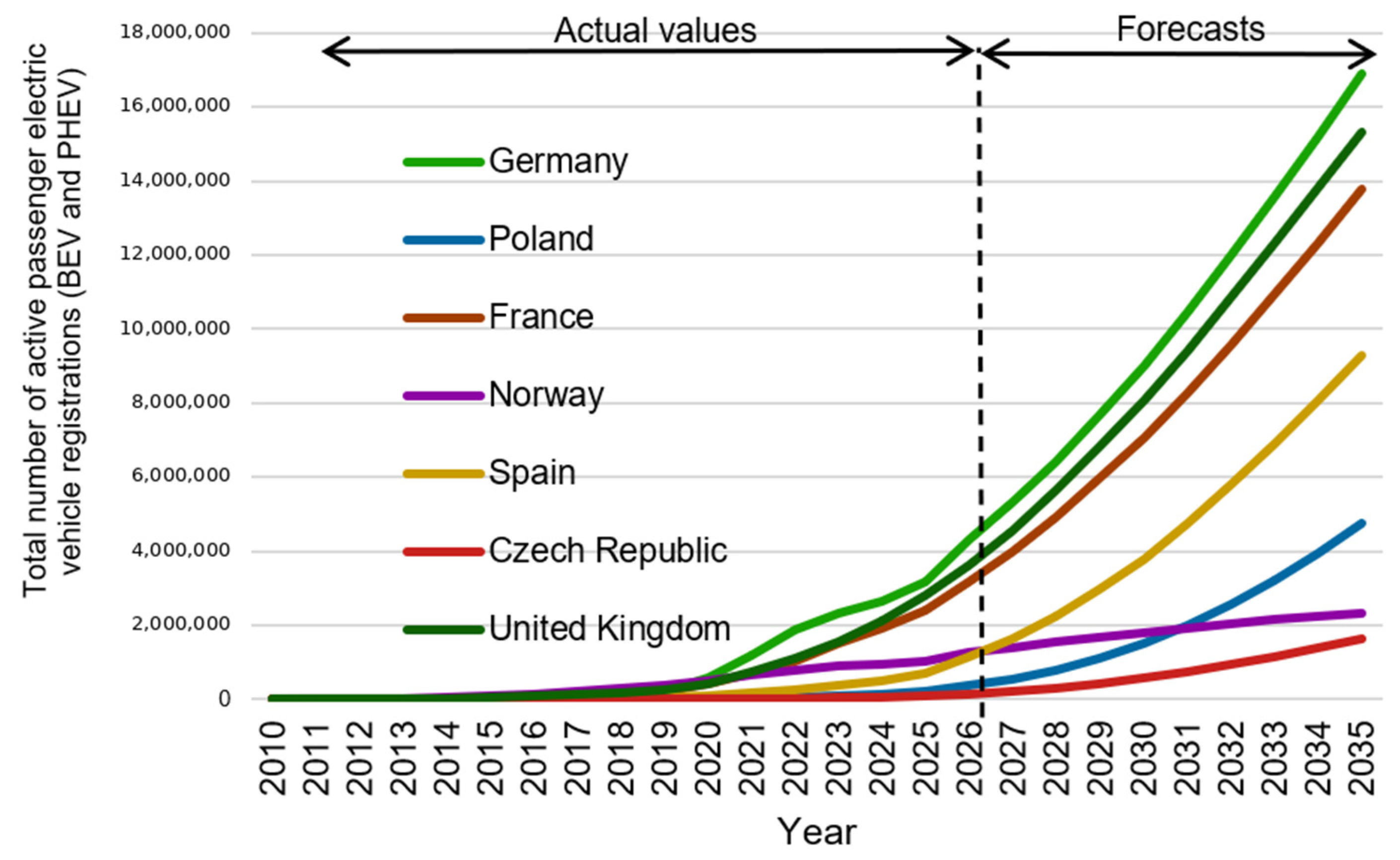
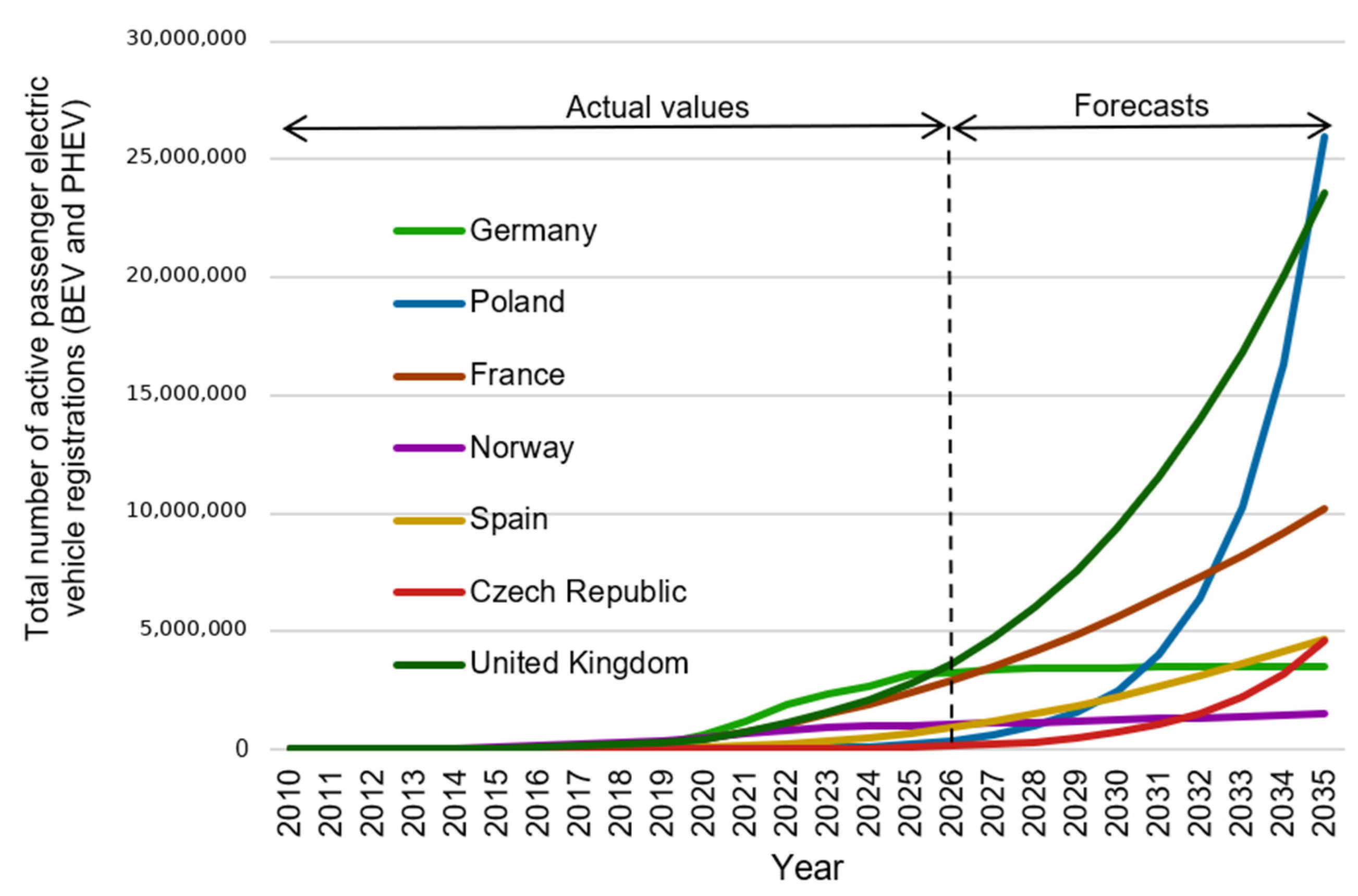
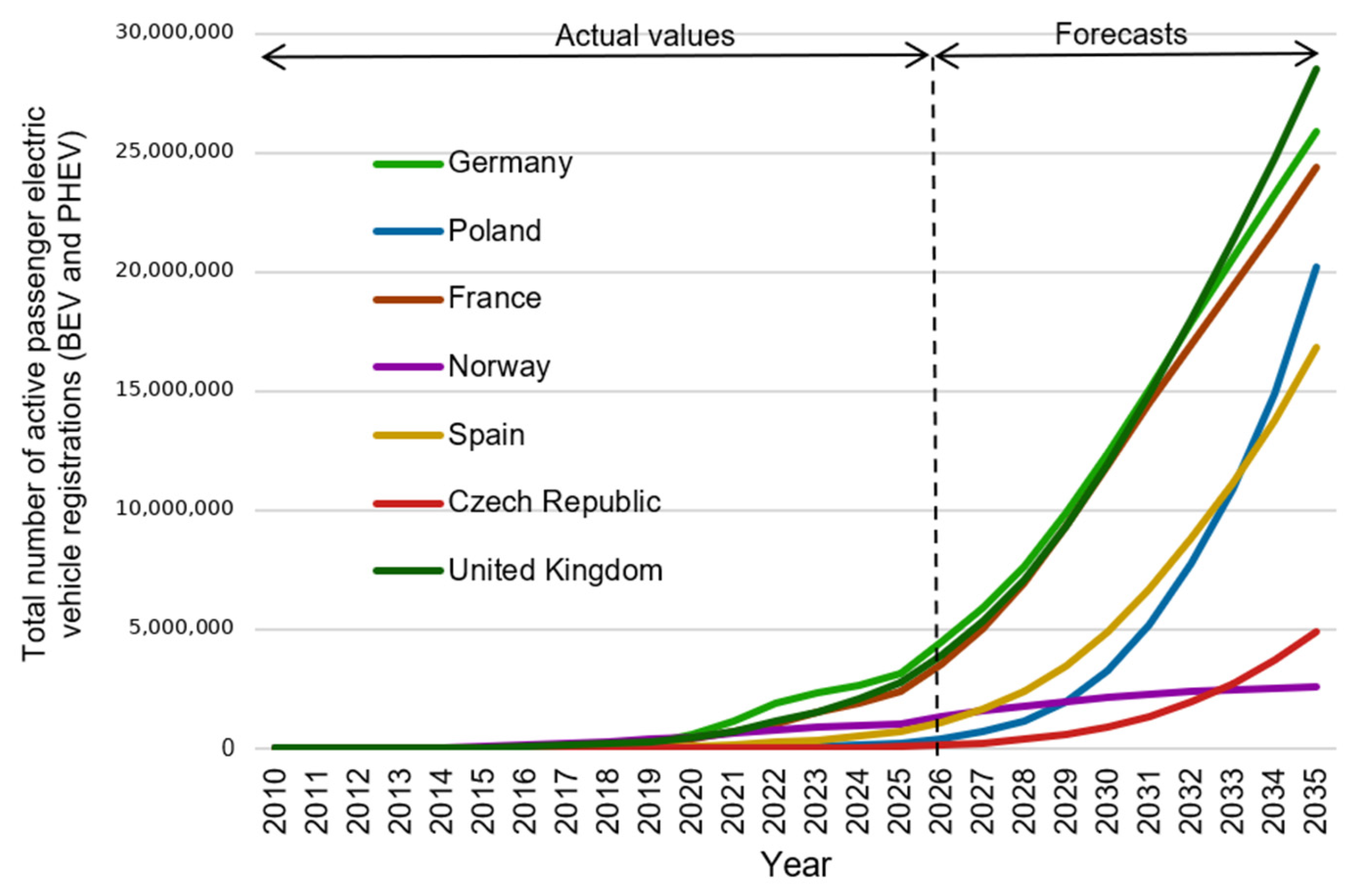
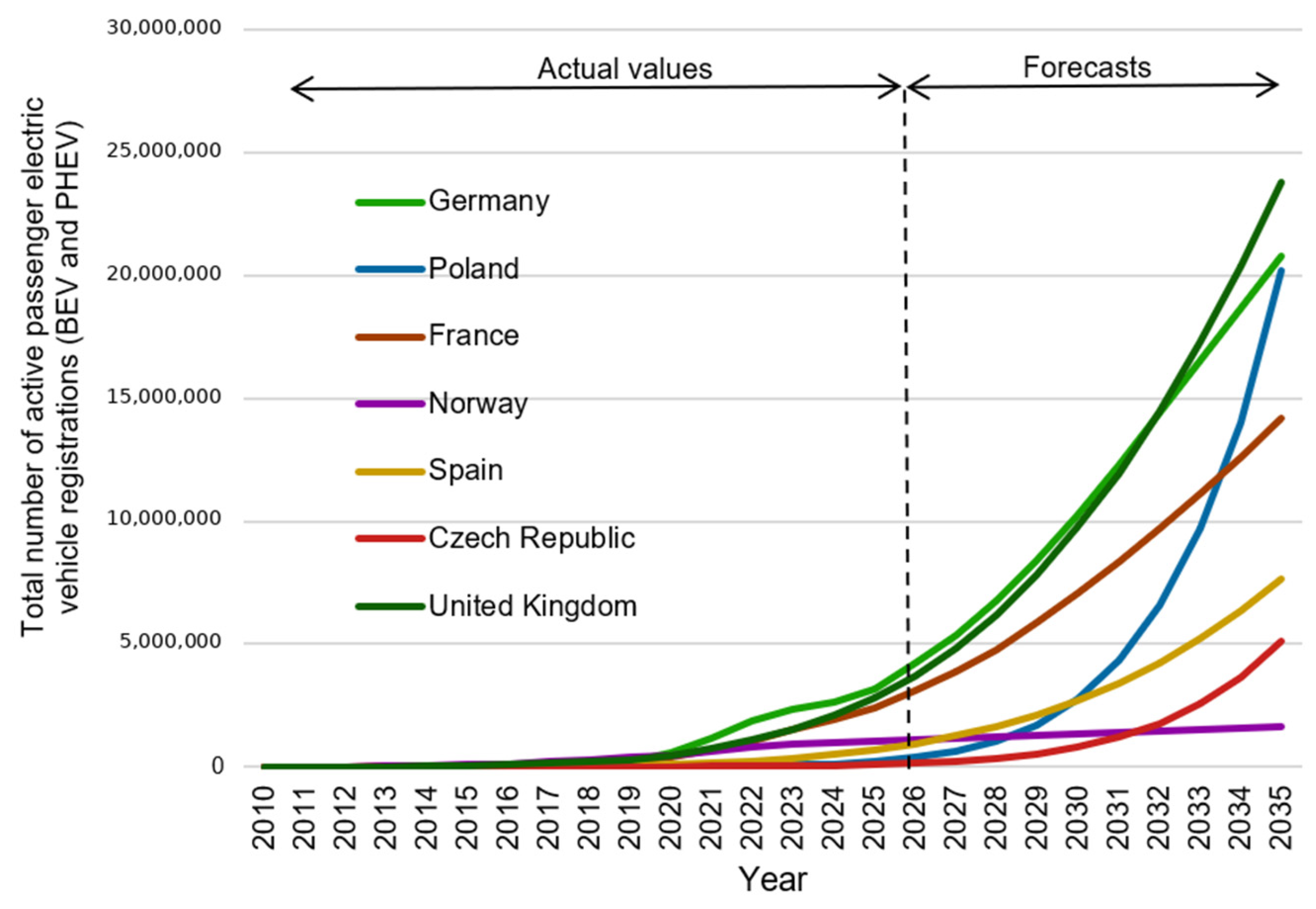
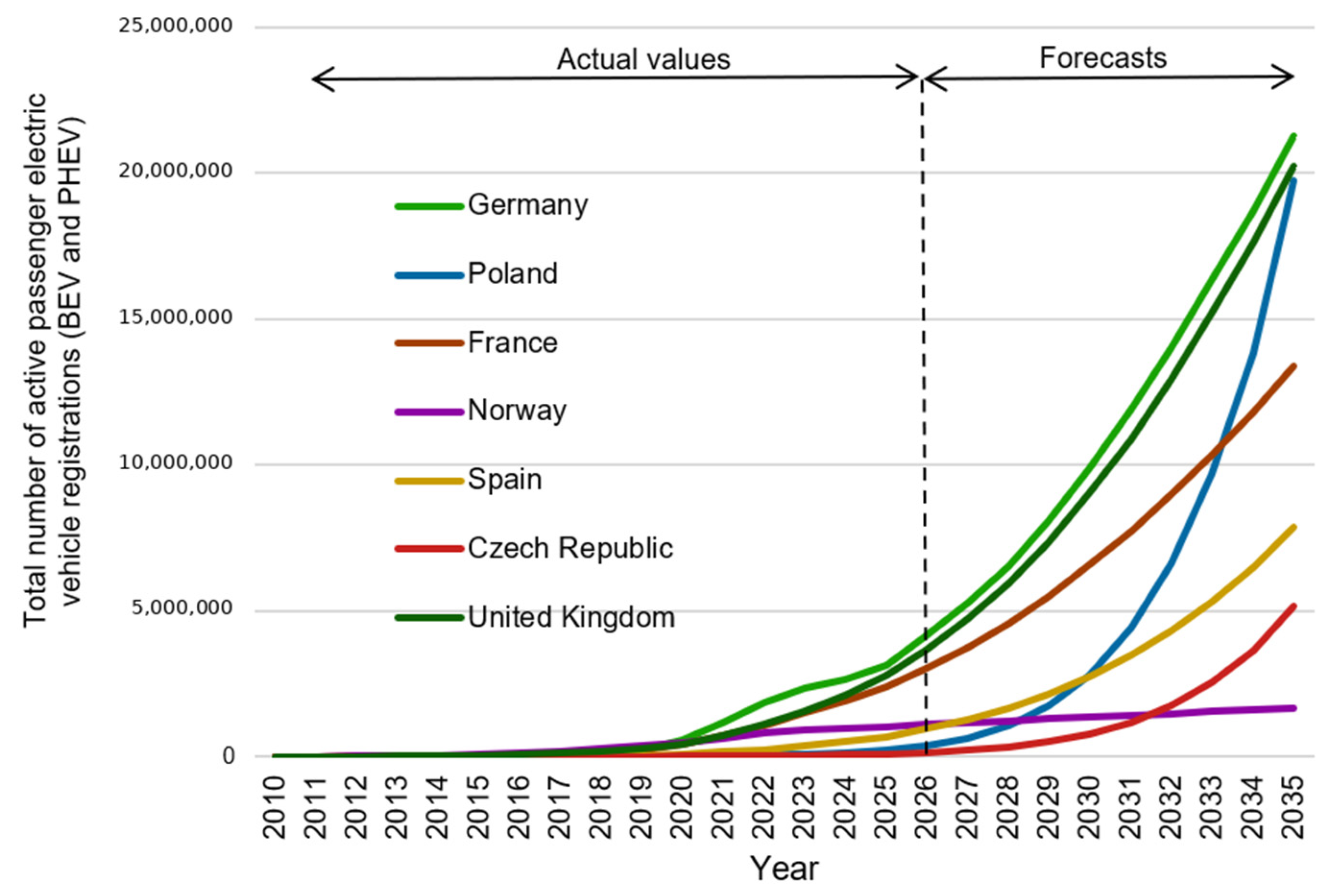
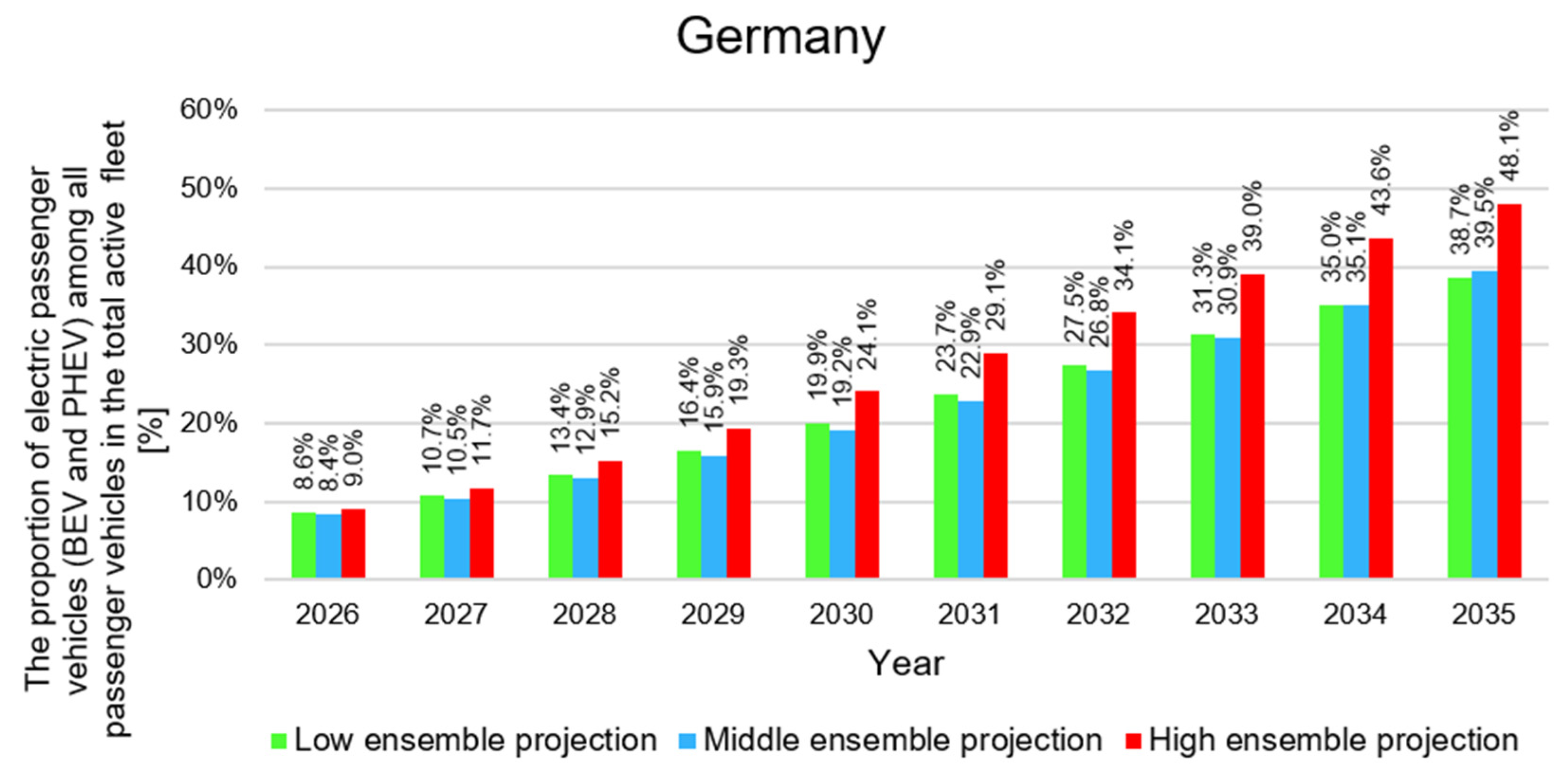
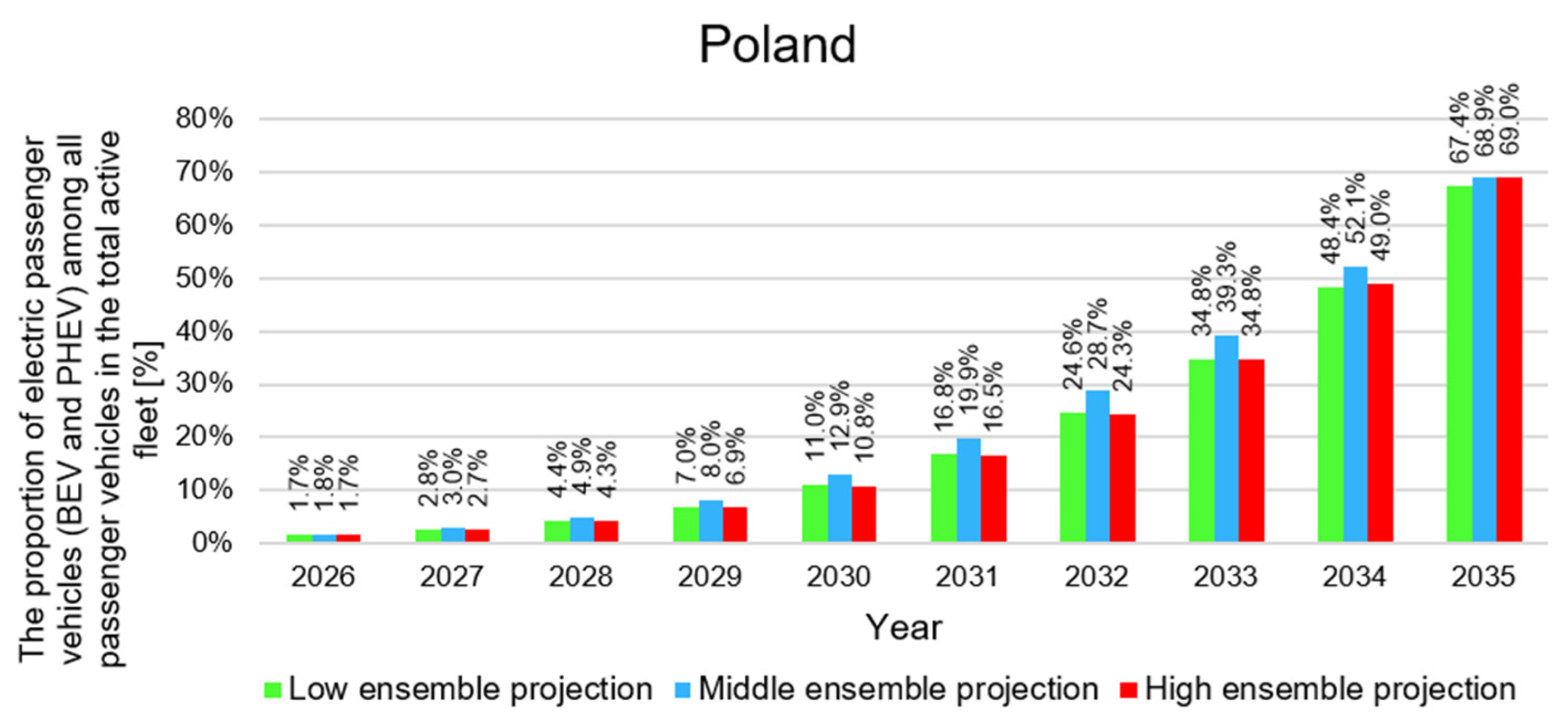
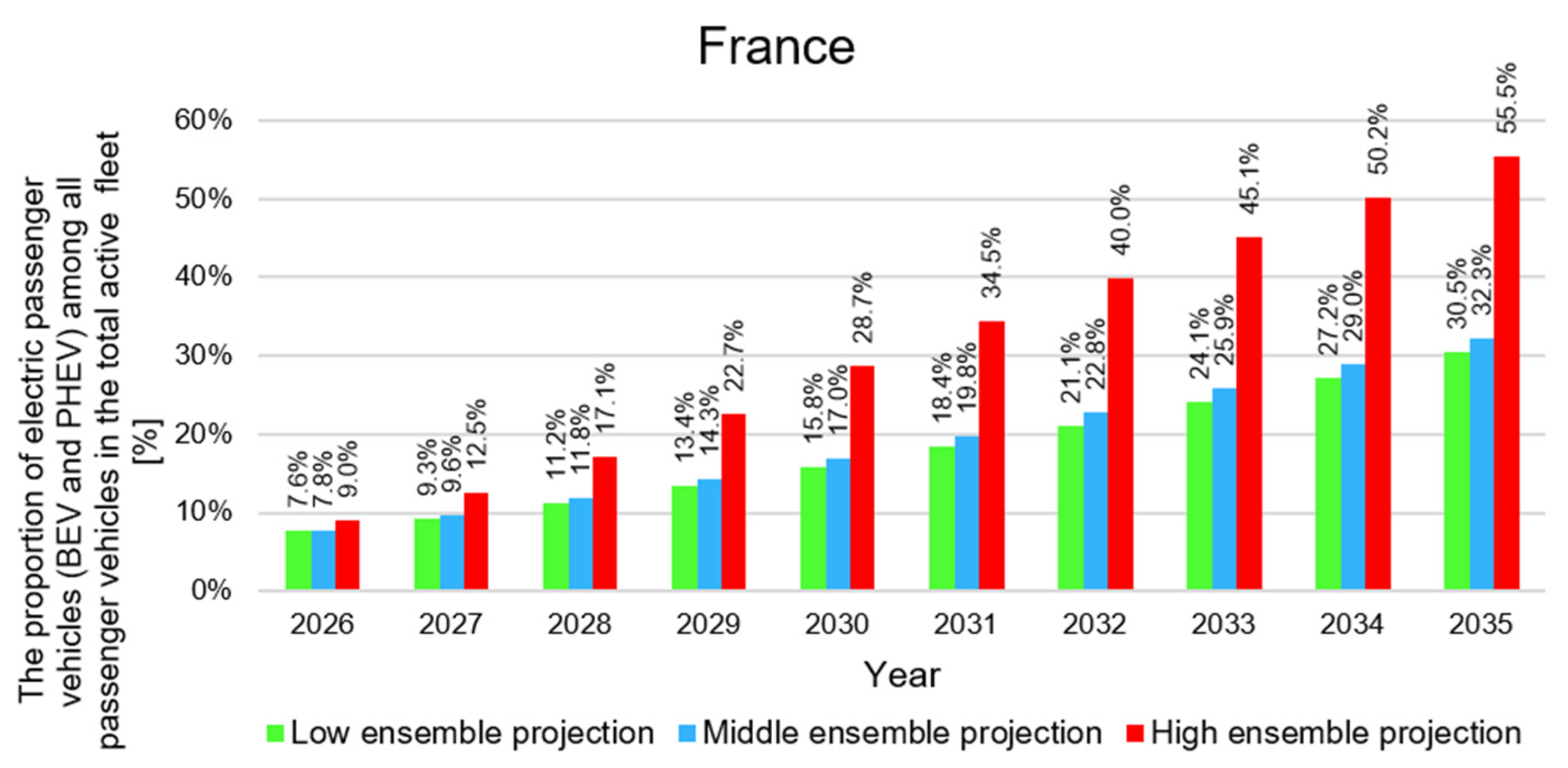
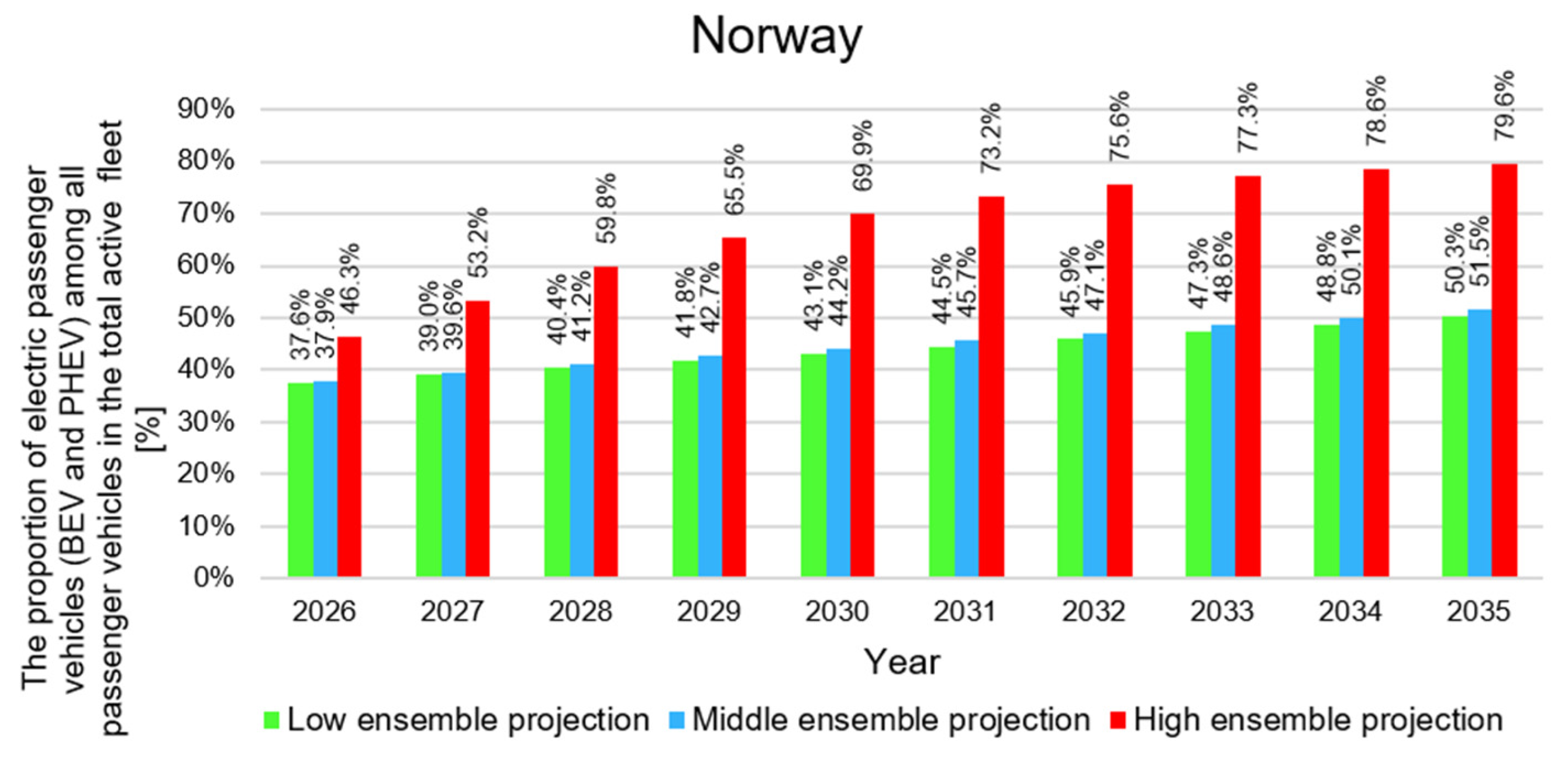
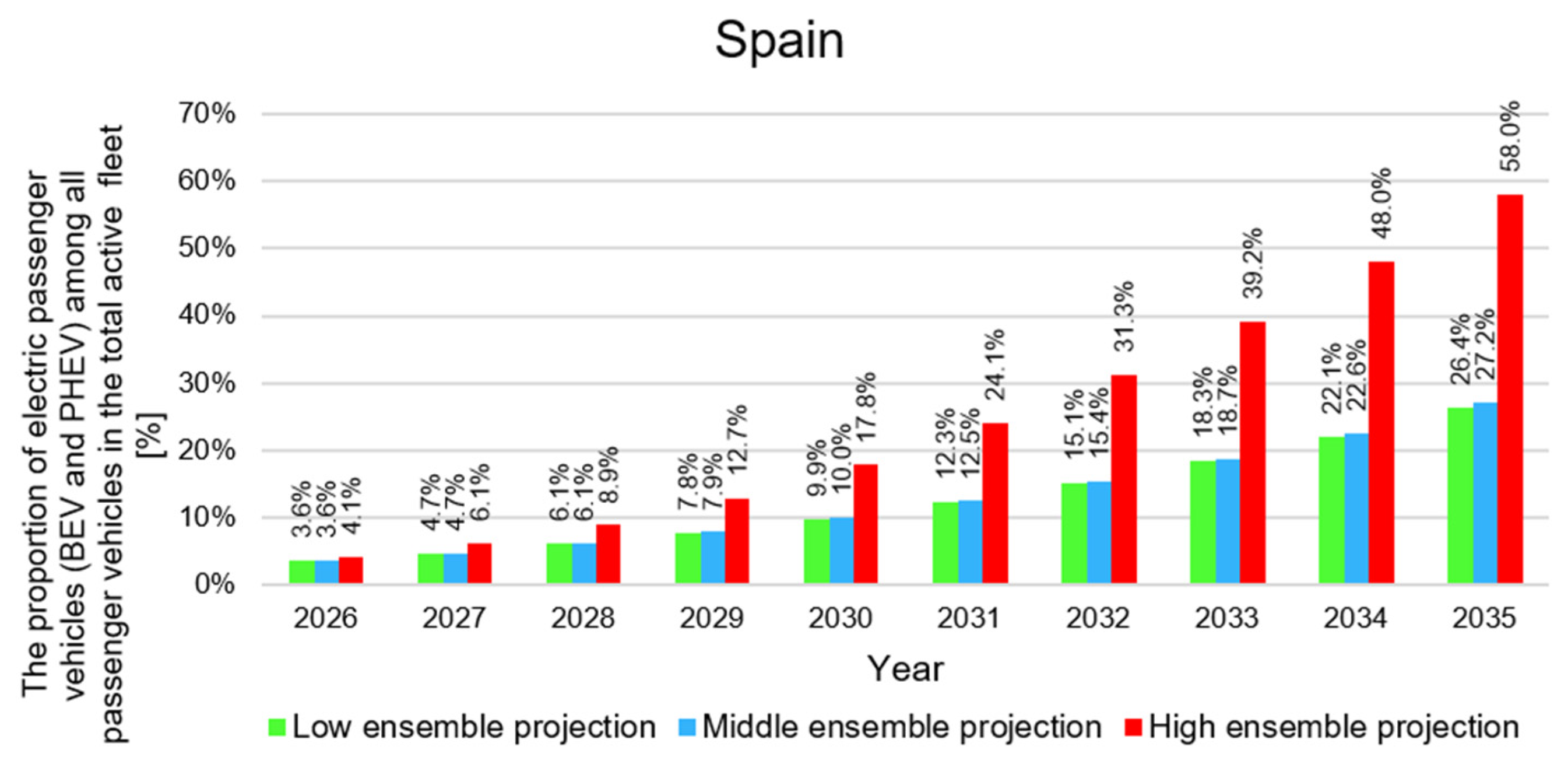
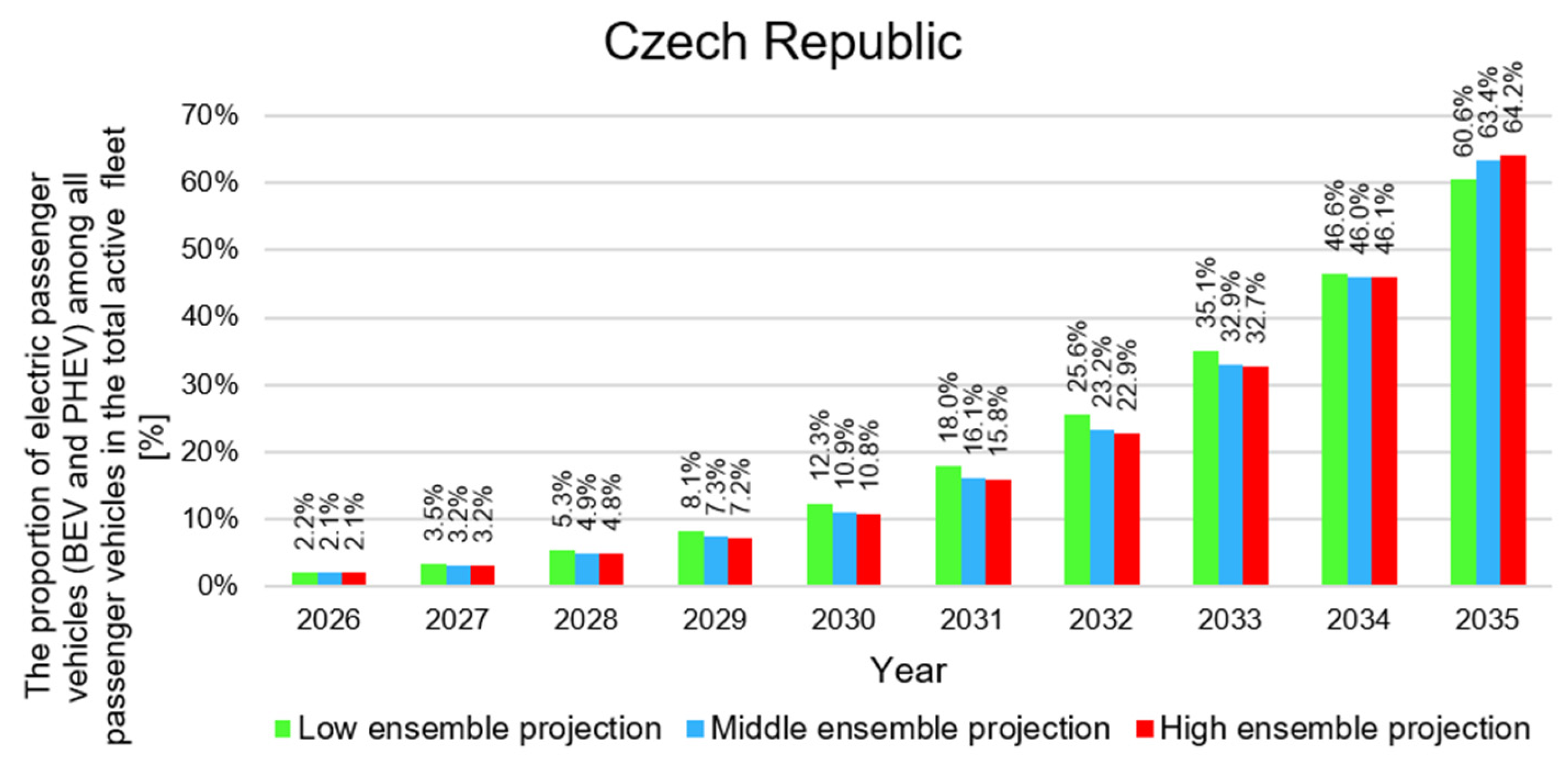
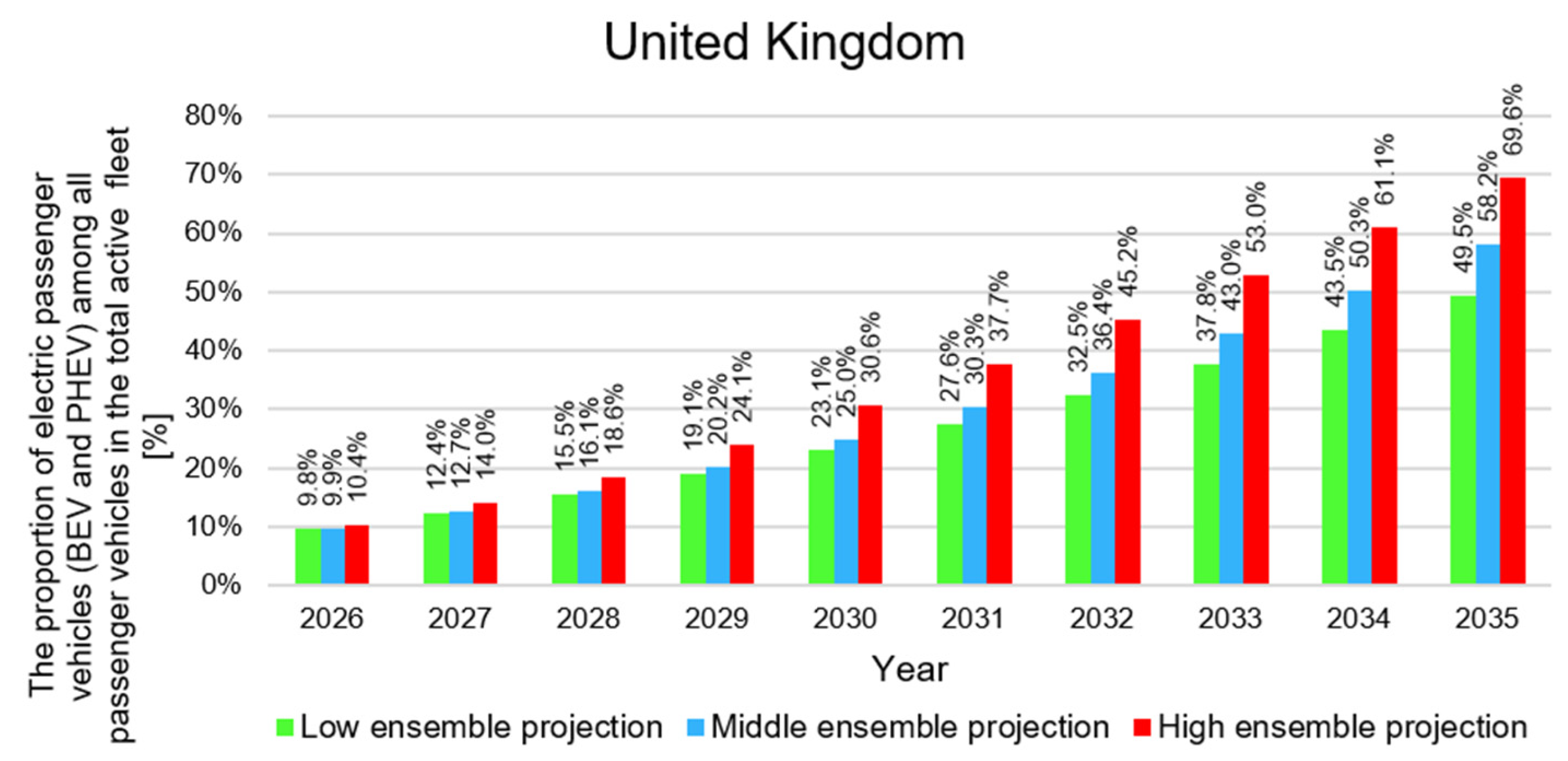
The article examines forecasts of electromobility development across seven European countries over a ten-year horizon (until 2035). The introduction provides a characterization and statistical analysis of the electromobility market within the framework of sustainable development. The analysis includes both leading electromobility markets and lower-income countries with relatively small electromobility sectors. First, forecasts for the total number of registered passenger vehicles of all drive types will be generated for each country, followed by forecasts for the number of passenger electric vehicles (Battery Electric Vehicle (BEV) and Plug-in Hybrid Electric Vehicle (PHEV)). Based on this data, the degree of electromobility development—defined as the percentage of passenger electric vehicles among all registered passenger vehicles through 2035—will be established. The forecasts will be conducted using an artificial intelligence model, a deterministic chaos theory model and selected trend extrapolation methods. The multi-stage approach applied to the problem, together with the use of single-type models within ensembles and the model selection procedure, constitutes an original, proprietary solution. To the author’s knowledge, a similar approach has not been reported for a forecasting task in the context of electromobility. Three ensemble projections will be presented: low, middle, and high. The article concludes with findings regarding the implementation of European Union (EU) sustainable development goals, specifically the degree of passenger vehicle electrification.
Keywords: long-term forecasting; electromobility; European market; vehicle electrification; electric vehicle; time series analysis; artificial intelligence; trend extrapolation methods; sustainable development; EU climate policy long-term forecasting; electromobility; European market; vehicle electrification; electric vehicle; time series analysis; artificial intelligence; trend extrapolation methods; sustainable development; EU climate policy