1. Introduction
From monitoring personal energy consumption through smart wearable devices in real time to the community sharing of individual carbon footprint data, green consumption practices are transcending individual boundaries and gradually evolving into collective social behaviors [
1]. With the deep integration of network information technology and social platforms, quantified data of individuals’ green behaviors not only serve as a foundation for self-reflection but also emerge as trending topics within network communities, fundamentally reshaping the participation logic of both individuals and groups in green consumption [
2]. This shift from individual to collective green behavior tracking has been accelerated by the proliferation of mobile applications and social media features that enable users to share environmental achievements with peers. However, compared to routine activities, green consumption—which often demands individual self-discipline and self-control—frequently lacks intrinsic motivation. Coupled with the driving force of community norms, such as green ideologies and even obligatory responsibilities, consumers’ participation in green behaviors is more passive, rather than active [
3]. In response, the industry has widely attempted to stimulate consumers’ green behavioral participation and achieve positive green outcomes through self-tracking and data sharing in recent years. However, green consumption participation driven by such approaches often exhibits immediate and transient characteristics, due to the lack of intrinsic motivation [
4]. Green consumption is a long-term process, and its sustainable realization depends more on active participation than passive coercion. Prior research has largely focused on the immediate behavioral outcomes of green interventions, overlooking the psychological mechanisms—particularly autonomy—that drive long-term engagement. The formation of consumers’ sustained willingness to participate in green consumption depends not only on the optimization of behavioral outcomes through self-tracking and measurement of green behaviors, but also on whether such tracking and measurement can effectively evoke individuals’ autonomy in the green consumption process in a timely manner.
The practice of acquiring green behavioral data, such as energy consumption values and emission reduction amounts, through self-tracking and measurement, and subsequently reflecting upon and regulating one’s green behaviors accordingly—that is, self-quantification in the green domain—is transforming consumers’ original green consumption behavioral frameworks. In the field of green consumption, existing research has predominantly focused on the direct impacts of self-quantification on individual green behavioral outcomes, emphasizing its rational regulation and reasonable intervention on individual green behavioral results [
5]. However, focusing on green consumption as a long-term process, few studies have addressed the issue of sustained green participation beyond green outcomes. Moreover, related research has largely proceeded from individual contexts, overlooking the influence of self-quantification on individuals’ green behaviors within community networks under technology-facilitated community network environments. This gap is critical because green consumption increasingly occurs within digitally connected communities where peer comparison and social feedback are pervasive. Accompanying the community-oriented transformation of individual self-quantification and the public comparison of private data [
6], individuals may either feel satisfied due to superior quantified green behavioral data compared to others and actively participate in green behavioral practices, or experience “performance anxiety” due to inferior quantified green behavioral data compared to others and passively enhance green behavioral practices. Exploring, from a community perspective, how self-quantification enables consumers’ green behaviors to transition from passive to autonomous and from short-term to long-term is currently lacking in research.
The community-oriented application of self-quantification technologies, while optimizing the immediate outcomes of consumers’ green behaviors in the short term, needs to evoke consumers’ sustained investment and long-term commitment based on intrinsic motivation. Therefore, breaking through the individual perspective, this study proceeds from a community network perspective to deeply analyze how, under different contextual conditions, self-quantification influences consumers’ green behavioral autonomy and their sustained willingness to engage in green behaviors when consumers participate in different types of green activities. Specifically, we distinguish between promotion-oriented green activities (e.g., accumulating green energy) and defensive-oriented green activities (e.g., controlling energy consumption), and examine the moderating role of goal appeal types (egoistic vs. altruistic). Through systematic scenario-based simulation experiments, this study aims to clarify the intrinsic mechanisms and effect boundaries through which self-quantification influences consumers’ green behavioral autonomy in the context of community networks, with the goal of better applying self-quantification to green consumption practices and enabling consumers to participate more actively and continuously in green activities.
3. Research Model and Hypotheses
Theoretical Model and Hypotheses Mapping:
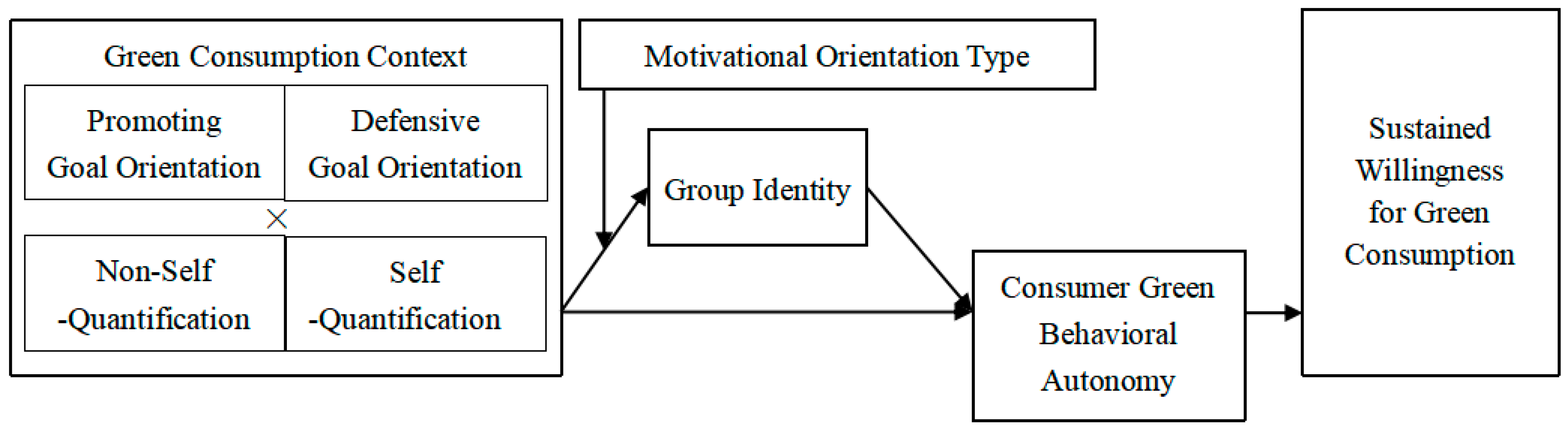
Figure 1 presents the conceptual model guiding this study. The model specifies self-quantification as the independent variable, group identity as the mediating variable, behavioral autonomy and sustained willingness as dependent variables, and goal appeal type (egoistic vs. altruistic) as a moderating variable. The hypothesized paths are as follows: H1a and H1b propose the mediating role of group identity in the relationship between self-quantification and behavioral autonomy under promoting goal orientation; H2a and H2b propose the same mediating role under defensive goal orientation. H3a and H3b propose the moderating effect of goal appeal type on the relationship between self-quantification and group identity under promoting and defensive orientations, respectively. H4 proposes the direct effect of behavioral autonomy on sustained willingness. All hypotheses are tested within a moderated mediation framework (see
Section 4 for analytical details).
In promoting goal-oriented consumption activities, information disclosure and transparency reduce information asymmetry among individuals in behavioral activities, effectively coordinate different action strategies of heterogeneous individuals, and evoke individuals’ group identity, ultimately leading them to make convergent behavioral decisions [
21,
22]. Group identity refers to an individual’s tendency to view themselves and others as a unified whole in general behavioral activities and pursue consistency with others’ behavioral decisions [
23,
24]. Specifically, members within a community regard each other as mirrors for reference, forming common thinking patterns and convergent behavioral choices in decision-making processes [
25]. Individuals with low group identity define themselves based on their personal characteristics, and their behavioral decisions tend to be autonomous; individuals with high group identity define themselves according to certain formal or informal groups to which they belong, and their behavioral decisions depend on the overall behavioral tendencies of their affiliated groups [
26,
27]. For example, in consumer donation activities, when receiving data about other consumers’ donation amounts, consumers with low donation intentions are stimulated to effectively increase their donation amounts, thereby making group donation levels converge to similar levels. This occurs because the accessibility and operability demonstrated by others’ donation data reduce information asymmetry among consumers in donation activities, evoking their group identity and serving as an effective nudging mechanism for low-amount donors to increase their donations to group-consistent levels [
28,
29]. External information provides cues and social norms for how individuals should act in specific situations [
30], causing highly autonomous individuals with originally heterogeneous intentions in promoting goal-oriented activities to shift from central processing pathways to peripheral processing pathways, pursuing group conformity and convergent behavioral choices [
31,
32].
Self-quantification operates similarly, functioning as both an individual activity that aims to regulate consumers’ self-behavioral decisions through visually presented tracking data of self-behavioral activities, and as a community activity, wherein consumers develop insights and knowledge through group-shared quantified data to guide changes in their self-behavioral decisions [
33]. In promoting goal-oriented consumption activities, self-quantification enhances consumers’ group identity while reducing their behavioral autonomy, leading them toward conformity in consumption activities. Under ambiguous circumstances, the provision of definitive quantified information causes consumers to make behavioral decisions based on external quantified information, rather than their own judgment, resulting in convergent phenomena in individual consumption behaviors within the community [
34]. For example, based on observations of the “Ant Forest” phenomenon, Ge et al. (2023) [
35] found that consumers who should ideally engage in green activities at their own pace would, upon learning about others’ green behavioral data and rankings within the community, rely on others’ data and follow suit by adjusting their own green behavioral intensity. In community-based consumption behavioral activities, promoting goal-oriented consumers regard others in the community as information sources, referencing the quantified data of others’ behaviors to determine their own behavioral decisions. This tendency toward conformity and convergence causes individual consumers’ green behaviors to lose personalization and autonomy to a certain extent [
36].
H1a. Under promoting goal orientation, compared to non-self-quantification, self-quantification reduces consumers’ green behavioral autonomy in communities.
H1b. Consumers’ group identity mediates the effects of self-quantification on their green behavioral autonomy under promoting goal orientation.
In defensive goal-oriented consumption activities, participation in defensive behaviors causes individuals to experience pressure from their peer groups, where conformity through imitation becomes a means and pathway to achieve a sense of belonging under peer group pressure [
37]. In ambiguous situations, consumers participating in defensive goal-oriented consumption activities are susceptible to mutual influence of negative emotions, and consumers tend to use others’ behaviors and attitudes as guidance for their own behavioral decisions, thereby lacking behavioral autonomy [
38]. However, under deterministic self-quantification contexts, when behavioral data feedback is available, consumers exhibit lower group conformity and higher behavioral autonomy. Taking donations as an example, when others’ shared donation-damaging behavioral data are shared and observed, consumers are unlikely to change their original donation intentions and may even strengthen their sense of morality within the community, thus choosing not to conform. Specifically, learning about others’ donation behavior (promoting goal-oriented) can lead to greater conformity in individual behavioral decisions within groups, while learning about others’ donation-damaging behavioral data (defensive goal-oriented) tends to reduce conformity in individual behavioral decisions within groups to a greater extent. Compared to quantified group donation behaviors that cause individual consumer behavioral conformity, quantified group donation-damaging behaviors are less likely to change individual consumers’ original behavioral decisions, making their behavioral decisions more autonomous [
39]. In green consumption activities, based on a systematic review of community energy consumption monitoring phenomena, Zhang et al. (2025) [
12] found that, when individual consumers receive quantified data on others’ electricity and water usage within the community, consumers’ avoidance psychology tends to be evoked to a greater extent, leading them to develop self-awareness that their energy consumption levels differ from or are even much lower than others. Alternatively, after learning about energy consumption activity categories that are prevalent and practiced by others, they autonomously choose different energy consumption activity categories from community members that they perceive as more energy-efficient, demonstrating higher behavioral autonomy. Furthermore, Chai et al. (2024) [
40] pointed out that, when consumers observe others’ high-carbon travel behavioral data in the community and know that their own travel carbon emission data will be shared within the community, consumers not only refrain from imitating others’ high-carbon travel behaviors in the community, but may also adopt lower-carbon green travel decisions by strengthening their sense of morality within the community. In defensive green consumption, communalized behavioral data under self-quantification weakens consumers’ group identity, making them less constrained by group norms in defensive green behavioral decisions, thus exhibiting higher behavioral autonomy.
H2a. Under defensive goal orientation, compared to non-self-quantification, self-quantification enhances consumers’ green behavioral autonomy within the community.
H2b. Consumers’ group identity mediates the effects of self-quantification on their green behavioral autonomy under defensive goal orientation.
The ultimate affected object of specific behaviors serves as a crucial consideration factor in determining individuals’ final behavioral tendencies, meaning that whether an individual’s goal appeals are driven by altruistic or egoistic motivations influences their behavioral preferences [
41,
42]. Therefore, under different goal-oriented contexts, the impacts of self-quantification on consumers’ group identity and their behavioral autonomy in green consumption are moderated by goal appeal types, with altruistic and egoistic goal appeals demonstrating differential effects on consumers’ group identity and behavioral autonomy in green consumption.
When the motivational orientation type is altruistic, individuals demonstrate weaker motivation for information processing, often engaging in heuristic information processing [
41]. Individuals regard group behaviors as normative standards and adjust their own behaviors according to these norms to achieve consistency with group behaviors [
43]. Particularly when cognitive understanding of participated behavioral activities is incomplete, individuals often prefer to engage in altruistic behaviors according to the value standards of others in the community, exhibiting significant conformity tendencies; they are not concerned with why they engage in altruistic behaviors, toward whom, or how to be altruistic, but mechanically and convergently imitate others’ behaviors within the community, constraining their altruistic behaviors within community standards [
44]. At this time, access to quantified data related to others’ behaviors in the community promotes individuals’ heuristic thinking-based behavioral compliance, leading them toward conformity [
45]. Conversely, when the motivational orientation type is egoistic, individuals demonstrate stronger motivation for information processing, often engaging in systematic information processing [
41]. In this context, access to quantified data related to others’ behaviors in the community promotes individuals’ systematic thinking-based behavioral analysis, leading them toward autonomy [
45].
In promoting goal-oriented contexts, when consumers are driven by egoistic goal appeals, their green behavioral participation is based more on personal volition out of self-interest considerations, seeking greater personal benefits through environmental protection. Under the influence of altruistic goal appeals, if consumers’ green behaviors are based on maintaining social and group interests, they often exhibit insufficient motivation for green behavioral participation [
46]. When self-quantification technology is introduced into this context, the community sharing of consumers’ green behavioral quantified data enhances environmental participation levels while triggering social comparison, causing consumers to develop conformity tendencies [
2]. Under egoistic goal orientation, environmental behaviors are directly associated with personal interests, where higher quantified values mean greater personal gains, and this positive reinforcement can effectively enhance consumers’ environmental participation motivation. Under altruistic goal orientation, since green behaviors have low association with personal interests, consumers rely on quantified data to judge whether they meet group expectations. Once they reach the group average level, their internal motivation for further improvement significantly declines.
Under defensive goal-oriented contexts, when consumers are driven by egoistic goal appeals, their energy consumption behaviors are more grounded in risk aversion consciousness based on personal interest considerations, maintaining self-interest through prudent energy consumption decisions [
47]. Under the influence of altruistic goal appeals, if consumers’ energy consumption behaviors are based on concern for group welfare, they often exhibit insufficient motivation for energy consumption constraint [
48]. When self-quantification technology is introduced into this context, the community sharing of consumers’ energy consumption quantified data enhances risk perception while triggering social monitoring effects, causing consumers to develop prudent energy consumption tendencies [
49]. Under egoistic goal orientation, energy consumption behaviors are directly associated with personal gains and losses, where abnormal fluctuations in quantified values indicate increased potential risks. This negative feedback can effectively promote consumers’ cautious energy consumption awareness, enabling them to differentially control energy consumption based on egoistic principles. Under altruistic goal orientation, due to the relatively low association between energy consumption behaviors and personal interests, consumers judge whether their energy consumption exceeds the community’s baseline level through data comparison, which leads to lack of intrinsic motivation and casual energy consumption with relaxed energy control until their energy consumption reaches the same level as other community members.
H3a. In promoting goal-oriented green consumption, egoistic goal appeals, compared to altruistic goal appeals, result in lower group identity among consumers in the community.
H3b. In defensive goal-oriented green consumption, egoistic goal appeals, compared to altruistic goal appeals, result in lower group identity among consumers in the community.
In green consumption activities such as using recyclable products and participating in environmental public welfare activities, consumers often seek to actively pursue and practice consumption activities that align with their green values based on their own understanding and judgment. Consumers’ behavioral autonomy, to some extent, determines the sustainability of their participation in green consumption [
50]. Consumers who gain a stronger sense of autonomy in their participation in green consumption activities are more likely to persist in green choices over long-term consumption processes, because they can clearly recognize the significance of their behaviors and derive satisfaction and a sense of achievement from them [
51]. When consumers feel that their choices stem from genuine inner will—autonomous rather than following or imitating others or being subjected to external pressure or coercion—and when individual autonomy is not threatened, they are more willing to persist in the long term [
52]. Consumers’ behavioral autonomy positively influences their sustained willingness to participate in green consumption.
H4. Consumers’ behavioral autonomy positively influences their sustained willingness to participate in green consumption.
5. Conclusions
This study systematically analyzed and verified the process by which self-quantification influences consumers’ group identity in community contexts, thereby altering their green behavioral autonomy and sustained participation willingness. Based on scenario-based experimental results from promoting goal-oriented green consumption involving environmental activities and defensive goal-oriented green consumption involving energy control activities, this research confirmed the differential impacts of self-quantification on consumers’ green behavioral participation autonomy and sustained participation willingness in different goal-oriented green consumption activities, as well as the mediating role of group identity and the moderating role of motivational orientation type. The specific findings are as follows.
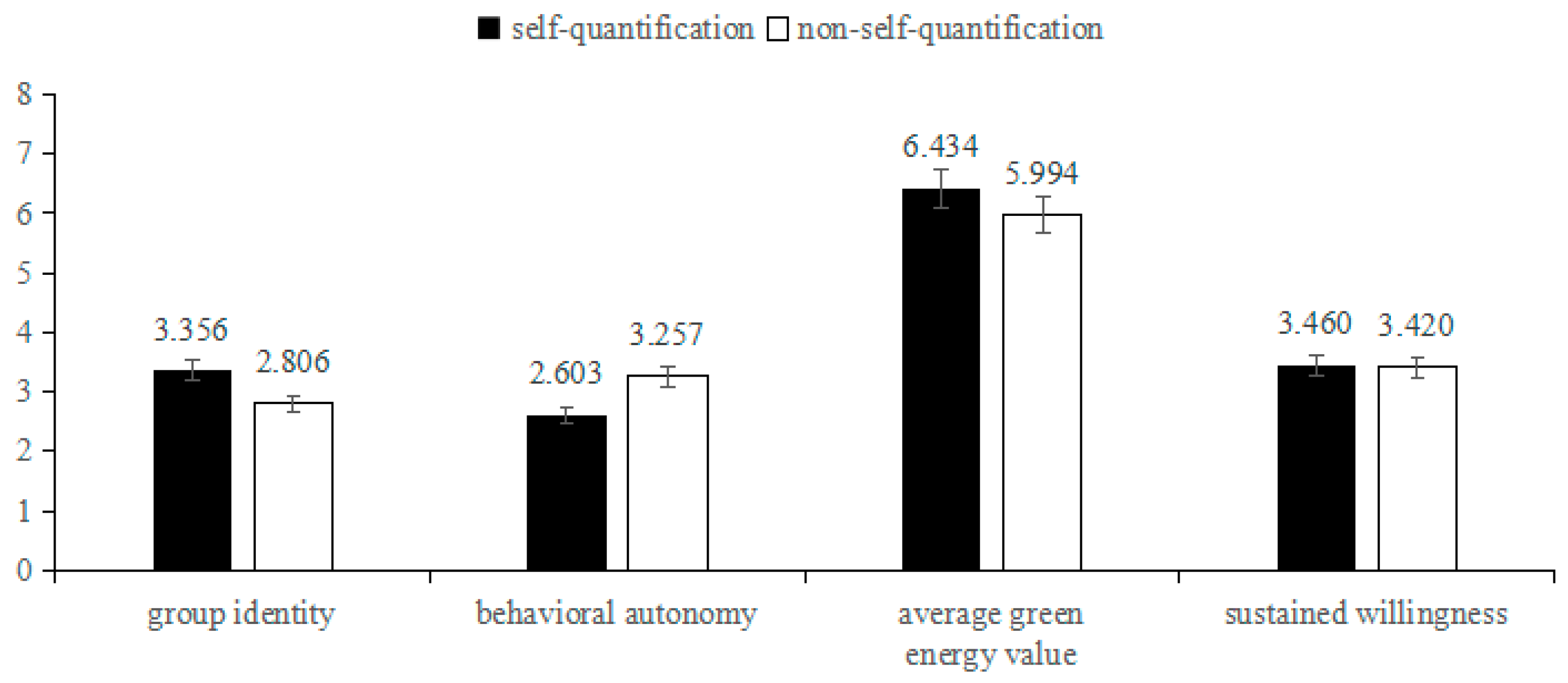
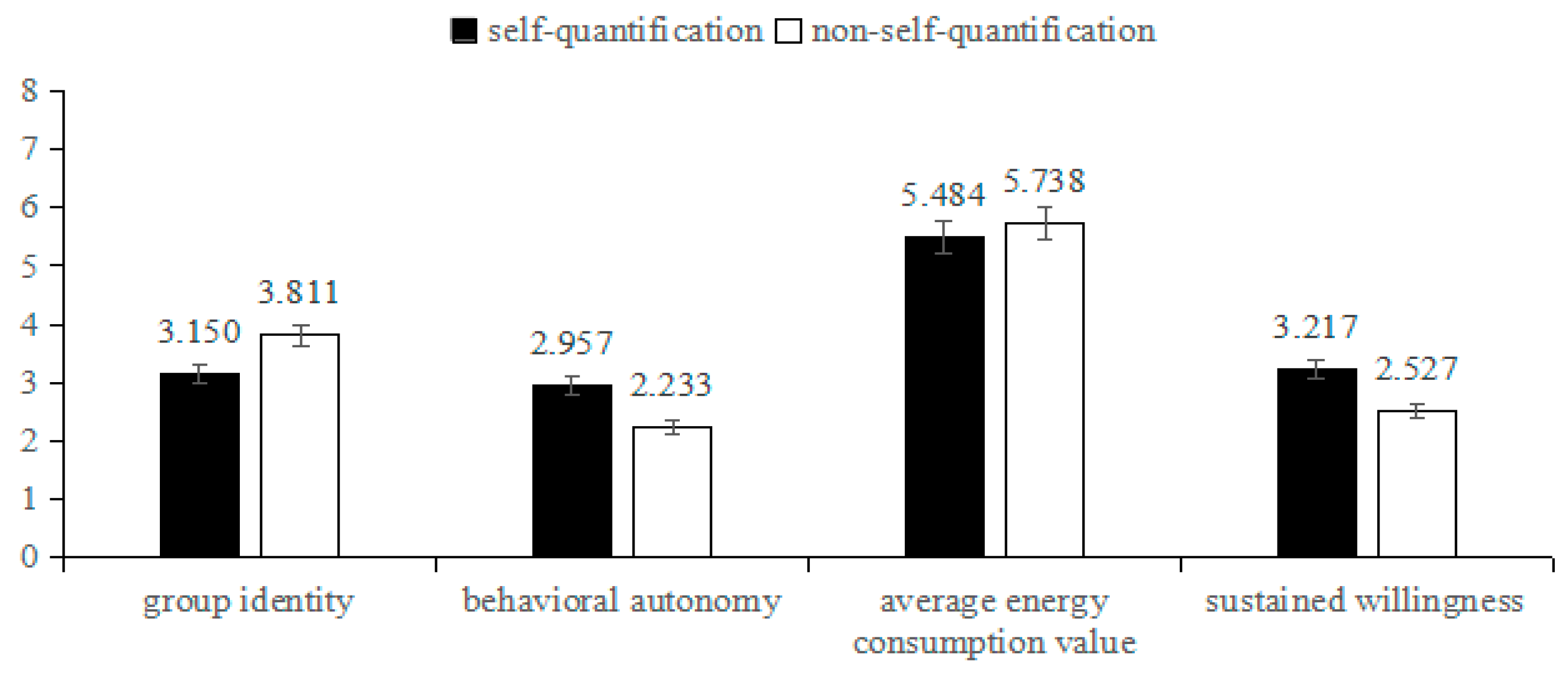
Self-quantification resulted in higher participation outcomes for consumers in promoting goal-oriented green consumption activities; it also enhanced consumers’ group identity in promoting goal-oriented green consumption and reduced their behavioral participation autonomy in promoting goal-oriented green consumption, without affecting their sustained willingness for promoting goal-oriented green consumption activities. The impact of self-quantification on consumers’ promoting goal-oriented green consumption behavioral autonomy was mediated by group identity. Self-quantification resulted in lower participation outcomes for consumers in defensive goal-oriented green consumption activities; it simultaneously reduced consumers’ group identity in defensive goal-oriented green consumption, enhanced their behavioral participation autonomy in defensive goal-oriented green consumption, and positively influenced their sustained willingness for defensive goal-oriented green consumption activities. The impact of self-quantification on consumers’ defensive goal-oriented green consumption behavioral autonomy was mediated by group identity.
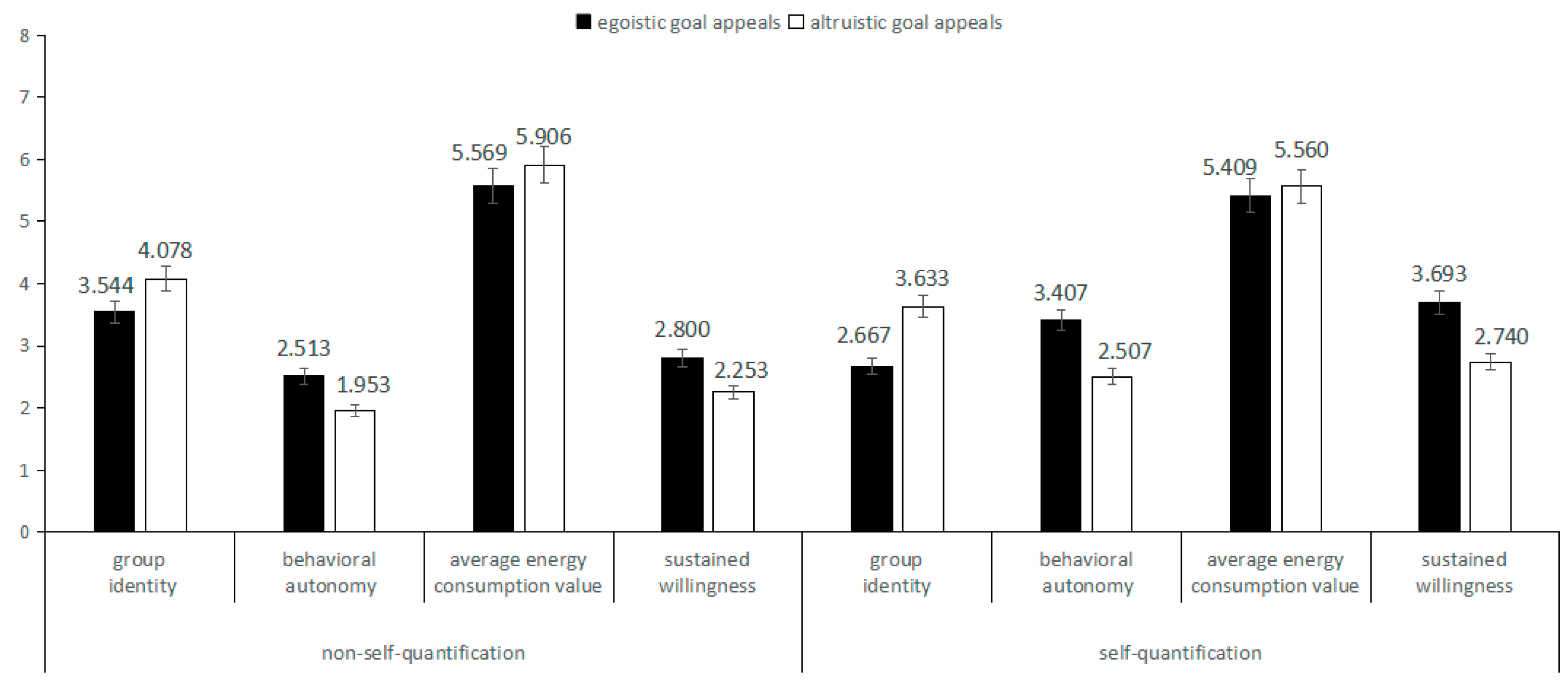
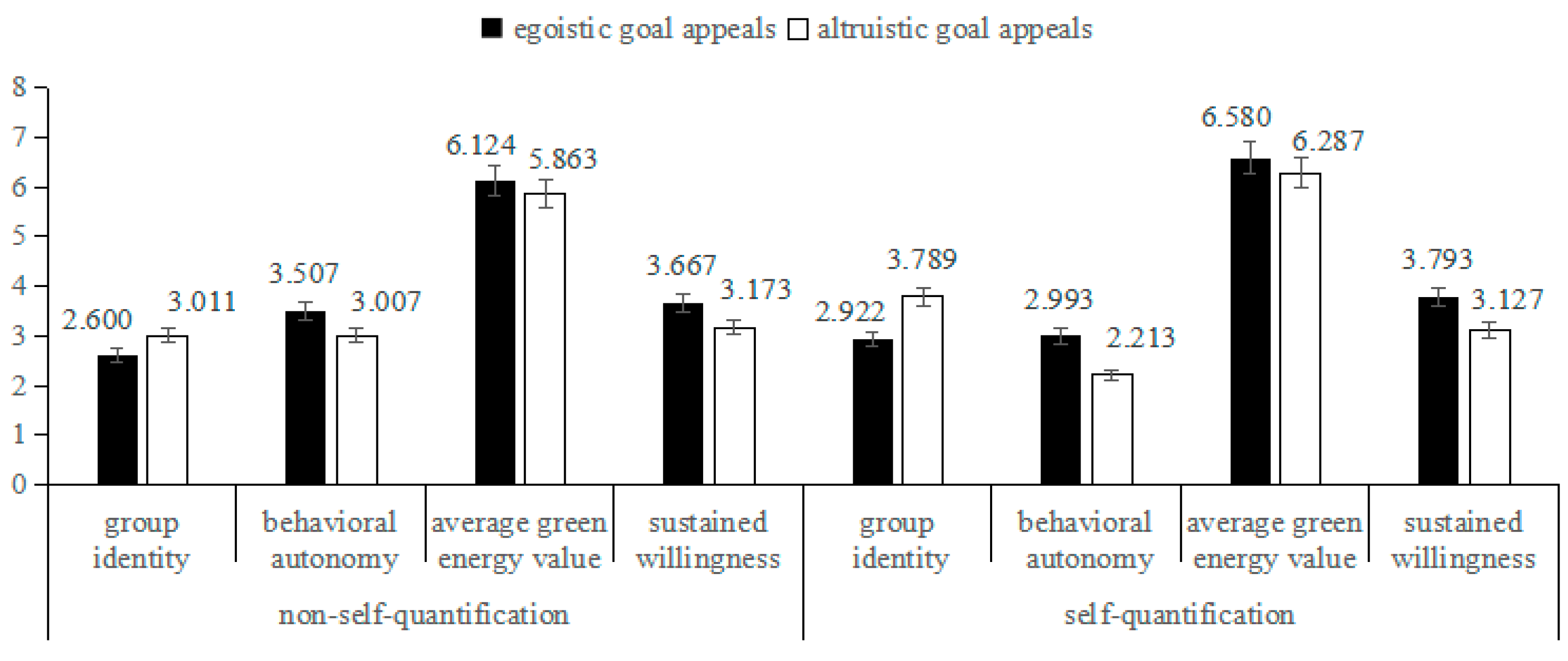
In promoting goal-oriented green consumption contexts, regardless of whether consumers were driven by egoistic or altruistic goal appeals, self-quantification resulted in higher green consumption participation outcomes and group identity, as well as lower behavioral participation autonomy, but with no significant change in sustained willingness for promoting goal-oriented green consumption. However, consumers under egoistic goal appeals, compared to those under altruistic goal appeals, demonstrated lower levels of group identity, higher degrees of behavioral participation autonomy, and higher levels of sustained willingness for promoting goal-oriented green consumption. In defensive goal-oriented green consumption contexts, regardless of whether consumers were driven by egoistic or altruistic goal appeals, self-quantification resulted in lower green consumption participation outcomes and group identity, as well as higher behavioral participation autonomy and sustained willingness for defensive goal-oriented green consumption. However, consumers under egoistic goal appeals, compared to those under altruistic goal appeals, demonstrated lower levels of group identity, higher degrees of behavioral participation autonomy, and higher levels of sustained willingness for defensive goal-oriented green consumption. The impacts of self-quantification on consumers’ group identity in green consumption were moderated by consumers’ motivational orientation type.
5.1. Theoretical Contributions
Existing studies have examined self-tracking, social comparison, normative feedback, gamification, and group identity largely as separate phenomena or within individual-level frameworks. This study advances beyond the literature in three specific ways. First, prior work has relied heavily on external incentives (e.g., points, leaderboards, peer pressure) or altruistic appeals to drive green behavior, often resulting in passive compliance, rather than genuine autonomy. By contrast, we shift the focus to internal psychological mechanisms—specifically, group identity—as the core mediator. Second, research on social comparison and normative feedback has rarely distinguished between promotion-oriented versus defensive-oriented green activities, which this study shows yield opposite effects of self-quantification on behavioral autonomy. Third, while group identity has been studied as a driver of conformity, its mediating role between self-quantification and behavioral autonomy—and how this mediation differs across goal orientations and appeal types (egoistic vs. altruistic)—has not been empirically articulated. By integrating these previously disconnected streams of research and testing a moderated mediation model, this study offers a more nuanced understanding of when and how self-quantification supports versus undermines green behavioral autonomy and sustained willingness.
Previous research has primarily explained green consumption behavior through external norms (such as policy incentives and social comparison) and intrinsic values (such as environmental identification and moral obligations) [
60], yet the digital era has generated novel decision-making cues. This study proposes that quantified data generated through self-quantification serves as a key behavioral cue for reconstructing green consumption, extending prior perspectives that focused primarily on external norms or intrinsic values. Through empirical analysis of the impact pathways of self-quantification on group identity in community contexts, it suggests how real-time data feedback (such as energy consumption visualization and carbon footprint statistics) may drive participation decisions by altering consumers’ cognitive frameworks toward behaviors. This perspective suggests a central role for data-driven interaction in green consumption theory, complementing traditional environmental/individual explanatory paradigms and offering new directions for understanding technology-enabled green sustainable behavior.
Existing self-quantification research predominantly focuses on individual cognitive mechanisms (e.g., self-efficacy, perceived certainty) [
61], neglecting the collective context of community-based quantified data sharing. This study analyzes the impact mechanisms of self-quantification from a community network perspective and identifies the mediating role of group identity in the interaction between data feedback and behavioral transformation. Experimental results demonstrate that, in promoting goal-oriented green activities (e.g., emission reduction and environmental protection), public data rankings strengthen “environmental community” identification while diminishing individual autonomy due to group constraints. Conversely, in defensive goal-oriented activities (e.g., energy conservation and consumption reduction), the prominence of data disparities unexpectedly weakens group identity and inadvertently activates personal responsibility awareness. This finding extends the existing literature, which has primarily explained self-quantification effects through individual-level variables (e.g., data attention under “outcome salience,” certainty perception under “feedback precision”) [
62] by establishing a community-based framework of “quantified data → group identity → autonomy reconstruction,” offering a theoretical anchor point for green behavioral interventions in community networks.
Traditional research often directly equates green consumption outcomes (such as emission reduction volumes and energy efficiency rates) with participation enthusiasm and assumes they predict sustained willingness [
63,
64]. Our study challenges this assumption, revealing that high participation outcomes may accompany low behavioral autonomy, and the lack of autonomy may be a contributing factor in green consumption sustainability disruption. Self-quantification enhances short-term outcomes in promoting goal-oriented green activities (such as emission reduction quantities and green energy values), but reduces autonomy due to group pressure; in defensive goal-oriented activities, it significantly enhances sustained willingness for green consumption such as energy control by strengthening autonomy. This finding helps explain the prevalent paradox of “high participation–low sustainability” in practice [
65], highlighting autonomy as a potential foundation of sustained willingness and providing mechanistic insights for understanding the “flash in the pan” nature of some green behavior interventions.
The existing literature predominantly focuses on promoting goal-oriented green consumption (e.g., environmental purchases) [
66], lacking systematic analysis of defensive goal-oriented activities requiring behavioral restraint (e.g., consumption reduction). This study constructs a dialectical framework of green behavior encompassing “destruction and construction,” revealing the differentiated effects of self-quantification across two types of green consumption contexts. In promoting goal-oriented green consumption activities that require “construction,” self-quantification suppresses autonomy by enhancing group identity (e.g., green energy value rankings trigger conformity pressure). In defensive goal-oriented green consumption activities that require “destruction,” self-quantification enhances autonomy and sustained willingness by weakening group identity (e.g., individual energy consumption data may activate community responsibility commitment). Meanwhile, the present study identifies the moderating role of goal appeals: egoistic goal appeals consistently strengthen consumers’ green behavioral autonomy and sustained willingness in both types of green consumption activities to a greater extent compared to altruistic goal appeals, challenging the traditional assumption that “altruistic motivation dominates green consumption” [
67], and suggesting that self-quantification efficacy may depend on alignment with green behavior types and individual goal appeals.
Regarding the paradox that self-quantification “reduces consumers’ behavioral participation autonomy in promoting goal-oriented green consumption yet does not affect their sustained participation willingness,” Etkin (2016) [
5] attributed this to external factors, such as technology prevalence and data reflective knowledge acquisition. This study offers a complementary explanation through integrating goal appeal types: in promoting goal-oriented green consumption activities, egoistic appeal (such as reducing emissions for personal health) consumers exhibit high autonomy and high sustained willingness due to goal congruence, while altruistic appeal (such as reducing emissions for social welfare) consumers demonstrate low autonomy and low sustained willingness due to group pressure. The offsetting effects of these two appeal types may explain why self-quantification does not significantly bring about changes in overall sustained willingness in promoting goal-oriented green consumption at the aggregate level.
5.2. Limitations of the Study
Although this study has yielded several findings, certain limitations remain. Firstly, the experimental timeframe was relatively short and failed to fully observe the long-term effects of self-quantification on green behaviors. The cultivation of green behaviors constitutes a prolonged process, and short-term experiments may inadequately capture the comprehensive effects of self-quantification. Secondly, the experimental sample was limited to undergraduate student populations from a single university in Jiangxi Province, China. The generalizability of conclusions to other demographic groups (e.g., working adults, elderly populations, or different cultural backgrounds) may exhibit variations. Thirdly, this study primarily explored the influences of activity types under goal orientation and goal appeal types, without thoroughly investigating the potential moderating or interfering effects of other factors (e.g., personality traits, prior green behavior experience, or social desirability bias) on the mechanisms through which self-quantification influences consumers’ green behavioral autonomy.
Fourthly, the manipulation of self-quantification in both experiments merged personal numerical feedback (e.g., “You have earned a total of Xg green energy”) with public ranking (e.g., “ranked Xth among participants”). While this design reflects real-world community platform practices (e.g., Ant Forest) and enhances ecological validity, it obscures the source of observed effects—that is, whether the effects are driven by personal feedback, social comparison, or their interaction. Therefore, we cannot isolate the independent contributions of private feedback versus public ranking, which remains a limitation. Fifth, the operationalization of “community network” primarily involved ranked feedback and comparative prompts; deeper dimensions, such as network structure, peer interaction dynamics, tie strength, or explicit pathways of peer influence, were not examined, which may limit the comprehensiveness of the community perspective. Sixth, the two experiments differed in several design features that were intentionally tailored to their respective goal orientations: Experiment 1 (promotion-oriented) used a 48 h weekend design with green energy value as the outcome measure, while Experiment 2 (defensive-oriented) used a 24 h weekday design with energy consumption value as the outcome measure. The differences in activity type, duration, timing, and outcome metrics were necessary to maintain ecological validity for each type of green behavior. However, they also introduce potential confounding factors that may limit the direct comparability of effect sizes between the two experiments. Future research could adopt identical durations and timing across both goal orientations, while preserving the distinct activity categories and outcome measures, to further validate the differential effects observed in this study.
5.3. Future Research Directions
Subsequent research could employ longitudinal experimental designs to conduct long-term tracking of green behaviors under the influence of self-quantification, analyzing temporal variations in its effects. Concurrently, future research could expand the study population to encompass consumers across different ages, occupations, and cultural backgrounds, examining the universality and variability of self-quantification effects. Furthermore, future research could investigate the moderating roles of individual difference variables (such as values, psychological traits, and self-regulation abilities), incentive mechanisms (e.g., monetary vs. non-monetary rewards), and goal distance (proximal vs. distal) on the effectiveness of self-quantification. Additionally, future studies could employ factorial designs that separately manipulate private feedback (e.g., personal progress tracking without comparison) and public ranking (e.g., leaderboard without personal numerical feedback) to disentangle their distinct psychological mechanisms and isolate the unique contribution of each component in self-quantification interventions, as well as explore richer operationalizations of community networks (e.g., network structure, tie strength, peer influence pathways).
5.4. Practical Implications
This study profoundly reveals the complex mechanisms through which self-quantification technologies (such as behavioral data tracking and feedback) reshape consumers’ green behavioral autonomy and sustained willingness by influencing group identity within community networks in increasingly digitalized and community-networked green consumption practices, emphasizing the critical moderating role of goal appeal types (egoistic/altruistic). Against the backdrop of the current era, emphasizing sustainability, deep digital penetration, frequent community interactions, and enhanced individual autonomy awareness, the findings of this study provide crucial insights for managers to promote effective green consumption strategies:
Firstly, green behavior intervention designs must strictly distinguish between “promoting” and “defensive” activities and apply self-quantification tools differentially. The research results confirm that self-quantification generates distinctly different psychological and behavioral effects in promoting goal-oriented green consumption activities that require “establishing new practices” (such as purchasing eco-friendly products and participating in emission reduction activities) versus defensive goal-oriented green consumption activities that require “breaking old habits” (such as energy conservation and waste reduction). In promoting goal-oriented activities, excessive reliance on public data rankings (such as carbon footprint leaderboards and green point competitions), while capable of rapidly enhancing group identity and short-term participation, significantly undermines consumers’ perceived behavioral autonomy, planting hidden risks for behavioral sustainability. Managers should avoid creating excessive community comparison pressure in such activities and, instead, design mechanisms emphasizing personal progress tracking (such as “your emission reduction compared to last month”) and individual goal achievement (such as health benefits) with egoistic goal appeals-oriented feedback. Conversely, in defensive goal-oriented activities, refined individual data feedback (such as real-time energy consumption monitoring and savings reports) can effectively weaken unnecessary group identity, instead strongly stimulating consumers’ sense of responsibility and control, thereby enhancing autonomy and sustained willingness. Managers should vigorously promote such personalized and visualized tools while highlighting their direct contributions to consumers’ core interests (such as cost savings and convenience).
Secondly, profoundly recognizing and carefully navigating the double-edged sword effect of “group identity” places the maintenance of “behavioral autonomy” at the core of strategy design. The breakthrough finding of this study lies in revealing that group identity serves as the core mediator through which self-quantification influences behavioral autonomy, while a lack of behavioral autonomy may be a potential cause of sustained green consumption discontinuity. The commonly observed phenomenon of high participation but low sustainability—the “flash-in-the-pan” green consumption—may stem from the fact that self-quantification in promoting goal-oriented activities, while strengthening group identity, can imperceptibly impose group normative pressure, eroding consumers’ sense of choice freedom and internal motivation. Managers should consider moving beyond the traditional thinking that equates “participation outcomes” with “success,” recognizing that maintaining and enhancing consumers’ green behavioral autonomy could be a cornerstone for ensuring the long-term sustainability of green behaviors. This means that, in the community network operations and quantitative feedback design of green consumption activities, one should remain vigilant against the potential erosion of individual autonomy by group pressure, carefully balancing the tension between green consumption and individual autonomy by emphasizing the diversity of behavioral choices, recognizing the uniqueness of individual contributions, and safeguarding consumers’ sense of control over their participation methods and degrees.
Thirdly, fully exploring and strategically leveraging the core power of “egoistic goal appeals” in driving sustained green behaviors can help to achieve a transformation in communication and incentive strategies. This research challenges the traditional perception that “altruistic motivation dominates green consumption,” revealing that, within the study context, regardless of promoting or defensive goal-oriented green activities, consumers driven by egoistic goal appeals (such as pursuing personal health, cost savings, enhanced life convenience, or social image), when self-quantification is introduced, demonstrated significantly higher levels of behavioral autonomy and sustained willingness for participation compared to those with altruistic appeals. These findings, however, should not be generalized without caution. The relative advantage of egoistic appeals may vary across cultures (e.g., collectivist vs. individualist), demographic groups (e.g., age, environmental identity), or longer-term behavioral contexts. Notwithstanding these caveats, the finding remains particularly important in the current era of pursuing personalized values. Managers may consider transforming green marketing and communication paradigms, shifting promotional focus from singular environmental responsibility or altruistic sentiments to clearly articulating the tangible personalized benefits and values brought by green behaviors. For example, promoting energy-efficient products could emphasize their attributes as “money-saving tools,” organic food could highlight “health and taste,” and cycling commutes could be associated with “fitness sculpting and commuting cost savings.” Utilizing quantified data to intuitively demonstrate to consumers how their green behaviors directly serve their core egoistic goals (such as “your energy-saving behaviors this month have saved you XX yuan” or “your environmental choices have improved your health index by XX%”) could be an efficient strategy for stimulating internal motivation and supporting behavioral sustainability.
Fourthly, based on the principle of “goal appeal alignment,” refining the design and optimization of self-quantification technology applications maximizes their long-term sustainable value. Self-quantification technology itself is not a “universal key”; its effectiveness likely depends on whether the content and form of technological feedback align with consumers’ core goal appeals, especially the egoistic goal appeals that appeared more motivating in this study. The research results indicate that, even within the same activity type (such as promoting goal-oriented emission reduction), quantified feedback may differentially affect autonomy and sustained willingness for users motivated by different appeals (egoistic vs. altruistic), suggesting that managers could move beyond “one-size-fits-all” models toward more personalized and goal-oriented designs when applying technologies. Strategies include developing tools that allow consumers to customize their focus metrics and feedback presentation formats (such as letting consumers choose whether to focus more on cost savings or emission reduction amounts); providing data and strengthening interpretation to help consumers understand the data’s significance to their personal goals (such as “your energy consumption is below the community average, meaning stronger personal control”); and, in individual profiling and precision targeting, identifying and responding to different consumers’ dominant appeals (egoistic or altruistic tendencies), providing highly aligned incentive information and behavioral support. When self-quantification technology serves as an empowering tool for consumers to achieve their personal goals (especially egoistic goals), rather than an externally imposed source of monitoring or pressure, its potential to promote the long-term sustainability of green behaviors may be enhanced.