1. Introduction
Forest restoration has become a central strategy for recovering ecosystem functions, increasing tree cover, and supporting climate change mitigation through long-term biomass accumulation and carbon capture [
1]. Its success, however, depends not only on the area planted but also on the capacity of seedlings to survive the first months after outplanting, when water limitation, nutrient availability, and site stress determine early establishment [
2].
High post-planting mortality remains one of the main barriers to effective forest restoration, especially in sites exposed to drought, degraded soils, and increasing climatic variability [
3]. For this reason, nursery management has shifted from producing visually large seedlings to producing functional plants with balanced morphology, adequate root development, and enough physiological capacity to tolerate field stress [
4].
The target plant concept proposes that seedling quality should be defined according to the environmental conditions of the planting site and the specific restoration objective [
4]. Under this view, plant height alone is not a reliable indicator of quality because tall seedlings may fail when root systems are unable to sustain water uptake after planting [
2]. Traits such as root collar diameter, root biomass, root–shoot balance, and the Dickson Quality Index (DQI) provide a more useful interpretation of seedling performance potential.
Container volume is one of the nursery factors with the strongest influence on root development, biomass allocation, and post-planting performance [
5]. Larger containers may improve root expansion and hydraulic capacity, while restricted containers can limit root architecture and reduce the ability of seedlings to explore soil water after planting [
5]. This response is especially relevant for forest restoration programs where seedlings are planted under variable water availability and limited post-planting maintenance [
6].
Fertilization and irrigation also influence nursery plant quality, but their effects depend on the capacity of the root system to absorb and use added resources [
7]. Excess fertilization or poorly adjusted irrigation may increase production costs without improving field performance if root development is constrained by container size [
7]. Sustainable nursery management therefore requires identifying which inputs truly improve seedling establishment and which practices only increase resource use during production [
6].
Previous studies have shown that container size, fertilization, and irrigation can modify seedling morphology and field performance in several forest species [
5,
7]. In
Pinus tabuliformis, combined fertilization and irrigation affected nursery attributes and field performance after outplanting [
7]. In Larix occidentalis, container volume modified seedling development during nursery culture and influenced early establishment responses [
5]. In tropical hardwoods, nursery practices improved seedling performance on nutrient-poor soils, which supports the need to connect nursery decisions with field conditions.
Pinus devoniana Lindl., commonly known as Michoacan pine, is a native pine of Mexico and Central America that occurs mainly in pine–oak forests and transitional mountain environments [
8]. The species can reach large tree size and plays an ecological role in forest structure, soil protection, biomass accumulation, and habitat formation in temperate and subtropical forest landscapes [
9]. Its capacity to persist in environments exposed to seasonal water limitation makes it relevant for restoration programs, particularly in sites where early seedling establishment is constrained by drought or degraded soil conditions [
10]. From a practical perspective,
Pinus devoniana is also valued for timber, resin, pulp, fuelwood, furniture, and construction uses, which increases its importance for reforestation, productive restoration, and rural forest management.
Despite these advances, there is still limited evidence on how container volume, fertilization, and irrigation interact to determine both nursery quality and field establishment in native Mexican pines. This gap is important because Pinus devoniana has ecological and productive relevance in restoration and reforestation programs, but early survival may be limited when nursery practices are not aligned with the functional demands of field establishment.
This study evaluated the effects of container volume, fertilization, and irrigation on seedling quality, nutrient status, stress-related traits, and early field performance of Pinus devoniana. We hypothesized that container volume would have a stronger and more persistent effect than fertilization and irrigation because root space directly controls biomass allocation, root–shoot balance, and the capacity of the seedlings to tolerate the field stress. The objective was to identify nursery management practices that improve seedling quality and field establishment while supporting a more efficient use of water, nutrients, and production inputs for forest restoration.
2. Materials and Methods
2.1. Study Are
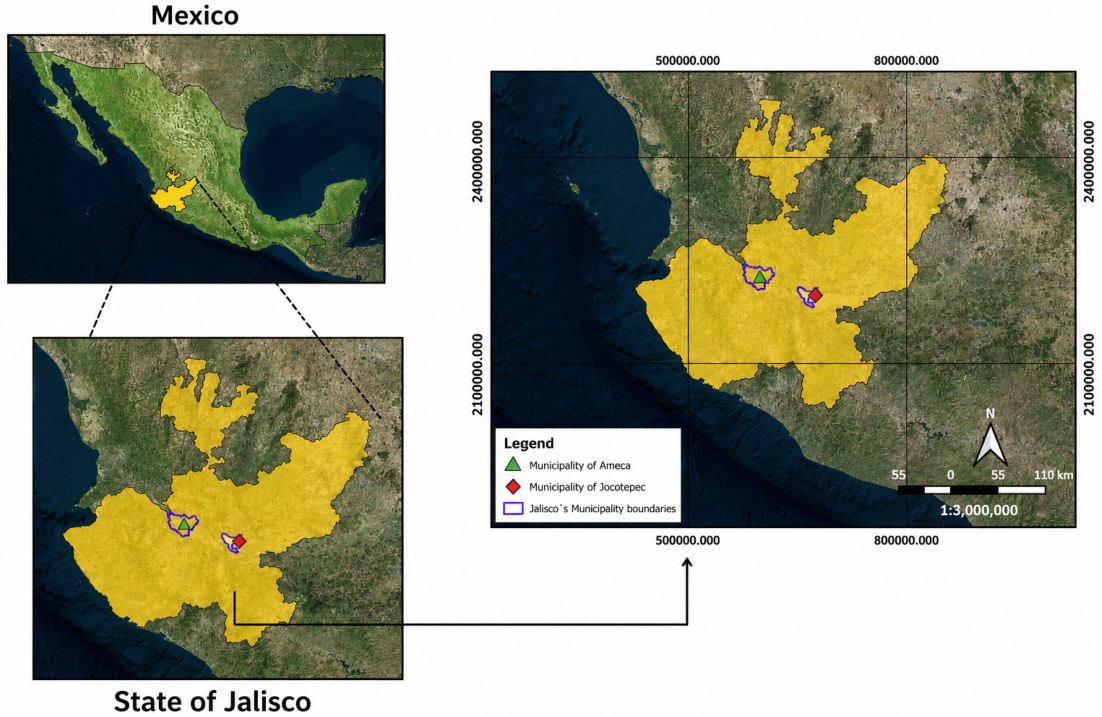
The study was conducted in Jalisco, western Mexico, using a two-stage nursery–field approach. The nursery phase was carried out at the Valle de Ameca Forest Nursery S.P.R. de R.L., in Ameca, Jalisco, located at 20°33′ N and 104°03′ W, at 1235 m a.s.l. The municipality has a warm subhumid climate with summer rainfall, with temperatures from 8.5 to 32.9 °C and mean annual precipitation close to 924 mm [
11].
The field phase was established at Las Trojes, Jocotepec, Jalisco (
Figure 1), located at 20°19.632′ N and 103°19.190′ W, at 1840 m a.s.l. The site has climatic conditions ranging from semiarid to warm subhumid, a mean annual temperature of 18.5 °C, annual precipitation of 844 mm, and Vertisol soils [
12]. The vertisols are relevant for early plantation establishment because their physical and hydrological behavior can influence water availability, aeration, infiltration, and root development under different land-use conditions [
13].
This nursery–field contrast allowed the evaluation of seedling responses from a controlled production environment to a more restrictive establishment site. This transition is relevant for Mexican pine restoration because climate variability and drought stress are increasingly affecting temperate forest performance and may reduce the success of planting programs if seedling quality is not matched with field conditions [
14]. For
Pinus devoniana, drought avoidance has been associated with delayed shoot elongation, which supports the need to evaluate nursery practices that improve early structural quality and field establishment under water-limited conditions [
15].
2.2. Plant Material and Experimental Approach
Seedlings of
Pinus devoniana were used as the study species because this pine is relevant for forest restoration and reforestation programs in Mexico. The species occurs in temperate and transitional mountain environments, where early establishment can be limited by seasonal water availability, soil constraints, and post-planting stress. For this reason, improving seedling quality before outplanting is important for increasing field survival and reducing losses during the first year after planting [
14,
15].
Before the experimental phase, seedlings were produced under standard nursery conditions in polystyrene trays with 60 cavities and a cavity volume of 0.165 L. At the beginning of the experiment, seedlings were 12 months old and had completed the initial nursery production stage. They were then transplanted into the experimental containers and exposed to a six-month nursery conditioning phase before field establishment.
The experiment was designed to evaluate whether nursery resource management produces measurable carry-over effects after outplanting. Three factors were selected because they represent key decisions in operational forest nurseries: container volume, fertilization, and irrigation. Container volume was interpreted as a structural factor related to root space. Fertilization was interpreted as a nutrient-input factor. Irrigation was interpreted as a water-supply factor. This structure allowed the comparison between physical root restriction and external resource addition as drivers of seedling quality and early field performance.
The experimental approach was not limited to nursery growth. Seedlings were evaluated first at the end of the conditioning phase and then after field establishment. This nursery–field sequence was used to test whether the seedling traits developed under different nursery conditions persisted after planting. The main expectation was that the container volume would have a stronger effect than fertilization or irrigation because root space can directly regulate root development, biomass allocation, water uptake capacity, and plant stability under field stress [
2,
5].
2.3. Nursery Conditioning and Resource-Management Profiles
After the initial nursery production stage, 12-month-old Pinus devoniana seedlings were transplanted from 0.165 L cavities into two container volumes used to create contrasting rooting-space conditions: 1 L and 5 L. After transplanting, all seedlings were maintained for one month under common nursery stabilization conditions before the fertilization and irrigation profiles were applied. This period allowed seedlings to recover from transplanting before exposure to water supply and nutrient-addition treatments.
The nursery conditioning phase lasted six months, including the initial stabilization month and five months of resource-management treatments. During the treatment period, seedlings were assigned to eight operational profiles derived from the combination of three nursery decisions: container volume, fertilization, and irrigation regime. Container volume represented rooting-space availability, fertilization represented nutrient addition, and irrigation represented water-supply intensity.
The eight nursery resource-management profiles are described in
Table 1. These profiles represent the full combination of two container volumes, two fertilization levels, and two irrigation regimes.
Two fertilization conditions were evaluated: fertilized (F) and non-fertilized (NF). Fertilized seedlings received a nutrient solution prepared with magnesium nitrate (40 g), calcium nitrate (40 g), monopotassium phosphate (50 g), potassium nitrate (50 g), urea (40 g), and Gro-green® 20-30-10 + EM (40 g). These compounds were dissolved in 25 L of water and applied twice per week during the five-month treatment period. The solution was applied manually as a foliar treatment over the nursery production area assigned to the fertilized profiles (527 m2), ensuring uniform seedling coverage.
Based on the fertilizer formulation, each 25 L solution supplied approximately 43.9 g N, 38.0 g P2O5, and 44.3 g K2O, excluding the micronutrient contribution from Gro-green® + EM. Considering two applications per week for approximately 20 weeks, the estimated macronutrient input during the treatment period over the fertilized nursery area was 1.76 kg N, 1.52 kg P2O5, and 1.77 kg K2O.
In addition to foliar fertilization, fertilized seedlings received 10 g plant−1 of Multi-micro Haifa® applied directly to the substrate once per week for four months. This application was used as a micronutrient complement during nursery conditioning. Non-fertilized seedlings did not receive additional foliar or substrate fertilization beyond the common substrate conditions and the controlled-release fertilizer incorporated before the conditioning phase.
Two irrigation regimes were evaluated: continuous irrigation (R) and non-continuous irrigation (NR). Continuous irrigation was applied manually, uniformly, and locally until substrate saturation. Each irrigation event used a flow rate of 1.16 L s−1 for one hour, equivalent to 4176 L per irrigation event over the nursery area. This corresponded to approximately 7.93 L m−2 per irrigation event. Non-continuous irrigation consisted of applying irrigation every 10 days using the same manual irrigation criterion.
During the five-month treatment period, total water input was estimated at approximately 626.4 m3 under continuous irrigation when applied daily and 62.6 m3 under the non-continuous regime, corresponding to approximately 1188.6 and 118.9 L m−2, respectively. The substrate water status was evaluated through gravimetric moisture content. Seedlings under the non-continuous irrigation regime showed an average substrate moisture content of 44%, while seedlings under continuous irrigation showed an average value of 306%. Mean temperature and relative humidity during the conditioning period were 21 °C and 74%, respectively.
2.4. Substrate and Baseline Nursery Conditions
All seedlings were transplanted into a common substrate before the conditioning phase. The substrate consisted of peat moss and composted pine bark in a 30:70 ratio and was amended with controlled-release fertilizer Multicote™ 24-12-6-(4) at 6 kg m−3. This formulation supplied 24% nitrogen (N), 12% phosphorus as P2O5, 6% potassium as K2O, and 4% magnesium as MgO. Because this fertilizer was incorporated into the common substrate before the conditioning phase, it was considered part of the baseline nursery condition shared by all seedlings.
The substrate had 88% total porosity, 10% air-filled porosity, 78% water-holding capacity, and a bulk density of 0.24 g cm−3. These values indicate a porous growing medium with high water retention capacity, a condition that can influence aeration, root expansion, and water availability during containerized seedling production.
The chemical properties of the substrate were determined before the nursery conditioning phase to describe the baseline nutrient environment shared by all seedlings. The substrate showed acidic pH, moderate electrical conductivity, high organic matter content, and measurable concentrations of macro- and micronutrients (
Table 2).
The substrate consisted of peat moss and composted pine bark in a 30:70 ratio, amended with controlled-release fertilizer Multicote™ 24-12-6-(4). Values describe the baseline substrate condition before the nursery resource-management profiles were applied.
After transplanting, seedlings received a root-stimulation solution using Raizone-plus® at 40 g in 25 L of water. Raizone-plus® is a powdered rooting phytoregulator containing alpha-naphthylacetamide (0.12%), indole-3-butyric acid (0.06%), and diluents and related compounds (99.82%). This application was used during the common post-transplant stabilization phase and was applied to all seedlings before the resource-management profiles were imposed. During the first month, the plants were maintained under 50% shade cloth and received daily irrigation. This initial period was treated as a stabilization phase before the fertilization and irrigation treatments were applied.
This baseline standardization was important because all seedlings shared the same substrate, controlled-release fertilizer, root-stimulation treatment, and initial post-transplant management. Therefore, differences among nursery profiles were interpreted as responses to the rooting space, additional nutrient input, and water-supply strategy rather than uncontrolled variation in substrate or early nursery handling.
2.5. Field Establishment and Validation Phase
After the six-month nursery conditioning phase, seedlings were transferred to the field establishment site at Las Trojes, Jocotepec, Jalisco, Mexico. Before planting, the site was manually cleared to reduce the competing vegetation and fenced with barbed wire to prevent livestock damage during early establishment.
Seedlings were planted at 4 × 4 m spacing in a staggered triangular arrangement. This spacing reduced early competition among seedlings and provided enough growing space to evaluate the survival and growth responses during the first year after outplanting.
The field site had Vertisol soils, with a pH of 5.63, electrical conductivity of 0.06 dS m
−1, cation exchange capacity of 15.73 meq 100 g
−1, organic matter of 3.85%, and total nitrogen of 0.18%. Phosphorus availability was very low, while calcium, magnesium, potassium, iron, manganese, copper, and zinc showed variable concentrations. These edaphic conditions were described because soil fertility, water retention, and physical restrictions can influence seedling establishment, root growth, and water acquisition after planting [
13].
The field stage lasted 12 months. At the end of this period, the seedlings had reached a total age of 30 months, including the initial nursery stage, the six-month conditioning phase, and the first year after planting. This sequence allowed the evaluation of carry-over effects, defined here as the persistence of nursery-induced traits after outplanting.
The field stage was not treated as an independent silvicultural trial but as a validation phase to determine whether the nursery resource-management profiles produced measurable responses under the planting conditions. This distinction was important because the objective was to evaluate the persistence of nursery-induced functional quality rather than to compare field management practices.
The field performance was evaluated through survival, stem diameter at the root collar, plant height, ectomycorrhizal colonization (EC), stomatal density, and stem lignification. These variables represented complementary dimensions of establishment: persistence, growth, symbiotic response, leaf-level anatomical adjustment, and structural stress response.
Survival was calculated as (1):
where Ns is the number of the surviving seedlings and Nt is the total number of planted seedlings.
2.6. Seedling Functional Quality and Nursery Measurements
The seedling quality was evaluated at the end of the six-month nursery conditioning phase using morphological, biomass-allocation, and integrated quality traits. These variables were selected because they describe the functional condition of seedlings before outplanting and allow the evaluation of whether nursery resource-management profiles improved traits associated with field establishment [
2,
4].
The stem diameter at the root collar and total height were measured as the primary structural traits. The diameter was used as an indicator of mechanical stability and potential hydraulic capacity, while the height was interpreted with caution because greater height does not necessarily indicate better field performance when root development is limited [
4].
The seedlings were destructively sampled to estimate shoot and root dry biomass. The plant tissues were separated into aboveground and belowground components and oven-dried at 70 °C for 72 h until constant weight. The total dry biomass was calculated as (2):
where TB is the total dry biomass, SB is the shoot dry biomass, and RB is the root dry biomass.
The root–shoot ratio was calculated to evaluate the biomass allocation between the belowground and aboveground structures (3):
where RSR is the root–shoot ratio, RB is the root dry biomass, and SB is shoot dry biomass.
The Dickson Quality Index (DQI) was used as an integrated indicator of seedling quality because it combines plant size, sturdiness, and biomass allocation into a single metric [
16]. It was calculated as (4):
where DQI is the Dickson Quality Index, TB is the total dry biomass, H is the seedling height, D is the root collar diameter, SB is the shoot dry biomass, and RB is the root dry biomass.
These nursery measurements were used to characterize the functional quality before the field establishment. Under the profile-based approach, higher quality was defined not only as a larger plant size but also as a more balanced structure capable of supporting the water uptake, mechanical stability, and survival after planting. This interpretation allowed the study to test whether the resource-management profiles produced seedlings with stronger establishment potential rather than only higher nursery growth.
2.7. Nutrient Status and Stress-Related Functional Traits
Nutrient status was evaluated at the end of the nursery conditioning phase to determine whether nursery resource-management profiles modified the nutritional condition of the Pinus devoniana seedlings before outplanting. Total nitrogen (N) was determined using the semi-micro Kjeldahl method. Phosphorus (P), iron (Fe), and sulfur (S) were quantified after wet digestion using inductively coupled plasma atomic emission spectroscopy. These nutrients were included because they are related to the photosynthetic capacity, enzymatic activity, root function, and early seedling growth.
Proline concentration was determined in needles as a biochemical indicator of the stress response. Proline accumulation has been widely associated with the osmotic adjustment under drought or water-limiting conditions, although its interpretation depends on the species, stress intensity, and plant developmental stage [
17]. In this study, proline was used as a complementary indicator of nursery-induced stress rather than as an isolated measure of drought tolerance.
After 12 months in the field, ectomycorrhizal colonization (EC) was evaluated to determine whether nursery profiles influenced the symbiotic root responses after outplanting. The fine-root subsamples were collected from each evaluated seedling and carefully washed with distilled water to remove the soil particles. The ectomycorrhizal and non-ectomycorrhizal root tips were counted under a Fisher Scientific stereomicroscope. The number of the root tips evaluated varied according to the fine-root material available for each seedling, ranging from 33 to 281 root tips per observation. The ectomycorrhizal colonization was calculated as (5):
where EC is the ectomycorrhizal colonization, Nm is the number of ectomycorrhizal root tips, and Nt is the total number of evaluated root tips.
The stomatal density (SD) was evaluated as a leaf-level anatomical trait related to the gas exchange and water regulation. Stomatal traits influence the balance between carbon assimilation and water loss, but their response to the nursery conditioning or drought stress may vary depending on the species and environmental severity [
18,
19]. The stomatal density was calculated as (6):
where SD is the stomatal density, Ns is the number of stomata, and A is the evaluated leaf area.
The stem lignification (LA) was evaluated as a structural stress-related trait. The lignin deposition contributes to the mechanical support, xylem reinforcement, and resistance to the tissue collapse under water limitation [
20]. The percentage of the lignified stem area was calculated as (7):
where LA is the lignified stem area, Al is the lignified area, and At is the total evaluated stem area.
These nutritional and stress-related traits were used to complement the morphological evaluation of the seedling quality. Under the profile-based approach, they helped determine whether the nursery resource-management profiles produced only larger seedlings or if they also modified the functional traits associated with the field establishment.
2.8. Data Analysis and Conservative Inference Strategy
Data analysis was conducted using both factorial and profile-based approaches. First, the effects of the container volume, fertilization, irrigation, and their interactions were evaluated using a three-way ANOVA. The container volume, fertilization, and irrigation were included as fixed factors, and the model included all two-way interactions and the three-way interaction.
The three-way ANOVA was applied to the key nursery and field response variables, including root dry biomass, DQI, proline concentration, field survival, and lignified stem area. These variables were selected because they represented the belowground development, integrated nursery quality, biochemical stress response, early establishment, and structural stress adjustment.
After the factorial analysis, the eight nursery resource-management profiles were compared to support the biological interpretation of the treatment combinations. The profile comparisons were conducted using a one-way ANOVA with a nursery resource-management profile as the fixed effect. When significant differences were detected, Tukey’s honestly significant difference (HSD) test was used for mean separation.
The individual seedling measurements were used to estimate the profile means, standard errors, and confidence intervals. The inference was restricted to the evaluated nursery resource-management profiles, and the results were interpreted using the effect magnitude, biological consistency, and agreement between the nursery and field responses.
The model assumptions were evaluated using residual normality and homogeneity of variance tests. When the assumptions were not met, non-parametric alternatives were used for profile-level comparisons. The principal component analysis (PCA) was used to identify the integrated seedling quality patterns across the nursery profiles. All analyses were conducted in SAS 9.4 [
21], using
p < 0.05 as the significance threshold.
3. Results
3.1. Nursery Resource-Management Profiles Shaped Seedling Functional Quality
The nursery resource-management profiles produced clear differences in the seedling functional quality (
Table 3). The profile effects were significant for the root collar diameter (F = 11.05,
p < 0.001), height (F = 7.36,
p < 0.001), root dry biomass (F = 36.78,
p < 0.001), total dry biomass (F = 69.65,
p < 0.001), root–shoot ratio (F = 5.11,
p < 0.001), and DQI (F = 32.47,
p < 0.001). These responses indicate that the profiles modified not only the plant size but also the biomass allocation and integrated seedling quality.
The root collar diameter increased mainly in profiles with 5 L containers. The P5 profile reached the highest mean diameter and exceeded the P1 by 34.1%, showing that greater rooting space improved stem robustness when combined with fertilization and irrigation (
Table 1). Height responded differently: P4 produced the tallest seedlings and exceeded P1 by 53.5%, but this response was not matched by the highest biomass or quality index. This pattern supports the interpretation that height alone was not a reliable indicator of functional seedling quality.
The root dry biomass showed one of the strongest responses to nursery profiles. The P5 produced 140.9% more root biomass than the P2, indicating that the best profile promoted belowground development rather than only shoot expansion (
Table 1). Total dry biomass followed the same pattern, with P5 exceeding P1 by 160.6%. The DQI reinforced this trend: P5 was 144.3% higher than P2, while seedlings produced in the 5 L containers averaged 71.7% higher DQI than those produced in 1 L containers.
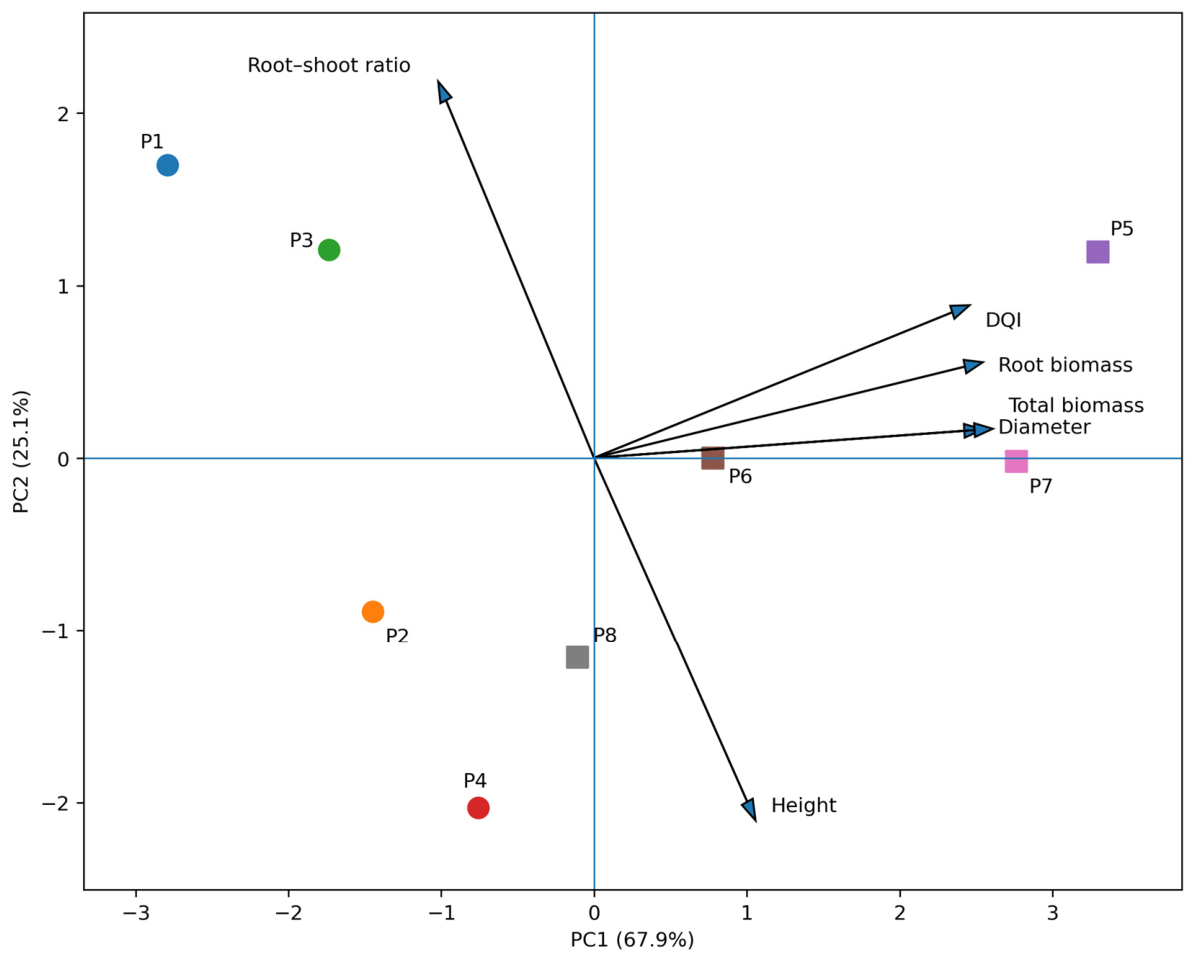
The PCA provided an integrated view of seedling functional quality across the nursery resource-management profiles (
Figure 2). The first two principal components explained 93.0% of the total variation, with PC1 accounting for 67.9% and PC2 for 25.1%. PC1 was positively associated with the root collar diameter, root dry biomass, total dry biomass, and DQI, which indicates that this axis represented the main gradient of integrated seedling quality. PC2 was more closely related to height and root–shoot ratio, suggesting a secondary gradient associated with plant form and biomass allocation. The profiles P5 and P7 were positioned toward the positive side of PC1, indicating superior functional quality, whereas most 1 L profiles were grouped toward lower PC1 values, reflecting the reduced structural development and lower integrated quality.
3.2. Nutrient and Biochemical Responses Separated Resource-Use Profiles
The nursery resource-management profiles modified nutrient and biochemical responses, but the magnitude of the effect depended on the variable evaluated (
Table 4). Nitrogen showed the clearest nutritional separation among the profiles (F = 118.31,
p < 0.001), while iron also differed among the profiles (F = 3.50,
p = 0.018). Phosphorus and sulfur did not show significant profile effects under the conservative non-parametric evaluation (
p = 0.090 and
p = 0.087, respectively), indicating weaker or more variable responses.
Nitrogen concentration was strongly associated with 5 L profiles. On average, seedlings grown in 5 L containers had 151.8% higher nitrogen concentration than seedlings grown in 1 L containers. The highest nitrogen value occurred in P8, which exceeded P4 by 236.4%. This pattern suggests that larger rooting space modified nitrogen accumulation more strongly than fertilization alone.
Proline showed a strong biochemical response among profiles (H = 21.99, p = 0.003). The highest proline concentration occurred in P8, followed by P6 and P4, all characterized by non-irrigated conditions. In relative terms, P8 exceeded P3 by 667.0%, suggesting that proline responded mainly to water restriction rather than to fertilization status.
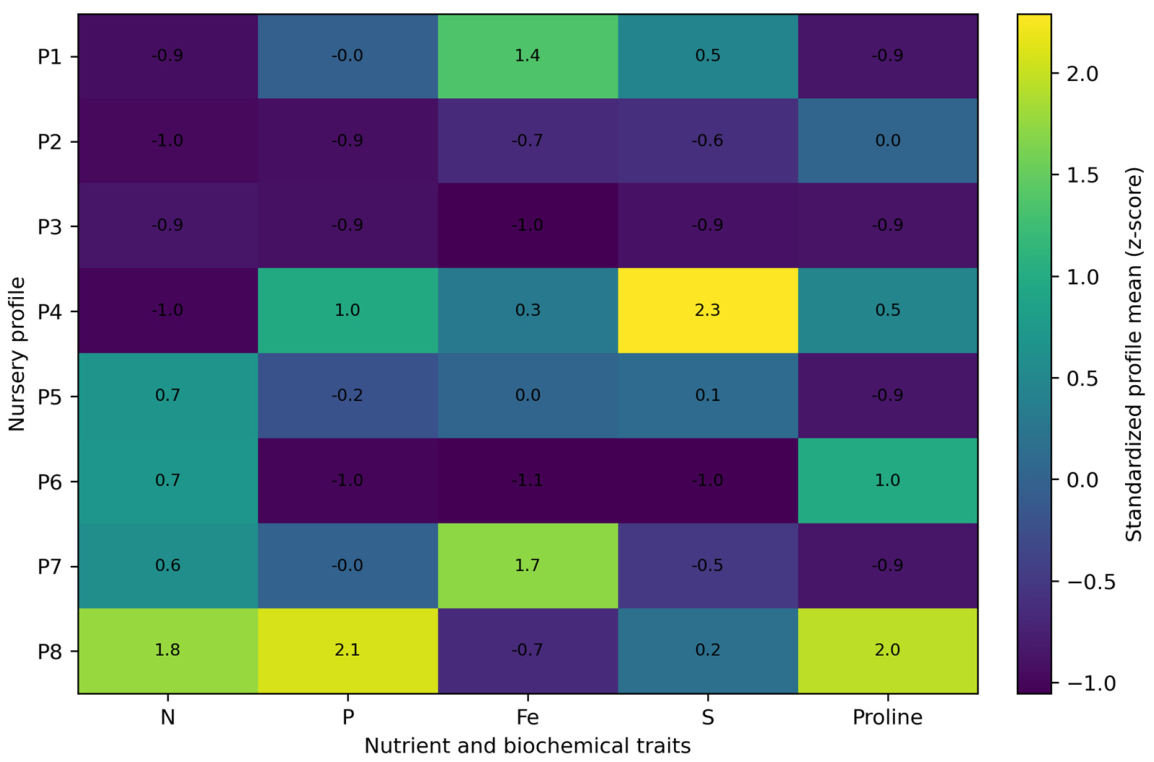
The heatmap confirmed that the profiles did not follow a simple “more input–better nutrition” pattern (
Figure 3). P5 and P7 showed favorable nitrogen status with low proline accumulation, while P6 and P8 combined high nitrogen with high proline. This contrast indicates that some 5 L profiles improved nutritional status but still expressed biochemical stress signals when irrigation was restricted.
3.3. Field Validation Revealed Carry-Over Effects of Nursery Profiles
Field validation showed that nursery resource-management profiles produced measurable carry-over effects after outplanting (
Table 3). Profile effects were significant for field survival (F = 55.67,
p < 0.001), field diameter (F = 59.55,
p < 0.001), field height (F = 8.35,
p = 0.004), ectomycorrhization (F = 4.76,
p = 0.022), and lignified stem area (F = 24.14,
p < 0.001). Stomatal counts did not differ among profiles (F = 1.16,
p = 0.417), suggesting that this trait was less sensitive to nursery conditioning during the first year after planting.
Field survival was highest in P5, which exceeded P1, P2, and P4 by 74.8% (
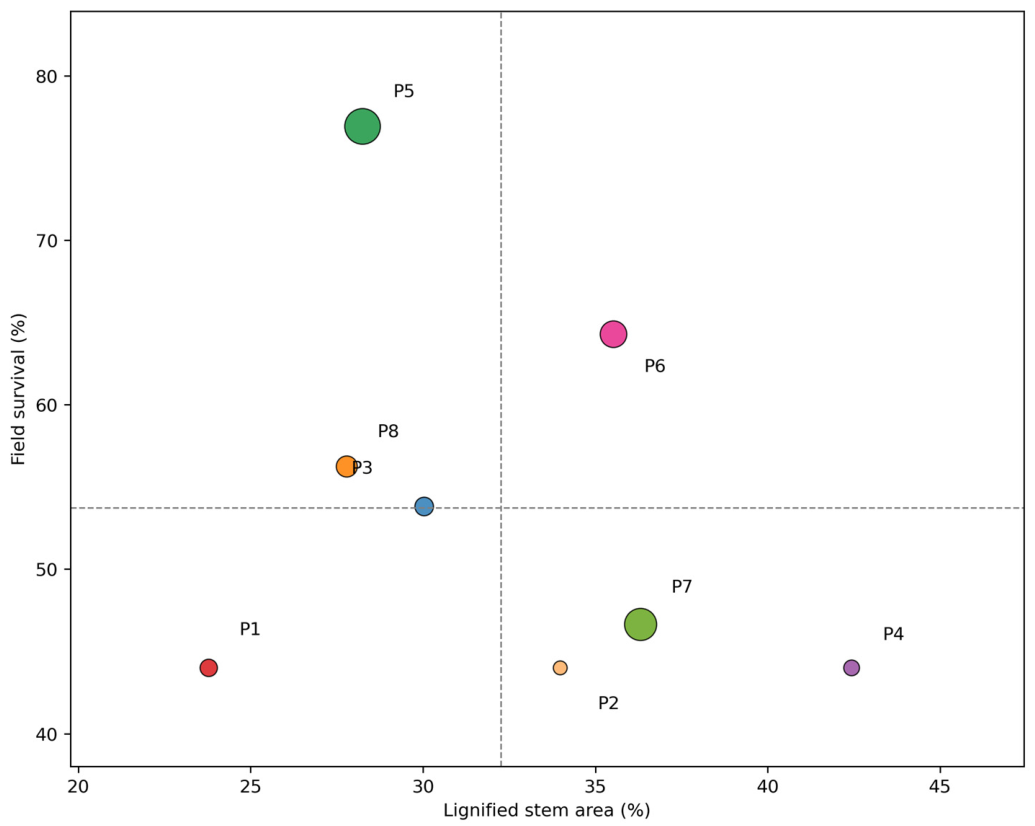
Table 5). This profile also combined the highest survival with relatively low lignification, suggesting better establishment with lower structural stress expression (
Figure 4). In contrast, P4 showed the highest lignification but low survival, indicating that a greater lignified area did not translate into better field persistence.
Field diameter was highest in P7, P6, and P8, all associated with the 5 L containers. The highest field diameter observed in P7 exceeded P3 by 60.1%, supporting the persistence of nursery-induced structural advantages after planting. Field height followed a similar pattern, with P7 exceeding P1 by 70.8%.
The ectomycorrhization responded differently from survival or growth. The highest values occurred in P2, while the lowest were observed in P6. This contrast suggests that EC was not simply associated with the best growth or survival profile but may have responded to a profile-specific stress or the root-environment conditions.
3.4. Factorial Effects and Nursery–Field Relationships
The three-way ANOVA showed that the nursery management effects depended on both the main factors and the interaction terms (
Table 6). Container volume was the dominant factor for root dry biomass and DQI, while fertilization and irrigation alone had weaker effects on these nursery quality traits. The root biomass and DQI were also affected by container × fertilization and container × irrigation interactions, indicating that nutrient and water inputs were more effective when the seedlings had greater rooting space.
Proline responded mainly to the irrigation and to the interaction terms involving the irrigation. This result shows that the biochemical stress was driven primarily by the water-supply regime, but its magnitude depended on container volume and fertilization. The field survival showed significant effects of the container volume, fertilization, and all interaction terms, including the three-way interaction. This pattern shows that early field establishment was not explained by one factor alone but by the specific combination of rooting space, nutrient addition, and water regime. The lignification was affected by all three main factors and by the three-way interaction, supporting its interpretation as a stress-related structural response rather than a direct indicator of nursery quality.
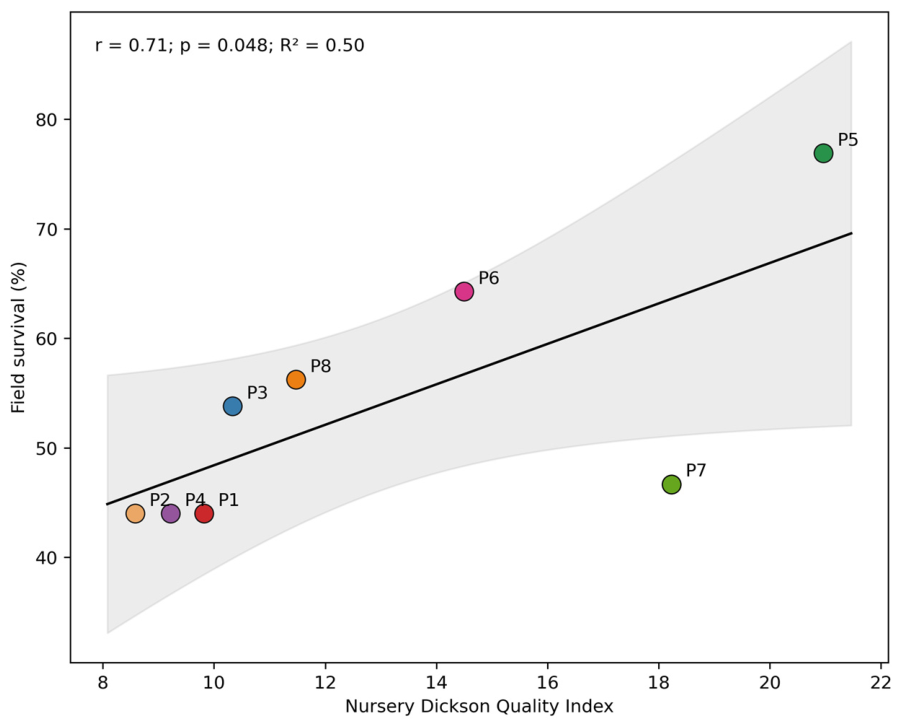
The nursery’s functional quality was positively associated with early field establishment. The DQI was correlated with field survival (r = 0.71,
p = 0.048), explaining 50% of the survival variation among the profiles (
Figure 5). The root dry biomass showed a similar relationship with survival (r = 0.72,
p = 0.042), suggesting that the belowground development contributed strongly to the post-planting persistence.
The total biomass showed a positive but weaker association with survival (r = 0.65,
p = 0.079). The nursery diameter was also positively related to field diameter, although the relationship was marginal under Pearson correlation (r = 0.68,
p = 0.065). In contrast, the DQI was not associated with lignification (r = −0.06,
p = 0.879), indicating that lignification reflected stress-related adjustment rather than the overall nursery quality (
Table 7).
These results support a nursery-to-field carry-over effect, where profiles that promoted greater root development and integrated seedling quality tended to improve early field establishment. This response was not explained by the input intensity alone but by the balance between the rooting space, nutrient status, and stress-related traits.
4. Discussion
4.1. Nursery Profiles as Drivers of Functional Seedling Quality
The nursery profiles generated distinct functional-quality patterns, with the strongest responses observed in the root biomass, total biomass, and DQI. This indicates that the seedling quality was not controlled only by the visible size but by the balance between stem robustness, root development, and biomass allocation. This interpretation agrees with the studies showing that the container characteristics can modify the root morphology, stem growth, and later field performance in woody seedlings [
22].
The PCA reinforced this interpretation by separating the profiles mainly along a gradient of integrated quality, where the 5 L profiles were associated with a greater diameter, root biomass, total biomass, and DQI.
The larger container systems have been reported to promote the survival and early growth in native tree seedlings by increasing the rooting volume and reducing the physical restriction during the nursery production [
23]. In the present study, the strongest nursery-quality response occurred when the larger rooting space was combined with the fertilization and irrigation, suggesting that the external inputs were more effective when the root system had enough physical capacity to use them. This response is consistent with previous studies on the containerized forest and pine seedlings, showing that larger rooting volume can improve the root architecture, biomass accumulation, water uptake capacity, and early field performance when the physical restriction is reduced [
22,
23,
24,
25].
The physiological advantage of a greater rooting space can be explained by its effect on the root expansion and resource capture. When the roots are physically restricted, the seedlings may increase the shoot growth without developing enough absorptive capacity to support the water and nutrient demand after the planting. In contrast, the larger containers can promote a root system with a greater soil-exploration potential, which improves the capacity to absorb the water and nutrients during the transition from the nursery to the field conditions. This mechanism helps explain why the 5 L profiles, especially when combined with fertilization and irrigation, produced a higher root biomass, total biomass, and DQI.
Height showed a different response from the biomass and DQI. The tallest profile was not the one with the highest integrated quality, which supports the decision to avoid interpreting height as the main indicator of seedling performance. This is consistent with evidence showing that the root collar diameter, biomass allocation, and integrated quality indices can provide a more stable interpretation of the seedling quality than height alone [
26].
These findings support the hypothesis that the rooting space plays a central role in shaping the functional seedling quality. The results do not imply that fertilization and irrigation are unimportant, but they suggest that their benefits depend on the structural capacity created by the container environment. From a nursery-management perspective, resource efficiency should be evaluated through the quality of the plant produced, not only through the intensity of the inputs applied during production.
4.2. Resource Balance Shaped Nutrient Status and Biochemical Stress Responses
The nutrient and biochemical responses showed that the nursery profiles did not follow a simple input-driven pattern. Nitrogen and iron differed among the profiles, while phosphorus and sulfur showed weaker responses. This suggests that nutrient accumulation was shaped by the interaction between the rooting space, water supply, and physiological demand, rather than by the fertilization alone. This interpretation is consistent with the evidence showing that nitrogen nutrition and water availability can affect the stress tolerance in pine seedlings through different physiological pathways [
27].
The strongest biochemical signal was observed in proline. The profiles under non-irrigated conditions, especially P8, accumulated higher proline values, indicating that the water restriction generated a detectable stress response. Proline accumulation is widely reported in woody seedlings under drought stress, but its magnitude depends on the species, stress duration, and seedling condition [
17]. In this study, high proline did not necessarily indicate a better performance; instead, it reflected a biochemical adjustment to the resource limitation.
The heatmap helped separate the profiles with favorable nutrient status from those expressing stress signals. The P5 and P7 showed relatively favorable nitrogen status with low proline accumulation, while P6 and P8 combined high nitrogen with high proline. This distinction is important because higher nutrient concentration does not always mean lower stress. In pine seedlings, nitrogen supply can improve the growth or stress resistance under some conditions, but its effect depends on the water availability and the balance between the shoot demand and root capacity [
28].
These results support the idea that sustainable nursery management should not be based on increasing the fertilizer or water inputs independently. A more useful strategy is to identify the profiles in which the nutrient status, root development, and stress indicators remain balanced. For Pinus devoniana, the best resource-use profile was not the one with the highest biochemical stress response but the one that combined the high functional quality with the lower proline accumulation and stronger field survival. The proline response also helps explain why the nutrient status alone was not enough to predict the field performance. The profiles with a high nitrogen and high proline likely reflected seedlings with improved nutrient accumulation but persistent water-related stress. This pattern suggests that fertilization can increase physiological demand when the water supply or root balance is not adequate. For this reason, the most favorable profile was not the one with the highest nutrient concentration or the strongest stress signal, but the one where the nutrient status, root development, and low biochemical stress were better balanced.
4.3. Nursery-to-Field Carry-Over Effects on Establishment
The field validation phase confirmed that the nursery profiles produced responses that persisted after the outplanting. The survival, field diameter, field height, ectomycorrhization, and lignification differed among the profiles, which indicates that the nursery phase influenced both the establishment and the stress-related traits during the first year in the field. This supports the concept that the nursery practices can generate carry-over effects when the seedling traits that were developed before planting remain functionally relevant after outplanting [
24].
The highest survival occurred in P5, the profile that combined the 5 L container volume, fertilization, and irrigation. This response suggests that high survival was associated with a profile that promoted strong nursery quality without triggering high biochemical or structural stress signals. Similar nursery-to-field responses have been reported in the Mediterranean and temperate species, where container size and pre-planting quality affected survival and early growth under field conditions [
29,
30].
The significant interaction effects support the idea that the container volume, fertilization, and irrigation acted through the linked mechanisms rather than as independent factors. The larger containers likely increased the root growth capacity, the fertilization increased nutrient availability, and the irrigation reduced the water limitation during the nursery conditioning. When these three conditions occurred in the same profile, seedlings were better able to convert the nursery resources into functional traits that persisted after outplanting. This mechanism helps explain why the P5 reached the highest survival, while some profiles with strong growth or a high nutrient status did not achieve the same field performance.
The growth response in the field also reflected the influence of nursery conditioning. The profiles produced in the 5 L containers maintained a higher field diameter, which suggests that the root-space availability during nursery production had a persistent effect on structural development after planting. This is relevant for restoration because the root restriction in containers can reduce the field performance when the seedlings face water limitation or poor soil conditions during establishment [
24].
The lignification provided a different signal from the survival. The P4 showed high lignification but low survival, indicating that the lignified stem area reflected stress adjustment rather than superior establishment. This distinction is important because stress-related traits should not be interpreted as quality indicators unless they are linked to survival or growth responses. The ectomycorrhization also showed a contextual response, with higher values in some profiles that did not correspond to the best survival or growth. This suggests that the symbiotic colonization may have responded to the local root-environment conditions and resource limitation rather than to the overall nursery quality alone [
31].
These findings strengthen the profile-based approach. The field phase did not function as an independent silvicultural trial, but as a validation step showing that the nursery-induced traits can persist after planting. Under the evaluated conditions, the best field response was associated with the balanced nursery profiles, especially those that combined a larger rooting space with an adequate resource supply.
4.4. Seedling Quality as a Predictor of Field Survival
The positive relationship between the DQI and field survival supports the use of integrated nursery-quality indicators to anticipate early establishment. In this study, profiles with a higher DQI tended to show higher survival after outplanting, which means that the balanced morphology and biomass allocation were more informative than the single traits alone. This agrees with the evidence showing that the composite quality indices can improve the interpretation of seedling performance when they integrate the sturdiness and biomass distribution [
26].
The root dry biomass was also positively related to the survival, reinforcing the importance of the belowground development for the early establishment. A larger root system can increase the soil exploration, improve water uptake, and support recovery after transplant stress, especially when the seedlings face restrictive field conditions. This response agrees with studies showing that the root traits and root growth potential are closely linked to the field performance in the planted forest seedlings [
25].
The relationship between the nursery diameter and field diameter was positive but weaker than the relationship between the root biomass and survival. This suggests that stem robustness contributes to the post-planting development, but the establishment success depends more strongly on the balance between the shoot demand and root capacity. For this reason, the nursery evaluation should not rely on the diameter or height alone, but should include integrated indicators such as the DQI and root biomass.
The lack of association between the DQI and lignification indicates that lignification behaved more as a stress-related response than as a direct expression of the nursery quality. This distinction helps avoid overinterpreting the stress traits as positive indicators when they are not linked to higher survival. Under the evaluated conditions, the strongest carry-over signal was the association between the functional nursery quality and field survival.
4.5. Implications for Sustainable Nursery Management and Reforestation
The results have direct implications for sustainable nursery management because they show that a better field establishment was linked to the functional seedling quality rather than to the input intensity alone. The strongest profile combined the larger rooting space with adequate fertilization and irrigation, which suggests that the water and nutrient inputs were more effective when seedlings had enough root volume to convert those inputs into structural quality. This supports the need to manage nursery production as a coordinated system, where container design, nutrient supply, and water regime are aligned with the target planting conditions [
32]. These findings are also consistent with studies on the pine seedling production showing that the nursery practices should be evaluated through field performance, not only through the nursery growth. For restoration programs, this distinction is important because the large seedlings are not always the most suitable planting stock if the root development, water balance, and stress tolerance are not aligned with the field conditions [
2,
4,
24].
For the reforestation programs, this finding is relevant because the early mortality increases the replacement costs, reduces the restoration efficiency, and weakens the ecological return of the planting efforts. Producing seedlings with stronger root systems and higher integrated quality can improve the probability that the planted individuals survive the first year, which is often the most critical stage for establishment under dry or variable conditions [
3]. In this sense, the nursery quality should be treated as part of the restoration planning, not as a separate production step.
The profile-based approach also helps avoid a common operational assumption: that increasing the fertilization or irrigation automatically improves seedling performance. In this study, profiles with high nutrient status did not always show low stress signals or the best field response. This means that sustainability in the nursery production should be evaluated through the performance per input, not only through the growth obtained before the planting. Similar concerns have been raised in the seedling-quality standards, where the morphological and physiological traits may have different meanings depending on the species, region, nursery practice, and planting-site constraints [
33].
From an operational perspective, these results suggest that the nursery protocols for drought-prone restoration sites should prioritize the root development and resource balance before increasing the inputs. The larger containers may involve higher substrate volume, space, transport, and labor costs, but these costs should be evaluated against the survival gains and potential reduction in replanting. The practical recommendation is not to apply larger containers, fertilization, and irrigation indiscriminately, but to use them when the expected field conditions justify producing seedlings with stronger root systems and higher establishment potentials.
4.6. Research Scope and Future Applications
This study provides applied evidence on how nursery resource-management profiles influence seedling functional quality and early field establishment of
Pinus devoniana. Its strongest contribution is the nursery-to-field linkage, where the seedling traits developed during the nursery conditioning were evaluated against the survival, growth, and stress-related responses after planting. This approach is relevant for the restoration programs because seedling performance depends on the match between the nursery quality and field conditions, especially during the first establishment stage [
34].
The scope of inference is strongest for the evaluated species, nursery conditions, resource-management profiles, and first-year field establishment phase. This framing is important because the early survival provides a practical indicator of establishment, but longer monitoring would help determine whether the observed differences persist during the later growth stages. Multi-year evaluations are especially useful in restoration because the seedling responses can change after the initial planting shock, seasonal drought, and competition with surrounding vegetation [
34].
Future studies could expand this approach by including additional planting sites, contrasting soil conditions, longer monitoring periods, and operational cost analyses. This would allow the nursery profiles to be evaluated not only by the seedling quality and survival, but also by their cost-effectiveness, water demand, fertilizer use, transport feasibility, and contribution to reducing replanting needs. Such information would strengthen decision-making in reforestation programs where the biological performance and resource efficiency must be considered at the same time.
The results should therefore be interpreted as a field-validated contribution to nursery decision-making rather than as a universal prescription. Under the evaluated conditions, profiles with greater rooting space and balanced resource supply improved functional seedling quality and early establishment. This finding offers a useful basis for refining nursery protocols aimed at increasing reforestation success under variable environmental conditions.
5. Conclusions
This study showed that the nursery resource-management profiles influenced both the seedling functional quality and early field establishment of Pinus devoniana. The best performance was obtained with the 5 L container combined with fertilization and continuous irrigation. This profile produced higher root biomass, total biomass, DQI, and field survival, indicating that the rooting space was a key factor for converting nursery inputs into traits that persisted after outplanting.
The main mechanism behind this response appears to be the balance between root expansion, nutrient uptake, and water availability. The larger rooting space increased the capacity of seedlings to develop a belowground biomass, while the fertilization and irrigation were more effective when root systems had enough physical volume to use those resources. The proline and lignification responses showed that a high nutrient status or structural stress adjustment did not necessarily translate into a better establishment, which reinforces the need to evaluate the seedling quality through the integrated functional traits.
From a practical perspective, the results support the use of the nursery regimes that prioritize the root development and balanced resource supply for restoration programs in sites exposed to seasonal drought or limited post-planting care. However, this should be interpreted as a management guideline rather than a universal prescription. The study was conducted with one species, under specific nursery conditions, and during the first year after the field establishment. Longer monitoring and testing across additional sites would help determine whether these nursery-induced advantages persist during later growth stages.




 ,
,