1. Introduction
Urban farming is increasingly understood as a multi-dimensional urban intervention rather than a niche form of food production. Across urban studies, public health, sustainability science, and food-systems research, it is evaluated for its capacity to generate outcomes that extend beyond yield, influencing environmental performance, social relations, and urban resilience. As cities face intersecting pressures—including climate risks, public health burdens, and volatility in food supply chains—urban farming has gained prominence as a practice situated at the interface of ecological infrastructure and everyday urban life.
Evidence syntheses and systematic reviews largely agree on four principal domains of impact. First, environmental effects are reported through ecosystem services and biodiversity support, microclimatic regulation, and resource efficiency, alongside documented risks related to pollution exposure and contamination pathways that require careful governance and site assessment [
1,
2,
3,
4,
5,
6]. Second, economic and livelihood outcomes include supplementary household income, local employment, micro-enterprise development, and contributions to food-system resilience—although profitability and long-term viability vary substantially by model, governance, and market conditions [
1,
2,
4,
6,
7,
8,
9]. Third, food security and nutrition impacts are most often framed in terms of improved availability of fresh produce, dietary diversity, and buffering capacity during disruptions, particularly when interventions are embedded in local distribution networks [
1,
6,
7,
8,
10,
11]. Fourth, social, health, and cultural dimensions encompass enhanced social cohesion, wellbeing and stress reduction, place-based education, and questions of equity, gender, and access—indicating that urban farming can function as a social infrastructure as much as a productive one [
1,
3,
4,
5,
9,
10,
12].
Taken together, this body of research suggests that the significance of urban farming lies in its ability to connect material outputs with relational and ecological value. However, the forms through which these benefits emerge are not uniform. Outcomes depend on spatial configuration, technological choices, governance arrangements, and the ways in which projects are integrated into everyday routines and institutions. This implies a need for closer attention to the design and implementation mechanisms that make particular urban farming interventions effective in specific contexts—especially in spatially constrained environments where competition for land and resources is acute. Accordingly, this paper focuses on the smallest forms of urban farming—microinterventions, and asks whether, and under what conditions, such micro-scale projects can produce meaningful impacts.
Urban farming “microinterventions” can be defined as small, place-based projects—such as household gardens, micro community plots, rooftop beds, and mobile or temporary cultivation systems—implemented to reshape food access, livelihood opportunities, and social relations at the neighborhood scale. Within the urban agriculture literature, these initiatives are typically situated along a continuum that extends from domestic, subsistence-oriented practices to city-wide programmes and institutional strategies [
6,
13,
14,
15,
16]. While large-scale interventions often dominate policy debates, a substantial body of evidence indicates that micro-scale projects are not merely marginal add-ons: they constitute a distinct operational layer of urban food systems, characterised by low spatial requirements, flexible implementation, and a high capacity to generate social learning and locally embedded forms of resilience [
16,
17,
18].
Microinterventions can be differentiated by their organisational and spatial scale. At the smallest end are household-based initiatives serving one or two homes, including micro-gardening, balcony or rooftop beds, and compact systems adapted to constrained urban interiors. A second category comprises networked, neighbourhood-scale projects, such as block gardens, shared courtyards, or small cooperative plots that rely on collective maintenance and shared governance. Larger, institutionalised initiatives—often linked to municipalities, schools, or non-governmental organisations—may incorporate micro-scale elements, yet typically operate through more formalised structures, longer time horizons, and broader territorial reach [
6,
16,
19,
20,
21,
22]. The present study focuses primarily on the first two categories, where interventions remain materially modest but socially and pedagogically dense.
In terms of technical form, microinterventions frequently employ adaptable cultivation typologies suited to limited space and variable environmental conditions. These include yard and rooftop gardens, container and polybag systems, vertical arrangements, and soilless or hydroponic units. Other variants adopt explicitly performative or infrastructural formats, such as mobile “laboratory” gardens deployed for demonstration and training, or modular micro-plots designed to support skills transfer and replication. Across these diverse formats, microinterventions tend to share an emphasis on prototyping, visibility of process, and the translation of cultivation practices into everyday urban routines.
Although microinterventions produce relatively small volumes of food compared to larger urban agriculture programmes, research suggests that their contribution to urban resilience is multidimensional. Reported outcomes typically include: (1) food and income effects, through incremental increases in household supply and, in some contexts, partial commercialisation, micro-enterprise development, or agrotourism-linked activities [
14,
19,
20,
23,
24]; (2) health and wellbeing benefits, including higher fruit and vegetable intake, increased physical activity, stress reduction, and emerging applications within social prescribing [
4,
6,
13,
21,
23]; (3) social cohesion, via strengthened neighbourhood ties, cooperative arrangements, and “training-to-enterprise” pathways [
6,
13,
24,
25]; and (4) environmental co-benefits, such as support for local biodiversity, reduced food miles, improved stormwater management, and circular practices connecting organic waste and cultivation [
6,
20,
21,
23,
26,
27,
28]. Taken together, these findings indicate that microinterventions are best understood not only as productive spaces, but also as social infrastructures capable of coupling material outputs with relational and ecological value.
Although urban farming is widely studied, evaluations often rely on production-oriented metrics (e.g., yields, cultivated area), which are poorly suited to microinterventions where limited output is expected. This creates a research gap in understanding how to assess effectiveness at the micro scale, where impacts more often arise through visibility, learning, social interaction, and replicability. This study addresses that gap by applying a design-led, multi-dimensional evaluation framework that goes beyond production indicators.
Against this background, the present paper examines three urban farming microinterventions designed and implemented by a co-author of this study. By analysing these micro-scale projects as design-led case studies, the paper seeks to identify the features that enable microinterventions to operate effectively under conditions of spatial constraint, limited resources, and heterogeneous urban publics. In particular, we focus on how specific design decisions—regarding cultivation technology, spatial configuration, visibility and accessibility, and participatory programming—shape the interventions’ capacity to support food-related practices, social learning, and locally grounded forms of resilience.
2. Materials and Methods
The present paper adopts a qualitative, design-led case study approach to examine urban farming “microinterventions” as small-scale, situated projects that combine cultivation technologies with spatial design and social programming. The study is grounded in three purposefully selected case studies developed and implemented by the paper co-author, enabling an in-depth analysis of design intentions, technical configurations, and modes of public engagement across different sites and deployment formats.
The cases were selected through purposive sampling to represent three complementary typologies of microintervention within urban agriculture: (i) a temporary outdoor installation functioning as a public “laboratory” for plant production, (ii) a shopfront-based demonstration farm integrating cultivation with everyday pedestrian exposure, and (iii) a modular and mobile “cultivation furniture” system designed for interior environments and event-based deployment. The examined case studies are:
“Blooming Structure” (Architektura Wrażliwa [
29], Dryf [
30], 2018)—a temporary hydroponic installation as an urban “laboratory” for plant production (Copernicus Science Centre [
31], Warsaw).
“Micro-cultivation” (Dryf [
30], 2018)—a shopfront as a vertical demonstration farm (Microcity [
31], Warsaw).
“Micro-cultivation 2” (Dryf [
30], 2019)—a modular system of “cultivation furniture” and an exhibition deployment (Berlin Design Week [
32], Berlin).
To strengthen analytical rigour, cases were included only if they met the following criteria:
Micro-scale and spatial constraint: interventions operate within limited footprints typical of dense urban environments.
Operational cultivation system: projects included a functioning cultivation component (e.g., hydroponic) rather than solely representational greenery.
Documented implementation: sufficient project documentation was available (technical descriptions, spatial specifications, photographs, and descriptive accounts) to enable systematic reconstruction.
Public interface: projects incorporated a demonstrative or participatory dimension (visibility in public space and organised public-facing activities).
Although all cases are micro-scale, they differ in spatial setting (outdoor public space, interior–shopfront, exhibition context), degree of mobility, and the balance between productive, demonstrative, and participatory functions. This variation supports cross-case comparison aimed at identifying transferable design features of effective microinterventions.
The analysis is based on two complementary sources of empirical material: (i) project documentation produced during the conception, fabrication, and implementation of the three interventions, and (ii) the authors’ experiential knowledge derived from direct involvement in their design, delivery, and operation. The documentation comprises narrative project descriptions, technical specifications of the cultivation systems, spatial and structural information, and photographic records of the realised installations and related public events. These materials are supplemented by field-based observations generated during on-site installation, day-to-day operation and maintenance, facilitation of public-facing activities (presentations, workshops, and meetings), and informal feedback collected through exhibition settings and community encounters.
These two material streams were treated as analytically distinct yet mutually reinforcing. Project documentation offers a structured record of design intentions, technical parameters, and planned modes of use; the authors’ practice-based accounts provide contextual insight into how the interventions performed in situ, including operational constraints and the ways in which different publics engaged with the projects.
Bias mitigation was addressed through a division of analytical roles. The practitioner-author contributed access to documentation and operational insight, while the second author approached the projects as externalised design-led case studies, critically interrogating the materials and challenging interpretations that were insufficiently supported. The study does not claim statistical generalisability; instead, it aims for analytic generalisation by articulating transferable design features that can be tested and adapted in other contexts.
To evaluate the studied projects in a way appropriate for micro-scale and design-led interventions, the study used an analytic framework based on five dimensions:
Spatial fit and accessibility (capacity to operate under spatial constraints; integration into everyday urban environments; ease of access).
Technical feasibility and resource management (stability of cultivation, closed-loop logics, maintenance requirements, and robustness).
Visibility and communicative legibility (extent to which process and infrastructure are perceivable and understandable to non-expert publics).
Replicability and scalability-by-copying (transferability of components and know-how; modularity enabling reproduction rather than expansion).
Social programming and relational outcomes (presence of workshops, meetings, shared eating, or other formats supporting learning and community ties).
These criteria were not used as quantitative indicators but as interpretive lenses guiding both within-case analysis and cross-case synthesis.
3. Results
3.1. ”Blooming Structure” (Architektura Wrażliwa, Dryf 2018)—A Temporary Hydroponic Installation as an Urban “Laboratory” for Plant Production (Copernicus Science Centre, Warsaw)
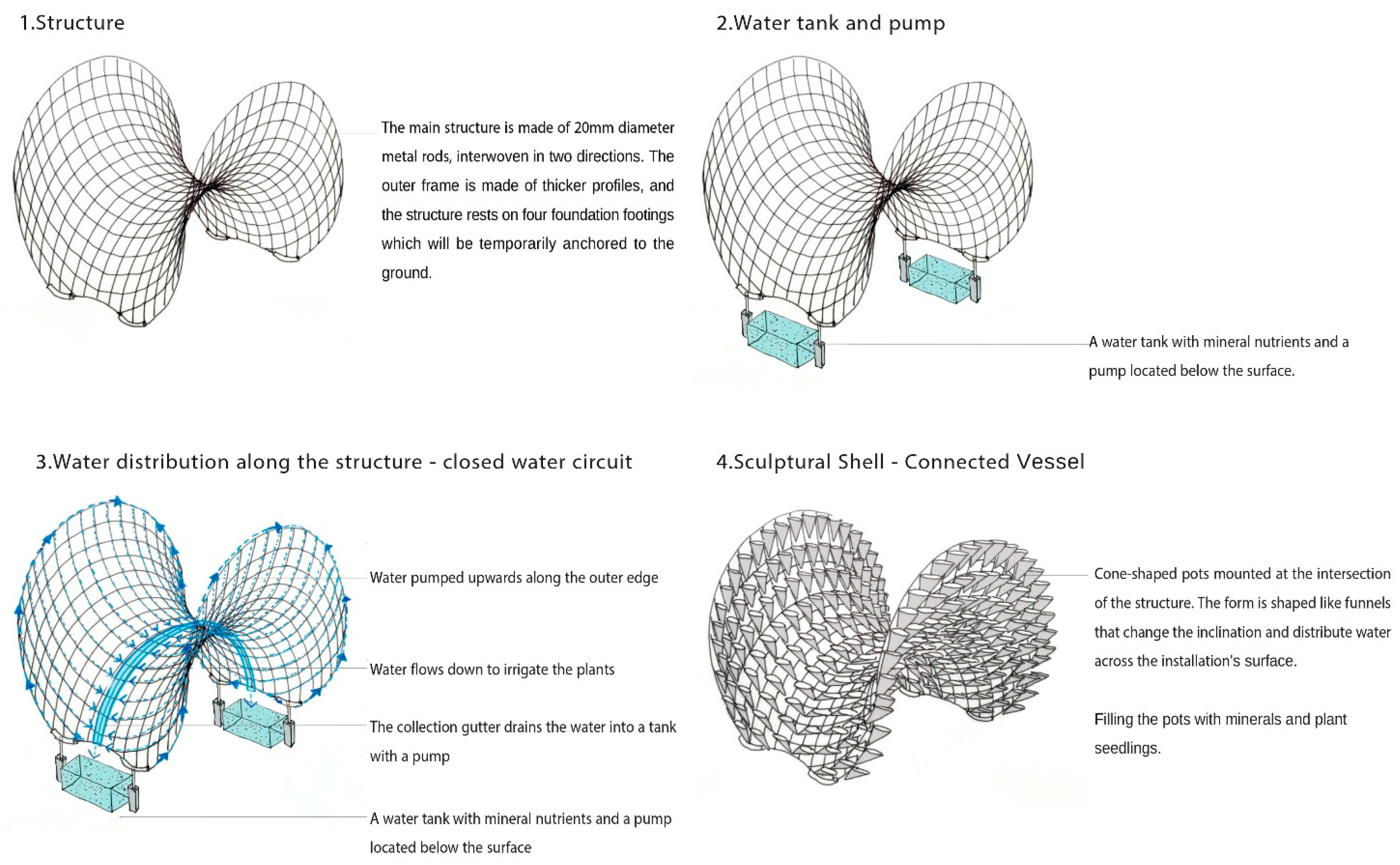
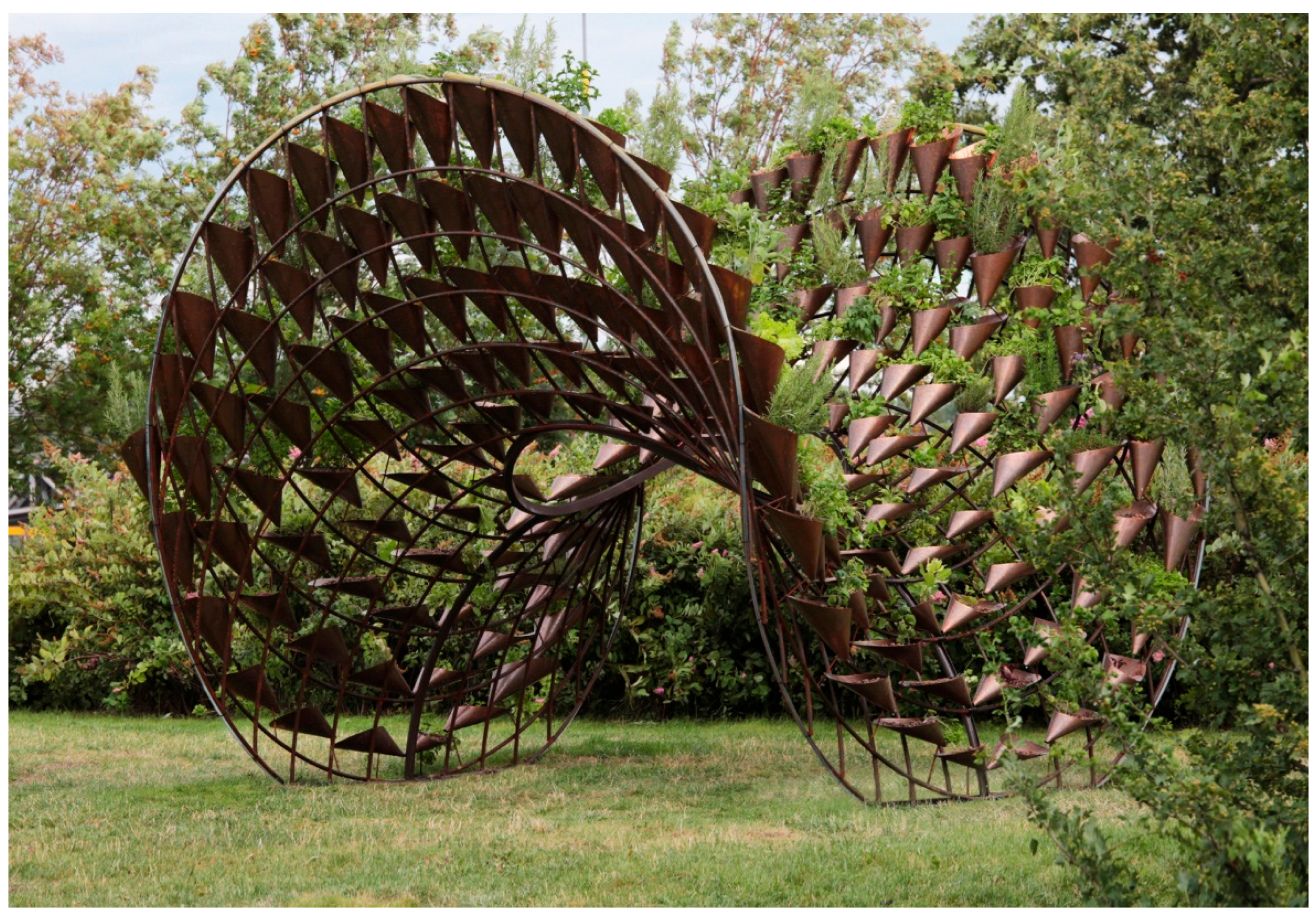
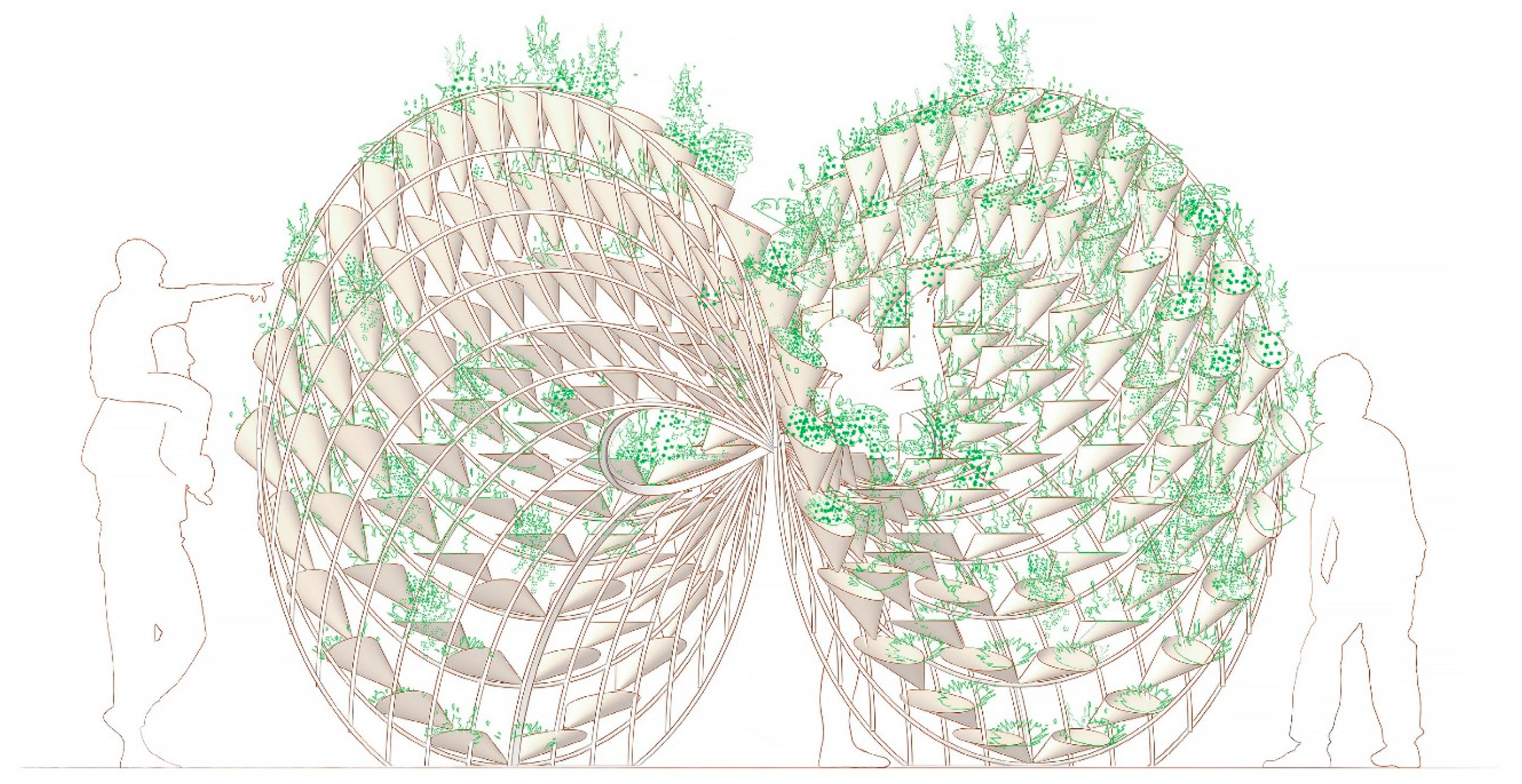
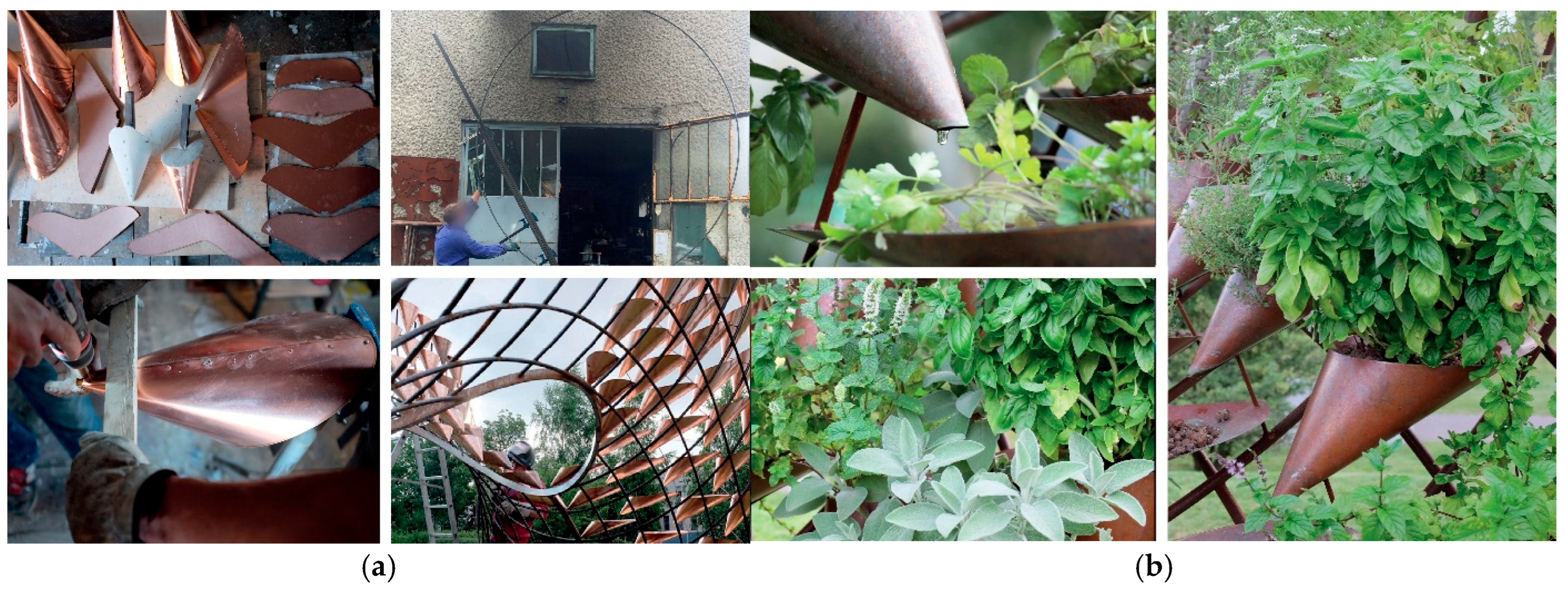
Blooming Structure was conceived as a temporary spatial installation in the form of a vertical garden, integrating an original architectural framework with a hydroponic system that supports plant growth (
Figure 1,
Figure 2,
Figure 3 and
Figure 4). The project simultaneously operates as an urban exhibition medium: it foregrounds selected consequences of urbanisation (including the reduction in farmland) and demonstrates the potential for developing localised food production within the city. Programmatically, the intervention was complemented by a public component comprising a presentation of the applied solutions, hands-on workshops, and a shared tasting session based on the harvested produce. At the core of the micro-intervention lies the coupling of sculptural form with cultivation infrastructure. The main structure was fabricated from 20 mm steel rods interwoven in two directions and supported on four feet temporarily anchored in the ground. A system of 245 copper “planters” in the form of cones was integrated into the frame at the intersections of the rods. These planters—funnel-shaped elements with variable inclination—serve not only as supports for plants and mineral nutrients but also as devices for distributing water across the surface of the installation, following the logic of communicating vessels (
Figure 2).
The hydroponic solution was designed as a closed-loop water system. A reservoir containing water and mineral nutrients, together with a pump, was located below ground level; water is pumped upward along the outer edge of the structure and subsequently flows downward, irrigating the plants. A collecting gutter returns the runoff to the reservoir. This arrangement constitutes a key ecological rationale for the project: under urban conditions—where both space and resources are constrained—the installation demonstrates the feasibility of plant production with controlled water consumption and without the use of soil.
As a case study, the significance of Blooming Structure extends beyond its technological prototyping to include a mechanism for disseminating cultivation practices. The project involved a public presentation of the system (with expert participation), workshops focused on constructing a “window hydroponic garden,” and a harvest-based communal event—a closing session culminating in a shared meal and distribution of the cultivated plants. Consequently, the installation functions as a micro-intervention with dual impact: materially, it introduces cultivation into public space; symbolically and practically, it initiates the transfer of competencies (know-how) that enable the replication of the solutions at both domestic and institutional scales.
3.2. Micro-Cultivation 1 (Dryf, 2018)—A Shopfront as a Vertical Demonstration Farm (Microcity, Warsaw)
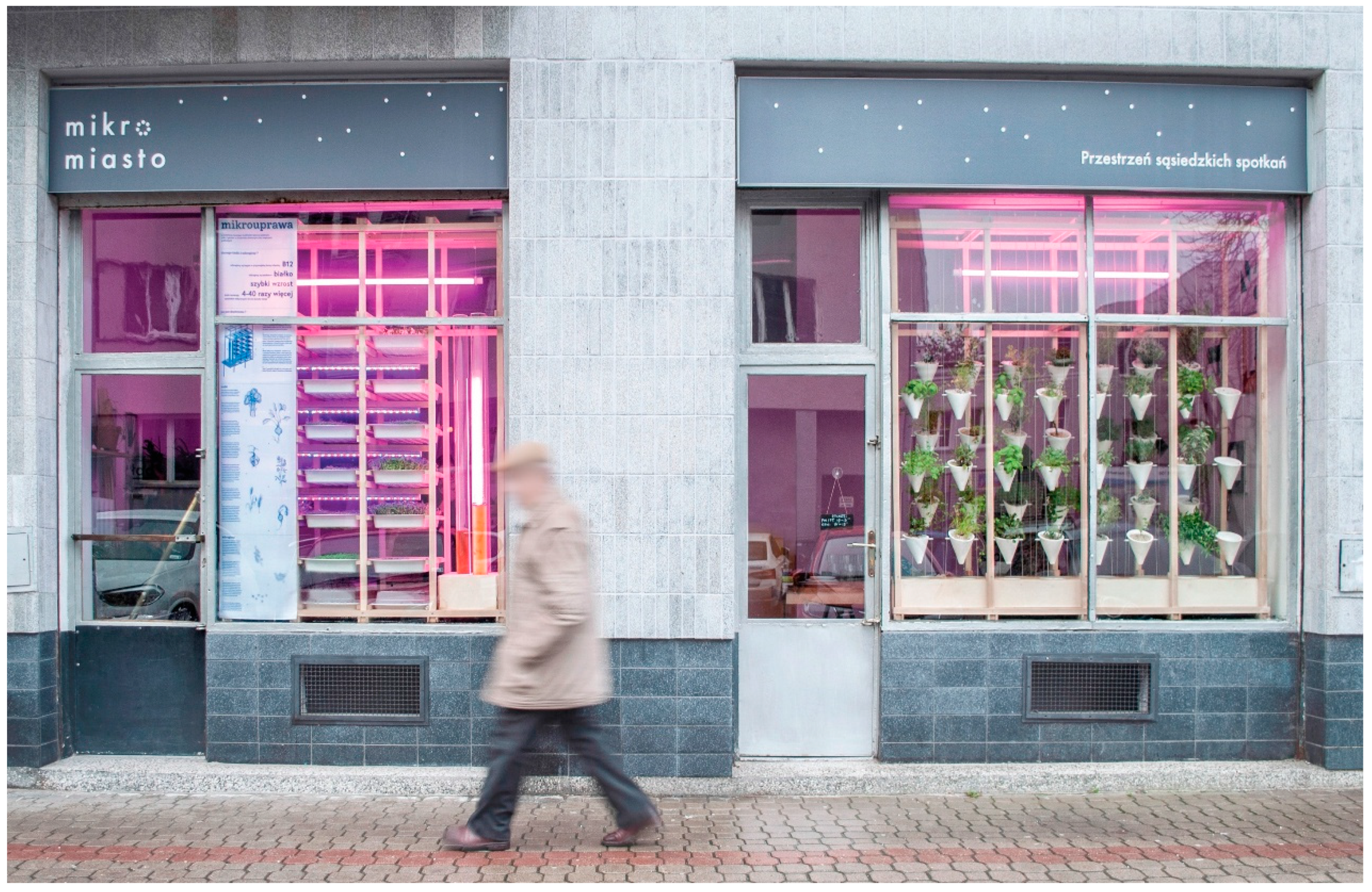
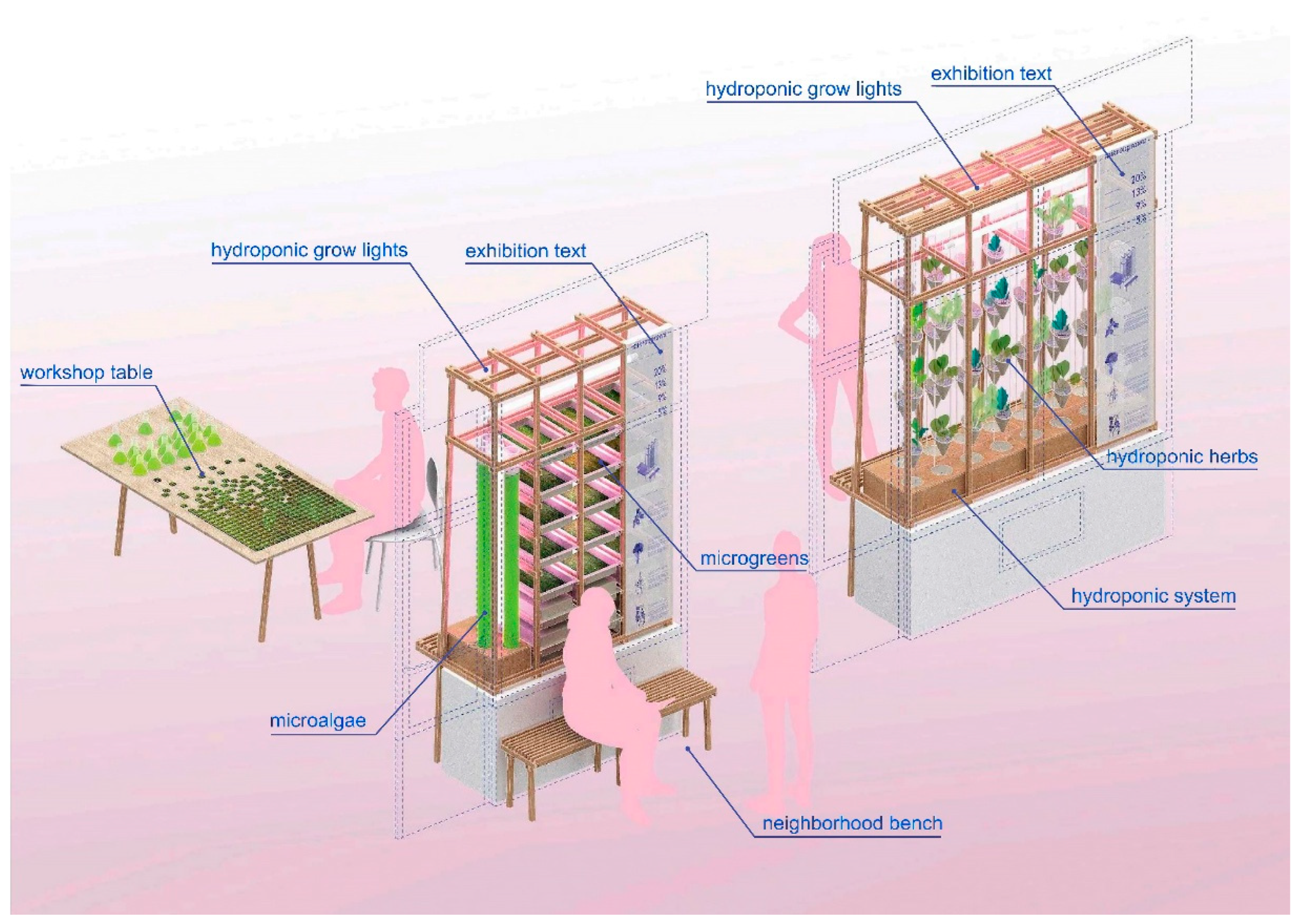
In the variant developed by the Dryf collective, Micro-cultivation was presented as an installation in the shopfront windows of Mikromiasto (Narbutta 27A, Warsaw) (
Figure 5 and
Figure 6). The project tests the feasibility of cultivating edible plants and algae both in domestic settings and within public interiors by transforming the display windows into a vertical garden. The selection of organisms (sprouts, microalgae, herbs) is justified by their nutritional value and their suitability for small, shaded areas without access to soil; concurrently, the project emphasises the accessibility of the solution as an incentive for initiating similar practices in homes, shared spaces, and workplaces.
The installation is structured to ensure legibility and educational value. The section dedicated to sprouts outlines a three-stage growth cycle: (1) microgreens sprouts with coco grow mats in covered trays without access to light (typically 3–7 days), (2) seedlings (microgreens) in open trays with access to light (cotyledon stage), and (3) young plants (microplants) with the first true leaves, some of which are subsequently transferred to the hydroponic section. The cycle is short, observable, and reproducible without specialised infrastructure.
The algae component introduces a perspective on urban agriculture that goes beyond conventional notions of the garden. The cultivation is described as a set of tubes containing three microalgae species: Arthrospira pratensis, Chlorella vulgaris, and Scenedesmus dimorphus. The project highlights their rapid reproduction and nutritional value, as well as the classification of microalgae and sprouts as “functional food.” This expands the project’s argument: the micro-intervention is not merely “greenery in the city” but also a proposition for an alternative source of nutrients under spatial constraints.
The hydroponic section within the windows is described as a closed-loop water system and an arrangement of planters forming a winter herb garden. The materials explicitly state a design principle typical of micro-interventions: urban cultivation should yield the maximum amount of food within minimal space, hence the vertical organisation and modularity of elements that can be stacked in tiers.
An important component is the infrastructure supporting neighbourhood relations. The project documentation includes a workshop table, which became a site for regular neighbourhood breakfasts and for celebrating the green harvest produced by the installation. In this sense, the shopfront operates simultaneously as an exhibition and a social interface: it engages passers-by through the visibility of the process, while also enabling cultivation to become embedded in communal practices (meeting, eating, ritual). Additionally, workshops for children complement the neighbourhood educational program of the Microcity institution.
3.3. ”Micro-Cultivation 2” (Dryf, 2019)—A Modular System of “Cultivation Furniture” and an Exhibition Deployment
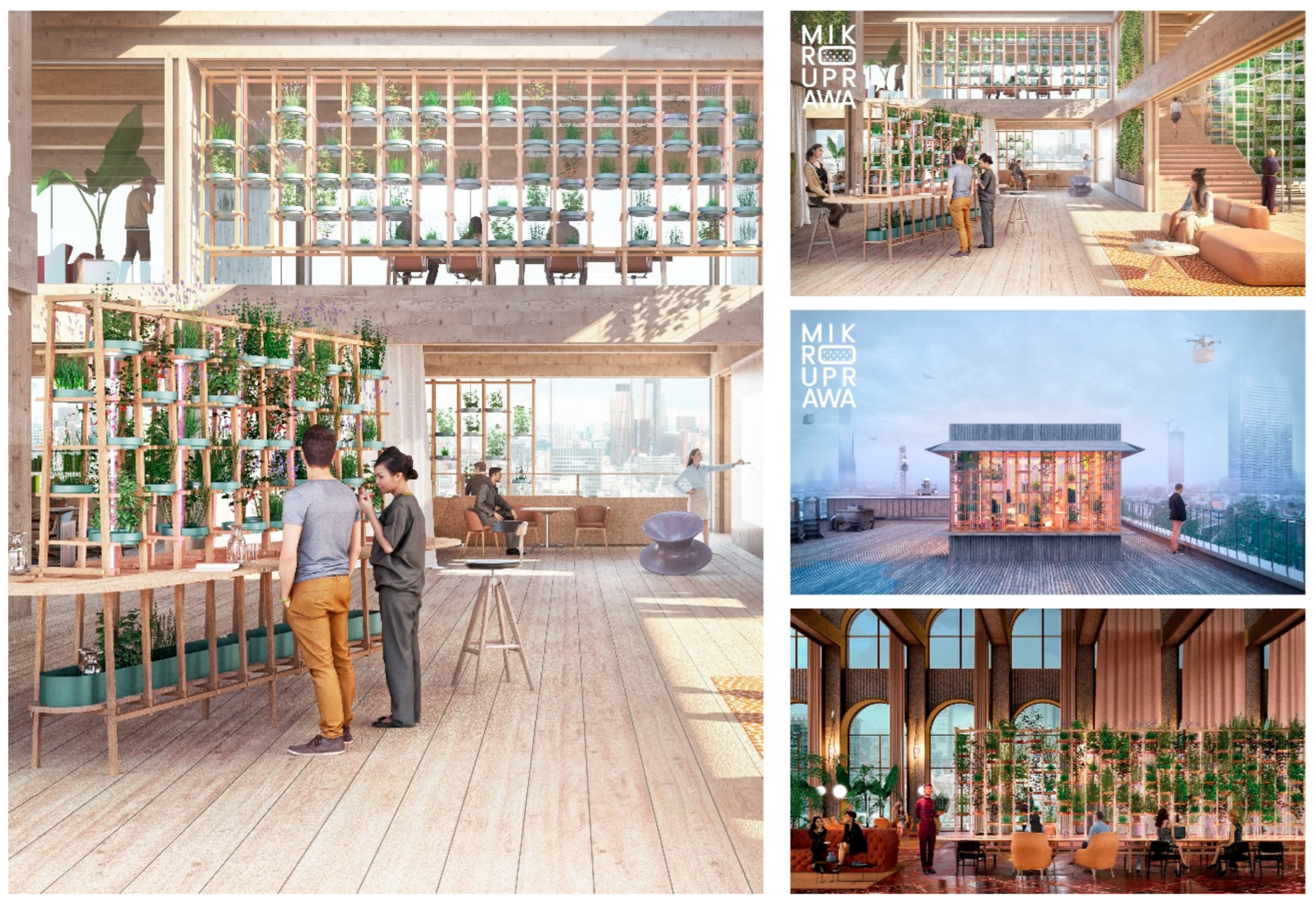
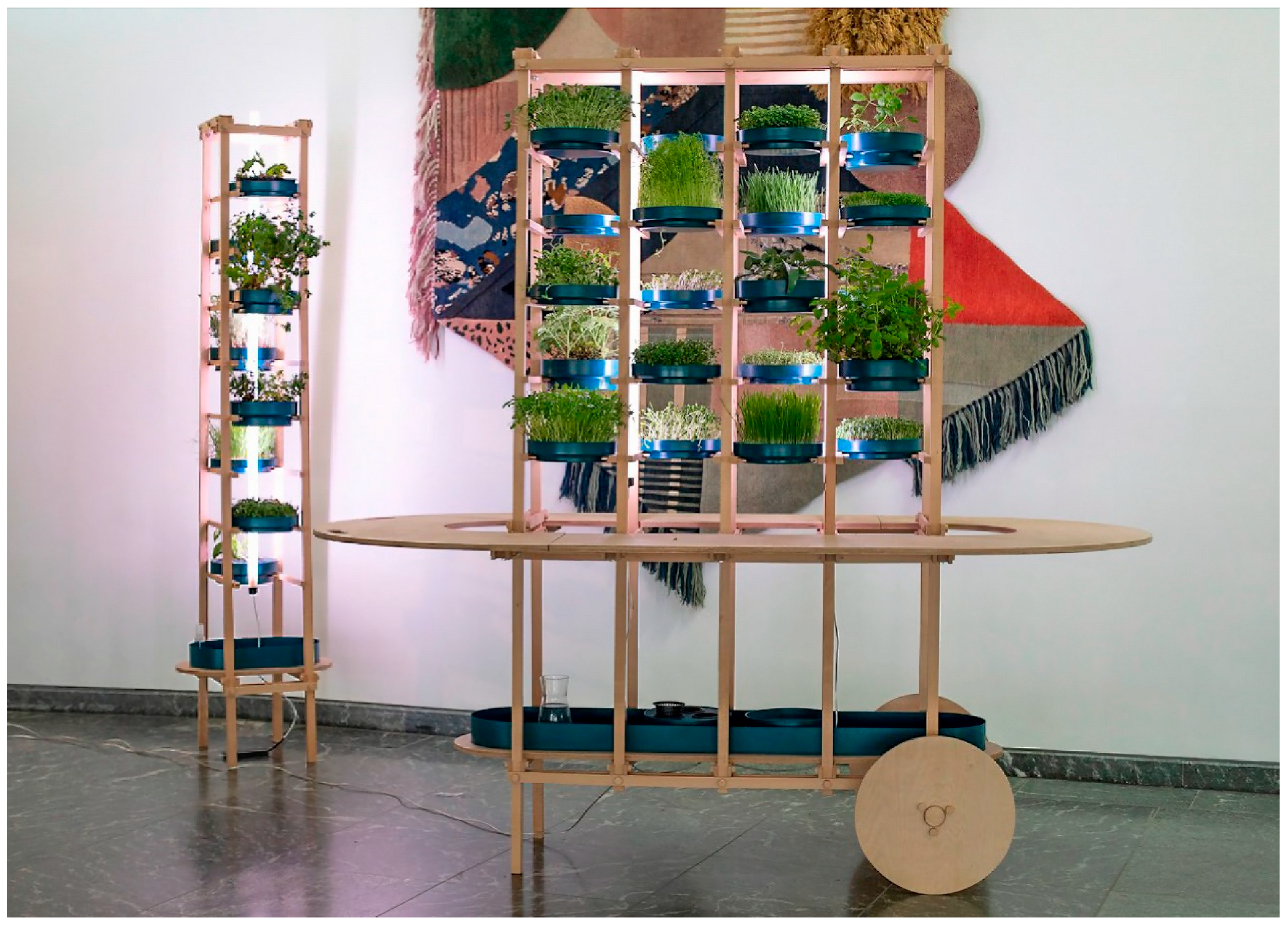
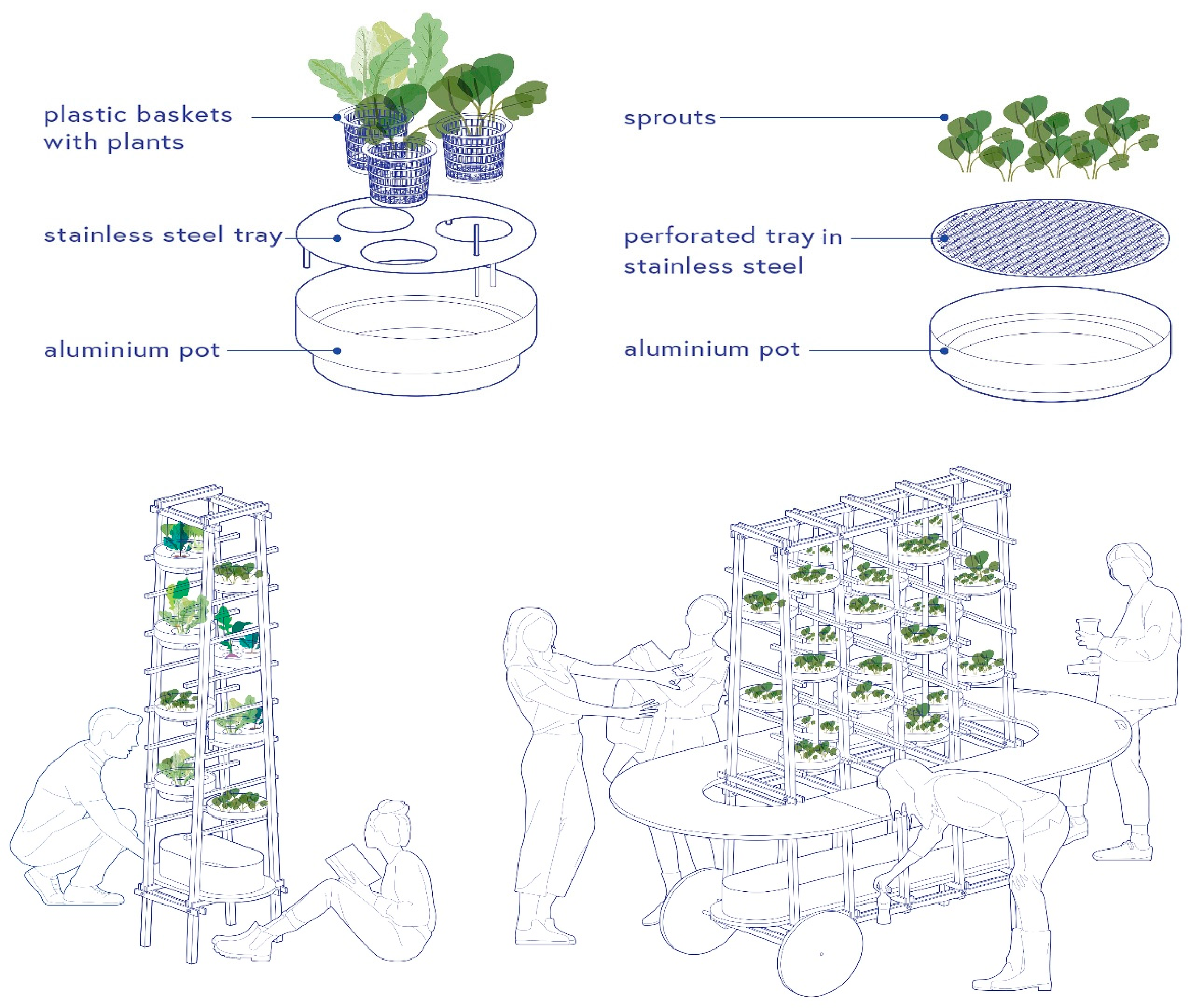
The third case study shifts the emphasis from a site-specific intervention to a mobile and scalable system designed as an element of interior equipment (
Figure 6). Micro-cultivation 2 is defined as a modular system that initiates edible-plant cultivation and cultivation-related activities in urban contexts, particularly within work environments (offices, home offices, coworking spaces, cafés, hotels). The concept draws on vertical farming and soilless cultivation; its central rationale is to “bring” food production closer to users and to enable everyday contact with the cycle of sowing, growth, and harvest. The materials also point to potential environmental benefits associated with reducing the pressure exerted by industrial agriculture.
Technically, the system combines hydroponics (roots immersed in an aqueous nutrient solution) with artificial growth lighting, enabling free growth of plants in spaces with limited access to daylight. The series comprises two objects intended for different use scenarios. The first is “Hydroponic Herb Cultivation”: a tower with a wooden frame (beech battens) and eight aluminium planters; it includes a growth-supporting fluorescent lamp and storage for gardening tools, with overall dimensions of 50 × 40 × 240 cm. The second is a “Mobile Sprout Station”: a wheeled structure with sixteen aluminium planters, a plywood worktop, and two light sources, measuring 250 × 125 × 240 cm (
Figure 7).
As a micro-intervention case study, the project is particularly instructive because it demonstrates how urban agriculture can operate as a practice embedded in the organisation of work and interior environments rather than as a seasonal activity dependent on external green areas. Mobility and modularity shift the emphasis from permanent infrastructure to temporary deployments, iterative testing of configurations, and the arrangement of micro-spaces for social interaction around a food cultivation.
In 2019, the system was presented during Berlin Design Week as part of a Dryf exhibition booth. The report identifies two key activities: participation in the “state of DESIGN” exhibition at Kulturforum and a presentation in the neighbourhood gallery minibar, combined with a community meeting and a “green tasting” based on “Mikrouprawa” harvests. The team also participated in Open Studio Night, presenting the project and engaging in discussions with the public, while the exhibition at Kulturforum ran from 10 October to 3 November 2019. In this way, the micro-intervention entered the circuit of cultural institutions and design events, reinforcing its communicative dimension: the object functions not only as a production device but also as a carrier of debate on the future of food, work, and urban lifestyles (
Figure 8 and
Figure 9).
3.4. Comparative Significance
Collectively, the projects allow three complementary models of micro-interventions in urban agriculture to be distinguished (
Table 1 and
Table 2). First, the outdoor version of Blooming Structure operates as an installation–laboratory: it merges an expressive spatial form with functioning hydroponic infrastructure and a closed-loop water system, and its impact relies on intensified modes of engagement (presentation, workshops, shared meal). Second, the shopfront variant (Micro-cultivation) establishes a micro-intervention as a demonstration of everyday urban-agricultural practice: cultivation is publicly visible, designed for replication, and linked to neighbourhood practices. Third, Micro-cultivation 2 proposes a cultivation-furniture model: mobile, equipped with artificial lighting, and tailored to interior conditions, enabling situational deployments in offices, homes, and public venues and embedding cultivation within work-related rhythms.
A number of the installations discussed in this paper—or selected components thereof—which were initially conceived as temporary, acquired a “second life” after the completion of their original deployment. Their continued relevance was driven primarily by aesthetic qualities, the standard of fabrication, and a simple yet flexible functionality that enabled straightforward adaptation to different contexts of use. As a result, the roles originally envisaged for many of the objects were transformed: their functions and modes of use evolved with relocation and were adjusted to the needs and preferences of new users.
The soilless cultivation system implemented in the Blooming Structure installation required substantial technical support. Due to difficulties in ensuring a continuous supply of water and nutrient solution, as well as the need for regular maintenance to keep the system clean, the new users replaced it with a less demanding soil-based cultivation method. Perennial ornamental plants were introduced, and the object—originally conceived primarily for producing edible plants—has become a representative feature of the garden of the Society for the Shelter of St. Francis de Sales in Warsaw, where it has been in operation for five years. Owing to its functional and aesthetic qualities, the object received a distinction in the 38th edition of the “Warsaw in Flowers and Greenery” competition.
Micro-cultivation 1, due to its composition being strongly site-specific to the context for which it was designed (the Mikromiasto shopfront windows), was not reused in its entirety. However, the modular sprouting section—constructed at low cost from readily available materials—has clear potential for redeployment or replication under other conditions. This section is based on system-assembled wooden profiles, standard trays available in mainstream gardening stores, practical coconut-fibre mats, and a modular grow-light system supporting plant development. Given its high productivity, this lighting-supported sprout module could be effectively applied to the production of nutrient-dense ingredients for the food-service sector.
By contrast, the tower from the Micro-cultivation 2 furniture series is most often used only partially for edible-plant production. This is largely due to users’ limited time and to the consumption needs typical of single households or workplaces for which the object is intended. In practice, the sections not used for growing edible plants are frequently repurposed by users for other functions—for example, as displays for ornamental plants, shelving for books, or storage for kitchen products and utensils.
4. Discussion
The results of the three case studies indicate that their significance lies primarily in their capacity to communicate cultivation processes, activate social relations, and test prototypical technological solutions in urban settings. One of the most salient findings concerns the role of visibility as a foundational design strategy. In contrast to many forms of urban food production that remain concealed within technical or semi-private spaces—such as rooftops, back-of-house logistics zones, or enclosed vertical farms—the examined interventions deliberately locate cultivation in sites of high public exposure. Installations positioned along streets, in shopfront windows, within cultural institutions, or as part of urban events operate as elements of the everyday urban landscape, visually accessible to broad and diverse publics. By placing cultivation systems within areas of intensive pedestrian flow, food production becomes embedded in residents’ everyday movement patterns. Plant growth—typically separated from urban experience and displaced beyond city boundaries—thus becomes part of an observable urban reality. Microinterventions function here as “productive displays”, rendering food production visible and interpretable in public space, although the production is symbolic
This strategy aligns with broader urban concepts, including the “edible city” and “productive landscapes” [
34]. The edible city approach treats the city as an environment where food production becomes an integral component of urban life—alongside recreational, transport, and ecological infrastructures. Community gardens, urban orchards, and cultivation in or near public spaces form networks of sites where residents can experience food production directly. The productive landscapes concept further frames the urban landscape as multifunctional, where ecological, social, and productive functions are interwoven. In this view, food production is not external to the city’s landscape, but one of its active components; cultivation can coexist with recreational, educational, and aesthetic programmes, producing hybrid urban forms.
The microinterventions analysed in this study can be interpreted as a specific, highly localised variant of these concepts. Rather than transforming large urban areas into productive landscapes, they operate pointwise, introducing food production through small architectural installations or cultivation modules. Their contribution lies in the intensification of visibility: even a small installation, if placed in a highly exposed location, may function as a symbolic “window” onto urban food-production systems.
Notably, this design strategy also supports integration into existing urban fabric. Microinterventions do not require extensive land take or comprehensive infrastructural transformation; they can be inserted into spaces not traditionally associated with food production—such as shopfront windows, institutional courtyards, or event venues. Food production thus becomes a mobile and adaptable element of the urban landscape.
A further aspect concerns the visibility of technological infrastructure—here, hydroponic systems—which makes production processes more comprehensible to non-specialist audiences. Technological transparency simplifies interpretation and enables observation of successive stages of cultivation. In this respect, microinterventions can be understood as technological prototypes operating in public space.
As a result, the visibility of food production becomes a mechanism linking the spatial, social, and educational dimensions of urban agriculture. Microinterventions not only produce food at a limited scale, but also shape urban imaginaries regarding relations between the city and food-production processes. Their significance therefore lies in their capacity to reframe the urban landscape as a space in which food production becomes visible, intelligible, and culturally present.
The green microinterventions discussed in this paper address how soilless cultivation can be integrated—both aesthetically and functionally—into everyday settings of living and work, from domestic interiors and offices to streets, courtyards, and small public squares. They are situated alongside, and in dialogue with, the expanding field of bottom-up urban micro-farming, where vertical hydroponic systems are frequently developed through do-it-yourself practices and resourceful reuse of readily available materials (e.g., plastic bottles). Rather than positioning these grassroots approaches as deficient, the projects analysed here can be read as a complementary strand that translates similar motivations into design-led prototypes. By emphasising clarity of operation, material robustness where needed, and a legible presentation of cultivation processes, they treat technology not only as a means of production but also as an educational and communicative interface—supporting learning, replication, and broader public engagement.
In these respects, the microinterventions are compatible with the New European Bauhaus (NEB) framework, which links three dimensions of transformation: beauty, sustainability, and togetherness [
35]. On the “beauty” axis, form and detail support social acceptance of new urban food practices, positioning cultivation as part of spatial aesthetics rather than merely a technical device. In terms of “sustainability,” the projects mobilise resource-efficient logics (e.g., water circulation, reduced reliance on soil, local production) and, against cultures of disposability, test scenarios of reuse and adaptation. The “together” component is realised through designing interventions as platforms for collaboration: workshops, shared tables, tastings, and neighbourhood activities transform cultivation into a relational practice that strengthens ties and competencies.
A further outcome is that, despite their initially temporary character, many of the installations were subsequently reconfigured and redeployed. Their sustained attractiveness depended less on productive performance than on aesthetics, build quality, and simple, flexible functionality enabling adaptation to new contexts and users. In several cases, original assumptions evolved: objects were adapted to local preferences through changes in plant selection, modes of use, or levels of technical servicing. This adaptive capacity can be interpreted as a key feature of NEB-compatible microinterventions: prototypical solutions that are not confined to a one-off “event,” but can be reconfigured, appropriated, and developed across contexts, combining the pragmatics of everyday use with the ambition of aesthetic–environmental urban transformation.
Implementation and maintenance costs in the analysed projects were predominantly immaterial, tied primarily to design labour. The most significant “cost” was the time invested in developing the concept, preparing documentation, and constructing prototypes. Relative to the spatial and programmatic effects achieved, material expenditures remained modest, supporting the interpretation of microinterventions as low-threshold solutions.
Similarly, the operational phase required limited material resources—primarily water and seed. Here again, the key resource was user time devoted to plant care and routine servicing, proportionate to the scale and productive capacity of each object (
Table 1). This indicates that even with low financial inputs, the durability and effectiveness of microinterventions depend substantially on labour availability (time) and on design decisions that reduce maintenance requirements. At the same time, from the practitioner’s perspective, time devoted to designing, building, and maintaining the installations was not experienced as a cost in the sense of lost resources, but rather as a regenerative practice: a source of satisfaction, psycho-physical well-being, and a rhythm that counterbalanced the intensity and monotony of everyday professional work.
The impacts of urban-farming microinterventions must be interpreted in relation to their scale and temporality. In productive terms, most micro-projects generate limited volumes of food and rarely alter urban food security at the city level. Their influence is therefore more accurately understood as catalytic and infrastructural: they create visible proof-of-concept sites, lower the threshold for participation, build practical competencies, and reconfigure everyday relations between residents, food, and place. Temporality can further intensify this function. Short-term installations often concentrate attention, mobilise participation, and accelerate learning, even if they do not persist as permanent production systems.
At the same time, the characteristics that make microinterventions attractive—small footprint, low entry barriers, and experimental character—also constrain their durability and cumulative effect. Temporary projects may disappear once initial funding, caretaking capacity, or organisational momentum declines. Moreover, when microinterventions remain isolated, benefits tend to be fragmented: social engagement may be strong, but material outputs and long-term maintenance may be unstable, and lessons learned may not travel beyond the immediate site.
Unlike many infrastructural urban-agriculture projects that scale primarily by expanding a single installation, microinterventions scale predominantly through repeatability and replication. The modularity and mobility of cultivation systems facilitate implementation across diverse spatial contexts—from public spaces and cultural institutions to workplaces. Scaling therefore occurs not by enlarging a single farm, but by creating a network of multiple small installations distributed across the city. This model supports experimentation and adaptation to local conditions. Each successive implementation can be treated as a prototype variant that retains core design principles while responding to site specificity. As a result, microinterventions can be understood as a distributed infrastructure of food production and food education, whose effectiveness derives from ease of implementation and rapid reproducibility.
From the perspectives in the forgoing paragraphs, the principal contribution of microinterventions lies in their capacity to prototype systems and social arrangements that can be aggregated from the micro to the meso level. Their effectiveness depends less on immediate yield than on whether they generate durable organisational, technical, and relational capacities that allow multiple small projects to function over time as a coordinated urban food infrastructure.
5. Conclusions
The analysis of the three case studies frames urban-farming microinterventions not as an alternative logic to large-scale urban agriculture programmes, but as a complementary layer of food systems that links small architectural objects with food production while foregrounding communicative, educational, and relational functions. Across the examined projects, effectiveness derives from a set of recurring design mechanisms that enhance visibility, intelligibility, and capacity for replication.
The cross-case analysis shows that the effectiveness of urban-farming microinterventions depends less on expanding production and more on maximising visibility with minimal spatial and resource input. In the examined projects, “public presence” is achieved through placement in highly exposed settings—streets, shopfronts, institutions, and events—combined with forms that sustain attention over time. The cases also indicate that technology functions as a communicative interface: making hydroponic and closed-loop components visible increases legibility for non-expert publics and allows the interventions to operate simultaneously as working prototypes and educational tools. Temporality further strengthens impact when deployments are linked to event-based programming, as time-limited formats concentrate attention, mobilise participation, and accelerate learning through presentations, workshops, and harvest-related activities. Shopfront and exhibition configurations keep cultivation continuously observable and enable sensory engagement (e.g., tastings and shared tables), supporting competence-building and everyday food awareness. Finally, the projects suggest that microinterventions scale most effectively through replication: modular and mobile “urban farming furniture” enables reconfiguration across interior contexts and supports “scaling by copying” rather than enlarging a single installation.
Taken together, the findings suggest that urban-farming microinterventions should be assessed not only through productive output but also through their capacity to generate visible, communicable, and replicable prototypes that embed cultivation within everyday urban routines and social relations. In this sense, urban farming functions simultaneously as a production technology, an educational medium, and an instrument for strengthening local resilience.
However, the study contribution should be read as analytical and referential rather than universal: rather than claiming general urban agriculture outcomes, the paper offers a transferable set of design principles that may inform similar micro-scale interventions in other contexts.
A first limitation concerns the temporary and prototype-based character of the interventions. Two cases were explicitly time-bound or event-oriented, and all projects functioned, to varying degrees, as demonstrators. Temporality can intensify visibility and participation, but it also constrains what can be observed in terms of durability, long-term maintenance, and institutional embedding. In particular, short deployment windows may over-represent early-stage enthusiasm and under-represent the organisational and technical challenges that emerge after novelty fades or responsibilities shift to new caretakers.
Second, the study has clear geographical and contextual limits. The cases are concentrated in Poland (Warsaw), with one event-based deployment in Berlin, and thus reflect specific conditions: climate, regulatory environments, housing and public-space governance, and cultural norms of participation. As a result, direct transfer of findings to other regions should be approached cautiously, especially where resource costs, institutional arrangements, or public-space regulations differ substantially.
Third, the research design and data sources limit the scope of claims. The study relies on project documentation and practice-based observations, which are appropriate for analysing design mechanisms but do not provide a basis for quantitative evaluation of yields, nutritional contribution, or city-level food-security effects. Moreover, while the paper discusses low-threshold implementation and time requirements, it does not deliver a full economic cost accounting (e.g., total cost of ownership, labour valuation, depreciation, maintenance or repair costs). This constrains the ability to compare cost-effectiveness across typologies or to generalise about financial feasibility beyond the studied contexts.
Future research could address these limitations through long-term follow-up studies and expanded comparative designs. Particularly valuable directions include: (i) longitudinal monitoring of maintenance burdens, component failures, and stewardship transitions; (ii) comparative multi-city studies to test the robustness of the proposed design principles across climates and institutional contexts; (iii) mixed-method evaluations (e.g., cultivation stability, harvest frequency, participation intensity); and (iv) economic assessments, including life-cycle costing. Such follow-up work would enable more robust conclusions about the conditions under which microinterventions persist, scale through replication, and contribute to longer-term urban food infrastructures.