1. Introduction
Spatial syntax describes the relationship between spatial configuration, pedestrian movement, and social interaction within built environments. Specifically, it represents a system of relationships between spatial elements while also considering interactions between urban streets, buildings, and surrounding urban structures as part of an integrated spatial system [
1]. This concept focuses on understanding spatial systems as interconnected networks rather than isolated elements. In recent decades, space syntax has become an influential analytical approach in urban studies for studying how spatial structure influences movement patterns, accessibility, and social interaction within cities [
2,
3]. This study focuses on urban commercial districts and evaluates studies that apply space syntax analysis theory and analytical tools to understand the relationship between spatial configuration and human behavior and urban activity patterns [
4,
5].
The analysis of spaces and their composition is one of the main elements for understanding people’s attraction to urban environments and reflects the functions of commercial districts as well as the organization of buildings and public spaces. Spatial structure shapes the identity and character of commercial areas and influences how people move, interact, and engage within urban spaces [
2]. The study of spatial configuration has therefore evolved by examining the relationship between buildings, street networks, and pedestrian movement. It also explores spatial formation more broadly, considering how different urban elements connect with surrounding areas to influence urban growth patterns, connectivity, and the development of pedestrian and street networks. Research by Valipour et al. [
6] and Stevens & Thai [
7] suggests that urban morphology can be better understood by analyzing buildings, their surrounding environments, functional land uses, and urban characteristics. Similarly, recent studies highlight that spatial structure plays a critical role in shaping urban vitality and activity patterns within cities [
8,
9]. However, a consistent element in space syntax research remains the analysis of urban structural composition, including land use planning, building typologies, and spatial connectivity. In this context, the elements of urban form and the morphological characteristics of commercial spaces appear to be closely intertwined and cannot be ignored when examining spatial configuration.
Urban commercial districts with low vitality are often associated with fragmented spatial distribution and poor connectivity, which can negatively influence social interaction and the overall urban experience [
10,
11]. As a result, recent studies increasingly emphasize the importance of spatial configuration and accessibility in shaping urban activity and pedestrian movement patterns. Studies such as the work by Lu et al. [
12] demonstrate that the spatial structure can significantly influence urban business environments and commercial performance, highlighting the importance of spatial accessibility and connectivity in supporting vibrant urban districts. At the same time, emerging research has begun integrating new analytical techniques, including big-data urban analysis, point-of-interest datasets, and machine learning methods, to better understand the relationship between spatial configuration and urban vitality [
9,
10,
12]. Similarly, studies on urban agglomeration in China demonstrate that spatial structure significantly affects business environments and economic performance, highlighting the importance of spatial software tools for understanding the principles of configuration.
Despite the growing body of research on space syntax and urban morphology, existing studies remain fragmented across methodological approaches and often lack integration between spatial configuration metrics, behavioral observations, and sustainability outcomes, particularly within commercial urban environments. This fragmentation limits a comprehensive understanding of spatial dynamics in commercial districts, where these dimensions interact. While many studies analyze spatial configuration within broader urban contexts, their analytical frameworks provide valuable methodological insights for examining commercial districts and activity centers. However, existing research often focuses on individual case studies or specific analytical methods, resulting in fragmented knowledge regarding the broader application of space syntax in commercial urban environments [
2,
13,
14]. In particular, limited attention has been given to synthesizing how spatial metrics such as integration, connectivity, and choice relate to urban vitality, social interaction, and sustainable urban development.
More importantly, existing studies not only remain fragmented but also tend to isolate specific analytical techniques or case-based findings without systematically evaluating their collective implications for urban vitality and sustainability. Previous research has often emphasized the application of individual space syntax metrics or tools, while giving limited attention to how these approaches can be integrated to explain real-world socio-spatial dynamics across different commercial contexts. Furthermore, limited effort has been made to critically assess the methodological limitations, comparability, and transferability of these approaches, which constrains their applicability for evidence-based urban design and planning.
This research, therefore, aims to provide a comprehensive review of the literature to examine how space syntax methodologies and analytical tools have been applied to understand spatial configuration in commercial districts. The review focuses on identifying methodological trends, commonly used spatial metrics, and emerging analytical approaches within space syntax research. By synthesizing existing studies, the paper seeks to highlight key insights into how spatial configuration influences pedestrian movement, urban vitality, and activity clustering in commercial areas. The review also aims to identify current research gaps and opportunities for integrating spatial analytics with behavioral observations and urban activity data, contributing to a better understanding of spatial dynamics in sustainable urban environments. In doing so, the study moves beyond descriptive synthesis toward a more critical evaluation of how spatial configuration is interpreted in relation to urban vitality and socio-spatial processes.
This review delves into the various applications of space syntax in urban commercial districts, focusing on areas such as spatial configuration analysis, urban morphology, human behavior, and sustainability. Although some studies examine broader urban contexts, their analytical frameworks provide valuable methodological insights for understanding spatial dynamics in commercial areas. Current academic discourse has increasingly emphasized the role of spatial configuration in shaping socio-spatial dynamics, pedestrian accessibility, and activity patterns in cities [
2,
9,
15]. The study brings new insights by synthesizing existing research and identifying methodological trends in the application of space syntax within commercial urban environments. To guide this review, the study is framed around the following central research question: how do space syntax methodologies collectively explain and support urban vitality and sustainability in commercial and mixed-use urban environments? To address this research question, the review is structured along four primary thematic objectives:
To systematically synthesize recent applications of space syntax in commercial and mixed-use urban environments.
To evaluate how spatial configuration metrics influence walkability, accessibility, urban vitality, and commercial activity patterns.
To identify dominant methodological approaches and analytical metrics used to examine urban morphology, pedestrian movement, and spatial accessibility.
To examine how spatial configuration shapes socio-spatial interaction and contributes to evidence-based sustainable urban design
The research method is based on well-established space syntax theories, analytical techniques, and empirical studies of urban commercial environments. This approach provides a broader perspective on the interplay among spatial configuration, human activity, and sustainability in urban districts. While previous studies have examined space syntax in various urban contexts, few studies have systematically synthesized how different space syntax methodologies are applied specifically within commercial districts to interpret urban vitality, pedestrian accessibility, and activity clustering. This review therefore provides a focused synthesis of space syntax applications in commercial urban environments, highlighting methodological trends, commonly used spatial metrics, and emerging analytical approaches. By consolidating evidence across diverse studies, the review also identifies key research gaps, particularly the limited integration between spatial configuration metrics and empirical observations of human behavior and social interaction.
While previous review studies have primarily provided descriptive overviews of space syntax methods or examined their application across broad urban contexts, they have given limited attention to systematically evaluating how these approaches collectively explain urban vitality and sustainability within commercial and mixed-use urban environments. This review contributes to the literature by synthesizing recent methodological developments in space syntax research and identifying three emerging analytical directions: the shift from axial to segment-based analysis, the integration of space syntax with big-data urban analytics, and the growing use of multi-source datasets to evaluate urban vitality and spatial performance. Building on these developments, the review places particular emphasis on commercial urban environments while drawing on insights from broader urban contexts. This study adopts a systematic and thematic synthesis approach, combining structured literature selection with critical interpretation of methodological trends. It moves beyond descriptive synthesis by critically examining methodological approaches, highlighting their limitations, and exploring how these evolving frameworks contribute to a deeper understanding of urban vitality and sustainable development. This review provides a focused and critical synthesis of space syntax applications in commercial and mixed-use urban environments, while systematically evaluating methodological approaches and their limitations in linking spatial configuration to measurable indicators of urban vitality and sustainability.
2. Methodology
The review is based on a systematic, replicable, and transparent methodology in line with best practices in qualitative literature synthesis and urban research. The review process follows principles of systematic literature review reporting, guided by PRISMA-based reporting principles to structure the identification, screening, eligibility, and inclusion stages of the review process, as applied in previous systematic reviews in urban planning and related fields [
16]. The PRISMA framework was used to systematically document each stage of the study selection process. This methodological approach combines quantitative filtering criteria with thematic qualitative analysis to identify and synthesize studies relevant to commercial urban development and space syntax applications. The methodology is designed to ensure transparency in the selection process while enabling comparative analysis of methodological approaches used in previous studies [
17,
18,
19,
20,
21].
2.1. Search Strategy
A keyword-based search was conducted across four major academic databases: Scopus, Google Scholar, Elsevier, and MDPI. These databases were selected because they include a large number of peer-reviewed publications in urban studies, sustainability, and spatial analysis. The search employed keywords such as “space syntax”, “spatial configuration”, “urban commercial districts”, “walkability”, “connectivity”, and “sustainable urban development”, selected to capture key dimensions of spatial analysis and urban performance. The search strategy was extended using Boolean operators and truncations (e.g., AND, OR,) to capture variations in relevant terminology and ensure comprehensive coverage of the literature. To further enhance precision, keywords were combined using Boolean operators. To improve reproducibility, search strings such as (“space syntax”* AND “commercial” OR “mixed-use”) AND (“urban vitality” OR “walkability” OR “accessibility”) were systematically applied across databases, with minor adaptations depending on database-specific indexing (see
Figure 1). The same core search strings were applied across all databases, with minor adaptations to database-specific indexing and syntax. The literature search was conducted between November 2025 and updated in February 2026.
2.2. Inclusion and Exclusion Criteria
Specific inclusion and exclusion criteria were established to maintain the relevance and quality of the reviewed literature. The review focused on peer-reviewed journal articles published between 2017 and 2025 and written in English. To align with the research objectives, the selected articles explicitly applied space syntax methodologies to analyze urban environments, particularly urban commercial areas or mixed-use urban districts. The selected paper also employed spatial syntax metrics such as integration, connectivity, or choice within empirical research or methodological investigations.
Studies focusing primarily on domestic-scale analysis or non-urban environments were excluded. Non-English publications were also excluded to ensure consistency in evaluation and comparison. While the review prioritizes peer-reviewed journal articles, selected conference papers and book chapters were retained where they provided foundation or significant methodological contributions not sufficiently captured in journal publications.
2.3. Keyword Mapping Analysis
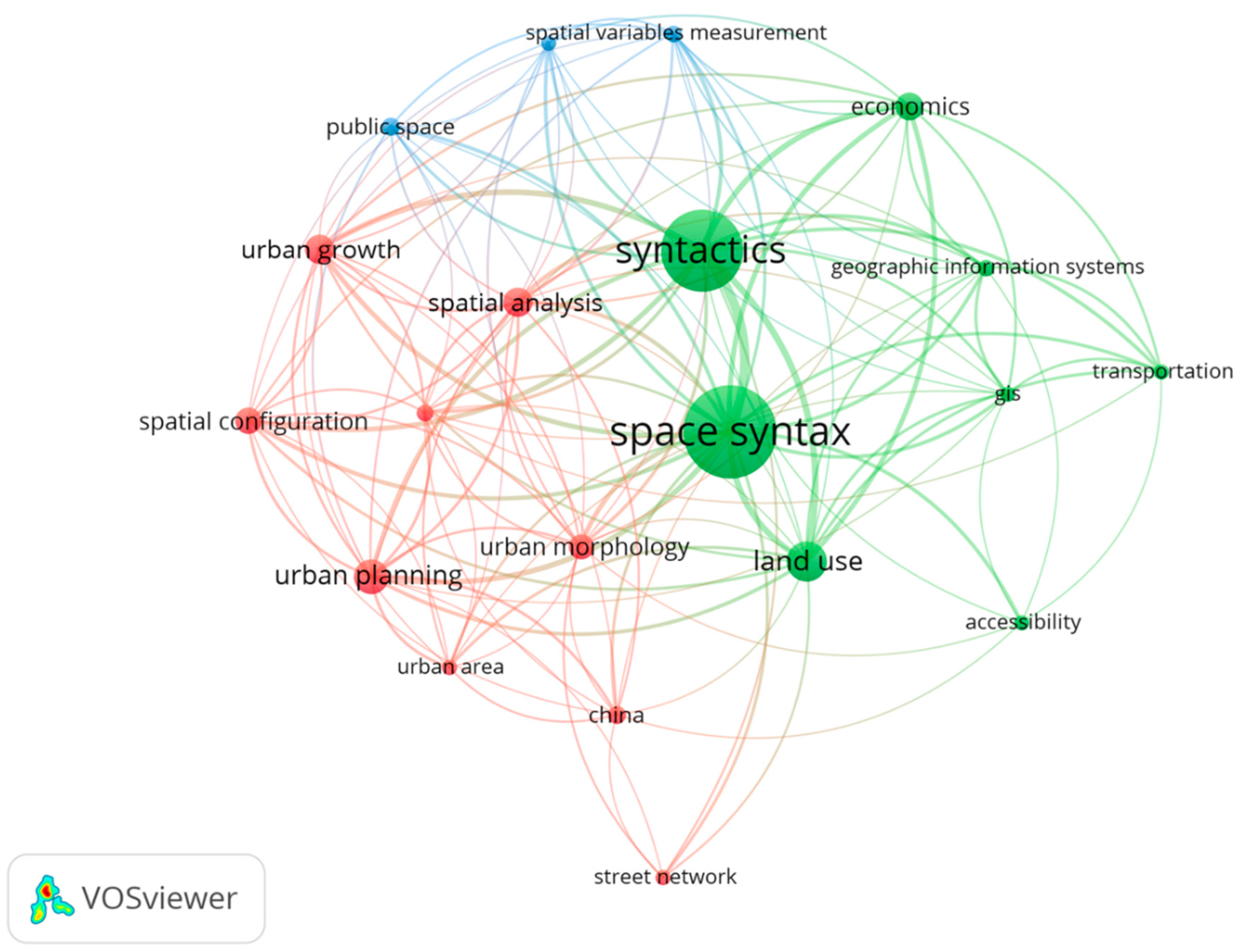
To further validate the thematic focus of the selected studies, keyword co-occurrence analysis was conducted using VOSviewer software (version 1.6.20). This bibliometric mapping technique enables visualization of relationships between frequently occurring keywords within selected literature and is widely used in systematic literature reviews to identify dominant research themes, conceptual relationships, and methodological trends.
The resulting network map identifies major scientific clusters related to space syntax, urban planning, commercial districts, spatial configuration, land use, and urban growth. These clusters provide insight into dominant research themes and evolving methodological directions within the reviewed studies. The mapping result also confirm the relevance of the selected papers to the broader discussion of spatial structure, urban vitality, and sustainable urban development (see
Figure 1).
For the purposes of this analysis, bibliographic metadata from the selected studies were exported from the selected academic databases in compatible CSV and RIS formats and subsequently imported into VOSviewer, where author keywords and indexed keywords were extracted for co-occurrence analysis. To improve consistency and reduce redundancy within the dataset, keywords were manually standardized by merging synonymous terms, correcting spelling variations, and unifying singular and plural forms. Terms not directly related to the thematic scope of the review were excluded during preprocessing. A minimum keyword occurrence threshold of five was applied to filter low-frequency terms and improve the clarity and interpretability of the visualization. Co-occurrence analysis was conducted using the full counting method, where each keyword occurrence contributed equally to the network structure. The resulting co-occurrence network was then used to visualize relationships between dominant research themes and methodological trends within the literature and to identify thematic clusters associated with space syntax, walkability, accessibility, urban vitality, and sustainable urban development.
2.4. Screening and Selection Process
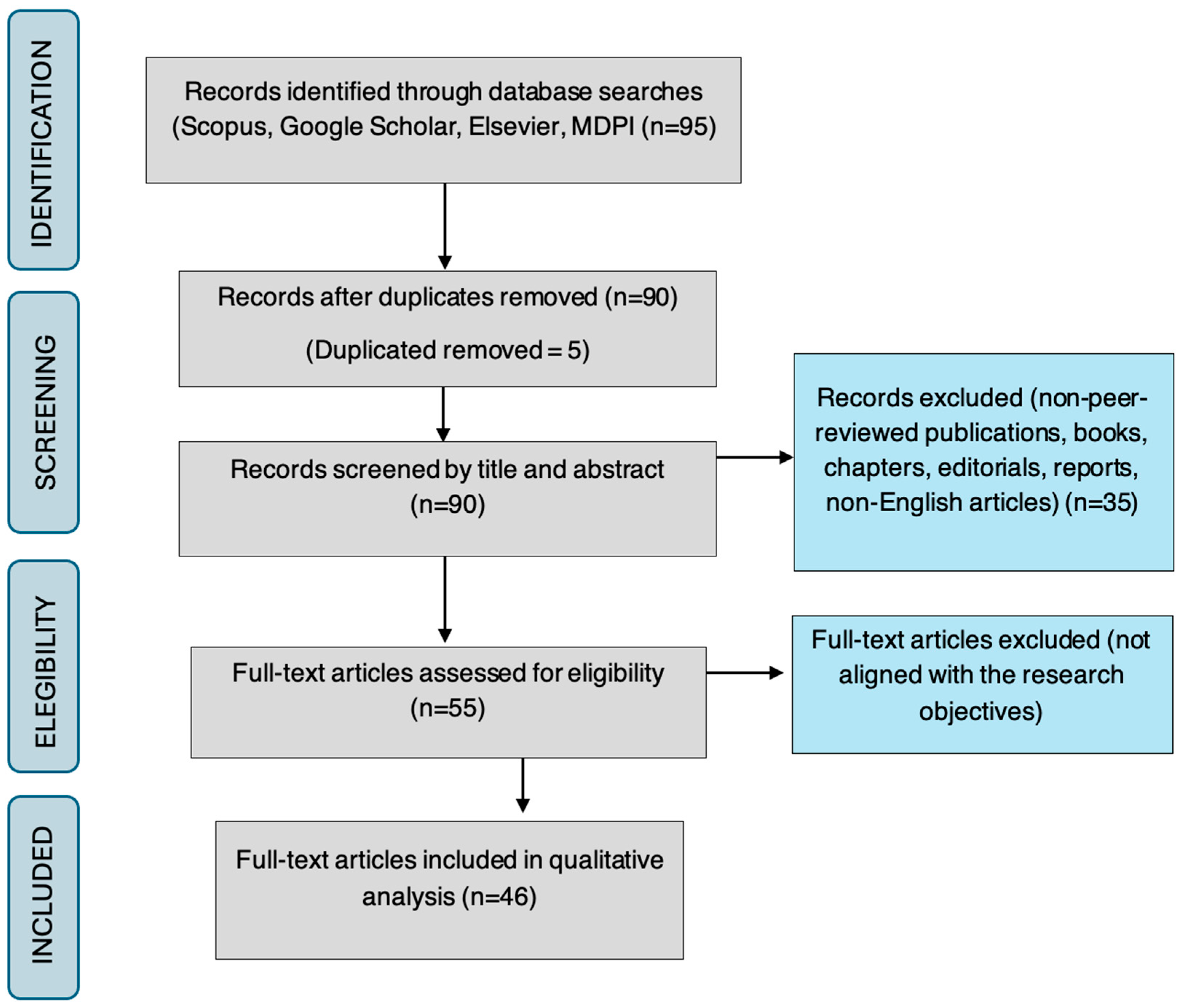
A total of 95 records were initially identified through the database search. After removing duplicates and screening titles and abstracts for relevance, 90 articles were retained for preliminary screening. From these, 55 articles were assessed in detail to evaluate their methodological relevance and alignment with the objectives of this review. Following this screening process, a final sample of 46 studies was selected based on their relevance to space syntax applications in urban environments and their contribution to understanding spatial configuration in commercial areas. More specifically, studies were excluded if they lacked explicit application of space syntax metrics, focused solely on theoretical discussions without empirical or methodological contribution, addressed non-urban or purely residential contexts, or were not aligned with the commercial or mixed-use urban focus and methodological scope of this review, or did not provide sufficient methodological detail to support comparative analysis.
Figure 2 illustrates the article selection process and screening stages. This structured screening process enhances the reproducibility and reliability of the review.
Studies were excluded if they did not explicitly apply space syntax metrics or did not address urban-scale environments relevant to the research objectives. The final selection was based on methodological relevance and alignment with the study’s focus, ensuring consistency throughout the screening process. Ambiguous cases were re-evaluated to ensure the consistent application of inclusion and exclusion criteria across all selected studies. The exclusion process involved removing duplicate records, studies lacking explicit application of space syntax methods, studies not addressing urban-scale environments, and those not aligned with the commercial or mixed-use focus of this review.
2.5. Thematic Analysis and Categorization
The selected studies were systematically coded and categorized to enable structured comparison and thematic synthesis. The analysis focused on several key variables relevant to space syntax applications in urban environments. The type of urban area or commercial context was studied, considering the following:
Specific space syntax metrics implemented (i.e., local/global integration, choice, visibility, connectivity);
Analytical tools or software used, such as DepthmapX (Version 0.5), ArchGIS/ArcGIS Pro (various versions), and Agent-based modeling (ABM) platforms (various version);
Research objectives and methodology approach adopted in the studies;
Sustainability-related outcomes, including social, environmental, and economic aspects.
This systematic coding framework enabled cross-case comparisons of the selected articles and the identification of common methodological approaches, analytical metrics and conceptual themes within the studies. It further supports not only descriptive synthesis but also the critical evaluation of methodological approaches, enabling the identification of key limitations and research gaps across the selected studies.
2.6. Overview of Methodologies in the Reviewed Studies
The selected studies reveal that a wide variety of methodologies have been employed to examine how spatial configuration influences the performance and sustainability of urban commercial districts. Most studies rely on established space syntax analytical frameworks, which enable researchers to quantify spatial accessibility, movement potential, and spatial relationships within urban environments. These approaches are often complemented by spatial data analysis and empirical observations to better understand the relationship between spatial structure and urban activity [
22,
23,
24]. Although some studies examine broader urban contexts, only those with clear relevance to commercial or mixed-use environments were considered in the final synthesis.
Several core analytical techniques frequently appear across the reviewed literature:
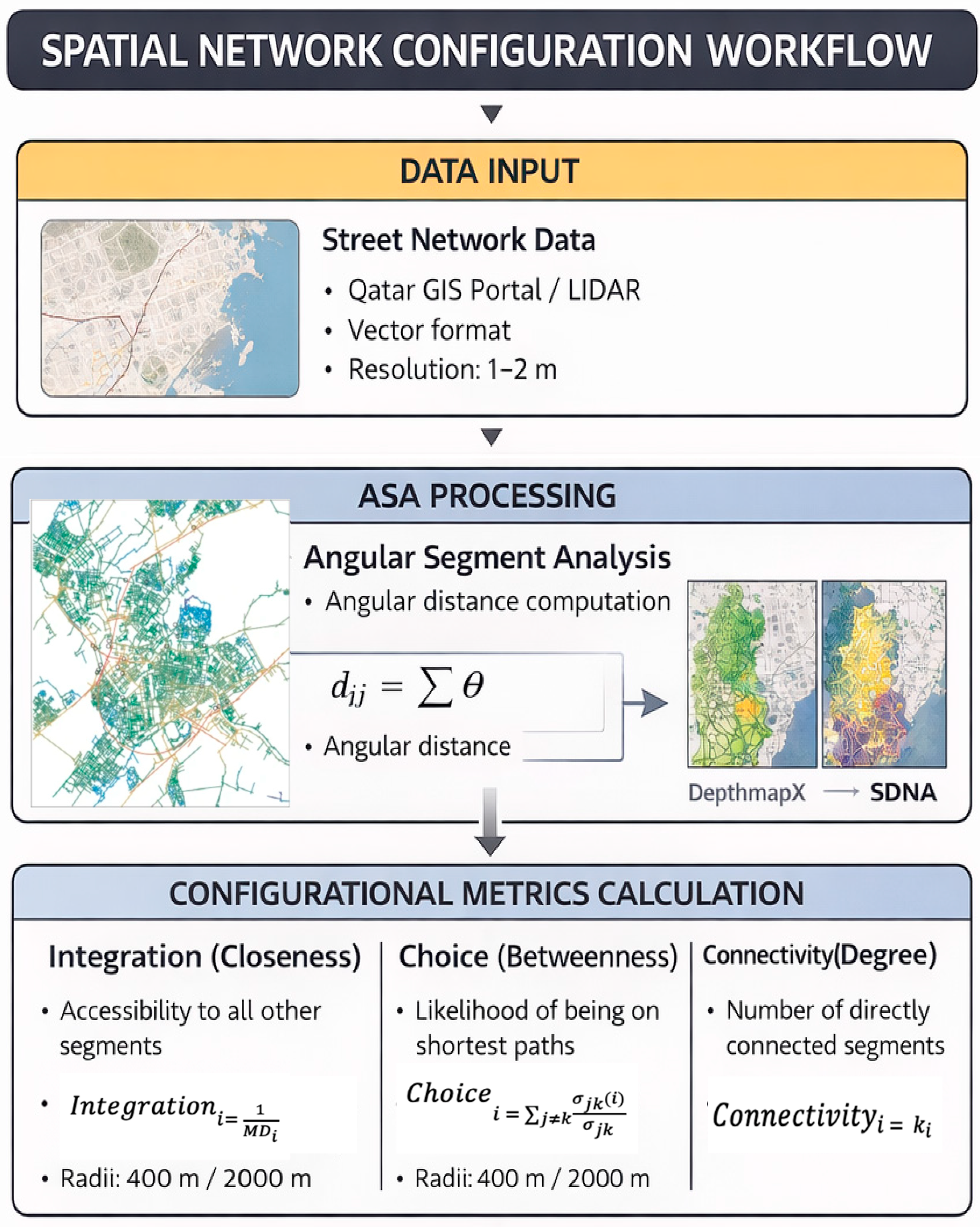
Figure 3 provides an overview of the analytical workflow commonly used in spatial configuration studies.
Axial Line Analysis: A method for evaluating the overall connectivity of street networks, usually represented through global and local integration maps that indicate the accessibility of different urban spaces [
23,
25].
Segment Analysis: Often applied to measure metrics such as Normalized Angular Choice (NACH) or Normalized Angular Integration (NAIN) to assess the potential of pedestrian movement within street networks using DepthmapX and Geographic Information Systems (GIS) [
23,
26].
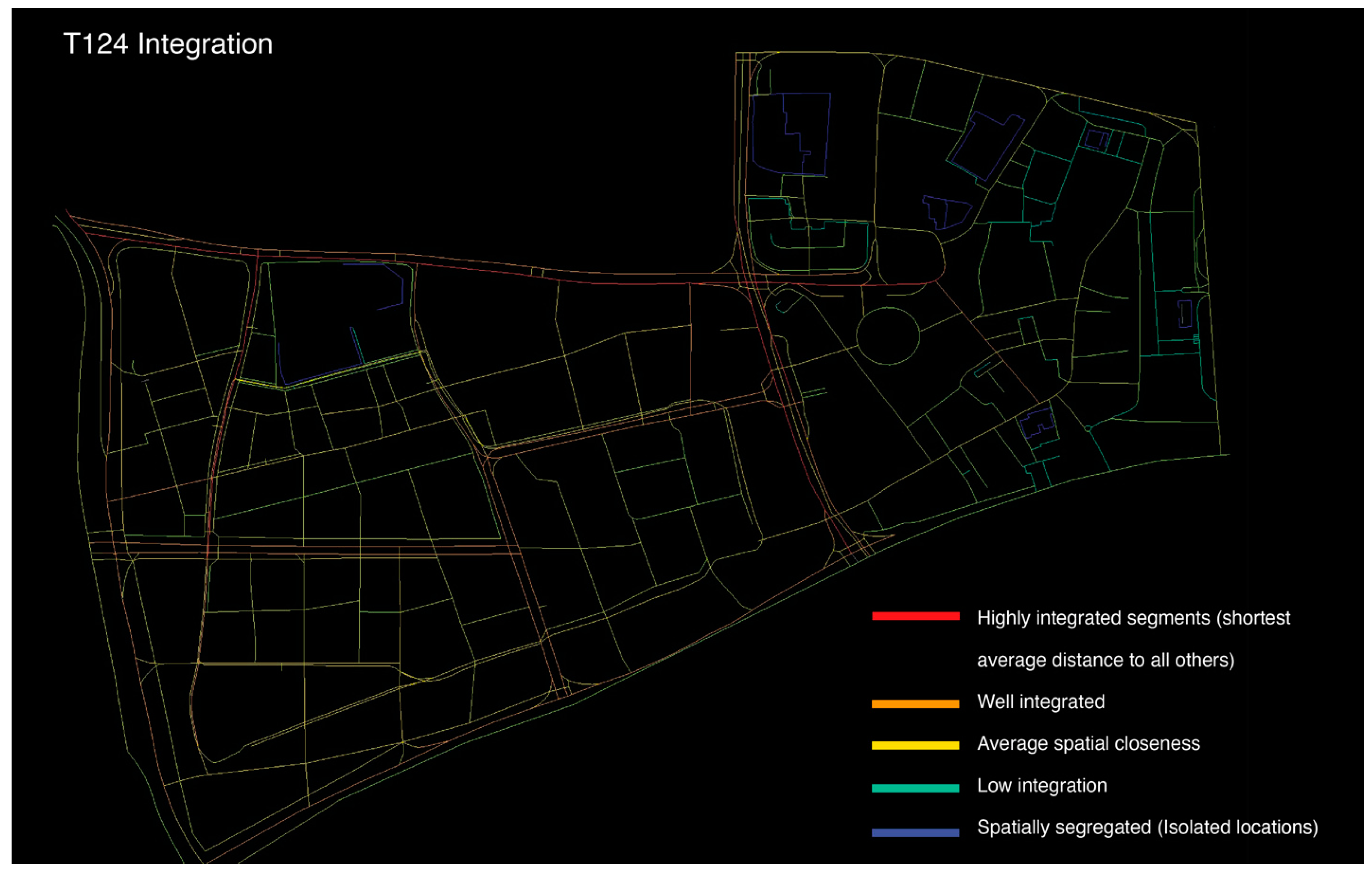
Figure 4 illustrates an example of segment-based spatial configuration mapping. Such representations are commonly used in space syntax studies to visualize spatial accessibility and movement potential within urban networks.
Visibility Graph Analysis (VGA): Used to quantify visual connectivity and integration, and investigate how spatial visibility influences pedestrian flow, spatial perception, and social interaction within the urban setting [
4,
7].
GIS-based Mapping and POI integration: Several studies combine spatial syntax metrics with GIS-based and overlaid attributes, such as Points of Interest (POIs) or population heat maps, or land-use data, to assess urban vibrancy and activity distribution [
10,
22].
An agent-based model (ABM): ABM has been employed in recent studies to model pedestrian movement through urban networks, providing dynamic insights into how spatial configuration shapes pedestrian behavioral patterns [
26,
27].
Regression and Statistical Modeling: Statistical tools such as SPSS (various versions) and spatial regression models are frequently used to examine correlations between space syntax metrics and empirical indicators such as pedestrian flows, land-use distribution, or commercial density [
24,
27].
Empirical Observations: Several studies complement spatial modeling with field observations, including pedestrian counts and behavioral mapping to validate syntactic predictions and improve the interpretation of spatial analysis results [
25].
Figure 4.
Segment-based spatial configuration map illustrating integration patterns in two contrasting commercial districts in Doha, Qatar (Msheireb Downtown and Souq Waqif). The figure demonstrates how spatial accessibility is represented using space syntax analysis and is included for illustrative purposes to support the methodological discussion. Adapted from Al-Naama and Abu-Rayash [
28].
Figure 4.
Segment-based spatial configuration map illustrating integration patterns in two contrasting commercial districts in Doha, Qatar (Msheireb Downtown and Souq Waqif). The figure demonstrates how spatial accessibility is represented using space syntax analysis and is included for illustrative purposes to support the methodological discussion. Adapted from Al-Naama and Abu-Rayash [
28].
Across the reviewed literature, studies often employ either single-method approaches, such as axial or segment analysis, or multi-method analytical frameworks that combine spatial modelling with empirical or statistical analysis. These methodological differences provide various perspectives to interpret how spatial structure influences pedestrian flow, social interaction, and commercial activity within urban districts [
13,
14,
29]. Recent studies have further expanded this methodological toolkit by incorporating data-driven urban analytics and spatial econometric techniques. For instance, Lu et al. [
12] applied spatial econometric modelling to investigate how the structure of urban agglomeration influences business environments in Chinese cities, offering insights into the importance of spatial configuration studies in commercial areas. Other research has explored walkability optimization by algorithmic modeling, using predictive spatial analysis to improve connectivity and accessibility within urban districts [
30,
31,
32].
In this review, the methodological landscape was examined through a thematic analytical lens, enabling a critical synthesis of how different analytical techniques are applied to study spatial configuration in commercial environments. Focus was given to more recent research that explores dynamic commercial settings such as Chinatowns, markets, and outdoor mixed-use urban districts. Rather than simply documenting analytical techniques, the review aims to interpret how these methodologies contribute to a broader understanding of spatial behavior, urban vitality, and sustainable urban development [
33,
34]. This two-layer analysis focuses on both analytical tools and research outcomes, which helps clarify methodological trends and research gaps within the literature and strengthens the contribution of the review to both urban theory and design practice (see
Table 1).
The reviewed studies indicate a methodological transition from traditional space syntax approaches focusing primarily on street network structure toward more integrated analytical frameworks that combine spatial configuration metrics with GIS datasets, POI information, and statistical modelling to better understand urban vitality and commercial activity patterns.
While this methodological shift expands analytical capabilities, it also introduces important limitations. The integration of GIS, POI datasets, and big-data approaches enhances the ability to capture spatial and commercial patterns at broader scales; however, these data sources are often dependent on availability, platform-specific representations, and uneven spatial or temporal coverage. POI data, for example, may reflect concentrations of registered activities but does not necessarily capture informal uses or lived social experiences. Similarly, statistical and predictive models strengthen analytical rigor but may reduce complex socio-spatial dynamics into measurable variables, overlooking qualitative and cultural dimensions of urban space. These limitations highlight the need for a more balanced methodological approach that combines quantitative spatial analysis with contextual and observational insights to better understand urban vitality and social sustainability.
2.7. Spatial Syntax and Social Sustainability
Urban commercial districts with low spatial vitality are often associated with fragmented spatial configuration or weak network connectivity, which can negatively affect social interaction and experiential quality of urban environments [
11,
13,
16]. A related study by Lelo et al. [
39] analyzed socio-spatial disparities across Rome and found that peripheral districts with lower spatial accessibility tend to exhibit higher levels of social and economic disadvantage. These findings suggest that spatial fragmentation not only constrains pedestrian movement but also exacerbates inequalities in access to urban services and opportunities. Consequently, recent studies increasingly emphasized the role of space syntax as a tool for understanding the social dimensions of spatial structure. However, while spatial configuration provides a useful structural explanation, such interpretations may oversimplify complex socio-economic dynamics if broader contextual factors such as income distribution, cultural practices, and governance structures are not considered. This section, therefore, synthesizes studies that examine how spatial connectivity, accessibility, and integration impact social behavior and urban vitality in commercial districts.
Studies like Stevens and Thai’s [
7] offer a multidimensional approach to analyzing urban commercial environments, particularly Chinatowns in Melbourne, Sydney, Yokohama, and San Francisco. Their research incorporates building morphology analysis, street network mapping, and space syntax metrics, such as axial line analysis and visibility graph analysis (VGA), to comprehensively assess spatial accessibility and pedestrian movement patterns. By combining analytical techniques, the study demonstrates how the physical environment, through factors like spatial integration and street network connectivity, affects social interactions and commercial activities in these dynamic urban environments. Moreover, a recent study by Stevens & Thai further expands this approach by combining quantitative spatial analysis with comparative spatial mapping and empirical field observations. Although their methodological approach offers valuable insights into the relationship between spatial configuration and urban vibrancy, its reliance on qualitative observations may introduce a degree of subjectivity into the interpretation of results. In addition, the integration of multiple analytical techniques, while methodologically rich, may create challenges in isolating the relative influence of individual spatial variables, potentially limiting the comparability of findings across different case studies. GIS is used to examine spatial configurations and movement patterns, supported by field observations that help to interpret how syntactic hierarchies’ urban vibrancy and cultural dynamics within these commercial urban landscapes.
Similarly, Alalouch et al. [
40] examine the relation between special configuration and land-use patterns in newly developed areas in Muscat, Oman, focusing on implications for urban and social sustainability. Their study applies space syntax theory using DepthMapX (version 0.5) software to analyze spatial metrics such as integration and Normalized Angular Choice (NACH) in relation to different land-use distributions. The literature indicates that areas with higher spatial accessibility tend to support more diverse urban activities and stronger social interaction patterns. This type of analysis illustrates how spatial structure can influence both urban functionality and social sustainability outcomes, reinforcing the role of space syntax as a valuable analytical framework for urban planning and decision-making. However, the explanatory power of such metrics may vary depending on contextual conditions, as land-use patterns are also influenced by economic, regulatory, and environmental factors that are not fully captured through configurational analysis alone.
More recent studies have further expanded this discussion by integrating space syntax with spatial data analytics to evaluate social activity patterns and urban vitality. For example, Zhang et al. [
9] combine GIS-based spatial analysis with urban activity datasets to investigate how spatial accessibility influences commercial clustering and social activity in dense urban districts. Such approaches demonstrate a growing trend toward integrating spatial configuration analysis with behavioral and activity-based data to better understand the relationship between urban morphology and social sustainability. While these data-driven approaches enhance analytical precision, they may also introduce biases related to data availability, spatial resolution, and uneven representation of urban activities, which can influence the interpretation of socio-spatial patterns and limit the generalizability of findings.
2.8. Spatial Syntax as a Tool for Evidence-Based Design
Another key theme identified in the reviewed literature is the application of space syntax in evidence-based urban design, where spatial analytical metrics inform planning and development decisions. Karimi [
2] emphasizes the role of urban morphology in shaping socio-economic dynamics through spatial structure and advocates a shift from a descriptive planning approach toward data-driven predictive models. In the case of Jilin City, Karimi employs space syntax techniques such as segment mapping and integration analysis were applied using road centerline geometry to construct spatial network models that illustrate connectivity and accessibility at both large-scale and local urban networks.
One of the main strengths of space syntax lies in its ability to incorporate the spatial configuration pattern of human movement and behavior. Angular analysis, which counts for the tendency of pedestrians to prefer smoother directional changes, provides valuable insight into how pedestrians perceive and navigate through urban grid layouts. This approach allows researchers and planners to better understand wayfinding behaviors, street-level accessibility, and the relationship between street network structure and level of accessibility [
41,
42,
43].
Sheng et al. [
23] provide a further important example of the practical application of space syntax in urban design analysis. Through segment map analysis, the study identifies key pedestrian corridors and areas with low spatial integration [
32]. Their research further combined additional data sources, including POI, public feedback, Google Street View images, and historical spatial data, to capture spatiotemporal variations in urban activity. Predictive modeling and agent-based simulations were also employed to test alternative urban design scenarios and anticipate pedestrian movement patterns.
More recent research has expanded the use of space syntax within evidence-based planning frameworks by combining spatial configuration analysis with GIS datasets and urban activity indicators [
15,
44]. For example, Zhang et al. [
9] integrate spatial syntax metrics with urban activity data to evaluate the influence of spatial accessibility on commercial clustering and pedestrian activity. Such approaches demonstrate the growing potential of space syntax to support data-driven decision-making in urban planning and design.
Collectively, these studies illustrate how spatial analysis methods can contribute to evidence-based and user-centered urban design processes, enabling planners to better understand the relationship between spatial structure, pedestrian behavior, and urban vitality [
42,
45].
2.9. Multifaceted Methodological Approach
Due to the complexity of urban environments, many researchers employ multiple methodological frameworks, combining Space Syntax with other analytical and observational methods to gain a deeper understanding of urban dynamics. This multifaceted approach enables the investigation of how spatial configuration, pedestrian permeability, and architectural form collectively influence social interaction and economic activity in dense urban environments [
25,
46,
47].
Hou and Zheng [
16] similarly integrate space syntax metrics, including connectivity, depth, integration, and intelligibility, with extensive field observations of pedestrian movements across 26 urban sites. Their study employs DepthMapX software for spatial computation and SPSS for statistical analysis. Using multiple linear regression models, they analyze the relationship between spatial structure and pedestrian movement patterns across different commercial typologies. The findings demonstrate that combining syntactic analysis with empirical behavioral data provides a more comprehensive understanding of urban activity patterns.
More recent studies extended this methodological integration by using data-driven spatial analytics. Zhao et al. [
35], for instance, apply a multi-source data approach to investigate the evolution and spatial pattern of urban commercial districts (UCDs) in Xiamen, China. Their methodology combined POI databases, population heat maps, and spatial syntax metrics to monitor the development and transformation of commercial centers. By combining multiple data sources and analytical techniques, the study highlights the dynamic and polycentric nature of the contemporary urban commercial environment.
Taken together, these studies demonstrate a growing recognition that urban phenomena emerge from the interaction of multiple spatial, social, and economic factors. Integrating space syntax analysis with complementary analytical tools, including GIS-based spatial analysis, behavioral observations, and statistical modeling, enhances the explanatory power of spatial analysis and strengthens its relevance for evidence-based urban planning and sustainable urban development [
9,
22,
25].
2.10. Analytical Metrics and Urban Sustainability Implications
Within the framework of space syntax, researchers employ a range of specific analytical techniques and metrics to evaluate how urban configuration influences accessibility, movement patterns, and urban vitality. One commonly applied method is Segment Map Analysis, as demonstrated in the study by Sheng et al. [
23]. This quantitative approach measures spatial connectivity and accessibility by dividing street networks into smaller segments and analyzing their relational properties. Through this method, spatial metrics such as integration, choice, and accessibility can be calculated to identify high- potential pedestrian corridors and locations that play a central role within the urban grid [
5,
42]. By disaggregating streets and pathways into smaller analytical units, segment analysis allows researchers to evaluate how individual spatial components contribute to overall network performance and pedestrian movement patterns.
Similarly, Alalouch et al. [
40] employed space syntax theory and DepthMapX software to examine the spatial configuration of two newly developed neighborhoods. Their analysis correlates spatial metrics such as Integration and Normalized Least Angle Choice (NACH) with different land-use types, including residential, commercial, and mixed-use districts. GIS software is used to visualize spatial attributes and assess land-use connectivity, while statistical analysis SPSS supports the evaluation of relationships between spatial configuration and urban functionality. The result demonstrates how variations in street network configuration influence the spatial distribution of activities and the flow of movements within urban neighborhoods.
Karimi [
2] further emphasizes the importance of spatial metrics such as integration and proximity centrality in understanding urban planning that assesses the accessibility of particular locations within a network. Proximity centrality measures the shortest paths from one point to others within a specified radius, enabling the identification of highly accessible nodes that often correspond to areas with increased pedestrian traffic, such as marketplaces and public squares. In addition, the choice metric, often interpreted as betweenness centrality, measures the likelihood that a street segment will be used as part of the shortest path within the network. This facilitates the strategic positioning of transit systems such as monorails to improve pedestrian movement [
3,
23]. Selecting specific techniques and metrics depends on the research question and the particular urban context being studied.
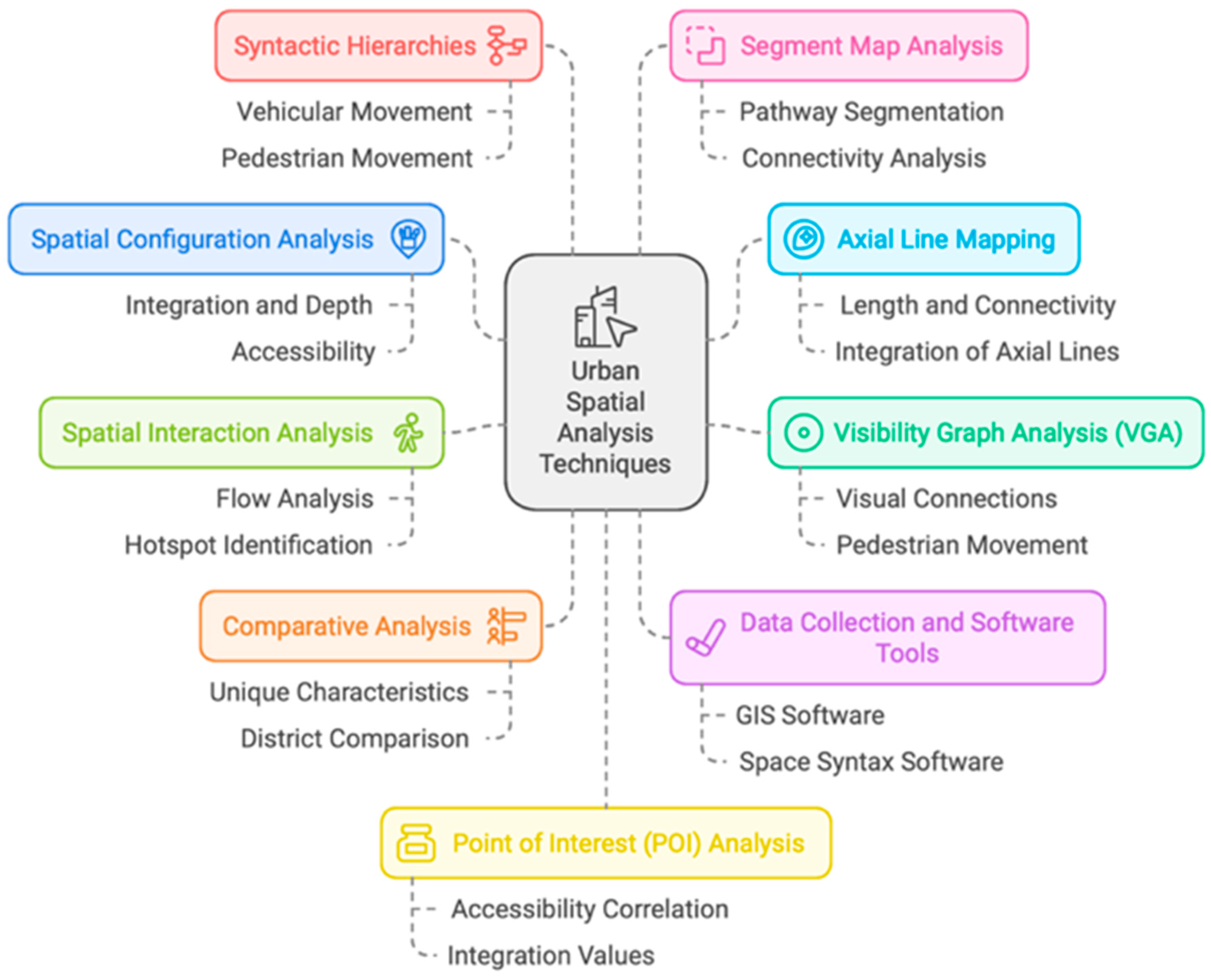
Figure 5 summarizes the various assessment methods and subsequent analytical techniques used in the literature.
More recent studies also highlight the increasing integration of space syntax metrics with broader urban sustainability indicators. For example, Yesil et al. [
24] analyze the correlation between spatial metrics and pedestrian movement patterns, while Zhang et al. [
10] combine space syntax analysis with urban vibrancy to understand the complex interplay between them and inform evidence-based design, and contribute to a more holistic understanding of urban environments when combined with other methods. The range of analytical techniques and metrics employed underscores the versatility of space syntax in addressing diverse research questions related to urban sustainability.
Most studies share similar methodological frameworks, including axial line analysis, axial, and segment analysis, and visibility graph analysis, to investigate the impact of different urban components, such as streets, buildings, and public spaces, on accessibility, connectivity, and social interactions. These analytical approaches are often integrated with GIS and spatial analysis software to visualize network structures and stimulate pedestrian flows. Such integration allows researchers to identify areas of high activity and spatially fragmented zones that may require planning interventions (see
Table 2).
The application of these methodologies contributes to the development of spaces that promote movement, economic activity, and social interaction, thus enhancing the dynamism and accessibility of urban environments [
10]. The research highlights the use of a holistic approach that links the physical features of the built environment with human behavior patterns, providing a robust framework for analyzing and designing public spaces in urban contexts. Lu et al. [
12] emphasize that enhancing the business environment in small and medium-sized cities can significantly enhance the overall urban agglomeration performance, highlighting the importance of spatial planning strategies that support regional economic equity and sustainable urban development.
Table 2 summarizes the principal analytical techniques used in space syntax studies and illustrates how different methodological components contribute to understanding pedestrian movement and spatial connectivity. The reviewed methods demonstrate that space syntax analysis often integrates spatial configuration metrics with complementary tools such as GIS-based analysis, behavioral observations, and statistical modeling. This methodological integration allows researchers to better capture the complex relationships between spatial design, human movement, and urban sustainability [
15,
20].
3. Space Syntax and Sustainable Urban Development: A Synthesis of Research Findings
This section presents a synthesized review of the findings reported in the selected studies, organized thematically to reflect the structure of the
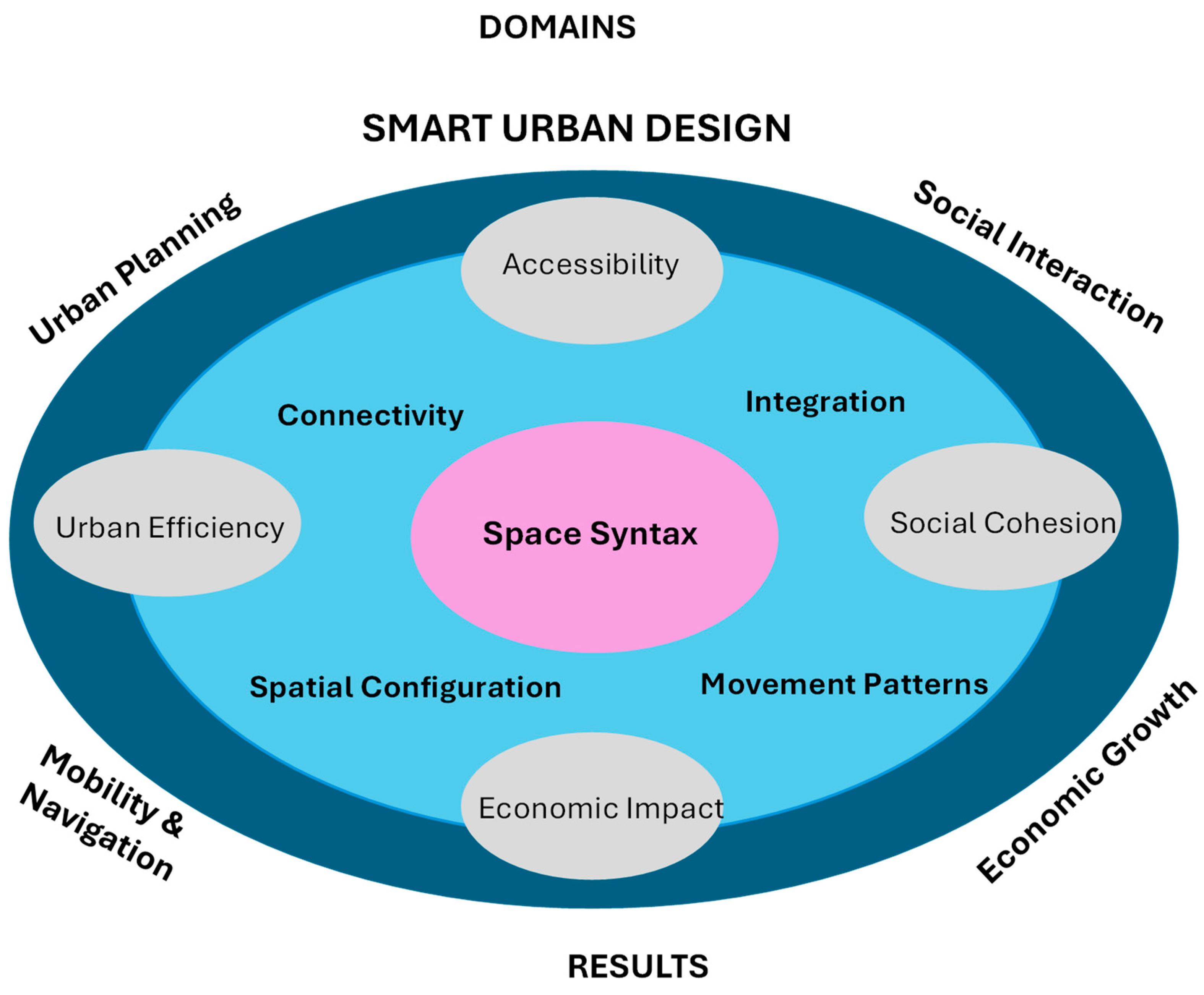
Section 2. The discussion of findings is integrated within each thematic subsection, connecting the results to the employed methodologies and exploring broader implications for understanding the relationship between space syntax and sustainable urban development. This thematic synthesis is further supported by a conceptual model illustrating the core dimensions of space syntax and their relationship to urban outcomes (see
Figure 6) and a comparative summary of the study areas and methodological approaches adopted in the reviewed studies from 2017 to 2026 (see
Table 3).
This framework is used as an interpretive synthesis rather than an empirical result, helping to organize the relationship between spatial configuration, walkability, commercial vitality, and social interaction.
3.1. Evidence of a Strong Link Between Spatial Configuration and Social Activity
The selected studies offer varied and comprehensive approaches to demonstrate the strong relationship between spatial configuration and social activity patterns, providing complementary perspectives through different methodological frameworks. Collectively, these studies reveal an evolving methodological trajectory, where earlier observational and morphology-based analyses are increasingly complemented by quantitative spatial modelling and data-driven urban analytics. However, while this convergence strengthens analytical robustness, it also introduces challenges in integrating diverse data sources and methodologies, potentially affecting the consistency and comparability of findings across different studies.
Recent studies provide more refined evidence that social activity in commercial environments is shaped by the interaction between spatial configuration, land-use intensity, and observed pedestrian behavior. Yang et al. [
36] demonstrate that commercial vitality is better explained through multi-source spatial modelling that integrates commercial gravity, population flow, and land-use characteristics, rather than relying on spatial accessibility alone. Similarly, Lian et al. [
50] show that pedestrian vitality in commercial streets varies according to street hierarchy and temporal patterns, with main streets and non-working-day periods exhibiting higher activity levels. Geng et al. [
4] further support the shift toward fine-grained, data-driven analysis of street vitality. Collectively, these studies reinforce this shift toward multidimensional analysis that integrates spatial, functional, and behavioral data. However, despite these advances, challenges remain in ensuring consistency and comparability across studies, particularly where qualitative observations are used, reinforcing the need for more systematic and replicable data-driven methodologies. In addition, the integration of multi-source datasets may introduce biases related to data quality, temporal variability, and uneven spatial coverage, which can influence the reliability of inferred relationships between spatial configuration and social activity. However, while these studies demonstrate strong correlations between spatial configuration and activity patterns, they often give limited attention to socio-economic and cultural factors, which may significantly influence how spatial potential is realized in different urban contexts.
Building on these insights, Hou and Zheng [
27] employed space syntax analysis and statistical modeling to establish a clear connection between spatial metrics: connectivity, integration, intelligibility, and pedestrian distribution patterns. Their work further demonstrates that spatial design and commercial typologies jointly influence pedestrian density, providing critical evidence that urban design decisions should consider both spatial structure and land use composition to foster active and vibrant commercial environments. Nevertheless, the reliance on correlational modelling limits the ability to establish causal relationships, as pedestrian behavior may also be shaped by external socio-economic and environmental factors beyond spatial configuration alone.
Stevens & Thai’s [
7] provide an important contribution by combining quantitative spatial analysis with comparative mapping and empirical observation to examine the socio-spatial dynamics of Chinatown. The main findings suggest that Chinatown can be categorized according to spatial characteristics of its business cluster, such as size, density, and layout. These insights highlight how higher levels of spatial integration promote economic activity and pedestrian flow. However, the reliance on qualitative field observations introduces a degree of subjectivity, emphasizing the need for more systematic and replicable data-collection approaches in future research. Furthermore, combining multiple analytical techniques may complicate the interpretation of results, as it becomes difficult to isolate the relative contribution of individual spatial variables to observed socio-spatial outcomes.
Building on these insights, Hou and Zheng [
27] employed space syntax analysis combined with statistical modelling to investigate how specific spatial metrics relate to pedestrian distribution patterns in traditional commercial streets. Their findings further support this relationship at the street scale. By examining the interaction between spatial configuration and the distribution of commercial activities, the study further reveals that retail and service functions tend to cluster along streets with stronger syntactic accessibility [
37]. This micro-scale analysis provides important empirical evidence that pedestrian activity patterns in commercial environments are shaped by both spatial structure and the spatial arrangement of economic functions, highlighting the need for urban design strategies that integrate spatial configuration analysis with land-use planning to support vibrant commercial districts. However, such micro-scale findings may not be directly transferable to larger urban contexts, where additional factors such as regional accessibility, transport infrastructure, and policy interventions play a more significant role.
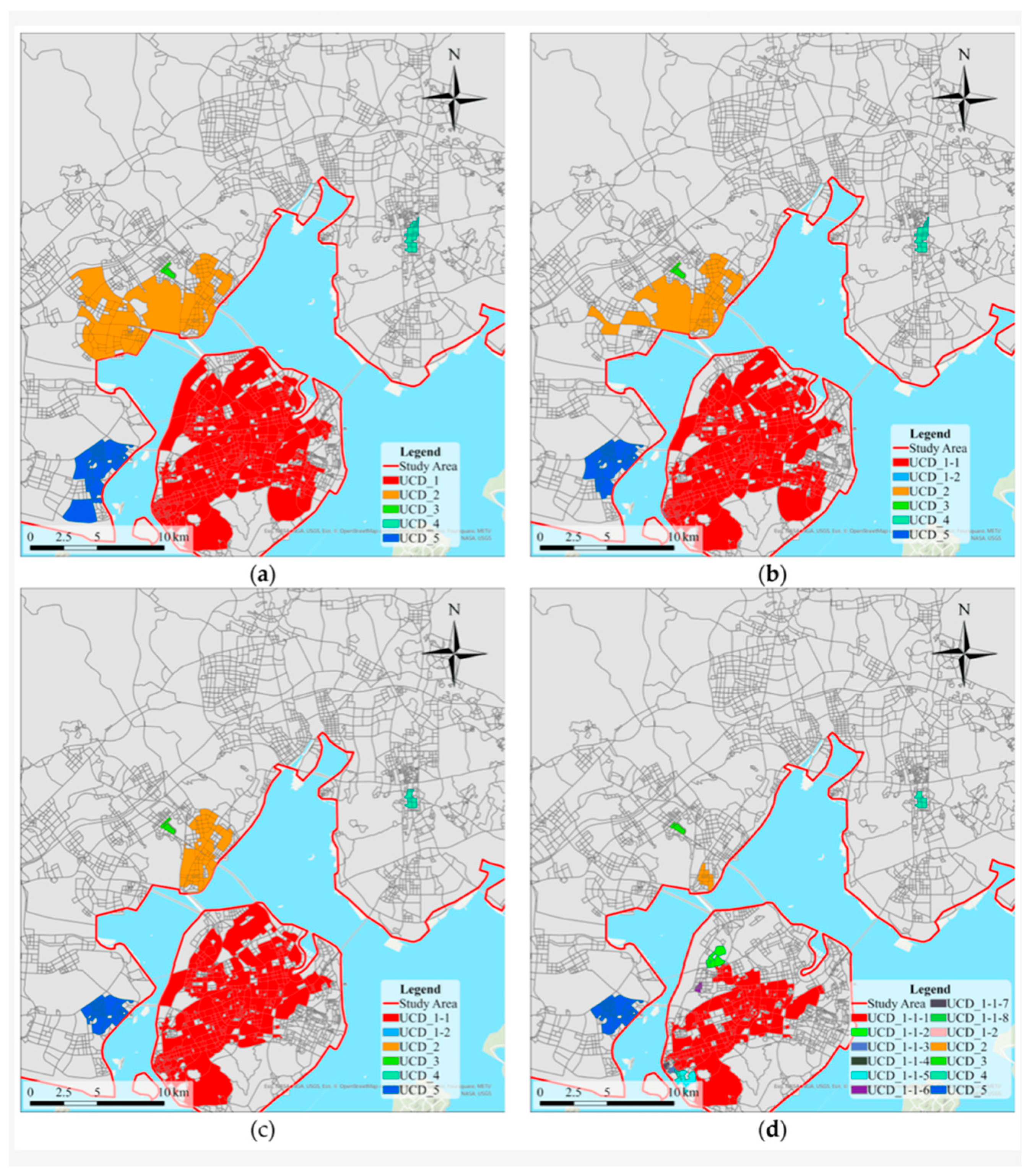
Expanding the discussion into data-driven methodologies, Zhao et al. [
35] incorporated multiple datasets, POI, and population density data, to examine the spatial distribution of UCD. Government reports and historical documents were used to confirm the boundaries of established commercial areas. The boundaries of the commercial districts were identified using four growth criteria (0.92 to 0.98), illustrating the polycentric nature of core urban areas where smaller centers may gradually merge into larger ones. Their research demonstrates how spatial configurations and business categories affect pedestrian traffic distributions, offering tangible implications for spatial design and the development of commercial districts. Recent studies further extend these approaches by integrating large-scale urban datasets and GIS-based spatial analysis with space syntax metrics to better capture urban vitality and pedestrian dynamics in commercial districts [
37,
39,
40]. Taken together, these studies confirm that spatial configuration not only plays a central role in shaping movement, interaction, and commercial vitality but also influences the capacity of commercial districts to attract, organize, and sustain urban activity. At the same time, the reviewed evidence points to a methodological shift from observational and case-based analyses toward more data-rich and scalable approaches for examining these relationships more rigorously [
8,
9,
30,
31].
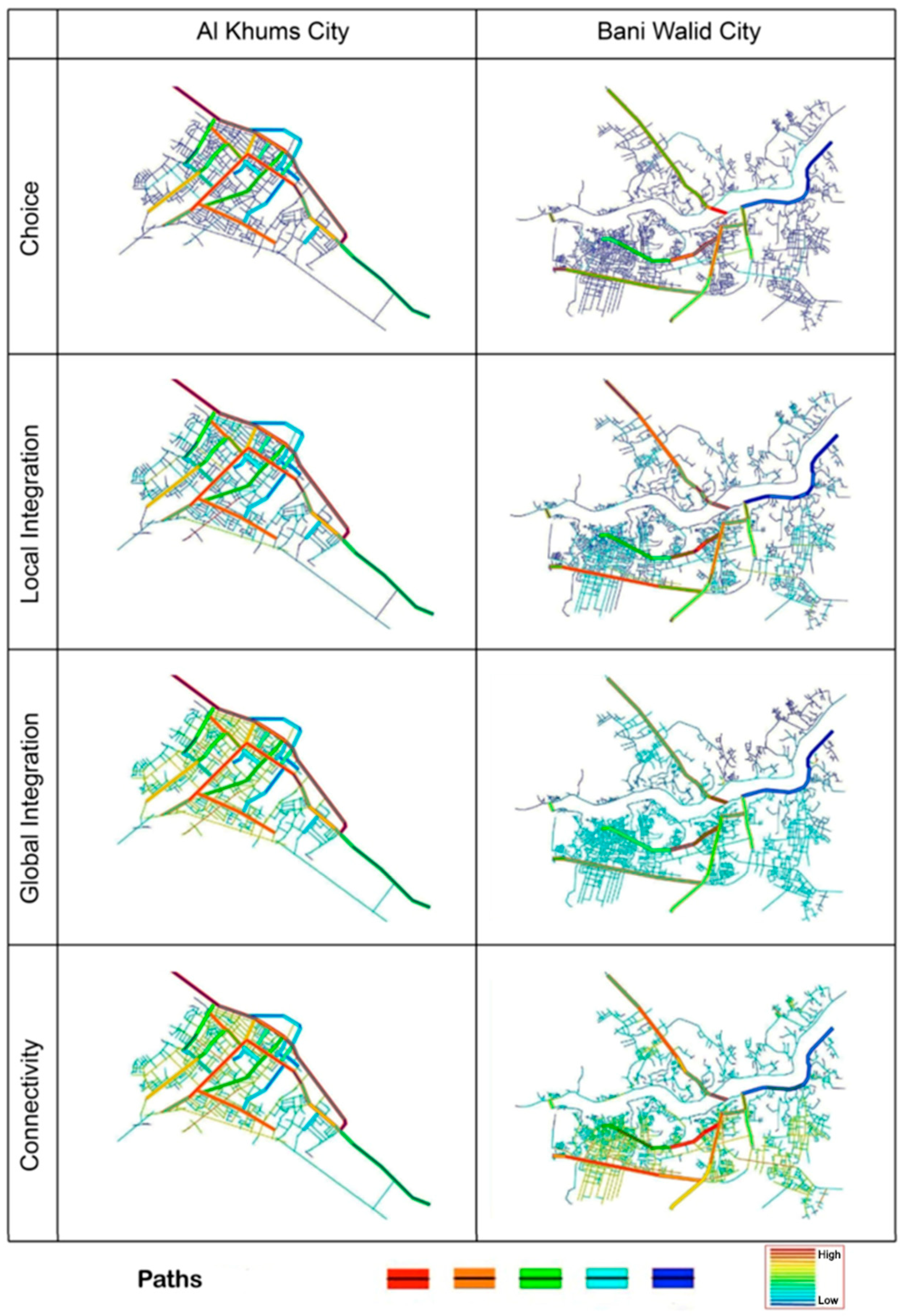
Figure 7 shows an illustrative example from Agael & Özer [
43]. While these approaches improve analytical scalability, they also raise important epistemological considerations, as the increasing reliance on data-driven metrics may prioritize quantifiable indicators over qualitative and experiential dimensions of urban life. Rather than presenting an independent finding,
Figure 7 is used here to illustrate how spatial configuration measures can be interpreted in relation to users’ perception of space, highlighting the link between configurational analysis and experiential dimensions identified in the reviewed literature. Taken together, the reviewed studies indicate that the contribution of space syntax to social sustainability lies not only in explaining movement patterns, but also in clarifying how spatial accessibility structures opportunities for interaction, commercial concentration, and the broader vibrancy of urban districts.
3.2. Space Syntax for Evidence-Based Design
The reviewed research also illustrates how space syntax can support evidence-based design by informing iterative processes of urban analysis, planning, and design interventions.
Karimi [
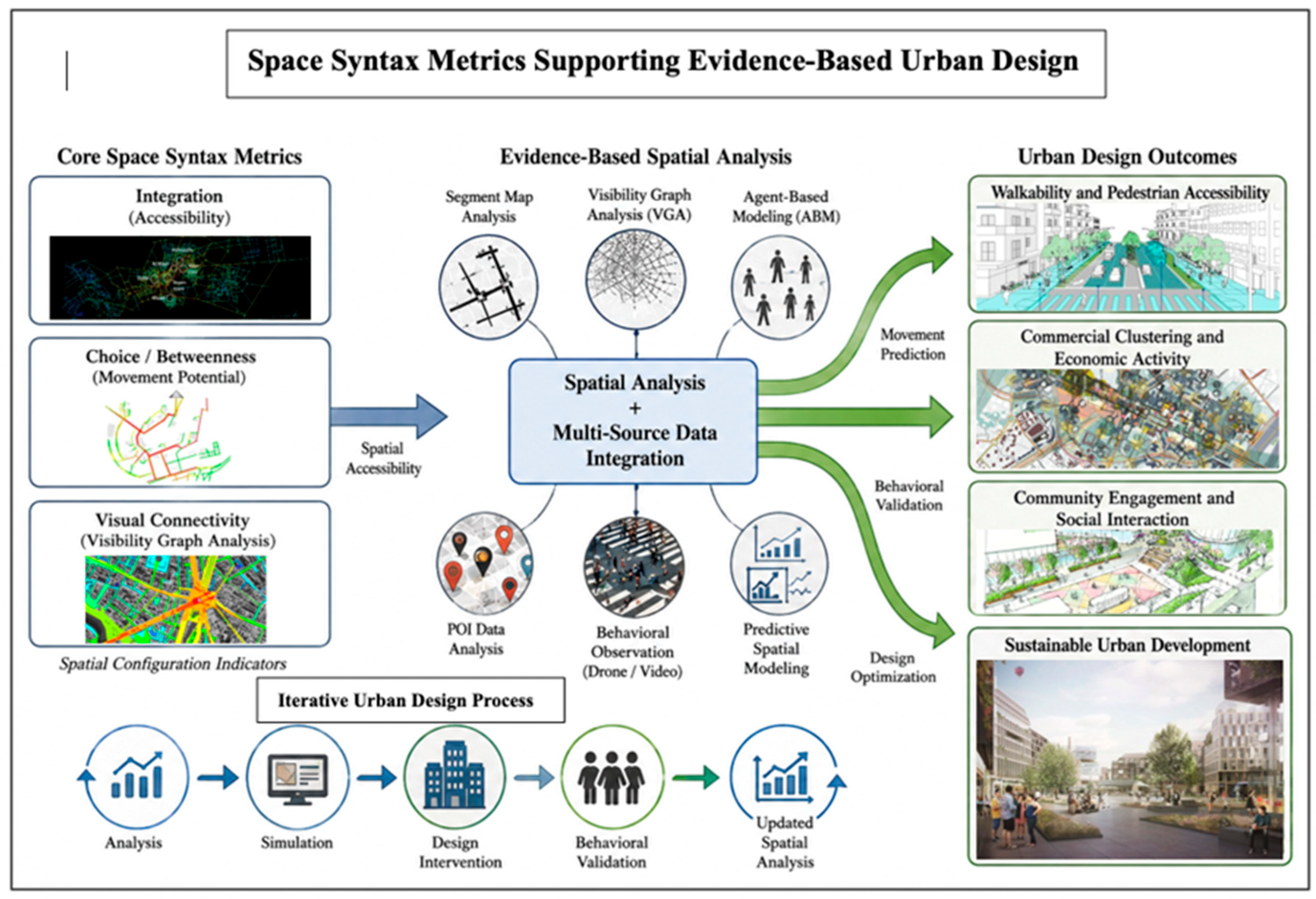
2] offers a comprehensive application of space syntax for evaluating spatial configurations related to accessibility, connectedness, and visibility, especially in the context of public space design and transit-oriented planning. The study incorporates POI analysis with spatial syntactic metrics to examine how different urban functions relate to spatial accessibility. VGA was employed to examine sightlines and pedestrian visibility field, while Agent-based modeling (ABM) simulates pedestrian dynamics to identify potential congestion areas and movement bottlenecks (see
Figure 8 or an illustrative example from Karimi [
2]). Rather than representing an independent result,
Figure 6 is used here to illustrate how integrated analytical approaches combine configurational metrics with behavioral simulation to reveal spatial performance patterns. High-resolution segment analysis further reveals underutilized areas by assessing fine-grained connectivity patterns, enabling the identification of spatial segments that are structurally accessible but functionally underperforming. The integration of drone and video observation provides real-time behavioral data, allowing syntactic predictions to be validated against actual pedestrian and vehicular flows.
Taken together, this multi-layered methodological framework demonstrates a shift from static morphological analysis toward dynamic, data-driven urban diagnostics that integrate spatial structure with behavioral and functional dimensions. This reflects a broader trend identified in this review, where space syntax is increasingly used not only to describe spatial structure but to support predictive and evidence-based urban design interventions, highlighting its evolving role in bridging spatial analysis with real-world urban performance. In this context, space syntax serves as a practical tool for iterative urban design, where spatial analysis, behavioral observation, and functional distribution are combined to inform design interventions [
29,
30,
52].
Figure 6 provides an illustrative example of integrated analytical approaches, demonstrating how configurational metrics are combined with behavioral simulation to support the interpretation of spatial performance patterns.
Expanding this evidence-based approach, Sheng et al. [
23] developed a scientific framework that combines Segment Map Analysis with empirical data assimilation and predictive modeling to support urban design decision-making. Their study integrates multiple data sources, including POI datasets, public feedback, and street-view imagery with spatial analysis to better capture patterns of urban activity. The incorporation of historical imagery further contextualizes changes in spatial configuration over time, allowing researchers to evaluate how previous design interventions influenced movement patterns and visual connectivity. By comparing syntactic outputs derived from the segment map with pedestrian flows, the study demonstrates that predictive spatial modelling can effectively anticipate areas of high movement intensity, particularly around central sections of the square. This approach illustrates how space syntax can be used not only to analyze existing spatial conditions but also to stimulate potential design outcomes and evaluate their impact on urban activity patterns. The reference to machine learning suggests potential advancements where algorithms may facilitate data gathering and analysis automation, hence enhancing the adaptability and precision of Space Syntax applications in practical contexts. However, the increasing reliance on complex computational techniques may reduce methodological transparency and accessibility, particularly for practitioners without advanced technical expertise. Although the reliance on extensive data infrastructure may limit replicability in some contexts, the framework highlights the growing potential of integrating spatial modelling with emerging computational techniques to support adaptive urban design strategies.
Collectively, these studies demonstrate that the combination of quantitative spatial analysis, behavioral data, and predictive modelling enables space syntax to provide a scientifically rigorous framework for evidence-based urban design. By linking spatial configuration metrics with observed movement patterns and urban activity data, space syntax supports more informed planning and design decisions. Its flexibility allows the integration of different types of data sources and dynamic simulation techniques, enabling urban researchers and planners to address the complex challenges associated with sustainable urban development [
26,
52,
53]. Despite these advantages, variations in data quality, modelling assumptions, and validation approaches may affect the comparability and generalizability of findings across different studies. The synthesis of the reviewed studies highlights the central role of key space syntax metrics, including integration, choice (betweenness), and visual connectivity, as critical indicators for achieving sustainable urban outcomes.
Figure 9 summarizes the relative importance of these core metrics and their relationship to key urban outcomes, including walkability, commercial vibrancy, and community engagement.
3.3. Data-Driven Approaches and the Importance of Context
Several studies emphasize the importance of incorporating diverse data sources and considering the contextual characteristics of urban environments when applying space syntax analysis [
8,
13,
34]. This shift toward data-supported spatial analysis reflects a broader methodological evolution in space syntax research, where traditional spatial metrics are increasingly combined with large urban datasets to better capture patterns of urban activity and spatial performance [
3,
9]. While this integration enhances analytical depth, it also introduces challenges related to data heterogeneity, where differences in data formats, temporal resolution, and spatial accuracy may affect the consistency of analytical outcomes.
Zhao et al. [
10] present a data-driven framework by incorporating POI data and population density datasets to analyze the spatial distribution of urban core districts (UCDS) in Xiamen. By combining spatial configuration analysis with multi-source datasets, the study provides a more comprehensive understanding of how commercial activity, population distribution, and spatial accessibility interact to shape urban economic centers [
10,
35]. Government reports and historical documentation were used to verify established commercial boundaries, while four growth thresholds (0.92 to 0.98) were applied to identify the spatial extent of the commercial district. The findings reveal the polycentric nature of Xiamen’s urban system, where smaller commercial clusters gradually merge into larger urban cores.
Figure 10 demonstrates how the delineation of urban commercial districts is highly sensitive to threshold selection, revealing that spatial boundaries are not fixed but method dependent. This sensitivity highlights a critical methodological issue, as different threshold choices can lead to substantially different spatial interpretations, potentially affecting planning decisions and policy implications.
The findings confirm that the southwest region of Xiamen Island continues to function as a dominant business hub, significantly impacted by tourism flows and popular destinations such as Nanputuo Temple and Gulangyu Island. At the same time, the emergence of new UCDs outside the island indicates a gradual redistribution of commercial resources, suggesting an evolving spatial balance within the urban system. An important contribution of the study lies in its recognition that commercial district boundaries are inherently dynamic and vary depending on the analytical thresholds used to detect them. This ambiguity is further reinforced by differences observed between population heat data and POI distributions, particularly in less developed areas, where commercial activity and population presence do not always coincide spatially. The study, therefore, emphasizes the importance of integrating multiple datasets and evaluating neighboring blocks when identifying UCDs boundaries in order to preserve spatial continuity and better capture the evolving structure of urban commercial dynamics [
35]. However, the integration of multiple datasets may also introduce inconsistencies due to differences in data sources, collection methods, and temporal coverage, which can influence the reliability of the resulting spatial interpretations.
Accordingly, the delineation of commercial districts is not a fixed spatial outcome but is highly sensitive to methodological choices, particularly threshold selection and data integration strategies. This reinforces a key insight emerging from the reviewed literature, where the identification of commercial districts depends not only on spatial configuration but also on the integration of multi-source datasets and the selection of analytical thresholds. This highlights the need for more consistent and transparent methodological frameworks to improve the reliability and comparability of space syntax-based urban analysis. In this context, methodological transparency becomes essential, as small variations in analytical parameters may significantly alter research outcomes and their practical implications. Furthermore, this reflects a broader methodological transition toward data-driven and multi-layered approaches that extend beyond purely configurational analysis.
Alalouch et al. [
40] further advance this discussion by examining the influence of spatial structure on land-use distribution while explicitly incorporating the concept of spatial intelligibility. Their finding highlights that Normalized Least Angle Choice (NACH) is a particularly stronger predictor of land-use distribution, in some cases outperforming traditional integration metrics. This suggests a methodological shift within the reviewed literature, where movement-based indicators such as NACH provide greater explanatory power for urban functionality than static accessibility measures alone. This finding is significant because NACH captures through-movement potential within the street network, reflecting how streets function as connectors within the broader urban system. While land-use study distribution is influenced by additional factors such as land price, population density, and public transport accessibility, the study shows that spatial structure remains a fundamental structural driver shaping development patterns. Nevertheless, the predictive strength of such metrics remains context-dependent, as socio-economic and regulatory conditions may significantly influence land-use outcomes beyond spatial configuration alone.
Key findings indicate that residential land use is significantly influenced by spatial attributes, particularly in highly intelligible areas, where local spatial relationships provide reliable cues about the overall structure of the street network. In these contexts, NACH emerges as the most influential predictor, followed by Integration. Importantly, the study also finds that the formal geometric grid of street network, whether grid-based or organic, does not significantly alter this relationship. Instead, the degree of spatial intelligibility plays a more decisive role in determining how spatial configuration influences land-use distribution. However, this also highlights a limitation identified across studies, where the predictive capacity of spatial metrics varies depending on contextual conditions, reinforcing the need to integrate configurational analysis with socio-economic and environmental variables. These findings reinforce the importance of designing an intelligible spatial system that enhances spatial legibility, facilitates movement, and supports predictable land use patterns within sustainable urban development [
51].
Collectively, these studies illustrate how the integration of spatial metrics with diverse datasets and contextual analysis can significantly enhance the explanatory power of space syntax. By combining spatial configuration analysis with population data, land-use information, and urban activity datasets, recent research moves beyond purely morphological interpretation toward more comprehensive frameworks that capture the complex dynamics of contemporary urban systems [
8,
37,
54]. This progression indicates an important shift in the role of space syntax, from a primarily descriptive tool toward a more integrative analytical framework capable of supporting data-driven and evidence-based urban design and planning. At the same time, the increasing reliance on data-intensive approaches raises broader epistemological considerations, as the interpretation of urban space may become increasingly dependent on measurable indicators, potentially overlooking qualitative, cultural, and experiential dimensions of urban life.
4. Limitations and Future Directions
The shared methodological foundation across the reviewed studies improves the comparability of findings across diverse urban contexts, as illustrated in
Table 3. While the studies offer valuable insight into the relationship between spatial configuration and sustainable urban development, several limitations must be acknowledged to enhance future research.
Studies such as Stevens and Thai [
7] and Hou and Zheng [
27] demonstrate that well-integrated pathways can increase pedestrian activity, highlighting the critical role of accessibility. However, a notable shortcoming is the limited integration of socio-economic and cultural variables into spatial analyses, which can potentially oversimplify the complex dynamics that shape urban form and user behavior. As a result, the relationship between spatial structure, human activity, and commercial vitality may be interpreted too narrowly if variables such as land value, demographic composition, tourism intensity, retail mix, and mobility choice are not examined alongside syntactic measures. Comparable concerns appear in more recent work, where spatial models are becoming increasingly precise, but the challenge of linking configurational measures to broader urban inequality, social segregation, and lived experience remains unresolved. This indicates that, despite advances in analytical precision, the explanatory capacity of space syntax remains constrained when not embedded within broader socio-spatial frameworks.
Similarly, Sheng et al. [
23] and Bai et al. [
18] demonstrate the value of predictive and data-enriched modelling, yet their framework depends heavily on advanced technical infrastructure and intensive data integration, which may limit replicability in data-scarce or institutionally constrained contexts. This is an important methodological issue for the field more broadly. Recent research shows that space syntax is increasingly being combined with GIS, sensors, GPS, street-view imagery, and machine learning to generate richer and more scalable assessments of vitality, accessibility, and spatial perception. While these developments significantly strengthen analytical power, they also raise new questions concerning data availability, comparability, model transparency, and the transferability of findings between urban contexts.
Moreover, Alalouch et al. [
40] also acknowledge that the relationship between spatial structure and land-use distribution cannot be fully understood without considering broader physical, economic, and social factors, including land prices, demographics, and public transport accessibility. This reflects a broader limitation across the reviewed literature; despite methodological advances, many studies still treat spatial structure as the dominant explanatory variable, while the interaction between space syntax, socio-economic structure, environmental conditions, and subjective perception remains underdeveloped. Recent studies suggest that this gap is becoming increasingly important because urban vitality is not shaped by network accessibility alone, but by the interaction between the built environment, socio-economic conditions, environmental comfort, perceived street quality, temporal rhythms of activity, and social inclusion [
42,
55,
56]. This reinforces the need to move beyond mono-dimensional interpretations of spatial configuration toward integrative frameworks that capture the multi-scalar and experiential nature of urban systems.
Future research should address these gaps by incorporating more diverse and inclusive data sources, developing more robust analytical frameworks that integrate spatial, social, economic, and cultural factors, and considering variability across different urban typologies and development stages [
38,
57,
58,
59]. Longitudinal studies are also essential to understand the development of spatial configurations and their socio-economic effects as transformations progress over time, to gain deeper insight into sustainable urban transformation processes. Embracing new technologies such as machine learning applied to spatial analysis could offer ways of making space syntax methodologies more scalable and adaptable in future research contexts. However, these approaches should be critically evaluated to ensure that increased computational complexity does not reduce interpretability or theoretical clarity.
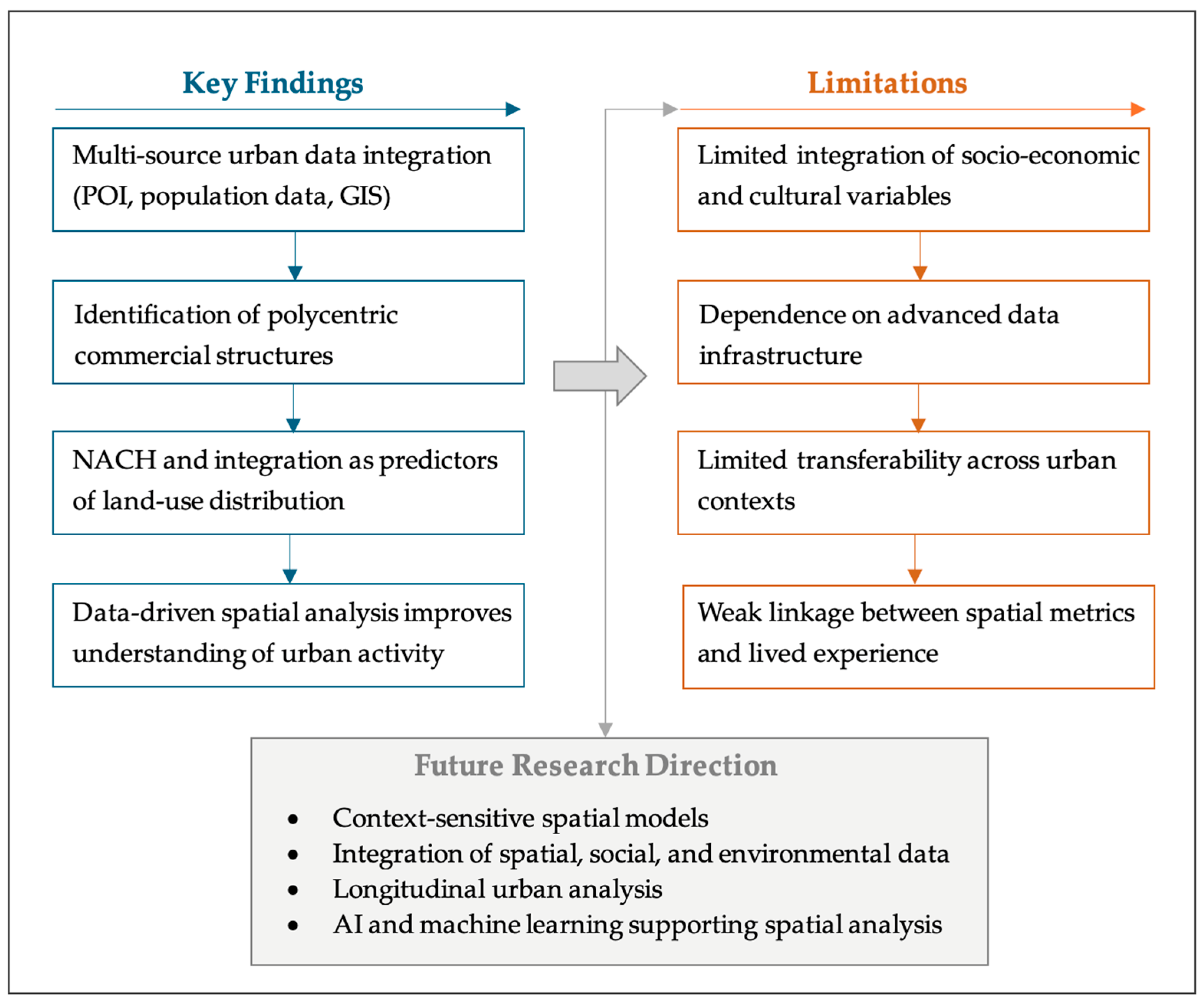
Another strong scientific direction for future research is the development of context-sensitive and transferable models. Rather than assuming that the same syntactic relationships apply equally across all urban settings, future studies should test how space syntax performs across different commercial typologies, climatic conditions, development stages, and socio-spatial contexts (See
Figure 11). This is especially important for sustainable urban research, where the same level of spatial integration may produce different social and economic outcomes depending on land-use diversity, environmental comfort, governance conditions, or social inequality. More comparative and longitudinal studies would therefore help clarify when space syntax metrics are robust predictors and when they require contextual calibration. This also suggests that future research should explicitly define boundary conditions under which spatial metrics are valid, rather than assuming universal applicability.
Finally, the next stage of research should not only make space syntax more data-rich, but also more explanatory. Integrating machine learning and AI-assisted modelling with syntax metrics offers strong potential for identifying complex spatial patterns, simulating urban change, and improving predictive capacity. Future research should place greater emphasis on model validation, sensitivity to parameter selection, and the comparability of results across different case studies, which remain insufficiently addressed in the current literature. However, these tools should be used to complement, rather than replace, theoretically grounded interpretation. The most valuable future contribution of space syntax research will therefore lie in building scientifically rigorous, transparent, and multidisciplinary frameworks that connect spatial configuration with urban vitality, social equity, and long-term sustainability in a more comprehensive way.
Establishing clearer methodological standards and reporting practices will be essential to improve the reliability and reproducibility of findings. This positions space syntax not only as an analytical method, but as a bridging framework capable of linking spatial analysis with broader sustainability agendas.
5. Conclusions
This study underscores the evolving role of innovative methodology in urban planning, particularly through the integration of spatial analysis with sustainable development frameworks. The reviewed studies demonstrate how space syntax models can be combined with empirical studies, observational data, and predictive modeling to better understand and anticipate pedestrian behaviors and spatial dynamics. Such approaches increasingly support evidence-based urban design and planning interventions aimed at creating resilient, walkable, and economically vibrant urban environments. At the same time incorporating socio-cultural perspectives enhances the understanding of how spatial structure influences not only moving patterns but also social activity and cultural dynamics. Balancing more sophisticated data-driven techniques with embedded human-centered insights, therefore, remains a critical challenge for future studies. This highlights the need for methodological approaches that enhance their adaptability, equity, and practical relevance across diverse urban contexts.
Although the reviewed studies illustrate important methodological advances in the applications of space syntax, a major gap remains in directly integrating spatial configuration analysis with users’ lived experience and broader social and sustainable outcomes. While some studies incorporate elements of user perspective and behavioral observation, relatively little research explicitly combines spatial analysis with in situ observations and longitudinal investigations of community well-being and social dynamics.
Future research should therefore focus on developing spatial metrics and analytical frameworks that better capture this complex relationship between spatial configuration, social behaviors, and sustainable urban outcomes. Greater attention should also be given to multi-scalar and dynamic approaches that examine how spatial systems evolve over time in response to demographic change, environmental conditions, and technological transformations. Furthermore, stronger interdisciplinary collaboration between urban planning, sociology, and environmental science will be essential to formulate advanced, comprehensive analytical frameworks capable of addressing socio-spatial dynamics in urban areas.
By situating spatial analysis within broader sustainability objectives, this review advances the theoretical and methodological understanding of how spatial configuration influences urban vitality, social engagement, and sustainable urban development. The main contribution of this review lies in demonstrating that recent space syntax research has moved beyond purely configurational description toward more integrative and data-enriched frameworks, yet still remains limited in its connection to lived social experience and measurable sustainability outcomes. A key challenge for future research will be to effectively link spatial patterns with empirically grounded indicators of social sustainability, enabling urban planning strategies that support more equitable, legible, and vibrant urban environments. Such directions align closely with global efforts to promote inclusive, resilient, and sustainable cities, particularly within the broader agenda of sustainable urban development [
60].