Article

How Does Whole Agricultural Industry Chain Development Impact Farmers’ Income? Evidence from China

1
School of Management, North Minzu University, Yinchuan 750021, China
2
Key Research Base of Humanities and Social Sciences of the State Ethnic Affairs Commission “Common Modernization Research Center”, Yinchuan 750021, China
3
School of Economics, North Minzu University, Yinchuan 750021, China
*
Author to whom correspondence should be addressed.
Sustainability 2026, 18(10), 5107; https://doi.org/10.3390/su18105107
Submission received: 30 March 2026 / Revised: 3 May 2026 / Accepted: 8 May 2026 / Published: 19 May 2026

Abstract

In developing countries, promoting sustainable income growth for farmers is a major priority. This study constructs an evaluation index system for the whole agricultural industry chain from the perspective of synergy among the innovation chain, supply chain, value chain, and capital chain. It also empirically tests the enabling mechanisms and spatial effects of the whole agricultural industry chain on farmers’ income. The entropy value method was used to measure the development level of the whole agricultural industry chain. Two-way fixed effects, mediation effects, and spatial Durbin models were applied to investigate the impacts, mechanisms, and spatial characteristics of the whole agricultural industry chain on farmers’ income. The whole agricultural industry chain significantly promotes farmers’ income growth, with the expansion of the non-agricultural employment scale and the improvement of urbanization levels serving as the main pathways through which the whole agricultural industry chain drives increases in farmers’ income. The heterogeneity analysis reveals that the innovation chain and capital chain contribute the most prominent marginal effects; the effect intensity of the whole agricultural industry chain on farmers’ income presents a spatial gradient pattern of “Central > Western > Eastern”; and its income-increasing effect is more noticeable for middle- and low-income farmers, demonstrating significant pro-poor characteristics. Further analysis indicates that the whole agricultural industry chain exerts a significant positive spatial spillover effect on farmers’ income. Therefore, it is essential to optimize the layout of the whole agricultural industry chain, smooth the transmission channels of non-agricultural employment and urbanization, and enhance the benefit linkage mechanism targeting middle- and low-income farmers.

1. Introduction

One of the central objectives of global agricultural development is to increase farmers’ incomes [1], particularly in developing countries where agriculture remains the primary source of livelihood. As the world’s largest developing country, China has experienced continuous growth in rural residents’ income; however, the momentum of this growth has gradually weakened. Data show that from 2012 to 2023, the per capita disposable income of rural residents in China increased from CNY 7917 to CNY 21,691. After adjusting for inflation, the real growth rate declined from 10.7% to 7.6% [2]. During the same period, the per capita disposable income of urban residents rose from CNY 24,565 to CNY 51,821, and the income gap between urban and rural residents remains substantial. Therefore, achieving sustained, stable growth in farmers’ incomes while gradually narrowing the urban–rural income gap has become an urgent issue for developing countries [3]. The whole agricultural industry chain consists of multiple interconnected stages, including agricultural input supply and procurement, agricultural research and production, storage and logistics, processing and deep processing, brand building and marketing, and sales. By integrating key elements across these stages, it enables deep coupling and coordinated development throughout the chain. This process fundamentally reshapes the traditional agricultural production system, which is often characterized by small-scale, fragmented, and weak operations. It also promotes the integration of agriculture with industry and services, while improving the allocation of production factors. As a result, both the value added of agricultural products and overall production efficiency are enhanced. The whole agricultural industry chain has gradually become an important pathway for agricultural transformation and increasing farmers’ incomes [4]. Therefore, exploring the spatiotemporal evolution of the whole agricultural industry chain in China, as well as the mechanisms through which it affects farmers’ income, is of significant practical importance. It can help to promote income growth and advance agricultural and rural modernization. Moreover, it provides a broader perspective for understanding agricultural progress and economic development in developing countries.
Rural residents’ income is a key indicator of farmers’ living standards and overall welfare. Existing studies suggest that the income structure of Chinese farmers remains relatively simple, with agricultural operating income as the dominant source of income. Diversification into secondary and tertiary sectors remains limited, leaving rural incomes highly sensitive to fluctuations in agricultural product prices [5]. Farmers in developing countries face similar challenges. In Ethiopia, for example, smallholder agriculture accounts for approximately 70% of national employment and 33% of GDP, and serves as the main source of rural income. However, the share of non-farm income remains low, and households therefore exhibit weak income resilience [6]. This indicates that the stability and sustainability of farmers’ income remain limited. The literature on the determinants of farmers’ income formation is highly multidimensional. Existing studies show that income growth depends not only on improvements in agricultural productivity but also on institutional innovation, technological progress, market-oriented reforms, and infrastructure development [7]. Within this framework, rural industrial integration is regarded as an important structural pathway. By increasing the value added of agricultural products, reducing transaction costs, and improving resource allocation efficiency, it significantly promotes income growth and improves the income distribution structure [8,9]. However, income growth driven by factor expansion and traditional technological upgrading may face diminishing marginal returns. Regional endowments, farm scale, and the degree of organizational development also constrain the effectiveness of industrial integration and agricultural modernization. Although labor input, land scale, and cultivation technology all positively affect farm income, the income-growth mechanism of rice farmers in Bali, Indonesia, relies heavily on traditional production factors. Technology plays only a limited role in moderating the effect of labor input and may even exert a negative moderating effect under certain conditions [10].
From the perspectives of policy and technology-driven factors, agricultural subsidies and policy-based insurance instruments can effectively increase farmers’ incomes [11,12]. Meanwhile, with the acceleration of the new wave of digital transformation, digitalization has become an increasingly important research focus. However, no consensus has yet been reached in the literature. Some studies argue that digital finance can alleviate financing constraints and extend industrial value chains, thereby broadening farmers’ income sources [13]. In contrast, other studies suggest that the impact of digital tools such as e-commerce participation is nonlinear and constrained by digital literacy, infrastructure, and social capital, and may even exacerbate income inequality [14]. Overall, these studies have identified a wide range of determinants of farmers’ income. However, the existing literature remains fragmented, and the conclusions regarding the determinants of income are not fully consistent.
China’s agricultural sector faces several structural challenges due to its large population, limited land resources, and the transition to a new stage of economic development. These challenges include an imbalanced industrial structure, lengthy circulation channels for agricultural products, low value added, and weak linkages between smallholders and modern agricultural systems [15]. Against this background, the concept of the “whole industry chain,” a term with distinct Chinese characteristics, has gradually emerged as an important analytical framework. It is generally defined as a vertically integrated system covering production, processing, circulation, and sales [16]. From an international perspective, however, related studies tend to focus on the agricultural supply chain or agri-food system. These approaches emphasize coordination across the entire “farm-to-table” process, involving multiple actors such as production, processing, trade, distribution, and consumption [17,18], with particular attention to the coordinated flow of information, capital, and products along the chain [19,20]. Although these concepts are not identical, they share a common emphasis on value creation and distribution throughout the entire process from production to consumption, highlighting a broader shift towards multi-stage coordination in agriculture. Early studies on industrial chain mechanisms primarily focused on the product, organizational, technological, and value chains, emphasizing their functional divisions and coordination in agricultural modernization [21]. With the development of digital technologies, the agricultural industry chain has gradually shifted towards digitalization. This transition helps to optimize resource allocation, promote industrial integration, and address the mismatch between smallholders and large markets [22]. However, some studies indicate that the development of the whole agricultural industry chain still faces several constraints, including limited scale, insufficient standardization, and weak branding capacity [23]. These factors restrict the realization of synergistic effects within the chain. At the micro level, studies focusing on smallholder participation suggest that stable organizational linkages and information-sharing mechanisms can significantly increase farmers’ income. That cooperative-based models often outperform enterprise-led models [24].
From an industrial chain perspective, existing studies primarily examine the impact of individual chains on farmers’ income. Few studies adopt an integrated framework that considers the innovation chain, supply chain, value chain, and capital chain simultaneously. Specifically, within the supply chain dimension, digital technologies can enhance transparency and traceability, strengthen coordination among stakeholders, and improve logistics and circulation systems. These improvements reduce circulation losses and enhance the value realization of agricultural products, thereby significantly increasing farmers’ income [25,26,27]. In addition, value chain upgrading promotes income growth by facilitating land transfer, increasing productive investment, and restructuring employment [28]. In contrast, research on the innovation chain and capital chain is often embedded within broader analytical frameworks. Most studies treat them as carriers of technological progress and factor inputs, incorporating them into analyses of agricultural development or income determinants. Relatively few studies examine these two chains as independent dimensions, particularly about their direct effects on farmers’ income and their synergistic interactions with other chains.
It should be noted that, although the whole agricultural industry chain overlaps with related concepts such as rural industrial integration and value chain upgrading, there are important differences in their theoretical connotations. Rural industrial integration emphasizes the horizontal integration between agriculture and the secondary and tertiary sectors, with a primary focus on expanding industrial boundaries and facilitating cross-sectoral factor flows [29]. Value chain upgrading, by contrast, concentrates on value enhancement and distribution within different segments of the chain, with particular attention to how to increase value added [30]. In comparison, the whole agricultural industry chain emphasizes extending it upstream to agricultural production and downstream to deep processing and after-sales services, thereby integrating the upstream, midstream, and downstream segments [31]. Beyond value creation, it encompasses multiple mechanisms, including technological innovation, circulation systems, and capital allocation. As such, it represents a more comprehensive analytical framework.
Although the existing literature provides a solid foundation for further research, several limitations remain. First, most studies focus on a single dimension or a specific segment, rather than the coordinated development of the whole industry chain. Second, research is often limited to theoretical or case-based analysis, with insufficient macro-level empirical evidence, and few studies systematically measure the development of the whole agricultural industry chain. Third, the mechanisms through which the whole agricultural industry chain affects farmers’ income, as well as its spatial spillover effects, have not been fully explored.
To address these gaps, this study conducts a comprehensive analysis of the whole agricultural industry chain. These four chains correspond to four core dimensions: technology, circulation, value creation, and capital allocation. Specifically, the innovation chain refers to the dynamic process through which innovation actors, resources, and demands are concentrated and diffused within the agricultural sector. By linking basic research, technological development, and the transformation of research outcomes, it provides sustained momentum for improving agricultural productivity and promoting industrial upgrading. The supply chain describes the coordination among stakeholders throughout the process from production to consumption. By integrating production, circulation, and service activities, it forms an operational network that connects markets with production and serves as the carrier of efficient chain operation. The value chain focuses on the creation and distribution of value across different stages of agricultural production. It reflects the value-added effects generated by chain extension and functional upgrading and represents the direct pathway through which farmers’ incomes are increased. The capital chain refers to the circulation and allocation of capital within the agricultural industry chain. Through financial support, credit provision, and risk-sharing mechanisms, it provides essential resource guarantees for the functioning of each stage [32]. Together, these interactions lead to the integration of the four chains. From the perspective of systems theory and synergy theory, the whole agricultural industry chain spans the entire process of agricultural production, circulation, and value realization. This framework better captures the internal operational logic of the agricultural industry chain and its synergistic effects.
Compared with the existing literature, this study makes three main marginal contributions. First, it moves beyond single-chain analysis to a multi-chain synergy framework. It constructs an index system for the whole agricultural industry chain based on the innovation chain, supply chain, value chain, and capital chain, and systematically examines its spatiotemporal evolution in China. This approach helps to address the fragmentation in the existing literature. Second, it combines theoretical analysis with empirical testing to investigate the mechanisms through which the whole agricultural industry chain affects farmers’ income, as well as its spatial spillover effects. Third, it explores the heterogeneity of these effects across different regions of China and income groups. It also examines the impact of individual chains on farmers’ income. The findings aim to provide theoretical support and policy guidance to advance sustainable agricultural development and boost farmers’ incomes in developing countries.

2. Theoretical Analysis and Research Hypothesis

2.1. The Impact of the Whole Agricultural Industry Chain on Farmers’ Income

By effectively combining production elements and optimizing innovation, supply, value, and capital chain, the whole agricultural industry chain promotes rural industrial growth. In terms of improving the agricultural innovation chain, increasing agricultural competitiveness and farmers’ income are thought to depend largely on investments in agricultural technical innovation and the widespread adoption of its results [33]. On the one hand, this successfully encourages the development of new crop varieties and pest management, expanding farmers’ cultivation and breeding options to increase revenue streams. On the other hand, the technology adoption model states that the adoption of cutting-edge agricultural production technologies makes it easier to produce high-quality, high-yield agricultural goods, thereby boosting market share and agricultural production efficiency [34]. This broadens opportunities for wage income and increases farmers’ business income. In terms of enhancing supply chain capabilities, farmers, cooperatives, e-commerce sites, logistics companies, and other actors are building a cooperative network as the agricultural supply chain transforms from a linear model to a networked ecosystem. Fresh agricultural products can reach markets more quickly due to improved cold-chain transportation and storage [35]. Farmers can reduce input prices through online procurement at the production end and, at the sales end, improve negotiating power while reducing information asymmetry by utilizing rural e-commerce. Specialized cooperatives and other new agricultural organizations enable effective production-to-market links, enabling farmers to maximize their presence in retail networks, arrange production according to market demand, and boost profits [36].
In terms of increasing value chain premium, industry chain theory emphasizes value chain orientation. Sorting and packaging are examples of non-agricultural activities created by the rapid development of deep processing for agricultural products, which offer local opportunities during off-season times. Green agricultural transformation enhances brand-building capacity and boosts the supply of high-quality green products [37]. Geographical indications for agricultural products encourage industrial clusters, enhance market competitiveness, thereby attracting more labor and further increasing the value of agricultural products through market premiums [38]. Modern agriculture has given rise to new business models, such as wellness agritourism, that effectively leverage rural land resources, facilitate land transfers, and increase farmers’ property income. In terms of adjusting the capital supply chain, through productive subsidies, fiscal support for agriculture reduces farmers’ production costs. This action enhances the investment environment by sending positive market signals, attracting social capital into the farming, rural, and agricultural sectors to support rural development [39]. Financial institutions’ agricultural loans help farmers to invest in rural infrastructure and purchase cutting-edge machinery to improve living conditions and productivity. These promote increased capital formation and fixed-asset investment in the region, giving farmers access to sufficient funds to raise their incomes [40]. Agricultural insurance increases farm operational revenue, supports automated, scaled production, and meets farmers’ risk protection needs [41]. Consequently, the first hypothesis is proposed.
Hypothesis 1 (H1). 
The whole agricultural industry chain can boost farmers’ income growth.

2.2. The Mechanism of the Whole Agricultural Industry Chain on Farmers’ Income

While the whole agricultural industry chain may directly impact farmers’ income growth, its influence may also operate indirectly through specific pathways. To promote deep integration among agriculture, processing manufacturers, and service industries, the vertical integration model across the whole agricultural industry chain guides businesses to pursue research and development at every stage, from production to sales [42]. Many non-agricultural employment opportunities result from this. Horizontally expanding the whole industry chain leverages rural resources to develop agritourism-integrated models, creating flexible employment opportunities with high job capacity and low entry barriers. Vertically extended segments, such as agricultural product processing and marketing, facilitate labor shifts from low-value-added basic agricultural production to high-efficiency non-agricultural sectors [43]. E-commerce and livestreaming sales are examples of new employment forms that expand farmers’ employment opportunities, increase the scale and stability of non-agricultural jobs, and become direct sources of income growth. Furthermore, the whole industry chain drives downstream segments like processing, sales, and services into cities with superior infrastructure and more concentrated markets by optimizing the supply chain and raising value chain demands [44]. Consequently, the transfer of surplus rural labor to cities promotes land transfer, expands the scale of agricultural operations, and increases the operating income of farming households. Simultaneously, urbanization drives regional economic and industrial development, strengthens local government’s ability to support agriculture, increases farmers’ transfer income, and optimizes their income structure [45]. Deep use of digital technology promotes localized value-added loops that span pre-production, production, and post-production by combining service and value-added segments within distinctive rural industries [32]. This allows farmers to diversify their sources of income, moving away from the one-way outflow of rural factors under the traditional urbanization model. Therefore, the second hypothesis is proposed.
Hypothesis 2 (H2). 
The whole agricultural industry chain boosts farmers’ incomes through expanding non-agricultural employment and promoting urbanization.

2.3. The Spillover Effects of the Whole Agricultural Industry Chain on Farmers’ Income

The influence of the whole agricultural industry chain may not be confined to a single region; it may extend spatially, generating spillover effects on farmers’ incomes in neighboring areas that transcend administrative boundaries. On the one hand, the growth of the whole agricultural industry chain can strengthen inter-industry connections and expand the industrial chain. Industrial agglomeration within a region generates substantial demand for raw materials, intermediate products, and supporting services. It absorbs freer flows of labor, capital, technology, and other production factors from nearby places through forward and backward connections [46], directly promoting regional development and generating product markets and employment opportunities for local farmers. On the other hand, as the region develops its whole industry chain, it directs social capital to “move from cities to rural areas,” investing in green production standards, digital technology, and other fields. It breaks geographical boundaries and extends to neighboring areas through demonstration effects and technical exchanges [47]. The “trickle-down effect” of knowledge and technology effectively boosts production efficiency and the value-added of agricultural products in neighboring areas, thereby benefiting local farmers. Additionally, the policy of establishing demonstration zones for the development of the whole agricultural industry chain is “point-to-area.” A more coordinated institutional environment for the development of the whole agricultural industry chain throughout the region is formed as a result of successful models of industrial chain integration and supporting policies [48], which also create favorable conditions for raising farmers’ incomes. Thus, the third hypothesis is proposed.
Hypothesis 3 (H3). 
The whole agricultural industry chain has a spatial spillover effect on farmers’ incomes.

3. Materials and Methods

3.1. Model Settings

3.1.1. Benchmark Regression Model

Following the existing literature on the determinants of farmers’ income [49], this study employs a two-way fixed-effects model to examine the impact of the whole agricultural industry chain on farmers’ income. The model specification is as follows:
LnIN it = α 0 + α 1 ACI it + α 2 X it + λ i + μ t + ε it
In Equation (1), LnIN it denotes farmers’ income; ACI it represents the whole agricultural industry chain; X it denotes a set of control variables; i represents the province; t represents the time; the terms α n (n = 0, 1, 2) are the regression coefficients for the constant term, explanatory variables, and control variables, respectively; λ i is the province fixed effect; μ i is the time fixed effect; ε it is the random error term.

3.1.2. Mediation Effect Model

The whole agricultural industry chain may influence farmers’ income through non-agricultural employment and urbanization. Building on Equation (1) and following the stepwise regression method commonly used in the literature [50,51], this study specifies the following mediation model:
M it = γ 0 + γ 1 ACI it + γ 2 X it + λ i + μ t + ε it
LnIN it = ρ 0 + ρ 1 ACI it + ρ 2 M it + ρ 3 X it + λ i + μ t + ε i t
where M it denotes the mediator variable in the text, while the meanings of the remaining variables are consistent with those in Equation (1).

3.1.3. Spatial Econometric Model

To further explore the potential spatial spillover effects of the whole agricultural industry chain on farmers’ income growth, the following analytical model is constructed:
LnIN i t = β 0 + ρ j = 1 n ω i j LnIN j t + β 1 ACI i t + δ 1 j = 1 n ω i j ACI j t + β 2 X i t + δ 2 j = 1 n ω i j X j t + λ i + μ t + ε i t
where ω i j denotes the spatial weight matrix; ρ represents the spatial autoregressive coefficient; β 0 is the constant term, while β 1 and β 2 are the regression coefficients of the explanatory variable and control variables, respectively; δ 1 and δ 2 denote the spatial lag coefficients of the explanatory variable and control variables. The meanings of the remaining variables are consistent with the previous sections.

3.2. Variable Selection and Measurement

3.2.1. Dependent Variable

The natural logarithm of the per capita disposable income of rural residents is used to measure farmers’ income levels. To eliminate price fluctuations, farmers’ income is deflated using the rural residents’ CPI index with 2012 as the base year.

3.2.2. Core Explanatory Variable

The whole agricultural industry chain is selected as the explanatory variable. Given that its development involves multiple stages, the system forms an integrated whole characterized by close linkages, effective coordination, and synergistic development among different actors. Therefore, it is difficult to measure using a single indicator. In 2021, the Ministry of Agriculture and Rural Affairs of the People’s Republic of China issued the Guiding Opinions on Accelerating the Cultivation and Development of the Whole Agricultural Industry Chain [52], which emphasizes the need to integrate the innovation chain, optimize the supply chain, upgrade the value chain, and improve the capital chain to support agricultural and rural modernization. Based on the “four-chain” framework proposed in this policy, and drawing on related studies [53,54,55,56], this study constructs an index system for the whole agricultural industry chain, as shown in Table 1. The selection of indicators follows the principles of scientific validity and objectivity.
The entropy method is employed to measure the development level of the whole agricultural industry chain. This method determines indicator weights based on information entropy, thereby minimizing the influence of subjective judgment and ensuring the objectivity and reliability of the results [57]. The specific procedure is as follows. First, the min–max normalization method is used to standardize the indicators and eliminate differences in measurement units. Second, the proportions for each indicator are calculated from standardized data, and information entropy and the coefficient of variation are then computed. Finally, the information utility value of each indicator is normalized to obtain objective weights. These weights are then used to calculate a composite index of the development level of the whole agricultural industry chain. The detailed formulas are provided in Appendix A.

3.2.3. Mechanism Variables

Non-agricultural employment scale (Ne) and urbanization level (Ur) were selected as intermediate variables. The ratio of employment in secondary and tertiary industries to gross employment is measured as the non-agricultural employment scale (Ne) [58]. The ratio of urban permanent residents to the gross population in each province is used to calculate the urbanization level (Ur) [59].

3.2.4. Control Variables

The following control variables were selected to thoroughly analyze how the whole agricultural industry chain affects farmers’ income growth. Human capital in rural areas (Edu): Higher educational attainment can strengthen farmers’ competitiveness, measured by the average years of schooling among rural residents; Economic Development Level (GDP): Calculated using per capita regional gross domestic product to account for the impact of regional economic development on farmers’ income; Per Capita Grain Yield (Gp): The ratio of gross grain production to total population; Agricultural Disaster Area (Dis): Controls how natural disasters affect farmer income and agricultural production; Dependency Ratio (Dr): The sum of the dependency ratio of the rural population is determined by calculating the dependency ratios for children and older adults in rural areas.

3.3. Data Sources

This study examined panel data from 30 Chinese provinces (excluding Tibet, Hong Kong, Macao, and Taiwan) spanning the period 2012–2023. The primary data are derived from authoritative public sources, particularly the National Bureau of Statistics of China (https://www.stats.gov.cn/sj/ndsj/ (accessed on 2 May 2026)), including the China Statistical Yearbook, China Rural Statistical Yearbook, China Statistical Yearbook on Science and Technology, Statistical Yearbook of China Commodity Exchange Market, China Green Food Development Center, China Cold Chain Logistics Alliance, the EPS Database, and statistical yearbooks of respective provinces. To avoid the impact of missing data on research results and address dimensional inconsistency, linear interpolation was used to supplement individual missing values, and logarithmic transformation was applied to certain data series. Descriptive statistics for all variables are presented in Table 2.

4. Results

4.1. Analysis of Spatiotemporal Evolution Characteristics of the Whole Agricultural Industry Chain

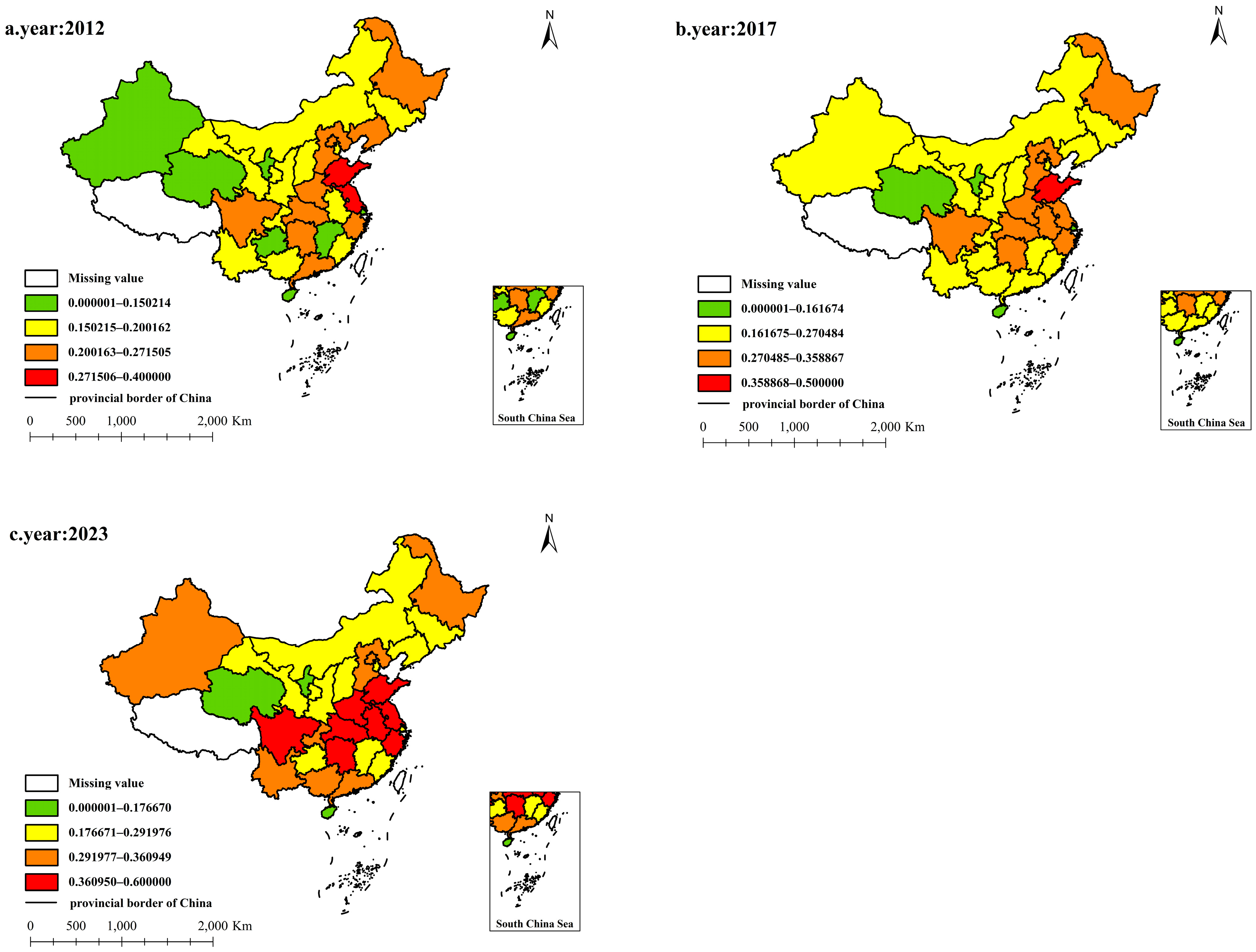
Based on the application of the entropy method to measure the development level of the whole agricultural industry chain, ArcGIS 10.8 was used to visualize the spatial evolution of China’s provincial agricultural industry chain in 2012 and 2023. The results are presented in Figure 1.
Over the period from 2012 to 2023, the whole agricultural industry chain in China exhibited an overall upward trend, with the average value increasing from 0.199 to 0.321 and an annual growth rate of 4.44%. This indicates significant progress in synergistic efficiency gains across the whole agricultural innovation chain, supply chain, value chain, and capital chain in China. Growth patterns varied across the four major regions: Central and Western China exhibited the strongest momentum, with annual growth rates exceeding 5%, reflecting faster industrial chain development and significant late-mover advantages. Eastern China maintained relatively stable growth, indicating its industrial chains had entered a phase of structural optimization and quality enhancement. However, Northeast China recorded the lowest growth rate at just 2.08%, suggesting structural constraints on value chain upgrading and innovation chain integration, with growth potential still not fully realized.
From a spatial distribution perspective, the intensity of the whole agricultural industry chain exhibits an uneven pattern characterized by “central regions leading, eastern regions following, western regions catching up, and northeastern regions remaining stable.” By 2023, the central region’s average agricultural industry chain intensity surpassed that of the eastern region, establishing itself as the nation’s leading hub for the development of the whole agricultural industry chain. While the western region still records the lowest average intensity, it displays the fastest growth rate, narrowing the gap with the eastern and central regions. This demonstrates the westward traction effect of national regional coordination strategies and improved development infrastructure on the whole agricultural industry chain. The distribution of extreme values further reveals spatial heterogeneity: Hunan Province in the central region and Sichuan Province in the western region have emerged as prominent growth poles within their respective areas, highlighting the immense potential for inland agricultural powerhouses to achieve leapfrog development through whole-chain integration. In contrast, the Northeast region witnessed a peak in Heilongjiang Province in 2017, followed by sluggish growth, reflecting the challenges faced in upgrading and transforming its agricultural industry chain.

4.2. Benchmark Regression Analysis

When analyzing the impact of the whole agricultural industry chain on farmers’ income, this study ensures robust empirical results by progressively introducing control variables and controlling for region- and time- effects. The results are presented in Table 3. Column (1) reports the baseline specification without control variables or region and time fixed effects. Column (2) includes two-way fixed effects but excludes control variables. Column (3) further incorporates both two-way fixed effects and control variables. The VIF values for all equations remain well below 10, indicating no severe multicollinearity in the models. The results indicate that model fit improves after incorporating control variables and applying two-way fixed effects. The coefficients for the whole agricultural industry chain are all significantly and positively associated with rural residents’ per capita disposable income at the 1% level. This indicates that the whole agricultural industry chain effectively contributes to boosting farmers’ incomes. The regression results are consistent with the theoretical analysis and confirm the earlier Hypothesis H1.
The regression results, after controlling for relevant variables, indicate that regional economic development has a significantly positive effect on farmers’ income at the 1% level. Regional economic prosperity is generally associated with greater employment opportunities, more developed public service infrastructure, and stronger financial support capacity, thereby creating a favorable macroeconomic environment for income growth among farmers. The coefficient on per capita grain output is positive and statistically significant at the 10% level. Sustained growth in grain production reflects improvements in overall agricultural productivity, which help to stabilize farmers’ operating income through economies of scale and more efficient market participation [60]. The coefficient on the rural dependency ratio is significantly negative at the 1% level. A high dependency ratio indicates that each working-age laborer supports a larger non-working population, which increases household financial burdens and may constrain participation in off-farm employment or intensive agricultural production, ultimately reducing farmers’ income. However, rural human capital and the agricultural disaster-affected area do not exhibit significant explanatory power for farmers’ income. This result may be attributed to the concentration of newly created jobs in the early stages of the agricultural industry chain in relatively low-skilled positions that require limited high-level human capital. Additionally, the continued outmigration of high-quality human capital from rural areas may further weaken the potential income-enhancing effects. The coefficient on the agricultural disaster-affected area is negative but statistically insignificant, suggesting that improvements in agricultural insurance coverage along the agricultural industry chain have enhanced income resilience and risk-sharing capacity, thereby mitigating the income effects of individual disasters.

4.3. Endogeneity Test

The benchmark regression results initially indicate that the whole agricultural industry chain has a positive effect on farmers’ income growth. However, because the index for the whole agricultural industry chain is constructed from multiple indicators, measurement bias may arise during indicator selection. In addition, omitted variables related to both the agricultural industry chain and farmers’ income may bias estimates. Moreover, reverse causality may exist. An increase in farmers’ income can enhance their investment capacity and risk tolerance which, in turn, may promote the upgrading of the local agricultural industry chain, thereby raising the potential for endogeneity. To address these concerns, this study employs an instrumental variable (IV) approach combined with two-stage least squares (2SLS) estimation. Following common practice in panel data studies [61,62], the one-period lag of the whole agricultural industry chain index is used as the instrumental variable (denoted as L.ACI). On the one hand, the development of the whole agricultural industry chain exhibits dynamic persistence. Its past level is likely to affect its current level, thereby ensuring the instrument’s relevance [63]. On the other hand, the lagged value precedes the current farmers’ income. Its effect on current income mainly operates through the current level of the industry chain rather than directly affecting the error term, which supports the exogeneity condition to some extent. In addition, the agricultural industry chain index is constructed from macro-level indicators, whereas farmers’ income is measured at a relatively micro level. This difference helps to mitigate endogeneity concerns to some extent. Furthermore, the two-way fixed effects model controls for unobservable time-invariant individual effects and common time shocks, thereby reducing omitted variable bias.
Regarding the validity of the instrumental variable, the results in columns (1) and (2) of Table 4 show that the p-value of the KP–LM statistic is 0.000, rejecting the null hypothesis of under-identification. At the same time, the KP–F statistic is significantly higher than the critical value at the 1% significance level, indicating that weak instrument problems are unlikely. These results confirm the relevance and validity of the selected instrument. After controlling for potential endogeneity, the estimated coefficient for the whole agricultural industry chain remains significantly positive at the 1% level, which further supports Hypothesis H1.

4.4. Robustness Tests

To assess the robustness of the benchmark regression results, several robustness checks were conducted. First, the core explanatory variable was replaced. The whole agricultural industry chain index, constructed using the entropy weight method, was replaced with an alternative index computed using the improved entropy weight–TOPSIS method. Second, outliers were addressed through tail trimming. Empirical analysis based on provincial data may be affected by outliers arising from differences in regional resource endowments, potentially biasing the regression results. Accordingly, a two-tailed trimming procedure at the 1% level was applied before regression estimation. Third, special samples were excluded. To improve estimation accuracy, observations from the four municipalities directly under the central government—Beijing, Tianjin, Shanghai, and Chongqing—were excluded due to their distinctive economic, political, and cultural characteristics. The results reported in columns (3) to (5) of Table 4 indicate that the coefficients of the whole agricultural industry chain remain significantly positive at the 1% level, consistent with the benchmark estimates. These findings suggest that the development of the whole agricultural industry chain contributes to increases in farmers’ income, thereby providing further support for Hypothesis H1.

4.5. Mechanism Analysis

Based on the theoretical framework, the indirect mechanisms by which the scale of non-agricultural employment and the level of urbanization affect farmers’ income across the whole agricultural industry chain were examined separately. The corresponding estimation results are reported in Table 5.
The regression results indicate that the whole agricultural industry chain increases farmers’ income by expanding non-farm employment and promoting urbanization. Specifically, after including the non-farm employment variable, the coefficient of the whole agricultural industry chain remains significantly positive at the 1% level. However, compared with the model without this variable, the estimated coefficient declines, suggesting that non-farm employment plays a partial mediating role, accounting for approximately 18% of the total effect. Through both vertical extension and horizontal expansion, the whole agricultural industry chain creates numerous non-agricultural job opportunities, thereby providing more diversified employment options for rural labor. As a result, wage income becomes a major component of farmers’ total income. This finding is consistent with the structural transformation described by the Pareto–Clark theorem, in which labor shifts from the primary sector to higher-level sectors as the economy develops.
After incorporating the mediating variable reflecting urbanization, the estimated coefficient of the whole agricultural industry chain decreases to 0.1017, while remaining statistically significant at the 1% level. The mediating effect of urbanization accounts for 59% of the total effect. This suggests that the development of the whole agricultural industry chain fosters new growth poles at the county level or in central towns, attracting surplus rural labor to urban areas. Farmers benefit from improved access to urban employment opportunities and public services. This not only increases wage income but also promotes the utilization of idle farmland, thereby generating property income. To ensure the robustness of these findings, the Sobel test and the Bootstrap method are further employed to examine the mediating effects. The results show that the Sobel statistics for both non-farm employment and urbanization are significant at least at the 5% level, indicating the presence of mediation effects. The Bootstrap results, based on 1000 resamples, show that the 95% confidence intervals for both mediating variables do not include zero, further confirming the existence of these mediation effects. Overall, these results provide strong support for Hypothesis H2.

4.6. Heterogeneity Analysis

4.6.1. Dimensions Heterogeneity

To further identify the heterogeneous effects of the whole agricultural industry chain on farmers’ income, this study conducts regression analyses across four dimensions: the innovation chain, supply chain, value chain, and capital chain (denoted as ACI1, ACI2, ACI3, and ACI4, respectively). As shown in columns (1) to (4) of Table 6, all four sub-chains have a statistically significant positive impact on farmers’ income. However, the magnitude of these effects differs markedly. A comparison of the results indicates that the coefficients for the innovation chain and capital chain are both significant at the 1% level and exhibit stronger effects. This suggests that these two chains make more substantial marginal contributions to income growth.
Specifically, the innovation chain enhances agricultural technological progress, promotes digital applications, and supports innovation in production organization. It strengthens information and technological coordination along the upstream and downstream segments of the industry chain, thereby improving the efficiency of factor allocation and total factor productivity. In the context of the rapid development of digital and smart agriculture, the innovation chain has become a key driver of agricultural modernization. The significant role of the capital chain indicates that the development of the rural financial system can effectively alleviate financing constraints faced by agricultural operators in adopting technology, investing in equipment, and expanding scale. This, in turn, enhances capital formation and supports the upgrading of the industry chain. Given the long production cycles and high risks associated with agriculture, financial support plays a critical amplifying role in income growth. By contrast, although the supply chain and value chain are significant at the 5% level, their marginal effects are relatively weaker. The supply chain mainly improves operational efficiency by reducing circulation costs and minimizing losses, while the value chain increases value added through deep processing, brand development, and product diversification. However, at this stage, the effects of these two chains are still constrained by the level of regional market development and processing capacity, limiting their direct impact on farmers’ incomes.

4.6.2. Regional Heterogeneity

According to the regional classification of economic zones defined by the National Bureau of Statistics of China, the eastern region comprises Beijing Municipality, Tianjin Municipality, Hebei Province, Liaoning Province, Jilin Province, and Heilongjiang Province; the central region includes Shanxi Province, Anhui Province, Jiangxi Province, Henan Province, Hubei Province, and Hunan Province; and the western region consists of the Inner Mongolia Autonomous Region, Guangxi Zhuang Autonomous Region, Chongqing Municipality, Sichuan Province, Guizhou Province, Yunnan Province, the Tibet Autonomous Region, Shaanxi Province, Gansu Province, Qinghai Province, the Ningxia Hui Autonomous Region, and the Xinjiang Uygur Autonomous Region. Given significant regional disparities in resource endowments, development foundations, and policy support across China, the impact of the whole agricultural industry chain on farmers’ income is likely to vary across the eastern, central, and western regions. The results in columns (5) to (7) of Table 6 show that the effect is strongest in the central region, followed by the western region. In contrast, the effect in the eastern region is relatively weaker. This pattern can be characterized as “central-led with east–west differentiation.”
From a theoretical perspective, the central region is one of China’s main grain-producing areas, with relatively strong agricultural foundations and abundant land resources. Supported by national food security strategies and agricultural modernization policies, the development of the whole agricultural industry chain in this region is better able to transform traditional production advantages into value-added capacity, thereby generating higher marginal returns. This structural advantage makes the central region the most responsive to the income-enhancing effects of the whole agricultural industry chain. The positive effect observed in the western region reflects the combined influence of policy support and resource constraints. Under the Western Development Strategy and the Rural Revitalization Strategy, the development of the whole agricultural industry chain helps to offset limitations such as weak infrastructure and low levels of marketization. By activating agricultural resources and the potential of ecological agriculture, it generates a noticeable income-enhancing effect. However, due to complex geographical conditions, dispersed populations, and limited industrial agglomeration capacity, the overall effect remains weaker than that in the central region. In contrast, the eastern region has a higher level of industrialization and urbanization, along with a stronger capacity of non-agricultural sectors to absorb labor. As a result, agriculture accounts for a smaller share of the regional economy. Therefore, the marginal contribution of the whole agricultural industry chain to farmers’ income is relatively limited, and its role is more complementary than dominant. Furthermore, a Chow test is conducted to examine group differences. The results show that the F-statistic is 23.19 and the p-value is below 0.001, rejecting the null hypothesis of no difference in coefficients across the three groups. This confirms the presence of significant heterogeneous effects and supports the validity of the regional classification.

4.6.3. Income Group Heterogeneity

Although the baseline regression results indicate that the whole agricultural industry chain has a significant positive overall effect on farmers’ income, this effect may vary across different income groups. To identify this distributional heterogeneity, this study conducts quantile regression at the 0.25 (low-income), 0.50 (middle-income), and 0.75 (high-income) quantiles, with the results reported in Table 7.
The impact of the whole agricultural industry chain exhibits a clear gradient across income quantiles. At the 0.25 and 0.50 quantiles, the estimated coefficients are 0.2762 and 0.2394, respectively, both significant at the 1% level. This indicates a pronounced inclusive income-enhancing effect on low- and middle-income groups, with a stronger marginal impact on the lower-income group. However, the effect is no longer significant at the 0.75 quantile, suggesting that high-income households are less dependent on the agricultural industry chain. This pattern reflects the stratified nature of rural income structures. Lower-income groups rely more heavily on agriculture and its extended industry chain, whereas higher-income groups tend to have stronger non-farm employment capacity and more diversified income sources. From a mechanistic perspective, this distributional difference highlights heterogeneous marginal constraints across income groups. For low- and middle-income households, the expansion of the industry chain increases employment opportunities and factor returns, which are more readily translated into actual income gains. In contrast, for higher-income households, income growth is more closely linked to non-agricultural sectors, resulting in a relatively limited marginal contribution from the whole agricultural industry chain.

5. Further Analysis

5.1. Spatial Correlation Test

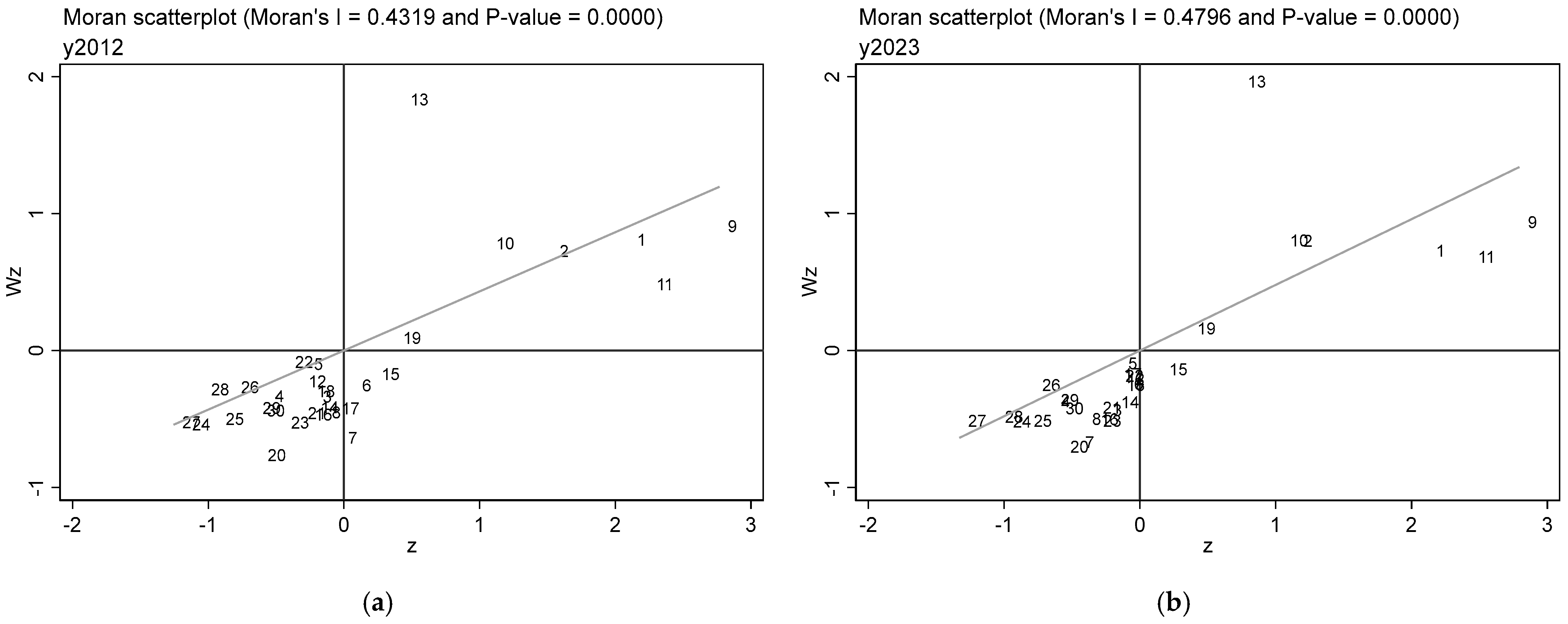
Following the existing literature [64], this study constructs an economic–geographic nested spatial weight matrix. This matrix not only accounts for geographical proximity between regions but also incorporates differences in economic development levels, thereby providing a more realistic representation of interregional economic linkages. Specifically, each element w i j is defined as the inverse of the absolute difference in average per capita GDP between region i and region j, multiplied by the inverse of the geographical distance between them. This specification captures the spatial characteristics of factor flows and technological diffusion in the development of the whole agricultural industry chain. Based on this spatial weight matrix, the global Moran’s I is calculated to test the spatial correlation of rural residents’ income. As reported in Table 8, the global Moran’s I remains positive throughout the sample period and is statistically significant at the 1% level. This indicates a significant positive spatial autocorrelation in rural income across China, meaning that high-income (or low-income) regions tend to cluster geographically.
To further investigate the local spatial correlation characteristics of farmers’ income, the representative years 2012 and 2023 were selected to construct local Moran’s I scatterplots. As shown in Figure 2, farmers’ income observations are mainly concentrated in the first and third quadrants, indicating positive spatial autocorrelation characterized by high–high (H–H) and low–low (L–L) clustering patterns. This pattern is consistent with the results of the global Moran’s I analysis. The first quadrant represents H–H clustering, in which regions with higher farmer incomes are spatially concentrated and may generate positive spillover effects on neighboring areas. In contrast, the third quadrant corresponds to L–L clustering, in which regions with relatively lower farmer income levels are spatially aggregated, leading to limited spillover effects. Overall, the income-enhancing effect of the whole agricultural industry chain exhibits significant spatial dependence.

5.2. Spatial Econometric Model Selection

To identify an appropriate spatial econometric model, a series of diagnostic tests was conducted, as reported in Table 9. First, the (robust) LM tests were employed to examine the presence of spatial dependence. The test results indicate that all statistics reject the null hypothesis at the 1% level, implying the coexistence of spatial lag and spatial error dependence in the sample. Accordingly, the Spatial Durbin Model (SDM), which accommodates both spatial lag and spatial error effects, is considered the most appropriate model. Second, Wald and LR tests reject the null hypotheses that the SDM can be simplified to either the Spatial Autoregressive Model (SAR) or the Spatial Error Model (SEM). In addition, the Hausman test supports the use of fixed effects over random effects. Accordingly, a Spatial Durbin Model with two-way fixed effects is adopted to examine the spatial spillover effects of the development of the whole agricultural industry chain on farmers’ income, the results are presented in columns 1 and 2 of Table 10.

5.3. Analysis of the Spatial Spillover Effects

In the Spatial Durbin Model (SDM), the estimated coefficients do not directly represent marginal effects. Therefore, this study applies a partial derivative decomposition approach to decompose the impact of the whole agricultural industry chain on farmers’ income into direct, indirect, and total effects, thereby more accurately identifying its spatial mechanisms. The decomposition results are reported in columns (3) to (5) of Table 10. The direct effect captures the impact of the development of the whole agricultural industry chain within a region on local farmers’ income. The results show that the direct effect is 0.2374 and is statistically significant at the 1% level, indicating that the development of the whole agricultural industry chain significantly promotes local income growth. This suggests that optimizing the industrial structure and enhancing the capacity to create value can increase agricultural value added, thereby directly improving farmers’ incomes.
The indirect effect reflects the impact of the local agricultural industry chain on farmers’ income in neighboring regions. The results indicate that the indirect effect is positive and significant at the 5% level, confirming the presence of a positive spatial spillover effect. In other words, the development of the agricultural industry chain in one region not only benefits the local economy but also promotes income growth in surrounding areas. From a mechanistic perspective, this spillover effect operates through several channels. First, through factor mobility and resource reallocation, the development of the whole agricultural industry chain increases regional demand for labor, capital, and intermediate inputs, thereby facilitating cross-regional flows of production factors. Labor mobility across neighboring regions contributes to higher income levels, while capital, driven by profit returns, tends to concentrate in regions with more developed industry chains and their surrounding areas, stimulating investment and production in adjacent regions. Second, the development of the whole agricultural industry chain is often accompanied by the adoption of advanced digital agricultural technologies and standardized production models. These innovations can diffuse spatially through demonstration effects and firm-level spillovers. Neighboring regions can reduce uncertainty and adoption costs through a process of “learning by observing, imitating, and adapting,” thereby improving agricultural productivity and increasing farmers’ income. Finally, the development of the whole agricultural industry chain strengthens regional market integration. It expands the circulation radius of agricultural products and reduces transaction costs, enabling farmers in neighboring regions to access cross-regional processing, distribution, and marketing networks more easily. This facilitates participation in higher-value-added activities such as branding and deep processing, allowing a shift from selling raw materials to selling processed products and thus increasing income levels. This process improves farmers’ bargaining power and their position in the industry’s income distribution. Overall, the income-enhancing effect of the whole agricultural industry chain is not confined to a single region but diffuses spatially, forming a pattern of coordinated regional income growth. The total effect is statistically significant at the 1% level, further confirming the overall positive impact of the whole agricultural industry chain on farmers’ income and providing strong support for Hypothesis H3.

6. Discussion

Achieving sustained growth in farmers’ income is central to rural revitalization, and the whole agricultural industry chain has emerged as a key driving force. The empirical results of this study demonstrate that the development of the whole agricultural industry chain significantly increases farmers’ income and generates positive spatial spillover effects. Compared with previous studies that primarily focus on single dimensions such as value chain upgrading or supply chain optimization, this study constructs the whole agricultural industry chain from four dimensions and examines their synergistic effects on farmers’ income.
First, the positive income effect identified in this study is consistent with existing findings that rural industrial integration and industry chain extension can promote income growth. However, unlike previous studies that rely mainly on qualitative or case-based analysis, this study provides quantitative evidence from provincial panel data. Further, it extends the literature by incorporating analyses of spatial spillovers and heterogeneity. Second, from a mechanistic perspective, the income-enhancing effect of the whole agricultural industry chain arises not only from value creation within the chain, but also from its role in driving rural structural transformation. Specifically, the expansion of non-farm employment reflects the reallocation of rural labor towards more productive sectors, while urbanization promotes the spatial concentration of industries and public services. This broadens farmers’ access to income-generating opportunities [65] and enhances the sustainability of income growth. In addition, the heterogeneity analysis reveals important structural differences in the effects of the whole agricultural industry chain. The results indicate that the innovation chain and capital chain generate stronger marginal effects, suggesting that technological progress and financial support remain key drivers of agricultural value addition and income growth at the current stage [66]. While previous studies often suggest that industrial upgrading benefits capital-intensive regions or higher-income groups [67], this study finds that the development of the whole agricultural industry chain has a more pronounced effect on low- and middle-income farmers, exhibiting a pro-poor characteristic. Similarly, the income effect is stronger in the central and western regions than in the eastern region, providing further evidence of inclusive growth. This suggests that as the whole agricultural industry chain develops, less developed regions and lower-income farmers are more likely to benefit. Finally, this study identifies a significant positive spatial spillover effect, indicating that the development of the whole agricultural industry chain not only affects local farmers’ income but also generates externalities in neighboring regions through channels such as factor mobility, technological diffusion, and market integration. This finding extends the traditional analytical framework based on administrative boundaries and provides empirical support for coordinated regional development.
Despite the contributions of this study, several limitations should be acknowledged. First, due to data availability constraints, the analysis is conducted at the provincial level, which may mask micro-level heterogeneity at the county and household levels. Second, although a range of macro-level control variables is included, potential omitted variables, such as climate shocks and the level of digital development, may still introduce bias into the estimates. Third, while significant spatial spillover effects are identified, the underlying transmission mechanisms require further investigation. Additionally, the index system for the whole agricultural industry chain is constructed from a four-chain perspective, but lacks a formal analysis of synergistic effects based on mathematical modeling. Finally, from a methodological perspective, although the entropy method is used to construct the index, potential measurement bias may still arise from indicator selection and weight assignment. In addition, while robustness checks and endogeneity tests are conducted, some endogeneity issues arising from model specification may remain unresolved, potentially affecting the stability of the empirical results.
Future research can address these limitations in several ways. First, micro-level data collected from field surveys, including production inputs and income information for different agricultural operators, will allow for more nuanced and accurate analysis. Second, the use of more effective instrumental variables or alternative identification strategies could help to strengthen causal inference, mitigate endogeneity concerns, and improve the robustness of empirical findings. Third, given the lack of consensus on whether digital transformation broadly benefits farmers, future studies could examine the impact of digitalization within the whole agricultural industry chain on farmers’ income. Fourth, building on this study, future research could employ formal mathematical models to analyze the synergistic relationships among the four chains, thereby providing stronger evidence of their combined effects. Finally, further work could examine the dynamic evolution of spatial spillover effects across different mechanisms, thereby enriching the existing literature.

7. Conclusions

Based on panel data from 30 provinces in China spanning 2012–2023, the entropy-weighted method was employed to measure the development level of the whole agricultural industry chain. A two-way fixed-effects model, a mediation effects model, and a spatial Durbin model were applied to examine the impact, mechanisms, and spatial characteristics of the whole agricultural industry chain on farmers’ income. The main findings are summarized as follows.
First, the development of the whole agricultural industry chain significantly promotes farmers’ income growth, confirming that coordinated advancement across multiple chains constitutes an effective pathway for raising rural incomes. Second, this effect operates through structural transformation, particularly through the expansion of non-agricultural employment and urbanization, underscoring the importance of labor reallocation and urban–rural integration. Third, there is significant heterogeneity in the income effects. The innovation chain and capital chain exert stronger influence, and the income-enhancing effects are more pronounced for middle- and low-income farmers, as well as for those in central and western China, reflecting the inclusive nature of the whole agricultural industry chain. Finally, significant positive spatial spillover effects are identified, indicating that its development not only increases local farmers’ income but also strengthens interregional economic linkages.
To transform the synergistic efficiency of the whole agricultural industry chain into sustained income growth for farmers, the following policy recommendations are proposed based on the empirical findings above.
First, the positive role of the whole agricultural industry chain in increasing farmers’ income should be fully harnessed. Agricultural technological innovation and financial support should be continuously strengthened, while addressing existing weaknesses in the supply chain and value chain. Supply chain modernization should be progressively promoted to reduce circulation losses and transaction costs for farmers. Meanwhile, upgrading of the agricultural value chain should be advanced through the development of regional public brands and enterprise-level branding systems. The integration of agriculture with emerging business models should be deepened, the ecological and cultural value of rural areas should be further enhanced, and agriculture should be guided away from single-purpose production towards diversified value creation.
Furthermore, pathways for non-agricultural employment and urbanization should be further improved and expanded. Within county boundaries, processing parks, logistics hubs, and e-commerce clusters should be developed around key segments of the whole agricultural industry chain to create high-quality non-agricultural employment opportunities. Complementary vocational training programs should be strengthened to support the stable transition of rural labor into nearby secondary and tertiary sectors, while public services, including housing, education, and healthcare, should be improved accordingly. This will enable farmers not only to obtain higher wage income but also to realize a parallel transformation in lifestyle and social identity associated with urbanization.
Moreover, benefit-sharing mechanisms for low- and middle-income farmers should be reinforced. The development of farmer cooperatives should be actively supported and appropriately regulated, with efforts made to strengthen their bargaining power and service capacity. In this way, they can function as effective platforms for representing farmers’ interests, linking them to wider markets, and facilitating the equitable distribution of value-added gains along the industry chain. It is essential to ensure that the benefits arising from value chain upgrading are sustainably shared by low- and middle-income farmers across the whole agricultural industry chain.
Finally, the spatial layout of the whole agricultural industry chain should be optimized. In the eastern regions, advantages in innovation and capital should be leveraged to prioritize technological research and development, as well as the establishment of industry-wide standards. In central regions with high development potential, existing strengths in grain production and characteristic agricultural products should be further consolidated, enabling these advantages to be transformed into greater value-added returns through clustered processing and brand-driven marketing. In the western regions, which remain in a catch-up phase, efforts should focus on breaking path dependency associated with low-level development. The development of high-value specialty agriculture based on unique local resources should be supported to unlock late-mover advantages. At the same time, a cross-regional collaborative network for agricultural industrial chains should be established. By harnessing positive spatial spillover effects, this network can facilitate the efficient integration of technological and capital advantages from eastern China with those of central and western regions, thereby advancing complementary and coordinated regional development.


Author Contributions

Conceptualization, Q.L. (Qijun Liu) and Q.L. (Qi Liu); methodology, Q.L. (Qijun Liu); software, Q.L. (Qi Liu) and Y.Y.; validation, Q.L. (Qijun Liu), Q.L. (Qi Liu) and Z.L.; formal analysis, Z.L. and Y.Y.; investigation, Q.L. (Qi Liu) and Y.Y.; resources, Z.L.; data curation, Q.L. (Qi Liu) and Z.L.; writing—original draft preparation, Q.L. (Qijun Liu) and Q.L. (Qi Liu); writing—review and editing, Q.L. (Qijun Liu) and Z.L.; visualization, Y.Y.; supervision, Q.L. (Qijun Liu) and Z.L.; project administration, Q.L. (Qijun Liu); funding acquisition, Q.L. (Qijun Liu) and Z.L. All authors have read and agreed to the published version of the manuscript.

Funding

This research was funded by the National Social Science Fund of China (grant number 25XMZ022), the National Social Science Fund of China (grant number 23XMZ001), and the Postgraduate Innovation Project of North Minzu University (grant number CYX25019).

Institutional Review Board Statement

Not applicable.

Data Availability Statement

The original data presented in this study are included in the article.

Conflicts of Interest

The authors declare no conflicts of interest.

Appendix A

To construct a composite index of the whole agricultural industry chain, this study uses the entropy weight method, which determines indicator weights objectively based on the degree of variation in the data. The main steps are as follows.
(1) Indicator standardization
To eliminate the influence of different measurement units, all indicators are normalized using the min–max method. Positive and negative indicators are treated separately.
For positive indicators:
x ij = x i j min ( x j ) max ( x j ) min ( x j )
For negative indicators:
x ij = max ( x j ) x i j max ( x j ) min ( x j )
To avoid undefined logarithmic values in subsequent calculations, a small constant ε is added to the normalized values:
x i j = x i j + ε
where x i j denotes the original value of indicator j for sample i , and m a x ( x j ) and m i n ( x j )   r e p r e s e n t the maximum and minimum values of indicator j , respectively.
(2) Proportion calculation
The proportion of the i -th sample under indicator j is calculated as:
p i j = x i j i = 1 n x i j
where n denotes the number of observations.
(3) Entropy value calculation
The entropy value of each indicator is computed as:
e j = 1 ln ( n ) i = 1 n p i j ln ( p i j )
(4) Information redundancy
The degree of diversification (information redundancy) is defined as:
d j = 1 e j
(5) Weight determination
The weight of each indicator is obtained as:
w j = d j j = 1 m d j
where m is the total number of indicators.
(6) Composite index construction
Finally, the composite index of the agricultural industry chain is calculated as a weighted sum of all indicators:
ACI i = j = 1 m w j x i j

References

  1. Tong, H.; Xia, E.; Sun, C.; Zhu, F.; Huang, J. How climate-smart agricultural technologies impact farmers’ income and yield in China. Smart Agric. Technol. 2025, 12, 101622. [Google Scholar] [CrossRef]
  2. Su, Q.; Xing, H.Z. Theoretical mechanisms and empirical tests of rural digital infrastructure enabling farmers to increase income. Shanghai J. Econ. 2025, 44, 52–64. (In Chinese) [Google Scholar]
  3. Bergstrom, K. The Role of Income Inequality for Poverty Reduction. World Bank Econ. Rev. 2022, 36, 583–604. [Google Scholar] [CrossRef]
  4. Wang, J. Application of IOT in Exploring the Development Path of the Whole Agricultural Industry Chain under the Perspective of Ecological Environment. Mob. Inf. Syst. 2022, 2022, 1443650. [Google Scholar] [CrossRef]
  5. Chen, N. The impact of agricultural green development on farmers’ income quality in China. Sustainability 2025, 17, 8450. [Google Scholar] [CrossRef]
  6. Mosissa, D. Soil and water conservation practices and its contribution to small holder farmers livelihoods in Northwest Ethiopia: A shifting syndrome from natural resources rich areas. Mod. Concep. Dev. Agron. 2019, 3, 362–371. [Google Scholar]
  7. Huang, J.K. Forty years of China’s agricultural development and reform and the way forward in the future. J. Agrotech. Econ. 2018, 37, 4–15. (In Chinese) [Google Scholar]
  8. Wang, J.; Peng, L.; Chen, J.; Deng, X. Impact of rural industrial integration on farmers’ income: Evidence from agricultural counties in China. J. Asian Econ. 2024, 93, 101761. [Google Scholar] [CrossRef]
  9. Zhang, J.H.; Zhao, Z.J.; Song, Y.X. Income growth and inequality reduction through rural industrial integration: Evidence from small-scale farmers in China. J. Asian Econ. 2025, 100, 102009. [Google Scholar] [CrossRef]
  10. Irvan, I.P.; Yuliarmi, N.N. Analysis of Impact Factors on Farmers Income. Int. Res. J. Manag. IT Soc. Sci. 2019, 6, 218–225. [Google Scholar] [CrossRef]
  11. Yi, H.; Guo, D.; Wang, H.; Yi, G.; Min, L. Money for operator: The impact of linked agricultural subsidy on incomes. Sci. Rep. 2024, 14, 13554. [Google Scholar] [CrossRef]
  12. Song, K.C.; Li, K.; Sun, M. A study on the impact of operational efficiency of policy-oriented agricultural insurance on farmers’ income: Evidence from major grain-producing areas in China. Front. Sustain. Food Syst. 2026, 9, 1711073. [Google Scholar] [CrossRef]
  13. Guo, X.; Wang, L.; Meng, X.; Dong, X.; Gu, L. The impact of digital inclusive finance on farmers’ income level: Evidence from China’s major grain production regions. Financ. Res. Lett. 2023, 58, 104531. [Google Scholar] [CrossRef]
  14. Yi, F.; Yao, L.; Sun, Y.; Cai, Y. E-commerce participation, digital finance and farmers’ income. China Agric. Econ. Rev. 2023, 15, 833–852. [Google Scholar] [CrossRef]
  15. Veeck, G.; Veeck, A.; Yu, H. Challenges of agriculture and food systems issues in China and the United States. Geogr. Sustain. 2020, 1, 109–117. [Google Scholar] [CrossRef]
  16. Han, X.Y.; Gao, Z.F.; Liu, W. The mechanism of the agri-products circulation mode under the whole industry chain: Theoretical model and case study. J. Agrotech. Econ. 2019, 38, 55–70. (In Chinese) [Google Scholar]
  17. Mangla, S.K.; Luthra, S.; Rich, N.; Kumar, D.; Rana, N.P.; Dwivedi, Y.K. Enablers to implement sustainable initiatives in agri-food supply chains. Int. J. Prod. Econ. 2018, 203, 379–393. [Google Scholar] [CrossRef]
  18. Kafi, A.; bin Zainuddin, N.; Mansor, M.F.; Bin Salleh, M.N.; Saifudin, A.b.M.; Arif, N.A.; Shahron, S.A.; Ramasamy, R.; Mohamud, I.H. Navigating the future of agri-food supply chain: A conceptual framework using bibliometric review. J. Agric. Food Res. 2025, 19, 101707. [Google Scholar] [CrossRef]
  19. Putro, P.A.W.; Purwaningsih, E.K.; Sensuse, D.I.; Suryono, R.R. Kautsarina Model and implementation of rice supply chain management: A literature review. Procedia Comput. Sci. 2022, 197, 453–460. [Google Scholar] [CrossRef]
  20. Nayal, K.; Raut, R.D.; Narkhede, B.E.; Priyadarshinee, P.; Panchal, G.B.; Gedam, V.V. Antecedents for blockchain technology-enabled sustainable agriculture supply chain. Ann. Oper. Res. 2023, 327, 293–337. [Google Scholar] [CrossRef] [PubMed]
  21. Liang, X. Research on the transformation and upgrading of agricultural products circulation industry based on the whole industry chain model. J. Commer. Econ. 2016, 35, 167–168. (In Chinese) [Google Scholar]
  22. Li, G.Y. The underlying logic and promotion strategy of the digital transformation in agricultural industry chain. Reg. Econ. Rev. 2022, 38, 86–93. (In Chinese) [Google Scholar]
  23. Du, Y.H. Research on the Digital Transformation Path of the Whole Agricultural Industry Chain Based on China’s National Conditions. China Bus. Mark. 2023, 37, 36–48. (In Chinese) [Google Scholar]
  24. Han, X.; Liu, W.; Gao, Z. Selection preference and preference heterogeneity of smallholders’ participation in the agricultural industrial chain: An analysis based on the choice experiment method. China Rural Surv. 2020, 41, 81–99. (In Chinese) [Google Scholar]
  25. Bosona, T.; Gebresenbet, G. The Role of Blockchain Technology in Promoting Traceability Systems in Agri-Food Production and Supply Chains. Sensors 2023, 23, 5342. [Google Scholar] [CrossRef]
  26. Zheng, H.Q. Research on the Relationship between Agricultural Supply Chain Optimization and Farmers’ Income Increase Based on PLS Algorithm. Int. J. Hous. Sci. Appl. 2025, 46, 1971–1984. [Google Scholar]
  27. C.V., S.K.; Agrawal, R.; Singh, R.K.; Daniel, J. If sustainable farmers’ income is a concern: The response strategies of agricultural supply chains. Int. J. Product. Perform. Manag. 2026, 75, 286–308. [Google Scholar] [CrossRef]
  28. Jin, Q.; Guo, Y.J.; Zhai, J.Q. Unlocking Rural Prosperity: How Agricultural Value Chains Drive Farmer Income Growth in China. Food Energy Secur. 2025, 14, e70170. [Google Scholar] [CrossRef]
  29. Li, X.; Li, M.; Wu, Y. Research on effects of integration of primary, secondary, and tertiary industries in rural areas of developing countries: An approach of rural capital subsidies. Asia-Pac. J. Account. Econ. 2024, 31, 457–476. [Google Scholar]
  30. Hu, X.; Zhang, L. Research on the Integration Level Measurement and Optimization Path of Industrial Chain, Innovation Chain and Service Chain. J. Innov. Knowl. 2023, 8, 100368. [Google Scholar] [CrossRef]
  31. Lv, Y.; Liu, Y. Research on the Path of Promoting the Convergence and Development of Rural Primary, Secondary and Tertiary Industry. Contemp. Econ. Manag. 2017, 39, 38–43. (In Chinese) [Google Scholar]
  32. Xie, Y.L.; Mao, S.P. How does digital technology drive the integrated development of the whole agricultural industry chain? Empirical evidence from the watermelon characteristic industry. Chin. Rural Econ. 2024, 40, 64–83. (In Chinese) [Google Scholar]
  33. Xiang, Y.; Ding, Y.K.; Yin, S.H. Does Agricultural Science and Technological Innovation Always Boost Farmers’ Income? Evidence from China. Agriculture 2024, 14, 2154. [Google Scholar] [CrossRef]
  34. Yu, K.; Zhao, S.; Sun, B.; Jiang, H.; Hu, L.; Xu, C.; Yang, M.; Han, X.; Chen, Q.; Qi, Z. Enhancing food production through modern agricultural technology. Plant Cell Environ. 2024. early view. [Google Scholar] [CrossRef]
  35. Gardas, B.B.; Raut, R.D.; Cheikhrouhou, N.; Narkhede, B.E. A Hybrid Decision Support System for Analyzing Challenges of the Agricultural Supply Chain. Sustain. Prod. Consum. 2019, 18, 19–32. [Google Scholar] [CrossRef]
  36. Ramolotja, P. A Cluster Development Approach to Enhance Smallholder Farmers’ Market Access and Economies of Scale in South Africa: Perspectives of Agricultural Sector Implementation Experiences. Master’s Thesis, University of the Free State, Bloemfontein, South Africa, 2025. [Google Scholar]
  37. Song, Y.F.; Zhang, Y. Mechanism of digital economy enabling the development of the whole agricultural industry chain: Experience and dilemma analysis based on Linying County. Sci. Technol. Manag. Res. 2025, 45, 82–90. (In Chinese) [Google Scholar]
  38. Cui, Y.X.; Ma, X.C.; Zhang, Q. Agricultural Geographical Indications, Industrial Agglomeration, and Farmers’ Income: Evidence from China. Agric. Food Econ. 2025, 13, 71–92. [Google Scholar] [CrossRef]
  39. Wang, Y.N.; Xu, Y.J.; Chen, W.H. Study on the Relationship between Agricultural Credit, Fiscal Support, and Farmers’ Income-Empirical Analysis Based on the PVAR Model. Sustainability 2023, 15, 3173. [Google Scholar] [CrossRef]
  40. Okunlola, O.C.; Ayetigbo, O.A. Impact of agricultural financing on agricultural growth sustainability in Nigeria. J. Dev. Areas 2024, 58, 171–203. [Google Scholar] [CrossRef]
  41. Tan, C.F.; Tao, J.P.; Yi, L.; He, J.; Huang, Q. Dynamic Relationship between Agricultural Technology Progress, Agricultural Insurance and Farmers’ Income. Agriculture 2022, 12, 1331. [Google Scholar] [CrossRef]
  42. Mullabayev, B.B.; Karaev, P.Y. Development of innovative activities of enterprises on the basis of vertical integration processes. Turk. J. Comput. Math. Educ. 2021, 12, 2197–2208. [Google Scholar]
  43. Xie, Y.H.; Yang, Y.M.; Xie, Y.Z. The impact of industrial agglomeration on new quality productive forces enhancement in China’s pig farming industry. Sci. Rep. 2025, 15, 18591. [Google Scholar] [CrossRef] [PubMed]
  44. Ren, G.; Song, Y.C. Era value, theoretical framework and promotion path of China’s agricultural whole industry chain optimization. Qinghai Soc. Sci. 2023, 44, 79–85. (In Chinese) [Google Scholar]
  45. Yang, J.; Chen, L.M.; Zhang, Y.D. Rural industrial convergence, urbanization development, and farmers’ income growth—Evidence from the Chinese experience. Front. Sustain. Food Syst. 2023, 7, 1237844. [Google Scholar] [CrossRef]
  46. Feng, Y.; Wang, S.K.; Cao, F.P. The impact of rural digital economy development on agricultural carbon emission efficiency: A study of the N-shaped relationship. Agriculture 2025, 15, 1583. [Google Scholar] [CrossRef]
  47. Chen, X.M.; Yu, K. The influence of rural industrial integration on rural residents’ income: An empirical analysis based on spatial Durbin model. J. Xiangtan Univ. Philos. Soc. Sci. 2022, 46, 66–73. (In Chinese) [Google Scholar]
  48. Cui, Y.; Jiao, H. The impact of whole agricultural industry-chain construction on county-level industrial structure upgrading and its mechanism: A quasi-natural experiment on the demonstration zone policy. J. Beijing Norm. Univ. Soc. Sci. 2024, 69, 116–123. (In Chinese) [Google Scholar]
  49. Wang, L.G.; Liu, F.H.; Gao, J.T. Examining Whether Participation in Industrial Integration Can Enhance Farmers’ Income Based on Empirical Evidence from the “Hundred Villages and Thousand Households” Survey in Jiangxi Province. Agriculture 2025, 15, 1872. [Google Scholar] [CrossRef]
  50. Baron, R.M.; Kenny, D.A. The moderator–mediator variable distinction in social psychological research: Conceptual, strategic, and statistical considerations. J. Pers. Soc. Psychol. 1986, 51, 1173–1182. [Google Scholar] [CrossRef]
  51. Li, H.; Liu, B.F. The Effect of Industrial Agglomeration on China’s Carbon Intensity: Evidence from a Dynamic Panel Model and a Mediation Effect Model. Energy Rep. 2022, 8, 96–103. [Google Scholar] [CrossRef]
  52. Ministry of Agriculture and Rural Affairs of the People’s Republic of China. Guiding Opinions of the Ministry of Agriculture and Rural Affairs on Accelerating the Cultivation and Development of the Whole Agricultural Industry Chain. Available online: https://www.gov.cn/zhengce/zhengceku/2021-06/02/content_5614905.htm (accessed on 30 March 2026).
  53. Ren, Z.; Hao, A.M. Research on digital empowerment of agricultural product supply chain under the background of unified national market: China’s experience from the perspective of Marxist political economy. Mod. Finance Econ. 2025, 45, 58–77. (In Chinese) [Google Scholar]
  54. Zhou, Y.X.; Gao, R.M. Measurement and evaluation of the development level of new-quality agricultural productivity in China. J. China Agric. Univ. 2025, 30, 246–263. (In Chinese) [Google Scholar]
  55. Gao, G.X. New quality productivity promoting modernization of agricultural industry chain and supply chain: Theoretical mechanism and empirical test. Stat. Decis. 2024, 40, 18–23. (In Chinese) [Google Scholar]
  56. Yang, L. New quality productivity, modernization of agricultural industry chain and growth of farmers’ income. J. Technol. Econ. Manag. 2024, 45, 125–130. (In Chinese) [Google Scholar]
  57. Shannon, C.E. A mathematical theory of communication. Bell Syst. Technol. J. 1948, 27, 379–423. [Google Scholar] [CrossRef]
  58. Zhang, A.; Chandio, A.A.; Yang, T.; Ding, Z.; Liu, Y. Examining how internet use and non-farm employment affect rural households’ income gap? Evidence from China. Front. Sustain. Food Syst. 2023, 7, 1173158. [Google Scholar] [CrossRef]
  59. He, Y.G.; Wang, J.N.; Gao, X.D.; Wang, Y.H.; Choi, B.R. Rural tourism: Does it matter for sustainable farmers’ income? Sustainability 2021, 13, 10440. [Google Scholar] [CrossRef]
  60. Rente, A.; Biba, M.A.; Syafiuddin, S. The contribution of rainfed rice farming to income and food security of farmers’ household. J. Socioecon. Dev. 2021, 4, 180. [Google Scholar] [CrossRef]
  61. Liu, F.H.; Gao, J.T.; Wang, L.G.; Fu, Y.M.; Xu, X.B. How Does Rural Industrial Integration Affect Farmers’ Income?—An Empirical Study Based on Jiangxi Province. Front. Sustain. Food Syst. 2026, 10, 1761656. [Google Scholar] [CrossRef]
  62. You, Q.; Yuan, Z.; Yu, X.-S. High-quality development and rural revitalization: The role of rural e-commerce. Front. Sustain. Food Syst. 2025, 9, 1599629. [Google Scholar] [CrossRef]
  63. Arellano, M. Modelling optimal instrumental variables for dynamic panel data models. Res. Econ. 2016, 70, 238–261. [Google Scholar] [CrossRef]
  64. Shao, S.; Li, X.; Cao, J.; Yang, L.L. China’s economic policy choices for governing smog pollution based on spatial spillover effects. Econ. Res. J. 2016, 51, 73–88. (In Chinese) [Google Scholar]
  65. Komikouma, A.W.N.; Tnsue, G.; Kaiyu, L. Determinants of Participation in Non-Farm Activities and Its Effect on Household Income: An Empirical Study in Ethiopia. J. Dev. Agric. Econ. 2021, 13, 72–92. [Google Scholar] [CrossRef]
  66. Chen, X. The Role of Modern Agricultural Technologies in Improving Agricultural Productivity and Land Use Efficiency. Front. Plant Sci. 2025, 16, 1675657. [Google Scholar] [CrossRef] [PubMed]
  67. Xin, S.J.; Jin, X.; Jin, F.R. Role of Large Firms in Countries on the Road to High-Income Countries and Avoiding the High-Income Trap. Int. J. Adv. Cult. Technol. 2024, 12, 51–61. [Google Scholar]
Figure 1. Spatiotemporal evolution of the development level of the whole agricultural industry chain. (a) Spatial characteristics of the whole agricultural industry chain in 2012; (b) Spatial characteristics of the whole agricultural industry chain in 2017; (c) Spatial characteristics of the whole agricultural industry chain in 2023.
Sustainability 18 05107 g001
Figure 2. Local Moran scatter plot.
Sustainability 18 05107 g002
Table 1. Evaluation index of the whole agricultural industry chain.
DimensionPrimary LevelSecondary LevelIndicator ExplanationWeight
innovation chainInnovation Resource InputLevel of Science and Technology Funding SupportExpenditure on Agricultural and Forestry Science and Technology Activities0.016321
Support for Scientific and Technological Innovation TalentNumber of Agricultural Science and Technology Personnel0.083456
Transformation of Innovation OutcomesScale of Agricultural Technology Market TransactionsGross Contract Value of Agricultural Technology Transactions in the National Technology Market0.014457
R&D Capacity for New Crop VarietiesNumber of New Crop Varieties0.015407
supply chainLogistics Infrastructure ScaleCold Chain Storage Capacity at Production AreasCold Storage Capacity0.003911
Coverage Level of Rural Logistics InfrastructureRural Delivery Mileage0.065944
Market Circulation EfficiencyScale of Agricultural Product E-Commerce TransactionsTransaction Value of Agricultural Product E-Commerce0.007539
Concentration of Agricultural Product Wholesale and Retail MarketsWholesale and Retail Market Transaction Volume*Gross Transaction Volume of Agricultural Products Comprehensive Trading Market/Transaction Volume of Commodity Trading Markets0.182906
Production-Sales Coordination CapabilityScale of Agricultural Product Supply ServicesValue Added of Agricultural Transportation, Storage, and Postal Services0.050504
Scale of Agricultural Product Supply EntitiesNumber of Specialized Farmers’ Cooperatives0.017371
value chainProcessing Value-Added LevelLevel of Agricultural Product Processing and ConversionMain Business Revenue of Large-Scale Agricultural and Sideline Products Processing Industry*Gross Output Value of Agriculture, Forestry, Animal Husbandry, and Fisheries/GDP0.080718
Innovative Efficiency Output of Processing EnterprisesSales Revenue of New Products of Large-Scale Agricultural Product Processing Enterprises0.008888
Product Characteristic ValueValue of Green Product CertificationNumber of Green Agricultural Products0.095496
Regional Characteristic BrandsNumber of Geographical Indication Agricultural Products0.068314
Service Integration DegreeDevelopment Level of Agricultural Service IndustriesOutput Value of Agriculture, Forestry, Animal Husbandry, Fisheries, and Supporting Activities/Value Added of Primary Industry0.048903
Level of Agricultural Multifunctionality DevelopmentLeisure Agriculture Operating Revenue/Gross Agricultural Output Value0.100828
capital chainCapital Input and GuaranteeScale of Agricultural Fixed Asset InvestmentAgricultural Fixed Asset Investment/Gross Fixed Asset Investment0.058339
Fiscal Support for AgricultureFiscal Expenditures on Agriculture, Forestry, and Water Affairs/Rural Population0.023205
Financial Service SupportLevel of Credit Support for AgricultureOutstanding Balance of Agricultural Loans/Outstanding Balances of all Loans0.048832
Level of Agricultural Risk ProtectionAgricultural Insurance Compensation Expenditure0.008662
Note: “*” is multiplication, and “/” is division.
Table 2. Descriptive statistical characteristics of variables.
VariablesVariable SymbolsObsMeanSDMinMax
Dependent VariablePer capita disposable income of rural residentsLnIN3609.43360.36888.503310.4510
Explanatory VariableThe Whole Agricultural Industry ChainACI3600.26210.08930.05410.5440
Control VariablesEducationEdu3607.85470.61406.003910.0653
Gross Domestic ProductGDP36010.95060.45549.849412.2356
Per capita grain productionGp3606.83270.77044.64418.9533
DisasterDis36012.49012.17880.000015.2563
Dependency ratioDr36047.653711.142620.710074.8300
Intermediate VariableUrbanizationUr3600.61260.11650.36300.8960
Non-agricultural employmentNe3600.70460.14130.35770.9851
Table 3. Baseline regression results.
Variables(1)(2)(3)
ACI1.9409 ***0.4670 ***0.2493 ***
(0.1887)(0.0801)(0.0545)
Edu −0.0110
(0.0068)
GDP 0.2987 ***
(0.0255)
Gp 0.0132 *
(0.0068)
Dis −0.0004
(0.0009)
Dr −0.0009 ***
(0.0003)
Constant8.9249 ***9.3112 ***6.1394 ***
(0.0562)(0.0211)(0.2982)
Province FENoYesYes
Time FENoYesYes
Observations360360360
Root MSE0.32600.02280.0173
R-Squared0.22100.17020.5261
Note: *, *** denote significance levels of 10%, and 1%, respectively. The values in parentheses represent robust standard errors.
Table 4. Results of robustness tests and endogeneity tests.
(1)(2)(3)(4)(5)
Endogeneity TestRobustness Tests
VariablesFirst-StageSecond-StageReplacing the Core Explanatory VariableTail TrimmingExclusion of Special Samples
L.ACI0.6773 ***
(0.1421)
ACI 0.4005 ***0.1843 ***0.2493 ***0.2120 ***
(0.1322)(0.0556)(0.0573)(0.0548)
Constant−0.5600 *6.6038 ***6.0188 ***5.9976 ***6.6266 ***
(0.3280)(0.6198)(0.3050)(0.3481)(0.3114)
ControlsYesYesYesYesYes
Province FEYesYesYesYesYes
Time FEYesYesYesYesYes
Observations330330360360312
Root MSE0.01490.01660.01750.01830.0162
R-Squared0.86950.99400.51730.50040.5302
Kleibergen–Paap rk LM59.298 ***
Kleibergen–Paap rk Wald F30.172
Note: *, *** denote significance levels of 10%, and 1%, respectively. The values in parentheses represent robust standard errors.
Table 5. Mediation effect regression results.
Variables(1)(2)(3)(4)
NeLnINUrLnIN
ACI0.2078 **0.2045 ***0.1864 ***0.1017 ***
(0.0907)(0.0468)(0.0423)(0.0391)
Ne 0.2155 ***
(0.0237)
Ur 0.7917 ***
(0.0792)
Constant−2.0040 ***6.5713 ***−0.9140 ***6.8630 ***
(0.5225)(0.2581)(0.1914)(0.2583)
ControlsYesYesYesYes
Province FEYesYesYesYes
Time FEYesYesYesYes
Observations360360360360
Root MSE0.03030.01610.01180.0146
R-Squared0.20270.59350.44670.6636
Sobel Test0.0448 ** (Z = 2.327)0.1476 *** (Z = 5.071)
Direct effect coefficient0.2045 *** (Z = 4.5226)0.1017 ** (Z = 0.0175)
Indirect effect coefficient0.0448 ** (Z = 2.3268)0.1476 *** (Z = 5.0706)
Total effect coefficient0.2493 *** (Z = 5.1631)0.2493 *** (Z = 5.1631)
Mediating effect ratio0.17960.5920
Note: **, *** denote significance levels of 5%, and 1%, respectively. The values in parentheses represent robust standard errors.
Table 6. Regression results for dimensional and regional heterogeneity.
Variables(1)(2)(3)(4)(5)(6)(7)
Heterogeneity Across DimensionsRegional Heterogeneity
LnINLnINLnINLnINEasternCentralWestern
ACI10.0921 ***
(0.0271)
ACI2 0.0621 **
(0.0290)
ACI3 0.0746 **
(0.0363)
ACI4 0.0992 ***
(0.0234)
ACI 0.1346 **0.4559 ***0.2013 ***
(0.0558)(0.1080)(0.0586)
Constant5.9102 ***5.8642 ***5.9165 ***6.0081 ***5.8374 ***7.0792 ***7.2009 ***
(0.2953)(0.3152)(0.3133)(0.3115)(0.5697)(0.5236)(0.3240)
ControlsYesYesYesYesYesYesYes
Province FEYesYesYesYesYesYesYes
Time FEYesYesYesYesYesYesYes
Observations36036036036015672132
Root MSE0.01770.01790.01790.01730.01620.01520.0087
R-Squared0.50450.49260.49370.52550.49520.37080.6117
Note: **, *** denote significance levels of 5%, and 1%, respectively. The values in parentheses represent robust standard errors.
Table 7. Quantile regression results.
Variables0.250.50.75
ACI0.2762 ***0.2394 ***−0.0677
(0.0313)(0.0280)(0.3313)
ControlsYesYesYes
Province FEYesYesYes
Time FEYesYesYes
Observations360360360
Note: *** denotes significance level of 1%. The values in parentheses represent robust standard errors.
Table 8. Global Moran’s index test results.
YearMoran’s Indexp-ValueZ Statistical ValueYearMoran’s Indexp-ValueZ Statistical Value
20120.43190.00004.177320180.45460.00004.3928
20130.43680.00004.215420190.45770.00004.4337
20140.43770.00004.218520200.46070.00004.4695
20150.44190.00004.258220210.46640.00004.5199
20160.44660.00004.304020220.48300.00004.6527
20170.45150.00004.351120230.47960.00004.6329
Table 9. Test results.
Test TypeTest ObjectiveTest Statistic
LM TestLM-error9.040 ***
R-LM-error9.620 ***
LM-lag24.527 ***
R-LM-lag25.106 ***
Wald TestWald (sdm sar)52.69 ***
Wald (sdm sem)33.24 ***
LR TestLR (sdm sar)47.96 ***
LR (sdm sem)31.24 ***
Hausman TestHausman161.15 ***
Note: *** denotes significance level of 1%.
Table 10. Spatial panel Durbin model estimation results.
Variables(1)(2)(3)(4)(5)
MainWxDirectIndirectTotal
ACI0.2557 ***0.3202 ***0.2374 ***0.1913 **0.4287 ***
(0.0440)(0.1102)(0.0472)(0.0872)(0.0826)
ControlsYesYesYesYesYes
Province FEYesYesYesYesYes
Time FEYesYesYesYesYes
Observations360360360360360
R-Squared0.97510.97510.97510.97510.9751
Note: **, *** denote significance levels of 5%, and 1%, respectively. The values in parentheses represent robust standard errors.
Disclaimer/Publisher’s Note: The statements, opinions and data contained in all publications are solely those of the individual author(s) and contributor(s) and not of MDPI and/or the editor(s). MDPI and/or the editor(s) disclaim responsibility for any injury to people or property resulting from any ideas, methods, instructions or products referred to in the content.