Systematic Review

Artificial Intelligence for Energy Optimization in Educational Buildings in Saudi Arabia: A Systematic Review of Design Variables and Decision-Support Approaches in Hot-Arid Climates

by
Malaz Khalid Hamzah
*,
Hatem El Shafie
and
Mohanned Althobaiti
Department of Architecture and Building Sciences, College of Architecture and Planning, King Saud University, Riyadh 12834, Saudi Arabia
*
Author to whom correspondence should be addressed.
Sustainability 2026, 18(10), 5067; https://doi.org/10.3390/su18105067 (registering DOI)
Submission received: 23 April 2026 / Revised: 10 May 2026 / Accepted: 10 May 2026 / Published: 18 May 2026

Abstract

This study systematically reviews the role of Artificial Intelligence (AI) and Machine Learning (ML) in supporting design decisions to improve energy efficiency in educational buildings, with particular emphasis on Saudi Arabia’s hot-arid climate. A PRISMA-based Systematic Literature Review was conducted using Google Scholar, ScienceDirect, ResearchGate, and the Saudi Digital Library for studies published between 2020 and 2025. Eligible studies included peer-reviewed articles and high-quality conference papers addressing AI/ML applications in building energy performance, optimization, or design decision-making in educational or comparable buildings. Studies published before 2020, non-peer-reviewed sources, irrelevant studies, papers focused solely on non-educational buildings without transferable findings, and studies lacking full-text access were excluded. The search identified 594 records, of which 37 studies met the eligibility criteria, resulting in a final sample of 37 reviewed sources. The review shows that ML models, hybrid methods, and multi-objective optimization techniques are increasingly used to improve energy performance and support early-stage design. The most influential variables include envelope properties, glazing, shading, lighting efficiency, HVAC systems, and renewable energy integration. However, major gaps remain, particularly the limited application of AI-driven optimization in Saudi educational buildings and the lack of real-world validation in hot-arid settings. This review provides a concise foundation for future AI-assisted design strategies aligned with sustainable educational building development and Saudi Vision 2030.

1. Introduction

Reducing energy consumption in buildings, particularly heating, cooling, and electrical loads has become a critical priority in achieving sustainable built environments. Saudi Arabia faces increasing energy challenges driven by rapid population growth and urban expansion. The population increased from approximately 28 million in 2010 to more than 35 million in 2020, resulting in a substantial rise in national energy demand [1]. This growth has led to increased per capita energy consumption and highlights the urgent need for effective energy reduction strategies within the building sector. While government buildings account for a significant share of total energy consumption, most research has focused primarily on residential and commercial sectors, with limited attention given to educational buildings. This reveals a clear research gap in understanding and improving the energy performance of school facilities, particularly in hot-arid climates such as Riyadh [2].
Modern construction materials also play an important role in heat absorption, storage, and release, particularly in hot-arid climates. High-thermal-mass materials such as reinforced concrete, dense masonry blocks, and stone finishes can absorb heat during the day and release it later, which may increase cooling demand if not combined with adequate insulation and shading. In contrast, materials such as thermal insulation, low-emissivity glazing, reflective roof coatings, ventilated façades, insulated panels, and phase-change materials can reduce heat transfer and improve indoor thermal stability. Therefore, material properties, including thermal conductivity, heat capacity, solar reflectance, emissivity, U-value, and SHGC, represent important variables in energy optimization of buildings [3].
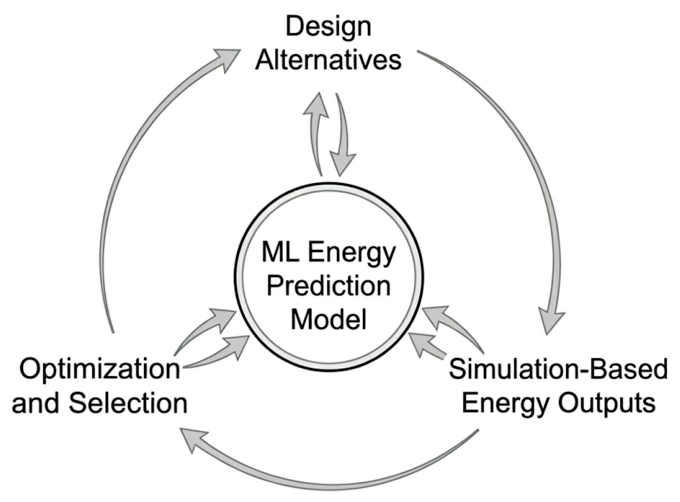
Energy optimization in buildings typically involves the integration of parametric design, energy simulation, and optimization techniques to identify optimal combinations of Architectural Design Variables (ADVs), including envelope characteristics, glazing systems, and HVAC configurations [4]. However, conventional simulation-based approaches often require extensive computational effort and lack efficiency in exploring large design spaces. Recent advancements in Artificial Intelligence (AI) and Machine Learning (ML) have introduced new opportunities for improving building energy performance through predictive modeling and optimization. ML-based surrogate models, in particular, enable faster and more efficient evaluation of design alternatives compared to traditional simulation methods [5,6], see Figure 1. Despite these advancements, there remains a lack of comprehensive synthesis of how AI techniques are applied in educational buildings, as well as limited understanding of the most influential design variables and research gaps in this domain. Therefore, this study aims to systematically review the application of AI and ML in improving energy efficiency in educational buildings and to identify key design variables and research gaps, particularly within hot-arid climate contexts.
  • Research Objectives
This study aims to systematically review the role of Artificial Intelligence (AI) and Machine Learning (ML) in supporting design decisions to improve energy efficiency in educational buildings.
Specifically, the study aims to:
  • Identify and analyze key Architectural Design Variables (ADVs) influencing energy performance in educational buildings.
  • Examine commonly used AI and ML techniques for energy optimization and performance analysis.
  • Synthesize existing research to identify trends, challenges, and research gaps in the application of AI in educational building design.
  • Research Questions
This study addresses the following main research question:
What is the role of Artificial Intelligence and Machine Learning in supporting design decisions to improve energy efficiency in educational buildings?
The following sub-questions are explored:
  • Which Architectural Design Variables most significantly influence energy performance in educational buildings?
  • What AI and ML techniques are most commonly applied for energy optimization in the built environment?
  • What are the key research gaps in applying AI-driven approaches to educational buildings?

2. Methodology

This study adopts a Systematic Literature Review (SLR) approach to investigate the role of Artificial Intelligence (AI) and Machine Learning (ML) in improving energy efficiency in educational buildings. The review aims to synthesize recent studies, identify key design variables, and highlight research gaps. The methodology follows a structured and transparent process aligned with the PRISMA framework (Supplementary Materials) to ensure rigor and reproducibility.

2.1. Search Strategy

A comprehensive search strategy was implemented to identify relevant studies from multiple academic databases. The following databases were selected due to their wide coverage of engineering, architecture, and energy-related research (Google Scholar, ScienceDirect, ResearchGate, Saudi Digital Library). The search process was conducted using combinations of the following keywords: “Artificial Intelligence”, “Machine Learning”, “Energy Efficiency”, “Educational Buildings”, “Optimization”, “Building Energy Simulation”. Boolean operators (AND, OR) were used to refine the search results and improve relevance. Complementary searches were conducted using broader terms to capture related methodological and contextual literature, including building performance simulation, passive design optimization, envelope retrofitting, and renewable energy integration in hot climates. Reference lists of key review papers were also screened manually to identify additional relevant studies not captured by the database search. The search was limited to studies published between 2020 and 2025 to capture the most recent advancements in AI applications within the built environment.

2.2. Inclusion and Exclusion Criteria

To ensure the quality and relevance of the selected studies, a set of inclusion and exclusion criteria was defined as follows:
Inclusion Criteria:
  • AI/ML-related studies published between 2020 and 2025.
  • Peer-reviewed journal articles and high-quality conference papers.
  • Studies focusing on AI/ML applications in building energy performance.
  • Research related to educational buildings or comparable building types.
  • Studies addressing energy efficiency, optimization, or design decision-making.
  • Studies conducted in hot-arid, hot-humid, or hot semi-arid climatic contexts, or presenting climate-transferable methodological frameworks.
Exclusion Criteria:
  • AI/ML-related studies published before 2020.
  • Non-peer-reviewed articles or gray literature.
  • Studies unrelated to building energy performance.
  • Studies focused exclusively on residential, office, or industrial buildings with no transferable methodology for educational typologies.
  • Studies addressing cold or temperate climates only, with no generalizable findings for hot climate conditions.
  • Studies with insufficient methodological detail to enable critical evaluation.
  • Studies with no full-text availability.
The main reasons for exclusion included lack of relevance to the research topic, focus on unrelated building types, and absence of complete data required for analysis.

2.3. Study Selection Process

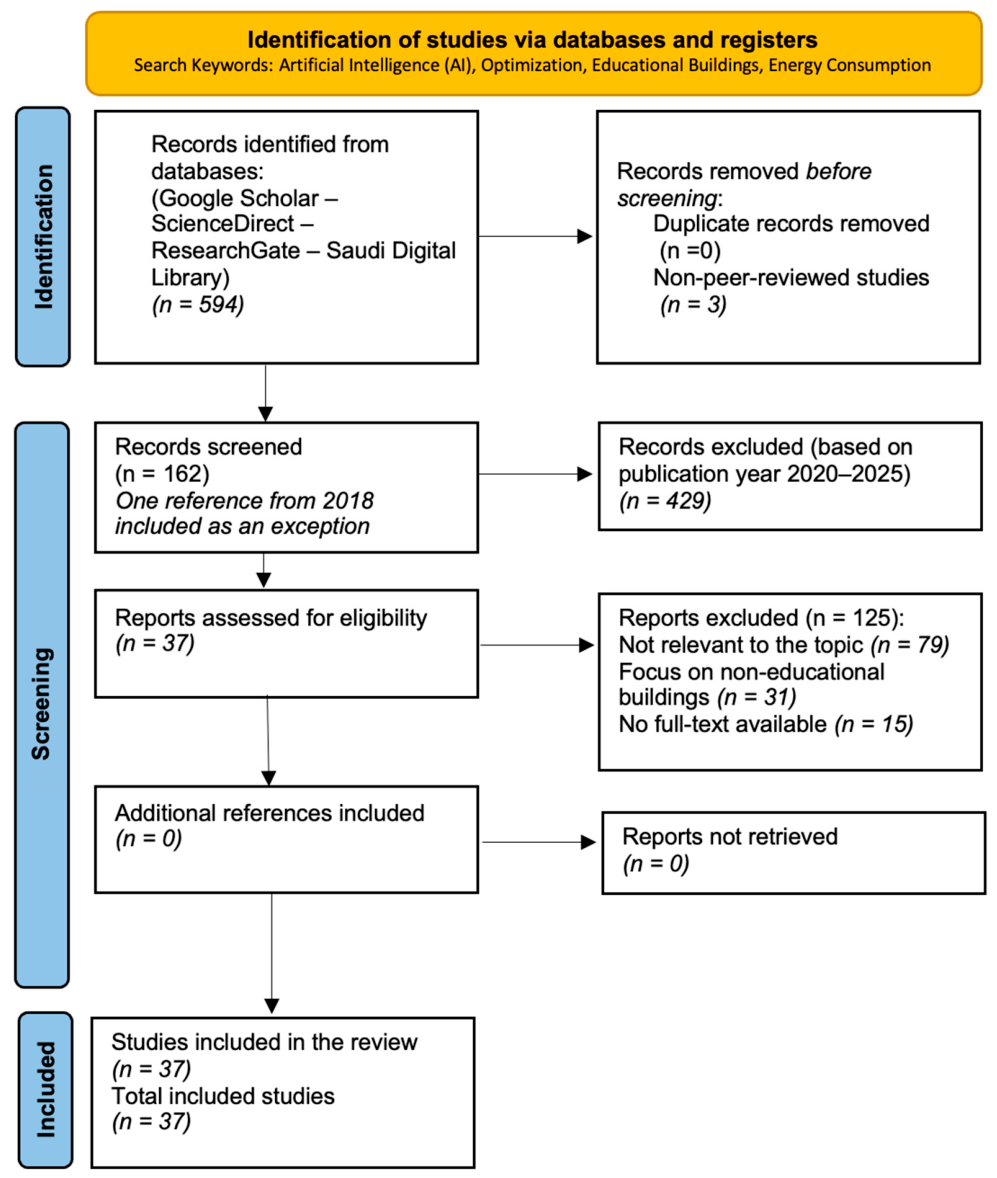
The study selection process followed a structured multi-stage filtering approach based on the PRISMA methodology, as illustrated in Figure 2. Initially, 594 records were identified through database searches. After removing non-relevant and non-peer-reviewed studies, 162 records were retained for screening. Following title and abstract screening, studies were further evaluated based on the eligibility criteria, resulting in 37 studies selected for inclusion in the final synthesis. To ensure consistency with the PRISMA flowchart, the complete list of the 37 studies included in the final synthesis is provided in Appendix A, Table A1.
The selection criteria focused on peer-reviewed status, relevance to the research topic, methodological alignment, full-text availability, and contribution to the review objectives. Journal impact factor and citation count were not used as primary inclusion or exclusion criteria, as relying on these indicators may introduce bias against recent publications, particularly in the rapidly developing field of AI/ML applications in building energy optimization.
The exclusion process included:
  • 79 studies not directly related to the research topic;
  • 31 studies focused on non-educational buildings;
  • 15 studies excluded due to lack of full-text availability.
The final selection represents a curated dataset of relevant peer-reviewed studies used for analysis and synthesis in this review.

2.4. Data Extraction

A structured data extraction form was developed and applied consistently across all included studies. For each paper, the following information was recorded:
  • Publication details (author, year, journal/venue, country of study);
  • Building type and climate zone;
  • ML or AI method(s) employed;
  • Simulation tool used (where applicable);
  • Design variables and their ranges;
  • Optimization objectives (energy, comfort, cost, carbon);
  • Key findings and reported energy savings;
  • Validation approach.

2.5. Synthesis Approach

Given the heterogeneity of the included studies in terms of building types, climate contexts, ML methods, and optimization objectives, a narrative synthesis was adopted rather than a quantitative meta-analysis. The synthesis was structured around four analytical dimensions: (1) the distribution and characteristics of ML and AI methods employed; (2) the design variables and their reported influence on energy performance; (3) the optimization objectives and multi-objective trade-offs reported; and (4) climate and building-type transferability of the reviewed frameworks. Where quantitative comparisons were possible (e.g., reported model accuracy, energy savings), these are presented in tabular form to support cross-study comparison.
During manuscript preparation, generative AI tools were used only for supporting tasks related to translation, language clarity, and visual presentation. ChatGPT (OpenAI) was used to assist with translating the manuscript from Arabic into English and improving language clarity. Nano Banana, an AI-based image generation and editing tool, was used to recreate Figures 1 and 5 for visual presentation purposes. All AI-assisted outputs were carefully reviewed, edited, and verified by the authors. No generative AI tool was used to conduct the systematic literature review, screen or select studies, extract data, synthesize findings, analyze results, or interpret the findings.

3. Results of Literature Review

The systematic search and screening process yielded 37 studies for inclusion in the final synthesis. The reviewed literature was organized into two evidence categories. The first category included studies on AI/ML applications in building energy prediction, simulation, and optimization, which were limited to publications from 2020 to 2025 to reflect recent developments in AI-based methods within the built environment. The second category included studies addressing educational buildings and school energy performance in Saudi Arabia; for this category, no strict publication-date restriction was applied due to the limited availability of school-related literature in the local context.
Within the hot-climate context, several included studies originated from Iran, Turkey, Jordan, and Algeria, alongside a smaller but important body of work from Saudi Arabia specifically [7,8,9]. Studies from temperate and mixed-climate contexts were retained where their ML methodologies, surrogate modeling frameworks, or optimization approaches were assessed as directly transferable to hot-arid conditions. This classification ensured that the review captured both recent AI/ML methodological advances and the contextual evidence required to understand educational-building energy challenges in Saudi Arabia.
The included studies are divided into three broad methodological categories: (1) pure simulation-based parametric studies using tools such as EnergyPlus, DesignBuilder, or TRNSYS; (2) ML-based surrogate modeling studies, where simulation-generated datasets are used to train predictive models; and (3) coupled simulation-ML optimization studies, where surrogate models are integrated with evolutionary or metaheuristic algorithms for design space exploration [10,11,12,13]. The third category represents the most rapidly growing strand of the literature and the most methodologically sophisticated approach.

3.1. Quality of Included Studies

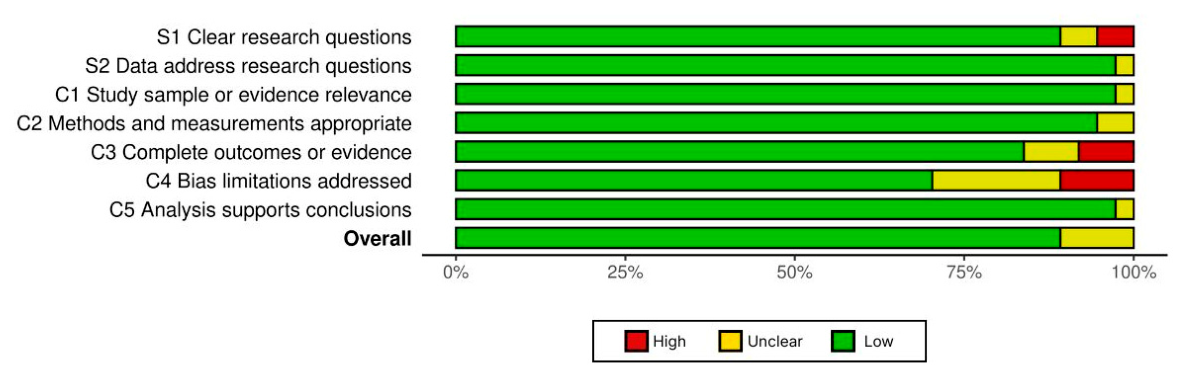
Figure 3 presents the aggregated methodological quality and risk-of-bias assessment of the included studies across the seven criteria. Overall, the results indicate that most studies demonstrated acceptable methodological quality, with the majority classified as low risk across most domains. The strongest criteria were S2 (data address research questions), C1 (study sample or evidence relevance), and C5 (analysis supports conclusions), where almost all studies were rated as low risk.
Greater variation was observed in C3 (complete outcomes or evidence) and C4 (bias limitations addressed). C4 showed the highest proportion of unclear and high-risk ratings, indicating that several studies did not sufficiently discuss methodological limitations or potential sources of bias.
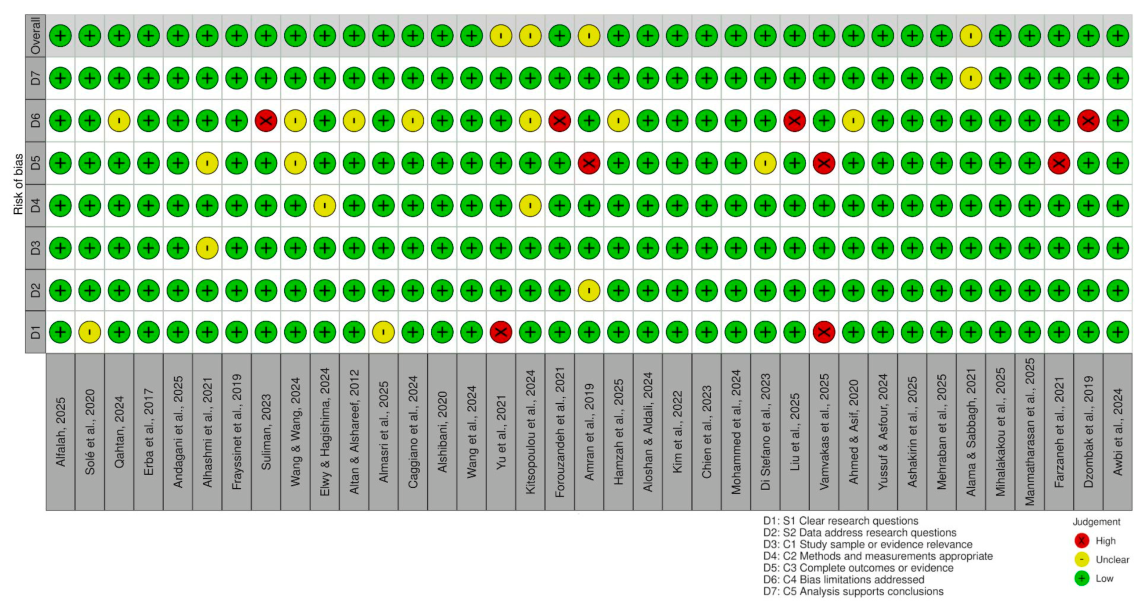
At the overall level, 33 studies were classified as low risk and 4 as unclear, with no studies rated as high risk overall, see Figure 4. This suggests that the reviewed studies provide a generally reliable evidence base for the systematic review.

3.2. Energy Consumption in Educational Buildings in Saudi Arabia

Saudi Arabia faces significant challenges in energy consumption, with the building sector accounting for approximately 75% of total electricity use nationwide [7]. This high level of demand is largely attributed to rapid population growth and accelerated urbanization, which exert increasing pressure on the Kingdom’s natural and energy resources. Educational buildings in Saudi Arabia exhibit particularly high energy consumption rates, primarily due to cooling and lighting requirements. The hot-arid climate necessitates intensive reliance on air-conditioning systems, resulting in substantial increases in electricity demand [8,14]. Cooling loads represent one of the most critical contributors to total energy use in school buildings, as HVAC systems account for a significant proportion of overall electrical consumption [15,16].

3.2.1. Energy Efficiency Improvement Strategies

Numerous studies emphasize the importance of enhancing building envelope performance to improve energy efficiency. This includes the use of thermal insulation, double glazing systems, optimization of the Window-to-Wall Ratio (WWR), and the implementation of appropriate shading devices [8]. Research findings indicate that proper envelope design strategies can lead to significant reductions in cooling energy demand, with savings reaching approximately 30% in cooling load [17]. Facade retrofitting has also been identified as an effective intervention. Optimizing facade design variables such as glazing type, localized shading systems, and external wall insulation can reduce cooling loads by up to 17% and lighting energy consumption by up to 49%. These improvements align with national sustainability targets outlined in Saudi Vision 2030 [8,17,18]. Effective daylighting strategies are particularly critical in hot-arid climates. The use of solar-control glazing and adjustable shading devices can enhance daylight availability while minimizing solar heat gain. However, achieving an optimal balance between natural daylight utilization and artificial lighting demand remains a persistent design challenge [18]. Integration of Renewable Energy: Rooftop photovoltaic (PV) systems represent one of the most effective strategies for partially offsetting energy demand in educational buildings. Several studies highlight the significant potential of solar energy integration within school facilities located in hot-arid climates. For instance, refs. [19,20] demonstrated that photovoltaic systems could supply approximately 72.44% of a building’s total energy demand, while also providing measurable economic benefits over the operational lifecycle. Such findings reinforce the strategic role of on-site renewable energy systems in reducing grid dependency and supporting long-term sustainability objectives. The integration of renewable energy technologies is particularly relevant in the Saudi context, where high solar irradiance levels provide favorable conditions for photovoltaic deployment. Consequently, combining envelope optimization strategies with renewable energy generation enhances the overall performance-driven design approach.

3.2.2. Simulation and Modeling Tools

Several studies have utilized DesignBuilder software to model and simulate the energy performance of educational buildings. This tool enables the evaluation of various envelope modifications and supports the identification of optimal retrofit strategies in terms of energy efficiency [8,19,21]. In addition, the integration of Building Information Modeling (BIM) with Life Cycle Assessment (LCA) provides a comprehensive methodological framework for assessing the environmental impact of school buildings. This approach facilitates carbon emission reduction analysis across the entire building life cycle, thereby extending evaluation beyond operational energy to embodied impacts [14]. The adoption of advanced simulation and modeling platforms thus plays a central role in enabling performance-driven design decisions and supporting sustainability-oriented optimization processes.

3.2.3. Governmental Initiatives

Saudi Vision 2030 emphasizes energy efficiency enhancement as a core component of the Kingdom’s long-term sustainability strategy [9,22,23]. In alignment with this vision, the Saudi government launched the Saudi Energy Efficiency Program (SEEP), which aims to reduce national energy intensity by approximately 30% by 2030 [7]. Improving energy efficiency in buildings plays a crucial role in achieving these national objectives. Enhanced building performance contributes not only to reduced operational energy consumption and lower utility costs but also to improved environmental sustainability outcomes. Furthermore, energy efficiency initiatives promote technological innovation and increase public awareness regarding sustainable practices within the built environment [8]. In summary, the energy performance of educational buildings in hot-arid climates such as those in Saudi Arabia can be substantially improved through the integrated adoption of envelope optimization strategies, passive and active design measures, and renewable energy integration. Advanced simulation tools, including DesignBuilder, alongside BIM–LCA frameworks, play a pivotal role in optimizing these strategies and assessing their effectiveness. These efforts are closely aligned with Saudi Vision 2030 objectives aimed at reducing energy consumption and carbon emissions within the educational sector. By implementing such performance-driven approaches, educational buildings in the Kingdom can achieve significant energy savings while contributing meaningfully to national sustainability targets.

3.3. Limitations of Conventional Energy Simulation Approaches

Conventional energy simulation methods have contributed significantly to building energy analysis, but they still face limitations related to computational complexity, modeling simplifications, scalability, data quality, and usability. Detailed simulations require substantial time and resources, especially when evaluating large design spaces or urban-scale systems, which limits their use during early design stages [24]. Their accuracy may also be affected by simplified assumptions, incomplete representation of occupancy and operational patterns, and discrepancies between simulated and measured performance [25,26,27]. In addition, unreliable weather files and limited operational data can further reduce prediction reliability [28]. These challenges highlight the need for more accessible, data-driven, and computationally efficient tools, supporting the growing adoption of AI and ML as complementary approaches to conventional simulation workflows [10,26].

3.4. AI-Based Optimization in Building Design

The integration of Artificial Intelligence (AI) techniques into building design has demonstrated significant potential for enhancing energy efficiency as an essential component of sustainable development goals. Recent research highlights the transformative role of AI-driven optimization methods in improving building performance, particularly in energy-intensive sectors. This section reviews contemporary advancements in AI-based optimization, focusing on applied methodologies, practical implementations, and achieved performance outcomes.

3.4.1. AI Techniques and Modeling Approaches

A wide range of Machine Learning (ML) models has been employed to predict and optimize building energy performance, with each model offering different advantages in terms of accuracy, interpretability, and computational efficiency. Simpler models, such as Linear Regression (LR), are transparent and easy to interpret, but they are limited in capturing nonlinear relationships among design variables. Decision Trees (DT) can represent nonlinear interactions more effectively, although they may be prone to overfitting when used independently. In contrast, ensemble models such as Random Forest Regression (RFR), Gradient Boosting Machines (GBM), and Extreme Gradient Boosting (XGBoost) generally provide higher predictive stability by combining multiple Decision Trees. RFR improves generalization through averaging, while GBM and XGBoost enhance accuracy by sequentially correcting prediction errors [10]. Other methods also serve specific purposes. Support Vector Regression (SVR) is effective for nonlinear prediction, particularly with smaller or high-dimensional datasets, but requires careful kernel and parameter selection. k-Nearest Neighbors (KNN) is simple and data-driven, yet its performance is sensitive to dataset size and distance metrics. Artificial Neural Networks (ANN) are well suited to modeling complex nonlinear relationships in energy and comfort prediction, although they typically require larger datasets and more intensive tuning [11]. These models are commonly used to estimate indicators such as Energy Use Intensity (EUI), Predicted Percentage of Dissatisfied (PPD), and heating or cooling loads. Compared with conventional physics-based simulations, ML models provide faster prediction and are therefore valuable in early-stage design, where multiple alternatives need to be assessed efficiently.
Hybrid AI approaches combine multiple algorithms within a single predictive framework to improve accuracy and robustness. For example, integrating Feedforward Neural Networks (FNN) and XGBoost, with Gradient Boosting Machines (GBM) as a meta-learner, can combine the nonlinear learning capacity of neural networks with the error-reduction capability of boosting methods [10]. Such approaches are particularly useful when building energy performance is influenced by several interacting design variables and when a single model may not provide sufficient reliability across different design conditions.
Generative AI techniques have recently emerged as powerful tools in performance-driven architectural design. Unlike predictive ML models, which estimate the performance of predefined design alternatives, Generative Adversarial Networks (GANs) can generate new design configurations directly. Through the interaction between a generator and a discriminator, GANs can produce design alternatives that respond to performance objectives, including energy-demand reduction [29]. This expands the design solution space beyond conventional parametric variation and supports early-stage exploration of energy-efficient architectural configurations. However, the generated solutions still require validation through simulation or expert review to ensure their technical and contextual suitability.

3.4.2. Optimization Techniques

Multi-Objective Optimization: Multi-objective optimization techniques are widely employed to balance competing performance criteria in building design. Algorithms such as the Non-Dominated Sorting Genetic Algorithm II (NSGA-II) and the Multi-Objective Firefly Algorithm (MOFA) have been applied to simultaneously minimize energy consumption while enhancing thermal comfort levels [10,30]. These approaches enable the identification of optimal building configurations across multiple performance dimensions, rather than focusing on a single objective. By generating Pareto-optimal solution sets, multi-objective optimization provides decision-makers with a range of performance-balanced alternatives tailored to varying design priorities.
Surrogate Models: AI-based surrogate models facilitate rapid evaluation of design alternatives by approximating the outputs of computationally intensive simulation engines. These models significantly reduce computational burden while maintaining acceptable predictive accuracy, thereby enhancing the feasibility of early-stage optimization processes [13].
By replacing repetitive dynamic simulations with trained predictive models, surrogate-based optimization improves cost-effectiveness and time efficiency, making it particularly suitable for performance-driven conceptual design phases.

3.4.3. Applications and Practical Implementations

Building Information Modeling (BIM): The integration of Artificial Intelligence with Building Information Modeling (BIM) platforms such as Autodesk Revit enables more accurate energy performance predictions and real-time optimization processes. Through the simulation of building properties and operational parameters, AI-enhanced BIM workflows support dynamic performance evaluation and informed design adjustments [12,31]. Legacy Buildings: AI models have also been applied to improve energy efficiency in existing or legacy buildings characterized by outdated systems and limited operational optimization. Decision Tree-based models, for example, have demonstrated measurable energy savings during renovation and operational improvement phases [32]. These applications highlight the potential of AI-driven retrofitting strategies in extending building lifecycle performance. Smart Buildings: In smart building environments, AI technologies enhance energy efficiency through intelligent control systems, automation, and integration with renewable energy sources. These systems enable real-time performance optimization and improve operational reliability, contributing to adaptive and responsive building management, Among the reviewed AI approaches, renewable energy sources were mainly considered in smart-building AI systems, AI + BIM integration, multi-objective optimization models, and surrogate-based optimization frameworks. These approaches incorporated renewable energy through PV integration, real-time energy management, or optimization scenarios combining energy demand reduction with on-site generation. In contrast, conventional ML prediction models such as LR, DT, RFR, SVR, KNN, XGBoost, and ANN were primarily applied to predict EUI, PPD, and heating and cooling loads, unless renewable-energy variables were explicitly included in the input dataset [33,34].
Conclusion AI-based optimization in building design provides powerful tools for reducing energy consumption and advancing sustainability objectives. Through the deployment of diverse predictive models, optimization algorithms, and data-driven frameworks, researchers and practitioners can develop scalable solutions to address complex energy-efficiency challenges in modern buildings. The growing body of literature demonstrates that AI-driven methodologies not only enhance computational efficiency but also support multi-criteria decision-making processes bridging the gap between simulation outputs and strategic sustainability planning, see Table 1.

3.5. Design Variables for Optimization Scenarios

Based on the literature review, key design variables influencing energy performance in educational buildings were identified, particularly for hot-arid climates where cooling demand and internal heat gains are dominant. These variables were refined to reflect locally available construction materials and systems in the Saudi market, ensuring their practical applicability in real design scenarios.
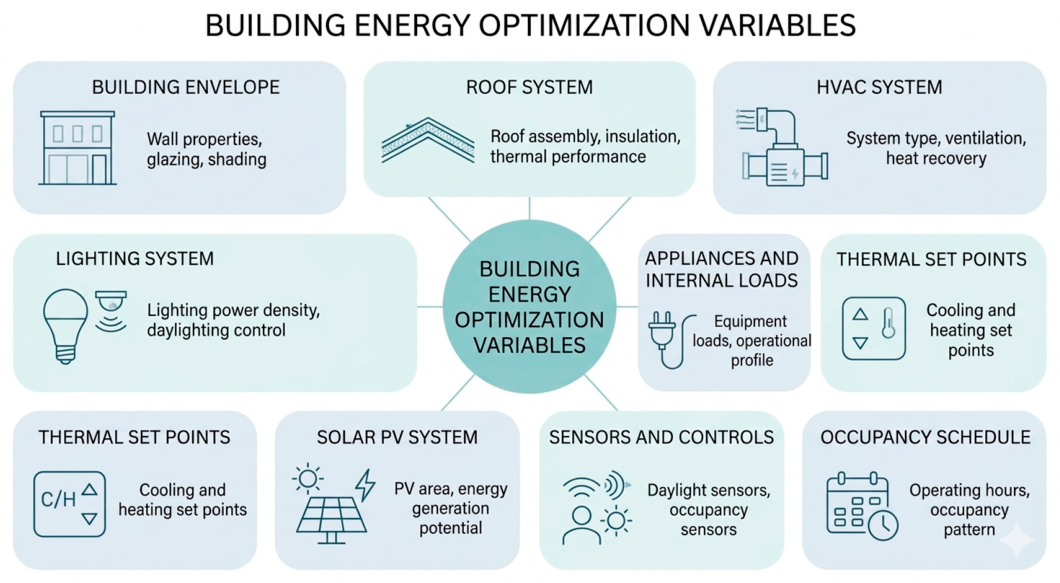
The selected variables include passive strategies, such as envelope insulation, glazing systems, and shading devices, as well as active strategies related to lighting efficiency, HVAC operation, and control systems. Figure 5 presents the framework of these variables within a structured optimization approach, supporting the evaluation of multiple design alternatives and the development of realistic AI-supported optimization scenarios for the Saudi context.
  • Envelope Design Variables (Wall Assemblies)
Wall insulation is consistently identified as a primary strategy for reducing heat transfer through the building envelope in hot-arid climates [3]. Insulation type, thickness, and thermal resistance all influence the wall U-value, with lower values indicating reduced heat gain and improved energy efficiency. Common materials reported in the literature include EPS, XPS, polyisocyanurate, and rock wool, and continuous insulation configurations further enhance envelope performance [8,17]. Table 2 summarizes the key wall insulation variables and their impact on thermal performance.
  • Envelope Design Variables (Window)
Window design variables are among the most influential factors affecting building energy performance in hot-arid climates, where solar heat gain drives cooling demand [7,8]. SHGC and U-value are the primary performance indicators: lower SHGC reduces solar radiation entering the building, while lower U-value improves thermal insulation. Advanced glazing systems including double and triple glazing with Low-E coatings and reflective treatments are widely used to balance solar control and daylighting in educational buildings [3]. Table 3 summarizes the key window design variables and their impact on energy performance.
  • Envelope Design Variables (Shading Systems)
Shading systems are a key strategy for reducing solar heat gain in hot-arid climates, directly lowering cooling demand and improving thermal comfort [8,11,12]. External shading devices are generally more effective than internal ones, as they intercept solar radiation before it reaches the glazing. Performance is commonly quantified using shading factors, where lower values indicate greater solar reduction efficiency. Table 4 summarizes the key shading strategies identified in the literature and their relative impact on energy performance.
  • Roof Design Variables
Roof insulation is a critical factor in hot-arid climates, where high solar exposure makes the roof a major pathway for heat gain [8,17]. Insulation type and thickness are the primary determinants of roof U-value; lower values correspond to reduced heat transfer and lower cooling loads. Common materials include EPS, XPS, and rock wool, and continuous insulation configurations further improve thermal performance in high solar radiation conditions. Table 5 summarizes the key roof insulation variables and their impact on energy performance.
The durability and service life of roof insulation materials are important in hot-arid climates, where high solar radiation, thermal cycling, and moisture exposure can accelerate degradation. Kitsopoulou et al. noted that humidity, high temperature, and chemical exposure may affect the stability of insulation materials, while rock wool generally offers strong fire resistance and long-term stability compared with organic foam-based materials [3]. Although specific service life data are limited in the reviewed literature, properly installed EPS and XPS insulation may perform for approximately 25–50 years when protected from moisture, UV exposure, and installation defects.
  • Skylight Design Variables
Skylight design requires careful optimization in hot-arid climates, where excessive solar radiation can substantially increase cooling demand [8,17]. U-value and SHGC are the primary performance parameters: lower U-values improve thermal insulation, while lower SHGC values reduce solar heat gain, though excessively low SHGC can compromise daylight availability. Advanced glazing technologies double glazing, Low-E coatings, and reflective treatments are commonly applied to balance solar control and daylighting. Table 6 summarizes the key skylight design variables and their impact on energy performance.
  • HVAC System Type
HVAC systems are the dominant contributor to energy consumption in hot-arid climates, where cooling demand drives annual energy use [36]. System efficiency and operational controls are key performance factors, though the literature consistently shows that significant savings can be achieved through improved envelope design and optimized operational strategies without major system changes underscoring the importance of early-stage design decisions in reducing cooling system demand. Advanced control strategies, including smart thermostats and AI-driven demand-based operation, are increasingly integrated to further enhance performance. Table 7 summarizes the main HVAC strategies identified in the literature and their impact on energy performance.
  • Lighting Design Variables
Lighting Power Density (LPD) directly affects both electrical demand and internal heat gains, making it a key optimization variable in educational buildings with long operational hours [18,37]. Reducing LPD through high efficiency LED systems (3–7.5 W/m2) is a widely recognized energy reduction strategy, provided adequate illuminance levels are maintained for learning environments. Daylight-responsive sensors complement this by automatically dimming artificial lighting in response to available natural light, with greater sensor coverage yielding progressive reductions in lighting energy demand. Table 8 summarizes the key lighting and control variables and their impact on energy performance.
  • Thermal Set-Point Variables
Thermal setpoint temperatures are key operational variables in hot-arid climates, where cooling demand dominates energy use. Increasing the cooling setpoint by 1–2 °C can yield significant energy savings, and setback strategies during non-operational hours further enhance efficiency. Heating setpoint adjustments contribute to overall performance but have comparatively limited impact in hot climates. Combining optimized setpoints with smart control strategies reduces energy consumption without compromising occupant comfort [36]. Table 9 summarizes the typical thermal setpoint ranges identified in the literature and their impact on energy performance.
  • Photovoltaic (PV) System Integration
Saudi Arabia’s high solar radiation makes PV systems a particularly viable strategy for reducing school building energy demand and grid reliance [28,38]. Educational buildings are well-suited to PV integration given their large roof areas and daytime occupancy patterns that align with peak solar generation. Key system parameters include installation area, panel efficiency, tilt angle, and local electricity tariffs, with tilt angles aligned to geographic latitude maximizing energy capture [19,20]. Partial deployment strategies covering 50–75% of roof area offer a practical balance between energy generation and economic feasibility where full coverage is constrained. Table 10 summarizes the key PV system parameters and their impact on energy performance.
  • Operational Schedule
Operational schedules are a critical determinant of energy consumption in educational buildings, where occupancy patterns are highly structured. School buildings typically follow fixed daytime schedules with limited evening use, a pattern that aligns well with peak solar availability and enhances the effectiveness of daylighting and PV integration. Incorporating realistic occupancy schedules in energy simulations improves model accuracy and reduces the gap between simulated and actual consumption, as variations in occupancy directly affect internal loads from lighting, equipment, and cooling. Defining representative operational schedules is therefore essential for valid simulation-based optimization outcomes.

3.6. Climate Change Adaptation and Future Weather Scenarios in AI-Driven Building Optimization

The integration of climate change considerations with Machine Learning approaches represents a critical yet underexplored frontier in building energy optimization research. Kutty et al., 2024 [12] provide the most comprehensive examination of this intersection, systematically reviewing 17 studies that investigate the effects of present and future weather scenarios on building energy performance in hot urban desert climates. Their analysis reveals that passive design considerations, particularly thermal insulation and efficient window glazing, are identified as highly effective strategies for mitigating climate change implications, while solar photovoltaic systems efficiently meet primary energy demands under projected climatic conditions [12]. Mohammad Alhashmi et al., 2021 extend this temporal perspective by developing a framework that considers climate change impacts over a 30-year projection period (2020–2050) for residential buildings in Saudi Arabia, emphasizing that “climate change may have different impacts on hot climatic regions and affect building energy use differently” necessitating region-specific building interventions to improve energy performance and reduce greenhouse gas emissions [17].
The critical importance of weather data quality in building simulations is underscored by Silvia Erba et al., 2017, who demonstrate that weather datasets may refer to climates that have “substantially changed in the last decades,” highlighting substantial performance differences depending on the weather files used [21]. This finding has profound implications for AI-driven optimization approaches, as current Machine Learning models in building energy management such as those demonstrated by Ali et al., 2024, Nashruddin et al., 2025, and Mohammad H Mehraban et al., 2025—typically rely on historical weather data for training and validation [25,30,32]. The integration of future climate projections with these AI methodologies could significantly enhance model robustness and long-term applicability. Dimitrios Vamvakas et al., 2025 suggest that generative AI models could play a crucial role in creating synthetic energy data and scenario simulation, which could be extended to generate future weather scenarios for training climate-adaptive building management systems [27]. However, a significant research gap exists in developing AI frameworks that can dynamically adapt to changing climatic conditions while maintaining the high accuracy levels demonstrated in current applications, such as the 99% variance explanation achieved by Mohammad H Mehraban et al., 2025 and the 92.28% precision reported by Bashar Alfalah, 2025 in photovoltaic system optimization [16,25].

4. Discussion

The results of this review confirm that ML and AI methods have matured substantially as tools for building energy optimization, offering predictive accuracy and computational efficiency that physics-based simulation alone cannot match at the scale required for early-stage design exploration [12,13]. However, the evidence base as it applies to school buildings in hot-arid climates remains thin and methodologically fragmented. The core tension identified across the reviewed literature is between the generalizability ambitions of ML modeling frameworks and the climate- and typology-specificity that determines their practical utility.
The dominance of WWR and SHGC as the most influential design variables across hot-climate school studies is a robust and consistent finding, replicating across different countries, simulation tools, and ML algorithms [7,8,17]. This convergence has a clear physical basis: in cooling-dominated buildings with high solar irradiance, fenestration governs the magnitude of solar heat gain more than any other passive design parameter. The implication for Saudi school design practice is direct: envelope optimization efforts that prioritize wall insulation or building orientation ahead of glazing specification and shading geometry are unlikely to achieve maximum energy reduction. This finding is broadly consistent with the retrofit evidence from Saudi school buildings [8,37], but the present review is the first to situate it within an ML-based feature importance framework across multiple studies and climate analogs.
The identification of cooling setpoint temperature as an equally or more influential variable than many passive design parameters in studies that include it is a finding that deserves greater attention than it has received in the school-specific literature [36]. Saudi school buildings are typically operated with cooling setpoints well below thermal comfort thresholds, a common pattern in Gulf states where overcooling is both an energy and health concern [15]. ML-based optimization that includes setpoint as a decision variable could identify configurations that simultaneously reduce energy consumption and improve thermal comfort without capital investment in the building fabric, a finding with immediate operational relevance for the existing Saudi school stock.

4.1. The Saudi Arabia Context

The Saudi-specific evidence reviewed here [7,8,9,19,20,21] establishes a consistent picture: school buildings in Saudi Arabia are among the most energy-intensive public building typologies, with cooling accounting for the dominant share of total consumption, and the existing stock is characterized by envelope specifications and mechanical systems that were not designed with energy efficiency as a primary objective [9]. Vision 2030 commitments to energy rationalization and renewable integration [20,22] create a policy context in which evidence-based design optimization tools are not merely academically interesting but operationally necessary.
Yet the reviewed literature reveals a structural gap between this policy imperative and the available evidence base. Studies addressing Saudi school energy performance are predominantly empirical assessments and retrofit evaluations [8,37], rather than predictive or optimization-oriented frameworks. The ML and AI literature, meanwhile, has developed sophisticated optimization tools that have not been applied to or validated against Saudi school building data. Bridging this gap requires not simply applying existing ML frameworks to a new context, but recalibrating them with climate-appropriate weather data [25], school-specific occupancy and operational profiles [7,8], and building archetypes representative of the Saudi governmental school stock [1,38].

4.2. Methodological Considerations

Several methodological observations arise from comparing studies across the reviewed literature. First, the choice of simulation-generated versus real metered data for ML training has significant implications for model validity. The majority of reviewed studies train surrogates on EnergyPlus or DesignBuilder generated datasets, which provide controllable, large-scale training data but embed the assumptions and calibration quality of the underlying simulation model [16,24,25]. In contexts where the simulation model has not been validated against measured building performance, the surrogate inherits these uncertainties. For Saudi school buildings, where measured energy consumption data at the building level exists but has rarely been used as ML training data, a hybrid approach that integrates simulation-generated samples refined by measured data would strengthen model credibility considerably.
Data availability is another major methodological challenge for applying ML algorithms to public educational buildings, where systematic data collection is often limited. Alama and Sabbagh found only 17 studies over 25 years addressing Saudi Arabian schools, indicating that investigations in mechanically air-conditioned educational buildings remain limited in number and level of detail [10]. Although Alshibani used 352 real-world datasets from operating schools, this still represents a limited sample for national-scale generalization [7]. Moreover, these datasets were collected from the Eastern Province, a region characterized by higher humidity than many inland Saudi regions such as Riyadh, which limits their direct transferability to other climatic contexts. To address such limitations, recent studies suggest using synthetic and simulation-based datasets to support ML training in data-scarce environments. Vamvakas et al. highlight synthetic energy data generation as valuable for model training and scenario simulation [27], while Wang and Mehraban demonstrate the potential of parametrically generated and simulation-based datasets for improving model transferability [5,25]. Nevertheless, challenges remain regarding data quality, computational cost, and the integration of data-driven tools into practical design workflows [24,26].
Second, the sampling strategies used to generate simulation datasets vary widely across studies, from simple random sampling to Latin Hypercube and stratified random sampling. The reviewed evidence suggests that sampling strategy affects surrogate accuracy at small dataset sizes, but that differences become negligible above approximately 2000–5000 samples [13]. For school building optimization in Saudi Arabia, where the design space is constrained by regulatory standards and a relatively homogeneous building typology, a targeted sampling strategy focused on climatically plausible parameter ranges would be more efficient than uniform random exploration.
Third, model interpretability remains an underexplored dimension of the ML-for-buildings literature. The majority of reviewed studies report accuracy metrics (R\, RMSE, MAPE) but relatively few employ sensitivity analysis or explainability methods such as SHAP values to communicate which design variables drive predictions and why [13,26]. For building designers and policymakers to act on ML optimization outputs, interpretability is not a technical nicety but a practical requirement: a model that accurately predicts energy consumption but cannot explain which design choices produce that outcome has limited utility in professional practice.

4.3. Research Gap and Contribution

The reviewed literature advances on two largely parallel tracks. A substantial body of work demonstrates the effectiveness of ML and AI methods, surrogate models, neural networks, ensemble approaches, and generative optimizers for predicting and optimizing building energy consumption, with accuracy comparable to physics-based simulation and at a fraction of the computational cost [4,5,10,11,12,13,26,30,34,35]. A separate empirical stream characterizes the energy challenges specific to school buildings in Saudi Arabia and comparable hot-arid climates, identifying cooling loads, envelope design, glazing ratio, and solar gain as the dominant performance drivers, and documenting the potential of passive strategies and renewable integration to reduce demand [3,7,8,9,19,21,37].
Despite progress on both tracks, their intersection remains largely unaddressed. ML optimization frameworks are predominantly developed for temperate climates and non-school building typologies [2,25,32] and cannot be assumed to generalize to the extreme cooling-dominated conditions of hot-arid school buildings, which present a distinct energy profile, high daytime occupancy, large, glazed facades, intermittent operation, and specific daylighting requirements [7,9,18]. Furthermore, studies addressing passive design, envelope retrofitting, insulation, and PV integration in Saudi schools do so in isolation [8,19,21,37], without an ML-based framework capable of evaluating their interaction effects simultaneously. Finally, ML tools are predominantly applied at the retrofit or post-occupancy stage [27,33], leaving early-stage design where decisions have the greatest long-term impact underserved, and findings are rarely situated within the Saudi policy and Vision 2030 regulatory context [20,22].
This systematic review addresses these gaps through four contributions. It provides the first consolidated synthesis of ML and AI methods applied or directly applicable to school building energy optimization in hot-arid climates, bridging two bodies of literature that have not previously been integrated. It critically evaluates the climate and building-type transferability of existing ML frameworks, identifying where models developed in other contexts can and cannot be applied to hot-arid school buildings. It maps the distribution of ML methods, input variables, optimization objectives, and validation approaches across the reviewed studies, revealing systematic methodological gaps, particularly the limited use of surrogate modeling for multi objective design optimization in this building and climate category [10,11,13]. Finally, it provides a structured research agenda aligned with Saudi Arabia’s school building sector needs and Vision 2030 energy efficiency commitments [20,22], establishing the evidence foundation for future empirical and methodological work in this underserved domain.

4.4. Limitations of This Review

Despite the comprehensive approach adopted in this Systematic Literature Review, several limitations should be acknowledged. First, the methodology may not have captured all relevant studies on AI/ML applications for building energy efficiency, as the search results were influenced by the selected keywords, search strings, and variations in terminology across the literature. Differences in indexing practices across databases may also have contributed to the omission of some relevant studies. Second, the database coverage was limited to Google Scholar and ScienceDirect, which may have restricted the breadth of the reviewed literature. The inclusion of additional databases such as Scopus, Web of Science, IEEE Xplore, and other specialized databases could provide broader coverage and improve the reproducibility of future reviews.
Finally, the final sample of 37 studies should be interpreted as a focused synthesis of the available evidence rather than a complete representation of all research in this field. Future studies should expand the search strategy, include additional databases, and consider broader search terms to strengthen the evidence base for AI/ML applications in building energy optimization.

5. Conclusions and Future Research Directions

This systematic review reveals a significant disconnect between the rapid advancement of AI-driven building energy optimization methods and their application to the specific challenges of school buildings in hot-arid climates. While the literature demonstrates substantial progress in ML and AI approaches with studies showing energy savings of up to 37% in offices [12] and 20% reductions in legacy buildings (Siti [32]), these advances remain largely untested in the extreme cooling-dominated conditions characteristic of Saudi Arabian schools [7,8,19]. The review confirms that school buildings in hot-arid regions face unique energy challenges, with cooling loads representing up to 80% of total energy consumption, and significant potential for renewable integration achieving up to 95% net-zero energy [19].
Modern insulating materials, including EPS, XPS, rock wool, insulated panels, reflective coatings, and low emissivity glazing, are essential for reducing heat gain in hot-arid school buildings. Future AI/ML optimization frameworks should therefore consider insulation and envelope systems as key design variables, particularly in relation to thermal performance, durability, and suitability for Saudi climatic conditions.
The synthesis reveals three critical gaps: first, the limited transferability of ML frameworks developed for temperate climates to hot-arid school buildings; second, the absence of integrated approaches that can simultaneously evaluate passive design, envelope retrofitting, and renewable integration strategies; and third, the predominant focus on retrofit applications rather than early-stage design optimization where impact potential is greatest (Piragash [12]).

Future Research Directions

  • Climate-Adaptive ML Frameworks: Future research should prioritize developing ML models specifically trained on hot-arid climate data, incorporating future weather scenarios. This includes creating synthetic datasets for data-scarce environments and validating model performance across diverse hot-arid regions to ensure transferability.
  • Multi-Objective Early-Stage Design Optimization: Research should focus on developing surrogate models capable of simultaneous optimization of energy performance, thermal comfort, and daylighting in school buildings, addressing the gap identified in multi-objective design optimization. This includes integrating passive strategies with renewable systems within unified ML frameworks.
  • Policy-Aligned Implementation Research: Future studies should explicitly align with Saudi Vision 2030 objectives, developing implementation frameworks that consider economic feasibility, regulatory compliance, and scalability across the national school building stock. This includes investigating the integration of AI-driven optimization with BIM-LCA approaches for comprehensive sustainability assessment.
  • Real-World Validation and Performance Monitoring: Addressing the data scarcity challenge identified in educational buildings, future research should establish comprehensive monitoring programs in operational schools to validate ML predictions and enable continuous model improvement through real-world performance data.

Supplementary Materials

The following supporting information can be downloaded at: https://www.mdpi.com/article/10.3390/su18105067/s1, PRISMA 2020 Checklist. Reference [40] is cited in the supplementary materials.

Author Contributions

M.K.H. contributed to the conceptualization, literature review, methodology development, data collection, analysis, interpretation of findings, and manuscript drafting. H.E.S. contributed to the supervision, methodological guidance, critical revision, and overall scientific review of the manuscript. M.A. contributed to methodological support, manuscript review, and critical editing. All authors have read and agreed to the published version of the manuscript.

Funding

This research received no external funding.

Institutional Review Board Statement

Not applicable.

Informed Consent Statement

Not applicable.

Data Availability Statement

No new datasets were generated or analyzed in this study. All data supporting the findings of this review are available within the article and its referenced sources.

Acknowledgments

During the preparation of this manuscript, the authors used AI tools ChatGPT (GPT-5.5 Thinking, OpenAI) to assist with the translation of the manuscript from Arabic into English and to support language clarity. The authors also used Nano Banana 2 (Gemini AI image generation and editing model, Google) to recreate Figure 1 and Figure 5. The authors have reviewed and edited all AI-assisted outputs and take full responsibility for the content of this publication.

Conflicts of Interest

The authors declare that they have no competing interests.

Appendix A. Summary of the Included Studies

Table A1. Classification of the 37 included studies according to evidence category, building context, AI/ML method, design variables, and renewable-energy consideration.
No.Ref. No.Author(s), YearEvidence
Category
Country/ClimateBuilding TypeAI/ML MethodDesign
Variables
Renewable EnergyMain
Relevance
1[2]Kang & Kim, 2024B:Educational Buildings ContextMild climateSchoolN/AEnvelope, energy efficiency, costPartiallyNearly zero-energy school buildings
2[3]Kitsopoulou et al., 2024B: Envelope/Materials ContextGeneral/multiple climatesBuildingsN/APassive envelope, insulation materialsNoPassive envelope technologies
3[4]Wang, 2024A: AI/ML Energy OptimizationSweden/temperateBuildingsML/surrogate modelEarly-stage design variablesNoML for early-stage optimization
4[5]Wang et al., 2024A: AI/ML Energy OptimizationMixed/early-stage contextBuildingsML surrogate modelHeating demand, geometryNoSurrogate modeling for heating optimization
5[6]Yu et al., 2021A: AI/ML MethodsGeneralAdvanced manufacturingML-based potentialsN/ANoAI/ML methodological reference
6[7]Alshibani, 2020B: Educational Buildings ContextSaudi Arabia/Eastern ProvinceSchoolsPrediction modelEnergy consumption, school characteristicsNoSaudi school energy prediction
7[8]Andagani et al., 2025B: Educational Buildings ContextSaudi Arabia/MadinahSchool buildingsBIM-LCACarbon emissions, materialsPartiallySustainable school building assessment
8[9]Aloshan & Aldali, 2024B: Educational Buildings ContextSaudi Arabia/hot-aridSchoolsN/AFaçade retrofit, cooling, envelopeNoSchool façade retrofit and cooling reduction
9[10]Alama & Sabbagh, 2021B: Educational Buildings ContextSaudi ArabiaEducational facilitiesN/AIAQ, ventilation, HVAC relianceNoSaudi educational-building context
10[11]Suliman, 2023B: Simulation/Energy ContextGeneral/building contextBuildingsN/ABuilding performance, energy rationalizationNoBuilding performance simulation
11[12]Kutty et al., 2024B: Climate Change ContextHot urban desert climatesBuildingsN/AFuture weather, adaptation measuresPartiallyClimate-change impacts on energy
12[13]Qahtan, 2024B: Educational Buildings ContextHot-arid climateLecture hallsN/ADaylighting, glazing, blindsNoDaylighting in educational spaces
13[14]Hamzah & El Shafie, 2025B: Educational Buildings ContextSaudi Arabia/RiyadhSchoolsN/AEarthTube, renewable energy, NZEBYesNet-zero energy school strategies
14[15]Amran et al., 2020B: Renewable Energy ContextSaudi ArabiaNational energy contextN/ARenewable energy productionYesSaudi Vision 2030 renewable context
15[16]Alfalah, 2025B: Renewable Energy ContextHot climateHigh-density buildingN/APV system, energy performanceYesPV effectiveness in hot climate
16[17]Alhashmi et al., 2021B: Saudi Energy ContextSaudi ArabiaResidential buildingsN/ALow-carbon demand, community-government partnershipPartiallyLow-carbon Saudi building framework
17[18]Alsaqabi et al., 2023B: Envelope/Materials ContextSaudi ArabiaBuildingsN/AInsulation materials, thermal performance, LCANoInsulation materials in Saudi context
18[19]Altan & Alshareef, 2014B: Educational Buildings ContextSaudi Arabia/different climatesPrototype educational buildingN/AClimate, energy consumptionNoEducational building energy in Saudi climates
19[20]Frayssinet et al., 2019A: Simulation/Data ChallengeDistrict scaleDistrict/urban buildingsSimulation platformPower load, district energyNoData and computational limitations
20[21]Erba et al., 2017B: Simulation/Weather Data ContextGeneralBuildingsN/AWeather datasets, simulation outputsNoWeather-file uncertainty
21[22]Di Stefano et al., 2023A: AI/ML Energy OptimizationGeneralBuildingsML forecasting modelsEnergy consumption forecastingNoData-informed ML design tools
22[23]Forouzandeh et al., 2021A: Energy Analysis ToolsGeneralBuildingsWeb-based energy toolsEnergy analysis, design inputsNoWeb-based energy analysis tools
23[24]Solé et al., 2020B: Renewable Energy ContextGeneral/energy systemEnergy systemsEnergy systems modelRenewable transition scenariosYesRenewable transition modeling
24[25]Mehraban et al., 2025A: AI/ML Energy OptimizationMixed/buildingsBuildingsHybrid stacked model, GA, ML, DNNEnergy optimization, model variablesNoAI-enhanced building energy optimization
25[26]Mihalakakou et al., 2025A: AI/ML Energy OptimizationGeneralBuildingsSimulation + MLEnergy optimization, environmental impactPartiallySimulation-based ML optimization
26[27]Vamvakas et al., 2025A: Generative AI/Smart EnvironmentsGeneralSmart environments/buildingsGenerative AIEnergy systems, buildings, decision-makingYesGenerative AI and energy systems
27[28]Liu et al., 2025A: AI/ML Energy OptimizationGeneralBuilding case studyAI-driven multi-criteria optimizationEnergy efficiency, comfortNoMulti-criteria AI optimization
28[29]Elwy & Hagishima, 2024A: AI/ML Energy OptimizationGeneralBuildingsSurrogate modelsDesign optimization variablesNoSurrogate models for sustainable design
29[30]Ali et al., 2024AI/ML Energy ManagementGeneralBuildingsAI/BEMSHVAC, energy management, controlsPartiallyAI in building energy management systems
30[31]Mehraban et al., 2024A: AI/ML Energy OptimizationRiyadh and Dubai/hot climatesBuildingsBIM + AI algorithmsEnergy performance, hot climate variablesNoAI/BIM optimization in hot climates
31[32]Nashruddin et al., 2025A: AI/ML Energy OptimizationGeneral/legacy buildingsLegacy buildingsML modelsAir-conditioning, HVAC operationNoAI optimization of AC systems
32[33]Yussuf & Asfour, 2024A: AI/ML Building LifecycleGeneralBuildingsAI applicationsLifecycle energy efficiencyPartiallyAI applications across building lifecycle
33[34]Farzaneh et al., 2021A: AI/ML Smart BuildingsSmart building contextSmart buildingsAI techniquesEnergy efficiency, smart controlsYesAI in smart buildings
34[35]Manmatharasan et al., 2025A: AI/ML Energy OptimizationGeneralSustainable buildingsAI-driven design optimizationDesign variables, energy, sustainabilityPartiallyAI design optimization review
35[36]Al-Tamimi, 2022B: Saudi Building Energy ContextSaudi ArabiaOffice buildingsN/AEnvelope retrofitting, insulation, glazingNoEnvelope retrofitting in Saudi buildings
36[37]Dzombak et al., 2019B: Lighting/Technology ContextGlobalLighting industryN/ALighting technology, waste burdenNoLighting technology and sustainability
37[38]Almasri et al., 2025B: Educational Buildings ContextSaudi ArabiaGovernmental schoolsN/AEnergy use, PV potentialYesPV potential in Saudi schools
The table includes the complete list of the 37 studies included in the final synthesis, consistent with the final number reported in the PRISMA flowchart. The studies are categorized into two evidence groups: AI/ML-based building energy optimization studies and educational-building/Saudi school energy context studies. Note: N/A = not applicable, indicating that no specific AI/ML method was reported or relevant for the corresponding study.

References

  1. General Authority for Statistics. Available online: https://www.stats.gov.sa/en/ (accessed on 19 February 2026).
  2. Kang, K.; Kim, D.D. Energy Performance and Cost-Effectiveness Assessment towards the Nearly Zero-Energy School Buildings in Mild Climates. Buildings 2024, 14, 1147. [Google Scholar] [CrossRef]
  3. Kitsopoulou, A.; Bellos, E.; Tzivanidis, C. An Up-to-Date Review of Passive Building Envelope Technologies for Sustainable Design. Energies 2024, 17, 4039. [Google Scholar] [CrossRef]
  4. Wang, X. Towards Machine Learning Application in Early-Stage Building Energy Optimization. Licentiate Thesis, Chalmers University of Technology, Gothenburg, Sweden, 2024. Technical Report No. 2024:5. [Google Scholar]
  5. Wang, X.; Harrison, J.; Teigland, R.; Hollberg, A. Machine Learning (ML) as a Surrogate Model for Early-Stage Heating Demand Optimization; IBPSA Publications: Denver, CO, USA, 2024. [Google Scholar]
  6. Yu, W.; Ji, C.; Wan, X.; Zhang, Z.; Robertson, J.; Liu, S.; Guo, Y. Machine-Learning-Based Interatomic Potentials for Advanced Manufacturing. Int. J. Mech. Syst. Dyn. 2021, 1, 159–172. [Google Scholar] [CrossRef]
  7. Alshibani, A. Prediction of the Energy Consumption of School Buildings. Appl. Sci. 2020, 10, 5885. [Google Scholar] [CrossRef]
  8. Andagani, L.N.; Musa Hassan, A.; Onn, C.C.; Sinoh, S.S.; Khaled, T.T. Towards a Sustainable Built Environment: Reducing Carbon Emissions in School Buildings through BIM-LCA in Madinah. J. Asian Archit. Build. Eng. 2025. [Google Scholar] [CrossRef]
  9. Aloshan, M.; Aldali, K. Empirical Study of Facade Retrofits for Optimizing Energy Efficiency and Cooling in School Buildings in Saudi Arabia. Energy Rep. 2024, 12, 4105–4128. [Google Scholar] [CrossRef]
  10. Alama, A.; Sabbagh, M. Indoor Air Quality Assessments in Educational Facilities in Saudi Arabia: A Systematic Review. J. Archit. Plan.-King Saud Univ. 2021, 33, 423–441. [Google Scholar] [CrossRef]
  11. Suliman, F.E.M. Building Performance Simulation for Energy Rationalization. Buildings 2023, 13, 1122. [Google Scholar] [CrossRef]
  12. Kutty, N.A.; Barakat, D.; Darsaleh, A.O.; Kim, Y.K. A Systematic Review of Climate Change Implications on Building Energy Consumption: Impacts and Adaptation Measures in Hot Urban Desert Climates. Buildings 2024, 14, 13. [Google Scholar] [CrossRef]
  13. Qahtan, A.M. Field Assessment of Daylight Illumination in Lecture Halls with Heavily Tinted Glazing and Adjustable Blinds in Hot Arid Climates. Civ. Eng. Archit. 2024, 12, 1027–1036. [Google Scholar] [CrossRef]
  14. Hamzah, M.K.; El Shafie, H. Integration between EarthTube and Renewable Energy to Achieve Net-Zero Energy Schools in Riyadh. J. Umm Al-Qura Univ. Eng. Archit. 2025, 16, 1069–1095. [Google Scholar] [CrossRef]
  15. Amran, Y.H.A.; Amran, Y.H.M.; Alyousef, R.; Alabduljabbar, H. Renewable and Sustainable Energy Production in Saudi Arabia According to Saudi Vision 2030; Current Status and Future Prospects. J. Clean. Prod. 2020, 247, 119602. [Google Scholar] [CrossRef]
  16. Alfalah, B. Effectiveness of Installing a Photovoltaic System on a High-Density Building in a Hot Climate Zone. Sustainability 2025, 17, 7523. [Google Scholar] [CrossRef]
  17. Alhashmi, M.; Chhipi-shrestha, G.; Nahiduzzaman, K.M.; Hewage, K.; Sadiq, R. Framework for Developing a Low-Carbon Energy Demand in Residential Buildings Using Community-Government Partnership: An Application in Saudi Arabia. Energies 2021, 14, 4954. [Google Scholar] [CrossRef]
  18. Alsaqabi, Y.; Almhafdy, A.; Haider, H.; Ghaffarianhoseini, A.; Ghaffarianhoseini, A.; Ali, A.A.M.M. Techno-Environmental Assessment of Insulation Materials in Saudi Arabia: Integrating Thermal Performance and LCA. Buildings 2023, 13, 331. [Google Scholar] [CrossRef]
  19. Altan, H.; Alshareef, H. Evaluating Energy Consumption of a Prototype Educational Building in Different Climatic Conditions Within the Kingdom of Saudi Arabia. In Proceedings of the Qatar Foundation Annual Research Conference, Doha, Qatar, 18–19 November 2014; Hamad bin Khalifa University Press: Doha, Qatar, 2014; Volume 2014, p. EEPP0395. [Google Scholar] [CrossRef]
  20. Frayssinet, L.; Merlier, L.; David, D.; Roux, J.-J.; Kuznik, F. Simulating the Power Load Curve at the District Scale-Introduction of a Dedicated Platform. In Proceedings of Building Simulation 2019: 16th Conference of IBPSA, Rome, Italy, 2–4 September 2019; IBPSA Publications: Turin, Italy, 2019; Volume 16, pp. 1467–1474. [Google Scholar] [CrossRef]
  21. Erba, S.; Causone, F.; Armani, R. The Effect of Weather Datasets on Building Energy Simulation Outputs. Energy Procedia 2017, 134, 545–554. [Google Scholar] [CrossRef]
  22. Di Stefano, A.G.; Ruta, M.; Masera, G. Advanced Digital Tools for Data-Informed and Performance-Driven Design: A Review of Building Energy Consumption Forecasting Models Based on Machine Learning. Appl. Sci. 2023, 13, 12981. [Google Scholar] [CrossRef]
  23. Forouzandeh, N.; Tahsildoost, M.; Zomorodian, Z.S. A Review of Web-Based Building Energy Analysis Applications. J. Clean. Prod. 2021, 306, 127251. [Google Scholar] [CrossRef]
  24. Solé, J.; Samsó, R.; García-Ladona, E.; García-Olivares, A.; Ballabrera-Poy, J.; Madurell, T.; Turiel, A.; Osychenko, O.; Álvarez, D.; Bardi, U.; et al. Modelling the Renewable Transition: Scenarios and Pathways for a Decarbonized Future Using Pymedeas, a New Open-Source Energy Systems Model. Renew. Sustain. Energy Rev. 2020, 132, 110105. [Google Scholar] [CrossRef]
  25. Mehraban, M.H.; Sepasgozar, S.M.; Ghomimoghadam, A.; Zafari, B. AI-Enhanced Automation of Building Energy Optimization Using a Hybrid Stacked Model and Genetic Algorithms: Experiments with Seven Machine Learning Techniques and a Deep Neural Network. Results Eng. 2025, 26, 104994. [Google Scholar] [CrossRef]
  26. Mihalakakou, G.; Giannadakis, A.; Malefaki, S.; Souliotis, M.; Georgiou, P.; Romaios, A.; Antzoulatou, A.; Nikolakopoulos, P.; Paravantis, J.A. Coupling Simulation-Based and Machine Learning Methodologies for Energy Optimization and Environmental Impact Mitigation in Buildings. J. Build. Eng. 2025, 112, 113809. [Google Scholar] [CrossRef]
  27. Vamvakas, D.; Papaioannou, I.; Tsaknakis, C.; Sgouros, T.; Korkas, C. Generative AI for Sustainable Smart Environments: A Review of Energy Systems, Buildings, and User-Centric Decision-Making. Energies 2025, 18, 6163. [Google Scholar] [CrossRef]
  28. Liu, H.; Du, Z.; Xue, T.; Jiang, T. An Integrated Artificial Intelligence-Driven Approach to Multi-Criteria Optimization of Building Energy Efficiency and Occupants’ Comfort: A Case Study. J. Build. Eng. 2025, 103, 111944. [Google Scholar] [CrossRef]
  29. Elwy, I.; Hagishima, A. The Artificial Intelligence Reformation of Sustainable Building Design Approach: A Systematic Review on Building Design Optimization Methods Using Surrogate Models. Energy Build. 2024, 323, 114769. [Google Scholar] [CrossRef]
  30. Ali, D.M.T.E.; Motuzienė, V.; Džiugaitė-Tumėnienė, R. AI-Driven Innovations in Building Energy Management Systems: A Review of Potential Applications and Energy Savings. Energies 2024, 17, 4277. [Google Scholar] [CrossRef]
  31. Mehraban, M.H.; Alnaser, A.A.; Sepasgozar, S.M.E. Building Information Modeling and AI Algorithms for Optimizing Energy Performance in Hot Climates: A Comparative Study of Riyadh and Dubai. Buildings 2024, 14, 2748. [Google Scholar] [CrossRef]
  32. Nashruddin, S.N.A.M.; Salleh, F.H.M.; Sulaiman, R.; Zaiddy, M.I.B.M.; Ramasamy, A.; Yahya, A.A. AI-Driven Optimization of Air-Conditioning Systems in Legacy Buildings: Evaluating Machine Learning Models for Enhanced Energy Efficiency. J. Build. Eng. 2025, 108, 112839. [Google Scholar] [CrossRef]
  33. Yussuf, R.O.; Asfour, O.S. Applications of Artificial Intelligence for Energy Efficiency throughout the Building Lifecycle: An Overview. Energy Build. 2024, 305, 113903. [Google Scholar] [CrossRef]
  34. Farzaneh, H.; Malehmirchegini, L.; Bejan, A.; Afolabi, T.; Mulumba, A.; Daka, P.P. Artificial Intelligence Evolution in Smart Buildings for Energy Efficiency. Appl. Sci. 2021, 11, 763. [Google Scholar] [CrossRef]
  35. Manmatharasan, P.; Bitsuamlak, G.; Grolinger, K. AI-Driven Design Optimization for Sustainable Buildings: A Systematic Review. Energy Build. 2025, 332, 115440. [Google Scholar] [CrossRef]
  36. Al-Tamimi, N. Building Envelope Retrofitting Strategies for Energy-Efficient Office Buildings in Saudi Arabia. Buildings 2022, 12, 1900. [Google Scholar] [CrossRef]
  37. Dzombak, R.; Antonopoulos, C.; Dillon, H.E. Balancing Technological Innovation with Waste Burden Minimization: An Examination of the Global Lighting Industry. Waste Manag. 2019, 92, 68–74. [Google Scholar] [CrossRef] [PubMed]
  38. Almasri, R.A.; Eid, A.; Almarshoud, A.F.; Almotairy, F.H. Assessment of Energy Use and Photovoltaic Energy Potential in Saudi Arabian Governmental Schools. Appl. Sci. 2025, 15, 3809. [Google Scholar] [CrossRef]
  39. Chopson, P. Optimization and Bundles. Available online: https://help.covetool.com/en/articles/3452693-optimization-and-bundles (accessed on 24 February 2025).
  40. Page, M.J.; McKenzie, J.E.; Bossuyt, P.M.; Boutron, I.; Hoffmann, T.C.; Mulrow, C.D.; Shamseer, L.; Tetzlaff, J.M.; Akl, E.A.; Brennan, S.E.; et al. The PRISMA 2020 statement: An updated guideline for reporting systematic reviews. BMJ 2021, 372, n71. [Google Scholar] [CrossRef] [PubMed]
Figure 1. Conceptual workflow for ML-supported building energy optimization. Developed by the authors based on the general concept reported by Wang [4].
Sustainability 18 05067 g001
Figure 2. PRISMA flow diagram illustrating the study selection process.
Sustainability 18 05067 g002
Figure 3. Aggregated methodological quality and risk-of-bias assessment of the included studies.
Sustainability 18 05067 g003
Figure 4. Risk of bias summary for included studies (green: low-risk; yellow: unclear; red: high-risk) [2,3,4,5,6,7,8,9,10,11,12,13,14,15,16,17,18,19,20,21,22,23,24,25,26,27,28,29,30,31,32,33,34,35,36,37,38].
Sustainability 18 05067 g004
Figure 5. Key architectural, operational, and system variables considered in building energy optimization. Developed by the authors based on Cove.tool variable categories [39].
Sustainability 18 05067 g005
Table 1. Summarization of previous research on AI Applications in building energy optimization.
AI TechniqueApplication DomainKey OutcomesReferences
Machine Learning Models (LR, DT, RFR, GBM, SVR, KNN, XGB, ANN)Prediction of energy performance indicators (EUI, PPD, heating/cooling loads)High predictive accuracy and improved computational efficiency[10,11]
Hybrid Models (FNN + XGB + GBM Meta-learner)Enhanced predictive modeling of building energy performanceImproved prediction robustness and accuracy[10]
Generative AI (GANs)Generation of optimized architectural configurationsSignificant reduction in energy demand through novel design alternatives[29]
Multi-Objective Optimization (NSGA-II, MOFA)Simultaneous optimization of energy efficiency and thermal comfortPareto-optimal design solutions balancing multiple performance criteria[10,30]
Surrogate ModelsEarly-stage performance evaluation and rapid optimizationReduced computational time with maintained predictive reliability[13,35]
AI + BIM IntegrationReal-time energy prediction and dynamic performance optimizationImproved design efficiency and informed decision-making[12,31]
AI in Legacy BuildingsEnergy retrofitting and operational optimizationMeasurable energy savings in renovation phases[32]
AI in Smart BuildingsIntelligent control and renewable integrationReal-time optimization and improved operational reliability[33,34]
The reviewed literature demonstrates that AI-driven methodologies possess significant transformative potential in enhancing building energy efficiency, thereby facilitating the transition toward data-driven, high-performance, and sustainable building design practices.
Table 2. Wall insulation variables identified in the literature and their impact on energy performance.
Insultation TypeTypical Thickness Range (m)Relative Thermal PerformanceTypical U-Value Range (W/m2·K)Impact on Energy
EPS (Expanded Polystyrene)0.03–0.10Moderate–High0.35–1.50Reduces cooling load
XPS (Extruded
Polystyrene)
~0.05High0.50–0.80Improves insulation efficiency
Polyiso~0.05Very High0.45–0.60High thermal resistance
Rock Wool~0.05Moderate0.70–1.00Balanced thermal performance
The values presented in this table represent generalized ranges derived from the literature. These variables were later adapted to reflect locally available materials and construction practices in the Saudi market within the experimental study.
Table 3. Window design variables identified in the literature and their impact on energy performance.
Glazing TypeSHGC-RangeU-Value Range (W/m2·K)Thermal PerformanceImpact on Energy
Standard Double Glazing0.35–0.402.0–4.0ModerateModerate cooling load reduction
Double Low-E Glazing0.30–0.351.6–2.0HighSignificant reduction in solar heat gain
Laminated Low-E
Glazing
0.30–0.351.5–1.8HighImproved thermal and acoustic performance
High-Performance Double Glazing0.25–0.301.2–1.6Very HighStrong cooling load reduction
Triple Glazing0.20–0.300.9–1.2ExcellentMaximum thermal performance and energy savings
Fixed Window SystemsReduced air infiltrationImproved overall energy efficiency
The ranges presented in this table are derived from the literature and represent typical performance values. These variables were later adapted to reflect locally available glazing systems in the Saudi market within the experimental study.
Table 4. Shading strategies identified in the literature and their impact on energy performance.
Shading TypeTypical Shading Factor RangePerformance LevelImpact on Energy
External Shading
Devices
~0.30–0.40HighSignificant reduction in cooling load
Internal Shading
Devices
~0.45–0.60ModeratePartial reduction in solar heat gain
No Shading~1.0LowIncreased cooling demand
The values presented in this table are represented in the literature. These variables were later adapted and quantified within the simulation environment in the experimental study.
Table 5. Roof insulation variables identified in the literature and their impact on energy performance.
Insulation TypeTypical Thickness Range (mm)Relative Thermal PerformanceTypical U-Value Range (W/m2·K)Impact on Energy
EPS (Expanded Polystyrene)150–250High0.13–0.20Significant reduction in heat gain
XPS (Extruded Polystyrene)~100Very High0.20–0.30Improved thermal resistance
Rock Wool50–100Moderate0.40–0.50Balanced thermal performance
The values presented in this table represent generalized ranges derived from the literature. These variables were later adapted and calibrated based on locally available materials and construction practices in Saudi Arabia within the experimental study.
Table 6. Skylight design variables identified in the literature and their impact on energy performance.
Skylight TypeU-Value Range (W/m2·K)SHGC-RangeThermal PerformanceImpact on Energy
Standard Double Glazing2.5–4.00.5–0.7ModerateIncreased solar heat gain
Double Low-E Glazing2.0–3.00.4–0.6HighReduced cooling load
Reflective Glazing2.5–3.00.3–0.5HighImproved solar control
High-Performance Glazing1.5–2.50.3–0.4Very HighOptimal energy performance
The values presented in this table represent generalized ranges derived from the literature. These variables were later adapted to reflect locally available skylight systems in the Saudi market within the experimental study.
Table 7. HVAC system strategies identified in the literature and their impact on energy performance.
HVAC StrategyDescriptionPerformance LevelImpact on Energy
Conventional HVAC
Systems
Standard cooling systemsModerateHigh energy consumption
High-Efficiency
Systems
Improved system performanceHighReduced energy use
Smart HVAC ControlsAutomated and adaptive controlVery HighSignificant energy savings
Hybrid StrategiesIntegration with passive designVery HighOptimized overall performance
Table 8. Lighting and control variables identified in the literature and their impact on energy performance.
CategoryVariableDescriptionTypical RangeImpact on Energy
LightingConventional LightingStandard lighting systems~7–8 W/m2High energy consumption
LightingLED—Low LPDHigh-efficiency lighting~3 W/m2Significant energy reduction
LightingLED—Medium LPDBalanced efficiency~5–6 W/m2Moderate energy savings
LightingLED—High LPDImproved lighting systems~6–7 W/m2Reduced energy consumption
ControlsNo SensorsNo daylight control0% coverageNo energy savings
ControlsPartial SensorsDaylight sensors (partial coverage)~50%Moderate savings
ControlsFull SensorsDaylight sensors (full coverage)100%Maximum energy savings
The values presented in this table represent generalized ranges derived from the literature. These variables were later adapted and calibrated within the experimental study based on local building requirements and operational conditions.
Table 9. Thermal set-point variables identified in the literature and their impact on energy performance.
CategoryCooling Set-Point (°C)Setback Temperature (°C)Performance LevelImpact on Energy
Cooling–
Standard
23–2428–29ModerateBaseline energy consumption
Cooling–
Adjusted
24–2629–30HighReduced cooling demand
Heating–
Standard
2015–16ModerateLow impact (hot climates)
Heating–
Adjusted
20–2216–20Low–ModerateMinor energy influence
The values presented in this table represent generalized operational ranges derived from the literature. These variables were later adapted within the experimental study to reflect realistic school operation schedules and climatic conditions in Saudi Arabia.
Table 10. Photovoltaic (PV) system parameters identified in the literature.
ParameterTypical RangeUnitImpact on Energy Performance
Available Roof AreaProject-dependentm2Determines total PV capacity
Power Density~0.15–0.22kWp/m2Influences electricity generation potential
Installation CostVaries by regionSAR/kWpAffects economic feasibility
Electricity Tariff (Import)Region-specificSAR/kWhDetermines cost savings
Electricity Tariff (Export)Lower than importSAR/kWhAffects payback potential
Tilt angle~20–30°DegreesOptimizes Solar energy capture
ScenarioRoof Coverage (%)Performance LevelImpact on Energy
No PV0%BaselineNo renewable contribution
Partial PV~50%ModerateReduced grid dependency
High PV Coverage~70–80%HighSignificant energy offset
The parameters presented in these tables represent generalized ranges derived from the literature. These variables were later adapted and quantified within the experimental study based on local climatic conditions and market data in Saudi Arabia.
Disclaimer/Publisher’s Note: The statements, opinions and data contained in all publications are solely those of the individual author(s) and contributor(s) and not of MDPI and/or the editor(s). MDPI and/or the editor(s) disclaim responsibility for any injury to people or property resulting from any ideas, methods, instructions or products referred to in the content.