Article

Corporate Sustainability, Management Information Systems, and Business Performance in Libyan Banks: The Roles of Information Quality and Organizational Culture

by
Haithem Abd Esharf Bderi
* and
Sami Mohammad
Department of Business Administration, Cyprus Health and Social Sciences University, 99700 Güzelyurt, Türkiye
*
Author to whom correspondence should be addressed.
Sustainability 2026, 18(10), 5023; https://doi.org/10.3390/su18105023
Submission received: 12 April 2026 / Revised: 1 May 2026 / Accepted: 13 May 2026 / Published: 16 May 2026

Abstract

This study examines the effect of corporate sustainability and management information systems (MIS) on business performance within the Libyan banks and investigates the mediatory role of information quality along with the moderating role of organizational culture. While the importance of the interaction between sustainability and digital capability is becoming increasingly acknowledged, there is yet to be an explicit agreement on the combined impact of both aspects on performance in developing banking organizations. To overcome this problem, a quantitative methodology was applied in the course of the research, which involved collecting data using a survey from 387 respondents from public and private Libyan banks. Structural Equation Modeling (SEM) was employed to validate the suggested associations. According to the results obtained, corporate sustainability and management information systems have a substantial positive influence on business performance in the case under investigation. At the same time, information quality works as an important mediating variable implying that the efficacy of any sustainability- and technology-related strategy relies on the quality of generated information. Moreover, organizational culture is shown to have a strong moderating influence on the link between information quality and performance since cultures supportive of innovation make the use of information even more valuable for performance. In conclusion, it could be stated that business performance in Libyan banks is achieved through the integration of socio-technical processes.

1. Introduction

The contemporary business environment is highly competitive, with organizations being faced with increasing demands for improving their performance in the face of growing sustainability pressures posed by regulatory bodies, customers, investors, and society at large. In addressing the aforementioned issues, two vital capabilities have emerged that play an instrumental role in driving organizations’ success: corporate sustainability and management information systems [1]. Corporate sustainability refers to an organization’s efforts to strike a balance between its financial goals and its social and environmental responsibilities [2]. On the other hand, management information systems provide organizations with the necessary technological and information resources to facilitate efficient decision-making and operations [3]. It follows that the two aforementioned capabilities can be viewed as complementary approaches to ensuring business sustainability. Over time, management information systems have been transformed into important resources that enable organizations to coordinate activities, monitor processes, plan, and make data-driven decisions [4]. According to research, information systems positively contribute to sustainable business performance and competitiveness, especially when combined with competent human resource management and decision-making practices [5]. Moreover, advances in digital technology, such as the development of cloud computing, the Internet of Things, and artificial intelligence, are contributing to improved effectiveness and sustainability of organizations through enhanced management information systems [6], while the interactions between management information systems and other organizational capabilities increase sustainable performance [7].
Concurrently, corporate sustainability has also progressed from an auxiliary concern to a strategic focal point. Organizations are now being required to incorporate sustainability criteria such as environmental, social, and governance issues within their activities and plans. Previous literature reveals that sustainability-focused actions and management systems can positively impact sustainability results and profitability [8,9]. Similarly, it has been found that sustainability reports and corporate social responsibility efforts provide significant value in generating better outcomes due to their transparency, their role in building trust with stakeholders, and their contribution to developing a positive reputation for organizations [10]. Contemporary literature further reveals that the link between management information systems and business performance is gaining importance in light of sustainability concerns. For instance, the accounting information system quality contributes to sustainability performance through information quality, service quality, and user satisfaction [11,12], whereas business intelligence and big data analytics functions are identified as critical enablers mediating the association between digital systems and sustainability performance [11]. Additionally, it was discovered that the application of AIS improves sustainability performance if supplemented by certain organizational characteristics like senior management support and finance [13].
However, despite the above, the linkages between corporate sustainability, MIS, and performance lack theoretical clarity and empirical consistency. To begin with, even though the existing literature highlights the potential for improved performance via better decision-making and coordination by leveraging the capabilities of information systems, those improvements have been demonstrated to depend on additional organizational factors instead of the technology itself [5,7]. Second, according to Fu et al. [14], the success of the use of information systems depends on their strategic, structural, and network compatibility. Third, it appears that, at least partially, sustainable activities might contribute positively to business performance as well as increase shareholder value, but this effect seems to be sensitive to the regulatory context and organizational competencies [15,16]. Fourth, digital transformation is one of the key drivers of successful business performance in the financial industry; nevertheless, unless it is coupled with the implementation of sustainability measures capable of fostering trust, information asymmetry in this sector might nullify those benefits [17]. Finally, it is worth noting that relatively few studies have analyzed how information systems affect performance in terms of their technological aspects alongside corporate sustainability and organizational attributes [18,19]. The issue is especially pressing for emerging and transition economies where digital maturity and sustainability practices might still not have reached the required level, resulting in underperformance. In this regard, the current research will seek to fill the gaps by analyzing the effects of corporate sustainability and management information systems on the performance of Libyan banks, using information quality as a mediator, while the effect of organizational culture will act as a moderator. Through such analysis, the study will provide deeper insight into the dynamics between technology, information, and organizations, especially as they affect performance outcomes. Therefore, it becomes important to establish whether the effect of management information systems and corporate sustainability on performance is direct or mediated through organizational culture.

2. Literature Review and Hypothesis Development

2.1. Corporate Sustainability and Business Performance

In today’s corporate setting, sustainability has become one of the key strategic concerns of the firm, involving the integration of all aspects related to the environment, society, and governance into the process of creating value for the firm while maintaining a competitive advantage. According to research, firms that take a sustainability approach in their operations are likely to perform better in terms of business outcomes owing to higher levels of stakeholder trust, reputation, and strategic fit [20,21]. Moreover, there is strong empirical evidence of the existence of a relationship between ESG performance and corporate performance for larger and risky firms, thus indicating that sustainability plays a role in creating trust and stability [20]. Research conducted in the economies of the developed world also suggests the ability of sustainability efforts to contribute to better firm performance [22].
From existing research, it can be stated that there is no uniform and immediate relationship between sustainability and performance. Both hybrid and systematic review literature show that the rewards of sustainability take time to appear. It is also likely that differences found in the results are caused by different methodologies used, as well as various environmental conditions and institutional settings [23,24,25]. Many researchers state that although sustainability initiatives might bring additional expenses at first, they are likely to provide higher returns in the long term, especially if there are governance structures and stakeholder cooperation in place [24,26]. In empirical studies conducted in India and Sweden, it was found that sustainability policies have a considerable impact on organizational performance, with operational and financial indicators being affected more than market performance [27,28]. Additionally, non-linear relationships reveal that the effect of sustainability on performance can only be achieved by exceeding a certain critical point, suggesting that superficial and insignificant investments may not yield any value creation [29]. The role of governance also influences the impact of sustainability, which varies depending on the leader and organization type [26,30]. Based on this literature, the following hypothesis is formulated:
H1. 
Corporate sustainability has a positive and significant effect on business performance.

2.2. Corporate Sustainability and Information Quality

The relationship between corporate sustainability and information quality has gained much recognition in terms of being considered two interrelated aspects of success for organizations. In order to implement sustainability, information should be timely, pertinent, trustworthy, and comparable; consequently, this allows companies to make appropriate choices and provide the information needed by stakeholders. According to previous studies, the extent to which sustainability is implemented in the strategies of organizations affects their increasing pressure to provide better and more information [31]. Good information about sustainability helps organizations achieve transparency, enhances legitimacy, and increases stakeholders’ confidence; on the other hand, poor-quality information limits the benefits that can be reaped from sustainability projects. In summary, sustainability is not just an ethical stance; it is also a driver of information improvement.
Several pieces of empirical research suggest that sustainable management practices may contribute to higher information quality through better data management, more transparent procedures, and better communication practices. For example, empirical findings confirm that companies that engage in sustainability reporting usually improve information transparency and provide more accurate and useful information to their stakeholders [32]. Likewise, information quality has been shown to have a positive effect on the relevance of corporate sustainability performance to various users, especially investors, since the information provided is considered relevant and credible [33,34]. In terms of operations, information-based approaches to management also play a role in this relationship because implementing sustainability initiatives is associated with better information flows, knowledge accumulation, and coordination [35]. Finally, from the perspective of information systems and sustainability infrastructure, it can be stated that implementing sustainability-related goals is associated with the need to establish more efficient information systems [36,37]. However, the connection does not always remain clear-cut. Some empirical research has shown that the effect of information quality on sustainability could depend on the governance environment, institutional pressure, and organizational setting [12,18,38]. However, the dominant view from the literature suggests that higher involvement in sustainability can drive companies to improve the relevance, accuracy, and usefulness of their information. Based on this, the hypothesis stated below emerges:
H2. 
Corporate sustainability has a positive and significant effect on information quality.

2.3. Information Quality and Business Performance

The quality of information has been recognized as an important factor affecting the performance of organizations and their success within information-intensive environments. By providing high-quality information, defined by such qualities as accuracy, relevance, timeliness, comprehensiveness, and clarity, organizations can make informed decisions and optimize their processes to obtain better strategic results. Previous literature has found that information quality plays a crucial role in transforming data into useful knowledge that leads to improved organizational performance. In particular, it was found that system capacity increases the quality of information, thereby improving system efficiency and organizational performance [39]. Also, other scholars have found that information quality is an important element in knowledge management systems that positively impacts organizational performance [40,41].
From the existing literature, it is clear that information quality is an important criterion that determines the quality of decision-making, which in itself is a very important indicator of firm performance. Quality information leads to higher decision quality, and therefore, reduces uncertainties for the firm, helping it make effective responses to changing market dynamics. On the contrary, poor-quality information may result in wrong decisions by the firm, causing inefficiencies in operations and losses to the firm. Studies conducted in the context of data-intensive environments have demonstrated that information quality variables such as completeness, accuracy, and timeliness improve business value and customer satisfaction levels, leading to better firm performance [42]. Modern research places additional importance on information quality in helping organizations capitalize on modern technologies like business intelligence and analytics, whereby the success of these technologies is largely dependent on the quality of the information used. Companies that focus on information quality will have an easier time achieving agility, innovation, and competitiveness [42]. In general, there seems to be a consistent positive correlation between information quality and organizational success in the literature reviewed. Based on the foregoing, the following hypothesis can be posited:
H3. 
Information quality has a positive and significant effect on business performance.

2.4. Management Information Systems and Business Performance

The Management Information System (MIS) is generally considered an essential competency for organizations in improving performance through decision-making, efficiency, and strategy alignment. In today’s organizations, the Management Information System is utilized to help in collecting, processing, and distributing information. Studies have shown that the efficient implementation of Management Information Systems has a positive effect on organizational performance in terms of efficiency, coordination, and quality of services [43]. Similarly, studies have found that decision support systems, process control systems, and technology have helped increase performance efficiency and effectiveness in organizations in the manufacturing and service sectors due to enhanced information flow and decision-making [44]. From this perspective, it can be argued that the MIS is not only a technology but also a strategic tool that helps improve organizational performance.
According to previous studies, the effectiveness of Management Information Systems (MIS) can increase efficiency due to improvements in workflow, shortened processing time, and efficient use of resources. Nonetheless, the effectiveness of Management Information Systems is heavily dependent on enabling factors, which include training, system maintenance, and commitment from management. Past empirical findings have shown that companies performing better in terms of implementation, including training and developing the system, are more effective than companies that perform poorly [45]. Moreover, technological advancements and information systems are known to significantly enhance business performance due to increases in efficiency, innovation, and the ability to respond to environmental change [46]. The use of MIS becomes very important for improving productivity and performance within organizations in today’s context due to its effective data management, faster decision-making, and better communication. Research has found that organizations with effective integration of MIS into their operations and structure experience better performance due to increased coordination and information availability [47,48]. However, there are findings that suggest that merely adopting the system is inadequate for ensuring enhanced performance due to under-utilization, poor system integration, and dependence on manual procedures [49]. Therefore, the utility of MIS lies not only in their adoption but also in their efficient use. Based on this literature review, the following hypothesis is formulated:
H4. 
Management Information Systems have a positive and significant effect on business performance.

2.5. Management Information Systems and Information Quality

Management Information Systems (MIS) are a critical component in improving information quality through the facilitation of collecting, processing, storing, and sharing data systematically. Effective MIS ensure that information is processed from collected data and is both accurate and timely, making the information useful and accessible for improved performance and decision-making. Research indicates that management information system capabilities positively impact information quality through increased data processing efficiency and effectiveness, as well as effective data processing and communication among various organizational units [50]. Strategic information systems have been found to improve the quality of information generated within an organization through improved and enhanced information flow [51].
As per the literature, the effectiveness of Management Information Systems (MIS) in improving information quality depends on several factors related to the design, infrastructure, and organizational processes. For instance, the effectiveness of MIS comes from its ability to collect, analyze, store, and report data, thus providing information of better quality and greater usefulness. In turn, the lack of appropriate data collection methods, incompleteness of the data collected, and late reporting adversely affect the quality of information, despite the presence of MIS. Evidence suggests that efforts devoted to developing and implementing MIS capabilities, infrastructures, and skills improve information quality by increasing data consistency and reliability [52,53]. Empirical research shows that management information system (MIS) quality has a direct impact on information quality, which influences organizational effectiveness. Academic research shows that higher system quality results in better quality data and information produced through the system, and automation and technological advancement strengthen this relationship [54]. Problems that may arise from the literature review include poor use of information systems, lack of integration, and lack of training, which might limit the effectiveness of MIS use for information quality improvement [55]. Therefore, achieving high information quality requires not only using MIS but also improving them and learning how to use them effectively. Based on this information, the following hypothesis can be developed:
H5. 
Management Information Systems have a positive and significant effect on information quality.

2.6. Corporate Sustainability and Management Information Systems on Business Performance: The Mediating Role of Information Quality

Management Information Systems (MIS) have become increasingly recognized as a strategic means of improving performance, both through their instrumental value as tools for operation and decision-making and indirectly through the quality of information provided by them. The connection between MIS and performance becomes even more apparent in organizations dedicated to sustainability since such enterprises are heavily reliant on high-quality information to conduct sustainable practices. As shown in past studies, a greater quality of information systems improves organizational performance through improved information quality. For example, studies of banks and businesses find that the competence and quality of information systems are positively related to information quality, and information quality is positively related to organizational and business performance [39,56]. Studies of banks in Sudan also show a relationship whereby information and system quality are positively associated with system use, and system use is positively related to bank performance, demonstrating how quality information is critical to translating system quality into performance improvement [57].
Based on the literature on sustainability, information quality has been identified as a key driver that facilitates a link between information systems and sustainability results. Evidence from studies shows that when organizations have information systems with high information quality, their sustainability performance improves because of enhanced information utility, satisfaction, and decision effectiveness [12]. For instance, in the commercial banking sector, reporting that is reliable and accurate can partially influence the connection between the quality of information systems and corporate sustainability, implying that information quality is more than just an output of management information systems, but rather serves as a key medium for creating sustainable value [37]. Other research shows that better disclosure, technology use, and good governance positively influence sustainable performance in finance firms [18]. In summary, from the literature reviewed above, there is a positive association between management information systems and corporate sustainability on one hand and firm performance on the other, which is enhanced by information quality. The importance of information quality lies in its ability to convert the technological capacity and sustainability mindset into better decision-making and organizational outcomes. Hence:
H6. 
Information quality positively mediates the relationship between corporate sustainability and business performance.
H7. 
Information quality positively mediates the relationship between management information systems, and business performance.

2.7. The Moderating Role of Organizational Culture

The role of information quality in enhancing organizational performance is well-established due to the ability of high-quality information to improve decision-making, coordination, responsiveness, and results. For organizations operating in the banking industry, which relies heavily on the use of timely, relevant, accurate, and credible information to achieve its goals, information quality assumes added significance. As established in previous studies, information quality exerts a positive influence on organizational performance through its impact on decision-making and better managerial action [56,58]. The relationship between information quality and organizational performance in the context of banking organizations has been shown to be even stronger due to its role in improving the utilization of information systems to achieve higher performance levels [59]. Altogether, it can be seen that the concept of information quality goes beyond the realm of information management and plays a key role in organizational performance.
Nonetheless, according to the extant literature, the importance of information quality in improving performance depends on the larger context of the organization, with organizational culture being a critical determinant. The existence of a culture that promotes information orientation influences the way in which information is perceived, disseminated, and exploited within the organization. For instance, in the field of banking, there is empirical evidence to show that organizational performance has improved as a result of an organizational culture that focuses on information orientation, emphasizing factors such as integrity, transparency, accountability, and teamwork due to the effective use of information resources [60]. Moreover, existing literature shows that organizational culture increases the influence of information, systems, and service quality on organizational performance, indicating that the benefits of information quality increase when information is exploited in everyday business operations within an organizational environment [61]. Other studies have confirmed that organizational culture influences system quality, success in business intelligence, innovation performance, and service quality, hence resulting in better performance through improved information quality [62,63,64]. Past studies have shown that good-quality information creates positive outcomes for organizational performance, especially if there is a good organizational culture present alongside it. Good-quality information can be best utilized in an organizational culture that shares responsibility, promotes learning, and ensures that information is of good quality. Therefore, the hypothesis stated below can be considered:
H8. 
Organizational culture positively moderates the relationship between information quality and business performance.

3. Study Model

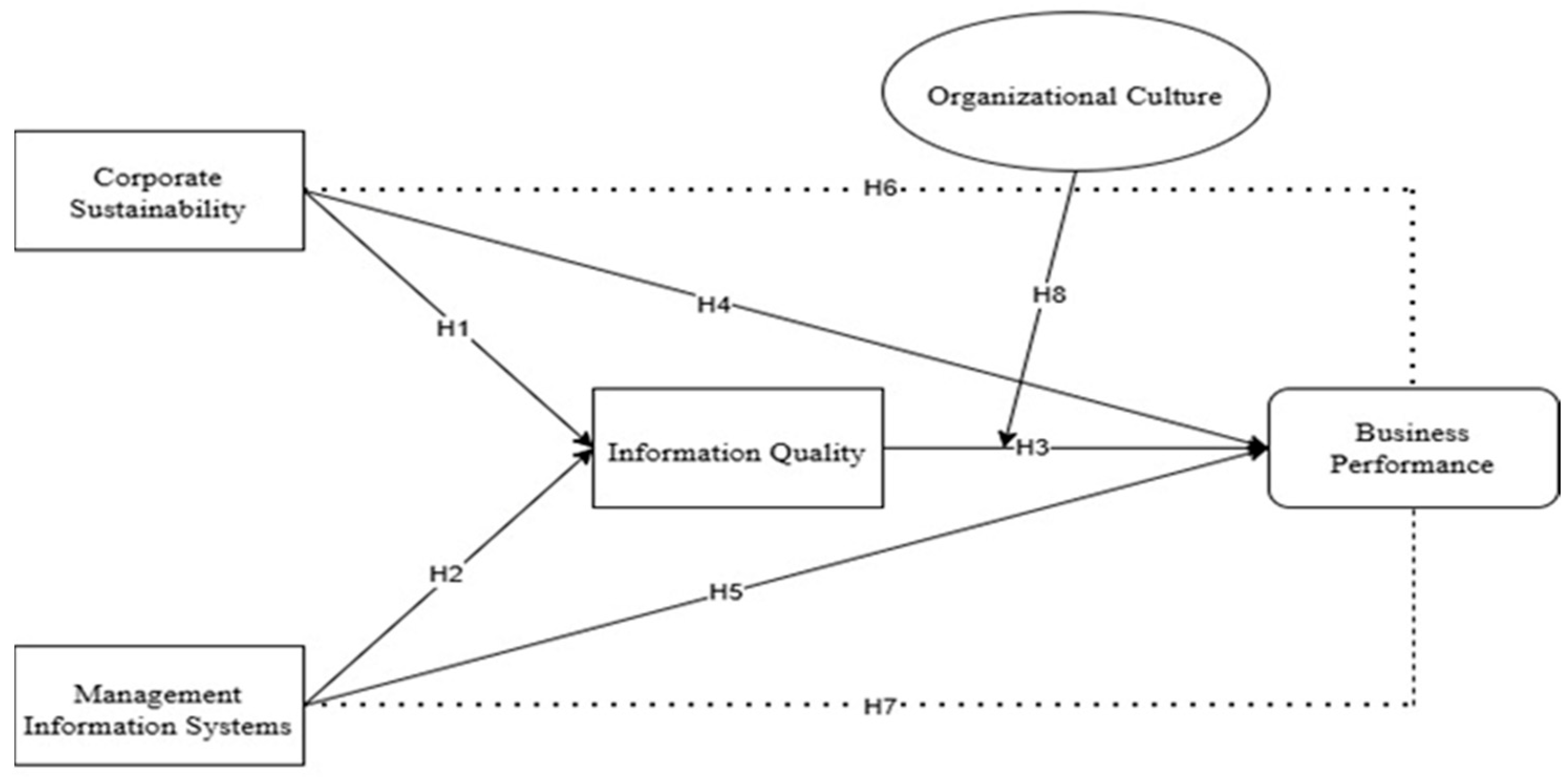
This framework shows that corporate sustainability and management information systems improve the performance of organizations not only directly but also indirectly through information quality, which is further influenced by organizational culture (Figure 1).

4. Research Methodology

4.1. Data Collection

This study focuses on the effect of corporate sustainability and management information systems on business performance and, at the same time, analyzes the mediating effect of information quality and the moderating effect of organizational culture. The context of this investigation is the Libyan banking industry, where in recent years there have been an increasing number of cases of digital transformation, application of information technology, and sustainability practices, making the selected industry relevant to analyze socio-technical performance aspects [65]. In general, the Libyan banking industry consists of about 20 banks employing between 25,000 and 35,000 people. The research population includes workers from public and private banks. Among the 12 commercial banks that participated in this study, convenience sampling was chosen because of the restrictions related to access. However, additional measures were undertaken in order to increase representativeness, as the sample included participants from various organizational positions, such as senior and middle-level managers, IT/MIS professionals, and administrative personnel. The survey method was chosen to collect information from participants. Data collection was performed using a structured self-administrated questionnaire sent to employees through email and Google Forms, as well as printed versions sent via regular mail. Access to respondents was achieved with the help of human resource managers and branch managers, and all necessary institutional permissions were received. Six hundred copies of the questionnaire were sent out, and 421 responses were collected (70.2% response rate). After removing incomplete and invalid questionnaires, a total of 387 responses were obtained (64.5% effective response rate). Nonresponse bias analysis was done by comparing early respondents to late respondents, but there were no significant differences.

4.2. Measurement Scales

The questionnaire consisted of two main parts: demographic details and measuring scales related to the constructs of interest. Variables were measured on a five-point Likert scale, where participants indicated their level of agreement with the items on a scale of 1 (“strongly disagree”) to 5 (“strongly agree”). Measuring items were drawn from existing scales employed in earlier literature studies to guarantee reliability and validity of results. Corporate Sustainability was measured in terms of environmental, social, and governance dimensions following the triple bottom line approach [66]. Sample statements included: “Our bank incorporates environmental factors into its activities”. MIS were operationalized by four dimensions: integration of information systems, accessibility of information, decision-making support, and process monitoring [67]. Statements included: “Information systems provide timely information for decision-making processes”. Information quality was measured in terms of accuracy, relevance, completeness, and timeliness of information [68]. A sample statement was: “The information generated by the information systems is reliable”. Organizational Culture included dimensions of values, collaboration, flexibility, and promotion of the use of information [69]. Sample statements included: “Our employees are encouraged to use information in making decisions”. Business Performance was measured by means of both financial and non-financial performance dimensions: efficiency, innovation, customer satisfaction, etc. [70]. The questionnaire was initially written in English and then translated into Arabic through the forward–backward technique. Cultural appropriateness and content validation were ensured through expert reviews.

4.3. Data Analysis

Data analysis involved the use of Partial Least Squares Structural Equation Modelling (PLS-SEM) through SmartPLS (4.0) software. The selection of PLS-SEM as the analytic technique was based on the model’s appropriateness in handling complicated models incorporating mediating and moderating relationships, its robustness when working with smaller to medium-sized samples, and minimum assumption requirements concerning data normality [71]. Moreover, the model is ideal for studies employing a predictive and exploratory approach in emergent settings. The analysis process entailed a two-stage approach consisting of (i) measurement model analysis and (ii) structural model analysis. Measurement model reliability was calculated using Cronbach’s alpha and composite reliability, whereas convergent validity was determined using Average Variance Extracted (AVE). Discriminant validity was tested through Fornell–Larcker criterion and HTMT values. Multicollinearity was tested by the Variance Inflation Factor (VIF). The structural model was tested by the bootstrapping method using 5000 iterations.

5. Demographic Profile of Respondents

The demographic profile of the 387 participants is shown in Table 1 below. The participants’ sample is mostly made up of men (77.0%), who comprise the typical gender demographic ratio expected among managers in Libya’s banking industry. The age demographic is well spread out with the largest proportion being made up of individuals aged between 35–44 years (27.6%), followed by individuals aged above 55 years (26.4%) and those aged 45–54 years (25.3%). This indicates that the sample is made up of mature professionals. The educational background of the sample is impressive with most respondents having attained a postgraduate education. In terms of organizational role, the participants hold prominent managerial positions like Branch Managers (38.2%), Relationship Managers (32.3%) and Operations Managers (29.5%). The work experience level is also well distributed among the participants.

6. Reliability and Convergent Validity Analysis

The measures of reliability and convergent validity of all constructs of the model are shown in Table 2. Cronbach’s alpha and composite reliability coefficient (rho_a and rho_c) of each construct are above the prescribed value of 0.70, suggesting appropriate reliability levels. In addition to this, the values of average variance extracted (AVE) of all constructs have surpassed the prescribed level of 0.50, thus ensuring convergence validity of constructs. From this, we can say that the indicators representing different constructs are consistent, and adequate variance has been explained by the constructs.

7. Heterotrait–Monotrait (HTMT) Ratio

The HTMT values used to assess discriminant validity between constructs are presented in Table 3. Discriminant validity is concerned with measuring whether the constructs under consideration differ empirically, with suggested cut-off values being no greater than 0.85 or 0.90, depending on whether stricter or more liberal criteria are considered, respectively. All HTMT values in Table 3 fall below the 0.90 cut-off point, suggesting that discriminant validity has been adequately demonstrated for all constructs in the model.

8. Discriminant Validity (Fornell–Larcker Criterion)

The outcomes from the application of the Fornell–Larcker criterion to assess discriminant validity of constructs in this study are presented in Table 4. The Fornell–Larcker criterion states that for discriminant validity to be achieved, the square root of the AVE value for each construct in the model (on the diagonal) should be larger than the correlation coefficient between the particular construct and all other constructs in the research. The fulfillment of this criterion would confirm that each construct correlates higher with its own indicator variables than any other construct. As can be seen from the values in Table 4, the values of square roots of AVE values for all constructs are larger than the inter-construct correlation coefficients, which proves the uniqueness of each construct and its proper representation of the dimensions under investigation. Therefore, discriminant validity of constructs according to the Fornell–Larcker criterion is confirmed in this study. Combined with HTMT results, this evidence suggests that constructs applied are well differentiated both conceptually and statistically.

9. Descriptive Statistics, Indicator Reliability (Outer Loadings), and Multicollinearity Assessment (VIF)

The integrated findings in regard to descriptive statistics, indicator reliability (outer loadings), and multicollinearity assessment (VIF) are presented in Table 5 for all measurement items. Descriptive statistics reveal mean values from 2.922 to 3.072, implying moderately positive perception about all constructs. The standard deviation is consistent throughout the items (1.399–1.431), showing reasonable variability but no overdispersion. In regard to indicator reliability, all the outer loadings are above 0.70, implying reliable indicators of their corresponding constructs. This shows that the indicators of BP, CS, IQ, MIS, and OC are reliable. In relation to multicollinearity assessment, all VIF values are less than 3.3. As such, there are no multicollinearity problems with any of the indicators. All indicators are independent of one another and therefore make unique contributions to their construct. Generally, the findings of Table 5 show that measurement items meet the thresholds of descriptive adequacy, reliability, and multicollinearity.

10. Coefficient of Determination (R2) Analysis

Table 6 illustrates the R2 and adjusted R2 for the two endogenous variables, which are BP and IQ. According to the findings, the model explains about 53.4% and 46.9% of the variations in BP and IQ, respectively. The obtained figures exceed the widely accepted figure of 0.25. It is clear that the R2 values indicate satisfactory predictability for the model and its capacity to capture the relationship between the key constructs of the study.

11. Hypothesis Testing

The findings of the structural model analysis are presented in Table 7, where the values of the path coefficients, T-statistics, and p-values for direct, mediating, and moderating relationships are provided. In general, all the hypothesized relationships achieve statistically significant results according to the obtained t-values (greater than 1.96) and p-values equal to 0.000, which shows a high degree of empirical support for the model. With regard to the direct effects, Corporate Sustainability (CS) positively influences Business Performance (BP) (β = 0.293; t = 4.388). Thus, sustainability activities have a positive effect on organizational performance. Moreover, Corporate Sustainability is found to have a strong influence on Information Quality (IQ) (β = 0.500; t = 11.567), which shows that sustainable practices contribute to better information quality in organizations. As far as Management Information Systems (MIS) are concerned, these are significantly related to Business Performance (β = 0.298; t = 4.569) and Information Quality (β = 0.587; t = 14.795). The latter relationship proves to be the strongest one, which demonstrates the significant contribution of Management Information Systems to improving information quality. Finally, IQ significantly affects BP (β = 0.343; t = 4.026) and thus plays an important role as one of the main drivers of business performance. The overall conclusion is drawn from these results that CS and MIS affect BP not only directly, but also indirectly through information quality. The moderating effect of Organizational Culture (OC) on the IQ-BP relationship is statistically significant (β = 0.304; t = 5.921), as it shows how the positive effect of information quality on business performance can be amplified in the presence of a favorable organizational culture. Finally, the mediating effects of IQ prove to be significant, and they include the indirect effect of MIS on BP through IQ (β = 0.201; t = 3.920) and the indirect effect of CS on BP through IQ (β = 0.172; t = 3.684).

12. Structural Model

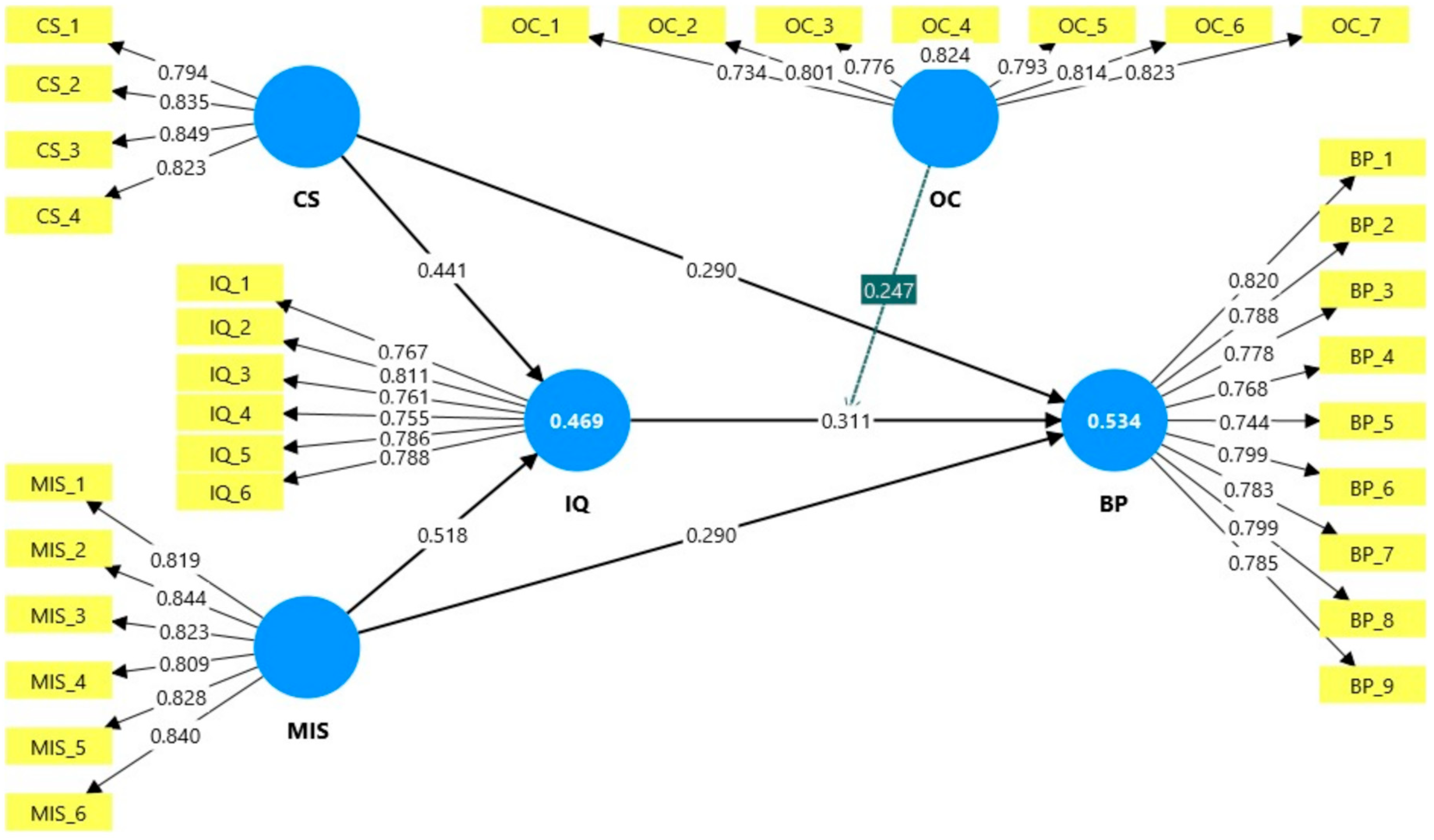
The model shows that corporate sustainability and management information systems improve business performance directly and indirectly through information quality, while organizational culture strengthens the impact of information quality on business performance (Figure 2).

13. Discussion

The present research provides empirical evidence to confirm the effectiveness of the suggested framework by showing that corporate sustainability, MIS, information quality, and organizational culture affect business performance of Libyan banks. It is shown that corporate sustainability affects business performance positively, thus indicating that banks applying sustainability-related approaches can expect improvement of organizational performance. This finding corroborates results obtained by other scholars, who noted that sustainability fosters trust, legitimacy, resilience, and value creation in firms [20,21,22]. Being a very important industry, banking requires its members to take sustainable actions and consider sustainability as a way of achieving better performance [17].
The findings show that there is a positive effect of corporate sustainability on information quality. They suggest that sustainability-oriented companies will have higher chances of adopting better information practices such as those that involve being transparent and reliable in providing useful information. Such results agree with previous studies showing that engaging in sustainability compels organizations to develop credible and more relevant information to their stakeholders [31,32,34]. With respect to the Libyan banking environment, the above findings hold importance due to the fact that sustainability practices could help in promoting good reporting standards and communication leading to sound decision making.
The management information systems have a highly significant and positive impact on organizational performance and information quality. It is important to mention that the most significant link in the model is the one between MIS and information quality. The conclusion confirms the assumption that the main advantage of MIS lies not only in its application but also in the creation of high-quality, relevant, and up-to-date information. The results of the study are consistent with previous works, which demonstrate that information systems contribute to better coordination, increased information access, faster processing, and improved quality of decisions [43,44,47,50,52,54]. In relation to Libyan banks, it can be concluded that MIS implementation needs to be supplemented by other factors, such as system integration, personnel training, and data management practices.
Quality of information had an important impact on firm performance. The findings support the perspective that information quality contributes positively to decision-making, responsiveness, efficiency, and creating business value [39,40,42]. In addition, quality of information served as a partial mediator for the associations between sustainability and MIS on the one hand and firm performance on the other, suggesting that besides having direct effects on firm performance, sustainability and MIS affect performance indirectly through improving quality of information. The findings are consistent with previous research findings highlighting information quality as a key mediating factor in linking firm capabilities and performance [12,37,56].
The influence of organizational culture on performance through the moderator relationship was significant. Specifically, the influence of information quality on performance was stronger in situations in which the organizational culture fosters cooperation, openness, responsiveness, and decision making based on evidence. The findings are consistent with existing literature which shows that organizational culture influences the way that information is interpreted and applied in practice [58,60,61]. They also support previous work showing that cooperative and learning organizational cultures increase the use of technology and innovation, as well as the value of business intelligence [62,63,64].

14. Theoretical Implications

In terms of theoretical contribution, this research provides some valuable insights into the fields of corporate sustainability, MIS, and organizational performance. The main contribution of this paper is that it adds to the existing knowledge about these disciplines by combining both concepts in one framework, thus overcoming the fragmented nature of previous studies [5,7]. It turns out that business performance does not depend on organizational capabilities per se but is rather the outcome of a sociotechnical process, whereby corporate sustainability and MIS together determine the result via information quality. This conclusion supports the idea that information quality is a key mediating concept in explaining performance.
Second, through its validation of information quality as a mediator, this study makes a theoretical contribution by shedding light on the “black box” connecting sustainability, management information systems (MIS), and performance. The research findings contribute beyond existing theories and confirm that information quality is not only a product of MIS but also a critical factor for leveraging organization’s capabilities to create value (see references [12,56]). In doing so, the research draws attention to the essentiality of information processing activities for translating the organization’s investments in technology and sustainability into performance gains. Third, the study contributes to contingency theory through the examination of organizational culture as a moderator. Based on the research findings, the effectiveness of information quality for enhancing performance is contingent upon the particular conditions of the organization and in particular the cultural orientation towards information utilization.

15. Practical Implications

As far as managerial implications go, the results have obvious applications for practitioners in the field of banking. In the first place, managers ought to treat corporate sustainability as well as MIS as synergistic strategies rather than as separate concepts. It is likely that the combination of these approaches would contribute to better transparency, decision-making, and relations with stakeholders on the part of banking institutions [10]. The second implication is related to the value of enhancing the quality of information. To do that, banks should focus on system integration, proper information governance, and training of employees to make sure that generated information is of high quality. Considering the role played by information quality as an enabler, this measure will lead to considerable progress [42].
Third, it is important to highlight the need for the development of a strong organizational culture that encourages the exchange of information, cooperation, and data-driven decision-making. It is found that the benefits gained from good-quality information increase tremendously in situations in which employees trust and utilize information for their operations [60,62]. In general, the study shows that achieving better performance in Libyan banks requires a more integrated strategy that enhances these four aspects simultaneously.

16. Limitations and Future Research Directives

Nevertheless, there are certain limitations associated with the present research project that require attention and discussion. Firstly, the research methodology used is a cross-sectional analysis, which hinders the establishment of causal relationships between corporate sustainability, management information systems, information quality, and business performance. In spite of the significant correlation detected, it was only possible to get preliminary insight into the issue, which can be significantly deepened with the help of longitudinal studies. Indeed, corporate sustainability measures and technological changes have long-term effects that can only be uncovered using longitudinal techniques. Secondly, the self-reporting technique applied within the current project is rather biased due to the presence of common method bias and individual perception. Even though the researcher tried his best to make sure of the reliability and validity of the results obtained, it cannot be claimed that all participants answered questions honestly or realistically. To obtain the most valid results in future research, it is necessary to apply various sources of data, both objective and subjective, to support findings. Examples of objective sources include financial information, statistical data regarding the use of certain systems, and annual sustainability reports. Thirdly, due to the application of the convenience sampling approach, generalizability of the obtained results is rather limited. Even though the chosen sample involves professional people, it does not present all sectors of the financial industry. In addition, the current research was performed in one particular country with distinctive features, which cannot be applied to another nation or context. Cross-country comparison is essential in order to increase external validity. Finally, the chosen theoretical framework analyzes several significant variables such as corporate sustainability, management information system, information quality, and organizational culture. Indeed, the selected factors play a key role in determining business success, as they cover most aspects of an enterprise’s performance. However, adding other important variables would provide additional understanding. For instance, leadership style, readiness for technological innovations, regulatory factors, and innovative potential should also be discussed.

17. Conclusions

The research investigates the effects of corporate sustainability and MIS on firm performance in Libyan banks by considering their mediation through information quality and moderation through organizational culture. To recap, the results obtained from the empirical analysis convincingly validate the suggested framework, explaining the dynamics between all categories of variables and how performance is created under such circumstances in a developing country environment and changing banking industry. The main finding reveals that both independent variables positively affect performance. Moreover, the findings show that performance can be achieved through the direct and indirect influence of these variables, where the latter can be seen in the improvement of information quality. Information quality was identified as a critical mediating factor which ensures that information collected in organizations allows improving decision making and optimizing operations. Hence, information should be reliable, timely, complete, and relevant. Moreover, the study demonstrated the crucial mediating effect of organizational culture on the relationship between information quality and business performance. Organizational culture turned out to be a powerful moderating variable, allowing companies to benefit even more from their information systems and sustainability activities. This means that the presence of information in itself and the implementation of sustainability practices do not bring the expected result unless organizational culture supports the effective use of information resources. As a result, the study provides empirical evidence supporting socio-technical explanations of the business performance phenomenon. Thus, business performance in emerging markets is based on the joint effect of several factors: sustainability, technology, information quality, and organizational culture. For Libyan banks, it is particularly important because all the above aspects are currently being developed.


Author Contributions

Conceptualization, H.A.E.B. and S.M.; methodology, H.A.E.B. and S.M.; formal analysis, H.A.E.B. and S.M.; investigation, H.A.E.B. and S.M.; writing—review and editing, S.M.; supervision, S.M.; resources, H.A.E.B. and S.M. All authors have read and agreed to the published version of the manuscript.

Funding

This research received no external funding.

Institutional Review Board Statement

The study was conducted in accordance with the Declaration of Helsinki, and approved by the Ethics Committee of Cyprus Health and Social Sciences University–KSTU (protocol code Kstu/2025/140 and date of approval 27 November 2025).

Informed Consent Statement

Verbal informed consent was obtained from the participants. Verbal consent was obtained rather than written because the information was collected confidentially, and participants were informed about the study’s purpose. Respondent identities were concealed to ensure anonymity and participation was entirely voluntary without any obligation. This information was clearly stated on the cover page of the questionnaire, ensuring that participants were fully aware of the study’s objectives and their rights before providing their responses.

Data Availability Statement

The corresponding author can provide the data used in this study upon request.

Conflicts of Interest

The authors declare no conflicts of interest.

References

  1. Lee, V.H.; Dwivedi, Y.K.; Tan, G.W.H.; Ooi, K.B.; Wong, L.W. How does information technology capabilities affect business sustainability? The roles of ambidextrous innovation and data-driven culture. R&D Manag. 2024, 54, 750–774. [Google Scholar] [CrossRef]
  2. Sheehy, B.; Farneti, F. Corporate social responsibility, sustainability, sustainable development and corporate sustainability: What is the difference, and does it matter? Sustainability 2021, 13, 5965. [Google Scholar] [CrossRef]
  3. Ashrafuzzaman Hera, A.A.R.; Faruque, M.O.; Sizan, M.M.H.; Nure Alam Khan, M.A.R.; Ali, M.J. Leveraging information systems for strategic management: Enhancing decision-making and organizational performance. Am. J. Ind. Bus. Manag. 2024, 14, 1045–1061. [Google Scholar] [CrossRef]
  4. Seppänen, S. Digital Transformation in SMEs: Drivers, Challenges, and the Impact of Emerging Technologies on Decision-Making and Management Control; LUT University Press: Lappeenranta, Finland, 2025. [Google Scholar]
  5. Djalic, N.; Nikolic, M.; Bakator, M.; Erceg, Z. Modeling the influence of information systems on sustainable business performance and competitiveness. Sustainability 2021, 13, 9619. [Google Scholar] [CrossRef]
  6. Seyadi, A.; AlZayani, F.; Salem, E.; Taleb, S.M. Management Information Systems Enhance Corporate Sustainability. In The International Conference on Global Economic Revolutions; Springer International Publishing: Cham, Switzerland, 2021; pp. 235–246. [Google Scholar] [CrossRef]
  7. Zeng, F.; Lee, S.H.N.; Lo, C.K.Y. The role of information systems in the sustainable development of enterprises: A systematic literature network analysis. Sustainability 2020, 12, 3337. [Google Scholar] [CrossRef]
  8. Rahman, H.U.; Zahid, M.; Muhammad, A. Connecting integrated management system with corporate sustainability and firm performance: From the Malaysian real estate and construction industry perspective. Environ. Dev. Sustain. 2022, 24, 2387–2411. [Google Scholar] [CrossRef]
  9. Ronalter, L.M.; Bernardo, M.; Romaní, J.M. Quality and environmental management systems as business tools to enhance ESG performance: A cross-regional empirical study. Environ. Dev. Sustain. 2023, 25, 9067–9109. [Google Scholar] [CrossRef]
  10. Oncioiu, I.; Petrescu, A.G.; Bîlcan, F.R.; Petrescu, M.; Popescu, D.M.; Anghel, E. Corporate sustainability reporting and financial performance. Sustainability 2020, 12, 4297. [Google Scholar] [CrossRef]
  11. Cheng, J.; Singh, H.S.M.; Zhang, Y.C.; Wang, S.Y. The impact of business intelligence, big data analytics capability, and green knowledge management on sustainability performance. J. Clean. Prod. 2023, 429, 139410. [Google Scholar] [CrossRef]
  12. Wang, X.; Zhu, W. Exploring the relationship between accounting information system (ais) quality and corporate sustainability performance using the is success model. Sustainability 2025, 17, 1595. [Google Scholar] [CrossRef]
  13. Lutfi, A.; Al-Khasawneh, A.L.; Almaiah, M.A.; Alsyouf, A.; Alrawad, M. Business sustainability of small and medium enterprises during the COVID-19 pandemic: The role of AIS implementation. Sustainability 2022, 14, 5362. [Google Scholar] [CrossRef]
  14. Fu, Q.; Abdul Rahman, A.A.; Jiang, H.; Abbas, J.; Comite, U. Sustainable supply chain and business performance: The impact of strategy, network design, information systems, and organizational structure. Sustainability 2022, 14, 1080. [Google Scholar] [CrossRef]
  15. Bacinello, E.; Tontini, G.; Alberton, A. Influence of corporate social responsibility on sustainable practices of small and medium-sized enterprises: Implications on business performance. Corp. Soc. Responsib. Environ. Manag. 2021, 28, 776–785. [Google Scholar] [CrossRef]
  16. Adedeji, B.S.; Ong, T.S.; Uzir, M.U.H.; Abdul Hamid, A.B. Corporate governance and performance of medium-sized firms in Nigeria: Does sustainability initiative matter? Corp. Gov. Int. J. Bus. Soc. 2020, 20, 401–427. [Google Scholar] [CrossRef]
  17. Forcadell, F.J.; Aracil, E.; Úbeda, F. The impact of corporate sustainability and digitalization on international banks’ performance. Glob. Policy 2020, 11, 18–27. [Google Scholar] [CrossRef]
  18. Lin, J.; Qamruzzaman, M. The impact of environmental disclosure and the quality of financial disclosure and IT adoption on firm performance: Does corporate governance ensure sustainability? Front. Environ. Sci. 2023, 11, 1002357. [Google Scholar] [CrossRef]
  19. Zhang, C.; Chen, P.; Hao, Y. The impact of digital transformation on corporate sustainability-new evidence from Chinese listed companies. Front. Environ. Sci. 2022, 10, 1047418. [Google Scholar] [CrossRef]
  20. Chen, S.; Song, Y.; Gao, P. Environmental, social, and governance (ESG) performance and financial outcomes: Analyzing the impact of ESG on financial performance. J. Environ. Manag. 2023, 345, 118829. [Google Scholar] [CrossRef]
  21. Coelho, R.; Jayantilal, S.; Ferreira, J.J. The impact of social responsibility on corporate financial performance: A systematic literature review. Corp. Soc. Responsib. Environ. Manag. 2023, 30, 1535–1560. [Google Scholar] [CrossRef]
  22. Pérez Estébanez, R.; Sevillano Martín, F.J. Business sustainability and its effect on performance measures: A comprehensive analysis. Sustainability 2025, 17, 297. [Google Scholar] [CrossRef]
  23. Rahi, A.F.; Johansson, J.; Blomkvist, M.; Hartwig, F. Corporate sustainability and financial performance: A hybrid literature review. Corp. Soc. Responsib. Environ. Manag. 2024, 31, 801–815. [Google Scholar] [CrossRef]
  24. Gold, N.O.; Taib, F.M. Impact of corporate sustainability reporting practice on corporate performance: A review of literature. Int. J. Ind. Manag. 2020, 8, 19–34. [Google Scholar] [CrossRef]
  25. Erbetta, F.; Bruno, C.; Pirovano, C. Corporate sustainability and performance: An efficiency perspective. Bus. Strategy Environ. 2023, 32, 2649–2661. [Google Scholar] [CrossRef]
  26. Ghardallou, W. Corporate sustainability and firm performance: The moderating role of CEO education and tenure. Sustainability 2022, 14, 3513. [Google Scholar] [CrossRef]
  27. Dhingra, K. Corporate social responsibility and sustainability of corporate performance. Jindal J. Bus. Res. 2023, 12, 19–29. [Google Scholar] [CrossRef]
  28. Pham, D.C.; Do, T.N.A.; Doan, T.N.; Nguyen, T.X.H.; Pham, T.K.Y. The impact of sustainability practices on financial performance: Empirical evidence from Sweden. Cogent Bus. Manag. 2021, 8, 1912526. [Google Scholar] [CrossRef]
  29. Ghardallou, W.; Alessa, N. Corporate Social Responsibility and Firm Performance in GCC Countries: A Panel Smooth Transition Regression Model. Sustainability 2022, 14, 7908. [Google Scholar] [CrossRef]
  30. Tjahjadi, B.; Soewarno, N.; Mustikaningtiyas, F. Good corporate governance and corporate sustainability performance in Indonesia: A triple bottom line approach. Heliyon 2021, 7, e06453. [Google Scholar] [CrossRef]
  31. Arvidsson, S.; Dumay, J. Corporate ESG reporting quantity, quality and performance: Where to now for environmental policy and practice? Bus. Strategy Environ. 2022, 31, 1091–1110. [Google Scholar] [CrossRef]
  32. Ferreira, D.; Pereira, C.; Queirós, M.; Monteiro, A.P. Impact of sustainability reporting on accounting information quality. Cogent Bus. Manag. 2025, 12, 2468875. [Google Scholar] [CrossRef]
  33. Jadoon, I.A.; Ali, A.; Ayub, U.; Tahir, M.; Mumtaz, R. The impact of sustainability reporting quality on the value relevance of corporate sustainability performance. Sustain. Dev. 2021, 29, 155–175. [Google Scholar] [CrossRef]
  34. Pizzi, S.; Caputo, F.; De Nuccio, E. Do sustainability reporting standards affect analysts’ forecast accuracy? Sustain. Account. Manag. Policy J. 2024, 15, 330–354. [Google Scholar] [CrossRef]
  35. Abbas, J. Impact of total quality management on corporate sustainability through the mediating effect of knowledge management. J. Clean. Prod. 2020, 244, 118806. [Google Scholar] [CrossRef]
  36. Troshani, I.; Rowbottom, N. Corporate sustainability reporting and information infrastructure. Account. Audit. Account. J. 2024, 37, 1209–1237. [Google Scholar] [CrossRef]
  37. Neiroukh, N.; Çağlar, D. Information systems quality and corporate sustainability: Unpacking the interplay of financial reporting, artificial intelligence, and green corporate governance. Systems 2025, 13, 537. [Google Scholar] [CrossRef]
  38. Kalash, I. Corporate sustainability performance in the emerging market of Turkey: The role of accounting information quality and firm risk. J. Econ. Adm. Sci. 2023, 39, 78–99. [Google Scholar] [CrossRef]
  39. Zohry, A.F.; Al-Dhubaibi, A.A.S. Optimizing business performance through effective accounting information systems: The role of system competence and information quality. J. Risk Financ. Manag. 2024, 17, 515. [Google Scholar] [CrossRef]
  40. Al-Dmour, A.; Zaidan, H.; Al Natour, A.R. The impact knowledge management processes on business performance via the role of accounting information quality as a mediating factor. VINE J. Inf. Knowl. Manag. Syst. 2023, 53, 523–543. [Google Scholar] [CrossRef]
  41. Mashaykhi, R.; Pifeh, A.; Ahmadzade, H. The impact of knowledge management on business performance with emphasis on the role of accounting information quality (Case study: Financial institutions listed on the Tehran Capital Market). Strateg. Manag. Organ. Knowl. 2025, 8, 53–77. [Google Scholar] [CrossRef]
  42. Khan, A.; Talukder, M.S.; Islam, Q.T.; Islam, A.N. The impact of business analytics capabilities on innovation, information quality, agility and firm performance: The moderating role of industry dynamism. VINE J. Inf. Knowl. Manag. Syst. 2024, 54, 1124–1152. [Google Scholar] [CrossRef]
  43. Mahmood, N.H.; Ahmed, N.; Fadhil, S.N. The significance of management information system in improving organizational performance and effectiveness. J. Garmian Univ. 2021, 7, 195–211. [Google Scholar] [CrossRef]
  44. Okeke, C.O. Effect of management information system on organizational performance in manufacturing firms. Res. J. Manag. Pract. 2021, 1, 123–127. [Google Scholar]
  45. Ariati, N.; Pratama, F.; Saputra, I.; Putri, M.K.; Fajri, S.I. Strategy to improve operational performance efficiency through the implementation of management information system. JEECS J. Electr. Eng. Comput. Sci. 2025, 10, 1–8. [Google Scholar] [CrossRef]
  46. Chege, S.M.; Wang, D.; Suntu, S.L. Impact of information technology innovation on firm performance in Kenya. Inf. Technol. Dev. 2020, 26, 316–345. [Google Scholar] [CrossRef]
  47. Kanandjembo, R. The Impact of Management Information Systems on Educational Organisation Performance: Case Study at Namibian College of Open Learning. Int. J. Res. Sci. Innov. 2021, 8, 158–162. [Google Scholar] [CrossRef]
  48. Sarianja, S.S.; Veri, J. The Impact of Management Information Systems and Technological Innovation on Organizational Productivity: A Literature Review. UPI YPTK J. Bus. Econ. 2025, 10, 1–7. [Google Scholar] [CrossRef]
  49. Adesina, A.T.; Ologbosere, A.O. Leveraging Management Information Systems For Enhanced Organisational Performance: Evidence from Selected Tertiary Institutions in Sokoto State. 2026. Available online: https://www.seahipublications.org/wp-content/uploads/2026/01/IJIISTR-M-33-2026.pdf (accessed on 12 May 2026).
  50. Haitham, M.A.; Alshurideh, M.T.; Akour, I.; Al Shraah, A.; Ahmed, G. Impact of information systems capabilities and total quality management on the cost of quality. J. Leg. Ethical Regul. Isses 2021, 24, 1. [Google Scholar]
  51. Al-Ani, M.M.M. The role of strategic information systems in the quality of banking services: An applied study on some Iraqi banks. J. Adv. Res. Econ. Adm. Sci. 2024, 5, 1–11. [Google Scholar] [CrossRef]
  52. Knauer, T.; Nikiforow, N.; Wagener, S. Determinants of information system quality and data quality in management accounting. J. Manag. Control 2020, 31, 97–121. [Google Scholar] [CrossRef]
  53. Alibraheem, M.; Siam, I.; Al-Daoud, K.; Alkhazaali, A.; Freihat, B.; Ahmad, A.; Bataineh, K.A.; Al Zoubi, M. The moderating role of internal control system on the relationship between service quality of accounting information system and customer satisfaction: A study of some selected customers from commercial banks in Jordan. Uncertain Supply Chain Manag. 2024, 12, 567–572. [Google Scholar] [CrossRef]
  54. Papiorek, K.L.; Hiebl, M.R. Information systems quality in management accounting and management control effectiveness. J. Account. Organ. Change 2024, 20, 433–458. [Google Scholar] [CrossRef]
  55. Oudat, M.S. Accounting Information System and Financial Sustainability of Commercial and Islamic Banks: A Review of the Literature; Umm Al Quwain University: Kabir, United Arab Emirates, 2021. [Google Scholar] [CrossRef]
  56. Sunarta, I.N.; Astuti, P.D. Accounting information system quality and organizational performance: The mediating role of accounting information quality. Int. J. Prof. Bus. Rev. 2023, 8, e01192. [Google Scholar] [CrossRef]
  57. Saad, M. The influence of accounting information system adoption on business performance amid COVID-19. Comput. Hum. Behav. Rep. 2023, 10, 100286. [Google Scholar] [CrossRef]
  58. Ali, B.J. Information Quality and The Organizational Effectiveness: The Moderating Effects Of Organizational Culture Among Conventional And Islamic Banks. Aust. J. Bus. Manag. Res. 2019, 5, 1–10. [Google Scholar] [CrossRef]
  59. Sunarta, I.N.; Astuti, P.D.; Suidarma, I.M. Accounting Information and Business Performance: The Strategic Role of Human Capital and User Satisfaction. Corp. Bus. Strategy Rev. 2025, 6, 392–401. [Google Scholar] [CrossRef]
  60. Ștefan, S.C.; Popa, I.; Kruger, R.E. Organizational Culture’S Role in Performance Enhancement: An Investigation Focused On The Banking Industry. In Proceedings of the International Management Conference; Faculty of Management, Academy of Economic Studies: Bucharest, Romania, 2025; Volume 19, pp. 389–404. [Google Scholar] [CrossRef]
  61. Ali, B.J.; Omar, W.A.W.; Bakar, R. Accounting Information System (AIS) and organizational performance: Moderating effect of organizational culture. Int. J. Econ. Commer. Manag. 2016, 4, 138–158. [Google Scholar]
  62. Murti, G.T.; Winarningsih, S.; Sukmadilaga, C. Empirical study of business intelligence systems and their influence on innovation performance. Econ. Ann. 2023, 201, 15–21. [Google Scholar] [CrossRef]
  63. Puspitawati, L. Organization Factors on the Quality of Financial Applications in Insurance Companies. J. ASET (Akunt. Ris.) 2021, 13, 197–210. [Google Scholar] [CrossRef]
  64. Mado, Y.J.; Irwansyah, R.; Kasnowo, K.; Irdhayanti, E.; Khairunnisa, K. The influence of organizational culture on service quality with compensation as a moderate variable. Innov. J. Soc. Sci. Res. 2024, 4, 1638–1648. [Google Scholar] [CrossRef]
  65. Elhajji, A.A.; Mihai-Yiannaki, S. Strategic and regulatory challenges of mergers and acquisitions in the Libyan banking sector: A theoretical and practical approach. Int. J. Organ. Anal. 2025. [Google Scholar] [CrossRef]
  66. Choi, Y.; Yu, Y. The influence of perceived corporate sustainability practices on employees and organizational performance. Sustainability 2014, 6, 348–364. [Google Scholar] [CrossRef]
  67. Pérez-López, S.; Alegre, J. Information technology competency, knowledge processes and firm performance. Ind. Manag. Data Syst. 2012, 112, 644–662. [Google Scholar] [CrossRef]
  68. Urbach, N.; Smolnik, S.; Riempp, G. An empirical investigation of employee portal success. J. Strateg. Inf. Syst. 2010, 19, 184–206. [Google Scholar] [CrossRef]
  69. Hartnell, C.A.; Ou, A.Y.; Kinicki, A. Organizational culture and organizational effectiveness: A meta-analytic investigation of the competing values framework’s theoretical suppositions. J. Appl. Psychol. 2011, 96, 677. [Google Scholar] [CrossRef] [PubMed]
  70. Richard, P.J.; Devinney, T.M.; Yip, G.S.; Johnson, G. Measuring organizational performance: Towards methodological best practice. J. Manag. 2009, 35, 718–804. [Google Scholar] [CrossRef]
  71. Pérez-Méndez, J.A.; Machado-Cabezas, Á. Relationship between management information systems and corporate performance. Rev. dContab. 2015, 18, 32–43. [Google Scholar] [CrossRef]
Figure 1. Conceptual framework.
Sustainability 18 05023 g001
Figure 2. PLS-SEM study model.
Sustainability 18 05023 g002
Table 1. Demographic profile.
VariableCategoryn%
GenderMale29877.0
Female8923.0
Age (years)25–348020.7
35–4410727.6
45–549825.3
55 and above10226.4
Education LevelBachelor’s Degree9624.8
Master’s Degree10326.6
Doctorate (PhD)9223.8
Other (Diploma/Professional)9624.8
PositionBranch Manager14838.2
Operations Manager11429.5
Relationship Manager12532.3
Years of ExperienceLess than 1 year8120.9
1–5 years7920.4
6–10 years7920.4
10–20 years7619.6
More than 20 years7218.6
Table 2. Reliability.
Cronbach’s AlphaComposite Reliability (rho_a)Composite Reliability (rho_c)Average Variance Extracted (AVE)
BP0.9220.9220.9350.616
CS0.8440.8480.8950.681
IQ0.8700.8700.9020.606
MIS0.9080.9100.9290.685
OC0.9220.9220.9350.616
Table 3. Heterotrait–Monotrait (HTMT) ratio for discriminant validity.
Heterotrait–Monotrait Ratio (HTMT)
CS <-> BP0.503
IQ <-> BP0.658
IQ <-> CS0.521
MIS <-> BP0.474
MIS <-> CS0.055
MIS <-> IQ0.587
OC <-> BP0.249
OC <-> CS0.093
OC <-> IQ0.075
OC <-> MIS0.063
Table 4. Fornell–Larcker criterion for discriminant validity.
BPCSIQMISOC
BP0.785
CS0.4460.825
IQ0.5910.4480.778
MIS0.4350.0130.5240.827
OC0.2300.0760.028−0.0100.796
Table 5. Integrated Measurement Results.
MeanStandard Deviation Outer LoadingsVIF
BP_12.9431.4110.8202.410
BP_23.0391.4240.7882.133
BP_32.9691.4160.7782.106
BP_42.9461.4250.7682.001
BP_52.9771.4020.7441.855
BP_62.9221.4180.7992.223
BP_73.0341.4150.7832.106
BP_82.9691.4180.7992.243
BP_92.9721.4090.7852.194
CS_12.9591.4230.7941.750
CS_23.0211.4290.8351.926
CS_33.0261.4250.8492.078
CS_43.0471.4150.8231.763
IQ_13.0441.4250.7671.812
IQ_22.9661.4200.8112.063
IQ_32.9721.4110.7611.718
IQ_43.0721.4010.7551.681
IQ_53.0311.4120.7861.883
IQ_62.9461.3990.7881.878
MIS_12.9381.4150.8192.191
MIS_23.0571.4220.8442.382
MIS_32.9461.4090.8232.260
MIS_43.0591.4140.8092.134
MIS_52.9511.4180.8282.223
MIS_63.0361.4050.8402.363
OC_13.0391.4310.7341.805
OC_23.0341.4200.8012.151
OC_32.9611.4050.7761.865
OC_42.9481.4220.8242.186
OC_52.9431.4090.7932.018
OC_62.9661.4170.8142.275
OC_72.9531.4150.8232.334
Table 6. R-square.
Table 6. R-square.
R-SquareR-Square Adjusted
BP0.5340.528
IQ0.4690.466
Table 7. Hypothesis testing.
Original Sample (O)Sample Mean (M)Standard Deviation (STDEV)T Statistics (|O/STDEV|)p Values
CS -> BP0.2930.2940.0674.3880.000
CS -> IQ0.5000.5010.04311.5670.000
IQ -> BP0.3430.3440.0854.0260.000
MIS -> BP0.2980.2980.0654.5690.000
MIS -> IQ0.5870.5870.04014.7950.000
OC × IQ -> BP0.3040.3020.0515.9210.000
MIS -> IQ -> BP0.2010.2020.0513.9200.000
CS -> IQ -> BP0.1720.1720.0473.6840.000
Disclaimer/Publisher’s Note: The statements, opinions and data contained in all publications are solely those of the individual author(s) and contributor(s) and not of MDPI and/or the editor(s). MDPI and/or the editor(s) disclaim responsibility for any injury to people or property resulting from any ideas, methods, instructions or products referred to in the content.