Article

Fostering Resilience Among Nurses: The Impact of Organisational Resources on Work Engagement

by
Eglė Staniškienė
*,
Živilė Stankevičiūtė
,
Asta Daunorienė
and
Joana Ramanauskaitė
School of Economics and Business, Kaunas University of Technology, Gedimino g. 50, LT-44239 Kaunas, Lithuania
*
Author to whom correspondence should be addressed.
Sustainability 2026, 18(10), 4855; https://doi.org/10.3390/su18104855 (registering DOI)
Submission received: 27 March 2026 / Revised: 2 May 2026 / Accepted: 12 May 2026 / Published: 13 May 2026

Abstract

Based on the Job Demands–Resources theory, this research investigates how organisational resources shape employee resilience and, in turn, influence work engagement among nurses in the Lithuanian healthcare sector. The paper explores three organisational resources: co-worker support, staffing and recruitment adequacy, and dignified treatment for healthcare employees. Data were collected through a survey (n = 443) from nurses employed in public and private healthcare institutions and analysed using Partial Least Squares Structural Equation Modelling. The results indicate that co-worker support (β = 0.328, p < 0.001) and dignified treatment (β = 0.270, p < 0.001) are significant positive aspects of developing employee resilience, while staffing and recruitment adequacy did not have an impact on employee resilience. Employee resilience demonstrated a strong positive effect on work engagement (β = 0.488, p < 0.001). These findings help to understand the relations and structural antecedents of nurse resilience, demonstrating that social and interpersonal resources have a strong influence on employee engagement. The study has practical implications for healthcare human resource management in contexts of systemic workforce shortage and high occupational demand.

1. Introduction

Healthcare systems worldwide are subject to geopolitical, environmental, social, and economic challenges. The shortage of staff, the growing complexity of patient needs, and the ongoing pressure on frontline workers, specifically nurses, who are the largest group among healthcare professionals and play a key role in primary patient care, are the main and most visible problems of concern. The World Health Organization predicts that the number of healthcare workers will increase significantly by 2030, principally in developed countries [1,2]. However, even with a growing number of nurses, there are still serious concerns about how to support and retain this essential workforce.
Nursing is widely recognised as one of the most demanding professions, described by difficult workloads, emotionally charged clinical encounters, constant time pressures, and the necessity to make patient care decisions amid uncertainty [3,4]. These conditions place nurses at a high risk of work-related stress, burnout, loss of motivation, and decreased job satisfaction, outcomes that have serious consequences for patient safety and personal well-being [5,6]. As a result, understanding the factors that support nurses in maintaining effective functioning has become a central focus of research on the healthcare workforce and its management. The literature suggests that employee resilience is one of such key factors in maintaining employees’ psychological functioning under stressful conditions, meaning the ability to remain mentally and emotionally stable and to function effectively when experiencing difficulties at work [7,8].
In this context, employee resilience has become an important ability for maintaining performance, recovering from setbacks, and staying engaged despite ongoing work-related stress. Resilience is defined as the capacity to adapt to change, recover from challenges, and continue doing the job effectively [9,10,11,12]. Näswall et al. [13] describe employee resilience as a developable set of skills in the workplace that includes skills like adaptability, using available resources, and the ability to recover from challenges. These skills are dependent on the organisational environment and tend to grow in supportive settings. Stronger resilience is linked to better outcomes, such as improved patient safety and quality of care, higher patient satisfaction, and lower staff turnover [14]. Research shows that nurses with higher resilience cope better with stress and report better well-being [10,15]. This helps nurses to manage emotionally demanding situations and clinical uncertainty while maintaining good performance at work.
In addition to resilience, recent research highlights work engagement as an important positive outcome at work. Work engagement refers to a positive and fulfilling state of mind related to work, characterised by energy, involvement, and dedication [4,16,17]. Nurses with high engagement tend to feel more enthusiastic and committed to their daily work [18]. However, it can be difficult to maintain this level of engagement when job demands stay high, and resources are limited over time [19].
Furthermore, the sustainable management concept offers theoretical support for the need for long-term, meaningful engagement of managers in creating resilient practices that would ensure the well-being of the workforce [20]. Organisational focus on these practices would create an environment of motivated, healthy, capable, supportive employees [21]. Holistic human resource practices have been shown to contribute to overall sustainability, which is currently one of the desired organisational outcomes [22]. This perspective is highly relevant in the healthcare industry, where employees experience high workloads, psychological pressure, and the workforce is often in short supply [23]. To maintain employee well-being and the sustainability of healthcare systems, investments in key resources are essential.
Resources and demands at work are well defined by the Job Demands-Resources (JD-R) theory, which provides a widely used framework for understanding the relationship between organisational functioning and employee well-being [11,24]. According to the theory, organisational resources are aspects of the work environment that help employees cope with a challenging work environment [24]. In healthcare settings, such resources may include coworker support, dignified treatment of workers, and adequate staffing and recruitment. Co-worker support is generally defined as employees’ willingness to help one another, expressed through empathy, friendliness, care, appreciation, respect, and collaboration in carrying out work-related tasks [25]. Regarding dignified treatment for care workers, the concept entails treating people (e.g., employees, patients, and their families) as human beings, perceived as integral, not as subordinates, sick people, or objects [26]. Nurses’ professional dignity is shaped by their self-perceptions and others’ responses within the healthcare environment [27,28]. Finally, staffing and recruitment adequacy refers to the characteristics of the professional nursing practice environment that most contribute to achieving better outcomes [29].
Although research on nurse work experiences is growing, some gaps still remain. First, resilience in healthcare is often analysed at the individual level, while less attention is given to the organisational environment that supports it [9,12,30]. Second, resources like co-worker support, staffing adequacy, and respectful workplace treatment are often studied separately, even though they are closely connected [14]. Third, there is still limited research looking at how organisational resources influence work engagement through resilience in the nursing working environment [31,32,33].
To address these gaps, the study investigates how three organisational resources: co-worker support, staffing and recruitment adequacy, and dignified treatment of healthcare workers relate to employee resilience and, through resilience, to work engagement among nurses in Lithuania. These three resources reflect different aspects of the work environment, including relationships, organisational structural conditions, and workspace culture. By integrating these factors into one model, the study aims to better understand how the work environment supports positive employee functioning.
The paper contributes to the scientific literature in several ways. First, it complements existing research on employee resilience, supporting the literature stream that employee resilience requires an enabling organisational context [13,34]. As availability and utilisation of organisational resources shape the level of resilience on an individual level, the paper contributes by claiming that three types of resources, namely co-worker support, dignified treatment for workers, and staffing and recruitment adequacy, might support nurses in becoming more resilient. Second, the paper does not focus solely on the antecedents of resilience; however, it argues for positive outcomes of demonstrating resilience. More specifically, the paper aligns with the notion that employee resilience is an imperative strategic resource for organisations in fostering work engagement [35]. Third, from a sustainable management perspective, the paper calls for a human-centred approach and sustainability in management, as human resource practices must rest on an ethical foundation that recognises the intrinsic worth of individuals and fosters care and responsibility in everyday decision-making [36]. Especially, this is true for healthcare institutions. Fourth, the paper sheds light on the resilience of employees working in healthcare institutions and responds to the call that contextual particularities might be relevant when addressing employee resilience [31]. Further, Lithuania provides theoretical value for examining employee resilience in healthcare institutions because it represents a unique socio-economic and institutional context. Since the 1990s, Lithuania has undergone a huge number of healthcare reforms, workforce restructuring, integration into European Union (EU) standards, “brain drain” and staff shortages, and finally evolving professional identities [37,38,39,40,41].
The paper is organised as follows. The theoretical part describes the constructs and justifies the hypotheses. Then, the methodology is presented, followed by the results. After presenting the results, the discussion section is provided, which includes theoretical and practical implications as well as policy recommendations. The final section offers conclusions, including limitations and suggestions for future research.

2. Theoretical Background and Hypothesis Development

This study focuses on three key elements: organisational resources, employee resilience, and work engagement, and examines the relationships among them. Collegial support is considered one of the most important across the variety of resources organisations can provide [42]. Good and supportive relationships between colleagues help keep emotions steady, provide a base for knowledge sharing, and strengthen teamwork, which can help manage stress at work [43]. Besides collegial support, organisational factors like sufficient staffing and fair hiring practices also shape the work experience of nurses. Proper staffing allows healthcare professionals to work more effectively and maintain their well-being, while poor staffing or unsustainable human resource employment practices can lead to job dissatisfaction, higher workloads, and burnout [44,45].
Another key organisational factor is the respect and dignity shown to nurses at work. Feeling valued and respected helps nurses feel a sense of belonging and safety within the organisation, and be capable of working under pressure [11,46]. On the other hand, experiences of disrespect or humiliation can harm well-being and reduce their ability to cope with challenging situations.
Research on resilience and work engagement highlights that organisational resources such as co-worker support, adequate staffing, fair recruitment, and dignified treatment at work are important for resilience and work engagement in nursing. These resources connect closely to daily work demands and fit well with the Job Demands–Resources model [47]. They cover different but complementary levels of the work environment—structural, interpersonal, and moral—that together shape the healthcare organisational context for efficient nursing [16,48,49]. The following sections describe each research concept in more detail and outline research hypotheses.

2.1. Co-Worker Support as a Pathway to Employee Resilience

One of the valuable organisational resources that enhances employee well-being is co-worker support. In nursing, assistance from colleagues is important for collaboration within and across healthcare institutions, including teamwork in taking care of patients, sharing responsibility, and coordinating operations daily.
Existing nursing literature primarily focuses on the organisational support provided by nurse managers or head nurses, whereas co-worker support has received limited attention [50]. This represents an important gap, as nurses need to carry out their everyday tasks through dynamic interactions with their colleagues [50]. Moreover, the degree of social support from co-workers that an individual has in a situation may affect the entire stress process [51], which is highly relevant in healthcare settings characterised by numerous stressful work circumstances, such as complex clinical cases, patient-related conflicts, and organisational or external pressures [52].
Co-worker support provides emotional and practical resources, enabling nurses to manage work-related stress more effectively and, consequently, address uncertainty. Research shows that nurses who feel more supported by their colleagues demonstrate higher resilience and better ability to manage complex clinical situations [43]. A supportive team environment encourages nurses to share information and work together to solve problems, which boosts their confidence and ability to handle multifaceted patient care tasks [53]. By buffering the impact of work-related stress, such support contributes to improved well-being and work performance [54].
Co-worker support also serves as a protective factor against professional isolation and emotional fatigue. Research among frontline healthcare employees during the COVID-19 pandemic found that strong co-worker support systems were associated with greater resilience and sustained psychological well-being under conditions of intense occupational stress [55]. Employee resilience, defined as a dynamic and developable ability that includes adaptability, self-efficacy, and the capability to recover from challenges [13] is especially responsive to enhancement through social resources, such as peer support. Considering this evidence, the following hypothesis is proposed:
H1. 
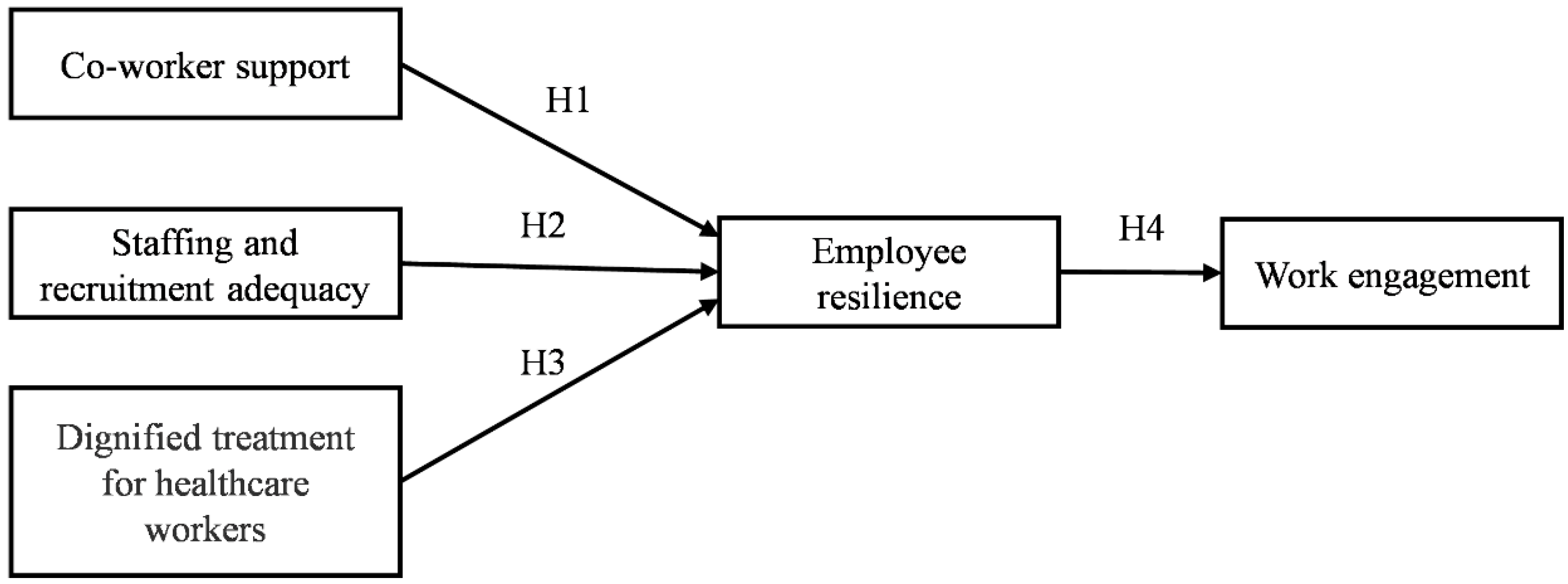
Co-worker support is positively related to employee resilience.

2.2. Staffing and Recruitment Adequacy Connection to Employee Resilience

An appropriate number of staff is crucial for healthcare organisations. Insufficient staff and the nurse-to-patient ratio increase workload, leading to stress, fatigue, and burnout, which can weaken nurses’ resilience. An optimal staff number reduces workload and creates an environment in which nurses can effectively perform their professional duties while maintaining excellent overall well-being [13].
In the literature, staffing and resource adequacy are mainly treated as one of the characteristics of the professional nursing practice environment [29], which might contribute to achieving better results for both stakeholders—patients and nurses. For instance, Gasparino et al.’s [29] study of nurses in Brazilian hospitals demonstrated that staffing and resource adequacy were among the key characteristics of the professional nursing practice environment that contribute to achieving better outcomes in terms of quality of care, job satisfaction, and intentions to leave. Meanwhile, Park and Jang [11] found that staffing and resource adequacy affected new nurses’ resilience.
Research shows that staff shortages are linked to higher burnout, lower job dissatisfaction, and stronger intentions to leave the job [44]. Burnout, as a state of long-term exhaustion, reduces the psychological resources that are necessary for resilience, the ability to adapt and recover from challenges and difficult situations [33]. Adequate staffing, therefore, sustains resilience by preventing this cycle of depletion. This is supported by Garrett [56] research, which found that lower staffing levels were associated with increased adverse events and heightened nurse fatigue. COVID-19 research data shows that even with nominal staffing ratios maintained, the workload of nurses has increased significantly, leading to a decrease in their workload-to-skill ratio and their capacity to maintain quality care standards [57]. This highlights how important stable staffing is to ensure daily work demands and supporting employee resilience.
When staffing levels are adequate, nurses have more time and energy to provide quality care, stay emotionally balanced, and recover from stressful situations [58]. Research studies show [59] that adequate staffing is associated with lower burnout and higher job satisfaction. Overall, working conditions play a key role in how well staff can perform [60].
In addition to staffing levels, good workforce planning and recruitment strategies are also important to build nurse resilience. A stable team can reduce uncertainty and role confusion, creating a more supportive environment that helps to build resilience [13]. Overall, evidence shows that better staffing is linked to lower burnout, fatigue, and job dissatisfaction, which are closely related to nurse resilience. Based on this, the following hypothesis is proposed:
H2. 
Staffing and recruitment adequacy are positively related to employee resilience.

2.3. Direct Impact of Dignified Treatment for Healthcare Employees on Employee Resilience

Dignified treatment at work is another important factor that can support healthcare employees’ resilience. Individuals build personal resources, including self-esteem, professional identity, and a sense of belonging, that help them cope with stress [61]. When employees are treated with dignity, these resources are strengthened, making it easier for them to stay resilient when facing healthcare challenges.
The paper endorses the fundamental statement that “all nurses, like everyone else, are worthy of dignity and respect” [28] (p. 106). The worthiness of nurses is rooted in both their human nature and their professional standing [62]. Still, nurses’ dignity is not always respected, and their communities experience indignity, disrespect, and incivility [28]. To preserve dignity, various strategies and actions may be employed; for instance, nurses should be supported in fulfilling their expected professional roles, and resilience-promoting programmes are seen as a way to prevent and manage burnout and fatigue [28]. Still, it should be admitted that the literature (including empirical studies) linking dignified treatment and nurse resilience remains scarce. This is despite the notion that dignified treatment at work is another important factor that can support healthcare employee resilience.
Dignity at work is closely related to fairness and respect. Research shows that respectful behaviour from both colleagues and managers builds trust, psychological safety, and a positive work environment [63]. These factors help employees stay emotionally stable and better cope with difficult patient care situations. A fair and respectful workplace is linked to higher resilience and job satisfaction. Studies show that nurses who feel respected and supported at work are more resilient and cope more effectively with stress [64].
Rave et al. [26] describe dignified treatment as an organisational concept that can be measured, meaning the extent to which healthcare employees are treated with respect, fairness, and recognition of their professional value. This idea goes beyond individual interactions and reflects the overall culture and values of the organisation.
When employees feel recognised and valued, they are more likely to see their work as meaningful, which can strengthen their abilities and help them to stay resilient in challenging work conditions. Accordingly, the following hypothesis is proposed:
H3. 
Dignified treatment for healthcare workers has a positive direct impact on employee resilience.

2.4. The Impact of Employee Resilience on Work Engagement

To maintain a sustainable workforce in a demanding work environment, a positive orientation towards work is necessary. Employee resilience plays a key role in these situations. Since employee resilience is a developable capacity, formed both by personal and organisational measures, timely and proportionate initiatives can shape it over time, which is particularly relevant for the healthcare sector.
In healthcare, resilient nurses are more likely to demonstrate professional commitment and actively engage in their work. Empirical evidence suggests that resilience helps to maintain emotional energy and professional enthusiasm even when job demands are high [15]. Furthermore, nurses with higher resilience demonstrate greater optimism, perseverance, and dedication to patient care [32], which contribute to work engagement through cognitive processes, enabling employees to treat workplace challenges positively as opportunities for professional growth.
Work engagement is understood as a positive and fulfilling psychological state characterised by energy, dedication, and absorption in work [65]. It is a key indicator of employees’ motivational investment in their professional roles. A growing body of research demonstrates a positive relationship between resilience and work engagement among nurses, with resilient healthcare employees consistently demonstrating higher levels of energy and dedication [15,33]. These findings align with the JD-R theory, which posits that personal psychological resources enhance motivational processes and foster engagement at work.
In addition to its direct effect on work engagement, employee resilience may also function as an important mediating mechanism linking organisational resources to employee outcomes. According to the JD-R framework, workplace resources such as co-worker support, staffing adequacy, and dignified treatment contribute to the development of personal resources, including resilience. These personal resources, in turn, enhance employees’ motivation and engagement at work. Given that work engagement is crucial for achieving effective and efficient healthcare delivery [66], there is a strong need to better understand how it can be strengthened, with the JD-R framework providing a valuable lens for examining the relationship between resilience and engagement. At the same time, nursing staff shortage is a significant problem that can affect healthcare quality, leading to poor patient care outcomes and reduced work performance. Thus, employee resilience can be understood not only as an outcome of favourable work conditions but also as a key explanatory pathway through which organisational factors influence work engagement. Based on this reasoning, the following hypothesis is proposed:
H4. 
Employee resilience has a positive direct impact on work engagement.
The research framework is provided in Figure 1.

3. Methods

3.1. Study Context and Sample

This study was conducted in Lithuania and targeted nurses employed in healthcare institutions. Data were collected in early 2025 using a cross-sectional survey design administered to nurses working in hospitals, family clinics, and medical centres across both the public and private healthcare sectors. The cross-sectional design enables the simultaneous examination of associations among organisational resources, resilience, and engagement, while acknowledging that causal inferences cannot be drawn from this approach alone.
The Lithuanian healthcare system provides an important context for interpreting the findings. Lithuania operates a predominantly publicly funded healthcare system structured around a network of primary care family clinics, outpatient clinics, and inpatient hospitals, supplemented by a growing private sector. Since regaining independence in the 1990s, Lithuania has implemented significant healthcare reforms, transitioning from a centralised model toward a decentralised, insurance-based system. Despite these reforms, the system continues to face persistent challenges: one of the highest doctor-to-nurse ratios in the European Union [67], reflecting a relative undersupply of nurses, alongside significant emigration of nursing staff to Western European countries, and chronic underfunding relative to EU averages. Compared to Nordic or Western European nursing contexts, Lithuanian nurses operate with limited formalised union influence, fewer structured mentoring or peer-support programmes, and a historically paternalistic management culture that is undergoing gradual reform. These features suggest that relational resources, such as co-worker support and dignified treatment, may carry particular salience in the Lithuanian context, where institutional support structures are less formalised than in higher-resource settings.
Prior to data collection, representatives of organisations and professional networks were approached to clarify the study’s aims and to secure support for questionnaire distribution. Participation was entirely voluntary, and participants were assured of the confidentiality and anonymity of their responses. The questionnaire was administered online and distributed via organisational communication channels and professional networks utilised by healthcare employees. The data collection spanned approximately three months. A total of 443 valid responses were obtained, constituting an adequate sample size for PLS-SEM analysis, considering the model’s complexity [68].
Table 1 presents demographic and occupational characteristics of the respondents.

3.2. Measurements

Constructs were operationalised using validated measurement scales drawn from peer-reviewed literature. All selected scales have demonstrated strong psychometric properties and acceptable levels of reliability and validity in prior organisational and healthcare research. Respondents indicated their agreement with each item using a 7-point Likert-type scale (1 = do not agree at all; 7 = completely agree), with higher scores reflecting higher levels of the respective construct.
As the source scales were originally developed in English, the questionnaire was translated into Lithuanian using a systematic back-translation procedure [69]. Items were first translated from English into Lithuanian by a bilingual researcher, then independently back-translated into English by a second bilingual translator. The original and back-translated versions were compared, and minor discrepancies were resolved through discussion to ensure conceptual and linguistic equivalence.
Employee resilience was measured using a 9-item scale developed and validated by Näswall et al. [13] that captures adaptability, self-efficacy and the ability to recover from adversity. Respondents rated each item on a 7-point Likert scale (1 = strongly disagree; 7 = strongly agree). An example of an item is: ‘I effectively collaborate with others to handle challenges at work.’ Work engagement was assessed using the ultra-short measure developed by Schaufeli et al. [70], comprising three items reflecting vigour, dedication and absorption. Responses were recorded on a 7-point Likert scale. A sample item is: ‘I am enthusiastic about my job.’ Co-worker support was measured using three items adapted from Yang et al. [54], which were originally validated in healthcare settings. Participants indicated their level of agreement using a 7-point Likert scale. A sample item is: ‘My co-workers help me with difficult tasks.’ Staffing and resource adequacy were assessed using four items from the Practice Environment Scale of the Nursing Work Index [60]. Items were rated on a 7-point Likert scale. A sample item is: ‘There are enough staff to get the work done.’ Dignified treatment of healthcare workers was operationalised using six items from a scale developed by Rave et al. [26] that captures respect, fairness and recognition. Responses were measured on a 7-point Likert scale. A sample item is: ‘The organisation strives to ensure that its employees feel safe.’

4. Results

4.1. Common Method Variance

As the study relied on self-reported measures of sustainable human resource management, employee resilience, and happiness at work, common method variance was assessed before testing the measurement and structural models. Following the PLS-SEM analytical procedure recommended by Hair et al. [68], procedural and statistical checks were applied to reduce and evaluate potential bias. Procedurally, respondents were assured of anonymity and confidentiality, participation was voluntary, and validated measurement instruments were used. Statistically, Harman’s single-factor test was conducted in SPSS 29.0 by entering all measurement items into an unrotated exploratory factor analysis. The first factor explained 29.29% of the total variance, which is below the 40% threshold. Therefore, common method variance is not considered to pose a threat to the validity of the results.

4.2. Descriptive Statistics

According to the results in Table 2, both employee resilience and work engagement demonstrated high mean levels. While co-worker support was rated the highest among organisational factors, staffing and resource adequacy were rated the lowest. Resilience was significantly correlated with engagement, co-worker support and dignified treatment, but not with staffing adequacy. In contrast, work engagement was consistently linked to all organisational predictors. The strongest relationship among these predictors was found between staffing adequacy and dignified treatment.

4.3. Measurement Model Evaluation

The model was evaluated using PLS-SEM in SmartPLS 4.0, following the two-step procedure recommended for reflective measurement models [68]. PLS-SEM was selected because it is well-suited to testing models that include both measurement and structural components, as well as mediating relationships among constructs. Data normality was examined using skewness and kurtosis values, all of which were within the ±1 range, indicating no substantial deviations from normality.
In the first step, the measurement model was assessed for indicator reliability, internal consistency, convergent validity, and discriminant validity. In the second step, the structural model was evaluated by examining collinearity diagnostics, explanatory power, path coefficients, statistical significance, and mediation effects. Statistical significance was assessed using non-parametric bootstrapping with 5000 resamples.
Indicator reliability was evaluated using outer loadings. As shown in Table 3, most indicators exceeded the recommended threshold of 0.708, and all loadings were statistically significant. Although several indicators were below 0.708, they were retained because their loadings remained acceptable and the overall reliability and validity indicators supported the measurement model’s adequacy.
Table 4 presents the results for internal consistency and convergent validity. All constructs demonstrated satisfactory reliability, with Cronbach’s alpha values ranging from 0.788 to 0.892 and exceeding the recommended 0.70 threshold. Composite reliability values (rho_c = 0.870–0.912) and rho_A coefficients above 0.70 further confirmed the reliability of the constructs. Convergent validity was also supported, as all AVE values exceeded the recommended 0.50 threshold, ranging from 0.535 for dignified treatment for healthcare workers to 0.771 for co-worker support. These results indicate that the measurement scales demonstrate adequate internal consistency and convergent validity.
Table 5 presents the HTMT values used to assess discriminant validity. All HTMT ratios were below the conservative threshold of 0.85, indicating satisfactory discriminant validity. The highest value was observed between staffing and recruitment adequacy and dignified treatment for healthcare workers (HTMT = 0.693), suggesting a relatively strong but acceptable association between these constructs. The remaining HTMT values ranged from 0.145 to 0.525, reflecting low to moderate associations. Overall, the results confirm that the constructs are empirically distinct and suitable for further structural analysis.
The measurement and structural models were assessed using standard PLS-SEM diagnostic criteria. Internal consistency and convergent validity were confirmed through Cronbach’s alpha, composite reliability, and AVE values, all of which met the recommended thresholds. Discriminant validity was supported by HTMT values below the conservative threshold of 0.85. Collinearity diagnostics showed that all VIF values remained below the recommended limit, indicating no multicollinearity concerns. The structural model also demonstrated satisfactory explanatory power, with R2 values indicating a meaningful level of variance explained in employee resilience and work engagement. Overall, the results confirm that the model meets the reliability, validity, and structural assessment standards for PLS-SEM analysis.

4.4. Inner (Structural) Model Evaluation

Variance inflation factor (VIF) values were used to assess collinearity. All VIF values ranged from 1.294 to 3.003, remaining below the conservative threshold of 3.3 and well below the critical threshold of 5. The highest VIF value was 3.003 for indicator ER4, which is still within limits. These results indicate that multicollinearity is not a concern.
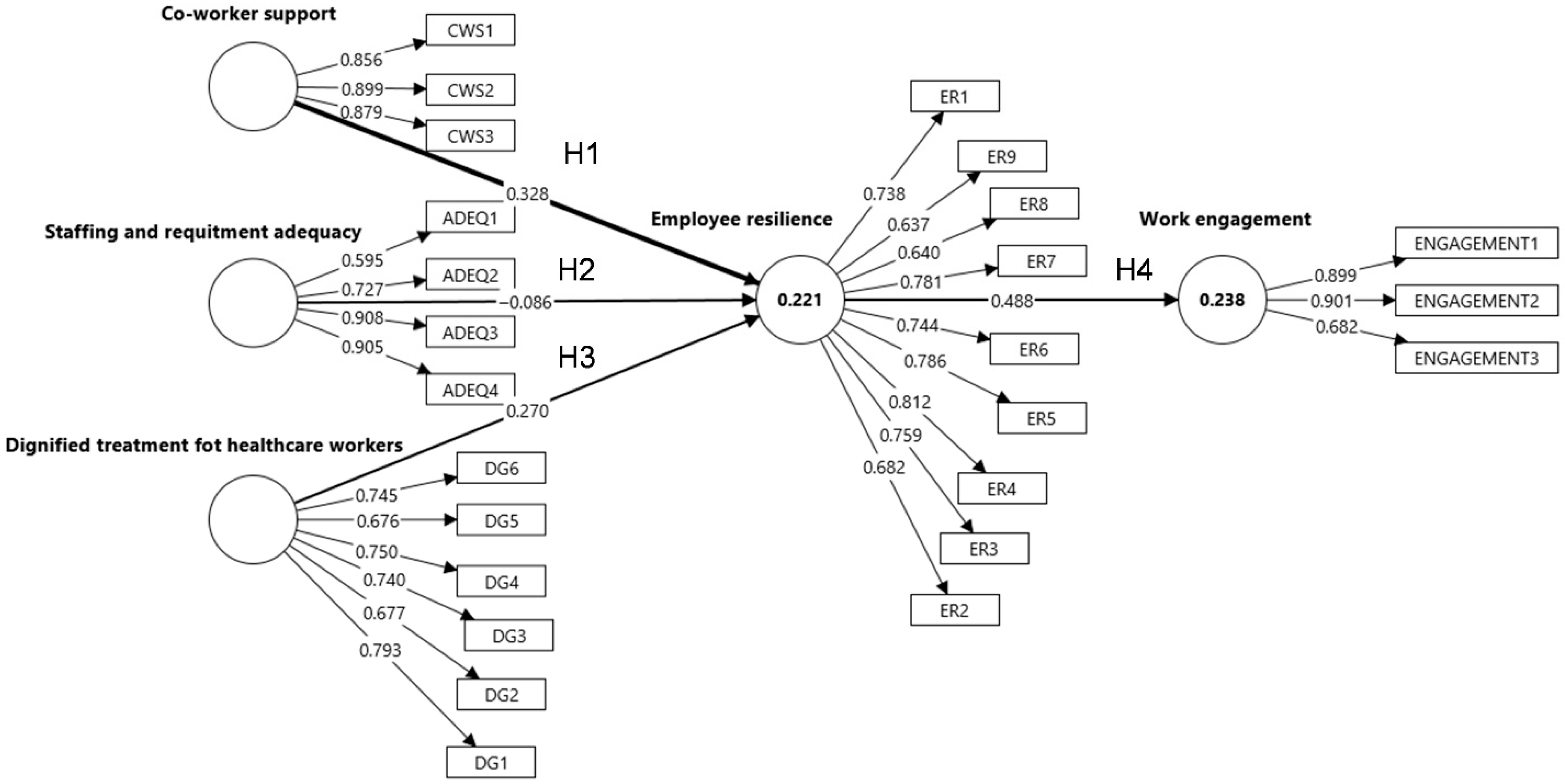
Table 6 shows that the model explains 22.1% of the variance in employee resilience and 23.8% of the variance in work engagement. Although these values are modest according to conventional PLS-SEM benchmarks, they demonstrate meaningful explanatory power given the complexity of psychological and organisational phenomena. Employee resilience and work engagement are multifaceted constructs influenced by numerous individual, contextual and organisational factors. Therefore, explaining approximately one quarter of their variance through workplace resources and dignified treatment represents a substantial contribution. The minimal differences between R2 and adjusted R2 confirm the robustness and stability of the model, indicating that the explanatory power is not artificially inflated by the number of predictors. Overall, the results suggest that organisational conditions play a significant role in shaping both employee resilience and work engagement within the healthcare context.

4.5. Hypothesis Testing

As illustrated in Figure 2, the PLS analysis yielded several key findings, including the path coefficients and the variance explained by the structural model (in terms of R2 values).
The structural model results are in Table 7. Co-worker support had a positive and significant effect on employee resilience (β = 0.328, t = 6.651, p < 0.001), supporting H1. Similarly, dignified treatment for healthcare workers was positively associated with employee resilience (β = 0.270, t = 5.827, p < 0.001), confirming H3. In contrast, staffing and recruitment adequacy did not show a significant relationship with employee resilience (β = −0.086, t = 1.422, p = 0.155). Therefore, H2 was not supported. Finally, employee resilience demonstrated a strong and positive effect on work engagement (β = 0.488, t = 14.280, p < 0.001), supporting H4. This result indicates that higher levels of employee resilience are associated with higher levels of work engagement among healthcare workers.

4.6. Mediation Analysis

The mediation effects were assessed using bootstrapping procedures with 5000 resamples. The results of the indirect effects are presented in Table 8. The findings suggest that employee resilience significantly mediates the relationship between co-worker support and work engagement (indirect effect: β = 0.166; t = 5.808; p < 0.001). The lack of a significant direct effect of co-worker support on work engagement indicates full mediation. A significant indirect effect was also found in the relationship between dignified treatment and work engagement, mediated by employee resilience (β = 0.101, t = 3.603, p < 0.001). The significant direct effect suggests partial mediation. However, the indirect effect of staffing and recruitment adequacy on work engagement via employee resilience was not statistically significant (β = 0.032, t = 1.211, p = 0.226), indicating an absence of mediating effect. In this case, staffing adequacy appears to influence work engagement primarily through a direct pathway. Additionally, the total effects confirm that co-worker support and dignified treatment have a significant overall impact on work engagement. This further highlights the importance of employee resilience as a key psychological mechanism linking workplace resources to engagement outcomes.

4.7. Control Variables and Heterogeneity Analysis

To ensure robustness, sector and tenure were included as control variables. The results indicate that both sector (β = −0.096, p = 0.024) and tenure (β = 0.199, p < 0.001) have a significant influence on employee resilience. However, neither sector (β = 0.009, p = 0.840) nor tenure (β = 0.009, p = 0.836) had a significant direct effect on work engagement.
Subgroup analysis reveals that the relationships in the model are generally stable across groups. However, statistically significant differences were observed in the effect of dignified treatment on employee resilience (p = 0.018) and in the effect of staffing adequacy on work engagement (p = 0.015) between sectors. No significant differences were identified across tenure groups.

5. Discussion

This study examined how three organisational resources, co-worker support, staffing and recruitment adequacy, and dignified treatment, relate to employee resilience and work engagement among Lithuanian nurses. Two of the three resources showed a significant positive link to employee resilience, which in turn strongly predicted work engagement. These findings confirm that the work environment plays an important role in shaping nurses’ capacity to adapt and remain engaged.
The results confirm that co-worker support is a significant positive predictor of employee resilience, supporting H1. This finding is consistent with prior research emphasising the importance of social relationships in nursing contexts. Supportive peer relationships provide emotional comfort and facilitate coping with workplace stress [43], enhance self-confidence and competence through collaborative problem-solving [53], and reduce stress responses in demanding clinical environments [54]. These findings extend prior work by confirming that resilience can be developed through collegial relationships in the nursing workplace [13]. From the JD-R perspective, co-worker support is a social resource that helps reduce the impact of demanding work conditions and restore the psychological energy nurses need to perform well.
Dignified treatment of nurses was shown to be a significant and positive antecedent of employee resilience, supporting H3 and aligning with prior research suggesting that the adaptive capacity of employees depends on respectful treatment. Supportively, Huggard [63] reasons that interpersonal trust and psychological safety are fostered by a respectful workplace environment, which enables employees to cope in challenging workplaces. Nonetheless, perceived organisational support and respect are associated with increased resilience among nurses [64]. This research supports and reinforces the conceptualisation where respectful treatment is considered a meaningful organisational resource [26] and extends it by confirming a direct effect on resilience in a European nursing context. These results further support the argument that the nurses feel a stronger sense of professional belonging and value when organisations recognise their work and treat them fairly, thus enabling their resilience in challenging work environments [11].
Contrary to expectations, staffing and recruitment adequacy were not significantly associated with employee resilience, which leads to the rejection of H2. The path coefficient was negative (β = −0.086), which means that there is a need to interpret the results beyond just saying they are not significant. One possible reason is the strong correlation between staffing adequacy and dignified treatment (r = 0.590), the highest correlation between constructs in the model. When both are included in the structural model at the same time, the unique impact of staffing adequacy on resilience might be hidden because of the overlap with dignified treatment. Additionally, as conceptualised by Näswall et al. [13], employee resilience may be more proximally determined by relational and psychological resources than by structural-administrative conditions, whose effects on adaptive capacity may operate through distal or indirect pathways not captured in the present model. Furthermore, concerning the hierarchical constitution in Lithuanian healthcare, such a result might reflect that nurses do not depend much on managerial decisions or their direct supervisors when conducting work activities. The horizontal relationships are more important when considering employee resilience and engagement in this sector [71]. This finding is consistent with the broader JD-R literature, which suggests that relational resources have a more immediate influence on psychological states than structural resources [24]. Future longitudinal studies using experimental or quasi-experimental methods could help clarify whether adequate human resource practices like staffing and recruitment affect resilience indirectly by improving relational dynamics.
A strong and statistically significant positive relationship was observed between employee resilience and work engagement (β = 0.488). This finding supports H4 and confirms previous findings that resilient employees are less likely to lose energy, dedication, and immersion in their work under stressful conditions [15,33]. A resilient and supportive nurse workforce is crucial in maintaining the healthcare system’s stability during crises. This ensures that both patients are adequately cared for and that the staff remains strong physically and psychologically [23,55]. Within the theory of JD-R, employee resilience is considered to be a personal resource, which strengthens employee motivation and their work engagement under high job demands [24].
In practical terms, because the coefficient is standardised, a one standard deviation increase in employee resilience is associated with an approximately 0.488 standard deviation increase in work engagement. This indicates not only statistical significance, but also a substantively meaningful effect. Although the present study did not directly model turnover intentions or patient safety events, prior evidence suggests that higher staff engagement is associated with better safety culture and fewer errors or adverse events, while nurse turnover generates substantial economic and organisational costs [72,73,74]. Therefore, the observed resilience–engagement relationship may have practical relevance beyond individual motivation, extending to retention, care continuity, and organisational performance. Furthermore, the mediation analysis reinforces this finding by demonstrating that employee resilience is a critical mechanism through which organisational resources lead to work engagement. Specifically, co-worker support and dignified treatment were found to indirectly influence work engagement via resilience, suggesting that these resources strengthen employees’ psychological capacity to cope with workplace challenges. Therefore, supportive and sustainable management practices are essential for fostering resilience among nurses and ensuring the long-term stability of the healthcare workforce. The results indicate indirect-only mediation, suggesting that the effects of organisational resources on work engagement operate through employee resilience.
Turning to sustainability in healthcare, the findings speak directly to social sustainability and to the Sustainable Development Goals (SDGs), which provide a roadmap for stakeholders to work together to address complex challenges [75]. Following the literature [76], nurses carry a pivotal role in the sustainability movement, as “the profession of nursing claims no geographical boundaries, working in diverse areas of health care. These range from nursing at the outpost and global levels to areas in policy development. Such diverse job profiles position nursing at the heart of the sustainability movement in health care.” [77] (p. 757). Nurses, even on a daily basis, contribute to some, if not most, of the 17 SDGs [76]; still, the most significant impact might be observed regarding SDG 3, which emphasises good health and well-being, and SDG 8, which emphasises decent work. Thus, nursing makes a significant contribution to Sustainable Development Goal 3, which seeks to guarantee health and promote well-being across all age groups. Nurses operate at the forefront of healthcare delivery, engaging in direct patient care, conducting health screenings, administering medications, and advising individuals on disease prevention. Their role is crucial in enhancing patient safety, improving the quality and accessibility of health services, and in disease control [78]. Regarding SDG 8, nursing is one of the professions that contribute significantly to the global economy by creating jobs and opportunities for decent work worldwide [78]. However, it is important to emphasise that healthcare institutions are essential in ensuring a supportive and respectful work environment, including psychological safety, as this not only promotes fairness and prevents exploitation but also improves staff retention and reduces the costs associated with turnover, burnout, and workforce shortages. Generally speaking, in the healthcare context, SDG 3 and SDG 8 intersect: safe and high-quality care depends on a resilient, engaged, and retained workforce, while decent work requires psychologically safe, respectful, and supportive working conditions.
Going deeper into the discussion of sustainability in healthcare, several aspects should be underlined. The first aspect refers to workforce retention and decent work (SDG 8). On the one hand, nurses are a crucial part of the healthcare system, as they comprise the largest segment of the health professions. On the other hand, the recruitment and retention of nursing staff remain among the greatest workforce challenges faced by healthcare institutions [79]. The literature suggests that the nature of work in the healthcare sector is inherently demanding, as it involves, among other factors, frequent contact with distressed and ill patients, heavy workloads, continuous learning requirements, and high-performance standards [80,81]. Working under such conditions is challenging and may lead nurses to change workplaces or even career paths. Thereby, healthcare institutions should place a strong focus on decent work (SDG 8). Decent work in nursing refers to practising in a safe, fair, and supportive work environment that ensures respect, adequate support, fair remuneration, social protection, and opportunities for professional development [82]. Nurses possessing a high perception of decent work can harness occupational resources, such as social support, to mitigate negative emotions, thereby promoting positive outcomes, including resilience [82].
The second aspect refers to patient safety, which, according to the World Health Organization, is defined as the absence of preventable harm to patients and the prevention of unnecessary harm by healthcare professionals [83]. Nurses play a critical role in ensuring patient safety. However, following challenging situations at work, it may be difficult for them to “bounce back” and, consequently, to maintain patient safety. A study by De Miguel et al. [84] among undergraduate nursing students, it suggests that resilience plays a significant role in patient safety. As such, resilient nurses are better positioned to ensure patient safety, thereby promoting greater social sustainability in healthcare and contributing to SDG 3. The third element relates to the quality of care, characterised as the extent to which health services for individuals and communities enhance the probability of achieving intended health outcomes and adhere to contemporary professional standards. [85]. Recently, factors such as personalised care, nurses’ responsiveness to patient requests, adequate information, and accessibility have been valued as important dimensions of quality care [86]. Given the nature of nurses’ work, those who can adapt to change and recover from challenges are more likely to be engaged in providing high-quality care and to contribute to social sustainability and SDG3.
These findings also connect individual-level resilience with broader debates on organisational and health system resilience. Recent resilience literature conceptualises resilient healthcare as both the capacity of individuals to cope and the ability of healthcare systems to absorb, adapt to, and recover from disruptions while maintaining safe and effective care [87]. From this perspective, nurse resilience and engagement can be understood as micro-level foundations of system adaptability: healthcare organisations are more likely to maintain continuity and quality of care when staff have the psychological and relational resources needed to respond to everyday pressures and exceptional disruptions [88]. This link is important in workforce-constrained healthcare systems, where resilience cannot depend solely on additional staffing capacity.
Furthermore, sustainable management of human resources supports these findings by including the perspective that employee resilience is not only a developable individual characteristic, but also a capacity that can be nurtured in supportive organisational environments, deliberately shaped to prevent long-term resource depletion [89]. Commonly, the healthcare sector is defined by consistently high demand; thus, maintaining a resilient and stable workforce means maintaining both employee and organisational sustainability. Moreover, resilient employees are able to see beyond the negative aspects of demands and are more likely to perceive them as manageable or meaningful, preserving their motivation to remain engaged in their work [32].
Finally, given the context, it is worth reiterating that the study was conducted in the Lithuanian healthcare sector. In general terms, the role of a nurse encompasses not only the execution of technical procedures but also the management of various other aspects of healthcare. This includes establishing personal relationships with patients, dedicating time to their care, anticipating and fulfilling their needs, responding to acute medical conditions, offering emotional support to patients and their families, and collaborating with specialists from diverse fields within a multidisciplinary team. [90]. Although nursing is a profession dedicated to the care, prevention, treatment, and rehabilitation of people, thereby contributing to SDG 3 [78], nursing unionisation [91], governance, and other managerial practices differ across countries. This needs to be taken into consideration when claiming external validity and transferability.
Taken together, these findings reveal a differential pattern in the effects of organisational resources on resilience: relational resources (co-worker support and dignified treatment) demonstrated significant and meaningful associations with resilience, while the structural resource (staffing adequacy) did not. This is important both theoretically and practically because interpersonal and cultural dimensions of collegial support, dignified treatment at work, and professional recognition may have a stronger role in nurse resilience than structural or procedural resources. Further scientific investigation is needed as the importance of multiple resources simultaneously affecting employee resilience and engagement might reveal patterns that resources in isolation might not capture. This would enable a more holistic representation of the concepts in working environments.

5.1. Theoretical Contributions

This study contributes to strengthening the knowledge base on sustainable management and healthcare. First, JD-R theory is extended by revealing the relationship between employee resilience and organisational resources, demonstrating that organisational environment shapes employee resilience. JD-R theory stipulates that employee resilience is mainly individual capacity, whereas this study broadens this concept by adding the sustainable management perspective and the importance of sustainable practices in supporting employee well-being.
Second, respectful treatment of the healthcare workforce is proposed as a resource to the JD-R theory. Even though such inclusion is not a novel idea, this study is among the few to use a validated measure by Rave et al. [26] in the European nursing context. The results were significant (β = 0.270), which supports that dignified treatment is an important construct to be included in the JD-R theory in the healthcare industry.
Third, the study contributes by clarifying the role of employee resilience as a mediating mechanism between organisational resources and work engagement. Although mediation was not the primary objective of the study, it has shown an interesting pattern for future exploration. The additional analysis shows that co-worker support and dignified treatment are associated with work engagement through resilience, albeit in different ways. Co-worker support demonstrated full mediation, whereas dignified treatment showed partial mediation. This distinction enriches the JD-R-based interpretation by suggesting that relational resources may influence engagement through different psychological pathways: collegial support appears to operate primarily by strengthening resilience, while dignified treatment may contribute both to resilience and to engagement directly.

5.2. Practical Implications

The findings have several actionable implications for healthcare organisations and human resource managers seeking to strengthen nurse resilience and engagement.
First, healthcare organisations should invest systematically in the building and sustaining of collegial support cultures. Managerial practices that could support institutionalised rather than ad hoc processes could include structured mentoring programmes, critical-incident discussion sessions, time allocation for team-building sessions and interprofessional communication. Given that co-worker support was the strongest predictor of resilience in this study (β = 0.328), efforts to foster supportive peer relationships should be a priority in the development of human resources in healthcare. Scalable practices may include short shift huddles to coordinate work and identify immediate support needs, peer mentoring for early-career nurses, buddy systems during demanding shifts, facilitated critical-incident debriefings, and protected time for team reflection.
Second, healthcare managers and organisational leaders should treat dignified treatment as a strategic and measurable human resource priority rather than an implicit cultural assumption. Additionally, organisations would benefit from managerial training on respectful communication and fair professional recognition. Moreover, the nurses’ perception of dignity at work could be evaluated using validated tools, as the present findings suggest that nurses who perceive their work environment as respectful and fair are more resilient, an outcome with clear implications for retention and quality of care. Practical recommendations could include dignity and civility charters that are actively modelled by leaders, anti-incivility training, clear reporting and response procedures, and managerial training focused on respectful communication and fair professional recognition.
Third, the finding that staffing adequacy did not significantly predict resilience suggests that organisational procedural improvements alone may not be enough. Only solving understaffing will not address cultural issues that may be causing disruptions in the work environment. Thus, procedural improvements must be aligned with existing relationships and cultural patterns, building a collegial environment to achieve employee resilience and engagement.
To make these recommendations actionable, implementation should follow a structured and cyclical approach. First, organisations should conduct a baseline assessment of the work environment using validated instruments, such as the organisational dignified treatment scale employed in this study, alongside short measures of work engagement, resilience, civility, and teamwork climate. Second, targeted interventions should be designed based on identified gaps. Third, outcomes should be reviewed at regular intervals. For continuous routine improvements, organisations could use quarterly or biannual pulse surveys, including short instruments such as the UWES-3 for work engagement [70], supplemented by resilience scales, civility indicators, turnover and absenteeism data, patient safety events, and teamwork climate measures. Integrating these indicators into existing human resource information systems or quality dashboards would enable managers to identify early warning signals and proactively adjust interventions.

5.3. Policy Recommendations

The findings of this study offer practical recommendations for both organisations and national healthcare policy. At the organisational level, healthcare institutions should develop human resource strategies that address not only staffing and structural issues, but also relationships, workplace culture, and support among staff. These efforts should be part of overall human resource planning and sustainability goals.
At the national level, the results are relevant for Lithuania’s health policy and wider European priorities. Policy makers should consider including dignity at work and peer support in nursing policies and practice standards. With a global nursing shortage expected by 2030, supporting resilience and engagement through better work environments can complement recruitment efforts in a cost-effective way.
From an investment perspective, interventions such as dignity-enhancing programmes and peer support initiatives are likely to offer cost-effective complements, especially where staffing expansion is constrained. While nurse recruitment and retention require substantial financial investment, workplace culture interventions can be implemented at comparatively lower cost using relational interventions, such as structured peer support, civility training, and leadership-led dignified treatment, which can often be implemented at lower marginal cost and may support retention by improving the everyday work environment [74]. Their return on investment should therefore be assessed through reductions in turnover and absenteeism, improvements in engagement and resilience, and downstream indicators such as patient safety events and care quality. As healthcare systems across Lithuania and Europe face growing constraints alongside workforce shortages, prioritising high-impact, lower-cost relational interventions represents both a practical and sustainable policy direction, contributing to SDG3 and SDG8.
More broadly, the findings highlight the need to include psychosocial work conditions in healthcare quality and accreditation systems, through defined indicators and reporting requirements. Supporting nurses’ well-being is not only an ethical issue but also essential to ensure safe, high-quality patient care and a sustainable healthcare system.

6. Conclusions

This study investigated how three organisational resources, co-worker support, staffing and recruitment adequacy, and dignified treatment, relate to employee resilience and work engagement among nurses in Lithuania. Drawing on the JD-R theory, the study examined the associations between three organisational resources, co-worker support, staffing and recruitment adequacy, and dignified treatment for healthcare workers, employee resilience, and work engagement in a sample of 443 nurses from the Lithuanian healthcare sector.
The research results could be divided into three findings. First, in relation to co-worker support and dignified treatment were identified as significant positive predictors of employee resilience, while staffing and recruitment adequacy were not identified as significant connections with resilience. The negative coefficient, although not statistically significant, suggests that structural resources may work differently from relational ones and should be analysed further. This finding suggests that interpersonal resources play an important role in the ability of nurses to adapt more than organisational or administrative factors, at least in this sample. It also indicates that resilience is a strong predictor of work engagement, in line with JD-R theory and previous research in healthcare. Finally, the model indicates that a significant part of both resilience and engagement can be explained by organisational resources, highlighting how important the workplace environment is to these outcomes.
Theoretically, this study adds to the JD-R theory by showing that relational and structural organisational resources affect resilience differently. It also highlights that dignified treatment is an important, but still underexplored, factor in supporting employees’ ability to adapt. Therefore, exploring sustainable management practices remains an important topic.
Practical recommendations for healthcare organisations suggest focusing on building supportive team cultures, ensuring respectful employee treatment, and promoting positive management practices to strengthen nurse resilience and engagement. At the same time, improving staff levels remains important, but alone it may not be enough to build resilience.
As healthcare systems in Lithuania and Europe continue to face nursing staff shortages, ageing employees, and growing patient demands, the conditions that help nurses stay resilient and engaged are essential for the long-term sustainability of the workforce and the quality and safety of patient care.

7. Limitations

The paper has several limitations, which should be considered. First, this study included only three organisational resources as predictors of employee resilience. Even though these resources align well with sustainable human resource management, subsequent studies could expand the explanatory scope by incorporating additional practices, such as training and work–life balance, offering a stronger, more holistic approach to understanding the antecedents of employee resilience.
Second, the interplay among various individual, organisational, and other environmental factors that shape resilience might add value by shedding light on how to strengthen the capacity to “bounce back” from adversity. Although demographic variables such as gender, age, length of service and sector type were collected, they were not included as control variables in the structural model. As the sample consists of healthcare professionals, predominantly nurses, working in diverse organisational contexts, these characteristics may influence work experiences, access to resources, and responses to workplace demands. Future research focusing on nursing populations should incorporate these variables as controls and conduct multi-group analyses to examine whether the observed relationships differ across demographic and professional subgroups. This would strengthen the generalisability and robustness of the findings.
Third, in Lithuania, the healthcare sector comprises both public and private institutions; however, this study does not account for this important contextual distinction or for differences between nurses working across these sectors. Therefore, the findings should be interpreted with caution, taking into account potential differences between the public and private sectors in Lithuania, particularly regarding funding, nurses’ workload, formal peer-support programmes, staffing norms, and managerial culture.
Fourth, the study is limited by its national context. The sample was drawn exclusively from Lithuanian healthcare institutions. Therefore, the findings should be interpreted with caution when extrapolated to other national healthcare systems. Transferability may be strongest in healthcare systems with institutional logics comparable to those in Lithuania, particularly post-Soviet and Central and Eastern European contexts characterised by similar governance traditions, hierarchical professional cultures, workforce shortages, and constrained public healthcare resources. However, the effectiveness of co-worker support and dignified treatment as resilience-enhancing resources may depend on contextual moderators, such as union density, nurse–physician mix, staffing norms, managerial culture, professional autonomy, and the existence of formal peer-support programmes.
Fifth, this study considers only one resilience outcome, namely work engagement. Future research is encouraged to explore additional relevant outcomes for nurses, such as intention to quit, quiet quitting, job satisfaction, and organisational citizenship behaviour. Consistent with the literature, these positive outcomes may, in turn, contribute to patient safety and the quality of care (SDG 3) and, additionally, to nurse retention by fostering psychological safety (SDG 8) [79,83].
Finally, the sixth limitation suggests potential common method bias due to self-report measures [92]. Attempts were made to reduce the social desirability of responses by ensuring the anonymity of results and emphasising that there would be no right or wrong answers [92].

Author Contributions

All listed authors (E.S., Ž.S., A.D. and J.R.) contributed to the conceptualisation, drafting, and critical revision of the manuscript. E.S. and Ž.S. provided approval for publication of the content. E.S. accepts accountability for all aspects of the work, including the accuracy and integrity of any part of the work. All authors have read and agreed to the published version of the manuscript.

Funding

This research was funded by the Research Council of Lithuania (LMTLT) under agreement No. [S-MIP-23-55].

Institutional Review Board Statement

The study was conducted in accordance with the Declaration of Helsinki. Ethical review and approval were waived for this study as per KTU Rector’s decree A-201, issued 23 April 2021, redacted A-364 12 October 2022.

Informed Consent Statement

Informed consent was obtained from all subjects involved in the study.

Data Availability Statement

The data that support the findings of this study are available on request from the corresponding author.

Conflicts of Interest

The authors declare no conflicts of interest. The funders had no role in the design of the study; in the collection, analyses, or interpretation of data; in the writing of the manuscript; or in the decision to publish the results.

References

  1. World Health Organization. Global Strategic Directions for Nursing and Midwifery 2021–2025; World Health Organization: Geneva, Switzerland, 2021. [Google Scholar]
  2. Boniol, M.; Kunjumen, T.; Nair, T.S.; Siyam, A.; Campbell, J.; Diallo, K. The Global Health Workforce Stock and Distribution in 2020 and 2030: A Threat to Equity and ‘Universal’ Health Coverage? BMJ Glob. Health 2022, 7, e009316. [Google Scholar] [CrossRef]
  3. Galanis, P.; Vraka, I.; Fragkou, D.; Bilali, A.; Kaitelidou, D. Nurses’ Burnout and Associated Risk Factors during the COVID-19 Pandemic: A Systematic Review and Meta-analysis. J. Adv. Nurs. 2021, 77, 3286–3302. [Google Scholar] [CrossRef]
  4. Zhang, Y.; Qiu, R.; Wang, Y.; Ye, Z. Navigating the Future: Unveiling New Facets of Nurse Work Engagement. BMC Nurs. 2025, 24, 80. [Google Scholar] [CrossRef]
  5. Dall’Ora, C.; Ball, J.; Reinius, M.; Griffiths, P. Burnout in Nursing: A Theoretical Review. Hum. Resour. Health 2020, 18, 41. [Google Scholar] [CrossRef] [PubMed]
  6. Lasater, K.B.; Aiken, L.H.; Sloane, D.; French, R.; Martin, B.; Alexander, M.; McHugh, M.D. Patient Outcomes and Cost Savings Associated with Hospital Safe Nurse Staffing Legislation: An Observational Study. BMJ Open 2021, 11, e052899. [Google Scholar] [CrossRef]
  7. Kunzelmann, A.; Rigotti, T. How Time Pressure Is Associated with Both Work Engagement and Emotional Exhaustion: The Moderating Effects of Resilient Capabilities at Work. Ger. J. Hum. Resour. Manag. Z. Pers. 2021, 35, 309–336. [Google Scholar] [CrossRef]
  8. Britt, T.W.; Shen, W.; Sinclair, R.R.; Grossman, M.R.; Klieger, D.M. How Much Do We Really Know about Employee Resilience? Ind. Organ. Psychol. 2016, 9, 378–404. [Google Scholar] [CrossRef]
  9. Cooper, A.L.; Brown, J.A.; Rees, C.S.; Leslie, G.D. Nurse Resilience: A Concept Analysis. Int. J. Ment. Health Nurs. 2020, 29, 553–575. [Google Scholar] [CrossRef] [PubMed]
  10. Li, M.; Zhao, R.; Wei, J.; Zhou, L.; Yang, S.; Tian, Y.; Wang, L.; Zhang, W.; Xiong, X.; Huang, C.; et al. Nurses’ Perspectives on Workplace Environment Needs Associated to Resilience: A Qualitative Descriptive Study. Front. Psychiatry 2024, 15, 1345713. [Google Scholar] [CrossRef]
  11. Park, K.; Jang, A. Factors Affecting the Resilience of New Nurses in Their Working Environment. Int. J. Environ. Res. Public Health 2022, 19, 5158. [Google Scholar] [CrossRef] [PubMed]
  12. Yu, F.; Raphael, D.; Mackay, L.; Smith, M.; King, A. Personal and Work-Related Factors Associated with Nurse Resilience: A Systematic Review. Int. J. Nurs. Stud. 2019, 93, 129–140. [Google Scholar] [CrossRef]
  13. Näswall, K.; Malinen, S.; Kuntz, J.; Hodliffe, M. Employee Resilience: Development and Validation of a Measure. J. Manag. Psychol. 2019, 34, 353–367. [Google Scholar] [CrossRef]
  14. Lake, E.T.; Sanders, J.; Duan, R.; Riman, K.A.; Schoenauer, K.M.; Chen, Y. A Meta-Analysis of the Associations Between the Nurse Work Environment in Hospitals and 4 Sets of Outcomes. Med. Care 2019, 57, 353–361. [Google Scholar] [CrossRef]
  15. García-Izquierdo, M.; Ríos-Risquez, M.I.; Carrillo-García, C.; Sabuco-Tebar, E.d.l.Á. The Moderating Role of Resilience in the Relationship between Academic Burnout and the Perception of Psychological Health in Nursing Students. Educ. Psychol. 2018, 38, 1068–1079. [Google Scholar] [CrossRef]
  16. Bargagliotti, L.A. Work Engagement in Nursing: A Concept Analysis. J. Adv. Nurs. 2012, 68, 1414–1428. [Google Scholar] [CrossRef]
  17. Keyko, K.; Cummings, G.G.; Yonge, O.; Wong, C.A. Work Engagement in Professional Nursing Practice: A Systematic Review. Int. J. Nurs. Stud. 2016, 61, 142–164. [Google Scholar] [CrossRef]
  18. García-Sierra, R.; Fernández-Castro, J.; Martínez-Zaragoza, F. Work Engagement in Nursing: An Integrative Review of the Literature. J. Nurs. Manag. 2016, 24, E101–E111. [Google Scholar] [CrossRef]
  19. Kira, M.; van Eijnatten, F.M.; Balkin, D.B. Crafting Sustainable Work: Development of Personal Resources. J. Organ. Change Manag. 2010, 23, 616–632. [Google Scholar] [CrossRef]
  20. Stankevičiūtė, Ž.; Savanevičienė, A. Can Sustainable HRM Reduce Work-Related Stress, Work-Family Conflict, and Burnout? Int. Stud. Manag. Organ. 2019, 49, 79–98. [Google Scholar] [CrossRef]
  21. Ehnert, I.; Harry, W.; Zink, K.J. Sustainability and HRM. An Introduction to the Field. In Sustainability and Human Resource Management; Ehnert, I., Harry, W., Zink, K.J., Eds.; Springer: Berlin/Heidelberg, Germany, 2014; pp. 3–32. ISBN 978-3-642-37523-1. [Google Scholar]
  22. Podgorodnichenko, N.; Akmal, A.; Edgar, F.; Everett, A.M. Sustainable HRM: Toward Addressing Diverse Employee Roles. Empl. Relat. Int. J. 2022, 44, 576–608. [Google Scholar] [CrossRef]
  23. Buchan, J.; Catton, H.; Shaffer, F.A. Sustain and Retain in 2022 and Beyond; International Council of Nurses: Geneva, Switzerland, 2022. [Google Scholar]
  24. Bakker, A.B.; Demerouti, E. Job Demands–Resources Theory: Taking Stock and Looking Forward. J. Occup. Health Psychol. 2017, 22, 273–285. [Google Scholar] [CrossRef]
  25. Darke, I.D.; Mensah, P.O.; Asamoah Antwi, F.; Swanzy-Krah, P. Co-Worker Support and Affective Commitment during a Global Crisis: Evidence from an Emerging Economy. Cogent Bus. Manag. 2024, 11, 2298225. [Google Scholar] [CrossRef]
  26. Rave, J.I.P.; Echavarría, F.G.; Morales, J.C.C. A Measure of Dignified Treatment for Healthcare Workers: Design and Psychometric Properties. Behaviormetrika 2023, 50, 287–316. [Google Scholar] [CrossRef]
  27. Sabatino, L.; Stievano, A.; Rocco, G.; Kallio, H.; Pietila, A.-M.; Kangasniemi, M.K. The Dignity of the Nursing Profession. Nurs. Ethics 2014, 21, 659–672. [Google Scholar] [CrossRef]
  28. Combrinck, Y.; Van Wyk, N.C.; Mogale, R.S. Preserving Nurses’ Professional Dignity: Six Evidence-based Strategies. Int. Nurs. Rev. 2022, 69, 106–113. [Google Scholar] [CrossRef] [PubMed]
  29. Cristina Gasparino, R.; Daiana Mendonça Ferreira, T.; Ceretta Oliveira, H.; Fernanda dos Santos Alves, D.; Pazetto Balsanelli, A. Leadership, Adequate Staffing and Material Resources, and Collegial Nurse–Physician Relationships Promote Better Patients, Professionals and Institutions Outcomes. J. Adv. Nurs. 2021, 77, 2739–2747. [Google Scholar] [CrossRef]
  30. Wei, H.; Kifner, H.; Dawes, M.E.; Wei, T.L.; Boyd, J.M. Self-Care Strategies to Combat Burnout Among Pediatric Critical Care Nurses and Physicians. Crit. Care Nurse 2020, 40, 44–53. [Google Scholar] [CrossRef] [PubMed]
  31. Hartmann, S.; Weiss, M.; Newman, A.; Hoegl, M. Resilience in the Workplace: A Multilevel Review and Synthesis. Appl. Psychol. 2020, 69, 913–959. [Google Scholar] [CrossRef]
  32. Wang, W.; Li, M.; Zhang, J.; Zhao, R.; Yang, H.; Mitchell, R. Organizational Resilience and Primary Care Nurses’ Work Conditions and Well-Being: A Multilevel Empirical Study in China. Health Policy Plan. 2024, 39, 1065–1073. [Google Scholar] [CrossRef]
  33. Chen, G.; Wang, J.; Huang, Q.; Sang, L.; Yan, J.; Chen, R.; Cheng, J.; Wang, L.; Zhang, D.; Ding, H. Social Support, Psychological Capital, Multidimensional Job Burnout, and Turnover Intention of Primary Medical Staff: A Path Analysis Drawing on Conservation of Resources Theory. Hum. Resour. Health 2024, 22, 42. [Google Scholar] [CrossRef] [PubMed]
  34. Kuntz, J.; Connell, P.; Näswall, K. Workplace Resources and Employee Resilience: The Role of Regulatory Profiles. Career Dev. Int. 2017, 22, 419–435. [Google Scholar] [CrossRef]
  35. Malik, P.; Garg, P. Learning Organization and Work Engagement: The Mediating Role of Employee Resilience. Int. J. Hum. Resour. Manag. 2020, 31, 1071–1094. [Google Scholar] [CrossRef]
  36. Holmbom, M.; Seitl, C.; Kazemi, A. Shaping Social Sustainability Through HR Practices: Actionable Strategies Toward a Human-Centered Approach. Humanist. Manag. J. 2026, 11, 117–142. [Google Scholar] [CrossRef]
  37. Šablinskas, L.; Stankūnas, M. Physician Workforce in Lithuania: Changes during Thirty Years of Independence. Healthcare 2024, 12, 1023. [Google Scholar] [CrossRef]
  38. Daugėlienė, R.; Marcinkevičienė, R. Brain Drain Problem in Lithuania: Possible Actions for Its’ Solution via Brain Gain. Eur. Integr. Stud. 2009, 3, 14–22. [Google Scholar]
  39. Jakušovaitė, I.; Darulis, Ž.; Žekas, R. Lithuanian Health Care in Transitional State: Ethical Problems. BMC Public Health 2005, 5, 117. [Google Scholar] [CrossRef]
  40. Langviniene, N.; Sekliuckiene, J. Factors of Influence on Successful Development of Lithuanian Resort Wellness Spa Services. Soc. Sci. 2009, 66, 72–81. [Google Scholar]
  41. HEROES. Healthcare Workforce Strategies in Lithuania: Challenges, Solutions, and Future Plans. Available online: https://healthworkforce.eu/healthcare-workforce-strategies-in-lithuania-challenges-solutions-and-future-plans/ (accessed on 19 April 2026).
  42. Kangasniemi, M.; Rannikko, S.; Leino-Kilpi, H. Nurses’ Collegiality: An Evolutionary Concept Analysis. Nurs. Ethics 2024, 31, 597–612. [Google Scholar] [CrossRef]
  43. Labrague, L.J. Linking Nurse Practice Environment, Safety Climate and Job Dimensions to Missed Nursing Care. Int. Nurs. Rev. 2022, 69, 350–358. [Google Scholar] [CrossRef] [PubMed]
  44. Lasater, K.B.; Aiken, L.H.; Sloane, D.M.; French, R.; Martin, B.; Reneau, K.; Alexander, M.; McHugh, M.D. Chronic Hospital Nurse Understaffing Meets COVID-19: An Observational Study. BMJ Qual. Saf. 2021, 30, 639–647. [Google Scholar] [CrossRef]
  45. Gregory, D.D.; Zborowsky, T.; Stichler, J.F. Integrating the Environmental Domain Into the Nursing Well-Being Model: A Call to Action. HERD Health Environ. Res. Des. J. 2023, 16, 15–23. [Google Scholar] [CrossRef]
  46. Leiter, M.P.; Laschinger, H.K.S.; Day, A.; Oore, D.G. The Impact of Civility Interventions on Employee Social Behavior, Distress, and Attitudes. J. Appl. Psychol. 2011, 96, 1258–1274. [Google Scholar] [CrossRef]
  47. Bakker, A.B.; Demerouti, E.; Sanz-Vergel, A. Job Demands–Resources Theory: Ten Years Later. Annu. Rev. Organ. Psychol. Organ. Behav. 2023, 10, 25–53. [Google Scholar] [CrossRef]
  48. Bardoel, E.A.; Pettit, T.M.; De Cieri, H.; McMillan, L. Employee Resilience: An Emerging Challenge for HRM. Asia Pac. J. Hum. Resour. 2014, 52, 279–297. [Google Scholar] [CrossRef]
  49. Mealer, M.; Jones, J.; Newman, J.; McFann, K.K.; Rothbaum, B.; Moss, M. The Presence of Resilience Is Associated with a Healthier Psychological Profile in Intensive Care Unit (ICU) Nurses: Results of a National Survey. Int. J. Nurs. Stud. 2012, 49, 292–299. [Google Scholar] [CrossRef]
  50. Zhang, C.; Xiao, Q.; Liang, X.; Klarin, A.; Liu, L. How Does Ethical Leadership Influence Nurses’ Job Performance? Learning Goal Orientation as a Mediator and Co-Worker Support as a Moderator. Nurs. Ethics 2024, 31, 406–419. [Google Scholar] [CrossRef] [PubMed]
  51. Carlson, D.S.; Perrewé, P.L. The Role of Social Support in the Stressor-Strain Relationship: An Examination of Work-Family Conflict. J. Manag. 1999, 25, 513–540. [Google Scholar] [CrossRef]
  52. Gonçalves, L.; Sala, R.; Navarro, J.-B. Resilience and Occupational Health of Health Care Workers: A Moderator Analysis of Organizational Resilience and Sociodemographic Attributes. Int. Arch. Occup. Environ. Health 2022, 95, 223–232. [Google Scholar] [CrossRef]
  53. Orgambídez-Ramos, A.; de Almeida, H. Work Engagement, Social Support, and Job Satisfaction in Portuguese Nursing Staff: A Winning Combination. Appl. Nurs. Res. 2017, 36, 37–41. [Google Scholar] [CrossRef]
  54. Yang, T.; Shen, Y.-M.; Zhu, M.; Liu, Y.; Deng, J.; Chen, Q.; See, L.-C. Effects of Co-Worker and Supervisor Support on Job Stress and Presenteeism in an Aging Workforce: A Structural Equation Modelling Approach. Int. J. Environ. Res. Public Health 2015, 13, 72. [Google Scholar] [CrossRef]
  55. Peng, J.; Luo, H.; Ma, Q.; Zhong, Y.; Yang, X.; Huang, Y.; Sun, X.; Wang, X.; He, J.; Song, Y. Association between Workplace Bullying and Nurses’ Professional Quality of Life: The Mediating Role of Resilience. J. Nurs. Manag. 2022, 30, 1549–1558. [Google Scholar] [CrossRef] [PubMed]
  56. Garrett, C. The Effect of Nurse Staffing Patterns on Medical Errors and Nurse Burnout. AORN J. 2008, 87, 1191–1204. [Google Scholar] [CrossRef]
  57. Saeed, F.; Saeed, S.; Raza, W. Nurse-to-Patient Ratios and Patient Safety Outcomes: A Systematic Review. Phys. Educ. Health Soc. Sci. 2025, 3, 298–306. [Google Scholar] [CrossRef]
  58. Shin, S.; Park, J.-H.; Bae, S.-H. Nurse Staffing and Nurse Outcomes: A Systematic Review and Meta-Analysis. Nurs. Outlook 2018, 66, 273–282. [Google Scholar] [CrossRef]
  59. Assaye, A.M.; Wiechula, R.; Schultz, T.J.; Feo, R. Impact of Nurse Staffing on Patient and Nurse Workforce Outcomes in Acute Care Settings in Low- and Middle-Income Countries: A Systematic Review. JBI Evid. Synth. 2021, 19, 751–793. [Google Scholar] [CrossRef]
  60. Cho, E.; Choi, M.; Kim, E.-Y.; Yoo, I.Y.; Lee, N.-J. Construct Validity and Reliability of the Korean Version of the Practice Environment Scale of Nursing Work Index for Korean Nurses. J. Korean Acad. Nurs. 2011, 41, 325–332. [Google Scholar] [CrossRef]
  61. Hobfoll, S.E.; Halbesleben, J.; Neveu, J.-P.; Westman, M. Conservation of Resources in the Organizational Context: The Reality of Resources and Their Consequences. Annu. Rev. Organ. Psychol. Organ. Behav. 2018, 5, 103–128. [Google Scholar] [CrossRef]
  62. Combrinck, Y. Strategies to Preserve the Professional Dignity of Nurses in a Demanding Healthcare Environment. Doctoral Dissertation, University of Pretoria, Hatfield, South Africa, 2018. [Google Scholar]
  63. Huggard, P. Compassion Fatigue: How Much Can I Give? In Communication, Relationships and Care; Routledge: Oxford, UK, 2004; pp. 204–207. [Google Scholar]
  64. Xu, Z.; Zhao, B.; Zhang, Z.; Wang, X.; Jiang, Y.; Zhang, M.; Li, P. Prevalence and Associated Factors of Secondary Traumatic Stress in Emergency Nurses: A Systematic Review and Meta-Analysis. Eur. J. Psychotraumatol. 2024, 15, 2321761. [Google Scholar] [CrossRef]
  65. Hu, Q.; Schaufeli, W.; Taris, T.; Hessen, D.; Hakanen, J.J.; Salanova, M.; Shimazu, A. East Is East and West Is West and Never the Twain Shall Meet: Work Engagement and Workaholism across Eastern and Western Cultures. J. Behav. Soc. Sci. 2014, 1, 6–24. [Google Scholar]
  66. Cabrera-Aguilar, E.; Zevallos-Francia, M.; Morales-García, M.; Ramírez-Coronel, A.A.; Morales-García, S.B.; Sairitupa-Sanchez, L.Z.; Morales-García, W.C. Resilience and Stress as Predictors of Work Engagement: The Mediating Role of Self-Efficacy in Nurses. Front. Psychiatry 2023, 14, 1202048. [Google Scholar] [CrossRef]
  67. Valstybės Kontrolė. Ensuring the Need for Nursing Professionals; Valstybės Kontrolė: Vilnius, Lithuania, 2023. [Google Scholar]
  68. Hair, J.F.; Risher, J.J.; Sarstedt, M.; Ringle, C.M. When to Use and How to Report the Results of PLS-SEM. Eur. Bus. Rev. 2019, 31, 2–24. [Google Scholar] [CrossRef]
  69. Beaton, D.E.; Bombardier, C.; Guillemin, F.; Ferraz, M.B. Guidelines for the Process of Cross-Cultural Adaptation of Self-Report Measures. Spine 2000, 25, 3186–3191. [Google Scholar] [CrossRef] [PubMed]
  70. Schaufeli, W.B.; Shimazu, A.; Hakanen, J.; Salanova, M.; De Witte, H. An Ultra-Short Measure for Work Engagement: The UWES-3 Validation across Five Countries. Eur. J. Psychol. Assess. 2019, 35, 577–591. [Google Scholar] [CrossRef]
  71. Halbesleben, J.R.B. Sources of Social Support and Burnout: A Meta-Analytic Test of the Conservation of Resources Model. J. Appl. Psychol. 2006, 91, 1134–1145. [Google Scholar] [CrossRef]
  72. Brooks Carthon, J.M.; Hatfield, L.; Plover, C.; Dierkes, A.; Davis, L.; Hedgeland, T.; Sanders, A.M.; Visco, F.; Holland, S.; Ballinghoff, J.; et al. Association of Nurse Engagement and Nurse Staffing on Patient Safety. J. Nurs. Care Qual. 2019, 34, 40–46. [Google Scholar] [CrossRef] [PubMed]
  73. Janes, G.; Mills, T.; Budworth, L.; Johnson, J.; Lawton, R. The Association Between Health Care Staff Engagement and Patient Safety Outcomes: A Systematic Review and Meta-Analysis. J. Patient Saf. 2021, 17, 207–216. [Google Scholar] [CrossRef]
  74. Bae, S. Noneconomic and Economic Impacts of Nurse Turnover in Hospitals: A Systematic Review. Int. Nurs. Rev. 2022, 69, 392–404. [Google Scholar] [CrossRef]
  75. United Nations (UN). SDG 17. Available online: https://sdgs.un.org/goals/goal17 (accessed on 1 May 2026).
  76. Xu, J.-M.; Cao, M.-G.; Gao, Q.-C.; Lu, Y.-X.; Stark, A.T. Nurses’ Workplace Social Capital and Sustainable Development: An Integrative Review of Empirical Studies. J. Nurs. Manag. 2024, 2024, 8362035. [Google Scholar] [CrossRef]
  77. McMillan, K. Sustainability: An Evolutionary Concept Analysis. Exploring Nursing’s Role within the Sustainability Movement. J. Adv. Nurs. 2014, 70, 756–767. [Google Scholar] [CrossRef]
  78. Taminato, M.; Fernandes, H.; Barbosa, D.A. Nursing and the Sustainable Development Goals (SDGs): An Essential Commitment. Rev. Bras. Enferm. 2023, 76, e760601. [Google Scholar] [CrossRef]
  79. Marufu, T.C.; Collins, A.; Vargas, L.; Gillespie, L.; Almghairbi, D. Factors Influencing Retention among Hospital Nurses: Systematic Review. Br. J. Nurs. 2021, 30, 302–308. [Google Scholar] [CrossRef]
  80. Eurofound. Sixth European Working Conditions Survey—Overview Report (2017 Update); Publications Office of the European Union: Luxembourg, 2017. [Google Scholar]
  81. Marzocchi, I.; Nielsen, K.; Di Tecco, C.; Vignoli, M.; Ghelli, M.; Ronchetti, M.; Iavicoli, S. Job Demands and Resources and Their Association with Employee Well-Being in the European Healthcare Sector: A Systematic Review and Meta-Analysis of Prospective Research. Work Stress 2024, 38, 293–320. [Google Scholar] [CrossRef]
  82. Xu, J.; Luo, H.; Xue, B. Nurses’ Perceptions of Decent Work: A Scoping Review. BMC Nurs. 2026, 25, 366. [Google Scholar] [CrossRef]
  83. Vaismoradi, M.; Tella, S.; Logan, P.A.; Khakurel, J.; Vizcaya-Moreno, F. Nurses’ Adherence to Patient Safety Principles: A Systematic Review. Int. J. Environ. Res. Public Health 2020, 17, 2028. [Google Scholar] [CrossRef]
  84. De Miguel, M.S.; de Elguea, J.O.; Gómez-Gastiasoro, A.; Urcola, F.; Cid-Expósito, M.G.; Torres-Enamorado, D.; Orkaizagirre-Gomara, A. Patient Safety and Its Relationship with Specific Self-Efficacy, Competence, and Resilience among Nursing Students: A Quantitative Study. Nurse Educ. Today 2023, 121, 105701. [Google Scholar] [CrossRef]
  85. Baker, A. Crossing the Quality Chasm: A New Health System for the 21st Century. BMJ 2001, 323, 1192. [Google Scholar] [CrossRef]
  86. Stavropoulou, A.; Rovithis, M.; Kelesi, M.; Vasilopoulos, G.; Sigala, E.; Papageorgiou, D.; Moudatsou, M.; Koukouli, S. What Quality of Care Means? Exploring Clinical Nurses’ Perceptions on the Concept of Quality Care: A Qualitative Study. Clin. Pract. 2022, 12, 468–481. [Google Scholar] [CrossRef] [PubMed]
  87. Zhong, L.; Lopez, D.; Pei, S.; Gao, J. Healthcare System Resilience and Adaptability to Pandemic Disruptions in the United States. Nat. Med. 2024, 30, 2311–2319. [Google Scholar] [CrossRef] [PubMed]
  88. Lyng, H.B.; Macrae, C.; Guise, V.; Haraldseid-Driftland, C.; Fagerdal, B.; Schibevaag, L.; Alsvik, J.G.; Wiig, S. Exploring the Nature of Adaptive Capacity for Resilience in Healthcare across Different Healthcare Contexts; a Metasynthesis of Narratives. Appl. Ergon. 2022, 104, 103810. [Google Scholar] [CrossRef] [PubMed]
  89. Aust, I.; Matthews, B.; Muller-Camen, M. Common Good HRM: A Paradigm Shift in Sustainable HRM? Hum. Resour. Manag. Rev. 2020, 30, 100705. [Google Scholar] [CrossRef]
  90. Gribačiauskaitė, A.; Žilinskienė, J. Professional Becoming of Male Nurses: A Qualitative Study in Lithuania. Int. J. Qual. Stud. Health Well-Being 2024, 19, 2341448. [Google Scholar] [CrossRef] [PubMed]
  91. Dierkes, A.M.; Gigli, K.H.; Dutchess, B.; Martsolf, G. Nursing Unions: A Scoping Review of Outcomes for Employees, Patients, and Administrators. Nurs. Outlook 2024, 72, 102292. [Google Scholar] [CrossRef] [PubMed]
  92. Podsakoff, P.M.; MacKenzie, S.B.; Podsakoff, N.P. Sources of Method Bias in Social Science Research and Recommendations on How to Control It. Annu. Rev. Psychol. 2012, 63, 539–569. [Google Scholar] [CrossRef] [PubMed]
Figure 1. The research framework.
Sustainability 18 04855 g001
Figure 2. Measurement and structural model results (SmartPLS output).
Sustainability 18 04855 g002
Table 1. Respondents’ profile.
%
Sector type
Private32
Public68
Gender
Female85
Male15
Age
Generation Z (date of birth 2001 and later)7
Generation Y (date of birth 1982–2000)41
Generation X (born in 1961–1981)44
Baby boom generation (born in 1943–1960)8
Time worked for the organisations (job tenure)
Under 1 year10
1–3 years19
3–5 years16
5–10 years15
10 years and over40
Table 2. Means, standard deviations, and correlations between variables.
VariablesMeanSD1234
1. Employee resilience4.791.19-
2. Work Engagement4.771.230.431 **-
3. Co-worker support4.951.300.423 **0.301 **-
4. Staffing and resource adequacy4.281.370.0810.305 **0.272 **-
5. Dignified treatment for healthcare workers4.351.250.227 **0.336 **0.335 **0.590 **
** p < 0.01.
Table 3. Measurement model.
ConstructIndicatorLoadingt-Valuep-Value
Work engagementENGAGEMENT10.89982.226<0.001
ENGAGEMENT20.90182.314<0.001
ENGAGEMENT30.68213.465<0.001
Employee resilienceER10.68222.054<0.001
ER20.75931.332<0.001
ER30.81233.184<0.001
ER40.78630.842<0.001
ER50.74429.846<0.001
ER60.78137.022<0.001
ER70.64018.607<0.001
ER80.63720.948<0.001
ER90.73830.194<0.001
Staffing and recruitment adequacyADEQ10.5953.203<0.001
ADEQ20.7274.037<0.001
ADEQ30.9084.268<0.001
ADEQ40.9053.511<0.001
Co-worker supportCWS10.79318.693<0.001
CWS20.6778.960<0.001
CWS30.74010.926<0.001
Dignified treatment for healthcare workersDG10.75013.666<0.001
DG20.6768.605<0.001
DG30.74518.302<0.001
DG40.79318.693<0.001
DG50.6778.960<0.001
DG60.74010.926<0.001
Table 4. Cronbach’s Alpha, composite reliability and convergent validity of the constructs.
Cronbach’s AlphaComposite Reliability (rho_a)Composite Reliability (rho_c)Average Variance Extracted (AVE)
Co-worker support0.8510.8510.9100.771
Dignified treatment for healthcare workers0.8610.9510.8730.535
Employee resilience0.8920.8910.9120.538
Staffing and recruitment adequacy0.8430.9900.8700.632
Work engagement0.7880.8730.8710.695
Table 5. Discriminant validity of the constructs based on HTMT.
Co-Worker SupportDignified Treatment for Healthcare WorkersEmployee ResilienceStaffing and Recruitment Adequacy
Dignified treatment for healthcare workers0.391
Employee resilience0.4770.302
Staffing and recruitment adequacy0.3210.6930.145
Work engagement0.3690.4090.525
Table 6. Coefficient of Determination (R2).
R-SquareR-Square Adjusted
Employee resilience0.2210.216
Work engagement0.2380.237
Table 7. PLS-SEM Inner model (Direct Effects).
HypothesisRelationshipPath Coefficientst-Valuep-ValueDecision
H1Co-worker support → Employee resilience0.3286.651<0.001Supported
H2Staffing and recruitment adequacy → Employee resilience−0.0861.4220.155Not supported
H3Dignified treatment for healthcare workers → Employee resilience0.2705.827<0.001Supported
H4Employee resilience → Work engagement0.48814.280<0.001Supported
Table 8. Indirect Effects (Mediation Analysis).
PathIndirect Effect (β)t-Valuep-Value95% CIResult
Co-worker support → Employee resilience → Work engagement0.1665.808<0.001[0.113; 0.225]Significant
Dignified treatment → Employee resilience → Work engagement0.1013.603<0.001[0.055; 0.164]Significant
Staffing and resource adequacy → Employee resilience → Work engagement0.0321.2110.226[−0.017; 0.085]Not significant
Disclaimer/Publisher’s Note: The statements, opinions and data contained in all publications are solely those of the individual author(s) and contributor(s) and not of MDPI and/or the editor(s). MDPI and/or the editor(s) disclaim responsibility for any injury to people or property resulting from any ideas, methods, instructions or products referred to in the content.