Article

The Sustainable Impact of Coal Mining on Water Utilization Efficiency in the Shengli Mining Area

1
China Energy North Power Shengli Energy Company Limited, Xilinhot 026000, China
2
College of Geomatics, Xi’an University of Science and Technology, Xi’an 710054, China
3
College of Energy and Mining Engineering, Xi’an University of Science and Technology, Xi’an 710054, China
*
Authors to whom correspondence should be addressed.
Sustainability 2026, 18(10), 4811; https://doi.org/10.3390/su18104811
Submission received: 27 March 2026 / Revised: 6 May 2026 / Accepted: 7 May 2026 / Published: 12 May 2026

Abstract

The surface disturbance caused by coal mining and the ecological restoration have changed the vegetation coverage and ecosystem functions of the Shengli mining area. This disturbance has affected the carbon and water cycles, resulting in complex response characteristics of water use effectiveness (WUE). To reveal these response characteristics, this paper uses multi-source remote sensing data from 2001 to 2024 and applies random forests to scale down MODIS 500 m net primary productivity (NPP) and MODIS 1 km evapotranspiration (ET) to 30 m resolution. Then, it calculates the WUE of the Shengli mining area to reveal the temporal and spatial variation patterns and characteristics of WUE in the mining area and the spoil dump. It also uses the Pearson correlation coefficient to analyze the driving factors of WUE. The results show that the determination coefficients R2 of the NPP and ET scaling models are 0.961 and 0.7142 respectively. The WUE in the study area and four spoil dumps from 2001 to 2024 all follow the pattern of “decrease due to disturbance—recovery and rise—gradual stabilization”, with the peak WUE in the mining area reaching 1.123 g·C·m−2mm−1 in 2002, a fluctuation decline from 2002 to 2011 with a valley value of 0.398 g·C·m−2mm−1 in 2010, an annual increase trend from 2011 to 2013, and a basic stabilization from 2013 to 2024, with an average value of 1.001 g·C·m−2mm−1 during this period. Compared to the average value of 1.061 g·C·m−2mm−1 from 2001 to 2022, WUE has not yet returned to the initial level. The Pearson correlation coefficients ranked from high to low are: NDVI (0.59, +) > | deformation (−0.39, −) | > temperature (0.27, +) > rainfall (0.26, +) > mining area (0.072, +), indicating that NDVI and deformation are important factors affecting WUE. Further analysis of the relationship between NDVI disturbance and WUE reveals that the mean NDVI disturbance and recovery in the study area from 2001 to 2024 are 0.438 and 0.392 respectively. WUE shows a “first decline—then rise—then stabilization” phased evolution pattern during the “disturbance—recovery—stability” process of vegetation, and the disturbance intensity and recovery intensity are positively correlated with the rate of WUE decrease and increase. The combination analysis of deformation and WUE indicates that the deformation areas in the mining area and the inner spoil dump show a trend of WUE reduction due to the increase in deformation volume. The study shows that the continuous mining of open-pit coal mines continues to affect the water usage function of vegetation in the mining area. Subsequent restoration should prioritize strengthening surface stability, soil water retention, and vegetation reconstruction in the mining area, inner spoil dump, and areas with large deformation to improve the stability and water usage efficiency of ecological restoration.

1. Introduction

The Shengli mining area is a billion-ton coal reserve base in China. The intensive mining of coal resources has led to numerous ecological problems, including vegetation degradation [1,2], soil degradation [3], surface deformation [4,5], and other issues. Open-pit coal mining exposes the surface and destroys vegetation, while the ecological restoration of the waste dump site promotes vegetation recovery, altering carbon and water circulation processes in the mining area and thereby affecting the mining area’s ecological environment [6]. Water use effectiveness (WUE) is a key indicator for characterizing the coupling of carbon and water cycles [7]. In semi-arid ecosystems, water conditions are the key factor limiting vegetation growth and ecological restoration. WUE can reflect the relationship between vegetation carbon fixation and water consumption. An increase in WUE usually indicates that the vegetation has a stronger carbon fixation ability under the condition of unit water consumption, reflecting the vegetation restoration and improvement of ecosystem functions, while a decrease in WUE may mean vegetation degradation, decreased productivity, or weakened water utilization capacity, reflecting the reduced stability of the ecosystem after being disturbed. In mining-area ecosystems, changes in WUE can not only reveal the impact of mining disturbances on vegetation functions but also be used to evaluate the effectiveness of ecological restoration measures. Therefore, studying the temporal and spatial evolution characteristics and patterns of WUE in open-pit coal mines can provide scientific guidance for evaluating ecological restoration effects in mining areas and constructing green mines.
With the development of remote sensing technology, it has become possible to obtain long-term time-series data on net primary productivity (NPP) and evapotranspiration (ET) from multiple remote sensing products such as MODIS and GLASS, providing an important data foundation for regional- and global-scale WUE research [8]. Compared with traditional ground observation methods, remote sensing technology offers advantages such as wide coverage and high timeliness and has become the mainstream method for WUE estimation. For example, Wang et al. [9] used MODIS VCF, NPP, ET, and meteorological data to analyze the impact of artificial afforestation and natural vegetation restoration on ecosystem WUE. The results showed that forest cover in the study area increased significantly from 2000 to 2014, with approximately 76% of the increase attributable to artificial afforestation. Under similar precipitation conditions, the WUE of artificial forests was higher than that of natural forests, and water resource shortage may restrict its sustainable development; Tang et al. [10] analyzed and evaluated the temporal and spatial variation characteristics and influencing factors of WUE in the Mongolian Plateau based on 5 km GLASS NPP and AVHRR ET data, providing a reference for the study of carbon–water cycle in the Mongolian Plateau; He et al. [11] used GPP, ET, MODIS LAI and climate data as the research area, calculated WUE from 2001 to 2020, and analyzed its temporal and spatial changes and driving factors using EEMD and random forest models. The results showed that WUE on the Qinghai–Xizang Plateau generally decreased from southeast to northwest, with leaf area index and temperature as the main drivers of WUE changes. In addition, some scholars have improved NPP and ET inversion accuracy by combining the CASA and ETWatch models, thereby enhancing the reliability of WUE estimation [12]. For example, Liu et al. [13] used the typical representative of the arid inland area—the Heihe River Basin as the research area, improved the NPP estimation accuracy through the improved CASA model, combined the ETWatch model to achieve ET inversion, and constructed a temporal and spatial data set of WUE for the Heihe River Basin from 2000 to 2013. Their research explored the correlation between WUE changes and temperature and precipitation, providing scientific support for the optimization of water resources allocation and ecological barrier construction in this basin. Some studies have shown that the temporal and spatial variation in WUE is driven by multiple factors such as climatic factors, vegetation attributes, and terrain conditions, and different regions exhibit significant differences. In arid areas, precipitation is usually the dominant factor controlling WUE changes, while in semi-humid areas, the influence of temperature and radiation is more significant [10]. For example, Hu et al. [14] estimated and analyzed the temporal and spatial characteristics of WUE on a global scale and studied the driving factors of WUE, ultimately indicating that temperature and vapor pressure deficit became the main driving factors of WUE changes; Liu et al. [15] used MODIS NPP and ET data to study the size and spatial distribution characteristics of WUE in the terrestrial ecosystem of China from 2000 to 2011, and analyzed the time variation trends of WUE in different ecological climate zones and vegetation types, revealing the response patterns of WUE to drought, providing an important perspective for understanding the drought adaptability of vegetation under global climate change.
Compared with natural ecosystems, mining areas are typical examples of ecosystem disturbances, and their hydrological cycles exhibit distinctive characteristics. Open-pit mining causes soil stripping, surface fragmentation, waste rock reconfiguration, and surface deformation, which change the original soil structure, infiltration conditions, surface runoff paths, and root layer water distribution; at the same time, vegetation destruction and subsequent ecological restoration will further change evapotranspiration, vegetation productivity, and carbon-water coupling relationships. Therefore, changes in WUE in mining areas are influenced not only by climatic factors but also by mining disturbances, surface deformation, and vegetation restoration processes. Existing global or regional-scale WUE studies mainly focus on natural ecosystems, and their conclusions are difficult to fully apply to ecosystems in mining areas under this high-intensity human disturbance background. Therefore, it is necessary to conduct research on the temporal and spatial changes and the driving mechanisms of WUE at the scale of the mining area.
Although many achievements have been made in WUE research to date, at the scale of the study area, most studies focus on natural ecosystems or large-scale regions, while research on WUE in mining areas, which are human-disturbed ecosystems, remains relatively scarce. Mining areas are typical regions of intense human development activities, where the surface cover undergoes drastic changes due to mining activities, soil structure is damaged, vegetation deteriorates, and ecological problems such as water resource pollution and shortage are prominent, resulting in significant differences in the carbon–water cycle process compared to natural ecosystems, and the evolution laws and driving factors of WUE are also more diverse. Based on the current literature review, research methods for WUE in mining areas remain relatively simple, with most studies relying on stable isotope tracking technology. For example, Wu et al. [16] revealed the influencing factors of soil moisture and vegetation moisture in arid coal mining areas through indoor soil column experiments and isotope tracing and found that layered soil profiles and inoculation of arbuscular mycorrhizal fungi can increase the proportion of water utilization in deep soil layers, thereby improving the WUE of vegetation; Wang et al. [17] explored the water resource utilization issues in the vegetation restoration process of the open-pit mining site in Heidaigou, Inner Mongolia, through isotope analysis, systematically analyzed the water sources and water utilization strategies of different vegetation types, and revealed the differences in WUE in different restoration stages. The results showed that different species exhibit clear differences in water acquisition strategies as follows: deep-rooted plants can effectively utilize deep-soil water, including groundwater, thereby maintaining high water use effectiveness in arid environments and providing a reference for land reclamation in mining areas.
Based on the above understanding, this paper proposes the following scientific hypothesis: coal mining activities will lead to a decrease in the water use efficiency (WUE) of vegetation in mining areas by destroying vegetation coverage, altering the surface morphology, and disturbing the soil moisture conditions; with the implementation of ecological restoration measures, the vegetation coverage and productivity will gradually recover, and the WUE will show an upward trend and tend to stabilize in the later stage. At the same time, in the context of human disturbance in mining areas, NDVI and surface deformation may be the main factors driving changes in WUE, with higher NDVI conducive to improving WUE, whereas increased surface deformation inhibits WUE recovery.
Based on the above scientific hypothesis and in response to the relatively insufficient analysis of the temporal and spatial changes and driving mechanisms of WUE at the mining-area scale using remote sensing technology in existing studies, this paper first uses the random forest algorithm to spatially downscale MODIS NPP and ET products. Since the random forest has strong nonlinear fitting ability and anti-overfitting ability, it can better handle the complex nonlinear relationships among multiple remote sensing variables; compared with methods such as Support Vector Machines (SVMs), neural networks, and XGBoost, the random forest has lower sensitivity to parameter settings and better stability in the presence of noise and variable collinearity, and is more suitable for simulating ecological processes in fragmented mining areas with strong spatial heterogeneity. Therefore, this paper chooses to use the random forest method to downscale MODIS 500 m NPP and ET to 30 m resolution, thereby calculating the 30 m WUE data for the Shengli No. 1 mining area from 2001 to 2024, and analyzing the temporal and spatial distribution characteristics of WUE at the mining area scale, the small-scale WUE in the dump site and mining area, to reveal the WUE change patterns of the mining area and different functional areas, and to intuitively reflect the impact of mining activities and ecological restoration on WUE. Based on this, together with natural and human activity factors, a driving analysis is conducted to identify the main factors driving changes in WUE, providing a reference for the ecological restoration and the coordinated development of coal mining and ecological protection.

2. Materials and Methods

2.1. Overview of the Study Area

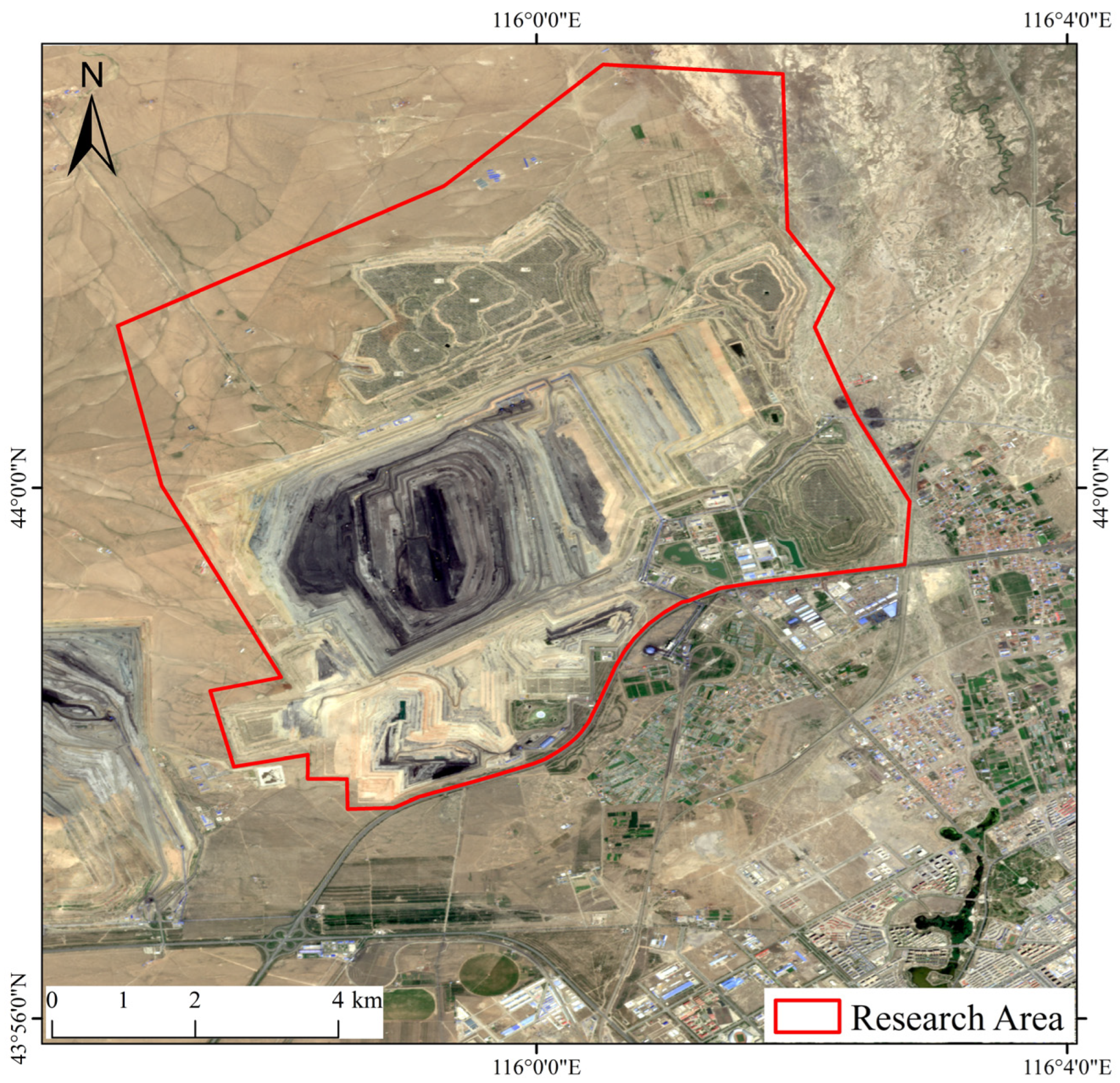
Shengli No. 1 Open-pit Coal Mine is located 6 km north of Xilinhot City, Xilingol League, Inner Mongolia, and is administratively under the jurisdiction of Baoligen Sumu. Its geographical coordinates range from 115°30′ E to 116°4′ E and 43°56′ N to 44°4′ N (Figure 1). Shengli No. 1 Open-pit Mine is situated in the central-western part of the Shengli Coalfield, which is China’s largest lignite production base. The region has a mid-temperate, semi-arid, continental monsoon climate with low annual precipitation and a highly uneven spatiotemporal distribution. The multi-year average precipitation is approximately 300 mm, with rainfall concentrated mainly from June to August, accounting for more than 70% of the annual total. Precipitation exhibits high interannual variability, making seasonal droughts frequent. The multi-year average evapotranspiration ranges from 250 to 300 mm. Shengli No. 1 Open-pit Mine began construction and production in the late 1980s and is currently one of the large-scale open-pit coal mines in northern China [18]. After more than 30 years of high-intensity mining, a large open-pit mine and several supporting waste dumps have been formed, profoundly altering the original grassland landform and ecosystem.

2.2. Data Sources

2.2.1. MODIS Data

Due to the relatively low spatial resolution (500 m) of MODIS products, it is difficult to effectively characterize subtle differences in vegetation productivity and water use at the scale of the mining area. Therefore, it is necessary to perform spatial downscaling of NPP and ET to obtain more accurate information on ecological processes. In this study, MODIS NPP and ET data were downscaled to a spatial resolution of 30 m using a random forest (RF) model. The modeling indices selected in this study were derived from the maximum value composition of MODIS product data from 2001 to 2024 (Table 1). To avoid cumbersome steps in traditional research, such as reprojection and mosaicking during data download, this study used the Google Earth Engine (GEE) platform (https://earthengine.google.com/) to acquire data. Outliers were removed from the original images, and annual maximum-value composition was performed for each index. The data were exported as Geo TIFF files via Google Drive and then clipped in ArcGIS 10.8 prior to visual analysis. Among them, the Normalized Difference Water Index (NDWI) was obtained by maximum value composition using the MOD09A1 surface reflectance product. The Temperature Vegetation Dryness Index (TVDI) was calculated from NDVI and LST in ENVI 5.6.
Given that the temporal resolutions of MODIS and Landsat data differ, this study did not perform scene-by-scene data matching. Instead, it established a statistical relationship between low-resolution MODIS variables and corresponding remote sensing indices on an annual scale. NPP used the MOD17A3H annual product, and ET was aggregated or synthesized based on the MOD16A2 product on an annual scale before being incorporated into the model. By uniformly converting to an annual scale, the influence of differences in observation periods among sensors on the downscaling results can be reduced. All annual synthetic data were exported from Google Drive as GeoTIFF files and processed for clipping, spatial matching, and visualization in ArcGIS 10.8.

2.2.2. Landsat Data

In this study, Landsat data from 2001 to 2024 were used for downscaling. Annual 30 m NDVI, EVI, NDWI, and LST indices were calculated and composed using the maximum value method in Google Earth Engine (GEE), with calculation formulas referenced from the literature [19,20]. The Temperature Vegetation Dryness Index (TVDI) was calculated from 30 m NDVI and LST in ENVI 5.6. Due to the absence of Landsat 5 and Landsat 8 images in 2012 and quality issues with Landsat 7 imagery, Landsat data for 2012 were not selected in this study (Table 2).

2.2.3. Sentinel-1 SLC Data

This study utilizes Sentinel-1 SLC data to calculate ground deformation in the study area. These data are sourced from the European Space Agency (ESA), a leading global space and Earth observation organization. The Copernicus program, spearheaded by ESA, provides multi-source remote sensing data support for the study of surface processes (https://scihub.copernicus.eu/). The D-INSAR workflow was applied in ENVI 5.6 to invert ground deformation.

2.2.4. Meteorological Data

The meteorological data were sourced from the 1 km resolution monthly average temperature and precipitation datasets for the Chinese region, covering the period 2001–2024, provided by the Qinghai–Tibet Plateau Scientific Data Center (https://data.tpdc.ac.cn/home). After cropping, these datasets were used as environmental factors in the Pearson correlation analysis.

2.3. Methods

2.3.1. Random Forest Algorithm

Random forest (RF) is a machine learning method based on ensemble learning, proposed by Breiman [21] in 2001. This algorithm constructs multiple independent decision trees and aggregates their predictions via averaging or voting, thereby improving the model’s stability and generalization. Random forests possess strong non-linear fitting capabilities, robustness to high-dimensional data, and resistance to overfitting; consequently, they are widely used in geoscience and remote sensing research, including feature extraction, spatial modeling, and parameter prediction.
This paper uses the RF model to perform spatial downscaling of NPP (500 m) and ET (1 km) and then calculates 30 m resolution WUE to improve spatial accuracy and detail in WUE estimation at the mining-area scale. In the random forest model, the number of decision trees (n_estimators) is 200. This parameter setting primarily reflects the commonly used values in existing remote sensing downscaling studies and accounts for model stability and computational efficiency. Increasing the number of trees improves model stability and reduces the random error inherent in a single decision tree, but once the number of trees reaches a certain scale, the improvement in model accuracy tends to plateau, while the computational cost increases significantly. Considering the long time series from 2001 to 2024, multiple remote sensing variables, and the 30 m spatial-resolution downscaling calculations involved in this paper, the n_estimators are set to 200 to balance model accuracy, stability, and computational efficiency. The maximum depth (max_depth) of the tree is not limited to ensure that the model can fully fit the complex nonlinear relationships; the minimum split sample number (min_samples_split) is 2, and the minimum leaf node sample number (min_samples_leaf) is 1 to retain local detail features; the random seed (random_state) is 42 to ensure the reproducibility of the results.
For model training and validation, this paper uses random sampling to split the data into training and test sets, with 80% for training and 20% for testing. Remote sensing pixels exhibit spatial continuity, and random sampling may be affected by spatial autocorrelation, leading to test set accuracy that is somewhat higher than necessary. Therefore, the test set accuracy in this paper is primarily used to evaluate the model’s fitting and predictive capabilities across the entire sample set but does not fully reflect the model’s independent spatial extrapolation accuracy. To further test the rationality of the downscaled results, this paper resamples the 30 m downscaled results to the original MODIS spatial resolution and compares them with the original MODIS product to assess the consistency of their spatial distributions.

2.3.2. Calculation of WUE

Vegetation water use efficiency (WUE) is defined as the ratio of NPP to ET, and is calculated as follows [13]:
W U E = N P P E T
In the equation, NPP represents net primary productivity of vegetation, with units of g·C·m−2; ET represents evapotranspiration of vegetation, with units of mm; and WUE has units of g·C·m−2mm−1.

2.3.3. Pearson Correlation Analysis

To quantitatively investigate the correlation characteristics between WUE in the study area and anthropogenic activities and environmental factors, this study employed Pearson correlation analysis. The Pearson correlation coefficient r serves as the core indicator for measuring the strength and direction of linear correlation between two variables, with a range of [−1, 1]. Specifically, when r > 0, it indicates a positive correlation between the two variables; when r < 0, it indicates a negative correlation. The closer the absolute value of the correlation coefficient |r| is to 1, the stronger the linear correlation between the two variables. The formula for calculating it is:
r = i = 1 n ( X i X ¯ ) ( Y i Y ¯ ) i = 1 n ( X i X ¯ ) 2 i = 1 n ( Y i Y ¯ ) 2
Here, X i and Y i denote the values of the two variables for the i-th sample, X ¯ and Y ¯ denote the sample means of the variables, and n denotes the sample size. This paper selects WUE, NDVI, deformation, mining area, temperature and precipitation as the indicators for analysis.
Considering the differences in spatial resolution among data sources, this paper extracts multi-source variable values at randomly sampled points to construct correlation-analysis samples. WUE and NDVI are derived from 30 m remote sensing data, while the spatial resolution of temperature and precipitation data is 1 km. Moreover, meteorological variables usually have strong spatial continuity. If meteorological data are directly resampled to 30 m resolution, this may artificially improve spatial accuracy. Therefore, this paper does not resample the meteorological data to a 30 m resolution. Instead, random sampling points are generated within the study area, and the values of WUE, NDVI, surface deformation, temperature, and precipitation are extracted at those points. Among them, temperature and precipitation are directly extracted from the corresponding pixel values in the original 1 km grid. Subsequently, the Pearson correlation coefficient is calculated from the attribute table of the randomly sampled points. This method not only ensures correspondence among variables across different spatial locations but also avoids the uncertainty that may arise from resampling low-resolution meteorological data.

2.3.4. LandTrendr Algorithm

The LandTrendr algorithm can capture gradual or dramatic changes in time series, which may result from human activities or natural processes. The algorithm removes background noise through fitting or smoothing to generate temporal change trajectories of time-series images. Meanwhile, it can detect subtle differences, capture abrupt events, and analyze the degree of variation in surface feature characteristics using pixel-level time-series trajectories. Since the algorithm derives change characteristics from time-series data, it performs well in detecting long-term disturbances [22,23,24]. In this study, the LandTrendr algorithm was used to identify NDVI disturbance and restoration intensity in the study area to analyze the relationship between NDVI disturbance and WUE.

2.3.5. D-InSAR Surface Deformation Monitoring

This study utilizes Sentinel-1 SLC data from 2015 to 2024 to invert surface deformation in the study area using D-InSAR technology. It derives spatial distributions of deformation data for different time periods, resampling these to a 30 m resolution. By combining these results with 30 m WUE data, the study analyzes the patterns of how surface deformation influences vegetation water use efficiently.

3. Results

3.1. Analysis of Downscaling Results

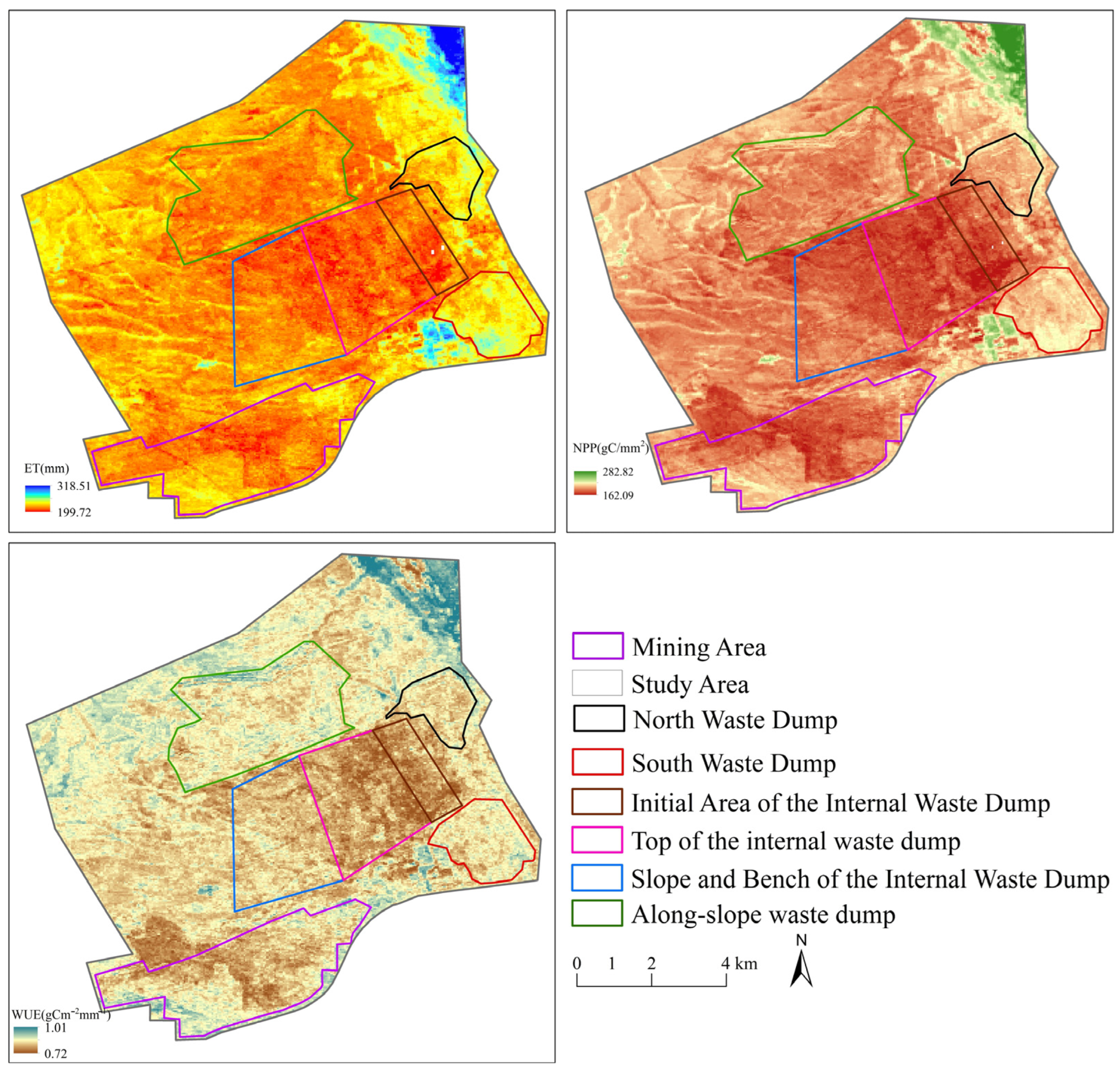
In this study, 1 km ET and 500 m NPP data were used as output variables, whilst 1 km NDVI, LST, and TVDI data from 2001 to 2024, and 500 m NDVI, EVI, and NDWI data were used as input variables. A total of 80% of the data were used as the training set, and 20% was used for model validation. Using the random forest algorithm, downscaling models for ET and NPP were developed, respectively. The R2 values for the training and testing sets of the ET downscaling model were 0.961 and 0.7142, respectively, with RMSEs of 6.813 mm and 18.363 mm. The R2 values for the training and testing sets of the NPP downscaling model were 0.971 and 0.801, respectively, with RMSEs of 8.359 g·C·m−2mm−1 and 21.896 g·C·m−2mm−1. The paper assumes that models established at low resolution remain applicable to high-resolution data; by substituting the indices calculated from Landsat 30 m data into the downscaling model, 30 m NPP and ET data can be obtained (Figure 2).
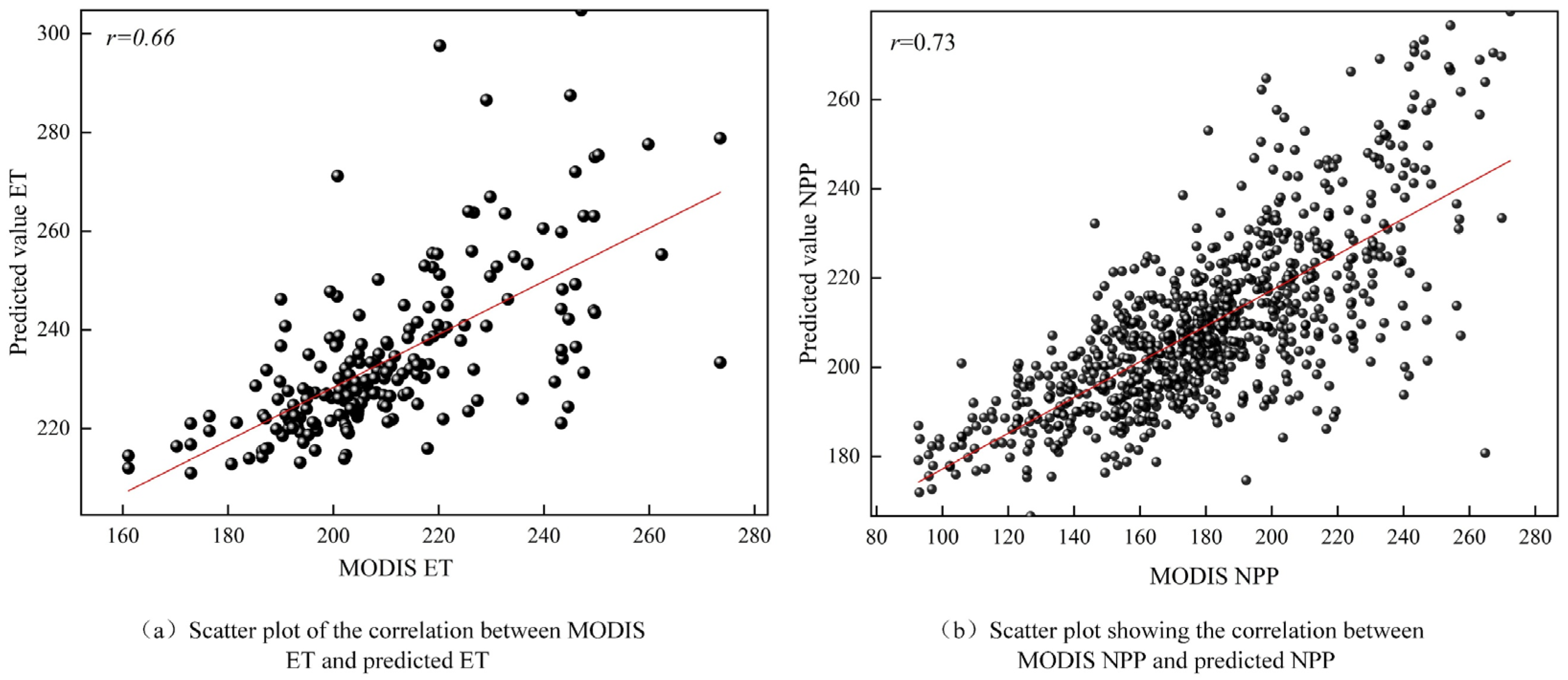
To further verify the consistency between the downscaled data and the original MODIS data, this paper calculated the multi-year average values of NPP and ET for the period 2001–2024 after down-sampling and resampling them to the original resolution. These values were then fitted to the average MODIS data from 2001 to 2024, resulting in the figures shown in Figure 3. The results indicate that the ET and NPP after down-sampling exhibit a certain degree of spatial consistency with the original MODIS products. The fitting degrees are 0.66 and 0.73, respectively, indicating that the model captures the overall spatial trend of change in the original data. However, there is still some dispersion in the scatter plot, suggesting that the downscaled results inevitably contain uncertainty. Since WUE is calculated as the ratio of NPP to ET, uncertainties in NPP and ET will be propagated to WUE results. Generally, the relative error of WUE is jointly influenced by the relative errors of NPP and ET. When ET is low or shows large fluctuations, WUE results are more sensitive to ET errors. Therefore, this paper focuses more on analyzing the long-term trend and spatial relative differences in WUE rather than on precisely inverting the absolute value of WUE for a single pixel.

3.2. Analysis of Spatiotemporal Variations in WUE in the Shengli Mining Area

3.2.1. Variations in WUE at the Mining Area Scale

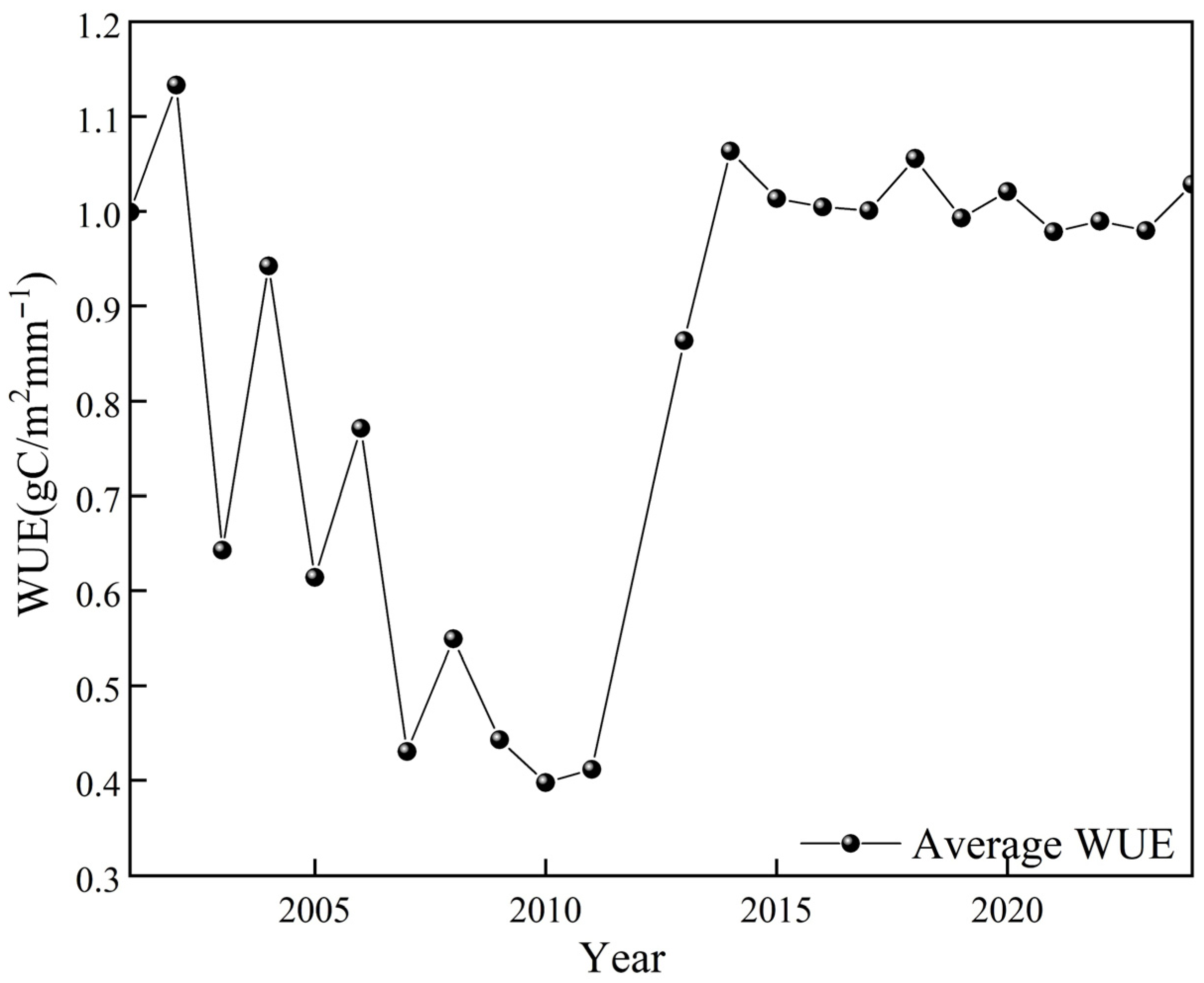
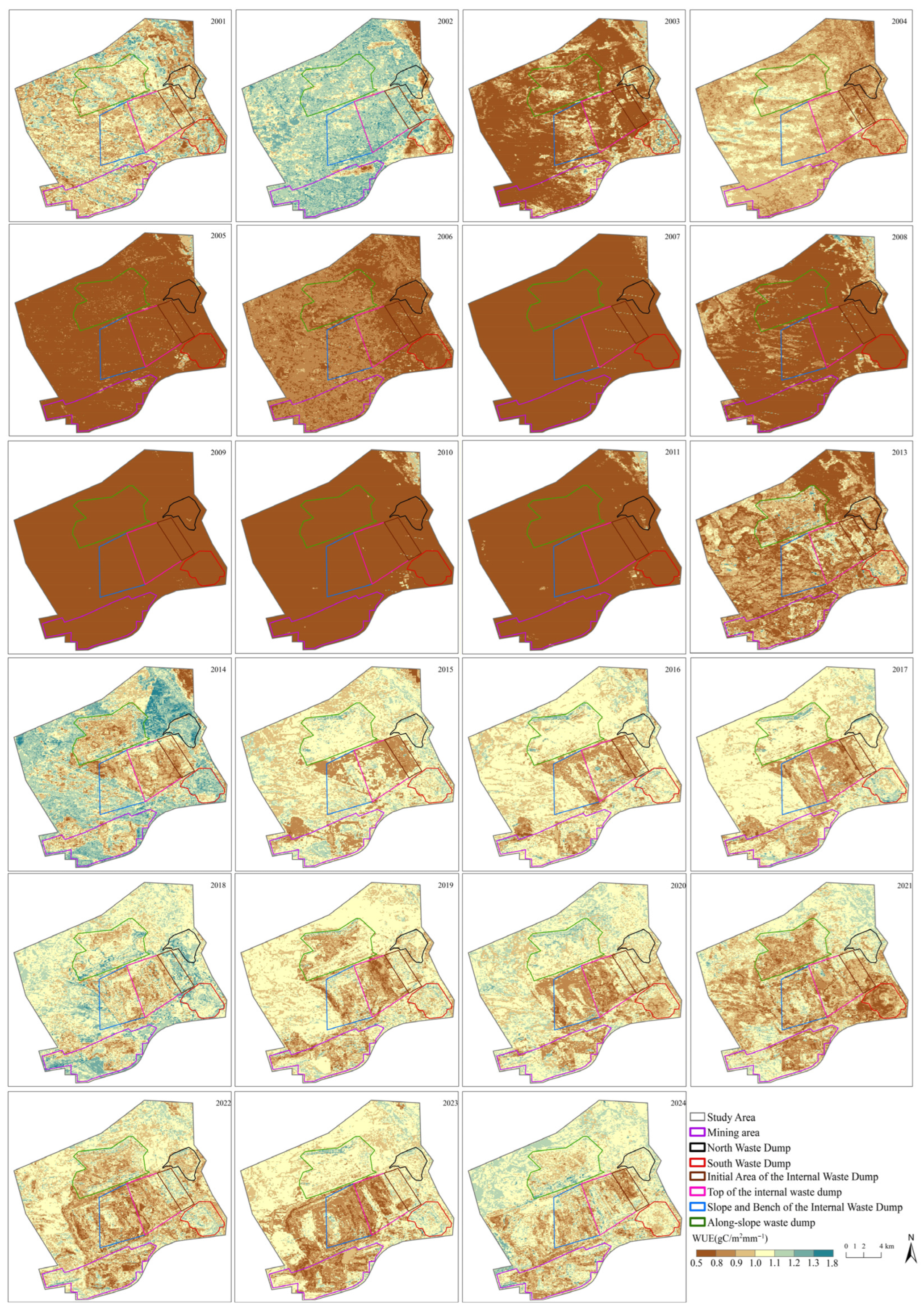
As shown in Figure 4, the average WUE in the study area from 2001 to 2024 reached its maximum in 2002, with a peak value of 1.123 g·C·m−2mm−1. WUE was relatively low in the northeastern part of the mining area and in the eastern and southern parts of the South Waste Dump, while remaining high in other regions. WUE showed a fluctuating downward trend from 2002 to 2011 and reached its minimum in 2010 at 0.398 g·C·m−2mm−1, with overall WUE in the mining area remaining low (0.5–0.8 g·C·m−2mm−1). WUE increased rapidly from 2011 to 2013 and remained relatively stable from 2013 to 2024, with an average value of 1.001 g·C·m−2 mm−1. Compared with the average value of 1.061 g·C· m−2mm−1 from 2001 to 2022, WUE had not yet recovered to its initial level.
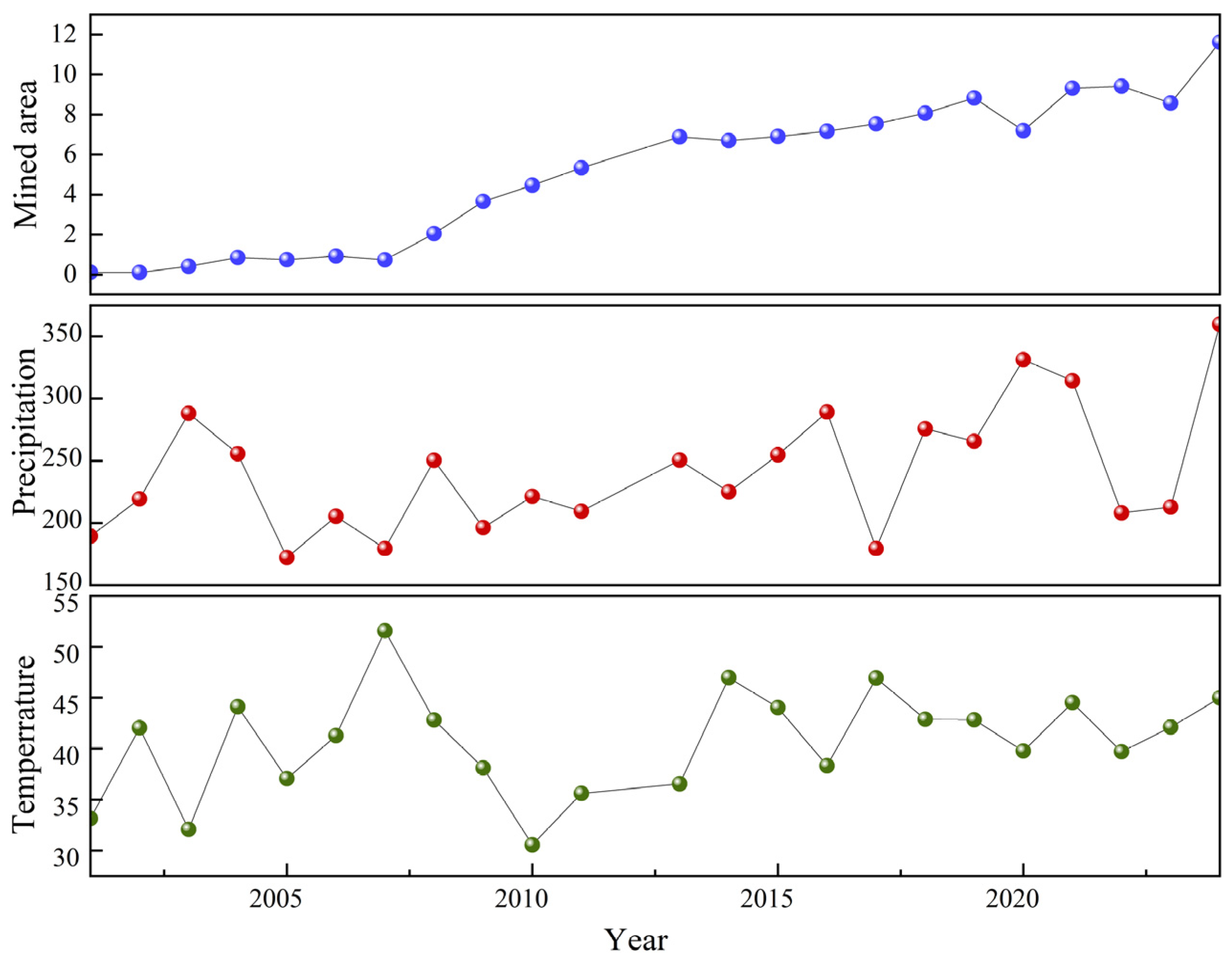
In response to the observation that WUE reached its historical low in 2010, this paper further analyzed this phenomenon by combining interannual variations in mining area, precipitation, and temperature. As shown in Figure 5, precipitation in 2010 was not the lowest during 2001 to 2024, and the temperature that year was relatively low, indicating no clear signs of high-temperature drought. This indicates that the sharp drop in WUE in 2010 was not mainly caused by regional extreme drought. In contrast, the mining area has shown a significant increasing trend since 2007, and the mining disturbance in the mining areas intensified before and after 2010, resulting in damage to the surface cover, degradation of vegetation, and changes in soil moisture conditions, thereby reducing the productivity of vegetation and the efficiency of water utilization (Figure 6). Combined with the result that WUE gradually recovered to some extent after 2011 due to ecological restoration, the lowest WUE value in 2010 was more likely the result of cumulative disturbance from mining activities and incomplete ecosystem recovery. Meteorological fluctuations may have some influence on this, but they are not the dominant cause.

3.2.2. Changes in WUE at the Waste Dump and Mining Area Scales

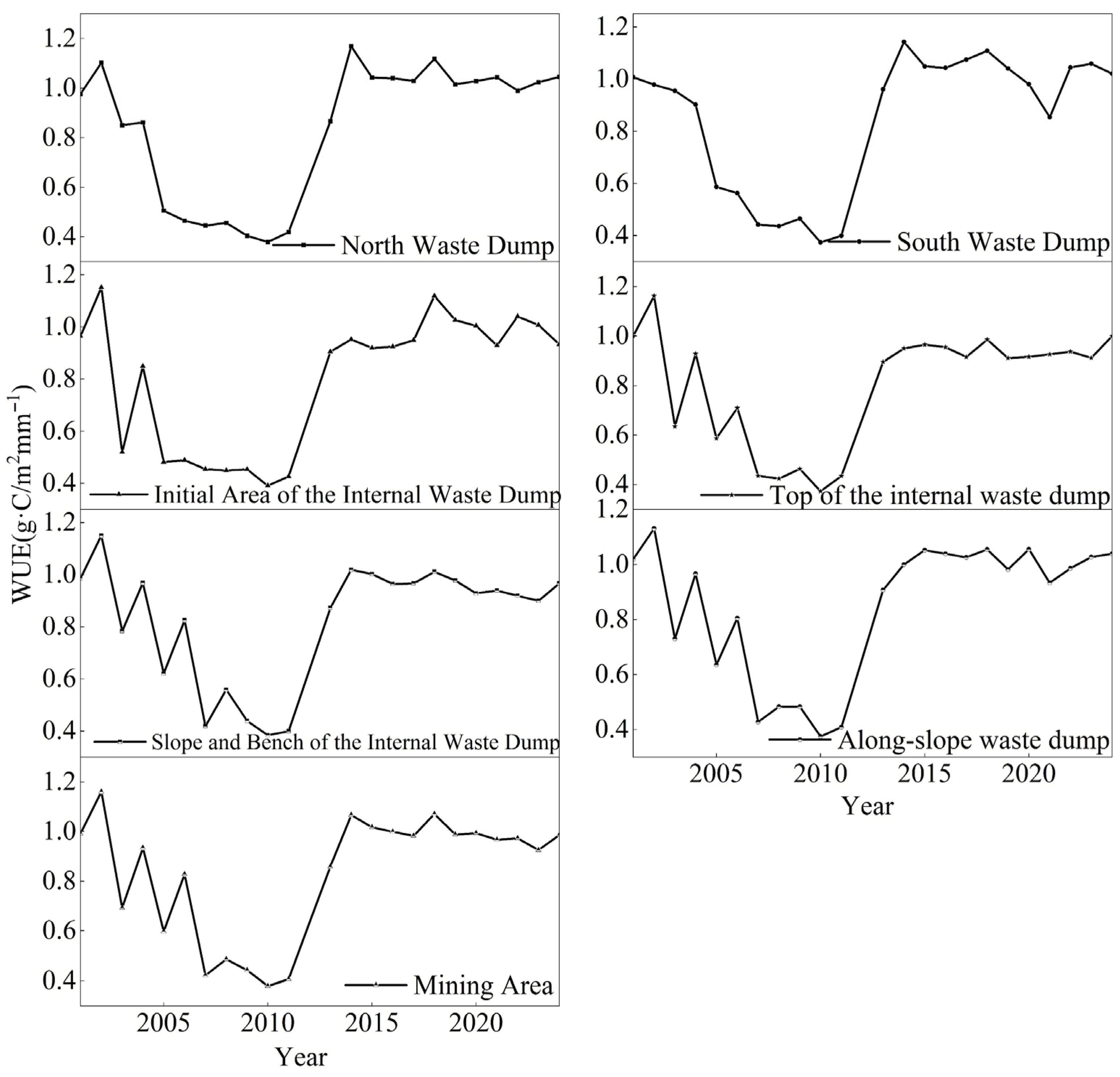
As shown in Figure 7, WUE in the North Waste Dump, South Waste Dump, Initial Area of Internal Waste Dump, Top of Internal Waste Dump, Slopes and Benches of Internal Waste Dump, Along-slope Waste Dump, and Mining Area all exhibited a pattern of decreasing from a high level, recovering gradually, and finally fluctuating within a relatively stable range. Among them, the initial maximum WUE values of the North Waste Dump and South Waste Dump were 1.102 g·C·m−2mm−1 and 0.979 g·C·m−2mm−1, respectively. Both showed a faster decline and a relatively faster recovery rate compared with other regions. The initial maximum WUE values of the Initial Area of Internal Waste Dump, Top of Internal Waste Dump, Slopes and Benches of Internal Waste Dump, Along-slope Waste Dump, and Mining Area were 1.151 g·C·m−2mm−1, 1.162 g·C·m−2mm−1, 1.150 g·C·m−2mm−1, 1.131 g·C·m−2mm−1, and 1.161 g·C·m−2mm−1, respectively. All showed a downward trend from 2003 to 2007, remained at relatively low levels from 2007 to 2011, and began to rise rapidly after 2011, reaching a stable state.
From the above analysis, the temporal variation in water use effectiveness across different waste dumps followed a common pattern: “decrease under disturbance—recovery with restoration—gradual stabilization”. In the early stage of mining, the local ecological environment was severely affected. Recognizing the fragility of the grassland ecosystem in the mining area, the State Environmental Protection Administration put forward the requirement of “mining and remediation simultaneously” in 2005, with limited success achieved in 2009. In addition, large-scale ecological restoration projects were launched from 2010 to 2016, leading to some improvement in the ecology of the mining area. This is consistent with the conclusion that WUE began to recover in 2011, as mentioned in this study, indicating that mining activities negatively affect WUE, while artificial ecological reclamation can effectively restore it.

3.3. Analysis of Spatiotemporal Drivers of Vegetation WUE in the Shengli Mining Area

3.3.1. Analysis of Influencing Factors Based on Correlation

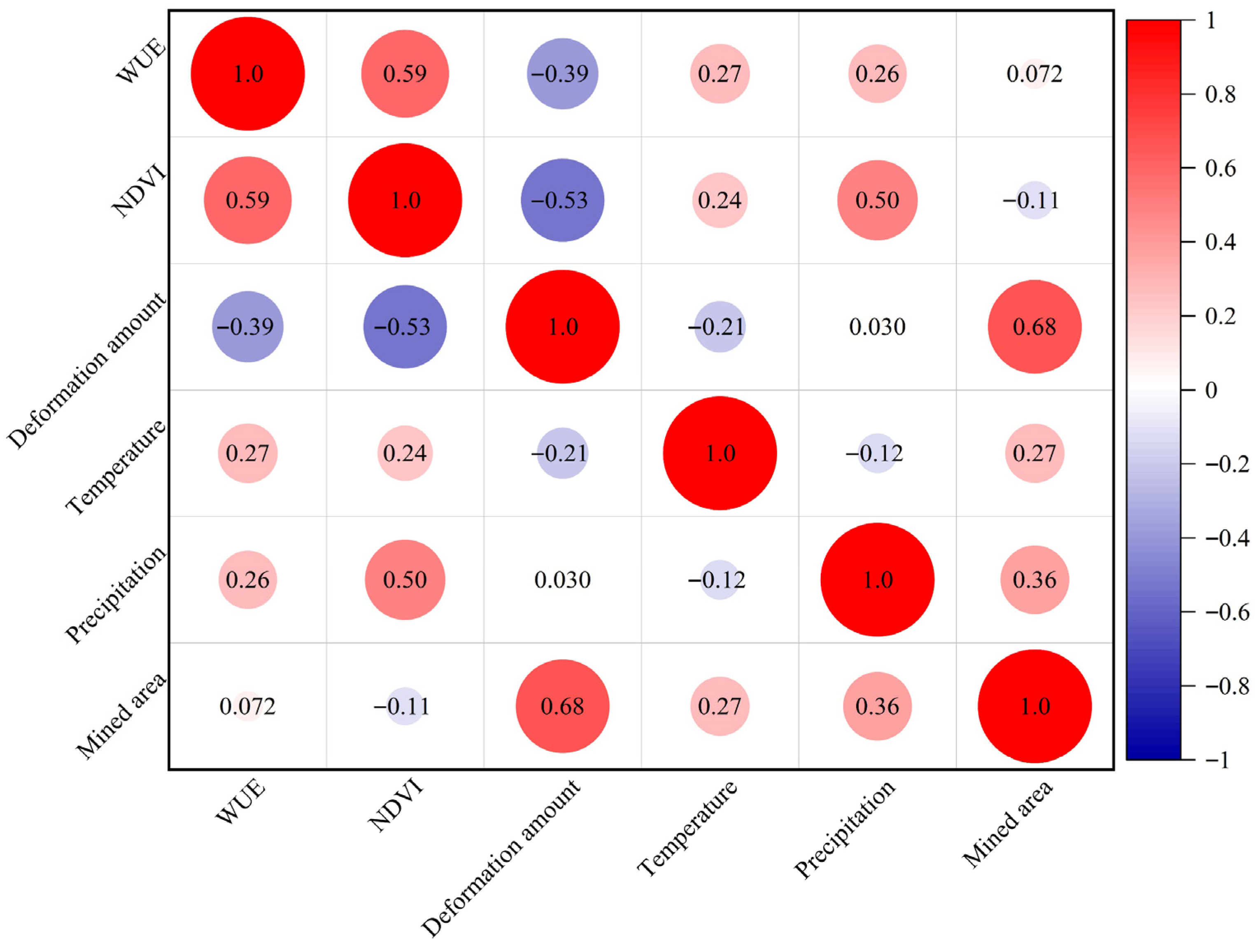
To explore the relationship between WUE in the Shengli Mining Area and human mining activities, vegetation status, and natural factors, the Pearson correlation analysis was used to calculate correlation coefficients among indices such as WUE, NDVI, deformation, mining area, temperature, and rainfall. Since the WUE, NDVI, temperature, and precipitation data cover the period from 2001 to 2024, while the D-InSAR surface deformation data are limited by the availability time of Sentinel-1 images and only cover the period from 2015 to 2024, this study only used the common time series of each index from 2015 to 2024 when analyzing the relationship between surface deformation and WUE and conducting the Pearson correlation analysis including deformation. Using ArcGIS 10.8, the areas with a deformation greater than 10 mm in the D-InSAR inversion surface deformation results from 2015 to 2024 were extracted, and the corresponding WUE, NDVI, rainfall, and temperature were extracted using this area as a mask, and the annual means of each index in the deformation area were calculated. The mining area was derived from visual interpretation of Landsat 8 remote sensing images from 2015 to 2024, and the annual mining area was calculated.
The correlation results show (Figure 8, Table 3) that the correlations between WUE and different factors vary. The Pearson correlation coefficients, ranked from highest to lowest, are: NDVI (0.59) > |Deformation (−0.39) | > Temperature (0.27) > Rainfall (0.26) > Mining Area (0.072). This result indicates that the correlation coefficient between WUE and NDVI is the highest (0.594) with a p-value of 0.070, indicating a strong positive correlation. This suggests that changes in vegetation coverage may be an important factor affecting WUE in the mining area. WUE is negatively correlated with deformation volume (r = −0.393, p = 0.262), suggesting that surface deformation may exert a limited inhibitory effect on WUE, but this correlation is not statistically significant at the 0.05 level. The correlation coefficients between WUE and temperature, rainfall, and mining area are 0.275, 0.265, and 0.072, with p-values of 0.442, 0.460, and 0.842, respectively; none reach the significance level. Overall, NDVI and deformation volume remain the factors most closely related to WUE, but due to the limited sample size, the correlation results should be interpreted more as trends than as strictly significant causal relationships.

3.3.2. Analysis of LandTrendr Disturbance and Recovery and Their Impact on WUE

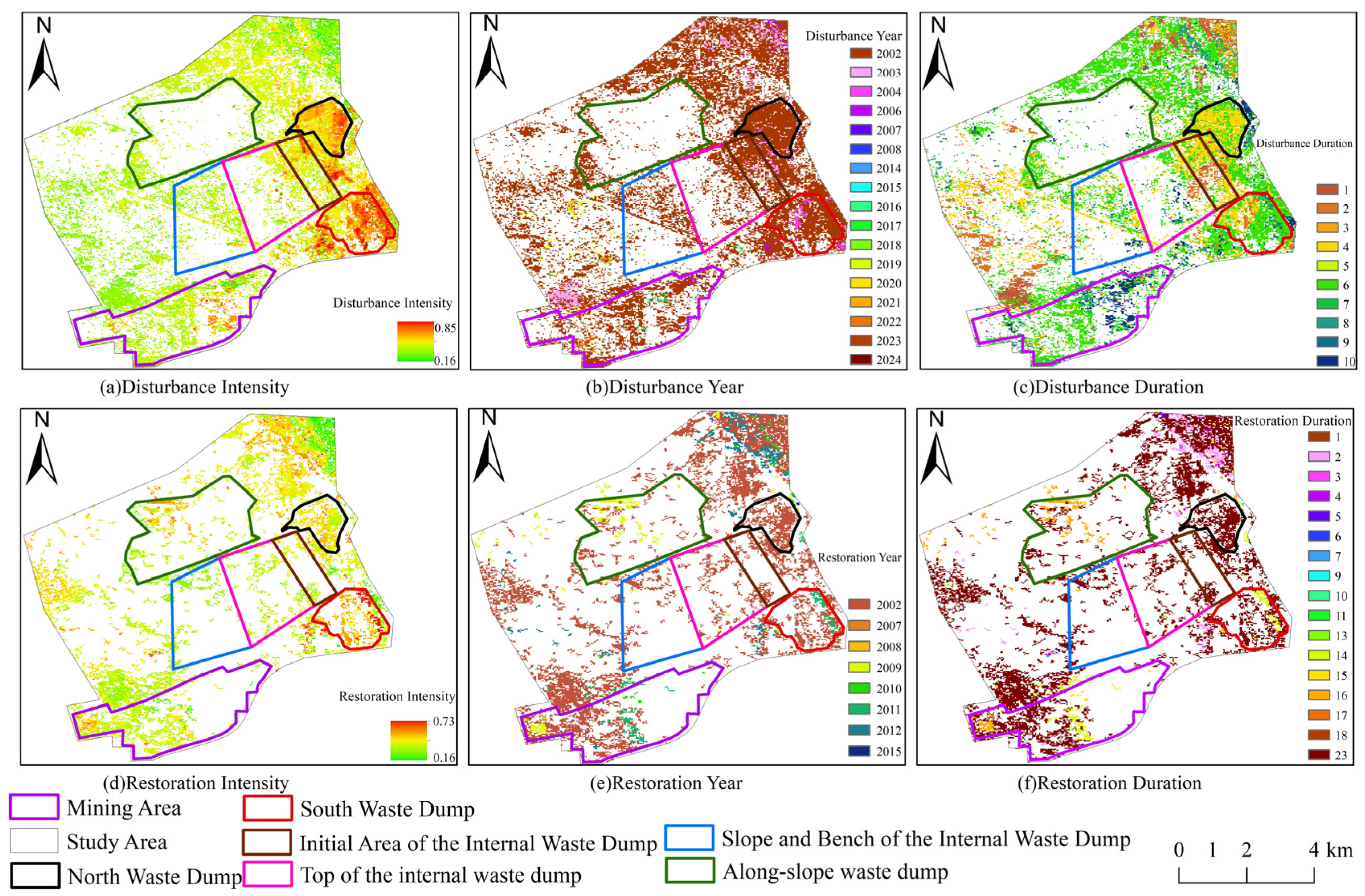
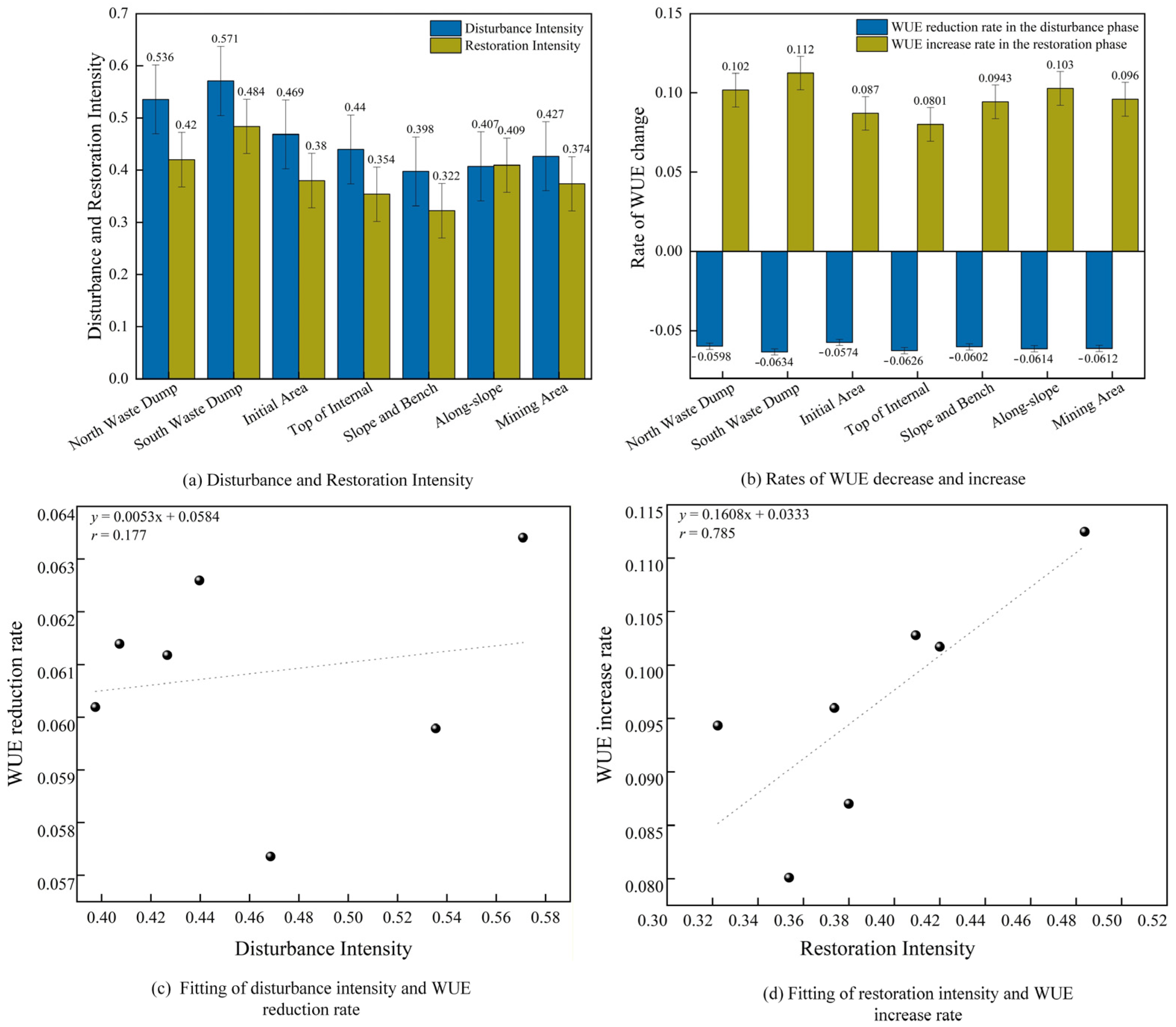
To further explore the characteristics of WUE to NDVI changes, this study used the LandTrendr algorithm to quantify NDVI disturbance and recovery processes and analyzed the corresponding WUE response. The vegetation disturbance and restoration intensities in the study area are shown in Figure 9a,d. The overall disturbance intensity ranged from 0.16 to 0.85, and the restoration intensity ranged from 0.16 to 0.73; higher values indicate greater degrees of disturbance or restoration in the mining area. The average disturbance intensity at the scale of waste dumps and mining areas was 0.46, among which the South Waste Dump had the maximum disturbance intensity of 0.571, and the minimum disturbance intensity was 0.397. The average restoration intensity at the scale of waste dumps and mining areas was 0.391, among which the South Waste Dump had the maximum restoration intensity of 0.484, and the slopes and benches of the Internal Waste Dump had the minimum restoration intensity of 0.322, which was lower than the average restoration level of waste dumps. Figure 9b,e show the years when disturbance and restoration occurred in the Shengli Mining Area. The year 2002 witnessed the most extensive disturbance, accounting for 91.55% of the total area, mainly distributed in the North Waste Dump, South Waste Dump, the initial area of the Internal Waste Dump, and the mining area. The year 2002 also recorded the most extensive restoration, accounting for 85.12% of the total area, mainly distributed in the North Waste Dump, South Waste Dump, and the mining area. Figure 9c,f indicate that the disturbance duration of 6 years accounted for the largest proportion (49%) across the study area, while the restoration duration of 23 years accounted for the largest proportion, covering 85.10% of the area.
In summary, vegetation dynamics in the Shengli Mining Area present an evolutionary pattern of “strong disturbance—long-term restoration—gradual stabilization”. Early mining activities caused large-scale, high-intensity disturbance, after which vegetation in the mining area gradually recovered over a long period, with significant spatial heterogeneity in the restoration process. Restoration proceeded relatively rapidly in waste-dump areas but relatively slowly on slopes and benches.
To reveal the dynamic response characteristics of WUE in the mining area during the disturbance–recovery process, the period 2001–2024 was divided into the following three phases according to the NDVI disturbance year and the temporal trend of WUE: the disturbance phase (2001–2010), the recovery phase (2011–2017), and the stable phase (2018–2024). As shown in Figure 10, disturbance and restoration intensities vary across regions. WUE shows a downward trend during the disturbance phase and an upward trend during the recovery phase, indicating that WUE responds strongly to vegetation disturbance and restoration processes. Overall, disturbance intensity is positively correlated with the rate of WUE reduction, and restoration intensity is positively correlated with the rate of WUE recovery.
As shown in Figure 10a,b, to characterize spatial heterogeneity and statistical dispersion among different research areas, the results of this study are mainly based on remote sensing pixels and regional statistics. Therefore, the error is calculated as the sample standard deviation based on the mean values of the seven research areas. Specifically, in Figure 10a, the standard deviations of disturbance intensity and recovery intensity are 0.0661 and 0.0521 respectively, and in Figure 10b, the standard deviations of WUE reduction rate and WUE recovery rate are 0.00198 and 0.01062 respectively. This error range is used to reflect the overall dispersion of disturbance intensity, recovery intensity, and WUE change rate among different areas, providing a reference for further comparison of regional differences. The South Waste Dump and North Waste Dump exhibit the highest disturbance intensities, at 0.571 and 0.536, respectively, with correspondingly the largest WUE reduction rates of −0.0634 and −0.0598. This indicates that the higher the NDVI disturbance intensity, the faster the decline in WUE. In contrast, the top of the Internal Waste Dump and the slopes and benches of the Internal Waste Dump show relatively low disturbance intensities of 0.440 and 0.397, accompanied by lower WUE reduction rates. Severe vegetation disturbance directly leads to rapid degradation of vegetation’s water-use functions, whereas weaker regions exhibit a degree of ecosystem resistance to disturbance. During the recovery phase, the inner dump and South Waste Dump display relatively high restoration intensities of 0.420 and 0.484, with correspondingly rapid WUE recovery rates of 0.102 and 0.112. This demonstrates that greater vegetation restoration intensity accelerates the recovery of water-use effectiveness, and high-intensity restoration measures can effectively improve WUE in a relatively short time. Conversely, the top of the Internal Waste Dump and its slopes and benches show lower restoration intensities of 0.354 and 0.322, with corresponding slower WUE recovery rates of 0.0801 and 0.0943, suggesting that these areas have been severely affected by long-term mining and surface disturbance, resulting in slower ecosystem recovery. In the stable phase, the mining ecosystem gradually approaches equilibrium. During this period, the gap between NDVI restoration and disturbance intensities narrows, indicating that the ecosystem’s structure and function are gradually rebalancing. WUE remains generally high and stable, with reduced spatial fluctuations across regions. After experiencing strong disturbance and substantial recovery, the North and South Waste Dumps maintain high, stable WUE values. WUE in the Internal Waste Dump and Along-slope Waste Dump shows a steady upward trend. However, in the mining area, WUE recovers slowly and fluctuates considerably due to persistent surface deformation. This suggests that the ecosystem has reached a new equilibrium after restoration, with stable water-use efficiency, and the long-term impacts of disturbance have been offset by continuous restoration measures.
In summary, WUE exhibits distinct phasic response characteristics across the three stages of “disturbance–recovery–stability” in the mining area: a rapid decline during the disturbance period, a significant increase during the recovery period, and gradual stabilization in the stable period. Disturbance intensity determines the magnitude of WUE reduction, while restoration intensity governs the rate of WUE increase. This confirms that NDVI disturbance and restoration intensities are positively correlated with the rates of WUE reduction and increase, as illustrated in Figure 10c,d.

3.3.3. Coupling Analysis Results of Surface Deformation and WUE

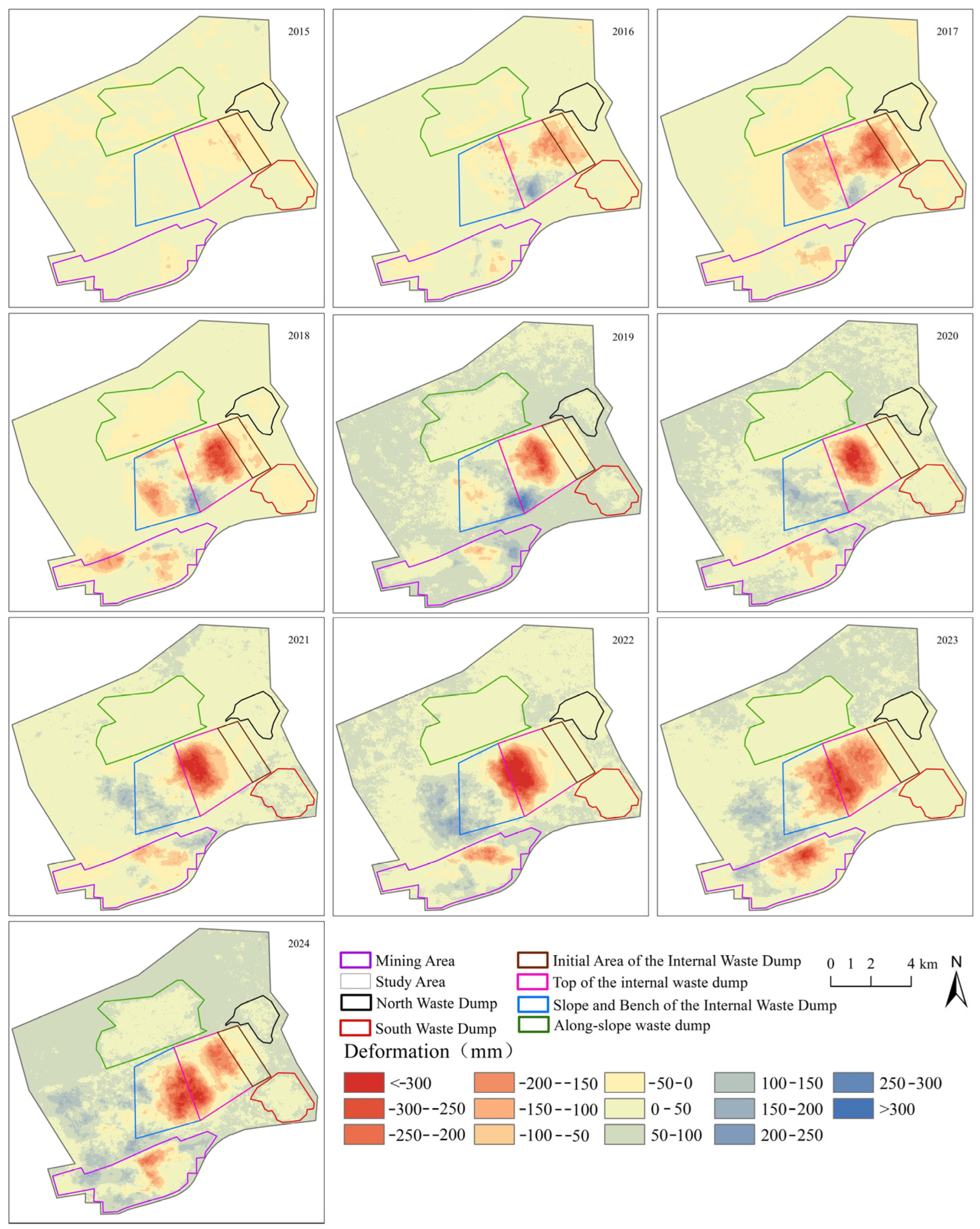
In this study, D-InSAR surface deformation results for the study area were obtained by inversion of Sentinel-1 SLC data from 2015 to 2024 (Figure 11). Positive deformation values indicate uplift, while negative values indicate deformation; both are collectively referred to as deformation in this paper. From 2015 to 2024, deformation zones in the study area gradually expanded from the Internal Waste Dump’s initial area toward its slopes and benches. During 2015–2017, deformation was mainly concentrated in the initial and top areas of the Internal Waste Dump, with a maximum of 307 mm in 2017. No obvious deformation was observed in the North Waste Dump, South Waste Dump and Along-slope Waste Dump. From 2018 to 2024, as the mining area expanded southwestward, the deformation zones gradually spread in that direction, and the extent of deformation increased continuously. Meanwhile, significant deformation began to appear in the active mining area.
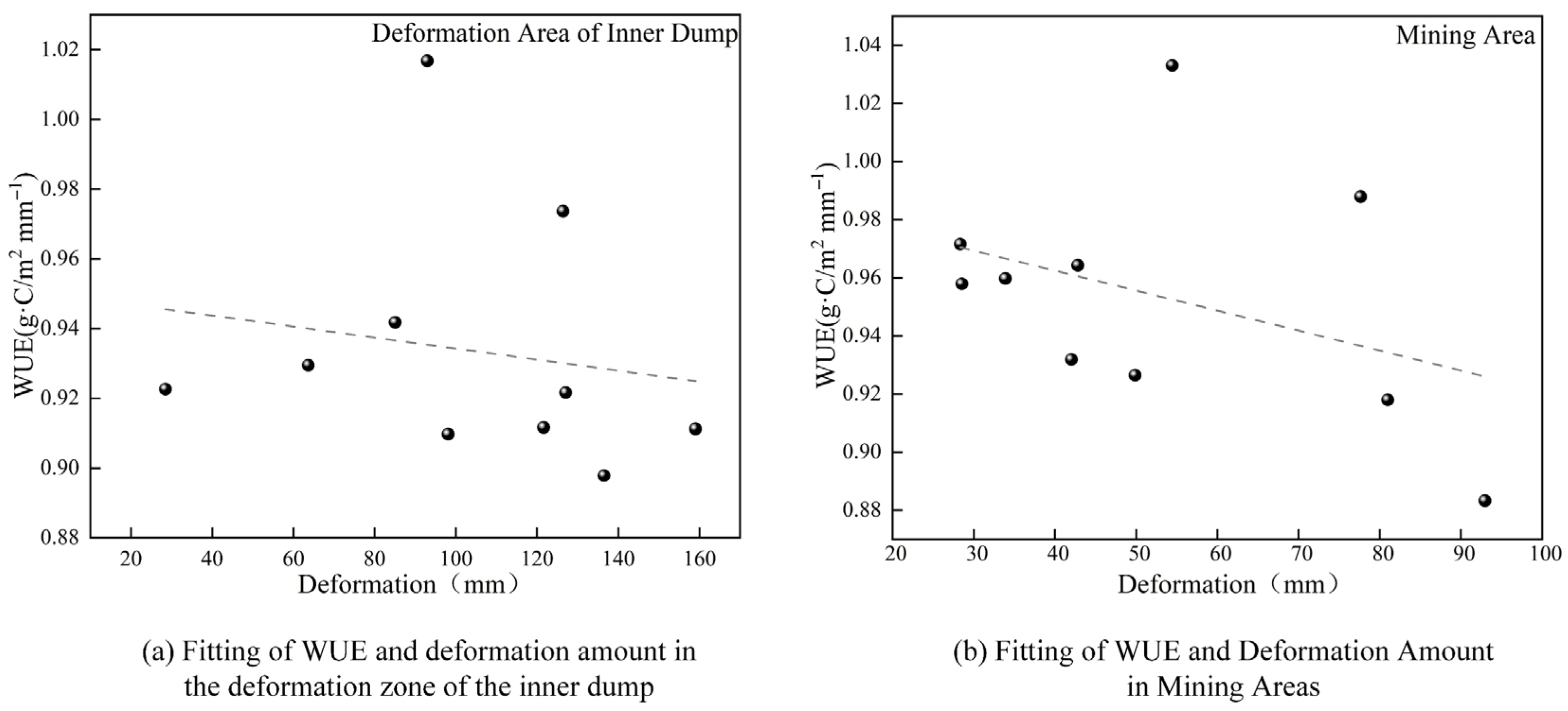
To further explore the relationship between deformation amount and WUE, this study divided the main deformation areas into the inner dump deformation zone and the mining area and analyzed the relationship in each zone separately, as shown in Figure 12a,b. The results show that both regions exhibit a negative correlation in which increasing deformation amount leads to decreasing WUE, although the strength of the correlation differs significantly. In the inner dump deformation zone, although WUE generally decreases with increasing deformation amount, the data show high dispersion. This phenomenon may be related to the complex surface topography and vegetation restoration of the waste dump. In contrast, the relationship between deformation and WUE in the mining area is more consistent and shows a clearer negative correlation. WUE decreases continuously with increasing deformation amount, and areas with high deformation (93 mm) exhibit low WUE values (0.88 g·C·m−2mm−1). These results show that spatiotemporal deformation patterns in the study area significantly influence WUE. The mining zone is more responsive to deformation magnitude, while the Internal Waste Dump displays greater heterogeneity due to surface reshaping and vegetation restoration, leading to a more scattered relationship between WUE and deformation. In general, increased deformation tends to reduce WUE, indicating that deformation plays a key role in the spatial distribution of WUE in the mining region. These insights provide a scientific foundation for future vegetation restoration and ecological management efforts.

4. Discussion

4.1. Reliability of Downscaling Results and Comparison of Ecological Restoration in Different Climate Zones

This study downscaled MODIS NPP and ET using RF to obtain 30 m resolution NPP and ET data and constructed a 30 m resolution WUE time-space sequence for the Shengli No. 1 Open-pit Mining Area from 2001 to 2024. The spatial distribution results for WUE obtained through downscaling were consistent with the findings of Fei [25], indicating that the downscaling results are reliable and effectively reflect the spatial change trends of NPP, ET, and WUE at the mining-area scale. Compared with existing MODIS ET downscaling studies, Ke et al. [19] down-scaled MODIS ET to 30 m based on Landsat 8 and machine learning methods, and their verification results showed that the machine learning method has good applicability in ET downscaling. Considering the fragmented surface and strong heterogeneity of the mining area, the downscaling accuracy obtained in this study is generally within an acceptable range and can be used to analyze long-term change trends and spatial relative differences in WUE.
By analyzing WUE at the mining-area and tailings-disposal-area scales from 2001 to 2024, the study area shows a phased change process of “decrease in disturbance—recovery and rise—approaching stability”. This feature is consistent with Xiao et al.’s [26] understanding of the ecological succession law in the mining area, indicating that intensive mining activities are a key driver of fluctuations in the area’s ecological function. The surface stripping, vegetation destruction and tailings disposal reconstruction in the early mining stage led to a decrease in WUE; with the gradual implementation of ecological restoration measures, vegetation coverage and productivity recovered, and WUE subsequently rose; in the stable period, the fluctuation of WUE decreased, indicating that the ecosystem function of the mining area gradually approaches stability, but has not fully recovered to the original ecological state.
Compared with studies on ecological restoration across different climate zones, WUE recovery in semi-arid mining areas shows greater water sensitivity. Existing studies have shown that the average WUE in different ecological restoration areas in Gansu Province from 2001 to 2020 was 1.71 g·C·m−2·mm−1, and most areas had a lag response relationship with the drought index, indicating that in the transition zone between drought and semi-drought, water conditions have an important influence on WUE changes [7]. At the same time, Yang et al. [18], the regional-scale study in Inner Mongolia further showed that 55.15% of the area from 2001 to 2020 had a downward trend in WUE, and the WUE in the western Gobi desert was as low as 0.28 g·C·m−2·mm−1, and the WUE in the arid area was mainly controlled by precipitation, with a precipitation influence threshold of approximately 426 mm [27]. In contrast, the WUE level of water-conditioned river basin ecosystems is usually higher, for example, the annual average WUE of the Shaozhang River Basin in North China was 2.160 ± 0.975 g C kg−1 H2O, and it showed a significant upward trend [28]. This indicates that in different climate zones, WUE recovery depends not only on the intensity of vegetation restoration but also on regional water supply, evaporative demand, and drought stress.
Overall, the WUE recovery results in the Shengli mining area indicate that the key to ecological restoration of open-pit mines is not only to increase vegetation cover but also to improve soil water retention capacity, enhance surface stability, and maintain vegetation’s long-term growth capacity. Compared with humid or semi-humid areas, semi-arid open-pit mine ecological restoration should pay more attention to the coupling relationship of “water supply—soil structure—vegetation restoration—WUE”; compared with extreme arid areas, the Shengli mining area still has a certain natural precipitation support, so WUE can achieve a significant recovery under continuous restoration measures. This comparison shows that the conclusions of this study can not only be used for the evaluation of ecological restoration in the Shengli mining area but also provide a reference for the assessment of the ecological restoration effect in other arid, semi-arid, and grassland-type open-pit mines.

4.2. The Impact of Vegetation Disturbance and Surface Deformation on WUE

Pearson correlation analysis shows that the linear relationship between WUE and NDVI is the most significant (r = 0.59), indicating that NDVI is the dominant factor affecting WUE in the mining area. The stronger the NDVI disturbance, the faster the WUE decreases; the greater the restoration intensity, the more obvious the recovery of WUE. This is consistent with the research results of Hu et al. [29] on the global scale. Vegetation restoration can effectively enhance the ecosystem’s water-use efficiency. The deformation variable is negatively correlated with WUE (r = –0.39), indicating that surface deformation inhibits WUE by damaging soil structure, changing soil water retention capacity and root layer distribution; temperature (r = 0.27) and precipitation (r = 0.26) have a certain promoting effect on WUE, but their influence is significantly weaker than vegetation coverage and deformation. This feature is consistent with the research results of Liu et al. [13] in the semi-arid grassland ecosystem. Under the background of strong human disturbance, the short-term influence of climatic factors is often masked. Although the results show that the correlations between precipitation and temperature and water use efficiency (WUE) are relatively weak, this does not mean that climatic factors are unimportant in the semi-arid mining area ecosystem. On the contrary, water is still the key factor limiting the growth of semi-arid grassland vegetation and ecological restoration. The relatively weak correlation of climatic factors in this study might be due to the stronger direct influence of human disturbances such as mining activities and ecological restoration during the study period. Open-pit mining leads to surface stripping, soil structure damage, and a decline in vegetation coverage, which can significantly change NPP, ET, and WUE in a short period of time, while ecological restoration changes the growth state of vegetation through artificial soil covering, vegetation reconstruction, and surface improvement. These human processes may exceed the influence of interannual fluctuations in precipitation and temperature on a local scale, thereby masking the climate signal. In the context of future climate change, this relationship may change. If regional warming intensifies, evapotranspiration demand increases, or extreme drought events occur more frequently, the vegetation restoration in semi-arid mining areas will face stronger water stress, and the control effect of climatic factors on WUE may increase. Especially after the ecological restoration enters a stable period, the intensity of human disturbances decreases, and the variability of precipitation, drought frequency, and high-temperature stress may once again become important factors affecting the interannual fluctuations of WUE. Therefore, future ecological restoration in mining areas should fully consider climate change scenarios, prioritize the selection of drought-tolerant, well-rooted, low-water-consuming, and highly adaptable restoration plants, and combine soil water retention measures to improve the long-term stability and resilience of the restored ecosystem.
Based on the results of Pearson correlation analysis, this study further explored the impact of vegetation disturbance and deformation on WUE. Based on the spatial distribution of vegetation disturbance, the northern and southern spoil areas exhibit pronounced disturbance. Since 2010, with the implementation of reclamation activities, vegetation has recovered rapidly, and WUE exhibits a typical characteristic of “high disturbance—fast recovery”; in contrast, the slopes and flat areas of the inner spoil area show slower vegetation recovery and a lower WUE recovery rate. Surface deformation is also an important factor affecting WUE. The results of this study show that the deformation variable is negatively correlated with WUE, and that the relationship between the deformation area and WUE is more stable, indicating that vegetation water use efficiency in the mining area is more sensitive to surface deformation.
The inhibitory effect of deformation on WUE may be closely related to the destruction of soil physical structure, changes in water processes in the root zone, and restricted root growth. Mining deformation and spoil reconfiguration will change soil density, porosity, and pore size distribution, thereby affecting the infiltration, water storage, and water redistribution processes. Coal mining deformation will reduce the water retention capacity of the surface soil, damage the soil structure, and intensify soil nutrient loss [3]. From the perspective of soil physical processes, pore structure is an important factor determining the ability of soil to retain and transport water; among them, medium and small pores are closely related to capillary water retention and plant available water. Settlement compaction may reduce the proportion of effective pores and weaken the water storage capacity in the root zone, while surface fissures and uneven settlement may cause rapid infiltration of precipitation or lateral loss, disrupting the continuity of capillary water, making the water supply to the root zone unstable. In addition, surface displacement, fissure development, and instability due to settlement may cause mechanical damage to the root and increase soil mechanical resistance, thereby restricting root extension, water absorption, and nutrient uptake [30]. In semi-arid mining areas, the decline in root water absorption capacity will further exacerbate water stress, reduce vegetation’s photosynthetic carbon fixation capacity and NPP; at the same time, exposed or fragmented surfaces may increase ineffective evaporation, altering the ET structure. Since WUE is defined as the ratio of NPP to ET, when deformation reduces vegetation productivity, destabilizes the water supply in the root zone, and disrupts evaporation, WUE will decrease. Therefore, the negative correlation between deformation and WUE in this study not only reflects the direct impact of changes in surface morphology on vegetation growth but also reveals the underlying mechanism by which mining disturbance affects the carbon–water coupling process through changes in soil pore structure, capillary water transport, and root habitat.
Based on surface deformation and vegetation degradation, soil nutrient degradation in the mining area may further hinder the recovery of WUE. The open-pit mining process can cause the stripping of surface soil, the destruction of soil structure, and the loss of nutrients, including organic matter and nitrogen, thereby weakening the soil’s ability to retain water and nutrients and restricting the growth of vegetation roots and carbon fixation through photosynthesis. The decrease in total nitrogen and soil organic carbon may further affect NPP, ET, and WUE by inhibiting vegetation productivity, reducing root water absorption capacity, and altering the evaporation process.

4.3. Research Limitations and Future Prospects

In this study, NDVI was positively correlated with WUE, and surface deformation was negatively correlated with WUE, indicating that vegetation restoration and surface disturbance are important factors affecting WUE. Changes in soil nutrients might be one of the important ecological processes linking mining disturbance, vegetation restoration, and changes in WUE. Due to the limited availability of long-term, continuous soil nutrient measurement data, this study has not included soil indicators such as total nitrogen and soil organic carbon in the quantitative analysis, which is a limitation of this research. Future studies can combine field sample surveys, long-term soil monitoring, and remote sensing data to further distinguish differences in WUE responses across vegetation types, restoration years, and ecological restoration models. At the same time, indicators such as soil organic carbon, total nitrogen, soil moisture content, soil bulk density, and porosity can be used to analyze in depth the interactions among mining disturbance, soil degradation, vegetation restoration, and water use efficiency.
Although this study constructed a 30 m resolution spatiotemporal WUE sequence for the Shengli mining area from 2001 to 2024 using multi-source remote sensing data and random forest models, the research methods still have certain limitations. Firstly, optical remote sensing indices such as NDVI may exhibit saturation in areas with high vegetation cover or biomass, thereby reducing their sensitivity to changes in vegetation restoration intensity and productivity; in arid and semi-arid regions, NDVI may also be affected by soil background and sparse vegetation cover. Although this study introduced multiple indicators, such as EVI, NDWI, LST, and TVDI, to participate in the downscaling of NPP and ET to reduce the uncertainty of a single index, remote sensing indices may still have certain deviations in local high-coverage restoration areas or bare land-sparse vegetation mixed areas.
Although the random forest model can effectively capture the nonlinear relationships among NPP, ET, and multi-source remote sensing indices, its predictive ability largely depends on the range of variables represented in the training samples. When surface conditions, vegetation status, or combinations of water and heat in the prediction area fall outside the range covered by the training samples, the model’s extrapolation may be uncertain. Therefore, the downscaling results of this study are better suited to analyzing long-term change trends and spatial relative differences in WUE in the mining area and should not be overemphasized for high-precision inversion of the absolute value of WUE at a single pixel. In addition, D-InSAR deformation data may be affected by phase decoherence, unwrapping errors, and IDW interpolation uncertainty in rapidly subsiding areas, so the absolute deformation variable in high-deformation areas still carries a certain degree of uncertainty.
Overall, the results of this study reflect the long-term trend in WUE in the mining area but remain affected by factors such as saturation of optical indices, model extrapolation, and deformation inversion errors. Future research can combine field sample surveys, long-term soil monitoring, and high-resolution remote sensing data to distinguish differences in WUE responses across vegetation types, restoration years, and ecological restoration models. At the same time, indicators such as soil organic carbon, total nitrogen, soil moisture content, soil bulk density, and porosity should be introduced to conduct a deeper analysis of the interaction mechanisms among mining disturbance, soil degradation, vegetation restoration, and changes in WUE. Additionally, subsequent research can also combine climate change scenarios and long-term ecological monitoring data to assess the stability, resilience, and response to extreme drought events of the restored ecosystem in semi-arid mining areas, providing more comprehensive scientific basis for optimizing ecological restoration and green mine construction in mining areas.

5. Conclusions

This study is based on multi-source remote sensing data from 2001 to 2024. An RF model was used to scale MODIS NPP and ET to a 30 m resolution, and Pearson correlation analysis was combined to construct the temporal and spatial sequence of WUE in the Shengli mining area, revealing the impact of open-pit coal mining and ecological restoration on the carbon–water coupling function of the mining area. The results show that the accuracy of the scaled NPP and ET is 0.801 and 0.714 respectively, and the spatial distribution is in good consistency with the original MODIS product, which can meet the monitoring requirements of WUE at the mining area scale. From 2001 to 2024, the WUE in the Shengli mining area showed a phased evolution characteristic of “interference decline—restoration recovery—gradual stabilization”, indicating that the continuous mining disturbance continuously weakens the water utilization ability of vegetation, while ecological restoration can promote its recovery. However, the WUE in the stable period has not yet fully recovered to the initial level, suggesting that the ecological function recovery of the mining area is more likely to manifest as a new stable state. The analysis of driving factors shows that NDVI is positively correlated with WUE, and surface deformation is negatively correlated with WUE. This indicates that vegetation restoration helps to improve WUE, while mining subsidence may inhibit the recovery of WUE by destroying soil structure and root zone water conditions, and its impact is more prominent than climate factors such as temperature and precipitation. There are significant spatial differences in the response of WUE in different dump sites and mining areas. Among them, the recovery is faster after dump site restoration, and the recovery in the areas with continuous mining and deformation is relatively lagging. Based on the above results, subsequent ecological restoration in the mining area should be implemented with differentiated governance according to the WUE recovery status, surface deformation intensity, and vegetation restoration degree. Priority should be given to strengthening surface stability, soil water retention, and vegetation reconstruction measures in the mining area, the inner dump site slopes, and areas with significant deformation. Future research should also combine soil moisture, soil nutrients, vegetation community, and long-term ground monitoring data to improve the comprehensive assessment framework of “mining disturbance—soil degradation—vegetation restoration—WUE change”, providing more comprehensive scientific support for green mine construction and ecological restoration management.


Author Contributions

Methodology, Z.X., B.X. and G.C.; validation, L.M. and Y.L.; investigation, Y.H.; resources, B.X. and G.C.; data curation, Y.H.; writing—original draft preparation, Z.X. and Y.L.; writing—review and editing, H.Y.; supervision, H.Y.; funding acquisition, L.M. All authors have read and agreed to the published version of the manuscript.

Funding

This research was funded by China Energy Investment Group Project grant number SLNY-Open-pit Mine (2024) No. 34.

Institutional Review Board Statement

Not applicable.

Informed Consent Statement

Not applicable.

Data Availability Statement

The original contributions presented in this study are included in the article. Further inquiries can be directed to the corresponding author.

Conflicts of Interest

Authors Yuejun Huang, Bing Xiao and Guoyu Chen were employed by the China Energy North Power Victory Energy Company Limited. The remaining authors declare that the research was conducted in the absence of any commercial or financial relationships that could be construed as potential conflicts of interest. The authors declare that this study received funding from China Energy North Power Victory Energy Company Limited. The funder had the following involvement with the study: the funder provided financial support but had no involvement in the study design, data collection and analysis, interpretation of results, manuscript preparation, or the decision to submit the manuscript for publication.

References

  1. Zhou, S.; Zhang, Y. Open-pit coal mining alters vegetation cover, soil microbial metabolic profile and nutrient cycling potential in an arid shrubland. J. Environ. Chem. Eng. 2025, 13, 118804. [Google Scholar] [CrossRef]
  2. Song, D.; Hu, Z.; Zeng, J.; Sun, H. Influence of mining on vegetation in semi-arid areas of western China based on the coupling of above ground and below ground—A case study of Daliuta coalfield. Ecol. Indic. 2024, 161, 111964. [Google Scholar] [CrossRef]
  3. Ma, K.; Zhang, Y.; Ruan, M.; Guo, J.; Chai, T. Land subsidence in a coal mining area reduced soil fertility and led to soil degradation in arid and semi-arid regions. Int. J. Environ. Res. Public Health 2019, 16, 3929. [Google Scholar] [CrossRef]
  4. Xi, N.; Mei, G.; Liu, Z.; Xu, N. Automatic identification of mining-induced subsidence using deep convolutional networks based on time-series InSar data: A case study of Huadong mining area in Shanxi province, China. Bull. Eng. Geol. Environ. 2023, 82, 78. [Google Scholar] [CrossRef]
  5. Zheng, Y.; Zhao, Z.; Zeng, M.; Zhou, D.; Su, X.; Liu, D. Monitoring and analysis of surface deformation in the Buzhaoba open-pit mine based on SBAS-InSar technology. Remote Sens. 2024, 16, 4177. [Google Scholar] [CrossRef]
  6. Fang, P.; Yao, X.; Dong, R. Research progress on soil CO2 emission characteristics and driving mechanisms in mining areas. J. Min. Sci. Technol. 2026, 11, 63–74. [Google Scholar] [CrossRef]
  7. Zhang, X.; Wang, J.; Zhou, Y.; Ma, Q.; Wang, X. Spatiotemporal change of water use efficiency on different ecological restoration areas of Gansu, China. Front. Ecol. Evol. 2025, 13, 1672495. [Google Scholar] [CrossRef]
  8. Running, S.W.; Zhao, M. Daily GPP and annual NPP (MOD17A2/A3) products NASA Earth Observing System MODIS land algorithm. MOD17 User’s Guide 2015, 2015, 1–28. [Google Scholar]
  9. Wang, Y.; Dong, G.; Qu, L.; Wu, Z.; Zhao, F.; Shao, C. Ecosystem functioning of the Loess Plateau in China from vegetation restoration relied largely on climate. Forests 2022, 14, 27. [Google Scholar] [CrossRef]
  10. Tang, G.; Bao, Y.; Sun, C.; Yong, M.; Gantumur, B.; Boldbayar, R.; Bao, Y. Water use efficiency spatiotemporal change and its driving analysis on the Mongolian Plateau. Sensors 2025, 25, 2214. [Google Scholar] [CrossRef]
  11. He, C.; Wang, Y.; Yan, F.; Lu, Q. Spatiotemporal characteristics and influencing factors of vegetation water use efficiency on the Tibetan Plateau in 2001–2020. J. Geogr. Sci. 2025, 35, 39–64. [Google Scholar] [CrossRef]
  12. Potter, C.S.; Randerson, J.T.; Field, C.B.; Matson, P.A.; Vitousek, P.M.; Mooney, H.A.; Klooster, S.A. Terrestrial ecosystem production: A process model based on global satellite and surface data. Glob. Biogeochem. Cycles 1993, 7, 811–841. [Google Scholar] [CrossRef]
  13. Liu, C.; Xu, Z.; Song, L.; Li, Y.; Liu, R.; Guo, J. Temporal and spatial variability of water use efficiency of vegetation and its response to precipitation and temperature in Heihe river basin. Acta Ecol. Sin. 2020, 40, 888–899. [Google Scholar] [CrossRef]
  14. Hu, Z.Y.; Dai, Q.H.; Yan, Y.J.; Zhang, Y.; Li, H.Y.; Zhou, H.; Yao, Y.W. Dissecting the characteristics and driver factors on global water use efficiency using GLASS data sets. Earth’s Future 2024, 12, E2024ef004630. [Google Scholar] [CrossRef]
  15. Liu, Y.; Xiao, J.; Ju, W.; Zhou, Y.; Wang, S.; Wu, X. Water use efficiency of China’s terrestrial ecosystems and responses to drought. Sci. Rep. 2015, 5, 13799. [Google Scholar] [CrossRef]
  16. Wu, C.; Bi, Y.; Zhu, W.; Xue, C. Optimizing water use strategies in arid coal mining areas: The synergistic effects of layered soil profiles and arbuscular mycorrhizal fungi on plant growth and water use efficiency. Environ. Exp. Bot. 2024, 221, 105722. [Google Scholar] [CrossRef]
  17. Wang, J.; Li, L.; Zhang, L.; Li, Q. Restoration strategies in the Heidaigou open-pit mine dump based on water sources and plant water utilization. Forests 2024, 15, 906. [Google Scholar] [CrossRef]
  18. Yang, F.; Wang, J.; Zhang, C.; Li, J.; Xie, H.; Zhuoge, Z. The impact of human activities on net primary productivity in a grassland open-pit mine: The case study of the Shengli mining area in inner Mongolia, China. Land 2022, 11, 743. [Google Scholar] [CrossRef]
  19. Ke, Y.; Im, J.; Park, S.; Gong, H. Downscaling of MODIS One Kilometer Evapotranspiration Using Landsat-8 Data and Machine Learning Approaches. Remote Sens. 2016, 8, 215. [Google Scholar] [CrossRef]
  20. Haji, G.Y.; Hasan, S.K.; Hussein, L.T. Relationship of LST, NDVI, and NDBI using Landsat-8 data in Duhok city in 2019-2022. J. Plan. Dev. 2023, 28, 118–133. [Google Scholar]
  21. Breiman, L. Random forests. Mach. Learn. 2001, 45, 5–32. [Google Scholar] [CrossRef]
  22. He, L.; Hong, L.; Zhu, A.X. An improved LandTrendr algorithm for forest disturbance detection using optimized temporal trajectories of the spectrum: A case study in Yunnan Province, China. Forests 2024, 15, 1539. [Google Scholar] [CrossRef]
  23. Kennedy, R.E.; Yang, Z.; Cohen, W.B. Detecting trends in forest disturbance and recovery using yearly Landsat time series: 1. LandTrendr—Temporal segmentation algorithms. Remote Sens. Environ. 2010, 114, 2897–2910. [Google Scholar] [CrossRef]
  24. Cao, P.; Zang, Z.; Zhang, M.; Wang, X.; Tang, X.; Xiang, J.; Zhang, Y. Using LandTrendr to analyze forest disturbance, recovery, and attribution in Hunan province from 2001 to 2024. Ecol. Indic. 2025, 176, 113712. [Google Scholar] [CrossRef]
  25. Yang, f.; Cui, K.; Zhang, C.; Li, J.; Du, T.; Zhang, H. Construction and analysis of a method for grading long-term vegetation carbon sink in waste dumps of an open-pit coal mine. Coal Geol. Explor. 2024, 52, 15. [Google Scholar] [CrossRef]
  26. Xiao, W.; Zhang, W.K.; Lyu, X.J.; Wang, X.J. Spatio-temporal patterns of ecological capital under different mining intensities in an ecologically fragile mining area in Western China: A case study of Shenfu mining area. J. Nat. Resour. 2020, 35, 68–81. [Google Scholar] [CrossRef]
  27. Mei, L.; Tong, S.; Yin, S. Spatiotemporal variations of water use efficiency and its driving factors in Inner Mongolia from 2001 to 2020. J. Geogr. Sci. 2023, 33, 169–194. [Google Scholar] [CrossRef]
  28. Zhang, T.; Quan, W.; Tian, J. Spatial and temporal variations of ecosystem water use efficiency and its response to soil moisture drought in a water-limited watershed of northern China. J. Environ. Manag. 2024, 355, 120251. [Google Scholar] [CrossRef]
  29. Hu, Z.; Dai, Q.; Li, H.; Yan, Y.; Zhang, Y.; Yang, X.; Yao, Y. Response of ecosystem water-use efficiency to global vegetation greening. Catena 2024, 239, 107952. [Google Scholar] [CrossRef]
  30. Nawaz, M.F.; Bourrié, G.; Trolard, F. Soil compaction impact and modelling. A review. Agron. Sustain. Dev. 2013, 33, 291–309. [Google Scholar] [CrossRef]
Figure 1. Overview of the location of the Shengli No. 1 Open-pit Coal Mine research area.
Sustainability 18 04811 g001
Figure 2. ET, NPP, and WUE with average resolution of 30 m from 2001 to 2024.
Sustainability 18 04811 g002
Figure 3. Scatter plot showing the correlation between the downscaled results and the multi-year average values of the original MODIS products.
Sustainability 18 04811 g003
Figure 4. The maximum, average and minimum values of WUE in the study area from 2001 to 2024.
Sustainability 18 04811 g004
Figure 5. The changing trends of mining area, annual precipitation and annual average temperature in the Shengli mining area from 2001 to 2025.
Sustainability 18 04811 g005
Figure 6. Spatial distribution characteristics of vegetation water use efficiency (WUE) in the Shengli mining area from 2001 to 2024 (excluding 2012).
Sustainability 18 04811 g006
Figure 7. The average annual trend of vegetation water use efficiency (WUE) in the mining area and tailings pond of the Shengli Mining District from 2001 to 2024.
Sustainability 18 04811 g007
Figure 8. The Pearson correlation analysis results of the vegetation water use efficiency (WUE) in the Victory Mining Area and its influencing factors.
Sustainability 18 04811 g008
Figure 9. Spatial distribution characteristics of NDVI perturbation and recovery in the Shengli mining area from 2001 to 2024.
Sustainability 18 04811 g009
Figure 10. The characteristics of vegetation disturbance-recovery intensity and water use efficiency (WUE) change rates in different areas of the Shengli mining area from 2001 to 2024.
Sustainability 18 04811 g010
Figure 11. Spatial distribution of surface deformation in the Shengli mining area from 2015 to 2024.
Sustainability 18 04811 g011
Figure 12. The fitting relationship between the vegetation water use efficiency (WUE) and the surface deformation variables in different deformation areas of the Shengli mining area from 2015 to 2024.
Sustainability 18 04811 g012
Table 1. MODIS data information and parameter description.
IndexData SourceDate RetrievedSpatial Resolution
Net primary productivity, NPPMOD17A3H2001–2024500 m
Normalized difference vegetation index, NDVIMOD13A1/MOD13A22001–2024500 m/1 km
Enhanced vegetation index, EVIMOD13A12001–2024500 m
Normalized difference water index, NDWIMOD09A12001–2024500 m
Evapotranspiration, ETMOD16A22001–2024500 m
land surface temperature, LSTMOD11A22001–20241 km
Table 2. Landsat data information and parameter explanation.
Data SourceDate RetrievedResolution
Landsat52003–201130 m
Landsat72001, 2002
Landsat82013–2024
Table 3. The Pearson correlation coefficient and relative correlation strength between the vegetation water use efficiency (WUE) of the Victory Mining Area and its driving factors.
Driving FactorsRpRelative Correlation Strength
NDVI0.5940.07038.8%
Deformation−0.3930.26225.6%
Temperature0.2750.44217.7%
Precipitation0.2650.46017.1%
Mined area0.0720.8424.7%
Disclaimer/Publisher’s Note: The statements, opinions and data contained in all publications are solely those of the individual author(s) and contributor(s) and not of MDPI and/or the editor(s). MDPI and/or the editor(s) disclaim responsibility for any injury to people or property resulting from any ideas, methods, instructions or products referred to in the content.