1. Introduction
Decarbonizing energy systems remains a key challenge for achieving sustainable development [
1]. Renewable energy is widely recognized as the primary solution to replace fossil fuels. However, its inherent intermittency and volatility prevent the full-grid integration of wind and photovoltaic power, which limits the stability of energy supply and large-scale promotion. As a low-carbon secondary energy carrier, hydrogen energy provides a feasible pathway for mitigating the fluctuations of renewable energy and realizing large-scale deep decarbonization [
2]. Producing green hydrogen via water electrolysis using surplus wind and photovoltaic power that cannot be connected to the grid not only expands the sources of hydrogen energy but also improves the utilization efficiency of renewable energy, thereby establishing an indispensable role of hydrogen energy in the future sustainable energy system [
3]. Hydrogen energy, as a buffer against renewable energy fluctuations, can be combined with thermal storage technologies to enhance system flexibility [
4]. In recent years, progress has been made in hydrogen production technologies, application pathways, and its integration across multiple sectors [
5]. More than 60 countries have incorporated hydrogen into their national energy strategies, promoting its deployment in industry, transport, and distributed energy systems. According to the International Energy Agency, hydrogen could account for around 10% of final energy demand in a net-zero scenario; however, low-carbon hydrogen currently represents less than 1% of global supply, indicating that large-scale deployment is still at an early stage [
6].
Hydrogen fuel cell technology represents a core pathway for the efficient conversion of hydrogen energy [
7]. Fuel cells directly convert the chemical energy of hydrogen into electrical and thermal energy through electrochemical reactions, thereby fundamentally overcoming the efficiency limitations imposed by the Carnot cycle in conventional heat engines [
8]. Proton exchange membrane fuel cells (PEMFCs) are widely recognized as one of the most promising energy conversion devices due to their low emissions, high efficiency, and operational stability [
9]. PEMFCs operate at relatively low temperatures (typically below 80 °C), which avoids complex thermal management challenges [
10], while their electrochemical mechanism based on proton conduction enables millisecond-level dynamic response [
11].
The electrochemical conversion process in fuel cells is inherently accompanied by energy dissipation from the perspective of the second law of thermodynamics. Under typical operating conditions, PEMFCs exhibit an electrical efficiency of approximately 40–55% [
12], indicating that more than half of the chemical energy is released in the form of low- to medium-grade heat. Notably, a pronounced temperature gradient exists within the fuel cell, with the highest temperature located in the membrane electrode assembly region where electrochemical reactions are concentrated. Heat is then conducted toward the bipolar plates and flow channels. Without effective thermal management, this portion of heat not only reduces the overall exergy efficiency of the system but may also lead to safety issues, such as local overheating of the membrane electrode assembly and imbalances in water and thermal management [
13]. Yan et al. [
14] proposed a liquid water management method based on compressed gradient-porosity gas diffusion layers, which optimizes the heat and mass transfer pathways at the microscale. Meng et al. [
15] revealed the impact of reversible voltage loss recovery on fuel cell lifespan, and the established correlation model between voltage degradation and thermal attenuation can provide a reference for the analysis of long-term thermal stability of the system. Additionally, Tang et al. [
16] conducted in-depth discussions on the significance of balancing PEMFC thermal management and long-term durability. Thermal gradients may lead to membrane electrode degradation, as quantified by Tang et al. [
17] using a dynamic coupling method, and their state of health model can be integrated into the optimization of this system.
The electrical efficiency of PEMFCs is approximately 40–55%, indicating that more than half of the chemical energy is lost to the atmosphere in the form of heat [
18]. Integrating waste heat recovery into a combined heat and power (CHP) system has become an essential approach for achieving cascade utilization of energy in PEMFC systems [
19]. Previous studies have shown that PEMFC–CHP systems can increase the overall energy utilization efficiency to over 80%, nearly doubling that of conventional thermal power generation systems [
20]. Accordingly, PEMFC-based CHP systems offer significant economic, environmental, and technical benefits.
Ellamla et al. [
21] provided a comprehensive review of the global development status, system modeling approaches, key components, and technical challenges of fuel-cell-based CHP systems. Similarly, Nguyen [
22] systematically reviewed thermal management strategies and waste heat recovery applications in PEMFC systems. It has been reported that approximately 45–60% of the input hydrogen energy is dissipated as waste heat during PEMFC operation, which can be effectively recovered through optimized cooling systems and thermal management strategies. Representative approaches include multistage waste heat recovery [
23], thermoelectric generators [
24], and heat pumps [
25]. Baroutaji et al. [
26] proposed several waste heat recovery strategies, including: (i) power generation using thermodynamic cycles such as the organic Rankine cycle or thermoelectric generators; (ii) integration into CHP or combined cooling, heating, and power (CCHP) systems; (iii) utilization of waste heat to enhance hydrogen desorption in storage tanks; and (iv) preheating of reactant gases under low-temperature conditions to improve startup and operational performance.
Previous studies have primarily focused on waste heat recovery from the fuel cell stack itself [
27,
28]. However, other heat sources within the system have not yet been fully utilized, such as the heat dissipated by auxiliary components [
29,
30], the latent heat carried by water vapor in the exhaust gas [
31], and the chemical energy contained in unreacted hydrogen in the exhaust gas [
32].
Many researchers have explored various approaches to recovering waste heat from multiple sources within fuel cell systems. He et al. [
33] proposed two configurations for PEMFC waste heat utilization: an organic Rankine cycle (ORC) system and a heat pump–organic Rankine cycle (HPORC) hybrid system. Their results showed that the ORC system achieved a thermal efficiency of 4.03% using R245fa as the working fluid, while the HPORC system, employing a water/R123 mixture, improved the efficiency to 4.73%. Zou et al. [
34] addressed the mismatch between energy supply and demand in PEMFC–CHP systems by introducing a hybrid architecture integrated with thermoelectric generators (TEGs), enabling the conversion of otherwise unusable low-grade waste heat into electricity, with a thermoelectric efficiency of 0.408%. For megawatt-scale heating applications, Fan et al. [
35] developed two PEMFC–CHP configurations based on liquid cooling and phase-change heat pump cooling, respectively. Although the latter slightly reduced electrical efficiency, it increased thermal efficiency from 48.66% to 53.90%. Chen et al. [
36] optimized a PEMFC system using a multi-objective evolutionary algorithm. The system energy efficiency and electric power at Final Optimal Point can reach 79% and 8.04 kW, respectively. Zhang et al. [
37] coupled PEMFC waste heat with solar thermal collectors, maintaining the storage tank temperature at 55 °C and attaining a peak system efficiency of 83%. Wu et al. [
38] proposed a multi-port heat recovery scheme for megawatt-scale PEMFC–CHP systems. This approach recovers heat not only from the stack but also from the exhaust gas, air compressors, intercoolers, and converters.
The operational characteristics and parameter influence of PEMFC–CHP systems have also been studied. Capuano et al. [
39] studied the coupled system of high-temperature PEMFCs and heat pumps. Their research found that when the relative humidity of the intake air approaches saturation, the coefficient of performance (COP) of air-source heat pumps can increase by more than 77%. Lyu et al. [
40] showed that constant-load operation outperforms load-following strategies in both efficiency and demand matching, achieving CHP efficiencies of 96.91% and 96.01% for large and small households, respectively. Zhang et al. [
41] investigated the effects of various parameters on the performance of residential PEMFC–CHP systems. The results reveal that increasing reactant inlet pressure, stack power, and cooling water flow rate improves system efficiency, while higher thermal resistance reduces heat losses to the environment.
Chang et al. [
42] analyzed a micro-CHP system integrated with lithium-ion battery storage, achieving an average overall efficiency of 81.24%, which is 11.02% higher than that of a system without energy storage. Barelli et al. [
43] studied a dynamic PEMFC system model for distributed residential cogeneration and investigated the influence of relative air humidity under transient conditions. Yuan et al. [
44] compared multiple operation modes and proposed a hybrid strategy that balances efficiency and load adaptability based on the energy demand profiles of 500 households. Arsalis et al. [
45] and Romdhane et al. [
46] established micro-CHP models for single-family and multi-family buildings, respectively. Their research found that superior energy and environmental performance compared to conventional systems.
From an application perspective, Shabani et al. [
47] investigated CHP potential in solar–hydrogen systems for remote areas, showing that waste heat recovery can increase overall energy efficiency from 35–50% to approximately 70%, while improving hydrogen storage round-trip efficiency from 34% to 50%. Chen et al. [
48] extended the concept to CCHP systems, indicating that lower PEMFC operating temperatures and higher reactant humidity and pressure enhance exergy efficiency and reduce greenhouse gas emissions. For residential applications in the UK, Peacock et al. [
49,
50] estimated that PEMFC–CHP systems could achieve a 16% reduction in greenhouse gas emissions. Acha et al. [
51] reported that, under current policy incentives, the payback period of fuel-cell-based CHP systems in commercial buildings can be reduced to 4.7–5.9 years. Wang et al. [
52] further noted that PEMFC systems integrated with waste heat recovery can reach electrical efficiencies as high as 69.2%, highlighting their significant potential in future energy systems.
Despite these advances, most existing studies primarily focus on the recovery of heat from the fuel cell stack, while the quantitative evaluation of other heat sources—such as auxiliary component heat dissipation and catalytic combustion of tail gas—remains limited. Catalytic hydrogen combustion, as an efficient and safe pathway for low-grade energy conversion [
53], offers strong potential for deep integration with PEMFC systems. By recovering the chemical energy of unreacted hydrogen in the anode exhaust, it not only enhances the overall energy efficiency of the system but also provides a stable and clean high-grade thermal source for CHP applications.
In summary, significant progress has been achieved in waste heat recovery technologies for PEMFCs, primarily focusing on low-grade heat utilization within stack cooling loops and the optimization of heat exchanger structures. However, existing studies still exhibit notable limitations in the systematic integration of multi-source heat recovery, the in-depth exploitation of exhaust chemical energy, and the realization of dynamic thermal compensation. In particular, the heat and mass transfer mechanisms, reaction kinetics of catalytic combustion of unreacted hydrogen in the exhaust, and its coupling with waste heat recovery systems remain insufficiently understood. Moreover, the coordinated operation with active thermal management systems, such as air-source heat pumps, is still in its early stages, resulting in bottlenecks in energy efficiency enhancement, thermal matching, and dynamic regulation. To intuitively reflect the research progress and innovative contributions of this study,
Table 1 presents a multi-dimensional comparison of typical PEMFC-CHP systems reported in recent years.
This study proposes an architecture of a waste heat recovery system for PEMFCs that integrates multi-source heat recovery with active thermal compensation. The main contributions are as follows: (1) A multi-source coupled simulation system integrating the fuel cell stack, heat pump, and catalytic combustion unit was developed and experimentally validated; (2) The reaction field characteristics and thermal characteristics of the catalytic combustion unit were analyzed; (3) The effects of parameters such as ambient temperature and compressor speed on the heating performance of the heat pump were elucidated; (4) The power consumption of different components and the proportion of waste heat recovered from multiple heat sources were quantified; (5) The sensitivity of system-level efficiency to ambient temperature, compressor speed, and cathode inlet pressure was analyzed. This study provides a theoretical foundation and practical approach for the efficient utilization of waste heat in PEMFC–CHP systems.
This study establishes a multi-heat-source coupled fuel cell combined heat and power model by using the Amesim system simulation software. Unlike COMSOL and other tools that focus on micro-scale multi-physics field calculation, Amesim exhibits distinct advantages in system-level dynamic coupling, component integration, and transient simulation efficiency. It enables efficient collaborative modeling and performance analysis of multiple subsystems, including the fuel cell stack, thermal management unit, catalytic combustion module, and heat pump system.
2. System Configuration and Mathematical Modeling
2.1. System Configuration
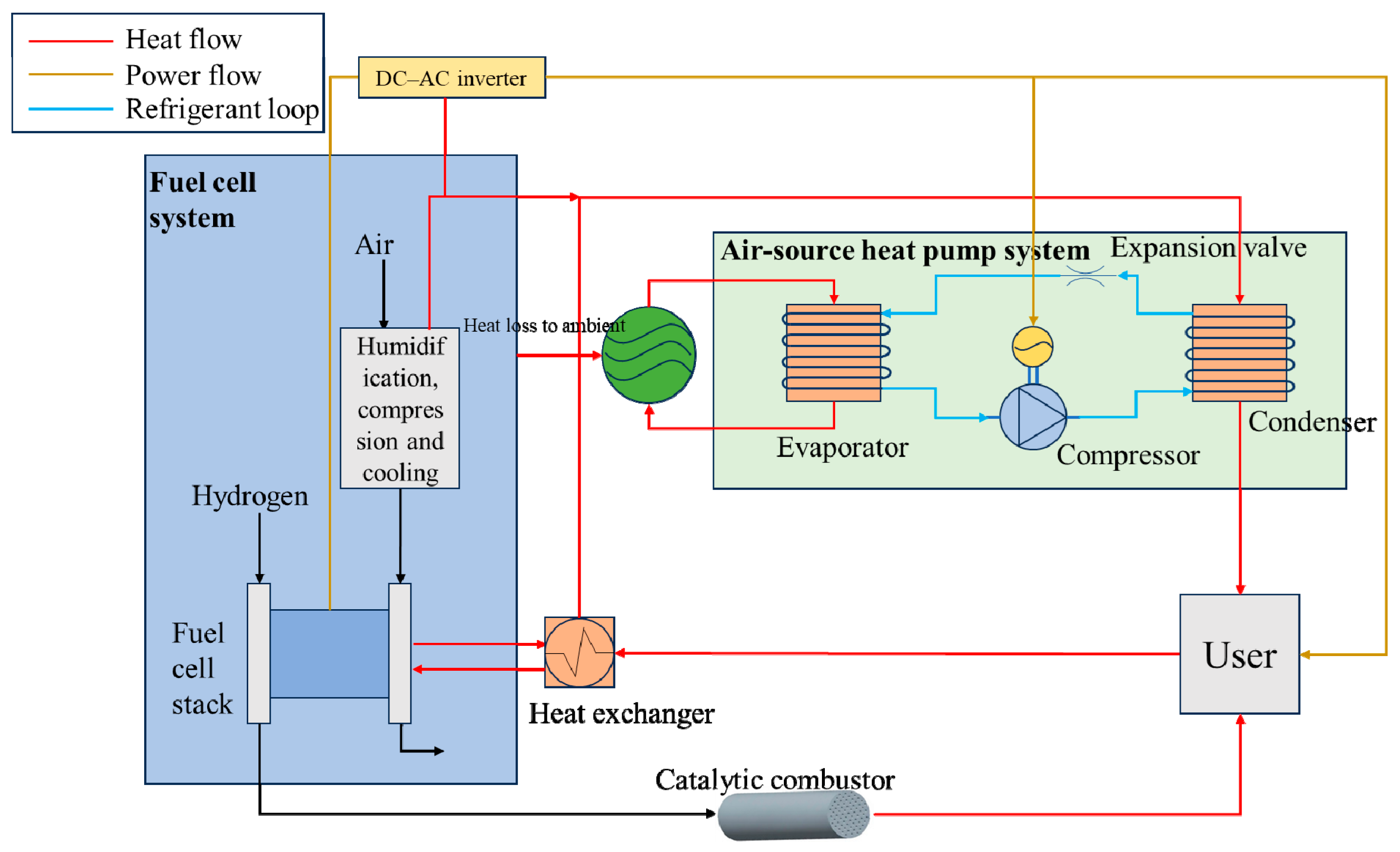
Figure 1 illustrates the combined heat and power (CHP) waste heat recovery system based on proton exchange membrane fuel cells (PEMFCs) developed in this study. The system consists of five main components: the fuel cell stack and heat recovery subsystem, the auxiliary component heat dissipation subsystem, the catalytic combustion subsystem, the air-source heat pump subsystem, and the user-side load. Different line types are used to distinguish heat flow, power flow, and refrigerant circulation.
Waste heat generated by the fuel cell stack and auxiliary components is transferred via a cooling loop to a plate heat exchanger, where it exchanges heat with the user-side water loop. The heat pump subsystem extracts low-grade heat from the environment and the heat dissipated from the stack into the air through a refrigerant cycle. After being heated and upgraded by the compressor, this heat is released to the user side in the condenser. Hydrogen in the exhaust gas generates heat through a catalytic combustor, which is further transferred to the water supply circuit via wall-side heat exchange, thereby enabling the supplementary utilization of high-grade thermal energy. While the fuel cell’s electrical output meets the user’s power needs, it also provides the operating power required for the system’s auxiliary equipment. Through multi-heat source coupling and cascading energy utilization, the system can effectively recover waste heat from the fuel cell stack, heat from auxiliary components, and catalytic combustion heat, while compensating with heat provided by a heat pump, thereby achieving heat supply on the user side.
2.2. Subsystem Modeling
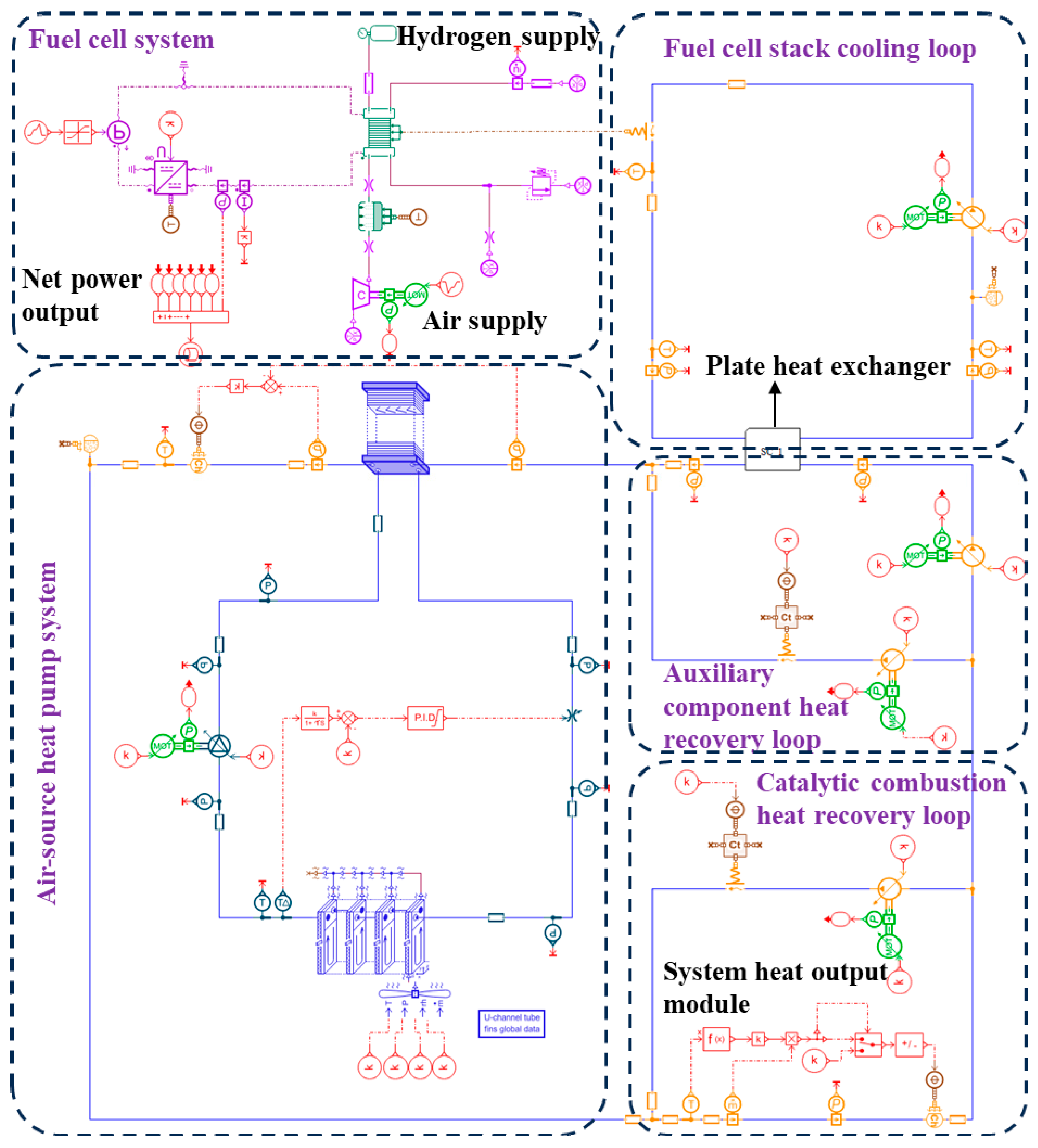
This study developed a waste heat recovery model for a proton exchange membrane fuel cell combined heat and power (PEMFC-CHP) system using the Amesim 2404 platform, enabling coupled simulation of stack waste heat, auxiliary component heat dissipation, catalytic combustion heat, and heat pump enhancement processes. The model can be used to analyze energy flow characteristics and system performance under the synergistic effects of multiple heat sources. The model structure and the coupling relationships among the subsystems are shown in
Figure 2. The coupling interaction among various subsystems is mainly reflected in heat transfer and coordinated load regulation. Waste heat recovery is well matched with the temperature lift process of the heat pump, jointly realizing high-efficiency energy utilization under full operating conditions.
2.2.1. Fuel Cell Stack and Heat Recovery Model
The fuel cell stack serves as the primary thermal source in the CHP system, and its heat generation characteristics determine the potential for waste heat recovery. The chemical energy input of the stack is given by:
where
is the hydrogen mass flow rate and
is the lower heating value of hydrogen (120 MJ/kg). This calculation method is widely used in other academic literature [
22,
54,
55,
56,
57].
According to energy conservation, the input chemical energy is partitioned into electrical power and thermal power:
where
is the stack electrical output and
is the total heat generation.
The electrical output is determined by the stack voltage and current:
Most of the generated heat is removed by the cooling medium and recovered as useful waste heat, while a small fraction is dissipated to the surroundings [
58]:
where
is the recovered heat via the cooling loop and
represents heat losses to the environment.
The recovered heat in the cooling loop is governed by the coolant properties [
59]:
where
is the coolant mass flow rate,
is the specific heat capacity at constant pressure, and
and
are the inlet and outlet temperatures, respectively. This relation indicates that the recoverable heat is dictated by both the coolant flow rate and temperature rise, enabling stack temperature regulation through appropriate flow control.
The plate heat exchanger acts as the key component for transferring the recovered heat to the user side, and its heat transfer process is described by:
where
is the overall heat transfer coefficient,
is the heat transfer area, and
is the logarithmic mean temperature difference. The overall heat transfer coefficient of each heat exchanger is selected within the range of 180∼350 W/(m
2⋅K). The heat transfer area is designed to match the system load, with a value of 0.85∼1.6 m
2.
In terms of heat transfer effectiveness, the fin-and-tube evaporator is set to 0.82–0.88, the shell-and-tube condenser to 0.85–0.92, and the plate heat exchanger for auxiliary waste heat recovery to 0.88–0.94. The minimum pinch temperature difference is uniformly set to 5–8°C, following the general heat exchanger design criteria for fuel cell waste heat recovery systems. This configuration prevents an excessive increase in heat transfer area induced by an ultra-low temperature difference, while ensuring the thermodynamic rationality of the heat exchange process [
60]. Meanwhile, this parameter remains unchanged in full-condition simulations and sensitivity analysis.
2.2.2. Auxiliary Component Heat Dissipation Model
Besides the primary heat source from the fuel cell stack, auxiliary components such as the air compressor generate additional recoverable heat during operation. The power consumption of the air compressor is calculated based on an isentropic compression process. It is assumed that the compression process is a fully reversible adiabatic process. Internal leakage, flow loss, mechanical friction loss, and heat exchange with the ambient environment during compression are neglected. Meanwhile, air is regarded as an ideal gas with constant specific heat capacities.
where
is the power consumption of the air compressor (kW),
is the air mass flow rate (kg/s),
is the specific heat capacity of air at constant pressure (kJ/(kg × K)),
and
are the inlet and outlet temperatures of the compressor (K), respectively, and
is the compressor efficiency.
The electrical energy consumed during the compression process is ultimately converted into the internal energy increase of the compressed air and heat dissipation from the compressor body. Approximately 60% of the compressor power consumption is transformed into recoverable compression heat (the effectively recoverable waste heat accounts for a fixed proportion of the total heat loss generated during compressor operation). The air compressor in this work operates within its high-efficiency design range, where the actual isentropic efficiency is close to the model assumed value. Moreover, the deviation ratio remains consistent under varying current densities without obvious fluctuation across different operating conditions [
61].
where
is the heat dissipation of the air compressor (kW).
The circulation pumps consume electricity to drive the cooling medium through the various loops. In this system, the hot-side pump, cold-side pump, auxiliary heat dissipation pump, and catalytic combustion pump operate in a constant-frequency mode. Therefore, their power consumption remains constant under all operating conditions.
2.2.3. Catalytic Combustion Model
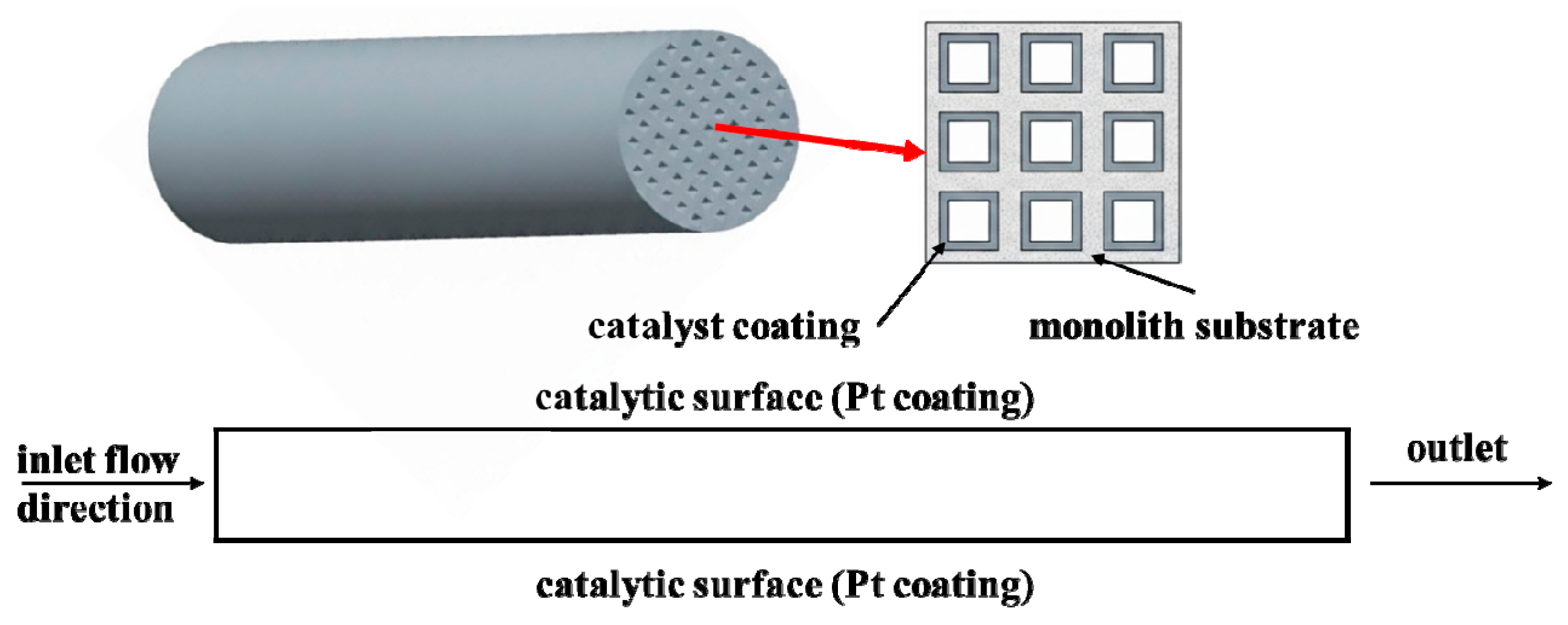
Catalytic combustion serves as a key unit for the deep treatment of residual hydrogen in the anode exhaust and for the recovery of chemical heat. In this study, a honeycomb monolithic catalytic combustor (
Figure 3) is employed, with Pt-based catalysts coated on the inner walls of the channels. Considering that there is no radial mass transfer between adjacent microchannels and that the inlet conditions are uniform, the macroscopic reaction behavior of the entire combustor can be represented by a single representative microchannel. Accordingly, a three-dimensional numerical simulation is conducted on an independent microchannel with characteristic dimensions of 1 mm × 1 mm × 50 mm.
The numerical modeling of the catalytic combustion process is established based on coupled surface reaction kinetics and transport theory [
62]. The reacting system is assumed to behave as an incompressible ideal gas, while the Soret and Dufour effects are neglected. Local thermal equilibrium is assumed at the gas–solid interface, and the channel wall is treated as a radiative gray body. The governing equations are expressed in the following general conservation form:
where
represents the general variable,
denotes the corresponding diffusion coefficient, and
is the source term.
This generalized transport equation can be specified to obtain the governing equations for each physical field. The mass conservation equation, or continuity equation, is derived by setting and . For momentum conservation, setting (the velocity vector) yields an equation where the diffusion term incorporates the viscous stress tensor and the source term includes the pressure gradient. The species transport equation is obtained with (the mass fraction of species i), where the diffusion coefficient and source term are governed by the surface catalytic reaction mechanism. Finally, setting (temperature) gives the energy conservation equation, which accounts for heat conduction together with the enthalpy source term arising from chemical reactions.
The governing equations are coupled with the ideal gas equation of state and closed by incorporating surface coverage kinetics through wall boundary conditions. Together, these formulations establish a complete mathematical model describing the coupled processes of flow, heat transfer, and reaction in microscale catalytic combustion.
A laminar flow condition is assumed at the inlet. At the outlet, a pressure boundary condition is imposed with a static pressure of 101.325 kPa. A convective heat transfer boundary condition is applied at the wall to simulate the thermal coupling with the heating water loop. The wall heat flux is calculated as follows:
where
h denotes the convective heat transfer coefficient, taken as 200 W m
−2 K
−1, and
represents the wall temperature of the microchannel catalytic combustor.
The catalyst employed is the noble metal platinum (Pt). The reaction kinetics follow the catalytic reaction mechanism for hydrogen oxidation on a Pt surface proposed by Deutschmann [
63]. This mechanism consists of 13 elementary reactions, as listed in
Table 2, involving 5 surface-adsorbed species (H(s), O(s), OH(s), H
2O(s), and Pt(s)) and 6 gas-phase species (H
2, O
2, H, O, OH, and H
2O). The reaction rate constants are expressed in the modified Arrhenius form:
where
is the pre-exponential factor,
is the temperature exponent,
denotes the activation energy,
is the universal gas constant, and
is the temperature.
represents the surface coverage of the adsorbed species, while
and
denote the coverage exponent and the coverage correction coefficient, respectively.
2.2.4. Heat Pump Model
The heat pump serves as a key unit for upgrading low-grade thermal energy. It elevates the temperature of waste heat from the fuel cell stack and ambient heat to the level required by the user. The system consists of an evaporator, compressor, condenser, and expansion valve, operating according to the reversed Carnot cycle. The key parameters of the air-source heat pump are listed in
Table 3.
The compressor performs work on the refrigerant vapor, increasing its temperature and pressure. The compressor power consumption is expressed as:
where
is the power consumption of the heat pump compressor (kW),
is the refrigerant mass flow rate (kg/s),
and
are the inlet and outlet specific enthalpies of the refrigerant in the compressor (kJ/kg), respectively, and
is the compressor efficiency.
The condenser releases high-temperature heat to the user-side water supply, which represents the heating capacity of the heat pump:
where
is the heating capacity of the heat pump (kW) and
and
denote the inlet and outlet specific enthalpies of the refrigerant in the condenser (kJ/kg), respectively.
2.3. Performance Metrics
The coefficient of performance (COP) of the heat pump is defined as the ratio of the heating capacity to the compressor power consumption:
Because the compressor primarily transfers heat rather than directly generating it from electrical energy, the COP of the heat pump is typically greater than 1, generally ranging from 2 to 5. This indicates that for every unit of electrical energy consumed, the system can deliver approximately two to five units of thermal energy.
The net power output of the system is defined as the difference between the fuel cell stack power output and the total power consumption of the auxiliary subsystems:
where
is the net power output of the system (kW), and
is the total auxiliary power consumption (kW), including the power consumption of the air compressor
, the heat pump compressor
, and the circulation pumps.
The total recovered heat of the system is defined as the sum of the heat outputs from the submodules described in
Section 2.2:
where
is the total recovered heat of the system (kW);
is the heat recovered from the fuel cell stack cooling loop (kW), as described in
Section 2.2.1;
represents the heat dissipated by auxiliary components such as the air compressor (kW), derived from
Section 2.2.2;
denotes the heat released by catalytic combustion (kW), as described in
Section 2.2.3; and
is the heating capacity of the heat pump (kW), obtained from
Section 2.2.4. This indicator comprehensively reflects the overall performance of multi–heat-source coupled heat recovery in the system.
The coefficient of performance (COP) of the waste heat recovery system is defined as the ratio of the total recovered heat to the total electrical power consumption of the system, reflecting the amount of heat recovered per unit of electricity consumed:
where
is the coefficient of performance of the waste heat recovery system (dimensionless). This indicator links the thermal outputs of the heat recovery submodules with the power consumption of the electrical components from a system-level perspective and can be used to evaluate the overall energy cost and economic performance of the waste heat recovery process.
The electrical efficiency of the system is defined as the ratio of the net power output to the chemical energy input of the fuel, reflecting the capability of converting the chemical energy of the fuel into usable electricity [
41,
64]:
where
is the system electrical efficiency (dimensionless). This indicator is directly related to the electrical power predicted by the fuel cell stack model and the power consumption of the auxiliary subsystems.
The thermal efficiency of the system is defined as the ratio of the total recovered heat to the chemical energy input of the fuel, representing the fraction of fuel chemical energy converted into useful heat [
41,
64]:
where
is the system thermal efficiency (dimensionless). This metric integrates the thermal outputs from the cooling loop, heat pump, auxiliary heat dissipation subsystem, and catalytic combustion subsystem.
The overall combined heat and power (CHP) efficiency is defined as the ratio of the sum of the net power output and the total recovered heat to the chemical energy input of the fuel. It serves as a key indicator for evaluating the cascade utilization of energy within the system [
65]:
where
is the overall CHP efficiency (dimensionless). This indicator simultaneously incorporates the electrical output model and the various heat recovery submodules, thereby reflecting the overall energy utilization performance of the system.
2.4. Model Verification
To ensure the accuracy of the multi-source coupled PEMFC-CHP system model developed in this study, experimental validation was carried out on the core components of the model using dedicated test platforms. All operating conditions and device parameters in the experiments were kept consistent with the simulation settings to guarantee good agreement between the model and the actual system.
The fuel cell stack validation tests were performed on a megawatt-scale PEMFC steady-state performance test platform, which matches the stack module in the simulation system. The platform mainly consists of the fuel cell stack, hydrogen supply circuit, air supply circuit, cooling loop, electronic load system, and high-precision data acquisition unit. The stack has an active area of 450 cm2 with 1396 cells, rated operating temperature of 353.15 K, and uses a 50% ethylene glycol-water solution as the coolant, all in full accordance with the simulation parameters. The hydrogen supply line is equipped with high-pressure cylinders, two-stage pressure regulators, filters, and high-precision mass flow controllers to stabilize the inlet flow and pressure. The air supply line includes a screw air compressor, intercooler, isothermal humidifier, and buffer tank, allowing precise adjustment of cathode flow, pressure, temperature, and relative humidity to satisfy full-operating conditions. Key measuring devices and their uncertainties are as follows: stack voltage was measured with a multi-channel high-precision DC acquisition module (range 0–1000 V, uncertainty ±0.1%); stack current was recorded by a Hall current sensor (range 0–1000 A, uncertainty ±0.2%); temperatures at critical points including stack inlet/outlet, cooling loop, and air path were measured using Class A Pt1000 RTDs (range −20–150°C, uncertainty ±0.15°C); hydrogen and air mass flow rates were controlled by thermal mass flow controllers with an accuracy of ±0.5% F.S. All signals were synchronously collected and filtered in real time at 1 Hz. Each operating point was stabilized for more than 30 min, and the average value of 10 consecutive minutes was used as the experimental reference data when fluctuations of voltage, current, and temperature were within ±1%.
The air-source heat pump system validation of was conducted on a closed-type heat pump performance test rig, which shares the same structure, refrigerant, and operating parameters as the heat pump subsystem in the simulation. The rig comprises a scroll compressor, finned-tube evaporator, shell-and-tube condenser, thermostatic expansion valve, refrigerant circuit, environmental chamber, and heating water loop. R134a is used as the refrigerant, with evaporation temperature ranging from 5 to 15°C and condensation temperature from 55 to 70°C, consistent with the simulation range. The environmental chamber enables precise control of air temperature, humidity, and velocity over a wide range from −30°C to 30°C. Power consumption, heating capacity, refrigerant flow rate, and water temperature difference were measured by high-precision instruments: power analyzer uncertainty ±0.5%, temperature sensor uncertainty ±0.15°C, liquid flow meter uncertainty ±0.5%, and overall heating performance uncertainty controlled within ±1.0%. During experiments, the superheat was maintained at 5–8°C and subcooling at 3–5°C, matching the boundary conditions in the simulation model.
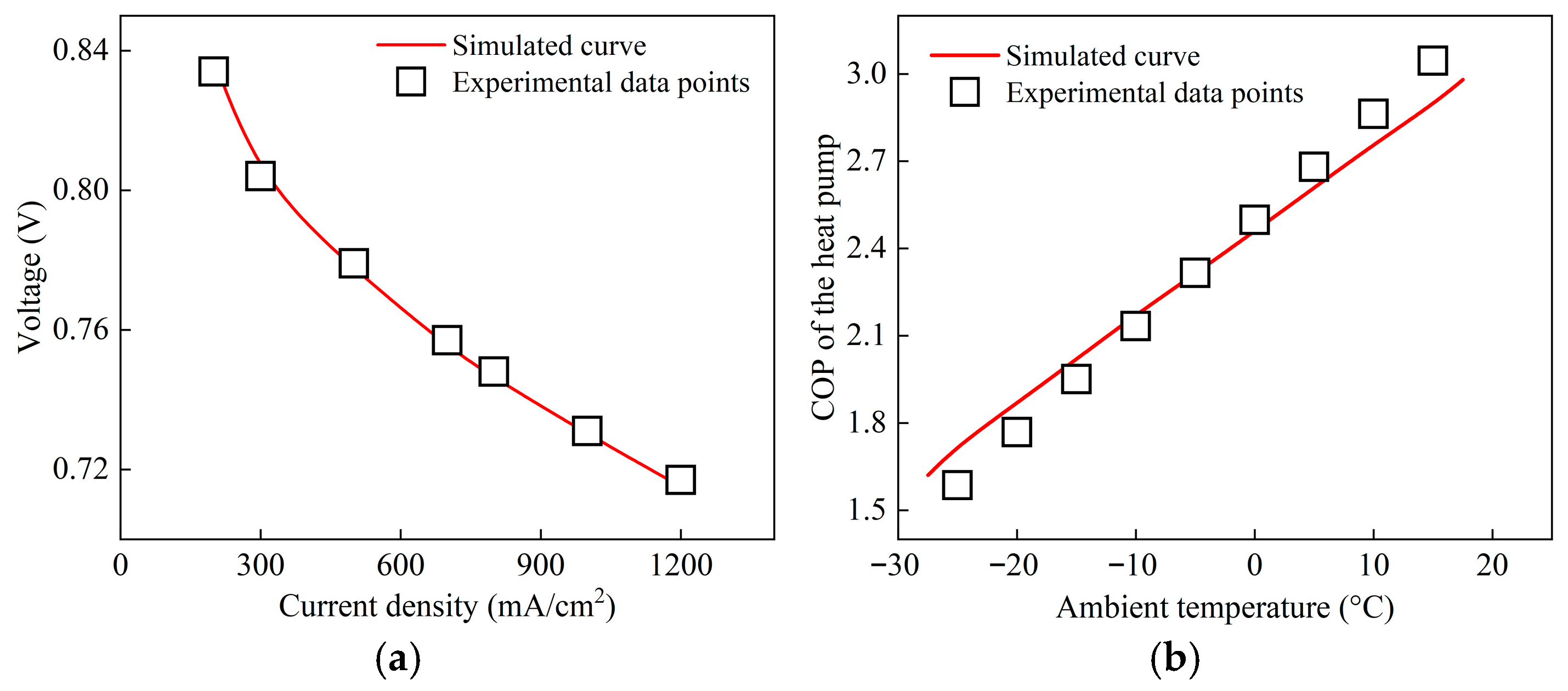
Figure 4 shows the experimental validation results of the fuel cell stack polarization curve and the heat pump system COP. As shown in
Figure 4a, good agreement is observed between the simulation and experimental data over the current density range of 200–1200 mA/cm
2. The maximum relative error occurs at 1200 mA/cm
2 and is only 0.27%. The average relative error across all operating conditions is 0.21%, indicating that the developed model accurately captures the steady-state output characteristics of the fuel cell stack and is therefore suitable for subsequent system performance analysis. Higher current densities typically enter a region where concentration polarization is significantly enhanced, which not only leads to rapid degradation of stack performance but also substantially increases the risk of localized overheating and membrane drying, exceeding the safe operating limits of this system’s thermal management design. Furthermore, in actual CHP distributed power generation scenarios, fuel cells rarely operate in this range for extended periods, so this does not have typical engineering significance. To further validate the heat-pump submodule within the system, the simulated COP under different ambient temperatures was compared with experimental data [
66]. As shown in
Figure 4b, the simulation results agree well with the experimental measurements over the temperature range of −27.5 °C to 17.5 °C. The average relative error across all cases is 3.2%. The result demonstrates that the developed heat-pump model can reliably reproduce the performance characteristics under varying ambient temperatures and can thus be applied to subsequent system-level integration analyses.
3. Results and Discussion
3.1. Waste Heat Recovery from Fuel Cell Stacks
The fuel cell stack serves as the core heat source of the PEMFC–CHP system, and its heat generation characteristics directly define the potential of waste heat recovery. Only a portion of the fuel chemical energy is converted into electrical output during PEMFCs operation. The remainder is primarily released as waste heat, which stems from irreversible electrochemical losses, ohmic polarization heating, and mass transport limitations [
52]. Recovering and reusing these waste heat sources can effectively improve energy efficiency.
Table 4 lists the key structural parameters of the fuel cell stacks used in this study. The 50% ethylene glycol–water solution is used as the coolant. The stack operating temperature is maintained within an optimal range of 60–80 °C by regulating the coolant flow rate in the cooling loop.
The combined heat and power performance and waste heat recovery performance of the fuel cell studied in this research are shown in
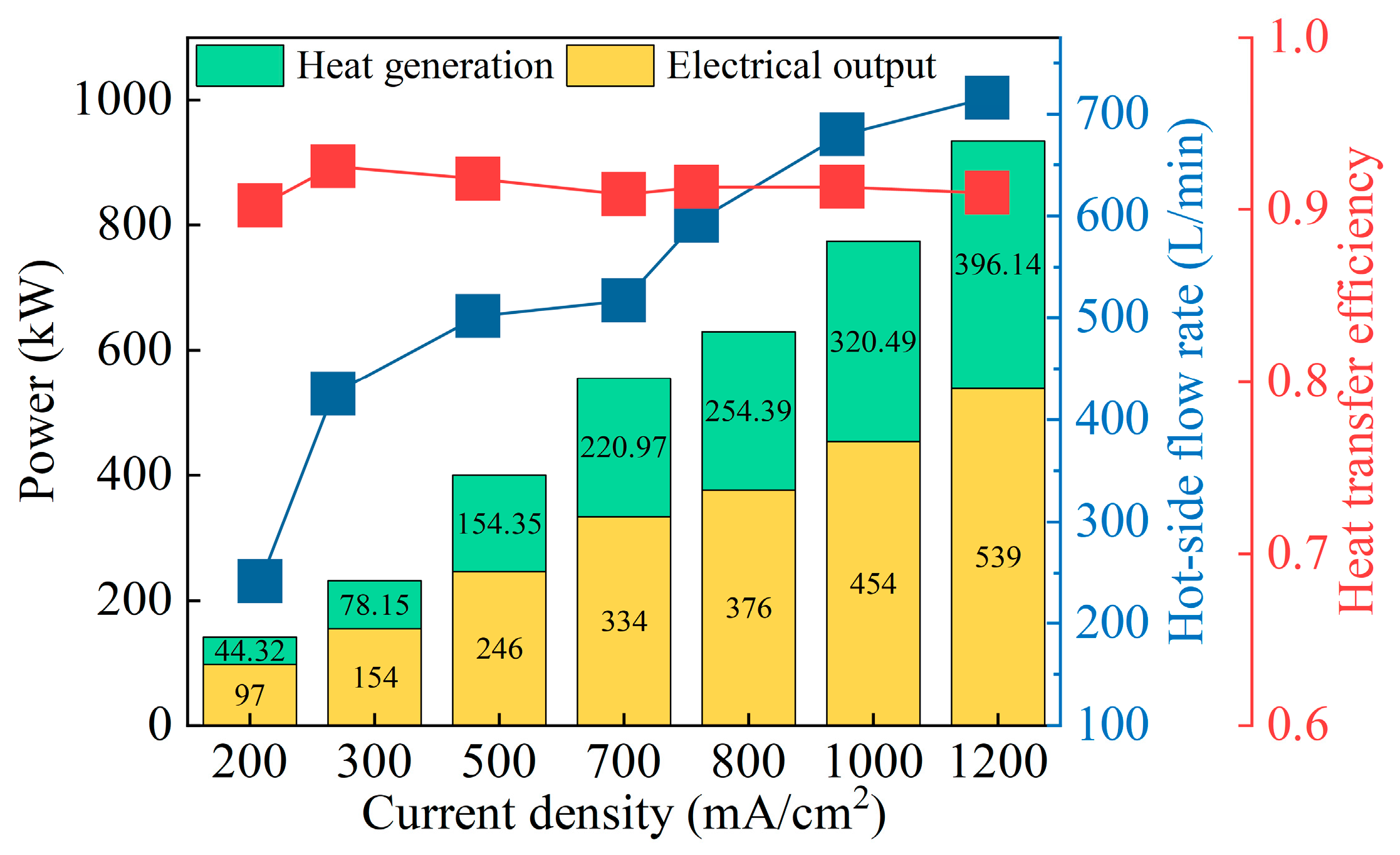
Figure 5. With the current density increase from 200 to 1200 mA/cm
2, the electrical output rose monotonically from 97 kW to 539 kW, and the stack heat generation rose monotonically from 44.32 kW to 396.14 kW, both exhibiting an approximately linear trend. This indicates that higher stack loads result in increased electrical output, while simultaneously generating more recoverable waste heat. Furthermore, it was found that the proportion of heat generation gradually increased as the stack load increased, ranging from 31.4% to 42.4%, indicating that waste heat recovery is even more critical under high-load conditions. As the coupling hub between the stack heat source and the user-side load, the plate heat exchanger removes heat generated by the battery stack and ensures that the stack always operates within the appropriate temperature range. The hot-side flow rate is dynamically regulated in accordance with the stack heat generation. With the continuous increase in heat generation, the flow rate on the hot side of the plate heat exchanger also gradually increased (from 241.4 L/min to 715.9 L/min), showing a trend similar to that of heat generation. The heat transfer efficiency of the plate heat exchanger remains consistently high, ranging from 0.902 to 0.925, with an average value of 0.913. The results indicate that the waste heat from the fuel cell stacks can be effectively recovered.
3.2. Thermal Behavior of the Catalytic Combustion Unit
Unreacted hydrogen in exhaust gases retains a significant amount of energy. Catalytic combustion of residual hydrogen to recover the combustion heat not only improves heat recovery efficiency but also helps prevent the hazards associated with hydrogen leaks [
67].
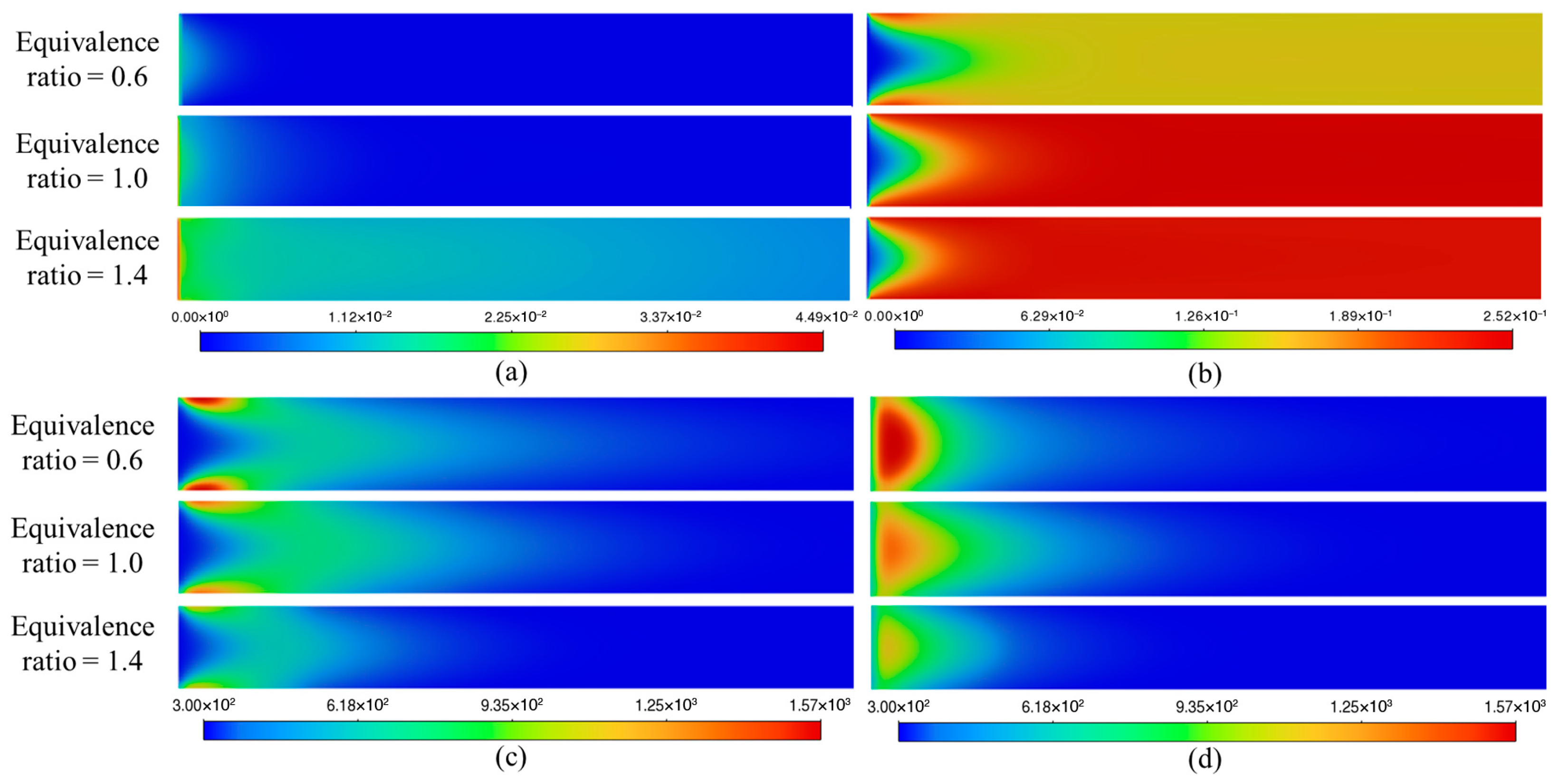
Figure 6 presents the distribution characteristics of the reaction field within the catalytic combustor under different equivalence ratios. The total hydrogen flow rate at the inlet of the catalytic combustor is 25.78 L/min, and the inlet velocity in each microchannel is 0.498 m/s. The inlet temperature is set to 333 K. The hydrogen distribution shown in
Figure 6a indicates that under lean conditions (
φ < 1), hydrogen is rapidly consumed near the inlet, and the high-concentration region is confined to the entrance section. As the equivalence ratio approaches the stoichiometric condition (
φ = 1), the high concentration hydrogen region extends further downstream along the flow direction, indicating the reaction zone is shrinking. Under fuel-rich conditions (
φ > 1), the insufficient supply of oxidizer leads to a persistent residual hydrogen concentration in the downstream region of the combustor. The water-vapor distribution (
Figure 6b) further confirms this phenomenon. The temperature field distributions (
Figure 6c,d) reveal the reaction heat release performance. Under all operating conditions, the temperature increases rapidly near the inlet and subsequently decreases along the axial direction. From the temperature distribution on the microchannel walls, it can be observed that, due to the higher air velocity under lean-burn conditions, the reaction is more complete, resulting in a more pronounced high-temperature region. At
φ = 1, the high-temperature region exhibits the largest axial extension. Under fuel-rich conditions, the overall temperature level decreases due to incomplete combustion of the mixture.
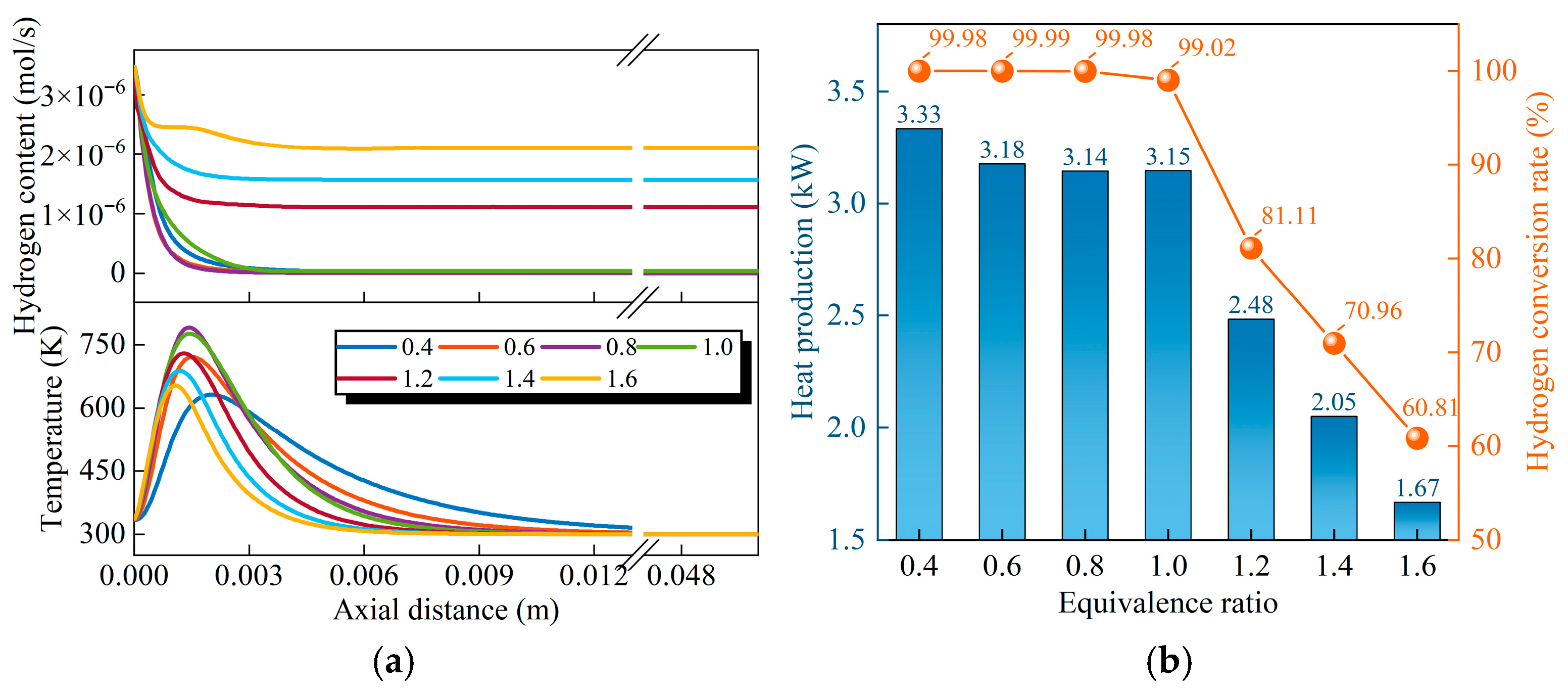
Figure 7 further illustrates the influence of equivalence ratio on axial distribution, heat release, and conversion efficiency. The hydrogen concentration decreases sharply along the axial direction and quickly stabilizes, with the highest concentrations occurring in the region upstream of the burner. For rich mixtures, the residual hydrogen concentration at the outlet gradually increases as the equivalence ratio rises. Since the hydrogen flow rate remains constant, the temperature distribution at the center of the microchannel burner does not vary significantly. When
φ ≤ 1, hydrogen is nearly completely converted and the variation in heat release is relatively small. However, once
φ > 1, the conversion rate decreases markedly, and the heat release declines significantly. At equivalence ratios of 1.2, 1.4, and 1.6, the heat release decreases to 2.483 kW, 2.051 kW, and 1.667 kW, respectively, representing reductions of 22.6%, 36.1%, and 48.1% compared with the stoichiometric condition (
φ = 1).
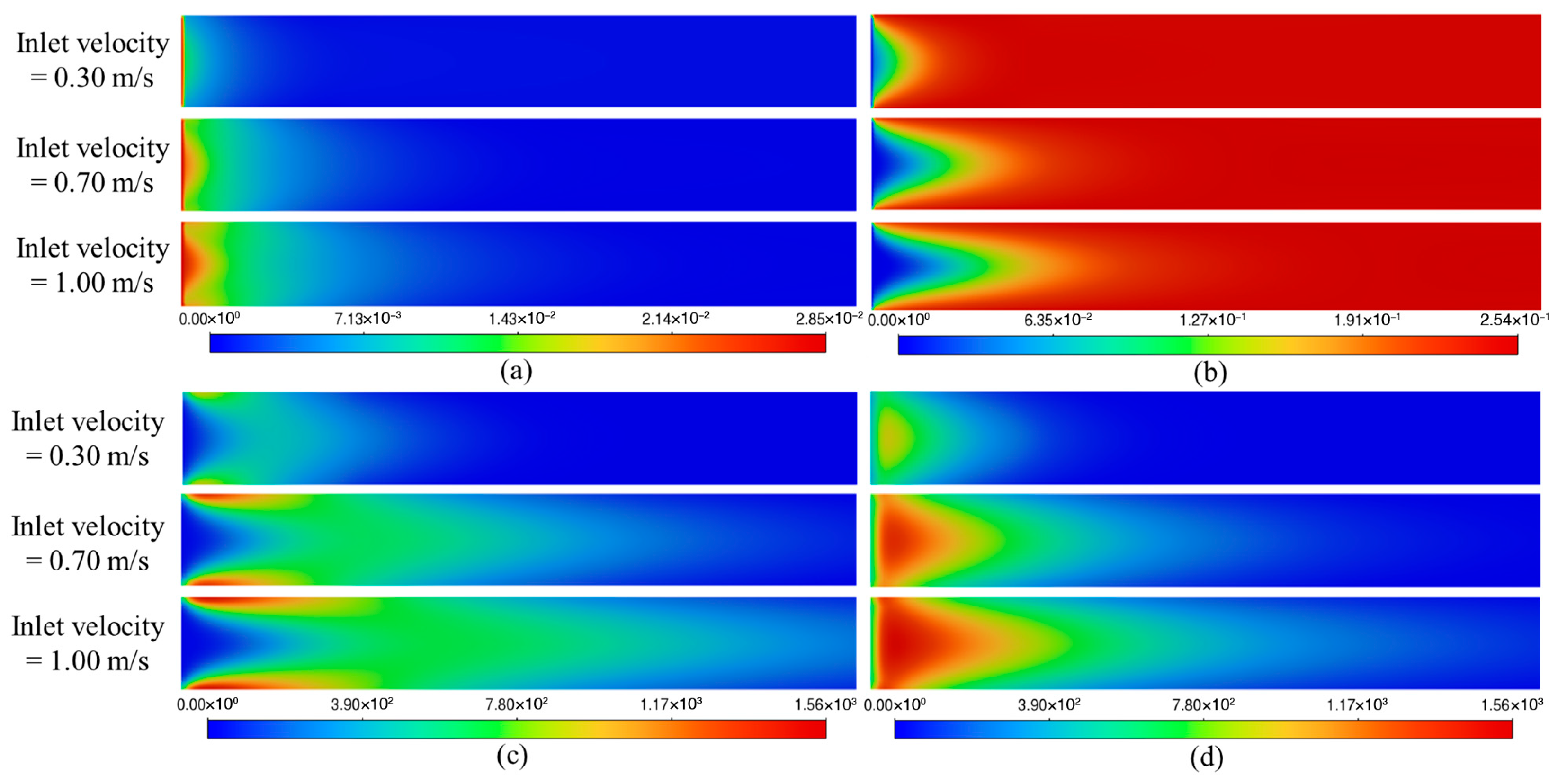
The inlet velocity determines the residence time of the reactant gases within the combustor and thus influences the reaction completion and heat output characteristics. The equivalence ratio is fixed at 1.0 and the inlet temperature is set to 333 K for each microchannel in the catalytic combustor.
Figure 8 illustrates the distribution of the reaction field under different inlet velocities. As the inlet velocity increases, the axial extent of the high-concentration hydrogen region expands (
Figure 8a). Correspondingly, the formation region of H
2O shifts downstream (
Figure 8b), gradually migrating from the inlet region toward the rear section of the combustor. The temperature field distributions (
Figure 8c,d) show that the high-temperature region expands axially downstream with the inlet velocity increases. This phenomenon reflects the enhancement of convective transport, which stretches the reaction zone.
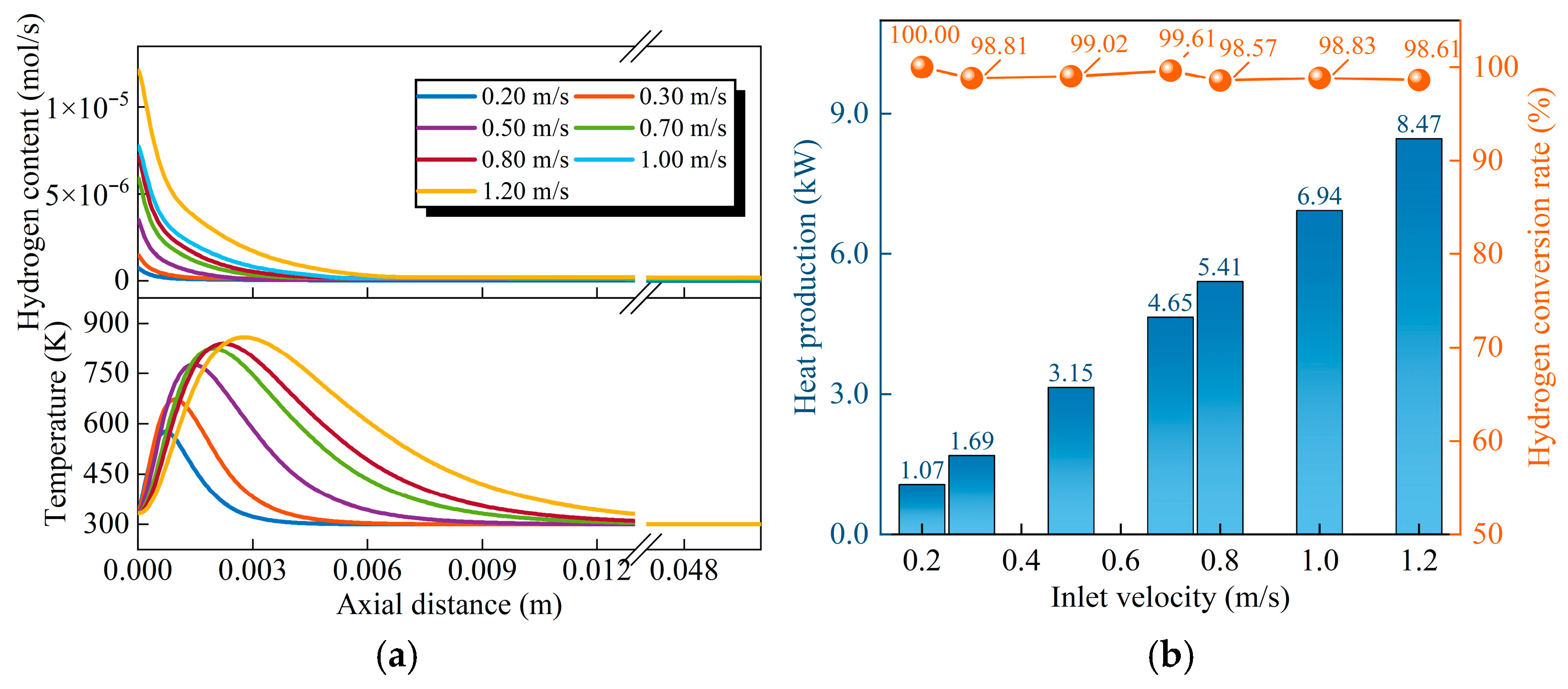
Figure 9a shows the axial distribution of hydrogen content and temperature. As the inlet velocity increases, the hydrogen concentration at various locations exhibits an increase trend. The peak temperature inside the catalytic combustor increases (from 577.1 K to 858.4 K, a rise of 48.8%), and the location where the peak occurs shifts later.
Figure 9b shows that the heat production grows approximately linearly with inlet velocity, rising from 1.070 kW to 8.468 kW (an increase of 691.3%). The reason is that higher inlet velocity directly increases the hydrogen mass flow entering the channel per unit time. Furthermore, it was found that the hydrogen conversion rate remained above 98.5%, with a fluctuation of only 1.394%. This result indicates that within the investigated velocity range, the majority of the reaction is still completed in the inlet section even though the residence time decreases, allowing the catalytic combustor to maintain a high fuel utilization efficiency.
3.3. Heat Pump Performance Characteristics
This study integrates a heat pump system to enable the upgraded utilization of low-grade waste heat and serves as a supplementary heat source to meet users’ heating needs across different seasons.
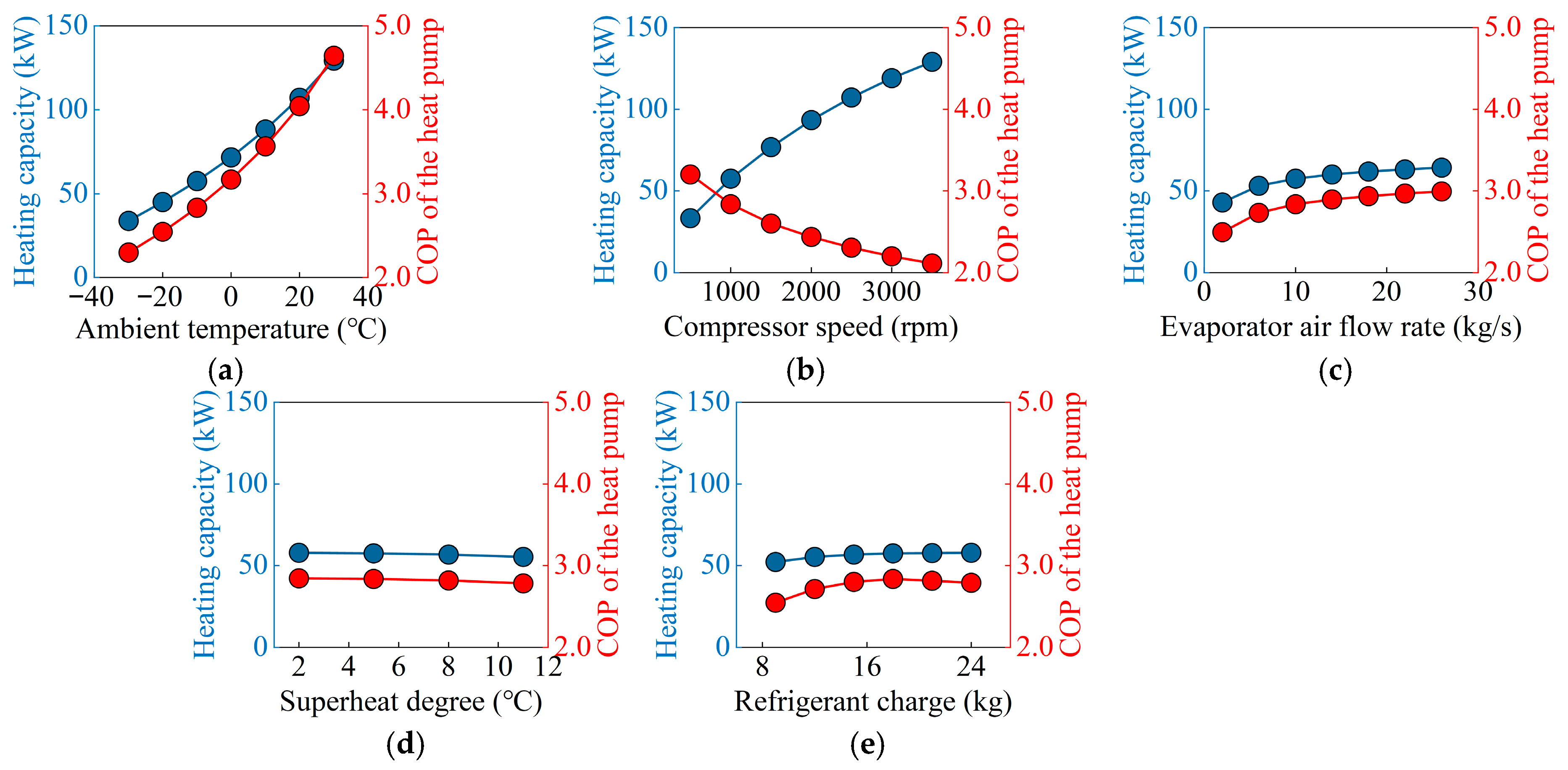
Figure 10 illustrates the variations in heating capacity and COP of the heat pump under different operating parameters. Effects of ambient temperature, compressor speed, evaporator air flow rate, superheat degree, and refrigerant charge on heat pump systems were analyzed.
As the ambient temperature increases from −30 °C to 30 °C, the heating capacity rises from 33.88 kW to 129.25 kW, representing an increase of 281.6%, while the COP improves from 2.30 to 4.64 (a gain of 102.0%). The reason for this is that, as the ambient temperature rises, the enthalpy of the air entering the evaporator increases, allowing the refrigerant to absorb more low-grade heat, which directly enhances the heat pump’s heating capacity [
39]. At the same time, the refrigerant’s evaporation temperature rises, resulting in a lower required compression ratio for the compressor (reducing the work done), thereby significantly improving the heat pump’s COP [
39]. With the speed increases from 500 r min
−1 to 3500 r min
−1, the heating capacity rises sharply from 33.26 kW to 129.10 kW (an increase of 288.2%), whereas the COP declines from 3.20 to 2.11, corresponding to a reduction of 34.0%. This trend indicates that increasing the compressor speed boosts the refrigerant flow rate, which can rapidly enhance heating capacity; however, the associated increase in power consumption leads to a decrease in the heat pump’s energy efficiency (lower COP) [
68]. The effects of evaporator air flow rate and superheat degree on heat pump performance are relatively minor. As the evaporator air flow rate increases, heat transfer capacity improves, heating capacity rises slightly, and the COP also shows a slight upward trend (an increase of approximately 20.0%). When the superheat degree increases, both heating capacity and COP decrease slightly (by less than 5% each). The reason is that excessively high superheat reduces the effective evaporative heat exchange area, while too low superheat may pose a risk of liquid slugging in the compressor. Therefore, superheat is typically controlled within the range of 5–8 °C during actual operation to balance system safety and performance stability [
69]. The effect of refrigerant charge is also insignificant but exhibits a certain degree of peak characteristics. When the charge is 18 kg, both heating capacity and COP reach their maximum values (57.55 kW and 2.84, respectively), while performance declines slightly when the charge deviates from this level. This indicates that there is an optimal refrigerant charge that maximizes heat pump performance.
Overall, ambient temperature and compressor speed are the dominant factors governing heat-pump performance, followed by evaporator air flow rate, whereas superheat and refrigerant charge exert relatively limited influence in a properly designed system.
3.4. Energy Flow and System Efficiency
To investigate the operating characteristics of the waste heat recovery system, a series of working conditions corresponding to stack current densities of 200, 300, 500, 700, 800, 1000, and 1200 mA/cm2 were selected. The range of 200–1200 mA/cm2 adopted in this study covers the typical steady operating conditions of PEMFC stacks for vehicle and distributed power generation applications. When the current density is lower than 200 mA/cm2, the stack operates at light load with low efficiency and is rarely adopted for long-term operation in practical engineering. When the current density exceeds 1200 mA/cm2, severe concentration polarization, local overheating, and membrane dehydration are prone to occur, which goes beyond the safe and stable operating boundary of the stack. The system heating capacity, power consumption, system COP, and thermo-electric efficiencies were systematically analyzed. During the analysis, the operating parameters of the air-source heat pump were kept constant: the compressor speed was fixed at 1000 r/min, the ambient temperature was set to −10 °C, the evaporator air mass flow rate was 10 kg/s, the degree of superheat was maintained at 5 °C, and the refrigerant charge was 18 kg. In addition, the user-side return water temperature was set to 35 °C, and the cold-side flow rate of the plate heat exchanger was maintained at 200 L/min.
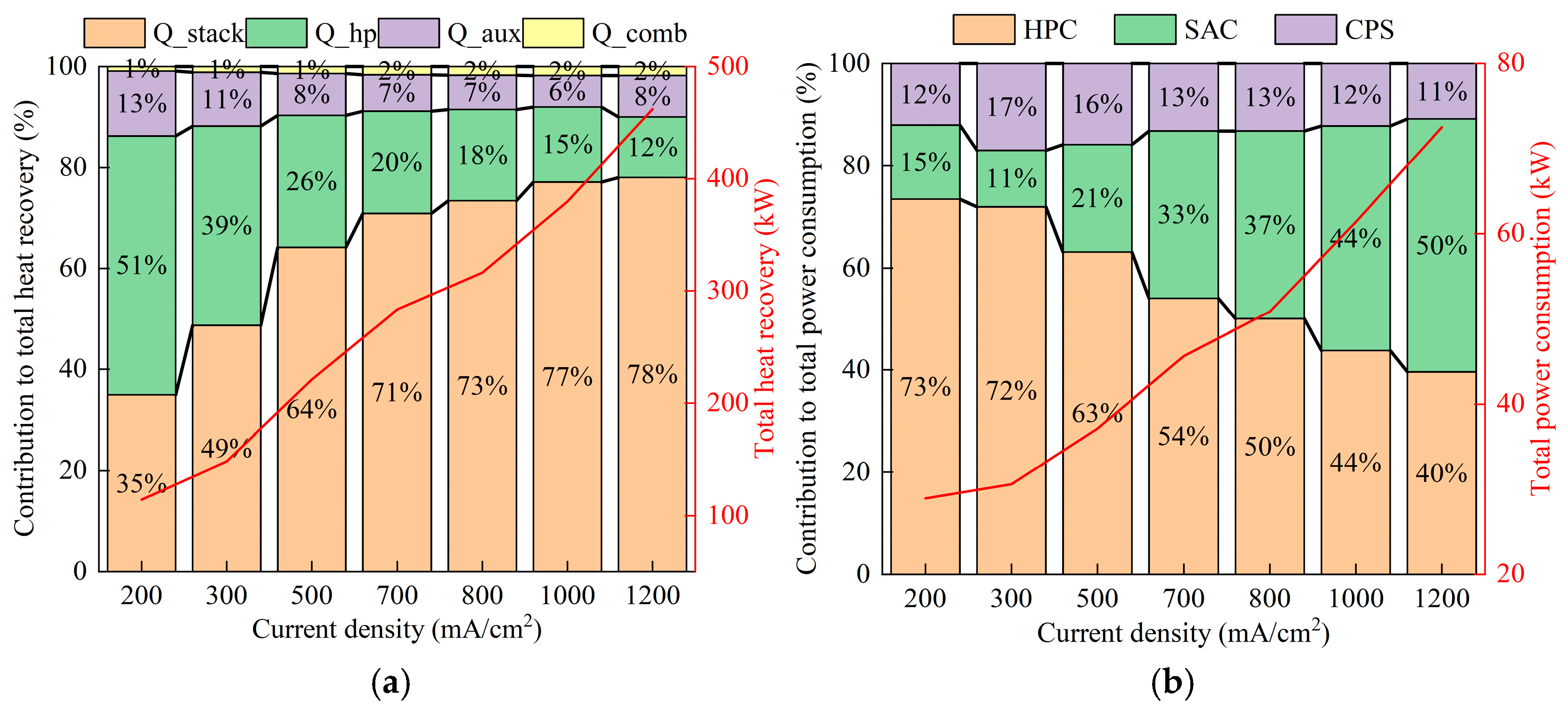
Figure 11a illustrates the variation of heat source contributions with current density. The stack waste heat recovery, Q_stack, increases markedly from 44.32 kW at 200 mA/cm
2 to 396.14 kW at 1200 mA/cm
2, with its share rising from 35% to 78%, establishing it as the dominant thermal source in the waste heat recovery system. In contrast, the heat pump output, Q_hp, remains relatively stable at approximately 55–60 kW; however, its contribution ratio continuously declines from 51% to 12% as current density increases. The auxiliary heat dissipation, Q_aux, grows from 14.68 kW to 37.81 kW with increasing current density. This trend is attributed to two primary factors: (i) the elevated operating load of auxiliary components, particularly the air compressor, required to meet higher reactant demand, leading to increased conversion of electrical power into heat; and (ii) the overall rise in auxiliary power consumption, which amplifies thermal losses from electrical and mechanical processes. Despite this increase, Q_aux contributes only low-grade heat, accounting for less than 15% of total heat recovery. The catalytic combustion heat, Q_comb, remains negligible across all conditions, increasing from 1.07 kW to 8.47 kW, with a contribution of less than 2%.
Figure 11b presents the variation in power consumption contributions of auxiliary components. The stack air compressor (SAC) exhibits a pronounced increase with current density, rising from 4.2 kW at 200 mA/cm
2 to 35.95 kW at 1200 mA/cm
2. Similarly, the heat pump compressor (HPC) power consumption increases from 21.2 kW to 28.72 kW. The power consumption of circulation pumps (CPS) also increases slightly but remains below 10 kW in all cases. Notably, the growth rate of SAC power consumption significantly exceeds that of the HPC. As a result, the share of HPC power consumption decreases from 73% to 40%, while the SAC contribution increases from 15% to 50%. The CPS units consistently account for less than 20% of the total auxiliary power consumption. The SAC and HPC are the primary sources of power consumption in the waste heat recovery system of the PEMFC–CHP system.
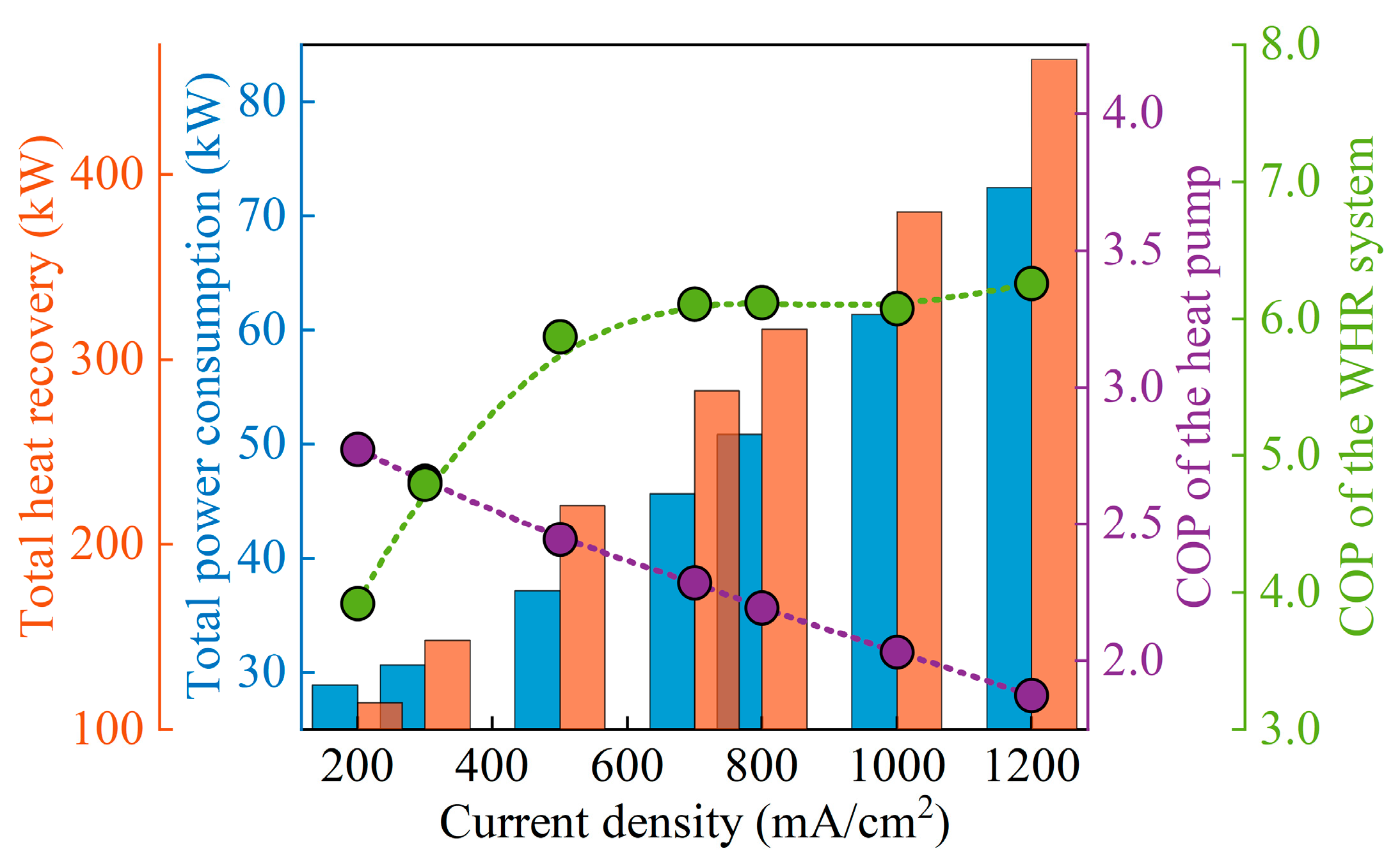
Figure 12 presents the variations in total power consumption, total heat recovery, heat pump COP, and system-level COP with current density. As the current density increases from 200 to 1200 mA/cm
2, the total power consumption rises from 28.89 kW to 72.50 kW, corresponding to an increase of 151.0%, while the total heat recovery increases more significantly from 114.32 kW to 461.87 kW, with a growth of 304.1%. The substantially higher growth rate of heat recovery indicates enhanced heat output capability under high-load conditions. The heat pump COP exhibits a continuous decline, decreasing from 2.77 at 200 mA/cm
2 to 1.87 at 1200 mA/cm
2 (−32.5%). This deterioration is attributed to the limited increase in evaporation temperature coupled with a rising condensation temperature, as well as the increased compression ratio and reduced compressor efficiency under high-load operation. In contrast, the overall system COP shows a trend of initial increase followed by stabilization. It rises from 3.92 at 200 mA/cm
2 to 5.87 at 500 mA/cm
2, and then remains within the range of 6.07–6.25. In the low current density regime (200–500 mA/cm
2), the rapid improvement in system COP is primarily driven by the sharp increase in heat recovery. At medium-to-high current densities (500–1200 mA/cm
2), although the heat pump COP continues to decline, the sustained growth in recovered heat offsets this effect, maintaining a high and stable system COP.
The underlying physical mechanism is explained as follows: at low current densities, the heat generation of the fuel cell stack and the recovered waste heat increase rapidly. The energy grade improvement achieved by the heat pump far offsets its rising power consumption, leading to a continuous growth in the overall system COP. At high current densities, however, heat produced by the stack becomes dominant, and the thermal contribution of the heat pump is greatly diluted. The adverse effect caused by the drop in heat pump COP is therefore weakened. Meanwhile, the total energy output of the system tends to level off, maintaining the system COP in a stable state. This variation trend is basically consistent with the off-design performance of integrated fuel cell–heat pump systems reported in previous studies by Ellamla et al. [
21]. The numerical differences are mainly attributed to the multi-source waste heat recovery design adopted in this work. In addition to stack waste heat, heat dissipation from auxiliary components and exhaust heat from catalytic combustion are also fully utilized. Such a diversified heat source structure further improves the comprehensive energy utilization efficiency and yields a higher system COP.
Notably, even when the heat pump COP drops to a relatively low value of 1.87 at 1200 mA/cm2, the system COP remains as high as 6.25. This indicates that, at the system level, the impact of heat pump performance is effectively diluted by the scale effect of heat recovery. Therefore, system-level energy efficiency should be evaluated by considering the coupled interplay between heat source magnitude and heat pump performance.
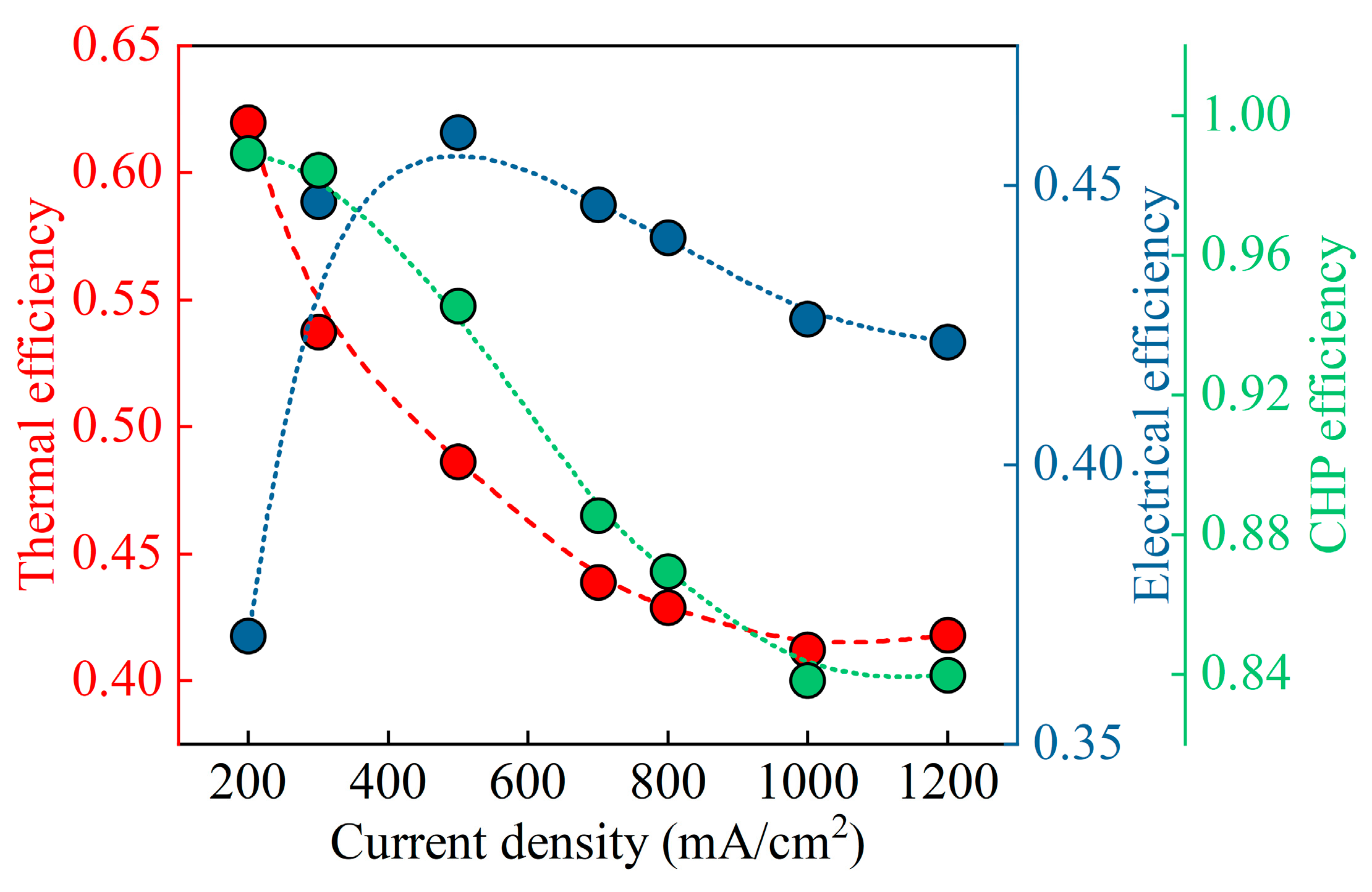
Figure 13 illustrates the variations in thermal efficiency, electrical efficiency, and overall CHP efficiency with current density. As the current density increases from 200 to 1200 mA/cm
2, the system thermal efficiency decreases monotonically from 0.620 to 0.418, corresponding to a reduction of 32.6%. This decline is primarily attributed to two factors: (i) although stack heat generation increases with load, the simultaneous reduction in heat pump COP (see
Figure 12) weakens the effectiveness of heat utilization; and (ii) the rising auxiliary power consumption reduces the fraction of net energy available for heating. The electrical efficiency exhibits a non-monotonic trend, increasing from 0.369 at 200 mA/cm
2 to a peak of 0.460 at 500 mA/cm
2, followed by a gradual decline. In the low current density regime, this improvement is driven by a faster increase in stack power output relative to auxiliary consumption. At medium to high current densities, the load on auxiliary components increases, leading to higher power consumption and reduced electrical efficiency.
The overall CHP efficiency, which reflects the integrated energy utilization performance, decreases from 0.989 to 0.840 (−15.1%) as current density increases. This downward trend is mainly governed by the continuous deterioration of thermal efficiency. Notably, within the 200–500 mA/cm2 range, the adverse effect of declining thermal efficiency is partially offset by the improvement in electrical efficiency. However, beyond 500 mA/cm2, both thermal and electrical efficiencies decrease concurrently, leading to an accelerated reduction in CHP efficiency. These results indicate that the system achieves superior overall energy performance under medium-to-low load conditions (200–500 mA/cm2). Although higher loads enhance total heat recovery and power output, they do so at the expense of overall efficiency. Therefore, practical operation requires a trade-off between heating and electricity demand and energy efficiency.
Although the additional installation of heat pump and catalytic combustion units slightly increases the initial capital investment compared with conventional PEMFC-CHP systems, the total cost remains much lower than that of traditional schemes relying on high-pressure gas storage and large-scale heat exchange stations. In terms of operational cost, the multi-heat-source recovery structure reduces hydrogen consumption, bringing distinct advantages in daily energy consumption and system maintenance. With the support of current hydrogen industry subsidies and waste heat utilization incentive policies, under a reasonable discount rate of 5–8% and the gradual decline in hydrogen prices, the proposed system can achieve a payback period of 5–7 years benefited from high energy efficiency and long service life. The above analysis proves that this system possesses satisfactory economic feasibility and application potential.
3.5. Parametric Sensitivity Analysis
The performance of combined heat and power systems with proton exchange membrane fuel cells is influenced by the interaction of multiple factors. This study investigates the effects of ambient temperature, compressor speed, and cathode inlet pressure on total power consumption, total heat recovery, heat pump COP, and system COP.
The control variable method was adopted for parametric sensitivity analysis in this study. Only one key parameter was adjusted each time, while all other operating parameters were kept unchanged, so as to quantitatively evaluate the independent influence of each parameter on system performance. The baseline operating condition was defined as follows: ambient temperature of −10 °C, compressor rotational speed of 1000 r/min, and cathode inlet pressure of 65 kPa·g. The evaporator air mass flow rate was set to 10 kg/s, with the superheat degree fixed at 5 °C and the refrigerant charge of 18 kg. Meanwhile, the return water temperature on the user side was maintained at 35 °C, and the flow rate on the cold side of the plate heat exchanger was kept at 200 L/min. This typical operating condition was adopted to ensure consistency of variable control throughout the sensitivity analysis. Three core parameters were selected for investigation. The ambient temperature varied from −30 °C to 30 °C at an interval of 10 °C; the compressor rotational speed ranged from 500 r/min to 3500 r/min with a step of 500 r/min; the cathode inlet pressure was adjusted within the range of 45–125 kPa·g.
All performance indicators were calculated following the evaluation criteria presented in
Section 2.3, including heating capacity, total power consumption, recovered waste heat, system COP, heat pump COP, thermoelectric efficiency, and overall CHP efficiency. The influence magnitude of each parameter was quantified by the relative variation across its entire adjustable range. The relative change rate was calculated as: Relative change rate = |(Maximum performance − Minimum performance)/Minimum performance| × 100%.
The uncertainties in the sensitivity results mainly stem from numerical calculation deviations of the simulation model, discretization of parameter intervals, and minor fluctuations in the power consumption of auxiliary components. These discrepancies remain within a reasonable tolerance range and do not alter the changing trends of performance indicators, thereby ensuring the reliability and reproducibility of the analytical results.
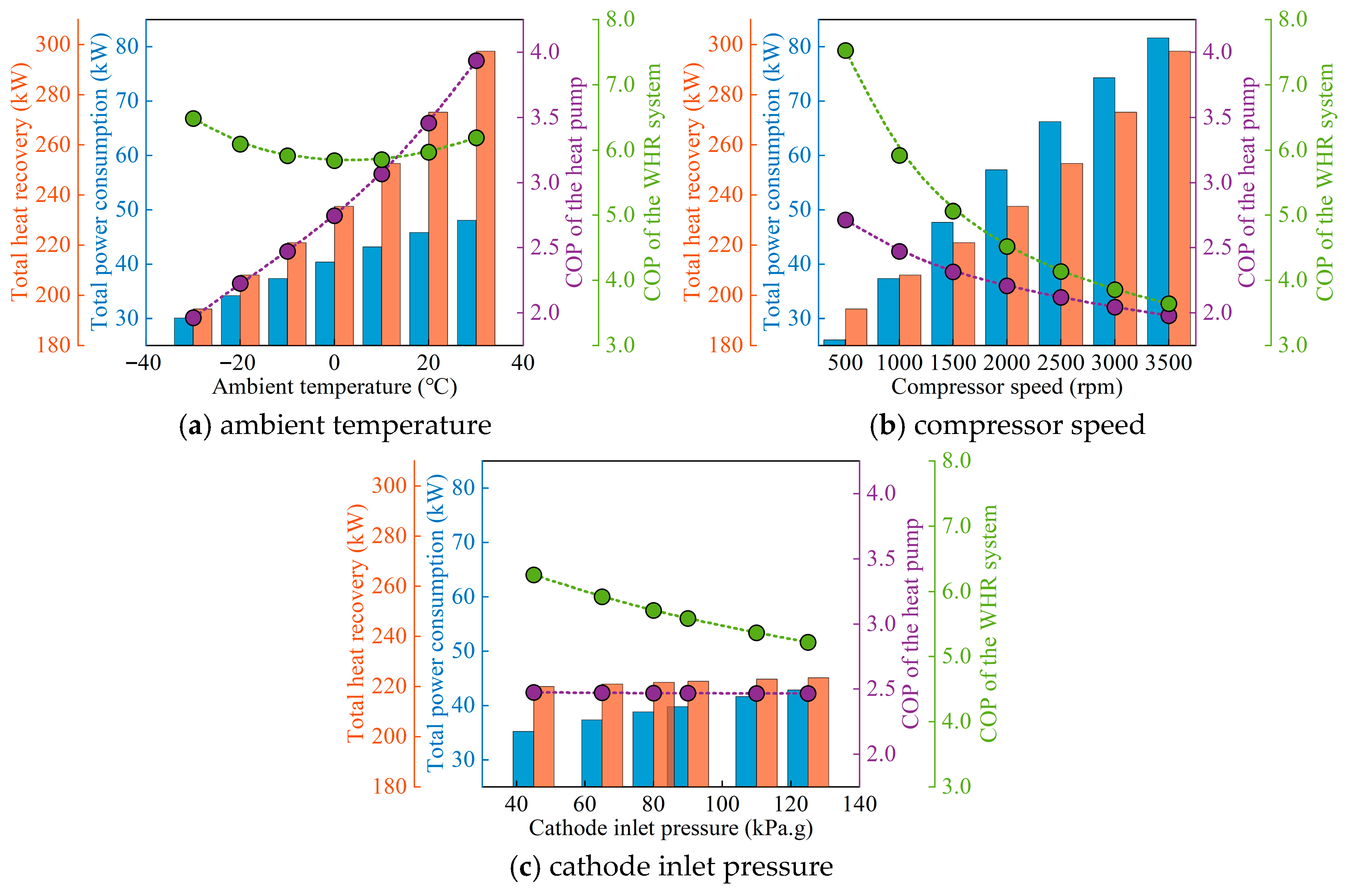
Ambient temperature is a critical external factor affecting the performance of the PEMFC−CHP system, as shown in
Figure 14a. The total power consumption gradually increases as the ambient temperature rises. This is due to the increased power requirements of the heat pump compressor and auxiliary components under high-temperature conditions. At the same time, total heat recovery also shows an upward trend, primarily because of the enhanced heating capacity of the heat pump system (as shown in
Figure 10a). Furthermore, it was found that the growth in total heat recovery (52.8%) was smaller than the growth in total power consumption (60.2%), indicating that ambient temperature has a more significant impact on total power consumption. Ambient temperature significantly improves the heat pump COP, which nearly doubles from 1.96 at −30 °C to 3.93 at 30 °C. It is worth noting that the system COP exhibits a trend of first decreasing and then increasing, with limited overall fluctuations (between 5.5 and 6.5). The results indicate that although the heat pump COP improves significantly with rising ambient temperature, the accompanying increase in total power consumption means that the system COP advantage is not pronounced.
Compressor speed is another key operational parameter influencing PEMFC−CHP system performance, as shown in
Figure 14b. As the compressor speed increases from 500 r/min to 3500 r/min, the total power consumption rises sharply from 26.02 kW to 81.63 kW, with an increase of 213.7%, mainly due to the nonlinear growth of compressor power demand. In contrast, the total heat recovery increases from 194.59 kW to 297.35 kW (52.8%), which is significantly lower than the increase in power consumption. The heat pump COP decreases continuously from 2.71 to 1.98 (−27.0%), as higher rotational speeds lead to increased compression ratios and reduced volumetric and isentropic efficiencies. A similar declining trend is observed for the system COP, which drops from 7.53 to 3.64 (−51.6%), with a more pronounced reduction than that of the heat pump COP. The results show that higher compressor speeds increase total heat recovery, but excessive power consumption leads to a decrease in the system COP.
Figure 14c illustrates the cathode inlet pressure effects. With increasing cathode inlet pressure, total power consumption shows a slight rising trend (from 35.20 kW to 42.85 kW, an increase of 21.7%). This is primarily attributed to the additional compressor power required to maintain the higher inlet pressure. From an electrochemical perspective, increasing cathode pressure does indeed raise the partial pressure of oxygen, which, according to the Nernst equation, causes a slight increase in the stack potential, thereby altering the stack heat output. However, in this study, the range of cathode pressure variation is relatively limited. Within this range, the impact of changes in oxygen partial pressure on the stack potential and polarization loss is inherently small, and the resulting change in stack heat output is also very slight. At the same time, the total residual heat of the system originates from the coupling of multiple heat sources, including the fuel cell, auxiliary equipment cooling, catalytic combustion, and heat pump heating. Minor fluctuations in fuel cell heat generation are significantly diluted within the total heat output, so the total amount of recovered residual heat remains nearly constant. In contrast, total heat recovery remains nearly unchanged, indicating that cathode pressure has a limited impact on total heat recovery. The heat pump COP also remains nearly constant at approximately 2.40. Variations in cathode inlet pressure primarily affect the operating conditions of the fuel cell stack while having minimal impact on the evaporation and condensation temperatures of the heat pump cycle [
70]. However, the system COP decreases from 6.25 to 5.22 (−16.5%), driven entirely by the increase in total power consumption.
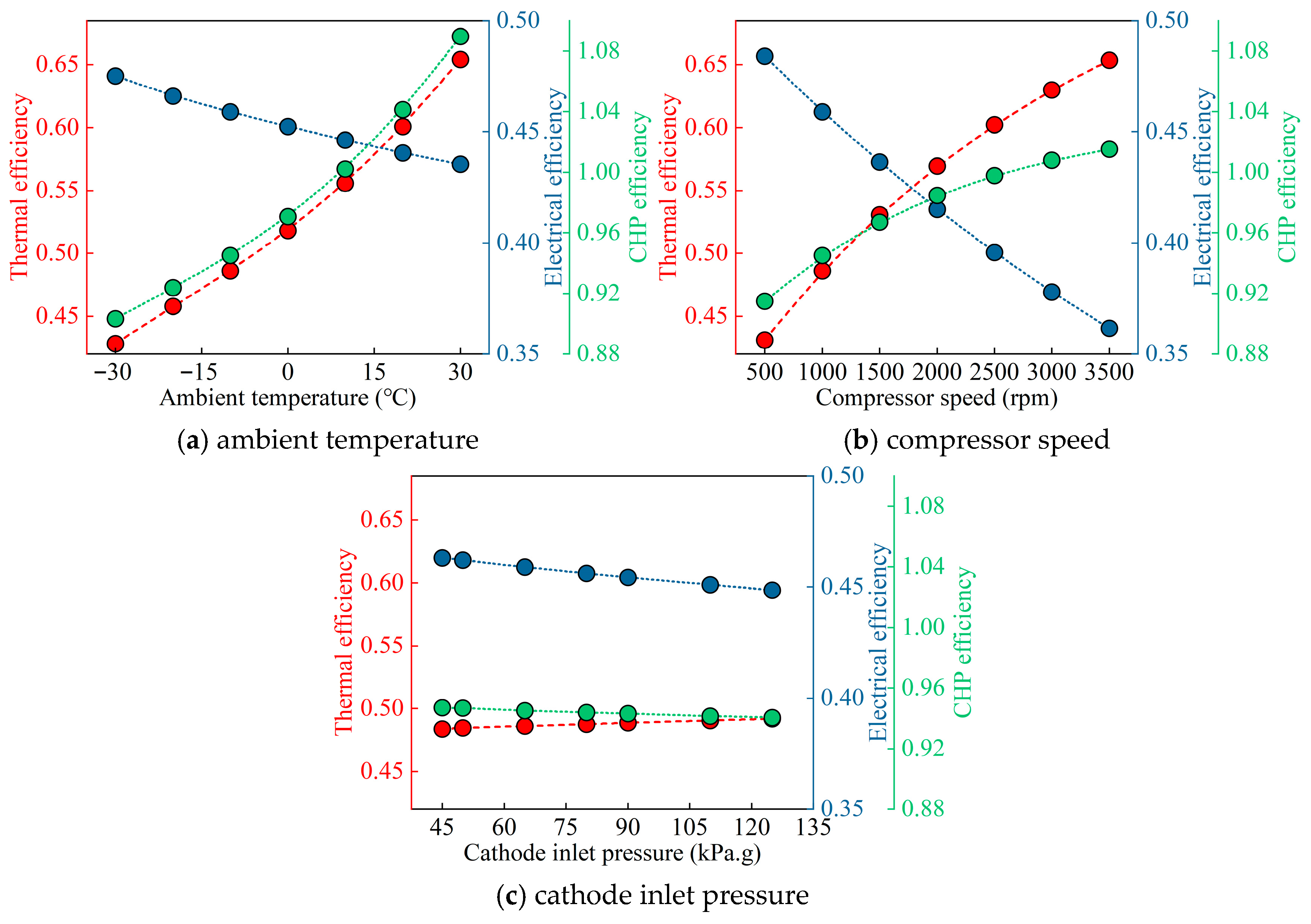
The effects of ambient temperature, compressor speed, and cathode inlet pressure on system efficiency (thermal efficiency, electrical efficiency, and combined heat and power efficiency) were further analyzed, as shown in
Figure 15.
Ambient temperature affects both the electrochemical reactions within the fuel cell stack and the thermodynamic cycle of the heat pump. As ambient temperature rises, the system’s thermal efficiency increases significantly (42.8%), while electrical efficiency tends to decrease (−6.7%), as shown in
Figure 15a. The reason is that, assuming the total input chemical energy of the fuel remains constant, higher ambient temperatures lead to increased heat recovery and total electricity consumption (as shown in
Figure 14a). The CHP efficiency shows a gradual increase with rising ambient temperature (from 0.92 to 1.09, a 18% increase). It is noted that when the ambient temperature exceeds 10 °C, the CHP efficiency exceeds 1.0. This phenomenon does not violate the law of conservation of energy but reflects the inherent characteristic of heat pumps as energy upgrading devices [
71]. By consuming one unit of electrical energy, the heat pump can extract 2–4 units of low-grade heat from the environment, thereby causing the total useful energy output to exceed the chemical energy input.
The compressor speed directly determines the balance between the refrigerant mass flow rate and the compression power, ultimately affecting the efficiency of the combined heat and power system. When compressor speed increases, the refrigerant circulation rate accelerates, enhancing the evaporator’s heat absorption capacity, and thermal efficiency gradually increases (+51.7%). At the same time, according to the compressor similarity laws [
72], power consumption is roughly proportional to the cube of the speed, and electrical efficiency gradually decreases (−25.2%). Under these combined effects, the efficiency of the combined heat and power system shows an upward trend; however, due to excessive power consumption, the positive effect of compressor speed is weaker than that of ambient temperature.
The cathode inlet pressure primarily affects the mass transfer rate within the fuel cell stack and the power consumption of the air compressor. As shown in
Figure 15c, the cathode inlet pressure has a relatively limited impact on thermal efficiency (+1.6%) and electrical efficiency (−3.0%). Cathode pressure rise leads to a noticeable increase in air compressor power consumption and a consequent decline in system electrical efficiency. This adverse variation is offset by a slight improvement in thermal efficiency. As a result, the fluctuation of the overall system efficiency remains within 0.7%. The CHP efficiency remains nearly constant at around 0.94. The results suggest that cathode pressure has a negligible effect on the overall system efficiency, as the slight improvement in thermal efficiency is offset by the reduction in electrical efficiency. As shown in Tang et al. [
17], changes in cathode inlet pressure may affect state of health through electrochemical impedance, which needs to be verified in subsequent experiments.
It is worth noting that the multi-heat source coupled system proposed in this study still faces several practical challenges during actual deployment. The integrated catalytic combustion unit poses certain safety risks, mainly arising from fuel (e.g., unreacted hydrogen) leakage and side reactions caused by local overheating of the catalyst bed. These risks can be mitigated by optimizing the gas sealing structure, installing multiple leakage detection sensors, and adopting a catalyst bed design with zonal temperature control. Low-temperature environments (especially below −20 °C) will reduce the evaporation temperature and heat transfer efficiency of the heat pump system, leading to significant COP degradation and affecting the commercial feasibility of winter operation. This issue can be alleviated by optimizing the refrigerant ratio (e.g., mixed working fluids), improving the fin structure of the evaporator to enhance heat transfer, and forming cascade utilization with the waste heat from the fuel cell stack. The coordination control of multiple heat sources is relatively difficult; under dynamic operating conditions, the coupled system of stack waste heat, heat pump, and catalytic combustion exhibits obvious load fluctuations. The conventional control strategies struggle to achieve precise thermal energy distribution, easily resulting in heat surplus or insufficient supply. It is necessary to develop model predictive adaptive control algorithms to improve regulation accuracy.