1. Introduction
The conservation of historic towns and villages has emerged as one of the most contentious arenas in heritage studies, exposing fundamental tensions between universal conservation principles and culturally specific protection practices with profound implications for communities worldwide [
1,
2,
3,
4,
5]. Since the 1964 Venice Charter established international conservation doctrine [
6,
7], Western-derived frameworks have dominated global heritage discourse, predicated on concepts of material authenticity, minimal intervention, and expert authority emerging from European post-war reconstruction debates [
8,
9]. However, as heritage conservation increasingly engages with inhabited historic settlements, particularly in rapidly developing regions, the limitations of these universalist approaches have become apparent [
10,
11].
In this paper, we use “Western” and “Chinese” as shorthand for two institutionally dominant regulatory traditions relevant to historic settlements: (i) the World Heritage–related Venice Charter lineage as operationalized through UNESCO/ICOMOS instruments, and (ii) China’s national regulations and technical standards for settlement protection. This shorthand is analytical, not civilizational. Neither tradition is internally uniform: the Western/international corpus includes instruments that foreground social value and urban integration (notably the Burra Charter and the Historic Urban Landscape Recommendation), while Chinese conservation discourse and practice span regulatory design, provincial implementation variation, and a substantial scholarly literature that contests the meaning of spatial–visual integrity.
To keep the comparison tractable, we distinguish three analytical layers throughout: (a) policy and doctrine, the formal content of authoritative regulatory and doctrinal texts; (b) operational discourse, the concepts, vocabulary, and evaluative standards through which practitioners and institutions frame conservation decisions; and (c) implementation practice, what actually happens at sites, which may diverge substantially from policy prescription. The present study compares primarily layers (a) and (b) through systematic text analysis, while drawing on case studies and secondary literature to reflect critically on layer (c). We treat the comparison as identifying dominant operational logics rather than essential cultural traits, and we return in
Section 6.3 and
Section 7.3 to the implications of the policy–practice gap for framework implementation.
The gap between the World Heritage System’s theoretical acknowledgement of cultural diversity, particularly since the Nara Document on Authenticity (1994), and its operational persistence of uniform material authenticity standards represents a central problem requiring systematic examination [
12]. For over thirty years, theories have recognized that authenticity can manifest in various ways across different cultures. However, the UNESCO Operational Guidelines still prioritize material integrity as the main standard for authenticity [
13]. The result is a recurring source of friction. Sites whose significance stems from continuing cultural practices, rather than from frozen physical fabric, find themselves at odds with inscription criteria that were not designed with them in mind. Nor do the tensions end at the point of listing: once inscribed, management regimes oriented toward fabric preservation can inadvertently erode the very communal functions that made the site worth protecting.
In this study, the term “living heritage” refers to sites that remain inhabited and socially active, where the cultural practices of resident communities continue to constitute an essential part of heritage value [
5,
14]. This is not the same thing as UNESCO’s category of intangible cultural heritage, which deals mainly with practices and expressions that may have no fixed spatial anchor [
15,
16,
17]. The definition used here is more closely aligned with the Chinese regulatory term huotai yichan (literally ‘living heritage’, 活态遗产), which foregrounds the interdependence of built form, everyday life, and ongoing cultural practice [
18,
19]. Accordingly, the conservation of living heritage cannot be reduced to the maintenance of material fabric alone. If the communities that sustain a site’s cultural meaning are displaced, economically marginalized, or excluded from decisions about their environment, the site may retain its physical form while losing a substantial part of its heritage significance [
20,
21,
22,
23,
24].
That China now holds the second-largest share of World Heritage inscriptions, while simultaneously operating its own parallel national conservation apparatus, makes it a particularly instructive case for exploring how alternative paradigms work in practice. The regulations governing historic towns and villages in China, promulgated by the State Council in 2008 and revised in 2017 [
25,
26,
27,
28], are grounded in philosophical principles that differ in important respects from those commonly associated with Western conservation doctrine. They give priority to spatial and visual integrity (chuantong geju he lishi fengmao, meaning ‘traditional spatial pattern and historic townscape character’, 传统格局和历史风貌) over material authenticity [
29,
30], require community participation rather than exclusive dependence on expert authority, and emphasize the integration of heritage protection with economic development rather than treating the two as separate policy domains [
31,
32,
33,
34,
35,
36]. Together, these features reflect different cultural conceptions of heritage, authenticity, and conservation purpose. Nevertheless, a clear distinction must be maintained between regulatory design and implementation in practice. The widely documented gap between formal regulation and actual governance outcomes in China indicates that the participatory and integrative ambitions of the framework are not consistently realized across all sites [
26,
27,
35].
Implementation fidelity is a central concern in the evaluation of conservation frameworks because it determines the extent to which formal regulatory prescriptions are translated into on-the-ground outcomes. When actual practice consistently diverges from formal guidelines, as it often does, an evaluation confined to the written framework will paint an overly optimistic picture. The case studies in this article are chosen precisely because they foreground this regulation–implementation gap. We therefore keep two lines of inquiry separate throughout: regulatory analysis (what the framework says) and implementation assessment (what actually happens at the site). Maintaining this distinction lets us judge the framework’s design on its own terms while also asking what institutional conditions must be in place before that design can succeed.
Despite the breadth of scholarship on heritage conservation theory, systematic comparative analyses of operational regulatory frameworks remain relatively scarce. The existing literature is concerned primarily either with critiquing Western universalist assumptions or with proposing alternative operational approaches [
9,
10]. Moreover, accounts of Chinese conservation practice are often descriptive in nature and are not consistently subjected to rigorous comparison with international standards and frameworks [
37,
38,
39,
40]. Consequently, limited attention has been paid to the possibility of integrating Western and Chinese approaches into professionally robust frameworks capable of responding to diverse conservation contexts [
41]. This gap has clear practical implications. Historic settlements worldwide face comparable pressures, including depopulation, gentrification, tourism-related stress, and the demands of economic sustainability, yet practitioners continue to lack evaluative frameworks that acknowledge the legitimacy of multiple conservation pathways.
This research pursues three main objectives: (1) to undertake a systematic comparison of Western and Chinese regulatory frameworks through rigorous content analysis; (2) to evaluate the complementary possibilities and incommensurable differences between these paradigms; and (3) to propose, as a proof of concept, an integrated dual-track framework supported by operational standards, governance structures, and implementation procedures. While the framework is designed with broader applicability in mind, its empirical foundation is confined to Western and Chinese systems. It should therefore be regarded as a tested proof of concept for bi-cultural synthesis rather than as a fully validated global model. Any extension of this framework to African, Indigenous, Islamic, Japanese, and other cultural traditions will require collaborative testing with experts grounded in those traditions. In this way, the study contributes to SDG 11 (Sustainable Cities and Communities), especially Target 11.4, and to SDG 13 (Climate Action) through its climate-vulnerability protocols.
To achieve these objectives, the study used the following key terms in its sections, as shown in
Table 1.
5. Integrated Dual-Track Framework
5.1. Framework Rationale and Two-Stage Structure
The comparative analysis in
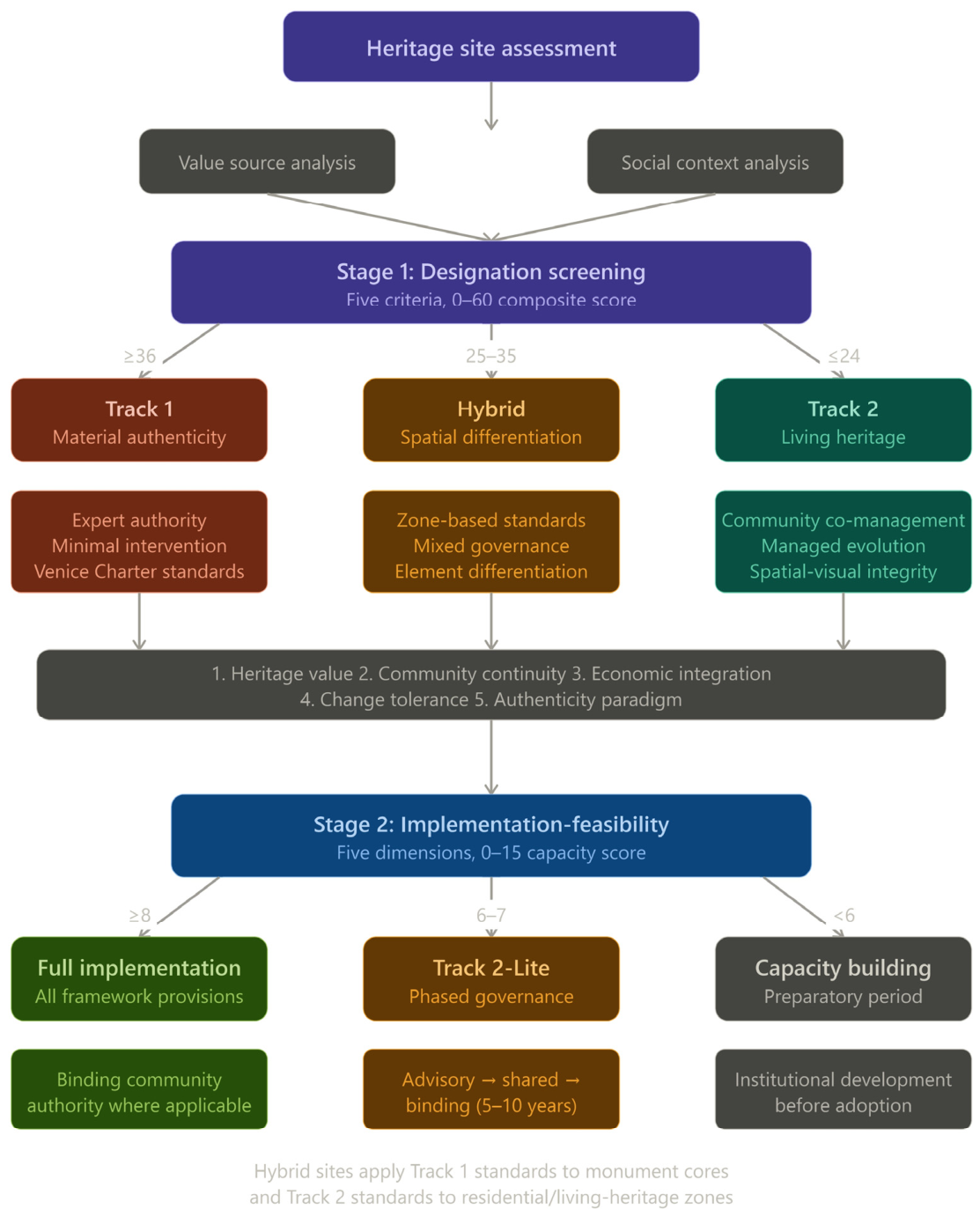
Section 4 suggests that Western and Chinese approaches are more usefully understood as complementary rather than competing. On that basis, we propose the provisional dual-track decision-support framework illustrated in
Figure 2 as a proof of concept. The framework is meant to support reasoned deliberation among practitioners, communities, and authorities, not to serve as a finalized international standard. Accordingly, the thresholds, governance provisions, and protocols set out below should be treated as heuristics pending broader empirical validation (see
Section 7.3).
A central design choice of the revised framework is that application proceeds in two stages rather than one:
Stage 1, Designation Screening. At this stage, a site is assessed against the five designation criteria (
Section 5.2) to produce a composite score indicating whether its conservation logic leans toward material-authenticity priorities (Track 1), living-heritage priorities (Track 2), or a hybrid of the two. The designation reached at this stage remains provisional: it identifies the appropriate conservation paradigm, but it does not yet determine governance arrangements.
Stage 2, Implementation-Feasibility Assessment. Before full framework provisions are activated, the site is assessed across five implementation-capacity dimensions: governance capacity, professional expertise, financial resources, community capacity, and political will (see
Section 5.4 and Section
Appendix C.2). Where capacity is adequate, the full framework, including binding community authority for Track 2 sites, can be applied. Where capacity is partial, the framework is implemented through a phased Track 2-Lite mode. Where capacity is inadequate, the designation serves as a diagnostic and priority-setting tool while a period of capacity-building precedes fuller adoption.
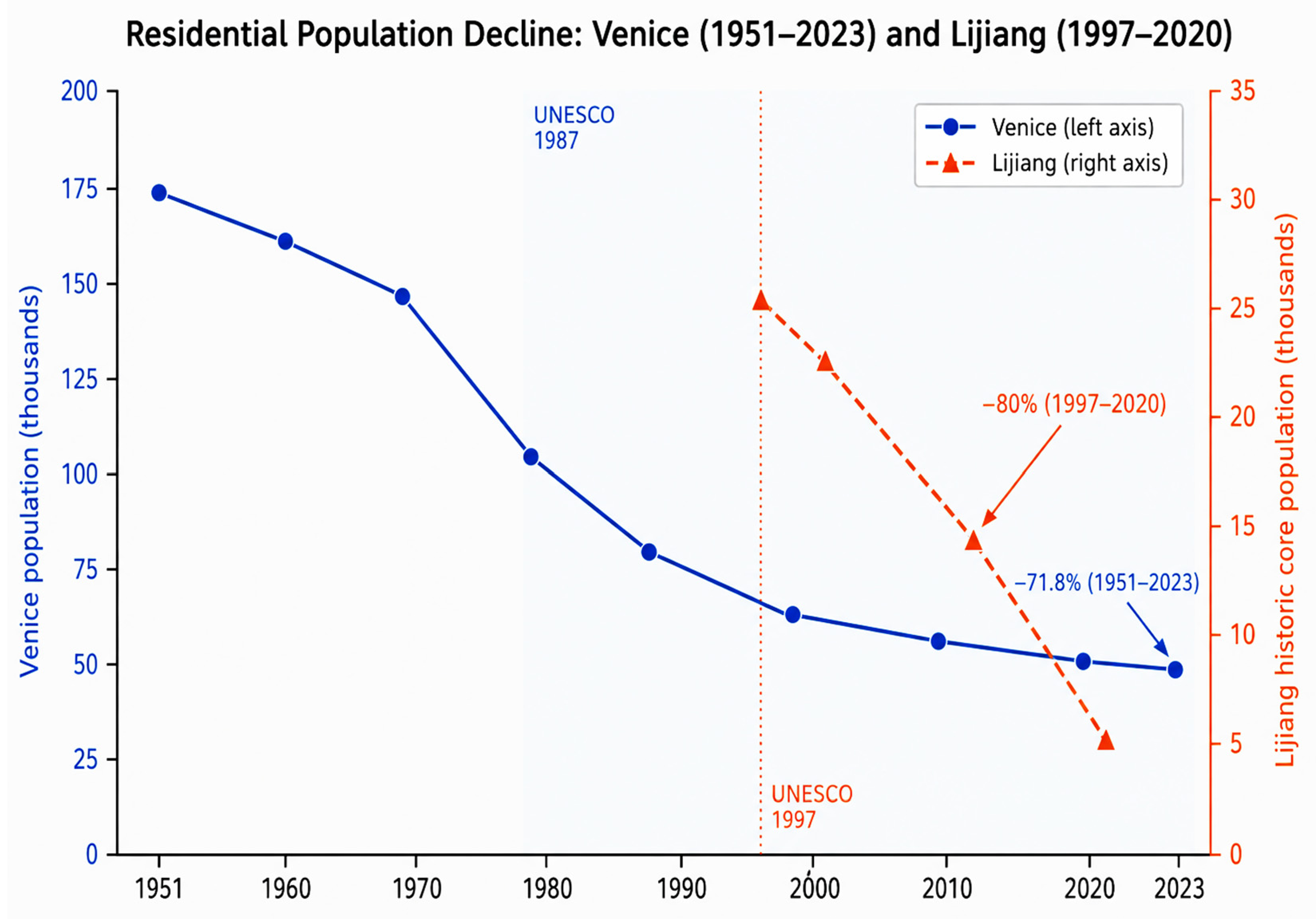
This two-stage structure responds directly to the well-documented gap between regulatory prescription and governance outcomes at heritage sites worldwide. Correct designation, on its own, accomplishes little if the enforcement apparatus, funding stability, and political commitment required to sustain it are absent; the Lijiang case (
Section 6.3) clearly exemplifies this failure mode. Treating implementation feasibility as a formal stage of framework application rather than as a post hoc limitation allows the framework to be applied across a wider range of institutional contexts while remaining honest about what its fuller provisions require.
The framework identifies two principal conservation tracks and one hybrid category.
Track 1 (Material Authenticity Core) applies where a site’s outstanding value resides primarily in its original physical fabric, archaeological ruins, uninhabited monuments, or buildings whose artistic significance depends on the survival of specific materials. In these cases, Venice Charter principles govern: minimal intervention, reversible treatments, and professional-led decision-making.
Track 2 (Living Heritage Core) applies to inhabited settlements in which heritage value derives from the interaction of built fabric, spatial relationships, and continuing community practices. It permits adaptive intervention while requiring the retention of spatial and visual integrity. The framework proposes substantive community representation in governance (discussed in
Section 5.3), with decision-making authority calibrated to local legal conditions through the Track 2-Lite pathway where appropriate. Economic development is treated as integral to conservation rather than a separate policy objective. Track 2 is suited to historic towns and villages, continuously inhabited urban quarters, and cultural landscapes, which constitutes the majority of the world’s historic settlements.
Hybrid Designation applies to sites combining exceptional material significance with significant living-heritage functions. Rather than treating hybrid cases as unresolved, the framework uses spatial differentiation: different zones within a single site are governed by different track provisions. We expect hybrid designation to be the modal outcome for major inhabited World Heritage properties, rather than the exception.
5.2. Track Designation Criteria
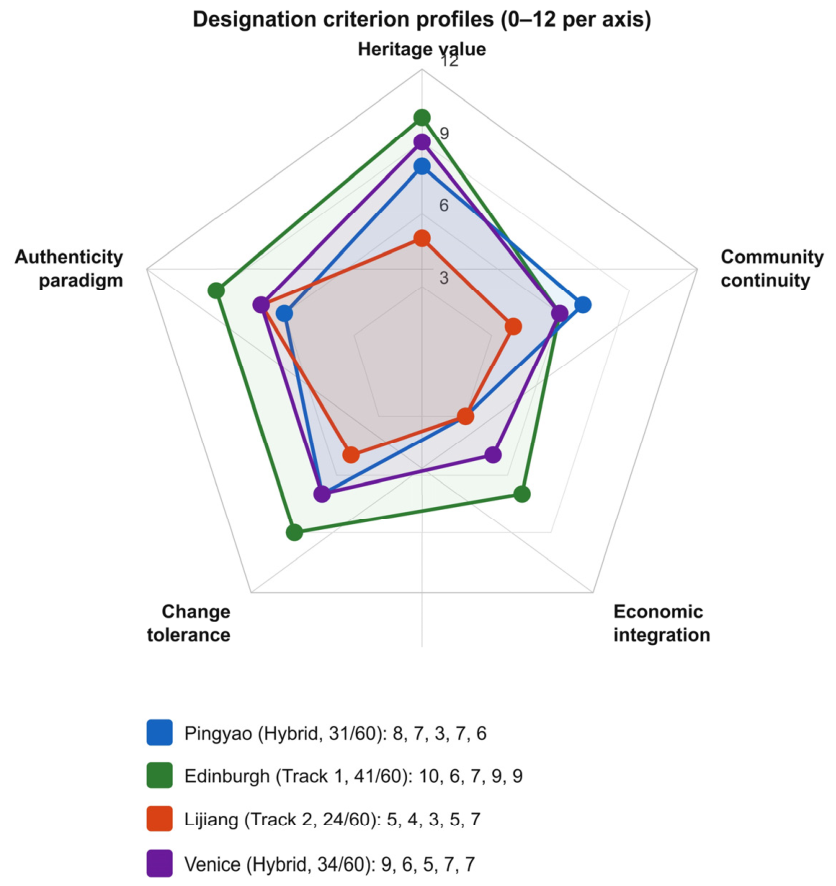
Stage 1 designation screening uses a multi-criteria scoring system (
Figure 3,
Table 3). The five assessment dimensions are each scored from 0 to 12, for a composite range of 0–60. Higher scores indicate stronger alignment with material-authenticity priorities; lower scores indicate stronger alignment with living-heritage priorities. The scoring structure is a heuristic screening tool, not a deterministic classifier: it surfaces the dominant conservation logic of a site for structured deliberation, but designation decisions, especially in the middle of the range, require expert review, stakeholder consultation, and contextual judgement beyond the composite score. In the working bands used here, composite scores ≥36 tentatively suggest Track 1 designation, ≤24 tentatively suggest Track 2 designation, and 25–35 indicate hybrid cases warranting spatial differentiation. Borderline scores (24–27 or 32–35) automatically trigger independent review. Five dimensions feed into the composite score:
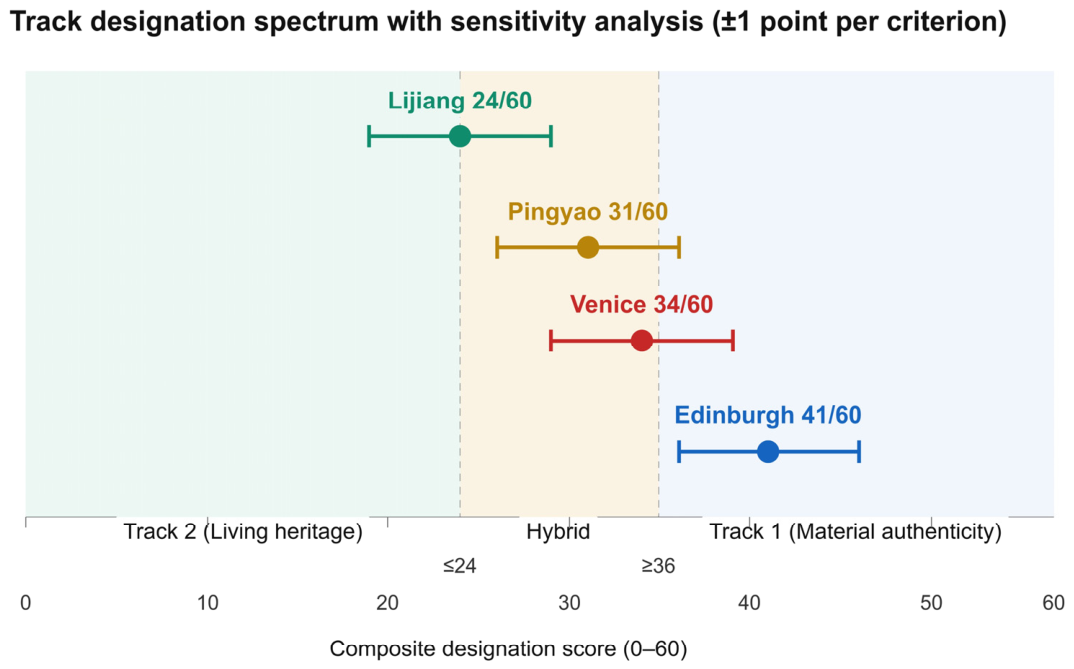
We stress that the cut-offs of ≥36, ≤24, and 25–35 are working heuristics, not hard-wired thresholds; they grew out of iterative testing on four case studies and will need further calibration. A designation counts as robust only if it remains stable under minor score adjustments (±1 point per criterion). Cases in which the designation changes under this test are treated as borderline and therefore require additional expert review and structured consultation with relevant stakeholders.
Table 4 reports the results of the sensitivity analysis for all four case studies. Complete scoring rubrics and detailed operational indicators are provided in
Appendix C (Section
Appendix C.1).
Worked Example: Pingyao Ancient City
To illustrate the designation process, Pingyao Ancient City is used here as a worked example [
61,
62,
63,
64,
65,
66,
67]:
Criterion 1 (Heritage Value): 8/12 (features exceptional Ming-Qing architecture alongside living traditions);
Criterion 2 (Community Continuity): 7/12 (approximately 40% of long-term residents have lived here for at least 5 years);
Criterion 3 (Economic Integration): 3/12 (heritage tourism is essential to the local economy, supporting approximately 15,000 jobs);
Criterion 4 (Change Tolerance): 7/12 (commercial adaptation is necessary for viability);
Criterion 5 (Authenticity Paradigm): 6/12 (there is a balanced emphasis on both material and spatial elements).
A total score of 31/60 indicates a hybrid designation. Spatial differentiation categorizes city walls and temples under Track 1, while residential-commercial quarters are classified under Track 2.
5.3. Governance: Illustrative Templates and Implementation Pathways
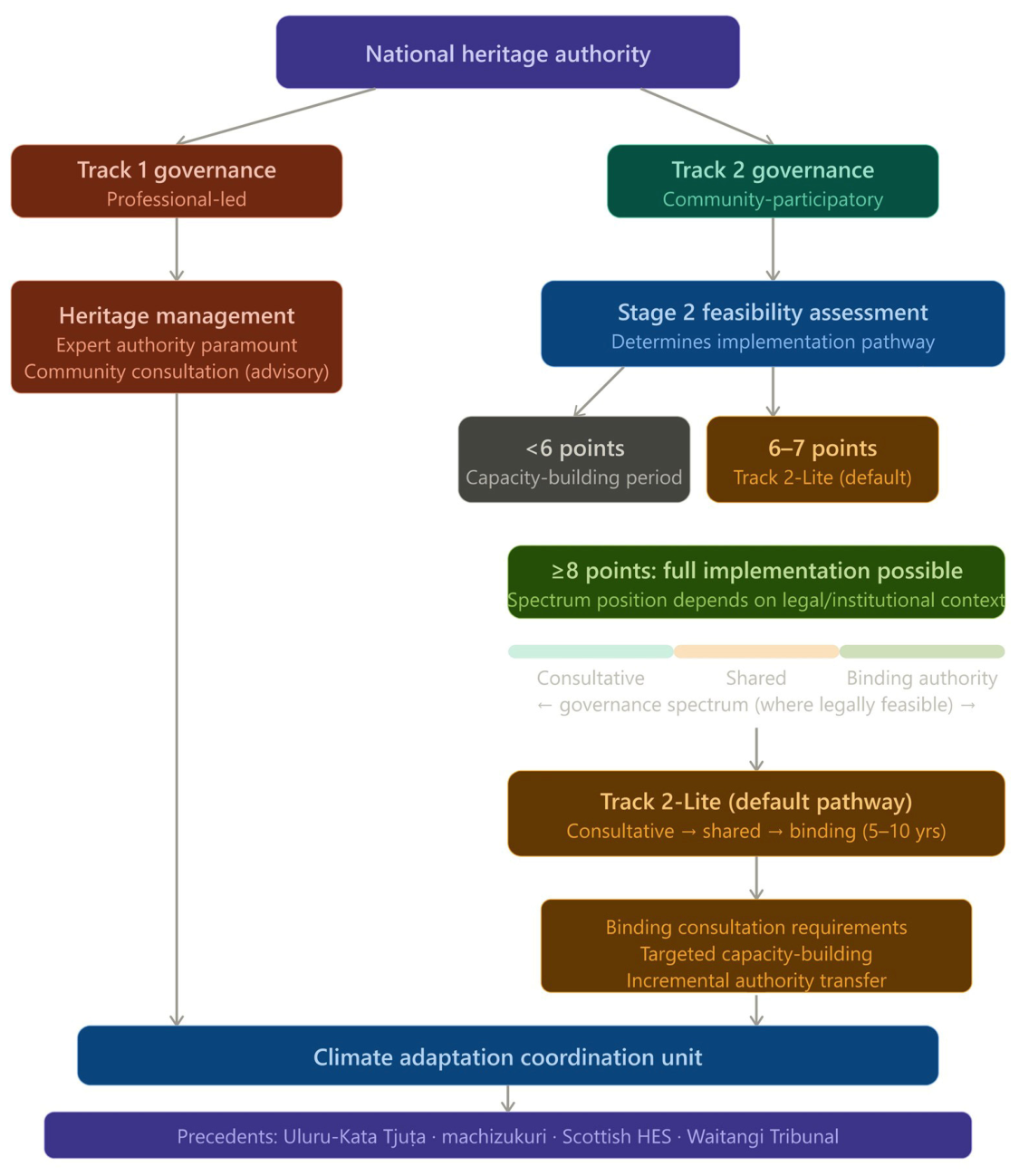
Although the five-criterion screening framework provides a structured assessment, governance design remains fundamentally conditional on local legal, institutional, and political conditions. We therefore present the arrangements described below as illustrative templates, to be adapted to local contexts rather than prescribed universally (see
Figure 4). Three principles anchor these templates: scoring transparency (published justifications for all designations and automatic independent review for borderline cases), procedural fairness (clear appeal routes), and meaningful community involvement (calibrated to what local law and institutional capacity actually permit).
Governance along a spectrum. The framework does not prescribe a single model of Track 2 governance. Instead, it recognizes a range of participatory arrangements: consultative (advisory community representation with formal consultation requirements), shared (joint decision-making within defined scopes of community authority), and binding (community veto on specified decision classes). Where a site sits along this spectrum depends on the Stage 2 feasibility assessment and on what local law actually permits. We treat no point on the spectrum as normatively superior. What matters is that community roles can expand as institutional capacity grows, rather than that any particular arrangement is fixed at the outset.
Minimum preconditions for upper-spectrum (binding) Track 2 governance. Where binding community authority is proposed, at least four preconditions should be in place: (i) a legal environment that permits delegation of binding authority to community bodies; (ii) a community organizational infrastructure with the capacity to exercise such authority without capture by narrow interests; (iii) a functioning appeal and arbitration mechanism external to the community body; and (iv) sustained political commitment at the relevant administrative level. Where any of these are absent, upper-spectrum provisions are deferred in favour of Track 2-Lite (see below).
Track 2-Lite: the default pathway where full preconditions are not yet met. Track 2-Lite is a phased implementation model, not a diluted Track 2. It is designed for the many contexts where the preconditions for binding community authority are not initially in place. Community representatives serve in formal consultative and advisory capacities under binding consultation requirements. Targeted capacity-building (training, organizational support, funding) runs alongside this work. Decision-making authority is transferred in stages against pre-agreed milestones over five to ten years, and a site’s movement along the consultative–shared–binding spectrum becomes itself a monitored indicator of conservation performance. Governance capacity, on this reading, is a developmental trajectory rather than a static precondition.
Real-world precedents informing these templates. The governance templates proposed here are informed by, and remain compatible with, a range of existing participatory-governance arrangements documented in the international heritage literature. The joint management of Uluru-Kata Tjuṭa National Park (Australia), established under the 1985 hand-back arrangements, provides a precedent for binding Indigenous/traditional-owner authority within a national heritage framework [
68,
69]. Japan’s machizukuri (町づくり, community-based neighborhood planning) neighbourhood-planning councils in historic districts such as parts of Kyoto demonstrate a consultative–shared model in which resident councils exercise substantive influence over built-environment decisions without wholly displacing municipal authority [
70]. Scotland’s Historic Environment Advisory Council and the statutory consultee arrangements surrounding Historic Environment Scotland illustrate institutionalized professional–community advisory structures within a centralized governance system, providing a model for the lower end of the spectrum. For arbitration of contested designations, the procedural structure of the Waitangi Tribunal (Aotearoa/New Zealand), with its mixed composition, public hearings, and binding recommendations in specified domains, offers a precedent for the Heritage Arbitration Panel proposed here [
71]. None of these precedents is a direct template; each illustrates that arrangements of the kind proposed are institutionally tractable in practice.
Cross-zone governance for hybrid designations. Sites with hybrid designation require governance that can handle two parallel regimes simultaneously. The framework proposes a conflict-resolution hierarchy: life-safety considerations take precedence across all zones; track-specific standards apply within their designated zones; buffer zones use joint decision-making; and unavoidable conflicts escalate to the Heritage Arbitration Panel for binding determination within 90 days (see
Appendix C.3 for detailed templates).
The detailed governance templates, including illustrative Track 2 Heritage Governance Council compositions, scope-of-authority provisions, Track 2-Lite capacity-building milestones, and cross-zone conflict-resolution procedures, are provided in
Appendix C.3. These are offered as points of departure for local adaptation, not as universally applicable specifications.
5.4. Stage 2: Implementation-Feasibility Assessment
Stage 1 designation identifies the conservation paradigm a site’s characteristics most closely fit; Stage 2 determines what level of framework provision a site’s institutional context can actually sustain. Feasibility is assessed across five dimensions: governance capacity, professional expertise, financial resources, community capacity, and political will.
Aggregate feasibility scores map to three implementation pathways: ≥8 points suggests that full framework provisions can be applied, including upper-spectrum participatory governance for Track 2 designations; 6–7 points indicates Track 2-Lite as the appropriate pathway; and scores below 6 indicate that a preparatory capacity-building period should precede fuller framework adoption.
5.5. Climate Adaptation Protocols
The case studies, Venice above all, leave no doubt that climate change is not a peripheral concern but one that any credible conservation framework must confront head-on. Heritage conservation must be understood as a climate justice issue: its impacts disproportionately affect vulnerable communities that are least responsible for emissions [
72,
73].
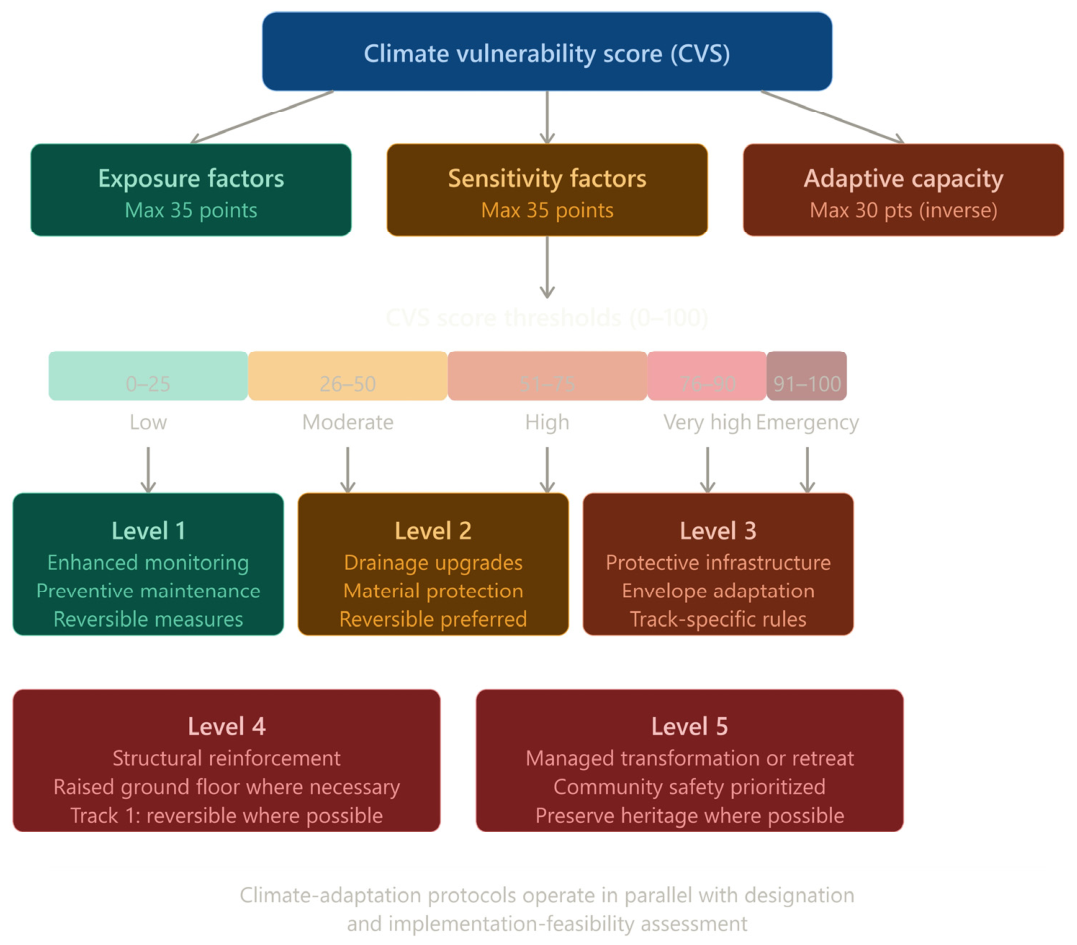
The framework establishes climate vulnerability assessment as a mandatory component, scored separately from track designation. The Climate Vulnerability Score (CVS) ranges 0–100 (see
Figure 5) based on: Exposure factors (35 points), Sensitivity factors (35 points), and Adaptive capacity (30 points, assessed inversely).
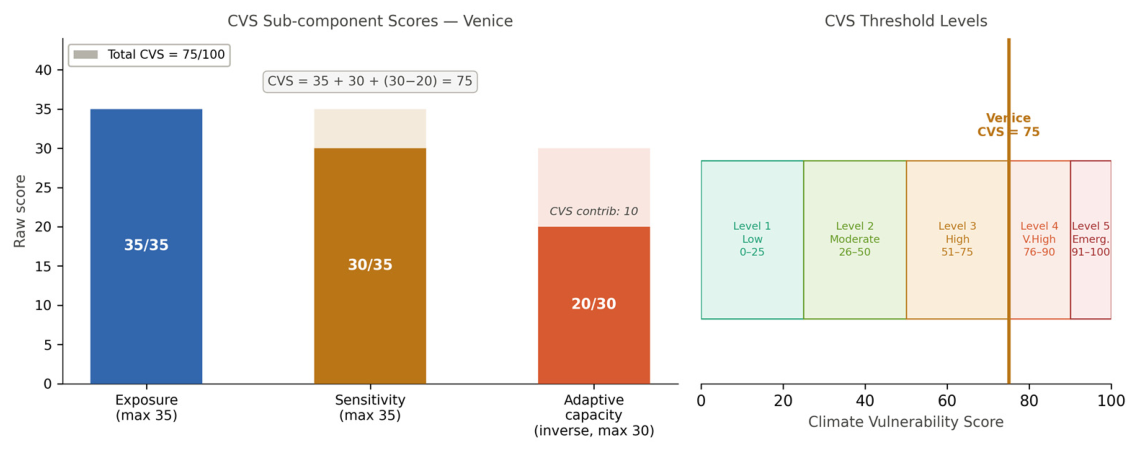
See
Figure 6 and
Appendix E for the detailed CVS methodology and worked Venice example (CVS = 75/100). Protocol Levels:
Level 1 (CVS 0–25, Low): Enhanced monitoring and preventive maintenance are implemented;
Level 2 (CVS 26–50, Moderate): Focus on improved drainage and material protection; reversible measures are preferred;
Level 3 (CVS 51–75, High): Involves protective infrastructure and adaptations to the building envelope. Track 1 maintains material authenticity where feasible, while Track 2 permits adaptive modifications;
Level 4 (CVS 76–90, Very High): Requires structural reinforcement and raising the ground floor. Track 1 mandates reversible interventions where possible;
Level 5 (CVS 91–100, Emergency): Involves managed transformation or retreat, prioritizing community safety while preserving as much heritage fabric as possible.
To sketch what international climate finance might look like, we float two illustrative mechanisms: a dedicated Heritage Adaptation Window within the Green Climate Fund, and a UNESCO Heritage–Climate Solidarity Levy on cruise passengers and international air arrivals. Neither is a ready-made proposal. Both would demand rigorous feasibility work, legal-authority review, and multi-stakeholder negotiation before they could move from paper to practice. The technical details appear in
Appendix E (Section
Appendix E.3).
7. Discussion
7.1. Theoretical Contributions
This study advances heritage theory through two conceptual contributions and a practical decision-support structure. The first concept, “methodological pluralism,” acknowledges that different types of heritage require distinct conservation approaches, without hierarchical ranking. This perspective moves beyond the binary of universalism and relativism that has limited discussions in the field of heritage.
The second concept, “authenticity pluralism,” recognizes that there are multiple valid definitions of authenticity. These include material authenticity, which focuses on physical originality and is particularly relevant for exceptional artistic works, and formal authenticity, which emphasizes spatial and visual continuity and is suitable for living settlements.
Neither approach is superior; the appropriateness of each depends on the type of heritage, the community’s continuity, and its tolerance for change, all of which can be assessed using a five-criterion framework.
In addition, the dual-track model offers a transparent decision-support architecture that specifies when different conservation paradigms are appropriate and how that choice translates into intervention standards, governance arrangements, and feasibility screening.
7.2. Epistemic Justice Considerations
The community veto mechanism operationalizes procedural justice by ensuring that communities have decision-making authority over Track 2 designations. However, this addresses only one dimension of epistemic injustice [
133,
134]. Testimonial injustice, systematic dismissal of community knowledge by ‘experts’, requires deeper structural changes [
135]. Hermeneutical injustice, the lack of conceptual resources to articulate experiences, persists when communities must express heritage values in Western conservation vocabulary (‘authenticity,’ ‘integrity,’ ‘Outstanding Universal Value’) [
133]. The framework’s emphasis on spatial–visual integrity and on living heritage concepts drawn from Chinese practice expands the available vocabulary but remains limited to a Western-Chinese synthesis. Extension to Indigenous, African, Islamic, and other heritage paradigms may require the development of additional conceptual frameworks rather than forcing diverse practices into either Western or Chinese categories [
136,
137]. This represents a fundamental limitation: a framework synthesizing two paradigms cannot address hermeneutical injustice experienced by communities whose heritage concepts are absent from both traditions.
7.3. Limitations and Future Research
Normative framing and proof-of-concept status: The dual-track framework is a normative policy proposal. It rests on comparative regulatory analysis and theoretical synthesis, and the four case studies illustrate it rather than validate it: they draw on secondary data. A stronger test would demand primary fieldwork at multiple sites, structured interviews with practitioners, community representatives, and regulatory authorities, and independent scoring by several assessors to establish inter-assessor reliability for both Stage 1 and Stage 2. Longitudinal observation of how framework-guided decisions unfold would also be needed. We have undertaken none of this. The framework should therefore be read as a proof of concept that supports deliberation and grounds later empirical work, not as a finalized standard.
A staged validation roadmap: To move from proof of concept toward a validated operational tool, we propose a three-phase research programme. Phase 1 (expert validation; approximately 12 months) would involve independent scoring of at least 30 geographically and typologically diverse sites by multiple assessors, enabling threshold calibration, sensitivity analysis at scale, and inter-assessor reliability statistics for both stages. Phase 2 (pilot implementation; 2–3 years) would apply the framework to a small number of volunteer sites across contrasting institutional contexts, with documentation of designation decisions, Track 2-Lite capacity-building trajectories, and governance outcomes. Phase 3 (doctrinal integration; 3–5 years) would refine the criteria and governance templates in light of Phase 2 results, with the findings fed back into ICOMOS doctrinal processes and UNESCO Operational Guidelines revision cycles. Institutional partnerships with the UNESCO Periodic Reporting mechanism would offer one plausible pathway for Phase 1.
The regulation–implementation gap: The most sobering finding from the case studies is how wide the gap can be between what regulations promise and what governance actually delivers, with Lijiang as the starkest example. No framework, however finely calibrated, can function without the enabling infrastructure around it: competent local authorities, trained professionals, stable funding, and leaders willing to enforce unpopular restrictions. The two-stage structure proposed here responds to this by treating implementation feasibility as a formal stage of application rather than as an afterthought, and by making Track 2-Lite the default where the full preconditions are not yet in place. Even so, a framework that correctly diagnoses low institutional capacity cannot create the capacity it diagnoses. That limitation is built into what the framework is, and engaging with it honestly is part of how the framework works.
Thresholds as heuristic bands: The scoring bands (≥36 for Track 1, ≤24 for Track 2, and 25–35 for hybrids) are deliberately simple. This simplicity aids communication and application, but it comes at a cost: the sensitivity analysis reported in
Table 4 indicates that only Edinburgh remains fully robust under score perturbations of ±1 point per criterion, whereas Pingyao, Lijiang, and Venice are each sensitive to at least one threshold boundary. Until broader multi-assessor validation is undertaken, these cut-offs should be treated as heuristic interpretive bands, and borderline scores should always trigger independent review and structured stakeholder consultation rather than automatic designation.
Asymmetry of the regulatory corpus: The Western/international and Chinese corpora included in this analysis differ in regulatory genre: the former is weighted toward cross-national doctrinal charters articulating general principles, while the latter includes more prescriptive national regulations and technical standards. We have addressed this asymmetry by distinguishing analytically between policy/doctrine, operational discourse, and implementation practice (
Section 1) and by treating the comparison as one of dominant operational logics rather than like-for-like regulatory instruments. The asymmetry nonetheless remains a limitation: future work would benefit from including a wider range of sub-national Western regulatory instruments (national heritage acts, regional planning codes) alongside Chinese doctrinal and scholarly discourse.
Geographic scope: Because the framework synthesizes only two traditions, it does not draw on African, Indigenous, Islamic, Japanese, Latin American, or other regional conservation paradigms [
138,
139,
140,
141,
142,
143,
144,
145]. This is not a gap that can be filled from outside: it requires collaborative work with scholars and practitioners rooted in those traditions, who are best placed to judge whether the dual-track logic translates, needs modification, or requires a third or fourth track. The framework should therefore be understood as a bicultural proof of concept, not as a candidate for global standardization in its present form. Further theoretical extensions and future research pathways are outlined in
Appendix F.
Governance feasibility across legal systems: The governance spectrum introduced in
Section 5.3 (consultative → shared → binding) and the Track 2-Lite pathway are designed to accommodate institutional variation, but further work is needed on how the framework interfaces with specific legal and administrative systems, particularly in centralized governance contexts where binding community authority may require constitutional or statutory reform rather than simple administrative adoption.
Taken together, these limitations define both the boundaries of what the present study claims and a substantive research agenda for moving the framework from proof of concept toward validated operational practice.
8. Conclusions
This study has argued that Western and Chinese conservation frameworks embody complementary rather than competing approaches, and that the differences between them, operationalized emphasis on material authenticity versus spatial–visual integrity, expert-led versus multi-stakeholder governance, and preservation–development separation versus integration, reflect distinct operational logics that each illuminate dimensions the other tends to under-specify. Building on this complementarity, we have proposed a provisional dual-track decision-support framework as a proof of concept: Track 1 for material-authenticity cores, Track 2 for living-heritage cores, and hybrid designation with spatial differentiation for sites combining both characteristics, which, we expect, will prove to be the modal outcome for major inhabited historic properties.
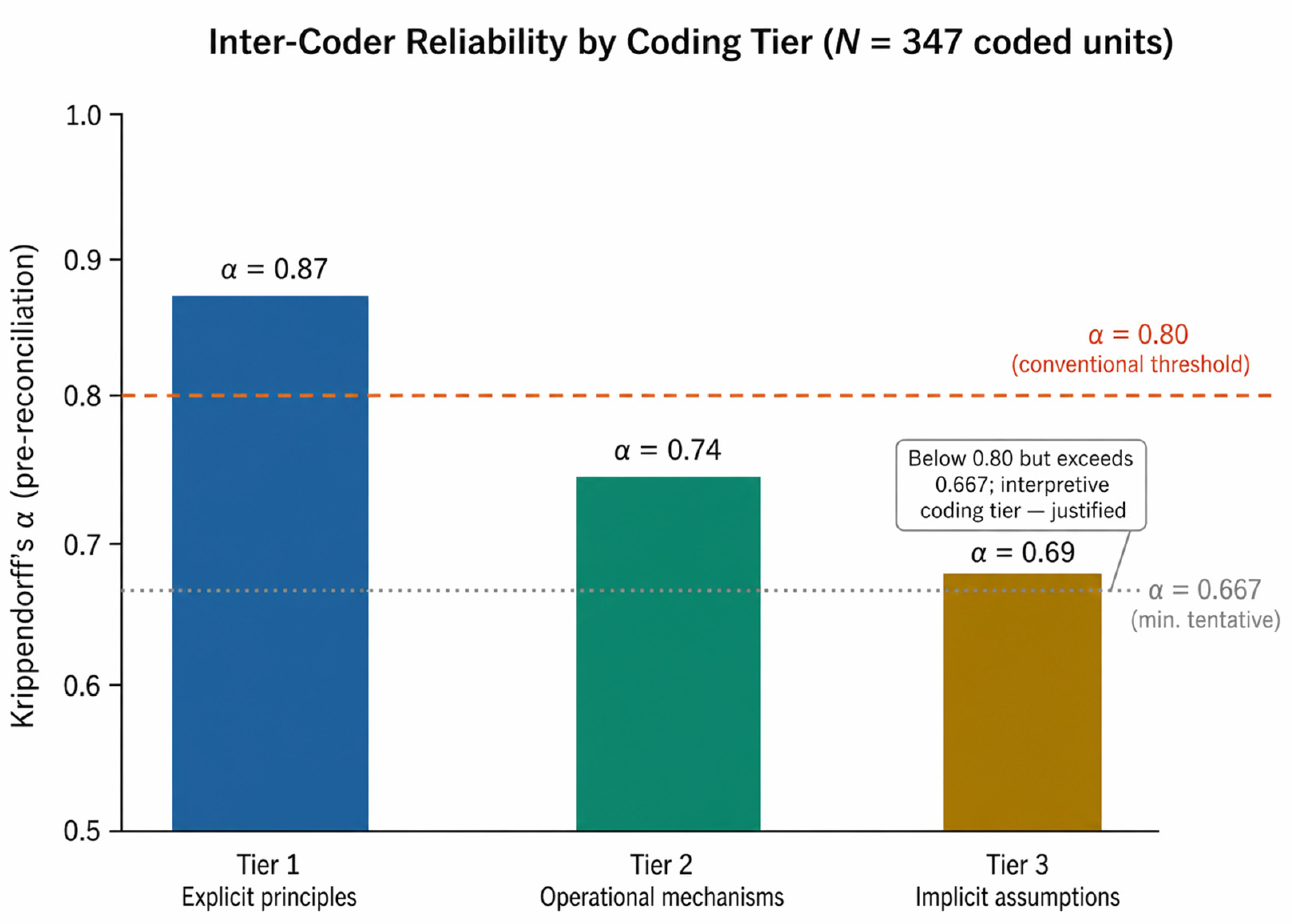
The framework’s contributions are theoretical, methodological, and practical. Theoretically, we advance methodological pluralism and authenticity pluralism as alternatives to the universalism–relativism binary, and we integrate Brandi’s distinction between historical and aesthetic instances to resist any reduction in Western restoration theory to a single material-authenticity axis. Methodologically, we provide a two-part regulatory text analysis with pre-reconciliation inter-coder reliability reported transparently (Krippendorff’s α = 0.69–0.87), while being clear that claims resting specifically on the most interpretive coding tier are treated as interpretive support rather than as sole evidentiary grounds. Practically, we offer a heuristic operational toolkit: a five-criterion designation screening tool with provisional threshold bands and sensitivity analysis; a five-dimension implementation-feasibility assessment; dual-track intervention standards; governance templates arranged along a consultative–shared–binding spectrum with Track 2-Lite as the default pathway where full preconditions are not yet met; and climate-vulnerability assessment with five-level adaptation protocols.
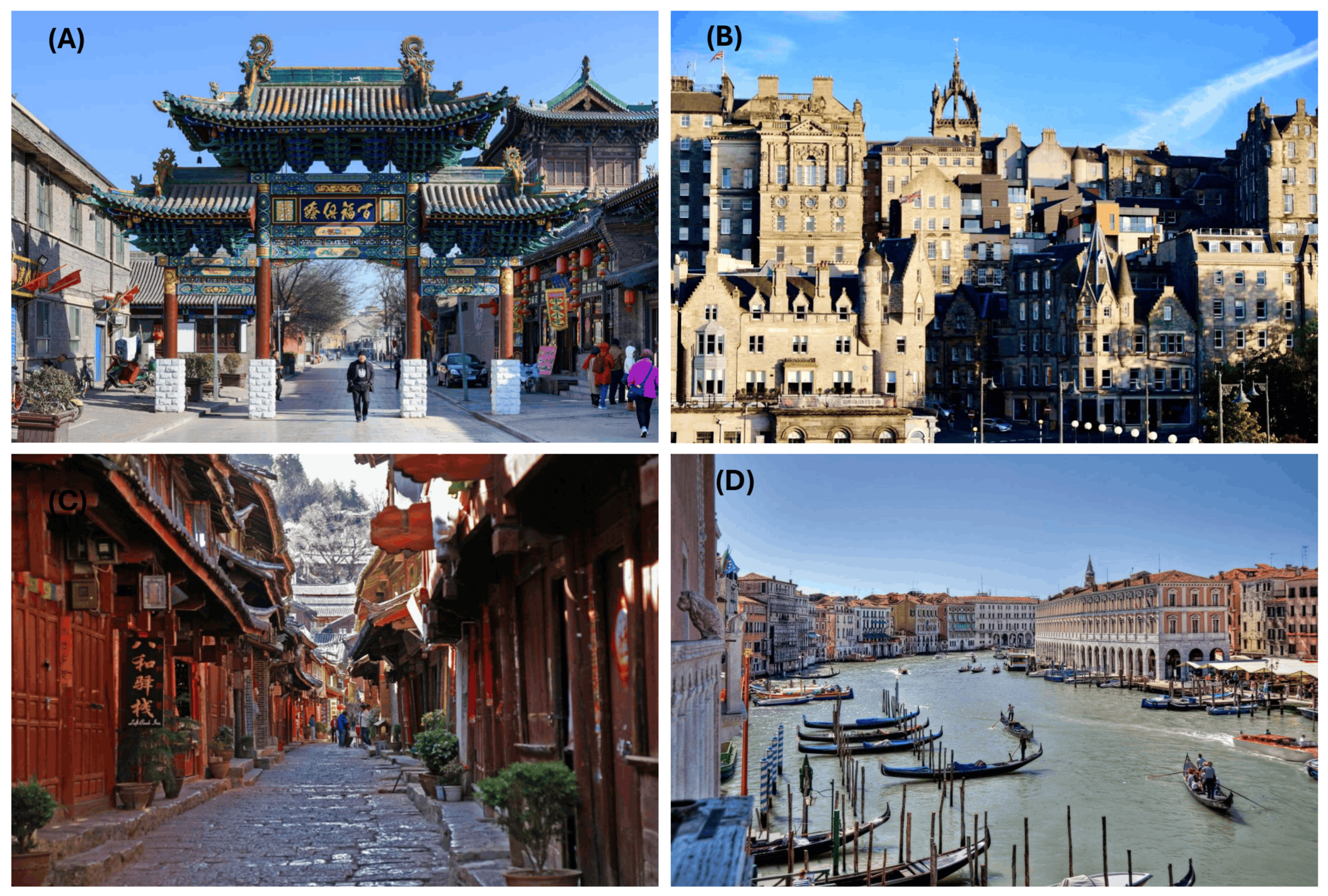
The case-study applications illustrate the framework’s viability as a proof of concept while identifying the conditions necessary for implementation. Pingyao shows how hybrid designation with spatial differentiation can reconcile exceptional architectural value with continued residential life. Edinburgh suggests that even a robust Track 1 designation requires supplementary mechanisms to address social-sustainability pressures in the surrounding fabric. Lijiang illustrates implementation failure: correct Track 2 classification achieves little when the enforcement apparatus, visitor-management discipline, and anti-displacement measures the classification calls for are not actually brought into force. Venice, treated here as a hybrid case with Track 1 protocols for exceptional monuments and Track 2 protocols for residential fabric under acute climate pressure, shows that adaptation protocols must operate alongside designation logic rather than remain subordinate to it.
The framework also has explicit limitations. Its empirical foundation is confined to four case studies analyzed through secondary sources, and broader multi-site validation is required before its scoring bands and governance provisions can be treated as more than heuristic. Its geographic scope is bicultural; extending it to African, Indigenous, Islamic, Japanese, Latin American, and other traditions will require collaborative development with practitioners grounded in those traditions. Its consideration of epistemic justice addresses procedural justice through community roles in Track 2 designations, but it cannot, within a bicultural synthesis, fully resolve the hermeneutical injustice experienced by communities whose heritage concepts are absent from both traditions informing the framework.
Within these limits, the framework establishes a basis for systematic, transparent, and context-sensitive heritage conservation decision support. It acknowledges that humanity’s diverse heritage calls for diverse approaches, while providing a structured logic for choosing among them. This represents pragmatic pluralism: neither relativism accepting any practice nor universalism imposing a single standard, but structured diversity recognizing multiple valid approaches to the shared conservation goal of long-term sustainability in an era of climate change, rapid urbanization, and contested institutional legitimacy.