1. Introduction
With the scarcity of world oil resources, oil has increasingly become a strategic resource in terms of national security [
1]. The emissions from traditional vehicles have severely damaged the environment, leading to a worsening greenhouse effect [
2]. Therefore, it is imperative to adjust the energy structure, improve environmental quality, and promote sustainable economic development through the development of new energy vehicles. The automobile industry is developing in full swing in the 21st century, especially the new energy vehicles are becoming more and more electrified, shared and intelligent [
3]. It is a trend of social development for electric vehicles to replace the traditional internal combustion engine (ICE) based on fossil fuels [
4]. In this case, various measures within the policy framework are being formulated internationally to accelerate the development and adoption of vehicles based on alternative fuels [
5,
6]. Based on these efforts, the proportion of electric vehicles in automobiles has increased a lot, and it is predicted that in the near future, the electrification of transportation will account for a large proportion in automobile fleets [
7]. In order to improve the reliability of new energy vehicles, through the health evaluation system, comprehensive testing and evaluation can be carried out on each component of new energy vehicles to timely detect potential problems and failures [
8], thereby improving the reliability and stability of the whole vehicle. An effective health evaluation system can timely detect and deal with potential problems of the vehicle, reducing the probability of failure and extending the service life of new energy vehicles [
9].
At present, scholars’ comprehensive evaluation of electric vehicles and research on performance indicators include the following aspects. Liao et al. [
10] conducted a study to assess and quantify consumers’ preferences for business models in the context of electric vehicle (EV) battery leasing, vehicle leasing, and mobility assurance. Zarazúa de Rubens [
11] explored the electric vehicle consumption market in Denmark, Finland, Iceland, Norway, and Sweden. The results from the customer group revealed three key factors related to the price, range, and environmental attributes of electric vehicles, and proposed a tiered policy approach for adopting electric vehicles. Gandoman et al. [
12] conducted a comprehensive review of the reliability of electric vehicle components from different perspectives, and also investigated the challenges and future prospects related to reliability and safety that need to be considered for electric vehicles. China Automotive Engineering Research Institute Co., Ltd. and the National Big Data Alliance for New Energy Vehicles officially released the framework of the “China New Energy Vehicle Evaluation Procedure,” which proposed three evaluation dimensions: energy consumption, safety, and experience. Ten secondary indicators were selected from hundreds of testing indicators, including energy consumption rate, driving range, charging efficiency, usage safety, driving experience, and quality experience. The system currently relies entirely on “objective evaluation” to comprehensively reflect the overall performance of new energy vehicles. However, current research on the construction of a health evaluation system for new energy vehicles is not scientific, sufficient, or comprehensive.
Scholars have developed various evaluation methods for the construction of diverse systems. Yan, F. et al. [
13] analyzed the influencing factors of electric vehicle charging station planning, further examined these factors using the Analytic Hierarchy Process (AHP), and ultimately derived the weights of each factor, providing a basis for the evaluation scheme of electric vehicle charging station planning. Additionally, Pasura Aungkulanon et al. [
14] ranked the barriers and sub-barriers to the adoption of electric vehicles in Thailand by utilizing the Fuzzy Analytic Hierarchy Process (FAHP) and Multi-Criteria Decision-Making (MCDM) techniques. Saumya Singh et al. [
15] conducted a comprehensive review on the reliability assessment and charging methods of grid-connected electric vehicles using an integrated evaluation approach. Antonio Cimino et al. [
16] established a risk assessment framework based on ergonomic methods and the Analytic Hierarchy Process (AHP) to prioritize interventions for musculoskeletal disorders among container terminal operators. Among various evaluation methods, the Fuzzy Analytic Hierarchy Process (FAHP) is particularly suitable for addressing evaluation problems with fuzziness and uncertainty [
17]. It can comprehensively consider the impacts of multiple indicators and multiple levels, making it especially effective for the evaluation of complex systems. In the evaluation process, FAHP determines the weights of different factors and levels through expert scoring, thus enhancing the credibility and authority of the evaluation results. However, compared to some simpler evaluation methods, FAHP involves relatively complex calculations, relies heavily on expert experience, and may be affected by data quality. Therefore, when selecting an evaluation method, it is necessary to comprehensively consider and weigh the specific characteristics and requirements of the problem. Given that the model of this study is characterized by a large number of indicators and system complexity, the FAHP method is highly suitable for the construction of the present system.
Compared to conventional evaluation methods such as simple weighted scoring or traditional AHP, the proposed FAHP-based system offers distinct advantages. Traditional AHP requires crisp pairwise comparisons, which can be ill-suited for the inherent uncertainty and vagueness in expert assessments of vehicle health (e.g., judging “slightly more important” vs. “moderately more important”). FAHP captures this fuzziness by allowing judgments expressed as intervals or fuzzy numbers, leading to more robust weight estimations [
18,
19]. Moreover, unlike black-box machine learning models that require large training datasets, our method remains interpretable and transparent, as all weights can be traced back to expert consensus [
20]. When compared to other multi-criteria decision-making techniques such as TOPSIS or ELECTRE, FAHP provides a more intuitive hierarchical structure that mirrors the multi-layered nature of vehicle health (e.g., from overall performance down to specific sensor readings) [
21]. This makes it particularly suitable for regulatory and industrial applications where explainability is paramount.
However, a critical review of the literature reveals a gap in holistic and scenario-based health evaluation for NEVs. Existing research, while valuable, often suffers from several limitations. Firstly, many studies focus narrowly on a single component, most commonly the battery’s State of Health (SOH), without integrating it into a comprehensive vehicle-level assessment. Secondly, evaluation systems reported in the literature, including those based on AHP or FAHP, are often generic and fail to differentiate between the distinct requirements of critical application scenarios such as annual inspection, post-maintenance checks, or used car evaluations. For example, an evaluation for a used car buyer must weigh long-term reliability and battery degradation more heavily, whereas an annual inspection prioritizes immediate safety and regulatory compliance. Thirdly, many proposed methods are either overly descriptive or rely on “black-box” models that lack the transparency and interpretability required for official certification and consumer trust. This study addresses these gaps by proposing a multi-scenario framework that not only provides a holistic view of the vehicle’s health but also tailors the evaluation criteria and their respective weights to specific, practical contexts, using a transparent and robust FAHP methodology.
To create a holistic evaluation framework, this study focuses on four application scenarios that were selected to represent critical and distinct stages across the typical lifecycle of an NEV. These are: (1) Annual Inspection, representing regulatory compliance and public safety mandates; (2) Battery Health Assessment, focusing on the core and most valuable component of an NEV; (3) Maintenance, addressing the vehicle’s operational integrity and service quality; and (4) Used Car Evaluation, pertaining to the vehicle’s value and condition in the secondary market. By addressing these key touchpoints, the framework aims to provide a comprehensive perspective on vehicle health from both a technical and commercial standpoint. This framework operationalizes vehicle health by structuring the evaluation across five to seven primary dimensions depending on the scenario, including key areas like Charging Performance, Vehicle Performance, Electrical Performance, Thermal Management, and Safety and Reliability. These dimensions directly map to the core attributes of performance, reliability, and safety, providing a structured and separable assessment of the vehicle’s overall condition. By establishing an annual inspection scenario, we can ensure that vehicles comply with national safety and technical standards, safeguarding public transportation safety and environmental protection. A comprehensive inspection of vehicle functions, systems, and safety performance can detect potential safety hazards in a timely manner and prevent accidents. The construction of a battery health scenario helps to promptly identify issues such as battery aging and damage, preventing safety accidents like battery fires and explosions. The creation of a maintenance scenario can drive the improvement and optimization of maintenance service institutions, enhance the technical proficiency and professional literacy of maintenance personnel, and ensure that the maintenance process meets regulations and standards. Through the establishment of a used car scenario, we can comprehensively understand the actual performance of various new energy vehicles, assisting consumers in selecting suitable used cars and enhancing their satisfaction and confidence in their purchases [
22].
By ensuring the long-term reliability and safety of new energy vehicles, a robust health evaluation framework advances several dimensions of sustainability. Environmentally, it promotes prolonged battery and vehicle utilization, reducing premature scrappage and the associated raw material extraction and manufacturing emissions. Economically, it facilitates more transparent used-car transactions and lowers total cost of ownership, making electric mobility more accessible. Socially, it strengthens public safety and consumer confidence, accelerating the shift from internal combustion engines to cleaner alternatives. This study, therefore, positions vehicle health assessment as an integral tool for sustainable transportation policy and practice. The primary aim of this paper is therefore to establish and validate this evaluation framework, using a detailed case study to demonstrate its feasibility, transparency, and practical applicability from end to end.
2. Methodology
The core objective of this study is to carefully screen and categorize the existing evaluation indicators, scientifically assign corresponding weights to each indicator, and thereby develop a set of quantitative evaluation criteria. This set of criteria will cover four key application scenarios: annual inspection of new energy vehicles, value assessment of second-hand vehicles, maintenance work, and battery recycling. The Delphi method and FAHP method have been widely used and validated in solving this kind of multi-factor decision-making problem [
23].
In this study, we first use the Delphi method to invite industry experts to deeply discuss and refine the evaluation indicators needed for each application scenario. This method ensures that the selected evaluation indicators are comprehensive and targeted. Subsequently, we use the FAHP to determine the weights of each evaluation indicator. This method can comprehensively consider the correlation and importance of different factors, providing scientific basis for health evaluation.
Finally, we score the health of new energy vehicles based on the weights of each evaluation indicator. This scoring system aims to meet the needs of four key application scenarios, providing a practical tool for practitioners in related fields [
24].
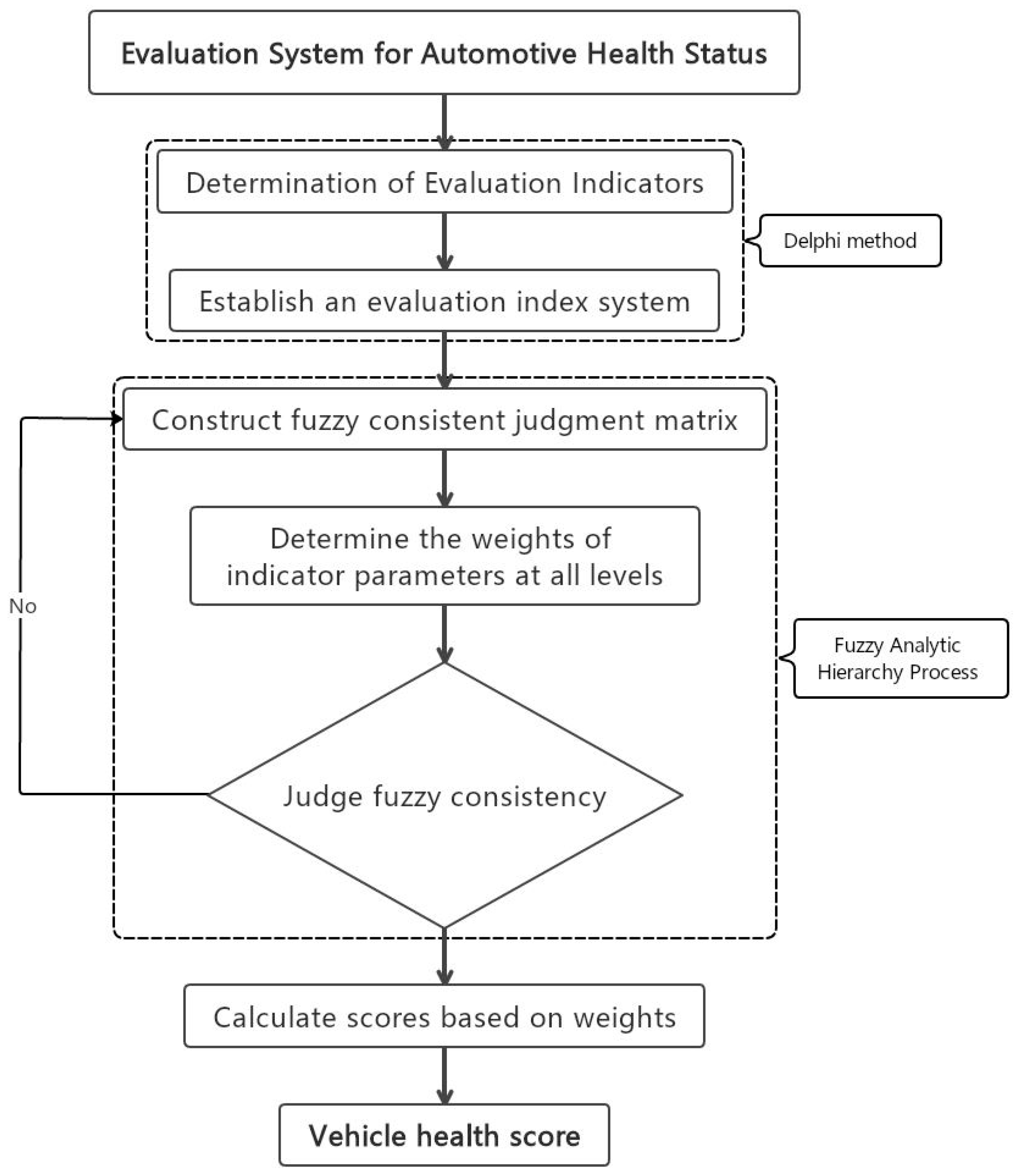
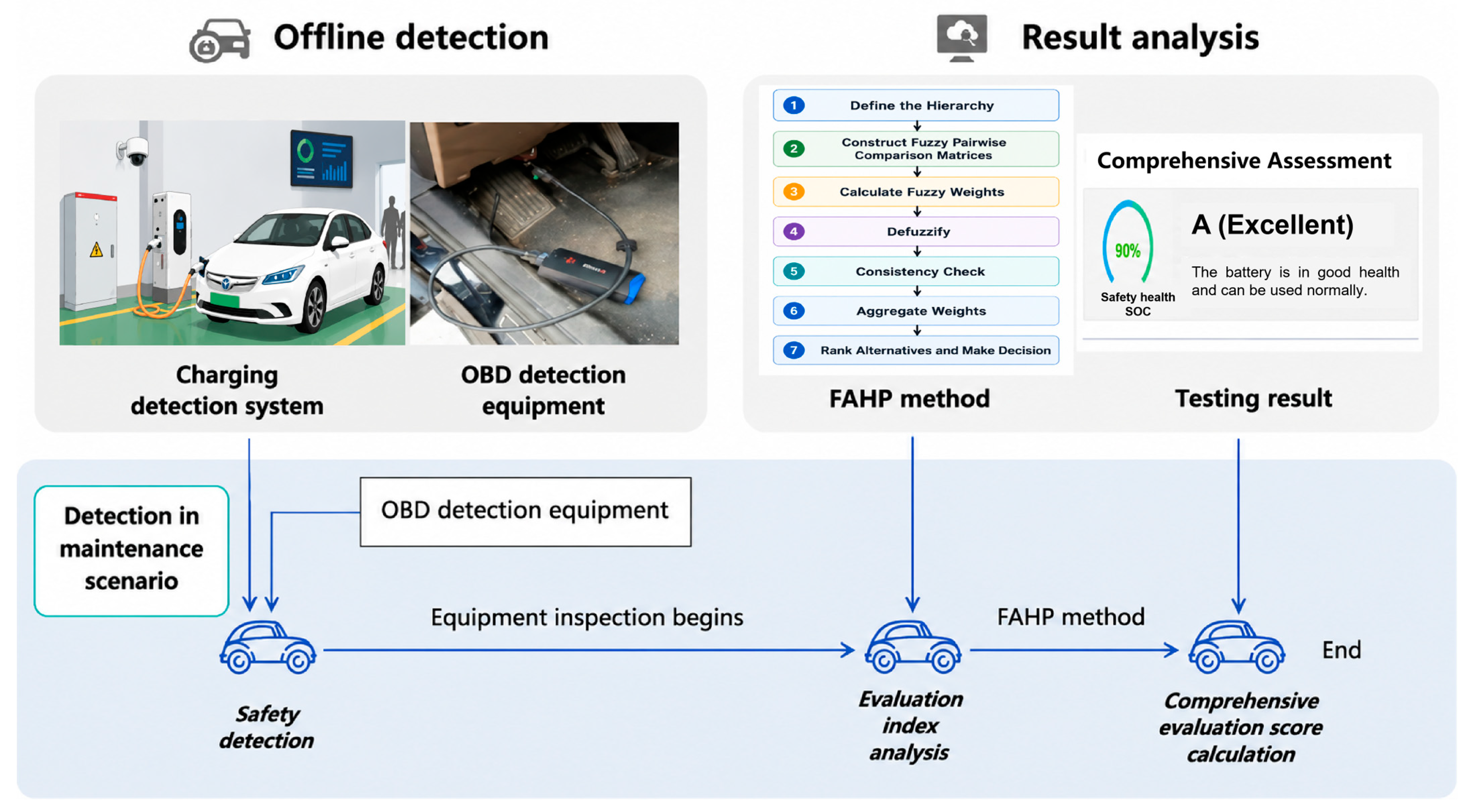
This scoring system aims to meet the needs of four key application scenarios, providing a practical tool for practitioners in related fields. To manage the complexity of the evaluation system, a hybrid approach is adopted: the FAHP is used to determine the weights for the first and second-level indicators, while a direct Delphi-based normalization is used for the more numerous third-level indicators. This simplifies the weight determination process without compromising the expert-driven basis of the evaluation. The method flowchart is shown in
Figure 1:
2.1. Delphi Method
The Delphi Method, also known as the expert survey method, is a predictive approach that primarily involves the solicitation of expert opinions through the formulation of systematic survey forms or procedures in an anonymous manner. Originating in the 1940s, this method was first introduced by O. Helmer and N. Dalkey and subsequently developed by T.J. Gordon and the RAND Corporation. It was first applied in the field of prediction by the RAND Corporation in 1946.
Unlike many methods for collecting opinions, the Delphi method does not require random statistical sampling; participants in a Delphi study must be selected from qualified experts (based on certain parameters, such as their field of research and educational level). Therefore, the key issue in selecting these participants in a Delphi study is whether they can gain an in-depth understanding of the research topic. Consensus among the group is more important than the number of experts, and the precision of a Delphi study does not depend on its statistical size [
25]. This study invited seven experts from the field of new energy vehicle evaluation to score.
In practical applications, the Delphi Method typically follows these steps: First, experts are consulted on the issues to be predicted, and their opinions are then collated, summarized, and statistically analyzed. Subsequently, the results are anonymously fed back to the experts for further consultation, followed by another round of aggregation and feedback. This process is repeated until a relatively consistent opinion is reached. It is emphasized that experts should not discuss with each other or engage in horizontal communication, but only interact with the researchers to ensure that each expert can independently express their views. In conducting the Delphi Method, expert opinions or surveys can be obtained through various means, such as online emails, group discussions, questionnaires, and interviews. During this process, a preliminary consensus on evaluation indicators can be achieved [
26].
The Delphi Method is characterized by its feedback nature, anonymity, and statistical approach. Based on a systematic procedure, it involves multiple rounds of investigation, consultation, summation, and revision, ultimately converging into a generally consistent expert opinion that serves as the prediction result. The Delphi Method is an extremely effective decision-making tool that provides decision-makers with comprehensive information support by pooling expert opinions and perspectives [
27]. This approach enhances the scientific and accurate nature of decision-making, especially when dealing with complex issues like evaluating the health status of new energy vehicles. The Delphi method plays a particularly prominent role in this context, as it enables a more systematic screening and identification of evaluation indicators that are tailored to various application scenarios. This lays a solid foundation for subsequent evaluation work [
28]. The Delphi Method has extensive applications in various fields such as enterprise forecasting, market research, and policy-making. It can assist decision-makers in better understanding and predicting the development trends of complex issues, enabling them to make more scientific and rational decisions.
To ensure the robustness and credibility of the data collection, a panel of seven experts was carefully selected based on predefined criteria: (1) at least ten years of professional experience in the field of new energy vehicle (NEV) research, development, or evaluation; (2) holding a senior academic or industrial position (e.g., professor, senior engineer, or technical director); and (3) having published peer-reviewed articles or technical reports related to NEV performance or battery health. The final panel was composed of three senior academics from leading universities specializing in vehicle engineering, two technical directors from major NEV manufacturing companies, and two senior engineers from a national automotive testing and certification body, ensuring a balanced representation of academic, industrial, and regulatory perspectives. The panel size of seven is consistent with recommendations in the literature for Delphi studies, where group consensus is prioritized over statistical sample size. All experts participated in four rounds of anonymous consultations, achieving a consensus level above 80% for the final set of indicators. This rigorous selection and iterative process ensures that the identified indicators are both comprehensive and context-specific for each application scenario.
2.2. Fuzzy Analytic Hierarchy Process (FAHP)
Fuzzy Analytic Hierarchy Process (FAHP) is a systematic analysis method that combines qualitative and quantitative approaches, integrating the principles and techniques of Analytic Hierarchy Process (AHP) with fuzzy mathematics. This method aims to address complex problems with multiple objectives, criteria, factors, and levels, providing a simple, practical, and effective approach for decision analysis and comprehensive evaluation [
29]. Unlike traditional approaches based on fixed values, this fuzzy method allows for more precise and realistic assessments of health degrees within a range of judgments [
14]. A primary motivation for choosing FAHP over traditional AHP is its inherent ability to manage the subjective uncertainty present in expert judgments. While the Delphi method leverages a diverse expert panel and anonymous feedback to mitigate systemic bias, subjectivity in pairwise comparisons remains. FAHP addresses this directly by allowing experts to use linguistic terms, which are then translated into fuzzy numbers. This process mathematically captures the vagueness in human assessment, transforming subjective ambiguity into a quantifiable and structured format. The final weights are derived through a systematic aggregation and defuzzification process, ensuring that the outcome is a robust consensus rather than being skewed by the idiosyncrasies of a single expert’s crisp judgment.
Using the FAHP for decision-making or evaluation typically involves the following steps [
30]:
Step 1: Analyze the problem and establish a structural model. Firstly, clarify the issue or decision-making objective that needs to be addressed, and analyze the causal relationships among various indicators within the system. Subsequently, based on the characteristics and objectives of the problem, establish a multi-level hierarchical structural model. This model describes the system’s functions and characteristics, maintaining internal independence.
Step 2: The establishment of a fuzzy judgment matrix involves pairwise comparisons of indicators within the same level, based on the indicators of the preceding level, for each hierarchy. Establish a fuzzy matrix
. If there is a relationship of equality
= 1, the matrix A is referred to as a fuzzy complementary matrix. Based on expert scoring and using the nine-level scale method ranging from 0.1 to 0.9, compare and judge the various indicators a
1, a
2, …, an of the fuzzy matrix to obtain a fuzzy complementary judgment matrix A:
Definition of the Scaling System:0.9 indicates that, when comparing two indicators, one is extremely more important than the other. 0.8 indicates that, when comparing two indicators, one is strongly more important than the other. 0.7 indicates that, when comparing two indicators, one is significantly more important than the other. 0.6 indicates that, when comparing two indicators, one is slightly more important than the other. 0.5 indicates that, when comparing two indicators, they are equally important. The values of 0.4, 0.3, 0.2, and 0.1 represent inverse comparisons. Detailed instructions for scoring the matrix are provided in
Table 1 below:
Step 3: The fuzzification of the fuzzy judgment matrix involves transforming the established fuzzy judgment matrix into a fuzzy consistent matrix through consistent processing for further analysis. Calculate the row sum of matrix A,
. Through a specific Formula (1), we can obtain a fuzzy consistency matrix
:
Step 4: Determining the weights of each indicator involves calculating the order of importance of indicators within each level under a specific objective of the preceding level, based on the fuzzy consistent matrix. These weights represent the relative significance of each indicator. Calculate the sorting vector
from the matrix R using row normalization.
Then W is the weight vector of the fuzzy judgment matrix A.
Step 5: Consistency check. Assume that
is the weight vector of the fuzzy judgment matrix A. Then the characteristic matrix of the judgment matrix A can be obtained through Formula (3):
Perform consistency check on the fuzzy judgment matrix, and the consistency value can be obtained through Formula (4).
According to the consistency judgment rules of FAHP, we carefully evaluated the CI value obtained. Generally speaking, the smaller the CI value is, the higher the consistency of the data group is. Specifically, when the CI value is less than 0.1, we can consider that the data group meets the requirements of fuzzy consistency. This criterion provides us with a clear basis to ensure the accuracy and reliability of the evaluation results. Through this step, we further verify the validity and applicability of the scoring matrix.
Step 6: Comprehensive weight calculation and health evaluation. By integrating the weights of each level, the weights of all indicators are calculated, providing scientific decision-making basis for decision-makers to select the optimal solution. Worked Numerical Example.
To enhance transparency, this section provides a simplified numerical example of the weight calculation process. Let us consider a case with three criteria (C1, C2, C3).
Construct Fuzzy Judgment Matrix (A): After pairwise comparison by an expert using the 0.1–0.9 scale, the following fuzzy complementary judgment matrix A is obtained:
Calculate Row Sums (r
i): Sum the values in each row of matrix A.
Transform to Fuzzy Consistent Matrix (R): Use the formula r
ij = (r
i − r
j)/(2(n − 1)) + 0.5, where n = 3.
The resulting fuzzy consistent matrix R is:
Calculate Weight Vector (W): The weights are calculated by summing the rows of matrix R and normalizing.
The final weight vector is W = (0.35, 0.25, 0.40) T. This demonstrates how expert judgments are systematically converted into quantitative weights.
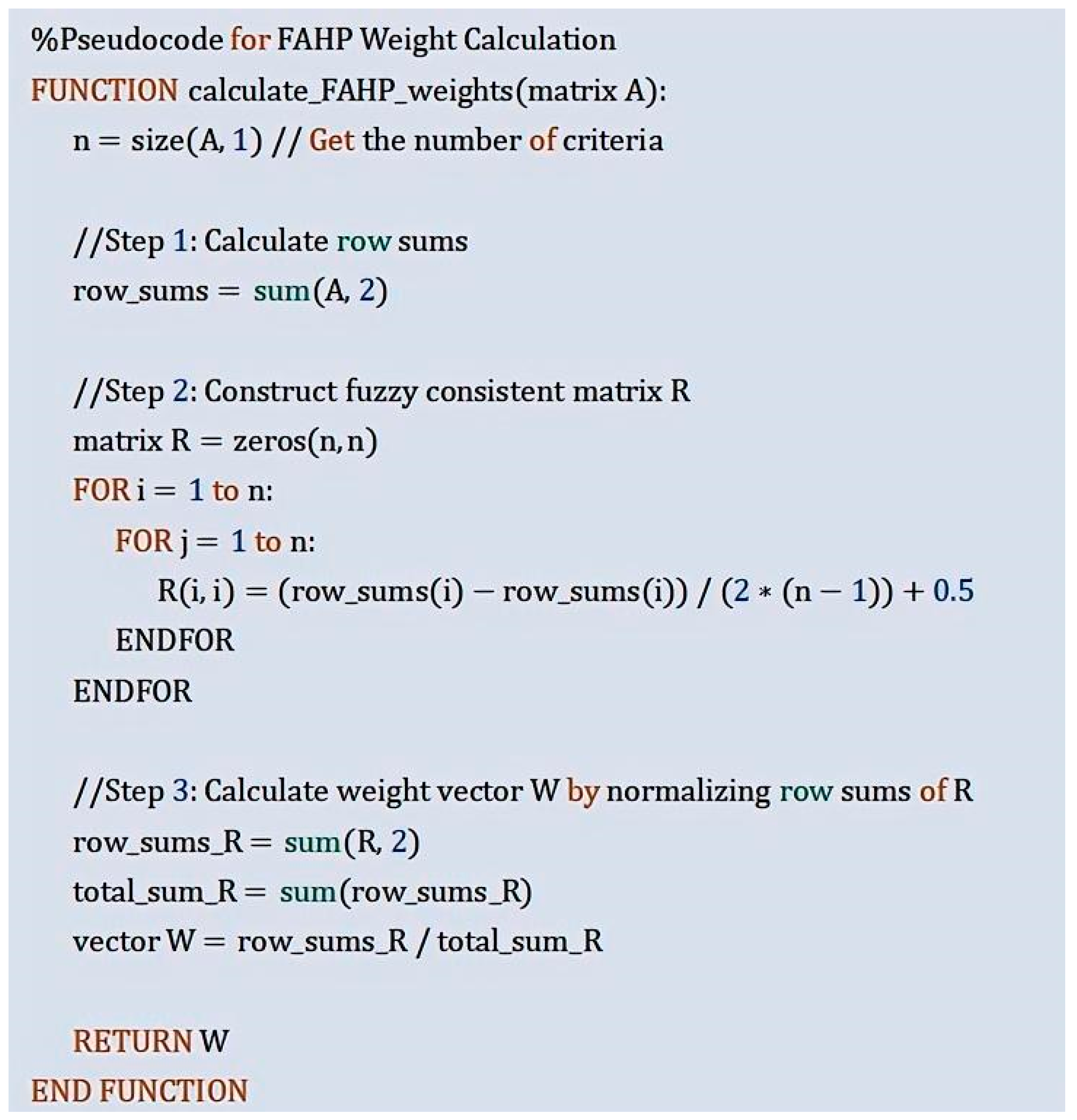
To efficiently utilize the collected expert scoring data and accurately apply the FAHP, it was decided to utilize the powerful mathematical computing tool MATLAB R2022b in this study. The FAHP calculations were implemented in MATLAB to ensure efficiency and accuracy. The general algorithm flow is shown in
Figure 2:
This structured script takes the expert judgment matrix as input and outputs the final weight vector for the comprehensive health evaluation. By carefully programming the MATLAB script, the data matrix can be easily processed and computed, resulting in precise weights for various indicators across different scenarios. This automated process not only significantly improves work efficiency but also ensures the accuracy and consistency of data analysis. The final weights of various indicators obtained provide strong data support for subsequent research and decision-making.
3. Results
This study initially identified the indicators for four specific scenarios through market research, namely annual inspection, battery health detection, maintenance, and second-hand vehicle transactions. Subsequently, based on the Delphi method, the results of the expert survey questionnaire were classified, sorted, and pruned to determine the key indicators and sub-indicators for new energy vehicles in different scenarios. Furthermore, we employed the FAHP to determine the weights of the first and second dimension indicators in each scenario, while the weights of the third dimension indicators were normalized based on the results of the Delphi method. Finally, the weights of each indicator were obtained by multiplying the weights of the three dimensions mentioned above.
3.1. Analysis of Delphi Method Results
In this study, we conducted multiple in-depth meetings and discussions, and preliminarily determined the evaluation indicators for four application scenarios, which were then divided into three dimensions. Based on this, we conducted a preliminary screening of the indicators in the third dimension to ensure that they could comprehensively reflect the health status of new energy vehicles across different scenarios.
To further clarify the importance of each evaluation indicator, we designed four detailed expert survey questionnaires based on four specific scenarios: annual inspection, battery health detection, maintenance, and used car evaluation. These questionnaires aimed to collect experts’ opinions and suggestions on each evaluation indicator, in order to ultimately identify the key indicators and sub-indicators for new energy vehicles across different scenarios.
The survey questionnaire invited seven experts to score each indicator, with the scores ranging from 1 to 9, indicating the degree of relevance of each indicator to a specific scenario [
31]. A score of 1 indicates that the indicator i is not related to scenario j, 3 indicates a slight correlation, 5 indicates a moderate correlation, 7 indicates a strong correlation, and 9 indicates an absolute correlation. Scores of 2, 4, 6, and 8 indicate a level of correlation between the two adjacent numbers. The scoring requirements for the annual inspection scenario are provided in
Table 2.
Taking the maintenance scenario as an example among the four scenarios (as shown in
Table 3 below), we processed the scoring data after experts scored. First, we calculated the average of the five experts’ scores and obtained the standard deviation. Then, we sorted them according to these two values. For those indicators with an average score lower than 5.5 and a standard deviation exceeding 1, we conducted more than four rounds of re-discussion and finally determined the indicators of the third dimension.
Among the indicators in the third dimension, the average scores of Historical acceleration stability, Road acceleration stability, Consistency of road acceleration response time, Composite braking repeatability and Road energy recovery stability are less than 5.5. The standard deviation of Road acceleration abnormality, Road composite braking coordination and Composite braking coordination are greater than 1. Therefore, these 8 indicators will be excluded in the subsequent FAHP analysis.
After completing all Delphi methods, this study identified four scenarios, including 5 indicators of the first dimension, 12 indicators of the second dimension, and 34 indicators of the third dimension in the annual inspection scenario; 5 indicators of the first dimension, 26 indicators of the second dimension, and 108 indicators of the third dimension in the battery health detection scenario; 5 indicators of the first dimension, 7 indicators of the second dimension, and 33 indicators of the third dimension in the maintenance scenario; 7 indicators of the first dimension, 28 indicators of the second dimension, and 88 indicators of the third dimension in the used car dynamic version scenario.
3.2. Results of FAHP
As an effective decision support tool, the core purpose of FAHP is to construct a clear and logically rigorous hierarchical structure. This structure typically consists of a goal level, a main criteria level, and sub-criteria levels, with each level carrying different evaluation dimensions and indicators that collectively form the backbone of the evaluation system [
23]. As the construction methods of the four scenarios are similar, the main body of this article will focus on explaining the maintenance scenario, and the results of the other three scenarios will be presented in the
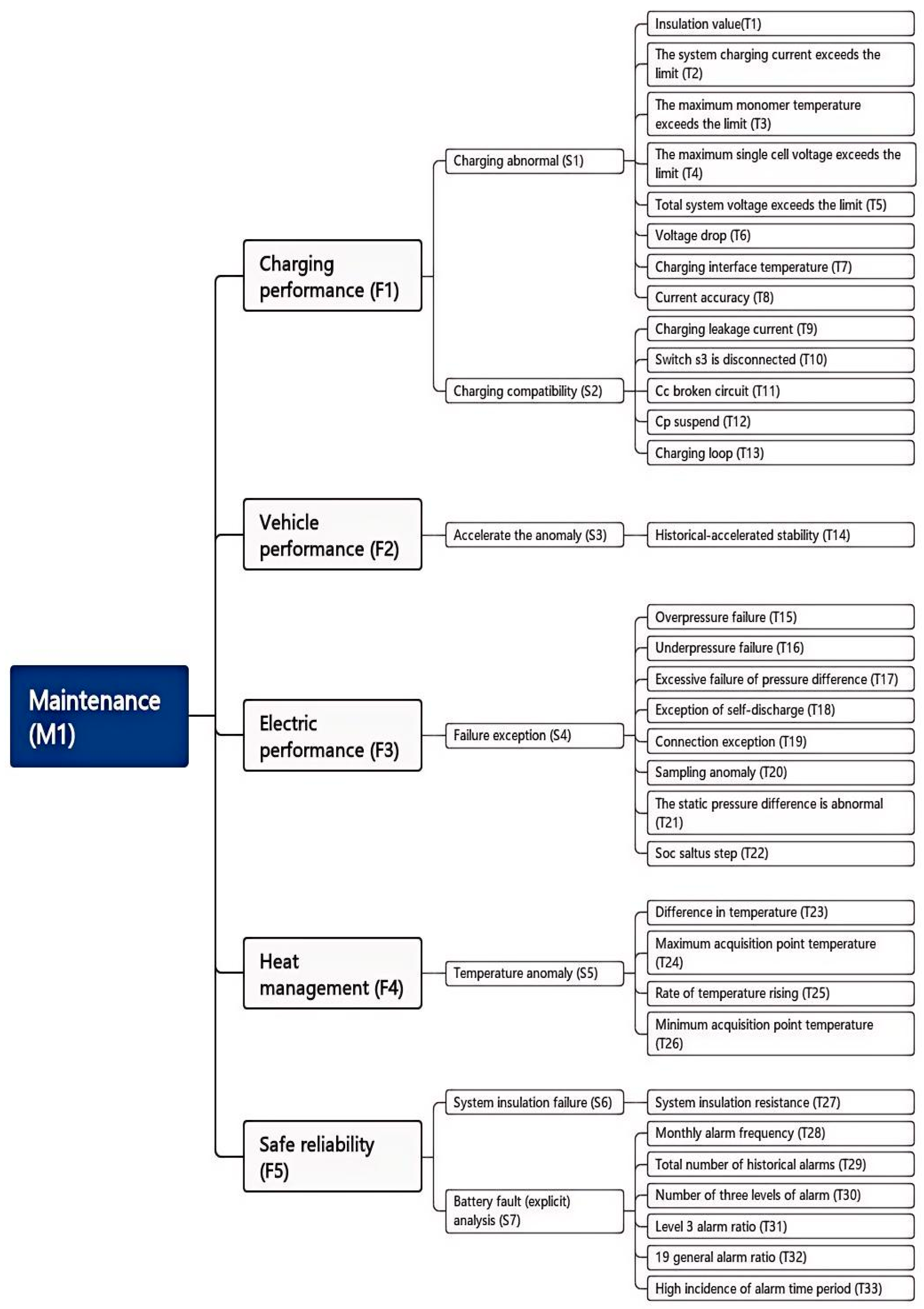
Supplementary Materials. In this study, a hierarchical structure of maintenance scenario was designed as shown in
Figure 3, to ensure comprehensiveness and accuracy in the evaluation. The specific significance of the first and second dimension indexes are shown in
Table 4.
After completing the construction of the hierarchy, we further utilized the FAHP to conduct a thorough analysis of the results of various indicators and sub-indicators. Based on the scoring matrix provided by experts comparing indicators across different levels (as shown in
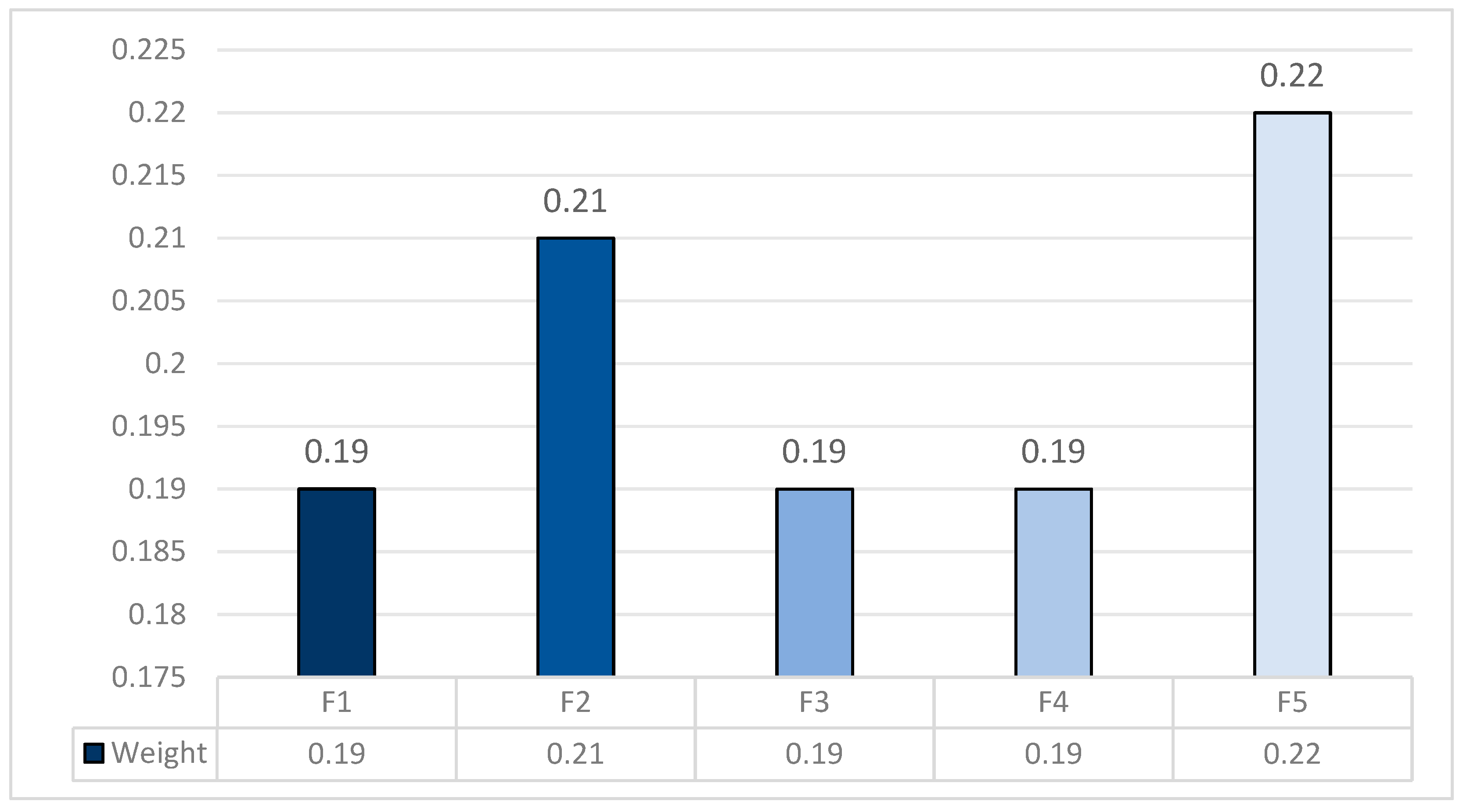
Table 5), we using MATLAB calculated the weight distribution by FAHP and obtained the weight data for the first-level indicators (as shown in
Figure 4).
We can gain a clearer understanding of the importance of various factors in the overall evaluation, as well as their interrelationships. This process not only reveals the inherent logic of the evaluation system, but also provides powerful data support for subsequent decision-making.
Given the large number of indicators in the third dimension, applying the FAHP for weight determination would pose challenges in terms of complexity and operational difficulty. Therefore, in this study, we decided to adopt the Delphi method to handle the weightings of indicators in the third dimension. Through the design of an expert survey questionnaire, we collected experts’ ratings on various indicators in the third dimension. Subsequently, we calculated the average score for each indicator and normalized the results to ensure that the sum of all weights equals 1. The total score is obtained by summing the average scores of the third-level indicators under the same second-level indicator. Then, the weight of each indicator is calculated by dividing its average score by the total score. The weight of each index = the average score/total score. This approach not only simplifies the weight determination process but also fully utilizes experts’ professional knowledge and experience, ensuring the rationality and scientificity of the weight allocation.
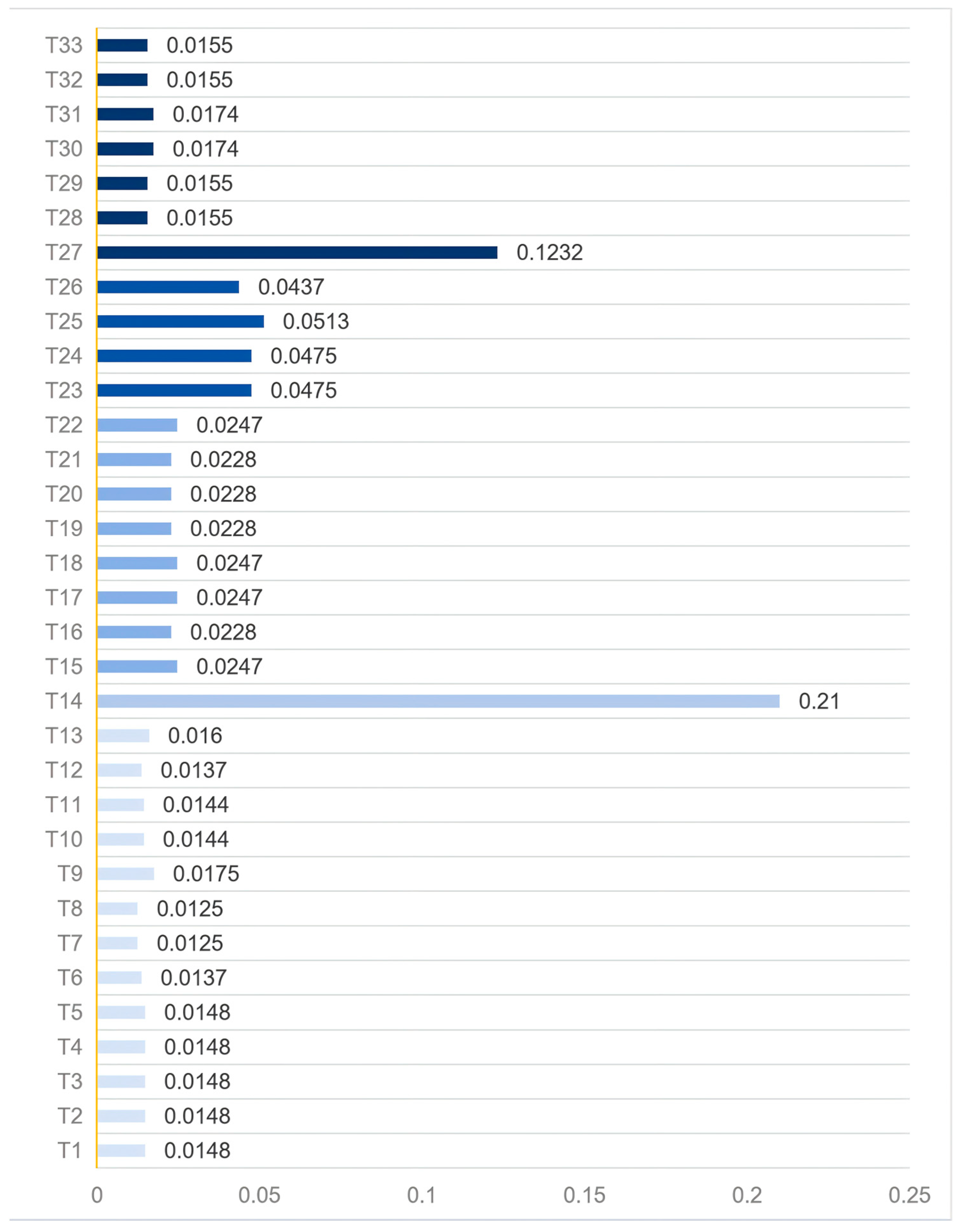
Finally, to obtain the overall weights of each indicator, we multiply the weights of the first dimension, the second dimension, and the third dimension, as shown in
Table 6. The overall weight table for the remaining scenarios is displayed in the attachment. This calculation method of comprehensive weights takes into account not only the importance of indicators within each dimension but also reflects the mutual influence and correlation between indicators across different dimensions.
The weights derived for the maintenance scenario, as shown in
Table 6, offer significant practical insights. The indicator ‘System insulation resistance’ (T27) has a very high weight of 0.1232. This is critically important because insulation failure in a high-voltage system can lead to catastrophic safety events, making it a primary focus of any maintenance inspection. Following this, indicators related to thermal management, such as ‘Rate of temperature rising’ (T25) at 0.0513, are given high importance. This reflects the reality that battery health and safety are intrinsically linked to thermal stability; an abnormal temperature rise is often a precursor to thermal runaway. Indicators related to battery faults and charging abnormalities, such as ‘Overvoltage fault’ (T15), ‘Excessive voltage difference fault’ (T17), and ‘Abnormal self-discharge’ (T18) also receive significant weights (around 0.0247 each). This highlights that for maintenance, diagnosing existing or potential faults within the battery management system (BMS) and the battery pack itself is more critical than evaluating charging convenience or compatibility. The weighting structure correctly prioritizes safety-critical and core performance degradation indicators, aligning with the primary objectives of a professional maintenance evaluation.
Figure 5 below shows the final overall weights of the maintenance scenario, indicating that the three indicators with the highest weight proportions are cumulative total charging capacity, average charging cell voltage, and average charging voltage difference.
5. Conclusions
This paper proposes an integrated evaluation system based on the Fuzzy Analytic Hierarchy Process (FAHP) to assess the health status of new energy vehicles (NEVs) and conducts an in-depth analysis of key scenarios such as annual inspection, maintenance, battery health, and used car transactions. The system is also applied to a specific vehicle in the maintenance scenario. By constructing this system, we aim to provide a scientific basis for the full life cycle management of NEVs and to support consumer decision-making.
Despite the systematic approach, this study has several limitations. First, the Delphi method relies heavily on expert judgment, which may introduce subjective bias, although the iterative feedback and anonymous scoring help mitigate this risk. Second, the FAHP calculations assume independence among indicators within the same level; in reality, some indicators (e.g., temperature rise rate and insulation resistance) may exhibit interdependence that is not captured. Third, the validation was performed on a single vehicle in one scenario; broader empirical studies across different vehicle models, usage patterns, and scenarios are needed to generalize the findings. Finally, the scoring thresholds for each indicator were derived from current standards and expert consensus, but these thresholds may evolve as technology advances and more field data become available.
It is also important to acknowledge a limitation inherent in the classical FAHP methodology: the assumption of independence among indicators at the same hierarchical level. In a complex system like a new energy vehicle, some indicators may indeed exhibit correlations (e.g., battery temperature and internal resistance). While the hierarchical structuring of the indicators partially mitigates this by grouping related factors under a common criterion, it does not explicitly model their interdependencies. For future research aimed at capturing these complex relationships more precisely, advanced methods such as the Analytic Network Process (ANP), which extends AHP/FAHP to handle feedback and interdependence, could be a valuable direction.
The next logical step for this research is to apply the validated framework to a large-scale dataset, encompassing tens or even hundreds of commercial electric vehicles, to further refine the model and assess its generalizability across different models and operational conditions.
The health evaluation system presented in this work aligns directly with the principles of sustainable development. By enabling timely maintenance, accurate state-of-health assessment, and trustworthy second-hand markets, it helps maximize the useful life of new energy vehicles and their batteries, thus contributing to a circular economy and reduced life-cycle environmental footprint. Future implementations, especially large-scale online monitoring, could further embed this framework into a broader sustainability assessment infrastructure for electric mobility.