Article

Environmental Impact Assessment of Urban Underground Pipeline Projects Based on LCA

1
Business School, Hohai University, Nanjing 211100, China
2
China Construction Second Engineering Bureau Ltd., Beijing 100160, China
3
School of Economics and Management, Anhui Jianzhu University, Hefei 230022, China
*
Authors to whom correspondence should be addressed.
Sustainability 2026, 18(10), 4743; https://doi.org/10.3390/su18104743
Submission received: 2 April 2026 / Revised: 2 May 2026 / Accepted: 5 May 2026 / Published: 9 May 2026

Abstract

As the global urbanization process continues to accelerate the implementation of the “dual carbon” strategy, urban underground pipelines, as important infrastructure and urban lifelines, have generated significant resource consumption and ecological environmental impacts throughout their entire life cycle. This paper is based on lifecycle assessment (LCA) theoretical framework and systematically defines the scope of lifecycle assessment for underground pipeline projects, covering the stages of raw material production and processing, raw material transportation, construction, operation and maintenance, and disposal. Then, a comprehensive lifecycle inventory database has been established through inventory analysis. A lifecycle environmental impact assessment model for underground pipeline projects has been developed utilizing categorization, characterization, standardization, and weight determination, enabling quantitative evaluation of environmental impacts at each stage. At last, an urban underground pipeline project was selected as a case and the emission inventory data were integrated with the environmental impact assessment model to conduct a systematic analysis across all the lifecycle stages. The results indicate that the photochemical ozone creation potential (POCP), atmospheric particulate matters potential (APMP), and solid waste potential (SWP) have the most significant environmental impacts, and the total environmental impact values are 70, 104 and 83.9 capita equivalent, respectively. Moreover, the raw material production and processing, operation and maintenance, and construction stages are identified as the primary contributors to these environmental impacts, and the values are 17.5, 10.6 and 1.8 capita equivalent, respectively. Based on these findings, targeted improvement measures have been proposed for each stage, providing valuable references for optimizing engineering practices.

1. Introduction

The rapid development of industrial civilization has driven a sharp rise in global energy demand, accompanied by a swift increase in pollutant emissions. As a result, the energy crisis, environmental pollution, and climate change have become major challenges to sustainable global development. Global environmental governance now faces multiple pressures. According to the Copernicus Climate Change Service, in 2025, the global average temperature rose by 1.47 °C compared to pre-industrial levels, bringing us closer to the 1.5 °C warming limit set forth in the Paris Agreement [1]. Meanwhile, biodiversity is plummeting, land degradation is intensifying, and new environmental risks like the discharge of contaminated water from are continually emerging. As the process of industrialization continues, the substantial growth in energy demand and persistent environmental pollution remain key bottlenecks hindering economic transformation [2].
As urbanization accelerates, the global urban population density continues to rise, and more than 55% of the world’s population lives in cities, including 394 cities with populations exceeding 1 million. By 2030, it is projected that 83% of the population in developed countries and 53% in developing countries will be concentrated in urban areas [3], which causes heavy burden to urban resilience. Moreover, extreme weather events such as heavy rainfall and flooding are also posing challenges to urban resilience. As an essential component of urban lifelines, underground pipeline networks encompass a variety of functional systems, including water supply, drainage, gas supply, heating, communications, and power distribution. These intricate underground pipelines not only provide a fundamental guarantee for urban development but also play a crucial role in enhancing urban resilience and improving living environments. Scientifically sound and rationally planned pipeline construction improves urban operational efficiency, and also has profound implications for environmental protection, optimal resource allocation, and sustainable urban development.
The entire lifecycle of urban underground pipeline projects spans a long period and has significant environmental impacts at multiple stages, including raw material production and processing, transportation, construction, operation and maintenance, and waste disposal. The environmental impacts exhibit a relatively obvious geographic dependency. However, there are still shortcomings in terms of environmental pollution management policies, environmental protection technologies, and quantitative evaluation systems for urban underground pipeline projects. It is crucial to establish a systematic, lifecycle-based approach for assessing environmental impacts. This paper provides theoretical support for optimizing each stage of pipeline projects and for developing environmentally friendly management strategies, thereby promoting green and sustainable development of urban infrastructure.
The lifecycle assessment (LCA) theory is widely applied in the industry of manufacturing, agriculture, construction, etc. [4,5,6,7]. The recent research primarily focuses on the entire lifecycle of pipeline systems and proposes technical approaches and optimization solutions for monitoring, renovation, and construction management with BIM etc. Xu et al. [8] developed a method for monitoring the location of underground pipelines based on image processing and deep learning combined with vision-based reconstruction techniques, thereby constructing an underground pipeline monitoring model and using the centroid curve to characterize the pipelines’ spatial positions. Ullah et al. [9] proposed a lifecycle BIM-based framework for underground utilities with the following five key stages: data acquisition, data processing, modeling, system application, and data updating. Luo et al. [10] employed BIM to establish a sustainable, multidisciplinary framework for detecting, analyzing, and evaluating underground pipeline collisions by integrating modules including collision type definition and analysis, collision rule formulation, BIM-based collision detection, rule contribution and evaluation, irrelevant collision filtering, and collision coordination.
An LCA-based systematic assessment is used in the carbon emission performance of different pipe materials, the environmental impacts during the operation stage, and the selection of installation technologies. Piratla et al. [11] proposed a model for estimating the lifecycle CO2 emissions of underground potable water pipeline projects, calculating the total emissions over the entire life cycle of various pipe materials. Khan et al. [12] quantitatively analyzed the CO2 emissions of both gravity and pressure underground pipeline networks based on LCA across the four stages, such as manufacturing, transportation, installation, and operation, and found that PVC pipes offer significant advantages in terms of CO2 emissions and cost-effectiveness for emission reduction. Pérez et al. [13], employing the LCA method, conducted a comparative analysis of the environmental performance of three urban solid waste management systems in the whole life cycle from equipment manufacturing and energy consumption to operation and maintenance, in order to comprehensively evaluate the environmental impacts of different systems. Chohan et al. [14] identified which stages and materials within the whole life cycle of pipelines exhibit higher energy consumption and greater environmental impacts and find that the operation stage contributes most significantly to global warming potential and consumes the highest amount of energy. Covarrubias [15] highlighted the critical impacts of underground pipeline installation technology choices on the environmental performance of desalination projects based on LCA, providing a scientific basis for the green transformation of engineering projects.
The LCA methodology has become relatively mature and is widely applied across multiple fields. However, due to the highly concealed feature of underground pipelines and the difficulties in long-term data acquisition, systematic research on urban underground pipelines remains limitation. The existing studies seldom comprehensively analyze the lifecycle environmental impacts of the pre-construction preparation, construction, operation and maintenance, and dismantling and disposal. Furthermore, traditional weighting methods struggle to accurately reflect the emission-reduction responsibilities in construction industry under current environmental policies in China.
Therefore, this paper systematically analyzes environmental impact factors at each stage. A complete set of evaluation indicators and a methodological framework have been established to optimize the lifecycle environmental assessment system for the urban underground pipeline projects. The paper plans to integrate the specific characteristics of pipeline projects and incorporate a dynamic indicator weighting mechanism that adapts to evolving environmental policies, enhancing both the practicality and adaptability of the model. Furthermore, by analyzing the results of environmental impact assessments at each stage, the paper identifies the key factors. The findings can be applied in the environmental management practices of pipeline projects. The proposed model considers the lifecycle process of urban underground pipeline projects with quantification and each stage and impact factor can be analyzed. The government and managers can find out which stages and factors have the most impact. Then, the government can propose environmental standards and regulatory policies according to the model. The paper plays a crucial supporting role in achieving green and low-carbon development of urban infrastructure and realizing the sustainable development goals (SDGs). According to the impacts, the government and managers can focus on the unrenewable energy consumption and the factors that affect climate change and water usage, etc., and will take actions to reduce the impacts. These actions are helpful to achieve the SDGs, especially the seventh, 9th, 13th and 15th goals.

2. Lifecycle Assessment Framework

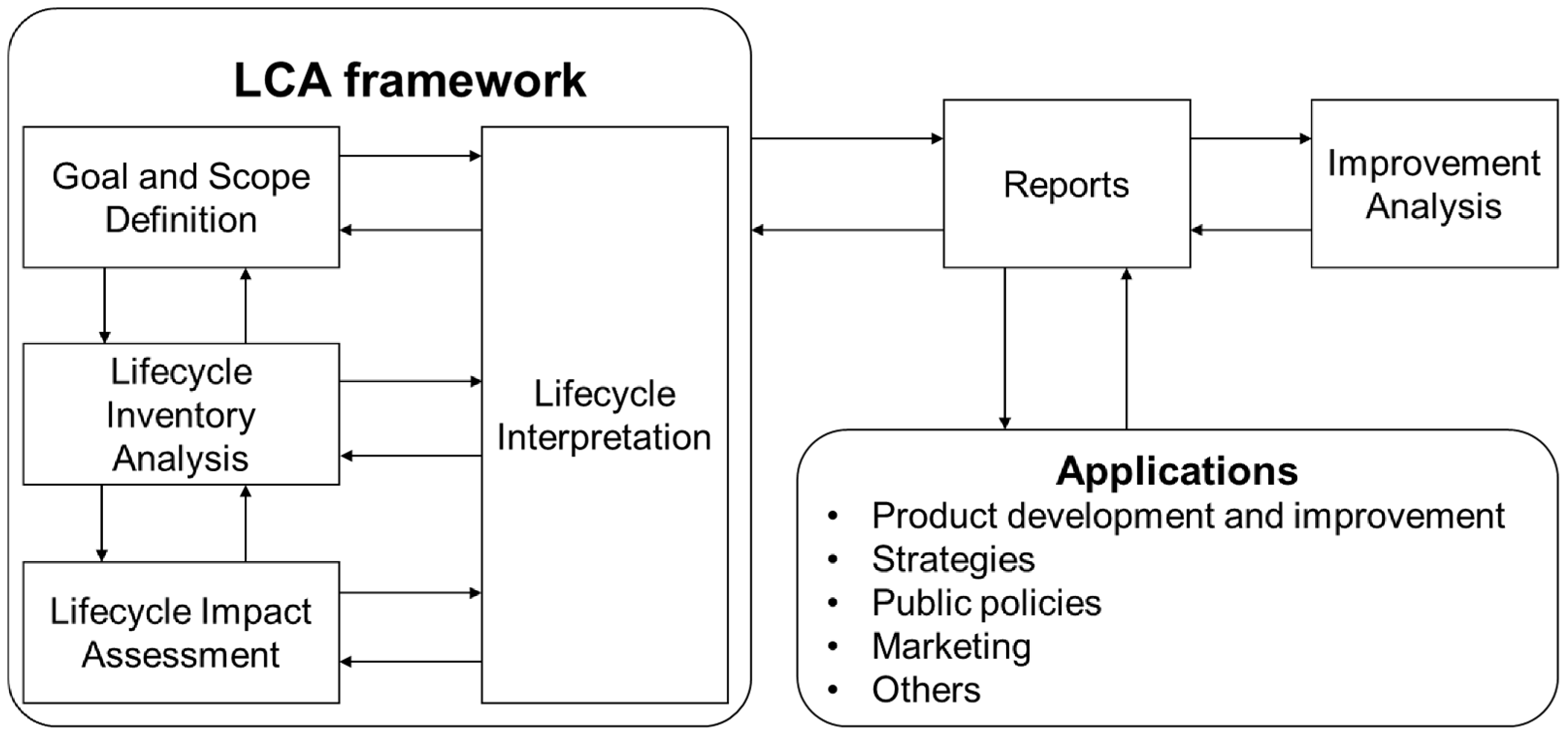
LCA was initially defined as an environmental impact assessment method covering the entire process, from extracting raw materials from the Earth to the final disposal of waste back into the Earth [16]. By systematically analyzing its framework, it is possible to quantitatively assess the environmental impacts throughout the entire lifecycle of urban underground pipeline projects. The theory framework for LCA was initially established by SETAC, which divides the LCA framework into the following four core stages: goal and scope definition, inventory analysis, impact assessment, and improvement assessment [17]. Subsequently, ISO refined and adjusted this technical framework [18], ultimately resulting in an evaluation system comprising the following four standard steps: goal and scope definition, lifecycle inventory analysis, lifecycle impact assessment, and lifecycle interpretation. Then, the assessment reports are used to show the results and problems and propose improvement measures. The reports can be used in different fields such as product development and improvement, strategy, public policies, etc. The LCA framework is shown as Figure 1.
(1)
Goal and scope definition
The primary step in lifecycle assessment is to clearly define the objectives and scope. At this stage, it is necessary to delineate the research scope and establish the system boundaries, thereby ensuring that the final assessment results are consistent with the pre-defined objectives. When defining the research scope, it is essential to establish the functional unit of the product. It is a key factor in ensuring that LCA results from different products are comparable.
(2)
Lifecycle inventory analysis (LCI)
The foundation of inventory analysis lies in the core task of systematically collecting and organizing relevant data based on the research objectives. This process involves quantitatively analyzing the flows of resources, energy, and environmental emissions associated with the target product, process, or activity throughout its entire life cycle. Specifically, the system inputs. The input includes data on the consumption of raw materials and various energy sources, while the output involves waste and pollutants discharged into environmental media such as the atmosphere, water bodies, soil, etc.
(3)
Lifecycle impact assessment (LCIA)
Lifecycle impact assessment is based on the data obtained from the preliminary inventory analysis, conducting a systematic quantitative assessment of the environmental impacts of various emissions generated by the product system. It involves the following three main steps: first, classifying the environmental impacts; second, characterizing them; and finally, completing the quantitative assessment. This standardized procedure ensures the scientific rigor and comparability of the assessment results.
(4)
Lifecycle interpretation
By analyzing the environmental impacts, it is possible to identify the key stages that make the most significant contribution to the overall assessment results. When providing improvement suggestions, it is necessary to take the specific data and conclusions of the LCA analysis as the basis, formulate targeted optimization plans, and provide scientific guidance for subsequent work. The recommendations should align closely with the research objectives and also ensure systematicness and operability.
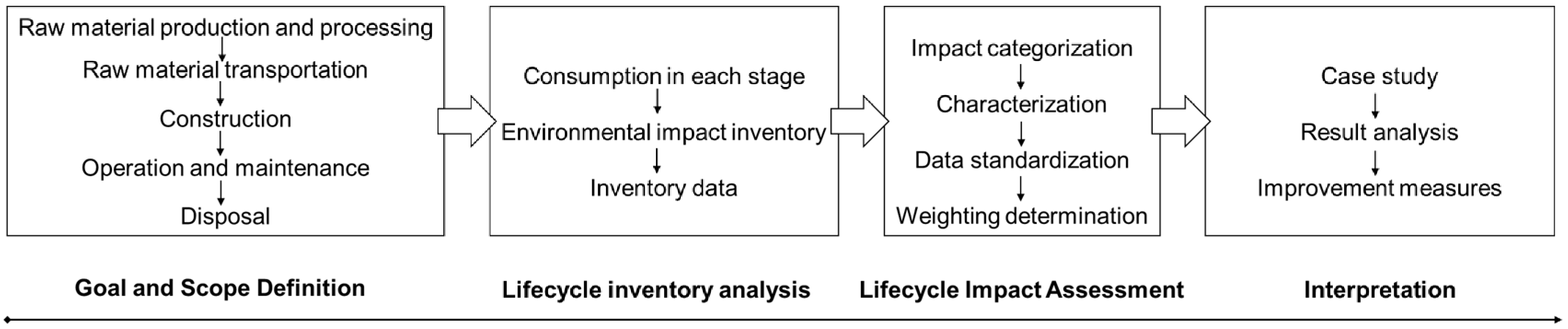
Based on the LCA theory framework, the framework for environmental impact assessment of urban underground pipeline projects is shown in Figure 2. The evaluation process consists of four steps, and there are more processes in each step. Firstly, the scope of the evaluation is defined, and the system boundaries are clearly established. The whole scope is the lifecycle process of urban underground pipeline projects including raw material production and processing, raw material transportation, construction, operation and maintenance, and disposal. Secondly, a lifecycle inventory analysis is conducted to systematically identify the sources of environmental impacts across all lifecycle stages to quantify their pollution emission data, according to the consumption in each stage. On this basis, using methods such as environmental impact categorization, characterization analysis, data standardization, and weighted assessment, the inventory data are transformed into comparable environmental impact indicator values. Finally, a case is studied to validate the assessment model, and based on the quantified results, a comprehensive analysis is performed, and targeted recommendations for environmental improvement are provided. This framework offers a systematic analytical approach for comprehensively assessing the environmental impacts of urban underground pipeline projects.

3. Determination of the Scope and Inventory Analysis of Urban Underground Pipeline Projects

3.1. Evaluation Scope Determination

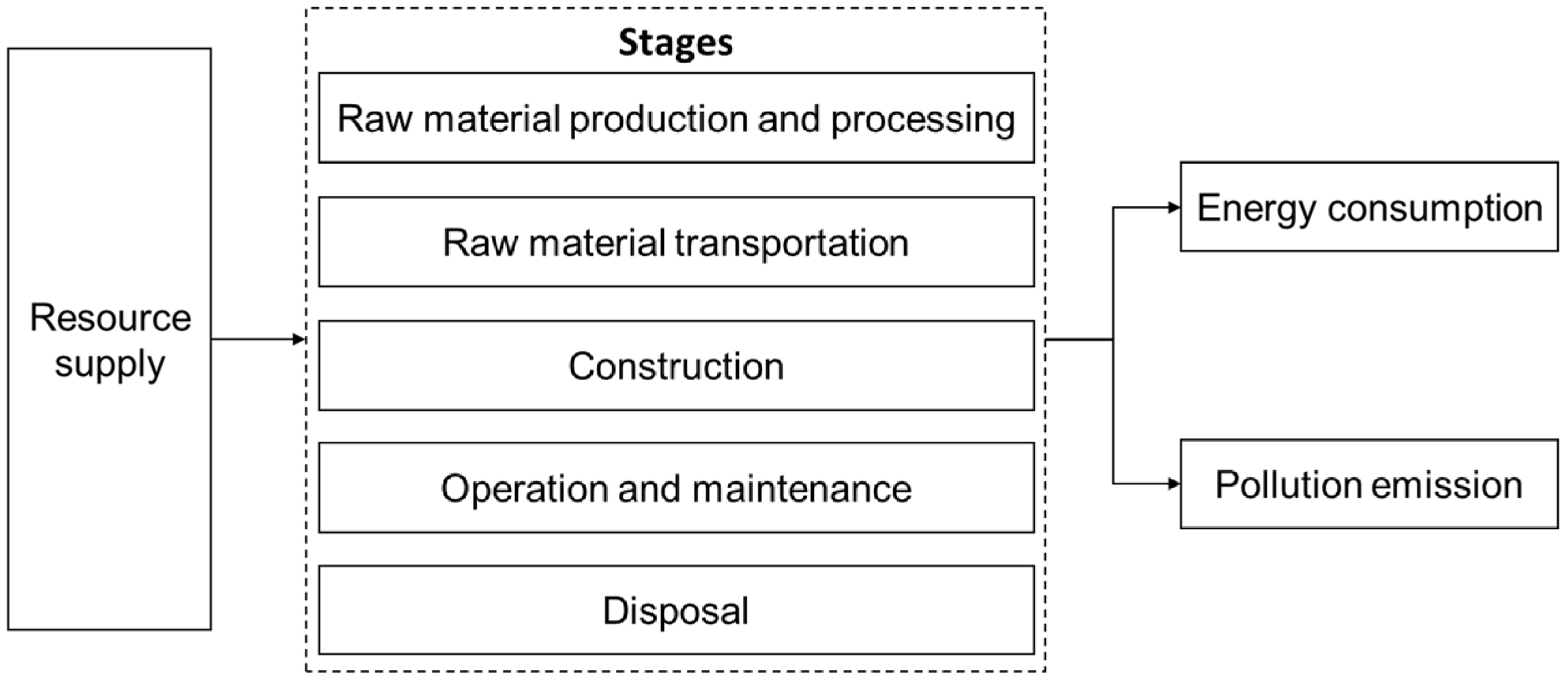
The entire lifecycle of urban underground pipeline projects typically includes some key stages such as planning and design, material production and transportation, construction, operation and maintenance, and demolition and disposal. Compared to other stages, the environmental impacts during the planning and design phase are virtually negligible. Therefore, to enhance the feasibility of the study, non-critical factors with minimal environmental impact have been excluded when defining the scope. Then, the scope is determined as comprising the following five main stages: the raw material production and processing stage, the raw material transportation stage, the construction stage, the operation and maintenance stage, and the waste disposal stage, as shown in Figure 3. The resource is supplied to each stage. Then, the manufacturing process consumes a lot of energy and emits some pollutions, which are the basis of the environmental impacts.
Given the underground pipeline projects are characterized as long project cycles, system complexity, and large data volumes, to ensure the feasibility of the computational model and the accuracy of its results, the following basic assumptions are established:
  • Due to limitations in research conditions, although it is not possible to cover all resource and energy consumption data across every stage, it is ensured that the major resources and energy consumptions are included in the statistical scope.
  • The service life of a pipeline network is influenced by numerous factors, including design standards and pipe materials. Moreover, energy consumption and pollutant emissions during the operation phase vary from year to year. In this paper, it is assumed that the annual energy consumption and pollutant emissions remain constant throughout this phase.
  • The specific data that could not be obtained in the study shall be replaced with industry average data announced by the government or other authoritative statistical data with credibility.
According to the assumptions, the results may have some error impacts because of the limited data, but the key materials and main process are considered, and the framework and methods are still suitable for the urban underground pipeline projects. In the future, the research will investigate more projects and collect more detailed data to enhance the analysis.

3.2. Inventory Analysis

3.2.1. The Inventory of Raw Material Production and Processing Stage

Due to processes involving the extraction, smelting, and shaping of raw materials, not only are a large amount of energy and resources consumed, but also significant emissions of environmental pollutants occur. Equation (1) shows the amount of environmental pollutant emissions during this stage.
Q Y 1 i = k M k × 1 + W Y 1 k × P k i
where Q Y 1 i represents the emission amount of the i-th pollutant during this stage; M k represents the demand for the k-th material during this stage; W Y 1 k represents the loss rate of the k-th material; and P k i represents the emission amount of the i-th pollutant per unit mass of the k-th material produced.

3.2.2. The Inventory of Raw Material Transportation Stage

The produced materials are going to be delivered to the construction site using various modes of transportation. This transportation process not only consumes energy but also results in emissions of environmental pollutants. The amount of these emissions is closely related to the type of transportation vehicle and the distance. Equation (2) shows the pollutant emissions during this stage.
Q Y 2 i = k M k × 1 + W Y 2 k × L k × P k i
where Q Y 2 i represents the emission amount of the i-th pollutant during this stage; W Y 2 k represents the loss rate of the k-th material during this stage; L k represents the transportation distance of the k-th material; and P k i represents the emission amount of the i-th pollutant per unit weight of the k-th material transported over a unit distance.

3.2.3. The Inventory of Construction Stage

The environmental impact of this stage primarily stems from emissions generated by the operation of various construction machines. The amount of pollutant emissions during this phase is directly related to the types of machinery used and the number of machine shifts. Equation (3) shows the emissions during this stage.
Q S i = l P l i × T l
where Q S i represents the emission amount of the i-th environmental pollutant during this stage; P l i represents the emission amount per shift in the i-th pollutant from the l-th type of construction machinery; and T l represents the number of shifts during which the l-th type of construction machinery is used.

3.2.4. The Inventory of Operation and Maintenance Stage

During this stage, although the energy efficiency per unit of time and the intensity of pollutant emissions are relatively lower than those in the construction and building stage, the cumulative resource consumption and total pollutant emissions remain substantial due to its longer duration. The pollutants generated primarily stem from energy consumption associated with equipment operation, e.g., the electricity required to run pumps, valves, and other such equipment. Equation (4) shows the pollutant emissions during this stage.
Q Y i = j P j i × q j
where Q Y i represents the emission amount of the i-th environmental pollutant during this stage; P j i represents the emission amount of the i-th pollutant per unit mass of the j-th energy source; and q j represents the consumption volume of the j-th energy source.

3.2.5. The Inventory of Waste Disposal Stage

When pipelines reach their predetermined service life, they must be dismantled and disposed of in accordance with regulations. The environmental pollutants generated include waste construction materials (such as concrete fragments and metal components). These emissions can be categorized into two main sources. The first one is the energy consumption of various construction machinery and transport vehicles, and the other one is the subsequent treatment of demolition waste. Equation (5) shows the pollutant emissions during this stage.
Q C i = i j q j × P j i + i q g × P g i
where Q C i represents the emission amount of the i-th environmental pollutant during this stage; q g represents the emission amount of the g-th solid waste during this stage; and P g i represents the emission amount of the i-th pollutant per unit volume of solid waste.

3.3. Lifecycle Inventory Database

It can be seen that each stage consumes some resources and energy and then emits different wastes. Therefore, it is necessary to calculate the number of resource consumption and waste emission. These consumption and emissions are the main factors of the environmental impacts. In order to calculate the environmental impacts and compare the consumption and emissions, the inventory database is inevitable. The lifecycle inventories of key materials and energy resources are obtained from the literature, and then a comprehensive inventory database is established, to ensure that resource consumption and pollution emission data across different stages are comparable. Based on the characteristics of underground pipeline projects, the inventory database is developed through the aforementioned analysis process includes an energy consumption inventory, a material consumption inventory, and an inventory of environmental impacts associated with construction machinery and transportation vehicles.

3.3.1. Energy Consumption Inventory

In China’s current power generation structure, thermal power generation still dominates, accounting for more than 70% of the total electricity output, although new energy generation technologies have been continuously developing in recent years. Moreover, according to the survey, the energy in construction industry is mainly from thermal power generation. Based on Di et al. [19], the lifecycle emission inventories for energy consumption in thermal power generation are shown as Table 1.
Gasoline and diesel, as the core power fuels in the modern transportation sector, both fall under the category of secondary energy sources. Ding et al. [20] conducted research on the lifecycle inventory of fossil energy resources in China. This paper draws upon the findings to provide a summary and lists the lifecycle inventories of the main gasoline and diesel fuels, as follows in Table 2.

3.3.2. Material Consumption Inventory

The construction process of underground pipelines involves a variety of building materials. However, since some materials are used in relatively small quantities, their environmental impact can be considered negligible. Therefore, only materials used in larger quantities and those with higher pollution potentials are typically considered. The major building materials that stand out in terms of emissions include cement, steel, concrete, etc. Several scholars have conducted systematic studies on the lifecycle inventories of construction materials such as cement, concrete, and steel. In addition, some auxiliary materials such as insulation materials and anti-corrosion coatings are also important materials in the pipeline projects. However, compared to the key materials, the environmental impacts are much smaller [21,22]. Furthermore, due to the inadequate data of auxiliary materials, the paper focuses on the key materials. By integrating relevant data, the lifecycle material flow inventories for these materials are established.
Cement is a key component of concrete. Based on the cement production process, Peng [23] determined the energy and material consumption required to produce 1 ton of cement products, and a lifecycle inventory for 1 ton of cement produced, as shown in Table 3.
Concrete is a mixture formed by mixing cementitious materials (mainly cement), coarse/fine aggregates, and water in a specific proportion. After curing and hardening, it becomes a material with engineering strength. Li et al. [24] constructed lifecycle material flow inventory for pre-mixed concrete. This paper organized the data and confirmed the inventory, as shown in Table 4.
As a ductile metallic material possessing excellent mechanical properties and corrosion resistance, steel plays a critical role in the construction of underground pipelines. Yang [25] analyzed resource consumption and environmental emissions at various stages of the steel production lifecycle in China and developed an inventory database for each kg of steel. This paper draws upon that inventory database and organizes it as shown in Table 5.

3.3.3. Construction Machinery and Transportation Vehicles Inventory

Construction machinery exhibits significant differences in energy consumption characteristics, with varying types of energy consumption and different levels of energy use per unit of work performed. Based on the machinery price lists, the paper compiled the fuel and power consumption per shift for commonly used construction machinery. Combined with a basic energy emissions inventory, an environmental impact inventory for each type of construction machinery per shift is established, as shown in Table 6.
Energy consumption and environmental emissions at the transportation stage are primarily influenced by factors such as the choice of transportation mode and distances. Yang [26] calculated the environmental burden based on the pollutant emission coefficients of the respective transportation vehicles and developed a comprehensive inventory system for the environmental impacts of the entire transportation process, as shown in Table 7.

4. The Environmental Impact Assessment Model for the Urban Underground Pipelines

The impact assessment is based on inventory data and employs quantitative methods to evaluate the environmental burdens. This paper adopts a three-step approach, i.e., classification, characterization, and assessment. In order to quantify the evaluation of their environmental impacts, lifecycle characteristics of the urban underground pipelines and current environmental policies are considered.

4.1. Environmental Impact Classification

Environmental impacts vary depending on regional, temporal, and industrial differences. Given the diversity of evaluation perspectives, inadequate consideration can easily lead to generalized conclusions drawn from insufficient evidence. Therefore, it is essential to comprehensively identify the various types of environmental impacts that the industry might entail. The development of the construction industry is significantly influenced by policy regulation. It is crucial to consider both the industry’s energy consumption and pollution emission characteristics and the current environmental policies to identify and prioritize the key environmental impacts.
Recently, there is no unified standard for classifying environmental impact types, and significant differences exist among various research institutions and assessment models. This paper comprehensively draws on the lifecycle impact classification systems developed by internationally recognized organizations (SETAC and UNEP) as well as the Research Center for Eco-Environmental Sciences of the Chinese Academy of Sciences. Based on China’s characteristics of pollutant emissions from construction projects and current environmental policies, seven core environmental impact indicators are identified, i.e., fossil depletion potential (FDP), global warming potential (GWP), acidification potential (AP), eutrophication potential (EP), photochemical ozone creation potential (POCP), atmospheric particulate matters potential (APMP), and solid waste potential (SWP). The classification of environmental impact factors is based on the similarity of their impact characteristics. Factors with common or comparable environmental impacts are grouped into the same category. The impact factors considered under the environmental impact types [27] are shown in Table 8.

4.2. Characterization

In lifecycle assessment, different impact factors may produce similar environmental effects, yet their respective contributions can vary significantly. Equivalent factors reflect the differences in the contributions of various impact factors to the same type of environmental impact; typically, a representative substance is used as a reference to calculate the relative magnitudes of other substances. The characterization process employs equivalent factors to convert and aggregate various impact factors within the same environmental category into a unified dimension. Then, the potential environmental impact value for that category can be calculated as Equation (6) shows, which represents the cumulative contribution of all impact factors under that specific environmental impact type.
E P i = Q j × E F i j
where E P i represents the potential environmental impact value of the i-th type of environmental impact; Q j represents the emission amount of the j-th type of environmental impact factor; and E F i j represents the equivalence factor of the j-th type of environmental impact substance with respect to the i-th type of environmental impact.
Considering the applicability of different characterization methods to specific types of environmental impacts, application within various industries, and data availability, the appropriate characterization method for each type of environmental impact is selected as Table 9 shows.
The characterization method is the key step in transforming mid-level inventory data into environmental impact indicators. The paper uses scientific models and equivalence factors to uniformly quantify different emissions or resource consumptions and then compare the environmental impacts. The characterization methods convert emissions or resource use of different substances through equivalence conversion, which is used for subsequent standardization, weight assignment, and comprehensive environmental assessment.
  • CADP is based on fossil fuel reserves, extraction rates, and energy content. It quantifies scarcity by calculating the proportion of resource consumption relative to global reserves.
  • IPCC GWP 100a uses carbon dioxide as the reference gas and calculates the radiative forcing effects of different greenhouse gases over a 100-year time scale.
  • CML2001 acidification potential method converts emissions of acidic substances such as sulfur dioxide and nitrogen oxides into equivalent SO2 emissions, based on their acidifying capacity in the environment.
  • CML2001 eutrophication potential method quantifies the potential of nutrients to promote algal growth after entering water bodies, based on phosphate or nitrogen equivalents.
  • CML2001 photochemical oxidation potential method uses ethylene equivalents as a standard to measure the ability of volatile organic compounds and nitrogen oxides to generate ozone under illumination conditions.
  • CML2001 particulate matter formation potential method calculates the formation potential of primary and secondary particulate matter based on PM2.5.
  • CLCD weighting method assigns different weights based on the toxicity, degradability, and disposal methods of waste to quantify the comprehensive environmental load.
Based on the aforementioned characterization method, the equivalent factors for the various influencing factors required in this paper are summarized and identified as Table 10 shows.

4.3. Data Standardization

Data standardization aims to provide a unified benchmark for comparing the different types of environmental impacts. Although the ISO standards do not explicitly specify particular methods, it recommends a specific range of total emissions or per capita equivalents as benchmark values. During the standardization process, global impacts should be based on global benchmarks, while regional and local impacts should use benchmark values at the national or regional level, thereby ensuring the comparability of impacts across different scales. Yang et al. analyzed a lot of environmental impacts in China and built the benchmark [20,25,28,29]. This paper refers to the China environmental impact benchmark values as shown in Table 11, The standard human-equivalent benchmark is used for standardized calculation, as Equation (7) shows.
N P i = E P i / R i
where N P i represents the standardized environmental impact value of the i-th type; E P i represents the potential environmental impact value of the i-th type; and R i represents the reference value for the i-th environmental impact.

4.4. Weight Determination

Although the environmental impact assessment data, after standardization, are comparable, their applicability still has limitations due to the effects of spatial location, time, and policy. Therefore, a weighted processing approach is required to accurately reflect the relative contribution levels and ecological significance. Equation (8) shows the weighted environmental impacts.
P i = W i × N P i
where P i is the weighted environmental impact value of the i-th type of environmental impact; W i is the weight factor of the i-th environmental impact; and N P i is the standardized environmental impact potential value.
The common weighting methods in the construction industry include the expert scoring method, the willingness-to-pay (WTP) method, and the target-distance method. The expert scoring method is simple and easy to implement, but the weights are primarily determined based on experts’ subjective experience, so the weights are subjective and vary with different experts. The WTP method assesses the significance of environmental impacts by referencing pollutant treatment costs, but the weights are easily influenced by factors such as environmental conditions, technological levels, and willingness, resulting in relatively poor stability, so the weights vary with the company’s willingness and technologies and cannot reflect the general situation. The target-distance method quantifies the priority of different types of environmental impacts by comparing the current levels with the targets set by policy. If the level of a particular type of impact significantly exceeds the policy target, its corresponding weight factor will be relatively high, indicating that this type of impact requires prioritized regulation. This method not only reflects China’s strategic orientation in environmental governance but also allows for adjustments based on current policies [30,31,32]. Also, the weights are dynamic with the policies and targets change. Therefore, the target-distance method is suitable to determine the weights based on China’s latest environmental policies. In this paper, 2020 is the base year because it is the ending year of the 13th Five-Year Plan and the beginning year of the 14th Five-Year Plan of China. Then, 2025 and 2030 are the target years because 2025 is the ending year of the 14th Five-Year Plan. Also, 2030 is the year of carbon peaking. The method is shown as Equation (9), and the weights are shown in Table 12.
W i = B i / T i
where B i is the baseline emission level for the i-th type of environmental impact; and T i is the target emission level for the i-th type of environmental impact. The data are collected from China’s environmental statistic reports and energy statistic yearbooks, etc.; the targets are from the policies, development reports and related research as shown in Table 12.

5. Case Study and Model Validation

An underground pipeline project in a certain city is selected as the research object. Based on the LCA system for urban underground pipeline projects, it quantitatively assesses the environmental effects generated by the project in different stages and proposes improvement measures based on the results.
This project adopts a cast in situ-reinforced concrete rectangular frame structure with a total length of 3.1 km. It features an integrated tunnel design that centrally accommodates the following seven major categories of municipal pipelines: water supply, heating, gas, electricity, telecommunications, stormwater drainage, and sewage. This design enables the full utilization of underground space. The project has first-class waterproof and fire-resistant properties. The earthquake resistance level is Level 3. The designed service life is 100 years, which effectively ensures the long-term safe operation of the pipelines. This project is managed by an experienced company in China with good quality, so it is a representative case in China. Also, the research framework and methods are applicable for other cases.
The data are primarily derived from internal project documents provided by the construction contractor. To ensure the completeness of the study, in cases where data were missing, this paper supplemented the missing data using reasonable methods based on existing project documents, combined with industry-average data and findings from the relevant literature.

5.1. The Environmental Impact Assessment Results of the Project

5.1.1. The Impact of Raw Material Production and Processing Stage

The project has a total usage of 15,000 m3 of C35 concrete and 10,000 tons of steel reinforcement. According to the lifecycle assessment model and Equations (1) and (6)–(8), the environmental impact values are shown in Table 13.
As shown in Table 13, during the raw material production and processing stage, the three environmental impacts with the most significant effects are SWP, APMP, and POCP, with impact values reaching 83.9, 46.7, and 28.1 capita equivalent, respectively. The high value for SWP is primarily attributable to the large amounts of waste residues and industrial byproducts generated during the extraction and processing of resource-intensive materials such as concrete and reinforcing steel. The substantial impact of APMP stems mainly from dust emissions during cement production, smoke and dust from iron and steel smelting, as well as dust generated during the transportation and processing of raw materials. The high value of POCP is largely due to nitrogen oxides and volatile organic compounds released from the combustion of fossil fuels during the production of raw materials.
In addition, the impact values of FDP, GWP, and AP are also relatively significant, primarily because the transportation and processing of raw materials consume large amounts of fuel. The combustion of coal and coke releases sulfide, while high-temperature industrial processes and exhaust gases from vehicles generate nitrogen oxides. Additionally, a large amount of greenhouse gases is emitted during the production of cement and steel.

5.1.2. The Impact of Raw Material Transportation Stage

In this project, the transportation model is one-way, which means that no consideration is taken for pollutant emissions associated with return trips. The materials are transported by trucks via roadways. The transportation distance of reinforcing steel is 220 km, and the transportation distance of concrete is 10 km. According to the lifecycle assessment model and Equations (2) and (6)–(8), the environmental impact values for this stage are shown in Table 14.
As shown in Table 14, the environmental impacts during the raw material transportation stage are generally minor, with each indicator falling within the range of 10−3 to 10−1. Among these, FDP has the most significant impact, reaching 0.14 capita equivalent, primarily due to energy consumption from gasoline combustion in transport vehicles. The second-largest impact is EP, at 0.0178 capita equivalent, mainly caused by pollutants such as nitrogen oxides emitted from gasoline combustion. Other environmental impacts, including GWP and AP, are relatively smaller. This indicates that the transportation stage should place particular emphasis on addressing the following two major environmental issues: energy consumption and water pollution.

5.1.3. The Impact of Construction Stage

The types and number of shifts for the main construction machinery employed in this project are shown in Table 15. According to the lifecycle assessment model and Equations (3) and (6)–(8), the environmental impact values for this stage are as shown in Table 16.
As shown in Table 16, the construction stage has the most significant impact on APMP, reaching an equivalent of 19.6 capita equivalent, which is primarily attributable to the continuous emission of fine particulate matter during the operation of construction machinery. Due to limitations in combustion efficiency and high operational intensity, these machines have become major sources of pollution. The impacts of FDP and POCP are comparable, at 0.1048 and 0.1054 capita equivalent, respectively. These two types of environmental impacts mainly stem from diesel-powered machines such as dump trucks and concrete pump trucks which have high energy demands. These machines release both volatile organic compounds and nitrogen oxides during combustion and exacerbate fuel consumption and the formation of photochemical smog.

5.1.4. The Impact of Operation and Maintenance Stage

The environmental impacts during the operation and maintenance stage of the project stem from long-term electricity consumption. Due to the designed service life of up to 100 years, although the energy consumption intensity per unit time is relatively low, the total cumulative resource consumption is still quite significant. This project involves a complex utility tunnel designed to accommodate seven major types of pipelines. The ventilation, lighting, monitoring, and other systems have higher power demands than those of ordinary utility tunnels. The electricity consumption during the operation period is estimated at 300,000 kWh per kilometer per year. According to the lifecycle assessment model and Equations (4) and (6)–(8), the environmental impact values during this stage are shown as Table 17.
During the operation and maintenance stage, the environmental impacts primarily stem from indirect emissions associated with electricity consumption. As shown in Table 17, this stage has the most significant effects on POCP and APMP, with impact values reaching 41.8 and 37.4 capita equivalent, respectively. These impacts are directly linked to the emissions of volatile organic compounds, nitrogen oxides, and particulate matter from power plants. AP has the value of 13.8 capita equivalent due to the conversion of emitted sulfur oxides and nitrogen oxides in the atmosphere into sulfuric and nitric acids. Additionally, the impacts on FDP and GWP are also substantial, at 9.65 and 3.24 capita equivalent, respectively, reflecting the significant contribution of electricity generation to carbon emissions resulting from the consumption of fossil fuels such as coal.

5.1.5. The Impact of Waste Disposal Stage

The environmental impacts during the disposal stage of the project mainly come from the operational emissions of construction machinery during the demolition work and the subsequent disposal of the demolished materials. Given the long service life of pipe galleries, it is difficult to obtain accurate data on this stage, and the mechanisms by which recovered materials impact the environment are complex. Therefore, only the transportation of construction waste is considered.
The nearest construction waste disposal site to the project is 97 km away. Given the relatively high recovery rates of concrete and steel reinforcement, this paper assumes a recovery rate of 90%. This assumption is based on industry-wide average levels; however, actual recovery performance may fluctuate depending on local disposal practices and recycling policies. According to the lifecycle assessment model and Equations (5) and (6)–(8), the environmental impact values for this stage are shown as Table 18.
As shown in Table 18, it can be seen that the environmental impact at this stage is generally minor, similar to that of the raw material transportation stage. The impact of FDP is the most pronounced due to energy consumption from the combustion of gasoline in transportation vehicles. The second most significant factor is EP, which is caused by pollutants such as nitrogen oxides emitted during gasoline combustion.

5.1.6. Comprehensive Impacts

The integrated results of the lifecycle environmental impacts of the project are shown in Table 19. According to the result, it is possible to systematically assess the extent of the impact on various environmental indicators and identify the key stages throughout the life cycle of the project that require enhanced control and management.
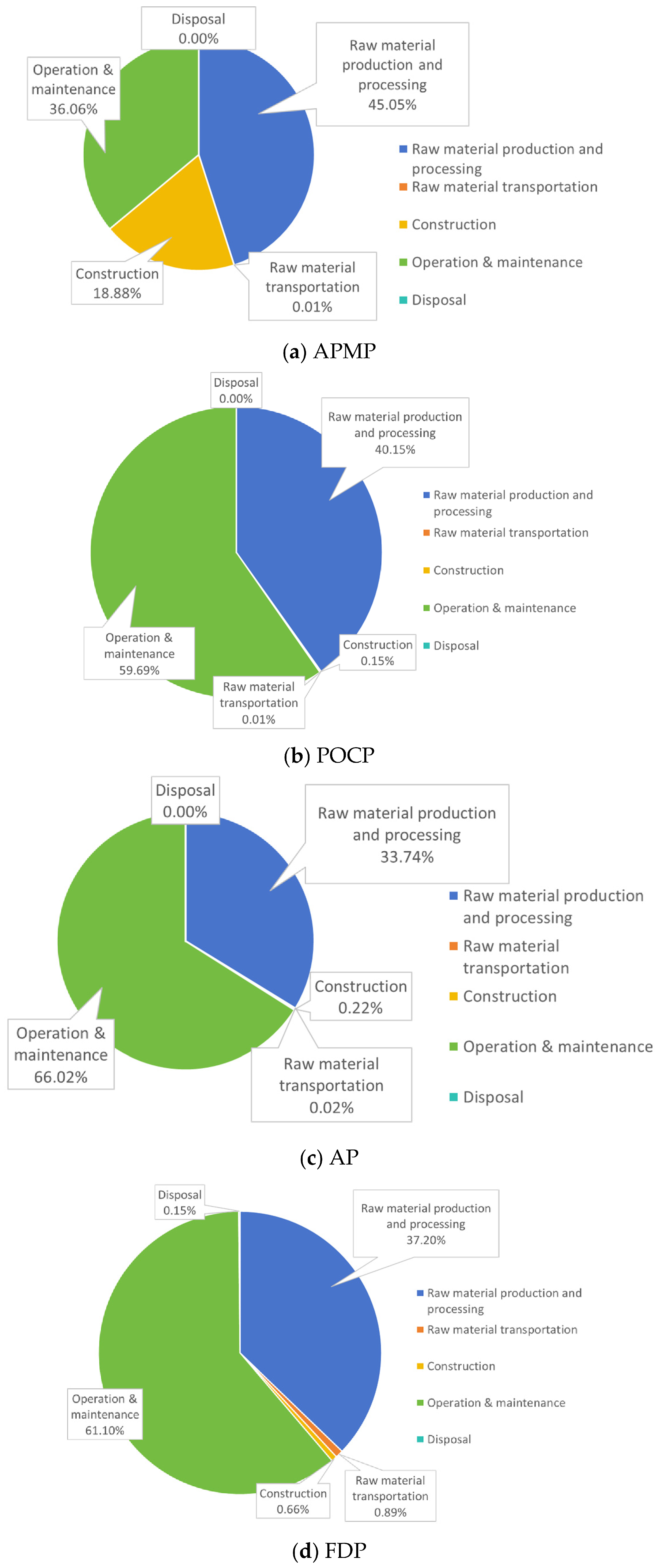
It can be seen that the most significant impacts are APMP, SWP, and POCP, which are the primary targets for control. The impacts on AP and FDP rank second, while GWP and EP are relatively minor. As shown in Table 19, the contribution to SWP is almost entirely concentrated in the raw material production stage; the contributions of the other four key environmental impact categories across all stages are illustrated in Figure 4.
Figure 4 shows that the dominant stages vary significantly depending on the type of environmental impact. The impact of APMP mainly comes from the raw material production and processing stage (accounting for 45.05%), followed by the operation and maintenance stage (36.06%) and the construction stage (18.88%). Effectively controlling such environmental impacts requires management and control over multiple stages. The impact on SWP is highly concentrated in the raw material production and processing stage, highlighting the decisive role played by raw material selection and procurement in controlling solid waste generation. Regarding POCP, AP, and FDP, the main sources of impacts are the operation and maintenance stage and the raw material production and processing stage. To effectively mitigate these three types of environmental impacts, it is crucial to focus on optimizing both stages.
Overall, the raw material production and processing stage, operation and maintenance stage, and construction stage have the most impacts during the whole life cycle of the project. A lot of energy and resources are consumed and emit different kinds of waste in the raw material production and processing stage, so this stage has the most impact. The operation and maintenance stage has a long period and consumes resource and energy consistently. Therefore, although this stage does not produce any materials and too much solid waste, the accumulated volume is still large. The construction stage is the main stage during the whole process because it consumes a lot of resources and energy to build pipelines and emits a lot of waste. Compared to these three stages, the raw material transportation stage mainly consumes energy to transport materials and emit some wasted gas. The disposal stage consumes energy to deal with the waste, so the impacts are smaller.
Based on the above analysis results, it is recommended to implement a phased and targeted control strategy. For POCP, AP, and FDP, which are primarily driven during the operation and maintenance stage and the raw material production and processing stage, emphasis should be placed on reducing energy consumption and improving energy efficiency, while simultaneously enhancing process improvements and material selection. For APMP, comprehensive management and control are required in aspects, e.g., the selection and procurement of building materials, and dust control during the construction stage. To effectively control solid waste, the use of green building materials and the control of material quantities are significant. In comparison, the environmental impacts during the transportation, construction, and waste disposal stages are relatively minor and can be further reduced through standardized management practices. This phased management approach, which takes a lifecycle perspective into account, can effectively identify critical control points and maximize environmental benefits.

5.2. Discussion

This case is used to verify the applicability of the assessment model. The results show different impacts of the stages and find that the raw material production and processing stage and operation and maintenance stage contribute the most impacts, especially AP, POCP, APMP, FDP, and GWP. The paper also compares the methodologies and results with other studies to discuss similarities or differences. However, the related research on environmental impacts of lifecycle urban underground pipelines is not enough. The research focuses more on the technology and materials of the pipelines. Khan et al. [12] classified the process of underground pipeline networks into manufacturing, transportation, installation, and operation, and found that the most dominant stage of the life cycle is the manufacturing process, resulting in large amounts of CO2 emissions. Chohan et al. [14] reviewed the environmental impact of different pipelines with different materials during the material manufacturing, installation operation, and maintenance stage. The results showed that the operation stage contributes the most to GWP and has the greatest amount of energy consumption, and manufacturing ranks second.
In terms of GWP/CO2 emission, those studies have similar conclusions that manufacturing/material processing and usage/operation stage have the most environmental impacts. However, the ranks are a little different. This paper and Khan both analyzed that manufacturing/material production stage has the most emissions even though the materials and the pipe categories are different. Chohan reviewed some literature and summarized the results based on the different literature and different situations (like some specific pipelines, not the urban underground pipelines), and the period of operation stage was 50 years, so the findings were summarized through a statistical analysis. The method and scope are different from this paper.
Moreover, these studies mainly analyze the impacts of CO2 emissions/GWP. This paper considers all the common environmental impacts and compares their contributions. The weighting method also considers the importance of the policies and development targets, which is meaningful for the orientation. The greater the weight is, the more the impact needs to be prioritized for response. Therefore, the assessment model and weighting method in this paper can comprehensively analyze the impacts of the urban underground pipeline projects during the whole life cycle.

5.3. Implications

5.3.1. Improvement Measures for the Raw Material Production and Processing Stage

To reduce the environmental impacts of this stage in urban underground pipeline projects, it is recommended to implement optimization measures across three key aspects. Firstly, in terms of material selection, priority is given to using environmentally friendly concrete mixed with fly ash or slag. This not only reduces pollution caused by cement production but also enables the resource utilization of industrial waste. Secondly, the procurement aspect should focus on selecting recycled steel produced via the electric arc furnace process, which can significantly reduce energy consumption and waste generation compared to traditional steelmaking methods. Lastly, in terms of construction management, it is necessary to strengthen the accurate calculation of material consumption and process improvement, effectively control the demand for materials through refined organization, and avoid waste.

5.3.2. Improvement Measures for the Raw Material Transportation Stage

When screening raw material suppliers, priority should be given to those located closer to the site and meeting the required qualifications. By shortening transportation distances, energy consumption and emissions can be reduced. At the same time, it is recommended to introduce an intelligent transportation scheduling system to analyze and optimize vehicle allocation and route planning, thereby improving overall transportation efficiency and reducing empty-load rates and unnecessary energy waste.

5.3.3. Improvement Measures for the Construction Stage

Construction machinery selection should prioritize equipment with environmental certification. In terms of operational scheduling, it is necessary to rationally plan the construction workflow, focusing on minimizing equipment idling and waiting time. During the construction stage, dust pollution generated by construction machinery should be controlled. Also, appropriate measures are tailored to the specific operational characteristics of different types of machinery, e.g., high-frequency operating equipment such as concrete vibrators should be equipped with mobile dust-control devices; automatic misting systems should be installed on mobile machinery like dump trucks to ensure timely dust suppression during loading and unloading; and around stationary machinery such as concrete pump trucks should install dust-proof barriers, complemented by misting systems for dust reduction.

5.3.4. Improvement Measures for the Operation and Maintenance Stage

During the operation and maintenance stage, it is recommended to establish a quarterly performance evaluation and testing mechanism and regularly carry out cleaning and maintenance of fan filters as well as sensor calibration to ensure that equipment consistently maintains optimal operational efficiency. The ventilation system is a major energy-consuming component during this stage. Thus, it is feasible to install variable-frequency fans to adjust the operating power according to actual demand. Moreover, LED lighting systems that employ dual-control technology with microwave and light-sensing sensors can automatically adjust the operating status based on real-time environmental conditions. Then, unnecessary energy consumption can be effectively reduced.

5.3.5. Improvement Measures for the Waste Disposal Stage

The environmental impacts during the waste disposal stage can be effectively controlled through the refined sorting and recycling of construction waste. A key measure is the specialized dismantling and reuse of materials such as concrete and metals. It is significant to reduce pollution from demolition operations through the mechanized demolition technologies with low environmental impacts, equipped with dust suppression equipment and transportation route optimization during waste transfer. Crushing and processing the demolished concrete into recycled aggregates for reuse in projects such as road bases can effectively utilize resources, together with establishing a full-process supervision mechanism to ensure that waste disposal meets environmental protection standards.

6. Conclusions

This paper is based on LCA and defines the boundary for the environmental impact assessment of urban underground pipeline systems, analyzes the data inventory, and establishes a corresponding database. By environmental impact classification, characterization, and weight determination, a lifecycle assessment model suitable for urban underground pipeline projects has been developed. After case study, environmental impact assessment results for each stage of the project as well as for the project’s entire life cycle are obtained. Then, based on these results, the paper proposes phased environmental optimization recommendations. Although the case study is based on the project in China, the research framework and methods are also applicable globally. The main findings are summarized as below.
  • There are five key stages for the lifecycle assessment of underground pipeline projects, i.e., the raw material production and processing stage, the raw material transportation stage, the construction stage, the operation and maintenance stage, and the waste disposal stage.
  • Seven key environmental impact indicators are identified along with their corresponding influencing factors, i.e., FDP, GWP, AP, EP, POCP, APMP, and SWP. Then, the assessment model applies a systematic approach for characterization and data standardization and adopts the weighting factors that align with China’s current environmental policies through distance-to-target approach.
  • A certain underground pipeline project is chosen as a case to verify the feasibility of the model. Various environmental impact types at different stages are identified and the contribution values are quantified. Then, according to the results, specific environmental improvement measures are proposed in each stage. The most significant contributions to the environmental impacts come from APMP, SWP, POCP, and FDP. Among these, the operational and maintenance stage and the raw material production and processing stage exert particularly substantial environmental impacts and should thus be designated as critical control points.
LCA theory has been widely adopted in the construction industry. However, there still has not been a sound database system for the whole-life cycle evaluation of construction products in China, given that the urban underground pipeline projects are characterized by complex systems and long industrial chains. Due to the limitations in data availability, this paper focuses primarily on key sources of pollution such as resources, materials, and machinery usage of the urban underground pipeline projects. In the future, research will further expand the scope of environmental impact assessment, develop a more comprehensive environmental inventory database, and analyze comparatively across multiple case studies, to make the lifecycle assessment framework for urban underground pipeline projects more systematic, refined, and accurate.


Author Contributions

Conceptualization, K.S. and H.L.; methodology, K.S.; validation, K.S. and J.L.; formal analysis, J.Z. and S.Y.; investigation, Y.L. and J.Z.; resources, J.L. and J.Z.; data curation, K.S. and Y.L.; writing—original draft preparation, K.S.; writing—review and editing, H.L. and Y.L.; supervision, H.L. and S.Y.; project administration, J.L. and J.Z.; funding acquisition, K.S., H.L. and S.Y. All authors have read and agreed to the published version of the manuscript.

Funding

This work was supported by the National Natural Science Foundation of China (No. 72401087, 72271086); Chongqing Key Special Project for Technological Innovation and Application Development (CSTB2022TIAD-KPX0200); Chongqing Construction Technology Plan Project (2023 7-12); and Anhui Provincial Philosophy and Social Science Planning Project (No. AHSKY2025D24).

Institutional Review Board Statement

Not applicable.

Informed Consent Statement

Not applicable.

Data Availability Statement

The original contributions presented in this study are included in the article. Further inquiries can be directed to the corresponding authors.

Conflicts of Interest

Author Jun Liu and Juncheng Zhu were employed by the company China Construction Second Engineering Bureau Ltd. The remaining authors declare that the research was conducted in the absence of any commercial or financial relationships that could be construed as a potential conflict of interest.

References

  1. ECMWF Communication Section Copernicus Team. Global Climate Highlights 2025. Available online: https://climate.copernicus.eu/global-climate-highlights-2025 (accessed on 28 January 2026).
  2. Souza, L.L.P.d.; Lora, E.E.S.; Palacio, J.C.E.; Rocha, M.H.; Renó, M.L.G.; Venturini, O.J. Comparative Environmental Life Cycle Assessment of Conventional Vehicles with Different Fuel Options, Plug-In Hybrid and Electric Vehicles for A Sustainable Transportation System in Brazil. J. Clean. Prod. 2018, 203, 444–468. [Google Scholar] [CrossRef]
  3. Wu, X.; Zhang, J.; Zhong, D.; Luo, B.; Long, Z.; Hou, Z.; Ma, J.; Ma, W. Exploration of Optimization Strategies for Water Supply Networks under the Dual-Carbon Framework. Water Supply Drain. 2024, 60, 138–145. (In Chinese) [Google Scholar]
  4. Martinez, A.; Miller, S.A. Life Cycle Assessment and Production Cost of Geopolymer Concrete: A Meta-Analysis. Resour. Conserv. Recycl. 2025, 215, 108018. [Google Scholar] [CrossRef]
  5. Dada, O.I.; Liyanage, T.U.H.; Chi, T.; Yu, L.; DeVetter, L.W.; Chen, S. Towards Sustainable Agroecosystems: A Life Cycle Assessment Review of Soil-Biodegradable and Traditional Plastic Mulch Films. Environ. Sci. Ecotechnol. 2025, 24, 100541. [Google Scholar] [CrossRef]
  6. Xu, H.; Kim, J.I.; Chen, J. Improved Framework for Estimating Carbon Emissions from Prefabricated Buildings During the Construction Stage: Life Cycle Assessment and Case Study. Build. Environ. 2025, 272, 112599. [Google Scholar] [CrossRef]
  7. Shen, K.; Cheng, C.; Li, X.; Zhang, Z. Environmental Cost-Benefit Analysis of Prefabricated Public Housing in Beijing. Sustainability 2019, 11, 207. [Google Scholar] [CrossRef]
  8. Xu, H.; He, L.; Chu, Y.; He, J.; Xiao, H.; Shao, C. A Location Monitoring Approach for Underground Pipelines Using Time-Sequential Images. Undergr. Space 2024, 15, 2096–2754. [Google Scholar] [CrossRef]
  9. Ullah, K.; Tanoli, W.A. A Lifecycle BIM-Based Framework for Safe and Efficient Underground Utility Management. Buildings 2026, 16, 1619. [Google Scholar] [CrossRef]
  10. Luo, S.; Yao, J.; Wang, S.; Wang, Y.; Lu, G. A Sustainable BIM-Based Multidisciplinary Framework for Underground Pipeline Clash Detection and Analysis. J. Clean. Prod. 2022, 374, 133900. [Google Scholar] [CrossRef]
  11. Piratla, K.R.; Ariaratnam, S.T.; Cohen, A. Estimation of CO2 Emissions from the Lifecycle of a Potable Water Pipeline Project. J. Manag. Eng. 2012, 28, 22–30. [Google Scholar]
  12. Khan, L.R.; Tee, K.F. Quantification and Comparison of Carbon Emissions for Flexible Underground Pipelines. Can. J. Civ. Eng. 2015, 42, 728–736. [Google Scholar] [CrossRef]
  13. Perez, J.; Lumbreras, J.; Rodríguez, E. Life-cycle Assessment ss A Decision-Making Tool for the Design of Urban Solid Waste Pre-Collection and Collection/Transport Systems. Resour. Conserv. Recycl. 2020, 161, 104988. [Google Scholar] [CrossRef]
  14. Chohan, I.M.; Ahmad, A.; Sallih, N.; Bheel, N.; Ali, M.; Deifalla, A.F. A Review on Life Cycle Assessment of Different Pipeline Materials. Results Eng. 2023, 19, 101325. [Google Scholar] [CrossRef]
  15. Covarrubias, D.T.E. LCA of Two Pipe Installation Methods: Open-Cut vs. Tunneling, for a Desalination Plant Scenario. Master’s Thesis, University from Porto, Porto, Portugal, 2024. [Google Scholar]
  16. Treloar, G.J.; Love, P.E.D.; Faniran, O.O.; Iyer-Raniga, U. A Hybrid Life Cycle Assessment Method for Construction. Constr. Manag. Econ. 2000, 18, 5–9. [Google Scholar] [CrossRef]
  17. Kumar, D.; Maurya, K.K.; Mandal, S.K.; Mir, B.A.; Nurdiawati, A.; Al-Ghamdi, S.G. Life Cycle Assessment in the Early Design Phase of Buildings: Strategies, Tools, and Future Directions. Buildings 2025, 15, 1612. [Google Scholar] [CrossRef]
  18. ISO 14044:2006; Environmental Management—Life Cycle Assessment—Requirements and Guidelines. ISO: London, UK, 1997.
  19. Di, X.; Nie, Z.; Zuo, T. Life-cycle Emission Inventory of Fuel Consumption for Coal-fired Power Generation in China. Chin. Environ. Sci. 2005, 25, 632–635. (In Chinese) [Google Scholar]
  20. Ding, N.; Yang, J. Life Cycle Inventory Analysis of China’s Fossil Energy Sources. Chin. Environ. Sci. 2015, 35, 1592–1600. (In Chinese) [Google Scholar]
  21. Lakatos, Á.; Csík, A.; Lucchi, E.; La Rosa, A.D. Thermal Performance and Ageing Effects to Model the Life Cycle Assessment of Heat-Protective Thermal Insulation Materials in Pipe Systems. Int. Commun. Heat Mass Transf. 2025, 164, 108819. [Google Scholar] [CrossRef]
  22. Yan, A.; Xiao, Y.; Ren, H.; Lin, B.; Zhang, H.; Wang, Y.; Li, X.; Wang, B.; Tang, J. Combining the Life Cycle Model and Corrosion Model to Analyze the Impact of Corrosion on Carbon Emissions of Steel Pipelines. Environ. Impact Assess. Rev. 2025, 115, 108027. (In Chinese) [Google Scholar] [CrossRef]
  23. Peng, C. A Study on the Life-Cycle Environmental Impact Assessment of Residential Buildings. Master’s Thesis, Chang’an University, Xi’An, China, 2012. (In Chinese) [Google Scholar]
  24. Li, X.; Wang, S.; Kong, X.; Zhang, Z. Life-Cycle Environmental Impact Assessment of Ready-Mixed Concrete. J. Civ. Eng. 2011, 44, 132–138. (In Chinese) [Google Scholar]
  25. Yang, J.; Liu, B. Life Cycle Inventory Analysis of Chinese Steel Products. J. Environ. Sci. 2002, 4, 519–522. [Google Scholar]
  26. Yang, Q. Quantitative Assessment of the Environmental Impacts of Building Products Throughout Their Entire Life Cycle. Ph.D. Thesis, Tianjin University, Tianjin, China, 2009. (In Chinese) [Google Scholar]
  27. Cao, X.; Li, X.; Zhu, Y.; Zhang, Z. A Comparative Study of Environmental Performance Between Prefabricated and Traditional Residential Buildings in China. J. Clean. Prod. 2015, 109, 131–143. [Google Scholar] [CrossRef]
  28. Xie, M.; Man, H.; Duan, H.; Li, X.; Xue, J.; Sun, Q.; Liao, F.; Wu, C. Research Progress on the Life Cycle Impact Assessment Methods and Their Localization in China. J. Environ. Eng. Technol. 2022, 12, 2148–2156. (In Chinese) [Google Scholar]
  29. Ding, N.; Lu, X.H.; Yang, J.X.; Lu, B. Water footprint of coal production. Acta Sci. Circumstantiae 2016, 36, 4228–4233. (In Chinese) [Google Scholar]
  30. Li, X.; Su, S.; Shi, J.; Zhang, Z. An Environmental Impact Assessment Framework and Index System for the Pre-Use Phase of Buildings Based on the Distance-to-Target Approach. Build. Environ. 2015, 85, 173–181. [Google Scholar] [CrossRef]
  31. Wowra, K.; Zeller, V.; Schebek, L. Regional Nitrogen Resilience as A Distance-to-Target Approach in LCA of Crop Production Systems. Environ. Impact Assess. Rev. 2022, 97, 106869. [Google Scholar] [CrossRef]
  32. Miao, J.; Wang, X.; Bai, S.; Xiang, Y.; Li, L. Distance-to-Target Weighting Factor Sets in LCA for China Under 2030 Vision. J. Clean. Prod. 2021, 314, 128010. [Google Scholar] [CrossRef]
  33. Xie, H.; Wu, L.; Zheng, D. Prediction on the Energy Consumption and Coal Demand of China in 2025. J. China Coal Soc. 2019, 44, 1949–1960. (In Chinese) [Google Scholar]
  34. National Development and Reform Commission; National Energy Administration. The Renewable Energy Development Plan for the 14th Five-Year Plan Period. 2021. Available online: https://www.ndrc.gov.cn/xwdt/tzgg/202206/t20220601_1326720.html?code=&state=123 (accessed on 21 October 2021). (In Chinese)
  35. Ministry of Ecology and Environment of the People’s Republic of China. 2025 Annual Report on China’s Policies and Actions for Addressing Climate Change. 2025. Available online: https://www.mee.gov.cn/ywgz/ydqhbh/wsqtkz/202510/t20251029_1130962.shtml (accessed on 29 October 2025). (In Chinese)
  36. Ministry of Ecology and Environment of the People’s Republic of China. 2024 China Ecological Environment Statistical Annual Report; 2025. Available online: https://www.mee.gov.cn/hjzl/sthjzk/sthjtjnb/202511/t20251128_1135226.shtml (accessed on 28 November 2025). (In Chinese)
  37. Zhang, C.Y.; Wang, S.X.; Xing, J.; Zhao, Y.; Hao, J.M. Current Status and Future Projections of NOx Emissions from Energy Related Industries in China. Acta Sci. Circumstantiae 2008, 28, 2470–2479. (In Chinese) [Google Scholar]
  38. Zhang, Y.; Yu, H.; Wang, Y.; Yang, C.; Zhang, Y. Reflections on Strengthening the Market-based Instruments in the Amendment of Water Pollution Prevention and Control Law. Chin. J. Environ. Manag. 2016, 3, 43–47. (In Chinese) [Google Scholar]
  39. National Development and Reform Commission; National Energy Administration. The Modern Energy System Plan for the 14th Five-Year Plan Period. 2022. Available online: https://www.ndrc.gov.cn/xxgk/zcfb/ghwb/202203/t20220322_1320016.html (accessed on 29 January 2022). (In Chinese)
  40. State Council of the People’s Republic of China. Opinions on Further Winning the Critical Battle Against Pollution Prevention and Control. 2021. Available online: https://www.mee.gov.cn/zcwj/zyygwj/202111/t20211108_959456.shtml (accessed on 2 November 2021). (In Chinese)
  41. Ministry of Industry and Information Technology. Development Plan for the New Energy Vehicle Industry (2021–2035). 2020. Available online: https://www.mee.gov.cn/zcwj/gwywj/202011/t20201103_806156.shtml (accessed on 20 October 2020). (In Chinese)
  42. National Development and Reform Commission; Ministry of Science and Technology of the People’s Republic of China. Guiding Opinions on the Comprehensive Utilization of Bulk Solid Waste During the 14th Five-Year Plan Period. 2021. Available online: https://www.ndrc.gov.cn/xxgk/zcfb/tz/202103/t20210324_1270286.html (accessed on 18 March 2021). (In Chinese)
Figure 1. LCA theory framework.
Sustainability 18 04743 g001
Figure 2. Research framework.
Sustainability 18 04743 g002
Figure 3. Assessment scope.
Sustainability 18 04743 g003
Figure 4. The environmental impact contribution in each stage.
Sustainability 18 04743 g004
Table 1. The inventory of per kW·h of thermal power generation.
Resources/EmissionsUnitQuantity
InputRaw coalkg4.00 × 10−1
Crude oilkg7.73 × 10−3
Natural gasm36.90 × 10−3
OutputCO2kg1.07
SO2kg9.93 × 10−3
NOxkg6.46 × 10−3
COkg1.55 × 10−3
CH4kg2.60 × 10−3
NMVOCkg4.87 × 10−4
Soot and smokekg2.02 × 10−2
Table 2. The inventory of per kg of gasoline and diesel.
Resources/EmissionsUnitGasoline per kgDiesel per kg
InputRaw coalkg4.73 × 10−24.73 × 10⁻²
Crude oilkg1.321.31
Natural gasm37.95 × 10−57.87 × 10⁻⁵
OutputCO2kg2.20 × 10−12.20 × 10⁻¹
SO2kg1.70 × 10−31.15 × 10⁻³
NOxkg8.48 × 10−48.40 × 10⁻⁴
COkg1.35 × 10−41.33 × 10⁻⁴
CH4kg2.17 × 10−42.15 × 10⁻⁴
CODkg7.70 × 10−17.70 × 10⁻¹
Soot and smokekg1.75 × 10−31.73 × 10⁻³
Solid wastekg7.77 × 10−37.70 × 10⁻³
Table 3. The inventory of per ton of cement.
Resources/EmissionsUnitQuantity
InputLimestonekg1.31 × 103
Claykg2.52 × 102
Gypsumkg49.0
Raw coalkg1.51 × 102
ElectricitykW·h1.26 × 102
Dieselkg2.59
OutputCO2kg1.21 × 103
SO2kg6.32 × 10−1
NOxkg1.92
COkg1.74
CODkg2.43 × 10−1
SSkg2.98 × 10−1
Dustkg5.68
Table 4. The inventory of per m3 of concrete at different strength levels.
Resources/EmissionsUnitC30C40C50
InputStandard coalMJ1.94 × 1032.05 × 1032.16 × 103
Crude oilMJ9.16 × 1029.16 × 1029.16 × 102
Waterm31.301.301.30
Limestonekg2.62 × 1022.94 × 1023.26 × 102
Iron orekg67.8068.6069.50
Mine stonet2.202.202.10
Dolomitekg6.706.706.70
OutputCO2kg3.62 × 1023.89 × 1024.15 × 102
SO2kg1.301.301.30
NOxkg1.601.601.70
COkg4.004.004.00
CH4kg4.104.104.10
CODkg5.00 × 10−15.00 × 10−15.00 × 10−1
SSkg16.0016.0016.00
Dustkg3.203.303.30
Solid wastet2.502.502.50
Table 5. The inventory of per kg of steel.
Resources/EmissionsUnitQuantity
InputLimestonekg1.70 × 103
Pig ironkg1.50 × 103
Iron-manganese orekg24.00
Waterm33.40 × 104
FuelMJ3.37 × 103
CoalMJ3.80 × 104
Crude oilkg1.50 × 102
OutputCO2kg8.20 × 103
COkg1.10 × 102
CH4kg18.00
SOxkg51.00
NOxkg16.00
CODkg2.82 × 10−1
NH4kg9.90 × 10−1
Dustkg45.00
Dust, dust particleskg2.95 × 102
Industrial mixed solid wastekg8.70 × 102
Table 6. The inventory of per shift for common construction machinery.
Resources/
Emissions
UnitConcrete VibratorStone CutterDC
Welding
Machine
Tower CraneElectric WinchCargo
Vehicle
Dump
Truck
Concrete
Pump Truck
Concrete Pump
InputRaw coalkg1.605.3229.001.18 × 10226.801.571.483.9797.40
Crude oilkg3.09 × 10−21.03 × 10−15.60 × 10−12.285.19 × 10−143.9041.401.10 × 1021.88
Natural gasm32.76 × 10−29.18 × 10−25.00 × 10−12.044.63 × 10−12.64 × 10−32.49 × 10−36.60 × 10−31.68
OutputCO2kg4.2814.2077.503.16 × 1027.187.316.8918.502.61 × 102
SO2kg3.97 × 10−21.32 × 10−17.20 × 10−12.946.66 × 10−15.65 × 10−25.33 × 10−21.26 × 10−22.42
NOxkg2.58 × 10−28.59 × 10−24.68 × 10−11.914.33 × 10−12.82 × 10−22.66 × 10−27.05 × 10−21.57
COkg6.20 × 10−32.06 × 10−21.12 × 10−14.58 × 10−11.04 × 10−14.49 × 10−34.23 × 10−31.12 × 10−23.77 × 10−1
CH4kg1.04 × 10−23.46 × 10−21.88 × 10−17.69 × 10−11.74 × 10−17.21 × 10−36.80 × 10−31.80 × 10−26.33 × 10−1
Dustkg22.7075.504.12 × 1021.68 × 1033.81 × 1025.82 × 10−25.48 × 10−21.45 × 10−11.38 × 10³
Table 7. The inventory of unit transport distance for transportation vehicles.
Resources/EmissionsUnitRailway
Transportation
Water TransportHighway
Transportation
InputEnergy consumptionkgce/t·km7.13 × 10−31.23 × 10−21.86 × 10−1
Waterm3/t·km2.93 × 10−70.000.00
OutputCO2kg/t·km4.15 × 10212.0018.20
COkg/t·km1.081.46 × 10−22.61 × 10⁻²
CH4kg/t·km1.98 × 10−22.69 × 10−44.38 × 10−4
HCkg/t·km4.05 × 10−15.47 × 10−38.93 × 10−3
SO2kg/t·km5.72 × 10−59.40 × 10−61.42 × 10−4
NOxkg/t·km10.901.48 × 10−11.29 × 10⁻¹
Dustkg/t·km2.71 × 10−13.66 × 10−32.48 × 10−3
N2Okg/t·km1.04 × 10−22.99 × 10−46.56 × 10−4
SOxkg/t·km9.16 × 10−22.63 × 10−33.99 × 10−3
CODkg/t·km1.62 × 10−70.000.00
Solid wastekg/t·km2.39 × 10−40.000.00
Table 8. Impact factors under environmental impact types.
Types of Environmental ImpactsImpact Factor
Fossil depletion potential (FDP)Raw coal, crude oil, natural gas
Global warming potential (GWP)CO2, CH4, N2O, CO
Acidification potential (AP)SO2, SOx, NOx
Eutrophication potential (EP)CODAmmonia nitrogen, NOx, SS
Photochemical ozone creation potential (POCP)CO, HC, NOx, NMVOC
Atmospheric particulate matters potential (APMPs)Smoke and dust, dust, particulate matter
Solid waste potential (SWP)Solid waste, mixed industrial solid waste
Table 9. Characterization method.
Types of Environmental ImpactsCharacterization Method
FDPCADP
GWPIPCC GWP 100a
APCML2001 Acidification Potential
EPCML2001 Eutrophication Potential
POCPCML2001 Photochemical Oxidation Potential
APMPCML2001 Particulate Matter Formation Potential
SWPCLCD Weighting
Table 10. Different environmental impact equivalence factors.
Types of Environmental ImpactsEnvironmental Impact FactorEquivalent Factor
FDPRaw coal0.6
Crude oil1.4
Natural gas1.2
GWPCO21
CH428
N2O265
CO1.9
APSO21
SOx1
NOx0.7
EPCOD0.022
Ammonia nitrogen0.35
NOx0.13
SS0.02
POCPCO0.03
HC0.4
NOx0.1
NMVOC0.4
APMPSoot and smoke1
Dust1
Dust0.6
SWPSolid waste1
Industrial mixed solid waste2
Table 11. Basic value of per capita equivalent.
Types of Environmental ImpactsUnitBaseline Value
FDPkgce per capita·year8.14 × 102
GWPkg CO2 eq. per capita·year8.70 × 103
APkgSO2 eq. per capita·year36.0
EPkg PO43− eq. per capita·year62.0
POCPkgC2H4 eq. per capita·year6.50 × 10−1
APMPkg Dust per capita·year18.0
SWPkg of Solid Waste per capita·year2.51 × 102
Table 12. Weight factor set.
Types of Environmental Impacts2020–20252025–20302020–2030Source
FDP1.021.051.07[33,34]
GWP0.820.940.78[35,36]
AP1.151.041.19[37]
EP1.091.121.23[38]
POCP1.021.181.20[39,40,41]
APMP1.111.111.23[40]
SWP1.141.151.30[42]
Table 13. The environmental impact values per meter of pipelines in the raw material production and processing stage.
Types of Environmental ImpactsEnvironmental Impact Value (Capita Equivalent)
FDP5.88
GWP2.85
AP7.08
EP0.19
POCP28.10
APMP46.70
SWP83.90
Table 14. The environmental impact values per meter of pipelines in the raw material transportation stage.
Types of Environmental ImpactsEnvironmental Impact Value (Capita Equivalent)
FDP1.40 × 10−1
GWP1.50 × 10−3
AP4.36 × 10−3
EP1.78 × 10−2
POCP8.29 × 10−3
APMP6.42 × 10−3
SWP2.10 × 10−3
Table 15. Number of shifts for major construction machinery.
Construction MachineryNumber of Shifts
Concrete vibrator2816
Welding machine2136
Winch1432
Dump truck1766
Concrete pump truck528
Concrete pump116
Table 16. The environmental impact values per meter of pipelines in the construction stage.
Types of Environmental ImpactsEnvironmental Impact Value (Capita Equivalent)
FDP1.05 × 10−1
GWP1.07 × 10−2
AP4.54 × 10−2
EP1.43 × 10−3
POCP1.05 × 10−1
APMP19.60
SWP0.00
Table 17. The environmental impact values per meter of pipelines in the operation and maintenance stage.
Types of Environmental ImpactsEnvironmental Impact Value (Capita Equivalent)
FDP9.65
GWP3.24
AP13.80
EP0.44
POCP41.80
APMP37.40
SWP0.00
Table 18. The environmental impact values per meter of pipelines in the disposal stage.
Types of Environmental ImpactsEnvironmental Impact Value (Capita Equivalent)
FDP2.33 × 10−2
GWP2.50 × 10−4
AP7.26 × 10−4
EP2.97 × 10−3
POCP1.38 × 10−3
APMP1.07 × 10−3
SWP3.50 × 10−4
Table 19. The environmental impact values for the entire life cycle of each meter of pipelines.
Environmental
Impact Type
Raw Material
Production and
Processing
Raw Material TransportationConstructionOperation and MaintenanceDisposalTotal
FDP5.881.40 × 10−11.05 × 10−19.652.33 × 10−215.80
GWP2.851.50 × 10−31.07 × 10−23.242.50 × 10−46.10
AP7.084.36 × 10−34.54 × 10−213.807.26 × 10−429.90
EP1.92 × 10−11.78 × 10−21.43 × 10−34.43 × 10−12.97 × 10−36.57 × 10⁻¹
POCP28.108.29 × 10−31.05 × 10−141.801.38 × 10−370.00
APMP46.706.42 × 10−319.6037.401.07 × 10−31.04 × 10²
SWP83.902.10 × 10−30.000.003.50 × 10−483.90
Sum1.75 × 1021.80 × 10−119.901.06 × 1023.00 × 10−23.01 × 10²
Disclaimer/Publisher’s Note: The statements, opinions and data contained in all publications are solely those of the individual author(s) and contributor(s) and not of MDPI and/or the editor(s). MDPI and/or the editor(s) disclaim responsibility for any injury to people or property resulting from any ideas, methods, instructions or products referred to in the content.