Article

Sustainable Valorization of Seawater Aquaculture Waste via Corn Straw Biochar: Enhancing Methane Production, Shaping Microbial Communities, and Reducing Antibiotic Resistance Genes


1
College of Biological Engineering, Qingdao University of Science and Technology, Qingdao 266042, China
2
Marine Science Research Institute of Shandong Province, Qingdao 266104, China
3
College of Veterinary Medicine, Shandong Agricultural University, Tai’an 271017, China
*
Authors to whom correspondence should be addressed.
Sustainability 2026, 18(10), 4723; https://doi.org/10.3390/su18104723
Submission received: 28 February 2026 / Revised: 23 April 2026 / Accepted: 3 May 2026 / Published: 9 May 2026
(This article belongs to the Section Waste and Recycling)

Abstract

To promote the sustainable management of marine aquaculture waste, this study investigated the effect of corn stover biochar (300 °C, 400 °C, and 500 °C) on the mesophilic anaerobic digestion (37 ± 1 °C) of particulate matter from seawater aquaculture wastewater. Batch experiments evaluated biochar’s effects on methane production, microbial succession, and antibiotic resistance genes (ARGs), and the correlation between ARG abundance and microbial taxa. Biochar addition significantly enhanced biogas production and shortened the lag phase. During 60 h fermentation, the optimal treatment achieved a methane yield of 291 mL, which was 164.55% higher than the control. Metagenomic sequencing revealed that biochar altered microbial community structure and ARG profiles, reducing the 11 most prevalent ARG types. Glycopeptide resistance genes showed the greatest reduction (15.02%). Correlation analysis identified Enterococcus, Peptostreptococcus, and Clostridium as major ARG hosts, accounting for 64.78–69.81% of total ARG abundance in the control and 68.14–76.17% in the biochar-amended group, confirming that Firmicutes are key potential ARG carriers in marine aquaculture particulate waste. From the perspective of sustainable development, biochar addition improves energy recovery from aquaculture waste and mitigates ARG dissemination risk. This study provides practical guidance for material selection and process optimization in sustainable aquaculture biogas projects, supporting the transition toward a circular bioeconomy.

1. Introduction

Over the past few decades, the global aquaculture industry has achieved unprecedented development and has become a key pillar for addressing global food security issues and alleviating protein supply shortages [1]. As the world’s largest aquaculture country, China yielded 55.65 million tons of mariculture products in 2022. Among these, Litopenaeus vannamei (commonly known as Pacific white shrimp) has dominated the shrimp farming sector due to its strong adaptability, rapid growth rate and robust market demand [2]. However, the rapid expansion of intensive Litopenaeus vannamei farming has triggered severe environmental problems, particularly the accumulation of suspended particulates (e.g., uneaten feed and feces) in recirculating aquaculture systems (RAS), as well as the subsequent discharge of wastewater containing nitrogen, phosphorus and antibiotic residues [3]. These particulates not only deplete dissolved oxygen (DO) in the aquaculture water, exacerbate nutrient loads and impair shrimp health and farming yields; when discharged directly without proper treatment, they can also lead to eutrophication in coastal waters, trigger harmful algal blooms (HABs) and disrupt the marine ecological balance [4]. Therefore, achieving the integrated treatment of seawater aquaculture effluent to reduce particulate matter, make it harmless, convert it into energy, and control risks has become an urgent requirement for the green upgrading of the aquaculture industry.
To mitigate the aforementioned environmental impacts, regulatory policy frameworks worldwide have been continuously improved. Against this backdrop, the shrimp farming industry is under immense environmental pressure. The traditional intensive farming model in industrial concrete ponds can hardly meet the requirements of the new era, making the upgrading of shrimp farming technologies and models imperative. The industrial recirculating aquaculture model, characterized by water conservation and pollution reduction, is internationally recognized as a sustainable and green farming model, which can effectively address the drawbacks of traditional farming models. Several studies have highlighted that proper temperature control and substrate handling can significantly enhance biogas production from biomass residues. For example, Furdas et al. investigated thermal regime maintenance in modular biogas plants, demonstrating that optimized heat distribution directly improves methane formation and overall reactor productivity [5]. Similarly, Bargłowski et al. analyzed energy consumption patterns in housing-related biomass systems, providing insights into scaling up biogas production while ensuring energy efficiency [6]. Anaerobic digestion (AD) technology has attracted widespread attention because it can convert particulate matter in aquaculture wastewater that is rich in organic matter into biogas, a renewable clean energy, while simultaneously reducing pollutant loads and mitigating antibiotic resistance genes (ARGs). This aligns closely with the core principles of the circular economy—“reduction, reuse, and resource recovery”—and the goal of carbon neutrality [7].
However, the particulate matter in seawater aquaculture effluent is characterized by high salinity, easy degradation, concentrated gas production, and short cycles. Traditional anaerobic digestion often faces problems such as low gas production efficiency, system acidification, the inhibition of functional microbial activity, and high risks of residual antibiotic resistance genes (ARGs). How to achieve effective reduction in ARGs while enhancing methane production efficiency is currently a key scientific challenge in the field of seawater aquaculture waste resource utilization. In this study, the anaerobic digestion process used livestock waste as a substrate to recover energy, while biochar prepared from agricultural waste corn stover was used as an enhancing additive, achieving dual resource utilization of agricultural and livestock waste, providing a feasible solution for the sustainable development of the marine aquaculture industry.
Despite the considerable potential of anaerobic digestion (AD) technology, the anaerobic digestion process of particulates from mariculture wastewater is still plagued by inherent limitations. Low methane yield, the prolonged fermentation lag phase caused by the slow hydrolysis of complex organic matter, and the diffusion risk of antibiotic resistance genes (ARGs) during digestate application remain core issues that urgently need to be addressed [8]. As an emerging contaminant of global concern, ARGs can persist and spread in aquatic environments, posing a threat to public health and ecological security [9]. To break through these bottlenecks, biochar addition is regarded as a multifunctional solution in anaerobic digestion systems, and related studies have verified its effectiveness in the treatment of various organic wastes. The results showed that biochar produced at higher pyrolysis temperatures significantly increased hydrogen yield compared with that obtained at lower temperatures, clarifying the important mechanism of biochar in promoting hydrogen production through fermentation. For example, Ejileugha et al. [10] found that biochar could inhibit horizontal gene transfer (HGT) and eliminate ARGs carried by mobile genetic elements (MGEs). This effect reduced the maintenance and dissemination of ARGs, with the optimal application rate of biochar ranging from 2% to 10%, thus confirming the potential of biochar in reducing antibiotic resistance genes. In addition, the porous structure of biochar (with porosity up to 60–80%) can provide stable attachment sites for microorganisms, and its surface functional groups such as carboxyl and phenolic hydroxyl groups can regulate the pH buffering capacity of the system, further enhancing fermentation stability [11]. The high specific surface area and porous structure of biochar provide stable attachment sites for anaerobic functional microorganisms [12]; promote biofilm formation; enrich hydrolytic bacteria, acidogenic bacteria, and methanogens; and enhance substrate degradation pathways. Biochar can reduce ARGs through the dual pathways of adsorption and microbial regulation [13]. On one hand, it adsorbs free ARGs and carrier bacteria; on the other hand, it selectively lowers the abundance of ARG host bacteria, inhibiting horizontal gene transfer.
As agricultural waste with abundant global reserves, corn straw, if not properly disposed of and directly discarded or incinerated, will result in resource waste and air pollution [14,15]. Owing to its low cost, high carbon content and easy accessibility, it is now widely used for biochar production. Studies have shown that biochar, as a suitable soil amendment, can supply carbon to soil while enhancing water retention [16,17]. The retained nutrients improve microbial activity [18] and nitrogen fixation, which in turn promotes methane production by serving as a microbial carrier during fermentation [19]. Furthermore, biochar can significantly reduce the abundance of antibiotic resistance genes by regulating the microbial community [20]. Furthermore, the addition of biochar can alleviate ammonium inhibition, stabilize pH, and enhance system stability and organic loading capacity [21]. This waste-to-waste treatment strategy simultaneously achieves energy efficiency improvement and environmental risk control and thus holds promising application prospects. However, the regulatory effect of pyrolysis temperature on biochar functions has become a research focus: low-temperature biochar (<450 °C) retains more volatile substances and surface functional groups, while high-temperature biochar (>500 °C) forms a more developed porous structure and graphitized crystals. There are significant differences between the two in terms of pollutant adsorption and microbial community regulation mechanisms [22]. For instance, Fan et al. [23] investigated the anaerobic co-digestion of cow manure with Fe-N co-modified biochar prepared at different pyrolysis temperatures (300, 500 and 700 °C). The results demonstrated that the addition of Fe-N-BC500 achieved the highest cumulative methane yield, which was 42.37% higher than that of the control group. Huang et al. [24] found that 10% water hyacinth biochar produced at 300 °C exhibited the optimal water retention capacity. In other words, biochar prepared at different temperatures exert differential impacts on fermentation systems.
Although research on biochar in anaerobic digestion has been relatively extensive, existing reports mostly focus on traditional substrates such as sludge, kitchen waste, and livestock and poultry manure. For the special substrate of seawater aquaculture tailwater particles, which is high in salt, easily degradable, and rich in ARGs, the response patterns of methane production performance and microbial communities to corn straw biochar prepared at different pyrolysis temperatures, as well as the mechanism of ARG reduction and the identification of host bacteria, have not yet been systematically explained.
To fill this research gap, this study prepared biochar via gradient oxygen-limited temperature-controlled carbonization. The biochar was then characterized using scanning electron microscopy (SEM), while microbial community structure and antibiotic resistance gene (ARG) reduction was analyzed through metagenomic sequencing. The objectives of this study are as follows: (1) to evaluate the effects of corn straw biochar prepared at pyrolysis temperatures of 300 °C, 400 °C and 500 °C (designated as BC300, BC400, and BC500, respectively) on the mesophilic anaerobic digestion performance (37 ± 1 °C) of Litopenaeus vannamei mariculture wastewater particulates, with a particular focus on methane yield; (2) to explore the changes in microbial community structure induced by biochar addition using metagenomic sequencing technology; (3) to clarify the impact of biochar on ARG abundance and identify potential ARG host microorganisms. The findings of this study are expected to provide a scientific basis for optimizing the resource utilization of mariculture waste and reducing the environmental risks of ARGs in biogas projects.

2. Materials and Methods

2.1. Biochar Preparation and Characterization

Previous studies have shown that corn straw biochar exhibits different carbon structures under varying pyrolysis temperatures, including differences in specific surface area, pore size, and surface functional groups [25]: with the increase in pyrolysis temperature, the specific surface area of biochar gradually increases and the C content in the elemental composition rises, while the contents of H and O elements decrease, and the H/C and O/C atomic ratios decrease, which makes the biochar have stronger aromaticity and a higher carbon content. In addition, FTIR spectra indicate that from the original biomass raw material to pyrolysis biochar, the functional groups of lignocellulose are partially lost. Therefore, in this experiment, setting a temperature gradient of 100 °C allows the prepared biochar to have distinct carbon structures. We then placed the corn straw in an electric hot air drying oven (DHG-9036A, Shanghai YIHENG Technical Co., Ltd., Shanghai, China) at 105°C for drying in advance, then crushed the dried corn straw with a grinder, sieved through a 10-mesh screen, and stored them for future use. In this study, the pretreated corn straw was placed in a muffle furnace (SX2-4-10A, Shanghai YIHENG Technical Co., Ltd., Shanghai, China.) and prepared at different temperatures (300, 400, and 500 °C). Then, use a large crucible (400 mL) to hold 50 g of crushed corn straw at one time, place it in a muffle furnace, and carbonize it for 3 h using an oxygen-limited temperature-controlled carbonization method. After cooling to room temperature, remove it to obtain about 15 g of biochar, pass through a 100-mesh sieve, and then seal for later use, following the method described by Kinney et al. [26]; repeat this cycle 10 times to obtain 150 g of biochar. Weigh 0.5 g of biochar using an electronic balance and place it into a 50 mL conical flask. Add 10 mL of ultrapure water according to a 1:20 (w/v) ratio and stir well. Seal the mouth of the flask with sealing film and place it in a shaking incubator. Set the temperature to 35 °C and the rotation speed to 100 rpm, and shake continuously for 48 h before taking it out. Measure the pH of the mixture using a pH meter. Repeat the measurement three times for each sample, calculate the average, and record it. Subsequently, each batch of corn straw biochar was subjected to vacuum drying, sample photographing, mounting, and gold sputtering. The microstructure of the biochar was observed under a cold field emission scanning electron microscope (SEM, Hitachi SU 8010, Tokyo, Japan) at an accelerating voltage of 5 kV with a magnification of 5000×. Meanwhile, the elemental composition and content within a depth of 1 μm below the surface of the magnified area were analyzed using energy-dispersive X-ray spectroscopy (EDS, Oxford EDS-MAX 70, Oxford Instruments plc, Oxford, UK).

2.2. Anaerobic Fermentation Experiment

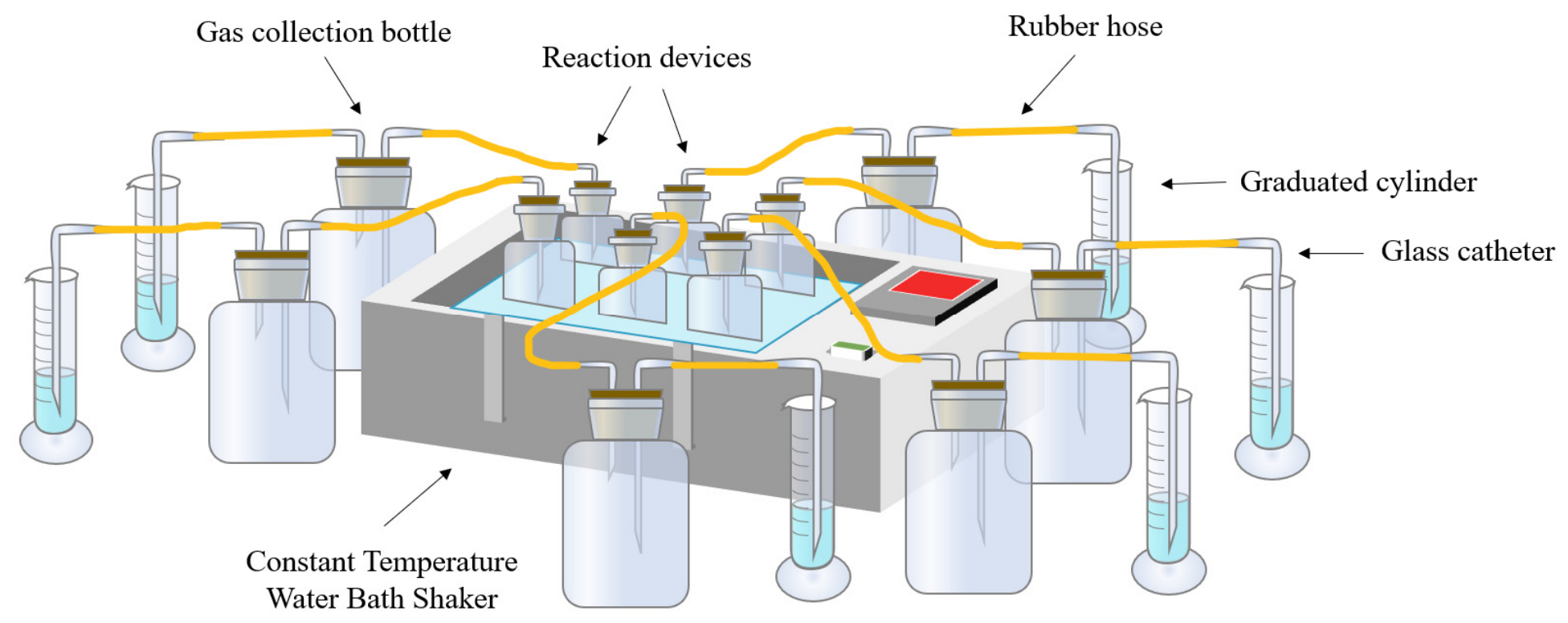
The anaerobic fermentation experimental setup is shown in Figure 1. A 250 mL screw-cap glass bottle (actual working volume 200 mL) was used as the anaerobic digestion reactor for methane production. The experiment was set up with an experimental group and a control group (CK), with three replicates for each group. The experimental group consisted of 100 g of wastewater solids and biochar. According to different pyrolysis temperatures, the biochar was designated as BC300, BC400, and BC500. Each biochar was set at three addition levels, 1.5 g, 3.0 g, and 4.5 g, corresponding to 5%, 10%, and 15% of the system’s dry matter, respectively, and labeled as BC300-5, BC300-10, BC300-15, BC400-5, BC400-10, BC400-15, BC500-5, BC500-10, and BC500-15. The control group only contained wastewater solids. The pH value of biochar was measured using a Lab Star PH111 pH meter. Total phosphorus (TP) was determined using ICP OES; total carbon (TC) and total nitrogen (TN) were directly measured using an elemental analyzer; total organic carbon (TOC) was calculated by subtracting the inorganic carbon content from the total carbon. Electrical conductivity was measured using a four-point probe resistivity meter. Ash content was determined using the ignition method. Specific surface area was measured using the static nitrogen adsorption method, and total pore volume was determined based on the static nitrogen adsorption–desorption isotherms. The parameter testing methods for aquaculture effluent particulate matter and its mixture with biochar are as follows: the content of volatile fatty acids (VFAs) was determined using gas chromatography, ammonia nitrogen concentration was calculated using the external standard method, and chemical oxygen demand (COD) was measured using the rapid digestion method in the potassium dichromate method. The basic physicochemical properties of the seawater aquaculture effluent particulate matter were finally measured as follows: pH 7.64, ammonia nitrogen (NH4+-N) content 3.39 mg/L, VFA content 298.96 mg/L, and COD 914.52 mg/L. In this study, when the wastewater particulates and biochar were mixed and placed in the reactors, the remaining space was filled with distilled water. The final total solid volume fraction in the reactor was about 25% of the container volume.
Prior to the experiment, all containers were purged with nitrogen gas for 10 min to maintain anaerobic conditions, after which the reactors were placed in a constant-temperature incubator at 37 °C with a shaking frequency of 90 rpm. A 0.9% sodium hydroxide solution was placed in the middle wide-mouth bottle, and the volume of water displaced in the graduated cylinder each day was recorded as the daily biogas production. The cumulative methane production was calculated by summing up the daily methane production volumes, the termination criterion of fermentation was defined as the cumulative biogas production curve tending to be parallel, along with the 6 h biogas production decreasing significantly to approach zero, and the relevant gas production data were collected for subsequent analysis. The particulate matter in seawater aquaculture effluent belongs to easily degradable aquaculture waste, with fast hydrolysis and methane production rates, completing the main gas production within 60 h; therefore, the fermentation cycle is set to 60 h. Hu et al. [27] found that performing a four-day mesophilic fermentation at 35 °C and initial alkaline pH can increase the total VFA yield by 252.5%. At the same time, the relative abundance of acid-producing bacteria increased, and the number of methanogenic archaea decreased. This demonstrates that a sufficient digestion duration allows easily degradable waste to complete degradation. This study used the sodium hydroxide absorption method to determine the content of gas components. This method is simple to operate and relatively low-cost, but it still has certain limitations. It can only quantitatively absorb carbon dioxide and cannot accurately distinguish other trace gas components. Additionally, during long-term gas collection, gas dissolution losses are likely to occur, limiting the measurement accuracy of low-concentration methane and resulting in certain errors in the quantitative analysis of trace gases.

2.3. DNA Extraction, Library Construction, and Metagenomic Sequencing

Total genomic DNA was extracted from filtrate samples using the Mag-Bind® Soil DNA Kit (Omega Bio-tek, Norcross, GA, USA) according to manufacturer’s instructions. Concentration and purity of extracted DNA was determined with TBS-380 and NanoDrop2000, respectively. DNA extract quality was checked on 1% agarose gel.
The DNA extract was fragmented to an average size of about 350 bp using Covaris M220 (Gene Company Limited, Hong Kong, China) for paired-end library construction. The paired-end library was constructed using NEXTFLEX Rapid DNA-Seq (Bioo Scientific, Austin, TX, USA). Adapters containing the full complement of sequencing primer hybridization sites were ligated to the blunt end of fragments. Paired-end sequencing was performed on Illumina NovaSeq (Illumina Inc., San Diego, CA, USA) at Majorbio Bio-Pharm Technology Co., Ltd. (Shanghai, China) using NovaSeq 6000 S4 Reagent Kit v1.5 (300 cycles) according to the manufacturer’s instructions (www.illumina.com). The sequence data associated with this project have been deposited in the National Center for Biotechnology Information (NCBI) under accession number PRJNA1428770.

2.4. Species and Functional Annotation and Species Contribution Analysis

The amino acid sequences of the non-redundant gene set were compared with the NR database using Diamond (https://github.com/bbuchfink/diamond, version 0.8.35, accessed on 22 November 2025). (e-value ≤ 10−5). Species annotation was obtained through the taxonomic information database corresponding to the NR database, and the abundance of each species was calculated by summing the gene abundances corresponding to that species. Comparison with the CARD database (e-value ≤ 10−5) provided information on antibiotic resistance functional annotation for the genes, and the abundance of these antibiotic resistance functions was calculated by summing the abundances of the corresponding genes. Since the size and sequencing depth of the samples vary to some extent, the RPKM (Reads Per Kilobase Per Million Mapped) method was used to calculate gene abundance or relative abundance in species and functional annotation and species contribution analyses to avoid statistical errors caused by directly using the number of reads.

2.5. Statistical Analyses

The research data are the mean of three experiments. Data analysis was conducted using IBM SPSS Statistics (version 26.0) at a 95% confidence level (p < 0.05). Differences between groups were evaluated using Student’s t-test. Data visualization was performed using Origin (version 2025) and GraphPad Prism (version 9.5).

3. Results and Discussion

3.1. Characterization and Structural Characteristics of Biochar Prepared at Different Temperatures

As shown in Table 1, with the increase in preparation temperature, the pH value increased gradually, the contents of total carbon (TC) and total organic carbon (TOC) showed a gradual upward trend, and the TOC content became increasingly close to the TC content. Meanwhile, the total nitrogen (TN) content decreased slightly, the total phosphorus (TP) content increased slightly, the ash content increased significantly, and both the specific surface area and total pore volume showed an increasing trend.
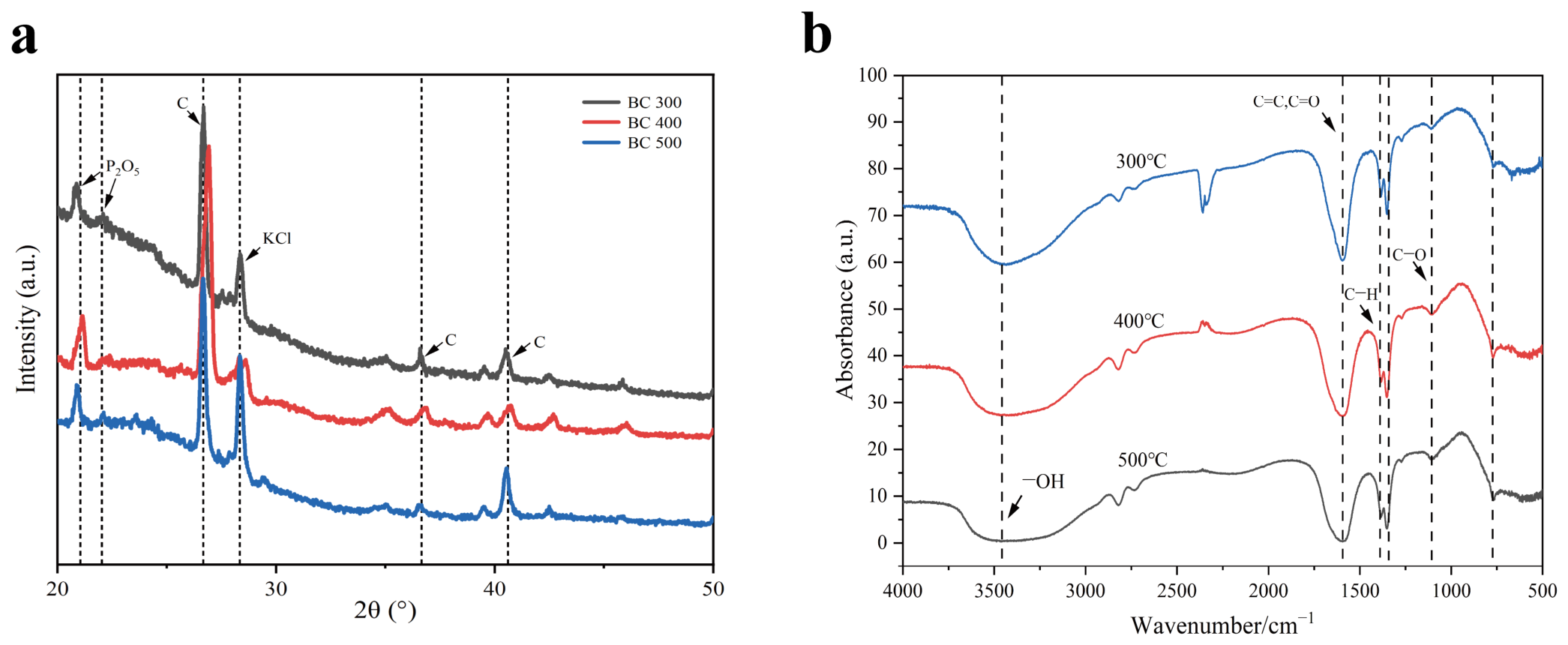
The XRD and FT-IR spectra of biochar are presented in Figure 2a,b, respectively. Temperature is a crucial factor affecting biomass-derived products, and investigating the structural changes in biomass after pyrolysis at different temperatures is conducive to understanding the biomass pyrolysis mechanism [28]. As can be seen from Figure 2a, the raw corn straw exhibits diffraction peaks of pentosan-containing hemicellulose at 20–26°. After high-temperature carbonization, hemicellulose decomposes, and its diffraction peaks weaken, while the relatively broad and gentle diffraction peak of graphite microcrystals corresponding to the d002 plane gradually becomes prominent. Cellulose is converted into microcrystalline carbon fibers after carbonization, with no significant structural changes, resulting in only slight variations in its diffraction peaks. The relatively sharp peaks appearing after 25° and 30° are all attributed to carbonates, indicating that all samples contain CaCO3. However, only the sample prepared at 500 °C shows the CaCO3 diffraction peak after 42°, while the samples prepared at other temperatures do not. Based on this, it is inferred that other salts are precipitated in the 500 °C biochar sample. It is evident that the CaCO3 content in corn straw biochar increases with the rise in pyrolysis temperature.
As shown in Figure 2b, the absorption peaks at the wavenumbers of 3416–3405, 3000–2800 and 2300–1900 cm−1 are attributed to the stretching vibrations of hydroxyl O–H [29], aliphatic C–H [30], as well as hydroxyl and carbonyl functional groups, respectively. Wang et al. [31] reported that biochar with redox-active organic functional groups (e.g., O–H, C=O and C–H) exhibiting high absorption intensities usually possesses excellent shuttling or electron mediation capabilities. The absorption peak in the wavenumber range of 1400–1240 cm−1 is caused by the presence of ether linkages (C–O–C) in cellulose [32]. The absorption peaks at the wavenumbers of 1612 and 1260–1100 cm−1 are characteristic peaks of quinone C=C or C=O [33], which are associated with the presence of phenazines [34]. In addition, the absorption peak in the wavenumber range of 860–680 cm−1 arises from the stretching vibrations of aromatic C–H bonds [35].

3.2. Morphological Characteristics of Biochar Prepared at Different Temperatures

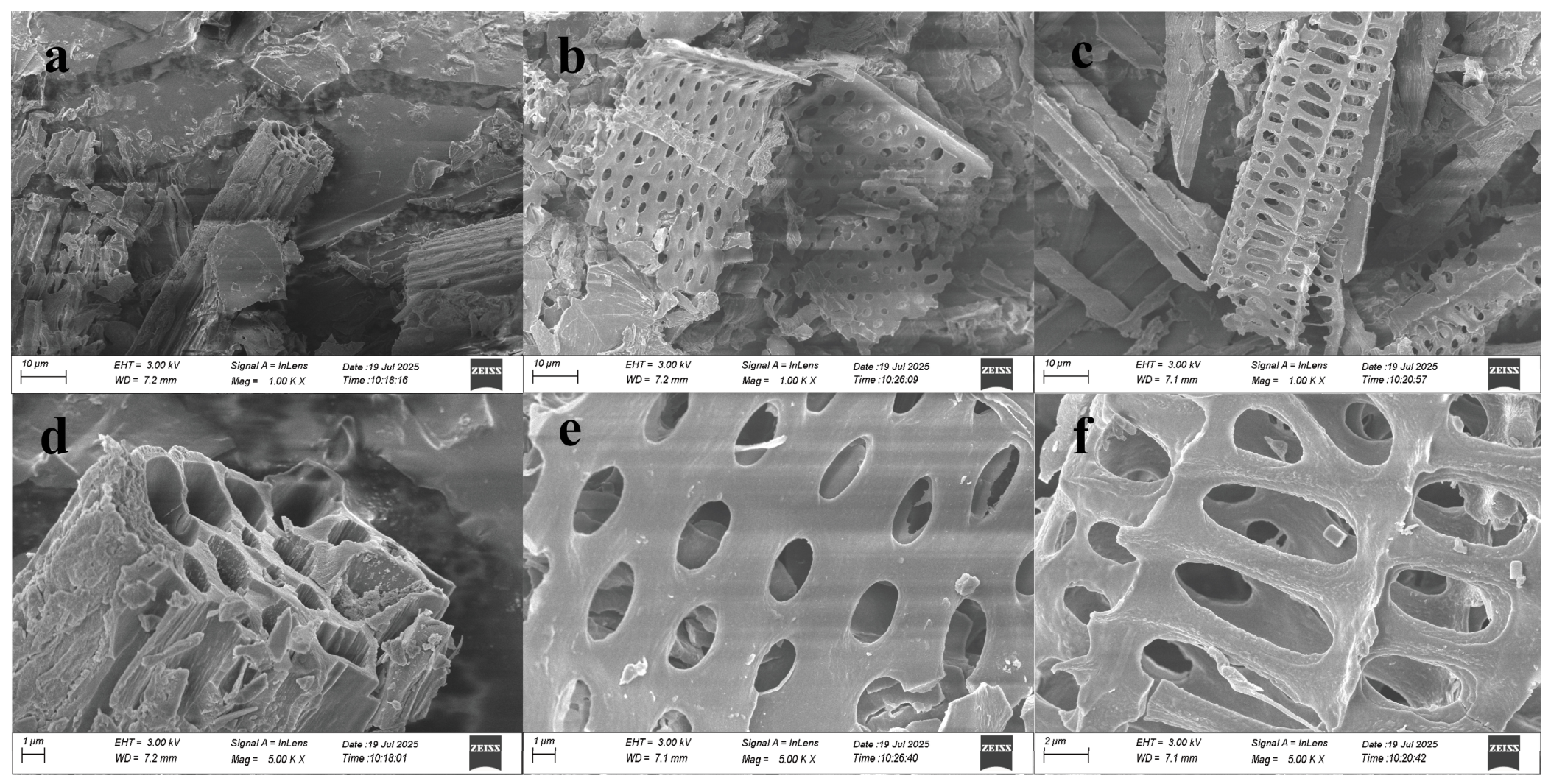
Shown in Figure 3a–c are the SEM images of BC300, BC400, and BC500, respectively. Due to the escape of volatile gases during the carbonization process, the biochar is composed of irregularly shaped particles with a highly porous structure and rough surface [36]. The surface of BC300 is relatively smooth, with a small number of cracks and incompletely pyrolyzed fibrous structures (Figure 3a). Pore development is not obvious, with macropores dominating, which may be attributed to the insufficient decomposition of organic matter caused by low-temperature pyrolysis. The surface roughness of BC400 increases, with honeycomb-like pores and partial mesopores observed (Figure 3b). The pyrolysis of cellulose and hemicellulose results in the formation of more pores, although incompletely carbonized particles are still visible in some areas. The pore structure of BC500 is significantly well developed, presenting a rich network of micropores and mesopores (Figure 3c). A high temperature promotes the sufficient pyrolysis of organic matter, inducing the shrinkage and recombination of the carbon skeleton, thus forming a more uniform porous structure. In summary, with the increase in pyrolysis temperature, cellulose, hemicellulose, and lignin in corn straw biochar are decomposed and carbonized. As the supporting matrix is destroyed, the cell walls begin to decompose, leading to the collapse of the biochar’s biological structure [30] and the subsequent formation of numerous micropores, with the pore size of some micropores gradually increasing. Meanwhile, some fine particles accumulate on the biochar surface, forming abundant functional groups.
Shown in Figure 3d–f are the EDS elemental content pie charts of BC300, BC400, and BC500, respectively. The EDS results of BC300 indicate a relatively low carbon (C) content (approximately 71.6 wt%) and a high oxygen (O) content (approximately 4 wt%), along with the presence of mineral elements such as K and P (Figure 3d). For BC400, the C content increases to 86.1 wt%, the O content is 12.6 wt%, and the proportion of ash-forming elements including K and P decreases (Figure 3e). Mesophilic pyrolysis facilitates the release of volatile matter, resulting in the relative enrichment of mineral components. The BC500 sample exhibits the highest C content (approximately 92.4 wt%), while the O content decreases to 4.2 wt%, and the ash-forming elements (e.g., K and P) are more enriched compared with BC400 (Figure 3f). A high temperature promotes the high-degree graphitization of organic carbon, and the relative proportion of ash increases due to the volatilization of organic matter. A high degree of carbonization usually leads to relatively high electrical conductivity [37,38]. The SEM analysis reveals that when transitioning from BC300 to BC500, the pore structure evolves from a macropore-dominated pattern to a hybrid micro-mesopore structure, with the Brunauer–Emmett–Teller specific surface area (SBET) and total pore volume (Vtotal) increasing significantly, which is consistent with the parameters measured previously. In addition, the EDS elemental pie charts demonstrate that with the increase in pyrolysis temperature, the C content increases, the O content increases initially and then decreases, and the ash-forming elements (especially K and P) become enriched as a result of organic matter decomposition.
The trend of property changes described above with increasing pyrolysis temperature is completely consistent with existing literature reports. Previous studies have confirmed that during the pyrolysis of agricultural wastes such as corn straw, as the temperature rises, volatile substances are continuously removed and organic components gradually undergo aromatization and graphitization, resulting in an increase in pH, higher carbon content, lower oxygen and hydrogen content, and a significant increase in specific surface area and pore volume [22,25].

3.3. Effects of Different Biochar on Daily Methane Production and Cumulative Gas Production in Anaerobic Dry Fermentation

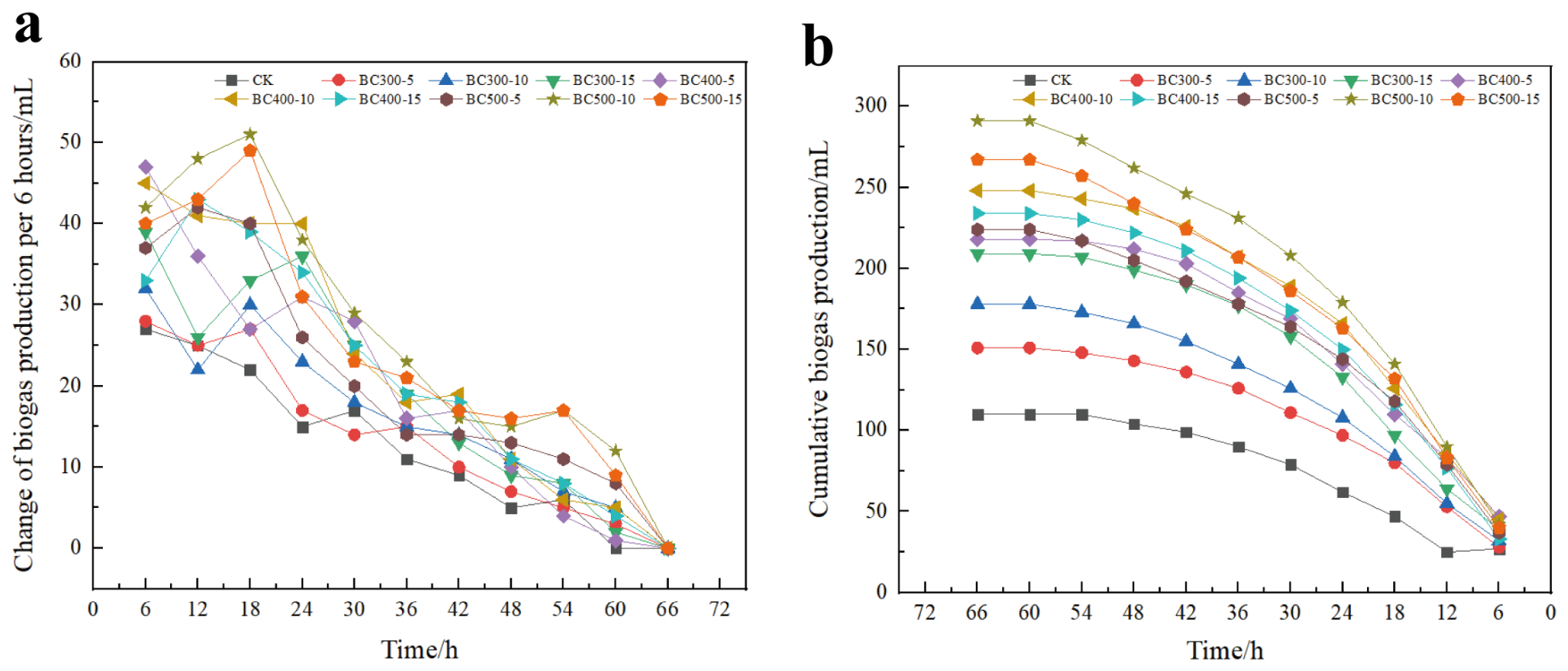
The 6 h biogas production and cumulative biogas production of shrimp anaerobic digestion supplemented with biochar prepared at different temperatures and ratios are presented in Figure 4a,b, respectively. As shown in Figure 4a, the 6 h biogas production of all experimental groups was generally higher than that of the control group, and the biogas production of the control group approached zero at the 60th hour. These results indicate that biochar addition can enhance biogas production and extend the gas-producing period. Among all groups, the BC500-10 group achieved the maximum 6 h biogas production of 51 mL at 12–18 h, which was 55.86% higher than the maximum biogas production of 22 mL in the control group. Two gas production peaks were observed in the two ratios of the BC500 groups, which might be attributed to the dual functions of BC500 biochar, namely “rapid adsorption” and “sustained conductivity”, which stimulated different methanogenic microbial communities in a phased and differentiated manner [39]. The first gas production peak might result from the degradation of biodegradable substances by methanogens during biogas production [40]. In contrast, BC300 and BC400 biochar typically only possess the “adsorption” function, exerting a single and concentrated stimulating effect. As more intuitively shown in Figure 4b, the BC500-10 experimental group was significantly superior to other experimental groups, with its cumulative biogas production being 62.20% higher than that of the control group.
In summary, the cultures supplemented with biochar exhibited a shorter lag phase and higher methane yield compared to the control group. Based on previous studies on the effects of biochar on methane production in anaerobic digestion, biochar, as an electrically conductive material, stimulates methane generation by facilitating direct interspecies electron transfer (DIET) between bacteria and methanogens [29,41]. DIET has been identified as a faster and more specific alternative for interspecies electron transfer between bacteria and methanogens. Therefore, it is hypothesized that the enhanced DIET can improve microbial activity and accelerate methane production efficiency in biochar-amended cultures. Another potential mechanism underlying the efficient methane production promoted by biochar may be the microbial colonization and biofilm development induced by the high specific surface area and porous structure of biochar, as reported in recent studies [42]. Under mesophilic conditions, as the biochar concentration increased from 5% to 10%, the cumulative methane production and yield gradually increased from 6275 ± 112 mL per day to 9564 ± 204 mL per day, respectively. With a further increase in biochar concentration to 15%, the cumulative methane production and yield rose to 8522 ± 177 mL per day, both of which were higher than those of the control group.
An analysis of the figures reveals that the optimal biogas production was achieved when biochar pyrolyzed at 500 °C was added to the fermentation system at a ratio of 10%. However, when the biochar dosage was increased to 15%, biogas production did not increase but instead decreased. This indicates that an appropriate amount of biochar is conducive to methane production and microbial growth, whereas excessive biochar exerts an adverse effect on the anaerobic digestion process. This phenomenon might be attributed to the fact that excessive biochar application can inhibit mass transfer efficiency, cause severe water loss, and interfere with the biodegradation of organic waste, thereby reducing digestion efficiency and limiting methane production [43].

3.4. Changes in Physicochemical Indices and Morphological Characteristics of the Fermentation System Before and After Anaerobic Digestion

As shown in Table 2, anaerobic digestion led to a decrease in the pH value of the fermentation system regardless of biochar addition, but the incorporation of biochar could effectively mitigate the extent of pH reduction, thereby facilitating the progression of fermentation. pH is a crucial parameter in the monitoring and control of anaerobic digestion, as low pH values exert an inhibitory effect on the activity of anaerobic microorganisms. Anaerobic digesters operate optimally within a pH range of 6.6–7.8, and methanogenic activity is significantly inhibited when the pH drops below 6.2. In addition, pH may induce multiple side effects. It regulates the proportion of undissociated volatile fatty acids (VFAs), which are considered to freely permeate microbial cell membranes [44]. After penetrating the membranes, these fatty acids dissociate intracellularly, thereby lowering the cytoplasmic pH and interfering with bacterial metabolism. Therefore, the occurrence of low pH is a consequence of a severe imbalance in anaerobic biomass [45].
Volatile fatty acids (VFAs), on the other hand, are intermediate or end products generated during the hydrolysis and acidification of organic matter. They mainly include acetic acid, propionic acid, butyric acid, and other fatty acids with fewer than five carbon atoms [46]. The VFAs produced during anaerobic digestion are ultimately converted into methane and carbon dioxide by methanogens. VFA concentration is an important parameter reflecting the degradation status of organic matter during anaerobic fermentation. After 48 h of fermentation, acidogenic bacteria become dominant, and the VFA concentration increases significantly compared with that before fermentation. If the VFA concentration continues to rise to an abnormal level, methanogens will be inhibited and the anaerobic digestion system will be at risk of collapse [47]. The addition of biochar, however, can significantly inhibit the continuous increase in VFA concentration, maintain the fermentation environment within a pH range suitable for anaerobic digestion, and thus promote methane production and extend the gas-producing period.
In the systems supplemented with biochar, the ammonia nitrogen concentration increased due to the mineralization of organic nitrogen, but the increase rate was much gentler, and the peak concentration was lower than that of the control group. Biochar is negatively charged on the surface and rich in functional groups, enabling it to adsorb ammonium ions (NH4+) via electrostatic attraction and ion exchange [48]. This is equivalent to an ammonia nitrogen buffer pool, which reduces the concentration of free ammonia nitrogen in the fermentation broth. Notably, free ammonia is the primary toxic component. Through adsorption, biochar effectively decreased the concentration of free ammonia, alleviated the toxicity to methanogens, and allowed the system to operate stably under higher total nitrogen loads. By mitigating acute toxicity, biochar provided a milder environment for microorganisms (especially methanogens), giving them time to gradually adapt to relatively high ammonia nitrogen levels and thus improving the stress resistance and stability of the anaerobic digestion system.
The reduction extent of chemical oxygen demand (COD) in the biochar-added groups was significantly higher than that in the control group. First, the large specific surface area of biochar provides an ideal habitat for hydrolytic and acidogenic bacteria, which significantly increases microbial community density and activity, and accelerates the decomposition of macromolecular organic matter into small-molecular organic substances (e.g., VFAs). Second, the addition of biochar facilitates direct interspecies electron transfer (DIET), which is the most crucial mechanism [49]. The electrical conductivity of biochar allows it to act as an electron conductor, establishing a DIET pathway between syntrophic oxidizing bacteria and methanogenic archaea. Compared with the traditional slow indirect electron transfer (which requires H2 as the electron carrier), DIET greatly accelerates the consumption of small-molecular organic matter such as VFAs and alcohols, thereby significantly enhancing the COD removal rate and methane yield.
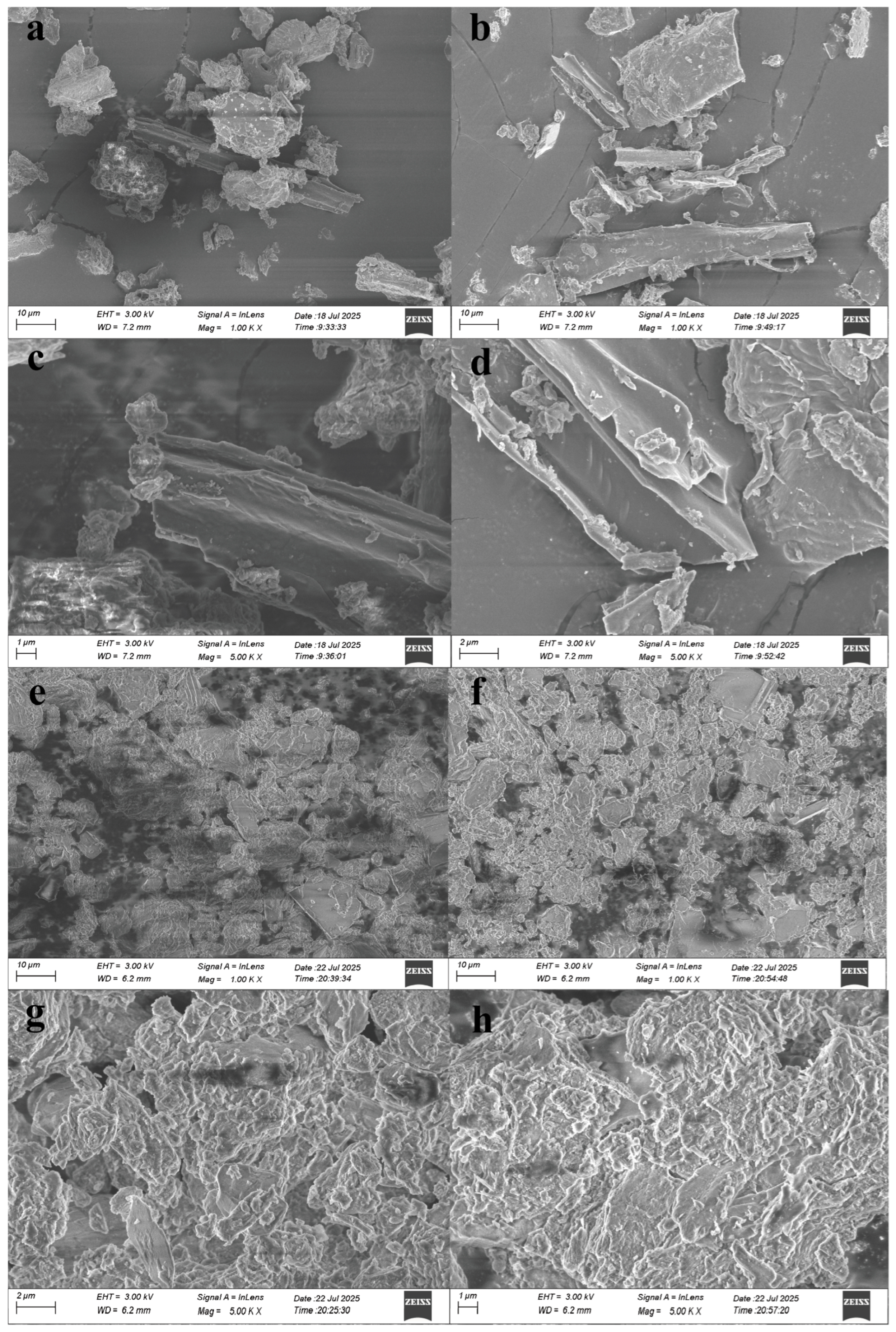
As shown in Figure 5, after anaerobic digestion, the porosity and roughness of the biochar material decreased significantly, with numerous cocci and microorganisms adhering to and accumulating on its surface and around the pores. Owing to its porous structure and large specific surface area, biochar can provide a superior habitat for microbial growth [48]. Before anaerobic fermentation, the specific surface area and total pore volume of the mixture of biochar and pond filtrate were 57.7016 m2/g and 0.0396 cm3/g, respectively. After being added to the anaerobic fermentation system, the specific surface area and total pore volume decreased to 10.6685 m2/g and 0.0187 cm3/g, respectively, while the average pore size increased to 7.0057 nm. The reduction in specific surface area and total pore volume coupled with the increase in average pore size might be attributed to the blockage of biochar pores by adsorbed substances, including microorganisms as well as small particles or colloids in the anaerobic fermentation system. Therefore, it can be concluded that biochar exhibits an excellent adsorption performance during anaerobic digestion, and the pores of biochar are likely to serve as shelters for microorganisms, which affects the microbial abundance in the anaerobic digestion system [50,51] and thereby influences the anaerobic digestion efficiency.

3.5. Microbial Sequencing and Analysis

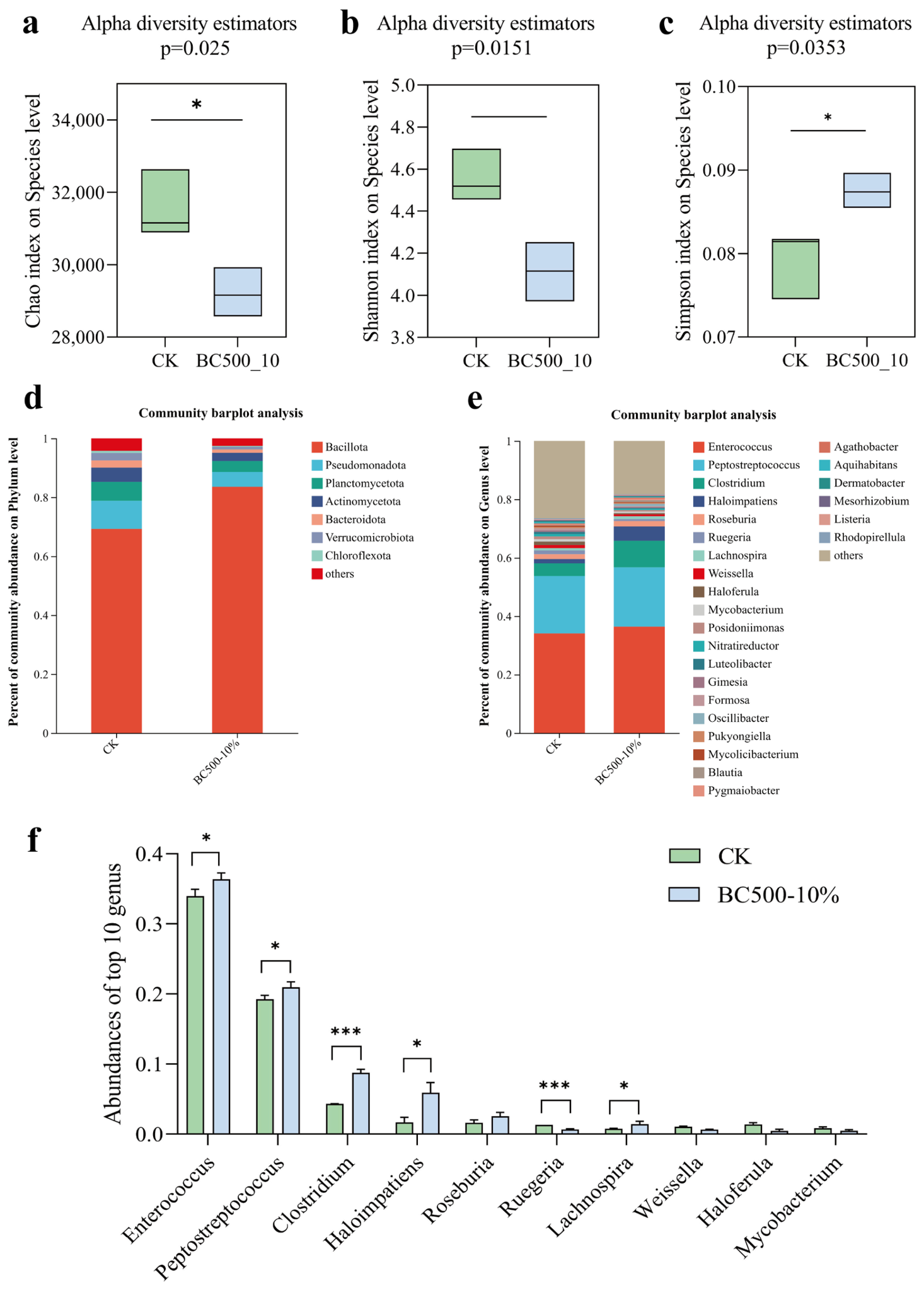
The primary function of the bacterial community is to convert wastewater particulates into intermediate metabolites (VFAs and alcohols), which are subsequently degraded into methane by methanogens. Therefore, the bacterial community plays a vital role in improving the performance and stability of anaerobic digestion. To explore the effects of biochar addition on the microbial community of wastewater particulates after fermentation, we collected the wastewater particulates for metagenomic sequencing [52]. The addition of biochar significantly decreased the Shannon and Chao indices (p < 0.05) while increasing the Simpson index (p < 0.05) (Figure 6a–c). In the biochar-supplemented experimental groups, the relative abundances of the microbial community changed at both the phylum and genus levels (Figure 6d,e).
Beyond diversity, biochar addition significantly reshaped relative microbial abundances at the phylum and genus levels, driving community structure toward greater adaptation to anaerobic fermentation for methane production (Figure 6d,e). At the phylum level, Firmicutes, Pseudomonadota, and Bacteroidota were core dominant phyla shared between the control and experimental groups, but their abundances showed marked differences after biochar addition. Specifically, biochar addition significantly increased the relative abundance of Firmicutes from 69.27% in the control group to 83.57% in the experimental group.
Bacterial groups such as Firmicutes primarily perform substrate decomposition metabolism, efficiently breaking down complex organic matter and macromolecules in the system, hydrolyzing and acidifying them, and converting them into small-molecule intermediates such as volatile fatty acids, hydrogen, and carbon dioxide. This provides the material basis for the subsequent methane production process, making them important decomposer functional microbial populations in the fermentation system. Methanogenic archaea, on the other hand, are terminal functional microorganisms that mainly utilize substrates like acetate for methanogenic metabolism, converting the intermediates produced in the early stage into methane and completing the entire methane production pathway. The two have clearly defined roles and closely linked metabolisms: bacterial groups are responsible for the early-stage substrate acidification and decomposition, while methanogenic archaea complete the terminal methane synthesis, jointly driving the stable progression of the anaerobic methanogenesis process.
Conversely, the relative abundances of Pseudomonadota and Bacteroidota decreased from 9.55% and 2.45% in the control group to 5.01% and 1.15% in the experimental group, respectively. As a key functional phylum in thermophilic anaerobic digestion systems, the increased abundance of the Ascomycota phylum holds significant functional implications. This phylum contains numerous functional strains capable of producing extracellular enzymes (such as cellulase, lipase, and protease). These enzymes efficiently degrade various macromolecular organic compounds in wastewater particulates, playing pivotal roles in cellulose saccharification, lipid hydrolysis, protein degradation, and the catabolism of sugars and amino acids. This process provides ample intermediate substrates for subsequent methanogenesis [53]. Although the Bacteroidetes phylum also possesses certain substrate degradation capabilities, contributing to the production of VFAs such as acetate and butyrate [54], and is typically associated with polysaccharide decomposition and fermentation processes [55,56], a moderate reduction in its abundance may mitigate excessive VFA accumulation, thereby preventing the inhibition of methanogens and promoting system stability.
Furthermore, differences in microbial community composition became more pronounced at the genus level. Compared to the control group, Enterococcus, Peptostreptococcus, and Clostridium were the three most dominant genera shared between the control and experimental groups. This core bacterial composition pattern aligns with findings from previous mesophilic anaerobic digestion studies of food waste and straw, as shown by [57] in their previous study on the mesophilic anaerobic digestion of food waste and wheat straw. Their findings confirmed the dominance of Bacteroidetes and Pseudomonadales in anaerobic digestion of such substrates, suggesting that different anaerobic digestion systems may share common core functional microbial communities. Notably, among the top 10 most abundant genera, biochar addition significantly promoted the abundance of Clostridium, with its relative abundance increasing significantly from 4.34% in the control group to 9.09% in the experimental group (p < 0.05). As a representative functional genus within the Firmicutes phylum, most Clostridium species possess potent hydrolytic and acidifying capabilities, enabling the efficient degradation of diverse organic substrates and the production of high-quality methane precursors like acetate. Its increased abundance undoubtedly enhances the system’s substrate degradation and intermediate product supply capacity [58]. Additionally, the abundances of Enterococcus and Peptostreptococcus also increased to varying degrees (Figure 6f). These two genera similarly possess acidification capabilities, participating in VFA production to further supplement methanogenic substrates and collectively enhance anaerobic digestion efficiency.

3.6. Correlation Analysis Between ARG Subtype Abundances and Microbial Species Abundances

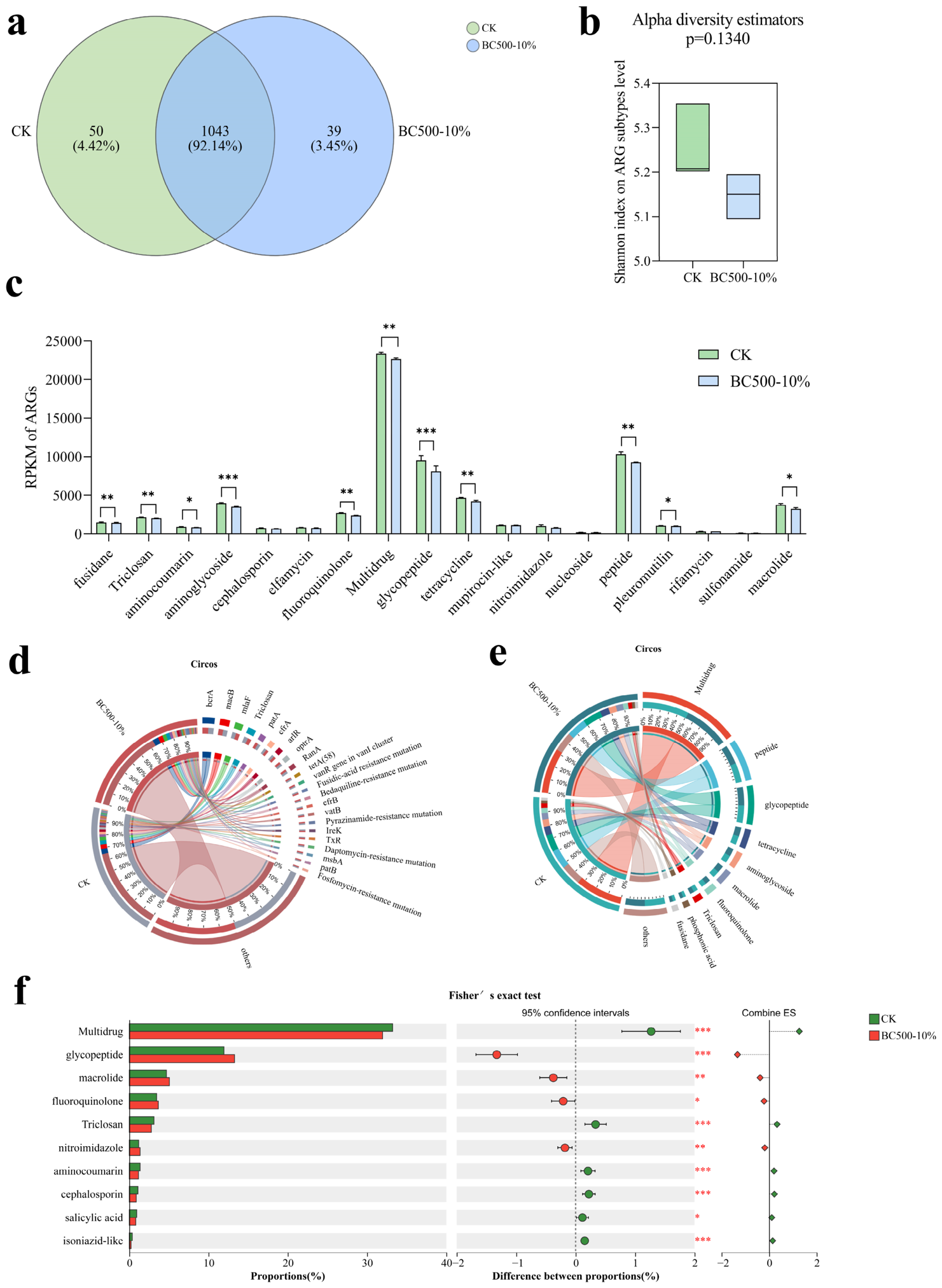
To further explore the effects of biochar addition on anaerobic digestion, metagenomic analysis was performed to determine the abundances of antibiotic resistance genes (ARGs) in the solid waste after anaerobic digestion. The Venn diagram showed that a total of 1132 ARGs were detected in solid waste post-anaerobic digestion. A total of 1043 ARGs were shared across all samples, with 50 unique ARGs identified in the control group and 39 in the experimental group (Figure 7a,b). However, biochar addition did not exert a significant effect on the α-diversity of ARGs in the solid waste after anaerobic digestion (Figure 7c).
The top 11 most abundant ARG categories in solid waste were multidrug resistance genes, followed by peptide, glycopeptide, tetracycline, aminoglycoside, macrolide, fluoroquinolone, triclosan, fusidic acid, aminocoumarin and pleuromutilin resistance genes (Figure 7d). Sulfonamides, quinolones, β-lactams and macrolides are the most commonly used antibiotics in aquaculture, thus explaining the high detection frequency of these corresponding resistance genes in the filtrate.
Moreover, biochar addition significantly reduced the abundances of the top 11 most abundant ARG categories (p < 0.05). The most pronounced reduction was observed for glycopeptide resistance genes, with a removal efficiency of 15.02%, followed by macrolide and aminoglycoside resistance genes, with removal efficiencies of 13.92% and 10.27%, respectively. The findings of biochar-mediated reduction in ARG abundances in this study were consistent with the conclusions of relevant previous studies. Zhang et al. [59] also detected a significant decrease in tetracycline resistance genes in an anaerobic digestion system, with an average removal efficiency of up to 85% after anaerobic digestion treatment, which verified the attenuation effect of environmental regulation measures on ARGs. In addition, a compositional analysis of ARGs in all samples revealed that multidrug resistance genes were the dominant category, with their relative abundance stably ranging from 32% to 33% in each sample. Peptide resistance genes (14–15%) were the second most abundant, followed by glycopeptide (12–13%), tetracycline (6–7%) and aminoglycoside resistance genes (5–6%) (Figure 7e). This compositional characteristic reflected the distribution pattern of dominant ARG categories in the aquaculture environment.
Further studies have elucidated the intrinsic mechanism underlying the variations in ARG abundances. Xiang et al. [60] demonstrated that anaerobic digestion treatment led to an average 63% reduction in β-lactam resistance genes, and their in-depth analysis confirmed that this reduction was mainly attributed to shifts in the bacterial community structure. As the primary hosts of ARGs, bacteria directly affect the carrying and transmission efficiency of resistance genes through changes in their community composition, which provides an important theoretical basis for elucidating the regulatory pathways of biochar and other measures in reducing ARGs.
In terms of ARG subtypes, bcrA, macB and mlaF were the top three most abundant ARGs, which encode resistance to peptides, macrolides and multidrugs, respectively (Figure 7f). Biochar addition significantly decreased the abundances of macrolide and aminocoumarin ARG subtypes (p < 0.05), such as Irek and novA. In contrast, biochar addition significantly increased the abundances of vancomycin ARG subtypes (p < 0.05), including vanR1 and vanRF. However, the abundance dynamics of sul1, sul2, ermB, ermF, tetG, tetW and tetX were irregular, with their abundances showing little change or even an increase at the end of anaerobic digestion. These resistance genes belong to sulfonamide, macrolide and tetracycline resistance gene categories. The reason why their abundances did not decrease significantly after anaerobic digestion might be that their host bacteria have a broad host range or are more prone to forming spores to resist environmental stress. Under the protection of the porous structure of biochar, these factors collectively lead to the irregular variation in the abundances of these ARGs [61].

3.7. Correlation Analysis Between ARG Subtype Abundance and Microbial Taxon Abundance

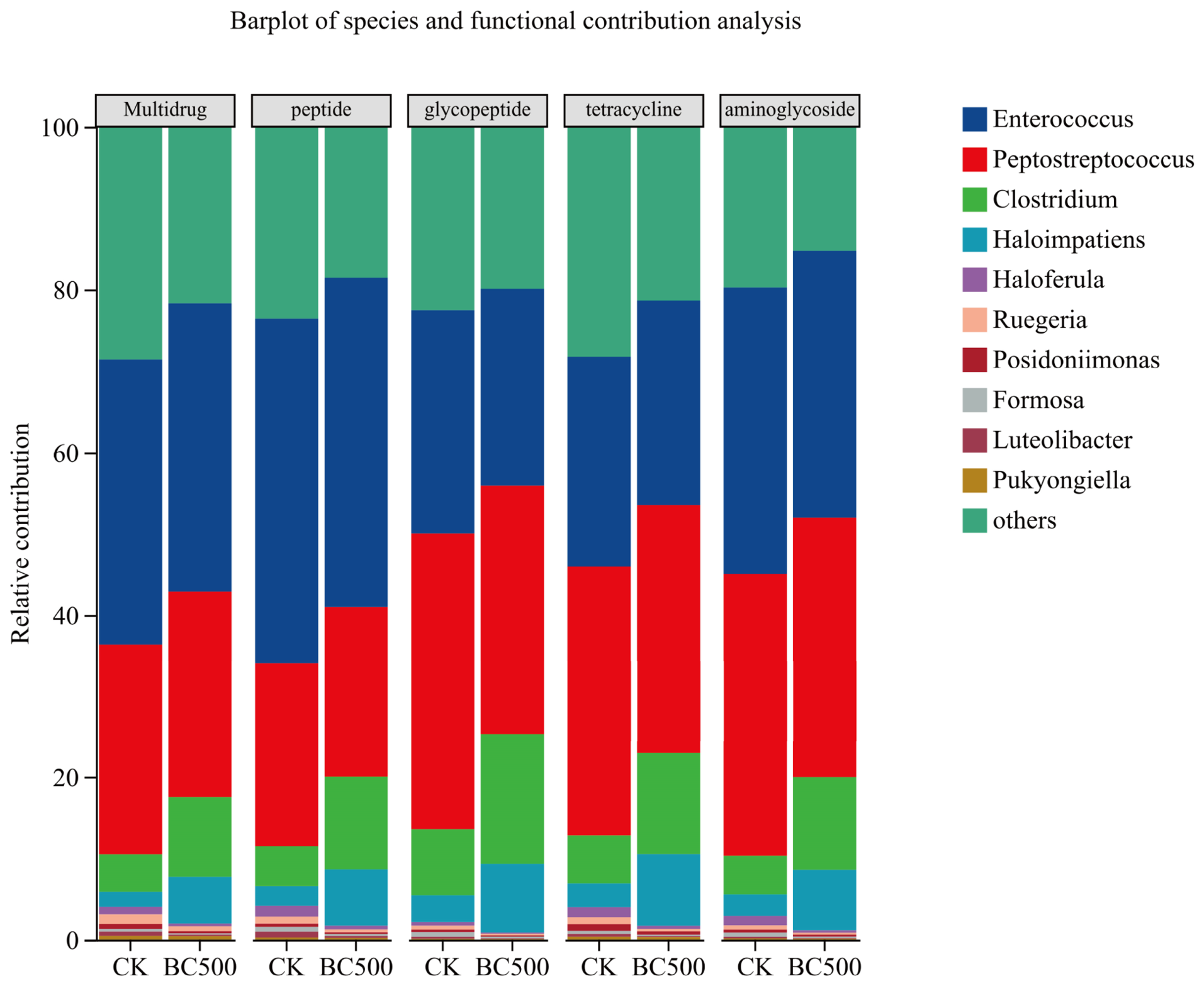
Bacterial communities are the primary hosts of antibiotic resistance genes (ARGs), and shifts in bacterial communities will directly affect the abundances of ARGs [62]. In addition, studies have shown that marine organisms are important ARG carriers. Even in the absence of antibiotics, sulfonamide and chloramphenicol resistance genes (e.g., floR, sul1 and sul2) are still present in aquatic animals [63]. The relationships between the top 10 most abundant genera and the top five most abundant ARG subtypes (i.e., multidrug, peptide, glycopeptide, tetracycline and aminoglycoside resistance genes) in the intestinal layer are presented in Figure 8. Among all samples, Enterococcus, Streptococcus, and Clostridium have a higher contribution to dominant ARGs. Firmicutes are not only the main hosts of ARGs but also key functional microbes for methane production, and their abundance directly affects methane production efficiency. Biochar can regulate the microbial community, reduce the abundance of antibiotic-resistant hosts, and promote electron transfer, achieving a synergistic mechanism of ARG reduction and methane production enhancement. Across all simples Enterococcus, Peptostreptococcus, Clostridium, Halopiger and Halocella showed higher contributions to the dominant ARGs, and these genera all belong to the phyla Firmicutes and Bacteroidota. After biochar treatment, the contributions of Clostridium and Halopiger increased, whereas the contributions of Enterococcus, Peptostreptococcus and Halocella decreased significantly. The dominant ARG types were multidrug, peptide and glycopeptide resistance genes, while the potential ARG hosts mainly belonged to Firmicutes and Bacteroidota. These results support the findings of the ARG contribution analysis (Figure 8), and the present study reveals the potential hosts of the major ARG subtypes.
From this, it can be concluded that the Firmicutes phylum is not only the core functional microbial group for anaerobic fermentation and methane production in this system, but also the main potential host of antibiotic resistance genes (ARGs) in particulate matter from marine aquaculture wastewater. Biochar can effectively enhance organic matter degradation and electron transfer processes by enriching Clostridium, thereby increasing methane yield; at the same time, it can reduce the relative abundance of ARG host bacteria such as Enterococcus and Streptococcus, achieving a synergistic effect of improved gas production and decreased ARG abundance. Correlation analysis based on metagenomics further indicates that the succession of microbial community structure is the shared core driving both changes in methane production performance and the reduction in ARGs abundance. Biochar, by directionally regulating the microbial community structure, simultaneously strengthens anaerobic fermentation function and controls environmental risks.

3.8. The Mechanism of Biochar Enhancing Methane Production in Anaerobic Fermentation Systems

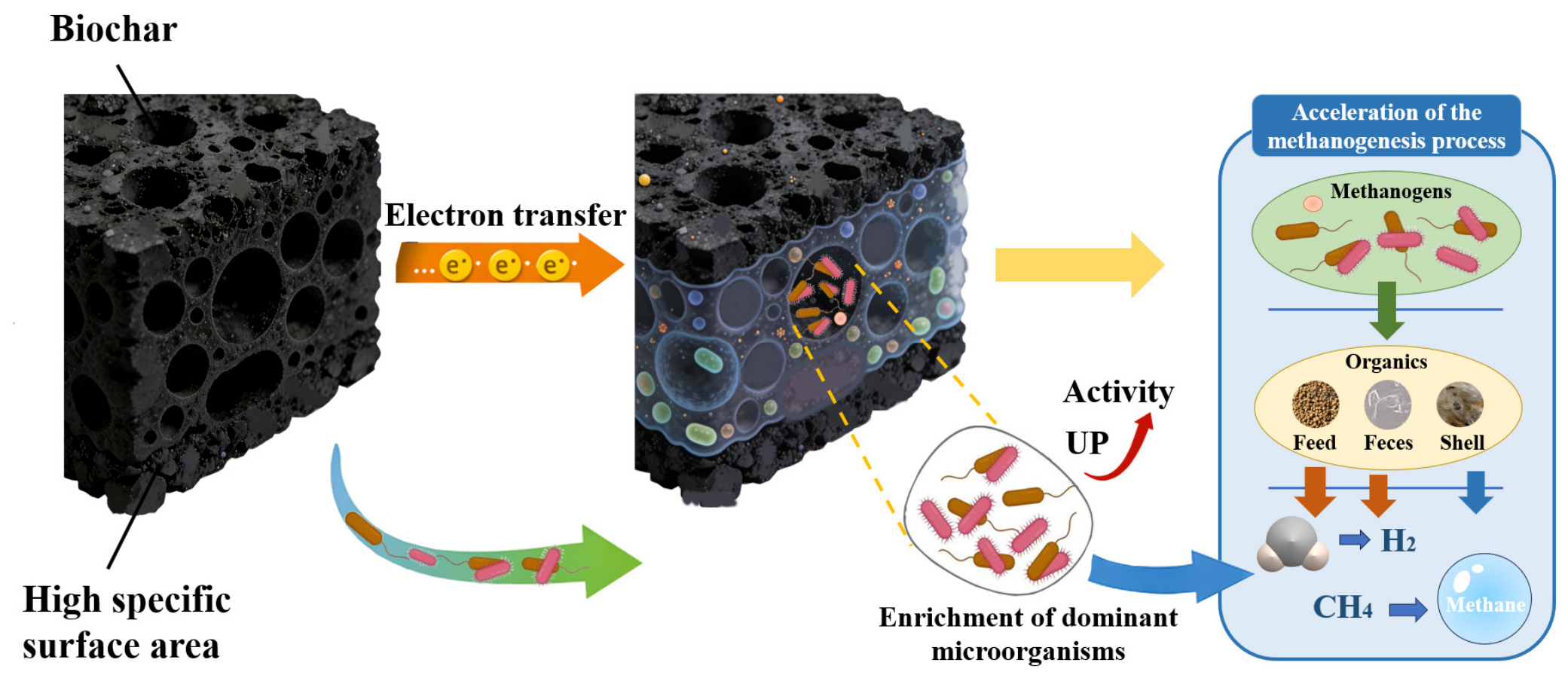
The mechanism of biochar enhancing methane production in anaerobic fermentation systems is shown in Figure 9. In this anaerobic fermentation setup, biochar serves as a core functional carrier: its high specific surface area not only provides abundant attachment sites for microorganisms but also constructs a “bridge” for electron transfer, significantly enhancing the efficiency of electron transfer within the system [64]. At the same time, the combination of wastewater particulate media and biochar forms a synergistic system that maintains the stability of the fermentation environment and further enhances microbial enrichment—a large number of functional microorganisms aggregate on the carrier surface, increasing their activity. Biochar promotes interspecies electron exchange through a conduction-based mechanism, where electrons are transferred from electron donor to electron acceptor cells via the biochar. Without conductive materials, co-growing microorganisms require a long adaptation period and substantial transfer [65] to achieve the same substrate consumption rate as with biochar. This indicates that cells need time to express the components required for extracellular electron transfer [66].
Ultimately, the optimization of electron transfer efficiency and the enrichment of functional microorganisms work together: the former accelerates substrate metabolic conversion, while the latter strengthens the methanogenesis metabolic pathway. Together, they significantly enhance the methane production rate during anaerobic fermentation, achieving a highly efficient improvement in biogas production performance.
In summary, the enhancement of anaerobic fermentation using biochar relies on multiple mechanisms working synergistically: first, it significantly accelerates methane production by substituting traditional electron transfer with direct interspecies electron transfer (DIET); then, its high specific surface area and porous structure provide attachment sites for functional microorganisms, promoting biofilm formation and improving substrate degradation capacity; next, surface functional groups help buffer pH and alleviate inhibition from ammonia nitrogen and high salinity, preventing system acidification and instability; finally, it reduces volatile fatty acid accumulation through adsorption, optimizing the fermentation microenvironment. Studies have shown that biochar can reshape microbial communities, strengthen metabolic pathways [67], simultaneously improve gas production efficiency, and reduce antibiotic resistance genes [68], consistent with the results of this study, providing theoretical support for the resource utilization of particulate matter in seawater aquaculture tailwater.

4. Conclusions

This study shows that adding biochar prepared at 500 °C and accounting for 10% of the dry matter mass in the system can maximize the cumulative methane yield of the experimental group, which is 18.52–56.86% higher than the control group, with the shortest fermentation lag phase and the most stable system operation. This biochar also significantly reduces the top 11 abundant antibiotic resistance genes (ARGs) in fermentation products, among which glycopeptide ARGs decreased most significantly (a removal rate of 15.02%). Firmicutes, as the main ARG host, accounted for 64.78–69.81% in the control group and 68.14–76.17% in the biochar group. These results confirm that adding biochar can simultaneously increase methane yield and mitigate the spread of ARGs.

Author Contributions

Y.Z. (Yinuo Zhou): Conceptualization, Methodology, Software, Validation, Formal analysis, Investigation, Resources, Data curation, Writing—original draft preparation, Writing—review and editing, Visualization; Y.L.: Validation, Formal analysis; C.L.: Methodology, Supervision, Validation, Writing—review and editing; A.S.: Project administration, Supervision, Writing—review and editing; Y.Z. (Yan Zou): Conceptualization, Methodology, Investigation, Writing—original draft preparation, Writing—review and editing, Project administration, Funding acquisition. All authors have read and agreed to the published version of the manuscript.

Funding

This research was funded by the Shandong Provincial Key R&D Program (Major Scientific and Technological Innovation Project) (2025CXGC010903), the earmarked fund for Modern Agriculture Shrimps and Crabs industry Technology System of Shandong province (SDAIT-13-04).

Institutional Review Board Statement

Not applicable.

Informed Consent Statement

Not applicable.

Data Availability Statement

The data presented in this study are openly available in the National Center for Biotechnology Information (NCBI) under accession number PRJNA1428770, https://www.ncbi.nlm.nih.gov/bioproject, accessed on 2 May 2026.

Conflicts of Interest

All authors certify that they have no affiliations with or involvement in any organization or entity with any interest or non-financial interest in the subject matter or materials discussed in this manuscript.

References

  1. Boyd, C.E.; McNevin, A.A.; Davis, R.P. The contribution of fisheries and aquaculture to the global protein supply. Food Secur. 2022, 14, 805–827. [Google Scholar] [CrossRef]
  2. Raza, B.; Zheng, Z.; Zhu, J.; Yang, W. A Review: Microbes and Their Effect on Growth Performance of Litopenaeus vannamei (White Leg Shrimps) during Culture in Biofloc Technology System. Microorganisms 2024, 12, 1013. [Google Scholar] [CrossRef]
  3. Hu, F.; Ye, J.; Wang, B.; Zhang, W.; Chen, P.; Yuan, Z.; Xu, Z. Transformation of dissolved organic matter during aquaculture wastewater treatment: Insights into the biological toxicity, spectral indices and molecular signatures. Water Res. 2025, 283, 123834. [Google Scholar] [CrossRef] [PubMed]
  4. Liu, X.; Wang, Y.; Liu, H.; Zhang, Y.; Zhou, Q.; Wen, X.; Guo, W.; Zhang, Z. A systematic review on aquaculture wastewater: Pollutants, impacts, and treatment technology. Environ. Res. 2024, 262, 119793. [Google Scholar] [CrossRef] [PubMed]
  5. Furdas, Y.; Zhelykh, V.; Ulewicz, M.; Shepitchak, V.; Adamski, M. Maintenance of Thermal Regime in a Biogas Plant Used for Energy Supply of Modular Buildings. In Proceedings of the EcoComfort 2024; Springer Nature: Cham, Switzerland, 2024. [Google Scholar]
  6. Bargłowski, L.; Adamski, M.; Furdas, Y.; Myroniuk, K.; Zhelykh, V. Analysis of Changes in Heat Consumption in the Developing Housing Estate. Inżynieria Miner. 2025, 2, 1–4. [Google Scholar] [CrossRef]
  7. Costigan, E.M.; Oehler, M.A.; MacRae, J.D. Phosphorus recovery from recirculating aquaculture systems: Adsorption kinetics and mechanism. J. Water Process Eng. 2022, 49, 102992. [Google Scholar] [CrossRef]
  8. Hu, F.; Zhang, T.; Liang, J.; Xiao, J.; Liu, Z.; Dahlgren, R.A. Impact of biochar on persistence and diffusion of antibiotic resistance genes in sediment from an aquaculture pond. Environ. Sci. Pollut. Res. 2022, 29, 57918–57930. [Google Scholar] [CrossRef]
  9. Zhang, R.; Li, J.; Zhou, L.; Zhuang, H.; Shen, S.; Wang, Y. Effect of graphene and graphene oxide on antibiotic resistance genes during copper-contained swine manure anaerobic digestion. Environ. Sci. Pollut. Res. 2022, 30, 27863–27874. [Google Scholar] [CrossRef]
  10. Ejileugha, C. Biochar can mitigate co-selection and control antibiotic resistant genes (ARGs) in compost and soil. Heliyon 2022, 8, e09543. [Google Scholar] [CrossRef] [PubMed]
  11. Kizito, S.; Jjagwe, J.; Mdondo, S.W.; Nagawa, C.B.; Bah, H.; Tumutegyereize, P. Synergetic effects of biochar addition on mesophilic and high total solids anaerobic digestion of chicken manure. J. Environ. Manag. 2022, 315, 115192. [Google Scholar] [CrossRef] [PubMed]
  12. Liu, S.; Wang, Y.; Feng, Z.; Wang, Y.; Sun, T. Hierarchical porous biochar with ultra-high specific surface area for rapid removal of antibiotics from water. New J. Chem. 2021, 45, 17418–17427. [Google Scholar] [CrossRef]
  13. Li, D.; Su, P.; Tang, M.; Yao, Y.; Zhang, G. Meta-analysis reveals the processes and conditions of using biochar to control antibiotic resistance genes in soil. J. Environ. Manag. 2025, 386, 125736. [Google Scholar] [CrossRef]
  14. Zhou, W.; Pian, R.; Yang, F.; Chen, X.; Zhang, Q. The sustainable mitigation of ruminal methane and carbon dioxide emissions by co-ensiling corn stalk with Neolamarckia cadamba leaves for cleaner livestock production. J. Clean. Prod. 2021, 311, 127680. [Google Scholar] [CrossRef]
  15. Wang, Q.; Wu, S.; Cui, D.; Pan, S.; Xu, F.; Xu, F.; Wang, Z.; Li, G. Co-hydrothermal carbonization of corn stover and food waste: Characterization of hydrochar, synergistic effects, and combustion characteristic analysis. J. Environ. Chem. Eng. 2022, 10, 108716. [Google Scholar] [CrossRef]
  16. Safian, M.; Motaghian, H.; Hosseinpur, A. Effects of sugarcane residue biochar and P fertilizer on P availability and its fractions in a calcareous clay loam soil. Biochar 2020, 2, 357–367. [Google Scholar] [CrossRef]
  17. Mujtaba, G.; Hayat, R.; Hussain, Q.; Ahmed, M. Physio-Chemical Characterization of Biochar, Compost and Co-Composted Biochar Derived from Green Waste. Sustainability 2021, 13, 4628. [Google Scholar] [CrossRef]
  18. Pokharel, P.; Ma, Z.; Chang, S.X. Biochar increases soil microbial biomass with changes in extra- and intracellular enzyme activities: A global meta-analysis. Biochar 2020, 2, 65–79. [Google Scholar] [CrossRef]
  19. Wang, Z.; Guo, Y.; Wang, W.; Chen, L.; Sun, Y.; Xing, T.; Kong, X. Effect of Biochar Addition on the Microbial Community and Methane Production in the Rapid Degradation Process of Corn Straw. Energies 2021, 14, 2223. [Google Scholar] [CrossRef]
  20. Wang, S.; Shi, F.; Li, P.; Yang, F.; Pei, Z.; Yu, Q.; Zuo, X.; Liu, J. Effects of rice straw biochar on microbial community structure and metabolic function during anaerobic digestion. Sci. Rep. 2022, 12, 6971. [Google Scholar] [CrossRef]
  21. Zhu, J.; Meng, Q.; Zhang, X.; Zhang, X.; Tang, Y.; Li, Y. Biochar Enhanced Anaerobic Digestion of Chicken Manure by Mitigating Ammonium Inhibition and Improving Methane Production. Fermentation 2025, 11, 549. [Google Scholar] [CrossRef]
  22. Janu, R.; Mrlik, V.; Ribitsch, D.; Hofman, J.; Sedláček, P.; Bielská, L.; Soja, G. Biochar surface functional groups as affected by biomass feedstock, biochar composition and pyrolysis temperature. Carbon Resour. Convers. 2021, 4, 36–46. [Google Scholar] [CrossRef]
  23. Fan, Q.; Shao, Z.; Guo, X.; Qu, Q.; Yao, Y.; Zhang, Z.; Qiu, L. Effects of Fe–N co-modified biochar on methanogenesis performance, microbial community, and metabolic pathway during anaerobic co-digestion of alternanthera philoxeroides and cow manure. J. Environ. Manag. 2024, 351, 120006. [Google Scholar] [CrossRef]
  24. Huang, H.; Reddy, N.G.; Huang, X.; Chen, P.; Wang, P.; Zhang, Y.; Huang, Y.; Lin, P.; Garg, A. Effects of pyrolysis temperature, feedstock type and compaction on water retention of biochar amended soil. Sci. Rep. 2021, 11, 7419. [Google Scholar] [CrossRef]
  25. Zhu, L.; Lei, H.; Wang, L.; Yadavalli, G.; Zhang, X.; Wei, Y.; Liu, Y.; Yan, D.; Chen, S.; Ahring, B. Biochar of corn stover: Microwave-assisted pyrolysis condition induced changes in surface functional groups and characteristics. J. Anal. Appl. Pyrolysis 2015, 115, 149–156. [Google Scholar] [CrossRef]
  26. Kinney, T.J.; Masiello, C.A.; Dugan, B.; Hockaday, W.C.; Dean, M.R.; Zygourakis, K.; Barnes, R.T. Hydrologic properties of biochars produced at different temperatures. Biomass Bioenergy 2012, 41, 34–43. [Google Scholar] [CrossRef]
  27. Hu, Y.; Lin, E.; Weng, X.; Wang, F.; Chen, Z.; Lv, G. Production of Carbon Sources Through Anaerobic Fermentation Using the Liquid Phase of Food Waste Three-Phase Separation: Influencing Factors and Microbial Community Structure. Bioengineering 2026, 13, 60. [Google Scholar] [CrossRef]
  28. Zheng, Q.; Wang, Z.; Chen, B.; Liu, G.; Zhao, J. Analysis of XRD spectral structure and carbonization of the biochar preparation. Spectrosc. Spectr. Anal. 2016, 36, 3355–3359. [Google Scholar]
  29. Chen, J.; Cao, X.; Han, Y.; Xin, O. Magnetic biochar combining adsorption and separation recycle for removal of chromium in aqueous solution. Water Sci. Technol. 2017, 75, 1177–1184. [Google Scholar]
  30. Essandoh, M.; Wolgemuth, D.; Pittman, C.U.; Mohan, D.; Mlsna, T. Adsorption of metribuzin from aqueous solution using magnetic and nonmagnetic sustainable low-cost biochar adsorbents. Environ. Sci. Pollut. Res. 2016, 24, 4577–4590. [Google Scholar] [CrossRef]
  31. Wang, J.; Zhao, Z.; Zhang, Y. Enhancing anaerobic digestion of kitchen wastes with biochar: Link between different properties and critical mechanisms of promoting interspecies electron transfer. Renew. Energy 2021, 167, 791–799. [Google Scholar] [CrossRef]
  32. Das, D.D.; Schnitzer, M.I.; Monreal, C.M.; Mayer, P. Chemical composition of acid–base fractions separated from biooil derived by fast pyrolysis of chicken manure. Bioresour. Technol. 2009, 100, 6524–6532. [Google Scholar] [CrossRef]
  33. Zhang, Y.; Xu, X.; Zhang, P.; Ling, Z.; Qiu, H.; Cao, X. Pyrolysis-temperature depended quinone and carbonyl groups as the electron accepting sites in barley grass derived biochar. Chemosphere 2019, 232, 273–280. [Google Scholar] [CrossRef] [PubMed]
  34. Shanmugam, S.R.; Adhikari, S.; Nam, H.; Kar Sajib, S. Effect of bio-char on methane generation from glucose and aqueous phase of algae liquefaction using mixed anaerobic cultures. Biomass Bioenergy 2018, 108, 479–486. [Google Scholar] [CrossRef]
  35. Wang, P.; Peng, H.; Adhikari, S.; Higgins, B.; Roy, P.; Dai, W.; Shi, X. Enhancement of biogas production from wastewater sludge via anaerobic digestion assisted with biochar amendment. Bioresour. Technol. 2020, 309, 123368. [Google Scholar] [CrossRef] [PubMed]
  36. Das, S.K.; Ghosh, G.K.; Avasthe, R.K.; Sinha, K. Compositional heterogeneity of different biochar: Effect of pyrolysis temperature and feedstocks. J. Environ. Manag. 2021, 278, 111501. [Google Scholar] [CrossRef]
  37. Sun, T.; Levin, B.D.A.; Guzman, J.J.L.; Enders, A.; Muller, D.A.; Angenent, L.T.; Lehmann, J. Rapid electron transfer by the carbon matrix in natural pyrogenic carbon. Nat. Commun. 2017, 8, 14873. [Google Scholar] [CrossRef]
  38. Lam, S.S.; Yek, P.N.Y.; Ok, Y.S.; Chong, C.C.; Liew, R.K.; Tsang, D.C.W.; Park, Y.-K.; Liu, Z.; Wong, C.S.; Peng, W. Engineering pyrolysis biochar via single-step microwave steam activation for hazardous landfill leachate treatment. J. Hazard. Mater. 2020, 390, 121649. [Google Scholar] [CrossRef]
  39. Li, J.; Qiu, C.; Liu, N.; Chen, X.; Zhang, Y.; Wang, C.; Qi, L.; Wang, S. Impact of biochar prepared at different pyrolysis temperatures on the methane production and microbial community structure of food waste anaerobic digestion. Int. J. Hydrogen Energy 2024, 96, 860–869. [Google Scholar] [CrossRef]
  40. Kaur, G.; Johnravindar, D.; Wong, J.W.C. Enhanced volatile fatty acid degradation and methane production efficiency by biochar addition in food waste-sludge co-digestion: A step towards increased organic loading efficiency in co-digestion. Bioresour. Technol. 2020, 308, 123250. [Google Scholar] [CrossRef]
  41. Zhang, K.; Deng, Y.; Liu, Z.; Feng, Y.; Hu, C.; Wang, Z. Biochar Facilitated Direct Interspecies Electron Transfer in Anaerobic Digestion to Alleviate Antibiotics Inhibition and Enhance Methanogenesis: A Review. Int. J. Environ. Res. Public Health 2023, 20, 2296. [Google Scholar] [CrossRef]
  42. Sunyoto, N.M.S.; Zhu, M.; Zhang, Z.; Zhang, D. Effect of biochar addition on hydrogen and methane production in two-phase anaerobic digestion of aqueous carbohydrates food waste. Bioresour. Technol. 2016, 219, 29–36. [Google Scholar] [CrossRef]
  43. Fagbohungbe, M.O.; Herbert, B.M.J.; Hurst, L.; Ibeto, C.N.; Li, H.; Usmani, S.Q.; Semple, K.T. The challenges of anaerobic digestion and the role of biochar in optimizing anaerobic digestion. Waste Manag. 2017, 61, 236–249. [Google Scholar] [CrossRef]
  44. Yang, Q.; Liu, H.; Liu, L.; Yan, Z.; Chui, C.; Yang, N.; Wang, C.; Shen, G.; Chen, Q. Enhancing Methane Production in Anaerobic Digestion of Food Waste Using Co-Pyrolysis Biochar Derived from Digestate and Rice Straw. Molecules 2025, 30, 1766. [Google Scholar] [CrossRef]
  45. Wohlgemuth, R. Product Recovery. In Comprehensive Biotechnology; Elsevier: Amsterdam, The Netherlands, 2011; pp. 591–601. [Google Scholar]
  46. Bermúdez-Penabad, N.; Kennes, C.; Veiga, M.C. Anaerobic digestion of tuna waste for the production of volatile fatty acids. Waste Manag. 2017, 68, 96–102. [Google Scholar] [CrossRef]
  47. Eryildiz, B.; Lukitawesa; Taherzadeh, M.J. Effect of pH, substrate loading, oxygen, and methanogens inhibitors on volatile fatty acid (VFA) production from citrus waste by anaerobic digestion. Bioresour. Technol. 2020, 302, 122800. [Google Scholar] [CrossRef]
  48. Nielsen, S.; Minchin, T.; Kimber, S.; van Zwieten, L.; Gilbert, J.; Munroe, P.; Joseph, S.; Thomas, T. Comparative analysis of the microbial communities in agricultural soil amended with enhanced biochars or traditional fertilisers. Agric. Ecosyst. Environ. 2014, 191, 73–82. [Google Scholar] [CrossRef]
  49. Stres, B.; Hatzikioseyian, A.; Kousi, P.; Remoundaki, E.; Deutsch, L.; Vogel Mikuš, K.; Rak, G.; Kolbl Repinc, S. Case specific: Addressing co-digestion of wastewater sludge, cheese whey and cow manure: Kinetic modeling. Heliyon 2024, 10, e38773. [Google Scholar] [CrossRef] [PubMed]
  50. Zhang, A.; Li, X.; Xing, J.; Xu, G. Adsorption of potentially toxic elements in water by modified biochar: A review. J. Environ. Chem. Eng. 2020, 8, 104196. [Google Scholar] [CrossRef]
  51. Khalid, Z.B.; Siddique, M.N.I.; Nayeem, A.; Adyel, T.M.; Ismail, S.B.; Ibrahim, M.Z. Biochar application as sustainable precursors for enhanced anaerobic digestion: A systematic review. J. Environ. Chem. Eng. 2021, 9, 105489. [Google Scholar] [CrossRef]
  52. Wu, B.; Ren, T.; Cao, X.; Wu, T.; Hu, Z.; Ai, J.; Zhang, N.; Zhang, Y.; Yu, Z.; Du, L.; et al. Emerging and innovative utilisation of herbal medicine residues in anaerobic fermentation of corn straw: Cellulose degradation, fermentation characteristics, and microbial community structure and co-occurrence network. Ind. Crops Prod. 2025, 227, 120802. [Google Scholar] [CrossRef]
  53. Zhao, X.; Liu, J.; Liu, J.; Yang, F.; Zhu, W.; Yuan, X.; Hu, Y.; Cui, Z.; Wang, X. Effect of ensiling and silage additives on biogas production and microbial community dynamics during anaerobic digestion of switchgrass. Bioresour. Technol. 2017, 241, 349–359. [Google Scholar] [CrossRef]
  54. Tian, Z.; Zhang, Y.; Li, Y.; Chi, Y.; Yang, M. Rapid establishment of thermophilic anaerobic microbial community during the one-step startup of thermophilic anaerobic digestion from a mesophilic digester. Water Res. 2015, 69, 9–19. [Google Scholar] [CrossRef]
  55. Rivière, D.; Desvignes, V.; Pelletier, E.; Chaussonnerie, S.; Guermazi, S.; Weissenbach, J.; Li, T.; Camacho, P.; Sghir, A. Towards the definition of a core of microorganisms involved in anaerobic digestion of sludge. ISME J. 2009, 3, 700–714. [Google Scholar] [CrossRef]
  56. Lim, E.Y.; Tian, H.; Chen, Y.; Ni, K.; Zhang, J.; Tong, Y.W. Methanogenic pathway and microbial succession during start-up and stabilization of thermophilic food waste anaerobic digestion with biochar. Bioresour. Technol. 2020, 314, 123751. [Google Scholar] [CrossRef]
  57. Shi, X.; Guo, X.; Zuo, J.; Wang, Y.; Zhang, M. A comparative study of thermophilic and mesophilic anaerobic co-digestion of food waste and wheat straw: Process stability and microbial community structure shifts. Waste Manag. 2018, 75, 261–269. [Google Scholar] [CrossRef]
  58. Cruz-Morales, P.; Orellana, C.A.; Moutafis, G.; Moonen, G.; Rincon, G.; Nielsen, L.K.; Marcellin, E.; Bapteste, E. Revisiting the Evolution and Taxonomy of Clostridia, a Phylogenomic Update. Genome Biol. Evol. 2019, 11, 2035–2044. [Google Scholar] [CrossRef] [PubMed]
  59. Zhang, Y.; Yang, Z.; Xiang, Y.; Xu, R.; Zheng, Y.; Lu, Y.; Jia, M.; Sun, S.; Cao, J.; Xiong, W. Evolutions of antibiotic resistance genes (ARGs), class 1 integron-integrase (intI1) and potential hosts of ARGs during sludge anaerobic digestion with the iron nanoparticles addition. Sci. Total Environ. 2020, 724, 138248. [Google Scholar] [CrossRef]
  60. Xiang, Y.; Yang, Z.; Zhang, Y.; Xu, R.; Zheng, Y.; Hu, J.; Li, X.; Jia, M.; Xiong, W.; Cao, J. Influence of nanoscale zero-valent iron and magnetite nanoparticles on anaerobic digestion performance and macrolide, aminoglycoside, β-lactam resistance genes reduction. Bioresour. Technol. 2019, 294, 122139. [Google Scholar] [CrossRef] [PubMed]
  61. Yang, S.; Wen, Q.; Chen, Z. Biochar induced inhibitory effects on intracellular and extracellular antibiotic resistance genes in anaerobic digestion of swine manure. Environ. Res. 2022, 212, 113530. [Google Scholar] [CrossRef]
  62. Yang, Y.; Wu, R.; Hu, J.; Xing, S.; Huang, C.; Mi, J.; Liao, X. Dominant denitrifying bacteria are important hosts of antibiotic resistance genes in pig farm anoxic-oxic wastewater treatment processes. Environ. Int. 2020, 143, 105897. [Google Scholar] [CrossRef] [PubMed]
  63. Chi, W.; Zou, Y.; Qiu, T.; Shi, W.; Tang, L.; Xu, M.; Wu, H.; Luan, X. Horizontal gene transfer plays a crucial role in the development of antibiotic resistance in an antibiotic-free shrimp farming system. J. Hazard. Mater. 2024, 476, 135150. [Google Scholar] [CrossRef] [PubMed]
  64. Chen, S.; Rotaru, A.-E.; Shrestha, P.M.; Malvankar, N.S.; Liu, F.; Fan, W.; Nevin, K.P.; Lovley, D.R. Promoting Interspecies Electron Transfer with Biochar. Sci. Rep. 2014, 4, 5019. [Google Scholar] [CrossRef]
  65. Summers, Z.M.; Fogarty, H.E.; Leang, C.; Franks, A.E. Direct exchange of electrons within aggregates of an evolved syntrophic coculture of anaerobic bacteria. Science 2010, 330, 1413–1415. [Google Scholar] [CrossRef] [PubMed]
  66. Shrestha, P.M.; Rotaru, A.-E.; Summers, Z.M.; Shrestha, M.; Liu, F.; Lovley, D.R. Transcriptomic and Genetic Analysis of Direct Interspecies Electron Transfer. Appl. Environ. Microbiol. 2013, 79, 2397–2404. [Google Scholar] [CrossRef]
  67. Sasaki, D.; Sasaki, K.; Watanabe, A.; Morita, M.; Matsumoto, N.; Igarashi, Y.; Ohmura, N. Operation of a cylindrical bioelectrochemical reactor containing carbon fiber fabric for efficient methane fermentation from thickened sewage sludge. Bioresour. Technol. 2013, 129, 366–373. [Google Scholar] [CrossRef] [PubMed]
  68. Pat-Espadas, A.M.; Maytorena, V.M.; Morales-Rosas, M.F.; López-López, M.; Sánchez-Macías, M.R.; López Díaz, J.A.; López Avilés, G.; Hernández-Martínez, D.; Almendariz-Tapia, F.J. Biochar-Assisted Anaerobic Digestion of Swine Wastewater: Feedstock Effects on Methane Production, Nutrient Removal, and Struvite Recovery. Waste Biomass Valorization 2025. [Google Scholar] [CrossRef]
Figure 1. Laboratory-scale anaerobic fermentation setup.
Sustainability 18 04723 g001
Figure 2. Spectra scanning of biochar prepared at 300 °C, 400 °C and 500 °C. (a) XRD spectra; (b) FT-IR spectra.
Sustainability 18 04723 g002
Figure 3. Microstructure and energy spectrum analysis of biochar in each group. (a) SEM images of BC300 (×1000); (b) SEM images of BC400 (×1000); (c) SEM images of BC500 (×1000); (d) SEM images of BC300 (×5000); (e) SEM images of BC400 (×5000); (f) SEM images of BC500 (×5000).
Sustainability 18 04723 g003
Figure 4. (a) Stage-specific biogas production of anaerobic digestion with biochar prepared at different temperatures and applied at different dosages. (b) Total biogas production of anaerobic digestion with biochar prepared at different temperatures and applied at different dosages.
Sustainability 18 04723 g004
Figure 5. SEM images and elemental content spectra of the experimental and control groups before and after fermentation. (a) Experimental group before fermentation (×1000); (b) experimental group after fermentation (×1000); (c) experimental group before fermentation (×5000); (d) experimental group after fermentation (×5000); (e) control group before fermentation (×1000); (f) control group after fermentation (×1000); (g) control group before fermentation (×5000); (h) control group after fermentation (×5000).
Sustainability 18 04723 g005
Figure 6. Microbial diversity and composition of the experimental and control groups revealed by metagenomic data. (a) Chao index; (b) Shannon index; (c) Simpson index; (d) microbial composition at the phylum level; (e) microbial composition at the genus level; (f) changes in the abundance of the top 10 most abundant microbial genera in the filtrate. (Data are presented as mean ± standard deviation, n = 3. Compared with the control group, * p < 0.05 and *** p < 0.001 indicate statistically significant differences).
Sustainability 18 04723 g006
Figure 7. Biochar addition induces changes in antibiotic resistance profiles of suspended solids after fermentation. (a) Venn diagram showing the number of shared and unique ARGs between the two groups; (b) Shannon index showing the α-diversity of ARG subtypes; (c) changes in the number of different ARG categories. Data are presented as mean ± standard deviation, n = 3. Compared with the control group, * p < 0.05, ** p < 0.01, and *** p < 0.001 indicate statistically significant differences. (d) Circos plot showing the relative abundances of the top 10 ARO classes in different samples; (e) Circos plot showing the relative abundances of the top 22 ARO names in different samples; (f) Wilcoxon rank-sum test of ARO levels between the control group and the experimental group.
Sustainability 18 04723 g007
Figure 8. Analysis of contributions from the top 10 most abundant genera and top 5 antibiotic resistance genes.
Sustainability 18 04723 g008
Figure 9. Mechanism diagram of biochar promoting methane production.
Sustainability 18 04723 g009
Table 1. Characteristics of corn straw biochar obtained at different pyrolysis temperatures.
pHTCTOCTNTPAshSBETVtotal
BC3007.67944.2%40.7%1.26%0.212%12.59%17 m2/g0.02 cm3/g
BC4008.67845.6%42.4%1.11%0.243%26.88%109 m2/g0.09 cm3/g
BC5008.88948.7%46.6%1.04%0.259%35.21%252 m2/g0.17 cm3/g
Table 2. Changes in physicochemical indices of the fermentation system before and after anaerobic digestion.
BC-PreBC-LateCK-PreCK-Late
pH8.37 ± 0.036.76 ± 0.017.64 ± 0.035.86 ± 0.02
VFA (mg/L)237.94 ± 5.03472.48 ± 2.73298.96 ± 3.36525.51 ± 5.48
NH4+-N (mg/L)2.79 ± 0.173.64 ± 0.083.39 ± 0.133.78 ± 0.11
COD (mg/L)897.23 ± 0.28959.35 ± 0.09914.52 ± 0.141021.84 ± 0.04
Disclaimer/Publisher’s Note: The statements, opinions and data contained in all publications are solely those of the individual author(s) and contributor(s) and not of MDPI and/or the editor(s). MDPI and/or the editor(s) disclaim responsibility for any injury to people or property resulting from any ideas, methods, instructions or products referred to in the content.