Article

Ecotechnologies Versus Conventional Networks: A Socioeconomic Analysis for Water Management in Rural Communities

by
Blanca Yessica Sevilla Angulo
1,*,
Daniel Tagle-Zamora
2,
Alex Caldera-Ortega
3,
Jesús Mora Rodríguez
4 and
Xitlali Delgado Galván
4
1
División de Ingenierías, Universidad de Guanajuato, Av. Juárez 77, Zona Centro, Guanajuato C.P. 36000, Guanajuato, Mexico
2
Departamento de Estudios Sociales, División de Ciencias Sociales y Humanidades, Universidad de Guanajuato, Campus León, Blvd. Puente Milenio 1001, Col. San Carlos la Roncha, León C.P. 37320, Guanajuato, Mexico
3
Departamento de Gestión Pública y Desarrollo, División de Ciencias Sociales y Humanidades, Universidad de Guanajuato, Campus León, Blvd. Puente Milenio 1001, Col. San Carlos la Roncha, León C.P. 37320, Guanajuato, Mexico
4
Departamento de Ingeniería Geomática e Hidráulica, División de Ingenierías, Universidad de Guanajuato, Av. Juárez 77, Zona Centro, Guanajuato C.P. 36000, Guanajuato, Mexico
*
Author to whom correspondence should be addressed.
Sustainability 2026, 18(1), 510; https://doi.org/10.3390/su18010510
Submission received: 18 November 2025 / Revised: 13 December 2025 / Accepted: 15 December 2025 / Published: 4 January 2026

Abstract

Arid and semi-arid regions of Mexico, such as the Bajío of Guanajuato, face a huge challenge in water resource management. The municipality of León, located in the State of Guanajuato, persistently lacks access to water resources despite having high coverage in urban areas by the León Water Utility System (SAPAL, the abbreviation in Spanish of “Sistema de Agua Potable y Alcantarillado de León”), particularly in peri-urban and rural areas. In this context, this study compares water distribution network expansion with rainwater harvesting (RWH) systems in four rural communities of León. A cost–benefit analysis (CBA) with a 20-year horizon and a 10% social discount rate (SDR) was applied. Results indicate that network expansion is financially unfeasible, whereas RWH emerges as a technically and economically viable alternative, providing household savings and strengthening community resilience.

1. Introduction

The Bajío region of Guanajuato (Figure 1), characterized by its arid climate, faces a critical combination of problems related to water management, including overexploitation of aquifers, intense industrial activity, rapid population growth, and the adverse effects of climate change, whose economic impacts have been widely documented [1,2,3,4,5]; these factors have placed unsustainable pressure on resources and have also led to inequitable access and unsustainability [2,6]. León is a clear example of a vivid polarity, being one of the municipalities with the highest coverage of services in its urban area, while its rural areas are excluded from this coverage at the same time [7,8].
However, it is not necessary to discredit the projects of SAPAL within León, through which it has achieved 96.98% coverage of water service in its urban area, providing approximately 2 million inhabitants with 187 wells and more than 506,000 household connections. The León urban area remains a priority in SAPAL’s investments; between 2022 and 2025, these investments increased to approximately 210,681,198.91 United States dollars (USD), most of which were allocated to sewage, infrastructure cleaning, and pipe renovation [9,10].
SAPAL, with its objective as an operating system, has supplied water by tanker to around 22 rural communities ), serving 154,259 people in 2024, through a subsidy of USD 6,212,534.06, and has promoted campaigns for water education and information [9]. Despite these efforts, expanding water distribution networks into rural communities in León faces major technical and financial barriers. These barriers include the high costs per linear meter of pipe, the difficulty of logistics and legal processes involved in obtaining right-of-way permits, a strong political priority focused on consolidated urban areas, the perception among rural inhabitants that promises have not been kept, and the lack of detailed technical studies for these areas [11,12]. This has led to persistent territorial inequality, where, despite support and subsidies, rural communities continue to lack direct access to water [2,8].
Considering these circumstances, ecotechnology and its applications—known as ecotechniques—such as the rainwater harvesting (RWH) systems, emerge as an adaptive, sustainable, and decentralized option. In August–September 2024, the National Water Commission (CONAGUA, according to its Spanish acronym for Comisión Nacional del Agua) endorsed RWH’s potential by publishing national technical guidelines for RWH and for basic sanitation at the household level, with model designs and budgets that facilitate its implementation in marginalized rural areas with highly vulnerable conditions [13,14].
There have been several successful RWH projects in Mexico, including the projects of the Mexico City Ministry of the Environment [15]; the “Isla Urbana” with the CHAAC program in Mexico City [16]; the Ha Ta Tukari project in the Wixárika community of Jalisco [17]; the project in the communities of Cerro Blanco in Pénjamo, Guanajuato [18]; and the project of four communities in León considered in this study. These projects demonstrate the viability of ecotechnology for RWH, obtaining quality water for human consumption, reducing health impacts, improving water security and availability, and advancing the process of community self-management, thus representing a sustainable solution [19,20,21].
This study aims to explore in greater depth the relationship between the technical viability of ecotechnology and its social adoption as a strategy within public policy, using a hypothetical 20-year projection (2025–2045) that considers the cost to users in rural communities of connecting to the water distribution network, as opposed to the investment and maintenance required by a standardized ecotechnology program. In pursuit of this goal, a cost–benefit analysis (CBA) based on Net Present Value (NPV) is applied, with a social discount rate (SDR) of 10%, based on national and international guidelines for infrastructure projects [22,23,24,25]. This analysis reveals that RWH is a more equitable and efficient alternative [21,26].
The hypothesis posits that contextualized social adoption influences the design of more cost-efficient and sustainable public policy, contributing to the guarantee of the human right to water in areas marked by marginalization and water vulnerability. The focus is on the notion of public water policy linked to centralized and decentralized proposals. Therefore, studying the viability of both scenarios allows for guiding institutional and community decisions, overcoming the historical inertia of exclusively prioritizing conventional infrastructure.

2. Theoretical Framework

2.1. The Water Crisis and the Need for a Paradigm Shift

Conventional approaches to water management have traditionally been structured around a centralized model of large-scale supply and demand, that is, for the masses; a model that has proven insufficient in responding to the challenges of the 21st century, among which inequality in access to water, overexploitation of resources, and climate change stand out [27,28]. The previous paradigm, based on megaprojects and large infrastructure, has resulted in high economic and environmental costs and, undoubtedly, in social conflicts due to the unequal distribution of water [29,30].
Consequently, different frameworks and strategies have been developed to address these complex issues, such as Integrated Water Resources Management (IWRM), which promotes a comprehensive and participatory vision that considers different dimensions of water (economic, social, and environmental). However, its implementation has been strongly criticized for being a slow process and for not adequately integrating the prevailing social and political hierarchies [31]. In this context, various concepts have gained relevance, such as resilience and water security, which emphasize the priority of diversifying and adapting water sources, with the presentation of decentralized alternatives playing a fundamental role [21,28,32].

2.2. Water Governance in Mexico

Water governance in Mexico is governed by a decentralized structure, assigning the role of drinking water and sanitation service providers to the operating agencies of each municipality. This decentralization has led to significant territorial inequality [33] in contexts of decentralized governance in Asia, especially in rural areas, where coverage is limited and operating costs are practically prohibitive [2]. In León, SAPAL illustrates the above by prioritizing coverage in urban areas, whose priority criteria focus on profitability and population density, overlooking rural and peri-urban areas that suffer from water vulnerability [8].

2.3. Ecotechnologies

Ecotechniques are understood to be the practical application of ecotechnology, conceived and designed with the aim of making better use of resources and reducing the environmental impacts associated with conventional technology. In this case, RWH is one of the most effective ecotechniques, whose use dates back to ancient times, emerging as a viable alternative to scarcity [14,34]. RWH captures, collects, and stores rainwater for later use, reducing dependence on centralized sources and decreasing the overexploitation of aquifers [21,32].
Diverse programs and studies have highlighted their potential. In India, for example, aquifers in semi-arid regions have been revitalized by capturing rainwater, leading to improvements in food security [32]. In Germany and Australia, RWH has reduced urban drinking water demand by up to 50%, mitigating the pressure on the conventional distribution network [34,35]. Alternatively, in Mexico, organizations such as Isla Urbana have successfully implemented RWH projects in schools and indigenous communities, highlighting their ability to provide quality water for human consumption [16], as well as the Ha Ta Tukari project in the Wixárika community of Jalisco, which increased individual daily water access from 5.6 to 17.7 L, reducing disease and improving community self-management [17].
Highlighting critical and relevant factors is fundamental for the scope and viability of ecotechnology. For example, for RWH, it is necessary to consider factors such as the available catchment area, storage capacity, and precipitation in the region. In addition, the exogenous benefits of its implementation and effective social adoption should be highlighted, such as promoting community autonomy and participation, as well as the transformation of users from the role of recipients to active managers of goods and resources.
The National Commission for Arid Zones (CONAZA) and the Inter-American Institute for Cooperation on Agriculture (IICA) highlight the viability and adaptability of RWH in semi-arid contexts with limited rainfall, providing high sustainability through low energy consumption and resource expenditure on infrastructure [36]. CONAGUA, through its publication of technical guidelines, has reinforced its potential, defining RWH systems as an economically viable option, especially for rural areas and populations not covered by the conventional water distribution network [13,21].

2.4. Socioeconomic Evaluation Models for Water Projects

A socioeconomic evaluation is necessary to compare the expansion of the water distribution network with the implementation of ecotechnology. The comparison considers social and environmental variables, in addition to a cost analysis.
The evaluation considers the use of CBA, which is a standardized tool for evaluating public investment projects. However, in the field of water projects, its application is complex due to the difficulty of quantifying intangible benefits, such as the perception of water security, the time efficiency gained in relation to previously necessary water acquisition efforts (as in the case of water transport), the immediate visibility of health and climate improvements, and the process of community resilience [21,22,24,26]. Therefore, to overcome the limitations described above, it becomes essential to adopt alternative approaches, such as Cost-Effectiveness Analysis (CEA), which compares the cost of alternatives for achieving the same objective [26].
For this reason, it is considered important to integrate an SDR to make long-term projections, allowing the value assigned by the user to future benefits to be reflected in comparison with their current conditions [25]. Thus, the evaluation is decisive in confirming the viability of projects whose initial investment is high and whose benefits are upheld over time. For the purposes of this project, an SDR of 10% per annum for public investment projects is taken as a recommendation [24].

3. Materials and Methods

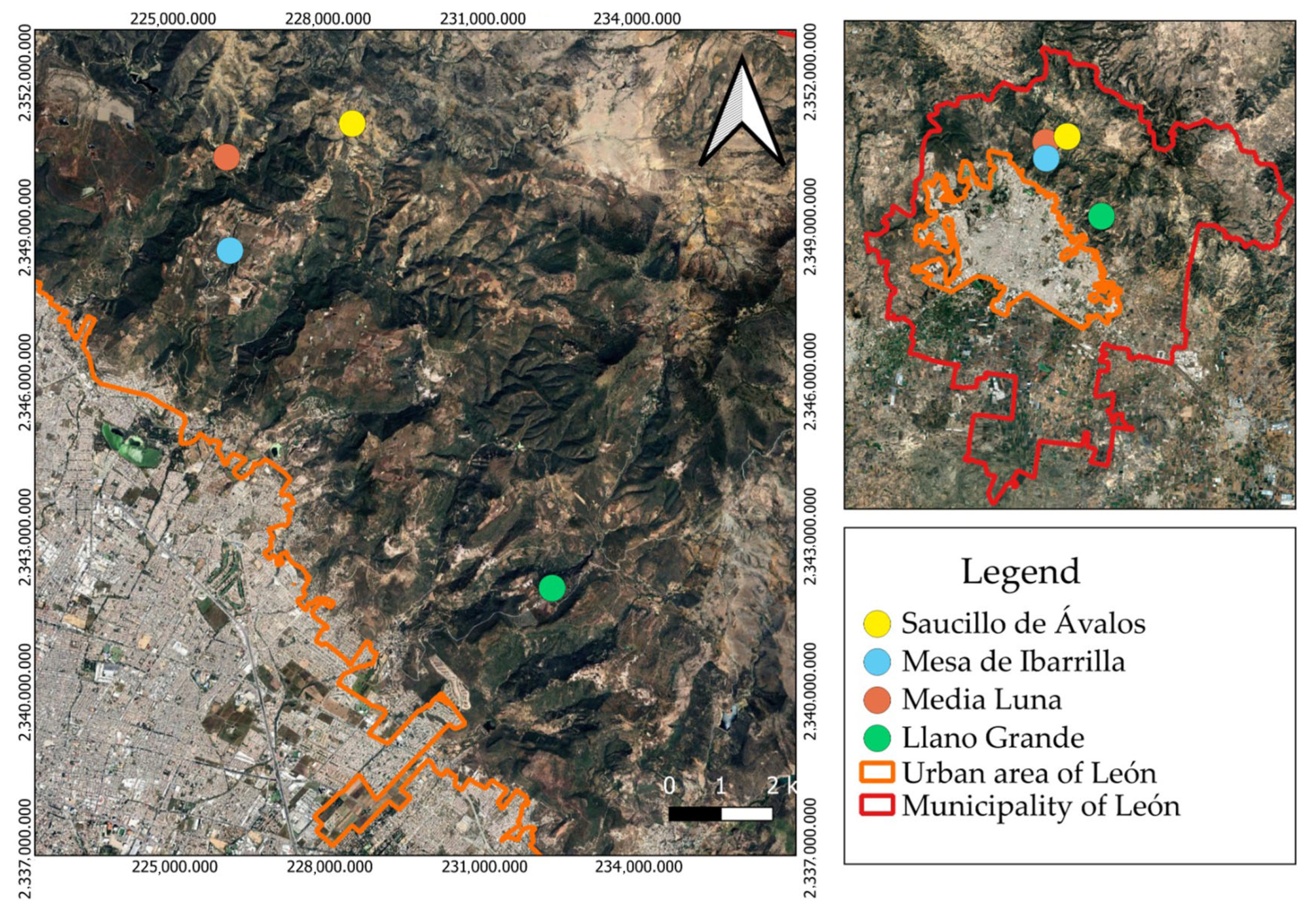
For the development of this research, fieldwork was conducted in four rural communities, Mesa de Ibarrilla, Media Luna, Saucillo de Ávalos, and Llano Grande, all located in León (Figure 2). The selection was based on three criteria: (1) availability of technical information, (2) route maps prepared by SAPAL, and (3) prior knowledge generated in the field by the León Technical Water Committee (COTAS) during the 2016–2018 ecotechniques program.
Fieldwork was carried out in the four communities, which were chosen as a reference due to the prior knowledge of the project by COTAS in these and other surrounding communities during the 2016–2018 period, with the implementation of RWH systems, as part of an ecotechnology program adapted to local conditions. This experience has allowed us to observe first-hand the operational, social, and environmental benefits of decentralized solutions. Considering this background, the communities were visited to learn about the status of these ecotechnological implementations. It was documented that, in addition to the COTAS project, other implementations were made outside of this project, highlighting the acceptance of ecotechnologies and their benefits by households but without being able to specifically document which entities carried them out, as the interviewees did not remember clearly.
Following the empirical work carried out, a hypothetical simulation was proposed to estimate the cost of implementing a conventional distribution network project through the operating agency, with the aim of comparing both scenarios to reflect more deeply on the viability of each alternative. Preliminary results suggest that, in rural contexts or areas with water vulnerability, a standardized ecotechnology project could be more viable, considering both economic and implementation aspects, alongside its broader social and ecological advantages. The methodology is divided into three stages.

3.1. Data Collection and Demographic Characterization

Population and housing data were collected [37,38], calculating the annual growth rate to project the number of dwellings in 2045. The population estimate for 2045 was projected using two classical projection methods: arithmetic and geometric (Table 1).
The arithmetic method reflects constant linear growth, while the geometric method captures proportional annual increases [39,40]. Based on this, the annual growth rates were calculated, which constitute the main input for the projection to the year 2045.
However, to estimate the number of dwellings in 2045, an average occupancy coefficient of 5 people per dwelling was applied, according to rural data [41]; this allowed for the translation into housing demand, which is fundamental for water, energy, and social infrastructure planning.
F u t u r e   P o p u l a t i o n a r i t h m e t i c = P 0 + r     t         F u t u r e   P o p u l a t i o n g e o m e t r i c = P 0 × ( 1 + r ) t

3.2. Hydraulic Simulation and Infrastructure Design

In the pipe cost analysis, it was assumed that minimum diameters (DN = 6″) correspond to pipes with an adequate pressure class for the projected hydraulic conditions. The pressure class used in cost estimates was specified, acknowledging that a detailed transient analysis would be part of an executive design.
In the hydraulic design, SAPAL’s rule requiring a minimum diameter of 6 inches (DN ≥ 6″) was applied from the outset. Preliminary diameter calculations are retained as diagnostic references, but final cost estimates are based on DN = 6″.
Based on the above, pipelines were designed from the nearest SAPAL network point, considering pipeline length (m), elevation difference (m), pipe diameter (2″ to 6″), and total annual cost.
In the pipe cost analysis, ductile iron pipes with a minimum diameter of 6″ were considered, corresponding to standard specifications for pressurized urban networks. Ductile iron offers superior mechanical strength and resistance to external loads such as traffic, backfill weight, and differential settlements, compared to PVC or gray cast iron, in accordance with the requirements specified during the interview with SAPAL. Its elasticity and deformation capacity allow it to withstand variable geotechnical conditions without fracturing, which is particularly relevant in León, Guanajuato, where expansive clays and urban fills are common. Although ductile iron pipes involve a higher initial investment, their long-term durability and hydraulic safety justify their inclusion in the cost analysis.

3.3. Economic Evaluation and Cost–Benefit Analysis (CBA)

Finally, the economic evaluation and CBA were applied to both scenarios: conventional network expansion and RWH implementation. The objective of the evaluation is to compare the socioeconomic viability of the scenarios; it aims to be carried out from a social perspective, seeking to identify costs and benefits for communities, and not only from the financial perspective of SAPAL or households. Therefore, the CBA is used to calculate the NPV of each scenario. An evaluation or projection horizon of 20 years has been established, a period that will allow for the calculation of initial investment costs, operating and maintenance cash flows, and, finally, long-term benefits. To obtain the benefits, as well as the future cash flows of costs at their NPV, a 10% annual social discount rate is applied, in accordance with Mexican government guidelines, which impacts the NPV and the decision regarding the social profitability of a project. The evaluation includes the calculation of initial investment, operating and maintenance costs (COM), projected tariff revenues, and NPV with a 10% SDR. Below, Bt = benefits in year t, Ct = costs in year t, r = social discount rate (10%), and n = evaluation horizon (20 years).
N P V = t = 1 n B t C t ( 1 + r ) t
Cost values were verified using official sources: Instituto Mexicano de Tecnología del Agua (IMTA) [42], SAPAL [9,10], Secretaría de Hacienda y Crédito Público (SHCP) [24], and the World Health Organization (WHO) together with the Mexican Social Security Institute (IMSS) [21,26]. A sensitivity analysis was also conducted, varying tanker water costs by ±30%, maintenance costs by ±25%, and the social discount rate around 10% [24], to assess the robustness of the results.

4. Results

4.1. Data Collection and Demographic Characterization

Based on the population figures per community in 2010 and 2020 [37,38] and using classic projection methods, it was found, for example, that in Mesa de Ibarrilla, the increase was 70 people in 10 years, which gives a rate of 7 people per year. Applying this rate, a projection of 465 inhabitants is obtained for the year 2045. In the case of Llano Grande, to illustrate the application of the geometric method, it yields a geometric rate of approximately 4.83% per year, resulting in a projection of 293 inhabitants for 2045. Thus, in the case of Saucillo de Ávalos, the rate is approximately –2.8% per year, projecting approximately 54 inhabitants for 2045. The comparative results by method are presented in Table 2, according to the trend observed between 2010 and 2020:
The combined application of methods allows us to observe different growth scenarios. In Mesa de Ibarrilla and Llano Grande, the geometric method reflects accelerated growth, possibly linked to urbanization processes or population attraction. In contrast, Media Luna and Saucillo de Ávalos show declining trends, suggesting out-migration or population aging. These projections are essential for guiding decisions on water infrastructure, basic services, and rural development strategies. They also make it possible to anticipate housing needs and adjust public policies to local dynamics. Estimating future population using different methods provides a solid basis for community planning. The selection of the most appropriate method should consider historical trends, the territorial context, and local socioeconomic factors. In all cases, it is advisable to complement the projections with participatory and community studies to validate and enrich the scenarios proposed. The data obtained from the projected population for 2045 enable an estimate of the number of projected dwellings, based on an average occupancy rate of five people per dwelling, according to rural data [41]. For example, in Mesa de Ibarrilla, the projection of 578 inhabitants would translate into 116 dwellings, as presented for each community in Table 3.

4.2. Hydraulic Simulation and Infrastructure Design

A consumption allocation calculation was performed to estimate daily drinking water demand. To do so, a methodology based on technical sizing criteria, population segmentation, and allocations differentiated by socioeconomic class was used. An equitable distribution among socioeconomic classes was assumed: residential, middle-class, and low-income. This segmentation allows for the application of differentiated allocations according to consumption habits and socioeconomic level, following criteria established in [42], which recommends considering cultural, economic, and climatic factors in the design of the supply system.
The daily domestic allocation was defined based on the type of housing and income level. For the middle class and lower class, 203 and 175 L/person/day were allocated, respectively. These figures are within the range recommended by CONAGUA [42], which establishes allocations between 150 and 350 L per inhabitant per day in urban areas and between 50 and 200 L per inhabitant per day in rural areas (Table 4). The choice of these values also responds to the recommendation of the World Health Organization, suggesting a minimum of 50 L per inhabitant per day to cover basic needs in rural areas and up to 100 L to ensure adequate hygiene. Regarding domestic consumption, for example, in Mesa de Ibarrilla, with 578 inhabitants, 29 in the middle class and 549 in the working class, consumption was 5.87 and 96.09 m3/day, respectively (Table 5), giving a total of 101.96 m3/day. This process was replicated in the four communities (Table 6), and the total demand was obtained based on the following formula.
W a t e r   d e m a n d = C o n s u m p t i o n ( 1 %   L o s s e s 100 )
The consolidated demand for the communities ranges from 9.48 to 127.45 m3/day, which represents the minimum volume required to guarantee daily supply under normal conditions, with an average allocation of 220.50 L per inhabitant per day. Based on the above, calculations were made to estimate the average flow (Qm), maximum daily flow (QMD), and maximum hourly flow (QMH). Two consumption scenarios were considered: (a) 100 L/person/day, following CONAGUA guidelines for populations under 70,000 inhabitants, and (b) 220.50 L/person/day, based on empirical records from rural communities in the Bajío region and previously used in hydraulic design studies. The value of 220.50 L/person/day was applied as the main calculation scenario, since it more realistically reflects observed consumption habits and hygiene needs in the field (Table 7).
Q m = E s t i m a t e d   P o p u l a t i o n × D a i l y   w a t e r   s u p p l y   p e r   c a p i t a 86,400
Q M D = Q m × 1.4
Q M H = Q m × 1.55
Once the QMD was defined, the flow rate to be pumped (QPump) per hour and per second was calculated based on the number of hours of daily operation of the system. Pumping alternatives ranging from 6 to 24 h per day were analyzed. For each case, the following conversions were applied, based on the equivalence of 1 L/s to 86.4 m3/day and 1 m3/hour to 1000 L/hour divided by 3600 s, i.e., 0.2778 L/s, as well as the use of the QMD obtained from the allocation of 220.50 L/person/day.
Q p u m p ( m 3 / d a y ) = Q M D × 86.4
Q p u m p ( m 3 / h o u r ) = Q p u m p ( m 3 / d a y ) / p u m p i n g   h o u r s
Q p u m p ( L / s ) = Q p u m p ( m 3 / h o u r ) / 3.6
This made it possible to simulate different scenarios, considering energy constraints, staff availability, and weather conditions. For example, if the decision is made to pump for only two hours a day, the system will have to handle a significantly higher instantaneous flow than if it were to operate for 24 h. The results show marked heterogeneity in extraction capacity among communities.
For example, Mesa de Ibarrilla has higher hydraulic performance, with a flow rate of 24.8 L per second, equivalent to a flow depth of 189 mm. This depth, greater than 7 inches, suggests favorable transmissivity conditions and an efficient response of the aquifer to extraction. In contrast, Media Luna and Saucillo de Ávalos have low flow rates, 1.8 and 2.3 L per second, respectively, with flow depths between 51.5 and 57.7 mm. Their usefulness could be geared toward supplemental or emergency supplies rather than sustained coverage. Finally, Llano Grande is in the middle, with 12.6 L per second and a flow depth of 134 mm; although it does not reach the performance of Mesa de Ibarrilla, its performance is significant and could respond to medium-scale demands, especially if the operating time is optimized or complemented with storage (Table 8).
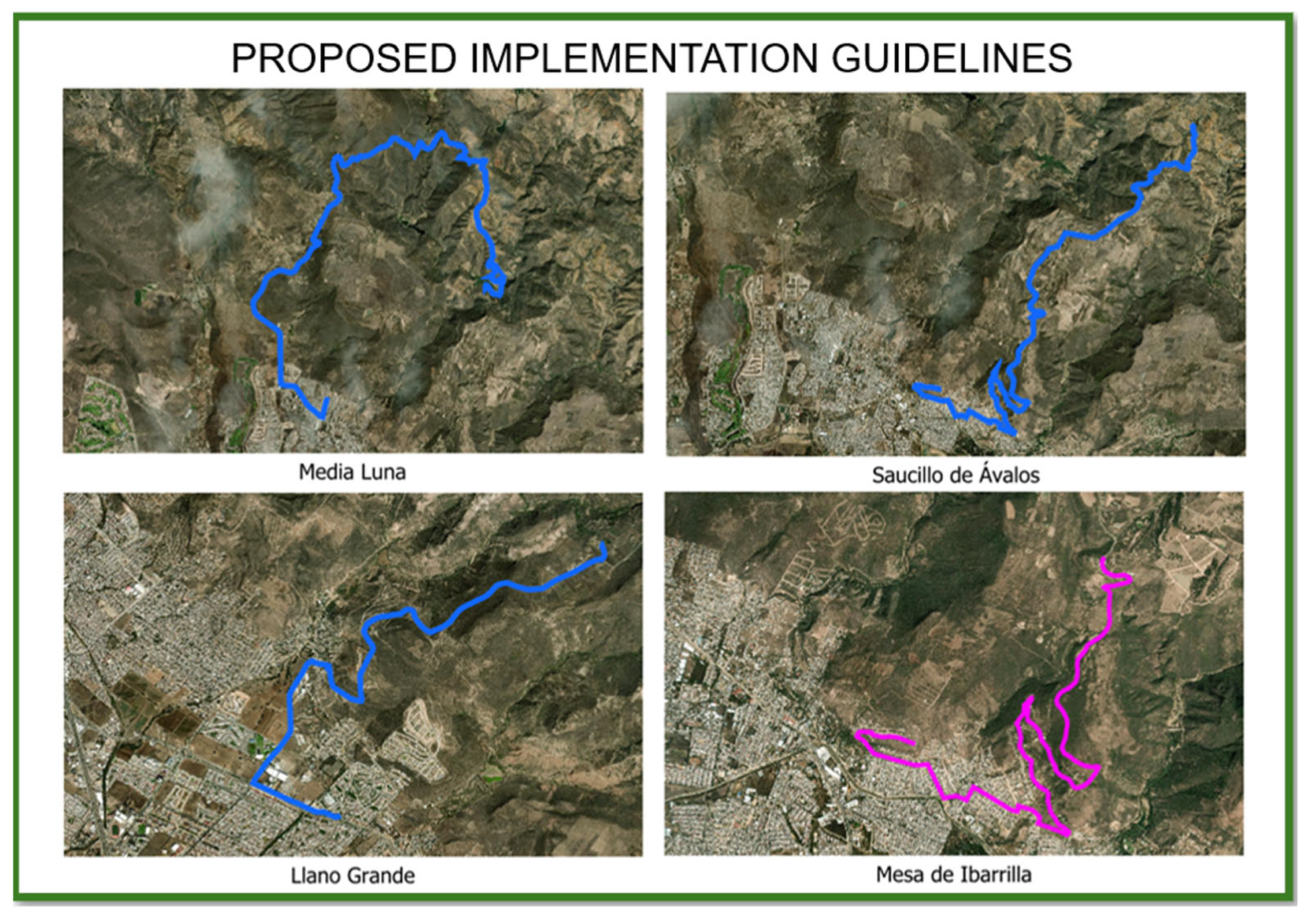
The data allow us to visualize not only the hydraulic efficiency of each community but also its potential for population coverage under controlled operating conditions. This information is key to decision-making, where equity of access, resource sustainability, and technical feasibility must be considered. Now, a comparative analysis of pumped water supply systems in communities is presented, characterized by its operating time, pumped flow, pipeline length, topographic elevations, and calculation of the optimal pipe diameter. First, pipeline routes were mapped from the nearest SAPAL network point to each community (Figure 3), considering topography, distance, and elevation, with lengths ranging from 7700 to 19,900 m and elevation up to 425 m (Table 9).
The optimal diameter (OD) was calculated based on flow rate, length, and slope, seeking to minimize losses and optimize performance. The OD varies significantly between communities, reflecting the difference in flow rate. Mesa de Ibarrilla requires the largest OD due to its flow rate of 11.24 L/s, while Media Luna and Saucillo de Ávalos operate with a smaller diameter due to their low flow rates. With the OD for each line, three standard nominal diameters (NDs) of 2, 4, and 6 inches were considered, evaluating their relevance against the estimated OD. The selection is based on criteria of hydraulic efficiency (which must be equal to or greater than the OD to avoid overpressure, cavitation, or excessive friction losses), economic viability (comparing the total cost of installation, piping, concrete anchoring, and leak testing), and operational compatibility (prioritizing the use of commercial diameters that facilitate maintenance, replacement, and standardization of components).
The cost increases exponentially with the ND, reflecting the impact of the unit price of the pipe and the connections. For example, Media Luna, despite having the lowest flow rate, has the highest total cost due to its length (19,900 m), which shows that distance is a critical factor in investment. Below is a comparison between the estimated OD and the costs associated with each ND, to justify the most appropriate selection for each community. The results show that oversizing the OD does not always generate proportional hydraulic benefits and can incur significant costs. On the other hand, undersizing the ND with respect to the OD can compromise the operation of the system, especially in lines with higher flow rates or lengths. Therefore, it is recommended to adopt the ND closest to the OD that guarantees efficiency without incurring excessive costs (Table 10 and Table 11).
Although theoretical hydraulic calculations may suggest alternative optimal diameters, the regulatory requirement established by SAPAL mandates a minimum diameter of 6 inches. For this reason, preliminary calculations are presented only as diagnostic references to illustrate potential variations in flow and pressure. However, all final design and cost estimations are standardized to ND = 6″, ensuring compliance with institutional norms and providing a consistent basis for socioeconomic comparison. This adjustment clarifies the workflow and strengthens the methodological transparency of the study.

4.3. Economic Evaluation and Cost–Benefit Analysis

4.3.1. Water Distribution Network Project (Scenario 1)

This scenario seeks to simulate the cost and social benefit associated with the hypothetical future project of connecting communities to the water network. The data and information are supported by technical reports provided by SAPAL, and projections are based on nationally sourced data [6,8]. In collaboration with SAPAL’s project department staff, maps of the proposed routes were drawn up, starting from the last and closest connection point to the network for each community. This was essential for estimating the difference in elevation and the linear length of the pipeline, allowing for a more accurate calculation of the investment for this scenario [11,12].
Hydraulic calculations were performed to determine the OD of each line, and the corresponding costs were estimated using the closest DN, resulting in a DN of 2″ for Media Luna and Saucillo de Ávalos and a DN of 6″ for Mesa de Ibarrilla and Llano Grande. Within the framework of the collaboration with SAPAL, we were informed that, in accordance with technical and internal regulatory provisions, pipes with a DN smaller than 6″ are not installed. Therefore, for the purposes of technical–economic analysis and institutional alignment, DN 6″ will be adopted for cost calculation and design in the communities, thus ensuring operational viability and compatibility with SAPAL’s implementation criteria.
Table 12 shows the cost per community, ranging from USD 1,708,656.4 (Llano Grande) to 4,415,878.3 (Media Luna), with a cumulative cost of USD 10,828,887.54 for the four communities analyzed. This investment only covers the main pipeline and does not include environmental impact studies, complementary works (tanks, valves, booths, and electrification), or long-term maintenance [8]. Similarly, the O&M calculation is presented, which, in a conservative estimate, was 2% of the initial investment of USD 10,828,887.54, in accordance with the technical guidelines of the Mexican Institute of Water Technology [12]. This represents an annual cost of USD 216,577.75 for the total infrastructure, a figure that includes the energy required for pumping, personnel costs, repairs, and water treatment [6,11].
However, an average monthly consumption of 15 m3 per household was established [6], and a basic annual rate of USD 0.35 per m3 was considered [8]. Based on the financial projection guidelines [24,25], a Compound Annual Growth Rate (CAGR) of 5.5% was projected, which accounts for average inflation and operational adjustments. In addition, based on [43], it was estimated that the initial connection cost per household (contract) ranges between USD 29.97 and 40.87 (with an average of USD 35.42).
Therefore, the cumulative cost per dwelling over 20 years, considering the projected monthly rate and the initial connection cost, would exceed USD 2223.21, without a discount. However, as suggested by several authors in their analysis of public and social investment projects, the cumulative expenditure per dwelling can be estimated using an SDR of 10% [22,24,25,26], resulting in an average expenditure of USD 2000.89. On the other hand, the cumulative contract cost per dwelling over 20 years would be greater than USD 1235.12, undiscounted, and with a 10% SDR, it would average USD 1111.61.
In relation to the annual income that SAPAL would receive, which is considered an annual accumulated expense per user, it is estimated that, for the 195 homes projected in 2045, in the first year of billing, this income would be USD 3458.33 on average. This amount, with a CAGR of 5.5% and without any discount, is USD 674,374.17 [24,25,26]. This is drastically lower than the USD 10,828,887.54 proposed as the initial investment for the pipeline alone.
This shows the financial non-viability of the network connection project from SAPAL’s perspective. For example, Media Luna, with nine homes projected by 2045, at a cost of USD 4,415,878.3, would make it practically impossible to recover the investment, without considering depreciation or maintenance. The payment per user to SAPAL, from the CBA perspective, is seen as a transfer, defined as income for SAPAL and a cost for the user, with a net effect of zero on society [22,26]. However, calculating this payment is crucial to understanding SAPAL’s financial sustainability and the economic impact on households (Table 13 and Table 14).
The NPV was calculated using projected initial revenues per year and estimated costs for each period, with an SDR of 10%, in accordance with the evaluation criteria for water infrastructure projects in rural contexts. Table 15 presents the annual cash flows, the cumulative NPV, and the total result of the project. The NPV obtained shows a sustained negative trend over the 20 years. Although the projected initial revenues show annual growth, the costs significantly exceed them each year. This translates into negative net cash flows, which, when discounted, accumulate a total NPV of USD −12,429,347.93, implying that, under current conditions, the project would not be economically viable.
This analysis shows that expanding the conventional network in rural areas with low population density and complex topography is a financially unviable alternative. When applying CBA with an SDR of 10%, the NPV of the project is negative, reinforcing the need to consider decentralized solutions such as the RWH system, which are more efficient, replicable, and adaptable to the rural context.

4.3.2. Implementation of Ecotechnologies (Scenario 2)

This scenario aims to evaluate the project for the standardization and implementation of ecotechnology in community housing, based on the 195 homes projected for 2045. According to interviews conducted with community residents, it was estimated that, with the support and subsidies received from the implementing agencies, the average cost of investing in an RWH system ranged from USD 217.98 to 299.73; meanwhile, according to [10], the total cost without subsidies or support ranged from USD 1634.88 to 2179.84 (with an average of USD 1907.36). Therefore, according to the calculations made, the initial investment would be USD 371,934.60 for the 195 homes projected in total, a figure that represents around 5.98% of the investment that SAPAL has already made as a subsidy to communities to supply water by tanker trucks (USD 6,212,534.06 [7]).
Regarding the time required for implementation, the RWH system can be installed in less than 3 months, according to the interviewees and [14], whose manual states that it can be completed in 6 to 12 weeks, depending on factors such as logistical conditions and community training. Its implementation does not require complex infrastructure or extensive institutional permits [16]. In terms of maintenance, the cost per household is estimated to range from USD 54.50 to 81.74 per year (an average of USD 68.12) [14,16,21]. This cost is considered minimal and can be managed locally through community training, promoting operational sustainability and self-management [14,16,21]. This gives an approximate cumulative annual cost of USD 13,283.38 for the projected homes (Table 16).
The implementation of SCALL brings different benefits, one of the main ones being direct savings for the user, reducing or eliminating the recurring monthly payment for water supply or service. Although SAPAL currently provides a subsidy for water delivery by tanker trucks (which the four communities in this study benefit from), this support cannot be considered a viable solution, as it is an intermittent service and does not guarantee the sustained availability of water. Through the RWH system, the cost and maintenance required translate into an initial investment that, in the best-case scenario, would be subsidized, representing significant savings for households [14,16]. These savings would allow households to allocate resources to other basic needs and services, such as health, food, or education, which would have a crucial positive impact, especially for populations with high levels of marginalization [21].
Another direct economic benefit is the elimination of the annual expense associated with connection to the distribution network. This expense was previously estimated at USD 63.76 per household; it is a fixed rate that, in rural contexts, does not always guarantee a continuous or quality supply, and it also avoids the estimated contract expense of USD 35.42 per household. When this expense is projected for a total of 195 homes, the cumulative annual amount is a saving of USD 19,341. This saving not only reflects the economic efficiency of SCALL but also highlights the financial burden involved in maintaining the connection in areas where water infrastructure is limited or intermittent. In this sense, avoiding this fee allows resources to be redirected towards more sustainable solutions that are adapted to local conditions.
Another significant saving corresponds to the elimination of the cost of purchasing water by tanker truck, a widespread practice in rural communities due to the lack of reliable access to this resource. According to the interviews, a tanker truck costs an average of USD 67.68, and each household purchases an average of six tanker trucks per year, implying an annual expenditure of USD 406. Extrapolating from this, considering that with the use of RWH, consumption would drop from six to three tanker trucks per year, the total annual savings for the 195 projected homes is estimated at USD 39,595. This amount reveals the magnitude of the expenditure that households allocate to external supply, which is conditioned by availability, water quality, and the urgency of consumption. Eradicating this expense not only represents economic relief but also an improvement in the water autonomy of households.
However, some benefits of RWH are complex to quantify financially, but it is essential to identify certain social benefits that, although they do not represent expenses incurred, reflect the costs avoided by the user.
Firstly, there are savings around health, with an estimated reduction in the incidence of diseases, particularly gastrointestinal diseases, due to the possibility of affordable access to better quality water for human consumption [21,32]. This benefit could well be monetized by calculating avoided medical costs (avoided consultations and medications), as well as lost productivity per workday missed [21,26].
The National Institute of Public Health (INSP) reported that in 2019 in Mexico, there were around 6.58 million incident cases of diarrheal diseases, with access to contaminated water in rural communities being a key factor [44]. In addition, according to Agreement ACDO.AS3.HCT.281124/434.P.DF published in 2024 by IMSS, the current unit costs for 2025 are established, allowing the economic value of medical care to be estimated in social analysis models, with an average unit cost per outpatient consultation in primary care of USD 70.63 per event, including medical care, supplies, and basic medicines [45].
The National Council for the Evaluation of Social Development Policy [46] supports this approach by pointing out that, in scattered rural areas, access to medical services is limited by physical distance and the lack of public transportation, which represents an additional expense for households. In addition, recent studies on primary care in rural areas highlight that the lack of transportation is a recurring economic barrier to accessing timely medical services [47].
This economic barrier implies a significant indirect expense, generated by travel to urban medical facilities such as health centers or CAISES, varying according to the distance traveled (between 10 and 25 km) and the type of transportation available. The most common options include private transportation, suburban buses, and taxis. Based on current local rates for 2025, the average cost per trip ranges from USD 5.45 to 10.9 for private transportation, USD 0.54 to 0.71 for suburban buses, and up to USD 8.17 for taxis. This allows us to estimate transportation costs per medical event (round trip) of approximately USD 1.31 in economy mode (bus) and USD 16.35 by car (private or taxi).
This indirect expense statement was constructed based on field observations at suburban terminals in León, as well as on an analysis of mobility patterns in communities. Therefore, for the purposes of this report, the average cost of transportation for medical care is considered to be USD 10.9. Added to this latter expense is the loss of income per day not worked, especially in rural areas where informal or agricultural activities predominate. Although the minimum daily salary in Mexico for 2025 is USD 13.57, in rural communities, daily income can exceed this amount on productive days, particularly during agricultural seasons [48]. It is estimated that the loss of income due to illness or medical consultations can range from USD 15.26 to 17.44 per day (an average of USD 16.35), which represents a significant economic cost for rural households dependent on unregulated income [46].
The INSP [49] reports that in areas without access to safe water, the incidence of gastrointestinal diseases can exceed 2 to 3 episodes per person/year, especially in children under 5 years of age, who have one of the highest burdens of disability associated with enteric diseases in Mexico.
Based on the above, annual savings were estimated from the reduction in the incidence of diseases caused by poor-quality water consumption, considering these savings as a health benefit. This was estimated by adding the costs of medical consultation (USD 70.63), required transportation (USD 10.90), and lost income per day not worked (USD 16.35), multiplied by the number of estimated incidents per year (two to three). It was estimated that the annual savings per person would range from USD 195.75 to 293.62 (an average of USD 244.69). Considering an average of five inhabitants per household, the average annual savings per household would be USD 1223.43.
Another social benefit is the time saved, estimated based on the savings involved in avoiding the search for means and sources of water supply by household members, which falls mainly on women and children, as is the case with carrying water from distant sources [16,21]. This time translates into an opportunity cost and a tangible economic benefit [22,24]. In rural communities without access to the water distribution network, activities related to water supply represent a daily investment of time. Although this time is unpaid, it can be valued as an opportunity cost, especially in contexts where productive or educational activities are displaced by the need for domestic supply. Transport can take between 1 and 2 h per day per household, depending on the distance, the type of source, and the availability of containers or transport; it is estimated that this effort is equivalent to 30 to 60 h per month, which, valued at the current minimum salary, represents a significant economic loss [50].
As mentioned above, the minimum daily salary is USD 13.57 [48], which is equivalent to USD 1.70 per hour, considering a standard 8 h workday. Taking a conservative estimate of 1 h per day spent transporting water, the monthly opportunity cost per household would be approximately USD 50.87, amounting to USD 610.46 per year. This figure reinforces the importance of time savings as a tangible social benefit. The guidelines of the Rainwater Harvesting Program (PROCAPTAR) explicitly recognize this saving as one of the most important positive impacts in rural communities with high territorial dispersion, as it reduces the domestic burden and frees up time for educational, productive, or care activities [13,14].
Finally, there are other social benefits such as increased autonomy, resilience, and community water self-management; in addition, reducing pressure on the region’s aquifers and taking advantage of rainwater as a resource previously seen as waste [14,36].
To enhance transparency in the cost–benefit analysis, Table 17 explicitly presents the components of the annual cash flow of benefits and costs. The table details the monetary value per household and the aggregated value across all communities for each category, including savings from tanker water, avoided SAPAL tariffs, health-related savings, time savings, and maintenance costs.
The NPV for this scenario was also calculated, with constant annual net cash flows derived from estimated profits (USD 403,261) minus annual maintenance (USD 13,283.38) and an SDR of 10%. Table 18 shows the cash flows and cumulative NPV, which takes into account the estimated initial investment of USD 371,934.60. The NPV result indicates favorable economic viability, generating a positive cumulative NPV of USD 3,061,249.62. This value suggests that the project not only recovers the initial investment but also generates sustained economic benefits. The stability of the cash flows and the progressive accumulation of the NPV reinforce the relevance of the scenario as an efficient alternative for water supply in rural communities.

4.4. Comparative Analysis

The comparative analysis revealed a notable disparity in socioeconomic feasibility between the two scenarios. Firstly, with the water supply network expansion scenario, it was found that the investment costs to bring the connection to the communities are exorbitant, as can be seen in Table 19. It is important to note that the investment amounts for the distribution network project only involve the costs associated with the water line, without considering the costs associated with technical studies, permits, complementary works, or ongoing maintenance. For instance, in communities with a smaller number of homes, such as Media Luna with 9 homes, the cost per home would amount to approximately USD 500,466.21 (USD 4,504,195.91/9 homes) or Saucillo de Avalos, with around USD 263,379.20 (USD 2,897,171.23/11 homes).
Thus, with a total cost of USD 11,045,465.29 for the hydraulic line of the four communities, it is highly superior to the direct benefit that SAPAL would obtain from tariff income; contemplating a total accumulated income without a discount of USD 1,600,460.39 in 20 years, it is practically impossible to recover SAPAL’s investment in a reasonable time frame.
In contrast, the proposed scenario with the implementation of ecotechnology, particularly RWH, elucidates a decentralized alternative whose cost is significantly lower. The total investment to implement it in the number of homes projected in 2045 (195 homes) would be USD 358,217.98; this is an amount that includes the estimated annual cost of maintenance, a minimum amount that is theoretically easier to manage locally through community training [16,21]. This figure would represent about 5.3% of the estimated amount of the network’s initial investment.
However, with respect to the social benefits of avoiding the cost of piped water supply, the need for a subsidy for the high-cost service, and the direct savings in household tariffs, significant economic impacts are generated.
The estimated savings from avoiding connection to the network (USD 19,341) and the purchase of tanker water (USD 39,595) are added to other direct economic impact items, such as savings in health (USD 238,569), which chart a path towards improvement in the area of health, since better quality water is available, which reduces medical expenses and increases productivity, as mentioned in the Wixárika case [36]. In addition, time savings (USD 119,039), significant savings linked to the reduction in activities such as hauling or daily management of the resource constitute a benefit that, although complex to quantify and monetize, has a tangible social impact [16,21].
In addition, there are other benefits, such as the strengthening of community resilience and water autonomy, as well as the empowerment of users and the promotion of environmental sustainability by reducing pressure on aquifers. Thus, the projected model generates an estimated total annual saving of USD 416,543.91 for the 195 homes studied, which is evidence of its economic viability and its transformative potential in terms of well-being, equity, and community sustainability.
Thus, the economic evaluation of both water intervention scenarios reveals significant contrasts in terms of financial viability, operational scalability, and community impact.
From a strict economic perspective, the RWH scenario presents a positive NPV of USD 3,061,249.62, which suggests an efficient recovery of the initial investment and generation of benefits, positioning it as an economically viable alternative. In contrast, the SAPAL network expansion scenario yields a negative NPV of USD −12,429,347.93, derived from annual deficit flows that fail to offset costs, even considering the projected revenue growth.
In terms of scalability, network expansion requires a more robust infrastructure, with greater technical, logistical, and administrative requirements, which can hinder its implementation in communities with budgetary or institutional constraints. By contrast, the ecotechnology scenario offers a replicable, low-cost option with the potential to adapt to diverse geographical and social conditions.
In terms of community impact, both projects can contribute to equitable access to water, but the ecotechnologies scenario stands out for its capacity for local empowerment, promoting self-management of resources and reducing dependence on centralized networks. Network expansion, although more complex, could be relevant in areas with high population density and consolidated institutional capacity. Table 20 summarizes the key factors of the comparison, highlighting the viability of implementing ecotechnologies in general, but especially in rural contexts.

5. Discussion

Local conditions, such as population density, topography, institutional capacity, and community participation, play a decisive role in the viability of ecotechnology. Therefore, we recommend complementing this type of analysis with participatory studies and sensitivity evaluations that allow models to be adjusted to different realities. A key aspect is the dependence of rainwater harvesting systems on interannual rainfall variability. In semi-arid regions such as Bajío, rainfall patterns fluctuate significantly, affecting water availability and the efficiency of RWH systems. Moreover, climate change may intensify these variations, altering the temporal and spatial distribution of rainfall and creating scenarios of greater uncertainty for the design and operation of RWH systems.
According to the 2020 Population and Housing Census, Mexico has more than 100,000 rural localities with fewer than 2500 inhabitants, many of which consist of only a few dozen households [38]. In the specific case of León, the 2020 census data reveals that out of 568 total localities, 4781 have fewer than 290 inhabitants, a figure that represents the largest population among the four communities studied and accounts for 84% of the municipality’s settlements. This high proportion reinforces the notion that rural dispersion is not an isolated phenomenon but a structural feature of the region.
The predominance of micro-localities, often with limited infrastructure and basic services, mirrors the conditions observed in the four communities selected for this study. Their demographic scale and service limitations are not exceptions but rather statistically representative of the broader rural landscape in León and, by extension, in Guanajuato [49]. Moreover, the selection of these communities was not arbitrary; it was informed by the sustained engagement of COTAS in rainwater harvesting initiatives, ensuring both contextual relevance and methodological continuity. Thus, the study’s focus on four communities, while modest in number, is grounded in demographic representativeness and strategic fieldwork history.
The results obtained reflect that the centralized and urban model, despite highlighting and recognizing the undeniable work and achievements obtained within the municipal urban coverage—as is the case in León, with approximately 97% coverage [8]—nevertheless reveals a profound territorial inequity. Rural areas, and with them populations with a high degree of marginalization and water vulnerability, continue to lack direct access to drinking water, a situation that is accentuated by the technocratic institutional logic, which does not provide solutions adapted to dispersed rural contexts [6,51]. Network expansion in these areas therefore faces strong technical, structural, and economic barriers [21].
The analysis found that in the scenario of bringing water networks to communities like the four within this study, the costs amount to between USD 1,145,717 and 2,961,008. In contrast, implementing RWH can be performed for less than 6% of the total amount of that previous scenario. The conditions present in such rural areas, such as low population density and rugged topography, increase the financial and technical challenges in the scenario of expanding the conventional distribution network model, leading to high costs per linear meter of pipe and generating considerable and complex logistics for right-of-way permitting [12]. In contrast, ecotechniques avoid such challenges by operating in a local and decentralized manner, positing themselves as more adaptable and efficient alternatives in these dispersed contexts [21]. If standardized within public water policy, it is a viable alternative for rural areas [14,52]. However, for its implementation to be efficient, it requires, as a matter of principle, the development of local technical guidelines that recognize territorial particularities; in addition, it also requires a public–community financing model that allows co-responsibility in investment and training programs for maintenance, strengthening self-management, and sustainability [16,21]. In addition to the previous experience in the rural communities of León, it is clear that with the explicit acceptance and adoption of these practices, the viability and potential of these for adaptation and the generation of benefits in the rural context are validated [21,42,53].
SAPAL’s efforts deserve recognition, yet prioritizing urban coverage projects continues to exclude historically vulnerable and marginalized communities [51]. For its part, the social adoption of RWH offers an alternative for equitable access to water resources, fostering community resilience and water justice. This aligns with the perspective that criticizes the current conventional technocentric model, since, in the absence of adequate infrastructure, rainwater is, for the most part, taken as waste, instead of being harnessed and serving as part of the possible supply for communities [52]. Based on the experiences of RWH implementation, a significant reduction in operating costs through community maintenance was found to be a result, evidence that is supported by participation in local resource management. This scenario strengthens community governance and self-management and permeates the process of appropriation, transfer, and social adoption of ecotechnology. It is a dynamic within which responsibility is shared, consistent with the principles of resource management [54] and recognized as a viable and sustainable alternative [14].
The NPV obtained for each of the scenarios shows that, despite taking into consideration that the users will bear the initial investment, under the hypothesis of a 20-year projection, the cost of implementing RWH is significantly lower in relation to the accumulated cost associated with the project of connecting to the water distribution network. This represents a tangible and significant economic benefit for households, as well as fostering a perspective and state of water security and allowing the use of resources and efforts for other basic needs to be covered. Now, from SAPAL’s point of view, with the current scenario of no connection to the network for rural households, it could be considered or translated as revenue foregone. However, the amount established as possible revenue should be compared with the investment cost involved for the infrastructure (pipelines, pumping tanks, etc.) that is avoided, which represents a higher magnitude. Therefore, from the perspective of efficient public spending and the service mandate, investment in ecotechnologies would be a more effective option for SAPAL, allowing the agency to fulfill its service obligation in a more equitable and sustainable way.
The analysis of direct costs and benefits underlines the superiority of the implementation of ecotechnologies. However, these alternative offers, in addition to the direct benefits, provide other non-quantified but equally essential benefits, which highlight it as a value proposition from a sustainable development perspective. Some of these benefits include improved public health through access to better-quality water, significant time savings by eliminating additional activities to achieve supply, the promotion of community resilience in the face of current water problems, and the empowerment of users by moving from being passive consumers to active managers of the resource [21,32]. In short, pressure on aquifers is reduced, and rainwater is harnessed, highlighting environmental benefits that align ecotechnology with the Sustainable Development Goals, particularly goals 3, 6, 11, and 13 [14,52].

6. Recommendations

Below are some recommendations for future work. Based on the hydraulic, economic, and climate analysis conducted in the four communities, the adoption of total annual cost criteria is proposed for selecting pipe diameters, considering hydraulic efficiency, power requirements, and operating costs. Local precipitation should be used as a key parameter for sizing RWH, considering roofs of at least 30–40 m2 and adequate runoff coefficients (0.8). The implementation of RWH should be promoted as a decentralized solution, especially in communities with low population density and high water vulnerability. These criteria should be integrated into design manuals and public funding calls, promoting hybrid schemes that combine conventional infrastructure with ecotechnology.
Within the management model and public policy, we recommend creating or proposing a program within the operating systems for “rural SAPAL and rainwater harvesting,” in which ecotechniques, particularly RWH, are recognized as an integral part of water infrastructure, seeking to technically standardize community training and continuous monitoring of RWH. We also recommend establishing a hybrid financing model, that is, to have a subsidy or co-financing scheme where the operating agency directs part of its budget to subsidize part of the initial cost of RWH, while the user contributes the rest, thereby promoting the appropriation, transfer, and adoption of ecotechnologies.
On the other hand, the promotion of a decentralized model should involve reformulating or reintroducing the Water Committees as participatory governance. SAPAL would act as a facilitator and technical supervisor, providing training for basic maintenance and local management of the systems. Another key recommendation would be to adjust SAPAL’s regulatory framework so that it can invest in decentralized water distribution network solutions and recognize them as a valid fulfillment of its obligation to provide the service. This would allow the operating agency to expand its reach without the limitations of current and conventional infrastructure. It is also recommended that technical simulations be carried out for each community (considering precipitation, available roof area, and water demand) and that fieldwork be intensified through interviews with residents and technicians from the operating agency. In addition, mixed financing mechanisms (public–community) should be evaluated for implementation on a larger scale.

7. Conclusions

Comparative analysis from a socioeconomic evaluation shows that, although SAPAL has migrated and expanded its coverage efficiently and positively in León’s urban area, the current centralized model has not been able to solve the exclusion of marginalized rural communities within the municipality of León, Guanajuato, reflecting state, national, and global problems. The extension of the conventional water distribution network as a proposed scenario faces many technical, structural, and economic barriers that are practically insurmountable but that can be effectively overcome through an ecotechnology scenario. The implementation of ecotechniques, such as RWH, then emerges as a more viable and environmentally sustainable economic, social, and technical alternative and solution, with a high potential for replication at the municipal level. The resulting NPVs reaffirm that ecotechnology offers a more cost-effective option to achieve more equitable access to water, in addition to generating direct and significant savings for the end user and freeing up SAPAL resources that can be used to strengthen the existing network. Focusing on the evidence regarding the feasibility and effectiveness of ecotechnologies, as well as the resulting socioeconomic analysis, the final part of the research project seeks to propose an administrative model that could be useful for public policy, where the strategic integration of ecotechnologies in water management permeates.

Author Contributions

Conceptualization, B.Y.S.A. and X.D.G.; Methodology, B.Y.S.A.; Validation, B.Y.S.A., X.D.G. and D.T.-Z.; Formal analysis, B.Y.S.A.; Investigation, B.Y.S.A.; Writing—original draft preparation, B.Y.S.A.; Writing—review and editing, B.Y.S.A. and X.D.G.; Supervision, X.D.G., D.T.-Z., J.M.R. and A.C.-O.; Project administration, X.D.G. All authors have read and agreed to the published version of the manuscript.

Funding

This research was funded in part by Universidad de Guanajuato.

Data Availability Statement

The data presented in this study are available on request from the corresponding author. The data are not publicly available due to institutional restrictions.

Conflicts of Interest

The authors declare no conflict of interest.

References

  1. Intergovernmental Panel on Climate Change (IPCC). Climate Change 2022: Impacts, Adaptation and Vulnerability. Contribution of Working Group II to the Sixth Assessment Report of the IPCC; Cambridge University Press: Cambridge, UK, 2022; Available online: https://www.ipcc.ch/report/ar6/wg2/ (accessed on 14 December 2025).
  2. Organisation for Economic Co-Operation and Development (OECD). Water Governance in Latin America; OECD Publishing: Paris, France, 2012; Available online: https://www.oecd.org/content/dam/oecd/en/publications/reports/2012/03/water-governance-in-latin-america-and-the-caribbean_g17a2110/5k9crzqk3ttj-en.pdf (accessed on 14 December 2025).
  3. Secretaría de Medio Ambiente y Recursos Naturales (SEMARNAT). Informe de la Situación del Medio Ambiente en Mexico 2020; Gobierno de Mexico: Mexico City, Mexico, 2020; Available online: https://apps1.semarnat.gob.mx:8443/dgeia/informe18/index.html (accessed on 14 December 2025).
  4. Stern, N. The Economics of Climate Change: The Stern Review; Cambridge University Press: Cambridge, UK, 2007; Available online: https://personal.lse.ac.uk/sternn/108nhs.pdf (accessed on 14 December 2025).
  5. World Bank. Shock Waves: Managing the Impacts of Climate Change on Poverty; World Bank Group: Washington, DC, USA, 2016; Available online: https://doi.org/10.1596/978-1-4648-0673-5 (accessed on 14 December 2025).
  6. Comisión Nacional del Agua (CONAGUA). Status of the Drinking Water, Drainage, and Sanitation Subsector; Gobierno de Mexico: Mexico City, Mexico, 2024; Available online: https://www.gob.mx/conagua/documentos/situacion-del-subsector-agua-potable-drenaje-y-saneamiento (accessed on 14 December 2025).
  7. Gecentenarios. SAPAL Presented Its 2022–2025 Activity Report. 2025. Available online: https://gecentenarios.com/sapal-presento-su-informe-de-actividades-2022-2025/ (accessed on 14 December 2025).
  8. Congreso del Estado de Guanajuato. Ley de Ingresos para el Municipio de León, Guanajuato, Ejercicio Fiscal 2024. Normatividad Estatal y Municipal Guanajuato. 2024. Available online: https://normatividadestatalymunicipal.guanajuato.gob.mx/archivos/e37d015e5d80348a275284efacdb6db5.pdf (accessed on 14 December 2025).
  9. Bonito León. León Secures A Future with Water: SAPAL Presents Its Activity Report. 27 February 2025. Available online: https://bonitoleon.com/redaccion/actualidad/leon-garantiza-un-futuro-con-agua-sapal-presenta-su-informe-de-actividades/ (accessed on 14 December 2025).
  10. Entérate León. SAPAL Is an Example of Efficiency and Social Justice: Ale Gutiérrez. 2025. Available online: https://enterate.leon.gob.mx/sapal-es-ejemplo-de-eficiencia-y-justicia-social-ale-gutierrez/ (accessed on 14 December 2025).
  11. Asociación Nacional de Entidades de Agua y Saneamiento de Mexico (ANEAS). Benchmarking of Drinking Water and Sanitation Utilities in Mexico; ANEAS: Mexico City, Mexico, 2024; Available online: https://aneas.com.mx/wp-content/pdf/documentos-oficiales/manual-de-induccion-a-la-direccion-de-organismos-operadores.pdf (accessed on 14 December 2025).
  12. Instituto Mexicano de Tecnología del Agua (IMTA). Unit Costs of Hydraulic Infrastructure in Mexico; IMTA: Cuernavaca, Mexico, 2022. Available online: https://www.imta.gob.mx/biblioteca/libros_html/guia-costos/files/assets/common/downloads/publication.pdf (accessed on 14 December 2025).
  13. Comisión Nacional del Agua (CONAGUA). National Technical Guidelines for Rainwater Harvesting Systems and Basic Sanitation at Household Level; Gobierno de Mexico: Mexico City, Mexico, 2025; Available online: https://www.gob.mx/cms/uploads/attachment/file/976468/Lineamientos_t_cnicos_SCALL_2025.pdf (accessed on 14 December 2025).
  14. Comisión Nacional del Agua (CONAGUA). Rainwater Harvesting Systems and Basic Sanitation at Household Level in Rural Areas; Gobierno de Mexico: Mexico City, Mexico, 2025; Available online: https://www.gob.mx/conagua/documentos/sistemas-de-captacion-de-agua-de-lluvia-scall-y-saneamiento-basico-a-nivel-vivienda-en-zonas-rurales (accessed on 14 December 2025).
  15. Secretaría del Medio Ambiente (SEDEMA). Records of the Rain Harvesting Program; Gobierno de la Ciudad de Mexico: Mexico City, Mexico, 2023; Available online: https://sedema.cdmx.gob.mx/programas/programa/cosecha-de-lluvia (accessed on 14 December 2025).
  16. Isla Urbana. Pluvioteca: Rainwater Harvesting Information Center. 2023. Available online: https://islaurbana.org/pluvioteca/ (accessed on 14 December 2025).
  17. De la Torre, A.P. Rainwater Harvesting Grows in the Wixárika Community of Mexico. *El País*, 15 March 2025. Available online: https://elpais.com/america-futura/2025-03-15/la-cosecha-de-agua-de-lluvia-crece-en-la-comunidad-wixarika-de-mexico.html (accessed on 14 December 2025).
  18. Publimetro. Rainwater Harvesting: The Bet of Rural Communities Facing Drought. 22 May 2025. Available online: https://www.publimetro.com.mx/guanajuato/2025/05/22/captar-agua-de-lluvia-la-apuesta-de-comunidades-rurales-ante-la-sequia/ (accessed on 14 December 2025).
  19. El Financiero. Rainwater Harvesting as a Sustainable Solution in Mexico. 2 May 2023. Available online: https://www.elfinanciero.com.mx/mundo-empresa/2023/05/02/el-aprovechamiento-del-agua-de-lluvia-como-una-solucion-sostenible-en-mexico/ (accessed on 14 December 2025).
  20. Martínez Mendoza, A.; López Zamora, D. Water self-management: Uses of rainwater harvesting. Health Sci. Technol.—Conf. Ser. 2024, 3, 695. [Google Scholar]
  21. Prieto-Jiménez, D.; Oviedo-Ocaña, E.R.; Gómez-Isidro, S.; Domínguez, I.C. A multicriteria decision analysis for selecting rainwater harvesting systems in rural areas: A tool for developing countries. Environ. Sci. Pollut. Res. 2024, 31, 42476–42491. [Google Scholar] [CrossRef] [PubMed]
  22. Boardman, A.E.; Greenberg, D.H.; Vining, A.R.; Weimer, D.L. Cost-Benefit Analysis: Concepts and Practice, 5th ed.; Cambridge University Press: Cambridge, UK, 2018; Available online: https://www.researchgate.net/publication/326678227_Cost-Benefit_Analysis_Concepts_and_Practice_5th_edition (accessed on 14 December 2025).
  23. Organisation for Economic Co-Operation and Development (OECD). Cost-Benefit Analysis and the Environment: Further Developments and Policy Use; OECD Publishing: Paris, France, 2018; Available online: https://www.oecd.org/content/dam/oecd/en/publications/reports/2018/06/cost-benefit-analysis-and-the-environment_g1g8b70e/9789264085169-en.pdf (accessed on 14 December 2025).
  24. Secretaría de Hacienda y Crédito Público (SHCP). Guidelines for the Preparation and Presentation of Cost-Benefit Analyses of Investment Programs and Projects. *Diario Oficial de la Federación*. 2023. Available online: https://www.dof.gob.mx/nota_detalle_popup.php?codigo=5328458 (accessed on 14 December 2025).
  25. World Bank. Discounting Costs and Benefits in Economic Analysis of World Bank Projects; World Bank Group: Washington, DC, USA, 2023; Available online: http://documents.worldbank.org/curated/en/099610503022315638 (accessed on 14 December 2025).
  26. Hanley, N.; Barbier, E.B. Pricing Nature: Cost-Benefit Analysis and Environmental Policy; Edward Elgar Publishing: Cheltenham, UK, 2009; Available online: https://www.researchgate.net/publication/41558988_Pricing_Nature_Cost-Benefit_Analysis_and_Environmental_Policy-Making (accessed on 14 December 2025).
  27. Bakker, K. Alter-Globalizations: Environmental Justice Movements and the Global Water Crisis; University Center for International Studies, University of Pittsburgh: Pittsburgh, PA, USA, 2007; Available online: https://www.ucis.pitt.edu/global/sites/default/files/Downloadables/Bakker%20alter-globalizations%5B16019%5D.pdf (accessed on 14 December 2025).
  28. UN-Water. UN-Water Analytical Brief on Water Security and the Global Water Agenda. 2013. Available online: https://www.unwater.org/sites/default/files/app/uploads/2017/05/analytical_brief_oct2013_web.pdf (accessed on 14 December 2025).
  29. Molle, F. River-basin planning and management: The social life of a concept. Geoforum 2009, 40, 484–494. [Google Scholar] [CrossRef]
  30. Swyngedouw, E. Social Power and the Urbanization of Water: Flows of Power; Oxford University Press: Oxford, UK, 2004; Available online: https://www.researchgate.net/publication/346816654_Social_Power_and_the_Urbanization_of_Water_Flows_of_PowerFlows_of_Power (accessed on 14 December 2025).
  31. Biswas, A.K. Integrated water resources management: A reassessment. Water Int. 2004, 33, 248–256. [Google Scholar] [CrossRef]
  32. U.S. Department of Energy (DOE). Rainwater Harvesting Systems Technology Review; Federal Energy Management Program: Washington, DC, USA, 2011. Available online: https://www.energy.gov/femp/rainwater-harvesting-systems-technology-review (accessed on 14 December 2025).
  33. Shah, T. Taming the Anarchy: Groundwater Governance in South Asia. Resources for the Future, 2009. Available online: https://www.researchgate.net/publication/259609166_Taming_the_Anarchy_Groundwater_Governance_in_South_Asia (accessed on 14 December 2025).
  34. Helmreich, B.; Horn, H. Opportunities in rainwater harvesting. Desalination 2009, 248, 118–124. [Google Scholar] [CrossRef]
  35. Hatt, B.E.; Deletic, A.; Fletcher, T.D. Integrated treatment and recycling of stormwater: A review of Australian practice. J. Environ. Manag. 2006, 79, 102–113. [Google Scholar] [CrossRef] [PubMed]
  36. Infobae. IICA Highlights Rainwater Harvesting Programs in Mexico’s Semi-Arid Regions. 9 February 2024. Available online: https://www.infobae.com/america/agencias/2024/02/09/el-iica-destaca-programas-de-captacion-de-agua-de-lluvia-en-el-semiarido-de-mexico/ (accessed on 14 December 2025).
  37. Instituto Nacional de Estadística y Geografía (INEGI). Population and Housing Census 2010; INEGI: Aguascalientes, Mexico, 2011; Available online: https://www.inegi.org.mx/programas/ccpv/2010/ (accessed on 14 December 2025).
  38. Instituto Nacional de Estadística y Geografía (INEGI). Population and Housing Census 2020; INEGI: Aguascalientes, Mexico, 2021. Available online: https://www.inegi.org.mx/programas/ccpv/2020/ (accessed on 14 December 2025).
  39. CEPAL. Técnicas de Proyecciones de Población de Áreas Menores. Repositorio Institucional. 2021. Available online: https://catalog.nlm.nih.gov/discovery/fulldisplay?docid=alma9910508963406676&context=L&vid=01NLM_INST:01NLM_INST&lang=en&search_scope=MyInstitution&adaptor=Local%20Search%20Engine&tab=LibraryCatalog&query=lds56,contains,Venezuela,AND&mode=advanced&offset=560 (accessed on 14 December 2025).
  40. Universidad Nacional Autónoma de Mexico (UNAM). Métodos de Cálculo de Poblaciones Futuras; Facultad de Ingeniería Civil: Santiago, Chile, 2022. Available online: https://idoc.pub/documents/calculo-de-poblaciones-futuras-por-metodo-aritmetico-geometrico-y-parabolico-d4p7m22o794p (accessed on 14 December 2025).
  41. Consejo Nacional de Población (CONAPO). Indicadores Demográficos Básicos; Gobierno de Mexico: Mexico City, Mexico, 2023. Available online: https://www.gob.mx/conapo (accessed on 14 December 2025).
  42. Comisión Nacional del Agua (CONAGUA). National Program for Rainwater Harvesting and Ecotechnologies in Rural Areas (PROCAPTAR); Gobierno de Mexico: Mexico City, Mexico, 2017; Available online: https://www.gob.mx/conagua/acciones-y-programas/programa-nacional-para-captacion-de-agua-de-lluvia-y-ecotecnias-en-zonas-rurales-procaptar (accessed on 14 December 2025).
  43. Sistema de Agua Potable y Alcantarillado de León (SAPAL). Rates and Requirements for Potable Water Service Contracting. 2025. Available online: https://sapal.gob.mx (accessed on 14 December 2025).
  44. Rodríguez Dozal, S.L.; Álamo Hernández, U.; Cortez Lugo, M.; de la Sierra de la Vega, L.A.; Farías Ferra, P.; Riojas Rodríguez, H.; Martínez Avilés, J.; Félix Arellano, E.E.; Schilmann Halbinger, A. Water and Public Health; National Institute of Public Health: Wako City, Japan, 2021; Available online: https://insp.mx/assets/documents/webinars/2021/CISP_agua%20y%20salud%20publica.pdf (accessed on 14 December 2025).
  45. Instituto Mexicano del Seguro Social (IMSS). Agreement ACDO.AS3.HCT.281124/434.P.DF Approving Updated Unit Costs by Level of Medical Care for 2025. *Diario Oficial de la Federación*. 2024. Available online: https://www.dof.gob.mx/nota_detalle_popup.php?codigo=5745162 (accessed on 14 December 2025).
  46. Consejo Nacional de Evaluación de la Política de Desarrollo Social (CONEVAL). Comprehensive Evaluation of Social Policy Linked to the Right to Health 2023–2024 [Press Release No. 15]. 2024. Available online: https://www.coneval.org.mx/SalaPrensa/Comunicadosprensa/Documents/2024/Comunicado_15_Evaluacion_Integral_Salud.pdf (accessed on 14 December 2025).
  47. León, F. Primary Care in Rural Mexico: Challenges and Effective Solutions. *Saludiario*. 2025. Available online: https://www.saludiario.com/atencion-primaria-en-zonas-rurales-de-mexico-desafios-y-soluciones-efectivas/ (accessed on 14 December 2025).
  48. Comisión Nacional de los Salarios Mínimos (CONASAMI). Increase in Minimum Wages for 2025; Gobierno de Mexico: Mexico City, Mexico, 2024; Available online: https://www.gob.mx/conasami/articulos/incremento-a-los-salarios-minimos-para-2025?idiom=es (accessed on 14 December 2025).
  49. Instituto Nacional de Estadística y Geografía (INEGI). Panorama Sociodemográfico de Guanajuato 2020; INEGI: Aguascalientes, Mexico, 2021. Available online: https://www.inegi.org.mx/contenidos/productos/prod_serv/contenidos/espanol/bvinegi/productos/nueva_estruc/702825197841.pdf (accessed on 14 December 2025).
  50. Centrus IBERO. Some Benefits of Rainwater Harvesting Systems. 22 August 2024. Available online: https://centrus.ibero.mx/2024/08/22/ (accessed on 14 December 2025).
  51. Consejo Nacional de Evaluación de la Política de Desarrollo Social (CONEVAL). Measurement of Poverty and Water Vulnerability in Mexico 2022. 2023. Available online: https://www.coneval.org.mx/Medicion/Paginas/PobrezaInicio.aspx (accessed on 14 December 2025).
  52. Comisión Nacional de Zonas Áridas (CONAZA). Innovation and Sustainability for Arid Zones; Gobierno de Mexico: Mexico City, Mexico, 2025; Available online: https://www.gob.mx/conaza/articulos/innovacion-y-sostenibilidad-para-las-zonas-aridas (accessed on 14 December 2025).
  53. Tagle Zamora, D.; Azamar Alonso, A. Rural Ecotechnologies in Guanajuato: Social and Environmental Benefits? Ibero-Am. J. Ecol. Econ. 2020, 33, 112–125. Available online: https://redibec.org/ojs/index.php/revibec/article/view/vol33-1-7 (accessed on 14 December 2025).
  54. Ostrom, E. Governing the Commons: The Evolution of Institutions for Collective Action; Cambridge University Press: Cambridge, UK, 1990; Available online: https://www.actu-environnement.com/media/pdf/ostrom_1990.pdf (accessed on 14 December 2025).
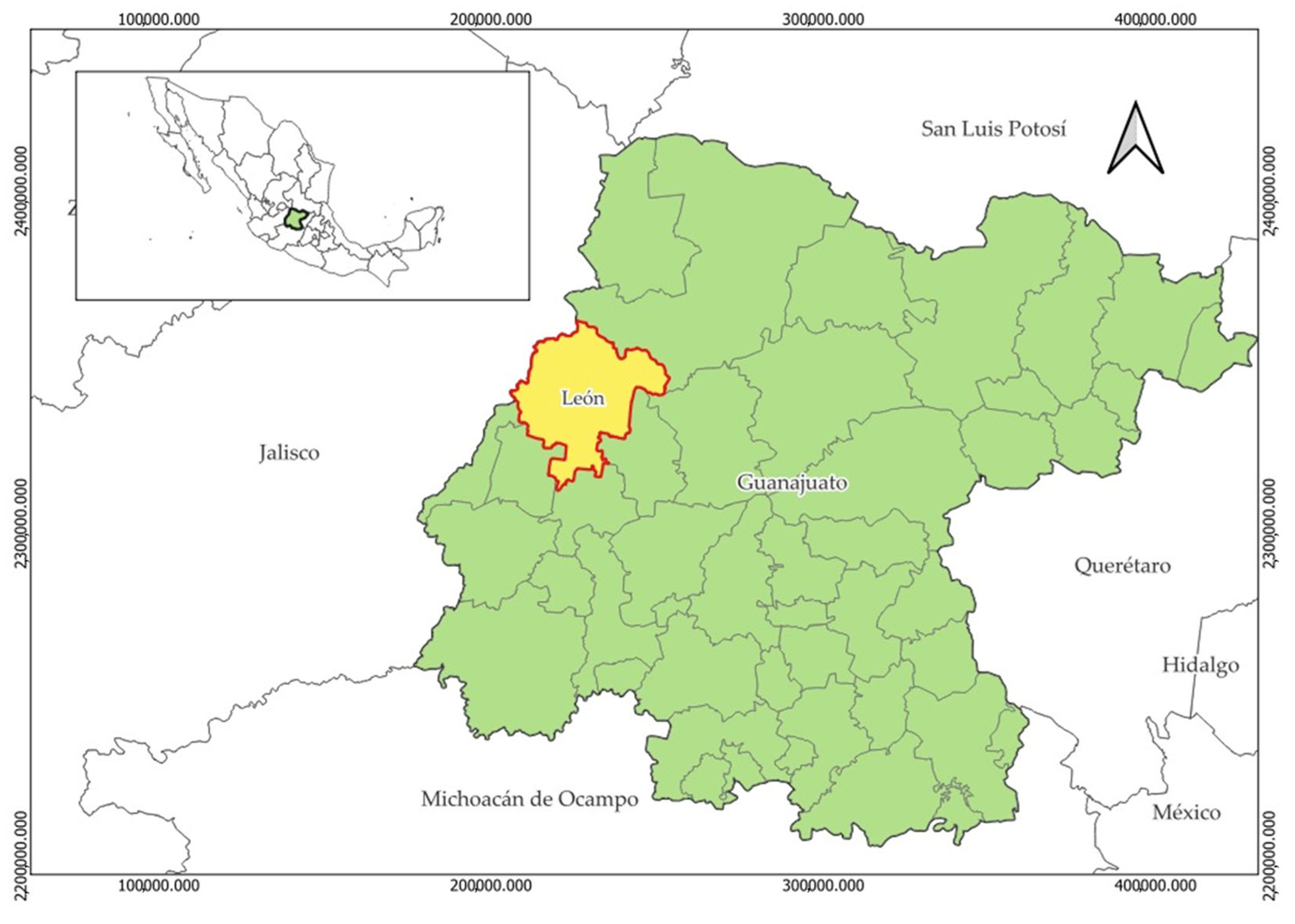
Figure 1. León, Guanajuato, Mexico.
Sustainability 18 00510 g001
Figure 2. Location of the four rural communities.
Sustainability 18 00510 g002
Figure 3. Proposed routes highlighted by color for supply lines to the four rural communities.
Sustainability 18 00510 g003
Table 1. Total population by community (2010 and 2020 census data) [37,38].
Rural CommunityPopulation 2010
(Inhabitants)
Population 2020
(Inhabitants)
Mesa de Ibarrilla220290
Llano Grande5791
Saucillo de Ávalos148111
Media Luna5350
Table 2. Projected population for 2045 with the arithmetic and geometric methods.
Rural CommunityArithmetic MethodGeometric Method
Mesa de Ibarrilla45579
Llano Grande176293
Saucillo de Ávalos1954
Media Luna4343
Table 3. Population and house stocking projections for 2045.
Rural CommunityPopulationHouse Stocking
Mesa de Ibarrilla579116
Llano Grande29359
Saucillo de Ávalos5411
Media Luna439
TOTAL 195
Table 4. Water consumption by socioeconomic class.
Rural CommunityPercentagePer Capita Domestic
Consumption (L/person/day)
Residential0%217
Middle-class5%203
Low-income95%175
Table 5. Domestic water consumption by community and socioeconomic class.
Rural CommunityResidential
(m3/day)
Middle-Class
(m3/day)
Low-Income
(m3/day)
Mesa de Ibarrilla0696
Llano Grande0349
Saucillo de Ávalos019
Media Luna017
Table 6. Water balance: consumption, demand, and supply.
Rural CommunityConsumption (m3/day)Demand (m3/day)Supply
(L/person/day)
Mesa de Ibarrilla102.14127.67220.50
Llano Grande51.6964.61220.50
Saucillo de Ávalos9.5311.91220.50
Media Luna7.599.48220.50
Table 7. Estimated design flows per community with a water supply of 220.50 L/capita/day.
Rural CommunityQm
(L/s)
QMD
(L/s)
QMH
(L/s)
Mesa de Ibarrilla1.482.073.21
Llano Grande0.751.051.62
Saucillo de Ávalos0.140.190.30
Media Luna0.110.150.24
Table 8. Hydraulic indicators for pumping and pipe sizing by community.
Mesa de IbarrillaMedia LunaSaucillo de ÁvalosLlano Grande
Pumping time (h)2222
Q pumping (L/s)24.812.62.31.8
Q pumping (m3/s)0.0250.0130.0020.002
D dupuit (m)0.1890.1340.0580.052
D dupuit (mm)189.070134.49857.74051.525
D dupuit (in)7.4445.2952.2732.029
Table 9. Proposed route, elevation, and optimal pipe diameter by community.
Mesa de IbarrillaMedia LunaSaucillo de ÁvalosLlano Grande
Proposed Route/Layout (m)840019,90012,8007700
Length in tank (m)23232323
Elevation Difference (m)279359425318
Discharge elevation (m)299382448341
Pump flow (L/s)24.8212.562.321.84
Calculation of the optimal diameter (OD) (in)7.4445.2952.2732.029
Table 10. Installation and piping costs for diameters of 6″.
6″ Diameter
Unit price per installation, assembly, and leak testUSD 1.91
Unit price for concrete berthsUSD 25.51
Unit price per pipeUSD 217.44
Table 11. Hydraulic infrastructure costs by pipe diameter.
Mesa de IbarrillaMedia LunaSaucillo de
Ávalos
Llano Grande
Installation, assembly, and leak test (mL)840019,90012,8007700
Concrete berths (Piece)84019901280770
Pipe (mL)840019,90012,8007700
TOTAL COST Diameter 6″ (USD)$1,863,988.84 $4,415,878.32 $2,840,363.95 $1,708,656.44
Table 12. Estimated costs per community for connection to the network.
Rural CommunityParametric Amount (Conduction Line Only) (USD)Operation and Maintenance Cost (OMC) (2%)
(USD)
Mesa de Ibarrilla$1,863,988.8 $37,279.8
Llano Grande$1,708,656.4 $34,173.1
Saucillo de Ávalos$2,840,363.9 $56,807.3
Media Luna$4,415,878.3 $88,317.6
TOTAL$10,828,887.54$216,577.75
Table 13. Economic analysis of revenue from water services (connection and contract).
Rural CommunityConnection Expense (USD)Cost per SAPAL Contract
(USD)
Annual Income for SAPAL (Connection and Contract) (2%) (USD)
Mesa de Ibarrilla$7396 $4109 $11,505
Llano Grande$3762 $2090 $5852
Saucillo de Ávalos$701 $390 $1091
Media Luna$574 $319 $893
$12,433$6907$19,341
Table 14. Total expenditure and annual connection and contract costs per house.
Connection Expense (USD)Cost per SAPAL Contract (USD)Annual Income for SAPAL (Connection and Contract) (USD) (2%) (USD)
For 195 Projected Households$674,374.17 $433,526.25 $240,847.92
Per Household (Without Discount)$3458.33 $2223.21 $1235.12
Per Household (With Discount)$3112.50 $2000.89 $1111.61
Table 15. VPN of the total SAPAL water distribution network expansion project.
YearInitial Revenue (USD)Cash Flow
(Initial Revenue—Operating Costs)
(USD)
NPV (USD)
1$19,341$197,237$179,307
2$20,404$196,173$162,127
3$21,527$195,051$146,545
4$22,711$193,867$132,414
5$23,960$192,618$119,601
************
10$31,314$185,263$71,427
************
20$53,489$163,088$24,242
Ʃ−$1,600,460.39
NPV of SAPAL Distribution Network Scenario$12,429,347.93
*** indicates omitted values for brevity; the sequence continues from 6 to 10 and from 11 to 20.
Table 16. Initial investment for RWH implementation.
Rural CommunityRWH Cost (Subsidy) (USD)RWH Cost (CONAGUA) (USD)RWH Maintenance (USD)
Mesa de Ibarrilla$30,027 $221,253 $7902
Llano Grande$15,272 $112,534 $4019
Saucillo de Ávalos$2847 $20,981 $749
Media Luna$2330 $17,166 $613
Initial Investment (Year 1)$50,477$371,934.60$13,283.38
Table 17. Components of annual cash flow of benefits and costs.
ComponentAnnual Value per Household (USD)Total Communities (USD)
Savings from tanker water$120$23,400
Savings from SAPAL tariffs$80$15,600
Health savings$45$8775
Time Savings$60$11,700
Maintenance costs$50$9750
Table 18. VPN of the total ecotechnology implementation scenario (RWH system).
YearCash Flow (USD)NPV (USD)
1$403,261$366,600
2$403,261$333,273
3$403,261$302,976
4$403,261$275,432
5$403,261$250,393
*********
10$403,261$155,474
*********
20$403,261$59,942
Ʃ$3,433,184.23
Total NPV of the RWH Scenario$3,061,249.62
*** indicates omitted values for brevity; the sequence continues from 6 to 10 and from 11 to 20.
Table 19. Comparison of investment costs between the network and ecotechnology project by community, projections to 2045.
Rural CommunityEstimated House Stocking 2045Estimated Total Cost of the Conveyance Line (Parametric Amount and OMC) (USD)Estimated Total Cost of RWH (Investment and Maintenance) (USD)
Mesa de Ibarrilla116$1,901,269 $229,155
Llano Grande59$1,742,830 $116,553
Saucillo de Ávalos11$2,897,171 $21,730
Media Luna9$4,504,196 $17,779
TOTAL195$11,045,465.29 $385,217.98
Table 20. Comparison of water supply scenarios.
FactorsWater Distribution NetworkEcotechnique (RWH)
Initial Investment CostVery High (USD > 10 million)Low (USD < 435,000)
Socioeconomic VPNHighly NegativePositive
Implementation TimeLong (years), subject to permits and technical complexitiesShort (1–3 months per phase)
Financial SustainabilityDependent on subsidies, financially unviable for the operatorSustainable, with low CO2 emissions managed by the community
Environmental SustainabilityHigh energy dependence for pumping, pressure on aquifersSustainable, uses rainwater, and operates with low or no energy consumption
Equity and Social BenefitPerpetuates a model that excludes rural and peri-urban areasPromotes equity, autonomy, and community resilience
Institutional RiskHigh (conflicts over right of way, broken promises)Low (based on consensus and community participation)
Disclaimer/Publisher’s Note: The statements, opinions and data contained in all publications are solely those of the individual author(s) and contributor(s) and not of MDPI and/or the editor(s). MDPI and/or the editor(s) disclaim responsibility for any injury to people or property resulting from any ideas, methods, instructions or products referred to in the content.