Next Article in Journal
Walking, Jogging, and Cycling: What Differs? Explainable Machine Learning Reveals Differential Responses of Outdoor Activities to Built Environment
Previous Article in Journal
Socioeconomic Drivers of Household Plastic Waste Mismanagement and Implications for Water Resource Sustainability in Guyanese Communities
Previous Article in Special Issue
Development and Performance Evaluation of Hydrophobically Modified Nano-Anti-Collapsing Agents for Sustainable Deepwater Shallow Drilling
error_outline You can access the new MDPI.com website here. Explore and share your feedback with us.
 
 
Article

Optimal Use of Supercritical CO2 as Heat Transfer Fluid for Geothermal System

1
State Key Laboratory of Deep Geothermal Resources, Beijing 102206, China
2
Sinopec Key Laboratory of Geothermal Resources Exploitation and Utilization, Beijing 102206, China
3
Sinopec Research Institute of Petroleum Engineering Co., Ltd., Beijing 102206, China
4
State Key Laboratory of Disaster Prevention and Ecology Protection in Open-Pit Coalmines, Shandong University of Science and Technology, Qingdao 266590, China
*
Author to whom correspondence should be addressed.
Sustainability 2026, 18(1), 483; https://doi.org/10.3390/su18010483
Submission received: 22 July 2025 / Revised: 5 September 2025 / Accepted: 12 September 2025 / Published: 3 January 2026
(This article belongs to the Special Issue Sustainability and Challenges of Underground Gas Storage Engineering)

Abstract

Supercritical carbon dioxide (CO2) is a promising working fluid for geothermal energy extraction due to its superior heat extraction capacity and high fluidity within reservoirs. However, significant thermal energy is lost during transportation along the production well. This study develops a mathematical model coupling heat transfer and CO2 compressibility to investigate strategies for improving heat transfer efficiency from the reservoir to the surface. The influence of mass flow rate (20 kg/s; 25 kg/s and 30 kg/s) and outlet back pressure (8 MPa; 9 MPa and 10 MPa) on system performance is evaluated. Results indicate that the amount of geothermal energy delivered to the surface increases linearly with mass flow rate. Compared to water, CO2 exhibits a 65.5% greater temperature drop along the wellbore but reduces the pressure drop by 50%. A lower outlet back pressure is recommended to enhance both heat transfer and operational safety. The model offers valuable insights into assessing the geothermal potential of depleted high-temperature gas reservoirs.

1. Introduction

The global energy demand is predicted to increase significantly in the next few decades [1]. Meanwhile, air pollution due to the utilization of fossil energy has induced threats to sustainable development in many countries [2]. The International Renewable Energy Association (ARENA) indicates that renewable energy will increase significantly to around 40% of total energy production by 2040 [3]. As a type of renewable resource, geothermal energy contributed over 12,800 MW of energy production worldwide in 2017, and 1% of geothermal energy, reserved at an underground depth of less than 5 km, is estimated to be sufficient to supply the primary power use for 26,000 years in Australia [4]. With regard to its green and abundant reserve, geothermal energy is now receiving increasing attention all over the world [5,6,7,8,9,10].
Enhanced geothermal systems (EGSs), including drilling and reservoir stimulation, are generally used to extract heat stored underground at a commercial scale [10,11]. Geothermal reservoirs are generally composed of hard granite, which is relatively more difficult to break or fracture than sedimentary rock [12]. Statistical data from the Fenton Hill EGS in the USA, the Soults EGS in France, the Genesys Hannover EGS in Germany, and the Paralana and Innamincha Deeps EGSs in Australia all indicate that investment in drilling and reservoir stimulation occupies the larger part of the whole costs of operating EGSs [6,7,8,9,10,11,12,13,14,15]. The feasibility or vitality of EGSs depends highly on their economic benefits; therefore, both scholars and engineers have paid attention to the geothermal energy stored in depleted oil and gas fields [16,17,18], where the existing wells and induced fracture networks would help cut costs before the utilization of geothermal energy. Although reservoir temperatures in oil and gas fields are generally lower than that in hot dry rock, many of them could still reach up to 440 K, with great exploitation potential, such as the Arun dry gas reservoir (in Indonesia), with a temperature of 451 K [19] and the Qianmiqiao condensate gas reservoir (in China), with a temperature of 441 K [20]. Even the dry gas reservoirs with moderate temperatures (ranging from 380 K to 410 K) and huge capacities are still worth exploiting [21].
When it comes to the production stage of EGSs in oil and gas fields, the mass flow rate of circulating fluid is limited to some extent, since the diameter of existing wells is relatively smaller than that in conventional EGSs. In addition to the lower reservoir temperature, it becomes more urgent to utilize circulating fluid with better heat mining efficiency in oil and gas fields. In 2000, Brown et al. proposed the novel concept of CO2-EGS to utilize supercritical carbon dioxide instead of water as the heat transmission fluid in EGSs [22], and the advantages mainly include several aspects: (1) the varying density of carbon dioxide would induce a large buoyancy force in EGSs and facilitate a reduction in the operational power requirements in fluid circulation systems [23]; (2) the lower viscosity of carbon dioxide would yield larger flow rates, which compensate its lower mass heat capacity [21,22]; and (3) no dissolution–precipitation problems would be expected since carbon dioxide is not an ionic solvent, even under high-temperature conditions [21,23,24,25,26]. Zhang (2017) [27] proposed using carbon dioxide to exploit geothermal energy in depleted gas reservoirs with high temperatures and no or low water fractions (CO2-HTGR-EGS), where it hopefully reduces the negative impact of brine on heat mining efficiency [24,25] and combines the geothermal energy extraction and sequestration of greenhouse gas.
Aiming to evaluate the feasibility of CO2-EGSs, many scholars focused their attentions on reservoir simulation. Under specific boundary conditions of a 200 °C reservoir temperature, 20 °C injection temperature, 51 MPa downhole injection pressure, and 49 MPa downhole production pressure, Pruess et al. [23] concluded that carbon dioxide could generate four-times-larger mass flow rates and 50% larger net heat extraction rates compared to water, under the same pressure drop between the injection well and production well. Both Xu et al. [28] and Cui et al. [29] have found that carbon dioxide alone would not induce clay swelling, casing corrosion, and reservoir damage problems, while the existence of pore water would generate a negative influence on the heat mining performance of carbon dioxide. Although circulation of carbon dioxide could evaporate the formation water and generate a core zone without an aqueous phase [28], it is still suggested to apply CO2-EGSs in geothermal reservoirs with less or no water phase. Based on experimental results, Zhang et al. [30], Zhou et al. [31], and Jiang et al. [32] all have validated and analyzed the advantages of carbon dioxide fracturing in reducing initiation pressure, generating complex fracture networks, and increasing permeability.
However, while these prior studies have robustly established the advantages of CO2 within the reservoir itself, a critical gap remains in understanding the system’s behavior during the production phase, specifically within the production wellbore. The very properties that make CO2 superior in the reservoir—excellent fluidity and strong heat capacity—become a double-edged sword in the long, upward journey of the production well. The enhanced heat exchange efficiency leads to significant thermal losses to the surrounding formation before the fluid reaches the surface, directly undermining the net energy output. Furthermore, the compressibility and complex thermodynamic behavior of supercritical CO2 under varying pressure and temperature conditions along the wellbore make predicting these losses and the associated energy consumption (e.g., for overcoming pressure drop) a non-trivial challenge. Consequently, there is a lack of a comprehensive model that couples wellbore heat transfer with hydrodynamic flow to quantify the net deliverable energy and guide the optimization of production parameters for CO2-EGSs. Our study aims to bridge this gap.
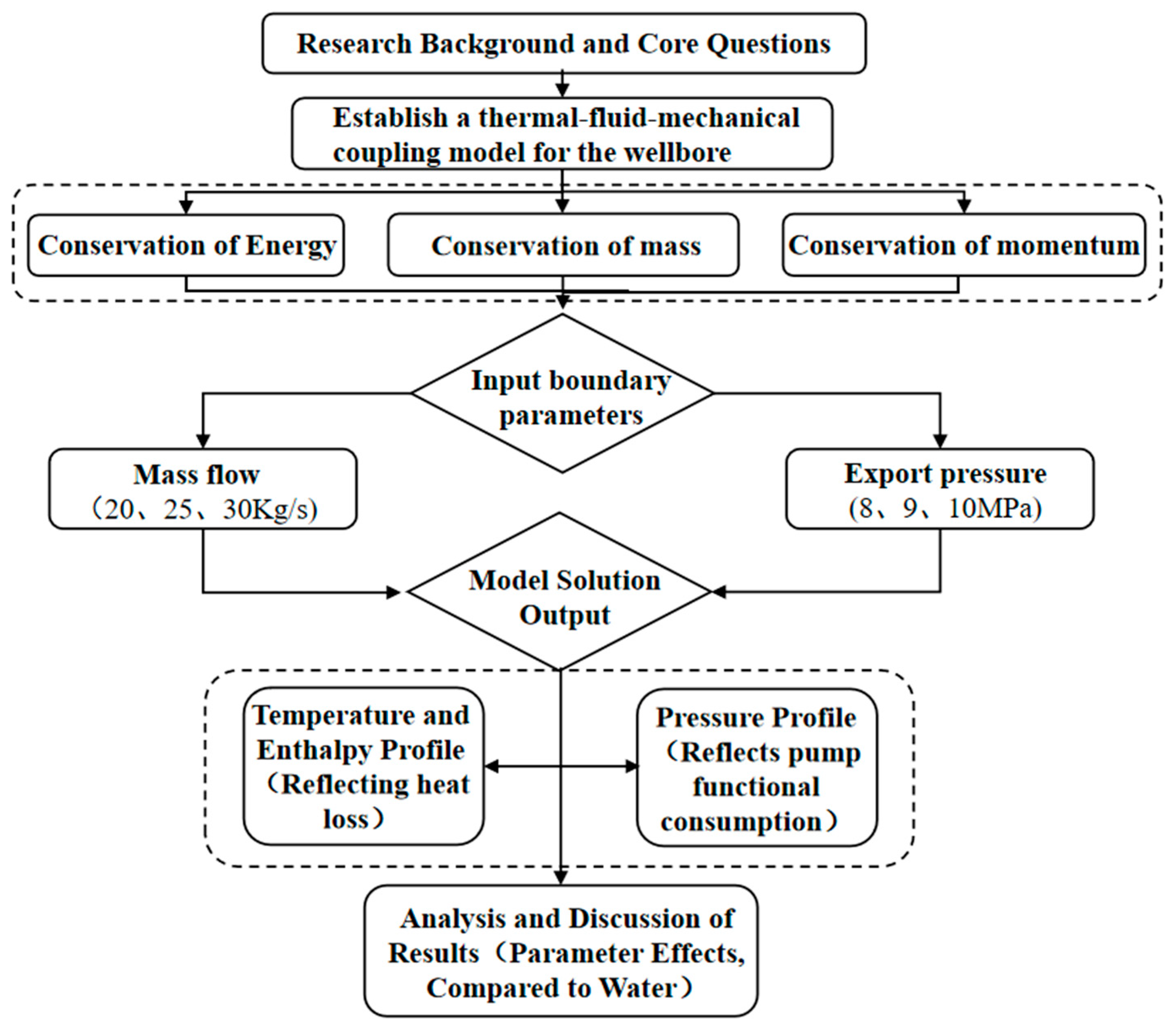
The primary significance and objectives of this study are therefore threefold: First, we aimed to develop a reliable predictive model for production well performance in CO2-EGSs, a component currently underrepresented in the literature. To address this gap and systematically evaluate the production well performance, a comprehensive thermo-hydrodynamic model was developed. The overall workflow of this study is summarized in Figure 1. Briefly, the model couples the governing equations for mass, momentum, and energy conservation, incorporating the variable thermophysical properties of supercritical CO2 [33]. Key operational parameters, mass flow rate and outlet back pressure, were chosen as inputs to simulate their effects on critical output metrics, namely the temperature/enthalpy profiles and the pressure profile. The analysis of these outputs forms the basis for our discussion and conclusions regarding the optimal use of supercritical CO2. Second, we aimed to quantitatively assess the interplay between heat extraction efficiency and parasitic energy consumption, thereby identifying the net energy gain. Third, we aimed to provide actionable guidelines for optimizing operational parameters(mass flow rate and back pressure) to maximize heat delivery to the surface while ensuring operational safety and efficiency. This work ultimately provides a crucial piece of the puzzle for evaluating the overall viability and design of CO2-EGS projects in depleted gas reservoirs.

2. Physical and Mathematical Model

2.1. Physical Model and Assumptions

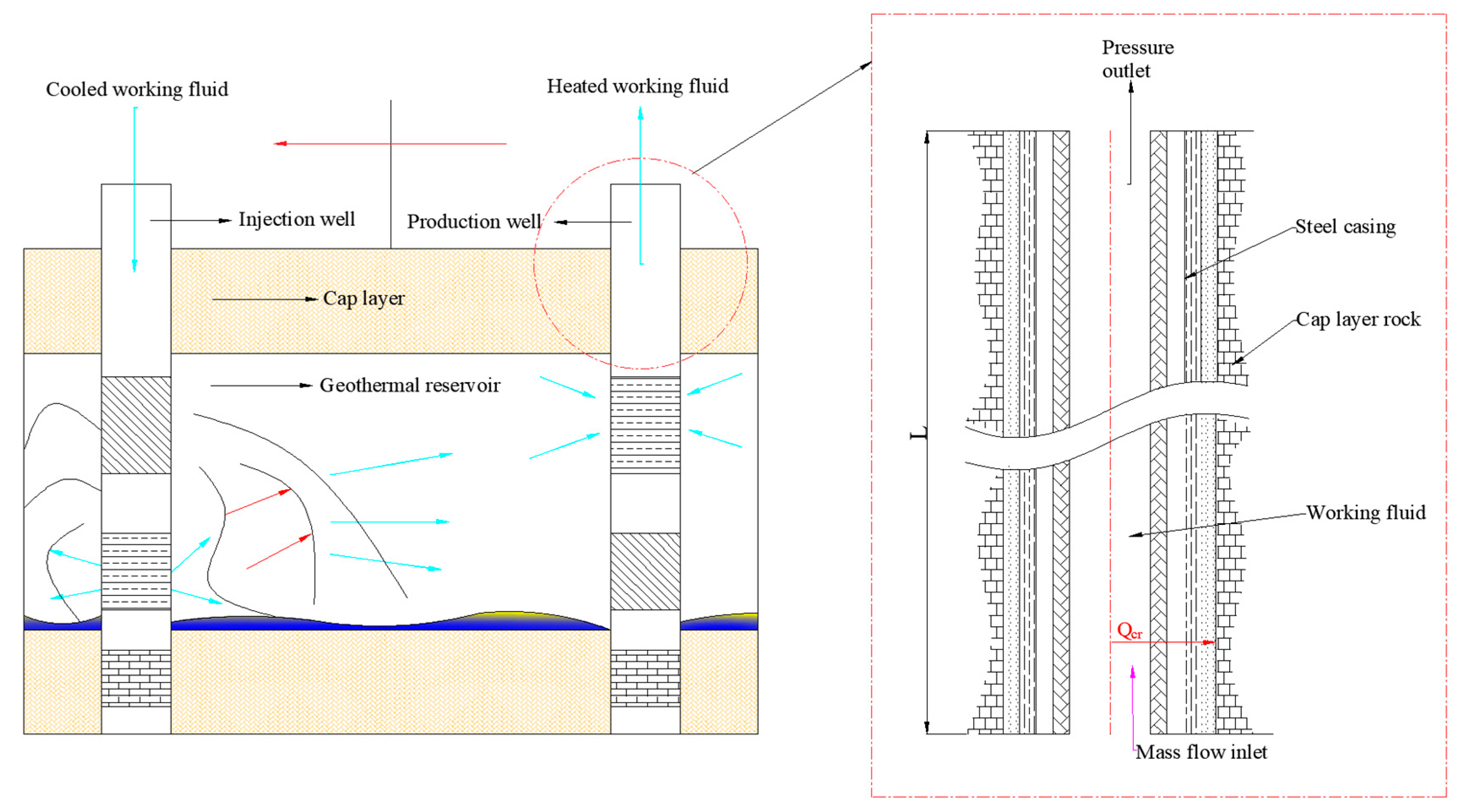
Figure 2 presents the physical model of a typical enhanced geothermal system [21], and this study focuses on the heat transfer in the production well (marked with a red line). During the operational stage of CO2-HTGR-EGSs, cooled carbon dioxide is pressurized at the surface and then flows down along the injection well. In the geothermal reservoir, carbon dioxide absorbs thermal energy from the formation rock while flowing through the pre-existing fractures to the bottom of the production well.
According to the actual engineering conditions, the mathematical model for the production well is based on the following assumptions: (1) carbon dioxide has been fully heated to the same temperature as that of the reservoir rock at the bottom hole; (2) original formation fluids have been expelled out by a previous circulation of carbon dioxide [29], making their influence on the flowing field negligible in the production well; (3) since the operational stage of EGSs could last for several decades, the flowing field in the production well can be modeled as time-steady at a certain time period; (4) the geothermal temperature is assumed in a linear increasing trend with depth in the cap layer, which can be modified by user defined functions based on field test data in the future; and (5) the geometry model is simplified as 2D axisymmetric model with both a fluid zone and solid zone, and the center line of the vertical wellbore is set as the axis.

2.2. Mathematical Models

As previously depicted, the temperature and pressure profiles within the production well (fluid zone) are the focus of this study. They are related to the solid zone due to flow friction and radial heat transfer. The geometry was discretized into numerous infinitesimal elements, within which both temperature and pressure can be considered constant [34]. The temperature in the fluid zone can be calculated using the energy conservation equation for compressible flow.
div ρ v h div λ grad T + Q = 0
where ρ is the density of carbon dioxide, kg/m3; v stands for the flow velocity vector, m/s; h represents the specific enthalpy of carbon dioxide, J/kg; λ is the thermal conductivity of carbon dioxide, W/(m k); T represents the temperature in the infinitesimal element, K; and Q represents the heat transfer induced by the temperature difference between flowing fluid and surrounding rock, J. As for the 2D axisymmetric geometry, Equation (1) is modified as
ρ v x h x + ρ v r h r + ρ v r h r 2 λ T x 2 2 λ T r 2 + Q = 0
where x and r represent the axial coordinate and radial coordinate, respectively, m; vx, is the axial velocity, and m; vr is the radial velocity, m/s.
The density of compressible carbon dioxide varies much with changing temperature and pressure and will then affect the heat transfer, according to Equation (2). In this study, the density is calculated based on the Span and Wagner model [33], with an uncertainty no larger than 0.05% from 304 K to 1100 K at a pressure up to 800 MPa. The applicable conditions of the cited model cover both the temperature and pressure ranges, and the model is given in terms of the dimensionless Helmholtz energy Φ δ , τ with the inverse reduced temperature and reduced density as independent variables:
P δ , τ = ρ R T 1 + δ ϕ δ r
where P represents the pressure in the infinitesimal element, Pa; R is the specific gas constant for carbon dioxide, with R = 0.1889 kJ/(kg·K); τ = T c / T is the inverse reduced temperature, dimensionless; and δ = ρ / ρ c is the reduced density, dimensionless. The critical temperature ( T c ) for carbon dioxide is 304.13 K, and the critical density ( ρ c ) is 467.6 kg/m3. ϕ δ r stands for the partial derivative of the Helmholtz energy ϕ δ , τ , dimensionless. The detailed solution procedure of Equation (3) can also be found in reference [33].
The specific enthalpy of carbon dioxide is also included in Equation (2), and it is calculated with the temperature and density as independent variables, according to reference [33]:
h ( δ , τ ) R T = 1 + τ ( ϕ τ o + ϕ r r ) + δ ϕ δ r
The involved thermal conductivity of carbon dioxide in Equation (2) is calculated according to the Vesovic and Wakeham model [35]:
λ ( T , ρ ) = λ 0 ( T ) + Δ λ ( T , ρ ) + Δ λ c ( T , ρ )
where λ 0 ( T ) is the zero-density thermal conductivity, merely depending on the temperature; Δ λ ( T , ρ ) represents the excess viscosity; and Δ λ c ( T , ρ ) is the viscosity in the critical region, which is no larger than 1% of the total thermal conductivity and is negligible. As depicted, the temperature and density of carbon dioxide are the independent variables for both Δ λ ( T , ρ ) . The λ 0 ( T ) and Δ λ ( T , ρ ) can be calculated by the following explicit equations, and the involved variable can be found in reference [36].
λ 0 ( T ) = 0.475598 T 1 / 2 ( 1 + r r 2 ) G λ * ( T * ) G λ * ( T * ) = i = 0 7 b i / T * i r r = 2 c int 5 k 1 / 2 c int k = 1.0 + exp ( 183.5 / T ) i = 1 5 c i ( T / 100 ) 2 i Δ λ ( ρ ) = i = 1 4 d i ρ i
According to Equation (2), the calculation of temperature also depends on the flowing velocity in the infinitesimal element. After the density is obtained based on Equation (3), the flowing velocity of compressible carbon dioxide can be calculated based on mass conservation equation in a time-steady state:
div ( ρ v ) = 0
where v represents flow velocity vector, m/s. As for 2D axisymmetric geometry in this paper, the mass conservation equation can be modified as
ρ v x x + ρ v r r + ρ v r r = 0
When it comes to the boundary between the fluid zone and solid zone, the last unknown variable Q in Equation (2) can be obtained by
Q c r = T T r 1 2 π h r i l + 1 2 π λ c l ln r o r i
where Qcr represents the heat loss of flowing fluid to surrounding rock, J; T r stands for the rock temperature in cap layer, K; h represents the convective heat transfer coefficient between the flowing fluid and the casing wall along the production well, W/(m2·K); r i is the inner diameter of the casing, m; and r o is the outer diameter of the casing, m;
This study also models the total heat loss coefficient λ ˜ , reflecting the heat transfer efficiency between flowing carbon dioxide and the surrounding rock. It involves heat convection (between flowing fluid and the casing wall) and thermal conductivity (in the casing body):
λ ˜ = 1 1 2 π h r i l + 1 2 π λ c l ln r o r i
The pressure P is necessary for calculating the density of carbon dioxide according to Equation (3), and the pressure in the infinitesimal element can be obtained based on the momentum conservation equation:
div ( ρ v v ) = div ( P ) + div ( τ = ) + ρ g
where g represents the gravity acceleration, m/s2; and τ = is the stress tensor, dimensionless. τ = can be represented by
τ = = η div ( v ) + div ( v T ) 2 3 div ( v ) I
where η represents the viscosity of carbon dioxide in μPa·s, and the user-defined function for η was compiled according to the following explicit equation, presented by Fenghour and Wakeham [35]:
η ( T , ρ ) = η 0 ( T ) + Δ η ( T , ρ ) + Δ η c ( T , ρ )
where η 0 T is the zero-density viscosity, merely depending on the temperature; Δ η ( T , ρ ) represents the excess viscosity; and Δ η c ( T , ρ ) is the viscosity in the critical region. As depicted, the temperature and density of carbon dioxide are the independent variables for both Δ η ( T , ρ ) and Δ η c ( T , ρ ) . In the Fenghour and Wakeham model, the temperature ranges from 200 K to 1500 K and the pressures reached up to 300 MPa [35], covering the conditions involved in this study.
For the 2D axisymmetric geometries, Equation (11) can be modified as
1 r x r ρ v x v x + 1 r r r ρ v r v x = P x + 1 r x r η 2 v x x 2 3 div ( v ) + 1 r r r η v x r + v r x + ρ g 1 r x r ρ v x v r + 1 r r r ρ v r v r = P r + 1 r x r η v x r + v r x + 1 r r r η 2 v r r 2 3 div ( v ) 2 η v r r 2 + 2 3 η r div ( v ) + ρ g
where div ( v ) = v x x + v r r + v r r .
As for the boundary of the fluid zone, the flowing friction induced by the solid wall can be calculated according to Darcy–Weisbach formula:
h f = ξ l d v 2 2 g
where hf stands for the flowing friction, m; l is the length of the infinitesimal element, m; d represents the equivalent diameter, m, dimensionless; and ξ is the flow friction coefficient, depending highly on the properties of flowing fluid. Therefore, the ξ for carbon dioxide is related to the temperature state, which exhibits a coupling correlation between the temperature state and pressure state by affecting the properties of flowing fluid.
With consideration of the above-mentioned coupling correlation, Wang et al. [37] conducted the flowing friction experiments for carbon dioxide, with the pressure (3.5 MPa to 40 MPa), temperature (up to 423.15 K), and roughness of the pipe as changing factors, and modeled the flow friction coefficient with the Reynolds number (Re, dimensionless) and roughness ( ε , dimensionless) as independent variables:
1 ξ = 2.34 × lg ε 1.72 d 9.26 R e × lg ε 29.36 d 0.95 + 18.35 R e 1.108
As for enclosing the governing equations with 2D geometry, the Standard k-ε model [38,39] 2qw introduced to illustrate the turbulence in compressible flow:
x j ρ u j k x j μ + μ τ k x j = τ t i j S i j ρ ε + Q k x j ρ u j ε μ + μ τ 1.3 ε x j = 1.45 ε k τ t i j S i j 1.92 f 2 ρ ε 2 k + Q ε
where μ τ represents the eddy viscosity, expressed as μ τ = 0.09 f u ρ k 2 / ε . The near wall attenuation functions can be obtained by f u = e ( 3.4 / ( 1 + 0.02 Re t ) 2 ) and f 2 = 1 0.3 e ( Re t 2 ) . This involved R e t = ρ k 2 μ ε . The wall terms are calculated according to Q k = 2 μ ( k ) y ) 2 and Q ε = 2 μ μ τ ρ ( 2 μ ε y 2 ) 2 . S i j represents the mean velocity strain rate tensor, and δ i j is the Kronecker delta.
The specific heat capacity of carbon dioxide ( c p ) measures its ability to store heat as its temperature changes. Although heat capacity is not necessary to solve the governing equations, it is useful to analyze the changing trend in the temperature profile along the production well, and it is also calculated according to reference [33]:
c p R = τ 2 ( ϕ τ τ o ϕ r r r ) + ( 1 + δ ϕ δ r δ τ ϕ δ τ r ) 2 1 + 2 δ ϕ δ r + δ 2 ϕ δ δ r

2.3. Boundary Conditions and Solution Procedure

It should be addressed that this mathematical study aims to lay foundation before field applications of CO2-HTGR-EGSs, and no actual engineering data have been available until now. Therefore, the boundary conditions and initialization data are assumed according to common sense, and they need further modification and validation while the actual application data are available. The boundary conditions are given in Table 1.
In the initialization, the temperature of surrounding rock along the whole production well ( T r ) is assigned a value by the following equation:
T r = 398.15 0.06 × x

3. Results and Discussions

In operational CO2-EGSs, heat transfer efficiency and circulation energy expenditure emerge as critical performance determinants. Along production wells, thermal efficiency manifests through coupled temperature and enthalpy distributions, governed by dynamic thermophysical property variations—including density, heat capacity, and heat transfer coefficient. Concurrently, energy losses correlate directly with pressure gradients, modulated by fluid density and viscosity profiles. The strong interdependence between CO2’s nonlinear thermophysical behavior (sensitive to local temperature/pressure conditions) and flow dynamics necessitates holistic modeling of production well processes. Field-adaptable optimization strategies focus primarily on surface-controlled parameters: adjusting mass flow rates or backpressure to balance thermal recovery efficiency against hydraulic losses.

3.1. Influence of Mass Flow Rate

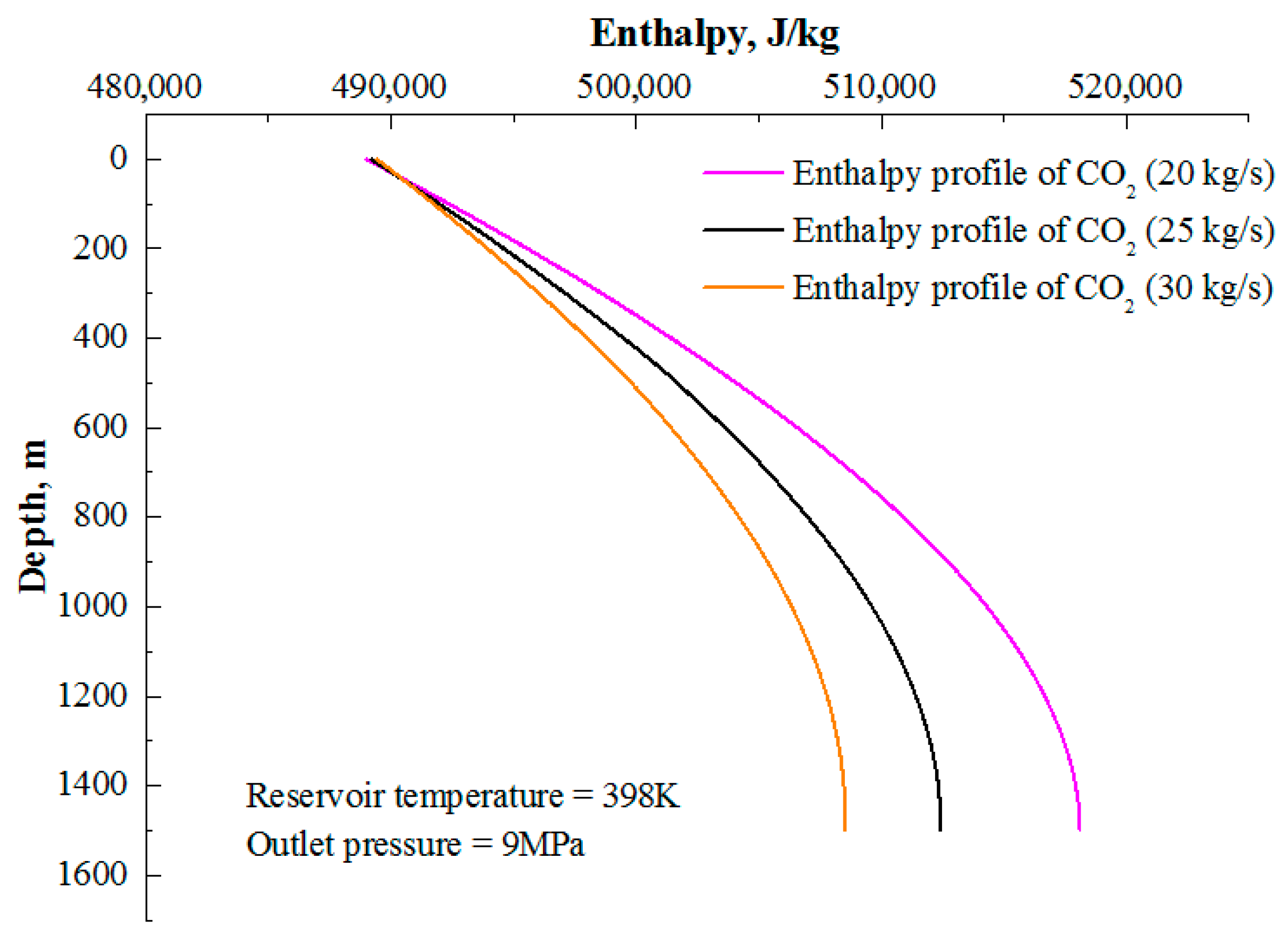
The enthalpy profile could help engineers recognize the energy loss rate along the production well and the potential to generate useful power on the surface. Figure 3 presents the enthalpy profiles under varying mass flow rates. The results show that as carbon dioxide flows upward, its enthalpy decreases with an increasing rate, due to a larger temperature difference between carbon dioxide and the surrounding rock in the upper section (Figure 4). At the bottom hole, the enthalpy of carbon dioxide has a negative correlation with mass flow rate, but it decreases less along the production well with a larger mass flow rate. This occurs because a higher mass flow rate leads to a greater frictional pressure drop along the wellbore. To maintain the fixed wellhead pressure, the bottom hole pressure consequently increases. Since enthalpy is a function of both temperature and pressure, and the bottom hole temperature remains relatively constant, the elevated pressure results in a decrease in the specific enthalpy of CO2 at the bottom hole condition. However, despite the lower initial specific enthalpy, the enthalpy decreases less along the production well for a larger mass flow rate. On the surface, the enthalpy has a similar value under the boundary conditions in this study; therefore, a larger mass flow rate would transfer more geothermal energy from the bottom hole to the surface, since the total transferred energy is the product of enthalpy and mass.
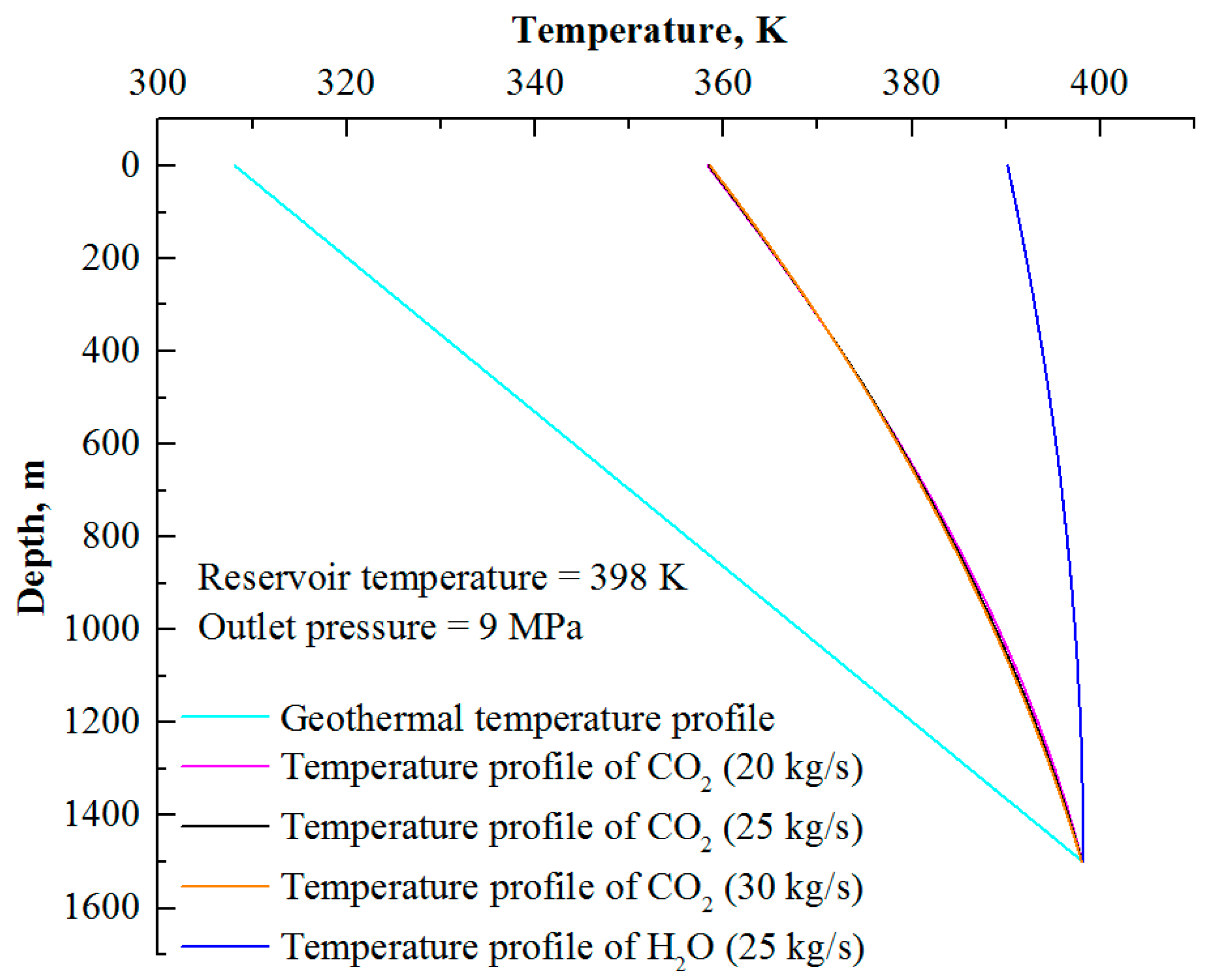
As a comparison, the temperature of water (Figure 4) decreases 65.5% less than that of carbon dioxide along the whole well under 25 kg/s. The results indicate that carbon dioxide has a disadvantage over water for transferring heat in the production well, which requires an engineer’s attention before field application of CO2-EGSs, and illustrates the significance of this study. The results also show that the temperature profiles change with a similar decreasing trend for carbon dioxide under different flow rates, and they decrease faster near the surface due to the larger temperature difference between flowing fluid and the surrounding rock. Since the inlet temperatures (at the bottom hole) are assigned with the same values, the influence of the mass flow rate on the temperature profile is quite minimal.
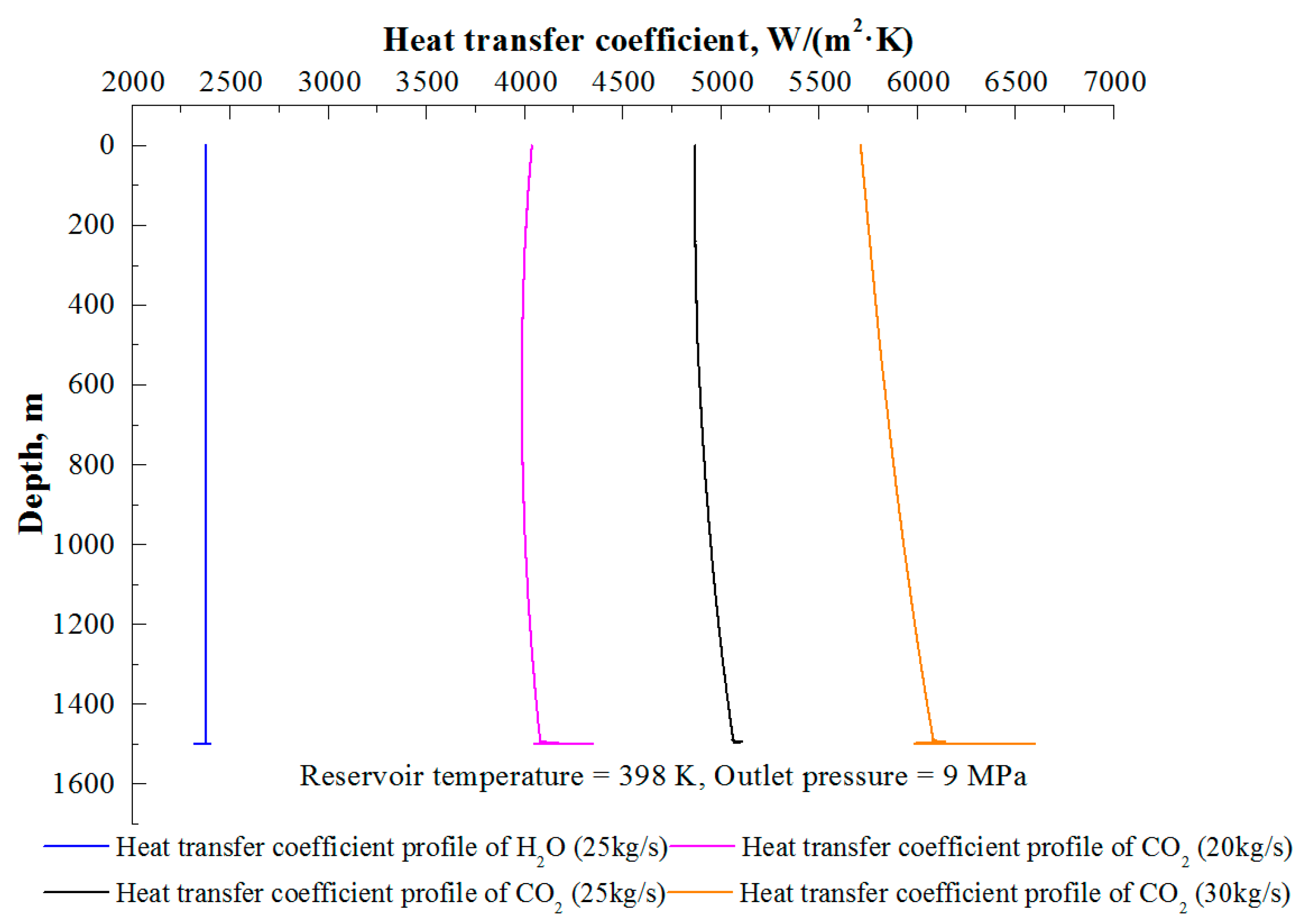
The enthalpy profile and temperature profile are influenced by the heat transfer coefficient profile, density profile, and heat capacity profile. As Figure 5 shows, the convective heat transfer coefficient profiles of carbon dioxide have a positive correlation with the mass flow rate, and a larger heat transfer coefficient would help induce more energy loss along the production well. Compared to the constant heat transfer coefficient of water, the heat transfer coefficients of carbon dioxide all exhibit decreases as they flow upward; therefore, it can be concluded that the heat transfer coefficient is highly affected by the varying properties of carbon dioxide. Overall, the heat transfer coefficient of carbon dioxide is 1.7~2.5 times that of water, which is beneficial for a larger temperature decrease of carbon dioxide along the production well.
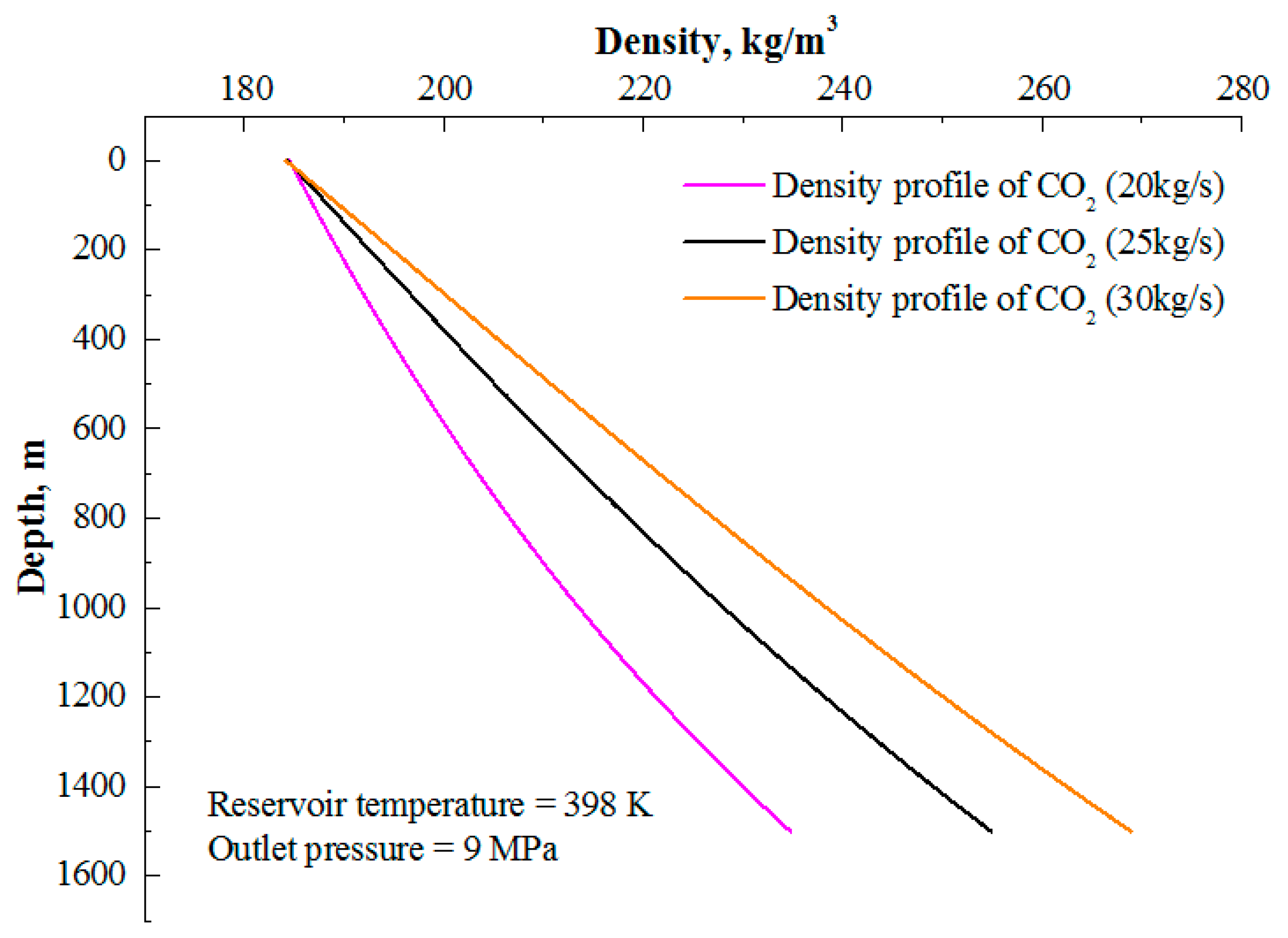
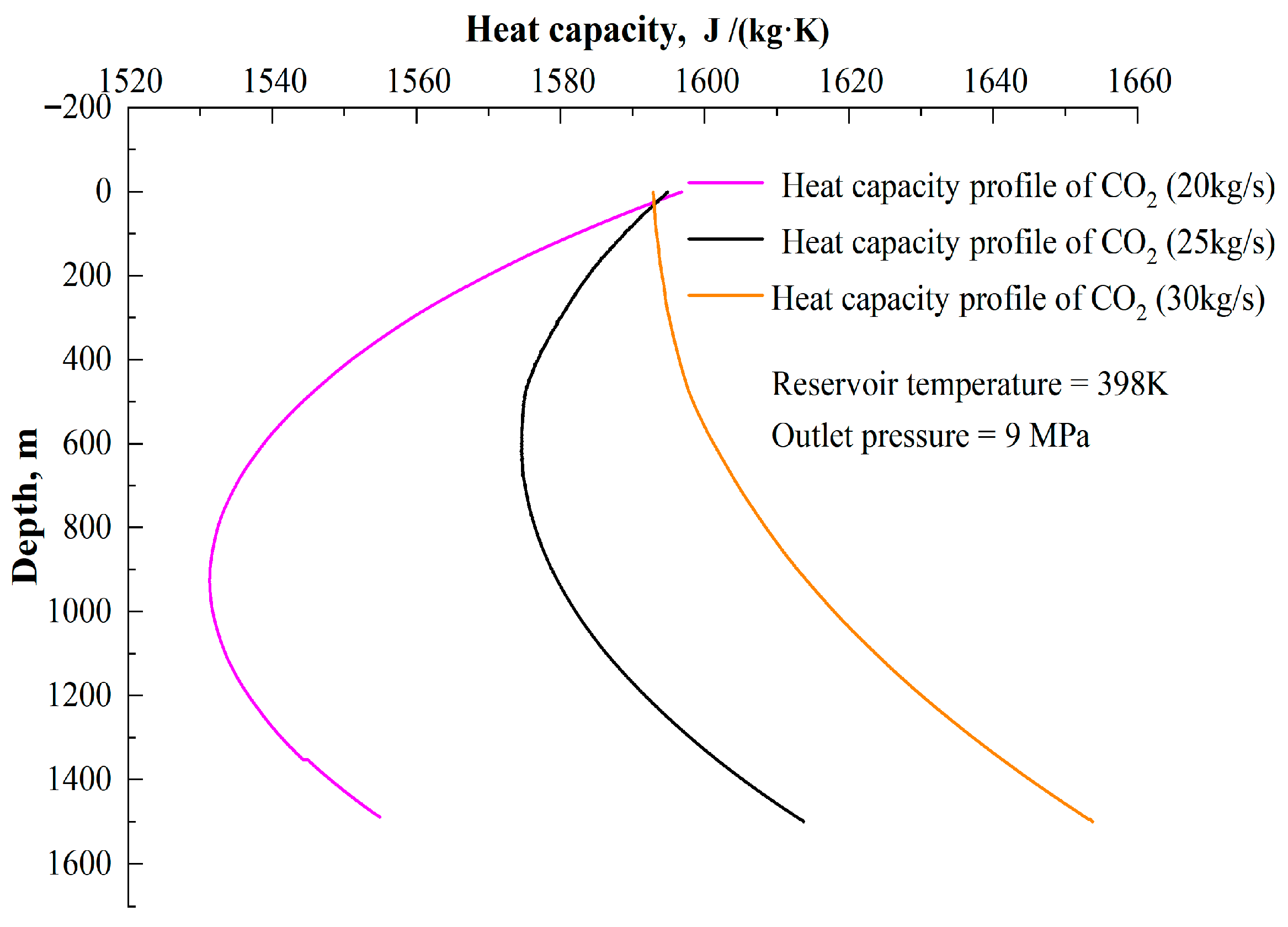
Figure 6 and Figure 7 present the density profile and heat capacity profile with varying mass flow rates, and they both increase with increasing mass flow rates. As carbon dioxide flows upward, the density always decreases. At lower mass flow rates (20 kg/s and 25 kg/s), the heat capacity would decrease at first and finally increase along the flow route, and it would monotonically decrease at larger mass flow rate (30 kg/s). The influence of the mass flow rate on the temperature profile can be illustrated according to the equation Δ T = Q c p m , where the heat transfer Q is has a positive correlation with the heat transfer coefficient. At larger mass flow rates, the larger heat transfer coefficients facilitate larger temperature decreases along the production well, while the larger density and heat capacity would prohibit the temperature from decreasing much; finally, the influence of the mass flow rate on the temperature profile of carbon dioxide is quite minimal (Figure 3).
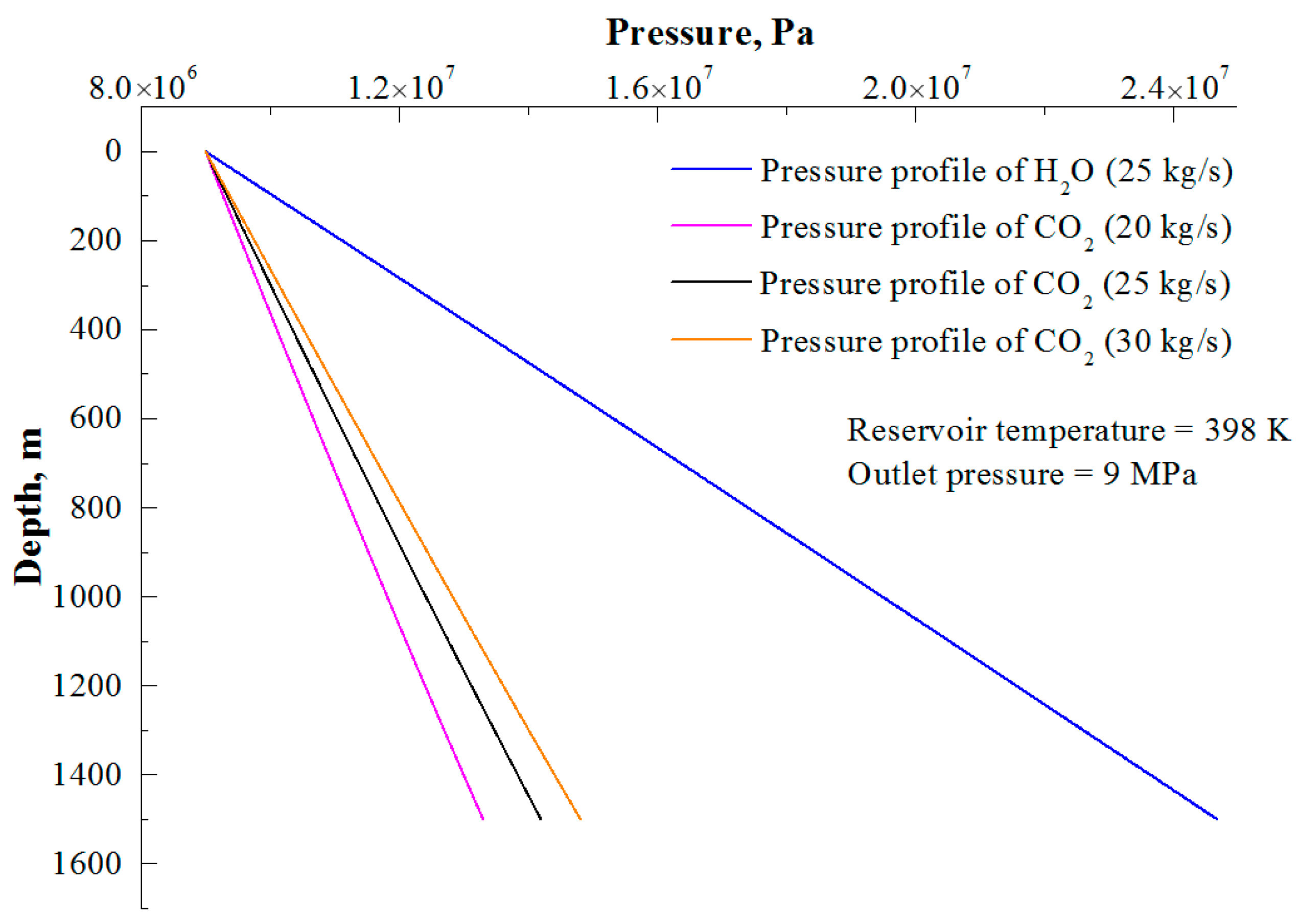
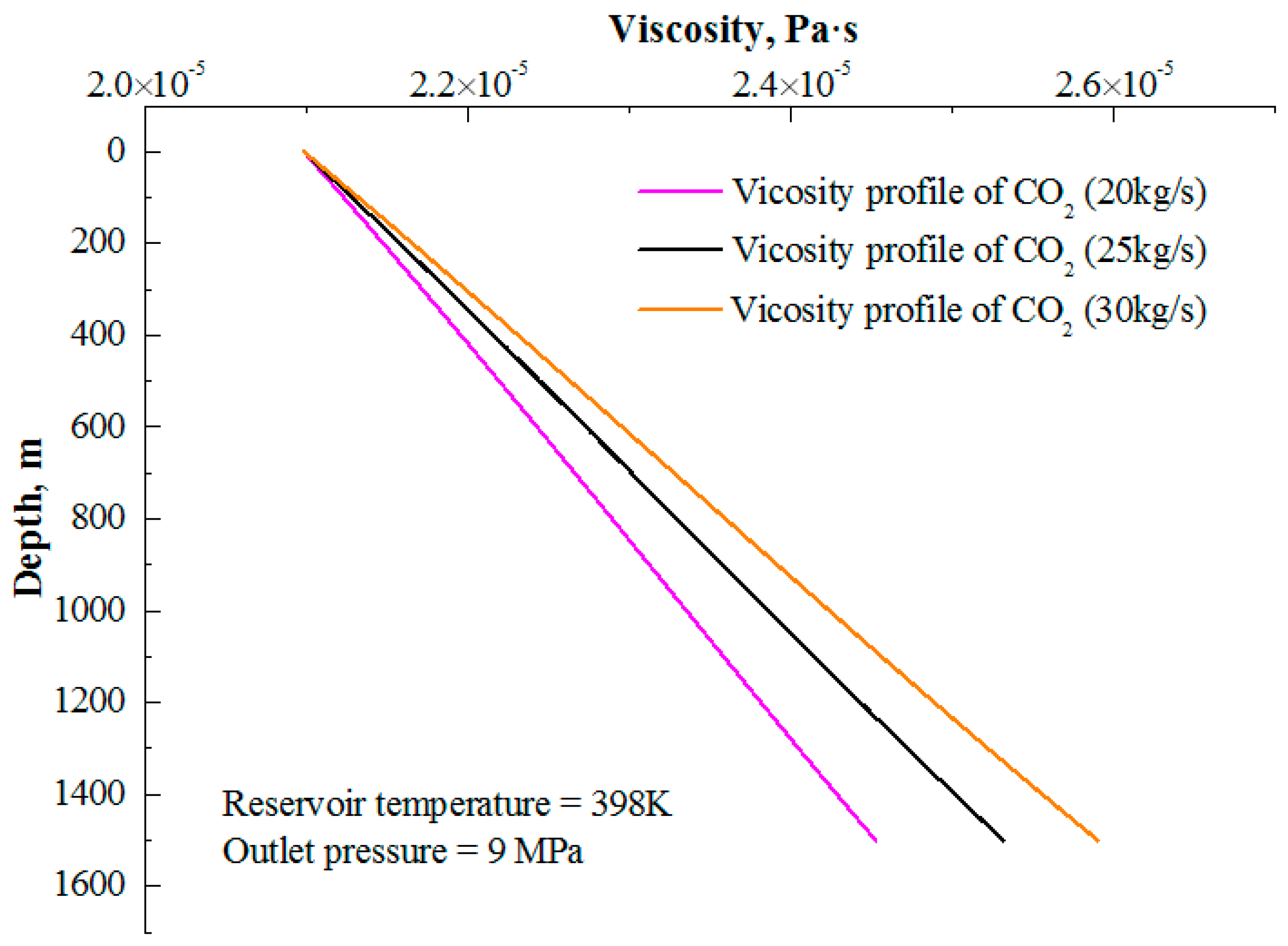
According to Equation (3), the density has a negative correlation with temperature, while both the density profile and temperature profile decrease along the flowing route; therefore, it can be concluded that the changing trend in the density profile is dominated by the pressure profile (Figure 8) rather than the temperature profile (Figure 4). Figure 8 depicts that the pressure drop of the whole well increases with the mass flow rate. The pressure drop is directly related to the energy consumption in circulating the flowing fluid, and since a larger mass flow rate could not only transfer more geothermal energy (favorable) but also consume more pump power (unfavorable), engineers need to pay attention to the optimal displacement in future field applications. Figure 8 also shows that the pressure drop of water is 2.0 times larger than that of carbon dioxide, although the temperature of water decreases less (Figure 4). The results indicate that the feasibility of CO2-EGSs depends on the balance between less transferred geothermal energy and less consumed pump power, and it would be affected by the reservoir conditions [40], well structures, and operating parameters.
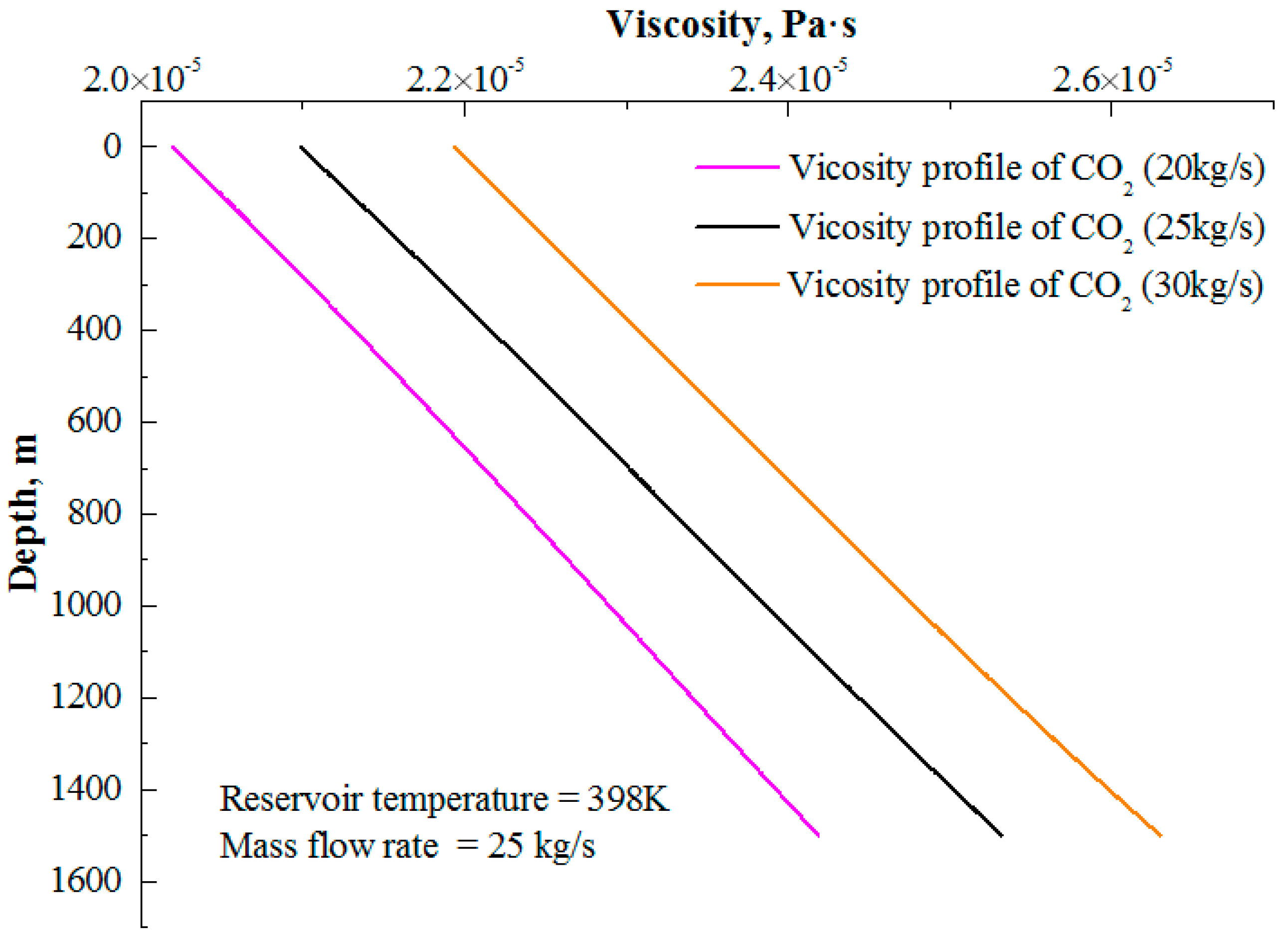
As carbon dioxide flows upward, the pressure drop is dominated by the density profile and flow friction, and the flow friction has a positive correlation with viscosity (Figure 9) and the mass flow rate; thus, the pressure drop increases with increasing mass flow rates.

3.2. Influence of Back Pressure at Outlet

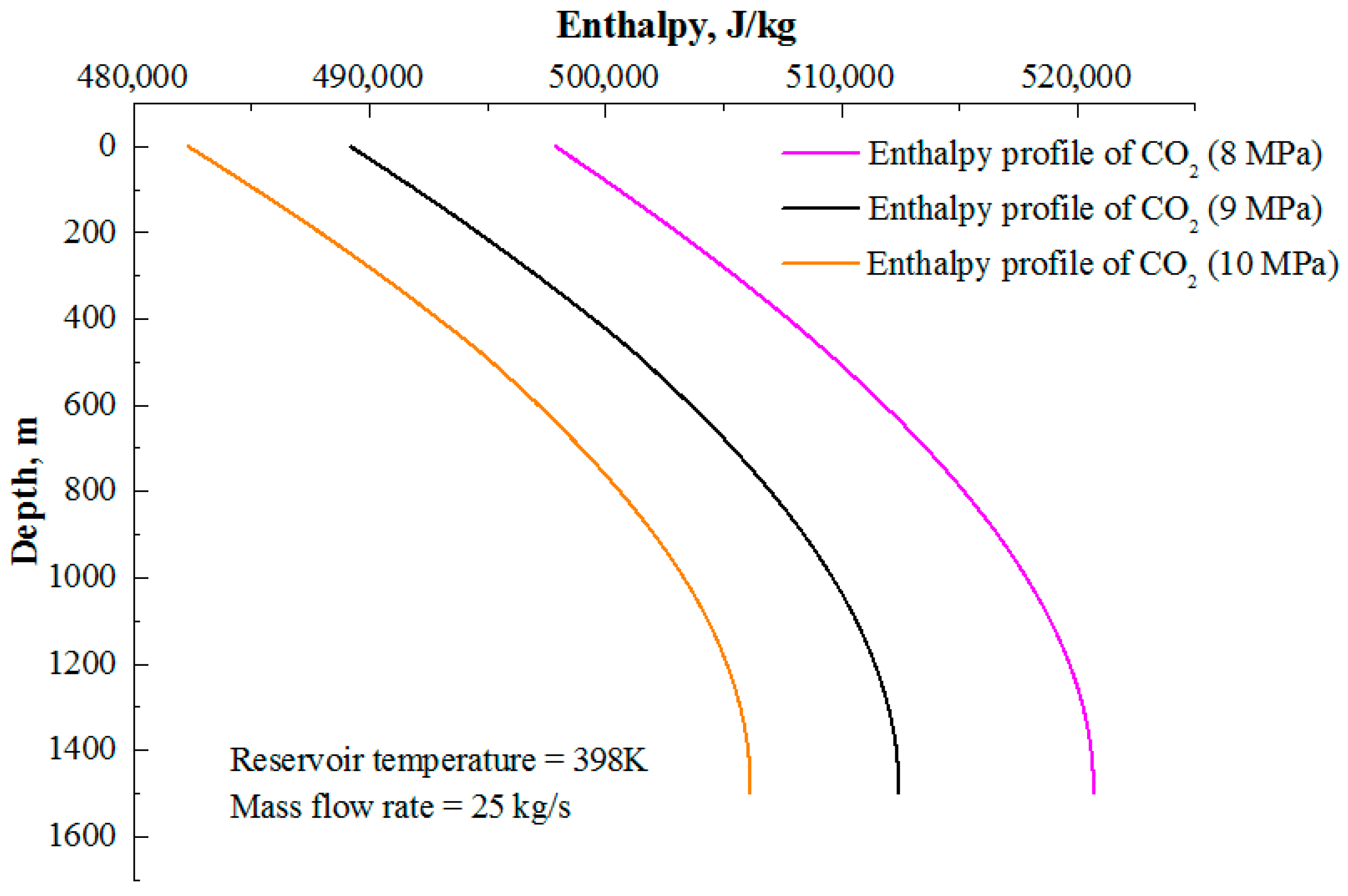
The influence of the outlet pressure on the enthalpy profile is presented in Figure 10. It can be observed that enthalpy decreases in a similar trend under varying outlet pressures. On the surface, a larger enthalpy is beneficial for generating more useful power; therefore, setting the outlet pressure to be slightly larger than the critical value for carbon dioxide is recommended (7.38 MPa).
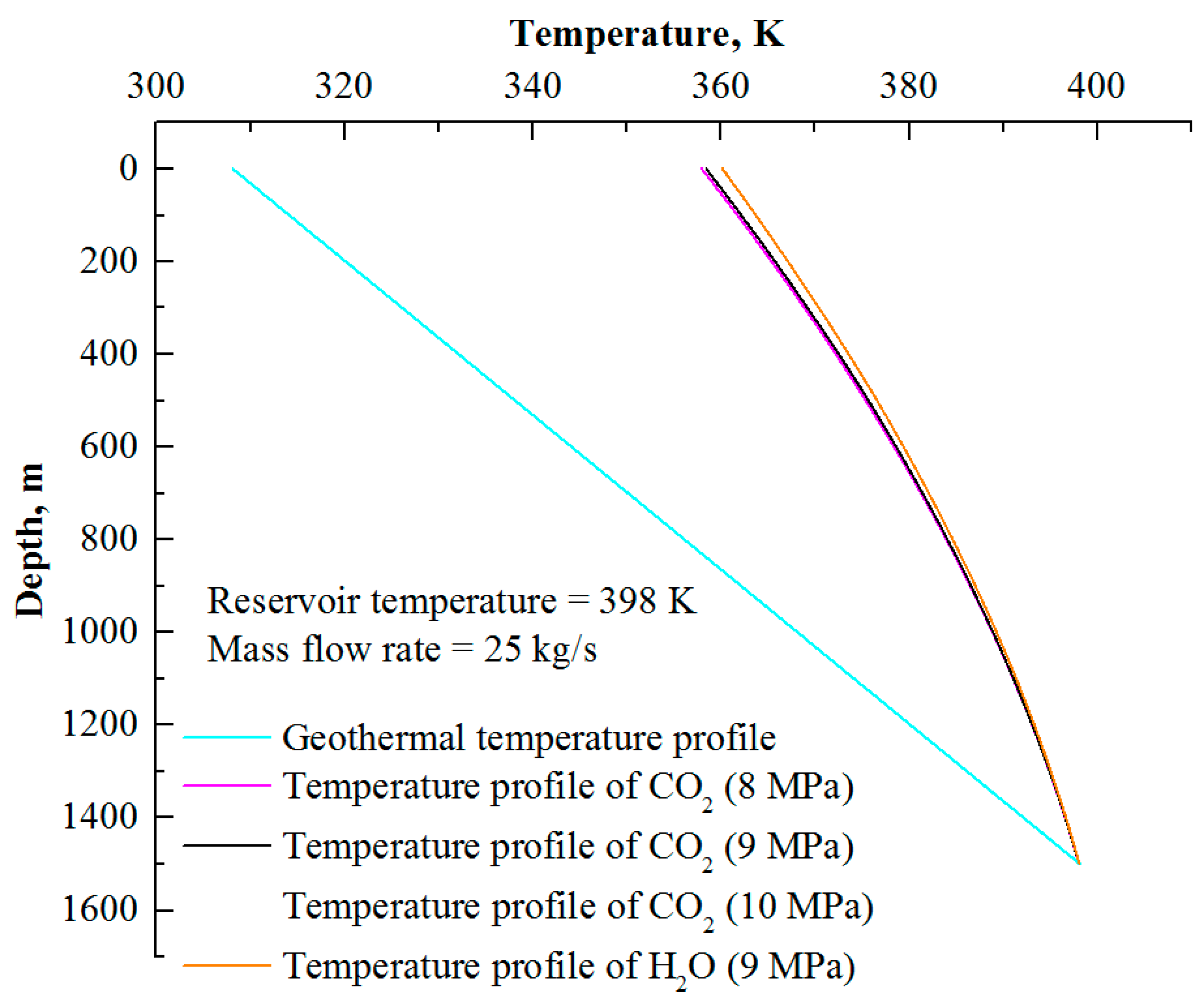
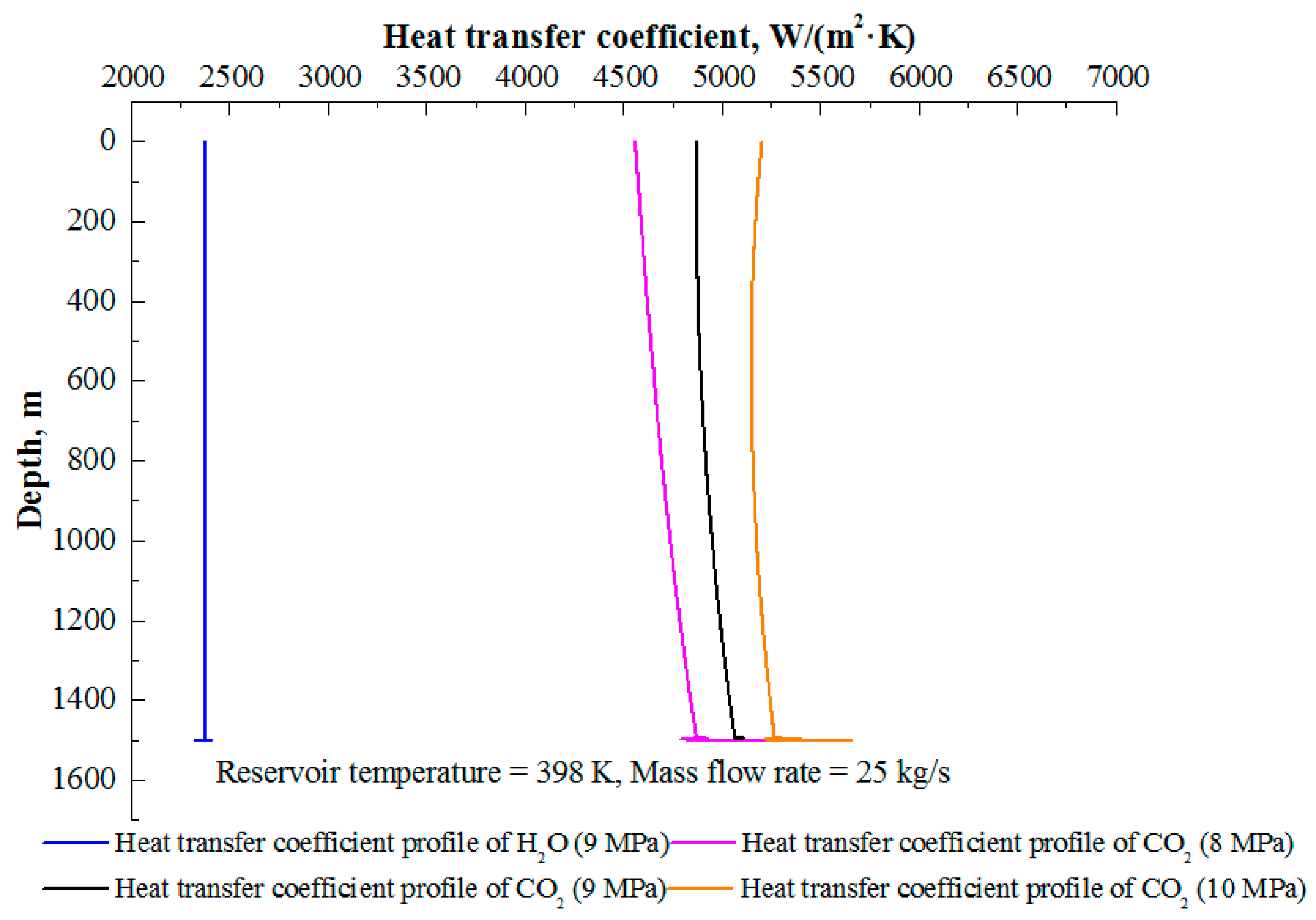
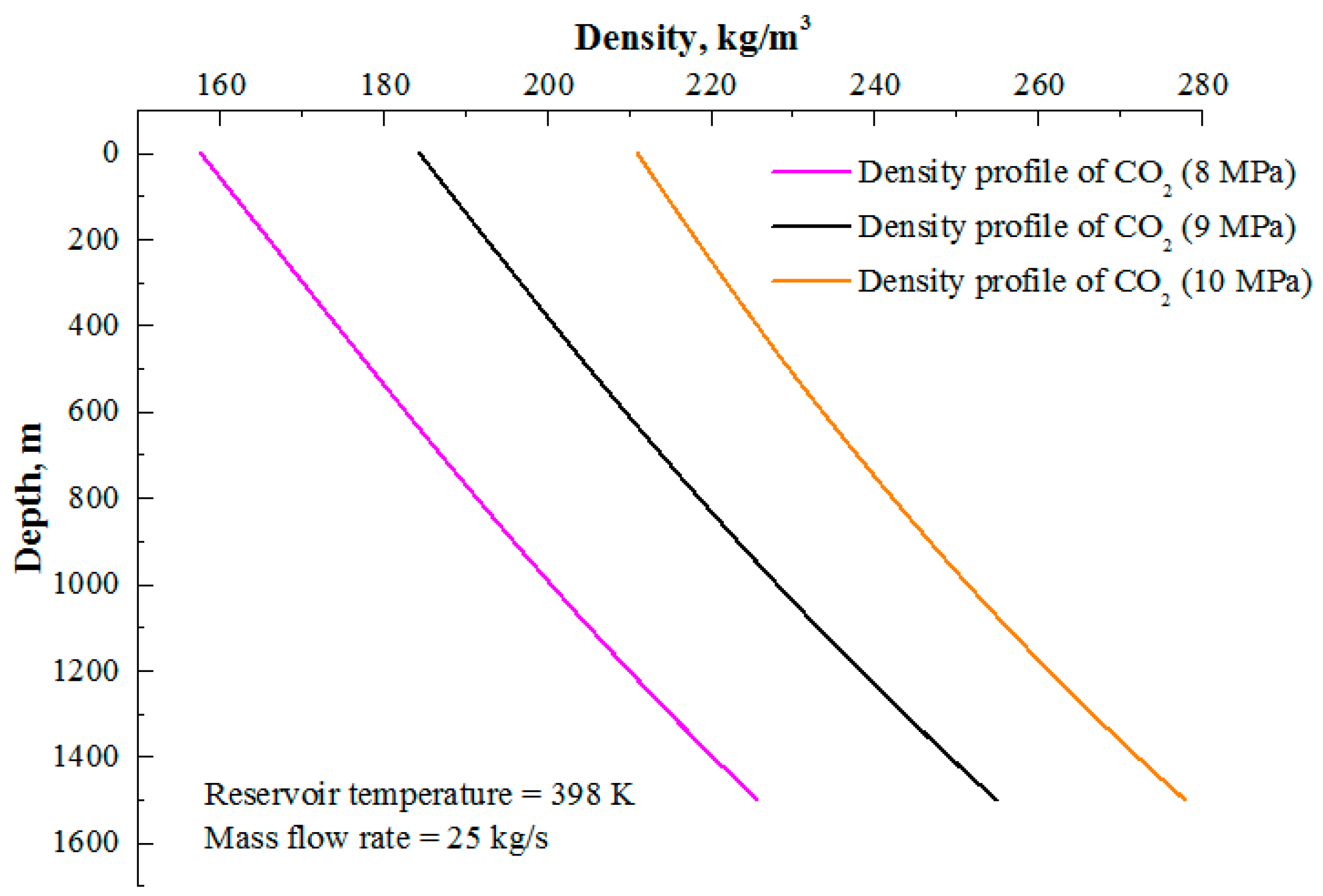
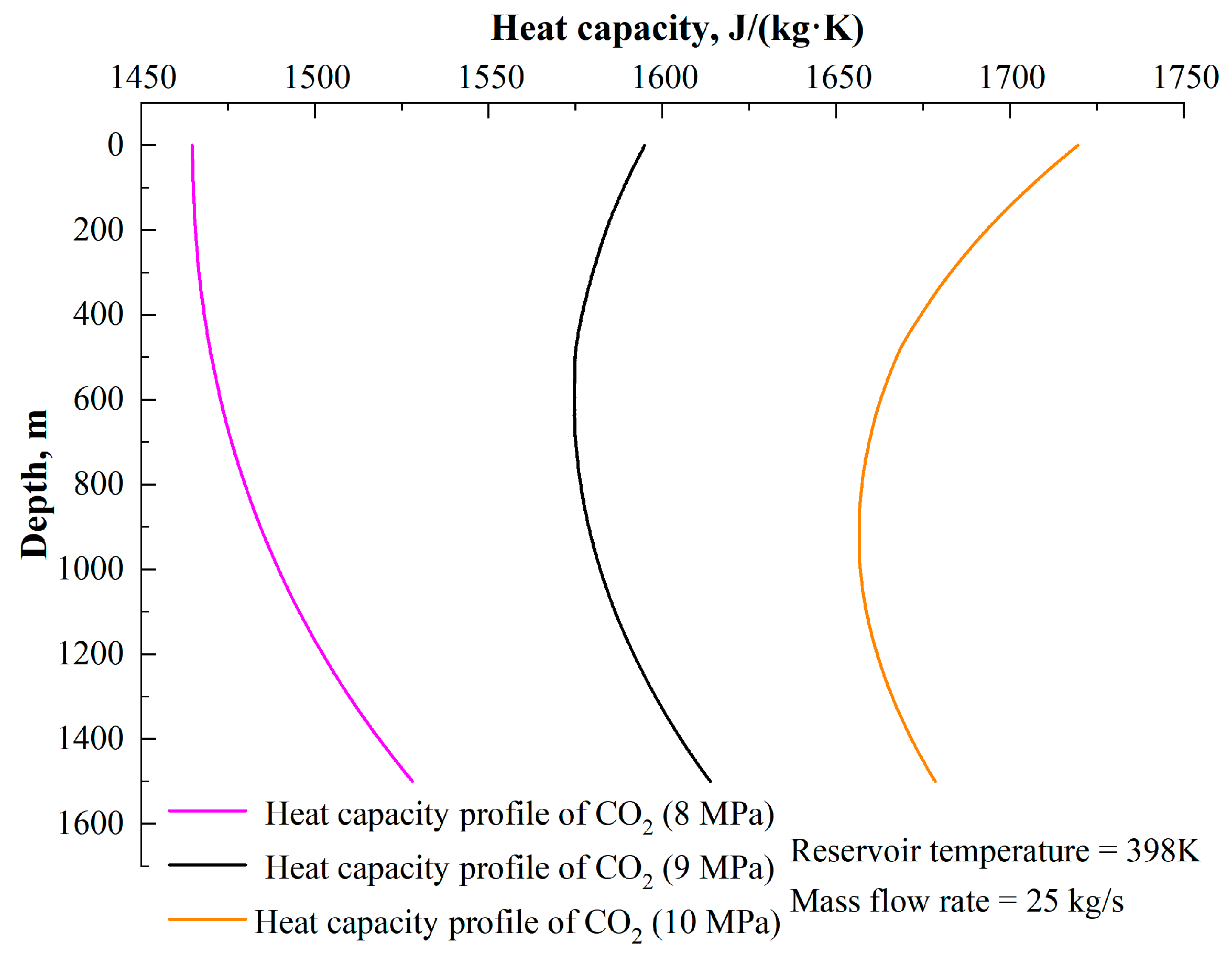
Figure 11 presents the influence of the outlet pressure on the temperature profile. The results show that the outlet pressure has a minor influence on the temperature profile. As analyzed earlier, the temperature change is positively affected by the heat transfer (positively related to the heat transfer coefficient) and negatively influenced by the density profile and heat capacity profile. Since the heat transfer coefficient profile (Figure 12), density profile (Figure 13), and heat capacity profile (Figure 14) all increase significantly with increasing outlet pressure, the temperature profile differs minimally under varying outlet pressures (Figure 11).
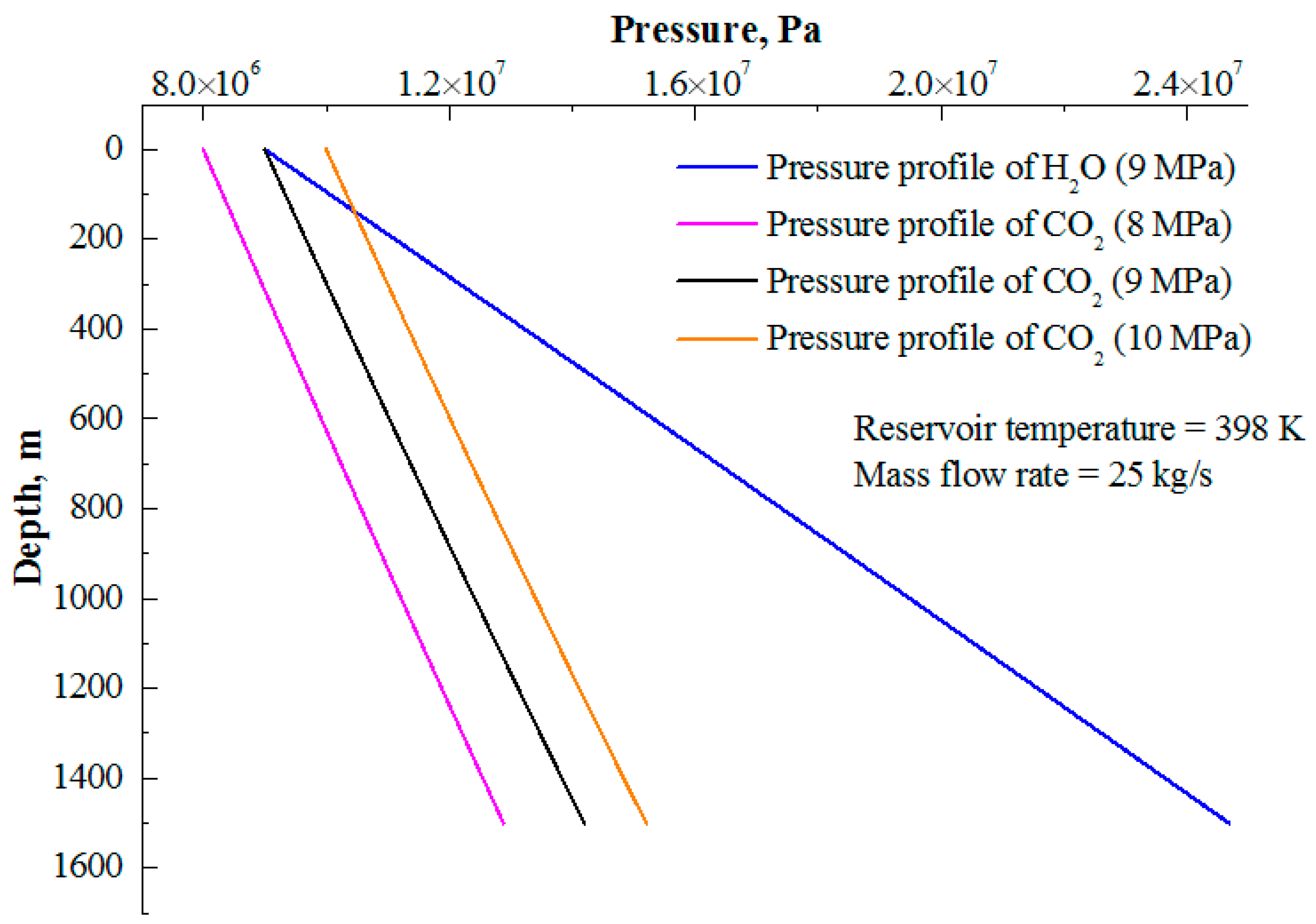
Figure 15 exhibits the changing trend in the pressure profile under varying outlet pressures. The pressure always decreases in a linear manner; therefore, the pressure profile increases with increasing outlet pressure, accordingly. As depicted earlier, the pressure drop has a positive correlation with the density profile and flow friction, and the flow friction increases with viscosity and flow rate (Figure 16). Under the boundary conditions in this study, as the mass flow rate is constant, a smaller density means a larger volume flow rate and larger flow friction, correspondingly. Larger flow friction compensates for the negative effect of a smaller density on the pressure drop under smaller outlet pressures.
Since a smaller outlet pressure would help obtain more geothermal energy favorably at similar pump power consumption rates, and a larger outlet pressure would unfavorably increase the leakage risk in the pipelines, a smaller outlet pressure is recommended in the operation of CO2-EGSs. In addition, the outlet pressure should be larger than the critical pressure (7.38 MPa) to achieve the favorable properties of carbon dioxide.

4. Conclusions

This study established a novel coupled thermo-hydrodynamic model to simulate the geothermal energy extraction process using supercritical CO2 as the working fluid, with a particular focus on the production wellbore. The model uniquely integrates heat transfer dynamics with the compressibility and strongly variable thermophysical properties of CO2, distinguishing it from conventional models that often treat the working fluid as incompressible or use constant properties. The performance of this new model was evaluated under varying operational parameters (mass flow rates of 20–30 kg/s and outlet back pressures of 8–10 MPa), and its advantages and limitations compared to existing models are summarized as follows:
Advantages of the Proposed Model:
(1) Enhanced Predictive Accuracy for CO2-Specific Behavior: Unlike traditional models designed for water, which often fail to capture the unique thermophysical characteristics of supercritical CO2, the present model accurately describes the nonlinear enthalpy change and pressure drop along the wellbore. This is primarily due to its capability to couple the heat transfer with the pronounced variability in CO2 properties (especially density and specific heat) under changing pressure and temperature conditions.
(2) Superior Optimization Capability: The model provides a reliable tool for optimizing system parameters. For instance, it quantitatively reveals that a larger mass flow rate linearly increases the total energy delivered to the surface, while a lower outlet back pressure (e.g., 8 MPa) enhances both heat extraction and operational safety. Such precise guidance is difficult to obtain from existing models that do not adequately account for CO2’s compressibility.
(3) Explicit Performance Comparison: The model enables a direct and fair comparison between CO2 and water under identical conditions. It conclusively demonstrates that although CO2 exhibits a 65.5% greater temperature drop due to its higher mobility, it reduces the pressure drop by 50% compared to water. This highlights a critical trade-off between thermal drawdown and pumping power consumption, a crucial insight for assessing the feasibility of CO2-EGS that many existing models overlook.
Limitations and Outlook for Future Work:
While the proposed model offers significant advancements, its limitations should be acknowledged. The current study focuses on the wellbore and assumes a constant geothermal gradient and homogeneous formation properties. Future iterations of the model could be enhanced by incorporating reservoir–wellbore coupling, modeling complex fracture networks, and considering potential chemical reactions or water intrusion in a more realistic system.
In conclusion, the newly developed model provides a more robust and accurate framework for simulating and optimizing the CO2-EGS production process compared to existing approaches. It serves as a valuable tool for assessing the geothermal potential of depleted high-temperature gas reservoirs and paves the way for designing more efficient and sustainable CO2-based geothermal systems.

Author Contributions

Conceptualization, C.L. and L.S.; methodology, L.W. and W.S.; software, W.S.; validation, Z.Y.; writing—original draft preparation, C.L. and Z.Y. All authors have read and agreed to the published version of the manuscript.

Funding

The financial supports from the Opening Fund of Sinopec Key Laboratory of Geothermal Resources Exploitation and Utilization (36650000-25-ZC0607-0003) and National Natural Science Foundation of China (52204009) are highly appreciated.

Institutional Review Board Statement

Not applicable.

Informed Consent Statement

Not applicable.

Data Availability Statement

The original contributions presented in this study are included in the article. Further inquiries can be directed to the corresponding authors.

Conflicts of Interest

Authors Chengcheng Liu, Lianzhong Sun and Lei Wang were employed by the company Sinopec Research Institute of Petroleum Engineering Co., Ltd. The remaining authors declare that the research was conducted in the absence of any commercial or financial relationships that could be construed as a potential conflict of interest.

Nomenclature

ρ   density, kg/m3
v flow velocity vector, m/s
hspecific enthalpy, J/kg
λ thermal conductivity, W/(m·K)
Ttemperature, K
Qheat transfer induced by the temperature difference between flowing fluid and surrounding rock, J
xaxial coordinate, m
rradial coordinate, m
v i the component of v on i axis, m/s
Ppressure, Pa
τ inverse reduced temperature, dimensionless
δ reduced density, dimensionless
Rspecific gas constant, R = 0.1889 kJ/(kg·K)
ϕ δ , τ Helmholtz energy, dimensionless
  ϕ δ r partial derivative of the Helmholtz energy, dimensionless
Δ λ excess thermal conductivity, W/(m·K)
Δ λ c thermal conductivity in the critical region, W/(m·K)
c p isobaric heat capacity, J/(kg K)
Qcrheat loss of flowing fluid to surrounding rock, J
h convective heat transfer coefficient between casing wall and flowing working fluid in the production well, W/(m2·K)
r i inner diameter of the casing, m
r o outer diameter of the casing, m
η viscosity, μPa·s
η 0 viscosity in the zero-density limit, μPa·s
Δ η excess viscosity, μPa·s
Δ η c viscosity in the critical region, μPa·s
ξ flow friction coefficient, dimensionless
s i j the symmetric part of local speed gradient tensor, dimensionless
Fimass force component on i axis, m/s2
pstress, Pa
δ i j Kronecker delta
λ c thermal conductivity of casing body, W/(m·K)
llength of finite unit, m
T r temperature of formation rock, K
m u the mass in an infinitesimal unit, kg
mmass flow rate, kg/s
dequivalent diameter, m

References

  1. Elkhatat, A.; Al-Muhtaseb, S. Climate Change and Energy Security: A Comparative Analysis of the Role of Energy Policies in Advancing Environmental Sustainability. Energies 2024, 17, 3179. [Google Scholar] [CrossRef]
  2. Osman, A.I.; Deka, T.J.; Baruah, D.C.; Rooney, D.W. Critical challenges in biohydrogen production processes from the organic feedstocks. Biomass Conv. Bioref. 2023, 13, 8383–8401. [Google Scholar] [CrossRef]
  3. International Renewable Energy Association (ARENA). Renewable Capacity Statistics 2018; International Renewable Energy Agency (ARENA): Abu Dhabi, United Arab Emirates, 2018. [Google Scholar]
  4. Goldstein, B.A.; Hill, A.J.; Long, A.; Budd, A.R.; Holgate, F.; Malavazos, M. Hot rock geothermal energy plays in Australia. In Proceedings of the Thirty-Fourth Workshop on Geothermal Reservoir Engineering, Stanford, CA, USA, 9–11 February 2009. [Google Scholar]
  5. Ricks, W.; Voller, K.; Galban, G.; Norbeck, J.H.; Jenkins, J.D. The role of flexible geothermal power in decarbonized electricity systems. Nat. Energy 2025, 10, 28–40. [Google Scholar] [CrossRef]
  6. Raza, M.A.; Al-Khasawneh, M.A.; Alharthi, Y.Z.; Faheem, M.; Haider, R.; Kumar, L. Power generation expansion planning with high penetration of geothermal energy—Potential, prospects and policy. Environ. Sustain. Indic. 2025, 26, 100614. [Google Scholar] [CrossRef]
  7. Kurek, K.A.; van Ophem, J.; Strojny, J. Arguments for a Community-Based Approach to Geothermal Energy Development. Energies 2024, 17, 2299. [Google Scholar] [CrossRef]
  8. Gładysz, P.; Pająk, L.; Andresen, T.; Strojny, M.; Sowiżdżał, A. Process Modeling and Optimization of Supercritical Carbon Dioxide-Enhanced Geothermal Systems in Poland. Energies 2024, 17, 3769. [Google Scholar] [CrossRef]
  9. Meirbekova, R.; Bonciani, D.; Olafsson, D.I.; Korucan, A.; Derin-Güre, P.; Harcouët-Menou, V.; Bero, W. Opportunities and Challenges of Geothermal Energy: A Comparative Analysis of Three European Cases—Belgium, Iceland, and Italy. Energies 2024, 17, 4134. [Google Scholar] [CrossRef]
  10. Cai, X.; Liu, Z.; Xu, K.; Li, B.; Zhong, X.; Yang, M. Numerical simulation study of an Enhanced Geothermal System with a five-spot pattern horizontal well based on thermal-fluid-solid coupling. Appl. Therm. Eng. 2025, 258, 124649. [Google Scholar] [CrossRef]
  11. Chen, J.; Jiang, F. Designing multi-well layout for enhanced geothermal system to better exploit hot dry rock geothermal energy. Renew. Energy 2015, 74, 37–48. [Google Scholar] [CrossRef]
  12. Memon, A.R.; Makauskas, P.; Kaminskaitė-Baranauskienė, I.; Pal, M. Repurposing depleted hydrocarbon reservoirs for geothermal energy: A case study of the Vilkyčiai Cambrian sandstone in Lithuania. Energy Rep. 2025, 14, 243–253. [Google Scholar] [CrossRef]
  13. Asai, P.; Panja, P.; McLennan, J.; Moore, J. Performance evaluation of enhanced geothermal system (EGS): Surrogate models, sensitivity study and ranking key parameters. Renew. Energy 2018, 122, 184–195. [Google Scholar] [CrossRef]
  14. Tester, J.W.; Herzog, H.J. Economic Predictions for Heat Mining: A Review and Analysis of Hot Dry Rock (HDR) Geothermal Energy Technology; Office of Scientific & Technical Information Technical Reports; Energy Laboratory, Massachusetts Institute of Technology: Cambridge, MA, USA, 1990. [Google Scholar]
  15. Lukawski, M.Z.; Anderson, B.J.; Augustine, C.; Capuano, L.E., Jr.; Beckers, K.F.; Livesay, B.; Tester, J.W. Cost analysis of oil, gas, and geothermal well drilling. J. Pet. Sci. Eng. 2014, 118, 1–14. [Google Scholar] [CrossRef]
  16. Li, J.-B.; Wang, H.; Wang, T.; Li, H.; Guo, C.; Yang, D. Feasibility analysis of converting abandoned oil and gas wells into geothermal wells and power generation. Geoenergy Sci. Eng. 2025, 253, 213985. [Google Scholar] [CrossRef]
  17. Taghadom, K.; Khosravani, H.; Mohammad; Rahimpour, R. Geothermal Energy Exploitation from Oil Field. In Encyclopedia of Renewable Energy, Sustainability and the Environment, 1st ed.; Rahimpour, M.R., Ed.; Elsevier: Amsterdam, The Netherlands, 2024; pp. 105–116. ISBN 9780323939416. [Google Scholar]
  18. Liu, Z.; Yang, W.; Xu, K.; Zhang, Q.; Yan, L.; Li, B.; Cai, X.; Yang, M. Research progress of technologies and numerical simulations in exploiting geothermal energy from abandoned wells: A review. Geoenergy Sci. Eng. 2023, 224, 211624. [Google Scholar] [CrossRef]
  19. Prabodh, P.; Yan, F.; Hanifatu, A.; Zulkarnain, K.; Mark, A.; Dodi, H. The Arun gas field in Indonesia: Resource management of a mature field. In Proceedings of the SPE Asia Pacific Conference on Integrated Modelling for Asset Management, Kuala Lumpur, Malaysia, 29–30 March 2004. [Google Scholar]
  20. Yang, S.; Wang, S.; Wang, L.; He, C.; Dong, P. Evaluation and development of fractured buried-hill condensate gas reservoir- taking Qianmiqiao buried-hill condensate gas reservoir as an example. Nat. Gas Geosci. 2006, 17, 857–861, (In Chinese with English Abstract). [Google Scholar]
  21. Zhang, L.; Pei, J.; Ren, S. Heat mining capacity and energy utilization efficiency of SCCO2-HDR geothermal system. Renew. Energy Resour. 2014, 32, 114–119. [Google Scholar]
  22. Brown, D.W. A hot dry rock geothermal energy concept utilizing supercritical CO2 instead of water. In Proceedings of the Twenty-Fifth Workshop on Geothermal Reservoir Engineering, Stanford, CA, USA, 24–26 January 2000; Stanford University: Stanford, CA, USA, 2000. [Google Scholar]
  23. Pruess, K. Enhanced geothermal systems (EGS) using CO2 as working fluid—A novel approach for generating renewable energy with simultaneous sequestration of carbon. Geothermics 2006, 35, 351–367. [Google Scholar] [CrossRef]
  24. Spycher, N.; Pruess, K. A Phase-Partitioning Model for CO2–Brine Mixtures at Elevated Temperatures and Pressures: Application to CO2-Enhanced Geothermal Systems. Transp. Porous Media 2010, 82, 173–196. [Google Scholar] [CrossRef]
  25. Wan, Y.; Xu, T.; Pruess, K. Impact of fluid-rock interactions on enhanced geothermal systems with CO2 as heat transmission fluid. In Proceedings of the Thirty-Sixth Workshop on Geothermal Reservoir Engineering, Stanford, CA, USA, 31 January–2 February 2011; Stanford University: Stanford, CA, USA, 2011. [Google Scholar]
  26. Gaus, I. Role and impact of CO2–rock interactions during CO2 storage in sedimentary rocks. Int. J. Greenh. Gas Control 2010, 4, 73–89. [Google Scholar] [CrossRef]
  27. Zhang, L.; Li, X.; Zhang, Y.; Cui, G.; Tan, C.; Ren, S. CO2 injection for geothermal development associated with EGR and geological storage in depleted high-temperature gas reservoirs. Energy 2017, 123, 139–148. [Google Scholar] [CrossRef]
  28. Xu, T.; Pruess, K.; Apps, J. Numerical Studies of Fluid-Rock Interactions in Enhanced Geothermal Systems (EGS) with CO2 as Working Fluid; Ernest Orlando Lawrence Berkeley National Laboratory: Berkeley, CA, USA, 2008. [Google Scholar]
  29. Cui, G.; Zhang, L.; Tan, C.; Ren, S. Injection of supercritical CO2 for geothermal exploitation from sandstone and carbonate reservoirs: CO2–water–rock interactions and their effects. J. CO2 Util. 2017, 20, 113–128. [Google Scholar] [CrossRef]
  30. Zhang, X.; Lu, Y.; Tang, J.; Zou, Z.; Liao, Y. Experimental study on fracture initiation and propagation in shale using supercritical carbon dioxide fracturing. Fuel 2017, 190, 370–378. [Google Scholar] [CrossRef]
  31. Zhou, J.; Liu, G.; Jiang, Y.; Xian, X.; Liu, Q.; Zhang, D.; Tan, J. Supercritical carbon dioxide fracturing in shale and the coupled effects on the permeability of fractured shale: An experimental study. J. Nat. Gas Sci. Eng. 2016, 36, 369–377. [Google Scholar] [CrossRef]
  32. Jiang, Y.; Qin, C.; Kang, Z.; Zhou, J.; Li, Y.; Liu, H.; Song, X. Experimental study of supercritical CO2 fracturing on initiation pressure and fracture propagation in shale under different triaxial stress conditions. J. Nat. Gas Sci. Eng. 2018, 55, 382–394. [Google Scholar] [CrossRef]
  33. Span, R.; Wagner, W. A new equation of state for CO2 covering the fluid region from the triple-point temperature to 1100 K at pressure up to 800 MPa. J. Phys. Chem. Ref. Data 1996, 25, 1509–1596. [Google Scholar] [CrossRef]
  34. Wang, P.; Ni, H.; Wang, R. Modeling the flow of carbon dioxide during the drilling of oil, gas, and geothermal energy. Int. J. Heat Mass Transf. 2019, 138, 443–453. [Google Scholar] [CrossRef]
  35. Fenghour, A.; Wakeham, W.A. The viscosity of carbon dioxide. J. Phys. Chem. Ref. Data 1998, 27, 31–44. [Google Scholar] [CrossRef]
  36. Vesovic, V.; Wakeham, W.A.; Olchowy, G.A.; Sengers, J.V.; Watson, J.T.R.; Millat, J. The Transport Properties of Carbon Dioxide. J. Phys. Chem. Ref. Data 1990, 19, 763–808. [Google Scholar] [CrossRef]
  37. Wang, Z.; Sun, B.; Wang, J.; Hou, L. Experimental study on the friction coefficient of supercritical carbon dioxide in pipes. Int. J. Greenh. Gas Control. 2014, 25, 151–161. [Google Scholar] [CrossRef]
  38. Spalding, D.B. Lectures in Mathematical Models of Turbulence; Academic Press: London, UK, 1972. [Google Scholar]
  39. Deng, S.; Li, X.; Yang, Z.; Yi, L.; Rao, D. Flow and heat transfer for non-Newtonian CO2 mixed fluid injection in the wellbore. Fuel 2025, 381, 133647. [Google Scholar] [CrossRef]
  40. Sultan, Z.B.; Sheng, J.J. Strategic approach to EGS working fluid selection: Performance assessment of water and CO2. Energy 2025, 319, 13494. [Google Scholar] [CrossRef]
Figure 1. Research approach flowchart.
Sustainability 18 00483 g001
Figure 2. Physical model for typical enhanced geothermal system.
Sustainability 18 00483 g002
Figure 3. The influence of mass flow rate on enthalpy profile.
Sustainability 18 00483 g003
Figure 4. Influence of mass flow rate on the temperature profile.
Sustainability 18 00483 g004
Figure 5. The heat transfer coefficient profiles.
Sustainability 18 00483 g005
Figure 6. Influence of mass flow rate on the density profile.
Sustainability 18 00483 g006
Figure 7. Influence of mass flow rate on the heat capacity profile.
Sustainability 18 00483 g007
Figure 8. Influence of mass flow rate on the pressure profile.
Sustainability 18 00483 g008
Figure 9. Influence of mass flow rate on the viscosity profile.
Sustainability 18 00483 g009
Figure 10. Influence of outlet pressure on the enthalpy profile.
Sustainability 18 00483 g010
Figure 11. Influence of outlet pressure on the temperature profile.
Sustainability 18 00483 g011
Figure 12. Influence of outlet pressure on the heat transfer coefficient profile.
Sustainability 18 00483 g012
Figure 13. Influence of outlet pressure on the density profile.
Sustainability 18 00483 g013
Figure 14. Influence of outlet pressure on the heat capacity profile.
Sustainability 18 00483 g014
Figure 15. Influence of outlet pressure on the pressure profile.
Sustainability 18 00483 g015
Figure 16. Influence of outlet pressure on the viscosity profile.
Sustainability 18 00483 g016
Table 1. Boundary conditions.
Well Depth = 1500 mGeothermal Gradient = 0.06 K/m
Inner diameter of the casing = 0.1086 mReservoir temperature = 398.15 K
Outer diameter of the casing = 0.1270 mOutlet pressure = 8, 9, 10 MPa
Thermal conductivity of the casing = 45 W/(m·K)Mass flow rate = 25, 30, 35 kg/s
Disclaimer/Publisher’s Note: The statements, opinions and data contained in all publications are solely those of the individual author(s) and contributor(s) and not of MDPI and/or the editor(s). MDPI and/or the editor(s) disclaim responsibility for any injury to people or property resulting from any ideas, methods, instructions or products referred to in the content.