


Abstract
Active citizen participation in both consumption and production is essential for a successful renewable energy transition. The paper explores the early development of prosumerism in Jerusalem, a city characterized by socio-political fragmentation and unequal access to infrastructure. Based on a 320-sample survey conducted in East and West Jerusalem, the paper analyzes awareness, motivation, and barriers to solar energy adoption in the city. The results show that only 12% of respondents currently produce and consume their own energy, while 66% had never heard of the term “prosumerism.” Financial savings were shown to be the primary driver of implementing solar systems, both in East and West Jerusalem. Key barriers included high installation costs, limited regulatory knowledge, and administrative complexity. Despite these obstacles, 70% of respondents expressed interest in community energy initiatives, highlighting significant potential for citizen-led models in fragmented urban contexts.
1. Introduction
1.1. Cities and Energy Transition
Cities consume around 75% of the world’s energy and contribute 70% of global greenhouse gas emissions, so they are important for tackling climate change [1,2]. In response, transforming our urban energy system toward decentralized, renewable energy-based systems is essential for achieving global climate goals. The renewable energy transition refers to the systematic move away from fossil fuel-based energy sources (such as coal, oil, and natural gas) toward low-carbon alternatives, primarily solar, wind, hydro, and bioenergy [3,4]. This transition includes the reduction in greenhouse gas emissions but also involves digitalization and energy decentralization, which refers to a move away from large, centralized power plants towards a distributed energy generation system [5,6]. Such a transition is a complex process that requires comprehensive adjustments in energy markets, infrastructure networks, regulatory policies, and consumer behaviors [7,8,9]. While the International Energy Agency (IEA) highlights the importance of combining technological and policy measures, it is equally important to integrate societal engagement and behavior change to ensure a holistic approach to an effective decarbonization strategy [10].
Although notable advancements have been made, the pace of transition remains slow and unpredictable [11,12,13]. At the same time, many low-carbon innovations are emerging rapidly, making positive contributions to a renewable energy transition. For example, energy efficiency has been essential in reducing consumption and managing demand [14]. Moreover, academic discussions focus on the role of citizens as active participants, not only as consumers but as producers in shaping the energy transition [15]. Implementing energy transition is challenging, especially in socially and geographically divided urban areas, where unequal infrastructure and complex governance make the implementation of fair energy solutions more difficult [16]. For example, Cape Town is a city with stark contrasts, affluent neighborhoods with stable energy access coexist, alongside informal settlements that often lack basic infrastructure like electricity, running water, and paved roads. This division is rooted in historical segregation and reinforced by economic inequality [17].
There are similar challenges in Jerusalem, which makes it a valuable case for understanding how fragmented infrastructures affect prosumer engagement in the energy transitions. This paper explores the role of prosumers [18] in Jerusalem’s energy transition. By focusing on motivation, challenges, and social-political factors shaping decarbonized renewable energy, it provides early evidence on how prosumerism develops in fragmented urban environments.
1.2. Social Innovation, Energy Citizenship, and Prosumers
The energy transition is not only a technological shift but also driven by social innovation. Social innovation, according to Hoppe and de Vries is “the innovations that are social in their means and contribute to the low-carbon energy transition, civic empowerment, social goals and general well-being of communities” [19]. It highlights the transformation of social practices, roles and institutions in response to climate change and energy [20,21,22]. Social innovation provides an approach to understanding how citizens and communities create new forms of participation and organization in the renewable energy transition that complement technological advances [23].
Within this framework, the concept of energy citizenship has gained increasing attention in the last decade [24,25,26,27]. It positions citizens as “protagonists of the energy transition meaningfully, they should partake through not only their energy investment and consumption decisions, but also as social and political actors who can shape the energy system” [28]. Energy citizenship has been described as both a right and a responsibility: the right to a fair, just energy transition, and the responsibility to contribute to its implementation [29]. Energy citizenship is through practices such as securing energy access for vulnerable groups, adopting active consumption practices, and producing renewable energy through prosumerism and different community initiatives [15,30,31,32]. Through these initiatives, energy citizenship improves the democratic process, strengthens energy justice and frames energy as a human right rather than a commodity [33].
A special form of energy citizenship is prosumerism, where individuals, households, and communities simultaneously produce and consume energy and may participate in the local energy markets [34]. It relies on decentralized renewable energy technologies that serve as the basis for electrical, thermal, and, in some cases, combined electrical-thermal energy production [35]. For electricity generation, prosumers most commonly use solar photovoltaic (PV) panels (in some cases, small wind turbines), while heat is typically supplied by solar thermal collectors/solar water heaters, for domestic hot water and sometimes space heating [36,37,38]. PV systems convert solar radiation directly into electricity through semiconductor cells, whereas solar thermal systems produce heat by absorbing solar energy and transferring it to a working fluid. These technologies allow prosumers to cover their own demand while supplying the surplus electricity to the national grid, joining cooperative ownership models, or trading directly in peer-to-peer (P2P) markets [39,40]. In this way, prosumerism demonstrates how the principles of energy citizenship could be implemented in practice, democratizing the energy system, and moving towards decentralized, participatory energy governance [30].
Institutional support has catalyzed prosumerism in Europe. The European Commission first introduced the concept of “prosumerism” in its communication “Delivering a New Deal for Energy Consumers”, opening the opportunity for citizens to become “prosumers” [41,42]. The most recent Renewable Energy Directive (RED II) further strengthened this framework by guaranteeing remuneration for decentralized renewable electricity with no charges or fees [43]. Germany’s Energiewende provides an example of how prosumerism can be integrated in governance and practice, through citizen ownership and community energy initiatives as part of its long-term national strategy aimed at transforming Germany’s energy system from fossil fuels and nuclear power [44]. Together, social innovation and energy citizenship demonstrate the broader shift toward an inclusive, accessible, and citizen-centered energy governance. By redistributing authorities from centralized energy utilities to local actors (communities, citizens), these concepts highlight how citizens can play a central role in shaping the renewable energy transition [40,45,46,47].
1.3. Research Gap
While there is extensive literature on prosumerism, energy citizenship, and social innovation, most research focuses on European and North American cities [48]. Case studies from Berlin [49,50], Freiburg [51,52], Madrid [53,54,55], Barcelona [56,57,58], Amsterdam [42], Lisbon [59], and Zurich [60,61,62,63] show how urban contexts can influence the drivers, motivations, and barriers of prosumerism. These examples highlight the potential of different decentralized energy initiatives but also show a clear research gap: limited focus has been paid to cities beyond Europe and North America, especially in the Middle East with social–political fragmentation and inequal access to energy infrastructure.
In the Israeli context, in 2016, Michaels and Parag conducted a nationwide survey on prosumer-related demand-side management technologies [64]. Building on this national-level perspective, the present research focuses on the city level. In particular, this study examines photovoltaic (PV) electricity prosumerism within the fragmented urban setting of Jerusalem, focusing on residents’ awareness, current practices, motivations, perceived barriers, and interest in community energy initiatives. At the same time, solar water-heater systems are discussed only to contextualize perception gaps.
2. Case Study: Jerusalem
Jerusalem as a case study offers a unique context for studying the adoption of decentralized energy systems with the focus on prosumerism. Due to its geopolitical circumstances and the fragmented energy infrastructure between East and West Jerusalem, this city offers interesting insights into how social, economic, and political aspects influence the adoption of prosumerism, motivation, and barriers to implementing a decentralized solar energy system. In this fragmented urban context, P2P trading can offer localized solutions to energy inequality, particularly in areas underserved by centralized energy infrastructure. The outbreak of the Israel–Hamas war in October 2023 had an extreme impact on Jerusalem’s economy and society. The unemployment rate rose to 51.4% in November 2023 [65], and tourism declined by 80% [66]. Additionally, thousands of evacuees from the war zone required refuge in hotels across the city, placing considerable stress on local infrastructures and services [67]. The effects of the war are not only limited to economic decline but also have significant implications for political and infrastructure development.
Geographically, Jerusalem is 125 km2 [68], making it one of the largest cities in Israel. The population is twice that of Tel Aviv and reached one million in 2024. At the end of 2023, the population 60.5% was Jewish and 39.5% Arab (primarily Palestinians in East Jerusalem) [69]. According to the Köppen climate classification, Jerusalem has a Mediterranean climate with hot, dry summer (Csa), which leads to high residential cooling demand [70,71]. This climate condition could also provide great potential for PV development, which could help prosumer adoption in Jerusalem. At the national level, Israel’s energy sector has undergone a significant transformation in the past decades, driven by policy changes, technological development, and environmental awareness. Electricity production in Israel has increased by 33% since 2010, rising from 58 terawatt-hours (TWh) to 77 TWh in 2022. During this period, coal’s share of electricity generation declined from 60% to 20% [72]. By 2025, coal’s share is expected to decline further to only about 3% following the planned shutdown of the Orot Rabin coal power plant and the conversion of the remaining coal units to natural gas [73].
This transition reflects Israel’s broader energy strategy, which prioritizes natural gas as a primary energy source. Since 2010, the share of electricity generated from natural gas has increased from 39% in 2010 to 68% in 2022 [72]. While natural gas is considered a bridge fuel, its long-term role is being reconsidered as Israel strengthens its commitment to renewable energy. Renewable energy sources are still a minority contributor but have grown by 7.5% during this period. In 2022, 7507 GWh of electricity was produced by different renewable energy sources. In total, 94% of the electricity was produced from solar sources, including 84% Photovoltaic (PV) and 10% solar thermal. Wind power (4%) and other renewable sources (2%) make up the remaining renewable energy sources [72]. These national trends underscore the pivotal role of solar energy in Israel’s low-carbon transition, providing the policy and market context for Jerusalem’s local energy transition.
At the national level, the expansion of small-scale PV system installations has been a significant factor driving this shift. Since 2009, installations have expanded significantly. Early growth was moderate, with a 15% increase in installations from 1185 in 2009 to 1350 in 2010. However, after 2017, installations surged, doubling between 2017 and 2018. By 2022, the number of new installations reached 3797, which reflects a strong public and government push for solar energy adoption in both the residential and commercial sectors [74].
For Jerusalem, where residential rooftops offer significant potential, this national trend could act as a catalyst for scaling up prosumer adoption. Still, Jerusalem’s dual utility structure creates challenging conditions. Jerusalem District Electricity Company (JDECO) supplies electricity to East Jerusalem and neighboring areas, such as Bethlehem, Ramallah, and Jericho, operating with a distribution license from the Israeli Electricity Authority [75]. In contrast, the Israeli Electricity Corporation (IEC) manages electricity distribution in West Jerusalem and throughout Israel. This division has led to disparities in access to electricity and infrastructure quality, with East Jerusalem generally facing power shortages and blackouts due to aging infrastructure, unpaid debts from the Jerusalem District Electricity Company (JDECO) to the IEC, and unauthorized electricity connections [76,77].
In 2019, total electricity consumption in Jerusalem reached 4.2 billion kilowatt-hours (kWh), with the IEC supplying 63% of the demand and JDECO covering the remaining 37%. Most of the electricity consumption comes from the commercial and household sectors, which together account for 89% of the total demand. The industrial sector follows with 6%, municipal facilities with 4%, and water production with 1% [78]. The city has outlined ambitious plans for sustainable energy and climate adaptation by 2030, including plans to install 39 megawatts (MW) of PV systems, covering 67% of the city’s municipal energy consumption [78]. The Ministry of Energy estimates that only 18,984 kW were installed in 2022 out of a potential 419,129 kW, representing just 5% of the total potential in Jerusalem. The residential sector holds the greatest potential for renewable energy adoption at 53.6%. This is followed by the public sector (25.4%), the commercial sector (9.9%), other sectors (4.8%), and agriculture (0.1%) [79]. This gap between potential and actual development shows the opportunity and urgency for scaling up prosumerism in Jerusalem’s households and communities.
At the national level, policy initiatives such as Resolution No. 1515 allocates funding for energy efficiency projects, energy storage facilities, PV system installations, and programs to address energy poverty and promote the transition to energy-efficient transportation [80]. These policy initiatives reflect the broader transformation of Israel’s energy sector, characterized toward a low–carbon system by the transition away from coal, increasing natural gas usage, and significant growth in renewable energy adoption—a similar effort is also happening in Jerusalem, although not in the same way across the whole city and risking increasing inequality across East and West Jerusalem.
3. Methodology
3.1. Participants and Sampling
The survey gathered responses from 320 participants: 68.1% from West Jerusalem and 31.9% from East Jerusalem. The aim of the research is to explore and present a preliminary overview of future in-depth studies. The identified trends should therefore be seen as indicative rather than conclusive and interpreted with appropriate caution regarding generalizability to all of Jerusalem’s communities.
Only individuals aged 18 or above were eligible to participate. All participants were informed of the voluntary nature of the study, the confidentiality of their data, and the research’s purpose before starting the survey. No personal identifiable information was collected, ensuring anonymity and privacy of respondents.
A detailed demographic breakdown of participants by gender, age, city of residence, level of education, housing type and tenure are presented in Section 4.1.
3.2. Survey Design
This early-stage research used a questionnaire-based survey to generate baseline data and identify key trends in prosumerism practices in Jerusalem. The authors designed the questionnaire, and it was administered online by a private survey company. The sample included individuals aged 18 and older and residing in West and East Jerusalem. All participants were requested to provide consent before participating in the survey. The questionnaire had 37 questions, including different formats such as multiple choice, Likert scale, yes/no, ranking, and open-ended questions. The questions were designed to collect data across seven thematic areas summarized in Table 1.
Table 1.
Summary of information collected through the questionnaire.
To ensure accessibility and inclusivity, the questionnaire was developed in English and translated into Hebrew and Arabic. Respondents in West Jerusalem received the survey in Hebrew, and those in East Jerusalem received it in Arabic.
3.3. Data Analysis
The survey responses were analyzed using descriptive statistical methods, including frequency distributions and cross-tabulations. All analyses were conducted with the statistical software R (version 4.4.3). This methodology supported the identification of initial patterns related to demographic variables, such as education and income, as well as key aspects, such as adoption of solar technology, awareness of prosumerism, motivation, and perceived barriers.
Given the exploratory nature of the present study, the analysis aimed to gain insights, compare findings with existing literature, and use preliminary results to guide broader research agendas.
4. Results and Discussion
4.1. Demographic Characteristics of Survey Respondents
The survey gathered 320 respondents: 68.1% (N = 218) from West Jerusalem, and 31.9% (N = 102) from East Jerusalem. In Table 2, the sample characteristics are summarized.
Table 2.
Sample Descriptive Statistics (N = 320).
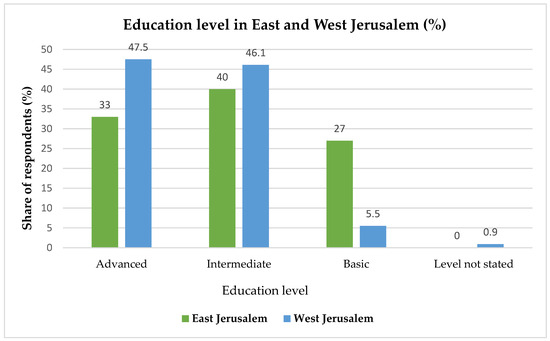
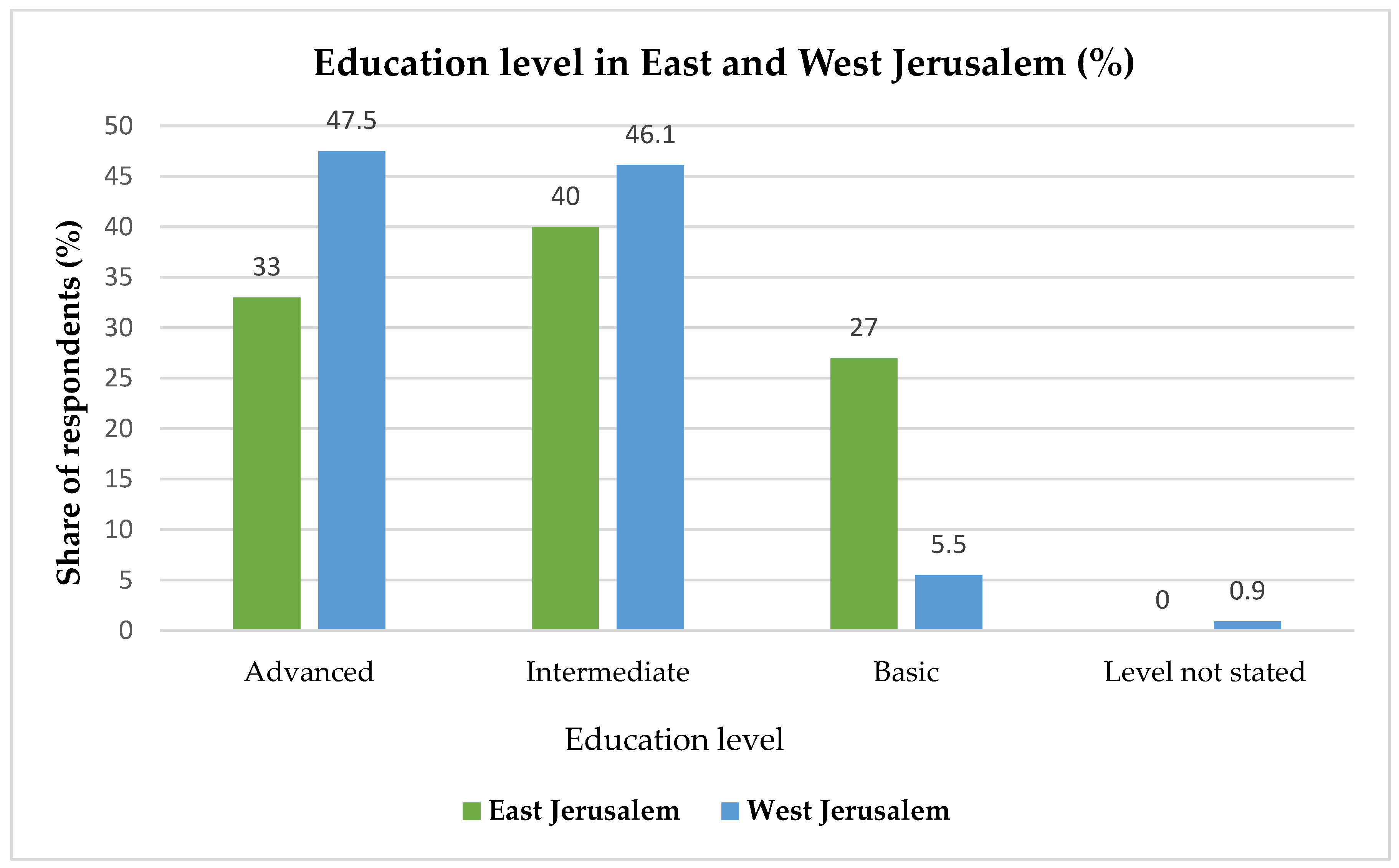
As shown in Figure 1, for the level of education (In this research, education level was categorized based on the International Standard Classification of Education by UNESCO. “Basic” includes primary and lower secondary education (ISCED levels 1–2); “intermediate” includes upper secondary and post-secondary non-tertiary education (ISCED levels 3–4); “advanced” includes tertiary education, such as bachelor’s degree or higher (ISCED levels 5–8) [81].), significant differences were found between respondents from East and West Jerusalem. In West Jerusalem, 47.5% of the respondents reported having an advanced education, 46.1% had intermediate education, 5.5% had basic education, and 0.9% did not state their education level. In East Jerusalem, 33% of the respondents had advanced knowledge, 40% had intermediate knowledge, and 27% had basic knowledge, with no missing responses. However, it is essential to note, as mentioned in the limitations section, that East Jerusalem is underrepresented in the samples, which may impact the reliability and generalizability of these comparisons.
Figure 1.
Education level in East and West Jerusalem.
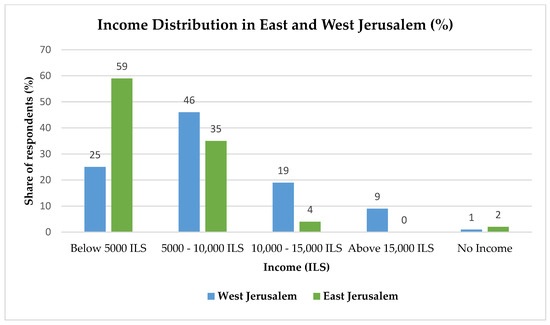
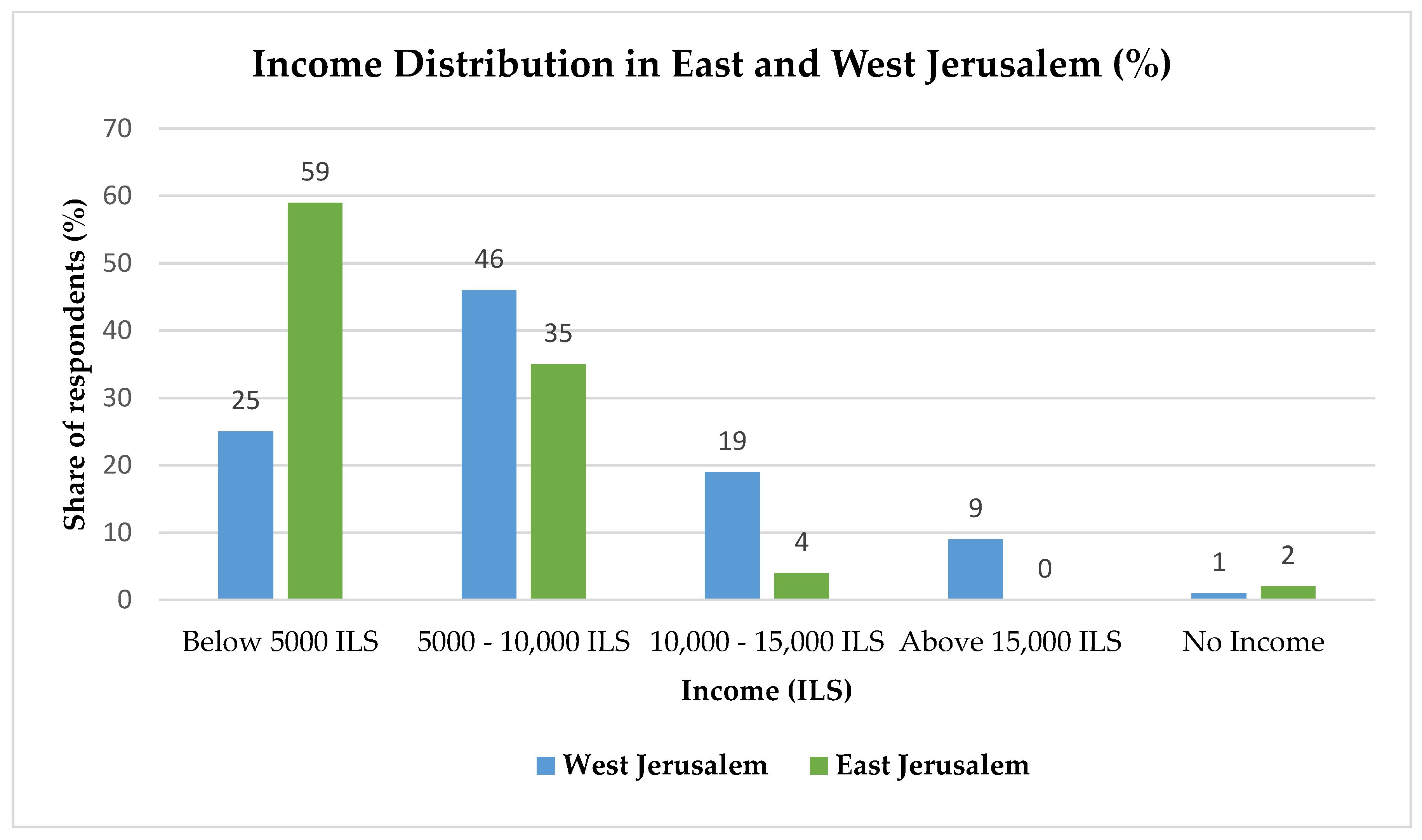
Income levels showed differences between the respondents in the two areas (Figure 2). Among West Jerusalem respondents, 25% earned below 5000 ILS (ILS = New Israeli Shekel) (1360 USD (USD = United States Dollar, 1 USD = 3.69 NIS [82])) per month, 46% between 5000 and 10,000 ILS (between 1360 USD and 2720 USD), 19% between 10,000 and 15,000 ILS (between 2720 USD and 4080 USD), and 9% earned more than 15,000 ILS (4080 USD). One percent of respondents reported having no income.
Figure 2.
Income Distribution in East and West Jerusalem.
In the case of respondents from East Jerusalem, 59% of them earned below 5000 ILS (1360 USD), 35% earned between 5000 and 10,000 ILS (between 1360 USD and 2720 USD), 4% earned between 10,000 and 15,000 ILS (between 2720 USD and 4080 USD), and 2% reported having no income. Notably, there were respondents from East Jerusalem with advanced and intermediate degrees who were unemployed at the time of the survey.
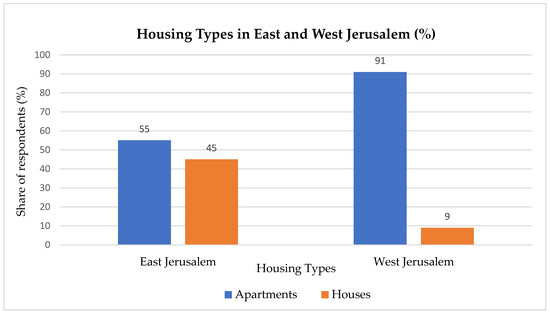
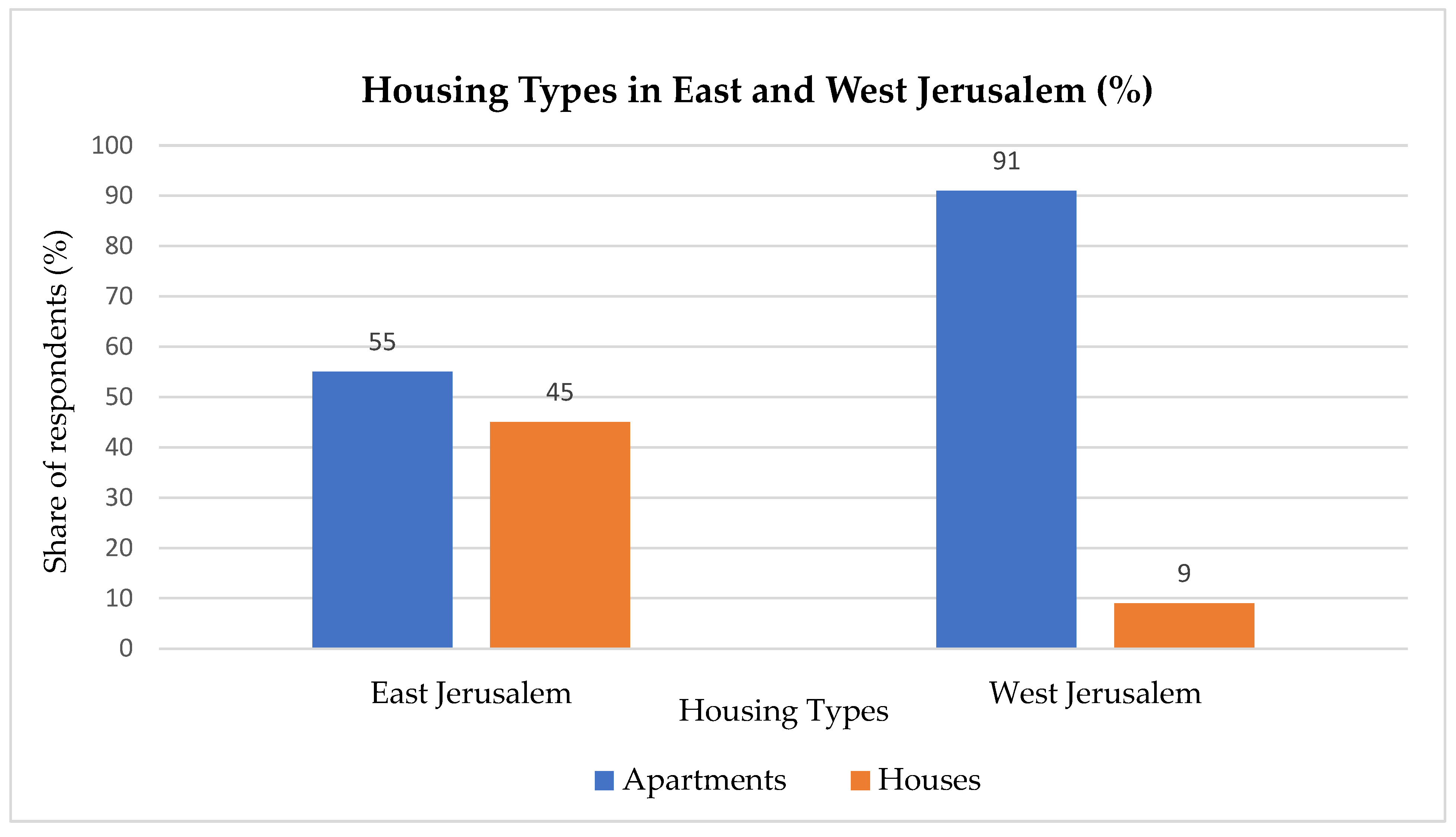
Housing types (Figure 3) reflect the differences in residential patterns between respondents from East and West Jerusalem. In West Jerusalem, 91% of respondents lived in apartments, while 9% resided in houses. In contrast, 55% of respondents from East Jerusalem lived in apartments, and 45% lived in houses.
Figure 3.
Housing Type in Jerusalem.
The socio-demographic variables (education, income, housing type, and tenure) are included to support policy targeting and to facilitate future research.
4.2. Current Energy Prosumerism Practice
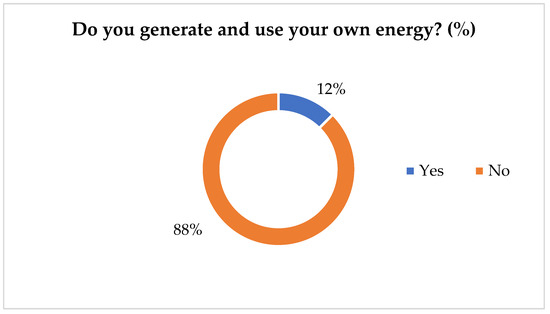
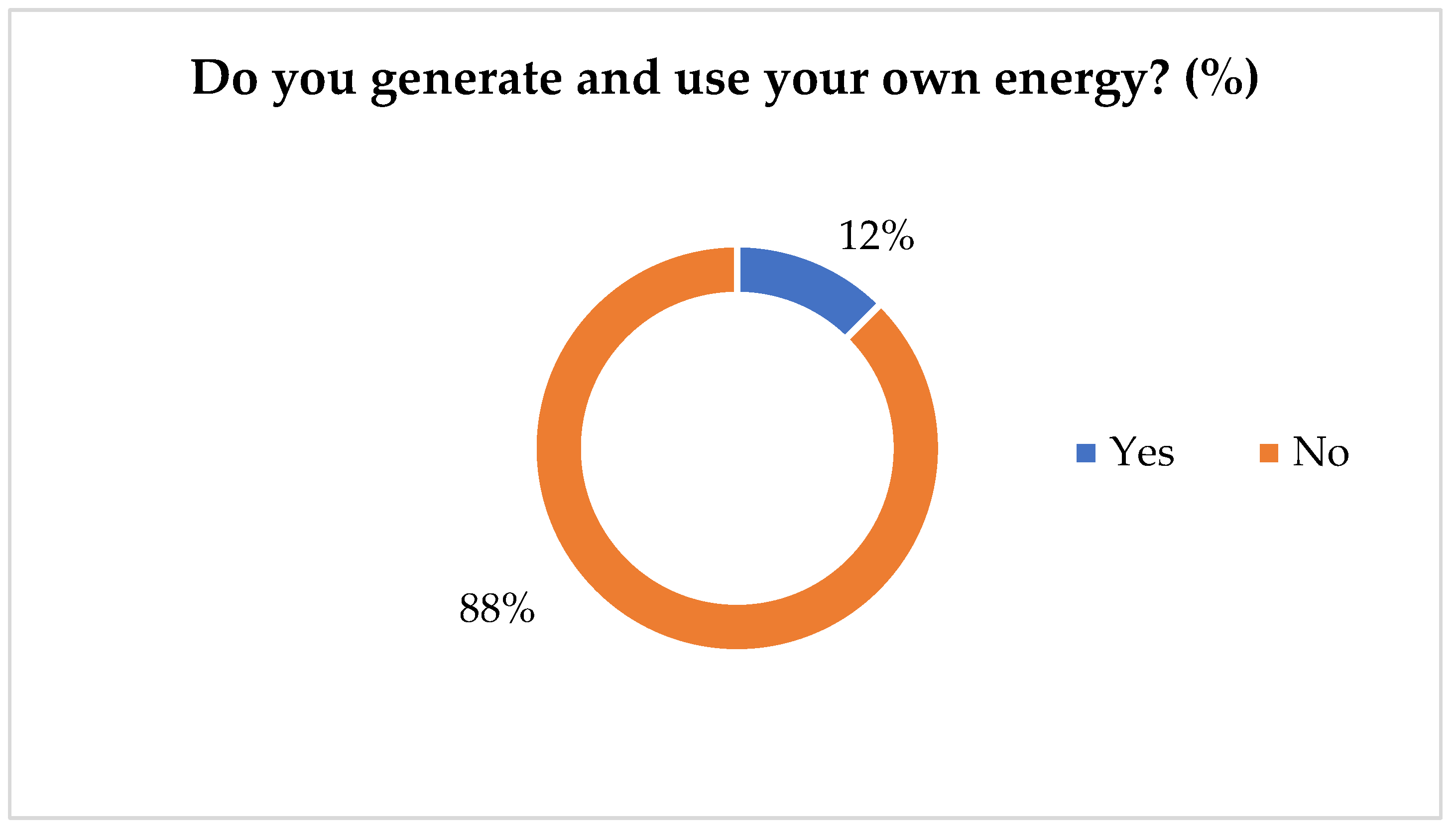
As shown in Figure 4, 12% of the respondents declared that they produce and consume their own energy, while 88% did not. Among those identifying as prosumers, 73% reside in West Jerusalem, while only 27% reside in East Jerusalem. The results suggest a low overall rate of prosumerism in Jerusalem, as well as a significant contrast in solar technology adoption between the two parts of the city. This 12% is unexpectedly low, given the widespread use (mandatory installation) of solar thermal systems in residential buildings [83].
Figure 4.
Do you generate and use your own energy?
The result shows that there is a relatively limited adoption of solar technologies among respondents. However, these results may not accurately reflect the actual installation rates, but rather, they seem to capture respondents’ perceptions and self-reported use. For example, the low diffusion of solar thermal systems, as the survey responses might suggest, is somewhat unexpected given the mandatory installation of those systems in Israeli residential buildings. This inconsistency highlights the gap between the actual technological installations and conceptual awareness, recalling previous results gathered from a survey at the national scale [74].
When asked about the “Type of System and System Capacity”, approximately 18.6% of respondents said they had or considered a PV system, and 19.2% said they had solar water heaters. 20.4% of respondents stated that they were not considering any system. In comparison, 41.5% either skipped the question or provided an unclear or missing answer when asked about the type of energy system they use or are considering. Furthermore, less than 1% of respondents could provide an estimate of their system capacity in kWh, no statistically valid analysis of system capacities was possible. The high level of missing data may suggest limited awareness or engagement with the technical aspects of these technologies among the respondents.
To better define the respondents who participate in energy prosumerism in Jerusalem, the data from Figure 4 were cross-analyzed with education level, income, and housing type. Among respondents who identified as prosumers (Figure 4), 52% held an intermediate level of education, 44% had an advanced degree, and 4% had a basic level of education. While these data are not representative of the whole city, they may offer a preliminary indication of a potential relationship between higher education and engagement in prosumer practices in Jerusalem. This observation is broadly consistent with the existing literature, which associates education with increased awareness and adoption of solar technology [84].
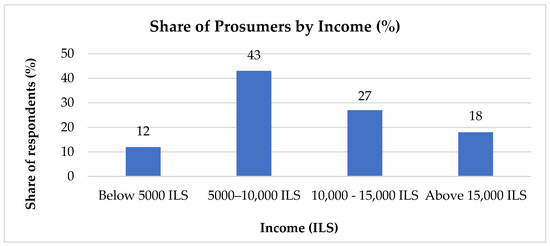
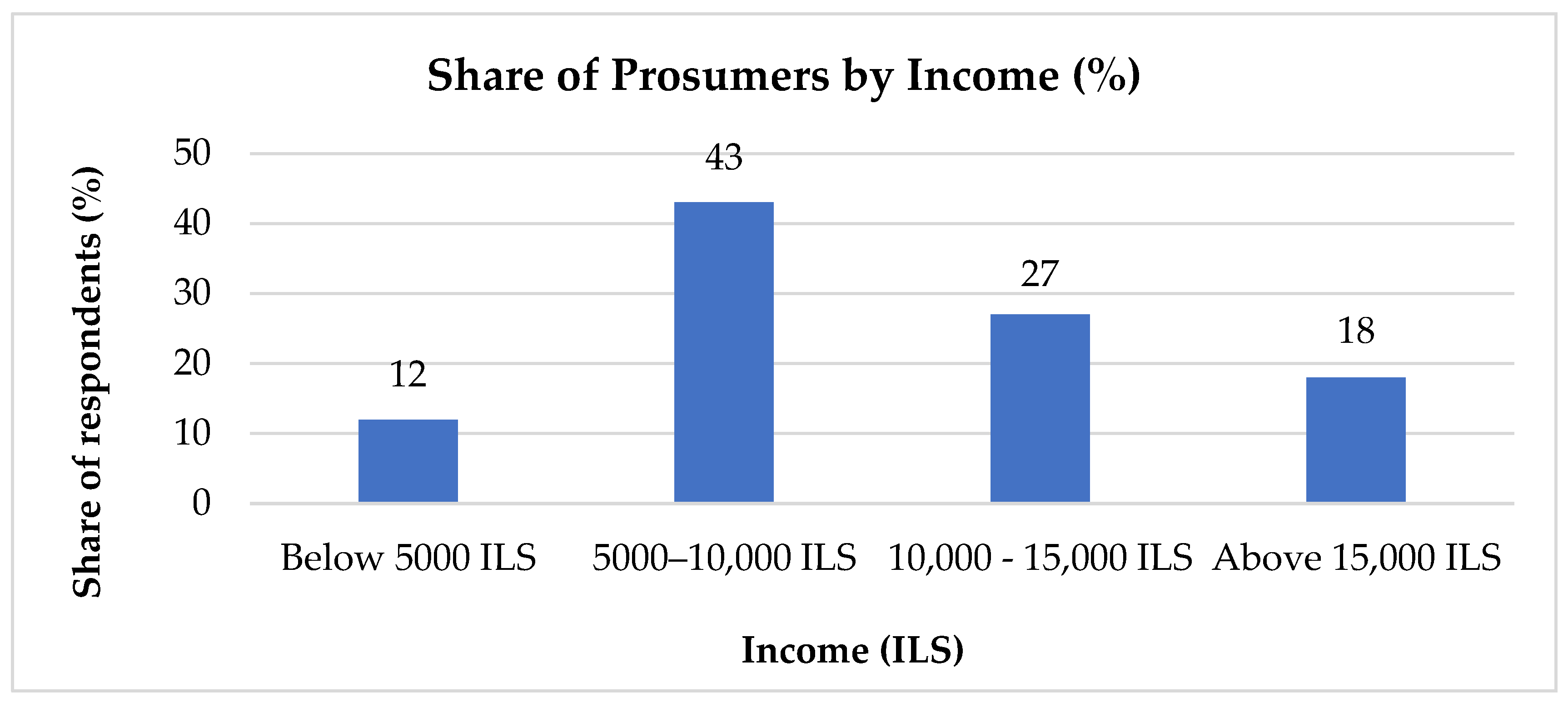
Income data (Figure 5) show that the most largest share of prosumers (43%) reported a monthly income between 5000–10,000 ILS (approximately 1360–2720 USD). A further 27% belong to the 10,000–15,000 ILS (approximately 1360–2720 USD) income group. In comparison, 12% stated that their incomes below 5000 ILS/month (less than 1360 USD) and 18% earned more than 15,000 ILS/month (more than 4080 USD). Given the exploratory nature of the study, these data are interpreted as a preliminary indication of potential patterns between income levels and prosumer engagement. The highest-income respondents (earning more than 15,000 ILS/month) were all from West Jerusalem, and among them only 10.5% had installed solar technologies and 84.2% had not (remaining 5.3% did not answer this question), suggesting that technology adoption might extend beyond financial capability alone.
Figure 5.
Share of prosumerism by income.
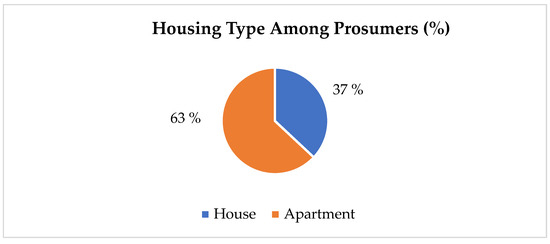
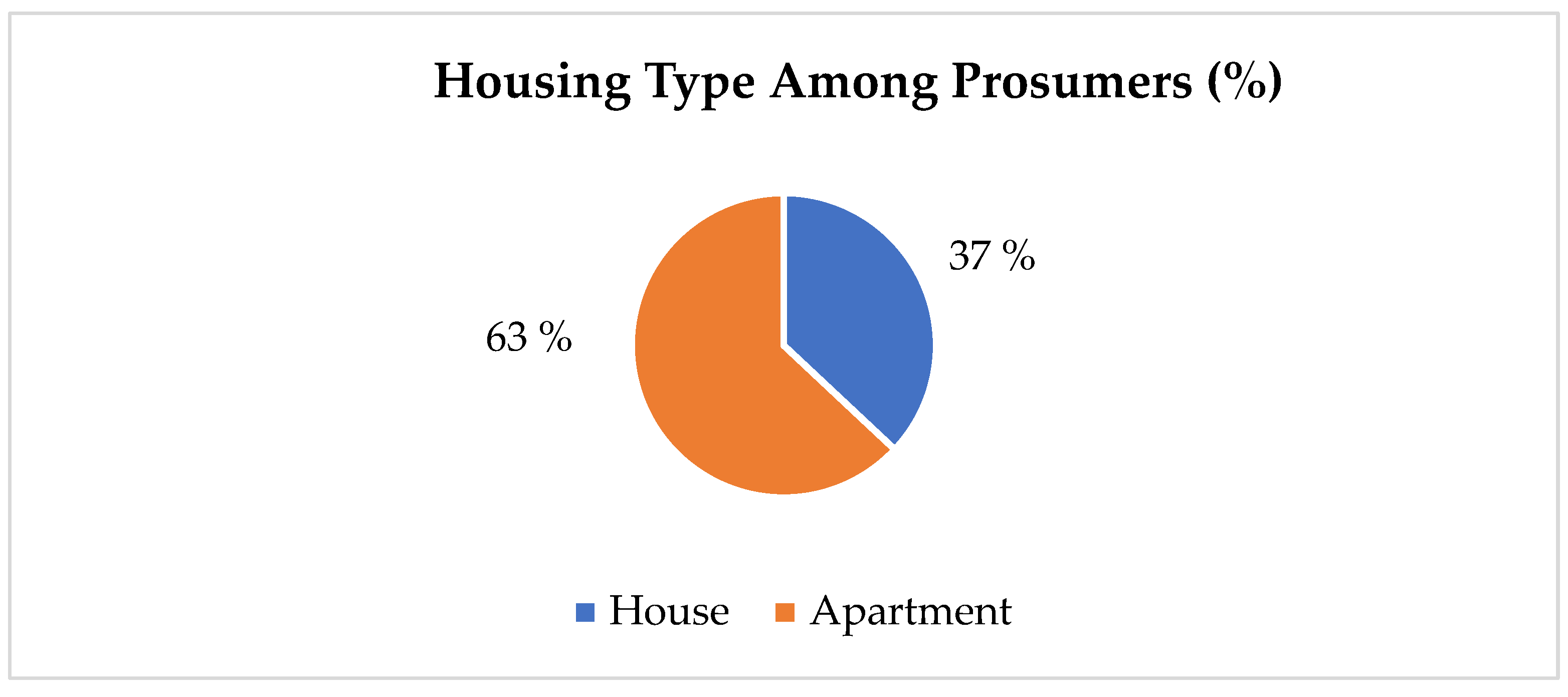
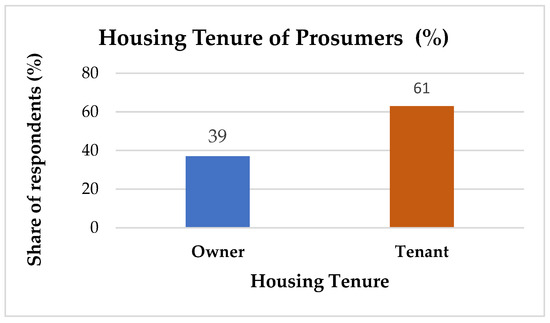
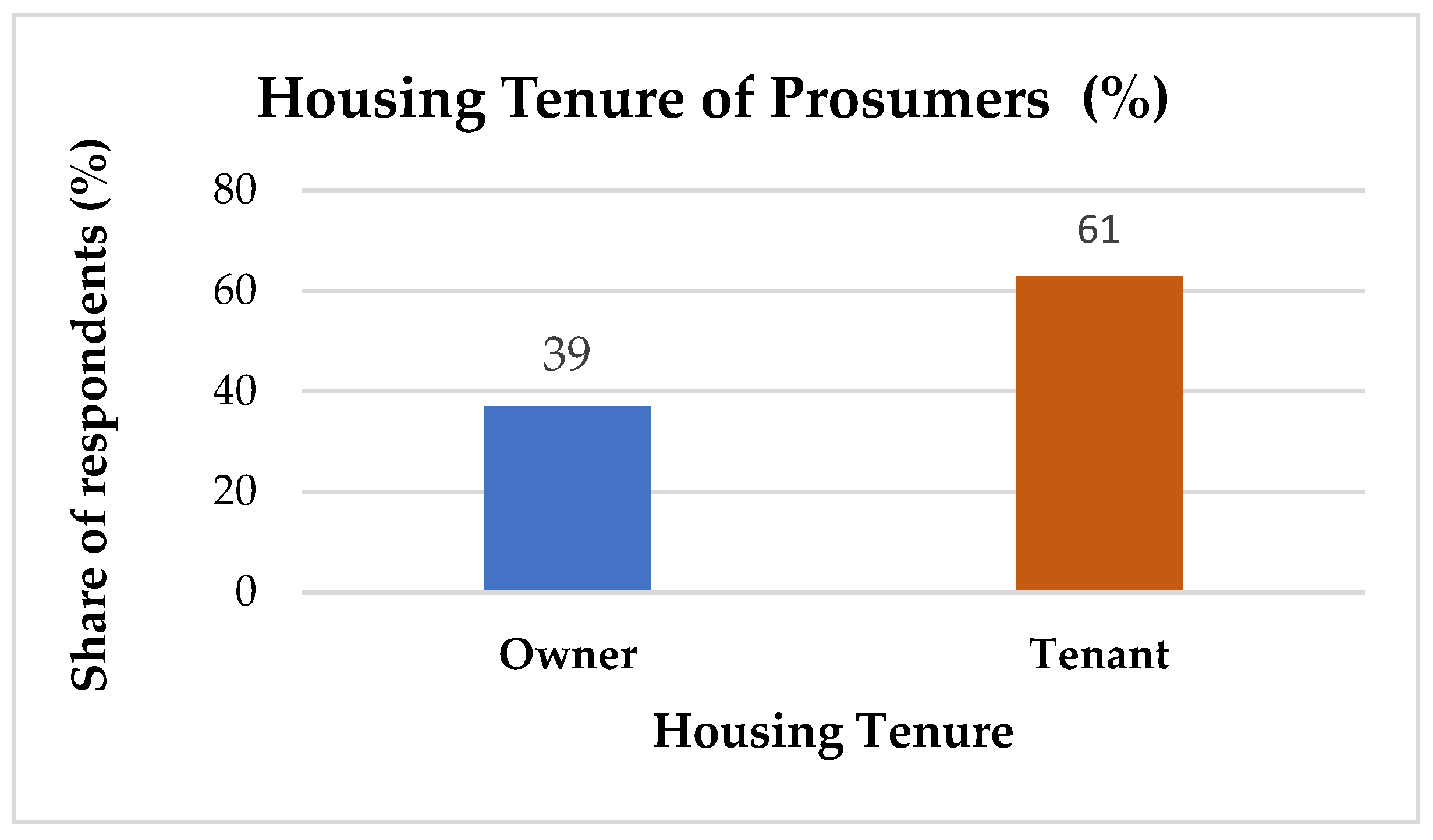
Housing type and tenure also offer insights into prosumerism. Among those who identified themselves as prosumers, 37% lived in houses, while the remaining 63% lived in apartments (Figure 6). Furthermore, 61% of the participants were tenants (Figure 7). Although the literature does not directly correlate homeownership with prosumer engagement, some studies suggest that residential stability (also referred to as long-term residency) may encourage individuals to engage in prosumer activities and energy-saving behaviors [85,86].
Figure 6.
Housing Type Among Prosumers.
Figure 7.
Housing Tenure of Prosumers.
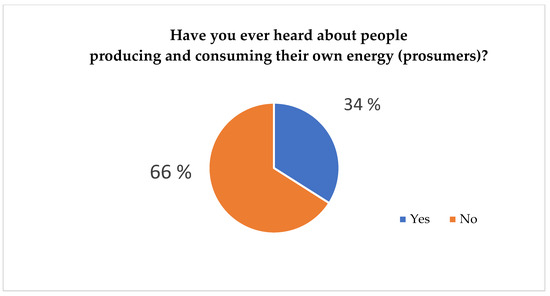
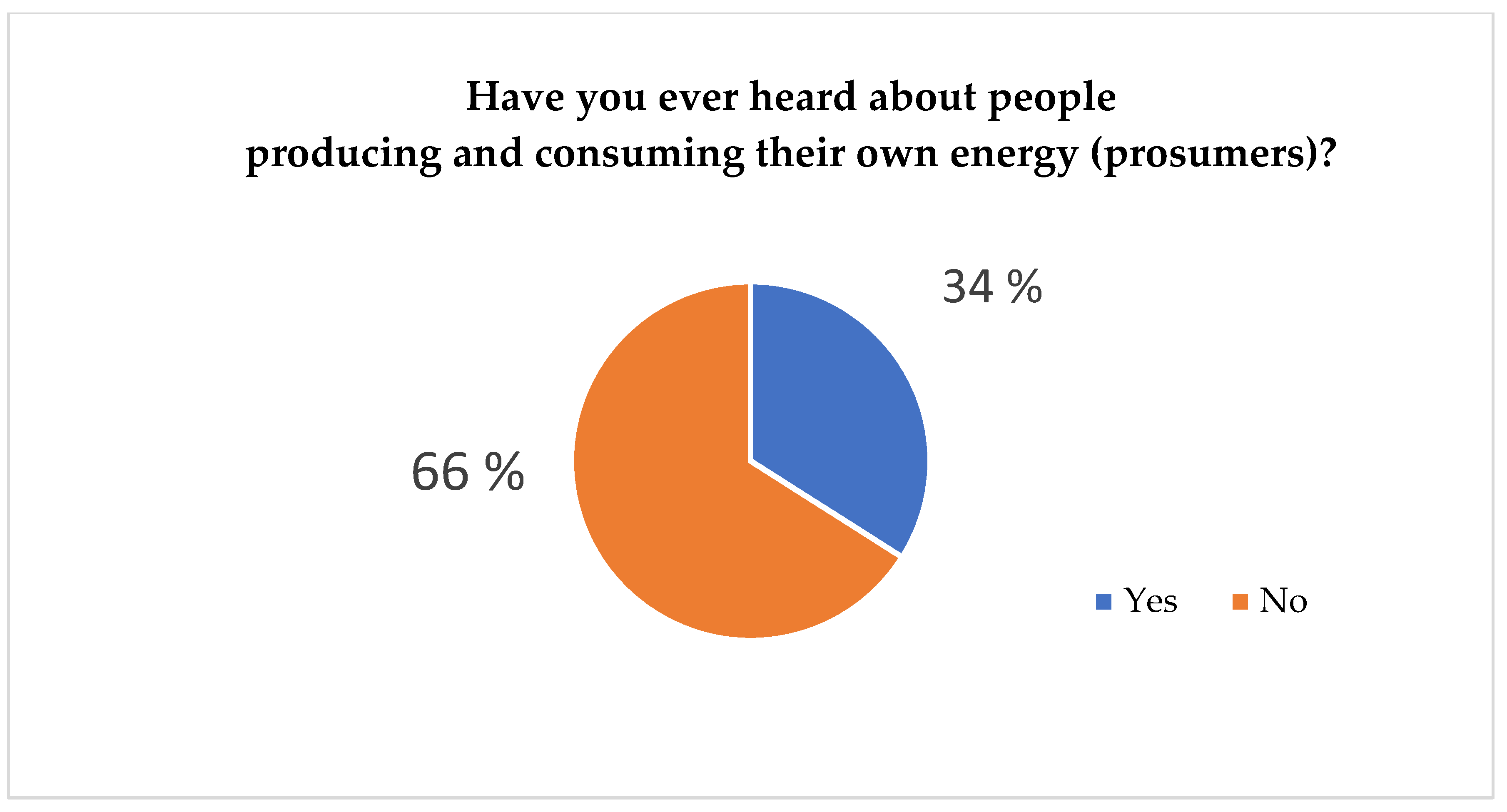
Finally, Figure 8 shows that only 34% of respondents had previously heard of individuals producing and consuming their own energy, while 66% had never done so. This data may reflect the respondents’ general unfamiliarity with the concept of prosumerism. While these results are not conclusive, they support the prior observation of a potential knowledge gap regarding solar technologies among the respondents. Again, this is especially unusual given the high national diffusion of solar heaters; such widespread diffusion contrasts with the limited awareness reported by respondents in both the current and previous studies [74].
Figure 8.
Have you ever heard about people producing and consuming their own energy?
4.3. Motivational Drivers and Constraint Factors
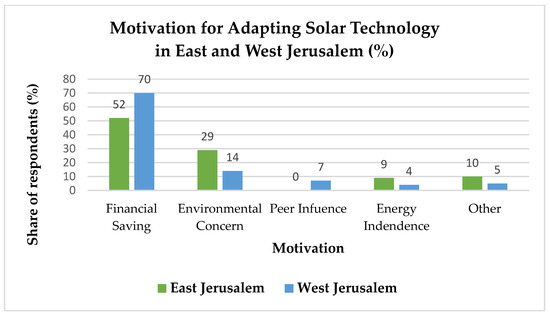
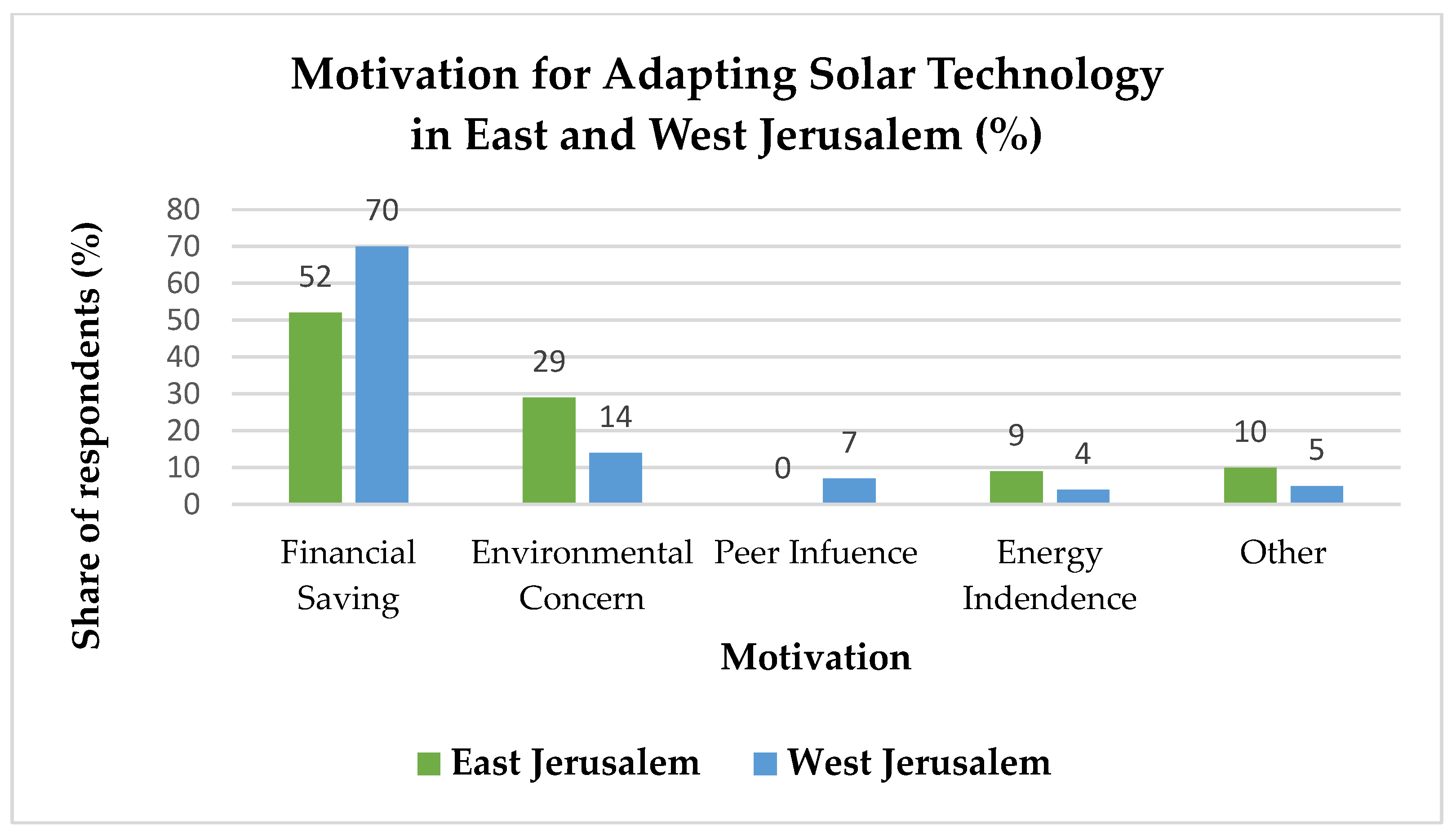
The survey examined the motivation behind solar adoption among prosumers in both East and West Jerusalem, as illustrated in Figure 9. In West Jerusalem, 70% of respondents identified financial savings as their primary motivation, followed by environmental concerns (14%), peer influence (7%), and a desire for energy independence (4%). In East Jerusalem, financial motivation was the leading motivation (52%) among the respondents, but environmental concerns were at a significantly higher rate (29%) compared to their counterparts in West Jerusalem. Among East Jerusalem respondents, energy independence was reported at a higher rate than among those from East Jerusalem (9% versus 4%). In addition, another 10% mentioned that the systems (solar thermal heaters) were already installed in the apartment when they moved in. This latest result suggests a structural factor, such as housing type and tenure, that influences the decision-making processes behind solar adoption.
Figure 9.
Key motivations for household adoption of PV technology.
Although the sample is not fully descriptive and, as noted in the limitations, East Jerusalem residents are underrepresented, these findings still provide a meaningful picture of the current motivation landscape. Financial considerations are cited as a significant factor. However, environmental values and energy independence are stated more often as motivation among respondents from East Jerusalem. The results also show that educational background has a significant influence on motivation. Among respondents with intermediate or advanced education, 61% mentioned financial reasons and 23% environmental concerns. In contrast, respondents with basic or no education also prioritized financial savings (61%), but only 18% mentioned environmental concerns. These patterns may suggest that higher education is correlated with greater environmental engagement, and cost-saving is a core motivator across all educational levels.
Income played a similar role. In East Jerusalem, where incomes are lower, respondents answer that their priority is reducing their electricity bills. In West Jerusalem, where incomes were higher, more people gave a mix of reasons, including environmental concerns and social influence, such as following the example of their neighbors. These insights suggest that socio-economic background plays a role in shaping not just access to technology, but also the type of motivation behind adoption.
To understand why some people have not adopted solar systems, the survey asked those who said they do not produce their own electricity to explain the barriers they face. The main and common reasons included an inability to afford installation, a lack of need, and not owning the house or the rooftop, with 5% of respondents specifically mentioning rental limitations or a lack of rooftop access. These findings underscore the significance of financial and housing-related constraints as primary barriers to widespread solar adoption in Jerusalem.
Looking beyond this case study, the literature suggests a large variety of motives exist for citizens to become renewable energy prosumers. For example, Penco and Bruzzi emphasize that personal preferences across economic, environmental and social dimensions shape prosumer engagement [87]. According to Frederiks and his co-authors, people’s engagement in sustainable energy behaviors is mainly driven by self-interest, especially when they receive financial benefits [88]. Similarly, Wuebben and Peters highlight that for many, the decision to install PV systems is closely tied to cost savings and return on investment [89]. As confirmed by the survey, respondents from both East and West Jerusalem were primarily motivated to install solar technology for financial reasons, specifically to reduce their energy costs. Environmental values also influence prosumer behavior. Prior studies [90,91] found that altruistic and ecological values can be powerful drivers of action. These motivations were noticeable among some respondents in Jerusalem, particularly those with higher education, aligning with research [92,93]. While financial considerations remain the primary driver of solar adoption in Jerusalem, non-financial factors, such as environmental values, are also considered important.
4.4. Barriers to Adopting Solar Energy Systems
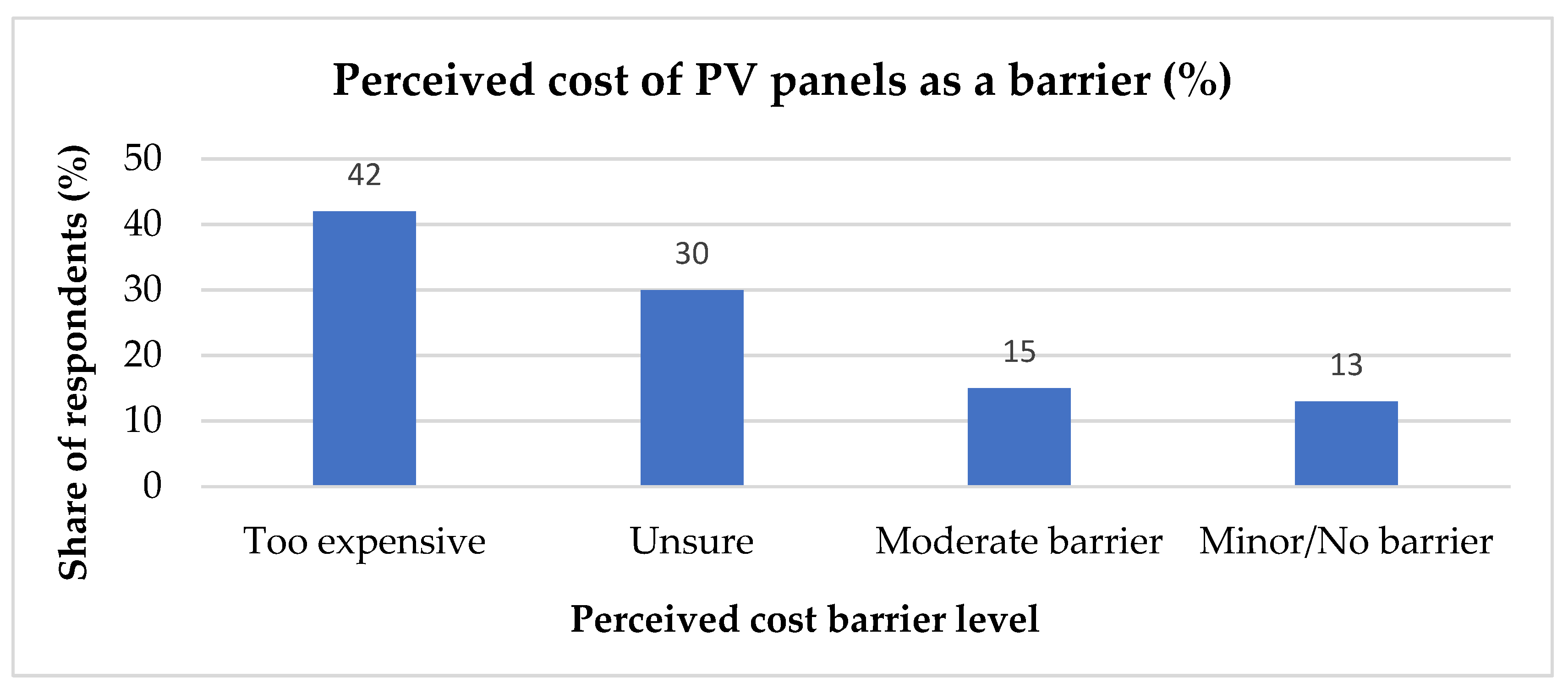
The survey aimed to identify the primary barriers to the adoption of photovoltaic (PV) systems among Jerusalem residents. As Figure 10 shows, the most frequently cited barrier was the cost of PV panels; indeed, 42% of respondents stated that PV panels were too expensive, and nearly 30% were unsure whether cost constitutes a barrier to PV adoption. This aligns with earlier research showing that financial limitations are a key barrier to residential PV adoption [94]. Another 15% declared that the cost of PV panels is a moderate barrier, while the remaining 13% saw it as a minor barrier (or none). The findings suggest the cost of photovoltaic systems is the commonly perceived key barrier to adoption. However, a significant proportion of respondents, nearly 30%, were uncertain whether the cost is a barrier or not. While further investigation is needed to confirm this, the survey may suggest limited understanding, or even a lack of information, about the current cost of installing a PV system among respondents. This may require targeted information campaigns to enhance cost transparency and promote informed decision-making among Jerusalem citizens.
Figure 10.
Perceived cost of PV panels as a barrier.
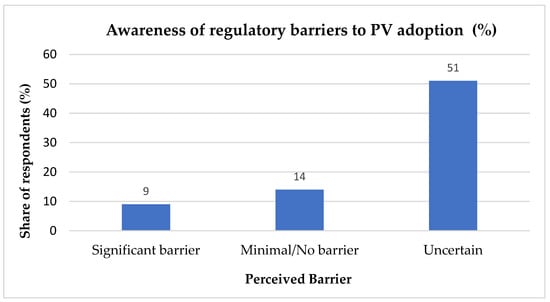
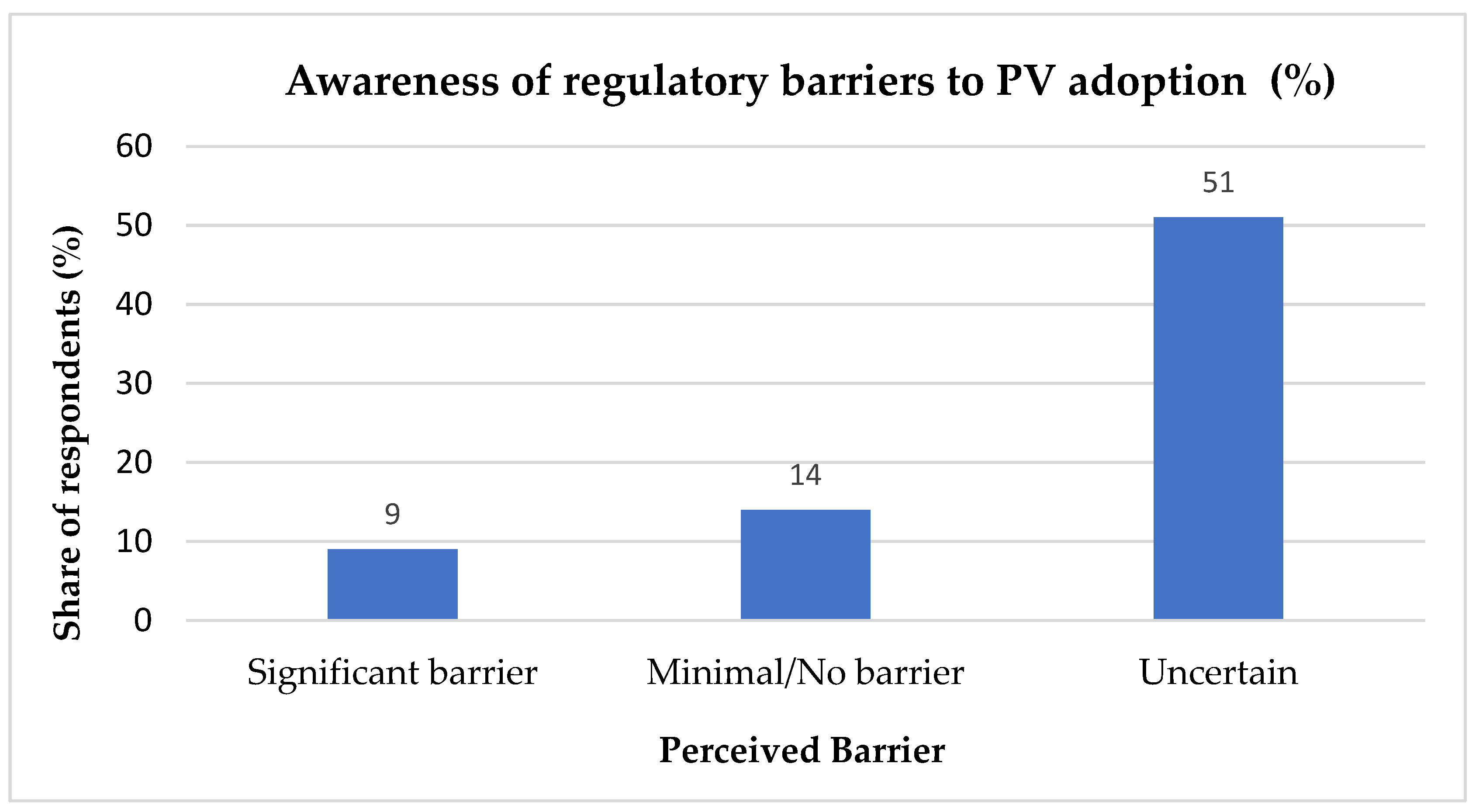
The survey also addressed respondents’ perceptions of the legal requirements and administrative complexity associated with adopting solar energy. According to this, the participants were asked, “How would you rate the importance of the following barriers for you as a consumer to produce and self-consume your own solar energy?” (Figure 11). From the replies to this question, a clear trend emerges: most respondents (over 50%) expressed uncertainty about the existence of regulatory restrictions on self-consumption of solar energy. This may suggest that respondents may not be sufficiently informed about the legal framework governing solar energy systems in Israel. Only a small proportion of respondents (9%) identified regulatory restrictions as a significant barrier, while 14% believed that regulations were minimal or posed no barrier at all. This shows that even the regulatory frameworks are not prohibitive “per se”, but they may be perceived as a significant obstacle by individuals who are not familiar with them. A relatively high number (26%) of respondents did not answer this question, further suggesting limited knowledge or confidence regarding regulatory issues. Therefore, improving transparency and public awareness regarding the legal and policy aspects of solar energy systems is necessary to facilitate broader adoption.
Figure 11.
Awareness of regulatory barriers to PV electricity adoption.
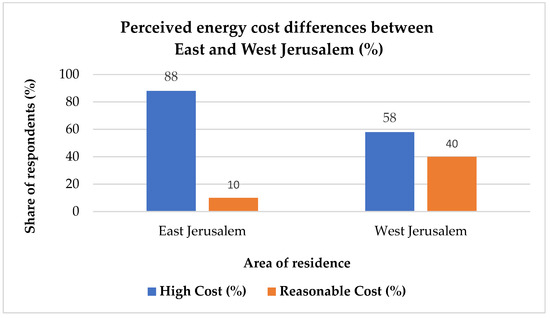
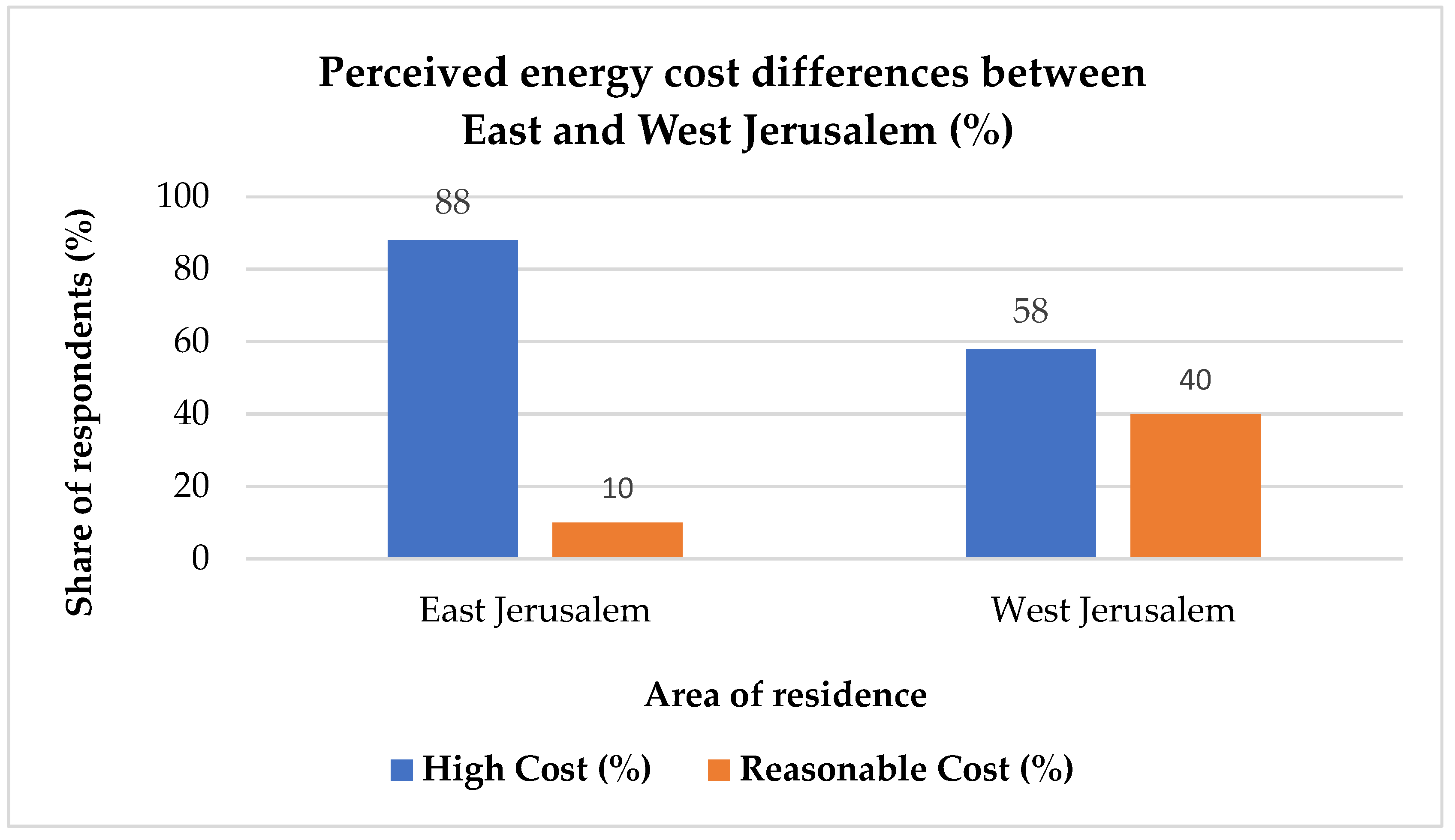
Administrative procedures were also seen as challenging. Approximately 35% of respondents felt that the process of installing solar panels is overly complicated, and 22% viewed it as a moderate challenge. Additionally, approximately 30% reported being unfamiliar with the administrative process. Respondents were also asked to express their perception of the costs of producing energy. Only a small percentage of respondents perceived those costs as low. Among East Jerusalem respondents, 88% considered the price to be high, while only 10% found it reasonable. In West Jerusalem, there was less disparity among the cost perceptions: 58% viewed self-producing energy as expensive, while 40% considered it reasonable (Figure 12). The remaining 4% of respondents did not answer this question.
Figure 12.
Perceived energy cost differences between East and West Jerusalem.
These findings align with broader literature, which identifies legal and regulatory challenges, as well as financial constraints [95,96]. The survey results highlight the importance of understanding the actual costs, simplifying administrative procedures, and increasing public awareness of legal frameworks to catalyze solar adoption in Jerusalem.
4.5. Perception of PV Technology
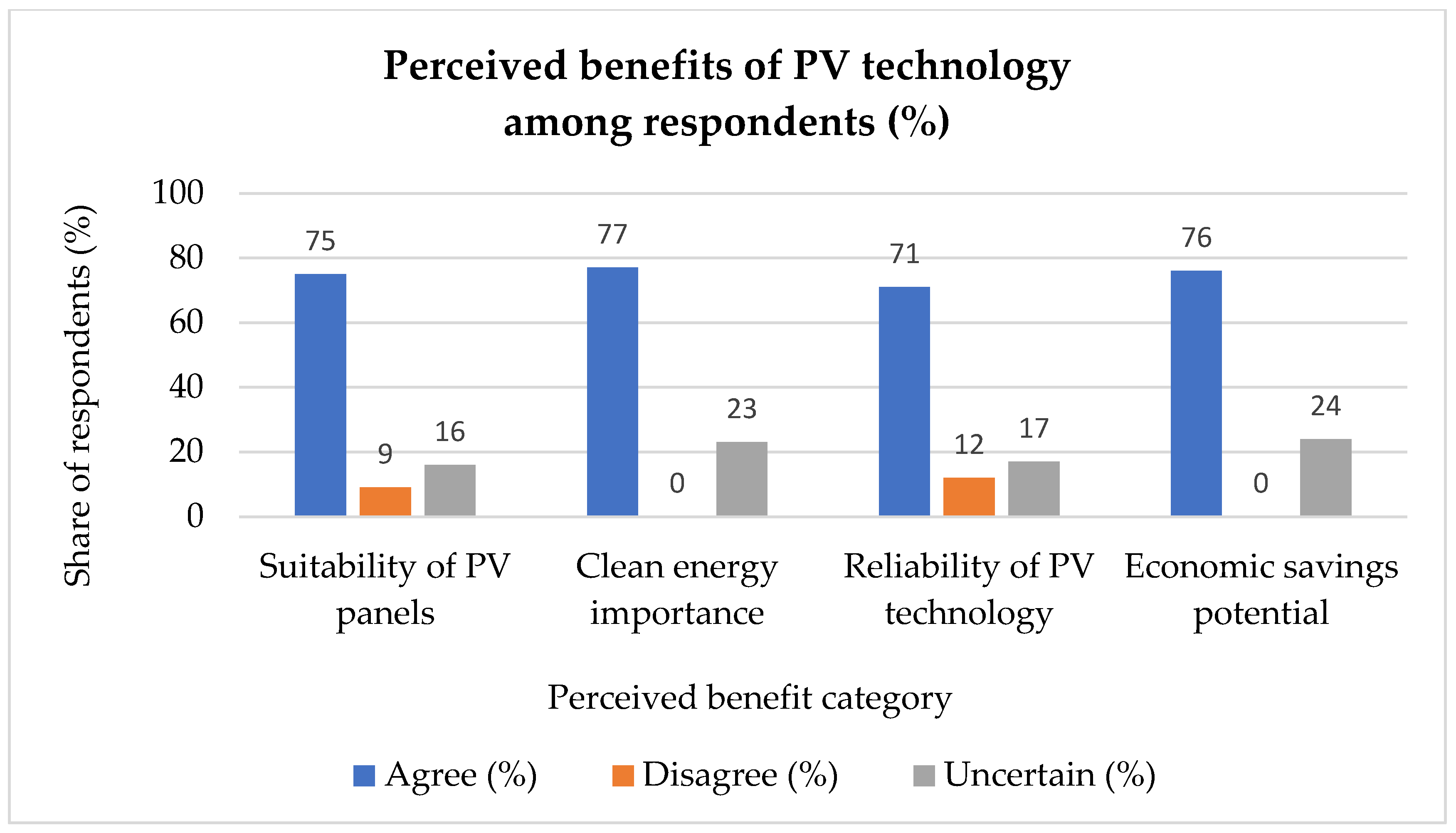
To make a first assessment of the public perception of solar energy technology among the sample, the survey included several Likert-scale questions focusing on PV technology (Figure 13). These questions were designed to gain preliminary insight into respondents’ views on photovoltaic technology, specifically examining the perceived benefits and reliability of PV systems, their knowledge of installation procedures, safety considerations, and their willingness to purchase electricity from neighborhood prosumers through peer-to-peer (P2P) energy trading schemes, as described by [97].
Figure 13.
Perceived benefits of PV technology among respondents.
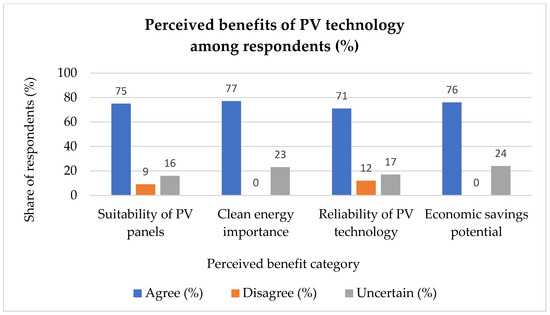
The first set of questions focused on the perceived benefits of PV technology, including environmental and economic aspects, as well as trust in the system’s reliability. A total of 75% of respondents said that PV panels are a suitable way to produce electricity (In this article, “sustainable way to produce electricity” refers to solar energy as a renewable source.), while 9% disagreed and 16% were unsure. Similarly, 77% stated that PV systems were important to them for producing clean energy or electricity using solar technology. In addition, 71% of respondents believed that PV technology is a reliable energy source, while 12% disagreed and 17% remained uncertain. Regarding economic benefits, 76% of respondents saw the potential for long-term financial savings from solar panels. These generally positive attitudes toward PV technology may support a potentially supportive foundation for future systems adoption. This interpretation aligns with prior research, which suggests that favorable public perceptions are positively associated with an increased likelihood of residential solar installation [98]. Despite respondents’ support for PV systems, the main barrier does not appear to be an attitude toward PV, but rather a limited understanding of how the process works. While PV technology enjoys overall widespread recognition, only 34% of respondents reported sufficient knowledge of the installation process. Furthermore, a significant majority of respondents (57%) were unsure where to find information on government funding or grants. Additionally, 19% clearly stated that they do not have access to such information. Only 24% were confident regarding government funds and grants. This highlights an information gap that may be addressed through improved communication, targeted awareness campaigns, and guidance to help citizens navigate installation and financial procedures effectively.
Regarding safety, respondents demonstrated varying levels of awareness and concern about rooftop solar panels. In total, 50% disagreed with the statement that solar panels are harmful to health, and 12% believed that such risks exist. However, 32% were uncertain of any health implications (“I do not know”). This degree of uncertainty and skepticism is a concern for broader public acceptance and widespread adoption of technology. The literature shows that the perception of health and safety risks can significantly deter domestic PV adaptation [99,100]. Although other data are required to confirm this trend, such skepticism appears more closely linked to a lack of understanding of technology than to a specific, tangible concern.
The survey offers initial insights into participants’ attitudes toward peer-to-peer (P2P) energy trading, envisioning a highly decentralized energy system. Only 21% of respondents expressed a positive attitude toward purchasing electricity from prosumers rather than the energy company. Among these respondents, 74% cited environmental concerns as a key motivation for preferring the P2P scheme. This preliminary result suggests that the environmental benefits respondents perceive influence their decision to support citizen-led energy models.
It is important to note that P2P systems are not currently implemented in Israel. Therefore, public awareness and familiarity with these schemes may be limited, which could also explain the high proportion of neutral or uncertain responses in the survey. However, the results showed a high share of neutral responses (29%), indicating a significant awareness gap regarding P2P initiatives. In dense urban areas, such as Jerusalem, where space and infrastructure limits are common, P2P energy-sharing models could complement solar adoption. Nevertheless, the data suggest the need for more effective communication strategies and educational efforts to clarify the mechanisms and benefits of P2P systems. At the same time, addressing regulatory and technical barriers will be crucial to translating interest into active participation. By aligning appropriate policies, public communication, and incentives, P2P energy trading could evolve not only as a technical solution but also as a new avenue for public engagement in the energy transition, fostering social innovation and driving social change. P2P trading not only facilitates the transition from a centralized to a decentralized energy system but also provides a platform for citizens to take an active role in shaping their energy future. Prior research has shown that trading decisions are influenced by factors like electricity bills, self-sufficiency (autarky), and grid reliability [101].
4.6. Community Engagement and Prosumerism
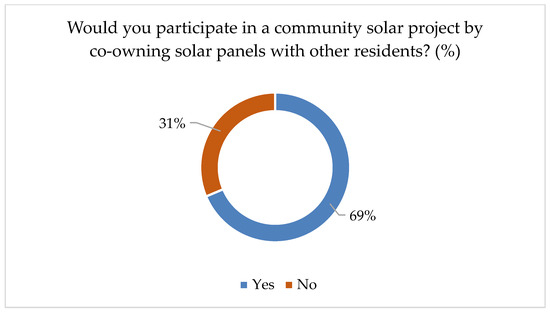
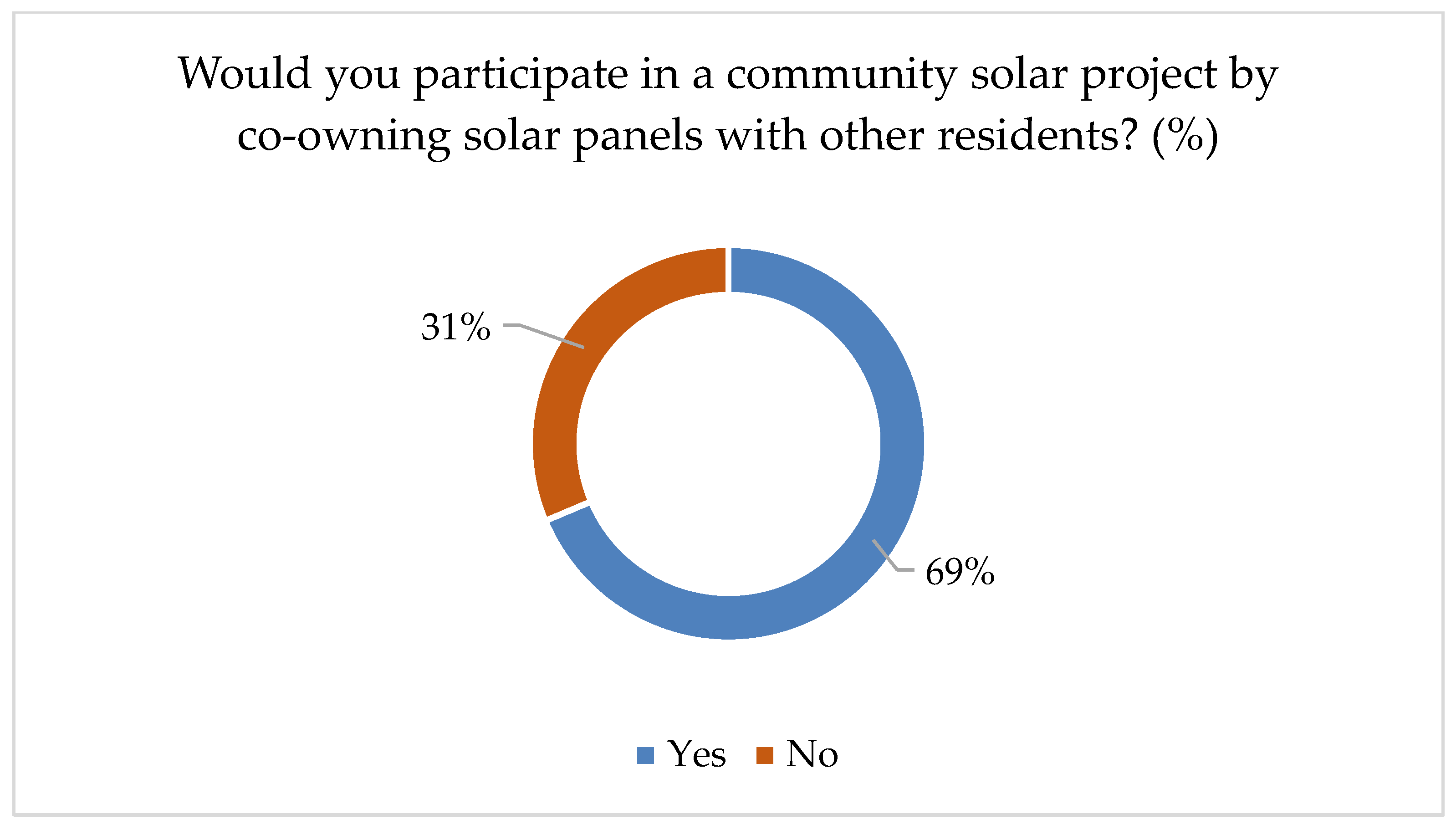
The survey explored the respondents’ willingness to participate in community energy initiatives in Jerusalem, which is closely linked to the concept of prosumerism [102]. As shown in Figure 14, 69% of respondents express interest in joining such initiatives.
Figure 14.
Would you participate in a community solar project by co-owning solar panels with other residents?
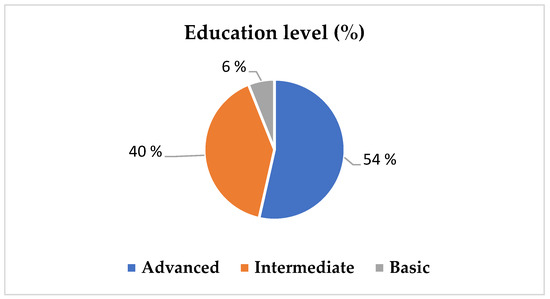
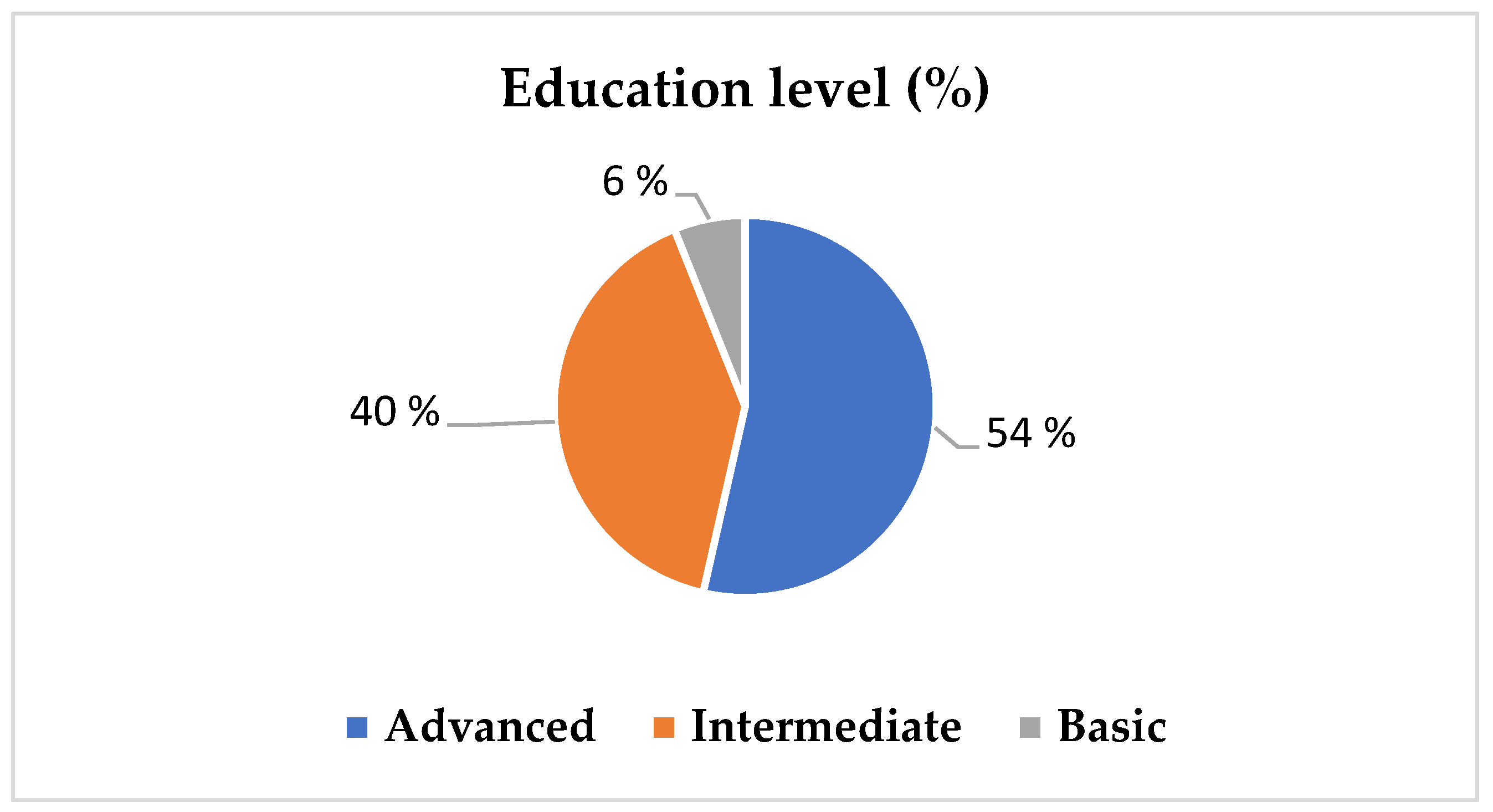
The survey results show strong interest in community energy initiatives in Jerusalem, suggesting that such initiatives could receive support from citizens across the city and strengthen the case for city-wide energy transition strategies. In this exploratory survey, respondents with higher educational attainment reported greater interest in community energy initiatives. Among respondents who expressed interest in participating, 54% held advanced degrees, 40% had intermediate education, and approximately 6% had basic education (Figure 15).
Figure 15.
Education Level.
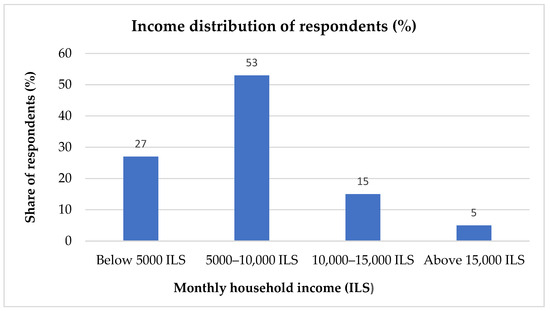
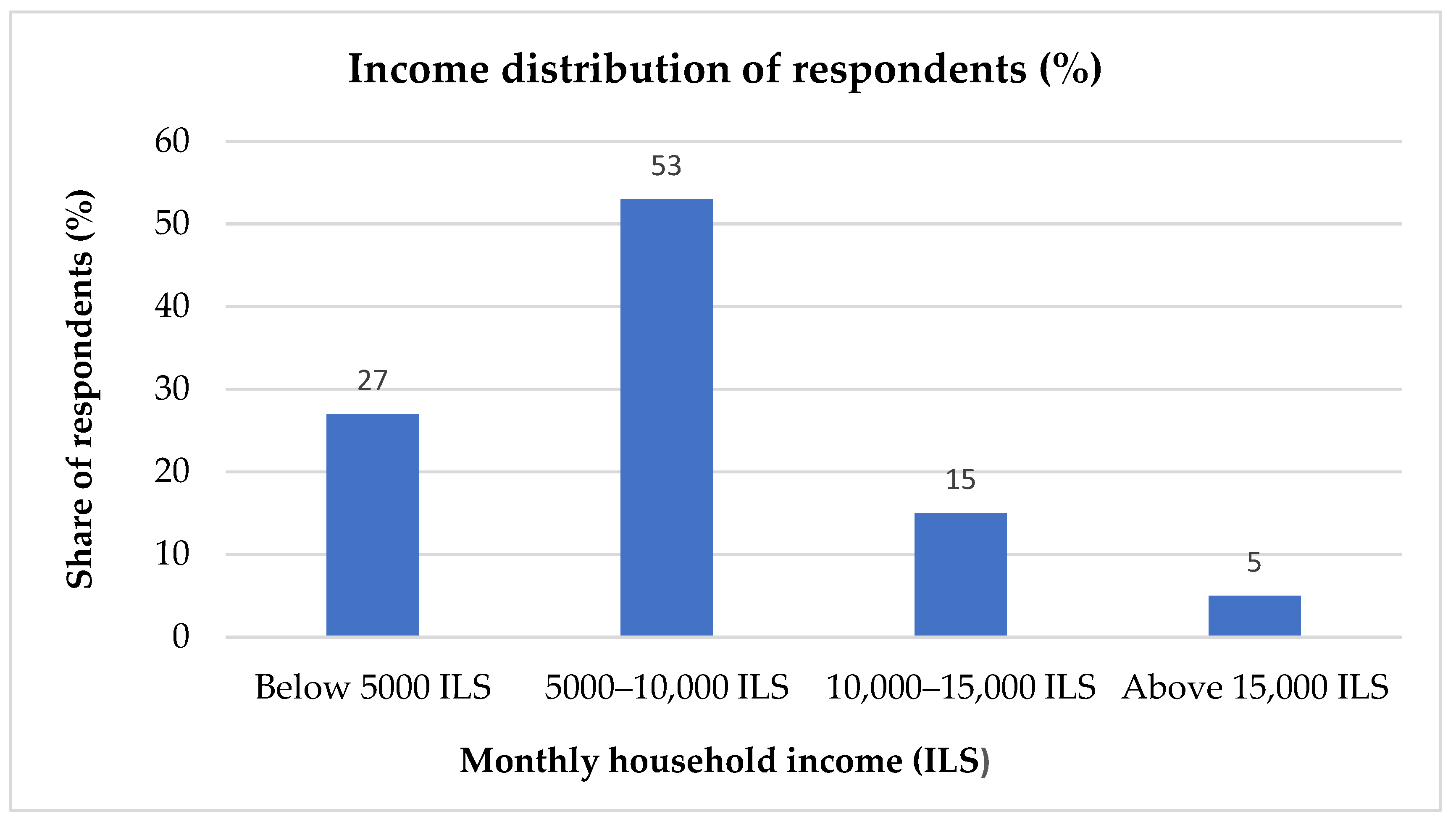
Interest was noted across the income range. Among respondents interested in community energy initiatives, 27% earned below 5000 ILS/month (1360 USD), 53% earned between 5000 and 10,000 ILS/month (1360–2720 USD), 15% earned between 10,000 and 15,000 ILS/month (2720–4080 USD), and 5% earned above 15,000 ILS/month (4080 USD) (Figure 16).
Figure 16.
Respondents’ Income Level.
Although this data needs to be confirmed through further investigation, the findings suggest that participation in a community energy initiative is of interest to respondents across the entire socioeconomic range, but it appears slightly more attractive to the middle-income group (53%). The highest-income individuals (earning above 15,000 ILS) interested in community energy constitute just 5% (Figure 16); this may indicate that wealthier respondents (all from West Jerusalem) perceive less value in being part of such energy initiatives.
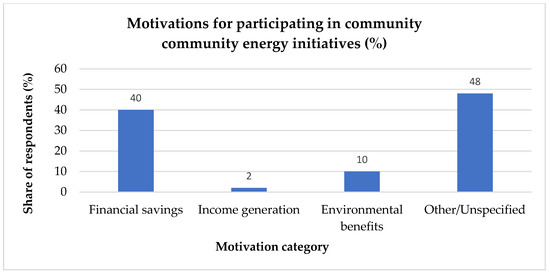
Open-ended responses from those interested in community energy initiatives reveal diverse motivations. Around 40% of respondents said financial savings are the primary reason for joining a community initiative. In total, 2% said such initiatives have potential for income generation or economic returns. In comparison, around 10% stated that environmental benefits were the primary driver of their motivation.
Both East and West Jerusalem respondents highlighted that financial savings would be the main motivation to engage with community energy (Figure 17), seeing an opportunity to reduce electricity costs. Many respondents emphasized financial motivation or the opportunity to generate income. Among those who cited financial benefits, around 45% came from households earning 5000–10,000 ILS/month, and another 15% from households earning under 5000 ILS/month. The data show that low- and middle-income groups perceive community energy to reduce energy costs. Some correspondence was observed between these responses and those motivated by general financial considerations. These motivations align with findings in the literature, which show that economic benefits are the main driver for community energy participation. Ref. [103] described as “gain goal, to guard and improve one’s resources”. Finally, some expressed interest in learning more before committing to community energy. This reflects a more cautious approach among those citizens, indicating their need for clearer information, education, or even guarantees regarding these types of energy initiatives.
Figure 17.
Motivations for participating in community energy initiatives.
5. Conclusions
The article examined energy prosumerism in Jerusalem, a city characterized by deep socio-political divisions and infrastructural inequities. Based on survey data collected from residents of both East and West Jerusalem, the study provides early insights into prosumer practices, levels of awareness, motivations, and key barriers influencing the adoption of solar technologies. The findings show that only 12% of respondents currently produce and consume their own energy, and around 66% had never heard of such practices. Even though engagement is low, there is clear potential for prosumerism. Approximately 70% of the respondents expressed a willingness to participate in community energy initiatives, indicating a strong interest in citizen-led initiatives across East and West Jerusalem. This result highlights the need for an effective public awareness campaign in both Hebrew and Arabic on renewable energy technologies and community energy initiatives to strengthen acceptance, awareness, and engagement.
The financial aspect was the main motivation across both parts of the city (52% in East Jerusalem and 70% in West Jerusalem). At the same time, environmental concerns—especially those of respondents from East Jerusalem—indicate that they are not primarily financial. The results show that the primary barrier was the high installation costs (42%), and more than half of the respondents were unaware of existing regulations and support schemes. These findings show that not only economic and structural barriers slow down solar adoption. To address cost barriers and expand equitable participation, targeted financial support is needed, including grants, low-interest loans, or on-bill financing. Additionally, establishing a one-stop information and support hub could simplify procedures and improve access to clear guidance on PV-related regulations, incentives, and participation options.
Importantly, this study frames prosumerism as a form of social innovation that redefines the role of citizens, shifting them from passive consumers to active participants in shaping the energy futures of their communities. In Jerusalem’s fragmented urban landscape, prosumerism can foster local agency, reduce inequality, and strengthen community resilience. Community-based models and P2P systems (not yet implemented in Israel) could support more inclusive and participatory energy systems, especially for marginalized communities. To overcome rooftop access and property rights limitations, especially for tenants, policy frameworks should promote shared PV generation models in buildings, including energy community models.
As an exploratory study, the authors acknowledge several limitations. Notably, the sample is not demographically representative of the city of Jerusalem, and residents of East Jerusalem are underrepresented. While East Jerusalem accounts for approximately 61% of Jerusalem’s Arab Palestinian population and 39% Jews, only 32% of our respondents were from East Jerusalem. This imbalance may overemphasize the views and experiences of West Jerusalem residents and limit the extent to which localized challenges or perspectives from East Jerusalem are captured. It is also important to acknowledge that the outbreak of the Israel–Hamas war in October 2023 may have additionally influenced participation levels and perceptions, particularly regarding economic uncertainty.
Future research should build on these preliminary findings by combining qualitative research methods such as interviews and focus groups. These could help understand why awareness and perceived barriers differ between East and West Jerusalem. Qualitative work could examine the (culture of) everyday use of rooftops, building ownership and landlord–tenant dynamics, and how they could shape prosumerism in dense urban housing. Given the observed gap between technological development and awareness (for example, between mandatory solar water heaters and self-identification as a prosumer), future studies should analyze targeted communication to improve understanding of prosumerism and increase willingness to adopt renewable energy technologies. Finally, expanding the scope through comparative studies with other cities and wider regions in the Middle East could help to understand how socio-political and infrastructural contexts shape prosumer participants differently.
Author Contributions
Conceptualization, J.K., M.P., M.C. and M.B.A.; methodology, J.K., M.P., M.C., L.B. and M.B.A.; formal analysis, J.K., M.P., M.C., L.B., J.V.Z.R., T.A.H. and M.B.A.; data curation, J.K., M.P. and M.C.; writing—original draft preparation, J.K., M.P. and M.C.; writing—review and editing, J.K., M.P., M.C., L.B., J.V.Z.R., T.A.H. and M.B.A.; visualization, J.K. and M.P.; supervision, J.K., M.P., L.B., M.B.A. and J.V.Z.R.; funding acquisition, J.K. and M.C. All authors have read and agreed to the published version of the manuscript.
Funding
This research received no external funding.
Institutional Review Board Statement
The study was conducted accordance with the ethical principles of the Declaration of Helsinki. According to the Arava Institute for Environmental Studies’ policy, anonymous, minimal—risk survey studies of this type do not require formal IBR approval.
Informed Consent Statement
The study involved an anonymous online survey. Participants were informed of the research’s purpose, the voluntary nature of their participation, and the confidentiality of their responses. No identifying information was collected, and responses were analyzed only in summary form.
Data Availability Statement
The data presented in this study are available on request from the corresponding author.
Acknowledgments
The authors thank the Anna Lindh Foundation for its support through the ALFinMOTION programme’s Mobility for Knowledge initiative. During the preparation of this manuscript, the authors used Grammarly (https://www.grammarly.com/) for language editing to improve the text’s clarity. The authors have reviewed and edited the output and take full responsibility for the content of this publication.
Conflicts of Interest
The authors declare that they have no conflicts of interest.
References
- IEA. Empowering Urban Energy Transitions Smart Cities and Smart Grids; International Energy Agency: Paris, France, 2024; Available online: https://www.iea.org/reports/empowering-urban-energy-transitions (accessed on 14 April 2025).
- Nik, V.M.; Perera, A.T.D.; Chen, D. Towards climate resilient urban energy systems: A review. Natl. Sci. Rev. 2021, 8, nwaa134. [Google Scholar] [CrossRef] [Scilit]
- Yang, Y.; Xia, S.; Huang, P.; Qian, J. Energy transition: Connotations, mechanisms and effects. Energy Strategy Rev. 2024, 52, 101320. [Google Scholar] [CrossRef] [Scilit]
- Ullah, A.; Nobanee, H.; Ullah, S.; Iftikhar, H. Renewable energy transition and regional integration: Energizing the pathway to sustainable development. Energy Policy 2024, 193, 114270. [Google Scholar] [CrossRef] [Scilit]
- Di Silvestre, M.L.; Favuzza, S.; Sanseverino, E.R.; Zizzo, G. How Decarbonization, Digitalization and Decentralization are changing key power infrastructures. Renew. Sustain. Energy Rev. 2018, 93, 483–498. [Google Scholar] [CrossRef] [Scilit]
- Fattahi, A.; Sijm, J.; Faaij, A. A systemic approach to analyze integrated energy system modeling tools: A review of national models. Renew. Sustain. Energy Rev. 2020, 133, 110195. [Google Scholar] [CrossRef] [Scilit]
- Qiao, W.; Yin, X. Understanding the impact on energy transition of consumer behavior and enterprise decisions through evolutionary game analysis. Sustain. Prod. Consum. 2021, 28, 231–240. [Google Scholar] [CrossRef] [Scilit]
- Li, Z.; Niu, S.; Wang, J.; Tan, Y.; Wang, Z. Multidimensional assessment of energy transition and policy implications. Renew. Energy 2025, 238, 121870. [Google Scholar] [CrossRef] [Scilit]
- Omri, E.; Chtourou, N.; Bazin, D. Technological, economic, institutional, and psychosocial aspects of the transition to renewable energies: A critical literature review of a multidimensional process. Renew. Energy Focus 2022, 43, 37–49. [Google Scholar] [CrossRef] [Scilit]
- IEA. Tracking Clean Energy Progress 2023. 2023. Available online: https://www.iea.org/reports/tracking-clean-energy-progress-2023 (accessed on 14 April 2025).
- Sovacool, B.K. How long will it take? Conceptualizing the temporal dynamics of energy transitions. Energy Res. Soc. Sci. 2016, 13, 202–215. [Google Scholar] [CrossRef] [Scilit]
- Fouquet, R. Historical energy transitions: Speed, prices and system transformation. Energy Res. Soc. Sci. 2016, 22, 7–12. [Google Scholar] [CrossRef] [Scilit]
- Meckling, J.; Lipscy, P.Y.; Finnegan, J.J.; Metz, F. Why nations lead or lag in energy transitions. Science 2022, 378, 31–33. [Google Scholar] [CrossRef] [Scilit]
- Rosenow, J.; Kern, F.; Rogge, K. The need for comprehensive and well targeted instrument mixes to stimulate energy transitions: The case of energy efficiency policy. Energy Res. Soc. Sci. 2017, 33, 95–104. [Google Scholar] [CrossRef] [Scilit]
- Wahlund, M.; Palm, J. The role of energy democracy and energy citizenship for participatory energy transitions: A comprehensive review. Energy Res. Soc. Sci. 2022, 87, 102482. [Google Scholar] [CrossRef] [Scilit]
- Verfuerth, C.; Demski, C.; Capstick, S.; Whitmarsh, L.; Poortinga, W. A people-centred approach is needed to meet net zero goals. J. Br. Acad. 2023, 11, 97–124. [Google Scholar] [CrossRef] [Scilit]
- Caprotti, F.; de Groot, J.; Mathebula, N.; Butler, C.; Moorlach, M. Wellbeing, infrastructures, and energy insecurity in informal settlements. Front. Sustain. Cities 2024, 6, 1388389. [Google Scholar] [CrossRef] [Scilit]
- Toffler, A. The Third Wave, 1st ed.; Morrow: New York, NY, USA, 1980. [Google Scholar]
- Hoppe, T.; de Vries, G. Social innovation and the energy transition. Sustainability 2018, 11, 141. [Google Scholar] [CrossRef] [Scilit]
- Wittmayer, J.M.; de Geus, T.; Pel, B.; Avelino, F.; Hielscher, S.; Hoppe, T.; Mühlemeier, S.; Stasik, A.; Oxenaar, S.; Rogge, K.S.; et al. Beyond instrumentalism: Broadening the understanding of social innovation in socio-technical energy systems. Energy Res. Soc. Sci. 2020, 70, 101689. [Google Scholar] [CrossRef] [Scilit]
- Hewitt, R.J.; Bradley, N.; Compagnucci, A.B.; Barlagne, C.; Ceglarz, A.; Cremades, R.; McKeen, M.; Otto, I.M.; Slee, B. Social innovation in community energy in Europe: A review of the evidence. Front Energy Res. 2019, 7, 31. [Google Scholar] [CrossRef] [Scilit]
- Polman, A.N.; Slee, B.; Kluvánková, T.; Dijkshoorn, M.; Nijnik, M.; Gezik, V. Social Innovation in Marginalised Rural Areas Call: H2020-ISIB-2015-2 Innovative, Sustainable and Inclusive Bioeconomy—Report D2.1 Classification of Social Innovations for Marginalized Rural Areas. 2017. Available online: http://www.simra-h2020.eu/wp-content/uploads/2017/09/D2.1-Classification-of-SI-for-MRAs-in-the-target-region.pdf (accessed on 24 December 2025).
- Riveros, J.Z.; Scacco, P.M.; Ulli-Beer, S. Network dynamics of positive energy districts: A coevolutionary business ecosystem analysis. Front. Sustain. 2023, 4, 1266126. [Google Scholar] [CrossRef] [Scilit]
- Burke, M.J.; Stephens, J.C. Political power and renewable energy futures: A critical review. Energy Res. Soc. Sci. 2018, 35, 78–93. [Google Scholar] [CrossRef] [Scilit]
- Lawhon, M.; Murphy, J.T. Socio-technical regimes and sustainability transitions: Insights from political ecology. Prog. Hum. Geogr. 2011, 36, 354–378. [Google Scholar] [CrossRef] [Scilit]
- Chilvers, J.; Longhurst, N. Participation in transition(s): Reconceiving public engagements in energy transitions as co-produced, emergent and diverse. J. Environ. Policy Plan. 2016, 18, 585–607. [Google Scholar] [CrossRef] [Scilit]
- Devine-Wright, P. Energy Citizenship: Psychological Aspects of Evolution in Sustainable Energy Technologies. In Governing Technology for Sustainability, 1st ed.; Murphy, J., Ed.; Routledge: London, UK, 2007. [Google Scholar] [CrossRef] [Scilit]
- DellaValle, N.; Czako, V. Empowering energy citizenship among the energy poor. Energy Res. Soc. Sci. 2022, 89, 102654. [Google Scholar] [CrossRef] [Scilit]
- Silvast, A.; Valkenburg, G. Energy citizenship: A critical perspective. Energy Res. Soc. Sci. 2023, 98, 102995. [Google Scholar] [CrossRef] [Scilit]
- Ryghaug, M.; Skjølsvold, T.M.; Heidenreich, S. Creating energy citizenship through material participation. Soc. Stud. Sci. 2018, 48, 283–303. [Google Scholar] [CrossRef] [Scilit] [PubMed]
- Dunphy, N.P.; Lennon, B.; Revez, A.; Pearce, B.B.J. Conceptualising Energy Citizenship. In Energy Citizenship; Springer Nature: Cham, Switzerland, 2025; pp. 25–46. [Google Scholar] [CrossRef] [Scilit]
- Dunphy, N.P.; Lennon, B.; Revez, A.; Pearce, B.B.J. Participation and Energy Citizenship. In Energy Citizenship; Springer Nature: Cham, Switzerland, 2025; pp. 67–95. [Google Scholar] [CrossRef] [Scilit]
- Biresselioglu, M.E.; Demir, M.H.; Solak, B.; Savas, Z.F.; Kollmann, A.; Kirchler, B.; Ozcureci, B. Empowering energy citizenship: Exploring dimensions and drivers in citizen engagement during the energy transition. Energy Rep. 2024, 11, 1894–1909. [Google Scholar] [CrossRef] [Scilit]
- Campos, I.; Marín-González, E. People in transitions: Energy citizenship, prosumerism and social movements in Europe. Energy Res. Soc. Sci. 2020, 69, 101718. [Google Scholar] [CrossRef] [Scilit]
- Campos, I.; Korsnes, M.; Labanca, N.; Bertoldi, P. Can renewable energy prosumerism cater for sufficiency and inclusion? Renew. Sustain. Energy Rev. 2024, 197, 114410. [Google Scholar] [CrossRef] [Scilit]
- Galvin, R. I’ll follow the sun: Geo-sociotechnical constraints on prosumer households in Germany. Energy Res. Soc. Sci. 2020, 65, 101455. [Google Scholar] [CrossRef] [Scilit]
- Annuk, A.; Yaïci, W.; Blinov, A.; Märss, M.; Trashchenkov, S.; Miidla, P. Modelling of consumption shares for small wind energy prosumers. Symmetry 2021, 13, 647. [Google Scholar] [CrossRef] [Scilit]
- Kuzevic, S.; Tausova, M.; Culkova, K.; Domaracka, L.; Shyp, D. Energy Efficiency in Heat Pumps and Solar Collectors: Case of Slovakia. Processes 2024, 12, 681. [Google Scholar] [CrossRef] [Scilit]
- Soto, E.A.; Bosman, L.B.; Wollega, E.; Leon-Salas, W.D. Peer-to-peer energy trading: A review of the literature. Appl. Energy 2021, 283, 116268. [Google Scholar] [CrossRef] [Scilit]
- IRENA. Innovation Landscape Brief: Peer-to-Peer Electricity Trading; IRENA: Abu Dhabi, United Arab Emirates, 2020; Available online: https://www.irena.org/-/media/Files/IRENA/Agency/Publication/2020/Jul/IRENA_Peer-to-peer_electricity_trading_2020.pdf (accessed on 14 April 2025).
- EESC. Delivering a New Deal for Energy Consumers (Communication). 2016. Available online: https://www.eesc.europa.eu/en/our-work/opinions-information-reports/opinions/delivering-new-deal-energy-consumers-communication (accessed on 15 April 2025).
- EEA. Energy Prosumers in Europe—Citizen Participation in the Energy Transition. September 2022. Available online: https://www.eea.europa.eu/en/analysis/publications/the-role-of-prosumers-of (accessed on 15 April 2025).
- European Parliament and Council of the European Union. Directive (EU) 2023/2413 of the European Parliament and of the Council of 18 October 2023 Amending Directive (EU) 2018/2001, Regulation (EU) 2018/1999 and Directive 98/70/EC as Regards the Promotion of Energy from Renewable Sources, and Repealing Council Directive (EU) 2015/652. 2023. Available online: https://eur-lex.europa.eu/legal-content/EN/ALL/?uri=CELEX:32023L2413 (accessed on 14 April 2025).
- de Brauwer, C.P.-S.; Cohen, J.J. Analysing the potential of citizen-financed community renewable energy to drive Europe’s low-carbon energy transition. Renew. Sustain. Energy Rev. 2020, 133, 110300. [Google Scholar] [CrossRef] [Scilit]
- Lennon, B.; Dunphy, N.P.; Sanvicente, E. Community acceptability and the energy transition: A citizens’ perspective. Energy Sustain Soc. 2019, 9, 35. [Google Scholar] [CrossRef] [Scilit]
- Brown, D.; Hall, S.; Davis, M.E. What is prosumerism for? Exploring the normative dimensions of decentralised energy transitions. Energy Res. Soc. Sci. 2020, 66, 101475. [Google Scholar] [CrossRef] [Scilit]
- Berka, A.; Dreyfus, M. Decentralisation and inclusivity in the energy sector: Preconditions, impacts and avenues for further research. Renew. Sustain. Energy Rev. 2021, 138, 110663. [Google Scholar] [CrossRef] [Scilit]
- Sousa, T.; Soares, T.; Pinson, P.; Moret, F.; Baroche, T.; Sorin, E. Peer-to-peer and community-based markets: A comprehensive review. Renew. Sustain. Energy Rev. 2019, 104, 367–378. [Google Scholar] [CrossRef] [Scilit]
- Quitzow, L. Smart grids, smart households, smart neighborhoods–contested narratives of prosumage and decentralization in Berlin’s urban Energiewende. Innov. Eur. J. Soc. Sci. Res. 2022, 36, 107–122. [Google Scholar] [CrossRef] [Scilit]
- Umpfenbach, K.; Faber, R. StromNachbarn: Evaluation der sozialen und ökologischen Wirkungen von Mieterstromanlagen in Berlin. Berlin 2021. Available online: https://www.ecologic.eu/17805 (accessed on 21 September 2025).
- Ingo, B. Hagemann, Solarsiedlung am Schlierberg, Freiburg (Breisgau), Germany. 2007. Available online: https://rue-avenir.ch/wp-content/uploads/files/resources/Cite-solaire-Schlierberg.pdf (accessed on 21 September 2025).
- Coates, G.J. The sustainable Urban district of vauban in Freiburg, Germany. Int. J. Des. Nat. Ecodynamics 2013, 8, 265–286. [Google Scholar] [CrossRef] [Scilit]
- Tomasi, S. The (Non) impact of the Spanish ‘Tax on the Sun’ on photovoltaics prosumers uptake. Energy Policy 2022, 168, 113041. [Google Scholar] [CrossRef] [Scilit]
- Parreño-Rodriguez, A.; Ramallo-González, A.P.; Chinchilla-Sánchez, M.; Molina-García, A. Community energy solutions for addressing energy poverty: A local case study in Spain. Energy Build. 2023, 296, 113418. [Google Scholar] [CrossRef] [Scilit]
- Gallego-Castillo, C.; Heleno, M.; Victoria, M. Self-consumption for energy communities in Spain: A regional analysis under the new legal framework. Energy Policy 2021, 150, 112144. [Google Scholar] [CrossRef] [Scilit]
- Angel, J. New Municipalism and the State: Remunicipalising Energy in Barcelona, from Prosaics to Process. Antipode 2021, 53, 524–545. [Google Scholar] [CrossRef] [Scilit]
- Vardakas, J.S.; Zenginis, I.; Zorba, N.; Echave, C.; Morato, M.; Verikoukis, C. Electrical Energy Savings through Efficient Cooperation of Urban Buildings: The Smart Community Case of Superblocks’ in Barcelona. IEEE Commun. Mag. 2018, 56, 102–109. [Google Scholar] [CrossRef] [Scilit]
- Hüwel, P.B.; Sotoca, A.; Palumbo, M. Towards a Balanced Energy Community. Matching Energy Supply and Demand Curves. Ways of Governance. Archit. City Environ. 2025, 19, 12403. [Google Scholar] [CrossRef] [Scilit]
- Abadeço, M.; Rodrigues, M.J.; Ferrão, P.; Luz, G.; Freitas, S.; Brito, M.C. Solar Self-Consumption and Urban Energy Vulnerability: Case Study in Lisbon. Sustainability 2024, 16, 6635. [Google Scholar] [CrossRef] [Scilit]
- Nuñez-Jimenez, A.; Mehta, P.; Griego, D. Let it grow: How community solar policy can increase PV adoption in cities. Energy Policy 2023, 175, 113477. [Google Scholar] [CrossRef] [Scilit]
- Koch, J.; Christ, O. Household participation in an urban photovoltaic project in Switzerland: Exploration of triggers and barriers. Sustain. Cities Soc. 2018, 37, 420–426. [Google Scholar] [CrossRef] [Scilit]
- Schopfer, S. Assessment of the Consumer-Prosumer Transition and Peer-to-Peer Energy Networks. Ph.D. Thesis, ETH Zurich, Zurich, Switzerland, 2019. [Google Scholar] [CrossRef]
- Wang, D.; Carmeliet, J.; Orehounig, K. Design and assessment of district heating systems with solar thermal prosumers and thermal storage. Energies 2021, 14, 1184. [Google Scholar] [CrossRef] [Scilit]
- Michaels, L.; Parag, Y. Motivations and barriers to integrating ‘prosuming’ services into the future decentralized electricity grid: Findings from Israel. Energy Res. Soc. Sci. 2016, 21, 70–83. [Google Scholar] [CrossRef] [Scilit]
- CBS. Labour Force Survey Data, November 2023. Jerusalem, December 2023. Available online: https://www.cbs.gov.il/he/mediarelease/DocLib/2023/414/20_23_414e.docx (accessed on 15 April 2025).
- Statista. Monthly Number of International Tourists Arriving in Israel from January 2022 to September 2024. Available online: https://www.statista.com/statistics/1473422/israel-monthly-tourist-arrivals/ (accessed on 15 April 2025).
- Shahar, T.; Lerer, M. Updated Data on Evacuees from the North and South (נתונים מעודכנים על מפונים מהצפון ומהדרום). Jerusalem. July 2024. Available online: https://fs.knesset.gov.il/globaldocs/MMM/bb4ad946-3c2d-ef11-815f-005056aac6c3/2_bb4ad946-3c2d-ef11-815f-005056aac6c3_11_20597.pdf (accessed on 15 April 2025).
- Roumani, H. Biodiversity Report—City of Jerusalem (2013). Jerusalem, 2013. Available online: https://cbc.iclei.org/wp-content/uploads/2016/09/Jerusalem-Biodiversity-Report_2013.pdf (accessed on 15 April 2025).
- CBS. Selected Data on the Occasion of Jerusalem Day, 2024. Jerusalem, June 2024. Available online: https://www.cbs.gov.il/he/mediarelease/DocLib/2024/165/11_24_165e.pdf (accessed on 15 April 2025).
- Zittis, G.; Almazroui, M.; Alpert, P.; Ciais, P.; Cramer, W.; Dahdal, Y.; Fnais, M.; Francis, D.; Hadjinicolaou, P.; Howari, F.; et al. Climate Change and Weather Extremes in the Eastern Mediterranean and Middle East. Rev. Geophys. 2022, 60, e2021RG000762. [Google Scholar] [CrossRef] [Scilit]
- IMS. Climate Atlas of Israel. Available online: https://ims.gov.il/en/ClimateAtlas (accessed on 15 April 2025).
- Electricity Authority. Report on the State of the Electricity Sector (2023). September 2023. Available online: https://www.gov.il/BlobFolder/generalpage/dochmeshek/he/Files_doch_meshek_hashmal_IEC_AnnualReport_2022_nnn.pdf (accessed on 15 April 2025).
- Electricity Authority. Report on the State of the Electricity Sector (2024). 2024. Available online: https://www.gov.il/BlobFolder/generalpage/dochmeshek/he/Files_doch_meshek_hashmal_doch_meshek_2023_nnn.pdf (accessed on 15 January 2025).
- Kádár, J.; Pilloni, M.; Hamed, T.A. A Survey of Renewable Energy, Climate Change, and Policy Awareness in Israel: The Long Path for Citizen Participation in the National Renewable Energy Transition. Energies 2023, 16, 2176. [Google Scholar] [CrossRef] [Scilit]
- Palestine Economic Policy Research Institute. The Implications of the Electricity Sector Dilemma Between the Public and Private Sectors: The Case of the Jerusalem District Electricity Company (JDECO). 2019. Available online: https://mas.ps/cached_uploads/download/migrated_files/20191012104921-1-1640017464.pdf (accessed on 15 April 2025).
- Moss, T.; Fischhendler, I.; Herman, L.; Lukin, S.; Papasozomenou, O.; Rettig, E.; Rosen, G.; Shtern, M.; Sonan, S. Energy infrastructures in divided cities. Prog. Plan. 2024, 191, 100910. [Google Scholar] [CrossRef] [Scilit]
- Shtern, M.; Herman, L.; Fischhendler, I.; Rosen, G. Infrastructure sovereignty: Battling over energy dominance in Jerusalem. Territ. Politics Gov. 2022, 13, 183–203. [Google Scholar] [CrossRef] [Scilit]
- Jerusalem Municipality and Department for Strategic Planning and Environmental Policy. Adaptation to Climate Change and Promoting Sustainable Energy in Jerusalem 2030; Jerusalem Municipality and Department for Strategic Planning and Environmental Policy: Jerusalem, Israel, 2022. [Google Scholar]
- Ministry of Energy and Infrastructure. Local Authorities Index for Renewable Energy in Dual Use. Available online: https://app.powerbi.com/view?r=eyJrIjoiYmNjY2I5ZmMtYTUxYi00YjZhLWFmZTktOTgyMzE4MDkzZDNmIiwidCI6ImUxYjY2OThlLTlhMTQtNDNkOC05ZWJhLTUzNDBiZjc5MDkxMCIsImMiOjl9 (accessed on 15 April 2025).
- Government of Israel. Government Decision No. 1515: Reform of the Electricity Sector. Available online: https://www.gov.il/he/pages/dec1515_2022 (accessed on 15 April 2025).
- UNESCO. International Standards Classification of Education—ISCED 2011. 2012. Available online: https://uis.unesco.org/en/topic/international-standard-classification-education-isced (accessed on 15 April 2025).
- Bank of Israel. Exchange Rates. Available online: https://www.boi.org.il/en/economic-roles/financial-markets/exchange-rates/ (accessed on 25 January 2025).
- IEA. Regulation on Domestic Solar Water—Heaters. Available online: https://www.iea.org/policies/4307-regulation-on-domestic-solar-water-heaters (accessed on 15 December 2024).
- Martínez, A.M.; Thiel, C.; Szabo, S.; Gherboudj, I.; van Swaaij, R.; Tanasa, A.; Jäger-Waldau, A.; Taylor, N.; Smets, A. The Role of Education and Science-Driven Tools in Scaling Up Photovoltaic Deployment. Energies 2023, 16, 8065. [Google Scholar] [CrossRef] [Scilit]
- Hargreavesn, T.; Nye, M.; Burgess, J. Making energy visible: A qualitative field study of how householders interact with feedback from smart energy monitors. Energy Policy 2010, 38, 6111–6119. [Google Scholar] [CrossRef] [Scilit]
- Brambati, F.; Ruscio, D.; Biassoni, F.; Hueting, R.; Tedeschi, A. Predicting acceptance and adoption of renewable energy community solutions: The prosumer psychology. Open Res. Eur. 2022, 2, 115. [Google Scholar] [CrossRef] [Scilit]
- Penco, L.; Bruzzi, C. Individuals’ Willingness to Become a Prosumer of Green Energy: An Explorative Study and Research Agenda. In Business for Sustainability, Volume II: Contextual Evolution and Elucidation; Vrontis, D., Thrassou, A., Efthymiou, L., Weber, Y., Shams, S.M.R., Tsoukatos, E., Eds.; Springer International Publishing: Cham, Switzerland, 2024; pp. 233–260. [Google Scholar] [CrossRef] [Scilit]
- Frederiks, E.R.; Stenner, K.; Hobman, E.V. Household energy use: Applying behavioural economics to understand consumer decision-making and behaviour. Renew. Sustain. Energy Rev. 2015, 41, 1385–1394. [Google Scholar] [CrossRef] [Scilit]
- Wuebben, D.; Peters, J.F. Communicating the Values and Benefits of Home Solar Prosumerism. Energies 2022, 15, 596. [Google Scholar] [CrossRef] [Scilit]
- van Klingeren, F.; De Moor, T. Ecological, financial, social and societal motives for cooperative energy prosumerism: Measuring preference heterogeneity in a Belgian energy cooperative. Energy Sustain. Soc. 2024, 14, 13. [Google Scholar] [CrossRef] [Scilit]
- Arcos-Vargas, A.; Cansino, J.M.; Román-Collado, R. Economic and environmental analysis of a residential PV system: A profitable contribution to the Paris agreement. Renew. Sustain. Energy Rev. 2018, 94, 1024–1035. [Google Scholar] [CrossRef] [Scilit]
- Arroyo, P.; Carrete, L. Motivational drivers for the adoption of green energy: The case of purchasing photovoltaic systems. Manag. Res. Rev. 2019, 42, 542–567. [Google Scholar] [CrossRef] [Scilit]
- Steg, L.; Vlek, C. Encouraging pro-environmental behaviour: An integrative review and research agenda. J. Environ. Psychol. 2009, 29, 309–317. [Google Scholar] [CrossRef] [Scilit]
- Riveros, J.Z.; Kubli, M.; Ulli-Beer, S. Prosumer communities as strategic allies for electric utilities: Exploring future decentralization trends in Switzerland. Energy Res. Soc. Sci. 2019, 57, 101219. [Google Scholar] [CrossRef] [Scilit]
- Salami, H.; Okpara, K.; Choochuay, C.; Kuaanan, T. Energy consumers barriers/motivations to becoming a prosumer. Energy Effic. 2024, 17, 91. [Google Scholar] [CrossRef] [Scilit]
- Osorio-Aravena, J.C.; de la Casa, J.; Töfflinger, J.A.; Muñoz-Cerón, E. Identifying barriers and opportunities in the deployment of the residential photovoltaic prosumer segment in Chile. Sustain. Cities Soc. 2021, 69, 102824. [Google Scholar] [CrossRef] [Scilit]
- Liu, Y.; Wu, L.; Li, J. Peer-to-peer (P2P) electricity trading in distribution systems of the future. Electr. J. 2019, 32, 2–6. [Google Scholar] [CrossRef] [Scilit]
- Gajanayake, R.; Johnson, L.; Daronkola, H.K.; Perera, C. Impact of Households’ Future Orientation and Values on Their Willingness to Install Solar Photovoltaic Systems. Sustainability 2024, 16, 8143. [Google Scholar] [CrossRef] [Scilit]
- Baur, D.; Emmerich, P.; Baumann, M.J.; Weil, M. Assessing the social acceptance of key technologies for the German energy transition. Energy Sustain Soc. 2022, 12, 101219. [Google Scholar] [CrossRef] [Scilit]
- Tanveer, A.; Zeng, S.; Irfan, M.; Peng, R. Do Perceived Risk, Perception of Self-Efficacy, and Openness to Technology Matter for Solar PV Adoption? An Application of the Extended Theory of Planned Behavio. Energies 2021, 14, 5008. [Google Scholar] [CrossRef] [Scilit]
- Pena-Bello, A.; Parra, D.; Herberz, M.; Tiefenbeck, V.; Patel, M.K.; Hahnel, U.J.J. Integration of prosumer peer-to-peer trading decisions into energy community modelling. Nat. Energy 2022, 7, 74–82. [Google Scholar] [CrossRef] [Scilit]
- Cao, J.; Bu, Z.; Wang, Y.; Yang, H.; Jiang, J.; Li, H.-J. Detecting Prosumer-Community Groups in Smart Grids from the Multiagent Perspective. IEEE Trans. Syst. Man. Cybern. Syst. 2019, 49, 1652–1664. [Google Scholar] [CrossRef] [Scilit]
- Dóci, G.; Vasileiadou, E. ‘Let’s do it ourselves’ Individual motivations for investing in renewables at community level. Renew. Sustain. Energy Rev. 2015, 49, 41–50. [Google Scholar] [CrossRef] [Scilit]

Disclaimer/Publisher’s Note: The statements, opinions and data contained in all publications are solely those of the individual author(s) and contributor(s) and not of MDPI and/or the editor(s). MDPI and/or the editor(s) disclaim responsibility for any injury to people or property resulting from any ideas, methods, instructions or products referred to in the content. |
© 2026 by the authors. Licensee MDPI, Basel, Switzerland. This article is an open access article distributed under the terms and conditions of the Creative Commons Attribution (CC BY) license.