


Abstract
We present the first comprehensive study on effluent water from mining, oil, natural gas, and geothermal operations in Poland. In 2019, we explored chemical composition of effluent samples collected from 67 locations in Poland representing various oil and gas, mining, and geothermal operations. It has been found that the effluents contained large amount of various elements. Those elements are critical and indispensable for the European Union industry and renewable energy technologies. Thus, the recovery opportunity of critical elements from the effluent water was discussed. We highlighted the main needs and directions for further development of desalination technologies for effluent water. The majority of the analyzed water samples were characterized by high concentration levels of total dissolved solids in the range from 5 to 150 g/L. The highest concentrations of elements in investigated water samples, from several tens to hundreds of mg/L, were observed for K, Mg, Br, Ba, B, Mn, Li, SiO2, and Sr. Additionally, most of the mine and geothermal water samples contained several tens of g/L NaCl. The most valuable element found in the investigated water samples was lithium. Desalted fresh water can be reused in agriculture or industry. Thus, desalination and extraction of critical elements from effluent water is a sustainable solution to the water scarcity problem in Poland caused by climate warming as well as a means to strengthen resilience of the resources supply for agriculture, industry, and renewable energy technologies.
1. Introduction
The biosphere contains only 0.014% of Earth’s water [1], which is distributed among lakes (0.008%), soil (0.005%), and the atmosphere, rivers, and biota (0.001%). The Earth’s fresh water also occurs as ice (1.97%) and groundwater (0.61%). The remainder of Earth’s water is saline. Almost 4.0 billion people live under conditions of severe water scarcity for at least one month of the year [2]. As a consequence of worldwide climate change, available underground water depletes rapidly due to a lack of precipitation to replenish underground water reservoirs [3]. In Poland, freshwater is mainly supplied from groundwater sources because the two main Odra and Vistula River catchment areas do not provide enough water for agriculture, industry, and inhabitants [4,5,6]. As a result of heat waves and droughts, shortages of water supply are frequently occurring in various regions in Poland [5,7,8]. Therefore, there is a need to find additional sources of water. In Poland, such water can be received from geothermal power plants and the drainage of coal, copper, and salt mines [6]. There is also produced water, which is naturally occurring water that comes out from the ground along with gas and oil. The water from these sources is very salty and needs to be desalted in order to make it usable for agriculture and industrial applications. However, desalination is an energy intensive, and thus, very costly process. Recovering critical elements during desalination may offset the high cost of the water treatment process. According to the European Union, critical elements are those elements that are indispensable for the economy and characterized by high supply risk, vulnerability to supply restrictions, and their high demand in green economy transformation as well as in the electronic and military industries [9]. The elements are highly dispersed in the Earth’s crust; thus, the number of their mineral deposits is very limited and, in many cases, they are located only in a few countries [9]. Additionally, due to environmental implications, many of the mineral deposits cannot be exploited [10]. Currently, Poland, like many EU countries, relies mainly on the supply of critical elements from external, highly concentrated markets prone to political influence and embargo [10]. Therefore, the main effort has been focused on finding unconventional sources of critical elements with low environmental implications, which are located in European Union [11]. Recently, desalination brine has been considered as a valuable source of critical elements, including magnesium, potassium, lithium, which are needed by agriculture, manufacturing, and energy renewable technologies [12,13]. In this instance, element recovery from concentrated brine may offset operational costs of desalination, reduce brine disposal cost and environmental impact, and strengthen resilience of resource supply [12,13]. Over recent years, advances in resource recovery technologies have made extraction of critical elements from coal mine water and from produced water from the oil and gas industry more cost effective and competitive to terrestrial mining [14,15,16,17,18]. In Poland desalination of the effluents is necessary to meet EU and national regulations and to achieve good water quality [19]. In the case of mine water desalination plants in Poland, it has been found that precipitation gypsum and magnesium hydroxide from concentrated brine obtained during desalination could offset operating costs and increases environmental benefit by a higher recovery of the salt and fresh water [18]. The most desired mineral is magnesium hydroxide, which is widely applied in industry, agriculture, and as a food additive. The price of magnesium hydroxide is higher than gypsum and sodium chloride [18]. Therefore, the promising solution for reduction in cost and in environmental impact of desalination is recovery of valuable minerals from concentrated brines. Moreover, the recovery of critical elements and minerals from the water effluents aligns with the European Critical Raw Material Act, which obliged EU Member States to adopt and implement national measures to improve the collection of critical raw materials rich waste and ensure its recycling into secondary critical raw materials as well as to explore alternative domestic geological resources.
In this paper, for the first time, characteristics of effluent water from mining, oil, natural gas, and geothermal operations in Poland is presented along with a discussion on the recovery opportunity for valuable critical elements by available desalination technologies. We revealed hidden resources that may be recovered from the effluents. Desalination and extraction technologies are also overviewed in terms of environmental impact, process waste formation, and valorization as well as installation, operating, and maintenance costs. The main direction for further development and optimization of the treatment processes are underscored.
2. Methodology
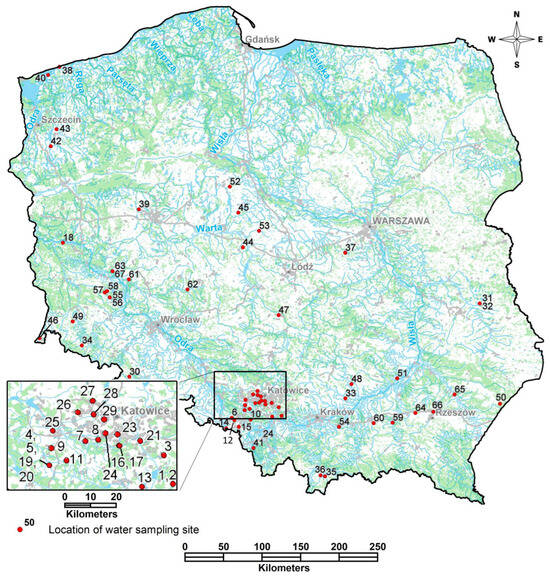
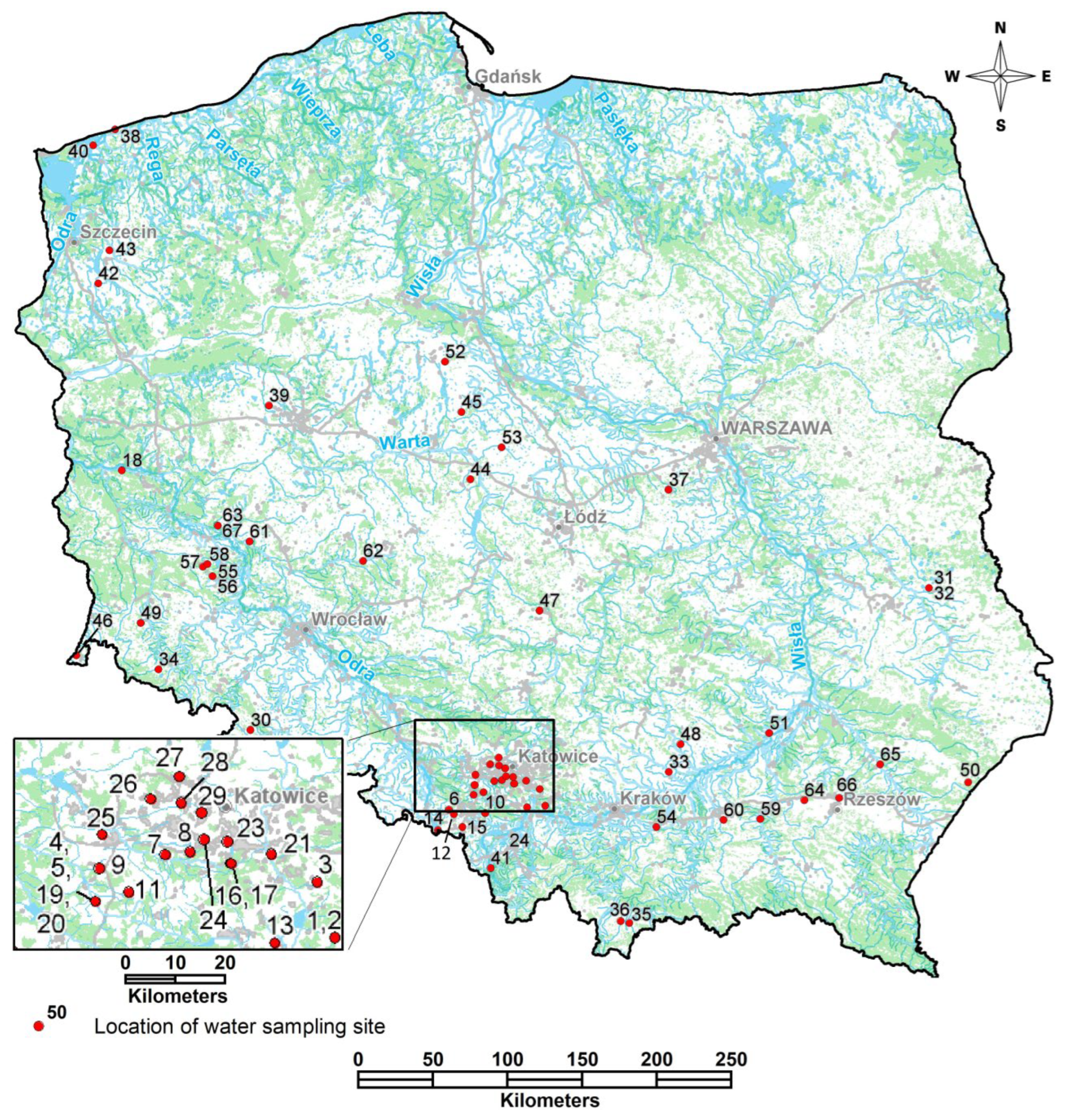
Water samples were collected from 67 locations in Poland [20]. The map of sampling sites is presented in Figure 1. They were selected based on survey reports on hydrogeological and environmental conditions prepared by the Polish Geological Survey. The 67 collected groundwater samples were analyzed at the Department of Environmental Monitoring, Central Mining Institute-National Research Institute, Poland, and in Chemical Laboratory of Polish Geological Institute-National Research Institute using their own undisclosed analytical procedures validated and accredited according to ISO/IEC 17025 [21] (Table 1). Those procedures employed inductively coupled plasma mass (limit of detection = 0.05 μg/L, Expanded uncertainty = 25%, k = 2) and optical emission spectrometers (limit of detection = 0.01 mg/L, Expanded uncertainty = 15–30%, k = 2). Additionally, the combination of an automated pre-treatment seaFAST-pico system (ESI, Hartland, WI, USA) and an inductively coupled plasma mass spectrometer (ICP-MS, iCAP-Q, Thermo Scientific, Bremen, Germany) was used for determination of rare earth elements in samples of brine water. The analytical procedure was developed and validated in accordance with ISO/IEC 17025 standard. Detail description and the analytical parameters of the procedure were published earlier [22,23,24]. Briefly, before ICP-MS determination, the elements were separated and preconcentrated by an automated seaFAST-pico system equipped with two integrated chromatographic columns containing a mixture of chelating resins with ethylenediaminetriacetic acid and iminodiacetic acid functional groups. A 10-fold enrichment factor and a chemical matrix removal were obtained. Limit of quantification was in the range 0.06 ng/L–0.9 ng/L and precision RSD = 3–7%. This procedure allowed for the almost complete removal of major ions (>99.9%): Na+, Mg2+, Ca2+, Sr2+, Ba2+, and Cl−, which affect determination of trace elements in brine water due to strong spectral interferences.
Figure 1.
The map of sampling site locations.
Table 1.
Description of water sampling sites.
The following parameters were determined for the collected water samples: pH, specific electrical conductivity, alkalinity (expressed as mg/L CaCO3), anions (HCO3−, Br−, I−, Cl−, PO43−, F−, and SO42−), elements (Fe, Mn, Cd, Be, Cr, Ti, V, Cs, Au, Be, Pd, Ir, Tl, Co, Zr, Cu, Mo, Ni, Sb, Ag, As, B, Pb, Se, Sn, Zn, Al, Bi, Ba, Sr, Li, Ca, Mg, Na, K, Si, La, Tl, Hg, Te, Mo. Pd, Pt, Sb, Sn, and Tl), and rare earth elements (Y, La, Ce, Pr, Nd, Sm, Eu, Gd, Tb, Dy, Ho, Er, Tm, Yb, Lu, and U). The samples were collected and analyzed in 2019.
3. Characterization of Water Effluents
3.1. Coal Mines
Coal mine drainage water is one of the main environmental problems in Poland [25]. The studied water samples are characterized by high salinity; thus, the drainage water cannot be discharged directly into the environment. Currently, 20 coal mines are operating in Upper Silesia and one in the Lublin Coal Basin. The estimated amount of discharged mine water from the coal mines in 2019 was 273.7 million m3. The water is stored in lagoons, from which it is discharged slowly into surface water, appropriately to river flow. The NaCl content in the mine drainage ranged from 20 to 35 g/L. However, the main problem for the environment is the high amount of chloride anions in water, whose concentration reached even 50 g/L in some collected samples. Mineralization of 15 samples of mine drainage water collected in 2019 ranged from 5.2 to 140.5 g/L total dissolved solids (TDS). The highest concentrations of elements were observed for K, Mg, Br, Ba, B, Mn, Li, SiO2, and Sr. These elements may accumulate in the environment to detrimental levels. According to the World Health Organization, the presence of Br, Ba, Sr, and B in drinking water at concentrations higher than 1 mg/L may adversely affect human health. The samples contained 19.3–40.7 mg/L Na+ and 5.7–7.7 mg/L Ca2+ and Mg2+. Based on the chemical composition of the samples, the preliminarily estimated yearly recoveries of the most abundant elements were 2562 t K, 9965 t Mg, 547 t Br, 34.3 t B, 101 t Mn, 23 t Li, 327 t Sr, and 100 kg Cs. In addition, a high concentration of fluoride was observed in drainage water from the Bogdanka coal mine. The potential recovery of fluorine was estimated to be 20.2 tons/year. The mine drainage water should be desalted before its discharge to the environment. The most abundant elements may be recovered from concentrated brine obtained from the desalination process. In the case of the desalination plant Dębieńsko, the only installation in Poland, the amount of elements in concentrated brine makes the recovery process viable from an economic point of view. The main product of the desalination process is a concentrated solution of NaCl, which may be used for the production of soda ash (Na2CO3) in the Solvay or Hue process or in the electrolytic process, chlorine, hypochlorite disinfectant, and sodium hydroxide. Additionally, lithium concentration in the concentrated brine reached 55 mg/L. Thus, the recovery of lithium, together with magnesium and potassium, may reduce the operational costs of desalination plants.
It is planned that all coal mines will be successively closed by 2050. The mines will be flooded, or the mine workings and voids will be filled with coal flotation waste or fly ash. Nevertheless, depending on geological conditions, closed mines may be used as reservoirs of water for industrial applications. It is germane to mention that the temperature of the water taken from deep levels of the mine was approximately 50 °C, which is favorable for decreasing energy consumption in desalination processes.
3.2. Abandoned Coal Mines
In closed mines, water from abandoned mine workings and shafts is still pumped in order to prevent flooding of operating mines that are connected to each other by adits and shafts. The drainage water was pumped from 17 abandoned coal mines located in the Upper Silesian Coal Basin (USCB) and one from a mine located in the Lower Silesian Coal Basin (LSCB). In 2019, water samples were collected from nine mines in the USCB and one in the LSCB. The samples contained 2.9–83.3 g/L Cl−, 1.5–46.1 g/L Na+, 146.6–3210 mg/L Ca2+, and 92.4–3580 mg/L Mg2+. Additionally, bromine, strontium, and caesium were found in the sample. The highest concentrations of bromine, strontium, and caesium were 160 mg/L, 117 mg/L, and 0.47 mg/L, respectively. The composition of the water may change over time because mining activity is mainly related to the backfilling of voids. The estimated recoveries of boron, manganese, and lithium were 51 t/year, 38 t/year, and 11.6 t/year, respectively. In contrast to exploited coal mines, the concentration of barium in water samples was very low. The highest discharge of mine drainage water to the environment was estimated to be 46 t/year, whereas the highest emission from exploited mines was estimated to be 522 t/year. In the case of abandoned coal mines, the concentration levels of silica (SiO2) were higher than those in water from exploited mines. Annually, the dissolved silica load was estimated to be in the range of 12.4–118.3 t/year from abandoned mines, whereas the load was in the range of 2.4–46.1 t/year samples from exploited mines. Although dissolved silica is needed for phytoplankton and diatoms to grow, oversupply of surface water with silica may result in the mobilization of heavy metals and phosphorous from bottom sediments to the water column [26,27]. High concentrations of phosphorous and other nutrients in surface water are responsible for algal blooms. Additionally, both colloidal and dissolved silica are responsible for scale formation, which affects the performance of desalination plants.
3.3. Lignite Mines
The open cast exploitation of lignite is accompanied by drainage of overburden rocks and reducing the hydraulic pressure in the subcoal bed using a barrier of deep wells. As a result of drainage, extensive cones of groundwater depression are formed around the deposits, both within the overburden layers and in the layers underlying the deposit series. In the case of the Konin lignite mine, the mineralization of the drainage water sample was very low (650 mg/L TDS), and the elemental composition did not pose any risk to the environment or human health. The drainage water can be discharged to the environment without any treatment. Similarly, the drainage water sample from the Adamów mine was also characterized by low mineralization (528 mg/L TDS). The elemental composition was also safe for the environment. Water can be discharged to the environment without any treatment. The mineralization of the drainage water sample from the Turów mine was 3.9 g/L TDS; however, the elemental composition did not contain harmful components. Only elevated concentrations of fluoride (4.69 mg/L) in the collected samples that exceed the World Health Organization’s recommendation may be deleterious to the environment. In the case of the Bełchatów mine, the mineralization of the drainage water sample was 787 mg/L TDS. In all cases, water pumped from the mine may be used for land reclamation. After ceasing of the lignite exploitation, it is planned to shallow the pits by overburden material from the mine dumping site and backfill the mine voids with water drained from active pits. In those mines, pyrite minerals are absent in the composition of lignite deposit rocks; thus, there is no risk of water acidification and iron leaching due to pyrite weathering processes. The water flooding rate may be increased by pumping surface water. Finally, it is intended to transform the pit lakes into natural lakes for leisure purposes. The addition of surface water will restore natural fauna and flora, preventing the deterioration of lake water quality. Mine pits may also be used as reservoirs to collect and store rain and snowmelt water for irrigation during summer droughts.
3.4. Copper Mines
Polish copper ores are located in the Sudetic and Fore-Sudetic regions, in county (powiat) of Głogów, Polkowice, and Lubiń, in Lower Silesia voivodeship. The main minerals in the copper deposits are chalcocite (Cu2S), bornite (Cu5FeS4), and chalcopyrite (CuFeS2). There are also other minerals of cobalt, zinc, lead, and nickel in copper deposits in Poland. In the case of the Lubin copper mine (south-eastern part of the copper deposit), the mine water was drained mainly from the mineshafts LI and LIII. The amount of pumped water from LI and LIII was 6.62 and 2.67 million m3/year, respectively. Mineralization of the mine drainage water sample collected in 2019 was 3.75 g/L TDS. In the Rudna copper mine, the amount of mine water drained from the two mineshafts was 5.49 million m3/year. The sample of mine drainage water was characterized by 178 g/L TDS. In the case of the Polkowice copper mine, the amount of mine water drained from the mineshaft was 12.41 million m3/year. Mineralization of the mine water sample was 36.9 g/L TDS.
The samples collected from the mines contained 2.1–106.0 g/L Cl−, 1.11–63.5 g/L Na+, 1.11–63.5 mg/L Ca2+, and 90–802 g/L Mg2+. The highest concentration of bromine was 160 mg/L, strontium 117 mg/L, and caesium 0.47 mg/L. The composition of water depends on mining activity and may change over time.
Due to the low amount of critical elements in mine drainage water, their recovery is not economically feasible. However, water cannot be discharged into the environment without treatment due to high mineralization, high NaCl content, and the presence of heavy metals. The water is reused in copper ore enrichment processes, after which it is dumped to a tailing pond. The strongly acidic water, which is rich in heavy metals, is formed due to the chemical reaction of mine drainage water with sulfur-bearing minerals in tailings. As a result, salt and heavy metals should be removed from mine drainage water before discharging it to the environment. The concentrated critical element can be recovered from brines or salts that remain after the desalination process.
3.5. Chemical Raw Material Mines
There are two sulfur mines in Poland located in the vicinity of Osiek city (Świętokrzyskie voivodeship) and in the vicinity of Basznia village, Lubaczów city (Podkarpackie voivodeship). Sulfur is extracted from the deposit by the Frasch process, in which hot water is used to melt sulfur trapped in marly limestone, and after that the extracted element is pumped together with the water to the surface. In the case of the mine in Osiek, the mineralization of the collected sample of process water was 2698 mg/L TDS. The sample also contained dissolved H2S in the range of 499.9 to 555.8 mg/L. Mineralization of the process water sample from the mine in Basznia was 4083 mg/L TDS. After the separation of sulfur and H2S, mine water is softened and reused for further extraction of sulfur. During the water softening process, small amount of magnesium (5.11 t/year) and calcium (45.5 t/year) may be recovered from the Basznia mine water, and 15.75 t/year Mg and 305.5 t/year Ca may be recovered from the Osiek mine water. Ca and Mg salts may be used as fertilizers.
The Leszcze gypsum mine is located in Świętokrzyskie voivodeship. The gypsum is mined by an open-pit method. Mineralization of the mine water sample was 2649 mg/L. The water did not contain any critical or toxic elements. The amount of water drained from the mine was 225 m3/day. Therefore, water can be used in agriculture without any treatment. In the future, after gypsum deposit exhaustion, the mine area may be used as a reservoir for water used for agricultural purposes.
Water samples were also collected from the Nowy Ląd gypsum mine in the vicinity of Lwówek Ślaski city in Lower Silesia voivodeship. The gypsum is mined by an open-pit method. The water is drained from different levels by a series pumping system. The collected water sample represented approximately 60% of all the water drained from the mine. Mineralization of the water sample was 978 mg/L TDS. The water did not contain any toxic elements. Thus, water can be used in agriculture. The amount of water drained from the mine was 2000 m3/day.
The brine sample collected from borehole Siedlec-S5 was extracted by the iodine-bromine brine processing plant Salco S.J. The leachate from the halite deposit is a source of the brine. Mineralization of the water sample was 184.4 g/L TDS. The sample contained 97.5 g/L Cl−, 56.7 g/L Na+, 2.7 g/L Ca2+, and 1.52 g/L Mg2+. In addition, the brine water contained 328 mg/L K+, 200 mg/L Br−, 196 mg/L Sr2+, 97.1 mg/L Ba2+, 90 mg/L I−, 73.2 mg/L HCO3−, 9.2 mg/L B, 5.55 mg/L Li+, 2.6 mg/L Mn, and 0.42 mg/L F−. Trace amounts (below 1 mg/L) of Ti, Ag, Mo, and Cs were also found in the water. The salt from the brine is used for curative/healing bathing. The brine pumping rate was 3.7 m3/h. However, the amount of brine pumped from the deposit may be increased.
In the case of the salt deposit in Góra in the vicinity of the city of Inowrocław the salt is leached by pumping of river water through the deposit. The obtained brine is used for the production of sodium carbonate. The collected brine sample contained 193.0 g/L Cl−, 127.0 g/L Na+, 319.0 g/L Ca2+, 1.42 g/L K+, 1.98 g/L SO42−, and 0.35 g/L Mg2+. The brine pumping rate was 510 m3/h.
Poland’s largest salt mine is located in the city of Kłodawa. The mine water sample was collected from a gallery located 750 m below the surface. The mineralization of the water was very high at 461 g/L TDS. In the collected water sample, the most abundant elements were Cl−, Ca2+, Mg2+, K+, Na+, Li+, Br−, and Sr2+. Trace amounts of manganese and boron were also found in the collected water sample. The obtained results indicated that the brine from the salt mine may be a very good source of critical elements. Currently, the salt from mines is used in the chemical and food industries and for consumption. In addition, salt is used for de-icing of roads during winter season.
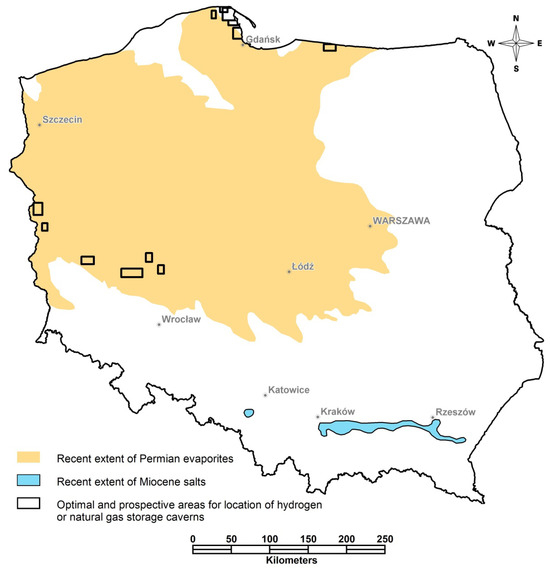
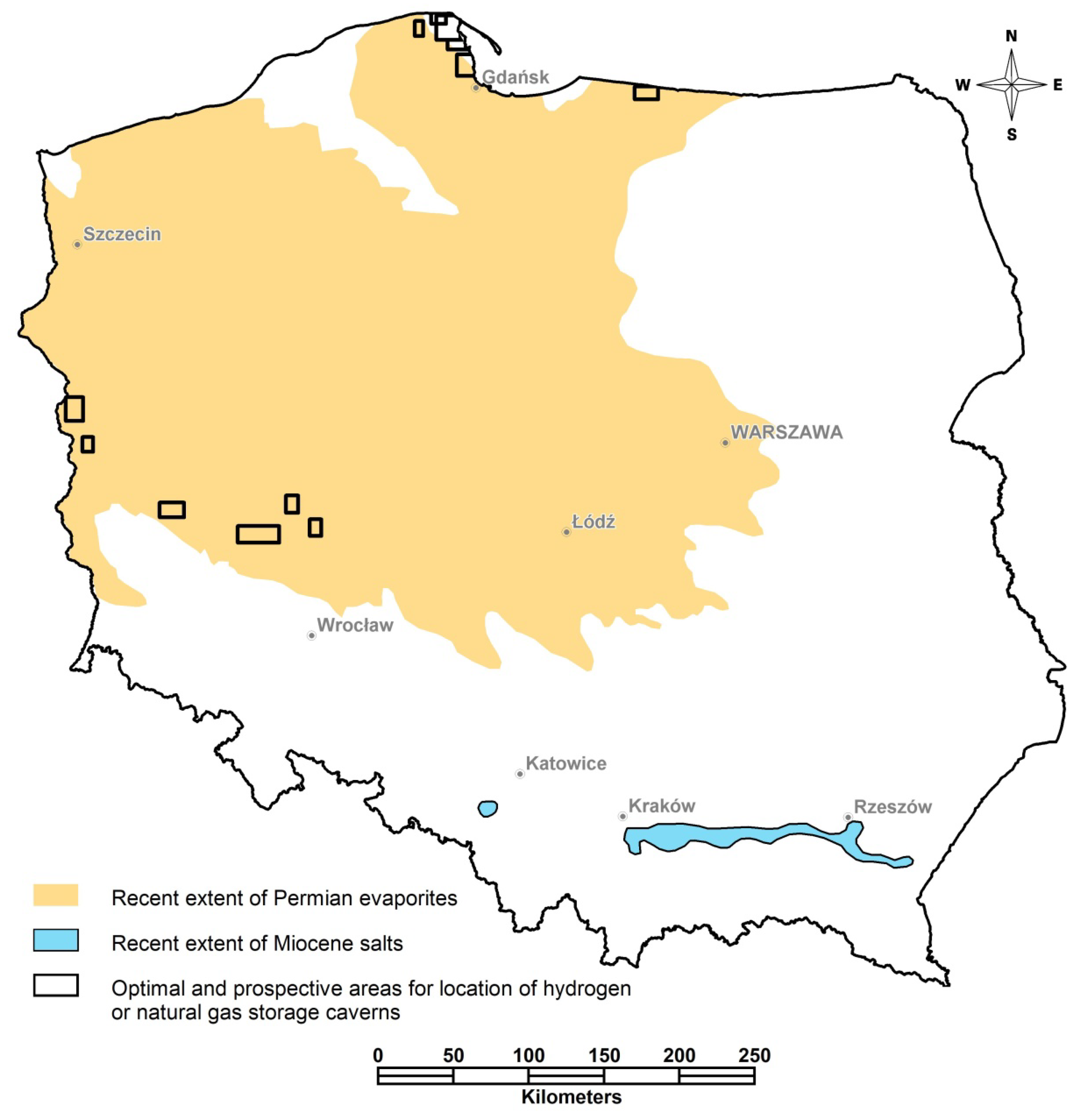
Other brine sources were water leachates obtained during the construction of caverns for hydrocarbons and hydrogen storage in the salt deposits (Figure 2). Valuable elements may be recovered from salt deposits by desalination of the brines: 2237 t/year of bromine, 104.8 t/year of lithium, 557 t/year of strontium, and even 500 kg/year of caesium. The brines are usually dumped to the Baltic Sea. However, brine discharge may mobilize heavy metals and nutrients from bottom sediments. The excessive concentration of nutrients may cause water eutrophication. Additionally, the concentration of dissolved oxygen in water decreases with an increase in salinity. Thus, brine discharge significantly affects marine ecosystems.
Figure 2.
The map of salt deposits and prospective areas for location of hydrogen or natural gas storage caverns [28,29].
3.6. Oil and Gas Fields
Gas reservoir water is collected during the extraction of natural methane from deposits. In Carpathian Foredeep, gas is extracted from the Tarnów, Pilzno Południe, Kuryłówka, Cierpisz, and Terliczka deposits. The water from borehole Tarnów 81k was collected after separation of the natural gas. Mineralization of the water sample was 196.9 g/L TDS. The amount of produced water was 15 m3/day. The mineralization of water from borehole Pilzno 48k was 176.8 g/L TDS. The amount of produced water was 3 m3/day. The amount of produced water from borehole Kuryłówka 5 was 15 m3/day. The mineralization was 40 g/L TDS. The water sample contained also a large amount of foaming agents which posed an environmental risk and affected the water treatment process. Likewise, the water from boreholes Cierpisz 3d and Terliczka 3ag contained large amounts of foaming agent. In the case of Cierpisz 3d, the mineralization of the collected water sample was 110 g/L of dissolved solids, whereas it was 65 g/L of dissolved solids for Terliczka 3ag. The amount of produced water ranged from 7.5 to 15 m3/day.
In the Fore-Sudetic-Greater Poland region, three deposits were selected: Bogdaj Uciechów, Żulchów, and Wilków. Mineralization of the water sample collected from the Bogdaj Uciechów 11 borehole was 287.3 g/L TDS. The amount of produced water was 24.45 m3/day. In the case of borehole Żulchów, the mineralization of water was 275 g/L TDS. The amount of produced water was 0.138 m3/day. Mineralization of the water collected from the Wilków 37 borehole was 140.5 g/L TDS.
The water samples from the gas-producing boreholes contained 8.9–174 g/L Cl−, 26.9–88.5 g/L Na+, 1.2–3.2 g/L Mg2+, 300–1500 mg/L Br−, 7.4–100 mg/L Li+, 185–1100 mg/L Sr2+, and 0.015–4.53 mg/L Cs2+.
Generally, the extraction of methane from boreholes lasts no longer than several tens of years. Natural gas is trapped by salt deposits. Therefore, after the depletion of natural gas, boreholes may be used for the extraction of salt-containing valuable critical elements. Moreover, additional boreholes may be made to increase the amount of salt extracted from the deposits. Depleted gas fields may be used for methane and hydrogen storage. In some cases, the natural gas fields also contain helium, which can be recovered during the extraction of gas and salt from the deposits. After separation of the oil, the produced water is pumped back into the oil or gas reservoir in order to increase the production of oil or gas.
3.7. Geothermal and Curative Water
Geothermal water is used for the generation of electricity, heating of houses and residential water. After cooling, the water is injected back into the geological formation. However, salt dissolved in the water may cause clogging of the borehole. Therefore, desalination of water before injection can significantly extend the borehole exploitation time.
The temperature of the water received from borehole Stargard GT-2 was 85 °C. Water was used for heat production in the municipal heating plant G-Term Energy LLC. The mineralization of the collected water sample was 120.5 g/L TDS. Cool water was pumped back into the geological formation. The allowed amount of water pumped from the borehole was 200 m3/h.
The water from the borehole Pyrzyce GT-1 Bis is used for the production of heat and hot residential water in the municipal heating plant Geotermia Pyrzyce LLC. The temperature of the water was 58.6 °C and the mineralization was 117.13 g/L TDS. The amount of water pumped from the borehole was 140 m3/h during the winter and 80 m3/h during the summer. Cool water was pumped back to the geological formation; however, part of the water, 3500 m3/year, was discharged to the Sicina River. Mineralization of water from borehole Tarnowo Podgórne GT-1 was 57.64 g/L TDS. The concentration of fluoride was very high at 12 mg/L. The temperature of the water was 43.5–44 °C. The geothermal water was used for heating in swimming pool water. The amount of water pumped from the borehole was 179 m3/h. The artesian water from borehole Białka Tatrzańska GT-1 was used for heating a swimming pool and the Water Park Bania building. The temperature of the water was 77.3 °C. The mineralization of the water was 1860 mg/L TDS. The amount of water received from the borehole was 32 m3/h. After cooling, the water was discharged to Czerwonka Brook. The artesian water from borehole Bańska PGP-1 was used for the heating of houses and, after cooling, it was used in swimming pools. The temperature of the water was 86 °C. The mineralization of the water was 2516 mg/L TDS. The amount of water received from the borehole was 550 m3/h. The mineralization of the geothermal water from borehole Mszczonów IG-1 was 477 mg/L TDS. After cooling, the water was used as potable water. The water temperature was 41.6 °C. The amount of water pumped from the borehole was 60 m3/h. Curative water from borehole Ustroń U-3 was used for crenotherapy and balneotherapy. The amount of pumped water was very low (1.2 m3/h). Mineralization of the water was 90.77 g/L TDS. Curative water from borehole Cieplice C-1 was used mainly for balneotherapy. The water temperature was 76.9 °C and the mineralization was 635 mg/L TDS. The concentration of fluoride was 12 mg/L. The water contained also 95.6 mg/L Si. The amount of water pumped from the borehole was 56.54 m3/h. The water from borehole Cudzynowice GT-1 is used for the production of heat in a municipal heating plant. The temperature of the water was 28.6 °C. The amount of water pumped from the borehole was 82 m3/h. The mineralization of the water sample was 12.2 g/L TDS. The water composition is suitable for balneotherapy. After cooling, the water was discharged to the Nidzica River. The artesian water from borehole Trzęsacz GT-1 was used for heating a spa and resort hotels. After cooling, the water was used in salmon aquaculture. The water was 25.2 °C. The mineralization of the water was 10.14 g/L TDS. The amount of water received from the borehole was 180 m3/h. The mineralization of water from borehole “Edward III” was 31.95 g/L TDS. The amount of artesian water received from the borehole was 15 m3/h. Water was used for balneotherapy and inhalation. The temperature of water was 25.2 °C.
The water samples from the geothermal and curative sites contained a wide range of elements: 17 mg/L–71.6 g/L Cl−, 30.7 mg/L–43.9 g/L Na+, 11.4–208 mg/L Mg2+, 0.19–300 mg/L Br−, 0.03–8.35 mg/L Li+, 0.21–342.4 mg/L Sr2+, and 0–0.144 mg/L Cs2+. The investigated water samples did not contain significant concentrations of critical elements. Most of them were present at concentrations far below 1 mg/L. After desalination, water can be used in agriculture. Moreover, the obtained salt may be used in the food industry or in balneology.
4. Discussion
Based on the chemical analysis of 67 aqueous sources, it has been found that the water from only 29 localizations may be considered as a prospective source of critical elements (Table 2). Among them, drainage water from coal and copper mines provides a significant amount of critical elements per year at pumping rate from 2019. However, the amount of the elements may increase with an increase in the pumping rate to the limit allowed by the environmental law. In this case, water from geothermal fields, drainage of salt mines, and oil extraction wells may be a significant source of critical elements.
Table 2.
The annual amount of water discharged and opportunity for recovery of critical elements.
Due to high mineralization, mine drainage water should be desalted before being discharged to surface water [19]. The salt obtained from the desalination process is a valuable source of critical elements for industry. In addition, the large amount of fresh water obtained after the process would fill the growing gap between the supply from currently available water sources and the demand in agriculture and industry during summer droughts. An additional source of critical elements may be found in salt deposits. In Poland, salt deposits are distributed in two-thirds of the country’s area. The elements can be extracted during the construction of gas storage caverns by leaching the salt from the deposits. Currently, the receiving brine is discharged to surface water or to the Baltic Sea, which may have a detrimental effect on the aquatic environment. Geothermal brines are another source of critical elements. After heat extraction, the brine is pumped through an injection well to gradually replenish the hot water reservoir. However, the high salinity of the water may cause scaling and clogging of the borehole. Therefore, there is a need to desalinate the brine before it is re-injected into the geothermal field.
Conventional, terrestrial mining requires a large quantity of water to suppress dust, concentrate ores, extract metals, and transport materials [30]. Additionally, the construction and operation of conventional mines disrupt large land areas for ore processing plants, roads, conveyors, water treatment plants, material extraction (e.g., ore pits), waste dumps (e.g., overburden), leaching pads, and tailings ponds. Underground mining is also very costly because it requires the construction of large underground infrastructure [31]. Extraction of critical elements from water leachates requires significantly less capital investment because land disruption can be limited only to an extraction facility [32]. Moreover, conventional mining is prone to economic fluctuations. The recovery of critical elements may offset the cost of saline mine water remediation and reduce contamination of the environment. Desalted water can be used in mining operations and in the extraction of elements from ore as well as in industry and agriculture. Thus, the growing demand for fresh water sources, caused by an increase in domestic use due to climate change and population growth, may be significantly reduced by mine drainage water reuse.
Each desalination and extraction process has its advantages and disadvantages, which should be carefully considered in terms of environmental impact, opportunity for critical element recovery, process waste formation, and valorization as well as installation, operation, and maintenance costs. The main desalination processes applied worldwide are thermal distillation, membrane separation, ion exchange, and membrane electrolysis [33]. Considering economic, environmental, and geochemical conditions, it can be assumed that those desalination processes might also be used in the treatment of effluent water from mining, oil, natural gas, and geothermal operations in Poland. Likewise, the critical elements may also be extracted from concentrated brines obtained from desalination of the effluent water in order to offset the cost of desalination [16].
Thermal distillation on boiling of saline water and condensation of vapor of pure water. Three types of thermal distillation units are used commercially: multistage flash distillation, multiple effect distillation, and vapor compression distillation [34]. Multistage flash distillation is a process in which incoming saline water is pumped to a higher pressure and heated to near boiling. Through a series of stages, the saline water pressure is decreased (the water starts rapidly boiling) to generate vapor that is condensed by the incoming saline water. The multiple effect distillation process uses a steam heat source and a series of evaporators at successively lower pressures to produce fresh water. Vapor compression distillation produces fresh water from saline water by developing heat from vapor compression. Thermal technologies require a heat supply. Waste heat from power plants, geothermal water, and solar energy may be used in thermal processes. The main disadvantage is the formation of scale; thus, magnesium, calcium, barium, silica, and iron should be removed [35]. Usually, the addition of Na2CO3 or NaOH to saline water precipitates these elements [36,37]. Magnesium can precipitate from brine as struvite by addition of ammonium phosphate [38]. Struvite may be used as a valuable fertilizer in agriculture. Currently, low temperature thermal desalination processes (LTTDs) are under development. The operating temperatures in LTTDs are lower than 50 °C because the water is distilled under near vacuum conditions [39]. Thus, renewable, solar, or geothermal heat sources may be utilized in LTTDs. Freeze desalination (FD) is another thermal technology that is under development [40]. During the FD process, ice crystals are formed, and as a result, pure water is obtained as ice, and the remaining concentrated brine is extracted and separated from the ice fraction. FD has 75% to 90% lower energy requirements compared to the evaporative desalination processes because the latent heat of ice is 333 kJ/kg and that of water vapor is 2500 kJ/kg. The cold energy from the vaporization of liquid natural gas may be used in the FD process [41].
Recently, it has been found that applying an electric discharge on the surface of a saturated brine can induce crystal formation [42]. The water evaporation by atmospheric pressure plasma requires less energy than the heat-induced evaporation of brines; although, the research is still at the lab-bench stage. Atmospheric pressure plasma may be used for water splitting into hydrogen and oxygen, and as a result, salt crystallization from gradually concentrated brine; however, it requires further development [43]
Membrane separation is a process, in which a membrane is used to separate the components in a solution by rejecting unwanted substances and allowing the others to pass through the membrane [44]. The separation of substances is controlled by the rate of permeation through the membrane. The chemical and physical properties of a permeating molecule and membrane material affect permeation. However, more factors control the rate of permeation and the transport mechanism. Transport through the membrane may be achieved by applying a driving force (pressure, temperature, concentration, or electrical potential) across the membrane. Membrane distillation (MD) is a thermally driven separation process in which only vapor molecules pass through a microporous hydrophobic membrane [45]. The driving force in the MD process is the vapor pressure difference induced by the temperature difference across the membrane surface. Due to their non-volatile nature, salts remain in the feed solution. This process is more efficient than other distillation processes because of its low fouling propensity, a feed temperature between 50 and 90 °C, and its capability to treat highly saline water [46]. Additionally, the footprint of the installation is very small. This technology is suitable for saline water produced during gas and crude oil extraction.
Nanofiltration (NF) is a pressure-driven membrane separation process that relies on a sieving mechanism, where the membrane passes through smaller particles and retains larger ones. The pore sizes of NF membranes range from 1 to 10 nm [47]. The membranes used in nanofiltration are characterized by high rejection of multivalent ions such as Mg2+ and Ca2+ and low rejection of monovalent ions [47]. It is usually used for softening brines and in combination with other desalination processes.
Reverse osmosis (RO) is also a pressure-driven process; however, in this process the membrane permeates only the solvent and retains the solute [48]. In RO, the hydraulic pressure is higher than the osmotic pressure and depends on the feed salinity. The pore size of the RO membranes is less than 1 nm. In the case of saline water treatment, high-purity water is obtained during the RO process. Membrane fouling, high operating pressure, and concentration polarization are the major issues in the RO process. Thus, the RO process is frequently combined with distillation and nanofiltration processes to improve the efficiency of the treatment process [48].
Electrodialysis is a membrane separation process based on the transport of ions through semipermeable membranes by the use of an applied electric field [49]. The electrical potential forces the salt cations and anions to move through a membrane, leaving behind freshwater as a product. Ion exchange membranes with selective permeability are used in this process. Due to the electrical current, the anions migrate towards the anode, and the cations migrate towards the cathode. During the migration process, anions and cations pass through the anion exchange membrane and cation exchange membrane, respectively, and are retained by membranes with the same charge [50]. As a result, during the process the solution concentration increases in concentrate cells, whereas it decreases in dilute cells. This process is frequently used in the desalination of brines [49]. However, this process may be used for increasing the salt concentration in the solution to precipitation point. It is usually used in the valorization of highly concentrated RO brines. Electrodialysis is used for the recovery of useful components from brines and further refining of chemical products, for example, high-purity NaCl solutions (free from multivalent ions) for the chloroalkali industry [51]. The major advantage of ED is that it does not use pressure, and thus, energy consumption is reduced [49]. Additionally, membrane fouling and scaling is very low. It is easy to clean the membrane by chemical cleaning and a change in electrical polarity. Currently, however, the life spans of electrodes and membranes are very short.
Membrane electrolysis of water is an emerging technology for the desalination of brines. In the cathode compartment, water is reduced to hydrogen and hydroxyl anions are formed [52]. The formation of hydroxyl anions leads to the precipitation of magnesium and calcium hydroxide on the surface of the electrode. Calcium hydroxide reacts with dissolved carbon dioxide (CO2) and forms calcium carbonate. As a result, the salinity of the brine is reduced. In the anode compartment, chloride ions are oxidized to chlorine, which is a major raw material in the chemical industry [52]. The removal of calcium and magnesium is a very important step before recovering other critical elements, such as lithium. During brine electrolysis CO2 may be captured and used for the production of Na2CO3 [53]. However, membrane electrolysis still requires further development and optimization. Particularly, development of materials and ion exchange membranes that are resistant to very corrosive environments is needed for this process.
The desalination of brines by ion exchange resins is a very old technology that has been replaced by membrane separation technologies [54]. Ion exchange resins need to be regenerated by acid or alkaline solutions, which are very difficult to dispose of. However, this technology may be used for softening brines before treatment by membrane methods [55]. Thus, the application of anti-scalants, which are expensive and detrimental to the environment, is significantly limited in membrane-based systems [56]. The critical elements are recovered from solutions after regeneration of the ion exchanger.
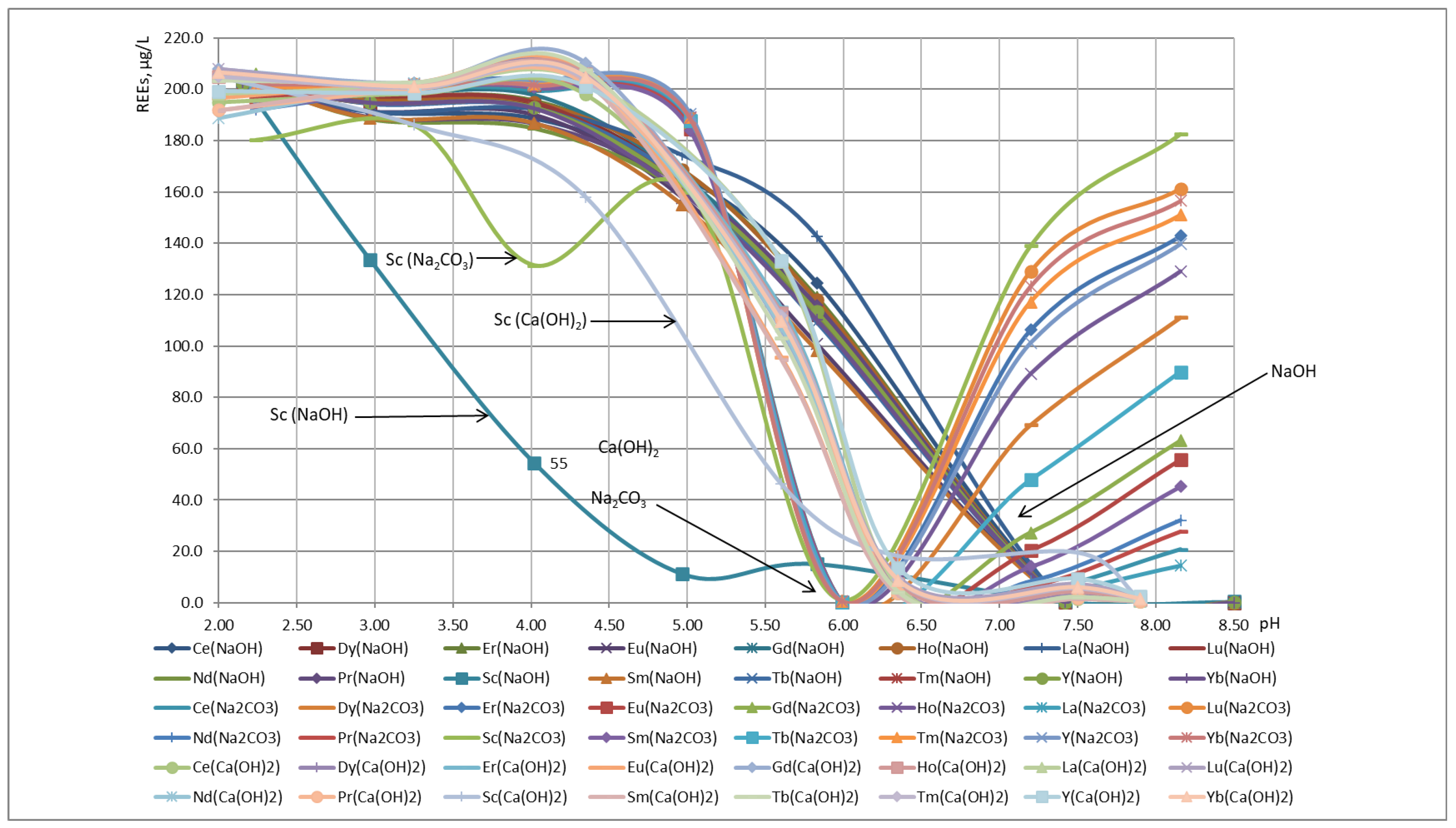
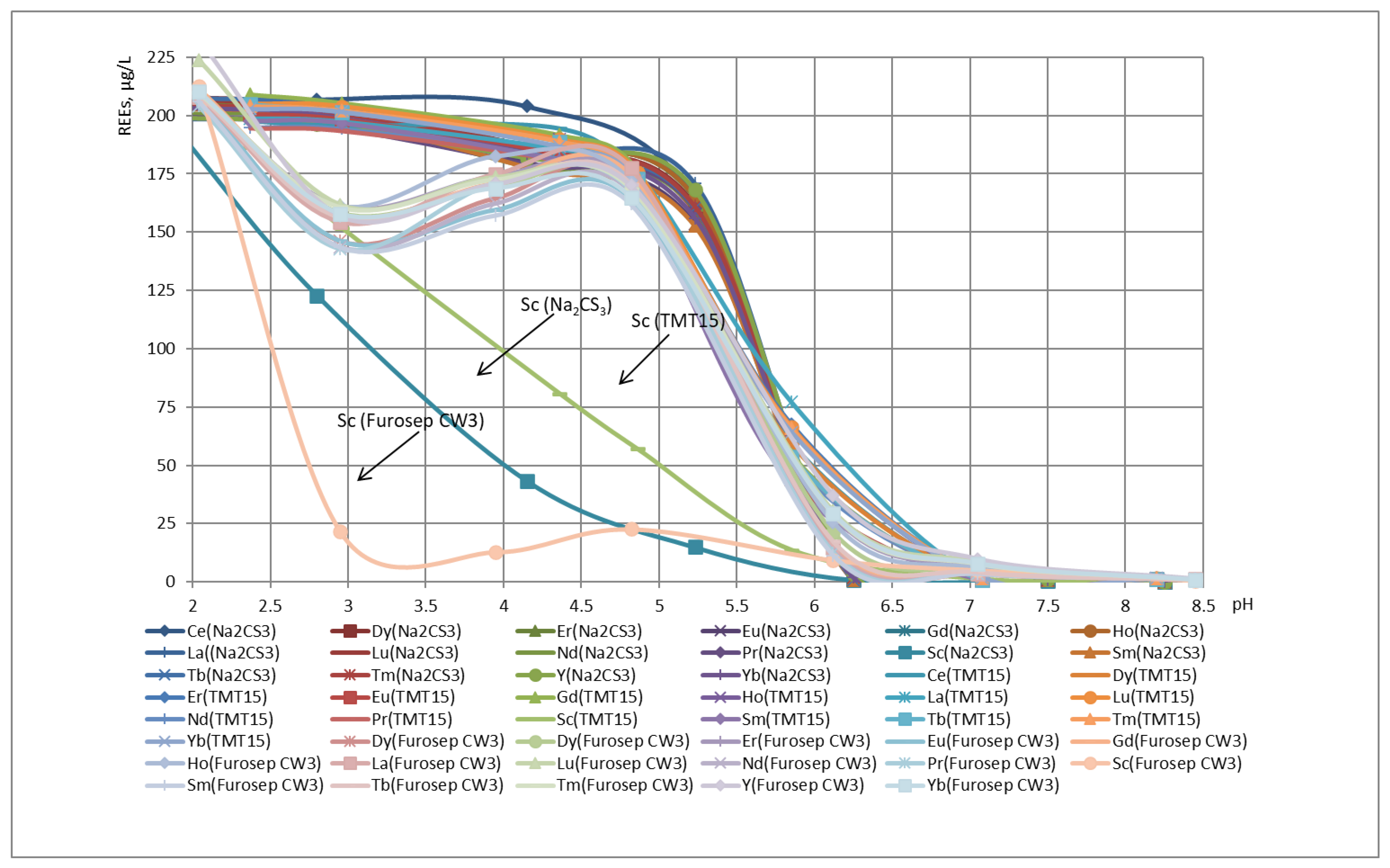
The rare earth elements (REE: Ce, Dy, Er, Eu, Gd, Ho, La, Lu, Nd, Pr, Sc, Sm, Tb, Tm, Y, and Yb) may be recovered from rejected brines obtained during membrane processes or brines from regeneration of ion exchangers by the use of alkaline reagents such as: NaOH, Na2CO3, and Ca(OH)2, or by alkaline sulfur-containing compounds: trimercapto-s-triazine, sodium salt (TMT15), sodium dimethyldithiocarbamate (Furosep CW3), and sodium trithiocarbonate (Na2CS3) [57]. The efficiency of REE precipitation depends on the precipitating agent and pH of the solution (Figure 3 and Figure 4). Under certain conditions, the efficiency of precipitation was higher than 90%. Certain elements can be precipitated selectively depending on the pH of the solution.
Figure 3.
Effect of precipitants (NaOH, Na2CO3, and Ca(OH)2) and pH of the solution on the Ce, Dy, Er, Eu, Gd, Ho, La, Lu, Nd, Pr, Sc, Sm, Tb, Tm, Y, and Yb concentrations in artificial acidic effluent water [57].
Figure 4.
Effect of precipitants (trimercapto-s-triazine, sodium salt (TMT15), sodium dimethyldithiocarbamate (Furosep CW3), and sodium trithiocarbonate (Na2CS3)) and pH of the solution on the Ce, Dy, Er, Eu, Gd, Ho, La, Lu, Nd, Pr, Sc, Sm, Tb, Tm, Y, and Yb concentrations in artificial acidic effluent water [57].
The large range of values reported in the literature is mainly due to variability in location, technologies, life cycle stages, parameters considered, and estimation tools used. Thus, making accurate comparisons of various desalination technologies in terms of their carbon footprint, environmental safety, and economy is very difficult [58]. Selection of the desalination methods depends mainly on TDS content in water (Table 3). However, other economic and environmental factors are also important.
Table 3.
The selection of the desalination process based on TDS [59].
The assessment of the overall cost of the desalination processes is the most difficult issue. The cost of treatments depends on the technology of desalination, recovery of valuable elements, access to renewable source of energy (geothermal or solar energy), and many other economic and environmental factors [60,61]. Nevertheless, the approximate minimum energy required for desalination may be estimated in relation to TDS (Table 4).
Table 4.
Approximate minimum energy required for desalination depending on TDS [59,62,63].
Sodium chloride is used in many industrial processes, ranging from water softening to the production of chlorine, sodium hydroxide, sodium sulfate, and sodium carbonate. Sodium chloride is a very low-value commodity; thus, its transportation by tracks, rails, or ships significantly increases the price of the raw material. Therefore, sodium chloride should be produced close to its user. In some cases, the concentrated brines from the desalination process may be used for carbon dioxide capture and electrochemically assisted production of sodium carbonate and chlorine or hydrochloric acid [64,65].
From an economic point of view, based on published case reports on critical element recovery, it can be assumed that only concentrated brines from the desalination of mine drainage and geothermal waters may be considered as a source of critical elements [13]. The concentrations of critical elements in the samples investigated in this study were higher than those in seawater [66]. Thus, the volume of material that needs to be handled would be lower than that in seawater desalination plants. As a result, capital and operating expenditures for the recovery of the critical elements are expected to be lower than those for seawater mining.
In this study, it has been found that lithium is the most frequently occurring critical element in Polish mine drainage and geothermal waters. Lithium is the most valuable and demanded critical element for renewable energy technologies [67]. Although Li+ concentration is very low in mine drainage water, its concentration in the obtained brine increases during the desalination process. In the concentrated brine from the mine drainage desalination plant in Dębieńsko, the concentration of Li+ was 55 mg/L, which was high enough for the economically viable extraction of the element [67]. After the removal of magnesium and calcium, Li can be precipitated as Li2CO3 or Li3PO4 from solution [68]. The selection of recovery technology depends on the composition of saline water and the concentration of lithium [69]. It should be tailored to each case individually [70]. However, combining membrane separation with ion exchange on Li-selective resins seems to be the most economically favorable process [71]. Potassium is another critical element and recovering it from mine drainage and geothermal water is economically feasible. It can be recovered from brine by sequential crystallization at different temperatures or by ion exchange after the removal of magnesium and calcium salts [72,73]. Potassium salts are needed for use as plant fertilizers. Barium, boron, strontium, and SiO2 can also be recovered from geothermal and mine drainage during the extraction of magnesium [74,75]. These elements are removed before the chloro-alkali process in order to reduce the formation of sludge [76].
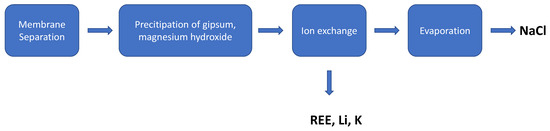
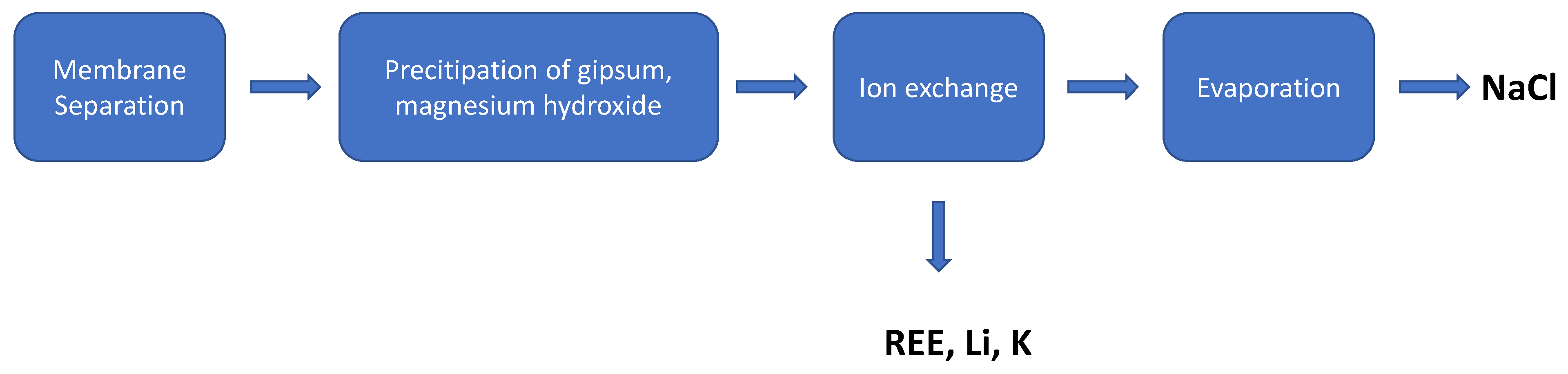
A schematic diagram of the desalination and element recovery process is presented in Figure 5. Before the treatment, the fine suspension of silica, iron oxides/hydroxides, sands, and other minerals should be settled down from the effluent in a settling pond. After that, the clear water is decanted from the top for the process.
Figure 5.
Proposed schematic diagram of the desalination and element recovery process.
In summary, mining and geothermal operations produce large amounts of highly saline water. The water should be desalted before discharging it to the environment. Recovery of the critical elements from desalination brines decreases the cost of mine and geothermal water remediation. Moreover, various chemical and physical processes may change these brines into valuable, useful industrial chemicals or fertilizers. Based on the results of this study, it can be assumed that the amount of lithium, magnesium, and potassium in salt deposits in Poland allows for the economical extraction of these elements by currently available mining methods that do not require the construction of deep mine infrastructure. Therefore, further research is needed for the development of economically feasible technologies for the recovery of the critical elements from salt deposits by water leaching as well as for chemical and physical extractions of elements from receiving brines. However, it is very difficult to assess the real cost and efficiency of the extraction of critical and valuable elements from brines because most of the proposed processes are currently at the laboratory or pilot plant stage. Thus, an appropriate recovery method should be selected, developed, and optimized in each case. Since desalination is an energy intensive process, it is important to develop very efficient technologies in terms of energy usage. The application of renewable energy technology such as waste heat recovery, solar, wind, and geothermal energy is required. Additionally, based on the results of this study, scale formation may be a very significant problem in desalination of effluents from mining, oil, natural gas, and geothermal operations. Scale formation can lead to reduced efficiency, increased energy consumption, maintenance cost, and equipment failure. Therefore, development of a coagulation/flocculation process accompanying desalination for removal of suspended solids and colloidal particles is also required. Precipitation or solvent extraction of scale-forming minerals should also be considered in the development of the treatment processes.
5. Conclusions
The water samples from 67 locations were analyzed. The highest concentrations of Mg2+, Li+, Ca2+, Na+, K+ Cl−, SO42−, B, Ba2+, Sr2+, and SiO2 were observed in saline, highly mineralized waters from mining and geothermal operations. The most valuable element found in those water samples was lithium. This element can be economically extracted from saline mine waters and produced water from gas wells by membrane-based technologies. In the rejected brine from the desalination plant Dębieńsko, the only one plant in Poland, the concentration of lithium was 55 mg/L. The highest concentration of Li+ was found also in produced water from the PGNiG Bogdaj-Uciechów gas well (100 mg/L). However, further research and development are necessary to tailor the technology to each case individually. Most of the advanced combined desalination and element recovery technologies are still at the laboratory or pilot plant stages. Therefore, further research and development of the processes is required. The environmental impact of recovering critical elements from geothermal and mine drainage water is significantly smaller than that of terrestrial ore mining methods (open pits or underground mines). In this study, the proposed desalination and extraction technologies meet the criteria of the European Critical Raw Material Act and Waste Framework Directive that aim at waste recovery and recycling to reduce pressure on resources by transforming waste to valuable materials.
After desalination, the obtained fresh water can be reused in agriculture or industry. Such zero-liquid discharge desalination (ZLD) is a sustainable solution to the water scarcity problem in Poland. It provides high water recovery, zero waste generation, and valuable mineral production.
Additionally, some salt and certain metal ore deposits may be leached with water (with or without additives) and recovered during various desalination processes. Freshwater can be used for further leaching of critical elements from deposits. However, the extraction of elements by water leaching depends strongly on geological conditions. Nevertheless, there is a high risk of land surface deformation and contamination of aquifers during the extraction of deposits; thus, it also requires further research.
Author Contributions
P.D. and M.T.: Writing—original draft, Writing—review and editing, Formal analysis, Conceptualization. L.R.-J.: Writing—review and editing, Methodology, Investigation, Formal analysis, Data curation, Conceptualization, Funding acquisition, Project administration. I.A.W.: Writing—review and editing, Investigation, Data curation. M.P.: Data curation, Software, Visualization, Resources, Writing—review and editing. All authors have read and agreed to the published version of the manuscript.
Funding
This work was supported by National Fund for Environmental Protection and Water Management, grant number 289/2018/Wn07/FG-GO-DN/D, and Polish Geological Institute-National Research Institute, grant number 62.9012.2313.00.0.
Institutional Review Board Statement
Not applicable.
Informed Consent Statement
Not applicable.
Data Availability Statement
Data on the composition of the effluent water from mining, oil, natural gas, and geothermal operations are presented in the unpublished report from the implementation of the research project number 289/2018/Wn07/FG-GO-DN/D founded by the National Fund for Environmental Protection and Water Management. The copy of the report has been archived and available upon request from the Polish National Geological Archive.
Acknowledgments
The authors wish to thank Zbigniew Kaczorowski and Zbigniew Będkowski for their help in the collection of water samples.
Conflicts of Interest
The authors declare that they have no known competing financial interests or personal relationships that could have appeared to influence the work reported in this paper. The funders had no role in the design of the study, the collection, analyses, or interpretation of data as well as in the writing of the manuscript, or the decision to publish the results. The views and opinions expressed in the paper are those of author and do not reflect the official policy or position of any entity.
References
- La Rivière, J.W.M. Threats to the World’s water. Sci. Am. 1989, 261, 80–97. [Google Scholar] [CrossRef] [Scilit]
- Mekonnen, M.M.; Hoekstra, A.Y. Four billion people facing severe water scarcity. Sci. Adv. 2016, 2, e1500323. [Google Scholar] [CrossRef] [Scilit] [PubMed]
- Jasechko, S.; Seybold, H.; Perrone, D.; Fan, Y.; Shamsudduha, M.; Taylor, R.G.; Fallatah, O.; Kirchner, J.W. Rapid groundwater decline and some cases of recovery in aquifers globally. Nature 2024, 625, 715–721. [Google Scholar] [CrossRef] [Scilit]
- Gailiušis, B.; Kriaučiūnenė, J.; Jakimavičius, D.; Šarauskienė, D. The variability of long-term run-off series in the Baltic Sea drainage basin. Baltica 2011, 24, 45–54. [Google Scholar]
- Kubiak-Wójcicka, K.; Machula, S. Influence of climate changes on the state of water resources in Poland and their usage. Geosciences 2020, 10, 312. [Google Scholar] [CrossRef] [Scilit]
- Central Statistical Office, Environment, Statistical Information and Elaboration. Ochrona Środowiska 2016; Central Statistical Office: Warsaw, Poland, 2016; pp. 163–164. Available online: https://stat.gov.pl/obszary-tematyczne/srodowisko-energia/srodowisko/ochrona-srodowiska-2016,1,17.html (accessed on 22 September 2025).
- Szwed, M.; Karg, G.; Pinskwar, I.; Radziejewski, M.; Graczyk, D.; Kedziora, A.; Kundzewicz, Z.W. Climate change and its effect on agriculture, water resources and human health sectors in Poland. Nat. Hazards Earth Syst. Sci. 2010, 10, 1725–1737. [Google Scholar] [CrossRef] [Scilit]
- Tomczyk, A.M.; Bednorz, E. Atlas of Climate in Poland (1991–2020); Bogucki Wydawnictwo Naukowe: Poznań, Poland, 2022; Available online: https://hdl.handle.net/10593/26990 (accessed on 22 September 2025).
- Schrijvers, D.; Hool, A.; Blengini, G.A.; Chen, W.-Q.; Dewulf, J.; Eggert, R.; van Ellen, L.; Gauss, R.; Goddin, J.; Habib, K.; et al. A review of methods and data to determine raw material criticality. Resour. Conserv. Recycl. 2020, 155, 104617. [Google Scholar] [CrossRef] [Scilit]
- Nieć, M.; Galos, K.; Szamałek, K. Main challenges of mineral resources policy of poland. Resour. Policy 2014, 42, 93–103. [Google Scholar] [CrossRef] [Scilit]
- Lewicka, E.; Guzik, K.; Galos, K. On the Possibilities of critical raw materials production from the EU’s primary sources. Resources 2021, 10, 50. [Google Scholar] [CrossRef] [Scilit]
- Lee, J.; Lee, S. Challenges, opportunities, and technological advances in desalination brine mining: A mini review. Adv. Ind. Eng. Chem. 2025, 1, 7. [Google Scholar] [CrossRef] [Scilit]
- Mends, E.A.; Chu, P. Lithium extraction from unconventional aqueous resources—A review on recent technological development for seawater and geothermal brines. J. Environ. Chem. Eng. 2023, 11, 110710. [Google Scholar] [CrossRef] [Scilit]
- Xevgenos, D.; Panteleaki Tourkodimitri, K.; Mortou, M.; Mitko, K.; Sapoutzi, D.; Stroutza, D.; Turek, M.; van Loosdrecht, M.C.M. The concept of circular water value and its role in the design and implementation of circular desalination projects. The case of coal mines in Poland. Desalination 2024, 579, 117501. [Google Scholar] [CrossRef] [Scilit]
- Yelatontsev, D.; Mukhachev, A.; Shevchenko, V. Comprehensive utilization of mineral resources in produced water from oil and gas industry—A critical review. Desalination 2026, 619, 119558. [Google Scholar] [CrossRef] [Scilit]
- Gao, P.; Wang, Y.; Zhang, Z.; Cao, Y.; Liu, Z.; Zhang, D. The general methods of mine water treatment in China. Desal. Water Treat. 2020, 202, 183–205. [Google Scholar] [CrossRef] [Scilit]
- Gombert, P.; Sracek, O.; Koukouzas, N.; Gzyl, G.; Valladares, S.T.; Frączek, R.; Klinger, C.; Bauerek, A.; Areces, J.E.Á.; Chamberlain, S.; et al. An overview of priority pollutants in selected coal mine discharges in Europe. Mine Water Environ. 2019, 38, 16–23. [Google Scholar] [CrossRef] [Scilit]
- Tsalidis, G.A.; Tourkodimitri, K.P.; Mitko, K.; Gzyl, G.; Skalny, A.; Posada, J.A.; Xevgenos, D. Assessing the environmental performance of a novel coal mine brine treatment technique: A case in Poland. J. Clean. Prod. 2022, 358, 131973. [Google Scholar] [CrossRef] [Scilit]
- Mitko, K.; Dydo, P.; Milewski, A.K.; Bok-Badura, J.; Jakóbik-Kolon, A.; Krawczyk, T.; Cieplok, A.; Krodkiewska, M.; Spyra, A.; Gzyl, G.; et al. Mine wastewater effect on the aquatic diversity and the ecological status of the watercourses in Southern Poland. Water 2024, 16, 1292. [Google Scholar] [CrossRef] [Scilit]
- Razowska-Jaworek, L.; Pasternak, M.; Karpiński, I.M.; Będkowski, Z.; Kaczorowski, Z.; Wysocka, I.; Drzewicz, P.; Sokołowski, K.; Konieczyńska, M. Wstępna ocena możliwości pozyskiwania metali i pierwiastków z wód podziemnych (Preliminary feasibility assessment of recovering of valuable metals and elements from various groundwater sources). In Raport Końcowy Realizacji Zadania w Ramach “Wsparcia Działań Głównego Geologa Kraju w Zakresie Prowadzenia Polityki Surowcowej Państwa”; A Project Report; National Geological Archive (Narodowe Archiwum Geologiczne): Warsaw, Poland, 2020. (In Polish) [Google Scholar]
- ISO/IEC 17025:2017; General Requirements for the Competence of Testing and Calibration Laboratories. The International Organization for Standardization: Geneva, Switzerland, 2017.
- Wysocka, I.; Vassileva, E. Method validation for high resolution sector field inductively coupled plasma mass spectrometry determination of the emerging contaminants in the open ocean: Rare Earth Elements as a case study. Spectrochim. Acta B 2017, 128, 1–10. [Google Scholar] [CrossRef] [Scilit]
- Wysocka, I.; Kaczor-Kurzawa, D.; Porowski, A. Development and Validation of seaFAST-ICP-QMS Method for determination of Rare Earth Elements total concentrations in natural mineral waters. Food Chem. 2022, 388, 133008. [Google Scholar] [CrossRef] [Scilit]
- Kaczor-Kurzawa, D.; Wysocka, I.; Porowski, A.; Drzewicz, P. The occurrence and distribution of rare earth elements in mineral and thermal waters in the Polish Lowlands. J. Geochem. Explor. 2022, 237, 106984. [Google Scholar] [CrossRef] [Scilit]
- Szlauer-Łukaszewska, A.; Ławicki, Ł.; Engel, J.; Drewniak, E.; Ciężak, K.; Marchowski, D. Quantifying a mass mortality event in freshwater wildlife within the Lower Odra River: Insights from a large European river. Sci. Total Environ. 2024, 907, 167898. [Google Scholar] [CrossRef] [Scilit] [PubMed]
- Sharma, P.; Kappler, A. Desorption of arsenic from clay and humic acid-coated clay by dissolved phosphate and silicate. J. Contam. Hydrol. 2011, 126, 216–225. [Google Scholar] [CrossRef] [Scilit]
- Koski-Vähälä, J.; Hartikainen, H.; Tallberg, P. Phosphorus mobilization from various sediment pools in response to increased pH and silicate concentration. J. Environ. Qual. 2001, 30, 546–552. [Google Scholar] [CrossRef] [Scilit]
- Tarkowski, R.; Czapowski, G. Salt domes in Poland—Potential sites for hydrogen storage in caverns. Int. J. Hydrogen Energy 2018, 43, 21414–21427. [Google Scholar] [CrossRef] [Scilit]
- Uliasz-Misiak, B.; Przybycin, A. Present and future status of the underground space use in Poland. Environ. Earth Sci. 2016, 75, 1430. [Google Scholar] [CrossRef] [Scilit]
- Can Sener, S.E.; Thomas, V.M.; Hogan, D.E.; Maier, R.M.; Carbajales-Dale, M.; Barton, M.D.; Karanfil, T.; Crittenden, J.C.; Amy, G.L. Recovery of critical metals from aqueous sources. ACS Sustain. Chem. Eng. 2021, 9, 11616–11634. [Google Scholar] [CrossRef] [Scilit]
- Seredkin, M.; Zabolotsky, A.; Jeffress, G. In situ recovery, an alternative to conventional methods of mining: Exploration, resource estimation, environmental issues, project evaluation and economics. Ore Geol. Rev. 2016, 79, 500–514. [Google Scholar] [CrossRef] [Scilit]
- Du Chanois, R.M.; Cooper, N.J.; Lee, B.; Patel, S.K.; Mazurowski, L.; Graedel, T.E.; Elimelech, M. Prospects of metal recovery from wastewater and brine. Nat. Water 2023, 1, 37–46. [Google Scholar] [CrossRef] [Scilit]
- Shahzad, M.W.; Burhan, M.; Ang, L.; Ng, K.C. Energy-water-environment nexus underpinning future desalination sustainability. Desalination 2017, 413, 52–64. [Google Scholar] [CrossRef] [Scilit]
- Karagiannis, I.C.; Soldatos, P.G. Water desalination cost literature: Review and assessment. Desalination 2008, 223, 448–456. [Google Scholar] [CrossRef] [Scilit]
- Feria-Díaz, J.J.; López-Méndez, M.C.; Rodríguez-Miranda, J.P.; Sandoval-Herazo, L.C.; Correa-Mahecha, F. Commercial thermal technologies for desalination of water from renewable energies: A State of the Art Review. Processes 2021, 9, 262. [Google Scholar] [CrossRef] [Scilit]
- Fellows, C.M.; Al Hamzah, A.A.; East, C.P. Scale control in thermal desalination. In Water-Formed Deposits; Amjad, Z., Demadis, K.D., Eds.; Elsevier: Amsterdam, The Netherlands, 2022; pp. 457–476. [Google Scholar] [CrossRef] [Scilit]
- Wade, N.M. A Review of Scale control Methods. Desalination 1979, 31, 309–320. [Google Scholar] [CrossRef] [Scilit]
- Heraldy, E.; Rahmawati, F.; Heriyanto Putra, D.P. Preparation of struvite from desalination waste. J. Environ. Chem. Eng. 2017, 5, 1666–1675. [Google Scholar] [CrossRef] [Scilit]
- Natarajan, S.K.; Suraparaju, S.K.; Elavarasan, R.M. A Review on low-temperature thermal desalination approach. Environ. Sci. Pollut. Res. 2022, 29, 32443–32466. [Google Scholar] [CrossRef] [Scilit]
- Macias-Bu, L.; Guerra-Valle, M.; Petzold, G.; Orellana-Palma, P. Technical and environmental opportunities for freeze Desalination. Sep. Purif. Rev. 2023, 52, 326–335. [Google Scholar] [CrossRef] [Scilit]
- Janajreh, I.; Zhang, H.; El Kadi, K.; Ghaffour, N. Freeze desalination: Current research development and future prospects. Water Res. 2023, 229, 119389. [Google Scholar] [CrossRef] [Scilit] [PubMed]
- Ekanayake, U.G.M.; Seo, D.H.; Faershteyn, K.; O’Mullane, A.P.; Shon, H.; MacLeod, J.; Golberg, D.; Ostrikov, K. Atmospheric-pressure plasma seawater desalination: Clean energy, agriculture, and resource recovery nexus for a blue planet. Sustain. Mater. Technol. 2020, 25, e00181. [Google Scholar] [CrossRef] [Scilit]
- Witzke, M.; Rumbach, P.; Go, D.B.; Sankaran, R.M. Evidence for the electrolysis of water by atmospheric-pressure plasmas formed at the surface of aqueous solutions. J. Phys. D Appl. Phys. 2012, 45, 442001. [Google Scholar] [CrossRef] [Scilit]
- Aliyu, U.M.; Rathilal, S.; Isa, Y.M. Membrane desalination technologies in water treatment: A review. Water Pract. Technol. 2018, 13, 738–752. [Google Scholar] [CrossRef] [Scilit]
- Minier-Matar, J.; Hussain, A.; Janson, A.; Benyahia, F.; Adham, S. Field evaluation of membrane distillation technologies for desalination of highly saline brines. Desalination 2014, 351, 101–108. [Google Scholar] [CrossRef] [Scilit]
- Alkhudhiri, A.; Darwish, N.; Hilal, N. Membrane distillation: A comprehensive review. Desalination 2012, 287, 2–18. [Google Scholar] [CrossRef] [Scilit]
- Zhou, D.; Zhu, L.; Fu, Y.; Zhu, M.; Xue, L. Development of lower cost seawater desalination processes using nanofiltration technologies—A review. Desalination 2015, 376, 109–116. [Google Scholar] [CrossRef] [Scilit]
- Wenten, I.G.; Khoiruddin. Reverse osmosis applications: Prospect and challenges. Desalination 2016, 391, 112–125. [Google Scholar] [CrossRef] [Scilit]
- Strathmann, H. Electrodialysis, a mature technology with a multitude of new applications. Desalination 2010, 264, 268–288. [Google Scholar] [CrossRef] [Scilit]
- Campione, A.; Gurreri, L.; Ciofalo, M.; Micale, G.; Tamburini, A.; Cipollina, A. Electrodialysis for water desalination: A critical assessment of recent developments on process fundamentals, models, and applications. Desalination 2018, 434, 121–160. [Google Scholar] [CrossRef] [Scilit]
- Kabir, M.M.; Sabur, G.M.; Akter, M.M.; Nam, S.Y.; Im, K.S.; Tijing, L.; Shon, H.K. Electrodialysis desalination, resource, and energy recovery from water industries for a circular economy. Desalination 2024, 569, 117041. [Google Scholar] [CrossRef] [Scilit]
- Paidar, M.; Fateev, V.; Bouzek, K. Membrane electrolysis—History, current status and perspective. Electrochim. Acta 2016, 209, 737–756. [Google Scholar] [CrossRef] [Scilit]
- Lee, J.H.; Lee, J.H.; Park, I.K.; Lee, C.H. Techno-economic and environmental evaluation of CO2 mineralization technology based on bench-scale experiments. J. CO2 Util. 2018, 26, 522–536. [Google Scholar] [CrossRef] [Scilit]
- Vermeulen, T.; Tleimat, B.W.; Klein, G. Ion-exchange pretreatment for scale prevention in desalting systems. Desalination 1983, 47, 149–159. [Google Scholar] [CrossRef] [Scilit]
- Saxena, K.; Brighu, U.; Jain, S.; Meena, A. Hybrid configurations for brackish water desalination: A review of operational parameters and their impact on performance. Environ. Technol. Rev. 2023, 12, 1–17. [Google Scholar] [CrossRef] [Scilit]
- Abramowska, A.; Gajda, D.K.; Kiegiel, K.; Miśkiewicz, A.; Drzewicz, P.; Zakrzewska-Kołtuniewicz, G. Purification of flowback fluids after hydraulic fracturing of Polish gas shales by hybrid methods. Sep. Sci. Technol. 2018, 53, 1207–1217. [Google Scholar] [CrossRef] [Scilit]
- Thomas, M.; Białecka, B.; Cykowska, M.; Bebek, M.; Bauerek, A. Precipitation of Rare Earth Elements from model and real solutions by using alkaline and sulfur compounds. Przem. Chem. 2017, 96, 2471–2475. [Google Scholar] [CrossRef] [Scilit]
- Cornejo, P.K.; Santana, M.V.E.; Hokanson, D.R.; Mihelcic, J.R.; Zhang, Q. Carbon footprint of water reuse and desalination: A review of greenhouse gas emissions and estimation tools. J. Water Reuse Desalin. 2014, 4, 238–252. [Google Scholar] [CrossRef]
- Angelakis, A.N.; Valipour, M.; Choo, K.-H.; Ahmed, A.T.; Baba, A.; Kumar, R.; Toor, G.S.; Wang, Z. Desalination: From ancient to present and future. Water 2021, 13, 2222. [Google Scholar] [CrossRef] [Scilit]
- Ihsanullah, I.; Mustafa, J.; Zafar, A.M.; Obaid, M.; Atieh, M.A.; Ghaffour, N. Waste to wealth: A critical analysis of resource recovery from desalination brine. Desalination 2022, 543, 116093. [Google Scholar] [CrossRef] [Scilit]
- Mavukkandy, M.O.; Chabib, C.M.; Mustafa, I.; Al Ghaferi, A.; Al Marzooqi, F. Brine management in desalination industry: From waste to resources generation. Desalination 2019, 472, 114187. [Google Scholar] [CrossRef] [Scilit]
- Subramani, A.; Jacangelo, J.G. Emerging Desalination technologies for water treatment: A critical review. Water Res. 2015, 75, 164–187. [Google Scholar] [CrossRef] [Scilit] [PubMed]
- El-Dessouky, H.T.; Ettouney, H.M. Fundamentals of Salt Water Desalination; Elsevier: Amsterdam, The Netherlands, 2002. [Google Scholar] [CrossRef] [Scilit]
- El-Naas, M.H.; Mohammad, A.F.; Suleiman, M.I.; Al Musharfy, M.; Al-Marzouqi, A.H. A New process for the capture of CO2 and reduction of water salinity. Desalination 2017, 411, 69–75. [Google Scholar] [CrossRef] [Scilit]
- Mustafa, J.; Mourad, A.A.-H.I.; Al-Marzouqi, A.H.; El-Naas, M.H. Simultaneous treatment of reject brine and capture of carbon dioxide: A comprehensive review. Desalination 2020, 483, 114386. [Google Scholar] [CrossRef] [Scilit]
- Loganathan, P.; Naidu, G.; Vigneswaran, S. Mining valuable minerals from seawater: A critical review. Environ. Sci. Water Res. Technol. 2017, 3, 7–53. [Google Scholar] [CrossRef] [Scilit]
- Randazzo, S.; Vicari, F.; López, J.; Salem, M.; Lo Brutto, R.; Azzouz, S.; Chamam, S.; Cataldo, S.; Muratore, N.; de Labastida, M.F.; et al. Unlocking hidden mineral resources: Characterization and potential of bitterns as alternative sources of critical raw materials. J. Clean. Prod. 2024, 436, 140412. [Google Scholar] [CrossRef] [Scilit]
- Liu, D.; Li, Z.; He, L.; Zhao, Z. Facet engineered Li3PO4 for lithium recovery from brines. Desalination 2021, 514, 115186. [Google Scholar] [CrossRef] [Scilit]
- Kumar, A.; Naidu, G.; Fukuda, H.; Du, F.; Vigneswaran, S.; Drioli, E.; Lienhard, J.H.V. Metals recovery from seawater desalination brines: Technologies, opportunities, and challenges. ACS Sustain. Chem. Eng. 2021, 9, 7704–7712. [Google Scholar] [CrossRef] [Scilit]
- Swain, B. Recovery and recycling of lithium: A review. Sep. Purif. Technol. 2017, 172, 388–403. [Google Scholar] [CrossRef] [Scilit]
- Sharkh, B.A.; Al-Amoudi, A.A.; Farooque, M.; Fellows, C.M.; Ihm, S.; Lee, S.; Li, S.; Voutchkov, N. Seawater desalination concentrate—A new frontier for sustainable mining of valuable minerals. npj Clean Water 2022, 5, 9. [Google Scholar] [CrossRef] [Scilit]
- Shin, S.; Jho, E.H.; Park, H.; Lee, S.; Kim, J.H. Potassium recovery from potassium solution and seawater using different adsorbents. Appl. Sci. 2021, 11, 8660. [Google Scholar] [CrossRef] [Scilit]
- da Silva, R.G.; Seckler, M.; Rocha, S.D.F.; Saturnino, D.; de Oliveira, É.D. Thermodynamic modelling of phases equilibrium in aqueous systems to recover potassium chloride from natural brines. J. Mater. Res. Technol. 2017, 6, 57–64. [Google Scholar] [CrossRef] [Scilit]
- Gabelich, C.J.; Williams, M.D.; Rahardianto, A.; Franklin, J.C.; Cohen, Y. High-recovery reverse osmosis desalination using intermediate chemical demineralization. J. Membr. Sci. 2007, 301, 131–141. [Google Scholar] [CrossRef] [Scilit]
- Giwa, A.; Dufour, V.; Al Marzooqi, F.; Al Kaabi, M.; Hasan, S.W. Brine management methods: Recent innovations and current status. Desalination 2017, 40, 1–23. [Google Scholar] [CrossRef] [Scilit]
- Kumar, A.; Phillips, K.R.; Thiel, G.P.; Schröder, U.; Lienhard, J.H. Direct electrosynthesis of sodium hydroxide and hydrochloric acid from brine streams. Nat. Catal. 2019, 2, 106–113. [Google Scholar] [CrossRef] [Scilit]

Disclaimer/Publisher’s Note: The statements, opinions and data contained in all publications are solely those of the individual author(s) and contributor(s) and not of MDPI and/or the editor(s). MDPI and/or the editor(s) disclaim responsibility for any injury to people or property resulting from any ideas, methods, instructions or products referred to in the content. |
© 2025 by the authors. Licensee MDPI, Basel, Switzerland. This article is an open access article distributed under the terms and conditions of the Creative Commons Attribution (CC BY) license.