Article

Multi-Scale Retention to Improve Urban Stormwater Drainage Capacity Based on a Multi-Objective Optimization Strategy

1
Key Laboratory of Urban Stormwater System and Water Environment, Beijing University of Civil Engineering and Architecture, Beijing 100044, China
2
Beijing Waterworks Group Co., Ltd., Beijing 100031, China
3
Beijing Waterworks Group Co., Ltd. of Daxing Branch, Beijing 102600, China
*
Author to whom correspondence should be addressed.
Sustainability 2026, 18(1), 48; https://doi.org/10.3390/su18010048
Submission received: 17 June 2025 / Revised: 14 August 2025 / Accepted: 29 August 2025 / Published: 19 December 2025
(This article belongs to the Section Sustainable Urban and Rural Development)

Abstract

With global climate changing, numerous cities have a rise in the frequency of heavy rainfall events. Concurrently, the rapid urbanization is increasing the impermeable surfaces, heightening the vulnerability to cope with flooding of urban stormwater drainage systems. This work compared the different retention strategies to mitigate flooding risks by simulating various scenarios using StormDesk 2.0. Additionally, it conducts multi-objective optimization of retention volume reduction, overflow volume reduction, and cost constraints through NSGA-II to obtain adaptation schemes across diverse scenarios. The findings demonstrate that, compared with the maximum area and overflow reduction ratio schemes, the drainage capacity can increase 15% under the adaptation scheme. Furthermore, the investment of the adaptation scheme is the most economical, at 10.59% of the maximum area scheme, and the overflow reduction surpasses that of the maximum area scheme by 45.8%. The most economical unit control cost in the adaptation scheme was USD 64.2/m3, while the full cost reached USD 277,337.9, highlighting its superior cost-benefit. The above results can provide a paradigmatic reference for enhancing stormwater drainage capacity in urban built-up areas.

1. Introduction

With urbanization, impermeable surfaces have significantly expanded, leading to a notable increase in pollution load from stormwater runoff [1,2]. In recent years, urban resilience has been widely adopted in urban planning, with its potential in reducing urban disasters [3,4]. It serves as a vital parameter for evaluating urban sustainability and describing the performance of urban drainage systems [5,6]. Low Impact Development (LID) initiatives stand out as a fundamental strategy for enhancing urban resilience by establishing comprehensive urban stormwater management systems [7]. It proposed adopt natural-based facilities for stormwater management, including retention, infiltration, and purification processes, effectively alleviating urban flooding risks while enhancing the water quality of urban water bodies [8]. Numerous studies have demonstrated that the implementation of LID is an effective approach to mitigating stormwater runoff pollution [9,10,11]. Furthermore, LID helps to reduce stormwater runoff volume and pollutant levels at the site source. This approach alleviates the burden on urban drainage systems and enhances water quality [10,12].
However, in specific urban built-up areas, the extensive implementation of LID faces substantial challenges due to spatial constraints, complex infrastructure layouts, and financial constraints for retrofits [8,13]. Addressing flooding risks by optimizing existing stormwater drainage systems under constrained conditions has become a critical challenge for numerous cities. The key strategies for urban stormwater management comprise roof retention, road retention, green space retention, and drainage pipeline retention. Roof retention involves systems like green roofs, rainwater harvesting, and blue roof technologies tailored for stormwater detention. These systems not only alleviate the impact load on urban stormwater drainage systems but also offer supplementary ecosystem benefits [14]. Road retention employs permeable pavement systems, roadside swales, or sunken driving lanes to temporarily retain and aid stormwater infiltration [15]. Green space retention integrates urban parks, wetlands, and bioretention to detain and gradually release stormwater runoff, providing a theoretical basis for urban planning through the comparison of design schemes [16]. Drainage pipeline retention systems utilize subsurface conduits, tunnels, or detention basins to store excess runoff during rainfall events. Optimizing drainage pipeline retention capacity utilization can effectively alleviate the overflow risk on urban stormwater drainage systems [17].
The evolution of urban stormwater drainage system optimization evolves from diagnostic assessment [18] to integrated design methodologies [19] and cost-efficient implementation approaches [20]. Liu’s [18] work identifies key performance gaps in urban stormwater drainage systems by SWMM, while Tansar’s [19] proposed analytic hierarchy process optimization framework enables the stormwater drainage systematic reconciliation of green–gray infrastructure synergies. Fiorillo’s [20] study using Harmony Search algorithm integration illustrates the translation of these theoretical advancements into economically feasible, climate-adaptive solutions via optimized detention system design.
Non-dominated sorting genetic algorithm II (NSGA-II) is an evolutionary algorithm used to solve multi-objective optimization problems [21], and it can be employed to plan and design the source reduction facilities of sponge cities. Cao et al. [22] utilized NSGA-II to optimize the urban stormwater drainage system. The results showed that the accuracy of NSGA-II was 96.17% compared with the traditional genetic algorithm. Moreover, NSGA-II outperformed the conventional design schemes in terms of both economic efficiency and hydraulic performance. Meanwhile, Yang et al. [23] used SWMM and NSGA-II to conduct hydrological simulations and optimization calculations separately, achieving multi-objective simultaneous optimization of the minimum surface runoff coefficient, surcharge time, and investment cost.
With the rising frequency of heavy rainfall events, stormwater drainage pipeline retrofits in urban built-up areas often prove impractical, necessitating the development of more efficient, cost-effective, and adaptable rehabilitation strategies [24,25]. Hence, this work selects an urban area in the south of China as a case study to (1) propose multiple retrofit schemes based on multi-scale retention approaches, (2) evaluate their efficacy in enhancing stormwater drainage system capacity through modeling simulation and economical optimization analysis, and (3) obtain the optimal solution with maximum improvement of the urban stormwater drainage capacity under minimum investment.

2. Experimental Methods

2.1. Overview of the Study Area

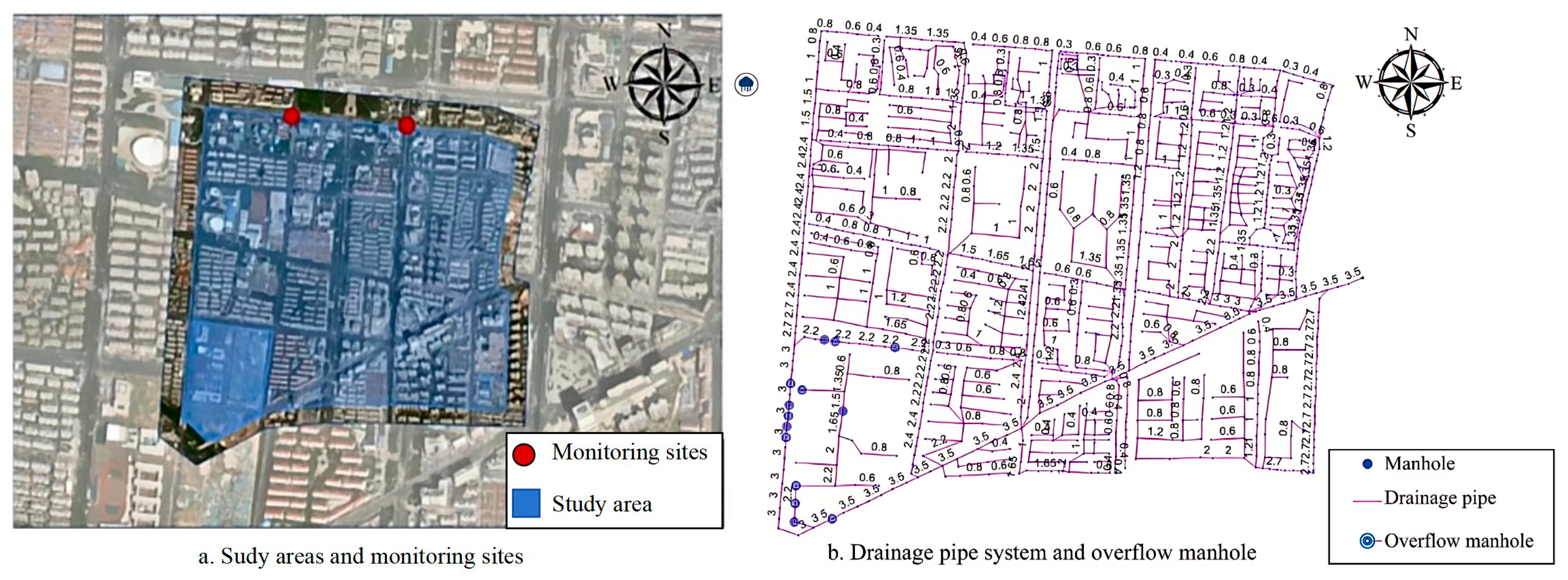
The case study area (N:33°8′–34°25′, S:117°56′–119°10′) is located in Suqian (Figure 1), a southern city of China. Recently, Suqian has been grappling with the heightened impacts of climate change, characterized by significant monsoon circulation and influences from offshore typhoons. The recurrent convergence of cold and warm air masses has led to frequent flooding events and related natural disasters.
Suqian maintains an average temperature of 14.1 °C throughout the year, with the peaking temperature in July at an average of 26.8 °C. The average annual rainfall depth was 915 mm, showcasing an uneven spatial distribution with a general increase from north to south. The temporal distribution of rainfall also varies, with noticeable differences between years and within the same year. The highest recorded rainfall depth was 1460 mm during the wet season in 2003, whereas the lowest was 549 mm in the dry season of 1978. The majority of rainfall events occur from the June to September, constituting about 70% of the total annual rainfall depth.
Rapid urbanization has significantly raised the percentage of impermeable surfaces in the central urban area of Suqian, impeding natural rainwater infiltration. It was selected as the first batch of the sponge city construction demonstration cities of China in 2021, and recent years’ efforts have focused on implementing LID strategies and integrating permeable pavements and sunken green spaces to improve stormwater retention capabilities. The research area, situated in the downtown precinct of Suqian, features relatively consistent elevations, except for a few low-lying areas on the southwest side (Figure 1). The majority of the area maintains an elevation of about 26.0 m, with the highest point reaching 43.4 m and the lowest at 10.9 m. Notable elevation differences are concentrated on the south, exhibiting a consistent and gradual topographic transition without extensive areas of drastic elevation changes.

2.2. Urban Stormwater Drainage System Enhancement Program

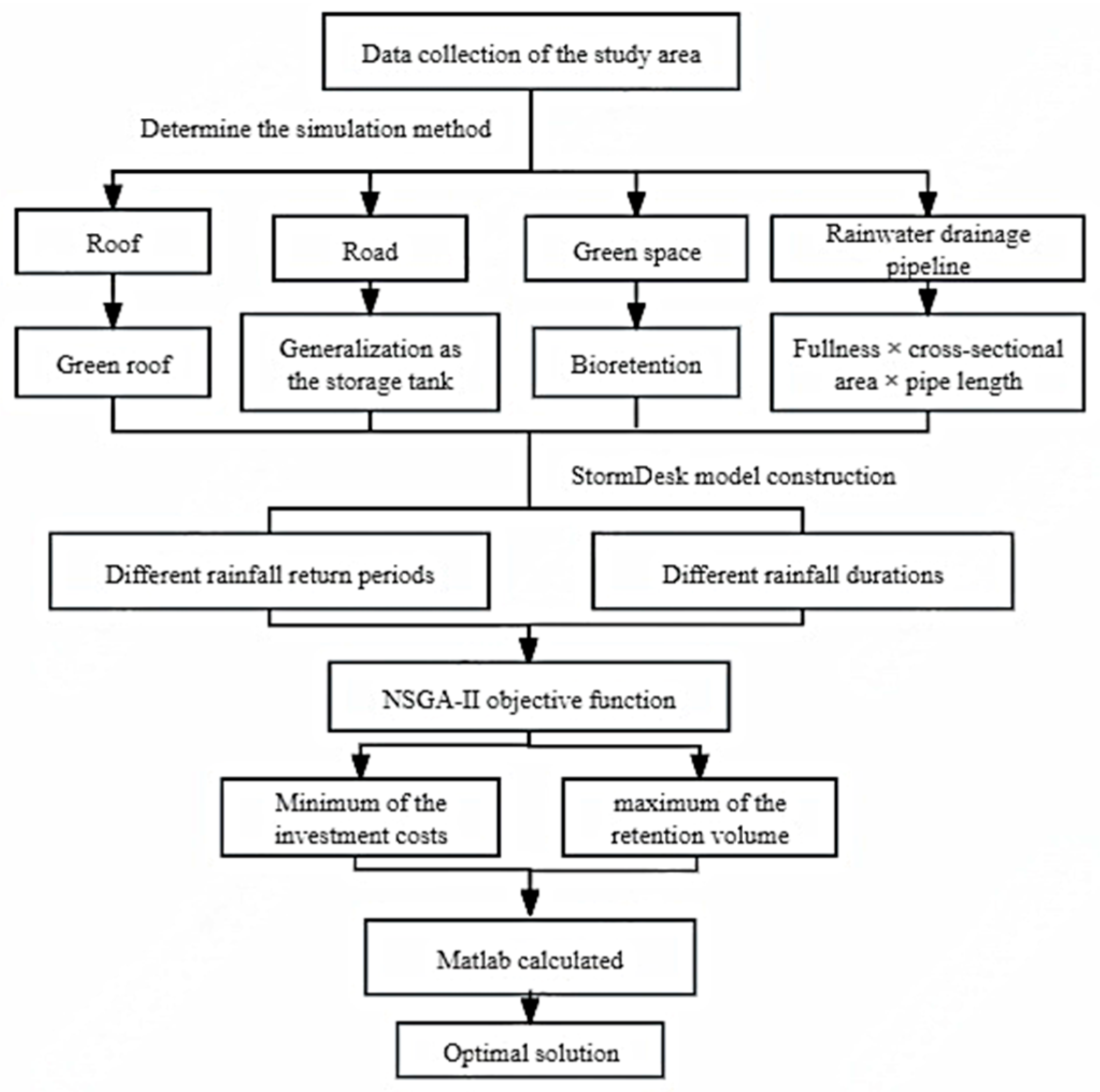
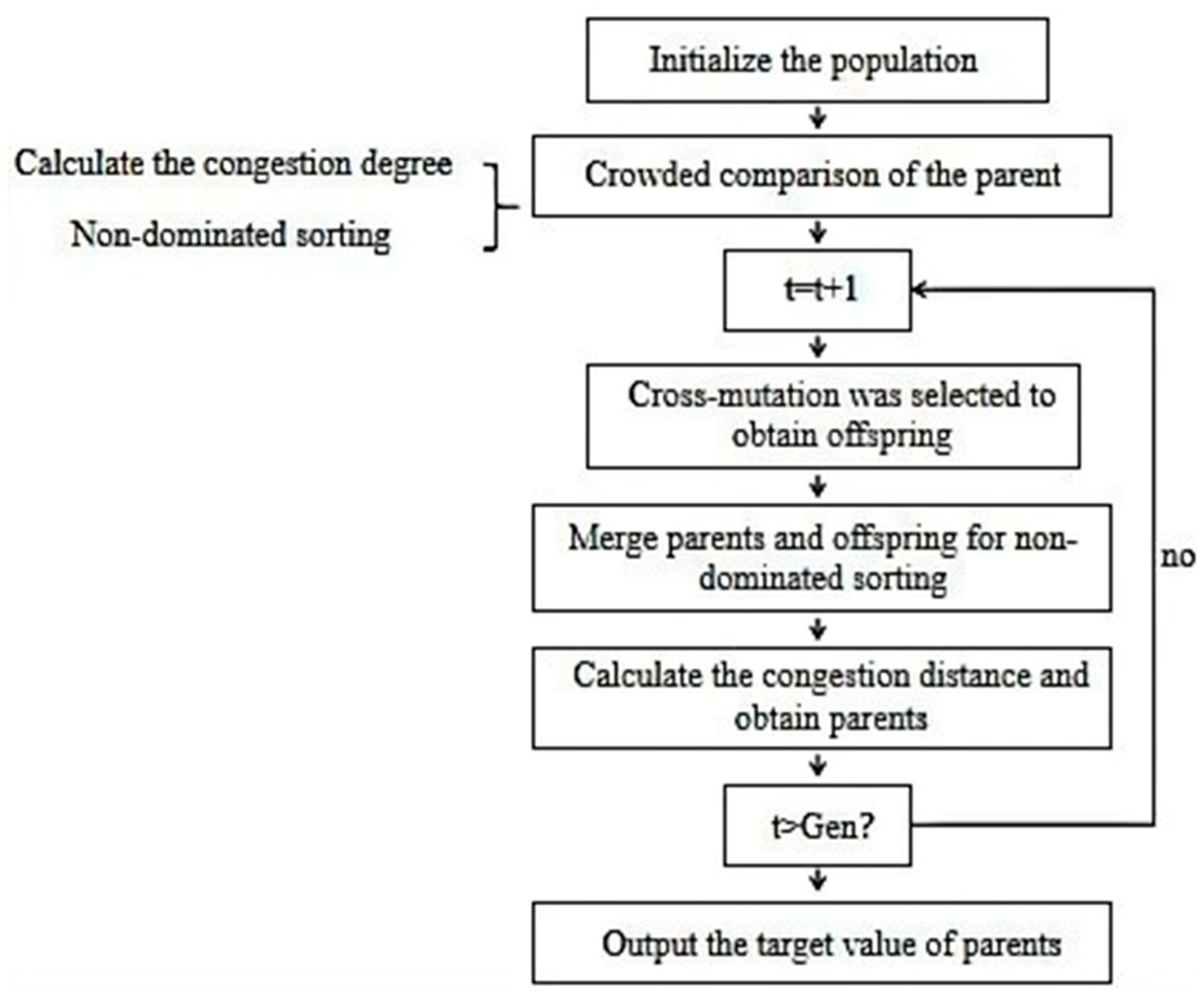
Figure 2 illustrates the research process, while Figure 3 shows the optimization process of the NSGA-II algorithm. The simulation methods with different retention ways are detailed in Table 1. The overflow volume was obtained through the StormDesk 2.0 simulation, and the construction cost calculated by different simulation schemes in Table 2 was input into the NSGA-II algorithm to obtain the optimal solution. It can be found that the calculation methods for retention volume are alike for roof, road, and green space retention, all utilizing an area-depth (length) methodology. However, in the case of drainage pipeline retention, the study solely considers the diameter under design fullness.
The specific parameters adopted in the model are outlined in Table 2. Roof retention is set as green roofs in the model. However, road retention was set in the StormDesk model according to Huang’s research [26], setting up retention pools in the study area to simulate the effects of large-scale drainage from roads. Drawing from the findings of Sun et al. [27], the pool’s location is designated upstream of the overflow point within the drainage pipeline system, aiming to optimize peak shaving effects. For example, the retention ratio was 80%, and retention depth was 0.05 m. Subsequently, green space retention is set as bioretention facilities in the model.
Its specific data processing process is mainly based on the ISO Cluster Unsupervised Classification tool of the Arc GIS 10.1 platform, and based on the current satellite remote sensing images of the study area, different RGB color blocks are used to distinguish the areas of different functional zones, and the current land use areas of various types are obtained.

2.3. Stormwater Drainage Modeling Construction

2.3.1. One-Dimensional Stormater Drainage Pipeline Modeling

The one-dimensional stormwater drainage pipeline network model was constructed via StormDesk 2.0 software (it was developed by Shanghai Huishui Technology Co., Ltd., Shanghai, China), which is combining the core architecture of the storm water management model (SWMM) with an excellent visualization operation mode [28]. Initially, a refined stormwater drainage pipeline network vector file is imported into the StormDesk 2.0, and adjustments are made to the default setting parameters of the pipe diameter design module. Some important parameters, including the design return period, runoff coefficient, stormwater drainage pipe shape, minimum stormwater drainage pipe diameter, and stormwater intensity formula, were supplemented. Through model simulation of the pipeline network in the study area, it was found that under the 5-years return period and 3 h rainfall duration, there were 13 overflows and 2 significant waterlogged points.
The calculation of unknown stormwater pipeline diameters primarily employs the area method. This approach links the catchment area covered by the stormwater drainage pipeline directly to its overflow capacity. Specific coefficients utilized in the model are listed in Table 3. Throughout the stormwater drainage pipeline diameter calculation process, parameters such as concentration time and initial ground elevation can be established. By leveraging the buried depth data of existing stormwater drainage pipes, the model generates an elevation point file, which is then imported to infer the buried depth data for the unknown stormwater drainage pipeline.
The stormwater drainage pipe slope editor allows for tailored configurations of slopes corresponding to different pipe diameters, as illustrated in Table 4. By aligning with stormwater drainage pipeline design standards and terrain elevation, the stormwater drainage pipeline diameter and slope settings were rationalized.

2.3.2. Parameters Calibration

The model’s parameters are adjusted through empirical methods to ensure the simulation results’ accuracy. The evaluation of the efficacy of model parameter adjustment is primarily based on the Nash coefficient (NSE) and the coefficient of determination (R2); those calculating methods are shown in Equations (1) and (2) [29].
N S E = 1 t = 1 n ( q o b s , t q s i m , t ) 2 t = 1 n ( q o b s , t q a v e , o ) 2
R 2 = [ t = 1 n ( q o b s , t q a v e , o ) ( q s i m , t q a v e , s ) ] 2 t = 1 n ( q o b s , t q a v e , o ) 2 t = 1 n ( q s i m , t q a v e , s ) 2
In this equation:
  • qobs,t measured overflow flow rate, L/s;
  • qsim,t simulated overflow flow rate, L/s;
  • qave,o average measured overflow flow rate, L/s;
  • qave,s average simulated overflow flow rate, L/s.

2.4. Optimization Strategy of Different Scenarios

The total investment costs and retention volume were selected as the crucial indicators of optimization strategy. It is essential that the minimum investment cost meet the minimum storage volume requirements under design standard conditions. The result of the optimization strategy can be achieved by Equations (3) and (4). The programming for solving the equations was conducted using Matlab version 2017a.
m a x W = i = 1 n S i = i = 1 n ϕ A i f i
m i n C = i = 1 n U i = i = 1 n u ϕ A i f i
In this equation:
  • W the total volume of retention, m3;
  • C the total construction cost, USD;
  • Si for the unit retention volume, m3
  • Ui the construction cost of individual retention facilities, USD;
  • ϕ the retention control ratio, ranging from 40% to 100%;
  • Ai the area of the i-th retention unit facility, m2;
  • fi the depth of retention for the i-th retention unit, m;
  • u the construction cost per unit of retention volume
Moreover, the construction proportion of different retention facilities needs to consider the site limitation, given that this program involves a multi-scale spatial retention evaluation. The determination of the construction cap of different retention facilities is based on the calculation of the construction cost per unit of retention volume, as detailed in Equation (5).
S . T C = 200 × L + 2768 × T 0.773 + 650 × S W = 6 % × L + 12 % × T + 9 % × S ( L , T , S ) > 0 L < 8418.6 ,   T < 3738.9 ,   S < 24600.0
In Equation (5):
  • L the total green roof construction volume, m3;
  • T the total volume of the road retention tank, m3;
  • S the total volume of greenfield bioretention, m3;

2.5. Data Analysis Methods

The formulas for the elimination ratio of the overflow point and the overflow volume are shown in Equation (6):
η = N c N i N c × 100 %
In Equation (6):
  • η elimination ratio, %;
  • Nc the initial value of the overflow point or overflow volume (m3);
  • Ni the treated value of the overflow point or overflow volume (m3);

3. Results and Discussion

3.1. Model Calibration

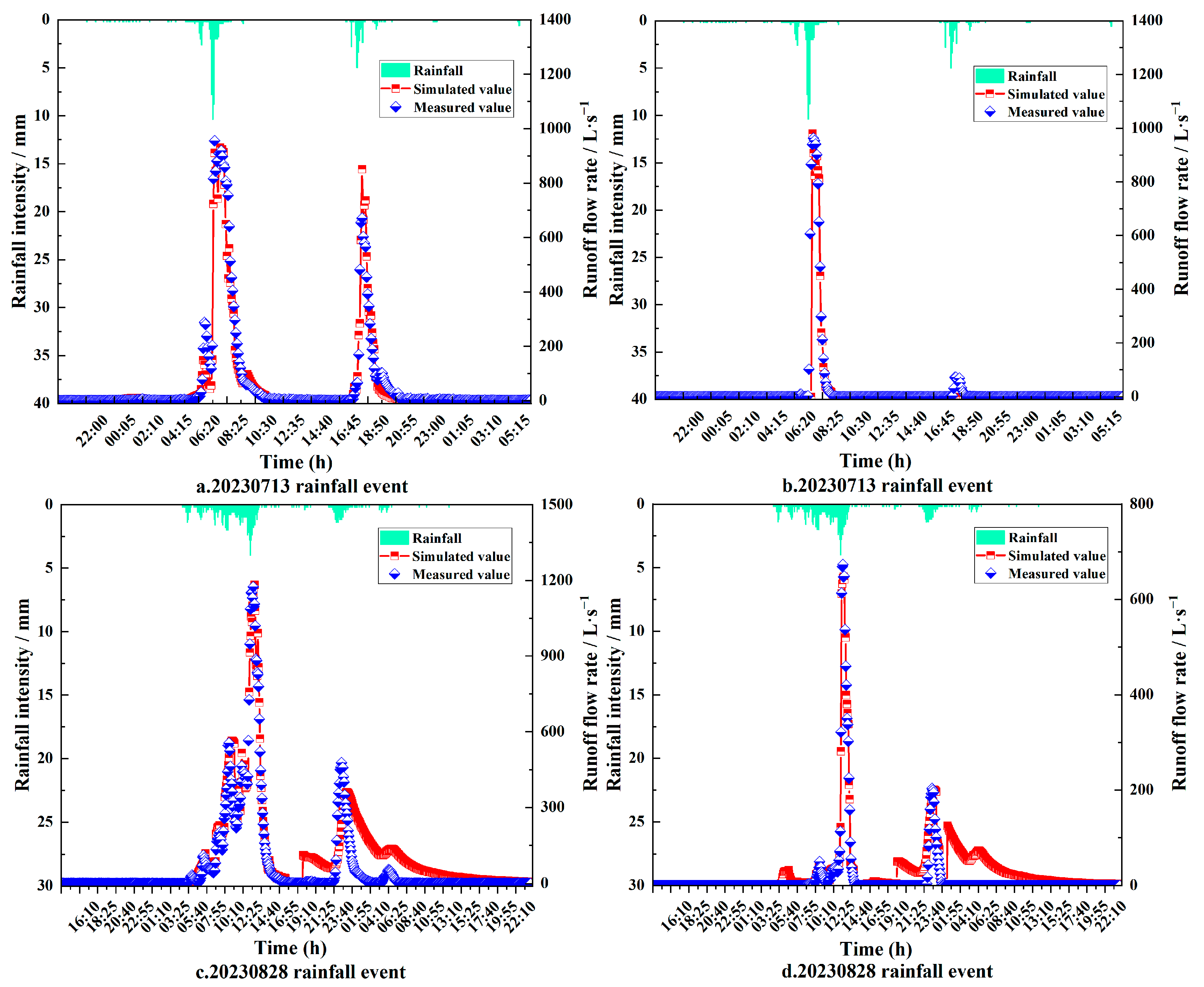
The model parameters were calibrated via rainfall event monitoring data, and the results are illustrated in Figure 4. Figure 4a,c are the calibration results of the model parameters, and Figure 4b,d are the verification results of the model parameters. The average R2 and NSE values of calibration and verification were 0.84 and 0.82, respectively. The monitored runoff coefficients of the rainfall events on 20,230,713 and 20,230,827 were 0.7625 and 0.7658, respectively. The runoff coefficient via model was 0.766, with an average relative error of 0.2%. These results indicate that the parameter adopted in the model can be satisfied with the case study.

3.2. Drainage Capacity Improved Under Different Retention Ways

3.2.1. Roof Retention

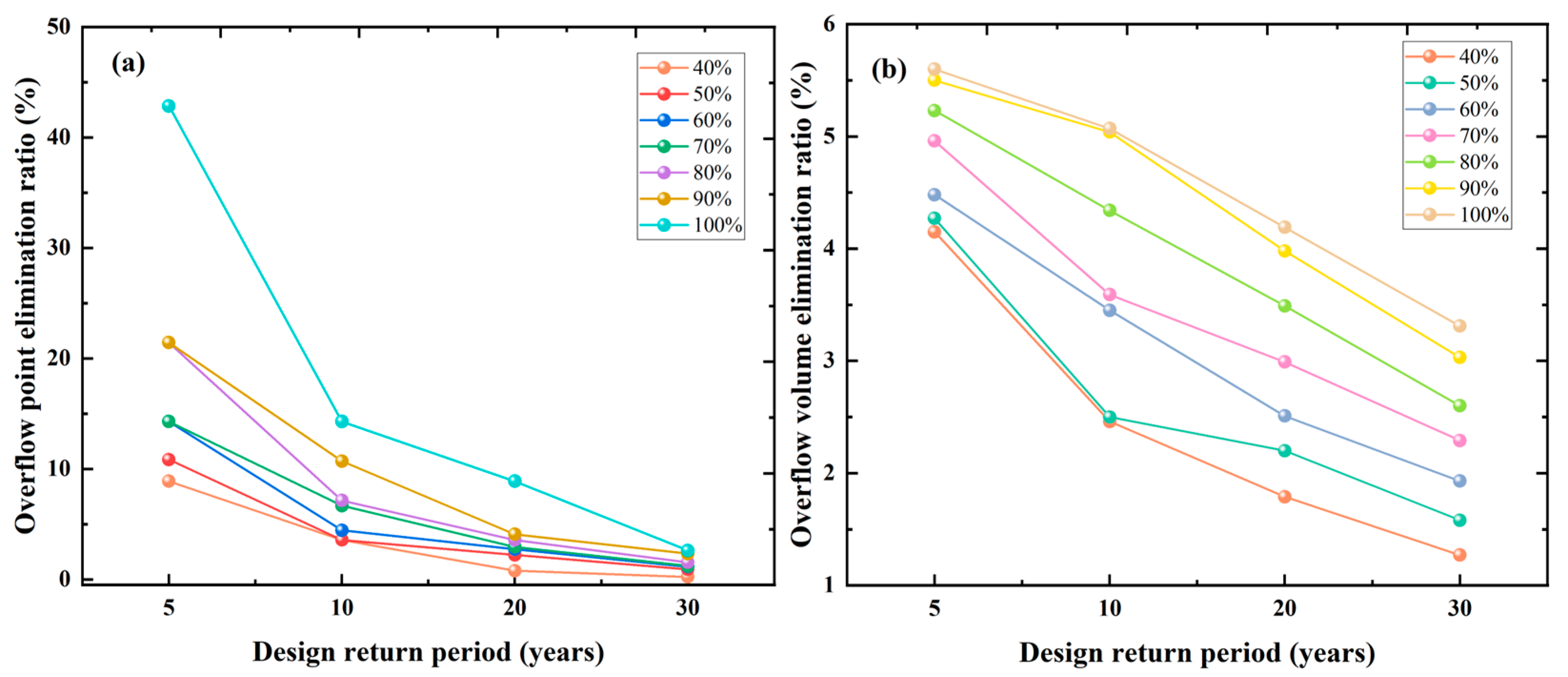
The simulated results of overflow point and overflow volume elimination ratio under different roof retention ratios were illustrated in Figure 5. It can be found that with the design return period increasing, the runoff overflow points and volumes elimination rates were greatly decreased. Specifically, when the retention ratio is 100%, for a 5-year return period, the overflow point and overflow volume elimination rates are 42.86% and 5.6%, respectively, while for a 30-year return period, the overflow point and overflow volume elimination rates are 2.61% and 3.31%, respectively. It can be described by a linear relationship between the elimination rates of overflow points and volumes with increasing design return periods under different roof retention ratios.
Under the same return periods, the higher the roof retention ratio, the greater the elimination rate of the overflow point and volume. Specifically, when the return period was 5 years and the roof retention rate increased form 40% to 100%, the overflow points elimination rate increased from 8.89% to 42.86%, and the overflow volume elimination rate increased from 4.15% to 5.6%. Furthermore, comparing different return periods, it is notable that the overflow volume and points are more remarkably reduced under shorter return periods than longer ones at different roof retention ratios. Specifically, when the roof retention rate was 40% and the return periods increased form 5 years to 30 years, the overflow points elimination rate was reduced from 8.89% to 0.23%, and the overflow volume elimination rate was reduced from 4.15% to 1.27%.
For the same design return periods and lower roof retention ratios, the percentage reduction in overflow points surpasses that of overflow volumes. In conclusion, green roofs are effective in reducing the number of runoff overflow points and volume. However, it will be greatly affected by the roof retention ratio and the design return period. Specifically, with a 5-year return period, achieving a peak overflow point elimination efficiency of 40%. Nevertheless, its runoff retention volume remains 5%. However, increasing roof retention ratios yields enhanced benefits, but its efficiency was decreased significantly during extreme rainfall events. Aligning with Liu’s [30] findings, the results highlight the effectiveness of green roof implementation in mitigating runoff volume and reducing peak flow rate in urban watersheds affected by climate change. Nevertheless, the hydrologic regulation efficiency of green roofs was decreased with high rainfall return periods [31]. Therefore, the application of roof retention is more suitable as a supplementary measure within urban flooding mitigation systems.

3.2.2. Road Retention

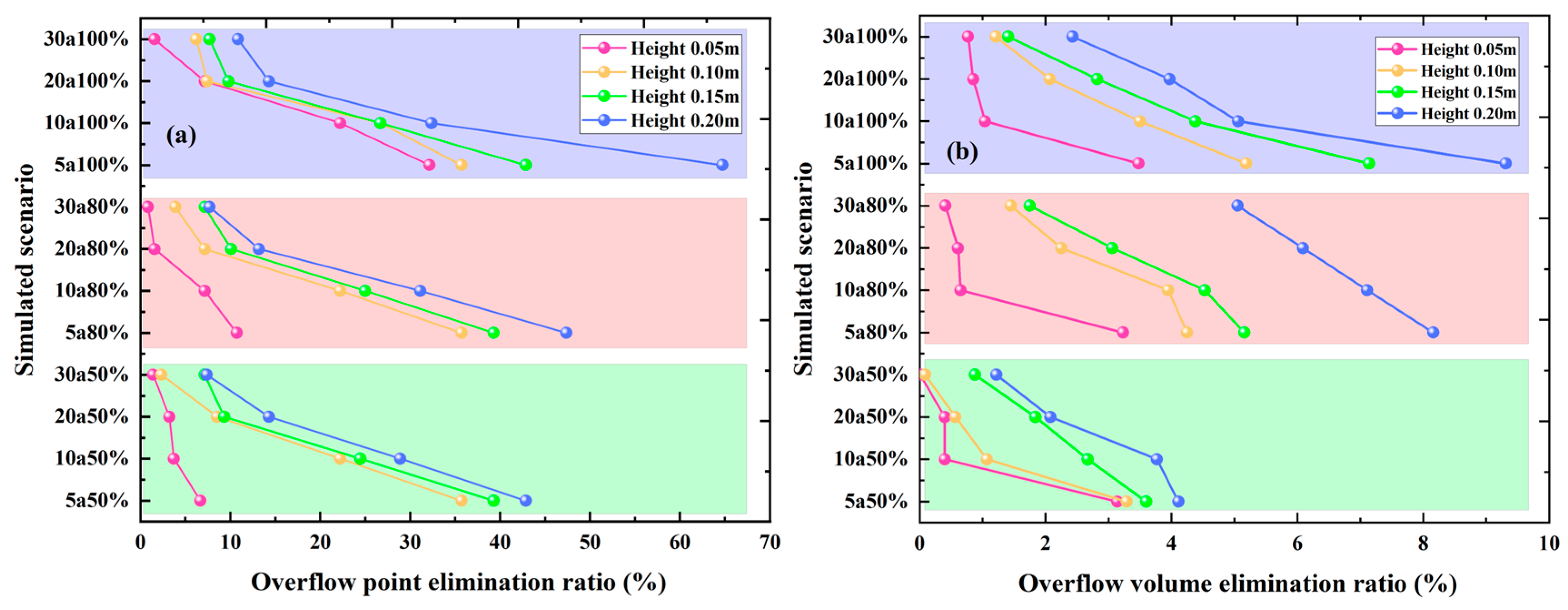
The modelling results of the road retention system in mitigating overflow points and volumes were illustrated in Figure 6. It can be found that there exists a linear relationship between retention ratios and the reduction rates of both overflow points and volumes. The higher of the retention ratios substantially improve overflow point and volume elimination rates. For example, when the rainfall return period (5 years) and the retention depth (0.2 m) were kept the same, the retention ratio was 50%, and the elimination rates of overflow points and overflow volume were 42.86% and 4.11%, respectively. However, when the retention ratio increases to 100%, the elimination rates of overflow points and overflow volume increase to 64.71% and 9.31%, respectively. This also highlights the system’s efficacy in alleviating local waterlogging compared to managing system-wide runoff.
Under fixed road retention ratios and depths, both overflow point and volume reduction percentages decrease proportionally with design return periods increasing. For a retention depth of 0.05 m and a 50% retention ratio, as the rainfall return period increased from 5 years to 30 years, the overflow point elimination rate decreased from 6.67% to 1.41%, and the overflow volume reduction rate decreased from 3.14% to 0.01%. It is mainly attributed to extreme rainfall events saturating retention facilities rapidly, leading to diminished elimination rates.
When comparing scenarios with consistent design return periods and retention ratios and depths, overflow point elimination rates surpass the corresponding overflow volume reduction percentages. For example, when the design return period is 30 years, the retention ratio is 50%, and the retention depth is 0.05 m, the elimination rates of overflow points and overflow volume are 1.41% and 0.01%, respectively. In conclusion, the efficacy of road retention systems in urban flooding management is influenced by retention ratios and depths and return periods. Just as Li et al. [32] studied the interception efficiency of stormwater runoff by permeable boundary zones on urban roads under different permeable area ratios and varying rainfall return periods. Results show that the interception capacity of stormwater runoff decreases with higher return periods but increases with higher permeable area ratios. Increasing the permeable boundary zone can enhance stormwater runoff interception capacity by approximately 30%. These findings underscore the importance of integrating road-based retention with complementary drainage strategies to address heavy rainfall events and enhance drainage system resilience to cope with flooding [33].

3.2.3. Green Space Retention

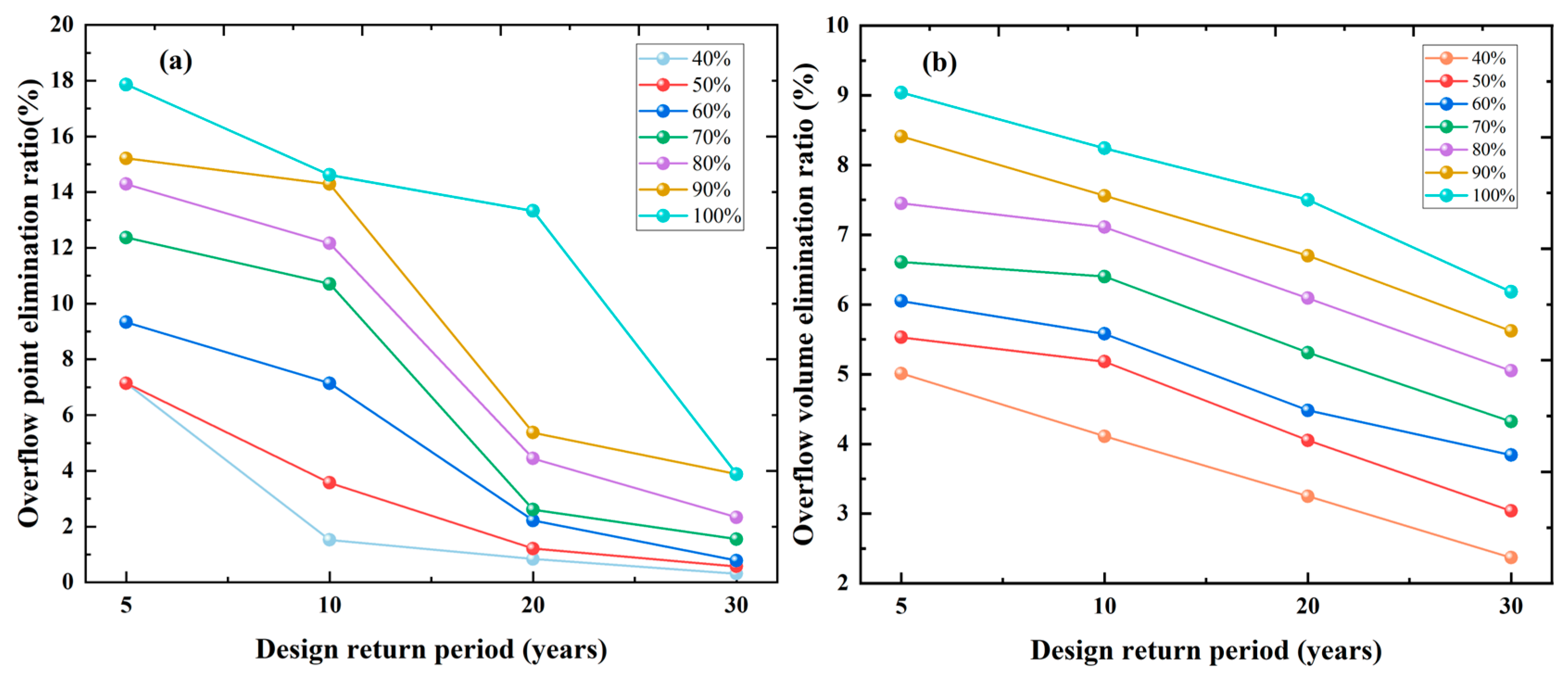
The modeling results of the green space retention on eliminating overflow points and volumes at varying retention ratios are shown in Figure 7. It can be found that as the retention ratio increased, the elimination rates of both overflow points and volumes were gradually increasing. For example, when the rainfall return period is 5 years, increasing retention ratios from 40% to 100% results in overflow point elimination rates rising from 7.14% to 17.86% and overflow volume reduction rates increasing from 5.01% to 9.04%. Conversely, with a constant retention ratio, both overflow point and volume elimination rates decrease proportionally with higher design return periods. When the design return period and retention ratio are kept the same, the overflow point elimination rate surpasses that of the overflow volume.
Green space retention was a critical strategy for alleviating urban flooding, particularly in reducing overflow points. However, its effectiveness in controlling total overflow volume is limited. For instance, with a retention ratio of 40% and a 5-year rainfall return period, the overflow volume reduction rate is 5.01%, which decreases to 2.37% with a 30-year return period; it was decreased by about 2.64%. Even with a 100% retention ratio and a 5-year rainfall return period, the overflow points elimination rate is 17.86%, higher than the 9.04% reduction in overflow volume. This aligns with the findings of Zeng et al. [34], who utilized the SWMM to assess green stormwater infrastructure on stormwater runoff control and found that its efficacy during heavy rainfall events is limited. Chen et al. [35] achieved the same conclusion. Therefore, integrated solutions combining engineering measures and non-structural strategies are essential for comprehensive flooding alleviation.

3.2.4. Drainage Pipeline Retention

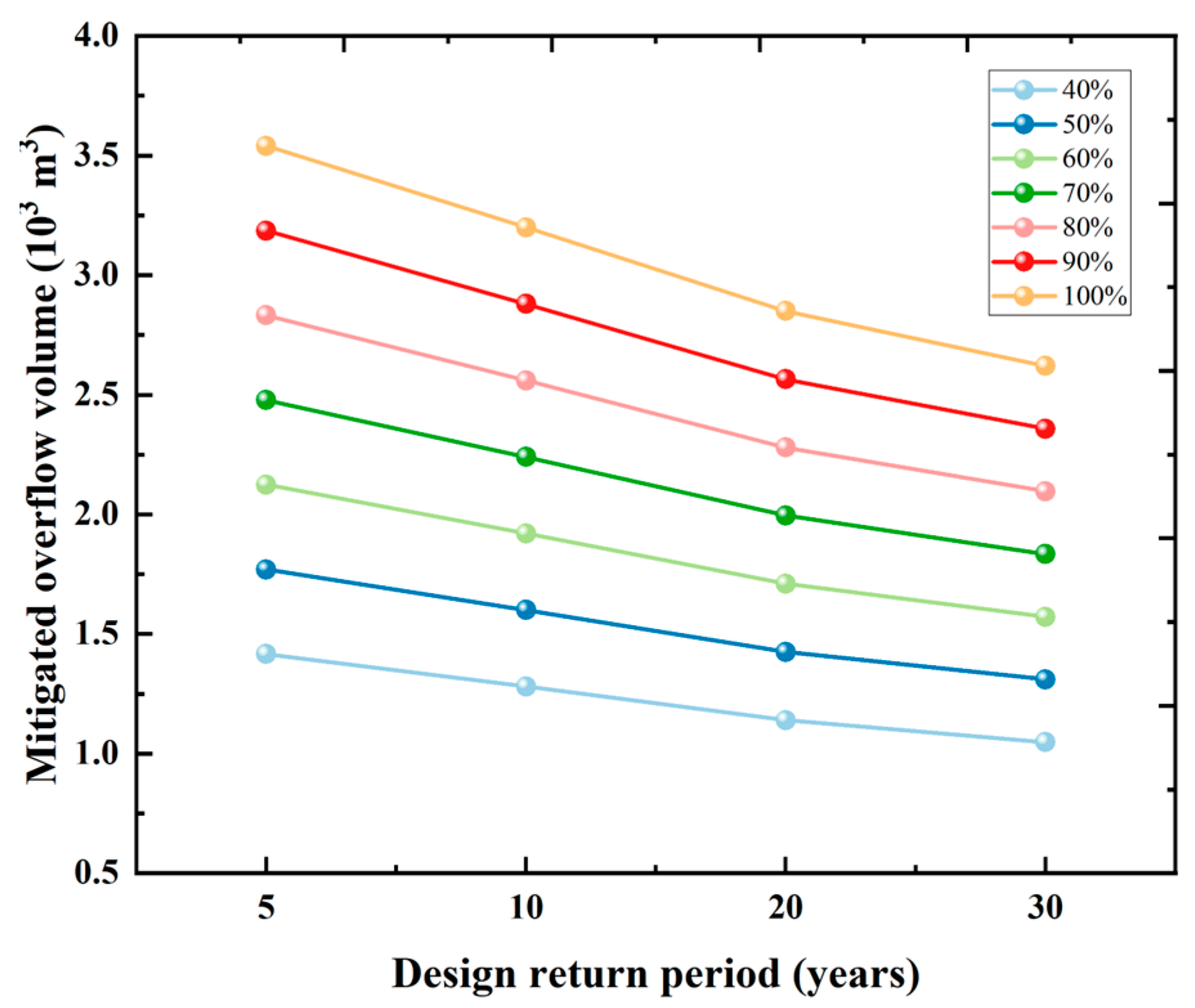
Drainage pipeline retention is only adopted in areas with waterlogged points; it can be realized via installing regulating valves on drainage pipes. Within the study area, the total drainage pipeline length for retention was 1631.2 m, occupying 2.3% of the total drainage pipeline length and 44.7% of the waterlogged area’s pipeline length. The modelling results of drainage pipeline retention on the elimination of overflow points and volumes are shown in Figure 8. It can be found that when retention ratios range from 40% to 100%, corresponding to retention volumes of 1048 to 3540 m3, the retention capacity was gradually decreased with return periods increasing. Maiolo et al. [36] used SWMM to simulate the runoff regulation efficacy of a drainage pipeline via a real-time control system during different rainfall events. The results showed a significant increase in overflow point and total overflow volume with higher rainfall return periods. Conversely, improving drainage pipeline retention ratios led to an increase in retention capacity. It is attributed to the enhanced flexibility of the system in responding to varying rainfall intensities. In this scenario, the retention space can act as a buffer, temporarily retaining excess stormwater runoff and gradually releasing it through a drainage pipeline after rainfall stops.

3.3. Optimization of Different Retention Scenarios

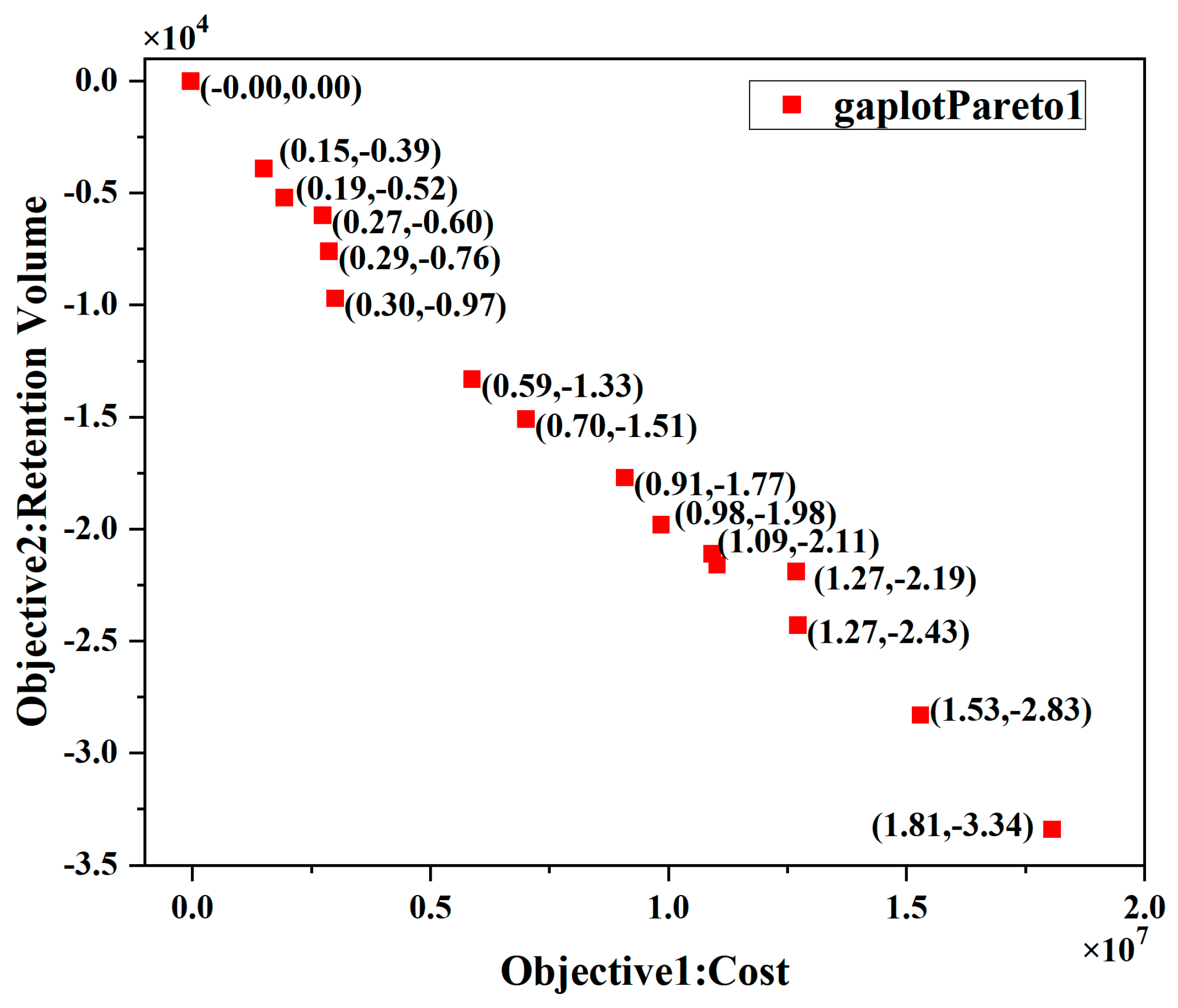
The calculation results of the Pareto frontier of multi-objective optimization are illustrated in Figure 9. The results derived from solving the aforementioned objective function indicate that the volume of roof retention, road retention, and green space retention was 8418.6 m3, 3738.9 m3, 24,600 m3, respectively, and the total construction cost was USD 277,337.9.
To validate the function-solving results, validation schemes were constructed through StormDesk 2.0 software for the verification of the construction of the multi-scale spatial coupled retention method (Section 2.3). The validation simulation results are summarized in Table 5. It can be found that the input cost of the adaptation scheme is the most cost-effective, accounting for 10.59% of the maximum control scheme. The overflow reduction ratio achieved by the adaptation scheme is 45.8% of that of the maximum area scheme, with a unit control cost of USD 64.2/m3. The overflow reduction ratio scheme demonstrates a moderate input cost, amounting to approximately 34.84% of the maximum control scheme’s construction cost. The overflow reduction ratio is 64.1% of that of the maximum control scheme, with a unit control cost of USD 150.9/m3. The maximum control area program achieves a stormwater runoff overflow volume reduction of 9,430 m3, with a unit control cost of USD 277.8/m3. Consequently, a multi-objective optimization function is proposed for the adaptation scheme to devise a construction scheme that excels in overflow ratio control and unit control cost.

4. Conclusions

This work improved a multi-scale retention method, including roof, road, green space, and drainage pipeline retention, and then established a dual-objective optimization model aimed at minimizing construction costs and maximizing retention capacity, and combined it with a retrofit site selection process informed by current site imagery analysis. Based on the multi-objective optimization algorithm NSGA II, combined with the hydraulic calculation results of StormDesk 2.0, and solved through Matlab, the automatic derivation of the adaptive solution results is achieved. By introducing a dynamic differential pricing mechanism based on retention ways and achieving economic evaluation of different retention ways.
The case study results reveal that the retention ratios and return periods have an important impact on roof retention, road retention, green spaces retention, and drainage pipeline retention on the elimination rate of overflow points and volume. Under different conditions such as retention ratios and return periods, the elimination rates of the overflow points by roof retention, road retention, and green space retention range from 0.23~42.86%, 0.83~64.71%, and 0.31~17.86%, respectively. The elimination rates of the overflow volume by roof retention, road retention, green space retention, and drainage pipelines retention range from 1.27~5.60%, 0.01~9.31%, 2.37~9.04%, and 1.05~3.54% respectively. In addition, the cost of the control unit overflow volume transformation of the adaptation scheme is the lowest compared to other schemes, at USD 64.2/m3, with a cost per unit of urban drainage system improvement of USD 277,337.9. Through the simulation verification of the multi-objective optimization results via a case study of Suqian, the operability of the proposed multi-objective optimization scheme is proved. The research scheme aims to achieve the maximum improvement of the urban rainwater drainage capacity with the minimum investment; the method can be widely used for improving the stormwater drainage capacity of urban built-up areas.

Author Contributions

M.W.: Writing—review & editing, Validation, Supervision, Resources, Project administration, Funding acquisition; J.W.: Writing—review & editing, Writing—original draft, Formal analysis, Data curation; P.W.: Writing—review & editing, Methodology, Resources; H.Q.: Experimental work, Investigation. All authors have read and agreed to the published version of the manuscript.

Funding

This research was funded by the Project of Construction and Support for High-Level Innovative Teams of Beijing Municipal Institutions (BPHR20220108) and the Beijing Municipal Natural Science Foundation (8232022).

Institutional Review Board Statement

Not applicable.

Informed Consent Statement

Not applicable.

Data Availability Statement

The original contributions presented in this study are included in the article. Further inquiries can be directed to the corresponding author.

Acknowledgments

The authors expresses his sincere gratitude to all the participants and anonymous reviewers for their work and the constructive comments and valuable suggestions, which significantly improved the quality of this manuscript.

Conflicts of Interest

Author Peng Wang was employed by the company Beijing Waterworks Group Co., Ltd. and Beijing Waterworks Group Co., Ltd. of Daxing Branch. The remaining authors declare that the research was conducted in the absence of any commercial or financial relationships that could be construed as a potential conflict of interest.

References

  1. Sun, H.; Wu, S.; Dong, Q.; Zhou, X.; Yang, J.; Li, G. Research on Runoff Management of Sponge Cities under Urban Expansion. Water 2024, 16, 2103. [Google Scholar] [CrossRef]
  2. Xie, M.; He, D.; Dong, Z.; Cheng, Y. Storage Scale Assessment of a Low-Impact Development System in a Sponge City. Water 2024, 16, 1427. [Google Scholar] [CrossRef]
  3. Datola, G. Implementing urban resilience in urban planning: A comprehensive framework for urban resilience evaluation. Sustain. Cities Soc. 2023, 98, 104821. [Google Scholar] [CrossRef]
  4. Kapucu, N.; Ge, Y.; Rott, E.; Isgandar, H. Urban resilience: Multidimensional perspectives, challenges and prospects for future research. Urban Gov. 2024, 4, 162–179. [Google Scholar] [CrossRef]
  5. Guagliardi, I.; Rovella, N.; Apollaro, C.; Bloise, A.; De Rosa, R.; Scarciglia, F.; Buttafuoco, G. Modelling seasonal variations of natural radioactivity in soils: A case study in southern Italy. J. Earth Syst. Sci. 2016, 125, 1569–1578. [Google Scholar] [CrossRef]
  6. Peiris, M.T.O.V. Assessment of Urban Resilience to Floods: A Spatial Planning Framework for Cities. Sustainability 2024, 16, 9117. [Google Scholar] [CrossRef]
  7. Pour, S.H.; Wahab, A.K.A.; Shahid, S.; Asaduzzaman; Dewan, A. Low impact development techniques to mitigate the impacts of climate-change-induced urban floods: Current trends, issues and challenges. Sustain. Cities Soc. 2020, 62, 102373. [Google Scholar] [CrossRef]
  8. Liu, T.; Lawluvy, Y.; Shi, Y.; Yap, P.-S. Low Impact Development (LID) Practices: A Review on Recent Developments, Challenges and Prospects. Water Air Soil Pollut. 2021, 232, 344. [Google Scholar] [CrossRef]
  9. Zha, X.; Fang, W.; Zhu, W.; Wang, S.; Mu, Y.; Wang, X.; Luo, P.; Zainol, M.R.R.M.A.; Zawawi, M.H.; Chong, K.L.; et al. Optimizing the deployment of LID facilities on a campus-scale and assessing the benefits of comprehensive control in Sponge City. J. Hydrol. 2024, 635, 131189. [Google Scholar] [CrossRef]
  10. Fan, G.; Lin, R.; Wei, Z.; Xiao, Y.; Shangguan, H.; Song, Y. Effects of low impact development on the stormwater runoff and pollution control. Sci. Total Environ. 2022, 805, 150404. [Google Scholar] [CrossRef]
  11. Jiang, Y.; Li, J.; Gao, J.; Xia, J. A multi-objective optimization and evaluation framework for LID facilities considering urban surface runoff and shallow groundwater regulation. J. Clean. Prod. 2024, 478, 143921. [Google Scholar] [CrossRef]
  12. Hou, X.; Qin, L.; Xue, X.; Xu, S.; Yang, Y.; Liu, X.; Li, M. A city-scale fully controlled system for stormwater management: Consideration of flooding, non-point source pollution and sewer overflow pollution. J. Hydrol. 2021, 630 Pt D, 127155. [Google Scholar] [CrossRef]
  13. Shen, H.; Xu, Z. Monitoring and Evaluating Rainfall–Runoff Control Effects of a Low Impact Development System in Future Science Park of Beijing. JAWRA J. Am. Water Resour. Assoc. 2021, 57, 638–651. [Google Scholar] [CrossRef]
  14. Almeida, A.P.; Liberalesso, T.; Silva, C.M.; Sousa, V. Combining green roofs and rainwater harvesting systems in university buildings under different climate conditions. Sci. Total Environ. 2023, 887, 163719. [Google Scholar] [CrossRef]
  15. Tota-Maharaj, K.; Karunanayake, C.; Kunwar, K.; Chadee, A.A.; Azamathulla, H.M.; Rathnayake, U. Evaluation of Permeable Pavement Systems (PPS) as Best Management Practices for Stormwater Runoff Control: A Review. Water Conserv. Sci. Eng. 2024, 9, 32. [Google Scholar] [CrossRef]
  16. Xie, C.; Wang, Z.; Yu, B.; Che, S. Design and Evaluation of Green Space In Situ Rainwater Regulation and Storage Systems for Combating Extreme Rainfall Events: Design of Shanghai Gongkang Green Space to Adapt to Climate Change. Land 2022, 11, 777. [Google Scholar] [CrossRef]
  17. Luo, X.; Liu, P.; Cheng, L.; Liu, W.; Cheng, Q.; Zhou, C. Optimization of in-pipe storage capacity use in urban drainage systems with improved DP considering the time lag of flow routing. Water Res. 2022, 227, 119350. [Google Scholar] [CrossRef]
  18. Liu, Y.; Zhao, W.; Wei, Y.; Sebastian, F.S.M.; Wang, M. Urban waterlogging control: A novel method to urban drainage pipes reconstruction, systematic and automated. J. Clean. Prod. 2023, 418, 137950. [Google Scholar] [CrossRef]
  19. Tansar, H.; Duan, H.-F.; Mark, O. A multi-objective decision-making framework for implementing green-grey infrastructures to enhance urban drainage system resilience. J. Hydrol. 2023, 620, 129381. [Google Scholar] [CrossRef]
  20. Fiorillo, D.; De Paola, F.; Ascione, G.; Giugni, M. Drainage Systems Optimization Under Climate Change Scenarios. Water Resour. Manag. 2023, 37, 2465–2482. [Google Scholar] [CrossRef]
  21. Ma, H.; Zhang, Y.; Sun, S.; Liu, T.; Shan, Y. A comprehensive survey on NSGA-II for multi-objective optimization and applications. Artif. Intell. Rev. 2023, 56, 15217–15270. [Google Scholar] [CrossRef]
  22. Cao, L.; Liu, Y. Optimization design and research of simulation system for urban green ecological rainwater by genetic algorithm. J. Supercomput. 2022, 78, 11318–11344. [Google Scholar] [CrossRef]
  23. Yang, B.; Zhang, T.; Li, J.; Feng, P.; Miao, Y. Optimal designs of LID based on LID experiments and SWMM for a small-scale community in Tianjin, north China. J. Environ. Manag. 2023, 334, 117442. [Google Scholar] [CrossRef]
  24. Jato-Espino, D.; Toro-Huertas, E.I.; Güereca, L.P. Lifecycle sustainability assessment for the comparison of traditional and sustainable drainage systems. Sci. Total Environ. 2022, 817, 152959. [Google Scholar] [CrossRef]
  25. Zhang, P.; Ariaratnam, S.T. Life cycle cost savings analysis on traditional drainage systems from low impact development strategies. Front. Eng. Manag. 2021, 8, 88–97. [Google Scholar] [CrossRef]
  26. Huang, T.; Wang, J.-L.; Wang, M.-Y.; Che, W.; Li, J. Method and feasibility analysisof blue roofs for urban stormwater runoff regulation. J. China Water Wastewater 2014, 30, 149–153. (In Chinese) [Google Scholar] [CrossRef]
  27. Sun, Z.; Wang, J.-L.; Zhang, Z.-H.; Wang, X.; Qiu, R. Discussion on pathways for capacity upgrading of stormwater drainage and flooding alleviation in developedurban areas based on SWMM. Environ. Eng. 2022, 40, 199–207. (In Chinese) [Google Scholar] [CrossRef]
  28. Gong, Z.X.; Li, C.M. Effect of Different Factors on the “Net” Effect of Permeable Pavement Based on StormDe. Water Resour. Power 2024, 42, 45–49. [Google Scholar] [CrossRef]
  29. Wang, P.; Wang, J.; Yang, Z.; Li, K.; Qiu, R.; Zhang, C.; Li, J. Effect of different MIT rainfall event division methods on volume capture ratio of annual rainfall based on bioretention assessment. Water Sci. Technol. 2023, 87, 1423–1437. [Google Scholar] [CrossRef]
  30. Liu, W.; Feng, Q.; Engel, B.A.; Zhang, X. Cost-effectiveness analysis of extensive green roofs for urban stormwater control in response to future climate change scenarios. Sci. Total Environ. 2022, 856, 159127. [Google Scholar] [CrossRef]
  31. Chen, Y.; Chen, S.; Chen, Z. Increasing water retention capacity via Grey roof to green roof transformation. Water Environ. J. 2022, 36, 448–457. [Google Scholar] [CrossRef]
  32. Li, L.H.; Wang, J.L.; Tu, N.N.; Xi, G.; Zhao, M.; Yang, B. Pilot study on runoff intercept rate of porous belt beside the urban road with large longitudinal slope. Environ. Eng. 2020, 38, 154–158. (In Chinese) [Google Scholar] [CrossRef]
  33. Zheng, Z.; Zhang, X.; Qiao, W.; Zhao, R. Emergency Response to Urban Flooding: An Assessment of Mitigation Performance and Cost-Effectiveness in Sponge City Construction. Water Resour. Manag. 2025, 39, 1993–2007. [Google Scholar] [CrossRef]
  34. Zeng, J.; Lin, G.; Huang, G. Evaluation of the cost-effectiveness of Green Infrastructure in climate change scenarios using TOPSIS. Urban For. Urban Green. 2021, 64, 127287. [Google Scholar] [CrossRef]
  35. Chen, X.; Davitt-Liu, I.; Erickson, A.J.; Feng, X. Integrating the Spatial Configurations of Green and Gray Infrastructure in Urban Stormwater Networks. Water Resour. Res. 2023, 59, e2023WR034796. [Google Scholar] [CrossRef]
  36. Maiolo, M.; Palermo, S.A.; Brusco, A.C.; Pirouz, B.; Turco, M.; Vinci, A.; Spezzano, G.; Piro, P. On the Use of a Real-Time Control Approach for Urban Stormwater Management. Water 2020, 12, 2842. [Google Scholar] [CrossRef]
Figure 1. Overview of the study area.
Sustainability 18 00048 g001
Figure 2. Research flowchart.
Sustainability 18 00048 g002
Figure 3. Operation step of NSGA II.
Sustainability 18 00048 g003
Figure 4. Calibration results of the model.
Sustainability 18 00048 g004
Figure 5. Roof retention simulation results with different retention ratios of (a) overflow point elimination ratio, and (b) overflow volume elimination ratio.
Sustainability 18 00048 g005
Figure 6. Road retention modeling results with different retention ratios of (a) overflow point elimination ratio and (b) overflow volume elimination ratio.
Sustainability 18 00048 g006
Figure 7. Green space retention with different retention ratios of (a) overflow point elimination ratio and (b) overflow volume elimination ratio.
Sustainability 18 00048 g007
Figure 8. The modelling results of drainange pipeline retention.
Sustainability 18 00048 g008
Figure 9. Pareto frontier of multi-objective optimization.
Sustainability 18 00048 g009
Table 1. Parameters of different retention ways.
Types of RetentionSimulation ModeRetention Size (S)Retention Volume (W)Unit Construction Cost (u)Total Construction Cost (C)
RoofGreen roof(0.4–1.0) × SA × (0.05–0.20)13.93–41.7927.86 × S
RoadGeneralized as the storage tank(0.4–1.0) × SA × (0.05–0.20)/385.6 × W 0.773
Green spaceBioretention(0.4–1.0) × SA × (0.1–0.5)20.89–111.4490.54 × S
Drainage pipelineDesign fullness × cross-sectional area × pipe length(0.4–1.0) × S × LA × Dr41.79–278.6222.88 × L
Note: S means the total surface area of the different measures, m2. L means the length of the different measures, m. A means the unit cross-sectional area of the different measures, m2. Dr means the drainage pipe diameter, m. W means the rainwater elimination volume, m3. u-means retention space construction cost in per square meter, USD (U.S. dollar). C-means the total cost, USD.
Table 2. Parameter setting of retention capacity with different retention ways.
Retention TypeTotal Area (m2)Retention Depth (m)Percentage of Retention Area (%)Design Return Period (Years)
Roof retention42,093.00/40/50/60/70
/80/90/100
5/10/20/30
Road retention18,694.420.05/0.10/0.15/0.20
Green space retention82,000.00/
Drainage pipeline retention1631.58
Table 3. Parameters setting of the stormwater drainage pipeline.
Serial NumberParameters TypeValue
1Design return period5
2Ground water collection time10
3Runoff coefficient0.766
4Centralized flow0
5Roughness factor0.013
6Floor elevationDEM
7Calculation methodarea method
8Minimum Overburden Depth1.5
9Minimum Pipe Diameter300
Table 4. Parameter setting of stormwater drainage pipeline slope editor.
Stormwater Drainage Pipeline Diameter (mm)Slope (%)Flow Rate (m3/s)
3003.00.0530
4002.50.1041
6001.50.2378
8001.20.4581
10001.20.8305
12001.01.2329
13501.01.6878
15000.81.9994
16500.82.5780
18000.62.8156
20000.63.7290
22000.64.8081
24000.66.0638
27000.68.3014
30000.610.9944
35000.616.5843
Table 5. The optimized results of the different schemes.
ProgramAdaptation SchemeOverflow Reduction Ratio SchemeMaximum Area Scheme
Road retention volume (m3)1907.31661.63738.9
Roof retention volume(m3)741.51870.68418.6
Green space retention (m3)1408.58199.224,600.0
Construction cost ($)277,337.9912,571.12,619,542.1
Overflow elimination (m3)4320.06048.09430.0
Unit control cost ($/m3)64.2150.9277.8
Disclaimer/Publisher’s Note: The statements, opinions and data contained in all publications are solely those of the individual author(s) and contributor(s) and not of MDPI and/or the editor(s). MDPI and/or the editor(s) disclaim responsibility for any injury to people or property resulting from any ideas, methods, instructions or products referred to in the content.