Article

Climate Change and the Potential Expansion of Rubus geoides Sm.: Toward Sustainable Conservation Strategies in Southern Patagonia


1
Plant Biotechnology Laboratory, Science Faculty, University of Magallanes, Avenida Bulnes 01890, Punta Arenas 6213029, Chile
2
Centro Estudios del Cuaternario, Centro Regional Fundacion CEQUA, Avenida España 184, Punta Arenas 6212375, Chile
3
Chilean Antarctic Institute (INACH), Plaza Muñoz Gamero 1055, Punta Arenas 6200000, Chile
4
Lothar Blunck Horticultural Center, Instituto de la Patagonia, Avenida Bulnes 01890, Punta Arenas 6213029, Chile
*
Author to whom correspondence should be addressed.
Sustainability 2026, 18(1), 444; https://doi.org/10.3390/su18010444 (registering DOI)
Submission received: 7 November 2025 / Revised: 10 December 2025 / Accepted: 27 December 2025 / Published: 2 January 2026
(This article belongs to the Section Sustainability, Biodiversity and Conservation)

Abstract

(1) Background: Rubus geoides Sm., a native species of southern Patagonia, faces increasing threats due to climate change and anthropogenic land-use changes. Historically widespread, its distribution has become restricted by overgrazing, urban expansion, extractive industries, and direct harvesting from natural populations driven by interest in its nutraceutical potential since the first European settlements. (2) Methods: To assess its resilience and conservation prospects, we analyzed the morphological variability, genetic diversity, and population structure, complemented by species distribution modeling under past and future climate scenarios. (3) Results: Our findings reveal moderate genetic differentiation and private alleles in specific populations, alongside significant variation in flowering phenology. Paternity analysis indicates a tendency toward self-pollination, although this conclusion is constrained by the limited number of microsatellite markers employed. These results suggest post-glacial dispersal patterns and highlight the species’ potential for expansion under certain climate scenarios. (4) Conclusions: This study provides critical insights for biodiversity conservation and sustainable land management, directly aligned with the UN Sustainable Development Goals SDG 15 (Life on Land). Indirectly, this study contributes to SDG 2 (Zero Hunger) by highlighting the importance of threatened species that hold value for human consumption and food security. Land-use changes, particularly mining and green hydrogen industry settlements, may represent stronger limitations to species expansion than climate change itself.

1. Introduction

Climate change in expected to alter temperature and precipitation patterns in Chile, which will generate environmental, social, and economic consequences through more frequent “extreme events”, with an increase in extreme precipitation, floods and landslides, and extreme heat, and a decrease in frost events [1]. In addition, an abrupt biodiversity loss is expected for the next 100 years, where the risk depends on the magnitude of warming in protected or unprotected areas [2]. Significant land-use transformations—such as mining, tourism, and aquaculture—that expand human ecosystems into previously untouched areas are often overlooked in the planning and management processes affecting Magallanes, the most ecologically fragile region of the country [3]. There are few efforts to determine the implications or consequences of climate change for native species as well as the evolutionary aspects of the species under the current and future climatic conditions, mainly when species are poorly studied. Thus, it seems essential to uncover the vegetation dynamics, to ensure that the goals of sustainable development of productive activities promoted by the United Nations are met.
In the case of our studied species, Rubus geoides, the Magellan Strawberry or Raspberry, originally from the southern part of Patagonia [4], is also present in the Juan Fernández Archipelago in Chile and the Falkland/Malvinas Islands. This species has been consumed since pre-Hispanic times and was collected by the Pehuenche tribe [5]. Like the cloudberry (Rubus chamaemorus L.) in the Northern Hemisphere [6] at high latitudes, this species has been considered for use as a functional food. It possesses high levels of antioxidants and the potential to be used as a commercial berry [4]. Nowadays, like other berries, such as Berberis microphylla in southern Patagonia, the fruit is collected from natural populations without concern for the possibility of genetic erosion. Little is known about the reproduction of this species, its evolutionary aspects, or how it will react to climate change. Up until now, it is only known that it can be asexual (stolons) or sexual through hermaphrodite flowers from November to March, which are solitary and stipuled, with a persistent calyx and deciduous petals [7]. The intense red fruit comprises a group of numerous one-seeded drupelets [8]. The distribution of this species in the southern part of Patagonia has become more restricted because of overgrazing and the changes in land use further to mining, forestry, livestock raising, and the expansion of cities. Previous studies have focused mainly on its distribution and nutritional properties, leaving a gap in understanding the species’ morphological variability, genetic structures, and potential response to climate change. This lack of integrated ecological and genetic research limits conservation strategies and sustainable use. In particular, the specific mechanism shaping gene flow, the relative contribution of pollen versus seed dispersal, and the influence of postglacial landscape configuration on the genetic structure of R. geoides remain unknown. Moreover, no previous study has integrated genetic, morphological, reproductive, and ecological modeling approaches to provide a comprehensive understanding of the species. This study addresses these knowledge gaps through a multidisciplinary framework. A multidisciplinary approach, spanning from genetics to ecological niche modeling, can forecast the dynamics of the species under future climate change scenarios [9] and provide the tools to decision-makers in conservation and management efforts [10], as well as determine its availability as a food under climate change scenarios.
Therefore, this study aims to analyze the morphological variability across populations; to characterize the genetic diversity and genetic structure of Rubus geoides; to identify gene flow patterns and potential ancient refugia in southern Patagonia; and to model future climate variations in the region through a set of variables of the atmospheric and terrestrial system and how they will affect the species under study. This information will be helpful for conservation and management plans and sustainable development in a global change condition.

2. Materials and Methods

2.1. Sampling Area

This study considered the southern part of South America, Patagonia. The region’s geography is represented by its jagged coastlines, which form many islands, archipelagos, peninsulas, channels, and fjords. These irregular topographical situations run around an axis in a north–southeast direction with variable width. The total area of this region is approximately 160,000 km2.
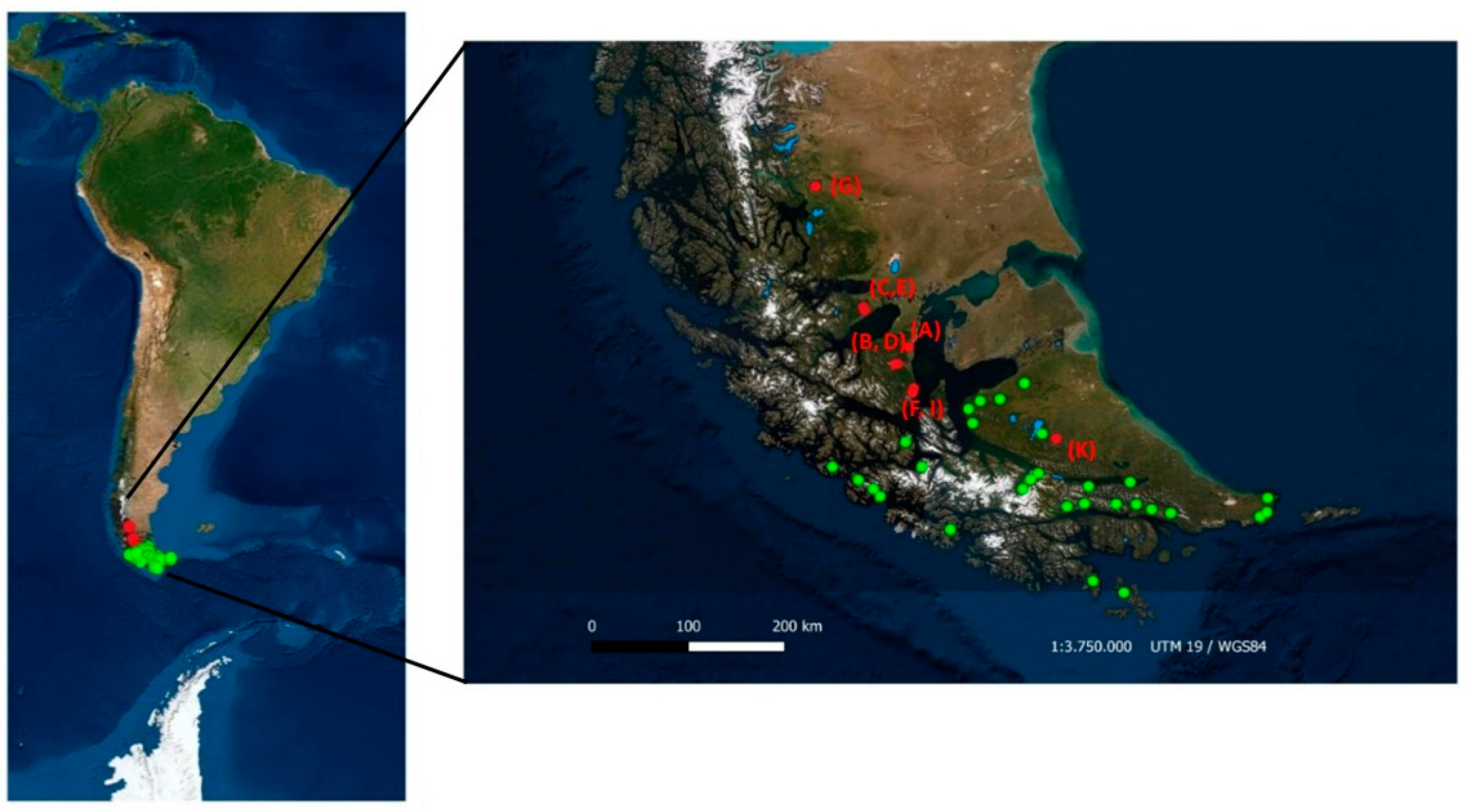
The model species is usually found in the forest, open areas on forest margins, accompanying shrubs and pastures, and in rocky and shady areas [11], moist areas, and wide cushions of Sphagnum, associated with other species such as Anagallis alternifolia Cav., Gunnera magellanica, G. lobate, and Senecio trifurcatus [12]. For the genetic analysis, sampling was performed in 9 populations (Figure 1). The selection was determined by the actual occurrence of the species and the logistical feasibility of sampling. Plant material from the populations was taken from forested interior habitats rather than open prairies or Sphagnum cushions, because at several sites where the species was expected, plants were absent. Plant material was transplanted to the Lothar Blunck Horticultural Center. After transplantation, all individuals were grown under standardized conditions and monitored throughout the flowering period. This allowed us to determine whether each ecotype was reproductively competent (initiating floral structures) of if the absence of flowers at the time of sampling reflected phenological timing rather than reproductive incapacity. Also, to establish additional information on the gene flow, we conducted a paternity analysis using four families. The mother plants (two from Riesco C, one from Riesco E, and one from Parrillar) were maintained under greenhouse conditions, and each family (which included eight offspring per mother) underwent DNA extraction. Additional presence data were used for the potential niche modeling [7] (Figure 1).
Cool temperatures, strong gradients in precipitation, and strong westerly wind characterize the climate of southwest Patagonia. Annual precipitation in the eastern slopes of the southern Andes is about 1000 mm and increases to 6000–7000 mm along the south Patagonian west coast [13]. For this work, based on a map of isotherms [14], sampling areas could be distinguished that are under the same annual thermal line of 6 °C, with an essential role in determining the degree of differentiation of the new shoots and flower buds during winter [15].

2.2. Morphological Analysis

The length and width of the central leaf, length of the petiole, length of the stolon, number of leaf crowns, and number of leaves bearing a flower or fruit were measured. In addition, the number of flowers and the development of fruits per individual were recorded. ANOVAs were initially used for all these variables. Before performing ANOVA, assumptions of normality were tested using the normality analysis available in XLSTAT 2018 (Microsoft Excel). When assumptions of normality or homoscedasticity were not met, a non-parametric Kruskal–Wallis test was applied using R Studio (version 2025). A principal component analysis (PCA) was then used to study the variability of the morphological components described above in the populations. The two components that explained the highest percentage of variability were considered. This analysis was performed using R Studio (version 2025).

2.3. Integrative Molecular Approaches for Genetic Diversity and Paternity in Rubus

For clarity, all variables, factors, and abbreviations used in the modeling procedures and equations throughout this study are fully defined in Table S1 (Supplementary Material).

2.3.1. DNA Extraction and Amplified Fragment Length Polymorphism (AFLP) Procedure

Samples were washed in sterile water, and the DNA was extracted using the E.Z.N.A. HP PLANT DNA Mini Kit (OMEGA, Biotech, Norcross, GA, USA). DNA was observed in a 1% (w/v) agarose gel stained with GelRed (Biotium INC. Fremont, CA, USA). The AFLP procedure was developed following the original protocol published [16], where the DNA was digested by EcoRI and MseI for 2 h at 37 °C and ligated with two adaptors for 3 h. Preamplification is usually performed with +2, +1, and +0 primers, or a combination thereof. Most studies use +1/+1, but +0/+2 also worked well in plants [17]. The pre-amplification used two primers: EcoRI+0 (E, 5′-CGACAGCAACGGAATTC-3′) and MseI+1 (M, 5′-GATGAGTCCTGAGTAAA-3′) in a Maxygen thermal cycler (Axygen, Tewksbury, MA, USA). We selected four primer combinations for the amplification: EcoRI+AAGG and MseI+CGG; EcoRI+ACGT and MseI+AAA; EcoRI+AAGG and MseI+AAA; and EcoRI+TTCC and MseI+AAA. The amplicons were observed in a 2% (w/v) agarose gel and 6% (w/v) polyacrylamide gel. The multilocus bands obtained were recorded as present, absent, or ambiguous (“1”,”0”, and”?”, respectively). Further, 20 samples were amplified twice and run in polyacrylamide gels to calculate the error rate in R Studio version 2025 [18]. The MyImageAnalysis (Thermo Scientific, Rockford, IL, USA) program created the binary matrix.

2.3.2. Genetic Diversity Analysis

The allele number, percentage of polymorphic loci, and fixation index were estimated using AFLP-SURV version 1.0 [19]. For the FST analysis, 10,000 permutations and 10,000 bootstraps were used. Genetic diversity within and among populations was estimated with an AMOVA, principal coordinate analysis (PCoA), and the Mantel test implemented in GenAlEx version 6.5 [20]. The number of private and fixed alleles was estimated with FAMD version 1.3 [21]. A clustering method was used based on the models implemented in the STRUCTURE program version 2.3.4 [22]. An initial test was carried out using the “admixture model”. The parameters of the first analysis were a burn-in of 10,000 and a Markov Chain Monte Carlo (MCMC) of 50,000 to estimate Delta K (ΔK), using from 1 to 9 populations. The analysis was repeated, increasing the repetitions to a burn-in of 500,000 and an MCMC of 750,000. The ΔK was calculated using Structure Harvester [23,24]. To identify individuals in each population that formed subpopulations or that had recent immigrant ancestry, we ran all the samples with the program STRUCTURE version 2.3.4 [22] to analyze the samples according to the probability of belonging to a subpopulation.
A bootstrapping (10,000) tree was used to calculate multiple NJ trees from the distance matrix with FAMD version 1.3 [21]. The dendrogram was viewed using Treeview X version 1.6.6 [21,25].

2.3.3. cpDNA Analysis

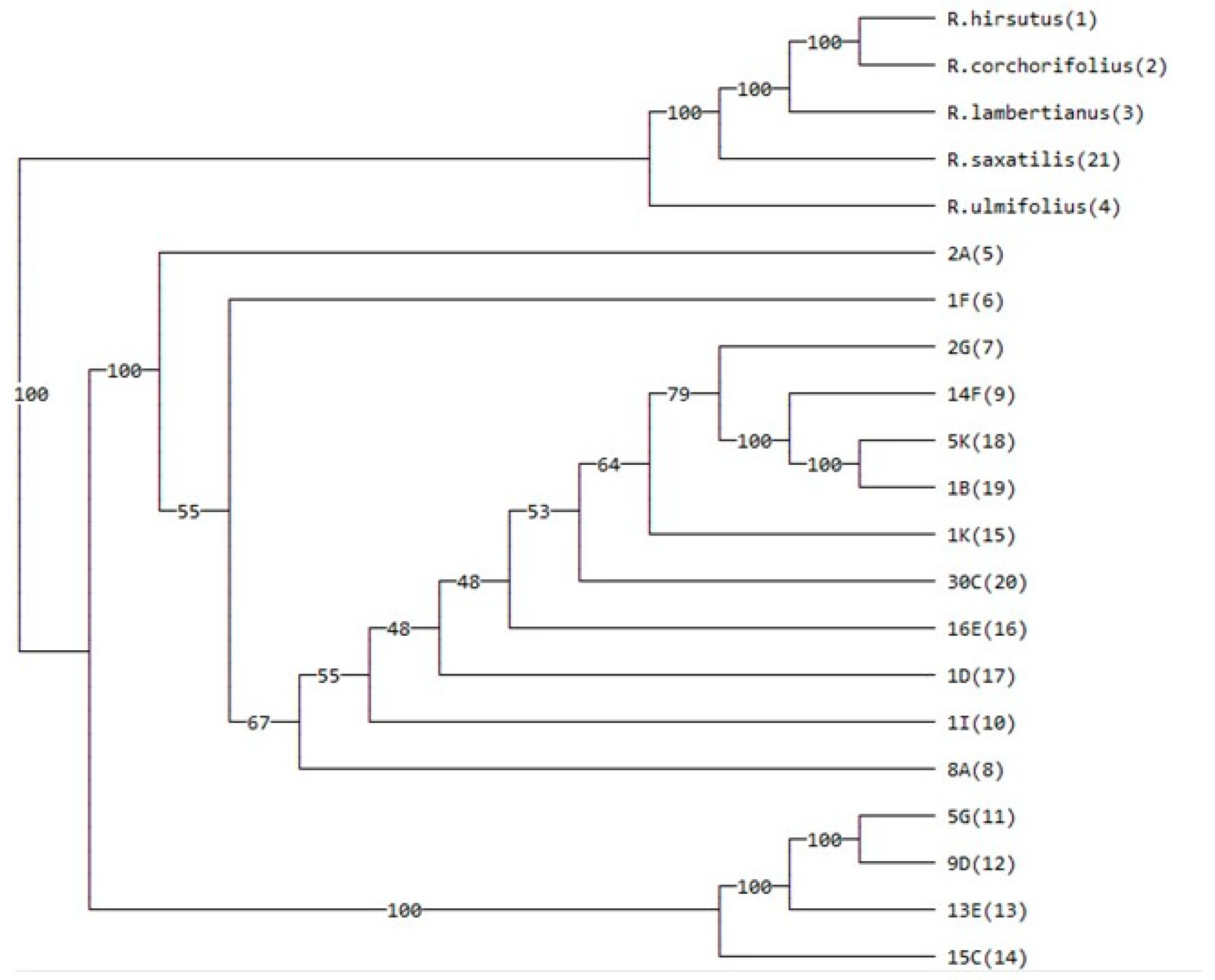
Two samples of each population were amplified with the chloroplast molecular marker atpB-1-rbcL [26]. The PCR conditions were 95 °C for 5 min, 38 cycles of 95 °C for 30 s, 52 °C for 45 s, 72 °C for 90 s, and finally, 72 °C for 5 min. Amplified fragments were observed in 2% (w/v) agarose gels and were then sent to Macrogen Inc. (Seoul, Republic of Korea) for bidirectional sequencing. The sequences were deposited in the National Center of Biotechnology Information (NCBI) with the codes OR225254 to OR225269. The samples were processed using UGENE [27] and aligned with the integrated CLUSTERW option [28]. For the phylogenetic reconstruction analysis, the heuristic search consisted of 100 starting tree searches with the number of tree bisection-reconnection (TBR) branch swaps in PAUP 4.0a165 [29]. Bootstrap analysis was conducted using 10,000 repetitions. A strict consensus tree was generated from the distance-based analysis, with the branch length proportional to genetic distances and bootstrap values indicated at supported nodes. Sequences deposited in GenBank from other species were used as outgroups (Rubus hirsutus (KT359529), Rubus lambertianus (KT359528), Rubus saxatilis (AJ628832), Rubus ulmifolius (AJ628831)).
Tajima’s test statistic was analyzed using DnaSP v.5 software [30]. To estimate the rates of pollen and seed migration among populations, we used the following formula: Pollen/seed migration ratio = [2(1/ΦSTc − 1) − (1/ΦSTn − 1)]/(1 − 1/ΦSTc), valid for outcrossing species, diploids, and hermaphrodites for species with maternal chloroplast inheritance [31,32]. In this formula, each symbol has a specific meaning: ΦSTc represents the level of genetic differentiation among populations based on chloroplast markers, while ΦSTn represents the level of genetic differentiation among populations based on nuclear markers. The ratio compares the relative contribution of pollen (which carries nuclear genes) versus seeds (which carry both nuclear and chloroplast genes) to gene flow across populations. A higher pollen/seed migration ratio indicates that pollen dispersal contributes more strongly to connectivity among populations, whereas a lower ratio suggests that seed dispersal plays a greater role. Both ΦSTc and ΦSTn were estimated using analysis of molecular variance (AMOVA) implemented in GenAlEx software 6.501, following established methods [33].

2.3.4. Paternity Analysis

We developed a paternity analysis in four families, comparing the alleles present in 8 seeds produced in one fruit and the mother plant. We used three microsatellites ExRubLR_SQ19_3/EX567284, ExRubLR_SQ01_G16/EX567286, and ExRubLR_SQ01_B06/EX567284 developed for Rubus idaeus, but tested in different species to measure the introgression of alleles [34]. We analyzed the polyacrylamide gels with Image Lab 6.1 software from Bio-Rad. To guarantee the true mother, we used the software Cervus 3.0.7 [35]. The allele number, percentage of polymorphic loci, expected heterozygosity, and the fixation index, FST, and genetic diversity within and among populations were estimated with an AMOVA using GenAlEx.

2.4. The Potential Distribution Model for Rubus geoides

The current and future potential distribution of Rubus geoides in the Magallanes region was estimated using the MaxEnt software, version 3.4.4 [36], based exclusively on presence records. A total of 48 georeferenced occurrences were compiled; however, only 41 remained within the masked study area and were used in the model. Of these, 75% were randomly assigned for training and 25% for validation. The climate layer was defined by Worldclim and originally included 19 bioclimatic variables. To generate the species distribution models, we selected five predictors—BIO2 (Mean Diurnal Range), BIO8 (Mean Temperature of the Wettest Quarter), BIO14 (Precipitation of the Driest Month), BIO16 (Precipitation of the Wettest Quarter), and BIO17 (Precipitation of the Driest Quarter)—based on Jackknife-derived variable importance and their ecological relevance for the species [37]. For future projection, the MIROC6 climate model was considered, under two scenarios, SSP2-4.5 for the most conservative and SSP5-8.5 for a more extreme scenario. Both projections were obtained at spatial resolution of 30 arc-seconds.
MaxEnt parameters were kept at their default settings, with 500 iterations and the logistic output format ranging from 0 to 1. The Jackknife test was used to assess the relative contribution of each variable, and model performance was evaluated using the area under the receiver operating characteristic curve (AUC) [36].

3. Results

3.1. Morphological Analysis

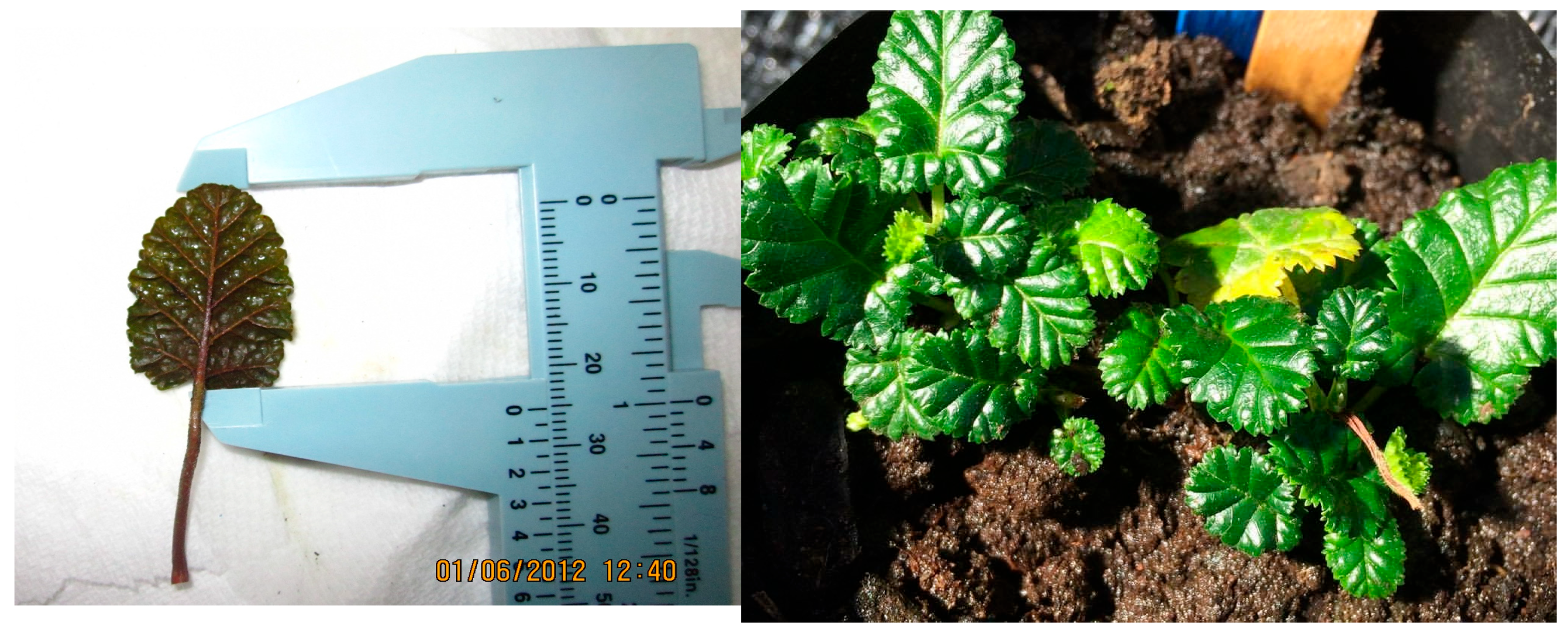
All individuals in this study had perennial and creeping behavior. The morphological analysis using parametric ANOVA did not show significant differences between populations in the leaf width, leaf length, or petiole length. However, assumptions of normality and homoscedasticity were not met (Length: Shapiro–Wilk p = 0.001; Levene’s test p = 0.003; Width: Shapiro–Wilk p = 0.008; Levene’s test p = 0.155; Petiole length: Shapiro–Wilk p= −0.0001; Levene’s test p = 0.002). Therefore, a non-parametric Kruskal–Wallis test was applied, which revealed no significant differences in leaf width (χ2 = 10.88, df = 8, p = 0.209) or petiole length (χ2 = 9.77, df = 8, p = 0.282). Leaf length showed a marginal trend (χ2 = 14.49, df = 8, p = 0.070), but did not reach statistical significance at the 0.05 level. Figure 2 show the creeping behavior and leaves.
The morphological measurement of stolon length showed significant differences among populations (ANOVA, F = 18.50, p < 0.0001). The K population from Karukinka exhibited markedly longer stolons (LS mean = 6.3 cm, 95% CI: 5.52–7.08) compared to all other populations, whose stolon length ranged between 1.25 and 2.13 cm. These results highlight Karukinka as a distinct group with significantly greater vegetative propagation potential.
The number of leaves per crown ranged from one to eight, with an overall mean of 3.66 ± 1.59. Parametric ANOVA did not reveal significant differences among populations (F = 1.94, p = 0.055), although a weak trend was observed. Least-square means varied between 3.06 in Discordia and 4.22 in Dorotea, but these differences were not statistically significant.
Some characteristics related to blooming and fruit production showed significant differences. ANOVA showed that the number of leaves supporting a blooming shoot varied significantly among populations. Populations A (Discordia) and C (Riesco Island) exhibited the highest leaf-to-flower ratios (1.72 and 1.6, respectively), suggesting greater vegetative investment per reproductive unit. In contrast, population E (Riesco Island) had the lowest average ratio, indicating a more economical leaf allocation per flower (0.6).
Flowers were limited to a few populations, and fruit sets varied among populations. Only six of the studied populations were reproductive (A (Discordia), B and D (Parrillar), C and E (Riesco Island), and F (San Juan)). Only three populations developed fruit (C, D, and E).
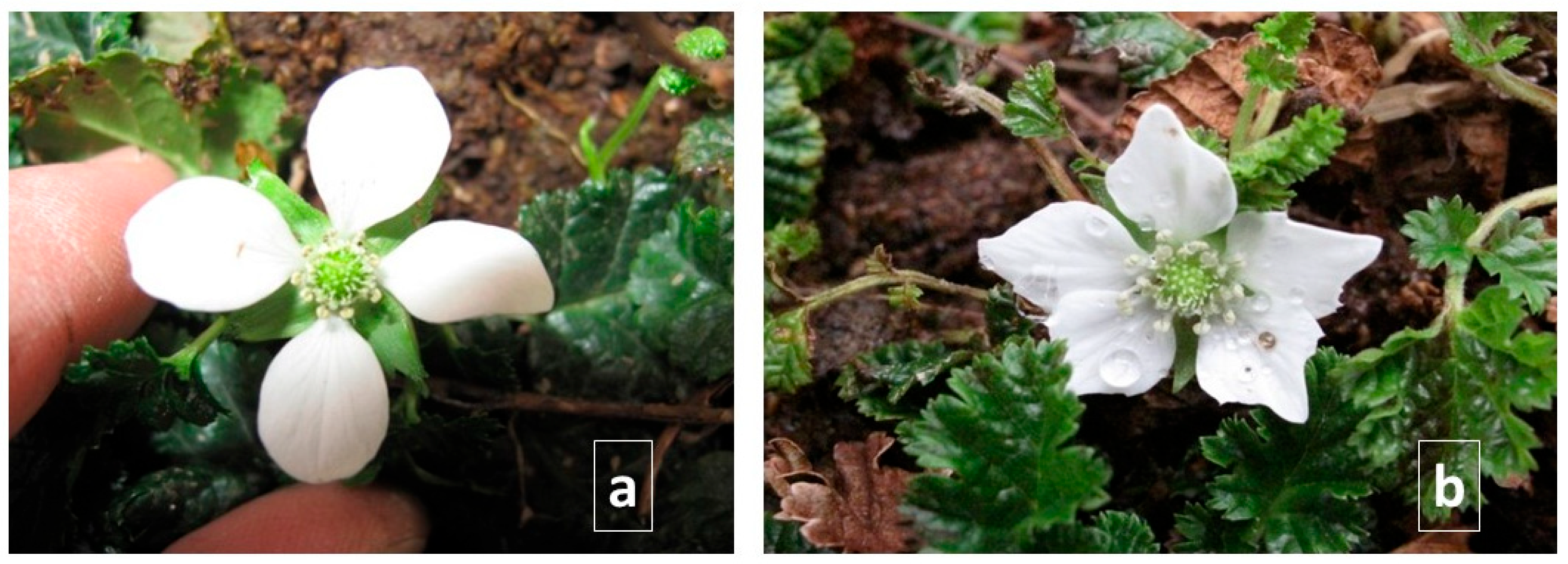
We found flowers with four sepals and petals in Riesco Island E and San Juan F. Finally, some of our samples showed ovate, acute petals rather than obovate emarginated [7] (Figure 3).
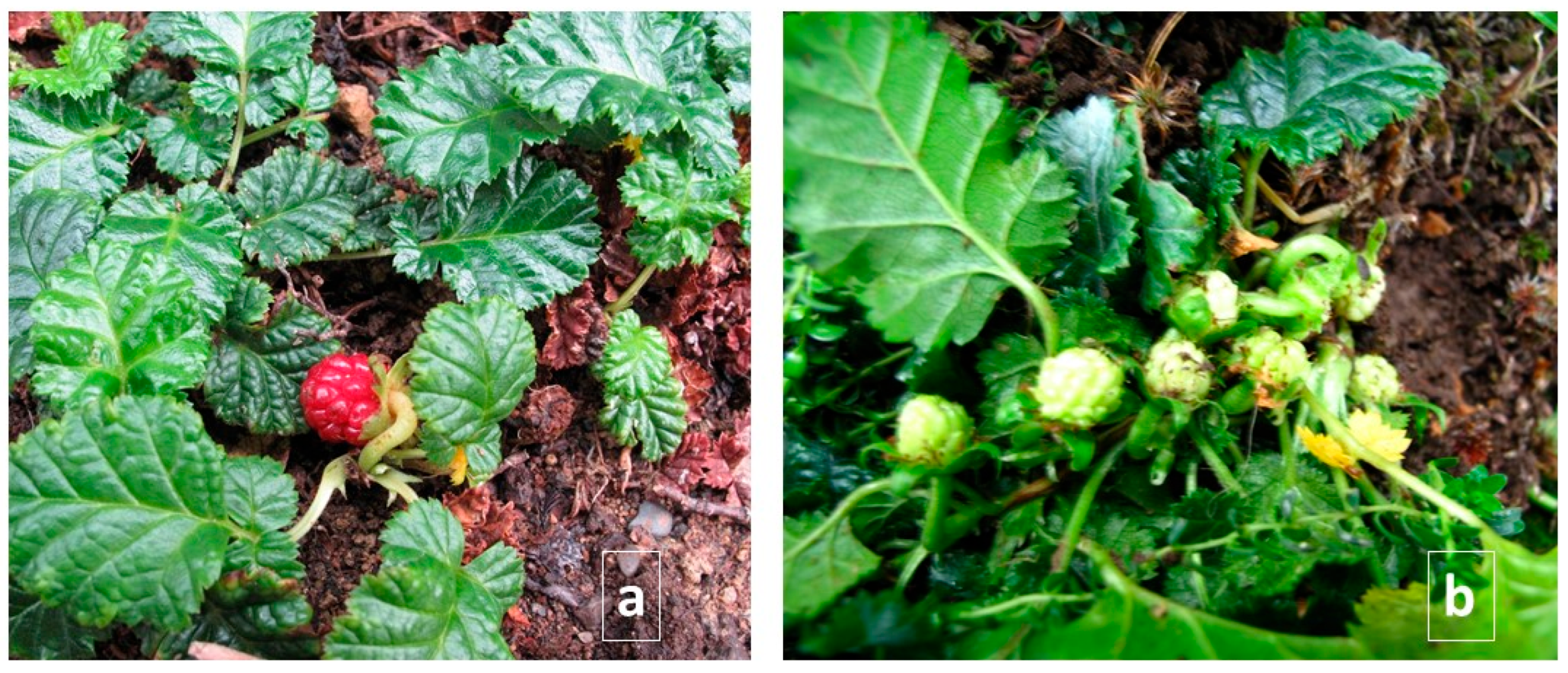
A typical pattern was observed at the beginning of the blooming; that is, when the floral bud was present, a minimum of three leaves per blooming shoot was observed, and in some individuals, there was more than one floral bud per blooming shoot, which later meant more than one fruit set. This characteristic was not observed in all populations and was more frequent in population C of Riesco Island (Figure 4).
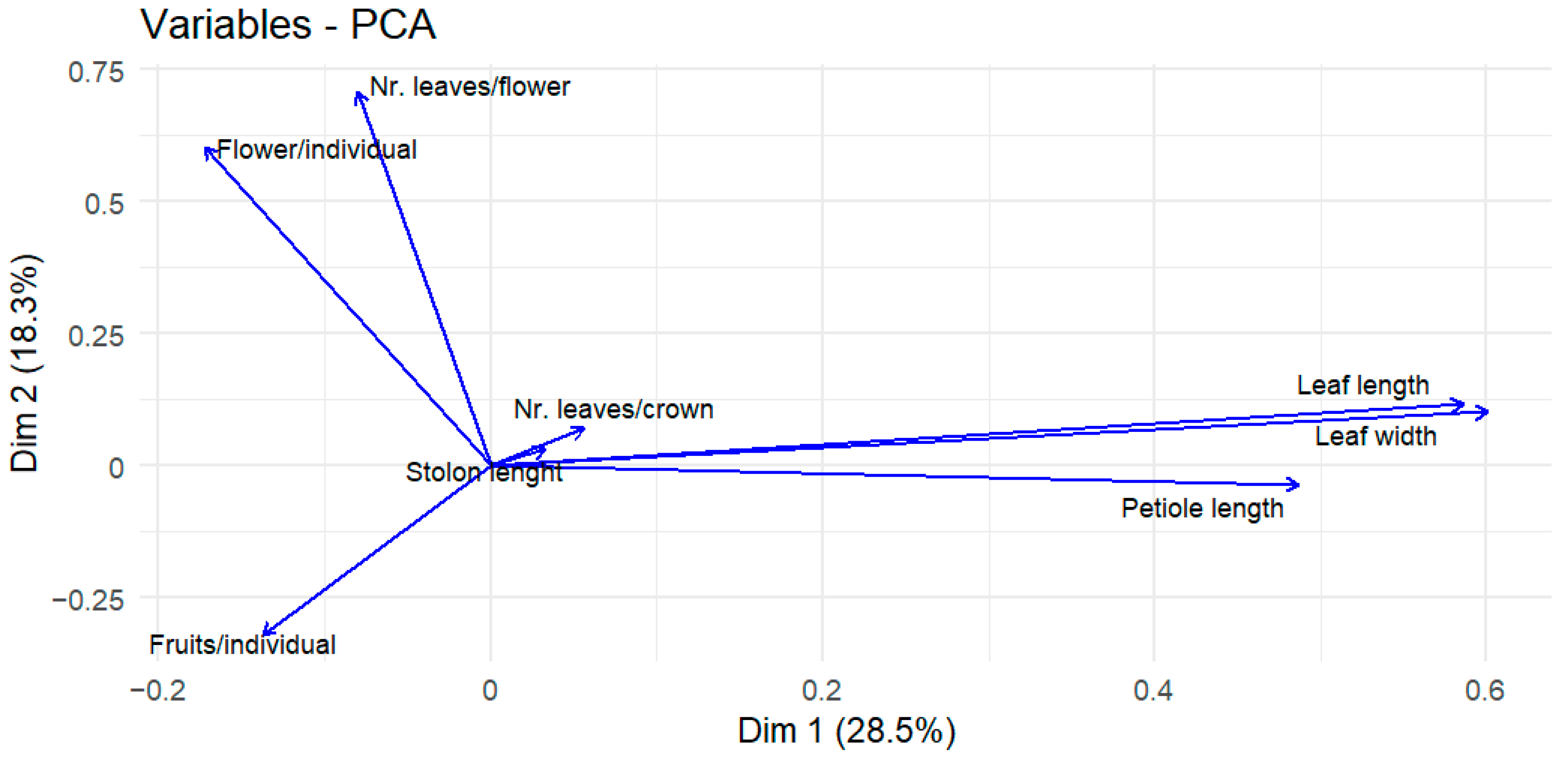
The principal components analysis (PCA) revealed that the first two principal components (PC1 = 28.5% and PC2 = 18.3%) together explained 46.8% of the total morphological variability (Figure 5). PC1 was mainly associated with vegetative size-related traits, including the leaf length, leaf width, and petiole length, indicating a gradient of structural development. PC2 was driven by reproductive traits, including the number of flowers per individual and leaves bearing reproductive structures (Table 1). PC3 (14.8%) captured a contrast between fruit production and the vegetative architecture, with negative loadings for fruits per individual and stolon length, and positive loadings for leaves in the crown. PC4 (10.3%) was most strongly associated with the stolon length and crown leaves, highlighting a variation in vegetative expansion strategies. Together, the first four components explained 78% of the total variability.

3.2. Genetic Diversity and Seed-Driven Connectivity in Rubus geoides Populations of Southern Patagonia

A total of 204 loci were analyzed. The average proportion of polymorphic alleles was 10.93%. The highest proportion of polymorphic loci was in the Riesco Island (C) population (27.5%) (Table 2), followed by San Juan (F) (18.1%). The AFLP genotyping error rate was estimated at 1.45%, based on replicated samples and mismatch comparisons across loci using a fragment tolerance of 1 bp. This value falls within the acceptable range for AFLP studies in non-model plant species and indicates a high level of reproducibility of the retained loci. Although AFLP is a dominant marker and sensitive to technical variation, the error rate observed suggests that the genetic patterns detected are robust and not significantly biased by genotyping inconsistencies.
The total genetic diversity was Ht: 0.0329. The average Nei genetic diversity within the Rubus populations was 0.0307. The highest value of Nei’s genetic diversity was found in the population of Dorotea (G) (0.05), followed by Riesco Island (C) (0.04274), and the lowest value was found in Parrillar (D) (0.00941). The highest number of private alleles was found in Isla Riesco (C) with 47, followed by San Juan (F) with 28. Parrillar (B) and San Juan (I) had a single private allele, while the populations of Karukinka and Parrillar (D) did not present private alleles (Table 2). No fixed alleles were found. Wright’s fixation index (FST), estimated using random permutation, showed a moderate and significant genetic differentiation among the populations (0.0664 *** p = 0.0002) [38].
The AMOVA based on AFLP markers indicated that most of the genetic variation was partitioned within populations (95%), while only 5% occurred among populations (Table 3). This pattern is consistent with limited but detectable genetic differentiation among sites.
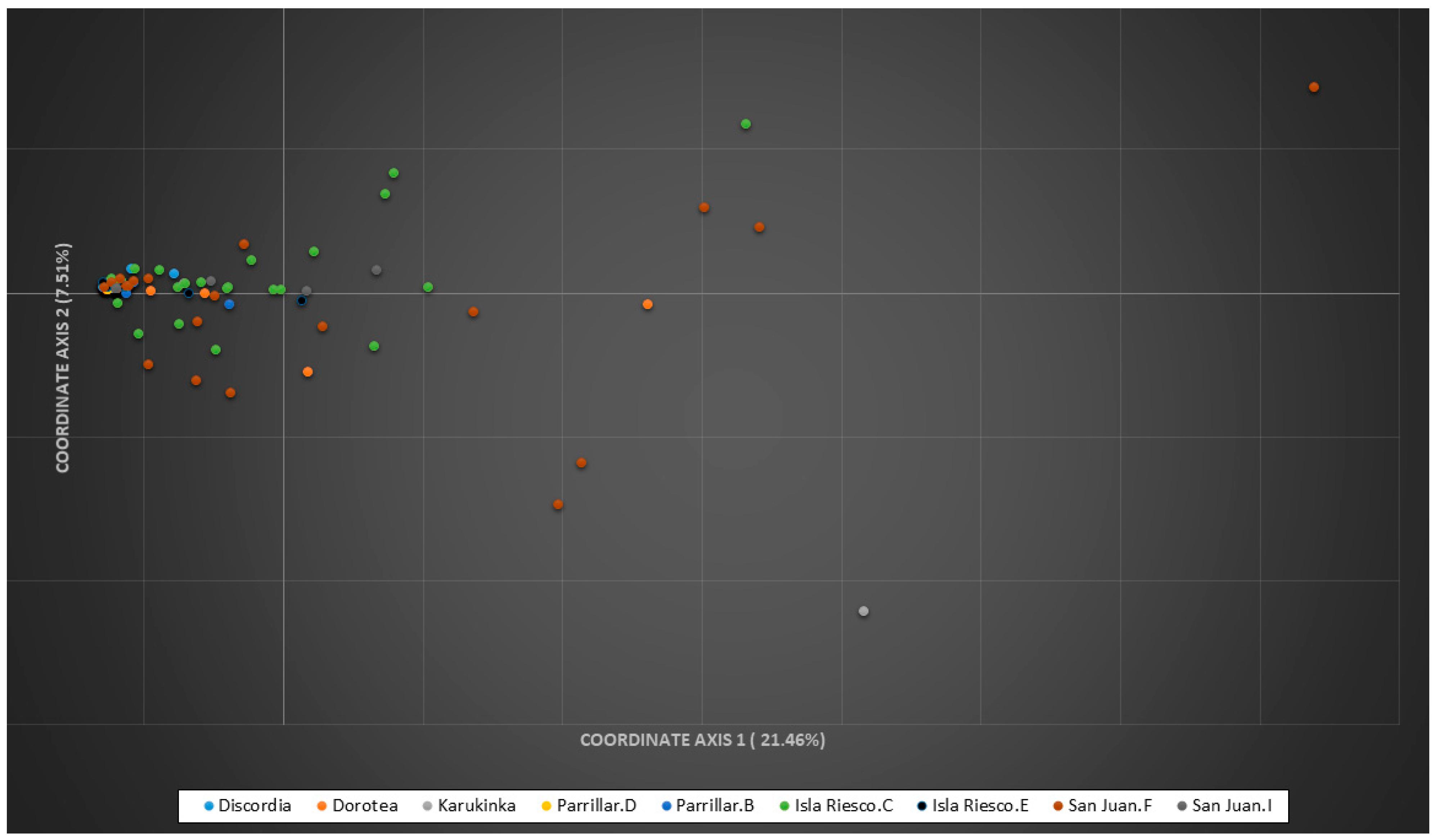
The principal coordinate analysis (PCoA) showed that the first axis explained 21.46% of the total variation, while the second and third axes accounted for 7.51% and 5.82%, respectively (Figure 6). The Mantel test indicated no significant correlation between genetic and geographic distances (R = 0.0133, p > 0.05).
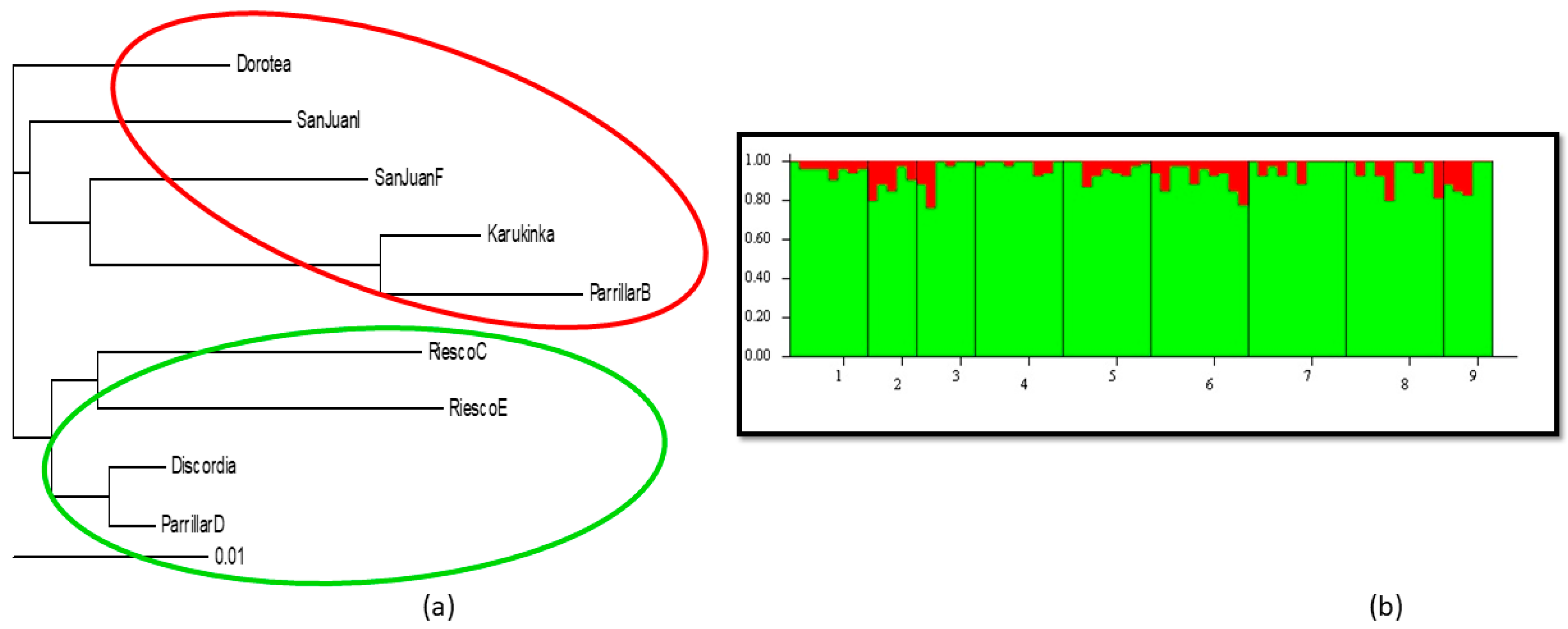
The phylogenetic tree (Figure 7a) revealed partial congruence with the geographic distribution. Populations from Riesco Island (Riesco C and Riesco E) clustered together, as did Parrillar (D) and Discordia, which are geographically close. Another cluster included San Juan (F and I), Parrillar B, and Karukinka—sites located in the western portion of the study area and exposed to prevailing westerly winds. Dorotea (population G), located near the Argentinean border, showed signs of genetic influence from eastern populations, possibly reflecting historical connectivity across the Andes.
The STRUCTURE analysis (Figure 7b) [22] identified the highest support for K = 2, suggesting the presence of two main genetic clusters ΔK = 2, within Rubus geoides. These clusters broadly correspond to a west–east gradient: one group includes populations under the influence of westerly winds (Dorotea, Karukinka, San Juan, Parrillar B), while the other includes more sheltered or eastern populations (Discordia, Parrillar D, Riesco Island). This pattern may reflect historical isolation due to glacial barriers, differential recolonization routes, or ecological divergence across the Magallanic landscape.
Overall, the posterior probability for individual assignment (PPICA) analysis indicates that most populations share ancestry from specific populations, suggesting that parents or grandparents of individuals in three populations originated from these sites. These findings emphasize the importance of island populations as genetic hubs and reveal how dispersal mechanisms contribute to connectivity across fragmented landscapes. The PPICA revealed that all populations exhibited ancestry from Riesco Island (E) and nearly all showed ancestry from Riesco Island (C). This suggests that these two populations may represent ancestral sources for R. geoides in the Magellanic region. In contrast, only a few individuals showed ancestry linked to San Juan (F), indicating more limited gene flow from this population. The PPICA suggests the presence of subpopulations for San Juan F, explained by the presence of individuals with ancestry in Riesco Island (E) (percentage almost zero) and some individuals with ancestry in the population itself (percentage almost 1). Populations such Discordia, Parrillar B and D, Dorotea, San Juan I, and Karukinka showed zero PPICA values for their own group, yet retained ancestry from C, E, and F, indicating that they have parents or grandparents in those three populations (Table 4) Given the geographic distance from these source populations, seed dispersal is the most plausible vector of gene flow, rather than pollen. This pattern highlights the role of long-distance dispersal in shaping the genetic structure of R. geoides.
For the chloroplast analysis, Tajima’s test indicated a growing population after a recent bottleneck (D = −2.08058; *, p < 0.05); and the average number of nucleotide differences was k = 11.31667 [38]. There were S = 71 segregating sites, the total number of mutations was Eta (η) = 73, and Pi (π) (nucleotide diversity) was 0.01631. The AMOVA revealed that most of the genetic variation occurred within populations (94%), whereas only 6% was distributed among populations (Table 5). The overall PhiPT value was low but statistically significant (PhiPT = 0.0546, p = 0.047), indicating a limited but non-random genetic structure among populations.
The analysis of molecular variance (AMOVA) was similar for nuclear and chloroplast data (ΦSTn = 0.05 and ΦSTc = 0.06, respectively), providing the ratio of pollen flow to seed flow mp/ms of −0.78, indicating a higher seed flow than pollen flow. The cpDNA phylogenetic analysis (Figure 8) revealed a shallow divergence among populations, consistent with the short branch length and low resolution across much of the tree. The analysis produced 87 best trees with 19 resolved nodes in the strict consensus tree and 24 with bootstrap support over 50%. These results suggest a limited phylogenetic signal in the cpDNA dataset, likely due to low mutation rates and the conserved nature of chloroplast regions. The absence of branch lengths in the figure reflects the use of a strict consensus approach, which prioritizes topological stability over distance metrics.
The families used in the paternity analysis were from Riesco Island (populations C and E) and Parrillar (population D). By carefully controlling maternal plants, our analysis guaranteed that the seeds originated from the signaled mother, ensuring reliability in the assignment of paternal contribution. Genetic diversity varied among families. The highest allele number [13] and the greatest percentage of polymorphic loci were detected in the family from Riesco C, suggesting that this population harbors a broader genetic base and potentially greater adaptive capacity. In contrast, only the family from Riesco E exhibited polyploids seeds, specifically for the ExRubLR_SQ01_B06/EX567284 microsatellite, highlighting the presence of cytogenetic variation that may influence reproductive outcomes. The expected heterozygosity (He) was 0.651, indicating a moderate probability of heterozygous loci within individuals. The fixation index (Fis = 0.349) pointed to a tendency toward inbreeding or non-random mating within families, while the moderate FST value (0.08) revealed limited but detectable genetic differentiation among populations.
Partitioning of molecular variance through AMOVA showed that most genetic variation (62%) was explained by allelic differences within individuals, followed by 29% among individuals within populations, and only 9% among populations (Table 6). This pattern emphasizes that genetic diversity is largely maintained at the individual level rather than being structured geographically.
Interestingly, Nei’s genetic distance analysis revealed that geographically closer populations exhibited a higher genetic distance, suggesting that local microenvironmental factors or historical demographic processes may be driving unexpected divergence (Table 7).

3.3. Potential Distribution Model for 2021–2040

The prediction of a species’ potential distribution area was evaluated using Receiver Operating Characteristic (ROC) analysis, a standard approach for assessing the accuracy of distribution models. ROC analysis allows model performance to be quantified through the Area Under the Curve (AUC), which reflects the model’s ability to discriminate between the presence and absence of the species across geographic space. In this study, ROC results (Figure S1, Supplementary material) showed that the training data curve (red line) oriented toward the upper left corner of the plot, a pattern that demonstrates a strong model fit. This orientation indicates that the model achieves high sensitivity—correctly identifying sites where the species is present—and high specificity—avoiding false predictions of presence in unsuitable areas. Such balance is particularly relevant for species with restricted ranges in fragile ecosystems, where over- or underestimation could mislead conservation planning.
AUC values confirmed the robustness of the model across different scenarios: Present = 0.904, SSP245 = 0.885, and SSP585 = 0.870. By definition, values below 1 reflect the inherent limitations of the method, yet values above 0.85 are generally considered excellent in ecological modeling. The fact that all scenarios exceeded this threshold underscores the reliability of the predictions. In practice, the obtained AUC values suggest that the model successfully captured the environmental patterns relevant to the distribution of Rubus geoides, providing confidence that the species’ ecological requirements were adequately represented. The consistency of high AUC values across scenarios further indicates that the model is robust to climatic variation and can be used to explore future distribution shifts with confidence.
In general, results of the Jackknife test of variable importance show that the environmental variable with the highest gain was bio_17 (precipitation of the driest quarter), which therefore appears to have the most useful information by itself. This result aligns with the biology of R. geoides, a species adapted to cold and humid environments, where drought stress during dry periods can severely constrain establishment and survival.
The second most influential variable was bio_14 (precipitation of the driest month), which also contributed significantly in both current and future scenarios. The consistency of these variables across scenarios suggests that water limitation will remain a key driver of distribution even under altered climatic regimes, reinforcing the ecological relevance of the model.
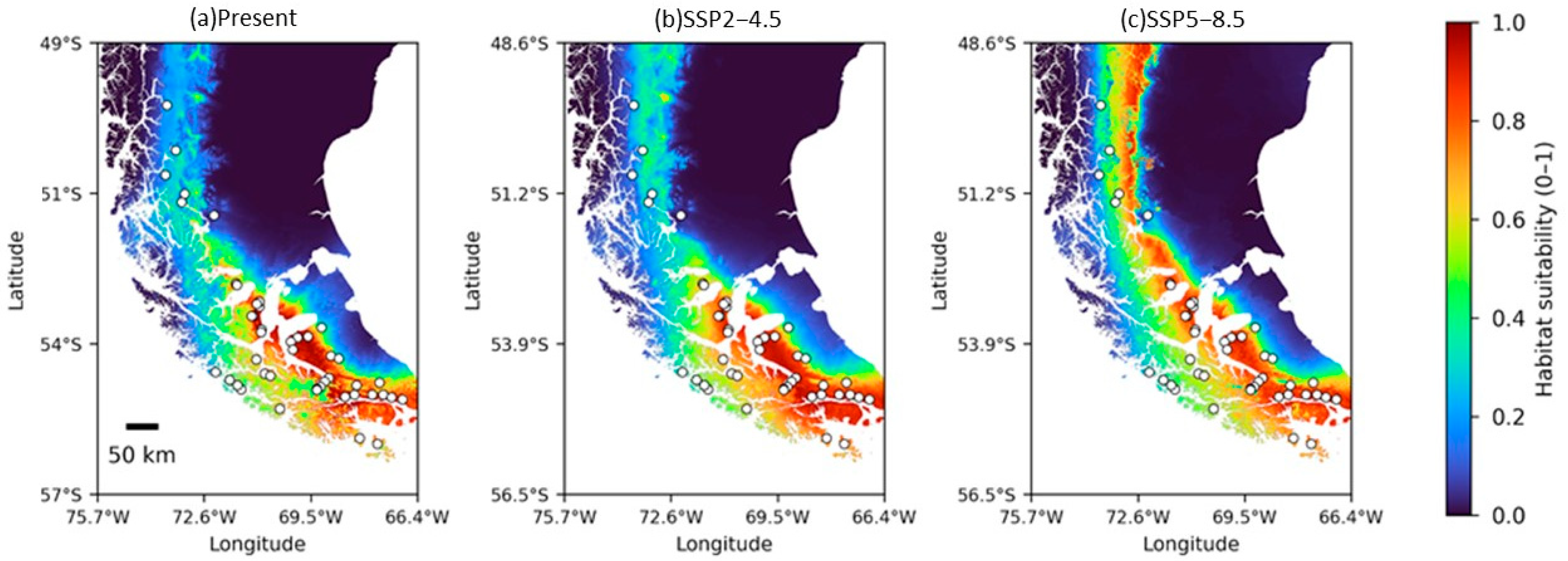
Together, the ROC–AUC evaluation and variable contribution analysis emphasize that water availability during the driest periods of the year is the most critical factor influencing the distribution of R. geoides. This finding is consistent across present and future climate projections (Tables S2, Supplementary material), underscoring the species’ dependence on moisture conditions and its vulnerability to shifts in precipitation regimes. Figure 9 illustrates the predicted distribution under different climate scenarios, where habitat suitability values (0–1 scale) are highest in southern and coastal areas, progressively decreasing toward the north. This spatial pattern indicates that R. geoides is strongly associated with colder and more humid environments. Notably, the SSP585 scenario reveals a marked expansion of highly suitable areas, suggesting that under high-emission pathways, future climatic conditions may increase the availability of favorable habitats for the species. Such projections highlight both opportunities and challenges for conservation, as expanded suitable areas may enhance the potential range, but shifts in precipitation regimes could also expose populations to new ecological pressures.

4. Discussion

4.1. Determinants of R. geoides’ Gene Flow in Southern Patagonia

As has been seen for other related species, such as Rubus chamaemorus, R. geoides covers soils vigorously by asexual reproduction. The analysis did not show significant morphological differences in the vegetative state, which differed from what was found in R. chamaemorus [39]. Instead, characteristics linked to the reproductive state showed significant differences in flower formation and fruit set among populations. In addition, other conditions observed for R. glaucus, such as herkogamy (heterostyly) [40,41], were not observed.
R. geoides, with white petals and very prominent anthers, could be considered a species without specific pollination vectors and use wind dispersal for pollination, and therefore, gene flow [42]. Moreover, since the flower is unattractive, without aroma, and at the ground level, animal pollination via mammals such as the rodent Oryzomys longicaudatus philippii Landbeck [43] could be expected and pollination could also be promoted by unspecialized insects, consumers of pollen and other parts of the flower.
AFLP is a highly informative multilocus technique, but it also presents well-known limitations that must be considered when interpreting our results. First, AFLP markers are dominant. As a consequence, heterozygosity cannot be directly estimated and allele frequencies must be inferred under assumptions such as the Hardy–Weinberg equilibrium [44]. Homoplasy may occur because fragments of identical size are not necessarily homologous across individuals, which can lead to an underestimation of genetic differentiation [19]. To mitigate these issues, we followed standard procedures including the exclusion of faint and ambiguous bands and quantified the genotyping error rate. Despite these limitations, AFLPs remain suitable for detecting overall patterns of genetic structure and diversity in non-model species such as R. geoides, particularly in the absence of extensive genomic resources.
While the phylogenetic tree reflects deeper genetic relationships among populations, the PPICA analysis reveals more recent ancestry patterns. Notably, all populations showed some degree of ancestry in Riesco Island (E), and most in Riesco Island (C), suggesting these sites may represent ancestral or source populations. In contrast, the tree does not fully capture this shared ancestry, likely due to its reliance on the cumulative genetic distance rather than the individual-level admixture. The PPICA also suggests a substructure within San Juan F, with individuals showing either near-zero or near-complete ancestry in their own population. Populations such as Discordia, Parrillar B and D, Dorotea, San Juan I, and Karukinka have ancestry in populations C, E, and F, and given their geographic distance from these sources, seed dispersal may be the most plausible vector of gene flow. Based on the ancestry analysis and subpopulations analyzed in our study, our results suggest that the predominant westerly wind [45] during the blooming season facilitated gene flow toward southern populations. However, additional vectors may also contribute to dispersal, including the transport of whole fruits containing viable seeds capable of germinating under variable conditions, or fragmented vegetative stems through stolons across the region. Frugivore and omnivorous birds such as Phrygilus patagonicus, Curaeus curaeus, Turdus falcklandii, and Zonotrichia capensis—all common residents of the area [43,46]—along with human activity, notably by the Tehuelches people, a nomadic ancestral tribe present in the region since approximately 6000 BP, may explain the observed cpDNA diversity and gene flow, where seed dispersal appears more influential than pollen grain movement. Nonetheless, the pollen grain/seed dispersion should be interpreted cautiously, given the historical shift in land use—mining, livestock grazing, and forestry—introduced by European colonization since 1850. Habitat reduction is known to impact gene flow, spatial genetic structure, and demographic stability, potentially leading to local extinctions and influencing the genetic patterns observed in this study [47].
Previously, morphological studies reported the species as self-compatible and sometimes self-pollinated [7]. From the ancestry analysis, the presence of male flowers and hermaphroditism appear plausible. However, our genetic study does not conclusively support an intermediate evolutionary stage toward unisexuality. This state has already been reported in the related species R. chamaemorus [39], where the monoic and dioic conditions are derived from a perfect-flower ancestor—individuals bearing both bisexual and unisexual flowers. In this context, hermaphrodite and male flowers are thought to results from suppression of the female function [48], a trend more frequently observed under harsh environmental conditions [49]. The low heterozygosity and limited number of polymorphic loci may reflect geitonogamy and potentially agamospermy or apomixes, both of which are known to occur within the genus Rubus [50,51,52]. Nevertheless, our findings suggest a high rate of self-pollination, with only 8% of seeds showing evidence of cross-pollination from maternal origin. However, this result must be interpreted with caution, as paternity analysis was based on only four families and three microsatellite markers, not specifically developed for Rubus geoides. This small number of loci inherently limits statistical power and likely underestimate paternal diversity and outcrossing. Although the markers were moderately polymorphic (He = 0.651; Fis = 0.349, and FST = 0.08), providing some resolution, the inference of mating patterns should still be considered preliminary. Future studies using a larger set of highly polymorphic, species-specific markers will be necessary to confirm this trend.
Up to here, only in the case of the Riesco (E) population may the high genetic relationship with all other studied populations combined with the absence of external pollen sources suggest the possible presence of an incompatibility locus. This remains a working hypothesis rather than a confirmed mechanism. Supporting evidence comes from the related species Rubus arcticus, which exhibits self-incompatibility linked to a single locus [53]. In addition, incompatibility with pollen from other populations could potentially arise from chromosomal mismatches, given that R. geoides is tetraploid (2n = 4X = 28) [54]. This interpretation is further supported by the distinct allele profiles observed in the seeds of this population, although additional markers and broader sampling would be required to validate the presence of an incompatibility system.
In contrast, the Riesco C population exhibited a high numbers of flowers, fruit sets, and private alleles, along with lower ancestry shared with other populations compared to Riesco E. These patterns may reflect limited gene flow, restricted to the neighborhood size, sensu Wright [55], or alternatively suggest that Riesco C functioned as a glacial refuge. Based on this analysis, we ruled out the presence of a Wahlund effect and confirmed that both Riesco populations represent distinct subpopulations, likely serving as refuges during the most recent glaciation period.
Phylogenetic analysis indicates that the San Juan F population shares a similar evolutionary development with the Riesco population. The presence of private alleles could be treated as a refuge; however, the presence of unique alleles in other populations is notably lower than that observed in Riesco.
Furthermore, the low genetic differentiation among R. geoides populations (AMOVA 5–6%) contrasts sharply with the higher variation reported for R. arcticus (AMOVA 49%) [56] and the elevated FST (0.192) value found in Rubus species in Colombia [57] compared to our estimate for R. geoides (0.06). These findings underscore the profound influence of the region’s glaciological history on the genetic structure and evolutionary dynamics of the species.
Consistent with these patterns, the estimated ratio mp/ms = −0.78 indicates that seed dispersal contributes more strongly to gene flow than pollen movement. This dominance of seed-mediated dispersal suggest that maternal lineages move more effectively across the landscape than the paternal genetic contribution, reinforcing the importance of seed flow for maintaining connectivity among populations. This result has direct implications for population management and conservation, highlighting the need to protect seed sources and maintain habitat continuity. Taken together, these results demonstrate that while populations of Rubus geoides in southern Patagonia share a moderate level of genetic connectivity, significant variation persists within families and individuals. This underscores the importance of considering fine-scale genetic processes in conservation and breeding strategies, as well as the potential role of polyploidy in shaping reproductive success.

4.2. Past and Future Climatic Influence

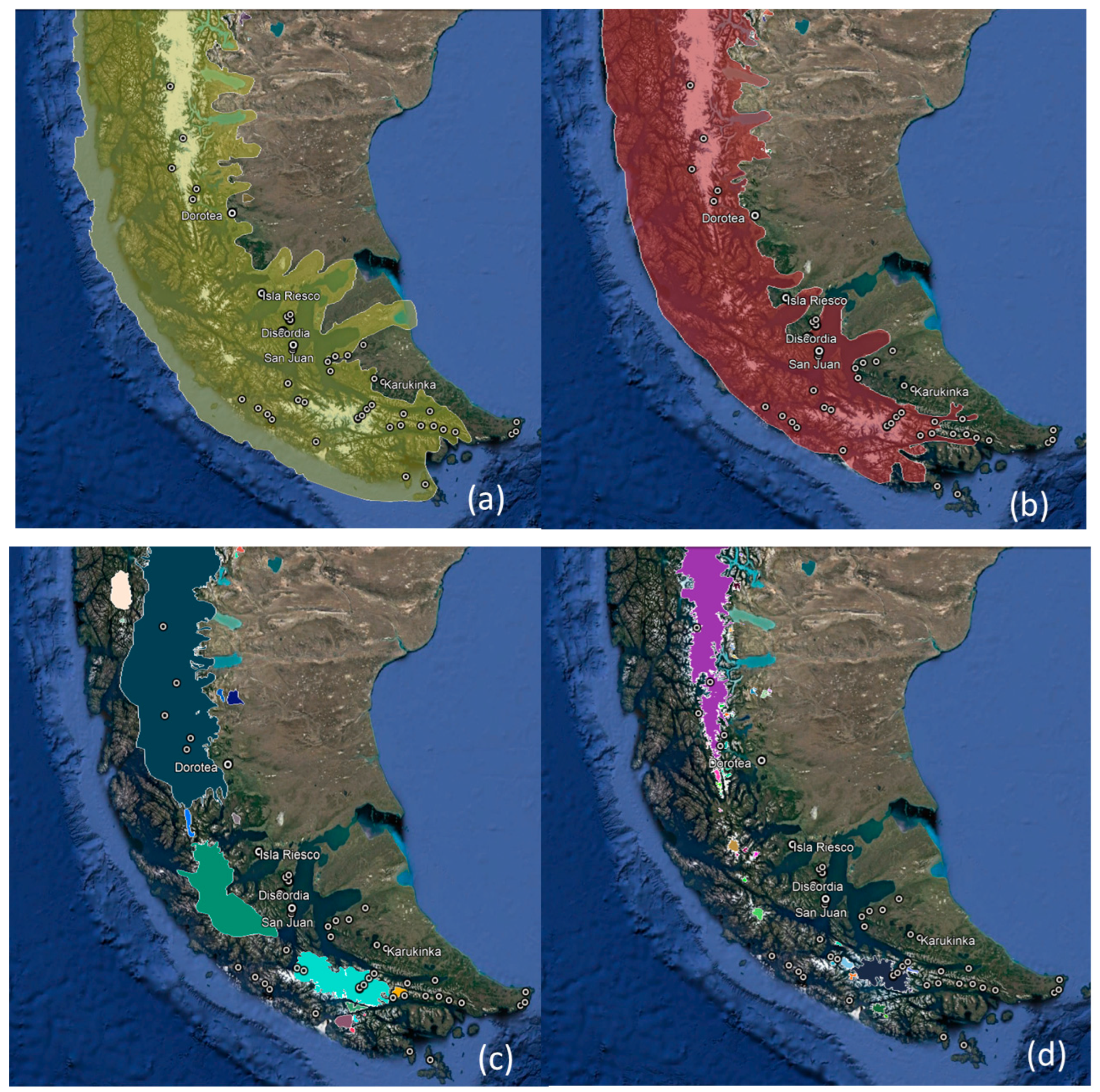
During the Last Glacial Maximum, the Brunswick Peninsula (Populations A, B, D, F, and I of this study) was entirely covered by ice sheets, as documented in geomorphological reconstructions and glacial sediment records [58,59,60] (Figure 10a). In contrast, Riesco Island (Populations C and E) remained ice-free throughout the Quaternary period, as indicated by glacial landform mapping and sediment core analyses [59] (Figure 10b). This contrast suggests that colonization by Rubus geoides in the Brunswick Peninsula likely occurred later than in Riesco Island (Figure 10c,d).
The hypothesis that Riesco Island functioned as a glacial refuge and dispersal hub is supported by both genetic clustering patterns and independent geological evidence. Several geomorphological studies document that Riesco Island remained largely ice-free during the Last Glacial Maximum, based on the absence of glacial till deposits, the presence of non-glaciated landforms, and sediment records indicating long-term landscape stability [60,61,62]. Biogeographic parallels in other taxa, such as mosses [63], reinforce this interpretation. Together, these geological data support the plausibility of a refugial role for Riesco Island. Nevertheless, we clarify that this remains an informed inference based on a concordance between the genetic structure and geomorphological reconstructions. This interpretation aligns with local ecological knowledge and cultural perceptions, which consistently highlight the island’s distinctive climatic conditions as favorable for the growth and persistence of diverse plant species.
Currently, all studied areas are ice-free, and the challenge lies in predicting the future distribution of Rubus geoides under climate change scenarios. Unlike the neotropical savanna tree species Tabebuia aurea, which faces severe population decline under projected climate conditions [9], our MaxEnt predictions suggest that future climate scenarios may not reduce the climatically suitable area for R. geoides, and could even increase potential habitat availability, where rising temperatures and stable precipitation patterns will favor its establishment. This projection is consistent with the results of Tajima’s test (Figure 10b). This pattern contrasts with the general expectation of habitat loss under climate change for many native species in southern Patagonia. These results highlight the importance of species-specific responses to environmental change and caution against generalized assumptions about climate-driven range contractions.
However, in the pristine and wind-exposed region, a key concern is that the future expansion may not involve R. geoides alone, but also hybrids resulting from historical and ongoing introductions of non-native Rubus species. The initial introduction occurred approximately 150 years ago with the early settlers, and continues today through agricultural practices. Hybridization trials, such as those involving Rubus chamaemorus × Rubus idaeus [64], support the hypothesis of true-breeding potential [54], suggesting that the tetraploid R. geoides may readily hybridize with other Rubus species or their hybrids—posing a complex challenge for future genetic and ecological studies.
These findings have direct implications for sustainable land management and biodiversity conservation. By highlighting the reproductive limitation and genetic variability of Rubus geoides, this study contributes to the United Nations Sustainable Development Goals. Specifically, SGD 2 (Zero Hunger) is addressed through the potential of this native berry as a functional food that can diversify local diets and strengthen food security. SDG 15 (Life on Land) is supported by providing evidence for conservation strategies aimed at protecting the fragile Patagonian ecosystem and maintaining genetic resources under increasing land-use pressure.

5. Conclusions

This study provides a comprehensive ecological and genetic assessment of Rubus geoides, revealing how the glacial history and genetic diversity underpin its resilience in southern Patagonia. Through climate modeling and gene flow analysis, we provide insights into the species’ potential distribution under global change scenarios. Climate change remains a key driver of ecological dynamics, but our findings emphasize that anthropogenic land use—particularly mining, livestock, and emerging industries such as green hydrogen—currently exerts a more immediate influence on habitat transformation and species dispersal. These insights highlight the need to integrate evolutionary history and climate resilience into conservation planning and sustainable resource management. In this context, R. geoides emerges as a model species for understanding the interplay between biodiversity, climate adaptation, and the human impact in fragile ecosystems. Importantly, the presence of invasive Rubus species such as R. ulmifolius and R. praecox in Chile [65,66] underscores the potential risk of hybridization, particularly in agricultural landscapes.
Public policies should therefore prioritize the protection of habitats that sustain native genetic diversity—especially in historically significant refugial areas such as Riesco Island, while regulating non-native introductions and monitoring hybridization threats. In addition, management frameworks could consider mechanisms similar to Chile’s fishing quotas, which are designed to prevent overexploitation of marine resources. Applying comparable restrictions to the harvest of native fruits would help ensure that local species, such as R. geoides, and other fruit species are not depleted by uncontrolled extraction where individuals collect wild fruits and sell them processed to tourists at inflated prices without contributing to cultivation themselves or to financing research programs aimed to the sustainable management of native fruit resources. Furthermore, delimiting zones where species of the genus Rubus can be cultivated would reduce the hybridization risk. For example, restricting the cultivation of introduced Rubus species, such as raspberries, to previously intervened or disturbed sites—rather than within national parks or protected areas—could safeguard the genetic integrity of native populations.
Integrated planning tools that combine ecological modeling with socio-economic development strategies will be essential to safeguard the evolutionary potential of native species. Thus, these findings support the formulation of adaptive management plans and conservation corridors that align with climate projections and safeguard native species in a changing world.

Supplementary Materials

The following supporting information can be downloaded at https://www.mdpi.com/article/10.3390/su18010444/s1.

Author Contributions

Conceptualization, I.H.; methodology, I.H. and E.J.; software, E.J., C.V.U., and I.G.; validation, R.J., V.L., and J.Y.; formal analysis, I.H. and E.J.; investigation, I.H., G.P., M.C., A.V., and L.B.; resources, I.H., R.J., and V.L.; data curation, E.J.; writing—original draft preparation, I.H.; writing—review and editing, I.H., R.J., V.L., and J.Y.; visualization, I.H. and E.J.; supervision, R.J.; project administration, I.H., R.J., A.V., and V.L.; funding acquisition, I.H., R.J., and V.L. All authors have read and agreed to the published version of the manuscript.

Funding

This research was funded by the National Agency for Research and Development (ANID) (Fondecyt regular 1231707) and the innovation funds for competitiveness (FIC 30106926-0) by the regional Government of Magallanes, Chile.

Institutional Review Board Statement

Not applicable.

Informed Consent Statement

Not applicable.

Data Availability Statement

The data that support the findings of this study are openly available. cpDNA sequences are in GenBank accession OR225254-OR225269. The dataset supporting this study has been deposited in Dryad under the reserved DOI: 10.5061/dryad.vhhmgqp0c. In accordance with Dryad’s policy, the dataset will become publicly accessible upon manuscript acceptance. A private review link has been provided to the editors and reviewers for evaluation.

Acknowledgments

During the preparation of this manuscript, the authors used Microsoft Copilot (AI companion by Microsoft) to improve some text. The authors have reviewed and edited the output and take full responsibility for the content of this publication.

Conflicts of Interest

The authors declare no conflicts of interest.

References

  1. Castellanos, E.; Lemos, M.F.; Astigarraga, L.; Chacón, N.; Cuvi, N.; Huggel, C.; Miranda, L.; Moncassim Vale, M.; Ometto, J.P.; Peri, P.L.; et al. Central and South America. In Climate Change 2022: Impacts, Adaptation and Vulnerability. Contribution of Working Group II to the Sixth Assessment Report of the Intergovernmental Panel on Climate Change; Pörtner, H.-O., Roberts, D.C., Tignor, M., Poloczanska, E.S., Mintenbeck, K., Alegría, A., Craig, M., Langsdorf, S., Löschke, S., Möller, V., et al., Eds.; Cambridge University Press: Cambridge, UK, 2022; pp. 1689–1816. [Google Scholar]
  2. Trisos, C.H.; Merow, C.; Pigot, A.L. The projected timing of abrupt ecological disruption from climate change. Nature 2020, 580, 496–501. [Google Scholar] [CrossRef]
  3. Inostroza, L.; Zasada, I.; König, H.J. Last of the wild revisited: Assessing spatial patterns of human impact on landscapes in Southern Patagonia, Chile. Reg. Environ. Change 2016, 16, 2071–2085. [Google Scholar] [CrossRef]
  4. Bañados Ortiz, M.P. Frambuesas en Chile: Sus Variedades y Características; Fundación para la Innovación Agraria: Santiago, Chile, 2002. [Google Scholar]
  5. Jiménez-Aspee, F.; Theoduloz, C.; Ávila, F.; Thomas-Valdés, S.; Mardones, C.; von Baer, D.; Schmeda-Hirschmann, G. The Chilean wild raspberry (Rubus geoides Sm.) increases intracellular GSH content and protects against H2O2 and methylglyoxal-induced damage in AGS cells. Food Chem. 2016, 194, 908–919. [Google Scholar] [CrossRef]
  6. Uleberg, E.; Trost, K.; Stavang, J.A.; Rothe, G.; Martinussen, I. Evaluation of cloudberry (Rubus chamaemorus L.) clones for selection of high-quality varieties. Acta Agric. Scand. Sect. B-Soil Plant Sci. 2011, 61, 18–26. [Google Scholar]
  7. Moore, D. Flora of Tierra del Fuego; Garden, A.N.M.B., Ed.; Anthony Nelson Ltd.: Shrewsbury, UK, 1983. [Google Scholar]
  8. Sudzuki, F. Cultivo de Frutales Menores; Colección Nueva Técnica; Editorial Universitaria: Santiago, Chile, 1983. [Google Scholar]
  9. Lima, J.S.; Ballesteros-Mejia, L.; Lima-Ribeiro, M.S.; Collevatti, R.G. Climatic changes can drive the loss of genetic diversity in a Neotropical savanna tree species. Glob. Change Biol. 2017, 23, 4639–4650. [Google Scholar] [CrossRef]
  10. Hebel, I.; Gonzalez, I.; Jaña, R. Genetic Approach on Sanionia uncinata (Hedw.) Loeske to Evaluate Representativeness of in situ Conservation Areas Among Protected and Neighboring Free Access Areas in Maritime Antarctica and Southern Patagonia. Front. Conserv. Sci. 2021, 2, 647798. [Google Scholar] [CrossRef]
  11. Devereux, E. Flora del Archipiélago Fueguino; Ed. Gráfica LAF: Ushuaia, Argentina, 2003. [Google Scholar]
  12. Pisano, E. Fitogeografía de fuego-patagonia chilena: Comunidades vegetales entre las latitudes 52 y 56° S. An. Inst. Patagon. 1977, 8, 121–250. [Google Scholar]
  13. Schneider, C.; Glaser, M.; Kilian, R.; Santana, A.; Butorovic, N.; Casassa, G. Weather observations across the Southern Andes at 53° S. Phys. Geogr. 2003, 24, 97–119. [Google Scholar] [CrossRef]
  14. Zamora, E.; Santana, A. Características climáticas de la costa occidental de la Patagonia entre las latitudes 46° 40′ y 56° 30′. An. Del Inst. De La Patagon. 1979, 10, 109–144. [Google Scholar]
  15. Takeda, F.; Strik, B.C.; Peacock, D.; Clark, J.R. Cultivar differences and the effect of winter temperature on flower bud development in blackberry. J. Am. Soc. Hortic. Sci. 2002, 127, 495–501. [Google Scholar] [CrossRef]
  16. Vos, P.; Hogers, R.; Bleeker, M.; Reijans, M.; Vandelee, T.; Hornes, M.; Frijters, A.; Pot, J.; Peleman, J.; Kuiper, M.; et al. AFLP—A new technique for dna-fingerprinting. Nucleic Acids Res. 1995, 23, 4407–4414. [Google Scholar] [CrossRef]
  17. Weising, K.; Nybom, H.; Wolff, K.; Kahl, G. DNA Fingerprinting in Plants Principles, Methods, and Applications, 2nd ed.; Taylor & Francis Group: Boca Raton, FL, USA, 2005; p. 427. [Google Scholar]
  18. Bonin, A.; Bellemain, E.; Eidesen, P.B.; Pompanon, F.; Brochmann, C.; Taberlet, P. How to track and assess genotyping errors in population genetics studies. Mol. Ecol. 2004, 13, 3261–3273. [Google Scholar] [CrossRef]
  19. Vekemans, X.; Beauwens, T.; Lemaire, M.; Roldan-Ruiz, I. Data from amplified fragment length polymorphism (AFLP) markers show indication of size homoplasy and of a relationship between degree of homoplasy and fragment size. Mol. Ecol. 2002, 11, 139–151. [Google Scholar] [CrossRef] [PubMed]
  20. Peakall, R.; Smouse, P.E. GenAlEx 6.5: Genetic analysis in Excel. Population genetic software for teaching and research-an update. Bioinformatics 2012, 28, 2537–2539. [Google Scholar] [CrossRef]
  21. Schlueter, P.M.; Harris, S.A. Analysis of multilocus fingerprinting data sets containing missing data. Mol. Ecol. Notes 2006, 6, 569–572. [Google Scholar] [CrossRef]
  22. Falush, D.; Stephens, M.; Pritchard, J.K. Inference of population structure using multilocus genotype data: Linked loci and correlated allele frequencies. Genetics 2003, 164, 1567–1587. [Google Scholar] [CrossRef] [PubMed]
  23. Evanno, G.; Regnaut, S.; Goudet, J. Detecting the number of clusters of individuals using the software STRUCTURE: A simulation study. Mol. Ecol. 2005, 14, 2611–2620. [Google Scholar] [CrossRef] [PubMed]
  24. Earl, D.A.; Vonholdt, B.M. STRUCTURE HARVESTER: A website and program for visualizing STRUCTURE output and implementing the Evanno method. Conserv. Genet. Resour. 2012, 4, 359–361. [Google Scholar] [CrossRef]
  25. Roderic, D.M. Current Protocols in Bioinformatics; John Wiley & Sons, Inc.: Hoboken, NJ, USA, 2003; pp. 6.2.1–6.2.15. [Google Scholar]
  26. Chiang, T.Y.; Schaal, B.A.; Peng, C.I. Universal primers for amplification and sequencing a noncoding spacer between the atpB and rbcL genes of chloroplast DNA. Bot. Bull. Acad. Sin. 1998, 39, 245–250. [Google Scholar]
  27. Okonechnikov, K.; Golosova, O.; Fursov, M.; Team, U. Unipro UGENE: A unified bioinformatics toolkit. Bioinformatics 2012, 28, 1166–1167. [Google Scholar] [CrossRef]
  28. Thompson, J.D.; Higgins, D.G.; Gibson, T.J. CLUSTAL W: Improving the sensitivity of progressive multiple sequence alignment through sequence weighting, position-specific gap penalties and weight matrix choice. Nucleic Acids. Res. 1994, 22, 4673–4680. [Google Scholar] [CrossRef]
  29. Swofford, D.L. PAUP* Phylogenetic Analysis Using Parsimony (and Other Methods); Version 4; Sinauer As-Sociates: Sunderland, MA, USA, 2003. [Google Scholar]
  30. Librado, P.; Rozas, J. DnaSP v5: A software for comprehensive analysis of DNA polymorphism data. Bioinformatics 2009, 25, 1451–1452. [Google Scholar] [CrossRef] [PubMed]
  31. ElMousadik, A.; Petit, R.J. Chloroplast DNA phylogeography of the argan tree of Morocco. Mol. Ecol. 1996, 5, 547–555. [Google Scholar] [CrossRef]
  32. Volis, S.; Song, M.S.; Zhang, Y.H.; Shulgina, I. Fine-Scale Spatial Genetic Structure in Emmer Wheat and the Role of Population Range Position. Evol. Biol. 2014, 41, 166–173. [Google Scholar] [CrossRef]
  33. Excoffier, L.; Smouse, P.E.; Quattro, J.M. Analysis of molecular variance inferred from metric distances among dna haplotypes—Application to human mitochondrial-dna restriction data. Genetics 1992, 131, 479–491. [Google Scholar] [CrossRef]
  34. Woodhead, M.; McCallum, S.; Smith, K.; Cardle, L.; Mazzitelli, L.; Graham, J. Identification, characterisation and mapping of simple sequence repeat (SSR) markers from raspberry root and bud ESTs. Mol. Breed. 2008, 22, 555–563. [Google Scholar] [CrossRef]
  35. Kalinowski, S.T.; Taper, M.L.; Marshall, T.C. Revising how the computer program cervus accommodates genotyping error increases success in paternity assignment. Mol. Ecol. 2007, 16, 1099–1106. [Google Scholar] [CrossRef] [PubMed]
  36. Phillips, S.J.; Anderson, R.P.; Schapire, R.E. Maximum entropy modeling of species geographic distributions. Ecol. Model. 2006, 190, 231–259. [Google Scholar] [CrossRef]
  37. Fick, S.E.; Hijmans, R.J. WorldClim 2: New 1-km spatial resolution climate surfaces for global land areas. Int. J. Climatol. 2017, 37, 4302–4315. [Google Scholar] [CrossRef]
  38. Hartl, D.; Clark, A. Principles of Population Genetics, 3rd ed.; Sinauer Associates, Inc. Publishers: Sunderland, MA, USA, 1997; p. 542. [Google Scholar]
  39. Korpelainen, H. Sex-ratios and resource-allocation among sexually reproducing plants of Rubus chamaemorus. Ann. Bot. 1994, 74, 627–632. [Google Scholar] [CrossRef]
  40. Young, A.M.; Gomez-Ruiz, P.A.; Pena, J.A.; Uno, H.; Jaffe, R. Wind Speed Affects Pollination Success in Blackberries. Sociobiology 2018, 65, 218–224. [Google Scholar] [CrossRef]
  41. Nybom, H. Active self-pollination and pollen stainability in some Rubus cultivars. J. Hortic. Sci. 1986, 61, 49–55. [Google Scholar] [CrossRef]
  42. Cronquist, A. The Evolution and Classification of Flowering Plants, 2nd ed.; The New York Botanical Garden: Bronx, NY, USA, 1988; p. 535. [Google Scholar]
  43. Markham, B.J. Reconocimiento faunístico de las áreas de los fiordos Toro y Cóndor, Isla Riesco, Magallanes. An. Del Inst. De La Patagon. 1970, 1, 41–59. [Google Scholar]
  44. Lynch, M.; Milligan, B.G. Analysis of population genetic-structure with rapd markers. Mol. Ecol. 1994, 3, 91–99. [Google Scholar] [CrossRef]
  45. Butorovic, N. Resumen Metereológico año 2015* Estación “Jorge C. Schythe” (53°08′ S; 70°53′ O; 6 msnm): Metereological Summary year 2015, “Jorge C. Schythe” Station (53°08′ S; 70°53′ O; 6 msnm). An. Inst. Patagon. 2016, 44, 89–98. [Google Scholar] [CrossRef]
  46. Vuilleumier, F. Avian biodiversity in forest and steppe communities of chilean Fuego-Patagonia. An. Del Inst. De La Patagonia. 1998, 26, 41–57. [Google Scholar]
  47. Volis, S.; Zaretsky, M.; Shulgina, I. Fine-scale spatial genetic structure in a predominantly selfing plant: Role of seed and pollen dispersal. Heredity 2010, 105, 384–393. [Google Scholar] [CrossRef]
  48. Lovett-Doust, J.; Lovett-Doust, L. Plant Reproductive Ecology: Patterns and Strategies; Lovett-Doust, J., Lovett-Doust, L., Eds.; SERBIULA (sistema Librum 2.0); Oxford University Press: Oxford, UK, 2018. [Google Scholar]
  49. Ramirez, N. Plant sexual systems, dichogamy, and herkogamy in the Venezuelan Central Plain. Flora 2005, 200, 30–48. [Google Scholar] [CrossRef]
  50. Perez de Paz, J. La biología reproductiva. Importancia y tipos de estudios. In Biología de la Conservación de Plantas Amenazadas; Organismo Autónomo Parques Nacionales: Madrid, Spain, 2002; pp. 72–132. [Google Scholar]
  51. Gyan, K.Y.; Woodell, S.R.J. Flowering phenology, flower colour and mode of reproduction of Prunus spinosa L. (Blackthorn); Crataegus monogyna Jacq. (Hawthorn); Rosa canina L. (Dog Rose); and Rubus fruticosus L. (Bramble) in Oxfordshire, England. Funct. Ecol. 1987, 1, 261–268. [Google Scholar] [CrossRef]
  52. Nybom, H. Chromosome-numbers and reproduction in Rubus subgen malachobatus. Plant Syst. Evol. 1986, 152, 211–218. [Google Scholar] [CrossRef]
  53. Tammisola, J. Incompatibility classes and fruit-set in natural-populations of arctic bramble (Rubus-arcticus L.) in finland. J. Agric. Sci. Finl. 1988, 60, 327–446. [Google Scholar] [CrossRef]
  54. Haskell, G.; Paterson, E.B. Chromosome Number of a Sub-Antarctic Rubus. Nature 1966, 211, 759. [Google Scholar] [CrossRef]
  55. Wright, S. Isolation by distance. Genetics 1943, 28, 114–138. [Google Scholar] [CrossRef]
  56. Lindqvist-Kreuze, H.; Koponen, H.; Valkonen, J.P.T. Genetic diversity of arctic bramble (Rubus arcticus L. subsp arcticus) as measured by amplified fragment length polymorphism. Can. J. Bot.-Rev. Can. Bot. 2003, 81, 805–813. [Google Scholar] [CrossRef]
  57. Marulanda, M.L.; Lopez, A.M.; Aguilar, S.B. Genetic diversity of wild and cultivated Rubus species in Colombia using AFLP and SSR markers. Crop Breed. Appl. Biotechnol. 2007, 7, 242–252. [Google Scholar] [CrossRef]
  58. McCulloch, R.D.; Fogwill, C.J.; Sugden, D.E.; Bentley, M.J.; Kubik, P.W. Chronology of the last glaciation in central strait of magellan and bahía inútil, southernmost south america. Geogr. Ann. Ser. A Phys. Geogr. 2005, 87, 289–312. [Google Scholar] [CrossRef]
  59. Darvill, C.M.; Stokes, C.R.; Bentley, M.J.; Lovell, H. A glacial geomorphological map of the southernmost ice lobes of Patagonia: The Bahia Inutil—San Sebastian, Magellan, Otway, Skyring and Rio Gallegos lobes. J. Maps 2014, 10, 500–520. [Google Scholar] [CrossRef]
  60. Davies, B.J.; Darvill, C.M.; Lovell, H.; Bendle, J.M.; Dowdeswell, J.A.; Fabel, D.; García, J.L.; Geiger, A.; Glasser, N.F.; Gheorghiu, D.M.; et al. The evolution of the Patagonian Ice Sheet from 35 ka to the present day (PATICE). Earth-Sci. Rev. 2020, 204, 103152. [Google Scholar] [CrossRef]
  61. Rabassa, J. Late Cenozoic Glaciations in Patagonia and Tierra del Fuego. In Late Cenozoic of Patagonia and Tierra del Fuego; Rabassa, J., Ed.; Elsevier: Amsterdam, The Netherlands, 2008; Volume 11, pp. 151–204. [Google Scholar]
  62. Sagredo, E.; Moreno, P.; Villa-Martínez, R.; Kaplan, M.; Kubik, P.; Stern, C. Fluctuations of the Ultima Esperanza ice lobe (52°S), Chilean Patagonia, during the last glacial maximum and termination 1. Geomorphology 2011, 125, 92–108. [Google Scholar] [CrossRef]
  63. Hebel, I.; Rudinger, M.C.D.; Jana, R.A.; Bastias, J. Genetic Structure and Gene Flow of Moss Sanionia uncinata (Hedw.) Loeske in Maritime Antarctica and Southern-Patagonia. Front. Ecol. Evol. 2018, 6, 152. [Google Scholar] [CrossRef]
  64. Ahokas, H. Artificial hybrid—Rubus chamaemorus (female) × Rubus idaeus cv Preussen. Ann. Bot. Fenn. 1979, 16, 1–2. [Google Scholar]
  65. RejmÁNek, M. Invasion of Rubus praecox (Rosaceae) is promoted by the native tree Aristotelia chilensis (Elaeocarpaceae) due to seed dispersal facilitation. Gayana. Botánica 2015, 72, 27–33. [Google Scholar] [CrossRef]
  66. Smith-Ramírez, C.; Vargas, R.; Castillo, J.; Mora, J.; Arellano-Cataldo, G. Woody plant invasions and restoration in forests of island ecosystems: Lessons from Robinson Crusoe Island, Chile. Biodivers. Conserv. 2017, 26, 1507–1524. [Google Scholar] [CrossRef]
Figure 1. Sampling data from fresh material (red dots) and the literature [7] (green dots). Populations of Rubus geoides in southern Patagonia (population A, Discordia; population B, Parrillar Lagoon; population C, Riesco Island; population D, Parrillar Lagoon; population E, Riesco Island; population F, San Juan; population G, Sector Dorotea; population I, Riesco Island; and population K, Karukinka).
Sustainability 18 00444 g001
Figure 2. Leaf measurement and creeping behavior in samples of Rubus geoides.
Sustainability 18 00444 g002
Figure 3. Unusual petals’ form and number in the flowers of Rubus geoides from southern Patagonia. (a) Zygomorphic hermaphrodite flower with four white obovate petals. (b) Actinomorphic, hermaphroditic flower bearing five white petals, elliptic-lanceolate to oblanceolate in shape, with apices ranging from rounded to acute and margins finely toothed along the central portion.
Sustainability 18 00444 g003
Figure 4. Different amounts of fruit production related to the provenience. (a) Usually one fruit set per plant in the Parrillar population. (b) Several fruit sets per plant developed by Riesco C population.
Sustainability 18 00444 g004
Figure 5. Principal component analysis (PCA) of eight morphological traits for Rubus geoides.
Sustainability 18 00444 g005
Figure 6. Principal coordinate analysis (PCoA) based on AFLP data from Rubus geoides individuals in 9 populations of southern Chilean Patagonia. Axis 1 explains 21.46% of the variation, and Axis 2 explains 7.51%. Individuals are color-coded by site: Discordia (light blue), Dorotea (orange), Karukinka (grey), Parrillar D (yellow), Parrillar B (blue), Isla Riesco C (green), Isla Riesco E (black), San Juan F (red), San Juan I (dark grey).
Sustainability 18 00444 g006
Figure 7. Genetic relationship and structure in Rubus geoides. (a): Neighbor-joining tree based on population genetic distances, showing partial clustering by geographic proximity (e.g., Riesco Island). Red and green circles highlight clusters, added for clarity (b): STRUCTURE results at K = 2 (admixture model, with 151 samples), suggesting a split with additional geographic and environmental signals within the cluster.
Sustainability 18 00444 g007
Figure 8. Phylogenetic tree of the studied populations with the starting tree obtained via neighbor-joining and bootstrap with heuristic search.
Sustainability 18 00444 g008
Figure 9. Spatial predictions of habitat suitability generated using the MaxEnt model. Warmer colors indicate higher suitability values, while cooler colors represent areas of low suitability. White dots correspond to the presence records used for model training. (a) Present climate conditions; (b) projection for 2021–2040 under scenario SSP2-4.5; (c) projection for 2021–2040 under scenario SSP5-8.5. All maps share the same color scale (0–1) and spatial extent, enabling direct comparison across scenarios.
Sustainability 18 00444 g009
Figure 10. Visualization of sampling sites over Google Earth base imagery (Google Earth, 2025), with custom layers added for population locations and glacial boundaries adapted from Davies et al. (2020) [60] showing the extent of glacial coverage and retreat across four time periods: (a) 30,000 BP, (b) 20,000 BP, (c) 13,000, and (d) 5000 BP. Colored overlays represent glacial extent and retreat zones: Yellow (a) maximum glacial extent during the Last Glacial Maximum; Red (b): retreat boundaries at 20,000 BP; Blue, cyan, and dark blue (c): coastal and inland deglaciated areas at 13,000 BP; Purple (d): final retreat zones and stable ice-free regions by 5000 BP. Sampling areas for Rubus geoides populations are indicated for reference to provide colonization patterns and potential refugial dynamics.
Sustainability 18 00444 g010
Table 1. Principal component loadings for morphological traits in Rubus geoides.
TraitPC1PC2PC3PC4PC5PC6PC7PC8
Leaf length0.585790380.116214870.085186390.079219170.08279730.37507080.155570780.6768128
Leaf width0.600688810.101765560.079709590.071856480.09154390.286163660.001576140.72596648
Petiole length0.486587540.035664750.132711740.053949220.018210230.831987140.205873060.08074493
Flower/individual0.172203060.603745950.321479630.033201960.323376930.088678730.621217520.0551149
Fruits/individual0.137515950.318986530.652016610.041353730.57092210.037930240.352148170.03319778
Stolon length0.03329950.031729790.422029980.754296430.482100310.13143260.032981740.00537726
Nr. leaves/crown0.056280160.070564380.510993910.642851010.561521680.008524130.045645710.00427058
Nr. leaves/flower0.08008930.708955720.032838510.024848050.078617560.242032750.648321420.06473374
Table 2. Analysis of the genetic diversity in Rubus geoides populations in southern Patagonia.
IDPopulationN° of SamplesCoordinatesPLP (%)Hj NPA
ADiscordia1253°13′60.00″ S–71° 1′0.00″ O6.40.019993
BParrillar1253°23′51.90″ S–71°11′44.39″ O8.30.023281
CRiesco2452°49′47.18″ S–71°41′44.68″ O27.50.0427447
DParrillar1753°23′56.56″ S–71°14′24.80″ O3.90.009410
ERiesco2352°51′29.05″ S–71°40′40.72″ O3.90.011964
FSan Juan1953°38′30.46″ S–70°57′25.15″ O18.10.0422228
GDorotea1251°37′29.33″ S–72°20′33.81″ O12.70.053654
ISan Juan1753°40′58.91″ S–70°58′35.99″ O8.30.037651
KKarukinka1554° 9′5.77″ S–68°42′55.77″ O9.30.035760
%PLP = Percentage of polymorphic loci; Hj = Expected heterozygosity under H-W; NPA = Number of private alleles.
Table 3. Analysis of molecular variance (AMOVA) for AFLP data of Rubus geoides.
SourcedfSSMSEst. Var.%
Among Pops8120.19315.0240.4615%
Within Pops1421133.3437.9817.98195%
Total1501253.536 8.442100%
PhiPT = 0.0546 (p = 0.023; 9999 permutations).
Table 4. Ranges of the probability of belonging to the studied populations (ancestry).
IDPopulationPPICAPIPPIGP
ADiscordia00.270–0.332 (*E)
0.001–0.047 (*C)
0.540–0.664 (*E)
0.002–0.094 (*C)
BParrillar00.175–0.332 (*E)
0.001–0.052 (*C)
0.349–0.664 (*E)
0.002–0.104 (*C)
CRiesco0.508–0.9980–0.161 (*E)0–0.322 (*E)
DParrillar00.292–0.332 (*E)
0.001–0.037 (*C)
0.585–0.664 (*E)
0.002–0.044 (*C)
ERiesco0.999–1.00000
FSan Juan0.020–0.9990.0–0.322 (*E)0–0.644 (*E)
GDorotea00.018–0.327 (*E)
0.006–0.158 (*C)
0–0.180 (*F)
0.035–0.655 (*E)
0.011–0.381 (*C)
0–0.359 (*F)
ISan Juan00.065–0.332 (*E)
0.001–0.162 (*C)
0–0.246 (*F)
0.0131–0.664 (*E)
0.002–0.323 (*C)
0–0.491 (*F)
KKarukinka00–0.332 (*E)
0.001–0.053 (*C)
0–0.276 (*F)
0.1–0.664 (*E)
0.002–0.105 (*C)
0–0.555 (*F)
PPICA: Ranges of posterior probability for individuals correctly assigned to a given population; PIP: Ranges of the probability that the individuals from that population have a parent from another population; PIGP: Ranges of the probability that the individuals from that population have a grandparent from another population; (*E) from population Riesco Island E; (*C) from population Riesco Island C; (*F) from population San Juan F.
Table 5. Analysis of molecular variance (AMOVA) for cpDNA data of Rubus geoides.
SourcedfSSMSEst. Var.%
Among Pops89.4441.1810.0626%
Within Pops99.5001.0561.05694%
Total1718.944 1.118100%
PhiPT = 0.0559 (p = 0.398; 9999 permutations).
Table 6. Analysis of molecular variance (AMOVA) for SSR-DNA data of Rubus geoides.
SourcedfSSMSEst. Var.%
Among Pops418.2054.5510.1349%
Among Indiv4987.8511.7930.42929%
Within Indiv5450.5000.9350.93562%
Total107156.556 1.498100%
Fst = 0.089 (p = 0.001; 9999 permutations).
Table 7. Pairwise population matrix of Nei genetic distance developed for the families of Rubus fruits.
PopulationsRiesco C (a)Riesco C (b)Riesco E
Riesco C (a)0
Riesco C (b)1.4370
Riesco E3.3343.4020
Parrillar1.6701.9751.468
Disclaimer/Publisher’s Note: The statements, opinions and data contained in all publications are solely those of the individual author(s) and contributor(s) and not of MDPI and/or the editor(s). MDPI and/or the editor(s) disclaim responsibility for any injury to people or property resulting from any ideas, methods, instructions or products referred to in the content.