1. Introduction
Scholars and institutions have long advocated viewing heritage as an integrated phenomenon—one where natural, cultural, tangible, and intangible elements coexist and depend on each other. However, our understanding of heritage as a truly holistic social construct remains limited. Traditional dualities, framing heritage in opposing categories such as tangible versus intangible or cultural versus natural, continue to dominate academic discourse and heritage practice. These dichotomies, largely rooted in Authorised Heritage Discourses [
1], limit our understanding of how communities recognize, experience, and value their heritage.
While scholarship challenging these rigid categorizations has been proliferating [
2,
3,
4], there remains a notable scarcity of in-depth, first-hand research that delves into the nuanced, grassroots understandings of heritage. This gap in understanding is especially pronounced in rural areas. Despite their rich and complex heritage, rural places are often approached mainly through the lens of ‘development [
5,
6,
7]. Faced with socio-economic decline and debates about sustainable development, these regions are frequently seen as needing economic revitalization. In this view, heritage tends to be treated as either an asset to be recorded and catalogued or as a resource for tourism development [
8,
9,
10]. Understanding the diverse ways in which heritage is perceived, practiced, and sustained at the local level, particularly in contexts where official heritage narratives may diverge significantly from lived experiences is deemed essential for developing comprehensive and sustainable heritage and spatial policies [
11,
12,
13,
14].
Research on community engagement with heritage in rural areas is still in its nascent stages in Greece [
15,
16] with much of the existing scholarship primarily centered on archaeological sites, which continue to dominate the country’s heritage discourse. In contrast, research on
lived and living rural heritage remains limited, despite its strong association with contemporary Greek identity [
17]. This gap is particularly striking given the prominence of rural areas. As of 2023, rural regions covered nearly half of the EU’s land area and 63% of Greece’s territory, while housing 20.6% of the EU population and over one-third of Greece’s population [
18].
Rural heritage encompasses both tangible and intangible dimensions, integrating physical elements such as land, infrastructure, settlements, and vernacular architecture with cultural traditions, knowledge systems, and values that emerge from human-nature interactions. These landscapes function as dynamic repositories of historical and contemporary social structures, functional transformations, and biocultural diversity, reflecting the evolving interplay between communities and their environments [
19].
The role of local communities in shaping heritage narratives has been increasingly acknowledged as central to understanding the holistic nature of heritage. This perspective challenges the traditional notion of an ‘authorised,’ objectified heritage, which assumes inherent qualities and uncontested values [
1,
20,
21,
22]. In the context of rural heritage, recent scholarship has drawn attention to the limited research on grassroots engagement and the shifting paradigms in heritage management, advocating for more anthropocentric approaches (see [
23]).
Grassroots engagement in the delineation and conservation of heritage is widely recognized as imperative for enhancing the livability and sustainability of living heritage places but also as a significant contributing factor to wellbeing. Integrating local perspectives into heritage conservation and development strategies not only deepens the understanding of heritage but also ensures its continued relevance and resilience in addressing contemporary challenges [
14,
21].
In this regard, local perspectives should be at the heart of ‘integrated conservation’; that being a holistic approach to heritage delineation and management beyond ‘materialistic preservation’, involving socio-cultural, economic and spatial considerations. However, conservation practices in a number of countries, including Greece, remain confined to a strictly Authorised Heritage, the identification, protection and management of which is subject to a restricted group of experts with limited input from local communities. Within these approaches cultural and natural heritage are officially treated separately. Whether locals draw and understand heritage through the same divisions is however questionable.
Reflecting on a rich pool of qualitative data produced for a wider research project on perceptions of Greek vernacular heritage, this paper explores locals’ ontologies of heritage within a legislatively designated cultural and natural significant geographical area in central Greece. The complex interplay of natural and built elements in this landscape offers fertile ground for study, showing how everyday engagement shapes the meanings and values attributed to heritage. By questioning established dichotomies—especially the artificial separation of natural and cultural dimensions—the study invites a critical re-evaluation of how heritage is defined, experienced, and understood as a multifaceted, interdependent phenomenon.
2. Natural and Cultural Heritage
The conceptual division between natural and cultural (or built) heritage has long underpinned heritage discourse and policy, shaping how heritage assets are classified, valued, and managed. Natural heritage typically encompasses elements derived from the physical environment—such as landscapes, ecosystems, flora, fauna, and atmospheric conditions—while cultural heritage refers to human-made expressions, including architecture, engineering works, crafts, languages, and traditions [
24]. Although these categories are frequently interwoven in practice, particularly in rural contexts, conservation frameworks continue to treat them as discrete domains. Associated management strategies as a result often fail to reflect the lived realities and holistic understandings of heritage held by local communities [
2,
25,
26].
This dichotomy is rooted in the historical development of conservation. Cultural heritage preservation emerged as a means of safeguarding identity and memory, often in response to war, industrialization, or urban expansion. Nature conservation, meanwhile, grew from ecological concerns surrounding environmental degradation. These different origins produced distinctive ways of valuing heritage: nature is associated with continuity and resilience, whereas built heritage is valued for historicity and fragility [
3,
24].
However, empirical research increasingly challenges these assumptions. For instance, Green [
27], in his study of place character in Australian coastal towns, found that local communities often prioritize natural elements over built ones in their perceptions of heritage and identity. This suggests that the relative value assigned to heritage components is context-dependent and shaped by experiential, emotional, and symbolic associations rather than by formal classifications alone.
The persistence of natural/cultural divide is reinforced by the Authorised Heritage Discourse (AHD), which privileges expert-led, material-oriented approaches rooted in architecture, archaeology, and environmental science. This focus on tangible attributes marginalizes affective, experiential, and community-based understandings, limiting public participation and constraining more inclusive forms of heritage practice [
1]. The exclusion of public participation in heritage designation and management processes further entrenches this divide, limiting the scope for alternative epistemologies to inform sustainable conservation practice [
28].
Towards integrated paradigms: Bridging the gaps between Nature and Culture
In response to these limitations, both institutional and academic efforts have increasingly advocated for integrated heritage paradigms that transcend binary classifications. Since the 1980s, there has been a growing recognition of the need to conceptualize heritage as a relational and processual phenomenon, encompassing the dynamic interplay between natural, cultural, tangible, and intangible elements.
Institutional developments—such as UNESCO’s Cultural Landscapes in 1992, the IUCN Protected Landscapes model, the joint cultural-natural World Heritage criteria in 2005, and the Historic Urban Landscape Recommendation in 2011—illustrate attempts to operationalize holistic approaches. Similarly, the European Landscape Convention adopted in 2000 recognises landscapes as multifaceted heritage entities, while the ICOMOS Principles Concerning Rural Landscapes as Heritage, adopted in 2017, stress the social, cultural, and ecological dimensions of rural environments and emphasise community participation and local knowledge. The latter one critically advocate for the recognition of rural landscapes not merely as aesthetic or ecological assets but as socio-cultural environments that sustain community identity, cohesion, and well-being.
Despite these advances, integration in practice remains uneven; conservation continues to prioritise built heritage, and the potential of integrated frameworks to inform sustainable development, particularly in rural areas, remains underutilized [
29].
Recent academic work critiques rigid heritage classifications and calls for ontological shifts.
Harrison [
2] urges viewing heritage as embedded within socio-environmental systems and proposes the notion of kinship to describe affective bonds between people and heritage elements. This perspective foregrounds the lived and embodied dimensions of heritage, emphasizing its role in organizing interactions between human and non-human actors. Similarly, Viejo-Rose conceptualizes heritage as a living, interconnected ecosystem rather than a static assemblage of sites, monuments, and traditions [
30,
31]. She argues that heritage operates within a dynamic network of relationships involving people, institutions, policies, economic forces, and environments. This ecosystemic approach highlights how heritage is constantly produced and reinterpreted through social processes—memory-making, identity formation, political negotiation, and spatial transformation—rather than simply inherited from the past. For Viejo-Rose, understanding heritage holistically requires recognising the multiple scales and actors that co-constitute it. Material and immaterial dimensions, local and global narratives, expert and community voices all interact in shaping what is valued, preserved, or transformed. Within this framework, heritage is both a
product of societal dynamics and a
producer of change—affecting urban development, peacebuilding, and social cohesion [
30,
31].
In conjunction with the above a proliferating body of heritage scholarship advocates for integrated approaches to heritage conservation, see for instance [
32,
33,
34,
35]. However, the majority of these studies remain either conceptual or highly technical in nature see, for example [
36]. This highlights the need for a more holistic understanding of the composition and value of these landscapes—one that moves beyond theoretical or technical frameworks to incorporate local perspectives, lived experiences, and community-driven knowledge. Without this integration, heritage conservation risks being detached from the social realities and cultural practices that shape and sustain these landscapes over time.
Recent scholarly attention has increasingly turned toward the study of rural landscapes and their heritage, reflecting a growing recognition of their historical neglect within both academic discourse and policy frameworks. Researchers are now emphasizing the pivotal role these landscapes play in advancing sustainable development quality of life while also seeking to delineate their typologies, formulate targeted conservation policies, and devise robust management frameworks [
37,
38,
39]. Another increasing stream of arguments focus on local heritage stewardship and its role in enhancing community well-being by strengthening social capital and reinforcing collective identity [
40].
In an increasingly globalized context characterized by cultural homogenization, local heritage emerges as a key resource for sustaining both community cohesion and local economic vitality [
41,
42]. The cultivation of a shared sense of belonging through engagement with heritage fosters social exchange, resilience, and a stronger sense of place. This dynamic is particularly significant in rural contexts, where processes such as suburbanization and agricultural modernization often challenge traditional social and cultural structures. Concurrently, other research efforts have concentrated on analysing the morphological and structural characteristics of rural landscapes, striving to develop comprehensive typologies and classification systems [
43,
44].
Despite significant progress in landscape research, a substantial gap persists regarding rural landscapes viewed through the lens of local communities, particularly in living heritage contexts such as traditional villages. Existing scholarship tends to be fragmented, focusing on discrete components—built structures [
45,
46], archaeological remains, or agricultural land—especially within the Greek context (see for instance [
15,
16,
47,
48]).
Although research on the broader values of traditional settlements is gradually expanding, prevailing methodologies remain largely rooted in quantitative models of value assessment [
36,
43,
44]. These studies offer valuable insights. Although useful for analysing specific landscape attributes, these models often overlook the complex ecological, cultural, and socio-economic interactions that shape rural environments as lived spaces. This technocratic orientation reflects an epistemological bias that marginalises experiential, affective, and place-based ways through which communities understand and sustain heritage. As a result, institutional frameworks frequently diverge from vernacular perspectives, privileging codified criteria over relational and contextual meanings. A more holistic understanding of rural heritage—one that centres community knowledge, values, and lived experience—is therefore essential for culturally sensitive and socially sustainable conservation. Such an approach challenges the long-standing marginalisation of local voices in Greek heritage policy and supports more participatory, contextually grounded management practices.
Responding to these concerns, the remainder of this paper critically analyses how residents perceive, interpret, and prioritise the constituent elements of heritage within purposively selected, officially designated traditional settlements in Greece, highlighting the ways in which local valuations both intersect with and diverge from institutional heritage frameworks.
3. Materials and Methods
The current paper constitutes part of a broader research project exploring the way in which people perceive heritage in living heritage places, examining residents’ awareness and understanding of their heritage in traditional settlements in central Greece. The relation of natural and built heritage discussed here emerged as one of the main themes of the research project. Focusing on meanings and understandings, the research followed an integrated qualitative case study approach.
The research focused on six listed traditional settlements in Mount Pelion in central Greece. Data collection relied heavily on in-depth interviewing, including one-to-one interviews as well as focus groups with local residents and heritage experts. The selection criteria for local participants were guided by the principle of assembling a sample that reflects the demographic and sociocultural composition of the villages. Residents were therefore chosen to ensure diversity in terms of gender, age, occupation, and sociocultural background, as well as varying degrees of engagement with heritage-related activities.
The selection of heritage experts, by contrast, aimed to capture a broad spectrum of professional perspectives across different tiers of heritage administration. Participants included practitioners and policymakers operating at national, regional, and local levels, ensuring representation from central authorities, decentralized agencies, and municipal bodies. This approach enabled the study to incorporate viewpoints spanning the full governance hierarchy, from high-level policy formulation to on-the-ground implementation.
Ninety (90) interviews, eighty two (82) with local residents, eight (8) with conservation experts and three (3) focus groups were carried out over a period of 6 months, between April and September 2014 while twenty (20) complementary unstructured interviews were carried out in summer 2024 to test the consistency of perceptions over a certain period of time and ensure that no major changes have been incurred over this time. These follow-up interviews were designed to assess the durability and consistency of the perceptions recorded a decade earlier. By adopting a semi-structured format, they allowed participants to articulate changes (or continuities) freely. This provided an important temporal comparison that strengthened the reliability of the findings and ensured that the interpretations drawn from the 2014 data remained valid. Together, the two datasets enriched the study by combining robust initial documentation with longitudinal verification, demonstrating that no major shifts had occurred in local or expert understandings of rural heritage. Interviews and discussions were transcribed and uploaded to NVIVO software. Review of secondary sources such as policy documents as well as observation further supplemented data collection. Specifically, Heritage Legislation including associated Acts as well as the conservation framework of the settlements under consideration have been examined. These were also uploaded to NVIVO common data basis. All the collected data were coded and qualitatively analysed.
The analysis followed a structured, multi-stage workflow grounded in qualitative case study methodology: The process started with the Database Construction: A comprehensive case study database was developed, incorporating the transcribed interview transcripts, focus group discussions, policy documents, field notes, and photographs. All materials were organised in NVivo to ensure traceability and facilitate iterative analysis. Initial familiarisation with the data set followed. The analytical process began with multiple close readings of all data sources. This stage aimed to develop a holistic understanding of the dataset and to identify preliminary themes and recurrent ideas. The next stage was preliminary sorting: Data were then sorted into broad categories aligned with the research questions (e.g., heritage values, landscape perceptions, conservation experiences, institutional frameworks). This step created an initial thematic structure to guide further coding. Coding involved a combination of inductive and deductive approaches:
- -
Pre-coding and Open Coding (Inductive):
Using an inductive approach, open coding was applied line by line to capture concepts emerging directly from participants’ narratives. Codes addressed descriptive, affective, functional, and ecological dimensions of heritage as articulated by respondents.
- -
Deductive Coding:
In parallel, a deductive coding layer was developed based on key theoretical concepts from the literature, such as Authorized Heritage Discourse, vernacular heritage, and relational landscape perspectives. This dual approach ensured both theoretical sensitivity and openness to data-driven insights.
The above process led to a Codebook development and refinement. Specifically, an initial coding list was created and iteratively refined. As new interviews and documents were analysed, additional codes were added, merged, or reorganised to reflect emerging patterns. Definitions, inclusion criteria, and exclusion criteria for each code were systematically documented to enhance reliability.
After completing the first cycle of coding a second cycle was conducted to examine relationships among codes, ensure consistency, and validate coding decisions. Constant comparison techniques were used to identify similarities and differences within and across cases, enabling the detection of recurrent themes, anomalies, and variations.
Analytical Integration where codes were progressively grouped into higher-order categories (e.g., heritage ecosystems, epistemic dissonance, affective attachments, institutional rigidity) followed. These categories were then synthesised into a coherent analytical framework capable of explaining how local and expert perceptions intersect and diverge.
This rigorous, iterative process of coding and analysis ensured that findings were firmly grounded in the empirical data while also engaging critically with existing theoretical debates. The combination of robust initial documentation and longitudinal verification strengthened the reliability and validity of the study’s interpretations.
4. Heritage in Mount Pelion
The paper focuses on a country with rich and diverse heritage resources yet mostly known and praised for its Classical antiquity. Broadly speaking, the range of heritage in Greece has not been subjected to a systematic theoretical account [
49], while public perceptions of heritage have only recently started to occupy academic discussions [
15,
17,
50]. Heritage in Greek policy-making is conditioned by an Authorise Heritage Discourse
1 and as such it is regarded as something of internal and ‘undoubted’ value. Its definition and delineation depend on its materiality and age lying exclusively on certain ‘objective’ criteria such as architectural significance and historicity, determined by professionals and experts, with limited community participation in the official processes of heritage making and management [
16,
17].
Natural and Cultural Heritage are clearly divided in the relevant legislation with natural heritage mainly addressed by environmental policies and cultural heritage situated in policies for the built and cultural environment. Attempts to bridge this division especially in areas that present both natural and cultural qualities are reflected in the ratification of the European Landscape Convention (Ν. 3827/2010) [
51] and also in past legislation on Landscapes of Particular Natural Beauty (known as TIFK); however, heritage has not been the main focus in either of those. Even legislation tailored to heritage ‘ensembles’ such as traditional settlements aims at the protection of architectural heritage as it is further discussed below.
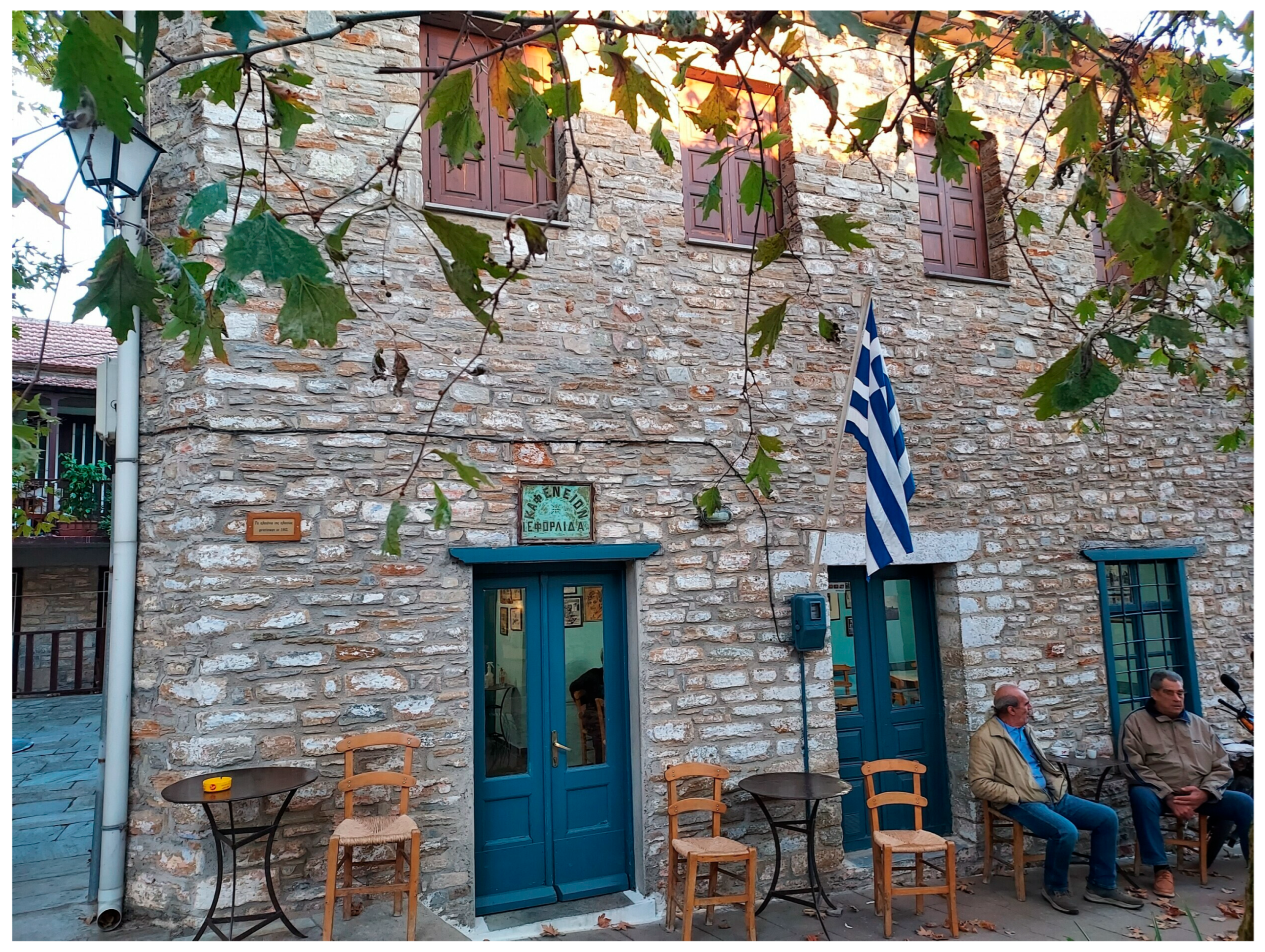
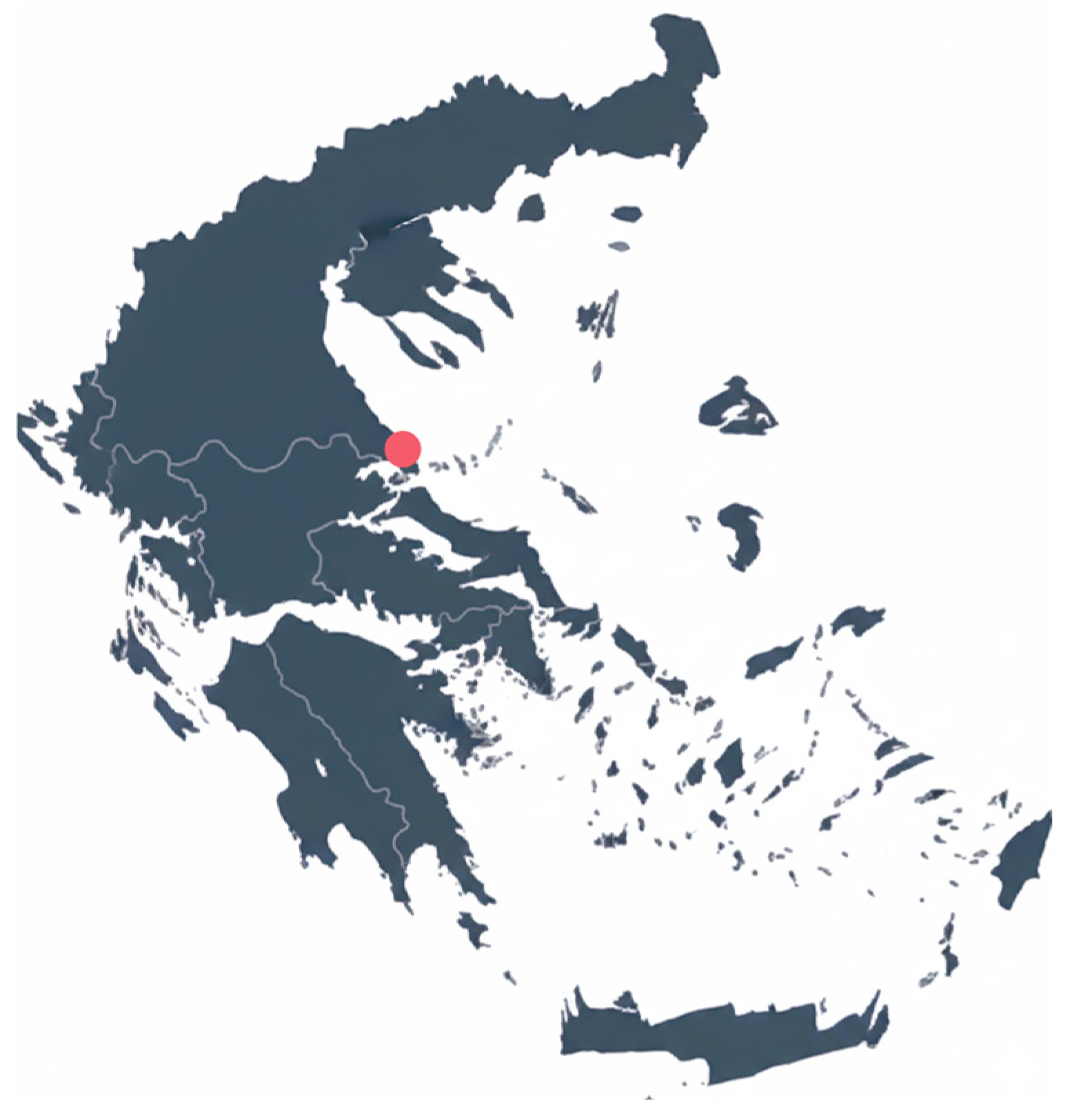
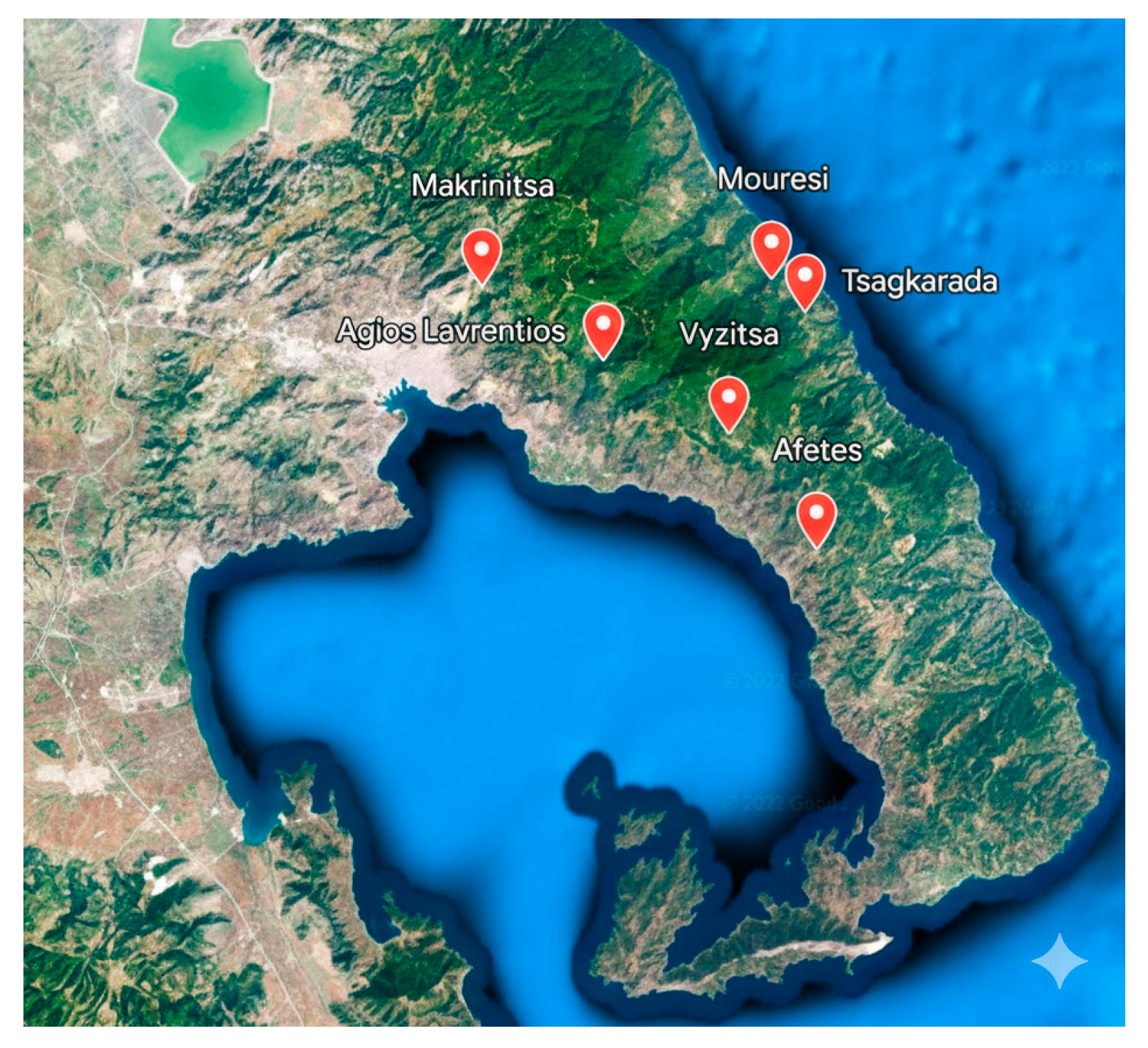
The study focuses on six Greek traditional settlements in Mount Pelion in Central Greece; Agios Lavrentios, Afetes, Makrinitsa, Mouresi, Portaria, Tsagkarada (see
Figure 1 and
Figure 2 below). Unlike many other settlements in Greece, the case studies reached their peak in the 18th century, a time which Greece was officially under the Ottoman occupation, due to a self-governing regime granted in the area.
Mount Pelion is a site of exceptional aesthetic value in terms of its natural and built environment (Ministerial decision Φ31/24512/1858/3.5.1976; Act 1469/1950 (A′ 169). The mountain is also historically significant as one of the exceptions of self-governed areas in Greece during the Ottoman occupation and most of the settlements in the area fall under a conservation framework, composing a renowned network of traditional settlements in Greece.
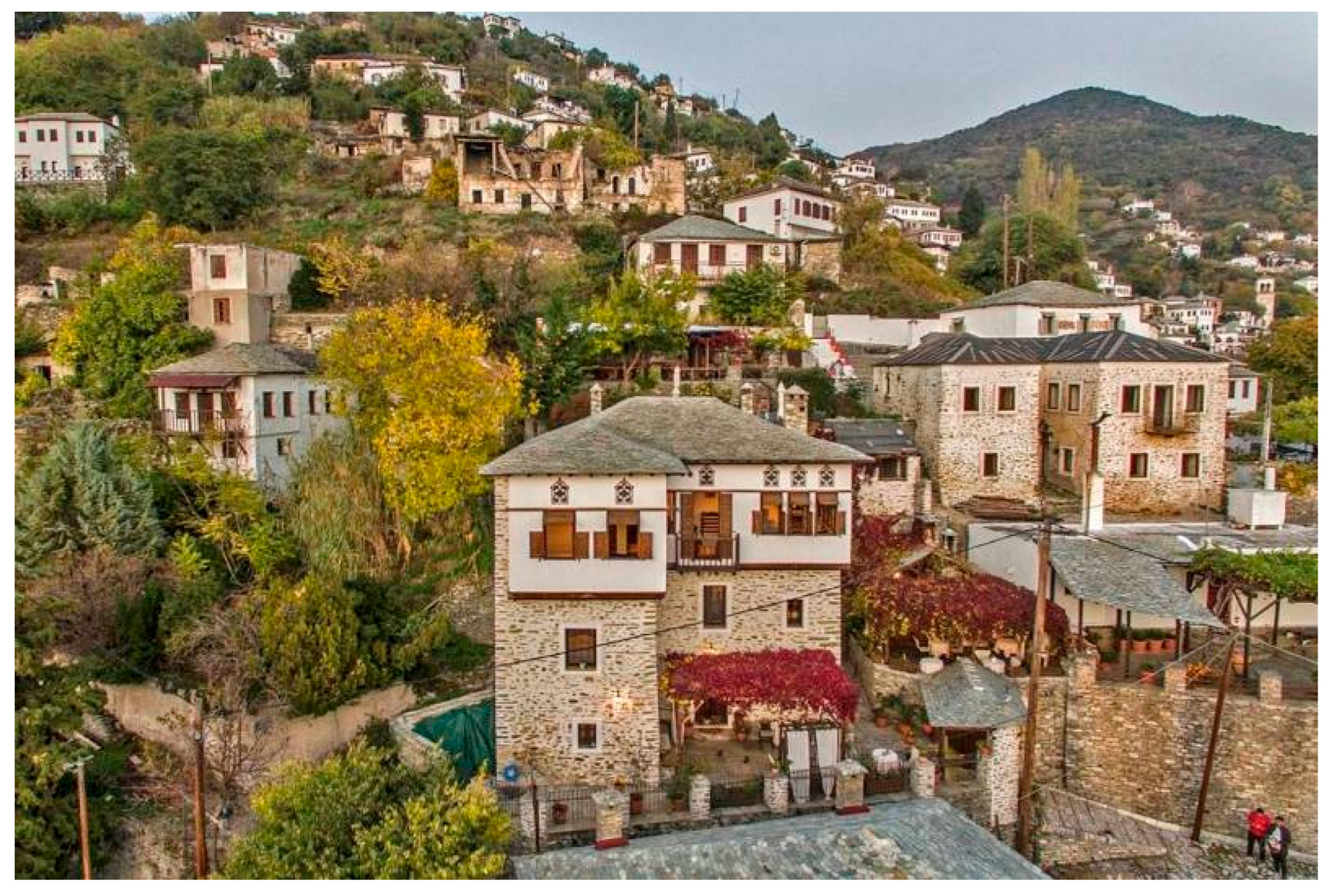
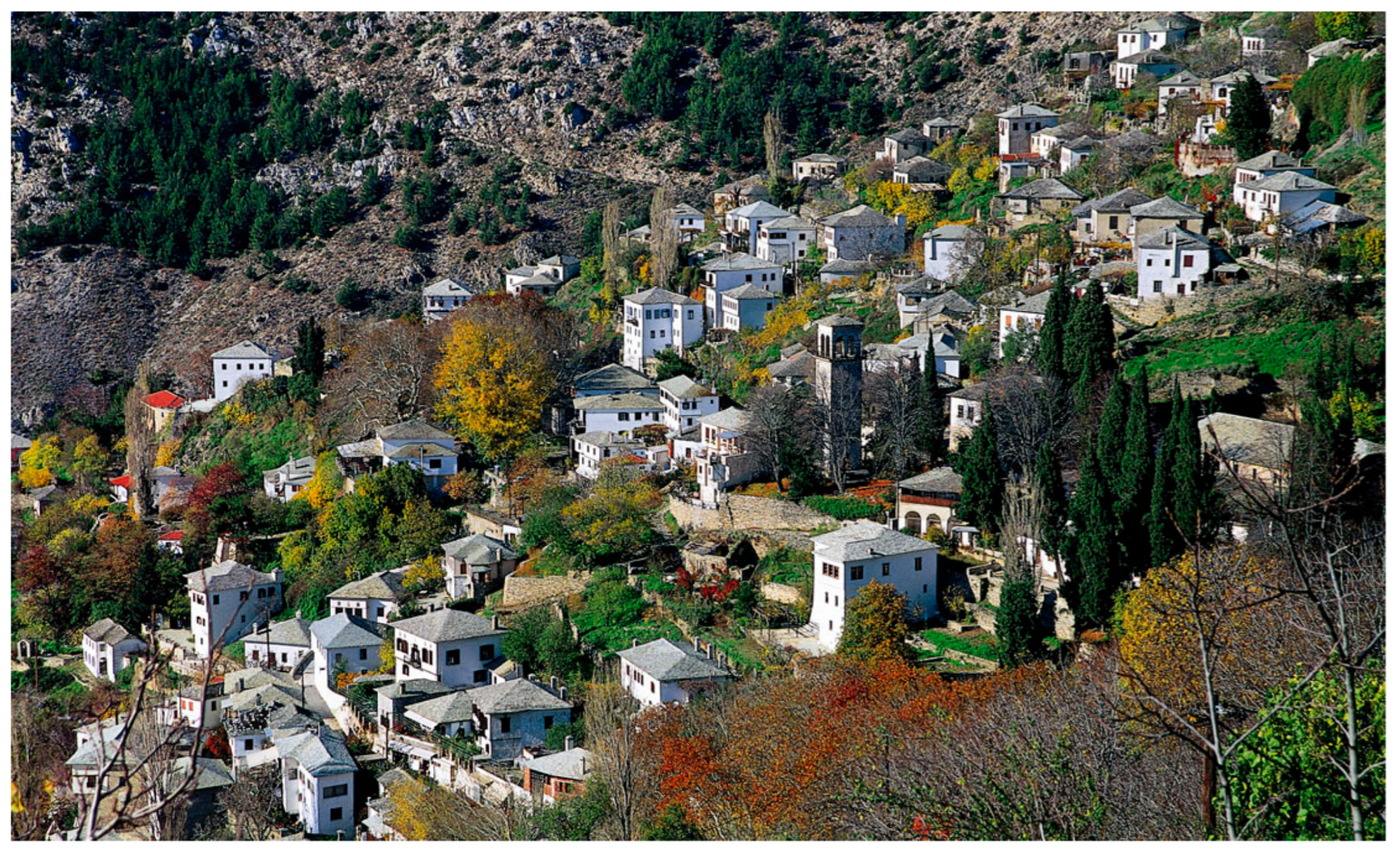
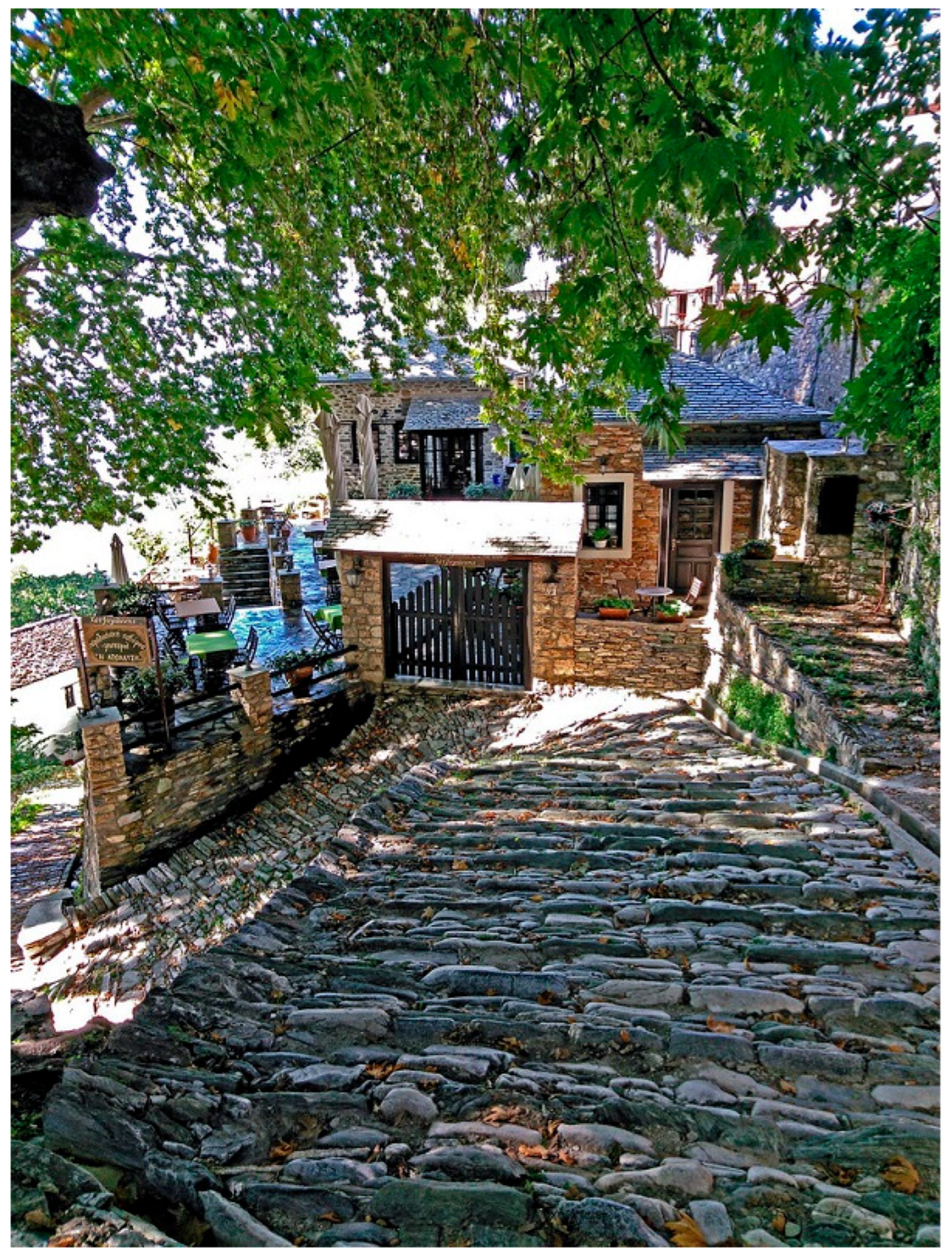
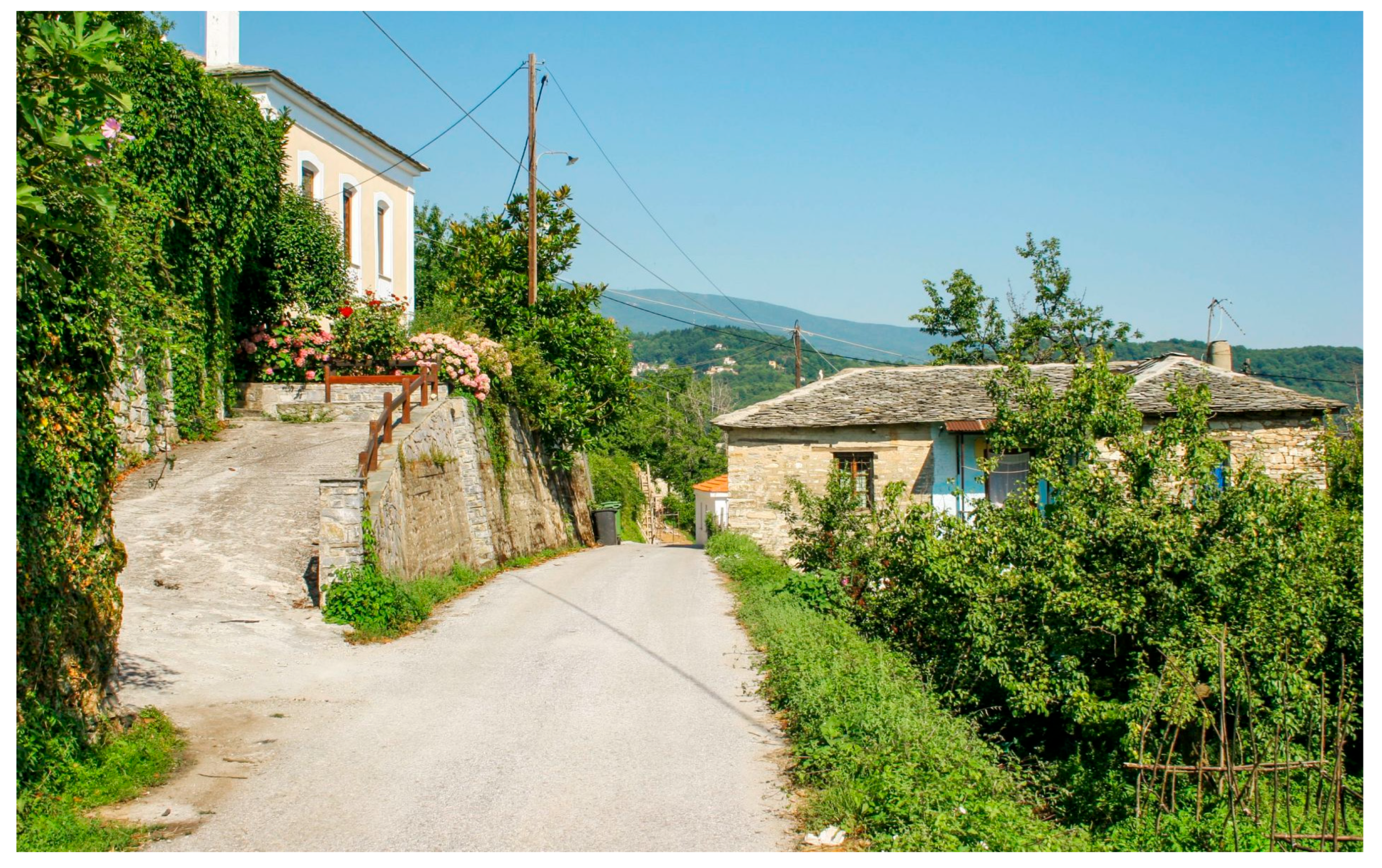
Today, these settlements constitute small-scale villages with populations ranging from 100 to 800 resident. Agriculture and tourism are the main economic activities. With the exception of the coastal villages, most settlements are clustered on steep mountain slopes and are characterized by vernacular architecture (see
Figure 3).
The incorporation of natural elements in the built environment is a prominent feature of local architecture, evident in the widespread use of indigenous stone and wood materials in construction [
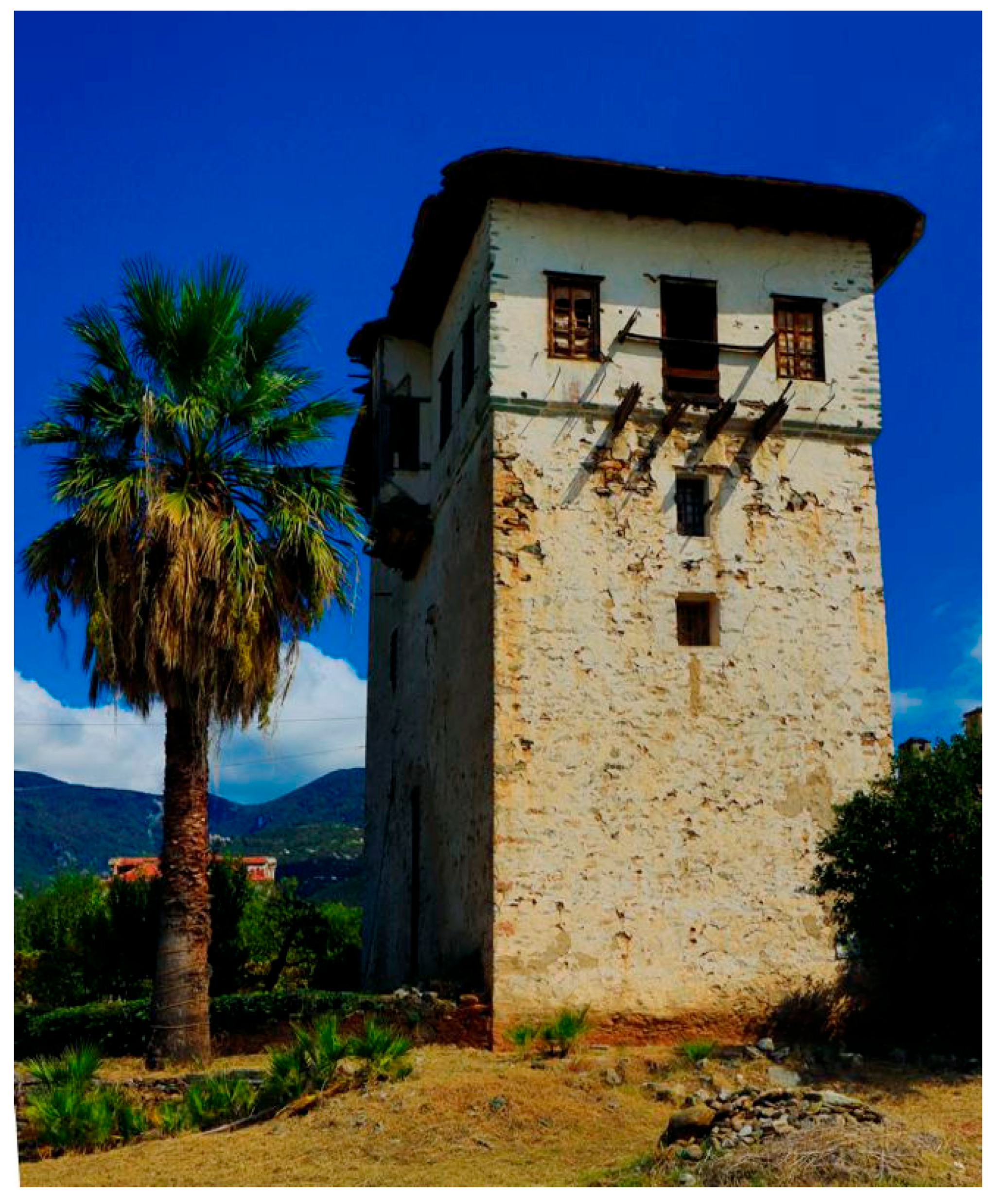
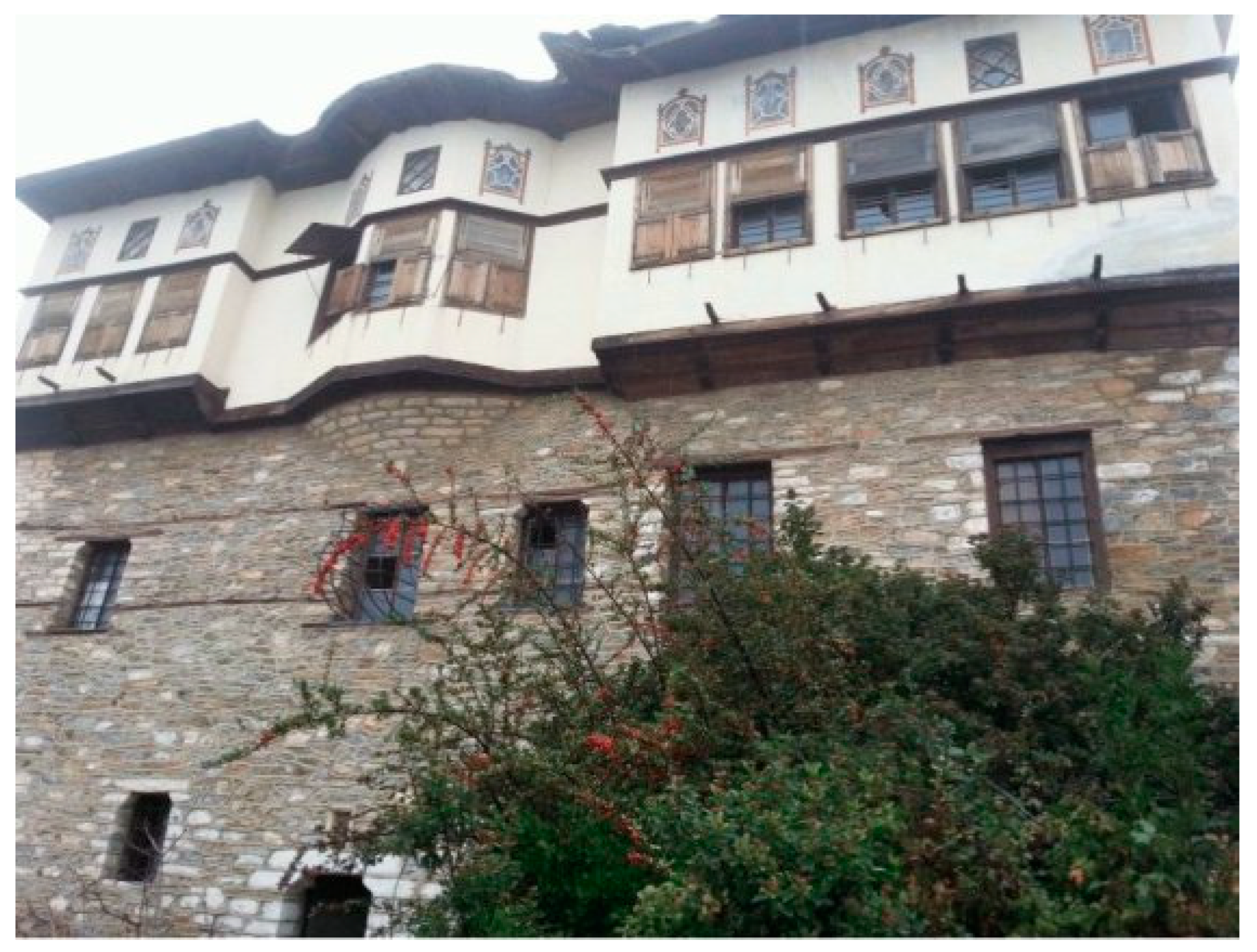
52]. The architectural landscape includes two or three-story houses and mansions with sloping roofs crafted from local stone slates, cobblestone streets, village squares, and sturdy stone churches and chapels, all harmonizing with the natural surroundings of the region. Building typologies can be broadly categorized into three periods: the early period, concluding in the early 17th century; the mid-period spanning from the 17th to the mid-18th century; and the later period encompassing the late 18th, 19th, and early 20th centuries (see
Figure 4,
Figure 5 and
Figure 6).
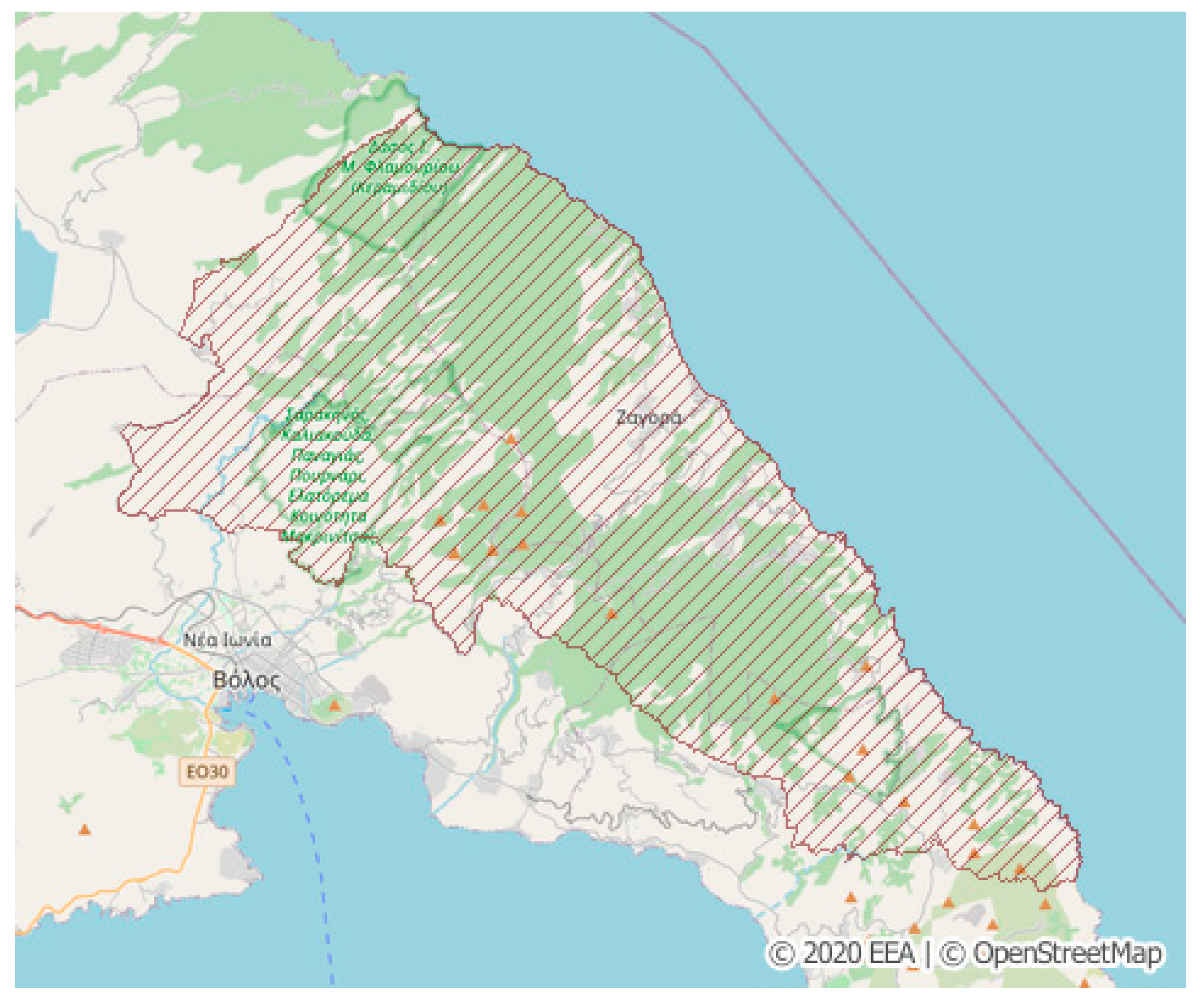
Both natural and built environment in the area fall under separate conservation policies with specific rules and regulations, despite some initiatives for an inclusive conservation strategy. A large part of Pelion Mountain has been included in Natura Network1 and characterized as a Site of Community Importance (SCI) (Natura 2000) targeting essentially at the protection of the natural assets and species in the area (see
Figure 7).
Six extended areas in Mount Pelion also have been designated as ‘Landscapes of Exceptional Natural Beauty’ or the so called ‘TIFK’. This is another instrument on the recognition and protection of ‘aesthetically’ exceptional natural landscapes firstly introduced with the Act 1469/1950. Although the main focus is on natural landscapes, built parts and/or areas such as traditional settlements, archaeological spaces and/or conservation areas as innate parts of the ‘exceptional’ landscape are often included in the listed areas, such as in the case of this study. However, the devise of the particular instrument has not been particularly effective for the management of the designated landscapes due to procedural and administrational inefficiencies that are beyond the scope of this study. It is also critical to note that natural environment is not immediately recognised and prescribed as heritage in the legal instruments related to its conservation’.
On the other hand, the built environment clearly features as ‘heritage’ under the ‘traditional settlements’ conservation framework. Specifically, the majority of settlements in the Mount have been inscribed as traditional by two Presidential Decrees in the late 1970s and early 1980s, respectively. The Presidential Decrees aim at the protection of built heritage and maintenance of the physical state of traditional buildings and structures, setting directions and rules regarding construction and interventions in buildings and land uses. The scale and the layout of settlements are among the top policy priorities. Further regulations refer to size and geometrical characteristics of the buildings as well as to construction materials, the aesthetics and design of new buildings to ensure compliance with the traditional character of settlement.
According to the conservation framework listed settlements are grouped in three categories: the first one containing settlements of impeccable architectural character that have maintained their fabric and layout almost intact throughout the years, the second one including settlements which overall maintained their traditional architecture although changes in the built environment are also evident and the third one with settlements witnessing most structural and architectural ‘distortions’. Congruent with these categories the rules and restrictions regarding interventions in the built environment are stricter in the first category settlements and more flexible in the third category ones, with the second category settlements lying somewhere in between. From the settlements under study two belong in the first category, Makrinitsa and Vizitsa while the other four, Mouresi, Tsagkarada, Agios Lavrentios and Afetes are under the second category. In terms of the configuration and layout Makrinitsa and Vizitsa are more compact and densely built with the different sectors/neighborhoods appearing as ‘clusters’ of buildings, connected by an extensive network of cobblestoned roads in contrast to the other settlements (see
Figure 8 and
Figure 9).
There instead, buildings are more scattered and dispersed in the mountainous slopes, while cobblestone roads have often been interrupted by conventional road networks and the development of new buildings (see
Figure 10). As a result, the former settlements appear to be more architecturally homogeneous and consistent in terms of their ‘traditional’ in comparison to the latter ones. This is further reflected in the orientation of tourism in these villages with the first ones promoting and capitalizing essentially on their ‘traditional’ architectural character and the latter ones advertising the natural assets as their key selling point instead.
5. Results: How Is Natural and Built Heritage Perceived by Locals?
The central inquiry of this paper is to examine whether and how official heritage classifications—such as natural vs. cultural—resonate with local ontologies of heritage. By critically engaging with these characterizations at the policy level and exploring how heritage is understood and valued at the community level, the study investigates the extent to which local perspectives align with, challenge, or expand dominant heritage frameworks.
Drawing on interviews with local residents and heritage experts this research explores the identification and evaluation of specific heritage elements, particularly the relationship between natural and built environments
Identification and evaluation of specific heritage elements such as natural and built and their relationship have been emergent themes the relevance and significance of which are explored in the following sections.
5.1. Natural and Built Heritage: Elements of Appreciation
Unlike the conventional categorizations of heritage into tangible versus intangible or cultural versus natural, as commonly depicted in Authorized Heritage Discourses, local understandings of heritage appear to be more holistic, encompassing temporal, experiential, and geographical dimensions. Responses to questions on heritage identification suggest that residents perceive heritage as an integrated entity, composed of built, natural, and intangible elements that are deeply intertwined with their way of life and sense of continuity. This perspective highlights the imprint of heritage on both the physical and social fabric of the community, as well as the enduring significance of the natural environment in shaping village life over time. Rather than viewing heritage as a collection of discrete elements, residents describe it as an inseparable whole—one that only fully makes sense when experienced in its entirety within the specific local context. Their perceptions align with a gestalt approach, wherein “the whole is greater than the sum of its parts,” emphasizing the interdependence of heritage components in shaping cultural identity and lived experience. This is characteristically captured in the following responses:
“It is all this I see, experience and feel here, what we maintain in this settlement, it is the sum of all those things around” (Woman 50, Agios Lavrentios) “What comes to my mind is the cobblestoned roads, the fountains the plane trees in the square, the nature around us, the square and a table there, the same table sitting there for years… all these together…To see an old 90 years old man sitting side by side with a young child in that old coffee shop at the square…the same with the festivals and our traditional dances, people holding each other’s hand when dancing in a circle, the same circle is made by people of different ages celebrating together the same way it was done hundred years ago…the stoves in the coffee shops and the old men who sit around them …the cobblestoned roads where you see the people and horses to pass by…it is not the objects as such, it is how we live and how we connect with them” (Woman 19, Vizitsa).
The quotes above align with relevant scholarship which stipulates that perceptions are shaped through an experiential account with heritage [
15] where the different components synthesise a ‘traditional’ as characterised by the participants ‘habitus’. The traditionality or heritage value of this habitus is attributed to a continuous intergenerational relationship with particular spatial markers (built or natural), usually communal places such as local squares and agricultural fields, and a web of social relationships resulting in norms, traditions, customs and practices instilled in the local lifestyle. For instance, a number of interviewees in these villages referred to particular customs and daily interactions which have ‘always’ taken place in certain spaces as characteristic examples of their heritage and associated social life:
‘Our summer festivals…have always been there…one of the main ways of amusement in the area, where everyone would come to the central square, eat together, dance have fun…I remember when I was a child going there with my parents and grandparents and now I am taking my grandchildren…’ (Man 75 Mouresi) ‘Most important events and other social gatherings always happen in the central square…you know it’s the gathering point, the heart of the village…everyone has life memories connected to the square’ (Man 45 Agios Lavrentios) ‘People would always come to the local square, it’s a meeting point you know… sitting under these centenarian trees, sipping our coffee…maybe coffees have changed over the years with new trends and habits but the square remains the same…do you see the paving(of the square with the local stone)…how many generations of us have walked and dance on these same stone slates!’ (Woman 65 Afetes)
Despite this holistic perspective on heritage—or “traditionality,” as more accurately termed by local residents—certain elements are prioritized over others when discussing the most representative features of these villages. As previously noted, the traditional settlements under study are situated within an area renowned for its exceptional natural environment, characterized by dense chestnut and beech forests at higher elevations and extensive fruit and olive groves at lower altitudes, extending to the coastline. This abundant natural landscape plays a significant role in shaping local ontologies of their surroundings, particularly in settlements classified under the second category of the conservation framework, where buildings are more dispersed, and the spatial layout is less dense compared to those in the first category.
In these second-category settlements, the natural environment emerges as the most frequently cited and valued characteristic. In response to inquiries about the most defining or desirable aspects of their villages, residents consistently emphasize the beauty, richness, and quality of the surrounding landscape before acknowledging built heritage or other cultural elements. Their discussions often centre on their deep connection to nature, the lush vegetation, the striking contrast between the sea and mountains, and the self-sufficiency afforded by local food production. This prioritization of the natural environment highlights its fundamental role in shaping both the lived experience and the cultural identity of these communities.
“If I had to describe Tsagkarada, I would say that it’s huge in relation to the other villages around, a low-density village, green as the whole mountain. The dew, the sea, the combination of the mountain with the sea which is difficult to find elsewhere” (Woman 28, Tsagkarada). ‘You feel so free here…always in contact with nature which gives you everything you need…it is undoubtedly the best quality in our lives’.
In line with other relevant studies [
27,
59] local residents take great pride in the natural elements when identifying significant aspects of their place’s image. However, it is particularly intriguing that despite their deep appreciation and awareness of these elements, they rarely explicitly attribute “heritage” value to them, with few exceptions who mentioned very specific natural elements as captured in the following statements:
“The plane tree is the most characteristic ‘reference’ point in the village, it is something like a natural monument” (Woman 48, Tsagkarada) “Traditional? I would say the houses, the cobblestoned roads…even the plane trees here in the square, aren’t they…I am not sure if nature can be labelled as heritage?” (Man 72, Agios Lavrentios).
The natural environment undeniably occupies a central role in shaping individuals’ understanding of their place and the associated ‘traditional’ lifestyle, often taking precedence over built elements in such discourses. However, the relationship between the natural environment and heritage is more nuanced and indirect rather than immediate or explicitly correlational. While residents frequently invoke natural elements when discussing the traditionality of their villages, these elements are seldom explicitly recognized or framed as heritage in their own right. Instead, they appear to function as a contextual backdrop against which heritage narratives and practices unfold, rather than being actively constructed as heritage themselves.
In contrast, built and intangible elements are more readily and explicitly identified as heritage, particularly when prompted during interviews to elicit a clearer understanding of what is conventionally regarded as such within the public sphere. Residents consistently listed a range of built structures, including cobblestone roads, churches, chapels, village squares, mansions, and other stone-built edifices, as emblematic of their heritage. This aligns with official conceptualizations of heritage in the region, which tend to prioritize architectural and tangible elements.
Interestingly, despite this alignment with official heritage frameworks, the significance of these built elements appears secondary in residents’ perceptions of what is uniquely representative of their villages. Natural elements, though not explicitly categorized as heritage, are often accorded greater importance in shaping local identity and distinctiveness. This suggests a complex interplay between official heritage discourses and local lived experiences, where natural elements, though not formally recognized as heritage, hold profound symbolic and affective value for communities.
Nature’s prioritisation over built elements in people’s awareness of heritage on the may be attributed to two main reasons: (i) the visual domination of natural elements, as the dense vegetation in combination with the particular geomorphology ‘engulf’ the built elements, especially in second category settlements, and (ii) the association of people’s daily lives with nature and as a result a high quality of life as further discussed in the next section.
5.2. Reasons for Heritage Appreciation
The appreciation of natural and built heritage elements by local residents—whether consciously recognized as such or not—is shaped by a complex interplay of factors, with two primary determinants emerging as particularly influential: (i) individuals’ knowledge about these elements and (ii) their emotional connection to them. While these factors are not mutually exclusive, the findings of this study reveal that participants predominantly emphasize values aligned with their understanding of ‘heritage,’ as defined by widely acknowledged and officially recognized frameworks. The attribution of heritage value appears to be heavily influenced by these formalized narratives, with immediate responses to questions about heritage appreciation often reflecting participants’ knowledge rather than their personal sentiments. This tendency is driven, in part, by an implicit desire to provide what is perceived as the ‘correct’ answer, as evidenced by the frequent use of terms such as ‘historical’ or ‘architectural’ significance in their initial responses. These answers, often brief and lacking elaboration, resemble those that one might provide in a knowledge-based quiz, underscoring the extent to which official heritage discourses shape local ontologies.
This phenomenon can be attributed to a terminological determination of what heritage is from the official point of view and longstanding marginalization of local perspectives in heritage management and delineation processes. As Kyriakidis [
16] notes, the persistent neglect of local input in heritage policies has led residents to internalize a sense of ineffectiveness or irrelevance in contributing to such discussions. Consequently, when asked to articulate their views, locals often default to aligning their responses with the prevailing ‘official’ narrative, which they perceive as more informed, valid, and legitimate. This tendency reflects a rational paradigm shaped by an expert-driven approach to heritage [
20], which has historically neither actively encouraged nor adequately acknowledged the perspectives of local communities. As a result, residents exhibit hesitancy and reservation in openly sharing their affective interpretations and judgments, believing that personal sentiments hold little weight in justifying or attributing heritage value.
In contrast, reasons for heritage appreciation rooted in affective connections—such as personal memories, familiarity, and associations with quality of life, which apparently determine the features that residents identify as most important in their settlements—required more time and effort to elicit. These responses emerged only after establishing a rapport with participants and creating an environment where they felt comfortable expressing themselves freely, without fear of providing a ‘wrong answer’ or facing judgment. This process highlighted the extent to which residents initially doubted the relevance of their personal perspectives, underscoring the need for more inclusive and participatory approaches to heritage management that validate and integrate local voices.
Through sustained informal interactions, relational connections and carefully structured prompts, residents gradually began to articulate their personal feelings and narratives regarding elements of heritage. One of the most consistently cited reasons for heritage appreciation, as emerging from these accounts, pertains to the local lifestyle and quality of life in these villages, as briefly alluded to in the preceding section. A significant number of residents expressed particular pride in their ‘natural lifestyle’—a distinctive way of living and interacting with the natural environment that is both shaped by and imprinted upon the landscape. For instance, locals frequently referenced the cultivated chestnut forests and pastoral fields, where their ancestors, and subsequently themselves, have experienced the ‘richness’ of the land. These spaces not only provided sustenance but also served as the backdrop for the rhythms of agrarian life. Reflecting on their experiences and memories, residents described these fields not merely as ‘working’ areas but as vital spaces of social interaction, particularly during harvest seasons.
During these periods, a substantial portion of the local population engages in agricultural activities, with family members, friends, and neighbours gathering to assist in the harvest. These communal efforts often culminate in shared meals, lengthy conversations, and the exchange of work and life experiences. Many interviewees expressed a deep appreciation for this collective labour, finding joy in the collaborative process while reminiscing about similar practices that took place centuries ago. Despite the introduction of modern technologies and methods in recent years, the essence of these activities has remained remarkably consistent. Residents hold a profound reverence for their connection to the land and to one another, viewing these agricultural practices not only as a means of subsistence but also as a symbol of community continuity. The act of working the land serves as a tangible link to their ancestors, who acquired, cultivated, and bequeathed these fields and buildings to subsequent generations. In recognizing the toil and sacrifices of their forebears, residents feel a sense of responsibility to preserve and even expand upon this inherited legacy.
The value placed on access to natural resources and the ability to cultivate agricultural products was further underscored by residents’ proud references to their personal gardens—a practice that has remained largely unchanged since the first inhabitants settled in the area. Regular mentions of health and well-being, attributed to subsistence agriculture, reinforced locals’ pride in their self-sufficiency and, by extension, their sense of ‘freedom’ in their way of life. This sentiment, combined with the deep-seated connection to the land described above, fosters a strong sense of place attachment and a unique ‘kinship’ between humans and non-human elements of the natural environment [
2]. Such practices illustrate how residents cultivate not only crops but also long-standing relations of care, reciprocity, and responsibility toward the landscape. In doing so, they actively sustain socio-cultural continuity, biodiversity, and local resilience. As a result, a harmonic relationship between natural and social sustainability is continuously crafted and evolves through everyday engagements with land, labour, and communal life.
The perceived ‘value’ of self-sufficiency is further amplified by the capacity of the natural landscape to attract tourism, thereby fostering economic development. According to several residents, the exceptional landscapes—characterized by dense vegetation, the proximity of the seashore, and the striking contrast between the verdant forests and the azure Aegean Sea—have become key drivers of tourism in the region over the past fifty years. These natural features are prominently showcased in promotional materials, underscoring their role in the area’s appeal. The interplay between the natural environment, agricultural practices, and tourism not only enhances residents’ pride in their heritage but also reinforces their attachment to the land, creating a dynamic interplay between cultural, economic, and environmental values.
Interestingly, the contribution of built heritage to the tourist ‘package’ is notably less emphasized in the second category of settlements when compared to the prominence of natural assets. In contrast, built heritage features more prominently in the first category of settlements, where the architectural layout is denser, more homogeneous, and clustered, the conservation framework is stricter, and the tourism product is directly associated with the architectural character of these villages. However, even in discussions about built heritage, there is a profound recognition of its intrinsic connection to the natural environment and the role of human agency in mediating between these two realms. Residents frequently highlight the embeddedness of buildings and structures within the natural landscape, emphasizing their construction from local materials and the traditional art of masonry.
Several interviewees specifically noted the seamless integration of built structures into the natural environment, attributing this harmony to the use of local stone and wood, as well as traditional construction techniques that demonstrate respect for nature. This deliberate selection of materials results in a visual coherence where built structures blend effortlessly into the surrounding landscape. Both the scale of the buildings and the materials employed in their construction are carefully considered to align with the natural environment, creating a cohesive and aesthetically captivating landscape that harmoniously incorporates both natural and built elements. Many participants expressed admiration for the ‘beauty’ of the ‘traditional’ built environment, consistently affirming that older structures are more visually appealing compared to modern constructions.
Crucially, these aesthetic judgments are primarily attributed to the skilled craftsmanship and local expertise in masonry. Local knowledge and expertise encompass not only the technical aspects of construction but also a deep understanding of local resources, the geomorphology of the area, and the methods by which raw materials can be respectfully extracted from the land. These factors are regarded as the primary drivers shaping the composition of the landscape, rather than formal “architectural” knowledge, which tends to dominate official conservation policies. In contrast to the official narrative that prioritizes the architectural significance of the built environment, locals often attribute the aesthetic and cultural value of their villages to the personal involvement of previous generations in these constructions. This perspective underscores the importance of traditional knowledge and community-driven practices in creating a built environment that is both functional and harmonious with its natural surroundings.
Characteristically a local woman notes: ‘the fact that everything is made by hand and so there was much attention to detail, ‘love’ and care for what was created’ (Woman 80 Mouresi) reminiscing about how locals in the past would extract and carry the building materials themselves while also participating in the construction of their own and fellow-citizens’ houses.
The construction of a house was, indeed, a communal endeavour, a fact vividly recalled by some of the older residents. They recount the strong social bonds forged through the various activities involved, from transporting materials and building to the celebratory practices marking the completion of different construction stages, which brought together diverse members of the community. One particularly poignant account came from a ninety-six-year-old woman, who vividly described how she and her husband personally carried stones to construct the very house in which we sat comfortably during our discussion. With a touch of nostalgia, she remarked that if those walls could speak, they would recount countless stories. She reminisced about the collective journey they had undertaken, recalling how neighbours and friends would come to lend a hand—women preparing meals and providing sustenance while the men worked on the construction, and the spontaneous celebrations that erupted upon reaching significant milestones, such as the completion of the roof.
These social processes, combined with the profound local knowledge of the land and the skilled use of local resources, are deeply embedded in the widely admired ‘pleasant’ built environment. This environment extends beyond mere aesthetics, embodying social and affective meanings for the local community. It is evident that the notion of “built” heritage in the area is intricately intertwined with both the natural environment and intangible elements, such as traditional building techniques and craftmanship. Residents’ holistic perspective of their surroundings reflects their deep connection to and immersion in the place they call home. The heritage they perceive is not confined or compartmentalized but rather encompasses a comprehensive whole that permeates their everyday lives. This collective heritage is transmitted from older to younger generations, not as static objects but as a dynamic continuum of knowledge, ownership, processes, and responsibilities. Through this transmission, heritage becomes a living, evolving entity, deeply rooted in the community’s identity and way of life.
6. Discussion
This study demonstrates that categorical divisions long embedded in heritage discourse—particularly the dichotomy between natural and cultural heritage—remain deeply entrenched within policy frameworks, despite their limited resonance with local realities. Empirical insights from rural communities in central Greece reveal that such binaries are largely absent from everyday heritage understandings. Instead, local ontologies reflect a holistic orientation aligned with the notion of a heritage ecosystem wherein built structures, agricultural landscapes, ecological settings, social practices, and vernacular knowledge constitute an interdependent and continuously co-produced system. Values emerge relationally through everyday use, ancestral connection, and socio-ecological engagement, unfolding across fluid temporal and spatial scales.
The findings also highlight a persistent dissonance between institutionalised heritage frameworks and community interpretations. While the Authorized Heritage Discourse (AHD) privileges architectural and tangible heritage, local perspectives articulate a relational ontology grounded in functional continuity, communal memory, and the entanglements of human and non-human actors. Built forms derive significance not solely from material fabric but from natural provenance, craftsmanship, and their embeddedness in socio-ecological rhythms. Agricultural landscapes similarly operate as sites of material livelihood, cultural meaning, and intergenerational knowledge transfer. Heritage, therefore, is maintained less through formalised preservation than through lived practices of use, care, and need.
Despite this holistic orientation, institutional hierarchies shape how participants articulate heritage. Natural and intangible dimensions, although deeply valued, are often expressed implicitly, while built heritage is more readily aligned with institutional terminology due to its prominence in policy discourse. This dynamic creates moments of factual compliance and affective hesitation, as individuals struggle to express emotional bonds that fall outside authorised vocabularies. Yet the natural and agricultural environment consistently emerges as central to place identity, well-being, and self-sufficiency, reaffirming the centrality of socio-ecological interdependence in local heritage ontologies.
These findings align with and extend recent scholarship emphasising relational, affective, and processual understandings of heritage, while further evidencing how epistemic hierarchies embedded in AHD marginalise vernacular knowledge and emotional geographies. They also underscore the importance of trust-building and sustained engagement: only as dialogue deepened did participants begin to articulate more affective dimensions of heritage, highlighting the need for participatory, patient, and reflexive approaches in heritage research and governance.
7. Conclusions
This study underscores the limitations of categorical heritage divisions embedded in institutional discourse and demonstrates the value of adopting a holistic, relational understanding of heritage grounded in local ontologies. Rural communities in central Greece articulate heritage as a dynamic socio-ecological system in which natural, cultural, tangible, and intangible dimensions are inseparable. These insights challenge the dominance of the Authorized Heritage Discourse and call for heritage governance models that recognise communities as co-producers of heritage value.
Affective, experiential, and vernacular dimensions of heritage must be integrated more systematically into conservation policy. Such an orientation shifts the focus from heritage as a static assemblage of objects toward heritage as an active process sustained through relationships, interactions, and care. Embedding affective heritage approaches within governance—such as through affective impact assessments, community-authored charters, and co-produced cartographies—constitutes not only an inclusive gesture but a methodological necessity for sustainable conservation.
Ultimately, advancing a more democratic and adaptive heritage discourse requires the institutional legitimisation of alternative epistemologies and the cultivation of participatory instruments that foreground lived experience. By recognising heritage as relational, negotiated, and continuously reconstituted, policy frameworks can become more context responsive, ethically reflexive, and supportive of resilient community–heritage relations.