Article

Entrepreneurial Signals and External Financing: How Investment Discourse Sentiment Moderates the Effects of Patents and Market Orientation


1
School of Business Administration, Chungnam National University, Daejeon 34134, Republic of Korea
2
Graduate School of Global Entrepreneurship, Kookmin University, Seoul 02707, Republic of Korea
*
Author to whom correspondence should be addressed.
Sustainability 2026, 18(1), 421; https://doi.org/10.3390/su18010421 (registering DOI)
Submission received: 28 October 2025 / Revised: 22 December 2025 / Accepted: 29 December 2025 / Published: 1 January 2026

Abstract

Existing research suggests that information asymmetry remains a core barrier to entrepreneurial firms’ external financing. Drawing on signaling theory and a signal cost perspective, this study examines how two key entrepreneurial signals—high-cost patent signals and low-cost international market orientation (IMO) signals—shape the scale of firms’ external financing in Korea. We argue that although both signals are positively associated with financing scale, their effectiveness is differentially conditioned by investment discourse sentiment. Specifically, positive discourse sentiment amplifies the financing effects of both signals, whereas negative discourse sentiment attenuates the effect of IMO but strengthens the impact of patent signals, indicating that in pessimistic contexts investors rely more heavily on high-cost, externally verifiable signals when valuing and allocating capital. Using data from the Korean Venture Business Survey (2021–2023) and investment discourse sentiment measures constructed via LDA topic modeling and dictionary-based sentiment extraction, our empirical analyses support these hypotheses.

1. Introduction

Entrepreneurship and innovation are increasingly regarded as key engines of sustainable and transformative economic development, essential for promoting growth and resilience [1]. However, amid ongoing green and digital transitions, severe information asymmetries continue to pose a major challenge for entrepreneurial firms seeking external financing. For young firms, this challenge is especially acute due to a lack of historical performance records, forcing investors to rely on observable cues to assess firm quality [2,3]. In this context, signaling theory [4] provides the core analytical framework, positing that firms can mitigate financing constraints by sending signals that are both costly and observable [2,4].
Signaling research differentiates signal types based on costliness and verifiability [2,5,6,7]. High-cost signals (HCS) primarily refer to independently verifiable outcomes that entrepreneurial firms have already achieved, such as patents, board prestige, or prior financing rounds [3,7,8,9,10]. In contrast, low-cost signals (LCS) mainly involve forward-looking narratives concerning future development trajectories and growth objectives, such as international market orientation (IMO), business plans, or psychological capital language [5,11,12,13]. The extant literature suggests investors rely heavily on HCS to effectively differentiate high-quality firms from low-quality firms [8,9,10], often viewing LCS as “cheap talk” and thus less effective [7,13,14]. However, this traditional view faces empirical inconsistency: some studies find LCS can positively influence financing outcomes, particularly when objective information is severely limited [11,12,14]. This suggests that the effectiveness of LCS is not consistent but highly context-dependent.
We argue that this inconsistency largely stems from prior research overlooking the macro-level discursive environment within which signals are interpreted. Although existing reviews highlight the importance of contextual contingencies—such as receiver characteristics and institutional conditions [7,8,14]—investors do not process signals mechanically in a “vacuum.” Rather, the construction of signal meaning is fundamentally a social-cognitive process constrained by shared interpretive frames. Drawing on discursive institutionalism, we posit that macro discourse provides interpretive schemas and legitimacy criteria within an institutional setting, thereby systematically shaping the evaluative logic through which economic behavior is assessed [15,16,17]. This perspective implies an integrated process pathway from public discourse to individual cognitive frames, then to signal interpretation, and ultimately to financing outcomes. Accordingly, the high-cost and low-cost signals emitted by startups are embedded in a broader “investment discourse” constituted by media coverage, policy debates, and market sentiment. By shaping investors’ cognitive orientations and attention structures, this discursive context determines whether a given signal is amplified, attenuated, or filtered, thereby generating heterogeneity in financing outcomes [18,19].
To address this research gap, this study examines how the sentiment of investment discourse shapes the effects of high-cost and low-cost signals on external financing [20]. Drawing on signaling theory’s discussion of “cost” and “verifiability” [2,6,7,8,14], we operationalize these two types of signals as patents and international market orientation (IMO), respectively. Patents require sustained R&D investment and must undergo external examination and authorization, thereby combining high cost with high verifiability and being regarded as a prototypical high-cost signal that reflects a firm’s sustained innovation capability [9,10]. By contrast, IMO reflects the extent to which a firm directs its resources and strategic configuration toward foreign markets [21,22,23], embodies the top management team’s international vision and long-term growth orientation, and conveys to investors the firm’s growth ambitions and potential competitive advantages [13,14]. Accordingly, this study focuses on two questions. First, to what extent do high-cost and low-cost signals, represented by patents and international market orientation, respectively, enhance entrepreneurial firms’ access to external financing? Second, how do the financing effects of these two types of signals vary with the macro-level sentiment of investment discourse in positive and negative discourse environments?
To answer these questions, this study combines entrepreneurial firm survey data from the Korean Venture Business Survey with news text to construct firm-level signal measures and annual-level discourse variables. We thereby measure firms’ signaling intensity in terms of patents and international market orientation and use the volume of angel investment and venture capital obtained as the outcome indicator of external financing. At the same time, drawing on a large corpus of news reports related to “firms” and “investment,” we apply LDA topic modeling and analysis to generate annual indicators of positive and negative investment discourse sentiment. After matching these two types of data, the study develops a cross-level empirical framework linking entrepreneurial signaling with the discursive environment and examines the main and moderating effects of high-cost and low-cost signals on external financing under different discourse conditions.
Taken together, this study makes three contributions. First, by comparing the effects of patents and international market orientation on external financing from the perspective of high-cost and low-cost signals, it shows that signal effectiveness depends not only on costliness and verifiability but also on the surrounding discursive environment, thereby extending signaling theory in entrepreneurial contexts with respect to multiple signals and contextualized effects [7,8,9,10,24]. Second, by introducing discursive institutionalism into entrepreneurial finance research and conceptualizing investment discourse sentiment as a macro-level discursive structure that shapes investors’ interpretive frames, the study reveals how public discourse influences the interpretation of different types of entrepreneurial signals through the construction of legitimacy [20,25,26]. Third, methodologically, by combining nationwide entrepreneurial firm survey data with large-scale news text and using topic modeling and analysis to construct annual indicators of investment discourse sentiment that are then matched with firm-level signals, the study provides a cross-level empirical approach that links micro-level financing signals with the macro-level discursive environment.

2. Theory and Hypotheses

2.1. Signaling Theory

Signaling theory originates in information economics and is used to explain how actors in highly information-asymmetric contexts transmit otherwise unobservable quality through observable “signals,” thereby shaping others’ judgments and resource allocation decisions [4]. In entrepreneurship and strategic management research, entrepreneurial firms are typically conceptualized as “signal senders,” whereas investors and financial institutions are viewed as “signal receivers.” Only signals that are both costly and sufficiently observable and verifiable are likely to enable high-quality firms to distinguish themselves from low-quality firms and to reduce uncertainty in investment and financing processes [2,6,7]. Within this framework, scholars have further differentiated signal types along dimensions such as “costliness” and “verifiability,” and have advanced the distinction between high-cost signals and low-cost signals [2,5,6,14].
In existing research, high-cost signals refer to those that require substantial investments of resources and time or involve considerable opportunity costs, and whose outcomes can subsequently be independently verified by third parties, such as patents, R&D expenditures, or changes in board structure. These signals are more difficult for low-quality firms to imitate and are therefore typically regarded as “quality signals” with relatively stronger credibility and discriminating power [2,3,8,9]. By contrast, low-cost signals mainly consist of statements and narratives concerning future visions, growth trajectories, or the subjective states of entrepreneurs, such as the way business plans are articulated, the display of emotion and passion during pitch presentations, and language that reflects “positive psychological capital” [5,10,11,12]. These signals entail relatively low resource commitments and are less difficult to verify, making them easier for firms of varying quality to emit simultaneously and thus more likely to be conceptualized in theory as “low-cost” or even “cheap talk” [13].

2.1.1. Patent Counts and External Financing

Entrepreneurial financing typically occurs under high information asymmetry. In this context, entrepreneurial firms convey otherwise unobservable quality to external investors through observable and verifiable signals, thereby mitigating information asymmetry and reducing uncertainty in financing decisions [2,6,27]. In the field of entrepreneurial financing, prior studies typically regard patents as prototypical high-cost signals that help reduce uncertainty. Patents serve not only as legal instruments for protecting intellectual property but also as tradable assets, enabling firms to signal their realized R&D outcomes and technological stock to potential investors [9,28,29,30]. The inherent costliness of the R&D process and the rigorous external examination and authorization procedures patents must undergo ensure their high verifiability, making them difficult for low-quality firms to imitate [2,6,29]. This combination of cost and verifiability enhances the visibility of innovative activities and strengthens the legitimacy of entrepreneurial firms [9,27,30]. Consequently, investors routinely rely on observable and credible signals like patents to assess firms’ technological capabilities and establish a separating mechanism between high-quality and low-quality ventures during project screening [2,8,31], thereby increasing their chances of obtaining external financing support.
Prior research reports a positive effect of patents on the evaluation of ventures or their financing performance. For technology-based firms, the number of patents held by a firm and the extent to which those patents are cited are positively associated with the firm’s market value and capital market assessments [27]. In entrepreneurial and venture capital contexts, studies consistently confirm that patenting activities—including the procedural information generated during examination—are crucial in project evaluation, significantly relating to the likelihood of obtaining venture capital funding and the level of venture capital support [8,31,32,33]. Furthermore, this patent-based knowledge capital is directly reflected in investors’ valuations, with firms holding larger and more valuable patent counts tending to secure higher valuation premiums [9,28]. These findings suggest that, in external financing processes, investors often regard “the number of patents” as a straightforward signal of a firm’s technological accumulation and innovation potential: the more patents a firm holds, the more likely it is to be interpreted as having sustained R&D investment and a stronger technological base, thereby gaining a relative advantage in project screening and capital allocation.
Building on this logic and signaling theory, we treat the total number of granted patents as an indicator of the strength of a firm’s patent signal. Because patents constitute high-cost, externally verifiable signals, ventures with larger patent portfolios should be better able to reduce information asymmetry, alleviate investors’ concerns about the firm, and consequently secure greater external financing. We therefore propose the following hypothesis:
Hypothesis 1.
Patent counts are positively associated with the external financing.

2.1.2. International Market Orientation and External Financing

In highly information-asymmetric entrepreneurial financing environments, ventures seeking external capital also emit relatively low-cost signals. Such signals typically center on a firm’s strategic direction, market expansion trajectory, and managerial growth ambitions [5,6,13]. Examples include narrative framing in business plans, descriptions of future market opportunities, and articulated plans for internationalization or entry into new markets, all of which communicate entrepreneurs’ forward-looking plans and growth aspirations to investors [5,6,12]. Although these signals generally lack strong commitment costs and external certification—and are therefore more likely to be discounted as “cheap talk” in theory [6,13]—they can still influence investors’ evaluations in early-stage funding contexts, where objective information is relatively scarce and assessments rely heavily on subjective impressions of entrepreneurs’ capabilities and venture prospects [12,13,34,35]. Accordingly, in the early stages of entrepreneurial financing, low-cost signals may still serve as meaningful cues for investors when assessing project quality [5,6,13].
Among these low-cost signals, initial international market orientation reflects a venture’s strategic inclination and target market choice toward international markets at founding and in the early stage, and has been widely discussed in the international entrepreneurship and internationalization literature [21,22,23]. Prior research suggests that an early international orientation is often expressed through tendencies to enter foreign markets earlier, engage in exporting, pursue cross-border collaboration, or undertake initial overseas market positioning, indicating a sustained strategic focus on international opportunity development and a longer-term intent to grow beyond domestic markets [19,20,21,22,23,36,37]. Overall, initial international market orientation conveys growth ambition, strategic commitment, and long-term competitiveness and is generally interpreted as a positive signal [13,21,22,23]. Compared with high-cost signals such as patents, however, initial international market orientation is more forward-looking and may not yet have translated into fully verifiable operating outcomes at the founding and early stages. From the perspective of costliness and verifiability, it is therefore closer to a low-cost, anticipatory signal [5,6,10,13]. Under high information asymmetry, if investors interpret this orientation as evidence of a venture’s ability to identify global opportunities and achieve scalable growth, ventures with stronger initial international market orientation are more likely to receive favorable evaluations in external financing markets and consequently secure a larger scale of external financing [21,22,23,38,39].
Accordingly, we conceptualize initial international market orientation as a low-cost, forward-looking strategic signal that captures a venture’s target market choice at founding and its intent to expand beyond the domestic market [21,22]. By demonstrating sustained attention to international opportunities and an orientation toward building cross-border capabilities, this strategic posture can reduce investor concerns about growth prospects and scalability and, in turn, increase the scale of external financing [13,23,39]. We therefore propose the following hypothesis:
Hypothesis 2.
International market orientation is positively associated with the external financing.

2.2. Discursive Foundation of Sentiment: Shaping Cognitive Frames

In highly uncertain early-stage contexts, the institutional environment provides few stable evaluative structures for assessing entrepreneurial quality, rendering the meaning of signals more fluid and contestable [2,6,29]. Facing severe information asymmetry and limited verifiability of ventures’ future prospects, investors increasingly rely on externally available narratives and information intermediaries to reduce uncertainty and coordinate expectations [15,18,24,25]. Through this reliance, prevailing discourse sentiment systematically shapes investors’ cognitive frames. According to discursive institutionalism (DI), these cognitive frames provide the necessary evaluative structures that govern signal interpretation, ultimately determining how signals influence financing outcomes [16,17,18,40]. By providing a communicative space to negotiate the meaning of innovation, discourse helps reconcile market uncertainty with cognitive stability in entrepreneurial contexts [41].
We draw on DI as a theoretical lens to specify how discourse operates. DI posits that ideas and discourse are constitutive: they structure social reality and actors’ cognition [15,16]. In entrepreneurial finance, this is consequential because investors must infer otherwise unobservable venture quality from limited cues, making interpretation central to capital allocation [2,4]. Public discourse—particularly via media—can further shape legitimacy judgments by privileging certain interpretations and evaluative standards [17,20,25,39,42].
The investment discourse sentiment examined here functions as a vehicle for ideas that diffuses through public communication channels and becomes shared among relevant audiences [15,16,17,43]. Through repeated circulation, discourse helps coordinate a shared evaluative frame regarding a given market, technology, or industry, shaping which cues are viewed as salient, credible, and legitimate [17,20,24,25,43]. Because language can be quantified to capture sentiment and interpretive dynamics in financial contexts, discourse sentiment provides an observable proxy for these broader evaluative climates [18,44,45].
This shared cognitive frame guides investors’ attention, risk perceptions, and legitimacy judgments, thereby moderating the process of signal interpretation. In line with research suggesting that cognitive constraints affect how actors process information, discursive environments can redirect what investors notice and how they recalibrate the weighting of different signals [19,45,46]. Consequently, by activating particular cognitive frames, investment discourse sentiment differentially modulates investors’ reliance on various signal types. This discursive mechanism clarifies how the environment amplifies or attenuates the diagnostic power of signals, determining when specific cues become more critical for financing decisions [2,6,29].
This perspective supports a process model in which discourse sentiment shapes investors’ cognitive frames, which then moderate signal interpretation and ultimately influence financing outcomes. By directing attention and recalibrating perceived risk and legitimacy assessments, discourse sentiment specifies key boundary conditions of signaling effectiveness in entrepreneurial financing [6,7,14,18,29]. Consequently, these cognitive frames function as a moderating filter that determines the relative weighting investors assign to high-cost versus low-cost signals.

2.2.1. Positive Investment Discourse: Establishing an Optimistic Cognitive Frame

Empirical findings on low-cost signals remain mixed. While some studies show that low-cost, forward-looking cues can improve financing by shaping investors’ subjective assessments [10,12,13], others suggest that signals lacking commitment costs and external certification are often dismissed as “cheap talk,” yielding limited or even negative effects [6,13,29]. This inconsistency implies that classifying signals solely by cost and verifiability is insufficient, highlighting the need to theorize how interpretive contexts shape signal meanings in financing decisions [6,7,14,29,46].
Building on the theoretical framework outlined above, we specify how positive investment discourse sentiment consolidates an optimistic cognitive frame that systematically shapes investors’ interpretation of entrepreneurial signals. When media narratives and public discussions emphasize innovation, opportunity, and growth potential, they generate a favorable positive sentiment that increases investors’ optimism and risk tolerance and reduces concerns about adverse selection and moral hazard [18,44]. Evidence from IPO and stock markets likewise suggests that sustained favorable coverage strengthens cognitive legitimacy and elevates overall evaluations, thereby changing how investors interpret the same observable cues [18,20,25,39].
Within this optimistic frame, investors’ evaluative orientation shifts from predominantly “risk-control” to “opportunity-seeking.” As a result, both high-cost and low-cost signals are more likely to be interpreted through a positive lens, albeit for partially different reasons. For high-cost signals such as patents, the optimistic frame increases the perceived upside of technological assets by reinforcing the belief that innovation can be successfully commercialized and scaled, thereby raising the expected returns of verifiable technological achievements [9,28,47]. For low-cost, forward-looking strategic signals such as international market orientation, the same frame enhances the perceived legitimacy and plausibility of growth narratives, making investors more willing to treat such strategic intent as credible and valuable for capturing global opportunities [13,21,22,23]. In short, positive discourse sentiment does not merely accompany financing conditions; it acts as an institutional “filter” that amplifies favorable interpretations of both signal types and strengthens their effectiveness in capital allocation [15,16,17,18,48].
Therefore, we propose that positive investment discourse amplifies the financing benefits of entrepreneurial signals overall and specifically strengthens the effects of patent signals and international market orientation on external financing. We propose the following general and signal-specific hypotheses:
Hypothesis 3.
Positive investment discourse sentiment strengthens the positive relationship between entrepreneurial signals and external financing.
Hypothesis 3a.
Positive investment discourse sentiment positively moderates the relationship between patent counts and external financing.
Hypothesis 3b.
Positive investment discourse sentiment positively moderates the relationship between international market orientation and external financing.

2.2.2. Negative Investment Discourse: Establishing a Pessimistic Cognitive Frame

In contrast, negative investment discourse sentiment fosters a pessimistic cognitive frame that heightens investors’ perceptions of uncertainty and downside risk, thereby conditioning how entrepreneurial signals are interpreted and weighted in financing decisions. Empirical research in capital markets shows that negative media sentiment is associated with short-term downward price pressure and increased trading activity and volatility [18,19,46]. At the firm level, negative wording in news reports and disclosures predicts subsequent earnings and stock return performance, particularly when it focuses on fundamentals, indicating that pessimistic discourse is treated as informative rather than as mere noise [36,49]. Research on media coverage and legitimacy further suggests that critical or skeptical narratives undermine firms’ perceived legitimacy and overall evaluations [20,24,39,50]. Collectively, these findings imply that under negative discourse environments, investors adopt a more cautious evaluative stance and impose stricter standards, as their attention is more acutely focused on potential downsides [46,51].
Within such a pessimistic evaluative context, investors’ evaluative orientation shifts toward risk protection and verification, altering their reliance on different types of entrepreneurial signals. Specifically, investors place greater weight on high-cost, externally verifiable patent signals, particularly those based on granted patents that reflect realized technological outcomes and are difficult to falsify [2,6,8,9,29,33]. In contrast, forward-looking low-cost signals, such as narratives emphasizing international expansion and growth ambitions, are more likely to be discounted as speculative or “cheap talk,” given their limited short-term verifiability [6,13,29]. Thus, negative investment discourse does not uniformly dampen the influence of all signals; rather, it reallocates interpretive weight across signal types, strengthening reliance on verifiable signals while attenuating the influence of low-cost, forward-looking cues. Accordingly, we propose the following general and disaggregated hypothesis and subhypotheses:
Hypothesis 4.
Negative investment discourse sentiment moderates the relationship between entrepreneurial signals and external financing.
Hypothesis 4a.
Negative investment discourse sentiment positively moderates the relationship between patent counts and external financing.
Hypothesis 4b.
Negative investment discourse sentiment negatively moderates the relationship between international market orientation and external financing.

3. Materials and Methods

3.1. Data and Sample

This study combines structured firm-level data with unstructured text data to examine how entrepreneurial signals and the emotional sentiment of investment discourse jointly influence external financing outcomes. Firm-level data for this study were drawn from the Survey on the Detailed Research on Venture Business Status, administered by the Ministry of SMEs and Startups (MSS) of Korea and officially published by Statistics Korea. Recognized as a high-quality data source, this survey has been extensively used for government policy design and ecosystem evaluation, and it is an official source adopted by international organizations for analyzing Korea’s entrepreneurial landscape. For the empirical analysis, we pooled three consecutive waves of survey data (2021–2023), resulting in an initial set of 8500 observations. Due to strict anonymization and the masking of firm identifiers, individual ventures cannot be tracked longitudinally. This administrative constraint precludes a firm-level panel structure; thus, our results reflect cross-sectional associations. After excluding observations with missing values in key variables, the final analytical sample consists of 3456 firm-year observations.
To construct the investment discourse sentiment variables, we collected 51,829 news articles published between 2019 and 2023 by three major Korean media outlets: the conservative JoongAng Ilbo, the progressive Hankyoreh, and the business-oriented Maeil Business Newspaper. Articles were selected based on the co-occurrence of the keywords “firm” and “investment,” ensuring relevance to the theme of entrepreneurial financing. We then applied Latent Dirichlet Allocation (LDA) topic modeling to identify latent thematic structures within the news texts [52,53,54]. LDA has been widely used in management and entrepreneurship research to extract concepts and structural patterns from large text corpora [55,56]. At the annual level, the proportion of articles associated with investment-related topics was used as an indicator of the salience of investment discourse.
Subsequently, we conducted classification of the news articles using a dictionary-based approach [56,57,58], categorizing them into positive or negative sentiments. Given that media coverage and ideological orientations may shape the portrayal and evaluation of firms [39,59], incorporating news sources with diverse ideological leanings enables a more comprehensive and balanced reflection of public investment discourse.
Following prior research on media sentiment and the informational content of language in financial contexts [18,44,45], and consistent with discursive institutionalism’s emphasis on gradual diffusion of discourse and ideas in shaping shared evaluative standards and legitimacy judgments [15,16,17], we lagged the investment discourse variables by two years to capture delayed effects of public narratives on investor perceptions and financing decisions. This lag structure is also consistent with evidence that uncertainty and narrative shocks can propagate gradually through financing systems over a medium-term horizon [60,61].
Finally, we merged the two-year lagged investment discourse variables with the pooled cross-sectional firm-level data from 2021 to 2023. After excluding observations with missing values, the final sample comprised 3456 firm-year observations. Importantly, we retain the full sample, including firms with positive external financing as well as those reporting zero financing, which allows us to examine how entrepreneurial signals and investment discourse sentiment relate to external financing outcomes across the full distribution of financing.

3.2. Variable Construction

3.2.1. Dependent Variable

The dependent variable is external financing. External financing captures the scale (amount) of equity capital raised by entrepreneurial firms from external investors and has been widely used to examine how entrepreneurial signals translate into capital acquisition outcomes [7,62]. We use the KVBS item “external financing” for 2021–2023, which reports the total amount of equity funding obtained from venture capital and angel investors. To improve comparability and mitigate skewness, we rescale the original amount to units of 100 million KRW and apply a logarithmic transformation with a +1 adjustment, ln (1 + financing amount), which retains zero-financing observations while reducing skewness and the influence of extreme values. Observations with missing responses on the financing item are excluded.

3.2.2. Independent Variables

This study’s first independent variable is patent counts emphasized as a high-cost quality signal because generating and maintaining patents requires substantial investment, is difficult to imitate, and is externally verifiable [2,6,8,9]. We use the KVBS 2021–2023 item “current number of patents held” and construct the measure as ln(1 + total patents) to reduce right-skewness, the influence of extreme values, and the mass at zero. The variable is mean-centered prior to estimation to facilitate the interpretation of interaction terms [27]. This measure captures the stock of granted/registered patent rights held rather than contemporaneous patent applications, which helps reduce concerns that patents are mechanically contemporaneous with financing outcomes [30].
The second independent variable is international market orientation at founding (IMO at founding). This construct captures whether a firm intended to target foreign markets at founding. It is based on the survey-recorded choice of the target market at the time of founding and thus reflects entrepreneurs’ initial strategic intent rather than subsequent internationalization outcomes [21,22,23,37]. We operationalize it using the KVBS 2021–2023 categorical item “target market at founding”, which includes three options: domestic only, international only, and domestic + international. This measure is intention-based and does not capture realized internationalization such as export activity or foreign sales. We recode it into a dummy indicator coded 1 if a firm selected either “international only” or “domestic + international,” and 0 if it selected “domestic only.”

3.2.3. Moderating Variables

The moderating variables in this study capture the sentiment (tone) of investment discourse in the news media, operationalized as positive and negative investment discourse sentiment indicators. We also construct an investment discourse activation (salience) measure to capture the intensity of investment-related attention. Drawing on discursive institutionalism, we argue that media discourse both mirrors market attention to investment and shapes investors’ cognitive frames through its evaluative tone, thereby conditioning how entrepreneurial signals are interpreted and weighted in financing decisions [15,16,17,18]. To construct these measures, we compile a news corpus from BIGKinds covering 2019–2023 from three major national newspapers in Korea (JoongAng Ilbo, Hankyoreh, and Maeil Business Newspaper). These outlets provide broad, mainstream coverage suitable for characterizing the media-level discourse environment. From 1,315,922 articles, we extract 51,829 articles containing both “firm” and “investment” in the main text and apply Latent Dirichlet Allocation (LDA) to identify the latent thematic structure of investment-related discourse [52,53,54].
To determine the optimal number of topics (K), we followed prior studies and evaluated candidate LDA models using topic coherence (c_v) [35,63] and semantic distinctiveness based on cosine similarity [64] across a range of specifications with K from 5 to 30. To ensure the robust identification of latent concepts, we also performed stability analysis to verify that the thematic structures remained consistent across different model iterations [65].
As shown in Figure 1, coherence reaches its maximum at K = 26, outperforming alternative solutions; therefore, we adopt the 26-topic LDA specification for subsequent analyses. Additional diagnostics—including inter-topic distance maps and manual checks of topic interpretability—further support that this specification achieves clear semantic separation and strong interpretability [53,55,63,65]. The full topic list (with top keywords) is reported in Appendix A Table A1, and additional diagnostic results are provided in Appendix A Figure A1.
Based on the 26-topic model, we identify the set of investment-related topics (K) through keyword inspection and manual validation. We then compute an annual Investment Discourse Activation (IDA) index to capture the salience of investment-related discourse in the news media:
I D A t = 1 N t i = 1 N t k K T o p i c P r o b i , k
where N t denotes the total number of news articles in year t ; T o p i c P r o b i , k represents the probability that article iii belongs to investment-related topic k ; and set K includes all topics directly related to investment. Higher IDA values indicate greater salience and activation of investment-related discourse in the media for that year.
Furthermore, to identify the sentiment orientation of investment-related news texts, we employ a dictionary-based sentiment approach [56,57]. In a Python 3.11 environment, we tokenize and preprocess Korean news texts using KoNLPy [57] with the Open Korean Text (OKT) tokenizer. Sentiment terms are drawn from the KNU Korean Sentiment Lexicon developed by a research team at Kunsan National University [64] (approximately 14,800 entries, constructed from definitions in the standard Korean language dictionary and generated using a Bi-LSTM model). To improve computational efficiency and methodological transparency—while also reducing polysemy- and context-related noise common in financial texts—we focus on sentiment terms from the KNU lexicon that are frequent and unambiguously oriented in investment-related contexts (see Appendix A Table A3).
We then count the occurrences of positive and negative terms at the article level and classify an article as positive (negative) when the positive (negative) count dominates. Finally, we aggregate these article-level sentiment classifications to the annual level to construct yearly positive and negative investment discourse indicators (see Appendix A Table A2 for the annual distribution). The annual indicators are defined as follows (Equation (2)):
P o s S e n t i m e n t t = N p o s , t N t , N e g S e n t i m e n t t = N n e g , t N t
where N t denotes the total number of news articles in year t ; N p o s , t represents the number of news articles classified as positive in year t ; and N n e g , t represents the number of news articles classified as negative in year t . These measures capture the proportion of positive and negative within the overall coverage of a given year, reflecting the annual evaluative sentiment of the media discourse environment. For empirical analysis, we scaled the values of both the IDA index and the positive/negative discourse proportions ( P o s S e n t i m e n t t   and   N e g S e n t i m e n t t ) by multiplying by 10,000 to enhance the interpretability of regression results.
Given that media discourse sentiment can shape investors’ cognitive frames and expectations through cumulative and delayed diffusion processes, our research design operationalizes the discourse moderators as two-year lagged annual indicators [15,16,17,18]. This lag captures a plausible medium-term window over which discursive conditions are absorbed by market participants and gradually influence financing outcomes, consistent with evidence that uncertainty and information environments can affect lending and investment with delayed effects [46,60,61]. Using lagged discourse measures also temporally separates discourse conditions from realized financing decisions, helping mitigate concerns about simultaneity and reverse causality [18,66,67].

3.2.4. Control Variables

To more accurately identify the effects of the focal independent variables on external financing and to account for other factors that may also shape financing scale, we include a set of firm-level and founder-level control variables.
At the firm level, the model controls for R&D intensity—defined as the ratio of R&D expenditures to total assets—and incorporates a categorical indicator of innovation level based on the degree of business model innovation. This specification distinguishes innovation inputs from broader innovation profiles when modeling financing outcomes [30,43,57]. Additionally, firm size is accounted for using the total number of full-time employees to reflect differences in resource endowments [28,48].
To further mitigate unobserved heterogeneity, industry fixed effects are included to absorb sectoral heterogeneity in innovation and financing environments [37,68]. Finally, the study employs firm age fixed effects based on coded intervals of years since founding. Rather than utilizing a linear year control, this categorical approach captures lifecycle differences across developmental stages and helps accommodate non-linear patterns in venture growth and legitimacy dynamics [43,69].

3.3. Analytical Strategy

To examine the proposed hypotheses, we estimate a series of cross-sectional regression models using ordinary least squares (OLS). Because the dependent variable is a continuous measure of financing scale, operationalized as ln(1 + external financing amount), OLS provides a standard framework for assessing conditional associations between entrepreneurial signals, investment discourse sentiment, and financing outcomes, while recognizing that the cross-sectional design limits causal interpretation [18,66,67].
To test moderation effects, we construct interaction terms between the focal signals and investment discourse sentiment. Prior to forming interaction terms, all continuous variables are mean-centered to reduce multicollinearity and facilitate interpretation of interaction coefficients [70]. We include year fixed effects to account for common annual shocks and industry fixed effects (based on the KVBS classification) to absorb time-invariant sectoral heterogeneity. Robust standard errors are reported to address heteroskedasticity concerns [71]. All analyses are conducted in Stata 17.
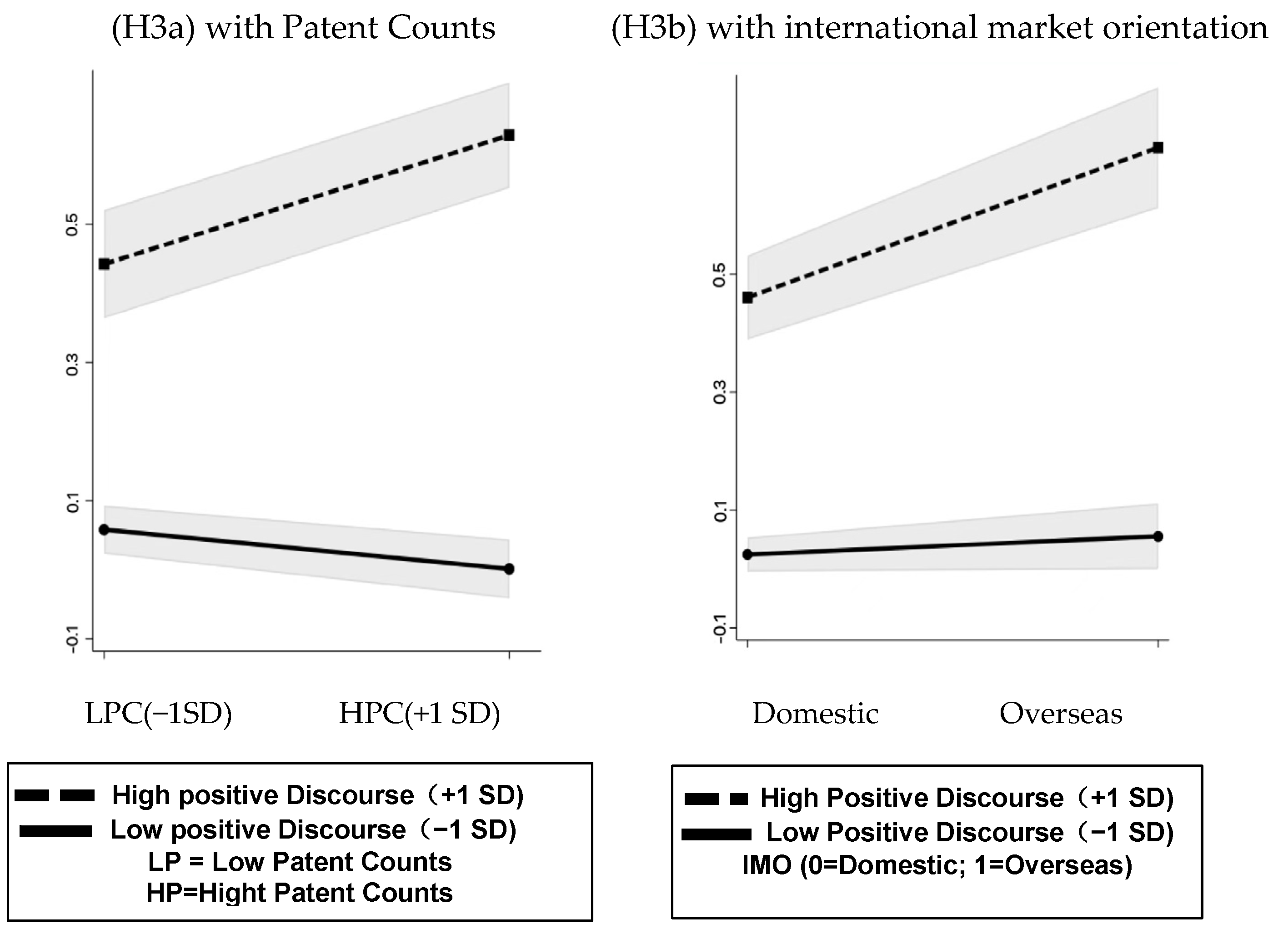
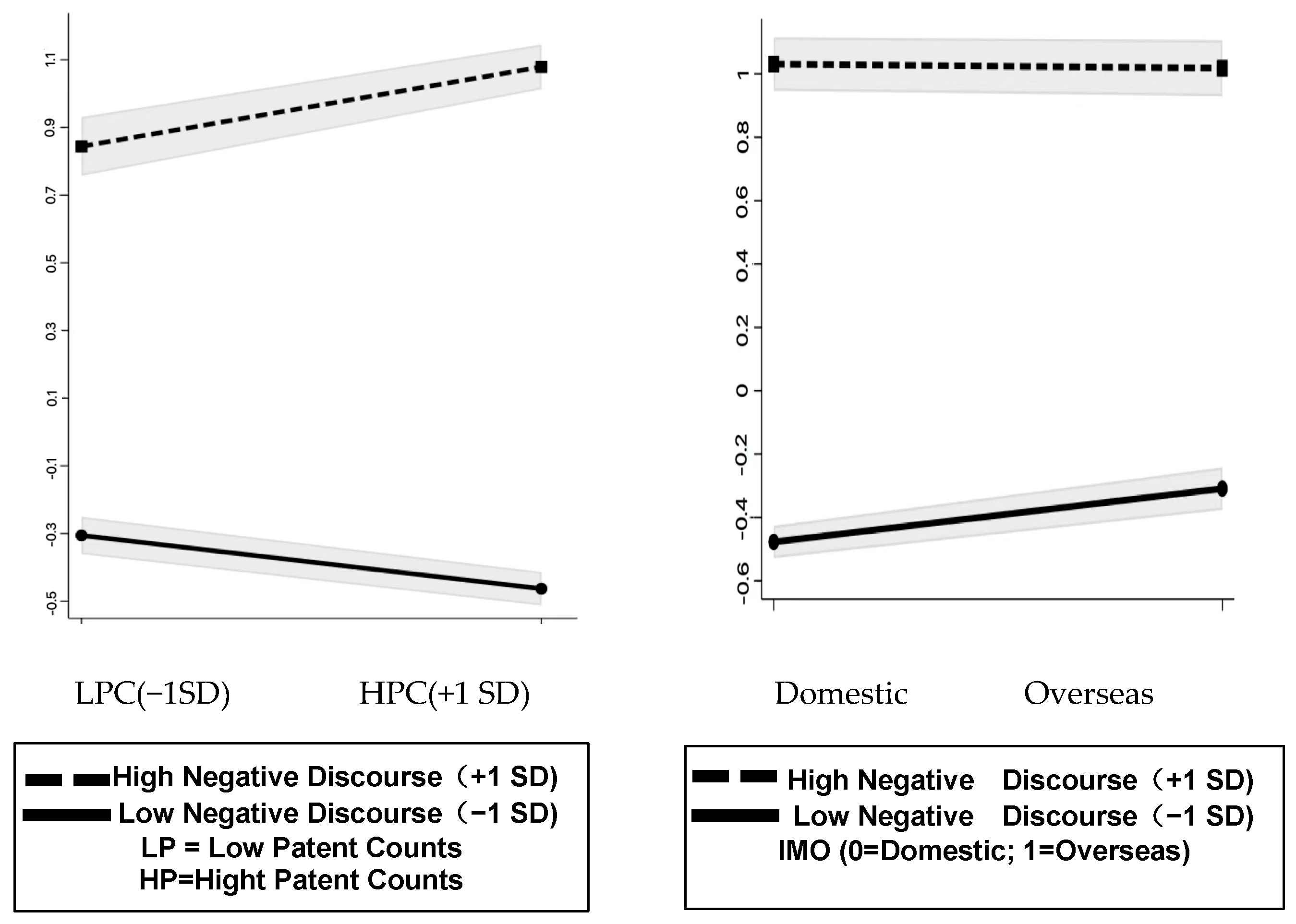
Model estimation follows a stepwise procedure. Model 1 includes control variables only; Models 2–4 add the main independent variables; Models 5–6 introduce interaction terms with positive investment discourse (PID); and Models 7–8 incorporate interaction terms with negative investment discourse (NID). Multicollinearity diagnostics indicate that variance inflation factors (VIFs) are below 5 in all specifications (see Table A4 in Appendix B). Interaction effects are further probed using simple-slope tests at ±1 SD and visualized with predictive margins plots to facilitate the interpretation of complex discursive interactions [32].

4. Results

4.1. Descriptive Statistics and Correlations Analysis

Table 1 reports descriptive statistics and Pearson correlations. External financing (EF) is measured as ln(1 + financing amount) with a mean of 0.319 (SD = 1.009), and IMO has a mean of 0.364, indicating that about 36.4% of firms targeted foreign markets at founding. Patent counts are measured as ln(1 + total patents), and PID and NID are standardized. The correlation results show that EF is positively and significantly associated with PC, IMO, and PID, and PID and NID are moderately correlated (r = 0.387). Multicollinearity is not a concern, with mean VIFs of 1.11 in the positive-discourse models and 1.10 in the negative-discourse models (Appendix B Table A4). In addition, the focal interaction effects remain consistent when PID and NID are orthogonalized via mutual residualization and the interaction models are re-estimated using the residual-based measures (Appendix B Table A5).

4.2. Regression Results

Table 2 reports the OLS regression results for external financing. Model 1 includes the full set of control variables and further accounts for industry fixed effects and firm-age fixed effects. Models 2–4 sequentially introduce the focal explanatory variables to examine the main effects of entrepreneurial signals on financing. Models 5–6 build on these specifications by adding interaction terms with positive investment discourse (PID), whereas Models 7–8 introduce interaction terms with negative investment discourse (NID) to assess how discourse sentiment moderates the signal–financing relationship.
The main-effects results show that patent counts (PC) are positively and significantly associated with external financing (Model 2: 0.087, p < 0.01), supporting H1. Initial international market orientation (IMO) is also positively related to external financing (Model 3: 0.119, p < 0.10), consistent with H2. When PC and IMO are entered jointly and PID is additionally controlled for, both effects remain positive and statistically significant (Model 4: PC = 0.084, p < 0.01; IMO = 0.106, p < 0.01), indicating that each signal retains incremental explanatory power conditional on the same set of controls and fixed effects.
Moderation tests further indicate that PID significantly amplifies the financing returns to both signals. In Model 5, the PC × PID interaction is positive and significant (0.059, p < 0.01), suggesting that the marginal positive association between patents and external financing is stronger under more optimistic investment discourse. In Model 6, the IMO × PID interaction is also positive and significant (0.088, p < 0.05), implying that the financing advantage of internationally oriented ventures becomes more pronounced as positive discourse strengthens, thereby supporting H3a and H3b. By contrast, in the negative-discourse models, NID exhibits a positive main effect (Model 7: 0.695, p < 0.01; Model 8: 0.777, p < 0.01), indicating that, conditional on covariates and fixed effects, higher levels of negative discourse are associated with higher average external financing in the sample. More importantly, the PC × NID interaction is positive and highly significant (Model 7: 0.102, p < 0.01), suggesting that as negative discourse intensifies, investors’ reliance on “hard signals” (patents) increases and the financing effectiveness of patent signals is amplified, supporting H4a. In contrast, the IMO × NID interaction is negative and marginally significant (Model 8: −0.093, p < 0.10), indicating that in more pessimistic contexts, the financing premium associated with IMO as a relatively “soft” signal is attenuated, supporting H4b. To further probe the nature of these interaction effects and provide a more intuitive interpretation, we conducted simple-slope tests and visualized the conditional relationships using predictive margins plots with 95% confidence intervals (see Figure 2 and Figure 3). These figures clearly illustrate the systematic shifts in signal effectiveness across different levels of investment discourse sentiment.

4.3. Robustness Checks

To assess the robustness of our main findings, we conducted several supplementary analyses. First, our baseline OLS models are estimated on the full sample and therefore incorporate zero-financing observations via the ln (1 + financing amount) transformation. The high frequency of zero values creates a left-censored data structure. To ensure that our results are not biased by this distribution, we estimated Tobit regression models (see Appendix B Table A6), which are specifically designed to handle censored dependent variables [67,72]. The Tobit models, which are specifically designed to handle censored dependent variables, yield main effects and moderation patterns that remain highly consistent with the baseline OLS results. In particular, the significant interaction between entrepreneurial signals and investment discourse sentiment remains robust, confirming that the hypothesized effects persist even when accounting for the truncated nature of the financing data.
Second, to mitigate potential simultaneity concerns, we re-estimated the moderation models using one-period lagged measures of positive and negative investment discourse. By using the discourse sentiment from the preceding period to predict current financing outcomes, we reduce the risk of reverse causality [66,67]. The key interaction terms remain stable under this lagged specification (see Appendix B Table A7).
Finally, to address potential overlap or collinearity between positive and negative investment discourse, we re-estimated the interaction models using residualized discourse measures. This approach isolates the unique components of positive and negative sentiment and reduces the influence of shared variance when estimating moderation effects [67,72]. The results remain consistent with the baseline findings in both coefficient direction and statistical significance (see Appendix B Table A8).

5. Discussion

5.1. Summary of Findings

Drawing on the Korean Venture Business Survey spanning 2021 to 2023, combined with an LDA-based measure of investment discourse sentiment, this study examines how two core entrepreneurial signals—patent counts and international market orientation at founding—relate to the scale of external equity financing, and how these relationships vary with the prevailing discursive environment. Four key findings emerge from the analysis. First, patent counts is positively associated with external financing. This is consistent with the view that costly and externally verifiable technological achievements serve as credible indicators of firm quality, leading to stronger financing outcomes. Second, international market orientation at founding is also positively related to external financing. The results suggest that early international strategic intent is, on average, associated with a larger financing scale, reflecting investor recognition of global growth potential. Third, positive investment discourse strengthens the effectiveness of both signals. Optimistic discourse environments not only correlate with higher overall financing levels but also broaden the favorable interpretation of both high-cost technological cues and more forward-looking strategic narratives. In such environments, investors appear more receptive to diverse signals of potential. Fourth, negative investment discourse produces a distinct asymmetric pattern. In pessimistic environments, the financing association of the forward-looking, lower-cost signal of international orientation is attenuated. Conversely, the effectiveness of the high-cost, verifiable signal of patent counts is amplified. This indicates that when the discourse turns negative, investors shift their evaluative logic toward risk mitigation, placing a premium on hard, verifiable evidence while discounting speculative growth narratives.
Taken together, these results highlight that the effectiveness of entrepreneurial signals is highly context-dependent. Discourse sentiment serves as a macro-level interpretive frame that systematically reallocates the weight investors place on different types of information, shifting the balance between strategic vision and objective verification.

5.2. Theoretical and Practical Implications

At the theoretical level, this study makes three key contributions. First, we show that the effectiveness of entrepreneurial signals depends not only on signal costliness and verifiability but also systematically on the macro-level interpretive environment. Specifically, investment discourse sentiment serves as an observable discursive context that shapes how investors interpret the same entrepreneurial cues, identifying an important boundary condition for signaling theory in entrepreneurial finance settings [2,7].
Second, we advance investment discourse from a background condition to an operationalized institutional interpretive structure and, drawing on discursive institutionalism, articulate a clear cross-level mechanism: public investment discourse crystallizes and institutionalizes cognitive frames and legitimacy standards [16,17,18], which in turn reshape how investors interpret and weight entrepreneurial signals, ultimately producing systematic differences in financing outcomes. This mechanism aligns with research on media-driven sentiment and attention allocation [18,19] while recognizing heterogeneity in audience-specific legitimacy criteria [43].
Third, responding to calls to examine multiple signals and their interplay, we show that discourse sentiment reallocates interpretive weight across signal types. Positive discourse simultaneously strengthens the financing associations of both patents and international market orientation (IMO), whereas negative discourse yields an asymmetric pattern—attenuating the effect of IMO while amplifying the effect of patents. This helps reconcile mixed findings on low-cost signals and is consistent with the view that linguistic/discursive framing can shift evaluative baselines and effectiveness [15,16,17,34].
Practically, entrepreneurs should dynamically calibrate their signaling emphasis based on the prevailing discursive environment. During periods of optimistic discourse, ventures can place relatively greater weight on international-growth narratives and strategic pathways. Conversely, when the discourse turns pessimistic, they should prioritize the display of high-cost signals—such as patent grants and key technological milestones—which possess greater credibility due to their substantial acquisition costs and the difficulty for inferior firms to imitate them [2,8,9]. For investors, negative discourse does not uniformly weaken all cues; instead, it systematically increases reliance on externally verifiable signals while reducing receptiveness to low-cost, forward-looking narratives [6,8,9,13,29]. Consequently, investors must maintain rationality and avoid overreacting to media-driven sentiment [18,46]. For policymakers, improving disclosure quality [73], encouraging more balanced media narratives [39,59], and supporting instruments that enhance signal credibility—such as IP-backed financing—can reduce information frictions and strengthen the resilience of the entrepreneurial financing ecosystem [62].

5.3. Limitations and Future Research Directions

First, the analysis is based on survey data from Korean venture firms, and the findings may be influenced by the specific institutional and cultural context. Korea’s strong government-led innovation policies, relatively concentrated venture capital market structure, and high media salience may jointly shape both signal transmission and discourse effects, which may limit the external generalizability of the results [68]. Future research could employ cross-national samples or data from different institutional environments to examine the generalizability and external validity of the findings [52,66].
Second, the investment discourse indicators were constructed using LDA topic modeling and dictionary-based analysis [52,53,56,57]. Although this approach captures the overall evaluative sentiment of macro-level discourse, it is less effective in identifying subtle linguistic features and their dynamic evolution. Future studies could incorporate more advanced natural language processing techniques, such as deep learning models or context-aware semantic representations, to more accurately characterize discourse features and their temporal dynamics [64].
Third, this study focuses primarily on patents and international market orientation as core entrepreneurial signals and does not incorporate other important signals such as founder team characteristics, strategic alliances, or brand reputation. Given that different signals often coexist and may interact, their effectiveness needs to be examined within a multi-signal framework [6,7,14]. Future research could integrate multidimensional signals into a unified analytical framework to uncover substitution and complementarity mechanisms among different types of signals [2,7].
Fourth, this study employs cross-sectional OLS regression. Although year dummy variables are included to partially control for temporal effects, causal relationships cannot be fully identified. Future research could draw on longitudinal panel data, event-study designs, or instrumental variable approaches to more convincingly capture the dynamic relationships among strategic signals, discursive evolution, and financing trajectories [66,68,73].
Finally, the analysis mainly focuses on the orientation of investment-related news discourse. However, prior research suggests that rhetorical devices and framing effects also play an important role in shaping stakeholder judgments and resource acquisition [34]. Future studies could therefore incorporate additional linguistic features, such as metaphors, frames, and narrative complexity, to deepen our understanding of how discourse influences the transmission and interpretation of signals [34].

6. Conclusions

This study investigates how high-cost patent signals and low-cost international market orientation at founding (IMO) relate to entrepreneurial external financing and highlights the moderating role of investment discourse sentiment. Across our analyses, both patents and IMO are positively associated with financing outcomes, but their effectiveness is strongly conditioned by the discourse environment. When investment discourse is positive, the financing payoffs to both signals become more pronounced. When discourse turns negative, investors appear to place greater weight on externally verifiable, high-cost signals—strengthening the association between patents and financing—while discounting comparatively low-cost, intention-based cues such as IMO.
By theorizing macro-level investment discourse as a boundary condition for signal effectiveness, this study advances signaling theory in entrepreneurial finance and demonstrates how discursive institutionalism helps explain variation in investors’ signal interpretation across discourse climates. Practically, the findings imply that entrepreneurs may benefit from aligning their signaling strategies with prevailing discourse conditions—for example, emphasizing credible, verifiable signals when sentiment is pessimistic—while investors and policymakers should monitor shifts in the macro-level discursive environment that can systematically reshape evaluation criteria and capital allocation.

Author Contributions

L.A.: Conceptualization, Methodology, Data Analysis, Writing—Original Draft. S.K.: Conceptualization, Supervision, Validation, Writing—Review and Editing. W.J.L.: Writing—Review and Editing. All authors have read and agreed to the published version of the manuscript.

Funding

This research received no external funding.

Institutional Review Board Statement

Not applicable.

Informed Consent Statement

Not applicable.

Data Availability Statement

The firm-level data were obtained from the Survey on the Detailed Research on Venture Business Status, administered by the Ministry of SMEs and Startups (MSS) of Korea and published by Statistics Korea. The news data were retrieved from the BIGKinds database (https://www.bigkinds.or.kr/, accessed on 18 June 2025). Derived variables and analysis codes are available from the corresponding author upon reasonable request.

Acknowledgments

During the preparation of this manuscript, the authors used ChatGPT (5.1 thinking) for the purpose of improving the clarity and fluency of the English in the initial draft (e.g., grammar, spelling, punctuation, and style). The authors have reviewed and edited the output and take full responsibility for the content of this publication.

Conflicts of Interest

The authors declare no conflicts of interest.

Abbreviations

The following abbreviations are used in this manuscript:
EFExternal FinancingIMOInternational Market Orientation
PCPatent CountPIDPositive Investment Discourse
NIDNegative Investment DiscourseIDAInvestment Discourse Activation
KVBSKorean Venture Business SurveyLDALatent Dirichlet Allocation

Appendix A. Construction of Investment Discourse Measures

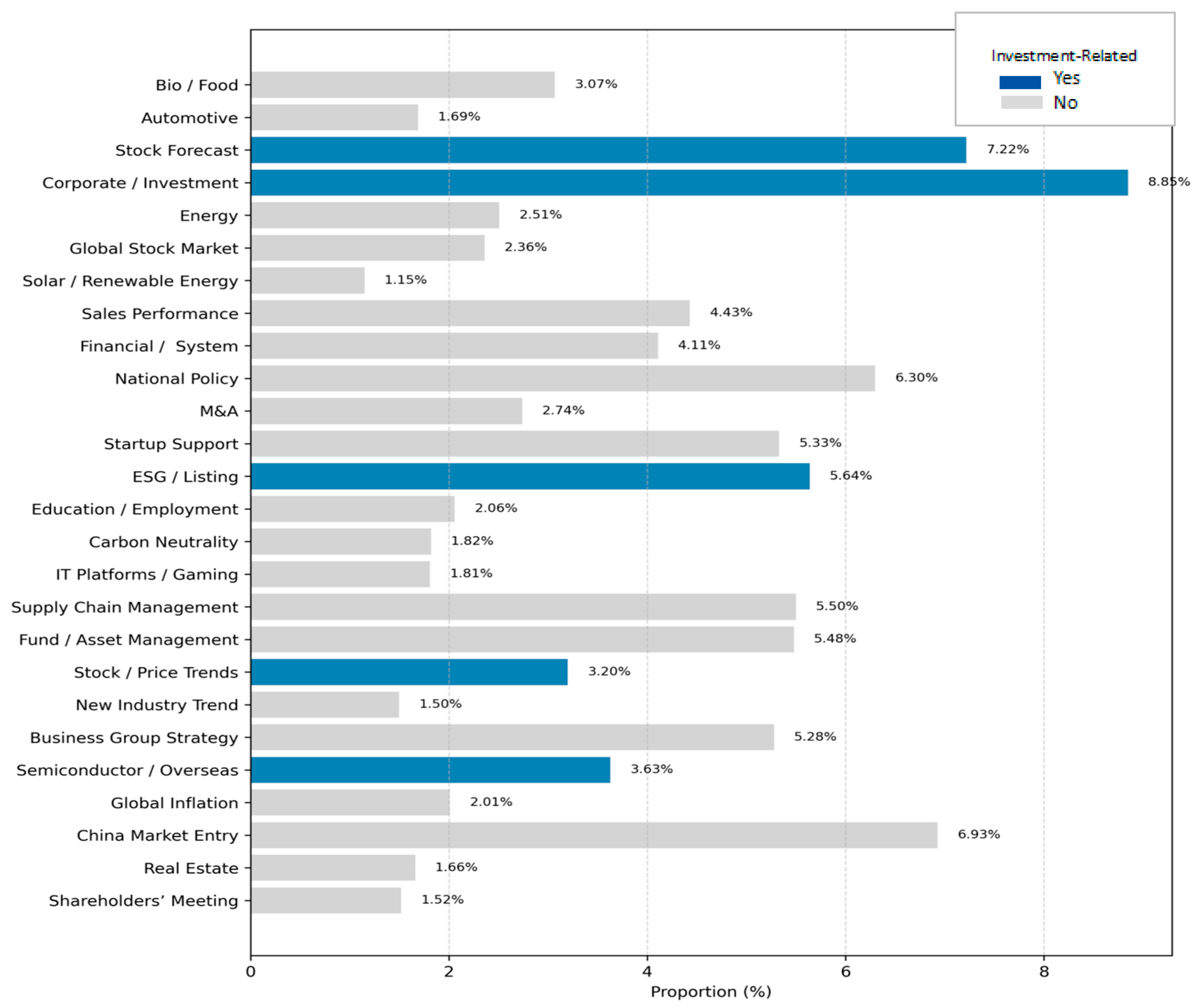
Table A1. Topic modeling details. Full list of 26 topics extracted via LDA.
Topic No.Topic LabelProportion (%)Top_KeywordsInvestment Relevance
1Bio/Food3.07Bio, brand, market, firm, domestic, food, productMarket
2Automotive1.69Samsung, electronics, automobile, Hyundai, data, subsidy, groupMarket/Technology
3Stock Forecast7.22Listing, stock price, stock market, index, investor, firmInvestment
4Corporate/Investment8.85Business, firm, technology, investment, development, intelligence, AIInvestment
5Energy2.51Energy, battery, EV, production, factory, U.S., companyEnvironment
6Global Stock Market2.36U.S., dollar, time, interest rate, hike, Federal ReserveEconomy
7Solar/Renewable Energy1.15Doosan, solar, purchase, beneficiary, index, sanction, restartFirm
8Sales Performance4.43Quarter, last year, revenue, this year, performance, profit, billion wonMarket
9Financial/System4.11Finance, government, bank, loan, committee, regulation, policyPolicy
10National Policy6.30 Korea, government, industry, economy, president, nation, policyPolicy
11M&A2.74Acquisition, sale, contract, bank, holdings, merger, sectorFirm
12Startup Support5.33Firm, startup, entrepreneurship, support, Seoul, innovation, KoreaPolicy
13ESG/Listing5.64Firm, management, investment, shareholder, environment, listing, evaluationInvestment
14Education/Employment2.06Talent, education, university, central, manager, Taiwan, workforce-
15Carbon Neutrality1.82Carbon, IPO, reduction, prediction, solution, chain, progressEnvironment
16IT Platforms/Gaming1.81Kakao, dividend, F, universe, NPS, gaming, guideMarket
17Supply Chain Management5.50 Recent, supply chain, CEO, people, market, assets, customerFirm
18Fund/Asset Management5.48Investment, fund, securities, billion won, asset management, size, operationMarket
19Stock/Price Trends3.20 Trading, stocks, 10,000 KRW, price, individual investor, surgeInvestment
20New Industry Trend1.50 AI, Green, Maekyung, treasury, Nvidia, candidate, Maeil BusinessEconomy
21Business Group Strategy5.28Group, chairman, POSCO, business, CEO, management, globalFirm
22Semiconductor/Overseas3.63Semiconductor, U.S., firm, China, investment, industry, productionInvestment
23Global Inflation2.01World, inflation, India, Europe, Asia, UK, behaviorEconomy
24China Market Entry6.93China, economy, market, COVID-19, business cycle, world, outlookEconomy
25Real Estate1.66Real estate, construction, complex, city, loss, safety, plant-
26Shareholders’ Meeting1.52Lotte, tightening, adjustment, memory, opinion, Ray, shareholders’ meetingFirm
Figure A1. Topic Weights and Investment Relevance.
Sustainability 18 00421 g0a1
Table A2. Domain-Specific Positive and Negative Word.
Positive Term (KR)ScoreNegative Term (KR)Score
Growth2Crisis−2
Expectation2Decline−2
Innovation2Uncertainty−2
Favorable factor2Failure−2
Rise2Loss−2
Profit2Sluggishness−2
Achievement2Negative−2
Success2Adverse factor−2
Positive2Decrease−2
Opportunity2Risk−2
Development2Bearish−2
Improvement2Suspension−2
Improvement2Recession−2
Continuation2Regression−2
Promising2Decline−2
Expansion2Deterioration−2
Recovery2Contraction−2
Bullish2Dissatisfaction−2
Strengthening2Collapse−2
Leap2Abandonment−2
Table A3. Annual Indices of Investment Discourse Tone (2019–2023).
YearPositive Discourse IndexNegative Discourse Index
2019100.0100.0
202093.6122.2
202193.878.3
202290.1143.8
2023105.3117.1
Note: To protect the proprietary nature of the text corpus and preprocessing procedures. we report standardized annual indices (base year = 2019 = 100) rather than raw ratios, text-level statistics, or article counts. The indices capture year-to-year variation in investment discourse tone.

Appendix B. Diagnostics and Robustness

Table A4. Variance inflation factor (VIF) results.
ModelMean VIFVIF RangeMulticollinearity Concern
Positive discourse model (H3–H4)1.111.02–1.19None
Negative discourse model (H5–H6)1.101.02–1.16None
Note: All values fall below conventional thresholds (VIF < 5), suggesting that multicollinearity is not a concern (mean VIF < 2).
Table A5. Residualized PID/NID Robustness Check.
Variables(R1) PC × PID_res(R2) IMO × PID_res(R3) PC × NID_res(R4) IMO × NID_res
PC (ln + 1) 0.027 ** (0.011)0.027 ** (0.011)0.027 ** (0.011)0.027 ** (0.011)
IMO0.050 * (0.026)0.052 * (0.026)0.050 * (0.026)0.052 * (0.026)
PID0.263 *** (0.013)0.274 *** (0.013)0.263 *** (0.013)0.274 *** (0.013)
PID_res0.699 *** (0.026)0.783 *** (0.035)
NID_res 0.699 *** (0.026)0.783 *** (0.035)
PC × PID_res 0.100 *** (0.018)
IMO × PID_res −0.097 * (0.050)
PC × NID_res 0.100 *** (0.018)
IMO × NID_res −0.097 * (0.050)
Controls + Industry FE
+ Firm age
FE
YesYesYesYes
Observations3456345634563456
R-squared0.55580.54630.55580.5463
Note: * p < 0.10, ** p < 0.05, *** p < 0.01. Robust standard errors in parentheses. Controls, industry fixed effects, and year fixed effects are included in all models but not reported.
Table A6. Tobit Regression Results (DV = External Financing (ln + 1), ll(0), robust).
External Financing (DV) (ln + 1)Main Effects ModelModeration Models
Model 1Model 2Model 3Model 4Model 5Model 6Model 7
PC (ln + 1) 0.654 *** (0.130) 0.610 *** (0.129)−0.055(0.236)0.178 (0.126)0.077 (0.100)0.139 * (0.080)
IMO 1.173 *** (0.293)1.027 *** (0.288)0.948 *** (0.277)1.155 *** (0.428)0.691 *** (0.182)1.187 *** (0.238)
PID 2.868 *** (0.234)2.960 *** (0.298)
NID 1.993 *** (0.067)2.275 *** (0.084)
PC × PID 0.329 (0.235)
IMO × PID −0.309 (0.436)
PC × NID 0.055 (0.038)
IMO × NID −0.496 ***
(0.092)
Controls + Industry FE + firm age FEYesYesYesYesYesYesYes
Log pseudolikelihood−1826.45−1831.95−1820.05−1649.02−1650.89−1228.29−1218.56
Pseudo R20.0660.06320.06930.15680.15580.37190.3769
Notes: Tobit regressions with left-censoring at zero (ll = 0). Robust standard errors are reported in parentheses. All models include the full set of control variables as well as industry fixed effects and founding-year fixed effects (not reported). Number of observations = 3456 (uncensored = 388; left-censored = 3068). * p < 0.10, *** p < 0.01.
Table A7. Robustness (Lag1): Regression Results.
Variables(1) Hypothesis 3a(2) Hypothesis 3b(3) Hypothesis 4a(4) Hypothesis 4b
PC (ln + 1)0.044 ** (0.016)0.045 ** (0.016)0.015 (0.011)0.015 (0.011)
IMO0.099 * (0.038)0.102 ** (0.038)0.044 * (0.026)0.054 * (0.026)
PID0.210 *** (0.016)0.182 *** (0.019)
NID 0.693 *** (0.025)0.772 *** (0.035)
PC × PID0.043 ** (0.014)
IMO × PID 0.072 * (0.036)
PC × NID 0.107 *** (0.018)
IMO × NID −0.087 * (0.049)
Note: * p < 0.10, ** p < 0.05, *** p < 0.01. DV: External Financing (ln + 1), Controls, industry fixed effects, and year fixed effects are included in all models but not reported.
Table A8. Standardized coefficients (Beta) for key predictors across models. (DV = External Financing (ln + 1).
VariableM1
PC Only
M2
IMO Only
M3
PC × PID
M4
IMO × PID
M5
PC × NID
M6
IMO × NID
PC (ln + 1)0.1045 0.1010.04280.0440.0294
IMO 0.05820.0520.04650.0490.0218
PID 0.25570.22
NID 0.6849
PC × PID 0.0683
IMO × PID 0.054
PC × NID 0.1222
IMO × NID
N345634563456345634563456
R-squared0.0640.0580.1260.1230.5580.546
Notes: Controls, industry fixed effects, and year fixed effects are included in all models but not reported.

References

  1. Audretsch, D.B.; Belitski, M. Towards an entrepreneurial ecosystem typology for regional economic development: The role of creative class and entrepreneurship. Reg. Stud. 2021, 55, 735–756. [Google Scholar] [CrossRef]
  2. Connelly, B.L.; Certo, S.T.; Ireland, R.D.; Reutzel, C.R. Signaling theory: A review and assessment. J. Manag. 2011, 37, 39–67. [Google Scholar] [CrossRef]
  3. Certo, S.T. Influencing initial public offering investors with prestige: Signaling with board structures. Acad. Manag. Rev. 2003, 28, 432–446. Available online: https://www.jstor.org/stable/30040731 (accessed on 2 July 2025). [CrossRef]
  4. Spence, M. Job market signaling. Q. J. Econ. 1973, 87, 355–374. [Google Scholar] [CrossRef]
  5. Bafera, J.; Kleinert, S. Signaling theory in entrepreneurship research: A systematic review and research agenda. Entrep. Theory Pract. 2023, 47, 2419–2464. [Google Scholar] [CrossRef]
  6. Connelly, B.L.; Certo, S.T.; Reutzel, C.R.; DesJardine, M.R.; Zhou, Y.S. Signaling theory: State of the theory and its future. J. Manag. 2025, 51, 24–61. [Google Scholar] [CrossRef]
  7. Colombo, O. The use of signals in new-venture financing: A review and research agenda. J. Manag. 2021, 47, 237–259. [Google Scholar] [CrossRef]
  8. Haeussler, C.; Harhoff, D.; Mueller, E. How patenting informs VC investors: The case of biotechnology. Res. Policy 2014, 43, 1286–1298. [Google Scholar] [CrossRef]
  9. Hsu, D.H.; Ziedonis, R.H. Resources as dual sources of advantage: Implications for valuing entrepreneurial-firm patents. Strateg. Manag. J. 2013, 34, 761–781. [Google Scholar] [CrossRef]
  10. Li, J.J.; Chen, X.P.; Kotha, S.; Fisher, G. Catching fire spreading it: A glimpse into displayed entrepreneurial passion in crowdfunding campaigns. J. Appl. Psychol. 2017, 102, 1075–1090. [Google Scholar] [CrossRef] [PubMed]
  11. Kirsch, D.; Goldfarb, B.; Gera, A. Form or substance: The role of business plans in venture capital decision making. Strat. Manag. J. 2009, 30, 487–515. [Google Scholar] [CrossRef]
  12. Anglin, A.H.; Short, J.C.; Drover, W.; Stevenson, R.M.; McKenny, A.F.; Allison, T.H. The power of positivity? The influence of positive psychological capital language on crowdfunding performance. J. Bus. Ventur. 2018, 33, 470–492. [Google Scholar] [CrossRef]
  13. Kleinert, S. The promise of new ventures’ growth ambitions in early-stage funding: On the crossroads between cheap talk and credible signals. Entrep. Theory Pract. 2024, 48, 274–309. [Google Scholar] [CrossRef]
  14. Steigenberger, N.; Garz, M.; Cyron, T. Signaling theory in entrepreneurial fundraising and crowdfunding research. J. Small Bus. Manag. 2025, 63, 1830–1855. [Google Scholar] [CrossRef]
  15. Schmidt, V.A. Discursive institutionalism: The explanatory power of ideas and discourse. Annu. Rev. Political Sci. 2008, 11, 303–326. [Google Scholar] [CrossRef]
  16. Schmidt, V.A. Taking ideas and discourse seriously: Explaining change through discursive institutionalism as the fourth ‘new institutionalism’. Eur. Politi. Sci. Rev. 2010, 2, 1–25. [Google Scholar] [CrossRef]
  17. Vaara, E.; Aranda, A.M.; Etchanchu, H. Discursive legitimation: An integrative theoretical framework and agenda for future research. J. Manag. 2024, 50, 2343–2373. [Google Scholar] [CrossRef]
  18. Tetlock, P.C. Giving content to investor sentiment: The role of media in the stock market. J. Financ. 2007, 62, 1139–1168. [Google Scholar] [CrossRef]
  19. Da, Z.; Engelberg, J.; Gao, P. In search of attention. J. Financ. 2011, 66, 1461–1499. [Google Scholar] [CrossRef]
  20. Pollock, T.G.; Rindova, V.P. Media legitimation effects in the market for initial public offerings. Acad. Manag. J. 2003, 46, 631–642. [Google Scholar] [CrossRef]
  21. Oviatt, B.M.; McDougall, P.P. Toward a theory of international new ventures. J. Int. Bus. Stud. 1994, 25, 45–64. Available online: https://www.jstor.org/stable/154851 (accessed on 15 August 2025). [CrossRef]
  22. Knight, G.A.; Cavusgil, S.T. Innovation, organizational capabilities, and the born-global firm. J. Int. Bus. Stud. 2004, 35, 124–141. [Google Scholar] [CrossRef]
  23. Schwens, C.; Zapkau, F.B.; Bierwerth, M.; Isidor, R.; Knight, G.; Kabst, R. International entrepreneurship: A meta-analysis on the internationalization and performance relationship. Entrep. Theory Pract. 2018, 42, 734–768. [Google Scholar] [CrossRef]
  24. Schultz, P.L.; Marin, A.; Boal, K.B. The impact of media on the legitimacy of new market categories: The case of broadband internet. J. Bus. Ventur. 2014, 29, 34–54. [Google Scholar] [CrossRef]
  25. Yu, P.; Liu, M.; Malik, T.H.; Shi, J. The role of media coverage in the audience’s legitimacy judgment about disruptive innovation: An empirical study of DiDi in China. Technol. Anal. Strateg. Manag. 2021, 35, 1128–1144. [Google Scholar] [CrossRef]
  26. Ahlers, G.K.; Cumming, D.; Günther, C.; Schweizer, D. Signaling in equity crowdfunding. Enterp. Theory Pract. 2015, 39, 955–980. [Google Scholar] [CrossRef]
  27. Heeley, M.B.; Matusik, S.F.; Jain, N. Innovation, appropriability, and the underpricing of initial public offerings. Acad. Manag. J. 2007, 50, 209–225. Available online: https://www.jstor.org/stable/20159848 (accessed on 15 August 2025). [CrossRef]
  28. Hall, B.H.; Jaffe, A.; Trajtenberg, M. Market value and patent citations. RAND J. Econ. 2005, 36, 16–38. Available online: https://www.jstor.org/stable/1593752 (accessed on 15 August 2025).
  29. Bergh, D.D.; Connelly, B.L.; Ketchen, D.J.; Shannon, L.M. Signaling theory equilibrium in strategic management research: An assessment a research agenda. J. Manag. Stud. 2014, 51, 1334–1360. [Google Scholar] [CrossRef]
  30. Arora, A.; Fosfuri, A.; Gambardella, A. Markets for Technology: The Economics of Innovation and Corporate Strategy; MIT Press: Cambridge, MA, USA, 2001. [Google Scholar]
  31. Baum, J.A.; Silverman, B.S. Picking winners or building them? Alliance, intellectual, and human capital as selection criteria in venture financing and performance of biotechnology startups. J. Bus. Ventur. 2004, 19, 411–436. [Google Scholar] [CrossRef]
  32. Huang, S.; Pickernell, D.; Battisti, M.; Nguyen, T. Signalling entrepreneurs’ credibility and project quality for crowdfunding success: Cases from the Kickstarter and Indiegogo environments. Small Bus. Econ. 2022, 58, 1801–1821. [Google Scholar] [CrossRef]
  33. Cockburn, I.M.; MacGarvie, M.J. Patents, thickets and the financing of early-stage firms: Evidence from the software industry. J. Econ. Manag. Strategy 2009, 18, 729–773. [Google Scholar] [CrossRef]
  34. Aeuscher, K.; Rothe, H. Entrepreneurial framing: How category dynamics shape the effectiveness of linguistic frames. Strateg. Manag. J. 2023, 44, 362–395. [Google Scholar] [CrossRef]
  35. Lin, M.; Prabhala, N.R.; Viswanathan, S. Judging borrowers by the company they keep: Friendship networks and infor-mation asymmetry in online peer-to-peer lending. Manag. Sci. 2013, 59, 17–35. [Google Scholar] [CrossRef]
  36. Sui, S.; Baum, M. Internationalization strategy, firm resources and the survival of SMEs in the export market. J. Int. Bus. Stud. 2014, 45, 821–841. [Google Scholar] [CrossRef]
  37. Muldoon, J.; Liguori, E.W.; Solomon, S.; Bendickson, J. Technological innovation and the expansion of entrepre-neurship ecosystems. Rev. Manag. Sci. 2023, 17, 1789–1808. [Google Scholar] [CrossRef]
  38. Parhankangas, A.; Ehrlich, M. How entrepreneurs seduce business angels: An impression management approach. J. Bus. Ventur. 2014, 29, 543–564. [Google Scholar] [CrossRef]
  39. Deephouse, D.L. Media reputation as a strategic resource: An integration of mass communication and resource-based theories. J. Manag. 2000, 26, 1091–1112. [Google Scholar] [CrossRef]
  40. Broek, O.M.v.D. How political actors co-construct CSR and its effect on firms’ political access: A discursive insti-tutionalist view. J. Manag. Stud. 2024, 61, 595–626. [Google Scholar] [CrossRef]
  41. Kromidha, E.; Córdoba-Pachón, J.-R. Discursive institutionalism for reconciling change and stability in digital in-novation public sector projects for development. Gov. Inf. Q. 2017, 34, 16–25. [Google Scholar] [CrossRef]
  42. Zavyalova, A.; Pfarrer, M.D.; Reger, R.K.; Shapiro, D.L. Managing the message: The effects of firm actions and industry spillovers on media coverage following wrongdoing. Acad. Manag. J. 2012, 55, 1079–1101. [Google Scholar] [CrossRef]
  43. Fisher, G.; Kuratko, D.F.; Bloodgood, J.M.; Hornsby, J.S. Legitimate to whom? The challenge of audience diversity and new venture legitimacy. J. Bus. Ventur. 2017, 32, 52–71. [Google Scholar] [CrossRef]
  44. Tetlock, P.C.; Saar-Tsechansky, M.; Macskassy, S. More than words: Quantifying language to measure firms’ fundamentals. J. Financ. 2008, 63, 1437–1467. [Google Scholar] [CrossRef]
  45. Loughran, T.; McDonald, B. When is a liability not a liability? Textual analysis, dictionaries, and 10-Ks. J. Financ. 2011, 66, 35–65. [Google Scholar] [CrossRef]
  46. Hirshleifer, D.; Lim, S.S.; Teoh, S.H. Driven to distraction: Extraneous events and underreaction to earnings news. J. Financ. 2009, 64, 2289–2325. Available online: https://www.jstor.org/stable/27735172 (accessed on 18 August 2025). [CrossRef]
  47. Hall, B.H.; Lerner, J. The financing of R & D and innovation. In Handbook of the Economics of Innovation; Hall, B.H., Rosenberg, N., Eds.; Elsevier: Amsterdam, The Netherlands, 2010; Volume 1, pp. 609–639. [Google Scholar] [CrossRef]
  48. Gompers, P.; Lerner, J. The venture capital revolution. J. Econ. Perspect. 2001, 15, 145–168. Available online: https://www.jstor.org/stable/2696596 (accessed on 20 August 2025). [CrossRef]
  49. Gripsrud, G.; Hunneman, A.; Solberg, C.A. Speed of internationalization of new ventures and survival in export markets. Int. Bus. Rev. 2023, 32, 102121. [Google Scholar] [CrossRef]
  50. Hawn, O. How media coverage of corporate social responsibility and irresponsibility influences cross-border acquisi-tions. Strateg. Manag. J. 2021, 42, 58–83. [Google Scholar] [CrossRef]
  51. Agovino, M.; Cerciello, M.; Garofalo, A.; Musella, G. Effect of Media News on Radicalization of Attitudes to Immigration. J. Econ. Race Policy 2021, 5, 318–340. [Google Scholar] [CrossRef]
  52. Blei, D.M.; Ng, A.Y.; Jordan, M.I. Latent Dirichlet allocation. J. Mach. Learn. Res. 2003, 3, 993–1022. [Google Scholar]
  53. Blei, D.M. Probabilistic topic models. Commun. ACM 2012, 55, 77–84. [Google Scholar] [CrossRef]
  54. Barde, B.V.; Bainwad, A.M. An overview of topic modeling methods and tools. In Proceedings of the 2017 International Conference on Intelligent Computing and Control Systems (ICICCS), Madurai, India, 15–16 June 2017; IEEE: New York, NY, USA; pp. 745–750. [Google Scholar] [CrossRef]
  55. Hannigan, T.R.; Haans, R.F.J.; Vakili, K.; Tchalian, H.; Glaser, V.L.; Wang, M.S.; Kaplan, S.; Jennings, P.D. Topic modeling in management research: Rendering new theory from textual data. Acad. Manag. Ann. 2019, 13, 586–632. [Google Scholar] [CrossRef]
  56. Taboada, M.; Brooke, J.; Tofiloski, M.; Voll, K.; Stede, M. Lexicon-based methods for analysis. Comput. Linguist. 2011, 37, 267–307. [Google Scholar] [CrossRef]
  57. Park, E.L.; Cho, S. KoNLPy: Korean natural language processing in Python. In Proceedings of the 26th Annual Conference on Human & Cognitive Language Technology, Chuncheon, Republic of Korea, 10–11 October 2014. [Google Scholar]
  58. Liu, B. Sentiment analysis and opinion mining. In Synthesis Lectures on Human Language Technologies; Morgan & Claypool Publishers: San Rafael, CA, USA, 2012. [Google Scholar] [CrossRef]
  59. Gentzkow, M.; Shapiro, J.M. What drives media slant? Evidence from U.S. daily newspapers. Econometrica 2010, 78, 35–71. [Google Scholar] [CrossRef]
  60. du Plessis, E. Can Text-Based Statistical Models Reveal Impending Banking Crises? Comput. Econ. 2024, 65, 1265–1298. [Google Scholar] [CrossRef]
  61. Allayioti, A.; Bozzelli, G.; Di Casola, P.; Mendicino, C.; Skoblar, A.; Velasco, S. More Uncertainty, Less Lending: How US Policy Affects Firm Financing in Europe; European Central Bank: Frankfurt am Main, Germany, 2025. [Google Scholar]
  62. Block, J.H.; Colombo, M.G.; Cumming, D.J.; Vismara, S. New players in entrepreneurial finance and why they are there. Small Bus. Econ. 2018, 50, 239–250. [Google Scholar] [CrossRef]
  63. Röder, M.; Both, A.; Hinneburg, A. Exploring the space of topic coherence measures. In Proceedings of the Eighth ACM International Conference on Web Search and Data Mining, Shanghai, China, 31 January–6 February 2015; ACM: New York, NY, USA, 2015; pp. 399–408. [Google Scholar] [CrossRef]
  64. Park, S.-M.; Na, C.-W.; Choi, M.-S.; Lee, D.; On, B.-W. BiLSTM-based method for building a KNU Korean lexicon. J. Intell. Inf. Syst. 2018, 24, 219–240. [Google Scholar] [CrossRef]
  65. Greene, D.; O’Callaghan, D.; Cunningham, P. How many topics? Stability analysis for topic models. In Machine Learning and Knowledge Discovery in Databases, Proceedings of the European Conference, ECML PKDD 2014, Nancy, France, 15–19 September 2014; Proceedings, Part I; Lecture Notes in Computer Science; Calders, T., Esposito, F., Hüllermeier, E., Meo, R., Eds.; Springer: Berlin/Heidelberg, Germany, 2014; Volume 8724, pp. 498–513. [Google Scholar] [CrossRef]
  66. Angrist, J.D.; Pischke, J.-S. Mostly Harmless Econometrics: An Empiricist’s Companion; Princeton University Press: Princeton, NJ, USA, 2009. [Google Scholar] [CrossRef]
  67. Wooldridge, J.M. Introductory Econometrics: A Modern Approach, 5th ed.; South-Western Cengage Learning: Boston, MA, USA, 2013. [Google Scholar]
  68. Autio, E.; Kenney, M.; Mustar, P.; Siegel, D.; Wright, M. Entrepreneurial innovation: The importance of context. Res. Policy 2014, 43, 1097–1108. [Google Scholar] [CrossRef]
  69. Autio, E.; Sapienza, H.J.; Almeida, J.G. Effects of age at entry, knowledge intensity, and imitability on international growth. Acad. Manag. J. 2000, 43, 909–924. [Google Scholar] [CrossRef]
  70. Aiken, L.S.; West, S.G. Multiple Regression: Testing and Interpreting Interactions; Sage: Thousand Oaks, CA, USA, 1991. [Google Scholar]
  71. White, H. A heteroskedasticity-consistent covariance matrix estimator and a direct test for heteroskedasticity. Econometrica 1980, 48, 817–838. [Google Scholar] [CrossRef]
  72. Kennedy, P. A Guide to Econometrics, 6th ed.; Wiley-Blackwell: Hoboken, NJ, USA, 2008. [Google Scholar]
  73. Loewenstein, G.; Sunstein, C.R.; Golman, R. Disclosure: Psychology changes everything. Ann. Rev. Econ. 2014, 6, 391–419. [Google Scholar] [CrossRef]
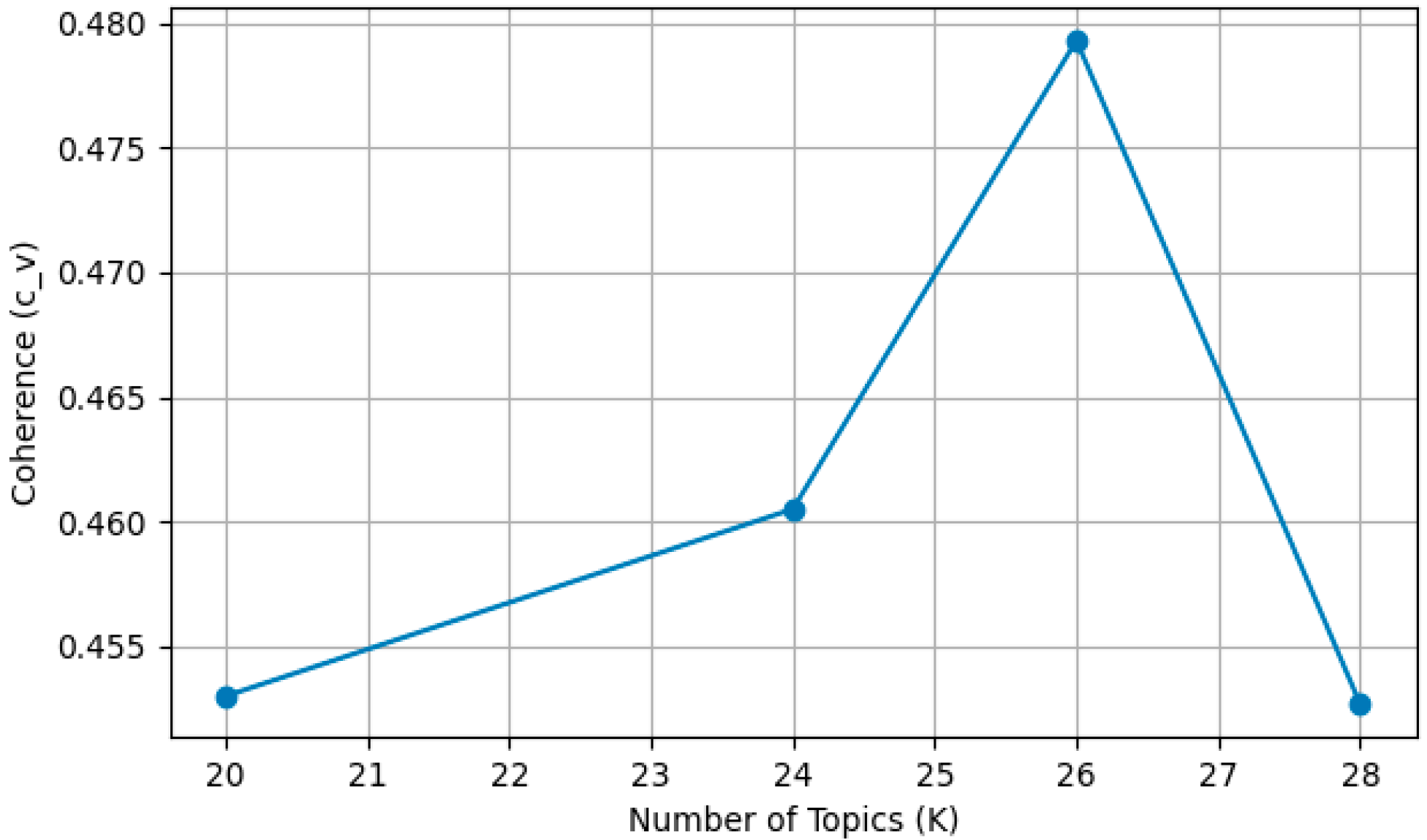
Figure 1. Topic coherence (c_v) across candidate topic numbers (K).
Sustainability 18 00421 g001
Figure 2. Interaction effects of positive investment discourse.
Sustainability 18 00421 g002
Figure 3. Interaction effects of Negative investment discourse. Note: (Figure 2 and Figure 3). Shaded ar-eas represent 95% confidence bands. Lines depict margins-based predictions of log external fi-nancing from OLS models with robust standard errors; controls are as shown in Table 2. PID/NID are scaled by 10,000.
Sustainability 18 00421 g003
Table 1. Summary Statistics and Correlations.
VariablesMeanSD12345
(1) External Financing (ln + 1)0.3191.0091
(2) PC (ln + 1)01.170.107 ***1
(3) IMO0.3640.4810.131 ***0.107 ***1
(4) PID010.274 ***0.231 ***0.102 ***1
(5) NID010.721 ***0.085 ***0.127 ***0.387 ***1
(6) R&D intensity0.1060.3750.064 ***−0.043 **0.059 ***0.0270.120 ***
(7) Innovation level3.3520.7930.124 ***0.179 ***0.248 ***0.182 ***0.111 ***
(8) Firm size8.5471.852−0.030 *0.260 ***−0.072 ***0.054 ***−0.127 ***
(9) Founder entrepreneurial experience0.1630.3690.095 ***−0.0220.089 ***0.050 **0.095 ***
(10) Founder work experience (ln)2.0631.0520.056 ***0.081 ***0.212 ***0.257 ***0.082 ***
(11) Founder gender1.0520.223−0.020−0.061 ***−0.0050.0090.004
(12) Founder education level2.8081.011−0.173 ***−0.148 ***−0.167 ***−0.007 −0.143 ***
Variables6789101112
(6) R&D intensity1
(7) Innovation level0.088 ***1
(8) Firm size−0.306 ***0.039 **1
(9) Founder entrepreneurial experience0.052 ***0.043 **−0.073 ***1
(10) Founder work experience (ln)−0.0100.153 ***0.041 **0.104 ***1
(11) Founder gender0.0110−0.111 ***0.031 *−0.064 ***1
(12) Founder education level−0.085 ***−0.148 ***0.085 ***0.080 ***0.036 **0.054 **1
Note. N = 3456. *** p < 0.01, ** p < 0.05, * p < 0.1. Values are rounded to three decimal places.
Table 2. Regression Results for Baseline and Moderation Models.
External Financing (DV)(ln + 1)Baseline (Controls Only)Main Effects ModelModeration Models
Model 1Model 2Model 3Model 4Model 5Model 6Model 7Model 8
PC (ln + 1) 0.087 *** (0.017) 0.084 *** (0.017)0.036 ** (0.015)0.037 ** (0.016)0.025 ** (0.011)0.025 ** (0.011)
IMO 0.119 * (0.040)0.106 *** (0.039)0.095 ** (0.038)0.100 *** (0.037)0.044 * (0.026)0.053 ** (0.026)
PID 0.251 *** (0.017)0.216 *** (0.021)
NID 0.695 *** (0.025)0.777 *** (0.035)
PC × PID 0.059 *** (0.016)
IMO × PID 0.088 ** (0.038)
PC × NID 0.102 *** (0.018)
IMO × NID −0.093 * (0.048)
R&D intensity0.100 * (0.059)0.089 (0.058)0.097 * (0.058)0.087 (0.058)0.069 (0.052)0.062 (0.051)−0.011 (0.048)−0.018 (0.050)
innovation level0.104 *** (0.024)0.083 *** (0.024)0.090 *** (0.025)0.072 *** (0.025)0.034 (0.025)0.037 (0.025)0.030 (0.019)0.019 (0.019)
Firm size0.009 (0.012)0.000 (0.012)0.010 (0.012)0.002 (0.012)0.001 (0.012)0.000 (0.012)0.040 *** (0.009)0.042 *** (0.009)
Founder entrepreneurial experience0.251 *** (0.056)0.246 *** (0.055)0.240 *** (0.056)0.237 *** (0.055)0.231 *** (0.053)0.226 *** (0.053)0.096 ** (0.038)0.086 ** (0.038)
Founder work experience (dummy)0.029 * (0.016)0.025 (0.016)0.020 (0.016)0.016 (0.016)−0.039 ** (0.016)−0.032 ** (0.016)−0.023 * (0.012)−0.023 * (0.012)
Founder gender−0.082 (0.060)0.085 (0.059)−0.082 (0.060)−0.085 (0.059)−0.122 ** (0.057)−0.123 ** (0.058)−0.084 * (0.043)−0.079 * (0.045)
Founder education level−0.138 *** (0.018)−0.122 *** (0.017)−0.131 *** (0.017)−0.117 *** (0.017)−0.124 *** (0.017)−0.123 *** (0.017)−0.055 *** (0.013)−0.056 *** (0.013)
Industry FEYesYesYesYesYesYesYesYes
Firm age FEYesYesYesYesYesYesYesYes
Constant0.397 ** (0.158)0.527 *** (0.161)0.378 ** (0.158)0.506 *** (0.161)0.829 *** (0.160)0.815 *** (0.163)0.138 (0.125)0.167 (0.127)
N34563456345634563456345634563456
R-squared0.0550.0640.0580.0660.1260.1230.5580.546
Notes: Robust standard errors in parentheses. * p < 0.10, ** p < 0.05, *** p < 0.01.
Disclaimer/Publisher’s Note: The statements, opinions and data contained in all publications are solely those of the individual author(s) and contributor(s) and not of MDPI and/or the editor(s). MDPI and/or the editor(s) disclaim responsibility for any injury to people or property resulting from any ideas, methods, instructions or products referred to in the content.