Article

Difference in Soil Fertility Agricultural Training, Local Livestock Feed Use and Weather Information Access: A Comparative Study of Small-Scale Farmers in Mozambique and Zambia

1
Ministry of Agriculture, Zambia Agriculture Research Institute (ZARI), Mochipapa Regional Research Station, Choma P.O. Box 630090, Zambia
2
Ministry of Agriculture, Department of Agriculture, Lusumpuko House, Choma P.O. Box 630042, Zambia
3
NelNov Consultants, Lusaka P.O. Box 34714, Zambia
4
Faculty of Veterinary Medicine, Eduardo Mondlane University, Maputo 1109, Mozambique
5
Department of Agricultural Economics, Extension and Agribusiness, University of Fort Hare, Alicei 5700, South Africa
*
Author to whom correspondence should be addressed.
Sustainability 2026, 18(1), 392; https://doi.org/10.3390/su18010392 (registering DOI)
Submission received: 11 September 2025 / Revised: 19 November 2025 / Accepted: 1 December 2025 / Published: 30 December 2025

Abstract

This study employs a mixed-method approach, including surveys with 498 smallholder farmers as respondents (186 in Mozambique and 312 in Zambia) and focus group discussions, to compare sustainable soil management and livestock feed management practices. This study shows critical gaps in agricultural extension, significant differences were found, with a higher proportion of Zambian farmers receiving training on soil fertility management (42.2% versus 3.2% in Mozambique, p < 0.001) and using locally produced feeds (78.5% versus 1.6%, p < 0.001). Whereas access to weather information was higher in Mozambique (50.5%) than in Zambia (22.8%). The findings show critical gaps in agricultural extension in Mozambique and Zambia in areas under cowpea, oilseed crops, and vegetables (t = 8.375, p < 0.001; t = 4.138, p < 0.001; and t = 3.104, p < 0.002, respectively). We recommend targeted investment in farmer training programs, including feed formulation and context-specific weather information dissemination to enhance climate resilience and food security.

1. Introduction

It is generally known that agriculture is an economically significant sector in Mozambique and Zambia. The sector has been reported to employ more than 60% of the population’s workforce in sub-Saharan Africa (SSA), where smallholder farmers generate 80% of the food consumed [1]. However, most smallholder farmers are economically disadvantaged, having limited access to agricultural inputs and sustainable agricultural management [2]. Despite being essential to Mozambique and Zambia, agriculture and food systems confront a variety of challenges, such as climate change, a rise in the frequency of dry periods (droughts) [3], a decline in soil fertility [4], and animal health and welfare. Climate change is a fundamental obstacle to SSA’s ability to achieve sustainable development and food security [3,5,6,7].
Food security in Mozambique [8] and Zambia [9,10,11] remains a challenge, with a third of African households still exposed to the risk of food shortage and hunger [12]. Alternative strategies to overcome those challenges should be promoted and investigated, such as soil fertility [13] and livestock feed management [14]. This is because chemical fertilizers and concentrated animal feed are now expensive in these countries [15], partially exacerbated by the Russian/Ukrainian war. There has been much discussion about the challenges of climate change events, such as droughts impacting the agricultural production systems, and optimal soil fertility management can play a crucial role in moisture retention for the crops affected [16,17]. Soil fertility management techniques such as the use of biochar have also been reported to mitigate the effects of climate change through carbon sequestration on poor soils such as sand and, therefore, could help to improve the soil structure and, subsequently, the soil water-holding capacity to support crop growth [4,18,19,20].
Recent work in the field has shown that several socio-economic drivers that were behind the continued use of soil fertility management technologies’ [4] deployment in Tanzania by smallholders, including increased crop yields, were perceived to be the result of soil-improving technologies, increasing yields from 1 metric ton per hectare to 3 metric tons per hectare. Besides this, food security and family income were also cited as the main reasons for engaging in soil fertility management. Climate change mitigation and increased resilience were other key reasons that motivated adoption [7]. In addition, using agroforestry species for soil fertility is also important as a feed additive for farm animals and has shown promising results, such as better digestion, feed conversion ratio, weight gain, and GHG emission mitigation [18,19].
In Mozambique, just like in Zambia, soil fertility management technologies [17] have not been fully adopted by farmers to enhance their soil fertility and animal feed efficiency, mainly due to a lack of knowledge about them. Therefore, this study bridges this gap to improve agriculture techniques, climate change mitigation, crop and livestock production, and productivity stability. Furthermore, the study contributes to attaining Sustainable Development Goals (SDGs). Specifically, SDGs 2 (Zero hunger), 13 (Climate action), and 17 (partnerships for goals) [21,22].
While some challenges are well known, the study aims to fill the gap of a direct systematic comparison of socio-institutional factors, such as training and information access, between Mozambique and Zambia, which is lacking. This paper investigates the difference in knowledge gaps in using sustainable soil fertility and livestock feed management technologies in Mozambique and Zambia. Specifically, (i) to compare key socio-economic characteristics and farm level characteristics between smallholder farmers of Mozambique and Zambia; (ii) to analyze the differences in access to agricultural training on soil fertility and livestock feed management technologies of Mozambique and Zambia and (iii) to assess the disparities in access and utilization of weather information in sustainable agriculture systems of Mozambique and Zambia. We address three critical questions to achieve the above objectives: (i) What are the significant differences in socio-economic characteristics and agricultural asset ownership between smallholder farmers in the study district of Mozambique and Zambia? (ii) How does access to and participation in agricultural training programs on soil fertility and livestock feed management compare between Mozambique and Zambia? (iii) What disparities exist in farmers’ access to, use of weather information for agricultural planning in Mozambique and Zambia?
Two theoretical frameworks underpin this study. The diffusion of innovation expounded by Rogers and the sustainability theories popularized by the United Nations [9]. The diffusion of innovation theory explains how new ideas and practices spread through social systems, emphasizing the formal extension system and training as a form of communication. While the sustainability theory integrates pillars of environmental, Social, and economic resilience and a food secure farming system.

2. Materials and Methods

2.1. Study Area Description

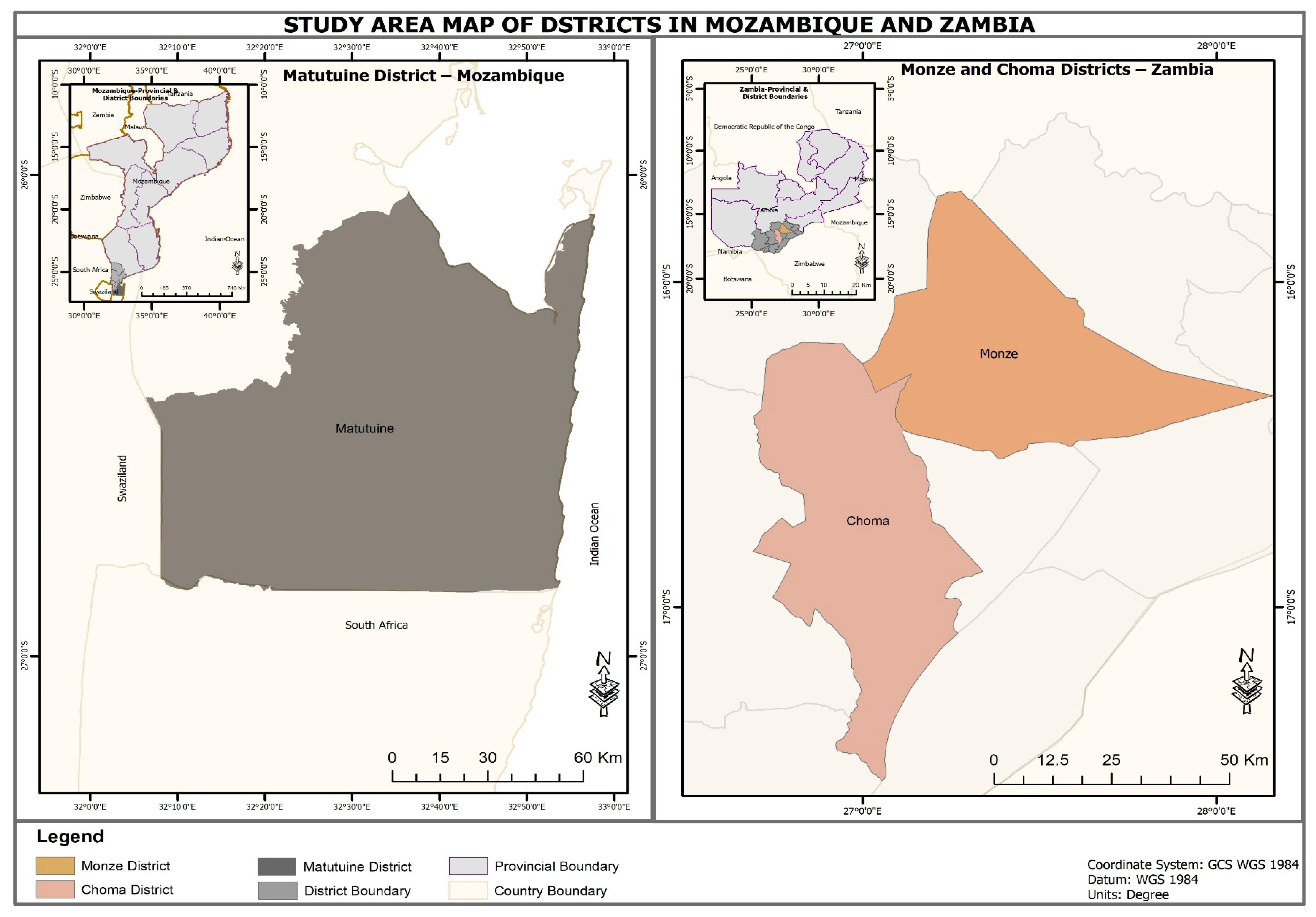
The study was conducted in Mozambique (Matutuine district) and Zambia (Choma and Monze districts), Figure 1. The districts were purposively selected due to their shared vulnerability to climate events such as droughts, and generally poor soil fertility and livestock feed management practices by smallholder farmers [14,23]. Their representation of dominant small-scale farmers allowed for a comparison of responses under similar agro-ecological challenges but different national contexts.
Matutuine district is geographically located in the southern part of Mozambique. A semi-arid climate with unique wet and dry seasons characterizes the district. Annual rainfall is about 1000 mm at the coast and 600 mm in the interior area [24]. The district is in Maputo province and has inland areas. Smallholder farmers dominate the Matutuine district. The key crops grown in the district are maize, cassava, groundnuts, and vegetables. In addition, livestock rearing plays a critical role in the district’s farming system [23].
Choma and Monze districts of Zambia’s Southern Province have a semi-arid climate with annual rainfall ranging from 500 to 800 mm [11]. Agriculture is the predominant economic activity for the two districts, especially with cattle keeping [10]. Soils are susceptible to erosion due to poor land management practices. Agriculture in Mozambique and Zambia’s study districts face challenges that include water scarcity, soil degradation, and vulnerability to climate change (droughts and erratic rains) [6,9]. Despite these impacts, the region has a high potential for sustainable agriculture development through improved agricultural technologies [11].

2.2. Methodological Framework

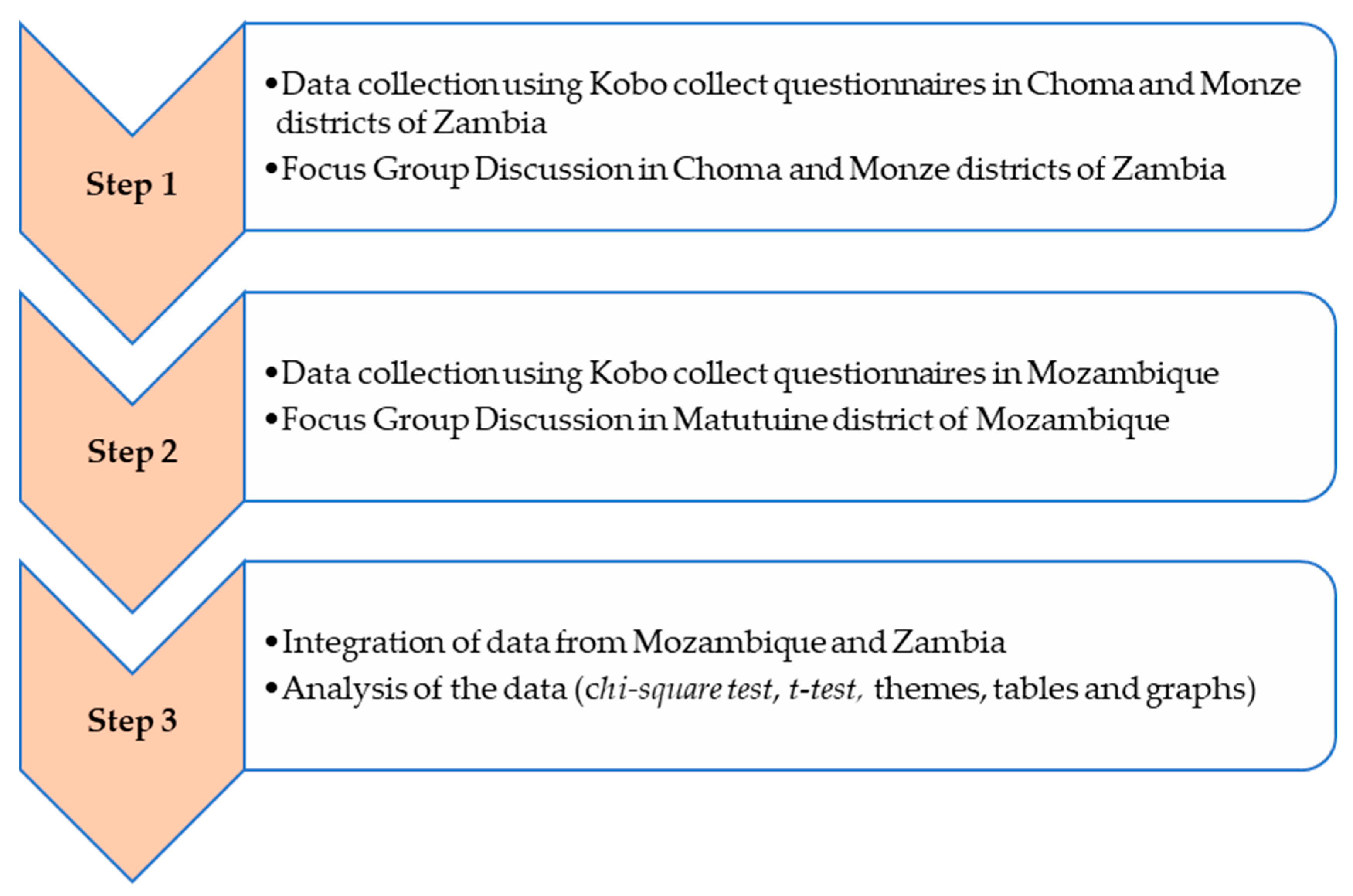
The methodological framework took three major steps. Step 1 was the collection of data in the Zambian context. Step 2 was the collection of data from the Mozambique context, as illustrated in Figure 2 below.

2.3. Conceptual Framework

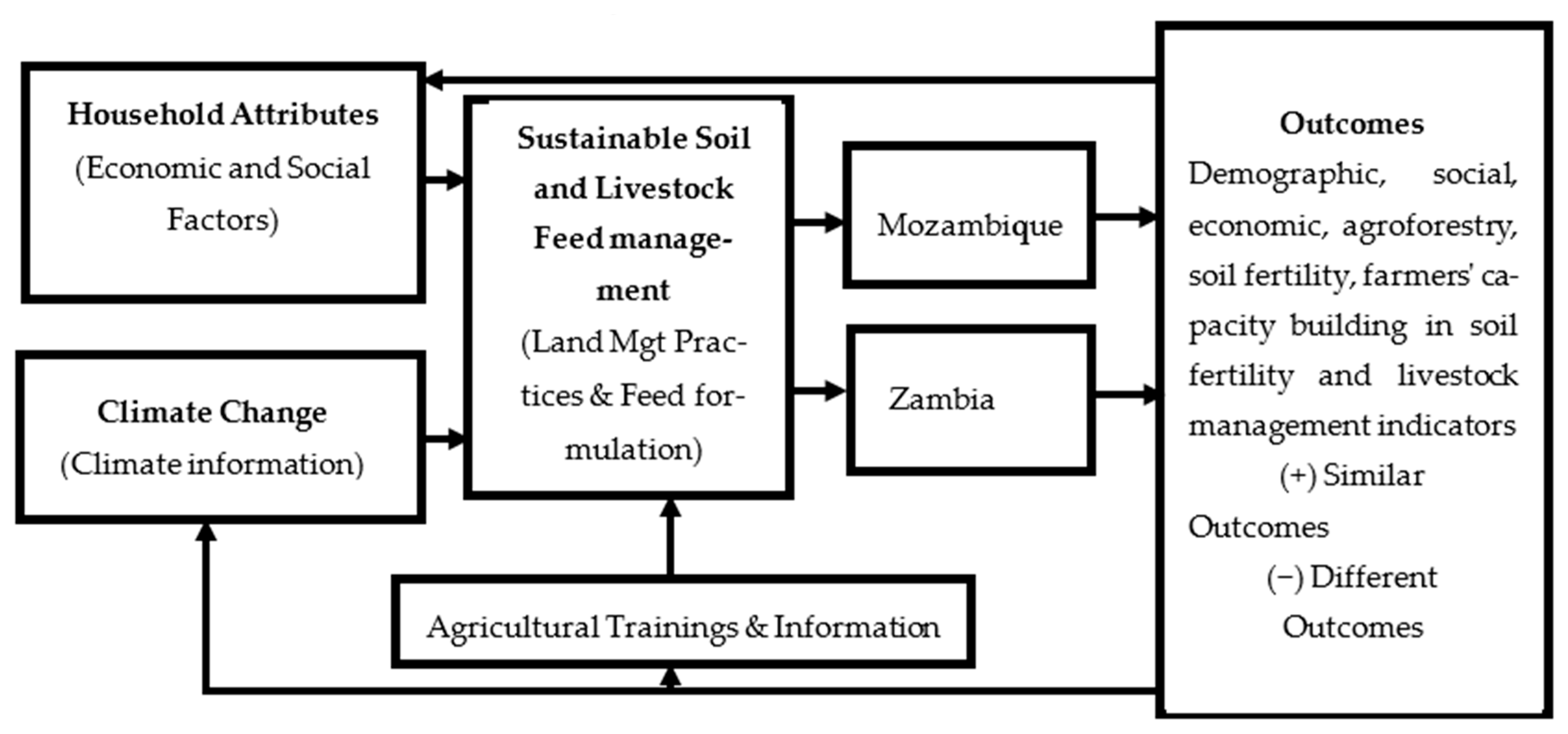
In this research study, we conceptualize and compare farmers in Mozambique and Zambia through cross-case analysis [25], evaluating household social and economic factors [26], participation in agricultural training programs [27,28], and access to climate and weather information [29,30] (Figure 3) based on sustainability theory [21]. The study assesses how these variables are associated with sustainable soil fertility [31] and livestock feed management practices [32]. By identifying major differences and shared challenges, the framework aims to assess the effectiveness of interventions in both countries to enhance agriculture production, productivity, and resilience to the changing climate, as well as the framework strategies to improve soil health and livestock nutrition for farming systems. Figure 3 summarizes the study outlines, variables, and concepts, and how they will be used to generate expected outcomes. In Figure 3, we have highlighted the main outcomes of the study.

2.4. Data Sources and Sampling

Data for the study were collected from Choma and Monze districts in Zambia and Matutuine district in Mozambique, targeting households engaged in agriculture. A mixed methods approach was adopted in this study [25,33,34]. A structured questionnaire [35,36,37] was developed and pretested to ensure clarity and reliability before deployment [10]. Research assistants were recruited and trained on how to collect data using the Open Data Kit. Data collection utilized the Kobocollect tool, an online platform [38]. The questionnaires had four core sections: (1) Socio-demographics, (2) Agricultural assets and practices, (3) Training access and participation, (4) Access and use of weather information. In addition, data were collected from the focus group discussion using notes, using open-ended questions following the above-mentioned four core themes.
A random sampling method was applied [28,34,39] to select households from the list of farmers that was provided by the Ministry of Agriculture in each district, ensuring representative and unbiased participation. This approach comprehensively covered the study areas’ diverse agricultural practices and socio-economic conditions. The study focused on Choma (sample size 136) and Monze (sample size 176) districts in Zambia and Matutuine district (sample size 186) in Mozambique, areas with semi-arid climates vulnerable to droughts and erratic rains. Different sample sizes were handled based on other studies [40]. Furthermore, this study’s sample size differences were due to difficulties in reaching some individuals or groups of interest in the sampling frame. However, the sample size difference has no impact on the analysis because of the robust statistical tests used, such as the Chi-square and t-test for such comparison when the effect size is large enough, as it is in this case. Additionally, focus group discussions (FGDs) [41] were conducted with key community members and stakeholders, ranging from 5 to 8 farmers per FGD [42,43] to supplement household survey data. These discussions offered qualitative insights into total local agricultural practices, challenges, and coping strategies. The combination of quantitative and qualitative methods provided a robust dataset for comparing agricultural dynamics in selected districts of Zambia and Mozambique.

2.5. Data Analysis

The data analysis employed both parametric and non-parametric statistical tests [44] to compare agricultural data from Mozambique and Zambia. Data was analyzed using Statistical Package for Social Sciences version 22.5. Descriptive statistics were computed, i.e., continuous variables were analyzed using the means and frequencies, while the t-test assessed independent sample variables’ homogeneity between the two datasets [45], such as farmland and income. Categorical variables (access to training and gender) were compared using the chi-square test [46], and where sample sizes were small, Fisher’s exact test [47] provided robust significance levels. Statistical analyses were performed at a 95% confidence level, with a p-value of <0.05 considered statistically significant. This combination of tests ensured the reliability of comparisons across diverse agricultural parameters. It accounted for potential variations in sample distributions. For qualitative data, a thematic analysis approach [41,48,49,50,51,52] as well as direct quotes from farmers’ perspectives were used to harness some of the key issues expressed by farmers during the FGDs.

2.6. Ethical Consideration

Ethical approval was obtained from the University of Eduardo Mondlane Veterinary Faculty Council, reference number 363 FAVAT/2023, as part of the collaborative research between Mozambique and Zambia. In addition, the authors obtained informed consent from each participant in the survey through a Yes/No before beginning the interview. All participants were informed about the context of the study and the anonymous nature of the survey. Permission was sought from each respondent, who openly and freely answered the questions. In this study, no agricultural animals were involved.

2.7. Methodological Limitations

The sample size for the two countries was not equal, and this may have affected the comparison results between the two countries, Mozambique and Zambia. The chi-square test is sensitive to small sample sizes. These tests also only detect statistical differences, not causal relationships, limiting their utility in explaining underlying agricultural data dynamics.

3. Results

3.1. Descriptive Statistics

Table 1 below summarizes the data from the survey (Mozambique and Zambia), focusing on socio variables (scale), agricultural assets, and area under soil fertility management approaches. The annual income is generally small ($432), and similarly, the farm size with a mean of 4.47 hectares.

3.2. Demographic, Social, and Economic Indicators

This includes household size, t = 3.877, p < 0.001; farmland size, t = 2.937, p < 0.003; and annual income, t = 9.778, p < 0.001, all being significant as shown in Table 1. This trend is also evident in ownership of some of the agricultural equipment, as tabulated in Table 2 below, while age, vehicle ownership, and television were not significant.
In Zambia, 77.2% are male-headed households, while 22.8% are female-headed households. In Zambia, 84.0% of the respondents are married, while in Mozambique has the proportion of 62.4%. In addition, Zambia has a high primary school level of 70.8% while Mozambique has as low as 47.3% of the respondents who attained primary school. The study finds a significant difference (p = 0.000) for gender, marital status, and education levels of respondents.

3.3. Agroforestry and Soil Fertility Indicators

The t-test results of the crop area under cowpea, oilseed crops, and vegetables showed significant differences: t = 8.375, p < 0.001; t = 4.138, p < 0.001; and t = 3.104, p < 0. 002, respectively, indicating differences in cultivation preference (Table 3). During the FGD, farmers also mentioned that some aspects of soil fertility management were not covered in the training, such as the use of biochar. For example, they said, “Government extension officers, Lead/fellow farmers, NGOs such as DAPP, but they have never trained us on how to make and apply biochar for soil fertility improvement. It’s a new concept for us, and we need to know more about it”.

3.4. Farmers’ Capacity Building in Soil Fertility and Livestock Management Indicators

In Zambia, a total of 312 respondents reported that 174 (55.8%) did not receive training, and 138 (44.2%) reported receiving training. In Mozambique, the trend is sharply contrasting. In this regard, 180 respondents, representing 96.8%, reported not having received training, while 3.2% did so. This points to a serious gap in training on soil fertility management in Mozambique compared to Zambia. In Mozambique, the highest percentage of respondents, 58.0%, had received crop and livestock production training, while in Zambia, 97.3% of the respondents indicated having received crop and livestock production training.
In Zambia, 245 out of 312 respondents, or 78.5%, use locally formulated feeds, while only 23, or 7.4% do not. On the contrary, 183 respondents, 98.4%, affirmed reliance on the other feeding methods. This may mean a great reliance on the feeds that are formulated within the country. The expected frequency for Mozambique further has a statistical implication for the use of locally formulated feeds, which was not realized, implying potential gaps in farming practices or access to locally formulated alternatives. Soil fertility management training, crop and livestock production, and locally formulated feed had strong significance levels (p = 0.000), as shown in Table 4. Farmers in Zambia were substantially more likely to have received soil fertility training (44.2%) than in Mozambique (3.2%), which includes the use of biochar and agroforestry. Some farmers expressed a desire for auxiliary services beyond the training they receive, such as “training on poultry and goat management, deployment of veterinary officers, deep tanks for animals are required, borehole construction and establishment of a centre for livestock as a source of knowledge and should have a laboratory for disease assessments.

3.5. Farmers’ Capacity, Access, and Utilization of Weather Information for Sustainable Agricultural Planning

The total for Zambia is 312; 30 respondents, 9.6%, report no access to weather information, while 71, 22.8%, report access. The Majority, 211 (67.6%), did not specify. For Mozambique, out of 186, 37 (19.9%) reported no access to weather information, while 94 (50.5%) said they do have access. Only 55 (29.6%) did not specify. Regarding how widely weather information is used, Zambia has 78.8%, while Mozambique has 21.2%. In Zambia, 66.7% of “Agree” and 45.6% of “Neutral”, while in Mozambique 66.7%, “Neutral” showed indeterminate views on whether the information is adequate. The Chi-Square and Fisher’s tests showed significant differences (p = 0.000) between Mozambique and Zambia regarding access to meteorological information, the use of such information in managing crops and livestock, and the adequacy of the information regarding the weather (Table 5 and Table 6).

4. Discussion

4.1. Demographic, Social, and Economic Factors

This discussion focuses on the key findings related to demographic factors, agroforestry practices, capacity building, and access to weather information. The significant differences in observed household attributes, agricultural assets, and socio-economic variables between Zambia and Mozambique highlight the ownership inequality of agricultural resources. Moreover, the household structure, in terms of gender composition, follows a very patriarchal model in Zambia, while in Mozambique, one can notice a relatively more egalitarian gender distribution. Such social and demographic factors may serve to affect the adoption of emerging technologies or to inform the best approaches for the dissemination of agricultural information [7,16,22,29,36,53,54,55,56,57,58]. Variation in attained education underlines the strikingly high illiteracy rates in Mozambique and the lack of access to higher education in either country, therefore underlining structural inequalities [28,44,59,60,61,62].

4.2. Agroforestry and Soil Fertility Management Practices

The results imply that there is a significant difference in land allocation to cowpea, oilseed crops, and vegetables, hence diverse levels of farmer preference to cultivate. In cowpea and oilseed crops, large t-values with the corresponding p-values of less than 0.001 and 0.002 for vegetable evidence that the variability is significant and may be influenced by market demands, agroecological variables, or farmer priorities. These findings are also supported by broader trends of crop diversification and focus on climate-resilient and high-value crops [14]. Further research is required to see how socio-economic or policy interventions can influence these preferences and, more so, inform sustainable agricultural practices.

4.3. Farmers’ Capacity Building in Soil Fertility and Livestock Feed Management

These results show the difference in the depth and breadth of training in agriculture in the two countries. Zambia places a greater emphasis on comprehensive training. At the same time, Mozambique provides a broader spectrum of agriculture-related training programs that may be less comprehensive, owing perhaps to the existing norms relating to gender [42]. The differences are also visible in the adoption levels and structures relating to the social organization of communities in their respective countries. In Zambia, the Agricultural producers are primarily organized in associations and benefit from regular training programs, and this enhances adoption. In Mozambique, agricultural farmers tend to be small family operations, making accessing them difficult for extension services. These differences also carry over into areas of livestock feed management, where there is a higher production of feeds in Zambia compared to Mozambique. This may be accounted for by the difference in agricultural policies, cultural practices, social status or resources available to the farmers in the two countries.

4.4. Farmers’ Capacity, Access, and Utilization of Weather Information

The results reveal notable differences in access to and perceptions of weather information between Zambia and Mozambique. In Zambia, most respondents reported either having access (67.6%) or did not specify (9.6%). Conversely, Mozambique exhibited a higher proportion of respondents with access to weather information (29.6%), but a significant percentage reported no access (50.5%). Perceptions of adequacy varied in Zambia; most viewed weather information as adequate, with agreement or neutrality suggesting confidence in its utility. A substantial “Neutral” response in Mozambique implies limited clarity or engagement with weather information. These disparities highlight varying challenges in promoting effective weather information utilization across contexts. In both countries, we see male-headed responses highlighting some of the gender-based gaps in information sharing demonstrated by other studies [63]. During the FGDs, participants reported that men generally tend to access weather information more than women due to a myriad of reasons, among them being the deeply rooted socio-cultural norms, economic differences, and disparities in access to technology and information channels. These factors present significant challenges for women.

5. Conclusions

This study highlights significant differences in agricultural and household characteristics between Zambia and Mozambique, providing insights into rural livelihoods and resource allocation in these countries. Key findings reveal disparities in household size (t = 3.877, p < 0.001), farmland size (t = 2.937, p < 0.003), annual income (t = 9.778, p < 0.001), and ownership of agricultural equipment, underscoring the distinct socio-economic dynamics between the two regions. The gendered distribution of households and variations in marital status further emphasize contrasting social structures, with Zambia exhibiting a more traditional, male-dominated framework compared to the relatively balanced gender representation in Mozambique. Educational attainment also varied notably, with Zambia concentrating on primary education and Mozambique exhibiting greater diversity, including a higher proportion of individuals without formal education. Crops cultivation preferences diverged significantly, with notable differences in areas under cowpea, oilseed crops, and vegetables (t = 8.375, p < 0.001; t = 4.138, p < 0.001; and t = 3.104, p < 0. 002, respectively). Access to training and utilization of locally formulated feeds further differentiated the countries, with Zambia demonstrating a stronger emphasis on comprehensive agricultural training and local feed use, while Mozambique lagged in these areas. Access to and adequacy of weather information as critical areas of disparity (p = 0.000). While weather information is widely utilized in Zambia, Mozambique shows a higher percentage of neutral responses (66.7%), indicating potential gaps in dissemination and perceived relevance.
The study recommends expanding access to comprehensive agricultural training in Mozambique, particularly in soil fertility management and locally formulated feed production. A cross-border (south to south) learning for farmer groups for peer-to-peer knowledge transfer on feed formulation. Meteorological services to collaborate with agricultural extension, in co-producing and disseminating tailored-made gender-sensitive agricultural advisories that are crop-livestock specific. For donor and government agencies to invest in building the capacity of local artisans to manufacture simple feed processing equipment. Promote secondary and tertiary education opportunities to address the low educational attainment in both countries. Enhance the dissemination and relevance of weather information, tailoring content to meet local needs and ensuring equitable access. Finally, future research should investigate the socio-economic factors influencing disparities in crop cultivation, gender roles, and training participation to inform targeted interventions with a comparatively larger sample size.

Author Contributions

Conceptualization, K.C., C.T., N.K. and A.V.; Data collection, K.C., M.M., Y.C., N.K., F.D.A., L.A. and A.V.; methodology, K.C. and A.N.S.; software, A.N.S.; validation, A.N.S., K.C., M.M. and Y.C.; formal analysis, A.N.S.; investigation, A.N.S., K.C., M.M., Y.C., N.K., A.V., F.D.A., L.A., A.T. and C.T.; resources, K.C., A.T. and C.T.; data curation, A.N.S. and K.C.; writing—original draft preparation, A.N.S.; writing—review and editing, A.N.S., K.C., M.M., Y.C., N.K., L.A., F.D.A., A.V., A.T. and C.T.; visualization, A.N.S. and Y.C.; supervision, K.C., A.T. and C.T.; project administration K.C., C.T., A.T. and A.V.; funding acquisition, K.C. and C.T. All authors have read and agreed to the published version of the manuscript.

Funding

This research was funded by the International Development Research Centre (IDRC), grant number SB07802312111221. The APC was funded by FNI, Mozambique and National Science Technological Council (NSTC), Zambia.

Institutional Review Board Statement

The study was conducted in accordance with University of Eduardo Mondlane Veterinary Faculty Council, and the protocol was approved by the Ethics Committee of 363 FAVAT/2023 on 22 November 2023.

Informed Consent Statement

Informed consent was obtained from all subjects involved in the study.

Data Availability Statement

The raw data supporting the conclusions of this article will be made available by the authors on request.

Acknowledgments

We acknowledge the support given to the research team by the Ministry of Agriculture in Choma and Monze District of Zambia and Matutine District of Mozambique, including administrative and technical support.

Conflicts of Interest

Albert Novas Somanje and Kafula Chisanga were employed by NelNov Consultants. The remaining authors declare that the research was conducted in the absence of any commercial or financial relationships that could be construed as a potential conflict of interest.

References

  1. OECD/FAO. Agriculture in Sub-Saharan Africa: Prospects and Challenges for the Next Decade; FAO: Rome, Italy, 2016; pp. 59–95. [Google Scholar]
  2. Tchuenga, G.T.S.; Tchindjang, M.; Ngome, P.I.T.; Degrande, A.; Basga, S.D.; Saha, F. Agricultural Innovations and Adaptations to Climate Change in the Northern Cameroon Region. Sustainability 2024, 16, 10096. [Google Scholar] [CrossRef]
  3. Demissie, T.; Gebrechorkos, S.H. Spatio-Temporal Trends in Precipitation, Temperature, and Extremes: A Study of Malawi and Zambia (1981–2021). Sustainability 2024, 16, 3885. [Google Scholar] [CrossRef]
  4. Mohan, D.; Abhishek, K.; Sarswat, A.; Patel, M.; Singh, P.; Pittman, C.U. Pittman, Biochar production and applications in soil fertility and carbon sequestration–a sustainable solution to crop-residue burning in India. RSC Adv. 2018, 8, 508–520. [Google Scholar] [CrossRef]
  5. Matos, A.; Barraza, L.; Ruiz-Mallén, I. Linking Conservation, Community Knowledge, and Adaptation to Extreme Climatic Events: A Case Study in Gorongosa National Park, Mozambique. Sustainability 2021, 13, 6478. [Google Scholar] [CrossRef]
  6. Semosa, P.D. The Impact of Climate Change on the Agricultural Sector in SADC Countries. Sustainability 2025, 17, 5177. [Google Scholar] [CrossRef]
  7. Boudalia, S.; Dawit Teweldebirhan, M.; Ariom, T.O.; Diouf, N.S.; Nambeye, E.; Mwatitha Gondwe, T.; Mbo’o-Tchouawou, M.; Okoth, S.A.; Huyer, S. Gendered Gaps in the Adoption of Climate-Smart Agriculture in Africa and How to Overcome Them. Sustainability 2024, 16, 5539. [Google Scholar] [CrossRef]
  8. McCordic, C.; Abrahamo, E. Family Structure and Severe Food Insecurity in Maputo and Matola, Mozambique. Sustainability 2019, 11, 267. [Google Scholar] [CrossRef]
  9. Somanje, A.N.; Mwansa, L.M.; Chisanga, K. Spatial Distribution Analysis of Community Radio Stations as Means for Promoting Climate Change Adaptation Measures in Agriculture under COVID-19 Scenario, Southern Province, Zambia. Sustainability 2022, 14, 15380. [Google Scholar] [CrossRef]
  10. Somanje, A.N.; Mohan, G.; Saito, O. Evaluating farmers’ perception toward the effectiveness of agricultural extension services in Ghana and Zambia. Agric. Food Secur. 2021, 10, 53. [Google Scholar] [CrossRef]
  11. Somanje, A.N.; Crespo, O.; Zinyengere, N. Conservation Agriculture Among Farmers in Kalomo, Zambia. In Beyond Agricultural Impacts; Elsevier: Amsterdam, The Netherlands, 2017; pp. 77–99. [Google Scholar]
  12. Nkomoki, W.; Bavorová, M.; Banout, J. Factors Associated with Household Food Security in Zambia. Sustainability 2019, 11, 2715. [Google Scholar] [CrossRef]
  13. Kiwia, A.; Kimani, D.; Harawa, R.; Jama, B.; Sileshi, G.W. Sustainable Intensification with Cereal-Legume Intercropping in Eastern and Southern Africa. Sustainability 2019, 11, 2891. [Google Scholar] [CrossRef]
  14. Manono, B.O.; Gichana, Z. Agriculture-Livestock-Forestry Nexus: Pathways to Enhanced Incomes, Soil Health, Food Security and Climate Change Mitigation in Sub-Saharan Africa. Earth 2025, 6, 74. [Google Scholar] [CrossRef]
  15. Zavale, H.; Matchaya, G.; Vilissa, D.; Nhemachena, C.; Nhlengethwa, S.; Wilson, D. Dynamics of the Fertilizer Value Chain in Mozambique. Sustainability 2020, 12, 4691. [Google Scholar] [CrossRef]
  16. Mphande, E.; Umar, B.B.; Kunda-Wamuwi, C.F. Gender and Legume Production in a Changing Climate Context: Experiences from Chipata, Eastern Zambia. Sustainability 2022, 14, 11901. [Google Scholar] [CrossRef]
  17. Partey, S.; Zougmoré, R.; Ouédraogo, M.; Thevathasan, N. Why Promote Improved Fallows as a Climate-Smart Agroforestry Technology in Sub-Saharan Africa? Sustainability 2017, 9, 1887. [Google Scholar] [CrossRef]
  18. Yuan, Y.; Chen, H.; Yuan, W.; Williams, D.; Walker, J.T.; Shi, W. Is biochar-manure co-compost a better solution for soil health improvement and N2O emissions mitigation? Soil Biol. Biochem. 2017, 113, 14–25. [Google Scholar] [CrossRef]
  19. Smith, P. Soil carbon sequestration and biochar as negative emission technologies. Glob. Change Biol. 2016, 22, 1315–1324. [Google Scholar] [CrossRef] [PubMed]
  20. Rogers, P.M.; Fridahl, M.; Yanda, P.; Hansson, A.; Pauline, N.; Haikola, S. Socio-Economic Determinants for Biochar Deployment in the Southern Highlands of Tanzania. Energies 2021, 15, 144. [Google Scholar] [CrossRef]
  21. United Nations. The Sustainable Development Goals Report; United Nations: Geneva, Switzerland, 2017. [Google Scholar] [CrossRef]
  22. Waage, J.; Yap, C.; Bell, S.; Levy, C.; Mace, G.; Pegram, T.; Unterhalter, E.; Dasandi, N.; Hudson, D.; Kock, R.; et al. Governing the UN Sustainable Development Goals: Interactions, infrastructures, and institutions. Lancet Glob. Health 2015, 3, e251–e252. [Google Scholar] [CrossRef]
  23. Sigaúque, I.; Macucule, P.A.; Mulandane, F.C.; Brito, D.R.A.; Jamal, S.A.; Delespaux, V.; Neves, L.C.B.G. Parasitological and molecular identification of Trypanosoma species circulating in cattle and tsetse flies in Matutuine District, Maputo Province, Mozambique. Rend. Lincei. Sci. Fis. Nat. 2022, 33, 501–512. [Google Scholar] [CrossRef]
  24. Shaffer, L.J. Rain Rituals as a Barometer of Vulnerability in an Uncertain Climate. J. Ecol. Anthropol. 2017, 19, 1–17. [Google Scholar] [CrossRef]
  25. Rijal, P.; Pimentel, C.; Carvalho, H.; Matias, J.; Garrido, S. Sustainable Business Models for Residual Agroforestry Biomass Valorization: A Cross Case Analysis. In Design, Simulation, Manufacturing: The Innovation Exchange; Springer Nature: Cham, Switzerland, 2025; pp. 117–126. [Google Scholar]
  26. Cox, A.J.; Sseguya, H. ICT supported extension services in conservation agriculture information access for small holder farmers in Laikipia County, Kenya. In Proceedings of the International Symposium on Technology and Society, Dublin, Ireland, 11–12 November 2015; Volume 2016. [Google Scholar] [CrossRef]
  27. Nakano, Y.; Tsusaka, T.W.; Aida, T.; Pede, V.O. Is farmer-to-farmer extension effective? The impact of training on technology adoption and rice farming productivity in Tanzania. World Dev. 2018, 105, 336–351. [Google Scholar] [CrossRef]
  28. Ntshangase, N.L.; Muroyiwa, B.; Sibanda, M. Farmers’ Perceptions and Factors Influencing the Adoption of No-Till Conservation Agriculture by Small-Scale Farmers in Zashuke, KwaZulu-Natal Province. Sustainability 2018, 10, 555. [Google Scholar] [CrossRef]
  29. Abdul-Razak, M.; Kruse, S. The adaptive capacity of smallholder farmers to climate change in the Northern Region of Ghana. Clim. Risk Manag. 2017, 17, 104–122. [Google Scholar] [CrossRef]
  30. Hernández-Morcillo, M.; Burgess, P.; Mirck, J.; Pantera, A.; Plieninger, T. Scanning agroforestry-based solutions for climate change mitigation and adaptation in Europe. Environ. Sci. Policy 2018, 80, 44–52. [Google Scholar] [CrossRef]
  31. Becerra-Encinales, J.F.; Bernal-Hernandez, P.; Beltrán-Giraldo, J.A.; Cooman, A.P.; Reyes, L.H.; Cruz, J.C. Agricultural extension for adopting technological practices in developing countries: A scoping review of barriers and dimensions. Sustainability 2024, 16, 3555. [Google Scholar] [CrossRef]
  32. Duku, M.H.; Gu, S.; Hagan, E. A comprehensive review of biomass resources and biofuels potential in Ghana. Renew. Sustain. Sustain. Energy Rev. 2011, 15, 404–415. [Google Scholar] [CrossRef]
  33. Creswell, J.W. Research Design: Qualitative, Quantitative and Mixed Approaches, 3rd ed.; Sage Publications: London, UK, 2009. [Google Scholar]
  34. Creswell, J.W.; Clark, V.L.P. Designing and Conducting Mixed Methods Research; Sage Publications: London, UK, 2017. [Google Scholar]
  35. Khatri, A.; Lallawmkimi, M.C.; Rana, P.; Panigrahi, C.K.; Minj, A.; Koushal, S.; Ali, M.U. Integration of ICT in agricultural extension services: A review. J. Exp. Agric. Int. 2024, 46, 394–410. [Google Scholar] [CrossRef]
  36. Tata, J.; McNamara, P. Social Factors That Influence Use of ICT in Agricultural Extension in Southern Africa. Agriculture 2016, 6, 15. [Google Scholar] [CrossRef]
  37. Barakabitze, A.A.; Kitindi, E.J.; Sanga, C.; Shabani, A.; Philipo, J.; Kibirige, G. New technologies for disseminating and communicating agriculture knowledge and information: Challenges for agricultural research institutes in Tanzania. Electron. J. Inf. Syst. Dev. Ctries. 2015, 70, 1–12. [Google Scholar] [CrossRef]
  38. Lakshminarasimhappa, M.C. Web-Based and Smart Mobile APP for Data Collection: Kobo Toolbox/Kobo Collect. J. Indian Libr. Assoc. 2021, 57, 72–79. [Google Scholar]
  39. South, J.; Coan, S.; Woodward, J.; Bagnall, A.M.; Rippon, S. Asset Based Community Development: Co-Designing an Asset-Based Evaluation Study for Community Research. Sage Open 2024, 14, 21582440241240836. [Google Scholar] [CrossRef]
  40. Garamszegi, L.Z.; Møller, A.P. Effects of sample size and intraspecific variation in phylogenetic comparative studies: A meta-analytic review. Biol. Rev. 2010, 85, 797–805. [Google Scholar] [CrossRef]
  41. Geampana, A.; Perrotta, M. Using interview excerpts to facilitate focus group discussion. Qual. Res. 2025, 25, 130–146. [Google Scholar] [CrossRef]
  42. Mudege, N.N.; Chevo, T.; Nyekanyeka, T.; Kapalasa, E.; Demo, P. Gender Norms and Access to Extension Services and Training among Potato Farmers in Dedza and Ntcheu in Malawi. J. Agric. Educ. Ext. 2016, 22, 291–305. [Google Scholar] [CrossRef]
  43. Fern, E.F. The use of Focus Groups for Idea Generation: The Effects of Group Size, Acquaintanceship, and Moderator on Response Quantity and Quality. J. Mark. Res. 1982, 19, 1–13. [Google Scholar] [CrossRef]
  44. Emmanuel, D.; Owusu-Sekyere, E.; Owusu, V.; Jordaan, H. Impact of agricultural extension service on adoption of chemical fertilizer: Implications for rice productivity and development in Ghana. NJAS-Wageningen J. Life Sci. 2016, 79, 41–49. [Google Scholar] [CrossRef]
  45. Parmar, I.S.; Soni, P.; Kuwornu, J.K.M.; Salin, K.R. Evaluating farmers’ access to agricultural information: Evidence from semi-arid region of Rajasthan state, India. Agriculture 2019, 9, 60. [Google Scholar] [CrossRef]
  46. Yaya, S.; Bishwajit, G.; Ekholuenetale, M.; Shah, V.; Kadio, B.; Udenigwe, O. Urban-rural difference in satisfaction with primary healthcare services in Ghana. BMC Health Serv. Res. 2017, 17, 776. [Google Scholar] [CrossRef]
  47. McKinney, W.P. The Inexact Use of Fisher’s Exact Test in Six Major Medical Journals. JAMA J. Am. Med. Assoc. 1989, 261, 3430. [Google Scholar] [CrossRef]
  48. Parajuli, R.; Doneys, P. Exploring the role of telemedicine in improving access to healthcare services by women and girls in rural Nepal. Telemat. Inform. 2017, 34, 1166–1176. [Google Scholar] [CrossRef]
  49. Moyo, R.; Salawu, A. A survey of communication effectiveness by agricultural extension in the Gweru district of Zimbabwe. J. Rural Stud. 2018, 60, 34–42. [Google Scholar] [CrossRef]
  50. Coe, R.; Waring, M.; Hedges, L.V.; Ashley, L.D. (Eds.) Research Methods and Methodologies in Education; SAGE Publications Limited: London, UK, 2025. [Google Scholar]
  51. Msoffe, G.; Chengula, A.; Kipanyula, M.J.; Mlozi, M.R.S.; Sanga, C.A. Poultry Farmers’ Information needs and Extension advices in Kilosa, Tanzania: Evidence from Mobile-based Extension, Advisory and Learning System (MEALS). Libr. Philos. Pract. 2018, 11, 155–164. [Google Scholar] [CrossRef]
  52. Baird, T.D.; Hartter, J. Livelihood diversification, mobile phones and information diversity in Northern Tanzania. Land Use Policy 2017, 67, 460–471. [Google Scholar] [CrossRef]
  53. Isaya, E.L.; Agunga, R.; Sanga, C.A. Sources of agricultural information for women farmers in Tanzania. Inf. Dev. 2018, 34, 77–89. [Google Scholar] [CrossRef]
  54. Baffoe, G.; Matsuda, H. Why do rural communities do what they do in the context of livelihood activities? Exploring the livelihood priority and viability nexus. Community Dev. 2017, 48, 715–734. [Google Scholar] [CrossRef]
  55. Nyantakyi-Frimpong, H.; Bezner-Kerr, R. The relative importance of climate change in the context of multiple stressors in semi-arid Ghana. Glob. Environ. Change 2015, 32, 40–56. [Google Scholar] [CrossRef]
  56. Murray, U.; Gebremedhin, Z.; Brychkova, G.; Spillane, C. Smallholder Farmers and Climate Smart Agriculture: Technology and Labor-productivity Constraints amongst Women Smallholders in Malawi. Gend. Technol. Dev. 2016, 20, 117–148. [Google Scholar] [CrossRef] [PubMed]
  57. Chahal, N.; Com, B.; Panwar, T.; Pathak, V. Gender Equality and Sustainability: Interlinked Pathways to Inclusive Development. In Proceedings of the International Conference on Sustainable Development Goals-Challenge, Moradabad, India, 25–26 April 2025. [Google Scholar]
  58. UN Women. Climate Change, Gender and Food Security in the Pacific; United Nations: Suva, Fiji, 2014; Available online: https://asiapacific.unwomen.org (accessed on 21 October 2025).
  59. Prahmana, R.C.I.; Hartanto, D.; Kusumaningtyas, D.A.; Ali, R.M. Muchlas, Community radio-based blended learning model: A promising learning model in remote area during pandemic era. Heliyon 2021, 7, e07511. [Google Scholar] [CrossRef] [PubMed]
  60. Pretty, J.; Toulmin, C.; Williams, S. Sustainable intensification in African agriculture. Int. J. Agric. Sustain. 2011, 9, 5–24. [Google Scholar] [CrossRef]
  61. Wynes, S.; Nicholas, K.A. The climate mitigation gap: Education and government recommendations miss the most effective individual actions. Environ. Res. Lett. 2017, 12, 074024. [Google Scholar] [CrossRef]
  62. Guilherme, N.K.P., Jr.; Rodrigues, A.C. Microcosms of the Skills Ecosystem: Building Communities of Practice (CoPs) to Tackle Food Insecurity and Youth Unemployment in Northern Mozambique. Soc. Sci. 2025, 14, 396. [Google Scholar] [CrossRef]
  63. Mugwisi, T.; Mostert, J.; Ocholla, D.N. Access to and Utilization of Information and Communication Technologies by Agricultural Researchers and Extension Workers in Zimbabwe. Inf. Technol. Dev. 2015, 21, 67–84. [Google Scholar] [CrossRef]
Figure 1. Location of the study area (Matutuine district) in Mozambique (Choma and Monze districts) in Zambia. Source: Authors (2024).
Sustainability 18 00392 g001
Figure 2. Methodological framework. Source Authors (2024).
Sustainability 18 00392 g002
Figure 3. Conceptual framework for cross-case analysis for soil fertility and livestock feed management. Source: Modified from Ntshangase et al. (2018) [28] and Somanje et al. (2021) [10].
Sustainability 18 00392 g003
Table 1. Descriptive Statistics.
VariableNMinimumMaximumMeanStd. Deviation
StatisticStatisticStatisticStatisticStd. ErrorStatistic
Age498168944.410.6313.96
Household size2890246.830.223.780
Farmland size49803004.470.6514.43
Annual income ($)49805846432.3130.91689.82
Number of radios475080.550.030.69
Number of tractors475010.000.000.065
Number of ridgers475020.040.010.21
Number of cultivators475030.180.020.43
Number of chaff cutters475030.080.020.36
Number of oxcarts4750210.310.061.21
Number of bicycles475040.540.030.64
Number of harrows475080.170.020.53
Number of vehicles475020.030.010.19
Number of televisions4750330.190.02
Number of goats_47505007.951.3228.70
Number of poultry475060013.871.5132.84
Area (ha) under pigeon peas 475080.040.020.40
Area (ha) under star grass475080.030.020.39
Area (ha) under cowpea475050.300.030.67
Area (ha) under Rhodes grass475010.000.000.07
Area (ha) under leucaena4750330.010.01
Area (ha) under sesbania475010.010.010.09
Area (ha) under velvet bean475030.020.010.20
Area (ha) under glicidia sepium475020.010.010.10
Area (ha) under oil seed crops4750250.790.081.82
Area (ha) under vegetables_4750251.340.1673.70
Area (ha) under root and tubers4750751.090.1914.16
Area (ha) under legumes_4750550.950.132.89
Area (ha) under cereals475081.800.061.32
Source: Authors (2024).
Table 2. Independent samples test for demographic and economic indicators.
Variables with Equal Variances Are AssumedLevene’s Test for Equality of Variancest-Test for Equality of Means
FSig.tdfSig.Mean DifferenceStd. Error Difference95% Confidence Interval of the Difference
LowerUpper
Age10.1360.002−0.1784960.859−0.2301.295−2.7742.314
Household size6.6990.0103.8772870.0003.1220.8051.5374.708
Farmland size5.3990.0212.9374960.0033.8971.3271.2906.504
Annual income ($)98.6990.0009.7784960.000572.69758.570457.621687.773
Number of radios6.0750.0144.0624730.0000.2580.0640.1330.383
Number of tractors5.2360.0231.1364730.2560.0070.006−0.0050.019
Number of ridgers52.9880.0003.4234730.0010.0660.0190.0280.103
Number of cultivators326.1510.0007.2604730.0000.2800.0390.2040.356
Number of chaff cutters75.5190.0004.0404730.0000.1350.0330.0690.201
Number of oxcarts44.3310.0004.6214730.0000.5160.1120.2960.735
Number of bicycles29.3480.00010.4794730.0000.5710.0550.4640.678
Number of harrows138.8430.0005.8784730.0000.2840.0480.1890.379
Number of vehicles4.6350.032−1.0714730.285−0.0190.018−0.0530.016
Number of televisions6.1790.013−1.2604730.208−13.57510.775−34.7487.599
Number of goats_4.7070.0312.6874730.0077.2022.6801.93512.468
Number of poultry1.0740.3000.9444730.3462.9143.088−3.1548.981
Source: Authors (2024).
Table 3. Chi-Square and Fisher’s Exact Test tests for social indicators.
VariableChi-Square and Fisher’s Exact TestsValuedfAsymp. Sig. (2-Sided)Exact Sig. (2-Sided)Exact Sig. (1-Sided)
Gender HHPearson Chi-Square34.99110.0000.0000.000
Marital StatusFisher’s Exact Test40.131 0.000
EducationFisher’s Exact Test118.610 0.000
Source: Authors (2024).
Table 4. Independent samples test for agroforestry and soil fertility management indicators.
Variables with Equal Variances Are AssumedLevene’s Test for Equality of Variancest-Test for Equality of Means
FSig.tdfSig.Mean DifferenceStd. Error Difference95% Confidence Interval of the Difference
LowerUpper
Area (ha) under pigeon peas 1.1340.288−0.5124730.609−0.0190.037−0.0930.054
Area (ha) under star grass1.4300.2320.6004730.5490.0220.037−0.0500.094
Area (ha) under cowpea219.9380.0008.3754730.0000.4910.0590.3760.607
Area (ha) under Rhodes grass5.2360.0231.1364730.2560.0070.006−0.0050.019
Area (ha) under leucaena1.6840.195−0.6444730.520−0.0090.014−0.0370.019
Area (ha) under sesbania10.6960.0011.6124730.1080.0140.009−0.0030.031
Area (ha) under velvet bean4.7320.0301.0914730.2760.0200.019−0.0160.057
Area (ha) under glicidia sepium2.3060.130−0.7564730.450−0.0070.010−0.0260.012
Area (ha) under oil seed crops2.9800.0854.1384730.0000.6950.1680.3651.025
Area (ha) under vegetables_26.2780.0003.1044730.0021.0550.3400.3871.724
Area (ha) under root and tubers4.6320.0320.4714730.6380.1840.391−0.5850.953
Area (ha) under legumes_3.4450.0643.2764730.0010.8800.2690.3521.408
Area (ha) under cereals0.0020.9643.9214730.0000.4770.1220.2380.717
Source: Authors (2024).
Table 5. Chi-Square and Fisher’s tests for training in soil fertility and livestock management indicators.
VariableChi-Square and Fisher’s Exact TestsValuedfAsymp. Sig. (2-Sided)Exact Sig. (2-Sided)
Training in soil fertility managementPearson Chi-Square95.32410.0000.000
Training in crop and livestock productionPearson Chi-Square160.61420.0000.000
Locally formulated feedPearson Chi-Square38.32120.0000.000
Source: Authors (2024).
Table 6. Chi-Square and Fisher’s tests for Farmers’ capacity access and utilization of weather information for sustainable agricultural planning.
VariableChi-Square and Fisher’s Exact TestsValuedfAsymp. Sig. (2-Sided)Exact Sig. (2-Sided)
Access to weather informationPearson Chi-Square67.89320.0000.000
Use of weather information for crop and livestock managementPearson Chi-Square102.40120.0000.000
Weather information provided is adequate.Pearson Chi-Square73.16540.0000.000
Source: Authors (2024).
Disclaimer/Publisher’s Note: The statements, opinions and data contained in all publications are solely those of the individual author(s) and contributor(s) and not of MDPI and/or the editor(s). MDPI and/or the editor(s) disclaim responsibility for any injury to people or property resulting from any ideas, methods, instructions or products referred to in the content.