Article

Evaluation of the Effect of Pesticide Packaging Waste Recycling: From Economic and Ecological Perspectives


International Business School, Hainan University, Haikou 570228, China
*
Author to whom correspondence should be addressed.
Sustainability 2026, 18(1), 390; https://doi.org/10.3390/su18010390 (registering DOI)
Submission received: 27 November 2025 / Revised: 17 December 2025 / Accepted: 29 December 2025 / Published: 30 December 2025

Abstract

Evaluating the effect of recycling Pesticide Packaging Waste (PPW) is essential for improving recycling rates, which plays a crucial role in controlling environmental pollution and optimizing the efficiency of agricultural resources worldwide. Based on the micro-survey data of 1223 farmers in Yunnan and Hainan provinces of China, this study measures the economic effect by the farmers’ annual total household income and the ecological effect by the ecological environment quality of villages. The propensity score matching method (PSM) is employed to empirically test the economic and ecological effects of farmers’ recycling behavior of PPW and their differences. The research findings are as follows: Farmers’ recycling of PPW can generate significant positive economic and ecological effects, which are 116.7% and 4%, respectively. The heterogeneity analysis shows that farmers with a low degree of land fragmentation have a more obvious economic effect from PPW recycling, while farmers with a higher degree of land fragmentation have a more significant ecological effect; farmers with high pesticide costs have more significant economic and ecological effects from PPW recycling. Based on these findings, it is suggested to increase the attention at the policy level, enhance farmers’ environmental awareness and capacity, and focus on the characteristics of different groups.

1. Introduction

Global pesticide consumption reached 3.7284 million tons in 2023, with pesticide application per hectare of arable land amounting to 2.4 kg, representing increases of 2.06-fold and 1.95-fold compared to 1990 levels, respectively [1]. Pollution from PPW has emerged as a serious challenge concomitant with this escalation in pesticide consumption [2,3]. Specifically, characterized by its resistance to degradation and the retention of pesticide residues, improper disposal of PPW can lead to the deterioration of the agricultural ecosystems, ecological contamination, and adverse impacts on human health [4,5,6,7,8]. Therefore, achieving the efficient recycling of PPW has become an essential task not only in China but also globally [9]. To date, the issue of PPW has garnered worldwide attention, leading to the successive adoption of responsive control measures. For instance, Brazil established the National Institute for Processing Empty Containers (InpEV) [10], Australia implemented the ‘farmers pay and farmers return’ recycling model [11], and European countries such as Germany, France, and Spain have established some schemes for the management of Agrochemical Plastic Packaging Waste (APPW) [12] to promote the recycling and utilization of PPW. However, the implementation effectiveness of these policies has been limited, and the actual status of PPW recycling remains far from optimistic [13].
The objective reality, which runs contrary to the high level of attention paid by various governments, is that PPW pollution has not been effectively curbed [14]. A review of the global status of PPW recycling reveals persistent issues such as a low recycling rate and difficulty in supervision [15], which pose significant challenges to rural ecological environment governance and protection. As the primary actors of pesticides and the direct beneficiaries of rural environmental governance, widespread and active farmer participation is indispensable for the efficient recycling of PPW. Promoting the resource utilization and recycling of PPW and fully implementing the concept of green development are the intrinsic requirements for high-quality agricultural development. The key to this lies in the quantified assessment of the dual economic and ecological benefit generated by recycling PPW. Clarifying the dual benefit is of profound significance, not only for incentivizing farmers’ participation in recycling and driving their green production transformation, but also for the deep-seated transformation of agriculture from a focus on ‘quantity’ to ‘quality’.
The existing literature is somewhat limited in its exploration of the effect of PPW recycling, with most studies primarily analyzing its antecedent influencing factors: (1) Internal factors mainly include farmers’ psychology, cognition, capabilities, individual and household characteristics, and production and operation characteristics [16,17,18,19,20,21]. (2) External factors are mainly analyzed from the perspectives of social norms, incentive policies and regulations, and training [22,23,24,25]. There is a corresponding gap of analysis on the economic and ecological effect. Currently, the academic community primarily focuses on discussing and evaluating the effect generated by various pro-environmental behaviors, such as the recycling behavior of solid waste like plastic bottles and discarded clothing [26,27], the behavior of green production factor input [28], green consumption behavior [29], digitalized green behavior [30], and the adoption of green production technology [31]. The effect can generally be categorized into the following aspects: First, the economic effect. Liu et al. [32] employed a fixed-effect regression model for verification, and the results indicated that for 1% increase in the solid waste recycling rate across counties in Florida, employment in the industry would increase by 0.4%. Second, the environmental effect. For example, Moazzem et al. [27], utilizing the Life Cycle Assessment (LCA) methodology, found that textile waste recycling can reduce negative environmental impacts to a certain extent by avoiding landfilling and increasing reuse. Third, the spillover effect, meaning that engaging in one pro-environmental behavior may influence the probability of participating in other pro-environmental behaviors. Existing research has shown that through the potential mechanism of environmental attitude change, an individual’s participation in one pro-environmental behavior can increase the likelihood of other pro-environmental behaviors occurring by an average of 3.5% [33]. Fourth, the mutual feedback effect. The study by Gao and Wang [34] demonstrated a significant positive interactive effect between government environmental protection behavior and green economic development; this manifests as government environmental behavior driving regional green economic development, and correspondingly, the government needs to adjust the implementation of its environmental behaviors to balance green economic development. The aforementioned literature provides substantial references for studying farmers’ participation in the governance and recycling of PPW. However, the literature on pro-environmental behavioral effect is largely confined to a single analytical perspective, thus failing to provide a multidimensional or multi-angled discussion.
Currently, only a few studies have analyzed the impact of PPW recycling on soil and water bodies from a natural science perspective [35], but there is scarcely any literature that empirically analyzes the ecological effect of farmers’ PPW recycling behavior from a social science perspective. Furthermore, since recycling requires farmers to bear certain opportunity costs, it remains unclear whether the recycling of PPW promotes an increase in farmer income. Reviewing the existing research, there is not only a relative lack of discussion on its micro-economic benefit from an economic perspective, but also an insufficiency of empirical analysis evaluating its environmental improvement effect from an ecological perspective. If the true effect generated by farmers’ PPW recycling behavior cannot be scientifically revealed and quantified, it will be difficult to stimulate their endogenous motivation, often leaving them in a passive state of response during the recycling process, where a “sense of ownership” is hard to form. Therefore, accurately measuring the actual effect brought about by the recycling behavior is the key to solving the incentive problem and guiding farmers to transition from “passive participation” to “proactive engagement”.
In this review, this study adopts a dual perspective of ecology and economy and, based on micro-level farmer data from Hainan and Yunnan provinces, employs the PSM model to empirically test the economic and ecological effect generated by farmers’ PPW recycling behavior. The marginal contributions of this study are reflected in the following aspects: First, this study proceeds from farmers’ PPW recycling behavior to specifically quantify the ecological and economic effect of its implementation. Second, it breaks through the limitations of a single perspective by incorporating both economic effect and ecological effect into a unified analytical framework for a more comprehensive discussion. Third, it conducts a further heterogeneity analysis from two dimensions, land fragmentation and pesticide expenditure, clarifying the differentiated impact of PPW recycling among different farmer groups. This study not only provides new empirical evidence for understanding the comprehensive value of farmers’ recycling behavior, thereby addressing the shortcomings of existing literature, but also offers practical policy references for government to design more targeted incentive policies and enhance the efficiency and sustainability of recycling efforts.

2. Theoretical Analysis and Research Hypotheses

The “rational economic man” assumption and Rational Choice Theory suggest that farmers make specific production decisions based on the principle of benefit maximization to select the optimal objective. However, the theory of bounded rationality and the satisficing principle posit that the criterion for farmers’ behavioral decisions is not to seek the optimal choice, but rather to make a satisfactory decision [36]. Theoretically, farmers’ PPW recycling behavior could generate certain economic effect. However, in the recycling process, farmers must incur corresponding opportunity costs—that is, they must invest a certain amount of time and effort, which in turn reduces the income they could have originally obtained from other labor, such as farm activities or sideline occupations. Specifically, the economic effect of farmers’ PPW recycling are differentiated based on varying recycling models and forms: First, in the government-led model, policy subsidies provided by the government for farmers’ recycling behavior generate additional income. Second, in the market-participation model, farmers deliver PPW to collection points for paid recycling, thereby obtaining a certain income [37]. Third, in novel recycling models such as the deposit return system (DRS) [38], farmers are charged an additional deposit, and the deposit is returned upon the return of the used packaging [39]. Consequently, the farmers’ economic benefit change before and after adopting the recycling behavior. Fourth, when farmers engage in recycling PPW, they inevitably expend a certain amount of time and effort. This displacement of investment results in a reduction in the economic income that could have otherwise been generated from other labor. In summary, farmers’ PPW recycling behavior may lead to changes in economic effect for the aforementioned reasons. Therefore, farmers conduct a comprehensive consideration of costs and benefit when evaluating the economic effect of PPW recycling, striving to achieve “effect maximization” [40]. Thus, whether PPW recycling can enhance their economic income is a critical factor influencing farmers’ decisions on sustained participation in recycling. In this review, this study proposes:
H1. 
Farmers’ PPW recycling behavior generates a significant positive economic effect.
Large quantities of difficult-to-degrade PPW are scattered across farmland and rural areas, degrading the rural ecosystem and constituting a non-negligible source of latent pollution [41,42]. Based on the Agricultural non-point source pollution (ANPSP) Theory, farmers are the primary actors responsible for the indiscriminate disposal of PPW. Their participation in PPW recycling can effectively intercept the pollution source, disrupt the pollution pathway, and transform this latent pollution source into effective ecological benefit. Specifically, farmer participation in PPW recycling is likely to generate ecological effect through the following mechanisms:
First, PPW recycling prevents empty pesticide containers from being scattered across fields or discarded indiscriminately after application [43], thereby enhancing the cleanliness of farmland, rural environmental tidiness, and the esthetic quality of the ecological landscape. Second, by avoiding improper disposal practices such as landfilling or incineration [44], PPW recycling reduces the probability of negative outcomes, including air pollution, soil quality degradation, and adverse impacts on crop growth. Third, PPW recycling prevents residual pesticides from discarded packaging from leaching into surface and groundwater bodies [45], consequently reducing the contamination of water sources such as rivers and streams. Therefore, the ameliorative effect of PPW recycling on ecological and environmental quality provides a crucial basis for farmers’ decision-making regarding sustained participation in recycling behaviors. Based on this, this study proposes:
H2. 
Farmers’ PPW recycling behavior generates a significant positive ecological effect.
Based on research hypotheses H1 and H2, this study constructs a mechanistic framework illustrating the effect of farmers’ PPW recycling behavior.

3. Data and Methods

3.1. Data

This study utilizes data sourced from a structured filed survey administered in Yunnan and Hainan Provinces, China. The survey was conducted through face-to-face interviews with local households from December 2024 to February 2025. Hainan and Yunnan Provinces are pivotal tropical agricultural production zones, characterized by a complex diversity and voluminous quantity of PPW, which poses considerable pressure on its management. Conducting the investigation in these regions could ensure the representativeness and typicality of the sample.
Stratified random sampling is implemented to obtain the samples. First, all county-level (prefecture-level) administrative regions in the two provinces were divided into three strata (high, medium, and low agricultural production scale) based on indicators such as crop sown area and agricultural output value. Subsequently, two counties were randomly selected from each stratum, resulting in a total of 6 sample counties per province. Within each sampled county, 2–3 sample townships were randomly selected, yielding a total of 33 townships. Secondly, 1–4 natural villages were randomly selected from each sample township. Finally, the research team randomly surveyed 25–45 farm households within each sample village. A total of 1241 questionnaires were distributed and 1223 valid questionnaires were obtained after excluding those with outliers or missing values, resulting in a high valid response rate of 98.5%.
Regarding the respondents’ individual characteristics, the respondents are primarily male (64%), and from ethnic minorities (64%). On average, households have 4.23 persons. The average age of respondents was 52.96 years, with an average of 7.72 years of education. The average family-operated cultivated area was 38 mu, with a median of 27 mu and 25th and 75th percentiles of 15 and 46 mu, respectively. The average annual family income was 84,700 CN¥. To ensure the good representativeness of the survey sample, a comparison is made between the characteristics of the sample data and data from the China Statistical Yearbook, such as household size, householder age, and education level. The results revealed minimal discrepancies, indicating that the survey sample possesses good representativeness.

3.2. Variable Selection and Descriptive Statistics

3.2.1. Dependent Variables

(1)
Economic effect: Drawing upon existing research [46], this study measures the economic effect using “annual total household income” (unit: 10,000 CN¥).
(2)
Ecological effect: This study constructs an indicator system for the ecological effect based on farmers’ evaluations of the village’s ecological environmental quality, which is measured from three specific aspects. These aspects correspond to the following questions: “How would you rate the quality of the water environment in your village?”, “How would you rate the quality of the soil environment in your village?”, and “How would you rate the quality of the ecological landscape in your village?”. All three items are measured using a five-point Likert scale, where 1 = “Very poor”, 2 = “Relatively poor”, 3 = “Average”, 4 = “Relatively good”, and 5 = “Very good”. A higher score indicates a more positive evaluation of the respective ecological element and better subjective ecological perception. To enhance the scientific validity and objectivity of the indicator weighting, and to avoid index measurement inaccuracies caused by subjective weighting [47], a composite value of the ecological effect is calculated by the Entropy Weight Method (EWM) (Appendix A.1), which is an objective weighting technique.

3.2.2. Explanatory Variables

This study employs the PPW recycling behavior as the core explanatory variable, operationalized as a binary variable following the approach adapted from Zhao et al. [48]. Considering that some regions have not yet established specialized collection sites for PPW, a coding principle is made: In regions with specialized collection sites, farmers who return the waste to these designated points are coded as 1, and 0 otherwise. In regions lacking specialized sites, farmers who dispose of the PPW in garbage bins are coded as 1, while those engaging in practices such as indiscriminate disposal, landfilling, or incineration are coded as 0.

3.2.3. Covariates

Drawing on relevant studies concerning the PPW recycling [49,50], this study employs respondent personal characteristics, household characteristics, and locational characteristics as covariates for PSM. Specifically, individual characteristics are characterized by respondent age, gender, education, and health status; total household members, labor force proportion, and whether the household has been lifted out of poverty characterize household characteristics; and distance from home to the Village Committee, distance from home to the logistics point, and a dummy variable for being in Yunnan Province characterize locational characteristics. Descriptive statistics for the variables are shown in Table 1.

3.3. Model Construction

To ascertain whether the observed differences in economic and ecological effect between the treatment group (farmers with PPW recycling behavior) and the control group (farmers without such behavior) are causally attributable to the “intervention” of the recycling behavior, the PSM method is adopted in this study. The fundamental principle of PSM is to construct a counterfactual framework. By identifying a counterfactual control group that is similar to the treatment group, it approximates a randomized experiment using non-random data, thereby mitigating potential sample selection bias to the greatest extent possible. In the process of matching, the presence of multiple observable covariates makes it difficult to find suitable matches. PSM overcomes this challenge by reducing these multiple covariates into a single-dimensional variable, the propensity score. Let Y1 represent the economic or ecological effect indicator for the treatment group, and Y0 represent the indicator for the control group. Let Treat be the treatment variable. Then the economic and ecological effect generated by the farmers’ recycling behavior of PPW could be measured by the average treatment on the treated effect (ATT).
ATT = E P X Treat E Y 1 Treat = 1 , P X E Y 0 Treat = 0 , P X
The implementation of the PSM typically involves several steps: covariate selection, propensity score estimation, matching algorithm selection, common support and balance test, estimation of the treatment effect, and sensitivity analysis. The propensity score is typically estimated using a binary choice model, such as the Logit or Probit model. In this study, we employ the Logit model to estimate the propensity score. The model is specified as follows:
P z = Pr Trear = 1 X = E Trear X
In Equation (2), P represents the predicted conditional probability of a farmer exhibiting PPW recycling behavior, and X denotes the vector of covariates. Three distinct matching algorithms are utilized in this study: Radius Matching, Kernel Matching (Appendix A.2), and K-Nearest Neighbor (K-NN) Matching within a specified caliper (k = 4, caliper = 0.01). These methods differ in their emphasis on the trade-off between matching quality and the number of observations matched, with no single method being a priori superior. The primary distinction among them relates to the consistency of the resulting estimator.

4. Empirical Results

4.1. Common Support Test and PSM Results Analysis

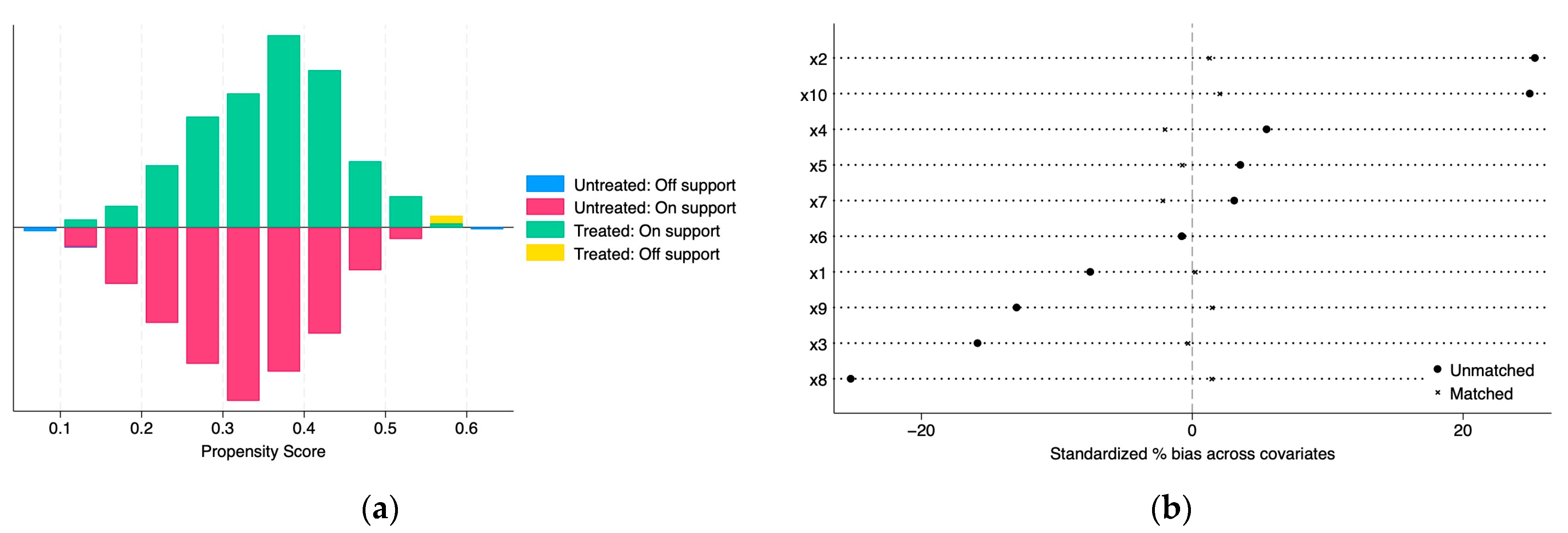
The propensity score for each farmer’s PPW recycling behavior can be calculated according to Equation (1), which serves as the foundation for matching. To ensure the validity of the PSM estimation results, it is necessary to verify the conditional independence assumption and the common support assumption. Owing to space constraints, only the results of the Radius Matching method are presented as an illustrative example (Figure 1). The propensity scores of the treatment and control groups exhibit a substantial overlapping range, and the majority of observations fall within the common support region, indicating a high matching quality and a satisfactory common support assumption.
Furthermore, the standardized biases for all covariates between the treatment and control groups are within 10%, as shown in Figure 2, indicating that the differences in covariates between the treatment and control groups were eliminated after matching. The Kernel Matching method resulted in a matched sample of 1223 observations, with only 11 observations lost to attrition (Table 2), further confirming the high matching quality.

4.2. Balance Test

The balance test was employed to ensure the robustness of the PSM results. If there are no significant systematic differences in the covariates between the control and treatment group households after matching, aside from the differences in the generated economic and ecological effect, the robustness of the PSM could be confirmed. The results of the balance test (Table 3) indicate that the standardized bias of the covariates was substantially reduced from 42.3% to a range of 4.9–10% after matching. Furthermore, the overall bias was significantly decreased and falls below the critical benchmark threshold of 20% stipulated for balance tests. The Pseudo R2 decreased from 0.031 to a range of 0.000–0.002 after matching, and the LR statistic dropped from 47.62 to a range of 0.50–2.10. Hence the analysis based on the above test results confirms that the application of the PSM method effectively reduces the distributional differences in the covariates between the control and treatment groups, thereby eliminating the estimation bias arising from sample self-selection.

4.3. The Treatment Effect of PPW Recycling Behavior

The estimated results of the treatment effect of the PPW recycling behavior on economic and ecological effect are shown in Table 4. To verify robustness, the analysis was conducted using three matching methods. The results are generally consistent, indicating the good robustness of the data. For ease of empirical analysis, the results obtained from the radius matching method were selected to represent the treatment effect.
Following the counterfactual estimation via PSM, this study obtained the Average Treatment Effect on the Treated (ATT). The results in Table 4 indicate that, after controlling for farmer characteristics, the economic effect and the ecological effect generated by PPW recycling are significantly positive at the 5% and 1% levels, respectively, with net effect of 1.167 and 0.040. This suggests that, after accounting for farmer self-selection bias, the economic and ecological effect generated by PPW recycling are 1.167 and 0.040, respectively. That is, compared to farmers who do not recycle PPW, farmers engaged in PPW recycling achieve economic and ecological effect that are 1.167 and 0.040, respectively. Consequently, H1 and H2 are validated. Furthermore, obtaining similar results across different matching methods enhances the robustness of these findings.

4.4. Robustness Test

4.4.1. Sample Selection Bias Test

To further verify the reliability of the results, this study also employed Ordinary Least Squares (OLS) regression to examine the economic and ecological effect generated by PPW recycling behavior. The results are shown in Table 5. The statistical significance and direction of the regression coefficients are largely consistent with the primary regression results, indicating robustness. These results were compared with the radius matching results. However, because the OLS regression does not address the issue of sample self-selection, the assessment of the economic and ecological effect derived from PPW recycling may be subject to bias.

4.4.2. Instrumental Variable Approach

Given that unobservable factors may induce estimation bias, this study employs the instrumental variable (IV) approach to mitigate endogeneity arising from omitted variables in order to ensure the reliability of the estimation results. Specifically, we select “Whether the village has conducted publicity activities on PPW recycling” as the instrumental variable to address potential endogeneity concerns. The rationale for selecting this instrumental variable is twofold: First, village-level publicity activities could enhance farmers’ awareness of PPW recycling and strengthen their recycling intentions, consequently encouraging their participation in PPW recycling activities. Second, village publicity activities exhibit no direct association with the economic and ecological effect generated by recycling behavior, thus this instrumental variable satisfies the exogeneity requirement. The model results presented in Table 6 demonstrate that the Cragg-Donald Wald F-statistic reaches 34.625, substantially exceeding the threshold value of 16.380, indicating the absence of weak instrument problems. The Kleibergen-Paap rk LM statistic is significant at the 1% level, confirming the validity of the instrumental variable. The first-stage regression results in columns (1) and (2) of Table 6 reveal a significant correlation between the instrumental variable and the explanatory variable, further validating instrument relevance. The second-stage regression results show that the estimated coefficient for the economic effect is 0.650 and statistically significant at the 1% level, while the estimated coefficient for the ecological effect is 0.143 and significant at the 5% level. These findings indicate that, after controlling for selection bias, the coefficients and significance levels of the core explanatory variables remain largely consistent with the baseline regression results, thereby confirming the robustness of the main findings.

4.5. Heterogeneity Analysis

The preceding research findings indicate that recycling PPW generates positive economic and ecological effect. To further investigate this relationship, this study analyzes potential heterogeneity from the perspectives of land fragmentation and pesticide expenditure. In this review, the sample is bifurcated based on the median number of farm plots into ‘high land fragmentation’ and ‘low land fragmentation’ groups. Concurrently, the sample is also divided based on the median of farmers’ pesticide expenditure during 2024 into ‘high pesticide expenditure’ and ‘low pesticide expenditure’ groups. The analysis employs interaction terms to capture the economic and ecological effect of the recycling behavior under these conditions. The results are shown in Table 7.
(1)
Land fragmentation.
The results in Columns (1) and (3) of Table 7 demonstrate that, in the economic effect model, the interaction term between PPW recycling and land fragmentation is negatively significant at the 1% level. This indicates that farmers characterized by a low degree of land fragmentation derive greater economic effect from PPW recycling. A possible explanation is that farmers with high fragmentation face excessive labor inputs for recycling due to the geographical dispersion of their plots, which limit the time and effort available for other income-generating activities, thus resulting in smaller economic effect. Conversely, in the ecological effect model, the interaction term between PPW recycling and land fragmentation is positively significant at the 5% level, suggesting that farmers with high land fragmentation generate greater ecological effect from recycling PPW. This is potentially because areas with high fragmentation possess more boundaries, such as field ridges and ditches, where PPW is more prone to accumulate and pollution diffusion is exacerbated [51]. Recycling PPW in such regions, therefore, yields a greater pollution diffusion avoidance effect. Consequently, farmers’ recycling efforts in these contexts make a larger contribution to the improvement of the overall ecological environment.
(2)
Pesticide expenditure.
The results in Columns (2) and (4) of Table 7 show that, in the economic effect model, the interaction term between PPW recycling and pesticide expenditure is positively significant at the 5% level. This indicates that farmers with high pesticide expenditure derive greater economic effect from PPW recycling. A possible reason is that farmers with high pesticide expenditure generate a larger volume of PPW. The fixed opportunity costs associated with recycling (such as time and transportation) can be amortized over a greater number of packaging units, reducing the opportunity cost per unit of recycling behavior, thus resulting in a greater economic effect. Furthermore, a larger volume of waste directly correlates with economic benefit, implying a higher total sum of economic subsidies received from PPW recycling behavior, which further reinforces the economic incentives for farmers to participate. In the ecological effect model, the interaction term between PPW recycling and pesticide expenditure is positively significant at the 1% level, demonstrating that farmers with high pesticide expenditure generate greater ecological effect from PPW recycling. This is potentially because farmers with high expenditures are often the primary contributors to agricultural non-point source pollution. Their recycling of the PPW they generate is equivalent to pollution control at the source; consequently, their resulting ecological effect is greater.

5. Discussion

This study empirically analyzed the economic and ecological effect generated by farmers’ PPW recycling behavior. The research findings show that both economic and ecological effect are significantly improved when farmers engage in PPW recycling; meanwhile this result remains robust across various matching methods. This finding is consistent with existing research [13,49], suggesting that farmers’ green production behaviors not only contribute to environmental improvement but also yield certain economic returns. This positive impact may stem from the recycling behavior reducing the contamination of soil and water bodies by pesticide residues, which is conducive to enhancing crop quality and yield, thereby boosting agricultural production efficiency and household economic income. Additionally, government departments encourage farmers to participate in PPW recycling through policy subsidies, providing farmers with supplementary income. Concurrently, the recycling behavior effectively curtails agricultural non-point source pollution pathways and mitigates the damage of pesticide residues to the ecosystem, rendering the ecological effect of PPW recycling equally significant.
It is noteworthy that there is a certain degree of disparity between the economic and ecological effect brought about by farmers’ PPW recycling behavior: the economic effect is stronger than the ecological effect. The reason may lie in the immediate tangibility of economic effect, such as subsidy rebates and cost savings, as changes in income are more directly reflected in farmers’ production and livelihood. Conversely, ecological effect typically manifests as holistic environmental improvements, often contingent upon longer-term environmental governance and behavioral normalization processes. The characteristics of strong externality and significant time lag make this effect difficult to manifest directly and rapidly, thus exhibiting a certain degree of delay [18].
Furthermore, the heterogeneity analysis reveals that the degree of land fragmentation and the level of pesticide expenditure have differentiated impacts on the economic and ecological effect of PPW recycling behavior. Specifically, farmers with a low degree of land fragmentation exhibit more significant economic effect when participating in PPW recycling. This is because farmers’ plots are relatively concentrated, involving lower time and labor costs in the collection process, thus making it easier to achieve net income gains. In contrast, although farmers with high land fragmentation face higher recycling costs, their recycling behavior has a more prominent role in improving the ecological environment. This may be because, in such areas, ecologically sensitive zones like field ridges and ditches are widely distributed, and PPW residues are more likely to cause non-point source pollution. Therefore, the marginal effect of pollution prevention and control brought about by recycling is higher. Furthermore, farmers with higher pesticide expenditure generate more significant economic and ecological effect after participating in PPW recycling. On the one hand, high-pesticide-input farmers are more sensitive to agricultural production costs. Participating in PPW recycling under policy incentives can effectively reduce overall production costs and enhance economic returns. This aligns with the findings of Han et al. [52] regarding farmers’ pro-environmental behavior being driven by economic motives. On the other hand, high pesticide investment is usually accompanied by the generation of more packaging waste. The recycling behavior of such farmers can block the diffusion of pollutants from the source, exerting a more positive effect on the restoration and enhancement of regional ecological quality.
This study has several limitations: (1) The ecological effect indicators are primarily based on farmer’s subjective assessment of village environmental quality, which may be subject to social desirability bias in variable measurement. Further research should therefore strive to construct objective environmental assessment frameworks. (2) The research conclusions are based on the survey data obtained from Hainan and Yunnan provinces, which may lead to the limitation of the generalizability to other agricultural production areas or regions with different geo-economic contexts. Future research could expand the study subjects to more diverse geographical and agricultural typologies to enhance the universality of the findings. (3) Constrained by the use of cross-sectional data, this study cannot reveal the long-term dynamic evolution of the economic and ecological effect of farmers’ PPW recycling behavior, nor can it trace changes between recycling behavior and its effect before and after policy implementation. Future research could collect continuous tracking data to more comprehensively examine the effectiveness of recycling policies and their dynamic changes.

6. Conclusions and Implications

Based on field survey data from 1223 farm households across 3 cities and 9 counties in Hainan and Yunnan provinces of China, this study employs the PSM method to systematically assess the economic and ecological effect of farmers’ PPW recycling behavior. Furthermore, a heterogeneity analysis is conducted based on the dimensions of land fragmentation and pesticide expenditure. The findings are as follows: To begin with, farmers’ PPW recycling behavior yields significant positive economic and ecological effect. Then, farmers with a low degree of land fragmentation derive more significant economic effect from recycling behavior, whereas farmers with a high degree of land fragmentation generate more significant ecological effect. Finally, farmers with higher pesticide expenditure realize markedly greater effect, in both economic and ecological terms.
Based on the above conclusions, this study proposes the following policy recommendations: First, strengthen institutional incentives to ensure stable and accessible recycling benefits. It is recommended that incorporate special subsidies for PPW recycling into the top-level design of agricultural green development (e.g., through earmarked transfer payments or ecological compensation funds). Establishing accessible collection points through village-level networks and implementing institutionalized payment mechanisms can reduce farmers’ participation costs and transform the economic benefits of recycling behavior into stable expectations. Secondly, internalize PPW recycling as village norms to enhance sustainability. It is advisable to integrate recycling performance into village-level governance evaluation systems such as the “Beautiful Village” initiative. By cultivating village-level demonstration households and publicizing environmental improvement outcomes, community consensus and mutual supervision can be fostered, thereby facilitating the transition of recycling from individual behavior to sustainable collective practice. Third, promote differentiated and precision-oriented governance coupled with transparent and highly responsive incentive mechanisms to enhance the targeted orientation and effectiveness of policies. For farmers with a high degree of land fragmentation, priority should be given to promoting unified recycling models led by village collectives or cooperatives, with appropriate recycling subsidies provided to reduce individual opportunity costs and fully leverage scale effects in environmental improvement. For farmers with high pesticide costs, the government should collaborate with qualified retailers for agricultural production to pilot deposit refunds. The deposit, which possesses dual attributes of incentive and constraint, will reinforce these farmers’ critical roles as key participants in reducing the production of PPW and standardizing the recycling process, thereby maximizing the environmental and economic co-benefits of famers’ participation. By constructing a policy mechanism characterized by classified identification, precise implementation, and dynamic feedback, the management of PPW recycling can transition from “extensive promotion” to “refined governance”, ultimately achieving long-term and institutionalized operation.

Author Contributions

Investigation, J.L., Y.W., X.L. and J.W.; Writing—review and editing, J.L., Y.W., X.L., X.H. and J.W.; Funding acquisition, J.L. All authors have read and agreed to the published version of the manuscript.

Funding

This work was supported by the National Natural Science Foundation of China (Grant No. 72403065), Natural Rubber Industry Technology System Industrial Economy Post (Grant No. CARS-33) and the Natural Science Foundation of Hainan Province (Grant No. 724QN240).

Institutional Review Board Statement

This study is waived for ethical review as this study falls under routine survey research in the field of economics and does not involve medical or human experimentation by Institution Committee.

Informed Consent Statement

Verbal informed consent was obtained from the participants. Verbal consent was obtained rather than written because considering the educational level of the survey participants, the actual conditions in rural areas, and the anonymity of the research, verbal informed consent is a more appropriate and feasible approach.

Data Availability Statement

The datasets generated and analyzed during the current study are available from the corresponding author upon reasonable request.

Acknowledgments

We especially thank Jiyao Liu for her careful guidance; your valuable insights have been of significant importance to this study. Furthermore, we would like to express our gratitude to the others who participated in the data collection and processing; your hard work has laid a solid foundation for this research.

Conflicts of Interest

Authors have no conflicts of interest to declare.

Appendix A

Appendix A.1. Entropy Weight Method (EWM)

The construction of ecological effect requires not only accessible specific indicators but also the scientific weights of indicators. Common weighting methods include subjective and objective weighting methods. To avoid measurement inaccuracies resulting from subjective weighting, this study employs the EWM, an objective weighting method, to calculate the composite value of ecological effect [47]. Prior to data analysis, the raw data underwent preprocessing procedures: first, all indicators were standardized; second, extreme values were removed to minimize their interference with standardization and weight calculation; finally, missing data were imputed using linear interpolation to ensure sample completeness. The specific calculation steps of the EWM are as follows:
To construct a comparable comprehensive evaluation system for measuring ecological effects, this study conducted standardization and weighted integration of raw data comprising multidimensional indicators. Given that all indicators are continuous variables ranging from 1 to 5 with consistent units of measurement and no explicit positive or negative orientation, the min-max normalization method was employed to normalize the raw data, uniformly transforming them into the [0,1] interval. The specific formula is as follows:
x i j = x i j M i n x i j M a x x i j M i n x i j
In Equation (A1), x i represents the raw data for the i-th indicator, with its minimum possible value marked by X m i n and maximum possible value represented by X m a x ; and X i j represents the value of the i-th evaluation object under the j-th indicator, ranging between 0 and 1. For the j-th indicator, M a x X i j and M i n X i j denote the maximum and minimum values among all evaluation objects, respectively.
The specific steps for calculating indicator weights are as follows:
(1)
For the j-th indicator, the relative proportion of the i-th evaluation object is calculated as:
P i j = x i j 1 n x i j
(2)
Calculate the entropy value of the j-th indicator:
e j = K i = 1 n p i j × ln p i j       k > 0 ,   k = 1 l n ,   e j 0  
(3)
Calculate the coefficient of information entropy difference for the j-th indicator:
g j = 1 e j
(4)
Calculate indicator weights:
W j = g j g j   1 j m
(5)
Calculate the comprehensive evaluation value:
F i j = i = 1 n W j × X i j

Appendix A.2. Kernel Matching

To ascertain whether the differences in economic and ecological effect between the treatment group (farmers who recycle PPW) and the control group (farmers who do not recycle PPW) were indeed caused by the recycling behavior itself, this study employs the Propensity Score Matching (PSM) method to construct a counterfactual framework. Using the Kernel Matching approach, the formula for estimating the Average Treatment Effect on the Treated (ATT) is as follows:
A T T K = 1 N T i T Y T i j C Y C j × G P S j P S i h n k C G ( P S j P S i h n )
where Y T i and Y C i represent the observed economic and ecological effect for the i-th farmer in the treatment group and the j-th farmer in the control group, respectively. P i and P j are their corresponding propensity scores. h n is the bandwidth parameter, used to adjust the range of the matching neighborhood. G · is the kernel function (the Gaussian kernel function is employed in this study), used to calculate the weight of the control group sample. N T is the sample size of the treatment group. This formula effectively constructs the counterfactual outcome through weighted averaging, controlling for the selection bias arising from observable variables, thereby more accurately identifying the net effect of the recycling behavior.

References

  1. Food and Agriculture Organization of the United Nations. FAOSTAT Database. 2023. Available online: https://www.fao.org/faostat/en/#data/RP (accessed on 16 November 2025).
  2. Liu, J.Y.; Chi, S.Y.; Zhao, M.J. The subsidy policies for pesticide packaging waste recycling: Farmers’ preferences and social welfare analysis. J. Huazhong Agric. Univ. (Soc. Sci. Ed.) 2023, 3, 79–90. [Google Scholar]
  3. Cai, J.; Xiong, J.; Hong, Y.; Hu, R. Pesticide overuse in apple production and its socioeconomic determinants: Evidence from Shaanxi and Shandong provinces. China J. Clean. Prod. 2021, 315, 128179. [Google Scholar] [CrossRef]
  4. Elahi, E.; Zhang, H.; Lirong, X.; Khalid, Z.; Xu, H. Understanding cognitive and socio-psychological factors determining farmers’ intentions to use improved grassland: Implications of land use policy for sustainable pasture production. Land Use Policy 2021, 102, 105250. [Google Scholar] [CrossRef]
  5. Mehmood, Y.; Arshad, M.; Mahmood, N.; Kächele, H.; Kong, R. Occupational hazards, health costs, and pesticide handling practices among vegetable growers in Pakistan. Environ. Res. 2021, 200, 111340. [Google Scholar] [CrossRef]
  6. Garbounis, G.; Komilis, D. A modeling methodology to predict the generation of wasted plastic pesticide containers: An application to Greece. Waste Manag. 2021, 131, 177–186. [Google Scholar] [CrossRef]
  7. Sharma, A.; Shukla, A.; Attri, K.; Kumar, M.; Kumar, P.; Suttee, A.; Singh, G.; Barnwal, R.P.; Singla, N. Global trends in pesticides: A looming threat and viable alternatives. Ecotoxicol. Environ. Saf. 2020, 201, 110812. [Google Scholar] [CrossRef]
  8. Zhou, Q.; Yang, N.; Li, Y.; Ren, B.; Ding, X.; Bian, H.; Yao, X. Total concentrations and sources of heavy metal pollution in global river and lake water bodies from 1972 to 2017. Glob. Ecol. Conserv. 2020, 22, e00925. [Google Scholar] [CrossRef]
  9. Zhang, S.; Gao, J.; Wang, H. Research on the recycling and disposal of Chinese pesticide packaging waste based on evolutionary game theory. J. Environ. Sci. Health B 2023, 58, 565–576. [Google Scholar] [CrossRef]
  10. Xu, X.; Zhang, Z.; Kuang, Y.; Li, C.; Sun, M.; Zhang, L.; Chang, D. Waste pesticide bottles disposal in rural China: Policy constraints and smallholder farmers’ behavior. J. Clean. Prod. 2021, 316, 128385. [Google Scholar] [CrossRef]
  11. Liu, J.Y.; Ni, Q.; Yao, L.Y.; Lu, W.N.; Zhao, M.J. Calculation of differentiated compensation standards for pesticide packaging waste recycling: An analysis based on 1060 fruit and vegetable growers in Shaanxi Province. China Rural. Econ. 2021, 94–110. [Google Scholar]
  12. Picuno, C.; Alassali, A.; Sundermann, M.; Godosi, Z.; Picuno, P.; Kuchta, K. Decontamination and recycling of agrochemical plastic packaging waste. J. Hazard. Mater. 2020, 381, 120965. [Google Scholar] [CrossRef]
  13. Hu, N.; Zhang, Q.; Li, C.; Sun, H. Policy Intervention Effect Research on Pesticide Packaging Waste Recycling: Evidence from Jiangsu, China. Front. Environ. Sci. 2022, 10, 922711. [Google Scholar] [CrossRef]
  14. Liu, J.Y. Pesticide Packaging Waste Recycling: Farmers’ Participation and Compensation Design. Ph.D. Thesis, Northwest A&F University, Xianyang, China, 2022. [Google Scholar]
  15. Guo, Z.P. Implementing the “Management Measures for the Recycling and Treatment of Pesticide Packaging Waste” to effectively ensure rural ecological security and agricultural production safety. Hubei Plant Prot. 2022, 3. [Google Scholar]
  16. Abadi, B. Impact of attitudes, factual and causal feedback on farmers’ behavioral intention to manage and recycle agricultural plastic waste and debris. J. Clean. Prod. 2023, 424, 138773. [Google Scholar] [CrossRef]
  17. Bondori, A.; Bagheri, A.; Allahyari, M.S.; Damalas, C.A. Pesticide waste disposal among farmers of Moghan region of Iran: Current trends and determinants of behavior. Environ. Monit. Assess. 2019, 191, 30. [Google Scholar] [CrossRef]
  18. Song, Y.; Cui, H.; Zong, Y.; Yin, S. Effect of ecoliteracy on farmers’ participation in pesticide packaging waste governance behavior in rural North China. Sci. Rep. 2024, 14, 23103. [Google Scholar] [CrossRef]
  19. Li, M.; Wang, J.; Chen, K.; Wu, L. Willingness and behaviors of farmers’ green disposal of pesticide packaging waste in Henan, China: A perceived value formation mechanism perspective. Int. J. Environ. Res. Public Health 2020, 17, 3753. [Google Scholar] [CrossRef]
  20. Balasha, A.M.; Dominique, A.M.; Sage, W.M.; Shadya, S.M.; Mugisho, J.Z. Pesticide choice and use patterns among vegetable farmers on Idjwi Island, Eastern Democratic Republic of Congo. SAGE Open 2023, 13, 21582440231218099. [Google Scholar] [CrossRef]
  21. Ding, J.; Song, K.; Zhang, K.; Deng, X. Impact of farm size on farmers’ recycling of pesticide packaging waste: Evidence from rural China. Land 2025, 14, 465. [Google Scholar] [CrossRef]
  22. Chen, X.; Xing, L.; Li, B.; Zhang, Y. Substitution or complementary effects: The impact of neighborhood effects and policy interventions on farmers’ pesticide packaging waste recycling behavior. J. Clean. Prod. 2024, 482, 144198. [Google Scholar] [CrossRef]
  23. Zhang, Y.; Zhang, M.; Weng, Z.; Gao, X.; Liao, W. The influence of social norms and environmental regulations on rural households’ pesticide packaging waste disposal behavior. Sustainability 2023, 15, 15938. [Google Scholar] [CrossRef]
  24. Li, B.; Xu, C.; Zhu, Z.; Kong, F. How to encourage farmers to recycle pesticide packaging wastes: Subsidies VS social norms. J. Clean. Prod. 2022, 367, 133016. [Google Scholar] [CrossRef]
  25. Damalas, C.A.; Koutroubas, S.D. Farmers’ Training on Pesticide Use Is Associated with Elevated Safety Behavior. Toxics 2017, 5, 19. [Google Scholar] [CrossRef] [PubMed]
  26. Truelove, H.B.; Yeung, K.L.; Carrico, A.R.; Gillis, A.J.; Raimi, K.T. From plastic bottle recycling to policy support: An experimental test of pro-environmental spillover. J. Environ. Psychol. 2016, 46, 55–66. [Google Scholar] [CrossRef]
  27. Moazzem, S.; Wang, L.; Daver, F.; Crossin, E. Environmental impact of discarded apparel landfilling and recycling. Resour. Conserv. Recycl. 2021, 166, 105338. [Google Scholar] [CrossRef]
  28. Wang, J.H.; Zhou, J.; Ren, M.H. Income effect of green production factor input behavior of agricultural producers. J. Northwest AF Univ. (Soc. Sci. Ed.) 2024, 24, 110–123. [Google Scholar]
  29. Zhang, J.M.; Qin, W.J. The Double-Edged Sword Effect of Green Consumption Behavior on Prosocial Behavior: Based on the Mediating Mechanism of Moral Self-Identity and Psychological Provilege. Rev. Econ. Manag. 2024, 40, 112–122. [Google Scholar]
  30. She, S.X.; Li, S.C.; Chen, J.; Sheng, G.H. Spillover Effect of Digital Green Behavior: Mediation of Identity and Moderation of Psychological Ownership. Psychol. Sci. 2023, 46, 1180–1187. [Google Scholar]
  31. Hou, X.K.; Liu, T.J.; Huang, T.; Yuan, X.P. Adoption Behavior and Income Effects of Green Agricultural Technology for Farmers. J. Northwest AF Univ. (Soc. Sci. Ed.) 2019, 19, 121–131. [Google Scholar]
  32. Liu, Y.; Park, S.; Yi, H.; Feiock, R. Evaluating the employment impact of recycling performance in Florida. Waste Manag. 2020, 101, 283–290. [Google Scholar] [CrossRef]
  33. Henn, L.; Otto, S.; Kaiser, F.G. Positive spillover: The result of attitude change. J. Environ. Psychol. 2020, 69, 101429. [Google Scholar] [CrossRef]
  34. Gao, C.Y.; Wang, Q. Effects of interactions of green economic development and government environmental protection behavior. Resour. Sci. 2020, 42, 776–789. [Google Scholar] [CrossRef]
  35. Zhang, W.; Yan, Q.Y.; Fang, J.P. Effects of residues in four pesticide packaging bags on soil urease activity. J. Anhui Agric. Sci. 2012, 40, 15256–15258. [Google Scholar]
  36. Simon, H.A. Rational choice and the structure of the environment. Psychol. Rev. 1956, 63, 129. [Google Scholar] [CrossRef] [PubMed]
  37. Cai, J. Pesticide packaging waste recycling: Supportive attitudes and model choices. J. Econ. Manag. 2013, 12, 67–74. [Google Scholar]
  38. Picuno, C.; Gerassimidou, S.; You, W.; Martin, O.; Iacovidou, E. The potential of Deposit Refund Systems in closing the plastic beverage bottle loop: A review. Resour. Conserv. Recycl. 2025, 212, 107962. [Google Scholar] [CrossRef]
  39. Liu, X.H. Practical exploration and implications of the “digital + deposit” recycling model for pesticide packaging waste. China Plant Prot. 2023, 43, 108–111. [Google Scholar]
  40. Gai, H.; Yan, T.W.; Zhang, J.B. Perceived value, government regulation, and farmers’ sustained mechanized straw return behavior: An empirical analysis based on survey data from 1288 households in Hebei, Anhui, and Hubei provinces. China Rural. Econ. 2020, 106–123. [Google Scholar]
  41. Ansari, I.; El-Kady, M.M.; El Din Mahmoud, A.; Arora, C.; Verma, A.; Rajarathinam, R.; Singh, P.; Verma, D.K.; Mittal, J. Persistent pesticides: Accumulation, health risk assessment, management and remediation: An overview. Desalination Water Treat. 2024, 317, 100274. [Google Scholar] [CrossRef]
  42. Kaur, R.; Choudhary, D.; Bali, S.; Bandral, S.S.; Singh, V.; Ahmad, A.; Rani, N.; Singh, T.G.; Chandrasekaran, B. Pesticides: An alarming detrimental to health and environment. Sci. Total Environ. 2024, 915, 170113. [Google Scholar] [CrossRef]
  43. Damalas, C.A.; Telidis, G.K.; Thanos, S.D. Assessing farmers’ practices on disposal of pesticide waste after use. Sci. Total Environ. 2008, 390, 341–345. [Google Scholar] [CrossRef] [PubMed]
  44. Mohafrash, S.M.; Mossa, A.T.H. Disposal of expired empty containers and waste from pesticides. Egypt. J. Chem. 2024, 67, 65–85. [Google Scholar]
  45. Mello, M.F.; Scapini, R. Reverse logistics of agrochemical pesticide packaging and the impacts to the environment. Braz. J. Oper. Prod. Manag. 2016, 13, 110–117. [Google Scholar] [CrossRef]
  46. Zhang, M.H.; Cai, Y.Y.; Zhu, L.L. Analysis of influencing factors and economic effects of farmers’ participation in farmland transfer. Resour. Environ. Yangtze Basin 2016, 25, 387–394. [Google Scholar]
  47. Fan, S.; He, M.; Zhang, T.; Huo, Y.; Fan, D. Credibility measurement as a tool for conserving nature: Chinese herders’ livelihood capitals and payment for grassland ecosystem services. Land Use Policy 2022, 115, 106032. [Google Scholar] [CrossRef]
  48. Zhao, Y.H.; Zhou, H. Can social trust and policy of rewards and punishments promote framer’s participation in recycling of pesticide packaging waste? J. Arid. Land Resour. Environ. 2021, 35, 17–23. [Google Scholar]
  49. Li, S.; Huo, X. Estimating the effects of joining cooperatives on farmers’ recycling behaviors of pesticide packaging waste: Insights from apple farmers of China. Cienc. Rural. 2023, 53, e20220229. [Google Scholar] [CrossRef]
  50. Zhou, Y.; Rao, F. Sowing the seeds of sustainability: A deep dive into farmers’ recycling practices of pesticide packaging waste in China. Front. Sustain. Food Syst. 2025, 9, 1453656. [Google Scholar] [CrossRef]
  51. Hu, X.; Mi, X. The Influence and Mechanism of Property Right Stability on Agricultural Machinery Service Outsourcing. J. Huazhong Agric. Univ. (Soc. Sci. Ed.) 2020, 63–71+171–172. [Google Scholar] [CrossRef]
  52. Han, G.; Zhai, P.; Zhu, L.; Li, K. Economic Incentives, Reputation Incentives, and Rural Residents’ Participation in Household Waste Classification: Evidence from Jiangsu, China. Agriculture 2023, 13, 1931. [Google Scholar] [CrossRef]
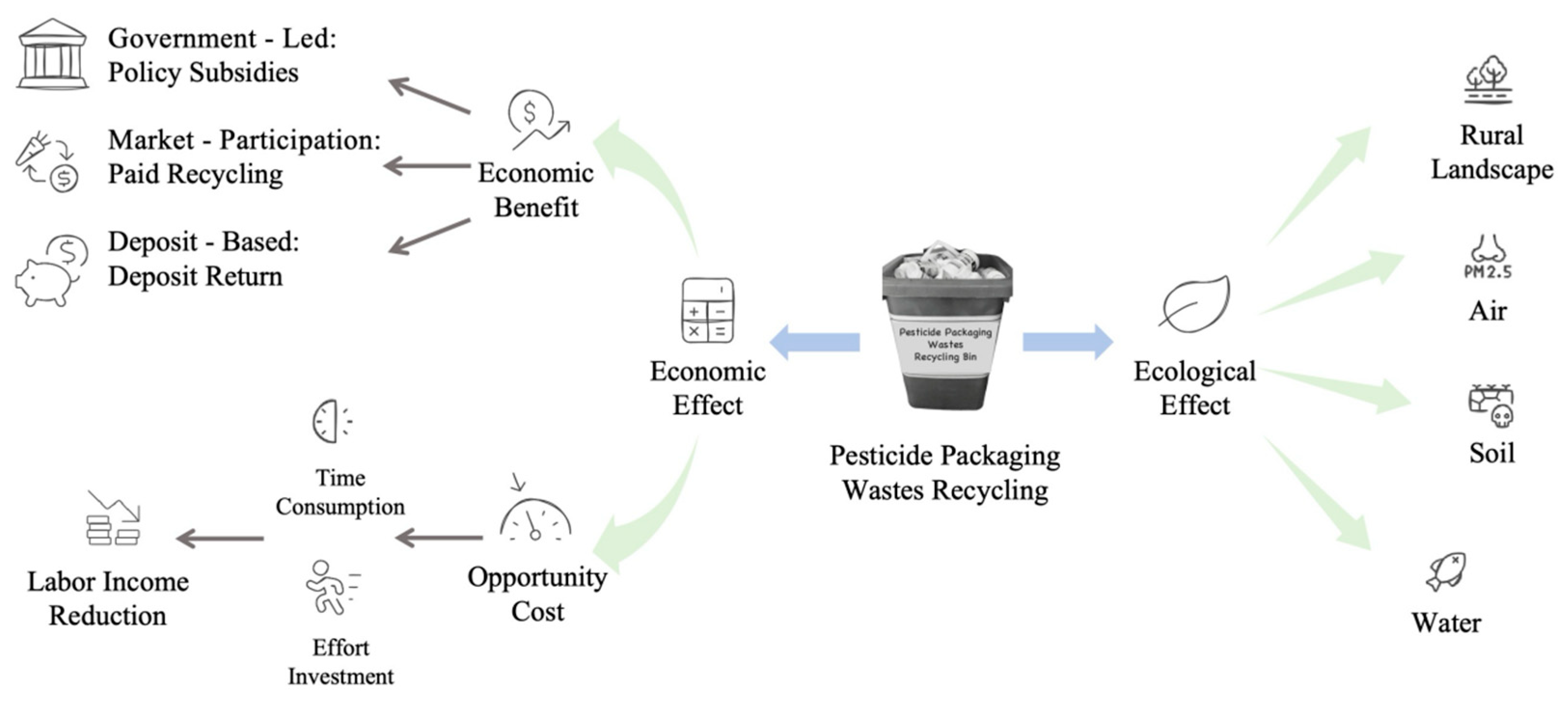
Figure 1. Mechanistic Framework of PPW Recycling Behavior.
Sustainability 18 00390 g001
Figure 2. (a) Distribution of Propensity Score by treatment and the area of common support; (b) Standardized % bias.
Sustainability 18 00390 g002
Table 1. Descriptive statistics of variables.
VariablesDescriptionMeanS.D.MinMax
Dependent variable
Economic effectAnnual total household income (unit: 10,000 CN¥).8.476.960.166
Ecological effectComposite value for village-level water environment, soil environment, and ecological landscape calculated by EWM0.790.2001
Explanatory variable
PPW recycling behaviorWhether recycle PPW (0 = No; 1 = Yes)0.330.4701
Respondent ageRespondent age (year)49.8310.662276
Gender Respondent gender (0 = female; 1 = male)0.640.4801
EducationEducation level of respondent (year)7.733.59016
Health statusRespondent health status (1 = Poor; 2 = Fair; 3 = Good)2.780.4913
Total household membersTotal household members4.321.4618
Labor force proportionLabor force members/Total household members0.830.190.21
Poverty statuswhether the household has been lifted out of poverty (0 = No; 1 = Yes)0.250.4301
Distance from home to the Village CommitteeDistance from home to the Village Committee (Km)3.715.360.0130
Distance from home to the logistics pointDistance from home to the logistics point (Km)5.387.340.0140
ProvinceHainan Province = 1; Yunnan Province = 00.480.5001
Table 2. PSM Results.
Unmatched SampleMatched SampleTotal
Control group7807814
Treatment group4405409
Total1112121223
Table 3. Matching balance test.
Matching MethodPseudo R2LRchi2Mean Bias (%)
Before matching0.03147.6242.3
Radius matching0.0010.575.3
Kernel matching0.0000.504.9
K-nearest neighbor matching within caliper
(k = 4, caliper = 0.01)
0.0022.1010
Table 4. ATT results with different matching methods.
Economic EffectEcological Effect
Radius matching1.167 **
(0.495)
0.038 ***
(0.113)
Kernel matching1.226 **
(0.492)
0.040 ***
(0.111)
K-nearest neighbor matching within caliper
(k = 4, caliper = 0.01)
1.170 **
(0.516)
0.044 ***
(0.126)
Average1.1880.040
Note: ** indicates statistical significance at the 0.05 level. *** indicates statistical significance at the 0.01 level.
Table 5. Selection bias analysis.
Sample TypePSMOLSSelection Bias
Economic effectFull sample1.167 **
(0.495)
1.251 ***
(0.418)
0.074
Ecological effect0.038 ***
(0.113)
0.043 ***
(0.012)
0.006
Note: ** indicates statistical significance at the 0.05 level. *** indicates statistical significance at the 0.01 level.
Table 6. IV robustness test results.
Variables(1)(2)
First-StageSecond-StageFirst-StageSecond-Stage
Recycling BehaviorEconomic EffectRecycling BehaviorEconomic Effect
Whether the village has conducted publicity activities on PPW recycling0.189 ***
(0.034)
0.189 ***
(0.034)
Recycling behavior 0.650 ***
(0.243)
0.143 ***
(0.071)
Constant0.1900.668 **0.1900.652 ***
Control variableControlledControlledControlledControlled
Kleibergen-Paap rk LM29.765 ***29.765 ***
Cragg-Donald Wald F34.625 ***34.625 ***
Sample size12231223
R2/Pseudo R20.0640.0840.0640.038
Note: ** indicates statistical significance at the 0.05 level. *** indicates statistical significance at the 0.01 level.
Table 7. Heterogeneity analysis of PPW recycling behavior of economic and ecological effect.
VariablesEconomic EffectEcological Effect
(1)(2)(3)(4)
PPW recycling behavior1.774 ***
(0.466)
0.845 *
(0.453)
0.029 **
(0.013)
0.029 **
(0.013)
PPW recycling behavior × Land fragmentation−1.937 **
(0.766)
0.050 **
(0.022)
PPW recycling behavior × Pesticide expenditure 1.881 **
(0.814)
0.063 ***
(0.023)
Control variableControlled
Sample size1223
R20.0680.0670.0420.044
Note: * indicates statistical significance at the 0.1 level. ** indicates statistical significance at the 0.05 level. *** indicates statistical significance at the 0.01 level.
Disclaimer/Publisher’s Note: The statements, opinions and data contained in all publications are solely those of the individual author(s) and contributor(s) and not of MDPI and/or the editor(s). MDPI and/or the editor(s) disclaim responsibility for any injury to people or property resulting from any ideas, methods, instructions or products referred to in the content.