Article

A Qualitative and Quantitative Assessment of Microplastics in the Shorelines of Urban Lakes
by
Magdalena Bowszys
Department of Tourism, Recreation and Ecology, University of Warmia and Mazury, Oczapowskiego 5, 10-719 Olsztyn, Poland
Sustainability 2026, 18(1), 361; https://doi.org/10.3390/su18010361 (registering DOI)
Submission received: 29 November 2025 / Revised: 22 December 2025 / Accepted: 22 December 2025 / Published: 30 December 2025

Abstract

Microplastics in lake waters are a global problem that is gaining increasing attention from researchers. However, most studies to date have focused on the water column. Much less attention has been paid to the problem of sediment pollution at the shoreline, the zone where water and land meet, and microplastics accumulate and degrade. This study assessed microplastic pollution in shoreline sediments in six urban lakes, which are exposed to varying degrees of recreational pressure. Fourier transform infrared spectroscopy (FTIR) was used in the qualitative analysis. The concentration of microplastics in the studied lakes was not high, ranging from 5.2 to 42 particles per kg dw−1. More than half of the plastics detected were filaments. Nine different types of synthetic polymers were identified in the material collected from the shorelines of the studied urban lakes. Polypropylene (PP) was the most frequently found polymer. The characteristics of the collected material allowed for the identification of potential sources of pollution, most of which can be linked to various forms of recreation. The lake most heavily used for recreation was characterized by the highest concentration of microplastics in shoreline sediments, the greatest morphological diversity, and the greatest variety of polymer types. The results of this study indicated that recreation could be a significant source of microplastic pollution and highlighted the need for sustainable recreational use of lakes.

1. Introduction

One of the most important environmental threats we currently face is the problem of microplastic pollution of waters. The first reports on ocean pollution date back to the second half of the last century [1]. Since then, many studies documenting the presence of microplastics in the waters and bottom sediments of seas and oceans, as well as considering the effects of synthetic polymer accumulation in aquatic ecosystems, have been published (e.g., [2]). The pollution of freshwaters with microplastics became a subject of research much later. The first published data come from Lake Huron, Canada [3]. At almost the same time, microplastic pollution of a large European lake, Lake Geneva, was reported [4]. Currently, the prevalence of microplastics in freshwater is becoming a fact. Their presence has been confirmed in lakes on all continents (e.g., [5,6]), including the poles [7,8]. Plastic pollution is also a pressing issue on a local scale. It has been shown that both urban lakes and lakes located in rural areas are polluted with microplastics [5]. Their presence has also been reported in isolated environments, such as a high-altitude Alpine lake [9]. A review of the available data showed that synthetic polymer debris was found in all zones of the lake [5,10]. In the water column, the smaller the size of the analyzed particles, the higher the concentrations of synthetic polymer particles found [11]. Some of the microplastics suspended in water settle to the bottom of water bodies, accumulating in bottom sediments [10,12]. Different zones of water bodies were characterized by different levels of pollution. The highest concentrations of microplastics were found along shorelines and in bottom sediments. Microplastic concentrations were generally lower in the surface layer of lakes [10].
The shoreline of water bodies is a zone where water and land meet, and where debris tend to accumulate. The movement of water causes pollutants present in the lake water to be washed ashore. Pieces of plastic deposited in the shoreline zone are exposed to sunlight, wind, and waves, causing them to break down into fine particles [13], becoming a source of the most undesirable and dangerous microplastics. In addition, the use of the coastal zone, including for tourism and recreation, can further contribute to increased pollution levels. Public data from the United States show that as much as 86% of the waste collected along the shores of the Great Lakes was plastic (www.greatlakesnow.org).
The material deposited along the shoreline is a mixture of organic debris and all kinds of pollutants, including plastics of various sizes, which can pose a threat to various biota. The material washed ashore by the waves is searched through by birds looking for food, which exposes them to accidental ingestion of plastic particles. Microplastics accumulated in the shoreline zone also pose a threat to organisms inhabiting shallow littoral waters. The consumption of microplastics by invertebrates has been confirmed in both controlled and natural conditions [14]. Windsor and others [15] found microplastics in the aquatic ecosystems of more than half of the freshwater macroinvertebrates analyzed. The consumption of microplastics has been confirmed in representatives of various taxonomic groups with different feeding habits, which increases the risk of synthetic polymer particles being transferred to subsequent levels in the food web. The harmfulness of microplastic consumption by living organisms is compounded by the fact that synthetic polymer particles are also vectors of chemical pollutants found in surface waters, both organic and inorganic, including heavy metals [16]. Studies also indicate that the surface of microplastic particles can adsorb antibiotics and become a vector for them in the aquatic environment [17]. In lakes, microplastics in near shore waters can also pose a potential threat to people using bathing areas. It has been shown that microplastic particles can be colonized by pathogenic bacteria. Species of the genus Vibrio, Arcobacter, and Pseudomonas have been found on the biofilm that forms on plastic particles in freshwater waters [18,19,20]. Laboratory tests have shown that microplastic particles can also be colonized by pathogens such as Salmonella enterica and Escherichia coli [21].
Knowledge on the presence of plastic in various lake compartments is essential for environmental risk assessment. Although there is growing interest among researchers in the pollution of lake shore zone, data on this subject are fragmentary (e.g., [22,23,24,25,26]). Lakes in urban areas are usually more vulnerable to pollution [27]. The shoreline of these lakes is often subject to pressure from tourism and recreation. Tourism is considered to be a major source of pollution of beaches and coastal waters in seas and oceans [28]. Various authors point out that tourism can also be a source of lake pollution (e.g., [29,30]). Remote, isolated lake ecosystems in attractive high mountain locations may be particularly vulnerable. To date, much less attention has been paid to the impact of recreation on plastic pollution in lakes. The aim of this study was to determine the degree of microplastic pollution of the shorelines of urban lakes with varying degrees of development and recreational use. The scope of this study included: quantitative assessment of microplastic content, determination of the variability in shape and color of the analyzed particles, as well as polymer composition. Despite growing interest in the problem of microplastic pollution in lakes, the current state of knowledge is still insufficient. Lakes cover almost a few percent of the Earth’s surface. There are over a million of them [31]. They are extremely diverse. To date, the microplastic content has been estimated in only a small fraction of them. There is therefore a need to increase the prevalence of research on the content of microplastics in lakes. This is essential in order to reliably determine the environmental risk associated with microplastics.

2. Materials and Methods

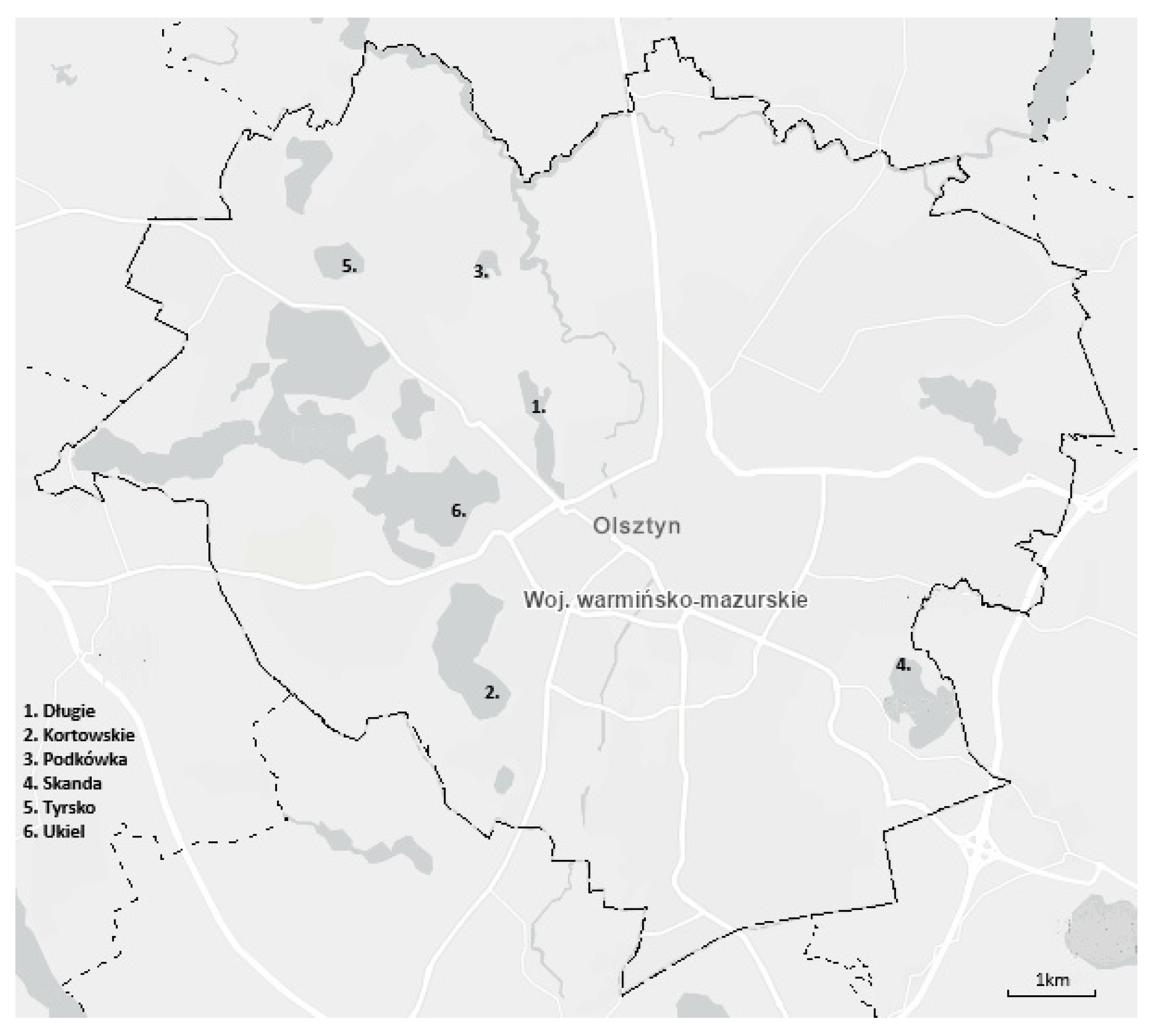
The lakes that were the subject of this study are located in the urban area of Olsztyn (53°46′23″ N, 20°28′34″ E), Poland. It is a medium-sized city covering an area of 88 km2 and has 170,000 inhabitants. There are 14 lakes (>1 ha) within the administrative boundaries of the city of Olsztyn. Six lakes were selected for the study: Lake Długie, Lake Kortowskie, Lake Podkówka, Lake Skanda, Lake Tyrsko, and Lake Ukiel (Figure 1).
The lakes for the study were selected so that they had an accessible beach or sandy shore and were characterized by varying degrees of recreational pressure. The lake most intensively used for recreation, with the best-developed infrastructure, is Lake Ukiel. The lake least used for recreation is Lake Podkówka (Table 1). The beaches most intensively used during the summer season are those at Lake Ukiel and Lake Skanda, where there are guarded municipal bathing areas. The beaches at Lake Tyrsko and Lake Kortowskie are also bathing areas, although not formally organized. The sandy, narrow shore of Lake Podkówka is practically unused.
The basic morphometric characteristics of the lakes and the dominant nature of the catchment area use are shown in Table 2. The reservoirs are characterized by diverse morphometric features, but similar catchment area use.
One sampling site was designated for each lake, based on natural conditions. Samples were collected at the end of August 2024. Three transects parallel to the waterline were designated on each beach: in the tidal zone, at the high water line, and in the elevated part of the beach. Samples were collected in each of the designated transects [24]. A 25 cm × 25 cm metal frame was used to mark out a square, from which material was collected to a depth of 1–2 cm using a metal spoon. The collected material was transferred to glass jars, previously rinsed in the laboratory with water filtered through glass filters (glass fiber GF/C filters 1.2 μm pore size). The jars were covered with aluminum foil, sealed with a lid, and transported to the laboratory. For each lake, three subsamples were collected and in the laboratory, they were pooled into one combined sample. Then the collected material was dried at 60 °C for 24 h [33]. The dried material was sieved through steel sieves with a mesh size of 5 and 1 mm, and then the isolated material was placed in glass beakers, which were tightly covered with aluminum foil. The beakers were previously rinsed with distilled water, filtered through glass filters (glass fiber filters 1.2 μm pore size). Microplastics were separated from sand grains using a density method. For this purpose, a saturated salt solution (1.2 g cm−3) was added to the sample, as recommended by Thompson et al. [34]. The contents of the beaker were then thoroughly mixed with a glass spatula for 2 min at a speed of 600 rpm, and the solution was left to settle for 6 h [35]. After this time, the liquid above the sediment was transferred to a 500 μm mesh screen and rinsed with filtered water for further processing of the material. The extracted size fraction (1–5 mm) corresponds to the upper size range of microplastics [36]. The particles retained on the screen were transferred to a beaker and rinsed with filtered water. In order to eliminate potential organic debris from the sample, the isolated material was treated with 30% H2O2. The mixture was placed on a hot plate set at 60 °C and the reaction was continued until all organic material had disappeared [37]. The material was then filtered through glass fiber filters (GF/C filters 1.2 μm pore size), rinsed with filtered water, and subjected to microscopic analysis. Visual analysis of the samples was performed using a Zeiss Axio Imager microscope equipped with Axio Vision software. Microplastics were counted and classified according to shape as granules, fragments, filaments, films, and Styrofoam, referring to the guidelines of Dusaucy and others [5].
FTIR measurements of the polymers were performed using a Nicolet iS5 FTIR spectrometer with an iD7 ATR accessory (Thermo Fisher Scientific, Waltham, MA, USA). In order to determine the composition of the plastic particles, the obtained particle spectra were compared with the OMNIC software (Thermo Fisher, Waltham, MA, USA) polymer spectrum library. For the accurate identification of the polymer, the match factor threshold was set to 70%. In the case of individual samples whose spectra were less consistent (at the level of 60–70%), they were visually compared with previously identified ones [38]. Reduced accuracy characterized short and/or flat particles, such as some fibers.
To avoid sample contamination, glass or metal laboratory equipment was used. Before contact with the samples, the laboratory glassware was rinsed three times with filtered water, which was obtained by filtering distilled water through glass fiber (GF/C filters 1.2 μm pore size). Whenever possible, the test material was covered with aluminum foil. Nitrile gloves were used during sample processing. To minimize the risk of contaminating the samples with synthetic fibers, only cotton aprons were used in the laboratory. Sample preparation procedures were carried out in a clean, isolated room to reduce the risk of airborne contamination.

3. Results

3.1. Abundance of Microplastics

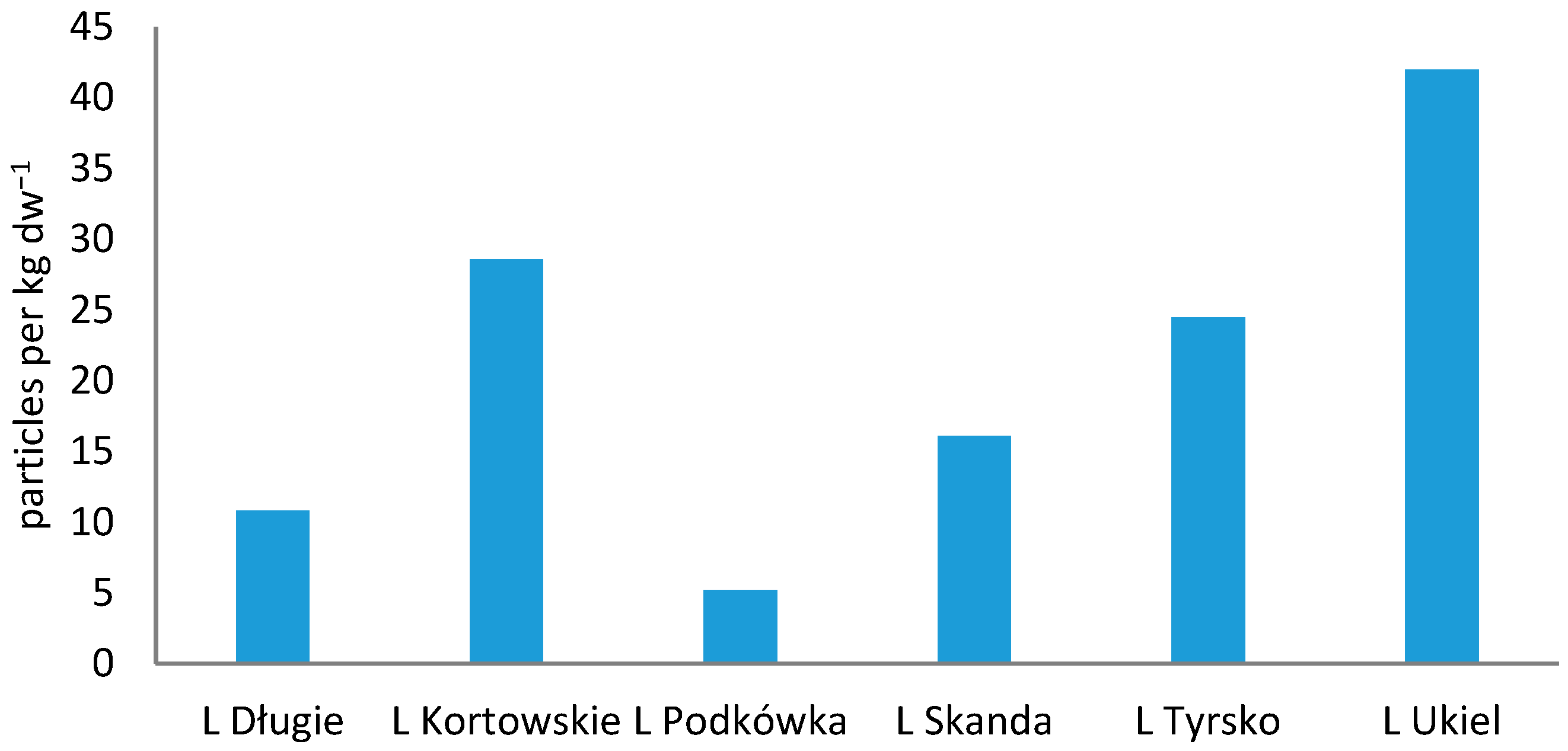
The research conducted revealed microplastic pollution of the shoreline of each of the urban lakes studied, located within the city of Olsztyn. Depending on the location, differences in pollution were found, both in terms of quality and quantity. The concentration of microplastics ranged from 5.2 to 42 particles per kg dw−1 (Figure 2). The highest level of sand pollution in the shoreline was recorded for Lake Ukiel—42 particles per kg dw−1. In the other lakes, the following levels were found: 28.6 particles per kg dw−1 for Lake Kortowskie, 24.5 particles per kg dw−1 for Lake Tyrsko, 16.1 particles per kg dw−1 for Lake Skanda, 10.8 particles per kg dw−1 for Lake Długie, and 5.2 particles per kg dw−1 for Lake Podkówka.

3.2. Morphological Characteristics of Microplastics

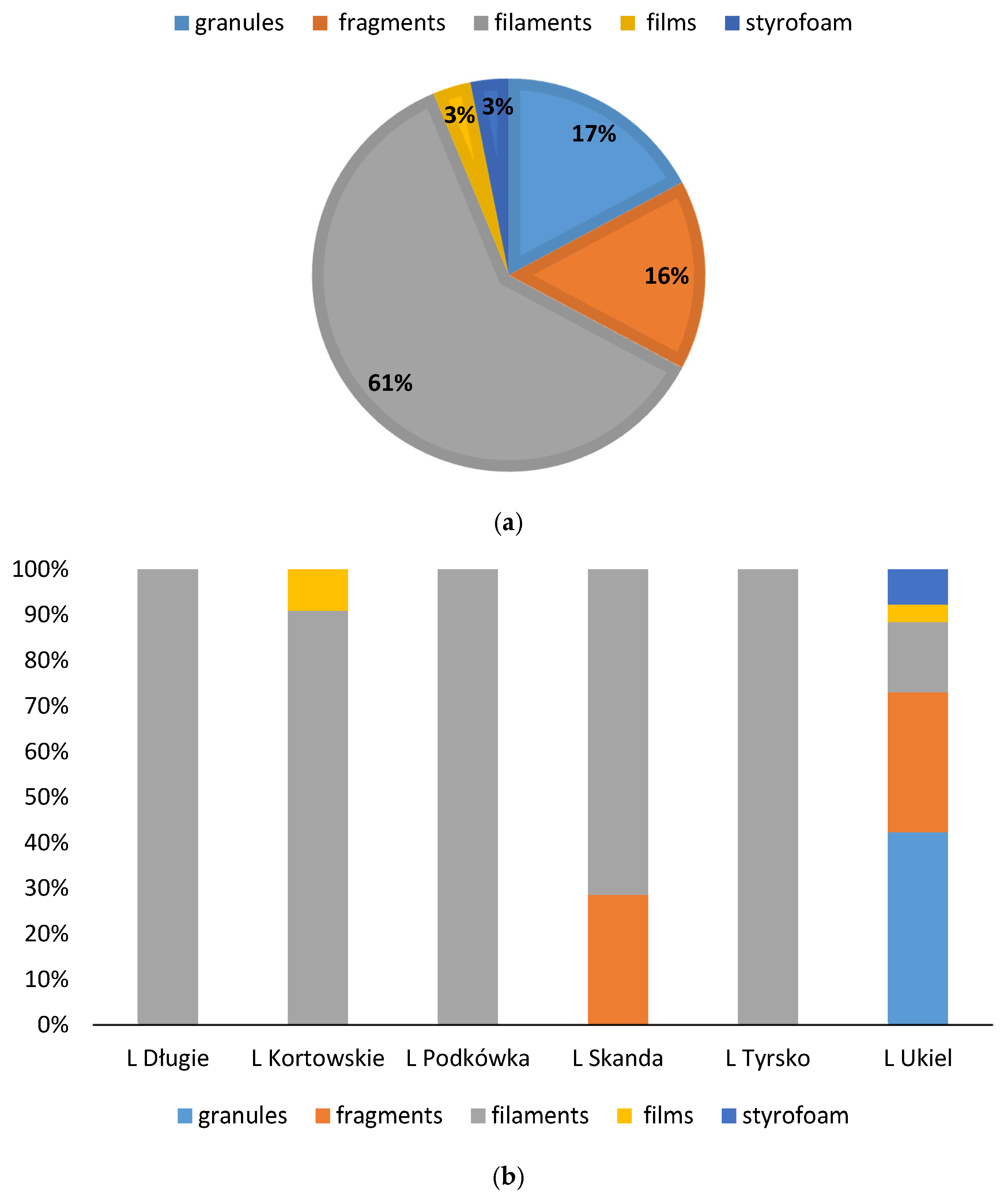
The collected material was morphologically diverse. Five different shapes of microplastics were identified (Figure 3a), the most numerous of which were filaments, which accounted for more than half of the total number of microplastics detected (61%). The percentage share of other morphological forms was smaller and amounted to 17% for granules, 16% for plastic fragments, 3% for styrofoams, and 3% for plastic films.
The lakes differed in terms of the shape of the microplastics recorded. In as many as three of the six lakes studied (Lake Długie, Lake Podkówka, Lake Tyrsko), filaments accounted for 100% of the microplastics found in shoreline sediments (Figure 3b). In the case of Lake Kortowskie and Lake Skanda, the proportion of filaments in the collected material was also high. Filaments accounted for 91% of the microplastics detected in the shoreline of Lake Kortowskie (the remaining particles were plastic films) and 71% in the material found in Lake Skanda (the remaining particles were plastic fragments). The microplastics found in the shoreline sediments of Lake Ukiel had a completely different morphological structure. This location showed the greatest morphological diversity of the collected material. Granules, plastic fragments, filaments, plastic films, and styrofoam were found. Granules (42%) and plastic fragments (31%) were the most numerous.

3.3. Color Characteristics of Microplastics

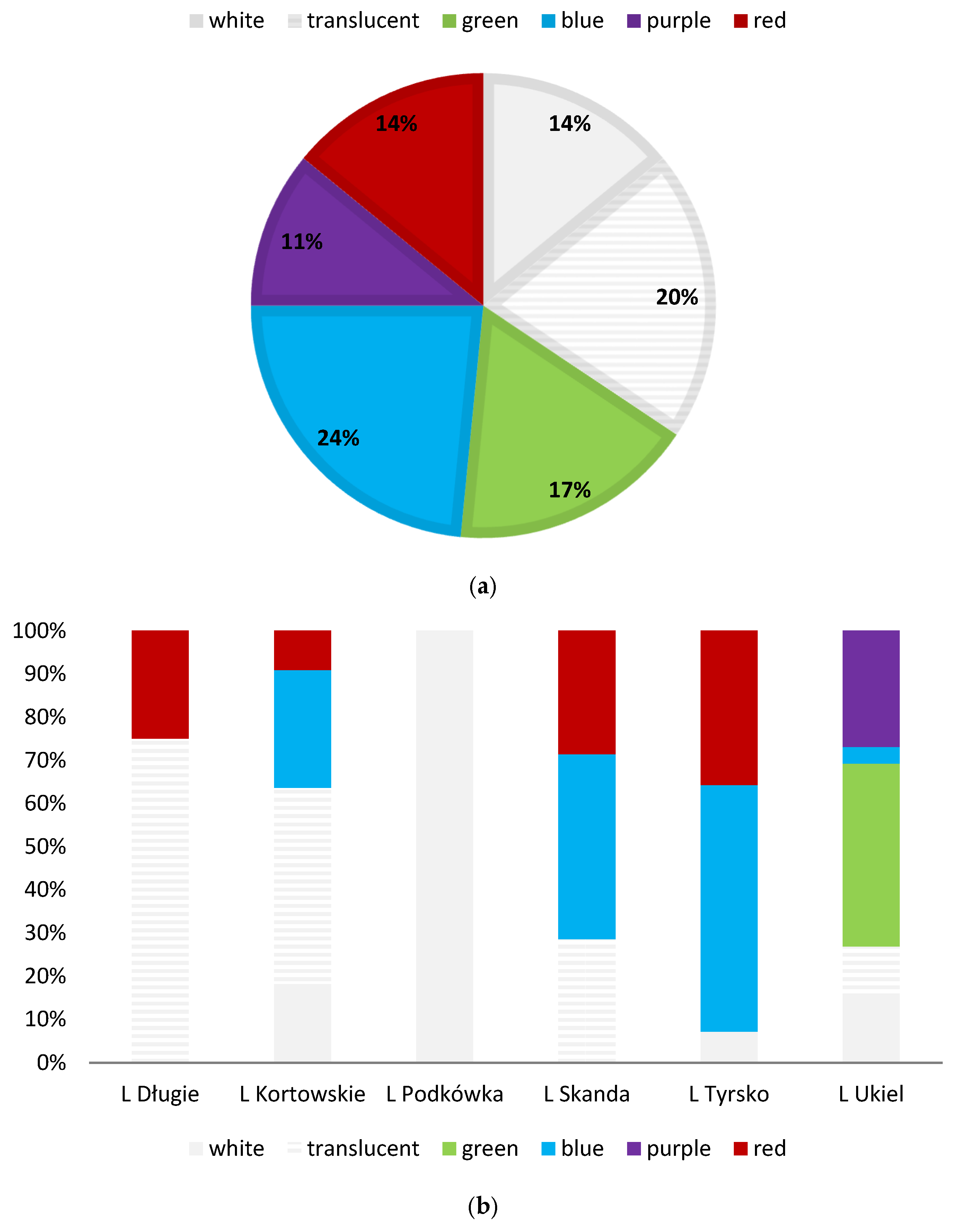
The microplastics present in the samples studied varied in color. The detected particles were assigned to six different color groups. Most of the particles were blue (24%) or translucent (20%). Green particles accounted for 17% of the total. The proportion of particles in other colors was similar. White and red particles accounted for 14% each, and purple particles accounted for 11% (Figure 4a).
The greatest color diversity of microplastics was observed in samples taken from the shoreline sediments of Lake Ukiel (Figure 4b), which is subject to high recreational pressure.

3.4. Composition of Microplastics

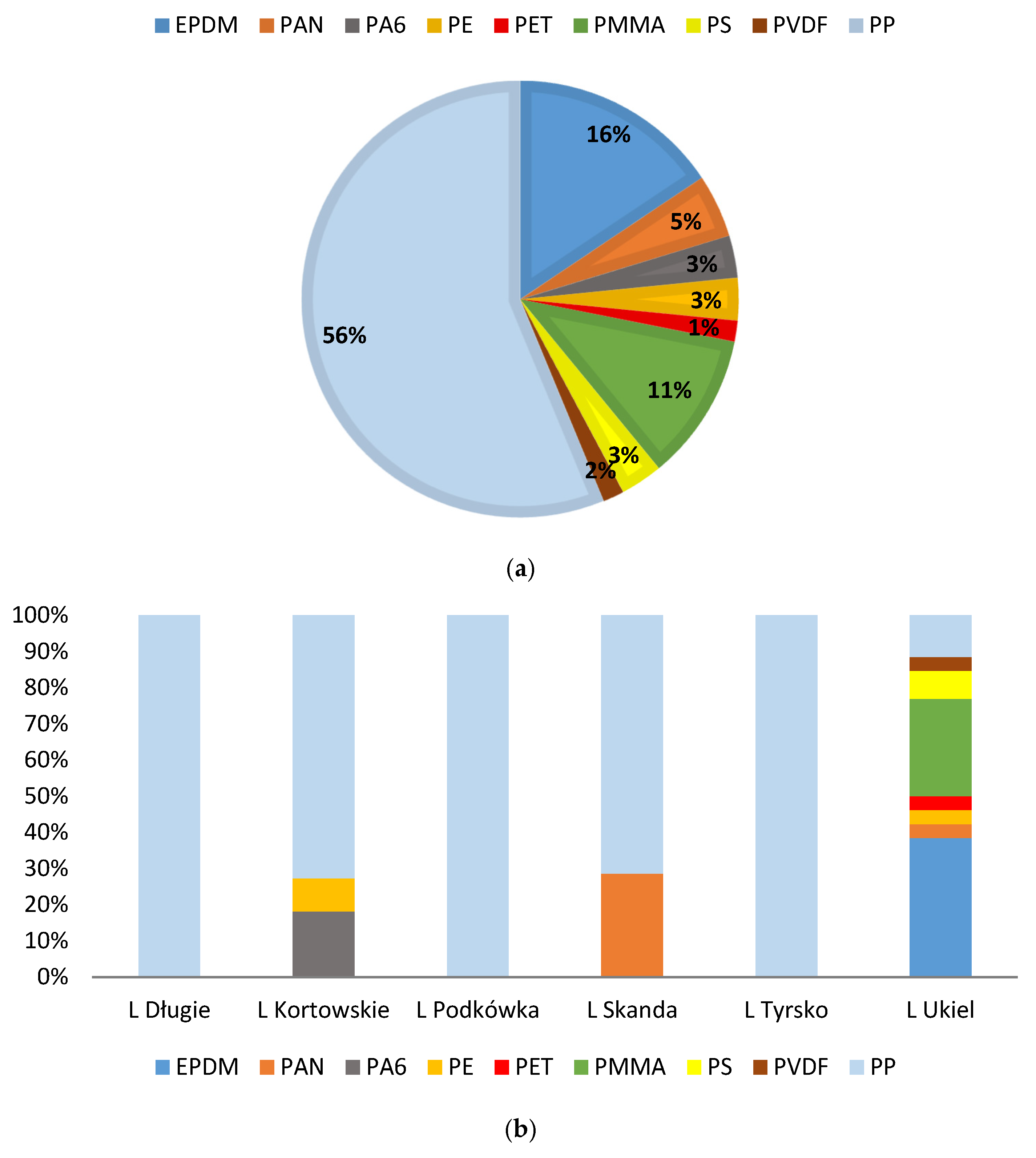
Nine different types of synthetic polymers were identified in the shoreline sediments of urban lakes: ethylene propylene diene monomer (EPDM), polyacrylonitrile (PAN), polyamide 6 (PA6), polyethylene (PE), polyethylene terephthalate (PET), poly(methyl methacrylate (PMMA), polystyrene (PS), polyvinylidene difluoride (PVDF) and PP (Figure 5a).
PP accounted for the largest percentage of the collected material (56%). The second most abundant polymer type was EPDM, which accounted for a total of 16% of microplastic particles, and the third was PMMA, accounting for 11% of particles. The share of other polymer types was in the range of a few percent. There was a large variation between locations in terms of the content of different types of synthetic polymers. The most diverse material was found in shoreline sediments of Lake Ukiel—eight of the nine types of polymers recorded during this study were identified there (Figure 5b). A significantly lower diversity of polymer types was recorded in Lake Kortowskie and Lake Skanda. In the shoreline sediments of the former, PP was detected (over 70% of microplastics), as well as PE and PA6. In the shoreline sediments of Lake Skanda, PP (over 70% of particles) and PAN were recorded. In case of the three remaining lakes, only PP was confirmed. To sum up, the highest number of different types of polymers, eight in total, was found in Lake Ukiel, the lake subject to the greatest recreational pressure. Three and two types of polymers were found in Lake Kortowskie and Lake Skanda, respectively. These lakes are characterized by moderate recreational pressure. All of the above-mentioned lakes are also popular urban bathing areas. In the case of Lake Długie, Lake Podkówka and Lake Tyrsko, only one type of polymer was found. These lakes are used for recreational purposes in a limited extent, or practically unused (Lake Podkówka).

4. Discussion

In recent years, researchers have shown growing interest in the problem of microplastic pollution in lakes. However, most of these studies focus on the water column. Much less attention has been paid to shoreline pollution [10]. Existing data clearly indicate that the problem of shoreline sediment pollution affects lakes in various locations around the world, although the concentrations recorded varied. Six urban lakes were analyzed as part of this study. The concentration of microplastics in the shoreline sediments of these lakes ranged from 5.2 to 42.0 particles per kg dw−1. When comparing the obtained values with data from the literature, it was noted that concentrations identified in the studied lakes were generally lower or corresponded to the lower ranges of values reported for lakes in other locations. For example, for Lake Poyang (China), the microplastic concentrations in the shoreline sediments ranged from 11 to 3153 particles per kg dw−1 (1000 particles per kg dw−1 on average) [39]. For the second largest freshwater lake in China (Dongting Lake), the reported amount of microplastics ranged from 320 to 1150 particles per kg dw−1 [40]. The microplastic concentrations in the Laurentian Great Lakes (Canada/US) ranged from 20 to 4270 particles per kg dw−1 [10]. The concentration of microplastics in shoreline sediments in Lake Phewa (Nepal) ranged from 30 to 240 particles per kg dw−1 [26]. In Europe, the level of shoreline pollution was studied in several locations. For example, in lakes in central Italy, the average microplastic content ranged from 112 particles per kg dw−1 (Lake Bolsena) to 234 particles per kg dw−1 (Lake Chiusi) [24]. In Lake Tollense (Germany), the average microplastic concentrations in lakeshore sediments ranged from 1118 to 1672 particles per kg dw−1 [25]. The lower concentrations of microplastics recorded in the present study may be due to the fact that the surface area of the lakes studied was smaller than that of the lakes from other locations described above. Those lakes were larger, some even significantly, but also had large catchment areas and/or were fed by large tributaries. Rivers inflowing into the lakes may import significant amounts of microplastics. Particles introduced from the catchment area are retained in lakes, some of which become trapped on the shorelines of lakes [23,40,41,42], affecting the observed level of pollution. Among other factors, urbanization, population density, tourism, recreation, and coastal infrastructure should be mentioned. The relationship between the degree of urbanization and the level of plastic pollution in lakes is not clear. Sometimes, microplastic pollution in rural lakes was higher than in urban lakes [5,12]. On the other hand, the results of some studies indicated a correlation between the urbanization index and the content of microplastics in the pelagic zone of lakes [43]. Population density is a factor that may partly explain relatively low content of microplastics in the studied urban lakes. Olsztyn is a relatively small town, with a population density significantly lower than, for example, in the region where Lake Dongting is located—the most densely populated one in China [40]. The concentrations of microplastics recorded in Lake Dongting significantly exceeded those recorded in the studied urban lakes. The factors determining the concentration of microplastics in European lakes have been described by Tanentzap and others [27]. The authors found that microplastic concentrations in the lakes they studied increased with increasing levels of improper waste management and the amount of wastewater treated in the catchment areas. On the other hand, the level of forest cover in the catchment area and conditions within the lake that favor the potential biodegradation of microplastics can reduce their concentration in the lake several times over. The level of forest cover may have been the factor that determined the relatively low concentration of microplastics in the lakes studied. Forests were present in the catchment area of each lake, covering even more than half of its area. Waste and sewage management in the city of Olsztyn is regulated and carried out in accordance with the rules in force in the European Union. This may also contributed to the relatively low level of pollution in the studied urban lakes. With regard to other factors, it has been shown that tourist activity and recreation can be a significant source of microplastics in coastal waters of seas and oceans [28,44,45,46]. The results obtained in this study suggest that recreational use of lakes may be a source of lake pollution. This study showed that differences in microplastic concentrations between analyzed lakes were severalfold and corresponded to the intensity of recreational use and management of a given lake. The highest microplastic concentration (42 particles kg dw−1) was recorded in Lake Ukiel, where the degree of recreational infrastructure development and the intensity of recreation were high. Promenades, piers, organized bathing areas, numerous restaurants, as well as a playground, sports fields, and other amenities attract crowds of residents and tourists throughout the year. In addition, a small seasonal ice rink is open on the beach in winter, and, conditions permitting, ice sailing and ice angling are practiced on the lake. The lowest content of microplastics was recorded in Lake Podkówka, which is not developed at all and is almost not used for recreational purposes. In the case of the other lakes, a moderate level of recreational infrastructure development and lake use corresponded to an intermediate level of microplastic concentrations. It was also noted that lakes with popular bathing areas (Lake Ukiel, Lake Kortowskie, Lake Tyrsko, and, to a lesser extent, Lake Skanda) were more vulnerable to pollution. The beaches by these lakes are usually crowded during the summer season. Therefore beach recreational activities (bathing, sunbathing, swimming, and active sports, e.g., beach volleyball, and frisbee), relaxing pastimes on a sand (reading, picnicking, infants playing in sand) and organized events should be considered as important sources of these lake pollution. Other factors that could potentially be responsible for the variation in microplastic content in the studied urban lakes should be of lesser importance. The level of urbanization of the area was similar—the lakes are located within the same city. The structure of land use in the catchment areas of individual lakes was similar—forests and wasteland dominated the catchment areas of the lakes, except for Lake Długie, where urbanized areas had a greater share. Despite this, the plastic content in the sediments of this lake was the lowest. The atmosphere may also be a source of lake pollution. Microplastic particles can be transported over long distances and fall to the surface in the form of dry or wet precipitation. However, the studied urban lakes were located, in close proximity, within the same urban area, so precipitation should not be a factor in differentiating their pollution levels. Moreover, precipitation as a source of microplastics is generally more important for isolated lakes, in remote locations [12].
In terms of microplastics morphology, filaments dominated, followed by fragments and granules. Filaments accounted for a total of 61% of microplastics. They were recorded in each of the lakes studied, and in three of them filaments accounted for 100% of the collected polymers. The dominance of filaments in lake shoreline sediments is a fact noted by various authors in many locations around the world (e.g., [6,24,25,26,47]). In the case of the studied lakes, one of the potential sources of filaments could be recreation, specifically angling. During sampling, garbage left by anglers, including fishing lines, were frequently noticed. Angling is practiced formally or informally at almost every of the studied lakes. Abandoned fishing lines lying in the shoreline sediments are synthetic polymers which, under the influence of UV radiation and mechanical friction in the wave zone, undergo abrasion, releasing microfilaments into the environment. It is also worth noting that during angling, repeated use of fishing lines causes microdamage, which also contributes to the release of microfilaments into the environment. In the collected material, some of the filaments were transparent or white. This colors corresponds to the materials used in fishing. Fishing is another potential source of environmental risk. It has been proven that commercially available fishing baits contain microplastics introduced during the production process (polyethylene, alkyd resins, and paint additives) in various forms, including filaments [48]. It is worth noting that a significant proportion of transparent filaments has been recorded in Lake Długie, in the lake where angling is a promoted and dominant form of recreation. Fishing as a source of filaments pollution in Lake Długie is a likely scenario, but requires confirmation. Although the scale of the problem has not yet been estimated, it can be expected that recreational fishing in inland waters is a secondary source of microplastics, similar to commercial fishing in the seas. Here, it has been estimated that the decomposition of fishing rope, net, and line has the potential to generate 1277 ± 431 microplastic pieces m−1 [49]. Synthetic filaments present in the sand along the shoreline of the studied lakes could also be the result of the use of beaches as bathing areas. Some of the filaments found in the collected material were of various colors (red, blue, green). The highest proportion of colored filaments was recorded in lakes with bathing areas (Lake Ukiel, Lake Tyrsko, Lake Skanda). Multicolored material is an attribute of beach textiles. In addition to synthetic filaments, cotton and wool fibers were also found in places used as bathing areas, which suggests that beach clothing and textiles may be a real source of pollution of recreational beaches. Chandrakanthan and others [50] showed that recreational activities can be a significant source of plastic micro-particles in surface waters. The researchers analyzed the temporal variability of microplastic particles in the Salt River, a natural watercourse heavily used for recreational purposes. Their results showed an eightfold increase in microplastic content in the water during peak recreational activity hours compared to initial concentrations when no recreational activities were taking place. Other researchers [46] also point to the risk of microplastic pollution of bathing beaches as a result of recreational use. Generalizing the importance of textiles, it is recognized that wearing and washing clothes is one of the most important factors causing environmental pollution with synthetic filaments [51].
When looking for other potential sources of filament pollution in urban lakes, one might consider the environmental impact of the recent pandemic. Zhao et al. [52] noted that improperly disposed used masks release transparent synthetic fibers into the environment when decomposing. Fiber particles from masks may account for nearly 97% of the total microplastics released into aquatic media, with the percentage of fibers released increasing with longer exposure to environmental conditions [53].
The greatest morphological diversity of particles was found in Lake Ukiel, which was the most intensively developed for recreational purposes. In addition to filaments, microplastics in other forms were found in the collected material. One of them was Styrofoam, the origin of which can be linked to the year-round catering facilities present on the beach. Styrofoam is used, among other things, to produce disposable foam cups and boxes, which easily break down into smaller fragments when destroyed. In some regions of the world, this type of microplastic can account for a significant percentage of the particles polluting aquatic ecosystems [54].
In terms of chemical composition, the Styrofoam found on the shoreline of this lake is actually expanded PS. Polystyrene spherules are a plastic that was identified as a pollutant in aquatic ecosystems as early as the 1970s, and its discovery in coastal waters resulted in the first publication addressing the problem of microplastic pollution in water [1]. When looking for potential sources of its presence in the tested material, it should be mentioned that it is used not only for the production of disposable packaging used in catering, but also in items such as floats, thermal insulation packaging, bathing accessories etc. Besides PS, microparticles resembling decorative elements were found in the material collected from this lake, the remains of which, in the form of spherules and fragments, were made of PVDF, like the remains of beads, or PET, from which sequins or glitter were made. Glitter is a single-use plastic and is often made of polyethylene terephthalate. In addition to its decorative function in embellishing textiles, its particles are used as an ingredient in color cosmetics and skin care products. Glitter is a material whose significance as a source of microplastics in the environment may be greatly underestimated, as evidence of its presence has been found in samples taken from many locations around the world [55]. EPDM granules were also found in the shoreline sediments of Lake Ukiel. This material is a type of rubber that is used, among other things, as a surface for safe playgrounds and sports fields. Such surfaces are found in the recreational area directly adjacent to the beach at Lake Ukiel. Another synthetic polymer identified and confirmed in the collected material was PAN, a synthetic material used mainly in the production of synthetic fibers, particularly valued in sportswear, and, due to its durability, also used in protective accessories dedicated to various sports activities [56]. PMMA, a synthetic polymer commonly referred to as plexiglass, a durable material with numerous applications, as well as PP and PE, were also identified in the sediments collected from Lake Ukiel. The latter of these polymers is commonly used, among other things, in the production of plastic beverage bottles, while PP is used to make ropes, bottle caps, netting, and other items [57]. The other lakes studied did not show as high a diversity of polymer types as Lake Ukiel. Three types of polymers were found in Lake Kortowskie: PA6, PP, and PE. Nylon PA6 is considered one of the most versatile materials in the world, with exceptional mechanical strength and a variety of applications, including the production of netting and traps (fishery). In the other four lakes, almost exclusively PP was found. This polymer was the most common polymer during the present study. PP was recorded in shoreline sediments of each lake. This is consistent with the results of other studies from various locations around the world, which show that PP and PE are the two most common types of synthetic polymers found in sediments and water in freshwaters (e.g., [5,26,58]). According to Dusaucy and others [5], this fact can be linked to the demand for this type of polymer, as PE and PP together account for nearly 50% of global plastic production. Regarding morphology, both the results of this study and the findings of other authors indicated that filaments dominated in freshwater ecosystems. The dominance of polypropylene and polyethylene filaments is primarily due to the widespread use of synthetic textiles and disposable packaging releasing microfilaments into the environment as a result of the everyday use or improper disposal [5,27]. Released filaments are light and can easily spread in the environment. Studies have shown that atmospheric transport can generate a large flux of microplastics in the environment [59,60]. Therefore, atmospheric fallout seems to be an important source of pollution in freshwater ecosystems. It explains the prevalence of filaments in surface waters around the world. Atmospheric fallout may also explain the exclusive presence of filaments in lakes with lower recreational pressure, i.e., Lake Podkówka, Lake Tyrsko and Lake Długie, that were analyzed in the present study.
Present research highlights the importance of shoreline sediments studies in environmental risk assessment. It seems that such studies may better reflect the level of lake pollution than studies in the water column. In the lake pelagial, heavier plastics undergo sedimentation. Plastics with a lower specific gravity, such as PP, PE or PS, remain suspended in the water column. As a result, plastics with a higher specific gravity may be overlooked during sampling. In the lake littoral, water dynamics hinder sedimentation and promote the resuspension of sediments and the accumulation of particles along the shoreline. As a result, the concentrations of microplastics recorded in this zone of the lake are usually higher than in the water column [10]. Therefore, complete monitoring protocols in environmental risk assessment should consider three zones: the water column, bottom sediments and the shoreline zone.

5. Conclusions

The results of the present study showed the presence of microplastics in the shoreline sediments of each lake, confirming the widespread occurrence of microplastics in lake ecosystems. In terms of morphology, filaments dominated the collected material, while PP was the most common polymer type. The greatest diversity of synthetic polymers, both in terms of morphology and chemical composition, was recorded in Lake Ukiel, which was the lake that was most intensively developed and used for recreational purposes. The qualitative characteristics of the collected material made it possible to identify potential sources of pollution, most of which can be linked to various forms of recreation. Significant differences in the concentration of microplastics between lakes were observed. The highest pollution was found in Lake Ukiel, the lake with the highest recreational pressure. The concentration of microplastics in this lake was eight times higher than that in a lake that was practically unused for recreational purposes (Lake Podkówka).
The results indicated that recreation could be a significant source of microplastics in lakes. This study provides real insight into the importance of recreation in differentiating the level of microplastic pollution in lakes. This study compared microplastic concentrations in lakes located in a close proximity, that is, in the same urban area with a consistent rainwater and wastewater management system, similar catchment area usage, and similar exposure to potential precipitation and associated pollution risks due to the short distance between lakes. But the lakes differed in terms of the intensity of recreational use and the development of the shoreline for recreational purposes. The present study is one of the first to draw attention to the fact that recreational use of lakes may be an important source of microplastic pollution. Recreation as a source of microplastics in freshwaters may be greatly underestimated. Further research is needed to estimate the significance of this factor.
Plastics in the near shore waters pose a threat to different biota and humans. Therefore, risk assessments based on regular, widespread monitoring carried out as part of a state environmental monitoring program should be employed to minimize their negative impacts. It would also be worthwhile to introduce a biotic risk assessment based on groups of organisms that are particularly vulnerable, such as benthic fauna and ichthyofauna. Appropriate lake management strategies should also be implemented, such as reducing the widespread use of plastic in the shoreline zone (limited use of disposable packaging and disposable bags and recreational development of beaches based on natural materials), implementing an efficient waste management strategy in the vicinity of lakes, and developing measures to raise awareness on the impact of tourism and recreation on the pollution of aquatic ecosystems.
The results of the present study not only highlight the importance of studying lake sediments but also indicate the extent to which human activity is a source of plastic pollution in aquatic ecosystems. This makes us responsible for taking action towards a more conscious use of plastics in various areas of everyday life and for implementing systems and regulations that will minimize the risk of plastics entering inland waters at the management level.

Funding

This research received no external funding.

Institutional Review Board Statement

Not applicable.

Informed Consent Statement

Not applicable.

Data Availability Statement

The datasets presented in this article are not readily available because they are part of an ongoing study. Requests to access the datasets should be directed to corresponding author.

Conflicts of Interest

The author declares no conflicts of interest.

References

  1. Carpenter, E.J.; Anderson, S.J.; Harvey, G.R.; Miklas, H.P.; Peck, B.B. Polystyrene spherules in coastal waters. Science 1972, 178, 749–750. [Google Scholar] [CrossRef] [PubMed]
  2. Thushari, G.G.N.; Senevirathna, J.D.M. Plastic pollution in the marine environment. Heliyon 2020, 6, e04709. [Google Scholar] [CrossRef] [PubMed]
  3. Zbyszewski, M.; Corcoran, P.L. Distribution and Degradation of Fresh Water Plastic Particles Along the Beaches of Lake Huron, Canada. Water Air Soil Pollut. 2011, 220, 365–372. [Google Scholar] [CrossRef]
  4. Faure, F.; Corbaz, M.; Baecher, H.; De Alencastro, L.F. Pollution due to plastics and microplastics in lake Geneva and in the Mediterranean sea. Arch. Sci. 2012, 65, 157–164. [Google Scholar]
  5. Dusaucy, J.; Gateuille, D.; Perrette, Y.; Naffrechoux, E. Microplastic pollution of worldwide lakes. Environ. Pollut. 2021, 284, 117075. [Google Scholar] [CrossRef]
  6. Egessa, R.; Nankabirwa, A.; Ocaya, H.; Pabire, W.G. Microplastic pollution in surface water of Lake Victoria. Sci. Total Environ. 2020, 741, 140201. [Google Scholar] [CrossRef]
  7. González-Pleiter, M.; Velazquez, D.; Edo, C.; Carretero, O.; Gago, J.; Baron-Sola, A.; Hernandez, L.E.; Yousef, I.; Quesada, A.; Leganes, F.; et al. Fibers spreading worldwide: Microplastics and other anthropogenic litter in an Arctic freshwater lake. Sci. Total Environ. 2020, 722, 137904. [Google Scholar] [CrossRef]
  8. Citterich, F.; Lo Giudice, A.; Azzaro, M. A plastic world: A review of microplastic pollution in the freshwaters of the Earth’s poles. Sci. Total Environ. 2023, 869, 161847. [Google Scholar] [CrossRef]
  9. Negrete Velasco, A.; de Rard, L.; Blois, W.; Lebrun, D.; Lebrun, F.; Pothe, F.; Stoll, S. Microplastic and fibre contamination in a remote mountain lake in Switzerland. Water 2020, 12, 2410. [Google Scholar] [CrossRef]
  10. D’Avignon, G.; Gregory-Eaves, I.; Ricciardi, A. Microplastics in lakes and rivers: An issue of emerging significance to limnology. Environ. Rev. 2022, 30, 228–244. [Google Scholar] [CrossRef]
  11. Bowszys, M. Microplastics in the waters of European lakes and their potential effect on food webs: A review. Pol. J. Nat. Sci. 2022, 37, 345–364. [Google Scholar] [CrossRef]
  12. Pan, T.; Liao, H.; Yang, F.; Sun, F.; Guo, Y.; Yang, H.; Feng, D.; Zhou, X.; Wang, Q. Review of microplastics in lakes: Sources, distribution characteristics, and environmental effects. Carbon Res. 2023, 2, 25. [Google Scholar] [CrossRef]
  13. Song, K.J.; Hong, S.H.; Jang, M.; Han, G.M.; Jung, S.W.; Shim, W.J. Combined Effects of UV Exposure Duration and Mechanical Abrasion on Microplastic Fragmentation by Polymer Type. Environ. Sci. Technol. 2017, 51, 4368–4376. [Google Scholar] [CrossRef] [PubMed]
  14. Redondo-Hasselerharm, P.E.; Falahudin, D.; Peeters, E.T.H.M.; Koelmans, A.A. Microplastic effect thresholds for freshwater benthic macroinvertebrates. Environ. Sci. Technol. 2018, 52, 2278–2286. [Google Scholar] [CrossRef] [PubMed]
  15. Windsor, F.M.; Tilley, R.M.; Tyler, C.R.; Ormerod, S.J. Microplastic ingestion by riverine macroinvertebrates. Sci. Total Environ. 2019, 646, 68–74. [Google Scholar] [CrossRef]
  16. Tumwesigye, E.; Nnadozie, C.F.; Akamagwuna, F.C.; Noundou, X.S.; Nyakairu, G.W.; Odume, O.N. Microplastics as vectors of chemical contaminants and biological agents in freshwater ecosystems: Current knowledge status and future perspectives. Environ. Pollut. 2023, 330, 121829. [Google Scholar] [CrossRef]
  17. González-Pleiter, M.; Pedrouzo-Rodríguez, A.; Verdú, I.; Leganés, F.; Marco, E.; Rosal, R.; Fernández-Piñas, F. Microplastics as vectors of the antibiotics azithromycin and clarithromycin: Effects towards freshwater microalgae. Chemosphere 2021, 268, 128824. [Google Scholar] [CrossRef]
  18. McCormick, A.R.; Hoellein, T.J.; London, M.G.; Hittie, J.; Scott, J.W.; Kelly, J.J. Microplastic in surface waters of urban rivers: Concentration, sources, and associated bacterial assemblages. Ecosphere 2016, 7, e01556. [Google Scholar] [CrossRef]
  19. Oberbeckmann, S.; Kreikemeyer, B.; Labrenz, M. Environmental factors support the formation of specific bacterial assemblages on microplastics. Front. Microbiol. 2018, 8, 2709. [Google Scholar] [CrossRef]
  20. Wu, X.; Pan, J.; Li, M.; Li, Y.; Bartlam, M.; Wang, Y. Selective Enrichment of Bacterial Pathogens by Microplastic Biofilm. Water Res. 2019, 165, 114979. [Google Scholar] [CrossRef]
  21. Jiang, C.; Almuhtaram, H.; McKie, M.J.; Andrews, R.C. Assessment of Biofilm Growth on Microplastics in Freshwaters Using a Passive Flow-Through System. Toxics 2023, 11, 987. [Google Scholar] [CrossRef] [PubMed]
  22. Imhof, H.K.; Ivleva, N.P.; Schmid, J.; Niessner, R.; Laforsch, C. Contamination of beach sediments of a subalpine lake with microplastic particles. Curr. Biol. 2013, 23, 867–868. [Google Scholar] [CrossRef] [PubMed]
  23. Faure, F.; Demars, C.; Wieser, O.; Kunz, M.; De Alencastro, L.F. Plastic pollution in Swiss surface waters: Nature and concentrations, interaction with pollutants. Environ. Chem. 2015, 12, 582–591. [Google Scholar] [CrossRef]
  24. Fischer, E.K.; Paglialonga, L.; Czech, E.; Tamminga, M. Microplastic pollution in lakes and lake shoreline sediments—A case study on Lake Bolsena and Lake Chiusi (central Italy). Environ. Pollut. 2016, 213, 648–657. [Google Scholar] [CrossRef] [PubMed]
  25. Hengstmann, E.; Weil, E.; Wallbott, P.C.; Tamminga, M.; Fischer, E.K. Microplastics in lakeshore and lakebed sediments–external influences and temporal and spatial variabilities of concentrations. Environ. Res. 2021, 197, 11114. [Google Scholar] [CrossRef] [PubMed]
  26. Malla-Pradhan, R.; Phoungthong, K.; Suwunwong, T.; Joshi, T.P.; Pradhan, B.L. Microplastic pollution in lakeshore sediments: The first report on abundance and composition of Phewa Lake, Nepal. Environ. Sci. Pollut. Res. 2023, 30, 70065–70075. [Google Scholar] [CrossRef]
  27. Tanentzap, A.J.; Cottingham, S.; Fonvielle, J.; Riley, I.; Walker, L.M.; WooDman, S.G.; Kon-Tou, D.; Pichler, C.M.; Reisner, E.; Leberton, L. Microplastics and anthropogenic fiber concentrations in lakes reflect surrounding land use. PLoS Biol. 2021, 19, e3001389. [Google Scholar] [CrossRef]
  28. Zhang, J.; Quoquab, F.; Mohammad, J. What Do We Know About Plastic Pollution in Coastal/Marine Tourism? Documenting Its Present Research Status from 1999 to 2022. Sage Open 2023, 13, 21582440231211706. [Google Scholar] [CrossRef]
  29. Pastorino, P.; Prearo, M.; Pizzul, E.; Elia, A.C.; Renzi, M.; Ginebreda, A.; Barceló, D. High-mountain lakes as indicators of microplastic pollution: Current and future perspectives. Water Emerg. Contam. Nanoplast. 2022, 1, 3. [Google Scholar] [CrossRef]
  30. Rawat, S.; Tauseef, S.M.; Sharma, M. Microplastic pollution in Himalayan lakes: Assessment, risks, and sustainable remediation strategies. Beilstein J. Nanotechnol. 2025, 25, 2144–2167. [Google Scholar] [CrossRef]
  31. Verpoorter, C.; Kutser, T.; Seekell, D.A.; Tranvik, L.J. A global inventory of lakes based on high-resolution satellite imagery. Geophys. Res. Lett. 2014, 41, 6396–6402. [Google Scholar] [CrossRef]
  32. Lossow, K.; Gawrońska, H.; Mientki, C.Z.; Łopata, M.; Wiśniewski, G. Jeziora Olsztyna Stan Troficzny, Zagrożenia; Wyd. Edycja sc.: Olsztyn, Poland, 2005. [Google Scholar]
  33. Masura, J.; Baker, J.; Foster, G.; Arthur, C. Laboratory Methods for the Analysis of Microplastics in the Marine Environment: Recommendations for Quantifying Synthetic Particles in Waters and Sediments; NOAA Technical Memorandum NOS-OR&R-R-48; National Oceanic and Atmospheric Administration: Washington, DC, USA, 2015.
  34. Thompson, R.C.; Olsen, Y.; Mitchell, R.P.; Davis, A.; Rowland, S.J.; John, A.W.; McGonigle, D.; Russell, A.E. Lost at sea: Where is all the plastic? Science 2004, 304, 838. [Google Scholar] [CrossRef] [PubMed]
  35. Besley, A.; Vijver, G.M.; Behrens, P.; Bosker, T. A standardized method for sampling and extraction methods for quantifying microplastics in beach sand. Mar. Pollut. Bull. 2017, 114, 77–83. [Google Scholar] [CrossRef] [PubMed]
  36. United Nations Environment Programme. Monitoring Plastics in Rivers and Lakes: Guidelines for the Harmonization of Methodologies; United Nations Environment Programme: Nairobi, Kenya, 2020. [Google Scholar]
  37. Yonkos, L.T.; Friedel, E.A.; Perez-Reyes, A.C.; Ghosal, S.; Arthur, C. Microplastics in four estuarine rivers in the Chesapeake Bay, U.S.A. Environ. Sci. Technol. 2014, 48, 14195–14202. [Google Scholar] [CrossRef] [PubMed]
  38. Lusher, A.L.; Mchugh, M.; Thompson, R.C. Occurrence of microplastics in the gastrointestinal tract of pelagic and demersal fish from the English Channel. Mar. Pollut. Bull. 2013, 67, 94–99. [Google Scholar] [CrossRef]
  39. Liu, S.; Jian, M.; Zhou, L.; Li, W. Distribution and characteristics of microplastics in the sediments of Poyang Lake, China. Water Sci. Technol. 2019, 79, 1868–1887. [Google Scholar] [CrossRef]
  40. Jiang, C.; Yin, L.; Wen, X.; Du, C.; Wu, L.; Long, Y.; Liu, Y.; Ma, Y.; Yin, Q.; Zhou, Z.; et al. Microplastics in Sediment and Surface Water of West Dongting Lake and South Dongting Lake: Abundance, Source and Composition. Int. J. Environ. Res. Public Health 2018, 15, 2164. [Google Scholar] [CrossRef]
  41. Vaughan, R.; Turner, S.D.; Rose, N.L. Microplastics in the sediments of a UK urban lake. Environ. Pollut. 2017, 229, 10–18. [Google Scholar] [CrossRef]
  42. Zbyszewski, M.; Corcoran, P.L.; Hockin, A. Comparison of the distribution and degradation of plastic debris along shorelines of the Great Lakes, North America. J. Great Lakes Res. 2014, 40, 288–299. [Google Scholar] [CrossRef]
  43. Pol, W.; Stasińska, E.; Żmijewska, A.; Więcko, A.; Zieliński, P. Litter per liter—Lakes’ morphology and shoreline urbanization index as factors of microplastic pollution: Study of 30 lakes in NE Poland. Sci. Total Environ. 2023, 881, 163426. [Google Scholar] [CrossRef]
  44. Retama, I.; Jonathan, M.P.; Shruti, V.C.; Velumani, S.; Sarkar, S.K.; Roy, P.D.; Rodríguez-Espinosa, P.F. Microplastics in tourist beaches of Huatulco Bay, Pacific coast of southern Mexico. Mar. Pollut. Bull. 2016, 113, 530–535. [Google Scholar] [CrossRef] [PubMed]
  45. Şener, İ.; Yabanlı, M. Macro- and microplastic abundance from recreational beaches along the South Aegean Sea (Türkiye). Mar. Pollut. Bull. 2023, 194, 115329. [Google Scholar] [CrossRef] [PubMed]
  46. Wu, X.; Zhong, C.; Wang, T.; Zou, X. Assessment on the pollution level and risk of microplastics on bathing beaches: A case study of Liandao, China. Environ. Monit. Assess. 2023, 195, 383. [Google Scholar] [CrossRef] [PubMed]
  47. Rogowska, W.; Skorbiłowicz, E.; Skorbiłowicz, M.; Trybułowski, Ł. Microplastics in coastal sediments of Ełckie Lake (Poland). Stud. Quat. 2021, 38, 109–116. [Google Scholar] [CrossRef]
  48. de Carvalho, A.R.; Imbert, A.; Parker, B.; Euphrasie, A. Microplastic in angling baits as a cryptic source of contamination in European freshwaters. Sci. Rep. 2021, 11, 11255. [Google Scholar] [CrossRef]
  49. Wright, L.S.; Napper, I.E.; Thompson, R.C. Potential microplastic release from beached fishing gear in Great Britain’s region of highest fishing litter density. Mar. Pollut. Bull. 2021, 173, 113115. [Google Scholar] [CrossRef]
  50. Chandrakanthan, K.; Fraser, M.P.; Herckes, P. Recreational activities as a major source of microplastics in aquatic environments. Water Emerg. Contam. Nanoplast. 2024, 3, 20. [Google Scholar] [CrossRef]
  51. De Falco, F.; Cocca, M.; Avella, M.; Thompson, R.C. Microfiber release to water, via laundering, and to air, via everyday use: A comparison between polyester clothing with differing textile parameters. Environ. Sci. Technol. Lett. 2020, 54, 3288–3296. [Google Scholar] [CrossRef]
  52. Zhao, X.; Gao, P.; Zhao, Z.; Wu, Y.; Sun, H.; Liu, C. Microplastics release from face masks: Characteristics, influential factors, and potential risks. Sci. Total Environ. 2024, 921, 171090. [Google Scholar] [CrossRef]
  53. De-la-Torre, G.E.; Dioses-Salinas, D.C.; Dobaradaran, S.; Spitz, J.; Nabipour, I.; Keshtkar, M.; Akhbarizadeh, R.; Tangestani, M.; Abedi, D.; Javanfekr, F. Release of phthalate esters (PAEs) and microplastics (MPs) from face masks and gloves during the COVID-19 pandemic. Environ. Res. 2022, 215, 114337. [Google Scholar] [CrossRef]
  54. Chan, H.H.S.; Not, C. Variations in the spatial distribution of expanded polystyrene marine debris: Are Asian’s coastlines more affected? Environ. Adv. 2023, 11, 100342. [Google Scholar] [CrossRef]
  55. Yurtsever, M. Tiny, shiny, and colorful microplastics: Are regular glitters a significant source of microplastics? Mar. Pollut. Bull. 2019, 146, 678–682. [Google Scholar] [CrossRef]
  56. Mataram, A.; Ismail, A.F.; Mahmod, D.S.A.; Matsuura, T. Characterization and mechanical properties of polyacrylonitrile/silica composite fibers prepared via dry-jet wet spinning process. Mater. Lett. 2010, 64, 1875–1878. [Google Scholar] [CrossRef]
  57. Andrady, A.L. Microplastics in the marine environment. Mar. Pollut. Bull. 2011, 62, 1596–1605. [Google Scholar] [CrossRef]
  58. Arturo, I.A.; Corcoran, P.L. Categorization of plastic debris on sixty-six beaches of the Laurentian Great Lakes, North America. Environ. Res. Lett. 2022, 17, 045008. [Google Scholar] [CrossRef]
  59. Horton, A.A.; Dixon, S.J. Microplastics: An introduction to environmental transport processes. WIREs Water 2018, 5, e1268. [Google Scholar] [CrossRef]
  60. Allen, S.; Allen, D.; Phoenix, V.R. Atmospheric transport and deposition of microplastics in a remote mountain catchment. Nat. Geosci. 2019, 12, 339–344. [Google Scholar] [CrossRef]
Figure 1. Location of the studied lakes within the city of Olsztyn.
Sustainability 18 00361 g001
Figure 2. Microplastics abundance in the shoreline sediments of the studied lakes.
Sustainability 18 00361 g002
Figure 3. (a) Microplastic classification by morphology. Aggregated data for six lakes are shown. (b) Percentage distribution of microplastics by morphology in shoreline sediments of the studied lakes.
Sustainability 18 00361 g003
Figure 4. (a) Microplastic classification by color. Aggregated data for six lakes are shown. (b) Percentage distribution of microplastics by color in shoreline sediments of the studied lakes.
Sustainability 18 00361 g004
Figure 5. (a) Microplastic classification by polymer type. Aggregated data for six lakes are shown. (b) Percentage distribution of microplastics by polymer type in shoreline sediments of the studied lakes.
Sustainability 18 00361 g005
Table 1. Characteristics of recreational development and use of the studied lakes.
LakeRecreational Use of a LakeRecreational
Development of the Lake
Recreational Use of a Beach
Długieanglingdeveloped walking and cycling pathsshoreline recreation, angling
Kortowskieangling, boating, bathingwalking pathsbathing area, shoreline recreation, angling, cultural events
Podkówkanonenoneangling
Skandaangling, boating, bathingbeach volleyball court, pier, developed walking and cycling paths, car parkguarded bathing area, angling, shoreline recreation
Tyrskobathing, diving, anglingnonebathing area, angling
Ukielangling, boating, sailing, bathing, diving, windsurfing and other water sportsdeveloped walking and cycling paths, beach courts, pier, playgrounds, gastronomy, water sports equipment hire, marina, car parkguarded bathing area, shoreline recreation, recreational and sport events, cultural events
Table 2. Basic morphometric characteristics of the studied lakes and characteristics of the catchment area [32].
LakeArea
(ha)
Maximal Depth (m)Mean Depth
(m)
Catchment Area
(ha)
Dominant Land Cover of the Catchment Area (%)
Długie26.817.35.3136.8forests 58.0, development 32.0
Kortowskie89.717.25.9102.1wasteland 30.0, horticultural land 26.5, forests 19.3
Podkówka6.96.02.825.6wasteland 68.8, forests 23.0
Skanda51.512.05.871.8forests 52.9, agricultural land 33.7
Tyrsko18.630.49.668.0wasteland 41.9, forests 36.2
Ukiel412.043.010.61675.0forests 62.7, wasteland 21.6
Disclaimer/Publisher’s Note: The statements, opinions and data contained in all publications are solely those of the individual author(s) and contributor(s) and not of MDPI and/or the editor(s). MDPI and/or the editor(s) disclaim responsibility for any injury to people or property resulting from any ideas, methods, instructions or products referred to in the content.