Article

Assessing the Performance and Evolution of China’s Quality Policies from a Value Co-Creation Perspective

1
School of Economics and Management, Nanjing University of Science and Technology, Nanjing 210094, China
2
School of Management, Hangzhou Dianzi University, Hangzhou 310018, China
3
School of Economics and Management, Anhui Normal University, Wuhu 241000, China
4
School of Economics and Management, China Jiliang University, Hangzhou 310018, China
*
Author to whom correspondence should be addressed.
Sustainability 2026, 18(1), 323; https://doi.org/10.3390/su18010323
Submission received: 24 September 2025 / Revised: 27 October 2025 / Accepted: 3 November 2025 / Published: 29 December 2025

Abstract

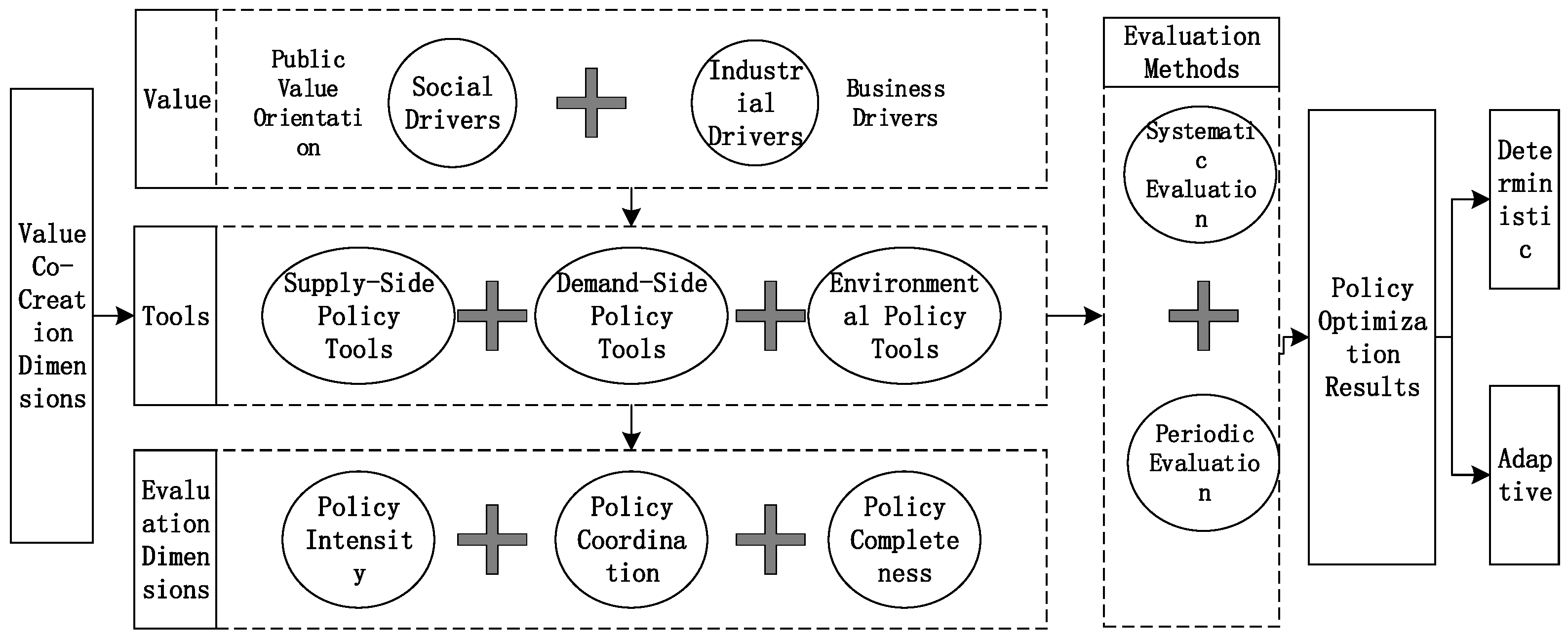
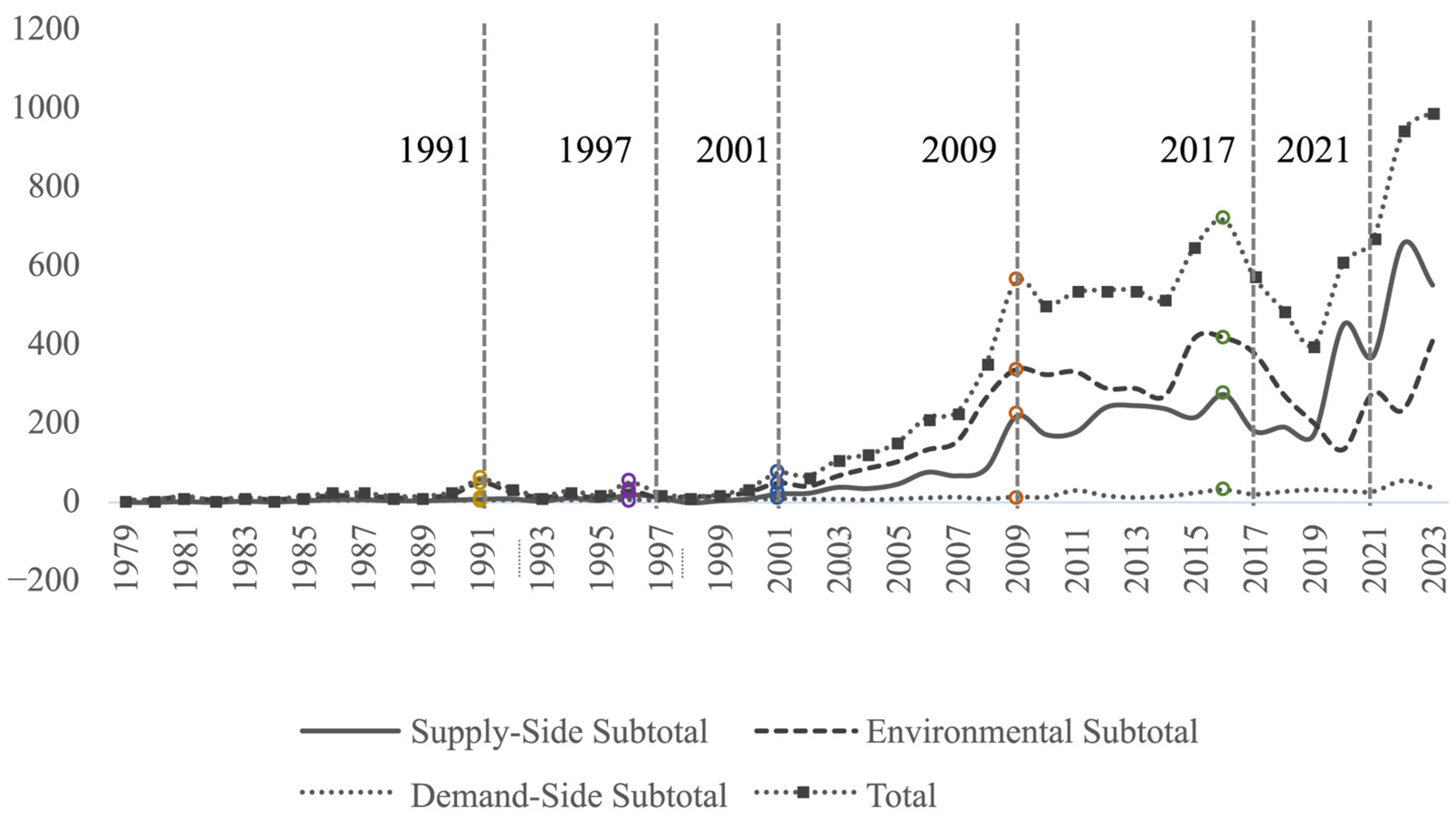
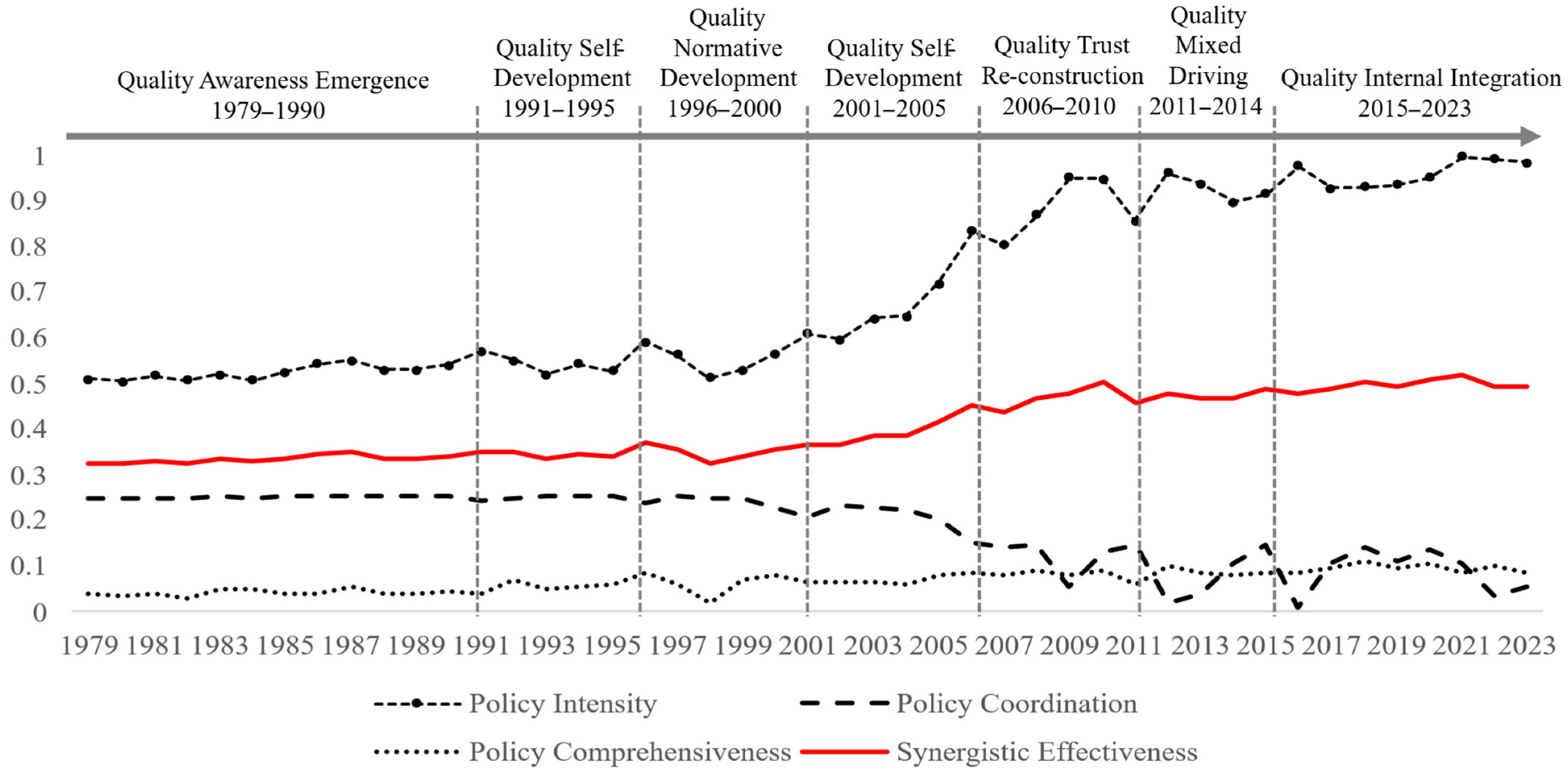
This study develops a value co-creation-oriented analytical framework to evaluate the performance and evolutionary dynamics of China’s national-level quality policies from 1979 to 2023. A comprehensive categorization and scoring system is established to measure policy intensity, coordination, and comprehensiveness. Policy texts are systematically coded through content analysis, and indicator weights are determined using the Analytic Hierarchy Process (AHP). The resulting composite effect values are further analyzed through punctuated-equilibrium testing, breakpoint analysis, and a Vector Autoregression (VAR) model to estimate the temporal lag of policy implementation. Based on 10,962 policy documents retrieved from the Peking University Law Database, the results reveal clear evolutionary stages and cyclical upward trends in policy performance since the reform and opening-up, while the insufficient supply of demand-side policies remains a long-term structural weakness. The overall evolution path shows a transition from unilateral government provision centered on public value to dual government–market regulation driven by mixed commercial value, and finally toward pluralistic quality governance under value co-creation. Empirical evidence also indicates that quality policies act as short-term stimulus instruments that generate positive but sectorally differentiated effects across the three major industries. These findings highlight the need to expand policy coverage, enhance coordination and comprehensiveness, and rebalance the supply structure. Strengthening short-term stimulus effects while promoting inclusive, co-governed, and sustainable quality policy systems can further improve long-term effectiveness and provide useful insights for international discussions on value co-creation-based governance.
Keywords: value co-creation; quality policy; policy performance; multidimensional assessment model; evolutionary dynamics value co-creation; quality policy; policy performance; multidimensional assessment model; evolutionary dynamics